
Colleyville City Zoning Code
CHAPTER 13
- IMPACT FEES
Sec. 13-100 - Purpose of this chapter.
The purpose of this Chapter is to establish regulations for the collection of impact fees to pay for the costs for new development.
(Ord. No. O-22-2210, § 2(exh. B), 8-2-22)
Sec. 13-105 - Authorization for adoption of this chapter.
The regulations contained in this Chapter are adopted under the authorization of Chapter 395 - Local Government Code and Article VI of the Charter of the City of Colleyville.
(Ord. No. O-22-2210, § 2(exh. B), 8-2-22)
Sec. 13-110 - Waivers and appeals.
An applicant requesting a waiver of a requirement contained in this Chapter may seek relief from the City Council by using the procedure described in Section 190 of this Chapter this Land Development Code.
(Ord. No. O-22-2210, § 2(exh. B), 8-2-22)
Sec. 13-115 - Definitions.
The definitions unique to this Chapter are found in Chapter 2 - Definitions of this Land Development Code.
(Ord. No. O-22-2210, § 2(exh. B), 8-2-22)
Sec. 13-120 - Master plan and capital improvements plan adopted.
A.
Master Plan. The City of Colleyville, 2015 Comprehensive Plan, "Destination Colleyville," approved by Ordinance O-17-2005 on February 21, 2017, be and the same is hereby adopted and designated as the Comprehensive Plan for the City of Colleyville for impact fees.
B.
Land Use Assumptions. The land use assumptions used in the development of the impact fees are contained in the document titled Water, Wastewater, and Roadway Impact Fee Update, dated June 2022, prepared by Kimley-Horn and Associates, are adopted for the purpose of compliance with Chapter 395 of the Texas Local Government Code regarding impact fees and referenced in Exhibit - 13.A - Table of Land Use Assumptions.
C.
Water and Wastewater Capital Improvements Plans. The document titled Water, Wastewater, and Roadway Impact Fee Update, dated June 2022, prepared by Kimley-Horn and Associates, is adopted as the Water and Wastewater Capital Improvements Plan for the City of Colleyville for the purpose of compliance with Chapter 395 of the Texas Local Government Code regarding impact fees.
D.
Roadway Capital Improvements Plan. The document titled Water, Wastewater, and Roadway Impact Fee Update, dated June 2022, and prepared by Kimley-Horn and Associates is adopted as the Roadway Capital Improvements Plan for the City of Colleyville for the purpose of compliance with Chapter 395 of the Texas Local Government Code regarding impact fees.
(Ord. No. O-22-2210, § 2(exh. B), 8-2-22)
Sec. 13-125 - Applicability of impact fees.
A.
This Chapter shall be uniformly applicable to new development which occurs within the water, wastewater and roadway service areas.
B.
No new development shall be exempt from the assessment of impact fees as defined in this Chapter.
(Ord. No. O-22-2210, § 2(exh. B), 8-2-22)
Sec. 13-130 - Impact fees as conditions of development approval.
No final plat for new development shall be approved within the service area without assessment of impact fees pursuant to this Chapter, and no water and wastewater tap shall be issued and no building permit shall be issued unless the applicant has paid the impact fees imposed by and calculated as provided herein.
(Ord. No. O-22-2210, § 2(exh. B), 8-2-22)
Sec. 13-135 - Establishment of service areas.
A.
The water, wastewater and roadway service areas are established as shown on the Service Area Map, attached as Exhibit 13-8 - Service Area Map. The service areas shall be established consistent with any facility service area established in the CIP for each utility.
B.
The boundaries of the water, wastewater and roadway service areas may be amended from time to time, and new service areas may be delineated, pursuant to the procedures in Chapter 395 of the Texas Local Government Code.
(Ord. No. O-22-2210, § 2(exh. B), 8-2-22)
Sec. 13-140 - Service units.
A.
Service units are established in accordance with generally accepted engineering and planning standards.
B.
For water and wastewater impact fees, service units shall be calculated in accordance with the attached Exhibit 13-C - Table of Water and Wastewater Service Unit Equivalencies, as determined by the size of the water meter(s) for the development, or alternatively, as approved the City Engineer as a result of an engineering report prepared by a qualified professional engineer licensed to perform such professional engineering services in the State of Texas, which demonstrates that the number of service unit equivalents (SUEs) for the new development will be different than those indicated by the size of the water meter.
C.
If the Director of Public Works determines that the water pressure in the City's transmission main is significantly higher or lower than standard pressure such that the size of the water meter is not indicative of actual service demand, the Director may adjust the number of (SUEs) based on a smaller or larger sized meter which more accurately reflects the flow rate and the system pressure conditions.
D.
If a fire demand meter (tap) is purchased for a property, the meter size utilized to calculate the number of (SUEs) shall be the dimension of the portion of the fire demand meter which reflects the meter size which would provide only domestic service to the property. Said reduced meter size shall then be utilized to calculate the number of (SUEs).
1.
The meter types used to calculate the number of (SUEs) shall be either simple or compound meters.
2.
If the fire protection capacity of the fire demand meter is routinely utilized for domestic purposes as evidenced by the registration of consumption recorded on the City's meter-reading and billing systems, the then-owner of the property shall be assessed the then current fee for the fire protection capacity which has been converted to domestic capacity by its routine usage as domestic capacity.
3.
To avoid the use of fire flow volumes for domestic usage, the owner of any property for which a fire demand meter is purchased shall be required to execute a restrictive covenant on a form approved by the City Attorney, which covenant shall acknowledge the right of the City to assess such fees to subsequent owners of the property. Said covenant shall be executed prior to the purchase of the fire demand meter and shall be filed in the deed records of the County.
4.
No fees shall be collected for the purchase of taps which shall be utilized to provide only fire protection capacity.
E.
Upon wastewater tap purchase for lots for which no water meter has been purchased, service units shall be established by a professional engineer licensed in the State of Texas, shall be reviewed by the Engineer and shall be presented to Council, which shall designate the appropriate number of service units.
F.
For roadways, service units shall be calculated in accordance with Exhibit 13.D - Table of Vehicle-Mile Equivalencies.
G.
The City Council may revise the service unit equivalency tables according to the procedure set forth in Chapter 395 of the Texas Local Government Code and its successors.
(Ord. No. O-22-2210, § 2(exh. B), 8-2-22)
Sec. 13-145 - Maximum assessable impact fees per service unit.
A.
Calculation Method. The maximum assessable impact fee per service unit for each service area shall be computed by dividing the growth-related capital construction cost of service in the service area identified in the capital improvements plan for that category of capital improvements, by the total number of projected service units anticipated within the service area which are necessitated by and attributable to new development, based on the land use assumptions for that service area.
B.
Utility or Ad Valorem Tax Credits. The maximum assessable impact fee is determined by applying a credit back to the development community based on the utility revenues or ad valorem taxes that are allocated for paying a portion for future capital improvements. The maximum assessable water impact is 99.3 percent of the Pre-Credit Recoverable Costs. The maximum assessable wastewater impact fee is 99.3 percent of the Pre-Credit Recoverable Costs. The maximum roadway impact fee is 94.3 percent for Service Area One and 94.3 percent for Service Area Two of the Pre-Credit Recoverable Costs.
C.
Maximum Assessable Water and Wastewater Impact Fees. The maximum assessable impact fees per service unit for water and wastewater facilities after applying the utility or ad valorem tax credits is contained in Exhibit 13-E - Table of Maximum Assessable Water and Wastewater Impact Fees.
D.
Maximum Assessable Roadway Impact Fees. The maximum assessable impact fees per service unit for roadway facilities after applying the utility or ad valorem tax credits is contained in Exhibit 13-F - Table of Maximum Assessable Roadway Impact Fees.
(Ord. No. O-22-2210, § 2(exh. B), 8-2-22)
Sec. 13-150 - Assessment of impact fees.
A.
The assessment of an impact fee for any new development shall be made in accordance with the provisions of this Section.
B.
Assessment of the impact fee for any new development shall be made on occurrence of the following events:
1.
For new development which is submitted for approval pursuant to the City's subdivision regulations after June 20, 1987, or for which re-platting results in an increase in the number of service units after such date, assessment shall be at the time of final subdivision plat approval, and shall be the amount of the impact fee per service unit, as provided in the Schedule of Impact Fees to be Collected that is in effect at the time of subdivision plat approval.
2.
For new development which has received final plat approval prior to June 20, 1987, and for which no re-platting is necessary prior to the issuance of a building permit, assessment shall be upon the issuance of a building permit, and shall be the amount of the impact fee per service unit set forth in the Schedule of Impact Fees to be Collected that is in effect at the time of building permit application.
3.
For new development which occurs or is proposed to occur without platting, assessment shall be upon the issuance of a building permit or water or sewer tap purchase (whichever occurs first), and shall be the amount of the impact fee per service unit set forth in the Schedule of Impact Fees to be Collected that is in effect at the time of building permit application.
4.
For water and wastewater facilities, fees shall not be assessed to a development for which taps previously were purchased and which development does not result in an increase in the number of living unit equivalents as determined by the service unit equivalency table. If the exchange of said taps will result in an increase in the number of (SUE's), impact fees for the increase in the number of (SUE's) shall be assessed in accordance with the Schedule of Impact Fees to be Collected that is in effect at the time of subdivision plat approval.
5.
Because fire protection is of critical concern to the community as a whole, water demand related solely to fire protection is not subject to assessment or collection of a water or wastewater impact fee. However, if the fire protection capacity of the fire demand meter is routinely utilized for domestic purposes as evidenced by the registration of consumption recorded on the City's meter-reading and billing systems, the current owner of the property shall be assessed the impact fees currently in effect at the time such conversion is established by the City for the fire protection capacity which has been converted to domestic capacity by its routine usage as domestic capacity.
C.
Following assessment of the impact fee above, no additional impact fees or increases thereof shall be assessed against that development unless the number of service units increases.
D.
Following the lapse or expiration of approval for a plat, a new assessment must be performed at the time a new application for such development is filed.
(Ord. No. O-22-2210, § 2(exh. B), 8-2-22)
Sec. 13-155 - Schedule of actual impact fees collected.
A.
Water Impact Fee Schedule. The actual water impact fee collection rate which is to be paid by each new development shall be 50% of the maximum allowed. This rate is incorporated into Exhibit 13-G - Schedule of Actual Water and Wastewater Impact Fees to be Collected, which shall become effective on August 2, 2022.
B.
Residential Irrigation Meter Exemption. The payment of the water impact fee shall not be required by an existing residential customer for the installation of a meter to serve a separate lawn irrigation system provided all of the following requirements are met:
1.
The lawn irrigation meter does not exceed the ¾" x ¾" standard basic meter size,
2.
The lawn irrigation shall be located on the same property as the residential meter,
3.
The residential property must be owner-occupied and be in possession of a valid certificate of occupancy, and
4.
The lawn irrigation meter only serves the lawn irrigation system.
5.
The upgrade of a ¾" x ¾" lawn irrigation meter to a 1" meter shall require payment of a water impact fee based on the difference between the base meter size and the water impact fee for a 1" meter applicable at the time of upgrade.
6.
No exemption or pro-rata credit shall apply for any meter size exceeding 1" for a lawn irrigation meter.
C.
Wastewater Impact Fee Schedule. The actual wastewater impact fee collection rate which is to paid by each new development shall be 50% of the maximum allowed by this Chapter. This rate is incorporated into Exhibit 13-G - Schedule of Actual Water and Wastewater Impact Fees to be Collected, which shall become effective on August 2, 2022.
D.
Roadway Impact Fee Schedule. The actual impact fees per service unit equivalent for roadway facilities is shown in Exhibit 13-H - Schedule of Actual Roadway Impact Fees to be Collected, which incorporates the following collection rate percentages:
1.
Service Area 1: The actual Roadway Impact Fee collection rate shall be 100% of the maximum assessable impact fee allowed for all uses, except retail and office uses, which shall become effective on August 2, 2022.
2.
Service Area 2: The actual Roadway Impact Fee collection rate shall be 100% of the maximum allowed by this Chapter for all uses, except retail and office uses, which shall become effective on August 2, 2022.
3.
For land uses not specifically listed, refer to Trip Generation, published by the Institute of Transportation Engineers.
(Ord. No. O-22-2210, § 2(exh. B), 8-2-22)
Sec. 13-160 - Payment and collection of impact fees.
A.
Tap or Building Permit. No water or wastewater tap or building permit shall be issued until all impact fees have been paid to the City, except as provided otherwise by contract.
B.
Payment with Building Permit. Water, wastewater and roadway impact fees shall be paid at the time of the issuance of a building permit, unless a provision in this Chapter provides for another time for collection of impact fee.
C.
Conversion from Existing Private Facilities. For new development converting to the City water utility from a water well or to the City wastewater utility from a septic tank or individual waste disposal system, the City may allow the fee-payer to pay impact fees in the form of a monthly assessment in the same manner as monthly assessments for related tap fees, if such an extended payment program for tap fees is currently in effect.
D.
Contract Specifying Time and Method of Payment. The City may, at its sole discretion, enter into a contract with the owner of a tract of land for which the plat has been recorded to establish a different time and method of payment of impact fees than those provided in this Section.
E.
Notification Due to Increased Service Units. Whenever a property owner proposes to increase the number of service units for a development previously assessed, the additional impact fees to be collected on such service units shall be determined in accordance with the Schedule of Impact Fees to be Collected that is in effect at the time of building permit application.
F.
Roadway Impact Fees for Exempt Non-Residential Uses. For roadway impact fees, in circumstances where non-residential uses may be exempt from payment of fees based upon prospective generation of sales tax revenues, such fees may be paid as provided in Section 13-173, subject to rebate pursuant to this Chapter, upon demonstration that more than 50% of the floor area of the structure for which a building permit is issued will be utilized by a business generating city sales tax revenues.
(Ord. No. O-22-2210, § 2(exh. B), 8-2-22)
Sec. 13-163 - Offsets and credits against impact fees.
A.
System Related Facilities. The City shall offset the reasonable value of any system-related facilities, pursuant to rules established in this Section, which have been dedicated to and have been received by the City, including the value of rights-of-way or capital improvements constructed pursuant to an agreement with the City, against the amount of the impact fee due for that category of capital improvement, subject to administrative guidelines established by the City.
B.
Credit for Impact, Pro-Rata, Acreage of Lot Fees. The City shall credit impact, pro rata, acreage or lot fees which have been paid pursuant to the subdivision regulations contained in this Land Development Code prior to the effective date of this amendatory ordinance against the amount of an impact due for that category of capital improvement, subject to administrative guidelines established by the City.
C.
Limitations for Offsets and Credits. All offsets and credits against impact fees shall be subject to the following limitations and shall be granted based on this Chapter and additional standards promulgated by the City, which may be adopted as administrative guidelines.
1.
No offset or credit shall be given for the dedication or construction of site-related facilities, except where credit is provided in this Chapter, or for any capital improvement which is not identified within the applicable capital improvements plan, unless the City agrees that such improvement supplies capacity to new developments other than the development paying the impact fee and provisions for offsets are incorporated into an agreement for capital improvements.
2.
Any construction of, contributions to, or dedications of off-site roadway facilities agreed to or required by the City as a condition of development approval shall be credited against roadway impact fees otherwise due from the development.
3.
The unit costs used to calculate the offsets shall not exceed those assumed for the capital improvements included in the capital improvements plan for the category of facility within the service area for which the impact fee is imposed.
4.
An offset or credit created pursuant to prior impact fee ordinances shall expire no later than ten (10) years after the effective date of this amendatory ordinance, unless a different expiration date has been agreed to by the City by contract or certificate. Offsets or credits created after the effective date of this amendatory ordinance shall expire within ten (10) years from the date the offset or credit was created, unless otherwise prescribed by contract.
5.
In no event will the City reimburse the property owner or developer for an offset or credit when no impact fees for the new development can be collected pursuant to this Chapter or for any value exceeding the total impact fees due for the development for that category of capital improvement, unless otherwise agreed to by the City.
6.
Offsets or credits created after the effective date of this amendatory ordinance for a development which has received final plat approval prior to the effective date hereof shall be discounted to take into account the number of service units in the development which will utilize the facility for which the offset or credit was given.
D.
Application for Offset or Credit. An applicant for new development must apply for an offset or credit against impact fees due for the development either at or before the time of plat recordation, unless the City agrees to a different time. The applicant shall file a petition for offsets or credits with the City on a form provided for such purpose. The contents of the petition shall be established by administrative guidelines. The City must provide the applicant, in writing, with a decision on the offset or credit request, including the reasons for the decision. The decision shall specify the maximum value of the offset or credit which may be applied against an impact fee, which value and the date of the determination shall be associated with the plat for the new development.
E.
Manner of Offset or Credit Application. The available offset or credit associated with the plat shall be applied against an impact fee in the following manner:
1.
Such offset or credit shall be prorated proportionally among all service units, or for roadway facilities, among all units of trip generation, as calculated from the applicable service unit equivalency table, and shall remain applicable to such service units, to be applied at time of filing and acceptance of an application for a building permit, against impact fees due.
2.
If the total number of service units used by the City in the original offset or credit calculation described in subsection (1) is eventually exceeded by the number of total service units realized by the actual development, the City may, at its sole discretion, collect the full impact fee exclusive of any associated offset or credits for the excess service units.
3.
At its sole discretion, the City may authorize alternative credit or offset agreements upon petition by the owner in accordance with guidelines promulgated by the City.
(Ord. No. O-22-2210, § 2(exh. B), 8-2-22)
Sec. 13-165 - Establishment of accounts and records.
A.
The City shall establish separate interest-bearing accounts, in a bank authorized to receive deposits of City funds, for each major category of capital facility for which an impact fee is imposed pursuant to this Chapter.
B.
Interest earned by each account shall be credited to that account and shall be used solely for the purposes specified for funds authorized in the Capital Improvements Plan.
C.
The City shall establish adequate financial and accounting controls to ensure that impact fees disbursed from the account are utilized solely for the purposes authorized in the CIP. Disbursement of funds shall be authorized by the City at such times as are reasonably necessary to carry out the purposes and intent of this Chapter; provided, however, that any fee paid shall be expended within a reasonable period of time, but not to exceed ten (10) years from the date the fee is deposited into the account.
D.
The City shall maintain and keep adequate financial records for each such account, which shall show the source and disbursement of all revenues, which shall account for all monies received, and which shall ensure that the disbursement of funds from each account shall be used solely and exclusively for the provision of uses specified in the capital improvements program as system-related capital projects. The City Finance Department shall also maintain such records as are necessary to ensure that refunds are appropriately made under the provisions of this Chapter, and such other information as may be necessary for the proper implementation of this Chapter.
(Ord. No. O-22-2210, § 2(exh. B), 8-2-22)
Sec. 13-168 - Use of proceeds of impact fee accounts.
A.
Permitted Uses of Fees. The impact fees collected pursuant to this Chapter may be used to finance or to recoup capital construction costs of service. Impact fees may also be used to pay the principal sum and interest and other finance costs on bonds, notes or other obligations issued by or on behalf of the City to finance such capital improvements or facilities expansions.
B.
Prohibited Uses of Fees. Impact fees collected pursuant to this Chapter shall not be used to pay for any of the following expenses:
1.
Construction, acquisition or expansion of capital improvements or assets other than those identified in the associated capital improvements plans;
2.
Repair, operation, or maintenance of existing or new capital improvements or facilities expansions;
3.
Upgrading, expanding or replacing existing capital improvements to serve existing development in order to meet stricter safety, efficiency, environmental or regulatory standards;
4.
Upgrading, expanding or replacing existing capital improvements to provide better service to existing development; provided however, that impact fees may be used to pay the costs of upgrading, expanding or replacing existing capital improvements in order to meet the need for new capital improvements generated by new development; or
5.
Administrative and operating costs of the City.
(Ord. No. O-22-2210, § 2(exh. B), 8-2-22)
Sec. 13-170 - Appeals.
A.
The property owner or applicant for new development may appeal the following decisions to the City Manager or designee:
1.
The applicability of an impact fee to the development;
2.
The value of the impact fee due;
3.
The availability or the value of an offset or credit;
4.
The application of an offset or credit against an impact fee due;
5.
The amount of the refund due, if any; or
6.
The alternative determination by the City Engineer concerning the size of the water meter which is to be converted to service units.
B.
The burden of proof shall be on the appellant to demonstrate that the value of the fee or the value of the offset or credit was not calculated according to the applicable impact fee schedule or the ordinance provisions and guidelines established for determining offsets and credits.
C.
The appellant may appeal the decision of the City Manager to the City Council. A notice of appeal to the Council must be filed by the applicant with the City Secretary within thirty (30) days following the City Manager's decision. If the notice of appeal is accompanied by a bond or other sufficient surety satisfactory to the City Attorney in an amount equal to the original determination of the impact fee due, the development application or tap purchase or building permit issuance may be processed while the appeal is pending.
(Ord. No. O-22-2210, § 2(exh. B), 8-2-22)
Sec. 13-173 - Refunds.
A.
Time Limit Prior to Refund. Any impact fee or portion thereof collected pursuant to this Chapter which has not been expended within ten (10) years from the date of payment, shall be refunded, upon application, to the record owner of the property at the time the refund is paid, or, if the impact fee was paid by another governmental entity, to such governmental entity, together with interest calculated from the date of collection to the date of refund at the statutory rate as set forth in Article 1.03, Title 79, Revised Statutes (Article 5069-1.03, Vernon's Texas Civil Statutes), or any successor statute.
B.
Pro-Rated Refund. If a refund is due, the City shall pro-rate the same by dividing the difference between the amount of expenditures and the amount of the fees collected by the total number of service units assumed within the service area for the period to determine the refund due per service unit. The refund to the record owner or governmental entity shall be calculated by multiplying the refund due per service unit by the number of service units for the development for which the fee was paid, and interest due shall be calculated upon that amount.
C.
Determination of Excess Fees Upon Completion of Improvements. Upon completion of all the capital improvements or facilities expansions identified in the capital improvements plan upon which the fee was based, the City shall recalculate the maximum impact fee per service unit using the actual costs for the improvements or expansions. If the maximum impact fee per service unit based on actual cost is less than the impact fee per service unit paid, the City shall refund the difference, if such difference exceeds the impact fee paid by more than ten percent (10%). The refund to the record owner or governmental entity shall be calculated by multiplying such difference by the number of service units for the development for which the fee was paid, and interest due shall be calculated upon that amount.
D.
Request of Refund Fees. Upon the request of an owner of the property on which an impact fee has been paid, the City shall refund such fees if:
1.
Existing service is available and service is denied; or
2.
Service was not available when the fee was collected and the City has failed to commence construction of facilities to provide service within two years of fee payment; or
3.
Service was not available when the fee was collected and has not subsequently been made available within a reasonable period of time considering the type of capital improvement or facility expansion to be constructed, but in any event later than five years from the date of fee payment.
E.
Proportional Refund Due to Downsizing Meter. The City shall refund an appropriate proportion of impact fee payments in the event that a previously purchased unused water meter is replaced with a smaller meter, based on the SUE differential of the two meter sizes and the per-SUE fee at the time of the original fee payment, less an administrative charge of $50.
F.
Procedure for Petitioning of Refund. Petition for refunds shall be submitted to the Director of Public Services on a form provided by the City for such purpose. Within one month of the date of receipt of a petition for refund, the Director must provide the petitioner, in writing, with a decision on the refund request, including the reasons for the decision. If a refund is due to the petitioner, the Director shall notify the Finance Director and request that a refund payment be made to the petitioner. The petitioner may appeal the determination to the City Manager and Council, as set forth in this Land Development Code.
G.
Rebate of Roadway Impact Fees for Expired Permit. The City shall rebate the roadway impact fees to the owner on which a building permit has been issued, for which such permit has expired without construction.
(Ord. No. O-22-2210, § 2(exh. B), 8-2-22)
Sec. 13-175 - Updates to plan and revision of fees.
The City shall review the land use assumptions and capital improvements plan for water, wastewater and roadway facilities at least every five years, the first five-year period which shall commence from the date of adoption of the capital improvements plan referenced herein. The City Council shall accordingly then make a determination of whether changes to the land use assumptions, capital improvements plan or impact fees are needed and shall, in accordance with the procedures set forth in Chapter 395 of the Texas Local Government Code, or any successor statute, either update the fees or make a determination that no update is necessary.
(Ord. No. O-22-2210, § 2(exh. B), 8-2-22)
Sec. 13-178 - Functions of advisory committee.
A.
The functions of the Advisory Committee are those set forth in Chapter 395 of the Texas Local Government Code, or any successor statute, and shall include the following:
1.
Advise and assist the City in adopting land use assumptions;
2.
Review the capital improvements plan regarding water, wastewater and roadway capital improvements and file written comments thereon;
3.
Monitor and evaluate implementation of the capital improvements program;
4
Advise the City of the need to update or revise the land use assumptions, capital improvements program and impact fees; and
5.
File a semiannual report evaluating the progress of the City in achieving the capital improvements plans and identifying any problems in implementing the plans or administering the impact fees.
B.
The City shall make available to the Advisory Committee any professional reports prepared in the development or implementation of the capital improvements plan.
C.
The City Council shall adopt procedural rules for the committee to follow in carrying out its duties.
(Ord. No. O-22-2210, § 2(exh. B), 8-2-22)
Sec. 13-180 - Agreement for capital improvements.
A.
The City Council may approve the owner of a new development to construct or finance some of the public improvements identified in the CIP. In the case of such approval, the property owner must enter into an agreement with the City prior to fee collection. The agreement shall be on a form approved by the City, and shall establish the estimated cost of improvement, the schedule for initiation and completion of the improvement, a requirement that the improvement shall be completed to City standards, and any other terms and conditions the City deems necessary. The Engineer shall review the improvement plan, verify costs and time schedules, determine if the improvement is contained in the CIP, and determine the amount of the applicable credit for such improvement to be applied to the otherwise applicable impact fee before submitting the proposed agreement to the Council for approval.
B.
The City and such owner either may agree that the costs incurred or funds advanced will be credited against the impact fees otherwise due from the new development, or they may agree that the City shall reimburse the owner for such costs from impact fees paid from other new developments which will use such capital improvements or facility expansions.
(Ord. No. O-22-2210, § 2(exh. B), 8-2-22)
Sec. 13-183 - Use of other financing mechanisms.
A.
The City may finance water, wastewater and roadway capital improvements or facilities expansions designated in the capital improvements plan through the issuance of bonds, through the formation of public improvement districts or other assessment districts, or through any other authorized mechanism, in such manner and subject to such limitations as may be provided by law, in addition to the use of impact fees.
B.
Except as herein otherwise provided, the assessment and collection of an impact fee shall be additional and supplemental to, and not in substitution of, any other tax, fee, charge or assessment which is lawfully imposed on and due against the property.
(Ord. No. O-22-2210, § 2(exh. B), 8-2-22)
Sec. 13-188 - Impact fees as additional and supplemental regulation.
A.
Impact fees established by this Chapter are additional and supplemental to, and not in substitution of, any other requirements imposed by the City on the development of land or the issuance of building permits or the sale of water or wastewater taps. Such fees are intended to be consistent with and to further the policies of City's Comprehensive Plan, capital improvements plan, zoning ordinance, subdivision regulations and other City policies, ordinances and resolutions by which the City seeks to ensure the provision of adequate public facilities in conjunction with the development of land.
B.
This Chapter shall not affect, in any manner, the permissible use of property, density of development, design, and improvement standards and requirements, or any other aspect of the development of land or provision of public improvements subject to the zoning and subdivision regulations or other regulations of the City, which shall be operative and remain in full force and effect without limitation with respect to all such development.
(Ord. No. O-22-2210, § 2(exh. B), 8-2-22)
Sec. 13-190 - Relief procedures.
A.
Any person who has paid an impact fee or an owner of land upon which an impact fee has been paid may petition the Council to determine whether any duty required by this ordinance has not been performed within the time so prescribed. The petition shall be in writing and shall state the nature of the unperformed duty and request that the act be performed within sixty (60) days of the request. If the Council determines that the duty is required pursuant to the ordinance and is late in being performed, it shall cause the duty to commence within sixty (60) days of the date of the request and to continue until completion.
B.
The Council may grant a variance or waiver from any requirement of this ordinance, upon written request by a developer or owner of property subject to the ordinance, following a public hearing, upon finding that a strict application of such requirement would, when regarded as a whole, result in confiscation of the property.
(Ord. No. O-22-2210, § 2(exh. B), 8-2-22)
Sec 13.200 - Amendments to this chapter.
Editor's note— Beginning with Supp. No. 20, this table is no longer being maintained. See Land Development Code Comparative Table at the end of this Appendix.
[Sec 13.300 - Exhibits to chapter.]
Exhibit 13-A
Table of Land Use Assumptions
Exhibit 13-B
Service Area Map
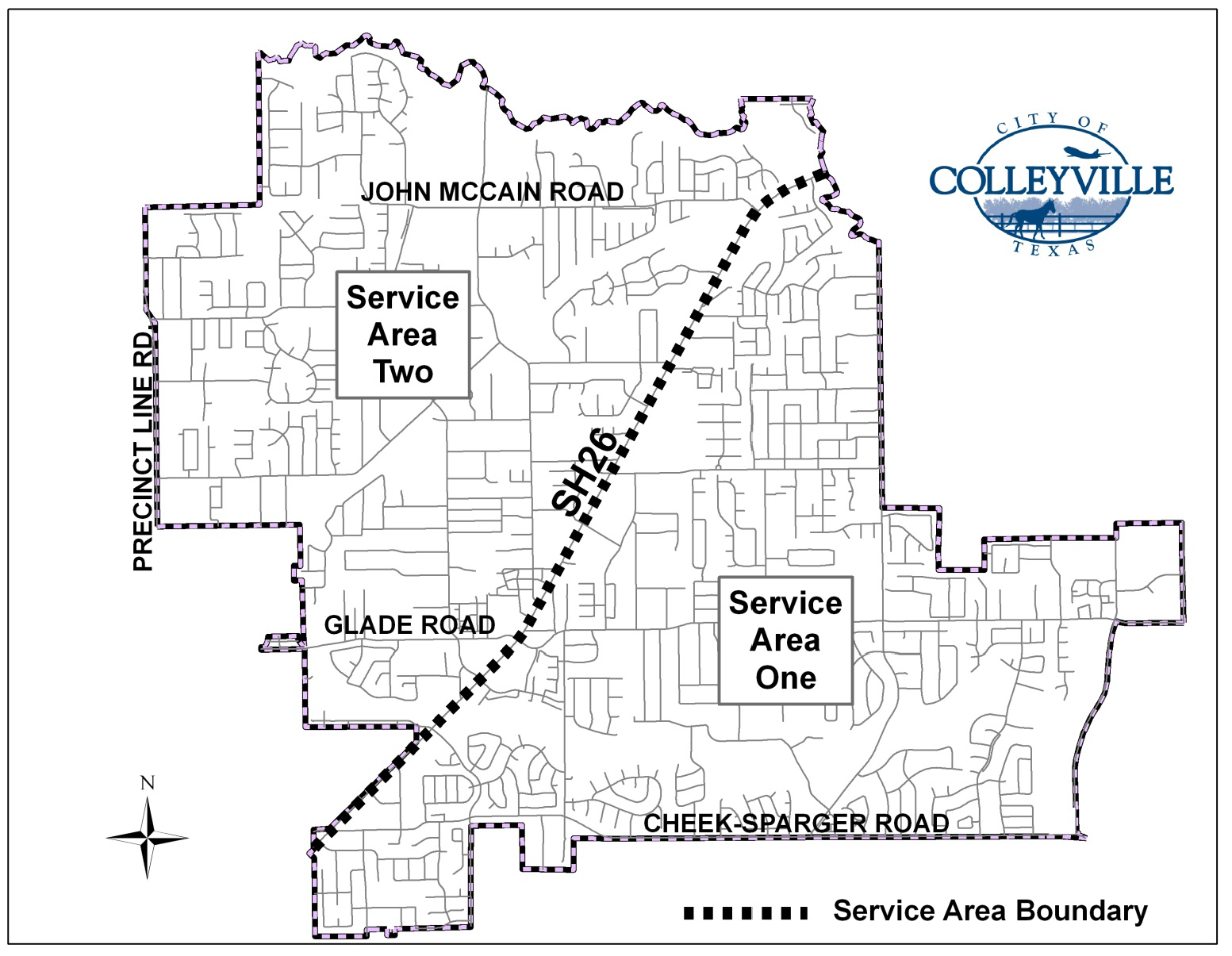
Exhibit 13-C
Table of Water and Wastewater Service Unit Equivalencies
*PD = Positive Displacement Meter (Typical residential meter)
Exhibit 13-D
Table of Vehicle Mile Equivalencies
Exhibit 13-E
Table of Maximum Assessable Water and Wastewater Impact Fees
PD = Positive Displacement Meter (Typical residential meter)
* Operating capacities obtained from American Water Works Association (AWWA) C-700-20,
C-701-19, C-702-19
Exhibit 13-F
Table of Maximum Assessable Roadway Impact Fees
Exhibit 13-G
Schedule of Actual Water and Wastewater Impact Fees to be Collected
Exhibit 13-H
Schedule of Actual Roadway Impact Fees to be Collected
(Ord. No. O-22-2210, § 2(exh. B), 8-2-22)

