
Crowley City Zoning Code
ARTICLE 5
- USE REGULATIONS
106.65 - TABLE OF ALLOWED USES
A.
PURPOSE:
(1)
Table 106.65-2, Table of Allowed Uses, below, lists the uses allowed within all base and special zoning districts.
(2)
Accessory and temporary uses are also summarized in Table 106.65-2.
(3)
All uses are defined in Article 11: Definitions.
(4)
Approval of a use listed in this Article, and compliance with the applicable use-specific standards for that use, authorizes that use only. Development or use of a property or structure for any other use not specifically allowed in this Article and approved under the appropriate process is prohibited.
B.
EXPLANATION OF USE TABLE ABBREVIATIONS:
(1)
Permitted By-Right Uses: "■" in a cell indicates that the use is permitted by right in the respective zoning district. Permitted uses are subject to all other applicable regulations of this Chapter, including the supplemental use standards in this Article.
(2)
Uses Requiring a Specific Use Permit: "□" in a cell indicates that, in the respective zoning district, the use is allowed only if issued a Specific Use Permit, in accordance with the procedures of Section 106.34.C, Specific Use Permit (SUP) Procedures. Uses requiring a Specific Use Permit are subject to all other applicable regulations of this Chapter, including the supplemental use standards in this Article and the requirements of Article 2: Procedures and Administration.
(3)
Prohibited Uses: A blank cell indicates that the use is prohibited in the respective zoning district.
(4)
Supplemental Use Standards: Regardless of whether a use is allowed by right, or permitted with a Specific Use Permit, there may be supplemental standards that are applicable to the use. The applicability of these standards is noted through a cross-reference in the last column of the table. An asterisk [*] in a cell indicates that the use, whether permitted by right or as a Specific Use Permit, is permitted subject to additional use standards in that district. Cross-references refer to Section 106.66, Supplemental Use Standards, Section 106.67, Accessory Use Standards, and Section 106.68, Temporary Uses.
(5)
Allowed Land Uses in Planned Development Districts: Land uses in a Planned Development District are permitted as follows:
a.
If the PD Concept Plan specifically references a base zoning district:
1.
Any land use permitted by right in the applicable underlying base zoning district, as amended, may be permitted.
2.
Any land use requiring a Specific Use Permit in the applicable underlying base zoning district, as amended, is only allowed if a Specific Use Permit is issued for the use.
3.
Any land use prohibited in the underlying base zoning district, as amended, is also prohibited in the PD district unless no base zoning district is chosen and a new set of land uses is defined and specified.
b.
The PD district may list the permitted, prohibited, and Specific Use Permit uses separately.
c.
A combination of the above.
C.
USE TABLE ORGANIZATION
(1)
In Table 106.65-2, land uses and activities are classified into general "use categories" and specific "use types" based on common functional, product, or physical characteristics, such as the type and amount of activity, the type of customers or residents, how goods or services are sold or delivered, and site conditions. This classification provides a systematic basis for assigning present and future land uses into appropriate zoning districts. This classification does not list every use or activity that may appropriately exist within these use categories, and specific uses may be listed in one category when they may reasonably have been listed in one or more other categories. The use categories are intended merely as an indexing tool and are not regulatory.
(2)
Zoning District Abbreviations Used: The following Table 106.65-1 shall provide the reference to the Zoning Districts based on the abbreviations used in Table 106.65-1.
D.
CLASSIFICATION OF NEW AND UNLISTED USES
(1)
The city recognizes that new types of land uses will arise, and forms of land use not anticipated in this Chapter may seek to locate in the city. When a complete application is made and an application fee is paid for a use category or use type that is not specifically listed in the appropriate use table, the Administrator shall make a determination as to the appropriate classification of any new or unlisted form of land use in the following manner:
a.
The Administrator shall provide an interpretation as to the zoning classification into which such use should be placed. In making such interpretation, the Administrator shall consider all relevant characteristics of the proposed use, including but not limited to the following:
1.
The actual or projected characteristics of the proposed use;
2.
The volume and type of sales, retail, wholesale, etc. for commercial uses;
3.
The size and type of items sold and nature of inventory on the premises;
4.
The type and number of customers and employees;
5.
The hours of operation;
6.
The size and arrangement of buildings and parking on the site;
7.
The amount of parking needed and estimate of trips generated by the proposed use;
8.
Any processing done on the premises, including assembly, manufacturing, warehousing, shipping, and/or distribution;
9.
Any dangerous, hazardous, toxic, or explosive materials used in the processing;
10.
The nature and location of storage and outdoor display of merchandise, whether enclosed, open, inside, or outside the principal building; predominant types of items stored (such as business vehicles, work-in-process inventory and merchandise, construction materials, scrap and junk, and raw materials including liquids and powders);
11.
The amount and nature of any nuisances generated on the premises, including but not limited to noise, smoke, odor, glare, vibration, radiation, and fumes;
12.
Any special public utility requirements for serving the proposed use type, including but not limited to water supply, wastewater output, pre- treatment of wastes and emissions required or recommended, and any significant power structures and communications towers or facilities; and
13.
The effect on adjacent properties created by the proposed use type, which should not be greater than that of other use types in the zoning district.
b.
Standards for new and unlisted uses may be interpreted as those of a similar use.
c.
Appeal of the Administrator's decision shall be made to the Zoning Board of Adjustment following procedures in Article 2: Procedures and Administration for Variances and Appeals (Section 106.34.F).
d.
The Administrator may periodically request amendments to this Chapter to incorporate newly-listed uses into Article 5: Use Regulations and Article 11: Definitions.
( Ord. No. 03-2023-482 , § 2(Exh. A), 3-16-2023)
106.66 - SUPPLEMENTAL USE STANDARDS
A.
APPLICABILITY. The standards in this section apply as noted in Table 106.65-2: Allowed Uses.
B.
AGRICULTURAL AND ANIMAL USES
(1)
Veterinary Clinic:
a.
In the OC, GC, MU-C, and DT-C Districts:
1.
Commercial breeding is not permitted.
2.
Uses shall be entirely enclosed, properly ventilated, and provide sound barriers and odor protection to adjacent properties and users nearby or within the same development.
3.
Overnight boarding permitted only of pets undergoing actively treatment and care.
b.
In the AG District:
1.
Uses shall be entirely enclosed, properly ventilated, and provide sound barriers and odor protection to adjacent properties and users nearby or within the same development.
(2)
Pet and animal-related sales and services (including grooming and care):
a.
Outdoor runs are not permitted in the OC, MU-C, and DT-C Districts.
b.
In the GC District, outdoor runs and overnight boarding (kennels) may be permitted with an SUP only.
C.
RESIDENTIAL USES
(1)
Dwelling, Duplex
a.
Each individual dwelling unit shall have a separate exterior entrance and separate utility meters.
b.
Development in the MR and MF Districts shall comply with the design standards established in Article 6: Building Design Standards. Development in the MU-T and MU-N Districts shall comply with the standards for Duplexes in Article 6: Building Design Standards unless development specific standards are adopted as part of the Mixed-Use District ordinance. Development in the DT-E District shall comply with standards in Article 4: Special District Standards.
c.
Each individual dwelling unit shall have a minimum living area as established in the corresponding zoning district regulations in Article 3: Zoning Districts.
(2)
Dwelling, Multi-Family (4 DU/Lot or fewer)
a.
Each individual dwelling unit shall have a separate exterior entrance and separate utility meters.
b.
Development in the MR and MF Districts shall comply with the design standards established in Article 6: Building Design Standards. Development in the MU-T and MU-N Districts shall comply with the standards for Duplexes in Article 6: Building Design Standards unless development specific standards are adopted as part of the Mixed-Use district ordinance. Development in the DT-E District shall comply with standards in Article 4: Special District Standards.
c.
Each individual dwelling unit shall have a minimum living area as established in the corresponding zoning district regulations in Article 3: Zoning Districts.
(3)
Dwelling, Multi-Family (more than 4 DU/Lot)
a.
Development in the MF District shall comply with the design standards established in Article 6: Building Design Standards. Development in the MU-C and MU-T Districts shall comply with the standards for multi-family residential development in Article 6: Building Design Standards unless development specific standards are adopted as part of the Mixed-Use District ordinance. Development in all the DT Districts shall comply with standards in Article 4: Special District Standards.
b.
Each individual dwelling unit shall have a minimum living area as established in the corresponding zoning district regulations in Article 3: Zoning Districts.
(4)
Dwelling, Townhome (SF attached or MF)
a.
Each individual dwelling unit shall have a separate entrance facing the street frontage to which the building address is assigned. Buildings on corner lots may have entrances facing either street frontage.
b.
Each dwelling shall have direct access to a street or alley.
c.
Townhome structures shall comply with the design standards established for their respective zoning districts.
d.
Each individual dwelling unit shall have a minimum living area as established in the corresponding zoning district regulations in Article 3: Zoning Districts.
(5)
Live/Work Unit:
a.
In the R-2, R-3, R-4, and MR Districts: An owner can opt to add EITHER a Work component to an existing dwelling OR an Accessory Dwelling Unit within the Central Crowley Residential District boundary as identified in Figure 106.66-1. The following standards shall apply for a Live/Work Dwelling in the Central Crowley Residential District. Standards for an accessory dwelling unit shall be in Section 106.67.E(2) and (3).
1.
Live/Work dwelling in the Central Crowley Residential district boundary shall allow the conversion and use of a portion of existing residential buildings to accommodate a nonresidential use limited to uses under the following categories only (see Table 106.65-2):
i.
General Personal Service (shall not include the others listed under the personal service category)
ii.
Offices for business, professional, administrative, or technical services
iii.
Restaurant with take-out or delivery only
iv.
Catering service
v.
Pet and animal-related services (including grooming and care; no overnight boarding of pets)
2.
The Work part of the dwelling shall be less than 500 sq. ft. in area. The Live area shall be at least 500 sq. ft.
3.
The Work element may be in the principal building or in an accessory building on the lot (e.g., garage conversion or accessory building).
4.
No additional front or rear yard space shall be paved for surface parking. Parking for customers may be accommodated on the street or on existing driveways on the lot only. All Work uses shall add one additional parking space on the lot, to be accommodated in the side yard or on the existing or expanded driveway.
5.
Ownership: The Work use shall be owned and operated by a resident of the Dwelling. Up to two (2) individuals that do not reside at the property may be employed by the owner, and customers may visit the work use between 9:00 am and 7:00 pm.
6.
Food related occupations must meet Texas Cottage Food Law requirements and may also require health permits.
7.
The property shall contain no outdoor display of goods or services that are associated with the Work use. Outside storage is prohibited. For the purpose of this section, the parking of one enclosed trailer in a driveway is not considered outside storage.
8.
The Work use shall not create traffic or parking congestion, noise, vibration, odor, glare, fumes, or electrical or communications interference that can be detected by the normal senses off the premises, including visual or audible interference with radio or television reception. All Work uses are subject to all other ordinances applicable in the City of Crowley.
9.
The Work use shall not involve the use or storage of explosives, flammable, combustible, or hazardous materials and may not involve any process that produces smoke, dust, odor, noise, or vibration, which is harmful to surrounding properties.
10.
All Work uses shall be required to obtain a Certificate of Occupancy from the City of Crowley.
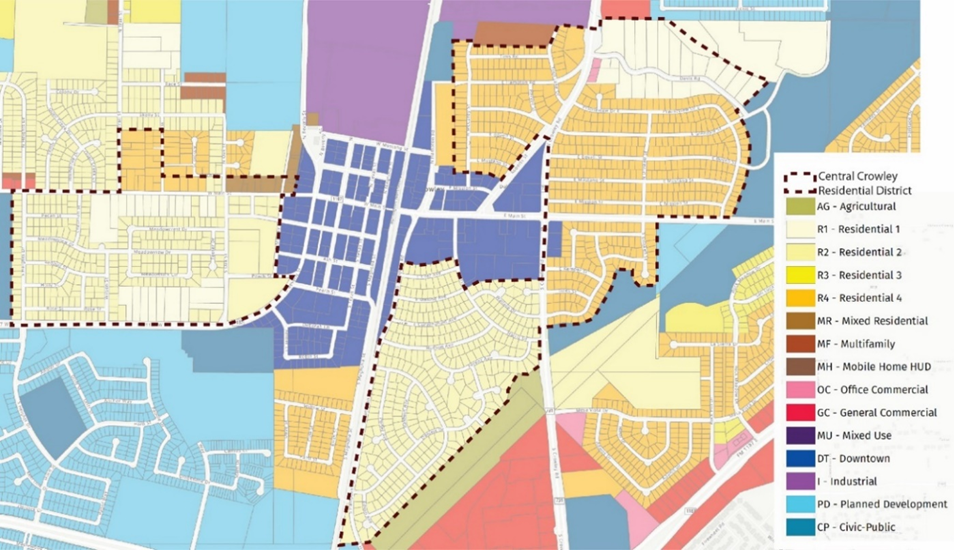
Figure 106.66-1: Central Crowley Residential District
b.
In the MU-T, MU-N, and DT Districts:
1.
The residential component shall be located above or behind nonresidential portions of the structure.
2.
The work portion shall be built to commercial building code standards.
3.
The work portion shall be limited to commercial uses permitted in the corresponding district in the specific MU District ordinance or in the DT Districts in Table 106.65-2.
4.
Parking shall be provided per the parking ratio in Article 7: Parking and Transportation or Article 4: Special District Standards as applicable (unless alternative parking standards are adopted in the specific MU District).
5.
Ownership or lease of either the live or work portions are not restricted to one owner or lessee.
(6)
Senior Living Facility:
a.
In the MU-C and DT-C Districts, ground floors shall NOT be occupied by resident rooms or dwelling units along any primary street frontages.
b.
Development shall comply with the building design standards applicable to the respective zoning district they are located in.
D.
HEALTH AND HUMAN SERVICES
(1)
Clinics, labs, and urgent care centers:
a.
Clinics, labs, and urgent care centers that include plasma donation capabilities (plasma center) shall only be permitted with an SUP. In addition, they shall not be located within one (1) mile of another plasma center.
(2)
Funeral Homes and Services:
a.
If a funeral home use includes cremation services, then it shall require an SUP in the GC District.
E.
COMMERCIAL USES
(1)
Parking as a Principal Use:
a.
In the MU-C and DT-C Districts, the use shall not have any frontage along or driveway access to any Pedestrian-Oriented Street or Main Street.
(2)
General Retail Unless otherwise specified (less than 5,000 sq. ft.):
a.
In the I Industrial District, retail uses shall be permitted as accessory uses and limited to under 5,000 sq. ft. per building or 10% of a building, whichever is greater.
b.
In the DT-E District, retail uses shall be permitted only on corner lots and limited to less than 5,000 sq. ft. of general retail use per lot.
(3)
Alternative Financial Institution (Non-depository financial institution):
a.
Shall only be permitted with an SUP regardless of whether it is a principal or accessory use on the lot.
b.
No Alternative Financial Institution shall be located within 1,000 feet, measured from property line to property line, of any other Alternative Financial Institution.
c.
No Alternative Financial Institution shall be located within 400 feet, measured from property line to property line, of a lot zoned or used for residential purposes.
d.
No Alternative Financial Institution shall be located within 500 feet of Main Street, FM 1187, or Crowley Road (FM 731), measured from the right-of-way line to property line.
(4)
Any retail use with outdoor sales or storage
a.
Outdoor storage or display of products along any arterial street frontage shall be prohibited. All storage areas shall be located within the rear yard and screened from adjacent properties and any public right-of-way.
b.
If adjacent to any residential uses, they shall be screened in accordance to the standards for a type screen described in Article 8: Landscaping, Screening, and Open Space.
c.
Outdoor (sidewalk) sales (other than seasonal sales):
1.
Shall be limited to sidewalk or walkway areas in front of the tenant space.
2.
Shall not block any entrance door into the building.
3.
A clear width of no less than three (3) feet shall be maintained at all times with a minimum 5'×5' passing area provided every 200 linear feet of the sidewalk.
4.
No handicapped parking areas shall be blocked or utilized.
5.
Articles for sale or display shall be kept outside only during regular hours of operation of the business.
(5)
Any use with drive-through facilities (retail sales, pharmacy, banks, and restaurants):
a.
Specific to the OC and GC Districts: Drive- through lanes facing, backing, or siding a public street or residential uses shall be screened at the property line in accordance to the standards for a street screening device described in Article 8: Landscaping, Screening, and Buffering.
b.
Specific to the MU-C District:
1.
May only be permitted if specifically identified on a Concept or Development plan.
2.
Shall meet the design standards for drive- through uses in the in Article 6: Building Design Standards.
c.
Specific to the DT-C and DT-E Districts:
1.
Shall require an SUP.
2.
No drive-through stacking lanes or delivery windows shall be located along Main Street frontage. Driveway access shall not be from Main Street.
3.
Shall meet the design standards for drive- through uses in Article 6: Building Design Standards.
(6)
Mobile Food Court:
a.
Process:
1.
Shall be permitted with an SUP only.
b.
Operations:
1.
Shall include two (2) or more mobile food vendors on the same lot.
2.
All activities associated with a mobile food court must comply with all health department requirements.
3.
All proposed activities shall be conducted on private property owned or otherwise controlled by the applicant.
4.
The proposed mobile food court shall not impede pedestrian or vehicular traffic in the public way.
5.
Live music shall conform to established noise standards in the City of Crowley.
c.
Standards:
1.
A minimum lot or parcel area of 1,000 square feet per food truck is required to operate a mobile food court.
2.
All dimensional and development standards of the underlying zoning district shall be met prior to approval of a mobile food court.
3.
Hard surface paving at the vehicular entrance to the mobile food court and for each individual mobile food business is required. Alternatives to asphalt and cement may be approved as part of the SUP process.
4.
The mobile food court shall not occupy required parking stalls of any other use of the site.
(7)
General Personal Service (except Bail Bond Services, Massage Therapy, and Tattoo parlors) in DT-E District:
a.
Shall be permitted only on corner lots and limited to less than 5,000 sq. ft. per lot.
F.
INDUSTRIAL USES
(1)
Craft alcohol production (including micro-brewery, micro-distillery, winery) in the MU-C, DT-C, and DT-G Districts:
a.
Maximum size shall be 20,000 sq. ft.
(2)
Self-storage or mini storage:
a.
Shall not be allowed on lots with frontage along any TXDOT controlled roadways (FM 1187 and FM 731).
(3)
Any Industrial Use with Outdoor Storage, Contractors' Yard and Storage, or Specialty Trade Contractors:
a.
Outdoor storage or display of products along any arterial street frontage shall be prohibited. All storage areas shall be located within the rear yard and screened from adjacent properties and any public right-of-way.
b.
If adjacent to any residential uses, they shall be screened in accordance to the standards for a type screen described in Article 8: Landscaping, Screening, Buffering, and Open Space.
(4)
Natural Gas Line Compressor Stations
a.
Shall require an SUP in all zoning districts.
b.
A building permit shall be required for the station complex.
c.
The station complex shall be situated on a platted lot approved by the city and recorded in the local county jurisdiction.
d.
Setbacks:
1.
A minimum building setback for all line compressor station buildings and equipment shall be established and maintained for all yards at the distances specified for the zoning district adjoining the station complex as shown below:
2.
AG and I Districts: 200 feet
3.
All other zoning districts (including PDs): 300 feet
4.
Where a line compressor station site adjoins a street right-of-way, the required building setback along that right-of-way shall be established by the zoning district designated for the property situated on the opposite side of the right-of-way.
e.
A fence of sufficient height to obscure the entire station complex from public view shall be required along boundary lines that front a dedicated public street right-of-way of any type, or that front a private street right-of way dedicated for public use. The fence shall consist of at least 50 percent masonry material (no prefabricated material) with the remainder consisting of wrought iron or other like material.
f.
All line compressor station equipment and sound attenuation structures shall be enclosed within a building. Such building shall be designed with the following elements:
1.
A four-foot high masonry bulkhead wall shall be constructed on least two building facades most visible to the public.
2.
At least two building facades, specifically those most visible to the public, shall be constructed with a brick or stone accent that is at least 20 feet in width, and extends vertically to the roofline of the building and terminates with a sloped or arched profile.
3.
The roof shall be sloped with a pitch of no less than 5:12 and shall contain at least one raised structure in the form of a cupola, steeple tower, clearstory element, or similar structures. No flat roofs shall be permitted.
4.
The non-masonry wall surfaces may be constructed of painted metal, stucco, or cementious fiberboard material. Engineered wood paneling shall not be permitted for the finished exterior.
5.
The architectural design of the building shall be compatible with the visual context of the surrounding development. Such buildings may be designed as a representation of, but not be limited to, the following building types:
i.
Barn structure or equestrian facility.
ii.
Estate residence.
iii.
School facility or similar institutional use.
iv.
Gazebo or picnic area enclosures.
v.
Club house or recreational facility.
vi.
Retail or office building.
vii.
Any combination of the above as approved by the City Council.
g.
Vehicular access to the boundaries of the station complex from the street thoroughfare shall be paved with a concrete surface at a thickness and design approved by the city engineer or designee. This provision shall also apply to those areas inside the boundaries of the station complex where vehicular traffic and parking is to occur.
h.
The operation of the equipment shall not create any noise that causes the exterior noise level to exceed the pre-development ambient noise levels as measured within 300 feet of the line compressor station building(s). The operator shall be responsible for establishing and reporting to the city the pre-development ambient noise level prior to the issuance of the building permit for the station complex.
i.
The line compressor station site shall be landscaped in a manner that is compatible with the environment and existing surrounding area.
106.67 - ACCESSORY USES AND STRUCTURES
A.
PURPOSE: Table 106.65-2 also authorizes the establishment of accessory uses and structures that are incidental and customarily subordinate to primary uses. An accessory use or structure is "incidental and customarily subordinate" to a primary use if it complies with the standards set forth in this section. All primary uses allowed in a zoning district shall be deemed to include those accessory uses, structures, and activities typically associated with the use, unless specifically prohibited in this section. Article 11: Definitions identifies typical accessory uses associated with principal uses as part of the primary use definition.
B.
APPROVAL PROCEDURE
(1)
Generally: Any of the accessory uses identified in this section may be allowed as accessory to an authorized primary use provided that:
a.
The proposed accessory use is allowed as a principal or accessory use in the base district where proposed.
b.
The proposed accessory use or structure is consistent with the general and specific standards for accessory uses in this subsection.
(2)
Simultaneously with a Principal Use: Accessory uses or structures may be reviewed as part of review of an associated primary use. In cases where the principal use is subject to a Specific Use Permit, an accessory use may only be authorized in accordance with an approved Specific Use Permit.
(3)
Subsequent to a Principal Use
a.
Unless exempted, a building permit shall be required in cases where an accessory use or structure is proposed subsequent to a primary use.
b.
In cases where the primary use is subject to a Specific Use Permit, an accessory use may only be authorized in accordance with the provisions in Section 106.34.C, Specific Use Permit Procedures.
(4)
Permit may be required for all accessory uses or buildings that do not require a building permit.
C.
INTERPRETATION OF UNIDENTIFIED ACCESSORY USES AND STRUCTURES: The Administrator shall evaluate and make determinations on applications for accessory uses that are not identified in this section on a case-by-case basis, based on the following standards:
(1)
The definition of "accessory use" in Article 11: Definitions, and the general accessory use standards and limitations established in Section 106.67.D. General Standards for All Accessory Uses and Structures.
(2)
The purpose and intent of the zoning districts in which the accessory use is located.
(3)
Potential adverse effects the accessory use or structure may have on other lots, compared with other accessory uses permitted in the district.
(4)
The compatibility of the accessory use with other primary and accessory uses permitted in the district.
D.
GENERAL STANDARDS FOR ALL ACCESSORY USES AND STRUCTURES
(1)
All accessory uses and structures shall be subject to the general standards in this section, as well as any applicable additional standards in Section 106.67.E, Additional Standards for Certain Accessory Uses and all standards applicable to the associated primary use as set forth in Section 106.66, Supplemental Use Standards.
(2)
Size: All accessory uses and structures shall:
a.
Be clearly subordinate in area, extent, and purpose to the primary use or structure.
b.
Not violate the bulk, density, parking, landscaping, or open space standards of this Chapter when taken together with the primary use or structure.
c.
The floor area of any detached accessory structure shall not exceed 30 percent of the floor area of the primary structure. The total combined floor area of all structures shall not exceed the maximum lot coverage for the zoning district in which it is located. The Administrator may authorize a structure to exceed this percentage if the structure is used for a permitted agricultural use.
(3)
Function: All accessory uses and structures shall directly serve the primary use or structure, and be accessory and clearly incidental to the primary use or structure.
(4)
Timing: Accessory uses and structures shall not be constructed or established prior to the start of construction of the primary use or structure. An accessory structure shall not be used until the construction of the primary structure is complete.
(5)
Height: Accessory structures shall be limited to a maximum height of the existing principal structure on the lot or 25 feet, whichever is smaller.
(6)
Location: Accessory uses or structures shall be located on the same lot as the primary use or structure and shall comply with setback standards in Section 106.67.E, Additional Standards for Certain Accessory Uses.
a.
Accessory structures shall not be located within platted or recorded easements.
b.
The Administrator may authorize an accessory structure on a vacant lot if the structure is used for animal or crop production associated with an agricultural use, or used in conjunction with a park or community garden.
(7)
Design Compatibility:
a.
Except where exempted, all accessory structures shall be designed to be aesthetically compatible with the primary structure. Compatibility shall be evaluated in terms of building materials, building orientation, building placement, building articulations, and building mass. Non-enclosed stables, gazebos, greenhouses, and carports ten feet or less in height with a roofed area of 120 square feet or less are exempt from this compatibility requirement.
b.
Applicants for accessory structures not exempted in accordance with this subsection who request exceptions from the design compatibility requirements shall demonstrate screening methods or design features that will be used to minimize any potential adverse effects on neighboring properties.
(8)
Ownership: Accessory uses or structures shall be owned or operated by the same person as the primary use or structure.
E.
ADDITIONAL STANDARDS FOR CERTAIN ACCESSORY USES: If indicated in Table 106.65-2 with an asterisk (*), the following additional standards shall apply:
(1)
Accessory buildings:
a.
Uses:
1.
In all residential zoning districts, permitted accessory buildings include garages, storage sheds, gazebos, cabanas, storm shelters, and similar structures. An accessory building may be used for hobbies in such a manner as to be an accessory use only and shall produce no unreasonable odor, noise, light, or manner of operation. Accessory buildings cannot be used for commercial or business purposes unless otherwise permitted as a Live/Work Dwelling in this Chapter. Accessory buildings may be used for Home Occupations if they meet the standards in Section 106.67.E.(6).
2.
In all nonresidential and special districts, accessory buildings are permitted only for uses listed in the specific nonresidential or special district category as identified in Table 106.65-2, Allowed Uses.
b.
Building Design:
1.
The standards for exterior appearance of the accessory building are based on the size (area and height) of the structure itself and are set forth in Table 106.67-1, Accessory Building Design Standards, below. A building permit shall be required for all accessory buildings regardless of the building code requirements.
c.
Setbacks
1.
Front setback: Enclosed accessory buildings, such as garages, storage buildings, or storm shelters, shall not be located forward of the primary building on the lot.
2.
Side and rear setbacks: An accessory building shall be located a minimum of five feet from side and rear property lines, except on corner lots. On corner lots, the primary building setback shall apply to accessory buildings also.
d.
Number of accessory buildings:
1.
Lots that are one acre or less shall be limited to two (2) accessory buildings in addition to the primary building as long as all other standards in the zoning district are met.
2.
Lots that are greater than one acre shall have no limits on number of accessory buildings in addition to the primary structure up to the lot coverage standards in the zoning district. Lot coverage and size limitations in Section 106.67.D (2) shall not apply if the accessory buildings are for agricultural use.
(2)
Accessory Dwelling Unit (separate from the primary structure): An accessory apartment in an accessory building or garage apartment that meets the standards in this section shall not count as a dwelling unit for purposes of calculating density on the site:
a.
They shall only be permitted in Central Crowley Residential District boundary as identified in Figure 106.66-1or if approved as part of a development-specific ordinance such as a MU District or PD.
b.
Within the Central Crowley Residential District boundary, an owner can opt to add EITHER a Work component [per Section 106.66.C(5)] to an existing dwelling OR an Accessory Dwelling Unit per this section.
c.
A certificate of occupancy shall be required for an ADU.
d.
Maximum size shall be 600 sq. ft.
e.
An ADU shall not have more than one kitchen and one bathroom.
f.
A separate entrance shall be provided to the ADU, and the unit may be rented out independently.
(3)
Accessory Dwelling Unit (primary structure): An accessory dwelling unit that meets the standards in this section shall not count as a dwelling unit for purposes of calculating density on the site.
a.
They shall be permitted only in the Central Crowley Residential District boundary as identified in Figure 106.66-1or if approved as part of a development-specific ordinance such as a MU District or PD.
b.
Within the Central Crowley Residential District boundary, an owner can opt to add EITHER a Work component [per Section 106.66.C(5)] to an existing dwelling OR an Accessory Dwelling Unit per this section.
c.
A certificate of occupancy shall be required for an ADU.
d.
The ADU shall meet the setback and height standards of the primary structure on the lot.
e.
The unit shall not be larger than 40 percent of the principal residence on the lot up to a maximum of 600 square feet and shall not have more than one bedroom, one kitchen, and one bathroom.
f.
A separate entrance may be provided to the accessory unit, and the unit may be rented out independently.
(4)
Food Trucks:
a.
In Residential Districts:
1.
Shall be allowed to accommodate catering for private events and for special events (as defined by city code) only, including Home Owners' Association (HOA) events. For private events, no food sales to the general public shall be allowed. For HOA events, food sales are permitted to invited guests.
2.
Shall obtain all other permits required by the city and the county.
b.
In Downtown Districts:
1.
Shall be limited to one per lot.
2.
Shall be parked on paved areas (includes gravel surfaces if existing at time of application for a food truck permit) on the site and not on any landscaped or grassy areas
3.
May occupy parking spaces, so long as there are excess parking spaces
4.
May not block any sidewalks, trails, fire lanes, or entrance ways into buildings.
5.
Shall obtain all other permits required by the city and the county.
(5)
Food Kiosk or Cart:
a.
Shall be a maximum of 200 sq. ft.
b.
Shall be parked on paved areas (includes gravel surfaces if existing at time of application for a permit) on the site and not on any landscaped or grassy areas.
c.
May occupy parking spaces, so long as there are excess parking spaces.
d.
May not block any fire lanes or entrance ways into buildings.
e.
May be located on any sidewalks or trails but shall maintain at least three-foot (3') clear walkway for pedestrians with a minimum 5'×5' passing area provided every 200 linear feet of the sidewalk.
f.
Use of any public sidewalk is subject to approval of an easement or right-of-way use agreement per city ordinances.
g.
Shall obtain all other permits required by the city and the county.
(6)
Home Occupation: A home occupation may be permitted as accessory to any principal dwelling unit in districts that permit residential uses, subject to the following standards:
a.
The home-based business shall be conducted by a resident of the primary dwelling.
b.
The business or service located within the dwelling shall be clearly incidental and subordinate to its use for residential purposes by its occupants and shall not exceed 25 percent of the floor area of the house or 25 percent of the combined building area of all structures on the lot. Activities shall be wholly conducted within either the primary structure or in any detached accessory structure on the lot.
c.
Only one additional employee, other than the resident(s) of the primary dwelling unit, is permitted at the home-based business at any one time.
d.
Home occupations that have an employee other than the resident of the primary dwelling unit or that have customers visiting the home shall obtain a Certificate of Occupancy from the City of Crowley prior to commencing operations.
e.
Food-related occupations must meet Texas Cottage Food Law requirements and shall also meet any Health Department requirements.
f.
Neighborhood Compatibility:
1.
The home-based business shall not cause any change in the external appearance of the existing buildings and structures on the property or other visible evidence of the conduct of such home occupation.
2.
All vehicles used in connection with the home-based business shall be of a size, and located on the premises in such a manner, so that a casual observer or a person of normal sensibilities will not be able to detect any sign of the premises being used as a home occupation. No vehicle larger than one ton shall be kept on the premises or shall be parked on the street.
3.
Parking of vehicles to accommodate the off-site employee or permitted customers shall be limited to the driveway of such premises or along the curb immediately adjacent to such premises.
4.
No traffic shall be generated by such home occupation in greater volumes than would normally be expected in a residential neighborhood.
5.
There shall be no advertising devices on the property or other signs of the home- based business that are visible from off the premises.
6.
The property shall contain no outdoor display of goods or services that are associated with the home occupation. Outside storage is prohibited. For the purpose of this section, the parking of one enclosed trailer in a driveway is not considered outside storage.
7.
The home-based business shall not create traffic or parking congestion, noise, vibration, odor, glare, fumes, or electrical or communications interference that can be detected by the normal senses off the premises, including visual or audible interference with radio or television reception. All home-based businesses are subject to all other ordinances applicable in the City of Crowley.
8.
The home occupation shall not involve the use or storage of explosives, flammable, combustible, or hazardous materials and may not involve any process that produces smoke, dust, odor, noise, or vibration, which is harmful to surrounding properties.
9.
Commercial delivery service shall not deliver goods or products to the home occupation more than four times per month. Commercial delivery service shall be limited to vehicles which do not exceed 14,000 pounds and have two axles.
10.
The home occupation shall not involve the delivery and storage of materials in excess of the amount and kind ordinarily used in a private home.
g.
Prohibited Home Occupations: The following uses, because of their effects on the surrounding residential area, shall not be permitted as home occupations:
1.
auto repair or motorized equipment repair
2.
dance, music, or other types of tutoring instruction where more than six students are being instructed at one time
3.
daycare with more than 6 children, including any children of the owner
4.
dental offices; medical offices
5.
the painting of vehicles, trailers, or boats
6.
private schools
7.
motor vehicle towing operation
8.
barber or beauty shops having more than two chairs
9.
welding shops
10.
nursing homes
11.
pet grooming
12.
any other home-based business that, in the opinion of the Administrator, will have negative effects on the neighborhood
(7)
Outside Storage: Shall meet the standards for Outdoor Storage in Section 106.66.E(4), for commercial uses or 106.66.F(3), for industrial uses as applicable.
(8)
Residential garage (detached):
a.
If directly fronting a street, the maximum size shall be a 2-car garage with a maximum square footage of 600 sq. ft.
b.
Design shall be compatible with the primary residence on the property.
c.
Garage shall not be located forward of the primary structure on the lot and shall be set back at least 10 feet from the front facade of the home.
d.
All other setbacks shall be the same as any other accessory buildings on the lot.
(9)
Sidewalk Café: In all districts in which a sidewalk café is allowed, occupancy of a public sidewalk or parkway for a sidewalk café shall be permitted under the following conditions:
a.
Use of any public sidewalk is subject to approval of an easement or right-of-way use agreement per city ordinances.
b.
The sidewalk to be used for outdoor seating must be abutting and contiguous to the food or beverage service establishment.
c.
A sidewalk cafe may not be enclosed by fixed fencing or other structures, unless necessary to comply with requirements to serve alcohol per TABC regulations.
d.
A sidewalk cafe must be open to the air; however, it may be covered with a canopy.
e.
There shall be a minimum three-foot (3') wide unimpeded zone of sidewalk remaining for pedestrian flow from the face of the curb and the area of sidewalk café seating or between the building and the seating area with a minimum 5'×5' passing area provided every 200 linear feet of the sidewalk.
f.
The sidewalk café shall be setback a minimum of five feet from any driveways and alleys, and six feet or greater from intersections with no curb extensions (or bulb-outs) at the intersections. The exact setback from intersections shall be determined by the City Engineer based on traffic conditions.
g.
All curbs, alleys, sidewalks, and public rights-of-way adjacent to such sidewalk café shall be kept in a clean and orderly condition.
(10)
Solar or Wind Energy Equipment (WEE) - Building Mounted (residential use only)
a.
If the solar collector is not flush with the roof, the applicant shall minimize the visibility of the collector from a public street, park, or open space to the most reasonable extent possible without prohibiting the installation.
b.
Height of any equipment shall not exceed the maximum allowed in the zoning district.
(11)
Solar or Wind Energy Equipment (WEE) - Ground Mounted (residential use only)
a.
An individual ground-mounted WEE shall be set back from any adjoining property line and the principal structure at least one and one-half times the height of the equipment.
b.
The height limit for a ground mounted WEE shall be 30' (maximum) in all zoning districts, as long as it meets the setback established in (11)(a) above.
c.
The distance between the ground and the rotor blade (when the rotor blade in its lowest position) shall be a minimum of 20 feet.
106.68 - TEMPORARY USES
A.
PURPOSE. This section allows for the establishment of certain temporary uses of limited duration and special events, provided that such uses comply with the standards in this subsection and are discontinued upon the expiration of a set time period. Temporary uses and special events shall not involve the construction or alteration of any permanent building or structure.
B.
APPROVAL PROCEDURE. Any use listed in this section may be permitted as a temporary use provided:
(1)
Where indicated on Table 106.65-2, the proposed temporary use obtains a Specific Use Permit in accordance with the requirements in Article 2: Procedures and Administration for Specific Use Permit Procedures.
(2)
The proposed temporary use is consistent with the general and specific standards for temporary uses and structures in this section.
(3)
Permits may be required for Temporary Uses and Structures if a building permit is not required.
C.
GENERAL STANDARDS FOR ALL TEMPORARY USES AND STRUCTURES. All temporary uses or structures shall meet the following general requirements, unless otherwise specified in this Chapter or in a development-specific ordinance such as a PD or MU District:
(1)
The temporary use or structure shall not be detrimental to property or improvements in the surrounding area, or to the public health, safety, or general welfare.
(2)
The temporary use shall comply with all applicable general and specific regulations of Section 106.68, unless otherwise expressly stated.
(3)
Permanent alterations (any alterations that do not comply with temporary use criteria and timelines outlined in this Chapter) to the site are prohibited.
(4)
All temporary signs associated with the temporary use or structure shall be properly permitted and removed when the activity ends or permit expires, whichever occurs first.
(5)
The temporary use or structure shall not violate any applicable conditions of approval that apply to a principal use on the site.
(6)
The temporary use regulations of this section do not exempt the applicant or operator from any other required permits, such as health or building permits.
(7)
If the property is undeveloped, it shall contain sufficient land area to allow the temporary use or structure to be accommodated, as well as any parking and traffic circulation as required that may be associated with the temporary use, without disturbing sensitive or protected resources, including existing trees, required buffers, 100-year floodplains, river protection setbacks, and required landscaping. At the conclusion of the temporary use or at expiration of the permit, whichever occurs first, all disturbed areas of the site shall be restored or improved to the condition that existed prior to the use.
(8)
If the property is developed, the temporary use shall be located in an area that is not actively used at the time of the temporary use or event by an existing approved principal use, and that would support the proposed temporary use without encroaching or creating a negative impact on existing buffers, open space, landscaping, traffic movements, pedestrian circulation, or parking space availability. If located within a surface parking lot, it shall not occupy more than 50 percent of the parking lot.
(9)
Tents and other temporary structures shall be located so as not to interfere with the normal operations of any permanent use located on the property, shall be anchored, and shall meet the requirements of the Building Official and Fire Marshal, including fire rating.
(10)
Off-street parking, including designation of the off-street parking spaces, shall be adequate to accommodate the proposed temporary use.
D.
ADDITIONAL STANDARDS FOR CERTAIN TEMPORARY USES AND STRUCTURES. If indicated in Table 106.65-2 with an asterisk (*), the following additional standards shall apply:
(1)
Construction Field Office and Construction-related Storage Yard:
a.
This use is limited to on-premise construction purposes associated with the properties within the same platted subdivision.
b.
Storage of construction materials shall not block any sidewalks, streets, or fire lanes.
c.
The Administrator may order the use to be discontinued, and in no event shall such temporary use continue after subdivision construction is 100 percent complete.
(2)
Festivals, Civic Events, Circuses, and Amusement Rides: Civic events and special events may be conducted within an existing use and ancillary to that use provided it meets the following criteria and Chapter 58 of the Crowley City Code. [Nothing within this section shall regulate or prevent an individual residential property owner from conducting activities normally associated with residential uses, including outdoor parties and gatherings. In addition, such outdoors activities shall be subject to the other regulations and ordinances of the City of Crowley which regulate orderly conduct within the neighborhood and take into consideration the health, safety, and public welfare of the adjacent property owners]:
a.
The event is carried out for a period of time not exceeding fourteen (14) consecutive days.
b.
Retail sales may be conducted with the primary activity including arts, crafts, food, and other items.
c.
Food trucks may be included as part of the event.
d.
Charitable and Nonprofit Organizations may conduct retail sales for fund-raising purposes in any zoning district.
e.
Assemblies are carried on out-of-doors, in temporary shelters, or in tents.
f.
A permit is obtained in accordance with the provisions provide herein.
g.
Any event that involves closure of public streets, events longer than 14 days, and events including the sale of alcoholic beverages shall be subject to an SUP requirement.
(3)
Outside Display and Sales (Sidewalk Sales or Roadside Vending):
a.
Limited to no more than five percent of building area containing the primary use.
b.
All outdoor display and sales shall be located on hardscape areas. No merchandise may be displayed in any landscaped area or areas not hard-surfaced.
c.
If along the store front, no building entrances shall be blocked, and a minimum of three-foot (3') clear pedestrian passageway must be provided along any public sidewalk or walkway with a minimum 5'×5' passing area provided every 200 linear feet of the sidewalk.
d.
Use of a surface parking area or lot frontage along a roadway for outdoor sales shall be at the Administrator's discretion; it shall only be for temporary display and sales for seasonal items.
e.
If permitted to be displayed for more than 14 continuous days, then they shall be screened to meet the standards for screening of outside storage areas in Section 106.66.E(4), Commercial Uses. If the items being sold are only during the weekends or moved indoors every day when the use is not open for business, then the 14-day limit shall not apply.
(4)
Seasonal Sales: Outdoor seasonal sales are temporary uses which include but are not limited to Christmas tree sales, pumpkin sales, plant sales, fresh produce sales, and similar uses. Outdoor seasonal sales are not intended to include the sale of manufactured items such as furniture, bedding, automobile parts, or household goods. It shall also not include fireworks. The following standards shall apply:
a.
The maximum duration of a single seasonal sales permit is 45 continuous days. Only one sale is permitted per season on any single lot.
b.
On a developed lot, the maximum area for seasonal sales shall be no greater than 30 percent of any surface parking area.
c.
Outside display shall not block any sight triangles or fire lanes.
d.
On undeveloped lots, pre-existing access and parking may be gravel so long as it is maintained in good condition. New access or parking must be approved surfaces.
(5)
Temporary Real Estate Office or Model Home:
a.
This use may be located in a model home or a portable building within the subdivision.
b.
The Administrator may order the use discontinued, and in no event shall such temporary use continue after subdivision sales are 100 percent complete.
(6)
Temporary Storage Containers:
a.
Temporary storage containers may be allowed for residential and commercial moving or remodeling.
b.
Temporary storage containers shall be placed on the driveway or parking lot at the farthest point from the street. They shall not block any fire lanes, building entrances, or sidewalks.
c.
Temporary storage containers cannot be placed on any public right-of-way or in grassy areas in the front yard.
d.
Each residential lot shall be limited to two (2) temporary storage containers at a time, no more than twice per calendar year, to be placed no longer than ten (10) consecutive days each time unless otherwise approved by the Administrator.
e.
Each non-residential lot shall be limited to two (2) temporary storage containers at a time, no more than twice per calendar year, to be placed no longer than thirty (30) consecutive days each time unless otherwise approved by the Administrator.
f.
If used during remodeling, then the temporary storage container shall be removed within ten (10) days of final inspection or Certificate of Occupancy issuance.

