
Dearborn Heights City Zoning Code
ARTICLE II
DEFINITIONS
Sec. 36-36.- Rules of construction of language.
(a)
The following rules of construction apply to the text of this chapter:
(1)
The particular shall control the general.
(2)
Terms referred to in the masculine gender include the feminine.
(3)
Unless otherwise stated, the word days shall mean calendar days; month shall mean any consecutive period of thirty (30) calendar days; and year shall mean any consecutive period of three hundred sixty-five (365) calendar days.
(4)
Words used in the present tense shall include the future, unless the context clearly indicates the contrary.
(5)
Words used in the singular number shall include the plural; and words used in the plural shall include the singular, unless the context clearly indicates the contrary.
(6)
The word shall is always mandatory and not discretionary; the word may is permissive and discretionary.
(7)
Unless the context clearly indicates the contrary, where a regulation involves two (2) or more items, conditions, or provisions connected by one of the following conjunctions, the conjunction shall be interpreted as follows:
a.
And indicates that all the connected items, conditions, provisions or events shall apply.
b.
Or indicates that the connected items, conditions, provisions or events may apply singly or in any combination.
(8)
In the case of any difference of meaning or implication between the text of this chapter and any caption or illustration, the text shall control.
(b)
Inclusive language.
(1)
The terms abutting or adjacent to include land across a zoning or governmental boundary, property line, street, alley, dedicated right-of-way, or access easement.
(2)
The term act or action includes omission to act.
(3)
The word building includes the word structure. A building or structure includes any part thereof.
(4)
The word build includes the words erect and construct.
(5)
The word dwelling includes residence.
(6)
The words include or including shall mean including but not limited to.
(7)
The word lot includes the words plot and parcel.
(8)
The word person includes an individual, firm, association, organization, public or private corporation, partnership or co-partnership, limited liability company, incorporated or unincorporated association, trust, or any other entity recognizable as a person under the laws of the State of Michigan.
(9)
The phrase such as shall mean such as but not limited to.
(10)
The word used includes arranged, designed, intended, or occupied.
(11)
The terms zoning ordinance or this chapter refers to the Zoning Ordinance of the City of Dearborn Heights and any amendments thereto.
(Ord. No. H-07-01, § 2.01, 7-24-07)
Sec. 36-37. - Definitions.
The following words, terms, and phrases, when used in this chapter, shall have the meanings ascribed to them in this section, except where the context clearly indicates a different meaning. Terms not herein defined shall have the meanings customarily assigned to them.
Accessory building. See Building.
Accessory dwelling unit means a separate, complete housekeeping unit, but not a mobile home, with a separate entrance, kitchen, sleeping area, and full bathroom facilities, which is located on the same lot as and clearly accessory to a principal use. The accessory dwelling unit may either be within the principal building on the site or in a detached building.
Accessory use. See Use.
Adult regulated uses. The following definitions shall apply to adult regulated uses:
(1)
Adult bookstore or supply store means an establishment having ten (10) percent or more of all usable interior, retail, wholesale, or warehouse space devoted to the distribution, display, or storage of books, magazines, and other periodicals and/or photographs, drawings, slides, films, video tapes, recording tapes, and/or novelty items which are distinguished or characterized by their emphasis on matters depicting, describing, or relating to "specified sexual activities" or "specified anatomical areas" (as defined herein), or an establishment with a segment or section devoted to the sale or display of such material in an establishment is customarily not open to the public generally, but only to one (1) or more classes of the public, excluding any minor by reason of age.
(2)
Adult mini motion picture theater means an enclosed building with a capacity for less than fifty (50) persons used commercially for regularly presenting material distinguished or characterized by an emphasis on matter depicting, describing, or relating to specified anatomical areas or specified sexual activities, (as defined herein), for observation by patrons therein. Such establishment is customarily not open to the public generally, but only to one (1) or more classes of the public, excluding any minor by reason of age.
(3)
Adult motion picture theater means an enclosed building with a capacity of fifty (50) or more persons used commercially for regularly presenting material distinguished or characterized by an emphasis on matter depicting, describing, or relating to specified anatomical areas or specified sexual activities, (as defined herein), for observation by patrons therein. Such establishment is customarily not open to the public generally, but only to one (1) or more classes of the public, excluding any minor by reason of age.
(4)
Adult amusement gallery, adult arcade or adult motion picture arcade means any business that provides on its premises coin-operated, slug-operated, or electronically or mechanically controlled still or motion picture machines, projectors, or other image-producing devices that are maintained to show images and where the images so displayed are distinguished or characterized by the depiction or description of specified anatomical areas or specified sexual activities (as defined herein).
(5)
Adult group "A" cabaret means an establishment which features any of the following:
a.
Topless dancers and/or bottomless dancers;
b.
Go-go dancers;
c.
Exotic dancers;
d.
Strippers;
e.
Male and/or female impersonators or similar entertainers; or
f.
Topless and/or bottomless waitstaff or employees.
(6)
Adult model studio means any place where models who display "specified anatomical areas" (as defined herein) are present to be observed, sketched, drawn, painted, sculptured, photographed, or similarly depicted by persons who pay some form of consideration or gratuity. This definition shall not apply to any bonafide art school or similar educational institution.
(7)
Adult motel means a motel wherein visual displays, graphic materials, or activities are presented which depict, describe, or relate to "specified sexual activities" or "specified anatomical areas" (as defined herein).
(8)
Adult outdoor motion picture theater means a drive-in theater used for presenting material distinguished or characterized by an emphasis on matter depicting, describing or relating to "specified sexual activities" or "specified anatomical areas" (as defined herein) for observation by patrons of the theater. Such establishment is customarily not open to the public generally, but only to one (1) or more classes of the public, excluding any minor by reason of age.
(9)
Massage parlor or massage establishment means a place where manipulated massage or manipulated exercises are practiced for pay upon the human body by anyone using mechanical, therapeutic, or bathing devices or techniques, other than the following: a duly licensed physician, osteopath, or chiropractor; a registered or practical nurse operating under a physician(s directions; or, registered physical or occupational therapists or speech pathologists who treat patients referred by a licensed physician and operate only under such physician(s direction. A massage establishment may include, but is not limited to, establishments commonly known as massage parlors, health spas, sauna baths, Turkish bathhouses, and steam baths. Massage establishments, as defined herein, shall not include properly-licensed hospitals, medical clinics, or nursing homes, or beauty salons or barber shops in which massages are administered only to the scalp, the face, the neck or the shoulders.
(10)
Specified anatomical areas means:
a.
Less than completely and opaquely covered:
i.
Human genitals or pubic region;
ii.
Buttocks;
iii.
Female breast below a point immediately above the top of the areola; and
b.
Human male genitals in a discernibly turgid state, even if completely and opaquely covered.
(11)
Specified sexual activities means:
a.
Human genitals in a state of sexual stimulation or arousal;
b.
Acts of human masturbation, sexual intercourse, or sodomy;
c.
Fondling or other erotic touching of human genitals, pubic region, buttock, or female breast.
Alley means any dedicated public way providing a secondary means of access to abutting property but not intended for general traffic circulation or for parking.
Alteration means any change, addition, or modification to a structure or type of occupancy; any change in the structural members of a building, such as walls, partitions, columns, beams, or girders; or any change which may be referred to herein as altered or reconstructed.
Amusement arcade means any establishment where four (4) or more amusement devices are made available to the public. Any property used solely for a residential purpose or a private club, at which amusement devices are not available for use by the general public, shall be exempt from this definition.
Amusement device means any machine which, upon the insertion of a coin, slug, token, plate, or disk, or upon payment of a price, may be operated by the public generally for use as a game, entertainment, or amusement, including but not limited to games registering a score; electronic video games; mechanical or electronic devices, such as marble machines, pinball machines, mechanical grab machines, shuffle board game machines, pool tables, and billiard tables; and all game operations or transactions similar thereto, whether operated by hand, electric power, or a combination thereof. This term shall not include:
(1)
Any adult-oriented use;
(2)
Any gambling device;
(3)
A juke box or other similar device which plays only music for money;
(4)
A mechanical ride intended for children (e.g., horses, rocket ships);
(5)
Bingo games;
(6)
A full-size bowling lane or alley;
(7)
A movie theater seating more than ten (10) persons; or
(8)
A vending machine dispensing food, drink, tobacco, toys, or written material, which material can be utilized away from the premises where the machine is located and does not require further participation by the person inserting the item or paying the price at the location of the machine.
Animal means any nonhuman members of the animal kingdom. See also chapter 6, Animals.
(1)
Domestic animal means any non-wild animal customarily kept by humans for companionship, including dogs, cats, birds, rabbits, rodents, turtles, fish, nonpoisonous snakes or lizards, and the like.
(2)
Domestic fowl means domesticated birds commonly used for eggs or meat. Domestic fowl include, but are not limited to, chickens, ducks, geese, and turkeys.
(3)
Wild animal means any animal which is wild by nature and not customarily domesticated.
Animal hospital. See Clinic, veterinary.
Antenna means any exterior transmitting or receiving device mounted on a tower, building, or structure and used in communications that radiate or capture electromagnetic waves, digital signals, analog signals, radio frequencies (excluding radar signals), wireless telecommunications signals, or other communication signals. Antenna includes satellite dish antenna, amateur ("ham") radio antenna, exterior television aerials, and similar devices. Not included in this definition and not subject to regulation under this chapter are governmental facilities subject to state or federal law or regulations which preempt municipal regulatory authority.
Apartment. See Dwelling, multiple-family.
Apartment building or apartment house means a residential structure containing three (3) or more apartments.
Attached wireless communications facilities means facilities that are affixed to existing structures, such as existing buildings, towers, water tanks, utility poles, and the like. A wireless communication support structure proposed to be newly established is not included in this definition.
Automobile means any noncommercial motorized vehicle used primarily for the transportation of passengers, including cars, light trucks, vans, motorcycles, and the like, unless specifically indicated otherwise.
Automobile-oriented use means any place of business that primarily provides automobile-related services and/or that provides goods or services to customers while in an automobile. Such uses include those listed below.
(1)
Automobile detailing shop means a commercial establishment that provides services such as application of paint protectors, interior and exterior cleaning and polishing, and installation of after-market accessories including tinting, spoilers, sunroofs/moonroofs, headlight covers, car alarms, CB radios, stereo equipment, or cellular telephones. Automobile detailing does not include car wash, engine degreasing, or similar automobile cleaning services.
(2)
Automotive repair garage/shop/station means a commercial establishment that provides major or minor repair services for automobiles, trailers, recreational vehicles, motorcycles, or similar noncommercial motor vehicles, but excludes dismantling, wrecking, or salvage.
a.
Major repair service includes general repair, rebuilding, or reconditioning of engines, transmissions, motor vehicles, or trailers; collision service such as body, frame or fender straightening or repair; steam cleaning, undercoating and rust proofing; major painting services; or similar servicing, rebuilding, or repairs that normally do require significant disassembly and/or overnight on-site storage of vehicles.
b.
Minor repair service includes the replacement of any part or repair of any part that does not require removal of the engine head or pan, transmission, or differential; engine tune-ups and servicing of brakes, air conditioning, exhaust systems; oil change or lubrication; wheel alignment and/or balancing; sales and installation of batteries and/or tires; incidental body and fender work; minor painting and upholstering service; or similar servicing or repairs not as part of collision repair that normally do not require any significant disassembly or overnight on-site storage of vehicles.
(3)
Car wash means a facility for the washing and/or waxing of automobiles but not heavy trucks or commercial fleets.
a.
Automatic car wash means a building or portion thereof containing automatic or mechanical devices for washing automobiles.
b.
Self-service car wash means a facility where washing, drying, polishing, and/or vacuuming of an automobile is done by the driver or an occupant of the automobile.
(4)
Drive-in business means a commercial establishment whose method of operation involves the delivery of goods or services for consumption within a motor vehicle parked on the premises. Drive-in business does not include automotive repair garages or service stations, as defined herein.
(5)
Drive-through business means a commercial establishment whose method of operation involves the delivery of goods or services, typically through a drive-through window, to customers in a motor vehicle for consumption off the premises.
(6)
Drive-through window means a building opening, including windows, doors, or mechanical devices, through which goods or services are delivered to customers while in a motor vehicle that is not parked.
(7)
Gas station or filling station means an establishment where motor fuels (including gasoline, diesel fuel, and alternative fuels) and lubricants are sold and/or dispensed as the principal use on the site. Household propane and kerosene sales may be permitted pursuant to this chapter. The sale of convenience items may be accessory to the principal use, provided that payment for such items is made outside any structure on the site.
(8)
Gas station with convenience store means any commercial establishment that sells both motor fuels and convenience items for which payment may be made inside a structure on the site. Convenience items may include hot or cold beverages, prepackaged food items, and/or self-service food items, but not food prepared on the premises by a person other than the consumer.
(9)
Gas station with carry-out or fast-food restaurant means any commercial establishment that sells both motor fuels and food prepared on the premises by a person other than the consumer. Convenience items may or may not be available for sale. Seating areas for restaurant patrons may or may not be provided, but no table service shall be provided.
(10)
Gas station with standard restaurant. See Truck stop.
(11)
Service station means any commercial establishment where motor fuels and lubricants are sold and/or dispensed as the principal use on the site, but which also offers minor repair service (see Automotive repair garage) and/or retail sales of tires, batteries, and other small accessories or parts for motor vehicles.
Automobile-oriented uses shall not include new or used automobile dealerships, retail establishments providing goods but no repair service (e.g., auto parts stores), mass transportation facilities (e.g., bus terminals), parking spaces or parking lots, automobile rental establishments, automobile liveries, truck repair garages, truck stops, or any public or governmental use.
Automobile dealership means any business establishment that sells or leases new or used automobiles, trucks, vans, trailers, recreational vehicles, boats, motorcycles, or similar motorized transportation vehicles. An automobile dealership may maintain an inventory of the vehicles for sale or lease either on-site or at a nearby location and may provide on-site facilities for the repair and service of vehicles sold or leased by the dealership, provided all such minor repair or service activities occur within an enclosed building.
Automobile livery means any business establishment that offers transportation in passenger vehicles in exchange for remuneration. Accessory uses, including outdoor storage of vehicles, on-site minor automotive repair, and/or on-site automotive wash facilities, shall be regulated pursuant to the provisions of this chapter.
Bar. See Restaurant, bar or lounge.
Basement. See Story.
Beam means part of traditional storefront design, this horizontal band may be capped with a decorative string or belt course, and the beam is often the location of store advertising. This area usually measures between twenty-four (24) to forty (40) inches tall.
Bed-and-breakfast means a private residence in which overnight accommodations are provided or offered for transient guests for compensation, including provisions for a morning meal for overnight guests only.
Bedroom means a room designed or used in whole or in part for sleeping purposes.
Berm. See Landscaping.
Block means the property bounded by a street, streets, or combination of streets and public lands, rights-of-way, rivers or streams, boundary lines of the city, or any other barrier to the continuity of development.
Boarding house means a building (other than a hotel, motel, nursing home, or private residence) where for compensation and by prearrangement for definite periods of time, lodging and meals are provided for five (5) or more persons.
Board of appeals or board means the zoning board of appeals of the city, created pursuant to the provisions of Michigan Public Act 110 of 2006, as amended.
Building means any structure, either temporary or permanent, having a roof and intended for the shelter or enclosure of any person, animal, personal property, or materials of any kind. A building shall include a tent, awning, semi-trailer, or vehicle situated on a parcel and used for the purposes of a building. A building shall not include structures such as signs, fences, or smokestacks, but shall include structures such as storage tanks, grain elevators, coal bunkers, oil cracking towers, or similar structures.
(1)
Accessory building means a subordinate building or structure on the same lot, or part of the main building, occupied by or devoted exclusively to an accessory use. Accessory buildings may be attached to or detached from the principal building on the lot.
(2)
Principal building means a building or, where the context so indicates, a group of buildings which are permanently affixed to the land and which are built, used, designed, or intended for the shelter or enclosure of the principal use of the parcel.
(3)
Temporary building means a building which is not permanently affixed to the land and is permitted to exist for a specific reason for a specific period of time (See section 36-254, Temporary structures and uses).
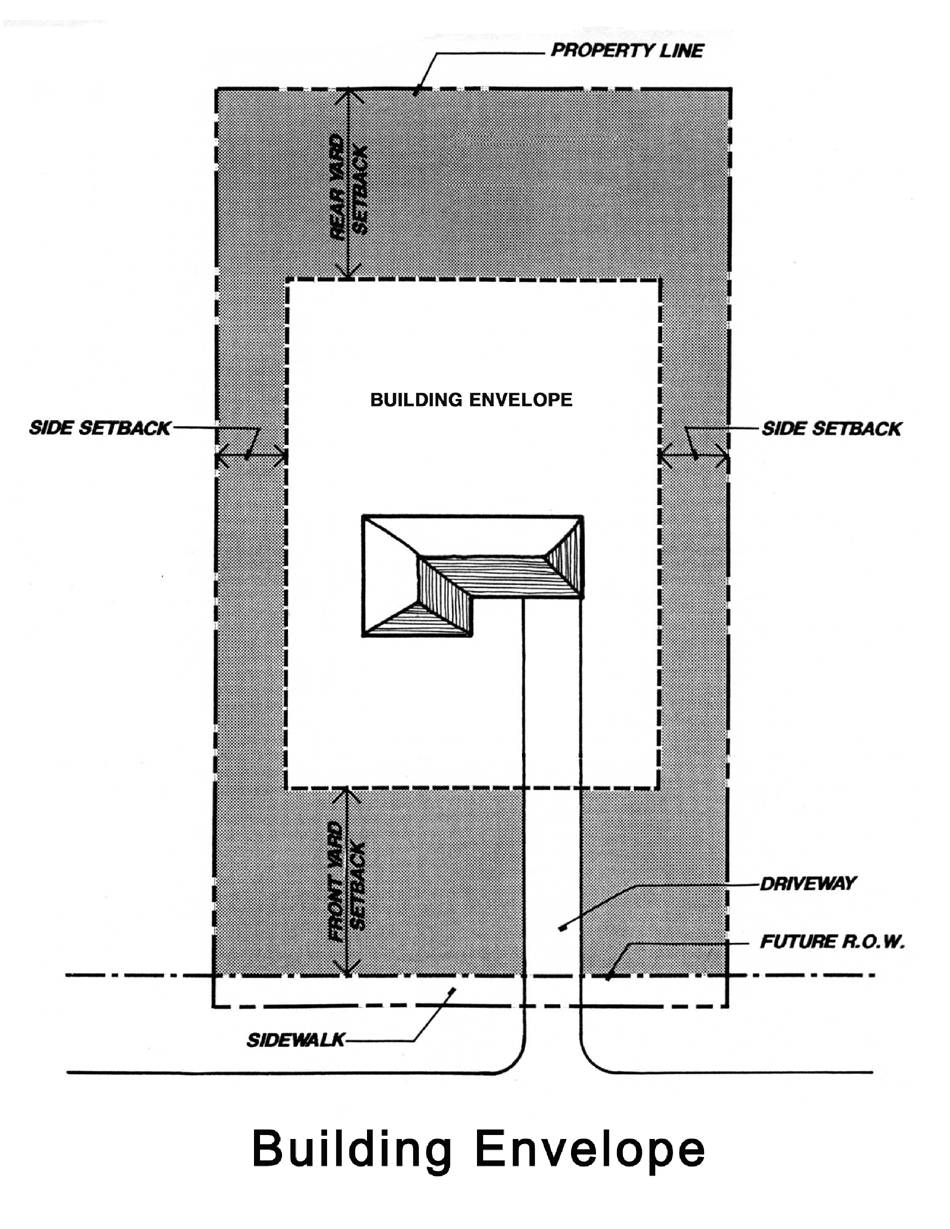
Building envelope or buildable area means the portion of a lot or site, exclusive of the required setbacks and/or open spaces required by this chapter, upon which a building or structure may be constructed.
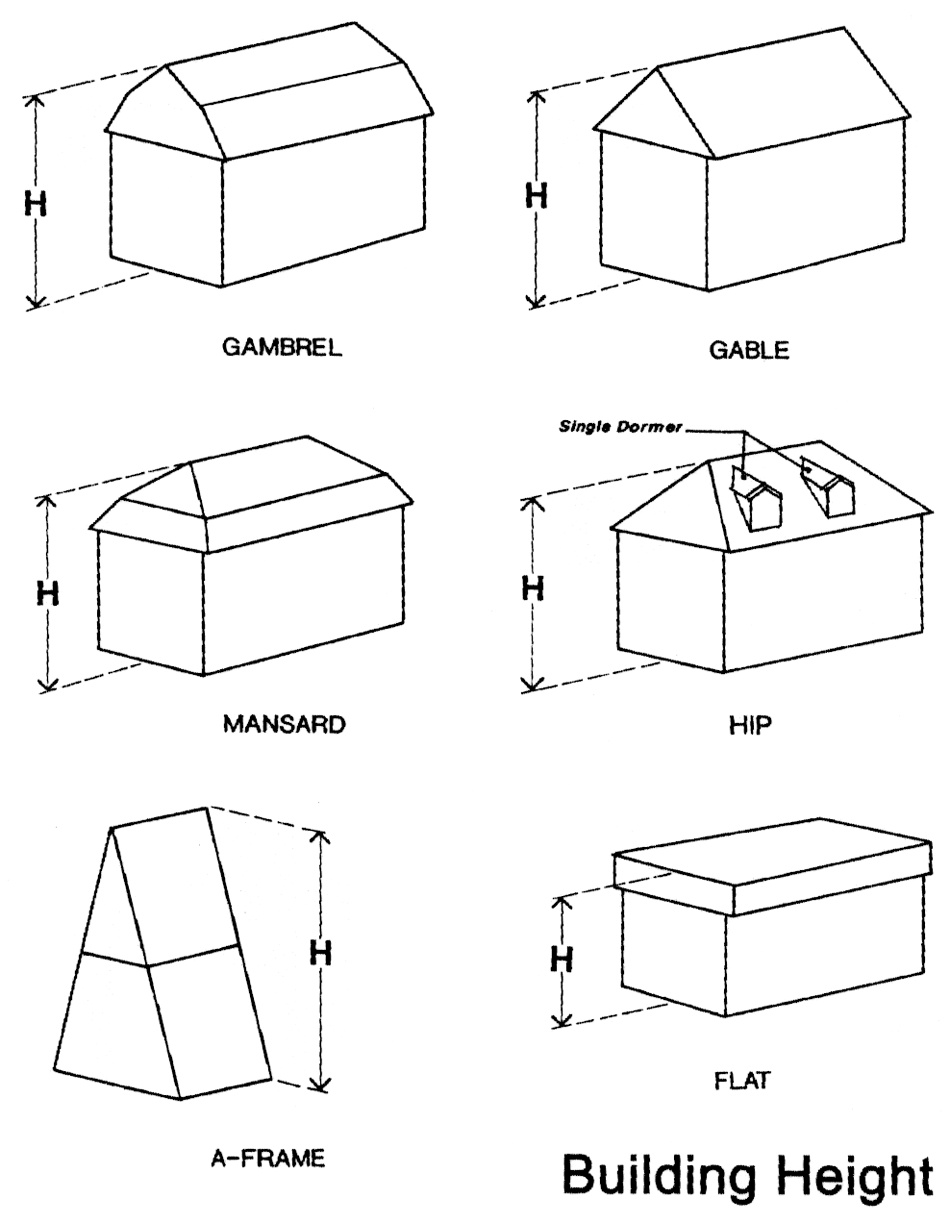
Building height means the vertical distance measured from the established grade to the highest point of the roof surface of a flat, gambrel, gable, mansard, hip, or A-frame roof. Where a building is located on sloping terrain, the height shall be measured from the average ground level of the building wall.
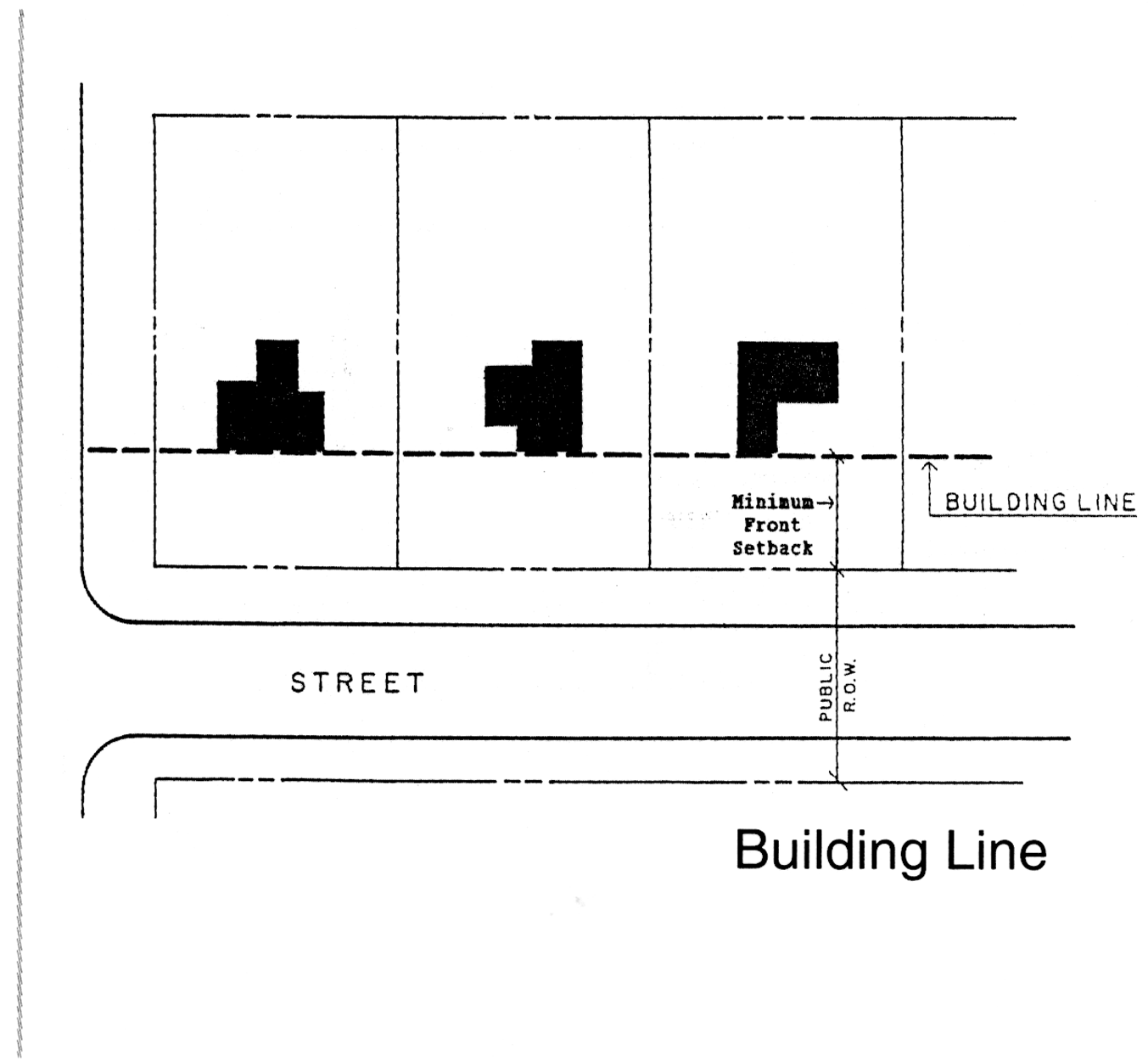
Building line means a line parallel to the front lot line at the minimum required front setback line (see illustration).
Building official means the officer or other authority designated by the city council to administer and enforce the Building Code and to supervise and coordinate the functions of the building department.
Building permit means an official document or certification that is issued by the building official and which authorizes the construction, alteration, enlargement, conversion, reconstruction, remodeling, rehabilitation, erection, demolition, moving, or repair of a building or structure.
Building, separate, means any portion of any structure completely separated from every other portion by masonry or a firewall without any window, which wall extends from the ground to the roof.
Bulk means the term used to indicate the size and setbacks of buildings and structures and the location of same with respect to one another, including standards for the heights and area of buildings; the location of exterior walls in relation to lot lines, streets, and other buildings; gross floor area of buildings in relation to lot area; open space; and, the amount of lot area required for each dwelling unit.
Bulkhead means part of traditional storefront design, this short, often decorative wall, extends typically eighteen (18) to twenty-four (24) inches above the sidewalk. The bulkhead protects the display window from damage from snow storage and debris from the sidewalk.
Bulk fuel sales means the sale and/or transfer of bulk quantities of motor fuels, compressed gases, liquefied petroleum gas, kerosene, propane, or other flammable and/or combustible liquids for business use, retail resale, wholesale, or distribution.
Caretaker living quarters means an independent residential dwelling unit designed for and occupied by no more than two (2) persons, where at least one (1) is employed to look after goods, buildings, or property on the parcel on which the living quarters are located.
Cemetery means land used for the burial of the dead, including columbariums, crematories, and mausoleums.
Certificate of occupancy means a document, signed by the building official as a condition precedent to the commencement of a use after the construction/reconstruction of a structure or building, which acknowledges that such structure or building complies with the provisions of this chapter.
Child care center or day care center means a facility, other than a private home, receiving one (1) or more preschool or school-age children for care for periods of less than twenty-four (24) hours a day, and where the parents or guardians are not immediately available to the child. Child care center or day care center includes a facility that provides care for not less than two (2) consecutive weeks, regardless of the number of hours of care per day. This definition includes facilities generally described as a day nursery, nursery school, parent cooperative preschool, play group, before- or after-school program, or drop-in center. Child care centers are subject to all applicable provisions, definitions, and regulations of Michigan Public Act 116 of 1973, as amended (MCL 722.111 et seq.).
Church or synagogue means any structure wherein persons regularly assemble for religious activity.
City means the City of Dearborn Heights, Michigan.
Clinic, medical, means an establishment where human patients who are not lodged overnight are admitted for examination and treatment by a group of physicians, dentists, or similar professionals. A medical clinic may incorporate customary laboratories and pharmacies incidental to or necessary for its operation or to the service of its patients, but may not include facilities for overnight patient care or major surgery.
Clinic, veterinary, means an institution which is licensed by the Michigan Department of Health to provide for the care, diagnosis, and treatment of sick or injured animals, including those in need of medical or surgical attention. A veterinary clinic may include customary pens or cages for the overnight boarding of animals and such related facilities as laboratories, testing services, and offices.
Club or fraternal organization means an organization of persons for special purposes or for the promulgation of sports, arts, science, literature, politics, or the like, but not operated for profit. The facilities owned or used by such organization may be referred to as a club in this chapter.
Colocation means the location by two (2) or more wireless communication providers of wireless communication facilities on a common structure, tower, or building, with the intent to reduce the total number of structures required to support wireless communication antennas in the city.
Commercial use means the use of property for retail sales or similar businesses where goods or services are sold or provided directly to the consumer. As used in this chapter "commercial use" shall not include industrial, manufacturing, or wholesale businesses.
Commission means the planning commission of the City of Dearborn Heights.
Condominium means a system of separate ownership of individual units in multi-unit projects. In addition to the interest acquired in a particular unit, each unit owner is also a tenant in common in the underlying fee and in the spaces and building parts used in common by all the unit owners. For the purposes of this chapter, condominium terms shall be defined as follows:
(1)
Condominium act: Shall mean Public Act 59 of 1978, as amended.
(2)
Condominium lot: That portion of a site condominium project designed and intended to function similar to a platted subdivision lot for purposes of determining minimum yard setback requirements and other requirements set forth in Article 5, Schedule of Regulations.
(3)
Condominium unit: That portion of the condominium project designed and intended for separate ownership and use, as described in the master deed for the condominium project.
(4)
Common elements: Portions of the condominium project other than the condominium units.
(5)
General common element: Common elements other than the limited common elements, intended for the common use of all co-owners.
(6)
Limited common elements: Portions of the common elements reserved in the master deed for the exclusive use of less than all co-owners.
(7)
Master deed: The condominium document recording the condominium project to which are attached as exhibits and incorporated by reference the bylaws for the project and the condominium subdivision plan.
(8)
Site condominium project: A condominium project designed to function in a similar manner, or as an alternative to a platted subdivision. A residential site condominium project shall be considered as equivalent to a platted subdivision for purposes of regulation in this chapter.
Congregate housing. See senior citizen housing or state licensed residential facility.
Conservation easement means a legal agreement in which the landowner retains ownership of private property, but conveys certain specifically identified rights to a land conservation organization or a public body.
Construction means the physical activity involved in constructing buildings, structures and permanent improvements upon the land, including but not limited to earth-moving, grading, maneuvering equipment and machines, clearing, paving and the like.
Contractor's yard means a site on which a building or construction contractor stores equipment, tools, vehicles, building materials, and other appurtenances used in or associated with building or construction. A contractor(s yard may include outdoor or indoor storage, or a combination of both.
Convalescent home. See Nursing home.
Convenience store means a single-story retail store designed and stocked to sell primarily food, beverages, and other household supplies to customers who purchase only a relatively few items. Convenience stores are designed to attract a large volume of stop-and-go traffic.
Co-op (or cooperative) housing means a multiple dwelling owned by a corporation which leases its units to stockholders on a proprietary lease arrangement.
Curb cut means the entrance to or exit from a property provided for vehicular traffic to or from a public or private thoroughfare.
Day spa or day salon means a nurturing, safe, clean commercial establishment, which employs professional, licensed therapists whose services include massage and body or facial treatments. Private treatment rooms are provided for each client receiving a personal service. Massage treatments may include body packs and wraps, exfoliation, cellulite and heat treatments, electrolysis, body toning, waxing, aromatherapy, cleansing facials, medical facials, non-surgical face lifts, electrical toning, and electrolysis. Hydrotherapy and steam and sauna facilities, nutrition and weight management, spa cuisine, and exercise facilities and instruction may be provided in addition to the massage and therapeutic treatment services. Full service hair salons, make-up consultation and application, and manicure and pedicure services may be provided as additional services.
Deck means a platform, commonly constructed of wood, which is typically attached to a house, and which is typically used for outdoor leisure activities.
Density means the number of dwelling units developed on an acre of land. As used in this chapter, all densities are stated in dwelling units per net acre; that is, dwelling units per acre of land devoted to residential use, exclusive of land in streets, alleys, easements, steep slopes, regulated wetlands, parks, playgrounds, schoolyards, or other public lands and open spaces.
Detention basin means a manmade or natural water collector facility designed to collect surface water in order to impede its flow and to release the water gradually at a rate not greater than that prior to the development of the property, onto natural or manmade outlets.
Development means the construction of a new building, reconstruction of an existing building, or improvement of a structure on a parcel or lot, the relocation of an existing building to another lot, or the improvement of open land for a new use.
Display window means large panes of transparent glass that sit on top of the storefront bulkhead, typically measuring between six (6) and ten (10) feet tall.
Distribution center means a use which typically involves both warehouse and office/administration functions, where short and/or long term storage takes place in connection with the distribution operations of a wholesale or retail supply business.
District, zoning, means a portion of the city within which, on a uniform basis, certain uses of land and buildings are permitted and within which certain yards, open spaces, lot areas, and other requirements are established.
Drive-in theater means an open-air theater constructed and operated at an established location, without cover or roof, displaying motion pictures for the general public who view the screen or stage while seated in a vehicle. The term "drive-in theater" as used herein shall include the entire premises upon which such theater is constructed and operated, including parking areas and all other facilities accessory to such business.
Dumpster means any container of more than one (1) cubic yard capacity used for the depositing and/or temporary storage of rubbish ordinarily with the collection, transportation, and disposal of such rubbish by motor vehicle.
Duplex. See Dwelling, two-family or duplex.
Dwelling means any building, or part thereof, containing sleeping, kitchen, and bathroom facilities designed for and occupied by one (1) family. In no case shall a travel trailer, motor home, automobile, tent or other portable building not defined as a recreational vehicle be considered a dwelling. In the case of mixed occupancy where a building is occupied in part as a dwelling unit, the part so occupied shall be deemed a dwelling unit for the purposes of this chapter.
Dwelling, accessory. See Accessory dwelling unit.
Dwelling, manufactured, means a building or portion of a building designed for long-term residential use and characterized by all of the following:
(1)
The structure is produced in a factory in accordance with the National Manufactured Housing Construction and Safety Standards Act, as amended; and
(2)
The structure is designed to be transported to the site in a nearly complete form, where it is placed on a foundation and connected to utilities; and
(3)
The structure is designed to be used as either an independent building or as a module to be combined with other elements to form a complete building on the site.
Dwelling, mobile home, means a manufactured dwelling, transportable in one (1) or more sections, which is built upon a chassis and designed to be used with or without permanent foundation, when connected to the required utilities, and includes the plumbing, heating, air conditioning, and electrical systems contained in the structure. A mobile home dwelling shall not include modular homes, motor homes, or travel trailers.
Dwelling, multiple-family, means a building designed for and occupied by three (3) or more families living independently, with separate housekeeping, cooking, and bathroom facilities for each family. This definition includes three-family houses, four-family houses, and apartment houses, but does not include motels, hotels, trailer camps, or mobile home parks.
(1)
Apartment means an attached dwelling with party walls, contained in a building with other apartment units which are commonly reached from a common stair landing or walkway. Apartments are typically rented by the occupants. Apartment buildings often may have a central heating system and other central utility connections. Apartments typically do not have their own yard space. Apartments may also be known as garden apartments or flats.
(2)
Efficiency unit means a type of apartment consisting of one (1) principal room, exclusive of bathroom, kitchen, hallway, closets, or dining alcove directly off the principal room, providing not less than three hundred fifty (350) square feet of floor area.
Dwelling, one-family or single-family, means an independent, detached residential dwelling designed for and used or held ready for use by one (1) family only. Single-family dwellings are commonly the only principal use on a parcel or lot.
Dwelling, two-family or duplex, means a detached building, designed exclusively for and occupied by two (2) families living independently of each other, with separate housekeeping, cooking, and bathroom facilities for each. Also know as a duplex dwelling.
Dwelling unit means one (1) or more rooms, along with bathroom and kitchen facilities, designed as a self-contained unit for occupancy by one (1) family for living, cooking, and sleeping purposes.
Dwelling unit, townhouse, means an attached dwelling unit with party walls, designed as part of a series of three (3) or more dwellings, with its own front door which opens to the outdoors at ground level, its own basement, and typically, with its own utility connections and front and rear yards. Townhouses are sometimes known as row houses.
Earth-sheltered home means a complete building partially below grade that is designed to conserve energy and is intended to be used as a single-family dwelling.
Easement means a right-of-way granted, but not dedicated, for limited use of private land for a public or quasi-public purpose and within which the owner of the property shall not erect any permanent structures.
Engineer, city means the person or firm designated by the city council to advise the city administration, city council, and planning commission on drainage, grading, paving, storm water management and control, utilities, and other related site engineering and civil engineering issues. The city engineer may be a consultant or an employee of the city.
Enforcement official means the person or persons designated by the city as being responsible for enforcing and administering requirements of this zoning ordinance. Throughout this chapter the enforcement official may be referred to as the building official, planning official, public safety official, engineering official, or their agents. Such titles do not necessarily refer to a specific individual, but generally the office or department most commonly associated with the administration of the regulation being referenced.
Erected means built, constructed, reconstructed, moved upon, or any physical operations on the premises required for the building. Excavation, fill, drainage, and the like shall be considered part of erection.
Essential services means the erection, construction, alteration, or maintenance by public utilities, municipal departments or commissions, of underground, surface or overhead gas, communication, electrical, steam, fuel or water transmission or distribution systems, collections, supply or disposal systems, including towers, poles, wires, mains, drains, sewers, pipes, conduits, cables, fire alarm and police call boxes, traffic signals, hydrants and similar accessories in connection therewith, but not including buildings which are necessary for the furnishing of adequate service by such utilities or municipal departments for the general public health, safety, convenience, or welfare.
Excavation means the removal or movement of soil, sand stone, gravel, or fill dirt except for common household gardening, farming, and general ground care.
Exception means an exclusion from the normal zoning ordinance rules and regulations for the purposes of permitting particular uses or structures which are considered essential or appropriate in certain locations or under certain conditions. A variance is not required for uses or structures which are permitted because of an exception.
Family means one (1) or more persons living together and related by the bonds of consanguinity, marriage, or adoption, together with servants of the principal occupants and not more than one (1) additional unrelated person, with all such individuals being domiciled together as a single, domestic, housekeeping unit in a dwelling. Family shall include functional family, as defined herein.
Functional family means a group of people having a relationship which is functionally equivalent to a family. The relationship must be of a permanent and distinct character with a demonstrable and recognizable bond characteristic of a cohesive unit. Functional family does not include any society, club, fraternity, sorority, association, lodge, organization, or other group of individuals where the common living arrangement or basis for establishment of the housekeeping unit is temporary.
Fence means an artificially constructed barrier of wood, masonry, stone, wire, metal, or any other manufactured material or combination of materials, used to prevent or control entrance, confine within, or mark a boundary.
Fill or filling means the depositing or dumping of any matter on or into the ground, except deposits resulting form common household gardening and general ground care.
Floodplain means any land area susceptible to being inundated by floodwaters when high amounts of precipitation are experienced or natural cyclic conditions raise the water levels. Determinants of a floodplain are as follows:
(1)
That area which typically is adjacent to a river, stream, or other body of water, and is subject to flooding from a 100-year base flood.
(2)
Principal estuary courses of wetland areas that are part of the river flow system.
(3)
Contiguous areas paralleling a river, stream, or other body of water that exhibit unstable soil conditions for development.
Floodway means the channel of a river or other watercourse and the adjacent lands that must be reserved in order to discharge floodwaters without cumulatively increasing the water surface elevations more than one (1) foot.
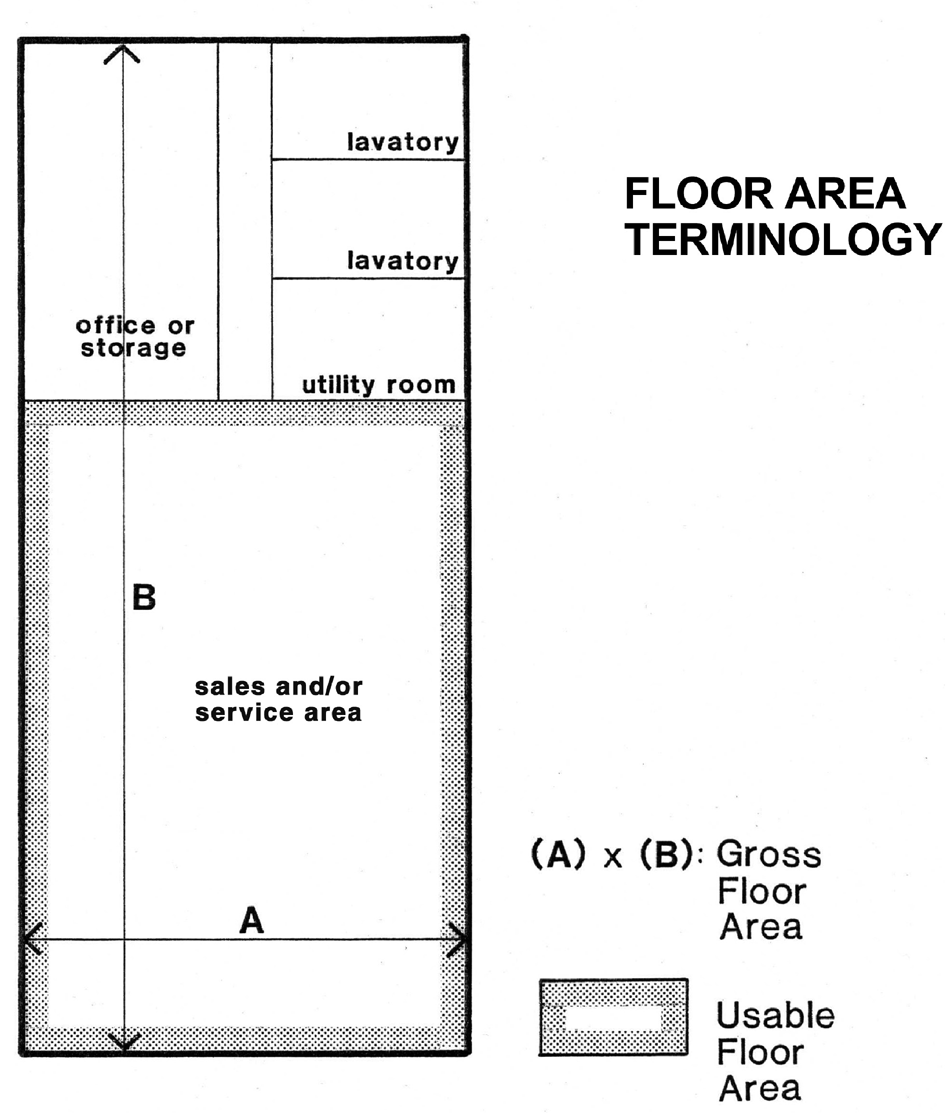
Floor area, gross, means the total area of a building measured by taking the outside dimensions of the building at each floor level, including any basement, elevator shafts and stairwells; floor space used for mechanical equipment; penthouse, half story, and mezzanine or interior balcony.
Floor area, gross leasable, means the whole floor area measured to the dominant position of the permanent outer walls, excluding major vertical penetrations of the floor (e.g., elevator shafts, stairwells, flues, stacks, pipe shafts, interior courtyards/atriums, and vertical ducts with their enclosing walls). Structural columns and projections are included. The gross leasable floor area is fixed for the life of a building and is not affected by changes in corridors.
Floor area, net. See Floor area, usable residential and floor area, usable nonresidential.
Floor area, usable nonresidential, means the sum of the horizontal areas of each floor, measured from the interior faces of the exterior walls, including all areas used for, intended to be used for, and accessible for the sale of merchandise, provision of services, or service to patrons, clients or customers. Floor area which is used for or intended to be used for the storage or processing of merchandise, or for utilities shall be excluded from the computations of usable nonresidential floor area (see illustration).
Floor area, usable residential means the gross floor area minus areas in basements, unfinished attics, attached garages, and enclosed or unenclosed porches.
Foster child means a child unrelated to a family by blood or adoption with whom he or she lives for the purpose of care and/or education.
Fraternal organization. See Club.
Garage, private means an accessory building designed or used for the storage of not more than three (3) automobiles owned and used by the occupants of the building to which it is accessory. Private garages shall not have public repair facilities. A private garage may be either attached to or detached from the principal structure.
Garage, public. See Automobile-oriented use.
Gas station. See Automobile-oriented use.
Golf course or country club means the premises upon which the game of golf is played, including clubhouses, parking lots, swimming pools, tennis courts, or other facilities or uses customarily incidental to a golf course or country club.
Grade means a reference plane representing the average of the finished ground level adjacent to the exterior walls of a building or structure and established for the purpose of regulating the number of stories and/or height of a building. If the ground is not entirely level, the grade shall be determined by averaging the elevation of the ground at each face of the building or structure.
(1)
Average grade means the arithmetic mean of the lowest and highest grade elevations in an area within five (5) feet of the exterior wall or foundation line of a building or structure.
(2)
Finished grade means the lowest point of elevation in an area within five (5) feet of the exterior wall or foundation line of a building or structure.
(3)
Native grade means the elevation of the ground surface in its natural state, before construction begins.
Greenbelt. See Landscaping.
Group day care home. See State licensed residential facility.
Hazardous uses means all uses which involve the storage, sale, manufacture, or processing of materials which are dangerous and combustible and are likely to burn immediately, and from which either poisonous fumes or explosions are to be anticipated in the event of fire. These uses include all high hazard uses listed in Section 306 of the Basic Building Code/1987, as amended, edition prepared by the Building Officials Conference of America, Incorporated.
Height of building. See Building height.
Highway. See Street.
Home occupation means any occupation or profession conducted entirely within a dwelling by any inhabitant thereof, where such use is clearly incidental to the principal use of the dwelling as a residence, and where such use:
(1)
Does not change the character or appearance of the residence;
(2)
Does not result in any signs or displays on the premises except as permitted under article X, Signs, of this chapter;
(3)
Does not result in any sales of commodities or goods on the premises; and
(4)
Does not require equipment other than what would commonly be found in association with a residential dwelling.
Hookah/Shisha Bars/Cafes. See Restaurants.
Hospital means an institution licensed by the Michigan Department of Health to provide inpatient and outpatient medical and/or surgical services for the sick and/or injured, and which may include as an integral part of the facility such related facilities as laboratories, medical testing services, outpatient departments, training facilities, central service facilities and staff offices.
Hospital, veterinary. See Clinic, veterinary.
Hotel means a building of six (6) rooms or more in which lodging is offered for compensation to transient guests. A hotel is distinguished from a motel by providing access to rental units primarily from interior lobbies, courts, or halls.
Ice cream parlor means a retail establishment whose business is limited to the sale of ice cream, frozen deserts, dessert items, candies and confections, and beverages in a ready-to-eat state. Businesses serving hot dogs, hamburgers, salads, pizza, hot or cold sandwiches, or similar entree items are not considered ice cream parlors for the purposes of this chapter.
Impervious surface means any material that prevents, impedes, or slows infiltration or absorption of stormwater directly into the ground at the rate of absorption of vegetation-bearing soils. Impervious surfaces include buildings, asphalt, concrete, gravel, and other similar surfaces.
Indoor recreation center means an establishment which provides indoor exercise facilities and indoor court sports facilities, and which may include spectator seating in conjunction with the sports facilities. For the purposes of this chapter, a bowling establishment shall be considered a type of indoor recreation center.
Industry, heavy, means a use engaged in the basic processing and manufacturing of materials or products predominantly from extracted or raw materials, or a use engaged in storage of, or manufacturing processes using flammable or explosive materials, or storage or manufacturing processes that potentially involve hazardous or commonly recognized offensive conditions.
Industry, light, means a use engaged in the manufacture, predominantly from previously prepared materials, of finished products or parts, including processing, fabrication, assembly, treatment, packaging, incidental storage, sales, and distribution of such products, but excluding basic industrial processing.
Ingress and egress means a driveway which allows vehicles to enter or leave a parcel of property, or to a sidewalk which allows pedestrians to enter or leave a parcel of property, a building or another location.
Junk means any motor vehicle, machinery, appliance, product or merchandise with parts missing or scrap metals or other scrap materials that are damaged, deteriorated, or are in a condition which prevents their use for the purpose for which the product was manufactured. This definition specifically includes motor vehicles not movable under their own power.
Junkyard or salvage yard means and includes automobile wrecking yards and includes any area of more than two hundred (200) square feet for the storage, keeping or abandonment of junk, including scrap metals or other scrap materials, or for the dismantling, demolition, or abandonment of automobiles or other vehicles or machinery or parts thereof, but does not include uses established entirely within enclosed buildings.
Kennel means the boarding, breeding, raising, grooming, or training of one (1) or more domestic animals of any age, which animals are not owned by the owner or occupant of the premises and/or which are kept for commercial gain. See also chapter 6, Animals.
Kennel, private, means the keeping, breeding, raising, showing, or training of four (4) or more domestic animals over four (4) months of age for the personal enjoyment of the owner or occupants of the premises, and for which commercial gain is not the primary objective. See also chapter 6, Animals.
Laboratory means a place devoted to experimental study, such as testing and analyzing. Manufacturing of a product or products is not permitted within this definition.
Lake means any body of water, natural or artificial, defined as (inland lake or stream (in the Inland Lake and Stream Act of 1972, P.A. 1972, No. 346, as amended.
Landfill means a tract of land that is used to collect and dispose of (solid waste (as defined and regulated in Michigan Public Act 641 of 1979, as amended.
Landscaping means the treatment of the ground surface with live plant materials such as, but not limited to, grass, ground cover, trees, shrubs, vines, and other live plant material. In addition, a landscape design may include other decorative man-made materials, such as wood chips, crushed stone, boulders, or mulch. Structural features such as fountains, pools, statues, and benches shall also be considered a part of landscaping, but only if provided in combination with live plant material. Artificial plant materials shall not be counted toward meeting the requirements for landscaping. Various landscaping-related terms are defined as follows:
(1)
Berm means a continuous, raised earthen mound with flattened top and sloped sides, capable of supporting live landscaping materials, and with a height and width that complies with the requirements of this chapter.
(2)
Grass means any of a family of plants with narrow leaves normally grown as permanent lawns in Wayne County, Michigan.
(3)
Greenbelt means a strip of land of definite width and location reserved for the planting of a combination of shrubs, trees, and ground cover to serve as an obscuring screen or buffer for noise or visual enhancement, in accordance with the requirements of this chapter.
(4)
Ground cover means low-growing plants that form a dense, extensive growth after one (1) complete growing season, and tend to prevent weeks and soil erosion.
(5)
Hedge means a row of closely planted shrubs or low-growing trees which commonly form a continuous visual screen, boundary, or fence.
(6)
Hydro-seeding means a method of planting grass where a mixture of the seed, water, and mulch is mechanically sprayed over the surface of the ground.
(7)
Interior parking lot landscaping means a landscaped area located in the interior of a parking lot in such a manner as to improve the safety of pedestrian and vehicular traffic, guide traffic movement, and improve the appearance of the parking area.
(8)
Mulch means a layer of wood chips, dry leaves, straw, hay, plastic, or other materials placed on the surface of the soil around plants to retain moisture, prevent weeds from growing, hold the soil in place, or aid plant growth.
(9)
Nurse grass means any of a variety of rapidly-growing annual or perennial rye grasses used to quickly establish ground cover to prevent dust or soil erosion.
(10)
Screen or screening means a wall, wood fencing, or combination of plantings of sufficient height, length, and opacity to form a visual barrier. If the screen is composed of nonliving material, such material shall be compatible with materials used in construction of the main building, but in no case shall include wire fencing.
(11)
Shrub means a self-supporting, deciduous or evergreen woody plant, normally branched near the base, bushy, and less than fifteen (15) feet in height.
(12)
Tree means a self-supporting woody plant with a well-defined central trunk or stem which normally grows to a mature height of fifteen (15) feet or more in Wayne County, Michigan.
a.
Deciduous tree means a variety of tree that has foliage that is shed at the end of the growing season.
b.
Evergreen tree means a variety of tree that has foliage that persists and remains green throughout the year.
(13)
Ornamental tree means a deciduous tree which is typically grown because of its shape, flowering characteristics, or other attractive features, and which grows to a mature height of twenty-five (25) feet or less.
(14)
Shade tree means, for the purposes of this chapter, a deciduous tree which has a mature crown spread of fifteen (15) feet or greater in Wayne County, Michigan, and has a trunk with at least five (5) feet of clear stem at maturity.
(15)
Vine means a plant with a flexible stem supported by climbing, twining, or creeping along the surface, and which may require physical support to reach maturity.
Landscaping contractor's operation means a business engaged in the practice of improving building sites or other grounds by contouring the land and planting flowers, shrubs, and trees. A landscaping contractor's operation typically consists of equipment, tools, vehicles, and materials used in or associated with such a business.
Livestock means horses, cattle, sheep, goats, chickens, ducks, and other domestic animals normally kept or raised on a farm.
Loading space means an off-street space on the same lot as the building or buildings being served, for the temporary parking of delivery vehicles while loading and unloading merchandise or materials.
Lodging house or rooming house means a building (other than a hotel, motel, nursing home, or private residence) where for compensation and by prearrangement for definite periods of time, lodging only is provided for five (5) or more persons.
Lot means land occupied or to be occupied by a use, building or structure and permitted accessory buildings together with such open spaces, lot width, and lot area as are required by this chapter and having its principal frontage upon a public street or upon a private way used for street purposes. A lot need not be a lot of record.
Lot area means the total horizontal area within the lot lines of a lot. For lots fronting or lying adjacent to private streets, lot area shall be interpreted to mean that area within lot lines separating the lot from the private street, and not the centerline of the street.
Lot, contiguous means lots adjoining each other.
Lot, corner, means a lot of which at least two (2) adjacent sides abut for their full length upon a street, provided that such two (2) sides intersect at an angle of not more than one hundred thirty-five (135) degrees. Where a lot is on a curve, if tangents through the extreme point of the street line of such lot make an interior angle of not more than one hundred thirty-five (135) degrees, it is a corner lot. In the case of a corner lot with curved street line, the corner is that point on the street lot line nearest to the point of intersection of the tangents described above.
Lot coverage, residential, means the part or percent of the lot that is occupied by buildings or structures.
Lot coverage, nonresidential means the part or percent of the lot that is occupied by buildings, structures, paved surfaces, or other impervious surfaces.
Lot depth means the horizontal distance from the front street line to the rear lot line, measured along the median between the side lot lines.
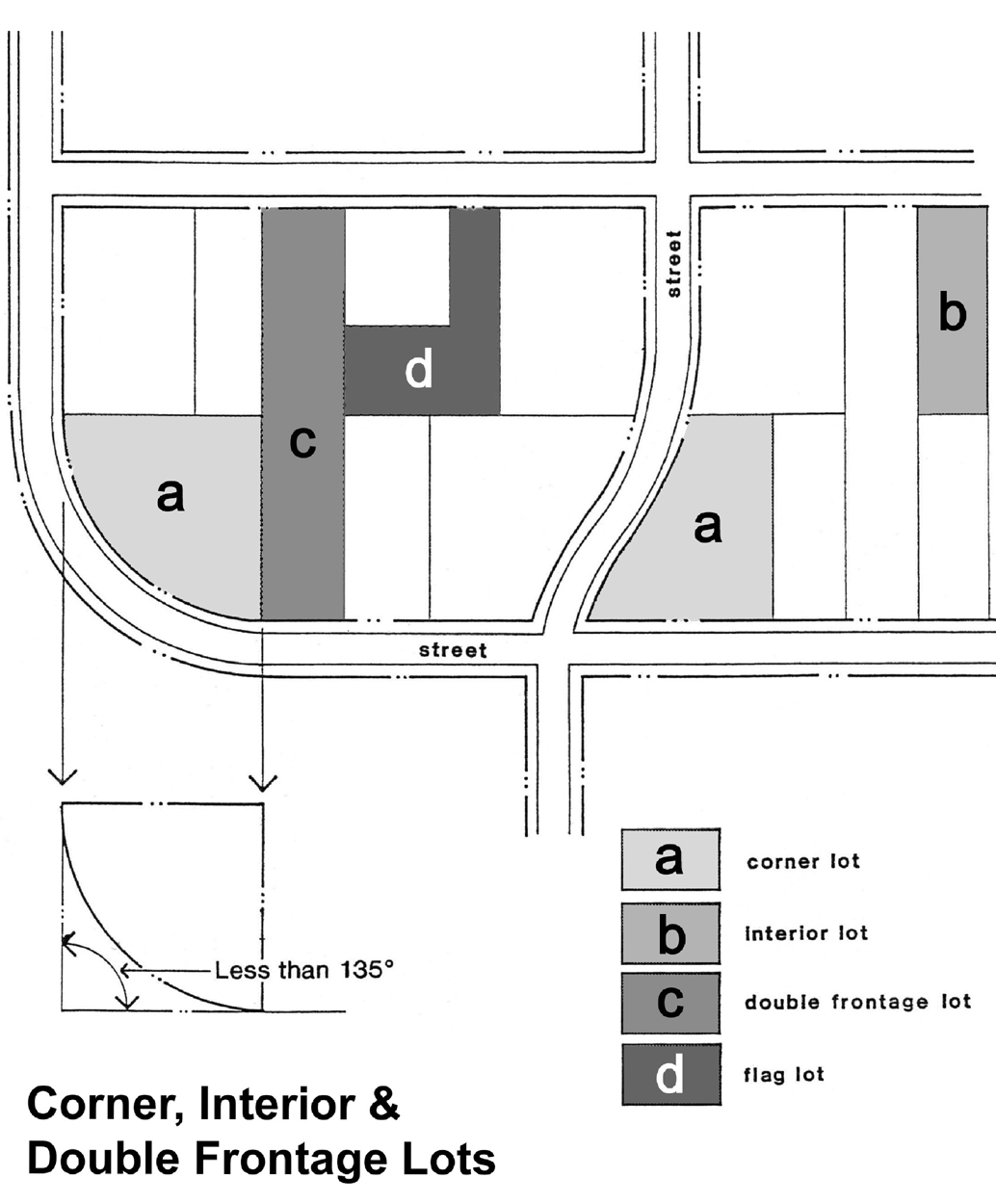
Lot, double-frontage, or through lot means an interior lot having frontages on two (2) more-or-less parallel streets (as distinguished from a corner lot). In the case of a row of double-frontage lots, one (1) street shall be designated as the front street in the plat.
Lot, flag, means a lot which is located behind other parcels or lots fronting on a public road, but which has a narrow extension to provide access to the public road.
Lot, interior, means a lot other than a corner lot or double-frontage (through) lot.
Lot lines mean the property lines bounding the lot:
(1)
Front lot line. In the case of a lot abutting upon one (1) public or private street, the front lot line shall mean the line separating such lot from such street right-of-way. In the case of a corner or double-frontage lot, the front lot line shall be that line which separates said lot from the right-of-way for the road which is designated as the front on the plat, or which is designated as the front on the site plan review application or request for a building permit, subject to approval by the planning commission or building official. On a flag lot, the front lot line shall be the interior lot line most parallel to and nearest the street form which access is obtained.
(2)
Rear lot line. Ordinarily, that lot line which is opposite and most distant from the front lot line. In the case of an irregular, triangular, or wedge-shaped lot, a line ten (10) feet in length entirely within the lot parallel to and at the maximum distance from the front lot line of the lot shall be considered to be the rear lot line for the purpose of determining depth of rear yard. In cases where none of these definitions are applicable, the building inspector shall designate the rear lot line.
(3)
Side lot line. Any lot line that is not a front lot line or a rear lot line, as defined above. A side lot line separating a lot from a street is a side street lot line. A side lot line separating a lot from another lot or lots is an interior side lot line.
Lot width means the straight line distance between the side lot lines, measured at the two (2) points where the minimum front yard setback line intersects the side lot lines.
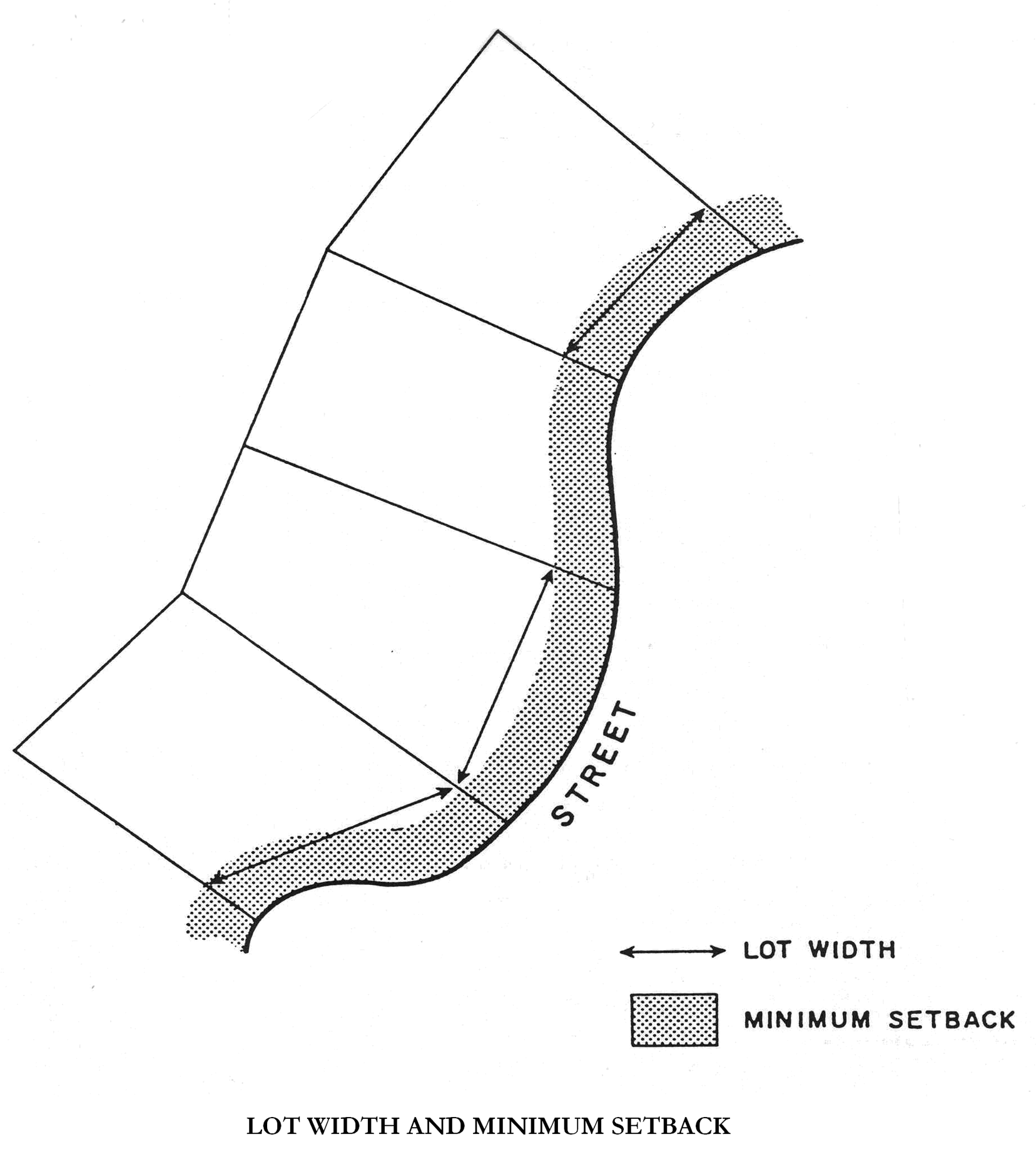
Lot of record means a parcel of land, the dimensions and configuration of which are shown on a subdivision plat recorded in the offices of the Wayne County Register of Deeds and City Assessor, or a lot or parcel described by metes and bounds, and accuracy of which is attested to by a land surveyor (registered and licensed in the State of Michigan) and likewise so recorded with the Wayne County Register of Deeds and City Assessor.
Lot split and consolidation means the dividing or uniting of lots by virtue of changes in the deeds in the office of the Wayne County Register of Deeds and/or the city assessor.
Lounge. See Restaurant, bar or lounge.
Main access drive means any private street designed to provide access from a public street or road to a mobile home park, apartment or condominium complex, or other private property development.
Marginal access road. See Secondary access drive.
Massage parlor. See Adult regulated uses, massage parlor.
Master plan means the document which is prepared under the guidance of the planning commission and consists of graphic and written materials which indicate the general location for streets, parks, schools, public buildings and all physical development of the city. As used in this chapter, the term refers to the master plan adopted by the city council on May 8, 2007, as amended.
Mezzanine. See Story.
Mini-warehouse means a building or group of buildings, each of which contains several individual storage units, each with a separate door and lock and which can be leased on an individual basis. Mini-warehouses are typically contained within a fenced, controlled-access compound.
Mobile home. See Dwelling, mobile home.
Mobile home park means a parcel or tract of land under the control of a person upon which three (3) or more mobile homes are located on a continual non-recreational basis and which is offered to the public for that purpose regardless of whether a charge is made therefore, together with any building, structure, enclosure, street, equipment, or facility used or intended for use incident to the occupancy of a mobile home, subject to conditions set forth in the Mobile Home Commission Rules and Michigan Public Act 96 of 1987, as amended.
Mobile home lot means an area within a mobile home park which is designated for the exclusive use of a specific mobile home.
Mortuary or funeral home means an establishment where the dead are prepared for burial or cremation and where wakes or funerals may be held.
Motel means a building or series of buildings in which lodging is offered for compensation to transient guests. A motel is distinguished from a hotel by providing direct independent access to and adjoining parking for each rental unit.
Motorcycle means every motor vehicle designed to travel on not more than three (3) wheels in contact with the ground, and includes motor scooters and bicycles with motor attached.
Multiple-family dwelling. See Dwelling, multiple-family.
Natural features shall include soils, wetlands, floodplains, water bodies and channels, topography, trees and other types of vegetative cover, and geologic formations.
Nonconformity means any lot, site, use of land, or structure which, at the time of adoption of this chapter or any amendment thereto, does not conform to the standards and regulations for the district in which it is located. See also the definitions in article XVIII, Nonconformities.
Nuisance means any offensive, annoying, or disturbing practice or object, which prevents the free use of one's property, or which renders its ordinary use or physical occupation uncomfortable. Nuisance commonly involves continuous or recurrent acts which give offense to the senses, violate the laws of decency, obstruct reasonable and comfortable use of property, or endangers life and health.
Nursery, day nursery, nursery school. See Child care center.
Nursery, tree and shrub, means a space, building, and/or structure, or combination thereof, where live trees, shrubs, and other plants used for gardening and landscaping are propagated, stored, and/or offered for sale on the premises.
Nursing home, convalescent home, or rest home means a home for the care of the aged, infirm, or those suffering from bodily disorders, wherein two (2) or more persons are housed or lodged and provided with nursing care. The home shall conform and qualify for license under Part 217 of Michigan Public Act 368 of 1978, as amended (MCL 333.21701, et seq.).
Occupancy, change of, means a discontinuance of an existing use and the substitution of a use of a different kind or class, or the expansion of a use.
Occupied means used in any way at the time in question.
Office means a building or portion of a building wherein services are performed involving predominantly administrative, professional, or clerical operations.
Open-air business uses means any business that is conducted primarily out-of-doors. Unless otherwise specified herein, open-air business shall include:
(1)
Retail sale of garden supplies and equipment, including trees, shrubbery, plants, flowers, seed, topsoil, humus, fertilizer, trellises, and lawn furniture.
(2)
Roadside stands for the retail sale of agricultural products, including fruits, vegetables, and Christmas trees.
(3)
Outdoor recreation uses, including tennis courts, archery courts, shuffleboard, horseshoe courts, miniature golf, golf driving range, and amusement parks.
(4)
Bicycle, trailer, motor vehicle, boats, or home equipment sales, service, or rental services.
(5)
Outdoor display and sale of garages, swimming pools, playground equipment, and similar uses.
Open space means that part of a zoning lot, including courts and/or yards, which is open and unobstructed from its lowest level to the sky, and is accessible to all residents upon the zoning lot.
Outdoor dining, active means outdoor active dining areas shall have either table service or an exterior pedestrian pick-up area with tables and chairs, landscaping, and shade-structures that is designed for diners.
Outdoor storage means the keeping, in an unroofed area, of any goods, junk, material, merchandise or vehicles in the same place for more than twenty-four (24) hours.
Outlot means a parcel of land which is designated as an "outlot" on the recorded plat, and which is usually not intended to be used for the same purposes as other lots in the plat.
Parcel means a continuous area, trace, or acreage of land that has not been divided or subdivided according to the provisions of the Subdivision Control Act and has frontage on a public street.
Package liquor store means a retail establishment licensed by the State of Michigan where more than ten (10) percent of the gross floor area is utilized for the storage, display, and sale of alcoholic beverages, in the original container and for consumption off the premises.
Parking lot, off-street means a facility providing vehicular parking spaces, along with adequate drives and aisles for maneuvering, so as to provide safe and convenient access for entrance and exit for the parking of more than three (3) automobiles.
Parking space means an area of definite width and length as designated in this chapter for parking an automobile or other vehicle, such space being exclusive of necessary drives, aisles, entrances, or exits and being fully accessible for the storage or parking of permitted vehicles.
Performance guarantee means a financial guarantee to ensure that all improvements facilities, or work required by this chapter will be completed in compliance with the ordinance, regulations, and approved plans and specifications of the development.
Person means any individual, trustee, executor, fiduciary, corporation, firm, partnership, association, organization, or other legal entity acting as a unit.
Personal care services means the provision of appearance care services to individual consumers. Examples include hair, nail, or skin care; non-medical weight loss centers; therapeutic massage; and tanning salons.
Personal fitness center means a facility which provides indoor exercise facilities, such as exercise machines and weight-lifting equipment, usually in a structured physical activity program supervised by professional physical fitness instructors. As defined herein, "personal fitness center" shall not include court sports facilities or spectator seating for sports events. A personal fitness center may or may not be enclosed within a gym.
Pervious surface means a surface that permits full or partial absorption of storm water.
Pet means a domesticated dog, cat, bird, gerbil, hamster, guinea pig, turtle, fish, rabbit, or other similar animal that is commonly available and customarily kept for pleasure or companionship.
Planned development means a planning or construction project involving the use of special zoning requirements and review procedures which are intended to provide design and regulatory flexibility, so as to encourage innovation in land use planning and design and thereby achieve a higher quality of development than might otherwise be possible. See article XVII, Planned Developments.
Planner, city, means the person or firm designated by the city council and planning commission to advise the city administration, city council, and planning commission on planning, zoning, land use, housing, and other related planning and development issues. The city planner may be a consultant or an employee of the city.
Planning commission means the Planning Commission of the City of Dearborn Heights.
Platted lot of record means a building lot described as a portion of a plat recorded with the county register of deeds and existing at the time of adoption or amendment of this chapter.
Principal use. See Use, principal.
Private street or private road. See Road.
Property line means the line separating a piece of property from the street right-of-way and the lines separating a parcel of property from the parcels next to it. See also Lot line.
Protected wetlands shall mean all wetlands subject to regulation by the Michigan Department of Environmental Quality (MDEQ), including:
(1)
Wetlands, regardless of size, which are partially or entirely within five hundred (500) feet of the ordinary high water mark of any lake, stream, river or pond whether partially or entirely contained within the project site.
(2)
Wetlands, regardless of size, which are partially or entirely within five hundred (500) feet of the ordinary high water mark of any lake, stream, river or pond unless it is determined by the MDEQ that there is no surface water or groundwater connection between the wetland and the water body.
(3)
Wetlands which are larger than five (5) acres, whether partially or entirely contained within the project site, and which are not contiguous to any lake, stream, river, or pond.
(4)
Wetlands, regardless of size, which are not contiguous to any lake, stream, river, or pond, if the MDEQ determines the protection of the wetland is essential to the preservation of the natural resources of the state from pollution, impairment or destruction.
Public safety official generally means the departments or persons who perform police, fire fighting, and other public safety functions for the city.
Public utility means any persons, firm, corporation, municipal department, or board, duly authorized to furnish under federal, state, or local regulations a service which is of public consequence and need. The principal distinctive characteristics of a public utility are that: (1) because of the nature of its business, it has characteristics of a natural monopoly, and (2) it provides a service to an indefinite public (or portion of the public) which has a legal right to demand and receive its services. Services for the purposes of this chapter include gas, electricity, steam, water, sewage, transportation, telephone, and cable television.
Real property includes the surface, whatever is attached to the surface (such as buildings or trees), whatever is beneath the surface (such as minerals), and the area above the surface, i.e., the sky.
Recreation establishment, indoor, means a privately-owned facility designed and equipped for the conduct of sports, amusement, or leisure time activities and other customary recreational activities indoors (within an enclosed building) and operated as a business and open for use by the public for a fee, such as gymnasiums and fitness centers, bowling alleys, indoor soccer facilities, racquetball and tennis clubs, ice and roller skating rinks, curling centers, and firearms ranges.
Recreation establishment, outdoor, means a privately owned facility designed and equipped for the conduct of sports, amusement or leisure time activities and other customary recreational activities outdoors (outside of an enclosed building) and operated as a business and open for use by the public for a fee such as tennis clubs, archery ranges, golf courses, miniature golf courses, golf driving ranges, water slides, batting cages and machines, skateboarding parks, and children's amusement parks.
Recreational land means any public or privately owned lot or land that is utilized for recreation activities such as, but not limited to, camping, swimming, picnicking, hiking, nature trails, boating, and fishing.
Recreational vehicle shall include the following:
(1)
Travel trailer: A portable vehicle on a chassis, which is designed to be used as a temporary dwelling during travel, recreational, and vacation uses, and which may be identified as a "travel trailer" by the manufacturer. Travel trailers generally contain sanitary, water, and electrical facilities.
(2)
Pickup camper: A structure designed to be mounted on a pickup chassis with sufficient equipment to render it suitable for use as a temporary dwelling during the process of travel, recreational and vacation uses.
(3)
Motor home: A recreational vehicle intended for temporary human habitation, sleeping, and/or eating, mounted upon a chassis with wheels and capable of being moved from place to place under its own power. Motor homes generally contain sanitary, water, and electrical facilities.
(4)
Folding tent trailer: A folding structure mounted on wheels and designed for travel and vacation use.
(5)
Boats and boat trailers: "Boats" and "boat trailers" shall include boats, floats, rafts, canoes, plus the normal equipment to transport them on the highway.
(6)
Other recreational equipment: Other recreational equipment includes snowmobiles, all terrain or special terrain vehicles, utility trailers, plus the normal equipment to transport them on the highway.
Recognizable and substantial benefit means a clear benefit, both to the ultimate users of the property in question and to the community, which would reasonably be expected to accrue, taking into consideration the reasonably foreseeable detriments of the proposed development and uses. Such benefits may include: long-term protection or preservation of natural resources and natural features, historical features, or architectural features; or, elimination of or reduction in the degree of nonconformity in a nonconforming use or structure.
Recycling center means a facility at which used material is separated and processed prior to shipment to others who will use the materials to manufacture new products.
Recycling collection station means a facility for the collection and temporary storage of recoverable resources, prior to shipment to a recycling center for processing.
Restaurant means any establishment whose principal business is the sale of food or beverages in a ready-to-consume state, and whose method of operation is characteristic of a carry-out, delivery, drive-in, drive-through, fast-food, or standard restaurant, or bar/lounge, or combination thereof, as defined below:
(1)
Carry-out restaurant means a restaurant whose method of operation involves sales of food, beverages, and/or frozen desserts in disposable or edible containers or wrappers in a ready-to-consume state for consumption primarily off the premises.
(2)
Delivery restaurant means a restaurant whose method of operation involves the exclusive transportation of food and/or beverages to customers off the premises, with no accommodation for customer to purchase, pick up, or consume food on the premises.
(3)
Drive-in restaurant means a restaurant whose method of operation involves a drive-in business, as defined under automobile-oriented use in this section.
(4)
Drive-through restaurant means a restaurant whose method of operation involves a drive-through business, as defined under automobile-oriented use in this section.
(5)
Fast-food restaurant means a restaurant whose method of operation involves minimum waiting for delivery of food to the customer in disposable containers for consumption primarily on the premises, but not in a motor vehicle at the site.
(6)
Standard restaurant means a restaurant whose method of operation involves either:
a.
The delivery of prepared food and/or beverages by waitpersons to customers seated at tables within a completely enclosed building and/or in an approved outdoor seating area pursuant to this chapter; or
b.
The delivery to customers at a cafeteria line of prepared food and/or beverages, which is subsequently consumed by the customers at tables within a completely enclosed building and/or in an approved outdoor seating area pursuant to this chapter.
(7)
Bar or lounge means a type of restaurant which is operated primarily for the dispensing of alcoholic beverages, although the sale of prepared food or snacks may also be permitted. If a bar or lounge is part of a larger dining facility, it shall be defined as that part of the structure so designated or operated.
(8)
Hookah/Shisha bars/cafés means a type of establishment where patrons share flavored tobacco from a communal hookah or nargile and where the sale of alcoholic beverages and/or prepared foods or snacks may also be permitted. If a bar or lounge is part of a larger dining facility, it shall be defined as that part of the structure so designated or operated.
Retention basin means a pond, pool, or basin used for the permanent storage of water runoff.
Retail store means a showroom, sales floor, display area or similar facility for the selling, trading and exchanging of goods, wares or merchandise for direct consumption (not for resale) directly to the consumer and completely within an enclosed building.
(1)
Such goods, wares or merchandise shall include appliances, bicycles, books, clothing, crafts, drugs and pharmaceutical items, dry goods, electronics, flowers, home furnishings, gifts, grocery and produce items, hardware, jewelry, musical instruments and supplies, optical goods, paint or wallpaper, pets, photographic supplies, recorded music, sporting goods, toys, and similar items.
(2)
Included in this definition are convenience stores, department stores, variety stores, "big-box" stores, supermarkets, wholesale club stores, shopping centers and shopping malls.
(3)
Also included in this definition are mail-order sales, Internet sales and similar activities, provided such activities are accessory to the principal use of retail sales to the customer in the building.
(4)
This definition does not include temporary uses, outdoor display or sales areas, or adult regulated uses and sexually-oriented businesses.
Right-of-way means the strip of land over which an easement exists to allow facilities such as streets, roads, highways, and power lines to be built.
Road. See Street.
Room, for the purpose of determining lot area requirements and density in a multiple-family district, a room is a living room, dining room or bedroom, equal to at least eighty (80) square feet in area. A room shall not include the area in kitchen, sanitary facilities, utility provisions, corridors, hallways and storage. Plans presented showing one (1), two (2), or three (3) bedroom units and including a "den", "library", or other extra room shall count such extra room as a bedroom for the purpose of computing density.
Rooming house. See Lodging house.
Rubbish means the miscellaneous waste materials resulting from housekeeping, mercantile enterprise, trades, manufacturing and offices, including other waste matter such as slag, stone, broken concrete, fly ash, ashes, tin cans, glass, scrap metal, rubber, paper, rags, chemical, or any similar or related combination thereof.
Satellite dish antenna means an electronic device that can collect electromagnetic waves transmitted from a satellite for conversion into television or sound.
Secondary access drive means a road that is generally parallel to and adjacent to an arterial road and that is designed to provide access to abutting properties so that these properties are separated from the through traffic on the arterial road and so that the flow of traffic on the arterial road is not impeded by direct driveway access from a large number of abutting properties.
Self-storage facility. See Mini-warehouse.
Semi-trailer means a trailer, which may be enclosed or not enclosed, having wheels generally only at the rear, and supported in front by a truck tractor or towing vehicle.
Senior citizen housing means an institution other than a hospital, hotel, or state licensed residential facility, which provides room and board to non-transient persons primarily fifty-five (55) years of age or older. Such housing may include the following:
(1)
Assisted living facility means a facility providing responsible adult supervision of or assistance with routine living functions of an individual in instances where the individual's condition necessitates that supervision or assistance.
(2)
Congregate housing means a type of semi-independent housing facility containing common kitchen, dining, and living areas, but with separate sleeping rooms. Such facilities typically provide special support services, such as transportation and limited medical care, but not including foster care or nursing care.
(3)
Dependent housing facility means a facility, such as a nursing home, which is designed for older persons who require a wide range of health and support services, including personal nursing care.
(4)
Senior apartment means a multiple-family dwelling unit intended to be occupied by persons fifty-five (55) years of age or older.
(5)
Senior housing complex means a building or group of buildings containing dwellings where the occupancy is restricted to persons fifty-five (55) years of age or older, or couples where either the husband or wife is fifty-five (55) years of age or older.
Setback means the distance between a front, side, or rear lot line and the nearest supporting member of a structure on the lot.
Setback measurement line means a line drawn parallel to the centerline of the road on the zoning map from which the front setback shall be measured.
Shopping center means a unified group of retail business and service uses under common architecture and served by a common circulation and parking system.
Sign. See chapter 26, Signs.
Single-family dwelling. See Dwelling, one-family or single-family.
Site plan means a plan, prepared to scale as required by article XIV, division 2, Site plan review, showing accurately and with complete dimensioning the boundaries of a site and the location of all buildings, structures, uses, and principal site development features proposed for a specific parcel of land.
Soil removal or excavation means the removal of any kind of soil or earth matter which includes topsoil, sand, gravel, clay or similar materials or any combination thereof except common household gardening.
Solar access easement means a right, expressed as an easement, covenant, condition, or other property interest in any deed or other instrument executed by or on behalf of any landowner, which protects the solar skyspace of an actual, proposed, or designated solar collector at a described location by forbidding or limiting activities, land uses, structures and/or trees that interfere with access to solar energy. Any property owner may give or sell his right to access to sunlight.
Solar collector means a device or combination of devices, structures, or parts thereof, such as flat plate collectors and photovoltaic cells, that collects, transfers, or transforms direct solar energy into thermal, chemical, or electrical energy, and that contributes significantly to a structure's energy supply. In addition to such functions, solar collectors may also serve as a part of a structure roof, wall, window, or other structural member.
Solar energy means radiant energy, direct, diffuse, or reflected, received from the sun.
Solar energy system means a complete design or assembly consisting of a solar collector, an energy storage facility (where used), and components for the distribution of transformed energy (to the extent they cannot be used jointly with a conventional energy system).
(1)
Active solar energy systems utilize mechanically operated solar collectors to collect, transfer, or store solar energy.
(2)
Passive solar energy systems use natural and architectural components to collect and store solar energy without using external mechanical energy.
Solar skyspace means the three-dimensional space between a solar collector and the sun, which must be free of obstructions that shade the collector to an extent that precludes its cost-effective operation.
Special event means an occurrence or noteworthy happening of seasonal, civic, or church importance, which is organized and sponsored by a nonprofit Dearborn Heights community group, organization, club or society, and which offers a distinctive service to the community, such as public entertainment, community education, civic celebration, or cultural or community enrichment. Special events typically run for a short period of time (less than two (2) weeks) and are unlike the customary or usual activities generally associated with the property where the special event is to be located.
Special land use means a use, either public or private, which possesses unique characteristics and therefore cannot be properly classified as a permitted use in a particular zoning district. After due consideration of the impact of any such proposed use upon the neighboring land and of the public need for the particular use at the proposed location, such special land use may be permitted following review and approval, subject to the terms of this chapter.
State licensed residential facility means any structure constructed for residential purposes that is licensed by the State of Michigan pursuant to Michigan Public Act 116 of 1973 (the Child Care Licensing Act) or Michigan Public Act 218 of 1979 (the Adult Foster Care Facility Licensing Act). This definition includes adult foster care facilities, foster family homes, foster family group homes, family day care homes, and group day care homes (see Human Services Facilities Subject to State Licensing Chart).
(1)
Adult foster care facility means a residential structure that is licensed to provide foster care, but not continuous nursing care, for unrelated adults over the age of seventeen (17). Adult foster care facilities are subject to all applicable provisions, definitions, and regulations of Michigan Public Act 218 of 1979, as amended (MCL 400.701 et seq.).
a.
Foster care means the provision of supervision, personal care, and protection in addition to room and board, for twenty-four (24) hours a day, five (5) or more days a week, and for two (2) or more consecutive weeks for compensation.
b.
Adult foster care facility does not include any of the following:
i.
A licensed child caring institution, children's camp, foster family home, or foster family group home, subject to the limitations contained in section 3(4f) of Michigan Public Act 218 of 1979, as amended (MCL 400.703).
ii.
A licensed foster family home that has a person who is eighteen (18) years of age or older placed in the foster family home under section 5(7) of Michigan Public Act 116 of 1973, as amended (MCL 722.115).
iii.
An establishment commonly described as an alcohol or a substance abuse rehabilitation center; a residential facility for persons released from or assigned to adult correctional institutions; a maternity home; or a hotel or rooming house that does not provide or offer to provide foster care.
iv.
A veterans' facility created by 1885 PA 152, MCL 36.1 to 36.12.
c.
The following types of adult foster care facilities are provided for by this chapter:
i.
Adult foster care family home means a private home with the approved capacity to receive not more than six (6) adults to be provided with foster care. The adult foster care family home licensee shall be a member of the household and an occupant of the residence.
ii.
Adult foster care small group home means an adult foster care facility with the approved capacity to receive not more than twelve (12) adults to be provided with foster care. Facilities with the approved capacity for seven (7) or more adults are subject to special use approval.
iii.
Adult foster care large group home means an adult foster care facility with the approved capacity to receive at least thirteen (13) but not more than twenty (20) adults to be provided with foster care. Facilities are subject to special use approval.
iv.
Adult foster care congregate facility means an adult foster care facility with the approved capacity to receive more than twenty (20) adults to be provided with foster care. Facilities are subject to special use approval.
(2)
Family day care home means a private home in which one (1) but fewer than seven (7) minor children are received for care and supervision for periods of less than twenty-four (24) hours a day, unattended by a parent or legal guardian, except children related to an adult member of the family by blood, marriage, or adoption. Family day care home includes a home in which care is given to an unrelated minor child for more than four (4) weeks during a calendar year.
(3)
Foster family home means a private home in which one (1) but not more than four (4) minor children, who are not related to an adult member of the household by blood or marriage, or who are not placed in the household under the Michigan Adoption Code, are given care and supervision for twenty-four (24) hours a day, for four (4) or more days a week, for two (2) or more consecutive weeks, unattended by a parent or legal guardian.
(4)
Foster family group home means a private home in which more than four (4) but fewer than seven (7) minor children, who are not related to an adult member of the household by blood or marriage, or who are not placed in the household under the Michigan Adoption Code, are given care and supervision for twenty-four (24) hours a day, for four (4) or more days a week, for two (2) or more consecutive weeks, unattended by a parent or legal guardian.
(5)
Group day care home means a private home in which more than six (6) but not more than twelve (12) minor children are given care and supervision for periods of less than twenty-four (24) hours a day unattended by a parent or legal guardian, except children related to an adult member of the family by blood, marriage, or adoption. Group day care home includes a home in which care is given to an unrelated minor child for more than four (4) weeks during a calendar year.
(6)
Private home means a private residence in which the licensee or registrant permanently resides as a member of the household, which residency is not contingent upon caring for children or employment by a licensed or approved child placing agency.
Story means that portion of a building, other than a basement or mezzanine, included between the upper surface of any floor and the upper surface of the floor or roof next above it.
(1)
Basement means a portion of a building partly or totally below grade. A basement shall be considered a full story if more than one-half (½) of its height is above the elevation of the reference level.
(2)
Ground story means the lowest story of a building, the floor of which is not more than twelve (12) inches below the elevation of the reference level.
(3)
Half story means a story, located between a pitched roof and the uppermost full story, which does not cover more than one-half (½) of the floor area of a full story.
(4)
Mezzanine means an intermediate story which does not cover more than one-half (½) of the floor area of the story underneath it. A mezzanine shall be considered a full story if the vertical distance from the story next below it and the story next above it is twenty-four (24) feet or greater.
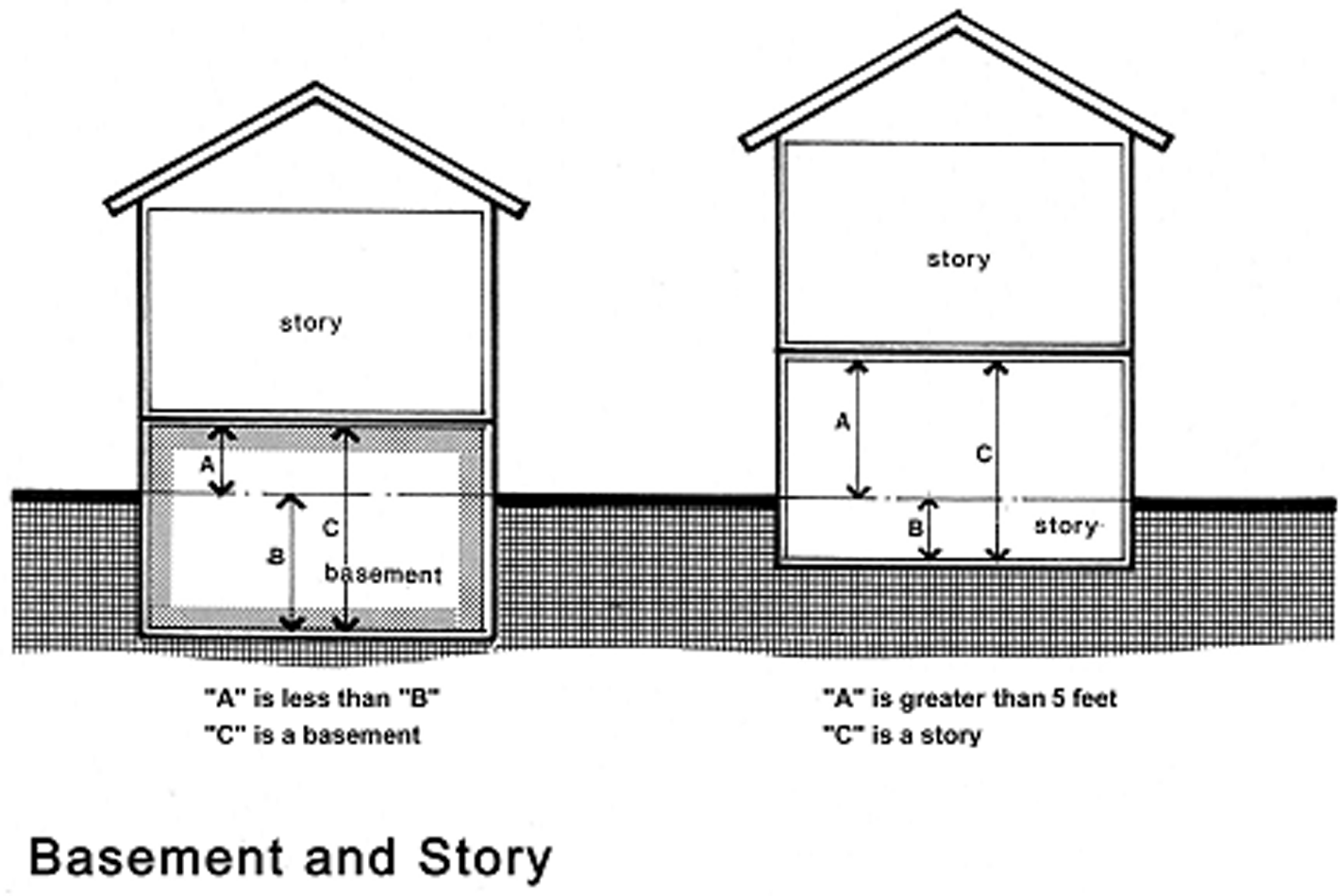
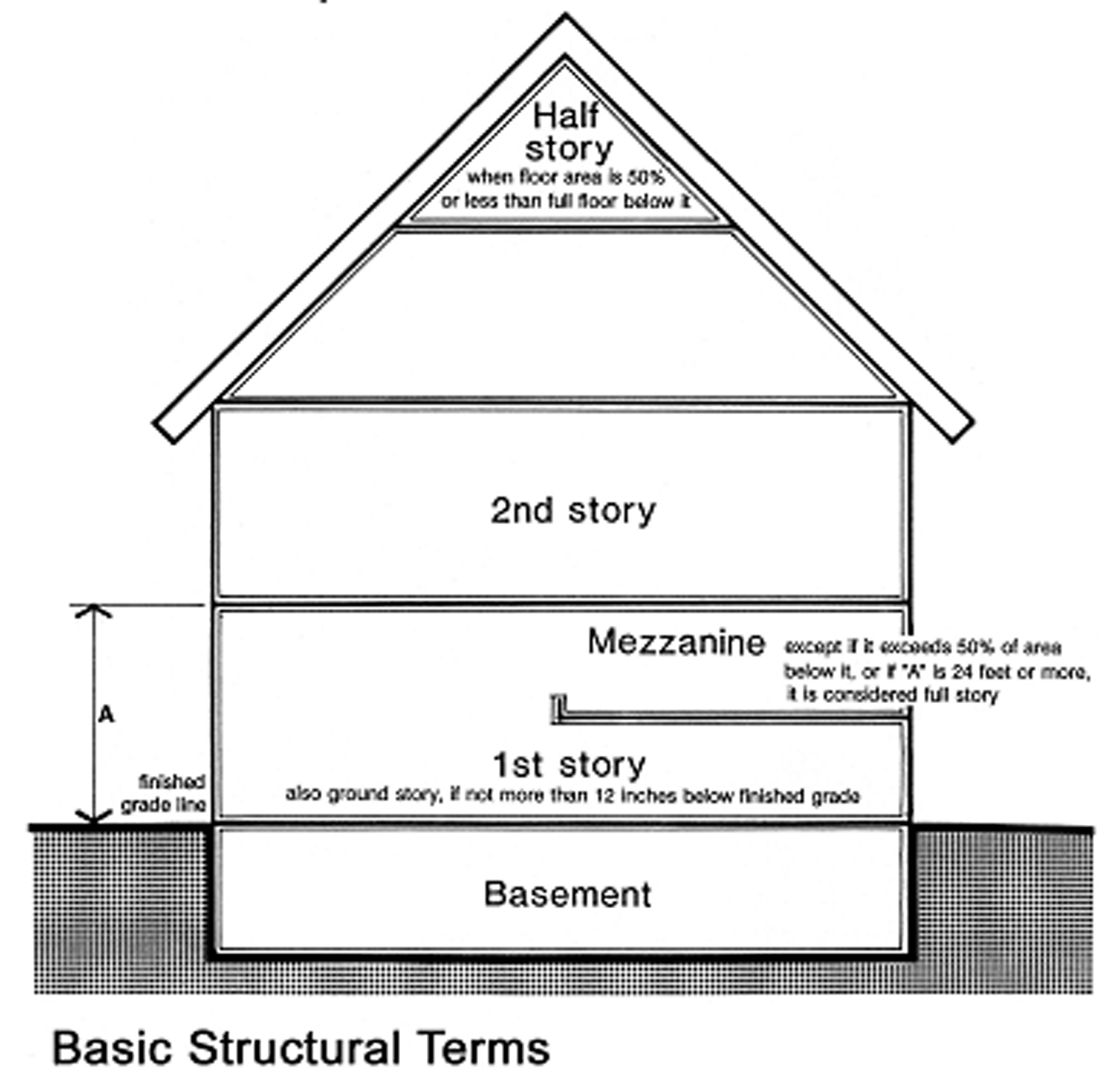
Street means any thoroughfare, other than a public or private alley, that affords traffic circulation and principal means of access to abutting property, including avenue, place, way, drive, lane, boulevard, highway, road and any other thoroughfare.
(1)
Arterial street or arterial road means a street that carries high volumes of traffic and serves as an avenue for circulation of traffic into, out of, or around the city. An arterial street may also be a major thoroughfare.
(2)
Collector street or collector road means a street whose principal function is to carry traffic between minor, local, and subcollector streets and an arterial street, but which may also provide direct access to abutting properties.
(3)
Cul-de-sac means a road that terminates in a vehicular turnaround.
(4)
Local street or local road means a street whose sole function is to provide access to abutting properties. Also known as a minor street or minor road.
(5)
Major thoroughfare means an arterial street which is intended to service a large volume of traffic for both the immediate area and the region beyond, and may be designated as a thoroughfare, parkway, freeway, expressway, or equivalent term to identify those roads comprising the basic structure of the roads plan.
Major thoroughfares in the city include:
a.
Joy Road,
b.
Ann Arbor Trail,
c.
Warren Avenue,
d.
Ford Road,
e.
Cherry Hill Road,
f.
Michigan Avenue,
g.
Van Born Road,
h.
Inkster Road,
i.
Beech-Daly Road,
j.
Telegraph Road,
k.
Outer Drive,
l.
Pelham Road, and
m.
Southfield Freeway.
(6)
Private street means any street which is to be privately maintained and has not been accepted for maintenance by the city, Wayne County, the State of Michigan, or the federal government. All private streets must meet the standards of this chapter or have been approved as a private street prior to the adoption of this chapter or amendments thereto.
(7)
Public street means any street accepted, by dedication or otherwise, for maintenance by the city, Wayne County, the State of Michigan, or the federal government.
(8)
Subcollector street or subcollector road means a street whose principal function is to provide access to abutting properties, but which is designed to be used (or is used) to connect local streets with collector or arterial streets.
Street lot line means a dividing line between the street and a lot, also known as the right-of-way line.
Structural addition means any alteration that changes the location of the exterior walls or area of a building.
Structural alteration means any change in the supporting members of a building or structure, such as bearing walls or partitions, columns, beams or girders or any change in the width or number of exits or any substantial change in the roof.
Structure means anything constructed or erected which requires permanent location on the ground or attachment to something having such location.
Structures include, but are not limited to, principal and accessory buildings, towers, decks, fences, privacy screens, walls, antennas, swimming pools, treehouses, and signs.
Subdivision plat means the division of a tract of land for the purpose of sale or building development, in accordance with the Subdivision Control Act, Michigan Public Act 288 of 1967, as amended, and the Dearborn Heights Subdivision Regulations, Chapter 29, as amended.
Subdivision regulations means the regulations governing the subdivision of land, providing for the procedure for the preparation and filing of plats, tentative approval of preliminary plats, submission of record of final plats, approval of the plat by the council, providing for platting regulations and requirements in regard to conformity to the city's comprehensive development plan, as to streets, alleys, easements, blocks and lots, and to provide penalties for the violation thereof, as promulgated and created by the city planning commission.
Supermarket means a retail store with more than twenty thousand (20,000) square feet of gross floor area, offering groceries, meats, poultry, seafood, dairy products, produce, bakery products, other food products, and other associated merchandise, and which may have facilities for a butcher shop, fresh seafood, a delicatessen, a bakery, a party store, a restaurant, an ice cream parlor, a florist, a pharmacy, a financial institution, or other services.
Swimming pool means any permanent, non-portable structure or container located either above or below grade designed to hold water to a depth of greater than twenty-four (24) inches, intended for swimming or bathing. A swimming pool shall be considered an accessory structure for purposes of computing lot coverage.
Tattooing means a placement in human tissue of any indelible design, letter, scroll, figure, symbol, or other mark placed with the aid of needles or other instruments; or any design, letter, scroll, figure, or symbol done by scarring upon or under the skin. Tattooing shall include the term "body art".
Tattoo parlor means any room or space where tattooing is performed for compensation.
Temporary use or temporary structure means a use or structure permitted to exist for a limited period of time under conditions and procedures as provided for in this chapter.
Theater means an enclosed building used for presenting performances or motion pictures which are observed by paying patrons from seats situated within the building.
Thoroughfare. See Street.
Three-part building design means an architectural design technique, often used for buildings over two (2) stories tall, intended to give taller buildings more human scale with significant architectural detailing in the pedestrian realm. This approach utilizes richly detailed base element often including a decorative ground-floor storefront; a body element with less architectural detailing; and a cap design element that often includes a decorative cornice that offers a visual termination to the structure.
Toxic waste or hazardous waste means waste or a combination of waste and other discarded material (including, but not limited to, solid, liquid, semisolid, or contained gaseous material) which because of its quantity, concentration, or physical, chemical, or infectious characteristics may cause or significantly contribute to the following if improperly treated, stored, transported, disposed of, or otherwise managed:
(1)
An increase in mortality, or
(2)
An increase in serious irreversible illness, or
(3)
Serious incapacitating, but reversible illness, or
(4)
Substantial present or potential hazard to human health or the environment.
Traditional and natural materials means materials consisting of clay bricks (full or thin set, if thin set, corners must have full brick appearance), stone, manufactured stone, or ceramic tile
Transom means horizontal band of windows located above the display window, often measuring between twenty-four (24) and thirty-six (36) inches tall. Not all traditional storefronts include transom windows in their designs. Transom windows located over the entrance door may provide natural ventilation by tilting in or hinging outwards.
Truck means any motorized vehicle used primarily for the transportation of property.
(1)
Light truck means trucks and similar vehicles with single rear axles and single rear wheels.
(2)
Medium truck means trucks and similar vehicles with single rear axles and dual rear wheels, except for truck tractors.
(3)
Heavy truck means trucks and similar vehicles with two (2) or more rear axles, including truck tractors.
Truck stop means a commercial establishment engaged primarily in the fueling and/or parking of commercial heavy trucks and similar vehicles, including the sale of accessories and equipment for such vehicles. A truck stop typically includes showers and/or restaurant facilities for use primarily by truck crews. A truck stop may include the following:
(1)
Minor repair service for trucks;
(2)
Truck wash facilities;
(3)
Overnight parking areas; or
(4)
Overnight accommodations for truck crews.
Two-family dwelling. See Dwelling, two-family or duplex.
Underlying zoning means the zoning classification and regulations applicable to the property immediately preceding the approval of an application to designate a parcel planned development.
Use means the purpose for which land, lots, or buildings thereon is designed, arranged, or intended, or for which it is occupied, maintained, let, or leased.
(1)
Accessory use means a use naturally and normally incidental to, subordinate to, and auxiliary to the permitted use of the premises.
(2)
Conditional use. See Special land use.
(3)
Permitted use means a use which may be lawfully established in a particular district provided it conforms to all requirements, regulations, and standards of such district.
(4)
Principal use means the main use of land and buildings and the main purpose for which land and buildings exist.
(5)
Special use. See Special land use.
Utility room means a room or space, located other than in the basement, specifically designed and constructed to house any home utilities or laundry facilities.
Utility trailer means a small trailer that is designed to be pulled by an automobile, van, or pick-up truck.
Variance means permission to deviate from the literal provisions of this chapter.
(1)
Dimensional variance or non-use variance means a variance from the requirements of this chapter, except permitted or prohibited uses of land, for cases in which strict application of this chapter would cause practical difficulties owing to unique characteristics of the subject parcel.
(2)
Use variance means a variance from the requirements of this chapter relating to the permitted or prohibited uses of land for cases in which strict application of this chapter would cause unnecessary hardship that would deprive the property owner of reasonable use of land of any structure thereon. The inclusion of this definition in this section does not imply permission to grant a use variance.
Wall, obscuring, means a structure of definite height and location to serve as an opaque screen in carrying out the requirements of this chapter.
Warehouse means a building used primarily for storage of goods and materials. See also Distribution center.
Watercourse means any waterway, including a river, stream, lake, pond, or any body of surface water, having definite banks, a bed, and visible evidence of continued flow or continued occurrence of water. A watercourse may or may not be serving as a drain as defined by Act 40 of the Public Acts of 1956, as amended. A watercourse does not include a retention or detention pond constructed as a landscape feature or for the purposes of stormwater management.
Wetland means land characterized by the presence of water at a frequency and duration sufficient to support, and that under normal circumstances does support, wetland vegetation or aquatic life. Wetland includes any area commonly referred to as a bog, swamp, or marsh.
Wholesale sales means the sales of goods generally in large quantities and primarily to customers engaged in the business of reselling the goods.
Wireless communication facility means all structures and accessory facilities relating to the use of the radio frequency spectrum for the purpose of transmitting or receiving radio signals. This may include, but shall not be limited to, radio towers, television towers, telephone devices and exchanges, microwave relay towers, telephone transmission equipment buildings and commercial mobile radio service facilities. Not included within this definition are: citizen band radio facilities; short wave facilities; ham, amateur radio facilities; satellite dishes; and, governmental facilities which are subject to state or federal laws or regulations which preempt municipal regulatory authority.
Wireless communication support structures means structures erected or modified to support wireless communication antennas, including but not limited to, monopoles, lattice towers, light poles, wood poles and guyed towers, or other structures which appear to be something other than a mere support structure.
Yard means an open space that is on the same lot with a building and unoccupied and unobstructed from the ground upward, except as otherwise provided herein. The measurement of a yard is the minimum horizontal distance between the lot line and the building or structure (See illustrations).
(1)
Front yard means a yard extending the full width of the lot, the depth of which is the minimum horizontal distance between the front lot line and the nearest line of the principal building on the lot.
(2)
Rear yard means a yard extending the full width of the lot, the depth of which is the minimum horizontal distance between the rear lot line and the nearest line of the principal building on the lot.
(3)
Side yard means a yard extending from the front yard to the rear yard, the depth of which is the minimum horizontal distance between the side lot line and the nearest line of the principal building on the lot. In the absence of either of a front yard or rear yard, a side yard shall extend from the front lot line to the rear lot line.
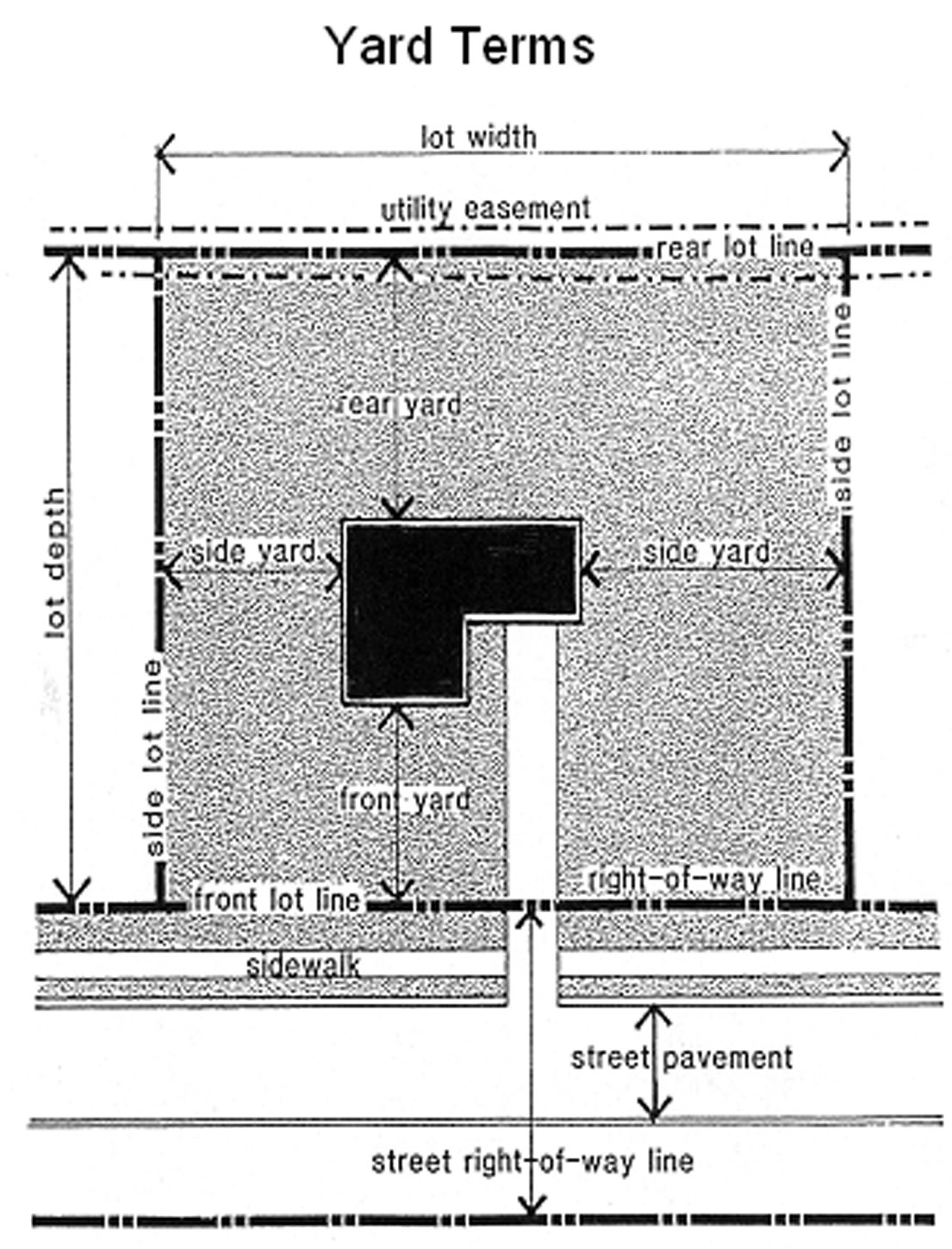
Zoning board of appeals means the zoning board of appeals of the City, as authorized by Act No. 110 of the Public Acts of Michigan of 2006 (MCL 125.3101 et seq.).
Zoning compliance permit means a permit issued by the building inspector certifying that the proposed use of land is in compliance with the use provisions of article VI of this chapter.
(Ord. No. H-07-01, § 2.02, 7-24-07; Ord. No. H-23-03, 10-24-23)

