Delray Beach City Zoning Code
ARTICLE 4
7. - FAMILY/WORKFORCE HOUSING14
Editor's note— Ord. No. 32-23, § 34, adopted October 17, 2023, repealed art. 4.7, §§ 4.7—4.7.11, and enacted a new art. 4.7 as set out herein and later amended. Former art. 4.7 pertained to similar subject matter and derived from Ord. 66-04, adopted December 6, 2004; Ord. 18-06, adopted April 4, 2006; Ord. 39-06, adopted July 25, 2006; Ord. 2-07, adopted February 20, 2007; Ord. 10-07, adopted March 20, 2007; Ord. 11-07, adopted March 20, 2007; Ord. 03-08, adopted January 15, 2008; Ord. 25-08, adopted June 17, 2008; Ord. 33-08, adopted August 19, 2008; Ord. 52-08, adopted November 18, 2008; Ord. 02-09, adopted February 3, 2009; Ord. 38-09, adopted August 18, 2009; Ord. 06-14, adopted April 1, 2014; Ord. 15-15, adopted July 7, 2015; Ord. No. 23-17, adopted July 6, 2017; Ord. No. 31-20, adopted September 10, 2020; Ord. No. 01-21, adopted January 19, 2021; and Ord. No. 10-22, adopted May 17, 2022.
Sec. 4.7.1. - Purpose and intent.
(A)
The City has determined that there is a severe shortage of housing in the City of Delray Beach that is affordable to asset-limited, income-constrained, individuals and families of the City; and
(B)
Florida Statutes § 166.04151 provides that a municipality may adopt and maintain any ordinance that is adopted for the purpose of increasing the supply of affordable housing using land use mechanisms such as inclusionary housing ordinances not withstanding any other provision of law; and
(C)
The City recognizes that there is a growing gap between housing costs and wages in the City; and
(D)
The City of Delray Beach has a legitimate public interest in assuring the availability of workforce housing for very low, low, and moderate income households in the City; and
(E)
The City recognizes that affordable housing that allows people to live and work in the same area is critical to maintaining a diversified and sustainable City with a sense of a community; and
(F)
Revitalization incentives in the form of density or height incentives encourage private affordable housing development in the context of high land costs and rapidly diminishing vacant land.
Sec. 4.7.2. - Applicability.
(A)
Definitions. The following words, terms and phrases apply to this Article.
(1)
Adjusted median income (A.M.I.). The Palm Beach County median income, based on a family of four, as published by Florida Housing Finance Corporation.
(2)
Affordability controls. Restrictions placed on dwelling units by which the price of such units and/or the income of the purchaser or lessee will be restricted in order to ensure that the units remain affordable to very low, low, or moderate income households.
(3)
Community Land Trust. A nonprofit, community-based organization whose mission is to provide affordable housing in perpetuity by owning land and leasing it to those who live in houses built on that land.
(4)
CRA. The Delray Beach Community Redevelopment Agency.
(5)
Density bonus. A density bonus, or revitalization incentive, is an incentive to encourage developers to build affordable owner-occupied and rental housing within the City. For every workforce housing unit that a developer builds, a calculated number of market rate units at a density greater than would be allowed otherwise may be built.
(6)
Density bonus unit. An additional dwelling unit added above the base number of units authorized once performance standards have been applied and the density has been computed under existing codes.
(7)
Eligible occupant. A person who income-qualifies for participation in the program. Priority will be given to persons who have lived or worked within the City limits of Delray Beach continually for one year immediately prior to the date of application for a workforce housing unit and who otherwise qualify for participation.
(8)
First time home buyer. A person who has not held ownership of a residence within the past three years.
(9)
Household. A single person living alone, or two or more persons sharing residency, with a combined income available to cover household expenses.
(10)
Household income. The cumulative income of all tenants or purchasers under one roof.
(11)
Housing Trust Fund. The Housing Trust Fund is comprised of the City's State Housing Initiatives Partnership (SHIP) allocation and is administered by the City of Delray Beach Neighborhood and Community Services Department. All monetary contributions in lieu of workforce housing units shall be deposited into the trust for the purpose of supplementing annual SHIP allocations. The interest received on any such investment shall be credited to the fund. The City shall administer the fund exclusively for the purpose of implementing programs described in the City's Local Housing Assistance Plan.
(12)
Low income household. A household with a gross, combined income between 61 percent and 80 percent of the Palm Beach County Adjusted Median Income (as defined by the Florida Housing Finance Corporation).
(13)
Moderate income household. A household with a gross, combined income between 81 percent and 120 percent of the Palm Beach County Adjusted Median Income (as defined by the Florida Housing Finance Corporation).
(14)
Restrictive covenant. A deed restriction on the property shall prohibit any subletting or assignment of the respective workforce housing unit to a tenant(s) or purchaser(s) whose income exceeds the percent of the AMI under which the unit is originally approved.
(15)
Very low income household. A household with a gross, combined income not exceeding 60 percent of the Palm Beach County Adjusted Median Income (as defined by the Florida Housing Finance Corporation).
(16)
Workforce housing unit. A dwelling unit for which the rent or mortgage payment, (including principal, interest, taxes and Insurance (PITI), does not exceed 35 percent of the gross income of households that classify as very low, low, or moderate income households and meets the other requirements of the Family/Workforce Housing Program.
(B)
Workforce housing incentive areas. This section identifies the areas that have revitalization incentives available in the form of density bonuses.
(1)
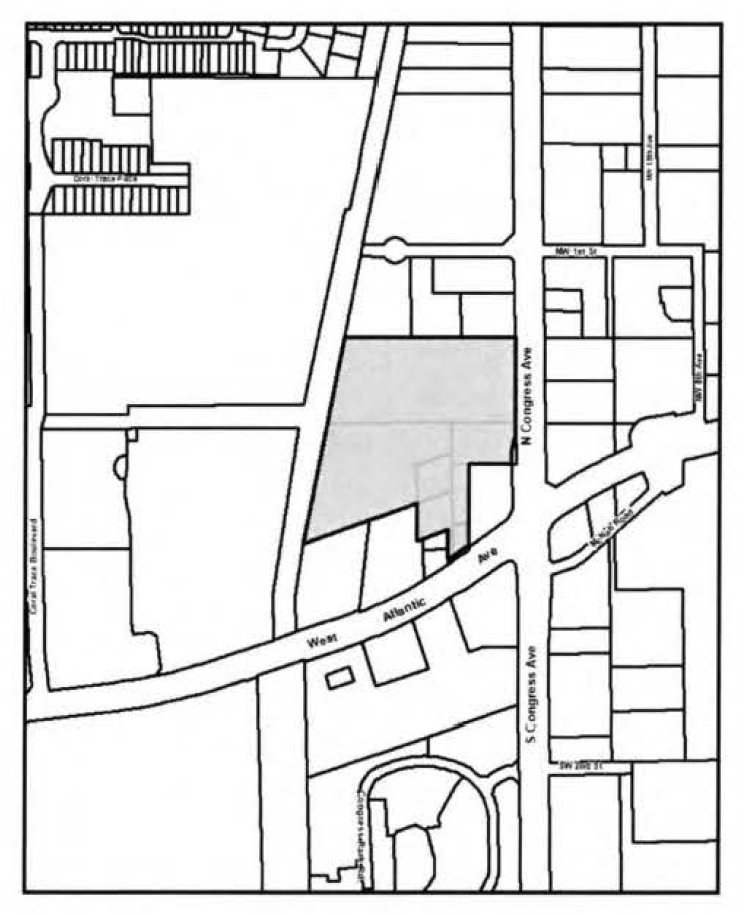
Aura Delray Beach Overlay District. The area located between Congress Avenue and the E-4 Canal, from West Atlantic Avenue to the Palm Beach County Palm Tran property, as fully described in Ordinance No. 32-20.
(2)
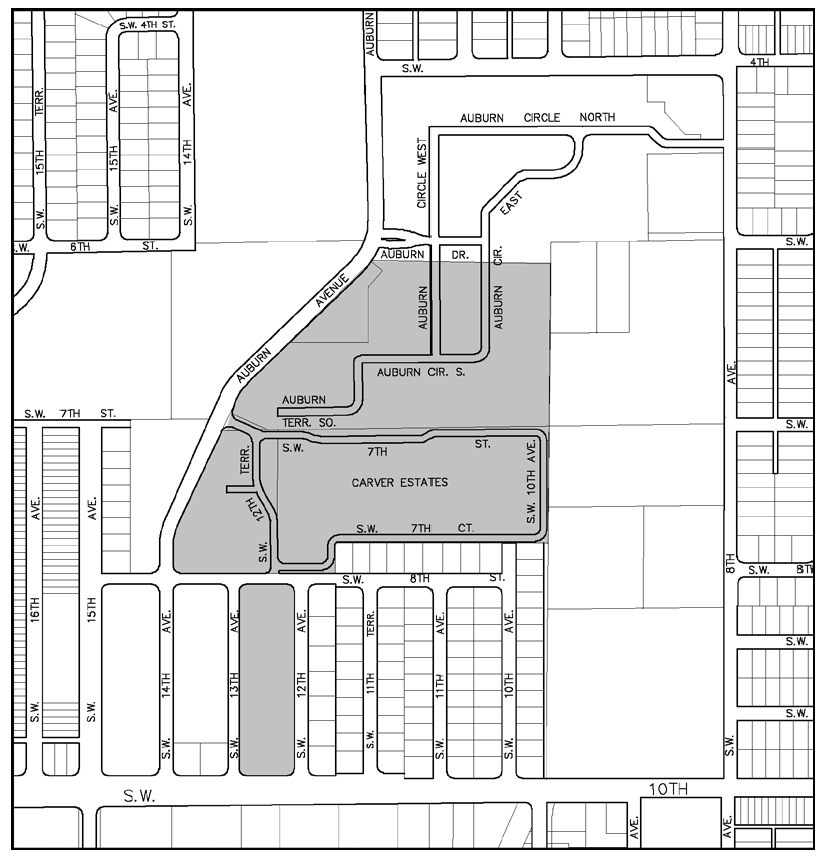
Carver Estates Overlay District. The area defined in Section 4.5.11 and depicted on the map below.
(3)
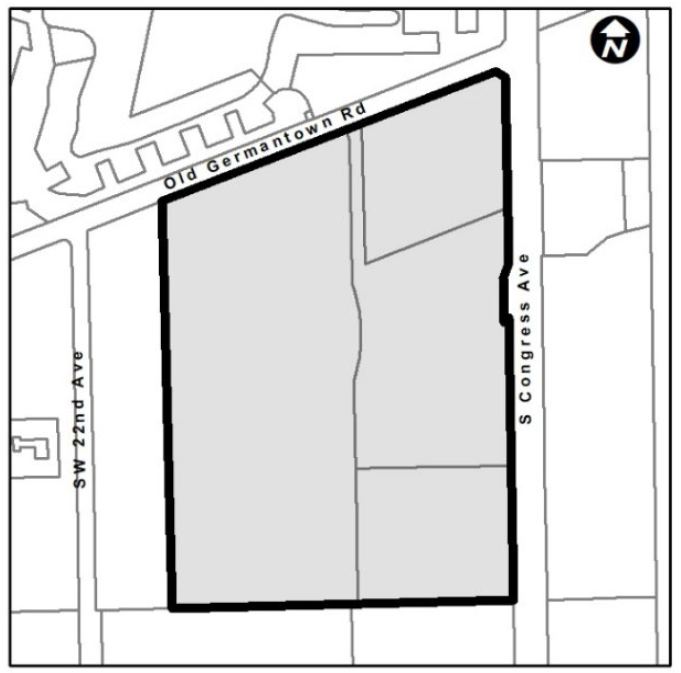
Congress Avenue Special Activities District (SAD). The area west of Congress Avenue between Old Germantown Road and the Delray Oaks natural area to the south, more specifically defined in Ordinance No. 31-20 and shown on the map below.
(4)
Four Corners Overlay District. The area located at the four corners of the intersection of West Atlantic Avenue and Military Trail, as adopted by Ordinance No. 08-07 and more specifically defined in Section 4.5.14. The Overlay District includes both GC (General Commercial) and PC (Planned Commercial) zoned properties.
(5)
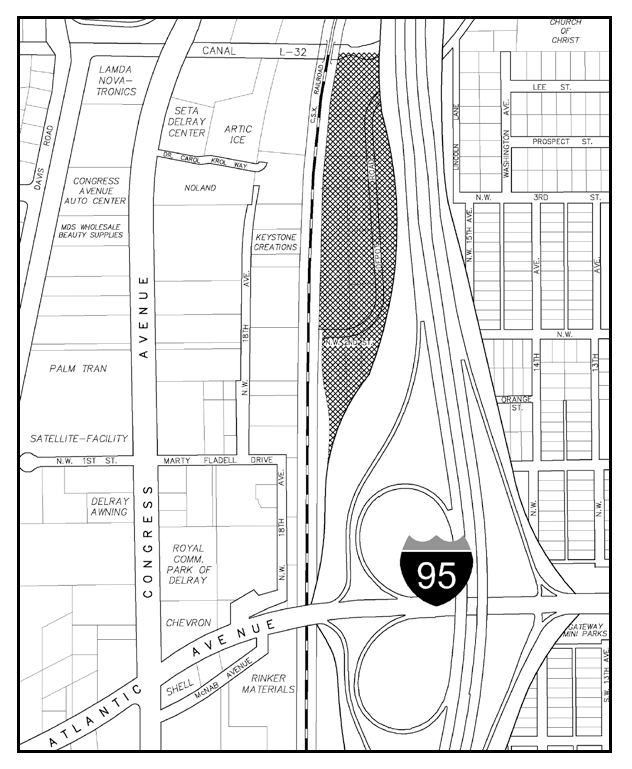
I-95/CSX Railroad Corridor Overlay District. The City Commission established an additional workforce housing overlay district known as the I-95/CSX Railroad Corridor Overlay District for certain properties located east of the CSX Railroad, west of I-95, south of the E-4 Canal, and north of the Historic Depot property, as depicted on the map below.
(6)
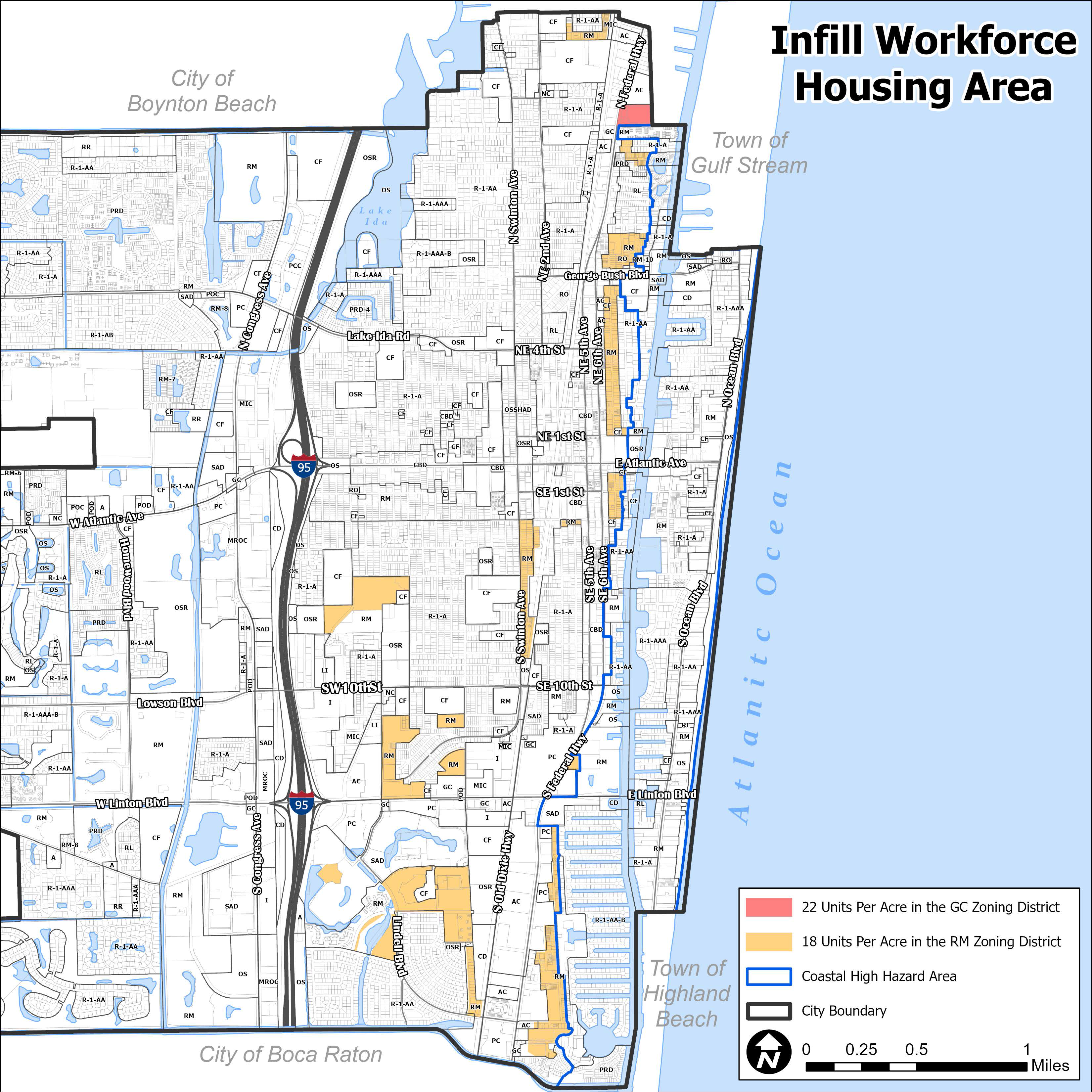
Infill workforce housing area. The City Commission established an additional workforce housing overlay district known as the Infill Workforce Housing Area for certain properties located west of the Intracoastal and east of I-95, outside of the coastal high hazard area.
(Ord. No. 27-24, § 3, 1-7-25)
(7)
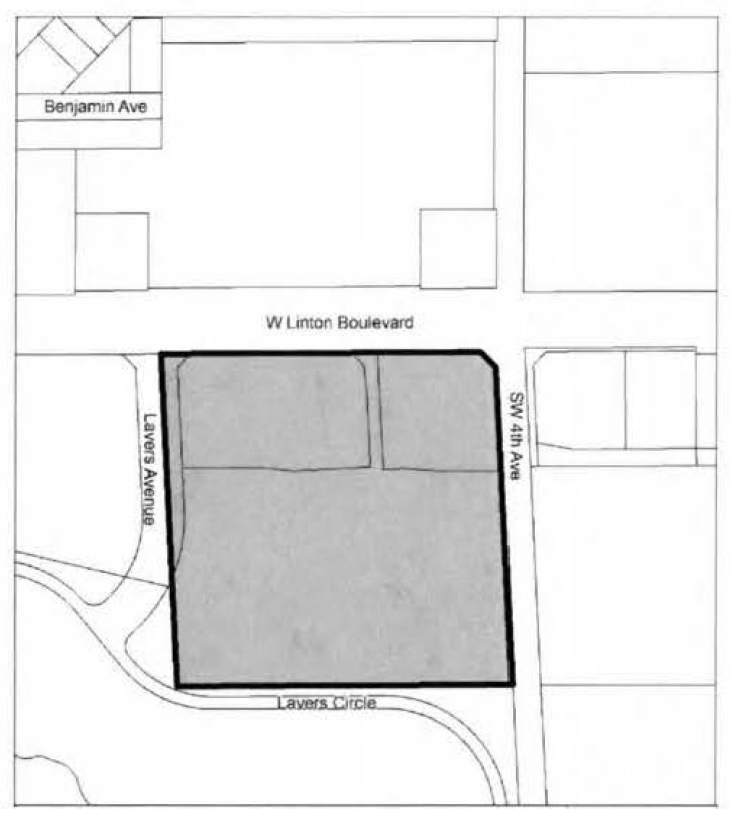
Linton Commons Overlay District. The area located at the southwest corner of Linton Boulevard and SW 4th Avenue and made up of Parcel A, Parcel B and Parcel C of the New Century Commons Plat (Plat Book 65, Page 21).
(8)
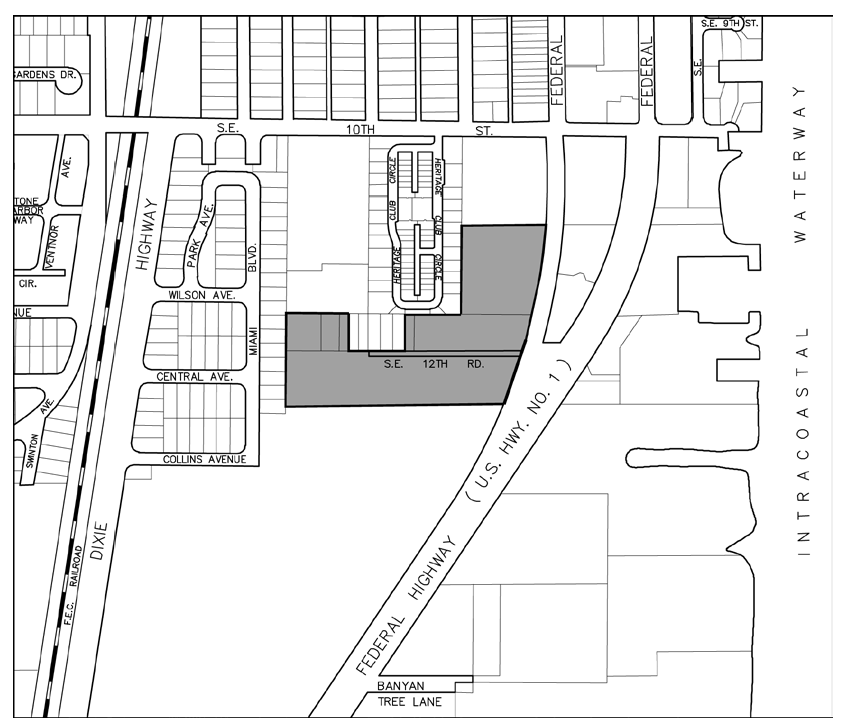
Silver Terrace Courtyards Overlay District. The area located on the west side of South Federal Highway, approximately 320 feet south of SE 10th Street and north of the Plaza at Delray, as shown in the map below.
(9)
Reserved.
(10)
Reserved.
(11)
Reserved.
(12)
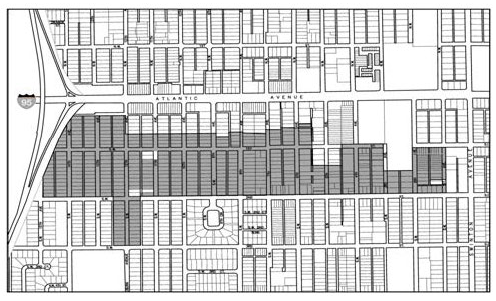
Southwest Neighborhood Overlay District. The City Commission adopted the Southwest Area Neighborhood Redevelopment Plan and Comprehensive Plan changes recognizing the need to redevelop the Southwest Neighborhood in a manner that preserves the neighborhood and provides workforce housing. The area zoned RM between Interstate 95 and S.W. 1st Avenue, from Atlantic Avenue to S.W. 2nd Street, except along SW 12th Avenue, where it extends south to SW 3rd Street, as shown on the map below.
(13)
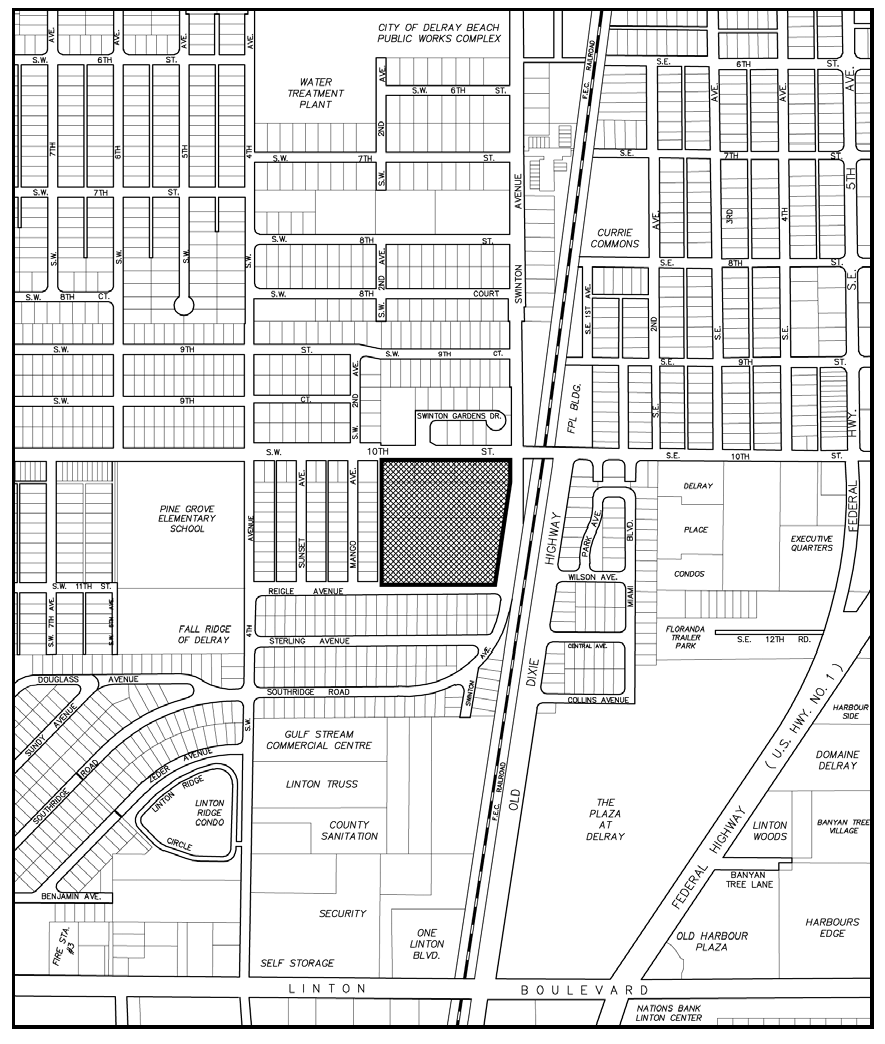
Southwest 10thStreet Overlay District. The area at the Southwest corner of Swinton Avenue and 10 th Street as shown on the map below.
(14)
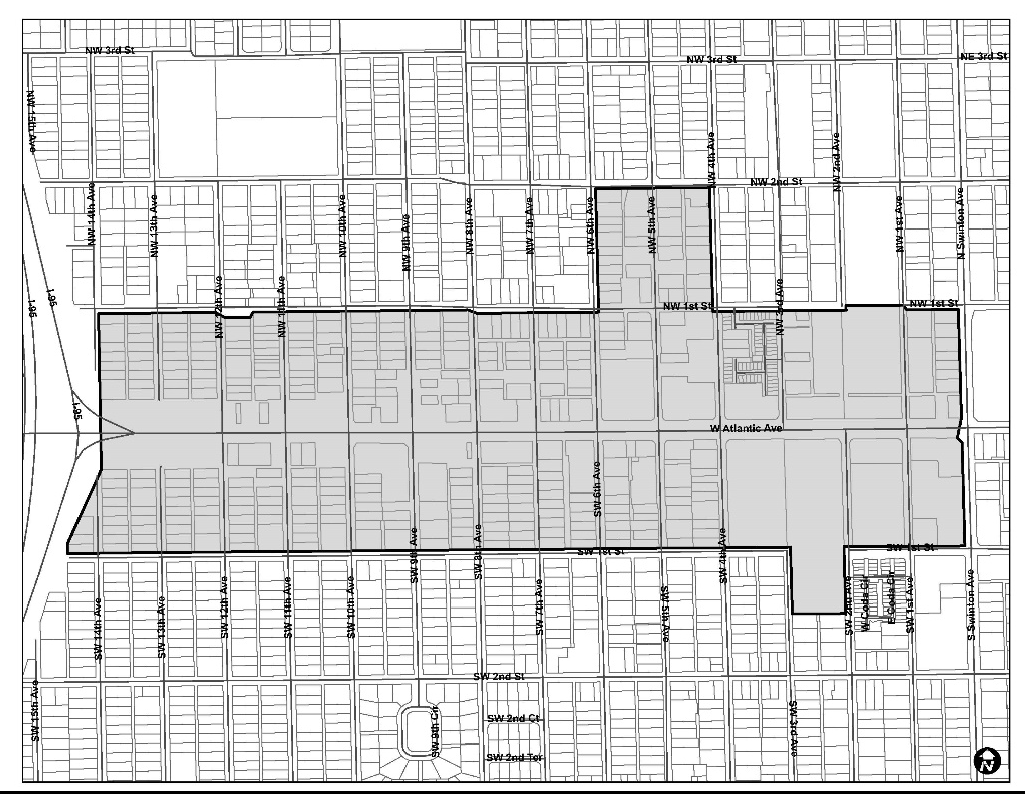
West Atlantic Avenue Overlay. The area bounded by I-95 on the west, Swinton Avenue on the East, S.W. 1st Street on the south, and N.W. 1st Street on the north, and extending one block north of N.W. 1st Street along N.W. 5th Avenue to include Blocks 19 and 27, Town of Delray.
(15)
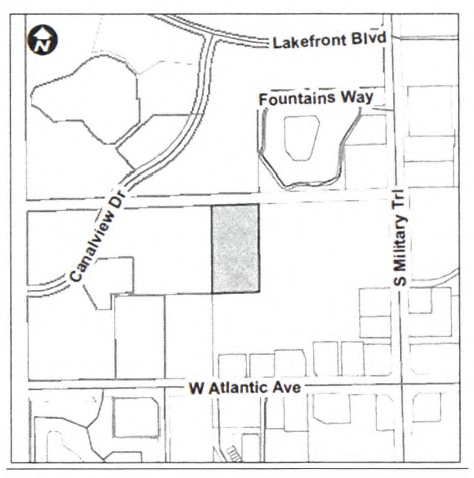
The Flo Delray Overlay District. The 4.86-acre area bounded by the Marketplace of Delray on the south and east, High Point of Delray West on the north and west, and the abutting Lake Worth Drainage District's L-33 on the north, as more specifically defined in Section 4.5.22 as shown on the map below. (Ord. No. 39-23, § 4, 12-5-23)
(Ord. No. 39-23, § 4, 12-5-23)
Sec. 4.7.3. - General requirements.
Developers may earn additional density or height by building housing for very low, low, or moderate income households, as defined in a specific incentive area. All developments shall meet the requirements for units as specified in this Article and meet all applicable Land Development Regulations. Workforce units shall include those units in a development, which are regulated in terms of sales price or rent levels; marketing and initial occupancy; and continued requirements pertaining to resale or rent increases. Except as otherwise provided in this ordinance, these regulations generally apply:
(A)
A development must be located within the established workforce housing incentive areas in Article 4.7 to qualify for density bonuses.
(B)
Subject to this Article and district zoning regulations, developments requesting an increase in height and / or density must provide a proposal to provide workforce housing units onsite, through an in-lieu payment, by delivery of offsite units, or a combination of these three options.
(1)
The applicant must schedule a pre-application meeting with Development Services and the Neighborhood and Community Services Departments to discuss any workforce housing proposal. Offsite units may be located anywhere within the City of Delray Beach. These units cannot be previously allocated as workforce housing units in another project. These units would be constructed at the time of the first vertical building permit issuance. If the project is built in phases, then the workforce units would be constructed in the same proportion and manner as the number of workforce units required for each phase.
(2)
The developer's proposal to satisfy its workforce housing obligations pursuant to this section shall be subject to review and approval by the appropriate board and City Commission. The City Commission may, in its sole and absolute discretion, accept the developer's plan for workforce housing, reject the developer's plan for workforce housing, or direct the developer to modify and re-submit a workforce housing proposal. For each workforce housing unit approved by the City Commission as an in-lieu payment, developers shall make a payment of a sum equal to $160,000.00, payable to the City of Delray Beach Housing Trust Fund, in lieu of providing the workforce housing unit within the development.
(3)
Final approval conditions. Final conditions of approval shall specify that the restricted units are priced and/or rented at workforce housing levels and shall state that those units shall be rented and/or sold to the eligible income group in accordance with this article. The conditions will also specify the requirements for reporting to the City's Community Improvement Department on buyer eligibility, housing prices, as well as any applicable requirement to record a covenant or to enforce resale restrictions.
(C)
In order to qualify for a density bonus, a project must consist of at least five new or substantially rehabilitated dwelling units. The U.S. Department of Housing and Urban Development (HUD) definition shall be used to determine whether there has been substantial rehabilitation. In addition, the units must contain design features, such as, but not limited to front porches, eyebrows, outriggers, gables, dormers, arbors, trellises, shutters, balconies, decorative vents, siding, textured stucco finishes, undulating facades and other such appropriate architectural features.
(D)
The developer or responsible party must provide relocation assistance per household displaced as a result of the proposed project in the amount required by state or federal guidelines, as adopted in the Residential Anti-displacement and Relocation Assistance Plan approved by the City.
(E)
All on-site workforce housing units shall be situated within the development so as not to be in less desirable locations than market-rate units in the development and shall, on average, be no less accessible to public amenities, such as open space, as the market-rate units.
(F)
Workforce housing units, if located within a market rate unit development or located offsite, shall be integrated with the rest of the development and shall be compatible in exterior design, appearance, construction, and quality of materials and contain comparable HVAC systems and appliances with market rate units and provide them as standard features. All workforce housing units shall contain comparable square footage to the corresponding market-rate unit.
(G)
The construction schedule for workforce housing units shall be consistent with the construction of market rate units.
(H)
There shall be no lot premiums charged on the workforce housing units.
(I)
All fractional bonus densities shall be rounded down.
(J)
Workforce housing units constructed according to this policy shall only be rented or sold as a primary residence.
(K)
The developer shall provide workforce housing units that include unit types in the same proportion as the market rate housing unit types. The required unit mix and affordability shall be as follows, unless otherwise regulated in a particular workforce housing area:
(L)
A restrictive covenant shall specify that the units designated as workforce housing are sold and/or rented at the approved income levels to the eligible income group in accordance with this article. The restrictive covenant shall also require reporting to the City's Community Improvement Department on buyer eligibility, housing prices, as well as any applicable requirement to record a covenant or to enforce resale restrictions.
Sec. 4.7.4. - Density bonus areas.
Proposed developments will be allowed additional density or height in exchange for providing workforce housing units, subject to the limits and requirements of this chapter. Developments will be allowed additional density, beyond the base number allowed by the Land Development Regulations after performance standards have been met.
(A)
The Southwest Neighborhood Overlay District, the Carver Estates Overlay District and the Infill Workforce Housing Area. Development proposals in the Southwest Neighborhood Overlay District, the Carver Estates Overlay District and the Infill Workforce Housing Area will earn bonus units for building workforce housing for very low, low and moderate income families.
(1)
The size of the bonus varies based on several factors including:
(a)
Affordability (i.e., homes affordable to very low, low, or moderate households)
(b)
Home Size (i.e., workforce housing units with four or more bedrooms are awarded larger bonuses)
(c)
Ownership versus Rental (i.e., larger bonuses are awarded for workforce housing units offered for sale to low and very-low income families and larger bonuses are awarded for ownership versus rental units.)
(2)
To be eligible for bonus units, developments must meet one or more of the following criteria:
(a)
A designated number of the total units are restricted to very low income households, and/or
(b)
A designated number of the total units are restricted to low income households, and/or
(c)
A designated number of the units are restricted to moderate income households
(3)
Subject to the review and approval by the City Commission, workforce housing units may be located off-site provided the off-site location chosen is within the City of Delray Beach.
(4)
The bonus allowances are set forth in Table 4.7.4-A below. Sample calculations are available from Development Services.
(5)
Instead of or in addition to providing workforce housing units, developments may also accrue bonus units by contributing to the City of Delray Beach Housing Trust Fund. Development proposals may earn one bonus unit for each payment to the City of Delray Beach Housing Trust Fund as provided in Section 4.7.3. (Ord. No. 27-24, § 4, 1-7-25)
(6)
Also, instead of or in addition to providing workforce housing units, development proposals may earn bonus units by donating buildable lots in the City Delray Beach to be used for workforce housing. The appraised value of donated land will be valued in accordance with Subsection (5) above and may be prorated. The appraisal shall be obtained by the project developer at developer's cost.
(7)
The maximum total density of a development in the Southwest Neighborhood Overlay District and the Carver Estates Overlay District shall not exceed 24 units per acre. The maximum total density of a development in the Infill Workforce Housing Area shall not exceed 18 units per acre for properties zoned RM and 22 units per acre and a Floor Area Ratio of 0.75 for properties zoned GC.
(B)
Density Bonus Program for the Southwest 10th Street, I-95/CSX Railroad Corridor and Silver Terrace Courtyards Overlay Districts.
(1)
Southwest 10thStreet Overlay District. Development proposals in the Southwest 10 th Street Overlay District shall provide a minimum of 20 percent of the residential units as workforce housing units.
(a)
The 20 percent that are developed as workforce housing units must contain units that are affordable to very low, low, or moderate income families.
(b)
In the Southwest 10 th Street Overlay District, the maximum density allowed is the maximum zoning density allowed in the zoning district. To obtain the maximum density allowed in the zoning district, not only must a minimum of 20 percent of the residential units be developed as workforce housing, but all the performance standards that allow increased density shall also be substantially met.
(c)
Workforce housing units may be located off-site provided the location is within the City of Delray Beach.
(d)
All sections of Article 4.7 apply to the Southwest 10 th Street Overlay District, except for Sections 4.7.4 and 4.7.11.
(e)
Notwithstanding Table 4.7.3-A, in the Southwest 10 th Street Overlay District at least 75 percent of the workforce housing units shall be three-bedroom units offered for initial sale in an amount not to exceed $225,000.00 and 25 percent of the workforce housing units may be two bedroom units offered at the low income affordability rate.
(2)
I-95/CSX Railroad Corridor Overlay District. Development proposals in the I-95/CSX Railroad Corridor Overlay District shall provide a minimum of 25 percent of the residential units as workforce housing units.
(a)
The 25 percent that are developed as workforce housing units must contain units that are affordable to very low, low, or moderate income families.
(b)
In the I-95/CSX Railroad Corridor Overlay District, the maximum density allowed is 24 units per acres. To obtain a density greater than six units per acre, not only must a minimum of 25 percent of the residential units be developed as workforce housing, but the performance standards in Section 4.3.3(BB) shall also be substantially met.
(c)
All sections of Article 4.7 apply to the I-95/CSX Railroad Corridor Overlay District, except for Sections 4.7.4 and 4.7.11.
(3)
Silver Terrace Courtyards Overlay District. Development proposals in the Silver Terrace Courtyards Overlay District shall provide a minimum of 20 percent of the residential units as workforce housing units.
(a)
The 20 percent that are developed as workforce housing units must contain units that are affordable to very low, low, or moderate income families.
(b)
In the Silver Terrace Courtyards Overlay District, the maximum density allowed is 22 units per acre. To obtain a density greater than six units per acre, not only must a minimum of 20 percent of the residential units be developed as workforce housing, but the performance standards of Section 4.3.3(BB), shall also be substantially met.
(c)
All sections of Article 4.7 apply to the Silver Terrace Courtyards Overlay District, except for Sections 4.7.4 and 4.7.11.
(C)
Aura Delray Beach Overlay District. A minimum of 25 percent of the project density must be provided onsite as workforce housing. The Overlay District shall be developed in accordance with the following:
(1)
Twenty-five percent of the residential units must be developed and provided on-site as workforce housing for moderate income households.
(2)
The maximum density allowed is 24 units per acres.
(3)
The provisions of Article 4.7 are to be applied, or any workforce housing regulations specified as part of an adopted SAD Ordinance, as applicable.
(D)
Linton Commons Overlay District. Developers of property in the Linton Commons Overlay District shall develop the properties to afford a minimum of 20 percent of the residential units as workforce housing units.
(1)
The workforce housing units must be provided on-site and be affordable to an equal distribution of very low, low, or moderate income families.
(2)
The maximum density allowed is 30 units per acre. To obtain a density greater than six units per acre, the performance standards of Section 4.3.3(BB), shall also be substantially met.
(3)
All sections of Article 4.7 apply to the Linton Commons Overlay District, except for Sections 4.7.3(K), 4.7.4, and 4.7.11.
(E)
Congress Avenue Special Activities District (SAD). Residential development shall have ten percent moderate income rental units and ten percent moderate income for-sale units, as regulated by Ordinance No. 30-18 and any subsequent amendments.
(F)
Central Business (CBD) District. Certain broad based and applicable incentives are available within certain CBD sub-districts to advance City strategic, policy-driven goals, such as the expansion of workforce housing. The specific incentives and required performance criteria are identified in Section 4.4.13(H).
(1)
West Atlantic Neighborhood Subdistrict of the CBD. Developments which must provide workforce housing pursuant to a request for increase in density as outlined in Section 4.4.13(H) shall contain units that are affordable to low or moderate income families.
(2)
Railroad Corridor Sub-district. Density may be increased over 30 dwelling units per acre up to 70 dwelling units per acre with the provision of at least 20 percent workforce housing units on-site with an equal distribution of units for very low, low, and moderate income units.
(3)
South Pairs Sub-district. Density may be increased from 12 dwelling units per acre up to 50 dwelling units per acre.
(G)
Four Corners Overlay District. Multi-family dwelling units, excluding duplexes, may comprise 75 percent of the total floor area of the development master plan at a maximum density of 30 units per acre, when proposed as part of a mixed-use development containing office and/or commercial uses. Residential developments must include a minimum of 20 percent moderate income workforce units subject to provisions of Section 4.4.9, Article 4.7, and the Performance Standards of Section 4.3.3(BB).
(H)
Mixed Residential, Office, and Commercial District (MROC). As regulated by Section 4.4.29, density may be increased as high as 50 dwelling units per acre, subject to locational criteria and the provision of a minimum of 20 percent moderate income workforce units. An increase in square footage is also allowed for self-storage facilities that provide a workforce housing contribution equal to 0.75 percent of the total project construction cost.
(I)
The Flo Delray Overlay District. To achieve a maximum density of 24 dwelling units per acre, developers of property in the Flo Delray Overlay District shall provide a minimum of 20 percent of the residential units as workforce housing units, further regulated as follows: (Ord. No. 39-23, § 5, 12-5-23)
(1)
The units must be affordable to an equal distribution of low and moderate income families. (Ord. No. 39-23, § 5, 12-5-23)
(2)
The performance standards of Section 4.3.3(BB) shall be substantially met to obtain a density greater than 12 units per acre. (Ord. No. 39-23, § 5, 12-5-23)
(3)
All sections of Article 4.7 apply to The Flo Delray Overlay District, except for Section 4.7.3(K). The following unit and affordability mix is required as follows: (Ord. No. 39-23, § 5, 12-5-23)
(Ord. No. 39-23, § 5, 12-5-23)
(J)
Requests for increase in height. Increases in height from 48 feet to a maximum of 60 feet are permitted in the areas identified in Section 4.3.4(J) and must provide low or moderate income workforce housing units onsite, offsite, or through monetary contributions that comply with the provisions of Article 4.7, equal to at least 20 percent of the residential units on the top floor. (Ord. No. 39-23, § 5, 12-5-23)
Sec. 4.7.5. - Rental housing units.
(A)
A covenant shall be recorded in the Public Records specifying the income level served, rent levels, reporting requirements and all restrictions applicable to the workforce housing units. All leases shall contain language incorporating covenants applicable to the workforce housing unit and reference recorded covenants.
(B)
Household income levels, affordability ranges, and maximum rental rates are provided in Table 4.7.6-A—Rental Housing Units.
(C)
No workforce housing units shall be offered for rent to the general public until all requirements of this Section are met.
(D)
All Restrictive Covenants shall meet the requirements of this Article and are subject to approval of the City Attorney.
(E)
Workforce housing rental units shall be marketed continuously as workforce housing units. If the total number of occupied workforce housing units does not equal 100 percent of the workforce units required by the restrictive covenant, workforce units that have remained vacant for 45 days or more due to a lack of eligible occupants may be rented to non-eligible occupants at market rents subject to the following conditions:
(1)
At the end of each calendar year, the developer shall pay to the Delray Beach Housing Trust Fund (DBHTF) any rents received from the non-eligible occupants of the workforce units for that year in excess of the rents that would have been received from eligible occupants for such workforce units based on workforce rents at the time of the signing of the lease ("Excess Rental Payment").
(a)
Excess Rental Payments shall accrue only for periods in which the required 100 percent is not satisfied.
(b)
No later than 20 days following the end of the month, the developer shall provide the DBHTF with a monthly statement highlighting those units which require Excess Rental Payments.
(c)
No later than 30 days following the end of the year, the developer shall provide the DBHTF with an annual statement and shall submit the amounts due to the DBHTF within 30 days following written notice from the DBHTF of its approval of each annual statement.
(2)
Workforce units rented to non-eligible occupants will be considered workforce housing units for the purposes of complying with these regulations, but only until the next vacant unit is rented to an eligible candidate, at which time the non-eligible unit will cease to be considered a workforce housing unit. If less than 100 percent of the total number of workforce units required for the project are occupied with workforce eligible occupants, then each subsequent vacant unit shall be marketed to workforce eligible applicants until all required workforce units are rented to eligible occupants.
Sec. 4.7.6. - For sale housing units.
(A)
With the exception of workforce housing units sold as part of a Community Land Trust, all deeds shall include the restrictive covenants applicable to workforce housing units. All sales contracts shall state that the unit is part of a workforce housing program and subject to Article 4.7 of the Land Development Regulations of the City. All deeds to buyers of workforce housing units shall contain restrictive covenants providing that the Community Land Trust shall have the right of first refusal to purchase the workforce housing unit on the same terms and conditions as a prospective buyer. The restrictive covenant shall give the Community Land Trust 15 business days to enter a contract to purchase the property on the same terms and conditions as the prospective buyer.
(B)
All purchasers of workforce housing units shall be very low, low or moderate income households; provided, however, in exceptional circumstances when persons in households above the moderate income level are displaced due to redevelopment or catastrophic events, the persons so affected shall also be eligible for workforce housing.
(C)
Owners of workforce housing units shall be required to occupy the unit unless evidence is presented to Neighborhood and Community Services Department staff indicating that the owner is unable to continuously occupy the unit due to illness or incapacity.
(D)
Closing costs and title insurance shall be paid pursuant to the custom and practice in Palm Beach County at the time of opening of escrow. No charges or fees shall be imposed by the seller on the purchaser of a workforce housing unit which are in addition to or more than charges imposed upon purchasers of market rate units, except for administrative fees charged by the City/CRA, or their designee.
(E)
The sales price or value of new or existing eligible housing may not exceed 90 percent of the average area purchase price in the Palm Beach County statistical area. The average area purchase price may be calculated for any 12-month period beginning no earlier than the fourth calendar year prior to the year in which the purchase occurs. The sales price of new and existing units can be lower than, but not in excess of 90 percent of the median area purchase price established by the U.S. Treasury Department or as described above.
(F)
No workforce housing units shall be offered for sale to the general public until all requirements of this chapter are met.
(G)
All Restrictive Covenants shall meet the requirements of this Article and are subject to approval of the City Attorney.
Sec. 4.7.7. - Resale and subsequent rentals of affordable units.
To maintain the availability of workforce housing units which may be constructed pursuant to the requirements of this program, the following resale conditions shall be imposed on the workforce housing units and included in the deed or restrictive covenant and recorded in the Public Records of Palm Beach County:
(A)
Except for Community Land Trust properties, a deed restriction, restrictive covenant, or bylaws to ensure continued affordability, shall be approved by the City Attorney, prior to recording in the Public Records of Palm Beach County.
(B)
The deed restriction shall limit the maximum permitted resale price to the initial sale price of the workforce housing units, increased at the same rate as the Palm Beach County median income has increased from the initial date of purchase. Prior to the closing on any sale, resale or prior to any rental of any workforce housing unit, the City shall be notified of the sale, resale or rental.
(C)
Conversions of rental units to owner occupied units or vice versa shall require the subsequent rental or sale to be for the same workforce housing income category.
(D)
For both sale and rental of workforce housing units, affordability and occupancy restrictions shall remain in effect for no less than 40 years commencing from the initial date of occupancy of the unit. These restrictions shall also apply to any replacement structure or structures constructed if a workforce housing unit or units is demolished or destroyed, provided that the demolition or destruction of the structure was unintentional. Restrictions on the units in the structure may terminate on demolition or destruction if it occurs 35 years after recording of the restrictions.
(E)
A lessee or owner of an income restricted unit is not required to vacate or sell the unit if the tenant(s) or purchaser (s) income later exceeds the AMI.
(F)
The City of Delray Beach, its successors and assigns may enforce the restrictive covenants. No amendments to the covenants shall be made unless by written instrument approved by the City.
(G)
All workforce housing units must only be sublet, rented or sold to income-eligible households of the same income category; tenant or purchaser income may not exceed the percent of the AMI under which the unit was originally approved. There shall be no provisions for releases from the sale or rental of workforce units to eligible households. Workforce housing units may only be resold to non-eligible households only when the restriction expires.
(H)
Workforce housing units sold as part of any Delray Beach Community Land Trust sale shall not contain resale restrictions other than those contained in the ground lease recorded as part of the original sale.
(I)
Workforce housing unit resales shall be limited to households of the same category relative to income.
(J)
The sales price of workforce housing units may not exceed the upper limit of affordability for the income category to which the unit was originally assigned.
(K)
Transfers of title under the following circumstances shall be allowed, and are not subject to the restrictions included in this program:
(1)
Transfers by inheritance to the unit owner's surviving spouse, qualified domestic partner, or lineal descendants, or
(2)
Transfers of title to a spouse as part of a divorce decree, or to a qualified domestic partner as part of a court approved property settlement agreement, or;
(3)
Acquisition of title or interest therein by an existing unit owner's spouse if it is in conjunction with marriage of the unit owner and his or her spouse or by an existing unit owner's qualified domestic partner.
(L)
No resales of workforce housing units shall be completed until the requirements of this chapter are met.
Sec. 4.7.8. - Other incentives.
(A)
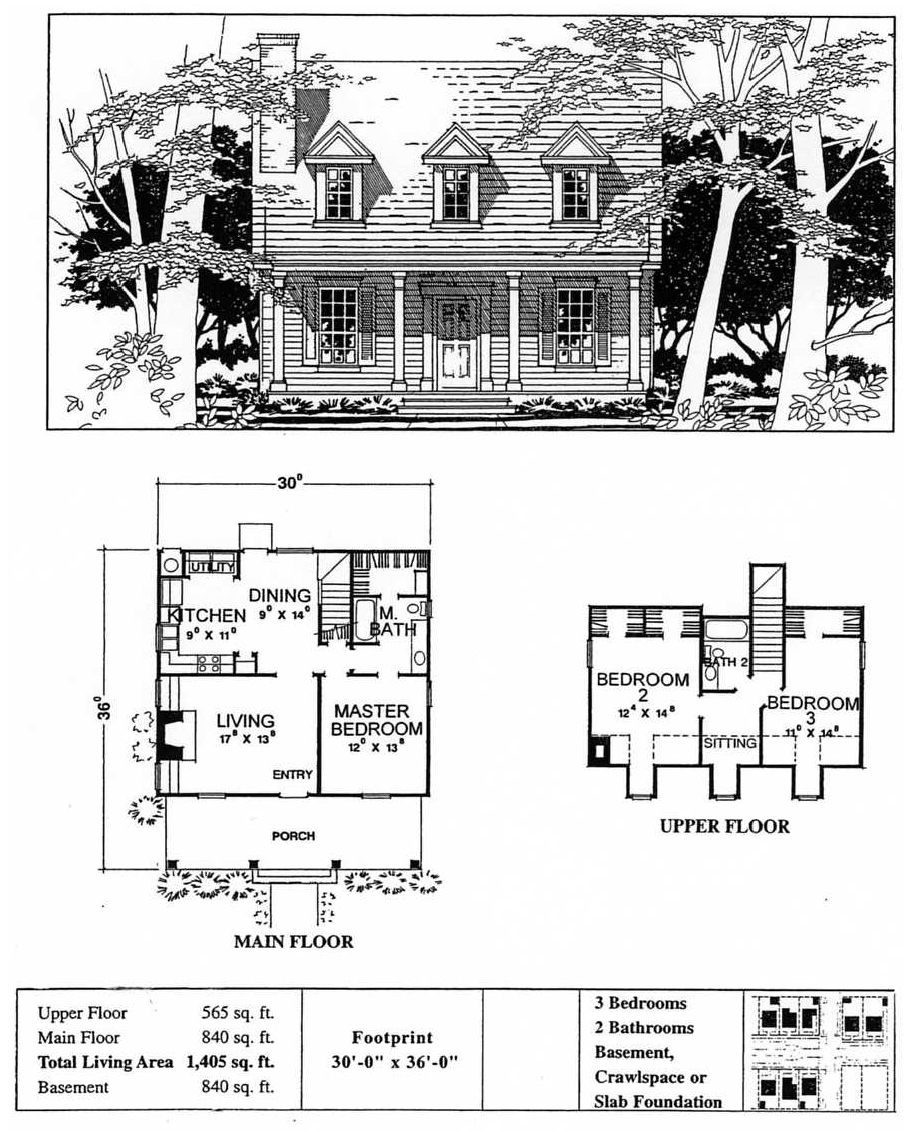
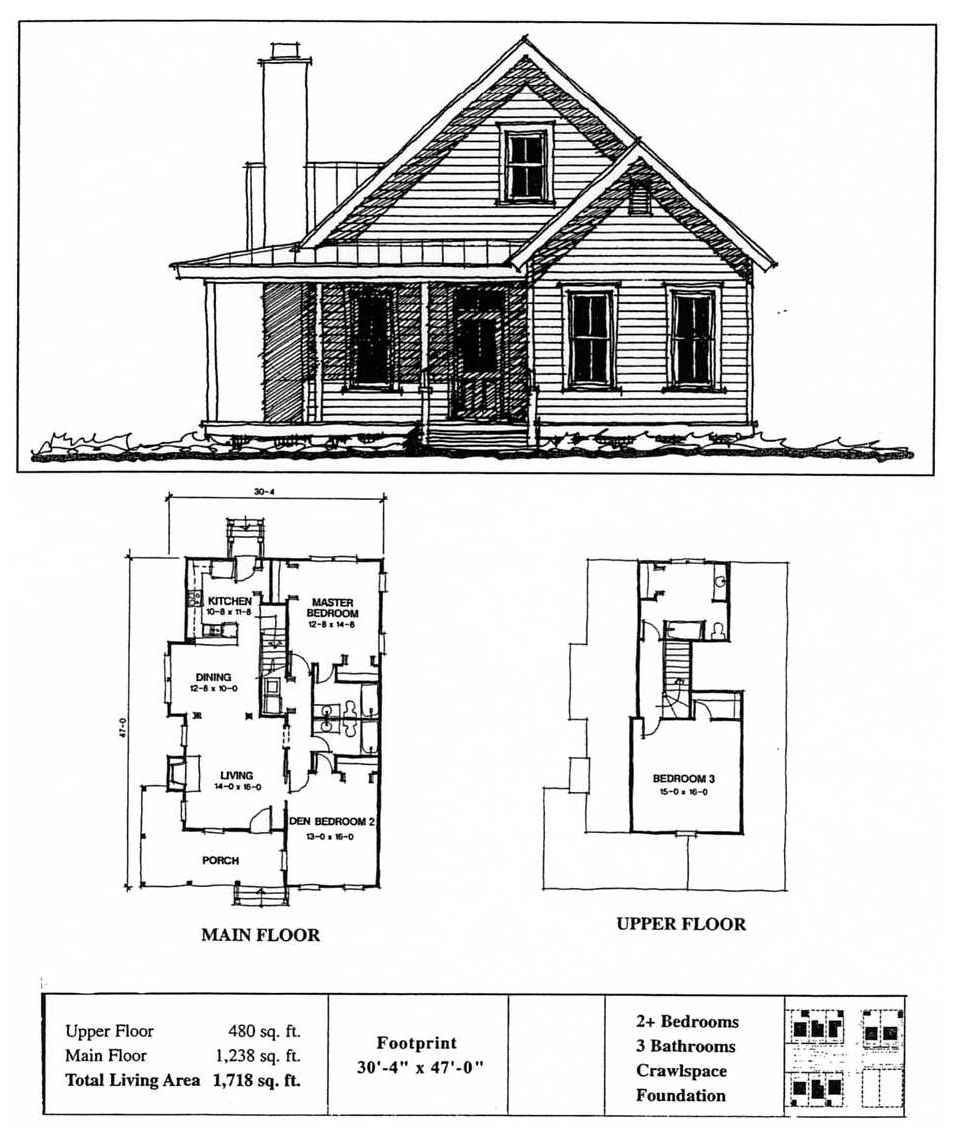
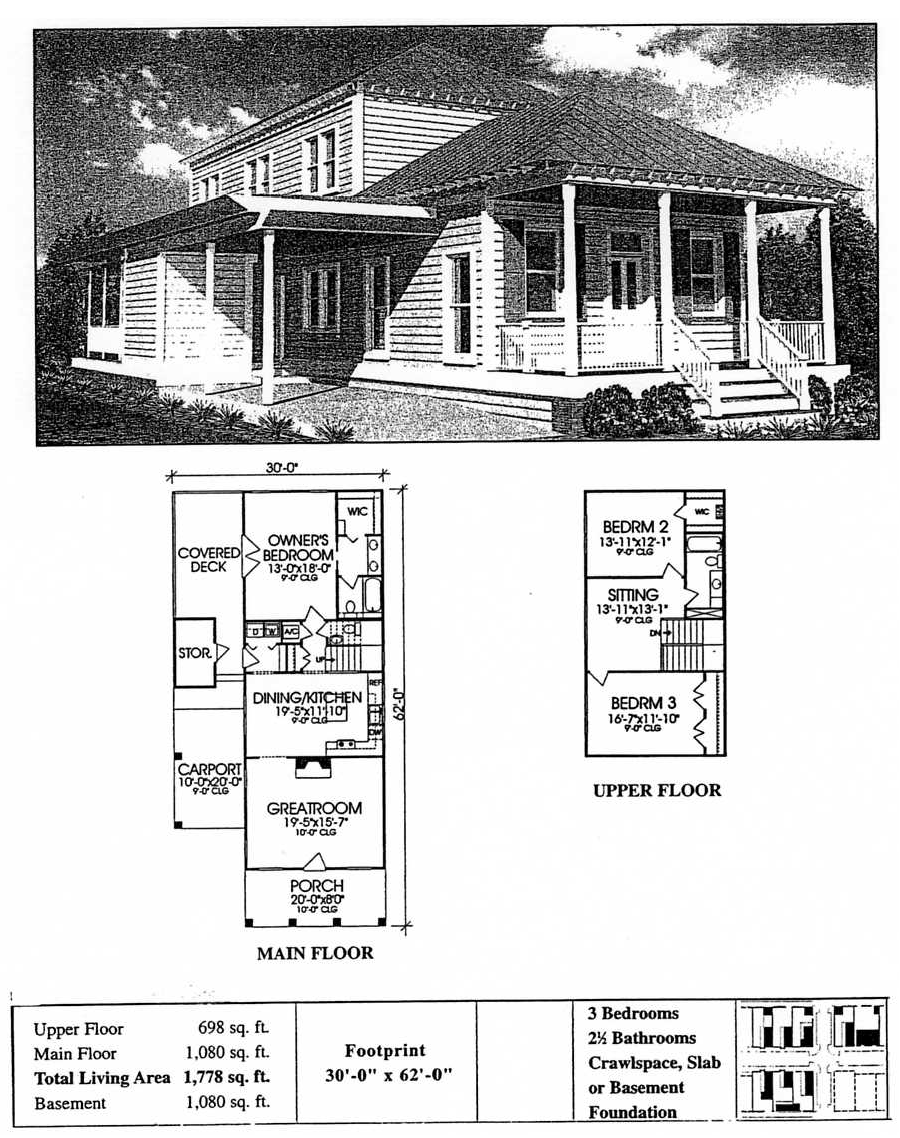
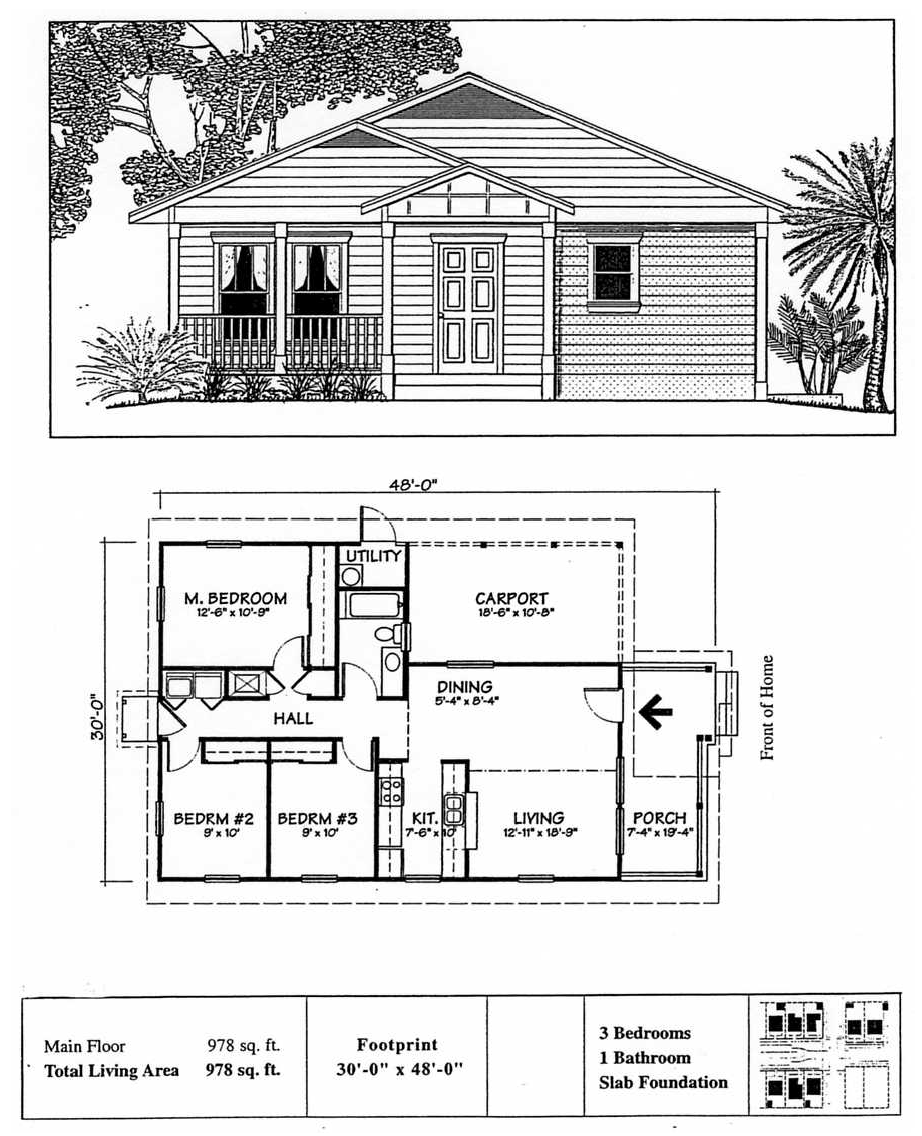
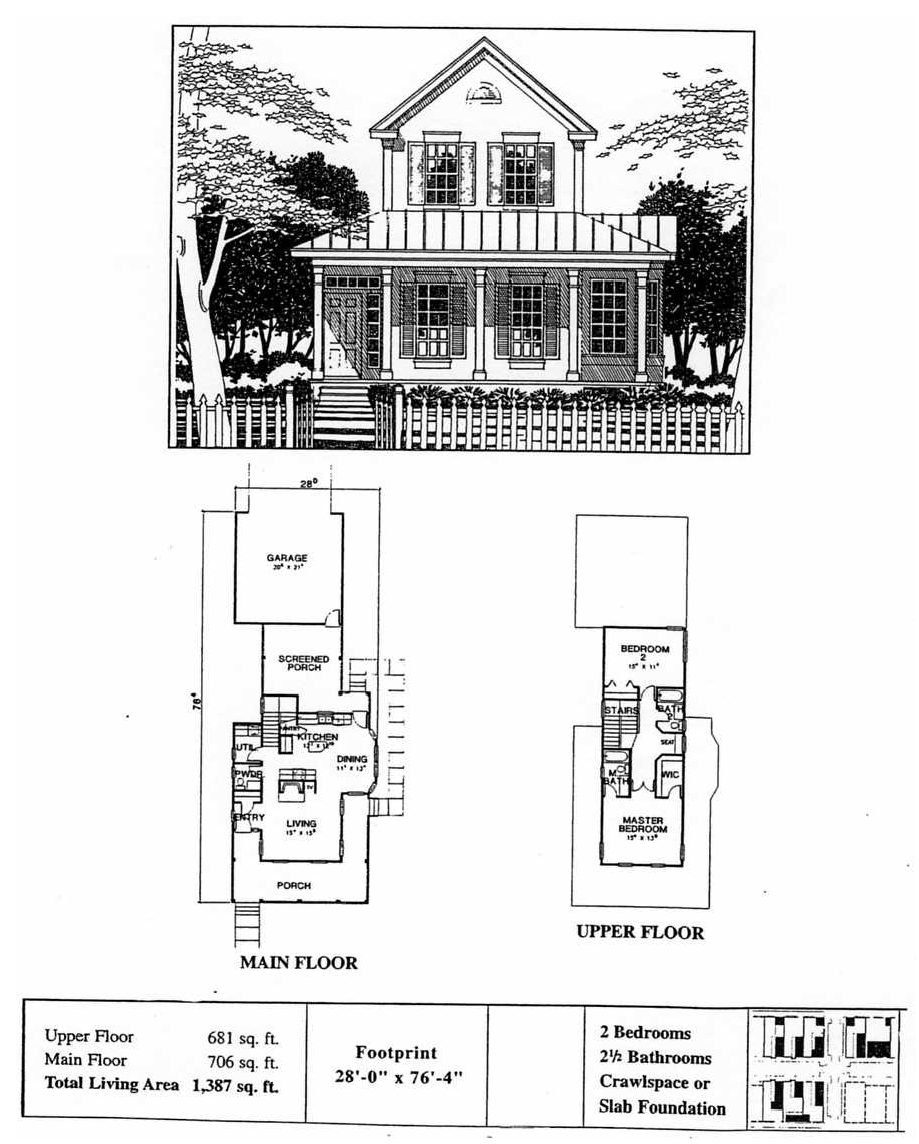
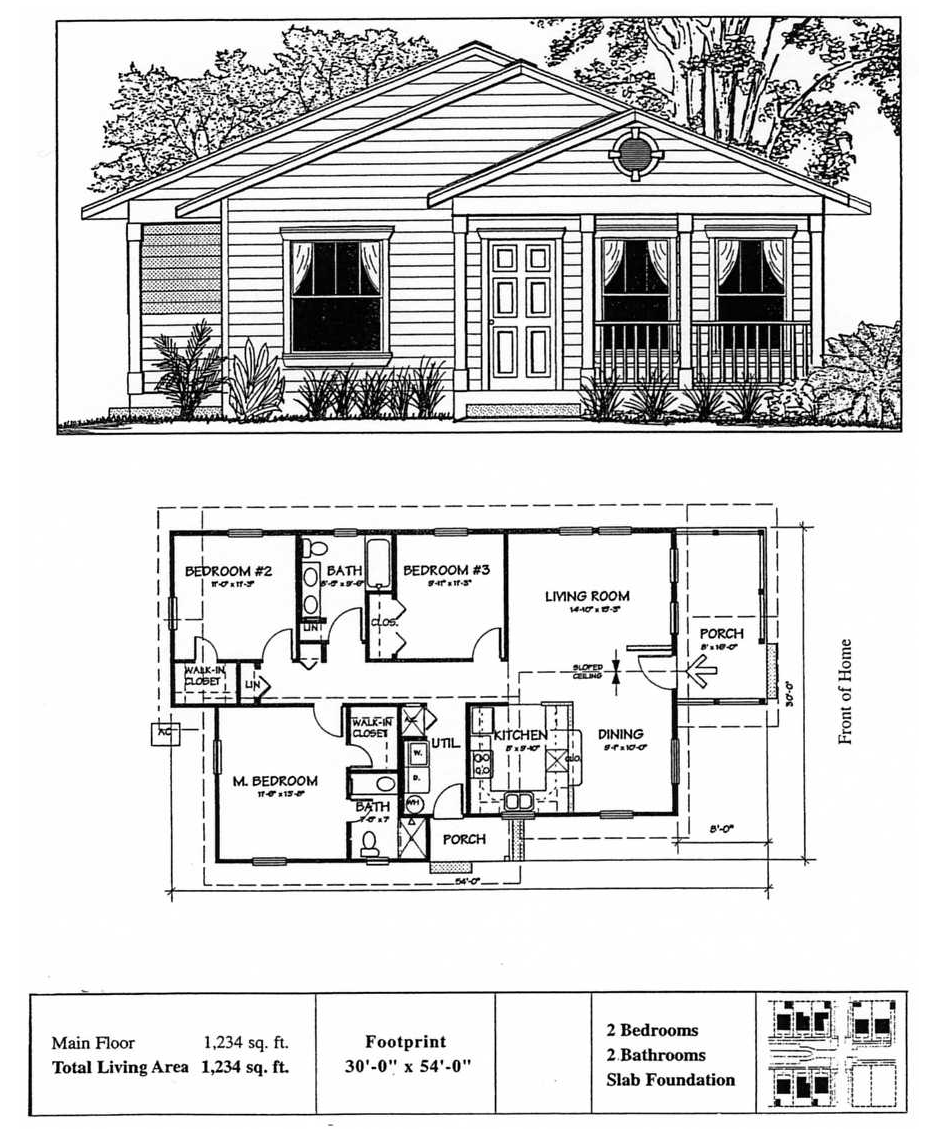
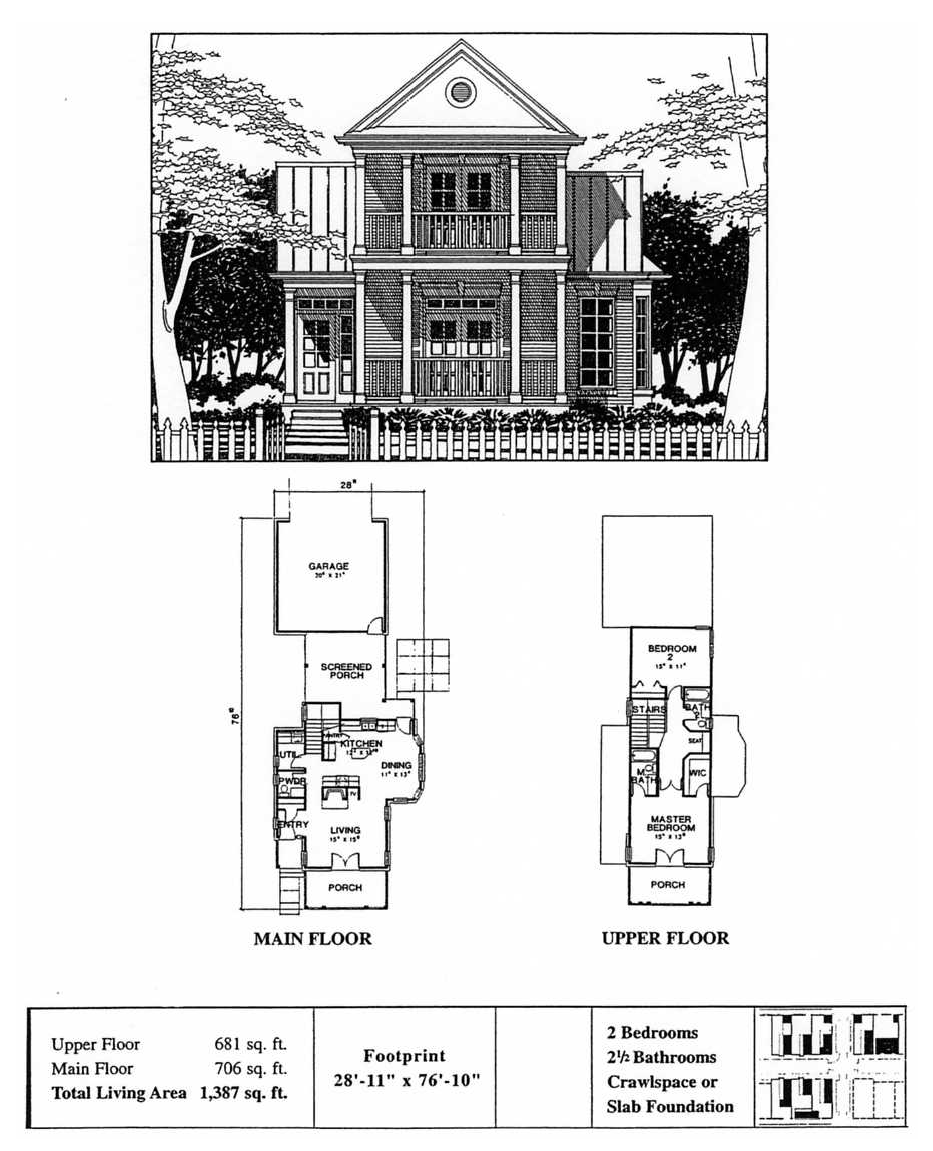
Nonconforming lots of record. In order to address a shortage of workforce housing units, nonconforming lots of record that have at least 40 feet of frontage may be used for workforce housing, provided the proposed housing unit meets the typical designs represented by the sketches below, the additional requirements of 4.1.4(D), and any other applicable code provisions.