Health, Safety And Welfare
The Fridley City Council (Council) finds that animals are an important part of the community in that they provide companionship, recreation, and protection for many citizens. The Council further finds that, if not properly treated and controlled, animals can become a nuisance and a hazard to persons and property and that, therefore, the reasonable regulation of animals is necessary to provide for the public health, safety, and general welfare in the City of Fridley (City).
The following definitions apply in the interpretation and application of this Chapter. Animal: every living creature except the human race. Animal Control Authority: the Fridley Public Safety Department is hereby designated as the Animal Control Authority. Animal Control Officer: any individual designated by the City Manager or their designee to enforce the provisions of this Chapter, including all City community service officers and police officers. Animal Shelter: any premises designated by the Council for the purpose of impounding and caring for animals held under the authority of this Chapter, receiving registrations, license applications, and proof of vaccinations for such animals, and issuing licenses and tags for such animals. The facility may be owned by the City or may be a contracted shelter service. Apiary: the assembly of one or more colonies of bees on a single lot. Apiary Site: the lot upon which an apiary is located. Beekeeper: a person who owns or has charge of one or more colonies of honeybees or a person who owns or controls a lot on which a colony is located whether or not the person is intentionally keeping honeybees. Beekeeping Equipment: anything used in the operation of an apiary, such as hive bodies, supers, frames, top and bottom board and extractors. Birds: any of the class of warm-blooded vertebrates distinguished by having the body more or less covered with feathers and the forelimbs modified as wings. Cat: any animal of the Felis catus species. Coop: the structure for the housing of poultry permitted by this Chapter. Colony: an aggregate of honeybees consisting principally of workers, but having, when perfect, one queen and at times drones, brook, combs and honey. Crowing: the sound uttered by a rooster. Cruelty or Torture: every act, omission or neglect whereby unnecessary or unjustifiable pain, suffering or death will be caused or permitted. Dangerous Dog: any dog which has been declared to be a dangerous dog pursuant to this Chapter and Minnesota Statutes (M.S.) §§ 347.50 to 347.565 as may be amended from time to time. Dog: any animal of the canine species. Great Bodily Harm: great bodily harm will have the meaning provided in M.S. § 609.02, subd. 8, as amended from time to time. Hen: a female chicken. Hive: the receptacle inhabited by a colony. Honeybee: all life stages of the common domestic western honeybee (Apis mellifera). This definition does not include wasps, hornets, African subspecies or Africanized hybrids. Livestock: horses, cattle, goats, sheep, swine, and other animals used for utility. License: the authority to keep an animal within the City . Licensee: any person who has applied and received approval of a City license. Multiple Pet Location: any residential lot where an occupant of the residence keeps more than three dogs, cats or any combination thereof that are at least six months of age as pets. Nucleus Colony: small quantity of honeybees with a queen housed in a smaller than usual hive box designed for a particular purpose and containing no supers. Owner: the license holder or any other person or persons, firm, association, organization or corporation owning, keeping, possessing, having an interest in, having custody or control of or harboring a dog. Any person keeping or harboring a dog for five consecutive days is an owner thereof for the purposes of this Chapter. Potentially Dangerous Dog: any dog which has been declared to be a potentially dangerous dog pursuant to this Chapter and M.S. §§ 347.50 to 347.565, as amended from time to time. Poultry: A domesticated chicken fowl of the species Gallus gallus and domesticated duck fowl of the Mallard (Anas platyrhynchos) and Muscovy Duck (Cairina moschata). Proper Enclosure: a structure where an animal is confined, held, or kept meeting the requirements of M.S § 347.50, subd. 4, as amended from time to time. Provocation: provocation will have the meaning provided in M.S. § 347.50, subd. 8, as amended from time to time. Queen: an adult mated female that lives in a honeybee colony or hive that is usually the mother of most, if not all, of the bees in the beehive. A queen is developed from larvae selected by workers bees and specifically fed in order to become sexually mature. Rodents: a destructive or nuisance animal including such animals as rats, mice, moles, voles and other wild animals that are dangerous to the welfare of the public. Rooster: a male chicken. Run: a fully enclosed and covered area attached to a coop where the poultry can roam unsupervised. Service Animal: a dog or other animal approved by the American Disabilities Act that has been individually trained to do work or perform tasks for an individual with a disability. The task(s) performed by the animal must be directly related to the person's disability. Substantial Bodily Harm: substantial bodily harm will have the meaning provided in M.S. § 609.02, subd. 7a, as amended from time to time. Super: a box that holds the frames where bees will store the honey for harvest. Swarming: the process where a queen bee leaves a colony with a large group of worker bees in order to form a new honeybee colony. Tag: an item provided to individuals as proof that they have been issued a license to maintain an animal. Under strict control refers to a dog or cat and is defined as:
1. The animal may not leave the property; 2. If the animal is let outside, the owner must be present at all times and it must be either inside a fenced in yard or on a leash; 3. The animal may run free inside the residence; however, the animal must be contained or put into a separate room when visitors are present; and 4. The animal's owner must immediately notify the Public Safety Department if the animal shows any sign of illness or aggression.
Unusual Aggressive Behavior: any instance in which unusual aggressive characteristics such as stinging or attacking without provocation occurs. Provocation is an act that an adult could reasonably expect may cause a bee to sting or attack. Veterinary Hospital: any establishments maintained and operated by a licensed veterinarian for the diagnosis, care and treatment of diseases and injuries of animals. Waterfowl: includes these species of birds commonly known as geese, ducks, gulls and swans and any other waterfowl falling under the jurisdiction of the United States Fish and Wildlife Service. Wild Animals: all living creatures not human, wild by nature.
1. Taking Wild Animals Except as provided in Section 300.03 (2) regarding nuisance wildlife control measures, it will be unlawful for any person to hunt, take, shoot, trap, kill, injure or attempt to injure any wild animal within the City by use of a firearm, bow and arrow, trap, poison or any other means. Nothing in this Section, however, will prevent property owners or their agents from eradicating rodents on their property through the use of traps, poisons or other such lawful means, nor will it prevent an agent of the City from trapping, immobilizing or killing a wild animal for reasons of public safety or for reasons of humane destruction following injury. 2. Nuisance Wildlife Control Measures
(a) It will be unlawful to hunt, take, shoot, trap, or kill any wild animal within the City without first creating a wildlife control plan and having met the following conditions:
(1) Authorization of wild animal removal must first be secured from the Minnesota Department of Natural Resources and any federal agency mandated to regulate the taking of the species to be removed as may be required. (2) An indemnification agreement must be submitted holding harmless the City from any suits arising from any damages resulting from the City’s approval of the wildlife control plan.
(b) In addition to any other requirements as may be deemed necessary, the nuisance wildlife control plan must at a minimum:
(1) Include a site plan of the property upon which nuisance wild animals are to be taken; (2) Identify the species and number of wild animals to be taken and the method of disposal; (3) Describe the proposed manner of taking and incorporate appropriate safety standards as identified by the Minnesota Department of Natural Resources and public safety officials; (4) Provide complete identification, credentials and qualifications of all persons involved in the taking; (5) Identify the measures to be used to secure the property from public intrusion during any taking of the wildlife.
(c) The City Manager or their designee has the authority to approve, modify or deny a nuisance wildlife control plan, taking into account the health, safety and welfare of the public. (d) No person will intentionally disrupt a nuisance wildlife control plan conducted pursuant to this Section by any means including but not limited to the use of noise, lights, chemicals, or by the intrusion into a restricted area where a nuisance wildlife control plan is taking place.
3. Prohibition of Wildlife Feeding
(a) It will be unlawful to provide food (including food by-products, garbage or animal food) to wildlife in the City. This includes placing food or allowing food to be placed on the ground, shoreline, waterbody, or any structure, unless such items are screened or protected in a manner that prevents wildlife from feeding on them. Small backyard birdfeeders are exempt from this prohibition and must be placed at least six feet above ground level. (b) This prohibition does not apply to veterinarians, Animal Control Officer, or county, State or Federal game officials who in the course of their duties have any wildlife in custody or under their management. (c) This prohibition does not apply to persons authorized by the City to implement the Canada Goose management program and any future wildlife management programs approved by the Council. (d) This prohibition does not apply to any food placed upon the property for purposes of trapping or otherwise taking wildlife, where such trapping or taking is pursuant to a permit issued under Section 300.03 (2).
1. License Requirement
(a) No person will engage in the keeping, raising, feeding or caring for livestock in the City without first having obtained a license to do so. (b) Any person keeping, raising, feeding, or caring for horses, cattle, goats, sheep, or swine must provide no less than one acre of open, unused land for each animal.
2. License Procedure
(a) A license to keep livestock will be granted only after written application, signed by the applicant, is filed with the City Manager or their designee. The application must state the applicant's full name and address and contain the number and species of the livestock to be kept and a scaled site plan of the premises showing the adjoining property and fence lines. (b) The City Manager or their designee, will review the application and site plan and inspect the property to determine the possible effects on adjoining properties, housing facilities, sanitation control and the effect on the general health, safety and welfare of the public. When the City Manager or their designee, has determined that the applicant has substantially demonstrated that there will be no adverse effects upon adjoining properties, housing facilities, sanitation control, as well as the general health, and has otherwise met all other licensing requirements the City Manager or their designee will issue the license. (c) An applicant may appeal the denial, revocation, or non-renewal of a license issued under this Section pursuant to the appeal procedures set forth in Section 300.22 of this Chapter. (d) The license term, license fee, and license renewal fee are established in the Fees chapter of the Code.
3. Manure Removal Persons who keep livestock within the City must not allow any odors which are offensive to the people inhabiting the City such that they constitute a nuisance as defined in Chapter 110 of the Code. Organic matter must not be allowed to accumulate for more than five business days at a time. However, organic matter must be removed more often than one time per five business days if it is necessary to eliminate any odors that constitute a nuisance. 4. Housing Proper housing in the form of barns, coops or hutches must be provided in any area where livestock are permitted to roam. Such housing must be adequately fenced to ensure that the livestock remain on the owner's premises. When livestock are kept in an area that abuts or adjoins a residential area on which dwellings are erected, there must be a strip of land at least 30 feet wide between such abutting property and the area on which the livestock are kept. 5. Inspection Any authorized Animal Control Officer will, at any reasonable time, be permitted upon the premises where livestock are kept for the purpose of making an inspection to determine compliance with this Chapter.
1. Purpose. The keeping of chickens or ducks on a small scale for the purpose of raising such animals to have access to fresh eggs, meat, or feathers is of growing interest in the community. This section addresses the City’s desire to protect the health and safety of such animals and residents.
2. License Required
(a) No person may keep, harbor, maintain or allow the keeping of poultry on any property in the City without an approved license. If the applicant is a tenant, they must also provide proof of approval by the property owner permitting the keeping of poultry on the property. (b) Education and training on how to raise poultry is required for the individual prior to the issuance of the initial license by the City. At the time of application for licensing, the individual must submit proof of completion of an approved educational course on the care and keeping of poultry. (c) The application for licensing must be upon a form provided by the City. The applicant must pay for a license fee as set forth in the Fees chapter of the Code. All required information must be complete, including the number and breed of poultry, a diagram or photograph of the proposed coop and run, description of sanitation control and a description on how poultry feed will be maintained or stored. (d) A site plan of the property showing the location, size, and setback requirements of the proposed poultry coop and run is required. (e) The property must be in compliance with all other applicable City regulations in order to receive approval and renewal. (f) If the licensee fails to maintain the conditions set forth below subsequent to issuance of the license, the City Manager or their designee license may revoke the license. (g) The license term, license fee, license renewal fee, and impound fee are established in the Fees chapter of the Code. (h) An applicant or licensee may appeal the denial, revocation, or non-renewal of a license issued under this Section pursuant to the procedures set forth in Section 300.22 of this Chapter.
3. Location and Size of Coop and Run
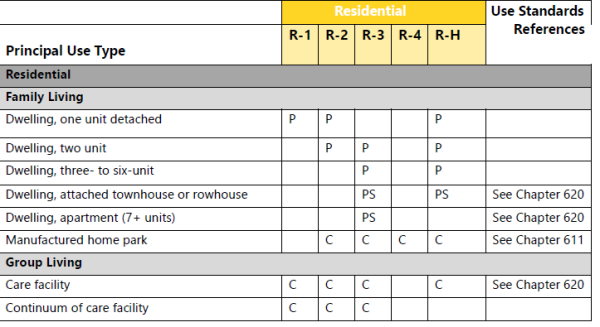
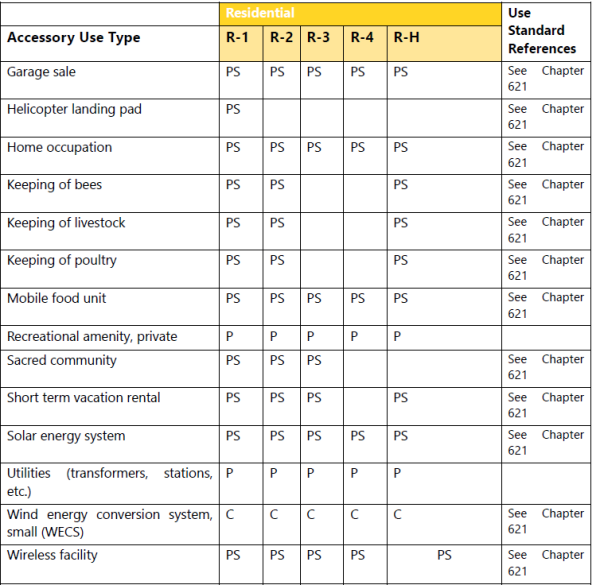
(a) Residents on properties zoned R-1, Single Family Residential may be permitted to keep and raise poultry as a hobby with a license and be limited to a maximum combination of six poultry per property. (b) Coop and run area must be located in the backyard and must be located a minimum of 10 feet from all adjacent property lines and 30 feet from any neighboring structure. (c) Coop and covered run area is limited to no more than 120 square feet. (d) Coop size must not be less than three square feet per bird, be weatherproof and fully enclosed. (e) The coop must comply with current zoning and building codes. The coop must be constructed with architecturally appropriate building materials including exterior grade siding and either a metal, composite or shingled roof. In the alternative, coop may be purchased from a commercial source that constructs structures specifically to be used as coops for poultry. (f) The run must have a fence around the enclosure and must be securely constructed with mesh type material. (g) The run must have protective overhead netting or fencing to prevent the poultry from roaming freely and to protect them from other animals. (h) If the keeping of poultry has been discontinued for more than 12 consecutive months, the licensee must remove the coop and run and restore the site within five business days.
4. Conditions
(a) No more than six poultry may be kept on site at any one time. (b) No roosters will be permitted. (c) No poultry are to be allowed or kept inside of any residential garage or dwelling unit. (d) Poultry must be secured inside of a shelter from sunset to sunrise each day to prevent nuisance noise and attraction of predators. (e) Poultry must be confined to the coop and run area and may not roam free on the property. (f) Housing facilities and grounds must be maintained in a clean and sanitary condition and kept in good repair. Flies, rodents, and noxious odors must be controlled. Facilities must be kept free of fecal matter and collected fecal matter must be properly stored and disposed of weekly. (g) If poultry are to be maintained during the winter months, the coop must be winterized to protect the birds in cold weather. (h) Poultry must be fed within the confines of the coop or run area. Feed must be stored in leak-proof containers with a tight-fitting cover to prevent attracting vermin. (i) The raising of poultry for breeding purposes is prohibited on residentially used or zoned properties. (j) There will be no slaughtering or butchering of any poultry on residential properties within the City.
5. Inspection As a part of the initial license application or annual renewal each resident must allow an inspection of the coop and run area by the City. The City Manager or their designee has the right to inspect any coop and run for the purpose of ensuring compliance with this Section upon providing prior notice to the owner of the property. In the case of a complaint regarding the coop and run, the site may be inspected by the City without prior notice. In the event the licensee moves to a new residential lot within the City , the licensee is required to complete a new license application for the new location.
1. Purpose Honeybees are an asset to the community and important in the pollination of plants and production of honey and other products. The purpose of this Section is to allow for the hobby of keeping honeybees and to establish certain requirements for beekeeping within the City, to avoid issues which might otherwise be associated with beekeeping in populated areas. 2. Beekeeping License Required
(a) No person may keep, harbor, maintain or allow to be kept any hive or other facility for the housing of honeybees on or in any property in the City without an approved license. If the applicant is a tenant, they must also provide proof of approval by the property owner permitting the keeping of bees on the property.
(b) Beekeeping training and education is required for the beekeeper prior to the issuance of the initial beekeeping license by the City. At the time of application for licensing, the beekeeper must submit a certificate of completion of an approved honeybee keeping course .
(c) The license application must be upon a form provided by the City. All required information must be complete. The license term, license fee, and license renewal fee are established in the Fees chapter of the Code.
(d) Each apiary site must apply for a license and receive a license from the City prior to bringing any honeybees into the City.
(e) The beekeeping license will be valid until April 30 of each calendar year following initial issuance and must be renewed prior to annual expiration by submitting a renewal form provided by the City and paying the renewal fee in the amount set forth in the Fees chapter of the Code.
(f) The property must be in compliance with all other applicable City regulations in order to receive approval and renewal.
(g) If the licensee fails to maintain the conditions set forth in the Required Conditions Section after issuance of a beekeeping license, the City Manager or their designee may revoke the license.
(h) An applicant or licensee may appeal the denial, revocation, or non-renewal of a license issued under this Section pursuant to the procedures set forth in Section 300.22 of this Chapter.
3. Colony Location
(a) Residents on properties zoned R-1, Single Family Residential may be permitted to keep and raise honeybees as a hobby and are limited to two colonies per property. (b) Hives must be located in the backyard and must be located a minimum of 10 feet from all property lines and 30 feet from any neighboring structure. (c) If any licensed beekeeper serves the community by removing a swarm or swarms of honeybees from locations where they are not desired, that person will not be considered to be in violation of the colony density restrictions of this Section if the following conditions are met:
(1) The person temporarily houses the honeybees at an apiary site of a beekeeper licensed by the City; (2) The honeybees are not kept for more than 30 days; and (3) The site remains in compliance with the other provisions of this Section.
4. Required Conditions
(a) No more than two colonies may be kept on the property at the same time. (b) For each colony permitted to be maintained in this Section, there may also be maintained upon the same apiary lot, one nucleus colony in a hive structure not to exceed one standard nine and five-eighths inch depth box, ten frame hive body with a maximum of five supers. (c) Honeybee colonies must be kept in hives with removable frames which must be kept in sound and usable condition. (d) Each colony on the apiary site must be provided with a convenient source of water which must be located within 10 feet of each active colony. (e) Materials from a hive such as wax combs or other materials that might encourage robbing by other bees must be promptly disposed of in a sealed container or placed within a building or other bee and vermin proof enclosure. (f) Beekeeping equipment must be maintained in good condition, including keeping the hives free of chipped and peeling paint if painted, and any unused equipment must be stored in an enclosed structure. (g) Hives will be continuously managed to provide adequate living space for their respective honeybees in order to prevent swarming. (h) In any instance in which a colony exhibits unusual aggressive behavior, it is the duty of the beekeeper to promptly re-queen the colony. (i) Honey may not be sold from any residential property.
5. Inspection As part of the initial application or annual renewal, each beekeeper must allow an inspection of the apiary site. The City Manager or their designee has the right to inspect any apiary for the purpose of ensuring compliance with this Section upon providing prior notice to the owner of the apiary property. In the case of a complaint regarding the apiary, the apiary site may be inspected by the City without prior notice. In the event the licensee moves to a new residential lot within the City, the licensee is required to complete a new license application for the new location.
It is unlawful for any person to own, keep, or harbor any animal which is considered a nuisance. An animal nuisance will exist under any of the following conditions: 1. The animal is not confined to the owner's or custodian's property by adequate fencing or leashing. 2. The animal is off the premises of the owner or custodian and is not under the control of the owner or custodian by a leash not exceeding six feet in length. This provision is not applicable when an animal is in a motor vehicle. 3. The animal causes damage to the person or property of anyone other than the owner, or creates a nuisance, as defined in this Chapter or in Chapter 110, of the Code, upon the property of someone other than the owner. This provision is not applicable when the animal is acting in defense of the owner, the owner's family or the owner's property. 4. A female animal is in heat and off the premises of the owner, unless confined while being transported to or from the premises of the owner. This provision is applicable when a female animal is in heat and is on the premises of the owner, but is not kept in a building or secure enclosure where it cannot be in contact with other males of its kind, except for planned breeding. 5. The animal barks, howls, cries, yelps, or makes any other noise habitually or repetitively that the person who owns, keeps, or harbors the animal knows, or has reasonable grounds to know that it will, or tend to, alarm, anger or disturb other persons residing in the vicinity thereof. 6. The animal chases vehicles or otherwise interferes with pedestrians, automobiles, bicycles, motorcycles, motor bikes or snowmobiles on public streets, alleys, properties or highways. 7. The animal is not currently vaccinated against rabies as evidenced by the certificate of an authorized veterinarian. 8. Any person having the custody or control of any animal does not clean up feces of the animal and dispose of such feces in a sanitary manner. 9. Any person having the custody or control of any animal allows such animal to defecate on the private property of anyone other than the owner. 10. When on a park or public land, any person having the custody or control of any animal does not immediately remove any feces left by such animal and dispose of such feces in a sanitary manner or does not have in possession a device or equipment for the picking up and removal of animal feces. The provisions of this Section does not apply to a guide dog accompanying a blind person or dogs involved in public safety rescue activities. 11. To allow an animal on the premises of any bathing beach or the City Community Park, whether ridden, lead, carried, or running at large.
1. License
(a) No person may own, keep or harbor any dog over the age of six months within the City unless they have registered and received a dog license from the City. A license will be issued by the City upon the submission of a completed application, proof of rabies vaccination, payment of a license fee, and satisfaction of all of the requirements of this Chapter. The license is valid for the life of the dog. The license is not transferable. (b) The application for licensing must be upon a form provided by the City. All required information must be complete. No license will be issued for a dog upon which proof of vaccination has not been provided at the time of the application. (c) It is the owner’s responsibility for maintaining current vaccinations at all times. The owner must provide proof of current rabies vaccination upon request or demand by an agent of the City, the Animal Control Officer, Animal Control Authority, or an individual that may have been harmed, injured, or bitten by the dog. (d) The license fees are established in the Fees chapter of the Code.
2. Tag
(a) An animal tag will be issued by the City for all licensed dogs. The owner will affix the tag to the collar or harness of the licensed dog in such a manner so that the tag may be seen. The owner will see to it that the tag is constantly worn by the dog. In case any tag is lost, a duplicate may be issued by the City. A fee, as provided by the Fees Chapter of this Code, will be assessed for each duplicate tag. (b) It is unlawful for any person to do any of the following: (1) counterfeit or attempt to counterfeit a dog tag; (2) remove a valid tag for any purpose; (3) to own, keep or harbor a dog wearing a counterfeit, fictitious, altered, or invalid license tag. (c) Dog tags are not transferable to another dog and no refunds will be made on a license fee because of transfer of the dog out of the City or death of the dog.
3. Transfer of Dog. City-issued dog licenses are not transferable to a new owner in the City.
1. A dog license may be denied or revoked if:
(a) The person to whom such license is issued violates Section 300.07 related to animal nuisance or violates Section 300.08 related to dog licensing three times within a 12-month period or five or more times within the dog’s lifetime; or (b) The person to whom such license is issued violates the terms of M.S. Chapter 343 related to cruelty to animals; (c) The person to whom such license is issued violates the terms of M.S Chapter 347 or Section 300.12 of this Code related to the regulation of potentially dangerous or dangerous dogs; or (d) The person violates any other provision of the Code, or other applicable law, rule, or regulation related to the keeping of animals; (e) The Animal Control Officer determines that the dog poses a substantial risk to public safety or the wellbeing of the community.
2. An Animal Control Officer will send written notice of the denial or revocation to the person to whom such license was issued. The notice will state the basis for the denial or revocation and that an appeal hearing may be requested, in writing, addressed to the City Manager or their designee, within 14 business days of the date of the notice. The appeal will be heard by the Council. 3. Any person whose dog license is denied or revoked will, within 14 days of the date of the notice of denial or revocation, appeal the decision as required by Section 300.22 or remove the dogs permanently from the City, or euthanize of any and all dogs owned, kept or harbored by such person. No part of the license fee will be refunded unless the person prevails on appeal. If an individual is prohibited from owning a dog by reason of license revocation, denial, or any other provision of this Chapter, no person in the individual’s household is permitted to own, keep or harbor a dog in the City, unless specifically approved with or without restrictions by the City. 4. If a dog license is denied or revoked by the City, no new dog license may be issued for a period of three years from date the license is denied or revoked, and any person who has had their dog license revoked may not own a dog within the City without such license. Beginning three years after a revocation under this Section that prohibits a person from owning a dog, and annually thereafter, the person may request in writing that the City Manager or their designee review the prohibition. The City Manager or their designee may consider such facts as the seriousness of the violation or violations that led to the revocation, any criminal convictions, or other facts deemed appropriate. The City Manager or their designee may recommend that the City rescind the revocation entirely or rescind it with limitations. The City Manager or their designee also may recommend conditions a person must meet before the revocation is rescinded, including, but not limited to:
(a) Evaluation by a certified applied animal behaviorist or a board-certified veterinary behaviorist and completion of any training or other treatment as deemed appropriate by that expert. (b) Spaying or neutering. (c) Secure, humane confinement in a manner that prevents escape and unsupervised contact with the public, allows the dog adequate exercise and provides protection from the elements. (d) Direct supervision by an adult 18 years of age or older whenever the dog is on public property. (e) Successful completion of a dog handling course. (f) Muzzling in public, in a manner that prevents the dog from biting people and other animals but does not injure the dog or interfere with vision or respiration. (g) Implanting microchip identification in the dog and providing the City with the name of the microchip manufacturer and identification number of the microchip.
5. If the City rescinds a person’s license revocation and the person subsequently fails to comply with any limitations imposed by the Animal Control Authority or the person is convicted of any animal violation, the City may permanently prohibit the person from owning, keeping or harboring a dog within the City. 6. A dog license revocation is in addition to any penalty against a dog owner arising from a violation of this Chapter or State Statute.
1. Generally
(a) Animal Control Officers may seize and impound any dogs requiring licenses or tags found in the City without the licenses or tags and any animals which are found to be in violation of any of the other provisions of this Chapter. Animals may be impounded by the City in an Animal Shelter and confined in a humane manner. Impounded animals will be kept for at least five business days of the Animal Shelter, unless reclaimed by their owners.
(b) If an animal is found at large and the owner or custodian can be identified, the Animal Control Officer may proceed against the owner for violation of this Chapter.
(c) The Animal Control Officer may enter upon any public or private premises by warrant or as otherwise provided by law when such officer is in reasonable pursuit of their duties.
(d) Upon receiving any animal as provided in this Chapter, the Animal Shelter personnel who receive animals must check for identification on each animal, identify the owner by the identification whenever possible, and promptly notify the owner of the location of the animal by the most expedient means. The Animal Shelter and Public Safety Department will maintain a record of animals so impounded.
2. Impounding Potentially Dangerous or Dangerous Dog The Animal Control Officer may seize and impound any dog which is determined to be a potentially dangerous dog or dangerous dog pursuant to State law and this Section under the following conditions:
(a) The dog inflicted substantial bodily harm on a human in public or private property without provocation;
(b) The dog inflicted multiple bites on a human on public or private property without provocation;
(c) The dog bit multiple human victims on public or private property in the same attack without provocation;
(d) The dog bit a human on public or private property without provocation in an attack where more than one dog participated in the attack;
(e) The dog had been declared dangerous, the owner’s right to an appeal under this Section has been exhausted or expired and the owner has failed to comply with the provisions of this Section or the provisions of M.S. §§ 347.50 through 347.56; or
(f) A potentially dangerous or dangerous dog commits a subsequent act or acts described in Section 300.02 and 300.07 of this Code.
3. Claiming an Impounded Animal
(a) In the instance of dogs for which the owner does not have a required license or tag, the owner must obtain a license from the City immediately.
(b) The owner of an impounded animal must pay the animal shelter an impounding fee. The Animal Shelter must turn over to the City any impounding fees received. The City will place such fees in the General Fund of the City.
(c) If a rabies vaccination is required and the owner cannot produce proof that the animal has had a current rabies vaccination, the animal shelter must ensure that the dog or other animal is vaccinated for rabies as a condition of release to the owner, the animal's owner must pay to the Animal Shelter the cost of the immunization.
(d) The owner of an impounded animal will be liable for and must pay the animal shelter the cost of food and care for each day the animal is impounded in the animal shelter.
(e) Unless otherwise determined by the Animal Control Authority, a dog impounded pursuant this Chapter will not be released from impound until the dog owner satisfies the requirements of this Chapter and State law related to the registration and keeping of potentially dangerous or dangerous dogs, as verified by an Animal Control Officer.
4. Unclaimed Impounded Animals Any impounded animal not claimed within five business days of the animal shelter will become the property of the animal shelter and may be disposed of or sold in a manner permitted by law. The licensed owner will be liable to the animal shelter for costs incurred in confining and disposing of the animal.
1. Adoption of State Law
M.S §§ 347.50 - 347.565, are hereby adopted. Every provision contained therein are made a part of this Chapter. In the event of conflict between State law and the provisions of this Chapter, the more restrictive provision will apply.
2. Potentially Dangerous Dogs and Dangerous Dogs
All of the provisions and requirements detailed in State law for Dangerous Dogs, also apply to Potentially Dangerous Dogs in the City. A “Declared Dog” for the purposes of this Section is a Dangerous Dog or a Potentially Dangerous Dog.
3. Notice of Declaration of Potentially Dangerous Dog or Dangerous Dog
Upon declaration by the City of a Potentially Dangerous or Dangerous Dog, the City will provide notice of the declaration by delivering or mailing the notice to the owner of the dog, or by posting a copy of the notice at the place where the dog is kept, or by delivering it to a person residing on the property.
4. Appeals
(a) Any person contesting a declaration by the City that their dog is a Declared Dog, or a citation or other decision associated with this Chapter may file an appeal pursuant to the Appeals and Administrative Citations chapter of the Code.
(b) If a timely appeal is filed regarding a declaration that a dog is a Declared Dog, the owner must immediately comply with the requirements of M.S § 347.52, paragraphs (a) and (c), and until such time as a decision is rendered by the Hearing Examiner or the Council if an appeal is taken pursuant to paragraph (c) below.
(c) Within 14 calendar days of a determination by the Hearing Examiner, any person contesting that decision may appeal to the Council by submitting a written appeal to the City Clerk. At its next regular meeting following the Hearing Examiner's decision, the Council may affirm, repeal, or modify that decision.
5. Registration. In addition to the registration requirements of M.S. § 347.51 the following are required in the City:
(a) No person may own a Declared Dog unless the dog is annually registered with the City.
(b) Registration of a Declared Dog must be accompanied by a City dog license.
(c) Prior to the issuance registration, an inspection of the premises by the City is required in order to ensure compliance with this Section. The City must be allowed at any time to inspect the dog, the proper enclosure, and all places where the dog is kept.
(d) Payment of a Declared Dog registration fee is required. The amount of the fee is set forth in the Fees chapter of the Code.
6. Additional Requirements. In addition to the requirements of M.S. § 347.52, the following are required in the City with respect to Declared Dogs:
(a) If a Declared Dog is kept on the property outside of a proper enclosure, the dog must be muzzled. The muzzle must be constructed and worn in a manner that will prevent the dog from biting any person or animal but will not cause injury to the dog or interfere with its vision or respiration. (b) If a Declared Dog is kept on the property outside of a proper enclosure, the dog must be restrained by a substantial chain or leash not exceeding six feet in length and under the physical restraint of a responsible person. (c) Electronic or invisible perimeter fences will not be considered a proper enclosure for a Declared Dog. (d) The City may require a Declared Dog and its owner attend and complete an obedience class that has been approved by the City’s animal control officer. All costs related to the approved obedience class must be paid by the dog’s owner. (e) No more than one Declared Dog may be housed at the same address. For purposes of apartments and other multi-unit dwellings, each dwelling unit will be considered a separate address. (f) Declared Dogs are restricted from entering any City-owned or maintained property, including but not limited to parks and trails, regardless of whether the dog is properly restrained. This prohibition does not apply to streets and sidewalks, insofar as the Declared Dog is handled in accordance with the requirements of State law and this Chapter. (g) If an owner of a Declared Dog fails to comply with any requirements set forth in this Section, the dog will be subject to immediate seizure and impoundment in accordance with State law.
7. List Posted For the purposes of public notification and public safety, the City may post a list of Declared Dogs on the City’s website.
1. Any person who has been bitten or has knowledge of a human being who has been bitten by a dog, cat, raccoon, skunk, or other species susceptible to rabies must immediately notify the Animal Control Officer or Public Safety Department. Whenever such an animal has bitten any person, the owner or custodian of the animal, after being so notified by the Animal Control Officer or the Public Safety Department, will immediately cause said animal to be quarantined at the City contracted Animal Shelter or at a licensed veterinary hospital for a period of 10 days after such person has been bitten. During the quarantine period, said animal will be kept under observation to determine its condition and if it is found to be sick or diseased, the operator of the quarantine facility will immediately report the condition of the animal in writing to the Public Safety Department. The Animal Control Officer will then take necessary steps to determine if the animal is suffering from rabies. 2. During the quarantine period the animal must not be removed from the designated quarantine facility except by special written permission from the Minnesota Livestock Sanitary Board and the Animal Control Officer. The owner of an animal will be responsible for the cost of quarantine. 3. The quarantine required by this Section will not be necessary and the requirements will be waived if the custodian or owner of the animal, immediately upon notification that their animal has bitten someone, presents to the Animal Control Officer or Public Safety Department, the certificate of an authorized veterinarian that the animal was currently vaccinated for rabies prior to the date of the biting. Such animal will be quarantined on the premises of the owner, under strict control, for a period of 10 days for the purpose of observation for symptoms of disease. The Animal Control Officer is authorized to conduct a midterm and end-term examination of the animal. 4. It is unlawful for any person, other than an Animal Control Officer, to kill or destroy any animal found running at large in the City. No Animal Control Officer or other person will kill, or cause to be killed, any animal suspected of being rabid, except after the animal has been placed in quarantine, and the diagnosis of rabies made.
1. No person will keep or allow to be kept in the City:
(a) Any animal of a vicious nature or with a propensity, tendency or disposition to attack, to cause injury or to otherwise endanger the safety of human beings or domestic animals; or (b) Any animal which attacks a human being or a domestic animal on two or more occasions without provocation or on a single occasion where substantial bodily harm on a human being is inflicted without provocation; or
(c) Any non-domesticated animal not naturally tame or gentle, but is of wild nature or disposition, including any of the following:
(1) Any animal or species prohibited by State or Federal law. (2) Any non-domesticated animal or species, including, but not limited, to the following:
((a)) Any skunk, whether captured in the wild, domestically raised, de-scented or not de-scented, vaccinated against rabies or not vaccinated against rabies; ((b)) Any large cat of the family Felidae such as lions, tigers, jaguars, leopards, cougars, and ocelots, except commonly accepted domesticated house cats; ((c)) Any member of the family Canidae, such as wolves, foxes, coyotes, dingoes and jackals, except commonly accepted domesticated dogs; ((d)) Any poisonous snake, pit viper or constrictor, such as a rattle snake, coral snake, water moccasin, cobra, boa constrictor or python; ((e)) Any raccoon; or ((f)) Any other animal which is not listed explicitly above, but which can reasonably be defined by the terms in Section 300.12 of this Code, including bears and badgers.
Upon conviction for the violation of this Section, the court may in addition to imposition of sentence, direct the Animal Control Officer to take the animal in question into custody and forthwith dispose of it in a humane manner.
2. These restrictions do not apply to a properly registered potentially dangerous or dangerous dog that is being maintained in accordance with all applicable requirements of this Chapter and State law.
1. License Requirement No person will keep or maintain more than three dogs or cats, or any combination of dogs or cats that are at least six months of age as pets on a residential lot in the City without obtaining a multiple pet location license. 2. License Application Application for a multiple pet location license must be made on forms provided by the City. Such application will contain the following information:
(a) The name, address, e-mail, and phone number of the applicant of the multiple pet location. (b) A site plan showing the location of the structures and fencing for the housing or shelter and run for the exercise of the dogs and/or cats. If the dogs and/or cats are to be kept primarily within the home or other building of the residence of the applicant or of any other person, it should be listed in the application. (c) The maximum number and type of breed(s) of dogs, cats or any combination thereof, to be kept on the premises. (d) Method to be used in keeping the premises in a sanitary condition. (e) Method to be used in keeping the dogs and/or cats quiet. (f) An agreement by the applicant that the premises may be inspected by the City at all reasonable times. (g) Payment of a license fee in the amount set forth in the Fees chapter of the Code.
3. Issuance of License The City Manager or their designee will have discretion in determining whether to issue or deny a license. In making such determination, the City will take into consideration the conditions listed below and with particularity, any violations during the previous license period. In the event the licensee moves to a new residence within the City, the licensee is required to complete a new application for the new location. 4. Conditions
(a) Housing facilities and grounds must be maintained in a clean and sanitary condition and kept in good repair. Facilities and grounds must be kept free of fecal matter. Collected fecal matter must be properly disposed of weekly so as not to create a public nuisance as defined in the Public Nuisance chapter of this Code. (b) The premises for keeping of dogs or cats must be fenced. The fencing must be of such quality and design so that it will contain the dogs or cats. (c) If dogs and cats are to be maintained outside during the winter months, the housing or shelter must be winterized to protect the dogs or cats from the harsh elements of the cold. (d) Animal feed must be stored in leak-proof containers with tight-fitting covers to prevent attracting vermin so as not to create a public nuisance as defined in the Public Nuisance chapter of this Code. (e) The animals are maintained in a manner that they do not become a public nuisance as defined in this Chapter of the Code.
5. Multiple Pet License Fee The annual license fee and expiration date is provided in the Fees chapter of this Code. 6. Inspection As a part of the initial license application or annual renewal, the applicant must allow an inspection of the animal housing facilities and grounds by the City. The City Manager or their designee will have the right to inspect the property for the purpose of ensuring compliance with this Section upon providing prior notice to the owner of the property. In the case of a complaint regarding the multiple pet location, the site may be inspected by the City without prior notice. 7. Denial, Impounding and Notification Procedure
(a) Licenses issued under this Section may be denied, revoked or non-renewed by the City due to any of the following:
(1) The keeping of dogs or cats in a manner which constitutes a nuisance to the health, safety or general welfare of the public; (2) Fraud, misrepresentation, or a false statement contained in the license application or during the course of the licensed activity; or (3) Any violation of the applicable provisions in this Chapter.
(b) A dog or cat may be impounded by the City pursuant to Chapter 300.12 if it is found to be at large in violation of this Section. After being impounded for five business days without being reclaimed by the owner, it may be humanely euthanized or sold. A person reclaiming an impounded dog or cat will pay the cost of impounding and boarding of the dog or cat. (c) Notice of approval, denial revocation or non-renewal of the license by the City must be made in writing to the applicant specifying the reason(s) for the action. The applicant may appeal the City’s determination by following the procedures set forth in the City-Issued License Appeals Process section of this Chapter.
1. Appointment The City may appoint such person, persons or firm as the City may deem necessary and advisable as Animal Control Officer. Such appointees will work under the supervision of the Fridley Public Safety Department and will be responsible for the enforcement of this Chapter. 2. Duties Animal Control Officers are authorized to enforce the provisions of this Chapter and other related ordinances, Chapters and statutes pertaining to animal control, including the issuance of citations. 3. Unlawful Acts It is unlawful for any unauthorized person to attempt to do so, or to take or set free any animal taken by the Animal Control Officer in the enforcement of this Chapter, or in any way interfere with, hinder or molest such Officer in the discharge of their duty under this Chapter.
1. Businesses located within the City and maintaining a guard dog for security purposes must post notice at the entrance to the premises warning of the presence of said dog. 2. Businesses maintaining a guard dog must file with the City a release authorizing Public Safety Department to shoot said dog in an emergency situation, if necessary, in order to allow the Public Safety Department to gain admittance to the premises in the performance of their duties.
Whenever an individual accompanied by a service animal presents themselves for accommodation or service on any public transit vehicle or to any restaurant, store or other place of business open to the public, it is unlawful for the owner, manager, operator or any employee of such vehicle or place of business to refuse admission to the service animal or the person.
1. Any person contesting a citation or decision associated with violations of this Chapter may file an appeal pursuant to the Appeals and Administrative Citations chapter of the Code. 2. Within 14 business days of a determination by the Hearing Examiner, any person contesting that decision may appeal to the Council by submitting a written appeal to the City Clerk. At its next regular meeting following the Hearing Examiner's decision, the Council will affirm, repeal, or modify that decision.
Public Safety Personnel: authorized City employees. Alarm User: the person, firm, partnership, association, corporation, company, or organization of any kind in control of any building, structure, or facility where an alarm system is maintained. Alarm System: any alarm installation designed to be used for the prevention or detection of burglary, robbery or fire on the premises, which contains an alarm installation. False Alarm: an alarm signal eliciting a response by Public Safety personnel when a situation requiring a response does not, in fact, exist, and which is caused by the activation of the alarm system through mechanical failure, alarm malfunction, improper installation, or the inadvertence of the user of an alarm system or its employees or agents. False alarms do not include alarms caused by climatic conditions such as tornadoes, thunderstorms, utility line mishaps, or violent conditions of nature, nor do they include alarms caused by third persons over whom the user has no control.
1. Penalties for false alarms will take place on the third such alarm within 365 days and each subsequent alarm. 2. Penalties for false alarms will only be assessed at the property address. If a suite or unit number is responsible for the given violation, penalties will be assessed to that suite or unit. Penalties for false alarms for suppression systems shared by numerous tenants, will be assessed to the property owner. 3. The penalty for false alarms is provided in the Fees chapter of the Fridley City Code. 4. Payment of user fees must be paid to the City Treasurer within 30 days from the date of notice by the City to the alarm user. Failure to pay the fee within 30 days will result in the imposition of a penalty of 10% of the user fee. 5. All unpaid user fees and penalties will be certified as an assessment against the property on which the alarm was located and will be collected each year along with the taxes on said property. Administrative costs in the amount of 10% of the unpaid fee and penalty shall be added to each assessment.6 An alarm user which is required by the City to pay a user fee as a result of a false alarm, may make a written appeal of the false alarm user fee to the Public Safety Director or Fire Chief, within 10 days of notice by the City of the false alarm charge. An adverse decision by the Public Safety Director or Fire Chief may be appealed to the City Manager or their designee, within 10 days of receipt of the Public Safety Director or Fire Chief's decision. The City Manager will have authority to make a final determination as to whether or not the user is to be charged a user fee for the false alarms.
To preserve and protect the health, safety, and welfare of the citizens of the City of Fridley (City) this chapter regulates the use of firearms and facsimile firearms within the City.
Dangerous weapon: any firearm, whether loaded or unloaded, or any device designed as a weapon and capable of producing death or great bodily harm, or any other device or instrumentality which, in the manner it is used or intended to be used, is calculated or likely to produce death or great bodily harm. The term includes, but is not limited to, the following:
1. All firearms 2. Bows and arrows, and cross bows 3. All instruments used to expel, at high velocity, pellets of any kind including, but not limited to, BB guns and air rifles 4. Sling shots 5. Black jacks, nunchakus, clubs or like objects 6. Daggers, dirks, and knives 7. Wrist rockets 8. Any explosive 9. Fist-load weapons, including but not limited to, sap gloves, knuckle gloves, knuckles made of brass, metal, wood, plastic or any other material capable of causing injury
Facsimile firearm: any object which is a replica of an actual firearm, which substantially duplicates an actual firearm or which could reasonably be perceived to be an actual firearm, unless:
1. The entire exterior surface of such object is colored white, bright red, bright orange, bright yellow, bright green, bright blue, bright pink or bright purple, either singly or as the predominant color in combination with other colors in any pattern, or such object is constructed entirely of transparent or translucent materials which permit unmistakable observation of the object's complete contents; and 2. Such object has a blaze orange extension that extends at least six millimeters from the muzzle end of the barrel of such object which is as an integral part of the object and is permanently affixed.
Whoever does any of the following is guilty of a misdemeanor:
1. Recklessly handles or uses a dangerous weapon, facsimile firearm, or explosive so as to endanger the safety of another. 2. Aims any dangerous weapon or facsimile firearm, whether loaded or not, at or toward any human being. 3. Manufactures or sells for any unlawful purpose any weapon known as a sling shot, black jack, nunchakus, club, wrist rocket, bow and arrow, crossbow, or like object. 4. Manufactures, transfers or possesses any fist-load weapon or a switch blade knife opening automatically. 5. Possesses any other dangerous article or substance for the purpose of being used unlawfully as a weapon against another.
6. Sells or has in their possession any device designed to silence or muffle the discharge of a firearm that is not lawfully possessed under federal law. 7. Possesses a dangerous weapon or facsimile firearm, in a motor vehicle, except a pocket knife with a blade under three inches, unless contained in a secure area not immediately available to vehicle occupants. 8. As a parent or guardian, permits a child under 14 years of age to handle or use a dangerous weapon or facsimile firearm, of any kind or any ammunition or explosive outside of the parent's or guardian's presence. 9. Sells, gives, loans or furnishes in any way, any deadly weapon to a person under the age of 18 years without written consent of such minor's parent or guardian, or of a police officer or magistrate. 10. Sells, or offers for sale, any facsimile firearm.
1. No person under the age of 14 years shall handle or have in their possession or under their control any dangerous weapon or facsimile firearm, except while accompanied by or under the immediate charge of their parent or guardian and which weapon would not otherwise be prohibited. 2. Nothing in this Section prohibits minors from participating in a state-approved firearms safety class or other City-approved formal course of instruction.
Nothing in this Chapter shall be construed to prohibit:
1. Possession or discharge of a dangerous weapon by a legally appointed Law Enforcement Officer or person under such Officer's direction, in the performance of the Officer's duties. 2. Possession or discharge of a dangerous weapon by persons authorized by Federal or Minnesota Statute, such as the military or persons holding valid permits 3. Possession or discharge of a dangerous weapon by persons at legally authorized ranges designed for the discharge of dangerous weapons, notwithstanding laws to the contrary. 4. Possession by museums or collectors of art or for other lawful purposes of public exhibition. 5. The discharge of dangerous weapons, other than firearms and instruments used to expel, at high velocity, pellets of any kind such as BB guns and air rifles, with permission of the appropriate property agent, when discharged under conditions not to endanger persons, property, or animals and where the projectile will not leave said property.
The possibility of disasters of unprecedented size and destructiveness resulting from sabotage, hostile action, fire, flood, tornado, or other natural causes pose a potential threat to the health, safety, and welfare of the citizens of the City of Fridley (City). This Chapter ensures that preparations of the City will be sufficient to deal with any such disasters. This Chapter: 1. Formally establishes an Emergency Management Organization. 2. Provides authority to the Emergency Management Director to exercise necessary powers during a local emergency. 3. Provides for mutual aid between the City and other political subdivisions with respect to carrying out emergency preparedness functions.
Emergency management: the preparation for and the carrying out of all emergency functions, other than functions for which military forces are primarily responsible to prevent, minimize and repair injury and damage resulting from disaster caused by sabotage, or other enemy hostile action, or from fire, flood, tornado, pandemic or other natural causes, or from industrial hazardous material mishaps. These functions include, without limitation, firefighting, police services, emergency medical and health services, rescue, engineering, warning communications, radiological and chemical evacuation, congregate care, emergency transportation, existing or properly assigned functions of plant protection, temporary restoration of public utility services, and other functions related to civilian protection, together with all other activities necessary or incidental to preparation for and carrying out of the foregoing functions. Emergency: an unforeseen combination of circumstances which calls for immediate action to prevent a disaster from developing or occurring. Emergency Management Forces: the total personnel resources engaged in city-level emergency management functions in accordance with the provisions of this ordinance or any rule or order thereunder. This includes personnel from City departments, authorized volunteers, and private organizations and agencies. Emergency Management Organization: the staff element responsible for coordinating City-level planning and preparation for disaster response. This organization provides City liaison and coordination with federal, state and local jurisdictions relative to disaster preparedness activities and assures implementation of federal and state program requirements. Disaster: a situation which creates an immediate and serious impairment to the health and safety of any person, or a situation which has resulted in or is likely to result in catastrophic loss to property, and for which traditional sources of relief and assistance within the affected area are unable to repair or prevent the injury or loss.
1. The Director, with the consent of the Mayor, shall represent the City on any regional or State organization dealing with emergency management. The Director shall develop proposed mutual aid agreements with other political subdivisions within or outside the State for reciprocal emergency management aid and assistance in an emergency too great to be dealt with unassisted, and shall present such agreements to the Council for its action. Such arrangements shall be consistent with the State emergency plan, and during an emergency, it shall be the duty of the Emergency Management Division and emergency management forces to render assistance in accordance with the provisions of such mutual aid arrangements. Any mutual aid arrangement with a political subdivision of another state shall be subject to the approval of the Governor. 2. The Director shall make such studies and surveys of manpower to determine the Emergency Management Division’s adequacy for emergency management and to plan for its most efficient use in time of an emergency. 3. The Director shall prepare a comprehensive emergency plan for the emergency preparedness of the City and shall present such plan to the Council for its approval. When the Council has approved the plan by resolution, it shall be the duty of all municipal agencies and all emergency management forces of the City to perform the duties and functions assigned by the plans as approved. The plan may be modified in like manner from time to time. The Director shall coordinate the emergency preparedness activities of the City to the end that they shall be consistent and fully integrated with the emergency plan of the Federal government and the State and correlated with the civil defense plans of other political subdivisions within the State. 4. In accordance with the State and City emergency plan, the Director shall institute such training programs and public information programs and shall take all other preparatory steps, including the partial or full mobilization of emergency management forces in advance of actual disaster, as may be necessary to the prompt and effective operation of the City emergency plan in time of an emergency. The Director may, from time to time, conduct such practice drills or other emergency preparedness exercises as are deemed necessary to assure prompt and effective operation of the City Emergency Plan when disaster occurs. 5. The Director shall utilize the personnel, equipment, supplies and facilities of existing departments and agencies of the City to the maximum extent practicable. The officers and personnel of all such departments and agencies shall, to the maximum extent practicable, cooperate with and extend such services and facilities to the Emergency Management Organization and to the Governor upon request. The head of each department and agency, in cooperation with and under the direction of the Director, shall be responsible for the planning and programming of such emergency prepared activities as will involve the utilization of the facilities of their department or agency. 6. The Director shall, in cooperation with existing City departments and agencies affected, organize, recruit, and train emergency medical personnel that may be required on a volunteer basis to carry out the emergency plans of the City and the State. To the extent that such emergency personnel is recruited to augment a regular City department or agency for emergencies, they shall be assigned to such department or agency for purposes of administration and command. The Director may dismiss any emergency volunteer at any time and require that person to surrender any equipment and identification furnished by the City. 7. Consistent with the emergency plan, the Director shall coordinate the activity of the City emergency management organizations with the City and assist in establishing and conducting training programs as required to assure emergency operational capabilities. 8. The Director shall carry out all orders rules and regulations issued by the Governor with reference to emergency management. 9. The Director shall direct and coordinate the general operations of all emergencies in conformity with controlling regulations and instructions of State emergency management authorities. The heads of departments and agencies shall be governed by the Director's orders in respect thereto. 10. Consistent with the emergency plan, the Director shall provide and equip at some suitable place in the City a control center, and, if required by the State emergency plan, an auxiliary control center to be used during an emergency as headquarters for direction and coordination of emergency management forces. The Director shall arrange for representation at the control center by municipal departments and agencies, public utilities and other agencies, authorized by federal or State authority, to carry on activities during an emergency. The Director shall arrange for the installation at the control center of necessary facilities for communication with and between heads of emergency management divisions, stations and operating units of municipal services, other agencies concerned with emergency management, other communities and control centers within the surrounding area, and with the Federal and State agencies concerned. 11. During the first 30 days of an emergency, if the legislature is in session, or the Governor has coupled his or her declaration of the emergency with a call for a special session of the legislature, the Director may, when necessary to save life or property, require any person, except members of the Federal or State military forces and officers of the State or any other political subdivisions, to perform services for emergency management purposes and may commandeer, for the time being, any motor vehicles, tools, appliances or any other property, subject to the owner's right to just compensation as provided by law. 12. The Director shall prepare and submit such reports on emergency preparedness activities as may be requested by the Council.
1. Emergency management volunteers shall be called into service only in case of an emergency for which the regular municipal forces are inadequate or for necessary training and preparation for such emergencies. All volunteers shall serve without compensation. 2. Each emergency management volunteer shall be provided with such suitable insignia or other identification as may be required by the Director. Such identification shall be in a form and style approved by the City. No volunteer shall exercise any authority over the persons or property of others without displaying his or her identification. No person, except an authorized volunteer, shall use the identification of a volunteer or otherwise represent themselves to be an authorized volunteer. 3. No emergency management volunteer shall carry any firearm while on duty except on written order of the Director of Public Safety for the City. 4. Personnel procedures of the City applicable to regular employees shall not apply to paid employees of the Emergency Management Organization during a declared emergency.
1. A local emergency may be declared only by the Mayor or their legal successors pursuant to Chapter 2 of the Fridley City Charter. It shall not be continued for a period in excess of three days except by or with the consent of the Council. A resolution declaring, continuing, or terminating a local emergency shall be properly noticed and filed with the City Clerk in accordance to State law. 2. A declaration of a local emergency shall invoke necessary portions of the response and recovery aspects of applicable local or inter-jurisdictional disaster plans and may authorize aid and assistance thereunder. 3. Direct command of an emergency is controlled by the City’s Emergency Operations Plan, as amended from time to time.
1. Whenever necessary to meet a declared emergency or to prepare for such emergency for which adequate regulations have not been adopted by the Governor or by the Council, the Mayor may by executive order promulgate regulations consistent with applicable Federal or State law or regulation, respecting: the conduct of persons and the use of property during emergencies; the repair, maintenance, and safeguarding of essential public services; emergency health, fire and safety regulations; drills, or practice periods required for preliminary training; and all other matters which are required to protect public safety, health, and welfare in emergencies. 2. Every executive order establishing emergency regulations shall be in writing, signed by the Mayor, dated, refer to the particular civil defense emergency to which it pertains, if so limited, and be filed in the office of the City Clerk in accordance to State law. Thereupon, the regulation shall take effect immediately or at such later time as may be specified in the resolution. By like executive order, the Mayor may modify or rescind any such regulation. 3. The Council may rescind any such regulation by resolution at any time. Any ordinance or regulation inconsistent with an emergency regulation promulgated by the Mayor shall be suspended during the period of time to the extent that such conflict exists. 4. During a declared emergency, the City is, notwithstanding any statutory or City Charter provision to the contrary, empowered through its governing body acting within or without the corporate limits of the City, to enter into contracts and incur obligations necessary to combat such disaster by protecting the health and safety of persons and property, and providing emergency assistance to victims of such disaster. The City may exercise such powers in light of the exigencies of the disaster without compliance with time consuming procedures and formalities, prescribed by law pertaining to the performance of public work, entering into contracts, incurring of obligations, employment of temporary workers, rental of equipment, purchase of supplies and materials, limitations upon tax levies, and the appropriation and expenditure of public funds, for example, but not limited to, publication of ordinances and resolutions, publication of calls for bids, provisions of personnel laws and rules, provisions relating to low bids, and requirements for budgets.
1. There is hereby established an account in the general fund to be known as the Emergency Management Account. Into this fund shall be placed the proceeds of taxes levied for emergency management, money transferred from other accounts, gifts and other revenues of the Emergency Management Organization. From such account, expenditures shall be made for the operation and maintenance of the Emergency Management Organization and other expenditures for emergency preparedness. Regular accounting disbursement, purchasing, budgeting and other financial procedures of the City shall apply to the Emergency Management Organization insofar as practicable, but budgeting requirements and other financial procedures shall not apply to expenditures from. the account in any case when their application will prevent compliance with terms and conditions of a federal or state grant of money or property for emergency preparedness purposes. 2. The Director shall, as soon as possible after the end of each fiscal year, prepare and present to the City Council for the information of the Council and the public, a comprehensive report of the activities of the Emergency Preparedness Organization during the year.
1. All functions hereunder and all other activities relating to emergency management are hereby declared to be governmental functions. The City and, except in cases of willful misconduct, its officers, agent, employees, or representatives engaged in any emergency activities, while complying with or attempting to comply with the Minnesota Civil Defense Act of 1951 as amended or with this Chapter or any rule, regulation or order made hereunder, shall not be liable for the death of or any injury to persons or damage to property as a result of such activity. 2. The provisions of this Section shall not affect the right of any person to receive benefits to which that person would otherwise be entitled under this Chapter or under Worker's Compensation Law, or under any pension law, nor the right of any such person to receive any benefits or compensation under any act of Congress.
Pursuant to this section, the Public Safety Director or their designee may dispose of property that lawfully entered into the possession of the Fridley Police Division in the course of City of Fridley (City) operations that remained unclaimed by the owner for a period of at least 60 days.
The definitions listed in Minnesota Statute (M.S.) § 152.01 are hereby adopted.
1. It is unlawful for any person to grow, cultivate, manufacture, possess, constructively possess, sell, give away, barter, exchange, distribute, or otherwise transfer any controlled substance, except on a lawful prescription by a person licensed by law to prescribe and administer controlled substances. 2. It is unlawful for any person to manufacture, possess, constructively possess, sell, give away, barter, exchange, distribute, or otherwise transfer any equipment, products, or materials of any kind, except those items used in conjunction with permitted uses of controlled substances under M.S. § Chapter 152 or the Uniform Controlled Substances Act, which are knowingly or intentionally used primarily in:
(a) Manufacturing a controlled substance (b) Injecting, ingesting, inhaling, or otherwise introducing into the human body a controlled substance (c) Testing the strength, effectiveness, or purity of a controlled substance, except for products that detect the presence of fentanyl or a fentanyl analog in a controlled substance (d) Enhancing the effect of a controlled substance.
3. It is unlawful for any person to possess any controlled substance in any container other than the original container in which it was delivered and bearing the pharmacist's original label identifying the prescription, until such controlled substance is used in accordance with such prescription. 4. It is unlawful for any person to inhale, breathe, drink, be or become intoxicated by reason of inhaling, breathing or drinking any substance commonly known as glue, adhesive, cement, mucilage, dope, solvents, lacquer, drugs, fingernail polish and lacquer, nail polish remover or thinners for the above named substances, canned air, gas dusters, or any substances containing toluol, hexane, trichloroethylene, acetone, toluene, ethyl acetate, methyl ethyl ketone, trichloroethane, isopropanol, methyl isobutyl ketone, methyl cellosolve acetate, cyclohexanone, difluoroethane, nitrous oxide, or any other substance which contains ketones, aldehydes, organic acetates, ether, chlorinated-hydrocarbons, or any other similar ingredient which releases toxic vapors for the purpose of inducing symptoms of intoxication, elation, excitement, confusion, dizziness, paralysis, irrational behavior, or in any manner change, distort or disturb the balance, coordination or the audio, visual or mental processes. 5. It is unlawful for any person to, for the purpose of violating or aiding another to violate any provision of this chapter, intentionally possess, buy, sell, transfer possession, or receive possession of any substances containing the substances defined in § 305.03 (4). 6. It is unlawful for any retail establishment selling products containing the intoxicating substances defined in § 305.03 (4) to sell such products from a self-service display.
This Chapter will regulate the conduct of minors in public places during nighttime hours for the protection of juveniles and the general public in the City of Fridley (City).
Emergency: a circumstance or combination of circumstances requiring immediate action to prevent property damage, serious bodily injury, or loss of life. Establishment: any privately owned place of business to which the public is invited, including but not limited to any place of amusement, entertainment, or refreshment. Guardian: an adult appointed as a guardian over a minor as those terms are defined in Minnesota Statute (M.S.) Chapter 524. Juvenile: a person under the age of 18. The term does not include persons under 18 who are married or have been legally emancipated. Parent: birth parents, adoptive parents, and stepparents whose parental rights have not been terminated. Proprietor: any individual, firm, association, partnership, or corporation operating, managing, or conducting any establishment. The term includes the members or partners of an association or partnership and the officers of a corporation. Public place: any place to which the public or a substantial group of the public has access and includes, but is not limited to, streets, highways, and the common areas of schools, hospitals, apartment houses, office buildings, transport facilities, and shops. Responsible adult: a person over the age of18 specifically authorized by law or by a parent or guardian to have custody and control of a juvenile. Serious bodily injury: bodily injury that creates a substantial risk of death, serious permanent disfigurement, or protracted loss of impairment of the function of any body part or organ.
1. It is unlawful for a juvenile under the age of 16 to be present in any public place or establishment within the City:
(a) any time between 10:00 p.m. on any Sunday, Monday, Tuesday, Wednesday, or Thursday and 5:00 a.m. of the following day. (b) any time between 11:00 p.m. on any Friday or Saturday and 5:00 a.m. on the following day.
2. It is unlawful for a juvenile, age 16 or 17 to be present in any public place or establishment within the City:
(a) any time between the 11:00 p.m. on any Sunday, Monday, Tuesday, Wednesday, or Thursday and 5:00 a.m. the following day. (b) any time between 12:01 a.m. and 5:00 a.m. on any Saturday or Sunday.
3. It is unlawful for a parent or guardian of a juvenile knowingly, or through negligent supervision, to permit the juvenile to be in any public place or establishment within the City during the hours prohibited in subds. (a) and (b) of this section without a responsible adult. 4. It is unlawful for a proprietor of an establishment within the City to knowingly permit a juvenile to remain in the establishment or establishment's property during the hours prohibited in subds. (a) and (b) of this section without a responsible adult. If the proprietor is not present at the time of the curfew violation, the responding officer shall leave written notice of the violation with an employee of the establishment. A copy of the written notice shall be served upon the establishment's proprietor personally or by certified mail.
1. It is an affirmative defense for a juvenile to prove that:
(a) the juvenile was accompanied by his or her parent, guardian, or other responsible adult.
(b) the juvenile was engaged in a lawful employment activity or was going to or returning home from his or her place of employment.
(c) the juvenile was involved in an emergency situation.
(d) the juvenile was going to, attending, or returning home from an official school, religious, or other recreational activity sponsored and/or supervised by a public entity or civic organization.
(e) the juvenile was on an errand at the direction of a parent or guardian.
(f) the juvenile was exercising First Amendment rights protected by the United States constitution or Article 1 of the Constitution of the State of Minnesota.
(g) the juvenile was engaged in interstate travel.
(h) the juvenile was on the public right of way boulevard or sidewalk abutting the property containing the juvenile's residence or abutting the neighboring property, structure, or residence.
(i) the juvenile is a legally emancipated minor.
2. It is an affirmative defense for a proprietor of an establishment to prove that:
(a) the proprietor or employee reasonably and in good faith relied upon a juvenile's representations of proof and age. Proof of age may be established pursuant to M.S. 340A.503, subd. 6, or other verifiable means, including but not limited to, school identification cards and birth certificates. (b) the proprietor or employee promptly notified the Police Division that a juvenile was present on the premises of the establishment during curfew hours.
The purpose of this Chapter is to allow an owner of real property to which the public has some implicit right of access to exclude a person from that property if the person has committed a crime on the property or has violated the properly posted or otherwise provided rules of conduct for the property.
Covered Premises: any improved real property, or portion thereof, within the City of Fridley (City), to which the public has an implicit right of access, including, but not limited to, places of worship, shopping malls, retail sales facilities, hotels, motel, nursing homes, restaurants, multiple dwellings, hospitals, medical and dental offices, clubs, lodges, office buildings, banks and financial institutions, transit stations, athletic and recreational facilities, personal service establishments, theaters, and day care facilities. Tenant: any authorized occupant of a covered premises, or the agent thereof, but excluding an occupant of a domestic use, such as a renter of lessee of a dwelling or apartment, resident in a nursing home, or a hotel or motel guest. Property manager: any owner of a covered premises, or the agent of the owner or any tenant who is authorized by the owner to exercise control over the covered premises, including its public common areas. Public common areas: all areas of the covered premises, other than private common areas, maintained for the common use of its tenants or of the general public incidental to normal and legitimate activities upon the covered premises, including, but not limited to: the curtilage; parking lots and ramps; private roadways, sidewalks, and walkways; recreational facilities; reception areas; rotundas; waiting areas; hallways; restroom facilities; elevators; escalators; and staircases. Private common areas: other common areas within the covered premises normally within the exclusive control of a tenant but subject to reasonable regulation by the property manager, including, but not limited to, sales floors, store restroom facilities accessible to customers or clients, checkout lanes, and customer service areas. Private areas: areas within the covered premises not normally accessible to members of the public without explicit permission of the person in direct control of the area, including, but not limited to, individual apartment units, employee rest areas and facilities, banquet halls, meeting rooms, and private offices. Written Trespass Notice: a written notice issued by a Property Owner or their agent that contains minimally:
1. Printed copies of the Prohibited Conduct and Penalties sections of this Chapter. 2. The name, date of birth, and address of the person to whom the notice is issued and the name of the person's custodial parent or guardian if the person is a juvenile. 3. A description of the specific conduct that forms the basis for the issuance of the notice. 4. A description of the specific covered premises or portion thereof to which the notice applies. 5. The period during which the notice is in effect, including the date of its expiration. 6. The name, title, address, and telephone number of a person with authority to modify, amend, or rescind the notice. 7. The method by which the notice was served upon the person to whom it was issued.
Verbal Trespass Notice: a verbal notice issued by the Public Safety Director or their designee, minimally containing the following:
1. A statement that the individual must leave the property and may not return. 2. A description of the specific conduct that forms the basis for the issuance of the notice. 3. A description of the specific covered premises or portion thereof to which the notice applies. 4. The period during which the notice is in effect, including the date of its expiration.
A property manager or tenant may issue a trespass notice to a person only if there is probable cause to believe the person has, no more than 30 days before the issuance of that notice:
1. Committed an act prohibited by State statute or City ordinance while on the covered premises; or
2. Violated any rule of conduct for the covered premises that has been conspicuously posted at all public entrances to the covered premises or that the property manager or tenant has provided to the person in writing.
1. If issued by a property manager, a trespass notice is effective only as to those public common areas and private areas within the property manager's exclusive control, except that a trespass notice may also cover private common areas and other private areas provided the tenant or tenants in control of such areas have agreed in writing to be precluded from inviting onto the premises any person to whom a trespass notice has been issued under this Chapter. Such a trespass notice must state that the tenant or tenants of the covered premises are precluded from inviting onto the covered premises any person to whom a trespass notice has been issued under this Chapter. 2. If issued by a tenant, the trespass notice is effective only as to those private common areas and private areas over which the tenant has control. 3. A notice broader in coverage than authorized by this Section shall not be invalid, but shall be valid to the extent authorized by this Section.
1. No person shall trespass in or upon any covered premises of another and, without claim of right, refuse to depart therefrom on demand of the property manager, or a tenant authorized to exercise control over the covered premises or portion involved. 2. No person who has received a trespass notice in conformity with this Chapter shall enter in or upon the premises described therein during its effective period without claim of right. 3. No person shall enter any public facility, utility, or grounds, or any covered premises in violation of conspicuously posted signs printed on at minimum letter size paper prohibiting or restricting access, including, but not limited to, the following: "Trespassing", "Authorized Personnel Only", "Private", "Employees Only", "Emergency Exit Only."
1. No trespass notice shall be effective for more than one year. 2. All trespass notices issued pursuant to this Chapter must be properly served upon the person named therein as follows:
(a) Personal service documented by either a receipt signed by the person to whom it was issued or an affidavit of the issuer; or (b) If the person is arrested, detained, or identified by a police officer, the officer may personally serve the notice verbally or in writing on behalf of the property manager or tenant and document service in the officer's official police report detailing the incident.
It is the purpose of this Chapter is to regulate Adult Entertainment Establishments to promote the health, safety, and general welfare of the citizens of the City of Fridley (City) and to establish reasonable and uniform regulations to:
1. Prevent additional criminal activity within the City; 2. Prevent deterioration of neighborhoods and its consequent adverse effect on real estate values of properties within the neighborhood; 3. To locate Adult Entertainment Establishments away from residential areas, schools, churches, parks, and playgrounds; and 4. To prevent concentration of Adult Entertainment Establishments within certain areas of the City.
The provisions of this Chapter have neither the purpose nor effect of imposing a limitation or restriction on the content of any communicative materials, including sexually oriented materials. Similarly, it is not the intent nor effect of this Chapter to restrict or deny access by adults to sexually oriented materials protected by the First Amendment, or to deny access by distributors and exhibitors of sexually oriented entertainment to their intended market. Minnesota Statute (M.S.) Chapter 617 is hereby adopted.
Adult Entertainment Establishment: A business that is open only to adults and that presents live performances that are distinguished or characterized by an emphasis on the depiction of sexual conduct or nudity, or a business that sells, offers to sell, or displays devices which simulate human genitals or devices which are designed for sexual stimulation.
Except as in this Chapter specifically provided, no structure may be erected, converted, enlarged, reconstructed, or altered, and no structure or land may be used, for any purpose nor in any manner which is not in conformity with this Chapter. No Adult Entertainment Establishment may engage in any activity or conduct or permit any other person to engage in any activity or conduct in or about the establishment which is prohibited by any chapter of the Fridley City Code (Code), or any other State or Federal regulation. Nothing in this Chapter may be construed as authorizing or permitting conduct which is prohibited or regulated by any other City, State, or Federal regulation, including but not limited to prohibiting the exhibition, sale, or distribution of obscene material generally, or the exhibition, sale, or distribution of specified materials to minors.
All Adult Entertainment Establishments which were lawfully in existence as of the effective date of this Chapter and which were rendered nonconforming by the application of this Chapter will be allowed to continue.
During the term of this Chapter, no Adult Entertainment Establishment may be located less than 500 feet from any residential zoning district boundary or site used for residential purposes, and less than 1,000 feet from any church site, from any school site, or from any park which is adjacent to property zoned residential. In addition, no Adult Entertainment Establishment may be located within 1,000 feet of another Adult Entertainment Establishment. For purposes of this Chapter, this distance will be a horizontal measurement from the nearest existing residential district property line or site used for residential purposes, church site, school site, park site, or another Adult Entertainment Establishment site to the nearest property line of the proposed Adult Entertainment Establishment site.
No Adult Entertainment Establishment site may be open to the public from the hours of 11:00 p.m. to 8:00 a.m.
1. An establishment operating as an Adult Entertainment Establishment must prevent off site viewing of its merchandise, which if viewed by a minor, would be in violation of M.S. Chapter 617 or other applicable State or Federal regulation. 2. All entrances to the business, with the exception of emergency fire exits which are not useable by patrons to enter the business, must be visible from a public right-of-way. 3. The layout of the display areas must be designed so that the management of the establishment and any law enforcement personnel inside the store can observe all patrons while they have access to any merchandise offered for sale or viewing including but not limited to books, magazines, photographs, video tapes, or any other material. 4. Illumination of the premises' exterior must be adequate to observe the location and activities of all persons on the exterior premises.
Signs for Adult Entertainment Establishment must comply with the City's Signs chapter of the Code. Signs for Adult Entertainment Establishment may not contain representational depictions of an adult nature or graphic descriptions of the adult theme of the operation.
All establishments, including any business operating at the time this Chapter becomes effective, operating, or intending to operate an Adult Entertainment Establishment, must apply for and obtain a license with the City.
1. Licenses Required
(a) A person is in violation of the Code if they operate an Adult Entertainment Establishment without a valid license, issued by the City. (b) An application for a license must be made on a form provided by the City. The application must be accompanied by a sketch or diagram showing the configuration of the premises, including a statement of total floor space occupied by the business. The sketch or diagram need not be professionally prepared but must be drawn to a designated scale or drawn with marked dimensions of the interior of the premises to an accuracy of plus or minus six inches. (c) The applicant must be qualified according to the provisions of this Chapter and the premises must be inspected and found to be in compliance with State and County regulations, and inspection requirements established by the City. (d) Application for license must be made only on the forms provided by the City. A completed application must include the address and legal description of the property to be used; the names, addresses, phone numbers of the owner, lessee, if any, and the operator or manager; the name, address, and phone number of two persons, who must be residents of the State, and who may be called upon to attest to the applicant's, manager's, or operator's character; whether the applicant, manager, or operator has ever been convicted or a crime or offense other than a traffic offense and, if so, complete and accurate information as to the time, place, and nature of such crime or offense including the disposition thereof; the names and addresses of all creditors of the applicant, owner, lessee, or manager insofar as and regarding credit which has been extended for the purposes of constructing, equipping, maintaining, operating, or furnishing or acquiring the premises, personal effects, equipment, or anything incident to the establishment, maintenance and operation of the business. (e) If the application is made on behalf of a corporation, joint business venture, partnership, or any legally constituted business association, it must submit along with its application, accurate and complete business records showing the names and addresses of all individuals having an interest in the business, including partners, officers, owners, and creditors furnishing credit for the establishment, acquisition, maintenance, and furnishings of said business and, in the case of a corporation, the names and addresses of all officers, general managers, members of the board of directors as well as any creditors who have extended credit for the acquisition, maintenance, operation, or furnishing of the establishment including the purchase or acquisition of any items of personal property for use in said operation. (f) All applicants must furnish to the City, along with their applications, complete and accurate documentation establishing the interest of the applicant and any other person having an interest in the premises upon which the building is proposed to be located or the furnishings thereof, personal property thereof, or the operation or maintenance thereof. Documentation must be in the form of a lease, deed, contract for deed, mortgage deed, mortgage credit arrangement, loan agreements, security agreements, and any other documents establishing the interest of the applicant or any other person in the operation, acquisition, or maintenance of the enterprise.
2. Issuance of License
(a) The City Manager or their designee will recommend approval of the issuance of a license by the City to an applicant within 45 days after receipt of an application unless they find one or more of the following to be true:
(1) An applicant is under 18 years of age. (2) An applicant or an applicant's spouse is overdue in their payment to the City, County, or State of taxes, fees, fines, or penalties assessed against them or imposed upon them in relation to an Adult Entertainment Establishment. (3) An applicant has failed to provide information reasonably necessary for issuance of the license or has falsely answered a question or request for information on the application form. (4) An applicant or an applicant's spouse has been convicted of a violation of a provision of this Chapter, other than the offense of operating an Adult Entertainment Establishment without a license, within two years immediately preceding the application. The fact that a conviction is being appealed will have no effect. (5) An applicant is residing with a person who has been denied a license by the City to operate an Adult Entertainment Establishment within the preceding 12 months, or residing with a person whose license to operate an Adult Entertainment Establishment has been revoked within the preceding 12 months. (6) The premises to be used for the Adult Entertainment Establishment have not been approved by the County Health Department or City as being in compliance with applicable laws. Such inspections must be completed within 30 days from the date the application was submitted, provided that the application contains all of the information required by this Chapter. If the application is deficient, the inspections must be completed within 30 days from the date the deficiency has been corrected. (7) The license fee required by this Chapter has not been paid. (8) An applicant has been employed in an Adult Entertainment Establishment in a managerial capacity within the preceding 12 months and has demonstrated that they are unable to operate or manage an Adult Entertainment Establishment premises in a peaceful and law abiding manner, thus necessitating action by law enforcement officers. (9) An applicant or an applicant's spouse has been convicted of a crime involving any of the following offenses:
((a)) Any sex crimes as defined by M.S. Chapter 609 inclusive or as defined by any ordinance or Statute in conformity therewith; ((b)) Any obscenity crime is defined by M.S. Chapter 617 inclusive, or as defined by any ordinance or statute in including:
((1)) less than two years have elapsed since the date of conviction or the date of release from confinement imposed for the conviction, whichever is the later date, if the conviction is of a misdemeanor offense; ((2)) less than five years have elapsed since the date of the last conviction or the date of release from confinement for the conviction, whichever is the later date, if the conviction is a felony offense; or ((3)) less than five years have elapsed since the date of the last conviction or the date of release from confinement for the last conviction, whichever is the later date, if the conviction are of two or more misdemeanor offenses or combination of misdemeanor offenses occurring, within any 24 month period.
(b) The fact that a conviction is being appealed will have no effect on the disqualification of the applicant or applicant's spouse. (c) An applicant who has been convicted or whose spouse has been convicted of an offense listed in Section 308.09 (2) may qualify for an Adult Entertainment Establishment license only when the time period required the same section has lapsed. (d) The license, if granted, must state on its face the name of the person or persons to whom it is granted, the expiration date, and the address of the Adult Entertainment Establishment. The license must be posted in a conspicuous place at or near the entrance to the Adult Entertainment Establishment so that it may be easily read at any time. (e) The Fridley City Council (Council) must act to approve or disapprove the license application within 120 days from the date the application was submitted, provided that the application contains all of the information required by this Chapter. If the application is deficient, the Council must act on the application within 120 days from the date that the deficiency has been corrected.
3. Fees The fees for this Chapter are set forth in the Fees chapter of this Code. 4. Inspection
(a) An applicant or license holder must permit representatives of the Public Safety Department, Building Inspection Division, and County Health Department and to inspect the premises of an Adult Entertainment Establishment for the purpose of ensuing compliance at any time it is occupied or open for business. (b) A person who operates an Adult Entertainment Establishment or their agent or employee commits an offense if they refuse to permit a lawful inspection of the premises by a representative of the City or County at any time it is occupied or open for business. (c) The provisions of this section do not apply to areas of an adult motel which are currently being rented by a customer for use as a permanent or temporary habitation.
5. Expiration of License
(a) Each license will expire one year from the date of issuance and may be renewed only by making application as provided in Section 308.09 (1). (b) When the City denies renewal of a license, the applicant may not be issued a license for one year from the date of denial. If, subsequent to denial, the City finds that the basis for denial of the renewal license has been corrected or abated, the applicant may be granted a license if at least 90 days have elapsed since the date denial became final.
6. Suspension
The City may suspend a license for a period not to exceed 30 days if it determines that a licensee or an employee of a license has:
(a) Violated or is not in compliance with any provisions of this Chapter. (b) Engaged in excessive use of alcoholic beverages while on the Adult Entertainment Establishment premises. (c) Refused to allow an inspection of the Adult Entertainment Establishment premises as authorized by this Chapter. (d) Knowingly permitted gambling by any person on the Adult Entertainment Establishment premises. (e) Demonstrated inability to operate or manage an Adult Entertainment Establishment in a peaceful and law abiding manner, thus necessitating action by the Police Division. (f) A suspension by the City must be proceeded by written notice to the licensee.
7. Revocation
(a) The City may revoke a license if a cause of suspension in section 308.09 (6) occurs and the license has been suspended within the preceding 12 months. (b) The City will revoke a license if it determines that:
(1) A licensee gave false or misleading information in the material submitted to the City during the application process; (2) A licensee or an employee has knowingly allowed possession, use, or sale of controlled substances on the premises; (3) A licensee or an employee has knowingly allowed prostitution on the premises; (4) A licensee or an employee knowingly operated the Adult Entertainment Establishment during a period of time when the licensee's license was suspended; (5) A licensee has been convicted of an offense listed in section 308.09 (2) for which the time period required in in the same section has not elapsed; (6) On two or more occasions within a 12 month period, a person or persons committed an offense occurring in or on the licensed premises of a crime listed in section 308.09 (2) for which a conviction has been obtained, and. the person or persons were employees of the Adult Entertainment Establishment at the time the offenses were committed. (7) A licensee or an employee has knowingly allowed any act of sexual intercourse, sodomy, oral copulation or masturbation to occur in or on the licensed premises. (8) A licensee is delinquent in payment to the County or State for hotel occupancy taxes, ad valorem taxes, or sales taxes related to the Adult Entertainment Establishment.
(c) The fact that a conviction is being appealed will have no effect on the revocation of the license, (d) Section 308.09 (7) does not apply to adult motels as a ground for revoking the license unless the licensee or employee knowingly allowed the act of sexual intercourse, sodomy, oral copulation, masturbation, or sexual contact to occur in a public place or within public view. (e) When the City revokes a license, the revocation will continue for one year and the licensee will not be issued an Adult Entertainment Establishment license for one year from the date revocation became effective. If, subsequent to revocation, the City finds that the basis for the revocation has been corrected or abated, the applicant may be granted a license if at least 90 days have elapsed since the date the revocation became effective. If the license was revoked under Subsection section 308.09 (7) an applicant may not be granted another license until the appropriate number of years required under section 308.09 (2) has elapsed. (f) A revocation by the City must be proceeded by written notice to the licensee.
8. Transfer of License A licensee may not transfer this license to another, nor operate a Sexually Oriented Business under the authority of a license at any place other than the address designated in the application. 9. Appeals
(a) Any person contesting a citation or decision associated with violations of this Chapter may file an appeal pursuant to the Appeals and Administrative Citations chapter of the Code. (b) Within 14 business days of a determination by the Hearing Examiner, any person contesting that decision may appeal to the Council by submitting a written appeal to the City Clerk. At its next regular meeting following the Hearing Examiner's decision, the Council will affirm, repeal, or modify that decision.
This Chapter regulates the use of alcohol in public places such as parks, streets, parking lots and other areas defined as public property in the City of Fridley (City).
3.2% Malt Liquor: malt liquor containing not less than .5% alcohol by volume nor more than 3.2% alcohol by weight. Alcoholic Beverage: any beverage containing more than one-half of one percent alcohol by volume. Consumption, use or display: any drinking, consuming, exhibiting, showing, imbibing, or having in one's possession or control. Intoxicating Liquor: ethyl alcohol, distilled, fermented, spirituous, vinous and malt beverage containing in excess of 3.2% of alcohol by weight. Parking Area: any area or space used for the parking of vehicles.
1. No person shall consume an alcoholic beverage in any parking area connected with or a part of the land area of a premises which has been issued an intoxicating liquor license, wine license or a license to sell 3.2% malt liquor, under the 3.2% Malt Liquor or Intoxicating Liquor Chapters of the Fridley City Code (Code), including any parking area connected with or a part of the land area of the premises of any private bottle club, fraternal organization or other private club, defined in the Intoxicating Liquor chapter of the Code, located within the City, except as permitted by Section 309.03 (3). 2. No person shall carry any open receptacle, including a glass, bottle or other device used for the consumption of alcoholic beverages from the licensed premises. 3. No person shall consume an alcoholic beverage or possess an open container containing any alcoholic beverage in any public place or on any public street, highway, alley, sidewalk, or in any public or private parking area unless the consumption of alcoholic beverage is permitted under:
(a) State law, County ordinance, or City Code; (b) A temporary on-sale 3.2% malt liquor license; (c) A temporary on-sale intoxicating liquor license; (d) A one-day consumption and display permit; or (e) Any other liquor license or permit issued or approved by the City.
The purpose of this Chapter is to establish regulations for the sale of edible cannabinoid products and nonintoxicating cannabinoids, as authorized in Minnesota Statues (M.S.) § 151.72, in the City of Fridley (City). The Fridley City Council (Council) finds as follows:
1. The Minnesota Legislature’s decision to amend Minnesota Statutes § 151.72 to expressly allow the sale of certain products derived from hemp, some of which contain tetrahydrocannabinol (THC), created a regulatory gap regarding the licensing and sale of products allowed to be sold under M.S. § 151.72 (Hemp THC Products).
2. The City recognizes that, based on the most reliable and up-to-date scientific evidence, the largely unregulated Hemp THC Products presents a potential threat to the public health, safety, and welfare of the residents of the City.
3. The City has the opportunity to make decisions that will mitigate this threat, reduce exposure of young people to Hemp THC Products, curtail the marketing of Hemp THC Products to young people, and improve retailer compliance with existing laws related to Hemp THC Products.
4. A local regulatory system for retailers of Hemp THC Products is appropriate to ensure that such retailers comply with laws and business standards of the City to protect the health, safety, and welfare of youth and other vulnerable residents.
5. M.S. § 151.72 requires Hemp THC Product retailers to check the identification of purchasers to verify that they are at least 21 years of age, comply with certain packaging and labeling requirements to protect children and youth, and meet certain potency and serving size requirements.
6. State law does not preempt municipalities from adopting and enforcing local ordinances to regulate retailers of Hemp THC Products including, but not limited to, business licensing requirements. The Governor signed HF100/SF73 (Cannabis Act) on May 30, 2023, which provides a framework for adult-use cannabis in the State of Minnesota, and also provides that M.S. § 151.72 will automatically repeal on March 1, 2025.
7. The Cannabis Act provides a transition period between Hemp THC Products and other similar products authorized under the Cannabis Act, and the City finds that it is prudent to enact a licensing framework for Hemp THC Products while the State of Minnesota develops and implements the permanent structure for licensing products authorized under the Cannabis Act.
8. A licensing requirement for retailers that desire to sell Hemp THC Products will not unduly burden legitimate business activities of such retailers who sell or distribute Hemp THC Products to adults but will allow the City to effectively regulate the operation of lawful businesses, limit access to persons under the age of 21 years and discourage violations of Hemp THC Product-related laws.
9. Limiting the sale of Hemp THC Products to hemp products shops and to tobacco products shops in the best method for limiting access to persons under the age of 21 years. 10. The Council finds that the sale of Hemp THC Products may lead to the creation of a nuisance situation that threatens the public welfare and limiting the number of licenses issued by the City is in the public interest to ensure that the sale of Hemp THC Products is done in accordance with applicable law, including M.S. § 151.72 and City requirements.
11. In making these findings and enacting this ordinance, it is the intent of the City to facilitate responsible retail activities associated with Hemp THC Products by allowing legal sale and access without promoting increases in use, and to discourage violations of hemp THC product-related laws, especially those which prohibit or discourage the marketing, sale or distribution of Hemp THC Products to persons under the age of 21 years.
CBD: cannabidiol. CBD products: any edible cannabinoid product or nonintoxicating cannabinoid that is labeled and marketed as a CBD product that contains no more than trace amounts of any tetrahydrocannabinol, that meets the requirements to be sold for human or animal consumption under M.S. § 151.72. Delivery sales: the sale of any hemp THC product to any person for personal consumption and not for resale when the sale is conducted by any means other than an in-person, over-the-counter sales transaction in a retail establishment. Delivery sale includes, but is not limited to, the sale of any Hemp THC Products when the sale is conducted by telephone, other voice transmission, mail, the internet, or app-based service. Delivery sale includes delivery by licensees or third parties by any means, including curbside pick-up. Edible cannabinoid product: has the meaning as given in M.S. § 151.72, subd. 1(f). Hemp Products Shop: a retail establishment that:
1. Has an entrance door opening directly to the outside; 2. Greater than 90% of the retail establishment’s gross revenue is from the sale of Hemp THC Products and CBD products, and in which the sale of other products is merely incidental; 3. Prohibits persons under the age of 21 years from entering the establishment at any time without being accompanied by someone who is at least 21 years of age; and 4. Is in compliance with all applicable provisions of this Code.
Hemp THC product: any edible cannabinoid product or nonintoxicating cannabinoid that is not a CBD product and that meets the requirements to be sold for human or animal consumption under M.S. § 151.72. The term does not include CBD products or medical cannabis as defined in M.S. § 152.22, subd. 6. Labeling: has the meaning as given in M.S. § 151.72, subd. 1(i). Moveable place of business: any form of business operated out of a kiosk, truck, van, automobile, or other type of vehicle or transportable shelter and not a fixed address storefront or other permanent type of structure authorized for sales transactions. Nonintoxicating cannabinoid: as the same meaning as given in M.S. § 151.72, subd. 1(k). Product label: has the same meaning given the term “label” in M.S. § 151.72, subd. 1(e). THC: tetrahydrocannabinol. Trace amount: a product is considered to have no more than a trace amount of THC if the manufacturer is not required by any federal or state law to identify the amount of any tetrahydrocannabinol on the product label or if the labeling provides that the product may contain residual or trace amounts of THC as part of the manufacturing process. Self-service merchandising: open displays of Hemp THC Products in any manner where any person has access to the Hemp THC Products without the assistance or intervention of the licensee or the licensee's employee. Assistance or intervention means the actual physical exchange of the hemp THC product between the customer and the licensee or employee. Tobacco Products Shop: a retail establishment with a current tobacco license issued by the City that:
1. Has an entrance door opening directly to the outside; 2. Prohibits persons under the age of 21 years from entering the establishment at any time; 3. Is in compliance with all applicable provisions of this Code; and 4. Derives more than 90% of its gross revenue from the sale of tobacco, tobacco-related devices, and electronic delivery devices, as defined in M.S. § 609.685, and in which the sale of other products is merely incidental. 5. The term does not include a tobacco department or section of any individual business establishment with any type of liquor, food, or restaurant license.
Vending machine: any mechanical, electric, or electronic, or other type of device that dispenses Hemp THC Products upon the insertion of money, tokens, or other form of payment directly into the machine by the person seeking to purchase the hemp THC product. Youth oriented facility: a public or private elementary, middle, or high school, or a state-licensed child or day care program with more than ten children.
1. Required. No person may directly or indirectly, or by means of any device, keep for retail sale, sell at retail, offer to sell, or otherwise dispose of Hemp THC Products at retail at any place in the City of Fridley without first having obtained a license from the City to do so. 2. Eligibility. The City shall only issue a license to sell Hemp THC Products to a business qualified as a hemp Products shop or a tobacco products shop that complies with the requirements of this Chapter. 3. Manufacturing Exception. No license is required under this chapter for the manufacturing of Hemp THC Products or the sale by a manufacturer of its products to resalers, provided the manufacturer does not sell Hemp THC Products directly to the public. 4. CBD Products. No license is required under this Chapter to sell CBD products at a retail establishment within the City. Retail establishments selling CBD products may be subject to compliance checks as described in this Chapter. Retail establishments shall not include home occupations. 5. Total Number of Licenses. The total number of licenses issued to sell Hemp THC Products under this Chapter shall be limited to six.
The City will not issue a license under this Chapter to sell Hemp THC Products to any of the following:
1. A business or operation that does not qualify as a Hemp THC Products Shop or a tobacco products shop; 2. A business providing delivery sales of Hemp THC Products ; 3. A moveable place of business; 4. A vending machine; 5. A premises located within 400 feet of a Youth oriented facility. The distance to be measured in a straight line from the nearest point of building to building; 6. An operation on any premises on which taxes, assessments, or other financial claims of the City are delinquent and unpaid. If an action has been commenced pursuant to the provisions of M.S. Chapter 278, questioning the amount or validity of taxes, the Council may, on application by the licensee, waive strict compliance with this provision; no waiver may be granted, however, for taxes, or any portion thereof, which remain unpaid for a period exceeding one year after becoming due unless such one-year period is extended through no fault of the licensee; or 7. A business that is in violation of one or more provisions of the Code.
1. Application for License; Granting of License. Application for a Hemp THC Product License must be made to the City Manager or their designee on a form provided by City, which must include the full name and address of the applicant, the location of the building to be occupied by the applicant in the conduct of the business, and such other information as the City Manager or their designee may require. If the City Manager or designee determines an application is incomplete, the City Manager will provide the applicant notice of the information necessary to make the application complete. The City may not process an application until it is made complete. Upon receipt of a completed application, the City Manager will forward the application to the Public Safety Department to conduct a background investigation. 2. Fees. No license will be processed or issued under this Chapter until the appropriate fees has been paid in full. The fees for a license under this Chapter are set forth in the Fees Chapter of the Code. 3. Background Investigation. The Police Department shall conduct a background check of the applicant and application, including a criminal history check pursuant to M.S. § 299C.72. The investigation shall consider all facts and information bearing on the question of the applicant’s fitness to receive the license and to perform the duties imposed by this Chapter. The City may conduct such other inspections, including an inspection of the premises, as it may determine are needed to verify the information in the application and regarding background of the application and any manager or agent. Failure of an applicant to allow an inspection is grounds for denial of the license. The results of any investigation must be submitted to the City Council prior to action on the application. 4. License Decision. The Council may grant or deny a license application. The Council may also continue its consideration of a license if it determines it needs additional information before making its decision. Any of the following are grounds for denial of a license.
(a) The business does not qualify as a THC Hemp Products Shop or a tobacco products shop. (b) The applicant is under the age of 21 years old. (c) The applicant has been convicted within the past five years of any violation of a federal, state, or local law, ordinance provision, or other regulation relating to Hemp THC Products or the operation of the licensed premises. (d) The applicant has had a license to sell Hemp THC Products suspended or revoked during the 12 months preceding the date of application, or the applicant has or had an interest in another premises authorized to sell Hemp THC Products, whether in the City or in another jurisdiction, that has had a license to sell Hemp THC Products suspended or revoked during the same time period, provided the applicant had an interest in the premises at the time of the revocation or suspension, or at the time of the violation that led to the revocation or suspension. (e) The applicant provides false or misleading information. Any false statement on an application, or any willful omission of any information called for on such application form, shall cause an automatic refusal of license, or if already issued, shall render any license issued pursuant thereto void and of no effect upon written notice of the City. (f) The proposed location does not meet all applicable zoning requirements or requirements of this Chapter. (g) The applicant is prohibited by federal or state law, local ordinance, or other regulation, from holding such a license. (h) The applicant failed to provide information required by the application or provided false or misleading information. (i) The proposed location constitutes an ineligible place or operation under this Chapter.
5. Term. A license issued under this Chapter becomes effective from the date on which the license is issued through April 30. 6. Non-Transferable. All licenses issued under this Chapter are valid only on the premises for which the license was issued and only for the person or business to whom the license was issued. The transfer of any license to another location, business, or person is prohibited.
1. License Display. All licenses must be posted and displayed in plain view of the general public on the licensed premises. 2. Responsibility. All licensees under this Chapter are responsible for the actions of their employees in regard to the sale of Hemp THC Products on the licensed premises, and the sale of such an item by an employee shall be considered a sale by the license holder. 3. Product Storage and Display. All Hemp THC Products must be stored either behind a counter or other area not freely accessible to customers, or in a locked case or other storage unit not left open and accessible to the general public. 4. Age Posting. Notice of the legal sales age and age verification requirement must be posted prominently and in plain view at all times at each location where Hemp THC Products are offered for sale. The required signage must be posted in a manner that is clearly visible to anyone who is or is considering making a purchase. 5. Age Verification. A licensee’s employees shall verify by means of government issued photographic identification that any purchaser of a Hemp THC Product is at least 21 years of age in accordance with M.S. § 151.72, subd. 5c. 6. Sales. Hemp THC Products may only be sold in a direct face-to-face exchange between the licensee’s employee and the consumer. The licensee’s employees selling Hemp THC Products must be at least 21 years old. It is a violation of this Chapter for a licensee to give away, dispense, sell, or offer to sell any Hemp THC Product in a manner that violates any of the following:
(a) To a person under the age of 21 years old. It will be an affirmative defense to the violation of this section for a person to have reasonably relied upon proof of age; (b) Through the use of a vending machine or similar automated dispensing device; (c) In a manner that does not comply with the requirements of M.S. § 151.72 including, but not limited to, the packaging, labeling, and other requirements provided by that section; (d) At any location outside of the licensed premises; (e) By self-service, or in open displays which are accessible to the public without the assistance or intervention of a store employee; (f) By a mobile business, including but not limited to motorized vehicles, moveable sales kiosks, or trailers. Licenses must be issued to fixed location businesses only; (g) By delivery sales; (h) By any employee under the age of 21 years; (i) To a visibly intoxicated person; (j) By the means of providing samples of any Hemp THC Product free of charge or at a nominal cost; or (k) To any other person, in any other manner or form prohibited by federal or state law or regulation, or by local ordinance.
7. Inspections. The premises licensed under this Chapter must be open to inspection by the City Manager or their designee during regular business hours for purposes of ensuring compliance with this Chapter. 8. Revocation or Suspension. Any license issued under this Chapter may be revoked or suspended by the Council for a violation of any provision of this Chapter in accordance with this Chapter. 9. Training. Every licensee must implement a training program for employees regarding laws relating to the sale of Hemp THC Products. Every licensee must certify that all employees have been trained to comply with federal, state and City regulations regarding the sale of Hemp THC Products within six months of the date a license is issued and within two weeks of hiring a new employee.
1. Non-Compliant Products. No person may sell or offer for sale a product containing THC, including Hemp THC Products, that does not meet all the applicable requirements in M.S. § 151.72. This prohibition does not apply to a business that has a license issued by the Office of Cannabis Management, has registered with the City as required by M.S. § 342.22, and is otherwise is compliance with state and local laws regarding the sales of products containing THC. 2. Presumptions. Hemp THC Products must comply with the labeling requirements in M.S. § 151.72, subd. 5 and all other applicable labeling requirements. The City may presume, for the purposes of enforcing this Chapter, a Hemp THC Product being offered for sale or that is sold by a licensee has been tested by an independent lab as required in M.S. § 151.72, subd. 4 and that the information contained on the product label is accurate. 3. Purchase for Others. It is a misdemeanor violation of this Chapter for any person 21 years of age or older to purchase or otherwise obtain any Hemp THC Product on behalf of a person under the age of 21. 4. Under Aged Persons. It is a petty misdemeanor for any person under the age of 21 to do any of the following:
(a) To attempt to disguise their true age by the use of a false form of identification, whether the identification is that of another person has been modified or tampered with to represent an age older than the actual age of the person using that identification. (b) To attempt to purchase Hemp THC Products.
5. Electronic Delivery Devices. Hemp THC Product Shops may not sell, give away, or otherwise furnish any electronic delivery device as defined in the Tobacco Product Shops Chapter of the Code.
The City may from time-to-time conduct unannounced compliance checks of establishments licensed under this Chapter and establishments selling CBD products. No person used in compliance checks may attempt to use a form of identification that misrepresents the person’s age. All persons lawfully engaged in a compliance check must answer all questions about their age asked by the licensee or their employee, and produce any identification, if any exists, for which they are asked. The City will conduct a compliance check that involves the participation of a person at least 18 years of age, but under the age of 21 to enter the licensed premises to attempt to purchase the Hemp THC Products. Persons used for the purpose of compliance checks will be supervised by law enforcement or other designated personnel. Nothing in this Chapter will prohibit compliance checks authorized by state or federal laws for businesses manufacturing, storing, or selling Hemp THC Products under any applicable federal or state law. Persons used in compliance checks shall not be subject to the penalties and violations outlined in this Chapter.
1. Basis for Action. The City may suspend or revoke a license issued under this Chapter for any of the following reasons:
(a) The applicant has been convicted within the past five years of any violation of a federal, state, or local law, ordinance provision, or other regulation relating to the licensed activity, or has had a license to sell Hemp THC Products revoked or suspended within the past five years; (b) Fraud, misrepresentation, bribery, or incorrect statement contained in the application for license, or made in carrying on the licensed activity; (c) Actions that are unauthorized or otherwise beyond the scope of the license granted; (d) Violation of any federal, state or local regulation or provision related to Hemp THC Products; (e) Failure to continuously comply with all conditions required as part of the license; (f) Failure to comply with the applicable Zoning Chapters of the Code; (g) Failure to pay an administrative penalty imposed by the Council; or
(h) The City discovers the license was mistakenly issued to a person, it will be revoked upon the discovery that the person was ineligible for the license under this Chapter.
2. Process. The City will provide a licensee at least 10 days’ written notice of a hearing to be held before the Council on the potential suspension or revocation of its license. The licensee will be provided an opportunity to be heard at the hearing. If the Council acts to suspend or revoke the license, the City will provide the licensee a written notice of the period of suspension, or of the revocation. All sales of Hemp THC Products must cease during a suspension period or permanently upon revocation of the license.
Unless expressly indicated otherwise, a violation of this Chapter is a misdemeanor. The City may also impose administrative penalties as provided in the Appeals and Administrative Citations Chapter of the Code. Any administrative penalties may be imposed by the Council, or by administrative citation, and will be collected in accordance with this Code. Nothing in this section may prohibit the City from seeking prosecution as a misdemeanor for any alleged violation of this Chapter.
The purpose of this Chapter is to protect the health, safety, and welfare of the community through regulation of Cannabis related items in the City of Fridley (City).
Cannabis Flower, Cannabis Products, Lower-Potency Hemp Edibles and Hemp-Derived Consumer Products: Shall have the meanings as defined in Minnesota Statute § 342.01. Public Place: Property that is generally open to or accessible by the public, except on those premises licensed by the State of Minnesota to permit on-site consumption. Public Property: Property owned, leased, or controlled by a governmental unit including the City. Public places include but are not limited to City buildings and all the land thereon, parking lots, parks, pathways, trails, city rights-of-way consisting of both the traveled portion and the abutting boulevard, sidewalks and trails, and any city personal property, such as motor vehicles, city equipment, and the like. Public Property does not include the following: a private residence, including the person’s curtilage or yard, private property not generally accessible to the public unless the person is explicitly prohibited from consuming cannabis flower, cannabis products, lower-potency hemp edibles, or hemp-derived consumer products on the property by the owner of the property or the premises of an establishment or event licensed to permit on-site consumption.
No person may use cannabis flower, cannabis products, lower-potency hemp edibles or hemp-derived consumer products within public property or in a public place.
A violation of this section is a petty misdemeanor.
The purpose of this Chapter is to implement the provisions of Minnesota Statutes (M.S.) Chapter 342, which permits the personal use, possession and transportation of cannabis by those 21 years of age and older, and allows licensed business to conduct cultivation, manufacturing, transport, delivery and sale of cannabis and cannabis products. M.S. Chapter 342 also authorizes the City of Fridley (City) to protect the public health, safety and welfare of residents by regulating cannabis and hemp businesses through its zoning and inspections requirements, as well as restricting the number of retail establishments allowed to operate within the City and the hours of those operations.
Unless otherwise noted in this section, words and phrases contained in M.S. § 342.01 and the rules promulgated pursuant to any of these acts, have the same meanings in this ordinance.
Applicant: an entity with a license or endorsement issued by the Office of Cannabis Management that is applying for an initial registration or for registration renewal.
Cannabis Business: Any of the following licenses issued by the Minnesota Office of Cannabis Management: cannabis microbusiness, cannabis mezzobusiness, cannabis cultivator, cannabis manufacturer, cannabis retailer, cannabis wholesaler, cannabis transporter, cannabis testing facility, cannabis event organizer, cannabis delivery service and medical cannabis combination business.
Cannabis Retailer: A business with a cannabis retailer license or cannabis retail endorsement from the Office of Cannabis Management pursuant to Minnesota Statutes § 342.22.
Office of Cannabis Management (OCM): Minnesota Office of Cannabis Management.
Retail registration: an approved registration issued by the City to a state-licensed cannabis retail business or lower-potency hemp edible retailer.
Retailer: Every business that is licensed under the Act and required to register with the City under Minnesota Statutes, section 342.22. Including cannabis businesses and lower-potency hemp edible retailers.
School: a public school as defined under M.S. § 120A.05 or a nonpublic school that must meet the reporting requirements under M.S. § 120A.24.
State license: an approved license issued by the OCM to a cannabis retail business.
1. Before the City receives a request for zoning certification from the OCM applicants must receive any applicable zoning, fire and building inspection or approval from the City.
2. The City Manager or a designee is authorized to certify to the OCM if a proposed Cannabis Business complies with the City’s zoning regulations and if applicable, with state fire code and building code pursuant to Minnesota Statutes, section 342.13.
3. Without proper approvals, the City will notify the OCM that the business does not meet City regulations. If applicable, the City will certify the application only if no building changes are planned and the building has passed inspection. Building and fire inspections are good for one year after completion.
4. If a Cannabis Retailer receives a pre-license certification under this Section, it does not guarantee that the Cannabis Retailer will receive a registration under section 312.04 and does not impact the registration application processing procedures in section 312.04 (5).
1. Registering retailers. Before making retail sales to customers or patients, a Retailer must be registered by the City. Subject to M.S. § 342.22, subd. 5(e) the City may impose a civil penalty, as specified in the Fee Chapter of the Code, for making a sale to a customer or patient without a valid registration from the City and a valid license from the OCM. The City will issue a registration only to those applicants with a valid license from the OCM and who have met the City’s requirements.
2. Compliance checks prior to retail registration. Prior to issuance of a retail registration, the City will conduct a preliminary compliance check to ensure compliance with local ordinances.
3. Retail Registration Limits. Pursuant to M.S. 342.13 no more than three Cannabis Retail registrations will be issued in the City. This number may be updated based on the most recent published data available from the state’s demographer. Registrations issued to businesses with a license preapproval will count toward the City’s registration limit.
4. Fees.
(a) A registration fee, as established in the Fees Chapter of the Code will be charged to applicants depending on the type of retail business license applied for. (b) All fees are pursuant to M.S. § 342.11. (c) Any registration renewal fee imposed by the City will be charged at the time of the second renewal and each subsequent renewal thereafter. (d) Application fees are non-refundable once submitted.
5. Application.
(a) Applications will be processed on a first-come, first-served basis based on the City receiving a complete application. Applications will be considered complete when all required materials and fees are received by the City. (b) The applicant must submit a registration application or renewal form provided by the City. The form may be amended from time to time, but must include or be accompanied by:
(1) Name of the property owner (2) Name of the applicant (3) Address and parcel ID for the property for which the registration is sought (4) Certification that the applicant complies with the requirements of this Chapter (5) Payment of required registration fee (6) Proof that taxes, assessments, utility charges or other financial claims of the City or the State are current (7) A copy of a valid State license or written notice of OCM license preapproval.
6. Reasons for Denial. The City will not issue a registration or renewal if any of the following conditions are true:
(a) The applicant has not submitted a complete application. (b) The applicant does not comply with the requirements of this Chapter. (c) The applicant does not comply with applicable zoning and land use regulations. (d) The applicant is found to not comply with the requirements of M.S. Chapter 342 or this Chapter at the preliminary compliance check. (e) The location is not current on all property taxes and assessments at the location where the retailer is located. (f) The maximum number of registrations, as established in this Chapter, has been issued by the City. (g) The applicant does not have a valid license from the OCM.
7. Issuing the Registration or Renewal. The City will issue the registration or renewal if the Cannabis Retailer meets the requirements of this Chapter. 8. Location change. A State-licensed cannabis retail business is required to submit a new application for registration if it seeks to move to a new location still within the legal boundaries of the City. 9. Renewal of registration. The City will renew an annual registration at the same time OCM renews the cannabis business license. Registrations issued under this Chapter will not be transferred. 10. Compliance checks. The City must complete one compliance check per calendar year of every Retailer to assess if the Retailer meets age verification requirements, as required under the Act, and this Chapter. The City must conduct at minimum one unannounced age verification compliance check at least once per calendar year. Age verification compliance checks will involve persons at least 17 years of age but under the age of 21 who, with the prior written consent of a parent or guardian if the person is under the age of 18, attempt to purchase adult-use cannabis flower, adult-use cannabis products, lower-potency hemp edibles, or hemp-derived consumer products under the direct supervision of a law enforcement officer or an employee of the local unit of government. 11. Compliance check failure notification. If after the City’s compliance checks are complete and a Cannabis Retailer has failed, the City will provide a report to the Fridley City Council (Council) at its next regularly scheduled meeting. The City will submit its report and all supporting documentation to the OCM.
1. The Council may impose a fine or suspend a registration on a finding that the registered business has failed to comply with the requirements of this Chapter or any applicable statute or regulation. 2. Notice and Right to Hearing. Prior to imposing a fine or suspending any registration any registration under this Chapter, the City must provide the registered business with written notice of the alleged violations and inform the registered business of their right to a hearing on the alleged violation pursuant to the Appeals and Administrative Citations Chapter of the Code. 3. Within 14 business days of a determination by the City Manager or their designee, any person contesting that decision may appeal to the Council by submitting a written appeal to the City Clerk. At its next regular meeting following the City Manager or their designee’s decision, the Council will affirm, repeal, or modify that decision.
(a) If no request for a hearing is received within 10 days following the service of the notice, the matter will be submitted to the City Council for imposition of the fine or suspension of the registration.
4. Emergency. If, in the discretion of the City, a registered business poses an imminent threat to the health or safety of the public, the City may immediately suspend the registration and provide notice of the right to hold a subsequent hearing as prescribed in this section. 5. Reinstatement. The City may reinstate a registration if it determines that the violations have been resolved. The City will reinstate a registration if the OCM determines the violations have been resolved.
1. Minimum buffers. The City prohibits the operation of a Cannabis Retailer within 400 feet of another cannabis retailer or school, with the distance computed by direct measurement in a straight line from the nearest legal parcel line of the land used for school or Cannabis Retailer to the nearest external portion of the building in which the cannabis business is proposed to be located. No active Cannabis Retailer or a Cannabis Retailer seeking registration will be prohibited from continuing operation at the same site if a school moves within the minimum buffer zone. 2. Zoning and land use. The City restricts certain cannabis businesses to particular zoning districts.
(a) Cannabis Cultivation. A cannabis cultivation business will be considered a Special Conditional Use in the zoning districts identified below. For the conditional approval, the cannabis business must submit an Odor Mitigation Plan which must identify all odor emitting aspects of the business, as well as mitigations to be implemented to ensure odor is not readily detectable beyond the boundaries of the immediate site. The Cannabis business must agree to operate under National Fire Protection Association (NFPA) Standard 420 at the time such standard is adopted. Allowed zoning districts: M-1 Light Industrial; M-2 Heavy Industrial; M-3 Heavy Industrial-Outdoor Intensive. (b) Cannabis Manufacturing.
(1) A cannabis manufacturing business that includes processing and extraction raw or dried cannabis and cannabis parts into other types of cannabis products such as extract, business will be considered a Special Conditional Use in the zoning districts identified below. For the conditional approval, the cannabis business must submit an Odor Mitigation Plan which must identify all odor emitting aspects of the business, as well as mitigations to be implemented to ensure odor is not readily detectable beyond the boundaries of the immediate site. The Cannabis business must agree to operate under National Fire Protection Association (NFPA) Standard 420 at the time such standard is adopted. No cannabis business may use metals, butane, propane, or other solvent or flammable product, or produce flammable vapors, to process or test cannabis unless the process used and the premises are verified as safe and in compliance with all applicable codes by a qualified industrial hygienist. Allowed zoning districts: M-2 Heavy Industrial; M-3 Heavy Industrial-Outdoor Intensive. (2) A cannabis manufacturing business that includes finishing or packaging consumer products by combining processed cannabis extract or prepared plant materials with other processes, ingredients, or materials to create finished consumer goods, but does not include processing of raw cannabis materials into extracts, business will be considered a Special Conditional Use in the zoning districts identified below. For the conditional approval, the cannabis business must submit an Odor Mitigation Plan which must identify all odor emitting aspects of the business, as well as mitigations to be implemented to ensure odor is not readily detectable beyond the boundaries of the immediate site. The Cannabis business must agree to operate under National Fire Protection Association (NFPA) Standard 420 at the time such standard is adopted. No cannabis business may use metals, butane, propane, or other solvent or flammable product, or produce flammable vapors, to process or test cannabis unless the process used and the premises are verified as safe and in compliance with all applicable codes by a qualified industrial hygienist. Allowed zoning districts: M-1 Light Industrial; M-2 Heavy Industrial; M-3 Heavy Industrial-Outdoor Intensive; S-3 Heavy Industrial, Onaway Addition District
(c) Wholesale establishments, including cannabis wholesale establishments, are permitted uses in the zoning districts: M-1 Light Industrial; M-2 Heavy Industrial; M-3 Heavy Industrial-Outdoor Intensive; S-3 Heavy Industrial, Onaway Addition District. (d) Cannabis Retail. Cannabis retail establishments, including the retail components of cannabis mezzobusinesses, cannabis microbusinesses, and medical cannabis combination businesses. Allowed zoning districts: C-1 Local Business District; C-2 General Business District; C-3 General Shopping Center District. (e) Cannabis Testing.
(1) Laboratories, including Cannabis Testing facilities with operations addressed in an approved National Fire Protection Association Standard, are a permitted principal use in the zoning districts identified below. A cannabis business with operations not addressed in an approved National Fire Protection Association standard will be considered an Conditional Use. For the conditional approval, the cannabis business must agree to operate under National Fire Protection Association (NFPA) Standard 420 at the time such standard is adopted. Cannabis Testing businesses may operate in M-1 Light Industrial; M-2 Heavy Industrial; M-3 Heavy Industrial-Outdoor Intensive; S-3 Heavy Industrial, Onaway Addition District. (2) Laboratories, including Cannabis Testing facilities, are a permitted or interim accessory use in the zoning districts: C-1 Local Business District; C-2 General Business District; C-3 General Shopping Center District; M-1 Light Industrial; M-2 Heavy Industrial; M-3 Heavy Industrial-Outdoor Intensive; S-3 Heavy Industrial, Onaway Addition District.
(f) Cannabis Transportation and delivery. Cannabis transportation or delivery uses which involve the transportation of cannabis products from one type of cannabis business to another or to the end consumer are Special Conditional Uses in the zoning districts identified below. Any cannabis transportation or delivery use must have direct access to a collector or higher classification street as identified in the City’s current Comprehensive Plan. Allowed zoning districts: M-1 Light Industrial; M-2 Heavy Industrial; M-3 Heavy Industrial-Outdoor Intensive; S-3 Heavy Industrial, Onaway Addition District. (g) Cannabis combination businesses. The components of a cannabis combination business must comply with the zoning district requirements for the component uses; i.e., retail operations are only allowed in the zoning districts specified for cannabis retail; cultivation operations are only allowed in the zoning districts specified for cannabis cultivation. The portion of a cannabis microbusiness with onsite consumption will be evaluated as a restaurant for off-street parking requirements.
3. Hours of operation. Pursuant to M.S. Chapter 342, cannabis business may only engage in the retail sale of cannabis, cannabis flower, cannabis products, low-potency hemp edibles or hemp-derived consumer products between the hours of 10 a.m. and 9 p.m.
1. Zoning. The City restricts certain hemp businesses to particular zoning districts.
(a) Hemp Cultivation. An indoor hemp cultivation business with operations not addressed in an approved National Fire Protection Association (NFPA) standard will be considered an Interim Use. A business with operations that are addressed in an approved NFPA standard will be considered a Special Conditional Use in the zoning districts identified below. As a review requirement, the business must submit an Odor Mitigation Plan must identify all odor emitting aspects of the business, as well as mitigations to be implemented to ensure odor is not readily detectable beyond the boundaries of the immediate site. Allowed zoning districts: M-1 Light Industrial; M-2 Heavy Industrial; M-3 Heavy Industrial-Outdoor Intensive. (b) Hemp Manufacturing.
(1) A hemp manufacturing business that includes processing and extraction raw or dried hemp and hemp parts into other types of hemp products such as extract, with operations not addressed in an approved NFPA standard will be considered an Interim Use. A hemp business with operations that are addressed in an approved NFPA standard will be considered a Special Conditional Use. As a review requirement, the business must submit an Odor Mitigation Plan must identify all odor emitting aspects of the business, as well as mitigations to be implemented to ensure odor is not readily detectable beyond the boundaries of the immediate site. No hemp business may use metals, butane, propane, or other solvent or flammable product, or produce flammable vapors, to process or test hemp unless the process used and the premises are verified as safe and in compliance with all applicable codes by a qualified industrial hygienist. Allowed zoning districts: M-2 Heavy Industrial; M-3 Heavy Industrial-Outdoor Intensive. (2) A hemp manufacturing business that includes finishing or packaging consumer products by combining processed hemp extract or prepared plant materials with other processes, ingredients, or materials to create finished consumer goods, but does not include processing of raw materials into extracts, will be considered a permitted use. Allowed zoning districts: M-1 Light Industrial; M-2 Heavy Industrial; M-3 Heavy Industrial-Outdoor Intensive; S-3 Heavy Industrial, Onaway Addition District.
2. Sales within the municipal liquor store. The sale of low-potency edibles is permitted in the municipal operated liquor store.
3. Lower-Potency Hemp Edibles – Beverages. The sale of lower-potency hemp edibles that are intended to be consumed as a beverage is permitted if a business meets the requirements of M.S. Chapter 342 and this Chapter.
4. Lower-Potency Hemp Edibles – Other-Than-Beverages. The sale of lower-potency hemp edibles other than those that are intended to be consumed as a beverage, is permitted only at businesses that restrict access to individuals who are 21 years of age or older, and that meet the requirements of M.S. Chapter 342 and this Chapter.
Any violation of the provisions of this Chapter or failure to comply with any of its requirements constitutes a misdemeanor and is punishable as defined by law. Each day each violation continues or exists, constitutes a separate offense. Violations of this ordinance can occur regardless of whether or not a permit is required for a regulated activity listed in this ordinance. Violations of this Chapter may also be addressed under City Code, section 203.05 – Administrative Penalties. Violation of this Chapter are grounds for enforcement against any business license issued by the City of Fridley.
This chapter will provide regulations and processes related to the Fire Division’s standards of operation as they relate to matters of fire prevention in the City of Fridley (City).
Alarm System includes a detection, alarm, or extinguishing system intended for heat, smoke, flames, or hazardous atmosphere that may or may not be monitored by a third-party notification system as required by the Fridley City Code (Code). Burner: a firebox, barrel or similar container used for an outdoor fire, but not including grills or barbecues used principally for the cooking of food, or outdoor fireplaces. Burning Permit: a permit issued by the Fire Chief or their designee authorizing fires. Bon Fire: an outdoor fire utilized for recreational purposes. False Alarm means any of the defined above Alarm Systems that alert the response of emergency apparatus or personnel to a premise for any reason other than an intended emergency. This includes failure to properly maintain alarm systems and factors that may be outside of the control of the alarm user. Fire Extinguishing Equipment: any National Fire Protection Association (NFPA) compliant equipment and material such as a fire extinguisher with a minimum 4-A rating, garden hose and water supply, or shovel and sand, that is used for the purpose of extinguishing a fire. Open Fire or Open Burning: the burning of materials wherein products of combustion are emitted directly into the ambient air without passing through a stack or chimney from an enclosed chamber. Open burning does not include road flares, smudge pots and similar devices associated with safety or occupational uses typically considered open flames or recreational fires. For the purposes of this definition, a chamber shall be regarded as enclosed when, during the time combustion occurs, only apertures, ducts, stacks, flues or chimneys necessary to provide combustion air are open and permit the escape of exhaust gas. Outdoor Fire Place: a manufactured freestanding fire pit or barbecue pit approved and listed by a nationally recognized agency for the purpose of recreational fires that is enclosed with spark arresting screening and is used per the manufacturer’s instructions. Person: any natural person acting either individually or in any representative capacity, a corporation, a company, a partnership, or an association of any nature or kind. Recreational Fire: a fire set for cooking, warming or ceremonial purposes which is not more than three feet in diameter by two feet high, and has had the ground five feet from the base of the fire cleared of all combustible material. Starter Fuels: dry, untreated, unpainted wood or charcoal fire starter. Paraffin candles and alcohols are permitted as starter fuels and as aids to ignition only. Propane gas torches or other clean gas burning devices causing minimal pollution may be used to start an open fire. Wood: dry, clean fuel only such as twigs, branches, limbs, commercially made logs for heating, charcoal, cord wood or untreated dimensional lumber. "Wood" does not include wood that is green, leaves or needles, rotten, wet, oil soaked or treated with paint, glue or preservatives. Clean wooden pallets may be used for recreational fires when cut into three-foot lengths.
1. Commercial and rental dwellings are at all times subject to a Fire and Life Safety Inspection at the discretion of the Fire Chief or their designee to determine whether they are in compliance with the Code and State law. The Fire Marshal shall set up a schedule of periodic inspections to ensure city-wide compliance with this Chapter. Personnel conducting inspections shall provide reasonable motive to the owner or operator as to the date and time of the inspection. For purposes of this Chapter, rental dwellings shall only be inspected within common and shared areas where fire and life safety features are not in individual or privately occupied units. 2. When the Fire Chief or their designee determines an occupancy fails to meet the provisions within this Chapter, a written correction order shall be sent to the owner via U.S. Mail. The order will include the following information:
(a) Describe the location and nature of the violation in this Chapter; and (b) Specify a reasonable time in which violations must be corrected.
3. Upon expiration of the above correction order, the Fire Chief or their designee will conduct a compliance check to confirm the violation has been corrected. 4. After a compliance check, if a violation has not been corrected and an additional reinspection is required, a reinspection fee shall be invoiced to the business owner as set forth in the Fees chapter of the Code.
1. Permit Required Prior to Initiation of Activity. Applicants seeking a permit as specified by provision of the MSFC or this Code, shall be in receipt of said permit prior to commencement of the regulated activity, construction, installation, modification, maintenance, operation or process granted by said permit. 2. Required Construction Permits. Fire Division Construction Permits required by MSFC provision or this Code shall be issued by the Code Official for the construction or modification of the following systems under the conditions as stated herein or in the MSFC:
(a) Automatic Fire-Extinguishing Systems: installation or modification to an automatic fire-extinguishing system. (b) Compressed Gases: installation, repair damage to, abandon, remove, place temporarily out of service, close or substantially modify a compressed gas system. (c) Fire Alarm and Detection Systems and Related Equipment: installation of or modification to fire alarm and detection systems and related equipment. (d) Fire Pumps and Related Equipment: installation of or modification to fire pumps and related fuel tanks, jockey pumps, controllers and generators. (e) Flammable and Combustible Liquids: repair or modify a pipeline for the transportation of flammable or combustible liquids; to install, construct or alter tank vehicles, equipment, tanks, plants, terminals, wells, fuel-dispensing stations, refineries, distilleries and similar facilities where flammable and combustible liquids are produced, processed, transported, stored, dispensed or used; and install, alter, remove, abandon, place temporarily out of service or otherwise dispose of a flammable or combustible liquid tank. (f) Hazardous Materials: to install, repair damage to, abandon, remove, place temporarily out of service, close, or substantially modify a storage facility or other area regulated by MSFC, Table 105.6.20. (g) Industrial Ovens: installation of industrial ovens covered by MSFC, Chapter 30. (h) LP Gas System: installation or modification of an LP - gas system. (i) Private Fire Hydrants: installation or modification of private fire hydrants. (j) Spraying or Dipping: to install or modify a spray room, dip tank or booth. (k) Standpipe-Systems: installation, modification, or removal from service of a standpipe system. (l) Temporary Membrane Structures, Tents, and Canopies: erection of an air-supported temporary membrane or tent having an area in excess of 200 ft² or a canopy in excess of 400 ft².
4. Commencement of Work Prior to the Issuance of a Construction Permit. If work for which a permit is required by this Section has been commenced without first obtaining the required permit, a special investigation shall be made by the Fire Chief or their designee before a permit may be issued for the work. An investigation fee will be charged for the investigation. The investigation fee shall be equal to the permit fee for the permitted activity and shall be collected in addition to the required permit fee. 5. Operational Permits. An operational permit shall be required for specific operations or businesses in the City as set forth in MSFC Sections 105.6.1 through 105.6.50 or within this Code. 6. Permit To Remain On Premise. Issued permits shall be kept on the premises designated therein at all times and shall be readily available for inspection by the Code Official.
1. All required portable fire extinguishers shall be selected, installed, and maintained in accordance with MSFC Section 906 and NFPA Standard 10, Standard for Portable Fire Extinguishers. 2. The recharging and certification of portable fire extinguishers shall be accomplished by persons who are skilled and competent in such work, including certified firms or individuals who are actively engaged in the business of portable fire extinguisher servicing.
1. The Code Official shall be empowered to order the establishment of fire lanes on public or private property in accordance with the MSFC. When such fire lane is established on public property or a public right of way, the necessary sign or signs shall be provided by the City, and when on private property, the required signage shall be erected and maintained by the owner at their expense. Following installation of fire lane signs, no person shall park a vehicle or otherwise occupy or obstruct a fire lane. 2. Fire Lane Sign Specifications
(a) Fire lane signs shall have a minimum dimension of 12 inches wide by 18 inches high and shall contain the legend "NO PARKING - FIRE LANE" in red letters on a white, reflective background. (b) Signs shall be posted at each end of the fire lane and every 75-foot interval within the fire lane. (c) Safety islands under 75 feet in length shall have one fire lane sign centered in the island. Safety islands over 75 feet in length shall have signs posted at each end of the island and every 75-foot interval within the fire lane. Safety islands that are odd shaped may require additional signage as approved by the Code Official. (d) Curbs shall be painted yellow and maintained along fire lanes at mercantile, educational, institutional, and commercial residential (hotels, motels, condominiums, and apartments) occupancies and in other specific areas as designated by the Code Official. (e) Sign posts shall be set back a minimum of 12 inches but not more than 60 inches from the curb. (f) A fire lane, as approved by the Code Official, shall be required in front of Fire Division connections for sprinkler systems in order to allow for unobstructed connection of hose(s) for firefighting purposes.
Fire alarm and detection systems shall be required in occupancies as specified in the MSFC and this Chapter. All fire alarm and detection systems shall be installed and maintained in accordance with NFPA Standard 72, National Fire Alarm Code and the MSFC.
1. Local Protective Alarms in Multiple Family Residential Buildings. A fire alarm system shall be installed in accordance with MSFC §§ 907.2.9.1 through 907.2.9.1.2 in Group R-2 occupancies where:
(a) Any sleeping unit or dwelling unit is located two or more stories above the story containing the lowest level of exit discharge; (b) Any sleeping unit or dwelling unit is located more than one story below the highest level of exit discharge of exits serving the dwelling unit; (c) The building contains more than 16 dwelling units or sleeping units; or (d) The building is used as a congregate living facility, dormitory, convent, monastery, fraternity, sorority, group home, or shelter and has an occupant load of 20 or more.
2. Notification Required. Where a fire detection, alarm or extinguishing system required by this Chapter or the MSFC is out of service for any reason, the Fire Division must be notified immediately. Notification of the Fire Division through Anoka County Dispatch will be construed as proper notification.
1. It is unlawful for any unauthorized person to remove, tamper with or otherwise disturb any fire hydrant, sprinkler system City connection, fire detection and alarm system, fire suppression system, or other fire appliance required by this Code or the MSFC. 2. No person may render a system or device inoperative during an emergency unless by direction of the Fire Chief or their designee in charge of the incident.
See MSFC Appendix O for open flame and fuel storage restrictions on balconies or patios.
See MSFC, Appendix D, for detailed elements of fire apparatus access roads.
1. Open burning is prohibited in the City, except when permitted by the Fire Chief or their designee. 2. Exemptions. The following types of open burning shall be exempt from the prohibition of Section 316.16(1):
(a) Recreational fires subject to the conditions of this Section . (b) Fires purposely set under the supervision of the Fire Division for the instruction and training of firefighting personnel. (c) Fires for which a burning permit has been obtained.
3. Burning Permit. Except for permits issued by the Minnesota Department of Natural Resources for fire training and permanent burn sites, the Fire Chief or their designee may issue a burning permit for any of the following:
(a) Fires set for the elimination of a fire hazard which cannot be abated by any other practical means. (b) Fires purposely set for forest, prairie, or game management purposes when no other alternative methods are practical. (c) The burning of trees, brush, grass, and other vegetation in the clearing of land, the maintenance of street, roadway, highway or railroad right-of-way, park land, and in accepted agricultural land management practices where chipping, composting, landscaping, or other alternative methods are not practical. (d) The disposal of diseased trees generated on site or diseased or infected nursery stock. (e) Ground thawing for utility repair and construction. (f) Bon Fires under the direct supervision of the Fire Division.
4. Prohibited Materials.
(a) No permit will be issued by the City for the open burning of oils, petro fuels, rubber, plastics, chemically treated materials, or other materials which produce excessive or noxious smoke such as tires, railroad ties, treated, painted, or glued wood, composite shingles, tar paper, insulation, composition board, sheetrock, wiring paint, or paint filters. (b) No permit will be issued by the City for the open burning of hazardous waste or salvage operations, solid waste generated from an industrial or manufacturing process or from a service or commercial establishment, or building material generated from demolition of commercial or industrial structures, or discarded material resulting from the handling, processing, storage, preparation, serving, or consumption of food.
5. Procedure for Permit Issuance.
(a) An application for a burning permit shall be submitted to the Fire Chief on a form prescribed by the City. (b) The permit fee is set forth in the Fee chapter of the Code. (c) The Fire Chief or their designee, shall review the application to ensure compliance with the provisions of this Chapter and any applicable State laws or regulations. (d) The Fire Chief or their designee, may inspect the proposed burn site on such occasions and at such time as is deemed necessary to adequately review the application. Submission of the application shall constitute authorization for the Fire Chief or their designee, to enter the premises for this purpose. (e) Within five business days, excluding Saturdays, Sundays, and legal holidays, after receipt of the application, the Fire Chief or their designee shall either grant or deny the application.
6. Denial of Permit.
(a) An application for a burning permit may be denied by the Fire Chief or their designee for any of the following reasons:
(1) The proposed fire or burn site does not meet the requirements of this Chapter. (2) The Fire Chief or their designee, determines that there is a practical alternative method of disposal of the material. (3) The Fire Chief or their designee, determines that the fire would result in a pollution or nuisance condition. (4) The Fire Chief or their designee, determines that the burn cannot be safely conducted, and no plan has been submitted to adequately address the safety concerns. (5) The location of the burning will not be within 600 feet of an occupied residence other than those located on the property on which the burning is conducted. (6) The denial of any application must be in writing and must state the reasons for the denial.
(b) Any person aggrieved by the denial of a burning permit by the Fire Chief or their designee may appeal that decision to the Fridley City Council (Council) by submitting a written request or appeal to the Fire Chief's office within 14 business days after the date of the denial. The Fire Chief shall submit the appeal request to the City Manager for placement on the next available Council agenda for consideration by the Council.
7. Responsibilities of the Permit Holder. The holder of any permit shall be responsible for the following:
(a) Have a valid permit in possession at the burn site at all times during the burn. (b) Prior to starting burn, confirm that no burning ban or air quality alert is in effect. (c) Constant attendance by the permit holder or representative during a burn event. (d) Availability at the burn site of appropriate communication and fire extinguishing equipment as required by the permit or any fire safety plan approved by the Fire Chief, or their designee, as part of the permit process. (e) Not allowing the fire to smolder. (f) Being sure that the fire is completely extinguished before the permit holder or the permit holder’s representative leaves the site. (g) All costs incurred as a result of the burn including, but not limited to, fire suppression, administrative fees, property damage and personal injuries.
8. Revocation of Permit. An officer of the Minnesota Department of Natural Resources, the Fire Chief or their designee may revoke any burning permit for good cause including, but not limited to:
(a) A fire hazard exists or develops during the course of the burn; (b) Pollution or nuisance conditions develop during the course of the burn; (c) The fire smolders with no flame present; or (d) Any of the conditions of the permit are violated during the course of the burn.
9. Burning Ban or Air Quality Alert. No recreational fire or open burn will be permitted when the City or the Minnesota Department of Natural Resources has officially declared a burning ban due to potentially hazardous fire conditions or when Minnesota Pollution Control Agency has declared an air quality alert. 10. Use of Burners Prohibited. No person may use a burner within the City. 11. Recreational Burning. Recreational fires must comply with the following requirements:
(a) Burning will be prohibited between 12:00 midnight and 9:00 a.m. during any day of the week. (b) The fire shall not exceed three feet in diameter and a flame height of approximately two feet. (c) Only clean wood or charcoal may be burned. No burning of trash, leaves, or brush is allowed. (d) The fire must be ignited with an approved starter fuel. (e) The fire is constantly attended by a person age 18 or older who is knowledgeable in the use of fire extinguishing equipment and the attendant supervises the fire until the fire has been totally extinguished. (f) Fire-extinguishing equipment is readily available. (g) The fire is not conducted within25 feet of a structure or combustible material. This distance may be reduced to within15 feet of a structure or combustible material when it is contained in an outdoor fireplace or container approved by the Fire Chief or their designee. (h) Any conditions that could cause a fire to spread to within25 feet of a structure must be removed or eliminated prior to ignition. (i) Recreational fires are not permitted on windy days when smoke may create a nuisance. (j) Recreational fires are not permitted when a governing authority has issued a burn restriction of any type.
1. The collection of service charges shall be as authorized in M.S. § 366.011. 2. Collection of unpaid service charges shall be as authorized in M.S. § 366.012. 3. The service charge amounts can be found in the Fees chapter of the Code and will be applied in the following instances:
(a) Incident Response/Request. Vehicle Accident. Any incident response to an accident involving a motor vehicle where the Fire Division is able to render aid, provide assistance, or otherwise improve the conditions of the patients. This would include but not be limited to extrication, medical care, absorbing liquid spills, vehicle system safety, and vehicle stabilization. An invoice will be sent to the motor vehicle owner or the owner’s insurance company. In the event the owner cannot provide insurance information and is charged for a criminal offense relating to the incident, the City will collect the fee through the criminal process. (b) Fires Along a Railroad Right of Way or Operating Property. Any incident response to a fire or fire hazard emergency caused by a railroad locomotive, rolling stock, or employees on a railroad right-of-way or operating property as authorized by M.S. § 219.761. A written notice will be sent to the railroad responsible for the railroad right-of-way or operating property in accordance with M.S. § 219.761. (c) Grass Fires Within Trunk Highway Right of Way. Any incident response to a grass fire within the right-of-way of a trunk highway or outside of the right-of way of a trunk highway if the fire originated within the right-of-way of a trunk highway as authorized by M.S. § 161.465. Certification of the expenses will be sent to the Commissioner of Transportation in accordance with M.S. § 161.465. (d) Technical Rescue. Any incident response to a rescue on the water, ice, confined space, trench, high or low level where specialized equipment and training are required and where the Fire Division is able to render aid, provide assistance, or otherwise improve the conditions of the persons in need of rescue. An invoice will be sent to the person or entity receiving the rescue service. (e) Underground Pipeline Utility Breaks. Any incident response to an underground pipeline utility break if caused by an excavator or person other than a homeowner or resident. An invoice will be sent to the excavator or person responsible for the pipeline utility break. (f) Hazardous Materials. Any incident response to the release of hazardous material from its container, or the threat of a release of a hazardous material from its container, chemical reaction, or other potential emergency as the result of a hazardous material where the Fire Division is able to render aid, provide assistance, or otherwise improve the conditions or protect the public. An invoice will be sent to the person responsible for the hazardous material or transportation of the hazardous material. (g) Fires as a Result of Negligence. Any incident response to a fire that resulted from an act of negligence as defined in the False Alarms Chapter of the Code. Examples of an act of negligence would include but not be limited to: methamphetamine labs, commercial and industrial operations where hot work is performed, and reasonable care is not exercised and burning of debris by contractors or property owners or occupants that results in subsequent fires to wild land or structures. An invoice will be sent to the person responsible for the negligent fire. The invoice amount will follow the Incident Invoice Schedule based on the number of hours on the incident. (h) Lift assist or body removal of a decedent outside the course of emergency response duties. Any request received by a funeral home or similar entity to assist in the transfer or removal of a decedent for which the Fire Division did not attempt to resuscitate prior and places burden on emergency personnel and resources. An invoice will be sent to the requesting party. (i) Arson Fire. Any incident response to a fire where a person is charged under the arson statutes. The fire investigator responsible for the incident investigation will forward all costs encumbered by the Fire Department in association with the incident to the court for reimbursement through restitution.
The purpose of this chapter is to protect and preserve the peaceful enjoyment of any lake or waterway within the City of Fridley (City) and to provide for the compatibility of various uses of those bodies of water.
Boat: Every boat, houseboat, barge, vessel, raft, canoe, or other watercraft used as a support in or upon the water.
Motorboat: A boat propelled by an electric or internal combustion engine and includes both varieties commonly known as "outboard" and "inboard.”
Public Nuisance: Any act or the operation of any watercraft in violation of this Chapter.
Watercraft: Any device used or designed for navigation on water.
1. No person may navigate, operate, dock, or anchor any boat or watercraft upon any water or waterway within the City except in accordance with the provisions of this Chapter. 2. No boat exceeding 16 feet overall in length may be placed upon any lake or waterway in the City. 3. The use of motorboats within the City is prohibited. 4. Every sailboat must be navigated in accordance with the rules and regulations of Minnesota Statute, Chapter 86B, which is hereby adopted. 5. No person may bring into or use upon any lake or waterway within the City any artificial float or air inflated watercraft, except for paddleboards and kayaks. 6. Any non-motorized watercraft of 10 feet or longer must be registered with the State. 7. No person shall be in or remain in any boat or otherwise upon the lakes or any other waterways within the City after 12:00 midnight nor before daylight of the following day. 8. No person under the age of 11 years may operate any watercraft unless accompanied by an adult. No owner of such a watercraft, may permit or allow a person under the age of 11 to operate or run such a watercraft unless accompanied by an adult. 9. No person may navigate, direct, or handle any watercraft in such a manner as to annoy, unnecessarily frighten or endanger the occupants of any watercraft or of persons in or upon the water. 10. No person may run, operate, navigate, or direct any watercraft within 100 feet of the area being used by persons for swimming or designated by the City as a swimming area.
The purpose of this chapter is to regulate the use of snowmobiles in the City of Fridley (City) to protect the health, safety, and welfare of the public, and promote public enjoyment of the City’s roads, trails, parks and other public spaces. Minnesota Statutes (M.S.) 84.81 and Minnesota Rules Chapter 6100 are adopted by reference.
Snowmobile: A self-propelled vehicle designed for travel on snow or ice steered by skis or runners.
Person: An individual, partnership, corporation, the state and its agencies and subdivisions, and any body of persons, whether incorporated or not.
Owner: A person, other than a lienholder, having the title to a snowmobile and lawfully entitled to the use or possession thereof.
Operate: To ride in, or on, and control the operation of a snowmobile.
Street or Highway: The entire width between boundary lines of any way or place when any part thereof is open to the use of the public, as a matter of right, for the purposes of vehicular traffic.
It is unlawful for any person to operate a snowmobile, nor any owner allow to be operated a snowmobile:
1. On any street, highway or public right of way within the City.
2. On any public lands, waters and property under the jurisdiction of the City of Fridley unless specifically authorized by the Fridley City Council.
3. On land of another person, without lawful authority or consent of the owner, occupant or lessee.
The provisions of this Chapter do not apply to emergency vehicles, non government vehicles operated under the direction of the Public Safety Director during emergencies, or vehicles operated by other governmental bodies within the course and scope of their official duties.
This chapter promotes the health, safety, and general welfare of the City of Fridley (City) through the proper management of solid waste, organics, yard waste, and recycling. The chapter encourages opportunities for waste reduction and recycling, addresses proper storage, collection, and disposal of waste and recyclable materials and ensures consistency with the requirements of state statutes, state rules, and Anoka County ordinances.
Approved: Accepted by the City following its determination as to compliance with established public health practices and standards. Bulk Container: Any container larger than one cubic yard. Commercial Establishment: Any premises where a commercial or industrial enterprise of any kind is carried on and will include, but is not limited to, clubs, churches and establishments of nonprofit organizations where food is prepared or served or goods are sold. Compost: A mixture of decaying organic matter in a contained area. Composting: Any aboveground microbial process that converts yard waste and other allowable materials to organic soil additive or mulch by decomposition of material through an aerobic process providing adequate oxygen and moisture. Construction Debris: All waste building materials, packaging, and rubble resulting from construction, remodeling, repair, and demolition of buildings and roads. Containers: All carts, dumpsters, and other bulk receptacles used for the collection of mixed municipal solid waste, recycling, organics, construction debris, or yard waste. Dwelling Unit: A single unit providing complete independent living facilities for one or more persons, including permanent provisions for living, sleeping, eating, cooking and sanitation. Front Yard Setback: The minimum distance between the front line of a lot and a structure located on that lot. Licensed Hauler: Any person or entity engaged in the collection and transportation of mixed municipal solid waste, recycling, yard waste, or organics in the City and holding a valid hauling license from the City. Mixed Municipal Solid Waste: Garbage, refuse, and other solid waste, except construction debris, from residential, commercial, industrial, and community activities that the generator of the waste aggregates for collection, as defined in Minnesota Statute (M.S.) Chapter 115A. Multiple Dwelling Unit: A residential structure with five or more dwelling units. Person: Any person, firm, partnership, association, corporation, company or organization of any kind. Recyclable Materials or Recyclables: Materials that are separated from mixed municipal solid waste for the purpose of reprocessing, including, but not limited to, metal, paper, glass, and plastics. This does not include material used to create refuse-derived fuel or material that is destroyed by incineration. Recycling: The process of collecting and preparing marketable materials and reusing the materials in their original form or using them in manufacturing processes that do not cause the destruction of materials in a manner that precludes further use. Residential Properties: Attached and detached single, double, triple and quadruple dwelling units and manufactured homes. Solid Waste: Garbage, refuse, construction debris and other discarded matter in solid form, but not including hazardous waste. Source-Separated Compostable Materials or Organics: Food wastes, plant materials, and paper that is not otherwise recyclable as defined in M.S. Chapter 115A that are:
1. Separated at the source by the waste generator for the purpose of transporting them to a commercial compost manufacturing facility; 2. Collected separately from mixed municipal solid waste and are governed by the licensing provisions of M.S. § 115.93; 3. Delivered to a facility to undergo controlled microbial degradation to yield a humus-like product meeting the Minnesota Pollution Control Agency’s Class I or Class II, or equivalent, compost manufacturing standards and where process rejects do not exceed 15 percent by weight of the total material delivered to the facility; and 4. May be transferred to a licensed compost manufacturing facility, unless the Commissioner of the Minnesota Pollution Control Agency determines that no other person is willing to accept the materials.
Yard Waste: Garden wastes, leaves, lawn cuttings, weeds, shrub and tree waste, and prunings.
1. Commercial Establishments and Multiple Dwelling Units
(a) Except as otherwise specified in this paragraph, any container used for the storage of mixed municipal solid waste, recyclables, yard waste, or organics must be screened from view of the public right-of-way, public park, or residential area. Any bulk container or dumpster located inside a building for collection of mixed municipal solid waste must be made out of metal for fire safety. Laundry rooms must have metal cans with metal lids for collection of mixed municipal solid waste. Recycling, yard waste, and organics containers less than one cubic yard in capacity do not need to be screened from view of the public right-of-way, provided there are less than six containers at a given location, but containers must be placed on a paved surface. Baled recyclables must be stored out of view from the public right-of-way other than 24-hours before a scheduled collection. With the exception of plantings meeting the requirements of this chapter, screening must consist of a solid fence or wall not less than six feet high in the side and rear yards and must not extend to within three feet of any property line. Mixed municipal solid waste, organics and recyclables container enclosures must be constructed in a manner that does not prevent residents or haulers from accessibility to other containers placed therein. Plantings may be used in addition to, or in lieu of, fencing. If plantings are used to meet screening requirements, the type, size and location of such plantings must be approved by the Community Development Director or their designee. (b) The screening requirements must be satisfied by the use of a screening fence, wall, or planting screen according to the following standards:
(1) Plantings must not be placed so as to obstruct lines of sight at street corners and driveways. (2) A screening fence must be durable, in a state of good repair, and compatible with the principal building and the surrounding land use. (3) A planting screen may consist of a closely grown hedge, shrubs, evergreens or other vegetation approved by the Community Development Director or their designee and must be kept weeded, watered and maintained in good health. (4) If the topography, natural growth of vegetation, permanent buildings or other barriers meet the standards for screening as approved by the City, they may be substituted for all or part of the screening fence or planting screen. (5) If a four-sided enclosure is necessary to screen a container from the public right-of way, doors, allowing for removal of the container, must be constructed of durable material in a location that allows for safe material pickup, and must be maintained in an attractive, well-kept condition. The doors must be constructed so that residents or commercial establishments may easily access containers within.
2. Labeling. Containers must be clearly labeled to discern what materials may be placed in it. 3. Accessibility
(a) Recycling containers must be placed in a location that is as convenient to use as the mixed municipal solid waste container on site. (b) Containers must be kept accessible year-round, including the removal of snow within 24 hours after a snowfall of more than three inches. (c) Any internal mixed municipal solid waste collection area in a multiple dwelling unit constructed after April 10, 2023, must ensure that the area contains comparable space for the collection of organics and recycling immediately adjacent to the collection point for mixed municipal solid waste.
4. Residential Properties
(a) Wheeled containers used for the storage of mixed municipal solid waste, recyclables, yard waste and organics may be placed at the curb, but not in the public drive area of the right-of-way, for collection from 5:00 p.m. the day prior to collection until 9:00 p.m. the day of collection. Containers must not be stored between weekly collections in the front yard setback. (b) Containers used for the storage and collection of mixed municipal solid waste, recyclables, organics, or yard wastes must be returned to the private driveway of the customer upon collection of the container contents by the licensed hauler.
5. Construction Debris Containers
An uncovered bulk container may not be located on any premises for the purpose of collecting construction debris from the premises on which such containers is placed for more than three consecutive months. Construction debris containers must not be placed on the street,. They must be located on the driveway or yard of the property generating the construction debris.
6. Container Removal
(a) Haulers must collect containers from any customers that cancel service within seven days of cancellation. (b) Any containers abandoned on public right-of-way or on City-owned property must be collected by the hauler named on the container within seven days following notification by the City. (c) Carts not collected within that time frame will be abated by the City according to the procedures established in the Abatement of Exterior Public Nuisances chapter of the Code.
Composting is permitted on residential and in designated areas of other types of properties pre-approved by the City, provided the following conditions are met:
1. Only the following materials may be placed in a compost area: grass clippings, leaves, herbaceous garden wastes, raw fruit and vegetable food scraps, chipped tree waste, sawdust, evergreen cones and needles, or additional materials that are approved by the City. Under no circumstances may any of the following items be placed in a residential or public compost area: meat, bones, grease, eggs, dairy products, or human or pet feces. 2. A compost area must be fully confined within a fenced area or enclosed structure. 3. A compost area must be located and designed so that seepage from the compost will not funnel off into public or private streets, storm sewers, drainage ditches, water retention basins, wetlands, streams, lakes, or ponds. No compost area may be placed within 25 feet of any body of water or area designated as flood plain, shore land or state protected wetlands. 4. A compost area may not be located in any front yard, and must be at least five feet from any side or rear lot line and be no closer than 20 feet from any dwelling unit located on adjacent property. 5. A residential compost area may not exceed five cubic yards in volume and may not exceed five feet in height. 6. The compost must be managed according to standard compost practices, which includes providing air circulation within the compost structure to prevent combustion and aeration often enough to prevent the generation of odors and the generation of a public nuisance. 7. Yard waste for the purposes of composting may not be stored in the yard in plastic or other types of bags.
1. Residential Properties. The City will provide for the collection of recyclables from all residential properties, single unit through 12-unit multiple dwellings as required in M.S. Chapter 115A. 2. Multiple Dwelling Units. Owners of multiple dwelling structures of 13 or more units must provide at least biweekly collection of at least four broad categories of recyclables by a City-licensed hauler with a minimum service capacity of 10 gallons per dwelling unit per week. Recycling categories include, but are not limited to, paper, glass, plastic, and metal. Owners must also keep recycling carts or dumpsters clean and free from contamination, such as mixed municipal solid waste or organics.
(a) Owners must provide information to new tenants by the time of move-in and all tenants at least annually on the availability of recycling collection services, designated recyclable materials, and the procedures required to prepare the designated recyclables for collection. Educational material may be provided in print or electronic form. Informational content must be provided to the owner by the City upon request. The owner must report dates and methods of outreach to the City upon request.
3. Commercial Establishments. Pursuant to M.S. 115A.151, owners of commercial establishments must ensure that at least three recyclable materials such as, but not limited to, paper, glass, plastic, and metal are collected from their facilities and that those collected materials are transferred to a City-licensed hauler to be recycled.
The City will provide for the collection of organics from all residential properties with one to four dwelling units who voluntarily opt to participate in the fee-based collection program. Organics containers must be kept on a hard surface so that they may remain accessible to residents and the haulers year-round, including the removal of snow within 24 hours after a snowfall of more than three inches and observe set-back rules as for solid waste and recycling containers. Residents from residential properties who do not opt in to the organics program, along with residents in multiple dwelling units, may take their organics to State-authorized drop sites, including those located and available in Anoka County.
1. License Requirement. No person may engage in weekly containerized collection or conveyance of said containers of mixed municipal solid waste, yard waste, organics, or recyclable material from any premises, other than their own property, in the City unless that person holds a valid license hereunder. 2. License Classifications. Applicants for licenses issued hereunder will be issued to haulers for the following classes of operations:
Class A: Residential Mixed Municipal Solid Waste Class B: Commercial Mixed Municipal Solid Waste Class C: Residential Recycling Class D: Commercial Recycling Class E: Residential Yard Waste Class F: Commercial Yard Waste Class G: Residential Organics Class H: Commercial Organics Class I: Construction and Demolition Waste 3.License Application Procedures
(a) The term of each license will be for not more than one year and will expire on April 30 each year. The hauler license fee is set forth in the Fees chapter of this Code. The application for license or renewal of license must contain a description of the types and makes of the motor vehicles used by the hauler, a description of what types of collection services will be provided, the approximate number of customers served, schedule of charges which will be made by the hauler for hauling, location of where the material collected will be disposed of, detailed description of any containers the hauler plans to provide their customers, and any other information the City may require. (b) Applicants for all license classifications must file with each application a certificate of insurance for general liability coverage for the licensee of at minimum $1 million per occurrence and automobile liability coverage for each vehicle to be used in the amount of $1 million or more per accident. Every licensee must also carry Workers’ Compensation Insurance for all of its employees. Each policy of insurance held by the hauler must provide that it may not be cancelled or terminated for any reason without at least 10 days written notice thereof first being given to the City. (c) Applications for license must be submitted to the City for review and recommendation. If the City Manager or their designee is satisfied that the health, safety and welfare of the public will be served, they may grant a license to any such applicant whose application meets the requirements of this Chapter.
4. Limitations on Number of Licenses
(a) Class A: Residential Mixed Municipal Solid Waste License. No more than three Class A licenses may be active at any time, except that all entities holding with a Residential Solid Waste Collection license from the City as of April 10, 2023 may be relicensed according to the following conditions:
(1) The licensee has conformed to all City, county, state and federal laws related to mixed municipal solid waste collection; (2) There is no lapse in the license period; (3) The licensee submits a fully completed annual renewal form, payment and all required documentation by the due date for renewals. Incomplete applications will be returned to the licensee and must be resubmitted by the original due date. Failure to submit a renewal, payment and all required documentation by the original due date may be cause for the City to deny the renewal of the license;
((a)) The licensee has conformed to all City, county, state and federal laws related to mixed municipal solid waste collection; ((b)) License must not have been suspended more than one time in a 12-month period, or revoked. ((c)) There is no lapse in the license period; ((d)) The licensee submits a fully completed annual renewal form, payment and all required documentation by the due date for renewals. Incomplete applications will be returned to the licensee and must be resubmitted by the original due date. Failure to submit a renewal, payment and all required documentation by the original due date may be cause for the City to deny the renewal of the license; and
(f) Licenses are non-transferable; (b) Class C: Residential Recycling License. Only a hauler who has a current contract with the City for residential recycling collection is eligible a Class C license classification. There shall be issued by the City only one Class C license. (c) Class G: Residential Organics License. Only a hauler who has a current contract with the City for residential organics collection is eligible for a Class G license classification. There shall be issued by the City only one Class G license.
5. Route Conformance. All haulers with a Class A, Class C, or Class E License classification must follow the Residential Hauling Zone map. 6. Hours of Collection. No person engaged in collecting and hauling mixed municipal solid waste, yard waste, organics, or recyclable materials from residential areas within the City may do so before 6:30 a.m. or after 8:30 p.m. Monday through Saturday. No collection shall occur on Sunday., Collecting and hauling solid waste, yard , organics, or recyclable materials from commercial, business, industrial, or other such establishments may happen at any time but must not create a nuisance for adjacent residential areas. 7. Vehicles
(a) Any hauler vehicle, while it is used by the licensee in the City, must have the name of the licensee clearly printed on both sides. Said lettering must be at least three inches in height and the color of the lettering and of the background must be contrasting. (b) Each vehicle used to haul mixed municipal solid waste in the City must be licensed by the regional waste authority and such license must be maintained for the entire term of the City license. (c) Each vehicle licensed for hauling mixed municipal solid waste, yard waste, organics, or recycling must have a tight cover that is operated and maintained as to prevent offensive odors or spillage. The loading space of every vehicle licensed by the City must be leak proof. Every vehicle must be equipped with the necessary hand tools for cleaning up spills. Every vehicle licensed by the City must be kept well painted, clean and in good repair. Every such vehicle used for collecting mixed municipal solid waste, yard waste, organics, or recyclables must be cleaned every week, or more often if necessary, to prevent persistent odors. (d) Recyclables, yard waste, organics and mixed municipal solid waste must be loaded in the vehicle so that no materials can jar loose and fall to the ground or street when the vehicle is in motion. Loose paper, trash, and similar materials must be so secured that they cannot be displaced by the wind or fall out of the vehicle. (e) All licensed vehicles must be equipped with a back-up warning device that complies with all applicable Occupational Safety and Health Administration (OSHA), Minnesota Statutes, and Minnesota Department of Transportation regulations. (f) No person may at any time park or store any recycling, yard waste, organics, or mixed municipal solid waste collection vehicle on any premises zoned for use as a single or multiple residence dwelling, within 100 feet of any aforementioned premises, or within 200 feet of any food establishment, for purpose other than, or for periods inconsistent with, providing recycling, yard waste, organics, or mixed municipal solid waste collection at said premises. No person may at any time park or store any loaded or partially loaded recycling, yard waste, organics, or mixed municipal solid waste collection vehicle on any premises within the City, except for the purpose of and for periods consistent with, providing recycling, yard waste, organics, or mixed municipal solid waste collection at that parcel of property.
8. Volume Based Fees. As required by M.S. § 115A.93, subd. 3, the City requires all licensed mixed municipal solid waste haulers to establish a volume-based or weight-based fee system for all customers. This means a licensee has established a multiple unit pricing system that ensures that amounts of waste generated in excess of the base unit amount are priced higher than the base unit price. In addition, any licensee offering use of mixed municipal solid waste storage carts to their customers must also give customers a choice of a cart size that is less than 60 gallons in size upon request. 9. Disclosure of Waste Destination. All licensed haulers in the City must disclose the final destination(s) of the waste that is collected, by category to their customers on an annual basis. 10. Reports. All licensed haulers must submit semi-annual reports to the City detailing the weight by material collected by type. A report for January through June collections must be submitted by the following July 15. A report for collections from July through December must be submitted by the following January 15. Reports must be submitted to the Community Development Director or their designee in the format specified for each type of license. 11. Revocation. Any license issued by the City may be revoked or suspended by the City Manager or their designee. Notice to the licensee will include a statement of the violation(s), notice of revocation or suspension of the license, and notice of appeal procedures. Grounds for revocation include, but are not limited to:
(a) Fraud, misrepresentation, or incorrect statement contained in the application for license, or made in carrying on the licensed activity. (b) Conviction of any crime or misdemeanor pertaining to license held. (c) Conducting such licensed activity in such manner as to constitute a breach of the peace, or a menace to the health, safety and welfare of the public, or a disturbance of the peace or comfort of the residents of the City, upon recommendation of the appropriate City official. (d) Expiration or cancellation of any required bond or insurance, or failure to notify the City within a reasonable time of changes in the terms of the insurance or the carriers. (e) Actions unauthorized or beyond the scope of the license granted. (f) Violation of any regulation or provision of this code applicable to the activity for which the license has been granted, or any regulation or law of the State so applicable. (g) Failure to continuously comply with all conditions contained in this Code.
12. Appeals.
(a) Any person contesting a citation or decision associated with violations of this Chapter may file an appeal pursuant to the Appeals and Administrative Citations chapter of the Code. (b) Within 14 business days of a determination by the Hearing Examiner, any person contesting that decision may appeal to the Council by submitting a written appeal to the City Clerk. At its next regular meeting following the Hearing Examiner's decision, the Council will affirm, repeal, or modify that decision.
Health, Safety And Welfare
The Fridley City Council (Council) finds that animals are an important part of the community in that they provide companionship, recreation, and protection for many citizens. The Council further finds that, if not properly treated and controlled, animals can become a nuisance and a hazard to persons and property and that, therefore, the reasonable regulation of animals is necessary to provide for the public health, safety, and general welfare in the City of Fridley (City).
The following definitions apply in the interpretation and application of this Chapter. Animal: every living creature except the human race. Animal Control Authority: the Fridley Public Safety Department is hereby designated as the Animal Control Authority. Animal Control Officer: any individual designated by the City Manager or their designee to enforce the provisions of this Chapter, including all City community service officers and police officers. Animal Shelter: any premises designated by the Council for the purpose of impounding and caring for animals held under the authority of this Chapter, receiving registrations, license applications, and proof of vaccinations for such animals, and issuing licenses and tags for such animals. The facility may be owned by the City or may be a contracted shelter service. Apiary: the assembly of one or more colonies of bees on a single lot. Apiary Site: the lot upon which an apiary is located. Beekeeper: a person who owns or has charge of one or more colonies of honeybees or a person who owns or controls a lot on which a colony is located whether or not the person is intentionally keeping honeybees. Beekeeping Equipment: anything used in the operation of an apiary, such as hive bodies, supers, frames, top and bottom board and extractors. Birds: any of the class of warm-blooded vertebrates distinguished by having the body more or less covered with feathers and the forelimbs modified as wings. Cat: any animal of the Felis catus species. Coop: the structure for the housing of poultry permitted by this Chapter. Colony: an aggregate of honeybees consisting principally of workers, but having, when perfect, one queen and at times drones, brook, combs and honey. Crowing: the sound uttered by a rooster. Cruelty or Torture: every act, omission or neglect whereby unnecessary or unjustifiable pain, suffering or death will be caused or permitted. Dangerous Dog: any dog which has been declared to be a dangerous dog pursuant to this Chapter and Minnesota Statutes (M.S.) §§ 347.50 to 347.565 as may be amended from time to time. Dog: any animal of the canine species. Great Bodily Harm: great bodily harm will have the meaning provided in M.S. § 609.02, subd. 8, as amended from time to time. Hen: a female chicken. Hive: the receptacle inhabited by a colony. Honeybee: all life stages of the common domestic western honeybee (Apis mellifera). This definition does not include wasps, hornets, African subspecies or Africanized hybrids. Livestock: horses, cattle, goats, sheep, swine, and other animals used for utility. License: the authority to keep an animal within the City . Licensee: any person who has applied and received approval of a City license. Multiple Pet Location: any residential lot where an occupant of the residence keeps more than three dogs, cats or any combination thereof that are at least six months of age as pets. Nucleus Colony: small quantity of honeybees with a queen housed in a smaller than usual hive box designed for a particular purpose and containing no supers. Owner: the license holder or any other person or persons, firm, association, organization or corporation owning, keeping, possessing, having an interest in, having custody or control of or harboring a dog. Any person keeping or harboring a dog for five consecutive days is an owner thereof for the purposes of this Chapter. Potentially Dangerous Dog: any dog which has been declared to be a potentially dangerous dog pursuant to this Chapter and M.S. §§ 347.50 to 347.565, as amended from time to time. Poultry: A domesticated chicken fowl of the species Gallus gallus and domesticated duck fowl of the Mallard (Anas platyrhynchos) and Muscovy Duck (Cairina moschata). Proper Enclosure: a structure where an animal is confined, held, or kept meeting the requirements of M.S § 347.50, subd. 4, as amended from time to time. Provocation: provocation will have the meaning provided in M.S. § 347.50, subd. 8, as amended from time to time. Queen: an adult mated female that lives in a honeybee colony or hive that is usually the mother of most, if not all, of the bees in the beehive. A queen is developed from larvae selected by workers bees and specifically fed in order to become sexually mature. Rodents: a destructive or nuisance animal including such animals as rats, mice, moles, voles and other wild animals that are dangerous to the welfare of the public. Rooster: a male chicken. Run: a fully enclosed and covered area attached to a coop where the poultry can roam unsupervised. Service Animal: a dog or other animal approved by the American Disabilities Act that has been individually trained to do work or perform tasks for an individual with a disability. The task(s) performed by the animal must be directly related to the person's disability. Substantial Bodily Harm: substantial bodily harm will have the meaning provided in M.S. § 609.02, subd. 7a, as amended from time to time. Super: a box that holds the frames where bees will store the honey for harvest. Swarming: the process where a queen bee leaves a colony with a large group of worker bees in order to form a new honeybee colony. Tag: an item provided to individuals as proof that they have been issued a license to maintain an animal. Under strict control refers to a dog or cat and is defined as:
1. The animal may not leave the property; 2. If the animal is let outside, the owner must be present at all times and it must be either inside a fenced in yard or on a leash; 3. The animal may run free inside the residence; however, the animal must be contained or put into a separate room when visitors are present; and 4. The animal's owner must immediately notify the Public Safety Department if the animal shows any sign of illness or aggression.
Unusual Aggressive Behavior: any instance in which unusual aggressive characteristics such as stinging or attacking without provocation occurs. Provocation is an act that an adult could reasonably expect may cause a bee to sting or attack. Veterinary Hospital: any establishments maintained and operated by a licensed veterinarian for the diagnosis, care and treatment of diseases and injuries of animals. Waterfowl: includes these species of birds commonly known as geese, ducks, gulls and swans and any other waterfowl falling under the jurisdiction of the United States Fish and Wildlife Service. Wild Animals: all living creatures not human, wild by nature.
1. Taking Wild Animals Except as provided in Section 300.03 (2) regarding nuisance wildlife control measures, it will be unlawful for any person to hunt, take, shoot, trap, kill, injure or attempt to injure any wild animal within the City by use of a firearm, bow and arrow, trap, poison or any other means. Nothing in this Section, however, will prevent property owners or their agents from eradicating rodents on their property through the use of traps, poisons or other such lawful means, nor will it prevent an agent of the City from trapping, immobilizing or killing a wild animal for reasons of public safety or for reasons of humane destruction following injury. 2. Nuisance Wildlife Control Measures
(a) It will be unlawful to hunt, take, shoot, trap, or kill any wild animal within the City without first creating a wildlife control plan and having met the following conditions:
(1) Authorization of wild animal removal must first be secured from the Minnesota Department of Natural Resources and any federal agency mandated to regulate the taking of the species to be removed as may be required. (2) An indemnification agreement must be submitted holding harmless the City from any suits arising from any damages resulting from the City’s approval of the wildlife control plan.
(b) In addition to any other requirements as may be deemed necessary, the nuisance wildlife control plan must at a minimum:
(1) Include a site plan of the property upon which nuisance wild animals are to be taken; (2) Identify the species and number of wild animals to be taken and the method of disposal; (3) Describe the proposed manner of taking and incorporate appropriate safety standards as identified by the Minnesota Department of Natural Resources and public safety officials; (4) Provide complete identification, credentials and qualifications of all persons involved in the taking; (5) Identify the measures to be used to secure the property from public intrusion during any taking of the wildlife.
(c) The City Manager or their designee has the authority to approve, modify or deny a nuisance wildlife control plan, taking into account the health, safety and welfare of the public. (d) No person will intentionally disrupt a nuisance wildlife control plan conducted pursuant to this Section by any means including but not limited to the use of noise, lights, chemicals, or by the intrusion into a restricted area where a nuisance wildlife control plan is taking place.
3. Prohibition of Wildlife Feeding
(a) It will be unlawful to provide food (including food by-products, garbage or animal food) to wildlife in the City. This includes placing food or allowing food to be placed on the ground, shoreline, waterbody, or any structure, unless such items are screened or protected in a manner that prevents wildlife from feeding on them. Small backyard birdfeeders are exempt from this prohibition and must be placed at least six feet above ground level. (b) This prohibition does not apply to veterinarians, Animal Control Officer, or county, State or Federal game officials who in the course of their duties have any wildlife in custody or under their management. (c) This prohibition does not apply to persons authorized by the City to implement the Canada Goose management program and any future wildlife management programs approved by the Council. (d) This prohibition does not apply to any food placed upon the property for purposes of trapping or otherwise taking wildlife, where such trapping or taking is pursuant to a permit issued under Section 300.03 (2).
1. License Requirement
(a) No person will engage in the keeping, raising, feeding or caring for livestock in the City without first having obtained a license to do so. (b) Any person keeping, raising, feeding, or caring for horses, cattle, goats, sheep, or swine must provide no less than one acre of open, unused land for each animal.
2. License Procedure
(a) A license to keep livestock will be granted only after written application, signed by the applicant, is filed with the City Manager or their designee. The application must state the applicant's full name and address and contain the number and species of the livestock to be kept and a scaled site plan of the premises showing the adjoining property and fence lines. (b) The City Manager or their designee, will review the application and site plan and inspect the property to determine the possible effects on adjoining properties, housing facilities, sanitation control and the effect on the general health, safety and welfare of the public. When the City Manager or their designee, has determined that the applicant has substantially demonstrated that there will be no adverse effects upon adjoining properties, housing facilities, sanitation control, as well as the general health, and has otherwise met all other licensing requirements the City Manager or their designee will issue the license. (c) An applicant may appeal the denial, revocation, or non-renewal of a license issued under this Section pursuant to the appeal procedures set forth in Section 300.22 of this Chapter. (d) The license term, license fee, and license renewal fee are established in the Fees chapter of the Code.
3. Manure Removal Persons who keep livestock within the City must not allow any odors which are offensive to the people inhabiting the City such that they constitute a nuisance as defined in Chapter 110 of the Code. Organic matter must not be allowed to accumulate for more than five business days at a time. However, organic matter must be removed more often than one time per five business days if it is necessary to eliminate any odors that constitute a nuisance. 4. Housing Proper housing in the form of barns, coops or hutches must be provided in any area where livestock are permitted to roam. Such housing must be adequately fenced to ensure that the livestock remain on the owner's premises. When livestock are kept in an area that abuts or adjoins a residential area on which dwellings are erected, there must be a strip of land at least 30 feet wide between such abutting property and the area on which the livestock are kept. 5. Inspection Any authorized Animal Control Officer will, at any reasonable time, be permitted upon the premises where livestock are kept for the purpose of making an inspection to determine compliance with this Chapter.
1. Purpose. The keeping of chickens or ducks on a small scale for the purpose of raising such animals to have access to fresh eggs, meat, or feathers is of growing interest in the community. This section addresses the City’s desire to protect the health and safety of such animals and residents.
2. License Required
(a) No person may keep, harbor, maintain or allow the keeping of poultry on any property in the City without an approved license. If the applicant is a tenant, they must also provide proof of approval by the property owner permitting the keeping of poultry on the property. (b) Education and training on how to raise poultry is required for the individual prior to the issuance of the initial license by the City. At the time of application for licensing, the individual must submit proof of completion of an approved educational course on the care and keeping of poultry. (c) The application for licensing must be upon a form provided by the City. The applicant must pay for a license fee as set forth in the Fees chapter of the Code. All required information must be complete, including the number and breed of poultry, a diagram or photograph of the proposed coop and run, description of sanitation control and a description on how poultry feed will be maintained or stored. (d) A site plan of the property showing the location, size, and setback requirements of the proposed poultry coop and run is required. (e) The property must be in compliance with all other applicable City regulations in order to receive approval and renewal. (f) If the licensee fails to maintain the conditions set forth below subsequent to issuance of the license, the City Manager or their designee license may revoke the license. (g) The license term, license fee, license renewal fee, and impound fee are established in the Fees chapter of the Code. (h) An applicant or licensee may appeal the denial, revocation, or non-renewal of a license issued under this Section pursuant to the procedures set forth in Section 300.22 of this Chapter.
3. Location and Size of Coop and Run
(a) Residents on properties zoned R-1, Single Family Residential may be permitted to keep and raise poultry as a hobby with a license and be limited to a maximum combination of six poultry per property. (b) Coop and run area must be located in the backyard and must be located a minimum of 10 feet from all adjacent property lines and 30 feet from any neighboring structure. (c) Coop and covered run area is limited to no more than 120 square feet. (d) Coop size must not be less than three square feet per bird, be weatherproof and fully enclosed. (e) The coop must comply with current zoning and building codes. The coop must be constructed with architecturally appropriate building materials including exterior grade siding and either a metal, composite or shingled roof. In the alternative, coop may be purchased from a commercial source that constructs structures specifically to be used as coops for poultry. (f) The run must have a fence around the enclosure and must be securely constructed with mesh type material. (g) The run must have protective overhead netting or fencing to prevent the poultry from roaming freely and to protect them from other animals. (h) If the keeping of poultry has been discontinued for more than 12 consecutive months, the licensee must remove the coop and run and restore the site within five business days.
4. Conditions
(a) No more than six poultry may be kept on site at any one time. (b) No roosters will be permitted. (c) No poultry are to be allowed or kept inside of any residential garage or dwelling unit. (d) Poultry must be secured inside of a shelter from sunset to sunrise each day to prevent nuisance noise and attraction of predators. (e) Poultry must be confined to the coop and run area and may not roam free on the property. (f) Housing facilities and grounds must be maintained in a clean and sanitary condition and kept in good repair. Flies, rodents, and noxious odors must be controlled. Facilities must be kept free of fecal matter and collected fecal matter must be properly stored and disposed of weekly. (g) If poultry are to be maintained during the winter months, the coop must be winterized to protect the birds in cold weather. (h) Poultry must be fed within the confines of the coop or run area. Feed must be stored in leak-proof containers with a tight-fitting cover to prevent attracting vermin. (i) The raising of poultry for breeding purposes is prohibited on residentially used or zoned properties. (j) There will be no slaughtering or butchering of any poultry on residential properties within the City.
5. Inspection As a part of the initial license application or annual renewal each resident must allow an inspection of the coop and run area by the City. The City Manager or their designee has the right to inspect any coop and run for the purpose of ensuring compliance with this Section upon providing prior notice to the owner of the property. In the case of a complaint regarding the coop and run, the site may be inspected by the City without prior notice. In the event the licensee moves to a new residential lot within the City , the licensee is required to complete a new license application for the new location.
1. Purpose Honeybees are an asset to the community and important in the pollination of plants and production of honey and other products. The purpose of this Section is to allow for the hobby of keeping honeybees and to establish certain requirements for beekeeping within the City, to avoid issues which might otherwise be associated with beekeeping in populated areas. 2. Beekeeping License Required
(a) No person may keep, harbor, maintain or allow to be kept any hive or other facility for the housing of honeybees on or in any property in the City without an approved license. If the applicant is a tenant, they must also provide proof of approval by the property owner permitting the keeping of bees on the property.
(b) Beekeeping training and education is required for the beekeeper prior to the issuance of the initial beekeeping license by the City. At the time of application for licensing, the beekeeper must submit a certificate of completion of an approved honeybee keeping course .
(c) The license application must be upon a form provided by the City. All required information must be complete. The license term, license fee, and license renewal fee are established in the Fees chapter of the Code.
(d) Each apiary site must apply for a license and receive a license from the City prior to bringing any honeybees into the City.
(e) The beekeeping license will be valid until April 30 of each calendar year following initial issuance and must be renewed prior to annual expiration by submitting a renewal form provided by the City and paying the renewal fee in the amount set forth in the Fees chapter of the Code.
(f) The property must be in compliance with all other applicable City regulations in order to receive approval and renewal.
(g) If the licensee fails to maintain the conditions set forth in the Required Conditions Section after issuance of a beekeeping license, the City Manager or their designee may revoke the license.
(h) An applicant or licensee may appeal the denial, revocation, or non-renewal of a license issued under this Section pursuant to the procedures set forth in Section 300.22 of this Chapter.
3. Colony Location
(a) Residents on properties zoned R-1, Single Family Residential may be permitted to keep and raise honeybees as a hobby and are limited to two colonies per property. (b) Hives must be located in the backyard and must be located a minimum of 10 feet from all property lines and 30 feet from any neighboring structure. (c) If any licensed beekeeper serves the community by removing a swarm or swarms of honeybees from locations where they are not desired, that person will not be considered to be in violation of the colony density restrictions of this Section if the following conditions are met:
(1) The person temporarily houses the honeybees at an apiary site of a beekeeper licensed by the City; (2) The honeybees are not kept for more than 30 days; and (3) The site remains in compliance with the other provisions of this Section.
4. Required Conditions
(a) No more than two colonies may be kept on the property at the same time. (b) For each colony permitted to be maintained in this Section, there may also be maintained upon the same apiary lot, one nucleus colony in a hive structure not to exceed one standard nine and five-eighths inch depth box, ten frame hive body with a maximum of five supers. (c) Honeybee colonies must be kept in hives with removable frames which must be kept in sound and usable condition. (d) Each colony on the apiary site must be provided with a convenient source of water which must be located within 10 feet of each active colony. (e) Materials from a hive such as wax combs or other materials that might encourage robbing by other bees must be promptly disposed of in a sealed container or placed within a building or other bee and vermin proof enclosure. (f) Beekeeping equipment must be maintained in good condition, including keeping the hives free of chipped and peeling paint if painted, and any unused equipment must be stored in an enclosed structure. (g) Hives will be continuously managed to provide adequate living space for their respective honeybees in order to prevent swarming. (h) In any instance in which a colony exhibits unusual aggressive behavior, it is the duty of the beekeeper to promptly re-queen the colony. (i) Honey may not be sold from any residential property.
5. Inspection As part of the initial application or annual renewal, each beekeeper must allow an inspection of the apiary site. The City Manager or their designee has the right to inspect any apiary for the purpose of ensuring compliance with this Section upon providing prior notice to the owner of the apiary property. In the case of a complaint regarding the apiary, the apiary site may be inspected by the City without prior notice. In the event the licensee moves to a new residential lot within the City, the licensee is required to complete a new license application for the new location.
It is unlawful for any person to own, keep, or harbor any animal which is considered a nuisance. An animal nuisance will exist under any of the following conditions: 1. The animal is not confined to the owner's or custodian's property by adequate fencing or leashing. 2. The animal is off the premises of the owner or custodian and is not under the control of the owner or custodian by a leash not exceeding six feet in length. This provision is not applicable when an animal is in a motor vehicle. 3. The animal causes damage to the person or property of anyone other than the owner, or creates a nuisance, as defined in this Chapter or in Chapter 110, of the Code, upon the property of someone other than the owner. This provision is not applicable when the animal is acting in defense of the owner, the owner's family or the owner's property. 4. A female animal is in heat and off the premises of the owner, unless confined while being transported to or from the premises of the owner. This provision is applicable when a female animal is in heat and is on the premises of the owner, but is not kept in a building or secure enclosure where it cannot be in contact with other males of its kind, except for planned breeding. 5. The animal barks, howls, cries, yelps, or makes any other noise habitually or repetitively that the person who owns, keeps, or harbors the animal knows, or has reasonable grounds to know that it will, or tend to, alarm, anger or disturb other persons residing in the vicinity thereof. 6. The animal chases vehicles or otherwise interferes with pedestrians, automobiles, bicycles, motorcycles, motor bikes or snowmobiles on public streets, alleys, properties or highways. 7. The animal is not currently vaccinated against rabies as evidenced by the certificate of an authorized veterinarian. 8. Any person having the custody or control of any animal does not clean up feces of the animal and dispose of such feces in a sanitary manner. 9. Any person having the custody or control of any animal allows such animal to defecate on the private property of anyone other than the owner. 10. When on a park or public land, any person having the custody or control of any animal does not immediately remove any feces left by such animal and dispose of such feces in a sanitary manner or does not have in possession a device or equipment for the picking up and removal of animal feces. The provisions of this Section does not apply to a guide dog accompanying a blind person or dogs involved in public safety rescue activities. 11. To allow an animal on the premises of any bathing beach or the City Community Park, whether ridden, lead, carried, or running at large.
1. License
(a) No person may own, keep or harbor any dog over the age of six months within the City unless they have registered and received a dog license from the City. A license will be issued by the City upon the submission of a completed application, proof of rabies vaccination, payment of a license fee, and satisfaction of all of the requirements of this Chapter. The license is valid for the life of the dog. The license is not transferable. (b) The application for licensing must be upon a form provided by the City. All required information must be complete. No license will be issued for a dog upon which proof of vaccination has not been provided at the time of the application. (c) It is the owner’s responsibility for maintaining current vaccinations at all times. The owner must provide proof of current rabies vaccination upon request or demand by an agent of the City, the Animal Control Officer, Animal Control Authority, or an individual that may have been harmed, injured, or bitten by the dog. (d) The license fees are established in the Fees chapter of the Code.
2. Tag
(a) An animal tag will be issued by the City for all licensed dogs. The owner will affix the tag to the collar or harness of the licensed dog in such a manner so that the tag may be seen. The owner will see to it that the tag is constantly worn by the dog. In case any tag is lost, a duplicate may be issued by the City. A fee, as provided by the Fees Chapter of this Code, will be assessed for each duplicate tag. (b) It is unlawful for any person to do any of the following: (1) counterfeit or attempt to counterfeit a dog tag; (2) remove a valid tag for any purpose; (3) to own, keep or harbor a dog wearing a counterfeit, fictitious, altered, or invalid license tag. (c) Dog tags are not transferable to another dog and no refunds will be made on a license fee because of transfer of the dog out of the City or death of the dog.
3. Transfer of Dog. City-issued dog licenses are not transferable to a new owner in the City.
1. A dog license may be denied or revoked if:
(a) The person to whom such license is issued violates Section 300.07 related to animal nuisance or violates Section 300.08 related to dog licensing three times within a 12-month period or five or more times within the dog’s lifetime; or (b) The person to whom such license is issued violates the terms of M.S. Chapter 343 related to cruelty to animals; (c) The person to whom such license is issued violates the terms of M.S Chapter 347 or Section 300.12 of this Code related to the regulation of potentially dangerous or dangerous dogs; or (d) The person violates any other provision of the Code, or other applicable law, rule, or regulation related to the keeping of animals; (e) The Animal Control Officer determines that the dog poses a substantial risk to public safety or the wellbeing of the community.
2. An Animal Control Officer will send written notice of the denial or revocation to the person to whom such license was issued. The notice will state the basis for the denial or revocation and that an appeal hearing may be requested, in writing, addressed to the City Manager or their designee, within 14 business days of the date of the notice. The appeal will be heard by the Council. 3. Any person whose dog license is denied or revoked will, within 14 days of the date of the notice of denial or revocation, appeal the decision as required by Section 300.22 or remove the dogs permanently from the City, or euthanize of any and all dogs owned, kept or harbored by such person. No part of the license fee will be refunded unless the person prevails on appeal. If an individual is prohibited from owning a dog by reason of license revocation, denial, or any other provision of this Chapter, no person in the individual’s household is permitted to own, keep or harbor a dog in the City, unless specifically approved with or without restrictions by the City. 4. If a dog license is denied or revoked by the City, no new dog license may be issued for a period of three years from date the license is denied or revoked, and any person who has had their dog license revoked may not own a dog within the City without such license. Beginning three years after a revocation under this Section that prohibits a person from owning a dog, and annually thereafter, the person may request in writing that the City Manager or their designee review the prohibition. The City Manager or their designee may consider such facts as the seriousness of the violation or violations that led to the revocation, any criminal convictions, or other facts deemed appropriate. The City Manager or their designee may recommend that the City rescind the revocation entirely or rescind it with limitations. The City Manager or their designee also may recommend conditions a person must meet before the revocation is rescinded, including, but not limited to:
(a) Evaluation by a certified applied animal behaviorist or a board-certified veterinary behaviorist and completion of any training or other treatment as deemed appropriate by that expert. (b) Spaying or neutering. (c) Secure, humane confinement in a manner that prevents escape and unsupervised contact with the public, allows the dog adequate exercise and provides protection from the elements. (d) Direct supervision by an adult 18 years of age or older whenever the dog is on public property. (e) Successful completion of a dog handling course. (f) Muzzling in public, in a manner that prevents the dog from biting people and other animals but does not injure the dog or interfere with vision or respiration. (g) Implanting microchip identification in the dog and providing the City with the name of the microchip manufacturer and identification number of the microchip.
5. If the City rescinds a person’s license revocation and the person subsequently fails to comply with any limitations imposed by the Animal Control Authority or the person is convicted of any animal violation, the City may permanently prohibit the person from owning, keeping or harboring a dog within the City. 6. A dog license revocation is in addition to any penalty against a dog owner arising from a violation of this Chapter or State Statute.
1. Generally
(a) Animal Control Officers may seize and impound any dogs requiring licenses or tags found in the City without the licenses or tags and any animals which are found to be in violation of any of the other provisions of this Chapter. Animals may be impounded by the City in an Animal Shelter and confined in a humane manner. Impounded animals will be kept for at least five business days of the Animal Shelter, unless reclaimed by their owners.
(b) If an animal is found at large and the owner or custodian can be identified, the Animal Control Officer may proceed against the owner for violation of this Chapter.
(c) The Animal Control Officer may enter upon any public or private premises by warrant or as otherwise provided by law when such officer is in reasonable pursuit of their duties.
(d) Upon receiving any animal as provided in this Chapter, the Animal Shelter personnel who receive animals must check for identification on each animal, identify the owner by the identification whenever possible, and promptly notify the owner of the location of the animal by the most expedient means. The Animal Shelter and Public Safety Department will maintain a record of animals so impounded.
2. Impounding Potentially Dangerous or Dangerous Dog The Animal Control Officer may seize and impound any dog which is determined to be a potentially dangerous dog or dangerous dog pursuant to State law and this Section under the following conditions:
(a) The dog inflicted substantial bodily harm on a human in public or private property without provocation;
(b) The dog inflicted multiple bites on a human on public or private property without provocation;
(c) The dog bit multiple human victims on public or private property in the same attack without provocation;
(d) The dog bit a human on public or private property without provocation in an attack where more than one dog participated in the attack;
(e) The dog had been declared dangerous, the owner’s right to an appeal under this Section has been exhausted or expired and the owner has failed to comply with the provisions of this Section or the provisions of M.S. §§ 347.50 through 347.56; or
(f) A potentially dangerous or dangerous dog commits a subsequent act or acts described in Section 300.02 and 300.07 of this Code.
3. Claiming an Impounded Animal
(a) In the instance of dogs for which the owner does not have a required license or tag, the owner must obtain a license from the City immediately.
(b) The owner of an impounded animal must pay the animal shelter an impounding fee. The Animal Shelter must turn over to the City any impounding fees received. The City will place such fees in the General Fund of the City.
(c) If a rabies vaccination is required and the owner cannot produce proof that the animal has had a current rabies vaccination, the animal shelter must ensure that the dog or other animal is vaccinated for rabies as a condition of release to the owner, the animal's owner must pay to the Animal Shelter the cost of the immunization.
(d) The owner of an impounded animal will be liable for and must pay the animal shelter the cost of food and care for each day the animal is impounded in the animal shelter.
(e) Unless otherwise determined by the Animal Control Authority, a dog impounded pursuant this Chapter will not be released from impound until the dog owner satisfies the requirements of this Chapter and State law related to the registration and keeping of potentially dangerous or dangerous dogs, as verified by an Animal Control Officer.
4. Unclaimed Impounded Animals Any impounded animal not claimed within five business days of the animal shelter will become the property of the animal shelter and may be disposed of or sold in a manner permitted by law. The licensed owner will be liable to the animal shelter for costs incurred in confining and disposing of the animal.
1. Adoption of State Law
M.S §§ 347.50 - 347.565, are hereby adopted. Every provision contained therein are made a part of this Chapter. In the event of conflict between State law and the provisions of this Chapter, the more restrictive provision will apply.
2. Potentially Dangerous Dogs and Dangerous Dogs
All of the provisions and requirements detailed in State law for Dangerous Dogs, also apply to Potentially Dangerous Dogs in the City. A “Declared Dog” for the purposes of this Section is a Dangerous Dog or a Potentially Dangerous Dog.
3. Notice of Declaration of Potentially Dangerous Dog or Dangerous Dog
Upon declaration by the City of a Potentially Dangerous or Dangerous Dog, the City will provide notice of the declaration by delivering or mailing the notice to the owner of the dog, or by posting a copy of the notice at the place where the dog is kept, or by delivering it to a person residing on the property.
4. Appeals
(a) Any person contesting a declaration by the City that their dog is a Declared Dog, or a citation or other decision associated with this Chapter may file an appeal pursuant to the Appeals and Administrative Citations chapter of the Code.
(b) If a timely appeal is filed regarding a declaration that a dog is a Declared Dog, the owner must immediately comply with the requirements of M.S § 347.52, paragraphs (a) and (c), and until such time as a decision is rendered by the Hearing Examiner or the Council if an appeal is taken pursuant to paragraph (c) below.
(c) Within 14 calendar days of a determination by the Hearing Examiner, any person contesting that decision may appeal to the Council by submitting a written appeal to the City Clerk. At its next regular meeting following the Hearing Examiner's decision, the Council may affirm, repeal, or modify that decision.
5. Registration. In addition to the registration requirements of M.S. § 347.51 the following are required in the City:
(a) No person may own a Declared Dog unless the dog is annually registered with the City.
(b) Registration of a Declared Dog must be accompanied by a City dog license.
(c) Prior to the issuance registration, an inspection of the premises by the City is required in order to ensure compliance with this Section. The City must be allowed at any time to inspect the dog, the proper enclosure, and all places where the dog is kept.
(d) Payment of a Declared Dog registration fee is required. The amount of the fee is set forth in the Fees chapter of the Code.
6. Additional Requirements. In addition to the requirements of M.S. § 347.52, the following are required in the City with respect to Declared Dogs:
(a) If a Declared Dog is kept on the property outside of a proper enclosure, the dog must be muzzled. The muzzle must be constructed and worn in a manner that will prevent the dog from biting any person or animal but will not cause injury to the dog or interfere with its vision or respiration. (b) If a Declared Dog is kept on the property outside of a proper enclosure, the dog must be restrained by a substantial chain or leash not exceeding six feet in length and under the physical restraint of a responsible person. (c) Electronic or invisible perimeter fences will not be considered a proper enclosure for a Declared Dog. (d) The City may require a Declared Dog and its owner attend and complete an obedience class that has been approved by the City’s animal control officer. All costs related to the approved obedience class must be paid by the dog’s owner. (e) No more than one Declared Dog may be housed at the same address. For purposes of apartments and other multi-unit dwellings, each dwelling unit will be considered a separate address. (f) Declared Dogs are restricted from entering any City-owned or maintained property, including but not limited to parks and trails, regardless of whether the dog is properly restrained. This prohibition does not apply to streets and sidewalks, insofar as the Declared Dog is handled in accordance with the requirements of State law and this Chapter. (g) If an owner of a Declared Dog fails to comply with any requirements set forth in this Section, the dog will be subject to immediate seizure and impoundment in accordance with State law.
7. List Posted For the purposes of public notification and public safety, the City may post a list of Declared Dogs on the City’s website.
1. Any person who has been bitten or has knowledge of a human being who has been bitten by a dog, cat, raccoon, skunk, or other species susceptible to rabies must immediately notify the Animal Control Officer or Public Safety Department. Whenever such an animal has bitten any person, the owner or custodian of the animal, after being so notified by the Animal Control Officer or the Public Safety Department, will immediately cause said animal to be quarantined at the City contracted Animal Shelter or at a licensed veterinary hospital for a period of 10 days after such person has been bitten. During the quarantine period, said animal will be kept under observation to determine its condition and if it is found to be sick or diseased, the operator of the quarantine facility will immediately report the condition of the animal in writing to the Public Safety Department. The Animal Control Officer will then take necessary steps to determine if the animal is suffering from rabies. 2. During the quarantine period the animal must not be removed from the designated quarantine facility except by special written permission from the Minnesota Livestock Sanitary Board and the Animal Control Officer. The owner of an animal will be responsible for the cost of quarantine. 3. The quarantine required by this Section will not be necessary and the requirements will be waived if the custodian or owner of the animal, immediately upon notification that their animal has bitten someone, presents to the Animal Control Officer or Public Safety Department, the certificate of an authorized veterinarian that the animal was currently vaccinated for rabies prior to the date of the biting. Such animal will be quarantined on the premises of the owner, under strict control, for a period of 10 days for the purpose of observation for symptoms of disease. The Animal Control Officer is authorized to conduct a midterm and end-term examination of the animal. 4. It is unlawful for any person, other than an Animal Control Officer, to kill or destroy any animal found running at large in the City. No Animal Control Officer or other person will kill, or cause to be killed, any animal suspected of being rabid, except after the animal has been placed in quarantine, and the diagnosis of rabies made.
1. No person will keep or allow to be kept in the City:
(a) Any animal of a vicious nature or with a propensity, tendency or disposition to attack, to cause injury or to otherwise endanger the safety of human beings or domestic animals; or (b) Any animal which attacks a human being or a domestic animal on two or more occasions without provocation or on a single occasion where substantial bodily harm on a human being is inflicted without provocation; or
(c) Any non-domesticated animal not naturally tame or gentle, but is of wild nature or disposition, including any of the following:
(1) Any animal or species prohibited by State or Federal law. (2) Any non-domesticated animal or species, including, but not limited, to the following:
((a)) Any skunk, whether captured in the wild, domestically raised, de-scented or not de-scented, vaccinated against rabies or not vaccinated against rabies; ((b)) Any large cat of the family Felidae such as lions, tigers, jaguars, leopards, cougars, and ocelots, except commonly accepted domesticated house cats; ((c)) Any member of the family Canidae, such as wolves, foxes, coyotes, dingoes and jackals, except commonly accepted domesticated dogs; ((d)) Any poisonous snake, pit viper or constrictor, such as a rattle snake, coral snake, water moccasin, cobra, boa constrictor or python; ((e)) Any raccoon; or ((f)) Any other animal which is not listed explicitly above, but which can reasonably be defined by the terms in Section 300.12 of this Code, including bears and badgers.
Upon conviction for the violation of this Section, the court may in addition to imposition of sentence, direct the Animal Control Officer to take the animal in question into custody and forthwith dispose of it in a humane manner.
2. These restrictions do not apply to a properly registered potentially dangerous or dangerous dog that is being maintained in accordance with all applicable requirements of this Chapter and State law.
1. License Requirement No person will keep or maintain more than three dogs or cats, or any combination of dogs or cats that are at least six months of age as pets on a residential lot in the City without obtaining a multiple pet location license. 2. License Application Application for a multiple pet location license must be made on forms provided by the City. Such application will contain the following information:
(a) The name, address, e-mail, and phone number of the applicant of the multiple pet location. (b) A site plan showing the location of the structures and fencing for the housing or shelter and run for the exercise of the dogs and/or cats. If the dogs and/or cats are to be kept primarily within the home or other building of the residence of the applicant or of any other person, it should be listed in the application. (c) The maximum number and type of breed(s) of dogs, cats or any combination thereof, to be kept on the premises. (d) Method to be used in keeping the premises in a sanitary condition. (e) Method to be used in keeping the dogs and/or cats quiet. (f) An agreement by the applicant that the premises may be inspected by the City at all reasonable times. (g) Payment of a license fee in the amount set forth in the Fees chapter of the Code.
3. Issuance of License The City Manager or their designee will have discretion in determining whether to issue or deny a license. In making such determination, the City will take into consideration the conditions listed below and with particularity, any violations during the previous license period. In the event the licensee moves to a new residence within the City, the licensee is required to complete a new application for the new location. 4. Conditions
(a) Housing facilities and grounds must be maintained in a clean and sanitary condition and kept in good repair. Facilities and grounds must be kept free of fecal matter. Collected fecal matter must be properly disposed of weekly so as not to create a public nuisance as defined in the Public Nuisance chapter of this Code. (b) The premises for keeping of dogs or cats must be fenced. The fencing must be of such quality and design so that it will contain the dogs or cats. (c) If dogs and cats are to be maintained outside during the winter months, the housing or shelter must be winterized to protect the dogs or cats from the harsh elements of the cold. (d) Animal feed must be stored in leak-proof containers with tight-fitting covers to prevent attracting vermin so as not to create a public nuisance as defined in the Public Nuisance chapter of this Code. (e) The animals are maintained in a manner that they do not become a public nuisance as defined in this Chapter of the Code.
5. Multiple Pet License Fee The annual license fee and expiration date is provided in the Fees chapter of this Code. 6. Inspection As a part of the initial license application or annual renewal, the applicant must allow an inspection of the animal housing facilities and grounds by the City. The City Manager or their designee will have the right to inspect the property for the purpose of ensuring compliance with this Section upon providing prior notice to the owner of the property. In the case of a complaint regarding the multiple pet location, the site may be inspected by the City without prior notice. 7. Denial, Impounding and Notification Procedure
(a) Licenses issued under this Section may be denied, revoked or non-renewed by the City due to any of the following:
(1) The keeping of dogs or cats in a manner which constitutes a nuisance to the health, safety or general welfare of the public; (2) Fraud, misrepresentation, or a false statement contained in the license application or during the course of the licensed activity; or (3) Any violation of the applicable provisions in this Chapter.
(b) A dog or cat may be impounded by the City pursuant to Chapter 300.12 if it is found to be at large in violation of this Section. After being impounded for five business days without being reclaimed by the owner, it may be humanely euthanized or sold. A person reclaiming an impounded dog or cat will pay the cost of impounding and boarding of the dog or cat. (c) Notice of approval, denial revocation or non-renewal of the license by the City must be made in writing to the applicant specifying the reason(s) for the action. The applicant may appeal the City’s determination by following the procedures set forth in the City-Issued License Appeals Process section of this Chapter.
1. Appointment The City may appoint such person, persons or firm as the City may deem necessary and advisable as Animal Control Officer. Such appointees will work under the supervision of the Fridley Public Safety Department and will be responsible for the enforcement of this Chapter. 2. Duties Animal Control Officers are authorized to enforce the provisions of this Chapter and other related ordinances, Chapters and statutes pertaining to animal control, including the issuance of citations. 3. Unlawful Acts It is unlawful for any unauthorized person to attempt to do so, or to take or set free any animal taken by the Animal Control Officer in the enforcement of this Chapter, or in any way interfere with, hinder or molest such Officer in the discharge of their duty under this Chapter.
1. Businesses located within the City and maintaining a guard dog for security purposes must post notice at the entrance to the premises warning of the presence of said dog. 2. Businesses maintaining a guard dog must file with the City a release authorizing Public Safety Department to shoot said dog in an emergency situation, if necessary, in order to allow the Public Safety Department to gain admittance to the premises in the performance of their duties.
Whenever an individual accompanied by a service animal presents themselves for accommodation or service on any public transit vehicle or to any restaurant, store or other place of business open to the public, it is unlawful for the owner, manager, operator or any employee of such vehicle or place of business to refuse admission to the service animal or the person.
1. Any person contesting a citation or decision associated with violations of this Chapter may file an appeal pursuant to the Appeals and Administrative Citations chapter of the Code. 2. Within 14 business days of a determination by the Hearing Examiner, any person contesting that decision may appeal to the Council by submitting a written appeal to the City Clerk. At its next regular meeting following the Hearing Examiner's decision, the Council will affirm, repeal, or modify that decision.
Public Safety Personnel: authorized City employees. Alarm User: the person, firm, partnership, association, corporation, company, or organization of any kind in control of any building, structure, or facility where an alarm system is maintained. Alarm System: any alarm installation designed to be used for the prevention or detection of burglary, robbery or fire on the premises, which contains an alarm installation. False Alarm: an alarm signal eliciting a response by Public Safety personnel when a situation requiring a response does not, in fact, exist, and which is caused by the activation of the alarm system through mechanical failure, alarm malfunction, improper installation, or the inadvertence of the user of an alarm system or its employees or agents. False alarms do not include alarms caused by climatic conditions such as tornadoes, thunderstorms, utility line mishaps, or violent conditions of nature, nor do they include alarms caused by third persons over whom the user has no control.
1. Penalties for false alarms will take place on the third such alarm within 365 days and each subsequent alarm. 2. Penalties for false alarms will only be assessed at the property address. If a suite or unit number is responsible for the given violation, penalties will be assessed to that suite or unit. Penalties for false alarms for suppression systems shared by numerous tenants, will be assessed to the property owner. 3. The penalty for false alarms is provided in the Fees chapter of the Fridley City Code. 4. Payment of user fees must be paid to the City Treasurer within 30 days from the date of notice by the City to the alarm user. Failure to pay the fee within 30 days will result in the imposition of a penalty of 10% of the user fee. 5. All unpaid user fees and penalties will be certified as an assessment against the property on which the alarm was located and will be collected each year along with the taxes on said property. Administrative costs in the amount of 10% of the unpaid fee and penalty shall be added to each assessment.6 An alarm user which is required by the City to pay a user fee as a result of a false alarm, may make a written appeal of the false alarm user fee to the Public Safety Director or Fire Chief, within 10 days of notice by the City of the false alarm charge. An adverse decision by the Public Safety Director or Fire Chief may be appealed to the City Manager or their designee, within 10 days of receipt of the Public Safety Director or Fire Chief's decision. The City Manager will have authority to make a final determination as to whether or not the user is to be charged a user fee for the false alarms.
To preserve and protect the health, safety, and welfare of the citizens of the City of Fridley (City) this chapter regulates the use of firearms and facsimile firearms within the City.
Dangerous weapon: any firearm, whether loaded or unloaded, or any device designed as a weapon and capable of producing death or great bodily harm, or any other device or instrumentality which, in the manner it is used or intended to be used, is calculated or likely to produce death or great bodily harm. The term includes, but is not limited to, the following:
1. All firearms 2. Bows and arrows, and cross bows 3. All instruments used to expel, at high velocity, pellets of any kind including, but not limited to, BB guns and air rifles 4. Sling shots 5. Black jacks, nunchakus, clubs or like objects 6. Daggers, dirks, and knives 7. Wrist rockets 8. Any explosive 9. Fist-load weapons, including but not limited to, sap gloves, knuckle gloves, knuckles made of brass, metal, wood, plastic or any other material capable of causing injury
Facsimile firearm: any object which is a replica of an actual firearm, which substantially duplicates an actual firearm or which could reasonably be perceived to be an actual firearm, unless:
1. The entire exterior surface of such object is colored white, bright red, bright orange, bright yellow, bright green, bright blue, bright pink or bright purple, either singly or as the predominant color in combination with other colors in any pattern, or such object is constructed entirely of transparent or translucent materials which permit unmistakable observation of the object's complete contents; and 2. Such object has a blaze orange extension that extends at least six millimeters from the muzzle end of the barrel of such object which is as an integral part of the object and is permanently affixed.
Whoever does any of the following is guilty of a misdemeanor:
1. Recklessly handles or uses a dangerous weapon, facsimile firearm, or explosive so as to endanger the safety of another. 2. Aims any dangerous weapon or facsimile firearm, whether loaded or not, at or toward any human being. 3. Manufactures or sells for any unlawful purpose any weapon known as a sling shot, black jack, nunchakus, club, wrist rocket, bow and arrow, crossbow, or like object. 4. Manufactures, transfers or possesses any fist-load weapon or a switch blade knife opening automatically. 5. Possesses any other dangerous article or substance for the purpose of being used unlawfully as a weapon against another.
6. Sells or has in their possession any device designed to silence or muffle the discharge of a firearm that is not lawfully possessed under federal law. 7. Possesses a dangerous weapon or facsimile firearm, in a motor vehicle, except a pocket knife with a blade under three inches, unless contained in a secure area not immediately available to vehicle occupants. 8. As a parent or guardian, permits a child under 14 years of age to handle or use a dangerous weapon or facsimile firearm, of any kind or any ammunition or explosive outside of the parent's or guardian's presence. 9. Sells, gives, loans or furnishes in any way, any deadly weapon to a person under the age of 18 years without written consent of such minor's parent or guardian, or of a police officer or magistrate. 10. Sells, or offers for sale, any facsimile firearm.
1. No person under the age of 14 years shall handle or have in their possession or under their control any dangerous weapon or facsimile firearm, except while accompanied by or under the immediate charge of their parent or guardian and which weapon would not otherwise be prohibited. 2. Nothing in this Section prohibits minors from participating in a state-approved firearms safety class or other City-approved formal course of instruction.
Nothing in this Chapter shall be construed to prohibit:
1. Possession or discharge of a dangerous weapon by a legally appointed Law Enforcement Officer or person under such Officer's direction, in the performance of the Officer's duties. 2. Possession or discharge of a dangerous weapon by persons authorized by Federal or Minnesota Statute, such as the military or persons holding valid permits 3. Possession or discharge of a dangerous weapon by persons at legally authorized ranges designed for the discharge of dangerous weapons, notwithstanding laws to the contrary. 4. Possession by museums or collectors of art or for other lawful purposes of public exhibition. 5. The discharge of dangerous weapons, other than firearms and instruments used to expel, at high velocity, pellets of any kind such as BB guns and air rifles, with permission of the appropriate property agent, when discharged under conditions not to endanger persons, property, or animals and where the projectile will not leave said property.
The possibility of disasters of unprecedented size and destructiveness resulting from sabotage, hostile action, fire, flood, tornado, or other natural causes pose a potential threat to the health, safety, and welfare of the citizens of the City of Fridley (City). This Chapter ensures that preparations of the City will be sufficient to deal with any such disasters. This Chapter: 1. Formally establishes an Emergency Management Organization. 2. Provides authority to the Emergency Management Director to exercise necessary powers during a local emergency. 3. Provides for mutual aid between the City and other political subdivisions with respect to carrying out emergency preparedness functions.
Emergency management: the preparation for and the carrying out of all emergency functions, other than functions for which military forces are primarily responsible to prevent, minimize and repair injury and damage resulting from disaster caused by sabotage, or other enemy hostile action, or from fire, flood, tornado, pandemic or other natural causes, or from industrial hazardous material mishaps. These functions include, without limitation, firefighting, police services, emergency medical and health services, rescue, engineering, warning communications, radiological and chemical evacuation, congregate care, emergency transportation, existing or properly assigned functions of plant protection, temporary restoration of public utility services, and other functions related to civilian protection, together with all other activities necessary or incidental to preparation for and carrying out of the foregoing functions. Emergency: an unforeseen combination of circumstances which calls for immediate action to prevent a disaster from developing or occurring. Emergency Management Forces: the total personnel resources engaged in city-level emergency management functions in accordance with the provisions of this ordinance or any rule or order thereunder. This includes personnel from City departments, authorized volunteers, and private organizations and agencies. Emergency Management Organization: the staff element responsible for coordinating City-level planning and preparation for disaster response. This organization provides City liaison and coordination with federal, state and local jurisdictions relative to disaster preparedness activities and assures implementation of federal and state program requirements. Disaster: a situation which creates an immediate and serious impairment to the health and safety of any person, or a situation which has resulted in or is likely to result in catastrophic loss to property, and for which traditional sources of relief and assistance within the affected area are unable to repair or prevent the injury or loss.
1. The Director, with the consent of the Mayor, shall represent the City on any regional or State organization dealing with emergency management. The Director shall develop proposed mutual aid agreements with other political subdivisions within or outside the State for reciprocal emergency management aid and assistance in an emergency too great to be dealt with unassisted, and shall present such agreements to the Council for its action. Such arrangements shall be consistent with the State emergency plan, and during an emergency, it shall be the duty of the Emergency Management Division and emergency management forces to render assistance in accordance with the provisions of such mutual aid arrangements. Any mutual aid arrangement with a political subdivision of another state shall be subject to the approval of the Governor. 2. The Director shall make such studies and surveys of manpower to determine the Emergency Management Division’s adequacy for emergency management and to plan for its most efficient use in time of an emergency. 3. The Director shall prepare a comprehensive emergency plan for the emergency preparedness of the City and shall present such plan to the Council for its approval. When the Council has approved the plan by resolution, it shall be the duty of all municipal agencies and all emergency management forces of the City to perform the duties and functions assigned by the plans as approved. The plan may be modified in like manner from time to time. The Director shall coordinate the emergency preparedness activities of the City to the end that they shall be consistent and fully integrated with the emergency plan of the Federal government and the State and correlated with the civil defense plans of other political subdivisions within the State. 4. In accordance with the State and City emergency plan, the Director shall institute such training programs and public information programs and shall take all other preparatory steps, including the partial or full mobilization of emergency management forces in advance of actual disaster, as may be necessary to the prompt and effective operation of the City emergency plan in time of an emergency. The Director may, from time to time, conduct such practice drills or other emergency preparedness exercises as are deemed necessary to assure prompt and effective operation of the City Emergency Plan when disaster occurs. 5. The Director shall utilize the personnel, equipment, supplies and facilities of existing departments and agencies of the City to the maximum extent practicable. The officers and personnel of all such departments and agencies shall, to the maximum extent practicable, cooperate with and extend such services and facilities to the Emergency Management Organization and to the Governor upon request. The head of each department and agency, in cooperation with and under the direction of the Director, shall be responsible for the planning and programming of such emergency prepared activities as will involve the utilization of the facilities of their department or agency. 6. The Director shall, in cooperation with existing City departments and agencies affected, organize, recruit, and train emergency medical personnel that may be required on a volunteer basis to carry out the emergency plans of the City and the State. To the extent that such emergency personnel is recruited to augment a regular City department or agency for emergencies, they shall be assigned to such department or agency for purposes of administration and command. The Director may dismiss any emergency volunteer at any time and require that person to surrender any equipment and identification furnished by the City. 7. Consistent with the emergency plan, the Director shall coordinate the activity of the City emergency management organizations with the City and assist in establishing and conducting training programs as required to assure emergency operational capabilities. 8. The Director shall carry out all orders rules and regulations issued by the Governor with reference to emergency management. 9. The Director shall direct and coordinate the general operations of all emergencies in conformity with controlling regulations and instructions of State emergency management authorities. The heads of departments and agencies shall be governed by the Director's orders in respect thereto. 10. Consistent with the emergency plan, the Director shall provide and equip at some suitable place in the City a control center, and, if required by the State emergency plan, an auxiliary control center to be used during an emergency as headquarters for direction and coordination of emergency management forces. The Director shall arrange for representation at the control center by municipal departments and agencies, public utilities and other agencies, authorized by federal or State authority, to carry on activities during an emergency. The Director shall arrange for the installation at the control center of necessary facilities for communication with and between heads of emergency management divisions, stations and operating units of municipal services, other agencies concerned with emergency management, other communities and control centers within the surrounding area, and with the Federal and State agencies concerned. 11. During the first 30 days of an emergency, if the legislature is in session, or the Governor has coupled his or her declaration of the emergency with a call for a special session of the legislature, the Director may, when necessary to save life or property, require any person, except members of the Federal or State military forces and officers of the State or any other political subdivisions, to perform services for emergency management purposes and may commandeer, for the time being, any motor vehicles, tools, appliances or any other property, subject to the owner's right to just compensation as provided by law. 12. The Director shall prepare and submit such reports on emergency preparedness activities as may be requested by the Council.
1. Emergency management volunteers shall be called into service only in case of an emergency for which the regular municipal forces are inadequate or for necessary training and preparation for such emergencies. All volunteers shall serve without compensation. 2. Each emergency management volunteer shall be provided with such suitable insignia or other identification as may be required by the Director. Such identification shall be in a form and style approved by the City. No volunteer shall exercise any authority over the persons or property of others without displaying his or her identification. No person, except an authorized volunteer, shall use the identification of a volunteer or otherwise represent themselves to be an authorized volunteer. 3. No emergency management volunteer shall carry any firearm while on duty except on written order of the Director of Public Safety for the City. 4. Personnel procedures of the City applicable to regular employees shall not apply to paid employees of the Emergency Management Organization during a declared emergency.
1. A local emergency may be declared only by the Mayor or their legal successors pursuant to Chapter 2 of the Fridley City Charter. It shall not be continued for a period in excess of three days except by or with the consent of the Council. A resolution declaring, continuing, or terminating a local emergency shall be properly noticed and filed with the City Clerk in accordance to State law. 2. A declaration of a local emergency shall invoke necessary portions of the response and recovery aspects of applicable local or inter-jurisdictional disaster plans and may authorize aid and assistance thereunder. 3. Direct command of an emergency is controlled by the City’s Emergency Operations Plan, as amended from time to time.
1. Whenever necessary to meet a declared emergency or to prepare for such emergency for which adequate regulations have not been adopted by the Governor or by the Council, the Mayor may by executive order promulgate regulations consistent with applicable Federal or State law or regulation, respecting: the conduct of persons and the use of property during emergencies; the repair, maintenance, and safeguarding of essential public services; emergency health, fire and safety regulations; drills, or practice periods required for preliminary training; and all other matters which are required to protect public safety, health, and welfare in emergencies. 2. Every executive order establishing emergency regulations shall be in writing, signed by the Mayor, dated, refer to the particular civil defense emergency to which it pertains, if so limited, and be filed in the office of the City Clerk in accordance to State law. Thereupon, the regulation shall take effect immediately or at such later time as may be specified in the resolution. By like executive order, the Mayor may modify or rescind any such regulation. 3. The Council may rescind any such regulation by resolution at any time. Any ordinance or regulation inconsistent with an emergency regulation promulgated by the Mayor shall be suspended during the period of time to the extent that such conflict exists. 4. During a declared emergency, the City is, notwithstanding any statutory or City Charter provision to the contrary, empowered through its governing body acting within or without the corporate limits of the City, to enter into contracts and incur obligations necessary to combat such disaster by protecting the health and safety of persons and property, and providing emergency assistance to victims of such disaster. The City may exercise such powers in light of the exigencies of the disaster without compliance with time consuming procedures and formalities, prescribed by law pertaining to the performance of public work, entering into contracts, incurring of obligations, employment of temporary workers, rental of equipment, purchase of supplies and materials, limitations upon tax levies, and the appropriation and expenditure of public funds, for example, but not limited to, publication of ordinances and resolutions, publication of calls for bids, provisions of personnel laws and rules, provisions relating to low bids, and requirements for budgets.
1. There is hereby established an account in the general fund to be known as the Emergency Management Account. Into this fund shall be placed the proceeds of taxes levied for emergency management, money transferred from other accounts, gifts and other revenues of the Emergency Management Organization. From such account, expenditures shall be made for the operation and maintenance of the Emergency Management Organization and other expenditures for emergency preparedness. Regular accounting disbursement, purchasing, budgeting and other financial procedures of the City shall apply to the Emergency Management Organization insofar as practicable, but budgeting requirements and other financial procedures shall not apply to expenditures from. the account in any case when their application will prevent compliance with terms and conditions of a federal or state grant of money or property for emergency preparedness purposes. 2. The Director shall, as soon as possible after the end of each fiscal year, prepare and present to the City Council for the information of the Council and the public, a comprehensive report of the activities of the Emergency Preparedness Organization during the year.
1. All functions hereunder and all other activities relating to emergency management are hereby declared to be governmental functions. The City and, except in cases of willful misconduct, its officers, agent, employees, or representatives engaged in any emergency activities, while complying with or attempting to comply with the Minnesota Civil Defense Act of 1951 as amended or with this Chapter or any rule, regulation or order made hereunder, shall not be liable for the death of or any injury to persons or damage to property as a result of such activity. 2. The provisions of this Section shall not affect the right of any person to receive benefits to which that person would otherwise be entitled under this Chapter or under Worker's Compensation Law, or under any pension law, nor the right of any such person to receive any benefits or compensation under any act of Congress.
Pursuant to this section, the Public Safety Director or their designee may dispose of property that lawfully entered into the possession of the Fridley Police Division in the course of City of Fridley (City) operations that remained unclaimed by the owner for a period of at least 60 days.
The definitions listed in Minnesota Statute (M.S.) § 152.01 are hereby adopted.
1. It is unlawful for any person to grow, cultivate, manufacture, possess, constructively possess, sell, give away, barter, exchange, distribute, or otherwise transfer any controlled substance, except on a lawful prescription by a person licensed by law to prescribe and administer controlled substances. 2. It is unlawful for any person to manufacture, possess, constructively possess, sell, give away, barter, exchange, distribute, or otherwise transfer any equipment, products, or materials of any kind, except those items used in conjunction with permitted uses of controlled substances under M.S. § Chapter 152 or the Uniform Controlled Substances Act, which are knowingly or intentionally used primarily in:
(a) Manufacturing a controlled substance (b) Injecting, ingesting, inhaling, or otherwise introducing into the human body a controlled substance (c) Testing the strength, effectiveness, or purity of a controlled substance, except for products that detect the presence of fentanyl or a fentanyl analog in a controlled substance (d) Enhancing the effect of a controlled substance.
3. It is unlawful for any person to possess any controlled substance in any container other than the original container in which it was delivered and bearing the pharmacist's original label identifying the prescription, until such controlled substance is used in accordance with such prescription. 4. It is unlawful for any person to inhale, breathe, drink, be or become intoxicated by reason of inhaling, breathing or drinking any substance commonly known as glue, adhesive, cement, mucilage, dope, solvents, lacquer, drugs, fingernail polish and lacquer, nail polish remover or thinners for the above named substances, canned air, gas dusters, or any substances containing toluol, hexane, trichloroethylene, acetone, toluene, ethyl acetate, methyl ethyl ketone, trichloroethane, isopropanol, methyl isobutyl ketone, methyl cellosolve acetate, cyclohexanone, difluoroethane, nitrous oxide, or any other substance which contains ketones, aldehydes, organic acetates, ether, chlorinated-hydrocarbons, or any other similar ingredient which releases toxic vapors for the purpose of inducing symptoms of intoxication, elation, excitement, confusion, dizziness, paralysis, irrational behavior, or in any manner change, distort or disturb the balance, coordination or the audio, visual or mental processes. 5. It is unlawful for any person to, for the purpose of violating or aiding another to violate any provision of this chapter, intentionally possess, buy, sell, transfer possession, or receive possession of any substances containing the substances defined in § 305.03 (4). 6. It is unlawful for any retail establishment selling products containing the intoxicating substances defined in § 305.03 (4) to sell such products from a self-service display.
This Chapter will regulate the conduct of minors in public places during nighttime hours for the protection of juveniles and the general public in the City of Fridley (City).
Emergency: a circumstance or combination of circumstances requiring immediate action to prevent property damage, serious bodily injury, or loss of life. Establishment: any privately owned place of business to which the public is invited, including but not limited to any place of amusement, entertainment, or refreshment. Guardian: an adult appointed as a guardian over a minor as those terms are defined in Minnesota Statute (M.S.) Chapter 524. Juvenile: a person under the age of 18. The term does not include persons under 18 who are married or have been legally emancipated. Parent: birth parents, adoptive parents, and stepparents whose parental rights have not been terminated. Proprietor: any individual, firm, association, partnership, or corporation operating, managing, or conducting any establishment. The term includes the members or partners of an association or partnership and the officers of a corporation. Public place: any place to which the public or a substantial group of the public has access and includes, but is not limited to, streets, highways, and the common areas of schools, hospitals, apartment houses, office buildings, transport facilities, and shops. Responsible adult: a person over the age of18 specifically authorized by law or by a parent or guardian to have custody and control of a juvenile. Serious bodily injury: bodily injury that creates a substantial risk of death, serious permanent disfigurement, or protracted loss of impairment of the function of any body part or organ.
1. It is unlawful for a juvenile under the age of 16 to be present in any public place or establishment within the City:
(a) any time between 10:00 p.m. on any Sunday, Monday, Tuesday, Wednesday, or Thursday and 5:00 a.m. of the following day. (b) any time between 11:00 p.m. on any Friday or Saturday and 5:00 a.m. on the following day.
2. It is unlawful for a juvenile, age 16 or 17 to be present in any public place or establishment within the City:
(a) any time between the 11:00 p.m. on any Sunday, Monday, Tuesday, Wednesday, or Thursday and 5:00 a.m. the following day. (b) any time between 12:01 a.m. and 5:00 a.m. on any Saturday or Sunday.
3. It is unlawful for a parent or guardian of a juvenile knowingly, or through negligent supervision, to permit the juvenile to be in any public place or establishment within the City during the hours prohibited in subds. (a) and (b) of this section without a responsible adult. 4. It is unlawful for a proprietor of an establishment within the City to knowingly permit a juvenile to remain in the establishment or establishment's property during the hours prohibited in subds. (a) and (b) of this section without a responsible adult. If the proprietor is not present at the time of the curfew violation, the responding officer shall leave written notice of the violation with an employee of the establishment. A copy of the written notice shall be served upon the establishment's proprietor personally or by certified mail.
1. It is an affirmative defense for a juvenile to prove that:
(a) the juvenile was accompanied by his or her parent, guardian, or other responsible adult.
(b) the juvenile was engaged in a lawful employment activity or was going to or returning home from his or her place of employment.
(c) the juvenile was involved in an emergency situation.
(d) the juvenile was going to, attending, or returning home from an official school, religious, or other recreational activity sponsored and/or supervised by a public entity or civic organization.
(e) the juvenile was on an errand at the direction of a parent or guardian.
(f) the juvenile was exercising First Amendment rights protected by the United States constitution or Article 1 of the Constitution of the State of Minnesota.
(g) the juvenile was engaged in interstate travel.
(h) the juvenile was on the public right of way boulevard or sidewalk abutting the property containing the juvenile's residence or abutting the neighboring property, structure, or residence.
(i) the juvenile is a legally emancipated minor.
2. It is an affirmative defense for a proprietor of an establishment to prove that:
(a) the proprietor or employee reasonably and in good faith relied upon a juvenile's representations of proof and age. Proof of age may be established pursuant to M.S. 340A.503, subd. 6, or other verifiable means, including but not limited to, school identification cards and birth certificates. (b) the proprietor or employee promptly notified the Police Division that a juvenile was present on the premises of the establishment during curfew hours.
The purpose of this Chapter is to allow an owner of real property to which the public has some implicit right of access to exclude a person from that property if the person has committed a crime on the property or has violated the properly posted or otherwise provided rules of conduct for the property.
Covered Premises: any improved real property, or portion thereof, within the City of Fridley (City), to which the public has an implicit right of access, including, but not limited to, places of worship, shopping malls, retail sales facilities, hotels, motel, nursing homes, restaurants, multiple dwellings, hospitals, medical and dental offices, clubs, lodges, office buildings, banks and financial institutions, transit stations, athletic and recreational facilities, personal service establishments, theaters, and day care facilities. Tenant: any authorized occupant of a covered premises, or the agent thereof, but excluding an occupant of a domestic use, such as a renter of lessee of a dwelling or apartment, resident in a nursing home, or a hotel or motel guest. Property manager: any owner of a covered premises, or the agent of the owner or any tenant who is authorized by the owner to exercise control over the covered premises, including its public common areas. Public common areas: all areas of the covered premises, other than private common areas, maintained for the common use of its tenants or of the general public incidental to normal and legitimate activities upon the covered premises, including, but not limited to: the curtilage; parking lots and ramps; private roadways, sidewalks, and walkways; recreational facilities; reception areas; rotundas; waiting areas; hallways; restroom facilities; elevators; escalators; and staircases. Private common areas: other common areas within the covered premises normally within the exclusive control of a tenant but subject to reasonable regulation by the property manager, including, but not limited to, sales floors, store restroom facilities accessible to customers or clients, checkout lanes, and customer service areas. Private areas: areas within the covered premises not normally accessible to members of the public without explicit permission of the person in direct control of the area, including, but not limited to, individual apartment units, employee rest areas and facilities, banquet halls, meeting rooms, and private offices. Written Trespass Notice: a written notice issued by a Property Owner or their agent that contains minimally:
1. Printed copies of the Prohibited Conduct and Penalties sections of this Chapter. 2. The name, date of birth, and address of the person to whom the notice is issued and the name of the person's custodial parent or guardian if the person is a juvenile. 3. A description of the specific conduct that forms the basis for the issuance of the notice. 4. A description of the specific covered premises or portion thereof to which the notice applies. 5. The period during which the notice is in effect, including the date of its expiration. 6. The name, title, address, and telephone number of a person with authority to modify, amend, or rescind the notice. 7. The method by which the notice was served upon the person to whom it was issued.
Verbal Trespass Notice: a verbal notice issued by the Public Safety Director or their designee, minimally containing the following:
1. A statement that the individual must leave the property and may not return. 2. A description of the specific conduct that forms the basis for the issuance of the notice. 3. A description of the specific covered premises or portion thereof to which the notice applies. 4. The period during which the notice is in effect, including the date of its expiration.
A property manager or tenant may issue a trespass notice to a person only if there is probable cause to believe the person has, no more than 30 days before the issuance of that notice:
1. Committed an act prohibited by State statute or City ordinance while on the covered premises; or
2. Violated any rule of conduct for the covered premises that has been conspicuously posted at all public entrances to the covered premises or that the property manager or tenant has provided to the person in writing.
1. If issued by a property manager, a trespass notice is effective only as to those public common areas and private areas within the property manager's exclusive control, except that a trespass notice may also cover private common areas and other private areas provided the tenant or tenants in control of such areas have agreed in writing to be precluded from inviting onto the premises any person to whom a trespass notice has been issued under this Chapter. Such a trespass notice must state that the tenant or tenants of the covered premises are precluded from inviting onto the covered premises any person to whom a trespass notice has been issued under this Chapter. 2. If issued by a tenant, the trespass notice is effective only as to those private common areas and private areas over which the tenant has control. 3. A notice broader in coverage than authorized by this Section shall not be invalid, but shall be valid to the extent authorized by this Section.
1. No person shall trespass in or upon any covered premises of another and, without claim of right, refuse to depart therefrom on demand of the property manager, or a tenant authorized to exercise control over the covered premises or portion involved. 2. No person who has received a trespass notice in conformity with this Chapter shall enter in or upon the premises described therein during its effective period without claim of right. 3. No person shall enter any public facility, utility, or grounds, or any covered premises in violation of conspicuously posted signs printed on at minimum letter size paper prohibiting or restricting access, including, but not limited to, the following: "Trespassing", "Authorized Personnel Only", "Private", "Employees Only", "Emergency Exit Only."
1. No trespass notice shall be effective for more than one year. 2. All trespass notices issued pursuant to this Chapter must be properly served upon the person named therein as follows:
(a) Personal service documented by either a receipt signed by the person to whom it was issued or an affidavit of the issuer; or (b) If the person is arrested, detained, or identified by a police officer, the officer may personally serve the notice verbally or in writing on behalf of the property manager or tenant and document service in the officer's official police report detailing the incident.
It is the purpose of this Chapter is to regulate Adult Entertainment Establishments to promote the health, safety, and general welfare of the citizens of the City of Fridley (City) and to establish reasonable and uniform regulations to:
1. Prevent additional criminal activity within the City; 2. Prevent deterioration of neighborhoods and its consequent adverse effect on real estate values of properties within the neighborhood; 3. To locate Adult Entertainment Establishments away from residential areas, schools, churches, parks, and playgrounds; and 4. To prevent concentration of Adult Entertainment Establishments within certain areas of the City.
The provisions of this Chapter have neither the purpose nor effect of imposing a limitation or restriction on the content of any communicative materials, including sexually oriented materials. Similarly, it is not the intent nor effect of this Chapter to restrict or deny access by adults to sexually oriented materials protected by the First Amendment, or to deny access by distributors and exhibitors of sexually oriented entertainment to their intended market. Minnesota Statute (M.S.) Chapter 617 is hereby adopted.
Adult Entertainment Establishment: A business that is open only to adults and that presents live performances that are distinguished or characterized by an emphasis on the depiction of sexual conduct or nudity, or a business that sells, offers to sell, or displays devices which simulate human genitals or devices which are designed for sexual stimulation.
Except as in this Chapter specifically provided, no structure may be erected, converted, enlarged, reconstructed, or altered, and no structure or land may be used, for any purpose nor in any manner which is not in conformity with this Chapter. No Adult Entertainment Establishment may engage in any activity or conduct or permit any other person to engage in any activity or conduct in or about the establishment which is prohibited by any chapter of the Fridley City Code (Code), or any other State or Federal regulation. Nothing in this Chapter may be construed as authorizing or permitting conduct which is prohibited or regulated by any other City, State, or Federal regulation, including but not limited to prohibiting the exhibition, sale, or distribution of obscene material generally, or the exhibition, sale, or distribution of specified materials to minors.
All Adult Entertainment Establishments which were lawfully in existence as of the effective date of this Chapter and which were rendered nonconforming by the application of this Chapter will be allowed to continue.
During the term of this Chapter, no Adult Entertainment Establishment may be located less than 500 feet from any residential zoning district boundary or site used for residential purposes, and less than 1,000 feet from any church site, from any school site, or from any park which is adjacent to property zoned residential. In addition, no Adult Entertainment Establishment may be located within 1,000 feet of another Adult Entertainment Establishment. For purposes of this Chapter, this distance will be a horizontal measurement from the nearest existing residential district property line or site used for residential purposes, church site, school site, park site, or another Adult Entertainment Establishment site to the nearest property line of the proposed Adult Entertainment Establishment site.
No Adult Entertainment Establishment site may be open to the public from the hours of 11:00 p.m. to 8:00 a.m.
1. An establishment operating as an Adult Entertainment Establishment must prevent off site viewing of its merchandise, which if viewed by a minor, would be in violation of M.S. Chapter 617 or other applicable State or Federal regulation. 2. All entrances to the business, with the exception of emergency fire exits which are not useable by patrons to enter the business, must be visible from a public right-of-way. 3. The layout of the display areas must be designed so that the management of the establishment and any law enforcement personnel inside the store can observe all patrons while they have access to any merchandise offered for sale or viewing including but not limited to books, magazines, photographs, video tapes, or any other material. 4. Illumination of the premises' exterior must be adequate to observe the location and activities of all persons on the exterior premises.
Signs for Adult Entertainment Establishment must comply with the City's Signs chapter of the Code. Signs for Adult Entertainment Establishment may not contain representational depictions of an adult nature or graphic descriptions of the adult theme of the operation.
All establishments, including any business operating at the time this Chapter becomes effective, operating, or intending to operate an Adult Entertainment Establishment, must apply for and obtain a license with the City.
1. Licenses Required
(a) A person is in violation of the Code if they operate an Adult Entertainment Establishment without a valid license, issued by the City. (b) An application for a license must be made on a form provided by the City. The application must be accompanied by a sketch or diagram showing the configuration of the premises, including a statement of total floor space occupied by the business. The sketch or diagram need not be professionally prepared but must be drawn to a designated scale or drawn with marked dimensions of the interior of the premises to an accuracy of plus or minus six inches. (c) The applicant must be qualified according to the provisions of this Chapter and the premises must be inspected and found to be in compliance with State and County regulations, and inspection requirements established by the City. (d) Application for license must be made only on the forms provided by the City. A completed application must include the address and legal description of the property to be used; the names, addresses, phone numbers of the owner, lessee, if any, and the operator or manager; the name, address, and phone number of two persons, who must be residents of the State, and who may be called upon to attest to the applicant's, manager's, or operator's character; whether the applicant, manager, or operator has ever been convicted or a crime or offense other than a traffic offense and, if so, complete and accurate information as to the time, place, and nature of such crime or offense including the disposition thereof; the names and addresses of all creditors of the applicant, owner, lessee, or manager insofar as and regarding credit which has been extended for the purposes of constructing, equipping, maintaining, operating, or furnishing or acquiring the premises, personal effects, equipment, or anything incident to the establishment, maintenance and operation of the business. (e) If the application is made on behalf of a corporation, joint business venture, partnership, or any legally constituted business association, it must submit along with its application, accurate and complete business records showing the names and addresses of all individuals having an interest in the business, including partners, officers, owners, and creditors furnishing credit for the establishment, acquisition, maintenance, and furnishings of said business and, in the case of a corporation, the names and addresses of all officers, general managers, members of the board of directors as well as any creditors who have extended credit for the acquisition, maintenance, operation, or furnishing of the establishment including the purchase or acquisition of any items of personal property for use in said operation. (f) All applicants must furnish to the City, along with their applications, complete and accurate documentation establishing the interest of the applicant and any other person having an interest in the premises upon which the building is proposed to be located or the furnishings thereof, personal property thereof, or the operation or maintenance thereof. Documentation must be in the form of a lease, deed, contract for deed, mortgage deed, mortgage credit arrangement, loan agreements, security agreements, and any other documents establishing the interest of the applicant or any other person in the operation, acquisition, or maintenance of the enterprise.
2. Issuance of License
(a) The City Manager or their designee will recommend approval of the issuance of a license by the City to an applicant within 45 days after receipt of an application unless they find one or more of the following to be true:
(1) An applicant is under 18 years of age. (2) An applicant or an applicant's spouse is overdue in their payment to the City, County, or State of taxes, fees, fines, or penalties assessed against them or imposed upon them in relation to an Adult Entertainment Establishment. (3) An applicant has failed to provide information reasonably necessary for issuance of the license or has falsely answered a question or request for information on the application form. (4) An applicant or an applicant's spouse has been convicted of a violation of a provision of this Chapter, other than the offense of operating an Adult Entertainment Establishment without a license, within two years immediately preceding the application. The fact that a conviction is being appealed will have no effect. (5) An applicant is residing with a person who has been denied a license by the City to operate an Adult Entertainment Establishment within the preceding 12 months, or residing with a person whose license to operate an Adult Entertainment Establishment has been revoked within the preceding 12 months. (6) The premises to be used for the Adult Entertainment Establishment have not been approved by the County Health Department or City as being in compliance with applicable laws. Such inspections must be completed within 30 days from the date the application was submitted, provided that the application contains all of the information required by this Chapter. If the application is deficient, the inspections must be completed within 30 days from the date the deficiency has been corrected. (7) The license fee required by this Chapter has not been paid. (8) An applicant has been employed in an Adult Entertainment Establishment in a managerial capacity within the preceding 12 months and has demonstrated that they are unable to operate or manage an Adult Entertainment Establishment premises in a peaceful and law abiding manner, thus necessitating action by law enforcement officers. (9) An applicant or an applicant's spouse has been convicted of a crime involving any of the following offenses:
((a)) Any sex crimes as defined by M.S. Chapter 609 inclusive or as defined by any ordinance or Statute in conformity therewith; ((b)) Any obscenity crime is defined by M.S. Chapter 617 inclusive, or as defined by any ordinance or statute in including:
((1)) less than two years have elapsed since the date of conviction or the date of release from confinement imposed for the conviction, whichever is the later date, if the conviction is of a misdemeanor offense; ((2)) less than five years have elapsed since the date of the last conviction or the date of release from confinement for the conviction, whichever is the later date, if the conviction is a felony offense; or ((3)) less than five years have elapsed since the date of the last conviction or the date of release from confinement for the last conviction, whichever is the later date, if the conviction are of two or more misdemeanor offenses or combination of misdemeanor offenses occurring, within any 24 month period.
(b) The fact that a conviction is being appealed will have no effect on the disqualification of the applicant or applicant's spouse. (c) An applicant who has been convicted or whose spouse has been convicted of an offense listed in Section 308.09 (2) may qualify for an Adult Entertainment Establishment license only when the time period required the same section has lapsed. (d) The license, if granted, must state on its face the name of the person or persons to whom it is granted, the expiration date, and the address of the Adult Entertainment Establishment. The license must be posted in a conspicuous place at or near the entrance to the Adult Entertainment Establishment so that it may be easily read at any time. (e) The Fridley City Council (Council) must act to approve or disapprove the license application within 120 days from the date the application was submitted, provided that the application contains all of the information required by this Chapter. If the application is deficient, the Council must act on the application within 120 days from the date that the deficiency has been corrected.
3. Fees The fees for this Chapter are set forth in the Fees chapter of this Code. 4. Inspection
(a) An applicant or license holder must permit representatives of the Public Safety Department, Building Inspection Division, and County Health Department and to inspect the premises of an Adult Entertainment Establishment for the purpose of ensuing compliance at any time it is occupied or open for business. (b) A person who operates an Adult Entertainment Establishment or their agent or employee commits an offense if they refuse to permit a lawful inspection of the premises by a representative of the City or County at any time it is occupied or open for business. (c) The provisions of this section do not apply to areas of an adult motel which are currently being rented by a customer for use as a permanent or temporary habitation.
5. Expiration of License
(a) Each license will expire one year from the date of issuance and may be renewed only by making application as provided in Section 308.09 (1). (b) When the City denies renewal of a license, the applicant may not be issued a license for one year from the date of denial. If, subsequent to denial, the City finds that the basis for denial of the renewal license has been corrected or abated, the applicant may be granted a license if at least 90 days have elapsed since the date denial became final.
6. Suspension
The City may suspend a license for a period not to exceed 30 days if it determines that a licensee or an employee of a license has:
(a) Violated or is not in compliance with any provisions of this Chapter. (b) Engaged in excessive use of alcoholic beverages while on the Adult Entertainment Establishment premises. (c) Refused to allow an inspection of the Adult Entertainment Establishment premises as authorized by this Chapter. (d) Knowingly permitted gambling by any person on the Adult Entertainment Establishment premises. (e) Demonstrated inability to operate or manage an Adult Entertainment Establishment in a peaceful and law abiding manner, thus necessitating action by the Police Division. (f) A suspension by the City must be proceeded by written notice to the licensee.
7. Revocation
(a) The City may revoke a license if a cause of suspension in section 308.09 (6) occurs and the license has been suspended within the preceding 12 months. (b) The City will revoke a license if it determines that:
(1) A licensee gave false or misleading information in the material submitted to the City during the application process; (2) A licensee or an employee has knowingly allowed possession, use, or sale of controlled substances on the premises; (3) A licensee or an employee has knowingly allowed prostitution on the premises; (4) A licensee or an employee knowingly operated the Adult Entertainment Establishment during a period of time when the licensee's license was suspended; (5) A licensee has been convicted of an offense listed in section 308.09 (2) for which the time period required in in the same section has not elapsed; (6) On two or more occasions within a 12 month period, a person or persons committed an offense occurring in or on the licensed premises of a crime listed in section 308.09 (2) for which a conviction has been obtained, and. the person or persons were employees of the Adult Entertainment Establishment at the time the offenses were committed. (7) A licensee or an employee has knowingly allowed any act of sexual intercourse, sodomy, oral copulation or masturbation to occur in or on the licensed premises. (8) A licensee is delinquent in payment to the County or State for hotel occupancy taxes, ad valorem taxes, or sales taxes related to the Adult Entertainment Establishment.
(c) The fact that a conviction is being appealed will have no effect on the revocation of the license, (d) Section 308.09 (7) does not apply to adult motels as a ground for revoking the license unless the licensee or employee knowingly allowed the act of sexual intercourse, sodomy, oral copulation, masturbation, or sexual contact to occur in a public place or within public view. (e) When the City revokes a license, the revocation will continue for one year and the licensee will not be issued an Adult Entertainment Establishment license for one year from the date revocation became effective. If, subsequent to revocation, the City finds that the basis for the revocation has been corrected or abated, the applicant may be granted a license if at least 90 days have elapsed since the date the revocation became effective. If the license was revoked under Subsection section 308.09 (7) an applicant may not be granted another license until the appropriate number of years required under section 308.09 (2) has elapsed. (f) A revocation by the City must be proceeded by written notice to the licensee.
8. Transfer of License A licensee may not transfer this license to another, nor operate a Sexually Oriented Business under the authority of a license at any place other than the address designated in the application. 9. Appeals
(a) Any person contesting a citation or decision associated with violations of this Chapter may file an appeal pursuant to the Appeals and Administrative Citations chapter of the Code. (b) Within 14 business days of a determination by the Hearing Examiner, any person contesting that decision may appeal to the Council by submitting a written appeal to the City Clerk. At its next regular meeting following the Hearing Examiner's decision, the Council will affirm, repeal, or modify that decision.
This Chapter regulates the use of alcohol in public places such as parks, streets, parking lots and other areas defined as public property in the City of Fridley (City).
3.2% Malt Liquor: malt liquor containing not less than .5% alcohol by volume nor more than 3.2% alcohol by weight. Alcoholic Beverage: any beverage containing more than one-half of one percent alcohol by volume. Consumption, use or display: any drinking, consuming, exhibiting, showing, imbibing, or having in one's possession or control. Intoxicating Liquor: ethyl alcohol, distilled, fermented, spirituous, vinous and malt beverage containing in excess of 3.2% of alcohol by weight. Parking Area: any area or space used for the parking of vehicles.
1. No person shall consume an alcoholic beverage in any parking area connected with or a part of the land area of a premises which has been issued an intoxicating liquor license, wine license or a license to sell 3.2% malt liquor, under the 3.2% Malt Liquor or Intoxicating Liquor Chapters of the Fridley City Code (Code), including any parking area connected with or a part of the land area of the premises of any private bottle club, fraternal organization or other private club, defined in the Intoxicating Liquor chapter of the Code, located within the City, except as permitted by Section 309.03 (3). 2. No person shall carry any open receptacle, including a glass, bottle or other device used for the consumption of alcoholic beverages from the licensed premises. 3. No person shall consume an alcoholic beverage or possess an open container containing any alcoholic beverage in any public place or on any public street, highway, alley, sidewalk, or in any public or private parking area unless the consumption of alcoholic beverage is permitted under:
(a) State law, County ordinance, or City Code; (b) A temporary on-sale 3.2% malt liquor license; (c) A temporary on-sale intoxicating liquor license; (d) A one-day consumption and display permit; or (e) Any other liquor license or permit issued or approved by the City.
The purpose of this Chapter is to establish regulations for the sale of edible cannabinoid products and nonintoxicating cannabinoids, as authorized in Minnesota Statues (M.S.) § 151.72, in the City of Fridley (City). The Fridley City Council (Council) finds as follows:
1. The Minnesota Legislature’s decision to amend Minnesota Statutes § 151.72 to expressly allow the sale of certain products derived from hemp, some of which contain tetrahydrocannabinol (THC), created a regulatory gap regarding the licensing and sale of products allowed to be sold under M.S. § 151.72 (Hemp THC Products).
2. The City recognizes that, based on the most reliable and up-to-date scientific evidence, the largely unregulated Hemp THC Products presents a potential threat to the public health, safety, and welfare of the residents of the City.
3. The City has the opportunity to make decisions that will mitigate this threat, reduce exposure of young people to Hemp THC Products, curtail the marketing of Hemp THC Products to young people, and improve retailer compliance with existing laws related to Hemp THC Products.
4. A local regulatory system for retailers of Hemp THC Products is appropriate to ensure that such retailers comply with laws and business standards of the City to protect the health, safety, and welfare of youth and other vulnerable residents.
5. M.S. § 151.72 requires Hemp THC Product retailers to check the identification of purchasers to verify that they are at least 21 years of age, comply with certain packaging and labeling requirements to protect children and youth, and meet certain potency and serving size requirements.
6. State law does not preempt municipalities from adopting and enforcing local ordinances to regulate retailers of Hemp THC Products including, but not limited to, business licensing requirements. The Governor signed HF100/SF73 (Cannabis Act) on May 30, 2023, which provides a framework for adult-use cannabis in the State of Minnesota, and also provides that M.S. § 151.72 will automatically repeal on March 1, 2025.
7. The Cannabis Act provides a transition period between Hemp THC Products and other similar products authorized under the Cannabis Act, and the City finds that it is prudent to enact a licensing framework for Hemp THC Products while the State of Minnesota develops and implements the permanent structure for licensing products authorized under the Cannabis Act.
8. A licensing requirement for retailers that desire to sell Hemp THC Products will not unduly burden legitimate business activities of such retailers who sell or distribute Hemp THC Products to adults but will allow the City to effectively regulate the operation of lawful businesses, limit access to persons under the age of 21 years and discourage violations of Hemp THC Product-related laws.
9. Limiting the sale of Hemp THC Products to hemp products shops and to tobacco products shops in the best method for limiting access to persons under the age of 21 years. 10. The Council finds that the sale of Hemp THC Products may lead to the creation of a nuisance situation that threatens the public welfare and limiting the number of licenses issued by the City is in the public interest to ensure that the sale of Hemp THC Products is done in accordance with applicable law, including M.S. § 151.72 and City requirements.
11. In making these findings and enacting this ordinance, it is the intent of the City to facilitate responsible retail activities associated with Hemp THC Products by allowing legal sale and access without promoting increases in use, and to discourage violations of hemp THC product-related laws, especially those which prohibit or discourage the marketing, sale or distribution of Hemp THC Products to persons under the age of 21 years.
CBD: cannabidiol. CBD products: any edible cannabinoid product or nonintoxicating cannabinoid that is labeled and marketed as a CBD product that contains no more than trace amounts of any tetrahydrocannabinol, that meets the requirements to be sold for human or animal consumption under M.S. § 151.72. Delivery sales: the sale of any hemp THC product to any person for personal consumption and not for resale when the sale is conducted by any means other than an in-person, over-the-counter sales transaction in a retail establishment. Delivery sale includes, but is not limited to, the sale of any Hemp THC Products when the sale is conducted by telephone, other voice transmission, mail, the internet, or app-based service. Delivery sale includes delivery by licensees or third parties by any means, including curbside pick-up. Edible cannabinoid product: has the meaning as given in M.S. § 151.72, subd. 1(f). Hemp Products Shop: a retail establishment that:
1. Has an entrance door opening directly to the outside; 2. Greater than 90% of the retail establishment’s gross revenue is from the sale of Hemp THC Products and CBD products, and in which the sale of other products is merely incidental; 3. Prohibits persons under the age of 21 years from entering the establishment at any time without being accompanied by someone who is at least 21 years of age; and 4. Is in compliance with all applicable provisions of this Code.
Hemp THC product: any edible cannabinoid product or nonintoxicating cannabinoid that is not a CBD product and that meets the requirements to be sold for human or animal consumption under M.S. § 151.72. The term does not include CBD products or medical cannabis as defined in M.S. § 152.22, subd. 6. Labeling: has the meaning as given in M.S. § 151.72, subd. 1(i). Moveable place of business: any form of business operated out of a kiosk, truck, van, automobile, or other type of vehicle or transportable shelter and not a fixed address storefront or other permanent type of structure authorized for sales transactions. Nonintoxicating cannabinoid: as the same meaning as given in M.S. § 151.72, subd. 1(k). Product label: has the same meaning given the term “label” in M.S. § 151.72, subd. 1(e). THC: tetrahydrocannabinol. Trace amount: a product is considered to have no more than a trace amount of THC if the manufacturer is not required by any federal or state law to identify the amount of any tetrahydrocannabinol on the product label or if the labeling provides that the product may contain residual or trace amounts of THC as part of the manufacturing process. Self-service merchandising: open displays of Hemp THC Products in any manner where any person has access to the Hemp THC Products without the assistance or intervention of the licensee or the licensee's employee. Assistance or intervention means the actual physical exchange of the hemp THC product between the customer and the licensee or employee. Tobacco Products Shop: a retail establishment with a current tobacco license issued by the City that:
1. Has an entrance door opening directly to the outside; 2. Prohibits persons under the age of 21 years from entering the establishment at any time; 3. Is in compliance with all applicable provisions of this Code; and 4. Derives more than 90% of its gross revenue from the sale of tobacco, tobacco-related devices, and electronic delivery devices, as defined in M.S. § 609.685, and in which the sale of other products is merely incidental. 5. The term does not include a tobacco department or section of any individual business establishment with any type of liquor, food, or restaurant license.
Vending machine: any mechanical, electric, or electronic, or other type of device that dispenses Hemp THC Products upon the insertion of money, tokens, or other form of payment directly into the machine by the person seeking to purchase the hemp THC product. Youth oriented facility: a public or private elementary, middle, or high school, or a state-licensed child or day care program with more than ten children.
1. Required. No person may directly or indirectly, or by means of any device, keep for retail sale, sell at retail, offer to sell, or otherwise dispose of Hemp THC Products at retail at any place in the City of Fridley without first having obtained a license from the City to do so. 2. Eligibility. The City shall only issue a license to sell Hemp THC Products to a business qualified as a hemp Products shop or a tobacco products shop that complies with the requirements of this Chapter. 3. Manufacturing Exception. No license is required under this chapter for the manufacturing of Hemp THC Products or the sale by a manufacturer of its products to resalers, provided the manufacturer does not sell Hemp THC Products directly to the public. 4. CBD Products. No license is required under this Chapter to sell CBD products at a retail establishment within the City. Retail establishments selling CBD products may be subject to compliance checks as described in this Chapter. Retail establishments shall not include home occupations. 5. Total Number of Licenses. The total number of licenses issued to sell Hemp THC Products under this Chapter shall be limited to six.
The City will not issue a license under this Chapter to sell Hemp THC Products to any of the following:
1. A business or operation that does not qualify as a Hemp THC Products Shop or a tobacco products shop; 2. A business providing delivery sales of Hemp THC Products ; 3. A moveable place of business; 4. A vending machine; 5. A premises located within 400 feet of a Youth oriented facility. The distance to be measured in a straight line from the nearest point of building to building; 6. An operation on any premises on which taxes, assessments, or other financial claims of the City are delinquent and unpaid. If an action has been commenced pursuant to the provisions of M.S. Chapter 278, questioning the amount or validity of taxes, the Council may, on application by the licensee, waive strict compliance with this provision; no waiver may be granted, however, for taxes, or any portion thereof, which remain unpaid for a period exceeding one year after becoming due unless such one-year period is extended through no fault of the licensee; or 7. A business that is in violation of one or more provisions of the Code.
1. Application for License; Granting of License. Application for a Hemp THC Product License must be made to the City Manager or their designee on a form provided by City, which must include the full name and address of the applicant, the location of the building to be occupied by the applicant in the conduct of the business, and such other information as the City Manager or their designee may require. If the City Manager or designee determines an application is incomplete, the City Manager will provide the applicant notice of the information necessary to make the application complete. The City may not process an application until it is made complete. Upon receipt of a completed application, the City Manager will forward the application to the Public Safety Department to conduct a background investigation. 2. Fees. No license will be processed or issued under this Chapter until the appropriate fees has been paid in full. The fees for a license under this Chapter are set forth in the Fees Chapter of the Code. 3. Background Investigation. The Police Department shall conduct a background check of the applicant and application, including a criminal history check pursuant to M.S. § 299C.72. The investigation shall consider all facts and information bearing on the question of the applicant’s fitness to receive the license and to perform the duties imposed by this Chapter. The City may conduct such other inspections, including an inspection of the premises, as it may determine are needed to verify the information in the application and regarding background of the application and any manager or agent. Failure of an applicant to allow an inspection is grounds for denial of the license. The results of any investigation must be submitted to the City Council prior to action on the application. 4. License Decision. The Council may grant or deny a license application. The Council may also continue its consideration of a license if it determines it needs additional information before making its decision. Any of the following are grounds for denial of a license.
(a) The business does not qualify as a THC Hemp Products Shop or a tobacco products shop. (b) The applicant is under the age of 21 years old. (c) The applicant has been convicted within the past five years of any violation of a federal, state, or local law, ordinance provision, or other regulation relating to Hemp THC Products or the operation of the licensed premises. (d) The applicant has had a license to sell Hemp THC Products suspended or revoked during the 12 months preceding the date of application, or the applicant has or had an interest in another premises authorized to sell Hemp THC Products, whether in the City or in another jurisdiction, that has had a license to sell Hemp THC Products suspended or revoked during the same time period, provided the applicant had an interest in the premises at the time of the revocation or suspension, or at the time of the violation that led to the revocation or suspension. (e) The applicant provides false or misleading information. Any false statement on an application, or any willful omission of any information called for on such application form, shall cause an automatic refusal of license, or if already issued, shall render any license issued pursuant thereto void and of no effect upon written notice of the City. (f) The proposed location does not meet all applicable zoning requirements or requirements of this Chapter. (g) The applicant is prohibited by federal or state law, local ordinance, or other regulation, from holding such a license. (h) The applicant failed to provide information required by the application or provided false or misleading information. (i) The proposed location constitutes an ineligible place or operation under this Chapter.
5. Term. A license issued under this Chapter becomes effective from the date on which the license is issued through April 30. 6. Non-Transferable. All licenses issued under this Chapter are valid only on the premises for which the license was issued and only for the person or business to whom the license was issued. The transfer of any license to another location, business, or person is prohibited.
1. License Display. All licenses must be posted and displayed in plain view of the general public on the licensed premises. 2. Responsibility. All licensees under this Chapter are responsible for the actions of their employees in regard to the sale of Hemp THC Products on the licensed premises, and the sale of such an item by an employee shall be considered a sale by the license holder. 3. Product Storage and Display. All Hemp THC Products must be stored either behind a counter or other area not freely accessible to customers, or in a locked case or other storage unit not left open and accessible to the general public. 4. Age Posting. Notice of the legal sales age and age verification requirement must be posted prominently and in plain view at all times at each location where Hemp THC Products are offered for sale. The required signage must be posted in a manner that is clearly visible to anyone who is or is considering making a purchase. 5. Age Verification. A licensee’s employees shall verify by means of government issued photographic identification that any purchaser of a Hemp THC Product is at least 21 years of age in accordance with M.S. § 151.72, subd. 5c. 6. Sales. Hemp THC Products may only be sold in a direct face-to-face exchange between the licensee’s employee and the consumer. The licensee’s employees selling Hemp THC Products must be at least 21 years old. It is a violation of this Chapter for a licensee to give away, dispense, sell, or offer to sell any Hemp THC Product in a manner that violates any of the following:
(a) To a person under the age of 21 years old. It will be an affirmative defense to the violation of this section for a person to have reasonably relied upon proof of age; (b) Through the use of a vending machine or similar automated dispensing device; (c) In a manner that does not comply with the requirements of M.S. § 151.72 including, but not limited to, the packaging, labeling, and other requirements provided by that section; (d) At any location outside of the licensed premises; (e) By self-service, or in open displays which are accessible to the public without the assistance or intervention of a store employee; (f) By a mobile business, including but not limited to motorized vehicles, moveable sales kiosks, or trailers. Licenses must be issued to fixed location businesses only; (g) By delivery sales; (h) By any employee under the age of 21 years; (i) To a visibly intoxicated person; (j) By the means of providing samples of any Hemp THC Product free of charge or at a nominal cost; or (k) To any other person, in any other manner or form prohibited by federal or state law or regulation, or by local ordinance.
7. Inspections. The premises licensed under this Chapter must be open to inspection by the City Manager or their designee during regular business hours for purposes of ensuring compliance with this Chapter. 8. Revocation or Suspension. Any license issued under this Chapter may be revoked or suspended by the Council for a violation of any provision of this Chapter in accordance with this Chapter. 9. Training. Every licensee must implement a training program for employees regarding laws relating to the sale of Hemp THC Products. Every licensee must certify that all employees have been trained to comply with federal, state and City regulations regarding the sale of Hemp THC Products within six months of the date a license is issued and within two weeks of hiring a new employee.
1. Non-Compliant Products. No person may sell or offer for sale a product containing THC, including Hemp THC Products, that does not meet all the applicable requirements in M.S. § 151.72. This prohibition does not apply to a business that has a license issued by the Office of Cannabis Management, has registered with the City as required by M.S. § 342.22, and is otherwise is compliance with state and local laws regarding the sales of products containing THC. 2. Presumptions. Hemp THC Products must comply with the labeling requirements in M.S. § 151.72, subd. 5 and all other applicable labeling requirements. The City may presume, for the purposes of enforcing this Chapter, a Hemp THC Product being offered for sale or that is sold by a licensee has been tested by an independent lab as required in M.S. § 151.72, subd. 4 and that the information contained on the product label is accurate. 3. Purchase for Others. It is a misdemeanor violation of this Chapter for any person 21 years of age or older to purchase or otherwise obtain any Hemp THC Product on behalf of a person under the age of 21. 4. Under Aged Persons. It is a petty misdemeanor for any person under the age of 21 to do any of the following:
(a) To attempt to disguise their true age by the use of a false form of identification, whether the identification is that of another person has been modified or tampered with to represent an age older than the actual age of the person using that identification. (b) To attempt to purchase Hemp THC Products.
5. Electronic Delivery Devices. Hemp THC Product Shops may not sell, give away, or otherwise furnish any electronic delivery device as defined in the Tobacco Product Shops Chapter of the Code.
The City may from time-to-time conduct unannounced compliance checks of establishments licensed under this Chapter and establishments selling CBD products. No person used in compliance checks may attempt to use a form of identification that misrepresents the person’s age. All persons lawfully engaged in a compliance check must answer all questions about their age asked by the licensee or their employee, and produce any identification, if any exists, for which they are asked. The City will conduct a compliance check that involves the participation of a person at least 18 years of age, but under the age of 21 to enter the licensed premises to attempt to purchase the Hemp THC Products. Persons used for the purpose of compliance checks will be supervised by law enforcement or other designated personnel. Nothing in this Chapter will prohibit compliance checks authorized by state or federal laws for businesses manufacturing, storing, or selling Hemp THC Products under any applicable federal or state law. Persons used in compliance checks shall not be subject to the penalties and violations outlined in this Chapter.
1. Basis for Action. The City may suspend or revoke a license issued under this Chapter for any of the following reasons:
(a) The applicant has been convicted within the past five years of any violation of a federal, state, or local law, ordinance provision, or other regulation relating to the licensed activity, or has had a license to sell Hemp THC Products revoked or suspended within the past five years; (b) Fraud, misrepresentation, bribery, or incorrect statement contained in the application for license, or made in carrying on the licensed activity; (c) Actions that are unauthorized or otherwise beyond the scope of the license granted; (d) Violation of any federal, state or local regulation or provision related to Hemp THC Products; (e) Failure to continuously comply with all conditions required as part of the license; (f) Failure to comply with the applicable Zoning Chapters of the Code; (g) Failure to pay an administrative penalty imposed by the Council; or
(h) The City discovers the license was mistakenly issued to a person, it will be revoked upon the discovery that the person was ineligible for the license under this Chapter.
2. Process. The City will provide a licensee at least 10 days’ written notice of a hearing to be held before the Council on the potential suspension or revocation of its license. The licensee will be provided an opportunity to be heard at the hearing. If the Council acts to suspend or revoke the license, the City will provide the licensee a written notice of the period of suspension, or of the revocation. All sales of Hemp THC Products must cease during a suspension period or permanently upon revocation of the license.
Unless expressly indicated otherwise, a violation of this Chapter is a misdemeanor. The City may also impose administrative penalties as provided in the Appeals and Administrative Citations Chapter of the Code. Any administrative penalties may be imposed by the Council, or by administrative citation, and will be collected in accordance with this Code. Nothing in this section may prohibit the City from seeking prosecution as a misdemeanor for any alleged violation of this Chapter.
The purpose of this Chapter is to protect the health, safety, and welfare of the community through regulation of Cannabis related items in the City of Fridley (City).
Cannabis Flower, Cannabis Products, Lower-Potency Hemp Edibles and Hemp-Derived Consumer Products: Shall have the meanings as defined in Minnesota Statute § 342.01. Public Place: Property that is generally open to or accessible by the public, except on those premises licensed by the State of Minnesota to permit on-site consumption. Public Property: Property owned, leased, or controlled by a governmental unit including the City. Public places include but are not limited to City buildings and all the land thereon, parking lots, parks, pathways, trails, city rights-of-way consisting of both the traveled portion and the abutting boulevard, sidewalks and trails, and any city personal property, such as motor vehicles, city equipment, and the like. Public Property does not include the following: a private residence, including the person’s curtilage or yard, private property not generally accessible to the public unless the person is explicitly prohibited from consuming cannabis flower, cannabis products, lower-potency hemp edibles, or hemp-derived consumer products on the property by the owner of the property or the premises of an establishment or event licensed to permit on-site consumption.
No person may use cannabis flower, cannabis products, lower-potency hemp edibles or hemp-derived consumer products within public property or in a public place.
A violation of this section is a petty misdemeanor.
The purpose of this Chapter is to implement the provisions of Minnesota Statutes (M.S.) Chapter 342, which permits the personal use, possession and transportation of cannabis by those 21 years of age and older, and allows licensed business to conduct cultivation, manufacturing, transport, delivery and sale of cannabis and cannabis products. M.S. Chapter 342 also authorizes the City of Fridley (City) to protect the public health, safety and welfare of residents by regulating cannabis and hemp businesses through its zoning and inspections requirements, as well as restricting the number of retail establishments allowed to operate within the City and the hours of those operations.
Unless otherwise noted in this section, words and phrases contained in M.S. § 342.01 and the rules promulgated pursuant to any of these acts, have the same meanings in this ordinance.
Applicant: an entity with a license or endorsement issued by the Office of Cannabis Management that is applying for an initial registration or for registration renewal.
Cannabis Business: Any of the following licenses issued by the Minnesota Office of Cannabis Management: cannabis microbusiness, cannabis mezzobusiness, cannabis cultivator, cannabis manufacturer, cannabis retailer, cannabis wholesaler, cannabis transporter, cannabis testing facility, cannabis event organizer, cannabis delivery service and medical cannabis combination business.
Cannabis Retailer: A business with a cannabis retailer license or cannabis retail endorsement from the Office of Cannabis Management pursuant to Minnesota Statutes § 342.22.
Office of Cannabis Management (OCM): Minnesota Office of Cannabis Management.
Retail registration: an approved registration issued by the City to a state-licensed cannabis retail business or lower-potency hemp edible retailer.
Retailer: Every business that is licensed under the Act and required to register with the City under Minnesota Statutes, section 342.22. Including cannabis businesses and lower-potency hemp edible retailers.
School: a public school as defined under M.S. § 120A.05 or a nonpublic school that must meet the reporting requirements under M.S. § 120A.24.
State license: an approved license issued by the OCM to a cannabis retail business.
1. Before the City receives a request for zoning certification from the OCM applicants must receive any applicable zoning, fire and building inspection or approval from the City.
2. The City Manager or a designee is authorized to certify to the OCM if a proposed Cannabis Business complies with the City’s zoning regulations and if applicable, with state fire code and building code pursuant to Minnesota Statutes, section 342.13.
3. Without proper approvals, the City will notify the OCM that the business does not meet City regulations. If applicable, the City will certify the application only if no building changes are planned and the building has passed inspection. Building and fire inspections are good for one year after completion.
4. If a Cannabis Retailer receives a pre-license certification under this Section, it does not guarantee that the Cannabis Retailer will receive a registration under section 312.04 and does not impact the registration application processing procedures in section 312.04 (5).
1. Registering retailers. Before making retail sales to customers or patients, a Retailer must be registered by the City. Subject to M.S. § 342.22, subd. 5(e) the City may impose a civil penalty, as specified in the Fee Chapter of the Code, for making a sale to a customer or patient without a valid registration from the City and a valid license from the OCM. The City will issue a registration only to those applicants with a valid license from the OCM and who have met the City’s requirements.
2. Compliance checks prior to retail registration. Prior to issuance of a retail registration, the City will conduct a preliminary compliance check to ensure compliance with local ordinances.
3. Retail Registration Limits. Pursuant to M.S. 342.13 no more than three Cannabis Retail registrations will be issued in the City. This number may be updated based on the most recent published data available from the state’s demographer. Registrations issued to businesses with a license preapproval will count toward the City’s registration limit.
4. Fees.
(a) A registration fee, as established in the Fees Chapter of the Code will be charged to applicants depending on the type of retail business license applied for. (b) All fees are pursuant to M.S. § 342.11. (c) Any registration renewal fee imposed by the City will be charged at the time of the second renewal and each subsequent renewal thereafter. (d) Application fees are non-refundable once submitted.
5. Application.
(a) Applications will be processed on a first-come, first-served basis based on the City receiving a complete application. Applications will be considered complete when all required materials and fees are received by the City. (b) The applicant must submit a registration application or renewal form provided by the City. The form may be amended from time to time, but must include or be accompanied by:
(1) Name of the property owner (2) Name of the applicant (3) Address and parcel ID for the property for which the registration is sought (4) Certification that the applicant complies with the requirements of this Chapter (5) Payment of required registration fee (6) Proof that taxes, assessments, utility charges or other financial claims of the City or the State are current (7) A copy of a valid State license or written notice of OCM license preapproval.
6. Reasons for Denial. The City will not issue a registration or renewal if any of the following conditions are true:
(a) The applicant has not submitted a complete application. (b) The applicant does not comply with the requirements of this Chapter. (c) The applicant does not comply with applicable zoning and land use regulations. (d) The applicant is found to not comply with the requirements of M.S. Chapter 342 or this Chapter at the preliminary compliance check. (e) The location is not current on all property taxes and assessments at the location where the retailer is located. (f) The maximum number of registrations, as established in this Chapter, has been issued by the City. (g) The applicant does not have a valid license from the OCM.
7. Issuing the Registration or Renewal. The City will issue the registration or renewal if the Cannabis Retailer meets the requirements of this Chapter. 8. Location change. A State-licensed cannabis retail business is required to submit a new application for registration if it seeks to move to a new location still within the legal boundaries of the City. 9. Renewal of registration. The City will renew an annual registration at the same time OCM renews the cannabis business license. Registrations issued under this Chapter will not be transferred. 10. Compliance checks. The City must complete one compliance check per calendar year of every Retailer to assess if the Retailer meets age verification requirements, as required under the Act, and this Chapter. The City must conduct at minimum one unannounced age verification compliance check at least once per calendar year. Age verification compliance checks will involve persons at least 17 years of age but under the age of 21 who, with the prior written consent of a parent or guardian if the person is under the age of 18, attempt to purchase adult-use cannabis flower, adult-use cannabis products, lower-potency hemp edibles, or hemp-derived consumer products under the direct supervision of a law enforcement officer or an employee of the local unit of government. 11. Compliance check failure notification. If after the City’s compliance checks are complete and a Cannabis Retailer has failed, the City will provide a report to the Fridley City Council (Council) at its next regularly scheduled meeting. The City will submit its report and all supporting documentation to the OCM.
1. The Council may impose a fine or suspend a registration on a finding that the registered business has failed to comply with the requirements of this Chapter or any applicable statute or regulation. 2. Notice and Right to Hearing. Prior to imposing a fine or suspending any registration any registration under this Chapter, the City must provide the registered business with written notice of the alleged violations and inform the registered business of their right to a hearing on the alleged violation pursuant to the Appeals and Administrative Citations Chapter of the Code. 3. Within 14 business days of a determination by the City Manager or their designee, any person contesting that decision may appeal to the Council by submitting a written appeal to the City Clerk. At its next regular meeting following the City Manager or their designee’s decision, the Council will affirm, repeal, or modify that decision.
(a) If no request for a hearing is received within 10 days following the service of the notice, the matter will be submitted to the City Council for imposition of the fine or suspension of the registration.
4. Emergency. If, in the discretion of the City, a registered business poses an imminent threat to the health or safety of the public, the City may immediately suspend the registration and provide notice of the right to hold a subsequent hearing as prescribed in this section. 5. Reinstatement. The City may reinstate a registration if it determines that the violations have been resolved. The City will reinstate a registration if the OCM determines the violations have been resolved.
1. Minimum buffers. The City prohibits the operation of a Cannabis Retailer within 400 feet of another cannabis retailer or school, with the distance computed by direct measurement in a straight line from the nearest legal parcel line of the land used for school or Cannabis Retailer to the nearest external portion of the building in which the cannabis business is proposed to be located. No active Cannabis Retailer or a Cannabis Retailer seeking registration will be prohibited from continuing operation at the same site if a school moves within the minimum buffer zone. 2. Zoning and land use. The City restricts certain cannabis businesses to particular zoning districts.
(a) Cannabis Cultivation. A cannabis cultivation business will be considered a Special Conditional Use in the zoning districts identified below. For the conditional approval, the cannabis business must submit an Odor Mitigation Plan which must identify all odor emitting aspects of the business, as well as mitigations to be implemented to ensure odor is not readily detectable beyond the boundaries of the immediate site. The Cannabis business must agree to operate under National Fire Protection Association (NFPA) Standard 420 at the time such standard is adopted. Allowed zoning districts: M-1 Light Industrial; M-2 Heavy Industrial; M-3 Heavy Industrial-Outdoor Intensive. (b) Cannabis Manufacturing.
(1) A cannabis manufacturing business that includes processing and extraction raw or dried cannabis and cannabis parts into other types of cannabis products such as extract, business will be considered a Special Conditional Use in the zoning districts identified below. For the conditional approval, the cannabis business must submit an Odor Mitigation Plan which must identify all odor emitting aspects of the business, as well as mitigations to be implemented to ensure odor is not readily detectable beyond the boundaries of the immediate site. The Cannabis business must agree to operate under National Fire Protection Association (NFPA) Standard 420 at the time such standard is adopted. No cannabis business may use metals, butane, propane, or other solvent or flammable product, or produce flammable vapors, to process or test cannabis unless the process used and the premises are verified as safe and in compliance with all applicable codes by a qualified industrial hygienist. Allowed zoning districts: M-2 Heavy Industrial; M-3 Heavy Industrial-Outdoor Intensive. (2) A cannabis manufacturing business that includes finishing or packaging consumer products by combining processed cannabis extract or prepared plant materials with other processes, ingredients, or materials to create finished consumer goods, but does not include processing of raw cannabis materials into extracts, business will be considered a Special Conditional Use in the zoning districts identified below. For the conditional approval, the cannabis business must submit an Odor Mitigation Plan which must identify all odor emitting aspects of the business, as well as mitigations to be implemented to ensure odor is not readily detectable beyond the boundaries of the immediate site. The Cannabis business must agree to operate under National Fire Protection Association (NFPA) Standard 420 at the time such standard is adopted. No cannabis business may use metals, butane, propane, or other solvent or flammable product, or produce flammable vapors, to process or test cannabis unless the process used and the premises are verified as safe and in compliance with all applicable codes by a qualified industrial hygienist. Allowed zoning districts: M-1 Light Industrial; M-2 Heavy Industrial; M-3 Heavy Industrial-Outdoor Intensive; S-3 Heavy Industrial, Onaway Addition District
(c) Wholesale establishments, including cannabis wholesale establishments, are permitted uses in the zoning districts: M-1 Light Industrial; M-2 Heavy Industrial; M-3 Heavy Industrial-Outdoor Intensive; S-3 Heavy Industrial, Onaway Addition District. (d) Cannabis Retail. Cannabis retail establishments, including the retail components of cannabis mezzobusinesses, cannabis microbusinesses, and medical cannabis combination businesses. Allowed zoning districts: C-1 Local Business District; C-2 General Business District; C-3 General Shopping Center District. (e) Cannabis Testing.
(1) Laboratories, including Cannabis Testing facilities with operations addressed in an approved National Fire Protection Association Standard, are a permitted principal use in the zoning districts identified below. A cannabis business with operations not addressed in an approved National Fire Protection Association standard will be considered an Conditional Use. For the conditional approval, the cannabis business must agree to operate under National Fire Protection Association (NFPA) Standard 420 at the time such standard is adopted. Cannabis Testing businesses may operate in M-1 Light Industrial; M-2 Heavy Industrial; M-3 Heavy Industrial-Outdoor Intensive; S-3 Heavy Industrial, Onaway Addition District. (2) Laboratories, including Cannabis Testing facilities, are a permitted or interim accessory use in the zoning districts: C-1 Local Business District; C-2 General Business District; C-3 General Shopping Center District; M-1 Light Industrial; M-2 Heavy Industrial; M-3 Heavy Industrial-Outdoor Intensive; S-3 Heavy Industrial, Onaway Addition District.
(f) Cannabis Transportation and delivery. Cannabis transportation or delivery uses which involve the transportation of cannabis products from one type of cannabis business to another or to the end consumer are Special Conditional Uses in the zoning districts identified below. Any cannabis transportation or delivery use must have direct access to a collector or higher classification street as identified in the City’s current Comprehensive Plan. Allowed zoning districts: M-1 Light Industrial; M-2 Heavy Industrial; M-3 Heavy Industrial-Outdoor Intensive; S-3 Heavy Industrial, Onaway Addition District. (g) Cannabis combination businesses. The components of a cannabis combination business must comply with the zoning district requirements for the component uses; i.e., retail operations are only allowed in the zoning districts specified for cannabis retail; cultivation operations are only allowed in the zoning districts specified for cannabis cultivation. The portion of a cannabis microbusiness with onsite consumption will be evaluated as a restaurant for off-street parking requirements.
3. Hours of operation. Pursuant to M.S. Chapter 342, cannabis business may only engage in the retail sale of cannabis, cannabis flower, cannabis products, low-potency hemp edibles or hemp-derived consumer products between the hours of 10 a.m. and 9 p.m.
1. Zoning. The City restricts certain hemp businesses to particular zoning districts.
(a) Hemp Cultivation. An indoor hemp cultivation business with operations not addressed in an approved National Fire Protection Association (NFPA) standard will be considered an Interim Use. A business with operations that are addressed in an approved NFPA standard will be considered a Special Conditional Use in the zoning districts identified below. As a review requirement, the business must submit an Odor Mitigation Plan must identify all odor emitting aspects of the business, as well as mitigations to be implemented to ensure odor is not readily detectable beyond the boundaries of the immediate site. Allowed zoning districts: M-1 Light Industrial; M-2 Heavy Industrial; M-3 Heavy Industrial-Outdoor Intensive. (b) Hemp Manufacturing.
(1) A hemp manufacturing business that includes processing and extraction raw or dried hemp and hemp parts into other types of hemp products such as extract, with operations not addressed in an approved NFPA standard will be considered an Interim Use. A hemp business with operations that are addressed in an approved NFPA standard will be considered a Special Conditional Use. As a review requirement, the business must submit an Odor Mitigation Plan must identify all odor emitting aspects of the business, as well as mitigations to be implemented to ensure odor is not readily detectable beyond the boundaries of the immediate site. No hemp business may use metals, butane, propane, or other solvent or flammable product, or produce flammable vapors, to process or test hemp unless the process used and the premises are verified as safe and in compliance with all applicable codes by a qualified industrial hygienist. Allowed zoning districts: M-2 Heavy Industrial; M-3 Heavy Industrial-Outdoor Intensive. (2) A hemp manufacturing business that includes finishing or packaging consumer products by combining processed hemp extract or prepared plant materials with other processes, ingredients, or materials to create finished consumer goods, but does not include processing of raw materials into extracts, will be considered a permitted use. Allowed zoning districts: M-1 Light Industrial; M-2 Heavy Industrial; M-3 Heavy Industrial-Outdoor Intensive; S-3 Heavy Industrial, Onaway Addition District.
2. Sales within the municipal liquor store. The sale of low-potency edibles is permitted in the municipal operated liquor store.
3. Lower-Potency Hemp Edibles – Beverages. The sale of lower-potency hemp edibles that are intended to be consumed as a beverage is permitted if a business meets the requirements of M.S. Chapter 342 and this Chapter.
4. Lower-Potency Hemp Edibles – Other-Than-Beverages. The sale of lower-potency hemp edibles other than those that are intended to be consumed as a beverage, is permitted only at businesses that restrict access to individuals who are 21 years of age or older, and that meet the requirements of M.S. Chapter 342 and this Chapter.
Any violation of the provisions of this Chapter or failure to comply with any of its requirements constitutes a misdemeanor and is punishable as defined by law. Each day each violation continues or exists, constitutes a separate offense. Violations of this ordinance can occur regardless of whether or not a permit is required for a regulated activity listed in this ordinance. Violations of this Chapter may also be addressed under City Code, section 203.05 – Administrative Penalties. Violation of this Chapter are grounds for enforcement against any business license issued by the City of Fridley.
This chapter will provide regulations and processes related to the Fire Division’s standards of operation as they relate to matters of fire prevention in the City of Fridley (City).
Alarm System includes a detection, alarm, or extinguishing system intended for heat, smoke, flames, or hazardous atmosphere that may or may not be monitored by a third-party notification system as required by the Fridley City Code (Code). Burner: a firebox, barrel or similar container used for an outdoor fire, but not including grills or barbecues used principally for the cooking of food, or outdoor fireplaces. Burning Permit: a permit issued by the Fire Chief or their designee authorizing fires. Bon Fire: an outdoor fire utilized for recreational purposes. False Alarm means any of the defined above Alarm Systems that alert the response of emergency apparatus or personnel to a premise for any reason other than an intended emergency. This includes failure to properly maintain alarm systems and factors that may be outside of the control of the alarm user. Fire Extinguishing Equipment: any National Fire Protection Association (NFPA) compliant equipment and material such as a fire extinguisher with a minimum 4-A rating, garden hose and water supply, or shovel and sand, that is used for the purpose of extinguishing a fire. Open Fire or Open Burning: the burning of materials wherein products of combustion are emitted directly into the ambient air without passing through a stack or chimney from an enclosed chamber. Open burning does not include road flares, smudge pots and similar devices associated with safety or occupational uses typically considered open flames or recreational fires. For the purposes of this definition, a chamber shall be regarded as enclosed when, during the time combustion occurs, only apertures, ducts, stacks, flues or chimneys necessary to provide combustion air are open and permit the escape of exhaust gas. Outdoor Fire Place: a manufactured freestanding fire pit or barbecue pit approved and listed by a nationally recognized agency for the purpose of recreational fires that is enclosed with spark arresting screening and is used per the manufacturer’s instructions. Person: any natural person acting either individually or in any representative capacity, a corporation, a company, a partnership, or an association of any nature or kind. Recreational Fire: a fire set for cooking, warming or ceremonial purposes which is not more than three feet in diameter by two feet high, and has had the ground five feet from the base of the fire cleared of all combustible material. Starter Fuels: dry, untreated, unpainted wood or charcoal fire starter. Paraffin candles and alcohols are permitted as starter fuels and as aids to ignition only. Propane gas torches or other clean gas burning devices causing minimal pollution may be used to start an open fire. Wood: dry, clean fuel only such as twigs, branches, limbs, commercially made logs for heating, charcoal, cord wood or untreated dimensional lumber. "Wood" does not include wood that is green, leaves or needles, rotten, wet, oil soaked or treated with paint, glue or preservatives. Clean wooden pallets may be used for recreational fires when cut into three-foot lengths.
1. Commercial and rental dwellings are at all times subject to a Fire and Life Safety Inspection at the discretion of the Fire Chief or their designee to determine whether they are in compliance with the Code and State law. The Fire Marshal shall set up a schedule of periodic inspections to ensure city-wide compliance with this Chapter. Personnel conducting inspections shall provide reasonable motive to the owner or operator as to the date and time of the inspection. For purposes of this Chapter, rental dwellings shall only be inspected within common and shared areas where fire and life safety features are not in individual or privately occupied units. 2. When the Fire Chief or their designee determines an occupancy fails to meet the provisions within this Chapter, a written correction order shall be sent to the owner via U.S. Mail. The order will include the following information:
(a) Describe the location and nature of the violation in this Chapter; and (b) Specify a reasonable time in which violations must be corrected.
3. Upon expiration of the above correction order, the Fire Chief or their designee will conduct a compliance check to confirm the violation has been corrected. 4. After a compliance check, if a violation has not been corrected and an additional reinspection is required, a reinspection fee shall be invoiced to the business owner as set forth in the Fees chapter of the Code.
1. Permit Required Prior to Initiation of Activity. Applicants seeking a permit as specified by provision of the MSFC or this Code, shall be in receipt of said permit prior to commencement of the regulated activity, construction, installation, modification, maintenance, operation or process granted by said permit. 2. Required Construction Permits. Fire Division Construction Permits required by MSFC provision or this Code shall be issued by the Code Official for the construction or modification of the following systems under the conditions as stated herein or in the MSFC:
(a) Automatic Fire-Extinguishing Systems: installation or modification to an automatic fire-extinguishing system. (b) Compressed Gases: installation, repair damage to, abandon, remove, place temporarily out of service, close or substantially modify a compressed gas system. (c) Fire Alarm and Detection Systems and Related Equipment: installation of or modification to fire alarm and detection systems and related equipment. (d) Fire Pumps and Related Equipment: installation of or modification to fire pumps and related fuel tanks, jockey pumps, controllers and generators. (e) Flammable and Combustible Liquids: repair or modify a pipeline for the transportation of flammable or combustible liquids; to install, construct or alter tank vehicles, equipment, tanks, plants, terminals, wells, fuel-dispensing stations, refineries, distilleries and similar facilities where flammable and combustible liquids are produced, processed, transported, stored, dispensed or used; and install, alter, remove, abandon, place temporarily out of service or otherwise dispose of a flammable or combustible liquid tank. (f) Hazardous Materials: to install, repair damage to, abandon, remove, place temporarily out of service, close, or substantially modify a storage facility or other area regulated by MSFC, Table 105.6.20. (g) Industrial Ovens: installation of industrial ovens covered by MSFC, Chapter 30. (h) LP Gas System: installation or modification of an LP - gas system. (i) Private Fire Hydrants: installation or modification of private fire hydrants. (j) Spraying or Dipping: to install or modify a spray room, dip tank or booth. (k) Standpipe-Systems: installation, modification, or removal from service of a standpipe system. (l) Temporary Membrane Structures, Tents, and Canopies: erection of an air-supported temporary membrane or tent having an area in excess of 200 ft² or a canopy in excess of 400 ft².
4. Commencement of Work Prior to the Issuance of a Construction Permit. If work for which a permit is required by this Section has been commenced without first obtaining the required permit, a special investigation shall be made by the Fire Chief or their designee before a permit may be issued for the work. An investigation fee will be charged for the investigation. The investigation fee shall be equal to the permit fee for the permitted activity and shall be collected in addition to the required permit fee. 5. Operational Permits. An operational permit shall be required for specific operations or businesses in the City as set forth in MSFC Sections 105.6.1 through 105.6.50 or within this Code. 6. Permit To Remain On Premise. Issued permits shall be kept on the premises designated therein at all times and shall be readily available for inspection by the Code Official.
1. All required portable fire extinguishers shall be selected, installed, and maintained in accordance with MSFC Section 906 and NFPA Standard 10, Standard for Portable Fire Extinguishers. 2. The recharging and certification of portable fire extinguishers shall be accomplished by persons who are skilled and competent in such work, including certified firms or individuals who are actively engaged in the business of portable fire extinguisher servicing.
1. The Code Official shall be empowered to order the establishment of fire lanes on public or private property in accordance with the MSFC. When such fire lane is established on public property or a public right of way, the necessary sign or signs shall be provided by the City, and when on private property, the required signage shall be erected and maintained by the owner at their expense. Following installation of fire lane signs, no person shall park a vehicle or otherwise occupy or obstruct a fire lane. 2. Fire Lane Sign Specifications
(a) Fire lane signs shall have a minimum dimension of 12 inches wide by 18 inches high and shall contain the legend "NO PARKING - FIRE LANE" in red letters on a white, reflective background. (b) Signs shall be posted at each end of the fire lane and every 75-foot interval within the fire lane. (c) Safety islands under 75 feet in length shall have one fire lane sign centered in the island. Safety islands over 75 feet in length shall have signs posted at each end of the island and every 75-foot interval within the fire lane. Safety islands that are odd shaped may require additional signage as approved by the Code Official. (d) Curbs shall be painted yellow and maintained along fire lanes at mercantile, educational, institutional, and commercial residential (hotels, motels, condominiums, and apartments) occupancies and in other specific areas as designated by the Code Official. (e) Sign posts shall be set back a minimum of 12 inches but not more than 60 inches from the curb. (f) A fire lane, as approved by the Code Official, shall be required in front of Fire Division connections for sprinkler systems in order to allow for unobstructed connection of hose(s) for firefighting purposes.
Fire alarm and detection systems shall be required in occupancies as specified in the MSFC and this Chapter. All fire alarm and detection systems shall be installed and maintained in accordance with NFPA Standard 72, National Fire Alarm Code and the MSFC.
1. Local Protective Alarms in Multiple Family Residential Buildings. A fire alarm system shall be installed in accordance with MSFC §§ 907.2.9.1 through 907.2.9.1.2 in Group R-2 occupancies where:
(a) Any sleeping unit or dwelling unit is located two or more stories above the story containing the lowest level of exit discharge; (b) Any sleeping unit or dwelling unit is located more than one story below the highest level of exit discharge of exits serving the dwelling unit; (c) The building contains more than 16 dwelling units or sleeping units; or (d) The building is used as a congregate living facility, dormitory, convent, monastery, fraternity, sorority, group home, or shelter and has an occupant load of 20 or more.
2. Notification Required. Where a fire detection, alarm or extinguishing system required by this Chapter or the MSFC is out of service for any reason, the Fire Division must be notified immediately. Notification of the Fire Division through Anoka County Dispatch will be construed as proper notification.
1. It is unlawful for any unauthorized person to remove, tamper with or otherwise disturb any fire hydrant, sprinkler system City connection, fire detection and alarm system, fire suppression system, or other fire appliance required by this Code or the MSFC. 2. No person may render a system or device inoperative during an emergency unless by direction of the Fire Chief or their designee in charge of the incident.
See MSFC Appendix O for open flame and fuel storage restrictions on balconies or patios.
See MSFC, Appendix D, for detailed elements of fire apparatus access roads.
1. Open burning is prohibited in the City, except when permitted by the Fire Chief or their designee. 2. Exemptions. The following types of open burning shall be exempt from the prohibition of Section 316.16(1):
(a) Recreational fires subject to the conditions of this Section . (b) Fires purposely set under the supervision of the Fire Division for the instruction and training of firefighting personnel. (c) Fires for which a burning permit has been obtained.
3. Burning Permit. Except for permits issued by the Minnesota Department of Natural Resources for fire training and permanent burn sites, the Fire Chief or their designee may issue a burning permit for any of the following:
(a) Fires set for the elimination of a fire hazard which cannot be abated by any other practical means. (b) Fires purposely set for forest, prairie, or game management purposes when no other alternative methods are practical. (c) The burning of trees, brush, grass, and other vegetation in the clearing of land, the maintenance of street, roadway, highway or railroad right-of-way, park land, and in accepted agricultural land management practices where chipping, composting, landscaping, or other alternative methods are not practical. (d) The disposal of diseased trees generated on site or diseased or infected nursery stock. (e) Ground thawing for utility repair and construction. (f) Bon Fires under the direct supervision of the Fire Division.
4. Prohibited Materials.
(a) No permit will be issued by the City for the open burning of oils, petro fuels, rubber, plastics, chemically treated materials, or other materials which produce excessive or noxious smoke such as tires, railroad ties, treated, painted, or glued wood, composite shingles, tar paper, insulation, composition board, sheetrock, wiring paint, or paint filters. (b) No permit will be issued by the City for the open burning of hazardous waste or salvage operations, solid waste generated from an industrial or manufacturing process or from a service or commercial establishment, or building material generated from demolition of commercial or industrial structures, or discarded material resulting from the handling, processing, storage, preparation, serving, or consumption of food.
5. Procedure for Permit Issuance.
(a) An application for a burning permit shall be submitted to the Fire Chief on a form prescribed by the City. (b) The permit fee is set forth in the Fee chapter of the Code. (c) The Fire Chief or their designee, shall review the application to ensure compliance with the provisions of this Chapter and any applicable State laws or regulations. (d) The Fire Chief or their designee, may inspect the proposed burn site on such occasions and at such time as is deemed necessary to adequately review the application. Submission of the application shall constitute authorization for the Fire Chief or their designee, to enter the premises for this purpose. (e) Within five business days, excluding Saturdays, Sundays, and legal holidays, after receipt of the application, the Fire Chief or their designee shall either grant or deny the application.
6. Denial of Permit.
(a) An application for a burning permit may be denied by the Fire Chief or their designee for any of the following reasons:
(1) The proposed fire or burn site does not meet the requirements of this Chapter. (2) The Fire Chief or their designee, determines that there is a practical alternative method of disposal of the material. (3) The Fire Chief or their designee, determines that the fire would result in a pollution or nuisance condition. (4) The Fire Chief or their designee, determines that the burn cannot be safely conducted, and no plan has been submitted to adequately address the safety concerns. (5) The location of the burning will not be within 600 feet of an occupied residence other than those located on the property on which the burning is conducted. (6) The denial of any application must be in writing and must state the reasons for the denial.
(b) Any person aggrieved by the denial of a burning permit by the Fire Chief or their designee may appeal that decision to the Fridley City Council (Council) by submitting a written request or appeal to the Fire Chief's office within 14 business days after the date of the denial. The Fire Chief shall submit the appeal request to the City Manager for placement on the next available Council agenda for consideration by the Council.
7. Responsibilities of the Permit Holder. The holder of any permit shall be responsible for the following:
(a) Have a valid permit in possession at the burn site at all times during the burn. (b) Prior to starting burn, confirm that no burning ban or air quality alert is in effect. (c) Constant attendance by the permit holder or representative during a burn event. (d) Availability at the burn site of appropriate communication and fire extinguishing equipment as required by the permit or any fire safety plan approved by the Fire Chief, or their designee, as part of the permit process. (e) Not allowing the fire to smolder. (f) Being sure that the fire is completely extinguished before the permit holder or the permit holder’s representative leaves the site. (g) All costs incurred as a result of the burn including, but not limited to, fire suppression, administrative fees, property damage and personal injuries.
8. Revocation of Permit. An officer of the Minnesota Department of Natural Resources, the Fire Chief or their designee may revoke any burning permit for good cause including, but not limited to:
(a) A fire hazard exists or develops during the course of the burn; (b) Pollution or nuisance conditions develop during the course of the burn; (c) The fire smolders with no flame present; or (d) Any of the conditions of the permit are violated during the course of the burn.
9. Burning Ban or Air Quality Alert. No recreational fire or open burn will be permitted when the City or the Minnesota Department of Natural Resources has officially declared a burning ban due to potentially hazardous fire conditions or when Minnesota Pollution Control Agency has declared an air quality alert. 10. Use of Burners Prohibited. No person may use a burner within the City. 11. Recreational Burning. Recreational fires must comply with the following requirements:
(a) Burning will be prohibited between 12:00 midnight and 9:00 a.m. during any day of the week. (b) The fire shall not exceed three feet in diameter and a flame height of approximately two feet. (c) Only clean wood or charcoal may be burned. No burning of trash, leaves, or brush is allowed. (d) The fire must be ignited with an approved starter fuel. (e) The fire is constantly attended by a person age 18 or older who is knowledgeable in the use of fire extinguishing equipment and the attendant supervises the fire until the fire has been totally extinguished. (f) Fire-extinguishing equipment is readily available. (g) The fire is not conducted within25 feet of a structure or combustible material. This distance may be reduced to within15 feet of a structure or combustible material when it is contained in an outdoor fireplace or container approved by the Fire Chief or their designee. (h) Any conditions that could cause a fire to spread to within25 feet of a structure must be removed or eliminated prior to ignition. (i) Recreational fires are not permitted on windy days when smoke may create a nuisance. (j) Recreational fires are not permitted when a governing authority has issued a burn restriction of any type.
1. The collection of service charges shall be as authorized in M.S. § 366.011. 2. Collection of unpaid service charges shall be as authorized in M.S. § 366.012. 3. The service charge amounts can be found in the Fees chapter of the Code and will be applied in the following instances:
(a) Incident Response/Request. Vehicle Accident. Any incident response to an accident involving a motor vehicle where the Fire Division is able to render aid, provide assistance, or otherwise improve the conditions of the patients. This would include but not be limited to extrication, medical care, absorbing liquid spills, vehicle system safety, and vehicle stabilization. An invoice will be sent to the motor vehicle owner or the owner’s insurance company. In the event the owner cannot provide insurance information and is charged for a criminal offense relating to the incident, the City will collect the fee through the criminal process. (b) Fires Along a Railroad Right of Way or Operating Property. Any incident response to a fire or fire hazard emergency caused by a railroad locomotive, rolling stock, or employees on a railroad right-of-way or operating property as authorized by M.S. § 219.761. A written notice will be sent to the railroad responsible for the railroad right-of-way or operating property in accordance with M.S. § 219.761. (c) Grass Fires Within Trunk Highway Right of Way. Any incident response to a grass fire within the right-of-way of a trunk highway or outside of the right-of way of a trunk highway if the fire originated within the right-of-way of a trunk highway as authorized by M.S. § 161.465. Certification of the expenses will be sent to the Commissioner of Transportation in accordance with M.S. § 161.465. (d) Technical Rescue. Any incident response to a rescue on the water, ice, confined space, trench, high or low level where specialized equipment and training are required and where the Fire Division is able to render aid, provide assistance, or otherwise improve the conditions of the persons in need of rescue. An invoice will be sent to the person or entity receiving the rescue service. (e) Underground Pipeline Utility Breaks. Any incident response to an underground pipeline utility break if caused by an excavator or person other than a homeowner or resident. An invoice will be sent to the excavator or person responsible for the pipeline utility break. (f) Hazardous Materials. Any incident response to the release of hazardous material from its container, or the threat of a release of a hazardous material from its container, chemical reaction, or other potential emergency as the result of a hazardous material where the Fire Division is able to render aid, provide assistance, or otherwise improve the conditions or protect the public. An invoice will be sent to the person responsible for the hazardous material or transportation of the hazardous material. (g) Fires as a Result of Negligence. Any incident response to a fire that resulted from an act of negligence as defined in the False Alarms Chapter of the Code. Examples of an act of negligence would include but not be limited to: methamphetamine labs, commercial and industrial operations where hot work is performed, and reasonable care is not exercised and burning of debris by contractors or property owners or occupants that results in subsequent fires to wild land or structures. An invoice will be sent to the person responsible for the negligent fire. The invoice amount will follow the Incident Invoice Schedule based on the number of hours on the incident. (h) Lift assist or body removal of a decedent outside the course of emergency response duties. Any request received by a funeral home or similar entity to assist in the transfer or removal of a decedent for which the Fire Division did not attempt to resuscitate prior and places burden on emergency personnel and resources. An invoice will be sent to the requesting party. (i) Arson Fire. Any incident response to a fire where a person is charged under the arson statutes. The fire investigator responsible for the incident investigation will forward all costs encumbered by the Fire Department in association with the incident to the court for reimbursement through restitution.
The purpose of this chapter is to protect and preserve the peaceful enjoyment of any lake or waterway within the City of Fridley (City) and to provide for the compatibility of various uses of those bodies of water.
Boat: Every boat, houseboat, barge, vessel, raft, canoe, or other watercraft used as a support in or upon the water.
Motorboat: A boat propelled by an electric or internal combustion engine and includes both varieties commonly known as "outboard" and "inboard.”
Public Nuisance: Any act or the operation of any watercraft in violation of this Chapter.
Watercraft: Any device used or designed for navigation on water.
1. No person may navigate, operate, dock, or anchor any boat or watercraft upon any water or waterway within the City except in accordance with the provisions of this Chapter. 2. No boat exceeding 16 feet overall in length may be placed upon any lake or waterway in the City. 3. The use of motorboats within the City is prohibited. 4. Every sailboat must be navigated in accordance with the rules and regulations of Minnesota Statute, Chapter 86B, which is hereby adopted. 5. No person may bring into or use upon any lake or waterway within the City any artificial float or air inflated watercraft, except for paddleboards and kayaks. 6. Any non-motorized watercraft of 10 feet or longer must be registered with the State. 7. No person shall be in or remain in any boat or otherwise upon the lakes or any other waterways within the City after 12:00 midnight nor before daylight of the following day. 8. No person under the age of 11 years may operate any watercraft unless accompanied by an adult. No owner of such a watercraft, may permit or allow a person under the age of 11 to operate or run such a watercraft unless accompanied by an adult. 9. No person may navigate, direct, or handle any watercraft in such a manner as to annoy, unnecessarily frighten or endanger the occupants of any watercraft or of persons in or upon the water. 10. No person may run, operate, navigate, or direct any watercraft within 100 feet of the area being used by persons for swimming or designated by the City as a swimming area.
The purpose of this chapter is to regulate the use of snowmobiles in the City of Fridley (City) to protect the health, safety, and welfare of the public, and promote public enjoyment of the City’s roads, trails, parks and other public spaces. Minnesota Statutes (M.S.) 84.81 and Minnesota Rules Chapter 6100 are adopted by reference.
Snowmobile: A self-propelled vehicle designed for travel on snow or ice steered by skis or runners.
Person: An individual, partnership, corporation, the state and its agencies and subdivisions, and any body of persons, whether incorporated or not.
Owner: A person, other than a lienholder, having the title to a snowmobile and lawfully entitled to the use or possession thereof.
Operate: To ride in, or on, and control the operation of a snowmobile.
Street or Highway: The entire width between boundary lines of any way or place when any part thereof is open to the use of the public, as a matter of right, for the purposes of vehicular traffic.
It is unlawful for any person to operate a snowmobile, nor any owner allow to be operated a snowmobile:
1. On any street, highway or public right of way within the City.
2. On any public lands, waters and property under the jurisdiction of the City of Fridley unless specifically authorized by the Fridley City Council.
3. On land of another person, without lawful authority or consent of the owner, occupant or lessee.
The provisions of this Chapter do not apply to emergency vehicles, non government vehicles operated under the direction of the Public Safety Director during emergencies, or vehicles operated by other governmental bodies within the course and scope of their official duties.
This chapter promotes the health, safety, and general welfare of the City of Fridley (City) through the proper management of solid waste, organics, yard waste, and recycling. The chapter encourages opportunities for waste reduction and recycling, addresses proper storage, collection, and disposal of waste and recyclable materials and ensures consistency with the requirements of state statutes, state rules, and Anoka County ordinances.
Approved: Accepted by the City following its determination as to compliance with established public health practices and standards. Bulk Container: Any container larger than one cubic yard. Commercial Establishment: Any premises where a commercial or industrial enterprise of any kind is carried on and will include, but is not limited to, clubs, churches and establishments of nonprofit organizations where food is prepared or served or goods are sold. Compost: A mixture of decaying organic matter in a contained area. Composting: Any aboveground microbial process that converts yard waste and other allowable materials to organic soil additive or mulch by decomposition of material through an aerobic process providing adequate oxygen and moisture. Construction Debris: All waste building materials, packaging, and rubble resulting from construction, remodeling, repair, and demolition of buildings and roads. Containers: All carts, dumpsters, and other bulk receptacles used for the collection of mixed municipal solid waste, recycling, organics, construction debris, or yard waste. Dwelling Unit: A single unit providing complete independent living facilities for one or more persons, including permanent provisions for living, sleeping, eating, cooking and sanitation. Front Yard Setback: The minimum distance between the front line of a lot and a structure located on that lot. Licensed Hauler: Any person or entity engaged in the collection and transportation of mixed municipal solid waste, recycling, yard waste, or organics in the City and holding a valid hauling license from the City. Mixed Municipal Solid Waste: Garbage, refuse, and other solid waste, except construction debris, from residential, commercial, industrial, and community activities that the generator of the waste aggregates for collection, as defined in Minnesota Statute (M.S.) Chapter 115A. Multiple Dwelling Unit: A residential structure with five or more dwelling units. Person: Any person, firm, partnership, association, corporation, company or organization of any kind. Recyclable Materials or Recyclables: Materials that are separated from mixed municipal solid waste for the purpose of reprocessing, including, but not limited to, metal, paper, glass, and plastics. This does not include material used to create refuse-derived fuel or material that is destroyed by incineration. Recycling: The process of collecting and preparing marketable materials and reusing the materials in their original form or using them in manufacturing processes that do not cause the destruction of materials in a manner that precludes further use. Residential Properties: Attached and detached single, double, triple and quadruple dwelling units and manufactured homes. Solid Waste: Garbage, refuse, construction debris and other discarded matter in solid form, but not including hazardous waste. Source-Separated Compostable Materials or Organics: Food wastes, plant materials, and paper that is not otherwise recyclable as defined in M.S. Chapter 115A that are:
1. Separated at the source by the waste generator for the purpose of transporting them to a commercial compost manufacturing facility; 2. Collected separately from mixed municipal solid waste and are governed by the licensing provisions of M.S. § 115.93; 3. Delivered to a facility to undergo controlled microbial degradation to yield a humus-like product meeting the Minnesota Pollution Control Agency’s Class I or Class II, or equivalent, compost manufacturing standards and where process rejects do not exceed 15 percent by weight of the total material delivered to the facility; and 4. May be transferred to a licensed compost manufacturing facility, unless the Commissioner of the Minnesota Pollution Control Agency determines that no other person is willing to accept the materials.
Yard Waste: Garden wastes, leaves, lawn cuttings, weeds, shrub and tree waste, and prunings.
1. Commercial Establishments and Multiple Dwelling Units
(a) Except as otherwise specified in this paragraph, any container used for the storage of mixed municipal solid waste, recyclables, yard waste, or organics must be screened from view of the public right-of-way, public park, or residential area. Any bulk container or dumpster located inside a building for collection of mixed municipal solid waste must be made out of metal for fire safety. Laundry rooms must have metal cans with metal lids for collection of mixed municipal solid waste. Recycling, yard waste, and organics containers less than one cubic yard in capacity do not need to be screened from view of the public right-of-way, provided there are less than six containers at a given location, but containers must be placed on a paved surface. Baled recyclables must be stored out of view from the public right-of-way other than 24-hours before a scheduled collection. With the exception of plantings meeting the requirements of this chapter, screening must consist of a solid fence or wall not less than six feet high in the side and rear yards and must not extend to within three feet of any property line. Mixed municipal solid waste, organics and recyclables container enclosures must be constructed in a manner that does not prevent residents or haulers from accessibility to other containers placed therein. Plantings may be used in addition to, or in lieu of, fencing. If plantings are used to meet screening requirements, the type, size and location of such plantings must be approved by the Community Development Director or their designee. (b) The screening requirements must be satisfied by the use of a screening fence, wall, or planting screen according to the following standards:
(1) Plantings must not be placed so as to obstruct lines of sight at street corners and driveways. (2) A screening fence must be durable, in a state of good repair, and compatible with the principal building and the surrounding land use. (3) A planting screen may consist of a closely grown hedge, shrubs, evergreens or other vegetation approved by the Community Development Director or their designee and must be kept weeded, watered and maintained in good health. (4) If the topography, natural growth of vegetation, permanent buildings or other barriers meet the standards for screening as approved by the City, they may be substituted for all or part of the screening fence or planting screen. (5) If a four-sided enclosure is necessary to screen a container from the public right-of way, doors, allowing for removal of the container, must be constructed of durable material in a location that allows for safe material pickup, and must be maintained in an attractive, well-kept condition. The doors must be constructed so that residents or commercial establishments may easily access containers within.
2. Labeling. Containers must be clearly labeled to discern what materials may be placed in it. 3. Accessibility
(a) Recycling containers must be placed in a location that is as convenient to use as the mixed municipal solid waste container on site. (b) Containers must be kept accessible year-round, including the removal of snow within 24 hours after a snowfall of more than three inches. (c) Any internal mixed municipal solid waste collection area in a multiple dwelling unit constructed after April 10, 2023, must ensure that the area contains comparable space for the collection of organics and recycling immediately adjacent to the collection point for mixed municipal solid waste.
4. Residential Properties
(a) Wheeled containers used for the storage of mixed municipal solid waste, recyclables, yard waste and organics may be placed at the curb, but not in the public drive area of the right-of-way, for collection from 5:00 p.m. the day prior to collection until 9:00 p.m. the day of collection. Containers must not be stored between weekly collections in the front yard setback. (b) Containers used for the storage and collection of mixed municipal solid waste, recyclables, organics, or yard wastes must be returned to the private driveway of the customer upon collection of the container contents by the licensed hauler.
5. Construction Debris Containers
An uncovered bulk container may not be located on any premises for the purpose of collecting construction debris from the premises on which such containers is placed for more than three consecutive months. Construction debris containers must not be placed on the street,. They must be located on the driveway or yard of the property generating the construction debris.
6. Container Removal
(a) Haulers must collect containers from any customers that cancel service within seven days of cancellation. (b) Any containers abandoned on public right-of-way or on City-owned property must be collected by the hauler named on the container within seven days following notification by the City. (c) Carts not collected within that time frame will be abated by the City according to the procedures established in the Abatement of Exterior Public Nuisances chapter of the Code.
Composting is permitted on residential and in designated areas of other types of properties pre-approved by the City, provided the following conditions are met:
1. Only the following materials may be placed in a compost area: grass clippings, leaves, herbaceous garden wastes, raw fruit and vegetable food scraps, chipped tree waste, sawdust, evergreen cones and needles, or additional materials that are approved by the City. Under no circumstances may any of the following items be placed in a residential or public compost area: meat, bones, grease, eggs, dairy products, or human or pet feces. 2. A compost area must be fully confined within a fenced area or enclosed structure. 3. A compost area must be located and designed so that seepage from the compost will not funnel off into public or private streets, storm sewers, drainage ditches, water retention basins, wetlands, streams, lakes, or ponds. No compost area may be placed within 25 feet of any body of water or area designated as flood plain, shore land or state protected wetlands. 4. A compost area may not be located in any front yard, and must be at least five feet from any side or rear lot line and be no closer than 20 feet from any dwelling unit located on adjacent property. 5. A residential compost area may not exceed five cubic yards in volume and may not exceed five feet in height. 6. The compost must be managed according to standard compost practices, which includes providing air circulation within the compost structure to prevent combustion and aeration often enough to prevent the generation of odors and the generation of a public nuisance. 7. Yard waste for the purposes of composting may not be stored in the yard in plastic or other types of bags.
1. Residential Properties. The City will provide for the collection of recyclables from all residential properties, single unit through 12-unit multiple dwellings as required in M.S. Chapter 115A. 2. Multiple Dwelling Units. Owners of multiple dwelling structures of 13 or more units must provide at least biweekly collection of at least four broad categories of recyclables by a City-licensed hauler with a minimum service capacity of 10 gallons per dwelling unit per week. Recycling categories include, but are not limited to, paper, glass, plastic, and metal. Owners must also keep recycling carts or dumpsters clean and free from contamination, such as mixed municipal solid waste or organics.
(a) Owners must provide information to new tenants by the time of move-in and all tenants at least annually on the availability of recycling collection services, designated recyclable materials, and the procedures required to prepare the designated recyclables for collection. Educational material may be provided in print or electronic form. Informational content must be provided to the owner by the City upon request. The owner must report dates and methods of outreach to the City upon request.
3. Commercial Establishments. Pursuant to M.S. 115A.151, owners of commercial establishments must ensure that at least three recyclable materials such as, but not limited to, paper, glass, plastic, and metal are collected from their facilities and that those collected materials are transferred to a City-licensed hauler to be recycled.
The City will provide for the collection of organics from all residential properties with one to four dwelling units who voluntarily opt to participate in the fee-based collection program. Organics containers must be kept on a hard surface so that they may remain accessible to residents and the haulers year-round, including the removal of snow within 24 hours after a snowfall of more than three inches and observe set-back rules as for solid waste and recycling containers. Residents from residential properties who do not opt in to the organics program, along with residents in multiple dwelling units, may take their organics to State-authorized drop sites, including those located and available in Anoka County.
1. License Requirement. No person may engage in weekly containerized collection or conveyance of said containers of mixed municipal solid waste, yard waste, organics, or recyclable material from any premises, other than their own property, in the City unless that person holds a valid license hereunder. 2. License Classifications. Applicants for licenses issued hereunder will be issued to haulers for the following classes of operations:
Class A: Residential Mixed Municipal Solid Waste Class B: Commercial Mixed Municipal Solid Waste Class C: Residential Recycling Class D: Commercial Recycling Class E: Residential Yard Waste Class F: Commercial Yard Waste Class G: Residential Organics Class H: Commercial Organics Class I: Construction and Demolition Waste 3.License Application Procedures
(a) The term of each license will be for not more than one year and will expire on April 30 each year. The hauler license fee is set forth in the Fees chapter of this Code. The application for license or renewal of license must contain a description of the types and makes of the motor vehicles used by the hauler, a description of what types of collection services will be provided, the approximate number of customers served, schedule of charges which will be made by the hauler for hauling, location of where the material collected will be disposed of, detailed description of any containers the hauler plans to provide their customers, and any other information the City may require. (b) Applicants for all license classifications must file with each application a certificate of insurance for general liability coverage for the licensee of at minimum $1 million per occurrence and automobile liability coverage for each vehicle to be used in the amount of $1 million or more per accident. Every licensee must also carry Workers’ Compensation Insurance for all of its employees. Each policy of insurance held by the hauler must provide that it may not be cancelled or terminated for any reason without at least 10 days written notice thereof first being given to the City. (c) Applications for license must be submitted to the City for review and recommendation. If the City Manager or their designee is satisfied that the health, safety and welfare of the public will be served, they may grant a license to any such applicant whose application meets the requirements of this Chapter.
4. Limitations on Number of Licenses
(a) Class A: Residential Mixed Municipal Solid Waste License. No more than three Class A licenses may be active at any time, except that all entities holding with a Residential Solid Waste Collection license from the City as of April 10, 2023 may be relicensed according to the following conditions:
(1) The licensee has conformed to all City, county, state and federal laws related to mixed municipal solid waste collection; (2) There is no lapse in the license period; (3) The licensee submits a fully completed annual renewal form, payment and all required documentation by the due date for renewals. Incomplete applications will be returned to the licensee and must be resubmitted by the original due date. Failure to submit a renewal, payment and all required documentation by the original due date may be cause for the City to deny the renewal of the license;
((a)) The licensee has conformed to all City, county, state and federal laws related to mixed municipal solid waste collection; ((b)) License must not have been suspended more than one time in a 12-month period, or revoked. ((c)) There is no lapse in the license period; ((d)) The licensee submits a fully completed annual renewal form, payment and all required documentation by the due date for renewals. Incomplete applications will be returned to the licensee and must be resubmitted by the original due date. Failure to submit a renewal, payment and all required documentation by the original due date may be cause for the City to deny the renewal of the license; and
(f) Licenses are non-transferable; (b) Class C: Residential Recycling License. Only a hauler who has a current contract with the City for residential recycling collection is eligible a Class C license classification. There shall be issued by the City only one Class C license. (c) Class G: Residential Organics License. Only a hauler who has a current contract with the City for residential organics collection is eligible for a Class G license classification. There shall be issued by the City only one Class G license.
5. Route Conformance. All haulers with a Class A, Class C, or Class E License classification must follow the Residential Hauling Zone map. 6. Hours of Collection. No person engaged in collecting and hauling mixed municipal solid waste, yard waste, organics, or recyclable materials from residential areas within the City may do so before 6:30 a.m. or after 8:30 p.m. Monday through Saturday. No collection shall occur on Sunday., Collecting and hauling solid waste, yard , organics, or recyclable materials from commercial, business, industrial, or other such establishments may happen at any time but must not create a nuisance for adjacent residential areas. 7. Vehicles
(a) Any hauler vehicle, while it is used by the licensee in the City, must have the name of the licensee clearly printed on both sides. Said lettering must be at least three inches in height and the color of the lettering and of the background must be contrasting. (b) Each vehicle used to haul mixed municipal solid waste in the City must be licensed by the regional waste authority and such license must be maintained for the entire term of the City license. (c) Each vehicle licensed for hauling mixed municipal solid waste, yard waste, organics, or recycling must have a tight cover that is operated and maintained as to prevent offensive odors or spillage. The loading space of every vehicle licensed by the City must be leak proof. Every vehicle must be equipped with the necessary hand tools for cleaning up spills. Every vehicle licensed by the City must be kept well painted, clean and in good repair. Every such vehicle used for collecting mixed municipal solid waste, yard waste, organics, or recyclables must be cleaned every week, or more often if necessary, to prevent persistent odors. (d) Recyclables, yard waste, organics and mixed municipal solid waste must be loaded in the vehicle so that no materials can jar loose and fall to the ground or street when the vehicle is in motion. Loose paper, trash, and similar materials must be so secured that they cannot be displaced by the wind or fall out of the vehicle. (e) All licensed vehicles must be equipped with a back-up warning device that complies with all applicable Occupational Safety and Health Administration (OSHA), Minnesota Statutes, and Minnesota Department of Transportation regulations. (f) No person may at any time park or store any recycling, yard waste, organics, or mixed municipal solid waste collection vehicle on any premises zoned for use as a single or multiple residence dwelling, within 100 feet of any aforementioned premises, or within 200 feet of any food establishment, for purpose other than, or for periods inconsistent with, providing recycling, yard waste, organics, or mixed municipal solid waste collection at said premises. No person may at any time park or store any loaded or partially loaded recycling, yard waste, organics, or mixed municipal solid waste collection vehicle on any premises within the City, except for the purpose of and for periods consistent with, providing recycling, yard waste, organics, or mixed municipal solid waste collection at that parcel of property.
8. Volume Based Fees. As required by M.S. § 115A.93, subd. 3, the City requires all licensed mixed municipal solid waste haulers to establish a volume-based or weight-based fee system for all customers. This means a licensee has established a multiple unit pricing system that ensures that amounts of waste generated in excess of the base unit amount are priced higher than the base unit price. In addition, any licensee offering use of mixed municipal solid waste storage carts to their customers must also give customers a choice of a cart size that is less than 60 gallons in size upon request. 9. Disclosure of Waste Destination. All licensed haulers in the City must disclose the final destination(s) of the waste that is collected, by category to their customers on an annual basis. 10. Reports. All licensed haulers must submit semi-annual reports to the City detailing the weight by material collected by type. A report for January through June collections must be submitted by the following July 15. A report for collections from July through December must be submitted by the following January 15. Reports must be submitted to the Community Development Director or their designee in the format specified for each type of license. 11. Revocation. Any license issued by the City may be revoked or suspended by the City Manager or their designee. Notice to the licensee will include a statement of the violation(s), notice of revocation or suspension of the license, and notice of appeal procedures. Grounds for revocation include, but are not limited to:
(a) Fraud, misrepresentation, or incorrect statement contained in the application for license, or made in carrying on the licensed activity. (b) Conviction of any crime or misdemeanor pertaining to license held. (c) Conducting such licensed activity in such manner as to constitute a breach of the peace, or a menace to the health, safety and welfare of the public, or a disturbance of the peace or comfort of the residents of the City, upon recommendation of the appropriate City official. (d) Expiration or cancellation of any required bond or insurance, or failure to notify the City within a reasonable time of changes in the terms of the insurance or the carriers. (e) Actions unauthorized or beyond the scope of the license granted. (f) Violation of any regulation or provision of this code applicable to the activity for which the license has been granted, or any regulation or law of the State so applicable. (g) Failure to continuously comply with all conditions contained in this Code.
12. Appeals.
(a) Any person contesting a citation or decision associated with violations of this Chapter may file an appeal pursuant to the Appeals and Administrative Citations chapter of the Code. (b) Within 14 business days of a determination by the Hearing Examiner, any person contesting that decision may appeal to the Council by submitting a written appeal to the City Clerk. At its next regular meeting following the Hearing Examiner's decision, the Council will affirm, repeal, or modify that decision.