
Greenville City Zoning Code
ARTICLE I
- IN GENERAL
Sec. 46-1.- Definitions.
The following words, terms and phrases, when used in this chapter, shall have the meanings ascribed to them in this section, except where the context clearly indicates a different meaning:
Accessory building means a subordinate building on the same premises with a main building or portion of a main building and occupied or devoted to an accessory use; for example, a private garage.
Accessory use or accessory means a use of a lot, which is clearly incidental to the principal use and customarily found in connection with the main building. When "accessory" is used in this text, it shall have the same meaning as accessory use.
Adult foster care facility means a governmental or nongovernmental establishment that provides supervision, personal care, and protection in addition to room and board, for 24 hours a day, five or more days a week, and for two or more consecutive weeks for compensation to adults, pursuant to Act 218 of 1979, (MCL 400.701 et seq.) as amended. An adult foster care facility does not include any of the following:
(1)
A nursing home licensed under article 17 of the public health code, 1978 PA 368, MCL 333.20101 to 333.22260.
(2)
A home for the aged licensed under article 17 of the public health code, 1978 PA 368, MCL 333.20101 to 333.22260.
(3)
A hospital licensed under article 17 of the public health code, 1978 PA 368, MCL 333.20101 to 333.22260.
(4)
A hospital for the mentally ill or a facility for the developmentally disabled operated by the department of community health under the mental health code, 1974 PA 258, MCL 330.1001 to 330.2106.
(5)
A county infirmary operated by a county department of social services or family independence agency under section 55 of the social welfare act, 1939 PA 280, MCL 400.55.
(6)
A child caring institution, children's camp, foster family home, or foster family group home licensed or approved under 1973 PA 116, MCL 722.111 to 722.128, if the number of residents who become 18 years of age while residing in the institution, camp, or home does not exceed the following:
a.
Two, if the total number of residents is ten or fewer.
b.
Three, if the total number of residents is not less than 11 and not more than 14.
c.
Four, if the total number of residents is not less than 15 and not more than 20.
d.
Five, if the total number of residents is 21 or more.
(7)
A foster family home licensed or approved under 1973 PA 116, MCL 722.111 to 722.128, that has a person who is 18 years of age or older placed in the foster family home under section 5(7) of 1973 PA 116, MCL 722.115.
(8)
An establishment commonly described as an alcohol or a substance abuse rehabilitation center, a residential facility for persons released from or assigned to adult correctional institutions, a maternity home, or a hotel or rooming house that does not provide or offer to provide foster care.
(9)
A facility created by 1885 PA 152, MCL 36.1 to 36.12.
Adult foster care family home means a private residence with the approved capacity to receive at least three but not more than six adults to be provided with foster care. The adult foster care family home licensee must be a member of the household and an occupant of the residence.
Adult foster care small group home means an adult foster care facility, other than an adult foster care family home, with the approved capacity to receive 12 or fewer adults to be provided with foster care.
Adult foster care large group home means an adult foster care facility with the approved capacity to receive at least 13 but not more than 20 adults to be provided with foster care.
Adult use means an enclosed building used for an adult bookstore, adult live entertainment theater, massage parlor, or adult motion picture theater.
(1)
Adult bookstore means an enclosed building used for the sale of motion picture films, videocassettes, magazines, posters, and other printed material, or tapes, or sex objects for other than contraceptive purposes, distinguished or characterized by an emphasis on matter depicting, describing or relating to "specified sexual activities" or "specified anatomical areas," as defined in this chapter, for sale to patrons therein.
(2)
Adult live entertainment theater means an enclosed building for presenting live entertainment involving the use of strip dancers, naked individuals, individuals who wear see-through clothing which permits the view of "specified anatomical areas," individuals who are partially clothed and partially unclothed so as to permit the view of "specified anatomical areas," or individuals conducting "specified sexual activities."
(3)
Adult motion picture theater means an enclosed building used for presenting motion picture films, videocassettes, cable television, or any other such visual media, distinguished or characterized by an emphasis on matter depicting, describing or relating to "specified sexual activities" or "specified anatomical areas," as defined in this chapter, for observation by patrons therein.
(4)
Massage parlor means any establishment having a fixed place of business where massages are administered for pay, including, but not limited to, massage parlors, sauna baths, and steam baths. This definition shall not be construed to include a hospital, nursing home, medical clinic, or the office of a physician, surgeon, chiropractor, osteopath, or physical therapist duly licensed by the State of Michigan, nor barbershops or beauty salons in which massages are administered only to the scalp, the face, the neck or the shoulder.
This definition shall not be construed to include a nonprofit organization operating a community center, swimming pool, tennis court, or other educational, cultural, recreational, and athletic facilities for the welfare of the residents of the area, nor practices of massage therapists who meet one or more of the following criteria:
a.
Proof of graduation from a school of massage licensed by the State of Michigan;
b.
Official transcripts verifying completion of at least 300 hours of massage training from an American community college or university; plus three references from massage therapists who are professional members of a massage association referred to in this section;
c.
Certificate of professional membership in the American Massage Therapy Association, International Myomassethics Federation, or any other recognized massage association with equivalent professional membership standards; or
d.
A current occupational license from another state.
(5)
Specified anatomical areas means:
a.
Less than completely and opaquely covered human genitals, pubic region, buttock and female breast below a point immediately above the top of the areola; and
b.
Human male genitals in a discernible turgid state, even if completely and opaquely covered.
(6)
Specified sexual activities means:
a.
Human genitals in a state of sexual stimulation or arousal;
b.
Acts of human masturbation, sexual intercourse or sodomy;
c.
Fondling or other erotic touching of human genitals, pubic region, buttock or female breast.
Adult foster care facility means a governmental or nongovernmental establishment that provides foster care to adults. Adult foster care facility includes facilities and foster care family homes for adults who are aged, mentally ill, developmentally disabled, or physically disabled who require supervision on an ongoing basis but who do not require continuous nursing care.
Alley means any dedicated public way affording a secondary means of access to abutting property, and not intended for general traffic circulation.
Alteration means any change, addition, or modification in construction or type of occupancy, or in the structural members of a building, such as walls or partitions, columns, beams or girders.
Arterial street means an arterial roadway as designated in the City of Greenville Master Plan.
Automobile service and repair facility means a building and premises where the primary use is the supply and dispensing at retail of motor fuels, lubricants, batteries, tires, and other similar motor vehicle accessories, along with minor vehicle repair, such as changing of oil, tire repair, engine tune-ups, and other similar activities.
Average grade means the average finished ground elevation at the center of all walls of a building established for the purpose of regulating the number of stories and the height of buildings. The building grade shall be the level of the ground adjacent to the walls of the building if the finished grade is level. If the ground is not entirely level, the grade shall be determined by averaging the elevation of the ground for each face of the building or structure being measured.
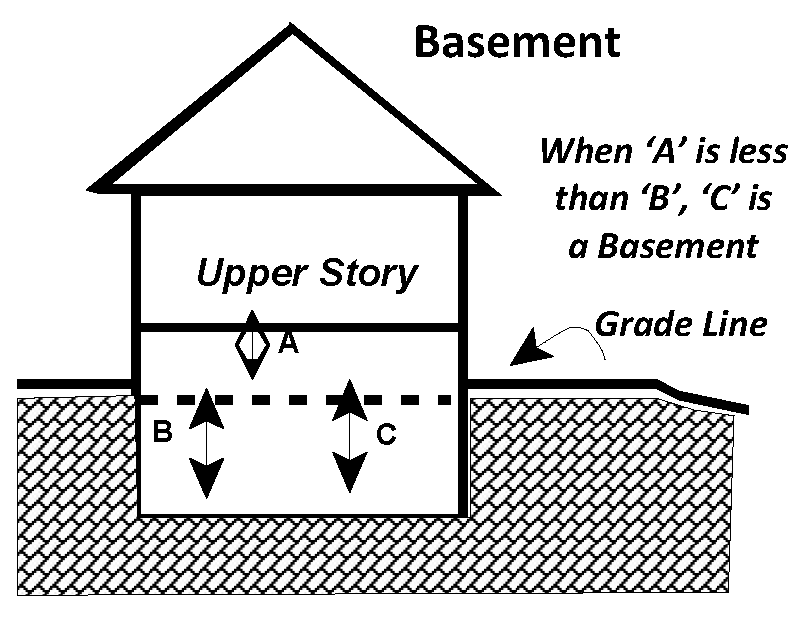
Basement means that portion of a building which is partly or wholly below grade but so located that the vertical distance from the average grade to the floor is greater than the vertical distance from the average grade to the ceiling. A basement shall not be counted as a story.
Bed and breakfast inn means a house, or portion thereof, where short-term lodging rooms and meals are provided as a commercial operation.
Berm means a mound of earth graded, shaped and improved with landscaping in such a fashion as to be used for visual or audible screening purposes.
Block means the property abutting one side of a street and lying between the two nearest intersecting streets (crossing or terminating) or between the nearest such street and railroad right-of-way, unsubdivided acreage, lake, river or stream; or between any of the foregoing and any other barrier to the continuity of development, or corporate boundary lines of the municipality.
Body shop means any building, premises, or land in which or upon which the primary use is the servicing, major repair, or painting of motor vehicles.
Buffer zone means a strip of land of definite width and location required between certain zoning districts reserved for the planting of shrubs, trees, or grasses; berms; walls; or fencing to serve as a visual and noise barrier or an obscuring screen necessary to carry out the requirements of this chapter.
Building means a structure erected on site, pre-manufactured or pre-cut structure, above or below ground, designed primarily for the shelter, support or enclosure of persons, animals, or property of any kind.
Building Code means the code or codes governing the erection and maintenance of buildings as currently adopted by the City of Greenville.
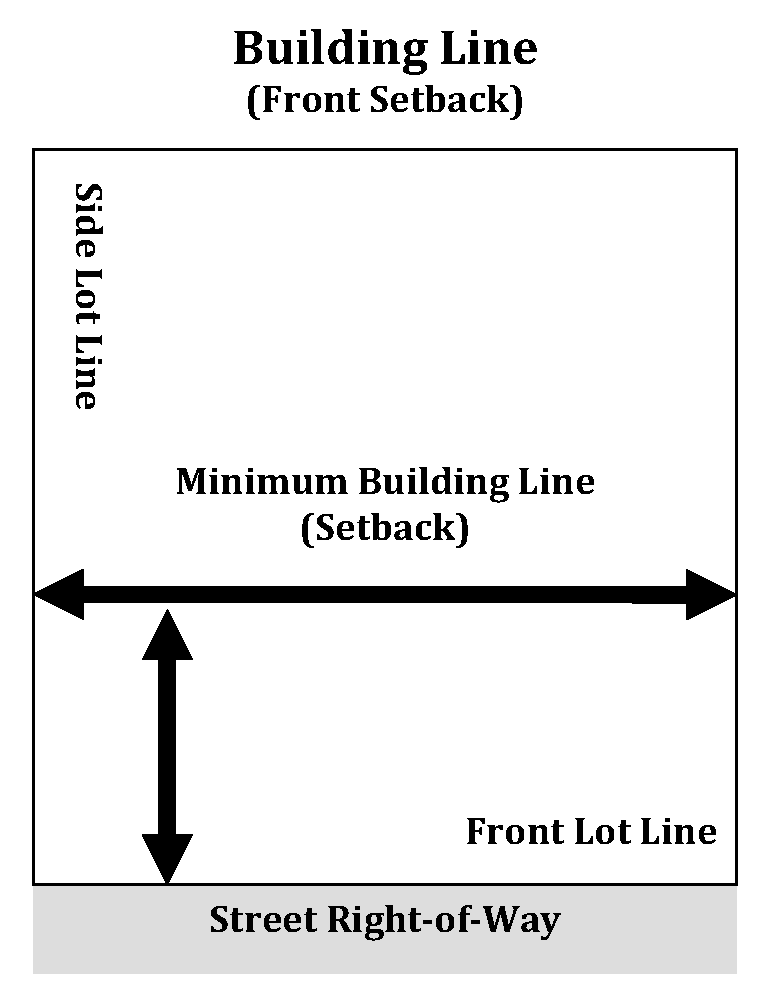
Building line means a line formed by the eaves of the building, or the most horizontal appendage of the building (except as otherwise permitted herein) and for the purposes of this chapter, a minimum building line is the same as the front setback.
Building official or building inspector means the person designated by the city council to administer the provisions of the adopted building codes for the City of Greenville.
Certificate of occupancy means a document signed by an authorized city official as a condition precedent to the commencement of a use or the occupation of a structure or building which acknowledges that such use, structure or building complies with the provisions of this chapter.
City means the City of Greenville.
City council or council means the city council of the City of Greenville.
City or Village Zoning Act; Zoning Act means Act 207 of the Michigan Public Acts of 1921, as amended.
Club means an organization of persons for special purposes such as sports, arts, sciences, literature, politics, or the like, but not operated for profit.
Commercial wireless telecommunication services means licensed telecommunication services including cellular, personal communication services (PCS), specialized mobilized radio (SMR), enhanced specialized mobilized radio (ESMR), paging, and similar services that are marketed to the general public.
Community services center means licensed telecommunication services including cellular, personal communication services (PCS), specialized mobilized radio (SMR), enhanced specialized mobilized radio (ESMR), paging, and similar services that are marketed to the general public. An establishment operated by a charitable non-profit, religious, or governmental organization or agency which provides one or more of the following goods or services for homeless or needy persons:
(1)
Food bank including clothing and other household necessities.
(2)
Meals for homeless or needy persons.
(3)
Short-term housing or shelter for homeless or needy persons provided that such housing or shelter is provided in conjunction with specific programs designed to assist homeless or needy persons such as counseling, job skill training, life management, self-help, religious, or other programs. However, a community corrections center or facility housing incarcerated persons shall not be considered a community service center.
(4)
Other similar goods and services which are intended to assist the needy.
(5)
A church, which operates a food or clothing bank or offers meals or other goods and services for the needy persons, but not housing or shelter, as an accessory use to the principal church use is not a community service center.
Convalescent or nursing home means a structure with sleeping rooms, where persons are housed or lodged on a full-time basis and are furnished with meals, nursing and medical care and whose residents are primarily over the age of 60.
Convalescent or nursing home also means:
(1)
An assisted living facility which is licensed under Act 218 of 1979, as amended, as an adult foster care large group home or adult foster care congregate facility offering foster care primarily to adults over the age of 60;
(2)
A nursing home and home for the aged licensed under the State of Michigan Public Health Code Public Act 368 of 1978 as amended.
Day care facility/child care center means any facility other than a dwelling unit in which one or more children are given care and supervision for periods of less than 24 hours per day on a regular basis. Day care facilities do not include family or group day care homes, or schools. Child care and supervision provided as an accessory use, while parents are engaged or involved in the principal use of the property, such as a nursery operated during church services or public meetings, or by a fitness center or similar operation, shall be considered accessory to such principal use and shall not be considered to be a day care facility. A day care facility also does not include child care which is conducted within a church building when church services are not being conducted.
(1)
Family day care home: A dwelling unit in which less than seven minor children are given care and supervision for periods less than 24 hours per day, operated by a person who permanently resides in the dwelling unit as a member of the household and who is registered with the State of Michigan to provide such care.
(2)
Group day care home: A dwelling unit in which more than six but not more than 12 minor children are given care and supervision for periods of less than 24 hours per day, operated by a person who permanently resides in the dwelling unit as a member of the household, and who is registered with the State of Michigan to provide such care.
Drive-through; drive-through facility means a business establishment or use so developed that it provides a driveway approach or parking spaces for motor vehicles to serve patrons while in the motor vehicle either exclusively or in addition to service within a building or structure, or to provide self-service for patrons and food carry-out.
Dwelling, multiple-family means a dwelling, or a portion of a building, designed exclusively for occupancy by three or more families living independently of each other.
Dwelling, single-family, detached means a dwelling designed exclusively for and occupied exclusively by one family.
Dwelling, two-family means a dwelling designed exclusively for occupancy by two families living independently of each other.
Enclosed locked facility means a closet, room, or other comparable, stationary, and fully enclosed area equipped with secured locks or other functioning security devices that permit access only by a primary caregiver or qualifying patient. Marihuana plants grown outdoors are considered to be in an enclosed, locked facility if they are not visible to the unaided eye from an adjacent property when viewed by an individual at ground level or from a permanent structure and are grown within a stationary structure that is enclosed on all sides, except for the base, by chain-link fencing, wooden slats, or a similar material that prevents access by the general public and that is anchored, attached, or affixed to the ground; located on land that is owned, leased, or rented by either the qualifying patient or a person designated through the departmental of licensing and regulatory affairs registration process as the primary caregiver for the qualifying patient or qualifying patients for whom the marihuana plants are grown; and equipped with functioning locks or other security devices that restrict access to only the qualifying patient or the primary caregiver who owns, leases, or rents the property on which the structure is located. Enclosed, locked facility includes a motor vehicle if both of the following conditions are met:
(1)
The vehicle is being used temporarily to transport living marihuana plants from one location to another with the intent to permanently retain those plants at the second location.
(2)
An individual is not inside the vehicle unless he or she is either the qualifying patient to whom the living marihuana plants belong or the individual designated through the departmental registration process as the primary caregiver for the qualifying patient.
Erected means built, constructed, altered, reconstructed, moved upon, or any physical operations on the premises which are required for construction, excavation, fill, drainage, etc.
Essential public services means the erection, construction, alteration or maintenance by public utilities or municipal departments of underground, surface, or overhead gas, electrical, steam, fuel, or water transmission, distribution, collection, communication, supply or disposal systems, including towers, poles, street lighting, wires, mains, drains, sewers, pipes, conduits, cables, fire alarm and police call boxes, street lights, traffic signals, hydrants and similar equipment, but not including buildings and storage yards, which are necessary for the furnishing of adequate service by such utilities or municipal departments for the general health, safety or welfare. This definition does not include commercial wireless telecommunication services.
Excavation means any breaking of ground, except common household gardening and ground care.
Family:
(1)
An individual or group of two or more persons related by blood, marriage, or adoption, together with foster children and servants of the principal occupants who are domiciled together as a single housekeeping unit in a dwelling unit;
(2)
A collective number of individuals domiciled together in one dwelling unit whose relationship is of a continuing, non-transient domestic character and who are cooking and living as a single nonprofit housekeeping unit. This definition shall not include any society, club, fraternity, sorority, association, half-way house, lodge, coterie, organization, group of students, or other individuals whose domestic relationship is of a transitory or seasonal nature, is for an anticipated limited duration of a school term or during a period of rehabilitation or treatment, or is otherwise not intended to be of a permanent nature.
Farm means a contiguous parcel of land of not less than ten acres in area, directly farmed or used for commercial agriculture by the owner-operator, manager, or tenant farmer by his own labor or with assistance of members of his household or hired employees. A farm includes a farm dwelling and accessory buildings necessary for the storage or housing of farm implements, products, or animals, or used for the operation of the farm. Farms may include greenhouses, nurseries, orchards, hatcheries, dairy farms, poultry farms, piggeries, commercial feedlots, apiaries, truck farms, and forestry operations. Fish hatcheries, stockyards, recreation parks, stone quarries, gravel, dirt or sand pits, keeping furbearing animals or game, kennels, stables, riding academies, or mineral extraction, are not considered farm uses.
Fence means an artificially constructed or natural vegetation barrier or combination of materials erected and/or planted to enclose or screen areas of land.
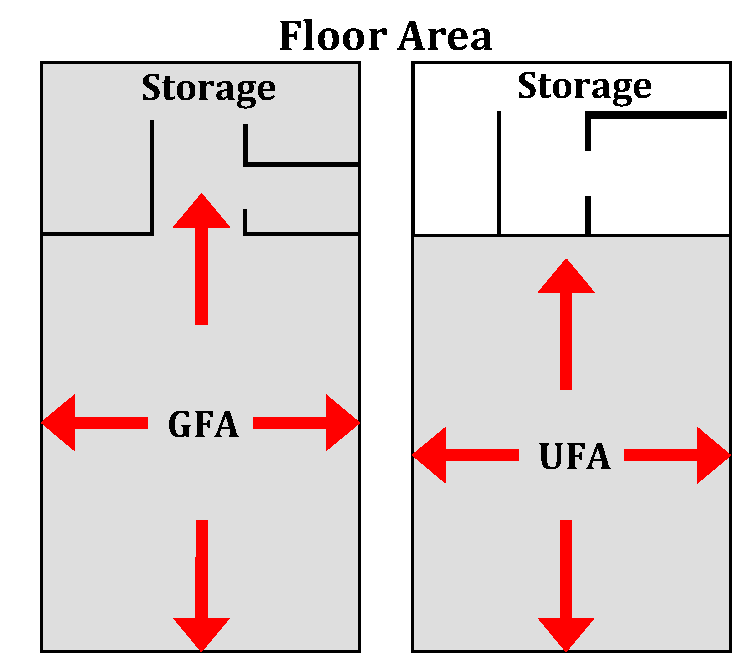
Floor area, gross, (GFA) means the sum of the total horizontal areas of the several floors of all buildings on a lot, measured from the interior faces of exterior walls.
Floor area, usable, (UFA) means that area used for or intended to be used for the sale of merchandise or services, or for use to serve patrons, clients, or customers. Floor area which is used or intended to be used principally for the storage or processing of merchandise, for hallways, or for utilities or sanitary facilities shall be excluded from the computation of usable floor area. Measurement of usable floor area shall be the sum of the horizontal areas of the several floors of the building measured from the interior faces of the exterior walls.
Frontage. (See Lot width.)
Grade means the gradient, the rate of incline or decline expressed as a percent. For example, a rise of 25 feet in a horizontal distance of 100 feet would be expressed as a grade of 25 percent.
Greenbelt means a strip of land of definite width and location reserved for the planting of shrubs, trees, or grasses to serve as an obscuring screen in carrying out the requirements of this chapter.
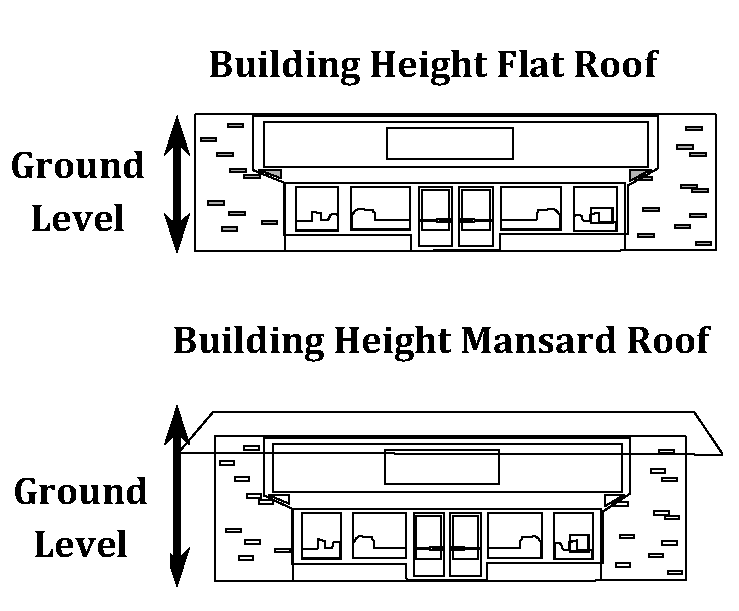
Height means the vertical distance measured from the average grade to the highest point of a structure. In the case of a building, height shall be measured from the average grade to the highest point of the roof surface for a flat roof; to the deck line of mansard roofs; and to the midpoint between the eaves and ridge for gable, hip, and gambrel roofs.
Home for the aged means a supervised personal care facility that provides 24-hour room, board, and supervised personal care to 21 or more unrelated, non-transient individuals 55 years of age or older. A home for the aged includes a supervised personal care facility for 20 or fewer individuals 55 years of age or older if the facility is operated in conjunction with and as a distinct part of a licensed nursing home.
Home occupation means an occupation or profession that is clearly a customary, incidental, and secondary use of a residential dwelling unit. Without limiting the foregoing, a dwelling unit used by an occupant of that dwelling unit to give instruction in a craft or fine art within the dwelling unit shall be considered a home occupation.
Hotel/motel means a facility offering lodging accommodations for travelers on a daily rate to the general public and which may or may not provide additional services, such as restaurants, meeting rooms, or recreational facilities.
Housing for the elderly/retirement community means a building or group of buildings containing dwellings where the occupancy of the dwellings is made up primarily of persons 60 years of age or older and which use is not licensed under Act 218 of 1979, as amended.
Inoperable vehicle means a motor vehicle, which can no longer propel itself.
Junk means any worn out or discarded materials including, but not necessarily limited to, scrap metal, inoperable motor vehicles and parts, construction material, household wastes, including garbage and discarded appliances, and yard debris.
Junkyard means an open area where waste, used or secondhand materials are bought and sold, exchanged, stored, baled, packed, disassembled, or handled. These materials include, but are not limited to: Scrap iron and other metals, paper, rags, rubber tires, and bottles. A junkyard includes automobile wrecking yards and includes any area of more than 200 square feet for storage, keeping, or abandonment of junk, but does not include uses established entirely within enclosed buildings.
Kennel means any lot or premises on which more than five dogs, cats, or other household pets, six months of age or older, are either permanently or temporarily boarded, housed, or bred for commercial purposes.
Loading space means an off-street space on the same lot with a building, or group of buildings, for the temporary parking of a vehicle while loading and unloading merchandise or materials.
Lot means a parcel, vacant land, occupied land, or land intended to be occupied by a building and accessory buildings, or utilized for the principal accessory uses together with yards and open spaces required under the provisions of this chapter. A lot may or may not be specifically designated as such on public records. A lot may also mean a portion of a condominium project, as regulated by Public Act No. 59 of 1978 (MCL 559.101 et seq.) designed and intended for separate ownership and use.
Lot area means the total horizontal area within the lot lines.
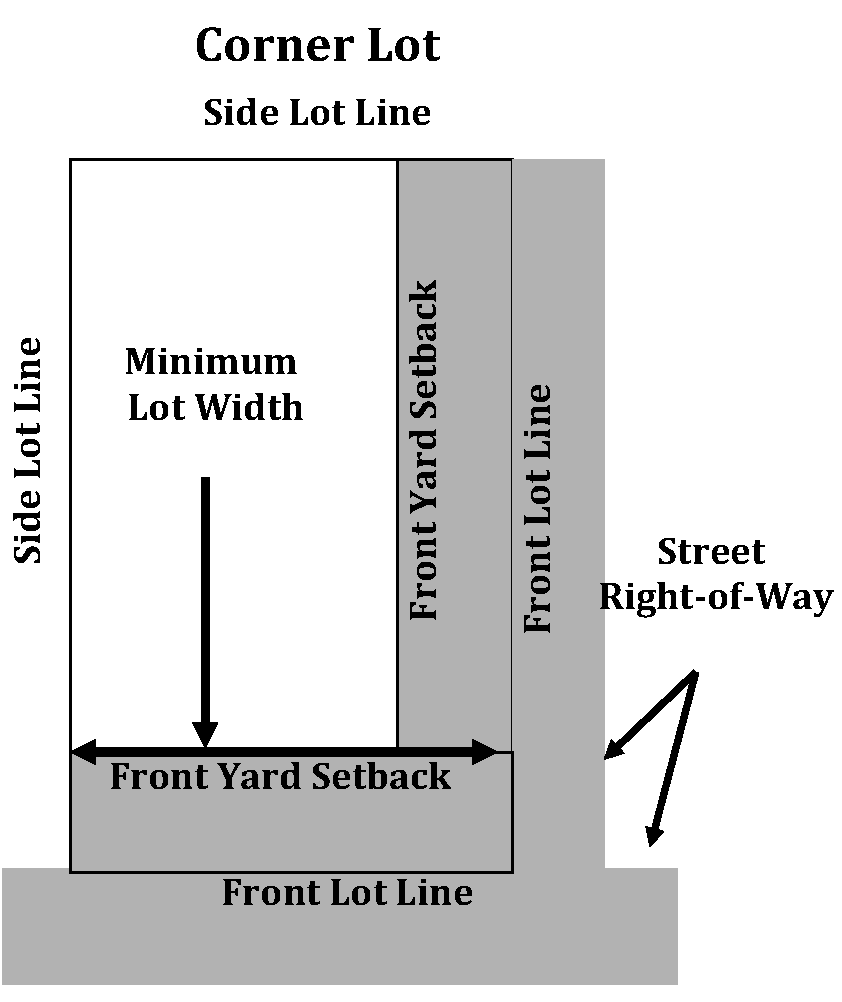
Lot, corner means any lot having at least two contiguous sides abutting upon a street, provided that the interior angle at the intersection of such two sides is less than 135 degrees. A lot abutting upon a curved street or streets shall be considered a corner lot if the tangents to the curve, at its points of beginning within the lot or at the points of intersection of the side lot lines with the street line, intersect at an interior angle of less than 135 degrees.
Lot coverage means the part of the lot, measured as a percentage of the total lot area, occupied by any building, including accessory buildings.
Lot, cul-de-sac means a lot having more than one-half of its required frontage on a cul-de-sac street right-of-way line.
Lot depth means the horizontal distance between the front and rear lot lines, measured along the median between the side lot lines.
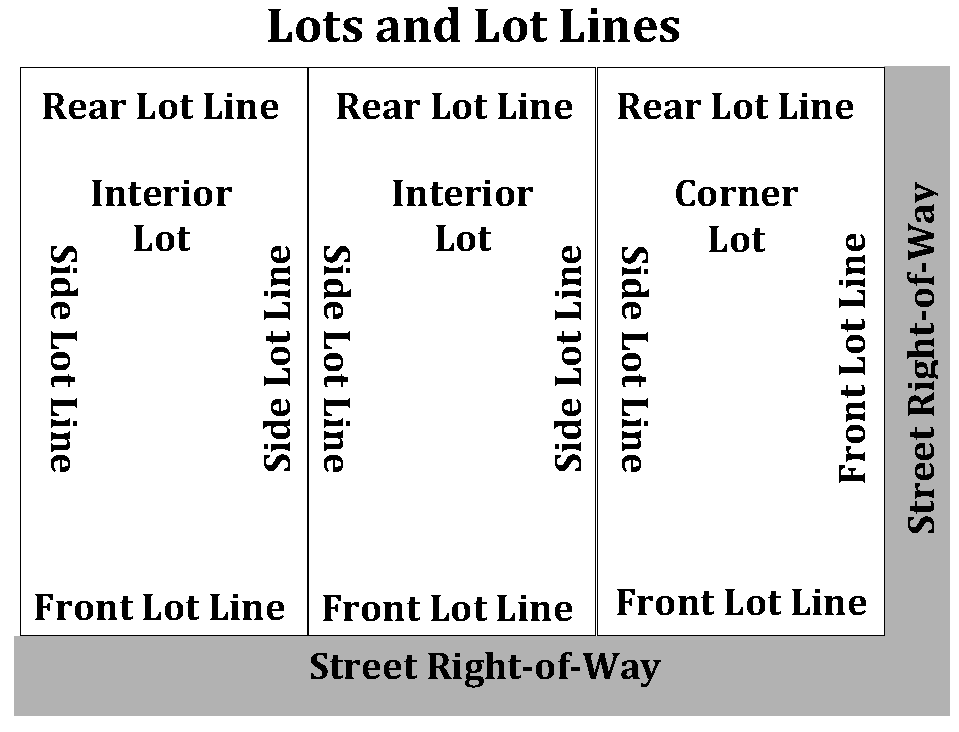
Lot, interior means a lot other than a corner, cul-de-sac, or through lot.
Lot line means the lines bounding a lot as defined herein:
(1)
Front lot line. In the case of an interior lot, means the line separating the lot from the street. In the case of a through or corner lot, it is that line separating said lot from either street.
(2)
Rear lot line. That lot line opposite the front lot line. In the case of a lot which is pointed in shape at the rear, the rear lot line shall be an imaginary line parallel to the front lot line, not less than ten feet long, lying farthest from the front lot line and wholly within the lot.
(3)
Side lot line. Any lot line other than the front lot line or rear lot line. A side lot line separating a lot from another lot is an interior side lot line.
Lot of record means a parcel of land, the dimensions of which are shown on a document or map on file with the county register of deeds or in common use by city or county officials, which actually exists as shown, or any part of such parcel held in a record of ownership separate from that of the remainder thereof.
Lot, through means any interior lot having frontage on two parallel streets. In the case of a row of through lots, all yards of said lots adjacent to streets shall be considered frontage, and through yard setbacks shall be provided as required.
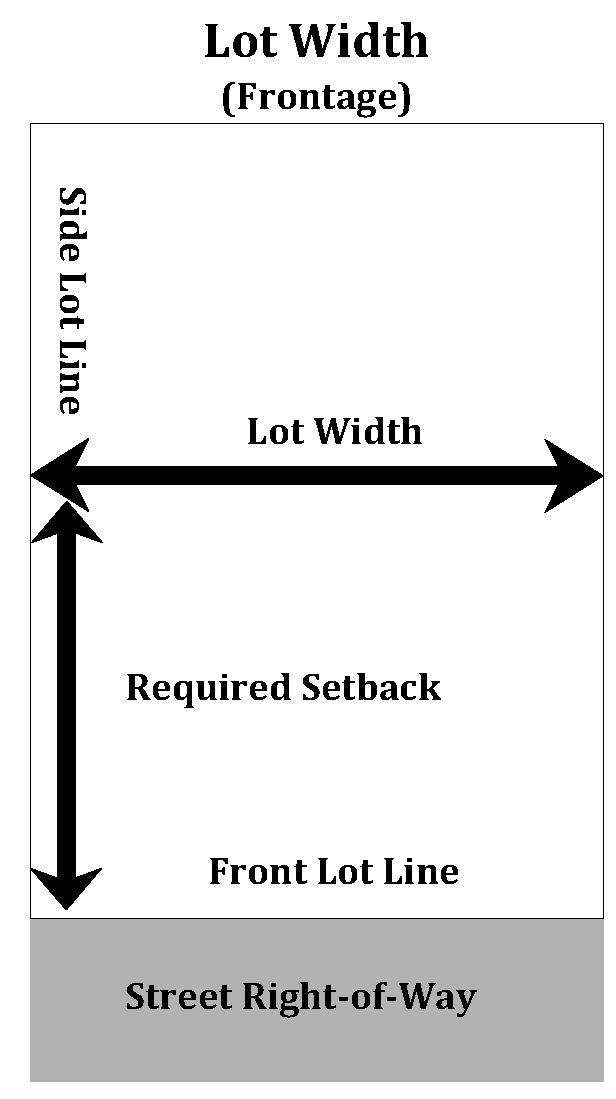
Lot width (frontage) means the horizontal straight line distance between the side lot lines, measured between the two points where the front setback or minimum building line intersects the side lot lines.
Main building means a building in which is conducted the principal use of the lot upon which it is situated.
Manufactured home means a transportable factory-built home, designed to be used as a year-round residential dwelling.
Manufactured home park means a parcel or tract of land under the control of a person upon which three or more manufactured homes are located on a continual nonrecreational basis and which is offered to the public for that purpose regardless of whether a charge is made therefore, together with any building, structure, enclosure, street, equipment, or facility used or intended for use incident to the occupancy of a manufactured home and is not intended for use as a temporary trailer park.
Marihuana, also known as marijuana, also known as cannabis. The term "marihuana" or "marijuana" or "cannabis" shall have the meaning given to it in section 7106 of the Public Health Code MCL 333.7106.
Marihuana, medical use of, means the acquisition, possession, cultivation, manufacture, use, internal possession, delivery, transfer or transportation of marihuana or paraphernalia relating to the administration of marihuana to treat or alleviate a registered qualifying patient's debilitating medical condition or symptoms associated with the debilitating medical condition, as defined under the Michigan Medical Marihuana Act (MCL 333.26421 et seq.).
Marihuana establishment shall have the same meaning as defined in section 10-233 of the Greenville Code of Ordinances.
Marihuana retailer shall have the same meaning as defined in section 10-233 of the Greenville Code of Ordinances.
Massage parlor (see Adult uses).
Master plan means the master plan currently adopted by the City of Greenville, including graphic and written proposals, indicating the general location for streets, parks, schools, public buildings, and all physical development of the municipality, and includes any unit or part of such plan and any amendment to such plan.
Nonconforming building means a building or portion thereof lawfully existing on November 1, 1997, or the effective date of an amendment to this chapter and not conforming to the provisions of this chapter in the district in which it is located.
Nonconforming lot of record means a lot of record lawfully on November 1, 1997, or the effective date of an amendment to this chapter and not conforming to the provisions of the zoning ordinance in the district in which it is located.
Nonconforming use means a use or activity, which lawfully occupied a building or land on November 1, 1997, or the effective date of an amendment to this chapter and which does not conform to the use regulations of the district in which it is located.
Nonresidential district means the O-1, C-1, C-2, C-3, and IND districts.
Off-street parking lot or parking lot means a facility providing parking spaces, along with adequate drives, maneuvering areas, and aisles for the parking of more than three vehicles.
Open air business means retail sales establishments operated substantially in the open air, including, but not necessarily limited to:
(1)
Bicycle, utility truck or trailer, motor vehicle, boats, or home equipment sales, repair, storage, or rental services.
(2)
Outdoor display area, storage, or sale of garages, motor homes, recreation vehicles, manufactured homes, snowmobiles, swimming pools and similar activities, but not including farm implements or commercial construction equipment.
(3)
Retail sales of trees, fruits, vegetables, shrubbery, plants, seeds, topsoil, humus, fertilizer, trellises, lawn furniture, playground equipment and other home garden supplies and equipment, but not including lumberyards.
(4)
Tennis courts, archery courts, shuffleboard, horseshoe courts, miniature golf, golf driving range, children's amusement parks or similar recreational uses (transient or permanent).
Parking space means an area of definite length and width, said area shall be exclusive of lawn areas, or drives, aisles or entrances giving access thereto, and shall be fully accessible for the parking of permitted vehicles.
Personal service establishment means a commercial business conducting services that are performed primarily on the premises.
Planned unit development (PUD) means a development of land that is under unified control and is planned and developed as a whole in a single development operation or programmed series of development stages. The planned unit development may include streets, circulation ways, utilities, buildings, open spaces, and other site features and improvements.
Planning commission or commission means the City of Greenville Planning Commission.
Primary caregiver or caregiver means a person who is at least 21 years old and who has agreed to assist with a patient's medical use of marihuana and who has not been convicted of a felony within the past ten years and has never been convicted of a felony involving illegal drugs or a felony that is an assaultive crime as defined in section 9a of chapter X of the code of criminal procedure, 1927 PA 175, MCL 770.9a.
Principal use means the primary use to which the premises is devoted.
Public utility means a person, firm, or corporation, municipal department, board or commission duly authorized to furnish to the public under federal, state or municipal regulations, gas, steam, electricity, sewage disposal, communication, telegraph, transportation, or water.
Qualifying patient or patient means a person who has been diagnosed by a physician as having a debilitating medical condition as defined by the Michigan Department of Licensing and Regulatory Affairs.
Recreational vehicle or equipment means vehicles or equipment used primarily for recreational purposes. For the purpose of this chapter, recreational vehicle means:
(1)
A vehicle primarily designed and used as temporary living quarters for recreational, camping, or travel purposes, including a vehicle having its own motor power or a vehicle mounted on or drawn by another vehicle such as a motor home or camper;
(2)
Boats and trailers designed to transport boats;
(3)
Snowmobiles, jet skis, and trailers designed to transport them;
(4)
Off-road vehicles and trailers designed to transport off-road vehicles;
(5)
Pop-up tent and camper trailers;
(6)
Other similar vehicles deemed by the zoning administrator to be recreational vehicles except that this term shall not include motorcycles or motorbikes or other similar means of transportation intended primarily for daily on-street use.
Recycling center means a building or premises where used material is separated and processed prior to shipment to others who will use those materials to manufacture new products.
Residential district means the R-1, R-2, R-3, MHP, and PUD districts.
Satellite dish antenna means an apparatus capable of receiving communications from a transmitter or a transmitter relay located in planetary orbit.
School means and includes buildings and facilities used for school purposes for children and youth in preschool, or in grades pre-kindergarten through 12, or where students of any age attend an educational facility for non-traditional or special needs learners, or Head Start, when that instruction or purpose is provided by a public, private, denominational, or parochial school and buildings used for intermediate school district instruction when that instruction or purpose is provided by a public, private, denominational, or parochial school. School also means any property owned or leased by a public, private, denominational, or parochial school, including buildings, fields, or other property.
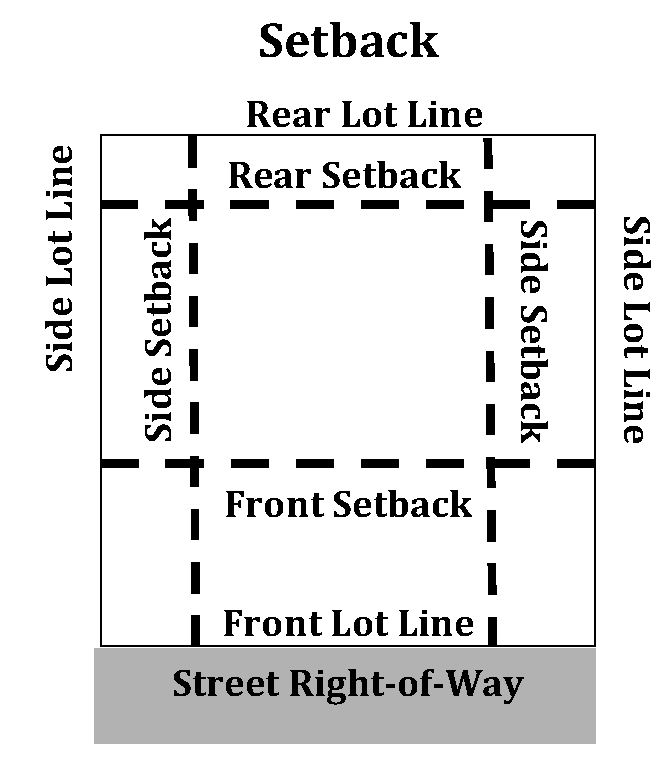
Setback means the distance established by this chapter as necessary to meet the minimum front, side, or rear yard provisions of the zone district.
Sign means a lettered board, drawing, message, placard, poster, or other device visible to the general public and designed to inform or attract the attention of persons.
Significant natural feature means a natural area as designated by the planning commission, city council, or the Michigan Department of Natural Resources, or other applicable state or federal agency which exhibits unique topographic, ecological, hydrological, cultural, or historical characteristics such as a wetland, floodplain, water features, or other unique natural or cultural features.
Specialty medical grower means an individual who holds a specialty medical grower license granted under the Michigan Medical Marihuana Act, MCL 333.26421 et seq., as amended.
Specified anatomical areas (see Adult uses).
Specified sexual activities (see Adult uses).
Story means that part of a building included between the surface of any floor above the average grade or ground at the foundation and the surface of the next floor, or if there is no floor above, then the ceiling next above.
Story, half means an uppermost story lying under a sloping roof having a usable floor area of at least 200 square feet with a clear height of seven feet six inches. For the purpose of this chapter, the usable floor area is only that area having at least five feet clear height between floor and ceiling.
Street means a public dedicated right-of-way other than an alley, which affords the principal means of access to abutting property. The term "street" shall be synonymous with the terms "road," "avenue," "place," "way," "drive," "lane," "boulevard," "highway" or "other thoroughfare."
Street, collector, means a collector as designated in the City of Greenville Master Plan. A street that conducts and distributes traffic between other residential streets of lower order in the street hierarchy.
Street, private, means an undedicated, privately controlled and maintained right-of-way, easement, or other interest in land, which affords the principal means of access to one or more lots or parcels.
Structure means anything constructed or erected, the use of which requires location on the ground or attachment to something on the ground.
Substantial improvement means any repair, reconstruction or improvement of a structure, the cost of which equals or exceeds 50 percent of the market value of the structure either before improvement or repair is started, or if the structure has been damaged and is being restored, before the damage occurred. For the purposes of this definition, substantial improvement is considered to occur when the first alteration of any wall, ceiling, floor, or other structural part of the building commences, whether or not that alteration affects the external dimensions of the structure. The term "substantial improvement" does not, however, include either any project for improvement of a structure to comply with existing state or local health, sanitary or safety code specifications which are solely necessary to ensure safe living conditions, or any alteration of a structure listed on the National Register of Historic Places or the Michigan Register of Historic Places.
Truck/freight terminal means a building or area in which freight brought by truck is assembled and/or stored for routing or reshipment, or in which semitrailers, including tractor and/or trailer units and other trucks, are parked or stored.
Vehicle means a motorized conveyance designed and intended for the purpose of moving people or goods.
Waste dumpster or dumpster means a container used for the temporary storage of rubbish and/or materials to be recycled pending collection, having capacity of at least one cubic yard.
Yard, required means the required yard shall be that which is set forth in this chapter as the minimum setback requirement for each district. The required yard is measured from the lot line to the building line or setback line. (See also Setback, building line.)
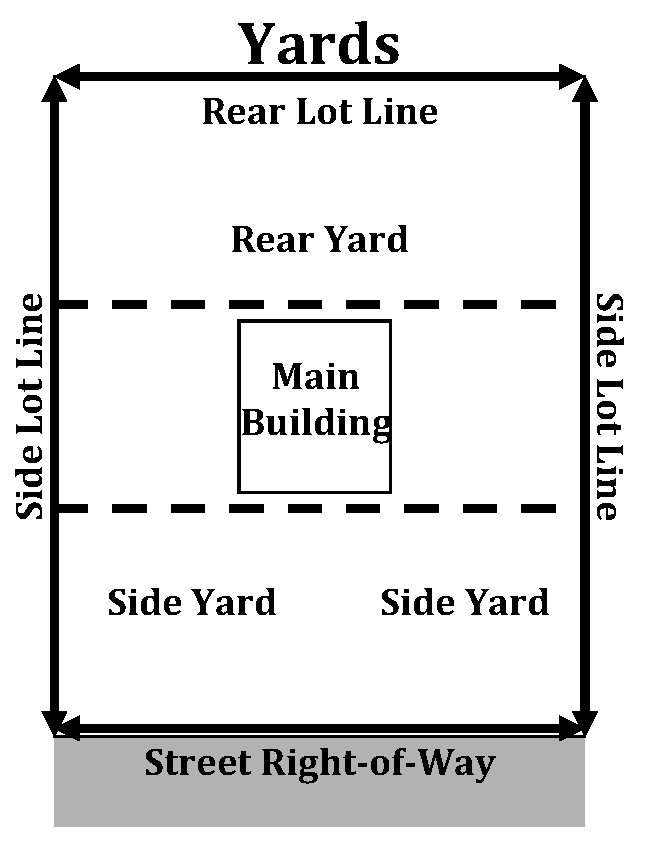
Yards means the open spaces on the same lot with a main building that are unoccupied and unobstructed from the ground upward except as otherwise provided in this chapter, and as defined herein.
(1)
Front yard. An open space extending the full width of the lot, the depth of which is the minimum horizontal distance between the front lot line and the nearest horizontal appendage of the main building.
(2)
Rear yard. An open space extending the full width of the lot, the depth of which is the minimum horizontal distance between the rear lot line and the nearest horizontal appendage of the main building. In the case of a corner lot, the rear yard may be opposite either street frontage.
(3)
Side yard. An open space between a main building and the side lot line, extending from the front yard to the rear yard, the width of which is the horizontal distance from the nearest point on the side lot line to the nearest horizontal appendage of the main building.
Zoning Act means Act 110 of the Michigan Public Acts of 2006, as amended, the Michigan Zoning Enabling Act.
Zoning administrator means the person designated by the city council to administer the provisions of this chapter.
Zoning board of appeals or board or board of appeals means the zoning board of appeals of the City of Greenville.
(Prior Code, §§ 15.0202—15.0224; Ord. No. 150, §§ 2.02—2.24, 11-1-1997; Ord. No. 150-C, 11-19-2002; Ord. No. 150-O, § 1, 8-17-2010; Ord. No. 150-P, §§ 1, 2, 2-1-2011; Ord. No. 14-02, § 1, 12-2-2014; Ord. No. 22-01, § 11, 2-1-2022; Ord. No. 24-01, §§ 1, 2, 1-16-2024; Ord. No. 24-10, § 1, 7-16-2024)
Sec. 46-2. - Construction of language.
(a)
In the case of any difference in meaning or implication between the text of this chapter and any caption or illustration, the text shall control.
(b)
The term "building" or "structure" includes any part thereof.
(Prior Code, § 15.0201; Ord. No. 150, § 2.01, 11-1-1997)
Sec. 46-3. - Enforcement.
(a)
A violation of this chapter is a municipal civil infraction, for which the fine shall be not less than $100.00 or more than $500.00 for the first offense and not less than $200.00 nor more than $1,500.00 for subsequent offenses, in the discretion of the court, and in addition to all other costs, damages, and expenses provided by law. For purposes of this section, the term "subsequent offense" means a violation of the provisions of this chapter committed by the same person within 12 months of a previous violation of the same provision of this chapter for which said person admitted responsibility or was adjudicated to be responsible; provided, however, that offenses committed on subsequent days within a period of one week following the issuance of a citation for a first offense shall all be considered separate first offenses.
(b)
Each day during which any violation continues shall be deemed a separate offense.
(c)
Any building or structure which is erected, altered, or converted, or any use of premises or land which is begun or changed subsequent to November 1, 1997, and is in violation of any of the provisions thereof, is hereby declared to be a public nuisance per se and may be abated by order of any court of competent jurisdiction.
(d)
The rights and remedies provided herein are cumulative and in addition to any other remedies provided by law.
(Prior Code, § 15.2203(A); Ord. No. 150, § 22.03(A), 11-1-1997)
State Law reference— Authority to make zoning violations a municipal civil infraction, MCL 125.3407.
Sec. 46-4. - Intent.
This chapter, enacted under the authority of the Michigan Zoning Enabling Act (MCL 125.3101 et seq.), is intended to ensure that uses of land shall be situated in appropriate locations and relationships; to limit the inappropriate overcrowding of land and congestion of population and transportation systems and other public facilities; to facilitate adequate and efficient provision of transportation systems, sewage disposal, water, energy, education, recreation, and other public service and facility needs; and to promote public health, safety, and welfare.
(Prior Code, § 15.0102; Ord. No. 150, § 1.02, 11-1-1997)
Sec. 46-5. - Interpretation.
(a)
Generally. In its interpretation and application, the provisions of this chapter shall be held to be minimum requirements adopted for the promotion of the public health, safety, comfort, convenience, or general welfare.
(b)
Vested rights. Except as otherwise noted in this chapter, nothing in this chapter shall be interpreted or construed to give rise to any permanent vested rights in the continuation of any particular use, district, zoning classification, or any permissible activities therein; and all rights are hereby declared to be subject to such subsequent amendment, change or modification hereof as may be necessary to the preservation or protection of public health, safety, and welfare.
(Prior Code, § 15.0103; Ord. No. 150, § 1.03, 11-1-1997)
Sec. 46-6. - Buildings and land affected.
(a)
Except as hereinafter provided, buildings and/or structures shall be erected or altered, and buildings and/or structures and lands shall be used or altered only in conformance with all the regulations of the district in which such lands and buildings and/or structures are located.
(b)
The lawful use of any existing building or land on November 1, 1997, or the effective date of an amendment to this chapter may be continued as a nonconforming use or building, subject to the applicable requirements of this chapter for such nonconforming uses or buildings.
(Prior Code, § 15.0406; Ord. No. 150, § 4.06, 11-1-1997)
Sec. 46-7. - Nonconforming lots, buildings, structures, and uses.
(a)
Intent.
(1)
It is recognized that there exists within zoning districts certain lots, buildings and structures, and uses which were lawful before this chapter was passed or amended, which would be prohibited, regulated, or restricted under the terms of this chapter. It is the intent of this chapter to permit legal, nonconforming lots, buildings and structures, and uses to continue until they are removed, but not to encourage their survival.
(2)
Nonconforming lots, buildings, structures, and uses are declared by this chapter to be incompatible with permitted uses in the districts in which they are located. It is the intent of this chapter that these nonconformities shall not be enlarged upon, expanded, or extended, nor be used as grounds for adding other buildings, structures or uses prohibited elsewhere in the district.
(3)
Nothing in this chapter shall be deemed to require a change in the plans, construction, or designated use of any building on which actual construction was lawfully begun prior to November 1, 1997, or the effective date of an amendment to this chapter and upon which actual building construction has been diligently conducted.
(b)
Nonconforming lots of record.
(1)
If two or more lots of record or combination of lots and portions of lots of record, in existence on November 1, 1997, or the effective date of an amendment to this chapter, with continuous frontage do not meet the requirements established for lot width or lot area, the lands involved shall be considered to be an undivided parcel for the purposes of this chapter, and no portion of such parcel shall be used or divided in a manner which diminishes compliance with lot width and area requirements established by this chapter.
(c)
Nonconforming uses.
(1)
No nonconforming use shall be enlarged or increased, nor extended to occupy a greater area of land than was occupied on November 1, 1997, or the effective date of an amendment to this chapter.
(2)
No part of any nonconforming use shall be moved unless such movement eliminates the nonconformity.
(3)
If a nonconforming use is abandoned for any reason for a period of more than one year, any subsequent use shall conform to the requirements of this chapter. A nonconforming use shall be determined to be abandoned if one or more of the following conditions exists and shall be deemed to constitute an intent on the part of the property owner to abandon the nonconforming use:
a.
Utilities, such as water, gas and electricity to the property, have been disconnected;
b.
The property, buildings and grounds, have fallen into disrepair;
c.
Signs or other indications of the existence of the nonconforming use have been removed;
d.
Removal of equipment or fixtures which are necessary for the operation of the nonconforming use;
e.
Other actions, which in the opinion of the Zoning Administrator constitute an intention of the part of the property owner or lessee to abandon the nonconforming use.
(4)
A nonconforming use may be changed to another nonconforming use provided that all of the following determinations are made by the board of appeals:
a.
The proposed use shall be as compatible or more compatible with the surrounding neighborhood than the previous nonconforming use.
b.
The proposed nonconforming use shall not be enlarged, increased, or extended to occupy a greater area of land than the previous nonconforming use.
c.
That appropriate conditions and safeguards are provided that will ensure compliance with the intent and purpose of this chapter.
(d)
Nonconforming buildings and structures.
(1)
Continuation. Where a lawful building or structure exists on November 1, 1997, or the effective date of an amendment to this chapter, or an amendment thereto, that does not comply with the requirements of this chapter because of restrictions such as lot area, coverage, width, height, or yards, such building or structure may be continued so long as it remains otherwise lawful.
(2)
Alterations, enlargements and extensions of nonconforming buildings and structures.
a.
No such building or structure may be enlarged or altered in a way that increases its nonconformity, except as noted in subsection (2)b. of this section.
b.
Where the setback of a building or structure is nonconforming by a distance equal to or less than one-half of the distance required by this chapter, the nonconforming setback may be extended along the same plane as the existing nonconforming setback, provided that in so doing, the setback itself is not further reduced.
(3)
Reconstruction of nonresidential buildings.
a.
Should a nonconforming building or structure be destroyed to an extent of more than 60 percent of its replacement value, exclusive of the foundation, it shall be reconstructed only in conformance with the provisions of this chapter.
b.
Should a nonconforming building or structure be destroyed to an amount equal to or less than 60 percent of its replacement value, exclusive of the foundation, it may be reconstructed in its previously nonconforming location.
(4)
Reconstruction of a residential building in nonresidential and residential districts. Should a nonconforming residential building in a residential or nonresidential zoning district which is used for residential purposes be damaged or destroyed, it may be reconstructed in its previously nonconforming location, provided, however, the degree of nonconformity shall not be increased.
(5)
Moving of residential building. Should a nonconforming residential building or structure be moved for any reason and for any distance, it shall be moved to a location which complies with the requirements of this chapter.
(6)
Normal repairs and maintenance. None of the provisions of this section are meant to preclude normal repairs and maintenance on any nonconforming building or structure or repairs that would strengthen or correct any unsafe condition of the building or structure.
(Prior Code, § 15.0301; Ord. No. 150, § 3.01, 11-1-1997; Ord. No. 150-B, 4-16-2002; Ord. No. 21-02, §§ 1, 2, 12-7-2021)
State Law reference— Nonconforming uses and structures, MCL 125.3208.
Sec. 46-8. - Prohibited uses.
Where a use is defined or listed as a permitted use or a special land use in a given zoning district, such use shall not be permitted in any zoning district where it is not listed. This is true even if such use might be similar to a listed permitted use.
(Ord. No. 150-O, § 1(4.07), 8-17-2010)

