
Highland Park City Zoning Code
ARTICLE XXIII
DOWNTOWN FORM AND DESIGN7
Editor's note— Article XXIII added by Ord. 41-15, Passed 4/13/15.
Sec. 150.2305.- General.
(A)
Purpose. The purpose of the downtown form and design regulations of this Article is to help maintain and enhance the transit-oriented, walkable character of downtown Highland Park.
(B)
Applicability. The downtown form and design regulations of this Article apply within the B4-4, B4-5, B4-6, B5 and RO Zoning Districts to:
(1)
All new buildings; and
(2)
Renovations of, or additions to, existing buildings that result in an increase of 50 percent or more in the building's gross floor area. In the event of a conflict between the regulations of this Article XXIII and the area, bulk, and density regulations set forth in Article VII of this Chapter, the regulations of this Article XXIII shall control.
Sec. 150.2310. - Frontage Classifications.
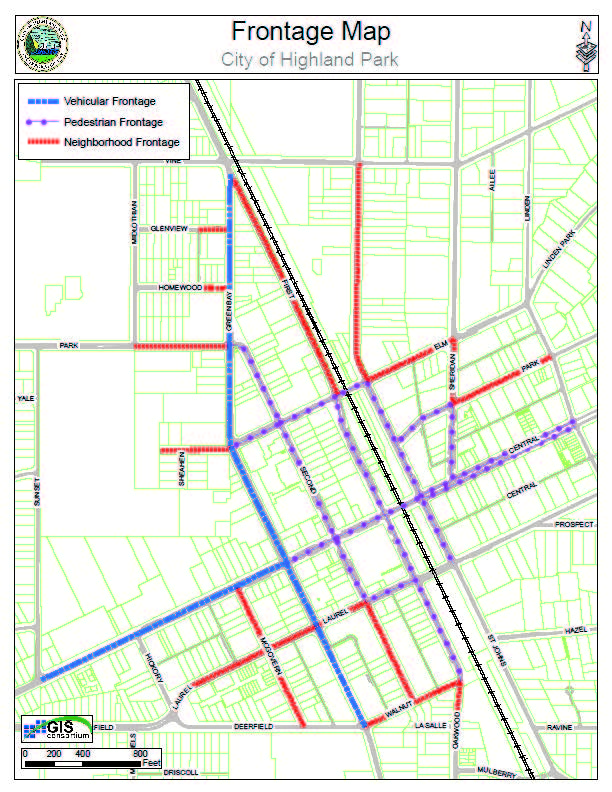
Streets frontages in the downtown area are classified according to their existing and proposed future character. Three frontage types are designated and shown in Figure 150-23-1 below:
(A)
Pedestrian. The pedestrian frontage designation is applied along downtown's primary pedestrian-shopping streets, where the highest level of walkability is expected and desired. The regulations that apply to pedestrian frontages are intended to help ensure that buildings are located at the front property line and that buildings are designed to promote pedestrian interest, comfort and safety.
(B)
Vehicular. The vehicular frontage designation is applied along streets that generally carry the greatest volumes of traffic, typically at higher speeds than along other downtown streets. Because it is often impractical to locate buildings immediately adjacent to the abutting street or sidewalk along vehicular frontages, the regulations allow greater flexibility in terms of building location and site design.
(C)
Neighborhood. The neighborhood frontage designation is applied along downtown streets that are not classified as pedestrian or vehicular frontages. Because such streets typically include a mix of residential and nonresidential building types, the regulations allow flexibility in terms of building location and site design.
(D)
Changing Classifications. A request to change the frontage classification of a property is considered the same as a rezoning, and is subject to the zoning map amendment procedures of this Chapter.
Figure 150-23-1
Sec. 150.2312. - Measurements and Exceptions.
The following are applicable to and explain the regulations set forth in Section 150.2315, Section 150.2320 and Section 150.2335.
(A)
Build-to-Zone.
(1)
The build-to-zone is the area on the lot in which a minimum percentage of the front building facade must be located, measured as a minimum and maximum yard (setbacks) range from the edge of the right-of-way.
(2)
The required percentage specifies the amount of the front building facade that must be located in the build-to-zone, based on the width of the front building façade divided by the width of the lot.
(3)
Outdoor open space, plazas and outdoor dining areas are counted as part of the building for the purpose of measuring compliance with build-to-zone requirements, provided that:
(a)
The area does not exceed one-third the length of the building face or 35 feet, whichever is less;
(b)
The area is no more than 35 feet in depth; and
(c)
No more than one such feature may be counted per frontage.
(4)
On corner lots, the minimum requirement governing the minimum percent of building that must be in the build-to-zone may be reduced by 60 percent along one of the frontages, at the property owner's option, provided that:
(a)
a building facade must be placed in the build-to-zone for the first 30 feet along each street extending from the corner (the intersection of the build-to-zones); and
(b)
the requirements may not be reduced on pedestrian frontages.
(B)
Transparency.
(1)
Transparency regulations govern the percentage of a street-facing building façade that must be covered by glazing (e.g., transparent windows and doors)
(2)
The transparency of a ground story facade is measured between 2 and 12 feet above the adjacent sidewalk.
(3)
The transparency of an upper story facade is measured from top of the finished floor to the top of the finished floor above. When there is no floor above, upper story transparency is measured from the top of the finished floor to the top of the wall plate.
(4)
All glazed elements must be clear and non-reflective and not be painted or tinted (transparent, low-emissivity glass is permitted).
(C)
Blank Wall Area.
(1)
Blank walls are areas on the exterior facade of a building that do not include a substantial material change; windows or doors; columns, pilasters or other articulation greater than 12 inches in depth.
(2)
Blank wall area regulations apply in both a vertical and horizontal direction.
(3)
Blank wall area applies to ground and upper-story street-facing facades.
(D)
Street-facing Building Entrances.
(1)
Required street-facing building entrances must provide ingress and egress for residents and customers, Additional entrances located along another street, pedestrian area or internal parking area are also permitted.
(2)
An angled entrance may be provided at either corner of a building along the street to meet the street-facing entrance requirements.
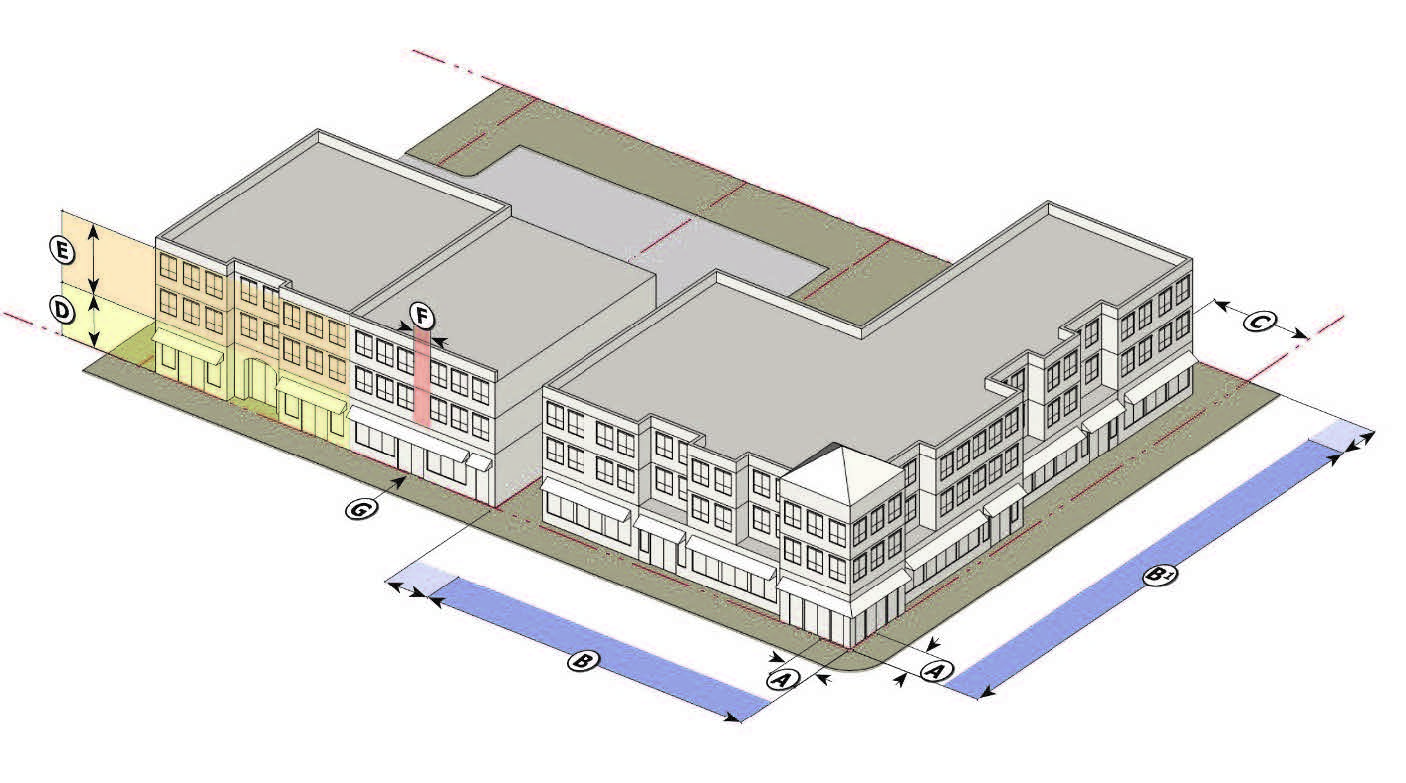
Sec. 150.2315. - Pedestrian Frontage Regulations.
The following regulations apply to all pedestrian frontages. Exceptions and rules of measurement are established in Section 150.2335 of this Article.
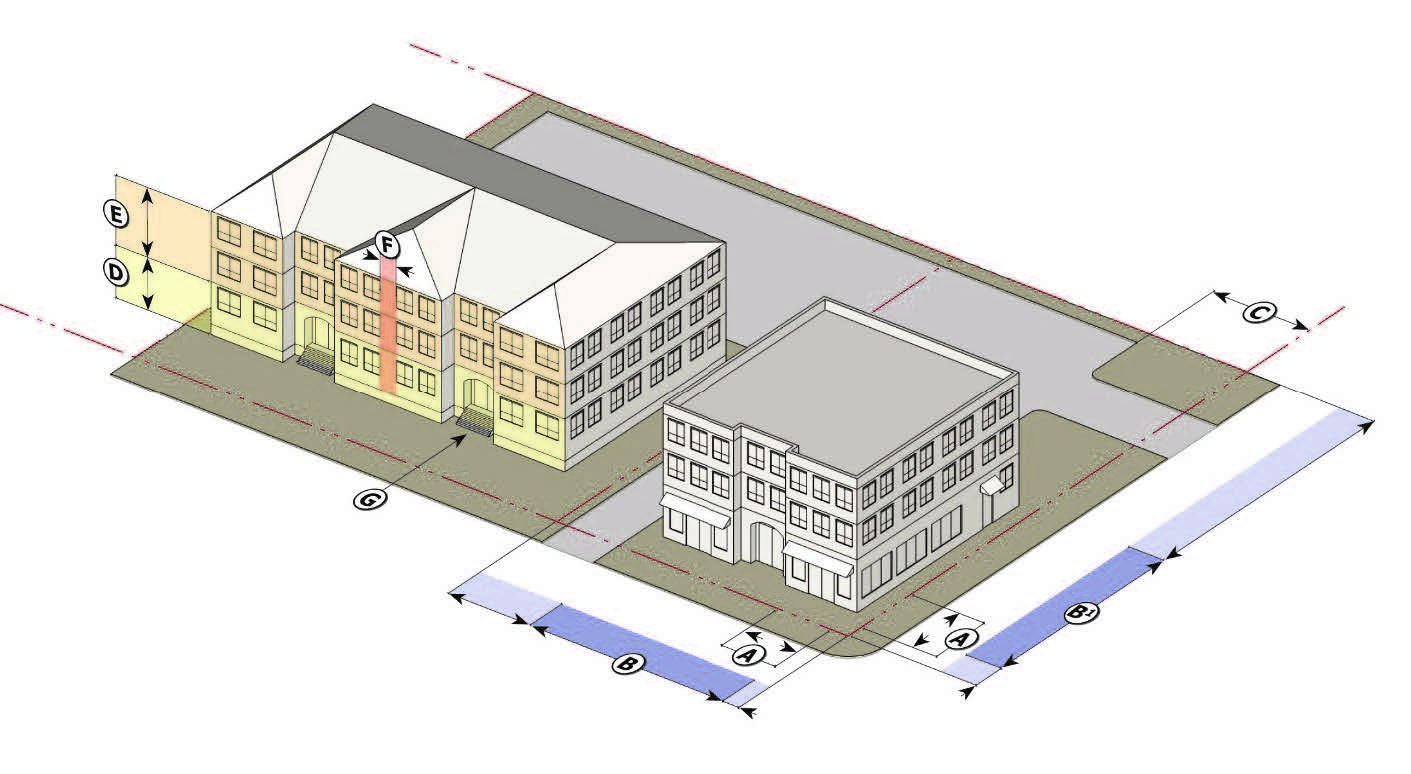
Sec. 150.2320. - Vehicular Frontage Regulations.
The following regulations apply to all vehicular frontages. Exceptions and rules of measurement are established in Section 150.2335 of this Article.
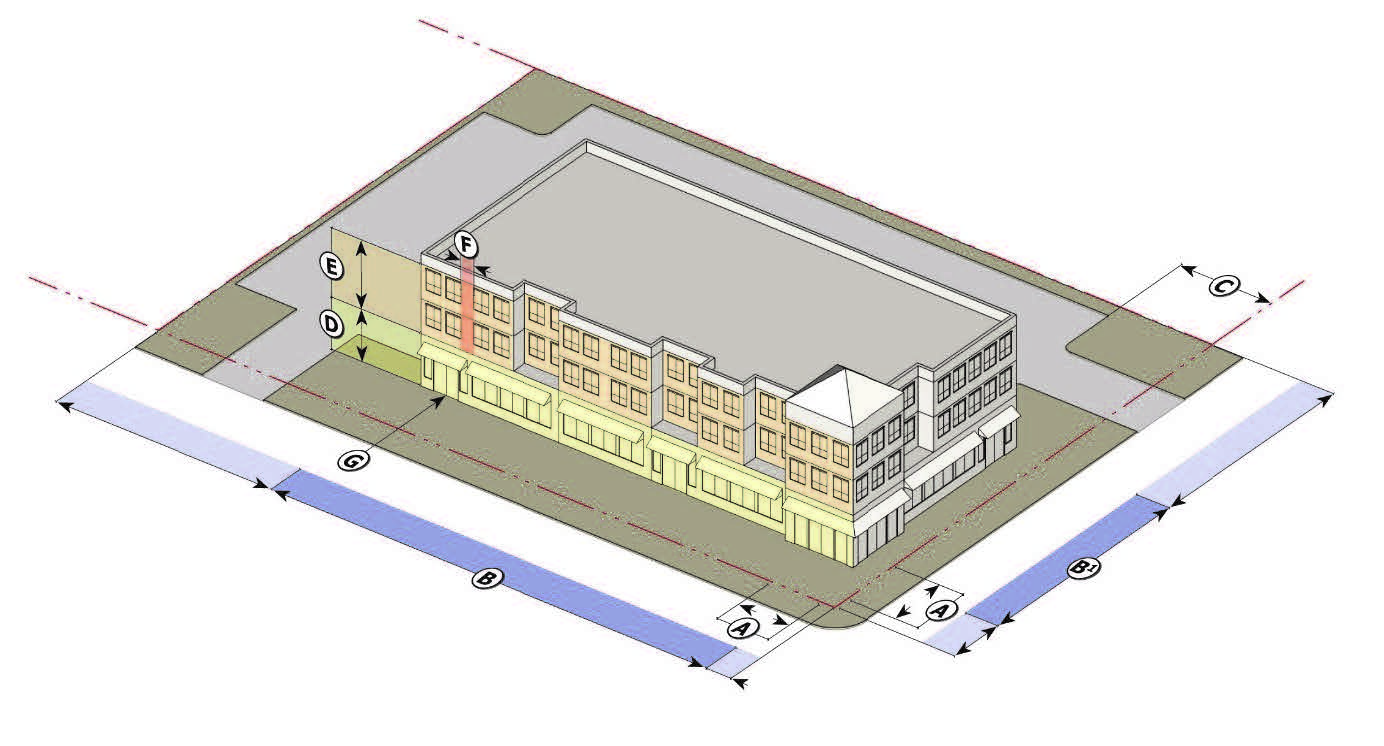
Sec. 150.2325. - Neighborhood Frontage Regulations.
The following regulations apply to all neighborhood frontages. Exceptions and rules of measurement are established in Section 150.2335 of this Article.
Sec. 150.2327. - Streetscape Improvements.
When a building is set back from the front property line, the site and landscape plans shall be designed to include hardscape and landscape materials in the front setback that will be consistent with and enhance the City's approved streetscape design.

