
Jacksonville City Zoning Code
PART 13
- SIGN REGULATIONS13
Cross reference— Signs and outdoor display structures, Ch. 326.
Sec. 656.1301. - Findings.
The Council finds and determines as follows:
(a)
Federal and State courts have recognized that municipalities lawfully may distinguish between on-site and off-site signs in regulations regarding aesthetics and quality of life in a community under the police powers of the government, as on-site and off-site signs have varying business purposes and different impacts on the aesthetic environment of a community.
(b)
Such courts also have recognized that distance and size limitations on signs may be imposed in the interests of protecting the aesthetic atmosphere and environment in a community, as well as protecting against traffic hazards caused by distracting and protruding signs, among other purposes.
(c)
The Council has determined that the City's current sign laws are insufficient in some respects to properly limit and protect the City against:
(1)
The unlimited proliferation in number and location of off-site and on-site signs, including mobile signs;
(2)
Construction and placement of overly huge, animated, flashing and other aesthetically unpleasant signs which dominate and detract from the surrounding visual environment;
(3)
Commercial and other signs being placed in residential and rural neighborhoods which unpleasantly commercialize and clutter such neighborhoods for residents and travelers, as well as overly-large signs in zoning districts disproportionate in size for the intensity of the uses permitted and permissible in such districts;
(4)
Signs being constructed and placed without first obtaining proper permits for them or permission of the owner or occupant of the property on which the signs are placed;
(5)
Signs failing to be properly maintained once erected and placed; and
(6)
Signs which are placed dangerously in or near street intersections and rights-of-way so as to pose actual or potential hazards to traffic and pedestrians.
(d)
The Council therefore has determined it is necessary in the exercise of its governmental powers, including the police power, to protect the public health, safety, and welfare of the community, including the visual and aesthetic environment and natural scenic beauty of the City.
(e)
The Council notes that numerous municipalities and counties around the State and country have enacted sign control ordinances. These local governments have found that partial or complete elimination of off-site signs and regulation of on-site signs benefits their communities by improving aesthetics and traffic control. These findings of public purpose have been upheld by every level of court from the United States Supreme Court to State trial courts. The Council adopts the findings of these numerous local governments.
(f)
Unregulated and uncontrolled signs cause distractions in traffic floor and create traffic safety problems. In addition, they lower the levels of service on City roads by slowing traffic.
(g)
Scholarly writings and studies indicate that clutter of uncontrolled and unregulated signs creates an environment which can financially injure a community. Unregulated and uncontrolled signs can injure the aesthetic appearance of the City and thereby lower property values and the tax base.
(h)
There is no effective way to stop or even slow the proliferation of off-site signs without prohibiting off-site signs except those on federal-aid primary highways.
(i)
If not limited in size and number and if not otherwise regulated, on-site signs could cause many of the same problems that off-site signs cause.
(j)
The Council, in regulating on-site signs, recognizes that businesses need some form of on-site sign to identify the use of property.
(k)
The Council, in addition, supports these findings, in part, by the 1985 study of visual pollution done by the Jacksonville Community Council, Inc.
(l)
In March 1987, the voters enacted an amendment to the City Charter which prohibited all off-site billboards. In legislation before and afterwards, the Council enacted ordinances prohibiting off-site signs in various zoning districts and regulated on-site signs.
(m)
The inherent primary purpose of mobile billboards is to display commercial advertising on public streets. By their nature, mobile billboards are intended to distract and aim to capture and hold the attention of, members of the public on or adjoining public streets, including drivers, pedestrians, bicyclists, and others. Moreover, such vehicles display commercial advertising from a mobile platform, including while the vehicle is moving within the flow of traffic, potentially stopping, starting or turning abruptly, accentuating the inherent tendency of such advertising to seize attention and distract. Additionally, the use of motor vehicles to display commercial advertising creates exhaust emissions and adds to traffic congestion by placing additional motor vehicles on City streets. For these reasons, mobile billboards create aesthetic blight and visual clutter and create potential and actual traffic, health and safety hazards. A prohibition of such advertising vehicles will promote the public health, safety and welfare of motorists, pedestrians, bicyclists and others using the City's public streets and roadways and adjoining areas, by eliminating aesthetic blight and visual clutter and traffic and safety hazards caused by the operation of mobile billboards on the City's streets. It will also reduce congestion on the City streets and reduce exhaust emissions by eliminating as an emission source a type of commercial advertising display whose use may require continuous or extensive operation of motor vehicle engines. Finally, a prohibition of mobile billboards will protect the public investment in and the character and dignity of the City's streets.
(n)
Mobile billboards on boats, ships and other vessels would detract from the scenic beauty of the St. Johns River and its tributaries. Such mobile billboards also create boating safety hazards by placing additional vessels on the City's waterways, especially those which are designed to distract and catch the attention of the public, including the boating public.
(o)
The sign categories identified within Part 13 of Chapter 656 relate to the function of the sign; the sign categorizes are tailored toward the sign function; the limitations on height, size, number, setback, physical characteristics or location are based upon the sign type and the sign function; the regulation of sign types according to their functions are not because of any disagreement with the message conveyed; the regulation of signage is not designed to regulate speech per se, but is a regulation of the places where some speech may occur; and the regulations herein are not concerned with a particular viewpoint and do not seek to advance or prohibit any particular point of view on any specific subject.
(Ord. 91-59-148, § 1; Ord. 2004-428-E, § 1; Ord. 2010-253-E, § 1)
Sec. 656.1302. - Definitions.
For the purposes of this Chapter, the following terms and words shall have the following meanings:
(a)
Animated sign means a sign with motion, action of flashing or other light and color changes which is activated by mechanical, electrical or other nonnatural means. However, this term does not include changing message devices or wind-activated elements such as flags, pennants, or banner signs.
(b)
Banner sign: An on-site sign made of canvas or other approved flexible materials with or without a structural frame and attached to a building, canopy, pole or other structure.
(c)
Changing message device means any sign with fixed boundaries, frames or edges visible from a public right-of-way or approved private street that either:
(1)
Displays a verbal or numerical message that scrolls from left to right, for no more than eight seconds with an eight second break between messages, with all other portions of the sign static and unchanging, or
(2)
Changes electronically under the following conditions:
(i)
The entire portion of the sign that can change shall be static and unchanging for at least eight seconds.
(ii)
The time to completely change the entire portion of the sign that can change is a maximum of one second.
(iii)
The change shall occur simultaneously for the entire portion of the sign that can change; and
(iv)
There shall be a default design that will ensure no flashing, intermittent message or any other apparent movement that is displayed should a malfunction occur.
(d)
Construction sign means a temporary sign erected or placed on premises on which construction is taking place during the period of such construction indicating the names of owners, architects, engineers, landscape architects, contractors, artisans, financial supporters, or others having a role or interest with respect to the structure or project.
(e)
Directional or directing sign means an on-premises incidental sign, not exceeding a maximum of four square feet in area, designed to guide or direct pedestrian or vehicular traffic for information only. Such signs shall not contain any form of advertisement and shall not be included in calculating the maximum area or the number of signs under this Chapter.
(f)
Double-faced sign means a sign with two surfaces against, upon or through which a message is displayed. A double-faced sign shall have both surfaces parallel to each other and must be constructed, tied or otherwise fastened together into an integral unit with no visible air space between the surfaces.
(g)
Eaves means the lowest horizontal line of a sloping roof.
(h)
Freestanding sign: A sign which is not attached to a building.
(1)
Monument sign: A freestanding sign mounted directly to the ground with a base which is at least two-thirds the horizontal length of the sign and with no visible space between the ground and the sign for the length of the base, except that there may be visible space not to exceed two feet in height between the base and the sign, provided that in no event shall the height of the visible space exceed the height of the base of the sign (Figures 1, 2 and 3, located at the end of this Section).
(2)
Pylon/pole sign: A freestanding sign, other than a monument sign, with a visible support structure, which support structure may or may not be enclosed with a cover (Figure 4, located at the end of this Section).
(i)
Illuminated sign:
(1)
Externally illuminated sign: A sign illuminated by reflection from a light source which is not a component part of the sign but which is aimed at the sign.
(2)
Internally illuminated sign: A sign illuminated through transparent or translucent material from a source within the sign.
(j)
Mobile sign means any sign not exceeding a maximum of 32 square feet in area for each display face, not exceeding ten feet to the top thereof above the surrounding ground level and specifically designed to be of a temporary nature and be capable of being transported to various locations. The subject matter of the sign shall be exclusively related in its content to the use of the lot on which it is located or to offices, products, accommodations, or services available or activities sold, produced, available or conducted on the lot on which the sign is located. Mobile signs shall not be animated, flashing or revolving, but may be illuminated.
(k)
Occupancy frontage means the length of that portion of a building occupied by a single office, business or enterprise abutting a street, parking area, or other means of customer access such as an arcade, mall, or walkway.
(l)
Off-site sign means any combination of structure and message in the form of an outdoor sign, display, device, figure, painting, drawing, message, placard, poster, billboard, advertising structure, advertising logos, symbol or other form, whether placed individually on or a V-type, back-to-back, side-to-side, stacked or double-faced display, designed, intended or used to advertise or inform, any part of the advertising message or informative contents of which is visible from any place on the main or traveled way and which sign relates in its subject matter to offices, products, accommodations, services or activities which are sold, produced, available, conducted or rendered at locations other than on the premises where the sign is located. The term does not include an official traffic control sign, official marker, specific information panel erected, or other form of public information caused to be erected or approved by any government upon its property or right-of-way.
(m)
On-site sign means any sign which advertisement is exclusively related in its subject matter to the use of the premises on which it is located or to offices, products, accommodations, services or activities sold, produced, provided, available or conducted on the premises where the sign is located.
(n)
Projecting sign: A sign which is erected or supported on the wall of a building or other structure and projects from it. Signs which extend into or over public space or street right-of-way, including roof signs, shall be considered as projecting signs (Figure 5, located at the end of this Section).
(o)
Real estate sign means a temporary sign advertising the real estate upon which the sign is located as being for sale or rent.
(p)
Roof line means the highest continuous horizontal line of a roof. On a sloping roof, the roof line is the principal ridge line, or the highest line common to the principal slope or slopes of the roof. On a flat roof, the roof line is the highest continuous line of the roof or parapet, whichever is higher.
(q)
Roof sign means a sign erected, constructed or maintained on the roof of a building or structure above the eaves, or above mansards, parapets, or other similar architectural features of buildings or structures which are capable of supporting signs.
(r)
Sign: A painting, structure, projected image or device which is placed, erected, constructed or maintained on or in the ground or water, or on or outside of an enclosed building, boat, ship, vessel or other object or structure or affixed or painted on or inside an exterior window of a building for the purpose of display, information, advertisement or attraction of the attention of persons, including posters, pictures, pictorial or reading matter and a letter, word, model, device or representation used in the nature of an advertisement, announcement, attraction or direction. Sign includes remote controlled blimps meeting the definition of a sign but for the fact they are not attached to the ground. Sign also includes any structure previously used as a sign, where the sign face, advertising or informational copy has been removed or become unreadable but the sign structure remains.
(s)
Sign area computation: The method by which the area of each surface of a sign is computed. For signs with fixed boundaries, frames or edges, it shall be computed by calculating the area within and including the exterior boundaries, frames or edges enclosing the letters or graphic matter which composes each sign surface. For signs with no fixed boundaries, frames or edges, such as where a sign is composed of separate letters which are placed or painted upon or against a building or upon or through a window or other similar surface not designed, framed or edged specifically for sign presentation, the sign area shall be computed on the basis of the smallest triangle, rectangle, square or circle encompassing the outermost exteriors of the outermost individual letters, words or numbers which yields the least total square footage of area. Computation of sign area shall include border trim. For double faced signs with parallel faces, the sign area shall be computed by calculating the area of one of the larger of the two faces.
(t)
Street frontage means the property line of a lot abutting the right-of-way line of public or approved private streets, excluding alleys to which such property has the legal right of access.
(u)
Subdivision identification sign: A sign located at the intersection of two street rights-of-way which is approved as part of a site plan or sketch plan approval pursuant to Section 656.404 or Chapter 654. The only lettering shall be the name of the subdivision. Such sign may be illuminated only when the sign is abutting a right-of-way which is classified as collector or higher on the Functional Highway Classification Map of the Comprehensive Plan (Figure 1, located at the end of this Section).
(v)
Temporary embellishment means an embellishment placed on the facing of a sign for a period not to exceed six months.
(w)
Under canopy sign means a sign suspended beneath a canopy, ceiling, roof or marquee.
(x)
Wall sign means a sign attached to and parallel with a wall, including signs printed or painted on walls.
(y)
Awning sign means an awning with lettering placed on the canvas, or other approved flexible material, with a structural frame that is attached to a building. The awning sign shall not be placed above the roof elevation of a single story building or above the second floor of a multi-story building. An awning sign shall not be wind activated, or inflatable, such as a balloon (Figure 6, located at the end of this Section).
(z)
Street frontage sign means a sign which is allowed pursuant to this Part based on the amount of street frontage a lot has. A street frontage sign may be a ground, a freestanding or a roof sign.
(aa)
Marquee sign: A sign which is attached to, or hung from, a permanent rooflike structure which is supported by a building wall and which projects out from the building line usually, but not necessarily, over a public right-of-way such as a sidewalk.
(bb)
Window sign: An on-site sign painted on or otherwise affixed to a window or glass door, or located within five feet behind, and facing, a window or glass door.
(cc)
Mobile billboard means any sign placed upon, applied to the surface of, or attached to a motorized vehicle or towed trailer driven on public streets, or a boat, ship or other vessel on the water, when such vehicle, trailer or vessel is (i) not used primarily for the transportation of passengers for hire or goods, or (ii) not designed for the transportation of passengers for hire or goods.
(dd)
Temporary election sign means a temporary nonilluminated sign, not in excess of four square feet in size (area) per side and the top of the sign is not more than six feet off the ground, that functions to communicate support for or opposition to a candidate or stating a position regarding a ballot issue upon which the voters of the City shall vote. In a commercial zoning district the maximum size (area) per side of a temporary nonilluminated election sign may be increased from four square feet to 16 square feet.
(ee)
Free expression sign means a nonilluminated sign, not in excess of four square feet in size (area) per side and the top of the sign is not more than six feet off the ground, that functions to communicate information or views on matters of public policy concern or containing any other noncommercial message, that is otherwise lawful; provided, however, that in commercial zoning districts, a free expression sign may also function to communicate either a commercial message or a noncommercial message.
(ff)
Temporary directional business sign means a temporary nonilluminated sign, not in excess of four square feet in size (area) per side and the top of the sign is not more than three feet in height off the ground, that functions to provide directions to the location of a business currently operating with a valid occupational license, that has been encumbered or hindered by governmental agency (including the City, State, JEA and JTA) work or improvements on or adjacent to its property. Such signs shall be subject to conditions and limitations as provided in Section 656.1321 herein.
(Ord. 91-59-148, § 1; Ord. 92-1768-1444, § 4; Ord. 93-174-1054, § 6; Ord. 2002-446-E, § 2; Ord. 2003-1050-E, § 1; Ord. 2004-428-E, § 2; Ord. 2010-253-E, § 2; Ord. 2010-900-E, § 2)
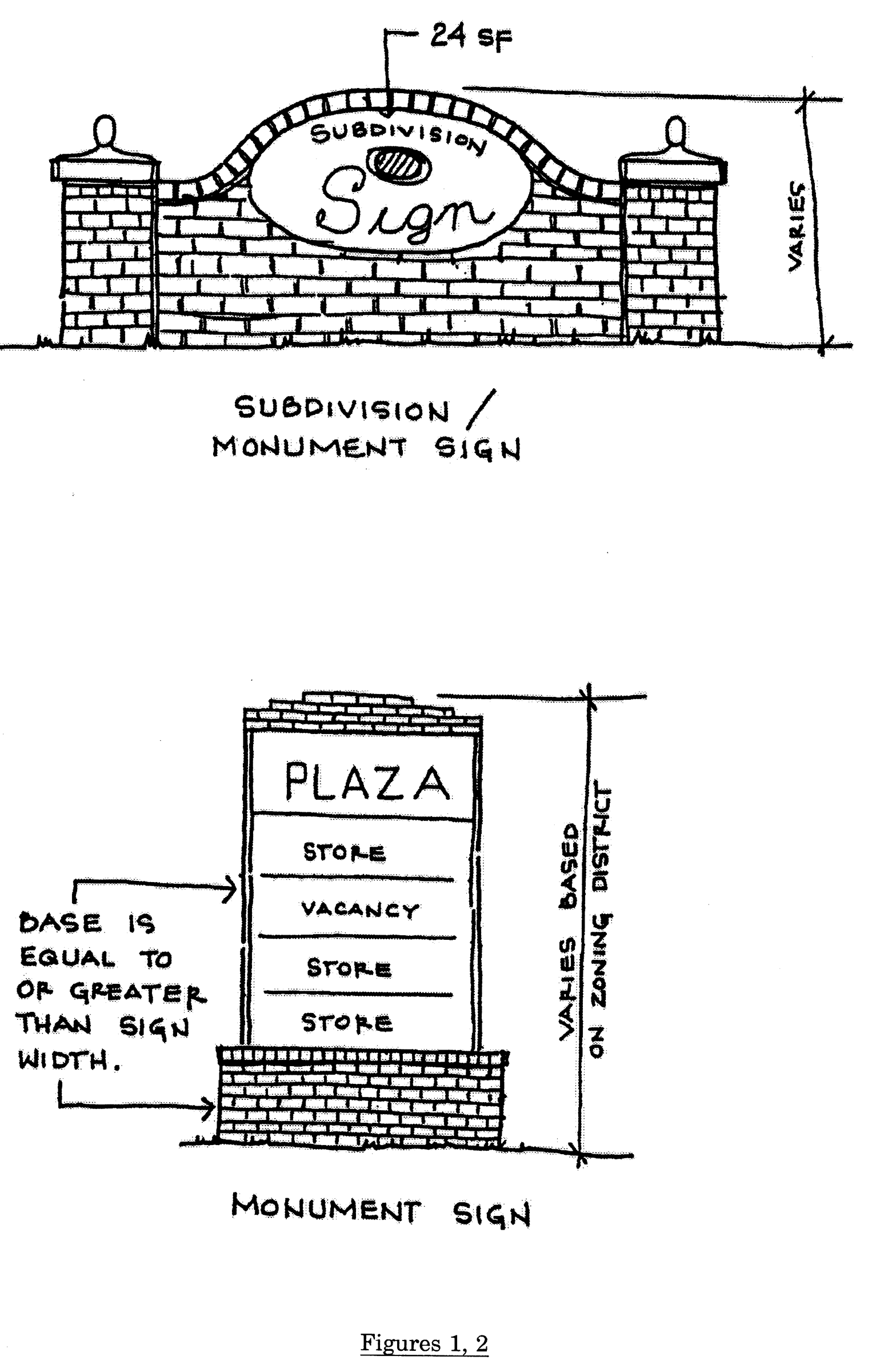
Figures 1, 2
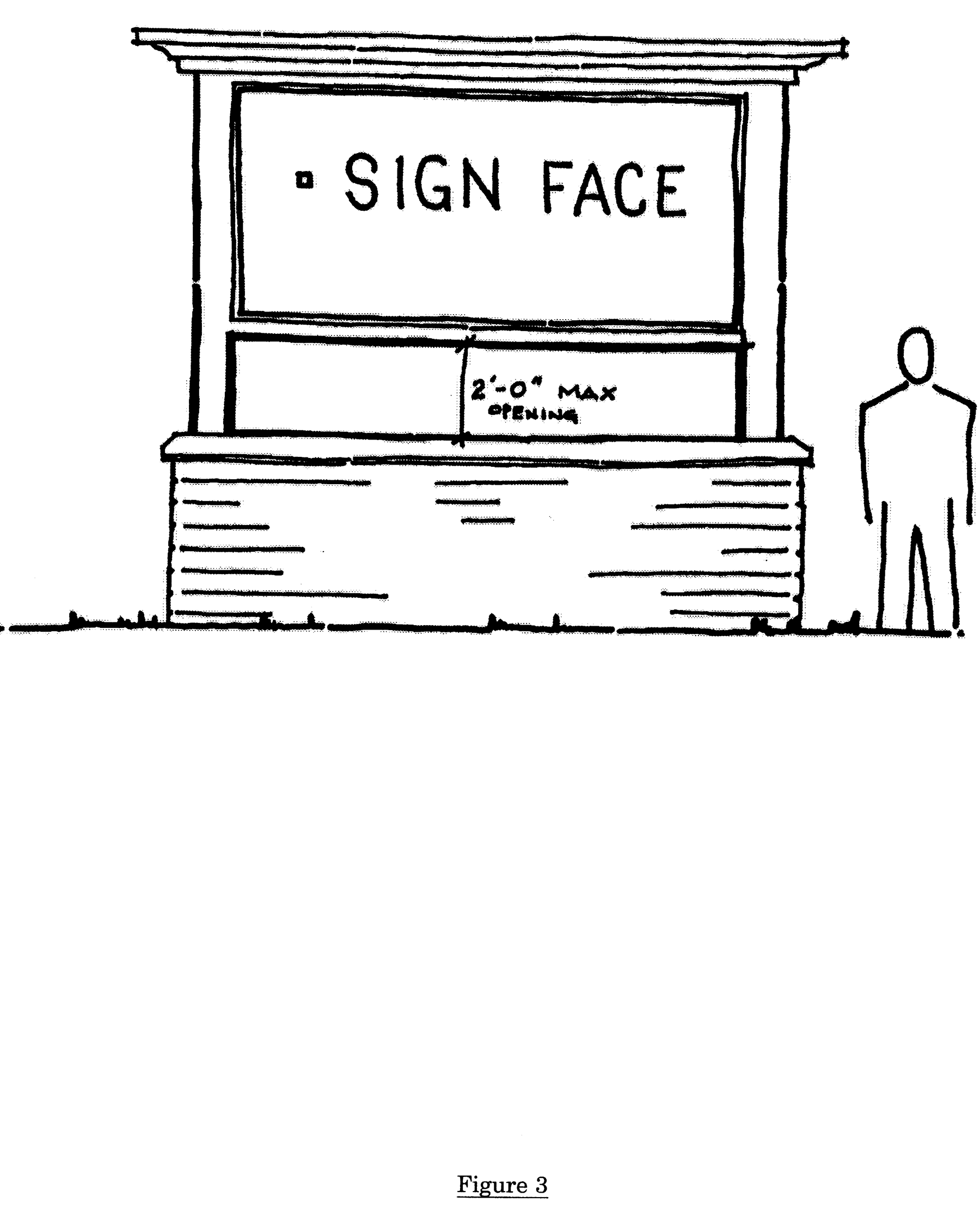
Figure 3
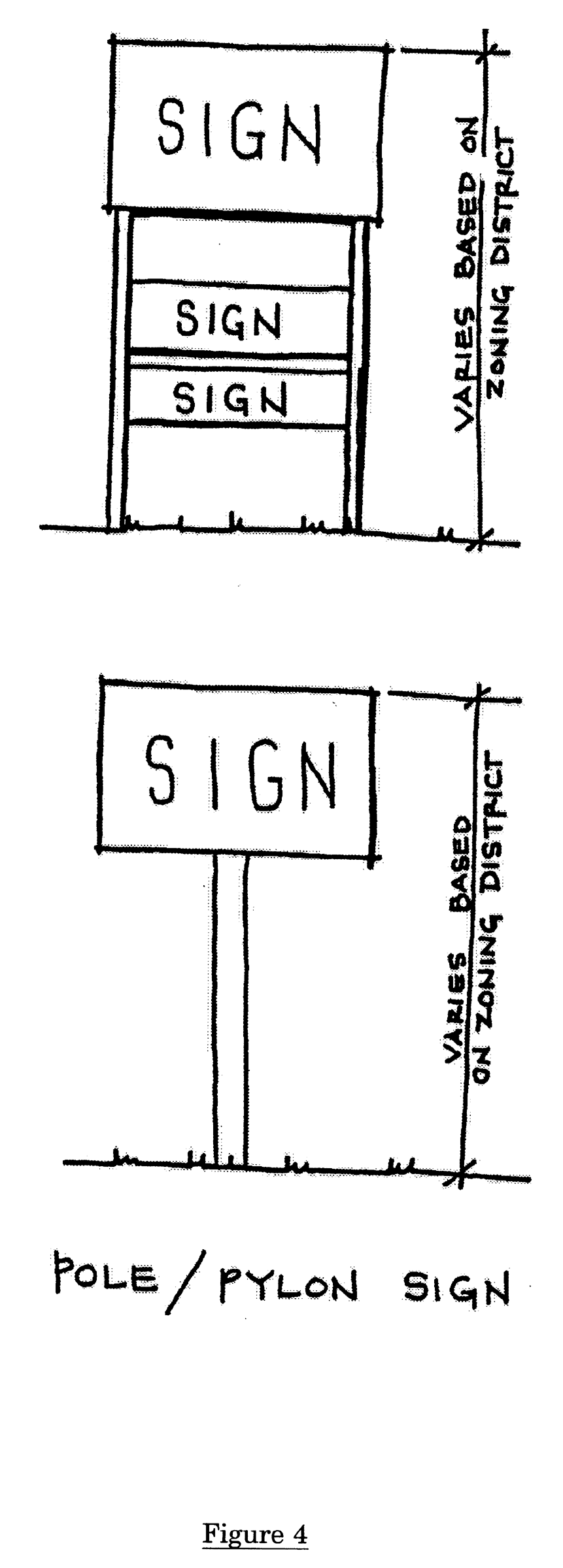
Figure 4
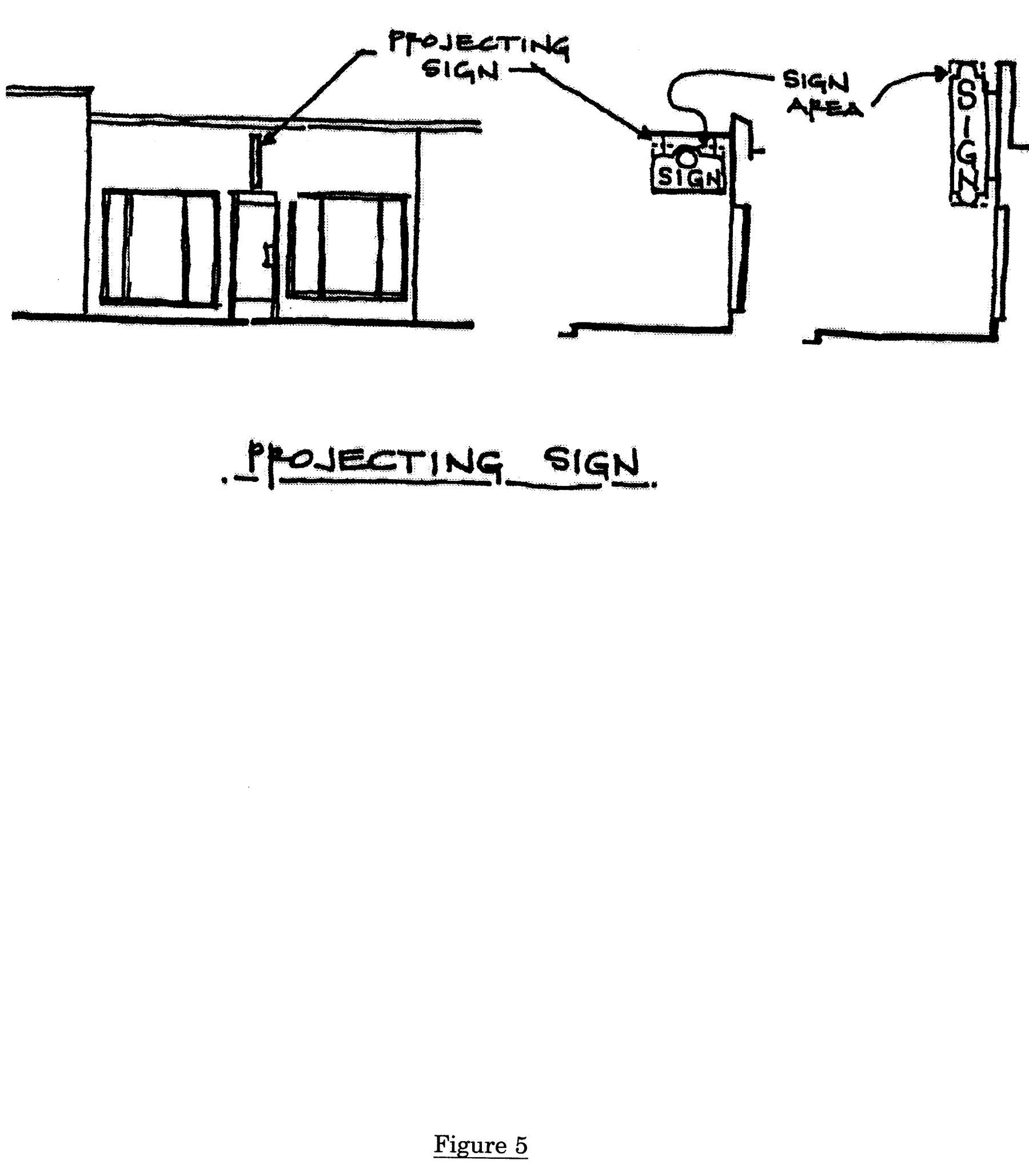
Figure 5
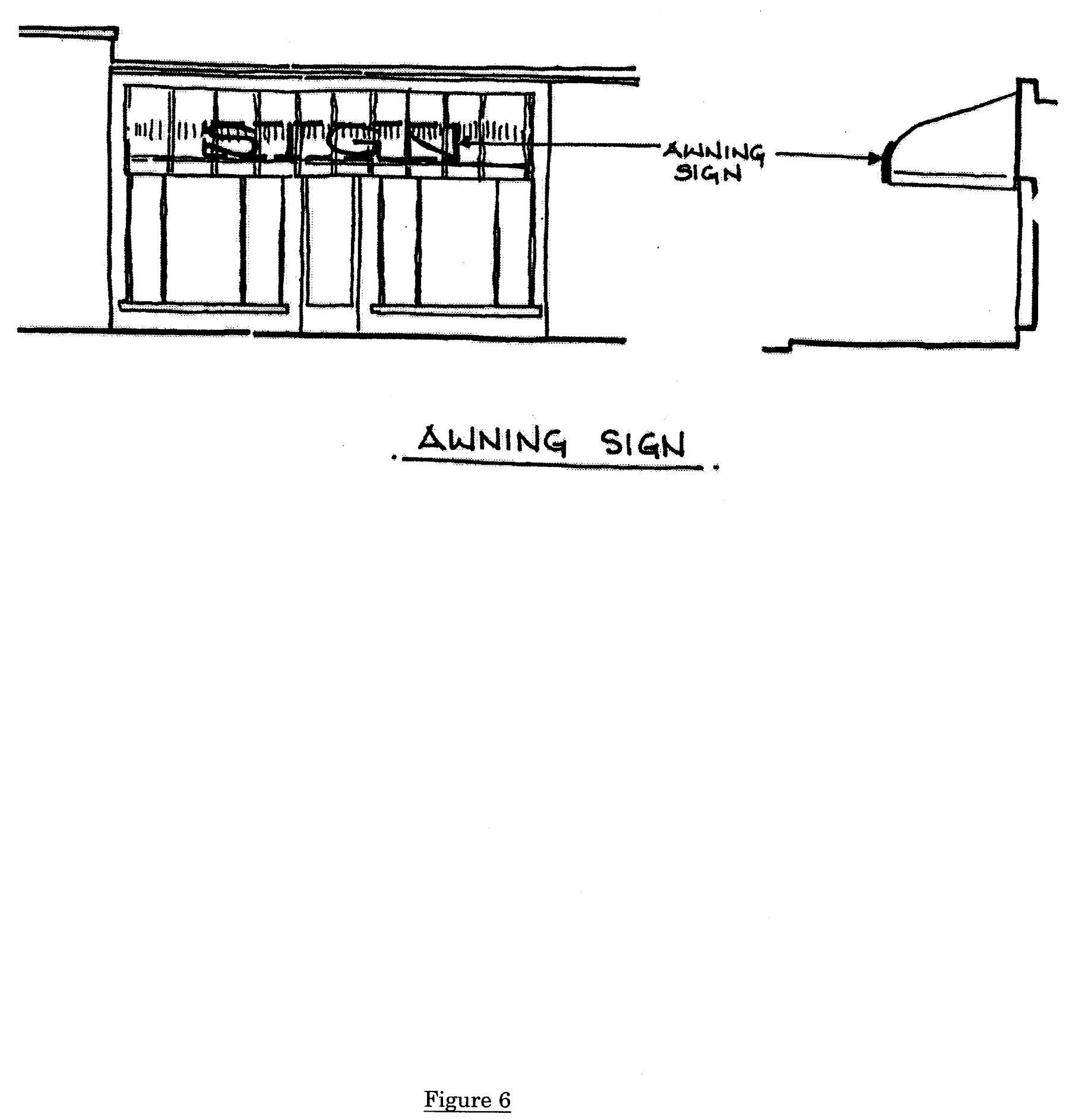
Figure 6
Sec. 656.1303. - Zoning limitations on signs.
Signs shall comply with the requirements of Chapters 320 and 326 and with the applicable provisions of F.S. Ch. 479. In addition, the following restrictions shall apply in the indicated zoning districts:
(a)
Residential zoning districts:
(1)
RR, RLD, RMD-A and RMD-B zoning districts—
(i)
One nonilluminated sign not exceeding a maximum of one square foot in area and mounted flat against the wall of the building or structure is permitted, unless otherwise specifically prohibited in the Zoning Code.
(ii)
One nonilluminated sign not exceeding a maximum of 24 square feet in area may be allowed, provided it is specifically authorized in the grant of exception, unless otherwise specifically prohibited in the Zoning Code.
(2)
RMD-C, RMD-D, RMD-E and RHD zoning districts—
(i)
One nonilluminated sign not exceeding a maximum of 24 square feet in area is permitted, unless otherwise specifically prohibited in the Zoning Code.
(3)
In all residential zoning districts, ground signs or free-standing signs shall not exceed 20 feet in height and shall not be located in any required yard.
(4)
Roof signs, neon signs, changing message devices and strip lighting are prohibited.
(b)
Assembly and institutional uses located in residential zoning districts, other than in historic districts designated under Chapter 307, Ordinance Code—
(1)
One nonilluminated or externally illuminated monument sign not exceeding 12 square feet in area is permitted; or
(2)
One nonilluminated or externally illuminated monument sign not exceeding a maximum of 24 square feet in area may be allowed, provided it is specifically authorized in the grant of zoning exception, and further provided that the following performance standards and development criteria are met:
(i)
The sign shall be located no closer than 50 feet from a residential use located in a residential zoning district and may not be located in a required front yard;
(ii)
The sign must not exceed eight feet in height;
(iii)
Illumination associated with the sign must be external, provided that the source of such illumination shall be designed, installed and maintained in a manner which prevents any glare or light from shining onto residentially used property; or
(3)
One nonilluminated or externally illuminated monument sign not exceeding one square foot in area for each five linear feet of street frontage, per street, to a maximum of 50 square feet, provided the signs are located no closer than 200 feet apart, as measured by a straight line between such signs, and further provided that the sign(s) are located on a street classified as a collector street or higher, and the following performance standards and development criteria are met:
(i)
The sign shall be located no closer than 100 feet from a principal residential structure located in a residential zoning district and may not be located in a required front yard;
(ii)
The sign must be a sign, not exceeding 12 feet in height;
(iii)
Illumination associated with the sign must be external, provided that the source of such illumination shall be designed, installed and maintained in a manner which prevents any glare or light from shining onto residentially used property.
(4)
For purposes of this Part assembly and institutional uses shall include, but are not limited to, churches, schools, lodges.
(5)
These provisions shall not apply to any assembly or institutional use located in a residential zoning district located within a historic district designated under Chapter 307, Ordinance Code. It is intended that signs within residentially zoned areas of historic districts shall be governed by specific provisions within the historic district zoning overlay regulations for the particular district or by Section 656.1303(a) hereinabove, until such time as such regulations are adopted.
(c)
Commercial zoning districts:
(1)
CO and CRO zoning districts—
(i)
One nonilluminated or externally illuminated monument sign not exceeding a maximum of 24 square feet in area and 12 feet in height is permitted; and
(ii)
One five square foot nonilluminated, externally illuminated or internally illuminated wall sign is permitted; or
(iii)
In lieu of (i) and (ii), above, one nonilluminated, externally illuminated or internally illuminated wall sign not exceeding 32 square feet in area is permitted.
(iv)
In lieu of the wall sign allowed under (ii) or (iii) above, the following wall signs are allowed, provided the property has at least 200 feet of street frontage, is at least three acres in size and meets all other applicable requirements of this Section regarding occupancy frontage:
(A)
For buildings less than three stories in height:
(1)
Two wall signs not exceeding, collectively, 100 square feet if located on the side of the building facing an arterial or higher roadway, and
(2)
Two wall signs, per side of building, not exceeding, collectively, 75 square feet in area if located on the side of the building facing any other roadway.
(B)
For buildings three stories or higher in height:
(1)
Two wall signs not exceeding, collectively, 150 square feet in area if located on the side of the building facing an arterial or higher roadway, and
(2)
Two wall signs, per side of building, not exceeding, collectively, one 100 square feet in area if located on the side of a building facing any other roadway.
(C)
The wall signs allowed under this subsection (iv) shall be allowed only if the sign structure is not located within 250 feet of any residential zoning district.
(v)
Assembly and institutional uses located in CO and CRO zoning districts, other than in historic districts designated under Chapter 307, Ordinance Code:
(A)
One nonilluminated or externally illuminated monument sign not exceeding 12 square feet in area is permitted; or
(B)
One nonilluminated or externally illuminated monument sign not exceeding a maximum of 24 square feet in area may be allowed, provided it is specifically authorized in the grant of zoning exception, and further provided that the following performance standards and development criteria are met:
(1)
The sign shall be located no closer than 50 feet from a residential use located in a residential zoning district and may not be located in a required front yard;
(2)
The sign must not exceed 12 feet in height;
(3)
Illumination associated with the sign must be external, provided that the source of such illumination shall be designed, installed and maintained in a manner which prevents any glare or light from shining onto residentially used property; or
(C)
One externally illuminated sign not exceeding one square foot for each five linear feet of street frontage, per street, to a maximum of 50 square feet, provided the signs are located no closer than 200 feet apart, as measured by a straight line between such signs, and further provided that the sign(s) are located on a street classified as a collector street or higher, and the following performance standards and development criteria are met:
(1)
The sign shall be located no closer than 100 feet from a principal residential structure located in a residential zoning district and may not be located in a required front yard;
(2)
The sign must be a monument sign, not exceeding 12 feet in height;
(3)
Illumination associated with the sign must be external, provided that the source of such illumination shall be designed, installed and maintained in a manner which prevents any glare or light from shining onto residentially used property.
(D)
One nonilluminated or externally illuminated wall sign per building, not exceeding 24 square feet.
(E)
For purposes of this Part, assembly and institutional uses shall include, but are not limited to, churches, schools, lodges.
(F)
These provisions shall not apply to any assembly or institutional use located in a commercial zoning district located within a historic district designated under Chapter 307, Ordinance Code. It is intended that signs within commercially zoned areas of historic districts shall be governed by specific provisions within the historic district zoning overlay regulations for the particular district or by Section 656.1303(c), in which case the more stringent shall apply.
(2)
CN zoning district—
(i)
One street frontage sign per lot not exceeding one square foot for each linear foot of street frontage, per street, to a maximum size of 200 square feet in area for every 200 linear feet of street frontage or portion thereof is permitted, provided they are located no closer than 200 feet apart.
(ii)
Wall signs are permitted.
(3)
CCG, CCBD and CR zoning districts—
(i)
One street frontage sign per lot not exceeding one square foot for each linear foot of street frontage, per street, to a maximum size of 300 square feet in area for every 300 linear feet of street frontage or portion thereof is permitted, provided they are located no closer than 200 feet apart.
(ii)
Wall signs are permitted.
(iii)
One under the canopy sign per occupancy not exceeding a maximum of eight square feet in area is permitted; provided, any square footage utilized for an under the canopy sign shall be subtracted from the allowable square footage that can be utilized for wall signs.
(iv)
In lieu of the street frontage sign permitted in subsection (i) above, a flag containing a business logo or other advertising is permitted; provided, the square footage of any such flag shall not exceed 100 square feet, or 35 percent of the allowable square footage of the street frontage sign permitted in subsection (i) above, whichever is smaller; and provided further that the pole upon which such flag is flown shall not exceed the height limitation set forth in subsection (h)(1), below. Only one flag containing a business logo or other advertising shall be permitted for a premises, regardless of any other factors such as number of tenants on the premises or total amount of street frontage. Further, any flag allowed pursuant to this subsection shall not be illuminated by any means, with the exception of lighting associated with an American flag being flown on the same flag pole.
(4)
In CO and CRO Districts changing message devices and illuminated and indirect lighting signs are also prohibited.
(5)
In RO Districts, signage not exceeding five square feet, collectively, is allowed. Illumination of the signage in any form is prohibited.
(d)
Industrial zoning districts: The allowable signs and the sign restrictions and requirements shall be the same as in CCG, CCBD and CR zoning districts.
(e)
Agriculture (AGR) zoning district:
(1)
One nonilluminated sign not exceeding a maximum of 16 square feet in area is permitted.
(2)
One nonilluminated sign not exceeding a maximum of 32 square feet in area may be allowed, provided it is specifically authorized in the grant of an exception.
(f)
Public Building and Facilities (PBF) Zoning Districts:
(1)
PBF-1 and PBF-3 District—
(i)
One street frontage sign per lot not exceeding one square foot for each linear foot of street frontage, per street, to a maximum size of 300 square feet in area for every 300 linear feet of street frontage or portion thereof, is permitted, provided they are located no closer than 200 feet apart.
(ii)
Wall signs are permitted.
(2)
PBF-2 District—
(i)
One on-site sign not exceeding one square foot for each five linear feet of street frontage, per street, to a maximum of 48 square feet in area, provided the signs are located no closer than 200 feet apart.
(ii)
Wall signs are permitted.
(g)
Conservation (CSV) zoning district: One nonilluminated sign not exceeding a maximum of 24 square feet in area is permitted.
(h)
Recreation and open space (ROS) zoning district: One nonilluminated sign not exceeding a maximum of 24 square feet in area is permitted.
(i)
General criteria:
(1)
Height of signs—Signs shall not exceed 50 feet in maximum height above the level of the adjacent ground, except as otherwise provided in this Chapter; provided, however that signs located in commercial and industrial zoning districts may exceed that height; provided that, the sign is located not more than 660 feet from the centerline of an interstate highway exit and not more than 660 feet from the centerline of an interstate highway; provided further the sign does not exceed 65 feet in height.
(2)
Location of signs—Notwithstanding any other provisions of the Ordinance Code to the contrary, no sign shall be located within 25 feet of any intersection of two or more right-of-way lines, nor shall any sign be located closer than ten feet from any street right-of-way; provided, however, that any flag permitted by subsection (b)(3), above, located in the CCBD zoning district shall not be subject to this ten foot set back requirement.
(3)
Changing message devices are permitted as part of any allowable sign unless otherwise prohibited.
(4)
The restrictions contained in this Part apply only to signs which can be seen unaided from any location on the ground which is not on the lot or parcel where the sign is located.
(j)
Special criteria:
(1)
Whenever a provision of subsection (h) of this Section conflicts with a specific provision for a zoning district as set forth in subsections (a)—(d) of this Section, the specific provision for that zoning district shall prevail.
(2)
Two, but no more than two, signs or sign structures may be erected as a single unit if such signs are in the same vertical plane, are contiguous, and are built at one time by a single owner.
(3)
Wall signs shall not exceed ten percent of the square footage of the occupancy frontage or respective side of the building abutting a public right-of-way or approved private street.
(k)
Special exemptions:
(1)
Signs erected and maintained pursuant to and in discharge of any governmental function, or as required by law, are permitted in all districts.
(2)
Signs recognizing sponsors providing contributions of money, goods or services may be erected and maintained on athletic fields at schools and amateur athletic association fields (whether located on public or private property). Signs shall be erected so as to face and be oriented towards the interior of the field and attached to the perimeter fencing of the field's boundaries, but shall not extend above the top of the fencing. Signs shall be painted black, green, white or other appropriate color to coordinate with the fence on the back portion of the sign. These signs shall not exceed 25 (25) square feet for each sign and the number of signs will be limited by the length of the boundary fence around the field. No sign erected pursuant to this exemption shall advertise or promote alcohol or tobacco products.
(3)
Signs on transit shelters located on public rights-of way, publicly owned property, or privately owned property, subject to the following criteria and superseding any other provisions in Chapter 656, except as provided in Section 656.361.20.
(i)
Transit shelters with advertising and internal sign illumination are not permitted on or adjacent to AGR, CSV, ROS, or RR-Acre zoning districts, and are not permitted within PUD zoning districts in AGR, CSV, ROS, or RR land use categories.
(ii)
Transit shelters with advertising and internal sign illumination are permitted by sign waiver on or adjacent to all RLD zoning districts, RMD-A, RMD-B, and RO zoning districts, PUD zoning districts in an LDR land use category, and adjacent to schools and parks in a PBF land use category.
(iii)
Transit shelters with advertising and internal sign illumination are permitted by right on or adjacent to RMD-C, RMD-D, CO, and CRO zoning districts if the transit shelter location is on an identified corridor according to the JTA Corridor Route Map, and the transit shelter is at least 200 feet from a single family use. All others on or adjacent to RMD-C, RMD-D, CO, and CRO zoning districts are permitted by sign waiver.
(iv)
Transit shelters with advertising and internal sign illumination are permitted by right on or adjacent to RMD-MH, RHD-A, RHD-B, CN, CCG-1, CCG-2, IBP, IL, IH, IW, PBF-1 (except schools and parks), PBF-2 (except schools and parks), PUD (unless otherwise limited herein), and PUD-SC (unless otherwise limited herein) zoning districts, and within the CBD land use category.
(v)
Transit shelters with advertising and/or internal sign illumination are not permitted in the San Marco Overlay Zone, Riverside Avondale Zoning Overlay, the Riverside Avondale Historic District, the Springfield Zoning Overlay, the Springfield Historic District, or any other locally or nationally designated historic districts.
(vi)
Signs shall not exceed 24 square feet in size per transit shelter with a dimension no higher or wider than the size dimensions of the shelter side that the sign is to be placed or attached to, below the bottom of the roofline and the sidewalk, or other surface, the shelter is attached to.
(vii)
Signs shall not exceed a maximum of two signs on a transit shelter structure.
(viii)
Transit shelters with advertising and internal illumination shall not be deemed non-conforming uses if its zoning district or the adjacent zoning district changes after installation of the transit shelter.
(ix)
JTA shall report each year to the City Council to provide an assessment of transit shelters with advertising. The report shall document the transit shelter construction locations, and provide a correlation based on ridership demand and special needs.
(x)
In the event that any portion of this Section, including any exception contained herein, is declared invalid, unenforceable, unconstitutional or void, or is permanently enjoined, or if the existence of any provision of this Section would result in any other portion of this Chapter or Chapter 326 or Article 23 of the Charter being held to be invalid, unenforceable, unconstitutional or void, and the court does not sever such invalid portion of this Section, then the invalid portion of this Section is repealed and invalid and thereafter no signs of the type included within the exemption shall be erected without compliance with the remainder of this Chapter and this Ordinance Code. It is the specific intent that the invalidity of any portion of this Section shall not affect any other section, subsection, paragraph, subparagraph, sentence, phrase, clause or word of this Chapter, Chapter 326, Article 23 of the Charter, or this Ordinance Code.
(l)
Prohibited signs in all districts:
(1)
Mobile billboards.
(2)
Signs which are unlawful under Section 326.104 or Sections 614.142 or 656.1320 are prohibited in all districts.
(3)
No permit shall be issued for any sign that would lie within 200 feet of a structure listed on the National Register of Historic Places (other than a sign which identifies or describes the historic structure), unless the sign to be permitted is a wall sign, freestanding sign or ground sign which is located immediately adjacent to the wall of a building, is parallel to, or virtually parallel to the wall and does not extend beyond the vertical or horizontal limits of the wall. Distance measurements shall be calculated from the property line of the land on which the historic structure is located and shall be measured along any street which provides street frontage for the historic structure.
(4)
In addition to the signs prohibited above, no signs shall be permitted in any locations which are expressly prohibited by the provisions of F.S. Ch. 479, as required by F.S. § 479.15(1).
(5)
Animated, flashing and revolving signs are prohibited in all districts.
(6)
Remote controlled blimps containing commercial advertising.
(m)
Signage allowed to be exempt in all zoning districts for locally designated historic landmarks or historic landmark sites: Signage on historic landmarks or historic landmark sites which have been designated by the Council, pursuant to Section 307.104, shall be exempt from the requirements of this Part and any other conflicting provisions of the Ordinance Code, provided that the Council designates the landmark or landmark site as a historic landmark or historic landmark site and finds that the signage must remain (or remain after modification) in order to preserve the integrity of the historic landmark or historic landmark site.
(n)
Landmark signs. Signs not associated with a locally designated landmark or landmark site but which are determined to have historical, architectural, cultural, or unique community significance and which are designated as landmark signs by the City Council shall be exempt from the requirements of this Part in all zoning districts. Upon the Jacksonville Historic Preservation Commission finding that a sign meets four of the following eight criteria:
(1)
It is at least 30 years old;
(2)
The sign is an integral part of an existing principal structure which is being adaptively re-used;
(3)
It is suitable for preservation and restoration;
(4)
It poses no threat to traffic safety or public safety;
(5)
It has value as a significant reminder of the cultural, historical or architectural heritage of the City, State, or nation;
(6)
It has historical, cultural, architectural, or unique community significance;
(7)
It is recognized for the quality of its architecture, design or specific design feature(s) and it retains sufficient elements showing its architectural or design significance; or
(8)
It has distinguishing characteristics of a certain era or period
the City Council may designate a sign as a landmark sign. In the process of designating a landmark sign, the Historic Preservation Commission may recommend, and the Council may include in the legislation designating the sign, any condition(s) it deems necessary or appropriate to maintain the landmark nature of the sign, such as a limitation concerning any modification to the face of the sign.
(o)
Any sign structure in violation of this Section is hereby declared to be contraband and subject to civil forfeiture to the City. A violation has been proved if the owner, or person in control of the structure, has been convicted of using a sign structure in violation of this Section. A conviction shall include a plea of nolo contendere or a withhold of adjudication. In addition, a violation may be proved in a separate civil action. The City shall seek forfeiture of the sign through any appropriate civil action, which may include declaratory judgment or a mandatory injunction.
(Ord. 91-59-148, § 1; Ord. 91-462-235, § 1; Ord. 91-761-410, § 1; Ord. 92-955-674, § 9; Ord. 92-416-940, § 1; Ord. 92-1768-1444, § 2; Ord. 93-174-1054, § 7; Ord. 94-300-250, § 1; Ord. 95-956-599, § 1; Ord. 98-1017-E, § 1; Ord. 1999-833-E, § 1; Ord. 1999-1237-E, §§ 1, 2; Ord. 1999-1306-E, § 1; Ord. 2003-1050-E, §§ 2, 3; Ord. 2004-428-E, § 3; Ord. 2009-401-E, § 3; Ord. 2010-253-E, § 3; Ord. 2015-338-E, § 1; Ord. 2020-731-E, § 1)
Sec. 656.1304. - Awning signs.
In addition to any other signs allowed pursuant to this Part, awning signs that project into public space shall be allowed in the High Density Residential, Commercial, Industrial and Public Buildings and Facilities zoning districts, subject to the following criteria:
(a)
That the total square footage of signage does not exceed 12 square feet;
(b)
That the height of the letters shall not exceed 20 inches;
(c)
That the numbers of awning signs for each property shall be limited to one sign per occupancy frontage or unlimited where the distance between the same is a minimum of 20 feet;
(d)
That portion of an awning sign which is not perpendicular to the wall to which the awning is attached shall be subtracted from the allowable number of maximum square footage any signage otherwise allowable;
(e)
That awning signs shall comply with the requirements of Section 323.104(i); and
(f)
That in the event the Ordinance Code is amended to modify the requirements for awning signs, any lawfully erected awning sign existing at the time of the amendment shall be permitted to remain, but shall come into compliance should it be replaced;
(g)
That no signage shall be allowed on that portion of the awning sign which is perpendicular to the wall to which the awning is attached;
(h)
That no awning sign shall be directly or indirectly illuminated.
(Ord. 93-174-1054, § 8)
Sec. 656.1305. - Signs on vacant property.
Notwithstanding any signage otherwise allowable in this Part 13, no sign in excess of 32 square feet shall be erected on vacant property. Property is vacant for the purpose of this Section if there are no structures, other than signs, for which City permits have been issued and which are on the surface of property and which structures were valued on the permit application at $4,000 or less.
(Ord. 93-174-1054, § 9)
Sec. 656.1306. - Real estate signs.
In addition to any other signs allowed, any lot may have erected on it a temporary, nonilluminated real estate sign not exceeding 24 square feet in area, but only when such property is actually for sale or rent; provided that in RR and RLD districts the sign shall be no greater than four square feet. For the purpose of this Section, the term "lot" shall include the entire area: (1) within the legal boundaries of the lot itself, and (2) between five feet from the edge of the pavement and ten feet from the nearest intersection or driveway, and the front lot boundary line of a single family residential lot (in the case of corner lots, both front lot lines shall be considered). In the event that any portion of this Section is declared invalid, unenforceable, unconstitutional or void or is permanently enjoined, then thereafter no signs shall be erected pursuant to this Section.
(Ord. 93-174-1054, § 10; Ord. 2013-486-E, § 1)
Sec. 656.1307. - Construction signs.
In addition to any other signs allowed, any lot may have erected on it one temporary, nonilluminated construction sign not to exceed 32 square feet, but only while construction is in progress on such property; provided, however, that in RR and RLD districts the sign shall be no greater than four square feet. In the event that any portion of this Section is declared invalid, unenforceable, unconstitutional or void or is permanently enjoined, then thereafter no signs shall be erected pursuant to this Section. These signs shall be set back from the right-of-way not less than ten feet.
(Ord. 93-174-1054, § 11)
Sec. 656.1308. - Subdivision signs.
Any subdivision in any zoning district may have two subdivision identification signs not exceeding 24 square feet in area for each sign provided that each such signs shall be located at an entry of the subdivision and at the intersection of two street rights-of-way. Such signs shall be limited to the name of the subdivision, and no other words or forms of advertisement shall appear on the signs. Each sign shall be included as part of the site plan or sketch plan approval pursuant to Section 656.404 or Chapter 654. Provided, however, all subdivision signs in existence prior to November 4, 1993, are exempt from the requirements of this Section. In the event any portion of this Section is declared invalid, unenforceable, unconstitutional or void or are enjoined, then thereafter no signs shall be erected pursuant to this Section.
(Ord. 93-174-1054, § 12; Ord. 2001-1057-E, § 1)
Sec. 656.1309. - Unlawful signs.
(a)
Projections of light, laser beams or any other medium to form text, graphics, logos, or artwork upon streets, walkways, fences, sign structures, land or water surfaces, or exterior walls or other exterior portions of buildings or any other structure are prohibited, except that an owner may project a sign onto an exterior portion of his or her own property, building or structure if the area occupied by such sign does not otherwise violate applicable sign regulations included in this Part. The person or business who owns or is advertised or identified on the sign shall be presumed to have permitted the placement of the sign in the absence of credible evidence to the contrary and may be cited for violation of this subsection by either the City's Municipal Code Compliance Division or the Jacksonville Sheriff's Office, and the person or business installing or projecting the sign is also in violation of this subsection. Violations of this subsection shall constitute a class D offense; however, projections of text, graphics, logos, or artwork onto a building, structure or any other place (including public spaces) without the consent of the owner or person in control of the building, structure or space shall constitute blight and graffiti, and pursuant to F.S. §§ 806.13 and 125.69, these violations shall constitute a second degree misdemeanor punishable by a definite term of imprisonment of up to 60 days (discretionary) and a fine not less than $2,000 (non-discretionary), and any equipment or vehicles used in furtherance of this crime shall be seized by the Jacksonville Sheriff's Office and forfeited to the City.
(b)
It shall be unlawful and a class D offense for any person to erect, display or maintain, at any time, a sign which contains a commercial message which relates to offices, products, accommodations, services, or activities which are not sold, produced, available, conducted or rendered on the property where the sign is located; provided that the prohibition applies only to signs which can be seen unaided from any location on the ground which is not on the lot or parcel where the sign is located; provided, further, this Section does not prohibit signs erected pursuant to a naming right or sponsorship agreement entered into by the City of a publicly owned sports or entertainment venue, or an athletic team which is a tenant thereof under rights assigned to such team pursuant to a written agreement with the City; provided further that this Section does not prohibit off-site commercial signs maintained or erected in accordance with the terms of an authorized settlement agreement with the City.
(c)
From and after July 30, 1997, it shall be unlawful and a class D offense for any person to erect, display or maintain, at any time, a sign which contains a commercial message which relates to offices, products, accommodations, services, or activities which are not sold, produced, available, conducted or rendered on the property where the sign is located; provided that the prohibition applies only to signs which can be seen unaided from any location on the ground which is not on the lot or parcel where the sign is located provided, further, this Section does not prohibit signs erected pursuant to a naming right or sponsorship agreement entered into by the City of a publicly owned sports or entertainment venue, or an athletic team which is a tenant thereof under rights assigned to such team pursuant to a written agreement with the City.
(d)
Any sign structure in violation of this Section is hereby declared to be contraband and forfeited to the City. A violation has been proved if the owner, or person in control of the structure, has been convicted of using a sign structure in violation of this Section. A conviction shall include a plea of nolo contendere or a withhold of adjudication. In addition, a violation may be proved in a separate civil action. The City shall seek forfeiture of the sign through any appropriate civil action, which may include declaratory judgment or a mandatory injunction.
(e)
In the event that a court of competent jurisdiction determines, finally, that subsection (b) of this Section unconstitutionally distinguishes between commercial and noncommercial messages, it shall be unlawful and a class D offense for any person to erect, display or maintain, at any time, a sign which contains a commercial message which relates to offices, products, accommodations, services, or activities which are not sold, produced, available, conducted or rendered on the property where the sign is located; provided that the prohibition applies only to signs which can be seen unaided from any location on the ground which is not on the lot or parcel where the sign is located; provided, further, this ordinance does not prohibit signs erected in compliance with Section 656.1320; provided, further this subsection shall not be enforced without providing 30 days' notice to correct and unless subsection (b) of this Section is declared unconstitutional.
(f)
In the event that a court of competent jurisdiction determines, finally, that subsection (c) of this Section unconstitutionally distinguishes between commercial and noncommercial messages, from and after July 30, 1997, it shall be unlawful and a class D offense for any person to erect, display or maintain, at any time, a sign which contains a commercial message which relates to offices, products, accommodations, services, or activities which are not sold, produced, available, conducted or rendered on the property where the sign is located; provided that the prohibition applies only to signs which can be seen unaided from any location on the ground which is not on the lot or parcel where the sign is located; provided, further, this ordinance does not prohibit signs erected in compliance with Section 656.1320; provided, further, this subsection shall not be enforced without providing 30 days' notice to correct and unless subsection (c) of this Section has been declared unconstitutional.
(Ord. 93-174-1054, § 13; Ord. 2005-1380-E, § 4; Ord. 2014-716-E, § 4; Ord. 2014-717-E, § 4; Ord. 2023-44-E, § 1)
Sec. 656.1310. - Sign waivers.
(a)
Sign waivers may be approved by the City Council in accordance with the provisions of Section 656.133(c).
(b)
Limitations on sign waivers: Proposals for sign waivers shall be subject to the following limitations:
(1)
Height: No waiver shall be granted for an increase in sign height in excess of 20 percent of the maximum height allowed in Section 656.1303 for the zoning district for which the waiver is proposed, or five feet in height, whichever is less. No waiver shall be granted which would permit a sign in excess of 40 feet in height in any zoning district.
(2)
Size: No waiver shall be granted for an increase in sign size in excess of 25 percent of the maximum size area allowed in this Part 13 for the zoning district for which the waiver is proposed, or ten square feet in area, whichever is less.
(3)
Number of signs: A waiver may be granted to increase the maximum number of signs allowed, so long as the total square footage of all signs does not exceed the maximum square footage allowed in this Part 13 for the property for which the waiver is proposed.
(4)
Type of signs: No waiver shall be granted to allow a type of sign not otherwise allowed in this Part 13 for the zoning district for which the waiver is proposed, except that a waiver may be granted to allow illumination of a sign, or to allow a different type of sign otherwise allowed under this Part 13 for public health, safety, and welfare purposes only in conjunction with a sign waiver to reduce the sign setback requirements in this Chapter pursuant to subsection (5). When granting sign type waivers for public health, safety, and welfare purposes, in conjunction with a sign waiver to reduce the sign setback requirements the Council shall state the public health, safety, and welfare purpose on the record, and shall attach necessary documentation to the ordinance approving such waiver to support its findings. Such documentation may include statements from the City Traffic Engineering Division supporting an alternative sign type to improve visibility when entering or exiting the subject property.
(5)
Setback: A waiver may be granted for relief from the sign setback requirements found in this Chapter, whether from the right-of-way, adjacent property, or another sign structure. However, if the sign fails to comply with the setback requirements by a distance of one foot or less, the sign shall be deemed to be a conforming sign and no sign waiver shall be required.
(6)
Directional signs: No waiver shall be granted allowing an increase in the size, height, or number of directional signs.
(c)
Waiver based upon economic hardship: When a waiver is requested based upon economic hardship, the applicant shall, in addition to the information otherwise required, submit the following:
(i)
Two estimates from licensed contractors stating the cost of bringing the sign structure into compliance; and
(ii)
Any other information the applicant wishes to have considered in connection with the waiver request.
The Council may, as a condition of the waiver, specify a time period within which the sign structure shall be required to conform to the requirements of the City's sign regulations.
(Ord. 2002-447-E, § 1; Ord. 2003-1112-E, § 2; Ord. 2006-235-E, § 1)
Sec. 656.1311. - Reserved.
Editor's note— Ord. 2002-992-E, § 9, effective October 29, 2002, repealed former § 656.1311 in its entirety. Former § 656.1311 pertained to address numbers, and derived from Ord. 2000-979-E, § 1.
Sec. 656.1312. - Neighborhood identification signs.
Any neighborhood in any zoning district may have one neighborhood identification sign per entrance not exceeding 24 square feet in area for each sign, provided that each such sign shall be located at any entry of the neighborhood. The sign may be either a double-faced sign located in the median of the road entering the neighborhood or two single-faced signs located on either side of the road entering the neighborhood. Signs shall be of monument style, and not exceed eight feet in height. Such signs shall be exclusively for the purpose of neighborhood identification, and no other words or forms of advertisement shall appear on the signs. Each sign shall be approved by the Director of the Planning and Development Department or their designee, and the City's Highway Engineer. Neighborhood signs may be nonilluminated or externally illuminated. Neighborhood signs shall not be subject to the ten-foot setback requirement of Section 656.1303(i)(2), if placement within the ten foot setback is approved by the Director of the Planning and Development Department. Signs located in a City right-of-way shall be subject to the review and approval by the Planning and Development Department and the City's Highway Engineer. Signs within the right-of-way shall be maintained by the neighborhood and may be removed by the City as needed; however, the City shall notify the neighborhood and the District Council Member of any intent to remove a sign and shall work with the neighborhood and the District Council Member to relocate the sign. The City shall notify the registered neighborhood organization, or if no registered neighborhood organization is on file, then the City shall provide notice in a reasonable manner. For purposes of this Section, a neighborhood shall mean a geographically defined, contiguous community, the boundaries of which are generally understood by residents of the neighborhood. A neighborhood has interconnecting local streets which link property within the area and may be bounded by major barriers or edges, such as railroad tracks, highways, parks, lakes, or similar physical features. In the event any portion of this Section is declared invalid, unenforceable, unconstitutional or void or is enjoined, then thereafter no signs shall be erected pursuant to this Section.
(Ord. 2004-624-E, § 1)
Editor's note— Ordinance 2007-839-E, § 18, authorized updated department/division names pursuant to reorganization.
Sec. 656.1313. - Temporary directional real estate signs during weekends.
Notwithstanding any other provision of this Chapter or the Ordinance Code to the contrary, temporary directional real estates signs during weekends are hereby authorized under the following conditions and subject to the following limitations until the Sunset Date identified below:
(a)
Definition. A temporary directional real estate sign means a temporary nonilluminated sign that functions to provide directions to residential real estate that is for sale, rent, or lease and that meets the durational limitation, location, spacing, proximity, size, height, setback, proximity and permitting criteria set forth herein.
(b)
Durational limitation. The placement of any temporary directional real estate sign allowed by this Section is limited to the 48-hour period between 6 p.m. Friday and 6 p.m. Sunday (the weekend period).
(c)
Authorized locations. A temporary directional real estate sign allowed by this Section is limited to the following locations:
(1)
The non-paved portion of the public right-of-way of any City of Jacksonville roadway that is situated outside of any sidewalk, ditch or drainway.
(2)
Private property with the permission or consent of property owner or lawful occupant of the property.
(3)
Within locally designated historic districts on the locations set forth in Subsections 656.1313(c)(1) and (2), provided that there shall be no more than three signs permitted for each residential property for sale, rent or lease within such districts.
(d)
Prohibited locations. A temporary directional real estate sign otherwise allowed by this Section is prohibited from the following locations:
(1)
The right-of-way of any portion of the State Highway System or in violation of any State statute including but not limited to Chapter 479, Florida Statutes.
(2)
A location within 10 feet of a driveway intersection, or within 25 feet of a roadway intersection.
(3)
A public right-of-way location that adjoins residential real estate without the permission of its owner or lawful occupant.
(4)
Within a sign overlay zone or designated scenic corridor.
(5)
A location that obstructs a public sidewalk.
(e)
Spacing. A temporary directional real estate sign allowed by this Section shall be spaced at least 100 feet from any other temporary directional real estate sign on the same side of the road.
(f)
Proximity. A temporary directional real estate sign allowed by this Section shall be no further than one mile from the residential real estate that is for sale, rent or lease and for which the aforesaid sign serves to provide directional information.
(g)
Size. A temporary directional real estate sign allowed by this Section shall not exceed four square feet in size per side.
(h)
Height. A temporary directional real estate sign allowed by this Section shall not exceed three feet in height above the ground level.
(i)
Setback. A temporary directional real estate sign allowed by this Section shall meet the following setback requirements:
(1)
If placed in the right-of-way, the sign shall be placed at least 4 feet back from the edge of pavement or back of curb, whichever is greater.
(2)
If placed on private property, the sign shall be placed at least 1 foot back from the edge of pavement or back of curb, whichever is greater.
(j)
Abandoned property. A temporary directional real estate sign, as defined herein, that is located on any qualifying public property or right-of-way outside the 48-hour period authorized in this Section, shall be deemed abandoned property, litter and a snipe sign under Chapter 741 of the Ordinance Code. Code enforcement officials are authorized to remove and dispose of the same without notice or compensation to the owner thereof in addition to the other remedies provided within Chapter 741 or any other chapter of this Ordinance Code. This remedy is supplemental to and without limiting the enforcement mechanisms and sanctions elsewhere authorized and available under this Chapter or this Ordinance Code. However, no criminal penalty shall arise by violation of this Section and only civil remedies shall apply.
(k)
Permit. A person or entity seeking to utilize a temporary directional real estate sign allowed by this Section shall apply with the Building Inspection Division of the Planning and Development Department, or its successor for, and pay a $30 fee for, and receive a permit for each sign so utilized, using the procedures set forth in Section 320.402(d), Ordinance Code, and forms approved by the Building Inspection Division, prior to the placement of any such sign. Each permit shall be for up to as many as five separate temporary directional signs, for a period of one year or until this ordinance sunsets, whichever period is shorter.
(l)
Display of Permit Number and Date of Issuance. A temporary directional real estate sign that is permitted hereunder shall display on the sign the permit number and the date the permit was issued.
(m)
Sunset. The provisions of this Section shall sunset and expire on June 30, 2016 unless otherwise revised or extended by the Council prior to that date. All permit rights under this Section are subject to sunset, repeal or amendment of this Section, and no vested rights shall arise from the issuance of a permit hereunder.
(Ord. 2010-253-E, § 4; Ord. 2010-767-E, §§ 1—4; Ord. 2013-262-E, § 1; Ord. 2013-352-E, § 1)
Sec. 656.1314. - Temporary election signs.
In addition to other allowed sign types including a free expression sign, one temporary election sign for each candidate and each ballot issue may be displayed on a private lot. An election sign may be displayed as an attached sign or as a freestanding sign. If displayed as a freestanding sign, these signs shall be set back from the right-of-way not less than ten feet. A temporary election sign shall be removed within seven calendar days following the election to which it pertains.
(Ord. 2010-253-E, § 5)
Sec. 656.1315. - Free expression signs.
In addition to other signs allowed, one free expression sign may be displayed on a private lot. These signs shall be set back from the right-of-way not less than ten feet.
(Ord. 2010-253-E, § 6)
Sec. 656.1316. - Content neutrality as to sign message (viewpoint).
Notwithstanding any other provision of this Chapter or the Ordinance Code to the contrary, no sign or sign structure shall be subject to any limitation based upon the content (viewpoint) of the message contained on such sign or displayed on such sign structure.
(Ord. 2010-253-E, § 7)
Sec. 656.1317. - Substitution of noncommercial speech for commercial speech.
Notwithstanding any other provision of this Chapter or the Ordinance Code to the contrary, any sign erected pursuant to the provisions of this Chapter or the Ordinance Code with a commercial message may, at the option of the owner, contain a noncommercial message unrelated to the business located on the premises where the sign is erected. The noncommercial message may occupy the entire sign face or any portion thereof. The sign face may be changed from commercial to noncommercial messages, or from one noncommercial message to another, as frequently as desired by the owner of the sign, provided that the sign is not a prohibited sign or sign-type and provided that the size, height, setback and other dimensional criteria contained in this Chapter and Ordinance Code have been satisfied.
(Ord. 2010-253-E, § 8)
Sec. 656.1318. - No Criminal Penalties.
There shall be no criminal penalty imposed for a violation of Part 13 of Chapter 656.
(Ord. 2010-253-E, § 9)
Sec. 656.1319. - Severability.
(a)
Generally. If any Part, Section, subsection, paragraph, subparagraph, sentence, phrase, clause, term, or word of this Chapter or Part is declared unconstitutional by the valid judgment or decree of any court of competent jurisdiction, the declaration of such unconstitutionality shall not affect any other Part, Section, subsection, paragraph, subparagraph, sentence, phrase, clause, term, or word of this Chapter or Part.
(b)
Severability where less speech results. Without diminishing or limiting in any way the declaration of severability set forth above, or elsewhere in this Section, Part, Chapter or Ordinance Code, or any adopting ordinance, if any Part, Section, subsection, paragraph, subparagraph, sentence, phrase, clause, term, or word of this Chapter or Part is declared unconstitutional by the valid judgment or decree of any court of competent jurisdiction, the declaration of such unconstitutionality shall not affect any other Part, Section, subsection, paragraph, subparagraph, sentence, phrase, clause, term, or word of this Chapter or Part, even if such severability would result in a situation where there would be less speech, whether by subjecting previously exempt signs to permitting or otherwise.
(c)
Severability of provisions pertaining to prohibited signs. Without diminishing or limiting in any way the declaration of severability set forth above, or elsewhere in this Section, Part, Chapter or Ordinance Code, or any adopting ordinance, if any Part, Section, subsection, paragraph, subparagraph, sentence, phrase, clause, term, or word of this Chapter or Part or any other law is declared unconstitutional by the valid judgment or decree of any court of competent jurisdiction, the declaration of such unconstitutionality shall not affect any other Part, Section, subsection, paragraph, subparagraph, sentence, phrase, clause, term, or word of this Chapter or Part that pertains to prohibited signs, including specifically those signs and sign-types prohibited and not allowed under this Part 13.
(Ord. 2010-253-E, § 10)
Sec. 656.1320. - Transfer of sign rights.
(a)
The Zoning Code is not and should not be inflexible. Strip development of property can create a blighted and unpleasant street-scape. Development off a main street can be difficult without some off-site signage. Consequently, the Council has seen the need for creating a transfer of sign development rights thereby allowing some off-site signage. This transfer will reduce total allowable signage. In order to avoid fraudulent practices, only the owner of transferring property may request a permit to erect a transferred sign.
(b)
The following terms shall have the following meanings set forth herein.
(1)
Transferring property means real property which will lose or give up rights to erect signage based on street frontage in return for the right to erect signage on another piece of property, i.e., the accepting property.
(2)
Accepting property means real property on which will be erected signage based on the loss of sign rights of another piece of property, i.e., the transferring property.
(3)
Street frontage sign or street frontage signage means a sign or signage which is allowed under Section 656.1302 and which is based on the street frontage of the real property where the sign is to be located.
(4)
Transferred sign means a sign erected on accepting property based on the loss of signage from the transferring property.
(5)
Transferrable sign rights means that right to erect a sign based on street frontage.
(c)
Sign rights may be transferred under the following circumstances.
(1)
The transferring property must be zoned CCG-1, CCG-2, CCBD, IL, IH or IW.
(2)
The accepting property must be zoned CCG-1, CCG-2, CCBD, IL, IH or IW.
(3)
The transferring property must be within 1,000 feet of the accepting property.
(4)
The transferred sign shall be no greater than 50 square feet.
(5)
In determining the allowable number and placement of street frontage signs on the accepting property pursuant to Part 13, Chapter 656, the transferred sign shall be considered a 300 square foot sign, and all signs erected on the accepting property shall comply with such requirements taking into consideration the existence of the transferred sign.
(6)
The message on the transferred sign shall be limited to identifying a business on the transferring property.
(7)
In order to obtain a transferred sign, the transferring property must give up six square feet of street frontage signage for every square foot of signage of the transferred sign; provided, however, that the transferring property shall give up not less than one street frontage sign and not less than 300 square feet of street frontage signage.
(8)
The person who requests the permit for erection of a transferred sign must be the owner of the transferring property. The owner of the accepting property must consent in writing to the granting of the permit and must acknowledge in writing the restrictions to be placed on the accepting property pursuant to this Section.
(9)
The transferring property shall have no nonconforming or illegal signs on it.
(10)
The accepting property shall have no nonconforming or illegal signs on it.
(11)
The accepting property shall not have more than one sign erected on it pursuant to this Section.
(d)
In the event that any court of competent jurisdiction declares or holds this Section to be invalid, unconstitutional, in whole or in part, then the entire Section is repealed and invalid.
(Ord. 93-976-436, § 1)
Sec. 656.1321. - Temporary directional business signs for businesses hindered by a government agency.
Notwithstanding any other provision of this Chapter or the Ordinance Code to the contrary, up to two temporary directional business signs may be displayed under the following conditions and subject to the following limitations identified below:
(a)
Durational limitation. The placement of any temporary directional business signs allowed by this Section are authorized seven days a week, 24 hours a day during the time of the construction or work of such improvement(s) and must be removed within ten days of completion of such improvement(s).
(b)
Authorized locations. A temporary directional business sign allowed by this Section is limited to the following locations:
(1)
The non-paved portion of the public right-of-way of any City of Jacksonville roadway that is situated outside of any sidewalk, ditch or drainway.
(2)
Private non-residential property with the permission or consent of property owner or lawful occupant of the property. No distance limitations regarding placement from businesses or other signs shall apply to such temporary directional business signs.
(c)
Prohibited locations. A temporary directional business sign otherwise allowed by this Section is prohibited from the following locations:
(1)
The right-of-way of any portion of the State Highway System or in violation of any State statute including but not limited to F.S. Ch. 479.
(2)
A location within ten feet of a driveway intersection, or within 25 feet of a roadway intersection.
(3)
Any residential real estate, or a public right-of-way location that adjoins residential real estate.
(4)
Within a locally designated historic district, sign overlay zone, or designated scenic corridor.
(5)
A location that obstructs a public sidewalk.
(d)
Setback. A directional business sign allowed by this Section shall meet the following setback requirements:
(1)
If placed in the right-of-way, the sign shall be placed at least four feet back from the edge of pavement or back of curb, whichever is greater.
(2)
If placed on private property, the sign shall be placed at least one foot back from the edge of pavement or back of curb, whichever is greater.
(e)
Abandoned property. A temporary directional business sign, as defined herein, that is located on any qualifying public property or right-of-way outside of the durational limitation authorized in this Section, shall be deemed abandoned property, litter and a snipe sign under Chapter 741 of the Ordinance Code. Code enforcement officials are authorized to remove and dispose of the same without notice or compensation to the owner thereof in addition to the other remedies provided within Chapter 741 or any other Chapter of this Ordinance Code. This remedy is supplemental to and without limiting the enforcement mechanisms and sanctions elsewhere authorized and available under this Chapter or this Ordinance Code. However, no criminal penalty shall arise by violation of this Section and only civil remedies shall apply. No permit fee shall be required for such temporary directional business signs.
(Ord. 2010-253-E, § 11)
Sec. 656.1322. - Billboard Inventory Registration System.
(a)
The City shall collect and maintain a uniform registry and inventory of all off-site commercial billboards, as defined in the City Charter, located within the County as of October 1, 2014.
(b)
No later than April 1, 2015, the owner of any off-site commercial billboard, as defined in the City Charter, shall be responsible for submitting to the Building Inspection Division an inventory identifying any billboard(s) that it owns. The information may be submitted by the lessor, manager, or other agent of the owner on behalf of the owner. For each such billboard, the submitting party shall provide the City with the following information:
i.
City permit number (if applicable);
ii.
State permit number (if applicable);
iii.
Inventory number (if any) assigned by the owner, lessor or manager of the billboard;
iv.
Street address and real estate number for the parcel on which the billboard is located;
v.
Geographic latitude and longitude of the location of the billboard;
vi.
The name of the roadway to which the sign display area of the billboard is primarily oriented;
vii.
The number of sign display faces on the billboard; and
viii.
The total area (measured in square feet) of each sign display face.
A billboard shall be deemed "registered" with the City upon the timely submission of this information to the City, and provided that such billboard exists within the County as of October 1, 2014.
(c)
Compliance with this provision does not confer any legal right on any billboard identified in the inventory, except as provided for in Article 23 of the City Charter, and submission or failure to submit the required billboard inventory to the City does not impact the status of any billboard located within the County as legal (conforming), legal nonconforming, or illegal under other applicable laws.
(Ord. 2014-716-E, § 5)
Sec. 656.1331. - Intent.
The purpose of this Subpart is to create the policy for a comprehensive and balanced system of signs and street graphics to facilitate the enhancement and improvement of the downtown area through the encouragement of urban, innovative signs and street graphics which will aid in the creation of a unique downtown shopping and commercial area, facilitate an easy and pleasant communication between people and their environment and avoid the visual clutter that is potentially harmful to traffic and pedestrian safety, property values, business opportunities, and community appearance. It is the intent of this ordinance that the Downtown Development Review Board ("DDRB") utilize the following criteria and consider for approval only those signs and graphics which are:
(a)
Compatible with and an enhancement of the character of the surrounding area and adjacent architecture when considered in terms of scale, color, materials, lighting levels, and adjoining uses.
(b)
Compatible with and an enhancement of the architectural characteristics of the buildings on which they appear when considered in terms of scale, proportion, color, materials, and lighting levels.
(c)
Appropriate to and expressive of the business or activity for which they are displayed.
(d)
Creative in the use of unique two and three dimensional form, profile, and iconographic representation; employ exceptional lighting design and represent exceptional graphic design, including the outstanding use of color, pattern, typography and materials. Signage which simply maximizes allowable size is strongly discouraged.
(e)
Of high quality, durable materials appropriate to an urban setting.
(f)
Consistent with any and all design objectives of the DIA's Business Investment and Development Plan (BID Plan).
(Ord. 2002-446-E, § 1; Ord. 2014-560-E, § 17)
Sec. 656.1332. - Downtown Sign Overlay Zone map.
The boundaries of the Downtown Sign Overlay Area are as shown on the Downtown Overlay Zone Map (Figure 1, located following Section 656.1336) dated April 24, 2002, and are coextensive with the jurisdiction of the DIA.
(Ord. 2002-446-E, § 1; Ord. 2014-560-E, § 17)
Sec. 656.1333. - Signs permitted.
(a)
Building identification signs:
(1)
Types:
(i)
Wall signs: Wall signs painted on or affixed to buildings up to five stories in height shall not exceed ten percent of total area of the facade fronting a street or 300 square feet, whichever is less, and buildings over five stories shall not exceed ten percent of the total area of the facade fronting a street or 400 square feet, whichever is less. (See Figure 2, located following Section 656.1336).
(ii)
Projecting signs: Projecting signs shall not exceed 24 square feet in area. Signs projecting into any public right-of-way, except alleys, shall have a minimum clearance of eight feet over adjacent sidewalk or other grade. Signs projecting into alleys shall have a minimum clearance of 14 feet over adjacent grade. No permanent signs shall extend into any public right-of-way to within less than two feet of the curbline, or more than six feet beyond the property line, except that at street intersections, signs which project from the intersecting street property lines may extend to the intersection of the six-foot projection margins on each street. Marquee signs may be permitted, provided that they shall not project more than 12 inches beyond the front of the marquee, nor closer then two feet to the curbline. Marquee signs may not exceed 30 inches in height above the top of the marquee, and the total vertical dimension may not exceed five feet. Only one sign may be placed on or attached to an end face of a marquee. The copy area of marquee signs shall not exceed 80 percent of the surface area of the marquee sign face. No barberpole, including brackets and fastenings for the barberpole, shall extend more than one foot into any public right-of-way. No temporary sign made of rigid material shall extend more than four inches into the public right-of-way. (See Figure 2).
(iii)
Awning signs: The maximum projection over the sidewalk or other grade shall not exceed seven feet. The maximum lettering or logo height shall not exceed 20 inches. Where the sign message exceeds one row of lettering, the maximum height shall be measured by all rows combined, not per row. One square foot of sign size is allowed for every linear foot of street frontage with a maximum signage amount of 300 square feet, whichever is less. All other dimensional requirements as listed under Section 656.1333(a)(ii) for projecting signs shall apply. Awning signs projecting less than 30 inches from the building wall shall be considered to be wall signs. (See Figure 2).
(2)
Number:
(i)
Each building may have one building identification sign per side of street frontage.
(3)
Signs on parking garages shall not be governed by this subsection, but may have the signs allowed by subsection (5) of this Section.
(b)
Ground floor signs:
(1)
Types:
(i)
Multi-Story buildings with ground floor retail sales or services tenants are allowed one square foot of signage per every linear foot of street frontage for additional wall, window, awning, canopy, or projecting signs. (See Figure 2). Multiple signs will only be approved by DRC when it can be shown that multiple signs significantly enhance the creative impact of the signage concept and are not detrimental to the building, the surrounding context or signage opportunities of adjoining uses.
(2)
Number:
(i)
Multiple signs permitted under Section 656.1333(2)(a) are allowed, however the aggregate square footage of all such signs shall not exceed one square foot per one linear foot of street frontage. Multiple signs shall be designed with a unified program of graphics, materials, illumination, etc. Where multiple signs are proposed, a comprehensive sign plan for the entire building shall be submitted to DRC for review and approval. This plan shall indicate how tenant sign allowances are to be allocated among all eligible building uses, approximate designated sign locations, and allowable types of sign construction and illumination. In situations where maximum sign area must be allocated among several tenants, applicants other than the property owner shall be required to provide evidence of authorization from the property owner authorizing the tenant to provide the comprehensive sign plan and to make application for the requested sign area. In addition to other signs allowed under this Subsection 656.1333(2), the following additional signs are allowed:
(A)
Under canopy signs, not to exceed one under canopy sign per tenant and four square feet in area for each such sign.
(B)
Temporary window signs, so long as such signs do not collectively exceed, per side of street frontage, 35 square feet or 20 percent of the total window area, whichever is less.
(c)
Exterior directory signs:
(1)
Types:
(i)
Wall, window, or projecting sign identifying the occupants of the building are allowed, so long as such signs do not exceed six square feet in area per building entrance. (See Figure 2).
(2)
Number:
(i)
One sign per building entrance under the supervision of the building owner.
(d)
Surface parking signs:
(1)
Types:
(i)
Commercial surface parking lots are allowed pylon/pole, or monument signs not to exceed 24 square feet, except as provided in subsection (b), below, and be no taller than 15 feet from top of sign to grade level. Signs erected pursuant to this subsection shall not be required to comply with the setback requirements of Section 656.1303(i), so long as the sign maintains the cross visibility requirements of Section 656.1218. (See Figure 2).
(2)
Number:
(i)
One per surface parking lot, unless the lot has access from more than one street, in which case one sign per street may be erected at a permitted entrance, with a maximum sign area as follows:
(A)
Primary entrance: 24 square feet
(B)
Second entrance: 12 square feet
(C)
Third or fourth entrance: six square feet containing only the universal symbol for parking (white "P" on blue background (See Figure 2)), and a directional arrow.
(e)
Parking garage signs: Parking garages are allowed wall signs, projecting signs or awning signs not exceeding a combined total of 75 square feet in area per side of street frontage. (See Figure 2). Provided, however, if the parking garage has ground floor retail sales or services, the maximum sign area shall not exceed 150 square feet per side of street frontage. In addition to other signs allowed pursuant to this subsection, there may be erected at each vehicle entrance to the parking garage one sign not exceeding six square feet containing only the universal symbol for parking (white "P" on blue background (See Figure 2)), and a directional arrow.
(f)
Pylon/pole, roof, monument signs, and transit shelter signs: Allowed only by special exception approved by the Downtown Development Review Board using the criteria set forth in subsection (2) of this Section, except transit shelter signs. Unless otherwise provided in the special exception, all pylon/pole signs shall meet the setback requirements of Section 656.1303(i). Transit shelter signs shall meet the requirements in Section 656.1333(h) and shall not be eligible for a special sign exception under Section 656.1331(j), but shall only be allowed by special exception following the criterion outlined under Section 656.1333(h).
(g)
Temporary A-frame and message board signs: Temporary A-frame and message board signs shall be allowed only when they meet the following criteria:
(1)
Maximum width of temporary sign structures shall not exceed 24 inches;
(2)
Maximum height of temporary sign structures shall not exceed 30 inches per side;
(3)
Sign message face shall not exceed 4 square feet per side;
(4)
A sign shall only be allowed to be placed on the same block and on the same side of the street as is located the main entrance to the business it is advertising;
(5)
Signs shall only be displayed during the hours of operation of the business it is advertising;
(6)
Only one sign shall be allowed per business;
(7)
All signs shall display the name of the business and the business' hours of operation;
(8)
Signs shall not be placed in a location or manner which impedes pedestrian access or interferes with the public health, safety or welfare.
Failure to comply with any of these regulations shall subject a sign to immediate confiscation.
(h)
Transit shelter signs with advertising: Transit shelter signs with advertising shall be subject to Section 656.1333 (f) and shall only be permitted subject to the following criteria:
(1)
Signs do not exceed 24 square feet in size per transit shelter with a dimension no higher or wider than the size dimensions of the shelter side that the sign is to be placed or attached to, below the bottom of the roofline and the sidewalk, or other surface, the shelter is attached to.
(2)
Signs do not exceed a maximum of two (2) signs on a transit shelter structure.
(3)
Advertisement content is consistent with Jacksonville Transportation Authority's advertising policy dated October 26, 2006, a copy of which is on file with the DIA. Any modifications to this policy that affects downtown shall be reviewed and approved by the DDRB.
(4)
Transit route information signs shall not exceed 6 square feet in size and shall meet the same clear view zone dimensional requirements as universal parking signs pursuant to Section 656.1333(d)(2)(C), and shall not obstruct the minimum 6 feet requirement for pedestrian clearance on the sidewalk or other surface allowing for pedestrians.
(5)
DDRB staff shall be authorized to review changes to advertisement content and design within a previously DDRB approved transit shelter and associated advertisement signage plan provided the location and size of the advertisement signage plan has not changed and the advertisement signage plan is consistent with the Jacksonville Transportations Authority's advertisement policy as approved by DDRB. If DDRB staff determine a proposed advertisement to be changed out is not consistent with the Jacksonville Transportation Authority's advertising policy, then the Jacksonville Transportation Authority shall not place the proposed advertisement on the affected transit shelter until said advertisement is considered by DDRB staff to be consistent with said advertisement policy.
(6)
In the event that any portion of this Section, including any exception contained herein, is declared invalid, unenforceable, unconstitutional or void, or is permanently enjoined, or if the existence of any provision of this Section would result in any other portion of this Chapter or Chapter 326 or Article 23 of the Charter being held to be invalid, unenforceable, unconstitutional or void, and the court does not sever such invalid portion of this Section, then the invalid portion of this Section is repealed and invalid and thereafter no signs of the type included within the exemption shall be erected without compliance with the remainder of this Chapter and this Ordinance Code. It is the specific intent that the invalidity of any portion of this Section shall not affect any other Section, subsection, paragraph, subparagraph, sentence, phrase, clause or word of this Chapter, Chapter 326, Article 23 of the Charter, or this Ordinance Code.
(i)
Sign area computation: For signs erected pursuant to this Section, the area of each sign surface shall be calculated as provided in Section 656.1302(u).
(j)
Special sign exceptions: The Downtown Development Review Board may approve special sign exceptions to Section 656.1333 provided the proposed sign plan shows, in addition to the criteria set forth in Section 656.1335 and Section 656.1303(c):
(1)
An exceptional effort toward visual harmony between the signs, structures, and other features of the property through the use of a consistent design theme,
(2)
Preserves a desirable existing design or siting pattern for signs in the area,
(3)
Minimizes view obstruction or preserve views of historically or architecturally significant structures.
(k)
Other signs prohibited: Any sign not specifically allowed in this Section or exempted under Section 656.1334 shall be prohibited.
(l)
Compliance with Building Codes: In addition to meeting the requirements of this Subpart, signs in the Downtown Sign Overlay Zone shall also meet all applicable requirements of the Florida Building Code and the City of Jacksonville Building Code - Administrative Provisions.
(Ord. 2002-446-E, § 1; Ord. 2007-564-E, § 21; Ord. 2009-401-E, § 3; Ord. 2012-364-E, § 10)
Sec. 656.1334. - Signs exempted.
(a)
The following signs do not require permits or fee payment but are subject to design review by the Downtown Development Review Board:
(1)
Decorative banners placed on JEA light poles;
(2)
Public information signs;
(3)
Special event signs and banners.
(4)
Signs on transit shelters located on public rights-of-way, on publicly owned property, or privately owned property, as permitted by Section 656.1303 and subject to Sections 656.361.20 and 656.1333.
(b)
The following signs do not require permits, fee payment, or design review by the Downtown Development Review Board, so long as such signs meet the requirements of the Sections indicated:
(1)
Real estate signs (Section 656.1306);
(2)
Construction signs (Section 656.1307);
(3)
Temporary window signs erected behind glass windows as allowed by Section 656.1333(2)(b)(i)(B);
(4)
Historic landmark signs (Section 656.1303(n));
(5)
Political signs (Section 601.105).
(c)
The following signs do not require permits, fee payment, or design review by the Downtown Development Review Board:
(1)
Legal notices;
(2)
Street address numerals not exceeding 12 inches in height.
(Ord. 2002-446-E, § 1; Ord. 2009-401-E, § 3)
Sec. 656.1335. - Design review.
Applications for sign permits for any parcel within the Downtown Sign Overlay Area shall be submitted to the DDRB staff, who will determine if the application can be reviewed and approved by staff pursuant to Sec. 656.361.7.1(D) or if it will be forwarded to the DDRB for a recommendation of approval or denial based on the following criteria:
(a)
The relationship of the scale and placement of the sign to the building or premises upon which it is to be displayed. Signs should respect the architectural features of the facade and be sized and placed subordinate to those features. Overlapping of functional windows, extensions beyond parapet edges obscuring architectural ornamentation or disruption of dominant facade lines are examples of sign design problems considered unacceptable.
(b)
The relationship of colors of the sign to the building it is to be attached to and colors of adjacent buildings and nearby street graphics. The sign's color and value (shades of light and dark) should be harmonious with building materials. Strong contrasts in color or value between the sign and building that draw undue visual attention to the sign at the expense of the overall architectural composition should be avoided.
(c)
The similarity or dissimilarity of the sign's size, shape and lettering to the size, shape and lettering of other conforming signs in the surrounding area.
(d)
The compatibility of the type of illumination, if any, with the type illumination in the surrounding area. A reverse channel letter that silhouettes the sign against a lighted building is desirable. Lighting of a sign should accompanied by accent lighting of the building's distinctive architectural features and especially the facade area surrounding the sign. Lighted signs on unlit buildings are unacceptable. The objective is a visual lighting emphasis on the building with the lighted sign as subordinate. The following types of sign illumination shall not be permitted:
(1)
Exposed fluorescent lighting other than neon;
(2)
Exposed quartz, high or low pressure sodium mercury vapor, or metal halide lighting;
(3)
Exposed incandescent lamps, other than low-wattage, purely decorative lighting;
(4)
Signs projected onto the surface of a building.
Figure 3 depicts preferred types of sign illumination. Figures 1—3 are located following Section 656.1336.
(e)
The compatibility of the materials used in the construction of the sign with the material used in the construction of other conforming signs in the surrounding area.
(f)
The aesthetic and architectural compatibility of the proposed sign to the building upon which the sign is suspended and the surrounding buildings.
(g)
The proposed signs shall be of high quality, durable materials. Preferred materials include hardwoods, painted woods, metal, or plastic.
(Ord. 2002-446-E, § 1; Ord. 2014-560-E, § 17; Ord. 2024-39-E, § 4)
Sec. 656.1336. - Administration.
(a)
Applications for sign permits within the Downtown Sign Overlay Zone shall be filed with the DDRB for staff review and determination if the application will be considered by DIA staff or the DDRB. It is recommended that applicants meet with DIA staff to review the application prior to filing. All applications shall include a sign plan containing a visual representation of the sign's construction, type of lettering, illumination, colors, area and height of graphics, together with an elevation depicting the area or portion of the building where the sign will be displayed.
(b)
Within five working days after an application has been received by the DDRB, DDRB staff shall determine whether the application is complete. If the application is determined to be incomplete, a written notice shall be provided to the applicant specifying the deficiencies, and no further action shall be taken until the deficiencies are remedied.
(c)
Within five working days after an application has been determined to be complete, DDRB staff shall issue its recommendation concerning the application to the Building Inspection Division after having reviewed the application utilizing the criteria set forth in Section 656.1335. Provided, however, that for sign applications submitted for review as a part of a sign package for buildings which require design review by the DDRB, such sign applications shall be approved or denied within 45 days after an application has been determined to be complete, unless such time period is extended at the request of the applicant. All applications must receive a written recommendation of approval from the DDRB in order to be approved by the Building Inspection Division. Upon receipt of a written recommendation for approval, the Building Inspection Division shall, within five days, issue a permit for the sign, so long as all other applicable requirements of the Building Inspection Division are met.
(d)
If the DDRB staff recommends denial, the Building Inspection Division shall take no further action concerning the application. However, the applicant may appeal the staff recommendation to the DDRB within five working days. The DDRB review of the appeal shall be limited to a consideration of whether the design review criteria were properly considered and applied by DDRB staff to the application presented. If the DDRB determines the design review criteria were properly applied by DDRB staff, the Chief Executive Officer of the DIA shall issue a letter to the Building Inspection Division, with a copy to the applicant, within five days from the date of the DDRB determination confirming recommendation. If the DDRB determines the design review criteria were not properly applied, the DDRB may suggest additional findings or give directions to the Chief Executive Officer to assist the Chief Executive Officer in effectively considering the matter. Within ten days of the DDRB's remand to the Chief Executive Officer, the Chief Executive Officer shall issue a written recommendation to the Building Inspection Division, with a copy to the applicant, which shall be deemed to be the final decision of the City.
(e)
Except for applications submitted for review as a part of a sign package for buildings which require design review by the DDRB, in the event a sign permit has not been approved or denied by the DDRB within five working days after an application has been determined to be complete, or by the Building Inspection Division within five days after written recommendation for approval by the DDRB, the applicant shall be entitled to erect one temporary banner sign on the property which may remain until such time as the permit is issued or a final decision is rendered by the City denying the permit, whichever shall first occur. For applications submitted for review as a part of a sign package for buildings which require design review by the DDRB, the five-day period for approval or denial referred to in this subsection shall be increased to 45 days. No permit shall be required to erect such temporary sign. The maximum size of any such temporary sign shall not exceed 50 percent of the sign area otherwise allowed under this Subpart for the sign in question. Any temporary banner sign erected pursuant to this subsection shall create no vested right for the sign applicant, either to maintain the temporary banner sign beyond the time authorized by this subsection or to have approved the sign for which the application was submitted.
(Ord. 2002-446-E, § 1; Ord. 2014-560-E, § 17)
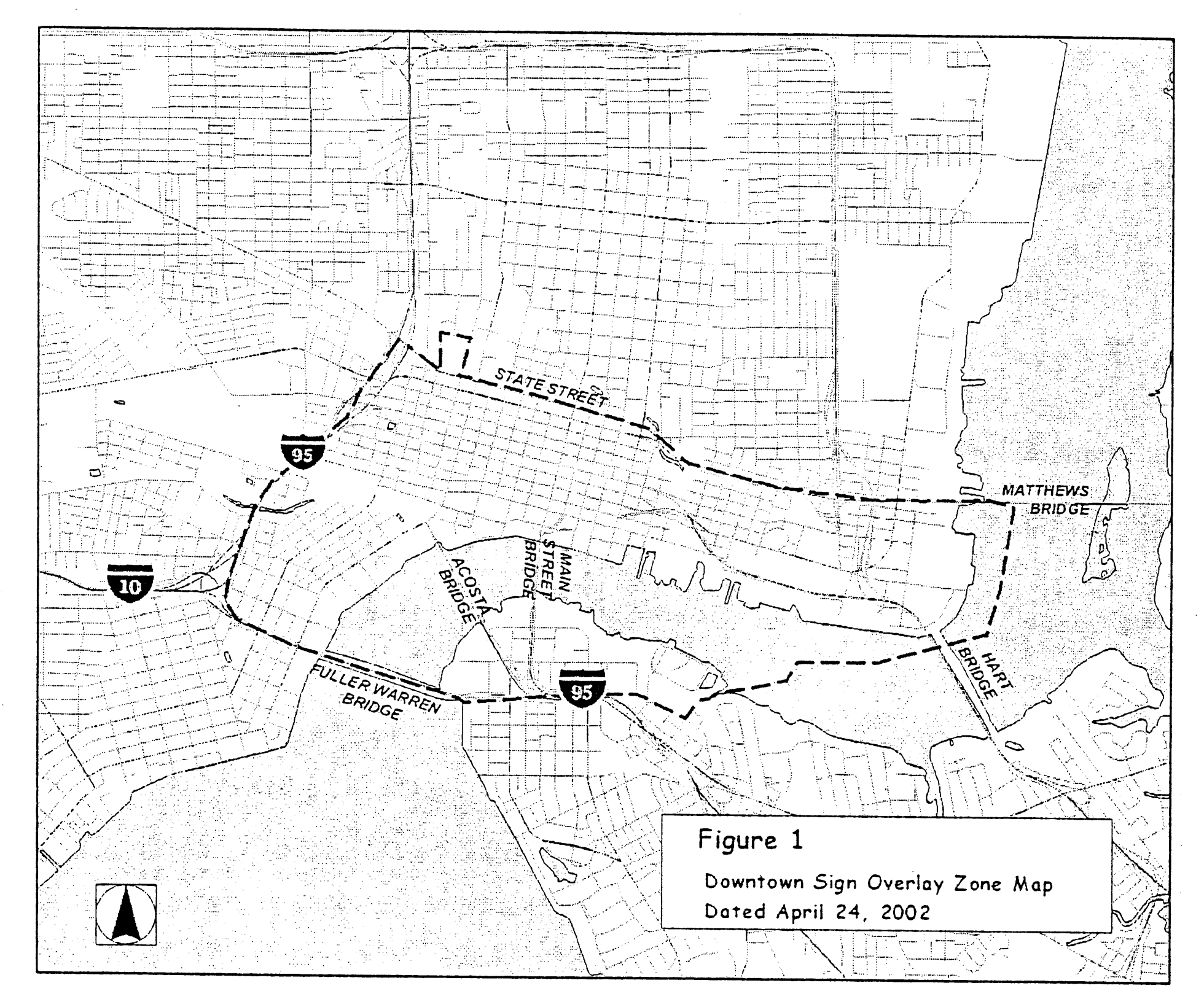
Figure 1: Downtown Overlay Zone Map
Figure 2
Illustrations of Sign Definitions, Design, and Calculations of Sign Area
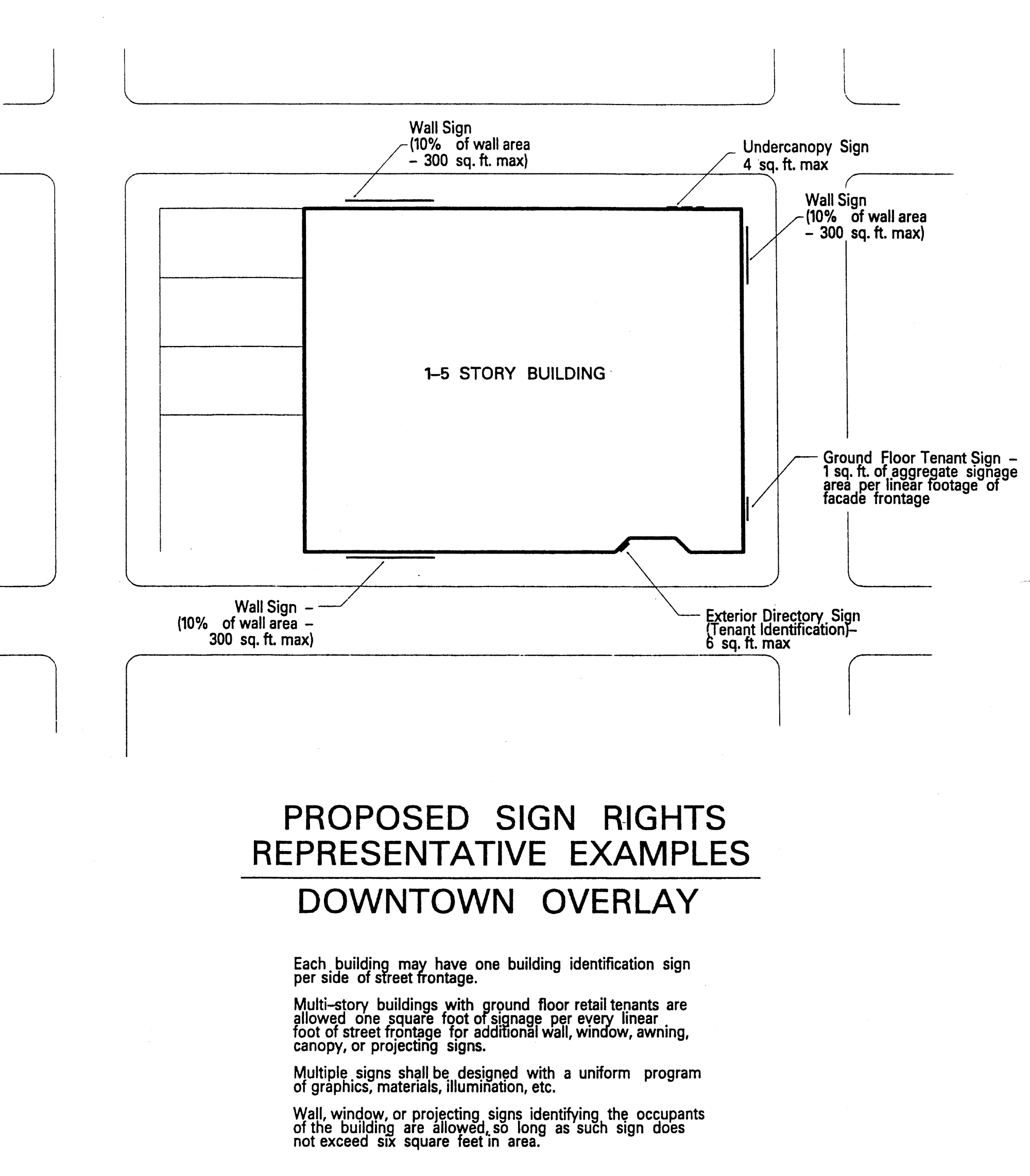
Figure 2: Proposed Sign Rights Representative Examples
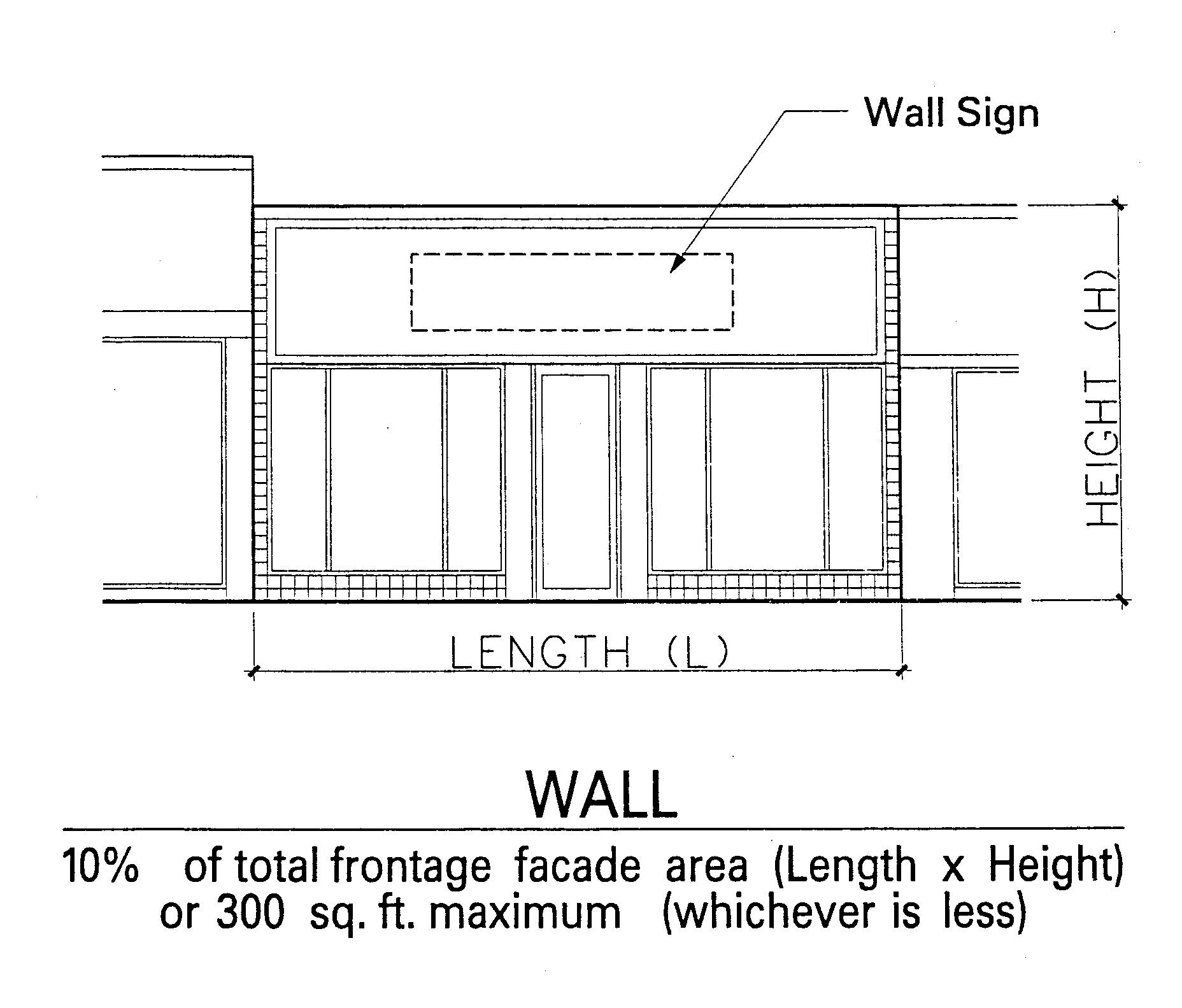
Figure 2: Wall
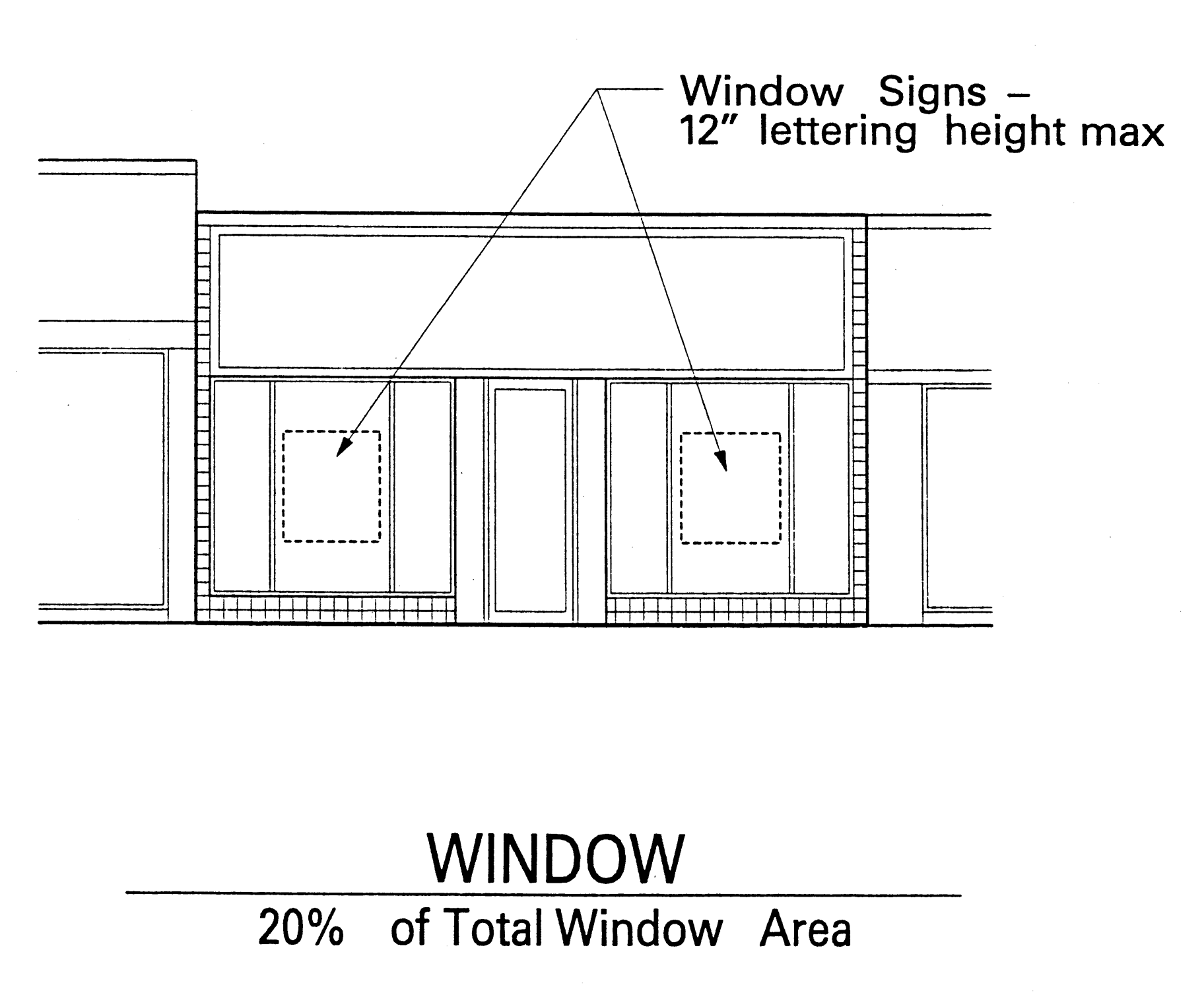
Figure 2: Window
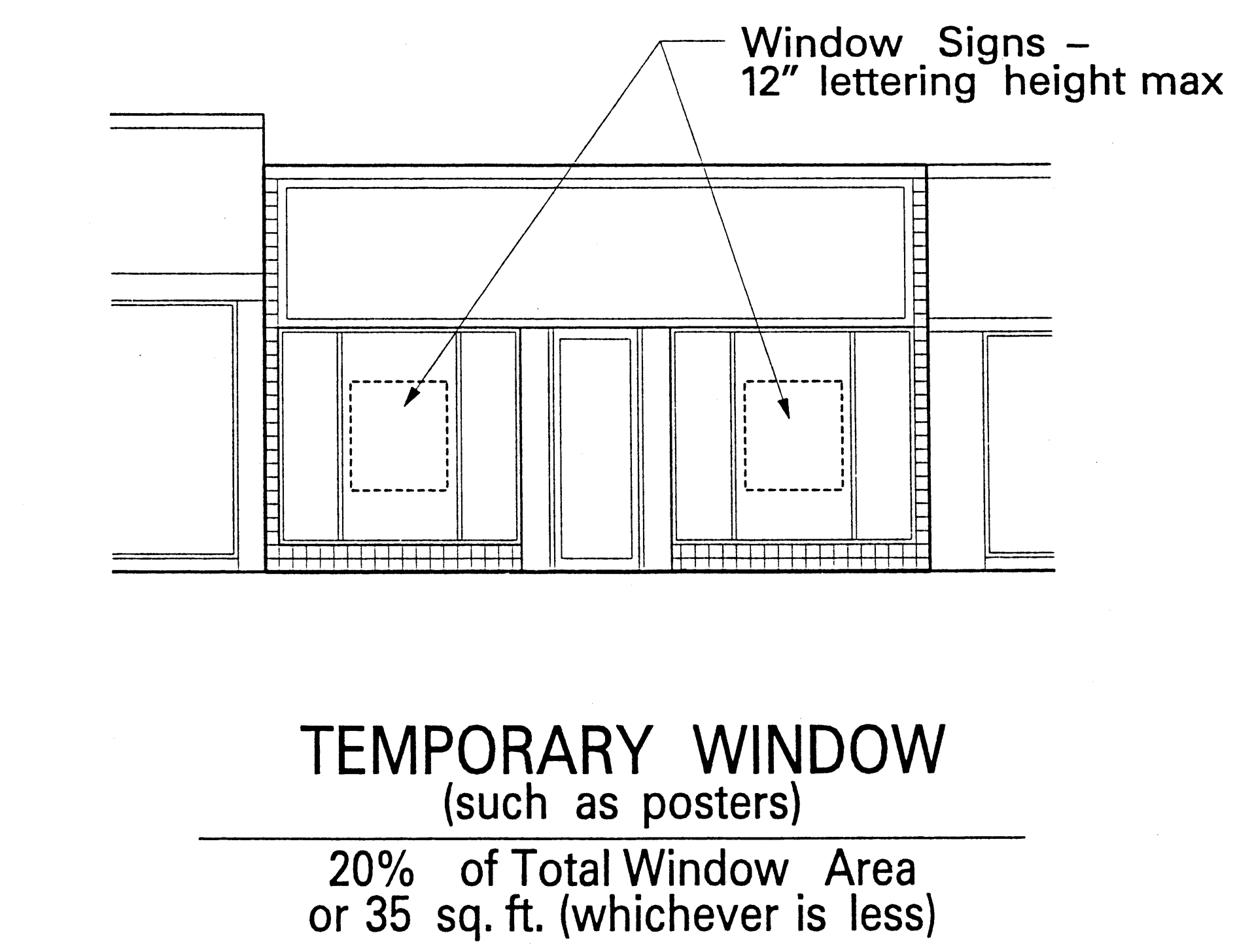
Figure 2: Temporary Window
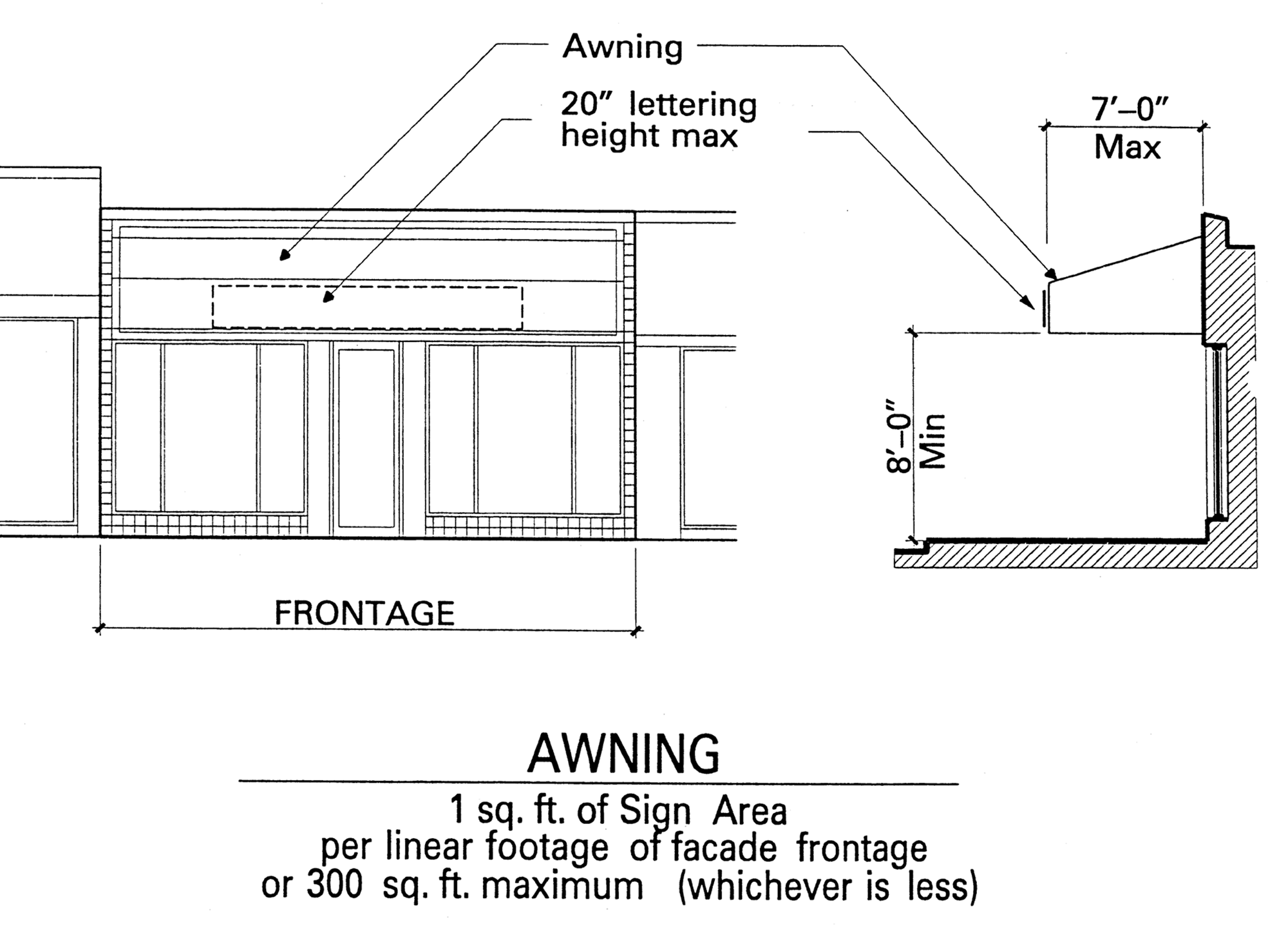
Figure 2: Awning
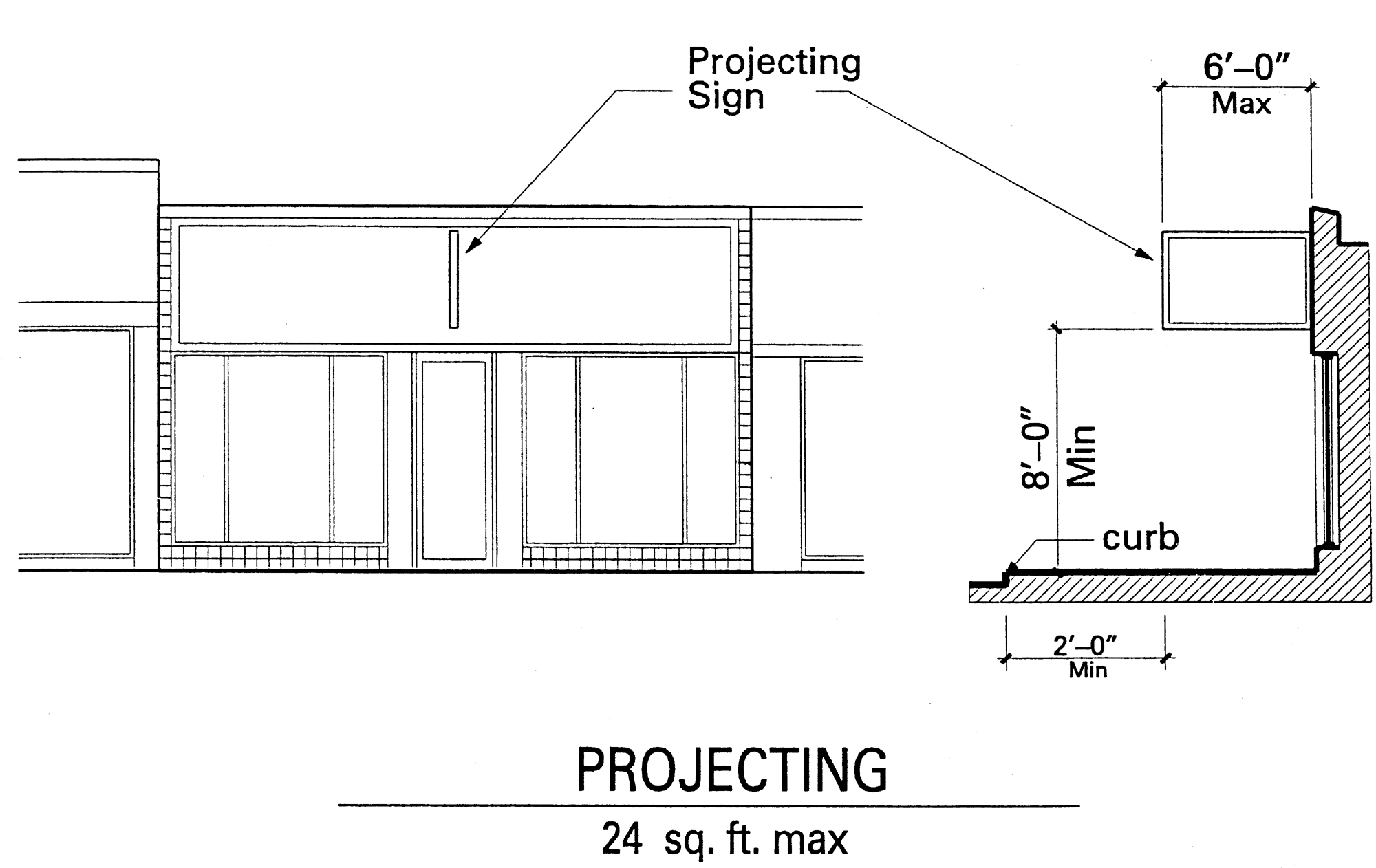
Figure 2: Projecting
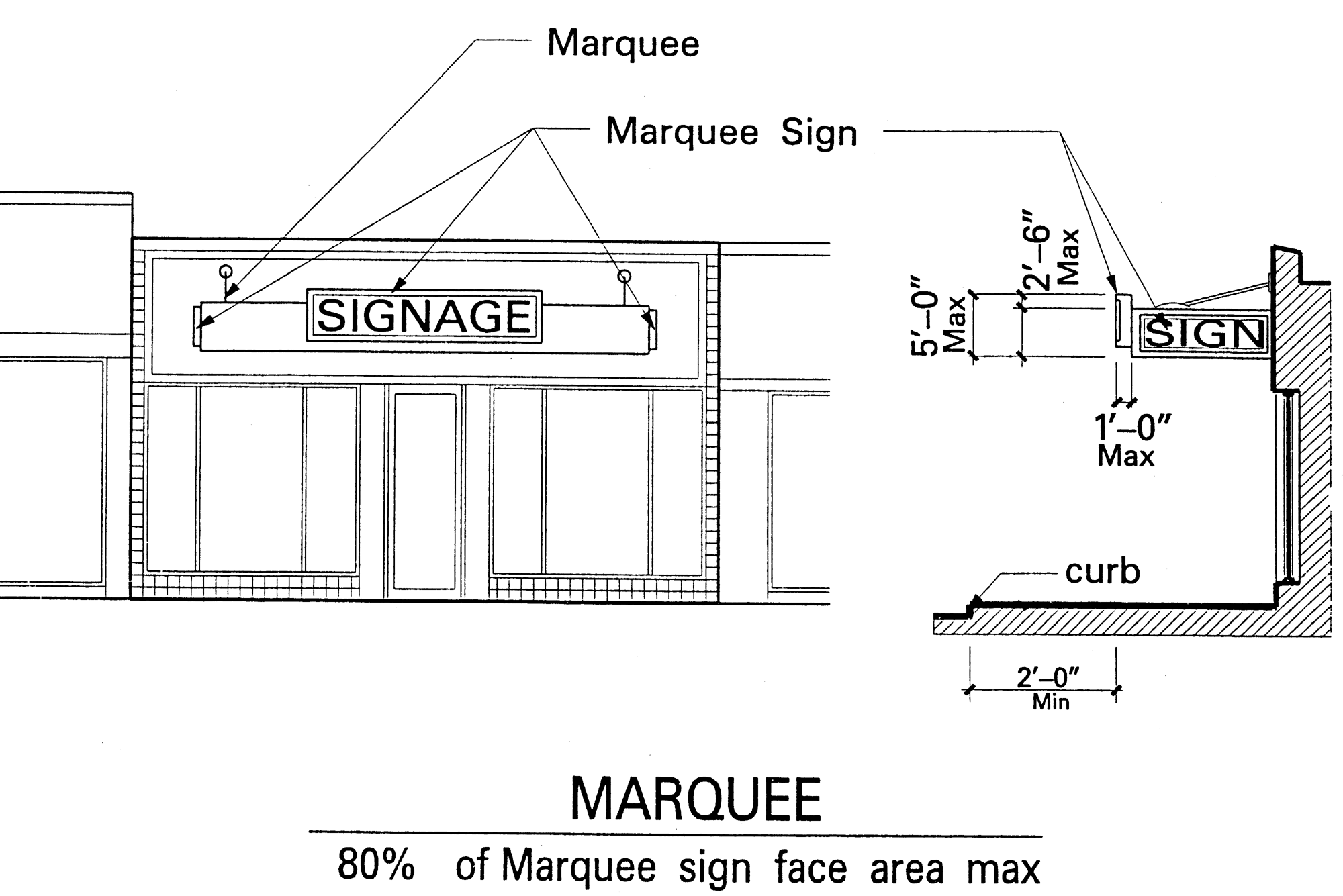
Figure 2: Marquee
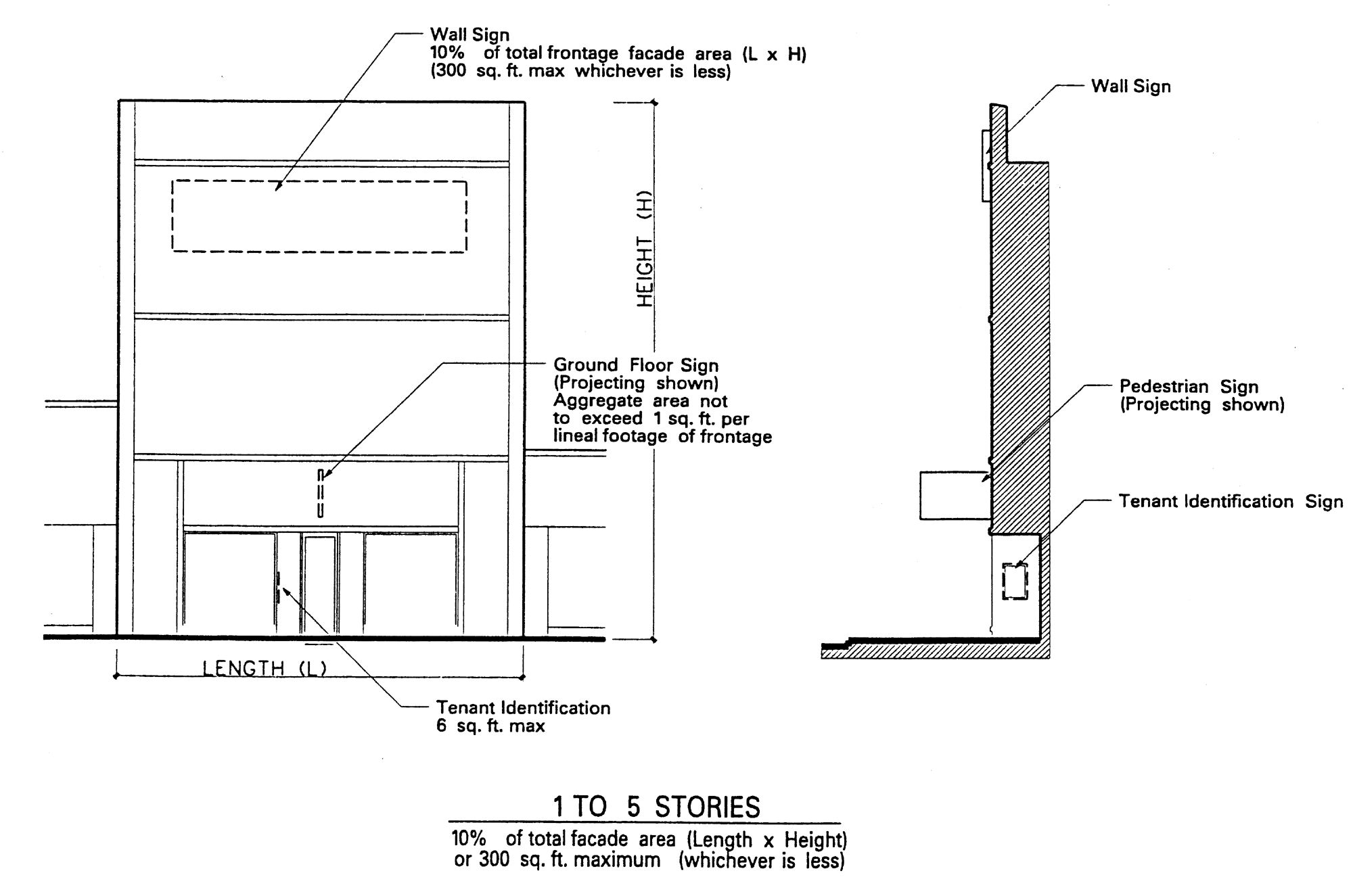
Figure 2: 1 to 5 Stories
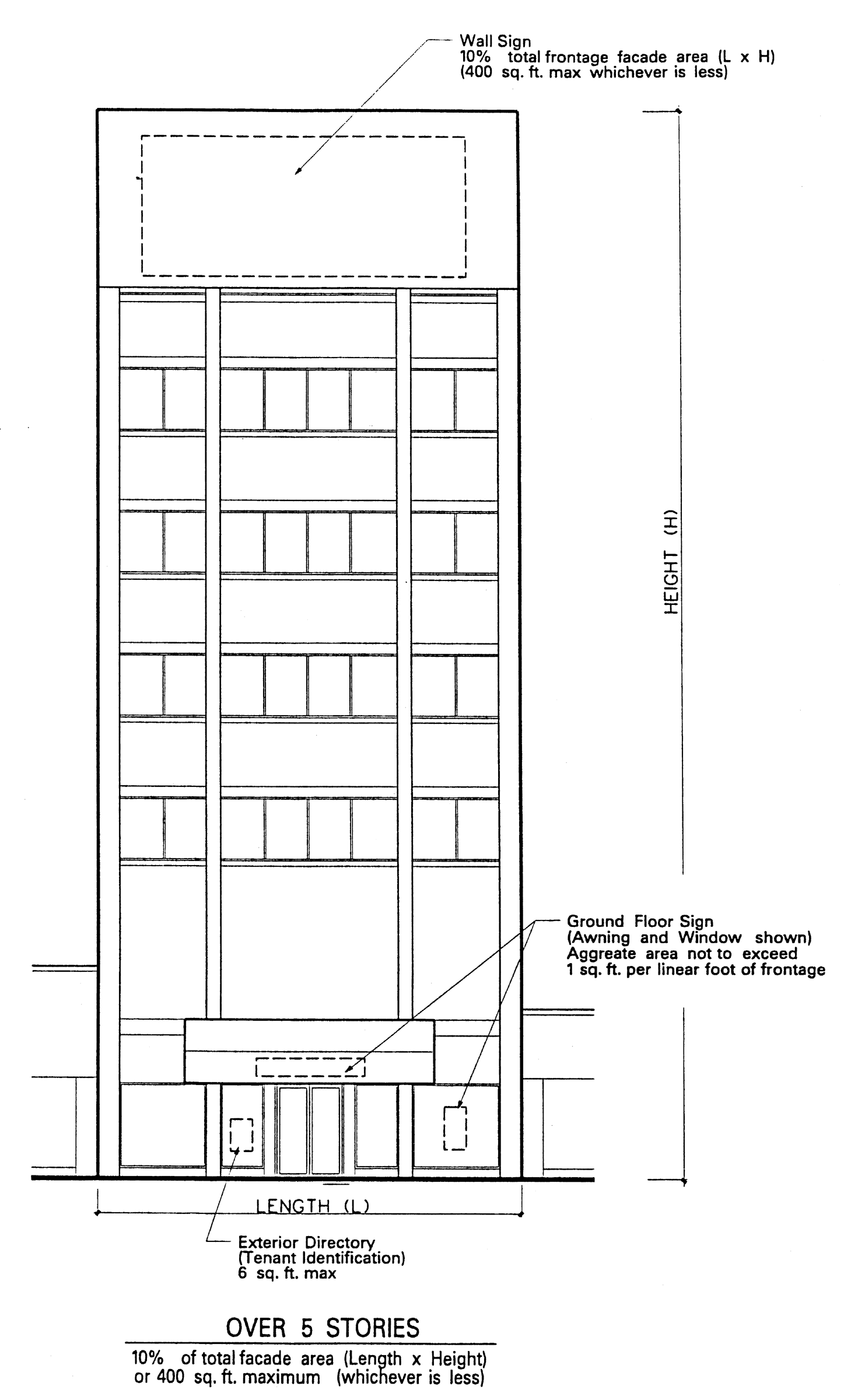
Figure 2: Over 5 Stories
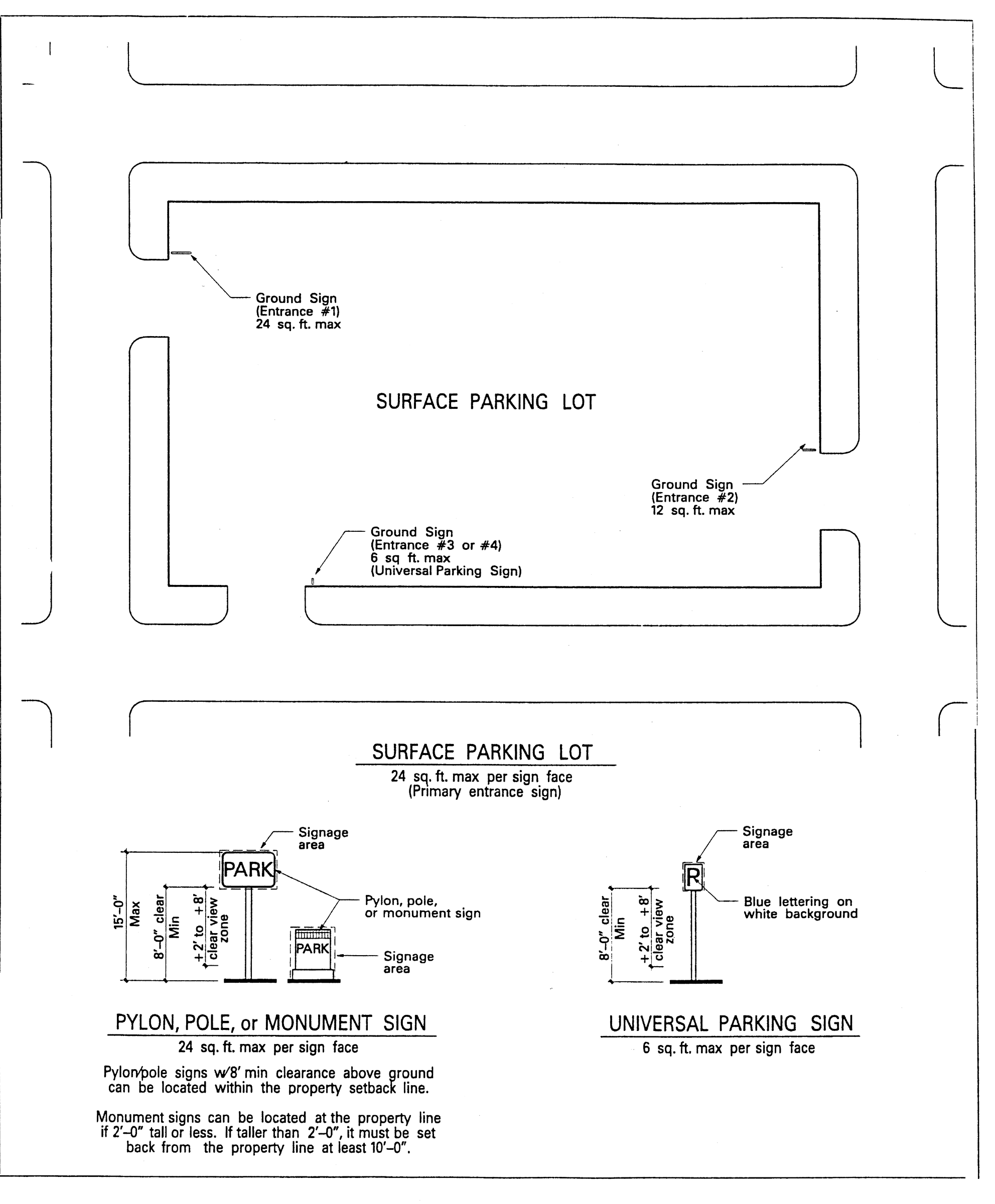
Figure 2: Surface Parking Lot - Pylon, Pole or Monument - Universal Parking Signs
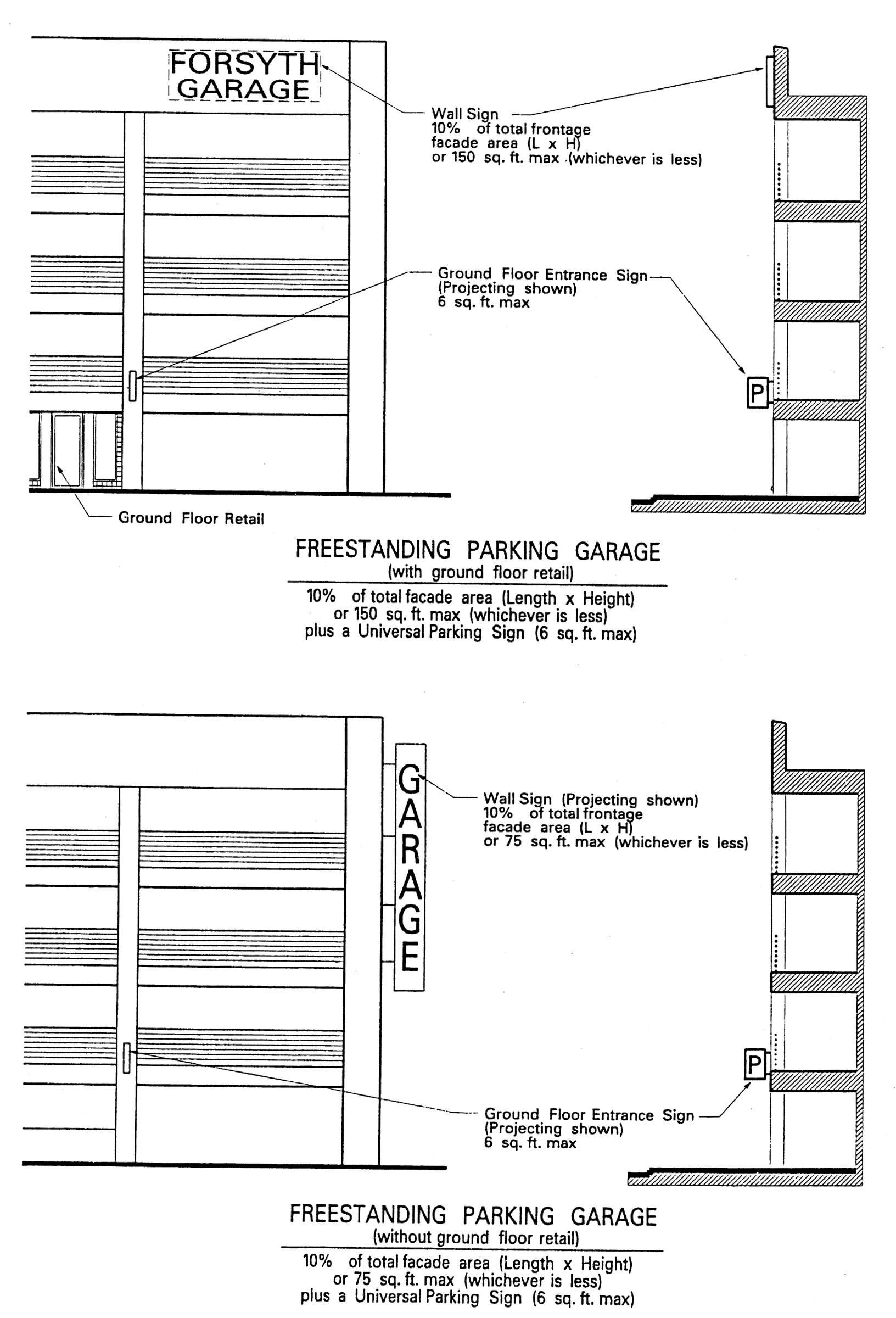
Figure 2: Freestanding Parking Garage
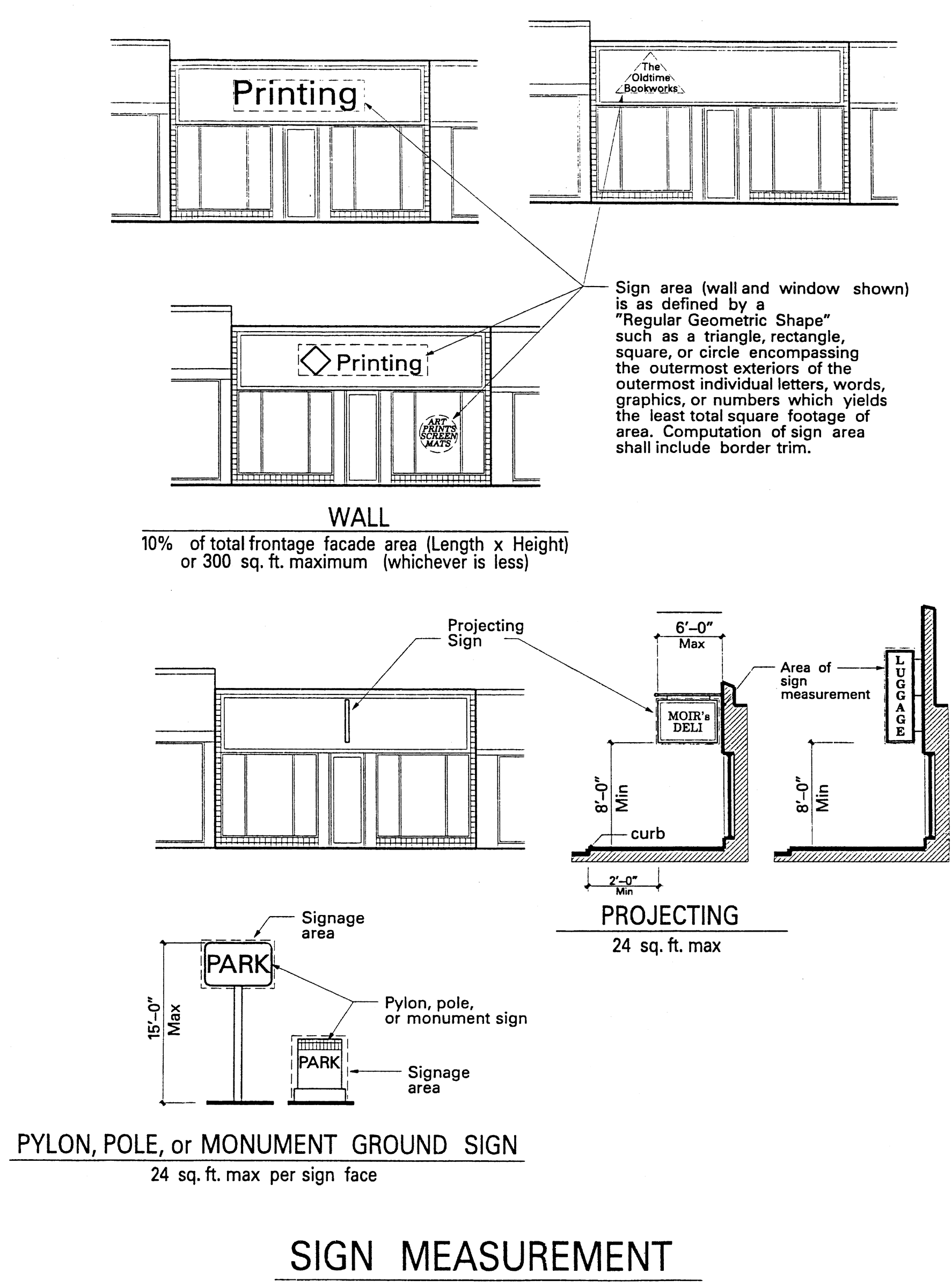
Figure 2: Sign Measurement
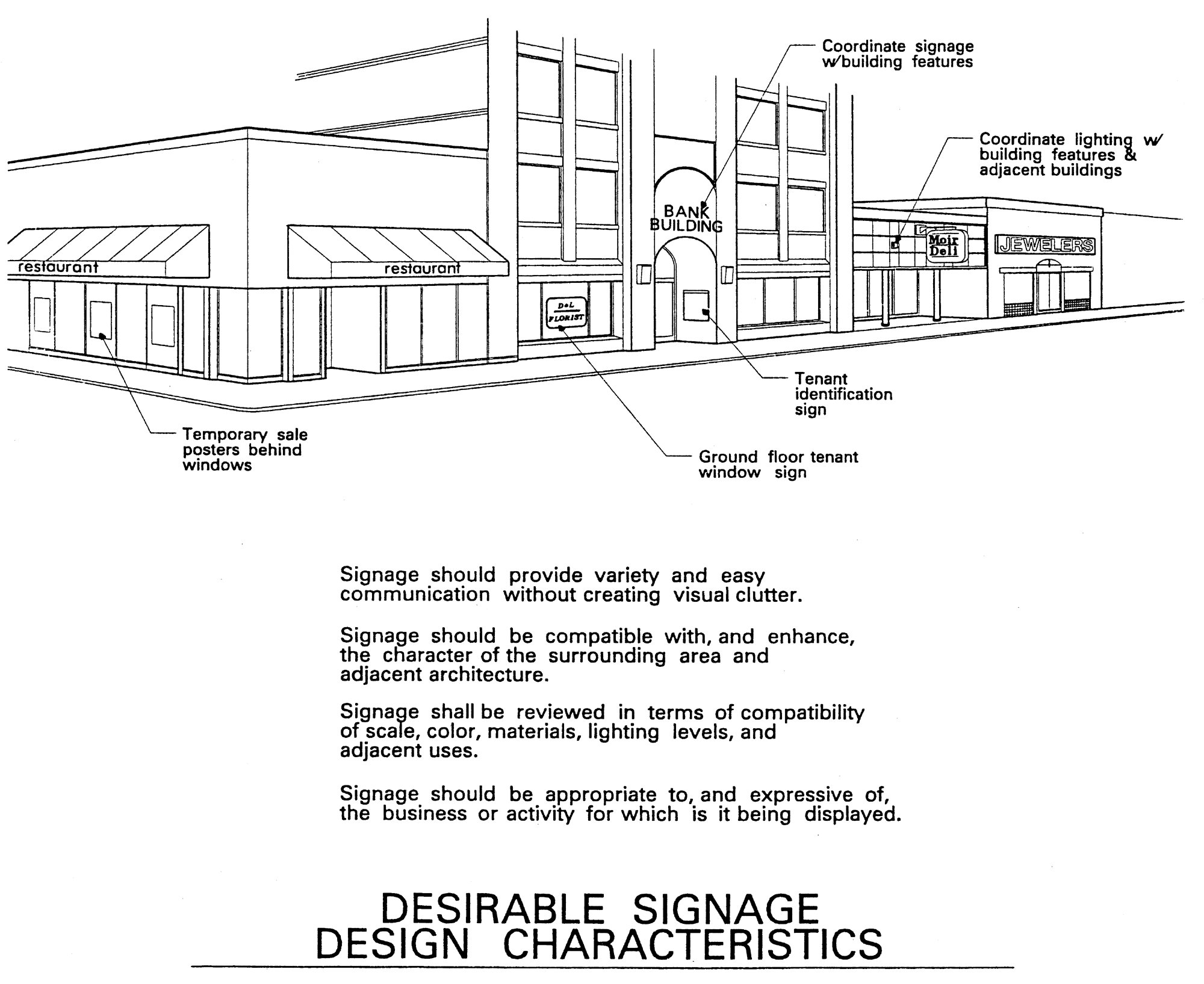
Figure 2: Desirable Signage Design Characteristics
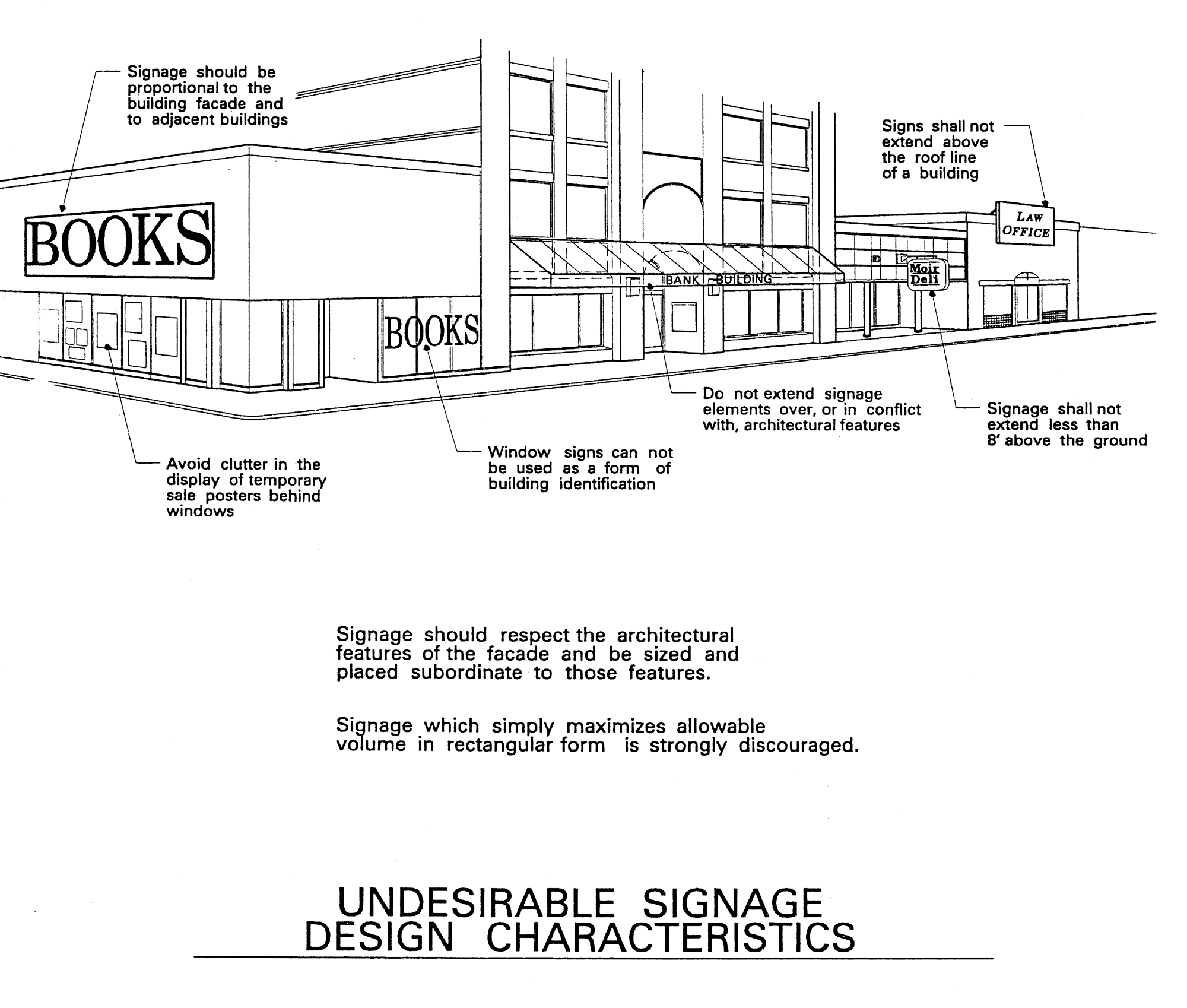
Figure 2: Undesirable Signage Design Characteristics
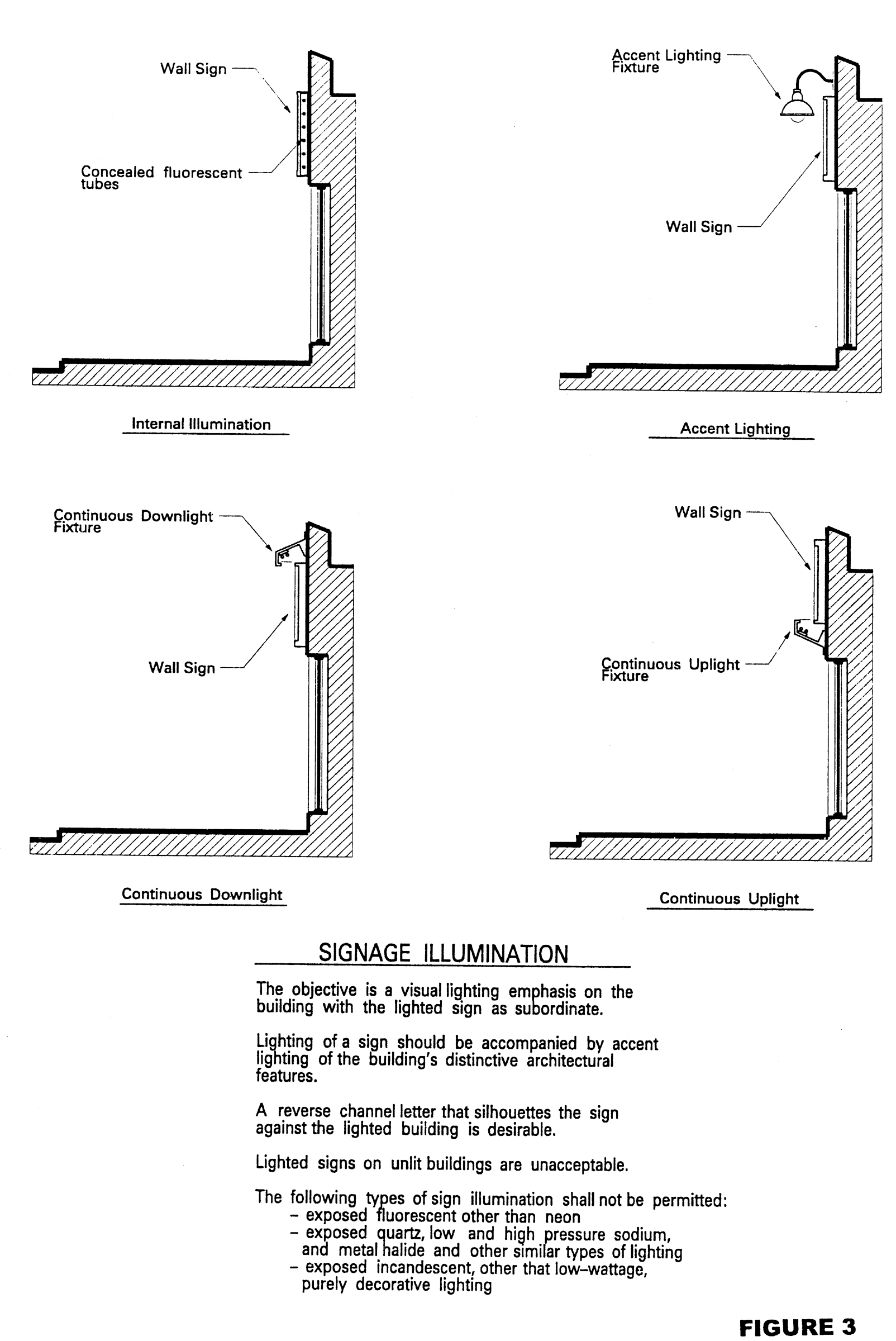
Figure 3: Signage Illumination
Sec. 656.1337. - Sports and Entertainment Complex Sign Overlay Zone.
(a)
There is hereby created within the Downtown Sign Overlay Zone a Sports and Entertainment Complex Sign Overlay Zone, which shall consist of all land within the boundaries beginning at the intersection of the northerly right-of-way line of Gator Bowl Boulevard and the easterly right-of-way line of Georgia Street; thence run northerly along the easterly right-of-way line of Georgia Street to the northerly right-of-way line of Adams Street; thence run westerly along the northerly right-of-way line of Adams Street to the northerly right-of-way line of Monroe Street; thence run northerly and westerly along the northerly right-of-way line of Monroe Street to the easterly right-of-way line of Palmetto Street; thence run northerly along the easterly right-of-way line of Palmetto Street to the southerly right-of-way line of Duval Street, thence run easterly along the southerly right-of-way line of Duval Street to the easterly right-of-way line of Franklin Street; thence run northerly along the easterly right-of-way line of Franklin Street to the southerly right-of-way line of Beaver Street; thence easterly along the southerly right-of-way line of Beaver Street to the westerly right-of-way line of Haines Street; thence run southerly along the westerly right-of-way line of Haines Street to its intersection with Gator Bowl Boulevard; thence run southerly and westerly along the westerly and northerly right-of-way lines of Gator Bowl Boulevard to the point of beginning; together with the land south of Gator Bowl Boulevard comprising Metropolitan Park.
(b)
In addition to signs located above the main east and west entrances to the stadium and on the back side of the north and south end zone scoreboards which are hereby designated as Sports and Entertainment Complex On-Site Signs as defined below, other Sports and Entertainment Complex On-Site Signs shall be permitted within the Sports and Entertainment Complex Sign Overlay Zone, subject to the restrictions and limitations set forth below:
(1)
Signs located within the Entertainment Zone, which for purposes of this Section shall mean signs erected on or within the Entertainment Zone, which shall be defined as the fenced area located between the north end of EverBank Field and Gator Bowl Boulevard, as shown in Figure 1.
(2)
Stadium Structural Attached Signs, which for purposes of this Section shall be defined as signs attached to the structures of the stadium and its appurtenances. Stadium Structural Attached Signs shall include, but not be limited to, signs attached to escalators, light towers, walkways, stanchions, elevators, elevator structures, flag poles, walls, wall supports and fencing. Stadium Structural Attached Signs shall not extend beyond the limits of the structures to which they are attached.
(3)
Practice Field Signs, which for purposes of this Section shall mean signs erected within or on the fenced area east of Franklin Street and south of Beaver Street containing football practice fields, as shown in Figure 1, or such other area within the stadium area designated as practice fields by the City, as landlord of the stadium.
(4)
Baseball Grounds of Jacksonville Signs, which for purposes of this Section shall mean signs erected within the Baseball Grounds of Jacksonville facility.
(5)
Jacksonville Veterans Memorial Arena Signs, which for purposes of this Section shall mean signs erected on the Jacksonville Veterans Memorial Arena (the "Arena") facility or the grounds thereof, subject to the following specifications and limitations:
i.
All exterior signage shall comply with the performance standards provided in Subpart B, Downtown Sign Overlay Zone, Part 13, Sign Regulations, Chapter 656, the Zoning Code, and shall be subject to the review and approval of the Downtown Development Review Board.
ii.
Notwithstanding anything to the contrary in subparagraph (i) above, one changing message device (as defined in Section 656.1302 (aa), Zoning Code) shall be authorized on the Arena. The design, size and location of the changing message device shall be subject to the review and approval of the Downtown Development Review Board.
(6)
Parking Lot Signs, which for purposes of this Section shall mean signs erected within the parking lots owned or controlled by the City or its facilities manager within the Sports and Entertainment Sign Overlay Zone erected pursuant to a naming right agreement entered into by the City or by an athletic team which is a tenant at the football stadium under rights assigned to such team pursuant to a written agreement with the City.
(7)
Amphitheater Signs, which for purposes of this Section shall mean signs erected within the Amphitheater located within the Sports and Entertainment Complex Sign Overlay Zone and currently known as Daily's Place, pursuant to a naming rights agreement or sponsorship agreement entered into by (x) an athletic team which is a tenant at the Stadium under rights assigned to such team pursuant to a written agreement with the City or (y) an event company that is the anchor tenant at the Amphitheater.
(8)
Covered Flex Field Signs, which for purposes of this Section shall mean signs erected within the Covered Flex Field located within the Sports and Entertainment Complex Sign Overlay Zone and currently known as Daily's Place, pursuant to a naming rights agreement or sponsorship agreement entered into by (x) an athletic team which is a tenant at the Stadium under rights assigned to such team pursuant to a written agreement with the City or (y) an event company that is the anchor tenant at the Amphitheater.
(9)
Sports and Entertainment Complex Digital Sign, which for purposes of this Section shall mean the fixed signage or electronic content displayed on that certain pole sign to be constructed in the southwest corner of Daily's Place, near the entrance to Lot J and Gator Bowl Boulevard, within the Sports and Entertainment Complex Sign Overlay Zone, with the design, size and location thereof subject to the review and approval of the Downtown Development Review Board. Messages on the Sports and Entertainment Complex Digital Sign can be either fixed or contained in a changing message device, as defined in Sec. 656.1302.
(c)
Signs allowed under this Section shall not include any off-site sign as that term as defined in Section 656.1302(l) or any off-site commercial billboard, as that term is defined in Section 23.02 of the Charter of the City of Jacksonville.
(d)
For purposes of this Part, Sports and Entertainment Complex On-Site Sign means any sign which advertises or otherwise identifies a use of, or events within, the Facilities (defined below) within the Sports and Entertainment Complex Sign Overlay Zone, or City sponsored events within the Sports and Entertainment Complex Sign Overlay Zone, as well as products, activities or services that are sold, produced, manufactured, located, provided or furnished within such facility, or any sign which advertisement is related to a sponsor of an athletic team which is a tenant at any of the Facilities within the Sports and Entertainment Complex Sign Overlay Zone, which is deemed to be an on-site commercial use, or any sign erected pursuant to a naming right or sponsorship agreement entered into by the City of a publicly owned sports or entertainment venue. The Sports and Entertainment Complex Digital Sign, as specified in Subsection (b)(9) above, shall display on-site sign messages limited to upcoming uses of or events to be held in the Baseball Grounds of Jacksonville, Jacksonville Veterans Memorial Arena, the Stadium, Amphitheater, Covered Flex Field and Metropolitan Park (collectively, the "Facilities"), or other City sponsored events within the Sports and Entertainment Complex Sign Overlay Zone, which messages may include reference to a promoter or sponsor of such events.
(Ord. 2005-1380-E, § 1; Ord. 2015-55-E, § 1; Ord. 2017-804-E, § 2)
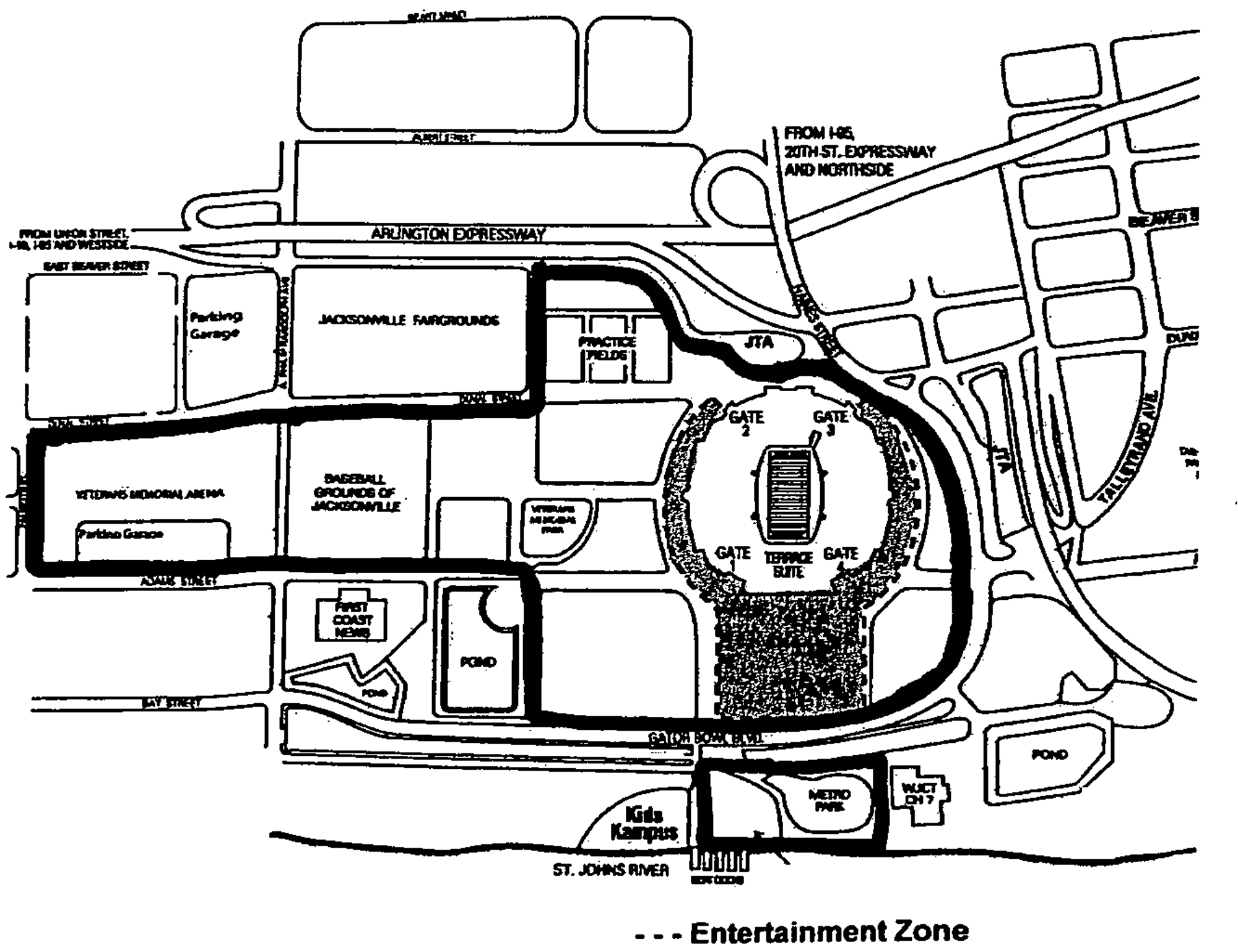
Figure 1. Entertainment Zone

