
League City City Zoning Code
APPENDIX A
DEFINITIONS
Access means the principal means of ingress and egress to property from a publicly dedicated right-of-way.
Accessible electric vehicle charging station means an electric vehicle charging station where the battery charging station equipment is located within accessible reach of a barrier-free access aisle and the electric vehicle.
Accessory building or structure means a detached, subordinate building, the use of which is clearly associated with and related to that of the principal building, and which is located on the same lot as the principal building.
Accessory use means a use that is customarily associated with the principal use, and so necessary that it cannot be prevented by this article. Accessory uses shall be located on the same premises as the principal use.
Administrative official means any employee or advisory, elected or appointed body which is authorized to administer any provision of this chapter.
Airports and heliports means facilities for the takeoff and landing of airplanes and helicopters, including runways, aircraft storage buildings, public terminal buildings and parking, helicopter pads, and support activities such as airport operations and air traffic control.
Alcoholic beverage sales means the retail sale, for on- or off-premises consumption, of liquor, beer, wine, or other alcoholic beverages, but excluding full-service restaurants.
Alley means a right-of-way which affords only a secondary means of access to property abutting thereon and is not intended or used for general traffic circulation.
Alteration means any modification in a structure which will require a building permit.
Ambulance services means administrative facilities for emergency medical care, including provision of transportation services and incidental storage and maintenance of vehicles.
Amusement parks, carnivals, and other similar uses mean an area used as a permanent location for amusement activities such as merry-go-rounds, Ferris wheels, and similar types of amusement rides; booths for the conduct of games of skill; shows; refreshment stands and picnic tables.
Animal sales and services means retail sales, boarding, grooming and/or medical care for small animals on a commercial basis. Grooming and boarding of animals for no more than 30 days. This classification does not include dog walking and similar pet care services that are not carried out at a fixed location.
Animal sales and services without outdoor kennels, areas, and runs means an animal-related use that includes and outdoor component, including a veterinary office or related use.
Architect means an individual duly registered and licensed as an architect in the state.
Assisted living facility means a facility licensed and regulated by the Texas Department of Aging and Disability Services that provides room, board, and personal care services to its residents within a structure containing multiple living quarters for four or more elderly or disabled persons who are unrelated to the owner of the establishment by blood, marriage, or adoption. Disabled person has the meaning defined by V.T.C.A., Human Resources Code Ch. 123, and the Federal Fair Housing Act of 1988, as amended. This term does not refer to facilities that provide care for persons mostly incapable of self-preservation due to age, physical or mental disability, or because of security measure not under the occupants' control. This classification excludes homeless shelters, halfway houses, assisted living homes, or any other use specifically defined in this section.
Automobile/vehicle/equipment sales and rental means sale or rental of automobiles, motorcycles, trucks, tractors, construction or agricultural equipment, mobile homes, boats and similar equipment, including storage and incidental maintenance.
Automobile rentals means rental of automobiles, including storage and incidental maintenance.
Automobile/vehicle car wash means washing, waxing, or cleaning of automobiles or similar light vehicles.
Automobile/vehicle fueling stations means establishments engaged in the retail sale of gas or diesel fuel, including gasoline service stations and gas convenience mart. These establishments may also sell lubricants, parts, and accessories and perform related services provided repairs are made in enclosed bays and no vehicles are stored overnight. This classification excludes uses providing engine repair, body and fender work, vehicle painting, towing or repair of heavy trucks or construction vehicles.
Automobile/light vehicle service means establishments engaged in the convenience sales and service of light vehicle lubricants, parts, and accessories, including quick-service oil, tune-up, brake and muffler shops where repairs are made in enclosed bays and no vehicles are stored overnight. This classification excludes uses providing engine repair, body and fender work, vehicle painting, towing or repair of heavy trucks or construction vehicles.
Automobile repair and other heavy vehicle service means repair of automobiles, trucks, motorcycles, motor homes or recreational vehicles, or boats, including the sale, installation, and servicing of related equipment and parts. This classification includes auto repair shops, body and fender shops, wheel and brake shops, tire sales and installation, and upholstery shops, but excludes vehicle dismantling or salvage and tire re-treading or recapping.
Awning means a shade structure suspended from a vertical wall, with no structural supports touching the ground.
Balcony means a platform, located on an upper floor and enclosed by a balustrade.
Bandit sign means a small, temporary sign typically staked into the ground and used to advertise a site-specific event or service.
Banks and other financial institutions means establishments that provide retail banking, credit, and mortgage services to individuals and businesses. This classification includes banks and savings and loan establishments, check cashing, and currency exchange outlets.
Battery analytics software means a cloud-based software solution using energy storage system (ESS) raw data collected by the battery management system (BMS) and applies physics-based algorithms to offer immediate and predictive detection, (on the order of weeks and months), of thermal runaway and its associated root causes.
Battery charging station means an electrical component assembly or cluster of component assemblies designed specifically to charge batteries within electric vehicles.
Battery energy storage system (B.E.S.S.) means one or more devices (i.e. group of batteries), assembled together capable of storing energy in order to supply electrical energy at a future time. B.E.S.S. facilities receive electricity from the electrical grid when there is excess electrical power, store it in a series of batteries and then return it to the grid when additional electricity is needed during high demand.
Battery exchange station means a fully automated facility that will enable an electric vehicle with a swappable battery to enter a drive lane and exchange the depleted battery with a fully charged battery through a fully automated process.
Bed and breakfast establishment means a facility that is the owner's personal residence where lodging and meals are provided for transient paying guests.
Block means an area of land within a subdivision entirely bound by streets (other than alleys), highways, natural barriers, or the exterior boundaries of the subdivision.
Brick shall mean severe weather rated kiln fired clay or slate material, or concrete brick if it is to the same as ASTM C216 or C652 and severe weather rated; such shall be no less than two and one-quarter inches in thickness when applied as a veneer.
Billboard means an off-premises sign for the purpose of display of commercial or noncommercial messages. The term includes any of its support, frame, or other appurtenances.
Billboard, electronic means an off-premises sign for the purpose of display of commercial or noncommercial digital messages which include any of its support, frame, or other appurtenances.
Buffer/buffer yard means an area of land located between different land uses that is intended to mitigate negative impacts between land uses and/or along roadways. A buffer/buffer yard may include only landscaped areas, berms, walls, and/or fences or any combination thereof. The required height and width of the buffer yard may vary according to use.
Buildable area means the portion of a lot remaining after the required setbacks have been provided. Buildings may be placed in any part of the buildable area, but limitations on the percent of the lot which may be covered by buildings may require open space within the buildable area.
Building means any structure having a roof supported by columns or walls built for support, enclosure, shelter, or protection of chattels, persons, animals or the like. The word "building" includes the word "structure," and shall include anything constructed or erected which requires permanent location on the ground or is attached to anything having a permanent location on the ground, and shall include but not be limited to such structures as homes, hotels, motels, apartments, stores, service stations, radio towers, cooling towers, tanks and silos.
Building code means the most recent version of the building code adopted by the city.
Building height means the vertical distance from grade plane to the average height of the highest roof surface.
Building materials sales and services means retailing, wholesaling, or rental of building supplies or construction equipment. This classification includes lumber yards, tool and equipment sales or rental establishments, and building contractors' offices with indoor storage, but excludes contractors' yards with outdoor storage and establishments devoted exclusively to retail sales of paint and hardware and activities classified under vehicle/equipment sales and services, including vehicle towing services.
Building official means the city representative charged with the administration and the enforcement of the building code of the city.
Building site means a portion or parcel of land considered as a unit devoted to certain use or occupied by a building or group of buildings that are united by a common interest or use, with the customary accessories and open spaces.
Bulkhead means the portion of a storefront which forms the base for one or more display windows.
Business means any individual, corporation, partnership, limited partnership, limited liability partnership, limited liability company, joint enterprise, association, sole proprietorship, organization, trust, commercial development, industrial development or other legal entity that sells, leases, rents or otherwise provides any goods or services. Goods and services shall include but not be limited to commercial goods that are sold at retail or wholesale, industrial or manufactured goods, and personal, professional or industrial services.
Business services means establishments providing building maintenance, document delivery, mail receiving and boxes, graphic arts, drafting, blueprinting, typesetting, copying, desktop publishing and photographic services. This classification excludes maintenance and repair and accounting, advertising, architectural design, city planning, environmental analysis, insurance, interior design, investment, landscape design, law, management consulting, title companies, and real estate offices.
Caliper inch is a unit of measurement used to state in inches the diameter of a tree's trunk at the tree's correct measurement height.
Canopy means a shade structure which requires one or more posts for support.
Catering businesses means preparation and delivery of food and beverages for offsite consumption without provision for onsite pickup or consumption. (See also "eating and drinking establishments.")
Cemeteries means burial grounds for the interment of the dead. This classification includes columbaria and mausoleums, but does not include crematories, or mortuaries which are classified as "undertaking, funeral and interment services."
Certificate of occupancy means an official written approval by the building official setting forth that a building or structure legally complies with the city building code and other applicable ordinances, and that the building or structure may be used for the purposes stated therein.
Certified arborist means a person who currently holds the Certified Arborist credential awarded by the International Society of Arboriculture (ISA).
Child care listed family homes means an establishment licensed by the State of Texas Department of Family and Protective Services located in a single-family residence where an occupant of the residence provides care and supervision for three or fewer children.
Child care registered family homes means an establishment licensed by the State of Texas Department of Family and Protective Services located in a single-family residence where an occupant of the residence provides care and supervision for 12 or fewer children with the precise number of children being determined by their ages.
Charging levels means the standardized indicators of electrical force, or voltage, at which an electric vehicle's battery is recharged. The terms 1, 2, and 3 are the most common EV charging levels and include the following specifications:
(1)
Level 1 is considered slow charging and operates on a 15- or 20-amp breaker on a 120-volt alternating current (AC) circuit and standard outlet. Level 1 charging stations can fully charge a BEV between eight and 32 hours and a PHEV between three and 15 hours.
(2)
Level 2 is considered medium charging and operates on a 40- to 100-amp breaker on a 208- or 240-volt AC circuit. A Level 2 charging station can fully charge a BEV between four and six hours and a PHEV between one and two hours.
(3)
Level 3 is considered fast or rapid charging and operates on a 60-amp or higher dedicated breaker on a 480-volt or higher three-phase circuit with special grounding equipment. Charging times range from 25 to 40 minutes for BEVs and less than 20 minutes for PHEVs.
City means the City of League City.
City council means the City Council of the City of League City.
City engineer means the licensed professional engineer designated to represent the city or designee.
City limits means the city boundary as fixed by the mayor and council and defined in city ordinance.
Civic space means publicly accessible open space in the form of parks, courtyards, forecourts, plazas, greens, pocket parks, playgrounds, etc. They may be privately or publicly owned. For all residential uses, privately accessible open spaces such as courtyards, porches, and balconies may also be considered as civic space for the purposes of this chapter.
Clubs or lodges means meeting, recreational, or social facilities of a private or nonprofit organization primarily for use by members or guests including residential accommodations that are available to members or guests on a temporary basis but excluding residential hotels. This classification includes union halls, social clubs, and youth centers.
Colleges, public or private means institutions of higher education providing curricula of a general, religious, or professional nature, typically granting recognized degrees, including conference centers and academic retreats associated with such institutions. This classification includes business and computer schools, management training, technical and trade schools, but excludes personal instructional services.
Colonnade or arcade means a roofed or built structure, extending beyond the ground floor front façade of a building and over the sidewalk or civic space. A colonnade or arcade shall be open to the street except for supporting columns, piers, or arches. Residential or office units may occupy the space over the colonnade or arcade.
Commercial development means businesses primarily engaged in direct retail sales of merchandise or service to the public.
Commercial motor vehicle shall mean a self-propelled or towed vehicle that exceeds 10,000 pounds in gross weight, registered weight, or gross weight rating.
Common area/common land means any real property in a subdivision reserved for the common use, benefit, or enjoyment of the owners of all property within said subdivision. In residential subdivisions, this includes parkland, detention facilities, restricted reserves, and greenspace. In nonresidential subdivisions, this includes detention facilities, parking and access areas, and sites for multitenant signage.
Communication facilities means broadcasting, recording, and other communication services accomplished through electronic or telephonic mechanisms. This classification includes radio, television, or recording studios, switching centers, and cable television transmitting stations.
Communication towers and structures means any tower or structure designed to support one or more reception/transmission systems as defined in chapter 31, Communication Towers and Structures, of the League City Code of Ordinances. Examples of such facilities include, but shall not be limited to, radio towers, television towers, telephone exchange/microwave relay towers, and cellular telephone transmission/personal communications systems towers.
Complete application means any submitted application (i.e. plat, zone change, subdivision, PUD, special use permit, building permit, etc.) and all supporting documents as required by unified development code, development handbook and/or other city ordinances which are necessary for review, consideration, and approval by the city in accordance with the Texas Local Government Code or successor statute.
Complete fair notice form shall mean a submitted fair notice form that is fully and appropriately completed, in accordance with all city requirements, as necessary for review and consideration by city staff.
Completion means the date the work is completed for the drilling, re-drilling or workover and the drilling equipment is released by the operator.
Compressor stations means facilities, also referred to as inline booster stations, which increase the pressure on gas during its extraction, transport and storage.
Concession trailer means a vehicle that is not self-propelled, and which is designed to be pulled by a motorized vehicle, and which is designed, equipped, and/or used to sell food and/or drink items for immediate consumption
Contiguous means lands that abut each other or are separated by street ways, easements, pipelines, power lines, conduits or rights-of-way under ownership of the petitioner, of a governmental agency or subdivision, or of a public or private utility.
Continuing care facility means a facility defined in the Texas Continuing Care Facility Disclosure and Rehabilitation Action which provides board and lodging, together with personal care services, medical services, or other health-related services. This term does not refer to facilities that provide care for persons mostly incapable of self- preservation due to age, physical or mental disability, or because of security measure not under the occupants' control. This classification excludes homeless shelters, halfway houses, assisted living homes, or any other use specifically defined in this section.
Contractor's storage yard means on- or off-site contractor's yard for storage of materials or equipment.
Convention center means a commercial facility used for assemblies or meetings of the members or representatives of a group. This classification does not include clubs, lodges, or other meeting facilities of private or non-profit groups that are primarily used by group members.
Cornice means a horizontal decorative element which projects from the vertical wall at the top edge of a building.
Courtyard/court means an uncovered area which is enclosed by a building or surrounded by a building complex.
Critical root zone is the area of ground around a tree that extends from the trunk to the dripline.
Crop and animal raising means the raising of tree, vine, field, forage, and other plant crops, intended to provide food or fibers, as well as keeping, grazing, or feeding of animals for animal products, animal increase, or value increase.
Cross access means the construction of driveways within private property which interconnect the driveways of two or more abutting nonresidential properties. Cross access provides motorists the ability to move between developments without using the roadway.
Cul-de-sac means a street which is a part of the local street system and is closed on one end in a circular or other approved pattern meeting the minimum radius requirement.
Cultural institutions nonprofit institutions engaged primarily in the performing arts or in the display or preservation of objects of interest in the arts or sciences that are open to the public on a regular basis. This classification includes performing arts centers for theater, dance, and events, museums, historical sites, art galleries, libraries, aquariums, observatories, and zoos and botanical gardens.
Day care any facility that provides non-medical care to one or more persons on a less than 24-hour basis. This classification includes nursery schools, preschools, day care centers for children or adults, and any other day care facility licensed or certified by the State of Texas.
Decorative concrete masonry unit (CMU) shall include any unpainted upon, highly textured finish CMU including split faced, indented, hammered, fluted, ribbed, or similar architectural finish; such shall be no less than three and five-eighths inches in thickness when applied as a veneer.
Development activity means any site where construction, demolition, site clearing, grubbing, grading and any other activity which may disturb the surface of land (streets, drives, parking lots, sidewalks, etc.) and all other proposed improvements.
Density means the relationship between numbers of dwelling units and land area.
Developer means any individual, firm, co-partnership, corporation or other legal entity commencing proceedings under this UDC.
Diameter at breast height (DBH) is the diameter of a tree's trunk measured at a height of four and one-half feet from base of the tree at grade level.
Disabled group dwelling means a residential facility designed and used as a residence by not more than six persons with disabilities and two supervisors who are unrelated to the owner of the establishment by blood, marriage, or adoption and who are living together as a single housekeeping unit. This use includes Community Homes as regulated by V.T.C.A., Human Resources Code Ch. 123. Disabled person has the meaning as defined by V.T.C.A., Human Resources Code Ch. 123, and the Federal Fair Housing Act of 1988, as amended.
Drill site means the area required for the drilling, completion or workover of a well or wells located there or any associated operation.
Drilling and production zone means the area established for all operations associated with the production, storage, drilling and workover of oil and gas wells. This area excludes driveways and buffer yards.
Drilling equipment means the derrick, together with all parts of and appurtenances to such structure, every piece of apparatus, machinery or equipment used or erected or maintained for use in connection with drilling.
Dripline means an imaginary line around a tree that corresponds with the outermost edge of the canopy of said tree if projected directly downward. When depicted on a survey or site plan, the dripline of a tree will generally appear as an irregularly shaped circle that follows the contour of the branches of the tree.
Dwelling, caretakers unit means an accessory dwelling unit intended for occupancy by a caretaker, security guard, or similar position generally requiring residence on the site.
Dwelling, duplex means a single building that contains two dwelling units on a single lot, or a single lot with two freestanding buildings, each of which is designed for occupancy by one household and is owned in fee under a single ownership.
Dwelling, live-work unit means a dwelling unit that is also used for work purposes, provided that the 'work' component is restricted to the uses of professional office, artist's workshop, studio, or other similar uses and is located on the street level. The 'live' component may be located on the street level (behind the work component) or any other level of the building. The "work" portion shall be a minimum of 51 percent of the ground floor, and a minimum of 25 percent of the whole building square footage.
Dwelling, multi-family means a building, group of buildings, or portion of a building that contains three or more dwelling units on a single parcel under single ownership. Types of multiple family dwellings include triplexes, multiplexes, and high-rise buildings.
Dwelling, single family means a freestanding building designed for occupancy by one household.
Dwelling, single family with secondary dwelling means a primary dwelling designed for occupancy by one household with one secondary unit, also designed for occupancy by one household.
Dwelling, townhouse means a single building that contains two or more dwelling units each on a single lot with the property line at the common wall. Each townhouse lot and/or unit is owned in fee under a single ownership.
Dwelling unit means any building or portion thereof that contains living facilities, including permanent provisions for living, sleeping, eating, cooking and sanitation, that is designed or used for habitation by one family. The term shall not include hotels, motels, or institutional facilities.
Easement means a right granted for the limited purpose of use over, across or under private land. An easement may created by a subdivision or granted by the owner for public or private utilities, drainage, sanitation or other specific uses having limitations. The title to the land shall remain in the name of the property owner, subject to the right of use designated in the reservation.
(1)
Easement, access means an easement that provides access to platted lots or reserves. The easement shall meet all of the requirements as set forth for its intended use, including, but not limited to, construction, width, building lines and function, but shall be privately maintained.
(2)
Easement, aerial means an easement for the exclusive use of constructing and maintaining above-ground utilities within its confines.
(3)
Easement, drainage or storm water easement means an easement for the unobstructed use of constructing and maintaining drainage facilities within its confines.
(4)
Easement, maintenance means perpetual four-foot-wide wall-maintenance easement shall be provided on the lot adjacent to the zero lot line/property line, which, with the exception of walls or fences, shall be kept clear of structures. This easement shall be noted on the plat and incorporated into each deed transferring title to the property.
(5)
Easement, sidewalk means a non-exclusive public easement for sidewalk purposes.
(6)
Easement, wastewater or sanitary sewer means an easement for the unobstructed use of constructing and maintaining wastewater lines and appurtenances within its confines.
(7)
Easement, water means an easement for the unobstructed use of constructing and maintaining water lines and appurtenances within its confines.
(8)
Easement, utility means an easement granted for the purpose of placing and maintaining utilities within its confines.
Eating and drinking establishment means businesses that are primarily engaged in serving prepared food or beverages for consumption on or off the premises.
Eating and drinking establishment, full service means restaurants providing food and beverage services to patrons who order and are served while seated (table service) and pay after eating. Takeout service may be provided.
Eating and drinking establishment, limited service means restaurants providing food and beverage services to patrons who order and pay before eating. Food and beverages may be consumed on the premises, taken out, or delivered. No table service is provided. This classification includes cafeterias, cafes, fast-food outlets, pizza delivery, snack bars, and takeout eating places.
Eating and drinking establishment, with drive-through facilities means service from a building to persons in vehicles through an outdoor service window.
Eating and drinking establishment, with live entertainment means musical, theatrical, song or dance, pantomime, scene, or performance for the purpose of amusing a guest or patron, on a scheduled basis more than three times a calendar year, regardless of whether the performers are compensated.
Eating and drinking establishment, with outdoor seating means provision of outdoor dining facilities on the same property or in the adjacent public right-of-way.
Educational research and development means facilities engaged in industrial or scientific research and product development of an educational nature and associated with a recognized public or private educational institution, but not including the controlled production of high technology electronic, industrial or scientific products or commodities for sale.
Electric vehicle means any vehicle that operates, either partially or exclusively, on electrical energy from the grid, or an off-board source, that is stored on-board for locomotive purpose. Electric vehicles include battery electric vehicles (BEV) and plug-in hybrid electric vehicles (PHEV).
Electric vehicle, battery (BEV) means a type of electric vehicle that uses chemical energy stored in rechargeable vehicle's batteries and produces zero tailpipe emissions or pollution when stationary or operating.
Electric vehicle, plug-in hybrid (PHEV) means a hybrid vehicle with rechargeable batteries that can be restored to full charge by connecting a plug to an external electric power source. A PHEV shares the characteristics of both a conventional hybrid electric vehicle, having an electric motor and an internal combustion engine; and of an all-electric vehicle, also having a plug to connect to the electrical grid.
Electric vehicle charging station means a public or private parking space that is served by battery charging station equipment that has as its primary purpose the transfer of electric energy by conductive or inductive means to a battery or other energy storage device in an electric vehicle.
Electric vehicle space means any marked parking space that identifies the use to be exclusively for the charging of an electric vehicle.
Emergency shelter means a facility which provides room and board, protection, and counseling on a temporary basis (180 days or less) during crisis intervention for victims of crime, abuse, or neglect.
Emission means the act of passing into the atmosphere an air contaminant or a gas stream which contains, or may contain, an air contaminant.
Encroachment means a condition in which a feature of a building occupies space above the public right-of-way.
Engineer, licensed means a professional engineer licensed by the State of Texas.
Exploration means geologic or geophysical activities, including seismic surveys, related to the search for oil, gas or other subsurface hydrocarbons.
Expression line means a horizontal linear element which extends across a façade, as evidenced by a change in the wall plane (either projection or recess), color, or material.
Extraterritorial jurisdiction is as defined in the Texas Local Government Code and verified by the city attorney and city engineer and the Texas Municipal Annexation Act, V.T.C.A., Local Government Code Ch. 42 et seq. and as amended.
Event venue means a facility, the primary use of which, is for the rental for a fee to the general public where events such as craft fairs, concerts, weddings, parties, and family reunions are held.
Excavation and mining means the extraction of metallic and nonmetallic minerals and soil, which is dug, cut into, quarried, uncovered, removed, displaced, relocated or bulldozed over one foot in depth to the ground.
Family means an individual, any number of persons related by blood or marriage, or not more than four unrelated persons living together as a single housekeeping unit.
FEMA means Federal Emergency Management Agency.
Fence means a man-made physical barrier used to divide or enclose a defined area.
Filing date means the date on which a complete application is presented to the city.
Fire marshal means the city fire marshal or his designee.
FIRM means flood insurance rate map.
Floodplain means a land area which is floodplain as defined by the Army Corps of Engineers or the Federal Emergency Management Agency pursuant to enforcement of the latest national flood insurance study.
Floor area means the area of the floor contained within the surrounding walls of a building or portion thereof, exclusive of non-livable (unheated) space such as unfinished attics, garages, open porches, breezeways, or accessory structures.
Floor, first finished means the first level of a structure intended to be inhabited.
Floor, ground level means the first level of a building. Unfinished basements and storage areas for automobiles and other vehicles do not constitute a ground floor.
Food and beverage sales means retail sales of food and beverages for offsite preparation and consumption. Typical uses include supermarkets, specialty food stores, delicatessens, or convenience markets. This category also includes large-scale stores that sell food items and beverages in bulk, and also may sell bulk household and office products.
Food truck means a self-contained motorized vehicle designed, equipped and/or used to sell food and/or drink items for immediate consumption.
Food truck park means a location where two or more mobile food vendors congregate to offer food or beverages for sale to the public as the principal use of the land.
Food truck special event means an event where one or more food trucks are located on property that extends beyond the normal uses and standards allowed by the unified development code and the event is sponsored by a nonprofit or public organization lasting not more than three days. Food truck special events include, but are not limited to, HOA events, city-sponsored events, and festivals.
Freight/truck terminal and warehouse means facilities for local or worldwide freight, courier, local messenger, and postal services by truck or rail.
Frontage means all the property on one side of a street between two lot lines.
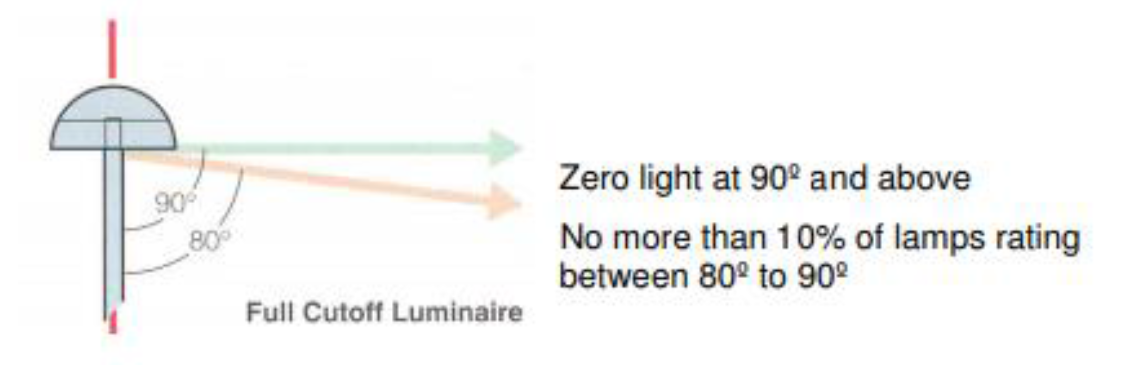
Full cutoff light fixture means a lighting fixture that projects all of its light in a downward direction. Full cutoff lighting fixtures emit no upward component of light. A full-cutoff luminaire, by definition, also is "fully shielded."
Gas means any fluid, either combustible or noncombustible, which is produced in a natural state from the earth and which maintains a gaseous or rarefied state at standard temperature and pressure conditions and/or the gaseous components or vapors occurring in or derived from petroleum or natural gas.
Golf cart means a small, motorized vehicle designed for the transport of passengers and light cargo within a golf course, residential community, or similar private development.
Government facilities, large-scale means major government facilities and installations, including correctional institutions established under Texas State law, excluding a state prison, military installations, and other large-scale facilities.
Government facilities, small-scale means administrative, clerical, or public contact offices of a government agency, together with incidental storage and maintenance of vehicles, including post offices.
Grade means a reference plane representing the average of finished ground level adjoining the building at all exterior walls.
Gross floor area (GFA) means the total floor area (square feet) of the inside areas of a building, including all floors but not including attics.
Halfway house means a facility operated under the authority of the Texas Department of Criminal Justice for the Federal Bureau of Prisons for persons on release from more restrictive custodial confinement or initially placed in lieu of such more restrictive custodial confinement, wherein supervision, rehabilitation, and counseling are provided to mainstream residents back into society, enabling them to live independently.
Home improvement sales and services means retail sales, rental and related services of hardware, plumbing, electrical, heating, air conditioning, building supplies, tools and equipment, plants and garden products, patio furniture, swimming pools, spas and hot tubs, lighting fixtures, kitchen and bathroom fixtures and cabinets, paint, carpeting, floor coverings or wallpaper.
Home occupation means any occupation or profession engaged in for monetary gain that is conducted within a dwelling unit or on the premises of a site of a residential use.
Homeless shelter means a facility which provides temporary housing to indigent, needy, homeless, or transient persons. This use may also provide ancillary services such as counseling and limited meal service for residents.
Homeowners' association, community association, or property owners' association means an association of property owners in a given area formed for the purpose of improving or maintaining the quality and/or character of the area by establishing minimum standards, responsibilities, quality controls, or other requirements relative thereto.
Hotels and commercial lodging means a building or group of buildings designed for and occupied as a temporary dwelling place which may provide additional services such as conference/meeting rooms and restaurants available to guests or the general public. This definition excludes bed and breakfast establishments, and adult motels as defined in chapter 26 of the Code of Ordinances.
(1)
Full service hotel. Hotels in which access to guest rooms is exclusively restricted to interior corridors via the main lobby of the building or entryways individually equipped with some form of security, controlled access system. Customary hotel services such as linen, maid service, telephone, and other guest amenities are provided and may also contain various personal service shops.
(2)
Limited service hotel. Hotels that are not classified as a full service-hotel or residence hotel.
(3)
Residence hotel. Hotels in which more than five percent of its rental units are for stays extending at least 30 consecutive days and not more than 180 consecutive days. This definition excludes multi-family residential dwellings.
Hospitals means state-licensed facilities providing medical, surgical, psychiatric, or emergency medical services to sick or injured persons. This classification includes facilities for inpatient or outpatient treatment, including drug and alcohol abuse programs as well as training, research, and administrative services for patients and employees.
Incident means an occurrence of an action or situation that could have a negative or detrimental impact.
Industrialized home means a freestanding building designed for occupancy by a single household, constructed in one or more modules or constructed using one or more modular components, that is built at one location, then transported to a permanent site and installed on a permanent foundation.
Infrastructure means any roadway or traffic control component, stormwater conveyance component, potable water component, and/or wastewater component as delineated on City of League City approved development documents.
Laboratory, commercial means medical or dental laboratory services or photographic, analytical, or testing services in an establishment.
Light trespass means light that falls outside the boundaries of the property on which the lighting fixture is located.
Local contact person (for short-term rentals) means the owner/operator or designated agent who shall be available 24 hours per day, seven days per week for the purpose of:
(1)
Responding in person within one hour to complaints regarding the condition, operation, or conduct of occupants of the short term rental; and
(2)
Taking remedial action to resolve any such complaints.
Lot means an undivided tract or parcel of land that has been created in accordance with this UDC designated on a subdivision plat and filed on record with the appropriate county office.
Lot, corner means either a lot bound entirely by streets, or a lot at the intersection of two or more streets.
Lot depth means the horizontal length of a straight line drawn from the midpoint of the property frontage to the midpoint of the total length of the rear property line. (Total length shall include line segments, arc lengths, etc.).
Lot, double-frontage means an interior lot having frontage on two non-intersecting streets, on opposite sides of the lot.
Lot, flag means a lot not meeting minimum lot frontage requirements on a public street and access to a public street is by a narrow strip of land (staff). The staff portion shall be no narrower than 40 feet and no longer than 175 feet.
Lot frontage means the property line adjacent to a street, which is the property address; it is also the front property line.
Lot line means the property lines bounding a lot.
Lot width means the distance, generally parallel to the front lot line, measured between side lot lines at the front building line.
Main Street Historic District is an area within the corporate limits of the city as defined by Ordinance 97-38 adopted on July 8, 1997, or as hereafter amended.
Maintenance and repair services means establishments providing repair services for personal and household goods, such as household appliances, computers, television, audio or video equipment, office machines, furniture, home and garden equipment, footwear and leather goods, or building maintenance services. This classification excludes maintenance and repair of automobiles and other vehicles and equipment.
Manufactured home is a structure designed for occupancy by a single household constructed on or after June 15, 1976, according to the rules of the U. S. Department of Housing and Urban Development (HUD), Title 6 constructions standards. Manufactured homes are built on a non-removable chassis, so they can be transported in one or more sections to the property where they will be used for permanent housing.
Marinas and dock means private facilities for mooring, berthing, storing or securing three or fewer watercraft used primarily for non-commercial recreational use and also including private boat ramps.
Marinas, private means facilities for launching, mooring, berthing, storing or securing four or more watercraft used primarily for non-commercial recreational use. Facility provides services and recreational facilities only for surrounding residents or club members and their guests. This classification includes homeowners' association docks and piers and yacht and boat clubs.
Marinas, public means facilities for launching, mooring, berthing, storing or securing four or more watercraft used primarily for recreational use. Facility provides services to recreational watercraft and occupants thereof, including sanitary and other minor servicing and repair to watercraft while in the water, and sale of fuel and supplies. Provision of food, lodging, goods, beverages, recreation, and entertainment as accessory uses.
Masonry shall mean and include brick, stone, decorative concrete masonry unit, or other materials of equal characteristics laid up unit upon unit set and bonded to one another in mortar.
Massage establishments and massage services means establishments providing massage services or on-call massage services by individuals licensed under V.T.C.A., Occupational Code Ch. 455, Massage Therapy, excluding any activity defined by the city as a sexually-oriented business.
Massing means the overall volume and shape of a building.
Master plan means the initial plan or map for all subdivisions to be developed in phases or sections. The master plan shall be submitted prior to or with the plat of the first section of development of a subdivision and with all sections thereafter. Changes anticipated for the master plan shall be approved in advance of all platting, and the master plan map and attendant overlays or plans corrected as the changes are anticipated.
Micro-brewery, micro-distillery and micro-winery means a facility in which beer, wine, or other alcoholic beverages are brewed, fermented, or distilled for distribution and consumption, and which possess the appropriate licenses from the State of Texas.
Mobile food vendor shall mean a business which sells food and/or drink items intended for immediate consumption and which utilizes as its point of sale a food truck, concession trailer, or similar vehicle that is continuously parked for at least four hours on private property to conduct business.
Nonconforming lot, structure or use of structure means platted lots, structures and uses of lots or structures which were lawful before the ordinance from which this chapter is derived was passed or before this chapter was amended, but which would be prohibited, regulated or restricted under the terms of this chapter or future amendments.
Nuisance means an interference with the enjoyment and use of property, including, but not limited to, elements such as odors, liquid wastes, solid wastes, radiation, noise, vibration, smoke, glare or heat.
Nurseries and garden supply stores means establishments engaged in the retail sale of any article, substance, or commodity related to the planting, maintenance, or harvesting of garden plants, shrubs, trees, packaged fertilizers, soils, chemicals or other nursery goods and related products in small quantities to the consumer and may include the retail of small garden power equipment.
Nurseries and landscaping materials, wholesale means establishments engaged in the storage, cultivation transplanting of live trees, shrubs or plants offered on the premises including items directly related to landscaping or gardening care and maintenance.
Nursing home means a facility licensed and regulated by the Texas Department of Aging and Disability Services that provided meals, resident care and services for persons who typically are admitted for periods of time exceeding 30 days. Such services include custodial and attendant care, routine and regular medical and nursing services. The term "nursing home" includes care homes, homes for the aged, convalescent homes, rest homes, and other related facilities not otherwise defined in this section, where such persons are mostly incapable of self-preservation due to age, physical or mental disability, or because of security measures not under the occupants' control. This term excludes facilities that provide surgical or emergency medical service or that provide care for alcoholism, mental disease, drug addiction or communicable disease.
Offices means firms or organizations that primarily provide professional, executive, management, or administrative services, such as accounting, advertising, architectural, city planning, computer software consulting, data management, engineering, environmental analysis, insurance, interior design, investment, graphic design, landscape design, law and real estate offices. This classification includes offices for a physician, dentist or chiropractor, as well as medical/dental laboratories incidental to the medical office use. It excludes banks and savings and loan associations and offices that are incidental to retail, production, storage, or other activities.
Oil or condensate means a substance occurring naturally in the earth and composed mainly of mixtures of chemical compounds of carbon and hydrogen, with or without other nonmetallic elements such as sulfur, oxygen, and nitrogen. The compounds that compose it may be in the gaseous, liquid, or solid state, depending on their nature and on the existent conditions of temperature and pressure.
Operation site means the area used for development and production of oil, gas and all operational activities associated with an oil or gas well after drilling and completion activities are finished.
Operator means the person listed on the appropriate railroad commission forms that is, or will be, actually in charge and in control of operations and maintenance related to drilling, production, and pipelines, including, without limitation, a unit operator or operator of record in instances of multiple partners and general partnership. If the operator, as herein defined, is not the lessee of any premises affected by the provisions of this chapter, then such lessee shall also be deemed to be an operator. The lessees shall include all working interest owners.
Outdoor lights/lighting means any exterior lighting equipment installed within the property line and outside the building envelopes, whether attached to poles, building structures, the earth or any other location and any associated lighting control equipment.
Oversize vehicle shall mean any motor vehicle that exceeds 20 linear feet and a height of nine feet or any commercial motor vehicle.
Owner means the person or entity that holds legal and/or equitable title to the subject property, as shown in real property records.
Park development fund means a special fund for the deposit of all sums paid for park acquisition and development from park dedication fees and fees in lieu of parkland for the specific purpose of funding activities related to the acquisition, design, construction, maintenance, and improvements for existing and future parks in accordance with the parks, trails, and open space master plan.
Parking area means the total area devoted to the parking and maneuvering of automobiles.
Parking facilities means lots and garages offering parking to the public for a fee when such use is not incidental to another activity.
Parking lot or structure means an area or structure devoted to the parking or storage of automobiles, which may include a facility for servicing automobiles, provided such facility is primarily an internal function for the exclusive use of automobiles occupying the structure and creates no special problems of ingress and egress.
Parking space means a cast-in place asphalt or concrete riding surfaced area, enclosed or unenclosed, sufficient in size to store one automobile, together with a driveway connecting the parking space to a street or alley, permitting ingress and egress of an automobile.
Parks and recreation means noncommercial parks, playgrounds, recreation facilities, and open spaces. This classification includes community centers, playing fields, courts, gymnasiums, swimming pools, picnic facilities, public festivals, public marinas, as well as related food concessions, including such facilities required by the city for new residential development that are operated and maintained by a homeowners' association.
Parks, private means a tract of land utilized for playgrounds, recreational facilities, community centers, playing fields, courts, gymnasiums, swimming pools, and picnic facilities operated and maintained by a homeowners' association.
Parks, public means a tract of land, excluding trails, for recreational use owned and operated by a public authority, such as the city or county, for the express use of the general public.
Parks, trails, and open space master plan is a plan, approved by the city council, identifying League City's parks and open space goals and establishing the most effective plans and policies to achieve these goals by providing the city with a strategy to acquire and develop land for use as parks or open space throughout the city.
Patio means a covered or uncovered paved area at ground level, immediately adjacent to a building
Pawn shops means establishments engaged in the buying or selling of new or secondhand merchandise and offering loans in exchange for personal property.
Permit means a document issued by the city allowing a person to undertake certain activities at a specified site/location as provided for in this chapter.
Person means any person, partnership, firm, corporation, governmental agency or other legal agency.
Personal instructional services means provision of instructional services or facilities, including photography, fine arts, crafts, dance or music studios, driving schools, diet centers, reducing salons, martial arts, yoga and fitness studios, but excludes uses classified as colleges, public or private.
Personal services means provision of recurrently needed services of a personal nature. This classification includes barber and beauty shops, tanning salons, seamstresses, tailors, shoe repair, dry cleaners (excluding plants), self-service laundries, psychic services, and the like.
Pipelines means any intrastate pipeline or pipe of any size, denomination or characteristic, that is used to transport any and all materials of any and all descriptions and used for any and all purposes, including flowlines and intra-lease piping. This classification excludes pipelines for public utility operations.
Planning and zoning commission means the City of League City Planning and Zoning Commission.
Plat means a map depicting a tract of land prepared in conformance with V.T.C.A., Local Government Code, Ch. 212 and the provisions of this Code.
Plat, amended means a map amending the lots in a previously recorded subdivision. All property that was previously part of the lot(s) being amended shall be included in the boundaries of the amended plat, regardless of ownership. (All property does not have to be included if the property was platted prior to September 11, 1969.) Amended plats are approved administratively by the city planner or designee. An amended plat shall only be utilized for one or more of the following purposes:
(1)
To correct an error in a course or distance or add a course or distance that was omitted;
(2)
To correct an error in a real property description;
(3)
To indicate monuments set after the death, disability, or retirement from practice of the engineer or surveyor responsible for setting monuments;
(4)
To show the location or character of a monument that has been changed in location or character or that is shown incorrectly as to location or character on the preceding plat;
(5)
To correct any other type of scrivener or clerical error or omission previously approved by the municipal authority responsible for approving plats, including lot numbers, acreage, street names, and identification of adjacent recorded plats;
(6)
To relocate one or more lot lines, as long as the amendment does not:
a.
Attempt to remove recorded covenants or restrictions;
b.
Increase the number of lots;
c.
Create or require the creation of a new street; or
d.
Make necessary the extension of municipal facilities.
Plat, final means a map illustrating the proposed subdivision or development of land having been certified to by a registered professional land surveyor and submitted to the city for approval by the planning and zoning commission.
Plat, minor means a map that involves four or fewer lots fronting on an existing street and not requiring the creation of any new street or the extension of municipal facilities. Minor plats are approved administratively by the city planner or designee. A copy shall be recorded in the Galveston County Clerk's Office or Harris County Clerk's Office, as appropriate.
Plat, minor (replat) means a revised map that involves four or fewer lots that were part of a previously recorded subdivision or portion thereof, fronting on an existing street and not requiring the creation of any new street or the extension of municipal facilities that may be administratively approved.
Plat, preliminary means a map illustrating the proposed subdivision or development of land which will be submitted for approval before preparation of the final plat.
Plat, preliminary/final is a combination of the preliminary and final plats for subdivisions that typically do not require phasing.
Plat, replat means a revised map showing the subdivision of one or more lots that were part of a previously recorded subdivision or portion thereof. All property that was previously part of the lot(s) being subdivided shall be included in the boundaries of the replat, regardless of ownership. (All property does not have to be included if the property was platted prior to September 11, 1969.) When recorded, the replat will supersede the previous plat (or portion) filed there.
Plat vacation means an instrument declaring that a plat and its dedications be vacated or cancelled and that the land reverts to the original survey or any underlying subdivision.
Porch means a covered or uncovered structure, consisting of a deck which is at or near the height of the building foundation and accessed by steps.
Production industry, artisan means establishments primarily engaged in onsite production of goods by hand manufacturing, involving the use of hand tools and small-scale equipment.
Production industry, general means manufacturing of products, from extracted or raw materials, or recycled or secondary materials, or bulk storage and handling of such products and materials. This classification includes: food manufacturing; beverage and tobacco product manufacturing; textile mills; textile product mills; apparel manufacturing; leather and allied product manufacturing; wood product manufacturing; paper manufacturing; chemical manufacturing; plastics and rubber products manufacturing; nonmetallic mineral product manufacturing; primary metal manufacturing; and fabricated metal product manufacturing.
Production industry, limited means the manufacturing of finished parts or products, primarily from previously prepared materials. This classification includes: printing and related support activities; machinery manufacturing; computer and electronic product manufacturing; electrical equipment, appliance, and component manufacturing; transportation equipment manufacturing; furniture and related product manufacturing; and miscellaneous.
Project shall mean an endeavor over which the city exerts its jurisdiction and for which one or more permits are required to initiate, continue, or complete the endeavor.
Property means the land (whether leasehold or in fee simple) and the building; all improvements and structures thereon; and all easements, rights and appurtenances belonging thereto.
Protected use means a dwelling unit; religious assembly; hospital building; public or private school boundary; day care boundary; or public, private or Homeowners' Association park.
Public and private utility services means city water and wastewater services and private utility company services.
Public hearing means a public meeting advertised in advance wherein the public has an opportunity to comment, both in favor and opposition, on matters under consideration.
Public maintenance facilities means facilities providing maintenance and repair services for vehicles and equipment and areas for storage of equipment and supplies. This classification includes corporation yards, equipment service centers, and similar facilities.
Public notice means publication of a notice in a newspaper for general circulation in the city designated for that purpose by the city council.
Public property means any and all property located within the confines of the city and owned by the city or held in the name of the city by departments, within the city government.
Public safety facilities means facilities for public safety and emergency services, including facilities that provide police and fire protection including training facilities.
Pump stations means facilities utilized for the treatment, regulation and extraction of materials conveyed through pipelines, including, but not limited to, compressor stations, inline booster stations, and pigging stations.
Railroad commission means the Railroad Commission of Texas or its successor(s).
Recreation and entertainment, large-scale means this classification includes large, generally outdoor facilities, although some facilities may be indoor, including: sports stadiums and arenas; amusement and theme parks; racetracks; golf courses and country clubs; driving ranges; fitness and recreational sports centers, including fitness centers, gymnasiums, handball, racquetball, or tennis club facilities, ice or roller skating rinks, swimming or wave pools, bowling centers; entertainment complexes and theaters; drive-in theaters; miniature golf courses; archery or shooting ranges; riding stables; campgrounds; etc.
Recreation and entertainment, small-scale means this classification includes small, generally indoor facilities, although some facilities may be outdoor, including: billiard parlors, poolrooms, amusement arcades having more than five coin-operated machines, dance halls, theaters, and gambling facilities, including bingo parlors and off-track betting.
Recreational vehicle (RV) means a transportable temporary dwelling constructed to be towed by a motor vehicle on its own chassis or constructed with an integral drive train to be operated over public streets and highways under regular highway license without a permanent foundation, for temporary living. This trailer or vehicle shall be built on a chassis and designed for travel, recreation and vacation use and shall have been permanently identified by the manufacturer. The definition specifically excludes mobile homes.
Recreational vehicle park means a platted tract of land or tract of record prior to 1969 of at least one acre upon which three or more recreational vehicles are occupied for dwelling or sleeping purposes on a temporary basis, regardless of whether or not a charge is made for such accommodations. The term "park," where appropriate in this chapter, shall mean recreational vehicular park.
Recycling collection means a facility for the deposit of recyclable materials. Recyclable materials are not processed in the facility, except for sorting and batching.
Re-drill means re-completion of an existing well by deepening or sidetrack operations extending more than 150 feet from the existing well bore.
Religious assembly means facilities for religious worship and other religious ceremonies with incidental religious education, offices, social services, and community programs but not including private schools.
Replacement cost (for existing protected trees) means the cost to replace existing protected trees proposed to be removed from a site as measured in caliper inches.
Research and development means establishments primarily engaged in the research, development, and controlled production of high technology electronic, industrial or scientific products or commodities for sale. This classification includes biotechnology firms and manufacturers of nontoxic computer components.
Residential includes all forms of single-family and multi-family housing.
Responsible person means a record owner of the real property at which a tree impact activity occurs, or the person that actually engages in the tree impact activity.
Restricted reserve—HOA parks/facilities/sites means the designation for those individual parcels of land created within a subdivision, which are established to accommodate sites for parks and amenities that are owned, maintained, and used solely by the residents of a particular subdivision and which are therefore not open to the public. Such parks or amenities are subject to parks board approval and shall have an area of no less than one-quarter acre. Reserve tracts that do not abut a public street shall be connected thereto by a narrow strip of land (staff), which staff portion shall be no narrower than 40 feet and no longer than 175 feet. The staff portion shall be restricted to serve that restricted reserve only.
Restricted reserve—landscape amenity means the designation for those individual parcels of land created within a subdivision that are not divided into lots nor required by the parks board, but are established to serve as landscape amenities, typically along streets. These parcels are not required to meet lot size requirements. Any easements on this reserve that will result in the removal of landscaping or will interfere with the integrity of the landscape amenity shall require a replat. Reserve tracts that do not abut a public street shall be connected thereto by a narrow strip of land (staff), which staff portion shall be no narrower than 40 feet and no longer than 175 feet. The staff portion shall be restricted to serve that restricted reserve only.
Restricted reserve—parkland dedication means the designations for those individual parcels of land created within a subdivision, which are established to accommodate a site for dedication of a specific area of land for the express purpose of being used to provide or purchase land for parks within the city. Such parkland dedication is subject to approval by city council. Reserve tracts that do not abut a public street shall be connected thereto by a narrow strip of land (staff), which staff portion shall be no narrower than 40 feet and no longer than 175 feet. The staff portion shall be restricted to serve that restricted reserve only.
Restricted reserve utilities means the designations for those individual parcels of land created within a subdivision, which are established to accommodate a site for utility facilities such as water wells and storage areas, wastewater treatment plants, and electrical power stations. These parcels are not required to meet lot size requirements. Reserve tracts that do not abut a public street shall be connected thereto by a narrow strip of land (staff), which staff portion shall be no narrower than 40 feet and no longer than 175 feet. The staff portion shall be restricted to serve that restricted reserve only.
Retail sales means establishments engaged in sales of goods, including, but not limited to: furniture and home furnishings; electronics and appliances; clothing and shoes; jewelry, luggage and leather goods; sporting goods and hobbies; books, periodicals and music; tobacco sales; department stores; miscellaneous goods, such as florists, office supplies and stationary, gifts and novelties, etc. This classification includes the retail sale or rental of merchandise not specifically listed under another use classification.
Rhythm means the repetitive use of a group of visual elements to establish a recognizable pattern. It can include architectural elements, such as bays, windows, etc., as well as building setbacks.
Right-of-way means real property interest in a parcel or strip of land that is conveyed or dedicated to the public or other specified entity for purposes of the right of passage across said parcel or strip and/or for the right to install, maintain, and operate public or private infrastructure and appurtenances, including, but not limited to, street paving, sidewalks and trails, drainage facilities, water and wastewater facilities, and other public utilities (electric power, phone, gas; and cable television lines).
Scale means the height and proportions of a building and its components.
Schools, public or private means facilities for educational and/or classroom purposes operated by public or private educational institutions offering a general course of study at primary, middle, or high school levels, including study centers, child care and limited child care centers, vocational and trade programs that are incidental to the operation of such schools.
Self-storage means establishments offering facilities for personal property storage, including mini-warehouses.
Setback means the minimum distance that any building or structure must be separated from a street right-of-way or lot line.
Setback line means a line delineating the minimum allowable distance between a building or structure and the adjacent lot line and/or street right-of-way except as otherwise provided. Setback lines shall be measured perpendicularly from the front, side, or rear property line and/or right-of way to the building or structure.
Sexually-oriented business means an establishment whose preponderant business is the offering of materials, products, and/or services that have sexual arousal, sexual gratification and/or sexual stimulation as their dominant theme and which are not customarily open to the general public because they exclude minors by virtue of their age as a prevailing business. This classification does not include any establishment offering professional services conducted, operated, or supervised by medical practitioners, physical therapists, nurses, massage therapists, chiropractors, psychologists, social workers, marriage and family counselors, osteopaths, and persons holding unrevoked licenses or certificates under applicable Texas State law or accreditation from recognized programs when performing functions pursuant to the respective license or certificate.
Shipping container means a type of container that could be used for the transport, shipping, or hauling of materials or goods by land, sea, or air; capable of being moved or mounted by rail, truck, or boat. This definition includes steel sea or oceangoing containers marked with the American Bureau of Shipping's emblem or meeting the International Standard Organization's standards which can be detached from a trailer, chassis or frame, and which were formerly used for transporting sea or oceangoing cargo. This definition includes the following terms: moving container, storage container, cargo container, and transport container.
Short-term rental (STR) means a property where all or a portion of a residential dwelling unit, including an apartment or accessory building, may be rented or leased for compensation to members of the public for use as sleeping accommodations on a temporary or transient basis of less than 30 consecutive days. A short-term rental does not include a hospital, sanitarium, or nursing home; or a dormitory or other housing facility owned or leased and operated by an institution of higher education.
Sidewalk means an improved path between the curb lines or lateral lines of a roadway and the adjacent property lines or in a sidewalk easement that is constructed in accordance with the city's most current general design and construction standards and designed or ordinarily used for pedestrian travel.
Sign means any form of publicity or advertising which directs attention to an individual, business, commodity, service, activity, or product, by means of words, lettering, parts of letters, figures, numerals, phrases, sentences, emblems, devices, trade names, or trademarks, or other pictorial matters designed to convey such information and displayed by means of print, bills, posters, panels, or other devices on an open framework, or attached or otherwise applied to stakes, posts, poles, buildings, or other structures or supports.
(1)
Abandoned sign means an on-premises sign, attached or detached, advertising a business that has closed or ceased operation for a period of one year, or as otherwise provided by law, or where the operations permit has been revoked or expired.
(2)
Awning sign means a permanent sign that is directly applied, attached or painted onto an awning, which is a retractable or non-retractable projection, shelter or structure of rigid canvas, metal, wood, or other similar approved material.
(3)
Dilapidated sign means any surface element, background, panels, or support of any sign that has finished materials that are missing, broken, bent, cracked, decayed, dented, harmful, hazardous, illegible, leaning, splintered, ripped, torn, twisted, or unsightly.
(4)
Menu board sign is erected in conjunction with uses that incorporates a drive-through or drive-in and generally used to provide service and/or product options and pricing for patrons who remain in the vehicle.
(5)
Monument sign means a freestanding sign set on a ground monument base. Monument signs shall include pedestal signs.
(6)
Movement control sign means a sign which directs vehicular or pedestrian movement within or on the premises such as, but not limited to, entrance, exit, or overheard clearance, and which does not advertise the name of the establishment.
(7)
Portable sign means any sign designed or intended to be relocated from time to time, whether or not it is permanently attached to a structure or is located on the ground.
(8)
Projecting sign means a sign attached and projecting out from a building face or wall, generally at a right angle to the building a maximum of 12 inches.
(9)
Pylon sign means a freestanding sign, permanently affixed to the ground by supports, but not having the appearance of a solid base.
(10)
Subdivision entry sign means a sign mounted to a screening wall or engraved into a masonry block which identifies a development, either residential or nonresidential, and generally refers to the platted name of the subdivision.
(11)
Temporary sign means any sign that is not intended for permanent use and that is typically utilized for advertisement of seasonal specials or special events. Temporary signs include, but are not limited to, banners, inflatable devices, and wind flags, etc.
(12)
Vehicular sign means any sign on or in a moving vehicle or on any vehicle parked temporarily, incidental to its principle use for transportation. This definition shall not include signs or lettering on company vehicles that advertises only the company name, address, and phone number. This definition exempts magnetic signs on the sides and rears of cars.
(13)
Wall sign means a sign erected against an exterior wall, erected parallel to a wall or painted directly onto a wall.
(14)
Window sign means a sign either attached on a window (by painting or other adhesive) or hanging within the window that generically advertises a commodity, service, activity, or product by means of words, lettering, parts of letter, figures, numeral, phrases, sentences, emblems, devices, trade names, or trademarks, or other pictorial matters.
Sign, off-premises means a sign that identifies or advertises a business, person, activity, goods, products, entertainment or services at a location other than where the sign is located.
Sign, on-premises means any sign which identifies or advertises a business, person, activity, goods, products, entertainment or services primarily sold, offered, or conducted, for sale on the premises where the sign is located, installed, maintained, or to which it is affixed when such premises is used for business purposes.
Site development plan means a graphic and informative representation of a specific design solution for a development, meeting the requirements of this article.
Sleeping area means a room within a dwelling designed or used for sleeping, including a bedroom. Tents, hammocks, recreational vehicles and/or other vehicles and outdoor areas shall not be considered a sleeping area.
Special event means a group activity including, but not limited to, a performance, meeting, assembly, contest, exhibit, ceremony, parade, athletic competition, reading, or picnic that is intended to provide public benefit to the entire community as a whole.
Square footage means the area of a building included within surrounding exterior walls, exclusive of courts, decks, patios, and porches.
Stacking space means a space that a vehicle can occupy for the purpose of queuing to access a drive-through service.
Stone shall include naturally occurring granite, marble, limestone, slate, river rock, and other similar durable all-weather stone that is customarily used in exterior building construction; shall include cast or manufactured stone products so long as such has a highly texturized stone-like appearance, is unpainted upon, and is demonstrated to be durable and maintenance free; such shall be no less than three and five-eighths inches in thickness when applied as a veneer.
Stoop means a set of steps and small landing, which may be covered or uncovered.
Storefront means the ground-floor façade of a commercial building, which contains the primary entrance to the building as well as one or more display windows.
Story means that part of a building between the surface of a floor and the floor or roof immediately above (refer to "floor, ground level").
Street means a strip of land, privately or publicly owned, which affords the principal means of access to abutting property.
(1)
Collector means a street designed to provide both local access and traffic circulation within residential neighborhoods, commercial and industrial areas. They differ from the arterial systems in that collector streets may penetrate identifiable neighborhoods.
Collector streets distribute traffic between the arterial and local street systems.
(2)
Cul-de-sac means a street which is part of the local street system and closed on one end in a circular or other approved pattern meeting minimum radius requirements.
(3)
Local or residential street means a street designed to serve the local needs of the neighborhood and to provide access from abutting residential properties to other streets.
(4)
Major arterial means a continuous street system serving moderate to long trip lengths that distributes traffic from the freeway/expressway system to and from the metropolitan area. The focus of major arterials is to provide mobility rather than land access. Major arterials should not penetrate identifiable neighborhoods.
(5)
Minor arterials accommodate moderate trip lengths at a somewhat lower level of mobility. Minor arterials provide a lower level of mobility and distribute traffic to smaller geographic areas than major arterials. Minor arterials should not penetrate identifiable neighborhoods but can provide more direct access to abutting property.
(6)
Private street or non-dedicated right-of-way means a non-dedicated street on private property.
(7)
Stub street means a street which terminates at the boundary of a subdivision for future access to adjoining unplatted or undeveloped property.
Streetscape means the visual elements of a street, including the road, adjoining buildings, sidewalks, street furniture, trees and open spaces, etc.
Structure means that which is built or constructed, not including paving for parking.
Subdivision means the division of a tract or parcel of land, by means of a plat, into two or more lots or other divisions of land, for the purpose of transfer of ownership or building development, expressly excluding development for agricultural purposes. The term does not include the division of land into parts greater than five acres where each part has access and no public improvements are being dedicated.
Surveyor means an individual duly authorized under the current Land Surveying Practices Act of 1979, as amended, Vernon's Ann. Civ. Stat. art. 5282c, to practice the profession thereof, who shall be responsible for all descriptions and plats to be recorded in official records.
Tank means a container, covered or uncovered, used in conjunction with the drilling or production of gas or other hydrocarbons for holding or storing fluids.
Tattoo parlor/body piercing studio means the workshop of a tattoo artist and/ or facility where the piercing of body parts, other than ears is performed for the purposes of allowing the insertion of jewelry, or other paraphernalia, primarily for the purpose of ornamentation of the human body.
Technical advisor means such person(s) familiar with and educated in the oil or gas industry or the law as it relates to oil or gas matters who may be retained from time to time by the city.
Temporary construction structure means a trailer, building or shelter for temporary office use, authorized by permit, used in connection with a development or building project for temporary on-site administrative and supervisory functions. It shall be removed upon completion of the project.
Temporary sales means establishments engaged in temporary or seasonal sales. Typical uses include Christmas tree lots and pumpkin lots.
Terrace means a raised, open, flat area in a landscape near a building or atop a building.
Tobacco, vapor, and CBD retail use means a retail establishment that specializes in selling primarily tobacco or CBD related products, including electronic nicotine delivery systems, such as e-cigarettes, vape pens, and associated products, including refillable liquids, replacement coils, smoking accessories, and paraphernalia. This classification includes cigar shops, smoking lounges, tobacconists, hookah bars, and dispensaries.
Tract means a parcel of land.
Transom window means a lite placed above a horizontal structural beam or bar, or a horizontal member that separates a door from the lite above it. A single transom window is often located above a door, while a ribbon (series) of transom windows were traditionally located above a storefront, above an awning or canopy, to provide more natural light to the interior space.
Transportation passenger terminals means facilities for passenger transportation operations. This classification includes rail stations, bus terminals, ferry terminals, urban and regional transit stations, and scenic and sightseeing facilities, but does not include airports, heliports, or seaports.
Tree means a woody plant having a well-defined trunk(s), a defined crown and a mature height of at least 15 feet.
(1)
Invasive tree refers to a tree that threatens native trees by competing for resources and habitat as noted in the invasive tree list.
(2)
Large tree is a tree of a species listed under "large trees" the protected tree list in this chapter.
(3)
Park tree includes trees, shrubs, bushes and all other woody vegetation that is planted in public parks and all areas owned by the city, or to which the public has free access as a park.
(4)
Protected tree is any large tree that measures at least 12 caliper inches, any small tree that measures at least six caliper inches, or any significant tree.
(5)
Significant tree is any tree of the oak or pecan species that measures at least 38 caliper inches.
(6)
Small tree is a tree of a species listed under "small trees" the protected tree list in this article.
(7)
Street tree includes trees, shrubs, bushes and all other woody vegetation that is planted between the edge of a paved roadway, whether public or private, and the sidewalk, or in the absence of a sidewalk, planted within ten feet of the edge of the paved roadway.
Tree canopy represents the total vertical transect of all trees on a single site or within a designated area beginning at DBH and extending to the crown of all trees within the area.
Tree disposition plan specifies how trees on the protected tree list will be protected from development and pre-development activity proposed at a particular site. Such plan includes the preliminary route of utilities and tree protected zone limits, as defined in article III [of this chapter], and a proposed development footprint for all protected trees.
Tree impact activity means any action that may result in the decline in health and/or death of a tree, including, but not limited to: pruning of large limbs, tree topping, destruction of bark leading to scarring on trunk, or activities (such as construction and/or soil compaction) conducted within the critical root zone.
Truck weigh stations means facilities for weighing commercial trucks.
Undertaking, funeral and interment services means establishments primarily engaged in the provision of services involving the care, preparation or disposition of human dead. Typical uses include funeral parlors, crematories, or mortuaries.
Utility mean any facility for use, i.e., facilities for water, wastewater and storm drainage, gas, telephone lines, electricity, cable television, etc.
Utility line means the facilities provided by a municipality or a franchised or other utility company for the distribution or collection within the city of gas, water, sewage, surface drainage water, electric power, telephone service, cable television, or fluid used for thermal control of buildings.
Utility, major means generating plants, electrical substations, gas substations, solid waste collection, including transfer stations and materials recovery (recycling processing) facilities with no public drop off, solid waste treatment and disposal, flood control or drainage facilities, water or wastewater treatment plants, and similar facilities of public agencies or public utilities. This classification excludes any activity classified under hazardous waste management.
Utility, minor means public or regulated utility facilities that are necessary to support established uses and involve only minor structures such as electrical distribution lines and underground water and sewer lines, and small non-commercial recycling collection facilities.
Utility task vehicle (UTV) means a motorized off-highway vehicle designed for work or recreational use that typically has four or more low-pressure tires, bench or bucket seating for one or more occupants, and a steering wheel for control. UTVs are generally used for utility, agricultural, maintenance, or recreational purposes. They are not designed or primarily intended for use on public streets or highways, although some may be modified to meet specific state or local requirements for limited on-road operation.
Value of building shall mean that assessed value of the structure as determined by the appraisal district, or authorized appraising entity.
Variance means a governmentally issued right to deviate from or vary one or more standards applicable to a development application which because of special conditions or circumstances peculiar to the parcel and not the result of applicant actions, would result in unnecessary and undue hardship.
Vesting shall mean the right to undertake and complete the development and use of property under the adopted rules and regulations that were in place at the time the application for the applicable permit or project was made to the city.
Warehousing and indoor storage means storage of commercial goods prior to their distribution to wholesale and retail outlets within an enclosed building. This classification excludes personal property storage, including mini-warehouses, and freight/truck terminals.
Warehousing and outdoor storage means storage of vehicles or commercial goods in open lots.
Warehousing and oil and gas storage includes tank farms and outdoor facilities for the storage of oil and gas.
Well bore means a hole drilled by the bit for the purposes of oil and gas exploration.
Well drilling, oil and gas means digging or boring a well for the purpose of exploring for, developing or producing oil, gas, or other hydrocarbons, or for the purpose of injecting gas, water or any other fluid or substance into the earth.
Wholesaling and distribution with store facilities means facilities for the sale of merchandise and bulk goods at discount prices for individual consumption, including membership warehouse clubs and superstores.
Wholesaling and distribution, without store facilities means facilities for indoor or outdoor storage and the non-store retail and wholesale distribution of merchandise and bulk goods, such as electronic shopping, mail-order houses, and other direct-selling establishments. This use classification excludes sale of goods at discount prices for individual consumption.
Wind flag means a temporary, vertical fabric sign typically mounted on a flexible pole or staff that flutters in the wind, also known as a feather flag or flutter banner.
Workover means re-completion or re-entry of existing well within the existing bore hole or by deepening or sidetrack operations in an effort to secure production where there has been none, restore production that has ceased, or increase production.
Wrecking, junk, or salvage yard (auto, steel, building materials) and towing services means a yard or building the primary use of which is for motor vehicles, parts of motor vehicles, building materials, or machinery to be stored, dismantled and/or offered for sale in the open as whole units, as salvaged parts or as scrap or processed metal. The facility may also provide towing/transporting of damaged, inoperable or impounded motor vehicles.
(Ord. No. 2020-25, § 1(Exh. A), 9-29-2020; Ord. No. 2022-25, § 25, 8-9-2022; Ord. No. 2023-16, § 3, 6-13-2023; Ord. No. 2024-23, § 2, 7-9-2024; Ord. No. 2024-56, § 3, 12-17-2024; Ord. No. 2025-26, § 4, 8-26-2025; Ord. No. 2025-55, § 4, 1-13-2026)

