
Leander City Zoning Code
ARTICLE IV
USE STANDARDS
Sec. 1. - Wireless communications facilities.
(a)
Purpose and goals. The purpose of this section is to provide reasonable standards and procedures for the development of Wireless Communications Facilities (WCFs) that will ensure that residents, public safety operations and businesses have reliable access to wireless telecommunications networks and state of the art communications services while also ensuring that this objective is achieved in a fashion that preserves the intrinsic aesthetic character of the community and is accomplished according to the City's zoning, planning, and design standards. The Telecommunications Act of 1996 preserved, with certain limitations, local government land use and zoning authority concerning the placement, construction, and modification of wireless telecommunications facilities.
This ordinance establishes parameters for siting of WCFs in order to:
(1)
Ensure access to reliable wireless communications service throughout all areas of the City;
(2)
Preserve and protect the public safety;
(3)
Preserve and protect property values;
(4)
Ensure public health, safety, and welfare;
(5)
Preserve the character and aesthetics of areas which are in close proximity to WCFs by minimizing the visual, aesthetic and safety impacts through careful design, placement and screening;
(6)
Provide development that is compatible in appearance with allowed uses of the underlying district;
(7)
Facilitate the City's permitting process to encourage fair and meaningful competition and to extend to all people in all areas of the City high-quality wireless communication services at reasonable costs to promote the public welfare; and,
(8)
Encourage the joint use and clustering of antenna sites and structures, when practical, to help limit the number of such facilities which may be required in the future to service the needs of customers and, thus, avert unnecessary proliferation of facilities on private and public property.
(b)
Definitions.
For the purposes of this section of the Composite Zoning Ordinance, the following definitions apply, and the following definitions shall control in this section in the event that a term is also defined in Article 1, Section 6:
Abandon - Occurs when an owner of a Support Structure intends to permanently and completely cease all business activity associated therewith.
Accessory Equipment - Any equipment serving or being used in conjunction with a WCF or Support Structure. This equipment includes, but is not limited to, utility or transmission equipment, power supplies, generators, batteries, cables, equipment buildings, cabinets and storage sheds, shelters or other structures.
Administrative Approval - Permit approval that the Director of Planning or designee is authorized to grant after Administrative Review under this Section 1.
Administrative Review - Non-discretionary evaluation of an application by the Development Services Review Committee. This process is not subject to a public hearing. The procedures for Administrative Review are established in this section of the Ordinance.
Antenna - Any structure or device used to collect or radiate electromagnetic waves for the provision of services including, but not limited to, cellular, paging, personal communications services (PCS) and microwave communications. Such structures and devices include, but are not limited to, directional antennas, such as panels, microwave dishes and satellite dishes, and omnidirectional antennas, such as whips. This definition does not apply to broadcast antennas, antennas designed for amateur radio use, or satellite dishes designed for residential or household purposes.
Base Station - means a structure or equipment at a fixed location that enables FCC-licensed or authorized wireless communications between user equipment and a communications network. The term does not encompass a tower as defined herein or any equipment located on a tower.
Carrier on Wheels or Cell on Wheels ("COW") - A portable self-contained WCF that can be moved to a location and set up to provide wireless services on a temporary or emergency basis. A COW is normally vehicle-mounted and contains a telescoping boom as the Antenna support structure.
Collocation - The act of siting WCFs on an Existing Structure without the need to construct a new support structure and without a Substantial Increase in the size of an Existing Structure.
Concealed WCF - Any WCF that is integrated as an architectural feature of an Existing Structure or any new Support Structure designed so that the purpose of the Facility or Support Structure for providing wireless services is not readily apparent to a casual observer. A Monopalm or Monopine qualify as a Concealed WCF.
Existing Structure - Previously erected Support Structure permitted by the City for installation of a WCF or any other structure, including but not limited to, buildings and water tanks, to which Telecommunications Facilities can be attached.
Major Modifications - Additions to or improvements to existing WCFs or Support Structures that result in a Substantial Increase to the Existing Structure. Collocation of new WCFs to an existing Support Structure without Replacement of the structure shall not constitute a Major Modification.
Minor Modifications - Improvements to Existing Structures that result in some material change to the Facility or Support Structure but of a level, quality or intensity that is less than a Substantial Increase. Minor Modifications include the Replacement of the support structure with a support structure of the same size and design.
Monopalm/Monopine - A monopole designed to look like a palm or pine tree in order to blend into the surrounding landscape.
Monopole - A single, freestanding pole-type structure supporting one or more Antenna. For purposes of this Ordinance, a Monopole is not a Tower.
Ordinance - The City of Leander Zoning Ordinance.
Ordinary WCF Maintenance - Actions taken to keep WCFs in good operating condition and to keep a WCF's ground area clear of debris overgrown landscaping. Ordinary WCF maintenance includes inspections, component testing, adjustments to facility components that maintain functional capacity, aesthetic and structural integrity; for example the strengthening of a Support Structure's foundation or of the Support Structure itself, provided the strengthening does not require use of heavy ground equipment. Ordinary Maintenance includes replacing Antennas of a similar size, weight, shape and color and Accessory Equipment within an existing WCF within permitted parameters, and relocating the Antennas of approved Telecommunications Facilities to different height levels on an existing Monopole or Tower upon which they are currently located. Ordinary Maintenance does not include Minor and Major Modifications.
Replacement - Constructing a new Support Structure of proportions and of permitted height that would not constitute a Substantial Increase to a pre-existing Support Structure in order to support a WCF or to accommodate Collocation and removing the pre-existing Support Structure.
Section 1 - References to Section 1 or article, refer to Section 1, Wireless Communication Facilities, in Chapter 14, Exhibit A, Zoning Ordinance, Article IV, Use Standards, of the Leander Code of Ordinances.
Substantial Increase -
(1)
the mounting of the proposed antenna on an Existing Structure would increase the existing height of the Existing Structure by more than ten (10%) percent, or by the height of one (1) additional antenna array with separation from the nearest existing antenna not to exceed twenty feet (20'), whichever is greater; or
(2)
the mounting of the proposed antenna would involve the installation of more than the standard number of new equipment cabinets for the technology involved, not to exceed four (4), or more than one new equipment shelter; or
(3)
the mounting of the proposed antenna would involve adding an appurtenance to the body of the Existing Structure that would protrude from the edge of the Existing Structure more than twenty feet (20'), or more than the width of the tower structure at the level of the appurtenance, whichever is greater, except that the mounting of the proposed antenna may exceed the size limits set forth in this paragraph if necessary to shelter the antenna from inclement weather or to connect the antenna to the tower via cable; or
(4)
the mounting of the proposed antenna would involve excavation outside the current Existing Structure site, defined as the current boundaries of the leased or owned property surrounding the Existing Structure and any access or utility easements currently related to the site.
Support Structure(s) - A structure designed to support a WCF including, but not limited to, Monopoles, Towers, and other freestanding self-supporting structures.
Wireless Communication Facility (WCF) - An unmanned facility established for the purpose of providing wireless transmission of voice, data, images or other information including, but not limited to, cellular telephone service, PCS, and paging service. A WCF can consist of one (1) or more Antennas and Accessory Equipment or one base station.
Tower - A lattice-type structure, guyed or freestanding, which supports one or more Antennas.
(c)
Guidelines. The regulations contained in this Section have been developed under the following general guidelines as provided in the Federal Telecommunications Act of 1996:
(1)
Cities have local authority over "placement, construction and modification" of cellular telephone facilities and other personal wireless communication service facilities.
(2)
Regulations "shall not unreasonably discriminate among providers of functionally equivalent services."
(3)
Regulations "shall not prohibit or have the effect of prohibiting the provision of personal wireless services."
(4)
"Denial shall be in writing and supported by substantial evidence."
(5)
Cities may not "regulate the placement, construction and modification of personal wireless service facilities on the basis of environmental or radio frequency emissions to the extent that such facilities comply with the Federal Communication Commission's regulations concerning such emissions."
(6)
Notwithstanding any other provision of this ordinance, wireless telecommunication towers and antennas, when permitted by federal law and the laws of the State of Texas, shall be regulated and governed by the following use regulations and requirements provided in this ordinance.
(d)
Applicability. The placement, use or modification of any wireless communication facilities at any location within the City is subject to the provisions of this section.
(e)
Authority. This ordinance is adopted pursuant to the general police powers of the City of Leander under state and federal law, including specifically the authority of the City under the City of Leander Charter, the Texas Constitution and the general laws of the State of Texas. This section does not apply to network nodes as defined by Texas Local Government Code Chapter 284, as amended by the City of Leander ordinance, which are proposed to be located within the right of-way.
(f)
Administrative Review and Approval Required for WCFs and Support Structures.
(1)
WCF's and Support Structures Authorized for Administrative Review. The following telecommunication facilities may be approved to be installed after Administrative Review and Administrative Approval in the following zoning districts, provided that such facilities comply with this Ordinance:
a.
Collocations and Minor Modifications - Any zoning district.
b.
New Support Structures that are less than sixty feet (60') in height - Any zoning district except Residential Districts.
c.
Concealed WCFs that are less than sixty feet (60') in height - Any Residential District.
d.
New Support Structures up to one hundred twenty feet (120') - Any Commercial District.
e.
Concealed WCFs up to one hundred fifty feet (150') - Any zoning district other than Residential Districts.
f.
New Support Structures up to one hundred ninety-nine feet (199') - Any Industrial District.
g.
COWs - Any zoning district after Administrative Review and Administrative Approval in accordance with the standards set forth in this Ordinance if the use is not otherwise exempt. If the use of the COW is either not in response to a declaration of emergency, or the use will last in excess of one hundred-twenty (120) days, Administrative Review and Administrative Approval shall also be required.
(2)
Special Use Permit. WCFs not permitted by Administrative Approval shall be permitted in any district upon granting of a Special Use Permit after conducting a public hearing in accordance with Article IV, Section 2 of this ordinance.
(g)
Standards for WCFs and Support Structures Permitted by Administrative Approval.
(1)
WCFs Located on Existing Structures.
a.
WCFs are permitted in all zoning districts when located on any Existing Structure subject to Administrative Review and Administrative Approval conducted in accordance with the requirements of this Ordinance.
b.
Antennas and Accessory Equipment may exceed the maximum building height limitations within a zoning district, provided they do not constitute a Substantial Increase, subject to Administrative Review and Administrative Approval conducted in accordance with the requirements of this Ordinance.
c.
Minor Modifications are permitted in all zoning districts subject to Administrative Review and Administrative Approval conducted in accordance with the requirements of this Ordinance.
(2)
New Support Structures.
a.
The height of any proposed New Support Structure shall not exceed the minimum height necessary to meet the coverage or capacity objectives of the Facility. The setback of the structure shall be governed by the setback requirements of the underlying zoning district.
b.
A Monopole or Replacement pole that will support utility lines as well as WCFs are permitted within utility easements or rights-of-way, subject to Administrative Review and Administrative Approval conducted in accordance with requirements of this Ordinance and the following:
i.
Permission has been granted by the property owner. See also Section 1(h)(1)(c) for additional requirements for City-owned or controlled right-of-way or easements.
ii.
The utility easement or right-of-way shall be a minimum of one hundred feet (100') in width.
iii.
The easement or right-of-way shall contain overhead utility transmission and/or distribution structures that are eighty feet (80') or greater in height.
iv.
The height of the Monopole or replacement pole may not exceed by more than thirty feet (30') the height of existing utility support structures.
v.
Monopoles and the Accessory Equipment shall be set back a minimum of fifteen feet (15') from all boundaries of the easement or right-of-way.
vi.
Single carrier Monopoles may be used within utility easements and rights-of-way due to the height restriction imposed by Subsection (iii) above.
vii.
Monopoles or Replacement poles that use the structure of a utility tower for support are permitted under this subsection. Such poles may extend up to twenty feet (20') above the height of the utility tower.
c.
Monopoles or Replacement poles with WCFs are allowed on public property or within public rights-of-way when the WCFs will support public facilities or equipment, subject to an Administrative Review and Administrative Approval conducted in accordance with requirements of this Ordinance. Examples of public facilities or equipment include, but are not limited to, municipal communication facilities, athletic field lights, traffic lights, streetlights, and other types of utility poles in the public right-of-way.
(3)
Concealed WCFs.
a.
Concealed WCFs in residential areas shall comply with the requirements below in order to qualify for Administrative Review.
i.
Antennas must be enclosed, camouflaged, screened, obscured or otherwise not readily apparent to a casual observer or passerby.
ii.
Existing Structures utilized to support the Antennas must be authorized to be located within the underlying zone district. Such structures may include, but are not limited to, flagpoles, bell towers, clock towers, crosses, monuments, smoke stacks, parapets, and steeples.
iii.
Setbacks for Concealed WCFs that utilize a new Support Structure shall be governed by the setback requirements of the underlying zoning district and the requirements of Section 1 (h)(5) of this Ordinance.
(4)
Collocation.
a.
Street pole attached WCFs may only extend six feet (6') above the top of the existing street pole. A maximum extension of fifteen feet (15') from the top of the street pole may be permitted pursuant to standards provided in this Ordinance, if clearly demonstrated that such is necessary to avoid disturbance or disruption of service provided by any other carrier or utility.
(5)
COW Facilities and Minor Modifications.
a.
The use of COWs shall be permitted in any zoning district subject to Administrative Review and Administrative Approval in accordance with the standards set forth in this Ordinance if the use of the COW is either not in response to a declaration or emergency by the Governor or will last in excess of one hundred-twenty (120) days.
(6)
General Standards, Design Requirements, and Miscellaneous Provisions.
a.
Unless otherwise specified herein, all WCFs and Support Structures permitted by Administrative Approval are subject to the applicable general standards and design requirements listed in this Ordinance.
(7)
Administrative Review Process.
a.
Prior to submitting a WCF Site Development Application, the applicant must first attend a pre-development meeting with city staff to help familiarize the applicant with applicable codes and regulations as well as determine if the proposed location is in compliance with the ordinance requirements and location priorities.
b.
All applications for a permit under this Section 1 shall demonstrate compliance with Article IX of the Composite Zoning Ordinance.
c.
In addition to the items listed in Article IX of the Composite Zoning Ordinance, the application shall also contain the following:
i.
Copy of lease or license agreement from the property owner evidencing applicant's authority to pursue an application and that meet the requirements of this Section. Such submissions need not disclose financial terms. This lease/license agreement shall allow the landowner to enter into leases/license agreements with other providers and contain an acknowledgement by the landowner that the City's regulations make it the landowner's responsibility to remove the WCF and related equipment if the provider fails to remove said WCF and related equipment within ninety (90) days of its discontinued use, and further authorize the City to enforce provisions of this ordinance requiring such removal against landowner.
ii.
Site plans detailing proposed improvements demonstrating how the improvements comply with Article IX of the Composite Zoning Ordinance. Site plans shall depict improvements related to the requirements listed in this Ordinance, including property boundaries, setbacks, topography, emergency vehicle accessibility, parking, elevation sketch, true paint samples, and dimensions of improvements.
iii.
In the case of new WCFs the application shall include:
1.
A statement documenting why collocation cannot meet the applicant's requirements. Such statement may include justifications, including why collocation is either not reasonably available or technologically feasible as necessary to document the reasons why collocation is not a viable option; and
2.
A list of all the existing structures considered as alternatives to the proposed location and an explanation why the alternatives considered were either unavailable, or technologically or reasonably infeasible.
3.
Elevation drawings or before and after photographs/drawings simulating and specifying the location and height of the antennas, support structures, equipment enclosure(s) and other accessory uses, fences and signs.
4.
A map indicating the service area of the facility.
5.
A map indicating locations and service areas of other WCF sites operated by the applicant and sites of other providers' facilities in the city and within one mile of the City's corporate limits.
6.
Photo simulations of the proposed WCF from affected residential properties and public right-of-way at varying distances;
7.
Written documentation demonstrating a good faith effort to site WCFs in accordance with this Ordinance.
8.
A description of the Support Structure or building upon which the WCF is proposed to be located, and the technical reasons for the design and configuration of the WCF.
9.
Signed and notarized statement by the applicant indicating that:
a)
The proposed tower shall accommodate co-location of additional antennas and the applicant shall enter into leases/license agreements with other providers on a reasonable and nondiscriminatory basis on such tower;
b)
Certification that the antenna usage shall not interfere with other adjacent or neighboring transmission or reception functions;
c)
The applicant agrees to remove the WCF and equipment at applicant's cost within ninety (90) days after the site's use is discontinued; and
d)
The tower complies with all EIA (Electronic Industries Association) standards and applicable federal and state laws and regulations, including FAA regulations, and the City ordinances.
10.
Signed and notarized statement by the owner, if the applicant does not own the or Support Structure will be located that landowner acknowledges that the owner will be responsible for removing the WCF and equipment at the owner's cost in the event the applicant fails to remove the WCF and equipment within ninety (90) days after the WCF and equipment's use is discontinued;
11.
The applicant shall demonstrate current FCC licensing;
12.
A complete right-of-way encroachment permit application in compliance with Ordinance 99-047-00, as amended from time to time, if the WCF is to be located within a public right-of-way.
(8)
Building Permit. A building permit is required prior to construction of a WCF in conformance with the approved WCF Site Development Plan Permit.
(h)
Development Standards. All WCFs shall comply with the following standards:
(1)
Use. WCFs shall be an additional permitted use as follows:
a.
Residential Areas. Freestanding WCFs, including lattice towers, are prohibited. WCFs attached to street poles or facades attached to nonresidential buildings or concealed WCFs are permitted subject to the provisions of this Ordinance.
b.
Nonresidential Areas. WCFs are permitted subject to the provisions of this Ordinance.
c.
City-owned property within any district. WCFs may be installed on City-owned property or right-of-way after Administrative Review and Administrative Approval; provided that the owner of the WCF shall enter into a license agreement in a form approved by the City. A WCF may be located in an easement owned by the City only if the WCF will not interfere with the City's easement, the owner of the WCF and the City have entered into an encroachment agreement in a form approved by the City, and all other applicable requirements of this Section are met. WCF's approved under this subsection through the Administrative Review and Administrative Approval Process are subject to the following height restrictions:
i.
Property zoned to a residential district - Less than sixty feet (60')
ii.
Property zoned to a commercial district - Up to one hundred twenty feet (120')
iii.
Property zoned to an industrial district - Up to one hundred ninety-nine feet (199')
iv.
Property zoned to a district other than residential or industrial - Up to one hundred fifty feet (150')
(2)
Siting and Facility Type Priorities. Locations of WCFs shall be prioritized in the following order:
a.
Co-location on an existing tower, structure or building. The applicant shall have the burden of documenting and showing that there are no feasible existing structures.
b.
Attached as a concealed WCF to an existing building or structure in a non-residential district.
c.
In areas where the existing topography, vegetation, buildings and other structures provide the greatest amount of screening;
d.
Use of City owned property;
e.
Located as a freestanding concealed WCF in a permitted non-residential district.
f.
Other nonresidential buildings or vacant non-residentially zoned land.
(3)
Co-Location Requirement. Co-location is considered to be a visually unobtrusive installation method because the equipment is attached to an existing structure. No new tower shall be permitted unless the applicant demonstrates a good faith effort to co-locate on an existing facility including good faith efforts to negotiate lease rights. Evidence submitted to demonstrate that no existing tower or structure can accommodate the applicant's proposed antennas may consist of any of the following:
a.
No existing towers or structures are located within the geographic area required to meet the applicant's engineering requirements;
b.
Existing towers or structures are not sufficiently designed to meet the applicant's engineering requirements as indicated in their site development plan;
c.
Existing towers or structures do not have sufficient structural strength to support the applicant's proposed antenna and related equipment;
d.
The applicant's proposed antenna would cause electromagnetic interference with the antenna on the existing towers or structures or the antenna on the existing towers or structures would cause interference with the applicant's proposed antenna; and/or
e.
The fees, costs or contractual provisions required by the owner in order to share an existing tower or structure or to adapt an existing tower or structure for share are unreasonable. Costs exceeding new tower development are presumed to be unreasonable.
(4)
Combination with other uses. A WCF is permitted on a lot with an existing use and may occupy a leased parcel on a lot meeting the minimum lot size requirement of the zoning district in which is located. Towers and their associated equipment shall be separated from other structures on the lot by a minimum distance of ten feet (10'). A WCF is prohibited on a billboard sign.
(5)
Setbacks. The standard setbacks for each zoning district shall apply to WFCs with additional setbacks or separation as listed below.
a.
Towers shall be placed a minimum distance equal to the height of the tower away from any residential structure or property zoned for residential use. No guy wire shall be used.
b.
WCFs shall be setback a minimum distance equal to three (3) times the height of the tower from any Toll Road, Arterial, or Collector class roadway.
c.
In addition to the setbacks listed above, all WCFs shall comply with the building setback provisions of the zoning district in which the WCF is located.
d.
Roof attached WCFs shall be set back from the edge of the building the height of the antenna and support system as measured from the roof membrane;
e.
No additional setbacks are required for WCFs attached to street poles when constructed within the public right-of-way and under the requirements of subsection (j) below;
f.
Facade Attached WCFs shall have a maximum projection of eighteen inches (18"). The location of a WCF on the wall of a legal nonconforming structure is permitted. However, the WCF shall not be located on an exterior wall in a manner that will increase the degree of nonconformity. Additional standards for antennas attached to the facade of structures are listed in this Section;
g.
Equipment enclosure, underground vaults or above-ground structures shall comply with the setback requirements of the underlying zoning district where the WCF is located;
h.
No freestanding WCFs or equipment enclosures shall be located between the face of a structure and a public or private street, bikeway, park or residential development, except for approved facade attached WCFs located on existing or new permitted structures in accordance with this ordinance.
(6)
Noise. Equipment located at the base of a WCF shall not generate noise in excess of 75 decibels(dB) at the property line.
(7)
Automation. A WCF shall be fully automated and unattended on a daily basis, and shall be visited only for periodic and necessary maintenance.
(8)
Maintenance and repair. All WCFs and associated equipment shall at all times be kept and maintained in good condition, order, and repair and the area surrounding WCF ground structures shall be kept free of brush and debris so that the same shall not menace or endanger the life or property of any person. Routine testing and maintenance shall be limited to weekdays between 8:30 a.m. and 4:30 p.m. Emergency repairs shall be allowed at all times.
(9)
Removal. A WCF that is not operated for a continuous period of six months is deemed abandoned, and shall be removed within sixty (60) days of receipt of notice from the City. Each property owner and person in control of the site is responsible for removal, jointly and severally. If such facility is not removed within said sixty (60) days of notice from the City, the City may remove such facility at the expense of the property owner and person in control of the site. If there are two or more users of a single WCF, then this provision shall not become effective until all users cease operations on the facility housing the users.
(10)
Improvement and replacement. An existing WCF may be improved or replaced with a new WCF provided the improvements or replacement comply with the provisions of this Section 1.
(11)
Prohibitions. The following are prohibited or restricted within the City, as noted:
a.
WCF interference with City and public safety communication systems and/or area television or radio broadcasts - Prohibited;
b.
Freestanding towers within residential areas - Prohibited;
c.
Lattice towers - Prohibited;
d.
Guy wires - Restricted. No guy wire or other support wires shall be used in connection with such antenna, antenna array or its support structure except when used to anchor the antenna, antenna array or support structure to an existing building or ground to which such antenna, antenna array or support structure is attached.
(12)
Lease or License Agreement Required. A lease or license agreement is required to be submitted by the provider in a form acceptable to the City describing, at a minimum, the responsibilities of the landowner, service provider(s), any other lessors and lessees, all other parties, and the City applicable to any structures, operations, termination of operation, removal or replacement costs associated with the facilities, to ensure the continued safety and appearance of the structures, equipment and amenities as specified in this article.
(13)
Structural Standards. WCFs must conform to the most current revision of EIA 222 standards. The Director of Planning or designee shall have the authority to inspect the WCF at any time to ensure the structure is safe and not a danger to the public.
(14)
Architectural Compatibility.
a.
All facilities shall be designed to minimize the visual impact to the greatest extent feasible, considering technological requirements, by means of placement, screening and camouflage, to be compatible with existing architectural elements and building materials and other site characteristics. The applicant shall use the smallest and least visible antennas possible to accomplish the owner/operator's coverage objectives.
b.
Colors and materials for facilities shall be chosen to minimize visibility. Facilities shall be painted or textured using colors to match or blend with the primary background.
c.
WCFs located on buildings, walls or roofs, shall blend with the existing building's architecture by painting or shielding with material that is consistent with the design features and materials of the building.
d.
Equipment enclosures on WCFs shall be designed consistent with this Section 1 or placed in underground vaults.
(15)
Screening. A masonry screening wall a minimum of six feet (6') in height shall be provided to screen as much of the support structure and the equipment enclosure as reasonably possible. The following standards shall apply to all WCFs. However, if the antenna is mounted flush with the building or on the roof, and other equipment is located inside the existing building, landscaping shall not be required. The following standards shall apply to all WCFs:
a.
Support structures and equipment enclosures shall be installed to maintain and blend with the existing landscaping on-site, including trees, foliage and shrubs, whether or not utilized for screening.
b.
A six-foot (6') masonry screening wall shall be provided along the perimeter of the enclosure to visually screen the support structures and above ground equipment enclosures. The screening wall shall be comprised of masonry or cementitious fiber planking.
c.
Upon completion, the owner(s)/operator(s) of the facility shall be responsible for the continued maintenance and replacement of all required landscaping and screening materials.
d.
Fencing. Security fencing, if installed, shall be by a wrought iron or vinyl coated chain-link fence with a masonry screening wall, each not less than six feet (6') in height, consistent with the requirements of Article VI, Section 16 Fences of this ordinance.
(16)
Color/Materials. WCFs located on buildings, walls or roofs, or structures shall be painted or constructed of materials to match the color of the structure directly behind them to reduce the visibility of the WCF. To the extent any WCFs extend above the height of the vegetation immediately surrounding it, they shall be painted in a nonreflective light gray, light blue or other hue, which blends with the skyline and horizon.
(17)
Facility Lighting and Signage.
a.
Facility lighting shall be designed to meet but not exceed minimum requirements for security, safety or FAA regulations. Lighting of antennas or support structures is prohibited unless required by the FAA. In all instances the lighting shall be designed to avoid glare and minimize illumination on adjacent properties. Lighting shall also comply with all of the City's lighting regulations.
b.
Signs shall be limited to those needed to identify the telephone number(s) to contact in an emergency, public safety warnings, certifications or other required seals. These signs shall also comply with the requirements of the City's sign regulations including appropriate permit provisions.
c.
Advertising is prohibited anywhere on a WCF except for minimum signage required by the Federal Communications Commission (FCC) regulations.
d.
An identification sign for each service provider responsible for the operation and maintenance of a WCF at the site, not larger than two (2) square feet, shall be posted at a location from which it can be easily read from outside the perimeter of the WCF, and shall provide the name, address, and emergency telephone number of the responsible service provider.
(18)
Parking. In addition to other off-street parking spaces required by other uses on the project site, one off-street parking space shall be provided for use by maintenance workers, excluding utility pole mounted WCFs.
(19)
Access. In addition to ingress and egress requirements of the current building codes adopted by the City, access to and from WCFs and equipment shall be regulated as follows:
a.
No WCF or equipment shall be located in a required parking area or in a maneuvering or vehicle/pedestrian circulation area such that it interferes with, or in any way impairs, the intent of functionality of the original design.
b.
The WCF shall be secured from access by the general public, but access for emergency services must be ensured. Access roads shall comply with fire code standards for emergency vehicular access.
(20)
WCF Specific Standards. In addition to other standards identified in this Section, street pole and facade attached WCFs shall also meet the following conditions and criteria.
a.
Facade Attached WCFs. Equipment enclosures shall be located within the structure in which the WCF is placed or located underground if site conditions permit. Otherwise, equipment enclosures shall comply with the design standards listed in paragraph (20) b.iv below.
b.
Utility Pole/Tower Attached WCFs.
i.
Attachment. Only one (1) WCF shall be permitted on any one street pole. More than one WCF may be attached to an Electric Transmission Tower (ETT). The antenna shall be equal to or less than six feet (6') in height, including the support system, if any. Surface area of an antenna shall not exceed five hundred eighty (580) square inches. The antenna shall be either fully concealed within the street pole or camouflaged to appear to be an integrated part of the street pole. Antennas on ETTs or an antenna not flush mounted on the side of the street pole, shall be centered on the top of the street pole to which it is attached and camouflaged or disguised.
ii.
Utility Separation. In the event that a utility located upon a street pole or an ETT requires vertical separation between its utility facilities and the antenna so attached, the antenna may be raised by a support system to accommodate the separation requirement to an elevation not exceeding an additional fifteen feet (15') above the top of the tower or the required separation, whichever is less. Any such support shall not be greater in diameter than the existing street pole and shall be designed to blend into the colors and textures of the existing street pole.
iii.
Pole Replacement. Existing street poles may be replaced with a new street pole of the same height, dimension and appearance as the existing street pole except that a fifteen foot taller pole may be used in instances described in (j)(2) below. An antenna located upon the new street pole shall conform with the development regulations specified in this Ordinance.
iv.
Equipment Enclosures.
a)
Below Ground. An underground equipment enclosure may be connected to an above-ground equipment enclosure provided that no greater than six (6) cubic feet is above ground.
b)
Above Ground. Above-ground equipment enclosures shall not be greater than six (6) cubic feet in volume. No single dimension shall exceed three feet (3). The equipment enclosure shall be constructed so as to minimize its visual impact. A masonry screening wall a minimum of six feet (6') in height shall be installed and maintained to completely obscure the visibility of the equipment enclosure from the developed street and adjacent properties. Sight distance clearance shall be maintained for the equipment enclosure and associated landscape pursuant to the requirements of this Section and City ordinances.
v.
Horizontal Separation. For WCFs located within private or public rights-of-way, there shall be a minimum horizontal separation of three hundred feet (300') between the WCFs of a single licensed carrier and a minimum horizontal separation of one hundred feet (100') between the WCFs of any other licensed carrier.
vi.
The Commission and Council may approve an encroachment permit, after staff review of the WCF permit application. In the event the utilities located on a street pole are relocated underground, the WCF shall be relocated to another location pursuant to the requirements of this ordinance.
(j)
Safety.
(1)
Federal Requirements. All WCFs shall meet or exceed current standards and regulations of the FAA, the FCC, and any other agency of the federal government with the authority to regulate towers and antennas. If such standards and regulations are changed, then the owners of the WCFs governed by this ordinance shall bring such WCFs into compliance with the revised standards and regulations within three (3) months of the effective date of the revised standards and regulations, unless a more stringent compliance schedule is maintained by the controlling federal agency. Failure to bring WCFs into compliance with such revised standards and regulations shall constitute grounds for the removal of the WCF at the owner's expense.
(2)
Antenna Support Structure Safety. The applicant shall demonstrate that the proposed antenna and support structure are safe and the surrounding areas shall not be negatively affected by support structure failure, falling ice or other debris or interference. All support structures shall be fitted with anti-climbing devices, as approved by the manufacturers.
(3)
Structural Certification. Prior to the installation of any building/roof mounted telecommunications antenna, antenna array or support structure, the City's Director of Planning or designee shall be provided with a structural engineer's certification that the structure will support and not be adversely affected by the proposed antenna and associated equipment.
(i)
Facility Operation.
(1)
Maintenance.
a.
Each permittee shall maintain its WCF in a good and safe condition, preserving the original appearance and concealment, disguise or screening elements incorporated into the design at the time of approval and in a manner which complies with all applicable federal, state and local requirements. Such maintenance shall include, but not be limited to, such items as painting, repair of equipment and maintenance landscaping. If the permittee fails to maintain the facility, the City may undertake the maintenance at the expense of the permittee or terminate the permit, at its sole option.
b.
To ensure the structural integrity of towers, the owner of a tower shall ensure that it is maintained in compliance with standards contained in applicable City building codes and the applicable standards for towers that are published by the EIA, as amended from time to time. If, upon inspection, the City concludes that the tower fails to comply with such codes or standards and constitutes a danger to person or property, then upon notice being provided to the owner of the tower, the owner shall have thirty (30) days to bring such tower into compliance with such standards. Failure to bring such tower into compliance within said thirty (30) days constitutes grounds for the removal of the WCF at the owner's expense.
(2)
Modification.
a.
New Permit. Any proposed change or addition to any WCF shall require the issuance of a new site development permit, pursuant to the requirements of this ordinance. This provision shall not apply to routine maintenance of a WCF, or to the replacement of any portion of the WCF with identical equipment on a WCF in conformance with this ordinance.
b.
Facility Upgrade. At the time of modification or upgrade of facilities, existing equipment shall be replaced with equipment of equal or greater technical capacity and reduced in size if reasonably possible so as to reduce visual impact.
c.
Existing Uses. All WCFs existing on the date of passage of this ordinance shall be allowed to continue their operation as they presently exist, subject to Section (h), Section (i), and Section (m). Routine maintenance shall be permitted. However, construction involving the replacement of support structure apparatus, antennas or any exterior alteration shall comply with all the requirements of this ordinance. Emergency Service WCFs may obtain a waiver from the commission and council in order to preserve the public health and safety. Waivers will be considered based on the applicable law, the cost of required modifications, and the public safety and welfare. The waiver shall be noticed pursuant to the public hearing requirements identified in Section (l)(5) including a report from the commission on said waiver request.
(3)
Abandonment or Discontinuance of Use.
a.
Construction or activation of a WCF shall commence within ninety (90) days of approval of the site development permit and completed within two years or the permit shall be null and void. An additional ninety (90) day extension may be granted by the City Manager, or his/her designee, due to weather conditions or other extenuating circumstances beyond the control of the applicant. Requests and approvals of extensions shall be made in writing.
b.
At such time that a licensed carrier plans to abandon or discontinue operation of a WCF, such carrier shall notify the City by certified U.S. mail of the proposed date of abandonment or discontinuation of operations. Such notice shall be given no less than thirty (30) days prior to abandonment or discontinuation of operations. In the event that a licensed carrier fails to give such notice, the WCF shall be considered abandoned upon such discontinuation of operations.
c.
Upon abandonment or discontinuation of use, the carrier should physically remove the WCF within ninety (90) days from the date of abandonment or discontinuation of use. "Physically remove" shall include, but not be limited to:
i.
Removal of antennas, support structures, equipment enclosures and security barriers from the subject property.
ii.
Proper disposal of the waste materials from the site in accordance with local and state solid waste disposal regulations.
iii.
Restoring the location of the WCF to its natural condition, except that any landscaping and grading shall remain in the after-condition. Minor modification for integration with other landscaping or site design will be permitted and approved by staff.
d.
In the event that more than one provider is using the WCF, the WCF shall not be considered abandoned until all such users cease using the structure as provided in this ordinance.
e.
Abandoned WCFs may be reutilized by a provider after a site development permit is obtained illustrating compliance with this ordinance.
(k)
Exempt Communication Facilities. The requirements imposed by this Article shall not apply to antennas designed to receive video programming signals from direct broadcast satellite (DBS) services, multi-channel multipoint distribution providers (MMDS), or television broadcast stations (TVBS) provided that all of the following conditions are met:
(1)
The antenna measures thirty-nine (39") inches (one (1) meter) or less in diameter;
(2)
The antenna, if attached to a building, shall comply with section (h)(5); and the antenna is attached to a freestanding tower measuring less than twelve feet (12') in height; and,
(3)
Lightning rods, private mobile radio systems, amateur radio antennas less than fifty feet (50') in height and whip antennas less than four inches (4") in diameter and less than ten feet (10') in height are not subject to the requirements of this Article IV.
(l)
Recovery and Revocation.
(1)
Recovery of City Costs. The wireless communication providers use various methodologies and analysis tools, including geological based computer software, to determine the specific technical parameters of personal wireless services and low power mobile radio facilities, such as expected coverage area, antenna configuration, topographic constraints that affect signal paths, etc. In certain instances, there may be need for expert review by a third party of the technical data submitted by the applicant. If requested, the Council may require such technical review to be paid for by the applicant. The selection of the third party expert shall be at the City's discretion. Based on the results of the third party review, the City may require changes to the application for the WCF that comply with the recommendations of the expert. The expert review of the technical submission shall address the following:
(2)
The accuracy and completeness of submissions;
a.
The applicability of analysis techniques and methodologies;
b.
The validity of conclusions reached; and
c.
Any specific technical issues designated by the City.
(3)
Revocation or Termination of Permit. A permit issued pursuant to this section may be revoked for the following reasons:
a.
Construction, and/or maintenance operation of a WCF at an unauthorized location;
b.
Construction or operation of a WCF in violation of any of the terms and conditions of this ordinance or the conditions attached to the permit;
c.
Misrepresentation or lack of candor by or on behalf of an applicant, permittee or wireless communication provider in any application or written or oral statement upon which the City substantially relies in making the decision to grant approval or amend any permit pursuant to this ordinance;
d.
Discontinuance of the WCF as set forth in this ordinance; or
e.
Failure to promptly cure a violation of the terms or conditions of the permit.
f.
Failure to commence and complete the permitted work as provided in Section (j)(5).
(4)
Notice to Cure.
a.
Notice. In the event the City believes that grounds exist for revocation of a permit, the permittee shall be given written notice, by certified mail, of the apparent violation or noncompliance, providing a short concise statement of the nature and general facts of the violation or noncompliance, and providing the permittee a reasonable period of time not exceeding thirty (30) calendar days to furnish evidence:
i.
That corrective action has remedied the violation or noncompliance;
ii.
That rebuts the alleged violation or noncompliance; and/or
iii.
That it would be in the public interest to impose some penalty or sanction less than revocation.
(5)
Hearing. In the event that a permittee fails to provide evidence reasonably satisfactory to the City as provided in Section (l)(4) above, the City shall refer the apparent violation or noncompliance to the council.
a.
The council shall provide the permittee notice and reasonable opportunity to be heard concerning the matter and two (2) public hearings shall be conducted, one before the commission for the purpose of receiving the Commission's recommendation, and a second before the council.
b.
Within ten (10) calendar days of the completion of the second public hearing, the council shall issue a written decision revoking the site development permit for the WCF or imposing such lesser sanctions as may be deemed appropriate under the circumstances.
c.
In making their recommendation and decision, respectively, the Commission and Council shall apply the following factors;
i.
Whether the misconduct was egregious;
ii.
Whether substantial harm resulted or is likely to result without corrective action;
iii.
Whether the violation was intentional;
iv.
Whether there is a history of prior violations of the same or other requirements;
v.
Whether there is a history of overall non-compliance; and
vi.
Whether the violation was voluntarily disclosed, admitted or cured.
(m)
Appeal. Any entity that desires to erect or utilize wireless communication facilities and to present evidence that such entity would be limited by the current ordinances or regulations of the City dealing with zoning and land use may apply for plan or permit approval under this section and seek amendment or repeal of the ordinance requirement. The council shall, upon a showing that strict application of the regulations would prohibit or have the effect of prohibiting personal wireless service, as defined by federal law, modify the subject regulations, consistent with the spirit and intent of this Section, to the extent necessary to prevent the prohibition.
(n)
Additional Enforcement. In addition to any other relief provided by this Ordinance, the City may apply to a court of competent jurisdiction for an injunction to prohibit the continuation of any violation of this article and other available relief.
(o)
Conflict of regulations. This section shall not be construed, applied, interpreted nor enforced in a manner that conflicts with federal or state regulations, limitations or other applicable requirements. If any term or provision of this section conflicts with state or federal law, this section shall be construed and interpreted consistent with such law, and the state or federal law shall prevail. In the event of a conflict between this section and any other ordinance, the most restrictive standard applies.
(Ordinance 05-018-00 adopted 9/1/05; Ordinance 11-014-00, sec. 4, adopted 6/2/11; Ordinance 11-015-00, sec. 6, adopted 6/2/11; Ordinance 18-075-00, sec. 4, adopted 12/6/18; Ordinance 022-042-00 adopted 5/5/22; Ord. No. 25-010-00, § 2(Exh. A), 2-6-2025)
Sec. 2. - Special use permit.
(a)
Uses Qualified. The City Council may, by ordinance adopted by a majority vote, grant a Special Use Permit for the following special uses in any district in which the use is otherwise prohibited by this ordinance, except as herein provided. The Council may impose appropriate conditions and safeguards, including a specified period of time for the permit, to protect the Comprehensive Plan and to conserve and protect property and property values within the neighborhood and City.
(1)
Airport, landing field, or landing strip for aircraft.
(2)
Amusement park, but not within three hundred (300) feet of any residential district.
(3)
Circus or carnival grounds, but not within three hundred (300) feet of any residential district.
(4)
Commercial, recreational or amusement development for temporary or seasonal periods.
(5)
Private operated community building or recreation field.
(6)
Radio or television broadcasting tower or station.
(7)
Drive-in theater on a site of not less than ten (10) acres.
(8)
Cemeteries.
(9)
Kiosks or other temporary or seasonal open air vending.
(10)
Accessory buildings that exceed sizes permitted by this ordinance.
(11)
Residential uses on the first floor of nonresidential districts.
(12)
Tents or other temporary structures not permitted by this ordinance.
(13)
Temporary residential use of a travel trailer or recreational vehicle meeting the following standards:
(i)
The lot, tract or parcel shall be at least 6,000 square feet in area.
(ii)
The use of the travel trailer or recreational vehicle shall be limited to residential use by an individual constructing their own home in an SFR district for not more than a period of one year; or an ill, convalescent or otherwise disabled friend or relative needing care from the occupant of the primary residence, or a friend or relative providing necessary care for an ill, convalescent or otherwise disabled occupant of the primary residence. The need for care shall be documented by a letter from a physician.
(iii)
No more than two (2) people may occupy the travel trailer or recreational vehicle.
(iv)
The temporary unit may only be placed on a legal parcel with an existing primary residence except where the permanent residence is under construction as described in (ii) above.
(v)
The temporary unit shall have an approved connection to a sanitary sewer system or septic system. The unit shall also have an approved connection to a public water system or well.
(vi)
The temporary unit shall meet zoning setback requirements and shall be located no closer to a street than the front wall of the permanent residence.
(vii)
The temporary unit shall be currently licensed as required by the State of Texas, have a valid state inspection and remain in a mobile condition.
(viii)
The temporary unit shall not be considered a separate residential unit for the purpose of calculating impact fees.
(ix)
The temporary unit shall not be rented or leased.
(x)
If approved, an administrative permit for residential use of a travel trailer or recreational vehicle shall be obtained. Such permit shall expire one year from the date of issuance. Permits may be renewed annually in the discretion of the City Council. Permit and renewal applications shall be accompanied by a written statement signed by the applicant under penalty of perjury that the use will conform to the standards set forth in this subsection. Renewal applications shall be submitted prior to permit expiration and shall include an updated letter from a physician.
(xi)
Within sixty (60) days of cessation of the temporary residential use, all occupancy of the unit shall cease, the unit shall be disconnected from all utilities and the unit shall be removed from the premises.
(14)
Family Homes and Group Homes allowing any resident who has been convicted of rape, sexual abuse or assault of a child with full disclosure made to the Planning & Zoning Commission and the City Council, and Group Home Type 3, with consideration given to all the facts and circumstances applicable to the site and the facility for which the permit is requested, including, but not limited to, the size of the lot, traffic flow and congestion, neighboring or nearby land uses, and the ability to monitor the location and activities of the residents.
(15)
Small wind energy systems.
(16)
Mobile Food Establishment Park.
(17)
Farmers' Market.
(b)
Process. Before authorization of any of the above Special Uses, the request shall be referred to the Commission for study and report concerning the effect of the proposed use on the Comprehensive Plan and on the character and development of the neighborhood. Notice shall be given and public hearings held in the same manner as for all other zoning and rezoning applications.
(c)
Process for Requesting a Reasonable Accommodation Special Use Permit. The procedure for requesting reasonable accommodation from requirements of the Composite Zoning Ordinance by persons with disabilities is as follows:
(1)
A person requesting a reasonable accommodation from the city's Composite Zoning Ordinance on the basis of a disability shall file a request for reasonable accommodation with the Director of Planning or his/her designee. The applicant shall not be charged a fee for the application; provided that the applicant will pay the cost of publishing and mailing notice of the public hearing on the application. The request shall state the accommodation from the zoning ordinance requested and the basis for the request.
(2)
The Director of Planning shall forward to the Commission the request for reasonable accommodation and place the request on the agenda of the Commission for a hearing as soon as practicable. The Director of Planning will make a recommendation on the application based on the criteria set forth in subsection (c)(3), (4), and (5). Notice shall be given and public hearings held in the same manner as for all other zoning and rezoning applications.
(3)
The Commission shall conduct a hearing to determine whether the request for reasonable accommodation should be granted. At that hearing, the applicant (or the person on whose behalf the applicant is requesting the accommodation) shall have the burden to demonstrate that:
(A)
The housing, which is the subject of the requested accommodation, will be used by one or more individuals with a disability protected under the Fair Housing Act; and
(B)
The applicant (or the person(s) on whose behalf the applicant is requesting the accommodation) demonstrates that the accommodation is both reasonable and necessary. An accommodation under this section is "necessary" if without the accommodation the applicant (or the person on whose behalf the applicant is requesting the accommodation) will be denied an equal opportunity to obtain the housing of his or her choice. An accommodation is unreasonable when the accommodation imposes an undue financial or administrative burden on the City; or requires a fundamental alteration in the nature of the City's land use and zoning regulations.
(4)
The Commission shall review the application and make a recommendation to the City Council that is consistent with the Fair Housing Act and based on the following factors:
(A)
Whether the housing, which is the subject of the requested accommodation, will be used by an individual or individuals with a disability protected under the Fair Housing Act;
(B)
Whether the requested accommodation is necessary to afford an individual or individuals with a disability an equal opportunity to use and enjoy a dwelling;
(C)
Whether the requested accommodation would impose an undue financial or administrative burden on the City; and
(D)
Whether the requested accommodation would require a fundamental alteration in the nature of the City's land use and zoning regulations.
(5)
If the Commission finds that the requested accommodation will impose an undue financial or administrative burden on the City, or will require a fundamental alteration in the nature of the City's land use and zoning regulations, the Commission must find whether an alternative reasonable accommodation exists that would effectively meet the disability-related need. An alternative reasonable accommodation may be the requested accommodation with conditions. The conditions must relate to the specific disability that causes the need for the accommodation.
(6)
The Commission's recommendation will be sent to the City Council for consideration as soon as practicable. The City Council will consider the application and recommendation based on the criteria set forth in subsections (3), (4), and (5).
(Ordinance 05-018-00 adopted 9/1/05; Ordinance 11-014-00, sec. 4, adopted 6/2/11; Ordinance 11-015-00, sec. 6, adopted 6/2/11; Ordinance 18-075-00, sec. 4, adopted 12/6/18; Ordinance 022-042-00 adopted 5/5/22; Ord. No. 24-065-00, § 6, 7-18-2024)
Sec. 3. - Nonconforming uses.
(a)
General Policy. Nonconformities in the use and development of land and buildings are to be avoided, or eliminated where now existing, whenever and wherever possible, except:
(1)
When necessary to preserve property rights established prior to the date these regulations become effective as to the property in question; and
(2)
When necessary to promote the general welfare and to protect the character of the surrounding property.
(b)
Nonconforming Structures. Where a lawful structure exists on the effective date of the adoption or amendment of this Zoning Ordinance that could not be built under the terms of this Zoning Ordinance or amendment thereto by reason of restrictions on permitted use, area, setback, lot coverage, height, years, its locations on the lot, or other requirements concerning the structure, such structure may be continued as long as it remains otherwise lawful, subject to the following provisions:
(1)
No such nonconforming structure shall be enlarged or altered in a way which increases its structural nonconformity, but any structure or portion thereof may be altered to decrease its structural nonconformity. However, maintenance and additions to existing structures are permitted in conformance with the existing standards of the structure including standards that relate to masonry, setback, architectural, landscaping or other zoning standards, as long as an addition does not exceed 50% percent of the existing gross floor area or 900 square feet, whichever is greater, but never more than 100% of the existing structure. However, metal siding and manufactured homes are not permitted to be added to a structure unless permitted under current zoning regulations.
(2)
Should such nonconforming structure or nonconforming portions of a structure be damaged by any means to an extent of more than one hundred percent (100%) of its replacement cost at the time of destruction, it shall not be reconstructed except in conformity with this ordinance. Reconstruction of a structure damaged to an extent of less than one hundred percent (100%) of replacement value may be accomplished based on the zoning standards of the original structure.
(3)
Should such structure be moved for any reason for any distance whatsoever, it shall thereafter conform to the regulations of the district in which it is located after it is moved.
(c)
Nonconforming Uses. A nonconforming use may be continued as long as it remains otherwise lawful, subject to the following provisions:
(1)
No existing structure devoted to a nonconforming use shall be enlarged or extended, unless such use is a single-family use in which case it may be enlarged or extended by not more than forty percent (40%) of its current floor area.
(2)
The use of the structure shall only be changed to a use permitted in the district in which it is located.
(3)
Except for single-family, a nonconforming use that has been discontinued may be resumed only if there has been no other use of the premises or structure since the nonconforming use was discontinued. A single-family use that is nonconforming may be resumed even if there has been another use of the structure since the nonconforming use was discontinued.
(4)
Any nonconforming use may be extended throughout any parts of a building which were manifestly arranged or designed for such use at the time of adoption or amendment of this ordinance, but no such use shall be extended to any land outside such building.
(5)
Removal or destruction of a structure containing a nonconforming use shall terminate any legal status of the nonconforming use unless such use is residential.
(6)
Any structure not designed for human occupancy such as a storage building, shed or similar structure, may not be utilized for human occupancy, whether that occupancy is as a residence, business, work area, or other human occupancy, irregardless of whether such use has occurred previously except where such structure is not a residence or open to the public and is being utilized for an activity that would normally occur outdoors.
(d)
Repairs and Maintenance. On any nonconforming structure, or nonconforming portion of a structure, repairs and maintenance shall be performed to maintain the structure in compliance with the electrical, plumbing and building codes; provided that such repairs and maintenance shall be subject to the following: If seventy-five percent (75%) or more of the nonconforming structure becomes physically unsafe or unlawful due to lack of repairs or maintenance, and is declared by a duly authorized official to be unsafe or unlawful by reason of physical condition, it shall not thereafter be restored, repaired or rebuilt except in conformity with the regulations of the district in which it is located.
(Ordinance 05-018-00 adopted 9/1/05; Ordinance 11-015-00, sec. 5, adopted 6/2/11; Ordinance 19-044-00, sec. 9, adopted 8/15/19; Ordinance 022-042-00 adopted 5/5/22)
Sec. 4. - Condemnation variance.
Any property, or part thereof, that is taken in a condemnation proceeding, or purchased or acquired by or dedicated to a public entity, either by voluntary transfer or by condemnation or threat thereof, which creates noncompliance with setback or other zoning regulations for any then-existing building, structure or other site improvements thereon, or any approved plan constituting vested rights, shall act as, be and constitute a variance from such regulations to the extent the taking, transfer dedication or vesting creates noncompliance with such regulations.
(Ordinance 05-018-00 adopted 9/1/05; Ordinance 11-015-00, sec. 5, adopted 6/2/11; Ordinance 19-044-00, sec. 9, adopted 8/15/19; Ordinance 022-042-00 adopted 5/5/22)
Sec. 5. - Accessory building/structure/use; sports and other equipment regulations.
(a)
In residential districts, an accessory building/structure is incidental to and customarily associated with a specific principal use or principal building on the same site, attached to or detached from the main building, and not used for commercial purposes and not rented.
(b)
In nonresidential districts, an accessory building/structure is a subordinate building, the use of which is secondary to and supportive of the main building.
(c)
An enclosed garage structure is considered as part of the primary building/structure even if it is detached.
(d)
In residential districts, a covered patio or porch is considered to be part of the primary building/structure.
(e)
Enclosed accessory buildings shall be prohibited in front of and to the side of the main building. Otherwise, accessory buildings/structures shall have the same setbacks as primary buildings except as follows:
(1)
Unenclosed canopies (including carports) in nonresidential districts that cover a paved surface suitable for vehicular parking shall be in accordance with the setback rules for parking areas,
(2)
Unenclosed canopies (including carports) in residential districts that cover a paved surface suitable for vehicular parking may be located to the side or rear of the main building.
(3)
The rear setback line for an accessory building/structure in a single-family or two-family district may be reduced to five (5) feet except as required in paragraph (k) below.
(4)
Accessory buildings/structures shall be located at least three feet from any other building or structure on the property.
(f)
No structure may be in any public utility easement.
(g)
Accessory buildings/structures shall not be permitted without a main building or primary use being in existence.
(h)
No accessory building/structure shall exceed one story or fifteen (15) feet in height except in an SFR or nonresidential district where an accessory building shall not exceed twenty-eight (28) feet in height.
(i)
All accessory buildings/structures not considered a permanent structure will be considered temporary structures including but not limited to tents, and must comply with the following requirements:
(1)
Tents or other temporary structures must be securely attached to the surface on which they are located and inspected prior to occupancy excluding personal tents in residential backyards. Temporary structures shall not utilize required parking areas.
(2)
Except for a special event or with a Special Use Permit, tents or other temporary structures shall only be utilized for a period not to exceed thirty (30) consecutive days and not more than two (2) times in any twelve (12) month period. A building permit is required.
(3)
Tents or other temporary structures are required to have tie-downs as approved by the Building Official. The building official will determine the type of tie-down depending upon the structure. Some of the tie-downs that can be used are wet setting steel straps or cabling in concrete across runners, wet setting a pressure-treated 2x4 18 to 24 inches deep in concrete and securely attached at each corner, or tie-down kits similar to what is used for manufactured/mobile homes.
(j)
Except for agricultural accessory buildings/structures, accessory buildings/structures shall be screened from adjacent properties in accordance with the screening requirements of the landscape regulations (Article IV [VI], Sec. 1).
(k)
No accessory building/structure shall be placed so as to negatively impact drainage on any adjacent lot by diversion or impoundment of stormwater flows.
(l)
In an SFR zoning district, barns and/or stables shall be limited to a height of not more than twenty-eight feet to the top of the roof. Such barns and/or stables shall not be located within 25' from a property line and 100' from any existing residence on adjacent property.
(m)
No building permit is required for an accessory building/structure less than or equal to 120 square feet in size.
(n)
Except for agricultural accessory buildings/structures, roof standards for accessory buildings/structures greater than 120 square feet in size are as follows:
(1)
Except for metal carports and engineered metal buildings, the minimum roof slope shall be the same as the primary structure
(2)
The color and materials of the roof of the accessory building/structure must closely resemble the color and materials of the roof of the main building.
(o)
Exterior wall standards (except for agricultural accessory buildings/structures):
(1)
Accessory buildings/structures are permitted and may not exceed 120 square feet in area and shall closely resemble the main building unless the following conditions are met:
(i)
If accessory buildings/structures utilize exterior grade wood, fiber-cement planking or other equivalent or better siding, or masonry then the building may be between 120 - 300 square feet in area.
(ii)
If accessory buildings/structures utilize Masonry, then the building may be over 300 square feet in area.
(p)
Sports/Recreational Facilities. Swimming pools, children's play structures, swing sets, basketball courts, sports courts, tennis courts and similar permanent or semi-permanent sports/recreational facilities shall be located to the rear of the primary residence. Basketball goals, including goals on wheels, shall not be located on any street.
(q)
Swimming pool pumps, filters and related equipment and other similar items shall be located or screened so as to be concealed from view of adjacent streets and lots.
(r)
Nothing in these regulations shall be construed so as to limit the use of any property for a garden, including a vegetable garden.
(s)
Solar Energy Systems. Both building mounted and freestanding Solar Energy Systems shall be permitted as an accessory use in all zoning districts in the City if meeting the standards of this section.
(1)
Height. Freestanding solar energy systems shall not exceed fifteen (15) feet in height. When attached to a building, solar energy systems shall not extend more than four (4) feet above the roof surface of the building on which they are installed. Solar energy systems are also subject to the maximum height limits of the zoning district in which they are located[.]
(2)
Setback. Solar energy systems shall meet all applicable building setback provisions of Art. VI, Section 6 of this code, In addition, for residential districts, no such system or portion thereof may extend closer to a roadway than the nearest wall of the structure which it serves unless the lot is a double frontage lot and such system is located in the rear yard.
(3)
Interconnected System. It shall be permissible to direct any residual energy generated by solar energy systems to the power grid upon approval of the power company.
(4)
All solar energy systems shall be designed and located in order to prevent reflective glare toward any inhabited structure on adjacent properties as well as adjacent street rights-of-way.
(5)
Permits. A solar energy system requires permitting by the Building Permits Division. To provide an incentive for solar energy systems, there shall be no permitting fee for such systems except what is required to reimburse the City for any direct costs the City may incur in the permitting process. Direct costs may include, but are not limited to, outside agency or consultant review fees and materials or equipment purchased for inspection or testing of solar energy systems. Such direct costs shall not include salaries and normal support costs for City personnel and equipment otherwise required for City operations. Review of the permit application shall be fast-tracked.
Permit applications for solar energy systems shall be accompanied by a line drawing of the electrical components in sufficient detail to allow for a determination that the manner of installation conforms to the applicable National Electrical Code. A solar energy system shall comply with all applicable state and local electrical and building codes.
(6)
Private Restrictions. It shall be unlawful for neighborhood or other private covenants and restrictions adopted after the effective date of this ordinance to restrict solar energy systems beyond what is contained in city, state and federal restrictions except in ways that will not impact the feasibility of the system. For the purposes of this section, any requirement beyond city, state and federal restrictions that would deny the installation of a solar energy system, render the installation of a solar energy system impractical or increase the cost of such system by more than fifteen percent (15%) is considered to impact the feasibility of the system.
(7)
Solar panels shall not be located within three (3) horizontal feet of any peak, eave or valley of the roof in order to retain access pathways unless such panels are completely integrated with the roofing materials.
(8)
Variances to this subsection may be considered by the Board of Adjustment after a public hearing is held in conformance with the notification rules established for the consideration of a subdivision concept plan.
(t)
Small Wind Energy Systems. Small wind energy systems shall be permitted upon approval of a special use permit as accessory uses in all zoning districts. Issuance of a special use permit for a small wind energy system shall be in consideration of the special circumstances of the proposal and in consideration of the following recommended standards:
(1)
System Setback and Height. The minimum setback for small wind energy systems shall be not less than one hundred twenty-five percent (125%) of wind energy system total height from lots lines, overhead utilities, and from a public or private street unless appropriate easements or agreements are secured from applicable adjacent property owners. However, even with appropriate easements or agreements, the setback for a small wind energy system shall be not less than the requirements for a principal structure. Setbacks shall be measured from the centerpoint of the tower base. In addition, for residential districts, a small wind energy system shall not be located in the front yard. The maximum small wind energy system total height limit is ninety (90) feet.
(2)
FAA Regulations. Small wind energy systems shall comply with applicable FAA regulations, including any necessary approvals for installations close to airports.
(3)
Interconnected System. It shall be permissible to direct any residual energy generated by small wind energy systems to the power grid upon approval of the power company.
(4)
Clearance of blades. No portion of the blades of a small wind energy system shall be closer than twenty feet to the ground. No blades shall extend over parking areas, public right-of-ways, utility easements, access easements, driveways, or sidewalks. Blades and tail vane shall be separated by a minimum of fifteen (15) feet from above-ground utility lines in all directions.
(5)
Diameter of Wind Turbine Rotor Blades. In residential districts, the maximum diameter of the wind turbine rotor blades (swept area of blades) shall be fifteen (15) feet. In nonresidential districts, the maximum diameter of the wind turbine blades (swept area of blades) shall be thirty (30) feet.
(6)
Automatic Over-speed Controls. All small wind energy systems shall be equipped with automatic over-speed controls to limit the blade rotation speed to within the design limits of the small wind energy system.
(7)
Lightning arresters. All small wind energy systems shall have lightning arresters installed and properly grounded.
(8)
Signs. Commercial markings, messages, signs and banners shall be prohibited on small wind energy systems except for warning signage or, with a sign of not more than two square feet, a logo or name of the manufacturer or installer.
(9)
Tower Design. All wind turbine systems shall be designed and installed with a monopole design. Towers shall be designed and certified by the manufacturer to comply with Underwriters' Laboratories standards for safety and other applicable codes. Wind Turbines shall be certified or approved by the U.S. Dept. of Energy and the American Wind Energy Association (awea.org).
(10)
Permits. In addition to a special use permit, a small wind energy system requires permitting from the Building Permits Division. To provide an incentive for small wind energy systems, there shall be no permitting fees of any type for such systems except what is required to reimburse the City for any direct costs the City may incur in the permitting process. Direct costs may include, but are not limited to, outside agency or consultant review fees and materials or equipment purchased for inspection or testing of small wind energy systems. Such direct costs shall not include salaries and normal support costs for City personnel and equipment otherwise required for City operations. Review of the permit application shall be fast-tracked.
Permit applications for small wind energy systems shall be accompanied by a line drawing of the electrical components in sufficient detail to allow for a determination that the manner of installation conforms to the applicable National Electrical Code. A small wind energy system shall comply with all applicable state and local electrical and building codes.
Building permit applications for small wind energy systems shall be accompanied by a drawing of the small wind energy system structure, including the tower, type of tower, base, footings and all other components of the system. An engineering analysis of the tower showing compliance with the International Building Code and certified by a licensed professional engineer as well as the Small Wind Certification Council (CWCC [SWCC]) shall also be submitted. This analysis may be provided by the system manufacturer. A licensed professional engineer shall also certify the design of the foundation.
(11)
Insurance. The property owner shall provide proof of property and public liability insurance (e.g. certificate of insurance) before the building permit is issued. No separate insurance policy is required. The amount of insurance coverage shall be commensurate with the risk associated with the system to be permitted. The minimum amount of insurance coverage is typically as follows:
Single-Family, Two-Family Residential and Multifamily: One million dollars ($1,000,000) per occurrence.
Commercial and Industrial: Two million dollars ($2,000,000) per occurrence with a five million dollar ($5,000,000) umbrella.
(12)
City's Pre-Inspection of Tower Foundation/Footings. Before the foundation concrete is poured, the Building Inspector shall examine, measure and pre-approve the width, circumference and depth of the hole that will support the footings and concrete foundation of the monopole to comply with the manufacturer's engineering specification for installing the small wind energy system.
(13)
Electrical Wiring. All electrical wiring from the tower to the building it serves shall be buried for protection. Wires necessary to connect the generator to the tower wiring are exempt from this requirement.
(14)
Small Decorative Wind Turbines. Small wind turbines less than one meter in diameter that use direct current solely for decorative or yard lighting are exempt from this section.
(15)
Restricting Access or Fencing. Access control to the small wind energy system shall be provided by design by removing climbing steps within twelve (12) feet of the ground elevation, by sheathing, or other measure as approved by the Building Official. A six (6) foot fence with a locking portal may be required by the Building Official around any tower that, by design, could present a potential climbing hazard. All disconnect switches and junction boxes at the bottom of the tower shall be secured to prevent unauthorized access. They shall also be labeled with HIGH VOLTAGE signage.
(16)
Noise and Vibrations. The noise level of a small wind energy system shall not exceed fifty-five (55) dBA for any period of time at the site property line. The noise level may be exceeded during short term events such as utility outages and/or severe windstorms. In addition, the noise level limits of Chapter 8 of the City of Leander Code of Ordinances shall apply except as otherwise specified in this section. In addition, audible noise due to small wind energy facility operations shall not exceed fifty (50) dBA for any period of time, when measured at any residence, school, hospital, church or public library existing on the date of approval of the small wind energy facility. Vibrations or other similar effects shall not be produced which are humanly perceptible beyond the limits of the property on which the system is located.
(17)
Appearance, Color and Finish. The wind generator and tower shall be maintained and finished with a neutral, nonreflective paint color that blends into the surroundings (such as is typically supplied by the manufacturer).
(18)
Electromagnetic Interference. The system shall be operated so that no disruptive electromagnetic interference is caused to off-site telecommunications, surveillance or other similar systems or equipment. If it has been demonstrated that the system is causing such interference, the system owner shall promptly eliminate such interference or cease operation of the system.
(19)
Lighting. Permanent artificial lighting shall not be permitted on small wind energy systems unless required by the FAA.
(20)
Abandonment. A small wind energy system that is out or service for a continuous nine (9) month period will be deemed to have been abandoned. The Building Official may issue a Notice of Abandonment to the owner of a small wind energy system that is deemed to have been abandoned. The owner shall have the right to respond to the Notice of Abandonment within 30 days from Notice receipt date. The Building Official shall withdraw the Notice of Abandonment and notify the owner that the Notice has been withdrawn if the owner provides information that demonstrates the small wind energy system has not been abandoned. If the small wind energy system is determined to be abandoned, the owner of the system shall remove it at the Owner's sole expense within sixty (60) days of receipt of Notice of Abandonment. Failure to comply with a removal order is a criminal offense that can be prosecuted in municipal court.
(21)
Shadow flicker. An applicant shall conduct a shadow flicker analysis with an application for a small energy system. This analysis shall include flicker impact to any public roadway or existing structures not served by such system within a distance of ten rotor diameters of the system over the course of a calendar year, and provide measures to eliminate or mitigate any potential flicker impact. Shadow flicker of less than twenty-five (25) hours in a year shall not be considered significant enough for mitigation.
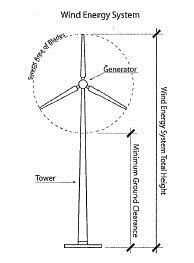
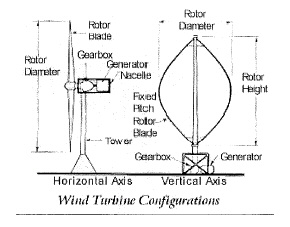
(u)
Rainwater Harvesting Systems. Rainwater harvesting systems shall be permitted as accessory uses and accessory structures in all zoning districts in the City if meeting the standards of this section.
(1)
Accessory Structures. Rainwater harvesting barrels/tanks/cisterns shall be considered as accessory structures, except that they shall not be required to meet the exterior wall standards of accessory structures, and they shall not be counted toward the square footage allotment of accessory structures.
(2)
Setbacks. Above-ground portions of rainwater harvesting systems shall not be required to meet the setback standards of accessory structures, however, they shall adhere to the building/structure setbacks in Article VI, Section 6 of this code and may take advantage of setback exceptions offered for roof overhangs, fireplaces, bay windows and similar projections as well as porches, patios, balconies and other similar projections if such systems otherwise meet the standards of this section.
(3)
Screening. A rainwater harvesting system shall either be screened from view by at least sixty percent (60%) from any street or public rights-of-way, or shall be integrated into the design of the structure as a compatible architectural element of the structure. To be a compatible architectural element, a rainwater harvest system shall utilize consistent or compatible exterior materials and design elements of the primary structure in the opinion of the Planning Director.
(4)
Permits. A rainwater harvesting system shall be subject to the permitting rules of the Building Permits Division. To provide an incentive for rainwater harvesting systems, there shall be no permitting fee for such systems except what is required to reimburse the City for any direct costs the City may incur in the permitting process. Direct costs may include, but are not limited to, outside agency or consultant review fees and materials or equipment purchased for inspection or testing of rainwater harvesting systems. Such direct costs shall not include salaries and normal support costs for City personnel and equipment otherwise required for City operations. Review of the permit application shall be fast-tracked. Rainwater systems of less than sixty (60) gallons shall not require a permit and shall not be subject to the preceding requirements of this section.
(5)
Private Restrictions. It shall be unlawful for neighborhood covenants and private restrictions adopted after the effective date of this ordinance to restrict rainwater harvesting systems beyond what is contained in city, state and federal restrictions except in ways that will not impact the feasibility of the system. For the purposes of this section, any requirement beyond city, state and federal restrictions that would deny the installation of a rainwater harvesting system, render the installation of a rainwater harvesting system impractical, or increase the cost of such system by more than fifteen percent (15%), is considered to impact the feasibility of the system.
(6)
Variances. Variances to this subsection may be considered by the Board of Adjustment.
(Ordinance 05-018-00 adopted 9/1/05; Ordinance 11-015-00, sec. 5, adopted 6/2/11; Ordinance 19-044-00, sec. 9, adopted 8/15/19; Ordinance 22-042-00 adopted 5/5/22)
Sec. 6. - Accessory dwellings.
(a)
Minimum Standards. An accessory dwelling must meet the following standards:
(1)
For residential districts, the accessory dwelling must be constructed as architecturally and physically integrated with the primary structure or to the rear of the main dwelling, separate from the main dwelling.
(2)
The accessory dwelling shall be constructed only with the issuance of a Building Permit and shall be constructed out of the same or better material(s) as the main structure.
(3)
The accessory dwelling shall not be sold separately.
(4)
Setback requirements shall be the same as for the primary structure (or garage if connected with the garage).
(5)
Accessory dwellings are not permitted without the primary structure.
(6)
Accessory dwellings shall contain a minimum of 400 square feet of living area and a maximum of 900 square feet of living area or 40% of the gross living area of the primary dwelling, whichever is greater.
(7)
Either the principal or accessory dwelling unit shall be owner occupied.
(b)
Maximum height of an accessory dwelling unit shall be two (2) stories or thirty (30) feet.
(c)
No more than one accessory dwelling unit per lot is allowed in a residential or industrial district.
(d)
Parking for an accessory dwelling unit shall not be less than one (1) parking space per accessory dwelling unit and shall not be required to exceed four off-street parking spaces per single-family lot.
(e)
The LUE requirement (whether a whole LUE or any fraction thereof) for an accessory dwelling unit shall be counted toward the maximum number of LUEs available to be issued in the City, and in the subdivision within which the lot is platted.
(f)
In addition to compliance with all applicable city codes and regulations including, but not limited to, those dealing with building, plumbing, electrical, fire, safety, health and sanitation, property maintenance and rental housing licensing, the construction, occupancy and use of an accessory dwelling unit shall be controlled by the following restrictions:
(1)
An accessory dwelling unit can be constructed concurrently with, but not before, a principal residence or primary building.
(2)
A separate water and sewer tap shall be obtained for each accessory dwelling unit. The cost of each such separate tap for accessory units shall be the same cost as a water or sewer tap for the primary single-family dwelling units. Impact fees for both water and wastewater shall be paid and LUEs issued for each such accessory unit as required by ordinance. Not less than 1/2 of a water LUE and 1/2 of a wastewater LUE shall be required for each accessory unit; and the number, or fraction thereof, of an LUE required shall be as provided in the Fee Schedule. LUEs shall be counted and credited as they are allocated, whether in whole numbers or in fractions thereof.
(Ordinance 05-018-00 adopted 9/1/05)
Sec. 7. - Temporary buildings and structures.
(a)
Purpose. Temporary buildings and structures, as set forth below, are declared to have characteristics which require certain controls in order to ensure compatibility with other uses in the district within which they are proposed for location.
(b)
Temporary Building Standards.
(1)
No temporary building or structure shall be erected in any required setback area.
(2)
Temporary buildings providing classrooms for schools, religious institutions and other similar facilities may be permitted only where such buildings are part of an approved site plan for future development of the site.
(3)
Temporary buildings, where permitted, are subject to site plan approval. The Director of Planning may require buffering or screening.
(4)
Temporary buildings shall not be placed between a principal building and a street, or in any street yard of the principal building. Temporary buildings shall not interfere with on-site circulation.
(5)
Temporary buildings are permitted only on property which has a permanent building and shall be considered as an accessory structure.
(6)
If approved, temporary buildings shall be issued a temporary certificate of occupancy for a period not to exceed two years. Extensions may be issued by the Building Official if the applicant can demonstrate that progress is being made on the planning, design and/or construction of permanent facilities or for the removal of the temporary building(s).
(c)
Use of Model Home as Temporary Sales Office. The following regulations shall apply to the use of model homes as temporary sales offices:
(1)
The use of a model home as a temporary sales office may be located within residential districts as part of an ongoing residential development, provided that the office is directly and exclusively related to sales of dwelling units within the respective residential subdivision or development.
(2)
The Building Official shall ensure that each use of a model home as a temporary sales office is issued only a temporary certificate of occupancy. The temporary certificate of occupancy shall expire in two years, except as described below or renewal upon it being established that the conditions of approval still exist.
(3)
If a model home is used as a temporary sales office, the sales office shall be removed no later than when certificates of occupancy have been issued to 90 percent of the residential units proposed for the development.
(4)
If any garage space has been used as office space, it shall be converted back to a garage for automobile parking prior to the issuance of a certificate of occupancy for use as a home.
(5)
Temporary sales offices shall only be located in model homes.
(d)
Contractors' Offices and Equipment Sheds. Contractors' offices and equipment sheds containing no sleeping or cooking accommodations are permitted in any district when accessory to an ongoing construction project. Such use shall be removed prior to the issuance of a certificate of occupancy for the associated construction project.
(Ordinance 05-018-00 adopted 9/1/05)
Sec. 8. - Home occupations.
A home occupation is an occupation that is incidental and secondary to the primary use of the premises as a residence and that is conducted in a residential dwelling unit by a member of the occupant's family. A home occupation is permitted subject to compliance with this section and with the condition that such use does not include any activity that is detrimental or injurious to adjoining property. A home occupation must meet all of the following conditions:
(a)
A home occupation shall be conducted entirely within a completely enclosed structure.
(b)
External evidence of the occupation shall not be detectable at any lot line. The interior/exterior of the dwelling shall not be structurally altered to comply with nonresidential construction codes, nor shall additional structures be built on the property to accommodate the home occupation.
(c)
A home occupation shall have no outside storage either on a temporary or overnight basis. Not more than one vehicle of not greater than three-quarter-ton rated capacity, which indicates, by signage or other means, that it is used in a business, shall be parked on residentially zoned property or in a public street or alley adjacent to residentially zoned property. No vehicle used in connection with a home occupation which requires a commercial driver's license to operate shall be parked on the lot or on any street adjacent to the lot.
(d)
A home occupation shall have no exterior advertisement, sign or display, on or off the premises.
(e)
A home occupation shall have no modification or activity which would indicate from the exterior of the structure that the premises are being used for anything other than a dwelling unit.
(f)
A home occupation shall not employ more than one person other than members of the immediate family (whether such family member is an occupant of the house or not) or lawful occupants residing on the premises.
(g)
The occupation shall not change the residential character of the lot and dwelling, nor alter the exterior appearance of the principal building from that of a dwelling for human habitation, nor require the installation of machinery or equipment other than that customary to domestic, hobby, craft, artisan, standard office, or ordinary household activities.
(h)
A home occupation shall have no exhibits or displays of goods, wares or merchandise unless the property is zoned for such use.
(i)
No home occupation shall be allowed which is offensive by reason of odor, noise, dust, smoke, hours of operation, debris, noxious fumes, vibration, excessive lighting or manner of operation.
(j)
A home occupation shall not create a fire hazard; health hazard; air, land or water pollution hazard; explosion hazard or accumulation of pests, rodents, flies or vermin.
(k)
The occupation shall be conducted as an accessory use that is clearly incidental and secondary to the residential use of the premises, shall not use an area exceeding 25 percent of the gross floor area of the dwelling, nor cause a substantial increase in any utility usage.
(l)
Nothing herein shall be construed to allow animal breeding or hospitals, pet grooming, commercial kennels, commercial stables, veterinary offices, clinics, hospitals, barbershops, beauty parlors, contractor's yards, dancing schools, junkyards, lodging houses, "bed and breakfast" lodges, massage parlors/therapy clinics, restaurants, rental outlets, or vehicle repair shops as home occupations.
(m)
The home occupation shall not generate customer-related vehicular traffic in excess of three vehicles per twenty-four-hour day.
(Ordinance 05-018-00 adopted 9/1/05)
Sec. 9. - In-home day care.
(a)
Intent. The intent of this section is to establish regulations for the operation of an In-Home Day Care that supports small-scale child care, preserves neighborhood character, and ensures compliance with state requirements. Dwellings that are modified to accommodate an In-Home Day Care must comply with the requirements of this ordinance applicable to the property upon which the dwelling is located.
(b)
General Requirements.
(1)
All day care facilities shall be registered with or licensed by the State, as appropriate, and meet the minimum requirements for such facilities.
(2)
Outdoor play or instruction areas, playground equipment, and pools shall be located in the side or rear yards and screened from adjacent property by an opaque fence no less than six (6) feet in height.
(3)
Day care facilities in residential zoning districts may only operate between the hours of 6:00 a.m. and 7:00 p.m. Hours of operation are not limited for day care facilities in other Non-Residential Zoning Districts unless otherwise stated in the ordinance.
(c)
In-Home Day Care Occupancy.
(1)
An In-Home Day Care serving six (6) or fewer children is permitted without a permit from the City.
(2)
An In-Home Day Care serving up to an additional six (6) children is permitted if the following requirements are met:
i.
A permit issued by the City is required for an In-Home Day Care that exceeds six (6) children.
ii.
A site plan shall be provided demonstrating the traffic circulation during drop-off and pick up of children as part of the permitting process. Traffic queuing shall not block driveways or intersections. If additional improvements are required, a site development permit is required.
iii.
Off-street parking shall be provided for employees and visitors.
iv.
Outdoor play areas shall be located to the side or rear of the primary dwelling and shall be a minimum of twenty (20') feet from the property line.
(Ord. No. 26-037-00, § 5, 7-16-2026)
Editor's note— Ord. No. 26-037-00, § 5, adopted July 16, 2026, renumbered the former §§ 9—13 as §§ 10—14, respectively, and enacted a new § 9 as set out herein. The historical notation has been retained with the amended provisions for reference purposes.
Sec. 10. - Family homes and group homes.
(a)
Not more than two supervisory personnel may reside in a Family Home or in a Group Home, Class 1 at one time.
(b)
Not more than three supervisory personnel may reside in a Group Home, Class 2 at one time.
(c)
Not more than three supervisory personnel may reside in a Group Home, Class 3 at one time.
(d)
Family Homes and Group Homes shall comply with the Building and Fire Codes of the City at all times, and shall be inspected by the Fire Department from time to time.
(e)
Each Family Home and each Group Home must be licensed by the State of Texas, and must remain in compliance with the applicable Standards for Personal Care Facilities set by the Texas Department of Human Services.
(f)
A person that is using alcohol or a controlled substance not prescribed by a licensed physician shall not be permitted to reside in a Family Home or Group Home.
(g)
A Family Home or a Group Home shall not permit or allow any person to reside in the Family Home or Group Home if that person has been convicted of rape or sexual abuse or assault of a child. The City Council may waive this requirement and limitation if full disclosure is made to the Planning & Zoning Commission and the City Council and a Special Use Permit is approved for the facility.
(h)
Except for Family Homes and Group Homes that provide residential service only to disabled persons sixty years of age or older, a Family Home or a Group Home may not be located within 500 feet of any other Family Home or Group Home, unless the City Council waives this requirement.
(i)
Family Homes and Group Homes that are located within any Single-Family Zoning District shall comply with Article IV, Section 8, Subsections (b), (d) and (e) of the Zoning Ordinance.
(j)
A Group Home-Class 3 may not be located within 1,000 feet of a park, public or private school, or day care facility.
(k)
A Group Home-Class 3 may not be located within 400 feet of any property that is deed restricted, permanently zoned or occupied for any single-family, two-family or multifamily use.
(l)
All distances for separation of uses in this section shall be measured from the front door of the Group Home/Family Home to the nearest point of a property line of the protected use, or to the front door of another Group Home/Family Home. The distance shall be measured as the most direct straight line distance between these points.
(m)
It is the policy and practice of the city to provide reasonable accommodations to individuals with disabilities, which allows for the modification or exception to the city's zoning codes and regulations, to ensure equal access to housing and to facilitate the development of housing for individuals with disabilities. A review process exists to consider requests for reasonable accommodation in order to eliminate barriers to housing opportunities for persons with disabilities. A request for reasonable accommodation to accomplish the goals and policies of the Fair Housing Act (42 U.S.C. 3601) may be authorized as a Reasonable Accommodation Special Use Permit pursuant to Article IV, Section 2. Reasonable accommodation is encouraged where such accommodation may be necessary to afford persons or groups of persons with disabilities an equal opportunity to use and enjoy housing.
(Ordinance 11-014-00, sec. 3, adopted 6/2/11; Ordinance 18-075-00, sec. 5, adopted 12/6/18; Ord. No. 26-037-00, § 5, 7-16-2026)
Editor's note— See editor's note at art. IV, § 9.
Sec. 11. - Mobile food establishment park & mobile food establishment temporary use.
(a)
Intent. The intent of this section is to provide regulations for the development of Mobile Food Establishment Parks as well as provide provisions for Mobile Food Establishment Temporary Use as a temporary use on site that are already developed for commercial purposes.
(b)
General requirements.
(1)
Mobile Food Establishments shall not locate on public streets, sidewalks, required parking areas needed to meet minimum parking requirements for the primary use, fire lanes, or blocking access drives.
(2)
Mobile Food Establishments shall not be located within one hundred fifty (150') feet of a residential dwelling unit. This measurement shall be measured from the property line of the dwelling unit to the closest point of the Mobile Food Establishment.
(3)
Mobile Food Establishments, generators, and other equipment shall be maintained and be in operable condition at all times.
(4)
No trash or grease shall be left on site after the departure of the Mobile Food Establishment.
(5)
Exterior finishes shall be maintained with minimum property, structural, and health standards.
(6)
Mobile Food Establishments shall remain on wheels and drivable or with the hitch in place.
(7)
Mobile Food Establishments shall have an up to date registration and license.
(8)
The property owner authorization shall be provided prior to operating a Mobile Food Establishment on private or public property.
(9)
All signage for the Mobile Food Establishment shall be on or attached to the vehicle. "A" Frame signs may be used for menu items internal to the site.
(10)
All Mobile Food Establishments shall maintain a permit in compliance with the Williamson County and Cities Health District regulations and City regulations.
(c)
Mobile Food Establishment Parks. In addition to the general requirements listed in this section, Mobile Food Establishment Parks shall also comply with the following.
(1)
A special use permit is required.
(2)
A site development permit is required demonstrating compliance will all ordinance requirements. This permit shall provide a plan for the location of the Mobile Food Establishments, parking, amenity areas, restrooms, driveways, sidewalks, and refuse containers. Setbacks associated with the zoning district shall apply to the Mobile Food Establishment Park. Parking areas may be comprised of crushed granite with a ribbon curb.
(3)
Restrooms. Permanent restrooms within a permitted building or structure shall be provided onsite within the Mobile Food Establishment Park for the use by the Mobile Food Establishments and the Mobile Food Establishment customers, operators, and employees. The number of and type of restrooms shall be determined based on the occupant load of the Mobile Food Establishment Park. These restrooms shall be available for use during the Mobile Food Establishment Park hours of operation. No portable or temporary restrooms shall be allowed.
(4)
Hours of Operation. Hours of operation for the general public shall be between 7:00 a.m. to 10:00 p.m. Sunday through Thursday, and between 7:00 a.m. and 11:00 p.m. Friday and Saturday.
(5)
Common Area. Each Mobile Food Establishment Park shall be required to provide two hundred (200) square feet of common area per Mobile Food Establishment. The area should be a minimum of ten (10') feet in width. Common area shall include outdoor eating areas, open space, playscape, covered gathering space, or other similar uses.
(6)
Parking. See Article VI, Section 3.
(7)
An annual permit from the City for each calendar year is required for a Mobile Food Establishment Park. This permit shall be requested each year in January 1.
i.
The property owner shall be responsible for obtaining the permit.
ii.
The property owner shall attest that al Mobile Food Establishments within the Park have the required permits from the health district and that all inspections by the Fire Department have been completed.
iii.
This permit may be revoked if the Mobile Food Establishment Park is found to be out of compliance with the health department or the City's regulations.
iv.
The Mobile Food Establishment Park shall have a manager and the contact information for the manager shall be provided with the annual permit.
(8)
Certificate of Completion. Each Mobile Food Establishment Park shall be required to receive a certificate of completion for the site improvements prior to the operation of Mobile Food Establishments.
(d)
Mobile Food Establishment Temporary Use.
(1)
Upon issuance of a permit pursuant to the Code of Ordinances, a Mobile Food Establishment is permitted as an accessory use supporting the following uses:
i.
Property located within a LO (Local Office), LC (Local Commercial), GC (General Commercial), HC (Heavy Commercial), and HI (Heavy Industrial) use components, which contains an operational business;
ii.
Places of worship;
iii.
Apartment complexes;
iv.
Parks and recreation facilities;
v.
Homeowner Association owned common areas; or
vi.
Public or private education facilities.
(2)
Hours of Operation.
i.
Hours of operation for the general public shall be between 7:00 a.m. to 10:00 p.m. Sunday through Thursday, and between 7:00 a.m. and 11:00 p.m. Friday and Saturday.
(3)
Restrooms located within a permanent building that has been issued a valid certificate of occupancy shall be provided for the use of the Mobile Food Establishment's customers, operators and employees. Such restroom(s) must remain open and available for use at all times during which the Mobile Food Establishment is situated on the operation site. No portable or temporary restrooms shall be allowed.
(4)
Number of Mobile Food Establishment per property. Sites smaller than one (1) acre are prohibited from having more than two (2) Mobile Food Establishment on-site at any time.
(Ordinance 22-042-00 adopted 5/5/22; Ord. No. 26-037-00, § 5, 7-16-2026)
Editor's note— See editor's note at art. IV, § 9.
Sec. 12. - Entertainment Overlay.
(a)
Intent. The intent of the Entertainment Overlay is to allow for the development of property as a destination and entertainment venue that will be used to promote a vibrant and active place, thereby providing residents and employees opportunities to socialize and be entertained within the City. Each Entertainment Overlay may either include multiple properties or one large property creating a functional site that supports adequate space to handle parking, circulation and pedestrian activities. Establishing an Entertainment Overlay will be permitted only in accordance with the City's Comprehensive Plan and this ordinance.
(b)
Application. Unless modified by the ordinance establishing the Entertainment Overlay for particular properties, the provisions of this section shall be in addition to all other provisions of the underlying zoning district. This district may relax certain standards for development.
(c)
Criteria. In order for a property to be designated with the Entertainment Overlay, the property shall include entertainment uses that promote vibrant and active public uses that include amusement activities, theaters, plazas, outdoor seating areas, outdoor cafes, destination locations, and uses listed in Section (d) below.
(1)
The property shall include entertainment uses in addition to the uses permitted by right in the base zoning district.
(2)
The ordinance adopting the Entertainment Overlay will take effect when entertainment uses are established on the property through the issuance of a certificate of occupancy.
(3)
If the entertainment uses cease operation, the Entertainment Overlay shall expire after six (6) months.
(4)
If the entertainment uses substantially change, an amendment is required to be submitted for review and action by the Planning & Zoning Commission and City Council. The Director of Planning may approve minor amendments to the uses.
(5)
An Entertainment Overlay shall either include:
i.
Multiple properties, or
ii.
One (1) unified development under common ownership with a minimum of ten (10) acres unless otherwise approved by the establishment of the overlay.
(d)
Entertainment Overlay Permitted Uses.
(1)
All uses permitted by the base zoning district of the property;
(2)
Banquet Hall or Events Center;
(3)
Bar or Private Club;
(4)
Brewpub;
(5)
Entertainment venues including theaters, amusement parks, arenas, stadiums, commercial sports venues;
(6)
Farmer's Market Temporary Use
(7)
Hotels, Full Service
(8)
Hotels, Boutique;
(9)
Microbrewery, Microdistillery, or Microwinery;
(10)
Mobile Food Establishment Temporary Use and Park in compliance with Article, IV, Section 10 of the Composite Zoning Ordinance;
(11)
Night Club;
(12)
Outdoor Music
(13)
Restaurants with outdoor patios;
(14)
Theatre, Indoor; and/or
(15)
Any similar uses as permitted by the Director of Planning.
(e)
Alcoholic Beverage Sales and Service.
(1)
Alcoholic beverages may be sold and/or served for on or off-premises consumption on property located within the Entertainment Overlay that is developed and used for the uses listed in (d) above subject to the terms of the permit or license issued to the owner or operator of the property by the Texas Alcoholic Beverage Code, as amended.
(f)
Hours of Operation.
(1)
There shall be no hours of operation except as follows:
a.
Property located in the Entertainment Overlay District and developed and used as a Bar, Private Club, or Night Club shall not be open for business to the public between 2:00 a.m. and 8:00 a.m. any day of the week.
b.
Outdoor Music shall not be allowed between the hours of 10:00 p.m. and 7:00 a.m. when located within five hundred (500') feet of a structure zoned and/or used for residential purposes.
(g)
Lighting. Alternative lighting is permitted in an Entertainment Overlay. Lighting such as string lights within centers and outdoor gathering spaces are permitted. Any alternative lighting shall meet the intent of the Composite Zoning Ordinance and shall be oriented so that light intensity or brightness is directed away from public right-of-way or adjacent residential properties zoned or used for residential.
(h)
Parking.
(1)
A parking reduction may be considered for Multi-Occupant Centers of up to ten (10%) percent of the ordinance requirements when shared parking facilities are proposed.
(2)
Outdoor seating areas shall not be counted towards the parking requirements.
(i)
Process.
(1)
An Entertainment Overlay shall be processed as part of a zoning application to establish the overlay. The request shall be referred to the Planning & Zoning Commission for study and report concerning the effect of the proposed use on the Comprehensive Plan and on the character and development of the neighborhood and final approval by the City Council. Notice shall be given and public hearings held in the same manner as for all other zoning and rezoning applications.
(2)
Each Entertainment Overlay shall be individually identified and may include conditions to accommodate unique features of the area such as surrounding developments, including modifications to the provisions of this Section.
(Ord. No. 24-065-00, § 7, 7-18-2024; Ord. No. 26-037-00, § 5, 7-16-2026)
Editor's note— See editor's note at art. IV, § 9.
Sec. 13. - Farmers' Market.
(a)
Intent. The intent of this section is to provide regulations for the development of a Farmers' Market as a permanent use and a temporary use. Farmers' Markets are permitted by right on property with an Entertainment Overlay unless otherwise prohibited. Otherwise, a Special Use Permit is required to establish a Farmers' Market.
(b)
General requirements.
(1)
A special use permit is required for a Farmers' Market located outside of an Entertainment District.
(2)
A Farmers' Market shall not be operated more than twenty-four (24) hours per week and more than twelve (12) hours in any twenty-four (24) hour period.
(3)
At least forty (40%) percent of the vendors shall be food item vendors whose products are Locally Produced.
(4)
At least forty (40%) percent of the cumulative square footage area of all vending booths at the farmers' market must consist of locally produced agricultural products.
(5)
All vendors shall comply with the state licensing requirements.
(6)
The food manufacturing, food distribution, or food wholesale license must be prominently displayed at the vendor's booth throughout the duration of each farmer's market session.
(7)
Any processed foods must be commercially pre-packaged.
(8)
All vendors shall comply with applicable health and safety laws and state regulations. Each vendor at a farmer's market shall meet all requirements of any other applicable law regulating the vendor's operation at the farmers' market, including but not limited to displaying of an appropriate license or permit and meeting required performance standards. The permittee shall be responsible for ensuring that each vendor complies with this subsection. If the permittee is also a vendor at the farmers' market, the permittee shall also meet all requirements of any other applicable law regulating such vendor's operation at the farmers' market.
(9)
Each farmers' market must provide 1.25 parking spaces per vending booth.
(10)
A minimum of five (5) vendor booths or stalls shall be provided with each Farmer's Market.
(Ord. No. 24-065-00, § 7, 7-18-2024; Ord. No. 26-037-00, § 5, 7-16-2026)
Editor's note— See editor's note at art. IV, § 9.
Sec. 14. - Exceptions.
(a)
Where a legal lot or other legal tract less than the required width, depth or area established in this ordinance, and in existence on the effective date of this ordinance, these lot size requirements shall not prohibit the erection of one primary structure for occupancy for a use permitted within the district in which the lot or tract is located.
(b)
Where a preliminary plat or concept plan, filed or approved prior to the effective date of this ordinance and compliant with the minimum requirements in effect when filed or approved, shows lots less than the required width, depth or area established in this ordinance and does not expire prior to submission of a final plat, the final plat may be approved with the lot sizes as approved on the preliminary plat or concept plan.
(c)
Special consideration for the width and depth of cul-de-sac lots will be given as long as they meet the minimum area requirement of their respective district.
(Ordinance 05-018-00 adopted 9/1/05; Ordinance 11-014-00, sec. 2, adopted 6/2/11; Ord. No. 24-065-00, § 7, 7-18-2024; Ord. No. 26-037-00, § 5, 7-16-2026)
Editor's note— See editor's note at art. IV, § 9.

