
Millwood City Zoning Code
CHAPTER 17
24 - C-2 LOW-INTENSITY COMMERCIAL MIXED USE ZONE CENTRAL BUSINESS DISTRICT
17.24.005 - [Purpose and intent.]
The purpose of the C-2 low-intensity commercial/mixed use zone is to provide housing opportunities and retail and professional services to a limited trade area. The zone should be developed on pedestrian scale to accommodate neighborhood and local community shopping needs, to provide variety in housing and to create recreation opportunities without negatively impacting adjoining neighborhoods. C-2 zones shall be grouped along arterials and within one-fourth mile of a public transit route and should be designed to accommodate pedestrians. The zone should create an urban neighborhood and, in addition, serve several neighborhoods within walking distance or within a few miles allowing for short driving distances from home to the zone. The zone should serve as a buffer between residential zones and arterial roads thereby providing an appropriate land use transition.
In 1928, Millwood became the first incorporated Town in the Spokane Valley. The mill, the historic homes west of the mill and the downtown area that was to become the C-2 zone, were already in existence. The city has developed a unique character and ambience based on the community's residential and commercial structures, combined with the natural setting along the Spokane River. Millwood has an overall character and environment which is cherished by its residents and instantly recognized by visitors.
These guidelines contain a clear statement of community expectations to assist property and business owners. These guidelines are intended to establish a balance that preserves and enhances the city's livability and sense of place while supporting the economic vitality that provides the resources for community services and makes Millwood a complete community.
For uses permitted in the C-2 zone, see Table 17-1.
(Ord. No. 527, § 1, 6-14-2022)
17.24.010 - Development standards.
The following development standards apply when:
A.
Original floor area is increased by more than thirty (30) percent; or
B.
More than fifty (50) percent of the building interior is changed to support a new purpose; or
C.
More than fifty (50) percent of any façade visible from the street is changed.
Main Entrance. Structures may use the front, the side or the rear for a main entrance. Garages shall not have entrances or exists onto side or front yards.
Rear Access. There shall be a twenty-foot setback from the rear property line maintained for rear access.
Access. Access to structures by way of a paved alley is permitted
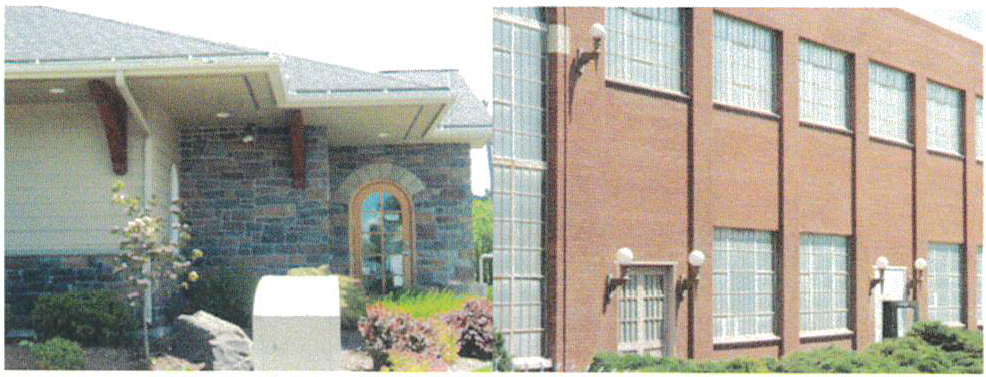
Building Design. The design of the development and structures should be on a neighborhood/pedestrian scale and take into consideration the design details of the surrounding neighborhood. Exterior construction materials should be brick, brick facade, siding, tile or other appropriate materials. Metal siding and metal pole buildings shall not be placed in the C-2 zone. At least seventy-five (75) percent of the width and fifty (50) percent of the overall ground level wall area facing a public street or walkway of any new or altered building shall be devoted to interest-creating features such as pedestrian entrances, transparent display windows, or windows affording a view into retail or lobby spaces. Blank walls are not permitted on street frontage.
1.
Building Facades:
a.
Facades longer than fifty (50) feet shall be broken down into smaller units through the use of interest generating architectural details. Simply changing materials or color is not sufficient to accomplish this.
b.
Architectural detail shall be provided along facades visible from the street, as well as from neighboring residential areas.
2.
Prominent Entrance Implementation.
a.
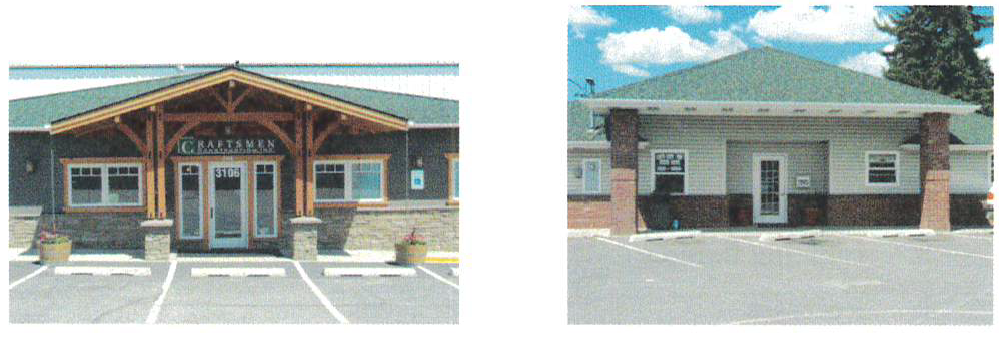
Principal entryways to the store/building shall be marked by at least one interest generating architectural element.
b.
Main entrances shall be architecturally different from secondary entrances.
c.
Weather protection. Some form of weather protection shall be provided over the entry.
3.
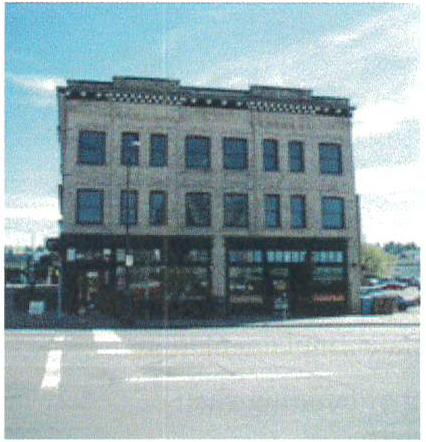
Roof Expression Implementation. Buildings with flat roofs shall have portions with pitched roofs or projecting cornices to create a prominent edge when viewed against the sky, especially to highlight major entrances.
4.
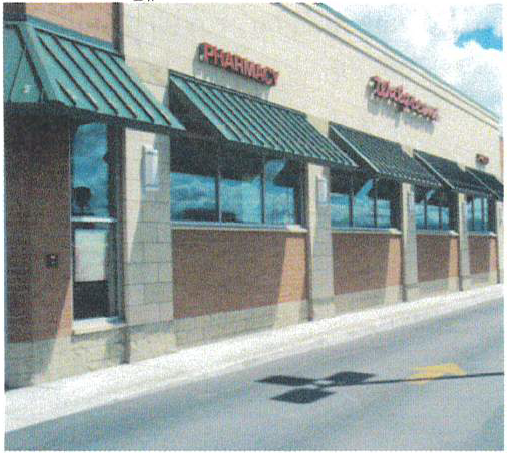
Ground floor windows: These provisions apply to nonresidential building facades between two feet and eight feet above the level of the adjacent sidewalk, walkway or ground level.
a.
A minimum of thirty (30) percent of any ground floor nonresidential building facade fronting on a street shall be comprised of windows allowing views into the interior. Display windows may be used to meet half of this requirement.
b.
For portions of facades that do not have windows, see guidelines for treating blank walls.
5.
Treating Blank Walls. Where windows are not provided on walls facing streets or visible from right-of-way, one or more of the following elements shall be incorporated:
a.
Masonry (but not flat concrete block)
b.
Concrete or masonry plinth at wall base
c.
Belt courses of a different texture and color
d.
Projecting cornice
e.
Decorative tile work
f.
Medallions
g.
Artwork such as sculptures, murals, inlays, mosaics or elements integrated with the project
h.
Lighting fixtures
i.
Recesses
j.
An architectural element not listed above, as approved by the director, that meets the intent of this section.
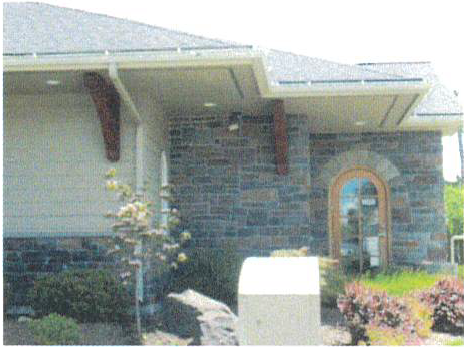
6.
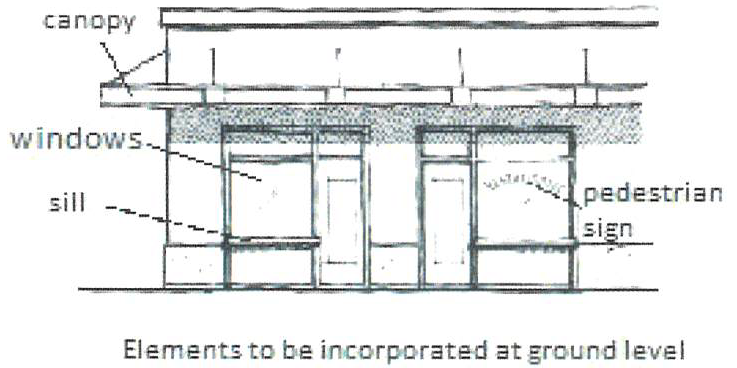
Ground Level Details Implementation.
a.
Ground level of building shall be pedestrian-friendly in scale, expression and use of materials,
b.
The ground floor shall contain details such as large windows, projecting sills, pedestrian scale signs, awnings and/or canopies.
E.
Signage. Pole signs and freestanding reader boards shall not be placed in the C-2 zone. Building-mounted or monument style signs shall only be allowed to a maximum of thirty-two (32) square feet. All other requirements of Chapter 17.40 of this title shall apply.
F.
Procedure for Exception. Design standards that may be unsuitable for a given project may be waived by the planning commission if an applicant can demonstrate that there is a good reason why the standard is inappropriate. The planning commission may approve an alternative that achieves the intent of this chapter after finding that:
1.
For a specific project the underlying design principles will not be furthered by the application of the standard;
2.
Another design principle is enhanced by not applying the standard; or
3.
Explaining the unique site factors that make the standard unworkable, such as lot size and shape, slope, natural vegetation, drainage, or characteristics of adjacent development.
Increases in the cost of development will not be an acceptable reason to waive a standard or determine that a standard is inappropriate.
Appeals of staff decisions may be made to the planning commission.
(Ord. No. 527, § 1, 6-14-2022)
17.24.020 - Landscaping.
Where setbacks exist, landscaping shall be required along arterials and shall include appropriate street trees as determined by the city. Street trees shall be chosen from the current list of acceptable trees kept and maintained by the Millwood Beautification and Tree Board. Landscaping shall be required along streets other than arterials within the prescribed setback and shall consist of shrubs and approved street trees. Street trees shall be planted within fifteen (15) feet of the property line. All landscaping shall be maintained in a living condition and shall be replaced as necessary.
(Ord. No. 527, § 1, 6-14-2022)
17.24.030 - Off-street parking.
No parking shall be allowed between the sidewalk and any building façade. All onsite parking must be improved, including paving and stormwater control. Parking whether onsite or offsite, shall be required at one space per each one thousand (1,000) square feet of retail, office, and commercial space plus one space per residential unit. Accessibility requirements shall be met. In addition to parking areas, all stopping, and roadway or driving areas shall also be improved with pavement. Sharing parking lots shall be allowed in the C-2 zone. Businesses using shared spaces are liable for the care, maintenance, snow removal and stormwater discharge.
(Ord. No. 527, § 1, 6-14-2022)
17.24.040 - Fencing and screening.
A sight-obscuring screen must be provided and maintained where a C-2 zoned parcel directly abuts a residentially zoned property if the residential property is not located along an arterial street. The screen must be a minimum of five feet tall and may either be a sight-obscuring fence of landscaping.
(Ord. No. 527, § 1, 6-14-2022)
17.24.050 - Storage.
No premises in the C-2 zone shall be used as a storage area for any purpose other than storage of materials required in connection with permitted uses identified in Table 17-1. The storage of substances, including chemicals and fertilizers which may affect the aquifer must be reviewed and approved by the Spokane Valley Fire Department. Storage areas must conform to the minimum setback regulations of the zone. Storage areas shall be paved.
(Ord. No. 527, § 1, 6-14-2022)

