
Moraga City Zoning Code
CHAPTER 8
04 - GENERAL PROVISIONS AND DEFINITIONS
8.04.010 - Interpretation and conflict.
This title controls where it imposes a greater restriction on enlargement or use of a building or premises than is imposed or required by former provision of law or ordinance, or previously issued permit. If this title conflicts with them the Uniform Building Code or other provision of this code, the most restrictive applies.
(Prior code § 8-1101)
8.04.020 - Definitions.
The definitions in this section govern the construction of this title unless the context otherwise requires:
"Accessory building" is a subordinate detached building the use of which is incidental to that of a primary building on the same lot. Examples of accessory buildings include, but are not necessarily limited to, a garage, carport, guesthouse, greenhouse, poolhouse, playhouse, and shed.
"Accessory structure" is a subordinate structure the use of which is incidental to that of a primary building or structure on the same lot. Examples of accessory structures include, but are not limited to, a shipping container, pergola, arbor, trellis, patio cover, outdoor kitchen, deck, and cistern.
"Accessory use" is a use incidental and accessory to the primary use of a lot, or a use accessory to the primary use of a building located on the same lot.
"Adult day care center" means a state-licensed facility that provides nonmedical care and supervision for dependent adult clients for periods of less than twenty-four-hour per day for any client.
"Adult (sex-oriented) business" means a business establishment or concern which as a regular and substantial course of conduct offers, sells or distributes adult-oriented material or sexually oriented merchandise, or which offers to its patrons materials, products, merchandise, services or entertainment characterized by an emphasis on matters depicting, describing, or relating to specified sexual activities or specified anatomical areas.
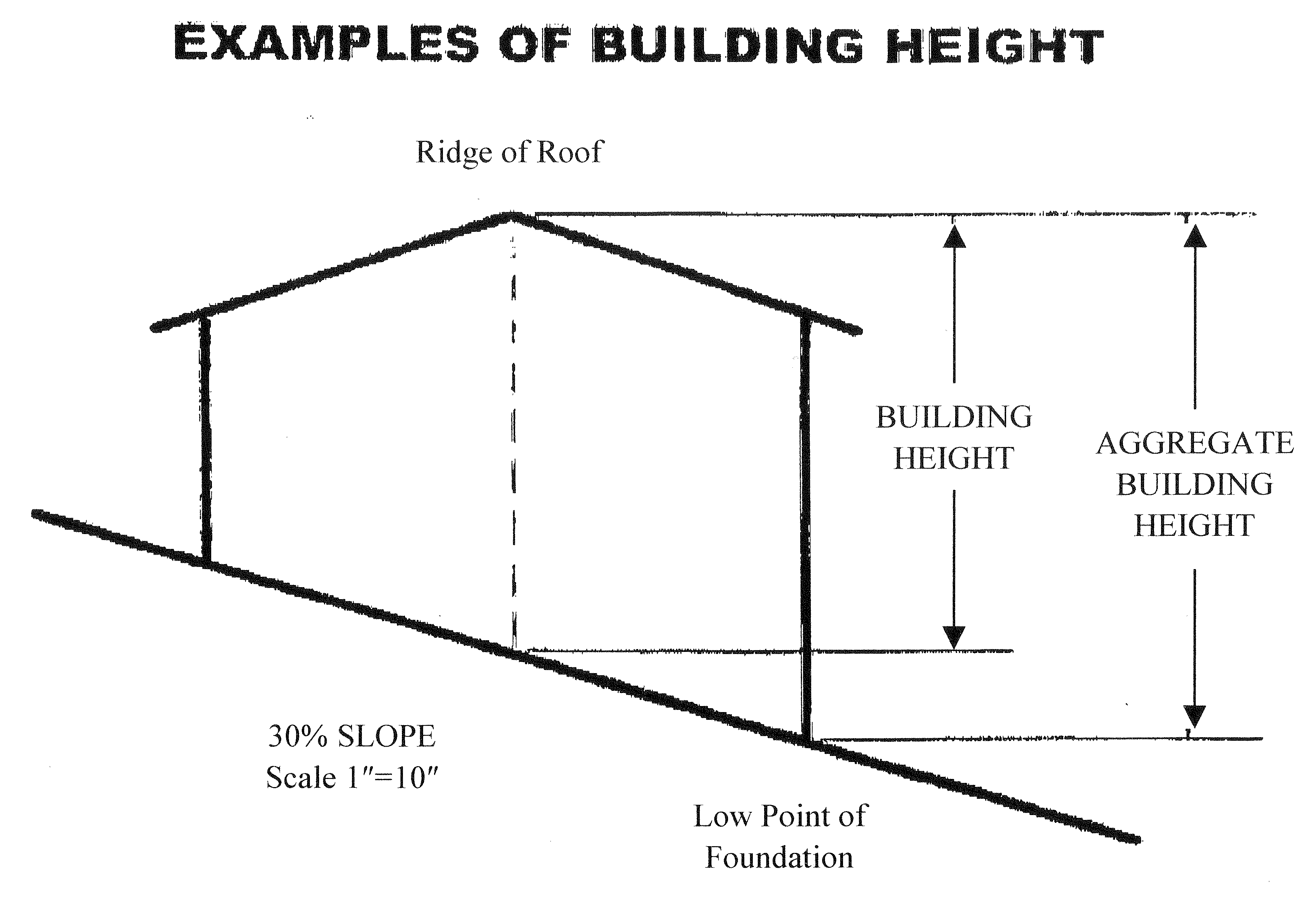
"Aggregate building height" applies to structures on sloped lots where the structure is stepped down the slope and the height is measured from the highest point of the roof or parapet wall to the lowest point of the foundation at the approved grade.
"Agriculture" means the tilling of soil, the raising of crops, horticulture, dairying, and the raising and managing of livestock, including all uses customarily incident, and the necessary accessory uses for packing, treating or storing the produce, provided that any such accessory uses shall be secondary to that of normal agricultural activities, but not including cannabis, slaughterhouses, fertilizer yards, bone yards, plants for the reduction of animal matter, or any other industrial use which may be objectionable because of odor, smoke, dust, or fumes.
"Ammunition" shall have the same definition as provided in California Penal Code Section 16150 and includes handgun ammunition as defined in Penal Code Section 16650, but does not include blanks, blank cartridges or ammunition that can be used solely in an antique firearm.
"Animal services" means any of the following:
A.
"Boarding, kennel" means a commercial establishment that provides overnight boarding for household pets as a paid service and/or breeding services. This classification does not include animal hospitals that provide twenty-four-hour accommodations for animals receiving medical services. (See also "Hospital, veterinary clinic" under "Animal services").
B.
"Dog day care, dog training" means a commercial establishment that provides less than twenty-four-hour keeping, boarding, or training for household pets as a paid service. This classification does not include facilities that provide overnight accommodations.
C.
"Grooming" means a commercial establishment that provides household pet grooming services with no boarding services.
D.
"Hospital, veterinary clinic" means office and indoor medical treatment facilities used by veterinarians, including large and small animal veterinary clinics, and animal hospitals. (See also "Boarding, kennel" under "Animal services").
"Antique, collectible stores" means a retail establishment that sells antiques, curios, gifts and souvenirs, and collectible items including sports cards and comic books. This classification does not include stores selling other types of secondhand items, including clothing, household items, or furniture, including consignment stores or pawn shops (See "Restrictions" under "Retail business").
"Assembly or meeting facility" means a facility for public or private meetings, including community centers, civic and private auditoriums, Grange halls, union halls, meeting halls for clubs, lodges and other membership organizations. Also includes functionally related internal facilities such as kitchens, multi-purpose rooms, and storage. Does not include conference and meeting rooms accessory and incidental to another primary use that are typically used only by on-site employees and clients, and occupy less floor area on the site than the offices they support (See "Offices"). Does not include sports or other commercial entertainment facilities (See "Cultural institution"; "Theater, Auditorium" and "Fitness facility, health club"). Does not include religious facilities (See "Religious facilities" and "Major religious facilities").
"Attic" is that space of the building above a story and which is not habitable and may be utilized for storage. The space must be unconditioned.
"Automobile services and repair" means any of the following:
A.
"Car wash, attended" means a commercial facility for washing cars where a service attendant washes the vehicle using on-site equipment or the car operator drives through an automated car washing and drying facility. An owner or his representative is on location to participate in the operation of the facility.
B.
"Car wash, unattended" means a commercial facility where the car operator uses water hoses, soap dispensers, drying and other on-site equipment to wash the vehicle with no facility owner or representative present during the washing. For example, the customer feeds coins into a machine in order to operate the hoses and drying vacuums for a set period of time.
C.
"Gas station" means a commercial facility that sells gasoline and/or diesel fuel for the on-site fueling of individual vehicles and may include a small mini-mart, minor maintenance/repair facilities and services, and unattended car wash as incidental uses. This classification does not include vehicle or truck rentals such as U-Haul rentals or fleet services. (see "Vehicle and equipment facilities.")
D.
"Maintenance services" means an establishment that provides maintenance services as opposed to repair while customers wait, such as oil changes, tune-ups, smog checks, tire sales and installation, auto radio/electronics installation, auto air conditioning/heater service, and the sale of related parts and accessories. There is no overnight storage and most work is performed within a building or under covered bays.
E.
"Major repair/body work" means an establishment that provides major repair that may require vehicles to be stored on an overnight basis such as body and fender work, vehicle painting, transmission shops, exhaust and suspension systems, engine overhauls involving the removal of engine blocks, painting and undercoating, glass replacement, upholstery and convertible top service, radiator, transmission, and wheel and axle repair. This classification does not include vehicle dismantling or salvaging and tire retreading or recapping.
F.
"Minor repair" means an establishment that provides repair, service, alteration, restoration, painting, cleaning, or maintenance of automobiles, light-duty trucks, motorcycles, including the sale, installation, and servicing of parts, where repairs are made or service provided in enclosed bays. Activities could include auto detail or brake and muffler work.
G.
This classification does not include automobile repair when incidental to a new car dealership, and dismantling and salvage yards, or repair of heavy trucks, construction vehicles, motor homes, and recreational vehicles (see "Heavy vehicle and large equipment, sales/rental, service, and repair" under "Vehicle and equipment facilities").
"Average lot width," or "lot width" or "width of a lot" is the total area of the lot divided by the depth of the lot.
"Average predevelopment slope" means the average percent slope of a parcel, site or area at the time of a development project application submittal calculated using the following formula: S = 100(I)(L)/A, where:
S = average percent slope;
I = contour interval in feet;
L = total length of all contours on parcel or site in feet;
A = area of subject parcel or site in square feet
For a site where the town finds that slope conditions were previously modified in violation of the grading ordinance, the average predevelopment slope shall be calculated based on site conditions prior to the violation.
"Banks and financial services" means any of the following:
A.
"Bank, credit union," which means a financial institution that provides retail banking services. Examples include institutions engaged in the on-site circulation of money, including credit unions. This classification does not include check cashing businesses.
B.
"Bank with drive-through service," which means a facility where banking services may be obtained by motorists without leaving their vehicles.
C.
The above facilities may include automatic teller machines (ATM's).
D.
This classification includes state or federally chartered banks, savings associations, credit unions, or industrial loan companies and retail sellers that cash checks or issue money orders incidental to the main business.
"Banquet hall" means a space or venue intended for hosting of a party, banquet, wedding or other reception, or other social event.
"Basement" is that portion of a building between the floor and ceiling or finished floor level directly above, which is partly below and partly above finished ground surface or all below finished ground surface. If the height between the ceiling and the finished ground surface adjoining the exterior walls exceeds six feet at any point or if it is utilized as a habitable space/room, the space shall be considered a story.
"Big box retail business" means a retail establishment that is over eighty thousand (80,000) square feet that engages in the sale or rental of retail goods, wares, merchandise, services and other personal or real property.
"Building" means any structure having a roof supported by columns or walls and intended for the shelter, housing or enclosure of any individual, animal, process, equipment, goods, or materials.
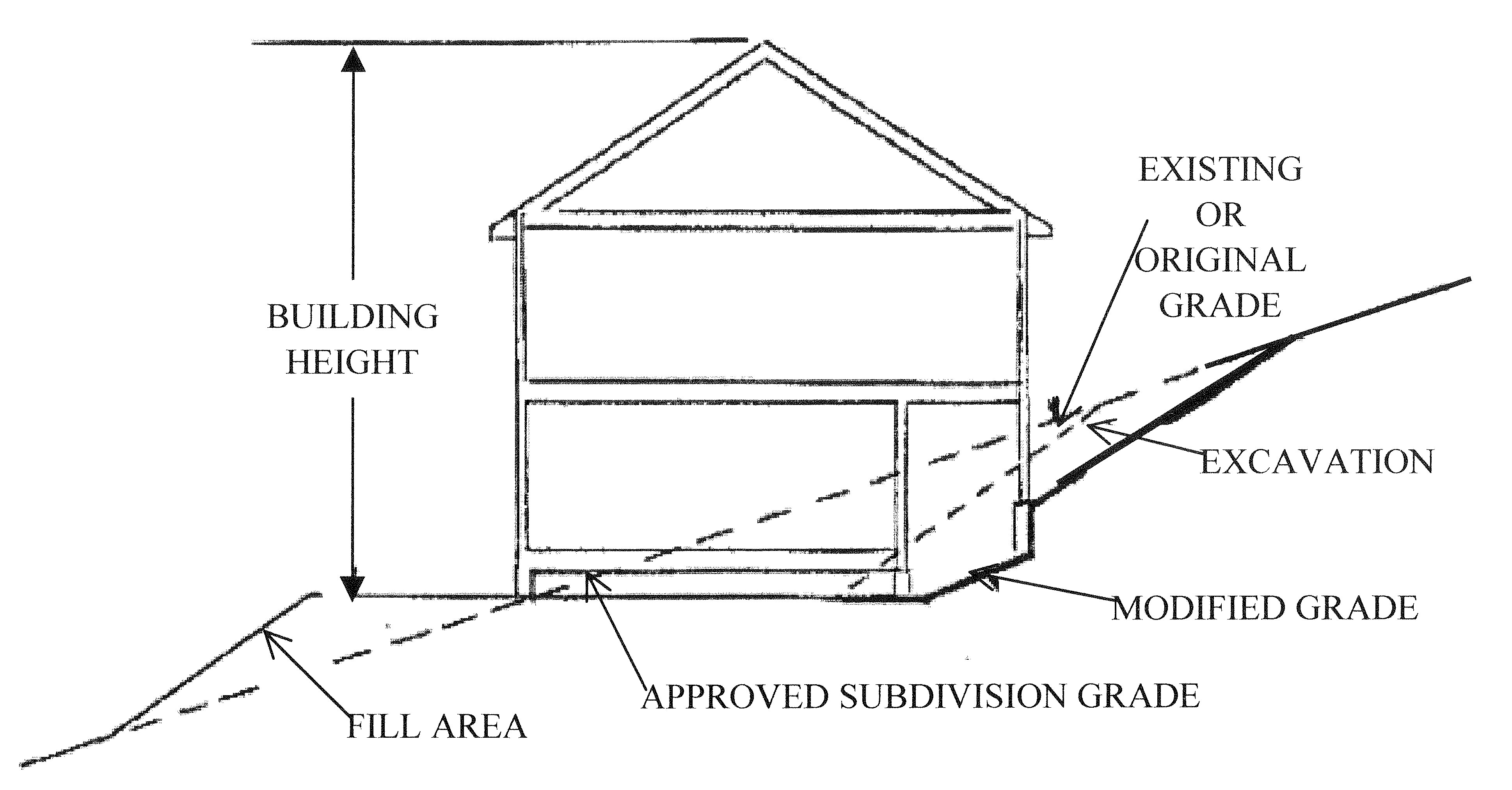
"Building height" is the vertical distance measured between any point of the roof or parapet walls and the existing grade, approved subdivision grade or approved modified grade directly beneath.
"Building materials sales and services" means an indoor or outdoor establishment selling building and landscaping materials such as cabinetry, fixtures, flooring, glass, lumber, paint, wallpaper, electrical and HVAC equipment, plants and landscaping materials including rock, stone, and masonry products to the general public. Establishments may include stores with indoor service areas and showrooms. Does not include large format retail home stores in buildings over eighty thousand (80,000) square feet (see "Big box retail business"). May include outdoor storage.
"Business support services" means an establishment that provides goods and services primarily to other businesses. Examples include:
A.
Graphics, and advertising services.
B.
Bookkeeping.
C.
Computer-related services.
D.
Copying and blueprint services.
E.
Office equipment rental and leasing.
F.
Publishing services.
G.
Secretarial, word processing and temporary clerical services.
H.
This classification does not include professional, executive, editorial, or management services. (See "Professional services.")
"Carport" is any building, whether temporary or permanent, located outside a building or attached or contiguous thereto, wholly or partly covered by a roof and having one or more open sides, used for the shelter of parked vehicles.
"Catering service" means a business that prepares food for consumption on the premises of a client or at any other location separate from where the food was prepared.
"Centerline" or "crest of a ridge" means the line running along the highest portion of the ridge for the full length of the ridge.
"CEQA" means California Environmental Quality Act.
"Child day care center" means facilities that provide nonmedical care and supervision of minors for periods of less than twenty-four-hour per day. These facilities, all of which are required to be licensed by the California State Department of Social Services, include the following:
A.
"Family day care home," as defined by Health and Safety Code Section 1596.78, means a home that regularly provides care, protection, and supervision for fourteen (14) or fewer children in the provider's own home, for periods of less than twenty-four (24) hours per day, while the parents or guardians are away, including the following:
1.
Small. A day care facility in a single-family dwelling where an occupant of the residence provides childcare for six or fewer children under the age of six or up to eight children when two of the children are at least six years of age, including children under the age of ten years who reside at the residence.
2.
Large. A day care facility in a single-family dwelling where an occupant of the residence provides childcare for seven to twelve (12) children under the age of six or up to fourteen (14) children when two of the children are at least six years of age, including children under the age of ten years who reside at the residence.
B.
"Nursery school, preschool, childcare" means a commercial or nonprofit child day care facility designed and approved to accommodate fifteen (15) or more children. Examples include nursery schools, preschools, and day care facilities. These may be operated in conjunction with a school or church facility, or as an independent land use.
"Clustered units" are defined as units sited on lots less than ten thousand (10,000) square feet in area; provided that no more than three units are attached as a building group.
"Co-housing" means a development that includes private rooms or dwelling units clustered around shared space, typically within a large house or group of houses on a parcel. Shared space typically includes a kitchen and dining area, laundry, and recreational space, which are collaboratively managed by occupants.
"Commercial dog kennel" means a premises where one or more dogs are kept and maintained for commercial purpose, including boarding, breeding, and veterinary care.
"Compact single-family housing" means attached or detached residential dwelling units of smaller size developed to accommodate members of the community, such as students, teachers, and public safety employees, who otherwise cannot find housing in the area.
"Congregate care housing" means housing for senior citizens with individual living units which provides residents with central management, a minimum of one meal per day in a central dining facility, transportation services, recreational activities and facilities, and social activities and facilities. Examples include assisted living facilities and memory care units. These facilities may also include additional maid and linen service, sundries, beautician, banking and other similar services where they are appurtenant to the congregate care use on the site. Congregate care housing may also be conjoined with a nursing and medical facility.
"Contractors, special trade" means the following:
A.
"Cabinet shop" means a facility that provides indoor and outdoor carpentry workspace, as well as areas where finished products are sold.
B.
"Sheet metal shop" means a facility that provides indoor and outdoor sheet metal fabrication workspace, as well as areas where finished products are sold.
C.
"Lumber yard" means a facility that provides outdoor storage facilities operated by, and/or on behalf of, a licensed construction or landscape contractor for the storage of lumber materials and products along with vehicles and equipment commonly used for receiving, processing, storing, and delivering lumber. The facility may include an office and other indoor working or storage space.
D.
"Contractor office, no outdoor storage" means a facility with offices operated by, and/or on behalf of, a licensed construction or landscape contractor. It may include indoor working or storage space for the storage of materials, equipment, vehicles, and other materials commonly used in the individual contractor's type of business including repair and maintenance of the equipment and vehicles, and related buildings or structures for such use. The facility does not include outdoor working or storage space.
E.
"Contractor yard, with outdoor storage" means a facility that provides outdoor storage facilities operated by, and/or on behalf of, a licensed construction or landscape contractor for the storage of materials, equipment, vehicles, and other materials commonly used in the individual contractor's type of business including repair and maintenance of the equipment and vehicles, and related buildings or structures for such use. The facility may include an office and other indoor working or storage space.
"Convenience store" means a neighborhood serving establishment that sells a range of food and merchandise oriented to daily convenience shopping needs such as limited groceries, prepackaged food, tobacco products, beverages, and other household goods for off-site consumption. A convenience store may be part of a service station or an independent land use and may typically have late hours or twenty-four-hour operation. Convenience stores may include sale of alcoholic beverages.
"Court" is an area enclosed or partially enclosed by two or more walls on the same lot, and which is open and unobstructed from the ground upward to the sky.
"Creeks and drainage channels" means any creeks, channels, and tributaries shown in the map titled "Moraga Storm Drainage System", as may be amended, on file with the Town of Moraga Public Works Department.
"Cultural institution" means a public or quasi-public facility that provides displays, entertainment, display of art or science objects, including performing arts centers for theater, dance, and events, museums, historical sites and exhibits, art galleries, and botanical gardens and may include retail uses such as a gift shop, bookshop, or restaurant.
"Day," as used in this title, is defined as a calendar day.
"Deck" is an outdoor platform typically made of lumber, wholly or partially supported from the ground below or cantilevered from a building, typically surrounded or enclosed by a railing, balustrade, or parapet. A deck may be freestanding or attached to a building or structure.
"Density bonus" has the meaning set forth in MMC Chapter 8.172.
"Dependent senior residential dwelling unit" means a "residential dwelling unit" without provisions for cooking within the unit, provided that one hundred (100) percent of the housing meets the requirements of Section 51.3 of the California Civil Code and that cooking and eating facilities are provided on site.
"Depth of a lot" or "lot depth" means the horizontal distance between the front and rear lot lines. If the front and rear lot lines are not parallel, "lot depth" means the length of a straight line joining the middle of the front lot line with the middle of the rear lot line. If there is no rear lot line, "lot depth" means the length of a straight line joining the middle of the front lot line with the apex of the triangle formed by the side lot lines.
"Development" means the placement, discharge or disposal of any material, the grading or removing of any material, the change in the density or intensity of use of land, the subdivision of land, or the construction or erection of a structure. See Section 8.52.140(F) of this title for permitted exceptions to development prohibitions in MOSO open space.
"Development project" means any project undertaken for the purpose of development. Development project includes a project involving the issuance of a permit for construction or reconstruction but not a permit to operate. "Development project" does not include any ministerial projects proposed to be carried out or approved by public agencies.
"Discretionary review process" means the review processes identified in MMC Chapters 8.72, 8.48 and 8.132, if applicable.
"Dog fancier" is a person owning or keeping three or more dogs over the age of six months whether as pets or for any other purpose or use.
"Drive-in service" means a feature or characteristic of a use involving the sale of products or the provision of services to an occupant in a vehicle and includes a drive-in or drive-up window or a drive-through service, such as mechanical automobile washing or a drive-through pharmacy or bank.
"Duplex" is a detached building designed for occupancy as the residence of two families living independently of each other.
"Eating and drinking establishments" means any of the following:
A.
"Bar, night club, lounge" means an establishment that serves beer, wine, and distilled spirits on the premises under a type 48 license (on-sale general for public premises) issued in accordance with applicable California Department of Alcoholic Beverage Control regulations.
B.
"Micro-brewery/micro-distillery" means a facility for the production and packaging of alcoholic beverages for distribution, retail, or wholesale, on or off premises and which meets all applicable California Department of Alcoholic Beverage Control regulations.
C.
"Restaurant, full service" means a restaurant that prepares food, may include alcoholic drinks, and serves seated customers who select food from a menu. Take-out service is optional and may not be available.
D.
"Restaurant, limited service" means an establishment that prepares food or sells packaged food for on-site consumption, take-out, or delivery. Typically customers self-serve or are served partially. This classification includes cafeterias, delicatessens, fast-food restaurants, sandwich shops, pizza parlors, snack bars, take-out restaurants, and catering businesses or bakeries that have a storefront restaurant component.
E.
"Restaurant with drive-in service" means a restaurant where food or coffee type beverages may be purchased by motorists who remain in their vehicles during the sales transaction.
F.
"Restaurant with live entertainment" means a full service or limited-service restaurant that also provides live music, a disc jockey, karaoke, dancing to live or recorded music, and/or comedy or theatrical performances to patrons. This classification does not include coin-operated music player machines, i.e., jukeboxes, or other recorded music.
G.
"Tasting room" means a facility allowing on-site tasting of alcoholic beverages and retail sales directly to the public and possessing the appropriate California Department of Alcoholic Beverage Control license type. The tasting room may be operated within a micro-brewery/micro-distillery facility, accessory to a separate on-site use, or as a stand-alone retail use. Outdoor eating areas shall be permitted as an accessory use to a tasting room consistent with CDC 18.200.190, Sidewalk cafes and outdoor eating areas.
H.
All eating and drinking establishments may include outdoor seating.
"Electric vehicle charging station" or "EVCS" has the meaning set forth in Government Code Section 65850.7.
"Electric vehicle" or "EV" means a vehicle that is powered entirely or partially by electricity stored in batteries that must be recharged.
"Emergency shelter" means housing with minimal supportive services that conforms to requirements under Chapter 8.164 and that is designed for and occupied by homeless persons for no more than six months. Emergency shelters may also include navigation centers, transitional or temporary housing, respite or recuperative care, and other interim interventions to end homelessness.
"Employee housing" means housing provided by an employer and maintained in connection with any work or place where work is being performed, as more particularly defined in California Health and Safety Code Subdivision 17008, or successor statute, as may be amended from time to time. Employee housing includes farmworker housing. As required by Health and Safety Code Section 17021.5, employee housing with six or fewer occupants shall be considered a residential structure and is subject to the same requirements that apply to other residential structures of the same type in the same zone. As required by Health and Safety Code Section 17021.6, farmworker housing with up to thirty-six (36) beds in group quarters or up to twelve (12) dwelling units shall be considered an agricultural land use and is subject to the same requirements that apply to other agricultural uses in that zoning district.
"EV charging equipment" means permanently placed equipment and other components designed specifically to charge batteries of electric vehicles.
"EV charging space" means a parking space that is located adjacent to EV charging equipment that can be used to charge an electric vehicle parking within that space.
"Family" means: (i) Two or more persons related by birth, marriage, or adoption, or (ii) An individual or a group of persons living together who constitute a bona fide housekeeping unit in a dwelling unit, not including a fraternity, sorority, club, or other group of persons occupying a hotel, lodging house, or institution of any kind.
"Fence" or "wall" is a barrier constructed to enclose or screen areas of land. A fence or wall height shall be measured from the highest point of the fence or wall to the lowest point of the finished grade directly beneath the highest point.
"Firearm" shall include rifles, shotguns, revolvers, pistols, or any other device designed to be used as a weapon, from which is expelled through a barrel, a projectile by the force of any explosion or other form of combustion, as defined in Penal Code Section 16520(a), as may be amended from time to time.
"Firearm sales" means the sale, transfer, lease, offer or advertising for sale or lease of a firearm with or without sale of ammunition and/or firearms accessories.
"Firearm store" means a retail store or wholesale business that derives its principal income from buying and selling firearms, with or without sale of ammunition and/or firearms accessories.
"Fitness facility, health club" means a large-scale fitness center, health, or athletic club with activities and facilities such as fitness centers, fitness classes, gymnasiums, indoor and outdoor sport courts, spa facilities, swimming pools, and other member facilities and services. This classification may include limited retail sales and restaurant facilities. This classification does not include adult entertainment businesses [See "Adult (sex-oriented) business"].
"Floor area ratio" means the ratio of the building(s) gross floor area (including the garage) divided by the net lot area.
"Food, beverage sales" means any of the following:
A.
"Grocery store" means a retail establishment where the majority of the floor area open to the public is occupied by food products packaged for preparation and consumption away from the store. This classification includes retail chains that carry a full range of food and household products and have more than one location. Grocery stores may include sale of alcoholic beverages. This also includes retail bakeries where any on-site baking is only for on-site sales. This classification does not include large-scale grocery stores that are combined with a retail store.
B.
"Specialty food shops" means a retail establishment that sells specialty foods such as seafood or meat markets, retail bakeries, and similar uses
C.
"Liquor store" means a retail establishment that sells packaged alcoholic beverages including beer, wine, and distilled spirits. This classification does not include large format retail establishments that have hours of operation similar to retail department stores.
"Frontage" means the lot line along the street or circulation thoroughfare which provides primary access to the lot.
"Garage" means a fully enclosed building, or part thereof, used or designed to be used for the parking and/or storage of vehicles.
"Government office" means a facility that provides administrative, clerical, or public contact and/or service offices of a local, state, or federal government agency or service facility. Examples include city halls, post offices, fire stations, and police substations with incidental storage and maintenance of vehicles. This classification does not include facilities such as corporation yards, equipment service centers, and similar facilities that primarily provide maintenance and repair services, and storage facilities for vehicles and equipment. (See "Public maintenance and service facility").
"Greenhouse" means an accessory building with a roof constructed primarily of glass, plastic, or similar transparent or semi-transparent material which is devoted to the cultivation and/or protection of plants.
"Gross lot area" is the total area included within the lot lines of a lot, generally expressed in terms of square feet or acres.
"Group home" means housing shared by unrelated persons with a disability, including, but not limited to licensed alcohol and drug treatment facilities, licensed board and care homes for the elderly, and licensed homes for persons with mental or developmental disabilities. Group homes provide nonmedical care, supervision, assistance, and other support for their residents' disability-related needs and typically involve a living arrangement in which residents share cooking, housekeeping, and other communal living activities. As required by state law, a group home shall be considered a residential use and is subject to the same requirements that apply to other residential dwellings of the same type in the same zone.
"Habitable space/room" is a space/room in a structure used for living, sleeping, eating or cooking. Bathrooms, toilet compartments, closets, halls, storage or utility space, and similar areas are not considered habitable space/room.
"Hillside area" or "hillside land" means either of the following:
A.
A parcel with an average predevelopment slope of twenty (20) percent or greater; or
B.
The area of a parcel where (i) the area of disturbance of a development project and/or (ii) the footprint of the primary structure, has an average predevelopment slope of twenty (20) percent or greater. These particular areas of a parcel shall be classified as a "hillside area" or "hillside land" regardless of the average predevelopment slope of the entire site or parcel in which the area of disturbance or the footprint of the primary structure is located.
"Home occupation" is an activity conducted by a person at one's principal place of residence as a means of livelihood or in expectation of profit.
"Hosted short-term rental" is a short-term rental with an owner or operator who lives on-site, in either the primary or accessory dwelling unit, for the majority of the calendar year and treats it as their primary residence.
"Hotel" means a facility that provides guest rooms or suites, with or without kitchen facilities, intended or designed for transient lodging and includes any hotel, boutique hotel, motel, inn, guest house, or bed and breakfast at a fixed location. These facilities may include in addition a variety of services such as restaurants, meeting facilities, spas or other personal services, and accessory guest facilities including swimming pools, sport courts, exercise facilities, and accessory retail sales.
"Indoor entertainment facility" means a business establishment offering participant and/or spectator/viewer recreation or entertainment within a building, including bowling alleys, billiard halls, movie theaters, karaoke halls, video game arcades and virtual reality gaming cafes. This does not include any establishments or venues offering games of chance, gambling or internet sweepstakes, all of which are prohibited in any zoning district in the town.
"Landscaping" consists of the following unless specifically noted to the contrary:
Walks, fences, retaining walls, ground level steps, terraces, surface drainage necessary for landscape development, irrigation (lawn and hose bib systems), pools, fountains, recreation areas, garden lighting; rough grading, excavation, filling and fine grading required for preparation of an area for planting; and general planting (lawns, shrubs, trees and ground covers). Roads, parking areas, driveways, general site drainage, fire hydrants, public sidewalks and public utility items are not landscaping.
"Licensed massage establishment" means a business which offers or administers massage services by massage practitioners holding a current and valid state certificate issued by the California Massage Therapy Council pursuant to California Business and Professions Code Section 4600 et seq. as amended from time to time, whether as a massage practitioner or therapist, as defined therein.
"Live entertainment venue" means a business establishment which offers participant and/or spectator live entertainment, including concert halls, cabarets, dance halls and dinner theaters.
"Live/work unit" means a dwelling unit, part of which is designed for use as a business establishment, with the dwelling unit being the principal residence of the business operator. A live/work unit has cooking space and sanitary facilities in conformance with building code requirements for residential units, as well as adequate working space available for persons residing therein.
"Livestock" includes horses, cattle, sheep, goats, turkeys, ostrich, emu, and other domestic farm animals, but excludes small farm animals as defined in Section 8.92.020.
"Lot" is a parcel, tract, or area of land whose boundaries have been established by a legal instrument such as a recorded deed or a recorded map and is recognized as a separate legal lot for purposes of transfer of title, except public easements or rights-of-way.
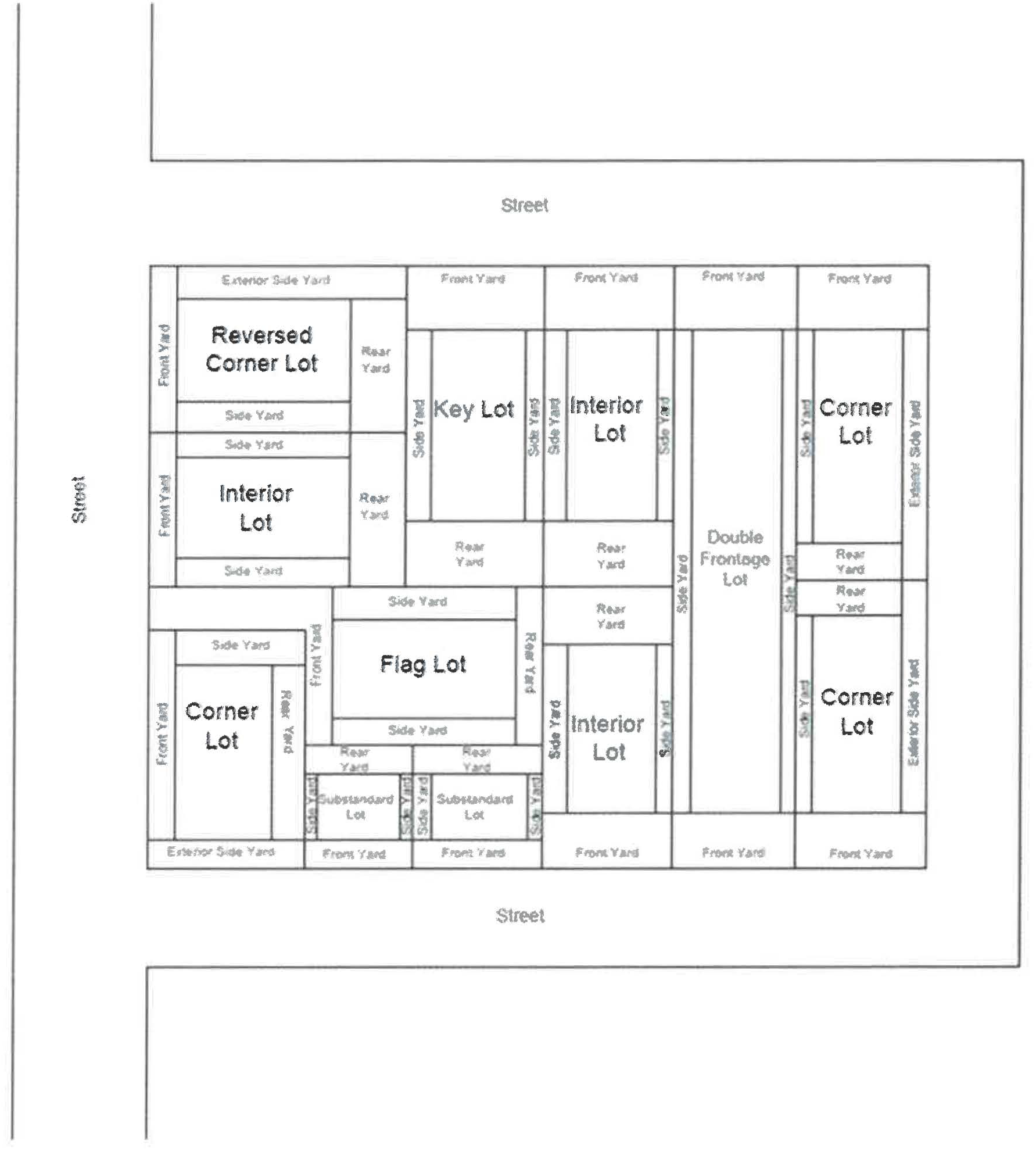
"Lot, corner" is a lot bounded by two or more adjacent streets or private rights-of-way or combination.
"Lot, double-frontage" is a lot which has two or more lot lines which abut a street and do not intersect to form a corner lot. A double-frontage lot has two front lot yards.
"Lot, flag" is a lot shaped and designed in a manner that the main building site area does not have street frontage but is connected to the street by a strip of land which is used for access purposes.
"Lot, interior" is a lot that has one lot line which abuts a street and all other lot lines abut other lots.
"Lot, key" is the first interior lot to the rear of a reversed corner lot.
"Lot, reversed corner" is a corner lot, the sides of which abut the sides of two interior lots and where the side street line becomes a continuation of a front lot line of an adjacent lot.
"Lot, substandard" is any lot that was legally created through a recorded deed even when consisting of less area, width, or depth than that required by the regulations for the zoning district in which it is located.
The figure below depicts the following types of lots defined above: Corner lot, double-frontage lot, flag lot, key lot, interior lot, reversed corner lot, and substandard lot.
"Lot area" is the total area defined by the boundaries of a lot, excluding any public street rights-of-way, private drive, or easement.
"Lot coverage" means the portion of a lot that is covered by buildings, including principal and accessory buildings, garages, carports, and roofed porches, but not including unenclosed and unroofed decks, open roofed garden structures such as a gazebo, landings, or balconies.
"Low-barrier navigation center" means a service-enriched shelter focused on moving people into permanent housing that provides temporary living facilities while case managers connect individuals experiencing homelessness to income, public benefits, health services, shelter, and housing. "Low barrier" means that best practices to reduce barriers to entry are followed, such as allowing pets, the storage of possessions, and providing privacy such as partitions or private rooms.
"Major religious facility" means a religious facility that is larger than five thousand (5,000) square feet in total building size.
"Manufactured home" means a prefabricated or factory-built structure certified under the National Manufactured Housing Construction and Safety Standards Act of 1974 that is attached to a permanent foundation and is used as a dwelling unit. This definition is intended to include mobile homes and modular homes which meet material standards for manufactured homes but does not include a recreational vehicle. Manufactured homes are treated the same as other types of housing in residential zones.
"MCSP" means the Moraga Center Specific Plan, adopted in January 2010, as it may be amended.
"Media production facility" means a facility that provides indoor commercial and public communication/telecommunication uses, as well as outdoor sets, backlots, and other outdoor facilities for motion picture, television, video, sound, computer, and other communications media production. Indoor communication uses would include radio and television broadcasting, receiving stations and studios with facilities entirely within buildings. This classification does not include exterior-mounted antennas and transmission towers (see "Utility facility, transmission towers") or transmission and receiving apparatus, antennas and towers (see "Wireless communications facility" Section 8.144.020).
"Medical" means any of the following:
A.
"Hospital, medical center" means hospitals and similar facilities engaged primarily in providing diagnostic services, and extensive medical treatment, including surgical and other hospital services. These establishments have an organized medical staff, inpatient beds for overnight stays, emergency services, and equipment and facilities to provide complete health care. These facilities may also include accessory uses such as on-site clinics, laboratories, emergency heliports, nursing facilities, extended care facilities, physical therapy, gift shops, retail pharmacies, cafeterias or restaurants, and related uses operated primarily for the benefit of patients, staff, and visitors and on-site ambulance dispatch facilities.
B.
"Medical services facility" means a facility, other than a hospital, where medical, dental, mental health, surgical, and/or other personal health care services are provided on an outpatient basis. A medical services facility use would provide consultation, diagnosis, therapeutic, preventative or corrective treatment services by doctors, dentists, chiropractors, counselors, physical therapists, respiratory therapists, acupuncturists, psychiatrists, psychologists, and similar practitioners of medical and healing arts for humans licensed for such practice by the state of California. This classification does not include counseling services and other services provided by nonmedical or health professionals (see "Offices, professional" or "Social service facility"), massage therapy (see "Personal services, general" or "Personal services, restricted"), or cannabis-related uses.
C.
"Nursing facility/extended care" means state-licensed residential facilities that provide twenty-four-hour nursing and health-related care as a primary use with inpatient beds. Examples include board and care homes, convalescent hospitals, rest homes, extended care facilities, and skilled nursing facilities. Long-term personal care facilities that do not emphasize medical treatment are included under residential care facility.
D.
"Urgent care facility" means a state-licensed facility other than a hospital that provides medical care services and treatment on an outpatient basis, with an emphasis on minor emergency care. These facilities may also include incidental medical laboratories. This classification does not include private medical and dental offices.
"Ministerial review process" means the review process identified in Section 8.34.080 of this chapter.
"Modified grade" is the grade other than the grade established by an approved subdivision. Modified grade shall be approved by the reviewing body. Excavation entirely within the footprint of the building shall not be considered as a modified grade for the purpose of determining building height.
"Multifamily structure" is a building designed and used exclusively as a dwelling by three or more families occupying separate suites or apartments.
"Net lot area" is the area of a lot excluding alleys, vehicular easements, driveway, and areas to be included in the future street right-of-way as established by easement, dedications, or ordinance.
"Nonhosted short-term rental" is a short-term rental without an owner or operator who lives on-site for the majority of the calendar year.
"Offices" means any of the following:
A.
"Administrative, information processing" means an establishment that provides information processing, computer-dependent, and telecommunications-based activities, typically characterized by high employment densities.
B.
Airline, lodging chain, and rental car company reservation centers (no vehicle storage).
C.
Computer software and hardware.
D.
Design and development.
E.
Consumer credit reporting.
F.
Data processing services.
G.
Health management organization (HMO) offices where no medical services are provided.
H.
Insurance claim processing.
I.
Mail order and electronic commerce transaction processing.
J.
Wireless communications facility design and management.
K.
Telemarketing.
L.
This classification does not include dispatch offices or offices for service-oriented businesses that have company vehicles or require storage of materials or equipment.
"Operator" is an individual who operates a short-term rental. This individual can be the owner or a lessee and/or outside representative, hosting the short-term rental.
"Outdoor retail sales" means the outdoor retail sales facilities that display merchandise that either are incidental to an adjacent indoor retail use or are an independent retail use. Includes news and flower stands. Includes nurseries or garden centers. Does not include the sale of automobiles and recreational vehicles (see "Automobile sales and rental/leasing"), mobile homes, or building or landscape materials (see "Building materials sales and services").
"Owner" is the individual, trustee, or managing member of an LLC that is on the title of the property on which a short-term rental is located.
"Park and outdoor recreational facility" means an outdoor recreation facility that provides a variety of recreational opportunities such as playground equipment, open space areas for passive recreation and picnicking, interpretative facilities and trails, and sport and active recreation facilities. This classification includes related community facilities and accessory commercial facilities that provide visitor services. This classification does not include sports recreation facilities, nor does it include pocket parks.
"Payday lending establishment" means a person or entity that offers, originates, or makes a deferred deposit transaction, whereby a person or entity defers depositing a customer's personal check until a specific date, pursuant to a written agreement. "Payday lending establishment" is equivalent to a "deferred deposit originator" as defined in Section 23001(f) of the California Financial Code, as amended from time to time. "Payday lending establishment" does not include a state or federally chartered bank, thrift, savings association, industrial loan company, or credit union.
"Pergola" means a structure usually consisting of parallel colonnades supporting an open roof of girders and cross rafters.
"Personal services, general" means an establishment that provides recurrently needed nonmedical services of a personal nature, which may involve the retail sales of products related to the services provided. This classification applies to establishments with a primary focus of household and consumer product repair, as opposed to a retail sales establishment that offers service and repair of their merchandise as an ancillary use. (See "General" under "Retail business"). Does not include massage services (see "Licensed massage establishment") or cannabis dispensaries. Examples include:
A.
Barber and beauty shops.
B.
Clothing rental.
C.
Day spas.
D.
Dry cleaning pick-up stores with limited equipment (excludes central dry cleaning plants).
E.
Computer, home electronics and small appliance repair.
F.
Laundromats (self-service laundries).
G.
Parcel delivery.
H.
Pharmacies.
I.
Portrait photography.
J.
Shoe repair shops.
K.
Tailors and seamstresses.
L.
Tanning salons.
M.
Travel agencies.
"Personal services, improvement or instructional" means an establishment that provides instructional services or facilities for personal improvement including fine arts, crafts, dance or music studios, exercise or fitness studios, learning centers, after-school tutoring centers, driving schools, photography, diet centers, and martial arts. This classification does not include vocational training.
"Personal services, other" means an establishment that provides personal services that are not covered by "personal services, general" or "personal services, improvement or instructional." Examples include:
A.
Bail bonds.
B.
Fortune tellers.
C.
Palm and card readers.
D.
Pawn shops.
E.
Psychic readers.
F.
Spas and hot tubs for hourly rental.
G.
Tattoo and body piercing services.
"Playhouse" means a stand-alone enclosed or substantially enclosed structure, containing unfinished space, with a roof supported by columns or walls and used or intended to be used by children to play in.
"Pocket park" means a small, privately-owned and privately-managed outdoor space, usually no more than a one-half acre, often located in an area surrounded by buildings or houses on small lots, that can be used for activities such as outdoor recreational purposes, events, leisurely gathering, or other activities serving the immediate vicinity of the pocket park.
"Professional services" means an establishment that provides professional, executive, editorial or management services. Examples include:
A.
Accounting, auditing, bookkeeping, financial management and investment services, and tax preparation.
B.
Advertising agencies, commercial art and design services.
C.
Design professionals, architects, engineers, landscape architects, urban planners.
D.
Educational, scientific and research organizations.
E.
Employment agencies.
F.
Legal offices.
G.
Management and public relations services.
H.
Nonmedical counseling services. Examples include, but are not limited to, career or life coaching, financial consulting.
I.
Real estate offices.
J.
This classification does not include dispatch offices or offices for service-oriented businesses that have company vehicles or require storage of materials or equipment.
"Public maintenance and service facility" means a facility that provides maintenance and repair services for local, state, or federal government agencies or service facilities, including storage of vehicles, equipment, and materials. Examples include corporation yards, equipment service centers, and similar facilities.
"Religious facility" means a space or venue intended for people to visit and gather for religious activities, including worship, congregation, and other activities affiliated with the religion, but does not include a Major religious facility as defined in this section.
"Research and development, or laboratory" means an establishment that performs laboratory work and/or conducts research, development, and controlled production of high-technology electronics, biotechnology, industrial or scientific products or commodities. Laboratory tasks include testing, analysis, medical, dental, or optical laboratory services, and photographic development services. Other typical tasks include limited manufacturing, fabricating, processing, assembly or storage of prototypes, devices, compounds, products or materials, or similar related activities, where such activities are incidental to research, development or evaluation. All activities in this classification occur within a building. This classification may include uses that produce noise, vibrations, illumination, or particulate matter that is perceptible to adjacent land uses, but not offensive or obnoxious.
"Residential care facility" means any family home, group care facility, or similar facility that provides for twenty-four (24) hour nonmedical care of persons in need of personal services, supervision, or assistance essential for sustaining the activities of daily living or for the protection of the individual. Occupants may be children, adolescents, adults, or elderly persons. Consistent with state law, residential care facilities that operate as single-family residences that do not provide licensable services are allowed in all zones where single-family homes are permitted, subject to the same health, safety, and zoning laws that apply to all single-family residences. Residential care facilities with seven or more residents that are licensed by the State of California are permitted in high-density residential and mixed-use zones, subject to a conditional use permit requirement. Except where permitted by state law, conditions of approval shall not limit the spacing of such facilities, impose special parking standards, or apply additional requirements that unnecessarily constrain the ability of the facility to serve occupants' needs.
"Residential density" is a computation expressing number of dwelling units per acre based on the gross lot area prior to the dedication of any rights-of-way, public parks or other public areas. In cases where a project site encompasses more than one lot, the density may be averaged over the entire project site.
"Residential dwelling unit" means a building or area within a building that provides complete independent living facilities for one or more persons including permanent provisions for living, sleeping, cooking, eating, and sanitation. A motor home, trailer, camper, dormitory room, motel or hotel room, suite or extended stay unit is not a residential dwelling unit.
"Retail business" means the following:
A.
General: An establishment that sells or rents retail goods, wares, merchandise, services and other personal or real property. Examples include appliances and electronics stores, department stores, office and stationery supplies, bookstores, clothing and apparel, pet stores, specialty food stores selling premade or packaged food for off-site consumption (e.g., candy stores, wine shops), sporting goods, toy stores, and audio and video rental.
B.
Specialty: An establishment that engages in the sale of specific categories of products for profit or livelihood, including furniture stores, appliance stores, clothing stores, and hardware stores.
C.
Shopping Centers: These establishments primarily operate within an enclosed store but may also include permanent and partly enclosed facilities for outdoor display of merchandise when incidental to the main store (e.g., garden centers operated in conjunction with a neighborhood drug store or hardware store). Services related to the merchandise sold may be permitted as an ancillary use (e.g., photo processing, pet grooming, computer repair).
D.
Restrictions: Does not include big box retail (see "Big box retail business"), the sale of used goods such as secondhand stores, used specialty goods store and pawn shops (see "Secondhand sales"), retail sales or rentals of vehicles and equipment (see "Automobile sales and rental/leasing" and "Heavy vehicle and large equipment, sales/rental, service, and repair" under "Vehicle and equipment facilities"), outdoor retail sales (see "Outdoor retail sales"), convenience stores, and liquor stores (see "Food, beverage sales") or cannabis dispensary.
"Ridgeline" means any one or more of the following, as shown in general plan figure CD-1:
A "major MOSO ridgeline" means the centerline or crest of the ridges known as Indian Ridge, Sanders Ridge, Mulholland Ridge and Campolindo Ridge, where the crest is above eight hundred (800) feet above mean sea level and within an area with a MOSO open space designation on the general plan diagram. Major MOSO ridgeline shall have the same meaning as "major ridgeline" as that term is used and defined in the Moraga Open Space Ordinance.
A "minor MOSO ridgeline" means the centerline or crest of any ridge other than those identified as "major ridgelines," where the crest is above eight hundred (800) feet above mean sea level and within an area with a MOSO open space designation on the general plan diagram. Minor MOSO ridgeline shall have the same meaning as "minor ridgeline" as that term is used and defined in the Moraga Open Space Ordinance.
A "significant non-MOSO ridgeline" means those ridgelines shown in Figure CD-1 as a significant non-MOSO ridgeline.
An "other non-MOSO ridgeline" means those ridgelines shown in Figure CD-1 as an other non-MOSO ridgeline.
"Schools" means the following:
A.
"College, university" means public or private institutions of higher education providing curricula of a general, religious, or professional nature, typically granting recognized degrees or certificates, with associated facilities including conference centers and academic retreats associated with such institutions. This classification does not include business and computer schools, management training, technical and trade schools, and personal instructional services (see "Improvement or Instructional" under "Personal services" and "Trade school, vocational training" under "Schools.")
B.
"Elementary, middle, secondary" means a public or private academic educational institution offering instruction in courses of study required by the California Education Code and maintained in compliance with standards set by the State Board of Education, including elementary (kindergarten through sixth grade), middle and junior high schools (seventh and eighth grades), secondary and high schools (ninth through twelfth grades). Some of these schools also provide room and board.
C.
"Trade school, vocational training" means private institutions that provide education and/or training, including vocational training in limited subjects. Examples include:
1.
Business, secretarial, and vocational.
2.
Computers and electronics.
3.
Courses by mail or online.
4.
Seminaries/religious ministry training.
D.
Does not include preschools and child day care facilities (see "Child day care"), smaller-scale facilities offering specialized instruction in arts, ballet, dance, music, languages, and martial arts (see "Personal services, improvement or instructional"), or after-school tutoring to school-age children.
"Secondhand sales" means an establishment that sells used or new and previously owned goods including jewelry, camera equipment, sound/viewing equipment and tools, often for the purpose of raising funds to benefit religious, educational, hospital or charitable purposes. Goods are generally obtained on consignment, in a trade, and often as a donation.
"Self-storage facility, mini-storage" means a facility that provides individual storage spaces or compartmentalized stalls or lockers for individual use and is characterized by low parking demand.
"Senior housing" or "active senior housing" means a project consisting of residential dwelling units designed for senior citizens as defined in Section 51.3 of the California Civil Code. "Senior citizen housing" means "senior housing."
"Setback" is the minimum required distance from a lot line, measured perpendicularly to the lot line, to the nearest portion of a structure on the lot (except for the facilities and encroachments included in Section 8.68.060) as set forth in the development standards for the zoning district applicable to the lot. See definition of "Yard."
"Shed" means an unconditioned accessory building used for garden and/or household storage.
"Shipping container" is a standardized, reusable vessel generally constructed of metal, which was originally, specifically or formerly designed for or used in the packing, shipping, or movement of freight, articles, goods or commodities by commercial trucks, trains and/or ships by means of being mounted on a chassis or similar transport device. A shipping container that has been modified in a manner that would preclude future use by a commercial transportation entity shall be considered a shipping container for purpose of this article. A shipping container includes containers commonly referred to as a "storage container" or "cargo container."
"Short term promotional program" means a temporary use that operates for ten calendar days or less and may include an art exhibit, sale, charitable fund-raising drive, bazaar, or similar activity.
"Short-term rental" is the rental of a dwelling unit, in full or in part, for a term of less than thirty (30) consecutive days.
"Single-family dwelling" means a detached building or part of it designed for occupancy as the residence of one family.
"Site" means the contiguous gross land area within the parcel or parcels on which housing development is located.
"Sports recreation facility" means a public or private facility that provides various indoor and/or outdoor recreational activities. Examples include:
A.
Archery and shooting ranges.
B.
Basketball courts.
C.
Batting cages.
D.
Bocce ball courts.
E.
Equestrian facilities.
F.
Fitness training paths and facilities.
G.
Golf driving ranges.
H.
Lighted or amplified outdoor athletic fields or sport courts.
I.
Miniature golf courses.
J.
Skateboard parks.
K.
Swimming pools.
L.
Tennis courts.
M.
Waterslides.
N.
This classification includes park facilities that have one or more of the uses within this classification such as swimming pools or lighted sport courts, etc. May also include accessory commercial facilities customarily associated with the above including concessions, bars and restaurants, electronic games, etc.
"Stepback" is the minimum required distance an upper-story building face is set back from the building face of the ground floor, measured perpendicularly to the building face. See diagram to the right.
"Story" is that portion of a building included between the surface of any floor and the surface of any floor next above it. If there is no floor above it, then the space between such floor and the ceiling next above it shall be considered a story. A basement or garage shall be counted as a story if it is over six feet above the finished ground surface adjoining the exterior walls of such story at any point or if it is used as a habitable space/room.
"Structure" means anything constructed or erected that has location on the ground, or is attached to something having location on or in the ground, except the following:
A.
Sidewalks and trails, and any appurtenances thereto such as benches;
B.
Pipes, meters, meter boxes, manholes;
C.
Mailboxes; and
D.
Poles, wires, pipes and other devices, and their appurtenant parts, for the transmission or transportation of electricity and gas for light, heat or power, or of telephone and telegraphic messages, or of water.
"Supportive housing" means housing with no limit on length of stay, that is occupied by a target population and that is linked to on-site or off-site services that assist the supportive housing resident in retaining the housing, improving his or her health status, and maximizing his or her ability to live and, when possible, work in the community. Supportive housing units are residential uses subject only to those requirements and restrictions that apply to other residential uses of the same type allowed in the district.
"Temporary use" means a use that occupies a site for a limited time, including special events, sales, promotional activities, seasonal activities, temporary construction-related activities, and other similar temporary activities, events, and uses. Short-term promotional programs are a form of temporary use.
"Theater, auditorium" means an indoor facility for public assembly and group entertainment, other than sporting events, including:
A.
Civic theaters, and facilities for "live" theater and concerts.
B.
Exhibition and convention halls.
C.
Motion picture theaters.
D.
Public and semi-public auditoriums.
E.
Does not include outdoor theaters, concert and similar entertainment facilities and indoor and outdoor facilities for sporting events (see "Sports recreation facility").
"Tobacco store" means any premises dedicated to the display, sale, distribution, delivery, offering, furnishing, consumption, or marketing of tobacco, tobacco products, or tobacco paraphernalia, including, without limitation, electronic cigarettes ("e-cigarettes") and/or liquid solutions containing nicotine used in such devices; provided, however, that any grocery store, supermarket, convenience store or similar retail use that only sells conventional cigars, cigarettes, e-cigarettes or tobacco as an ancillary sale shall not be defined as a "tobacco store" pursuant to this chapter.
"Transitional housing" means rental housing operated under program requirements that call for the termination of assistance and recirculation of the assisted unit to another eligible program recipient at some predetermined future point in time, which shall be no less than six months, and in no case more than two years. Transitional housing units are residential uses subject only to those requirements and restrictions that apply to other residential uses of the same type allowed in the district.
"Trellis" means a framework, usually made from lattice or wire, used as a screen or support for climbing plants.
"Tutoring facility" means a facility offering academic after-school tutoring or lessons to school-aged children. This classification does not include schools (see "Schools").
"Unfinished space" means enclosed space within a building, usually a basement or attic, that has one or more of the following characteristics: does not have heating, ventilation or plumbing; may not have insulation, drywall, or a finished floor; and may be used for storage, but is not intended to be used for living, sleeping, eating, cooking, or bathing.
"Utility facility, transmission towers" means a facility that provides a fixed base structure or facility serving as a junction point for transferring electric utility services from one transmission voltage to another or to local distribution and service voltages, and similar facilities for water supply and natural gas distribution. These uses include any of the following facilities that are not exempted from land use permit requirements by Government Code Section 53091:
A.
Co-generation facilities.
B.
Electrical substations and switching stations.
C.
Natural gas regulating and distribution facilities.
D.
Public water system wells, treatment plants and storage tanks.
E.
Telephone switching facilities.
F.
Wastewater treatment plants, settling ponds and disposal fields.
G.
This classification does not include offices or customer service centers.
"Vehicle and equipment facilities" means the following:
A.
"Heavy vehicle and large equipment, sales/rental, service, and repair" means an establishment that sells/rents and may provide service and repairs to construction, farm or other heavy equipment. This classification does not include autos, trucks and other passenger vehicles used for personal or business travel. (see "Automobile services and repair" for automobiles, motorcycles and other smaller passenger vehicles.)
1.
"Commercial vehicles and equipment" means a facility that sells/rents or services and makes repairs to construction, farm, or other heavy equipment, as well as vehicles for moving or towing property (such as cranes, earthmoving equipment, forklifts, tractors, heavy trucks, cargo trucks, vans, and trailers).
2.
"Recreational vehicles" means an establishment that sells, rents and/or leases motor homes, trailers, and boats, including incidental storage, installation of accessories and maintenance. This classification also includes facilities that service or repair recreational vehicles.
B.
"Towing services" means a facility that dispatches tow trucks and provides temporary storage of operative or inoperative vehicles. This classification does not include automobile wrecking or dismantling.
C.
"Vehicle storage" means a facility for the storage of operative cars and other fleet vehicles, trucks, buses, recreational vehicles, and other motor vehicles. Includes facilities for the storage and/or servicing of fleet vehicles.
"Workforce housing" means housing intended for sale or rental with a unit purchase price or rental amount that is affordable to regionally-employed persons or students of moderate, low, very low, and extremely low-income levels as established by the California Department of Housing and Community Development income limits.
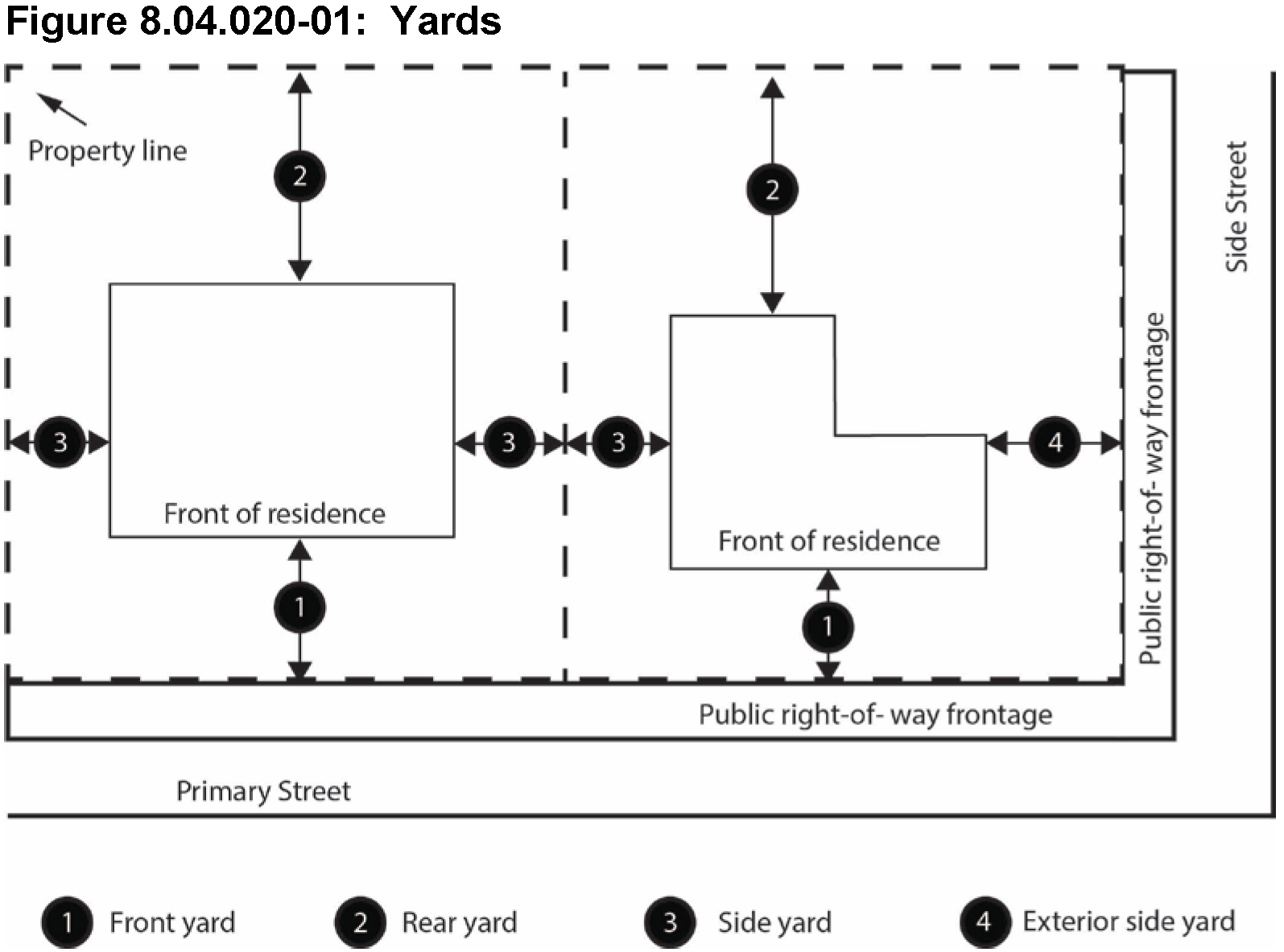
"Yard" means an area within a lot, adjoining a lot line and measured horizontally and perpendicular to the lot line for a specified distance, that is open and unobstructed to the sky, except for activities, facilities and encroachments otherwise allowed by this title. A minimum yard is the minimum required distance from a lot line, measured perpendicularly to the lot line, to the nearest portion of a structure on the lot (except for the facilities and encroachments included in Section 8.68.060) as set forth in the development standards for the zoning district applicable to the lot; also referred to as "setback."
"Yard, exterior side." "Exterior side yard" means the area of a corner lot fronting on a public or private street that extends from the front yard to the rear yard between the exterior side lot line and the nearest wall of a building on the lot, and for purposes of the minimum exterior side yard setback requirement, it is measured perpendicular from the exterior side lot line to the nearest point on the nearest wall of a building on the lot.
"Yard, front." "Front yard" means the area of a lot extending across the full width of the lot and for purposes of the minimum front yard setback requirement, it is measured perpendicular from the front lot line to the nearest point on the nearest wall of a building on the lot.
"Yard, rear." "Rear yard" means the area of a lot extending across the full width of the lot and for purposes of the minimum rear yard setback requirement, it is measured perpendicular from the rear lot line to the nearest point on the nearest wall of a building on the lot.
"Yard, side." "Side yard" means the area of a lot extending from the front yard to the rear yard, and for purposes of the minimum side yard setback requirement, it is measured perpendicular from the side lot line to the nearest point on the nearest wall of a building on the lot.
(Prior code § 8-3101)
(Ord. No.248, § 2, 8-27-2014; Ord. No.261, § 2, 12-9-2015; Ord. No.268, § 2, 5-10-2017; Ord. No.277, § 2, 4-25-2018; Ord. No.280, § 2, 2-27-2019; Ord. No.290, § 3, 6-10-2020; Ord. No.293, § 3(Exh. A), 11-10-2020; Ord. No.296, § 3(Exh. A), 4-14-2021; Ord. No.300, § 3(Exh. A), 10-12-2022; Ord. No.304, § 2, 12-14-2022; Ord. No.306, § 7(Exh. B, 13), 2-22-2023; Ord. No.309, § 3(Exh. B, 1), 5-10-2023; Ord. No. 311, §§ 3, 4, 12-13-2023; Ord. No. 316, § 4, 6-25-2025)
8.04.030 - Adoption of zoning map.
The zoning map marked and identified as "The Town of Moraga Zoning Map dated February 13, 1991" on file in the office of the town clerk is adopted and made a part of this title.
(Prior code § 8-3105)
8.04.040 - Uncertainty as to boundaries of land use district.
Where an uncertainty exists as to the boundaries of a land use district, the planning commission shall determine the location of the boundaries.
(Prior code § 8-3103)
8.04.050 - Restriction on use of lot requirements.
No land which provides the required area, width, yard or setback for a dwelling unit may be considered as providing the required lot area, width, yard, or setback for any other dwelling unit.
(Prior code § 8-3104)
8.04.060 - Town scope—Land classification.
The use of land in the town, as shown on the map described in Section 8.04.030, is subject to the regulations set forth in this title. The map described in Section 8.04.030 establishes all territory in the town and designates land use districts. The designated land use districts are established and are classified for the regulation of their use as set forth in this title.
(Ord. 178 § 3, 2000: prior code § 8-3106)
8.04.070 - Building height.
The height limits of structures established in this title do not apply to a chimney, stack, fire tower, radio tower, television tower, water tower, windmill, oil and gas well derrick, wind charger, grain elevator, spire, belfry, dome, monument, flag pole, telephone or telegraph pole, silo, water tank, if otherwise permitted, and necessary mechanical appurtenances attached to a building. A parapet or fire wall on a building or structure otherwise conforming to this title may be constructed not higher than three feet.
(Prior code § 8-3107)
8.04.080 - Reserved.
Editor's note— Ord. No. 293, § 3(Exh. A), adopted November 10, 2020, repealed § 8.04.080, which pertained to lot coverage and derived from Prior code § 8-3108.
8.04.090 - Determination of lot area.
In computing lot area, there shall be excluded the portion of the lot lying within the exterior boundaries of an existing or proposed public or private right-of-way or easement, and that portion of the lot connecting the building site to the public or private right-of-way or easement, such as the flag staff portion of a flag lot.
(Prior code § 8-3109)
8.04.095 - Calculation of dwelling units.
To calculate the minimum and maximum number of dwellings permitted on a lot, the lot square footage is divided by forty-three thousand five hundred sixty (43,560) (square feet in an acre). The resulting acreage is multiplied by the general plan density range. If the result is greater than 0.50, a whole unit is permitted, provided that the maximum general plan density is not exceeded except as allowed through density bonus section 8.172.
Residential density calculation example:
Lot size: 20,000 sq. ft./43,560 = 0.46 acres
General plan density range: 20 to 24 units/acre
20 to 24 units/acre × .46 acres = 9.2 to 11.04 or (rounded) 9 to 11 units.
(Ord. No. 311, § 5, 12-13-2023)
8.04.100 - Lots existing before county zoning.
A lot of less width or area than the minima established in this title may be occupied by a single-family dwelling and its accessory buildings if:
A.
The owners of the lot do not own enough adjoining property to make the lot of proper width and area;
B.
The setback, side yard and rear yard requirements of this title are met; and
C.
The lot is delineated on a recorded subdivision map or its ownership is of record in the county recorder's office on the effective date of the town's adoption of the zoning district applicable to the lot.
(Prior code § 8-3110)
8.04.110 - Public utilities and public pipelines.
The use of land for rights-of-way for the construction, maintenance and repair of a utility owned by a public agency or public utility is not regulated or restricted by this title. However, a public accessory and appurtenant structures forming a part of the public utility or public agency is subject to the setback regulations and shall obtain a conditional use permit before the construction of the following:
A.
Yard or facility for the storage of vehicles, materials and equipment; or
B.
A structure aboveground, except transmission facilities.
(Prior code § 8-3111)
8.04.120 - Private utilities and private pipelines.
The use of land for rights-of-way for the construction, maintenance and repair of a private utility and private pipeline are subject to the provisions of this title.
(Prior code § 8-3112)
8.04.130 - Unauthorized use unlawful.
Land in the town may only be used for a purpose permitted under this title. No building or structure may be erected, constructed, altered, moved or maintained contrary to this title.
(Prior code § 8-2901)
8.04.140 - Unauthorized permits are void.
A permit, license or certificate which is issued by a representative of the town which is not authorized by this title or which is in violation of this title is void.
(Prior code § 8-2902)
8.04.150 - Public nuisance.
The use of land, a building or structure contrary to this title is unlawful and is declared to be a public nuisance.
(Prior code § 8-2903)
8.04.160 - Enforcement.
Upon order of the town council, the town attorney shall begin an action for the abatement and removal of any such nuisance and for an injunction preventing the further use of a land, building or structure which is in violation of this title. The remedies provided for in this chapter are cumulative and not exclusive.
(Prior code § 8-2904)
8.04.170 - Duty of officials to comply.
Each official and employee of the town vested with the duty or authority to issue a permit or license shall conform to this title and shall not issue a permit or license for a use, building or purpose in conflict with this title.
(Prior code § 8-2905)
8.04.180 - Hillside and ridgeline project amendments.
A.
Amended Provisions. On April 11, 2018 the town council adopted amendments to the following provisions of Title 8, Planning and Zoning, as part of the hillside and ridgeline project ("hillside and ridgeline code amendments"):
1.
In Section 8.04.020—Definitions, added the following defined terms: average predevelopment slope, centerline, development, hillside area, ridgeline.
2.
Amended Sections 8.12.120, 8.12.130, and 8.12.140 in Chapter 8.12, Administrative Procedure.
3.
Amended Section 8.48.100, Findings Required to Approve Conceptual Development Plan.
4.
Amended Sections 8.52.020, 8.52.060, 8.52.080 and 8.52.140 in Chapter 8.52, MOSO and Non-MOSO Open Space Districts.
5.
Amended Section 8.72.020 in Chapter 8.72, Design Review
6.
Added Section 8.72.055 in Chapter 8.72, Design Review.
7.
Amended Chapter 8.128, Ridgeline Protection.
8.
Amended Section 8.132.050, Development Guidelines.
9.
Amended Chapter 8.136, Hillside Development.
10.
Amended Sections 14.04.030, 14.12.030 and 14.16.030 of Title 14, Grading.
B.
Exemptions.
1.
The following development projects are exempt from the hillside and ridgeline code amendments adopted for the hillside and ridgeline project:
a.
Proposed development projects within the Moraga center specific plan (MCSP) area, which shall be governed by the provisions of the MCSP, as may be amended from time to time, and any amendments to the Moraga general plan adopted in conjunction with any amendment to the MCSP.
b.
Subdivisions approved by the town where a final map has been recorded for the subdivision prior to the effective date of the hillside and ridgeline amendments.
c.
Pending development project applications with a published Draft EIR or IS/MND as of the effective date of the hillside and ridgeline amendments, provided no entitlements have been granted. Such pending development project applications shall be governed by the provisions of the Moraga general plan and all other applicable policies, standards and regulations in effect prior to the adoption of the hillside and ridgeline amendments. Notwithstanding such exemption, once any pending development project application has been acted upon by the final reviewing body or is withdrawn by the applicant, this exemption shall no longer apply to any such application.
2.
For any development project not specifically exempt from the hillside and ridgeline amendments, such amendments govern in accordance with and to the fullest extent permissible under law.
(Ord. No. 277, § 2, 4-25-2018)

