
North Myrtle Beach City Zoning Code
ARTICLE II
ZONING DISTRICTS AND DEVELOPMENT REGULATIONS
Sec. 23-16.- Zoning districts.
(1)
Establishment of districts: The city is hereby divided into the following zoning districts:
(a)
Primary zoning districts. The following primary zoning districts are hereby established:
(b)
Overlay zones. The following overlay zones are hereby established:
(2)
Official zoning map: The above zoning districts are presented on the official zoning map which, together with all explanatory matter thereon, is hereby adopted by reference and identified by the signature of the mayor, attested by the city clerk, and bearing the seal of the city under the following words: "Official Zoning Map, North Myrtle Beach, S.C." adopted November 4, 1991. If, in accordance with the provisions of this chapter, changes are made in district boundaries or district designations portrayed on the official zoning map, such changes shall be made on the official zoning map after the amendment has been approved by the city council and attested by the city clerk. Regardless of the existence of purported copies of the official zoning map which may from time to time be made or published, the official zoning map shall be located in the office of the zoning administrator.
(3)
Interpretation of zoning district boundaries: Where uncertainty exists as to the boundaries of districts shown on the official zoning map, the following rules shall apply:
(a)
Boundaries indicated as approximately following the centerlines of streets, highways, railroads, utility easements, or alleys shall be construed to follow such centerlines.
(b)
Boundaries indicated as approximately following platted lot lines and city limit lines shall be construed as following such lines.
(c)
Boundaries indicated as approximately following the centerlines of streams, rivers, canals, lakes or other bodies of water shall be construed to follow such centerlines.
(d)
Boundaries indicated as parallel to or extensions of features indicated in the above subsections shall be so construed.
(e)
Distances not specifically indicated on the official zoning map shall be determined by the zoning administrator.
(f)
The use of streets as district boundaries shall not be construed to make public streets subject to this chapter.
(4)
Lots divided by zoning district boundaries: Whenever a single lot is located within two (2) or more zoning districts, each portion of the lot shall be subject to all the regulations applicable to the zoning district in which it is located.
It shall be unlawful to utilize a portion of a lot in a zoning district for a use not permitted in that zoning district, including utilization for the purpose of meeting dimensional and/or density requirements for the use not permitted.
(Ord. No. 88-35, 11-1-88; Ord. No. 91-38, § 1, 11-14-91; Ord. No. 95-49, § 2, 10-16-95; Ord. No. 01-09, 2-5-01; Ord. No. 06-30, § 1, 6-5-06; Ord. No. 06-36, § 1, 6-5-06; Ord. No. 11-16, § 2, 6-6-11; Ord. No. 13-02, § 1, 2-4-13; Ord. No. 16-14, § 1, 5-16-16)
Sec. 23-17. - CP Conservation Preservation District.
(1)
Purpose: The city is unique in that within its jurisdiction are significant amounts of estuarine land and water formations. These areas possess great natural beauty and are the breeding grounds and refuges for marine life, birds and land animals whose survival is economically important to sport and commercial fishing activities. They also provide a natural drainage basin for surface water runoff. In addition, these areas provide needed open space for general outdoor recreational use. The regulations which apply within the district are designed to reserve such areas for the purpose outlined herein and to discourage any encroachment by residential, commercial, industrial or other uses capable of adversely affecting the relatively undeveloped character of these areas.
(2)
Permitted uses: The following uses shall be permitted in the Conservation Preservation District:
(a)
Fishing, shellfishing, recreational boating, swimming and nature study;
(b)
Publicly owned and/or operated park, dock, boat landing, open space, recreational facility or use, and the equipment necessary to operate such areas;
(c)
Directional markers or official signs of public agencies;
(d)
Private dock or boathouse.
(3)
Development regulations: Regulations governing the location and height of structures and the area upon which they may be located are as follows:
(a)
Lot area requirements: Five (5) acres.
(b)
Yard Requirements:
Minimum depth of:
Front yard: One hundred (100) feet.
Rear yard: One hundred (100) feet.
Minimum width of side yards: One hundred (100) feet.
(c)
Height requirements:
Maximum height of structures: Thirty (30) feet.
(Ord. No. 88-35, 11-1-88)
Sec. 23-18. - R-1 Single-Family Residential Low-Density and R-1A Single-Family Residential Low-Medium Districts.
(1)
Purpose: The purpose of these districts is to preserve and protect the character of existing neighborhoods and subdivisions, and to prohibit any uses which would compromise or alter existing conditions and uses. Also, these districts are intended to encourage residential infilling and expansion of existing neighborhoods and subdivisions. Development land uses permitted in each are designed to reflect existing conditions and enhance the prospects of "lie development."
(2)
Permitted uses: Within the R-1 and R-1A Districts, a building or lot shall be used only for the following purposes:
(a)
Single-family detached dwellings, excluding mobile homes.
(b)
Neighborhood and community parks and centers, golf courses and similar outdoor uses, but not lighted for night use.
(c)
Publicly owned recreation facilities.
(d)
Churches, places of worship, religious institutions including accredited educational facilities when accessory thereto.
(e)
Accessory uses.
(f)
Home occupations.
(g)
Signs permitted by and in accord with all applicable provisions of article III.
(3)
Development regulations: Regulations governing the location and height of structures, and the area upon which they may be located are as follows:
Note1: A five-foot side yard setback shall be required for substandard lots of record.
(c)
Height requirements:R-1 and R-1A
Maximum height of structures:
Single-family structures 35 feet
Accessory building 15 feet
Other permitted uses 45 feet
(d)
Impervious surface requirements: No more than forty (40) percent of any lot surface shall be impervious to water absorption in the R-1 District and forty-five (45) percent in the R-1A District. For church use, no more than sixty (60) percent of any lot shall be impervious.
(e)
A dwelling unit shall not contain more than five (5) bedrooms or sleeping areas of not more than three hundred (300) square feet each.
(4)
Special exceptions: Owing to their potential negative impact on the community and surrounding areas, the following uses may be approved as special exceptions by the board of zoning appeals:
(a)
Noncommercial marinas, subject to the siting standards of section 23-120.
(b)
Commonly owned amenities: The board of zoning appeals may approve commonly owned amenities on parcels platted for said amenities in new subdivisions subject to the standards contained in subsection 23-161(3). Amenities can include a swimming pool, tennis court, clubhouse and open space as defined in section 23-109.
Title to all improved and unimproved commonly owned amenities lying within the subdivision shall be held as undivided interests by owners of lots within the subdivision, each of whom jointly and severally shall be charged with proper care and maintenance of such property through a lawfully established association of lot owners approved by the city and recorded with the final plat documents.
(c)
Off-street parking: Off-street parking (requirements) for the various uses permitted herein are set forth in article IV of this chapter.
(5)
Conditional uses. Certain uses that assist in enhancing the character and sense of place of the community for residents and visitors, and which are compatible to the purpose of this district, may be allowed in the Single Family, Low Density Residential, R-1 District. However, due to the manner of operations, conditional uses must meet certain conditions stated in this section, as well as the restrictions and/or limitations applicable to all land uses in the R-1 District (See article I, section 23-2 of this chapter entitled "Definitions"). If the conditions or standards are met, the zoning administrator may permit the use without review by the board of zoning appeals.
(a)
Park and sports complexes are subject to the following conditions:
1.
That the use will be an enhancement to the character and sense of place of the area in which it is to be located.
2.
That the use has taken measures to not be injurious to adjoining property, including, but not limited to: controlling of all elements that produce light and noise, so as not to create nuisance conditions off-site. Night time lighting of athletic fields and other attractions may be permitted if it meets this standard.
3.
That the use will contribute to the economic vitality and promote the general welfare of the community.
4.
That the use will not discourage or negate the use of surrounding property for use(s) permitted by right.
5.
The following additional performance standards shall be imposed upon park and sports complexes:
i.
A scaled site plan shall be submitted indicating the location, size, and arrangement of all structures, fields, light poles, parking spaces, and traffic circulation aisles.
ii.
Lighting of parking areas shall be provided and shall be of a type and placement so as not to pose visual disturbance to adjacent property owners. The maximum pole height is thirty (30) feet. If facilities are to be illuminated, the type and placement shall not to pose visual disturbance to adjacent property owners. The maximum pole height for facilities is one hundred (100) feet.
iii.
Structures are limited to a maximum height of one hundred (100) feet.
iv.
Accessory uses may erect signage advertising their offerings and/or sponsorships and promotional deals. Each use shall submit a comprehensive sign plan package to the planning and development and parks and recreation department staff who will make a recommendation to the city manager who will approve or deny the request prior to the erection of any such signage. The comprehensive sign plan package shall include quantities, sizes, locations, duration, and a maintenance and replacement schedule with obligations to keep signage in good condition for all proposed signage.
(6)
Off-street parking. Off-street parking requirements for the various uses permitted herein are set forth in Article IV. Additionally, parking spaces provided in park and sports complexes may consist of alternative pervious paving material including, but not limited to, porous/pervious brick pavers, grass pavers, porous asphalt or porous concrete, or any other technique approved by the city engineer. However, driveways, circulation aisles and handicapped accessible parking stalls shall be constructed with hard surface impervious materials, unless the city engineer approves an alternate design. In case of conflicts in the various sources for safety, design, and functionality standards; the city engineer will consult with the director of planning and development and both will determine the appropriate standard to be required.
(Ord. No. 88-35, 11-1-88; Ord. No. 93-1, § 1, 1-4-93; Ord. No. 95-10, § 7, 3-20-95; Ord. No. 96-23, § 1, 6-3-96; Ord. No. 03-15, § 1, 5-19-03; Ord. No. 06-47, § 1, 7-17-06; Ord. No. 06-60, § 1, 11-20-06; Ord. No. 06-62, § 1, 11-20-06; Ord. No. 09-06, § 1, 2-2-09; Ord. No. 12-16, § 2, 9-17-12; Ord. No. 16-09, § 1, 4-4-16; Ord. No. 17-25, § 1, 10-16-17; Ord. No. 18-07, § 1, 4-2-18; Ord. No. 21-22, § 1, 5-17-21)
Sec. 23-18.1. - R-1B Single-Family Low-Medium Density District.
(1)
Purpose: The purpose of the district is to preserve and protect the character of existing neighborhoods and subdivisions, and to prohibit any uses which would compromise or alter existing conditions and uses. Also, these districts are intended to encourage residential infilling and expansion of existing neighborhoods and subdivisions. Development land uses permitted in each are designed to reflect existing conditions and enhance the prospects of "like development."
(2)
Permitted uses: Within the R-1B District, a building or lot shall be used only for the following purposes:
(a)
Single-family detached dwellings, excluding mobile homes.
(b)
Neighborhood and community parks and centers, golf courses and similar outdoor uses, but not lighted for night use.
(c)
Publicly owned recreational facilities.
(d)
Churches, places of worship, religious institutions including accredited educational facilities when accessory thereto.
(e)
Accessory uses.
(f)
Home occupations.
(g)
Signs permitted by and in accord with all applicable provisions of article III.
(3)
Development regulations: Regulations governing the location and height of structures, and the area upon which they may be located are as follows:
(4)
Special exceptions: Owing to their potential negative impact on the community and surrounding areas, the following uses may be approved as special exceptions by the board of zoning appeals:
(a)
Commonly owned amenities: The board of zoning appeals may approve commonly owned amenities on parcels platted for said amenities in new subdivisions subject to the standards contained in subsection 23-161(3). Amenities can include a swimming pool, tennis court, clubhouse and open space as defined in section 23-109.
Title to all improved and unimproved commonly owned amenities lying within the subdivision shall be held as undivided interests by owners of lots within the subdivision, each of whom jointly and severally shall be charged with proper care and maintenance of such property through a lawfully established association of lot owners approved by the city and recorded with the final plat documents.
(Ord. No. 06-30, § 2, 6-5-06; Ord. No. 09-06, § 2, 2-2-09; Ord. No. 17-25, § 2, 10-16-17; Ord. No. 17-27, § 1, 12-18-17; Ord. No. 18-07, § 2, 4-2-18)
Sec. 23-19. - R-2 Medium Density Residential District.
(1)
Purpose: The purpose of this district is to provide for limited alternatives to single-family housing, smaller lot development and correspondingly higher densities, but not permit the crowding of development on individual lots or parcels.
(2)
Permitted uses: Within the R-2 District, a building or lot shall be used only for the following purposes:
(a)
Single-family detached dwellings, and other uses permitted by the R-1 and R-1A Districts, together with conditions attached thereto.
(b)
Zero lot line, single-family detached developments, as provided in section 23-119.
(c)
Semidetached dwellings and duplexes.
(d)
Townhouse developments.
(e)
Family day care homes.
(f)
Multiplex (triplex and quadraplex) dwellings.
(g)
Single-Family in common projects.
(3)
Development standards:
(a)
Maximum height: Thirty-five (35) feet for residential uses, fifteen (15) feet for accessory uses, and forty-five (45) feet for all other permitted uses.
(b)
A dwelling unit shall not contain more than five (5) bedrooms or sleeping areas of not more than three hundred (300) square feet each.
Notes:
1 A seven-and-one-half-foot setback shall be applied to the ends of the structure and the exterior property line and zero-foot setback shall be allowed for the interior common property line.
2 Zero (0) feet between units; ten (10) feet between end structures and side property line; no more than six (6) units shall be attached in one (1) building; for projects with multiple townhouse buildings on land owned "in common" the site side yard setback shall be twenty (20) feet.
3 Rear yard setback shall be ten (10) feet except where contiguous to the project site property line, then a twenty-foot setback shall be required, and shall remain unoccupied by any accessory building or structure.
4 Measured from the closest exterior wall of a single-family dwelling unit on the adjacent property to the closest exterior wall of the multiplex dwelling.
5 Reference common open space requirements pursuant to section 23-119(4).
6 Minimum lot width and/or unit width.
(4)
Special exceptions: Owing to their potential negative impact on the community and surrounding areas, the following uses may be approved as exceptions special by the board of zoning appeals:
(a)
Noncommercial marinas, subject to the siting standards of section 23-120.
(b)
Lighted tennis courts, subject to the following:
1.
That the proposed lighted tennis court not be located closer than fifty (50) feet to any residential structure.
2.
That the lighting be a minimum to sufficiently illuminate the playing surface utilizing sharp cut-off lights with adjustable glare shields.
3.
When in close proximity to a residential structure or lot, the board may require a vegetative screen as described in section 23-58(2)(d) on the side(s) of the court or other method to minimize noise levels.
4.
In granting the special exception, the board of zoning appeals may impose such reasonable and additional stipulations, conditions or safeguards as, in its judgement will enhance the siting of the proposed special exception.
(c)
Commonly owned amenities: The board of zoning appeals may approve commonly owned amenities on parcels platted for said amenities in new subdivisions subject to the standards contained in section 23-161(3). Amenities can include a swimming pool, tennis court, club house and open space as defined in section 23-109.
Title to all improved and unimproved commonly owned amenities lying within the subdivision shall be held as undivided interests by owners of lots within the subdivision, each of whom jointly and severally shall be charged with proper care and maintenance of such property through a lawfully established association of lot owners approved by the city and recorded with the final plat documents.
(5)
Off-street parking: Off-street parking [requirements] for the various uses permitted herein are set forth in Article IV of this chapter.
(Ord. No. 88-35, 11-1-88; Ord. No. 95-10, § 7, 3-20-95; Ord. No. 95-16, § 1, 4-3-95; Ord. No. 96-25, § 1, 6-17-96; Ord. No. 97-33, §§ 1, 2, 8-18-97; Ord. No. 98-13, § 1, 5-4-98; Ord. No. 98-35, § 1, 11-2-98; Ord. No. 03-15, § 2, 5-19-03; Ord. No. 03-56, § 1, 11-3-03; Ord. No. 06-28, § 1, 5-15-06; Ord. No. 06-31, § 1, 6-5-06; Ord. No. 07-21, § 1, 6-18-07; Ord. No. 07-22, § 1, 6-18-07)
Sec. 23-20. - R-2A Mid-Rise Multifamily Residential District.
(1)
Purpose: The purpose of this district is to permit mid-rise multifamily development in areas of the community in response to the need for such housing, while safeguarding existing residential values, and environmental resources, and guarding against "overloading" existing infrastructure.
(2)
Permitted uses: Within the R-2A District, a building or lot shall be used only for the following purposes:
(a)
Dwellings, including:
Single-family detached.
Semidetached.
Two-family (duplex).
Multiplex (triplex and quadruplex).
Townhouse developments.
Multifamily, including mid-rise and garden apartments.
Zero lot line single-family detached developments, as provided in section 23-119.
(b)
Nursing homes, provided they meet the development standards of multifamily.
(c)
Accessory uses customarily incidental to dwellings.
(d)
Signs permitted by and in accord with all applicable provisions of article III.
(3)
Development standards for uses in R-2A District:
Minimum distance between buildings: Where more than one (1) principal building is located on a lot, minimum distance between buildings shall be twenty (20) feet with one (1) additional foot for each two (2) feet in height over thirty-five (35) feet, using the highest building.
*Per dwelling unit.
Notes:
1 A seven-and-one-half-foot setback shall be applied to the ends of the structure and the exterior property lines, and zero (0) setback shall be allowed for the interior common property line.
2 Zero (0) between units; ten (10) feet between end structures and side property line; no more than six (6) units shall be attached in one (1) building.
3 Ten (10) feet for the first thirty-five (35) feet in height and fifteen (15) feet for buildings in excess of thirty-five (35) feet in height.
4 Rear yard shall be ten (10) feet except where contiguous to the project site property line, then a twenty-foot setback shall be required, and shall remain unoccupied by any accessory building or structure.
5 Minimum lot width and/or unit width.
(4)
Special exceptions: Owing to their potential negative impact on the community and surrounding areas, the following uses may be approved as special exceptions by the board of zoning appeals:
(a)
Noncommercial marinas, subject to the siting standards of section 23-120.
(b)
Lighted tennis courts, subject to the following:
1.
That the proposed lighted tennis court not be located closer than fifty (50) feet to any residential structure.
2.
That the lighting be a minimum to sufficiently illuminate the playing surface utilizing sharp cut-off lights with adjustable glare shields.
3.
When in close proximity to a residential structure or lot, the board may require a vegetative screen as described in section 23-58(2)(d) on the side(s) of the court or other method to minimize noise levels.
4.
In granting the special exception, the board of zoning appeals may impose such reasonable and additional stipulations, conditions or safeguards as, in its judgement will enhance the siting of the proposed special exception.
(c)
Commonly owned amenities: The board of zoning appeals may approve commonly owned amenities on parcels platted for said amenities in new subdivisions subject to the standards contained in section 23-161(3). Amenities can include a swimming pool, tennis court, club house and open space as defined in section 23-109.
Title to all improved and unimproved commonly owned amenities lying within the subdivision shall be held as undivided interests by owners of lots within the subdivision, each of whom jointly and severally shall be charged with proper care and maintenance of such property through a lawfully established association of lot owners approved by the city and recorded with the final plat documents.
(d)
Camp, youth day or educational subject to the following:
1.
That a fifteen-foot buffer area be provided around the entire perimeter of the property;
2.
That the special exception complies with all applicable development standards;
3.
That the special exception will not be injurious to adjoining property;
4.
That the special exception will not discourage or negate the use of surrounding property for use(s) permitted by right;
5.
In approving a special exception, the board of zoning appeals may impose such reasonable and additional stipulations, conditions, or safeguards as, in its judgement, will enhance its siting.
(5)
Off-street parking: Off-street parking [requirements] for the various uses permitted herein are set forth in article IV of this chapter.
(Ord. No. 88-35, 11-1-88; Ord. No. 90-25, § 1, 7-16-90; Ord. No. 95-10, § 7, 3-20-95; Ord. No. 95-16, § 1, 4-3-95; Ord. No. 95-40, § 1, 7-3-95; Ord. No. 95-45, § 1, 7-17-95; Ord. No. 98-13, § 2, 5-4-98; Ord. No. 98-30, § 1, 10-5-98; Ord. No. 98-35, § 2, 11-2-98; Ord. No. 00-45, §§ 2, 3, 10-16-00)
Sec. 23-20.1. - R-2B Single-Family Medium Density District.
(1)
Purpose: The purpose of the district is to provide a single-family medium density alternative, which can help preserve and protect the character of existing neighborhoods and subdivisions in areas where smaller lot sizes have historically existed, and to prohibit any uses which would compromise or alter existing conditions and uses. Development land uses permitted are designed to reflect existing conditions and enhance the prospects of "like development."
(2)
Permitted uses: Within the R-2B districts, a building or lot shall be used only for the following purposes:
(a)
Single-family detached dwellings, excluding mobile homes.
(b)
Neighborhood and community parks and centers, golf courses and similar outdoor uses, but not lighted for night use.
(c)
Publicly owned recreational facilities.
(d)
Churches, places of worship, religious institutions including accredited educational facilities when accessory thereto.
(e)
Accessory uses.
(f)
Home occupations.
(g)
Signs permitted by and in accord with all applicable provisions of Article III.
(3)
Development regulations:
Notes:
1. A dwelling unit shall not contain more than five (5) bedrooms or sleeping areas of not more than three hundred (300) square feet each.
(Ord. No. 06-55, § 1, 10-2-06; Ord. No. 11-16, § 3, 6-6-11; Ord. No. 17-25, § 3, 10-16-17)
Sec. 23-21. - R-3 Mobile/Manufactured Home Residential District.
(1)
Purpose: The purpose of this district is to provide for areas within the city where mobile/manufactured homes may be located in harmony with other single-and two-family dwellings—to provide for a full range of housing alternatives to meet buyer demands. Also, this district is designed to separate incompatible uses and eliminate the blighting effect of incompatibility.
(2)
Permitted uses: Within the R-3 District, a building or lot shall be used only for the following purposes:
(a)
Dwellings: single-family detached, semidetached, and duplex dwellings.
(b)
Mobile/manufactured homes on individual lots, provided:
1.
Such uses shall be used only for residential purposes; and
2.
No more than one (1) mobile/manufactured home shall occupy a lot; and
3.
The wheels and tongue for transporting such uses shall be removed; and
4.
Such uses shall be placed on a permanent brick, permanent block or other concrete reinforced foundations, and shall be underpinned with brick, concrete block, or continuous aluminum or fiberglass skirting extending to the ground around the perimeter of the dwelling and shall be anchored.
(c)
Mobile/manufactured home parks, provided:
1.
That the application for amendment or permit shall be made by the park owner or manager and shall be accompanied by a site plan showing the proposed project. The site plan shall be presented in accord with applicable site plan exhibit requirements for a PUD.
2.
The minimum park size shall be five (5) acres.
3.
The maximum number of mobile/manufactured homes per acre shall not exceed ten (10).
4.
Standards of mobile home sites: Within mobile/manufactured home parks individual mobile/manufactured home sites shall meet the following minimum requirements:
a.
Each site shall have minimum size of four thousand (4,000) square feet;
b.
In addition, twelve and five-tenths (12.5) percent of the park area shall be reserved as open space and developed in accordance with the requirements of section 23-109.
c.
Sites shall be occupied only by mobile/manufactured homes. Recreational vehicles are not a permitted use in mobile home parks.
5.
Separation requirements:
a.
The placement of mobile/manufactured homes on a site within a park shall allow at least fifteen (15) feet of unobstructed open space between mobile/manufactured homes. Such open space shall not be occupied by any accessory structures such as carports or porches attached to the unit. One (1) set of unenclosed stairs, not exceeding three (3) feet in width; and/or one (1) HVAC unit may be located within the required separation between units. If the construction of additional rooms or covered areas is allowed, the mobile/manufactured home site shall be made wider to accommodate such construction and maintain the required fifteen-foot separation. Such changes shall be noted on the site plan of the mobile/manufactured home park.
b.
Accessory structures may be permitted if they are at least five (5) feet from any mobile home and twenty (20) feet from any common building within the park. These structures are subject to the standards for accessory structures in section 23-107.
c.
Twenty-foot setback required between any mobile/manufactured home and any park property line.
d.
Mobile/manufactured homes shall be at least forty (40) feet from the center line of roadways within the park; at least thirty-five (35) feet from the right-of-way line for any streets adjacent to the park boundary.
6.
Buffer strip: An evergreen buffer strip, not less than ten (10) feet in width, shall be planted along the perimeter of any mobile/manufactured home park. Planting required within this buffer strip shall be the same as required for rear yards with street frontage (section 23-58(2)(d), (e)).
7.
Parking spaces shall be paved, properly marked and lighted; and shall comply with requirements of sections 23-41 through 23-43.
8.
Concrete curbs or other appropriate car stops shall be installed at the end of all "head-in" parking bays which are not "drive-through" type.
9.
Roadways, which are not to be dedicated as public streets, shall be allowed subject to section 23-116.
10.
All roadways shall be constructed in accordance with the design standards in Appendix A of the Land Development Regulations.
11.
No access roadway to a mobile/manufactured home park shall be located closer than two hundred (200) feet to any public street intersection.
12.
All roadway intersections shall be provided with a streetlight and shall not be less than two hundred (200) feet apart.
13.
A valid permit from SC D.H.E.C. for proposed park.
14.
Compliance with all other applicable city codes.
15.
A preexisting mobile/manufactured home park which does not comply with these requirements shall be considered nonconforming. Future expansion or alteration is subject to article VIII of the zoning ordinance.
(d)
Neighborhood and community parks and centers, golf courses and similar outdoor uses, but not lighted for night use.
(e)
Publicly owned recreational facilities.
(f)
Churches or similar places of worship, including parish houses, parsonages, and childcare centers when accessory thereto.
(g)
Recreational vehicle parks and campgrounds, provided they meet the site plan requirements for mobile home parks (subsections (c)1, (c)4b, (c)9, (c)10, (c)11 and (c)13). Recreational vehicles are allowed only in recreational vehicle parks or campgrounds. Each site shall have minimum size of two thousand four hundred (2,400) square feet.
(h)
Accessory uses.
(i)
Home occupations.
(j)
Family day care homes.
(k)
Signs permitted by and in accord with all applicable provisions of Article III.
(3)
Development standards:
A dwelling unit shall not contain more than five (5) bedrooms or sleeping areas of not more than three hundred (300) square feet each.
Notes:
1 A seven-and-one-half-foot setback shall be applied to the ends of the structure and the exterior property lines, and zero (0) setback shall be allowed for the common interior property line.
(4)
Special exceptions: Owing to their potential negative impact, noncommercial marinas may be approved as special exceptions by the board of zoning appeals, subject to the siting standards of section 23-120.
(5)
Off-street parking: Off-street parking [requirements] for the various uses permitted herein are set forth in article IV of this chapter.
(Ord. No. 88-35, 11-1-88; Ord. No. 91-8, § 4, 2-4-91; Ord. No. 95-10, § 7, 3-20-95; Ord. No. 03-15, § 3, 5-19-03; Ord. No. 18-07, § 2, 4-2-18; Ord. No. 23-12, § 1, 1-9-23)
Sec. 23-22. - R-4 Resort Residential District.
(1)
Purpose. The purpose of this district is to provide for the orderly development of certain areas within the community where both year-round and seasonal or resort housing may be developed and where, because of proximity to the ocean, such "mixed development" would promote year-round use of public facilities, and permit housing choices in response to market demands, but not at the expense of ocean visibility and access by the community.
(2)
Permitted uses: Within the R-4 District, a building or lot shall be used only for the following purposes:
(a)
Dwellings, including:
Single-family detached.
Semidetached.
Patio homes.
Two-family (duplex).
Multiplex (triplex and quadruplex).
Townhouse developments.
Multifamily, including garden.
Mid-and high-rise apartments.
Zero lot line single-family detached developments, as provided in section 23-119.
Boarding house.
Resort accommodation.
(b)
Hotels, motels, inns, [and] lodges.
(c)
Accessory uses customarily incidental to dwellings.
(d)
Accessory uses customarily included in hotels, motels, inns, lodges and resort accommodations: provided such uses are located within the principal building and are accessible only from an interior court, lobby corridor or pool deck except for poolside activities as regulated under section 23-118: Further that such uses shall be limited to the following: restaurants, newsstands, snack bars, florists, gift shops, confectionery stores, beach and convenience retail shops, automobile rental agencies, drug and sundry shops, nightclub and radio broadcasting studios, health clubs, barber and beauty shops.
(e)
Parking lots.
(f)
Signs permitted by and in accord with all applicable provisions of Article III.
(3)
Development standards for uses in R-4 District:
*Per dwelling unit
Notes:
1 A five-foot setback shall be applied to the ends of the structure and the exterior property lines, and zero (0) setback shall be allowed for the common interior property line.
2 Zero (0) between units; ten (10) feet between end structures and side property line; no more than six (6) units shall be attached in one (1) building.
3 Ten (10) feet for first thirty-five (35) feet in height and fifteen (15) feet for buildings in excess of thirty-five (35) feet in height.
4 Rear yard shall be ten (10) feet except where contiguous to the project site property line, then a twenty-foot setback shall be required, and shall remain unoccupied by any accessory building or structure.
5 Hotel/motel, resort accommodation and multifamily uses may exceed the ninety-foot height limitation by one (1) floor of units for each full level of above grade parking deck construction below the principal building not to exceed four (4) additional floors of units.
[ 6 Reserved.]
7 The use may be constructed in the airspace above a noncontiguous parking lot of the same use subject to the requirements of section 23-41 and an agreement between the owners sharing the off-site lot and the city; and/or an easement protecting access and required off-site parking; and deed restriction of off-site spaces; and compensation for any lost required interior landscaping.
8 Minimum lot width and/or unit width.
(4)
Special exceptions: Owing to their potential negative impact on the community and surrounding areas, the following uses may be approved as special exceptions by the board of zoning appeals:
(a)
Noncommercial marinas, subject to the siting standards of section 23-120.
(b)
Fishing piers, provided that the uses permitted on such piers are limited to restaurants, bait and tackle shops, and marine accessories. Refer to section 23-124 for separation requirements.
(c)
Lighted tennis courts, subject to the following:
1.
That the proposed lighted tennis court not be located closer than fifty (50) feet to any residential structure.
2.
That the lighting be a minimum to sufficiently illuminate the playing surface utilizing sharp cut-off lights with adjustable glare shields.
3.
When in close proximity to a residential structure or lot, the board may require a vegetative screen as described in section 23-58(2)(d) on the side(s) of the court or other method to minimize noise levels.
4.
In granting the special exception, the board of zoning appeals may impose such reasonable and additional stipulations, conditions or safeguards as, in its judgement will enhance the siting of the proposed special exception.
(5)
Conditional uses: Due to the manner of operations, conditional uses must meet certain conditions stated in this section, as well as the restrictions and/or limitations applicable to all land uses in the R-4 District and all applicable supplemental regulations for the use contained throughout the zoning ordinance (See Article I, section 23-2 of this chapter entitled "Definitions"). If the conditions or standards are met, the zoning administrator may permit the use without review by the board of [zoning] appeals. (S.C. Code 6-29-720 of the S.C. Comprehensive Planning Act of 1994).
(a)
Restaurants.
1.
That the use complies with all applicable development standards in the R-4 district and/or an R-4 site also designated in an "Activity Center Overlay" area.
2.
That the use will be an enhancement to the character and sense of place of the area in which it is to be located, increasing pedestrian accessibility to eating establishments and reducing traffic congestion. Towards this goal, auto oriented drive through pickup restaurants are not eligible for this conditional use.
3.
That parking requirements/incentives be met as follows:
a.
Any proposed R-4 restaurant site also located in a designated activity center overlay will be eligible for the fifty (50) percentage parking requirement reduction, as well as the ability to satisfy parking requirements off site within five hundred (500) feet and located on land owned or leased by the restaurant owner.
b.
Any proposed R-4 restaurant site that does not fall in an activity center overlay designated area will also qualify for the fifty (50) percent parking reduction and the ability to locate the other fifty (50) percent of the parking off site (on owned or leased within five hundred (500) feet and not necessarily adjacent); with one major exception that the offsite parking be improved to full city parking lot standards including lighting, landscaping, surfacing, and drainage).
c.
In cases where there is a change of use in an existing building from some other use to restaurant, the zoning administrator shall evaluate the site on a case-by-case basis to determine if there is room to provide on-site parking. If there is he/she may require any number and combination of vehicular, bicycle, and golf cart parking stalls to be provided as a condition for issuance of the permit. For purposes of this section, a bicycle stall shall mean a space in a standard bicycle rack specifically designed for the temporary parking and securing of bicycles. A golf cart space shall have a dimension not less than six (6) feet wide by ten (10) feet deep, and shall be identified as "golf cart parking only" via small informational signage.
NOTE: Restaurants allowed as accessory uses to the permitted use of resort accommodations in R-4 (see Article II Sec. 22-23(d) of this section) will not require parking in addition to that calculated for the hotel/permitted principal use. Also see Article IV of this chapter, off street parking)
4.
That the use has taken measures to not be injurious to adjoining property including, but not limited to:
i.
Controlling and shielding all lighting so as not to cast undue glare onto adjoining residential uses. In addition, landscape buffers and/or fencing must be added if the R-4 adjoins an R-1 District parcel. These requirements will be based on buffering of R-1 from adjacent commercial uses in other commercial districts in this chapter.
ii.
Signage will be limited to wall signage as permitted this use if it were locating in The RC District. However there will be no freestanding signage allowed, other than pedestrian oriented (sandwich/menu boards) per RC District standards.
iii.
Controlling all elements that produce noise, such as interior/exterior music and table availability announcements for waiting customers so as not to create a nuisance for neighboring properties.
5.
That the use is limited to restaurant and not bar/nightclub. (For purposes of this section, a bar/nightclub shall be defined as any establishment licensed by the State of South Carolina to serve alcoholic beverages, and whose sale of such beverages constitutes forty (40) percent or more of its gross revenues. For those applicants who wish to claim that their sales of such beverages constitute less than forty (40) percent of gross revenues, the burden of proof shall rest with the applicant to so demonstrate.)
6.
That the use will contribute to the economic vitality and promote the general welfare of the community.
7.
That the use will not discourage or negate the use of surrounding property for use(s) permitted by right in the district.
(6)
Off-street parking: Off-street parking [requirements] for the various uses permitted herein are set forth in Article IV.
(Ord. No. 88-35, 11-1-88; Ord. No. 89-16, § 1, 4-18-89; Ord. No. 95-10, § 7, 3-20-95; Ord. No. 95-16, § 2, 4-3-95; Ord. No. 95-40, § 1, 7-3-95; Ord. No. 95-45, § 1, 7-17-95; Ord. No. 96-02, § 2, 2-5-96; Ord. No. 98-10, § 3, 4-20-98; Ord. No. 98-11, §§ 1, 2, 4-20-98; Ord. No. 98-13, § 3, 5-4-98; Ord. No. 98-35, § 3, 11-2-98; Ord. No. 99-35, § 2, 9-20-99; Ord. No. 02-14, § 1, 4-15-02; Ord. No. 03-13, § 2, 4-21-03; Ord. No. 04-51, § 1, 10-4-04; Ord. No. 06-10, §§ 1—4, 2-20-06; Ord. No. 12-13, § 1, 7-2-12; Ord. No. 21-02, § 2, 3-1-21)
Sec. 23-22.1. - R-4I Inland Multifamily Residential District.
(1)
Purpose: The purpose of this district is to allow multifamily similar to the R-4 zoning district, but with less intensity for inland locations; however, not at the expense of visibility and access by the community to the ocean or the Atlantic Intracoastal Waterway.
(2)
Permitted uses: Within the R-4I District, a building or lot shall be used only for the following purposes:
(a)
Dwellings, including: Single-family detached, semidetached, two-family (duplex), multiplex (triplex and quadruplex), townhouse developments, multifamily, including garden, mid-and high-rise apartments, detached single-family in common developments, as provided in section 23-119.1, and resort accommodation.
(b)
Hotels, motels, inns, [and] lodges.
(c)
Accessory uses customarily incidental to dwellings.
(d)
Accessory uses customarily included in hotels, motels, inns, lodges and resort accommodations: provided such uses are located within the principal building and are accessible only from an interior court, lobby corridor or pool deck except for poolside activities as regulated under section 23-118: Further that such uses shall be limited to the following: restaurants, newsstands, snack bars, florists, gift shops, confectionery stores, beach and convenience retail shops, automobile rental agencies, drug and sundry shops, nightclub and radio broadcasting studios, health clubs, barber and beauty shops.
(e)
Parking lots.
(f)
Non-medical commercial, and office uses per section (3)(g) below.
(g)
Signs permitted by and in accord with all applicable provisions of article III.
(3)
Development standards for uses in R-4I District:
(a)
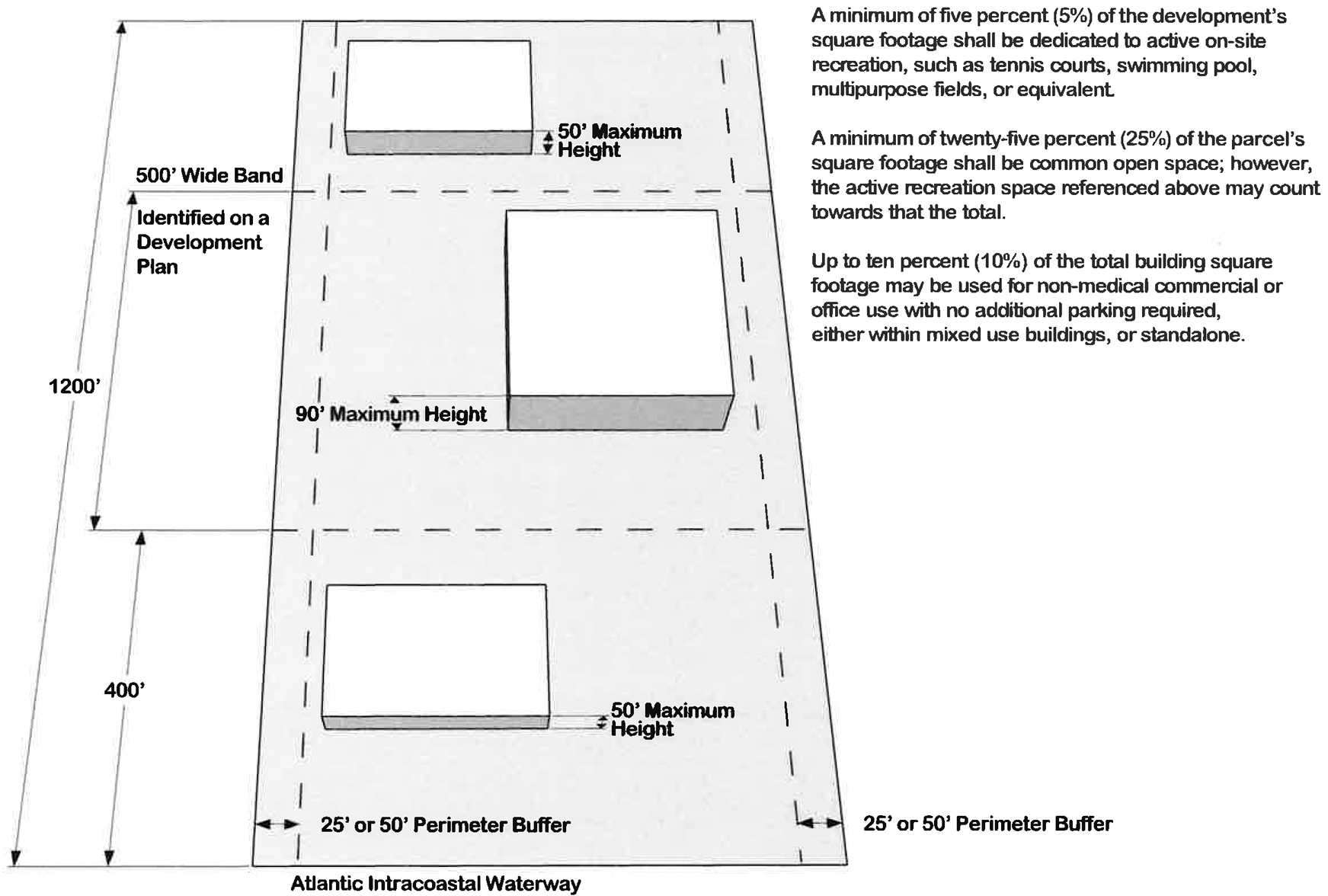
Maximum fifty (50) foot building heights within four hundred (400) feet of the Atlantic Intracoastal Waterway.
(b)
Within an area extending from four hundred (400) feet to twelve hundred (1,200) feet of the AICW, a property owner may further identify on a development plan a 500-foot deep strip within which building heights up to ninety (90) feet shall be permitted. Outside of this strip, heights up to a maximum of fifty (50) feet shall be permitted.
(c)
Exterior walls of buildings shall not extend more than one hundred twenty (120) feet without an architecturally significant vertical element extending from the ground floor through the top floor.
(d)
Fifty-foot perimeter buffers shall be preserved against abutting lower density residential uses/zones and 25-foot perimeter buffers when abutting the R-4 or R-4I zoning districts, or commercial uses.
(e)
A minimum of five (5) percent of the development's square footage shall be dedicated to active on-site recreation, such as tennis courts, swimming pool, multipurpose fields, or equivalent.
(f)
A minimum of twenty-five (25) percent of the parcels' square footage shall be common open space; however, the active recreation space referenced in (e) may count towards that the total.
(g)
Up to ten (10) percent of the total building square footage may be used for non-medical commercial or office use with no additional parking required, either within mixed use buildings, or standalone.
Figure 1: Illustrative graphic explaining the development standards.
* Per dwelling unit
Notes:
1 Zero (0) between units; ten (10) feet between end structures and side property line; no more than six (6) units shall be attached in one (1) building.
2 Ten (10) feet for first thirty-five (35) feet in height and fifteen (15) feet for buildings in excess of thirty-five (35) feet in height.
3 Rear yard shall be ten (10) feet except where contiguous to the project site property line, then a 20-foot setback shall be required, and shall remain unoccupied by any accessory building or structure.
4 For hotel/motel, resort accommodation, multiplex and multifamily uses within an area extending from four hundred (400) feet to twelve hundred (1,200) feet of the AICW, a property owner may further identify on a development plan a 500-foot deep strip within which building heights up to ninety (90) feet shall be permitted. Outside of this strip, heights up to a maximum of fifty (50) feet shall be permitted.
5 Minimum lot width and/or unit width.
(Ord. No. 16-14, § 1, 5-16-16)
Sec. 23-23. - NC Neighborhood Commercial District.
(1)
Purpose: To establish areas for those commercial facilities which are useful in close proximity to residential areas and areas for employment activity and service to the public which do not materially detract from nearby residential areas.
(2)
Permitted uses: Within the NC District, a building or lot shall be used only for the following purposes:
(a)
Professional offices such as business, financial, doctor, dentist, real estate.
(b)
Neighborhood convenience stores, not to include gas pumps, car wash, and auto related services.
(c)
Child care centers.
(d)
Barbershops, beauty shops.
(e)
Bookstores.
(f)
Single-family detached dwellings.
(g)
Zero lot line, single-family detached developments, as provided in section 23-119.
(h)
Semidetached dwellings and duplexes.
(i)
Townhouse developments.
(j)
Signs permitted by and in accord with all applicable provisions of Article III.
(k)
Accessory uses.
(l)
Video gaming machines or stations limited to five (5) or fewer as accessory to convenience stores.
(m)
Triplex dwellings.
(n)
Boarding house.
(o)
Mixed-use buildings.
(3)
Development standards:
Notes:
1 Zero (0) feet between units; ten (10) feet between end structures and side property line; no more than six (6) units shall be attached in one (1) building; for projects with multiple townhouse buildings on land owned "in common" the site side yard setback shall be twenty (20) feet.
2 Rear yard shall be ten (10) feet except where contiguous to the project site property line, then a twenty-foot setback shall be required, and shall remain unoccupied by any accessory building or structure.
3 No parking, parking lots or parking garages are permitted in front of the front building line of the building.
4 Covered porches can extend up to six (6) feet and accompanying steps up to three (3) feet.
5 The side yard setback is twenty (20) feet total. Fifteen (15) feet is required on one side and five (5) feet on the opposite side. The five (5) side yard can only be applied when the property next door is commercial use or mixed-use.
(4)
Off-street parking: Off-street parking [requirements] for the various uses permitted herein are set forth in article IV. Additionally, off-street parking in this district shall be designed to be compatible with adjacent residential uses; where possible, rear and side parking with landscaped front yards will be employed; lighting and signage will be minimal and designed to be harmonious with adjacent uses.
(Ord. No. 88-35, 11-1-88; Ord. No. 89-15, § 1, 4-4-89; Ord. No. 90-35, § 2, 8-28-90; Ord. No. 97-31, § 2, 8-18-97; Ord. No. 99-06, §§ 1, 2, 4-5-99; Ord. No. 03-13, § 3, 4-21-03; Ord. No. 03-56, § 2, 11-3-03; Ord. No. 07-09, §§ 2, 3, 2-19-07)
Sec. 23-24. - OC Office Commercial District.
(1)
Purpose: The purpose of this district is to establish and preserve areas for employment activity and service to the public which do not materially detract from nearby residential areas. This district is designed to be less intensive than the Highway Commercial District, serving generally to buffer residential areas and allow limited commercial development for uses for requiring highway exposure.
(2)
Permitted uses:
(a)
Professional offices such as business, financial, medical, clinics, dentists, real estate, legal, governmental, contractors, etc., provided no outside storage is maintained.
(b)
Nonprofit lodges and civic clubs.
(c)
State-licensed child care facilities.
(d)
Art museums and related cultural establishments.
(e)
Libraries.
(f)
Community parks.
(g)
A place of worship, provided that the same be a permanent structure, located on a parcel of land not less than one (1) acre, and no portion of the structure is located closer than twenty-five (25) feet to any residential lot line.
(h)
Public utility substation, including public water storage tanks, provided there shall be no vehicles or equipment kept in open storage.
(i)
Signs permitted by and in accord with applicable provisions of Article III.
(j)
Accessory uses.
(3)
Development standards:
Note:
1 Side yard setbacks on substandard lots of record fifty-five (55) feet in width or less shall be seven and one-half (7.5) feet.
(4)
Off-street parking: Off-street parking [requirements] for the various uses permitted herein are set forth in article IV. Additionally, off-street parking in this district shall be designed to be compatible with adjacent residential uses; where possible; rear and side parking with landscaped front yards will be employed; lighting and signage will be minimal and designed to be harmonious with adjacent uses.
(Ord. No. 88-35, 11-1-88)
Sec. 23-25. - BC Business Commercial District.
(1)
Purpose: The purpose of this district is to maintain a beach-oriented business environment in areas previously developed for beach-related business. Here, commercial centers and high-rise construction are not allowed except in the zero lot line overlay district. The district is designed to encourage low density residential, beach-oriented retail and professional office uses. It is intended to serve pedestrian traffic and allow uses with minimal vehicular impact.
(2)
Permitted uses: Within the BC District, a building or lot shall be used only for the following purposes:
(a)
Personal service establishments such as barber and beauty shops; laundromats; laundry pick-up; tailor; dressmaker; shoe shops; photo studio; libraries; child care centers; restaurants, but not drive-throughs; and similar personal service establishments, but not massage parlors.
(b)
Convenience retail establishments such as drug, hardware, grocery and beverage stores; bakery; flower and gift shops; newsstands and bookstores; and similar uses.
(c)
Primary retail establishments such as department stores, general mercantile stores, clothing, variety, and similar low-bulk comparison items.
(d)
Professional offices such as business, financial, medical, clinics, and governmental.
(e)
Lodges and civic clubs.
(f)
Commercial schools and schools providing training in any of the arts, sciences, trades and professions.
(g)
Commercial parking lots.
(h)
Signs in accordance with Article III of this chapter.
(i)
Accessory uses.
(j)
Video gaming machines or stations limited to five (5) or fewer as accessory to arcades, restaurants/taverns and convenience stores.
(k)
Mixed-use buildings.
(l)
Single-family detached.
(m)
Semidetached.
(n)
Duplex.
(o)
Townhouse.
(3)
Development standards:
Notes:
1 Zero lot line overlay zone per section 23-31(2).
2 No parking, parking lots or parking garages are permitted in front of the front building line of the building.
3 Covered porches and/or decks can extend up to six (6) feet and accompanying steps up to three (3) feet.
4 Minimum lot width and/or unit width.
5 Zero (0) feet between units; ten (10) feet between end structures and side property line; no more than six (6) units shall be attached in one (1) building. For projects with multiple townhouse buildings on land owned "in common," the site side yard setback shall be twenty (20) feet.
6 Rear yard shall be ten (10) feet except where contiguous to the project site property line, then a twenty-foot setback shall be required, and shall remain unoccupied by any accessory building or structure.
(4)
Special exceptions: Owing to their potential negative impact on the community, the following uses may be approved as special exceptions by the board of zoning appeals.
(a)
Business establishments serving or permitting on premise consumption of alcoholic beverages, beer and/or wine, subject to the following conditions:
1.
That the special exception shall not be located closer than two hundred (200) feet (measured from property line) from an R-1, R-2, R-2A or R-3 District line or residential neighborhood, except in unusual circumstances where mitigating conditions can be imposed to minimize adverse effects to residential uses.
2.
That the special exception complies with all applicable development standards, including off-street parking, and dimensional requirements.
3.
That the special exception will be in substantial harmony with the area in which it is to be located.
4.
That the special exception will not be injurious to adjoining properties.
5.
That the special exception will contribute to the economic vitality and promote the general welfare of the community.
6.
That the special exception will not discourage or negate the use of surrounding property for use(s) permitted by right.
7.
In granting a special exception, the board of zoning appeals may impose such reasonable and additional stipulations, conditions or safeguards as, in its judgement, will enhance the siting of the proposed special exception.
(b)
Commercial recreation establishments, including theaters; pool and video game rooms, bowling [alleys] and skating rinks, miniature golf, water slides and arcades, but not amusement parks with rides, provided that such uses meet the following criteria:
1.
That the special exception complies with all applicable development standards, including off-street parking, and dimensional requirements.
2.
That the special exception will be in substantial harmony with the area in which it is to be located.
3.
That the special exceptions will not be injurious to adjoining property.
4.
That the special exception will contribute to the economic vitality and promote the general welfare of the community.
5.
That the special exception will not discourage or negate the use of surrounding property for use(s) permitted by right.
6.
That adequate provision is made for such items as fences, buffer or planting strips, to protect adjacent properties from possible adverse influence of the proposed use such as noise, vibration, dust, glare, order, traffic congestion and similar factors.
7.
In granting a special exception, the board of zoning appeals may impose such reasonable and additional stipulations, conditions or safeguards as, in its judgement, will enhance the siting of the proposed special exception.
(5)
Off-street parking: Off-street parking requirements for the various uses permitted herein are set forth in article IV.
(Ord. No. 88-35, 11-1-88; Ord. No. 89-15, § 1, 4-4-89; Ord. No. 89-57, § 1, 1-2-90; Ord. No. 90-3, § 3, 2-20-90; Ord. No. 90-24, §§ 1, 2, 7-16-90; Ord. No. 90-35, §§ 3, 4, 8-28-90; Ord. No. 93-24, § 1, 6-7-93; Ord. No. 95-10, § 7, 3-20-95; Ord. No. 95-49, § 4, 10-16-95; Ord. No. 97-03, § 1, 2-3-97; Ord. No. 97-31, § 3, 8-18-97; Ord. No. 02-36, § 1, 9-16-02; Ord. No. 07-17, §§ 1, 2, 5-21-07; Ord. No. 11-28, § 2, 10-17-11)
Sec. 23-26. - HC Highway Commercial District.
(1)
Purpose: The purpose of this district is to provide commercial opportunities to the traveling public, and areas in the community where large scale commercial projects may take place with minimal impact on contiguous residential development.
This district is designed to support local as well as regional shopping centers, and business complexes. As such, this district will accommodate a wide range of business and commercial uses, clustered where feasible for "cumulative attraction" and located for optimum accessibility.
(2)
Permitted uses: Within the HC District, a building or lot shall be used only for the following purposes:
(a)
Personal service establishments such as barber and beauty shops; laundromats; laundry pick-up; tailor; dressmaker; shoe shops; photo studio; libraries; child care centers; restaurants; and similar personal service establishments, but not massage parlors.
(b)
Convenience retail establishments such as drug, hardware, grocery and beverage stores; bakery; flower and gift shops; newsstands and bookstores, and similar uses.
(c)
Primary retail establishments such as department stores, general mercantile stores, clothing, variety, and similar low-bulk comparison items. Any single retail establishment that exceeds fifty thousand (50,000) square feet but is less than seventy-five (75,000) square feet in gross sales floor area is separately defined as "big box" retail. Establishments that are seventy-five thousand (75,000) gross square feet or greater are separately defined as "developments of regional significance" and found in section 23-129.5 developments of regional significance.
(d)
Secondary retail establishments such as those selling principally one-stop items, usually high bulk, including furniture, appliances, home furnishings, floor coverings, business machines, heating and air conditioning sales and service, and similar establishments, also including establishments selling automobiles, truck, boats, farm equipment, building and plumbing supplies, tombstones, surplus materials, and heavy machinery, bicycle sales and service. Any single retail establishment that exceeds fifty thousand (50,000) square feet in gross sales floor area is separately defined as "big box" retail. Establishments that are seventy-five thousand (75,000) gross square feet or greater are separately defined as "developments of regional significance" and found in section 23-129.5 developments of regional significance.
(e)
General business services such as duplicating, mimeographing, and multilithing shops, addressing and mailing services, blueprinting photostating and film development.
(f)
Funeral homes and accessory crematoriums provided there are no obnoxious odors, fumes, or emissions generated by the use.
(g)
Professional offices such as business, financial, medical, clinics, and governmental offices.
(h)
Commercial recreation establishments, including theaters, pool and video gamerooms, bowling alleys and skating rinks, miniature golf, water slides and arcades, but not amusements parks with rides.
(i)
Churches, places of worship, religious institutions including accredited educational facilities when accessory thereto.
(j)
Motels, hotels, lodges, and inns.
(k)
Hospitals, clinics, nursing and convalescent homes.
(l)
Educational institutions, primary through graduate, public and private.
(m)
Armories, lodges and civic clubs.
(n)
Commercial schools and schools providing training of any of the arts, sciences, trades and professions.
(o)
Animal hospitals, veterinary clinics provided all boarding arrangements are maintained within a building and no noise connected with the operation of the facility is discernible beyond the premises.
(p)
Automobile service and repair provided that there shall be no openings toward adjoining residential districts, and no junked or salvaged vehicles shall be kept on the premises.
(q)
Public and private transportation service and facilities, including bus terminals and taxi stands.
(r)
Commercial parking lots and structures.
(s)
Adult entertainment establishments, as defined in and subject to the provisions of article VI.
(t)
Signs in accordance with article III of this chapter.
(u)
Accessory uses customarily incidental to multifamily dwellings.
(v)
Accessory uses customarily incidental to hotels, motels, inns, lodges and resort residential; provided such uses for hotels are located within the principal building and are accessible only from an interior court, lobby, corridor or pool deck except for poolside activities as regulated under section 23-118; further provided that such uses for hotels, motels, inns, lodges and resort accommodations shall be limited to the following: restaurants, newsstands, snack bars, florists, gift shops, confectionery stores, beach and convenience retail shops, automobile rental agencies, drug and sundry shops, nightclubs and radio broadcasting studios, health clubs, barbershops, and beauty shops.
(w)
Other accessory uses.
(x)
Cemeteries, including mausoleums, columbariums, administrative offices, mortuary, chapel, maintenance facility, crematoriums provided there are no obnoxious odors, fumes, or emissions generated by the use, caretakers residence and other accessory uses.
(y)
Video gaming machines or stations limited to five (5) or fewer as accessory to arcades, restaurants/taverns and convenience stores.
(3)
Development standards:
Notes:
1 Ten (10) feet for the first thirty-five (35) feet plus one (1) foot for each one and one-half (1½) feet over thirty-five (35) feet; for each building in excess of eighty (80) feet in width, one (1) additional foot on each side shall be required for each seven (7) feet in building width over eighty (80) feet. For the purpose of calculating side setbacks and/or building separations, the height of the roof section (if not devoted to living or storage space) shall not be considered in determining the height of the structures.
2 On buildings two hundred (200) feet in width or less, an eight-foot setback shall be required, except that commercial condominium projects shall be allowed to share interior property lines; for buildings greater than two hundred (200) feet in width, the following setbacks shall be required on the end units; further provided that such projects (buildings) shall not exceed six hundred (600) feet in width.
3 "Big box" retail shall provide the following: All lighting systems installed within the parking area shall use a ninety-degree (or less) cutoff luminaire angled away from noncommercial properties with a maximum height of thirty (30) feet measured from the base of the pole when installed. All lamp posts shall be contained within a landscape island. Reference article VII, general supplemental, developments of regional significance, for guidelines and standards affecting gross retail square footage of seventy-five thousand (75,000) square feet or greater.
4 With approval of the North Myrtle Beach Board of Zoning Appeals as a special exception, amusement rides in amusement parks can extend up to seventy (70) feet in height.
5 A five-foot side yard setback shall be required for substandard lots of record.
(4)
Special exceptions: Owing to their potential negative impact on the community, the following uses may be approved as special exceptions by the board of zoning appeals:
(a)
Amusement parks, arcades, and rides, subject to the following conditions:
1.
That the special exception complies with all applicable development standards, including off-street parking, and dimensional requirements.
2.
That the special exception will be in substantial harmony with the area in which it is to be located.
3.
That the special exception will not be injurious to adjoining property.
4.
That the special exception will contribute to the economic vitality and promote the general welfare of the community.
5.
That the special exception will not discourage or negate the use of surrounding property for use(s) permitted by right.
6.
In granting a special exception, the board of zoning appeals may impose such reasonable and additional stipulations, conditions, or safeguards as, in its judgment, will enhance the siting of the proposed special exception.
(b)
Commercial and noncommercial marinas, subject to the siting standards of section 23-120.
(c)
Business establishments, excluding accessory uses to hotels and motels with access exclusively from an interior lobby, serving or permitting on premise consumption of alcoholic beverages, beer and/or wine, subject to the following conditions:
1.
That the special exception shall not be located closer than two hundred (200) feet (measured from property line) from an R-1, R-2, R-2A, or R-3 District line or residential neighborhood, except in unusual circumstances where mitigating conditions can be imposed to minimize adverse effects to residential uses.
2.
That the special exception complies with all applicable development standards, including off-street parking, and dimensional requirements.
3.
That the special exception will be in substantial harmony with the area in which it is to be located.
4.
That the special exception will not be injurious to adjoining property.
5.
That the special exception will contribute to the economic vitality and promote the general welfare of the community.
6.
That the special exception will not discourage or negate the use of surrounding property for use(s) permitted by right.
7.
In granting a special exception, the board of zoning appeals may impose such reasonable and additional stipulations, conditions or safeguards as, in its judgment, will enhance the siting of the proposed special exception.
(d)
Dry storage and/or dry stack facilities as a principal or accessory use subject to the following conditions:
1.
That boat storage shall not be located closer than two hundred (200) feet from the nearest residential district line, except in unusual circumstances where mitigating conditions can be imposed to minimize adverse effects to residential uses.
2.
That the special exception complies with all applicable development standards, including off-street parking, and dimensional requirements.
3.
That the special exception will be in substantial harmony with the area in which it is to be located.
4.
That the special exception will not be injurious to adjoining property.
5.
That the special exception will not contribute to the economic vitality and promote the general welfare of the community.
6.
That the special exception will not discourage or negate the use of surrounding property for use(s) permitted by right.
7.
That adequate provision is made for such items as fences, buffer or planting strips, to protect adjacent properties from possible adverse influence of the proposed use such as noise, vibration, dust, glare, odor, traffic congestion and similar factors.
8.
As a principal use, dry storage and/or dry stack facilities shall be subject to the siting standards listed in section 23-120.
9.
In granting a special exception, the board of zoning appeals may impose such reasonable and additional stipulations, conditions or safeguards as, in its judgment, will enhance the siting of the proposed special exception.
(e)
Mini-warehouses facilities, not climate controlled: The board of zoning appeals may approve mini warehouse facilities subject to the following minimum development regulations and site location standards:
1.
Minimum development regulations:
a.
Each storage space shall not exceed three hundred (300) square feet with an exterior entrance under the control of the tenant.
b.
Overall development size shall be limited to a maximum of three (3) acres.
c.
Use standards shall prohibit:
i.
Any other business activity, other than the rental of storage units on the premise.
ii.
Outside storage.
iii.
The servicing, repair or fabrication of motor vehicles, boats, trailers, lawn mowers, appliances, or similar equipment.
iv.
The operation of power tools, spray painting equipment, table saws, lathes, compressors, welding equipment, kilns, or other similar equipment.
v.
The establishment of a transfer and storage business.
d.
Where determined necessary by the board of zoning appeals, a screening barrier around the perimeter of the development shall be required. Such barrier may be a solid or semi-solid fence, but woven wire is expressly prohibited.
e.
Storage structures shall be limited to one (1) story or twelve (12) feet in height.
2.
Site location standards:
a.
The special exception will not abut Highway 17, Main Street or Sea Mountain Highway, or be located between Highway 17 and the Atlantic Ocean.
b.
The special exception will not be injurious to adjoining property.
c.
The special exception will be in substantial harmony with the area in which it is to be located.
d.
The special exception will not discourage or negate the use of surrounding property for use(s) permitted by right.
3.
Legislative intent: Recognizing that mini warehouse facilities are permitted by right in the Limited Industrial Districts, it is council's intent that the zoning board of appeals exercise its discretion gingerly in approving site locations for mini warehouse facilities in the Highway Commercial District. It is council's further intent that in granting the special exception, the board of zoning appeals impose such reasonable and additional stipulations, conditions, and/or safeguards as, in its judgement, will enhance the siting and aesthetic quality of the special exception.
(f)
Mini-warehouse facilities, climate controlled: The board of zoning appeals may approve climate controlled mini-warehouse facilities subject to the following minimum development regulations and site location standards:
1.
Minimum development regulations:
a.
Each individual storage unit shall meet the definition of mini-warehouse.
b.
No individual storage unit shall have a door that opens to the exterior of the building.
c.
The exterior of the building shall consist of a finished surface such as brick, vinyl, plaster (synthetic or nonsynthetic), wood, mortar (stucco or synthetic stucco), or any other material approved by the zoning administrator, covering at least seventy-five (75) percent of the outer walls of the building.
2.
Site location standards:
a.
The special exception will not abut Highway 17, Main Street or Sea Mountain Highway, or be located between Highway 17 and the Atlantic Ocean.
b.
The special exception will not be injurious to adjoining property.
c.
The special exception will be in substantial harmony with the area in which it is to be located.
d.
The special exception will not discourage or negate the use of surrounding property for use(s) permitted by right.
e.
Where determined necessary by the board of zoning appeals, additional screening may be required over and above that required by the landscape regulations.
(g)
Single-family residential subject to the following conditions:
1.
That the special exception will not be a property which abuts Highway 17, Main Street or Sea Mountain Highway.
2.
That the special exception will be in substantial harmony with the area in which it is to be located.
3.
That the special exception will not discourage or negate the use of surrounding property for uses permitted by right.
4.
That in granting a special exception, the board of zoning appeals may impose such reasonable and additional stipulations, conditions or safeguards as, in its judgement will enhance the siting of the proposed special exception.
(h)
Video gaming establishments: Owing to the potential deleterious effects such as traffic congestion, late hours of operation and noise, the criteria by which the board of zoning appeals will evaluate each location are as follows:
1.
That the special exception shall not be located closer than two hundred (200) feet (measured from property lines) from an R-1, R-1A, R-2, R-2A, R-3 or R-4 zoning district line.
2.
That the special exception will not be located closer than five hundred (500) feet (measured from property lines) to another such use.
3.
That only one (1) video gaming establishment be located on the same parcel of property.
4.
That the special exception complies with all applicable development standards, including off-street parking, and dimensional requirements.
5.
That the special exception will be in substantial harmony with the area in which it is to be located.
6.
That the special exception will not be injurious to adjoining property.
7.
That the special exception will contribute to the economic vitality and promote the general welfare of the community.
8.
That the special exception will not discourage or negate the use of surrounding property for use(s) permitted by right.
9.
In granting a special exception, the board of zoning appeals may impose such reasonable and additional stipulations, conditions or safeguards as, in its judgement will enhance the siting of the proposed special exception.
(i)
Resort accommodations subject to the following conditions:
1.
That the special exception is no closer than two hundred (200) feet property line to property line from an established single-family neighborhood except where mitigating conditions can be imposed to minimize adverse effects to the residences.
2.
That the special exception complies with all applicable development standards, and off-street parking.
3.
That the special exception will be in substantial harmony with the area in which it is to be located.
4.
That the special exception will not be injurious to adjoining property.
5.
That the special exception will contribute to the economic vitality and promote the general welfare of the community.
6.
That the special exception will not discourage or negate the use of surrounding property for uses(s) permitted by right.
7.
In granting a special exception, the board of zoning appeals may impose such reasonable and additional stipulations, conditions or safeguards as, in its judgment, will enhance the siting of the proposed special exception.
(5)
Conditional uses: Certain uses that assist in enhancing the character and sense of place of the community for residents and visitors, and which are compatible to the purpose of this district, may be allowed in the Highway Commercial HC districts. However, due to the manner of operations, conditional uses must meet certain conditions stated in this section, as well as the restrictions and/or limitations applicable to all land uses in the HC district (See article I, section 23-2 of this ordinance entitled "Definitions"). If the conditions or standards are met, the zoning administrator may permit the use without review by the board of zoning appeals.
(a)
Public farmers' markets, subject to the following conditions:
1.
For purposes of this section a public farmers' market shall be defined as a tract of publicly owned land used for purposes of allowing a vendor to set up, display, and sell produce and similar goods, hosting approved festivals, arts and crafts fairs, serving as a hub for community supported agriculture, and similar activities under conditions established by the city and/or this ordinance.
2.
That the use will be an enhancement to the character and sense of place of the area in which it is to be located.
3.
That the use has taken measures to not be injurious to adjoining property, including, but not limited to:
a.
Controlling of all elements that produce noise, so as not to create nuisance conditions off-site.
b.
Vending and all other activities on the site are approved, supervised and managed by the city or its designee.
4.
That the use will contribute to the economic vitality and promote the general welfare of the community.
5.
That the use will not discourage or negate the use of surrounding property for use(s) permitted by right.
6.
The following additional performance standards shall be imposed upon the operation of farmers' markets:
a.
A site plan shall be submitted indicating the location, size and arrangement of all vendor spaces, parking spaces and traffic circulation aisles, and any existing or proposed structures or uses on the site.
b.
Vendors may offer merchandise directly from a vehicle parked within an approved vendor space, or in spaces assigned to them under any shelter structure. Merchandise shall not be displayed or sold from vehicles parked in approved parking spaces. Vendors may not take up parking spaces that are required for any other use on the site.
c.
Each vendor may erect one (1) temporary portable sign within their vendor space. Such signs shall not be erected, displayed or visible outside of the approved hours of operation.
d.
Vendors shall be limited to the sale of the following merchandise:
i.
Pasture-raised meat, poultry, eggs and dairy products grown and harvested within North Carolina or South Carolina and kept frozen or cooled during transport and display.
ii.
Fish and shellfish lawfully harvested within the territorial waters of North Carolina or South Carolina and kept frozen or cooled during transport and display. The cleaning or shelling or shucking of such items on premises shall not be permitted.
iii.
Produce, vegetables, fresh cut or dried flowers and herbs, fruits, and edible plants grown and harvested within North Carolina or South Carolina.
iv.
Breads, pastries, baked goods or other foods prepared, transported, stored, and sold/served according to the South Carolina Department of Health and Environmental Control, Food Protection Division, Regulation 61-25, sections applicable to flea markets.
v.
Arts and craft items that are produced or hand made in North or South Carolina. Such items may include, but shall not be limited to: paintings, drawings, sketches, small furniture items, pottery, jewelry, toys, textile products, and similar items.
vi.
Items of a seasonal nature, such as Christmas trees, wreaths, live plants, etc.
e.
No vehicles, merchandise, signs, canopies, tents, structures, or any other material may be left anywhere on the premises outside of the approved hours of operation.
f.
Parking design: Due to the transient nature and limited hours of operation of this type of land use, farmers' markets located on sites where no other land use is situated shall be exempt from having to provide a dust-free parking surface or landscape buffers.
(b)
Mixed-use buildings.
1.
Multifamily dwellings are allowed, subject to the following conditions:
a.
That multifamily dwelling units within 1 and 2-story buildings shall not exceed fifty (50) percent of a buildings square footage.
b.
For multifamily dwellings within buildings 3 stories or greater, residential dwelling units shall not exceed seventy-five (75) percent of a buildings square footage.
c.
That the parking requirement shall be reduced to twenty-five (25) percent of the minimum otherwise required.
(6)
Off-street parking: Off-street parking requirements for the various uses permitted herein are set forth in article IV.
(7)
Parking design: Due to the transient nature and limited hours of operation of this type of land use, farmer's markets located on sites where no other land use is situated shall be exempt from having to provide a dust-free parking surface or landscape buffers.
(Ord. No. 88-35, 11-1-88; Ord. No. 89-15, § 2, 4-4-89; Ord. No. 89-16, § 1, 4-18-89; Ord. No. 90-35, §§ 5—8, 8-28-90; Ord. No. 93-36, § 4, 10-4-93; Ord. No. 94-1, § 2, 1-3-94; Ord. No. 95-10, § 7, 3-20-95; Ord. No. 95-26, § 1, 4-17-95; Ord. No. 96-22, § 1, 6-3-96; Ord. No. 96-23, § 2, 6-3-96; Ord. No. 96-24, §§ 1, 2, 6-17-96; Ord. No. 97-03, § 2, 2-3-97; Ord. No. 97-31, §§ 5, 6, 8-18-97; Ord. No. 99-46, §§ 2—4, 11-15-99; Ord. No. 00-28, §§ 1, 2, 5-15-00; Ord. No. 01-12, § 2, 2-19-01; Ord. No. 01-45, § 1, 10-15-01; Ord. No. 04-50, §§ 1—3, 10-4-04; Ord. No. 04-51, § 2, 10-4-04; Ord. No. 04-59, §§ 1, 2, 11-15-04; Ord. No. 09-20, § 1, 6-1-09; Ord. No. 10-5, § 1, 5-3-10; Ord. No. 10-17, § 1, 10-4-10; Ord. No. 10-18, § 1, 10-4-10; Ord. No. 11-30, § 2, 11-21-11; Ord. No. 14-05, § 1, 4-7-14; Ord. No. 15-18, § 2, 5-18-15; Ord. No. 15-28, § 1, 9-21-15; Ord. No. 23-54, § 1, 9-18-23; Ord. No. 23-54, § 2, 9-18-23)
Sec. 23-26.1. - GC General Commercial District.
(1)
Purpose: The purpose of this district is to allow a variety of commercial uses attractive to the traveling public in close proximity to the Main Street Connector. Access and other area suitable for less intense commercial to properties should be from major thoroughfares with little impact on residentially zoned properties.
(2)
Permitted uses: Within the GC District, a building or lot shall be used only for the following purposes:
(a)
Personal service establishments such as barber and beauty shops; laundromats; laundry pick-up; tailor; dressmaker; shoe shops; photo studios; libraries; child care centers; restaurants; and similar personal service establishments, but not massage parlors.
(b)
Convenience retail establishments such as drug, hardware, grocery and beverage stores; bakery; flower and gift shops; newsstands and bookstores, and similar uses.
(c)
Primary retail establishments such as department stores, general mercantile stores, clothing, variety, and similar low-bulk comparison items. Any single retail establishment that exceeds fifty thousand (50,000) square feet in gross sales floor area is separately defined as "big box" retail.
(d)
Secondary retail establishments such as those selling principally one-stop items, usually high bulk, including furniture, appliances, home furnishings, floor coverings, business machines, heating and air conditioning sales, and similar establishments, bicycle sales and service. Any establishment that exceeds fifty thousand (50,000) square feet in gross sales floor area is separately defined as "big box" retail.
(e)
"Big box" retail.
(f)
General business services such as duplicating, mimeographing, and multilithing shops, addressing and mailing services, blueprinting, photostating and film development.
(g)
Funeral homes.
(h)
Professional offices such as business, financial, medical, clinics, and governmental offices.
(i)
Hotels, motels, inns and lodges.
(j)
Resort accommodations.
(k)
Accessory uses customarily incidental to hotels, motels, inns, lodges and resort accommodations; provided such uses for hotels/motels and resort accommodations are located within the principal building and are accessible only from an interior court, lobby corridor or pool deck except for poolside activities as regulated under section 23-118; further provided that such uses for hotels, motels, inns, lodges and resort accommodations shall be limited to the following: restaurants, newsstands, snack bars, florists, gift shops, confectionery stores, beach and convenience retail shops, automobile rental agencies, drug and sundry shops, nightclubs and radio broadcasting studios, health clubs, barbershops and beauty shops.
(l)
Other accessory uses.
(3)
Development standards:
Notes
1 Reference Article VII. General Supplemental, Developments of Regional Significance, for guideline and standards affecting gross retail square footage of seventy-five thousand (75,000) square feet or greater.
(4)
Special exceptions: Owing to their potential negative impact on the community, the following uses may be approved as special exceptions by the board of zoning appeals:
(a)
Business establishments, excluding accessory uses to hotels/motels and resort accommodations with access exclusively from an interior lobby, serving or permitting on premise consumption of alcoholic beverages, beer and/or wine, subject to the following conditions:
1.
That the special exception shall not be located closer than two hundred (200) feet measured from property line from an R-1, R-2, R-2A, R-3 district line or residential neighborhood, except in unusual circumstances where mitigating conditions can be imposed to minimize adverse effects to residential uses.
2.
That the special exception complies with all applicable development standards including off-street parking, and dimensional requirements.
3.
That the special exception will be in harmony with the area in which it is to be located.
4.
That the special exception will not be injurious to adjoining property.
5.
That the special exception will contribute to the economic vitality and promote the general welfare of the community.
6.
That the special exception will not discourage or negate the use of surrounding property for use(s) permitted by right.
7.
In granting a special exception, the board of zoning appeals may impose such reasonable and additional stipulations, conditions or safeguards as, in its judgement, will enhance the siting of the proposed special exception.
(b)
Commercial and noncommercial marinas, subject to the siting standards of section 23-120.
(c)
Dry stack marinas.
(5)
Off-street parking: Off-street parking requirements for the various uses permitted herein are set forth in article IV.
(Ord. No. 07-13, § 1, 3-5-07; Ord. No. 11-30, § 3, 11-21-11)
Sec. 23-27. - RC Resort Commercial District.
(1)
Purpose: The purpose of this district is to define certain areas of the community where commercial uses may be established, and tourist and visitor attraction enhanced. To strengthen the drawing power of this district, it should remain relatively small and tightly developed for maximizing cumulative attraction, and minimizing the adversities of such uses on nearby residential developments.
(2)
Permitted uses: Within the RC District, a building or lot shall be used only for the following purposes:
(a)
Motels, hotels, resort accommodations, lodges and inns.
(b)
Multifamily dwellings, including garden and high-rise apartments and boarding houses.
(c)
Personal service establishments such as barber and beauty shops, laundromats, laundry pick-up, tailor, dressmaker, shoe shops, photo studios, libraries, child care centers, restaurants, and similar personal service establishments, but not massage parlors.
(d)
Commercial recreation establishments, including theaters, pool and video gamerooms, bowling alleys and skating rinks, miniature golf, water slides and arcades, but not amusement parks with rides.
(e)
Rental of sport and recreation equipment, including rental of motorized equipment and vehicles, including golf cart rental.
(f)
Primary and convenience retail shops, but not adult bookstores.
(g)
Professional offices, such as real estate, business, financial, medical and governmental offices.
(h)
Accessory uses customarily incidental to dwellings, including an accessory dwelling unit provided the following requirements are met:
1.
The accessory dwelling unit does not exceed six hundred (600) square feet of gross floor area, excluding storage and parking areas;
2.
The accessory dwelling unit is separated from the principal structure by a minimum of fifteen (15) feet;
3.
One (1) additional parking space is provided for the accessory dwelling unit;
4.
The principal structure must be owner-occupied.
5.
The accessory dwelling unit must use compatible exterior materials and be architecturally similar to the principal structure. Applications for accessory structures shall contain sufficient details for this requirement to be reviewed.
6.
The accessory dwelling unit must be located only in the rear yard, and must meet all applicable setback, impervious surface, and other requirements for the district as if it were a principal structure.
(i)
Single family dwellings, duplex dwellings, and multiplex dwellings.
(j)
Semi-detached dwellings.
(k)
Townhouse developments.
(l)
Mixed-use buildings.
(m)
Accessory uses customarily incidental to hotels, motels, resort accommodations, inns and lodges; provided such uses are located within the principal building and are accessible only from an interior court, lobby corridor or pool deck except for poolside activities as regulated under section 23-118 and off-site parking decks for hotels/motels; further provided that such uses shall be limited to the following: restaurants, newsstands, snack bars, florists, gift shops, confectionery stores, beach and convenience retail shops, automobile rental agencies, drug and sundry shops, nightclubs and radio broadcasting studios, health clubs, beauty and barber shops.
Accessory retail may be located on the first floor of off-site parking decks in association with hotel/motel uses and be accessible from the street.
(n)
Other accessory uses.
(o)
Signs permitted by and in accord with all applicable regulations of Article III.
(p)
Off-street parking lots and structures.
(3)
Development standards:
Notes:
1 Zero lot line overlay zone per [sub]section 23-31(2).
2 Ten (10) feet for the first thirty-five (35) feet in height and fifteen (15) feet for buildings in excess of thirty-five (35) feet in height.
3 Off-site parking decks for hotels/motels shall have a six-foot front yard, zero (0) side yard and zero (0) rear yard setback.
[ 4 Reserved.]
5 The use may be constructed in the airspace above a noncontiguous parking lot of the same use subject to the requirements of section 23-41 and an agreement between the owners sharing the off-site lot and the city; and/or an easement protecting access and required off-site parking; and deed restriction of off-site spaces; and compensation for any lost required interior landscaping.
6 No parking, parking lots or parking garages are permitted in front of the front building line of the building.
(4)
Special exceptions. Due to their potential negative impact on the community and incompatibility with residential neighborhoods the following uses may be approved as special exceptions by the board of zoning appeals:
(a)
Fishing piers, provided that the uses permitted on such piers are limited to restaurants, bait and tackle shops, and marine accessories. Refer to section 23-124 for separation requirements.
(b)
Business establishments, excluding accessory uses to hotels and motels with access exclusively from an interior lobby, serving or permitting on premise consumption of alcoholic beverages, beer and/or wine, subject to the following conditions:
(1)
That the special exception shall not be located closer than two hundred (200) feet from an R-1, R-2, R-2A, or R-3 District line or residential neighborhood, except in unusual circumstances where mitigating conditions can be imposed to minimize adverse effects to residential uses.
(2)
That the special exception complies with all applicable development standards, including off-street parking, and dimensional requirements.
(3)
That the special exception will be in substantial harmony with the area in which it is to be located.
(4)
That the special exception will not be injurious to adjoining property.
(5)
That the special exception will contribute to the economic vitality and promote the general welfare of the community.
(6)
That the special exception will not discourage or negate the use of surrounding property for use(s) permitted by right.
(7)
That in granting a special exception, the Board of Zoning Appeals may impose such reasonable and additional stipulations, conditions or safeguards as, in its judgement, will enhance the proposed special exception.
(5)
Conditional uses. Certain uses that assist in enhancing the character and sense of place of the community for residents and visitors, and which are compatible to the purpose of this district, may be allowed in the Resort Commercial (RC) district. However, due to the manner of operations, conditional uses must meet certain conditions stated in this section, as well as the restrictions and/or limitations applicable to all land uses in the RC district. (See Article I, section 23-2 of this ordinance entitled "Definitions"). If the conditions or standards are met, the zoning administrator may permit the use without review by the board of zoning appeals. (S.C. Code 6-29-720 of the S.C. Comprehensive Planning Act of 1994).
(a)
Public farmers' markets, subject to the same conditions and review procedures as set forth for this use in subsection 23-26(5)(a) public farmers' markets, in the Highway Commercial (HC) District.
(b)
Amusement parks and rides, including traditional accessory uses, subject to the following conditions:
(1)
That the use complies with all applicable development standards of the RC district, including parking requirements.
(2)
That the use will be an enhancement to the character and sense of place of the area in which it is to be located.
(3)
That the use has taken measures to not be injurious to adjoining property, including, but not limited to:
i.
Limiting the hours of amusement ride operation to between 11:00 a.m. and 11:00 p.m. (All other uses associated with the amusement park are not restricted as to hours of operation.)
ii.
Limiting the heights of amusement ride structures to one-hundred and sixty (160) feet or less. All other structures must meet the normal height limitations of the district.
iii.
Controlling and shielding of all lighting so as not to cast undue glare onto adjoining residentially zoned or used properties.
iv.
Controlling of all elements that produce noise, so as not to create nuisance conditions off-site.
(4)
That the use will contribute to the economic vitality and promote the general welfare of the community.
(5)
That the use will not discourage or negate the use of surrounding property for use(s) permitted by right.
(6)
Off-street parking. Off-street parking requirements for the various uses permitted herein are set forth in article IV and in the Priority Investment Activity Center Overlay zone of section 23-31, Overlay Zones.
(Ord. No. 88-35, 11-1-18; Ord. No. 89-15, § 2, 4-4-89; Ord. No. 89-16, § 1, 4-18-89; Ord. No. 90-35, § 9, 8-28-90; Ord. No. 91-20, § 1, 5-20-91; Ord. No. 91-39, § 1, 11-11-91; Ord. No. 92-7, § 1, 1-20-92; Ord. No. 92-35, § 1, 7-20-92; Ord. No. 94-21, §§ 1—3, 7-18-94; Ord. No. 94-23, § 1, 7-18-94; Ord. No. 94-24, § 1, 7-18-94; Ord. No. 95-4, §§ 2—4, 2-6-95; Ord. No. 95-10, § 7, 3-20-95; Ord. No. 95-40, § 2, 7-3-95; Ord. No. 95-45, § 2, 7-17-95; Ord. No. 95-49, § 5, 10-16-95; Ord. No. 97-03, § 3, 2-3-97; Ord. No. 97-09, §§ 1, 2, 3-17-97; Ord. No. 97-31, § 4, 8-18-97; Ord. No. 98-12, §§ 1, 2, 4-20-98; Ord. No. 98-10, § 4, 4-20-98; Ord. No. 99-35, § 2, 9-20-99; Ord. No. 01-29, § 1, 6-4-01; Ord. No. 02-14, § 2, 4-15-02; Ord. No. 03-13, § 4, 4-21-03; Ord. No. 04-51, § 3, 10-4-04; Ord. No. 08-16, § 1, 8-18-08; Ord. No. 09-21, § 2, 6-1-09; Ord. No. 10-5, § 2, 5-3-10; Ord. No. 10-17, § 2, 10-4-10; Ord. No. 11-22, § 1, 8-15-11; Ord. No. 17-09, § 1, 5-1-17)
Sec. 23-28. - LI Limited Industrial District.
(1)
Purpose: The purpose of this district is to encourage the development of business and manufacturing uses relatively free of offensive elements in landscaped surroundings—to provide job opportunities in compatible industrial settings.
(2)
Permitted uses: Within the LI District, a building or lot shall be used only with the following standards set out in part (6) of this section.
(a)
Manufacturing uses, including institutional use, processing and assembly plants.
(b)
Warehousing.
(c)
Wholesale establishments.
(d)
Office buildings and institutional uses.
(e)
Boatyards.
(f)
Signs permitted by and in accord with all applicable regulations of Article III.
(g)
Accessory buildings and uses customarily incidental to the above, and retail sales when they comprise less than fifty (50) percent of the total business operation.
(h)
Businesses engaging in body piercing as defined in section 23-2.
(i)
Wireless personal telephone transmission towers.
(j)
Gaming/gambling boats are permitted in boatyard marinas only.
(k)
Tattoo parlors subject to the facility obtaining all required certifications from the State of South Carolina.
(3)
Prohibited uses: Certain uses by their nature are declared incompatible with and injurious to the city and its environs, and therefore expressly prohibited by this chapter. Such uses include:
(a)
The manufacture of acid, ammonia, aniline colors or dyes, lime and sulfates, coal tar products, fertilizer, glue, gelatine, industrial poisons or chemicals, lampblack, matches, oil cloths or linoleum, paper or pulp, printing ink, pyroxylin or celluloid products, rubber or leather goods, tar, or waterproofing products, abattoirs or slaughter houses, rolling mills and coke ovens, and the manufacture of gunpowder, fireworks, or other explosives or explosive substances, except fixed ammunition.
(b)
The distilling or grinding of coal, wood, bones or shells.
(c)
The manufacture, rendering or refining of fats, soap, tallow, grease or lard.
(d)
The manufacture or refining of asphalt.
(e)
Iron or steel foundry or works.
(f)
The tanning, curing or storing of raw hides or skins, leather, or hair.
(g)
The manufacture of disinfectants or insecticides.
(h)
Truck terminals.
(4)
Development standards:
Notes:
1 A five-foot side yard setback shall be required for substandard lots of record.
(5)
Special exceptions: Owing to their potential negative impact, the following uses may be approved as special exceptions by the board of zoning appeals:
(a)
Manufacturing services, including establishments engaged in the construction, repair, or demolition, of buildings, streets, water and sewer systems, bridges, and similar construction, including but not limited to building, electrical, heating, air conditioning, heavy construction, paving and earth moving operations; establishments supplying other businesses, industries, or individuals, including but not limited to laundry and dry cleaning plants, cabinet and metal shops.
(b)
Veterinary clinics and animal hospitals provided all boarding arrangements are maintained within a building and no noise connected with the operation of the facility is discernible beyond the premises.
(c)
Marina, boat yard or commercial; provided it shall meet the siting standards of section 23-120.
(d)
Fireworks sales.
(e)
Outpatient clinics treating substance abuse.
(6)
Performance standards: All permitted uses in the LI District, in addition to all applicable state and federal regulations, shall meet the following minimum standards regulating the emission or existence of dangerous, detrimental and objectionable elements, where applicable:
(a)
Fire and explosive hazards. All activities and all storage of flammable and explosive materials at any point shall be provided with adequate safety devices against the hazards of fire and explosion including adequate fire-fighting and fire suppression equipment.
(b)
Radioactive emissions. There shall be no radiation emitted from radioactive emission measured at the property line.
(c)
Smoke, dust and dirt. The emission of visible smoke, dust, dirt, fly ash, particulate matter from any pipes, vents, or other openings, or from any other source, into the air, shall comply with the regulations of the South Carolina Pollution Control Authority.
(d)
Fumes, vapors and gases. There shall be no emission of any fumes, vapors or gases of a noxious, toxic, or corrosive nature which can cause any damage or [sic].
(e)
Vibration. There shall be no perceptible earth vibrations measured at the property line.
(f)
Heat, cold, dampness or movement of air. Activities which could produce any adverse effect on the temperature, motion, or humidity of the atmosphere beyond the lot line shall not be permitted.
(g)
Noise. The permitted level of noise or sound emission at the property line of the lot on which the principal use is located shall not exceed the values given in the following tables, except that the following uses and activities shall be exempt from the noise requirements:
1.
Noises not directly under the control of the property user.
2.
Noises emanating from construction and maintenance activities between 7:00 a.m. and 9:00 p.m.
3.
The noises of safety signals, warning devices, and emergency pressure relief valves.
4.
Transient noises of moving sources such as automobiles, trucks, airplanes, railroad cars and locomotives.
The instruments for these measurements shall conform to all current United States of America Standards Institute specifications. Impact noises shall be measured by means of an impact noise analyzer. Impact noises are those whose peak values are more than (5) five decibels higher than the values indicated by the sound level tables. Between the hours of 9:00 p.m. and 7:00 a.m., the permissible sound levels at residential district boundaries shall be reduced by five (5) decibels in each octave band, or in the overall band for impact noises.
Table I
Maximum Permitted Sound Levels
Using Pre-1960 Octave Bands
Table II
Maximum Permitted Sound Levels
Using Preferred Frequency Octave Bands
(h)
Odor. There shall be no emission of odorous gases or other odorous matter in such quantities as to be offensive at the property line. Any process which may involve the creation or emission of any such odor shall be provided with both a primary and a secondary safeguard system so that control may be maintained in the event of failure of the primary safeguard system.
(i)
Glare. There shall be no direct or sky reflected glare, whether from floodlights, high temperature processing, combustion, welding or otherwise, so as to be visible in any residential district.
(j)
Compliance guarantee. The applicant shall acknowledge in writing his/her understanding of the performance standards applicable to his/her proposed business and shall submit an agreement to conform with such standards at all times. Any violation of the agreement shall constitute a violation of this chapter and shall be treated accordingly.
(7)
Off-street parking. Off-street parking requirements for the various uses in this district are set forth in Article IV of this chapter.
(Ord. No. 88-35, 11-1-88; Ord. No. 93-36, § 3, 10-4-93; Ord. No. 95-10, § 7, 3-20-95; Ord. No. 98-37, § 2, 12-7-98; Ord. No. 00-32, §§ 1, 2, 8-7-00; Ord. No. 01-51, § 3, 11-19-01; Ord. No. 02-18, § 1, 5-20-02; Ord. No. 04-38, 9-20-04; Ord. No. 20-08, § 1, 3-16-20; Ord. No. 21-02, § 2, 3-1-21; Ord. No. 21-21, § 1, 5-17-21)
Sec. 23-29. - PDD Planned Development District.
(1)
Purpose. The purpose of the Planned Development District is to encourage flexibility in the development of land in order to promote its most appropriate use; to improve the design, character and quality of new development; to facilitate the provision of livable streets and utilities, to preserve the natural and scenic features of open areas, and to provide a flexible zoning management tool that meets the needs of integrated mixed use developments in creative arrangements. This district is best suited to areas where "Planned Development District" is a superior response to less coordinated development, as permitted elsewhere by this chapter. It is also an appropriate response in relatively large areas undergoing redevelopment.
(2)
District requirements. In order to qualify as a Planned Development District, a project request must meet the following minimum requirements:
(a)
At the time of rezoning, the site must contain not less than two (2) acres and have a minimum width between any two (2) opposite boundary lines of one hundred twenty-five (125) feet, and must adjoin or have direct access to at least one (1) public street. However, the planning commission may reduce this requirement by twenty-five (25) percent to encourage better design and site application of PDD's on oceanfront properties.
(b)
The site shall be in one (1) ownership, or if in several ownerships, the application for amendment to the zoning ordinance shall be filed jointly by all of the owners.
(c)
At the time of rezoning the site shall not be divided by public right-of-way, unless all tracks so divided, when combined, contain the minimum site size for a PDD; off-site parking, including parking decks with commercial uses on the ground level, shall not be used in the calculation of the minimum site size and are, therefore, excluded from this requirement.
(3)
Submission requirements. all proposed Planned Development Districts shall require the following information to be submitted before the request shall be deemed a complete submission:
(a)
A master site plan shall be submitted and shall contain the following information:
1.
The proposed title of the project and the name and contact phone number of the engineer, architect, designer, or landscape architect, and the developer or authorized agent.
2.
The northpoint, a general location map, scale and date. The scale of the site plan shall be not more than fifty (50) feet to one (1) inch.
3.
Existing zoning and zoning district boundaries and proposed changes.
4.
The boundaries of the property involved, the general location of all existing easements, property lines, existing streets, buildings and other existing physical features on or adjoining the project.
5.
The approximate location and sizes of existing and proposed sanitary and storm sewers, water mains, culverts, and other underground facilities in or near the project on a topographic map using contour lines at appropriate intervals.
6.
The general location and dimensions of construction of proposed streets, alleys, driveways, curb cuts, entrances and exits, parking and loading areas (including numbers of parking and loading spaces).
7.
The general location of proposed lots, setback lines, easements, and a generalized land use plan, including a generalized phasing plan representing the timing and sequence of proposed development.
8.
The location and approximate heights of all proposed main and accessory building and dimensions of structures drawn to scale.
9.
Identification of all lands in private or common ownership.
10.
General location, height, width and material of all existing and proposed fences, walls, screens, buffers, plantings and landscaping.
11.
The general locations of isolated heritage trees (those greater than twenty-four (24) inches in caliper), or significant stands of protected trees as defined by this ordinance.
12.
Proposed location and number of dwelling units (by bedroom type) for each structure.
13.
A table or chart summarizing all proposed uses by category (commercial, industrial, office, single family and multifamily residential, accommodations, amusement uses, etc.), with information on their square footages and/or unit sizes, bedroom counts, etc. Such table or chart shall indicate summary statistics for the entire development at build-out, and for each proposed phase, if applicable.
14.
General location, character, size and height and orientation of proposed signs.
15.
A wetland and hydrologic delineation indicating the location of all wetlands, water courses, ditches, streams, lakes or ponds, and the general direction(s) of natural stormwater flow throughout the site, indicated by arrows.
16.
The planning commission may establish additional requirements for site plan approval, and in special cases, may waive a particular requirement, if, in its opinion, the inclusion of that requirement is not essential to a proper assessment of the project.
(b)
A written PDD description, in bound booklet form, containing at a minimum the following sections:
1.
Copy of the completed PDD application, followed by a table of contents for the remainder of the document.
2.
Introductory statement/summary description of the project, to include location, size of property, uses proposed, residential densities and nonresidential square footages proposed, and proposed phasing of the project.
3.
Analysis of how each of the design ideals listed in [subsections] (6)(a)1.—11. has been addressed in the design of the PDD.
4.
Analysis of the surrounding land-use context, zoning, and character of development for lands abutting the proposed project.
5.
Whenever a PDD is proposed that would result in significantly higher residential densities or significantly higher nonresidential intensities of land use than would otherwise be possible under the existing zoning classification of the property (as determined by the zoning administrator), a mobility analysis for the proposed site shall be required, to include, but not necessarily be limited to:
a.
Traffic study describing existing streets that will serve or be impacted by project traffic, current traffic counts and automobile level of service (LOS) for those streets, and projected traffic counts and level of service at build-out of the project, using standard trip generation data from the Institute of Transportation Engineers.
b.
Description of any proposed improvements to the existing street network that the traffic study indicates may be warranted, and cost estimates thereto.
c.
Pedestrian and bicycle circulation plan, and if deemed necessary by the planning commission, a transit service plan.
6.
Public benefit analysis: As a trade-off for increased flexibility in design, it is expected that the project will generate significant benefits to the public at large. A description of all proposed public benefits and/or proffers shall be provided, including the timing and triggering mechanisms for their provision.
7.
Pattern book: This section shall include commentary and illustrative examples of architectural styles, yard requirements, building setbacks, screening and enclosure of mechanical equipment, trash containers and outside storage areas, general materials, colors and techniques proposed for use within the project's various phases, categories of uses, and signs. Lists of approved and prohibited styles, materials, colors, and techniques shall be required. A subset of this chapter shall discuss proposed lists of landscape materials to be used, and a buffer analysis of the types, sizes, and general locations of all proposed landscape buffers.
8.
An open space, wetland, and amenity analysis, to include all of the following:
a.
Total open space project-wide, and a breakdown of open space by phase, type (improved or unimproved), and size.
b.
Location and size of all wetlands on the subject property (approved wetland delineation).
c.
Analysis of how much of the proposed open space is made up of wetlands.
d.
Location, size, and description of all proposed recreational amenities (parks, playgrounds, swimming pools, tennis courts, clubhouses, off-site amenities such as private beach parking areas and/or cabanas, etc.) intended solely to serve project residents, and any that are proposed for public use and/or dedication.
9.
Preliminary infrastructure/utility analysis outlining projected water and sewer and other utility needs, and preliminary information about how storm water will be managed on the site. More detailed plans will be required before development approval is given on any phase of the project.
10.
Property owner's association makeup, areas of responsibility and proposed covenants and review procedures, if applicable.
(c)
In addition to the above, an application for a Planned Development District shall be accompanied by:
1.
A statement defining the manner in which the city is to be assured that all improvements and protective devices are to be installed and maintained; and,
2.
A statement assuring the city that all off-premise signage will be removed from the site prior to the issuance of any permits.
(4)
Uncertainty of uses. PDD projects containing sixty (60) acres or more can utilize the following percentages of the entire project size to designate areas for "future development":
(a)
60—100 acres .....5 percent
(b)
101—200 acres .....10 percent
(c)
201—500 acres .....15 percent
(d)
501—1,000 acres .....25 percent
(e)
1,001—3,000 acres .....45 percent
(f)
In order to utilize the "future development" designation, the PDD designer shall show the following:
1.
Designate "future development" areas on the site plan and acreages associated with that area.
2.
Designate general proposed uses.
a.
Residential—Single-family, multifamily, townhouse, etc.
b.
Commercial—Retail, big box, service, restaurant, etc.
3.
Designate general proposed density.
4.
Designate general proposed architectural style.
5.
Designate general proposed street network.
6.
Designate general proposed utility systems.
(5)
Permitted uses. Any use proposed by the developer and considered by the planning commission as being reasonably compatible with other nearby uses within and beyond the district may be permitted in such district, upon approval by the planning commission and city council. A listing of permitted uses within a particular Planned Development District shall be adopted as part of the regulations applying to that district. After approval by the commission and council, the list or portion thereof shall be adopted as part of the regulations applying to that particular Planned Development District. Thereafter, the uses permitted in the district shall be restricted to those listed, approval and adopted.
(6)
General design criteria and development standards.
(a)
In exchange for the flexibility afforded to developers of a PDD, the city expects these projects to represent the highest ideals of urban design, producing a rich, rewarding living and working environment. The following list represents design ideals that each of these projects shall aspire to achieve. The extent to which a project achieves these ideals will bear a strong relationship to its approval prospects, and the degree of public acceptance for the project. Where a standard below utilizes the word 'shall,' compliance is mandatory.
1.
Land uses proposed should be generally compatible with surrounding uses, and located so that uses within the project abut like-uses off-site. To the extent that this is unachievable, significant buffering protecting existing off-site uses shall be expected. In general, taller structures should be situated so that they do not cast shadows on existing surrounding land uses, unduly block existing views, or create wind-tunnel or other negative environmental effects on existing surrounding uses.
2.
While it is useful from the public perspective for projects to seamlessly integrate with and connect to surrounding neighborhoods, it is expected that such connections shall be made artfully, and without significant negative traffic or quality of life impacts on existing development.
3.
It is expected that architectural standards governing the project should result in designs and materials that are of high quality, and sympathetic to, and harmonious with the local historic design traditions of the Carolinas.
4.
The needs of pedestrians, bicyclists, and transit shall be considered and planned for throughout the development.
5.
Mixing of uses is highly encouraged, including vertical mixing of uses within the same building, and horizontal mixing of uses situated in different buildings within close proximity.
6.
Commercial areas within projects should avoid the conventional 'shopping center' design prototype, and instead, model the project according to 'town center' principles of design.
7.
A variety of housing types and price ranges should be utilized within residential or mixed-use projects, including workforce housing, which is defined as housing affordable to career classes such as teachers, police and fire officers, medical technicians, office workers, and similar fields. The city understands that this sometimes necessitates flexibility to be economically feasible. Excellence of design is critical to the acceptance of greater residential intensities.
8.
Streets shall generally follow the design standards within the Land Development Regulations, but flexibility may be possible for innovative designs that utilize traffic calming measures, or improve safety and alternative forms of mobility.
9.
Environmental stewardship should be a key guiding principle of the site design. This may include, but not be limited to: use of low impact design, use of natural means of stormwater collection, filtering and disposal, wetland preservation, preservation of significant natural features, landscapes and trees, use of community gardens, use of organic composting sites, use of alternate forms of energy production such as wind and solar energy, use of 'green building' technologies (as defined by the United States Green Building Council), and other methods.
10.
It should be a goal for each residential dwelling unit located within the project to be no farther than eight hundred (800) feet from a public or private recreational amenity, park, or improved open space.
11.
It should be a goal for each project to offer an attractive mix of public benefits, as defined in [subsection] (6)(e) of this section.
12.
All wetlands proposed to remain on a site shall be surrounded with a minimum 20-foot water quality buffer, within which no building construction shall occur. These areas shall be in common ownership, and shall remain naturalized, with the exception that a multipurpose path not exceeding ten (10) feet in width may be constructed within them. Such paths may be utilized for recreation, and/or access for maintenance equipment.
13.
For all Planned Development Districts located west of the Intracoastal Waterway, and for those whose primary access is Little River Neck Road, the project shall be designed to achieve substantial conformity with Firewise Community (www.firewise.org) principles, in order to protect against wildfire hazards. Techniques such as the use of fire-resistant landscaping and building materials, the establishment and preservation of structure ignition zones around buildings, and similar shall be incorporated into the design.
(b)
Minimum open space requirements: Each PDD shall preserve at least fifteen (15) percent of the site as common open space generally in accord with section 23-109. Regulation golf courses shall be excluded from the total acreage in determining that fifteen (15) percent. Open spaces shall be further classified in terms of which ones are to be public versus privately held, and improved or left unimproved. Private yards located within single-family residential lots shall not be counted toward project open space, nor shall landscape buffers within and surrounding parking lots. Wetlands may constitute not more than one-half (½) of the required open space.
(c)
Signage within Planned Development Districts will be harmonious with the proposed uses and will be architecturally integrated with the overall project design. In general, pole or pylon signs shall be prohibited, and vinyl-faced box signs shall be strongly discouraged. Actual allowable signage within a Planned Development District will be determined at the time a particular PDD is established or amended. While it is the intent of this section to allow flexibility in the height, size, location, and character of allowable signage, it is not the intent of this section to allow signage which has a negative impact on the PDD or surrounding uses. Moreover, it is generally not the intent to allow signage of greater intensity than would be allowed similar uses within other zoning districts.
(d)
Except primary electrical transmission lines, all utilities shall be located or relocated underground in the PDD and on all adjacent rights-of-way to the PDD, subject to approval of the specific utility effected. In cases where the expense to bury said utilities is deemed by the city engineer to be unreasonably costly due to the complexity of the work, city council may negotiate a fee-in-lieu arrangement with the project developers, whereby a contribution toward the city's utility conversion fund is paid in lieu of requiring burial. Any such agreement shall be a part of a development agreement governing the subject property. The burying of utilities shall be completed, or the fee-in-lieu paid to the city, prior to any building permit being issued for structures in any phase abutting the right-of-way within which the overhead utilities are situated.
(e)
Public benefits may include, but shall not be limited to:
1.
Voluntary proffers of land within the project boundaries or off-site, money or other consideration to offset the impact the project will have on utilization of public services, schools, parks, or other amenities.
2.
Correction of deficient infrastructure (roads, water, sewer, drainage) conditions that results in benefits to off-site properties.
3.
Preservation or creation of wetland resources on or off-premises.
4.
The offering for sale of significant numbers of workforce housing units, at prices deemed affordable for that class of housing.
5.
Removal of blight conditions existing within the site, or mitigation of environmental hazards.
6.
The provision of transit or shuttle service within the site, or the provision of transit stops deemed desirable by any public transit provider.
(f)
Projects in several ownership. When a PDD consists of tracts in several ownership, all approved public benefits involving proffers of land shall be provided within one-hundred eighty (180) days of final PDD zoning designation by city council. All approved proffers of money shall be provided within ninety (90) days of final PDD zoning designation by city council.
(7)
Administrative procedures. Requests for PDD zoning shall be as provided for amendments generally. City council may approve the request in accord with the site plan and other applicable regulations may include specific modifications or may deny the request, following a public hearing and recommendation by the planning commission.
Once a Planned Development District is established on the official zoning map, no building permit shall be issued therein unless approved plans and reports for the development as a whole or in stages or portions thereof are deemed satisfactory in relation to the total development. The form and content of such site plans and reports shall be as prescribed in zoning, subdivision regulations, or other regulations involved generally, and in rules of other affected agencies.
Upon approval by city council, one (1) copy of the site plan and the PDD agreement shall be recorded in the office of the Horry County Register of Deeds.
Building permits then shall be issued in the same manner as for building permits generally. Except as provided below, the plans and reports approved shall be binding on the applicant and any successors in title so long as the PDD zoning is applicable. Changes to approved site plans and development provisions determined by the zoning administrator to be minor may be approved by the planning commission upon findings identical to those required for the original approval. Minor changes disapproved by the planning commission may be resubmitted for legislative consideration as major changes. Major changes shall be approved subject to further amendatory action only. Changes determined by the zoning administrator to be major may be appealed to the planning commission for consideration as a minor change.
(Ord. No. 88-35, 11-1-88; Ord. No. 89-15, § 3, 4-4-89; Ord. No. 90-3, § 4, 2-20-90; Ord. No. 96-14, § 1, 3-18-96; Ord. No. 00-14, § 1, 3-6-00; Ord. No. 01-09, § 1, 2-5-01; Ord. No. 01-48, §§ 1, 2, 11-19-01; Ord. No. 02-29, § 1, 7-1-02; Ord. No. 06-58, § 1, 11-6-06; Ord. No. 07-40, § 1, 10-1-07; Ord. No. 09-36, § 3, 11-16-09)
Sec. 23-30. - Reserved.
Editor's note— Ord. No. 13-01, § 1, adopted February 4, 2013, repealed § 23-30, which pertained to W-1 Waterfront Pleasure District. See Code Comparative Table for complete derivation.
Sec. 23-30.1. - Interim zoning district.
(1)
Purpose: The purpose of this district is to create a zoning classification for large properties annexing into the city when there is no immediate or near term development intended for the property. Property development rights can only be acquired through future legislative action by city council with the establishment of a permanent zoning district classification for the property. This district could typically be appropriate for future establishment of a PDD (Planned Development District) zoning classification.
(2)
Intent: It is the intent of this zoning classification to allow large tracts to be annexed into the City of North Myrtle Beach prior to the establishment of a permanent zoning district. The interim zoning district classification shall remain in effect until a permanent zoning classification has been established by ordinance enacted by city council. The interim classification shall be limited to a two-year period. An extension of the period can be considered by city council at the request of the landowner.
Note: A pre-annexation agreement between the city and the landowner may be required for the purposes of documenting the mutual understanding of the purposes and intent of this interim district as well as application of the district to the applicant's property.
(Ord. No. 06-36, § 2, 6-5-06; Ord. No. 09-36, § 4, 11-16-09)
Sec. 23-31. - Overlay zones.
Overlay zones are applied only in conjunction with other zoning districts, and may grant additional use, relax development standards upon the underlying zoning districts. The effect is to have both the overlay zone and the underlying zoning controlling the use and development of a lot. Overlay zones are applicable when there is a special public interest in a particular geographic area that does not coincide with the primary district boundary.
(1)
CPO (Coastal Protection Overlay) Zone.
(a)
Purpose: The Coastal Protection Overlay Zone is applicable to all development on private property east of Ocean Boulevard. The purposes of the district are to control erosion, preserve and maintain the beach and its environs, safeguard property, and promote safety and the welfare of the community.
(b)
Application: The CPO Zone is not a primary use district. Where applicable, it is an additional zoning overlay specifying supplemental development regulations. All private property lying east of Ocean Boulevard, in addition to the requirements of the applicable primary zoning district in which it is located, shall comply in full with the supplemental regulations contained in this section.
(c)
Permitted uses: Uses are not determined by this zone but are permitted by the "underlay" or primary zoning district in effect. Within the R-4 District, for example, only those uses permitted therein are permitted in the "CPOR-4" District, subject to the additional requirements and standards of this section. Subject to the primary zoning district regulations and South Carolina Ocean and Coastal Resource Management (OCRM) guidelines, the following uses on private property may be allowed:
1.
Principal and accessory uses permitted by the primary district and allowed by the South Carolina Beach Management Act as amended.
2.
Sand fencing, subject to the following:
(a)
Placement of fencing shall be above the highest wave upbrush line.
(b)
No fencing shall be parallel or perpendicular to Ocean Boulevard but rather V-shaped and angled.
(c)
No fencing shall impede public access on or to the beach.
(d)
Any fencing in a state of disrepair shall be removed by the property owner.
(e)
The maximum height shall be four (4) feet above grade.
(f)
The supportive posts shall be three (3) to four (4) inches in diameter with one and one-fifth (1⅕) inch by three-eighths (⅜) inch wood slats at a spacing of approximately one and one-half (1½) inches held together with galvanized steel stay wires.
3.
Public utilities and other public works provided that the structures must serve an overriding public interest.
4.
Walkways and dune crossovers may be built in accordance with South Carolina Ocean and Coastal Resource Management (OCRM) guidelines, with the following additional requirements:
(a)
All portions of a walkway or dune crossover that are higher than one (1) foot above grade shall be set back at least five (5) feet from all side property lines.
(b)
Walkways and dune crossovers shall be constructed perpendicular to the rear property line at a 90-degree angle to said property line, with the exception of necessary ramps and landings.
5.
Elevated sundecks, patios, walkways, gazebos, stairs, lighting, picnic tables, seating, and portable structures, whether stand-alone or integrated into a walkway or dune crossover, are permissible landward of the OCRM Setback Line.
6.
Where permitted by primary zoning district, portable bars, suntan sales, etc.
7.
Accessory swimming pools, subject to primary district regulations and South Carolina Ocean and Coastal Resource Management (OCRM) guidelines.
8.
New armoring devices may only be allowed for structures existing on the effective date of this chapter as permitted by the South Carolina Office of Ocean and Coastal Resource Management (OCRM).
9.
Fences subject to the regulations of section 23-107(3).
(d)
Nonconforming uses and buildings: In addition to nonconforming regulations contained in the South Carolina Beach Management Act as amended, uses and buildings made nonconforming by the State Act shall be regulated by the provisions of Article VIII "Nonconforming Uses," of the North Myrtle Beach Zoning Regulations. Additionally, to maintain the City of North Myrtle Beach policy of retreat, the following shall apply to those nonconforming uses and buildings:
1.
Except for single-family residential, a nonconforming building or structure shall not be repaired, rebuilt, or altered after deterioration and/or damage exceeding seventy-five (75) percent of its replacement cost except in conformity with the provisions of this chapter.
2.
No new building or addition exceeding twenty-five (25) feet above grade shall be allowed on a lot containing another principal use building, seaward of the South Carolina oceanfront setback line.
3.
In the event that a hurricane, explosion, fire, or other disaster shall damage any parking lot so that the repair cost of parking lot exceeds sixty (60) percent of its replacement cost, reconstruction shall be allowed only if all applicable regulations of the primary zoning district are met.
4.
Nothing in this section is intended to prevent or limit the ability of a property owner to make normal repairs or to perform maintenance necessary to keep nonconforming structures in a safe and sound condition in their present location.
(e)
Special exceptions: Fishing piers may be approved as special exceptions by the board of zoning appeals, together with any requirements it deems necessary and appropriate to ensure that the purposes and objectives of this chapter are promoted, provided such piers are first approved by the South Carolina Office of Ocean Coastal Resource Management (OCRM).
(f)
Reserved.
(2)
ZLL (Zero Lot Line) Overlay Zone.
(a)
Purpose: The purpose of the ZLL (zero lot line) overlay zone is to preserve and continue the established commercial environment in the selected areas.
(b)
Application: The ZLL (zero lot line) overlay zone permits zero lot line commercial development. Where existing zero front and side lot line commercial will be allowed new or expanded zero front and side lot commercial will be allowed fronting Main Street, Sea Mountain Highway, Ocean Blvd., only within the BC (Business Commercial) or RC (Resort Commercial) Districts.
(3)
OPO (Off-Premise Sign Overlay) Zone.
(a)
Purpose: The Off-Premises Overlay Zone, is applicable to all commercial off-premise signs. The purpose of the district is to allow off-premise signs appropriate to the character of Highway 17 in a controlled manner so as to promote highway safety, the welfare and comfort of travelers, the enjoyment of public travel, and provide a good community appearance which is deemed vital to tourism and to the continued economic attractiveness of the city.
(b)
Application: The OPO Zone provides supplemental sign regulations. The OPO Zone extends fifty (50) feet perpendicular to each side of Highway 17 from Sea Mountain south to the city limit boundary.
(c)
Such off-premise signs permitted within the OPO Zone shall:
1.
Be greater than seventy-two (72) square feet but not exceed four hundred (400) square feet in area.
2.
Be of single steel pole construction type and type shall be erected by a licensed sign contractor.
3.
Not be located closer than two thousand (2,000) feet to any other permitted off-premise sign on either side of the roadway, as measured from the edge of the actual sign board or supporting structure, whichever is closer, perpendicular to the curb, along the curbline.
4.
Not be located at any location where there currently exists a freestanding sign.
5.
Be allowed to utilize prismavision.
6.
Be a minimum ten (10) feet from ground level.
7.
Not exceed fifty (50) feet in height.
8.
Be set back a minimum of twenty (20) feet from the roadway.
9.
Shall be directed to Highway 17.
(d)
Section 23-31(3)(c)3 shall not apply when relocation of the off-premises sign is required to be relocated in accordance with state law.
(4)
OFO (Oceanfront Overlay) Zone.
(a)
Purpose: The purpose of the oceanfront overlay zone is to enhance the potential of oceanfront and second row properties by increasing densities for hotel/motel resort accommodations and multifamily developments.
(b)
Application: The OFO (Oceanfront Overlay Zone) is applicable only to oceanfront properties and associated developments within the boundaries of the overlay zone and within R-4 (Resort Residential), RC (Resort Commercial) and PDD (Planned Development District) primary zoning districts. The boundaries of the overlay zone are proposed to include oceanfront properties and associated properties within three hundred (300) feet of the oceanfront properties in the R-4 and RC and PDD districts.
(c)
Overlay zone provisions:
1.
The minimum on-site parking requirement for hotel/motel, resort accommodations and multifamily developments on the oceanfront may be reduced to twenty (20) percent. All off-site parking must be located within the overlay zone and all parking must be totally within three hundred (300) feet of the principal oceanfront use.
2.
Tracts adjacent to oceanfront PDD sites but separated by and directly across Ocean Boulevard may be included in an oceanfront PDD site provided such tracts contain at least one (1) acre of contiguous property and the oceanfront PDD site contains at least one and five-tenths (1.5) acres of contiguous property.* [2]
3.
Oceanfront cabana houses and amenities when accessory to adjacent* second row properties directly across Ocean Boulevard.
4.
All fences shall meet the following:
(a)
At least a five-foot setback.
(b)
Maximum fence height—Four (4) feet from grade to top.
(c)
Aluminum or PVC (polyvinyl chloride) construction.
(d)
At least fifty (50) percent transparency.
(5)
Priority Investment Zones (as an umbrella category). The Priority Investment Overlay planning tool, created under the South Carolina Priority Investment Act of 2007, provides a format for public response to private sector economic revitalization/reinvestment issues as the "vision" for the future of an area evolves. The overlay zones created under this category may be applied to centers of activity, specific street corridors, or neighborhoods. This "centers, corridors, and neighborhoods" approach was identified in the city's 2010 Comprehensive Plan Update. Each overlay area may need specific provisions to address issues unique to that particular context, and not necessarily applicable to the other Priority Investment areas in the city.
(a)
PI-ACO (Priority Investment - Activity Center Overlay) Zone.
(1)
Purpose: The purpose of Activity Center Overlay Zones is to encourage development and redevelopment to occur within a one-third mile walkshed centered around the traditional commercial centers of the four historic beach communities (Cherry Grove, Ocean Drive, Crescent Beach, and Windy Hill) that were combined to form the City of North Myrtle Beach. This shall be accomplished by relaxing parking standards in those walksheds, which will permit the development and redevelopment of small parcels that were created prior to current parking standards. It has been shown that a primary limiting factor in the economic use and revitalization of these areas has been excessive parking requirements for new uses. Reducing these standards will also promote walkability and the use of other modes of transportation.
(2)
Application: The Activity Center Overlay provides an increased range of options over conventional zoning in that it permits reuse, redevelopment, and new development to occur on parcels otherwise too small to satisfy requirements. It is further meant to complement (not replace) the standards in the Zero Lot Line Overlay zone. The Activity Center Overlay Zones are to be designated by the Official City Zoning Map or text, and encompass areas located approximately one-third (⅓) of a mile from the center of the following intersections: Main Street and Hillside Drive (Ocean Drive), 17 th Avenue South and Holly Drive (Crescent Beach), Sea Mountain Highway and Spring Street (Cherry Grove), and 37 th Avenue South and Seaview Street (Windy Hill). For any parcel situated within this overlay zone, the property owner may choose to request development review under the provisions herein.
(3)
Provisions of the Activity Center Overlays as designated in section:
a.
Activity Center Parking Flexibility. Proposed new uses for existing structures or new construction, may provide one-half (½) of the underlying zoning district requirements for that use, except for the following: Multi-family residential uses, motels, hotels, bars/nightclubs and resort accommodations shall provide the full amount of parking otherwise required by this Ordinance.
1.
For purposes of this section, a bar/nightclub shall be defined as any establishment licensed by the State of South Carolina to serve alcoholic beverages, and whose sale of such beverages constitutes forty (40) percent or more of its gross revenues. For those applicants who wish to claim that their sales of such beverages constitute less than forty (40) percent of gross revenues, the burden of proof shall rest with the applicant to so demonstrate.
2.
As a means of further encouraging investment and reinvestment, proposed new uses for existing structures or new construction other than multi-family residential, motels, and hotels located entirely within these activity centers may, as an alternative to providing all or some portion of the required number of parking stalls, pay into a parking development fund, on a per-space fee schedule established by city council.
b.
Location of new parking: For the Main Street and 17 th Avenue South activity centers, all required and/or voluntarily provided on-site parking shall be in the side or rear yards of the parcel. No parking spaces shall be permitted to be placed between the building and the street frontage. This restriction shall not apply to the Sea Mountain Highway and 37 th Avenue South activity centers.
c.
Offsite parking: Within these activity centers, property owners with existing structures requesting to change uses (new use must be allowed in the underlying district) or new construction may still be unable to provide the reduced parking requirements onsite. In these cases, providing the required parking offsite will be allowed. This may be accomplished by leasing spaces from other property owners regardless of ownership, provided:
1.
At least one property line of the lot upon which the offsite parking is situated is within five hundred (500) feet of any property line of the lot upon which the use is situated, and;
2.
The proposed offsite lot is zoned to permit parking lots, or contains an existing grandfathered parking lot.
3.
A copy of the executed lease and site plan illustrating the requested leased parking spaces shall be provided to the Zoning Administrator, and said lease must be for a minimum of two years with a renewal option. If the business owner fails to maintain the required number of leased stalls for any reason, including involuntary loss of lease, the lost parking stalls must be provided in another manner acceptable to the Zoning Administrator. Failure to do so will constitute a violation of this ordinance. In locations where a newly created parking lot would abut a residentially used or zoned lot, a six-foot high solid wooden fence or vegetative screen is required as per 23-58(2)(d).
4.
A long-range goal of the city, as determined in the 2010 Comprehensive Plan update, is to provide complete streets accessible to all modes of transportation and possibly eliminate the need for individual businesses to provide parking in these Activity Center areas. However, the immediate short-range goal of this section is to encourage new investment and reinvestment in these areas. Since this provision is meant to be a temporary measure, required parking within these Activity Centers may be located off-site on existing parking sites that do not meet the paving and landscaping standards required in this Ordinance. However, a dust-free surface shall still be required, and the applicant shall satisfy that requirement with any variety of materials deemed acceptable by the city engineer.
c.
Offsite parking: Within these activity centers, property owners with existing structures requesting to change uses (new use must be allowed in the underlying district) or new construction may still be unable to provide the reduced parking requirements onsite. In these cases, providing the required parking offsite will be allowed. This may be accomplished by leasing spaces from other property owners regardless of ownership, provided:
1.
At least one property line of the lot upon which the offsite parking is situated is within five hundred (500) feet of any property line of the lot upon which the use is situated, and;
2.
The proposed offsite lot is zoned to permit parking lots, or contains an existing grandfathered parking lot.
3.
A copy of the executed lease and site plan illustrating the requested leased parking spaces shall be provided to the Zoning Administrator, and said lease must be for a minimum of two years with a renewal option. If the business owner fails to maintain the required number of leased stalls for any reason, including involuntary loss of lease, the lost parking stalls must be provided in another manner acceptable to the Zoning Administrator. Failure to do so will constitute a violation of this ordinance. In locations where a newly created parking lot would abut a residentially used or zoned lot, a six-foot high solid wooden fence or vegetative screen is required as per 23-58(2)(d).
4.
A long-range goal of the city, as determined in the 2010 Comprehensive Plan update, is to provide complete streets accessible to all modes of transportation, and possibly eliminate the need for individual businesses to provide parking in these Activity Center areas. However, the immediate short-range goal of this section is to encourage new investment and reinvestment in these areas. Since this provision is meant to be a temporary measure, required parking within these Activity Centers may be located off-site on existing parking sites that do not meet the paving and landscaping standards required in this Ordinance. However, a dust-free surface shall still be required, and the applicant shall satisfy that requirement with any variety of materials deemed acceptable by the city engineer.
(b)
PI-FADO (Priority Investment - Focus Area Design Overlay).
(1)
Purpose: The purpose of the Focus Area Design Overlay is to create an overlay district that enhances architectural character, signage, landscaping, pedestrian amenities, lighting and parking standards for centers of activity. This shall be accomplished in the following ways: providing standards for architectural design, building materials, and building orientation more in keeping with traditional development principles, enhancing signage standards, requiring foundation landscaping, creating distinct pedestrian circulation systems that favor walking and the use of other modes of transportation, and providing pedestrian-scaled lighting.
(2)
Application: The Focus Area Design Overlay provides an increased range of standards over conventional zoning in that it requires new development to provide a higher design standard on parcels otherwise not subject to the same requirements. The Overlay may be applied to the four (4) Priority Investment Activity Center areas as discussed under section 23-31(5)(a) PI-ACO. Uses are governed by the underlying zoning district; with the exception that gasoline service stations, and uses that include drive-through window service, are prohibited.
(3)
Design Standards of the Focus Area Design Overlay as designated in section:
a.
Architecture standards:
i.
3-tab, flat asphaltic shingles shall be prohibited.
ii.
The use of smooth-faced masonry block and metal siding as a primary exterior facade material is prohibited. Split-faced concrete block and metal siding may be used as an accent material, not to exceed twenty (20) percent of the area of the facade upon which it is applied.
iii.
Vinyl siding shall not used on the exterior of a building
iv.
HVAC equipment shall be screened via fencing and landscaping if at ground level and via parapet walls, or equivalent, if roof-mounted.
v.
Variation in facades shall be required and achieved through facade articulation and the use of contrasting materials and colors. Uniform cookie-cutter design shall be prohibited.
vi.
The primary street frontage shall be lined with buildings, oriented to face the street, and set back not more than twenty (20) feet from the property line, with functional customer entrances facing the street. Not less than sixty-five (65) percent of the total lot frontage shall be so arranged. Gaps between buildings may punctuate this frontage up to thirty-five (35) percent of the total length of primary street frontage. For example, if the primary street frontage is five hundred (500) feet in length, at least three hundred twenty-five (325) feet of building facade must be so oriented.
vii.
Some combination of at least three (3) architectural elements such as, but not limited to, columns, awnings, window and door casings, sills and headers, cornices, transom windows, pediments, exaggerated roof overhangs, and water tables, shall be used to provide visual interest and break up monotonous facades.
viii.
Preferred architectural styles are Art Deco and Carolina Low Country.
ix.
Primary colors may not be utilized on any building or sign, except as an accent color, covering no more than ten (10) percent of any surface.
b.
Signage standards:
i.
Approved sign types shall be limited to monument style signs (not to exceed one (1) per one hundred fifty (150) linear feet of project street frontage and not more than twelve (12) feet in height and seventy-five (75) square feet of sign area), wall mounted signs, and bracket mounted signs. No signs shall be permitted on a roof or awning, and no ground signs other than monument style signs shall be permitted.
ii.
Signs shall not be vinyl faced box or cabinet style signs, nor shall they be internally illuminated.
iii.
Individual sign letters mounted on a wall may be permitted, and backlighting or directional lighting used to illuminate them.
iv.
Individual tenant sign square footage for wall and bracket signs shall be limited to 0.75 square feet of sign area for each linear foot of tenant frontage.
v.
Signs mounted to a wall shall be contained within an architectural sign frieze incorporated into the building facade.
c.
Landscaping/pedestrian amenities:
i.
A distinct pedestrian circulation system shall be provided, and defined via the use of sidewalks, pavers, contrasting materials, or similar. The use of plazas and gathering spaces is strongly encouraged.
ii.
Pedestrian amenities such as shade structures or landscaping, outdoor seating, and container plantings shall be required within plazas.
iii.
Where a front landscape buffer is required by the underlying zoning district, such buffer and required plantings may be relocated to internal site locations exclusive of other required plantings and clearly labelled on the landscape plan. Street trees within planter beds or tree wells shall be located every fifty (50) feet along a site's street frontage.
iv.
Materials used within identified pedestrian circulation pathways shall not be of a type or texture that provides obstacles to mobility-challenged individuals.
v.
A minimum 3three-foot wide foundation-planting strip shall be provided along the facades of buildings that contain customer entrances and/or are adjacent to primary pedestrian circulation paths within the project. Plantings such as shrubs, flowers and ornamental grasses shall be installed within foundational planting beds, covering a minimum of sixty (60) percent of the facade length.
vi.
Properties abutting bodies of water or other significant natural features may be able to waive the screening/buffer standards otherwise required for the length of frontage on that water body.
d.
Parking:
i.
Where feasible, on-street parking shall be provided, and may count toward the minimum parking requirement for the site or project. The city engineer shall have final say on the feasibility of, and design of any on-street parking.
ii.
Interior parking spaces shall not directly abut the primary street frontage, nor be located between the street frontage and the building facades addressing the street; and shall be arranged so that they are not the dominant visual feature on the site.
e.
Lighting:
i.
All project lighting shall be designed to cast light inward and downward. Lighting for sidewalks, roads, and other pedestrian circulation areas shall be pedestrian in scale and not exceed fifteen (15) feet in height (to bottom of fixture). Lighting for parking areas shall not exceed thirty (30) feet in height (to bottom of fixture).
(6)
TND (Traditional Neighborhood Development) District Overlay Zone for Single-Family Residential Uses Only.
(a)
Purpose: The purpose of the Traditional Neighborhood Development Zoning District Overlay "TND District Overlay" is to encourage traditional neighborhood development and to provide incentives to help create a walkable neighborhood, rather than just allowing conventional development.
(b)
Application: The TND District Overlay provides an increased range of options over conventional zoning including but not limited to reduced setbacks, rear loaded garages, reduced widths of roadway pavement and alley access.
(c)
General requirements:
1.
Setbacks:
Front (Maximum): 3—25 feet
Side (Maximum): 3—15 feet
Rear setback: 15 feet
Maximum height: 45 feet
2.
Accessory uses, including garages, may encroach into the rear setback but must be a minimum of five (5) feet from the rear property line and a minimum of three (3) feet from the side property line.
3.
Single-family homes shall have a substantial front porch at least six (6) feet in depth, and extending across a minimum of fifty (50) percent of the primary front facade of the house. This requirement may be waived in situations where a Charleston-style side porch house is constructed ("false" front door accessing the side porch, with home's actual entry door located on the side of the house, accessed from the side porch). In such cases, the side porch shall be not less than six (6) feet deep, and shall extend at least fifty (50) percent of the depth of the house. Front porches shall not be enclosed or screened.
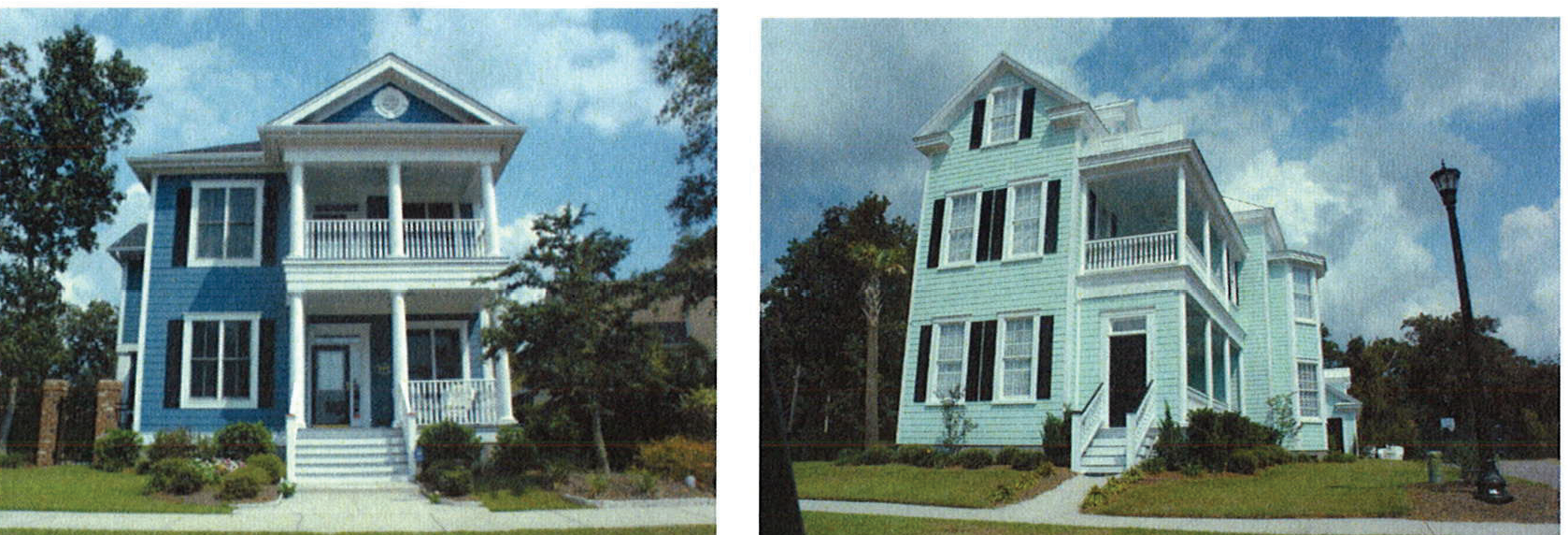
Examples of sidewalks and front porches
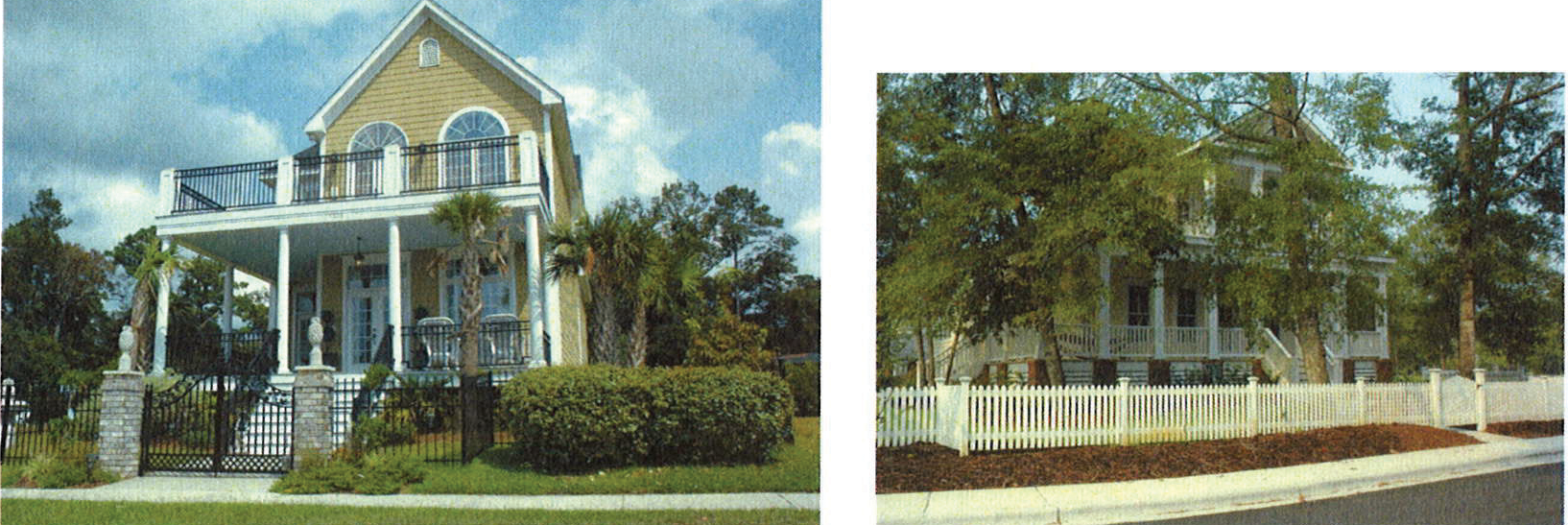
Examples of fencing
4.
Open fences shall be no greater than four (4) feet in height, opaque fences and walls shall be no greater than three (3) feet in height in the front or side yard setback. Fences or walls on lots with rear alley access shall be no greater than six (6) feet in height in the rear yard and shall provide a minimum of a five (5) feet setback from the rear lot line. No rear yard fence setback is required for interior lots w/no alley access.
5.
Vehicular access to lot: Primary access shall be from alley. Garage doors are not permitted to face the front property line of any detached home or lot*. [3]
6.
To provide privacy, all front entrances to single-family homes shall be raised from the finished grade a minimum of eighteen (18) inches.
7.
A minimum of twenty (20) percent of any project's developable/net land area shall be permanently dedicated to spaces defined as public use lots. Public use lots are reserved for open space throughout the TND and will not be occupied by buildings, parking lots, private residential yards, easements, setbacks, and streets except as recreational support facilities.
8.
A natural buffer shall be required along the perimeter of the overlay district, fifteen (15) feet for the R-1 district and ten (10) feet for all other residential districts. This may be an easement or common space but not to be included in total calculation of required open space.
Examples of garage doors facing the street
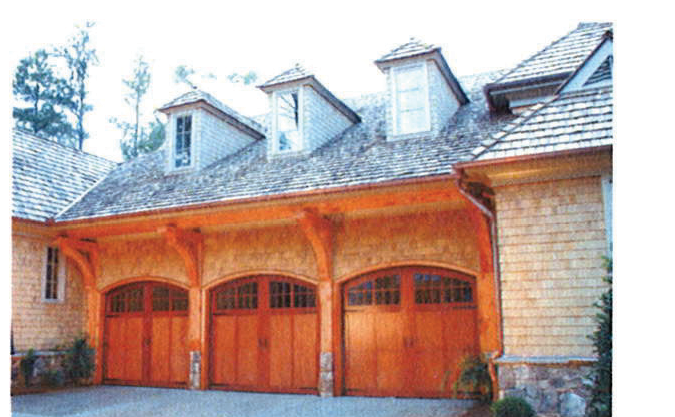 |
Example of alley paving
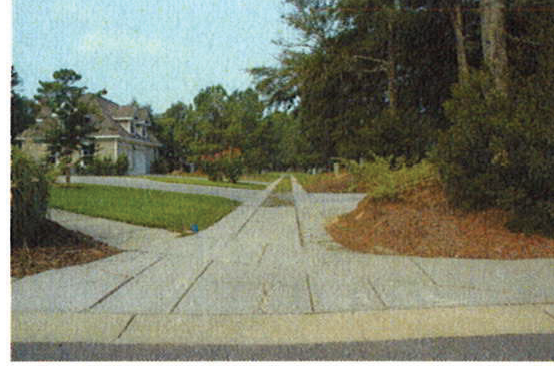 |
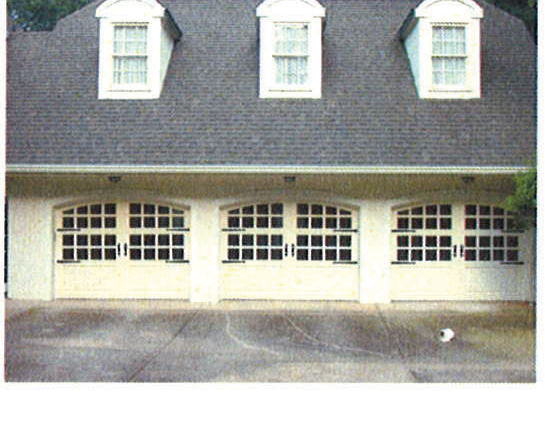 |
(7)
CBNO Crescent Beach Neighborhood Overlay District
(a)
Purpose: The CBNO Overlay is divided into two (2) sub-areas, the CBNO-17 and CBNO-Ocean. The purpose of this overlay is to accomplish the City's Comprehensive Plan goals for pedestrian-friendly streets that may also serve as public gathering spaces and encourage sustainable economic development and redevelopment by increasing activity and preserving neighborhood commercial character along the 17 th Avenue South corridor and in certain areas along Ocean Boulevard.
(b)
Overlay Boundaries and Applicability:
1.
CBNO-17:
a.
The 17 th Avenue South Crescent Beach Neighborhood Overlay District (hereafter referred to as CBNO-17) is applied to all parcels with frontage on 17 th Avenue South (and intersecting side streets for corner parcels) from Ocean Boulevard to Madison Drive. The Overlay boundary will follow the current district boundaries in the rear, including some existing parcels without 17 th Avenue South frontage, but that are likely to be combined with parcels fronting 17 th Avenue South for development.
b.
Proposed new commercial or mixed-use development or redevelopment in the corridor, including renovations to existing structures increasing the appraised value of the property and structure by fifty (50) percent, must meet the requirements of the overlay. Single-family residences zoned Neighborhood Commercial (NC) with the purpose of improving but remaining a single-family residence are exempt from this requirement. However, at the point of demolition and proposed replacement of the existing single-family residence, certain sections of CBNO-17 will apply (see Provisions under number 4).
2.
CBNO-Ocean:
a.
The Ocean Boulevard Crescent Beach Neighborhood Overlay District (hereinafter referred to as CBNO-Ocean) is applied to all oceanfront parcels along Ocean Boulevard south of the 17 th Avenue South street-end to 1801 South Ocean Boulevard and all second-row parcels from 1707 Perrin Drive south to 18 th Avenue South.
b.
Proposed new hotel/motel, resort accommodation and multifamily redevelopment in the corridor, including renovations to existing structures increasing the appraised value of the property and structure by fifty (50) percent, must meet the requirements of the overlay.
(c)
Provisions (CBNO-17):
1.
A district front "build-to" line is established for commercial and mixed-use development sites with frontage onto 17 th Avenue South including intersecting side streets within the CBNO (from Ocean Boulevard to Madison Drive). This build-to line shall be established twelve (12) feet from the 17 th Avenue South public right-of-way line to the front facade of the proposed new construction. The front façade of the building must be built upon the build-to line and must contain the primary public entrance and retail window display, or restaurant windows that open to the outside on the ground floor. Exceptions to the build-to line may be permitted to create inset entrances. A zero-side yard setback shall be permitted for commercial and mixed-use development except for corner lots. On corner lots where the property owner does not wish to continue the plaza around the side of the building on the secondary street, a minimum five-foot side yard setback is required, within which the property owner is to provide a minimum four-foot concrete sidewalk. If there is existing public sidewalk on the secondary street, then only the setback shall apply. Where the property owner wishes to extend the front plaza to the corner side of the building along the secondary street, a minimum twelve-foot side yard setback shall apply, and the plaza area finished in the same manner as the front.
2.
The resulting twelve (12) feet of space between the build-to line and the street right-of-way shall become a pedestrian plaza to be improved by the owner with an appropriate surface extending the full width of the lot and from the public right-of way/sidewalk to the building frontage. Material choices and installation specifications will be determined by the City Public Works Department. No permanent structures will be allowed on or over the plaza, except for a required fabric awning or balcony attached to the building at a minimum clearance height of nine (9) feet from the plaza surface with a minimum depth of four (4) feet. Secondary signage to the main wall signage may be placed on the awning, but the CBNO does not increase the amount of signage allowed by the underlying zoning district. In addition, no freestanding signage will be allowed; however, cantilevered signs may be allowed on the second floor of a building frontage. Movable container plants, seating, tables, lighting, cooling and heating devices, unlighted sandwich/menu boards and patio umbrellas are allowed.
3.
The twelve (12) feet of space merging with the public sidewalk is anticipated to provide a wider pedestrian area, in addition to street tree planting areas, curbing and public parking. Rear loaded parking may be placed on parcels that have side street access, or in the case of a parking structure, on the second-floor level or above. Sites within the CBNO may use the parking reductions contained within the Crescent Beach Priority Investment - Activity Center Overlay Zone and/or count on-street public parking immediately or partially in front of their site, as well as off-site parking. If those reductions are insufficient to provide the required relief, the property owner may also elect to pay a "fee-in-lieu" of parking, in the amount of one thousand two hundred dollars ($1,200.00) per parking space, to be collected by the city and held in a fund whose purpose is to expand public parking within the district. Midblock sites may include extra rear parking on site, if privately negotiated access easements can be arranged with neighboring lots with side street access. If parking is provided in the side portions of a lot, stalls shall be set back a minimum of seventeen (17) feet, to maintain the continuity of the twelve-foot-wide plaza and provide for a five-foot perimeter landscape buffer. While the ultimate objective is to eliminate all vehicular access curb cuts that interrupt the 17 th Avenue South streetscape/parking, proposed midblock developments desiring rear onsite parking, having exhausted all cross access options with adjacent parcels, will be allowed a side lot line alley (ten (10) feet wide) that crosses (but does not interrupt) the pedestrian plaza including a curb cut access to 17 th Avenue South, if approved by the city engineer via an encroachment permit. If approved curb cut access results in loss of public parking spaces, then a fee of one thousand two hundred dollars ($1,200.00) per lost parking space will be assessed to the applicant and paid into the "fee-in-lieu" fund in addition to assessing any costs of adequately modifying the existing public street and parking configuration to receive the new curb cut.
4.
New or replacement single-family homes must provide the twelve-foot improved plaza space by the owner according to Provisions (2) and (3)but shall be exempt from having to construct the house on the build-to line.
5.
Uses allowed and other basic zoning requirements/calculations not addressed by the CBNO or the Crescent Beach Priority Investment - Activity Center Overlay will be determined by the underlying zoning districts. Any new "live-work" structures in the CBNO must place the commercial and/or office at street level with residential beginning on the second level.
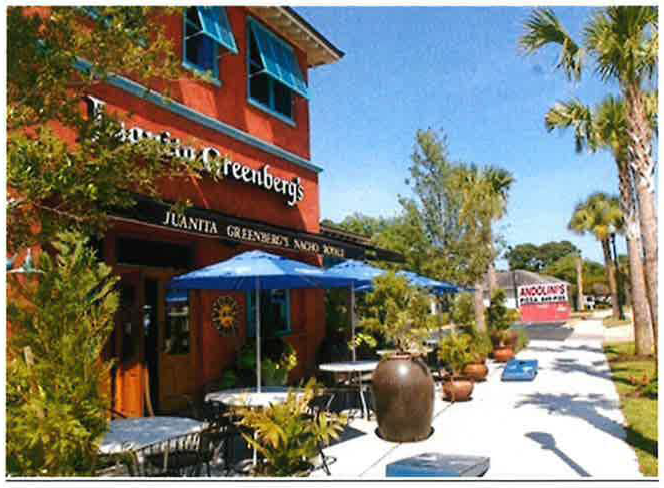
Example of a "live-work" structure with commercial at the street level and residential atop.
(d)
Provisions (CBNO-Ocean):
1.
Development standards:
Notes:
1 No structure may exceed 90' in height regardless of use and the presence or absence of structured parking underneath the building. For any second-row structure that is a part of or associated with an oceanfront high-rise building with heights exceeding R-4 standards, only parking and commercial uses are allowed within that structure.
2 For parking structures only, minimum 5' setbacks for all sides allowed if structure is less than 50' in height, otherwise Section 23-22, Development Standards apply.
3 Each street-fronting façade of the ground-level of all parking structures, including the portions reserved for street-fronting commercial uses, must provide detailed building articulation and ornamentation such as awnings, water tables, contrasting finishes, doors, windows, and/or varying facing materials, to disguise parking garage use.
4 Free-standing lighting shall be placed on decorative poles and fixtures and positioned at a pedestrian scale.
5 Referencing Section 23-56(2)(b). Parking lot landscape requirements: The required parking lot landscaping area (10%) may be located within the parking lot, within green roofs, rooftop gardens and/or planted terraces incorporated into the building but shall not be located underneath the building.
(8)
R-1H, (Historic Low-Density Residential Overlay) Zone.
(1)
Purpose and intent: To recognize the historical lot development pattern of several existing R-1 (Single-Family Residential) district neighborhoods that were subdivided prior to the existence of the City of North Myrtle Beach incorporation and establishment of Zoning, and to make accommodation allowing reestablishment of that pattern with respect to lot sizes and setbacks. Many of those pre-existing lots are now nonconforming substandard lots.
(2)
Application: Areas of R-1 (Single-Family Residential) where the majority of the existing lots are smaller than the standard R-1 minimum lot size.
(3)
Development standards:
All other development standards of the underlying R-1 district shall apply.
(9)
Small Lot Outdoor Living Overlay Zone.
Purpose and intent: The purpose of the Small Lot Outdoor Living Overlay district is to permit owners of small parcels in the R-3 zoning district to effectively utilize outdoor space by constructing unenclosed decks or porches, whether covered or uncovered, to within five (5) feet of property lines. When considering requests for application of this overlay, the average lot sizes of the surrounding neighborhood should be considered. Prime candidates for the use of this overlay include neighborhoods with a predominance of lot sizes that are at and/or sometimes below the minimum size for the underlying district. The following development standards shall apply to properties within this overlay:
1.
Covered or uncovered porches or decks may be constructed to within five (5) feet of any property line, provided that:
a.
The porch or deck floor shall not be higher than four (4) feet above grade.
b.
Such porches or decks shall not be enclosed or heated/air-conditioned. They may utilize open mesh screen material, however.
c.
If roofed, the roofing material shall substantially match that of the primary house.
d.
The length of the porch or deck shall not exceed one-half the length of the face of the house to which it is attached, or which it abuts if free-standing.
2.
Application: Areas of R-3 (Mobile/ Manufactured Home Residential District) with a predominance of lot sizes that are at and/or sometimes below the minimum size for the underlying district.
All other development standards of the underlying R-3 district shall apply.
(Ord. No. 88-35, 11-1-88; Ord. No. 92-37, § 1, 8-3-92; Ord. No. 95-49, § 3, 10-16-95; Ord. No. 95-51, § 3, 11-20-95; Ord. No. 96-39, § 1, 10-21-96; Ord. No. 96-46, §§ 2, 4, 11-18-96; Ord. No. 00-46, § 1, 10-16-00; Ord. No. 01-09, § 2, 2-5-01; Ord. No. 01-29, § 2, 6-4-01; Ord. No. 01-52, §§ 1-3, 12-3-01; Ord. No. 06-26, § 1, 5-1-06; Ord. No. 07-37, § 2, 8-20-07; Ord. No. 07-38, § 1, 8-20-07; Ord. No. 08-03, 2-18-08; Ord. No. 09-36, § 5, 11-16-09; Ord. No. 11-16, § 4, 6-6-11; Ord. No. 13-02, § 2, 2-4-13; Ord. No. 14-03, § 1, 3-17-14; Ord. No. 16-11, § 1, 4-18-16; Ord. No. 16-28, § 1, 8-1-16; Ord. No. 17-20, § 1, 9-18-17; Ord. No. 19-23, § 1, 4-15-19; Ord. No. 22-14, § 1, 3-21-22; Ord. No. 23-13, § 1, 1-9-23; Ord. No. 25-07, § 1, 2-17-25)
* Adjacent shall mean the majority of the second row tract shall be located between sidelines of the primary tract as they are extended in an imaginary straight line across the Boulevard.
--- (3) ---
* For interior parcels (those with only one (1) abutting street) that do not have alley access, any garage or carport, whether attached or detached, shall be recessed a minimum of twelve (12) feet back from the average setback of the front facade of the principal dwelling. For example, if the average setback of the front facade of the principal dwelling is ten (10) feet, no portion of any garage or carport shall be closer than twenty-two (22) feet to the front property line. Further, two-car garages shall be required to have separate doors for each bay, divided and separated by a portion of the front wall, rather than a single monolithic door. Should the garage door face a street (as opposed to an alley or side property line) it shall have glass panes in it that equal or exceed ten (10) percent of the door area.
Sec. 23-32. - Floating zones.
(a)
MMU, marina mixed-use floating zone.
(1)
Purpose and intent. The MMU, marina mixed-use floating zone, is intended to support a variety of marine related uses such as marinas, commercial docks and other commercial uses that require or benefit from locations near water bodies, and residential housing.
a.
Private docks intended for the private use of one (1) family shall be exempt from the requirements of this article.
b.
Joint use docks intended for the private use of two (2) to four (4) families shall be exempt from the requirements of this article.
(2)
Uses. Marinas, commercial docks and other commercial uses that require or benefit from locations near water bodies, and residential housing may be allowed in the MMU zone if approved in accordance with the procedures of this article.
(3)
Standards for marinas. A marina is any of the following: (a) lock harbor facility; (b) any facility which provides fueling, pump-out, maintenance, or repair services; (c) any facility which has permanent docking space for eleven (11) or more watercraft slips; (d) any water area with a structure which is used for docking or otherwise mooring vessels and constructed to provide temporary or permanent docking space for eleven (11) or more boats; or (e) a dry stack facility. Marinas are subject to the following standards:
a.
Uses. The following uses and activities shall be allowed in association with a marina:
1.
Marinas may provide the following services:
• Launching ramps and small hoists;
• Piers, wharfs and other facilities for the berthing and securing of recreational water craft;
• Commercial fishing and touring charters, and water taxis utilizing the marina as a base of operations, provided that no water craft exceeds eighty-five (85) feet in length;
• Dockside maintenance and repair necessary to keep water craft in operable condition;
• Wet storage and mooring of seaworthy pleasure craft in operable condition;
• Dispensing of fuel;
• Enclosed shower and laundry facilities for marina clientele only;
• Vending machines; and
• Dry stack storage of water craft.
2.
Marinas providing fifteen (15) or more boat slips may provide the following additional accessory uses:
• Bait and tackle retail sales;
• Snack bars and retail groceries;
• Retail sales of basic marine supplies and accessories necessary for boat operation, maintenance and upkeep;
• Restaurants;
• Multi-family residential uses not to exceed three (3) dwelling units per acre of gross land, i.e. twelve (12) acres of land yields thirty-six (36) residential dwelling units.
b.
Performance standards. In addition to any other applicable provision of the ordinance, marinas shall be subject to the following performance standards.
* For each one (1) foot of increase in height beyond thirty-five (35) feet up to sixty (60) feet for dry stack boat storage facilities, one (1) additional foot of front and rear setback shall be required; and one (1) additional foot of side setback shall be required for sides adjacent to any residentially used or zoned property.
1.
Lot area and location. The property shall have right-of-way frontage constructed to city roadway standards.
2.
Traffic study. A traffic study shall be provided by the applicant proposing a marina at the time of site plan submission. The purpose of the study is to determine if existing and proposed road networks serving the project are adequate to handle the volume and character of the traffic anticipated to be generated by the marina. Consideration shall be given to the types of vehicles and trailers typically used to haul boats, and anticipated peak traffic demand times.
3.
Services. All services provided by the marina shall be located on the same zoning lot or on the piers associated therewith.
4.
Structures. The maximum structure size or bulk shall be limited to fifty (50) square feet or net floor area for each boat slip.
5.
Parking. Off-street parking shall be provided in accordance with the requirements contained in article IV, off-street parking and loading of the zoning ordinance. Any parking associated with the use of the launching ramp and other marine activities must be accommodated on-site. Parking surfaces and off-street roadways within the facility shall be graded and constructed as pervious parking; pavers, porous asphalt or porous concrete, or any other technique approved by the zoning administrator and city engineer, shall be required. However, driveways and circulation aisles shall be constructed with hard surface impervious materials, unless the city engineer approves an alternate design.
6.
Storage. Open field boat storage on trailers may be provided at a ratio of one (1) ten-foot by twenty-foot space for each two (2) boat slips. Areas for boat trailer storage, open field boat storage, and loading and unloading areas shall be designated and screened in accordance with the screening section of this section.
7.
Screening. Areas for boat trailer storage, open field boat storage, and loading and unloading areas shall be screened from adjacent uses using a six-foot high finished wall and associated vegetation in accordance with section 23-28(2)d. of the zoning ordinance. Marina developments as a whole shall be screened from adjacent uses in accordance with article 5, landscaping, of the zoning ordinance.
8.
Signs. Total sign area per site shall not exceed one hundred fifty (150) square feet. One (1) free-standing monument sign not to exceed five (5) feet in height or thirty-six (36) square feet total is allowed. The monument sign shall not be internally illuminated. Additionally, one (1) wall sign with an area of one (1) square foot per linear foot of building frontage is allowed provided the area of all signs on site does not exceed total allowable area of one hundred fifty (150) square feet.
9.
Siting standards. Marinas shall meet all of the following requirements:
a)
Siting standards as per section 23-120, siting standards for marinas, of the zoning ordinance.
b)
All proposed marinas shall comply with site-specific development plan review procedures contained within chapter 20, land development regulations, of the zoning ordinance;
c)
All proposed marinas shall comply with all applicable regulatory requirements of state and federal agencies including, but not limited to, South Carolina Department of Health and Environmental Control (SCDHEC) and U.S. Army Corps of Engineers;
d)
New marinas are not allowed in waters classified for shellfish harvesting, except for any lock harbor, dry stack or expanded existing marina that does not close any additional waters for shellfish harvesting, as provided by SCDHEC;
e)
Marinas should be located in areas that will have minimal adverse impact of wetlands, water quality, wildlife and marine resources, or other critical habitats; and
f)
Approval of this particular use by the city shall not relieve the recipient (use) of responsibility for complying with all other applicable requirements or any other local, county, state or federal agency.
(Ord. No. 13-31, 3-18-13)

