
Northport City Zoning Code
ARTICLE 10
- SIGNS
Sec. 10.01.- Purpose, Findings, and Scope.
10.01.01.
The City of Northport recognizes that signs perform an important function in identifying properties, businesses, services, residences, events, and other matters of public interest. Signs also have a direct impact on the health, safety, and welfare of the public. For example, crash data analysis at 18 study sites in Alabama and Florida revealed that the presence of digital billboards is correlated with an increase in crash rates. Intentional and appropriate regulation is essential to balance these competing needs of the public.
10.01.02.
It is the intent of this Article to:
A.
Set standards and provide controls that permit reasonable use of signs and enhance the character of the City;
B.
Support and promote the use of signs to aid the public in the identification of businesses and other activities, to assist the public in its orientation within the City, to express the history and character of the City, to promote the community's ability to attract sources of economic development and growth, and to serve other informational purposes;
C.
Avoid excessive competition for large or multiple signs, so that permitted signs provide identification and direction while minimizing clutter, unsightliness, confusion, and hazardous distractions to motorists;
D.
Protect the public from the danger of unsafe signs, and from the degradation of the aesthetic qualities of the City; and
E.
Provide for the establishment of signs where the area, height, type, and design of signs is based on the context and character of the neighborhood and zoning district;
F.
Encourage sign design that builds on the traditional town image and visual environment the City of Northport seeks to promote.
G.
Limit billboards within the City of Northport.
10.01.03.
This Article uses content-neutral time, place, and manner restrictions that are narrowly tailored to achieve these significant public goals. Nothing in this Article shall inhibit an individual's right to express non-commercial messages as protected by the First Amendment of the United States Constitution. This Article provides many alternative channels for communicating speakers' messages, regardless of content, and includes a substitution clause to ensure content neutrality.
10.01.04.
These regulations shall apply to all signs erected, constructed, displayed, painted, maintained, altered, and/or installed in every zoning district in the City, which are designed or intended to be seen by or attract the attention of the public. No sign shall be erected or installed unless it is in compliance with the regulations of this Article.
(Ord. No. 2249, 1(Exh. A), 12-16-24)
Sec. 10.02. - Definitions.
10.02.01.
[Generally].
A.
Words and phrases used in this Article shall have the meanings defined in this Section. Words and phrases not defined in this Article but defined elsewhere in the Zoning Ordinance shall be given the meaning set forth in the Section 2.04, Definitions Section.
B.
Where terms are related to measurements and calculations set out in this article (e.g., sign height, setbacks, sign area, etc.), such terms are defined in Section 10.03. Calculations and Measurements.
10.02.02.
Banner Sign: A temporary sign composed of cloth, canvas, plastic, fabric or similar lightweight, non-rigid material that can be mounted to a structure with cord, rope, cable, or a similar method.
10.02.03.
Building: Where the term "building" is used in reference to the location of a sign it means a primary building on a lot and does not include accessory buildings or accessory structures. In those districts that do not have side yard setback requirements and buildings share a common wall, then a change from one building to another shall occur when there is a firewall separating the buildings.
10.02.04.
Building Sign: A permanent sign attached directly to an exterior wall of a building and which does not extend more than a certain distance from the façade, as established in this chapter, nor above the roof line or beyond the limits of the outside wall. The exposed face of the sign in a plane parallel to the building wall.
10.02.05.
Building Unit: A stand-alone building or a building divided into separate units or spaces that are individually owned or leased by different enterprises, businesses, firms, or other nonresidential occupants, and which meets the following conditions:
A.
Where a building is divided into individual spaces, each space with its own exterior entry or access point directly into the space shall be consider a building unit.
B.
Where a building contains individual spaces that are all accessed from the interior through a joint entry, such building shall be considered one building unit.
C.
Where a lot contains multiple principal buildings, each building shall be considered a building unit.
"Building unit" shall not be used to define an apartment building or similar residential-only building that is divided into individual dwelling units. For a mixed-use building, as defined in this article, the number of building units on any given lot shall be determined by the number of nonresidential enterprises, businesses, firms, or other nonresidential occupants.
10.02.06.
Detached Sign. Any sign affixed to or supported upon the ground by a monument, pedestal, pole, bracing, or other permanent structural element and not attached to any building.
10.02.07.
Driveway Sign. A small permanent sign located near driveway access points or at the intersection of internal access drives.
10.02.08.
Electronic Reader Board or Digital Sign. A sign designed so that the characters, letters, or illustrations can be changed or rearranged automatically on a lamp bank or through mechanical means (e.g., electronic or digital signs).
10.02.09.
Erect. To construct, reconstruct, build, relocate, raise, assemble, place, affix, attach, create, paint, draw, or in any other way establish, re-establish, or structurally alter a sign. It shall not include any of the foregoing activities when performed as an incident to change a message on a reader board or maintain the sign.
10.02.10.
Façade. The exterior wall on the front, side, or rear elevation of the building regardless of whether the building side faces a street.
10.02.11.
Freestanding Sign. Any sign supported by structures or supports that are placed on or anchored in the ground and that are independent from any building or other structure. The posts or other supporting structures shall be considered as part of the sign, except that they shall not be included in computing the sign display area.
10.02.12.
Lot. A lot is a parcel of land. For the regulatory purposes of this ordinance a lot may consist of a single lot of record, a portion of a lot of record, combinations of adjacent individual lots or portions of lots, or a parcel described by metes and bounds, provided that in no case of division or combination by private action shall any residual lot be created which does not meet the requirements of this ordinance and other applicable regulations.
10.02.13.
Main or Entry Façade. Generally, the façade or side of the building that faces the public street, road, or highway. In cases where the building is oriented in a manner not parallel to the street, the primary entrance façade is used as the main façade.
10.02.14.
Monument Sign. A permanent detached sign, other than a pylon or ground sign, not attached to a building, which is placed upon or supported by the ground independently of any other structure, typically on a monument or pedestal structure.
10.02.15.
Nonconforming Sign. Any sign that was erected legally prior to the adoption of this ordinance, or amendment thereto, but which does not comply with subsequently enacted sign restrictions and regulations or a sign which does not conform to the regulations of this chapter.
10.02.16.
Permanent Sign. A sign permitted by this ordinance to be located on the premises and designed to be permanently attached to a structure or the ground. Such sign is constructed of rigid, non-flexible materials.
10.02.17.
Pole Sign. A permanent, detached sign other than a pylon or monument sign, which is affixed to the ground by no more than two poles, columns, or uprights permanently imbedded in the ground.
10.02.18.
Portable Sign. Any sign not attached to a building or the ground that is designed to be transported, including signs designed to be transported by means of wheels. This definition shall not include "sidewalk sign" or other defined temporary sign types.
10.02.19.
Projecting Sign. A sign that is affixed perpendicular to a building or wall and extends more than eight inches beyond the face of such building or wall and the lowest point of which sign is not less than 12 feet above the sidewalk or ground level. A projecting sign shall be considered an "attached sign."
10.02.20.
Reader Board. A sign designed so that the characters, letters, or illustrations can be changed or rearranged manually or electronically without altering the sign display surface. May also be known as reader boards.
10.02.21.
Right-of-Way. A strip or area of land dedicated for use as a public roadway, railroad, or dedicated for other public uses. For streets, the right-of-way typically includes the paved roadway, curbs, lawn strips, sidewalks, lighting, drainage facilities and utilities and may include special features (required by the topography or treatment) such as grade separation, landscaped areas, viaducts, and bridges.
10.02.22.
Sidewalk Sign. A temporary sign that may be placed on a public sidewalk or on a private sidewalk/walkway, during business hours in accordance with this article and which may include an "A-frame sign" or a "T-frame sign" as defined below:
A.
A-Frame Sign means a detached temporary sign that is ordinarily in the shape of an "A" or some variation thereof, which is readily moveable, and is not permanently attached to the ground or any structure.
B.
T-Frame Sign means a detached temporary sign that is ordinarily in the shape of an upside down "T" or some variation thereof, which is readily moveable, and is not permanently attached to the ground or any structure.
10.02.23.
Sign. A structure, device, or surface that contains, supports, or displays sign copy.
10.02.24.
Sign Area. The total area of a sign face as measured pursuant to Section 10.03.03, Sign Area.
10.02.25.
Sign Copy. Letters, numerals, figures, symbols, logos, pictorial, or graphic elements comprising the content or message of a sign.
10.02.26.
Sign Face. The surface of the sign upon, against, or through which the message of the sign is exhibited.
10.02.27.
Street Frontage: The distance for which a lot line adjoins a public street, from the lot line intersecting said street to the furthest distant lot line intersecting the same street. Alternatively, where the number of signs is based on the number of street frontages, a street frontage means a continuous border between the subject property and a public street or road.
10.02.28.
Temporary Sign. A non-permanent sign that is neither permanently anchored to the ground, nor permanently affixed to a structure, nor mounted on a chassis.
10.02.29.
Temporary Yard Sign. A temporary sign that is placed in a yard, grass, or other landscaped areas that requires two posts or supporting elements.
10.02.30.
Window Sign. A sign attached to, in contact with, placed upon or painted on the window or door of a building which is intended for viewing from the outside of such building. This does not include merchandise located in a window.
(Ord. No. 2249, 1(Exh. A), 12-16-24; Ord. No. 2296, § 1(Exh. A), 3-23-26)
Sec. 10.03. - Calculations and Measurements.
For the purpose of this chapter, the following shall be the method for determining and interpreting any form of calculation or measurement.
10.03.01.
Sign Setback. All required setbacks for signs shall be measured as the distance in feet from the applicable lot line, or other stated point of measurement, to the closest point on the sign structure.
10.03.02.
Sign Height.
A.
The height of a sign shall be computed as the distance from the base of the sign at normal grade (average grade at the base of the sign) to the top of the highest attached component of the sign. Normal grade shall be construed to be the newly established grade after construction, exclusive of any filling, berming, mounding, or excavating undertaken for the purpose of locating or increasing the height of sign.
B.
The filling of a pre-existing hole or depression to create an average grade at the same level as that surrounding the hole or depression is permitted, provided such filling is allowed by other ordinances.
C.
In cases where the normal grade is below grade at street level, sign height shall be computed on the assumption that the elevation of the normal grade at the base of the sign is equal to the elevation of the nearest point of the crown of a public or private street. See Figure 10-1.
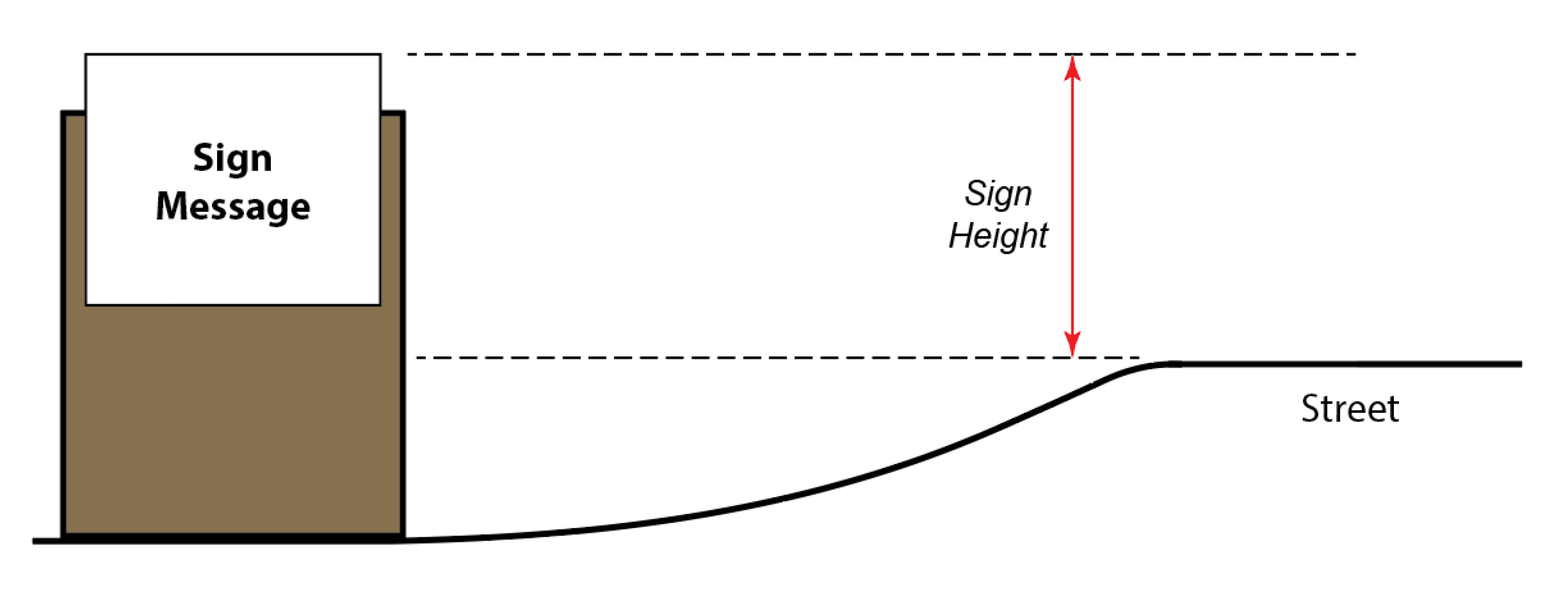
Figure 10-1: Illustration of the measurement of sign height when the grade at the
bottom of the sign is below the grade of the adjacent street.
D.
Any material whose major function is providing structural support for a sign shall be considered part of the sign for purposes of determining sign height.
E.
Where a distance is established for the clearance of a sign, such measurements shall be made from the normal grade of the ground, directly under the applicable sign or structure supporting the sign, and the bottom most point of the sign or the structure supporting the sign, whichever is closest.
10.03.03.
Sign Area. The surface of a sign to be included when computing maximum allowable square footage of sign area shall be calculated as follows:
A.
For sign copy mounted or painted on a background panel, cabinet, or surface distinctively painted, textured, lighted, or constructed to serve as the background for the sign copy, the sign area shall be computed by means of the smallest square, circle, rectangle, triangle, or combination thereof that encompasses the extreme limits of the background panel, cabinet, or surface. See Figure 10-2 and Figure 10-3.
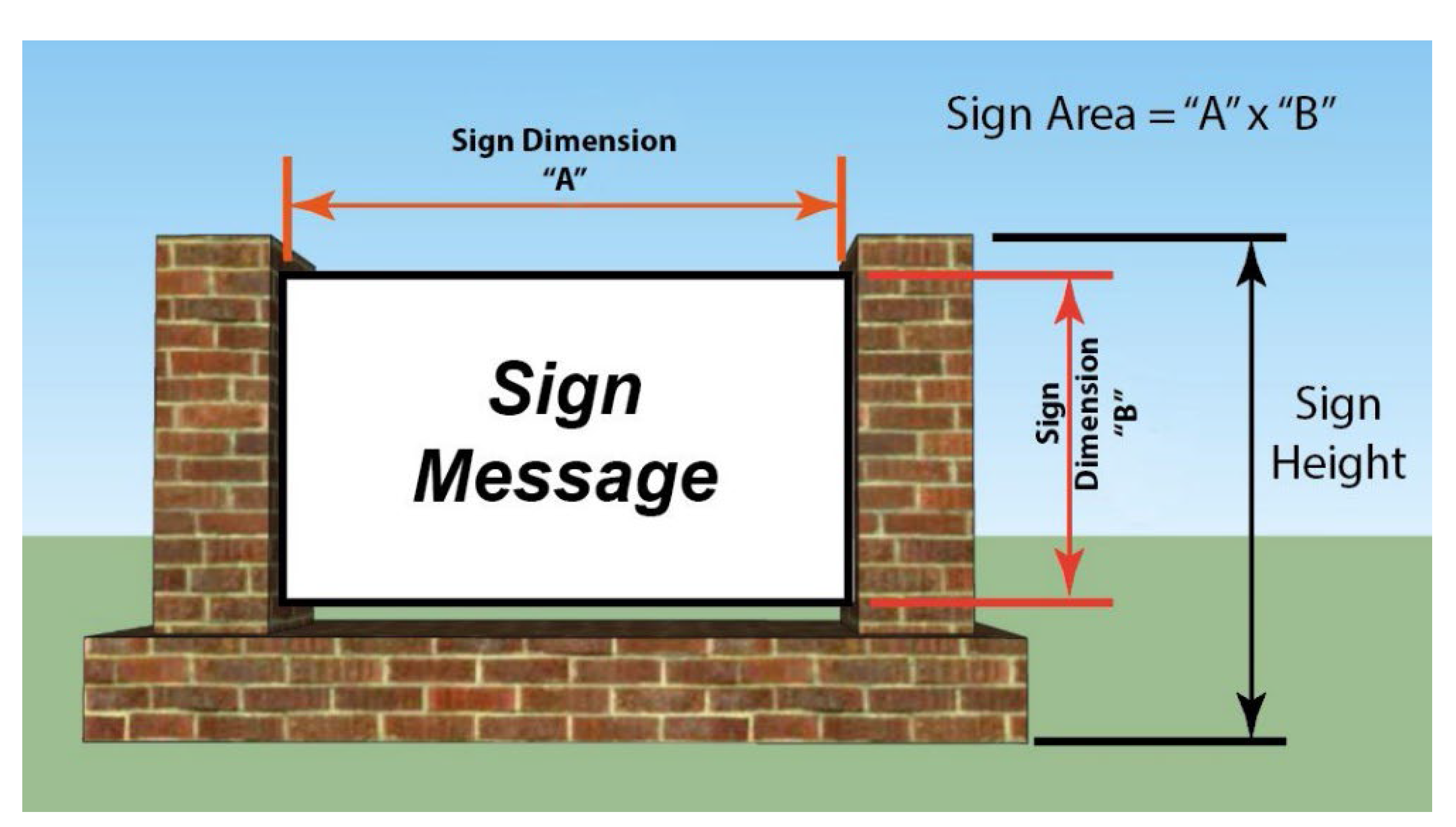
Figure 10-2: Illustration of sign area calculation for a monument sign with copy on
a distinct cabinet.
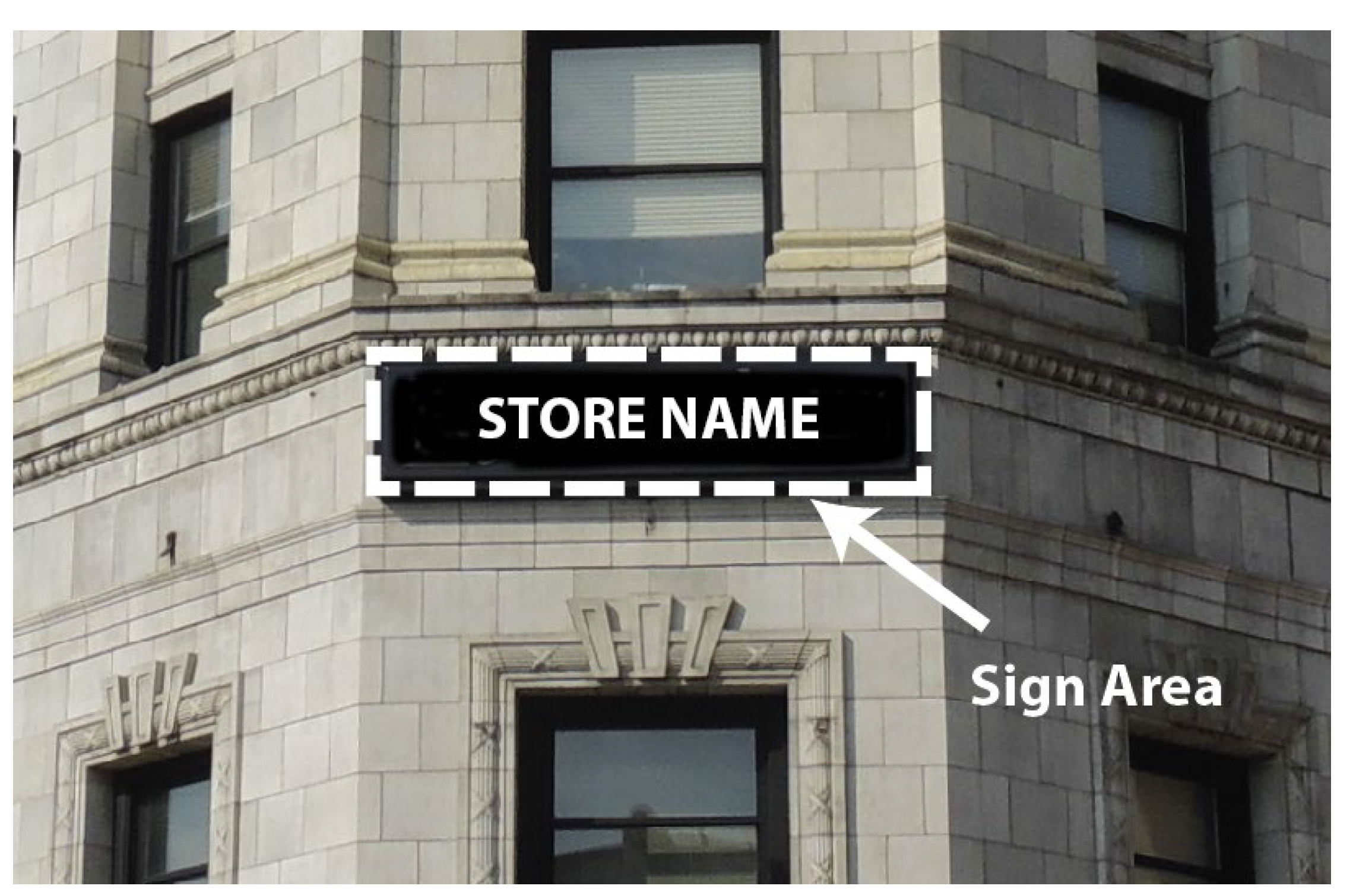
Figure 10-3: Illustration of computing the sign area for wall signs with a background
panel or cabinet.
B.
For sign copy where individual letters or elements are mounted on a building façade where there is no background panel, cabinet, or surface distinctively painted, textured, lighted, or constructed to serve as the background for the sign copy, the sign area shall be computed by means of the combination of the smallest square, circle, rectangle, triangle, or combination thereof that encloses all the letters or elements associated with the sign. See Figure 10-4.
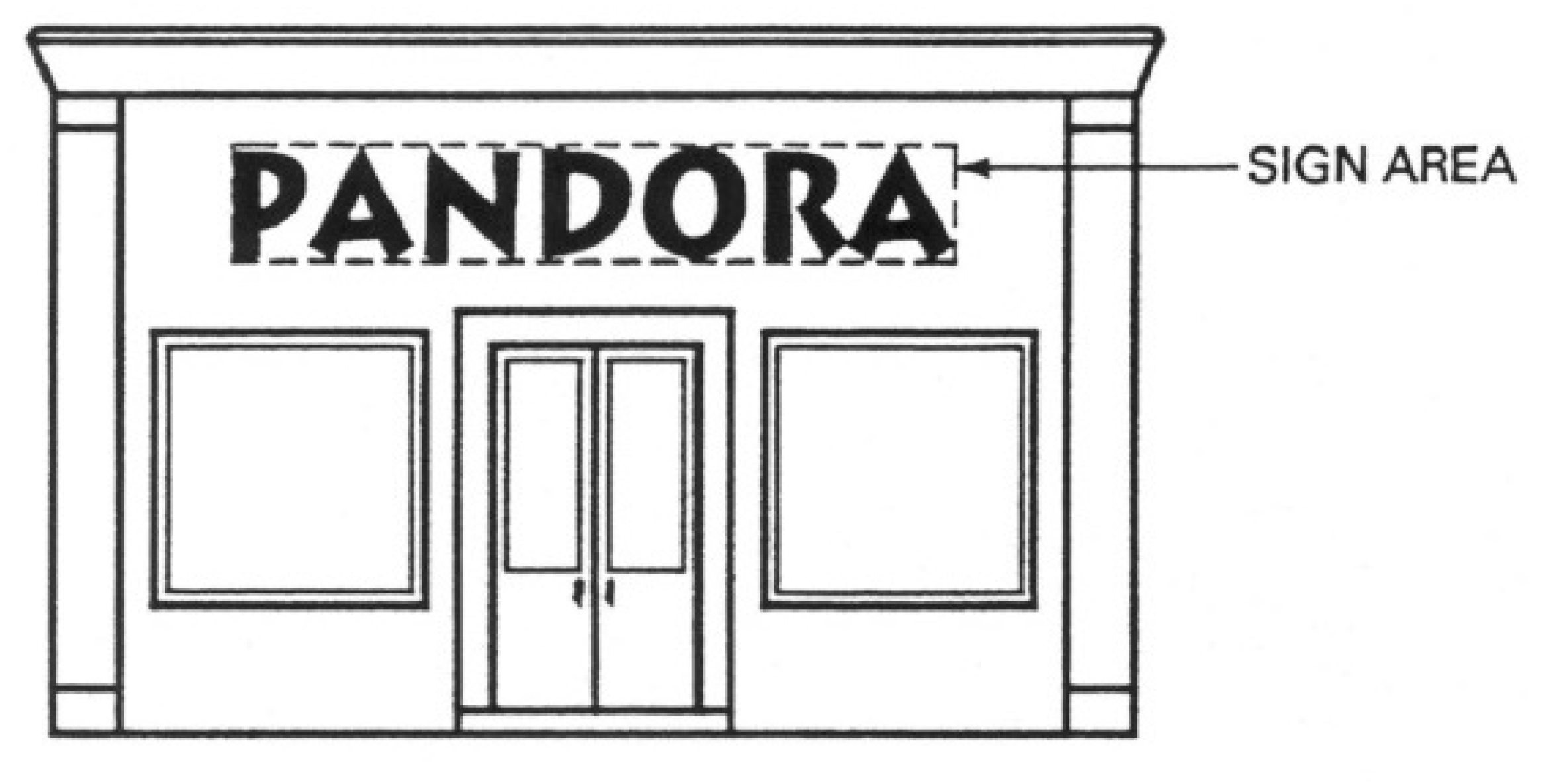
Figure 10-4: Illustration of sign area calculation for wall sign with individual letters.
C.
In cases where there are multiple elements of sign copy on the same surface, any areas of sign copy that are within two feet of one another shall be calculated as a single sign area that shall be computed by means of the smallest permitted shape that encloses all sign copy within two feet of one another, otherwise the sign area shall be computed for each separate piece of sign copy. See Figure 10-5.
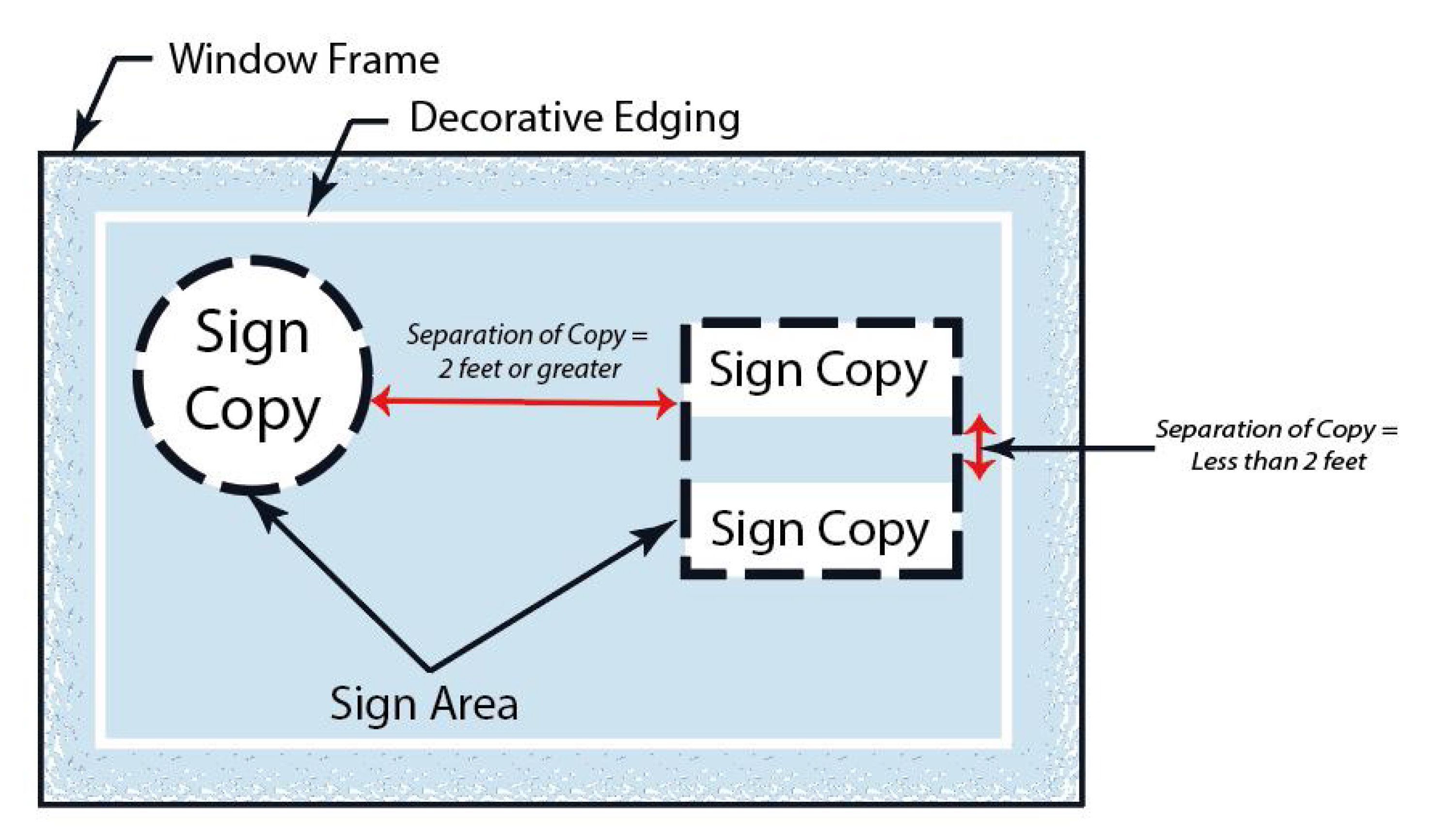
Figure 10-5: Illustration of sign area calculations for multiple sign areas on a window
sign.
D.
Decorative edging or other window treatments that are not an integral part of the sign copy shall not be considered a part of the sign for the purposes of this chapter. See Figure 10-5.
E.
In cases where there are multiple sign elements on the same surface, the Planning Director shall have the authority to determine the outermost boundaries of individual sign elements based on the shape of the sign and the distance separating various elements of sign copy. Decorative edging or other window treatments that are not an integral part of the sign copy shall not be considered a part of the sign for the purposes of this article.
F.
The calculation of sign area shall not include any supporting framework, bracing, or decorative fence or wall unless such structural support is determined to constitute an integral part of the sign design by means of any form of sign copy, as determined by the Planning Director.
G.
In the case of a three-dimensional sign where the sign faces are not mounted back-to-back, the sign area shall be calculated by the smallest square, circle, rectangle, triangle, or combination thereof that encompasses the profile of the sign message, multiplied by two. The profile used shall be the largest area of the sign face visible from any one point.
H.
Except for three-dimensional signs, the sign area for a sign with more than one face (multi-faced signs) shall be computed by adding together the area of all sign faces unless two sign faces are mounted back-to-back.
I.
When two flat sign faces are placed back-to-back and when such sign faces are part of the same sign structure and are not more than 24 inches apart, the sign area shall be computed by the measurement of one of the faces. If the two faces are unequal, the sign area shall be calculated based on the larger of the two faces.
10.03.04.
Determining Width of Building Façades.
A.
For the purposes of this chapter, the length of the building wall that faces a public street shall be considered the main building façade unless otherwise stated.
B.
The calculation of the width or lineal measurement of any main building façade shall be the measurement of the main building façade between two side façades. The calculation shall be based on viewing the façade from a 90-degree angle (i.e., straight on), regardless of façade insets, offsets, or angles. See Figure 10-6.
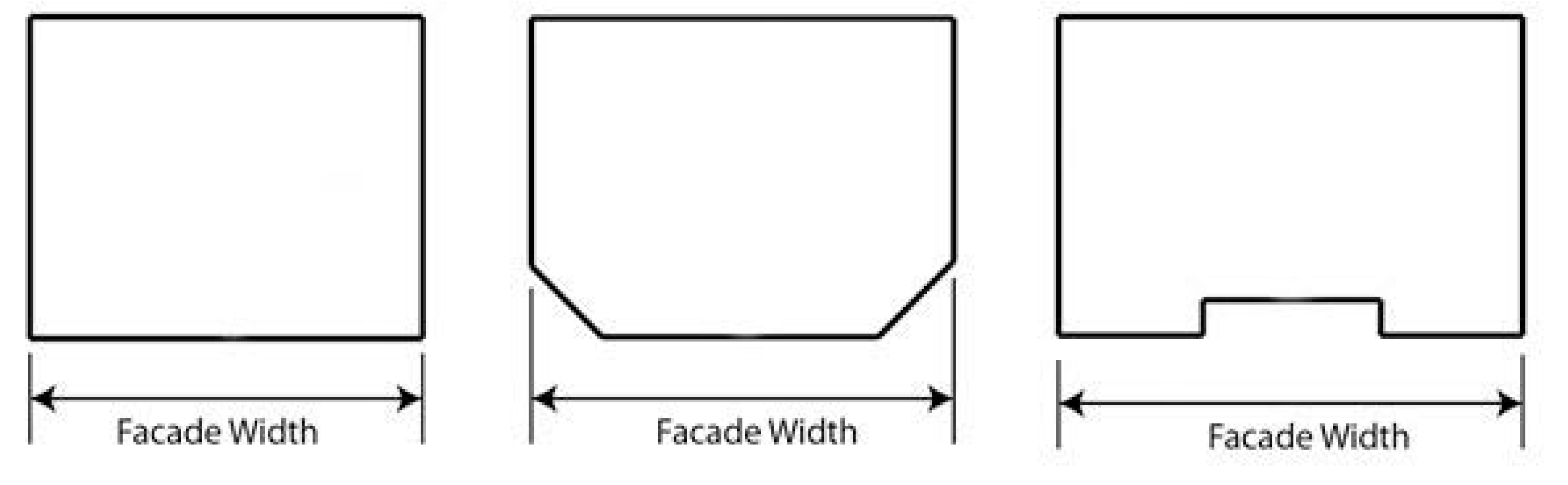
Figure 10-6: Illustration of façade width measurement on varied façade shapes.
(Ord. No. 2249, 1(Exh. A), 12-16-24)
Sec. 10.04. - General provisions.
10.04.01.
Compliance and Applicability.
A.
No premises within the corporate limits of the City of Northport shall be used to construct or erect a sign that does not meet the requirements of this chapter, and it shall be unlawful for any person to use premises in the corporate limit of the city to construct or erect a sign that is not in conformity with the requirements of this chapter.
B.
This chapter shall only apply to any sign, in any zoning district, that is outdoors and displaying sign copy that is visible from a public right-of-way or otherwise visible to the general public. This chapter is not intended to, and does not, regulate signs inside of homes or other buildings.
C.
Any sign legally established prior to the effective date of this chapter, or amendments thereto, and which sign is rendered nonconforming by the provisions herein, shall be subject to the nonconforming sign regulations of Section 10.09, Nonconforming Signs.
10.04.02.
Coverage.
A.
Nothing in this chapter shall be construed to affect the franchise authority of the city.
B.
Nothing in this chapter shall be construed to allow or give permission to any person to install a sign on private property without the consent of the owner of the property or the person otherwise in possession or control of the property. Where a sign has been placed on premises without proper consent, the sign shall constitute a trespass.
C.
Nothing in this chapter shall be construed to exempt from or except the application of the building and other technical codes of the city to the installation of signs.
10.04.03.
Exclusions from this Chapter.
A.
In some cases, federal and state law preempt or otherwise limit or prohibit the City's regulatory authority over signs, which may include, signs required by state or federal law including signs ordered in the case of bankruptcies and government-function signs. It is not the intent of this ordinance to challenge or create conflicts with or act contrary to such law and thus this article shall not apply in such cases.
B.
Exclusion from this article does not relieve a person from complying with other applicable laws, including the building and electrical codes of the city.
10.04.04.
Severability Clause. If any part, section, subsection, paragraph, subparagraph, sentence, phrase, clause, term, or word of this chapter is declared unconstitutional by the valid judgment or decree of any court of competent jurisdiction, the declaration of such unconstitutionality shall not affect any other part, section, subsection, paragraph, subparagraph, sentence, phrase, clause, term, or word of this chapter.
10.04.05.
Reclassification of Signage. If the type of any sign that legally existed prior to the effective date of this amendment is reclassified by this amendment, such sign shall be classified as the sign type defined in this chapter and shall be subject to the applicable standards for such sign type from the effective date of this amendment. Such reclassification shall be regardless of any variances that were approved prior to the effective date of this amendment.
10.04.06.
Design, Construction, and Maintenance of Signs.
A.
Compliance with Building and Electrical Code Requirements. All permanent signs and the illumination thereof, shall be designed, constructed and maintained in conformity with the applicable provisions of the adopted building code and electrical code of the City of Northport. Wherever there is inconsistency between this Ordinance and the building or electrical code, the more restrictive requirement shall apply.
B.
Illumination Standards.
1.
Sign lighting shall not be designed or located to cause confusion with traffic signals.
2.
Devices that illuminate a sign or signs shall be placed and shielded so that direct light shall not be cast into the eyes of pedestrians, cyclists or motorists entering or using a street, road or highway.
C.
Placement and Clearance Standards.
1.
Signs shall be located such that there is at every intersection and driveway clear sight distance for pedestrians, cyclists, and motorists traveling on or entering any street, road, or highway. The applicant shall use the national standards in "A Policy on Geometric Design of Highways and Streets" to demonstrate that such a sign does not create an obstruction.
2.
No sign structure shall be erected that impedes use of any fire escape, emergency exit, or ventilation opening.
3.
No freestanding sign shall project into a public right-of-way.
D.
Maintenance.
1.
All signs, including their supports, braces, guys and anchors, electrical parts, and lighting fixtures, and all painted and display areas, shall be maintained in accordance with the building and electrical codes adopted by the City of Northport. All signs and their components shall be maintained in good repair, free of rust, peeling, fading, broken, or cracked panels, and broken or missing letters. Vegetation must be properly maintained and no condition shall be allowed that would constitute a fire or health hazard. The general area in the vicinity of any sign shall be kept free and clear of any unnecessary or discarded sign materials.
2.
No sign shall be allowed to deteriorate to a condition in which it is unsightly in appearance or to a condition in which it requires repairs or renovations in an amount which exceeds 50 percent of its current replacement cost. Signs which deteriorate to such a condition are deemed to be in violation of this ordinance, and as such must either be removed or improved (if permitted) by the person responsible for maintaining the sign.
(Ord. No. 2249, 1(Exh. A), 12-16-24)
Sec. 10.05. - Permitting and Enforcement/Administration.
10.05.01.
Permit Procedure.
A.
All signs shall require a sign permit unless exempted from this permit requirements in Section 10.05.03, Permit Exceptions.
B.
A written application shall be submitted to the Planning Director for review and processing. The Planning Director, only upon determination that all requisite documentation and fees accompany the application form, will accept the application. The application shall include supplementary information as may be specifically requested by the Planning Director to determine compliance with these regulations.
C.
The Planning Director shall review the application, plans, and specifications to determine whether the proposed sign conforms to all applicable requirements of these regulations.
D.
Following review and determination as to conformance with these regulations, the Planning Director shall either approve or deny the application for the sign permit within 30 days. In case of denial, the Planning Director shall specify the Section or Sections of these regulations with which the proposed sign is not in conformance. Appeals may be made in accordance with the procedures provided in this Zoning Ordinance at Section 14.02, Administrative Appeals.
E.
An application may be amended within 30 days of the original application date to include additional signs up to the allowable maximum. The Planning Director shall either approve or deny the application for the amended sign permit within 30 days of the date of the complete amendment. Additional fees shall be charged if the additional signs exceed the size limitations for fee category. After 30 days, a new sign permit shall be required for any sign constructed and all fees shall be required.
10.05.02.
Submission Requirements. No request for a sign permit shall be considered complete until all the following has been submitted to the Planning Director.
A.
The application form shall be submitted with all required information completed by the applicant. The application form is available from the Planning Director.
B.
Plans and specifications for the proposed sign shall be submitted, drawn to scale, and include the following:
1.
Site plan of development site showing location of any freestanding sign(s) including any easements, public rights-of-way, property lines, buildings, sight distance triangles and other signs on the property;
2.
Main or entrance façade including linear dimension;
3.
Dimensions and elevations of all signs;
4.
Dimensions and locations of any supporting structures;
5.
Maximum and minimum height of sign, and any measurements of clearance distances when a sign is mounted above a pedestrian or vehicular area;
6.
For illuminated signs, indicate type and placement of illumination;
7.
Inventory of number, type, location, and display area of all existing signs on the same property and/or building on which the sign is to be located.
C.
The applicant shall be required to pay an application fee according to the current schedule of fees established by the Northport City Council for the particular category of application. This fee is nonrefundable irrespective of the final disposition of the application.
D.
A sign permit shall be valid for a period of 180 days after issuance. Failure to place the sign within the allotted time period shall void the permit and necessitate reapplication.
10.05.03.
Permit Exceptions. The following signs are allowed by this chapter but do not require a sign permit or fee. Additionally, any sign area for these signs does not count toward the sign area allowances specified in this chapter for all other permitted signs. Permit-exempt signs may still be subject to the building code, electrical code, or other applicable code requirements. Signs exempted in this Section must conform to the standards enumerated herein and shall not be placed or constructed so as to create a hazard of any kind.
A.
Signs or notices issued by any court, officer, or other person in performance of a public duty, or required by other laws or ordinances. Any such sign shall be removed no later than seven days after the last day it is required to be displayed;
B.
Any public safety sign that is installed by the City of Northport or other governmental agency having jurisdiction that are intended to protect the health and safety of the public that includes traffic control, street name, directional signs, and other signs that may or may not be located in the right-of-way.
C.
Signs that are located within a stadium, open-air theater, park, arena or other similar outdoor use that can only be viewed by persons within such stadium, open-air theater, park, arena or other similar outdoor use provided that any structure on which the sign is attached is permitted, as may be required by the city;
D.
Signs that are an integral part of the original construction of vending or similar machines, drive-through facilities, automated teller machines, or similar devices that are not of a size or design as to be legible from a street or by any person other than those using the machine or device;
E.
Sign face changes where the sign structure is designed with interchangeable panels and one of the panels is replaced without changing the structure, including any changes to the total sign face area, height or alteration of the sign cabinet;
F.
Changes of copy on signs with changeable copy, including electronic message signs and electronic display signs;
G.
Certain temporary signs as established in Section 10.08, Temporary Signs;
H.
No more than four flags located on flagpoles or on wall-mounted posts provided that the following shall apply:
1.
There shall be a maximum of one flagpole on any lot. The remaining flags may be wall-mounted. Where there is no flagpole, there shall be a maximum of four wall-mounted flags.
2.
The maximum height of flag poles shall not exceed the maximum building height for structures in the applicable zoning district, and a maximum sign area of area of 40 square feet for any individual flag attached to the pole.
3.
The maximum projection for wall-mounted flag post is six feet and a maximum sign area of 15 square feet per flag.
I.
Driveway Signs. Driveway signs are allowed without a sign permit in accordance with the following:
1.
Driveway signs are only permitted in nonresidential zoning districts. Driveway signs shall also be permitted in residential zoning districts only when permitted as part of a permitted nonresidential use.
2.
A maximum of two signs shall be permitted for any one driveway.
3.
Driveway signs shall be set back at least five feet from all lot lines but in no case shall the sign be set back more than 25 feet from the edge of the driveway where it intersects with the public street.
4.
Each driveway sign shall not exceed five square feet in area and three feet in height.
5.
Driveway signs may be internally or externally illuminated.
6.
The sign area of driveway signs shall not be counted as part of any other sign allowance in this chapter.
J.
One wall sign, mounted flush to the façade of an individual residential dwelling unit or any building unit that contains a nonresidential use, that is not illuminated and does not exceed two square feet in area.
K.
The posting of the E-911 address for a house or building due to its nature as serving the purpose of protecting a public safety issue or meeting the requirements of applicable building code;
L.
Signs that are an integral part of the historic character of a structure that has been designated an official landmark or historic structure by any agency or body of the governments of the United States, State of Alabama, Tuscaloosa County, or the City of Northport, or that otherwise forms an original part of the structure and has only historic significance;
M.
Any signs located on umbrellas, seating, or similar patio furniture;
N.
Any warning signs or traffic safety signs required by public utility or infrastructure providers;
O.
Hand-held signs not set on or affixed to the ground;
P.
Window Signs. Window signs are allowed without a sign permit in accordance with the following:
1.
Window signs shall not occupy more than 25% of the window area in the Core City Zoning Districts or 50% of the window area in all other nonresidential zoning districts.
2.
The sign area is based on the total window area, regardless of the presence of an awning. Window areas separated by piers, architectural elements, or similar features that are not glass or window framing or support shall be considered separate and distinct window areas. See Figure 10-7.
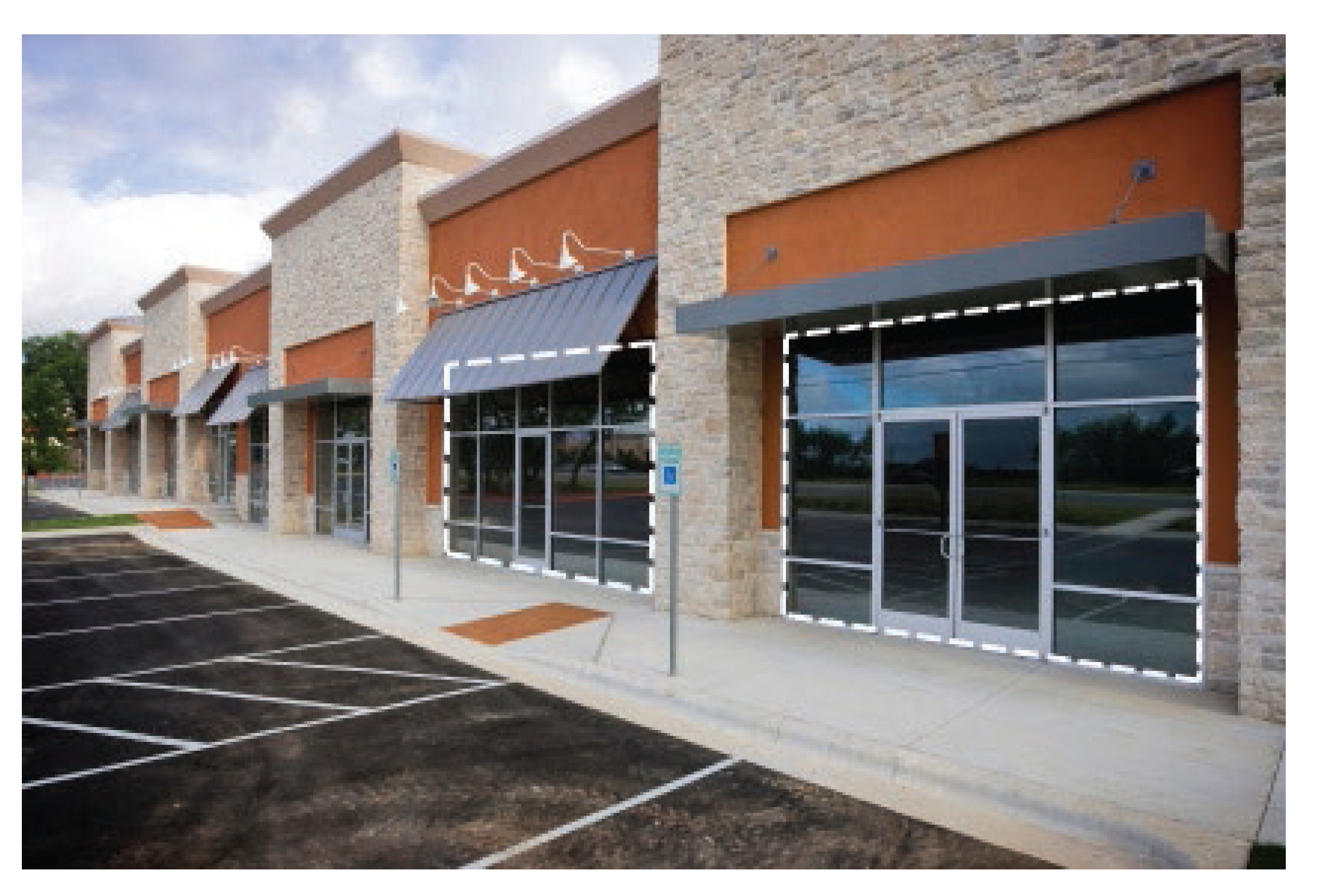
Figure 10-7 The window area is illustrated within the dashed line area for the two
storefronts in the above image. The dashed lines highlight two separate window areas
due to the separation by an architectural feature not related to the windows.
3.
Window signs may be temporarily or permanently attached to the window surface.
4.
The sign area of window signs shall not be counted as part of any other sign allowance in this chapter.
5.
Window signs are not permitted in any window of a space used for residential uses or purposes unless allowed as a temporary sign in accordance with Section 10.08, Temporary Signs.
6.
Window signs shall not be illuminated except when illuminated by an external lighting source, or up to one square foot of window signage may be internally illuminated, provided there is no blinking, flashing, or other movement of the lighting source.
Q.
Maintenance. General maintenance, painting, repainting, cleaning, and other normal maintenance and repair of a sign or any sign structure is allowed without a sign permit unless a structural change is made.
10.05.04.
Variances and Waivers. It is the explicit intent that this Section be enacted to accomplish the purposes as set forth in Section 10.01 and any variance granted by the Zoning Board of Adjustment (ZBA) may be detrimental to these purposes. Accordingly, the ZBA shall only grant a variance in the case of demonstrated unnecessary hardship, as permissible under Alabama law. Generally, mere financial loss, personal hardship, and economic conditions alone are not considered unnecessary hardships under Alabama law. Under Alabama law, the ZBA generally cannot grant a variance to establish a use that is prohibited within a zoning district by this Zoning Ordinance.
10.05.05.
Appeals. In accordance with Section 14.02, Administrative Appeals, of this Zoning Ordinance, appeals to the ZBA may be made in accordance with applicable state law. Full procedures are provided in the above-mentioned Section.
(Ord. No. 2249, 1(Exh. A), 12-16-24)
Sec. 10.06. - Prohibited Signs.
It shall be unlawful to erect, cause to be erected, maintain or cause to be maintained, any sign not expressly authorized by, or exempted from, these regulations. The signs listed below are expressly prohibited in the City of Northport.
10.06.01.
Signs that are in violation of the building code or electrical code adopted by the City of Northport;
10.06.02.
Portable signs, with the exception that temporary portable signs may be used for up to 48 consecutive hours at a time for events not to exceed 2 occurrences per calendar year for any property;
10.06.03.
Beacons and searchlights;
10.06.04.
Wind signs consisting of one pennants, ribbons, spinners, streamers, captive balloons, inflatable figures or other objects or material fastened in such a manner as to move freely upon being subjected to pressure by wind (whether the sign contains a commercial message or not);
10.06.05.
Inflatable signs and tethered balloons;
10.06.06.
Any sign which simulates or imitates in size, color, lettering or design any traffic sign or signal, or which makes use of words, symbols, or characters in such a manner to interfere with, mislead or confuse pedestrian or vehicular traffic;
10.06.07.
Any signs, other than official traffic control devices, highway identification markers, warning signs, and other official signs, which are erected within the right-of-way of any street or alley. Any sign that is erected or maintained outside the right-of-way and obstructs the vision of pedestrians, cyclists, or motorists traveling on or entering a street, road, or highway. The national standards for sight-distance triangles utilized by the City of Northport Engineering Department shall be utilized to determine if a sign is creating an obstruction;
10.06.08.
Freestanding signs which project into the public right-of-way unless otherwise authorized by this chapter.
10.06.09.
Signs consisting of any moving, rotating, flashing, or otherwise animated light or component, except for reader boards;
10.06.10.
Abandoned signs pursuant to Section 10.09.02, Abandoned Signs;
10.06.11.
Strips or strings of lights outlining property lines, sales area, rooflines, doors, windows, wall edges or other architectural features of a building. This prohibition does not include neon lighting on buildings. If neon is used to depict wording or logos, it will be calculated as part of the overall allowable signage;
10.06.12.
Signs on public land, other than those erected at the direction or with the permission of the appropriate public authority;
10.06.13.
Signs that emit audible sound, odor, visible matter such as smoke or steam, or involve the use of live animals;
10.06.14.
Signs or sign structures that interfere in any way with free use of any fire escape, emergency exit, or standpipes, or that obstruct any window to such an extent that light or ventilation is reduced to a point below that required by any provision of these regulations or any other applicable law;
10.06.15.
Signs that are of such intensity or brilliance as to cause glare or impair the vision of motorists, cyclists, or pedestrians; or that illuminate adjacent residential development;
10.06.16.
Signs that contain any lighting or control mechanism that causes unreasonable interference with radio, television, or other communication signals;
10.06.17.
Signs erected on public utility poles, even if they are located on private property other than signs erected by a public authority for public purposes;
10.06.18.
Signs, other than historical markers or those identifying a natural feature, painted on or attached to trees, rocks, or other natural features.
10.06.19.
Any sign mounted to the structural roof or applied to the roof including painted signs;
10.06.20.
Signs projecting above the building roof or parapet line;
10.06.21.
Signs that have become deteriorated or damaged to such an extent that the cost of the reconstruction or restoration of said signs is in excess of 50% of its replacement value exclusive of foundations;
10.06.22.
Signs incorporating any noisy mechanical device are expressly prohibited;
10.06.23.
Any sign not specifically authorized by this chapter.
(Ord. No. 2249, 1(Exh. A), 12-16-24; Ord. No. 2301, § 1(Exh. A), 5-18-26)
Sec. 10.07. - Permanent Signs.
10.07.01.
Signs at Entrances.
A.
A sign marking an entrance to a residential subdivision, office park, or industrial park shall be permitted in accordance with this Section. The subdivision, office park, or industrial park shall have a minimum area of ten acres in order to have a sign at the entrance.
B.
A sign marking the entrance of a multi-family residential use shall also be allowed in accordance with this Section provided there are a minimum of five units in the building.
C.
For subdivisions or parks, the sign shall be located along the perimeter of the subdivision or park and shall not be located within the public right-of-way, except for those located in a landscaped traffic island. For multi-family residential uses, the sign shall be located adjacent to the street frontage and not within the public right-of-way.
D.
A maximum of one freestanding monument sign or two wall signs (attached to walls, fences, or other architectural features for subdivision or parks, or attached to the building wall of a multi-family residential use) shall be allowed. Where a monument sign is placed, there shall be no wall signs and vice versa.
E.
The maximum sign area of each sign shall be 36 square feet.
F.
The maximum height shall be eight feet.
G.
For signs at an entrance that are to be located in traffic islands as mentioned above, the following criteria shall apply:
1.
The sign must be placed in a designated curbed median.
2.
The sign must be constructed of a durable material such as brick.
3.
The developer must indicate the location of sign on a site plan and provide construction details for review and approval.
4.
Any utilities involved with construction of the sign shall be permitted through the Northport Building Inspections Office.
5.
If the sign is ever damaged by natural or human causes the sign will not be repaired or replaced at the expense of the City, nor shall it be allowed to remain in a damaged condition.
6.
The developer's engineer must certify that [sight] distance around the sign meets minimum requirement established by the City.
H.
All such signs shall be maintained perpetually by the developer, the owner of the sign, a pertinent homeowners association or some other person who is legally accountable. Such accountability is required before a permit shall be issued. If, following the issuance of a permit and subsequent erection of such signs, no accountable person accepts legal responsibility to maintain the signs and no other provision has been made for maintenance, the signs shall be removed by the developer or owner.
10.07.02.
Freestanding Signs.
A.
All support systems and structural components for freestanding signs shall consist of, or be covered entirely in masonry, stone, wood, or other decorative surface treatment such that metallic structural elements, including poles, are not visible. For the purpose of this Section, paint of any kind, including textured or rubberized paint shall not qualify as a cladding material.
B.
All monument style signs must have a base with a minimum height of one foot, covered as described above.
C.
Freestanding Signs in Nonresidential Zoning Districts. The following freestanding signs shall be permitted in all nonresidential zoning districts:
1.
Freestanding signs may be pole signs or monument signs.
2.
The following provisions shall apply to freestanding signs on lots with buildings that contain three or fewer building units or that contain less than 10,000 square feet in gross building area:
a.
The maximum sign area for any individual freestanding sign shall be 100 square feet.
b.
There shall be a maximum of one freestanding sign permitted on any lot.
c.
For corner lots or double frontage lots, one additional freestanding sign shall be permitted on the second frontage. However, the aggregate maximum sign area of all freestanding signs on a corner lot or double frontage lot shall be 160 square feet. Such signs shall be a minimum distance of 50 linear feet apart and located outside of any applicable site distance triangle.
d.
The maximum height of a freestanding sign shall be ten feet for monument signs and 20 feet for pole signs.
e.
Freestanding signs shall be set back a minimum of ten feet from any side lot line, as measured from the edge of the sign face.
f.
Where reader boards are to be used, such reader boards shall be integrated into the structure of the freestanding sign and count toward the maximum allowable sign area. Such reader boards shall be subject to the provisions of Section 10.07.02(D), Reader Boards.
3.
The following provisions shall apply to freestanding signs on lots with buildings that contain four or more building units and that contain more than 10,000 square feet in gross building area:
a.
The maximum sign area for any individual freestanding sign shall be as established in Table 10-1.
b.
There shall be a maximum of one freestanding sign permitted on any lot.
c.
For corner lots or double frontage lots, one additional freestanding sign shall be permitted on the second frontage. However, the aggregate maximum sign area of all freestanding signs on a corner lot or double frontage lot shall be as established in Table 10-1. Such signs shall be a minimum distance of 50 linear feet apart and located outside of any applicable sight distance triangle.
d.
The maximum height of a freestanding sign shall be as established in Table 10-1 signs.
e.
Freestanding signs shall be set back a minimum of ten feet from any side lot line, as measured from the edge of the sign face.
f.
Where reader boards are to be used, such reader boards shall be integrated into the structure of the freestanding sign and count toward the maximum allowable sign area. Such reader boards shall be subject to the provisions of Section 10.04, General Provisions.
Table 10-1: Maximum Freestanding Sign Area and Height
4.
Freestanding signs in the Core City Zoning Districts shall match the architectural features of downtown historic businesses as defined in the design standards for the Historic Downtown Core District of this Zoning Ordinance Section 6.05.04(B).
D.
Reader Boards.
1.
A reader board is a permanent sign displaying changeable copy in the form of either removable letters or electronic (LED or Digital) format.
2.
A reader board may be a building sign or an integral part of a freestanding sign and will be counted toward the overall allowable sign area for either.
3.
In no case shall a reader board exceed 32 square feet in sign area and no more than one such sign shall be permitted per site.
4.
An electronic Reader Board shall comply with the following additional requirements:
a.
No more than seven messages per minute may be displayed on the sign.
b.
Except for the changing of the message there shall be no movement (i.e., video, flashing backgrounds, etc.) involved with the message display.
c.
All lighting shall be done in a manner that will not interfere with commuters' vision. The light intensity shall be programmed for daylight and dark so as not to impact commuters' nighttime vision.
10.07.03.
Building (Wall) Signs.
A.
Building signs on any single development site in nonresidential zoning districts shall not exceed a total of two square feet per linear foot of the main or entry façade of a building or, where there are multiple building units, for each individual building unit that has an exterior entrance. The exception to that rule shall be in the Downtown Historic District where the total amount of building signs shall not exceed a total of one square foot per linear foot of the main or entry façade or, where there are multiple building units, for each individual building unit that has an exterior entrance.
B.
Each individual building or building unit with an exterior entrance shall be allowed a minimum of 32 square feet of building sign area, except the Downtown Historic District, where there shall be a minimum of 24 square feet of sign area. No individual building or building unit shall be allowed more than 500 square feet of building sign area, and no single sign shall exceed 300 square feet.
C.
Building signs may include wall signs or projecting signs.
D.
Wall signs may be mounted to the wall or to a raceway.
E.
Projecting signs shall not project into the public right-of-way, except in the Downtown Historic District. Signs in the Downtown Historic District may project into a public pedestrian way no more than six feet. Signs projecting over pedestrian ways shall provide a minimum of eight feet vertical clearance.
F.
Signs in the Downtown Historic District may project into an alley no more than six feet. Projections greater than one foot and up to six feet shall be reviewed and approved by the City Engineer to ensure the sign does not cause sight distance issues. Signs projecting over public alleyways shall provide a minimum of 16 feet of vertical clearance.
G.
When determining the allowable exterior sign area for buildings or building units where it cannot be determined which façade is the main or entry façade, the longest single exterior elevation of the building or building unit shall be used.
H.
Historic District. Permanent wall signs for those businesses having no frontage on primary streets may be mounted to the wall of another business in the historic district subject to the approval of the property/building owner of the host building. Said wall signs shall be calculated using the parent structures façade frontage as set out in above and count toward the overall allowable signage of the same. Said wall signs shall not count toward the host building's overall allowable wall signage. In no case shall the wall sign on the host building cover more than 25% of the surface of a building's façade.
(Ord. No. 2249, 1(Exh. A), 12-16-24)
Sec. 10.08. - Temporary Signs.
10.08.01.
Standards Applicable to All Temporary Signs. Unless provided for otherwise, each of the following conditions shall apply to all temporary signs:
A.
Temporary signs shall not be mounted, attached, affixed, installed, or otherwise secured in a manner that will make the sign a permanent sign.
B.
Temporary signs shall not be illuminated.
C.
No temporary sign shall be installed that requires a foundation, support, wiring, fittings, or elements that would traditionally require a building permit or electrical permit.
D.
Temporary signs as allowed in this Section shall be prohibited on any lot where there is a digital sign permitted.
E.
All temporary signs shall be secured in such a manner as to prevent swinging or other significantly noticeable movement resulting from the wind that could pose a danger to people, vehicles, or structures.
F.
Mobile signs on wheels, runners, casters, parked trailers, parked vehicles, or other temporary or movable signs shall not be permitted unless otherwise specifically stated in this article.
G.
Temporary signs shall be constructed of durable fabric, plastic, paper, or other light pliable material. Because of the nature of materials typically used to construct temporary signs and to avoid the unsightliness of deteriorating signs and all safety concerns which accompany such a condition, temporary signs shall be removed or replaced when such sign is a deteriorated sign.
H.
Temporary signs shall be located outside the public right-of-way, which shall be presumed if the sign is located at least ten feet from the back of curb or the edge of pavement if there is no curb.
I.
No part of any temporary sign shall be erected closer than ten feet to any overhead electric, cable, telephone, or other transmission line nor closer than five feet to any property line.
J.
Temporary signs may be located in a required yard provided that they do not create a visibility obstruction or violate the visibility obstruction regulations established in this chapter.
K.
Pursuant to Section 23-1-6 of the Code of Alabama, it is unlawful to erect or display political signs on any property owned or controlled by the City of Northport or on School Board property. This shall include public rights-of-way, trees, light poles, sidewalks, streets, benches, fire hydrants, public parks or playgrounds, libraries, fire stations, City Hall, and schools.
L.
Temporary signs shall not be placed on utility poles, light poles, or other similar structures.
M.
The general sign standards set forth in Section 803 of this chapter shall apply to temporary signs, unless this Section provides otherwise.
10.08.02.
Temporary Yard or Window Signs.
A.
The total combined sign area of all temporary signs on any lot shall not exceed 40 square feet. No individual temporary sign shall exceed 32 square feet in sign area.
B.
On vacant lots that are five acres or larger, the total combined sign area may be increased to a total of 40 square feet of temporary sign area along each street frontage and no individual temporary yard [sign] shall exceed 40 square feet.
C.
The maximum height of any sign shall be four feet.
D.
No sign permits shall be required for such signs.
E.
The signs shall be limited to temporary yard signs with a maximum height of six feet or temporary signs placed inside a window, facing outdoors.
10.08.03.
Temporary Banner Signs. Banner signs are permitted in all nonresidential zoning districts in accordance with the following:
A.
For each building unit, one temporary banner sign with a maximum sign area of 32 square feet shall be allowed.
B.
In no case shall any banner sign be located closer than 100 feet from another such banner sign on the same site.
C.
Banner signs shall be located outside of the public right-of-way of any public street and outside of the sight distance triangle of any intersection.
D.
Banner signs shall only be permitted for a period of 30 days per calendar year.
E.
A sign permit shall be required for the installation of a banner sign.
(Ord. No. 2249, 1(Exh. A), 12-16-24)
Sec. 10.09. - Nonconforming, Illegal, and Abandoned Signs.
10.09.01.
Nonconforming Signs.
A.
A nonconforming sign is any sign within the jurisdiction of the Zoning Ordinance of the City of Northport on the effective date of this article or any sign existing within any area added to such jurisdiction after the effective date of this article, which is prohibited by, or does not conform to the requirements of, these regulations. See also Section 10.06, Prohibited Signs.
B.
A nonconforming sign may be continued and shall be maintained in good condition as required by these regulations; however, it shall not be:
1.
Structurally changed to another nonconforming sign, but the message may be changed provided such changed does not require any structure alterations. For the purposes of this Section, converting a static sign to a digital sign is a structural change;
2.
Structurally altered to prolong the life of the sign, except to meet safety requirements;
3.
Expanded or altered in any manner that increases the degree of nonconformity;
4.
Re-established after damage or destruction if the estimated cost of reconstruction exceeds 50% of the appraised replacement cost as determined by the Planning Director;
5.
Continued if the sign is defined as a temporary sign and has been in use for more than one year following the effective date of this amendment;
6.
Continued in use when a conforming sign or sign structure shall be erected on the same parcel or unit; or
7.
Continued in use when the structure housing the occupancy is demolished or requires renovations the cost of which exceeds 50% of the assessed value of the structure.
10.09.02.
Abandoned Signs.
A.
Except as otherwise provided in this chapter, any permanent sign that is located on property where the principal building or structure is demolished or removed shall be deemed to have been abandoned. Any abandoned sign shall be prohibited and shall be removed by the owner of the sign or the owner of the property. The frame of an abandoned sign shall not be required to be removed if it conforms to all applicable terms contained in these regulations (including the sign face area for sign replacement yielded by such frame).
B.
Any sign structure which supported an abandoned sign and which structure conforms to all applicable terms contained in these regulations shall be allowed to remain in place. However, in the event a sign structure that supported or supports an abandoned sign is inconsistent with any term contained in these regulations (including the sign face area for sign replacement yielded by the frame), then the sign structure and frame shall be either altered to comply with the terms contained herein or removed by the owner of such structure or property.
10.09.03.
Illegal Signs.
A.
The following signs shall be considered to be illegal and a violation of the terms of this Article:
1.
A sign erected or maintained after the effective date of this chapter inconsistent with the terms contained herein;
2.
A sign that was erected inconsistent with the terms governing location, height, surface area or other regulatory measure applicable at the time of its erection;
3.
An abandoned sign.
B.
Upon determination by the Planning Director that a certain sign is illegal, the Planning Director shall act to remedy the violation, which may include:
1.
Causing the issuance of a notice of violation to the individual who owns, is responsible for, or benefits from the display of such sign prescribing the action necessary to make the sign legal and conforming to the terms contained herein or ordering the removal of the illegal sign and also prescribing the time which the individual is afforded to accomplish such action;
2.
The removal of any illegal sign located on public property or on private property located upon public land (such as a private utility pole), including any such sign located within a street right-of-way, in which case the City shall have the right to recover from the individual erecting such a sign the full costs of removal and disposal.
C.
Failure to bring any illegal sign into conformance with the terms contained in this article or any other violation of the terms contained in this article shall be considered a violation of the Zoning Ordinance of the City of Northport and shall be subject to the remedies and penalties provided by such ordinance and by state law.
(Ord. No. 2249, 1(Exh. A), 12-16-24)

