
Oakland Park City Zoning Code
ARTICLE XX
OAKLAND PARK DOWNTOWN DEVELOPMENT DISTRICT OP3D REGULATIONS6
Editor's note— Ord. No. O-2021-007, § 2, adopted July 21, 2021, repealed the former Article XX, §§ 24-254—24-276, and enacted a new Article XX as set out herein. The former Article XX pertained to Oakland Park Downtown Mixed Use District Regulations and derived from Ord. No. O-2004-030, § 2, December 1, 2004; Ord. No. O-2007-009, § 2, May 2, 2007; Ord. No. O-2010-002, §§ 2, 3, February 3, 2010; Ord. No. 2010-027, §§ 2, 3, September 15, 2010; Ord. No. 2011-023, §§ 2, 3, October 19, 2011; Ord. No. O-2012-012, § 4, August 1, 2012; Ord. No. O-2016-006, § 5, May 4, 2016; Ord. No. O-2017-014, §§ 2, 3, October 18, 2017; Ord. No. O-2017-015, § 4, October 18, 2017; Ord. No. O-2018-004, §§ 2, 3, March 21, 2018; Ord. No. O-2018-013, § 2, August 1, 2018; Ord, No. O-2018-019, September 12, 2018; Ord. No. O-2020-004, § 2, February 19, 2020; Ord. No. O-2020-016, § 2, September 3, 2020; Ord. No. O-2021-008, § 2, July 21, 2021.
Sec. 24-254.- Title.
These regulations shall be known as, cited as, and referred to as the "Oakland Park Downtown Development District Regulations" or "OP3D."
(Ord. No. O-2021-007, § 2, 7-21-21)
Sec. 24-255. - Table of contents.
Sec. 24-256. Authority.
Sec. 24-257. Conflicts with other chapters and regulations.
Sec. 24-258. Purpose and intent.
Sec. 24-259. Definitions.
Sec. 24-260. Area of Oakland Park Downtown Development District
Sec. 24-261. Development regulations.
Sec. 24-262. Effective date.
Sec. 24-263. Street classification.
Sec. 24-264. Districts and sub-areas.
(A)
District Sub Area Map.
(B)
Downtown Core (DC).
(a)
Downtown Core East (DCE).
(b)
Downtown Core West (DCW).
(C)
Intown Neighborhoods (IN).
(D)
Warehouse Flex (WF).
(a)
Warehouse Flex North (WFN).
(E)
Middle River (MR)(F).
(F)
North End Townhomes.
Sec. 24-265. Design guidelines.
Sec. 24-266. Downtown Development District (OP3D) Use List.
Sec. 24-267. Accessory structures.
Sec. 24-268. Non-conforming uses and structures.
Sec. 24-269. Landscaping.
Sec. 24-270. Bonus provision program.
Sec. 24-271. Parking.
Sec. 24-272. Fees.
Sec. 24-273. Development review procedure.
Sec. 24-274. Prohibited structures.
Sec. 24-275. Offsite drainage.
Sec. 24-276. Public art program.
Sec. 24-277. Signage.
Sec. 24-278. Vision clearance triangles.
Sec. 24-279. Minimum transparent glazing on façades.
Sec. 24-280. Special regulations for all areas of OP3D.
(Ord. No. O-2021-007, § 2, 7-21-21; Ord. No. O-2022-011, § 2, 6-1-22)
Sec. 24-256. - Authority.
These regulations are adopted pursuant to F.S. Ch. 163, Pt. II.
(Ord. No. O-2021-007, § 2, 7-21-21)
Sec. 24-257. - Conflicts with other chapters and regulations.
When conflicts with other City of Oakland Park Land Development Code regulations occur, this Article XX shall take precedence. For subjects not contained in this article, the City of Oakland Park Land Development Code shall be utilized. All development within the OP3D shall be consistent with the Oakland Park Comprehensive Plan Local Activity Center. This Article XX and documents adopted by reference as part of this article also take precedence over the following regulations of the Oakland Park Landscape and Streetscape Design Standards, such that they are either not applicable or are only applicable as amended herein:
A.
Section 1.A.8.g. Not applicable for parcels within the OP3D
B.
Section 1.C.1.a. For parcels within the OP3D, the 10-foot requirement is reduced to instead be the maximum feasible width possible to provide area for landscaping while accommodating buildings and required parking.
C.
Section 1.C.1.d. Not applicable for parcels within the OP3D
D.
Section 1.C.1.e. Not applicable for parcels within the OP3D
E.
Section 1.C.1.g. Not applicable for parcels within the OP3D
F.
Section 1.C.1.h. Not applicable for parcels within the OP3D
G.
Section 1.C.1.i. Not applicable for parcels within the OP3D
H.
Section 1.C.2.a. For parcels within the OP3D, the 5-foot requirement is reduced to instead be the maximum feasible width possible to provide area for landscaping while accommodating buildings and required parking.
I.
Section 1.C.2.b. For parcels within the OP3D, the 10' foot requirement is reduced to instead be the maximum feasible width possible to provide area for landscaping while accommodating buildings and required parking.
J.
Section 1.C.3.h. Not applicable for parcels within the OP3D
K.
Section 1.D.7.a. Not applicable for parcels within the OP3D
L.
Section 3.A.2. Not applicable for parcels within the OP3D
M.
Section 3.B.1. For parcels within the OP3D, an additional requirement applies that front yard fences, for the area of the applicable site between the front of the lot(s) and the front wall of the lot's principal building, shall be a minimum of fifty (50) percent pass-through-open and no taller than thirty-six (36) inches tall. Chain link fences are not to be permitted in the OP3D for any fence visible from a public right-of-way.
N.
Section 3.C.2.c. Not applicable for parcels within the OP3D.
(Ord. No. O-2021-007, § 2, 7-21-21; Ord. No. O-2022-011, § 2, 6-1-22)
Sec. 24-258. - Purpose and intent.
(A)
The purpose of these regulations is to create a structure for the redevelopment of "Downtown Oakland Park" as set forth in the Oakland Park Master Plan. Through a planning process it was determined that the Oakland Park Downtown Development District would be redeveloped based on a community vision, allowing mixed-use opportunities, encouraging desirable downtown redevelopment, fostering smart growth and economic development, a focus on transit, bike and pedestrian orientation, public parking and creating locations for public events and activities. These Downtown Development District Regulations set forth to carry out the Oakland Park Master Plan through city direction of building form, architecture, land uses, and addition of public amenities.
(B)
The city commission deems it the interest of the public health, safety, morals, comfort and general welfare of the city and its residents to establish a general plan for the redevelopment of the city designated as the local activity center.
(C)
The city commission of the City of Oakland Park finds that the enactment of this ordinance shall serve and better the public welfare and benefit the citizens and residents of the city providing for an orderly and structured development process for the area of the city designated as the Oakland Park Downtown Development District. In setting about to create the Downtown Development District, the city commission takes into account the findings, interpretations, and narrowing constructions incorporated in numerous cases and finds that:
(1)
The enactment of this ordinance creating and/or amending the Oakland Park Downtown Development District will serve to promote and benefit the welfare and safety of the city.
(2)
The redevelopment of the area adjacent to the Dixie Highway and Oakland Park Blvd corridors which make up the Oakland Park Downtown Development District will serve the public welfare by creating and providing financial viability for the City of Oakland Park.
(3)
The creation of the Oakland Park Downtown Development District will serve to protect and enhance the residential character of the city and promote the sense of community.
(4)
Creation of the Oakland Park Downtown Development District will serve to conserve and protect property and property values and will secure an appropriate use of the land within the district to ensure that the long standing sense of community, an integral component of the City of Oakland Park, is preserved.
(5)
The development capacities are summarized in a building requirements table for each district which restrict buildings through a number of regulatory parameters including height, setbacks and open space. These regulatory parameters shall delineate the building envelope within which a building shall be designed to enable maximum creativity while maintaining a cohesive urban fabric. In some instances, the building envelope may limit the development capacity, and FAR and density shall not be maximized as defined in the building requirements table per district.
(6)
Developments with more than one (1) zoning designation (on separate and discrete areas) are permitted. The development capacity shall be calculated separately for each portion of the site according to its respective floor area ratio (FAR) and density which may then be combined to determine the maximum capacity for the entire site. Land use and development shall be in conformance with the applicable district regulations for each portion of the site.
(Ord. No. O-2021-007, § 2, 7-21-21; Ord. No. O-2022-011, § 2, 6-1-22)
Sec. 24-259. - Definitions.
The definitions included in this section apply to the Oakland Park Downtown Development District. Definitions not included in this list but found in other sections of the Land Development Code also apply. Any definition is to be used as interpreted by the Director of Economic and Community Development.
Active use. An indoor use designed for human occupancy as habitable space and not designed for parking, utilities, storage, and other non-habitable uses with a direct view to adjacent streets or public open space.
Active use liner. An active use that serves to conceal uses designed for parking, utilities, storage, and other non-habitable uses. These uses generally include, but are not limited to, commercial, residential, hotel, office and commercial uses associated with live/work.
Active use liner depth. Is the minimum depth of an active use liner, measured generally perpendicular to the building frontage. The active use liner shall have a minimum depth of twenty (20) feet on the ground floor where required. When a parking structure is the primary use, the active use liner may be reduced to a minimum of fifteen (15) feet.
Alteration. Any change, rearrangement, enlargement, extension, or reduction of any structure, or any change in a category of use . Alteration includes any of the following:
(1)
Changes to the facade of a building;
(2)
Changes to the interior of a building;
(3)
Increases or decreases in floor area of a building;
(4)
Changes to other structures on the zoning lot, or the construction of a new structure;
(5)
Changes to exterior improvements; and
(6)
Change in use.
Block. A combination of one (1) or more building lots, the perimeter of which abuts streets on all sides. A block may contain alleys.
Bonus provision. An additional amount of building height, floor area ratio, or density achieved through bonus provisions of these regulations. The purpose of bonus provision is to provide public benefits. Bonus height is measured in a manner identical to that of height. The available floor area ratio and availability of bonus height varies by sub-area and location.
Buildings. Any principal or accessory structure, temporary or permanent, having a roof impervious to weather, including canopies, tents, awnings and cabanas, the use of which demands a permanent location on the land and used for the shelter or enclosure of persons, animals, or property of any kind. This does not include screened or walled enclosures not having a roof impervious to weather,
Buildings, temporary. A building installed or built such that it would be removed or relocated within six (6) months of the date of installation or construction or a time limit based on a specific Government-acknowledged condition such as an active building permit.
Canopy. A roof covering that is open on more than one (1) side with support from only one (1) side or from central posts.
Change of use. For purposes of this section, a change to the interior use of a building or structure from one (1) of the following categories of uses to another: commercial, industrial or warehousing, automotive, institutional, or residential.
Commercial. retail, food or beverage service, or office activity conducted with the intent of realizing a profit, or revenue or service for a non-profit organization, from the sale of goods or services to others.
Cornice. An ornamental horizontal molding that spans the top of a building's structural beam or the top of a building story. A cornice is a decorative feature that frames or crowns a building or stories of a building.
Covered structures, rooftop. Rooftop open-air structures such as cabanas, gazebos, arbors, and other similar structures which accommodate outdoor common areas. It also includes non-habitable enclosed structures such as restrooms, vertical circulation, and storage areas. The following shall apply to be defined and allowable as a covered structure, rooftop:
• Covered structures are permitted to extend above the maximum height of the building on which it is located for a maximum floor area of thirty (30) percent of the gross rooftop area and shall not include independent commercial uses. For the purposes of calculating the maximum area, the term "covered structures" shall not include enclosures for screening mechanical systems. The maximum height of these covered structures is fifteen (15) feet.
• Covered structures shall not be designed in any manner that would permit the conversion of such structure from non-habitable to habitable space. Covered structures shall be compatible with and in proportion to the architecture of the overall building. The following restrictions apply:
Climate-controlled structures are limited to the minimum area necessary to accommodate uses which are secondary and incidental to the primary rooftop amenity. These structures may include saunas and steam rooms and code-required restrooms.
The supporting restroom facilities shall not exceed one hundred ten (110) percent of the size required by the health department. These covered structures shall be included in the calculation of the permitted area for covered structures.
Dwelling unit. Any combination of two (2) or more of the following elements: living rooms, bathrooms, bedrooms, dens, studios, playrooms, or kitchen that are designed, occupied, or intended for occupancy as a separate living quarter, with cooking, sleeping, and sanitary facilities provided within the dwelling unit for the exclusive use of a single household. All rooms in the dwelling unit are accessible from the interior of the unit.
Development. Construction, reconstruction, structural alteration, relocation, enlargement, or demolition of a structure.
(a)
The carrying out of any building activity, other than maintenance, minor aesthetic updating, or repairs; the construction to make a material change in the use or appearance of any structure or land; or the dividing of land into two (2) or more parcels.
(b)
The following activities or uses shall be taken for the purposes of this chapter to involve "development," as defined in this section:
1.
A reconstruction, alteration of the size or a material change in the external appearance of a structure or land.
2.
A change in the intensity of use of land, such as an increase in the number of dwelling units in a structure or on land or a material increase in the number of businesses, manufacturing establishments or offices in a structure or on land.
3.
Commencement of drilling, except to obtain soil samples, or excavation on a parcel of land.
4.
Demolition of a structure.
5.
Clearing of land as an adjunct of construction.
(c)
The following operations or uses shall not be taken for the purpose of this chapter to involve "development" as defined herein:
1.
Work by a highway or road agency or railroad company for the maintenance or improvement of a road or railroad track, if the work is carried out on land within the boundaries or the right-of-way.
2.
Work by any utility and other persons engaged in the operation, construction, maintenance, repair, replacement of utility systems or facilities within established rights-of-way. Utilities are defined as water, wastewater, storm water, gas, cable, power line, communication and data transmission conduits, tower poles or tunnels and transportation utility tracts. However, an engineering or right-of-way permit shall be required for such activities.
3.
Work for the maintenance or renewal, of any structure, .
4.
The use of structure for any purpose customarily incidental to enjoyment of the dwelling or facility; an accessory use.
5.
The use of any land for the purpose of growing plants, crops, trees and other gardening products.
6.
A change in use of land or structure if the new use is in a class which has the same or lesser parking ratio requirements.
7.
A change in the ownership or form of ownership of any parcel or structure.
8.
The creation or termination of rights of access, riparian rights, easements, covenants concerning development of land or other rights in land.
(d)
"Development," as designated in an ordinance, rule or development rule includes all other development customarily associated with it unless otherwise specified. When appropriate to the context, "development" refers to the act of developing to the result of development. Reference to any specific operation is not intended to mean that the operation or activity, when part of other operations or activities, is not development. Reference to particular operations is not intended to limit the generality of subsection (a).
Floor area ratio (FAR). The ratio of the net project site area to the total building(s) floor area(s) of the project site. The floor area ratio defines the maximum allowable building area on a given lot. Building floor area, strictly for the purpose of measuring FAR, means the total habitable space floor area of a building, excluding indoor parking; indoor accessory loading areas (unless building is used for warehouse, storage, distribution, fulfillment, or similar use where loading is a primary function of the business, then this area is included); unenclosed colonnades; porches and balconies; mechanical and electrical rooms/spaces solely for building utilities; and trash rooms. Air-conditioned or fully enclosed storage spaces, enclosed areas on the rooftop garden, such as bathrooms and lobbies, indoor vertical circulation areas and roofed external unenclosed circulation areas are included in the building area. The building area shall be measured from the outside face of exterior walls.
Frontage. The property line or facades of a building which front a roadway's right-of-way.
Ground floor. The story of a building closest to street-level.
Ground floor active use. An active use that attracts pedestrian activity; provides access to the general public; and shall also be used to conceal uses designed for parking and other non-active uses, if present. Ground floor active uses generally include, but are not limited to, retail, commercial services, restaurants, coffee shops, libraries, fitness/athletic and cultural facilities, residential (unless on a Primary Boulevard, Pedestrian A, or Pedestrian B Street), and entrance lobbies.
Habitable space. A space devoted to residential, commercial or other uses permitted by these regulations, but not including parking, mechanical, telecom or electrical rooms, hallways or stairwells located outside of dwelling units.
Height. The maximum vertical extent of a building that is measured as a number of stories or a vertical dimension in feet. Height is calculated from the average elevation of the adjacent public sidewalk to the highest point of the building, or in the case of pitched roofs, to the peak of the roof.
Additionally, the following shall apply:
•
Height limits do not apply to vertical projections not intended for human occupation such as, chimneys, safety railings, parapets, cupolas, stair or elevator shafts, screened mechanical equipment, masts, water tanks, solar energy systems and similar structures provided these are a maximum of fifteen (15) feet above permitted building height.
•
To be considered a story, the habitable space must exceed fifty (50) percent of the floor area of that story.
•
When the mezzanine area is greater than fifty (50) percent of its floor area's horizontal plane within the walls of its building, excluding non-habitable space, it shall count as a full story when calculating building height.
•
Any parking garage levels that are not concealed from the highest classification of fronting street abutting the site by a habitable space consisting of active use for a minimum depth of twenty (20) feet from the building façade for a minimum of 65 percent of structure width are considered to be stories.
•
Based on the number of stories permitted at a site in a sub-area, the maximum permitted vertical dimension in feet is as follows:
◦
Two (2) permitted stories shall not exceed twenty-seven (27) feet
◦
Three (3) permitted stories shall not exceed thirty-six (36) feet(*) and forty-five (45) feet
◦
Four (4) permitted stories shall not exceed fifty-eight (58) feet
◦
Five (5) permitted stories shall not exceed seventy (70) feet
◦
Six (6) permitted stories shall not exceed eighty-three (83) feet
◦
Seven (7) permitted stories shall not exceed ninety-five (95) feet
All permitted height at three (3) stories shall be a maximum height of thirty-six (36) feet in the Intown Neighborhoods Sub-Area.
Refer to Height Code in Map in Figure 24-264-# for each respective Sub-Area.
(*) Applicable to Intown Neighborhoods SubArea only.
Land Development Code. Those portions of the Code of Ordinances of the City of Oakland Park which regulate the development and/or use of real property within the city.
Live/work. A type of mixed-use indoor space that combines commercial space with dwelling space in the same unit. Both uses within the unit shall be occupied by a common owner or tenant.
Lot. A parcel of land with frontage on a street possessing specific boundaries established by a legal instrument such as a deed or recorded plat, recognized as a separate legal entity for purposes of transfer of title. The term "lot" will be construed to include the terms "site," "parcel", "property" and any other similar undefined term.
Mixed-use. A combination of two (2) or more of the following within a single building: residential, commercial, manufacturing/warehousing, civic, and/or office.
Mezzanine. A partial story that occurs only between the first and second story and shall be utilized for functions ancillary to ground floor uses. All mezzanine areas shall count towards the maximum allowed floor area ratio. When the mezzanine area is equal to or greater than fifty (50) percent of the ground floor area, it shall count as a full story when calculating building height.
Net lot area. The total area measured to the property lines of the parcel or lot excluding public right-of-way
Net floor area. The exclusive or private floor area under the control of a resident or business establishment exclusive of common areas. Net area includes private bathrooms, utility areas under exclusive use, and storage areas under exclusive use.
Net density. The number of residential dwelling units or residential portions of live/work units constructed or proposed to be constructed within a project site, divided by the net lot area of the project site.
Non-active use. Building uses that are generally not intended for human occupation. Non-active uses include, but are not limited to, parking and building service areas such as storage, mechanical, electrical and trash. Architectural treatment shall be provided for all non-active use façade elevations.
Open space. An outdoor, at the ground level space including parks, courtyards, squares, paseos, pedestrian paths, plazas, setbacks and landscaped areas. Open space is measured as a percentage of net lot area depending on the sub-area location. Rooftop gardens and terraces, or other gardens/terrace within a multi-level building could be considered as open space for public benefit as part of the bonus provision program (BPP) or if referenced in a sub-area regulation.
Parking, indoor. The uses or areas of a building intended primarily for the storage of motor vehicles and associated vehicle movement and maneuvering areas. Parking shall be considered a non-active use.
Paseo. A through-block, primarily pedestrian passage connecting one (1) right-of-way or similar passage to another.
Pervious area. Landscaped and/or grassed area of a lot which allows water flow to flow directly to the ground and includes pervious materials, such as pavers for walkways, parking spaces, drive aisles, etc.
Plaza. An open space where a majority of the space is paved. Plazas abut buildings that continue the adjacent street frontage requirements and uses.
Project site. The aggregation of lots consisting of a development project site where the lots are contiguous or only separated by streets, alleys or other rights-of-way. Project site may cross platted lines.
Private open space. The outdoor living area assigned to a dwelling or commercial unit or building intended for the private enjoyment of the residents or occupants of the unit or units in the building. Private open spaces may include patios, roof decks, balconies, yards, and landscaped areas but does not include off-street parking, maneuvering, loading, or delivery areas.
Public amenity. Aesthetic feature, functional feature, or other character of a development that increase its desirability to a community or to the public. Such public amenities will be placed in publicly accessible areas or, if aesthetic, areas visible from the sidewalk or right-of-way.
Public open space. Open space maintained for the use and enjoyment of the general public. Public open space includes areas which are open and accessible to the public all or most of the time including: parks, plazas, squares, paseos, pedestrian paths, rooftop gardens and terraces, and landscaped areas.
Residential. Regularly used by its occupants as a permanent place of abode.
Setback. The required distance by which any building or structure must be separated from a property line consisting of the lot line or right-of-way line.
Shared parking. Parking available to be used by more than one (1) use, user, or building.
Stepback. A building setback of a specified distance from the ground floor set-back line that occurs above a prescribed number of stories or vertical dimension in feet. A stepback can also be a setback for the whole building.
Story. A habitable space in a building between the surface of any floor and the surface of the next floor above, or if there is no floor above, then the space between such floor and the roof beam above. To be considered a story, the habitable space must exceed fifty (50) percent of the floor area per story.
Street. A thoroughfare to facilitate the movement of pedestrians and/or vehicles.
Street classification. A downtown street designation system that regulates the characteristics of streets with respect to spatial dimension, pedestrian and vehicular mobility and building active uses. Street classification consist of types depicted in Figure 24-263-1. This classification is strictly a City of Oakland Park street hierarchy for the downtown.
Sub-area. Zoning category depicting regulations over a designated area.
Surface parking lot. A lot, or portion thereof, open to the sky and primarily used for parking motor vehicles at the ground level.
Tandem parking. The storage of vehicles one (1) behind the other as opposed to side by side.
Townhome. dwelling units which are joined to one (1) another, side-to-side by a common party wall or garage, and/or with connecting permanent and architecturally unified structures such as breezeways, carports, or walls. Townhomes are in groups of three (3) or more units. Each unit shall have its own outside entrance and not be occupied by more than one (1) family. Each unit extends from the lowest story to the highest story in the portion of the building it occupies.
(Ord. No. O-2021-007, § 2, 7-21-21; Ord. No. O-2022-011, § 2, 6-1-22)
Sec. 24-260. - Area of Oakland Park Downtown Development District.
These regulations apply to the area defined in the City of Oakland Park Future Land Use map designated "Local Activity Center," as may be amended from time to time. This area will be referred to in the following regulations as the "Oakland Park Downtown Development District (OP3D)."
(Ord. No. O-2021-007, § 2, 7-21-21)
Sec. 24-261. - Development regulations.
Any, development, or redevelopment within the Downtown Development District shall conform to the regulations set forth in this Chapter 24, Article XX.
(Ord. No. O-2021-007, § 2, 7-21-21)
Sec. 24-262. - Effective date.
This Chapter 24, Article XX, Downtown Development District Regulations shall be effective as of the approval and passage by the Oakland Park City Commission.
(Ord. No. O-2021-007, § 2, 7-21-21)
Sec. 24-263. - Street classification.
The street classification system is created as a rationale for organizing ground floor active uses, parking garage liners, and building setbacks requirements. Figure 24-263-1 shows the approximate location of existing and required new streets needed to create the prescribed network of streets and establishes the hierarchy of streets within the OP3D. All projects that require DRC review, all new single-family or duplex dwellings, or that consist of site modifications, installations, or construction affecting landscaping and foliage or pedestrian areas require construction of a public sidewalk along any street frontage bordering the lot if such sidewalk is not already constructed. The following shall also apply:
•
All primary and secondary streets shall be required in the same general location as shown on Figure 24-263-1 and may be modified with respect to alignment. No existing primary and secondary streets shall be deleted or otherwise vacated or removed. Where designated by Figure 24-263-1 Regulating Map: Street Classification, new streets shall be created to improve connectivity.
•
Primary pedestrian streets are the main walking streets which provide most of the ground floor active uses. Frontages along Primary Boulevard shall provide a minimum of sixty-five (65) percent of ground floor active uses. Frontages along Primary Pedestrian A or Pedestrian B Streets shall provide a minimum of sixty-five (65) percent of ground floor and any floor above ground as active uses with a minimum active liner depth of twenty (20) feet. Primary Pedestrian C streets are the main walking cross streets within the district. Frontages along Primary Pedestrian C streets shall provide a minimum of sixty-five (65) percent of ground floor and any floor above ground as active use. For lots less than two hundred (200) feet in frontage, if cannot accommodate this [percentage] requirement on floors above, architectural treatment is required.
•
Primary Pedestrian D streets are also main walking streets within the district. Frontages along Primary Pedestrian D streets shall provide a minimum of fifty (50) percent of ground floor and any floor above ground as active use. Primary Pedestrian D streets can accommodate parking and loading access. For lots less than two hundred (200) feet in frontage, if it cannot accommodate this [percentage] requirement, architectural treatment is required.
•
Secondary streets can accommodate parking and loading. Frontages along secondary streets shall provide a minimum of thirty (30) percent of ground floor active uses.
•
Frontages along tertiary streets and pedestrian promenade shall provide a minimum of twenty (20) percent of ground floor active uses.
•
Residential streets are intended to accommodate landscaped green space and to promote connectivity and on-street parking where it can be constructed. Frontages along residential streets shall provide a minimum of thirty (30) percent of ground floor active uses.
•
Vacation of alley rights-of-way proposed developments may seek to vacate alleys for the purpose of assembling parcels for development, subject to the following conditions:
◦
Any proposed development seeking to vacate an alley, or any portion of an alley shall be subject to the provisions of Section 24-97 of the Land Development Code.
◦
Proposed developments which vacate an alley shall have all services, such as but not limited to loading, trash removal and general services, internalized and screened from public view.
◦
Proposed developments which vacate portions of alleys shall reconfigure the alley to maintain two (2) separate access points for entry and exit onto the street. The reconfigured alley shall have the minimum dimensions recommended by the public works department.
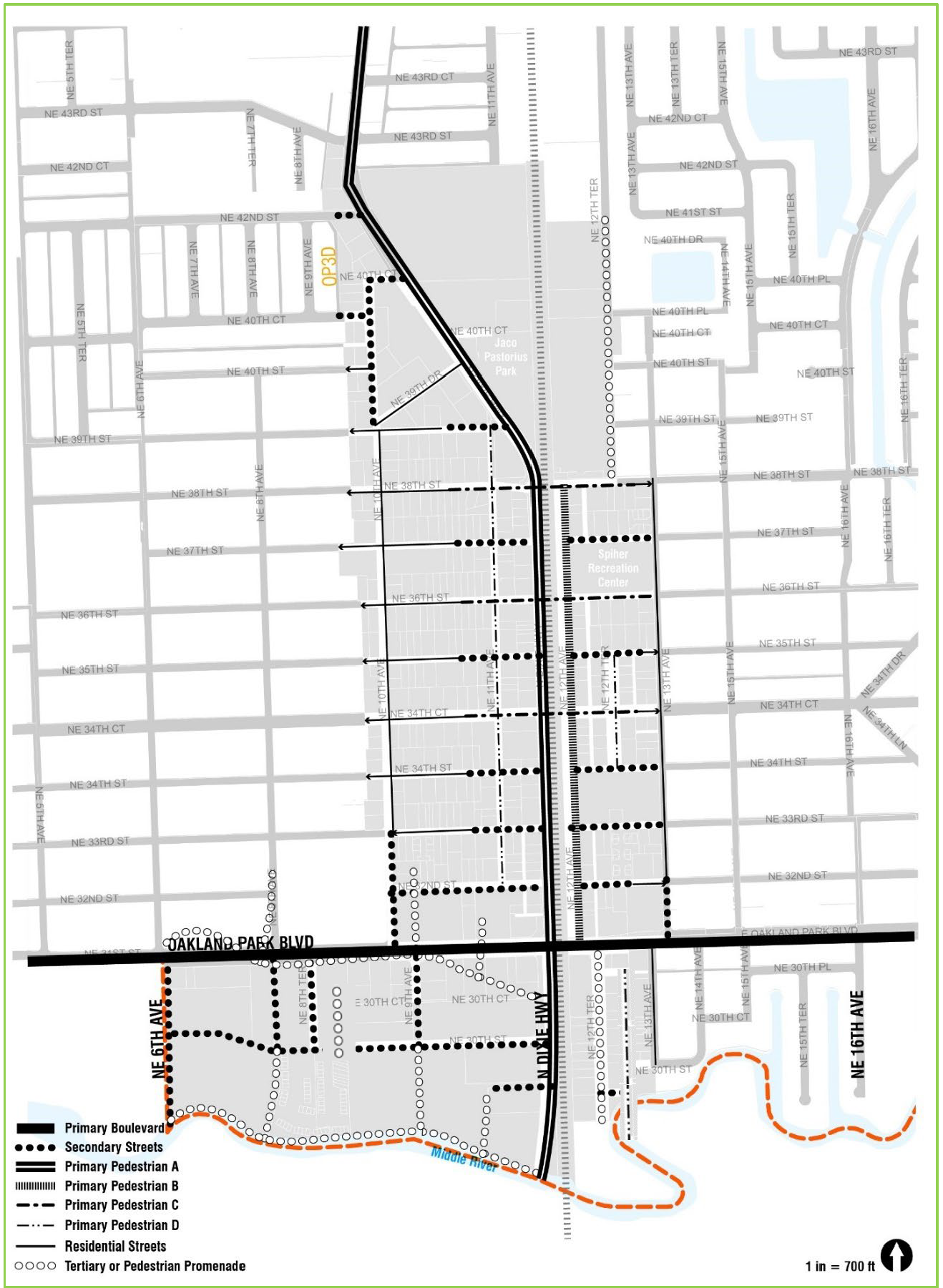
Figure 24-263-1 Hierarchy of Streets: The prescribed network of streets and establishes
the hierarchy of streets
(Ord. No. O-2021-007, § 2, 7-21-21; Ord. No. O-2022-011, § 2, 6-1-22)
Sec. 24-264. - District sub-areas.
(A)
There shall be sub-areas existing in the Oakland Park Downtown Development District whose locations are depicted on the map in this section.
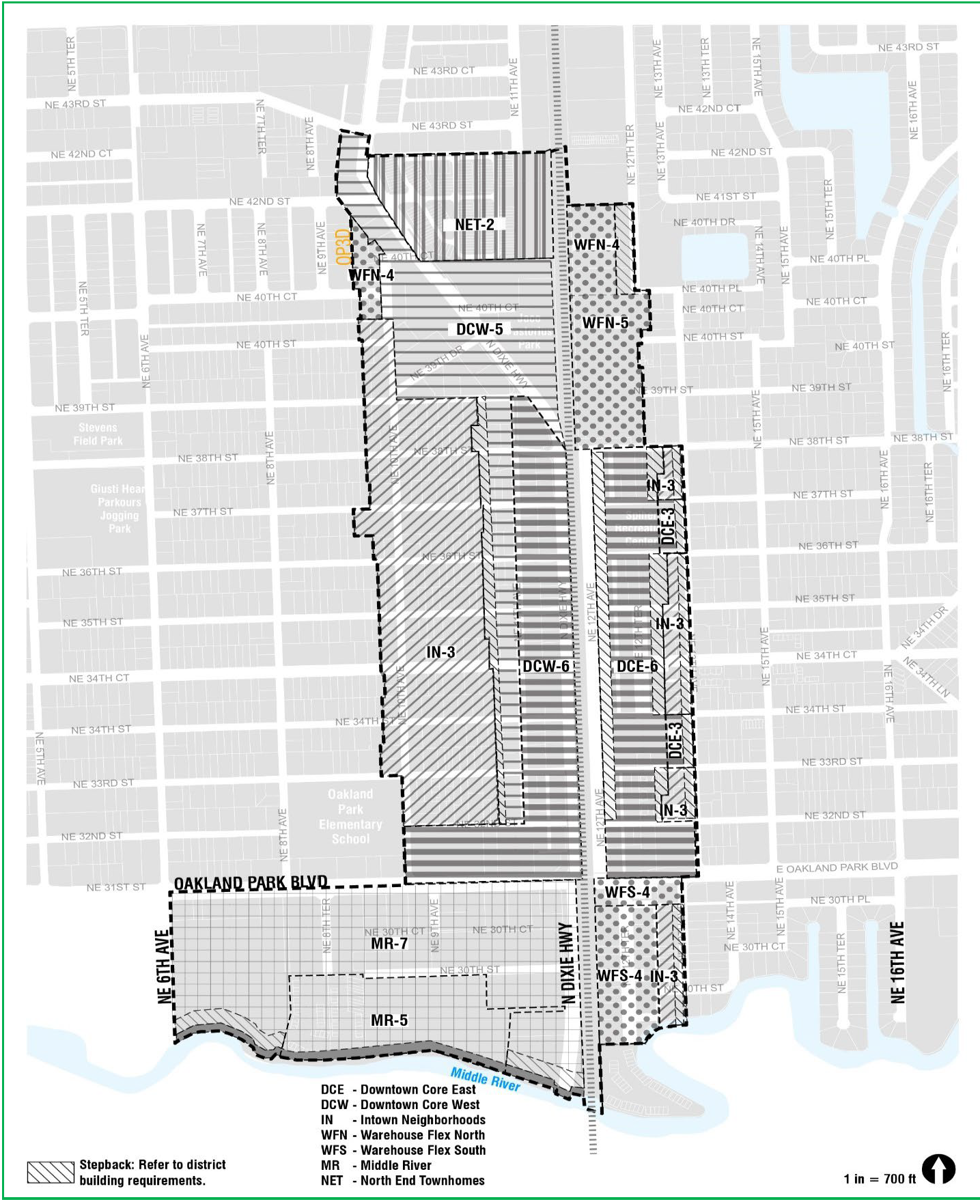
Figure 24-264-1 Regulating Map: OP3D District sub-areas
(B)
District Regulations: Downtown Core (DC) sub-area.
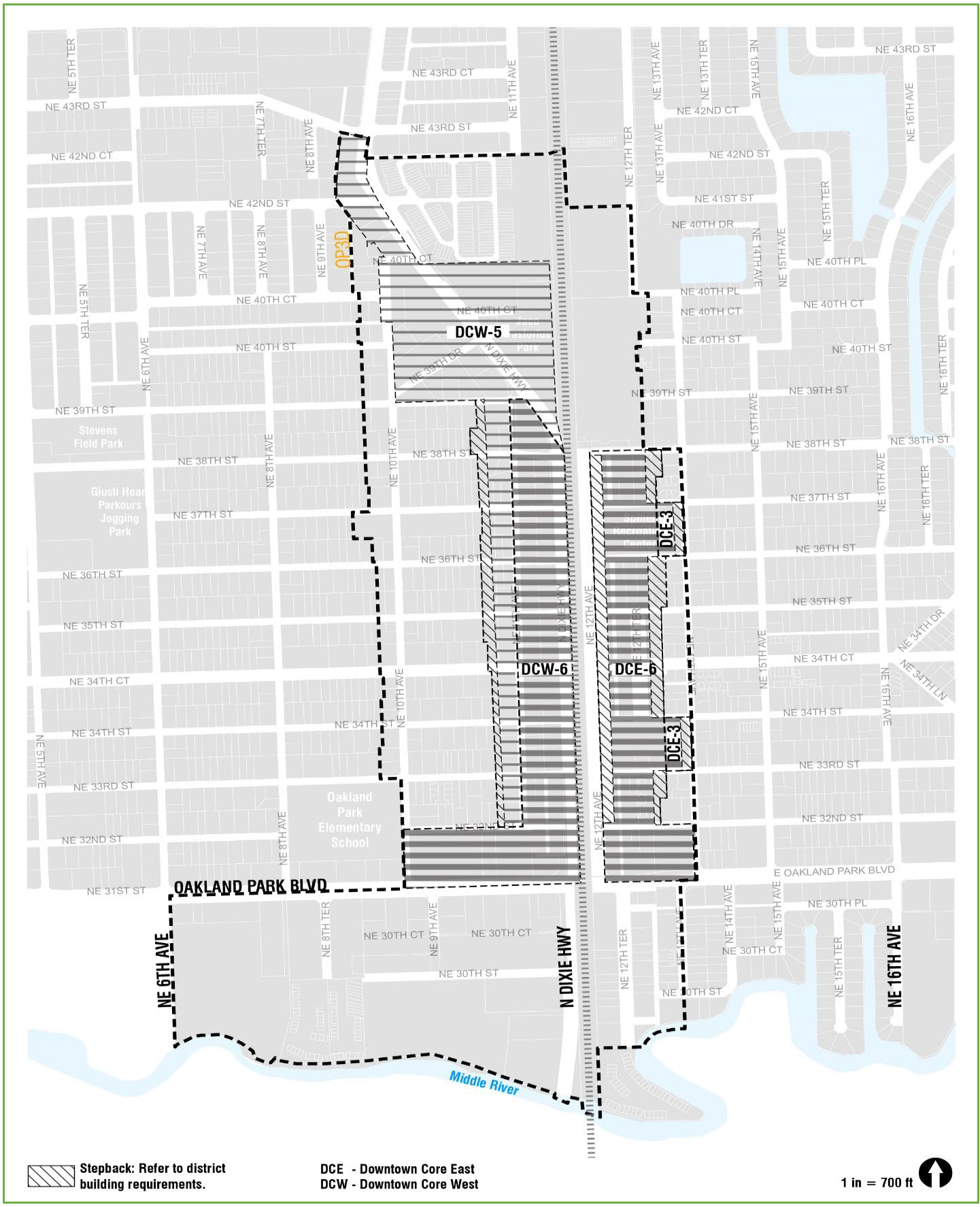
Figure 24-264-2 Regulating Map: Downtown Core sub-areas
(a)
Purpose. Downtown Core (DC) East and West sub-areas are designated together as the epicenter of the Oakland Park Downtown Development District. Downtown Core overall is intended to be the image of Oakland Park and its main destination with high quality building design, a mix of uses and ground floor active uses to appeal to both locals and visitors.
(b)
Design Requirements. Refer to section 24-265, Oakland Park Downtown Development District (OP3D) design guidelines.
(c)
Uses. Refer to section 24-266, Oakland Park Downtown Development District (OP3D) Use Table.
(d)
Sub-area boundaries. The map in Section 24-264 shows the boundaries of this Sub-rea. The Downtown Core East Sub-area is located east of N. Dixie Highway, and the Downtown Core West Sub-area is located west of N, Dixie Highway.
(e)
Development requirements table.
TABLE 24-264-1:
BUILDING REQUIREMENTS—DOWNTOWN CORE EAST (DCE)
and DOWNTOWN CORE WEST (DCW)
(C)
District Regulations: Intown Neighborhoods (IN) sub-areas.
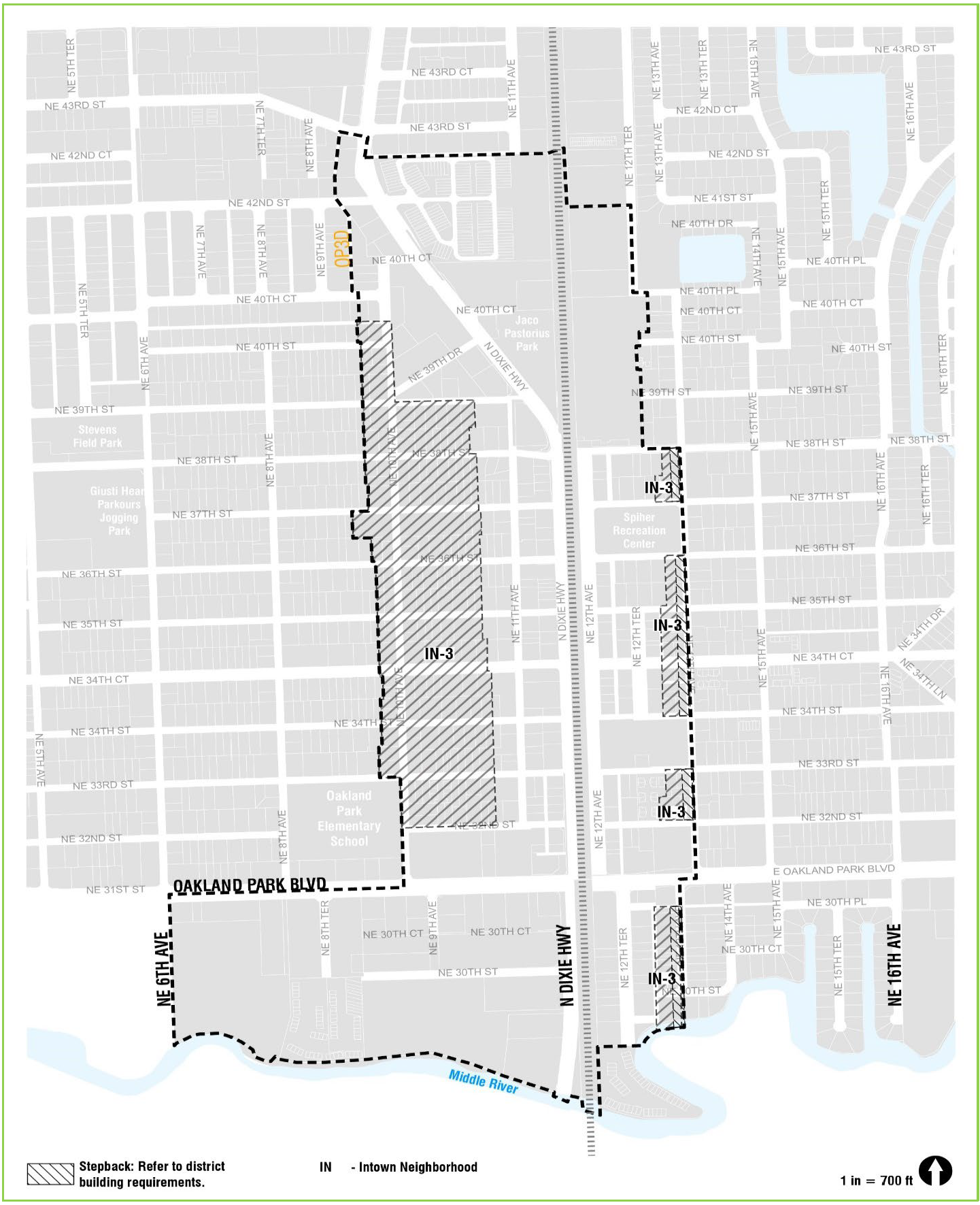
Figure 24-264-3 Regulating Map: Intown Neighborhoods sub-area
(a)
Purpose. The Intown Neighborhoods sub-area is a transitional, moderate intensity residential area that will buffer the residential areas surrounding Downtown Oakland Park from the higher intensity Downtown Core sub-areas.
(b)
Design Requirements. Refer to section 24-265, Oakland Park Downtown Development District (OP3D) Design Guidelines.
(c)
Uses. Refer to section 24-266, Oakland Park Downtown Development District (OP3D) Use Table.
(d)
Sub-area boundaries. The map in section 24-264 shows the boundaries of this sub-area.
(e)
Development requirements table.
TABLE 24-264-2:
BUILDING REQUIREMENTS—INTOWN NEIGHBORHOODS (IN)
(D)
District Regulations: Warehouse Flex (WF) sub-area.
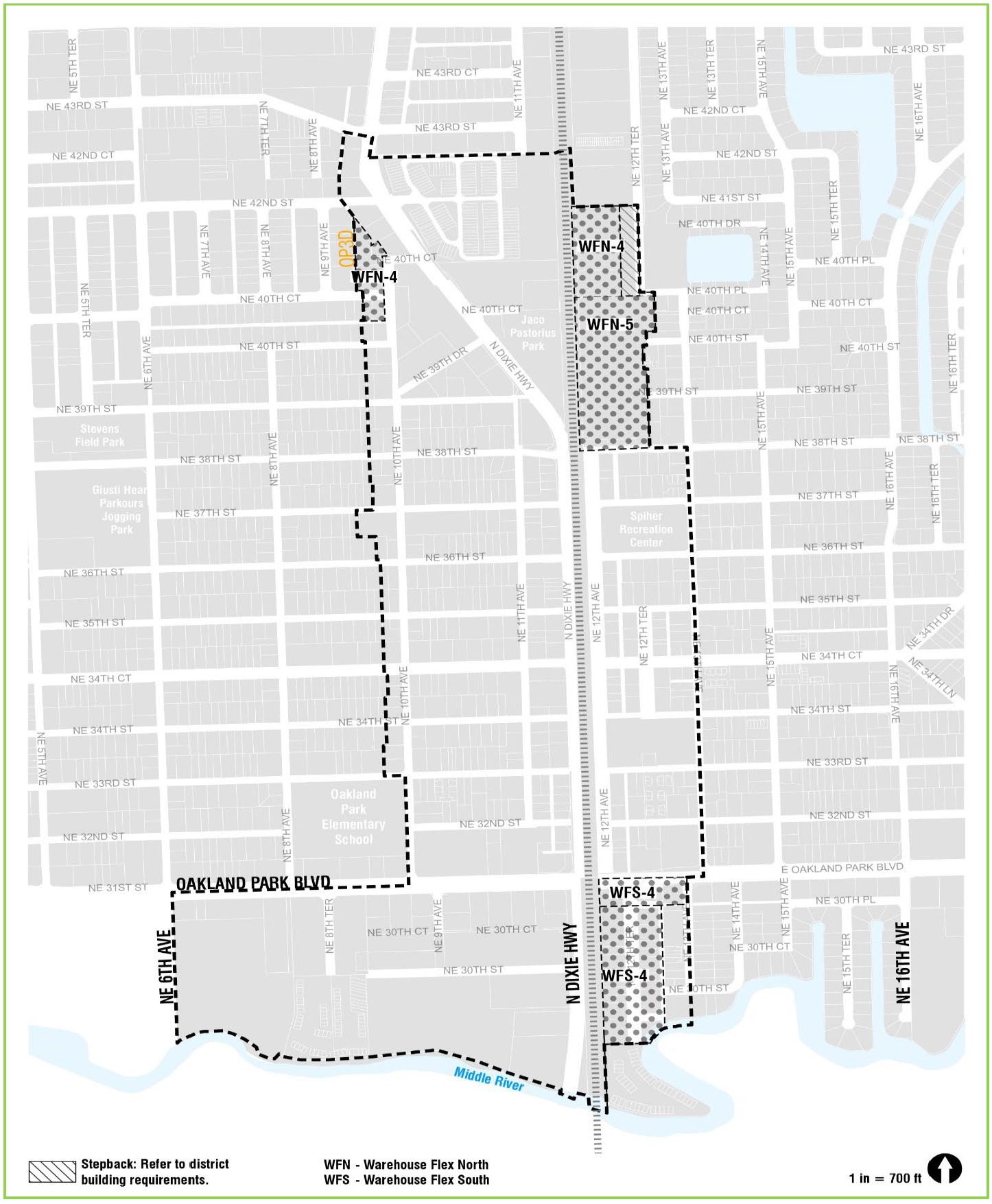
Figure 24-264-4 Regulating Map: Warehouse Flex sub-area
(a)
Purpose. The Warehouse Flex Sub-Area will provide a transition from the railroad and existing industrial neighborhoods to the adjacent residential, mixed-use, and commercial neighborhoods with adapted and renovated building stock, warehouse style buildings, and large, working storefronts. This area will appeal to emerging artists and individuals seeking atypical housing choices, and it will include light industrial uses, artist studios, and creative offices.
(b)
Design Requirements. Refer to section 24-265, Oakland Park Downtown Development District (OP3D) design guidelines.
(c)
Uses. Refer to section 24-266, Oakland Park Downtown Development District (OP3D) Use Table.
(d)
Sub-area boundaries. The map in section 24-264 shows the boundaries of this sub-area.
(e)
Development requirements table.
TABLE 24-264-3:
BUILDING REQUIREMENTS—WAREHOUSE FLEX (WF)
(E)
District Regulations: Middle River (MR) sub-area.
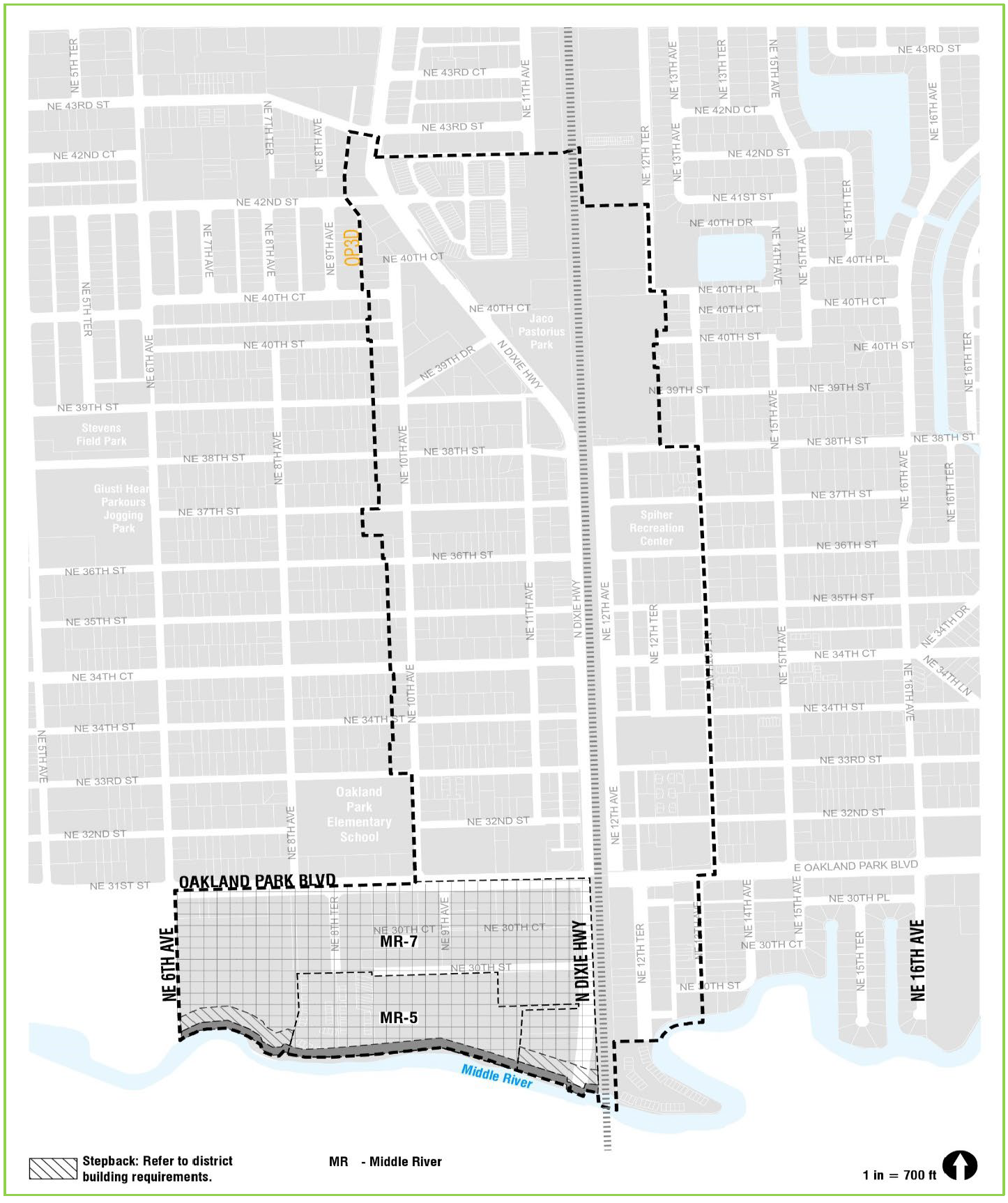
Figure 24-264-5 Regulating Map: Middle River sub-areas
(a)
Purpose. The Middle River District Sub-area is envisioned as a mixed-use neighborhood to include commercial, retail and residential uses oriented towards the Middle River with buildings fronting bike/ped trails for public access and connecting the area to downtown.
(b)
Design requirements. Refer to section 24-265, Oakland Park Downtown Development District (OP3D) design guidelines.
(c)
Uses. Refer to section 24-266, Oakland Park Downtown Development District (OP3D) Use Table.
(d)
Sub-area boundaries. The map in section 24-266 shows the boundaries of this Sub-area. The Middle River Sub-area is located south of Oakland Park Boulevard, east of NE 6 th Avenue and west of N, Dixie Highway.
(e)
Development requirements table.
TABLE 24-264-4: BUILDING REQUIREMENTS—MIDDLE RIVER (MR)
(F)
District Regulations: North End Townhomes (NET) sub-areas.
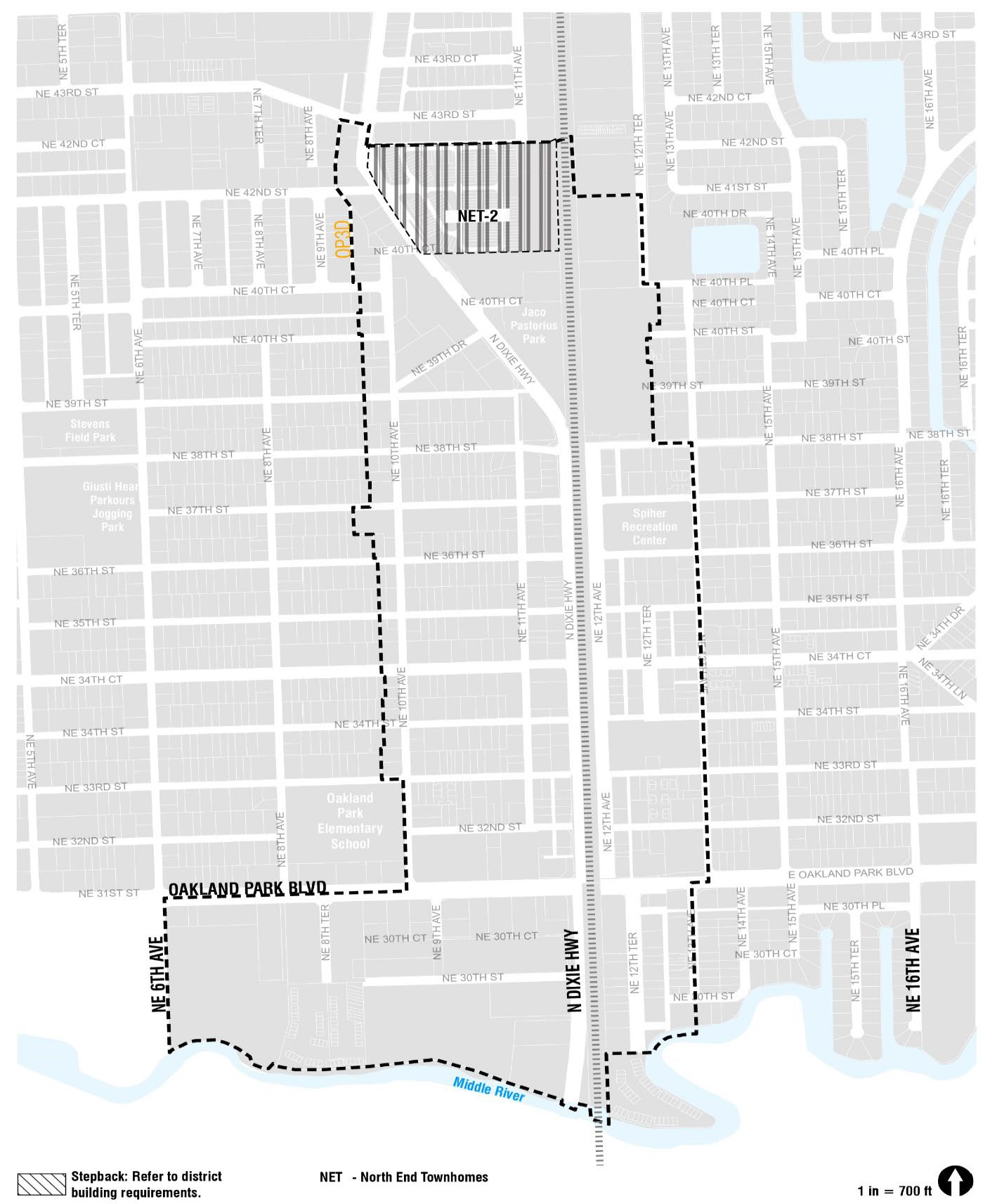
Figure 24-264-6 Regulating Map: North End Townhomes sub-areas
(a)
Purpose. The North End Townhomes (NET). The North End Townhomes sub-area is a townhome community approved in 2013. Standards provided for this section permit the continuation of this development's physical layout and provide for regulations for future construction such as additions or building replacements.
(b)
Design Requirements. Refer to section 24-265, Oakland Park Downtown Development District (OP3D) design guidelines.
(c)
Uses. Refer to section 24-266, Oakland Park Downtown Development District (OP3D) Use Table.
(d)
Sub-area boundaries. The map in section 24-264 shows the boundaries of this sub-area.
(e)
Development requirements table.
TABLE 24-264-5:
BUILDING REQUIREMENTS—NORTH END TOWNHOMES (NET)
(Ord. No. O-2021-007, § 2, 7-21-21; Ord. No. O-2022-011, § 2, 6-1-22)
Sec. 24-265. - Urban design.
Oakland Park Downtown Development District Design Guidelines. All development including but not limited to buildings, open space, signage, and streetscaping are subject to the criteria stated in the Oakland Park Downtown Development District Design Guidelines. The development review procedure in section 24-273 shall ensure compliance with the Oakland Park Downtown Development District Urban Design Guidelines to ensure good aesthetics and livability. The Oakland Park Downtown Development District Design Guidelines will also be referred to as the "Design Guidelines" in these regulations. The Oakland Park Development District Design Guidelines are hereby incorporated by reference and shall by approved and amended by resolution. Compliance with The Oakland Park Downtown Development District Design Guidelines is required.
(Ord. No. O-2021-007, § 2, 7-21-21; Ord. No. O-2022-011, § 2, 6-1-22)
Sec. 24-266. - Downtown Development District (OP3D) Use List.
(A)
Purpose. It is the intent of this section to provide, in tabular form, a listing (herein referred to as the "OP3D Use List") of the uses that shall be permitted or prohibited in the various sub-areas.
(B)
Key to OP3D Use List table.
(1)
Where a "P" appears on the same line as a listed use, said use shall be permitted in the district as indicated by the column heading in which the "P" appears.
(2)
Where a "C" appears on the same line as a listed use, said use shall be a conditional use in the district as indicated by the column heading in which the "C " appears.
(3)
Where an "A" appears on the same line as a listed use, said use shall be permitted as an accessory only to a permitted principal use in the district as indicated by the column heading in which the "A" appears.
(4)
Where no letter "P", "C", or "A" appears on the same line as a listed use, said use shall be prohibited in the district as indicated by the column heading, in the same manner.
(5)
Where a listed use is not permitted in any of the business districts, an "X" appears in the column headed "prohibited."
(6)
Any use not listed on the OP3D Use list, as amended from time to time, shall be considered an "unlisted use." Applications for any such use shall be reviewed and considered according to the conditional use provisions set forth herein and can be approved or denied accordingly.
(7)
Accessory uses are not subject to their specific parking requirement and are instead subject to the parking requirement of the primary use of the establishment.
(8)
Outdoor business activity, including sales or display of merchandise, is prohibited unless a specifically listed use entails outdoor business activity.
OP3D Use List Key Summary:
(C)
OP3D Use List. The following is the OP3D Use List, indicating the permitted and prohibited uses and those uses subject to the supplemental regulations and definitions of this section. The following uses are principal uses unless otherwise stated. There shall be no variances on the uses listed in the use list in this subsection. A use listed in the city-wide master business list in section 24-41 or not included in the definition or description of a use listed herein but not listed in this table is prohibited.
(D)
Supplemental regulations to master business list. The following numbers are keyed in the list:
(1)
Special location regulations for uses not intended along the sidewalks of certain pedestrian-oriented streets:
(a)
Where permitted in the sub-area, the use is not permitted on the ground floor of a building on a lot abutting a Primary Boulevard, Primary Pedestrian A, or Primary Pedestrian B street unless located:
1)
On the ground floor of a building and behind another business in that building such that this use is located a minimum of thirty (30) feet from the right-of-way line of that street or
2)
On the ground floor of a building or portion of a building that is set back a minimum of forty (40) feet from the right-of-way line.
(b)
Where permitted in the sub-area, this use is permitted on the second story or higher in a building regardless of the street frontage where it is located.
(c)
Where permitted in the sub-area, this use is permitted on any part of the ground floor of a building abutting any street other than a Primary Boulevard, Primary Pedestrian A, or Primary Pedestrian B.
(2)
Enclosed: Must be completely enclosed in a soundproof, air-conditioned building.
(3)
Dry cleaning establishment: For direct service to customers, subject to the following limitations and requirements:
(a)
Not more than two (2) cleaning units shall be used in any establishment, neither of which shall have a rated capacity in excess of forty (40) pounds.
(b)
The entire cleaning and drying process shall be carried on within completely enclosed solvent-reclaiming units.
(c)
All solvents used in the cleaning process and vapors there from shall be nonexplosive and nonflammable.
(4)
Reserved.
(5)
Garden supplies: Sales are restricted to retail, and such items as insecticides, manure and fertilizer must be packaged to be easily handled and free from objectionable odors.
(6)
Electric vehicle charging station (EVCS) shall comply with the following requirements:
(a)
EV charging station spaces shall be posted with signage that identifies: the space as provided for the charging of electric vehicles, amperage and voltage levels; any enforceable time limits or tow away provisions; and contact information for reporting nonoperating equipment or other problems.
(b)
EV charging station equipment shall be located so as not to interfere with vehicle, bicycle, or pedestrian access and circulation, or with required landscaping.
(c)
EV charging stations may be placed in a principal use's required parking.
(d)
Considering the dynamic changes and innovation of this technology, the engineering and community development director may authorize variations from these regulations, so long as they are consistent with the spirit and intent of these regulations and the Oakland Park Municipal Code.
(7)
Reserved.
(8)
Office in In Town Neighborhoods: It is the intent to permit offices which are compatible with the surrounding residential neighborhood. Parking areas are for the exclusive use of passenger vehicles, and no parking of commercial vehicles will be allowed except for temporary loading and unloading. Overhead doors shall not be utilized as access to storage areas.
(9)
Reserved.
(10)
Reserved.
(11)
Reserved.
(12)
Outdoor dining compatibility to residential: Operation of outdoor food and beverage service at a restaurant or restaurant bar is prohibited between the hours of 11:00 p.m. and 7:00 a.m. and the location of outdoor dining at a restaurant or restaurant bar is prohibited within 300 feet, measured from edge of dining area to district boundary, of an IN, NET, R-1, RM-16, or RM-25 zoned property unless the development review committee approves a noise mitigation plan. While outdoor entertainment is permitted, all regulations of chapter 9—miscellaneous offences and provisions apply.
(13)
Reserved.
(14)
Distance separation. The listed use shall not be permitted unless the closest projection of the building or outdoor sales area from the property of any public or private elementary, middle, or secondary schools, and child daycare to the closest projection of the applicable use measures a minimum of five hundred (500) feet, measured in a straight line.
(15)
Distance separation. The listed use shall not be permitted unless the closest projection of the building or outdoor sales area to the closest projection of another building or outdoor sales area with the same use measures a minimum of one thousand five hundred (1,500) feet measured in a straight line.
(16)
Reserved.
(17)
Reserved.
(18)
A brew pub restaurant, restaurant, or restaurant bar is a permitted use, and a tasting room, bar, or nightclub is a conditional use. All requirements of chapter 3 apply except section 3-29 only applies to a nightclub. For a bar, tasting room, or nightclub physical soundproofing material and/or management practices are required to ensure surrounding businesses and residences do not experience any nuisance noise in violation of either section 8-50 or section 8-48. The establishment shall provide a noise mitigation plan and a crime prevention through environmental design plan requiring approval from the development review committee before issuance of a certificate of use. During operation of the establishment, if the law enforcement agency issues citations on three (3) or more separate dates, within a period of six (6) months, for violating any provision of chapter 8—miscellaneous offences and provisions, the city may consider revocation of the certificate of use for the establishment and its required closure at the discretion of the city commission.
(19)
Reserved.
(20)
Except as required by Chapter 419 of state law, a community residence shall meet the following requirements:
(a)
B-1, B-2 and B-3: in multifamily dwellings only and maximum height of fifty (50) feet.
(b)
No residential use including a community residence shall be located on the first or ground floor, other than a residential lobby or accessory use such as garage or storage area.
(c)
No building permit shall be issued for any uses involving residential uses, until such time as approval of site plan is obtained in accordance with article XII and approval of flexibility and/or redevelopment units by city commission in accordance with section 24-72.
(d)
Shall be allowed only when:
(i)
It is located at least six hundred sixty (660) linear feet from the closest existing community residence or recovery community. Distance is measured from the nearest lot line of the entire parcel of the proposed community residence to the nearest lot line of the entire parcel of the closest existing community residence or recovery community, and
(ii)
The operator or applicant has been granted all available licensing or certification by the State of Florida to operate the proposed community residence, or is operating under the Oxford House Charter; and
(iii)
A community residence that has been denied an Oxford House Charter, license or certification by the State of Florida or had its Oxford House Charter, license or certification suspended, or is denied recertification or renewal of its license or charter, is not allowed in the City of Oakland Park and must cease operation and vacate the premises within sixty (60) days of the date on which its license or certification was denied or suspended or its recertification was denied.
(e)
Shall be allowed if conditional use approval is granted, subject to the provisions of article XII, when:
(i)
A community residence that is located less than six hundred sixty (660) linear feet from the closest existing community residence or recovery community. Distance is measured from the nearest lot line of the entire parcel of the proposed community residence to the nearest lot line of the entire parcel of the closest existing community residence or recovery community; and/or
(ii)
Would be occupied by more than ten (10) residents; and
(iii)
The operator or applicant has been granted all available licensing or certification by the State of Florida to operate the proposed community residence, or is operating under the Oxford House Charter; and
(iv)
A community residence that has been denied an Oxford House Charter, license or certification by the State of Florida or had its Oxford House Charter, license or certification suspended, or is denied recertification or renewal of its license or charter, is not allowed in the City of Oakland Park and must cease operation and vacate the premises within sixty (60) days of the date on which its license or certification was denied or suspended or its recertification was denied; or
(v)
The community residence of a type for which the State of Florida does not require a license or certification or does not offer a license or certification.
(21)
A recovery community.
(a)
B-1, B-2 and B-3: in multifamily dwellings only and maximum height of fifty (50) feet.
(b)
No residential use including a recovery community shall be located on the first or ground floor, other than a residential lobby or accessory use such as garage or storage area.
(c)
No building permit shall be issued for any uses involving residential uses, until such time as approval of site plan is obtained in accordance with article XII and approval of flexibility and/or redevelopment units by city commission in accordance with section 24-72.
(d)
Shall be allowed only when:
(i)
It is located at least one thousand two hundred (1,200) linear feet from the closest existing recovery community or community residence. Distance is measured from the nearest lot line of the entire parcel of the proposed recovery community to the nearest lot line of the entire parcel of the closest existing community residence or recovery community, and
(ii)
The operator or applicant has been granted all available licensing or certification by the State of Florida to operate the proposed community residence or is operating under the Oxford House Charter; and
(iii)
A recovery community that has been denied an Oxford House Charter, license or certification by the State of Florida or had its Oxford House Charter, license or certification suspended, or is denied recertification or renewal of its license or charter, is not allowed in the City of Oakland Park and must cease operation and vacate the premises within sixty (60) days of the date on which its license or certification was denied or suspended or its recertification was denied.
(e)
Shall be allowed if conditional use approval is granted, subject to the provisions of article XII, when:
(i)
A recovery community that would be located within one thousand two hundred (1,200) feet of an existing community residence or recovery community and would operate in accord with the criteria specified in section 24-71(D); and
(ii)
The operator or applicant has been granted all available licensing or certification by the State of Florida to operate the proposed community residence or is operating under the Oxford House Charter; and
(iii)
A recovery community that has been denied an Oxford House Charter, license or certification by the State of Florida or had its Oxford House Charter, license or certification suspended, or is denied recertification or renewal of its license or charter, is not allowed in the City of Oakland Park and must cease operation and vacate the premises within sixty (60) days of the date on which its license or certification was denied or suspended or its recertification was denied.
(E)
Definitions. These definitions shall apply to the business categories in the Downtown Development District (OP3D) Use List. Any term not included herein shall have the same meaning as found in definitions in other sections of this chapter or the common meaning as found in most dictionaries, encyclopedias, and common language:
Antique. Items belonging to, made in or typical of and representing an earlier period including items at least fifty (50) years old and which, due to their age, hold a great value.
Brewpub. An establishment licensed by the Florida Division of Alcoholic Beverages and Tobacco (or its superseding department if renamed or replaced) to manufacture ales, beers, meads, hard ciders, or similar beverages for on premises consumption in conjunction with full course meals individually prepared on the premises as well as accessory off-premises sales. See also chapter 3, alcoholic beverages for additional regulations pertaining to definitions, separations from certain land uses, on-premises and off-premises consumption.
Community center. A building or group of buildings for a community's educational, athletic, and recreational activities.
Consignment shop. A retail establishment solely engaged in the selling of new, like new or antique non-donated merchandise (items). The merchandise is sold and tracked by the establishment on behalf of the owner of the merchandise and upon sale of the merchandise, the purchase price is divided between the establishment owner and the owner of the merchandise. No outdoor storage or display of items or merchandise allowed.
Convenience store without a vehicle fueling station: A retail store, regardless of number of employees, without an accessory pharmacy, that primarily sells a variety of foods and beverages as well as tobacco products consisting primarily of cigarettes in individual packs; the majority of beverage inventory consists of sodas, soft drinks, and/or beer; the majority of food sold is in processed, ready-to-eat, pre-packaged format with no after-purchase cooking involved. A store that sells specialty food or beverage types such as candy stores, pickle stores, wine stores, or other specialized foods is not a convenience store. Although a convenience store in OP3D would not be permitted to have a vehicle fuel station, it would be required to comply with all applicable requirements of Article VIII of Chapter 7 of the Code of Ordinances.
Dollar store. A store selling household goods that has two (2) or more of the following characteristics: use of pricing information in its name such as "dollar," "ninety-nine," "cents," or "five;" selling personal care products labeled and originally marketed for sale in a different country than the United States; selling damaged or overstock products; or the majority of inventory is offered for sale for a price of less than ten dollars ($10.00) (2022 CPI) in or equivalent CPI in current year.
Dry cleaner retail. A commercial establishment maintained for the drop off and pick up of clothes for fabrics, textiles, wearing apparel, or other articles on- or off-premises dry cleaning.
Electric vehicle charging unit (EVCU). An EVCU levels 1, 2 or 3 charging unit is a vehicle parking space that is served by an electrical component assembly or cluster of component assemblies (battery charging station) designed and intended to transfer electric energy, by conductive or inductive means, from the electric grid or other off-board electrical source to a battery or other energy storage device within an electric vehicle.
Farmers market. A public and recurring assembly of farmers, bakers, cheese makers, and similar local food producers or their representatives selling the food that they produced directly to consumers. Live animals are not to be sold at a farmers market.
Food halls. A collection of non-formula restaurant and beverage establishments in the same building with shared dining area(s) under common management and may include grocery sales or sales of gifts and other merchandise and may include common entertainment for the dining area
Hostel. A form of lodging where guests rent a bed or bunk in a room to be shared with other guest of the hostel or where guests share bathrooms and/or bathing facilities with other guests of the hostel.
Head shop. Any retail establishment as defined as a head shop in section 24-41.
Kitchen incubator. A kitchen incubator, also known as a culinary incubator, is an establishment licensed by the Florida Department of Business and Professional Regulation. It is an incubator dedicated to early-stage catering, retail and wholesale food businesses. Kitchen incubators may assist small food businesses with all aspects of growth, including business classes, kitchen access, and mentorship, within a commercial-grade kitchen.
Like new items. Items such as clothing, jewelry, and art which are of high quality and are in a new or like new condition. Articles to show very little (if any) wear, deterioration or damage.
Massage establishment. A massage establishment as defined in Code section 24-73(B)(15) as amended from time to time. It shall be unlawful for any person in a massage establishment to engage in specified sexual activities, or to massage a specified anatomical area of any other person, or for such other person to request or permit such placing, touching, fondling or massaging.
Massage and health spa, state licensed. Massage and health spa, state licensed means a site or premises, or portion thereof, wherein a licensed massage therapist practices massage, and which meets the requirements of F.S. § 480.043, as may be amended from time to time, and Chapter 64B7-26, F.A.C. et seq., as may be amended from time to time, and Chapter 24, Oakland Park Land Development Code, section 24-41(C) and (D), as may be amended from time to time. This definition shall not be construed to include a hospital, nursing home, medical clinic, or the office of a physician, surgeon, physical therapist, chiropractor or osteopath duly licensed by this state. Can include aestheticians, microblading, med spa, and permanent makeup as an accessory activity subject to county and/or state licensure.
Medical marijuana treatment center or dispensing facility. A state certified and licensed facility establishment where medical cannabis, low-THC cannabis, as well as cannabis delivery devices, is dispensed at retail that is operated by a dispensing organization.
Nightclub: A bar offering dancing, musical entertainment, paid performers providing entertainment, DJs, or other musical or dancing entertainment. A nightclub requires noise mitigation and control of nuisances required to be evaluated as part of Conditional Use Review
Office—Professional. An establishment providing executive, management, and professional services to the public, including the following: advertising; business offices of private companies; public or nonprofit agencies; trade associations; employment offices; professional or consulting offices for accounting, architecture, computer technology, design, engineering, landscape architecture, law, urban planning, and similar professions; property management; lending, investing, and financial or banking activities; insurance agency or company; secretarial; court reporting; stenography; telecommunication services; detective agencies; travel agencies; service agencies; financial services other than listed herein; sales offices; online management; publishing; call centers; adoption; medical service providers, psychologists; psychiatrists; clinical social work; or counseling. This definition does not include offices for the treatment of animals on the premises, day labor, labor pool services, or pain management clinics.
Pharmacy. Refer to definition in section 24-41(C)
Reconditioned items. Items such as office equipment, computers, appliances, TVs, stereos, power tools which have been preowned and show minor wear but have been repaired and reconditioned to the point of being one hundred (100) percent functional. Items in this category retain a large percentage of replacement value.
Restaurant. An establishment having as its primary activity the service of meals to the public to be consumed in dining areas within the establishment. A restaurant may not contain accessory drive-thru lanes. A restaurant may also engage in serving only coffee, tea, and/or deserts. In the OP3D, a restaurant bar is the same a restaurant and has the same approval and review requirements as a restaurant and is not subject to use approval or additional reviews. A restaurant may have outdoor dining.
Retail sales. Are those establishments engaged in retail sales and rental of products. For the purpose of this chapter the term retail, retail sale or similar terms, shall mean a sale to the ultimate consumer (i.e., a sale for any purpose other than resale), and including but not limited to the following, antique store, retail bakeries, bicycle shop and repair; beer and wine store, bookstore; camera; consignment shop; floor coverings; china, crockery, glassware, earthenware; cigars; clothing except secondhand; confectionary; cosmetics; bicycle sales and repairs; delicatessens; department and dry good stores; small electrical appliances and incidental repairs; furniture; groceries, health foods, dietary supplements, hardware stores, gift shop; hobby shop; jewelry; luggage; marine supplies; music and radio stores; newsstands; office equipment and computers, optical stores; paint and wall paper; pharmacies as an accessory to a retail sales establishment that do not exceed thirty (30) percent of the gross floor area of the retail sales establishment; radios and televisions sales and incidental repairs; shoes; souvenirs; sporting goods; sundry store; ticket office; tile and wall coverings; wearing apparel; pet supplies (but not live animals), rug stores, game stores, plants and flowers, electronics stores, specialty foods, health supplements stores, beauty supply stores. The term retail sales for the purposes of this regulation does not include convenience stores, liquor stores, head shops, dollar stores, or other specifically identified types of stores listed as a specific use
Small articles. Items with dimensions no greater than four (4) feet in length, width, and/or height. Small articles can include, but are not limited to, common household and personal items, small appliances, hand tools, and lawn and garden equipment.
Used articles. Common household and personal items such as clothing, shoes, costume or inexpensive jewelry, furniture, small appliances, bric-a-brac, hand tools and lawn and garden equipment which show evidence of wear, disrepair and deterioration. Due to their preowned status and condition these items are offered for sale at prices substantially less than replacement cost or value.
(Ord. No. O-2021-007, § 2, 7-21-21; Ord. No. O-2022-011, § 2, 6-1-22; Ord. No. O-2023-004, § 3, 8-2-23)
Sec. 24-267. - Accessory structures.
See Chapter 24, sections 24-68, 24-69, and 24-70 for reference to accessory structures. Commercial properties are permitted to have accessory structures to serve business uses subject to the building requirement of their sub-area.
(Ord. No. O-2021-007, § 2, 7-21-21)
Sec. 24-268. - Non-conforming uses, situations, and structures in OP3D.
(A)
It is the general policy of the city to allow uses, structures and lots that came into existence legally and in conformance with the zoning regulations applicable at the time the structure or use was established and for which all required permits were issued, but do not conform to all the applicable requirements of this code, to continue to exist and to be put to productive use, but to bring as many aspects of such situations into conformance with the current code as is reasonably practical, all subject to limitations of this article. The limitations of this section are intended to recognize the interest of the property owner in continuing to use the property but to preclude the expansion of the non-conforming situation and to preclude the reestablishment of an abandoned use of lot or a building or structure that has been substantially destroyed. It is not the intent of this section to limit the right of a property owner to continue the uses of land and structures as were in existence at the time of the adoption of this article, since it would be an injustice and unreasonable hardship to compel immediate removal or suppression of an otherwise lawful business or use already established within the district.
(B)
This section shall apply to circumstances, uses, and buildings that become non-conforming by the enactment of this article XX to the code or an amendment of this article. It shall also apply to non-conforming situations that were legal non-conforming uses or other situations, use and buildings under similar provision of a previously applicable section of the code and that remain non-conforming with one (1) or more provisions of this section even if the type or extent of non-conformity is different.
(C)
Any non-conforming use, building, structure, or other non-conforming situations which exists lawfully on the date of the adoption of the ordinance enacting this article of the code or which becomes non-conforming upon the adoption of any amendment to this article of the code may be continued in accordance with provisions of this article.
(D)
The burden of establishing that any non-conforming situation is a legal non-conforming situation as defined by this section of the Code, shall in all cases, be upon the property owner of such non-conformity and not upon the City of Oakland Park or any other person or entity.
(E)
Definitions:
Legal non-conforming situations. A legal non-conforming situation is any land use, structure, lot of record, or other situation, related to the use or development of land that was legally established prior to the effective date of the ordinance adopting this section of the Code of Ordinances of the City of Oakland Park, or any subsequent amendment thereto and that it does not now fully conform to the requirements of this section, as amended to the applicable date.
Non-conforming use. A non-conforming use is a use of land, building(s) or other structure(s), or any combination thereof, which lawfully existed prior to the effective date of this article, or any subsequent amendment thereto, and which is maintained after the effective date of this article, or amendment thereto, although it does not comply with the permitted uses of the district in which it is located.
Non-conforming structure. A non-conforming structure is any building or structure which is in compliance with the zoning regulations applicable at the time the structure was established, and for which all required permits were issued.
Other non-conforming situations include other aspects of an established land use or development that does not fully conform with the requirements of this section or any amendment thereto but which is legally non-conforming. Such other non-conforming situations include, but are not limited to, requirements for off street parking, landscaping requirements, and buffering requirements, but not landscaping.
(F)
Non-conforming uses and structures.
(1)
Continuance permitted. A non-conforming use may continue, subject to requirements to this section.
(2)
Non-conforming use expansion prohibited. A non-conforming use shall not be enlarged, increased, or expanded to any extent. Vehicle fuel stations located at the southwest or northwest corners of E Oakland Park Blvd and N Dixie Hwy may only move, expand, or enlarge structures or use on the same site with conditional use approval.
(3)
Change of use. A non-conforming use may be changed only to a use conforming to the requirements of the OP3D.
(4)
Non-conforming structures. A non-conforming structure may be used for any permitted use in the OP3D or for any applicable legally non-conforming use continuance.
(5)
Non-conforming structure expansion. Any expansion of a non-conforming structure which serves to expand the extent of the non-conformity is prohibited.
(6)
Moving prohibited. A non-conforming structure or use shall not be moved, in whole or in part, for any distance whatsoever, to any other location on the same or any other parcel within the OP3D unless the entire structure shall thereafter conform to the regulations of the OP3D.
(7)
Maintenance, repairs, and remodeling. Maintenance and repairs of a non-conforming structure are permitted. Remodeling of the structure within the existing building footprint is permitted without a variance, provided that the remodeling does not increase the degree of non-conformity and that applicable building and life safety codes are complied with.
(8)
Termination of non-conforming situations.
(a)
Termination by abandonment. A non-conforming use discontinued by abandonment shall not then be reestablished except in conformance with the requirements of the OP3D. For purposes of this section, abandonment shall be defined and determined to occur when the property owner intentionally and voluntarily forgoes further non-conforming use of the property. Hobes vs. The Department of Transportation 831 So. 2d 745 (Fla. 5th DCA 2002) and Louis vs. City of Atlantic Beach 467 So. 2d 751 (Fla. 1st DCA 1985).
(b)
Termination by damage or destruction. In the event that any non-conforming structure is intentionally destroyed or use is destroyed by any means to the extent of fifty (50) percent of the cost of replacement of such structure or use, said structure or use shall not be rebuilt, restored, re-established or reoccupied, except in conformance with the applicable regulations of this section pertaining to the OP3D. Vehicle fuel stations located at the northeast or northwest corners of E Oakland Park Blvd and N Dixie Hwy can reconstruct if damaged by fire, storm, or other non-deliberate events.
(9)
Violations, penalties, and enforcement. It is the intent of the city commission that the community and economic development department and building and engineering department shall share responsibilities for enforcing this article of the code to the extent that such enforcement falls within the scope of each of the department's administrative responsibilities under this section. Responsibility for bringing enforcement actions shall lie with the building officials for violations involving buildings, with the code enforcement officers for all other violations, and both of them for violations involving both buildings and other matters under this Code.
(Ord. No. O-2021-007, § 2, 7-21-21; Ord. No. O-2022-011, § 2, 6-1-22)
Sec 24-269. - Landscaping.
All development and redevelopment in the OP3D must comply with the adopted Landscape and Streetscape Design Standards, as amended from time to time, except for sections identified as not applicable by this article.
(Ord. No. O-2021-007, § 2, 7-21-21; Ord. No. O-2022-011, § 2, 6-1-22)
Sec. 24-270. - Bonus provision program.
(A)
General standards.
(1)
Proposed developments utilizing the benefits of any bonus provision program shall be subject to the fulfillment of requirements and conditions as described by this section.
(2)
Total increases in height or intensity permitted by one (1) or a combination of bonus provision programs shall not exceed the maximum height or floor area ratio (FAR) as established in each sub-area.
(3)
Proposed developments which utilize any of the bonus programs shall adhere to each sub-area building requirements which describe additional allowances for floor area ratio (FAR) and height and subsequent requirements to accommodate these allowances.
(4)
FAR, density, and height shall only be granted if the applicant provides the "Developer contribution for public amenities" value for the type of benefits listed as "Public benefits to be provided".
(5)
New public rights-of-way, parks, open spaces, plazas, and other amenities need to meet city's standards.
(B)
Building height. Property owners may obtain approval to construct additional stories provided they contribute toward public amenities. Additional stories may be added from the base height stated for that sub-area up to the Height Code in the map applicable to that sub-area.
(C)
Density bonus. A density bonus may be granted by the city commission of up to ten (10) units per acre if said density bonus is consistent with:
(1)
The adopted goals, objectives and priority improvement projects of the city's Community Redevelopment Plan adopted pursuant to F.S. § 163.360, and
(2)
The adopted City of Oakland Park Downtown Development District Design Guidelines.
(D)
Developer contribution for public amenities. Developers shall be required to provide public amenities equal in value to one (1) percent or more of the construction cost for each story above base height, floor area above that permitted by the floor area ratio limit, and/or additional dwelling units above that permitted by the maximum density limit. Construction cost will be determined using data obtained from the most recently published "RS Means Square Foot Costs" manual as an amount per square foot for the total square footage for the greater of the following:
(1)
Each story's floor area above three (3) stories,
(2)
The additional floor area requested above that permitted by the Floor Area Ratio limit, or
(3)
The net floor area of the additional residential dwelling units requested above that permitted by the maximum density limit, based on the mean unit size of all dwelling units proposed in the project.
(E)
Public benefits to be provided. Public benefits include the following with the requirement that the applicant illustrates how the project meets the design guidelines.
No feature required for compliance with the Land Development Code can be considered to be a public benefit for using the bonus provisions program.
For the Middle River sub-area, a fifteen (15) foot wide Middle River Pedestrian/Bike Promenade within any setback along the Middle River shall be provided, with land dedication, (that is clear from vegetation or sloped ground areas) is required for participation in the bonus provision program.
(1)
Additional public open space or public park
(2)
Sustainability/resiliency features such as rooftop rain gardens, green roofs, green streets, terraces, solar panels, etc.;
(3)
Affordable housing;
(4)
Community facility (i.e. amphitheater);
(5)
Additional pedestrian connection features;
(6)
Financial contribution for special downtown entry features;
(7)
Public parking;
(8)
Public right-of-way enhancements;
(9)
Sidewalks improvements;
(10)
Landscape improvements on the public right-of-way;
(11)
Land dedications. New rights-of-way dedication in the Middle River and the Warehouse Flex North sub-areas for public right-of-way. The land dedications shall become part of the public right-of-way and the following provisions shall apply:
•
The land dedications may be included as part of the net area in floor area ratio or density calculations.
•
The land dedications shall be excluded as part of all other development requirement calculations.
•
The new right-of-way extensions shall be designated and improved as Tertiary Streets or Pedestrian Promenade. Proposed developments shall not be permitted to build over the new right-of-way and shall accommodate the new road through building setbacks provided in each sub-area requirement.
(12)
Reserved.
(13)
Or as determined by the city commission.
(F)
Bonus provision procedure.
(1)
Funds for public amenity. Developers shall provide the city with an irrevocable letter of credit or bond, which is acceptable to the city and will guarantee the developer's construction of the public amenity as described section 24-270(F)
(2)
Approval of public amenity by city commission. The developer must provide appropriate drawings and documentation regarding the cost of the public amenity from a certified engineer to city staff for review by the development review committee. City staff shall submit a report for city commission approval of the proposed public amenities.
(3)
The public amenity must be installed and receive final approval from city staff prior to the issuance of the certificate of occupancy.
(4)
A developer may ask for an extension of the six-month period referred to in section 24-270(H)(3) above from the city commission.
(5)
In the event that the developer fails to construct the public amenity as approved by city commission or if the value of the public amenity is determined by the city to be less than the required contribution as stated in 24-270(F), the city shall be entitled to withdraw from the letter of credit or bond stated in 24-270(H)(1) for the cost of the public amenities. The funds from any withdrawal shall be used by the city exclusively for capital improvements in the Downtown Development District.
(6)
In the event the city draws on the letter of credit or bond in accordance section 24-269(H)(5), the city shall be responsible for the city's reasonable cost incurred in drawing against the security.
(Ord. No. O-2021-007, § 2, 7-21-21; Ord. No. O-2022-011, § 2, 6-1-22)
Sec. 24-271. - Parking.
(A)
General provisions. All development and redevelopment within the Oakland Park Downtown Development District (OP3D) shall follow the parking provisions provided within this article.
(1)
Off-street parking facilities, including access aisles and driveways, shall be provided with pavement having an asphalt or Portland cement binder, or other approved paver bricks and subject to approval by city engineer. Any parking in front of a building, however, shall be paved with permeable pavers or other planting materials that include plant life as acceptable by the director of economic and community development.
(2)
As of the effective date of this article, new private, on-site, back out parking facilities are prohibited except for lots with less than forty (40) feet of width located on streets where back-out parking is permitted according to section 24-80.
(3)
Minimum parking lot aisle widths and parking space dimensions shall be as set forth in section 24-80; except, however, the stall width of a parallel, on-street parking space (other than those on Dixie Highway) shall be eight (8) feet.
(4)
Parking lots shall provide for pedestrian cross access to existing and prospective adjacent parking lots.
(5)
Pedestrian entries to parking garages shall be directly from the adjacent street .
(6)
Vehicular entries and exits to parking lots and garages shall be allowed only from rights-of-way and from adjoining properties, and alleys. Entries and exits along Primary Boulevard, Primary Pedestrian A or Primary Pedestrian B streets are prohibited unless no other street is available to provide access. Vehicular entries shall have a minimum width of twenty (20) feet. Vehicle entries for residential properties with five (5) or fewer dwelling units are permitted vehicle entry widths of less than twenty (20) feet, but no less than ten (10) feet.
(7)
Parking stall dimensions and spaces for persons with disabilities and/or strollers shall be in accordance with the Americans with Disabilities Act and article VI, of this chapter.
(8)
Bicycle racks shall be required on all sites over four thousand (4,000) square feet and all parks.
(9)
All onsite surface parking on properties forty (40) feet wide or wider shall be located at the rear or at the side of buildings, and residential garage doors shall be located on the side or rear façade of the building with the exception of frontage on a Primary Boulevard, where surface parking lots in view of a Primary Boulevard are only permitted to cover sixty (60) percent of the lot width for a depth of sixty (60) feet measured from the right-of-way line at the Primary Boulevard. Further than 60 feet back from the right-of-way line, the surface parking lot is permitted to cover the full width of the lot, provided screening, buffering, and landscaping as required elsewhere is provided. Garage doors are prohibited from facing a Primary Pedestrian A or Primary Pedestrian B Street.
(10)
Tandem parking:
a.
For residential uses, tandem parking space pairs, if provided, shall only count as two (2) spaces if both spaces are dedicated to the same residential unit and contained within a mixed-use or multi-family development multi-car garage. No spaces in tandem pairs or that block, or would be blocked by, another parked car can be granted a mixed-use reduction, as provided in section 24-271(C) unless valet operated.
(11)
Valet-operated parking: spaces in a parking facility with valet service provided at all operating times of its serving business and at all times for a residence can use tandem spaces or spaces that would block other spaces when the valet operator is able to access all such vehicles can use the mixed-use reduction, as provided in section 24-271(C) if the requirements of that section are met. The parking space dimensional requirements of this chapter would not apply to these spaces provided the valet operator safely accesses its spaces.
(12)
Parking lifts: Spaces in parking lifts and parking machines can be used as a form a tandem parking as provided in section 24-271(B)(10) or as a form of valet-operated parking as provided in section 24-271(B)(11), provided these spaces meet the criteria of those sections. The parking space and aisle dimensional requirements of section 24-80 would not apply to these spaces.
(B)
Number of spaces required—Single use properties. Total required parking shall be provided based on net interior area and the outdoor customer service area for outdoor dining or other outdoor commercial activity. The first seven hundred (700) square feet of outdoor customer service area per establishment is exempt from the parking requirement. On-site parking for single-use properties shall be provided as follows if there is construction of a new building or structure, enlargement of an existing building or structure, or a change in an existing building or site from one (1) type of use in this table to another type of use:
(C)
Number of spaces required—Mixed-use parcels or lots with residential use in project. Except as elsewhere set forth in this section, the number of required on-site parking for mixed-use parcels or lots shall be calculated as follows:
Determine the minimum amount of parking required for each land use as a separate use as stated in the table in section 24-271(B); multiply the total required per single use by thirty (30) percent to calculate the mixed-use reduction. The mixed-use total required spaces shall be reduced by the amount calculated.
(D)
Reserved.
(E)
The following conditions apply to any parking facility that serves a mixed-use development and is availing itself of the above schedule:
(1)
The title to the mixed-use real property, subject to the mixed-use, and its parking facility shall be owned by the same party or be under a joint use agreement. Any parking arrangement under a joint use agreement shall meet the requirements of Article VI of this chapter.
(2)
Shared parking spaces shall not be reserved. Only parking spaces in excess of the minimum required are permitted to be reserved to specific dwelling units, business establishments, or users within the site. All spaces provided to meet the minimum requirement shall be available for all users of the site at all times.
(3)
The city will determine, at the time of the parking facility's plan approval, if shared parking is possible and appropriate at the proposed location. Sufficient and convenient short-term parking must be made available to commercial establishments during the weekday daytime period.
(4)
Any subsequent change in use shall require a certificate of use and proof that sufficient parking will be available.
(F)
Downtown mobility fee of on-site parking. From the effective date of this article, the city hereby establishes a downtown mobility fee which amount shall be established by resolution of the city commission for every parking space required but not provided.
(1)
The fee to be paid (the "downtown mobility fee") shall be a one-time fee per space for each parking space required, when:
(a)
Construction of a new building or structure occurs; or
(b)
An existing building or structure is enlarged The fee, in this situation, shall be paid for each existing space that is required but not provided in the enlargement area; or
(c)
A change from one (1) type of use to another type of use listed in the table in section 24-271(B) occurs in all or part of a building; or
(d)
Parking spaces currently on-site, or provided by agreement, for an existing type of use are eliminated such that the act of elimination results in fewer parking spaces for that use than are required. The fee, in this situation, shall be paid for each existing space that is eliminated.
(2)
The fee shall be paid in accordance with the procedure established from time to time by the city commission.
(3)
All downtown mobility fees collected by the city, and all interest earned thereon, shall be placed in a special fund established by the city commission and shall be used solely for the acquisition of land for, development of, and maintenance of public parking facilities, parking management systems, multi-modal transportation alternatives, and parking capacity evaluation and monitoring in and/or directly serving the district.
(4)
The city may adopt, by resolution, incentives, or other programs, which may mitigate the cost of the mobility fees as it relates to parking and mobility and provide for any enforcement procedures.
(Ord. No. O-2021-007, § 2, 7-21-21; Ord. No. O-2022-011, § 2, 6-1-22)
Sec. 24-272. - Fees.
To be adopted by resolution by city commission.
(Ord. No. O-2021-007, § 2, 7-21-21)
Sec. 24-273. - Development review procedure.
(A)
Construction, establishment of new businesses, and/or alterations/modifications to buildings, parking areas, or landscaping require specific levels of review based on their potential impact on city resources and community character. The table below states the review process required based on project type.
(B)
Guide to table:
X = The entity that has power to review, approve, or deny a project or to request additional information from the applicant.
R = The entity is to review and make a recommendation to a higher-level entity on approval or denial of the project and may request additional information from the applicant.
A = The entity has the power to hear an appeal against a decision of the entity that approved or denied the project. The request for appeal to that entity shall be submitted within thirty (30) days of approval or denial. The requestor for the appeal needs to have 'standing' to submit an appeal.
CU/BP = Certificate of Use and/or Building Permitting process. This is the process used city-wide for applications for opening or expanding a business or conducting permitted construction in accordance with Article XXI.
STAFF = City staff and consultants with expertise in urban design, urban planning, economic development, and/or landscaping who will conduct a review and provide written responses within three (3) weeks of submittal of a complete project application. A consensus of this committee is required for project approval.
DRC = The City's Development Review Committee shall conduct a review of the project application using its standard operating procedures including the holding of at least one (1) public hearing on the item.
PZAB = The Planning and Zoning Advisory Board shall conduct a public hearing(s) on the project application in accordance with its standard operating procedures.
CC = The City Commission shall conduct a public hearing(s) on the project application in accordance with its standard operating procedures.
BA = The Board of Adjustment shall conduct a public hearing(s) on the project application in accordance with its standard operating procedures.
(C)
The table:
(D)
Projects requiring building permit, certificate or use, or staff review shall be submitted though the existing permitting process. The following is the process for site development plan review (required for items requiring approval by the development review committee, planning and zoning board, board of adjustment, and/or city commission.)
(1)
Pre-application meeting. A developer or property owner shall participate in a meeting with planning and zoning staff either in person or electronically prior to holding a neighborhood participation meeting (if required according to section 24-163(E)) and submittal of a site development plan application.
(2)
Formal development review committee meeting. A developer or property owner shall submit the complete site development plan application before a scheduled development review committee meeting to be scheduled once the application is deemed complete. The development review committee (DRC) shall provide written comments on the development application at the scheduled meeting. The applicant shall provide responses and DRC members can either approve or deny the response. If necessary, the DRC can call additional formal meetings. DRC members reach consensus on the development site plan review. Alternate standards or modifications authorized to the DRC by the Land Development Code are to be approved by a majority vote of the DRC members.
(3)
Revisions to approved site plan prior to or during project construction.
(a)
Minor amendment: This includes any changes and deviations from an approved site plan that do not constitute a substantial alteration or modification to the character of the development. Examples include changing the interior configuration of a building with no impacts on the exterior, number of dwelling units or number of bedrooms that affect parking, minor changes in materials and plants to be used in landscaping, or other minor adjustments, The development review committee, after receiving staff recommendations may approve "minor" changes and deviations from the approved site plan which are in compliance with the provisions and intent of this article, and which do not depart from the principal concept of the approved site plan.
(b)
Major amendment: This includes any changes and deviations from an approved site plan that constitute a substantial alteration or modification to the character of the development. Examples include changing the location of a building, changing the appearance of a building, changing the location or number of parking spaces, changes to the number of dwelling units or number of bedrooms in dwelling units affecting parking, changes to the locations or designs of loading areas. For a major amendment a new site development plan review application and applicable approvals made necessary by the amendment shall be reviewed according to procedures as if the amendment were a new application.
(E)
Site development plan applications. Applications shall be accompanied by site plans and exhibits, as appropriate for the permit requested, prepared by design professionals (e.g., architects, landscape architects, engineers, etc.) that include, at minimum, the following plus any additional material required by the OP3D Design Guidelines:
(1)
Lot lines and setbacks.
(2)
Gross and net acreage.
(3)
Total square footage of all land uses.
(4)
Total number of dwelling units.
(5)
Location, shape, size, and height of existing and proposed building construction and landscaping.
(6)
Amount of building coverage at ground level, in square feet and as a percentage of the total site.
(7)
Typical floor plans and elevations of all structures, including total gross square foot area of each floor and all dimensions relating to the requirements of this article.
(8)
Location, size and total amount of open space, if applicable.
(9)
Total amount of paved area in square feet and percentage of entire site.
(10)
Location of on-street and off-street parking, loading facilities and all utilities.
(11)
Location and dimensions of proposed parking and service areas, including typical parking space dimensions and/or narrative regarding payment of in-lieu fee for parking.
(12)
Proposed means of vehicular and pedestrian access from the site(s) within the development to adjacent streets and/or alleys, showing all proposed or existing curb cuts and sidewalks.
(13)
Adjacent roadway widths (paved right-of-way), including elevation of road plus any dedications required by the city.
(14)
Location, shape, and size of signage.
(15)
Indication of any site or building design methods used to conserve energy and/or water.
(16)
Indication of any site or building design methods used to incorporate the principals of crime prevention through environmental design ("CPTED"), as set forth in City Resolution No. R-95-46.
(17)
Location and method of screening of refuse stations, storage areas and off-street loading areas. Refuse collection areas; dumpsters and recycling containers shall be placed on a twelve-foot by twelve-foot concrete pad with a twelve-by-six-foot apron of three thousand (3,000) PSI concrete. All containers must be enclosed as prescribed in subsection 24-265(D)(1) of the Oakland Park Land Development Code.
(18)
Conceptual landscape plans including trees/palm massing, landscape areas, and parking landscape treatment.
(19)
Location and method of buffering from adjacent residential zoning districts.
(20)
Proposed or existing utility easements or fire hydrants and distance to structures.
(21)
Location and method of stormwater retention or detention.
(22)
Schematic engineering drawing, which included an outline of the plan to provide water, sewer, roads, and drainage for the proposed project. This plan shall be a preliminary conceptual design signed and sealed by a registered engineer attesting that the public infrastructure planned will be in accordance with all federal, state, and local regulations. At minimum the drawing shall contain the following: Utility pipe sizes, (lengths, material, and preliminary locations), roadway cross-section (width, depth of base and subgrade), typical sections across property lines, and offsite utility and roadway public infrastructure necessary to serve the site. The information contained on the schematic engineering drawing must be reviewed and approved by the public works department.
(23)
Method of maintaining any common or joint use area.
(24)
Design data as may be needed to evaluate the project such as:
(a)
Building elevation.
(b)
Samples of materials including roofing tiles, pavers, exterior paint, or exterior materials.
(c)
Drawing or images of street furniture.
(d)
Detailed drawings of signage and wayfinding.
(25)
If buildings in the proposed development are over three (3) stories, site plans, appropriate exhibits and narrative regarding participation in the bonus provision program shall be provided.
(26)
The city may ask for additional documentation and studies as necessary. The costs of such document and studies shall be borne by the property owner.
(Ord. No. O-2021-007, § 2, 7-21-21; Ord. No. O-2022-011, § 2, 6-1-22)
Sec. 24-274. - Prohibited structures.
Telecommunication towers, shipping containers for use as storage buildings, and billboards are prohibited.
(Ord. No. O-2021-007, § 2, 7-21-21)
Sec. 24-275. - Offsite drainage.
(A)
The city shall maintain an inventory of public stormwater drainage facilities serving the OP3D for the purpose of allocating capacity to one hundred (100) percent of the required drainage for permitted OP3D developments or uses.
(B)
Public drainage capacity will be reserved by the city for each development within the district.
(C)
Each property within the district shall have the option to connect, direct or otherwise ensure that up to one hundred (100) percent of onsite stormwater runoff is conveyed to the public stormwater system. The manner of connection shall be as permitted by the city engineer.
(D)
A one-time per property connection fee, as provided in the community development department fee schedule, shall be charged to cover the cost of stormwater service and connection. The fee shall be charged to any district property requiring a Broward County Department of Environmental Protection permit. The fee shall be paid prior to city building permit issuance.
(Ord. No. O-2021-007, § 2, 7-21-21)
Sec. 24-276. - Subdivision of existing lots.
No lot or parcel of record existing on June 1, 2022 that is smaller in size than six thousand (6,000) square feet or narrower than sixty (60) feet is permitted to be created or reduced in size or width by any deliberate action including subdivision or lot line adjustment unless for development of townhomes in rows of three (3) units or more.
(Ord. No. O-2022-011, § 2, 6-1-22)
Sec. 24-277. - Signage.
All new, replacement, or altered signage and exterior design changes shall conform to the standards and requirements of the OP3D Design Guidelines.
(Ord. No. O-2021-007, § 2, 7-21-21)
Sec. 24-278 - Vision clearance triangles.
All construction and landscaping at portions of any site affecting vision clearance triangle areas shall conform to the standards and requirements of the OP3D Design Guidelines, and these are the only vision clearance triangle requirements applicable to the OP3D sub-areas.
(Ord. No. O-2021-007, § 2, 7-21-21)
Sec. 24-279. - Minimum transparent glazing on façades.
All construction of exterior façades or reconstruction of exterior façades shall conform to the standards and requirements of the OP3D Design Guidelines regarding the minimum amount of transparent glazing required on exterior façades.
(Ord. No. O-2021-007, § 2, 7-21-21)
Sec. 24-280. - Special regulations for all areas of OP3D.
(A)
Parking structures.
(1)
Queuing. Provisions for car queuing shall be at least twenty (20) linear feet and shall occur internal to the lot and shall not interfere with pedestrian circulation on a public sidewalk.
(2)
Parking structure entrances. All parking structure entrances facing a street frontage shall be required to treat and finish the interior portion of the garage entry to a depth of twenty (20) feet from the building façade. Treatment may include, but shall not be limited to, stucco or plaster, finished and painted comparable to a habitable space. All mechanical, electrical, and plumbing systems shall be shielded and covered.
(3)
Parking ramp maximum slope. Maximum slopes for parking ramps (ramps with parking spaces) shall be in accordance with ADA requirements not to exceed six (6) percent. Non-parking/access ramps shall not exceed sixteen (16) percent. If the ramp is greater than fourteen (14) percent, a break-over transition shall be required. The preferred standard is ten (10) percent for non-parking ramp slopes. The greatest effort possible should be made to have all parking spaces on non-sloped areas to facilitate future reuse of garage areas if parking demand diminishes in the future.
(4)
On garage structures façades enclosing non-active uses, architectural treatment in accordance with the OP3D Design Guidelines shall be provided.
(B)
Loading and maneuvering. When provided, loading areas shall be subject to the following requirements:
(1)
Loading for all proposed developments shall occur internal to the building footprint or from the alley and shall be visually screened from public view in Downtown Core and Middle River sub-areas. For small or existing developments which cannot accommodate circulation internal to the building, as determined by the economic and community development director, and which do not have alley access, the owner shall make arrangements with the City to designate on-street parking or other area as a temporary loading zone.
(2)
Public rights-of-way shall not be utilized for maneuvering associated with building loading access for newly constructed buildings unless approved by the development review committee.
(C)
Architectural features. For building frontages greater than one hundred fifty (150) feet in width, no façade shall exceed sixty (60) percent of the building frontage without providing a planar break or multiple planar breaks a minimum of three (3) feet in depth. The cumulative horizontal length of all planar breaks shall be greater than or equal to twenty (20) percent of the building frontage.
(D)
Open space standards.
(1)
Walk up gardens: for ground floor residential or live work uses permitted in Secondary streets which shall have a minimum depth of five (5) feet measured horizontally between the building façade and the public sidewalk, and may include an entrance landing and stairs. Fences, walls or other similar structures shall not exceed three (3) feet in height. forty (40) percent min. vegetated area required.
(2)
Front yards in In Town Neighborhoods sub-area.
Thirty (30) percent min. tree canopy
Fifty (50) percent min. vegetated area
(3)
TREE CANOPY means, for the purpose of open space standards, the measure the upper portion of a tree consisting of limbs, branches and leaves and the anticipated shade coverage on the ground. Large palm species shall be not be utilized for the required tree canopy.
(4)
VEGETATED AREA means, for the purpose of open space standards, any surface or area of a surface not greater than four (4) feet in height and occupied by plant materials. A maximum of twenty (20) percent of the required vegetated area shall be covered by permeable materials, not including exposed soil.
(E)
Townhouse regulations. For townhouse and multi-family dwelling projects, parking spaces, garage doors, and maneuvering areas shall not be permitted in front of the structure. Only an access driveway to the side and/or rear of the structure is permitted to pass over a front yard, consisting of the yard frontage abutting the highest classified street bordering the project site. Furthermore, townhouse development where all units front into an internal court, parking area, or circulation area are not permitted. Any townhouse facing a public street shall have its entrance and front façade facing that street.
(F)
Private streets. Gated communities or the enclosing of streets in neighborhoods by use of gates is prohibited in the OP3D.
(Ord. No. O-2021-007, § 2, 7-21-21; Ord. No. O-2022-011, § 2, 6-1-22)

