
Ocean Isle Beach City Zoning Code
ARTICLE VII
SIGN REGULATIONS
Sec. 66-231.- Purpose and scope.
The purpose of this section is:
(1)
To enhance and protect the physical appearance of the town while promoting the economic well being of the community by creating a favorable physical image.
(2)
To promote public safety and traffic safety by ensuring that signs are properly designed, constructed, installed and maintained.
(3)
To minimize distractions and/or obstruction of views that contribute to traffic hazards and endanger public safety.
(4)
To promote high standards of quality development by encouraging appropriately designed, placed and sized signage.
(5)
To provide an effective guide for communicating identification through signage while preventing signs from dominating the visual appearance of the areas in which they are located.
(6)
To afford businesses, individuals and institutions an equal and fair way to use signs as an effective form of communication or promotion of products and services.
(7)
To prohibit signs of a commercial nature from districts in which commercial activities are barred.
(Code 1983, § 7-2-1; Ord. of 8-8-2006(2), §§ 1, 2(a) ; Res. of 8-14-2007(1))
Sec. 66-232. - Definitions.
The following words, terms and phrases, when used in this article, shall have the meanings ascribed to them in this section, except where the context clearly indicates a different meaning:
Animation means the movement or the optical illusion of movement of any part of the sign structure, design or pictorial segment, including the movement of any illumination, or the flashing, scintillating or varying of light intensity. The automatic changing of all or any part of the facing of a sign or any sign or part of a sign shall be considered to be animation. Also included in this definition are signs having chasing action, which is the action of a row of lights commonly used to create the appearance of motion.
Banner means a sign or outside advertising display having the character, letters, illustrations, ornamentations, symbol, color or visual representation applied to cloth, paper, vinyl, fabric, plastic or like kind of malleable material, with or without frame. The term "banner" shall include flags, pennants, ribbons, spinners, streamers, kites, balloons (but not dirigibles) and/or similar types of lighter-than-air objects, or any other material or outside advertising display fastened in such a manner as to move upon being subjected to movement of the atmosphere or any mechanical device.
Building frontage means the linear length of a building facing the street right-of-way or parking lot.
Changeable copy sign means a sign on which message copy is changed manually in the field, through the utilization of attachable letters, numbers, symbols and other similar characters of changeable pictorial panels without altering the face or the surface of the sign.
Commercial center means two or more retail stores, or service establishments, professional offices or any other businesses serving a community or neighborhood, not necessarily owned by one party nor by a single land ownership, which occupy a common and/or adjacent buildings on the premises and utilizing common parking areas.
Copy means the characters, letters, message or illustrations displayed on a sign face.
Directory sign means a sign listing the names and/or use or location of more than one business, activity or professional office conducted within a building, group of buildings or commercial center. Such a sign contains no other identifying/advertising message than that listed above.
Double-faced sign means a sign with two faces which are usually but not necessarily parallel.
Erect means to assemble, construct, build, raise, place, install, affix, attach, create, paint, draw or in any other way bring into being or establish.
Facade means the entire building walls, including wall faces, parapets, fascia, windows, doors, canopy and visible roof surfaces, of one complete elevation.
Festoon lighting means a string of outdoor lights, including glass tubes filled with neon, argon, krypton or others used to construct a sign and suspended between two points.
Freestanding sign means a sign supported by a sign structure placed in the ground and which is wholly independent of any building, fence, vehicle or object other than the sign structure, for support.
Fuel station canopy means structures designed to cover and light fuel pumps customarily adjacent to or connected to retail establishments that sell gasoline to motorist.
Grade means the uppermost surface directly below the sign or immediately adjacent to the support. Where the uppermost surface has been artificially raised for landscaping or other purposes, grade shall be measured from the level of the nearest town or state street curb.
Handbill (circular) means a sign that is distributed to the public or placed on vehicles, buildings, structures, objects or surfaces as part of the distribution.
Height of sign means the vertical distance measured from the adjacent street crown grade to the top of the sign face or sign structure, whichever is greater.
Illumination, direct means illumination which emits light either by means of an artificial light source on a surface, or by means of an artificial light source transmitted through a surface.
Illumination, indirect means illumination which reflects light from an artificial light source intentionally directed upon a surface. This shall also include silhouettes of letters or symbols placed before a background of reflected light.
Occupancy means any one business, activity or office.
Off-premises sign means a sign that identifies or communicates a message related to an activity conducted, a service rendered or a commodity sold, which is not the primary activity, service or commodity provided on the premises where the sign is located.
On-premises sign means any sign that is used to attract attention to an object, person, product, institution, organization, business, service, event or location that is located on the premises upon which the sign is located.
Out-parcel establishment means any establishment located on the premises of a shopping center that is not physically attached to the main shopping center structure.
Parapet means a false front or wall extension above the roof line.
Parcel means a tract of land in the possession of or owned by, or recorded as property of the same person(s) or legal entity that has one continuous perimeter boundary within which all of its area is contained.
Portable sign means any sign designed or intended to be readily relocated that is not permanently attached to any property. The term includes signs on wheels or on portable structures, tent signs, A-frame signs and similar devices and any sign not secured or securely affixed to the ground or a permanent structure. Portable signs shall be nonilluminated.
Premises means a tract of land, the area of which is self-contained within a continuous perimeter boundary and is identified by a recorded plat or survey, provided with a parcel number by the county GIS, established by a subdivision plat, or established pursuant to applicable land use regulations.
Principal street frontage means the length of the property line of any premises serving as a public street right-of-way line. For lots with multiple frontages, the principal street frontage shall generally be that which abuts an N.C. designated numbered route, or the street having the highest vehicular traffic volumes; but if the frontages have equal traffic exposure, the property owner shall be permitted to designate his principal street frontage. For the purpose of determining allowable sign area, the frontage may be measured (at the option of the property owner) at the required front building setback line instead of along the public street right-of-way line.
Sign means any device designed to attract the attention of the public which is attached, painted or otherwise affixed to, or a part of, a building, structure, material, surface, vehicle or object. Integral decorative features of buildings except letters or trademarks, fences, walls and works of art are not to be construed as being a sign. Works of art shall not be objects removed from their normal functions of conveying information using letters and/or numbers. Sign shall include any artificial light source, time or temperature units, clocks and any device which animates or projects a visual representation which attracts the attention of the public. Customary graphics found on soft drink and newspaper dispensaries and similar machines shall not be considered as signs.
Sign area means the area of signs composed in whole or in part of freestanding letters, devices or sculptured matter not mounted on a measurable surface, which shall be construed to be the area of the least square, rectangle or circle that will enclose the letters, devices and/or sculptured matter. The area of a double-faced sign shall be the area of one face of the sign.
Sign, canopy/awning means a wall sign in which the lettering is applied directly onto a canopy or awning. The lettering on a canopy/awning shall be counted as sign face area.
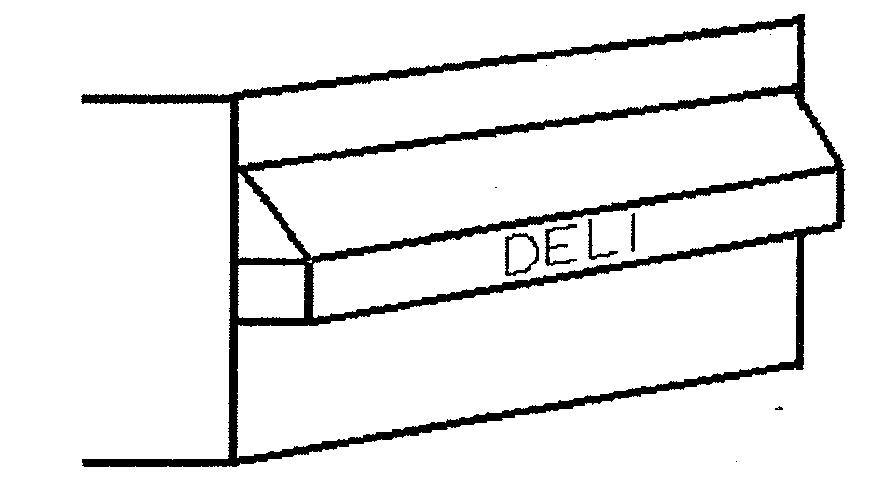
Sign, canopy/awning
Sign face means the part of the sign that is or can be used to identify, advertise or communicate information for visual representation which attracts the attention of the public for any purpose. Sign face includes any background material, panel, trim, color, and direct illumination or self-illumination used that differentiates that sign from the building, structure, backdrop surface or object upon which or against which it is placed. The supporting structure shall be included in the measurement of a sign height, but not included in the calculation of sign area.
Sign, knock-out backlit means a sign that illuminates only letters, illustrations and/or symbols from within.
Sign, monument means the sign is mounted generally flush with the ground plane and may not be mounted on a pole, pylon, raised on a man made berm, wall, or similar structure.
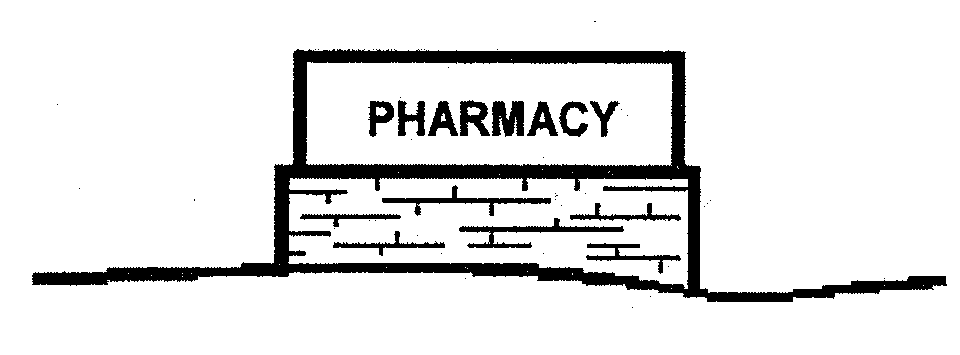
Monument Sign
(a)
The supporting structure (base) shall be included in the measurement of a sign height, but not included in the calculation of sign area. The supporting structure (base) material shall be constructed with materials architecturally consistent with the principal structure.
Sign, projecting means a hanging sign, blade sign or any sign that is mounted to and projects out from a building wall.
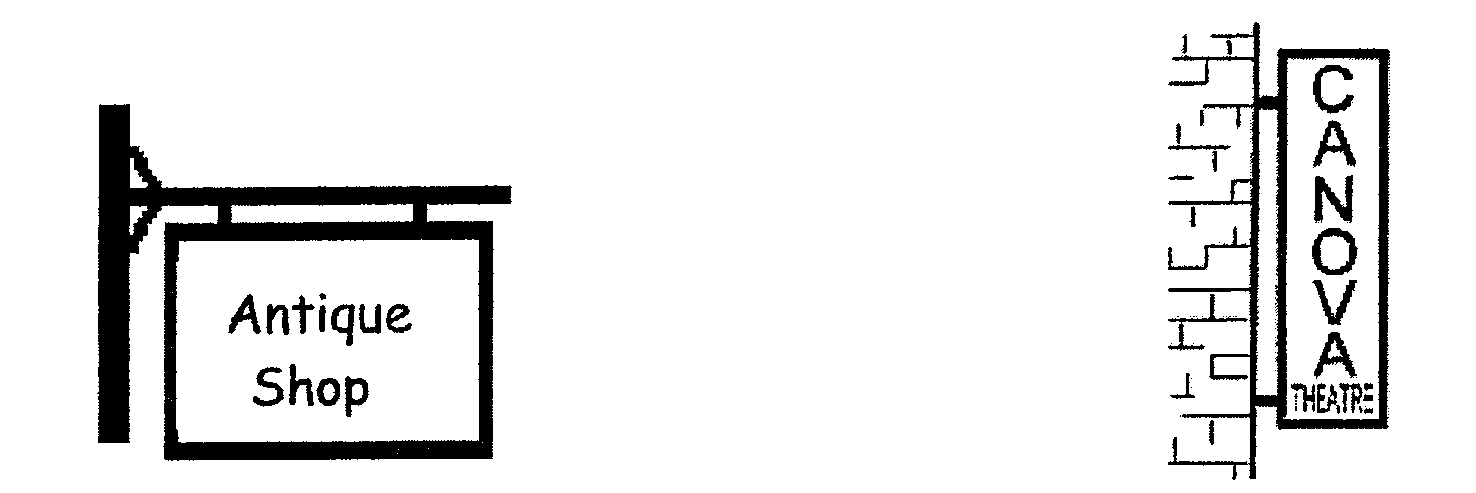
Projecting Signs
Sign, temporary means a sign that is displayed only for a specified period of time not to exceed six months. Signs with the copy of "Grand Opening", "Going Out of Business", "Sale", "Half Price" and the like shall be classified as temporary signs.
Sign, wall means a sign attached to or painted on a wall or building, with the exposed display surface of the sign in a plane parallel to the place of the wall to which it is attached or painted, including signs affixed to or on display through a facade window. A wall sign may project no more than 12 inches from the building wall.
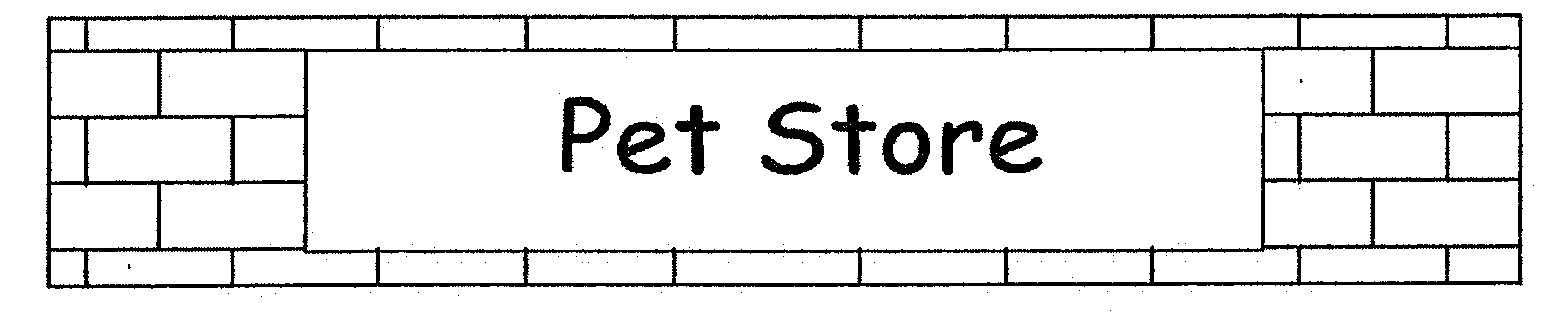
Wall Sign
Sign face means the part of the sign that is or can be used to identify, advertise or communicate information for visual representation which attracts the attention of the public for any purpose. Sign face includes any background material, panel, trim, color, and direct illumination or self-illumination used that differentiates that sign from the building, structure, backdrop surface or object upon which or against which it is placed.
Sign structure means a supporting structure erected or intended for identifying/advertising purposes, with or without a sign on the structure, situated upon or attached to real property, upon which any sign is fastened, affixed, displayed, applied or a part of; however, this definition shall not include a building, fence, flagpole, illumination standard or sailboat mast.
Window, facade means a window located in the front of the building or part of a building facing a street or courtyard.
(Code 1983, § 7-2-1; Ord. of 8-8-2006(2), §§ 1, 2(b); Res. of 8-14-2007(1); Res. No. 2010-14, § 1, 7-13-2010)
Cross reference— Definitions generally, § 1-2.
Sec. 66-233. - Signs exempt from permitting requirements.
A permit is not required for the following types of signs or sign alterations, and such signs shall not be considered in determining the allowable number or size of signs on the premises; however, they must comply with all other applicable sections of this chapter and the conditions of this section. A sign may exceed these limitations if a permit is obtained and all other provisions of this chapter are met.
(1)
Traffic directional signs, identification and legal notices, and all other signs erected by or on behalf of a governmental body. However, signs for businesses on governmental property shall not be exempt.
(2)
Private street or road name signs meeting the NCDOT and Brunswick County 911 addressing standards as to size, color, and placement.
(3)
Signs directing and guiding traffic and parking on private property not exceeding four square feet for each sign with a maximum height limitation of three feet. A maximum of one such sign shall be permitted at each point of ingress or egress to a parking area. The copy shall be limited to the directional information bearing no advertising matter. Said signs shall be constructed of a material that is architecturally consistent with the primary structure.
(4)
Pavement markings of a traffic directional nature consistent with standard and customary markings used by the town and NCDOT.
(5)
Signs not visible beyond the boundaries of the lot or parcel upon which they are situated or from any public right-of-way or beach.
(6)
Welcome signs and town civic directory signs authorized by the board of commissioners.
(7)
Signs designated "no trespassing," "no dumping," "no loitering," and similar signs not exceeding one square foot in area.
(8)
Signs warning the public of the existence of danger, but containing no advertising material, to be removed upon subsidence of the danger for which warning is being given.
(9)
Real estate signs, advertising the sale or lease of all or a portion of the premises on which it is displayed during the sale or lease period, subject to the following restrictions:
a.
Permitted sign types are nonilluminated wall, window or freestanding.
b.
Maximum area is:
1.
For nonresidential land uses, 32 square feet.
2.
For residential land uses, six square feet for the first dwelling unit plus one square foot for each additional unit, with 32 square feet maximum.
3.
Rental signs shall be limited to nonilluminated wall or window placement.
c.
Maximum height, eight feet for nonresidential uses and four feet for other residential uses.
d.
Each residential structure shall be limited to one two-foot-by-three-foot six-square-foot sign advertising the rental of that residential structure and each residential structure shall be limited to one two-foot-by-three-foot six-square-foot sign advertising the "For Sale" of that residential structure. No off-premises directional, open house, or for sale signs are permitted in any zoning district.
e.
No sign designated as "sold" shall be displayed for more than 30 days.
(10)
One temporary construction site sign not exceeding six square feet for R-1 and R-1M districts and not exceeding 32 square feet for R-2, R-2M, R-3, C-1, C-2, C-2M, C-3 and C-3A districts erected on the site during the period of active construction to announce the name of the owner or developer, contractor, architect, land planner, landscape architect, engineer and/or mortgage banker. Two signs shall be permitted when the commercial site is double-fronting NC 179 and Ocean Isle Beach Road or Causeway Drive. Maximum height shall be four feet in R-1 and R-1M districts and eight feet in R-2, R-2M, R-3, C-1, C-2, C-2M, C-3 and C-3A districts except when attached to the principal structure. These signs must be removed when the certificate of compliance is issued for the building and premises on which these signs are located.
(11)
Changing copy on a legal bulletin board or maintenance where no structural changes are made, or the changing of the interchangeable letters on signs designed for them, or the changing of the color of illumination systems.
(12)
Open house and garage sale signs, provided there is not more than one such sign per house, on the same premises; the maximum area is three square feet; and the maximum height is four feet. Such signs are permitted on no other public or private property. No off-premises directional, open house, or for sale signs are permitted in any zoning district.
(13)
Holiday season decorations, from November 1 to January 7 of the following year only, provided no business identification or commercial message is contained on the sign.
(14)
Religious symbols, commemorative plaques of recognized historical agencies or identification emblems or religious orders or historical agencies, provided that all such symbols, plaques and identification emblems shall be placed flat against a building.
(15)
Signs not exceeding six square feet in area and bearing only property numbers, post office box numbers, names of occupants of premises, or other identification of premises not having commercial connotations.
(16)
Sign messages which advertise a discontinued activity or use of a building or premises shall be removed within 30 days from the date the activity or use was terminated. Signs advertising events such as shows, displays, festivals, circuses, fairs, athletic contests, dances, fund drives, elections, exhibits, meetings, conventions and the like shall be removed within seven days after the date of termination of such event.
(17)
Integral decorative features of buildings, except letters, trademarks, moving lights or moving parts.
(18)
Direction or information signs of a public or quasi-public nature shall not exceed 32 square feet in area. Such signs shall only be used for the purpose of stating or calling attention to:
a.
The name or location of the town, hospital, community center, public or private school, church, synagogue, or other place of worship; this type sign may be illuminated;
b.
The name of a place of meeting of an official or civic body, or fraternal organization; this type sign may be illuminated;
c.
An event of public interest such as a public hearing, rezoning announcement, church or public meeting; local or county fair; and other similar community activities.
(19)
The noncommercial flying of one of the following: United States flag, state flags, flags of foreign nations, political subdivisions, churches or religious groups are exempt from the provisions of this article, except for size, which shall not exceed four by six feet. One other flag not to exceed three by five feet shall also be allowed.
(20)
Public service signs may be displayed that identify public services or conveniences, such as, but not limited to, restrooms, telephones, state vehicle inspection, credit cards accepted, hours of operation, vacancies, trading stamps given, N.C. Education Lottery, and trade association affiliations; provided that the total area of all such signs displayed to any one street does not exceed four square feet per occupancy; and further provided that such signs shall be designed and erected inside the perimeter of a permitted sign or mounted flush against a building or structure.
(21)
Political signs shall not be erected more than 90 days prior to the date of election and must be removed within seven days after the date of election. Signs are limited to six square feet in size. Political signs shall not be located on public property, within any right of way, including utility poles, medians, or traffic control devices; or attached to any trees, fences, rocks, telephone poles or any other sign(s).
(Code 1983, § 7-2-1; Ord. of 7-9-2002, § 3; Ord. of 9-10-2002; Ord. of 9-9-2003(4), § 1; Ord. of 8-8-2006*(2), §§ 1, 2(c); Res. of 8-14-2007(1); Res. No. 2008-28, 10-14-2008)
Sec. 66-234. - Prohibited signs.
The following signs are prohibited:
(1)
Any commercial identification or advertising signs on benches and refuse containers, except the latter may display a logotype not to exceed one square foot.
(2)
Illuminated signs in R-1 districts requiring a permit except for signs associated with social, cultural, recreational and the like which are used for entrance signs. Illuminated signs for other uses in this district may be authorized by the board of adjustment.
(3)
Signs attached or painted to piers or seawalls except for one on-premises building identification sign not to exceed nine square feet per establishment. Signs on buildings located on piers shall not be prohibited but shall conform to the other provisions of this chapter.
(4)
Pavement markings, except those of a customary traffic control nature.
(5)
Signs of any kind, except building-mounted signs and signs conforming to section 66-233(7), erected or displayed in any first row sand dune or within a distance of 50 feet landward from the mean high water mark, whichever is more restrictive.
(6)
Signs of material, including but not limited to paper, paint, cardboard, plastic, wood and metal which are painted on or attached to trees, lampposts, parking meter posts, hydrants, traffic signs, stairways, rocks or other natural features, telephone or utility poles or painted on the roofs of buildings visible from any public thoroughfare.
(7)
Off-premises commercial identification or advertising signs. Off-premises signs are permitted in the C-3 district.
(8)
Name-brand outdoor signs such as ice cream, milk, cigarettes, etc.; except that one two-way sign indicating name of gasoline sold will be permissible by firms selling gasoline. Permissible gasoline signs shall not be over 32 square feet in area.
(9)
Circulars, throwaways, handbills, banners (except as allowed with an approved group activity permit or conforming to section 66-254), balloons, streamers, spinners, posters, placards, pennants or similar wind-activated or inflatable devices used to attract attention are prohibited in residentially and commercially zoned areas.
(10)
Any sign or sign structure other than freestanding, any portion of which extends above the top of the wall parapet, building roof line, and the facade of any building.
(11)
Signs of roof surfaces unless the sign does not extend above the highest part of the building roofline on which it is mounted.
(12)
Portable signs, except temporary, nonilluminated signs announcing any public, charitable, educational or religious event or function are allowed provided a permit is obtained from the building inspector and further provided they are located entirely within the premises of the institution, set back no less than ten feet from the property line, do not exceed a sign area of 32 square feet, and do not constitute a safety hazard in the opinion of the building inspector. Such signs shall be allowed no more than 14 days prior to the event and must be removed within 48 hours after the event or function. If building mounted, these signs shall be flat wall signs and shall not project above the roofline. If ground mounted, the top shall be no more than eight feet above ground level.
(13)
Any sign or outdoor advertising display which contains statements, words or pictures of an obscene character as defined in G.S. 14-190.1 such as will offend public morals or decency.
(14)
The use of festoon lighting or lines or luminous material of foil except as seasonal decorations from November 1 until January 7 of the following year.
(15)
Any private or business sign, except those for a driveway, loading zone and the like, authorized by a public agency which restricts or appears to reserve any portion of the public right-of-way or any public property for the exclusive use or private uses of any individual, tenant, client, guests or business. This prohibition extends to all such signs, whether on public property or private property.
(16)
Glass tubes filled with neon, argon, krypton or others used to construct a sign or used in a manner similar to festoon lighting. Open, closed or vacancy signs shall be permitted but shall be limited to one sign per structure and no larger than three square feet. Commercial establishments abutting the commercial canal shall be permitted one open, closed or vacancy sign on the front and rear of their building. No individual sign may exceed three square feet.
(17)
Prohibited advertisement of illegal activities in the state.
(18)
Any other type or kind of sign which does not comply with the terms, conditions and provisions contained in this article.
(Code 1983, § 7-2-1; Ord. of 8-8-2006(2), §§ 1, 2(d); Res. of 8-14-2007(1); Res. of 10-9-2007(2) ; Res. No. 2008-17, § 1, 6-10-2008)
Sec. 66-235. - Traffic hazards and sign illumination.
(a)
No floodlights shall be utilized as a part of a sign illumination system which are not hooded or shielded so that the light source is not visible from any public right-of-way or adjacent property, nor shall any sign otherwise reflect or emit a glaring light so as to impair driving vision.
(b)
The maximum illumination level for lighted signs shall be 500 watts per side.
(c)
No sign illumination system shall contain or utilize any beacon, spot, searchlight or stroboscopic light or reflector which is visible from any public right-of-way or adjacent property; nor shall such lights be operated outside, under any circumstances, except by authorized public agencies.
(d)
No sign shall display lights resembling by color and design or other characteristics customarily associated with danger of those used by police, fire, ambulance and other emergency vehicles or for navigation. Automotive warning or flashing signs shall not be utilized as commercial attention-seizing devices.
(e)
No sign is permitted which, due to its position, shape, color, format or illumination, obstructs the view of or may be confused with an official traffic sign, signal or device or any other official sign, or which uses the words "stop," "warning," "danger," or similar words implying the existence of danger or the need for stopping or maneuvering.
(f)
No sign shall rotate or otherwise move.
(g)
No sign shall obstruct the view of motor vehicle operators entering a public roadway from any driveway, street or alley. On any corner lot on which a front and side yard is required, nothing shall be erected, placed, planted or allowed to grow which obstructs sight lines between a height of 2½ feet above the crown of the adjacent roadway and ten feet in a triangular area formed by measuring from the point of intersection of the front and exterior side lot lines a distance of 25 feet along the front and side lot lines and connecting the points so established to form a triangle on the area of the lot adjacent to the street intersection.
(Code 1983, § 7-2-1; Ord. of 8-8-2006(2), §§ 1, 2(e))
Cross reference— Traffic and vehicles, ch. 54.
Sec. 66-236. - Design and standards.
All signs shall be constructed of durable materials that are architecturally consistent with the primary structure, and are designed to meet all applicable requirements of the state building code applicable to the Ocean Isle Beach area.
(Code 1983, § 7-2-1; Ord. of 8-8-2006(2), §§ 1, 2(f); Res. of 8-14-2007(1))
Sec. 66-237. - Misleading advertising.
(a)
It shall be unlawful for a person to display false or misleading statements upon signs, or other public places, calculated to mislead the public as to anything sold, any services to be performed, or information disseminated. The fact that any such sign or display shall contain language sufficient to mislead a reasonable and prudent person in reading it shall be prima facie evidence of a violation of this subsection by the persons displaying such sign, or permitting the sign to be displayed at their residence, establishment or place of business.
(b)
Signs with the copy of "Grand Opening," "Going Out of Business," "Sale," "Half Price" and the like shall be classified as temporary signs, regardless of construction, and shall comply with G.S. §§ 66-76 through 66-83.
(Code 1983, § 7-2-1; Ord. of 8-8-2006(2), §§ 1, 2(g); Res. of 8-14-2007(1))
State Law reference— False Advertising Act, G.S. 66-76—66-83.
Sec. 66-238. - Obstruction of exterior doors, windows and fire escapes.
No sign or advertising display shall be attached to or placed against the outside of a building in such a manner as to prevent ingress and egress through any door or window, nor shall any sign or advertising display obstruct or be attached to a fire escape.
(Code 1983, § 7-2-1; Ord. of 8-8-2006(2), §§ 1, 2(h))
Sec. 66-239. - Occupation of or projection into public right-of-way.
Except if done by a public agency, no sign shall occupy public property in any manner; nor shall any sign extend across a property line where such property line borders a public right-of-way or any public property.
(Code 1983, § 7-2-1)
Sec. 66-240. - Signs in disrepair and unsafe signs.
(a)
All signs and supports, braces, guys and their anchors shall be kept in good repair, refurbished and repaired as necessary, and perpetually maintained in safe condition, free from deterioration, defective or missing parts, or peeling or faded paint, and able to withstand the wind pressure for which they were originally designed. Any sign not in compliance with this subsection is declared to be a nuisance.
(b)
The building inspector may order the repair or removal of any such signs that are not maintained in a safe condition and in good repair in accordance with the provisions of this subsection. If the building inspector shall find that any sign is in violation of this subsection, he shall give notice to the property owner, specifying the location of the hazard or deteriorated sign, what needs to be done to render the sign safe and in good repair, and that if the work is not done by the owner that the town will either do the work or remove the sign at the expense of the owner of the property upon which it is located. Service of any notice may be by personal service or by registered or certified mail, return receipt requested. Service shall be deemed complete upon delivery; if the address of the person to be notified is unknown or the notice which has been mailed is returned, such notice may be served by posting the notice on a conspicuous place on the premises on which the nuisance is located and by advertising the notice once a week for three weeks in the local newspaper, in which event service shall be deemed complete after the preceding is accomplished.
(c)
The person so notified shall remove or initiate alteration of such sign within 15 days of such notice and such sign condition shall be completely rectified within 60 days. In the case of the unavailability of critical replacement parts, an additional 30 days for compliance may be granted by the building inspector; but such availability of parts shall not give reason to delay repair of the sign to the maximum extent feasible. If the person so notified fails or refuses to remove or alter such sign within the time periods specified in this subsection, the building inspector may cause such sign to be removed or altered so that the sign is rendered in good repair and safe at the expense of the owner of the property upon which it is located.
(d)
The building inspector may, without notice, cause any unsafe or insecure sign to be immediately removed if, in his opinion, the sign presents an immediate peril to life and limb.
(e)
If any sign is damaged exceeding 50 percent of the reproduction value as determined by the town building inspector, such sign shall be restored, reconstructed, altered, repaired, or removed at the owners' expense so as to conform with all of the provisions of this chapter.
(Code 1983, § 7-2-1; Res. of 8-14-2007(1))
Sec. 66-241. - Obsolete and abandoned signs.
(a)
Any sign which advertises or pertains to a business, product, service, event, activity or purpose which is no longer conducted or that has not been in use for 30 days or which is no longer imminent, or any sign structure that no longer displays any sign copy shall be deemed to be an obsolete or abandoned sign.
(b)
Signs associated with businesses which are normally open only on a seasonal basis shall not be considered to be obsolete or abandoned, provided there is clear intent to continue operation of the business within nine months. Similarly, permanent signs applicable to a business that is temporarily suspended because of a change of ownership or management shall not be deemed abandoned or obsolete unless the property remains vacant for a period of six months or 12 months if the signs otherwise conform to all provisions of this article.
(c)
Obsolete or abandoned signs, sign copy or sign structures are prohibited and shall be removed by the owner of the property, his agent or the person having the beneficial use of the building or site upon which such sign or sign structure is erected within 30 days after written notification from the building inspector. Notice shall be provided in accordance with the procedural guidelines specified in section 66-240. In the event of noncompliance with the terms and provisions, the town shall remove such signs at the expense of the property owner.
(d)
When any sign is relocated, made inoperative or removed for any reason, except for maintenance, all structural components, including the sign face and sign structure, shall be removed or relocated with the sign. All structural components of freestanding signs shall be removed to ground level. The structural components of all other signs, including painted wall signs, shall be removed back to the original building configuration.
(Code 1983, § 7-2-1; res. of 8-14-2007(1))
Sec. 66-242. - Permit procedures.
The planning and inspections department (PID) may issue a permit for the erection or construction only for a sign which meets the requirements of this article. Unless otherwise provided for in this article, no sign or sign structure, regardless of its cost of construction, shall be erected, replaced, relocated, constructed, changed or altered until after a permit has been issued by the PID. Applications for permits to erect, hang, place, paint or alter the structure of a sign shall be submitted on forms obtainable from the PID five business days prior to the issuance of a permit. Applications shall be based on the current parcel of record at the Brunswick County Tax Office as of date of the permit application. Each application shall be accompanied by a plan showing the following:
(1)
Name and address of the owner of the sign.
(2)
Exact size, shape, configuration, design, area, height, nature, number and type of sign to be erected.
(3)
The value of the sign or sign structure.
(4)
The method and type of illumination, if any.
(5)
The location proposed for such signs in relation to property lines, zoning district boundaries, right-of-way lines, and existing signs.
(6)
A graphic representation to scale, including color scheme, lighting, and landscaping of the proposed sign.
(7)
If conditions warrant it, such additional information as will enable the building inspector to determine if such sign is to be erected in conformance with the requirements of this article.
(Code 1983, § 7-2-1; Res. of 8-14-2007(1); Res. No. 2010-14, § 2, 7-13-2010)
Sec. 66-243. - Permit sign fees.
Before issuing a permit, the applicant shall pay all fees as established in the schedule of permit fees.
(Code 1983, § 7-2-1; Res. of 8-14-2007(1))
Sec. 66-234. - Reserved.
Editor's note— See editor's note following §§ 66-231—66-238.
Sec. 66-245. - Inspection.
The building inspector may make or require any inspections of any construction work to ascertain compliance with the provisions of this article and other laws which are in force and to ascertain that the sign is erected or displayed as indicated on the approved sign permit application.
(Code 1983, § 7-2-1)
Sec. 66-246. - Zoning district on-premises sign regulations.
Regulations for on-premises signs by zoning district are as follows:
(1)
In an R-1, R-1M, R-2, R-2M, and R-3 zoning district: (see subsections 66-233(9) and (15) of this article).
(2)
In C-1 zoning districts:
a.
One monument sign shall be permitted in the above-listed districts with the following restrictions:
(1)
Height shall be six feet measured from grade.
(2)
Width shall be eight feet.
(3)
Sign area shall be 32 square feet per side.
(4)
The supporting structure (base) shall be included in the measurement of a sign height, but not included in the calculation of sign area. The supporting structure (base) material shall be constructed with materials architecturally consistent with the principal structure and approved by the town planning department (sandblasted are preferred).
b.
In all cases, on-premises sign permits issued by the town planning department shall expire three months from the date of issuance if the sign is not installed by that time.
(3)
In C-2 and C-2M zoning districts:
a.
One freestanding sign shall be permitted per parcel unless property is double-fronted on Causeway Drive and NC 179. In such case one freestanding sign is permitted for each frontage.
b.
Height and size depends upon the size of the proposed or existing structure. Height shall be measured from the adjacent street centerline to a point skyward perpendicular to the highest point of the proposed sign as to not exceed the below stated height, as follows:
(1)
Commercial structures 6,000 square feet and less may be a maximum of 48 square feet in sign area and 12 feet in height.
(2)
Commercial structures greater than 6,001 square feet may have a maximum sign area of 64 square feet and a height of 16 feet.
c.
All signs shall be constructed of durable materials that are architecturally consistent with the primary structure, be constructed with the minimum of two pilings which shall be painted and incorporate design elements such as crown molding and trim, and shall be approved by the town planning department (sandblasted are preferred).
d.
The sign shall not be located on any public right-of-way.
e.
In all cases, on-premises sign permits issued by the town planning department shall expire three months from the date of issuance if the sign is not installed by that time.
(4)
In C-3 Commercial zoning districts:
a.
One freestanding sign permitted per parcel unless property is double-fronted on NC 179 and Ocean Isle Beach Road. In such case one freestanding sign is permitted for each frontage.
b.
Height and size depends upon the size of the proposed or existing structure. Height shall be measured from the adjacent street centerline to a point skyward perpendicular to the highest point of the proposed sign so as to not exceed the below-stated height, as follows:
(1)
Commercial structures 6,000 square feet and less may be a maximum of 48 square feet in sign area and 12 feet in height.
(2)
Commercial structures between 6,001 and 12,000 square feet may have a maximum sign area of 64 square feet and a height of 16 feet.
(3)
Commercial structures between 12,001 and 25,000 square feet in size may have a maximum sign area of 80 square feet and a height of 20 feet.
(4)
Commercial structures greater than 25,001 square feet in size may have a maximum sign area of 120 square feet and a height of 25 feet.
c.
The sign shall not be located on any public right-of-way.
d.
All signs shall be constructed of durable materials that are architecturally consistent with the primary structure, be constructed with the minimum of two pilings which shall be painted and incorporate design elements such as crown molding and trim, and shall be approved by the town planning department (sandblasted are preferred).
e.
In all cases, on-premises sign permits issued by the town planning department shall expire three months from the date of issuance if the sign is not installed by that time.
(5)
Any out-parcel approved with a larger shopping center development shall be limited to wall signage and one monument with the following restrictions:
a.
Height shall be six feet measured from grade.
b.
Width shall be eight feet.
c.
Sign area shall be 32 square feet per side.
d.
The supporting structure (base) shall be included in the measurement of a sign height, but not included in the calculation of sign area. The supporting structure (base) material shall be constructed with materials architecturally consistent with the principal structure and approved by the town planning department (sandblasted are preferred).
e.
In all cases, on-premises sign permits issued by the town planning department shall expire three months from the date of issuance if the sign is not installed by that time.
(6)
For the purposes of this chapter, Fuel Station Canopies shall be considered freestanding signs and shall be regulated as follows:
a.
Fuel Station Canopies shall be of the same material and color as the primary structure.
b.
The logo or message on the Fuel Station Canopy shall be no larger than eight square feet, and may be displayed one time on each side of the canopy that faces a primary street.
c.
Fuel Station Canopies may only be placed directly adjacent to the main building.
d.
Lighting shall be recessed to directly illuminate only the area under the canopy. To achieve said illumination a 90-degree cutoff luminaire, which directs the lighting towards the ground underneath should be used, unless lighting is directed towards the building. At no time shall lighting illuminate adjacent residential property or interfere with safe vehicular travel, as indicated more fully in the "lighting" section of the town zoning ordinance.
(7)
All on-premises signs shall be required to have landscaping and plantings installed at the time of sign installation.
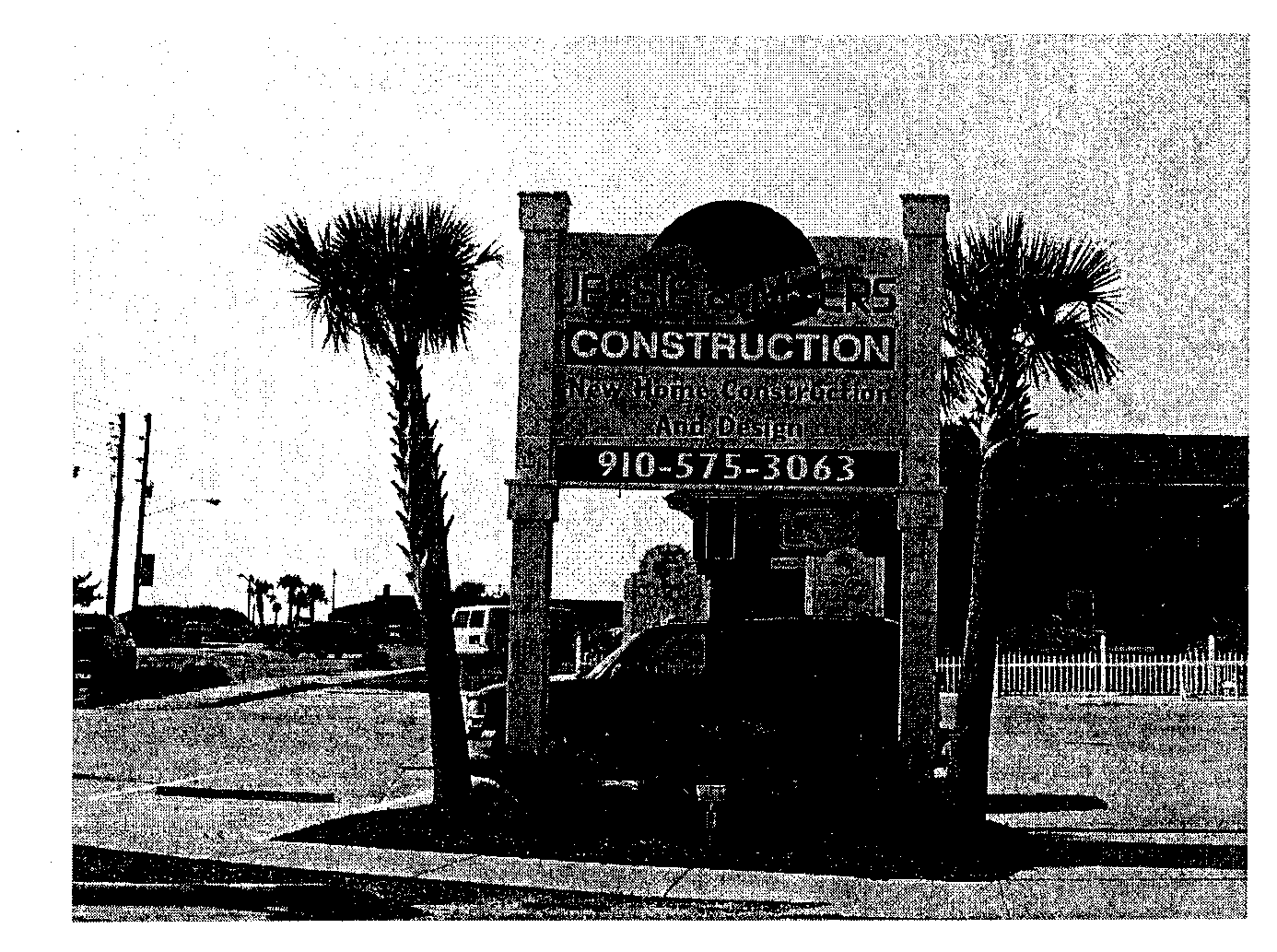
Example of an acceptable freestanding sign
(Code 1983, § 7-2-1; Ord. of 7-9-2002, §§ 4, 5; Ord. of 9-9-2003(4), §§ 2, 3; Ord. of 8-10-2004, § 3(1.—4.); Res. of 8-14-2007(1); Res. No. 2009-29, §§ 1—3, 10-13-2009; Res. No. 2010-14, §§ 3, 4, 7-13-2010)
Sec. 66-247. - No off-premises signs are permitted in any zoning district as of August 14, 2007.
Signs in existence prior to this date may remain as long as compliance set out in section 66-249 is met.
(Code 1983, § 7-2-1; Ord. of 7-9-2002, §§ 2, 6; Ord. of 9-9-2003(4), § 4; Res. of 8-14-2007(1))
Sec. 66-248. - Nonconforming signs; intent.
Signs which were in existence prior to the adoption of the ordinance from which this chapter derives (August 14, 2007) which do not conform to the provisions of this article are declared nonconforming signs. It is the intent of this section to recognize that the eventual elimination, as expeditiously and fairly as possible, of nonconforming signs is as much a subject of health, safety and welfare as is the prohibition of new signs that would violate the provisions of this article. It is also the intent of this section that any elimination of nonconforming signs shall be effected so as to avoid any unreasonable invasion of established property rights. All nonconforming signs that are not off-premises outdoor advertising signs as designed by G.S. 16A-199 must be removed by April 1, 2010.
(Code 1983, § 7-2-1; Ord. of 8-10-2004, § 3(5.); Res. of 8-14-2007(1); Res. No. 2009-27, § 1, 9-8-2009)
Sec. 66-249. - General nonconforming sign provisions.
(a)
Subject to the exceptions and the town's amortization schedule, any nonconforming sign may be continued in operation and maintenance after August 14, 2007, provided that nonconforming signs shall not be:
(1)
Changed to or replaced with another nonconforming sign, including changing the sign face (except on changeable copy signs and billboards).
(2)
Structurally altered so as to extend their useful life.
(3)
Expanded.
(4)
Relocated.
(5)
Reestablished after damage or destruction of more than 50 percent of the value at the time of such damage or destruction.
(6)
Modified in any way that would increase the degree of nonconformity of such sign.
(b)
Except in the case of subsection (a)(3) of this section, this shall not prevent repairing or restoring to a safe condition any part of a sign or sign structure of normal maintenance operations performed on a sign or sign structure.
(Code 1983, § 7-2-1; Res. of 8-14-2007(1))
Sec. 66-250. - General provisions.
(a)
Number. No freestanding sign structure requiring a permit shall coexist on the same parcel with any other freestanding sign unless the parcel has more than 500 feet of principal street frontage, in which case no two signs shall be located closer than 500 feet from one another.
(b)
Setback. All signs shall be erected so as not to obstruct or impair driver vision at ingress-egress points and intersections.
(c)
Wall signs. Wall signs in C-1, C-2, or C-3 all commercially zoned areas shall be limited to 20 percent of the front facade. This percentage shall be the sum of all wall signs placed on the building. Wall signs may be erected and displayed when in compliance with the maximum percentage of facade covered limitations and provided:
(1)
No wall signs shall protrude more than 12 inches from the wall to which it is attached.
(2)
No wall signs shall extend beyond the parapet or eave line as appropriate of the building to which it is attached. If the building consists of more than two stories, wall signs shall not extend above the second story.
(3)
The display area of wall signs painted on or affixed to or otherwise displayed on or through a facade window shall not exceed 15 percent of the area of the window.
(4)
Wall signs shall not cover up or interrupt architectural features.
(5)
The message of a wall sign shall be limited to the names, trademarks and service marks of the establishment located on the zoning lot. Additionally, the message of wall signs may include information necessary to direct patrons to the business where the business may not have a direct entrance from the street or pedestrian way.
(d)
Awnings. Awnings may be erected and displayed on a zoning lot in compliance with the following regulations:
(1)
Maximum of 24 square feet in signage area on canopy/awning.
(2)
No backlit awnings are permitted.
(3)
No neon is allowed on awnings.
(4)
On single-occupant property, one awning sign may be allowed only in lieu of all other signage otherwise permitted on the wall to which the awning is attached.
(5)
On multi-occupant property, one awning sign may be allowed over each occupant entrance only in lieu of other wall signage.
(6)
No metal bar or framing or other solid shall be less than eight feet above the ground or sidewalk and that a flexible cloth, canvas or similar skirt may hang 12 inches below the horizontal frame supporting the awning, but in no case shall the skirt be less than seven feet above the ground or sidewalk at the lowest point.
(e)
Roof signs. Roof signs may be erected and displayed on a commercial structure in compliance with the following regulations:
(1)
Wall signs in all commercially zoned areas shall be limited to 20 percent of the front facade.
(2)
This percentage can be divided between wall and roof signs.
(3)
No portion of the roof signs shall extend beyond the peak of the roof.
(4)
The message of a wall sign shall be limited to the names, trademarks and service marks of the establishment located on the zoning lot.
(5)
All signs shall be constructed of durable materials that are architecturally consistent with the primary structure.
(f)
One identification sign per business establishment may be suspended from or attached to the underside of a canopy/awning, provided such sign does not exceed six square feet in area and maintains a clear distance of at least seven feet between the sidewalk grade and the bottom of the sign. This signage shall be allowed in addition to the permissible amount of wall signage.
(Code 1983, § 7-2-1Z; Ord. of 7-9-2002, § 7; Res. of 8-14-2007(1); Res. No. 2010-14, § 5, 7-13-2010)
Sec. 66-251. - Noncompliance.
The code enforcement officer or any agent of the police department shall cause to be removed any unauthorized, permanent, temporary or portable sign erected or situated upon public property. The code enforcement officer or any agent of the police department shall cause to be removed any unauthorized, permanent, temporary or portable sign erected or situated upon private property by citing the owner, permittee, applicant holder, or agent of the owner of the property with a notice of violation and requesting immediate removal. Failure to immediately remove the sign upon notice shall result in a fine of $250.00, said fine accruing each day that the sign is permitted to remain, such that each day a violation continues shall be considered a separate offense.
(Code 1983, § 7-2-1; Ord. of 9-12-2006(1), § 1; Res. No. 2020-19, 11-10-2020)
Sec. 66-252. - Subdivision/planned unit development (PUD) entranceway structures/signs.
(a)
Number. No more than two entranceway structures/signs shall be permitted.
(b)
Location. Entranceway structures/signs shall be limited to locations at major entrances. Signs shall not be located in any public right-of-way.
(c)
Size. All entranceway structures shall be limited to the following:
(1)
Maximum height shall be no higher than six feet from the ground level to the highest point of the structure.
(2)
Maximum length shall be no more than 20 feet on each side of the street.
(3)
Signage shall be allowed on the structure, however no sign shall be larger than 32 square feet in area per side with a 64-square-foot total area.
(d)
Permit required. All entranceway structures/signs require a permit as set forth in section 66-242. In all cases, entranceway sign permits issued by the town planning department shall expire three months from the date of issuance if the sign is not installed by that time.
(e)
[Miscellaneous.] All entranceway structures/signs shall comply with current CAMA regulations if applicable.
(Res. of 8-14-2007(1); Res. No. 2009-19, § 1, 7-14-2009)
Sec. 66-253. - Temporary signs.
(a)
Directional signs or banners advertising a community oriented public event or gathering and located off premises may be displayed on private property not more than one week in advance of the event and not more than two days after the completion of the event. No such sign shall exceed 32 square feet in area, and shall not be placed in any street right-of-way. No single event can have greater than four temporary signs within the town limits or extraterritorial jurisdiction of the town. Signs associated with approved group activity permits shall be considered in this category.
(b)
Temporary banners associated with a "grand opening" event shall not exceed 30 days. For all other sales, a temporary banner shall only be permitted once per calendar year not to exceed 30 days or four times per calendar year not to exceed seven days for each event. A permit shall be obtained from the planning and inspections department for these activities. Temporary banners shall not exceed 32 square feet in size.
(Res. of 8-14-2007(1))
Sec. 66-254. - Portable signs.
(a)
One portable A-frame sign not to exceed six square feet may be permitted for all legal vendors and commercial business establishments. Portable signage shall not be placed in the right-of-way and shall be removed at the end of the business day.
(b)
Signs directing traffic when used by rental companies for check-in and check-out shall be permitted if smaller than six square feet in size and shall only be used during the check-in and check-out time periods. These signs shall be allowed to be located in the right-of-way.
(c)
No permit shall be required for portable signs where the above conditions are met.
(Res. of 8-14-2007(1))

