
Orlando City Zoning Code
PART 4
- OTHER SPECIFIC USES AND STRUCTURES
4B.- ALCOHOLIC BEVERAGE ESTABLISHMENTS[12]
Editor's note— Ord. No. 2019-46, § 2, adopted October 7, 2019, Doc. #1910071201, amended Ch. 58, Part 4B in its entirety to read as herein set out. Former Part 4B, §§ 58.705—58.713, pertained to Alcoholic Beverage Sales, and derived from Ord. of 9-16-1991, Doc. #25094; Ord. of 4-20-1992, Doc. #25633; Ord. of 7-26-1993, Doc. #26769; Ord. of 5-20-1996, Doc. #29361; Ord. of 10-29-2001, §§ 6, 8, 9, 11, Doc. #011029704; Ord. of 1-24-2005, § 9, Doc. #050124909. Subsequently, said ordinance changed the title of Pt. 4B from "Alcoholic Beverage Sales" to "Alcoholic Beverage Establishments."
4E.- DRIVE-THROUGH FACILITIES[13]
4E. Drive-Through Facilities
Editor's note—Ord. No. 2024-18, § 2, adopted May 13, 2024, Doc. #2405131203, amended the title of Part 4E to read as herein set out. The former Part 4E title pertained to drive-in facilities.
4F.- AUTOMOTIVE SERVICES
4F. AUTOMOTIVE SERVICES
4K.- DONATION BINS[14]
Editor's note— Ord. No. 2015-33, § 1, adopted July 13, 2015, Doc. #1507131207, repealed the former Div. 4K, §§ 58.800—58.804, and enacted a new Div. 4K as set out herein. The former Div. 4K pertained to recycling collection center and derived from an ordinance adopted Sept. 16, 1991, Doc. #25094; and Ord. No. 2010-33, § 2, adopted Aug. 30, 2010, Doc. #1008301102.
4L.- PUBLIC BENEFIT USES[15]
Editor's note— Ord. No. 2018-45, § 4, adopted August 20, 2018, Doc. #1808201202, repealed the former Ch. 58, Pt. 4L, §§ 58.810—58.814, and enacted a new Ch. 58, Part 4L as set out herein. The former Ch. 58, Part 4L pertained to public schools and derived from Ord. of 9-16-1991, Doc. #25094; Ord. of 4-20-1992, Doc. #25633.
4O.- COMMUNICATION TOWERS AND WIRELESS COMMUNICATION FACILITIES[16]
Editor's note— Ord. No. 2016-39, § 2, adopted Apr. 18, 2016, Doc. #1604181201, changed the title of Div. 4O from "Communication Towers" to read as set out herein.
4R(1).- RESERVED[17]
Editor's note— Ord. No. 2018-45, § 4, adopted August 20, 2018, Doc. #1808201202, repealed Ch. 58, Pt. 4R(1), §§ 58.870—58.872, which pertained to cogeneration facility and derived from Ord. of 9-16-1991, Doc. #25094; Ord. of 5-20-1996, Doc. #29361.
4R(2) - MEDICAL MARIJUANA DISPENSARIES[18]
Editor's note— it should be noted that § 2 of Ord. No. 2017-25, § 1, 6-5-2017, Doc. #1706051201 states: Grandfathered Dispensaries. Notwithstanding anything in this ordinance to the contrary, medical marijuana dispensaries approved by a site-specific zoning official determination issued before the effective date of this ordinance and the subject of a complete building permit application to construct the dispensary (pursuant to the Florida Building Code) submitted to the permitting official before the effective date of this ordinance are hereby made conforming and lawful under this ordinance as to the locational regulations of this ordinance. Medical marijuana dispensaries approved by a site-specific zoning official determination issued before the effective date of this ordinance but not the subject of a complete building permit application to construct the dispensary (pursuant to the Florida Building Code) submitted to the permitting official before the effective date of this ordinance are hereby made wholly subject to the provisions of this ordinance.
4S.- RESERVED[19]
Editor's note— Ord. No. 2018-45, § 4, adopted August 20, 2018, repealed Ch. 58, Pt. 4S, §§ 58.880—58.887, which pertained to treatment/recovery facilities and emergency shelters and derived from Ord. of 9-16-1991, Doc. #25094; Ord. of 5-20-1996, Doc. #29361; Ord. of 4-5-1999, § 5, Doc. #32007.
Sec. 58.700.- Purpose of Adult Entertainment Regulations.
The purpose of this part is the same as the purpose expressed in subsection 37.01(a), Orlando City Code, and is predicated upon the same legislative findings and rationale as expressed in subsection 37.01(b), Orlando City Code.
(Ord. of 9-16-1991, Doc. #25094; Ord. of 10-5-2009, § 2, Doc. #0910051105)
Sec. 58.701. - Obscenity Not Permitted.
It is not the intent of the City Council to legislate with respect to matters of obscenity. Obscenity is regulated by state and federal law, including Chapter 847, Florida Statutes.
(Ord. of 9-16-1991, Doc. #25094; Ord. of 10-5-2009, § 2, Doc. #0910051105)
Sec. 58.702. - Dispersal of Facilities.
(1)
Adult entertainment facilities are prohibited within 500 feet of the right-of-way of the following:
a.
Road segments designated as view corridors in the City's adopted growth management plan.
b.
The McCoy Road - Sand Lake Road corridor between Tradeport Drive and Interstate 4.
c.
John Young Parkway between Osceola County and U.S. Highway 441.
d.
Narcoossee Road between the Beachline Expressway and Hoffner Avenue.
e.
Orange Avenue between Wetherbee Road and Oak Ridge Road.
f.
U.S. Highway 441 between Osceola County and Seminole County and between Seminole County and Lake County.
g.
The Beachline Expressway between Narcoossee Road and Interstate 4.
h.
The Beltway System in Orange County.
i.
Semoran Boulevard between Orlando International Airport and Seminole County.
j.
Jetport Drive between Orange Avenue and the Beachline Expressway.
k.
Hoffner Avenue between Goldenrod Road and Conway Road.
l.
Lee Vista Boulevard east of Semoran Boulevard.
m.
L.B. McLeod Road.
(2)
Adult entertainment facilities are prohibited within 1,000 feet of the following:
a.
A religious institution.
b.
Another adult entertainment facility.
c.
A public library.
d.
A public park.
e.
A residential zoning district, including planned development zoning districts with residential uses.
f.
An establishment serving or selling alcoholic beverages for onsite consumption.
(3)
Adult entertainment facilities are prohibited within 2,500 feet of a school.
(4)
Adult entertainment facilities are prohibited within 2,800 feet of the right-of-way of the Lee Vista Boulevard - Judge Road corridor between Semoran Boulevard and Conway Road.
(5)
Adult entertainment facilities are prohibited within 1,500 feet of the right-of-way of E. Landstreet Road between Orange Avenue and Boggy Creek Road.
(6)
Adult entertainment facilities are prohibited within subareas 6 and 12 as designated in the City's adopted growth management plan.
(7)
Adult entertainment facilities are prohibited within 1,500 feet of residential zoning districts, including planned development zoning districts with residential uses, if the adult entertainment facility is located north of Silver Star Road and west of John Young Parkway.
Method of measuring distance. For the purposes of this part, distance shall be measured by the shortest, straight line between property or district boundaries.
Variances. Variance from the requirements of this section may only be approved in accordance with Part 2J, Chapter 65, Orlando City Code.
(Ord. of 9-16-1991, Doc. #25094; Ord. of 3-20-1995, Doc. #28341; Ord. of 10-5-2009, § 2, Doc. #0910051105)
Sec. 58.703. - Nonconforming Facilities and Uses.
Legally existing nonconforming adult entertainment facilities and uses are subject to the regulations of Part 7, Chapter 58, Orlando City Code.
(Ord. of 9-16-1991, Doc. #25094; Ord. of 10-5-2009, § 2, Doc. #0910051105)
Sec. 58.704. - Minimum Crime Prevention Design Standards.
Property on which an adult entertainment facility is located is subject to the following:
(a)
Exterior lighting. All exterior areas must be lit in accordance with the exterior lighting standards of Orange County, Florida, ordinance #2003-08.
(b)
Signs. Notwithstanding other provisions of the land development code, signs may not include flashing lights, photographs, images, silhouettes, drawings, depictions, or other pictorial representations of any kind, and may only include the name of the facility and one or more of the following applicable terms or phrases:
(1)
"Adult bookstore."
(2)
"Adult motion picture theater."
(3)
"Adult dancing establishment."
(4)
"Adult entertainment."
(c)
Landscaping. Shrubbery must be maintained under 30 inches in height and tree branches must be kept at least 6 feet above the ground.
(d)
Interior requirements. Interior premises must be equipped with overhead lighting fixtures of sufficient intensity to illuminate every place where patrons are permitted access at an illumination of at least five foot candles as measured at the floor level.
(e)
Exterior requirements. Customer entryways and exits must be clearly defined, and clearly visible from onsite parking areas and the public right-of-way. Unless otherwise required by law, opaque walls and fences are prohibited. Publicly accessible vehicular rights-of-way must completely encircle the facility so that law enforcement may patrol the perimeter of the facility.
(Ord. of 10-5-2009, § 2, Doc. #0910051105)
Sec. 58.705.- General Requirements.
A.
All alcoholic beverage establishments with on-site consumption must be categorized as one of the following, listed in order from least intensive to most intensive use:
1.
Public facility as listed in Sec. 33.02 (e.g. Amway Center, DPAC)
2.
Accessory to an assembly public benefit use (museums, churches, etc.)
3.
Accessory to a business with a lawful certificate of use
4.
Restaurant
5.
Hotel
6.
Recreation (Use), Indoor Intensive (banquet halls, sport clubs, etc.)
7.
Micro-brewery, Micro-winery, Craft distillery, or Brewpub
8.
Bar
9.
Nightclub
The use must be categorized as the most intensive use for any activity at the location, even if it is for temporary events or limited hours. As part of the local zoning review required for any state alcoholic beverage license, the applicant must request a Zoning Official Determination to review the floor plan, a description of operations, and other information to categorize the use.
B.
Bottle Clubs, as defined in Chapter 66 of the Land Development Code, are not permitted as a principal use within any zoning district of the City of Orlando.
C.
Catering, the use of a catering license or hiring a caterer does not constitute proof as a full-service restaurant and may not be used to meet the separation or other requirements of this part.
D.
A Zoning Official determination is required for all new or expanding Alcoholic Beverage Establishments located within 300 ft. of a residential zoning district. Additional consideration will be taken to ensure that the site is arranged in such a way, that the building is constructed in such a way, and that the business operations are so conducted as to prevent the emission of sounds, vibrations and odors from the establishment into the aforementioned residentially zoned districts. These considerations may include those as detailed in Section 58.709.
E.
Expansions or alterations to a previously approved alcoholic beverage establishment which increases the size or patron capacity of the establishment, or increases the intensity of the use as listed in A above, must receive either a new Letter of Determination from the Planning Official or a new Conditional Use Permit, as required. With the exception of those alcoholic beverage sales specifically limited as detailed in Sec. 58.707, the change in the type of alcoholic beverages sold or change in the type of State license the facility has will not automatically require any new approval through this part as long as all other aspects of the establishment and operations remain as previously approved.
F.
None of the regulations of this part shall be construed as approving any use, location, hours of operation, or other standard that is in conflict with Chapter 33 of this Code.
G.
A restaurant that serves alcoholic beverages must meet all of the following criteria. If any criteria are not met, it must be reclassified as a more intense use as listed in Section 58.705(A) above.
1.
Alcoholic beverages may only be consumed or sold in connection with the consumption or sale of food during all hours of operation. An accessory bar area in which alcoholic beverages are served and consumed without the accompanying sale and consumption of food is allowed, provided all other criteria are met.
2.
Food must be continuously ready to be prepared, served, and sold during all times alcoholic beverages are sold. The facility must have permanent kitchen facilities located within the premises in which meals are regularly prepared for service to patrons of the establishment.
3.
Tables and chairs for seated meals must remain in place during all hours of operation.
4.
The restaurant must not have a cover charge.
5.
The restaurant must be licensed as a restaurant by the State of Florida, pursuant to Chapter 509, Florida Statutes.
6.
The restaurant must derive at least 51% of its gross revenues from the sale of food and nonalcoholic beverages.
7.
The restaurant must promptly provide all records of food and alcoholic beverage sales to the City, as described in Section 58.709(E) upon request by the City.
H.
Nightclubs.
1.
A new nightclub, or an expansion of a legally approved existing nightclub, is prohibited on properties located within the Downtown Entertainment Area (See Chapter 42, Figure 1) if the new nightclub or expansion of a legally approved nightclub is located within 300 feet of any other legally approved nightclub.
2.
The distance shall be measured by the shortest and most direct bearing distance from the property line of any nearby nightclub to the property line of the proposed new nightclub or expansion of a legally approved nightclub.
3.
Any proposal to open a new nightclub or expand a legally approved existing nightclub must be reviewed and approved by the Planning Official to determine compliance with the distance separation requirements.
4.
Any nightclub that has been approved subject to this part must receive a certificate of use within two years from the date of the Planning Official determination. Such nightclubs shall be considered existing uses for purposes of establishing distance separation requirements for other nightclub requests. If a certificate of use has not been issued within two years of the date of the Planning Official Determination, the approval will automatically expire, and the applicant must re-apply.
5.
The Planning Official may extend the Planning Official Determination timeframe by up to 60 days if evidence is provided that the project is nearing completion.
6.
Any legally existing nightclub operating as of the effective date of this ordinance may remain as a legal non-conforming use subject to Chapter 58, Part 7D. However, it may not be expanded unless distance separation requirements are met.
7.
Legally existing nightclubs may close for remodeling or re-branding as a new nightclub concept for a period of up to six (6) months from the closure date. Such nightclubs shall be considered existing uses for purposes of establishing distance separation requirements for other nightclub requests. After the six (6) month time frame has elapsed, if a certificate of use has not been issued to the legally existing nightclub, the approval will expire and the applicant must obtain a new Planning Official determination, unless a Conditional Use Permit is approved pursuant to Chapter 65, Part 2D, extending the timeframe for obtaining a certificate of use.
8.
The right to own and operate a legally existing nightclub shall apply to the real property and remain with the land even if the legally existing nightclub is sold to a new owner or operated by a different management company. However, this right shall automatically expire and cease to remain with the land if the legally existing nightclub ceases operations for a period of six (6) months or more, unless a Conditional Use Permit extending this timeframe is approved pursuant to Chapter 65, Part 2D.
9.
For purposes of identifying legally existing nightclubs, the City will maintain an inventory of all nightclubs operating as of the effective date of this ordinance. The inventory list will be updated as new nightclubs or expansions of legally existing nightclubs are approved and legally existing nightclubs close.
(Ord. No. 2019-46, § 2, 10-7-2019, Doc. #1910071201; Ord. No. 2022-68, § 2, 12-5-2022, Doc. #2212051203; Ord. No. 2024-31, § 2, 8-12-2024, Doc. #2408121203)
Sec. 58.706. - Distance from Churches and Schools.
The sale of alcoholic beverages for on-premise consumption or the package sale of alcoholic beverages shall not be permitted in a place of business within 1,000 feet, outside of the AC-3A/T zoning district, or 200 feet within the AC-3A/T zoning district, of an established K through 12 school or church except as provided in Section 58.708 of this Part. The distance shall be measured by the shortest, most direct bearing and distance from the property line of the church or school grounds in use as part of the church or school facilities to the nearest entrance of the establishment serving alcoholic beverages open to the public during normal business hours.
(Ord. No. 2019-46, § 2, 10-7-2019, Doc. #1910071201)
Sec. 58.707. - Subsequent Establishment of Church or School.
Whenever a vendor of alcoholic beverages has procured a license permitting the sale of alcoholic beverages and, thereafter, a church or school is established within the distance separation set forth in Section 58.706 of this part, the establishment of such church or school shall not be cause for the discontinuance or classification as a nonconforming use of the business as a vendor of alcoholic beverages.
(Ord. No. 2019-46, § 2, 10-7-2019, Doc. #1910071201)
Sec. 58.708. - Exceptions to Distance Requirements.
The sale of alcoholic beverages for on-premise consumption or the package sale of alcoholic beverages shall be exempt from the provisions of Section 58.706 for the following, as described below:
[A.]
Full-Service Restaurants. The provisions of Section 58.706 shall not apply to the sale of alcoholic beverages for on-premise consumption at a full-service restaurant. For this part, a full-service restaurant must meet the standards of Section 58.705(G) above and must not allow outdoor sale or outdoor consumption of alcoholic beverages between 7 a.m. and 5 p.m., Monday through Friday, within 1,000 feet of a school citywide, or within 200 feet of a school within the AC-3A/T district.
B.
Certain Public Benefit Uses. The provisions of Section 58.706 shall not apply to the sale of alcoholic beverages for on-premises consumption where the primary purpose and design of the site/facility is for a public benefit use as determined by the Zoning Official.
C.
Publicly-Owned Facilities. The provisions of Section 58.706 shall not apply to the sale of alcoholic beverages for on-premise consumption at an establishment located within a facility owned by the public where the primary purpose and design of the facility is to accommodate the assembly of people for entertainment or recreation.
D.
Certain Bars in Hotels or Motels. The provisions of Section 58.706 shall not apply to the sale of alcoholic beverages for on-premise consumption at an establishment located within a hotel or motel containing 100 or more guest rooms where such establishment in the hotel or motel has no direct entrance or exit on a public street.
E.
Package Sale of Beer and/or Wine. The provisions of Section 58.706 shall not apply to a vendor who operates an establishment, the primary purpose of which is the package sale of beer and/or wine, and who permits on-premise consumption only for the purpose of beer and/or wine tasting, incidental to the package sale of such beer and/or wine, at no charge to the customer.
F.
Cultural Arts Facilities. The provisions of Section 58.706 shall not apply to the sale of alcoholic beverages for on-premises consumption at cultural arts facilities located within the AC-3A/T zoning district. The facility must be a not-for-profit organized for the purpose of operating a theater with live performances and must contain at least 100 seats.
(Ord. No. 2019-46, § 2, 10-7-2019, Doc. #1910071201; Ord. No. 2022-68, § 2, 12-5-2022, Doc. #2212051203)
Sec. 58.709. - Approval for Alcoholic Beverage Establishments That do not Meet the Distance Separation Requirements.
All proposed establishments located within one or more of the distance separation areas (except for required separation between nightclubs) must seek approval to operate within such area. The specific approval process is based on the proposed location, proximity to churches, schools or residentially-zoned districts, and type of establishment as detailed below:
A.
Certain Full-Service Restaurants. To apply for the distance separation exception for certain full-service restaurants set forth in Section 58.708, the owner or vendor shall submit to the Zoning Official the following:
(1)
Detailed, proposed menu;
(2)
Detailed, to-scale, including dimensions, floor plan clearly identifying the following:
(a)
The kitchen area, dining area, bar area, outdoor seating area, indoor/outdoor, waiting area and any other area;
(b)
The square feet of each identified area and the identified facility;
(c)
The general seating arrangement and number of seats in the dining and bar areas;
(d)
The location and type of equipment and facilities in the kitchen; and
(e)
The estimated patron capacity of the facility.
(3)
A notarized statement from the applicant who shall be a qualified restaurant owner or operator, or other qualified food service professional, stating the following:
(a)
The qualifications of the owner/operator of the establishment;
(b)
The anticipated percentage of monthly revenues to be derived from food and non-alcoholic beverages based upon the anticipated operation of the restaurant facility and the above information; and
(c)
Any other materials that may provide insight into the total monthly percentage of gross revenues the establishment expects to earn from sales of food and non-alcoholic beverages.
B.
Certain Public Benefit Uses. To apply for the distance separation exception for certain public benefit uses set forth in Section 58.708, the owner or vendor shall submit to the Zoning Official the following:
(1)
Detailed, narrative of the proposed use of the property, including:
(a)
What the property and facility will be used for and how and by whom it will be operated;
(b)
All planned improvements to the property including interior and exterior enhancements;
(c)
How the proposed sale and consumption of alcoholic beverages fit into the overall plan for the operation. What will be served, where will it be served from, and how often will sales occur; and
(d)
Any other materials that may provide insight into the total percentage of gross revenues the establishment expects to earn from sales of food and non-alcoholic beverages.
(2)
Detailed, to-scale floor plan and site plan clearly identifying the following:
(a)
A full site plan, including all proposed improvements as well as details on all outdoor assembly areas where alcoholic beverages may be sold or consumed;
(b)
A full proposed floor plan including all indoor assembly areas where alcoholic beverages may be sold or consumed;
(c)
The kitchen area, bar area, if any, and any other interior areas;
(d)
The square feet of each identified area and the identified facility;
(e)
The location and type of equipment and facilities in the kitchen; and
(f)
The estimated patron capacity of the facility.
C.
Zoning Official Determination. The Zoning Official shall review the application and shall then issue one of the following determinations:
(1)
The establishment qualifies as an exception to the distance requirements pursuant to Section 58.708(A) through (F);
(2)
The establishment does not qualify as an exception to the distance requirements pursuant to Section 58.708(A) through (F) but may apply for a Conditional Use Permit pursuant to Section 58.709(D); or
(3)
The establishment does not qualify as an exception to the distance requirements and the proposed use is not permitted by other sections of Code in the proposed location.
D.
Conditional Use Permit Procedures. An establishment which will sell or serve alcohol and which is located within the distance separation requirements from an established school or church as set forth in Section 58.706 and is not eligible for any exceptions to the distance requirement, may apply for a Conditional Use Permit (CUP) to permit the sale/provision of alcoholic beverages. Such application shall be submitted and reviewed in accordance with the procedures set forth in Chapter 65, Part 2D.
In reviewing an application for an alcoholic beverage establishment, the following supplemental information may be required at time of application:
(1)
An operation/business plan which addresses hours of operation, number of employees, menu items, goals of business, and other operational characteristics pertinent to the application.
(2)
A parking plan which fully describes where and how the parking is to be provided and utilized, e.g., valet, self-park, shared parking, after-hour metered spaces, and the manner in which it is to be managed.
(3)
An indoor/outdoor crowd control plan which addresses how large groups of people waiting to gain entry into the establishment, or already on the premises, will be controlled.
(4)
A security plan for the establishment and any parking facility, including enforcement of patron age restrictions.
(5)
A traffic circulation analysis and plan which details the impact of projected traffic on the immediate neighborhood and how this impact is to be mitigated.
(6)
A sanitation plan which addresses on-site facilities as well as off-premises issues resulting from the operation of the establishment.
(7)
A lighting plan which addresses how the site, parking lot, and exterior spaces of the property will be lit adequately for security purposes and how off-site impacts of proposed lighting will be controlled.
(8)
A noise attenuation plan which addresses how noise will be controlled to meet the requirements of the noise ordinance.
When the City approves any Conditional Use Permit pursuant to this Section, it may also prescribe additional conditions and safeguards, including any of the following conditions:
(1)
Require that no entry fees or "cover" charges be charged by the establishment.
(2)
Limit the hours when alcoholic beverages may be sold.
(3)
Limit the locations where alcoholic beverages may be sold or consumed.
(4)
Separately limit the location and hours of operation for any outdoor uses.
(5)
For those properties within 300 ft. of a residentially zoned property (R's, MXD's) additional consideration will be taken to prevent the emission of sounds, vibrations and odors from the establishment into the aforementioned residentially zoned districts.
(6)
Specify other conditions to permit development of the City in conformity with the intent and purpose of this Code and the adopted Growth Management Plan.
Violation of such conditions and safeguards, when made a part of the terms under which the Conditional Use Permit is approved, shall be deemed a violation of this Code subject to enforcement under the provisions of Chapter 5 of this Code.
E.
Records of Revenues. The owner or vendor of an establishment approved as an exception to the distance requirements pursuant to this Subpart shall maintain records of total gross revenues, and these records shall be made available within 14 days of a request made by the Zoning Official. The sales percentage required by this Subpart shall be computed by adding all gross sales of food, non-alcoholic beverages and alcoholic beverages and thereafter dividing that sum into the gross sales of food plus non-alcoholic beverages. The establishment and its representatives shall bear the burden of establishing compliance with the required percentage and the other requirements of this Subpart. In the event the City finds an establishment in violation of the requirements of this Subpart, the City may pursue any penalties provided for under state and local law, including revoking the City's zoning approval to operate in a specific location. The City shall promptly report any such revocation to the State Department of Business and Professional Regulation.
(Ord. No. 2019-46, § 2, 10-7-2019, Doc. #1910071201)
Sec. 58.720.- General Requirements for Mobile Vendors.
All Mobile Vendors must comply with the following conditions:
(a)
Accessory Use. Mobile Vendors must be an accessory to the principal use on site, except that a one-time Mobile Vending Event may be approved on a vacant lot in accordance with Section 58.723 below.
(b)
Hours of Operation. A Mobile Vendor may only be open during the hours of operation of the principal use on site, and as further restricted below:
1.
Outside of the Downtown Entertainment Area (DEA) (see map in Section 42.09, Figure 1), a Mobile Vendor may not operate between the hours of midnight and 6 a.m. daily, even if the principal use on site is open for additional hours.
2.
Within the DEA, a Mobile Vendor may not operate between the hours of 3:00 a.m. and 6:00 a.m. daily, even if the principal use on site is open for additional hours.
Alternative hours for a one-time Mobile Vending Event may be approved via a permit issued pursuant to Chapter 18A, Code of the City of Orlando and as described in Section 58.723 below.
(c)
Licensing. Mobile Food Dispensing Vehicles must be licensed and approved as a mobile food dispensing vehicle by the State of Florida.
(d)
Business Tax Receipt. Mobile Vendors must obtain a Business Tax Receipt in accordance with Chapter 36, Code of the City of Orlando.
(e)
Interference with Vehicular and Pedestrian Traffic and Landscaping. No vehicles, associated equipment or queuing (including tables and chairs) utilized by a Mobile Vendor may interfere with or disrupt vehicular or pedestrian traffic, or on-site landscaping.
(f)
All-Weather Surface. All vehicles, associated equipment, and queuing (including tables and chairs) utilized by a Mobile Vendor must be completely located on an all-weather surface.
(g)
Right-Of-Way. No Mobile Vendors, associated equipment, or queuing (including tables and chairs) may be located within the Right-of-Way.
(h)
Alcohol. No alcohol shall be sold from a Mobile Vendor or consumed on the site of a Mobile Vendor, unless authorized by City Council via a permit issued pursuant to Chapter 18A, Code of the City of Orlando.
(i)
Signage. Mobile Vendors may display one A-frame sign, not to exceed six square feet, within ten feet of the Mobile Vendor's vehicle, cart, tent, or other apparatus. No signs shall be placed in the Right-of-Way. Signs located on a Mobile Vendor's vehicle shall be permitted as permanent signage.
(j)
Property Owner Authorization. Property owner authorization is required to operate a Mobile Vendor on a site. Approval must be kept on the site of the Mobile Vendor at all times and provided upon demand to any agent of the city, including but not limited to Code Enforcement, Police, Fire or Building Inspectors.
(Ord. No. 2024-42, § 3, 11-11-2024, Doc. #2411111203)
Sec. 58.721. - Temporary Mobile Vending.
Mobile Vendors operating on a parcel site for two or less days per calendar week shall be considered Temporary Mobile Vendors. In addition to the General Requirements set forth in Section 58.720 above, all Temporary Mobile Vendors must comply with the following conditions:
(a)
Allowable Districts. Temporary Mobile Vendors must conform to the Zoning District and Use Regulations of Figures 1-2 for mobile vending and services, and the following:
1.
One Temporary Mobile Vendor is permitted on a public benefit use site in any zoning district.
2.
Lunch trucks are permitted on active construction sites located within any zoning district for a period of up to 60 minutes per site, per day.
(b)
Maximum Number. Only one Temporary Mobile Vendor is permitted per parcel site.
(c)
Accessory Structures. Accessory structures, such as decks and pergolas, are prohibited.
(d)
Self-Contained. Temporary Mobile Vendors must be self-contained for electricity, propane (if needed), potable water, grease disposal, and wastewater. Any waste or substances related to, or generated by the Mobile Vendor, shall be removed from the site and legally disposed of by the Mobile Vendor.
(e)
Outdoor Speakers. The use of outdoor speakers is prohibited.
(f)
Removal when not in use. When not in operation, Temporary Mobile Vendors must leave the site and be stored off-site. Temporary Mobile Vendors may not be left unattended.
(Ord. No. 2024-42, § 3, 11-11-2024, Doc. #2411111203)
Sec. 58.722. - Stationary Mobile Vending.
Two or more Mobile Vendors operating on a parcel site at the same time for one or more days per calendar week, or any one Mobile Vendor operating on any parcel site for three or more days per calendar week, shall be considered Stationary Mobile Vendors. In addition to the General Requirement set forth in Section 58.720 above, all Stationary Mobile Vendors must comply with the following conditions:
(a)
Allowable Districts. Stationary Mobile Vendors must conform to the Zoning District and Use Regulations of Figure 1-2 for mobile vending and services, except that Stationary Mobile Vendors are permitted on a public benefit use site in any zoning district when approved in accordance with Section (b) below.
(b)
Approval Process.
1.
Two or less Stationary Mobile Vendors on a parcel site in a zoning district where mobile vending and services is a permitted use, must obtain a Planning Official Determination in accordance with Chapter 65, Part L, Code of the City of Orlando.
2.
Three or more Stationary Mobile Vendors on a parcel site in a zoning district where mobile vending and services is a permitted use, must obtain a Master Plan in accordance with Chapter 65, Part 2H, Code of the City of Orlando. If the site is located within 300 feet of a residential zoning district, a Conditional Use Permit is also required. The fee for the Conditional Use Permit is waived for these applications.
(c)
Utilities. Utility connections must comply with all applicable building codes. Portable generators and port-a-potties are not permitted. In addition to the approval process requirements set forth in Section 58.722(b) above, applicants shall provide a description of the Mobile Vendor's utility connections. The description shall clearly describe how the Mobile Vendor will connect to potable water, wastewater, lighting and electricity. All utility connections, grease disposal, waste and refuse disposal must be approved by the Building Official. Any accessory structures or infrastructure provided to support this activity must comply with all applicable building codes.
(d)
Accessory Improvements. No accessory site improvements (decking, pergolas, etc.) shall be used, erected, constructed, or placed by a Mobile Vendor on a parcel site without a Building Permit having been issued. Accessory site improvements shall not interfere with or disrupt vehicular or pedestrian traffic.
(e)
Mobility. Stationary Mobile Vendors must be mobile, or readily moveable, at all times. Stationary Mobile Vendors shall not be anchored to the ground, have any structures attached (such as decking or pergolas), or have the axles removed.
(f)
Outdoor Speakers. Outdoor speakers must be reviewed as part of the approval process in Section 58.722(b), and must comply with Chapter 42, Code of the City of Orlando and the standards set forth in Section 62.506, Code of the City of Orlando.
(g)
Bufferyards. Stationary Mobile Vendors must comply with required bufferyards for Intensive Retail, and all required site bufferyards must be maintained.
(h)
Parking. Stationary Mobile Vendors must provide at least five parking spaces per 1,000 sq. ft. of the total area occupied by the Stationary Mobile Vendor, including areas used for associated seating and queuing. No vehicles, associated equipment, or queuing (including tables and chairs) utilized by a Stationary Mobile Vendor may use any parking spaces required for the principal use on site. Stationary Mobile Vendors must comply with Section 58.926, Code of the City of Orlando for parking of commercial vehicles.
(i)
Accessible Restrooms. Stationary Mobile Vendors must provide access to ADA compliant restrooms for employees and patrons in accordance with the Federal ADA (Americans with Disabilities Act) Standards for Accessible Design and the Florida Accessibility Code.
(j)
Setbacks. Stationary Mobile Vendors must be set back at least 50 feet from any residential zoning district and meet accessory structure setbacks in the applicable zoning district.
(Ord. No. 2024-42, § 3, 11-11-2024, Doc. #2411111203)
Sec. 58.723. - Mobile Vending Events.
Mobile Vending Events with multiple vendors may occur as a one-time event, or as a recurring event. Mobile Vending Events that occur weekly, or more frequently, shall be considered Recurring Mobile Vending Events. In addition to the General Requirements set forth in Section 58.720 above, all Recurring Mobile Vending Events must comply with the following conditions:
(a)
Allowable Districts. Recurring Mobile Vending Events must conform to the Zoning District and Use Regulations of Figure 1-2 for mobile vending and services.
(b)
Site. When the Recurring Mobile Vending Event is not taking place, the site must be returned to its original condition.
(c)
Approval Process. Recurring Mobile Vending Events must be reviewed in accordance with Sec. 58.722(b). Additional conditions may be imposed during the approval process as applicable, including but not limited to, the conditions set forth in Sec. 58.722 above.
(Ord. No. 2024-42, § 3, 11-11-2024, Doc. #2411111203)
Sec. 58.730.- Mobile Services.
All Mobile Services must comply with the following conditions:
(a)
Single Customer Services. Mobile Services provided on an appointment basis for a single customer at the customer's residence or designated location are permitted in all zoning districts.
(b)
Multi-Customer Services. Mobile Services provided at a predetermined location for multiple customers are permitted on sites zoned for mobile vending and services. They must meet the requirements for Mobile Vendors in Sections 58.720, 58.721, 58.722, or 58.723 above, as applicable.
(c)
Approval Process. Any Mobile Service business that is not included within Section 58.731 below or does not otherwise meet the requirements of this part must obtain Zoning Official approval to operate as a Mobile Service.
(d)
Business Tax Receipt. Mobile Services must obtain a Business Tax Receipt in accordance with Chapter 36, Code of the City of Orlando.
(e)
Property Owner Authorization. Property owner authorization is required to operate Mobile Services on a parcel site. Approval must be kept on the site of the Mobile Services at all times and provided upon demand to any agent of the city, including but not limited to Code Enforcement, Police, Fire or Building Inspectors.
(f)
Parking. Mobile Services must comply with Section 58.926, Code of the City of Orlando for parking of commercial vehicles.
(g)
Location. Mobile services may not impede required parking, site access, or on-site and off-site pedestrian and vehicular traffic.
(Ord. No. 2024-42, § 4, 11-11-2024, Doc. #2411111203)
Sec. 58.731. - Permitted Mobile Service Uses.
The following types of businesses otherwise in compliance with Section 58.730 may be permitted as Mobile Services without Zoning Official approval:
Artist or Performer
Building/Home inspector
Car Washer
Contractor not regulated by the Department of Business and Professional Regulation ("DBPR") (not pulling permits/work under licensed contractor/labor only)
Courier
DJ or Promoter of Entertainment
Gardener or Landscape Architect
Hair Dresser or Barber
Home Health Aid
Household item repair and/or services not regulated by the DBPR
Janitor
Locksmith (no physical storefront)
Massage Therapist
Nanny/ Au Pair/ Babysitter
Occupational Therapist
Personal chef (only when state licensure not required)
Pet Services (includes training, walking, and grooming)
Photographer (no processing lab or studio)
Physical Therapist
Pool Cleaner
Private Investigator
Professional Spray Tan
Speech Therapist
Translator
Tutor/Personal Trainer/Music Teacher
Upholsterer (minor and onsite)
For uses not shown on this list, Zoning Official approval must be obtained to operate as a Mobile Service.
(Ord. No. 2024-42, § 4, 11-11-2024, Doc. #2411111203)
Sec. 58.740.- General Requirements.
1.
Drive-through facilities are permitted uses in the MU-1, MU-2, AC-N, AC-1, AC-2, AC-3 and I-C zoning districts and Conditional Uses in the AC-3A/T zoning district. A Conditional Use Permit is required for any drive-through facility that is:
(a)
Located within 300 ft. of a residential district as measured from the order station or menu board to a residential property line, or
(b)
Open between 10:00 p.m. and 6:00 a.m., or
(c)
Automated/unstaffed.
The City may add conditions of approval necessary to reduce potential negative offsite impacts. Such conditions may include limiting hours of operation, light shielding, and buffering with landscaping and/or screen walls.
2.
A business that offers a drive-through service but does not have an indoor dining or service area must also provide walk-up window service, subject to the standards of Part 5B(20) - Walk-up Windows. Customers must not be required to stand or queue in a vehicle lane or the right-of-way.
(Ord. of 9-16-1991, Doc. #25094; Ord. No. 2024-18, § 2, 5-13-2024, Doc. #2405131203)
Sec. 58.741. - Waiting Areas for Vehicles Awaiting Service.
All Drive-through facilities shall provide on-site waiting areas for vehicles awaiting drive-through service, in accordance with the following standards:
Location. The waiting areas shall provide convenient or continuous access to the Drive-through facility. The waiting area shall be located at or before any ticket booth, speaker box or the like, if included in the Drive-through facility.
Design. All waiting spaces, aisles and other related vehicular use areas shall be designed in accordance with applicable off-street parking design requirements of Chapter 61, Part 3.
Minimum Number of Waiting Spaces. Shall be as follows (including the vehicle being served):
(a)
Financial Institution: 4 spaces for each teller or drive-up ATM.
(b)
Car Wash: 5 spaces for each service bay.
(c)
Church or Religious Institution: 5 spaces.
(d)
Restaurant: 6 spaces.
(e)
Drive-In Theater: 20 spaces.
(f)
Other Uses: As determined by the Zoning Official.
(Ord. of 9-16-1991, Doc. #25094; Ord. No. 2024-18, § 2, 5-13-2024, Doc. #2405131203)
Sec. 58.742. - Unified Access and Circulation Requirements.
Any Drive-through facility located along an arterial street shall be subject to the unified access and circulation requirements of Chapter 61, Part 1. In the event that a Drive-through facility is developed prior to an abutting known development, it shall be designed to ensure that its access and circulation system may be easily tied in to create a unified access and circulation system at a later date.
(Ord. of 9-16-1991, Doc. #25094; Ord. No. 2024-18, § 2, 5-13-2024, Doc. #2405131203)
Sec. 58.743. - Speaker Boxes—Orientation and Noise Requirements.
All speaker boxes used in connection with any Drive-through facility shall be operated in conformance with the Class A noise standards of Chapter 63, Part 2F. All speaker boxes located within 300 ft. of any residential use(s) shall be oriented away from the residential use(s).
(Ord. of 9-16-1991, Doc. #25094; Ord. No. 2024-18, § 2, 5-13-2024, Doc. #2405131203)
Sec. 58.744. - Traffic Hazards.
All Drive-through facilities and accessory drive-through car washes shall be so located and designed that they will not create a traffic hazard or nuisance because of their location in relation to similar uses, buildings or proposed buildings on or adjacent to the building site and the traffic patterns from such uses or buildings. In addition, Drive-through facilities and accessory drive-through car washes shall be so located and designed as to minimize turning movements in relation to their driveway access to streets and intersections, and to minimize turning movements across sidewalks and pedestrian access ways which may disrupt pedestrian circulation within activity centers.
(Ord. of 9-16-1991, Doc. #25094; Ord. No. 2024-18, § 2, 5-13-2024, Doc. #2405131203)
Sec. 58.745. - Requirements for Specific Drive-in Facilities.
Theaters. The screen shall be so oriented that the picture is not visible from any existing or proposed thoroughfare.
(Ord. of 9-16-1991, Doc. #25094)
Sec. 58.746. - Accessory Drive-Through Car Washes.
An accessory drive-through car wash shall not be considered a Drive-through facility. An accessory drive-through car wash shall be clearly incidental to the principal use, shall be fully automated so the driver remains in the vehicle while the vehicle is being washed, shall have no speaker box, and a minimum of three (3) waiting spaces shall be provided.
(Ord. of 9-16-1991, Doc. #25094; Ord. No. 2024-18, § 2, 5-13-2024, Doc. #2405131203)
Sec. 58.750.- Locational Requirements for Fuel Pumps, etc.
All fuel pumps, including liquefied petroleum retail sales storage tanks and necessary dispensing apparatus, shall be located at least 15 feet from the street right-of-way line.
(Ord. of 9-16-1991, Doc. #25094; Ord. of 8-23-1999, § 4, Doc. #32283)
Sec. 58.751. - Groundwater Contamination From Underground Storage Tanks.
Federal and State groundwater contamination standards shall be deemed a part of this Chapter.
(Ord. of 9-16-1991, Doc. #25094)
Sec. 58.752. - Unified Access and Circulation Requirements.
Any fuel sales or automobile service station located along an arterial street or collector with four (4) or more lanes shall be subject to the unified access and circulation requirements of Chapter 61, Part 1. In the event that the fuel sales or automobile service station is developed prior to an abutting approved development, it shall be designed to ensure that its access and circulation system may be easily tied in to create a unified access and circulation system at a later date. In no case shall any fuel sales or auto service station have more than one curbcut per street frontage if located on a corner lot; nor more than two curbcuts if at a mid-block location.
(Ord. of 9-16-1991, Doc. #25094; Ord. of 5-20-1996, Doc. #29361)
Sec. 58.753. - Driveway Width Requirements.
Fuel sales and automobile service stations require wider driveways than other uses; however, proper traffic control requires that such driveway widths not be excessive. Driveway widths for these uses shall therefore conform to the following requirements:
(a)
Maximum Width: 36 feet.
Minimum Width: 24 feet.
(Ord. of 9-16-1991, Doc. #25094)
Sec. 58.754. - Standards for Automotive Services.
(a)
Except for fuel dispensing, no principal activities are permitted outdoors. Outdoor activities are limited to accessory activities such as vacuuming, drying, waxing, and occasional, not by appointment, quick check and quick repair services. Quick check and quick repair services are those services provided by the facility that can be routinely performed within minutes and are typically expected by customers to be provided immediately upon request. Quick check and quick repair services may include but are not limited to the following: air filter replacement, fan belt (not timing belt) replacement windshield wiper blade replacement, head or tail light bulb replacement, battery replacement, tire inflation and tire pressure checks, and fluid top-off.
(b)
Except for vehicles, no outdoor storage shall be allowed. Inoperable, disabled and vehicles in the process of being repaired must be stored behind the front building line. Where parking is allowed in the front or street side yard, customer and/or employee parking may be located within the required front or street side yard. Outdoor vehicle storage adjacent to a residential district shall be screened by a wall which is 6 ft. in height.
(c)
Outdoor lifts shall be prohibited. Substantial improvements or enlargements greater than 10% shall require the removal of existing outdoor lifts. However, the enclosure of previously permitted outdoor lifts shall not constitute a substantial improvement or enlargement.
(d)
All vehicles (customer, employee, disabled/awaiting repair) shall be parked in designated parking spaces. Parking lots, driving aisles, and parking spaces shall be subject to the landscaping standards of Chapter 61, Part 3 of the Land Development Code.
Automotive Service uses which do not meet all of these design standards shall be classified as Major Vehicle Services.
(Ord. of 8-23-1999, § 5, Doc. #32283; Ord. No. 2010-33, § 2, 8-30-2010, Doc. #1008301102)
Secs. 58.755—58.759. - Reserved.

4G. JUNK YARDS
Sec. 58.760.- General Requirements.
In addition to any other applicable City Codes or Zoning District and Use Regulations including but not limited to Figures 1—3, Storage Facilities and Use Regulations, and Lot Cleaning Regulations, the following requirements shall apply to all uses meeting the definition of Junk Yards.
(Ord. of 9-16-1991, Doc. #25094)
Sec. 58.761. - Groundwater Contamination.
Primary Groundwater Recharge Areas. Junk yards shall be prohibited in all primary groundwater recharge areas (see Chapter 63, Part 2D).
All Other Areas. Groundwater contamination resulting from the operation of any junk yard shall be prohibited. Contamination of any domestic water supply, or surface run-off from the site onto any adjoining land, surface water body or wetland shall be mitigated by use of holding tanks, settling ponds or other necessary devices.
(Ord. of 9-16-1991, Doc. #25094)
Sec. 58.762. - Removal Upon Discontinuance.
All evidence of the junk yard shall be removed by the property owner promptly after its discontinuance as a business enterprise.
(Ord. of 9-16-1991, Doc. #25094)
Sec. 58.770.- General Requirements.
In addition to any applicable Zoning District and Use Regulations of Figures 1—3, the following requirements shall apply to all personal storage facilities.
(Ord. of 9-16-1991, Doc. #25094)
Sec. 58.771. - Use Restrictions.
Dead Storage Only. Personal storage facilities shall be limited to dead storage use only. No other commercial or industrial use shall be permitted, and no occupational license shall be issued for any such use.
Outside Storage Prohibited. All storage on the property shall be located within an enclosed building.
Plumbing Prohibited. Plumbing shall not be extended to individual storage spaces, and plumbing fixtures such as sinks, toilets and the like shall not be installed.
(Ord. of 9-16-1991, Doc. #25094)
Sec. 58.772. - Building Site Design.
Minimum Building Siteor Development Size. 3 acres of building site or 65,000 square feet of enclosed storage area or 650,000 cubic feet of enclosed storage area.
Floor Area Ratio (FAR). The FAR calculation includes the first floor only.
Maximum Building Length. (Reserved.)
Landscaping Variances Prohibited. The building site must be designed to accommodate the landscaping requirements of Chapter 60, Part 2. No variances from these landscaping requirements will be approved for personal storage facilities.
Other Prohibited Variances. No variances from the maximum Floor Area Ratio (FAR) or Impervious Surface Ratio (ISR) standards of the Zoning District and Use Regulations of Figures 1—2 will be approved for personal storage facilities.
(Ord. of 9-16-1991, Doc. #25094; Ord. of 5-20-1996, Doc. #29361; Ord. of 10-25-1999, § 3, Doc. #32411; Ord. No. 2017-27, § 4, 7-10-2017, Doc. #1707101202)
Sec. 58.773. - Parking and Travel Aisle Design.
One-Way Travel Aisles. Shall provide for one 10-foot parking/loading lane and one 15-foot travel lane. Traffic direction and parking/loading shall be indicated by either pavement marking or signage.
Two-Way Travel Aisles. Shall provide for one 10-foot parking/loading lane and two 12-foot travel lanes.
Aisles Not Serving Storage Spaces. Shall not be required to provide parking/loading lanes.
(Ord. of 9-16-1991, Doc. #25094)
Sec. 58.774. - Conditional Use Standards.
The following criteria shall be considered by the Municipal Planning Board and City Council when reviewing all Conditional Use requests for personal storage facilities:
1.
In MU and AC zoning districts, at least 10% of the ground floor area, and no less than 75% of the primary street frontage, must be devoted as functional space to at least one additional principal use. The additional principal uses may be eating and drinking establishments, retail or personal service.
It is the intent of this section that the additional principal use must be distinct from, unrelated to and not an accessory to the Personal Storage Facility.
The first 1,500 square feet of additional principal use is exempt from the minimum and maximum parking space requirements.
2.
In I-C and I-G zoning districts within the Traditional City, at least one additional principal use may be required for properties located along major thoroughfares. The additional principal use may be eating and drinking establishments or personal service.
It is the intent of this section that the additional principal use must be distinct from, unrelated to and not an accessory to the Personal Storage Facility.
The first 1,500 square feet of additional principal use is exempt from the minimum and maximum parking space requirements.
3.
Building height is limited to 50 feet for Personal Storage Facilities sharing a property line with R-1 and R-2 zoned properties. Additional height restrictions may be required through the Conditional Use process.
4.
Building facades visible from the public right-of-way or a lake must have the appearance of an office and/or retail building through the use of doors, windows, awnings, and other appropriate building elements.
5.
Exterior building material must be stucco, brick, stone or a combination of those materials and must wrap the entire building. Appearance review is required prior to the issuance of building permits.
6.
Buildings that can accommodate two or more stories must be designed to have the appearance of a multi-story building through the use of windows, doors, awnings, canopies and other appropriate building elements.
7.
The 15% minimum transparency, as required in Section 62.600, must consist of functioning windows that provide visibility into a room from the public right-of-way and out of a room from the interior.
8.
Detailed building elevations must be submitted prior to any action or recommendation by the City.
(Ord. of 10-25-1999, § 5, Doc. #32411; Ord. No. 2017-27, § 5, 7-10-2017, Doc. #1707101202)
Sec. 58.780.- General Requirements.
In addition to any Zoning District and Use Regulations of Figures 1—2, the following requirements shall apply to all Recreational Vehicle Parks.
(Ord. of 9-16-1991, Doc. #25094)
Sec. 58.781. - Locational Requirements.
All recreational vehicles shall be placed only in approved recreational vehicle spaces in RV parks. The storage of unoccupied recreational vehicles shall be permitted only in those areas designated for storage on the approved final site plan.
(Ord. of 9-16-1991, Doc. #25094)
Sec. 58.782. - Site Design Requirements.
Access. Recreational Vehicle Parks shall be so located and designed that no entrance or exit shall require movement of traffic to or from the RV park through a residential district.
Parking Pads. Each recreational vehicle space shall contain a stabilized vehicular parking pad of shell, marl, paving or other suitable material. This parking pad shall be located at least 5 feet from any RV space line.
Sanitary Facilities. Sanitary facilities shall be provided in accordance with the requirements of the State of Florida and the County Health Department.
Garbage and Trash. The RV Park management shall be strictly responsible for internal trash and garbage collection. Central trash collection points shall be completely screened from view from outside the park.
Site Conditions. Conditions of soil, groundwater level, drainage and topography shall not create hazards to the property or the health or safety of the occupants. The RV spaces shall not be exposed to objectionable smoke, noise, odors, or other adverse influences, and no portion of the park subject to flooding, subsidence, or erosion shall be used for any purpose which would expose persons or property to hazards. To this end, all recreational vehicle spaces which are located in any designated hurricane flood zone shall conform to the applicable federal or state minimum finished elevation requirements of such zone.
(Ord. of 9-16-1991, Doc. #25094)
Sec. 58.783. - Street Design.
Vehicular use areas shall be paved and shall be clearly marked as to internal circulation and direction of travel. Pavement widths for travel lanes shall be as follows:
(a)
One-Way Travel Lane: 18 Ft.
(b)
Two-Way Travel Lane: 24 Ft.
(c)
Cul-de-Sac Diameter: 80 Ft.
(Ord. of 9-16-1991, Doc. #25094)
Sec. 58.784. - Use Restrictions.
Permanent Occupancy Prohibited. No recreational vehicle shall be used as a permanent place of residence, dwelling or business. Continuous occupancy extending beyond three months in any 12-month period shall be considered prima facie evidence of permanent occupancy.
Removal of Vehicle Equipment Prohibited. Removal of the vehicle tag, wheels, tongue, hitch or A-frame, gas tanks or other vehicle equipment from a recreational vehicle shall be prohibited, and shall be considered prima facie evidence of permanent occupancy.
Attachments to Recreational Vehicles Prohibited. Attachments to recreational vehicles shall be prohibited, with the sole exceptions of pop-out units and similar structures which are integral to the recreational vehicle as originally manufactured.
(Ord. of 9-16-1991, Doc. #25094)
Sec. 58.785. - Certification of Sites.
After all required improvements have been completed for a recreational vehicle park, or an approved construction stage of the park, the engineer of record shall certify completion of all improvements in accordance with construction drawings and the Zoning Official shall certify the completed RV spaces as being approved for occupancy. Until an RV space is approved for occupancy, no recreational vehicle shall be placed thereon.
(Ord. of 9-16-1991, Doc. #25094)
Sec. 58.786. - Specific Standards.
Minimum Development Site Standards.
Development site area: 20 acres.
Open space (exclusive of perimeter setback): 10%.
Perimeter setback: 25 feet.
Thoroughfare setback: 50 feet.
Minimum Building Site Standards.
Area: 1400 sq. ft.
Mean width: 25 feet.
Principal Building Setback.
Front yard: 10 feet.
Side yard: 5 feet.
Street side yard: 5 feet.
Rear yard: 5 feet.
ISR: Varies by Zoning District.
(Ord. of 9-16-1991, Doc. #25094)
Secs. 58.787—58.789. - Reserved.
4J. OUTSIDE STORAGE USES AND STORAGE FACILITIES
Sec. 58.790.- General Requirements.
In addition to any applicable Zoning District and Use Regulations of Figures 1—3, all Storage Facilities and Outside Storage Uses allowed under this Chapter, whether as principal uses or accessory uses, shall conform to the following standards.
(Ord. of 9-16-1991, Doc. #25094)
Sec. 58.791. - Locations Where Enclosed Storage is Required.
Within all Activity Center districts, and within 300 ft. of any Activity Center District, Office District, Mixed Use Corridor District or Residential District, all storage, except for operable vehicles weighing less than 10,000 pounds, shall be in completely enclosed buildings.
(Ord. of 9-16-1991, Doc. #25094; Ord. of 7-26-1993, Doc. #26769; Ord. No. 2025-36, § 1, 10-20-2025, Doc. #25102012a)
Sec. 58.792. - Locations Where Screening and Buffering of Outside Storage is Required.
All outside storage shall be effectively screened in accordance with the bufferyard requirements of Chapter 60, Part 2 and by a solid wall or wood fence at least six (6) feet in height, but in no case lower in height than the material being stored.
The wall or fence must be kept in good repair and sanitary conditions must be maintained within the storage area. Other City Code provisions, including but not limited to Lot Cleaning Requirements and Junkyard Requirements, remain applicable as appropriate. The products or items stored must be compatible with allowable principal uses in the zoning district.
Openings in Fences and Walls. There shall be not more than one opening in the fence or wall facing any street for each 300 feet of length. The opening shall not exceed 20 feet in width and shall be provided with a solid gate or door which must be kept closed except for passage of vehicles.
(Ord. of 9-16-1991, Doc. #25094)
Sec. 58.793. - Stored Vehicles Required to be Operable.
Where vehicles are stored, they shall be maintained in operable condition. Where not so maintained, the facility shall be deemed a junk yard and shall be subject to all applicable requirements of this Chapter for junk yards, as well as other applicable City Code provisions.
(Ord. of 9-16-1991, Doc. #25094)
Sec. 58.800.- General Requirements.
The requirements of this part apply to donation bins (or boxes) which function as accessory uses or structures, and to any semi-tractor trailers or other temporary structures when used for the purpose of collecting recyclable materials and/or resellable goods. Primary principal use recycling centers, donation facilities that are located within the same building as and are accessory to a primary principal re-sale use, and recycling centers in permanent structures shall meet all applicable development standards of the district in which they are located.
In addition to any applicable Zoning District and Use Regulations of Figures 1—2, all donation bins allowed as accessory uses or structures under this Part shall conform to the following requirements.
(Ord. No. 2015-33, § 1, 7-13-2015, Doc. #1507131207)
Sec. 58.801. - Zoning and Permitting Requirements.
No donation bin (or box) shall be established unless and until the applicant shall obtain zoning approval as provided in this section.
(a)
Application and Submittal Requirements. In order to obtain zoning approval for one or more donation bin(s) on a development site, the applicant shall file with the Zoning Official or his designee, in writing, the following information:
1.
A completed Zoning Official's Determination application in accordance with Chapter 65, Part 2H; and
2.
Unless otherwise waived by the Zoning Official, a site plan showing the location of the proposed donation bin, all required on-site parking and all improvements on the building site. The location of the donation bin shall comply with the requirements of this Section; and
3.
Written consent of the property owner or legal designee to establish the donation bin.
(b)
Ongoing Requirements. Following zoning approval, the donation bin must not be relocated within the building site unless the applicant obtains a new zoning approval. The donation bin must meet any applicable permitting requirements.
(Ord. No. 2015-33, § 1, 7-13-2015, Doc. #1507131207)
Sec. 58.802. - Location and Site Development Requirements.
(a)
Location Requirements. All donation bins must be located only upon improved, level, paved surfaces which constitute part of larger developed and occupied non-residential building sites in commercial or industrial zoning districts. No donation bin shall be permitted on any building site that is developed but unoccupied. Each donation bin must be affixed to the paved surface upon which it is located. All sites shall have adequate driveway access and maneuverability to accommodate service vehicles and loading vehicles in accordance with Chapter 61.
(b)
Maximum Number. On a developed and occupied non-residential building site in a commercial or industrial district, a maximum of:
1.
One donation bin on any building site of less than 2 acres;
2.
Two donation bins on any building site of 2—5 acres; or
3.
Three donation bins on any building site of more than 5 acres.
may be permitted as an accessory use in not more than one (1) location, provided the site development standards of this section are met.
(c)
Development Standards. All sites shall meet the following requirements:
1.
If more than one donation bin is located on a property, then all donation bins within the approved location must be arranged side-by-side and may not be separated by more than 12 inches.
2.
The receiving door on each donation bin must be oriented toward the interior of the building site and away from the public right-of-way.
3.
Each donation bin must be enclosed by use of a receiving door or safety chute to prevent vandalism and locked so that the contents of the bin cannot be accessed by anyone other than those responsible for the retrieval of the contents.
4.
No donation bin shall exceed 25 square feet in area nor 7 feet in height.
(d)
Building Site Setbacks. All donation bins must conform to the following building site setbacks:
1.
Setback from any residential use - 25 feet
2.
Setback from any residential zoning district boundary - 25 feet
3.
Setback from any public right-of-way - 25 feet
4.
Setback from any other property line - 5 feet
(e)
Landscaping. No additional landscaping shall be required. However, donation bins shall not encroach on any required landscaping, and no required landscaping shall be removed to install a donation bin.
(f)
Signage. Signage shall be permitted on two sides of the donation bin, provided that one of the two sides must be the front or depositing side. Signage shall be limited to 5 square feet per side and shall only advertise the donation bin's (1) permittee, and (2) if applicable, benefitting organization. Any donation bin operated by a person or entity other than a non-profit permittee must also include the following statement on the depositing side of the bin, not less than two inches (2") high, below the bin chute, in conspicuous and clear lettering at least two inches (2") high, "[Permittee name] is not a charitable organization. The materials deposited in the bin are not re-used by any charitable organization but are instead recycled and re-sold for profit, and are not tax deductible contributions." A permittee's donation bin with a benefitting foundation or organization may also state: "A portion of the proceeds of the sale of the materials deposited in this bin benefits [name of benefitting foundation or organization]." Each donation bin must be clearly marked to identify the name and telephone number of its responsible operator.
(g)
Parking and Travel Aisle Design. No donation bin shall be located so as to occupy or block access to any parking space that is needed to meet the minimum number of parking spaces required by Chapter 61, Part 3C. For attended semi-tractor trailers or other temporary structures, a loading and unloading drive through area shall be provided with a minimum of 3 waiting spaces (including the car being served). One employee parking space shall be provided.
(h)
Outdoor Display or Storage. No outdoor display or storage of materials shall be permitted. The use shall be conducted wholly contained within a structure or building. No processing shall take place on-site.
(i)
Indoor Donation Bins. Notwithstanding any other requirement of this Section, donation bins may be located within a principal building or structure without further review or regulation. Donation bins also may be located within a parking garage provided that all parking and travel aisle design requirements of this Section are met.
(j)
Nuisance Prohibited. The use shall be conducted in a manner so as not to constitute a nuisance with regard to odor, noise, rust, or other environmental effects. Collection facilities must be regularly emptied of their contents so that materials and donations do not overflow. The permittee and property owner shall be individually and jointly responsible for abating and removing all garbage, trash, debris and other refuse material in the area surrounding any donation bin within 72 hours written or verbal notice by the City.
(k)
Responsibility and Liability. The owner of the donation bin, the permittee, and the owner of any private property upon which a violation of these regulations occur may be held individually and severally responsible and liable for such violation.
(l)
Exception for Non-Profit Organizations and Religious Institutions. Notwithstanding the zoning district requirements of this part, any non-profit organization or religious institution that engages in collection of recyclable materials as part of its organizational mission may maintain its own accessory donation bins on its own building site. All such donation bins must obtain zoning approval in accordance with Section 58.801 above and must comply with the location and site development requirements of this Section.
(Ord. No. 2015-33, § 1, 7-13-2015, Doc. #1507131207)
Sec. 58.810.- General Requirements for Public Benefit Uses.
In addition to any applicable zoning district and use regulations of Figures 1—2, the following requirements shall apply to all public benefit uses.
A.
Regulation. Public benefit uses are regulated according to the following categories:
B.
Classification. When not clearly defined by this Code, the Zoning Official shall determine how to regulate individual public benefit uses based on the most similar type of use listed in this Part.
(Ord. No. 2018-45, § 4, 8-20-2018, Doc. #1808201202)
Sec. 58.811. - Assembly Public Benefit Uses: Classification, Where Permitted.
A.
Classification of Assembly Public Benefit Uses. A use shall be categorized and defined as a Local, Neighborhood, Community, or Regional assembly public benefit use as follows:
1.
Local Facility. An assembly public benefit use proposed to occupy one or more tenant or condominium spaces with a maximum assembly size of 100 seats.
2.
Neighborhood Facility. An assembly public benefit use generally designed for and intended to serve the residents of one neighborhood or small (approximately one square mile) geographic area, which meets the following standards:
a.
Maximum Lot Area: 5 acres of developable land.
b.
Maximum Assembly: 200 seats or fewer in the largest assembly space or a student capacity of 500 students or fewer.
3.
Community Facility. An assembly public benefit use generally designed for and intended to serve the residents of several neighborhoods within the same approximate geographic area. Community facilities are typically designed to accommodate a larger number of people for a wider geographic area than neighborhood facilities, but are more locally focused than regional facilities, and meet the following standards:
a.
Maximum Lot Area: 10 acres of developable land.
b.
Maximum Assembly: 500 seats or fewer in the largest assembly space or a total student capacity of 1,500 students or fewer.
c.
Exceptions: An assembly facility proposed on more than 10 acres of developable land with fewer than 500 seats in the largest assembly space or a capacity of fewer than 1,500 students may be classified and approved as a community facility in residential zoning districts through the conditional use process when the Municipal Planning Board and City Council find that the increased acreage of the development site will not have a detrimental effect on the residential character of the neighborhood and any negative impacts can be effectively mitigated.
4.
Regional Facility. An assembly public benefit use generally designed for and intended to serve the residents of the entire city, nearby communities, and/or unincorporated areas. Assembly facilities proposed to contain more than 500 seats in the largest assembly space or a student capacity of greater than 1,500 students shall be considered regional facilities.
5.
Assembly Public Benefit Uses in Mixed-Use, Retail, or Office Developments. Assembly public benefit uses proposed to occupy one or more tenant or condominium spaces in an existing shopping center, mixed-use building, or office park are classified as Neighborhood, Community, or Regional Facilities by number of seats only. Minimum and maximum lot area requirements do not apply to these locations.
B.
Where Permitted. Assembly public benefit uses are not permitted in the C, H, or UR zoning districts. Vocational schools (also known as trade schools or career colleges) are classified as permitted, conditional, or prohibited uses according to the most intense trade taught at the school, as determined by the Zoning Official. All other assembly public benefit uses shall be allowed as provided in the tables of allowable uses.
(Ord. No. 2018-45, § 4, 8-20-2018, Doc. #1808201202; Ord. No. 2024-24, § 2, 6-24-2024, Doc. #2406241203)
Sec. 58.812. - Assembly PBUs: Development and Design Criteria.
In addition to any applicable zoning district and use regulations of Figures 1—2, the following requirements shall apply to all assembly public benefit uses.
A.
Architecture. Buildings must be compatible with the predominate architecture, articulation, and massing of surrounding development, but are encouraged to include distinctive features such as steeples, cupolas, sculptures, and other architectural elements that identify the building as a public or semi-public gathering space, enhance the public realm, or contribute to a sense of place for the neighborhood.
B.
Lighting. Lighting of outdoor areas must be cut-off or fully shielded to reduce glare and prevent light overspill into adjacent properties. Lighting for sports fields and outdoor recreation areas, where operational characteristics prevent the use of cut-off or fully shielded lights, must be turned off no later than 10 p.m. or be located such that the lights are not visible from a residential zoning district or residential uses in an approved PD.
C.
Parking. Parking areas must be designed and located to minimize conflict with pedestrian and bike pathways.
D.
One and Two Family Residential Zoning Districts. In order to protect the surrounding residential neighborhood from the encroachment or expansion of assembly public benefit uses, assembly facilities located in one or two family residential zoning districts must meet the following additional standards:
1.
Desired Development Patterns. Assembly facilities located in residential zoning districts should function as compact, singular sites and all desired activities and required facilities (to include parking facilities, principal use buildings, and accessory use buildings) should be located on one development site consisting entirely of contiguous parcels of land, which may include property located directly across the street.
2.
Non-contiguous Parcels. Where a parcel owned or leased by the public assembly use is not contiguous to the parcel(s) containing the principal assembly building, the use of the non-contiguous parcel(s) is limited to the following uses: occasional overflow parking (maximum 2 times per week and must be located within the pedestrian shed of the building site - see Section 61.302), passive recreation space, playgrounds, walking trails, outdoor classrooms or seating, or reflection or meditation space.
3.
Acquisition of Land. If additional property is acquired for use by the assembly facility, an amendment to the special or conditional use permit shall be required prior to any development on the property.
4.
Vehicular Access. For community and regional assembly facilities, vehicular access to the facility must be off of a collector of four lanes or more, or an arterial street.
(Ord. No. 2018-45, § 4, 8-20-2018, Doc. #1808201202)
Sec. 58.813. - Additional Provisions for Public Schools.
Public schools must meet all requirements for assembly public benefit uses, except as expressly modified by this Section.
A.
Level of Service Standards. All new schools or expansions to existing schools must not decrease the level of service for public facilities as contained in Chapter 59, Part 2.
B.
Appearance Review. Modular units require appearance review in the Traditional City when the student capacity in the modular units exceeds 50 percent of the student capacity in the permanent structures.
C.
Outdoor Recreation Facilities. Where practical, public high school outdoor recreation facilities should be located adjacent to a city and/or a county park. When an outdoor recreation facility abuts a City park, the outdoor recreation facilities shall be designed to provide access to the City park, unless waived by the Zoning Official. Noise from the outdoor recreation facility must not exceed the noise standards contained in the City's noise ordinance.
D.
Bicycle Storage. Bicycle storage facilities must meet Department of Education standards.
E.
Installation of Sidewalks and Bikeway. If no sidewalks exist adjacent to the public school site, the Orange County School Board must coordinate with the City of Orlando, Orange County, and other appropriate agencies on the construction of off-site sidewalks to connect to existing sidewalks and bikeways.
F.
Expedited Review Process. All conditional use or variance applications for a new public school or the expansion of a public school may be submitted two weeks prior to the date of the appropriate board's public hearing. Recommendations and conditions on applications requiring appearance review must be completed within two weeks of the application submittal.
(Ord. No. 2018-45, § 4, 8-20-2018, Doc. #1808201202)
Sec. 58.814. - Light Public Benefit Uses.
In addition to any zoning district and use regulations of Figures 1—2, the following requirements shall apply to light public benefit uses.
A.
Design Criteria. Light public benefit uses should be designed to integrate into the surrounding community by matching the height, scale, mass, and articulation of surrounding buildings. Buildings must be designed with a minimum of 30 percent transparency on all facades facing a public street, and may employ architectural treatments and features that identify the building as a civic space or neighborhood anchor. Fully shielded or cut-off lighting is required when located in or adjacent to a residential zoning district. Fencing adjacent to public rights-of-way, where allowed, must be CPTED-style open fencing. Sidewalks and streetscape treatments should match the rest of the street. Appearance review is required to ensure consistency with the design criteria of this subsection.
B.
Offices. Any office-type public benefit use must meet the standards for office uses in Chapter 58, Part 4M.
C.
Police and Fire Stations. When proposed in residential zoning districts, police and fire stations should be located on the edges of established neighborhoods, accessed from an arterial or collector road.
D.
Parks. In order to allow citizen input into the parks planning and development process, and because existing park facilities will periodically need to be expanded and/or redeveloped, all parks shall require review and approval as a Master Plan (to either establish a new park or substantially change an individual park's master plan), except where a conditional use permit is required and a master site plan is reviewed and approved as a part of the conditional use application.
(Ord. No. 2018-45, § 4, 8-20-2018, Doc. #1808201202)
Sec. 58.815. - Intensive Public Benefit Uses.
In addition to any zoning district and use regulations of Figures 1—2, the following requirements shall apply to intensive public benefit uses.
A.
Intensity. When all activities associated with the intensive public benefit use are conducted within a fully enclosed building, it shall be considered a class V land use intensity class. When activities are conducted outdoors, including outdoor storage or parking of commercial vehicles, the use shall be considered a class VI land use intensity class. The Planning Official may determine that an alternative land use intensity classification is more appropriate for a specific intensive public benefit use, when considering the actual impact and intensity of the use and the surrounding properties.
B.
Cogeneration Facilities.
1.
If a cogeneration facility meets specific thermal output size and efficiency criteria, it may become a qualifying facility under the Public Utilities Regulatory Policies Act of 1978 and qualify for certain regulatory benefits when selling electricity to electric utilities.
2.
Accessory Use Facilities. Accessory use cogeneration facilities may be located in AC-2, AC-3, IC, IG, IP, and P zoning districts when approved through the conditional use process.
3.
Conditions. Cogeneration facilities must meet all of the following conditions in addition to all other applicable development standards of the zoning district in which it is to be located:
a.
All transmission lines for principal use cogeneration facilities must be placed underground.
b.
There shall be no water discharge for cogeneration facilities and well injection shall be prohibited.
c.
Import of waste materials for burning to generate power shall be prohibited.
d.
Cogeneration facilities must not create a nuisance, including but not limited to high noise levels, visible on-site storage of waste materials, air or water pollution or other detrimental effects on the community's environment.
C.
Prisons and Correctional Facilities. Within 300 feet of residential and office zoning districts, and areas designated for residential uses in approved PDs, razor wire, barbed wire, and similar security measures must be screened from view from adjacent public rights-of-way through creative site design, solid masonry walls, perimeter landscaping, or similar techniques whenever technically feasible to do so without compromising necessary security measures.
(Ord. No. 2018-45, § 4, 8-20-2018, Doc. #1808201202)
Sec. 58.816. - Review Criteria for Conditional Use Permit Applications for Public Benefit Uses.
Where a conditional use permit is required for a public benefit use, the Municipal Planning Board and City Council shall consider the factors and standards applicable to all conditional use permits and may prescribe appropriate conditions and safeguards as stated in Chapter 65, Part 2D. In addition to the factors and standards in Chapter 65, Part 2D, the Municipal Planning Board and City Council shall use the following review criteria to determine the appropriateness of conditional use permit applications for public benefit uses:
A.
Traffic. Vehicular ingress, egress, and on-site circulation must be designed and constructed to ensure the least possible impact on neighboring properties and residential streets. Primary ingress and egress must be from the highest service level adjacent street, unless otherwise approved by the Municipal Planning Board and City Council.
B.
Noise Abatement. Public benefit uses often involve groups of people arriving and departing at one time (as is common with many assembly PBUs), emergency response vehicles that use sirens or horns (as is common with many light PBUs), or noisy equipment (as is common with many intensive PBUs). Therefore, issues related to noise from gatherings, events, vehicles, and equipment must be addressed through conditions of approval for a conditional use permit. Conditions including but not limited to the location of outdoor use areas on the property, limitations on hours or days of operation, and additional noise abatement strategies may be required.
C.
Protects Residential Neighborhoods. Outdoor use areas, including vehicular use areas, must be located and designed to minimize potential negative impacts on residential zoning districts and residential uses in approved PDs, including but not limited to mitigation of light spill-over, glare, noise (from mechanical equipment, recreational facilities, outdoor classrooms, etc.), and any other negative impacts associated with the type of public benefit use proposed.
D.
Encourages Multiple Transportation Modes. In order to better serve all segments of the population, public benefit uses should be designed and located to provide the greatest possible choice of transportation modes. Conditional use permit applications for public benefit uses shall be evaluated on a case-by-case basis using information about the populations they are intended to serve, including the anticipated ages, mobility, and general geographic location of the target population. Conditions including but not limited to additional bicycle storage facilities, transit stops, sidewalk connections, mid-block crossings, and multiple pedestrian access points to the site (whether or not adjacent to a vehicular access point) may be required to meet the intent of this subsection.
(Ord. No. 2018-45, § 4, 8-20-2018, Doc. #1808201202)
Sec. 58.820.- General Requirements.
In addition to any applicable Zoning District and Use Regulation in Figures 1—2, all Dwelling Units—Commercial allowed under this Chapter shall conform to the following standards.
(Ord. of 9-16-1991, Doc. #25094; Ord. of 7-26-1993, Doc. #26769)
Sec. 58.821. - Location and Site Development Requirements.
Site Design. The buildings and site shall be designed in accordance with Chapter 58 Part 3H, not as a motel.
(Ord. of 9-16-1991, Doc. #25094)
Secs. 58.822—58.829. - Reserved.
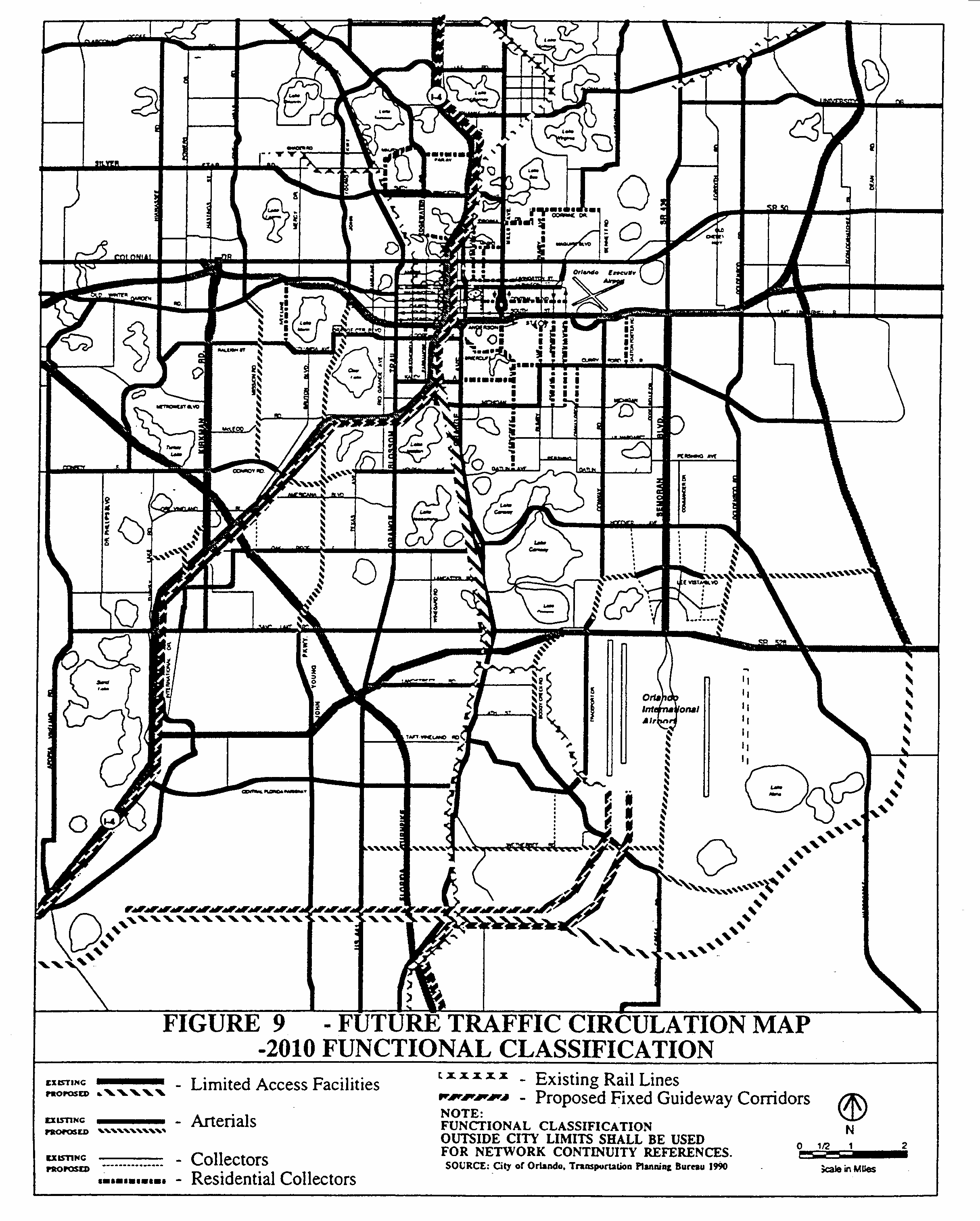
FIGURE 9 - FUTURE TRAFFIC CIRCULATION MAP
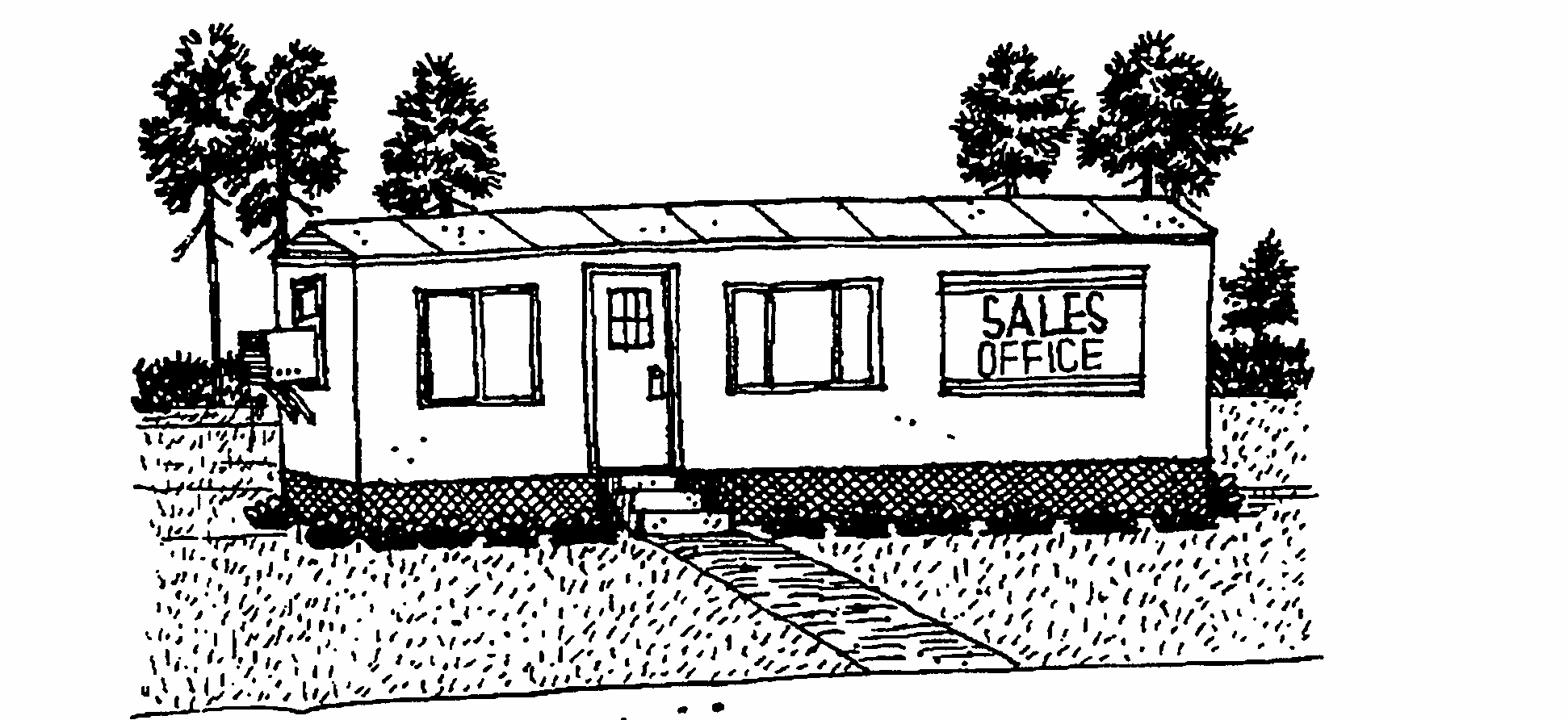
4N. TEMPORARY USE
Sec. 58.830.- General Requirements.
In addition to any applicable Zoning District and Use Regulations of Figures 1—2, all Temporary Uses allowed under this Chapter, whether as a principal use or an accessory use, shall conform to the following standards.
(Ord. of 9-16-1991, Doc. #25094)
Sec. 58.831. - Use Restrictions.
The temporary use must be a use which would ordinarily be allowed as a permanent use or which because of its limited duration or because adjacent land is undeveloped or developing, would not have a detrimental impact on surrounding land uses. A temporary use shall conform to all standards and procedures of this Chapter which would ordinarily apply to the use in the zoning district in which it is located.
Duration. The temporary use shall be permitted for the shortest practicable time period. No temporary use shall be permitted for more than six months in any 12-month period, unless otherwise authorized by City Council.
Termination. At the end of the period for which the temporary use was permitted, the use shall be discontinued and all temporary structures involved shall be removed and all permanent structures involved shall not be used except as permitted in the district. Failure to comply with this requirement shall be a violation of this Chapter, subject to the enforcement procedures of Chapter 5.
(Ord. of 9-16-1991, Doc. #25094; Ord. of 5-20-1996, Doc. #29361)
Sec. 58.832. - Sales Offices in Subdivisions.
No structure shall be used for office and sales purposes in an undeveloped or partially developed subdivision, unless and until the owner or proposed developer of such subdivision shall obtain a permit as provided in this Section.
Application and Submittal Requirements. In order to obtain a permit for the temporary use of a structure for office purposes to sell homes in an undeveloped or partially developed subdivision, the owner or proposed developer of the subdivision shall file with the Zoning Official an application, in writing, providing the following information:
(a)
Name of the owner of the temporary office.
(b)
Length of time the office is proposed for use in the subdivision which shall not extend beyond buildout of the subdivision. When the temporary office used to sell homes is discontinued, the building and building site shall be brought into compliance with all requirements of this code related to the permanent use of the building and building site.
(c)
Legal description of place where the structure is to be located.
(d)
Description of toilet and other sanitary facilities that will be available for the use of the occupants of the temporary office, and the written consent of the owner of such sanitation facilities granting the use thereof to the occupants of such temporary office. Such sanitation facilities shall be available at a location within three hundred feet of the temporary office.
(e)
Certification by the applicant that the office will not be used as a place of habitation or abode by any one or more persons, and that it will not be used or occupied for business or office purposes at any time except between the hours of 7:00 A.M. and 8:00 P.M.
(f)
If the office is to be located in a mobile home, the request shall be reviewed as a Conditional Use by the Municipal Planning Board. The applicant shall provide two photographs, not less than three inches by five inches in size, giving a view of each of the long sides of the structure in such a manner that the Municipal Planning Board and City officials may see a full view of the mobile home prior to its location upon the proposed site.
Inspection by Building Official. If the office is to be located in a mobile home upon proper filing of the application, the Building Official or designee is authorized to inspect the structure proposed for location in the subdivision to determine its condition and also to determine if its design and appearance will be in conformity with the neighborhood in which it is to be located; his report to be made to the Municipal Planning Board in order that they may act on the application as expeditiously as possible.
Time Limit on Permit. Any permit granted for the temporary office in a temporary structure shall provide that the structure shall be removed from the premises when the lots in the subdivision in which such structure is located are eighty-five per cent (85%) built upon.
Signs. Every temporary structure permitted under this Section shall be designated by proper lettering as being an office; however, such designation, including the name of the firm or subdivision, shall not be of such a size as to exceed the sign applicable to the sale of property in the zoning district in which it is located.
(Ord. of 9-16-1991, Doc. #25094; Ord. of 5-20-1996, Doc. #29361)
Sec. 58.833. - Tents.
No tent shall be erected unless and until the applicant shall obtain zoning approval as provided in this Section.
Application and Submittal Requirements. In order to obtain zoning approval for the use of a tent, the applicant shall file with the Zoning Official or his designee, in writing, the following information:
(a)
A completed tent assembly permit as required by Chapter 18 of the Code of the City of Orlando;
(b)
Length of time the tent is proposed for use on the site;
(c)
Written consent of the property owner to erect the tent;
(d)
Unless otherwise waived by the Zoning Official, a fully dimensioned site plan showing the location of the proposed tent, all required on-site parking, and all improvements on the site.
Time Limits on Permits. In no event shall tents be permitted longer than seven consecutive days or a maximum of seven days in any six (6) month period unless otherwise waived by the Zoning Official.
The seven (7) day period shall be extended at the request of the applicant up to a maximum of thirty days for sale of merchandise associated with Christmas, Independence Day, or sporting events.
Location of Tent. A tent shall comply with the principal building setbacks for the district in which it is located and with other locational requirements of this Section.
Outdoor Display of Merchandise. No outdoor display of merchandise shall be permitted in connection with a tent except as permitted by this section, and any outdoor display of merchandise so permitted shall not be situated so as to block access to any required parking space.
Public Benefit Use. The Planning Official shall be authorized to allow tents as a temporary use on a Public Benefit Use site where he finds that the use of the tent does not substantially impact surrounding properties according to the following standards:
(a)
Compatibility of times of activity;
(b)
Compatibility of uses;
(c)
Environmental effects on adjacent property; such as noise, vibration, air pollution, glare, and odor;
(d)
Effect of outdoor lighting;
(e)
Impact of signage;
(f)
Impact of traffic.
The Planning Official may prescribe appropriate conditions and safeguards including, but not limited to, the following: restrict the time an activity may take place; establish special yard requirements; establish restraints to minimize such environment effects as noise, vibration, air pollution, glare, and odor; designate the number and location of vehicle access points; limit the location and intensity of outdoor lighting or require its shielding; and, limit or otherwise designate the number, size, location, height, or lighting of signs. The determination of the Planning Official may be appealed to the Municipal Planning Board in accordance with Chapter 65, Part 2G.
Parking. No additional parking shall be required for a tent as a temporary accessory use on a commercial building site, however, the tent shall not be erected so as to block access to any required parking space.
(Ord. of 9-16-1991, Doc. #25094; Ord. of 4-20-1992, Doc. #25633; Ord. of 5-20-1996, Doc. #29361)
Sec. 58.834. - Reuse.
In the AC-3A zoning district, the Planning Director or designee may grant, for a specific time period and with appropriate conditions, the reuse of a building for wholesale/warehouse distribution or light manufacturing/processing provided that the building meets the following criteria:
(a)
The building was constructed prior to 1985.
(b)
The building was constructed for warehousing, wholesaling/distribution as illustrated by high ceilings, dock high loading ramps, majority of the square footage contains no heating or air conditioning.
(c)
In conjunction with the new use, no substantial enlargement or improvement shall be planned or approved.
(d)
If a request for a wholesale/warehouse use is denied by the Planning Director, then the use shall be considered a prohibited use pursuant to Figure 2. If a request for light manufacturing/processing is denied by the Planning Director, then the use shall be considered a conditional use pursuant to Figure 2.
(e)
Applicant shall execute a temporary use agreement acceptable to the Office of Legal Affairs containing at least the duration, type of use, owner and tenant (if appropriate) signatures, and any conditions.
(Ord. of 9-16-1991, Doc. #25094; Ord. of 7-26-1993, Doc. #26769)
Sec. 58.840.- General Requirements.
(a)
All communication towers shall be subject to these land development regulations (including Figures 2B and 2D in Chapter 58, Orlando City Code), the City of Orlando Engineering Standards Manual, Downtown Design Guidelines and Downtown Streetscape Design Guidelines as applicable. A communication tower is a permitted use in the General Industrial District and the Industrial Park District. Communication towers in other zoning districts may be permitted upon the granting of a Conditional Use Permit. Additionally, communication towers located inside:
(1)
a Historic Preservation Overlay District must obtain a certificate of appropriateness prior to the issuance of any permit for the construction, installation, or alteration of a communication tower or communication antenna;
(2)
the Downtown CRA and outside a Historic Preservation Overlay District must obtain a certificate of appearance approval;
(3)
the Traditional City (/T) Overlay Zoning District, a Special Plan (SP) Overlay Zoning District or a Planned Development (PD) Zoning District shall require Urban Design review as part of the Engineering permit process.
(Ord. of 9-16-1991, Doc. #25094; Ord. No. 2016-39, § 2, 4-18-2016, Doc. #1604181201)
Sec. 58.841. - Use Restrictions.
A tower that would be considered a communication tower but for the fact that it is in excess of three hundred (300) feet in height shall be subject to Conditional Use permit approval and shall comply with all other requirements of this chapter. For the purposes of implementing the off-site separation requirements provided in section 58.844(a), the maximum required separation distance for communication towers in excess of three hundred (300) feet in height shall be fifteen hundred (1,500) feet.
(Ord. of 9-16-1991, Doc. #25094; Ord. of 5-10-1999, § 1, Doc. #32068; Ord. No. 2016-39, § 2, 4-18-2016, Doc. #1604181201)
Sec. 58.842. - Exemptions.
Government-owned communication towers shall be exempted from the minimum separation distances set forth in sections 58.844(a) and (b), Orlando City Code, provided that those communication towers are used for a governmental purpose including, but not limited to the provision of fire safety, law enforcement, emergency management or emergency medical services telecommunications.
(Ord. of 9-16-1991, Doc. #25094; Ord. No. 2016-39, § 2, 4-18-2016, Doc. #1604181201)
Sec. 58.843. - Height Limit Exceptions.
Building-mounted communication towers shall be considered a part of the principal structure. As provided in Part 2A of this chapter, building-mounted and ground-mounted communication towers and antennas shall not exceed the height limitations prescribed by the Airport Zoning Regulations described in Part 9, Chapter 58, Orlando City Code.
(Ord. of 9-16-1991, Doc. #25094; Ord. No. 2017-48, § 4, 8-8-2017, Doc. #1708081202)
Sec. 58.844. - Separation and Site Development Standards.
(a)
Separation from Off-Site Uses. Communications Towers shall be located so as to comply with the following standards for the minimum separation distance from the closest required building setback line for any off-site principal use structure:
(b)
Separation Between Communication Towers. Communication towers shall be located so as to comply with the following standards for the minimum separation distance from existing communication towers and/or communication towers that have received a valid Conditional Use permit or building permit:
(c)
Measurement of Separation.
(1)
Separation distances shall be calculated and applied irrespective of jurisdictional boundaries.
(2)
Separation distances shall be measured from the Global Positioning System location of the existing, approved, or proposed communication tower.
(3)
Documentation shall be submitted with any request for Conditional Use permit or building permit approval to demonstrate conformance with the separation requirements. In addition, a certified survey showing the Global Positioning System location of the proposed communication tower shall be submitted with any application for Conditional Use permit or building permit approval to demonstrate conformance with setback requirements.
(d)
Anchor Location. All communication tower supports and peripheral anchors shall be located entirely within the boundaries of the development site and shall be set back from the development site perimeter a minimum distance of five (5) feet, or the minimum setback of the zoning district in which the communication tower is located, whichever is greater. All such supports and anchors shall also observe a minimum horizontal setback from any overhead utility lines of not less than ten (10) feet.
(e)
Equipment Buildings.
(1)
All communication tower equipment buildings and structures 100 square feet or less shall conform to the setback requirements for an accessory use. All communication tower equipment buildings and structures over 100 square feet shall conform to the zoning district setback requirements of Figures 1 and 2.
(2)
One unmanned communication equipment building or structure may be constructed for each communication service provider that co-locates one or more antennas on a communication tower site.
(f)
Fencing and Walls. A fence or masonry wall not less than eight (8) feet in height from finished grade shall be provided around the perimeter of all communication tower sites for ground-mounted communication towers. The decision to provide either a fence or a wall shall rest with the applicant. If a fence is used to enclose the site, the fence shall be constructed of chain link, wire mesh, metal picket, or an alternative material as approved by the zoning official. If a wall is used to enclose the site, the wall shall have a decorative finish of stucco, split faced block, brick, or an alternative material as approved by the zoning official. Access to the communication tower site shall be through a locked gate.
(g)
Landscaping. The following landscaping and buffering shall be required around the perimeter of communication tower sites, except that the zoning official may waive the required landscaping on one or more sides of the communication tower site or allow the placement of required landscaping elsewhere on the development site when the required landscape area is located adjacent to undevelopable lands or lands not in public view. Alternative landscaping may be approved by the zoning official. Landscaping shall be installed on the outside of the perimeter fence or wall. Existing vegetation shall be preserved to the maximum extent practicable and may be used as a substitute for or in supplement towards meeting the landscaping requirements, subject to approval by the zoning official.
(1)
If a fence is used to enclose the communication tower site, a hedge shall be planted in a plant bed at least five (5) feet in width along the outside perimeter of the entire fence, except at the gate or doorway. The plant species shall be selected from the following list:
(2)
If a wall is used to enclose the communication tower site, a hedge shall be planted in a plant bed at least five (5) feet in width along the outside perimeter of the entire wall, except at the gate or doorway. The plant species shall be selected from the following list:
(h)
Illumination. Communication towers shall not be artificially lighted except as required for public safety purposes, or by the Federal Aviation Administration (FAA).
(i)
Signage. No signage shall be allowed on any communication tower, except as required for public safety purposes, or by the Federal Communications Commission (FCC).
(Ord. of 9-16-1991, Doc. #25094; Ord. of 5-10-1999, § 2, Doc. #32068; Ord. No. 2016-39, § 2, 4-18-2016, Doc. #1604181201)
Sec. 58.845. - Communication Antennas.
Subject to section 58.852(f), Orlando City Code, any communication antenna which is not attached to a communication tower shall be a permitted ancillary use to any commercial, industrial, office, institutional, multifamily, or public utility structure, provided that:
(a)
The communication antenna does not exceed twenty (20) feet above the highest point of the structure;
(b)
The communication antenna complies with all applicable FCC and FAA regulations; and
(c)
The communication antenna complies with all applicable building codes.
(d)
The public utility structure is not located in a public right-of-way.
(Ord. of 9-16-1991, Doc. #25094; Ord. No. 2016-39, § 2, 4-18-2016, Doc. #1604181201)
Sec. 58.846. - Co-Location of Communication Antennas.
The modification or reconstruction of an existing communication tower to accommodate the co-location of two (2) or more communication antennas shall be permitted without new or additional Conditional Use permit approvals, provided that the communication antennas are owned or operated by more than one communication service provider and the co-location is accomplished in a manner consistent with the following requirements:
(a)
Type of Construction. The modification or reconstruction shall not change the communication tower from one type of tower to another, except that any type of communication tower may be reconstructed as a Monopole tower.
(b)
Height.
(1)
An existing communication tower may be modified or rebuilt to a taller height, not to exceed twenty (20) feet over the tower's existing height, to accommodate the co-location of one (1) or more additional communication antennas.
(2)
The height change referred to in subsection (b)(1) above may only occur one time per communication tower.
(3)
The additional height referred to in subsection (b)(1) above shall not require additional distance separation between towers or between towers and off-site uses as set forth in Section 58.844. The communication tower's premodification height shall be used to calculate such distance separations.
(c)
On-Site Location.
(1)
A communication tower which is being rebuilt to accommodate the co-location of one or more additional communication antennas may be moved within the development site up to fifty (50) feet from its existing location. A communication tower which is being rebuilt to accommodate the co-location of one or more additional communication antennas may be moved within the development site up to one hundred (100) feet from its existing location when camouflaging techniques approved by the City are incorporated into the design of the communication tower.
(2)
A communication tower relocated within a development site shall continue to be measured from the original tower location for purposes of calculating separation distances between communication towers pursuant to Section 58.844(b).
(3)
Any existing communication tower replaced by a new communication tower on the same development site shall be dismantled and removed from the development site within one hundred eighty (180) days of the date of the building permit for the new communication tower.
(Ord. of 9-16-1991, Doc. #25094; Ord. of 5-10-1999, § 3, Doc. #32068; Ord. No. 2016-39, § 2, 4-18-2016, Doc. #1604181201)
Sec. 58.847. - Waivers.
(a)
A waiver from the minimum separation distance to off-site uses set forth in section 58.844(a), Orlando City Code, may be approved (1) by City Council upon recommendation of the planning official, when the proposed communication tower is a permitted use, or (2) through the Conditional Use Permit process, in accordance with the procedure set forth in Chapter 65, Part 2D of this Code, when the proposed communication tower is a Conditional Use.
(b)
A waiver from the minimum separation distance between communication towers set forth in section 58.844(b), Orlando City Code, may be approved by the City Council, upon recommendation of the planning official, when the proposed communication tower is a permitted use, or through the Conditional Use Permit process, in accordance with the procedure set forth in Chapter 65, Part 2D of this Code, when the proposed communication tower is a Conditional Use, provided two (2) or more communication service providers agree to co-locate communication antennas on the same tower (co-location).
(c)
A waiver from the minimum separation distances set forth in sections 58.844(a) and (b), Orlando City Code, may be approved through the Conditional Use Permit process in accordance with the procedures set forth in Chapter 65, Part 2D, Orlando City Code when the proposed communication tower conforms to two (2) or more of the following criteria:
(1)
Camouflaging techniques approved by the City are incorporated into the design of the communication tower.
(2)
Two (2) or more communication service providers agree to co-locate communication antennas on the same tower.
(3)
The tower or towers within the required separation distance are all located in an industrial zoning district as a permitted use pursuant to Figure 2.
(4)
The proposed location will minimize the visual impact of the proposed communication tower because the bulk, height, use, or appearance of the adjacent structures and surrounding area will either screen the tower from view or provide a location where the proposed communication [tower] will be visually unobtrusive and unobjectionable.
(Ord. of 9-16-1991, Doc. #25094; Ord. of 5-10-1999, § 4, Doc. #32068; Ord. No. 2016-39, § 2, 4-18-2016, Doc. #1604181201)
Sec. 58.848. - Effect of Approval.
(a)
A communication tower that has received City approval in the form of either a Conditional Use permit or building permit shall be considered an existing communication tower as long as such approval is current and not expired.
(b)
Conditional Use permits for communication towers shall be valid for a period of one year and are not subject to renewal under Section 65.285 of this Code. An application for a new Conditional Use permit may not be filed until thirty (30) days after the expiration of a valid Conditional Use Permit for the same site.
(Ord. of 9-16-1991, Doc. #25094)
Sec. 58.849. - Abandonment.
In the event that the use of any communication tower has been discontinued for a period of one hundred eighty (180) consecutive days, the tower shall be deemed to be abandoned. Determination of the date of abandonment shall be made by the zoning official who shall have the right to request documentation and/or affidavits from the communication tower owner/operator regarding the active use of the tower. The owner/operator of the tower shall have one-hundred eighty (180) days from the date of the notice of the zoning official's determination of abandonment to either, (1) reactivate the use of the tower or transfer the tower to another owner/operator who makes actual use of the tower, or (2) dismantle and remove the tower. At the earlier of one hundred eighty-one (181) days from the date of the notice of the zoning official's determination of abandonment without reactivation, or upon completion of dismantling and removal, any conditional use and/or variance approval for the tower shall automatically expire.
(Ord. of 9-16-1991, Doc. #25094; Ord. No. 2016-39, § 2, 4-18-2016, Doc. #1604181201)
Sec. 58.849.1. - Business Tax Receipt Requirement.
The business tax receipt required for a communication tower shall specify that the receipt is for an accessory service use.
(Ord. of 9-16-1991, Doc. #25094; Ord. No. 2016-39, § 2, 4-18-2016, Doc. #1604181201)
Sec. 58.849.2. - Wireless Communication Facilities.
(a)
All wireless communication facilities shall be subject to the City's zoning and land use regulations, the City of Orlando Engineering Standards Manual, Downtown Design Guidelines and Downtown Streetscape Design Guidelines as applicable. Additionally, wireless communication facilities located inside:
(1)
a Historic Preservation Overlay District must obtain a certificate of appropriateness prior to the issuance of any permit for the construction, installation, or alteration of a wireless communication facility;
(2)
the Downtown CRA and outside a Historic District Overlay District must obtain a certificate of appearance approval;
(3)
the Traditional City (/T) Overlay Zoning District, a Special Plan (SP) Overlay Zoning District or a Planned Development (PD) Zoning District shall require Urban Design review as part of the Engineering permit process.
(b)
The location of wireless communication facilities on existing utility poles is strongly encouraged. Where multiple providers are seeking to locate in the same geographic area, every effort should be made to locate communication facilities on the same utility pole.
(Ord. No. 2016-39, § 2, 4-18-2016, Doc. #1604181201; Ord. No. 2018-32, § 2, 6-11-2018, Doc. #1806111203)
Sec. 58.849.3. - Use Restrictions and Approval Process.
(a)
Maximum Height. The maximum height of a wireless communication facility is ten (10) feet above the utility pole or structure upon which the wireless communication facility is to be collocated. Unless waived by the City, the height for a new utility pole is limited to the tallest existing utility pole as of July 1, 2017, located in the same right-of-way, other than a utility pole for which a waiver has previously been granted, measured from grade in place within 500 feet of the proposed location of the wireless communication facility. If there is no utility pole within 500 feet, the maximum height of a wireless communication facility is 50 feet. The maximum height of a wireless communication facility in a Historic Preservation overlay district is thirty-five (35) feet.
(b)
Administrative Review. Wireless communication facilities that comply with the height requirements in section (a)above, may be approved administratively through the right-of-way permitting process in Chapter 23, Orlando City Code. Applications for waivers to the height and design requirements shall be reviewed and approved, approved with conditions, or denied, by a city engineer or planning official letter of determination. In reviewing an application for a waiver, the planning official shall apply the standards of review provided for review of Conditional Use Permits as provided in Section 65.285, Orlando City Code. If the planning official approves the request, he or she may impose one or more of the conditions of development provided by Section 65.284, Orlando City Code. Conditions of development must be reasonably calculated to mitigate identifiable land use impacts of the installation of wireless communication facilities. Violations of development conditions constitute a violation of this section.
(c)
Conditional Use Permit. A Conditional Use Permit is required for wireless communication facilities that exceed the heights in sections 58.849.3(a) above. The maximum height permitted with a Conditional Use Permit is seventy-five (75) feet. Applications for Conditional Use Permits will be evaluated to ensure compliance with Section 58.844(a) and (b), Orlando City Code, and in accordance with the standards of review provided in Section 65.285, Orlando City Code.
(d)
Appeal of planning official's determination. Whenever the applicant disagrees with the decision of the planning official or any of the conditions imposed in the letter of determination, he or she may elect to appeal the planning official's determination to the Municipal Planning Board by filing a written Notice of Appeal within fifteen (15) days after receipt of the determination.
(e)
Modification of existing wireless communication facilities.
(1)
Removal or replacement of transmission equipment on an existing wireless communication facility shall be subject to no more than building permit review, and an administrative review for compliance with this section, provided the modification does not:
(a)
increase the height of the wireless communication facility by more than 10% or 10 feet whichever is greater.
(b)
involve installation of more than the standard number of new equipment cabinets for the technology involved, not to exceed four cabinets;
(c)
entail any excavation, closure of sidewalk, closure of vehicular lane, or deployment outside the current site of the wireless communication facility
(d)
defeat the existing concealment elements of the wireless communication facility; or
(e)
violate conditions associated with the prior approval of the wireless communication facility, unless the violation involves height, addition of cabinets, or new excavation.
(2)
This section does not apply to structures owned by the City or a historic building, structure, site, object, or district.
(Ord. No. 2016-39, § 2, 4-18-2016, Doc. #1604181201; Ord. No. 2018-32, § 2, 6-11-2018, Doc. #1806111203)
Sec. 58.849.4. - Location Requirements for Wireless Communication Facilities.
(a)
Wireless Communication Facilities may be installed and located inside the City's public rights-of-way as provided in Chapter 23 of the Code of the City of Orlando. All wireless communication facilities and accessory equipment shall be located to avoid any physical or visual obstruction to pedestrian or vehicular traffic, or to otherwise create safety hazards to pedestrians or motorists.
(b)
Where available, wireless communication facilities shall be located in the furniture zone or parkway strip. In no instance when a furniture zone or parkway strip is available, shall wireless communication facilities be located in the pedestrian clear zone. Wireless communications facilities in the furniture zone shall generally be placed in the center of the furniture zone or parkway strip and shall meet minimum Florida Department of Transportation ("FDOT") and City of Orlando Engineering Standards Manual setback requirements from the back-of-curb.
(c)
Where there is no furniture zone or parkway strip, wireless communication facilities shall maintain either a minimum six (6) foot wide pedestrian clear zone from back-of-curb to the inward edge of a wireless communication facility or a minimum five (5) foot wide pedestrian clear zone between the outward edge of a wireless communication facility and the back-of-sidewalk.
(d)
Wireless communication facilities shall be located at least ten (10) feet from a driveway and at least ten (10) feet from the edge of existing trees twelve (12) inches or greater in diameter.
(e)
Wireless communication facilities shall not be installed on a horizontal structure to which signal lights or other traffic control devices are attached. Further, wireless communication facilities shall be setback a minimum of twenty-five (25) feet from a traffic signal pole and setback a minimum of fifteen (15) feet from any pedestrian ramp.
(f)
Notwithstanding the above, the city engineer may require greater setbacks from these and other fixtures in the right-of-way to ensure proper sight lines for public safety purposes.
(g)
In residential zoning districts, wireless communication facilities must be located where the shared property line between two residential parcels intersects the right-of-way.
(h)
In nonresidential districts wireless communication facilities shall be located between tenant spaces or adjoining properties where their shared property lines intersect the right-of-way.
(i)
Unless required by the Orlando Police Department, Orlando Fire Department or other related governmental or emergency services provider, wireless communication facilities in the public right-of-way shall not include ground mounted equipment cabinets or battery back-up cabinets. If required, placement of such equipment shall comply with the requirements herein.
(Ord. No. 2016-39, § 2, 4-18-2016, Doc. #1604181201; Ord. No. 2018-32, § 2, 6-11-2018, Doc. #1806111203)
Editor's note— Ord. No. 2018-32, § 2, adopted June 11, 2018, Doc. # 1806111203 repealed § 58.849.4, which pertained to exemptions and derived from Ord. No. 2016-39, § 2, 4-18-2016, Doc. #1604181201; Ord. No. 2018-32, § 2, 6-11-2018, Doc. #1806111203. Subsequently § 2, renumbered §§ 58.849.5—58.849.9 as 58.849.4—58.849.8.
Sec. 58.849.5. - Design Requirements.
(a)
New and replacement utility poles that support wireless communication facilities shall match the style, design, and color of the utility poles in the surrounding area.
(b)
In the Downtown CRA, Historic Preservation Overlay District, Traditional City Overlay, Special Plan Overlay, or PD Zoning District where double or single acorn streetlights are the predominant fixture, utility poles that support wireless communication facilities shall match the style, design and color of the acorn streetlight poles.
(c)
Equipment boxes for wireless communication facilities must be located in areas with existing foliage or another aesthetic feature to obscure the view of the equipment box. Additional plantings may be provided to meet this requirement.
(d)
Wireless communication facilities mounted to the exterior of a pole shall be a minimum of twelve (12) feet above finished grade, excluding the electric meter and disconnect switch. Individual pole mounted equipment components shall be no more than fifteen (15) cubic feet in area. The external finish of the equipment cases shall generally match the color of the utility pole. All mounting and banding fixtures shall also match the color of the utility pole.
(e)
No exposed wiring or conduit is permitted. Above the electric meter and disconnect switch, all conduit and wiring shall be located inside the pole.
(f)
Electric meters and disconnect switches shall be located as required by the Orlando Utilities Commission. Electric meters and disconnect switches shall not be located on the side of the pole that faces the sidewalk. Conduit leading to the electric meter box and disconnect switch shall generally match the color of the utility pole.
(g)
The grounding rod may not extend above the top of sidewalk and must be placed in a pull box, and the ground wire between the pole and ground rod must be inside an underground conduit.
(h)
All pull boxes must be vehicle load bearing, comply with FDOT Standard specification 635 and be listed on the FDOT Approved Products List. A concrete apron must be installed around all pull boxes not located in the sidewalk. No new pull boxes may be located in pedestrian ramps.
(Ord. No. 2016-39, § 2, 4-18-2016, Doc. #1604181201; Ord. No. 2018-32, § 2, 6-11-2018, Doc. #1806111203)
Sec. 58.849.6. - Waivers.
(a)
The planning official has the authority to grant a waiver to increase the maximum height of a wireless communication facility up to ten (10) percent if the increased height:
(1)
accommodates the co-location of antennas from more than one wireless provider; or
(2)
improves transmission impacted by surrounding buildings or topography, provided that there is adequate tree canopy to mitigate for the increase in height.
(b)
Waivers above ten (10) percent may be granted through the Conditional Use Permit process.
(c)
The planning official has the authority to waive or reduce the design requirements for wireless communication facilities when the planning official finds the intent of this Part is better served by such waiver.
(d)
The city engineer, in coordination with the planning official have the authority to waive or reduce the location requirements for wireless communication facilities when the city engineer and planning official find the intent of this Part is better served by such waiver.
(Ord. No. 2016-39, § 2, 4-18-2016, Doc. #1604181201; Ord. No. 2018-32, § 2, 6-11-2018, Doc. #1806111203)
Sec. 58.849.7. - Wireless Facilities in Existence on the Date of Adoption of this Ordinance.
Wireless communication facilities that were legally permitted on or before the date this Ordinance was enacted shall be considered a permitted and lawful use. Installations that do not comply with the requirements of this section shall be considered a legal non-conforming use.
(Ord. No. 2016-39, § 2, 4-18-2016, Doc. #1604181201; Ord. No. 2018-32, § 2, 6-11-2018, Doc. #1806111203)
Sec. 58.849.8. - Abandonment.
The abandonment of wireless communication facilities shall be managed in accordance with the procedures set forth in Section 23.21, Orlando City Code.
(Ord. No. 2016-39, § 2, 4-18-2016, Doc. #1604181201; Ord. No. 2018-32, § 2, 6-11-2018, Doc. #1806111203)
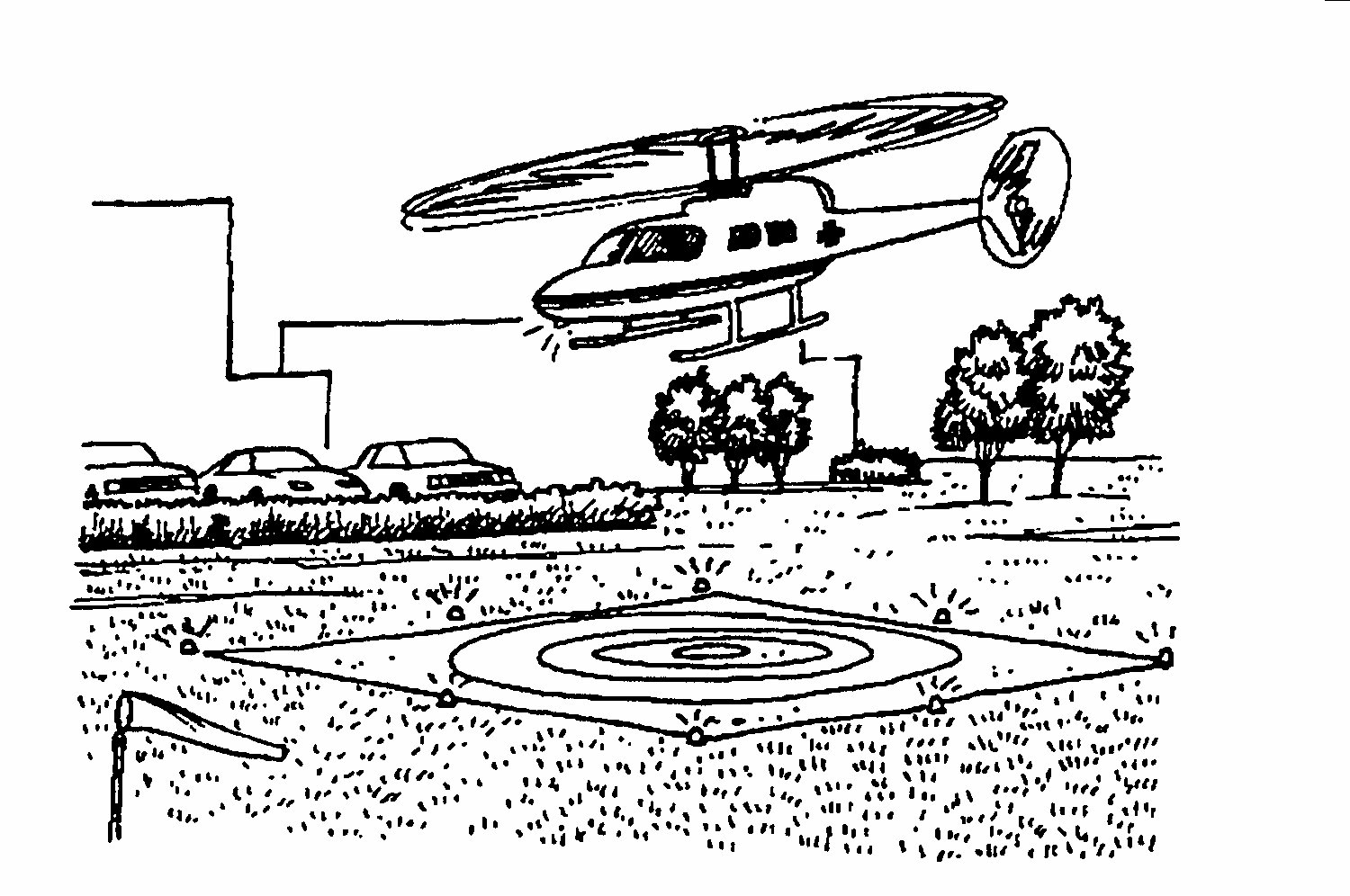
Sec. 58.850.- Design and Specification of Vertiports.
The classifications of vertiports defined in Chapter 8 of this City Code as Class I, II and III and the subclassifications thereof as Subclass A, B and C shall be deemed to be the same respective classifications and subclassifications as are contained in the Federal Aviation Administration (FAA) booklet entitled "Heliport Design Guide," AC 150/53901A, dated November 5, 1969. All recommendations set forth therein relating to the location, design, construction, visual markings, and fire protection for such vertiports shall be the requirements of this Chapter; provided, however, that a Variance therefrom may be granted in accordance with Chapter 65, Part 2J if the Federal Aviation Administration advises the City that such variance will not render such vertiports unsafe.
(Ord. of 9-16-1991, Doc. #25094)
Sec. 58.851. - Standards for the Approval of Vertiports.
No permit for any vertiport shall be approved unless the reviewing authority finds that the following standards have been met:
Feasibility. That the proposed vertiport is operationally feasible.
Safety. That the FAA considers the proposed vertiport to be safe for the conduct of the type and volume of aeronautical activity proposed to be conducted thereon.
Location and Specification. That the location and the plans and specifications of the proposed vertiport conform to the requirements of Section 58.850.
Frequency. One landing and/or take-off in a twelve (12) month period shall not constitute a vertiport.
Fire Prevention. That such plans and specifications conform to all other requirements of law relating to construction and fire prevention.
Air Turbulence. That, if the proposed vertiport is to be elevated on a building or other structure, that air turbulence which may be created by rotorcraft landing and taking off there from will not cause dust, sand, water or other material to fall on any property other than that controlled by the applicant.
Need. That the applicant has a bona fide need for such vertiport and that the public welfare will not be adversely affected by the establishment and operation of the vertiport taking into account the following factors:
(a)
The applicant's need to establish the vertiport;
(b)
The availability of other vertiports which the applicant could use in lieu of the proposed vertiport and their proximity to the site selected for such vertiport;
(c)
The proximity of the vertiport to areas which could be used as emergency landing areas in the event of mechanical malfunction of rotorcraft using such vertiport;
(d)
The proximity of the vertiport to fire stations;
(e)
The proximity of the vertiport to tall buildings other navigation hazards and existing uses which would present a public safety hazard in case of an aircraft crash;
(f)
The proximity of the vertiport to residential areas, nursing homes, assisted living facilities and schools;
(g)
The proximity of the vertiport to airports and to the flight patterns of aircraft using such airports;
(h)
The benefits to be derived by the public from the establishment and operation of the vertiport, if any;
(i)
The nuisance effect, if any, of the vertiport and its associated rotorcraft operations on vehicular traffic;
(j)
The environmental impact of the vertiport, if any, including, but not limited to, noise pollution; and
(k)
The proximity of the vertiport to storage facilities for combustible or explosive materials or to other hazards.
(Ord. of 9-16-1991, Doc. #25094; Ord. of 4-20-1992, Doc. #25633; Ord. of 1-24-2005, § 10, Doc. #050124909)
Sec. 58.852. - Procedural Requirements.
GOAA Review and Comment. Whenever any application to permit a vertiport is received by the Planning and Development Department, a copy of such application shall be forwarded to the Executive Director of the Greater Orlando Aviation Authority (GOAA). Within 60 days after the filing of the application, the GOAA shall review the application and shall advise the City of its opinion respecting the desirability or non-desirability of issuing the requested permit, together with the reasons for its opinion.
Certificate of Occupancy. No Certificate of Occupancy for any vertiport shall be approved unless the Building Official finds that the following conditions are met:
(a)
The vertiport has been completed in conformity with the plans and specifications contained in the original permit;
(b)
The applicant has delivered satisfactory evidence that the insurance required by Chapter 8, Section 8.27 is in force and effect; and
(c)
The annual permit fee required by Chapter 8, Section 8.28 has been paid.
(Ord. of 9-16-1991, Doc. #25094)
Sec. 58.853. - Submittals.
In addition to any other submittals required by this Chapter, each application to permit a vertiport shall include the following:
(a)
The name and address of the applicant;
(b)
The type, class and subclass of the vertiport proposed to be established;
(c)
Description of the rotorcraft support facility proposed to be constructed, if any;
(d)
A study prepared by a recognized aviation consultant showing that the proposed vertiport is operationally feasible;
(e)
A map showing the location of the proposed vertiport and the proposed approach zones, lateral clearance zones and emergency landing areas referable thereto;
(f)
Evidence that a notice of landing area proposal has been filed with the FAA and that the FAA considers the proposed vertiport safe for the conduct of aviation activities proposed to be conducted thereon;
(g)
A complete set of plans and specifications for the proposed vertiport, prepared in conformity with the provisions of Section 58.850 of this Part; and
(h)
Statement by the applicant setting forth the estimated number of monthly rotorcraft landings proposed to be conducted thereon.
Failure to provide the appropriate information, as outlined above, will result in a finding that the application is incomplete, and the permit will be withheld until such time as the applicant provides the required information.
(Ord. of 9-16-1991, Doc. #25094; Ord. of 4-20-1992, Doc. #25633)
Sec. 58.860.- General Requirements.
In addition to any applicable Zoning District and Use Regulations of Figures 1 and 2, the following requirements shall apply to indoor shooting ranges.
(Ord. of 9-16-1991, Doc. #25094; Ord. of 6-20-1994, Doc. #27634)
Sec. 58.861. - Location and Distance.
a.
Indoor shooting ranges shall be located more than five hundred (500) feet from any adjoining residential district boundary line or another indoor or outdoor shooting range.
b.
The location and distance requirements shall not apply to government owned and operated shooting ranges, restricted to use by law enforcement officers.
c.
The applicant shall demonstrate that the location and operation of the shooting range will not pose a threat to the health and safety of the citizens in the surrounding area.
(Ord. of 9-16-1991, Doc. #25094; Ord. of 6-20-1994, Doc. #27634)
Sec. 58.862. - Site Plan.
a.
The site plan and structure shall incorporate, at a minimum, the standards for shooting range construction in accordance with Section 13.38 of the Building Code of the City of Orlando.
b.
Shooting ranges shall not be allowed as accessory uses to gun stores unless shooting ranges are allowed in that district.
c.
Parking for shooting range customers shall be provided on-site. The parking standards for shooting ranges shall be one (1) parking space per shooting lane, plus the requirements for retail use applied to the portions of the operation not dedicated to the shooting lanes.
(Ord. of 9-16-1991, Doc. #25094; Ord. of 6-20-1994, Doc. #27634)
Sec. 58.863. - Nuisance.
Shooting ranges shall not create a nuisance, including, but not limited to, high noise levels, pollution or other detrimental effects on the environment.
(Ord. of 9-16-1991, Doc. #25094; Ord. of 6-20-1994, Doc. #27634)
Sec. 58.864. - Nonconforming Uses.
Any shooting range which is nonconforming to the provisions of this Part and Chapter, including any facility which is nonconforming to the distance requirements of this Part, shall be subject to the nonconforming use provisions of Chapter 58, Part 7.
(Ord. of 9-16-1991, Doc. #25094; Ord. of 6-20-1994, Doc. #27634)
Sec. 58.873.- General Requirements.
(a)
Zoning use. For purposes of the Land Development Code, including the tables of allowable, prohibited, and conditional uses (Figures 2A.LDC—2D.LDC, Chapter 58, Orlando City Code), medical marijuana dispensaries are hereby categorized as a light retailing use as defined in section 66.200, Orlando City Code. In the Southeast Orlando Sector Plan area, medical marijuana dispensaries must comply with the land development regulations applicable to the Village Center land use category.
(b)
Dispensaries. Medical marijuana dispensaries are hereby prohibited in the City unless the dispensary is approved by the Florida Department of Health pursuant to applicable state laws and regulations.
(Ord. No. 2017-25, § 1, 6-5-2017, Doc. #1706051201; Ord. No. 2020-15, § 1, 4-13-2020, Doc. #2004131207)
Sec. 58.874. - Special Location Regulations.
(a)
Use separations. In addition to complying with the land development regulations of the table of allowable, prohibited, and conditional uses, medical marijuana dispensaries are prohibited within:
1.
200' of a residential zoning district; and
2.
200' of a residential land use in the Southeast Orlando Sector Plan area; and
3.
1,000' of a religious institution; and
4.
1,000' of a school; and
5.
1,000' of a park; and
6.
1,000' of a child day care center; and
7.
1,000' of a treatment and recovery facility; and
8.
5,280' of another medical marijuana dispensary.
(b)
Hospital exception. Notwithstanding subsection 58.874(a), medical marijuana dispensaries may locate, operate, and undertake substantial improvements and enlargements if the dispensary is an accessory use to a hospital with at least 100 beds. To be an "accessory use" for purposes of this subsection, the dispensary must be located within the hospital or on land owned or operated by the hospital (or a closely-related corporate entity) and within 1,000' of the parcel of land on which the hospital is located.
(c)
Neighboring jurisdictions. The use separation regulations of subsection 58.874(a) apply only to such uses located in the City of Orlando, except that medical marijuana dispensaries in the City are prohibited within 200' of a residential zoning district located in unincorporated Orange County or a neighboring municipality and within 5,280' of another medical marijuana dispensary located in unincorporated Orange County or a neighboring municipality. The planning official or permitting official should, upon receipt of any application proposing a medical marijuana dispensary within 1,000' of unincorporated Orange County or a neighboring municipality, provide written notice of the application to the planning or permitting official of the applicable neighboring jurisdiction. This notice is a courtesy notice and failure to make such notice shall not invalidate any approvals issued by the City.
(d)
Method of measuring distance. For the purposes of this Part, distance shall be measured by the shortest, straight line between property or district boundaries.
(Ord. No. 2017-25, § 1, 6-5-2017, Doc. #1706051201)
Sec. 58.875. - Special Operational Regulations.
(a)
Security system. To ensure the safety and security of medical marijuana dispensaries, and to maintain adequate controls against the diversion, theft, and loss of low-THC cannabis, medical cannabis, and cannabis delivery devices, F.S. § 381.986, and Chapter 64-4, Florida Administrative Code, require dispensing organizations to implement and maintain specified security systems and techniques. The security plan approved by the Florida Department of Health for the dispensary must be filed with the police chief before the dispensary opens for business and any changes to the security plan must be filed with the police chief within seven days of approval by the Florida Department of Health. It is unlawful and a violation of this subsection to operate, own, or control a medical marijuana dispensary except in compliance with the applicable security plan approved by the Florida Department of Health.
(b)
Site plan and appearance approval. Before a certificate of occupancy or certificate of completion is issued by the permitting official (whichever is applicable, and if neither are applicable then before the dispensary opens for business) for a medical marijuana dispensary, the dispensary must be reviewed and approved by planning official determination. The planning official determination must review and approve the proposed site for zoning use compliance, for compliance with applicable site development standards (including parking and pedestrian and automobile circulation), and for compliance with applicable appearance and architectural standards (including signs).
(c)
Outdoor lighting. Medical marijuana dispensaries are hereby made exempt from Part 2M, Chapter 63, Orlando City Code, but only to the extent minimally necessary to achieve compliance with state laws and regulations relating to sufficient outdoor lighting.
(d)
Hours of operation. Medical marijuana dispensaries may not dispense low-THC cannabis, medical cannabis, or cannabis delivery devices between the hours of 7:00 p.m. and 8:00 a.m. This subsection applies only to the onsite dispensing of low-THC cannabis, medical cannabis, or cannabis delivery devices, and does not purport to regulate the delivery of low-THC cannabis, medical cannabis, or cannabis delivery devices, nor does this subsection prohibit the use of the dispensary between the hours of 7:00 p.m. and 8:00 a.m. for business purposes other than the dispensing of low-THC cannabis, medical cannabis, or cannabis delivery devices.
(e)
Drive-through facilities prohibited. Drive-through facilities are prohibited at medical marijuana dispensaries.
(Ord. No. 2017-25, § 1, 6-5-2017, Doc. #1706051201; Ord. No. 2024-18, § 3, 5-13-2024, Doc. #2405131203)
Sec. 58.876. - Definitions.
For the purposes of this Part, the following words, terms, and phrases (and their derivations) have the meanings provided hereinafter, except where the context clearly requires otherwise.
(a)
"Cannabis delivery device" has the same meaning provided at section 381.986(1)(a), Florida Statutes.
(b)
"Dispensing organization" has the same meaning provided at section 381.986(1)(b), Florida Statutes.
(c)
"Low-THC cannabis" has the same meaning provided at section 381.986(1)(e), Florida Statutes.
(d)
"Medical cannabis" has the same meaning provided at section 381.986(1)(f), Florida Statutes.
(e)
"Medical marijuana cultivation facility" has the same meaning as "cultivation facility" as provided at Rule 64-4.001(11)(a), Florida Administrative Code, and includes any area approved by the Florida Department of Health for the cultivation of medical cannabis.
(f)
"Medical marijuana processing facility" has the same meaning as "processing facility" as provided at Rule 64-4.001(11)(b), Florida Administrative Code, and includes any area approved by the Florida Department of Health for the processing of medical cannabis.
(g)
"Medical marijuana dispensary" has the same meaning as "dispensing facility" as provided at Rule 64-4.001(11)(c), Florida Administrative Code, and includes any area approved by the Florida Department of Health for the dispensation of medical cannabis.
(h)
"Park" means all public and private property specifically designated as being used for principally recreational purposes.
(Ord. No. 2017-25, § 1, 6-15-2017, Doc. #1706051201)
Sec. 58.895.- Regulation of Kennels.
Kennels shall be permitted only in zoning categories allowing intensive service uses as specified in Section 58.110, Figures 2B.LDC and 2D.LDC of this Code.
(Ord. of 1-24-2005, § 10, Doc. #050124909)
Sec. 58.896. - Regulation of Pet Boarding Facilities.
(a)
Pet boarding facilities shall be permitted only as an accessory use to a permitted primary pet-oriented use. If the primary pet-oriented use requires a Conditional Use Permit, the accessory pet boarding facility must be specifically allowed as part of that conditional use approval.
(b)
All pet boarding facilities shall:
(1)
Be established only in conjunction with another pet-oriented use, including a veterinary clinic, grooming parlor, pet-oriented retail shop or pet day care facility.
(2)
Board all animals within a fully enclosed structure designed to limit noise and odor. No pet boarding facility shall generate noise in excess of the Class A Standards set forth in Chapter 42 of this Code. No pet boarding facility shall generate off-site offensive odors.
(3)
Provide boarding for no more than one (1) animal per ten (10) square feet of indoor boarding area.
(4)
Utilize a licensed pet waste disposal company or State approved pet waste disposal system for the disposal of all pet waste.
(c)
A pet boarding facility may include an attached outdoor exercise yard for animal exercise and recreation pursuant to the following regulations:
(1)
Such yard shall be permitted if located at least 500 feet from any residential zoning district or any residential area of a planned development. Such yard may be located less than 500 feet from a residential zoning district or a residential area of a planned development pursuant to a Conditional Use Permit if it is demonstrated that the lesser separation distance will not adversely affect surrounding properties.
(2)
Such yard shall be fully enclosed by a masonry wall or wooden fence at least six (6) feet in height.
(3)
No animal shall be permitted in such yard between the hours of 7:00 p.m. and 7:00 a.m.
(4)
No more than four (4) animals shall be permitted in the exercise yard concurrently.
(5)
No animal may be kept in the yard for more than two (2) hours per day.
(6)
The yard shall be fully enclosed by a masonry or wooden fence of at least six (6) feet in height.
(7)
Yard waste, including solid excrement, shall be removed daily.
(Ord. of 1-24-2005, § 11, Doc. #050124909)
Sec. 58.897.- Purpose and Intent; Program Created; Definitions.
(a)
The purpose and intent of this part is to implement the pilot program established by section 509.223, Florida Statutes (2006), by permitting public food service establishments within the City of Orlando, Florida, subject to the terms and contained herein, to become exempt from certain portions of the United States Food and Drug Administration Food Code, as amended from time to time, and as adopted by the State of Florida Division of Hotels and Restaurants of the Department of Business and Professional Regulation, in order to allow patrons' dogs within certain designated outdoor portions of their respective establishments.
(b)
Pursuant to section 509.233(2), Florida Statutes, there is hereby created in the City of Orlando, Florida, a local exemption procedure to certain provisions of the United States Food and Drug Administration Food Code, as amended from time to time, and as adopted by the State of Florida Division of Hotels and Restaurants of the Department of Business and Professional Regulation, in order to allow patrons' dogs within certain designated outdoor portions of public food service establishments, which exemption procedure may be known as the City of Orlando Dog Friendly Dining Program.
(c)
As used in Part 4U, hereof:
a.
"Division" means the Division of Hotels and Restaurants of the State of Florida Department of Business and Professional Regulation.
b.
"Dog" means an animal of the subspecies Canis lupus familiaris.
c.
"Outdoor area" means an area adjacent to a public food service establishment that is predominantly or totally free of any physical barrier on all sides and above.
d.
"Patron" has the meaning given to "guest" by section 509.013, Florida Statutes.
e.
"Public food service establishment" has the meaning given it by section 509.013, Florida Statutes.
f.
"Zoning Official" has the meanings given it by Chapters 65 and 66, Orlando City Code.
(Ord. of 10-16-2006, § 2, Doc. #0610161010)
Sec. 58.898. - Permit Required; Submittals.
(a)
In order to protect the health, safety, and general welfare of the public, a public food service establishment is prohibited from having any dog on its premises unless it possesses a valid permit issued in accordance with this part.
(b)
Applications for a permit under this part shall be made to the Zoning Official, on a form provided for such purpose by the Zoning Official, and shall include, along with any other such information deemed reasonably necessary by the Zoning Official in order to implement and enforce the provisions of this part, the following:
a.
The name, location, and mailing address of the subject public food service establishment.
b.
The name, mailing location, and telephone contact information of the permit applicant.
c.
A diagram and description of the outdoor area to be designated as available to patrons' dogs, including dimensions of the designated area; a depiction of the number and placement of tables, chairs, and restaurant equipment, if any; the entryways and exits to the designated outdoor area; the boundaries of the designated area and of any other areas of outdoor dining not available for patrons' dogs; any fences or other barriers; surrounding property lines and public rights-of-way, including sidewalks and common pathways; and such other information reasonably required by the Zoning Official. The diagram or plan shall be accurate and to scale but need not be prepared by a licensed design professional.
d.
A description of the days of the week and hours of operation that patrons' dogs will be permitted in the designated outdoor area.
e.
All application materials shall contain the appropriate division issued license number for the subject public food service establishment.
(Ord. of 10-16-2006, § 2, Doc. #0610161010)
Sec. 58.899. - General Regulations; Cooperation; Enforcement.
(a)
In order to protect the health, safety, and general welfare of the public, and pursuant to section 509.233, Florida Statutes, all permits issued pursuant to this part are subject to the following requirements:
a.
All public food service establishment employees shall wash their hands promptly after touching, petting, or otherwise handling any dog. Employees shall be prohibited from touching, petting, or otherwise handling any dog while serving food or beverages or handling tableware or before entering other parts of the public food service establishment.
b.
Patrons in a designated outdoor area shall be advised that they should wash their hands before eating. Waterless hand sanitizer shall be provided at all tables in the designated outdoor area.
c.
Employees and patrons shall be instructed that they shall not allow dogs to come into contact with serving dishes, utensils, tableware, linens, paper products, or any other items involved in food service operations.
d.
Patrons shall keep their dogs on a leash at all times and shall keep their dogs under reasonable control.
e.
Dogs shall not be allowed on chairs, tables, or other furnishings.
f.
All table and chair surfaces shall be cleaned and sanitized with an approved product between seating of patrons. Spilled food and drink shall be removed from the floor or ground between seating of patrons.
g.
Accidents involving dog waste shall be cleaned immediately and the area sanitized with an approved product. A kit with the appropriate materials for this purpose shall be kept near the designated outdoor area.
h.
At least one sign reminding employees of the applicable rules, including those contained in this part, and those additional rules and regulations, if any, included as further conditions of the permit by the Zoning Official, shall be posted in a conspicuous location frequented by employees within the public food service establishment. The mandatory sign shall be not less than eight and one-half inches in width and eleven inches in height (8½ × 11) and printed in easily legible typeface of not less than twenty (20) point font size.
i.
At least one sign reminding patrons of the applicable rules, including those contained in this part, and those additional rules and regulations, if any, included as further conditions of the permit by the Zoning Official, shall be posted in a conspicuous location within the designated outdoor portion of the public food service establishment. The mandatory sign shall be not less than eight and one-half inches in width and eleven inches in height (8½ × 11) and printed in easily legible typeface of not less than twenty (20) point font size.
j.
At all times while the designated outdoor portion of the public food service establishment is available to patrons and their dogs, at least one sign shall be posted in a conspicuous and public location near the entrance to the designated outdoor portion of the public food service establishment, the purpose of which shall be to place patrons on notice that the designated outdoor portion of the public food service establishment is currently available to patrons accompanied by their dog or dogs. The mandatory sign shall be not less than eight and one-half inches in width and eleven inches in height (8½ × 11) and printed in easily legible typeface of not less than twenty (20) point font size.
k.
Dogs shall not be permitted to travel through indoor or undesignated outdoor portions of the public food service establishment, and ingress and egress to the designated outdoor portions of the public food service establishment shall not require entrance into or passage through any indoor or undesignated outdoor portion of the public food service establishment.
(b)
A permit issued pursuant to this part shall not be transferred to a subsequent owner upon the sale or transfer of a public food service establishment, but shall expire automatically upon such sale or transfer. The subsequent owner shall be required to reapply for a permit pursuant to this part if such owner wishes to continue to accommodate patrons' dogs.
(c)
In accordance with section 509.233(6), Florida Statutes, the Zoning Official shall accept and document complaints related to the Dog Friendly Dining Program within the City of Orlando, Florida, and shall timely report to the division all such complaints and the City's enforcement response to such complaint. The Zoning Official shall also timely provide the division with a copy of all approved applications and permits issued pursuant to this part.
(d)
Any public food service establishment that fails to comply with the requirements of this part shall be guilty of violating this part of the Orlando City Code and shall be subject to any and all enforcement proceedings consistent with the applicable provisions of the Orlando City Code and general law. Each day a violation exists shall constitute a distinct and separate offense.
(Ord. of 10-16-2006, § 2, Doc. #0610161010)

