
Orlando City Zoning Code
PART 9
- AIRPORT ZONING REGULATIONS
Sec. 58.1210.- Purpose of Regulations.
The purpose of these Airport Zoning Regulations (hereinafter "Regulations"), is as follows:
a)
To promote the maximum safety of aircraft using the Airport;
b)
To promote the maximum safety of persons and property located near the Airport;
c)
To promote the full utility of the Airport to ensure the welfare and convenience of the citizens and visitors of the City;
d)
To provide limits on the height of structures and objects of natural growth within the 14 CFR Part 77 surface primary, horizontal, conical, approach and transitional, Terminal Instrument Procedures ("TERPS") surfaces, and other imaginary airport airspace surfaces (One Engine Inoperative-Obstacle Identification Surfaces as defined in AC 120-91 and ICAO Annex 6 ["OEI"], Threshold Siting Surface ["TSS"]), as defined herein, to ensure proper and sound development of the areas within these surfaces;
e)
To discourage new land uses, activities or construction incompatible with existing and planned airport operations or public health, safety and welfare; and
f)
To provide administrative procedures for the efficient and uniform review of land development proposals in the areas surrounding the Airport.
(Ord. No. 2017-48, § 5, 8-8-2017, Doc. #1708081202)
Sec. 58.1211. - Abbreviations.
For the purpose of these Regulations, these abbreviations have the following meanings:
a)
AGL. Above ground level.
b)
ALP. Airport Layout Plan.
c)
AMSL. Above mean sea level.
d)
CFR. Code of Federal Regulations.
e)
FAA. Federal Aviation Administration.
f)
FCC. Federal Communications Commission.
g)
FDOT. Florida Department of Transportation.
h)
GOAA. Greater Orlando Aviation Authority.
(Ord. No. 2017-48, § 5, 8-8-2017, Doc. #1708081202)
Sec. 58.1212. - Rules of Interpretation.
Unless the natural construction of the wording indicates otherwise, all words used in the present tense include the future tense; all words in the plural number include the singular number; all words in the singular number include the plural number and all words of the masculine gender include correlative words of the feminine and neuter genders. Any reference herein to a rule, statute, regulation or other legal requirement or form shall also include any modification, amendment, alteration or replacement thereof subsequent to the effective date hereof.
(Ord. No. 2017-48, § 5, 8-8-2017, Doc. #1708081202)
Sec. 58.1213. - Zones and Heights Requiring Airport Height Zoning Permit.
In order to regulate the height of permanent and temporary structures and objects of natural growth, this section establishes permitting requirements in certain zones based on height. These zones, and the heights established for each zone, provide for the independent review by the City of the height of land development proposals over which the City may have jurisdiction to regulate, as well as objects of natural growth. No structure or object of natural growth that would exceed two hundred (200) feet AGL, any federal obstruction standards or the height for the zone in which it is located or proposed to be located may be developed, constructed, established, enlarged, substantially altered or repaired, approved for construction, issued a natural resources permit or building permit, or planted, allowed to grow or be replanted, unless either the Airport Zoning Director has issued an airport height zoning permit in accordance with these Regulations. The zones and heights are depicted on Figure 10-Airport Height Zoning Map.
(Ord. No. 2017-48, § 5, 8-8-2017, Doc. #1708081202)
Editor's note— The user's attention is directed to the end of Part 9 for Figure 10-Airport Height Zoning Map.
Sec. 58.1214. - Airport Height Zoning Permit Application Procedure.
A request for an airport height zoning permit may be initiated by filing with the Airport Zoning Director a completed application for an airport height zoning permit on a form prescribed by the City including a copy of the Form 7460-1 and/or FAA's online OE/AAA website tool, Notice of Proposed Construction or Alteration filed with the FAA, as required pursuant to 14 CFR §§ 77.5, 77.7, 77.9 and 77.11. An FAA airspace review determination resulting from the submittal of a Notice of Proposed Construction or Alteration does not preclude the requirement to obtain an airport height zoning permit from the City. An application for an airport height zoning permit must contain a site survey, with an FAA accuracy code of 1A, which certifies the site coordinates and elevations with an accuracy of ± 20-feet horizontal and ± 3-feet vertical (all site coordinates must be based on North American Datum of 1983 and National Geodetic Vertical Datum of 1988); site plans; drawings and other data as may be necessary to enable the Airport Zoning Director to determine whether or not the proposal will comply with these Regulations. A separate application for an airport height zoning permit must be submitted for permanent or temporary derricks, draglines, cranes and other boom-equipped machinery to be used during construction or installation at heights greater than the height of proposed structure. Applications for an airport height zoning permit must be signed by the owner or an authorized agent of the owner.
(Ord. No. 2017-48, § 5, 8-8-2017, Doc. #1708081202)
Sec. 58.1215. - Pre-Application Conference.
Prior to submittal of any application for an airport height zoning permit, a prospective applicant must request a pre-application conference with the Airport Zoning Director and may include the Authority Planning Director. The pre-application conference is to advise the applicant of the information needed for submittal and the standards and other requirements so that issues can be identified and costly modifications avoided. Information provided as a result of the conference is for conceptual purposes only, is given solely as a means to assist the applicant, and does not take the place of the formal application review process.
(Ord. No. 2017-48, § 5, 8-8-2017, Doc. #1708081202)
Sec. 58.1216. - Review of Airport Height Zoning Permit Application.
Before an application for an airport height zoning permit will be considered, the applicant must submit to the Airport Zoning Director a copy of the final airspace review determination by the FAA of the applicant's Notice of Proposed Construction or Alteration. Upon receipt of a completed application and copy of the final determination, the Airport Zoning Director shall forward same to the Authority Planning Director and to the FDOT Aviation Office, via certified mail return receipt requested or via a delivery service that provides a receipt evidencing delivery. FDOT will review the application within fifteen (15) days for technical consistency with Chapter 333, Florida Statutes, with said review period running concurrently with the review by the City and the GOAA Planning Director. The GOAA Planning Director will produce an analysis and recommendation as to consistency with these Regulations to the Airport Zoning Director. The Airport Zoning Director upon receipt of the application and analysis from the GOAA Planning Director will review the application for consistency with the height limits for the airspace surfaces and the guidelines, procedures and criteria set forth in chapter 6, section 3, part 2 of FAA Order 7400.2k, entitled Procedures for Handling Airspace Matters. Within twenty-one (21) calendar days from receipt of a completed application, the GOAA Planning Director's analysis, and final determination by the FAA, the Airport Zoning Director will either approve or disapprove the application. The Airport Zoning Director may consider an application for an airport height zoning permit concurrently with the development plan approval. An incomplete application will be deemed abandoned one hundred eighty (180) calendar days after filing, unless pursued in good faith. The Airport Zoning Director may grant one extension of one hundred eighty (180) days. The extension must be requested in writing and justifiable cause demonstrated.
(Ord. No. 2017-48, § 5, 8-8-2017, Doc. #1708081202)
Sec. 58.1217. - Airspace Surfaces.
There are hereby created and established certain airspace imaginary surfaces in order to evaluate whether any existing or proposed structure or object of natural growth complies with federal obstruction standards as contained in 14 CFR §§ 77.13, 77.15, 77.17, 77.19, 77.21, and 77.23 terminal instrument procedures as contained in FAA Order 8260.3C and Order 8260.58A, entitled United States Standards for Terminal Instrument Procedures and federal regulations for turbine powered aircraft as contained in 14 CFR § 121.189. The airspace surfaces are hereby specified for the most restrictive approach existing or planned for each runway and any planned extension of existing runways and include all of the land lying beneath the airspace surface, as applied to each airport. Except as otherwise provided in these Regulations, no application for an airport height zoning permit may be approved; no structure may be developed, constructed, established, enlarged, substantially altered or repaired, approved for construction, or issued a natural resources permit or building permit; and no object of natural growth may be planted, allowed to grow or be replanted, in any airspace surface at a height above the height limit established herein for the airspace surface in which the structure or object of natural growth is located or proposed to be located. Such height limits will be computed from mean sea level elevation, unless otherwise specified. The 14 CFR part 77C (primary, horizontal, conical approach and transitional) airspace surfaces have been analyzed by GOAA, and are illustrated in Figure 10, and are further defined as illustrated in FAA Order 7400.2k, entitled Procedures for Handling Airspace Matters.
(Ord. No. 2017-48, § 5, 8-8-2017, Doc. #1708081202)
Sec. 58.1218. - Objects Affecting Navigable Airspace.
Any existing or proposed structure or object of natural growth that exceeds the standards for identifying and evaluating aeronautical effect as defined in section 3, chapter 6, part 2 of FAA Order 7400.2, entitled Procedures for Handling Airspace Matters, is presumed to be a hazard to air navigation unless an obstruction evaluation study determines otherwise. Any structure or object of natural growth in violation of the aforementioned standard will be evaluated by the FAA and the Airport Zoning Director to determine if the structure has a substantial adverse effect on navigable airspace effecting airport operations. The Airport Zoning Director shall take into account the above presumption in approving or denying an application for an airport height zoning permit.
(Ord. No. 2017-48, § 5, 8-8-2017, Doc. #1708081202)
Sec. 58.1219. - Supportive Screening Criteria.
a)
Antenna Installations. Antenna installations used to transmit over navigable airspace may produce a harmful electromagnetic interference with navigation aids or radio communications or aircraft, airport or air traffic control facility. An antenna installation must comply with the permitting requirements of this section unless the antenna is to be co-located on an existing structure and:
1.
The antenna does not increase the height of the existing structure;
2.
The structure has a current no hazard determination on file with the FAA; and
3.
The transmission of the antenna has been coordinated and approved by the FCC.
b)
FAA Navigation Aids. The FAA owns and operates navigation aids at MCO, ORL, and off airport property. These include, but are not limited to, Airport Surveillance Radar (ASR), Terminal Doppler Radar (TDR), Low Level Wind Shear Alert System (LLWAS), Omnidirectional Range Beacon/Tactical Air Navigation System (VORTAC), and Automated Surface Observation System (ASOS). The FAA provides guidance on the required clear areas around navigational aids ("navaid"). Any structure or object of natural growth within the vicinity of an FAA navaid must be evaluated by the FAA for interference with the navaid. If the FAA determines that such proposed structure or object of natural growth will adversely affect the utilization of the navaid, the Airport Zoning Director must take the determination into account when reviewing the application.
(Ord. No. 2017-48, § 5, 8-8-2017, Doc. #1708081202)
Sec. 58.1220. - Approval or Disapproval of Airport Height Zoning Permit Application.
a)
Criteria. In determining whether to issue or deny an Airport Height Zoning Permit, the City must consider:
1.
The safety of persons on the ground and in the air;
2.
The safe and efficient use of navigable airspace;
3.
The nature of the terrain and height of existing structures;
4.
The effect of the construction or alteration of an obstruction on the state licensing standards for a public-use airport contained in Chapter 330, Florida Statutes, and rules adopted thereunder;
5.
The character of existing and planned flight operations and developments at public-use airports;
6.
Federal airways, visual flight rules, flyways and corridors, and instrument approaches as designated by the FAA;
7.
The effect of the construction or alteration of an obstruction on the minimum descent altitude or the decision height at the affected airport; and
8.
The cumulative effect on navigable airspace of all existing obstructions and all known proposed obstructions in the area.
b)
Approval. A permit application for the construction or alteration of an obstruction may not be approved unless the applicant submits documentation showing both compliance with the federal requirement for notification of proposed construction or alteration and a valid aeronautical study, as defined in 14 CFR Part 77. A permit may not be approved solely on the basis that the FAA determined that such proposed structure or object of natural growth will not exceed federal obstruction standards and was not an airport hazard, as contained in 14 CFR Part 77, or any other federal aviation regulation(s). Upon consideration of the above requirements and if the FAA has issued a determination that the proposed structure will not constitute an airspace hazard and the applicant has established by clear and convincing evidence provided to the Airport Zoning Director that the proposed structure or object of natural growth will not exceed the height limits established for the airspace surfaces or standards set forth herein and will not otherwise constitute an airspace hazard, the Airport Zoning Director may approve an application for an airport height zoning permit. In the event of approval, the permit will be issued within fourteen (14) business days. No airport zoning height permit will be issued after the expiration date indicated on the FAA's final determination. Each airport height zoning permit will specify an expiration date as a condition. Development authorized by the permit must commence prior to the permit's expiration date and must continue without interruption in good faith until development is complete; otherwise it will lapse. After a permit has been issued, no change, modification, alteration or deviation may be made from the terms or conditions of the permit without first obtaining a modification of the permit. A modification may be applied for in the same manner as the original permit.
c)
Disapproval. The Airport Zoning Director will not approve an application for an airport height zoning permit if the FAA has issued a determination that the proposed structure would constitute an airspace hazard or the Airport Zoning Director has determined that the proposed structure or object of natural growth would exceed the height limits established for the airspace surfaces or standards herein, or otherwise would constitute an airspace hazard.
(Ord. No. 2017-48, § 5, 8-8-2017, Doc. #1708081202)
Sec. 58.1221. - Hazard Marking and Lighting.
If a structure or object of natural growth meets the specifications set forth in Advisory Circular 70-7460-1L, Change 1, or otherwise as recommended by the FAA, the Airport Zoning Director must require, as a condition of approval of an application for an airport height zoning permit, the applicant to install prior to the issuance of a certificate of occupancy, and to operate and maintain, at the applicant's own expense, such marking and/or lighting on the permitted structure as may be necessary to indicate to aircraft pilots the presence of the structure or object of natural growth. Such marking and lighting must conform to the specific standards in FAA Advisory Circular 70-7460-1L, Change 1, entitled Obstruction Marking and Lighting and Section 14-60.009, Florida Administrative Code.
(Ord. No. 2017-48, § 5, 8-8-2017, Doc. #1708081202)
Sec. 58.1222. - Permit Required in Addition to Those Issued by Other Agencies.
A permit required by these Regulations is in addition to any other building, zoning, environmental or occupancy permits required by any other governmental agency or jurisdiction. Pursuant to Section 166.033 Florida Statutes, issuance of an airport height zoning permit by the City does not in any way create any rights on the part of the applicant to obtain a permit from a state or federal agency and does not create any liability on the part of the City for issuance of the permit if the applicant fails to obtain requisite approvals or fulfill the obligations imposed by a state or federal agency or undertakes actions that result in a violation of state or federal law. Pursuant to Section 166.033, the applicant must obtain all other applicable state or federal permits before commencement of development.
(Ord. No. 2017-48, § 5, 8-8-2017, Doc. #1708081202)
Sec. 58.1223. - Rules of Interpretation.
An area located in more than one of the described airport height zones or airspace surfaces must comply with the most restrictive height limit or surface. In the event a conflict arises between an Airspace Surface and the regulations as set forth in 14 CFR §§ 77.13, 77.15, 77.17, 77.19, 77.21 and 77.23; terminal instrument procedures as contained in FAA Order 8260.3c and Order 8260.58A entitled United States Standards for Terminal Instrument Procedures and federal regulations for turbine powered aircraft as contained in 14 CFR § 121.189, the most restrictive regulation will prevail, and any other FAA Advisory Circulars or guidelines relating to airspace.
(Ord. No. 2017-48, § 5, 8-8-2017, Doc. #1708081202)
Sec. 58.1224. - Continuance of Existing Nonconforming Use.
a)
No existing nonconforming use may be enlarged, increased in height, expanded, replaced, substantially altered or repaired at a cost which exceeds fifty percent (50%) of the value of the existing nonconforming use, rebuilt, or allowed to grow higher or to be replanted, unless the Airport Zoning Director has issued an airport height zoning permit in conformance with these Regulations.
b)
Existing Nonconforming Use. Any structure, object of natural growth, or use of land existing on the effective date of these Regulations, which exceeds any height limit established herein or otherwise fails to comply with any provision of these Regulations, is hereby declared to be an existing nonconforming use and in violation of these Regulations.
c)
Existing Nonconforming Educational Facilities. Except as provided herein, nothing in these Regulations will be construed to require removal, alteration, sound conditioning, or other change to or interference with the continued use, modification, or adjacent expansion of any educational facility or site in existence on or before July 1, 1993, or subsequently approved by the Orlando City Council for public policy reasons, because allowing construction outweighed health and safety concerns.
d)
Declaration of Abandoned or Deteriorated Existing Nonconforming Use. In the event the Airport Zoning Director determines an existing nonconforming use is abandoned or more than eighty percent (80%) torn down, destroyed, deteriorated, or decayed, no permit will be issued that would allow such existing nonconforming use to exceed the applicable height limit or otherwise deviate from these Regulations; and whether application is made for a permit under these Regulations or not, the Airport Zoning Director may petition the Airport Board of Adjustment, upon due notice to the owner of the existing nonconforming use or the owner of the real property on which it is located, to compel the owner to lower, remove, reconstruct, equip, or otherwise alter the abandoned, destroyed, deteriorated, or decayed nonconforming use as may be necessary to conform to these Regulations. Upon receipt of such petition, the Airport Board of Adjustment will conduct a public hearing pursuant to these Regulations after due notice to the owner. If, after a public hearing, the Airport Board of Adjustment determines the existing nonconforming use to be abandoned, or more than eighty percent (80%) torn down, destroyed, deteriorated, or decayed, the Airport Board of Adjustment may compel the owner, at the owner's own expense to lower, remove, reconstruct, equip, or otherwise alter the existing nonconforming use as may be necessary to conform to these Regulations. If the owner neglects or refuses to comply with such order within thirty (30) calendar days after notice thereof, the City may proceed to lower, remove, reconstruct, equip, or otherwise alter the structure or use and assess the cost and expense thereof on the structure or the real property whereon it is or was located.
(Ord. No. 2017-48, § 5, 8-8-2017, Doc. #1708081202)
Sec. 58.1225. - Prohibition of Sanitary Landfills.
a)
New landfills are prohibited within the areas shown on Figure 11-Airport Hazards: Proximity to Landfills.
b)
Any landfills proposed in the areas shown on Figure 10-Airport Height Zoning Map, will be reviewed on a case-by-case basis.
(Ord. No. 2017-48, § 5, 8-8-2017, Doc. #1708081202)
Editor's note— The user's attention is directed to the end of Part 9 for Figure 10-Airport Height Zoning Map and Figure 11-Airport Hazards: Proximity to Landfills.
Sec. 58.1226. - Enforcement.
a)
Any person who violates any provision of these Regulations or an order, ruling, or permit issued hereunder is subject to enforcement under Chapter 5, Articles I and II of this code.
b)
Each violation of a regulation, order, ruling, or permit issued hereunder cited by the Airport Zoning Director constitutes a misdemeanor of the second degree punishable as provided in Florida Statutes. Each day a violation continues to exist will constitute a separate offense. Any person who violates; disobeys; omits; neglects; or refuses to comply with; or who resists the enforcement of any of the provisions of these Regulations, an order, ruling, or permit issued hereunder, upon conviction in the county court, will be fined not more than five hundred dollars ($500.00) for each offense, or by imprisonment in the county jail for not more than sixty (60) days, or by both fine and imprisonment.
c)
In addition to the enforcement provisions provided, the city attorney is hereby authorized to institute in any court of competent jurisdiction an action to prevent; restrain; correct; or abate any violation of these Regulations; or of airport zoning regulations adopted under Chapter 333, Florida Statutes, or of any order or ruling made in connection with their administration or enforcement, and the court shall adjudge to the plaintiff such relief, by way of injunction, which may be mandatory, or otherwise, as may be proper under all the facts and circumstances of the case in order to fully effectuate the purpose Chapter 333, Florida Statutes, these Regulations, and any order or ruling made pursuant thereto.
d)
The remedies provided in this section are cumulative in nature such that seeking one remedy does not preclude the City from seeking alternative relief in the same or separate action.
(Ord. No. 2017-48, § 5, 8-8-2017, Doc. #1708081202)
Sec. 58.1227. - Airport Board of Adjustment.
a)
The City of Orlando Municipal Planning Board will serve as the Airport Board of Adjustment within the jurisdictional limits of the City of Orlando. The Airport Board of Adjustment will have and exercise all the powers permitted by Chapter 333, Florida Statutes, this section, and all other laws governing its activities and procedures. City Council may establish such rules of procedure or other processes to assist the Airport Board of Adjustment in carrying out its obligation hereunder,
b)
The Airport Zoning Director and the Airport Planning Director will provide such technical, administrative and clerical assistance as is required by the Airport Board of Adjustment to carry out its function under these Regulations.
c)
The Airport Board of Adjustment will have the following powers and duties:
1)
Appeals. To hear and decide appeals from any order, requirement, decision or determination made by the Airport Zoning Director in the application or enforcement of these Regulations.
2)
Abandoned or Deteriorated Uses. To hear and decide petitions to declare an existing nonconforming use abandoned or more than eighty percent (80%) torn down, destroyed, deteriorated or decayed.
d)
Any applicant, land owner, or other lawful participant in such proceeding, who is affected by any decision of the Airport Zoning Director made in the administration of these Regulations, or any governing body of a political subdivision, which is of the opinion that a decision of the Airport Zoning Director is an improper application of these Regulations, may appeal to the Airport Board of Adjustment. Such appeals must be filed no later than ten (10) calendar days after the date of notification of the decision appealed from by filing with the Airport Zoning Director a notice of appeal specifying the grounds therefor. The Airport Zoning Director will transmit to the Airport Board of Adjustment copies of the record of the action appealed. An appeal stays all proceedings in furtherance of the action appealed from, unless the Airport Zoning Director certifies to the Airport Board of Adjustment after the notice of appeal has been filed that, by reason of facts stated in the certificate, a stay would result in imminent peril to life and property. In such case, proceedings will not be stayed other than by order by the Airport Board of Adjustment or by a court of competent jurisdiction, or notice to the Airport Zoning Director, and on due cause shown. Appeals and petitions will be made on forms provided by the City, and all information required on said forms must be provided by the appellant or petitioner. Forms will be filed with the Airport Zoning Director, and the appellant or petitioner must pay for expenses incidental to the appeal or petition. No form will be accepted unless it contains all pertinent information and is accompanied by any required fee.
(Ord. No. 2017-48, § 5, 8-8-2017, Doc. #1708081202)
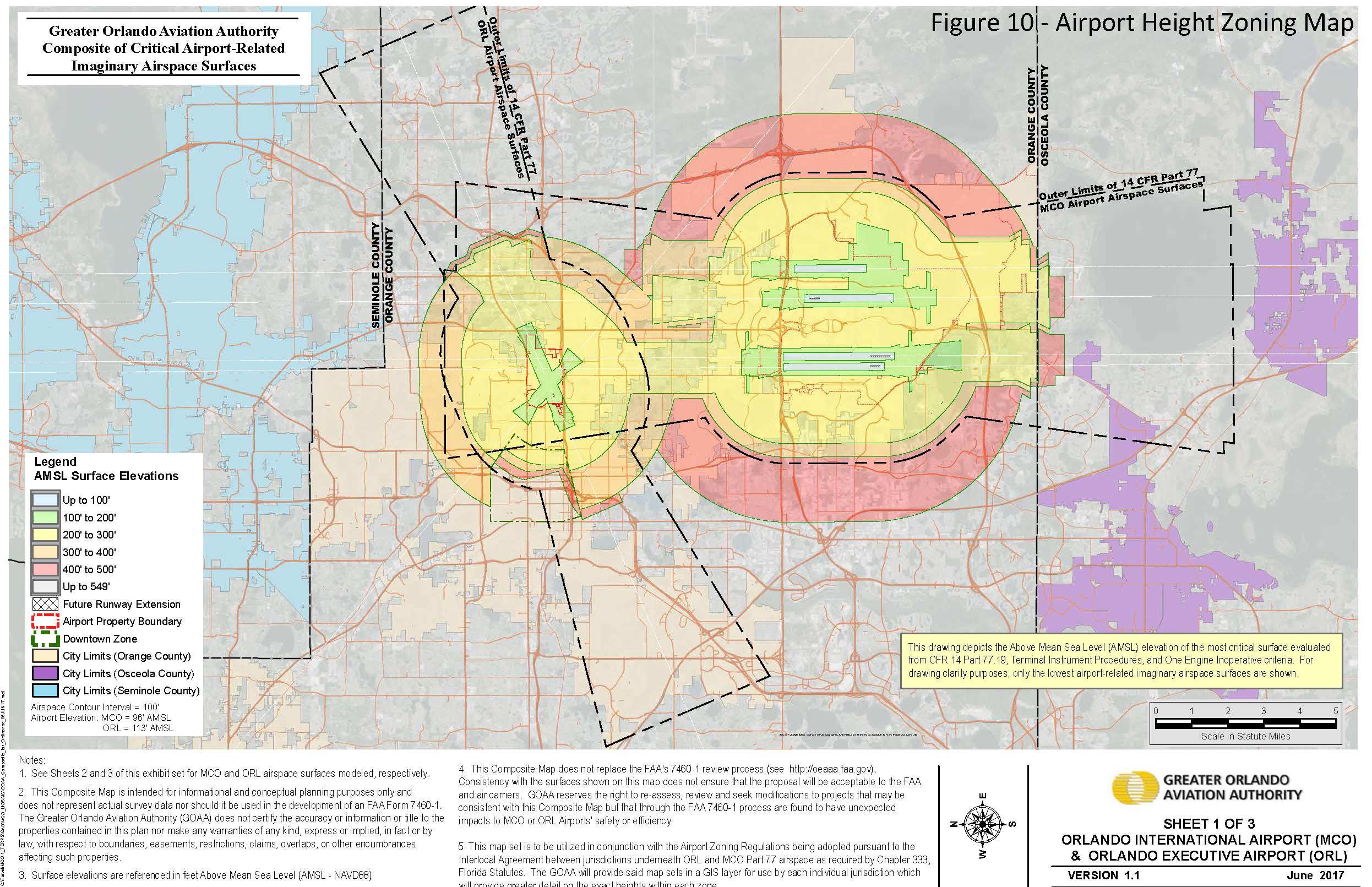
(Ord. No. 2017-48, § 5, 8-2017, Doc. #1708081202)
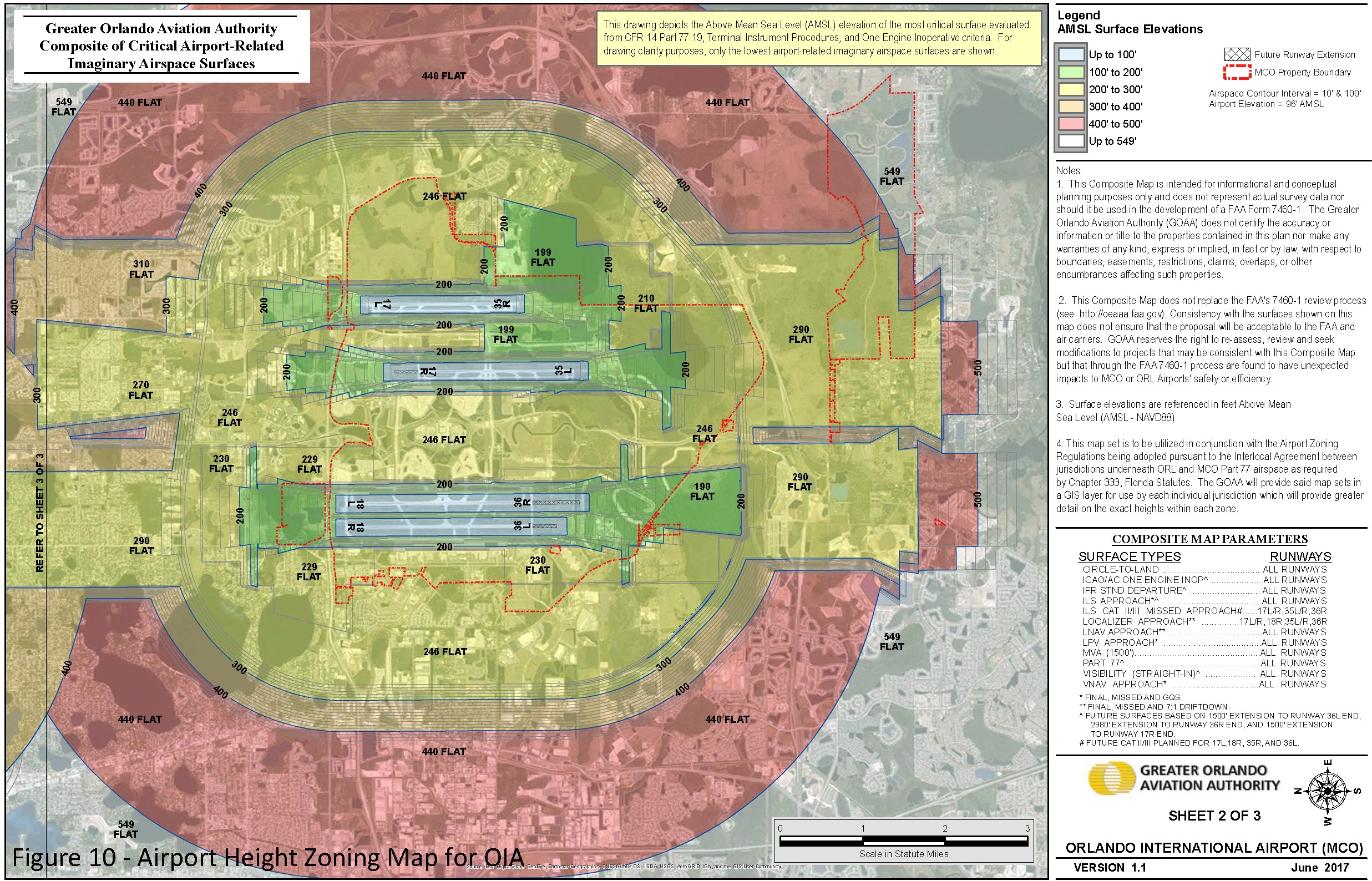
(Ord. No. 2017-48, § 5, 8-2017, Doc. #1708081202)
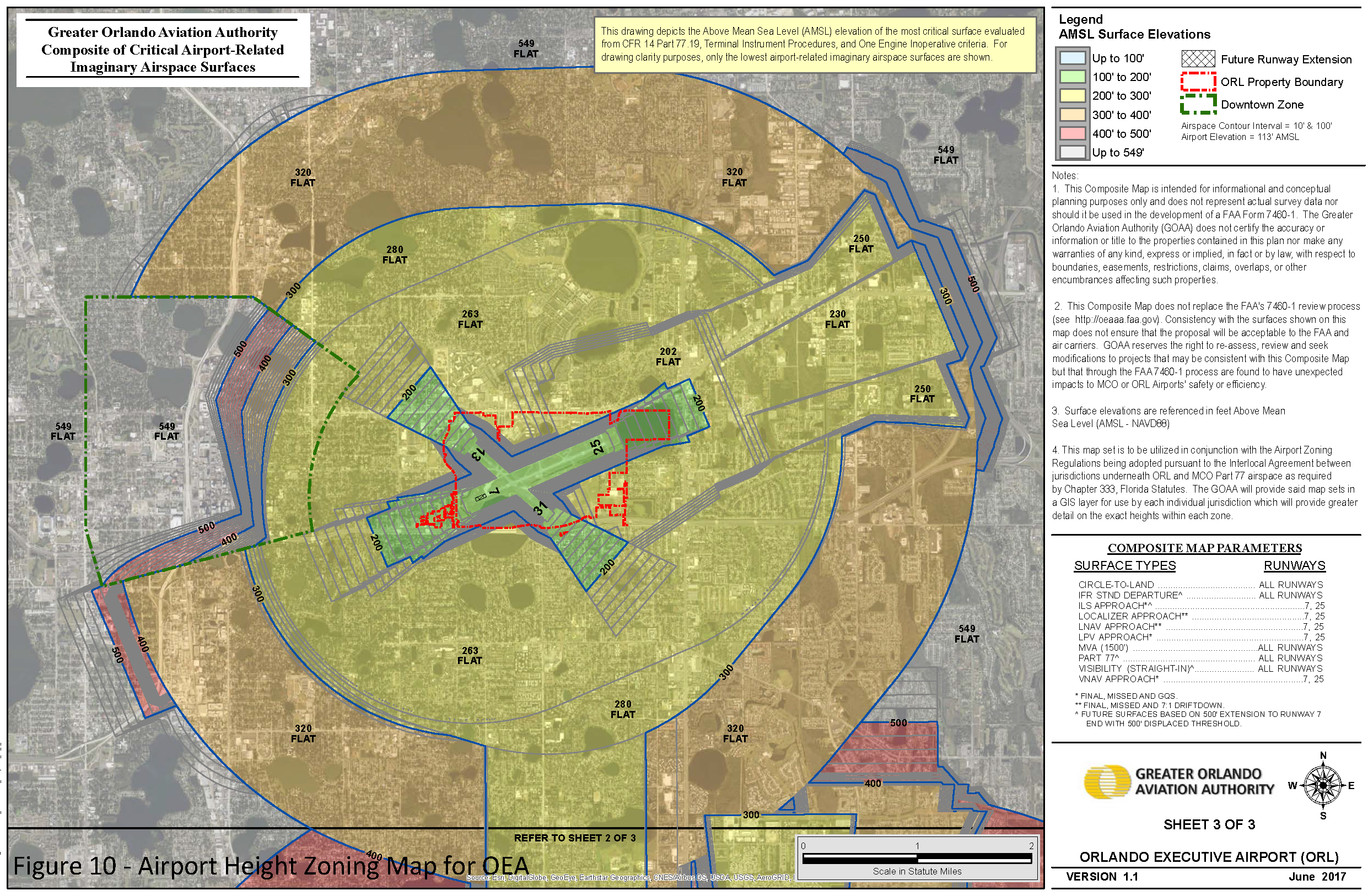
(Ord. No. 2017-48, § 5, 8-2017, Doc. #1708081202)
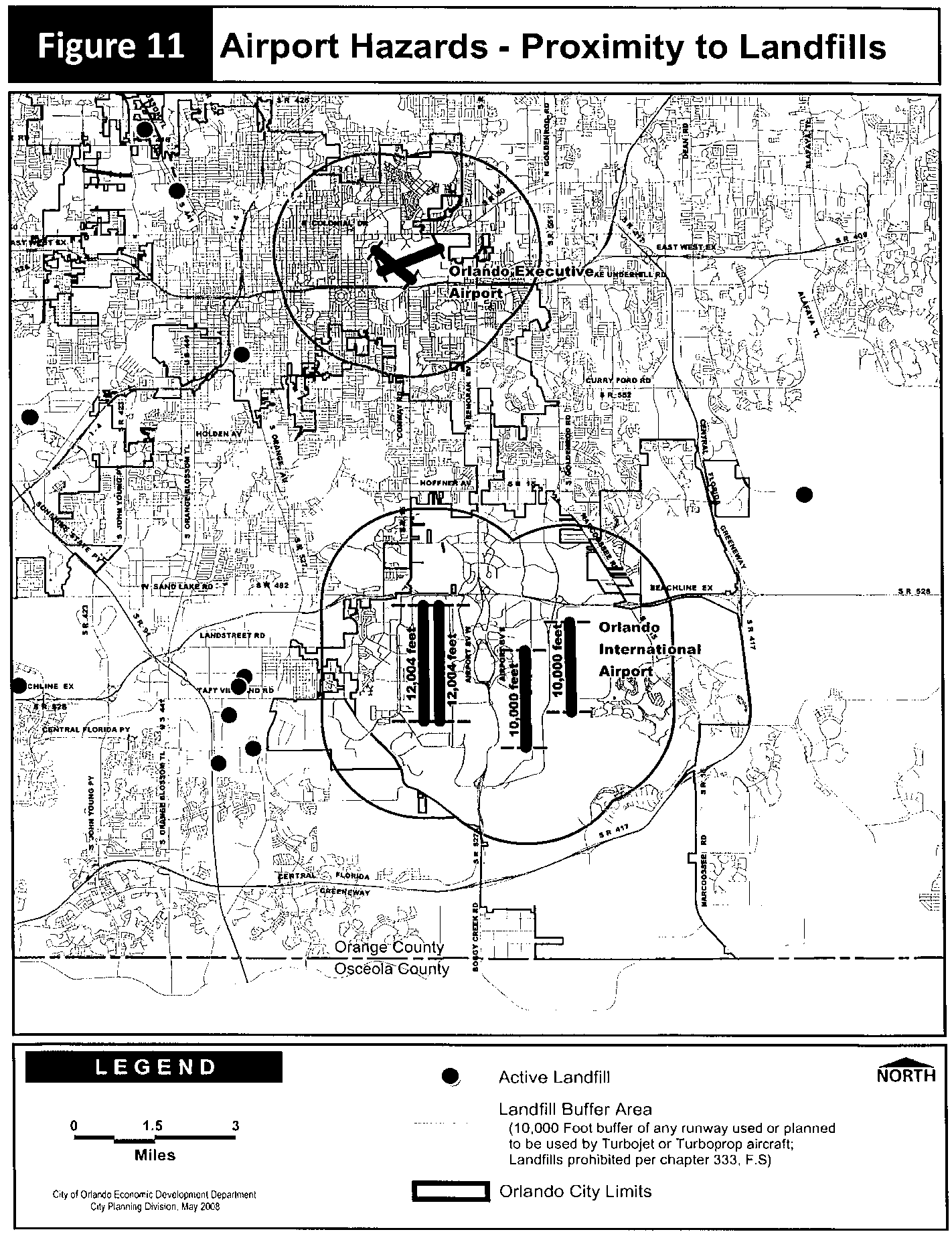
(Ord. No. 2017-48, § 5, 8-2017, Doc. #1708081202)

