
Pagosa Springs City Zoning Code
ARTICLE 12
- DEFINITIONS
12.1.- GENERAL RULES OF CONSTRUCTION
The following rules shall apply for construing or interpreting the terms and provisions of this Land Use Code.
12.1.1. MEANINGS AND INTENT
All provisions, terms, phrases, and expressions contained in this Land Use Code shall be construed according to the general purpose set forth in Section 1.3 and the specific purpose statements set forth throughout this Land Use Code. When, in a specific section of this Land Use Code, a different meaning is given for a term defined for general purposes in this Article, the specific section's meaning and application of the term shall control.
12.1.2. HEADINGS, ILLUSTRATIONS, AND TEXT
In the event of a conflict or inconsistency between the text of this Land Use Code and any heading, caption, figure, illustration, table, or map, the text shall control.
12.1.3. LISTS AND EXAMPLES
Unless otherwise specifically indicated, lists of items or examples that use terms such as "for example," "including," and "such as," or similar language are intended to provide examples and are not exhaustive lists of all possibilities.
12.1.4. COMPUTATION OF TIME
The time in which an act is to be done shall be computed by excluding the first day and including the last day. If a deadline or required date of action falls on a Saturday, Sunday, or holiday observed by the Town, the deadline or required date of action shall be the next day that is not a Saturday, Sunday, or holiday observed by the Town. References to days are calendar days unless otherwise stated.
12.1.5. REFERENCES TO OTHER REGULATIONS/PUBLICATIONS
Whenever reference is made to a resolution, ordinance, statute, regulation, or document, it shall be construed as a reference to the most recent edition of such regulation, resolution, ordinance, statute, regulation, or document, unless otherwise specifically stated.
12.1.6. DELEGATION OF AUTHORITY
Any act authorized by this Land Use Code to be carried out by a specific official of the Town may be carried out by a designee of such official.
12.1.7. TECHNICAL AND NON-TECHNICAL TERMS
Words and phrases shall be construed according to the common and approved usage of the language, but technical words and phrases that may have acquired a peculiar and appropriate meaning in law shall be construed and understood according to such meaning.
12.1.8. PUBLIC OFFICIALS AND AGENCIES
All public officials, bodies, and agencies to which references are made are those of the Town of Pagosa Springs unless otherwise indicated.
12.1.9. MANDATORY AND DISCRETIONARY TERMS
The words "shall," "must," and "will" are mandatory in nature, establishing an obligation or duty to comply with the particular provision. The words "may" and "should" are permissive in nature.
12.1.10. CONJUNCTIONS
Unless the context clearly suggests the contrary, conjunctions shall be interpreted as follows:
A.
"And" indicates that all connected items, conditions, provisions or events apply; and
B.
"Or" indicates that one or more of the connected items, conditions, provisions, or events apply.
12.1.11. TENSES, PLURALS, AND GENDER
Words used in the present tense include the future tense. Words used in the singular number include the plural number and the plural number includes the singular number, unless the context of the particular usage clearly indicates otherwise. Words used in the masculine gender include the feminine gender, and vice versa.
12.2. - INTERPRETATIONS
The Director has final authority to determine the interpretation or usage of terms used in this Land Use Code. Any person may request an interpretation of any term by submitting a written request to the Director who shall respond in writing within thirty (30) days.
12.3. - DEFINITIONS OF GENERAL USE CATEGORIES AND SPECIFIC USE TYPES
This Section defines the general use categories and specific use types listed in Table 4.1-1, Table of Allowed Uses.
12.3.1. RESIDENTIAL USES
A.
Household living. This use category is characterized by residential occupancy of a dwelling unit by a household. Tenancy is arranged on a month-to-month or longer basis (lodging where tenancy may be arranged for a period of less than thirty (30) days is classified under the "Lodging Facilities" category). Common accessory uses include recreational activities, raising of pets, gardens, personal storage buildings, hobbies, and parking of the occupants' vehicles. Specific use types include, but are not limited to:
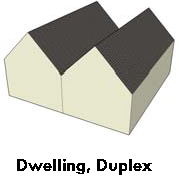
1.
Dwelling, duplex. A detached house on a single lot designed for and occupied exclusively as the residence of not more than two (2) families, each living as an independent housekeeping unit.
2.
Dwelling, live/work. A structure or portion of a structure: (1) that combines a commercial or manufacturing activity that is allowed in the zone with a residential living space for the owner of the commercial or manufacturing business, or the owner's employee, and that person's household; (2) where the resident owner or employee of the business is responsible for the commercial or manufacturing activity performed; and (3) where the commercial or manufacturing activity conducted takes place subject to a valid business license associated with the premises.
3.
Dwelling, single-family detached. A detached dwelling unit designed to be occupied by not more than one (1) family. This use type includes modular homes, but excludes manufactured (HUD) and mobile factory built homes.
4.
Dwelling, factory built. Factory built homes shall include the following:
a.
Manufactured (HUD) - These are homes built entirely in the factory under a federal building code administered by the U.S. Department of Housing and Urban Development (HUD). The Federal Manufactured Home Construction and Safety Standards (commonly known as the HUD Code) went into effect June 15, 1976. Manufactured homes may be single or multi section and are transported on their own chassis (but not under their own power) to the site and installed on permanent or temporary foundations. The chassis remains permanently attached to the home. The federal standards regulate manufactured housing design and construction, strength, durability, transportability, fire resistance, energy efficiency and quality. The HUD Code also sets performance standards for the heating, plumbing, air conditioning, thermal and electrical systems. On-site additions, such as garages, decks and porches must be built to local building codes. A building permit must be obtained for all work performed on site to install this type of home.
b.
Mobile Homes - This term references manufactured homes produced prior to June 15, 1976, when the HUD code went into effect. Mobile homes may be single or multi section and are transported on their own chassis (but not under their own power) to the site and installed on permanent or temporary foundations. The chassis remains permanently attached to the home. On-site additions, such as garages, decks and porches must be built to local building codes. A building permit must be obtained for all work performed on site to install this type of home.
c.
Modular Homes - These factory built homes are constructed to the State of Colorado and locally adopted building codes. Modules are transported to the site and installed on a permanent foundation. On-site additions, such as garages, decks and porches must be built to local building codes. A building permit must be obtained for all work performed on site to install this type of dwelling.
5.
Dwelling, multi-family. A dwelling or group of dwellings on one (1) lot containing separate living units for three (3) or more families, but which may have joint services or facilities. Each dwelling unit is designed for occupancy by one (1) family within each unit and is attached by a common wall. The use includes condominiums and apartments.
6.
Dwelling, timeshare. A residential unit or property containing multiple residential units, in which more than one (1) person has a fractional or interval ownership interest.
7.
Dwelling, townhouse. A building that has two (2) or more single-family dwelling units erected in a row as a single building on adjoining lots, each unit being separated from the adjoining unit(s) by a fire wall (to be constructed in accordance with Code) along the dividing lot line, and each such building being separated from any other building by space on all sides. Each individual townhouse unit has individual front and rear access to the outside. Townhouse units are typically surrounded by common areas owned and maintained by a property owners association. Each unit is identified by specific title and ownership that includes the ground immediately below the unit. The use includes patio homes and row homes.
8.
Mobile home park. A residential development that consists of mobile homes that are transported to the park site for use as permanent dwelling units.
B.
Group living. This category is characterized by residential occupancy of a structure by a group of people who do not meet the definition of "household living." Tenancy is arranged on a monthly or longer basis, and the size of the group may be larger than a family. Generally, group living structures have a common eating area for residents. The residents may receive care, training, or treatment, and caregivers may or may not also reside at the site. Accessory uses commonly include recreational facilities and vehicle parking for occupants and staff. Specific use types include, but are not limited to:
1.
Group living facility: Large/special. Any residence for more than eight (8) unrelated individuals, including but not limited to, any of the following facilities that meet this definition:
a.
A secure residential treatment center, as defined in §§ 26-6-102(9), et seq., C.R.S., as amended; or
b.
A shelter for homeless persons; or
c.
A dormitory; or
d.
A rooming or boarding house.
2.
Group living facility: Small. A residence for up to eight (8) unrelated individuals, none of whom are receiving on-site medical or psychological treatment, but some or all of whom may be receiving on-site physical assistance with day-to-day living activities, including but not limited to:
a.
Type A.
(i)
A state-licensed group home for the exclusive use of developmentally disabled persons, which are known as community residential homes, as defined in § 27-10.5-102(4), C.R.S., accommodating at least four (4) but no more than eight (8) persons; or a facility where independent residential support services, as defined in §27-10.5-102(19), C.R.S., are provided to no more than three (3) persons with developmental disabilities, which is not required to be licensed by the state; or
(ii)
A group home for the aged for the exclusive use of up to eight (8) persons sixty (60) years of age or older per home, as defined in §§ 31-23-303(2)(B)(II), C.R.S.; or
(iii)
A state-licensed group home for the exclusive use of up to eight (8) persons with mental illness, as that term is defined in §§ 27-10-102(8.5) and 31-32-303(2)(b.5), C.R.S.; or
(iv)
A foster care home, as defined in §§ 26-6-102(4.5), C.R.S., for up to eight (8) children.
b.
Type B.
(i)
A state-licensed residential child care facility, as defined in §§ 26-6-102(8), C.R.S., for five (5) or more but no more than eight (8) children; or
(ii)
A family child care home, as defined in §§ 26-6-102(4), C.R.S., for two (2) or more but no more than six (6) children; or
(iii)
A state-licensed assisted living residence, as defined in § 25-27-102(1.3), C.R.S., for three (3) or more but no more than eight (8) adults.
3.
Nursing care home. A residential facility maintained for the purpose of providing skilled nursing care and medical supervision at a lower level than that available in a hospital to no more than nine (9) residents.
4.
Nursing care facility. A facility that is maintained primarily for the care, treatment, and dispensing or administration of medication to more than nine (9) inpatients including the aged, ill, injured, or infirm, on a twenty-four-hour basis, under the direction of a licensed physician or nurse.
12.3.2. PUBLIC, INSTITUTIONAL, AND CIVIC USES
A.
Community service. Uses including buildings, structures, or facilities owned, operated, or occupied by a governmental entity or nonprofit organization to provide a service to the public. Specific use types include, but are not limited to:
1.
Government administration and civic buildings. An office of a governmental agency that provides administrative and/or direct services to the public, such as, but not limited to: post offices, employment offices, libraries, museums, public assistance offices, or motor vehicle licensing and registration services.
2.
Social, fraternal lodges. Buildings and facilities owned or operated by a corporation, association, person, or persons for a social, educational, or recreational purpose, to which membership is required for participation, and not primarily operated for profit nor to render a service that is customarily carried on as a business.
3.
Public assembly. A building or structure, or group of buildings or structures, intended primarily for the conducting of organized assembly, with membership not required for participation. Accessory uses may include meeting rooms and childcare provided for persons while they are attending assembly functions. Schools associated with assembly uses are not an accessory use.
4.
Public safety facility. The conduct of publicly owned safety and emergency stations, such as, but not limited to, fire stations, police stations, and emergency medical and ambulance services.
B.
Child care facilities. Facilities that provide care for children on a regular basis away from their primary residence. Accessory uses include offices, recreation areas, and parking. This category does not include public or private schools or facilities operated in connection with an employment use, shopping center, or other principal use, where children are cared for while parents or guardians are occupied on the premises.
1.
Child care center. A facility, by whatever name known, that is maintained for the whole or part of a day, but less than twenty-four (24) hours for the care of six (6) or more children who are eighteen (18) years of age or younger and who are not related to the owner, operator, or manager thereof, whether such facility is operated with or without compensation for such care and with or without stated educational purposes.
2.
Day care home. Any child care arrangement in a residential setting that provides day care on a regular basis for less than twenty-four (24) hours per day for no more than twelve (12) children who are eighteen (18) years of age or younger, and who are unrelated to the home's occupants.
C.
Health care facility. Health care uses are characterized by activities focusing on medical services, particularly licensed public or private institutions that provide primary health services and medical or surgical care to persons suffering from illness, disease, injury, or other physical or mental conditions. Accessory uses may include laboratories, outpatient, or training facilities, and parking, or other amenities primarily for the use of employees in the firm or building. Specific use types include, but are not limited to:
1.
Hospital. A building or portion thereof for the accommodation of sick, injured, or infirm persons. Services regularly include the keeping of patients overnight.
2.
Immediate care facility. A non-residential facility, whether public or private, principally engaged in providing on an emergency basis out-patient services for health diagnosis, treatment of human disease, pain, injury, or physical condition, by licensed physicians and nurses, and providing access for emergency vehicles. These facilities may also provide for the dispensing of pharmaceutical or medical supplies.
3.
Medical or dental office or clinic. An establishment primarily engaged in furnishing, on an outpatient basis, chiropractic, dental, medical, surgical, medical imaging, or other services to individuals, including the offices of chiropractors, physicians, dentists, and other health practitioners, medical and dental laboratories, outpatient care, and outpatient care facilities. Patients are not kept overnight except under emergency conditions.
D.
Park and open space. Park and open space uses focus on natural areas, large areas consisting mostly of vegetative landscaping or outdoor recreation, community gardens, or public squares. Lands tend to have few structures. Accessory uses may include clubhouses, playgrounds, maintenance facilities, concessions, caretaker's quarters, and parking. Specific use types include, but are not limited to:
1.
Athletic fields and courts. Land, often requiring equipment, designed for outdoor games and sports such as baseball, football, tennis, and soccer.
2.
Community garden. A public facility for cultivation of fruits, flowers, vegetables, or ornamental plants by more than one (1) person or family.
3.
Open space. An area that is not developable due to environmental constraints or on which development has been limited for aesthetic, environmental, or recreational purposes, not including golf courses.
4.
Park. An area open to the general public and reserved for recreational, educational, or scenic purposes.
E.
Educational facilities. Public, private, and parochial institutions at the primary, elementary, middle, high school, or post-secondary level, or trade or business schools, that provide educational instruction to students. Accessory uses include play areas, cafeterias, recreational and sport facilities, auditoriums, and before- or after-school day care. Specific use types include, but are not limited to:
1.
College or university. A degree-granting institution, other than a trade school, that provides education beyond the high school level. The use includes, but is not limited to, classroom buildings, offices, laboratories, lecture halls, athletic facilities, and dormitories.
2.
Elementary or secondary school. An educational institution that satisfies the applicable education laws of the State of Colorado for students in elementary or secondary grades.
3.
Trade or vocational school. A secondary or higher education facility primarily teaching usable skills that prepares students for jobs in a trade or in industry, construction, or commerce, and meeting all applicable state requirements for a facility of its type.
12.3.3. COMMERCIAL USES
A.
Agriculture. The use of land for purposes including farming, dairying, pasturage, horticulture, animal and poultry husbandry, and the necessary accessory uses for treating or storing of farm products and parking of equipment. Specific use types include, but are not limited to:
1.
Farming, traditional or ranch uses. Land in active agricultural or horticultural use.
2.
Stables. A facility where horses are sheltered, fed, or kept for hire.
B.
Animal-related services. Animal-related Services uses involve the boarding and care of animals on a commercial basis. Accessory uses may include confinement facilities for animals, parking, and storage areas. Specific use types include, but are not limited to:
1.
Kennel. Any facility where animals owned by another person are temporarily boarded for compensation; provided, however, that this definition shall not apply to zoos or to veterinary hospitals.
2.
Veterinary clinic/hospital. A facility where animals or pets are given medical or surgical treatment and are cared for during the time of such treatment. Use as a kennel shall be limited to short-term boarding and shall be only incidental to the clinic/hospital use.
C.
Developed property. An existing or newly developed property that complies with the current LUDC articles 4, 5 and 6 for development standards for a commercial property, unless otherwise recognized in article 9 as an eligible non-conforming development; OR, a new developed property complying with the intent of LUDC articles 4, 5 and 6 for site development standards that is approved under a planned development application.
D.
Financial services. Establishments that provide retail banking services, mortgage lending, and similar financial services to individuals and businesses. This classification includes those institutions engaged in the on-site circulation of cash money and check-cashing facilities, but does not include bail bond brokers. Accessory uses may include automatic teller machines, offices, and parking. The use may or may not be allowed to have a drive-through facility, depending on the zone district.
E.
Food and beverage services. Food and beverage service businesses serve prepared food or beverages for consumption on or off the premises. Accessory uses may include food preparation areas, offices, and parking. Specific use types include, but are not limited to:
1.
Bar or nightclub. A building or part of a building used primarily for the sale or dispensing of alcoholic beverages or liquor by the drink. Dancing and musical entertainment are permitted, subject to all applicable Town regulations.
2.
Restaurant, with drive-through. An eating/drinking establishment in which the principal business is the preparation and sale of foods or beverages to the customer in a ready-to-consume state and in which the design or method of operation of all or any portion of the business allows food or beverages to be served directly to the customer in a motor vehicle without the need for the customer to exit the motor vehicle.
3.
Restaurant, without drive-through. An area or structure in which the principal business is the preparation and sale of foods and beverages to the customer in a ready-to-consume state. Operations may or may not include outdoor seating areas or outdoor food service, but the operation does not include a drive-through facility.
F.
Lodging facilities. For-profit facilities where lodging, meals, and the like are provided to transient visitors and guests for a defined period. Specific use types include, but are not limited to:
1.
B&B or inn. One (1) building containing no more than eight (8) sleeping rooms that are occupied or intended or designed to be occupied as temporary accommodations for persons who are lodged with or without meals, for compensation, but not including a trailer court or camp, hospital, asylum, orphanage, or correctional facility.
2.
Campground, guest ranch, or RV park. Any plot or parcel of real estate upon which two (2) or more recreational vehicle or campsites are located, established, maintained, or occupied for dwelling or sleeping purposes for the general public as temporary (not to exceed fourteen (14) days) living quarters for recreation or vacation purposes regardless of whether a charge is made for such accommodation.
3.
Hotel, motel, or lodge. A building or group of buildings containing nine (9) or more sleeping rooms that are occupied or intended or designed to be occupied as temporary accommodations for persons who are lodged with or without meals, for compensation.
4.
Vacation rental. The renting out of a furnished dwelling unit, or a portion thereof, for less than thirty (30) consecutive days per rental. Meals are not provided, although guests may have full access to kitchen facilities. Hotel, motel, or lodge rooms, B&B or inns are not considered a vacation rental.
G.
Non-permanent structure. Tent (or other temporary structure), trailer, truck, cart, etc.
H.
Offices, business and professional. Business and professional office provide executive, management, administrative, or professional services, but not involving the sale of merchandise except as incidental to a permitted use. Typical examples include real estate, insurance, property management, investment, employment, travel, advertising, law, architecture, design, engineering, accounting, call centers, and similar offices. Accessory uses may include cafeterias, health facilities, parking, or other amenities primarily for the use of employees in the firm or building.
I.
Outdoor commercial establishment. A commercial operation that conducts business from an outdoor location such as mobile food vendor, mobile vendor of merchandise, sale of merchandise and/or services, and including special events, seasonal farmer's markets and other similar fresh food sales, temporary art, craft fairs, carnivals and festivals, seasonal holiday sales, and community events; operating from a cart, trailer, vehicle, tent, temporary structure or other outdoor configuration.
1.
Seasonal. A seasonal outdoor commercial establishment is one that operate on a seasonal basis for up to nine (9) months per calendar year at location(s) identified in an approved outdoor commercial establishment permit on private property or public property, and allows operation from more than one (1) location as long as each location has been approved with a separate OCE permit application.
2.
Special event. A special event outdoor commercial establishment are those that operate within the boundaries of a Town-permitted special event with permission from the event coordinator.
3.
Year-round. A year-round outdoor commercial establishment are those that operate year-round on an eligible existing developed property complying with site improvement standards as set forth in LUDC Articles 4, 5, 6, unless determined to be an eligible non-conforming development as defined under LUDC article 9, or an outdoor commercial establishment development set up specially for OCEs and approved under a Planned Development application specific to such OCE development and meeting the intent of LUDC Articles 4, 5, 6.
J.
Personal services. Establishments that provide individual services related to personal needs directly to customers at the site of the business, or that receive goods from or return goods to the customer, which have been treated or processed at that location or another location. Specific use types include, but are not limited to:
1.
Dry cleaning and laundry service. An establishment where laundry or dry cleaning is dropped off and picked up by customers, and that also includes on-site laundry and/or cleaning activities.
2.
General personal services. An establishment, whether for consideration or not, that provides care, advice, aid, maintenance, repair, treatment, or assistance, not including the practice of a profession and the wholesale or retail sale of goods. Examples include, but are not limited to, shoe repair, beauty and barber shops, massage therapy, tanning salons, and dry cleaning pick-up and drop-off shops that do not conduct cleaning on the premises.
K.
Recreation and entertainment, indoor. Indoor recreation and entertainment uses provide recreation or entertainment activities within an enclosed environment. Accessory uses may include concessions, snack bars, parking, and maintenance facilities. Specific use types include, but are not limited to:
1.
Adult entertainment. Entertainment that is distinguished or characterized by an emphasis on material depicting, describing, or relating to specified sexual activities or specified anatomical areas. Uses shall include, but shall not be limited to, the following:
(i)
Adult bookstore: An establishment having as a substantial or significant portion of its stock in trade, books, magazines, and other periodicals and goods and items held for sale which are distinguished or characterized by their emphasis on matters depicting, describing, or relating to specified sexual activities or specified anatomical areas, or an establishment with a segment or sections devoted to the sale or display of such material.
(ii)
Adult photo studio: An establishment that, upon payment of a fee, provides on-premises photographic equipment, services, and/or models for the purpose of photographing specified anatomical areas.
(iii)
Adult theater: A theater used for the presentation of material distinguished or characterized by an emphasis on material depicting, describing, or relating to specified sexual activities.
2.
Art gallery. Any permanent facility for the collection and display of objects of art.
3.
Movie theatre. An indoor theater for the showing of motion pictures.
L.
Recreation and entertainment, outdoor. Outdoor recreation and entertainment uses provide recreation or entertainment activities outside of an enclosed environment. Accessory uses may include concessions, snack bars, parking, and maintenance facilities. Specific use types include, but are not limited to:
1.
General outdoor recreation, commercial. Intensely developed recreational uses such as amusement parks, miniature golf courses, commercial tennis courts, batting cages, skateboard or skate parks or courses, bicycle motocross courses, water parks or slides, drive-in movie theaters, and archery facilities.
2.
Golf course or driving range. A tract of land laid out with a course having nine (9) or more holes for the playing of golf, including any accessory clubhouse, driving range, offices, restaurant, concession stand, picnic tables, pro shop, maintenance facilities, or similar accessory uses or structures.
M.
Retail sales. Retail sales firms are involved in the sale, lease, or rent of new or used products to the general public. Any outdoor display or sale is subject to the regulations in Section 4.3.4 of this Land Use Code. Accessory uses may include offices, parking, storage of goods, and assembly, repackaging, or repair of goods for on site sale. Specific use types include, but are not limited to:
1.
Greenhouse or nursery, commercial. Land or green houses used to raise flowers, shrubs, and plants for sale.
2.
Grocery store. A retail establishment primarily selling prepackaged and perishable food as well as other convenience and household goods.
3.
Liquor store. A retail establishment licensed to sell alcoholic beverages such as beer, wine, and liquor. No on-site consumption is allowed.
4.
Peddling and vending. Selling, offering for sale, or soliciting orders for goods or services or distributing, disseminating, or gathering information by written or spoken word upon the streets, sidewalks, or alleys of the Town, or by going from place to place in a mobile nature, whether by foot or by other means of transportation.
5.
Retail, general. A commercial enterprise that provides goods directly to the consumer, where such goods are available for immediate purchase and removal from the premises by the consumer. Examples include, but are not limited to, apparel shops, appliance sales, auto parts store, bait shops, bakeries, bookstores, convenience stores without gas pumps, department stores, factory outlet stores, florists, and souvenir shops. This use does not include commercial greenhouses, grocery stores, or liquor stores.
N.
Special event. A special event is an organized commercial event held on private or public property for up to ten (10) days that has been permitted by the Town. Special events include admission-based events and open to the general public events. Special events include, but are not limited to: live music/performance events, commercial entertainment, fairs, festivals, carnivals, athletic competitions, and other events that create the need for coordination with the Town and other entities to ensure event impacts are mitigated.
O.
Temporary structure. A structure without any permanent foundation or footings and that is removed when the designated and permitted time period, activity, or use for which the temporary structure was approved has ceased.
P.
Undeveloped property. A property that does not contain a primary structure and the required site development improvements as is required under Articles 4, 5 and 6.
Q.
Vehicles and equipment. Vehicles and equipment uses include a broad range of uses for the maintenance, sale, or rental of motor vehicles and related equipment. Accessory uses may include incidental repair and storage and offices. Specific use types include, but are not limited to:
1.
Parking lot. An open, hard-surfaced area, other than a street or public way, to be used for the temporary storage of operable vehicles, and available to the public, whether for compensation or for free. This use type does not include off-street parking that is provided as accessory to principal use. For the purposes of this Land Use Code, parking structures shall also be considered parking lots. Parking structures are structures designed to accommodate vehicular parking spaces that are fully or partially enclosed or located on the deck surface of a building. This definition includes parking garages and deck parking.
2.
Gasoline sales. Any area used for retail sales of gasoline or other fuels, or automobile accessories and incidental services.
3.
Vehicle sales and rental. An establishment engaged in the display, sale, leasing, or rental of new or used motor vehicles. Vehicles included, but are not limited to, automobiles, light trucks, vans, trailers, recreational vehicles, motorcycles, personal watercraft, utility trailers, all-terrain vehicles, and mobile homes.
4.
Vehicle service and repair. An establishment engaged in the repair and maintenance of motor vehicles.
12.3.4. INDUSTRIAL USES
A.
Industrial service. Industrial service firms are engaged in the repair or servicing of agricultural, industrial, business, or consumer machinery, equipment, products, or by-products. Contractors and similar uses perform services off-site. Few customers come to the site. Accessory activities may include sales, offices, parking, and storage. Specific use types include, but are not limited to:
1.
Building materials sales. An establishment for the sale of materials, hardware, and lumber customarily used in the construction of buildings and other structures, including facilities for storage. Operations may be indoor and/or outdoor.
2.
General industrial service. All other industrial service establishments not listed within one (1) of the other enumerated use types. Examples include: construction materials storage; welding shops; machine shops; electric motor repair; repair, storage, salvage, or wrecking of heavy machinery; and heavy truck servicing and repair.
3.
Natural resource processing. The development or extraction or processing of a rock, mineral, or timber product.
B.
Manufacturing and production. This use category includes firms involved in the manufacturing, processing, fabrication, packaging, or assembly of goods. Natural, constructed, raw, secondary, or partially completed materials may be used. Products may be finished or semi-finished and are generally made for the wholesale market, for transfer to other plants, or to order for firms or consumers. Custom industry is included (i.e., establishments primarily engaged in the on-site production of goods by hand manufacturing involving the use of hand tools and small-scale equipment). Goods are generally not displayed or sold on site, but if so, such activity is a subordinate part of sales. Relatively few customers come to the manufacturing site. Accessory activities may include retail sales, offices, cafeterias, parking, employee recreational facilities, warehouses, storage yards, repair facilities, truck fleets, and caretaker's quarters. Specific use types include, but are not limited to:
1.
Assembly, light. An establishment engaged only in the assembly of goods. No manufacturing of parts occurs. Goods are shipped to the establishment, assembled, packaged, and reshipped.
2.
Manufacturing, heavy. An establishment engaged in the manufacture or compounding process of raw materials. Such activities may include the storage of large volumes of highly flammable, toxic matter or explosive materials needed for the manufacturing process. Examples include, but are not limited to: refining or initial processing of raw materials; rolling, drawing, or extruding of metals; asphalt batching plants; sawmills; meat slaughtering or packing house; and manufacture or packaging of cement products, feed, fertilizer, flour, glue, paint, petroleum products, soap, turpentine, varnish, charcoal, or distilled products.
3.
Manufacturing, light. An establishment engaged in the manufacture, predominantly from previously prepared materials, of finished products or parts, including processing, fabrication, assembly, treatment, and packaging of such products, and incidental storage, sales, and distribution of such products, but excluding basic industrial processing. Examples include, but are not limited to: airplane, automobile, or truck assembly, remodeling, or repair; bottling works; boat building, machine or blacksmith shops; metalworking or welding shops; paint shops; and printing and publishing shops.
C.
Warehouse and freight movement. Firms involved in warehouse and freight movement are engaged in the storage or movement of goods for themselves or other firms. Goods are generally delivered to other firms or the final consumer, except for some will call pickups. There is little on site sales activity with the customer present. Accessory uses may include offices, truck fleet parking, and maintenance areas. Specific use types include, but are not limited to:
1.
Mini-storage. A building or group of buildings in a controlled access and fenced compound that contains varying sizes of individual, compartmentalized, and controlled access stalls or lockers for the storage of customers' goods or wares.
2.
Storage yard. Any lot or portion of a lot that is used for the sole purposes of the outdoor storage of fully operable motor vehicles, construction equipment, construction materials, or other tangible materials and equipment.
3.
Warehouse. A structure containing an area available for the purpose of storing raw materials, goods, or property.
4.
Wholesale establishment. An establishment primarily engaged in the sale or distribution of goods and materials in large quantity to retailers or other businesses for resale to individual or business customers. This shall not include heavy manufacturing, resource extraction, bulk storage of hazardous materials, or scrap or salvage operations.
D.
Telecommunications. Telecommunications facilities transmit analog or digital voice or communications information between or among points using electromagnetic signals via antennas, microwave dishes, and similar structures. Supporting equipment includes buildings, shelters, cabinets, towers, electrical equipment, parking areas, and other accessory development.
E.
Waste and salvage. Waste and salvage firms receive solid or liquid wastes from others for disposal on the site or for transfer to another location. The category includes uses that collect sanitary wastes, or uses that manufacture or produce goods or energy from the composting of organic material or processing of scrap or waste material. Waste and salvage uses also include uses that receive hazardous wastes from others. Accessory uses may include recycling of materials, offices, and repackaging and shipment of by-products. Specific use types include, but are not limited to:
1.
Salvage or junk yard. A parcel used for storage of non-operable vehicles (autos, commercial equipment, RV's, etc.) or scrap materials (steel, lumber, miscellaneous materials, etc.). A salvage yard must be completely fenced with all accesses secured from the public.
12.3.5. ACCESSORY USES AND STRUCTURES
A.
Accessory dwelling unit. A dwelling unit either attached to a single-family principal dwelling or located on the same lot and having an independent means of access.
B.
Accessory building. A building detached from a principal building located on the same lot and customarily incidental and subordinate to the principal building or use.
C.
Accessory use. A use of land or of a building or portion thereof customarily incidental and subordinate to the principal use of the land or building and located on the same lot with the principal use.
D.
Home occupation. A commercial activity conducted in a residential zone district that complies with the home occupation standards of this Land Use Code as set forth in Section 4.3.4.B.
(Ord. No. 894, § 5, 9-20-2018; Ord. No. 941, § 1, 10-6-2020)
12.4. - ACRONYMS
BOA - Board of Adjustment
DRB - Design Review Board
HPB - Historic Preservation Board
12.5. - OTHER TERMS DEFINED
Accessory dwelling unit (ADU). A secondary residential dwelling unit with its own kitchen, bathroom, living area and separate entrance that shares the building lot of a larger primary residential dwelling structure. The ADU may be attached to an existing dwelling structure (house), garage or accessory structure, or it may be a stand-alone structure, using the same utility connections of the primary house and may be rented separately.
Alter, or alteration. Any act or process that changes one (1) or more of the interior or exterior architectural or structural features of a building, including but not limited to the erection, construction, reconstruction, or removal of any building.
Appeal. A request for a review of a decision made pursuant to this Land Use Code.
Area of shallow flooding. A designated AO Zone on the Flood Insurance Rate Map (FIRM). The base flood depths range from one (1) to three (3) feet; a clearly defined channel does not exist; the path of flooding is unpredictable and indeterminate; and velocity flow may be evident.
Area median income (AMI). The median household income for Archuleta County, as estimated by the most recent U.S. Census Small Area Income and Poverty Estimates and as annually published by the Colorado Housing Finance Authority.
Area of special flood hazard. The land in the floodplain subject to a one (1) percent or greater chance of flooding in any given year.
Attainable housing. A housing unit with a rental amount or annualized mortgage amount that qualifies as housing for households earning between one-hundred twenty-one (121) percent and one hundred forty (140) percent of area median income.
Avigation easement. A written privilege granted by a homeowner related to aircraft overflight, noise, and associated effects which may arise in the ordinary operation of the airport.
Awning. A device attached to a building when the same is so erected as to either permit its being raised or retracted to a position against the building when not in use, or to provide shade.
Base flood elevation. The elevation shown on the Flood Insurance Rate Map (FIRM) for Zones AE, AH, A1-A30, AR, AR/A, AR/AE, AR/A1-A30, AR/AH, AR/AO, V1-V30, and VE that indicates the water surface elevation resulting from a flood that has a one (1) percent chance of equaling or exceeding that level in any given year.
Building. A structure designed to be used as a place of occupancy, storage, or shelter.
Building, principal. The primary building on a parcel intended for principal use.
Building frontage. The portion of a building that faces and is most nearly parallel to a public or private street.
Building inspector. As used in any adopted technical code of the Town, the Town Building Inspector.
California Bearing Ratio (CBR). A value determined from a penetration resistance of compacted specimen of the soil in question, which is compared to a standard resistance of crushed stone. The determined resistance divided by the standard for the stone multiplied by one hundred (100) is called the California Bearing Ratio.
Canopy. A structure, other than an awning, attached to a building and carried by a frame supported by the ground or sidewalk.
Cargo shipping container. A large, usually rectangular-shaped, steel constructed unit that is built and used to carry goods for transport by sea, road, rail or air. Depending on the proposed use, cargo shipping containers are considered temporary or permanent structures when placed on a property.
Certificate of alteration. A certificate issued by the Historic Preservation Board indicating its approval of plans for alteration, construction, or removal of a designated historic landmark.
Conditional use permit. A permit that authorizes the recipient to make use of property in accordance with the requirements of this Land Use Code. A neighborhood compatibility meeting may be required, with the Planning Commission maintaining the final approval or denial authority.
Condominiums. Multiple units contained within one (1) building whether for residential or commercial purposes, each unit of which is held in separate ownership.
Conservation subdivision. A residential subdivision in which some or all of the lots are allowed to be smaller (in area and width) than otherwise required for the underlying zoning district, in exchange for the protection of additional common open space beyond the base requirements of this Land Use Code.
Consolidation. The combining of two (2) or more lots, tracts, or parcels in a platted subdivision, which removes the common boundary lines and forms a single lot, tract or parcel.
Context. The relationship of the building to its surroundings in terms of size, form, character and site development.
Contributing building, structure, site/area, or object. Any building, structure, site/area, or object that helps to define or reflect the historical or architectural significance of a site or historic district.
Critical feature. An integral and readily identifiable part of a flood protection system, without which the flood protection provided by the entire system would be compromised.
Demolish, or demolition. To tear down, wreck, or ruin a structure.
Density, gross. A measurement of the number of dwelling units per acre and/or the number of square feet of enclosed commercial space per acre of land area.
Density, net. The same measurement as in gross density, except that the land area considered excludes lands dedicated to the public, rights-of-way, and dedicated open space, whether such open space is held in public or private ownership.
Design guideline. A standard of appropriate architectural features and site activity to include parking, landscaping, pedestrian provisions, etc., that will preserve the historic and architectural character of a landmark, building, area, or object.
Design review board (DRB). The board or commission appointed by the Town Council to review design or architectural related guidelines/standards.
Developer. Any person(s) completing allowed and permitted improvements on a lot, parcel or tract of land. A developer may be the owner or a person authorized by the owner.
Development activity. An improvement that is allowed and permitted and completed on a lot, parcel, or tract of land by a developer or property owner. The term "development activity" shall include annexation, zoning, subdivision, planned unit development, building permit issuance, construction, alterations, land grading, excavating, and clearing.
Development approval. Any final approval of a development activity.
Development code administrative manual. A document, available to the public, that contains the development requirements for application contents, forms, fees, and the submission and review schedule (including approximate time frames for review).
Development improvements agreement/annexation agreement. One (1) or more agreements made between the developer or owner and the Town to ensure completion of the roads, streets, water lines, sewer lines, sidewalks, curbs, gutters, storm sewers, or other public or private improvements associated with annexations, subdivision approval, zoning or other development activity.
Dimensional nonconformity. A situation that occurs when a dimensional requirement (e.g., elevations, setbacks) was approved legally but no longer conforms to the required standard of this Land Use Code.
Director. The Town Planner, per Section 2.3.15, Pagosa Springs Municipal Code, or his/her designee, or any individual designated by the Town Council to administer this Land Use Code; or, for purposes of administering the floodplain regulations of this Land Use Code, the floodplain administrator.
Double-frontage lot. A lot with two (2) sides that abut a street.
Driveway. That portion of the vehicle accommodation area that consists of a travel lane bounded on either side by an area that is not part of the vehicle accommodation area.
Easement. An interest in land owned by another that entitles the easement holder to a specific use of the described land.
Economic hardship.
(a)
For investment or income-producing properties: The building, site, or object cannot be feasibly used or rented at a reasonable rate of return in its present condition; or if proposed to be rehabilitated, where denial of a demolition permit would deprive the owner of all reasonable use of the property.
(b)
For non-income producing properties and/or institutional properties not solely operating for profit: The building, site or object has no beneficial use as a residential dwelling, or for an institutional use in its present state; or if proposed to be rehabilitated; where denial of the demolition permit would deprive the owner of all reasonable use of the property.
Emergency repairs. Repairs immediately necessary to protect the health and safety of the property owner, user, or general public.
Existing construction. Means for the purposes of determining National Flood Insurance Rates, structures for which the "start of construction" commenced before the effective date of the FIRM or before January 1, 1975, for FIRMS effective before that date. "Existing Construction" may also be referred to as "Existing Structures."
Expansion of an existing manufactured home park or subdivision. The preparation of additional sites by the construction of facilities for the servicing the lots on which the manufactured homes are to be affixed (including the installation of utilities, the construction of streets, and either final site grading or the pouring of concrete pads).
Exterior architectural features. The features that contribute to the architectural character and general composition of the exterior of a building or structure, including but not limited to the kind, color, and texture of the building materials and the type, design, and character of all windows, doors, light fixtures, signs and appurtenant features.
Extraterritorial planning area. An area immediately adjoining the Town corporate limits within the Town's major street plan, and subject to planning designations that may be enacted if the area is annexed into the corporate limits at a future time. This area may also be subject to intergovernmental agreements established between the Town and County for planning purposes.
Façade. The front of a building including entries, parapets and rooflines, specifically the principal face.
Family. One (1) or more persons living together as a single housekeeping unit.
Flag, governmental. Any device composed of flexible cloth, plastic, or similar material that is affixed to a line or pole and that may display local, state, or federal emblems, seals, or colors.
Flag, nongovernmental. Any device composed of flexible cloth, plastic, or similar material that is affixed to a line or pole and that may display emblems, business or corporate logos, symbols, or illustrations.
Fleet vehicle. Fleet vehicles are groups of automobiles with a single owner, typically a company or corporation, rather than an individual or family.
Flood, or flooding. A general and temporary condition of partial or complete inundation of normally dry land areas from the overflow, and/or the unusual and rapid accumulation or runoff of surface waters from any source.
Flood hazard area. Areas subject to inundation by the "base flood" as identified by the Federal Emergency Management Agency reports and maps.
Flood Insurance Rate Map (FIRM). An official map of the Town on which the Federal Emergency Management Agency has delineated both the areas of special flood hazards and the risk premium zones applicable to the community.
Flood insurance study. The official report provided by the Federal Emergency Management Agency that includes flood profiles, the Flood Boundary-Floodway Map, and the water surface elevations of the base flood.
Floodplain. Any land area susceptible to being inundated by water from any source.
Floodway. The channel of a river or other watercourse and the adjacent land areas that must be reserved in order to discharge the base flood without cumulatively increasing the water surface elevation more than one (1) foot.
Floor area, gross. The total area of a building measured along the outside dimensions of the building, including each floor or level used for occupancy and storage.
Floor area, habitable. The total area of a building measured along the outside dimensions of the building, including each habitable floor or level used for occupancy only.
Floor plate. The total area of a building measured along the outside dimensions of the building, including each habitable floor or level used for occupancy only.
Foundation. The base or substructure of a building that bears the weight of the structure above. Foundations are typically located below grade and are typically situated at or below the frost line depth.
Frontage. Any boundary line of a lot or parcel of land that coincides with the right-of-way of a street.
Green book. The most recent edition of the Policy on Geometric Design of Highways and Streets by the American Association of State Highway and Transportation Officials.
Height. Unless otherwise provided in any specific zone district, "height of building" or "building height" means the vertical distance between the following two (2) points:
(a)
From grade, specified as:
(i)
The average of the pre-construction grade of the building's site coverage, or the average of the post construction grade at the perimeter of the building's site coverage (including window and door wells which extend greater than four (4) feet from the exterior perimeter of the building's site coverage, whichever is more restrictive;
(ii)
The approved grade, which shall be considered to be the grade approved by the Planning Commission for reasons such as, but not limited to, building out of the floodplain, etc.
(b)
The highest point of any structure or the points specified for the following types of roofs:
(i)
Flat roof. Height shall be measured to the highest point of the building, including parapet walls and rooftop appurtenances, but excluding architectural features and chimneys which may be permitted by locally adopted codes.
(ii)
Gable, hip, gambrel or shed roof. Height shall be measured to the mean height level between the highest ridge or wall and the underside of its highest associated eave where it meets the vertical wall plane, provided, however, that a peak may extend no greater than six (6) feet above the specified maximum building height for any zone district. If any parapet wall equals or exceeds the height of the highest ridge, then height shall be measured to the highest point of the parapet.
Historic district. A geographic area, defined as historic by ordinance, possessing a significant concentration, linkage, or continuity of buildings, structures, sites or objects united by past events, plans or physical development. Historic district contains both contributing and non-contributing properties.
Historic designation. The act of the Town Council, based on the recommendation of the Historic Preservation Board, designating as "historic" a property, building or structure, pursuant to the procedures prescribed herein, which is worthy of preservation because of its historic and/or architectural significance locally, regionally or nationally.
Historic landmark. A property, building, structure, feature, object, and/or area designated as a "landmark" by the Town Council, based on the recommendation of the Historic Preservation Board, pursuant to the procedures described in Article 8, which is worthy of rehabilitation, restoration, and preservation because of its historic and/or architectural significance.
Historic property. The cultural resources, including buildings, structures, objects, or districts that are of historic significance.
Historical significance. Having architectural, social, or geographical/environmental significance; as outlined in Article 8.
Historic site. The location of a former activity that has historic significance locally, regionally or nationally. A site may or may not include structures.
Holiday decorations. Temporary decorations, strings of lights, or displays, clearly incidental to and customarily associated with any state, local, religious or other holiday.
Improvements. Any changes, additions, or deletions made to property that did not naturally exist thereon.
Improvements guarantee. A bond, certified check, loan commitment, public or private escrow agreement, or other security determined acceptable in the sole discretion of the Town, covering the estimated cost of the required improvements to be completed by the developer. Such improvements guarantee shall be posted by the developer with the Town in conjunction with the execution of an improvements agreement.
Incidental architecture features. Ornamentations or decorative features that project from a building or structure including cornices, eaves, canopies, sunshades, gutters, chimneys, flues, belt courses, headers, sills, pilasters, lintels, ornamental features, and other similar architectural features.
Intergovernmental agreement. An agreement established between the Town and another government entity, such as the State or the County or other municipalities or special districts.
Intensity of use. The type(s), amount, and level of use anticipated in the development of any parcel of land.
Land development activity. Any activity requiring a development approval that requires developers to contribute to the construction or financing of public improvements including pedestrian traffic improvements, public roadways, and public facilities. When a change of use, redevelopment, or modification of an existing use requires a development approval, the impact fees shall be based upon the net increase in unmitigated impacts for the new use as compared to the previous use.
Levee. A man-made structure, usually an earthen embankment, designed and constructed in accordance with sound engineering practices to contain, control, or divert the flow of water so as to provide protection from temporary flooding.
Levee system. A flood protection system that consists of a levee, or levees, and associated structures, such as closure and drainage devices, which are constructed and operated in accordance with sound engineering practices.
Level of service. In the context of roadways or traffic impacts, a general term that describes the operating conditions a driver will experience while traveling on a particular roadway. Where roadway conditions (physical characteristics of the highway) are fixed, levels of service on any particular highway varies primarily with volume.
Loading area. A portion of the vehicle accommodation area used for loading and unloading of goods, equipment, people, etc.
Lot. A section of land whose boundaries have been established by an approved and recorded subdivision, or other plat/metes and bounds, and that is recognized as a separate legal parcel for the purpose of transferring of legal title.
Lot area. The total area circumscribed by the boundaries of a lot. Note that when the lot boundaries include public transportation rights-of-way extending into the lot, the lot area calculation shall not include the transportation right-of-way area.
Low-income housing. A housing unit with a rental amount or annualized mortgage amount that qualifies as affordable housing for households earning between thirty-one percent (31%) and eighty percent (80%) of AMI.
Lowest floor. The lowest floor of the lowest enclosed area (including basement). An unfinished or flood resistant enclosure, usable solely for parking of vehicles, building access or storage in an area other than a basement area is not considered a building's lowest floor; provided that such enclosure is not built so as to render the structure in violation of the applicable non-elevation design requirement of section 60.3 of the National Flood Insurance Program Regulations.
Manufactured home. A structure built in compliance with 42 USC 5401, the National Manufactured Housing Construction and Safety Standards Program (adopted on June 15, 1976), and which is (i) transportable in one (1) or more sections, (ii) eight (8) feet or more in width, (iii) twenty-four (24) feet or more in length, or when erected on site, is three hundred twenty (320) or more square feet, and (iv) is built on a permanent chassis and designed to be used as a dwelling with or without a permanent foundation when connected to the required utilities, including plumbing, heating, air conditioning, and electrical systems.
Manufactured home park or subdivision. A parcel (or contiguous parcels) of land divided into two (2) or more manufactured home lots for rent or sale.
Mass/scale. The appearance of the building in terms of size, height, bulk, and building mass, and its proportion to surrounding landforms, vegetation, and buildings.
Mean sea level. For purposes of the National Flood Insurance Program, the National Geodetic Vertical Datum (NEVD) of 1929 or other datum, to which base flood elevations shown on a community's Flood Insurance Rate Map are referenced.
Minor modification. A minor deviation from otherwise applicable standards that may be approved pursuant to Section 2.4.12 of this Land Use Code.
Moderate-income housing. A housing unit with a rental amount or annualized mortgage amount that qualifies as affordable housing for households earning between eighty one percent (81%) and one hundred and forty percent (140%) of AMI.
Modulation/articulation. Variation of the building façade (e.g., stepping out or extending back the footprint/façade, variation in the roofline, addition of building elements such as balconies, decks, porches, window patterns/types, and variation in building materials/colors).
Mural, artistic. A picture or decoration that is painted on or otherwise applied directly to an external wall, visible to the public, and does not contain advertising of any kind.
Nonconformity. Any lawful use of property or any lawful structure, sign, or platted lot, or any site feature: that exists or existed on the date of the adoption of an ordinance that rendered it nonconforming with the provisions of the new ordinance or this Land Use Code; or that currently conforms to the regulations in this Land Use Code, but in the future will not conform to a future rezoning, or amendment to the text of this Land Use Code; or that currently conforms to the regulations in this Land Use Code, but because of future governmental action, such as the acquisition of property for a public purpose, will not conform to the provisions of the code in effect at the time.
New construction. Structures for which the "start of construction" commenced on or after the effective date of any provisions in this Land Use and Development Code that placed restrictions on construction of similar structures. For the purpose of determining insurance rates, structures for which the "start of construction" commenced on or after the effective date of an initial FIRM or after December 31, 1974, whichever is later, and includes any subsequent improvements to such structures. For floodplain management purposes, "new construction" means structures for which the "start of construction" commenced on or after the effective date of a floodplain management regulation adopted by a community and includes any subsequent improvement to such structures.
New manufactured home park or subdivision. A manufactured home park or subdivision for which the construction of facilities for servicing the lots on which the manufactured homes are to be affixed (including at minimum, the installation of utilities, the construction of streets, and either final site grading or the pouring of concrete pads) is completed on or after the effective date of floodplain management regulations adopted by the Town.
Nonconforming lot. A lot that was in compliance with the Land Use and Development Code when created, but that does not meet current requirements of this Land Use Code.
Nonconforming project. Any structure, development, or undertaking that was incomplete and being constructed in compliance with the Land Use and Development Code when created, but which does not meet current requirements of this Land Use Code.
Nonconforming situation/use. A situation or use that complied with the Land Use and Development Code when created, but which does not currently conform to one (1) or more of the regulations applicable to the district in which the lot or structure is currently located.
Noncontributing. All those structures that are new or not-historic construction within a proposed or designated historic district; or historic structures with complete loss of integrity due to deterioration or modification beyond recognition of historic elements.
Ordinary repairs and maintenance. Work done on a building in order to correct or prevent any deterioration, decay of, or damage to such building or any part thereof, in order to restore or preserve the same as nearly as practicable to its condition prior to such deterioration, decay or damage.
Orientation. The relationship of a structure to streetscape, parking lots, sidewalks, surrounding structures, and landforms.
Outdoor display and sales. The display and sale of products and services, primarily outside of a building or structure, which are normally vended within the contiguous business or organization.
Outdoor storage. The keeping, in an unroofed area, of any goods, junk, material, merchandise, or vehicles in the same place for more than twenty-four (24) hours.
Overlay zone. An overlapping zone that identifies special physical and cultural characteristics and requires specific use and development constraints in order to maintain the uniqueness of the zone, and which constraints are in addition to the underlying zone district restrictions.
Owner. The fee owner, possessor or user of property, developer, contractor, or any other person or organization who is obligated or responsible for performing work with Town approval. For purposes of sign regulation, an owner is the fee owner or lessee of the sign, the fee holder or lease holder of the property upon which the sign is located, or the individual, person or business who has purchased the copy on a sign.
Parapet. The top of a wall that forms the upper portions of a building façade.
Parcel. A lot or tract of land typically delineated as part of a recorded subdivision plat. Parcels may also exist outside the boundaries of a recorded subdivision. See also the definition of "lot."
Parking area aisles. A portion of the vehicle accommodation area consisting of lanes providing access to parking spaces.
Parking space. A portion of the vehicle accommodation area set aside for the parking of one (1) vehicle.
Pedestrian traffic improvements. Facilities and improvements, including but not limited to concrete sidewalks that are typically not less than five (5) feet wide, drainage improvements, bridges, site preparation, signage, gutters, curbs, handicap access, and associated components typically associated with the development and construction of sidewalks, walking and bicycle paths, and walkways. Pedestrian traffic improvements include planning, preliminary architectural and engineering services, architectural and engineering design studies, land surveys, land acquisition, site improvements and off-site improvements; the construction of facilities and improvements; and the purchase of facilities and improvements with an average useable life of at least three (3) years, necessary to adequately mitigate the pedestrian and bicycle traffic generated by the land being developed. Pedestrian traffic improvements do not include periodic or routine maintenance of facilities and improvements, personnel costs or operational expenses.
Pennant. Any advertising device made of flexible material such as cloth or plastic, displayed singly or in multiples and attached to a rope or line.
Person. An individual, counselor, executor, trustee, other fiduciary, corporation, firm, partnership, association, organization, or other entity acting in cooperation.
Physical features. In reference to historic landmarks, the features of a landmark that help to define its historic significance (e.g., archeological resources, architectural features, structural foundations, gravestones, tailings piles, etc.).
Planned development (PD). An area of land, controlled by one (1) or more land owners to be developed under unified control or unified plan of development for a number of dwellings units, commercial, educational, recreational, or industrial uses, or any combination of the foregoing, and which does not typically correspond in lot size, bulk, or type of use, density, lot coverage, open space or other restrictions in the subdivision and zoning regulations, but instead establishes unique overlay zoning, uses and design elements.
Planning jurisdiction. The area within the Town limits and the extraterritorial planning area.
Plat. A map of certain described land prepared typically to become part of the public record of land division.
Premises. The physical location where an activity is routinely conducted, which may include the primary structure, parking facilities and private roadways.
Preservation. The protection, enhancement, and maintenance of historic properties, which generally includes renovation, restoration, reconstruction, and/or rehabilitation.
Private driveway. A driveway intended for the private benefit of the property being accessed, leading to a vehicle accommodation area that includes that portion of the Town right-of-way between the maintained roadway edge and the property line, which is designed and used for the interchange of traffic between the roadway and the abutting property and the driveway (as defined) located on private property.
Private common open space. Private open land area set aside for the exclusive use and enjoyment of a development's residents, employees, or users.
Program deficiency. A defect in a community's Floodplain Management Regulations or administrative procedures that impairs effective implementation of those Floodplain Management Regulations or of the NFIP standards, as per NFIP Sections 60.3, 60.4, 60.5, or 60.6.
Public easement. A right-of-way granted and dedicated to the Town where the general use and maintenance of such right-of-way is governed by an agreement that runs with the land, is unseverable therefrom, and is recorded on the deed.
Public use. Uses that, unless otherwise stated herein, are owned and operated by a local, state or federal government.
Public water supply system. Any water supply system furnishing potable water to ten (10) or more dwelling units or businesses, or any combination thereof.
"R" value (thermal resistance). The inverse of the time rate of heat flow through a building thermal envelope element from one (1) of its bounding surfaces to the other for a unit temperature differences between the two (2) surfaces under steady state conditions, per unit of area (h × sq ft × F/Btu).
Recreational vehicle (RV). A vehicle which is:
(a)
Built on a single chassis;
(b)
Four hundred (400) square feet or less when measured at the largest horizontal projections;
(c)
Designed to be self-propelled or permanently towable by a light duty truck; and
(d)
Designed primarily not for use as a permanent dwelling but as temporary living quarters for recreational, camping, travel or seasonal use.
Restrictive covenants. Private, contractual requirements or restrictions on the use of property, which in the context of the federal Fair Housing Act, may not regulate the transfer, rental, or lease of any housing unit because of race, creed, color, sex, national origin, or ancestry.
Right-of-way (R.O.W.). An area of land designated for public use for access across property, or location of private or government owned utilities, including streets, roads, alleys, walkways, etc.
Roadway. The portion of a right-of-way surfaced for vehicular traffic, including curb and gutter, when required.
Roofline. The upper most edge of a roof or parapet.
Sign. Any object, device, display or structure that is used to advertise, identify, display, direct or attract attention to an object, person, institution, organization, business, product, service, event or location by any means, including words, letters, figures, designs, symbols, fixtures, colors, motion, illumination or projected images.
Sign, animated. Any sign or part of a sign that changes physical position by any movement or rotation.
Sign, banner. Any advertisement device composed of flexible cloth, plastic, paper, or similar material and affixed by wires, ropes, or other temporary methods.
Sign, billboard. A sign intended to advertise a business, commodity, service, entertainment, product, or attraction sold, offered, or existing elsewhere than on the property where the sign is located.
Sign, changeable copy. A sign whereon provisions are made for letters or characters to be placed in or upon the surface area either manually or electronically to provide a message or picture.
Sign, directional. Any sign that directs the movement of pedestrian or vehicular traffic without reference to or including the name of a product sold or service performed on the lot.
Sign, dissolve. A mode of message transition on an electronic message center accomplished by varying the light intensity or pattern, where the first message gradually appears to dissipate and lose legibility simultaneously with the gradual appearance and legibility of the second message.
Sign, electrical. Any sign containing electrical wiring. This does not include signs illuminated by indirect illumination.
Sign, electronic message center. A sign capable of displaying words, symbols, figures or images that can be electronically or mechanically changed by remote or automatic means.
Sign, fade. A mode of message transition on an electronic message display accomplished by varying the light intensity, where the first message gradually reduces intensity to the point of not being legible and the subsequent message gradually increases to the point of legibility.
Sign, freestanding. A sign that is supported by one (1) or more columns or braces extending from the ground and is not attached to any part of any building.
Sign, government. Signs erected by governments or government agencies for regulatory and informational purposes.
Sign, illegal. Any sign that has not received a valid sign permit.
Sign, illuminated. A sign lighted by or exposed to artificial lighting either by lights within the sign or lights directed towards the sign.
Sign, indirect illumination. Light only from a concealed light source outside the sign face that reflects upon the sign face.
Sign, internal illumination. Light from a source concealed or contained within the sign that becomes visible through a translucent surface.
Sign, non-conforming. A sign that complied with the sign code at the time it was erected, altered, moved and received a valid sign permit but does not conform to the current provisions of the current sign code, nor has it been subsequently granted a variance from the sign code.
Sign, non-profit. Signage used in conjunction with business, activities or events sponsored by non-profit agencies.
Sign, offsite. A sign that conveys a political or ideological message or directs attention to a business, product, commodity, service, entertainment or attraction sold, offered or existing elsewhere than upon the same lot where such sign is displayed.
Sign, pedestrian-oriented. A sign located in such manner as to be generally viewed by a person who is walking. Typically, such signs are located within the first story of a building or directly on the ground.
Sign, permanent. A sign that is permanently affixed or attached to the ground or to a structure.
Sign, political. A non-commercial sign that either displays a message conveying political or ideological views or supports a specific political candidate or issue for election.
Sign, vehicle. A sign that is painted or otherwise mounted upon a vehicle, van, truck, trailer, automobile, bus, railroad car or other vehicle or movable structure.
Sign, projecting. Any sign, other than a wall sign, which projects from and is supported by a wall or building.
Sign, roof-mounted. A sign, any part of which is located on or attached to a roof.
Sign, sandwich. A sign placed directly on the ground and out of the public right-of-way and which shall be removed nightly.
Sign, temporary. A sign that would otherwise be classified as a permanent sign in that it identifies an establishment, service(s) or product(s) provided on a site, but is not permanently affixed to the ground or a building.
Sign, unused (abandoned). A sign that received a valid sign permit and that meets any of the following criteria:
(a)
A sign that identifies an establishment, product(s) or service(s) that no longer exists or is no longer provided on the premises where the sign is located.
(b)
A sign that identifies a time, event or purpose which has passed or no longer applies.
(c)
A sign that is vacant of copy.
Sign, wall-mounted. A sign painted on or mounted against a wall of a building or structure that extends no more than twelve (12) inches from the wall surface upon which it is attached and whose display surface is parallel to the face of the building.
Sign, window. Any sign visible from the exterior of a building that is painted, attached, glued or otherwise affixed to a window or depicted upon a card, paper or other material and placed on, taped or displayed from a window for the specific purpose of advertising.
Sign, yard/garage sale. Temporary placards, posters and signs placed in front of a yard or property advertising sale of goods.
Sign area. The total exposed surface on all surfaces devoted to a sign message, including ornamentation, embellishment and symbols, but excluding supporting structures.
Sign display surface. The area made available on the sign structure for the purpose of displaying the message (see also "sign face").
Sign districts.
•
Zone 1: Commercial properties located between 1 st Street through 10 th Street.
•
Zone 2: Commercial properties except 1 st Street through 10 th Street.
•
Residential: All residential zone districts.
•
Historic district/landmark properties: Properties located within the Historic District or locally designated as a Historic Landmark.
Sign face. The surface of a sign upon, against or through which the advertising is displayed or illuminated.
Sign permit. A permit issued by the Administrative Officer that authorizes the recipient to erect, move, enlarge, or substantially alter a sign.
Site-specific development plan. A development plan submitted by a developer seeking to obtain vested rights in that particular development plan. Specifically, the following approvals shall be eligible for vesting as site specific development plans: a rezoning to a PD or Planned Development Overlay District, a final subdivision plat, or a development plan.
Special flood hazard area (SFHA). A FEMA-identified high-risk flood area where flood insurance is mandatory for properties. An area having special flood, mudflow, or flood-related erosion hazards, and shown on a flood hazard boundary map of flood insurance rate map as Zone A, AO, A1-A30, AE, A99, AH, AR, AR/A, AR/AE, AR/AH, AR/AO, AR/A1-A30, V1-V30, VE or V.
Start of construction. The time at which the developer begins substantial improvement of a property, and means the date the building permit was issued, provided the actual start of construction, repair, reconstruction, placement, or other improvement was within one hundred eighty (180) days of the permit date. The actual start means the first placement of permanent construction of a structure on a site, such as the pouring of a slab of footings, the installation of piles, the construction of columns, or any work beyond the stage of excavation; or the placement of a manufactured home on a foundation. Permanent construction does not include land preparation, such as clearing, grading and filling; nor does it include the installation of streets and/or walkways; nor does it include excavation for basement, footings, piers or foundations or the erection of temporary forms; nor does it include the installation on the property of accessory buildings, such as garages or sheds not occupied as dwelling units or not part of the main structure. For a substantial improvement, the actual start of construction means the first alteration of any wall, ceiling, floor, or other structural part of a building, whether or not that alternation affects the external dimensions of the building.
Street or road. A public or private thoroughfare used for passage of vehicular traffic.
Street, alley. A public or private way, at the rear or side of property, permanently reserved as an ancillary means of vehicular or pedestrian access to abutting property.
Street, arterial. A major street that serves as an avenue for the circulation of traffic into, out of, or around the town, and carries high volumes of traffic. Arterial classification requires in excess of four thousand (4,000) average daily trips (ADT).
Street, cul-de-sac. A dead-end street that widens sufficiently at the end to permit a vehicle to make a U-turn. The circular cul-de-sac should have a minimum radius of forty (40) feet in residential areas and fifty (50) feet in commercial areas.
Street, local. A street whose sole function is to provide access to farms, residences, businesses, or other abutting properties. It serves or is designed to serve at least ten (10), but not more than twenty-five (25) dwelling units and is expected to handle between zero and one thousand (1,000) ADT.
Street, major collector. A street whose principal function is to carry traffic between local and minor collector streets and arterial streets, but may also provide direct access to abutting properties. It serves or is designed to serve, directly or indirectly, more than one hundred (100) dwelling units, and is expected to handle between two thousand five hundred (2,500) and four thousand (4,000) ADT.
Street, minor collector. A street designed and designated to carry traffic volumes in the range of four hundred (400) to two thousand four hundred ninety-nine (2,499) vehicles per day.
Street, private. Any right-of-way or area set aside to provide vehicular access within a development that is not dedicated or intended to be dedicated to the town and that is not maintained by the Town.
Street, stub. A dead-end road used for access to a maximum of three (3) single-family dwellings not exceeding eight hundred (800) feet in length.
Structure. Anything constructed, assembled, erected or built on a lot.
Subdivision or subdivided land. The process and product of creating lots, plots, tracts or any parcel of land that is to be designated for individual titled ownership, along with completion of requirements within the Town subdivision regulations.
Subdivision, minor. The subdivision of land into no more than three (3) lots from one (1) lot, parcel or tract.
Substantial damage. Damage of any origin sustained by a structure whereby the cost of restoring the structure to its before damaged condition would equal or exceed fifty (50) percent of the market value of the structure before the damage occurred.
Substantial improvement.
(a)
Any repair, reconstruction, or improvement of a structure, the cost of which equals or exceeds fifty (50) percent of the market value of the structure either:
(i)
Before the improvement or repair is started, or
(ii)
If the structure has been damaged and is being restored, before the damage occurred.
(b)
For the purposes of this definition, "substantial improvement" is considered to occur when the first alteration of any wall, ceiling, floor, or other structural part of the building commences, whether or not that alteration affects the external dimensions of the structure.
(c)
The term does not, however, include either:
(i)
Any project for improvement of a structure to comply with existing state or local health, sanitary or safety code specifications that are solely necessary to assure safe living conditions, or
(ii)
Any alteration of a structure listed on the National Register of Historic Places or State Inventory of Historic Places.
Supporting. In the context of historical preservation, all those historic resources that have lost their original integrity, but are "retrievable" as historic structures or sites. These structures have been substantially altered over the years, but with substantial effort could be considered contributing once again.
Tract. A section of land used interchangeably with the term lot, particularly in the context of subdivisions, where one (1) tract is subdivided into several lots. See also the definition of "lot."
Transfer. The conveyance of property to another by deed or other method.
Use, principal. A use listed in the table of permitted uses in Article 4, which use shall be the dominant use on the property.
Utilities. Public services or facilities including domestic water, sanitary sewer, cable T.V., electric power, gas, telephone, irrigation, water, and drainage.
Utility facilities. Any structure or facility owned by a governmental entity, a nonprofit organization, a corporation, or any entity defined as a public utility under Colorado law, and used in conjunction with the production, generation, transmission, delivery, collection, or storage of, water, sewage, electricity, gas, oil, or electronic signals.
Variance. A grant of permission by the Board of Adjustment that authorizes the recipient to develop or use property in a manner that, according to the strict letter of this Chapter, is not otherwise legally permitted.
Vehicle accommodation area. That portion of a lot that is used by vehicles for access, circulation, parking, loading and unloading, and comprises all of the above effected uses.
Very low-income housing. A housing unit with a rental amount or annualized mortgage amount that qualifies as affordable housing for households earning between zero percent (0%) and thirty percent (30%) of AMI.
Vested property right. The right to undertake and complete the development and use of property under the terms and conditions of a site specific development plan.
Violation of flood damage prevention regulations. The failure of a structure or other development to be fully compliant with the Town's floodplain management regulations. A structure or other development without the elevation certificate, other certifications, or other evidence of compliance required in Section 6.2 of the Town of Pagosa Springs Land Use and Development Code.
Water surface elevation. The height, in relation to the National Geodetic Vertical Datum (NGVD) of 1929 (or other datum, where specified), of floods of various magnitudes and frequencies in the floodplain of coastal or riverine areas.
Workforce housing. A housing unit with a rental amount that qualifies as affordable housing for households earning between zero percent (0%) of AMI and one hundred forty percent (140%) of AMI or annualized mortgage amount that qualifies as affordable housing for households earning between zero percent (0%) of AMI and one hundred sixty percent (160%) of AMI.
Zoning district. Any section or sections of the town for which the regulations governing the use of land and the use, density, bulk, height, and coverage of buildings and other structures are uniform.
Zoning map. The map adopted as an ordinance by the town that delineates the extent of each district or zone established in this Land Use Code.
(Ord. No. 828, § 1, 10-22-2015; Ord. No. 833, § 1, 11-19-2015; Ord. No. 861, § 3, 7-20-2017; Ord. No. 878, § 1, 3-22-2018; Ord. No. 911, § 8, 6-4-2019; Ord. No. 966, § B(i—v), 1-4-2022; Ord. No. 1006, § 1, 7-18-2024)

