
Pahokee City Zoning Code
ARTICLE XI
SUPPLEMENTAL REGULATIONS
Sec. 14-180. - Purpose.
It is the purpose of this division to regulate the installation, configuration, and use of accessory structures, and the conduct of accessory uses, in order to ensure that they are not harmful either aesthetically or physically to residents and surrounding areas.
Sec. 14-181. - Accessory structures.
(a)
General standards and requirements. Any number of different accessory structures may be located on a parcel, provided that the following requirements are met:
(1)
There shall be a permitted principal development on the parcel, located in full compliance with all standards and requirements of this code.
(2)
All accessory structures shall comply with standards pertaining to the principal use, unless exempted or superseded elsewhere in this code.
(3)
Accessory structures shall not be located in a required buffer, landscape area, or minimum building setback area.
(4)
Accessory structures shall be included in all calculations of impervious surface and stormwater runoff.
(5)
Accessory structures shall be shown on any concept development plan with full supporting documentation as required in article II and article V of this code.
(b)
Satellite dish antenna.
(1)
Standards.
a.
All satellite dish antenna installations beginning with the enactment of this code shall meet the following requirements:
1.
The satellite dish antenna shall be considered a structure requiring a building permit to be issued prior to installation. Subsequent to installation, the antenna shall be maintained in compliance with all applicable building and electrical codes.
2.
The satellite dish antenna installation and any part thereof shall maintain vertical and horizontal clearances from any electric lines and shall conform to the National Electric Safety Code.
3.
The satellite dish antenna installation shall meet all FCC and manufacturer specifications, rules, and requirements.
4.
The satellite dish antenna shall be of a nonreflective surface material and shall be made, to the maximum extent possible, to conform and blend, taking into consideration color and location, with the surrounding area and structures.
5.
The satellite dish antenna shall contain no advertising or signage of any type.
6.
The installer of any satellite dish antenna, prior to installation, shall submit detailed blueprints/drawings of the proposed satellite dish antenna installation and foundation which shall be certified by the manufacturer or a professional engineer.
7.
The satellite dish antenna installation shall be permitted to be placed in side and rear areas of the main dwelling or commercial structure only.
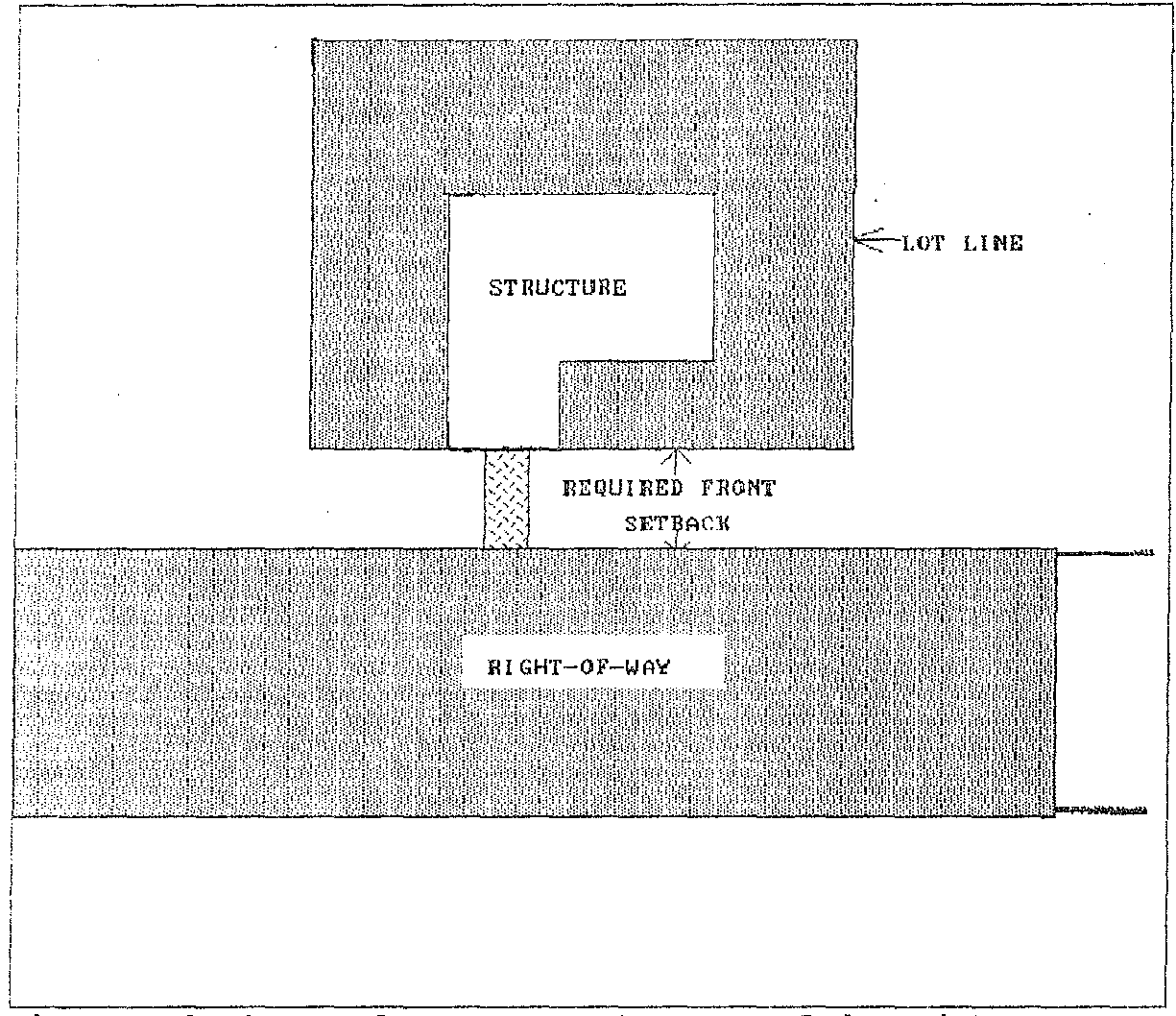
Figure 7.01.02-A Placement Area For Satellite Dishes
SEE FIGURE 11.01.02-A.
8.
The satellite dish antenna shall, to the maximum extent possible, be screened from view from a public right-of-way.
b.
The following standards are for installations in developments:
1.
A satellite dish antenna shall be considered an accessory structure to the main dwelling structure and shall not constitute the principal use of the property.
2.
The satellite dish antenna installed pursuant to this subsection shall not be used for any commercial purposes. It shall only provide service to the main dwelling structure.
3.
Satellite dish antenna installations shall be limited to one (1) installation per residential lot.
4.
The maximum size of the satellite dish antenna, whether ground or pole-mounted, shall be limited to twelve (12) feet in diameter.
5.
The maximum height of a ground-mounted satellite dish antenna installation shall be fifteen (15) feet.
6.
The maximum height of a pole-mounted satellite dish antenna installation shall be thirteen and one-half (13 ½) feet above the eaves of the roof.
7.
A satellite dish antenna shall not be permitted to be installed on the roof of any main dwelling structure.
8.
The satellite dish antenna installation, whether ground or pole, shall be mounted at a fixed point and shall not be portable.
(2)
Nonconforming antenna. Any satellite dish antenna lawfully installed prior to the enactment of this code shall be allowed to remain, until such time as it is replaced or moved. At the time of replacement or relocation, the provisions of this code shall be met.
(c)
Storage buildings, utility buildings, greenhouses.
(1)
No accessory buildings used for industrial storage of hazardous, incendiary, noxious, or pernicious materials shall be located nearer- than one hundred (100) feet from any property line.
(2)
Storage buildings, greenhouses, and the like shall be permitted only in compliance with standards for distance between buildings, and setbacks, if any, from property lines.
(3)
Storage and other buildings regulated by this section shall be permitted only in side and rear yards, and shall not encroach into any required building setback from an abutting right-of-way.
(4)
Storage and other buildings regulated by this section shall be included in calculations for impervious surface, floor area ratio, or any other site design requirements applying to the principal use of the lot.
(5)
Vehicles, including manufactured housing and mobile homes, shall not be used as storage buildings, utility buildings, or other such uses.
(d)
Swimming pools, hot tubs, and similar structures.
(1)
Swimming pools shall be permitted only in side and rear yards, and shall not encroach into any required building setback.
(2)
Enclosures for pools shall be considered a part of the principal structure and shall comply with standards for minimum distance between buildings, yard requirements, and other building location requirements of this code.
(3)
All pools shall be completely enclosed with an approved wall, fence or other substantial structure not less than five (5) feet in height. The enclosure shall completely surround the pool and shall be of sufficient density to prohibit unrestrained admittance to the enclosed area through the use of self-closing and self-latching doors.
(4)
No overhead electric power lines shall pass over any pool unless enclosed in conduit and rigidly supported, nor shall any power line be nearer than ten (10) feet horizontally or vertically from the pool's water edge.
(5)
Excavations for pools to be installed for existing dwellings shall not exceed a two-to-one (2:1) slope from the foundation of the house, unless a trench wall is provided.
(e)
Fences.
(1)
All fences to be built shall comply with the Standard Building Code and with a approved building permit. The posts of each fence must be resistant to decay, corrosion, and termite infestation. The posts must also be pressure-treated for strength and endurance.
(2)
Fences or hedges may be located in all front, side and rear yard setback areas. No fences or hedges shall exceed six (6) feet in height when placed in the front yard (the yard abutting a road or public right-of-way). Each fence located in the side and rear yard setbacks shall not exceed the height of eight (8) feet.
(3)
In areas where the property faces two (2) roadways or is located in any other area construed to be a corner lot, no fence shall be located in the vision triangle.
(4)
Any fence located adjacent to a public right-of-way or private road shall be placed with the finished side facing that right-of-way.
(5)
A fence required for safety and protection of hazard by another public agency may not be subject to height limitations above. Approval to exceed minimum height standards may be given by the conditional use review article II based upon satisfactory evidence of the need to exceed height standards.
(6)
No fence or hedge shall be constructed or installed in such a manner as to interfere with drainage on the site.
(7)
There shall not be permitted any electrical fences or electrical shock security devices any public, quasi-public or private property.
(8)
Barbed wire. Barbed wire may be used in conjunction with a minimum six (6) foot high fence with an overall height maximum of eight (8) feet under the following conditions and restrictions.
a.
Conditions.
1.
Barbed wire shall not exceed three (3) stands.
2.
Barbed wire shall angle towards the interior of property.
3.
Barbed wire is specifically prohibited in conjunction with all residential zoning districts and uses.
4.
Barbed wire on a site of mixed use or adjacent to residential use or zone shall be by use permit. (article II).
5.
Agriculture zone area may utilize barbed wire as outlined in (8) by building permit.
6.
All commercial and industrial sites may utilized barbed wire when approved by the site plan review process or by use permit (article II) when recommended by the director of community development once the following conditions are met:
(i)
Fence must be at least six (6) feet in height.
(ii)
Permitted by right in agricultural and industrial zones by right.
(iii)
Permitted in neighborhood and general commercial by administration review and/or site plan approval.
(iv)
Any residential zone shall require a use permit with justification's for request.
(e)
Accessory uses. (Reserved)
(Ord. No. 99-1, § 1, 1-12-99)
Sec. 14-200. - Generally.
(a)
Purpose and intent. It is the purpose of this section to provide appropriate standards relating to the operation of certain activities throughout the city. Such operations may create or maintain such excessive noise, vibration, air pollution, odor, or electromagnetic interference as to be a detriment to the public health, comfort, convenience, safety, and welfare. These standards are therefore provided to protect the public interest, and promote the public health and welfare.
(b)
Applicability. These standards shall apply to all lands within the city/county jurisdiction.
(c)
Standard manuals and measuring devices. (Reserved)
(1)
Devices and instruments. (Reserved)
[Specify the agency or association responsible for standardizing the instruments.]
(2)
References. The following references are cited in this article:
Sec. 14-201. - Noise.
Unless otherwise defined herein, all terminology shall be in conformance with applicable publications of the American National Standards Institute, Incorporated (ANSI) or its successor body.
(1)
Instrumentation. (Reserved)
[Standardizing the instruments. For example, noise may be measured with a sound level meter meeting the standards of the American National Standards Institute, with measurements conducted in accordance with the American Standard Method for the Physical Measurement of Sound. Any appropriate instrumentation and methodology may be cited in this section.]
(2)
Maximum permissible sound levels by receiving land use.
a.
Maximum sustained sound. No person shall operate or cause to be operated any source of sound in such a manner as to create a sound level which exceeds the limits set forth for the receiving land use category in the table below.
SOUND LEVELS BY RECEIVING LAND USE
(3)
Exemptions. The following activities or sources are exempt from these noise standards:
a.
Activities covered by the following: stationary, non-emergency signaling devices, emergency signaling devices, domestic power tools, air-conditioning and air-handling equipment for residential purposes, operating motor vehicles, refuse collection vehicles.
b.
The unamplified human voice.
c.
Railway locomotives and cars.
d.
The lowing of cattle, the clucking of fowl, the neighing of horses, the baying of hounds, or other normal sounds of reasonably cared for agricultural or domestic animals, as well as the sounds of necessary farming equipment for a bona fide agricultural operation.
e.
Aircraft operations.
f.
Construction or routine maintenance of public service utilities.
g.
Houses of worship bells or chimes.
h.
The emission of sound for the purpose of alerting persons to the existence of an emergency, or the emission of sound in the performance of emergency work.
(4)
Notice of violation. Except where a person is acting in good faith to comply with an abatement order, violation of any provision of this code shall be cause for a notice of violation to be issued by the director of development review.
(5)
Pre-existing uses not in conformance. Where an industry or commercial business has established its use away from other incompatible uses and subsequently, through the encroachment of development, now finds itself adjoining a receiving land category which would require a reduction in noise generation, said industry or commercial business shall not emit a noise which exceeds the maximum noise limitation for the receiving land use category by more than ten (10) decibels.
Sec. 14-202. - Vibration.
(a)
Method of measurement. (Reserved)
(b)
Standards. (Reserved)
(1)
Industrial. In industrial districts, impact vibrations from any use, at any point beyond district boundaries, shall not exceed the levels set forth in paragraph (3) below.
(2)
All other districts. In all other districts, impact vibrations from any use shall not exceed, at any point beyond the property lines of the use, the levels set forth in paragraph (3) below.
(3)
Maximum permissible vibration.
Sec. 14-203. - Air pollution.
(a)
Standard. To protect and enhance the air quality of the city, all sources of air pollution shall comply with rules set forth by the Environmental Protection Agency (Code of Federal Regulations, Title 40) and the Florida Department of Environmental Regulations (Florida Administrative Code, Chapter 17-2). No person shall operate a regulated source of air pollution without a valid operation permit issued by the Department of Environmental Regulation.
(b)
Testing. Air pollution emissions shall be tested and results reported in accordance with techniques and methods adopted by the Florida Department of Environmental Regulation and submitted to the state. These tests shall be carried out under the supervision of the state and at the expense of the person responsible for the source of pollution.
Sec. 14-205. - Fire and explosive hazards.
(a)
Standards (as determined and approved by fire chief). In all districts in which the storage, use, or manufacture of flammable or explosive materials is permitted, the following standards shall apply:
(1)
Storage and utilization of solid materials or products which are incombustible, or which in themselves support combustion and are consumed slowly as they burn, is permitted.
(2)
Storage, utilization, or manufacture of solid materials or products including free burning and intense burning is permitted provided that said materials or products shall be stored, utilized, or manufactured within completely enclosed buildings having noncombustible and protected throughout by an automatic fire extinguishing system. The requirements for an automatic fire extinguishing system may be waived by the director of development review in those cases where the introduction of water to a burning substance would cause additional hazard.
(3)
Outdoor storage of coal and other solid fuels is permitted provided storage is in conformance with the "Fire Protection Handbook" 1986 Edition, printed by the National Fire Protection Association.
(4)
Storage, utilization or manufacture of flammable and combustible liquids, or materials which produce flammable or explosive vapors or gases shall be permitted in accordance with National Fire Code #30, exclusive of storage of finished products in original sealed containers which shall be unrestricted.
(5)
The following classifications of liquids are unrestricted, provided that storage, handling, and use shall be in accordance with National Fire Protection Association, "Flammable and Combustible Liquids" Code #30.
CLASSIFICATION OF LIQUIDS
Class I Shall include those having flash points below one hundred (100) degrees Fahrenheit (37.8 degrees Celsius) and may be subdivided as follows:
Class I-A Shall include those having flash points below seventy-three (73) degrees Fahrenheit (22.8 degrees Celsius) and having a boiling point below one hundred (100) degrees Fahrenheit (37.8 degrees Celsius).
Class I-B Shall include those having flash points below seventy-three (73) degrees Fahrenheit (22.8 degrees Celsius) and having a boiling point at or above one hundred (100) degrees Fahrenheit (37.8 degrees Celsius).
Class I-C Shall include those having flash points at or above seventy-three (73) degrees Fahrenheit (22.8 degrees Celsius) and below one hundred (100) degrees Fahrenheit (37.8 degrees Celsius).
Class II Shall include those having flash points at or above one hundred (100) degrees Fahrenheit (37.8 degrees Celsius) and below one hundred forty (140) degrees Fahrenheit (sixty (60) degrees Celsius).
Class III Shall include those having flash points at or above one hundred forty (140) degrees Fahrenheit (sixty (60) degrees Celsius) and may be subdivided as follows:
Class III-A Shall include those having flash points at or above one hundred forty (140) degrees Fahrenheit (sixty (60) degrees Celsius) and below two hundred (200) degrees Fahrenheit (93.4 degrees Celsius).
Class III-B Shall include those having flash points at or above two hundred (200) degrees Fahrenheit (93.4 degrees Celsius).
Sec. 14-206. - Electromagnetic interference.
In all districts, no use, activity, or process shall be conducted which produces electric and/or magnetic fields which adversely affect public health, safety, and welfare including but not limited to interference with normal radio, telephone, or television reception from off the premises where the activity is conducted.

