
Pinellas County Unincorporated
City Zoning Code
City Zoning Code
APPENDIX
- BUILDING TYPES
Sec. 138-4120.- Building design standards
(a)
Building types. Appropriate and scaled Building Types are identified for each District. Building Types are intended to provide more predictability of an area's built environment, while also appropriately scaling new development/redevelopment within established neighborhoods. The typical features outlined in this section are intended to generally describe the range in scale and components of each building type. The District Standards and intents established in LFBC Division 4 further define the allowable scale for each building type (i.e. maximum height).
LFBC Appendix: Table 138-4120.a: Building Types Summary Table provides an overview of the allowed Building Types and identifies which District each type is typically appropriate.
(b)
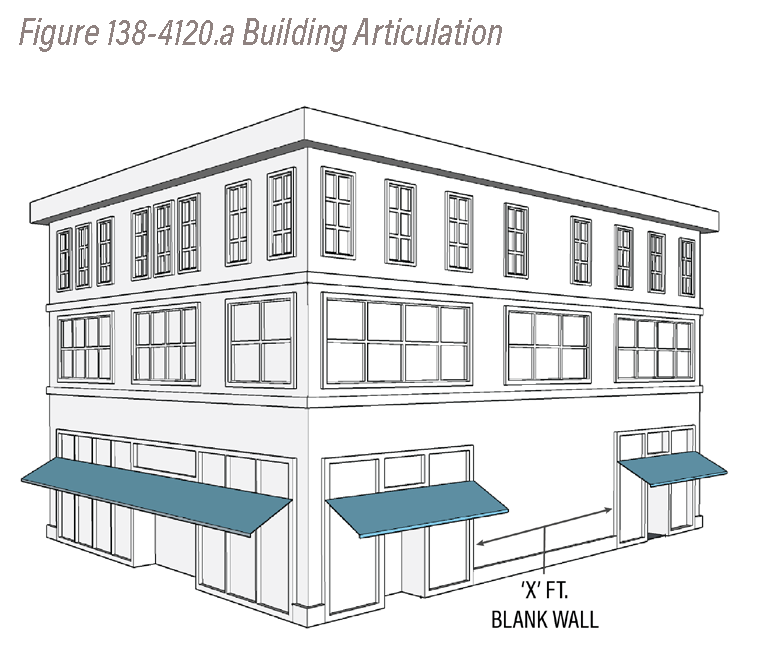
Building articulation. Elements such as windows, functional doors, changes in materials, murals, reliefs/breaks in the wall or other architectural details that provide visual interest must be used to break up blank sections of wall (See LFBC Appendix: Figure 138-4120.a). The following table (LFBC Table 138-4120.b) specifies the maximum length of a blank wall for each District.
TABLE 138-4120.b: MAXIMUM LENGTH OF A BLANK WALL
(c)
Mechanical equipment. All mechanical equipment and utility functions (e.g. electrical conduits, meters, HVAC equipment) must be located behind the facadeline of the primary structure. Mechanical equipment that could otherwise be visible from a street must be screened with a material that is compatible with the architecture of the primary structure and integrated into the building form, where possible.
| BUILDING TYPE | GENERAL DESCRIPTION | DISTRICTS | |
CARRIAGE HOUSE / ADU | 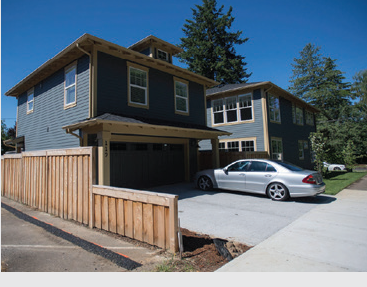 | A secondary structure that is detached from a single-unit dwelling, typically located at the rear of a lot. This structure provides habitable living space for a small residential unit. This structure may be stand-along or located above a garage or workshop behind the primary residence on the property. This is an important building type for providing affordable housing opportunities and options within neighborhoods. |  |
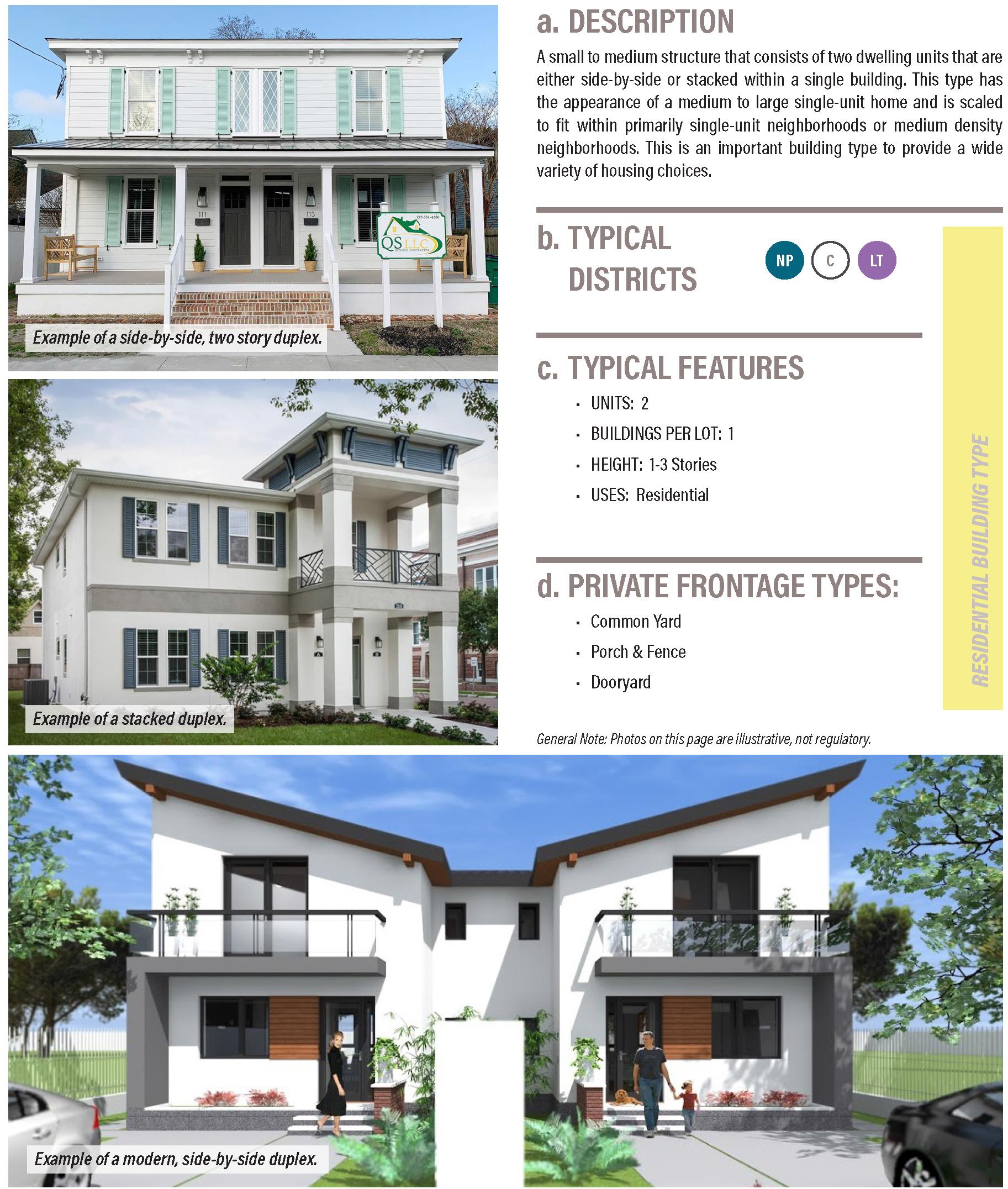
DUPLEX | 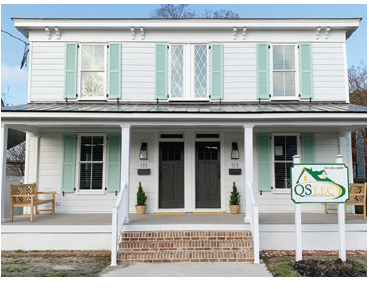 | A small to medium sized structure that consists of two dwelling units that are either side-by-side or stacked within a single building. This type has the appearance of a medium to large single-unit home and is scaled to fit within primarily single-unit neighborhoods or medium density neighborhoods. This is an important building type to provide for a wide variety of housing choices. |  |
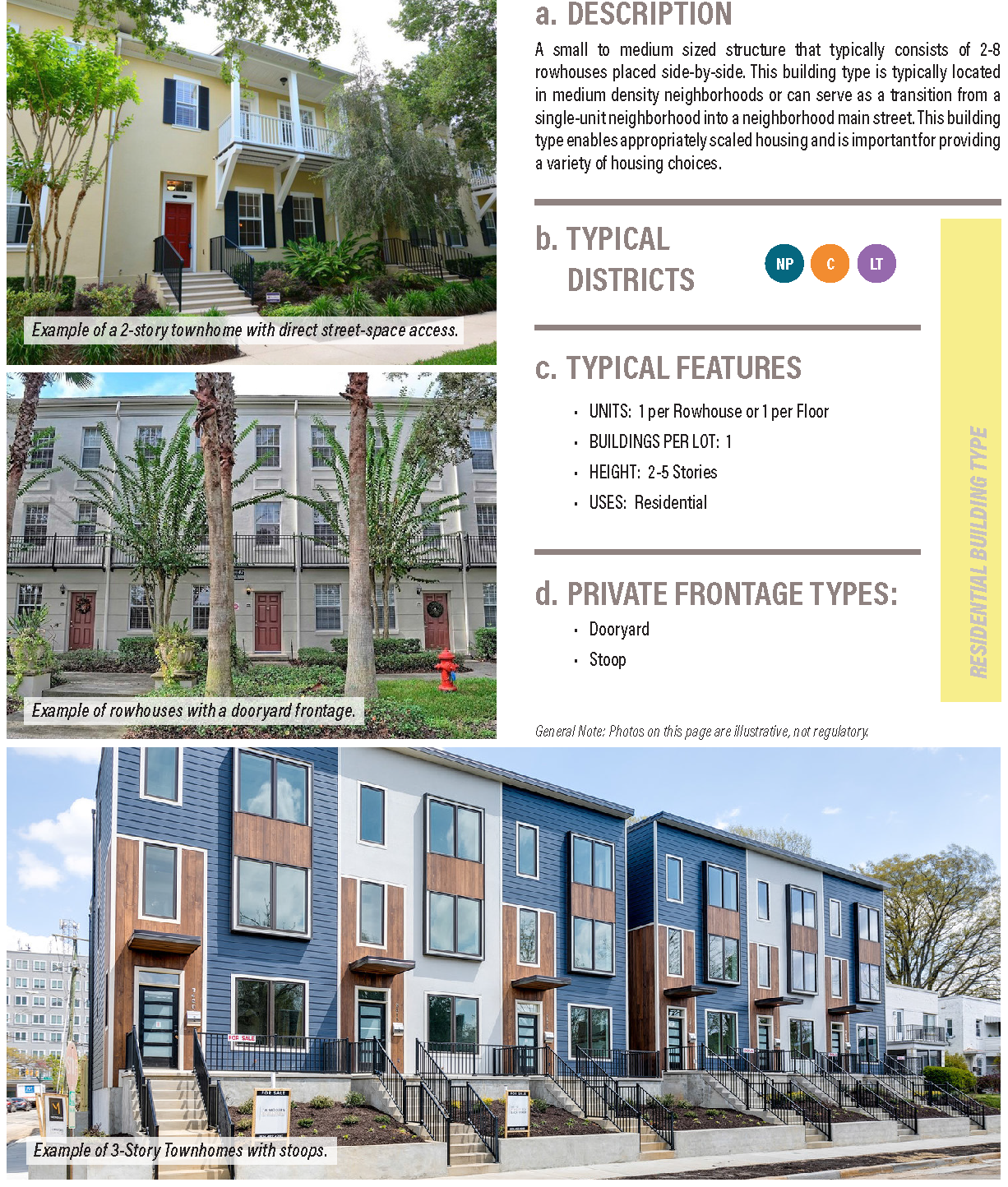
TOWNHOME / ROWHOUSE | 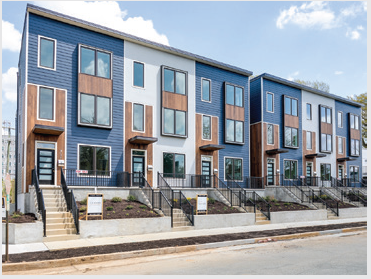 | A small to medium sized structure that typically consists of 2 - 8 rowhouses placed side-by-side. This building type is typically located in medium density neighborhoods or can serve as a transition from a single-unit neighborhood into a neighborhood main street. This building type enables appropriately scaled housing and is important for providing a variety of housing choices. |  |
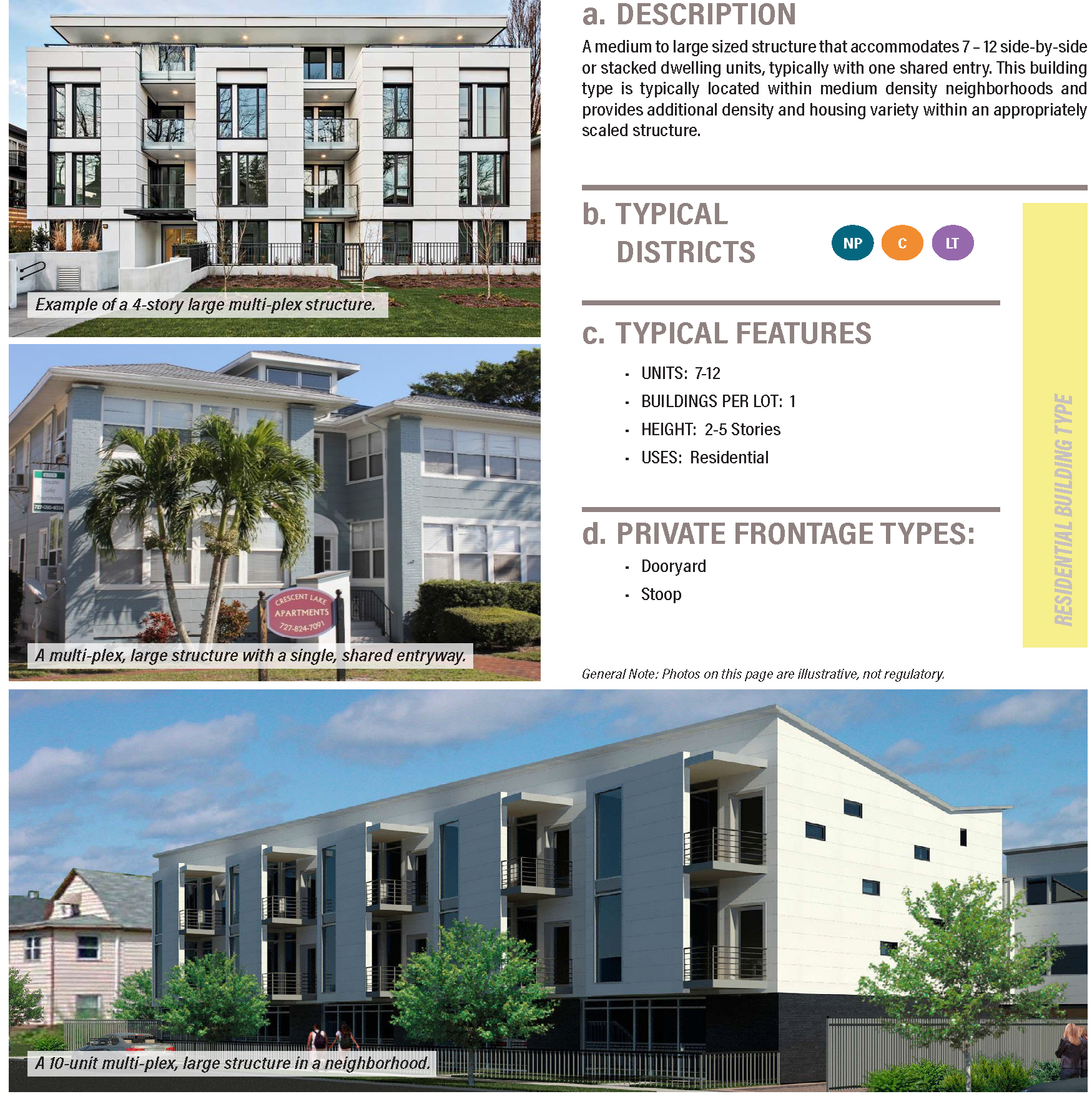
MULTI-PLEX, LARGE | 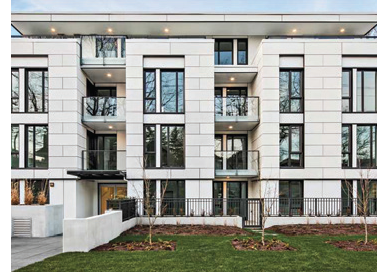 | A medium to large sized structure that accommodates 7 - 12 side-by-side or stacked dwelling units, typically with one shared entry. This building type is typically located within medium density neighborhoods and provides additional density and housing variety within an appropriately scaled structure. |  |
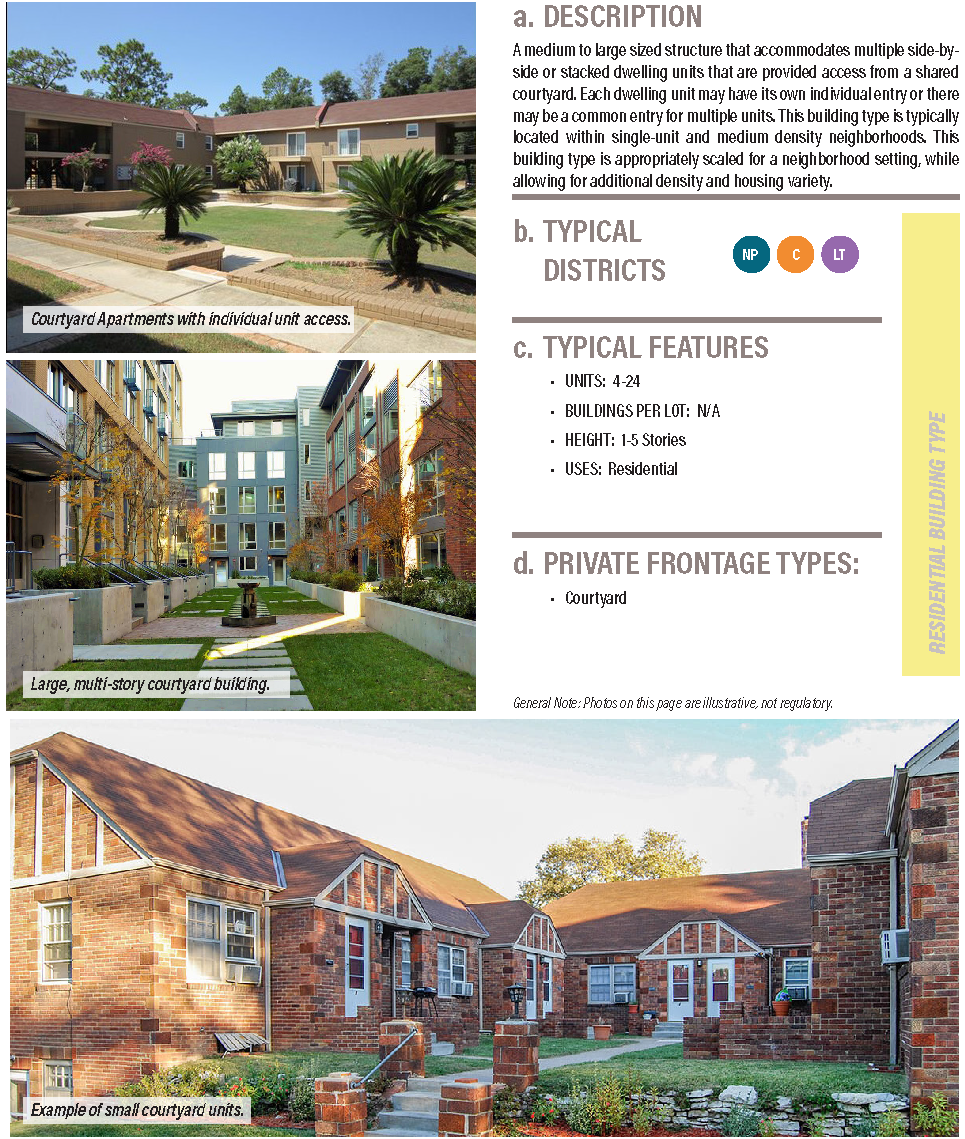
COURTYARD BUILDING | 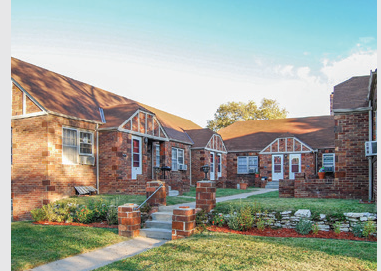 | A medium to large sized structure that accommodates multiple side-by-side or stacked dwelling units that are provided access from a shared courtyard. Each dwelling unit may have its own individual entry or there may be a common entry for multiple units. This building type is typically located within single-unit and medium density neighborhoods. This building type is appropriately scaled for a neighborhood setting, while allowing for additional density and housing variety. |  |
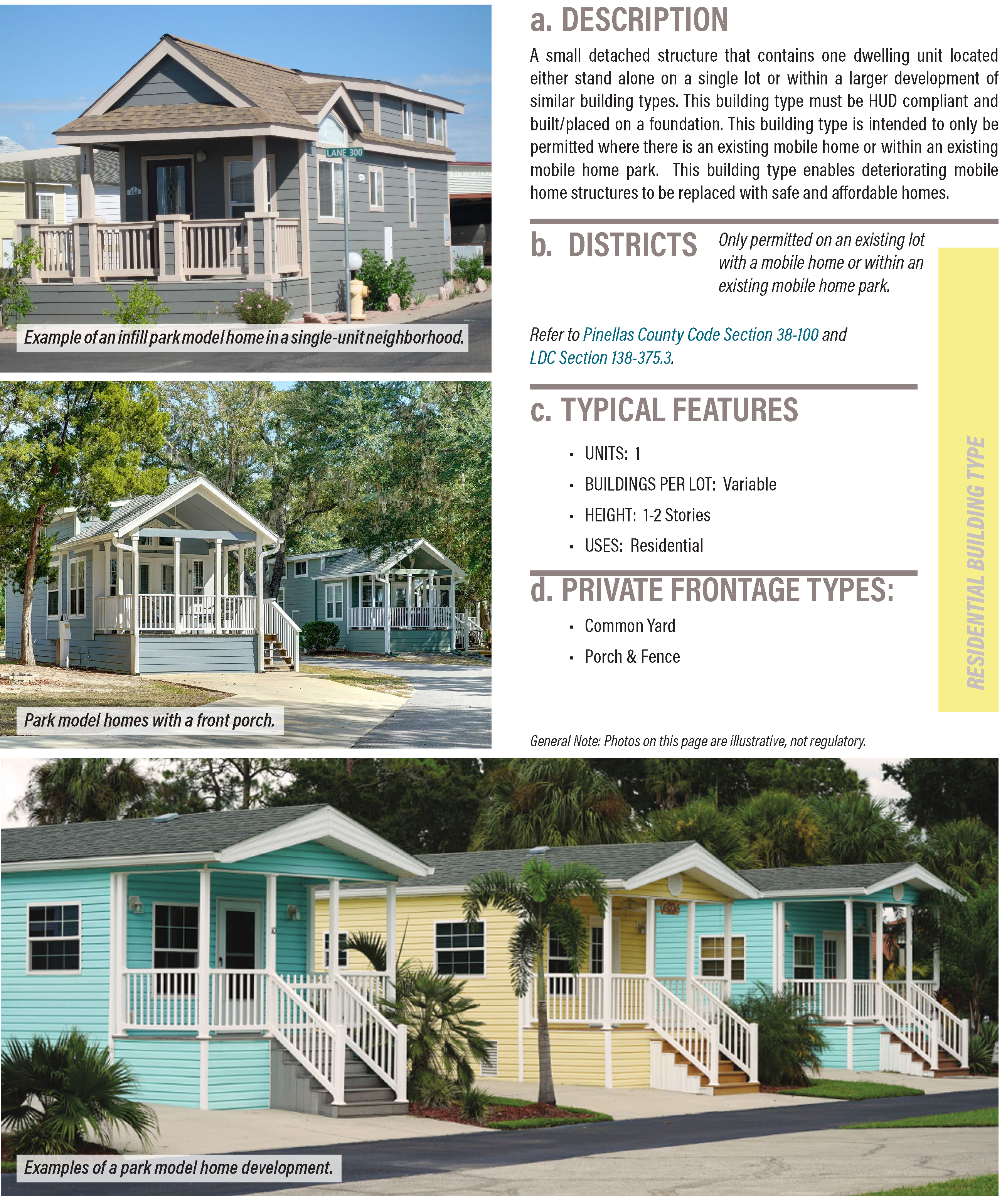
PARK MODEL | 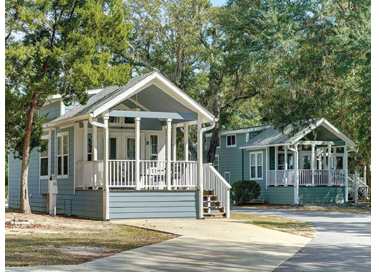 | A small detached structure that contains one dwelling unit located either stand alone on a single lot or within a larger development of similar building types. This building type shall be built/placed on a foundation. This building type is intended to only be permitted where there is an existing mobile home or within an existing mobile home/RV park. This building type enables deteriorating mobile home structures to be replaced with safe and affordable homes. | Only permitted on an existing lot with a mobile home or within an existing mobile home/RV park. |
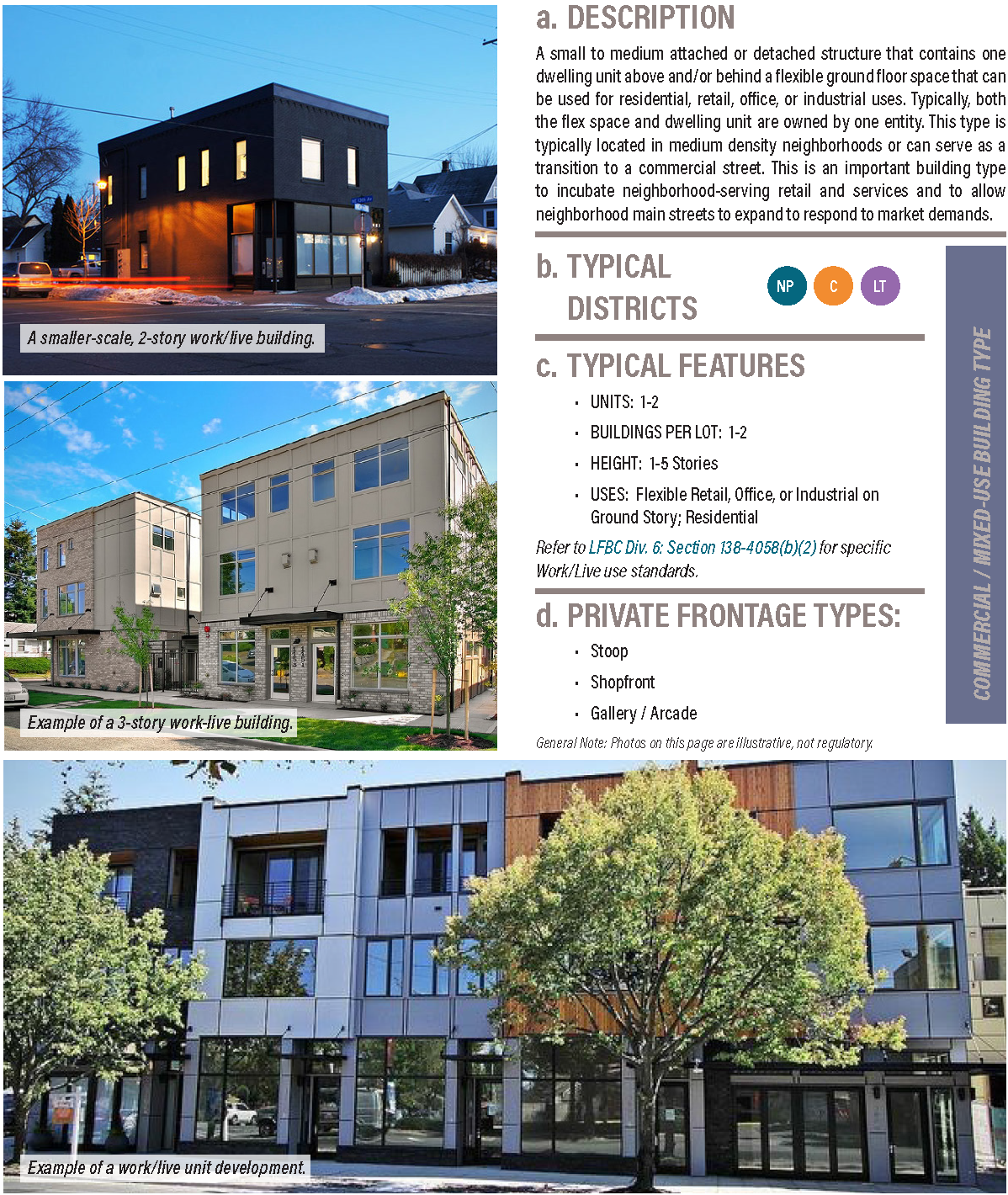
WORK / LIVE BUILDING | 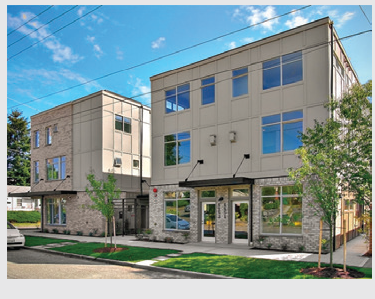 | A small to medium, attached or detached structure that contains one dwelling unit above and/or behind a flexible ground floor space that can be used for residential, retail, office, or industrial uses. Typically both the flex space and dwelling unit are owned by one entity. This type is typically located in medium density neighborhoods or can serve as a transition to a commercial street. This is an important type to incubate neighborhood-serving retail and services and to allow neighborhood main streets to expand to respond to market demands. |  |
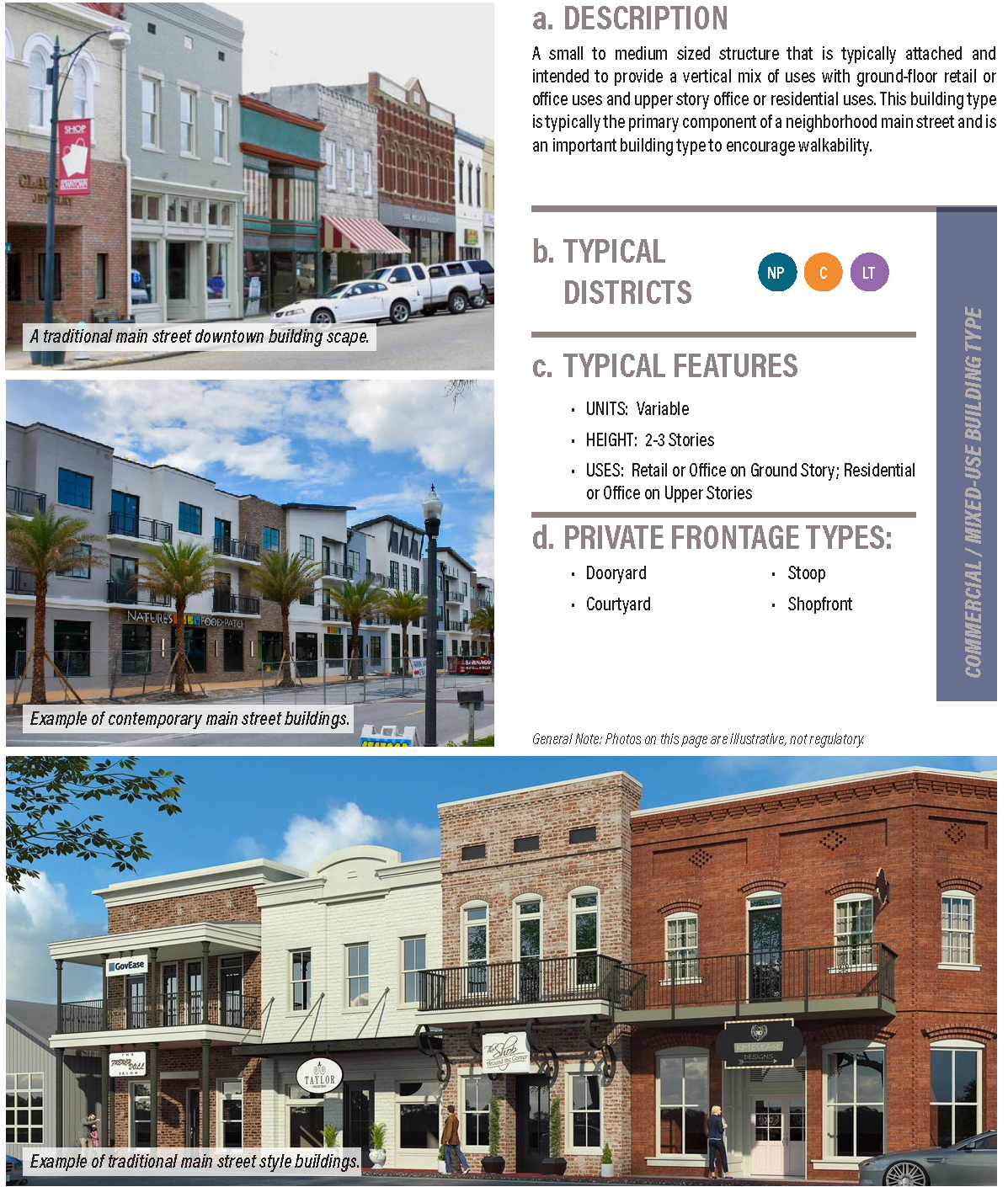
MAIN STREET BUILDING | 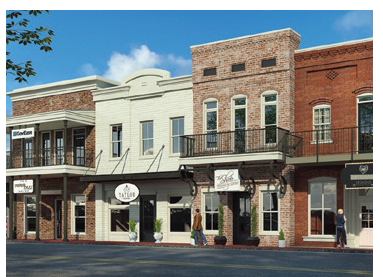 | A small to medium sized structure that is typically attached and intended to provide a vertical mix of uses with ground-floor retail or office uses and upper story office or residential uses. This building type is typically the primary component of a neighborhood main street and is an important building type to encourage walkability. |  |
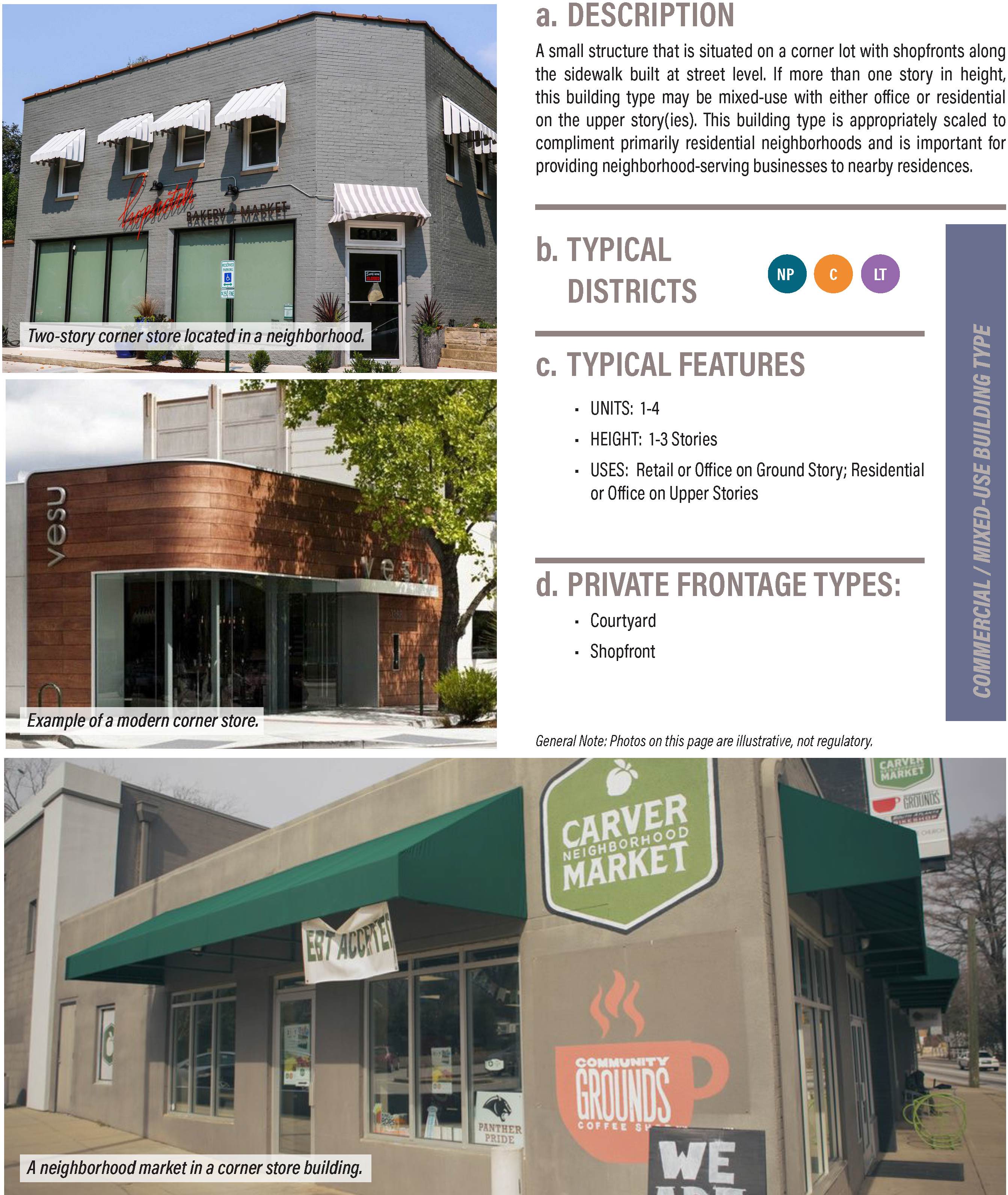
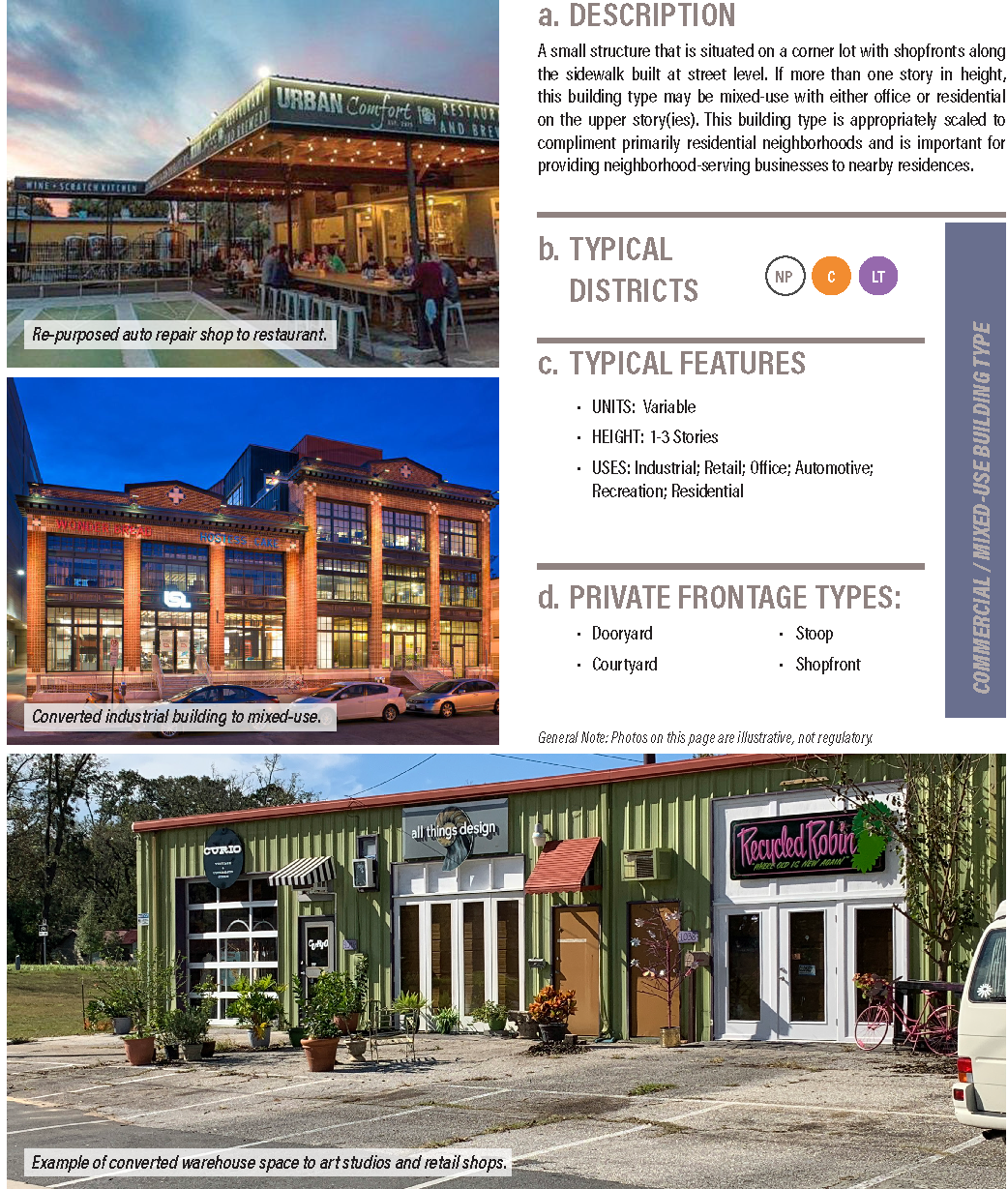
CORNER STORE | 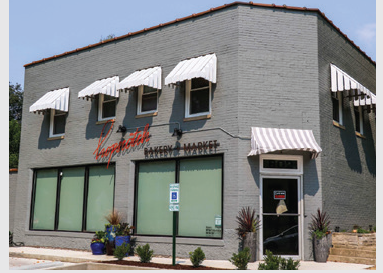 | A small structure that is situated on a corner lot with shopfronts along the sidewalk built at street level. If more than one story in height, this building type may be used with either office or residential on the upper story(ies). This building type is appropriately scaled to compliment primarily residential neighborhoods and is important for providing neighborhood-serving businesses to nearby residences. |  |
FLEX BUILDING | 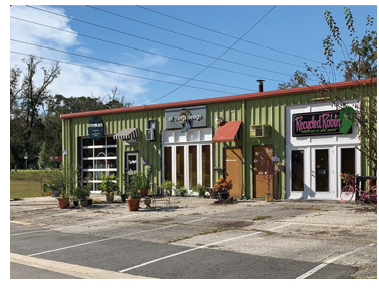 | A medium to large-sized structure, 1-3 stories in height that can accommodate a range of users, including industrial, retail, office, or mixed use with residential where appropriate. This building type can apply to existing buildings in industrial and commercial areas that can be retrofitted or utilized for adaptive reuse. This building type is typically located in industrial areas and urban neighborhoods and is important for providing a mix of buildings in developed neighborhoods. |  |
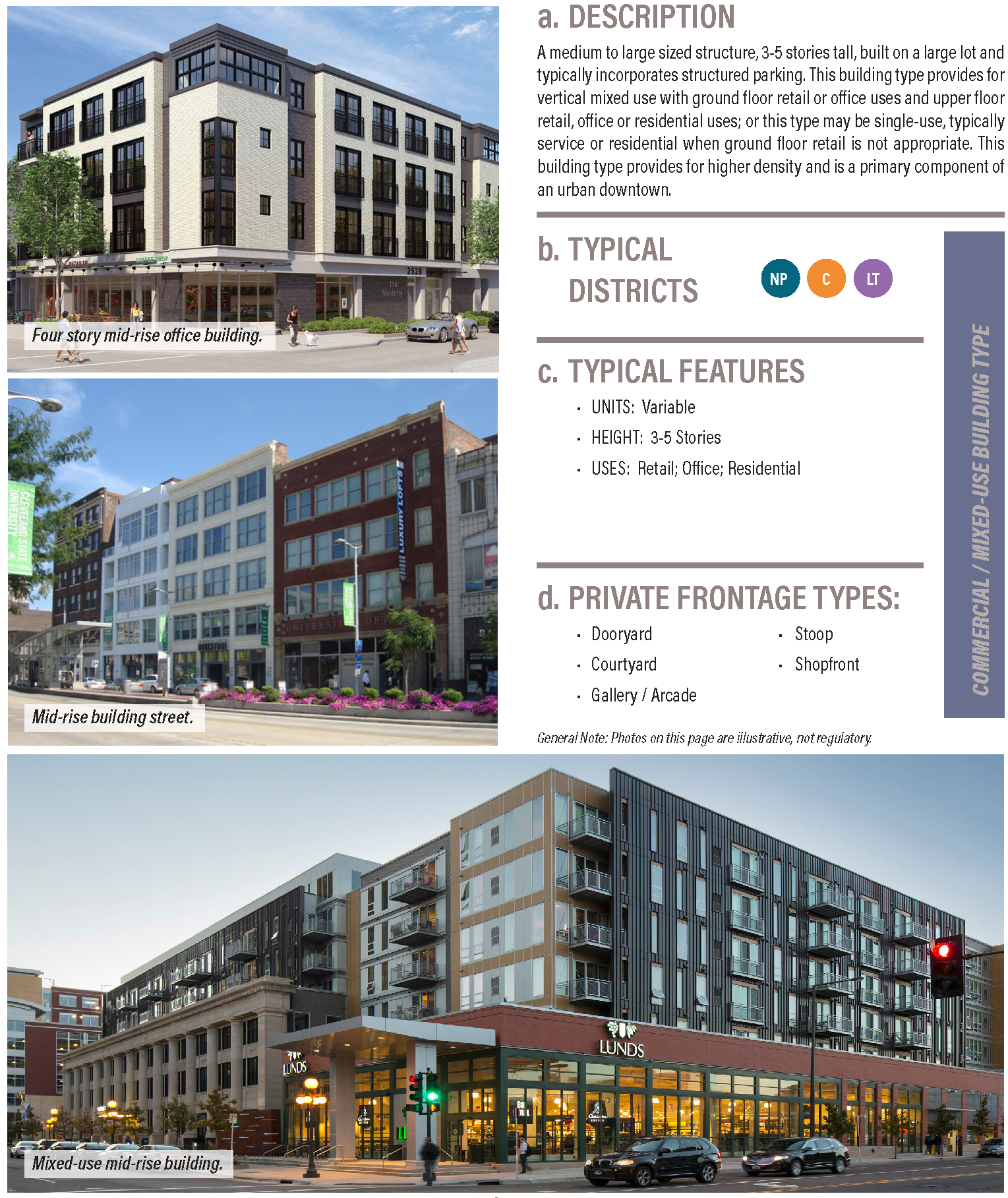
MID-RISE BUILDING | 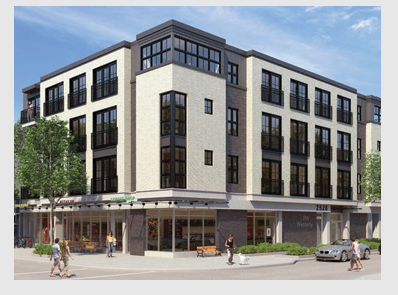 | A medium to large sized structure, 3-5 stories tall, built on a large lot and typically incorporates structured parking. This building type provides for vertical mixed use with ground floor retail or office uses and upper floor retail, office, or residential uses; or this type may be single-use, typically service or residential when ground floor retail is not appropriate. This building type provides for higher density and is a primary component of an urban downtown. |  |
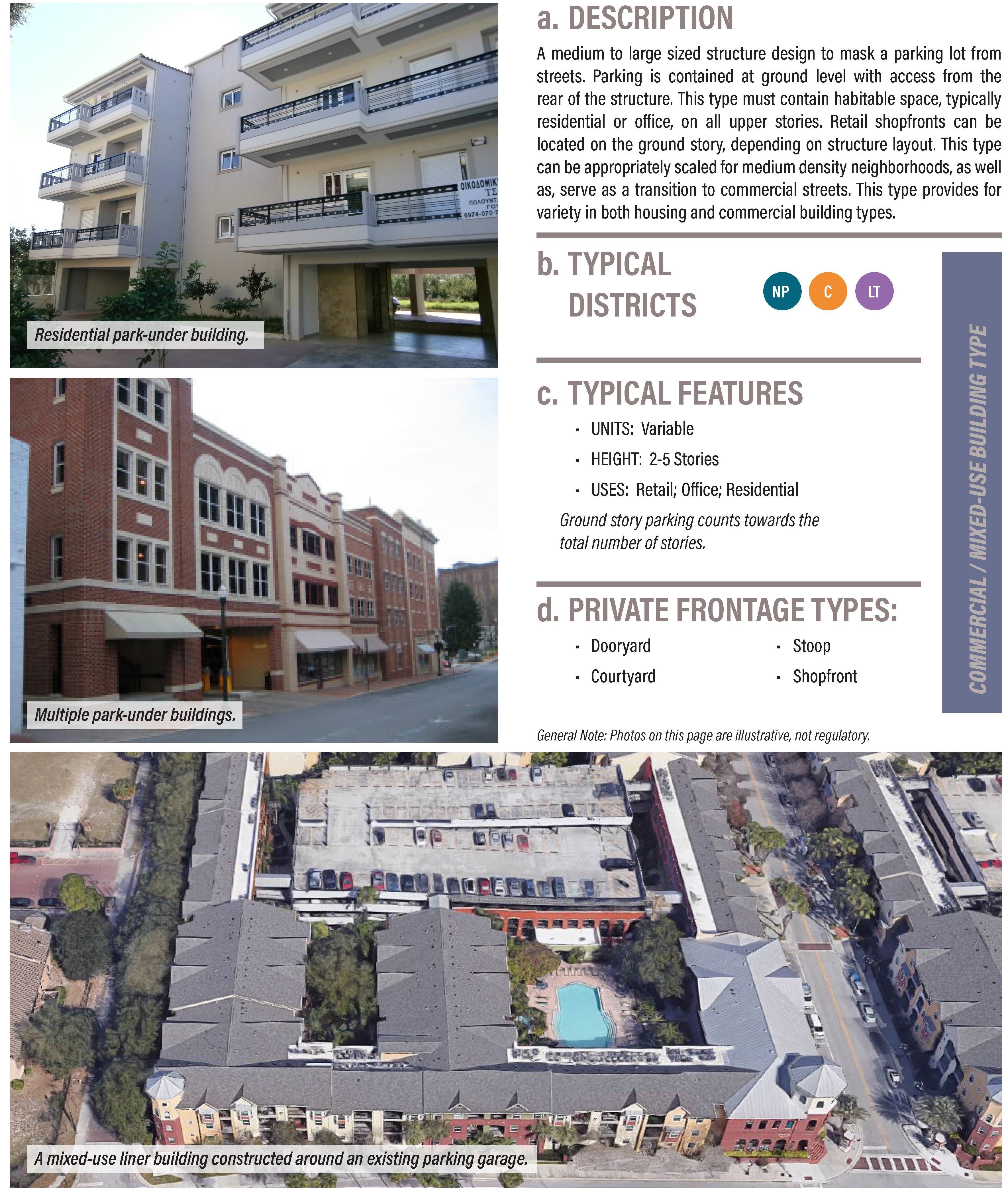
PARK-UNDER/LINER BUILDING | 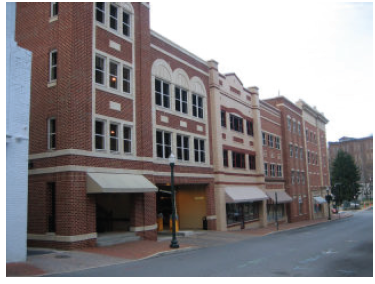 | A medium to large sized structure designed to mask a parking lot from streets. Parking is contained at ground level with access from the rear of the structure. This type must contain habitable space, typically residential or office, on all upper stories. Retail shopfronts can be located on the ground story, depending on structure layout. This type can be appropriately scaled for medium density neighborhoods, as well as, serve as a transition to commercial streets. This type provides for variety in both housing and commercial building types. |  |
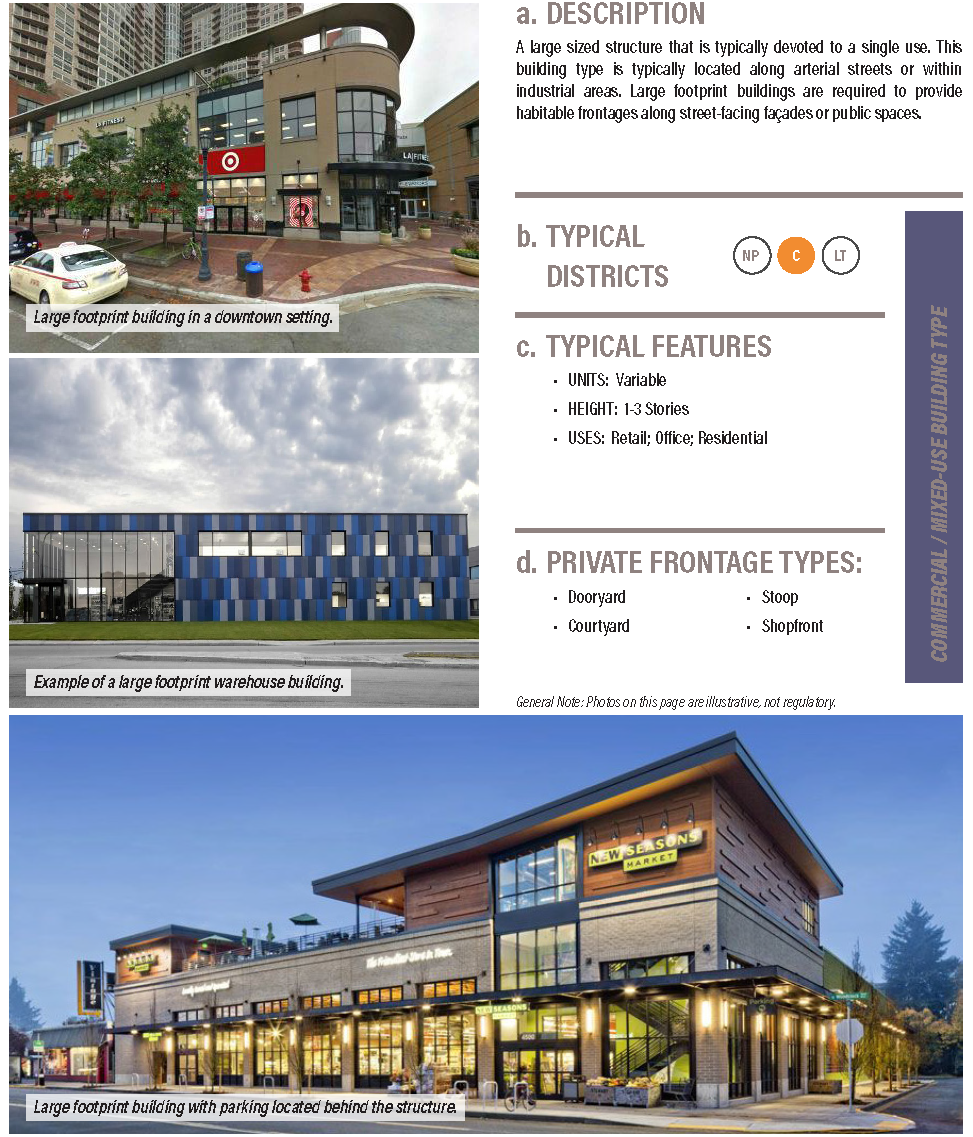
LARGE FOOTPRINT BUILDING | 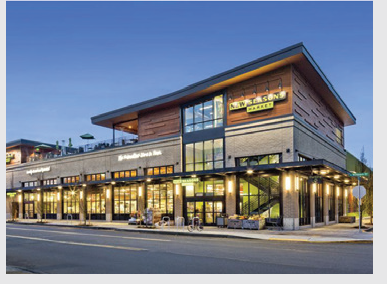 | A large sized structure that is typically devoted to a single use. This building type is typically located along arterial street or within industrial areas. Large footprint buildings are required to provide habitable frontages along street-facing facades or public spaces. |  |
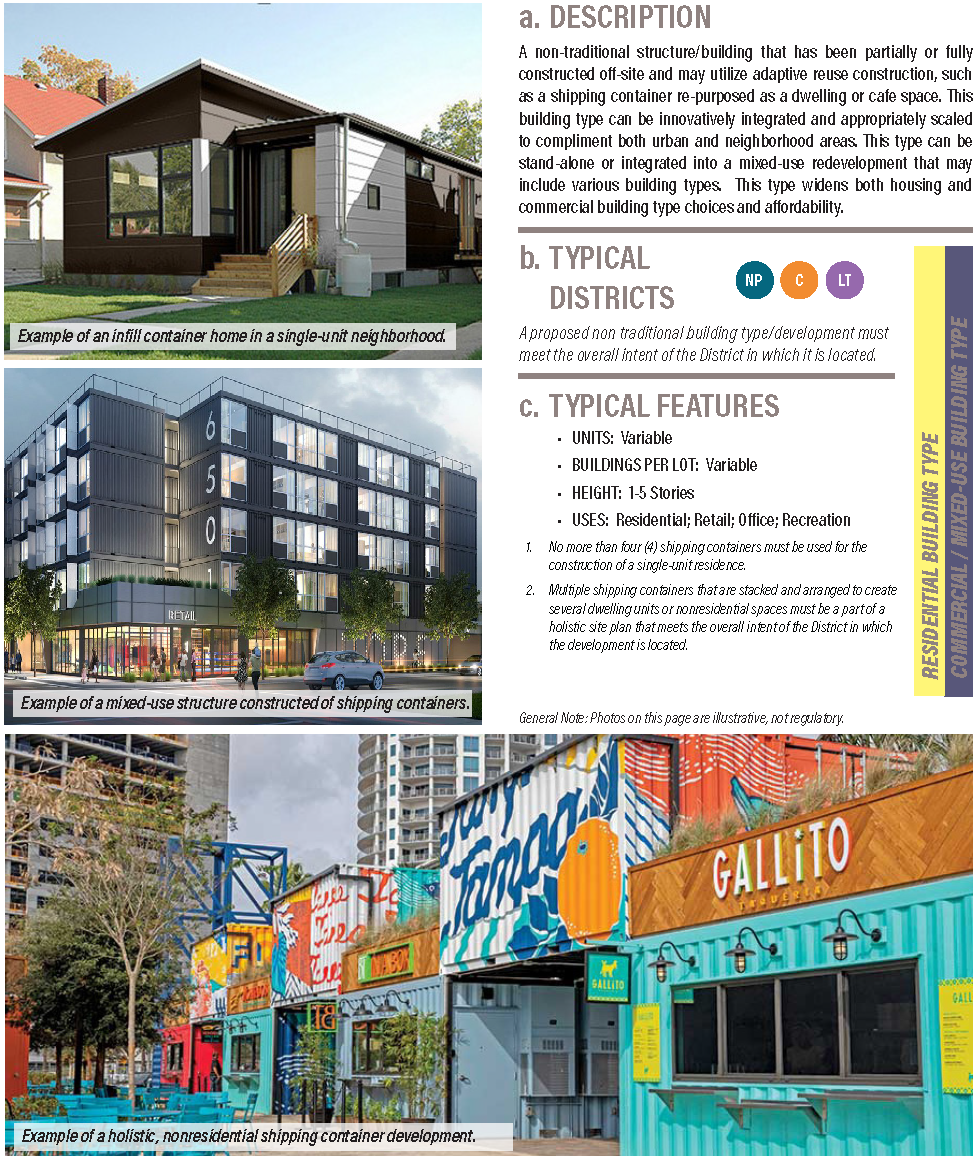
CONTAINER / PRE-FAB | 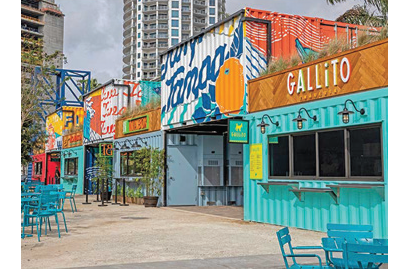 | A non-traditional structure/building that has been partially or fully constructed off-site and may utilize adaptive reuse construction, such as a shipping container re-purposed as a dwelling or cafe space. This building type can be innovatively integrated and appropriately scaled to compliment both urban and neighborhood areas. This type can be stand-alone or integrated into a mixed-use redevelopment that may include various building types. This type widens both housing and commercial building type choices and affordability. |  |
(Ord. No. 23-31, § 4, Exh. A, 12-12-23)
Sec. 138-4120(a)(1). CARRIAGE HOUSE / ACCESSORY DWELLING UNIT (ADU)
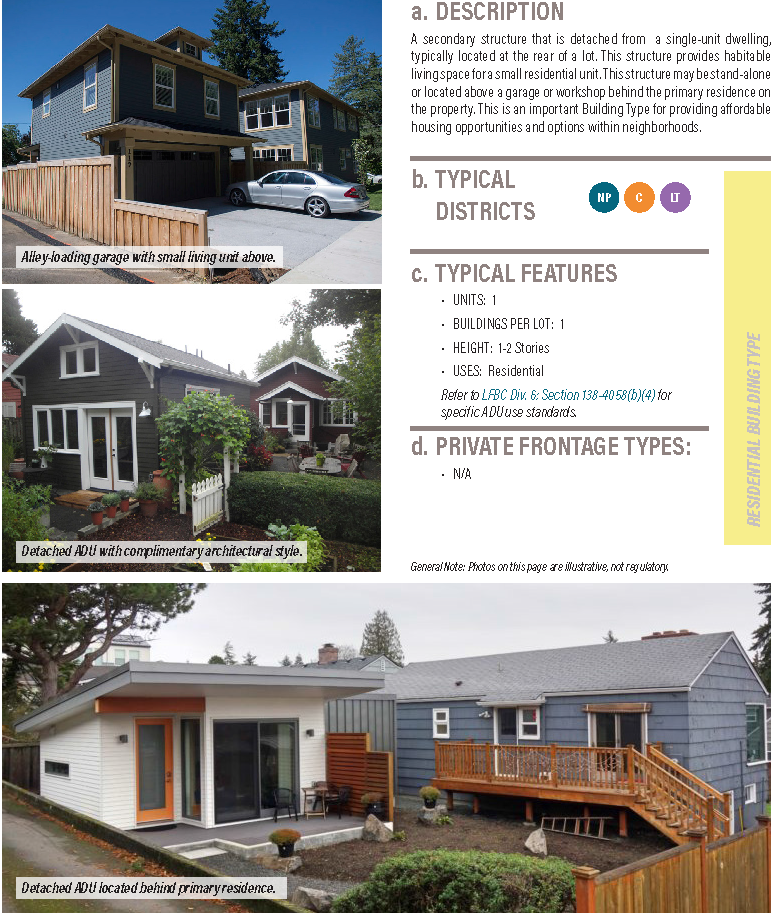
Sec. 138-4120(a)(2). DUPLEX
Sec. 138-4120(a)(3). TOWNHOUSE / ROWHOUSE
Sec. 138-4120(a)(4). MULTI-PLEX, LARGE
Sec. 138-4120(a)(5). COURTYARD BUILDING
Sec. 138-4120(a)(6). MODERN MANUFACTURED BUILDING
Sec. 138-4120(a)(7). WORK / LIVE BUILDING
Sec. 138-4120(a)(8). MAIN STREET BUILDING
Sec. 138-4120(a)(9). CORNER STORE
Sec. 138-4120(a)(10). FLEX BUILDING
Sec. 138-4120(a)(11). MID-RISE BUILDING
Sec. 138-4120(a)(12). PARK-UNDER / LINER BUILDING
Sec. 138-4120(a)(13). LARGE FOOTPRINT BUILDING
Sec. 138-4120(a)(14). CONTAINER BUILDING / PRE-FAB
(Ord. No. 23-31, § 4, Exh. A, 12-12-23)

