
Pinellas County Unincorporated
City Zoning Code
City Zoning Code
ARTICLE IV
RESIDENTIAL AND AGRICULTURAL DISTRICTS
DIVISION 4. - SUPPLEMENTAL RESIDENTIAL STANDARDS
The following supplemental standards are applicable to all new residential development.
(Ord. No. 18-36, § 3(Att. B), 10-23-18)
Sec. 138-360. - District density and intensity standards.
The maximum density and intensity (floor area ratio) standards for each zoning district are governed by the underlying future land use map (FLUM) category identified within the Pinellas County Comprehensive Plan.
(Ord. No. 18-36, § 3(Att. B), 10-23-18)
Sec. 138-361. - Permitted land uses.
Land Uses shall be permitted as defined in Table 138-355 — Table of Uses in article III, division 3.
(Ord. No. 18-36, § 3(Att. B), 10-23-18)
Sec. 138-362. - Specific use standards and district design criteria.
(a)
Individual land uses may be subject to the specific use standards as established in chapter 138, article IX, specific use standards.
(b)
Developments and land uses may be subject to the design criteria for individual districts as established in chapter 138, article X, community design standards division 6, district design criteria.
(c)
Where the standards/requirements are different the stricter regulation shall apply.
(Ord. No. 18-36, § 3(Att. B), 10-23-18)
Sec. 138-363. - Applicability.
(a)
The single-family zoning districts include the following: R-A, R-E, R-R, R-1, R-2, R-3 and RMH.
(b)
The following sections list the development parameters and other specific requirements for each individual zoning district.
(c)
Division 4, supplemental residential standards are applicable in addition to the individual zoning district standards.
(Ord. No. 18-36, § 3(Att. B), 10-23-18)
Sec. 138-364. - Definition, purpose and intent of districts.
The single-family zoning districts comprise zoning districts ranging in lot size from two or more acres to less than 5,000 square feet. Most of the lots within these districts are suburban in nature and characterized by single-use development.
The regulations within these districts are designed to protect their single-family residential character while permitting rehabilitation, improvements and redevelopment in keeping with the scale of each respective neighborhood.
(Ord. No. 18-36, § 3(Att. B), 10-23-18)
Sec. 138-365. - R-A, Residential Agriculture District.
The R-A, Residential Agriculture District provides for large residential lots of a size and character that can accommodate agricultural activities. The district is intended to retain and preserve much of the natural character of the area including vegetation, hydrology, and topography. Personal and commercial agricultural uses may be permitted within this district as authorized. Due to the extensively urbanized character of the county, however, agriculture may not be appropriate in certain areas covered by this district.
(Ord. No. 18-36, § 3(Att. B), 10-23-18)
Sec. 138-365.1. - R-A, Residential Agriculture District—Development parameters.
Sec. 138-366. - R-E, Residential Estate District.
The R-E, Residential Estate District provides for large lot, low density residential communities. The areas covered by the R-E District are generally developed with large lot residential estates, while maintaining open spaces and natural landscapes.
(Ord. No. 18-36, § 3(Att. B), 10-23-18)
Sec. 138-366.1. - R-E, Residential Estate District — Development parameters.
Sec. 138-367. - R-R, Rural Residential District.
Sec. 138-367.1. - R-R, Rural Residential District—Development parameters.
Sec. 138-368. - R-1, Single-Family Residential District.
The R-1, Single-Family Residential District provides for areas of single-family residential development located where lower density single-family uses are desirable.
(Ord. No. 18-36, § 3(Att. B), 10-23-18)
Sec. 138-368.1. - R-1, Single-Family Residential District—Development parameters.
Sec. 138-369. - R-2, Single-Family Residential District.
The R-2, Single-Family Residential District provides for areas of single-family residential development located where moderate density single-family uses are desirable.
(Ord. No. 18-36, § 3(Att. B), 10-23-18)
Sec. 138-369.1. - R-2, Single-Family Residential District—Development parameters.
Sec. 138-370. - R-3, Single-Family Residential District.
The R-3, Single-Family Residential District provides for areas of single-family residential development located where higher density single-family uses are desirable. It provides for the highest density of all the traditional single-family residential zoning districts.
(Ord. No. 18-36, § 3(Att. B), 10-23-18; Ord. No. 21-11, § 35, 4-27-21)
Sec. 138-370.1. - R-3, Single-Family Residential District—Development parameters.
Sec. 138-375. - RMH, Residential Mobile/Manufactured Home District.
The RMH, Residential, Mobile/Manufactured Home District provides for single-family areas comprised of mobile/manufactured homes, mobile home parks and/or mobile home subdivisions.
(Ord. No. 18-36, § 3(Att. B), 10-23-18)
Sec. 138-375.1. - RMH, Residential Mobile/Manufactured Home District—Development parameters for mobile home parks and their individual spaces.
(Ord. No. 18-36, § 3(Att. B), 10-23-18)
Sec. 138-375.2. - RMH, Residential Mobile/Manufactured Home District—Development parameters for mobile home subdivision individual lots.
(Ord. No. 18-36, § 3(Att. B), 10-23-18)
Sec. 138-375.3. - RMH, Residential Mobile/Manufactured Home District—Additional requirements and clarifications.
(a)
Roadways or streets within a mobile home park shall comply with county roadway standards as defined in chapter 154, article III.
(b)
A minimum of ten percent of the gross site area shall be devoted to open space and recreation facilities, generally provided in a central location, or decentralized in larger sites. Such areas may include space for community buildings and community use facilities, such as recreation and play areas, swimming pools and open space.
(c)
A mobile home subdivision shall be platted in accordance with the standards of this chapter and chapter 154 of this Code.
(d)
Any real property zoned RMH (previously R-6) after January 1, 2019, shall comply with all of the provisions set forth in this division. Any legally established mobile home park in existence on or prior to January 30, 1990 may continue to operate in accordance with approved plans and the regulations in effect at the time of the park's site plan approval. Mobile home parks with legally established non-conforming density may be redeveloped as affordable housing in accordance with section 38-100 of this Code.
(e)
Any additions, expansions or substantial changes to existing mobile home parks or subdivisions shall comply with the provisions of the current requirements of this division. An individual lot mobile home replacement does not constitute a substantial change.
(f)
Manufactured homes being installed in new parks, subdivisions, or replacing existing mobile/manufactured homes must have been constructed on or after June 1, 1994.
(Ord. No. 18-36, § 3(Att. B), 10-23-18; Ord. No. 21-11, § 37, 4-27-21)
Sec. 138-379. - Applicability.
(a)
The multi-family zoning districts include the following: R-4, R-5, RM, and RPD.
(b)
The following sections list the development parameters and other specific requirements for each individual zoning district.
(c)
Division 4, supplemental residential standards are applicable in addition to the individual zoning district standards.
(Ord. No. 18-36, § 3(Att. B), 10-23-18)
Sec. 138-380. - Definition, purpose and intent of districts.
The unifying characteristic of multi-family zoning districts is the flexibility of providing multi- and single-family residential dwellings or a mix of such uses. These districts also provide a wide range of accessory uses typical of multi-family developments.
The regulations within these districts are generally designed to protect the residential character of these neighborhoods while permitting rehabilitation, improvements and redevelopment in keeping with the scale of each respective neighborhood and surrounding areas.
(Ord. No. 18-36, § 3(Att. B), 10-23-18)
Sec. 138-385. - R-4, One, Two and Three-Family Residential District.
The R-4, One, Two and Three-Family Residential District provides for areas where single-family, two-family and three-family dwellings are appropriate and desirable. It is intended that such areas be located in or near urbanized areas where a range of transportation options and urban services are readily available.
(Ord. No. 18-36, § 3(Att. B), 10-23-18)
Sec. 138-385.1. - R-4, One, Two and Three-Family Residential District—Development parameters.
Sec. 138-386. - R-5, Urban Residential District.
The R-5, Urban Residential District provides for areas where the development of small-lot, detached single-family, two-family and three-family dwellings and townhouses are appropriate. The district is intended to allow compact, urban-style dwelling units typically comprised of smaller living spaces on smaller lots.
The R-5 district should be located in or near urbanized areas where sufficient transportation facilities and urban infrastructure are readily available. The district is also intended for properties in and around established urban residential neighborhoods that are planned to accommodate infill redevelopment. The district facilitates compact infill redevelopment by allowing housing types with small lots and minor structural setbacks. This district shall include all areas indicated on the zoning atlas maps as R-5.
R-5 residential neighborhoods should be developed around and incorporate common open space areas such as parks and courtyards.
(Ord. No. 18-36, § 3(Att. B), 10-23-18)
Sec. 138-386.1. - R-5, Urban Residential District—Development parameters.
Sec. 138-386.2. - R-5, Urban Residential District—Additional requirements and clarifications.
(a)
Each residential building may include up to six individual dwelling units. Such buildings containing single family attached units with individual lot ownership are not considered to be a multifamily use.
(b)
Lots that abut an improved alley shall provide parking in the rear of the dwelling and/or within rear-loaded garages.
(c)
Entrances for residential units shall be oriented to a public or private adjacent street, alley, open space area, or internal courtyard.
(d)
A garage vehicle door/opening located on a street-facing facade shall be limited to 55 percent of the facade width in which it is located. This standard shall not be applicable to garages served by alleys, nor to single family detached or two-family dwellings.
(e)
All street-facing garage vehicle doors/openings should be set back behind the primary home door, entryway, and/or porch structure.
(f)
An alternative parking plan may be provided in lieu of the requirements of article X, division 2 of this chapter.
(Ord. No. 18-36, § 3(Att. B), 10-23-18; Ord. No. 23-24, § 2, 10-31-23)
Sec. 138-390. - RM, Multi-Family Residential District.
The RM, Multi-Family Residential District is intended to provide a broad range of residential development types and intensities.
(Ord. No. 18-36, § 3(Att. B), 10-23-18)
Sec. 138-390.1. - RM, Multi-Family Residential District—Development parameters.
(Ord. No. 18-36, § 3(Att. B), 10-23-18)
Sec. 138-390.2. - RM, Multi-Family Residential District—Common open space requirements.
(a)
Subdivisions and multi-family developments shall provide a minimum of ten percent of the total land area as common open space, or a minimum of five percent when it is acceptably demonstrated to the county administrator or designee that sidewalk accessible public open space which otherwise meets the requirements of this section is located within one-quarter mile of the development.
(b)
Required common open space shall be provided according to the following:
(1)
Required common open space areas shall be developed and maintained pursuant to the associated site plan.
(2)
Required common open space shall be accessible, at a minimum, to all residents within the development. This standard does not apply to areas retained for natural resource protection.
(3)
Up to 50 percent of the common open space requirement may be satisfied by stormwater management systems that utilize LID stormwater management principles, including but not limited to bio/vegetated swales, buffers and landscape strips; bioretention and biofiltration; rainwater harvesting systems and rain gardens.
(4)
A minimum of one-third of the common open space area shall be in one location on the site.
(5)
The required common open space shall be usable for parks, recreation, and/or retained for natural resource protection.
(6)
Residential developments which are greater than 25 units shall provide at least 20 percent of their required common open space area as facility-based recreation.
(Ord. No. 18-36, § 3(Att. B), 10-23-18)
Sec. 138-395. - RPD, Residential Planned Development District.
The RPD, Residential Planned Development District is intended to provide for a wide variety of housing types and densities while permitting some complementing non-residential, neighborhood-oriented uses. The RPD district requires that the district be master planned as a creative, walkable and context-sensitive community that responds to the surrounding land use pattern and preserves unique natural features. The RPD district requires a development master plan and allows the applicant to establish the permitted uses and associated development standards that will be applied therein.
(a)
The RPD, residential planned development district, allows a variety of housing options to accommodate multi-generational communities with a range of residential building forms and housing sizes.
(b)
The intent of this district is to encourage use of imaginative design, to avoid monotonous repetition of pattern, to provide adequate open space and to permit flexibility of site design. The development parameters including building height, lot sizes, and setbacks shall be established for each RPD district.
(c)
The RPD district is intended to promote the health and well-being of residents by including facility-based and resource-based open space that encourages physical activity, promotes pedestrian activity, provides access to alternative transportation choices, and fosters greater social interaction.
(d)
The RPD district is intended to provide for flexible mixed-use developments at a scale that serves one or more neighborhoods in appropriate locations that have adequate infrastructure, transportation access, and market demand, consistent with the vision articulated within the Pinellas County Comprehensive Plan.
(e)
The RPD district is intended to encourage walkable, mixed use neighborhood centers within the community that provide greater opportunity for pedestrian activity, bicycle uses, resulting in reduced parking demand, and establish a sense of place. These centers should include community uses, recreation opportunities, and appropriate commercial services.
(f)
The RPD district should also achieve compatibility with surrounding neighborhoods by avoiding commercial intrusion and associated impacts into established neighborhoods.
(g)
RPDs with approved master plans prior to Oct. 23, 2018, shall continue to conform to regulations in place at the time of approval. Changes to approved master plans shall conform to current adopted standards.
(h)
Communities within the RPD district are developed and redeveloped pursuant to an approved development master plan pursuant to chapter 138, article II, division 11.
(Ord. No. 18-36, § 3(Att. B), 10-23-18)
Sec. 138-395.1. - RPD, Residential Planned Development District—Development parameters.
Sec. 138-395.2. - RPD, Residential Planned Development District—Additional land use standards.
The RPD, Residential Planned Development District shall be planned and developed according to the following use standards.
(a)
Land uses shall be allowed pursuant to Table 138-355. Specific uses shall obtain the review approval as defined in the table. The list of permitted uses may be established as part of a development master plan or subsequently as individual properties are proposed for development.
(b)
Mixed-use development may be permitted as follows:
(1)
Vertical mixed-use—A variety of uses may be provided within a single building atop one another.
(2)
Horizontal mixed-use—A variety of uses may be provided within the same development in separate buildings.
(c)
Residential—Residential shall be the predominate use within the RPD district and shall be planned and developed according to the following:
(1)
Residential uses shall occupy the majority of the total lot area in the district.
(2)
Residential areas should provide a variety of housing options and should include a minimum of two of the following building types:
a.
Two-family/three-family.
b.
Multifamily.
c.
Single-family attached/townhouse.
d.
Single-family detached.
(3)
Residential supporting uses such as clubhouses, pools and other similar recreation facilities, and storage areas for use by residents are permitted as accessory uses.
(d)
Commercial, office and accommodation uses—All developments may include one or more of the commercial, office and accommodation land uses listed in Table 138-355. Commercial, office and accommodation uses shall be planned and developed according to the following:
(1)
Commercial and office uses shall not occupy more than five percent of the total land area (less wetlands and submerged lands) of the development master plan or the acreage thresholds of the underlying future land use category, whichever is more restrictive.
(2)
Individual commercial tenant spaces shall be limited to 14,000 square feet.
(3)
Commercial, office and accommodation uses shall not be located within any areas designated solely for residential uses or within those areas designated for drainage, open space/recreation, conservation/preservation, or wetland on any approved development master plan or plat.
(4)
Commercial, office and accommodation uses shall be located at a neighborhood node that is defined as part of the development master plan.
(e)
Common open space.
(1)
Subdivisions and multi-family developments shall provide a minimum of ten percent of the total land area as common open space, or a minimum of five percent when it is acceptably demonstrated to the county administrator or designee that sidewalk accessible public open space which otherwise meets the requirements of this section is located within one-quarter mile of the development.
(2)
Required open space shall be provided according to the following:
a.
The required common open space shall be established pursuant to the associated development master plan.
b.
The required common open space shall be accessible, at a minimum, to residents within the development. This standard does not apply to areas retained for natural resource protection.
c.
Up to 50 percent of the common open space requirement may be satisfied by stormwater management systems that utilize LID stormwater management principles, including but not limited to bio/vegetated swales, buffers and landscape strips; bioretention and biofiltration; rainwater harvesting systems, and rain gardens.
d.
A minimum of one-third of the common open space area shall be in one location on the site.
e.
The required common open space shall be usable for parks, recreation, and/or retained for natural resource protection.
f.
Residential developments which are greater than 25 units shall provide at least 20 percent of their required common open space area as facility-based recreation.
(f)
Additional setbacks.
(1)
Multifamily buildings shall not be located within 25 feet of the boundary of the RPD district when the boundary is adjacent to any parcel zoned primarily for single-family detached dwellings.
(2)
Commercial and office buildings shall not be located within 50 feet of the boundary of the RPD district when the boundary is adjacent to any parcel zoned primarily for single-family detached dwellings.
(3)
For buildings over 45 feet in height, there shall be an additional one foot of setback at ground level for each additional two feet of height above the first 45 feet. This provision shall apply to the setbacks referenced within this subsection (f).
(Ord. No. 18-36, § 3(Att. B), 10-23-18; Ord. No. 21-11, § 40, 4-27-21)
Sec. 138-395.3. - RPD, Residential Planned Development District—Development master plan.
A development master plan shall be established for the RPD District pursuant to chapter 138, article II, division 11.
(Ord. No. 18-36, § 3(Att. B), 10-23-18)
Sec. 138-399. - Residential infill development.
This section may be applied to all residential districts as a goal to create compatible and harmonious infill development and redevelopment in established residential neighborhoods. The setback and height requirements of residential districts may be administratively adjusted to allow development and redevelopment to occur in concert with abutting properties. In cases where properties exist in established residential neighborhoods, development of said properties may occur in such a way that is to be compatible with abutting lots in terms of setbacks and height adjustments.
(a)
The proposed infill development may conform to any standards required by valid recorded plats, deed restriction or approved valid site plans, to the extent provided by law; or
(b)
Where such documentation is not available, the setbacks of the proposed infill units shall be based upon the average setbacks of neighboring units. [Example: if a proposed infill lot abuts two single-family homes with front setbacks of ten feet and 20 feet, the proposed unit may be constructed with a minimum 15 feet front setback.] This standard shall be applied to the primary structure; accessory structures may not be used in determining the average setback.
(c)
When a primary structure is constructed using a reduced setback afforded by this section, the structural height shall be limited by the average stories/levels of the primary structures on the abutting properties, rounded to the highest story/level. In this case, a structure that utilizes the reduced setback shall be limited to such average stories/levels and may not necessarily be permitted the full building height of the district. In no case shall building height exceed the maximum for the district. This standard is intended to achieve compatible infill development.
(d)
The property owner may pursue the development flexibility afforded in this section by providing proper documentation to the applicable county reviewing department. Proper documentation may include official surveys, development plans, blueprints or other documentation as may be approved by the county administrator or designee.
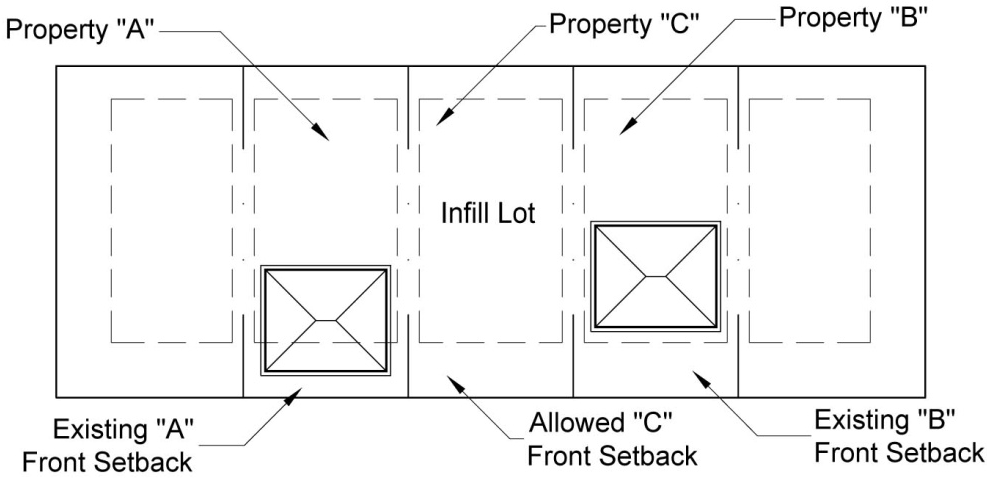
Figure 138-399.(d). 1 — Residential Infill Standards:
Property "C" (infill lot) may be permitted a reduced front structural setback based on the average existing front setbacks of adjacent properties "A" and "B". The average setback of the adjacent properties shall be calculated as follows:
Existing Front Setback "A" + Existing Front Setback "B" / 2 = Allowed Front Setback "C"
(Ord. No. 18-36, § 3(Att. B), 10-23-18)

