
Poplar Grove City Zoning Code
CHAPTER 8
- HEIGHT AND AREA REGULATIONS AND YARD EXCEPTIONS
8-8-1.- PURPOSE.
The purpose of Chapter 8 is to indicate the requirements for building location, size and height regulations in both residential and nonresidential developments. The provisions of Chapter 8 interact closely with the provisions of Chapters 6 and 9. The Zoning Administrator shall interpret and enforce these chapters.
(Ord. 2012-012, 3-13-2012)
8-8-2. - STRUCTURES OR USES.
A.
Permitted Uses. No land shall be used except for a purpose permitted in the district in which it is located. Existing non-conforming uses may continue consistent with Chapter 9 of this Title.
B.
Accessory Structures. No accessory structure or use shall be constructed, occupied or established on any lot prior to the completion of the principal structure to which it is accessory. If the principal structure is removed from the lot, all accessory structures shall also be removed.
C.
Alterations to Existing Buildings. No building shall be erected, converted, enlarged, reconstructed, moved or structurally altered, nor shall any building be used except for a use permitted in the district in which such a building is located.
D.
Height Limitations. No building shall be erected, converted, enlarged, reconstructed or structurally altered to exceed the height limit herein established for the district in which such a building is located.
E.
Area Regulations. No building shall be erected, converted, enlarged, reconstructed or structurally altered except in conformity with the area regulations of the district in which such building is located.
F.
Setbacks. The minimum yards, parking spaces and open spaces required by the title for each and every building existing at the time of passage of this title or for any building hereafter erected, shall not be encroached upon or considered as part of the yard or open space required for any other building; nor shall any lot area be reduced below the requirements of this title for the district in which such lot is located.
G.
Easement Protection. No accessory structure or use (except fences) shall be constructed, occupied or established on any public utility, drainage or pipeline easement, except with the written permission of all utility companies and/or the Village having rights to the easement.
H.
One Main Building Permitted per Lot; Exceptions. Every building hereafter erected shall be located on a lot as defined in this title and in no case shall there be more than one main building on any lot in any district, except industrial buildings being used for industrial purposes in the Industrial Districts, and also except buildings, the location of which is approved in a planned community development pursuant to the regulations found in Chapter 5.
I.
Frontage and Access to Public Streets. Each lot shall have frontage on and direct access to a public street that is improved to Village standards (unless the Board shall otherwise direct) by approval of a subdivision plat so showing, submitted, heard and considered in the manner provided in the Subdivision Regulations for the Village. Absent such subdivision plat, a lot considered grandfathered in the manner as provided in this Title shall expressly permit such access or approved frontage on a private street, lane, place or way connected with a public street or way.
J.
Signage. All signs in any zoning district shall conform to the regulations of Chapter 11.
K.
Essential Services. Essential services as defined herein shall be a permitted use in all zoning districts.
L.
Outdoor Storage. Except where expressly permitted herein, outdoor storage of equipment and materials is prohibited. Vehicles may be stored outdoors unless expressly prohibited. See Sections 8-10-7 and 8-10-10.
M.
Uses not Catalogued; Similar Uses. In the case of land uses not catalogued as permitted or special uses in non-residential districts, applicants for land use changes may seek a determination from the Zoning Administrator, who will base their opinion upon the nearest reasonable use. These determinations may be appealed to the Planning and Zoning Commission as provided in Section 8-5-10.
(Ord. 2012-012, 3-13-2012)
8-8-3. - HEIGHT AND AREA REGULATIONS.
Except as otherwise provided by this chapter, all accessory structures and uses shall observe the height and area regulations of the district in which they are located, provided that:
A.
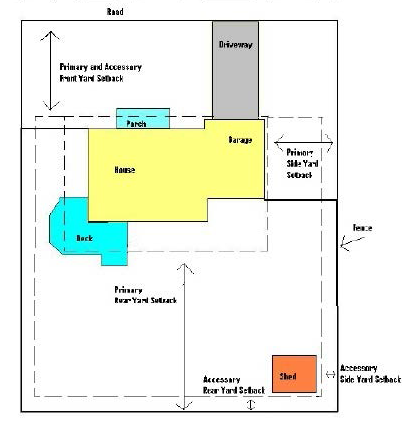
Attached Accessory Structures. No accessory structure attached to the principal structure, except decks, shall be located in any yard setback required by the district in which the principal structure is located.
B.
Detached Accessory Structures (Except Fences and Walls):
1.
Setbacks: Refer to Chapter 6 for minimum setbacks.
2.
Height: Maximum of 20 feet or equal to that of the principal building, whichever is less.
3.
Size: No detached accessory structure or structures shall occupy more than 50 percent of the area of a required yard. In no instance shall the square footage of the accessory structure(s) be larger than the primary structure.
4.
Residential: The total square footage of all accessory structures combined shall be less than the square footage of the primary structure.
C.
Height of Structures: The maximum height regulations listed for residential and non-residential uses and accessory structures in each zoning district are the maximum permitted heights for all buildings and structures, except those exempted by this section below:
1.
The following are permitted to exceed the maximum height regulations by ten feet, within any district where permitted: religious spires, belfries, cupolas and domes which do not contain useable space; public monuments, water towers, fire and hose towers; transmission towers, flag poles, chimneys, smokestacks, cooking towers, grain elevators and elevator penthouses. Such uses may exceed said maximum by more than ten feet with the approval of a special use permit.
2.
Wind Energy Conversion Systems (WECS) are permitted to exceed the maximum height regulations by 15 feet within any district where permitted.
3.
Any building or structure, not otherwise accounted for above, may exceed the maximum height regulations with the granting of a special use permit specifically stating the maximum permitted height of the proposed building or structure.
D.
Exemption for Established Front Yards in Residential Districts: Where 50 percent or more of the frontage on the same side of a street between two intersecting streets is developed with buildings that have front yards greater or lesser in depth than otherwise required, new buildings shall be erected no closer to the street than the average front yard so established by the existing buildings.
E.
Exemption for Aviation Hangars: "Fly-in Communities" consists of a residential subdivision that have accessory structures for both vehicles and air craft. The standard accessory structure guidelines are not applicable due to the size of most air craft. Therefore, accessory structures used for the storage of air craft shall have the following guidelines:
1.
Setbacks. Setbacks shall comply with the base zoning district requirements.
2.
Height. The aviation hangar shall not exceed the height of the primary structure.
3.
Size. The maximum size shall be determined by the allowable lot coverage.
4.
Lot Coverage. Total lot coverage shall comply with the base zoning district requirements.
(Ord. 2012-012, 3-13-2012; Amd. Ord. 2018-02, 2-21-2018)
8-8-4. - PERMITTED YARD EXCEPTIONS.
The following projections by buildings and structures are permitted to extend into the required setbacks (as defined in Chapter 6). In no instance shall any portion of a structure extend beyond a property line.
"P" indicates accessory structure or use is permitted in the indicated setback as defined in Chapter 6.
Other similar structures or uses not listed may be classified in similar structure or use categories as determined by the Zoning Administrator and are permitted within the yard(s) identified in such category
If the requirements of this section are in variance with the requirements of any other lawfully adopted rules, regulations, or ordinances, the most restrictive or those imposing the higher standards shall govern
Carports are only permitted in the following areas:
1.
Mobile Home Parks/Subdivisions
2.
Residentially zoned properties within the Village lying north of Park Street, East of Hill Street, South of Grove Street and west of Beaver Drive, excluding those properties within the Bennett's Crossing Subdivision.
(Ord. 2012-012, 3-13-2012; Ord. No. 2021-31, § 1, 10-20-2021)

