
Purcellville City Zoning Code
ARTICLE 1
- INTRODUCTION AND USING THIS ORDINANCE
Sec. 1.1.- Title and effective date.
(1)
This ordinance shall be known as the Zoning Ordinance for the Town of Purcellville, Virginia.
(2)
This ordinance shall be in force on the date of adoption.
Sec. 1.2. - Purpose and intent.
The zoning regulations and districts as herein established have been made in accordance with the 2030 Comprehensive Plan, to promote, in accordance with present and future needs, the health, safety, morals, order, convenience, prosperity, and general welfare of the citizens of Purcellville, Virginia. The town's goals, as set forth in the comprehensive plan, are to protect and shape land uses in existing development, new development, infill development, and redevelopment that compliment and sustain Purcellville's small town charm; manage development so that the town's services and infrastructure are not overwhelmed; protect the town's ability to phase any growth with the availability of town services; protect and enhance the aesthetics and viability of the downtown area; preserve existing neighborhoods through compatible infill and property improvement; and adopt cooperative county and town plans to provide policy framework for rural preservation. Growth and development should pursue the highest levels of environmental sustainability.
These zoning regulations are intended to:
(1)
Provide for efficiency and economy in the process of development, for the appropriate and best use of land, for convenience of access and of traffic and circulation of people and goods, for the appropriate use and occupancy of buildings;
(2)
Ensure the healthful and convenient distribution of population, for protection against overcrowding of land, undue density of population in relation to the community facilities existing or available, obstruction of light and air, or loss of life, health, or property from fire, flood, panic or other dangers;
(3)
Encourage good civic design and arrangement, to facilitate the creation of a convenient, attractive and harmonious community, to protect against destruction of or encroachment upon historic resources; and
(4)
Facilitate the provision of adequate public utilities, public services and other public facilities, by regulating and limiting or determining the height and bulk of buildings and structures, the area of yards and other open spaces, and the type and density of use.
They have been made with reasonable consideration, among other things, for the existing use and character of property, the comprehensive plan, to the character of the district and its peculiar suitability for particular uses, to trends of growth or change, and with a view to conserving natural resources and the value of land and buildings and encouraging the most appropriate use of land throughout the incorporated territory of Purcellville, Virginia.
Sec. 1.3. - Applicability.
This ordinance shall apply to the incorporated territory of the Town of Purcellville, Virginia. It is the intent of this ordinance that the extent of its applicability be automatically changed in accordance with the provisions hereof or provisions of state law which may affect the applicability of this ordinance.
It is not intended by this ordinance to interfere with, or abrogate or annul any easements, covenants, or other agreement between parties, provided, however, that where this ordinance imposes a greater restriction upon the use of buildings or premises or upon height of buildings, or requires larger open spaces than are imposed or required by other resolutions, ordinances, rules, regulations, or by easements, covenants, or agreements, the provisions of this ordinance shall govern.
Sec. 1.4. - Rules of interpretation and construction.
In interpreting and applying the provisions of this ordinance, they shall be held to be the minimum requirements for the promotion of the public safety, health, convenience, comfort, prosperity, or general welfare.
Whenever any provision of this zoning ordinance imposes a greater requirement or a higher standard than is required in any Virginia Commonwealth or federal statute or other town ordinance or regulation, the provision of this zoning ordinance governs. Whenever any provision of any Virginia Commonwealth or federal statute or other town ordinance or regulation imposes a greater requirement or a higher standard than is required by this zoning ordinance, the provision of such Virginia Commonwealth or federal statute or other town ordinance or regulation governs. In the event that administration or enforcement of a provision of this zoning ordinance in a particular context or circumstance would violate an applicable Virginia Commonwealth or federal statute, the provision of such Virginia Commonwealth or federal statute governs.
All of the following general rules of construction shall apply to the regulations of this ordinance:
(1)
The singular includes the plural and the plural the singular, unless the context clearly indicates the contrary.
(2)
Words used in the present tense include the future tenses, and the future the present.
(3)
The word "shall" is always mandatory. The word "may" is permissive.
(4)
The word "building" or "structure" includes any part thereof, and the word "structure" includes the word "building."
(5)
Words and terms not defined herein shall be interpreted in accordance with their normal dictionary meaning and customary usage. The zoning administrator has authority to interpret the meaning of all words and terms in this ordinance.
(6)
The terms "main" and "principal" as used herein are synonymous.
Sec. 1.5. - Rules of measurement.
(1)
Determining building height and exceptions.
(a)
Building height is the vertical distance from the average finished grade or from the average level of the finished grade at the front building line, if higher, to the highest point of the coping of a flat roof, or to the deck line or highest point of coping or parapet of a mansard roof, or to the mean height level between eaves and ridge for gable, hip, shed, and gambrel roofs. When the highest wall of a building with a shed roof is within 35 feet of a street, the height of such building shall be measured to the highest point of coping or parapet. (See Figure 1) SH
(b)
The height regulations prescribed herein shall not apply to telecommunications facilities, church spires, belfries, monuments, tanks, water and fire towers, cooling towers, ornamental towers and spires, cupolas, chimneys, elevator bulkheads, smokestacks, conveyors, and flagpoles, which comply with this zoning ordinance, except where the height of such structures will constitute a hazard to the safe landing and takeoff of aircraft at an established airport.
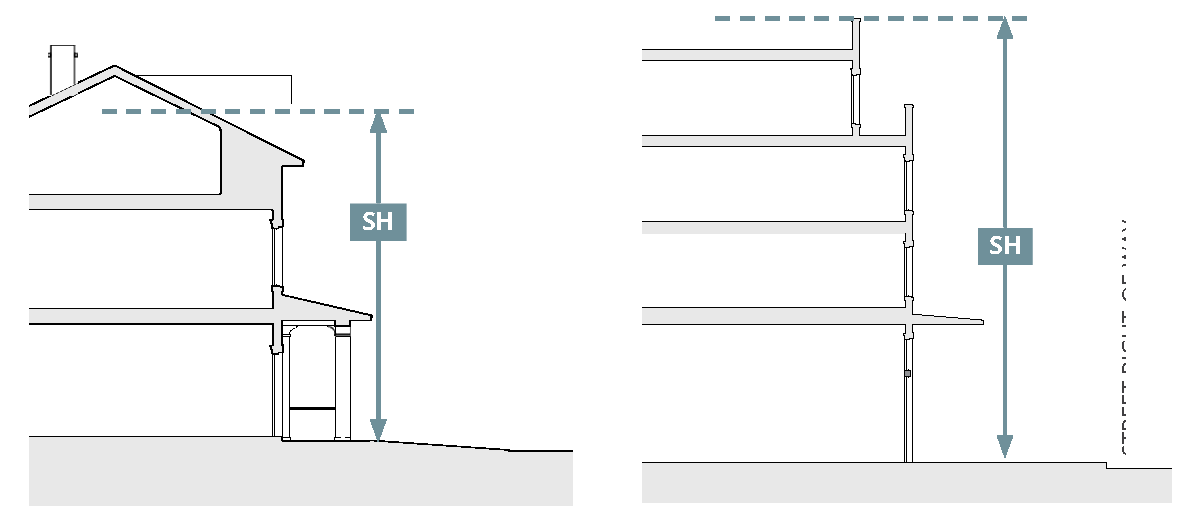
Figure 1: Illustrations of structure height (SH) for a gable-roofed structure (left)
and a flat-roofed structure (right).
(2)
Defining lot lines.
(a)
Lot line. A lot line is a line dividing one lot from another lot or from a street or any public place.
(b)
Front lot line. A front lot line is a lot line dividing a lot from a public or private street and is the line from which the required front setback is measured. If a lot has more than one lot line that abuts a street right-of-way, such as is the case with a corner lot, the lot may have more than one front lot line. (See Figure 2) FLL
(c)
Side lot line. A side lot line is any lot line not considered a front lot line or a rear lot line. SLL
(d)
Rear lot line. The rear lot line is the lot line which is most opposite the front lot line. Each lot shall have one rear lot line. RLL
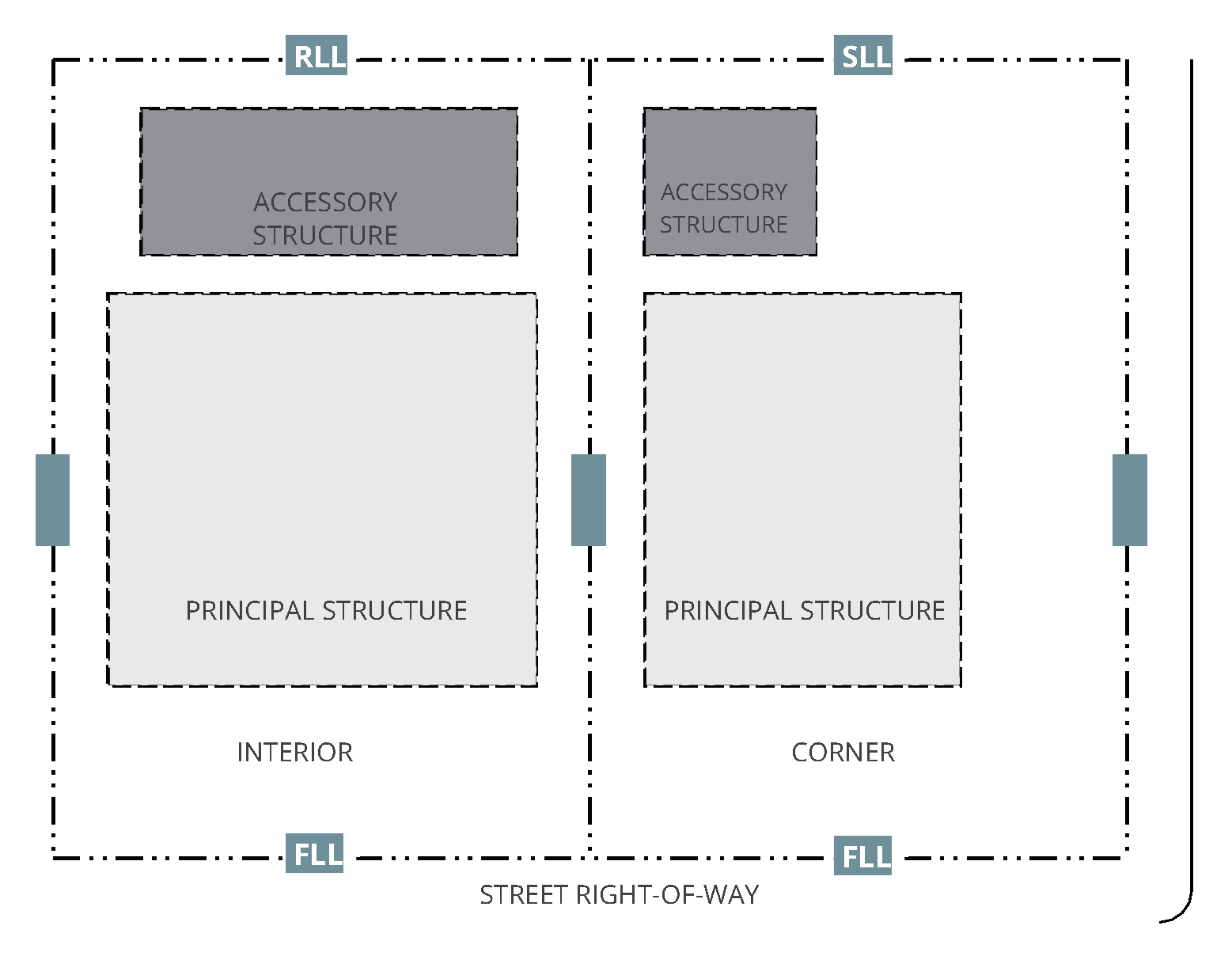
Figure 2: Illustrative graphic showing lot lines for an interior lot and a corner lot.
(3)
Determining lot width.
(a)
Lot width. The lot width is the length of a lot's shortest front lot line. (See Figure 3) LW
(4)
Determining lot area and lot coverage.
(a)
Lot area. The lot area is the area of a horizontal plane bounded by vertical planes extending from the lot lines of a single lot, and not including any area within the right-of-way.
(b)
Lot coverage. Lot coverage is the percentage of the total lot area that is covered by manmade surfaces, such as principal structures; accessory structures over 100 square feet, such as patios, decks, garages, carports, and pools; and other surfaces, such as driveways, sidewalks, parking lots, and areas of gravel, pavers, or pavement; but excluding service walks.
(5)
Determining yard and building setbacks.
(a)
Front yard setback. A front yard setback is the shortest horizontal distance between a structure and the edge of the right-of-way (see Figure 3). FYS
(b)
Side yard setback. A side yard setback is the shortest horizontal distance between a structure and a side lot line of the lot. SYS
(c)
Rear yard setback. A rear yard setback is the shortest horizontal distance between a structure and a rear lot line of the lot. RYS
(6)
Corner lots and double frontage.
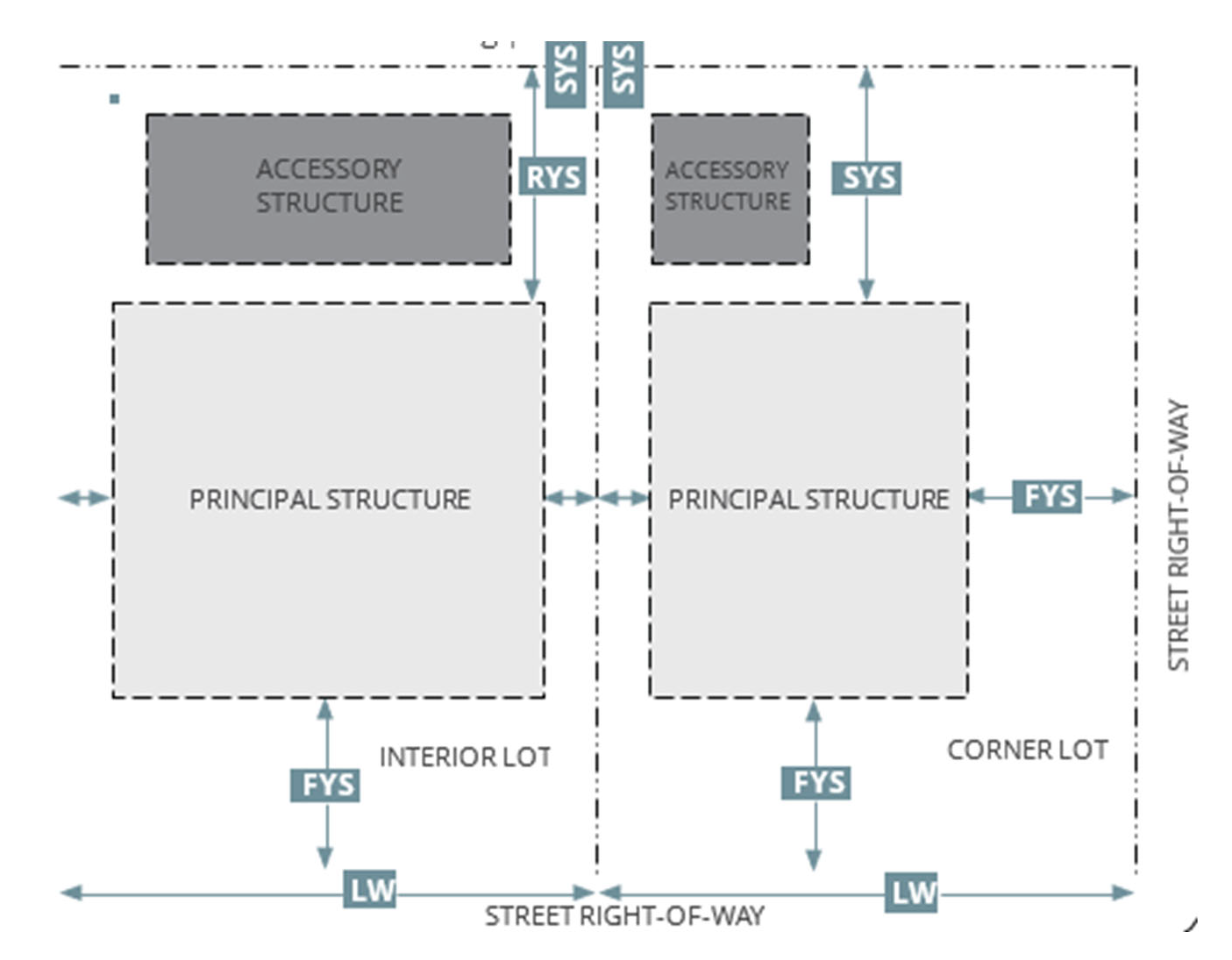
Figure 3: Illustrative graphic showing yard setbacks and lot widths for an interior lot and a corner lot.
(a)
Each corner lot shall have two front yards and two side yards. Those yards abutting the street shall be considered the front.
Sec. 1.6. - Clear visibility triangle.
(1)
At all street intersections, sight obstructions that create a traffic hazard, as determined by the zoning administrator, shall be prohibited. No obstructions within a site triangle, except for buildings existing at the date of passage of this article, shall be permitted between a height of three feet and eight feet above grade measured from the level of the street at the edge of pavement on which the obstruction lies. (See Figure 4)
(2)
Clear visibility triangles shall be created and maintained according to the following standards: for driveways that intersect with sidewalks, the area of property on both sides of a driveway formed by the intersection of each side of the driveway and the public right-of-way line for a distance of ten feet in length and five feet in width along the public right-of-way shall be kept clear. (See Figure 5)
(3)
The zoning administrator, however, may determine, in accordance with standard engineering practices, that a site obstruction exists outside the site triangle, thus creating a traffic hazard.
(4)
Alternative visibility triangles. Alternative visibility triangles approved by the zoning administrator may be allowed in individual cases if they are deemed to ensure adequate traffic safety. If alternative visibility triangles are required, they shall result in traffic safety equivalent or superior to the minimum requirements of this subsection.
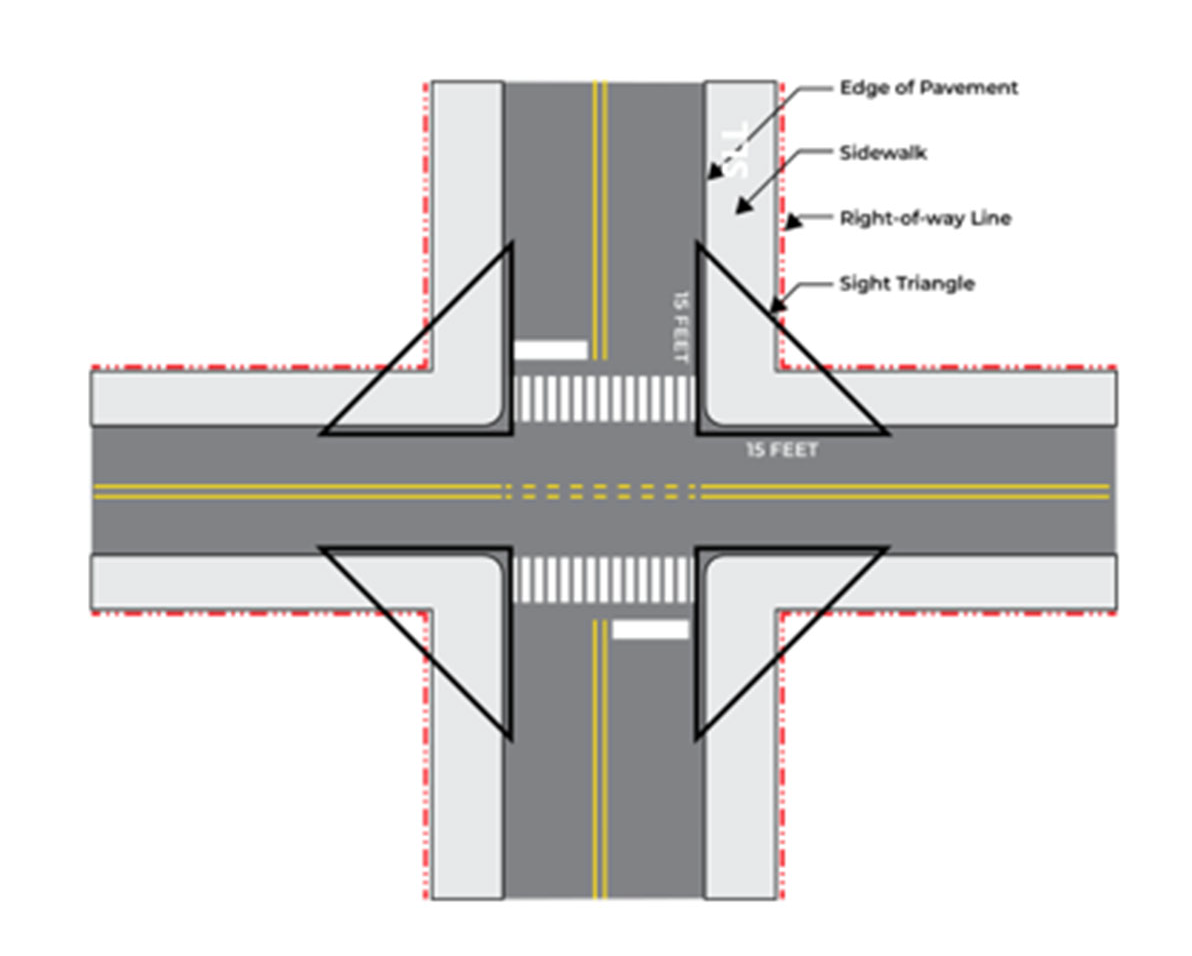
Figure 4: Illustrative graphic showing the clear visibility triangle
at the intersection of two streets.
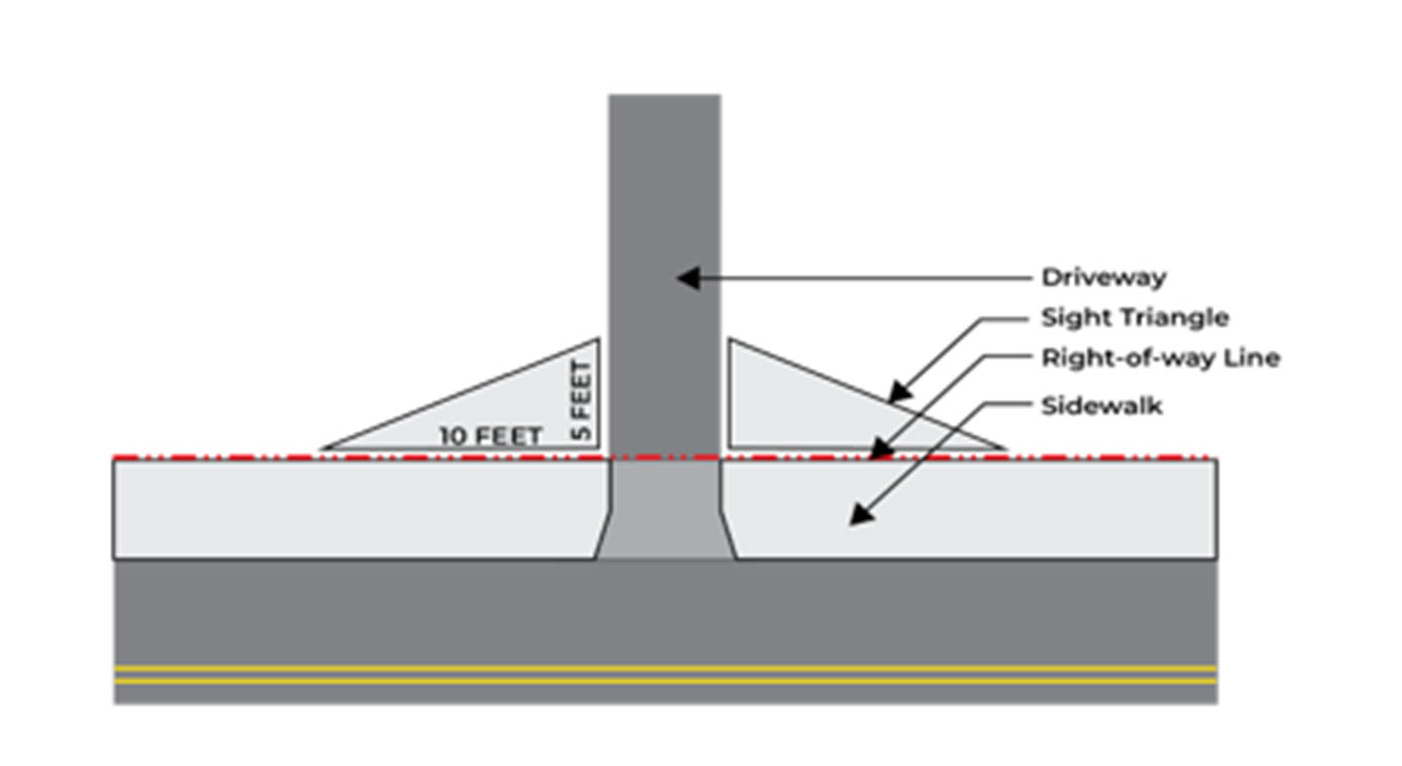
Figure 5: Illustrative graphic showing the clear visibility triangle
at the intersection of a driveway and a street.
Sec. 1.7. - Encroachments.
The minimum yards, height limits, parking space, open spaces, including lot area per family or dwelling unit, required by this ordinance for each and every building existing at the time of the passage of these regulations or for any building hereafter erected, shall not be encroached upon or considered as required yard or open space for any other building, except as hereinafter provided, nor shall any lot area or lot dimensions be reduced below the requirements of these regulations.
Sec. 1.8.1. - Lot area.
(1)
Requirements for lot area per family do not apply to dormitories, fraternities, sororities, and other similar living quarters which are accessory to a permitted use and which have no cooking facilities in individual rooms, apartment units or apartment buildings.
(2)
Requirements for lot area per family do not apply to rental units in a hotel, country inn or bed and breakfast facility.
Sec. 1.8.2. - Yards and open space.
(1)
Every part of a required yard shall be open to the sky, except as authorized by this article, and except ordinary projections of sills, belt courses, window air conditioning units, chimneys, cornices, and ornamental features which may project to a distance not to exceed 36 inches into a required yard.
(2)
More than one main building may be located upon a lot or tract in the following instances:
(a)
Institutional buildings.
(b)
Public or semi-public buildings.
(c)
Apartment building dwellings or condominiums under approved site plans.
(d)
Nursing homes and assisted living facilities housing nine or more individuals.
(e)
Commercial and industrial buildings under approved site plans.
The provisions of this exception shall not be construed to allow the location or erection of any building or portion of a building outside of the buildable area of the lot.
Where a lot is of such unusual configuration that none of the provisions of this ordinance regarding yards and open spaces apply precisely, the zoning administrator may use his discretion to apply an interpretation which most closely meets the requirements of this ordinance; and where by reason of difficult or unusual topography an improved building site may be achieved by a minor modification of yard space requirements (up to 1.5 feet) such modification may be approved by the administrator; provided, however, that this section does not give the administrator any power to grant exceptions or variances reserved to the board of zoning appeals under Article 10, Section 8.1: Board of zoning appeals.
Sec. 1.8.3. - Front yards.
(1)
Where an official line has been established by an adopted detailed plan on file with the zoning administrator for the future widening or opening of a street or major thoroughfare upon which a lot abuts, then the depth of a front or side yard shall be measured from such official line to the nearest line of the building.
(2)
On through lots, the required front yard shall be provided on each street.
(3)
Bus shelters, when permitted by district regulations, may be located in a required front yard.
(4)
Open, unenclosed porches, platforms or paved terraces, which do not extend above the level of the first floor of the building and which do not exceed ten feet in depth, may extend or project into the front yard not more than eight feet, but not closer than five feet to the front property line. An "open, unenclosed porch" is a porch that may have a roof, but no side enclosure (other than the side of the building to which the porch is attached) other than railings or a wall not exceeding 36 inches in height from the porch floor. Steps from the porch to grade may extend up to four additional feet into the required yard.
(5)
Where the street frontage in a block, or within 400 feet of the lot in question, is partially built up, the minimum front yard for a new building shall be the average of the existing front yards on either side thereof in the same block with a variation of five feet permitted; provided, however, that except as provided in development standards for specific uses no front yard in a residential district shall be less than ten feet or more than 50 feet under this provision. Where 40 percent or more of the street frontage is improved with buildings that have no front yard, no front yard shall be required for the remainder of the street frontage.
Sec. 1.8.4. - Side yards.
(1)
Open, unenclosed porches, platforms, or paved terraces, which do not extend above the level of the first floor of the building, may extend or project into the side yard not more than six feet, but not closer than five feet to the side property line. An "open, unenclosed porch" is a porch that may have a roof, but no side enclosure (other than the side of the building to which the porch is attached) other than railings or a wall not exceeding 36 inches in height from the porch floor.
(2)
For the purpose of the side yard regulations, a group of office, business or industrial buildings separated by common or party walls shall be considered as one building occupying one lot.
Sec. 1.8.5. - Rear yards.
Open or lattice-enclosed fire escapes, outside stairways, platforms, terraces and balconies and the ordinary projections of chimneys and flues may project into the required rear yard for a distance of not more than five feet, but only where the same are so placed as not to obstruct light and ventilation.
Sec. 1.9. - Saving provision/invalidity.
If any section, paragraph, subdivision, clause, phrase, or provision of this ordinance shall be adjudged invalid or held unconstitutional by the courts, the same shall not affect the validity of this ordinance as a whole or any part or provision thereof, other than the part so decided to be invalid or unconstitutional.
Sec. 1.10. - Pending applications for permits.
No regulation contained herein shall require any change in the overall layout, plans, construction, size, or designated use of any development, structure, or part thereof, for which official approvals and required zoning permits have been granted before the enactment of this zoning ordinance, and the construction of which, conforming with such plans, shall have been started prior to the effective date of this zoning ordinance, or within 30 days thereafter, and completion thereof carried on in a normal manner within the subsequent 12-month period and not discontinued until completion except for reasons beyond the owner's control.
Sec. 1.11. - Conformance with regulations required.
No building or land shall hereafter be used, and no building or part thereof shall be erected, reconstructed, converted, enlarged, moved, or structurally altered unless in conformity with the regulations as set forth in this ordinance.
Sec. 1.12. - Location on a lot required.
Every building hereafter erected, reconstructed, converted, moved, or structurally altered shall be located on a lot of record and in no case shall there be more than one main building on one lot unless otherwise provided in this ordinance.
Sec. 1.13. - Structures built on more than one lot.
A single structure/building or group of structures/buildings constructed on a site consisting of more than one lot must conform with the required setbacks of each individual lot. In that instance where a proposed structure/building would be located on more than one lot, either a plat of vacation or boundary line adjustment plat shall be submitted for signature and recordation which locates the structure/building on a single lot in compliance with these zoning regulations prior to issuance of a zoning permit.
Sec. 1.14. - Street frontage required.
No lot shall be used in whole or in part for dwelling purposes unless such lot abuts upon a street in accordance with the minimum street frontage requirements of this ordinance. No lot or parcel of land abutting the terminus of a public street shall be deemed to comply with street frontage requirements unless such lot abuts on an approved permanent cul-de-sac.
Sec. 1.15. - Encroachment; reduction of lot area.
The minimum yards, height limits, parking space, open spaces, including lot area per family or dwelling unit, required by this ordinance for each and every building existing at the time of the passage of these regulations or for any building hereafter erected, shall not be encroached upon or considered as required yard or open space for any other building, except as hereinafter provided, nor shall any lot area or lot dimensions be reduced below the requirements of these regulations.
Sec. 1.16. - Accessory buildings; prior construction.
Except for buildings accessory to a farm, no accessory building shall be constructed upon a lot for more than six months prior to beginning construction of the main building and no accessory building shall be used for more than six months unless the main building on the lot is also being used or unless the main building is under construction. No accessory building, on a farm or otherwise, shall be used for dwelling except in accord with the specific provisions of this ordinance.
Sec. 1.17. - Reference to Virginia Condominium Act.
(1)
Nothing in this ordinance shall be interpreted to prohibit condominiums as such by reason of the form of ownership inherent therein. Neither shall any condominium be treated differently under any provision in this ordinance which would permit a physically identical project or development under a different form of ownership.
(2)
All condominium projects or developments hereafter constructed shall comply with the provisions of this ordinance, including the requirements for approval of site plans in the same manner as such ordinances would apply to a physically identical project or development under a different form of ownership. Whenever an existing project or development is to be converted to condominium ownership involving certain land areas to be held as common elements, limited or otherwise, a site plan shall be filed showing the extent and ownership of such holdings. Nothing in this requirement shall be interpreted to abridge any rights said project or development may hold as a nonconforming use.
(3)
Any declaration of restrictions to be filed in connection with any project covered by the provisions of this ordinance shall comply in all respects with the provisions of the Virginia Condominium Act set forth in the 1950 Code of Virginia as amended not in direct conflict with the requirements of this ordinance.
Sec. 1.18.1. - General requirements.
(1)
Applicability. The regulations of this article govern nonconforming uses, structures, and lots that once came into existence legally and may be continued according to the requirements of this section. Nonconforming uses, structures, and lots are nonetheless incompatible with the current zoning ordinance. As such, they are authorized to continue only under the provisions in Section 1.18 until they are discontinued, removed, or changed to conform to the zoning ordinance. Section 1.18 applies to any nonconforming use, structure, or lot that was legally established but has become nonconforming due to:
(a)
The adoption of the current zoning ordinance;
(b)
Any subsequent reclassification of zoning districts;
(c)
Any amendments to the zoning ordinance; or
(d)
Other governmental proceedings such as condemnation.
(2)
Purpose. The purpose of this article is to:
(a)
Recognize the interests of property owners in continuing to use their property as once legally permitted;
(b)
Promote the reuse and rehabilitation of buildings and properties, especially with historic and cultural value;
(c)
Regulate and place reasonable limits on the development and continued existence of uses, structures, and lots legally established that do not conform to the requirements of the zoning ordinance;
(d)
Achieve the desired character of the town by improving nonconformities to a conforming status or otherwise eliminating the nonconformity; and
(e)
Provide for the removal of nonconforming status through special use permit approval.
(3)
Repairs, maintenance and minor enhancements.
(a)
Nothing in this article shall be construed to prevent structures and land from being structurally strengthened or restored to a safe and functional condition, in accordance with the appropriate codes.
(b)
Basic repairs and routine maintenance of any nonconformities shall be permitted unless such repairs increase the extent of the nonconformity or are otherwise expressly prohibited by this zoning ordinance.
(c)
Basic maintenance shall include, but is not limited to: painting, siding repairs and replacement, roof and window repairs, masonry repairs, landscaping, and lighting repairs.
(d)
Minor enhancements, such as new roofing or facade elements, which may improve the functionality, aesthetics or safety of the nonconforming use are permitted as long as these enhancements do not increase the total allowed FAR of a structure.
(4)
Change of tenancy, ownership or management. The status of a nonconformity is not affected by changes of tenancy, ownership, or management. If any change in title of possession, or renewal of a lease of any such lot or structure occurs, the use existing may continue.
(5)
Dispute or removal of nonconforming status. When evidence available to the zoning administrator is deemed to be inconclusive, whether a nonconformity exists shall be a question of fact which shall be decided by the board of zoning appeals (BZA). The town may deem a nonconforming use, structure, or lot to comply the requirements of the zoning ordinance through approval of a special use permit process.
Sec. 1.18.2. - Nonconforming uses.
(1)
Applicability. The regulations of this section apply to all nonconforming uses, which are uses that were legally established but which no longer comply with the use regulations of the zoning district in which they are located.
The protections and provisions of this section are only provided to nonconforming uses that are a principal use of the property or to parking as an on-site accessory use or structure. An accessory use cannot become a nonconforming principal use.
Further, uses must be active and in continuous operation, and must not be casual or illegal, defined as follows:
(a)
Casual use. If not owner-occupied, occupancy or use of a building or lot without a legal lease or payment of rent should be considered 'casual' and shall not be sufficient to establish the existence of a nonconforming use.
(b)
Illegal use. The illegal use of land or buildings shall not be sufficient to establish the existence of a nonconforming use.
(2)
Effect of procedural change. Any use that was legally established at a time when no special form of approval was required for the subject use shall not be deemed nonconforming merely as a result of not having obtained such approval. Any enlargement or expansion of such use shall be subject to the procedures and standards in effect at the time of such expansion.
(3)
Change of use.
(a)
Change to conforming use. A nonconforming use may be changed to any use that is allowed in the zoning district in which it is located, subject to all the applicable standards and requirements of the new use. Once a nonconforming use is converted to a conforming use, it may not be changed back to a nonconforming use.
(b)
Expansion. A nonconforming use may be expanded throughout any portion of a building that was manifestly arranged or designed to accommodate such use at the time it was approved. However, no such use shall be extended to additional buildings or to land outside the original building. The burden of proof for original extent of use will be on the owner, not the town.
(c)
Change to another nonconforming use. A nonconforming use may be changed to another nonconforming use only by approval of a special use permit by the planning commission as described in Article 10.
(d)
Rearrangement. No nonconforming use and/or structure shall be moved to any other portion of the lot or off the lot which it occupies unless the move results in decreasing or eliminating the nonconformity.
(e)
Residential expansion. A residential dwelling nonconforming in use in a commercial or industrial district shall be considered as a conforming use as long as the use is not expanded according to the provisions of the zoning ordinance.
(f)
Conversion condominium. Pursuant to Code of Virginia, § 55.1-1905.E., a proposed conversion condominium that does not conform to zoning, land use, or site plan regulations must obtain special use permit approval prior to such property becoming a conversion condominium.
(4)
Loss of nonconformity status through abandonment. If a nonconforming use is discontinued or abandoned for a continuous period of more than two years at any time since becoming nonconforming, then that use is considered as abandoned and cannot be renewed or reestablished. Once abandoned, any subsequent use or occupancy of the structure or lot must comply with the regulations of the zoning ordinance.
(a)
Evidence of abandonment. A nonconforming use shall be presumed to be abandoned when any one of the of following has occurred:
i.
The owner has indicated in writing the intent to abandon the use;
ii.
A conforming or less intensive nonconforming use has replaced the nonconforming use;
iii.
The building or structure housing the nonconforming use has been lawfully removed under condemnation of unsafe structures;
iv.
The owner has physically changed the building or structure or its permanent equipment in a manner that clearly indicates a change in use or activity other than the nonconforming use;
v.
The use has been discontinued, vacant or inactive for a continuous period of two years.
(b)
Overcoming presumption of abandonment. A presumption of abandonment based on the evidence stated in Paragraph (a) of this subsection may be appealed to the board of zoning appeals (BZA) upon a showing that the owner:
i.
Has been maintaining the lot and/or structure in accordance with all applicable regulations, including the building code, and did not intend to discontinue the use;
ii.
Has been maintaining all applicable licenses; and
iii.
Has filed all applicable tax documents.
iv.
Further, the owner shall be required to demonstrate to the BZA that during the period of inactivity the owner has been engaged either in activities to sell or lease the property or in other activities that would prove that there was no intention to abandon.
(5)
Reduce buffers, setbacks, and yards due to condemnation (eminent domain) or road realignment.
(a)
Any use on a lot that has had its buffers, setbacks, or yards reduced through condemnation or realignment of a federal highway, state road or local street to less than the requirements of the zoning ordinance is considered a nonconforming use.
(b)
The lost or reduced buffer, setback or yard need not be replaced as long as the use existing at the time of the loss or reduction is maintained.
(c)
When the use changes to a different use permitted in the zoning district and that use requires a buffer width greater than the previously existing use:
i.
The owner has the option to provide new or additional plantings in the existing reduced width if the zoning administrator determines that the resulting buffer will provide equivalent buffering effect to one that would be required according to zoning district standards, except for the reduced width.
ii.
The owner has the option to provide a buffer in an alternate location if the zoning administrator determines it will achieve the intended buffering effect. If the zoning administrator determines that the buffers proposed do not provide adequate buffering, the owner must seek approval of a special use permit to change the use.
Sec. 1.18.3. - Nonconformities.
(1)
Applicability. The regulations of this section apply to nonconforming structures, which are structures that were legally established but which no longer comply with the zoning ordinance. For specific standards for historic structures, see Section 4.13.4(3).
(a)
Effect of variances. If a variance is approved from any applicable zoning district standard, the subject structure is still deemed to be nonconforming.
(b)
Use. A nonconforming structure may be used for any use allowed in the underlying zoning district, subject to all applicable use standards.
(2)
Replacement, repairs, or reconstruction. Replacement, repairs (including structural repairs), restoration, and reconstruction may be made to a nonconforming structure.
(a)
No additional nonconforming structures shall be constructed in connection with any nonconforming use of land.
(b)
The owner of any structure damaged or destroyed by a fire, natural disaster or other act of God shall be permitted to replace, repair, or rebuild such structure to its original nonconforming condition, or, at the option of the owner, to some condition that eliminates or reduces the nonconforming features without the need to obtain a variance as provided in Code of Virginia, § 15.2-2310, 1950, as amended. The owner shall apply for a zoning permit for any restoration. Any work done to replace, repair, or rebuild such structure shall comply with all applicable regulations. For purposes of this section, an "act of God" shall include any natural disaster or phenomena including a hurricane, tornado, storm, flood, high water, wind-driven water, tidal wave, earthquake or fire caused by lightning or wildfire. Nothing herein shall be construed to enable the property owner to commit an arson as defined under Code of Virginia, § 18.2-77 or 18.2-80, 1950, as amended, and obtain vested rights under this section.
(c)
Except for structures located within the Floodplain Overlay District (FOD) pursuant to Section 4.12, the owner may replace or repair a nonconforming structure, provided the structure is:
i.
The degree of nonconformity is not increased; or
ii.
Damaged or destroyed by a casualty or event beyond the owner's reasonable control; and
iii.
A legally nonconforming mobile or manufactured home removed by the owner for the purpose of replacement with a comparable manufactured home that meets current HUD manufactured housing code.
(d)
Permits are obtained and construction is completed within two years of the removal or destructive event. An additional two years, for a total of four years, is granted if the destruction was due to a federally declared disaster.
(e)
A replacement structure must occupy the same footprint of the replaced, damaged, or destroyed nonconforming structure unless the new footprint can comply with the setback requirements of this zoning ordinance.
(f)
Replacement of the nonconforming structure cannot include increased floor area either through an expanded footprint or additional height or stories.
(3)
Alteration or enlargement.
(a)
A nonresidential nonconforming structure must not be enlarged, increased, nor extended to occupy a greater area of land than was occupied on the date the structure became nonconforming, except when such improvements do not increase the degree of nonconformity to any of the applicable standards and except for historic structures as defined in Section 4.13.4(3).
(b)
A residential nonconforming structure may expand up to 50 percent of the existing square footage at the time the residential use became nonconforming, provided the setbacks that applied at the time the residential use became nonconforming are maintained.
(c)
Moving a structure. A nonconforming structure cannot be moved, in whole or in part, to any other location on or off the property unless every portion of such structure and its use is brought into conformity with all requirements of the zoning ordinance.
Sec. 1.18.4. - Nonconforming lots.
(1)
Applicability. The regulations of this section apply to all nonconforming lots of record, which are lots or land parcels that were legally created but which no longer comply with the minimum area, frontage or dimensions of the underlying zoning district. Nonconforming lots may be built upon, occupied and used in accordance with the standards of this section.
(2)
Establishment of nonconforming lots prohibited with exceptions. A lot may be established only if such lot conforms with all requirements of the zoning ordinance, except as follows:
(a)
A lot that is created by the subdivision of a previously existing, split-zoned lot along the existing zoning district line that meets all applicable zoning ordinance requirements except lot area.
(b)
A lot created for use by:
i.
Municipal utilities;
ii.
Virginia Department of Transportation (VDOT);
iii.
Public utilities as defined by Code of Virginia, § 56-232; or
iv.
Public service corporations defined in by Code of Virginia, § 56-1.
(c)
A lot, out lot as designated on a subdivision plat as open space. No habitable structures may be built upon a lot, out lot.
(3)
Use. Nonconforming lots may be used for any use permitted in the zoning district in which the lot is located, provided:
(a)
The only nonconformity is to the lot requirements; and
(b)
The minimum lot size for the use does not exceed the minimum lot size of the zoning district.
(c)
Development on nonconforming lots shall comply with the dimensional requirements of the underlying zoning districts to the greatest extent possible, except that required side yards may be reduced to no less than ten percent of the lot width on each side, or five feet on each side, whichever is greater.
(4)
Reduced lot area due to condemnation (eminent domain) or road realignment. Any lot that has been reduced in size, through condemnation (eminent domain) or realignment of a federal highway, state road or local street, to an area less than that required by the zoning ordinance is considered a nonconforming lot subject to the provisions of this section.
Sec. 1.19. - Ordinance roadmap.
This section is intended to guide the public in following the below steps to analyze requirements related to property within the town. It is not intended to cover all situations.
Sec. 1.20. - Cluster subdivisions.
All subdivisions created as cluster subdivisions under Section 1.20 before April 8, 2025, are hereby regarded as "grandfathered" and may continue under their original zoning and development permit approvals. After April 8, 2025, no new cluster subdivisions will be approved under this section.
Sec. 1.20.1. - Clustering permitted.
Clustering of lots and provision of public or private common open space in a subdivision are permitted in any residential district by the terms of this ordinance. Average lot area in a cluster subdivision and minimum area and dimensions for any lot are specified herein. This design alternative is intended to encourage permanent reservation of open space, or the preservation of historic resources, or an efficient and improved use of the land to provide good building sites by taking advantage of topography, and minimizing grading or destruction of natural vegetation. Plans shall not be approved where the clear purpose of the design is to subvert the purposes of these regulations by inclusion of open spaces which are inappropriately located or which will not contribute to the future amenity of the subdivision.
Sec. 1.20.2. - Procedures.
A preliminary site plan complying with the requirements of Article 10 of this ordinance and Article 5 of the land development and subdivision control ordinance shall accompany an application for a permitted cluster subdivision under this section. Procedures for review and decision shall be those specified for administrative site plan review under Article 10 of this ordinance and Article 5 of the land development and subdivision control ordinance. In addition, the proposed development shall follow all applicable procedures, standards, and requirements governing the subdivision of land.
Sec. 1.20.3. - Resubdivision.
No resubdivision or sale by any means shall be permitted in a subdivision approved under this section, which resubdivision or sale would in any way create a violation of this ordinance.
Sec. 1.20.4. - Floodplain and water areas.
No more than 30 percent of the required minimum area of any lot shall be located in a floodplain area and no part of the area of any lot shall be covered by any body of water except that no more than 30 percent of the required minimum area of any lot may be covered by the waters of a lake, pond, or canal planned and approved as a part of and wholly within the subdivision.
Sec. 1.20.5. - Reduction of lot area, lot width and yard areas permitted.
Any reduction in lot area below the minimum lot area shall be fully offset through the provision of an equivalent amount of public or private open space. Where proposed building site outlines are shown on an application for cluster subdivision, the minimum lot area, lot width, lot depth, and yard dimensions shall be as follows, provided that public water and sewer service are utilized in the all residential districts:
(a)
R-2 zoning district:
Minimum average lot area: 15,000 square feet. Minimum lot area: 10,000 square feet. Minimum lot width: 75 feet.
Minimum lot depth: 100 feet. Minimum front yard: 30 feet. Minimum side yard: Ten feet. Minimum rear yard: 25 feet.
(b)
R-3 zoning district:
Minimum average lot area: 10,000 square feet. Minimum lot area: 7,000 square feet. Minimum lot width: 60 feet. Minimum lot depth: 90 feet. Minimum front yard: 25 feet. Minimum side yard: Five feet. Minimum rear yard: 20 feet.
Sec. 1.20.6. - Compatibility with developed properties.
Cluster subdivisions shall be designed to promote harmonious relationships with surrounding adjacent and nearby developed properties and to this end may employ such design techniques as may be appropriate to a particular case, including coordination of yard dimensions, location of lots of various sizes, location of buildings with respect to project boundary lines, location of open spaces and maintenance of vegetation.
Sec. 1.20.7. - Public facilities and open spaces.
Land or easements for public facilities or open space shall be dedicated, conveyed or granted in accordance with the requirements of this article and laws and ordinances governing the subdivision of land.
Sec. 1.20.8. - Maintenance of common ownership properties.
Provision shall be made for the designation, ownership, and maintenance of common ownership properties in accordance with the requirements of Article 5.
Sec. 1.20.9. - Preservation of landscape amenities.
The preservation of natural vegetation, and particularly mature trees, on steep slopes and in stream valleys, should be recognized as a primary design consideration in review and approval of an application under this section. Failure to exercise due care in maintenance of landscape amenities in accordance with approved plans shall be considered a violation of this ordinance.

