
Riverside City Zoning Code
ARTICLE VI
OVERLAY ZONES
Chapter 19.205 - RESERVED[1]
Editor's note—Ord. 7552 §10, adopted April 20, 2021, repealed Ch. 19.205, §§19.205.010 and 19.205.040, which pertained to the Emergency Shelter Overlay Zone (ES) and derived from Ord. 7408 §1, adopted in 2018; Ord. 7331 §18, adopted in 2016; and Ord. 7082 §2, adopted in 2010.
19.170.010 - Purpose.
The Innovation District (ID) Overlay Zone is established to:
A.
Implement the goals, policies, and principles of the General Plan.
B.
Enable and encourage new development in the ID Overlay Zone area.
C.
Support a mix of high-density residential, high-intensity employment/office, civic, entertainment, institutional and pedestrian-oriented retail uses.
D.
Encourage investment in public facilities through quality redevelopment and improvements.
E.
Ensure that new development and redevelopment are designed to minimize traffic, parking and impacts on surrounding residential neighborhoods, and create walkable environments.
If regulations or development standards are not included in this Chapter, refer to the standards in applicable Chapter of Title 19.
(Ord. 7573 § 1(Exh. A), 2021)
19.170.020 - Application.
A.
Application. The Innovation District (ID) Overlay Zone may be applied to the area bounded to the west by the State Route 91, to the north by State Route 60/Interstate 215, and to the south by Third Street. The ID Overlay Zone may be applied in combination with any existing Base Zone.
B.
Relationship to ID Master Plan. The ID Overlay implements the intent and guidelines in the ID Master Plan document.
C.
Permit requirements.
1.
In addition to any other permits required by the Zoning Code, new building or structure construction, sign or exterior alterations, enlargement of an existing building, structure, or signs shall, pursuant to Chapters 19.710 require Design Review.
2.
Minor Conditional Use Permit may be required pursuant to and 19.730.
D.
Design Standards.
1.
All projects must comply with the standards listed in this Chapter and in effect at the time the development is submitted to the City.
2.
Design Review processing and approval does not preclude compliance with all regulations and permitting requirements applicable to the proposed development.
3.
When required by this chapter, street dedication and improvements for building permits, the public street or right-of-way must be dedicated and improved consistent with all applicable City standards.
E.
Existing and Entitled Industrial and Manufacturing Uses. The ID Overlay Zone authorizes existing and entitled industrial and manufacturing land uses to continue and expand as legal, conforming land uses until such time as they are converted to uses permitted in the applicable ID Overlay Zone Sub-District as set forth in Section 19.170.040 (Permitted Uses).
(Ord. 7573 § 1(Exh. A), 2021)
19.170.030 - Sub-districts.
The ID Overlay Zone is divided into Sub-Districts as set forth in Table 19.240.030.
(Ord. 7573 § 1(Exh. A), 2021)
19.170.040 - Permitted uses.
The following table establishes the permitted land uses and uses permitted subject to the approval of a minor conditional use permit (Chapter 19.730 - Minor Conditional Use Permit) in the ID Overlay Zone Sub-Districts. Table 19.240.040 also identifies those uses that are specifically prohibited. Uses not listed in table are prohibited unless the Community & Economic Development Department Director, or his/her designee, pursuant to Chapter 19.060 (Interpretation of Code), determines that the use is similar and no more detrimental than a listed permitted or conditional use. Any use which is prohibited by state and/or federal law is also strictly prohibited.
(Ord. No. 7759, § 1(Exh. A), 2026; Ord. 7573 § 1(Exh. A), 2021)
19.170.050 - Application Requirements and Processes.
All application requirements and processes identified in Article IX of this Title shall apply to this Chapter.
(Ord. 7573 § 1(Exh. A), 2021)
19.170.060 - Building intensity and location standards.
(Ord. No. 7759, § 2(Exh. B), 2026; Ord. 7573 § 1(Exh. A), 2021)
19.170.070 - Sub-district development standards.
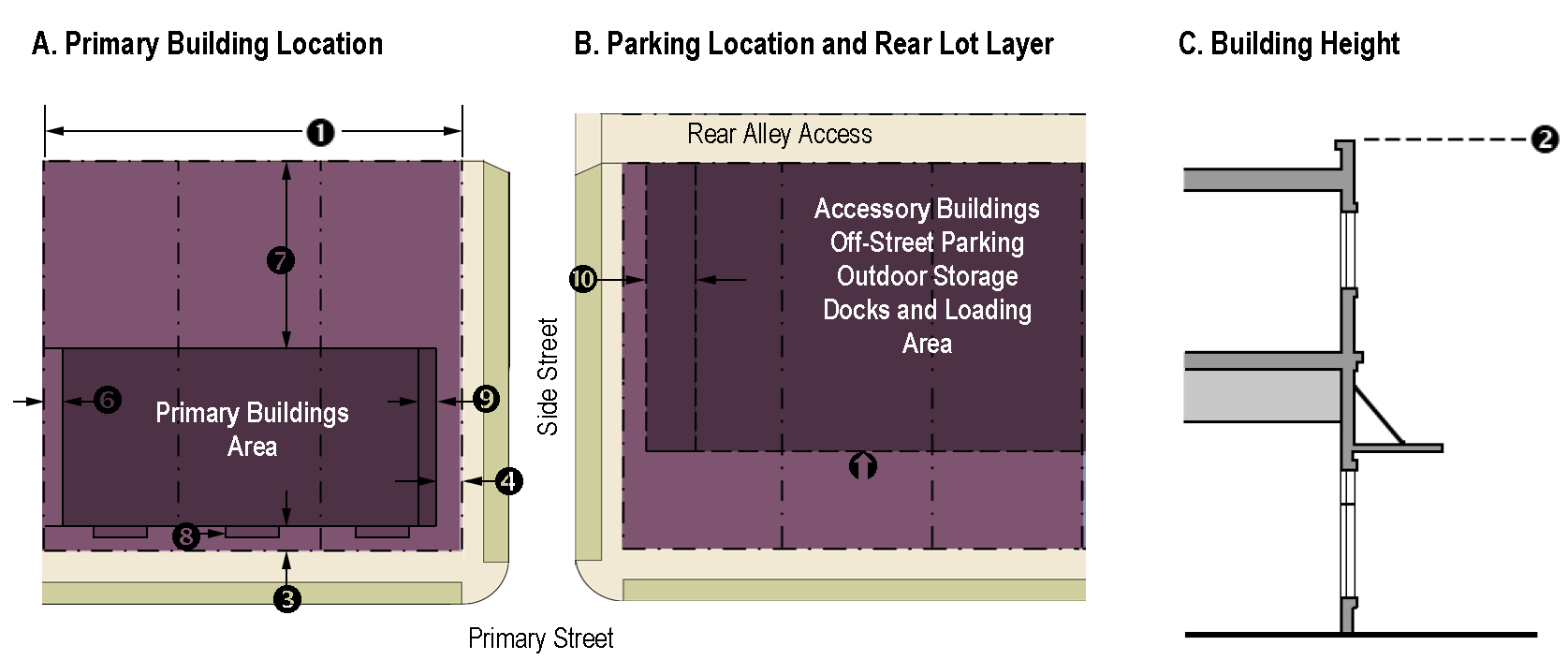
The following diagram illustrates key terms used to define development areas on a lot for this Chapter:
Figure 19.170.070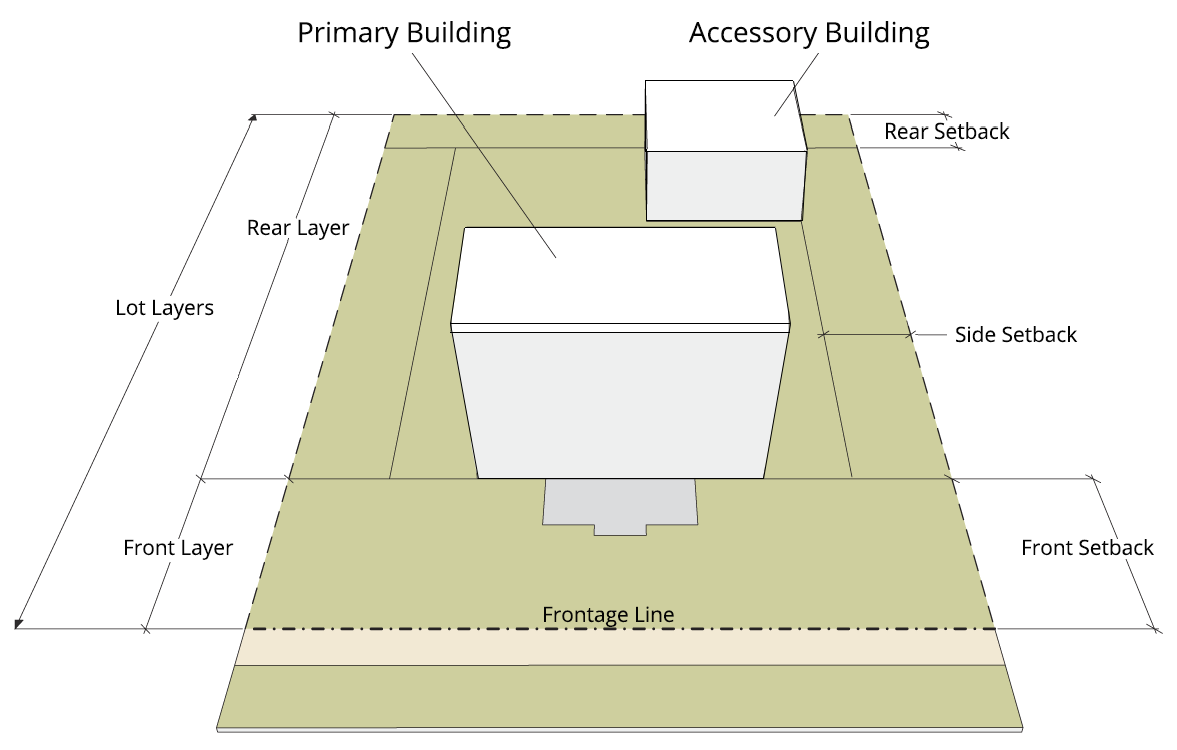
Table 19.170.070 IE - Industrial Emphasis (IE) Sub-District Development Standards
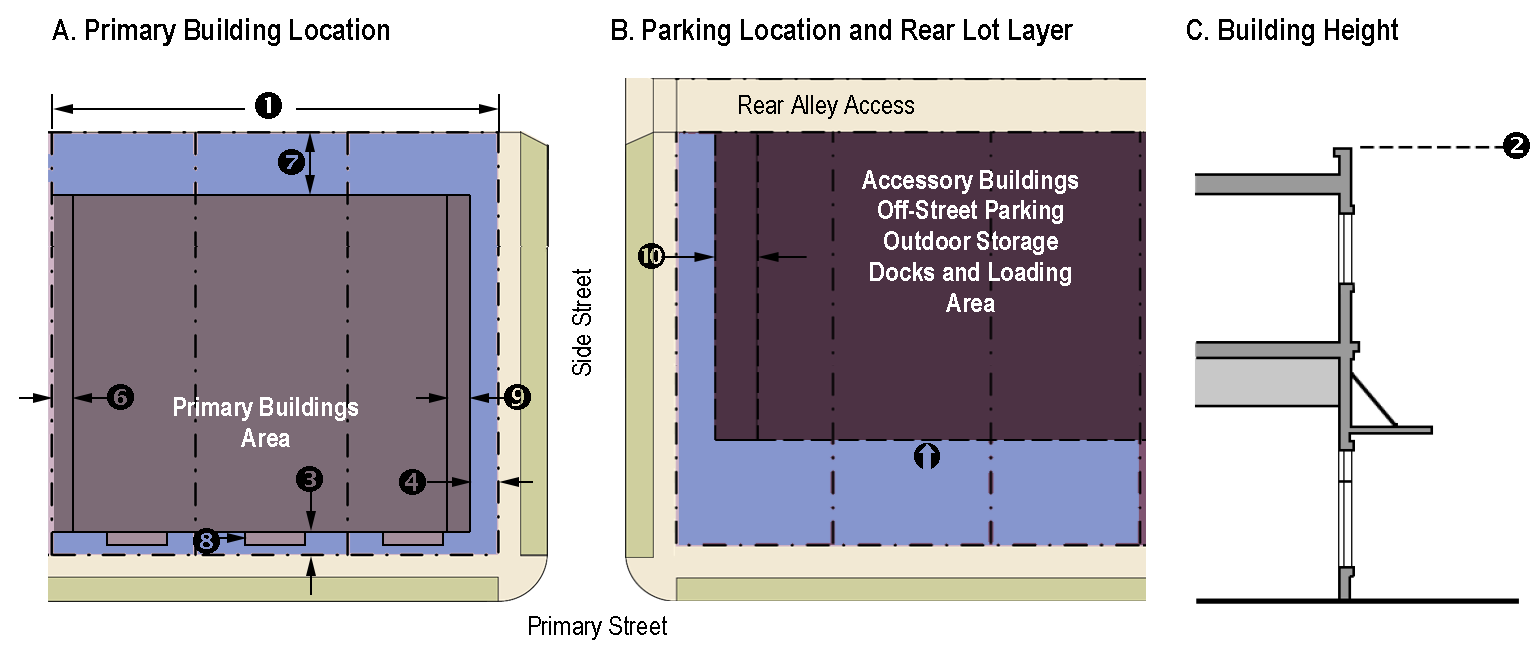
Table 19.170.070 EE - Employment Emphasis Sub-District Development Standards
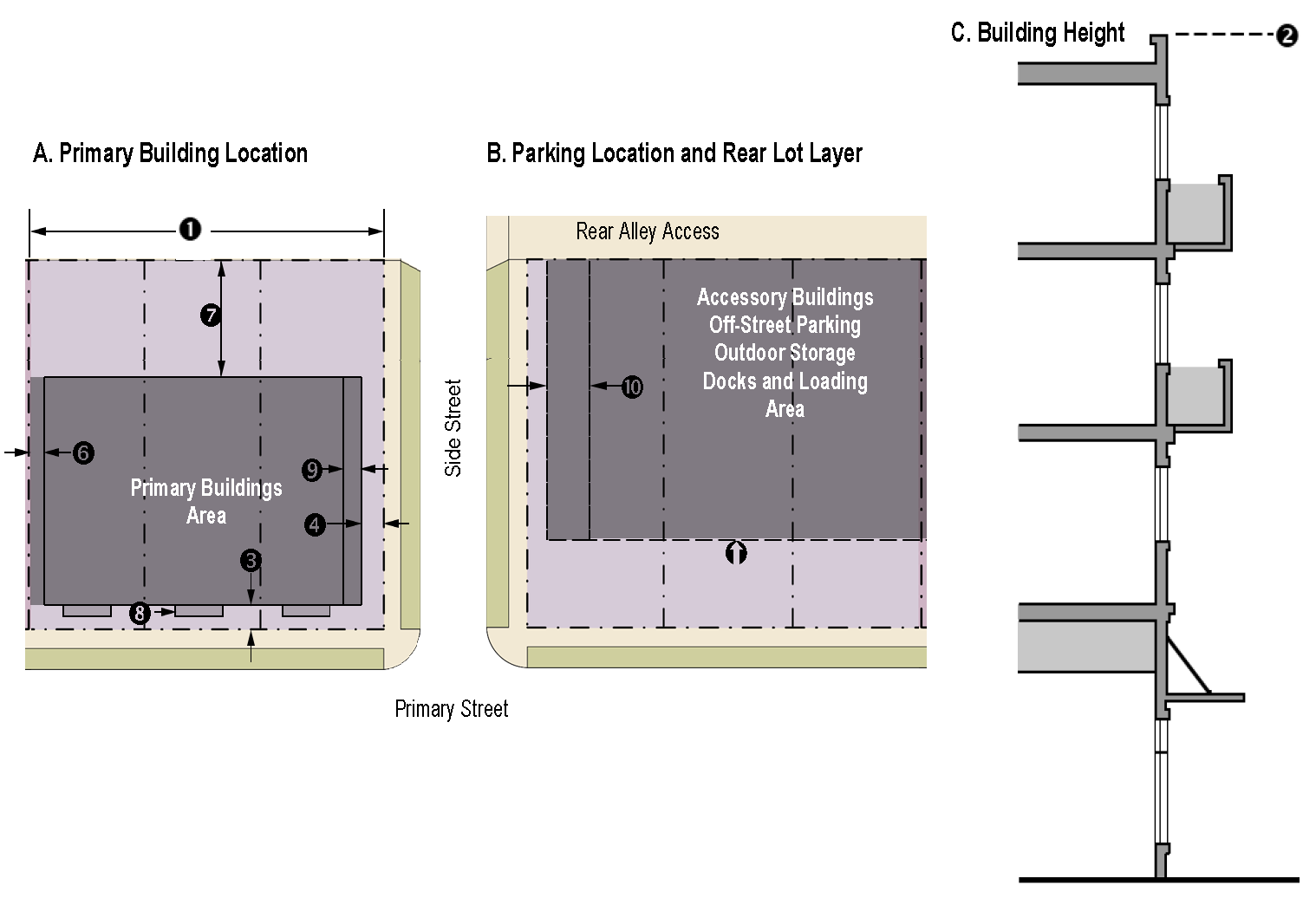
Table 19.170.070 HE - Housing Emphasis Sub-District Development Standards
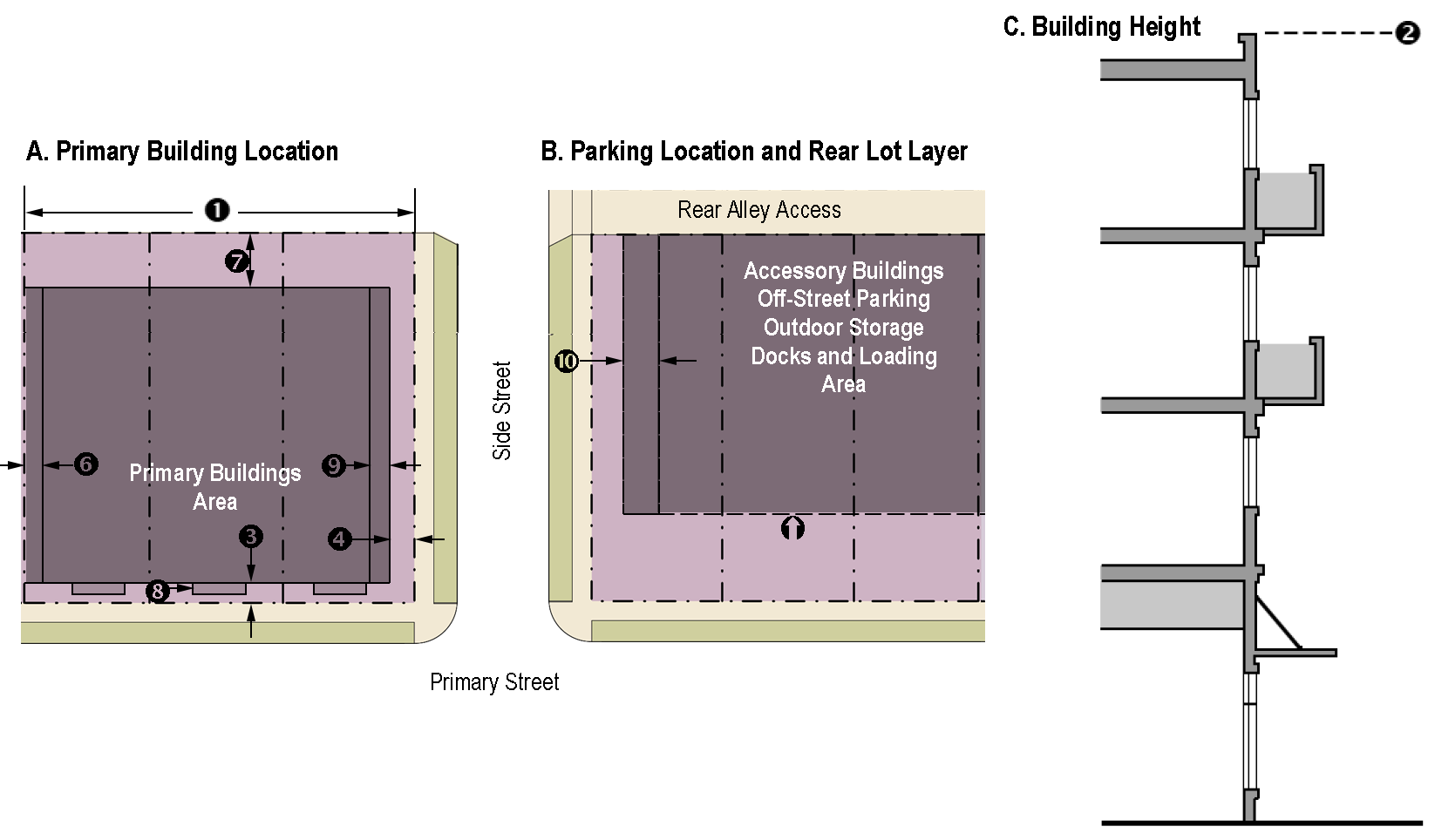
Table 19.170.070 ET - Eastside Transition Sub-District Development Standards
(Ord. No. 7759, § 3(Exh. C), 2026; Ord. 7573 § 1(Exh. A), 2021)
19.170.080 - Additional standards.
In addition to the requirements outlined in Section 19.240.060, the following shall apply to building placement. The following diagram illustrates key terms used to define development areas on a lot:
A.
Additional setback requirements.
1.
Permitted encroachments into the front setback include the following private building frontage elements: stoops (exterior stairs), forecourt terraces (at grade space), light court terraces (below grade space and stairs), recessed arcades and walkways, outdoor dining, green walls, artistic expressions, parking access screening, and planter boxes.
2.
Building setbacks.
a.
For buildings fronting on two streets, the front setback shall apply on both frontages.
b.
For buildings fronting on three or more streets, the front setback shall apply on at least two of the frontages.
3.
Accessory buildings.
a.
Accessory buildings in the rear setback shall be a minimum of 15 feet measured from the centerline of the rear alley easement.
b.
In the absence of a rear alley, the rear setback for accessory buildings, the setback shall be a minimum of ten feet.
4.
Exceptions.
a.
Outdoor eating areas - Where an outdoor eating area is installed, a portion of the building may be set back up to 12 feet from the frontage line, if at least 80 percent of the building facade is at the frontage line.
B.
Façade width.
a.
In the EE and HE Sub-Districts, the minimum façade width shall be 80 percent of the lot width.
b.
In the IE and ET Sub-Districts, the minimum façade width shall be 60 percent of the lot width.
C.
Building heights.
1.
Heights do not apply to attics, parapets, belfries, clock towers, chimney flutes, water tanks, elevator bulkheads or tower.
2.
Residential building floor to finished ceiling height must be a minimum of ten feet in HE, EE, and ET Sub-Districts, except for ground or first floor live-work uses which do not have a minimum.
3.
For development projects in all Sub-Districts that adjoin the ET Sub-District, the maximum building height shall be 65 feet within 20 feet of the ET Sub-district.
D.
Façade glazing and openings.
1.
The ground floor façade of primary buildings with commercial and/or office uses shall be a minimum of 70 percent glazed area.
2.
Ground floor openings shall have transparent glazing and provide views into work areas, display areas, sales areas, lobbies, or similar active spaces, or into window displays that are three feet deep or more.
3.
In the EE, HE and ET Sub-Districts, a continuous plane of any building façade shall not exceed 20 feet without an opening.
4.
Exceptions to glazing.
a.
In the IE Sub-District, multi-level parking facilities, where permitted, are not required to meet the ground-floor transparency requirement (refer to development standard, C1 above).
b.
If buildings are in rear layer, and not visible from the adjacent public street, the building ground-floor transparency requirement shall not be required (refer to development standard, C1 above).
E.
Windows and entryways.
1.
All new buildings shall have windows on all perimeter walls oriented towards streets and courtyards.
2.
All new buildings shall have clearly identifiable entry doorways on Front façades.
F.
Loading areas.
1.
Truck docks, loading, storage yards, and service areas are permitted within the rear layer on rear alley and lanes.
2.
Loading, storage yards, and service areas shall be located on the side or rear of buildings and shall not face a street.
G.
Open space.
1.
Common ground floor open space.
a.
Common ground floor open space is to be used for enhanced landscaping and passive/active gathering areas. Common ground floor open space does not include land occupied by streets, driveways, parking areas, service areas, required landscape areas or required front and street side yards.
b.
Common ground floor open space may be provided in lieu of providing individual open space for each unit within the first four floors above the ground floor.
c.
In the IE, EE and HE Sub-Districts, common ground floor open space, including, but not limited to, terraces, courtyards, plazas, and patios, is required and must be directly accessible from within the primary building.
d.
In the IE Sub-district, common ground floor open space adjacent to the public right-of-way shall be screened with decorative wall compliant with the development standards below (Section L.3).
e.
Minimum Dimensions:
i.
Common ground floor open space shall be provided at a rate of 70 square feet per 1,000 square feet of building area or a minimum of 7,000 square feet, whichever is less.
ii.
Each common ground floor open space area shall have a minimum dimension of 20 feet in width.
2.
Common upper floor open space—Mixed-use buildings.
a.
In the EE and HE Sub-Districts, common upper floor open space, including, but not limited to, balconies, decks, terraces, common open space, and rooftops, is required for every five floors above the first four floors and the on the rooftop.
b.
Common upper floor open space is required for every for every five floors above the first four floors and the on the rooftop, in addition the private open space required in this section.
c.
Common upper floor private open space shall have a minimum horizontal dimension of six feet in width and shall be a minimum of 2,000 square feet.
3.
Private upper floor open space—Residential units.
a.
Private upper floor open space shall include a balcony, deck, patio, porch that is directly accessible by a doorway from a habitable room within the residential unit.
b.
For each residential unit located on the fifth floor or higher, a private upper floor open space shall be a minimum 24 square feet.
H.
Outdoor retail sales and merchandise display.
1.
All outdoor retail sales and merchandise displays shall be directly accessible to the primary business.
2.
Outdoor retail sales and merchandise displays shall not obstruct ingress and egress to a building, hinder accessibility, obstruct fire lanes, interfere with vehicular circulation, or sight distance, or be in landscaped areas.
3.
Outdoor retail sales and merchandise displays shall not exceed five percent of the total gross floor area of the business, or 200 square feet, whichever is less.
4.
Display merchandise shall not exceed a height of six feet above finished grade.
5.
The temporary use of a parking or undeveloped area for outdoor retail sales, merchandise displays, and entertainment is permitted with a temporary use permit as defined in the Zoning Code.
I.
Outdoor storage. For nonresidential uses, storage shall be located in the rear layer of the lot and not visible from streets.
2.
Storage shall be located behind the rear most wall of the building, or 50 feet, whichever is less.
3.
In the EE, HE and ET Sub-Districts, storage shall be a maximum ten percent of the gross floor area of the use or 600 square feet, whichever is less.
4.
In the IE Sub-District, storage shall be a maximum ten percent of the lot area.
J.
Parking.
1.
Screening.
a.
For lots without a primary building, parking shall be fully screened using landscaping, opaque walls, or other rigid materials to screen any parking spaces located in the front layer.
b.
Screening shall be a minimum 36-inches in height.
c.
Screening shall be setback a minimum of two-feet from the property line.
2.
Off-street parking shall be set back a minimum of 25 feet from the property line.
a.
Parking may be setback a minimum of ten feet from the street adjacent property lines, if a decorative wall compliant with the development standards below (Section L.3) is provided to screen the parking.
K.
Pedestrian network connectivity.
1.
An internal network of pedestrian walkways shall connect: 1) all buildings on a site; 2) on-site automobile and bicycle parking areas; 3) sidewalks; and 4) any on-site common open space or amenity.
2.
Private, internal walkways shall be a minimum of six feet wide, hard surfaced/paved with concrete, stone, tile, brick, or comparable material.
3.
When walkways cross driveways, parking areas, or loading areas, clearly identifiable markings shall be required and may include a raised crosswalk, a different paving material, or similar method.
4.
Where a walkway is parallel and immediately adjacent to an drive aisle, clearly identifiable markings shall be required to separate the walkway from the auto travel lane using a raised curb, bollards, or other physical barriers.
L.
Edge conditions.
1.
Building pads sited along Massachusetts Avenue, between Kansas and Chicago Avenues, shall be equal to the grade of the public right-of-way.
2.
All developments shall provide parkway adjacent sidewalks along Massachusetts Avenue.
3.
Fences and walls facing public rights-of-way require a minimum setback of 5-feet from the property line.
a.
Fences and walls are not permitted to be located between the building and the public right-of-way.
b.
Height of fences and walls facing public rights-of-way may be a maximum of 6-feet in height. Provided that the bottom 2/3s of the wall is solid, and the upper 1/3 of the wall is openwork.
c.
Fences and walls facing public rights-of-way shall be constructed of a minimum of two decorative materials.
4.
Site Plan shall be designed to prevent the queuing of trucks on streets or elsewhere outside of facility.
M.
Temporary mixed-use areas.
1.
A temporary use may be allowed on vacant lots in EE and/or HE Sub-Districts to activate the site if it meets the Sub-District's general intent.
(Ord. No. 7759, § 4, 2026; Ord. 7573 § 1(Exh. A), 2021)
19.170.090 - Nonconformities.
A.
Land uses and structures legally established that do not conform to this chapter may continue to exist and operate as legal, conforming uses.
B.
Expansion of such uses and structures shall be limited as follows:
1.
The gross floor area may be expanded up to ten percent of the existing gross floor area of structures on the premises through a design review.
2.
The gross floor area of previously conforming uses and structures may be expanded up to 50 percent of the existing gross floor area of structures on the premises through a minor condition use permit.
3.
Within the HE Sub-district, existing conforming nonresidential uses may be replaced with other conforming, nonresidential uses without complying with the 80 percent residential land use requirement for new development.
(Ord. 7573 § 1(Exh. A), 2021)
19.180.010 - Purpose.
The Building Setback Overlay Zone (X) is established to preserve and promote the health, safety, and general welfare of the community and to promote quality design consistent with General Plan policies by allowing for modifications to the setback standards established in a base zone. A building setback standard may be increased or reduced for the purpose of achieving design or public safety goals, or for avoiding possible detrimental impacts of building height or mass on neighboring properties or public rights-of-way. The Building Setback Overlay Zone may be applied to any zone and may be applied in conjunction with other overlay zones.
(Ord. 7331 §14, 2016; Ord. 6966 §1, 2007)
19.180.020 - Application of setbacks.
Whenever the Building Setback Overlay Zone is established, no building shall be constructed on the property closer to any property line than the number of feet specified by the Overlay Zone, and the number of feet so specified shall take precedence over the setback requirement established by the underlying zone. For example, CG-X-50 indicates that the base zone of the property is CG (General Commercial), but the property is also within the Building Setback Overlay Zone (X), that designates the setback of the construction of a building on the property no closer than 50 feet to any property line. The distance may also be specified to apply to any particular property line.
(Ord. 7331 §14, 2016; Ord. 6966 §1, 2007)
19.180.030 - Structures or improvements in special setbacks.
Notwithstanding any provisions of this chapter to the contrary, the following structures or improvements may be erected, constructed, or established within the special setbacks established in this chapter, unless otherwise noted:
A.
Pedestrian access walkways.
B.
Vehicular access driveways.
C.
Fences or walls not exceeding three feet in height in yards adjacent to streets, or six feet up to the maximum otherwise permitted in all other yards.
D.
Off-street parking areas within the rear or interior side yard setbacks only, including parking spaces, drives, aisles, turning and maneuvering areas, bumper stops or wheel stops, pursuant to the standards of Chapter 19.580 (Parking and Loading).
E.
Lights to illuminate off-street parking areas, pedestrian walkways, vehicular access driveways, landscaped areas or buildings.
F.
Structures or improvements permitted within yard areas by and in conformance with the provisions of Chapter 19.630 (Yard Requirements and Exceptions). For the purpose of this subsection, the special setback requirement shall be considered a yard.
G.
Signs as permitted by Chapter 19.620 (Signs).
H.
Landscaped areas.
(Ord. 7331 §14, 2016; Ord. 6966 §1, 2007)
19.180.040 - Reserved.
Editor's note— Ord. No. 7701, § 14, adopted in 2025, repealed § 19.180.040. Former § 19.180.040 pertained to setback variances permitted and derived from Ord. 6966 §1, adopted in 2007 and Ord. 7331 §14, adopted in 2016.
19.190.010 - Purpose.
The Commercial Storage Overlay Zone (CS) is established to permit storage uses in areas that are particularly difficult to use due to parcel shape, access, adverse environmental conditions, or in areas where parcels are needed to form a buffer between incompatible uses. It is intended that the CS Overlay Zone be applied where typical development permitted by the base zone is not a practical use of the property. In particular, the CS Overlay Zone is not intended to be applied to valuable commercial or industrial, job producing properties except in unusual circumstances. The Commercial Storage (as defined in Article X - Definitions) Overlay Zone may be applied to any zone except the RC, RA-5, R-3, R-4, CRC, any MU, RWY and PF Zones and may be applied in conjunction with other overlay zones.
(Ord. 7331 §15, 2016; Ord. 6966 §1, 2007)
19.190.020 - Development and use standards.
In addition to the development use standards applicable to the base zone, the following standards shall apply. Where conflict exists, the more restrictive standards shall apply.
A.
Use limitations, including storage prohibitions.
1.
Storage spaces shall not be used for manufacturing, retail or wholesale selling, office, other business or service use or human habitation.
2.
No outdoor storage shall be permitted other than for storage of recreational vehicles.
3.
Bulk storage of flammable or explosive matter or material as defined by the Uniform Fire Code is prohibited.
4.
Storage of any matter or materials that creates obnoxious dust, odor or fumes is prohibited.
B.
Use of shipping containers prohibited. The use of prefabricated shipping containers shall not be permitted.
C.
Site development standards.
D.
Screening of outdoor storage and doors.
1.
Where permitted, outdoor storage shall be screened in compliance with regulations set forth in Chapter 19.510 (Outdoor Storage). The height of perimeter walls and buildings shall be sufficient to completely screen recreational vehicle storage from public view.
2.
Access doors to individual storage units shall be located within a building or shall be screened from adjacent property or public rights-of-way.
E.
Building and roof design. All buildings shall be designed so as to resemble the predominant surrounding development, especially nearby residential uses. In particular design elements shall be included that break up long, monotonous building or roof lines.
F.
Street facades. The design and layout of the street side of the site shall provide a varied and interesting facade. Considerations include the use of setbacks, building placement, roof design, variations in building walls, fencing, other structural elements, and landscaping.
G.
Landscaping. Landscaping on the site shall be abundant and provide an appropriate transition from public to private spaces, separate and buffer the buildings from other uses especially abutting residential uses and provide visual relief from stark, linear building walls. In addition to any landscaping required for the base zone, all street setbacks must be fully landscaped.
H.
Walls. All walls shall be designed to be compatible with the desired character of the area and shall be particularly sensitive to abutting residential uses. Use of rolled razor wire, barbed wire and the like, visible to public view, shall be prohibited. The entire property shall be surrounded by a wall of six-foot minimum height.
I.
Commercial storage buildings as perimeter wall. Commercial storage buildings can be used as the perimeter wall requiring no setbacks if there are no openings on the sides of the building, provided all construction complies with the provisions of the Uniform Building Code and Uniform Fire Code.
J.
Lighting. Exterior lighting shall be oriented and shielded to avoid spillage onto any surrounding properties. The provisions of Section 19.590.070 (Light and Glare) and the provisions of Chapter 19.556 (Lighting) relating to lighting shall also apply.
K.
Noise. For the purposes of minimizing noise impacts, the hours of operation and access to the storage units shall be limited to 7:00 a.m. to 7:00 p.m. Monday through Friday and 9:00 a.m. to 5:00 p.m. on Saturday, Sunday, and Federal holidays. To further limit noise impacts, metal roll-up doors shall be lubricated and maintained on a regular basis. The provisions of Chapter 19.590 (Performance Standards) relating to noise as well as the provisions of Title 7 (Noise) shall also apply.
L.
Parking and loading. Adequate loading and unloading areas shall be provided outside of any required fire lanes. Parking and loading shall be provided pursuant to Chapter 19.580 (Parking and Loading).
M.
Caretaker's unit permitted. One caretaker's unit is permitted per each such development. The caretaker's unit may be located on a second story of a two-story building up to 30 feet in height.
N.
Screening of mechanical equipment. All roof-supported or ground-supported mechanical equipment shall comply with the regulations set forth in Chapter 19.555 (Outdoor Equipment Screening).
O.
Trash receptacles and enclosures.
1.
All trash storage areas shall be located so as to be convenient to the users and where associated odors and noise will not adversely impact the users.
2.
The provisions of Chapter 19.554 (Trash/Recyclable Materials Collection Area Enclosures) regarding requirements for the screening of trash receptacles shall apply.
(Ord. 7331 §15, 2016; Ord. 6966 §1, 2007)
19.190.030 - Concurrent site plan and design review required.
No new building, structure, sign, exterior alteration or enlargement of an existing building shall be commenced in the CS Overlay Zone until Site Plan and design review approval have been granted pursuant to Chapters 19.770 (Site Plan Review Permit) and 19.710 (Design Review).
(Ord. 7331 §15, 2016; Ord. 6966 §1, 2007)
19.195.010 - Purpose.
The Cultural Resources Overlay Zone (CR) is established to assist in implementation of the requirements of Title 20, Cultural Resources Code. It is intended that the CR Overlay Zone is to be applied to all properties designated as Cultural Resources, including properties within Historic Districts and Neighborhood Conservation Areas, and all individually designated Historic Landmarks and Structures of Merit. The CR Overlay Zone may not be applied to any property which is not a designated Cultural Resource pursuant to Title 20. The CR Overlay Zone is strictly an informational designation which serves to advise property owners, City staff, and the general public that a property is a designated Cultural Resource and, as such, is subject to all the requirements of Title 20.
(Ord. 7331 §16, 2016; Ord. 7022 §2, 2009)
19.195.020 - Development and use standards of base zone not affected.
The CR Overlay Zone does not change the use and development standards of the underlying base zone. For information, Title 20 requires that a Certificate of Appropriateness be approved to restore, rehabilitate, alter, develop, construct, demolish, remove or change the appearance of any cultural resource.
(Ord. 7331 §16, 2016; Ord. 7022 §2, 2009)
19.200.010 - Purpose.
The Building Stories Overlay (S) Zone is established to preserve and promote the health, safety and general welfare of the community, and to promote quality design consistent with General Plan policies by allowing for modifications to the building height standards established in a base zone. A building height standard may be reduced for the purpose of achieving design or public safety goals, or for avoiding possible detrimental impacts of building height or mass on neighboring properties or public rights-of-way. Building height standards may also be increased to provide an incentive for mixed-use projects or to facilitate a more efficient and desirable use of land. The Building Height Overlay Zone may be applied to any zone, except the RA-5 and RC Zones, and may be applied in conjunction with other overlay zones.
(Ord. 7331 §17, 2016; Ord. 6966 §1, 2007)
19.200.020 - Application of Building Stories Overlay Zone.
Whenever the Building Stories Overlay Zone is established on any property, no building or structure shall be constructed on said property higher than the number of stories specified after the S on the Zoning Map of the City, and said number of stories shall take precedence over the height requirement permitted by the underlying zone. For example, BMP-S-3 indicates that the base zone of the property is BMP (Business and Manufacturing Park Zone) and the property is within the Building Stories Overlay Zone (S) and the maximum number of permitted stories is three.
(Ord. 7331 §17, 2016; Ord. 6966 §1, 2007)
19.200.030 - Building height limit.
The maximum overall building height limit in the Building Stories Overlay Zone shall be 20 feet for the first story permitted and ten feet for each additional story permitted with overall building height measured between the average level of the highest and lowest elevations of the land covered by the structure and the highest point of the roof or parapet wall covering that structure (See Article X-Definitions).
(Ord. 7331 §17, 2016; Ord. 6966 §1, 2007)
19.200.040 - Reserved.
Editor's note— Ord. No. 7701, § 15, adopted in 2025, repealed § 19.200.040. Former § 19.200.040 pertained to stories variances permitted and derived from Ord. 6966 §1, adopted in 2007 and Ord. 7331 §17, adopted in 2016.
19.210.010 - Purpose.
The Mobile Home Park (MH) Overlay Zone is established to set forth standards to be applied to the development of new mobile home parks. The standards herein are intended to ensure a suitable living environment for those persons residing within a mobile home park and to ensure compatibility of such park with the surrounding area.
(Ord. 7331 §19, 2016; Ord. 6966 §1, 2007)
19.210.020 - Applicability.
A.
This Mobile Home Park Overlay Zone (MH) may only be applied in combination with a base zone as set forth in Table 19.100.020 A.
B.
The MH Overlay Zone may also be applied in combination with other overlay zones.
C.
Unless otherwise specified, the provisions of California Code of Regulations Title 25, Division 1, Chapter 2, Mobile Home Parks Act, shall apply.
(Ord. 7528 §1(Exh. A), 2020; Ord. 7520 §1(Exh. A), 2020; Ord. 7331 §19, 2016; Ord. 6966 §1, 2007)
19.210.030 - Permitted uses.
Mobile home parks may be established within a Mobile Home Park Overlay Zone subject to the granting of a conditional use permit processed pursuant to Chapter 19.760 (Conditional Use Permit) and to the provisions of this chapter (Refer to the provisions of California Code of Regulations Title 25, Division 1, Chapter 2, Mobile Home Parks Act).
(Ord. 7331 §19, 2016; Ord. 6966 §1, 2007)
19.210.040 - Development standards.
Table 19.210.040 (MH Overlay Zone Development Standards) sets forth the minimum development standards required for all new mobile home parks. In the event of conflict between these standards and those required for the underlying base zone, the standards set forth in Table 19.210.040 (MH Overlay Zone Development Standards) shall prevail.
(Ord. 7528 §1(Exh. A), 2020; Ord. 7331 §19, 2016; Ord. 6966 §1, 2007)
Table 19.210.040
MH Overlay Zone Development Standards
(Ord. 7528 §1(Exh. A), 2020; Ord. 7520 §1(Exh. A), 2020)
19.210.050 - Additional development standards.
The following additional standards shall apply to all new mobile home parks.
A.
Management. Every mobile home park community shall be properly managed to ensure maintenance of common facilities and to ensure individual home sites are developed and maintained in accordance with recorded rules and regulations for the park. A Management Plan shall be included in the conditional use permit application submittal.
B.
Site use and improvements. Each mobile home shall be located on an approved mobile home site, and all mobile home sites shall be designed to accommodate independent mobile homes. No mobile home site shall be used as the location for more than one mobile home or trailer. Each mobile home shall be skirted with material compatible in color and material with the mobile home.
C.
Roadways. Access to the mobile home park shall be provided from a public roadway and shall include an internal circulation system that would allow access to each individual mobile home space in accordance with Title 25 (Housing and Community Development) of the California Code of Regulations.
D.
Fences and walls (excluding Tiny Home (chassis) Communities). A minimum six-foot-high decorative solid masonry wall shall be constructed to enclose the park and serve as a visual screen and buffer between uses. The wall shall be located no closer than the front and street side setback along all streets and for the remainder perimeter of the park, it shall be located at the property line. All outdoor storage areas for the Park shall be enclosed by a minimum six-foot-high masonry wall. Fencing for each individual mobile home space shall comply with Title 25 (Housing and Community Development) of the California Code of Regulations.
E.
Landscape buffer. When a mobile home park shares a common boundary with a residential use, a ten-foot landscape setback shall be provided along the common property line.
F.
Landscaping. All required minimum setback areas around the perimeter of the park shall be permanently landscaped and maintained with ground cover, trees, and shrubs, pursuant to Chapter 19.570 (Water Efficient Landscaping and Irrigation).
G.
Accessory structures (storage building, garage, carport, awning, cabana, greenhouse, etc.). Accessory structures shall be subject to the minimum requirements for setbacks, building separation and height, location, size, construction materials and lot coverage established for Mobile Home Accessory Buildings and Structures in Title 25 (Housing and Community Development) of the California Code of Regulations.
H.
Common open space. A recreation area, exclusive of any mobile home space, shall be provided and maintained on site at a rate of 275 square feet for each mobile home unit within the park. Recreation areas may include, but not be limited to, recreation rooms, community indoor and outdoor facilities, playgrounds, and other similar amenities.
I.
Utilities. Unless otherwise specifically authorized by the designated approving or appeal authority, all utilities providing service to the park shall be placed underground. Equipment appurtenant to the underground facilities (e.g., transformers, meter cabinets) may be placed above ground. All utilities shall be installed to the specifications of the Public Utilities and Fire Departments. Master metering shall be required, with sub-metering at the option of the park owner.
J.
Parking. Parking shall be provided and improved in accordance with Chapter 19.580 (Parking and Loading) of the Zoning Code. However, where two parking spaces are provided on a mobile home space, one may be located behind the other (in tandem) and need not have independent vehicular access.
K.
Lighting. Lighting for signs, structures, landscaping, parking areas, loading areas and the like, shall comply with the regulations set forth in Section 19.590.070 (Light and Glare) and the provisions of Chapter 19.556 (Lighting).
L.
Trash receptacles and enclosures.
1.
All trash storage areas shall be located so as to be convenient to the users and where associated odors and noise will not adversely impact the users.
2.
The provisions of Chapter 19.554 (Trash/Recyclable Materials Collection Area Enclosures) regarding requirements for the screening of trash receptacles shall apply.
(Ord. 7660, § 3, 2024; Ord. 7528 §1(Exh. A), 2020; Ord. 7520 §1(Exh. A), 2020; Ord. 7331 §19, 2016; Ord. 6966 §1, 2007)
19.215.010 - Purpose.
The Neighborhood Commercial Overlay Zone (NC) is established to:
A.
Provide nearby neighborhoods with commercial centers that encourage and allow residents to safely walk to a neighborhood center and promotes social interaction through the types of uses allowed. For instance, sit down restaurants are encouraged, while drive thru fast food restaurants are prohibited.
B.
Provide supplemental project review, limitations on uses, and additional development standards to address potential incompatibilities and adverse effects of commercial development that is adjacent or in proximity to residential neighborhoods.
(Ord. 7331 §20, 2016; Ord. 6966 §1, 2007)
19.215.020 - Application and permit requirements.
A.
Application. The Neighborhood Commercial Overlay Zone may be applied to the Commercial General (CG) or Commercial Retail (CR) Zone and in combination with other overlay zones as appropriate. The Neighborhood Commercial Overlay Zone shall be applied pursuant to the procedures of Chapter 19.810 (Zoning Code Text/Map Amendment).
B.
Permit requirements. In addition to any other permits required by the Zoning Code, no new building, structure or sign exterior alteration or enlargement of an existing building, structure, or sign shall be commenced in the Neighborhood Commercial Overlay Zone until Design Review and Site Plan Review Permit approval have been granted pursuant to Chapters 19.710 and 19.770, respectively.
(Ord. 7331 §20, 2016; Ord. 6966 §1, 2007)
19.215.030 - Uses permitted and prohibited.
A.
Notwithstanding the use regulations applicable to the underlying base zone, the use regulations set forth in Tables 19.150.020.A (Permitted Uses Table), 19.150.202.B (Incidental Use Table) and 19.740.020 (Temporary Use Permit) shall apply. The tables identify permitted uses, uses that are subject to the approval of a minor or regular conditional use permit, or uses requiring other permits. Uses not listed in the tables are prohibited unless the Community & Economic Development Director or his/her designee, pursuant to the provisions of Chapter 19.060 (Interpretation of Code) determines that the use is similar to and will have no greater impact than a permitted or conditional use listed in the tables.
B.
Where in conflict, the provisions of the Neighborhood Commercial Overlay Zone shall supersede the provisions of the underlying base zone. Where the provisions of a Neighborhood Commercial Overlay Zone are in conflict with any applicable Specific Plan (SP), the more restrictive provisions shall apply.
(Ord. 7331 §20, 2016; Ord. 6966 §1, 2007)
19.215.040 - Additional development standards.
The Planning Commission, through the site plan review permit or other required discretionary permit review process, may establish development standards different from those of the underlying base zoning district on a case-by-case basis to ensure compatibility with adjacent residential neighborhoods and to minimize any potential adverse effects of the commercial development.
(Ord. 7331 §20, 2016; Ord. 6966 §1, 2007)
19.217.010 - Purpose.
The Residential Livestock Overlay Zone (RL) is established to permit greater flexibility in certain requirements pertaining to the keeping of farm animals such as horses, ponies, mules, cows, goats and sheep, pigs and swine under Future Farmers of America-supervised and 4-H-supervised projects, in those areas of the City where the keeping of such animals is already prevalent. It is also the intent of the RL Zone to provide opportunities for those whose lifestyle includes the keeping of such animals to locate in such neighborhoods in order to separate such activities from areas occupied by those who do not share such a lifestyle.
(Ord. 7331 §21, 2016; Ord. 6966 §1, 2007)
19.217.020 - Application.
The Residential Livestock Overlay Zone may be combined with any single-family residential zone for both existing and new residences.
(Ord. 7331 §21, 2016; Ord. 6966 §1, 2007)
19.217.030 - Development and use standards.
Permitted uses in the Residential Livestock Overlay Zone shall be any use permitted in the single-family residential zone with which said zone is combined; provided, however, that the following regulations shall prevail notwithstanding any contrary requirements in the underlying single-family residential zone:
A.
Not more than a total of two horses, ponies, mules, cows, goats and sheep, and swine and pigs subject to the provisions of subsection B of this section, or a total of two of any combination thereof shall be kept on any lot; provided that said lot has a minimum area of 20,000 square feet; and further provided that one additional such animal may be kept for each additional 10,000 square feet over the minimum area requirement;
B.
Swine or pigs shall be permitted in the Residential Livestock Overlay Zone only upon the condition that said animals are kept and maintained as a duly authorized Future Farmers of America or 4-H project;
C.
Offspring of permitted animals shall not be counted in determining the permitted number of animals if such offspring do not exceed the following age limitations:
1.
Cattle, 24 months;
2.
Horses, 18 months;
3.
Ponies, 18 months;
4.
Mules, 18 months;
5.
Sheep, 12 months;
6.
Goats, 12 months;
7.
Pigs, 60 days;
8.
Swine, 60 days;
D.
All animals permitted pursuant to this section shall be housed, penned or pastured at least 60 feet from any residence, excluding the residence on the lot where the animals are kept;
E.
The premises where such animals are kept shall be maintained in a clean, neat and sanitary condition at all times in order to insure the public health, safety, comfort, convenience and general welfare. Unless all animal manure on the premises is removed from the premises daily, said manure accumulated each day shall be placed in boxes or receptacles of a design and construction acceptable to the Riverside County Health Officer, and the boxes or containers maintained to prevent access to the contents thereof by flies and to prevent offensive odors. All watering troughs shall be maintained so as to prevent the breeding of mosquitoes. Said premises shall be maintained in accordance with all applicable ordinances, laws, rules, and regulations pertaining to the care of animal habitation, manure removal, fly-producing conditions, and mosquitoes.
(Ord. 7331 §21, 2016; Ord. 6966 §1, 2007)
19.219.010 - Purpose.
The Residential Protection Overlay Zone (RP) is established to preserve the character of single-family residential neighborhoods where the physical conversion of single-family dwellings to higher occupancy rental housing units has the potential to increase densities beyond those intended for single-family zoned neighborhoods. Modifications that essentially transform single-family dwellings into multiple-family dwellings or boardinghouses, both of which are prohibited within single-family zones, has a negative cumulative effect on the public's health, safety and welfare. These conversions can lead to overcrowding, excessive on-street parking, neighborhood disturbances, and other undesirable impacts.
The specific purpose of the Residential Protection Overlay Zone is to:
A.
Establish development standards for affected properties to ensure the development review process provides for consideration of the impacts of new construction, alterations, and changes in use that have the potential to increase the intensity of single-family properties beyond that anticipated by the established zoning or the City's General Plan.
B.
Ensure the design of dwellings and on-site parking is appropriate for the area's character, and is appropriate for the area's capacity to accommodate increases in densities, which may be limited due to infrastructure, such as sewer, traffic control, on- and off-street parking, safety services, parkland, etc.
(Ord. 7592 § 4(Exh. E), 2022; Ord. 7331 § 22, 2016; Ord. 7302 § 2, 2015)
19.219.020 - Application.
A.
The Residential Protection Overlay Zone shall require the provisions of this chapter to apply to any construction that results in a new habitable structure, the addition to an existing habitable structure, or modifications to the configuration (i.e., floor plan, layout, etc.) of an existing habitable structure.
B.
The provisions of this chapter shall not apply to any new construction, additions or modifications that result in 1,000 square feet or less of total dwelling area on a lot.
C.
For any lot developed with more than one dwelling unit, including Accessory and Junior Accessory Dwelling Units pursuant to Chapter 19.442 and Two-Unit Developments pursuant to 19.443, the provisions of this Chapter shall apply individually to each dwelling unit on the lot.
(Ord. 7592 § 4(Exh. E), 2022; Ord. 7331 § 22, 2016; Ord. 7302 § 2, 2015)
19.219.030 - Development standards.
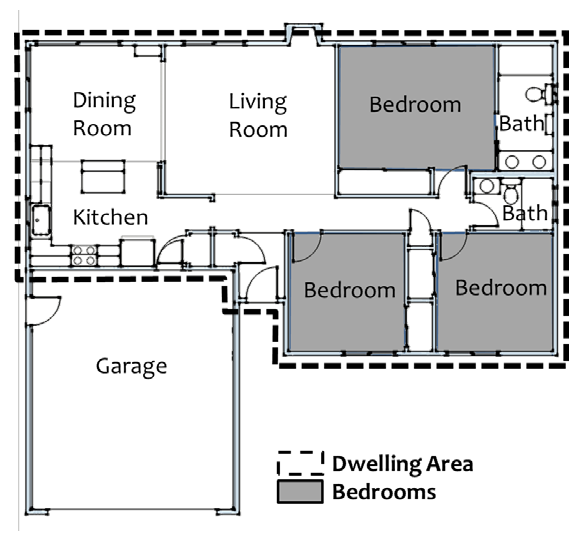
The following development standards shall apply to the dwelling area of single-family residential structures (exclusive of garages, unconditioned patios, porches, and other such accessory structures).
A.
Bedrooms. The total area of all bedrooms shall not exceed 50 percent of the total dwelling area of the structure, as defined by Article X of the Zoning Code. The calculation of bedroom area shall not include closets or bathrooms, and measurements shall be from the centerline of interior walls, and the exterior of exterior walls.
B.
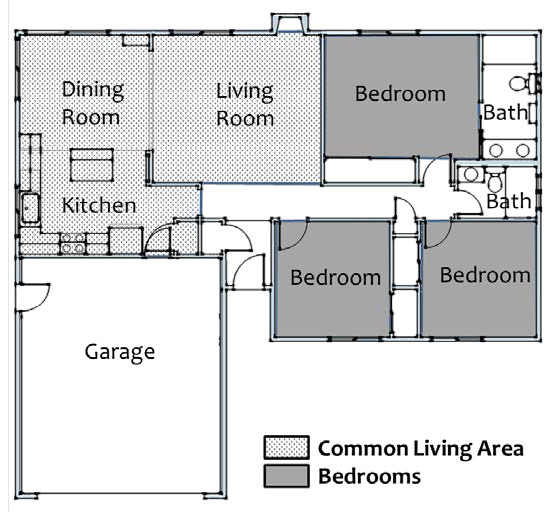
Common living area. The total combined common living area as defined by Article X of the Zoning Code shall be equal to or greater than the total combined area of all bedrooms. The calculation of common living area and bedroom area shall not include closets, bathrooms or hallways, and shall be measured from the centerline of interior walls, and the exterior of exterior walls.
C.
Parking. In addition to the minimum parking requirements of Chapter 19.580 - Parking and Loading, any new construction, or modification to an existing dwelling, which results in a dwelling with five or more bedrooms, shall comply with the following:
1.
When the number of bedrooms in a dwelling equals or exceeds five, an additional open parking space shall be provided in a location that does not block access to other required parking spaces. The additional open parking space shall be in a location that complies with 19.580.070.A.2, except an existing driveway in front of a garage converted to a habitable space may remain and be counted toward the additional required open space, provided the driveway space meets the minimum parking space dimensions specified in this chapter.
2.
This provision shall not apply to units developed pursuant to Chapter 19.443 (Two-Unit Developments).
(Ord. 7592 § 4(Exh. E), 2022; Ord. 7331 § 22, 2016; Ord. 7302 § 2, 2015)
19.219.040 - Nonconforming structures.
Notwithstanding other provisions of the Zoning Code to the contrary, a nonconforming structure shall not be expanded or modified, unless such modifications bring the structure into compliance with the requirements of the Residential Protection Overlay Zone, or return the structure to the original single-family residential floor plan, subject to granting of the necessary building permits and other applicable permits.
(Ord. 7592 § 4(Exh. E), 2022; Ord. 7331 § 22, 2016; Ord. 7302 § 2, 2015)
19.220.010 - Purpose.
The Specific Plan Overlay Zone (SP) is established to implement Sections 65450 through 65457 of the State Government Code. The Specific Plan Overlay Zone may be applied to all properties within the City lying within the bounds of an adopted specific plan, except those properties within the Downtown Specific Plan or the Northside Specific Plan. The area within the Downtown Specific Plan boundaries is within the Downtown Specific Plan Zone that establishes the zoning for that area and is not an overlay zone. The area within the Northside Specific Plan boundaries is within the Northside Specific Plan Zone that establishes the zoning for that area and is not an overlay zone. The Specific Plan Overlay Zone may be applied to any underlying base zone and may be applied in conjunction with other overlay zones.
(Ord. 7542, § 2, 2020; Ord. 7331 §23, 2016; Ord. 6966 §1, 2007)
19.220.020 - Permitted land uses and development standards.
For those properties where the Specific Plan Overlay Zone is applied, all permitted use restrictions, development standards, and other applicable standards or regulations governing development as contained within the adopted specific plan shall apply. To the extent that the specific plan does not enumerate use restrictions, development standards, or other applicable regulations, the standards associated with the underlying base zone shall apply. In the event that provisions of the adopted specific plan conflict with or do not correspond with the provisions of the underlying base zone, the provisions as contained in the adopted specific plan shall apply and supersede the underlying base zone requirements. Specific plans shall be prepared and processed to Chapter 19.820 (Specific Plan/Specific Plan Amendments).
(Ord. 7630 § 6, 2023; Ord. 7431 § 4, 2018; Ord. 7331 §23, 2016; Ord. 6966 §1, 2007)
19.230.010 - Purpose.
The Water Course Overlay Zone (WC) is established to clearly identify and designate areas of the City as floodways, stream channels and areas that are subject to periodic flooding and accompanying hazards, and that should be kept free from particular structures or improvements that may endanger life or property or significantly restrict the carrying capacity of the designated floodway or stream channel. The Water Course Overlay Zone may be applied to any underlying base zone and may be applied in conjunction with other overlay zones.
(Ord. 7331 §24, 2016; Ord. 6966 §1, 2007)
19.230.020 - Permitted land uses.
A.
Table 19.230.020 (Permitted land uses in the Water Course Overlay Zone) identifies permitted uses and uses that are subject to the granting of a conditional use permit. These land use regulations shall supersede the regulations of the underlying base zone. Uses and structures that were permitted or conditionally permitted prior to the addition of the WC Overlay Zone shall be subject to the additional provisions of Table 19.230.020 (Permitted land uses in the Water Course Overlay Zone).
B.
Uses not listed in Table 19.230.020 (Permitted land uses in the Water Course Overlay Zone) shall be prohibited unless the Community & Economic Development Director or his/her designee, pursuant to the provisions of Chapter 19.060 (Interpretation of Code) determines that the use is similar to and will have no greater impact than a permitted or conditional use listed in Table 19.230.020 (Permitted land uses in the Water Course Overlay Zone).
C.
No grading is permitted except as may be authorized for a permitted or conditionally permitted use.
(Ord. 7331 §24, 2016; Ord. 6966 §1, 2007)
Table 19.230.020
Permitted Land Uses in the Water Course Overlay Zone
19.230.030 - Nonconforming uses and structures.
Notwithstanding other provisions of the Zoning Code to the contrary, a nonconforming use shall not be expanded but may be modified, altered or repaired to incorporate flood-proofing measures, provided such measures do not raise the level of the design flood.
(Ord. 7331 §24, 2016; Ord. 6966 §1, 2007)

