
Roseville City Zoning Code
CHAPTER 1010
- SIGN REGULATIONS
Sec. 1010.01. - Purpose and findings.
(a)
Purpose. This chapter is intended to establish a comprehensive and balanced system of sign control that accommodates the need for a well-maintained, safe, and attractive community, and the need for effective communications, including business identification. It is the intent of this chapter to promote the health, safety, general welfare, aesthetics, and image of the community by regulating signs that are intended to communicate to the public, and to use signs that meet the city's goals by authorizing:
(1)
Permanent signs that establish a high standard of aesthetics;
(2)
Signs that are compatible with their surroundings;
(3)
Signs that are designed, constructed, installed, and maintained in a manner that does not adversely impact public safety or unduly distract motorists;
(4)
Signs that are large enough to convey the intended message and to help citizens find their way to intended destinations;
(5)
Signs that are proportioned to the scale of, and are architecturally compatible with, principal structures;
(6)
Permanent signs that give preference to the on-premise owner or occupant; and
(7)
Temporary commercial signs and advertising displays which provide an opportunity for grand openings and occasional sales events while restricting signs which create continuous visual clutter and hazards at public right-of-way intersections.
(b)
Findings. The city finds it is necessary for the promotion and preservation of the public health, safety, welfare, and aesthetics of the community that the construction, location, size, and maintenance of signs be controlled. Further, the city finds that:
(1)
Permanent and temporary signs have a direct impact on and relationship to the image of the community;
(2)
The manner of installation, location, and maintenance of signs affects the public health, safety, welfare, and aesthetics of the community;
(3)
An opportunity for viable identification of community businesses and institutions must be established;
(4)
The safety of motorists, cyclists, pedestrians, and other users of public streets and property is affected by the number, size, location, and appearance of signs that divert the attention of drivers;
(5)
Installation of signs suspended from, projecting over, or placed on the tops of buildings, walks, or other structures may constitute a hazard during periods of high winds and an obstacle to effective firefighting and other emergency service;
(6)
Uncontrolled and unlimited signs adversely impact the image and aesthetic attractiveness of the community and thereby undermine economic value and growth;
(7)
Uncontrolled and unlimited signs, particularly temporary signs that are commonly located within or adjacent to public right-of-way or are located at driveway/street intersections, result in roadside clutter and obstruction of views of oncoming traffic. This creates a hazard to drivers and pedestrians and also adversely impacts a logical flow of information;
(8)
Commercial signs are generally incompatible with residential uses and should be strictly limited in residential zoning districts; and
(9)
The right to express noncommercial opinions in any zoning district must be protected, subject to reasonable restrictions on size, height, location, and number.
(Ord. No. 1606, § 1010.01, 11-8-2021)
Sec. 1010.02. - Definitions.
The following words, terms and phrases, when used in this chapter, shall have the meanings ascribed to them in this section, except where the context clearly indicates a different meaning:
Area identification sign means a freestanding sign which identifies the name of, including, but not limited to, a residential development, a multiple residential complex, a shopping center or shopping area, a business park, an industrial park, a building complex, or any combination thereof.
Balloon means a flexible, nonporous bag inflated with air or a gas lighter than air, such as helium.
Billboard means a permanent off-site or on-premises sign exceeding 200 square feet in area on a single face and which is used to advertise products, goods, services, ideas or noncommercial speech, including, but not limited to, such signs on which space is offered for lease or rent. The term "billboard" applies to the following five lawful pre-existing nonconforming billboards:
(1)
Within the north end of the railroad right-of-way addressed as 508 Cleveland Avenue North, located south of County Road D and west of Interstate 35W;
(2)
Within the Ramsey County right-of-way in the southeast corner of County Road C and Cleveland Avenue;
(3)
Within the private parcel immediately east of 2560 Long Lake Road;
(4)
Within the railroad right-of-way directly east of 2255 Walnut Street; and
(5)
Atop the building at 2280 Hamline Avenue.
Building canopy or awning means a sign constructed of flexible translucent or fabric-type material that incorporates a written message or logo on the exterior. Building canopies shall be considered part of the wall area and thus shall not warrant additional sign area.
Building complex means a group of two or more buildings, planned or developed in a joint manner with shared parking facilities, regardless of whether such buildings or uses are located on the same lot or parcel.
Commercial sign means any sign that advertises or identifies a product, business, service, event, or any other matter of a commercial nature, and that seek to draw attention to or promote a commercial, business, or economic interest or activity in contrast to noncommercial signs that expresses an opinion or viewpoint of a social or political nature.
Construction sign means any non-illuminated sign that displays information regarding the construction or development of the site on which it is displayed.
Directional sign means a sign which contains no advertising and is intended to facilitate the safe movement of pedestrians and vehicles into, out of, and around the site on which the sign is located.
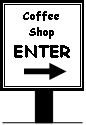
Directional Sign
Dynamic display means any characteristics of a sign that appear to have movement or that appear to change, caused by any method other than physically removing and replacing the sign or its components, whether the apparent movement or change is in the display, the sign structure itself, or any other component of the sign. The term "dynamic display" includes a display that incorporates a technology or method allowing the sign face to change the image without having to physically or mechanically replace the sign face or its components. The term "dynamic display" also includes any rotating, revolving, moving, flashing, blinking, or animated display and any display that incorporates rotating panels, LED lights manipulated through digital input, "digital ink," or any other method or technology that allows the sign face to present a series of images or displays.
Flag means a piece of cloth or bunting varying in color and design, attached to a pole, used as a symbol, standard, emblem or insignia, or containing text other than that associated with a commercial, business, or economic interest or activity.
Freestanding sign means any sign not affixed to a building, including, but not limited to, a ground sign, pole sign, pylon sign, or monument sign.
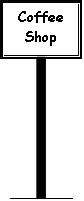
Freestanding Sign
Ground sign means a sign mounted on the ground attached either to footings or a base with an open space between the ground and the sign face.
Height of freestanding sign means the actual distance from the grade to the highest point of the sign, including any structure or architectural component of the sign.
Home occupation sign means a sign located at a residence advertising a business conducted in the residence or by persons residing in the residence.
Illumination, external, means a light source that is not internal to the sign.
Illumination, internal, means a light source within the sign.
Illuminated sign means a sign on or from which artificial light is directed.
Logo means an identifying graphic that may or may not be a registered trademark.
Master sign plan means a written document describing all proposed signs regarding a specific site, development, or complex, submitted by the owner/manager, including all types of signs/signage desired, reviewed, and approved by the city, and shall at a minimum include sign type, location, and size illustrations.
Mobile sign or portable sign means a sign designed or intended to be moved or transported by trailer or on wheels. A sign may be a mobile sign even if it has wheels removed, was designed without wheels, or is attached temporarily to the ground, a structure, or other sign. Signs mounted on a vehicle for advertising purposes, when the vehicle is parked and visible from public right-of-way, except signs identifying a business when the vehicle is being used in the normal day-to-day operation of that business.
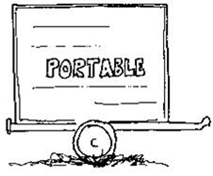
Mobile (Portable) Sign
Monument sign means a freestanding sign located directly at grade.
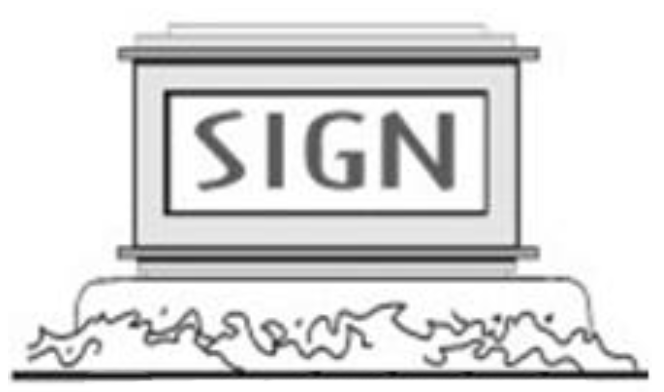
Monument Sign
Nameplate sign means a wall sign that states only the name or address or both of the business or occupant of the lot where such sign is placed. Letters and/or numbers must be at least four inches in height, and the maximum sign area shall not exceed four square feet.
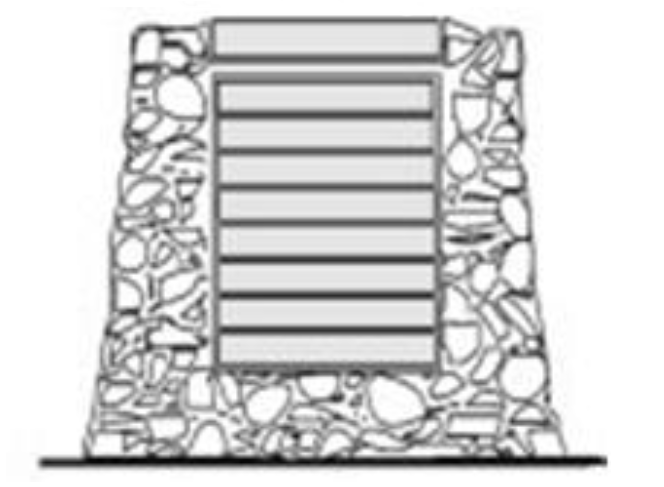
Nameplate Sign
Non-commercial sign means communicative devices that express an opinion or viewpoint of a social or political nature in contrast to commercial signs that seek to draw attention to or promote a commercial, business, or economic interest or activity.
Nonconforming sign means a sign that lawfully existed prior to June 18, 2012, but does not conform to this chapter.
Off-site sign means a sign that advertises any business, product, person, event, or service conducted, sold, manufactured, or located off the premises where the sign is located.
Painted sign means a sign painted directly on the outside wall or roof of a building or on a fence, rock, or similar structure or feature in any zoning district.
Pennants (also referred to as streamers) means pieces of cloth, paper, or plastic that do not include any written or graphical, or other form of copy and are intended to be individually supported or attached to each other by means of rope, string or other material, and are intended to be hung on buildings or other structures or between poles.
Permanent sign means any sign that is displayed or intended for display for an indefinite period of time.
Pole sign means a sign that is mounted at or near the top of a single or multiple poles.
Political sign means a sign announcing candidates seeking political office or issues to be voted upon at a political election.
Portable sign. See Mobile Sign.
Projecting sign means a wall sign that protrudes horizontally more than one foot from the wall to which it is attached.

Projecting Sign
Pylon sign means a freestanding sign supported by its own structure and not attached to any building.
Readerboard sign means a sign where the message is changeable with letters or numbers.
Real estate sign means any sign pertaining to the sale, lease, or rental of land or buildings.
Sign means any writing, pictorial presentation, number, illustration or decoration, flag, or other device that is used to announce, direct attention to, identify, advertise, or otherwise make anything known. The term "sign" shall not be deemed to include the terms "building" or "landscaping," or any architectural embellishment of a building not intended to communicate information.
Searchlight means a powerful light or lights equipped with a reflector to produce a bright beam or beams.
Special event device means any sign, searchlight, laser display, or other attention-getting device used in conjunction with a special event.
Temporary sign means a sign that is designed or intended to be displayed for a short period of time and is not permanently installed. The term "temporary sign" includes A-frame or T-frame signs, sandwich signs, curb signs, and balloons.
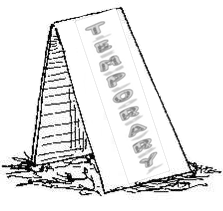
Temporary Sign
Under canopy sign means any sign hanging below a building canopy, awning, or building overhang.
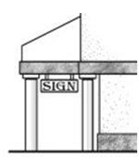
Under Canopy Sign
Unified development means a development of three or more principal structures with common characteristics as determined by the city. Common characteristics may include shared access, similar architecture, single ownership, or history of site plan review approval.
Wall sign means a sign constructed on a panel attached to a structure or raised letters or symbols attached to a wall or combination thereof. No part of such a sign is painted on the wall surface.
Window sign means any sign placed on the interior of a window or painted on a window such that it can be read from the outside of the building.
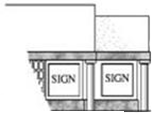
Window Sign
Windsock means a large roughly conical device open at both ends and attached to a stand by a pivot so that the wind blows through it, not including devices used for navigational purposes.
(Ord. No. 1606, § 1010.02, 11-8-2021; Ord. No. 1687, § 1, 1-27-2025)
Sec. 1010.03. - General provisions.
(a)
Permit required. The following general provisions are applicable to all signs. It shall be unlawful for any person to erect, alter, replace, or relocate any sign or other advertising structure without first obtaining a permit and paying the required fees, except as herein otherwise provided, including those approved through the master sign plan process.
(b)
Exempted signs. The following signs are exempt from the requirements of this chapter:
(1)
Signs erected by a public agency in and/or above or overhanging a public right-of-way.
(2)
The following signs are permitted in residential districts for non-commercial purposes only: banners, balloons, pennants, spinners, windsocks, streamers, ribbons, whirling devices, or light bulb strands.
(c)
Prohibited signs.
(1)
No sign will be attached to trees or utility poles.
(2)
No sign will be painted directly on any exterior building surface. Sign letters and symbols may be attached directly to a wall by adhesive or mechanical means.
(3)
No sign will overhang the public right-of-way, sidewalk easement, walkway easement or bicycle path easement except a bus bench or approved trash container at a designated public transportation pickup location.
(4)
No sign will extend above the roofline of a building (roof sign).
(5)
Projecting signs must not project further than 30 inches from the wall to which they are anchored.
(6)
No sign will be installed that by reason of position, movement, shape, illumination, or color would constitute a traffic hazard by obstructing a driver's vision or by interfering, confusing, or misleading traffic.
(7)
No sign will noticeably move either by mechanical means (rotating sign) or as a result of normal wind pressure.
(8)
The following specific signs shall be prohibited: off-site, flashing, mobile/portable, roof, rotating, and painted signs, banners, and new billboards. This prohibition on billboards shall not apply to the five lawful pre-existing nonconforming billboards as defined in this chapter, including in the event that they are converted to a dynamic display subject to the provisions of section 1010.10(8).
(9)
All other signs not expressly permitted by this chapter.
(d)
Nonconforming signs. All nonconforming signs in existence on June 18, 2012, may continue subject to the provisions of chapter 1011 and state law. The five lawful pre-existing nonconforming billboards as defined in this chapter shall be permitted to be converted with a dynamic display subject to the provisions of section 1010.10(8).
(e)
Sign permit process.
(1)
Permit application. An application for a sign permit shall be made on the application provided by, or located in, the community development department, and state or have attached thereto the name and address of the applicant or person or company that will be erecting the sign; the address/location of the building, structure, or lot on which the sign is to be erected; the written consent of the property owner of the land on which the sign is to be erected; and any other pertinent information the community development department considers necessary. These requirements may be waived by the city planner where they are not applicable.
(2)
Permit review. All sign permits will be reviewed by the community development department to determine completeness. Should a permit be deficient in appropriate/applicable items necessary to process the sign permit, an email and/or letter will be composed to the applicant indicating the deficiencies of the permit. No permit will be acted upon until all requested/required information is submitted/received and/or reviewed.
(3)
Fees. Every applicant must pay a fee for each sign regulated by this chapter before being granted a permit.
a.
The city council will establish the permit fee by resolution.
b.
A double fee will be charged if a sign is erected without first obtaining a permit for such sign.
(4)
Revocation of permit. The community development department is hereby authorized to revoke a sign permit upon failure of the holder thereof to comply with any provision of this chapter. Any party aggrieved by such revocation may appeal the action to the board of adjustment and appeals within ten days after the revocation.
(5)
Expiration of permit. A permit expires if the sign is not erected within 180 days after issuance and no permit fees or inspection fees for such sign will be refunded.
(6)
Inspection. Sign installations for which a permit is required may be subject to inspection by the community development department to ensure that such signs are erected according to the approved permit.
(Ord. No. 1606, § 1010.03, 11-8-2021; Ord. No. 1687, §§ 2, 3, 1-27-2025)
Sec. 1010.04. - Maintenance, removal of signs; fines.
(a)
All signs must be maintained by the sign owner in a safe, neat, clean, and attractive condition. A sign must be replaced or refurbished so as to restore the original appearance thereof whenever it begins to fade, chip or discolor, rust, cease to be in good repair, or become unsightly.
(b)
Removal of signs will be governed by the following:
(1)
On-premises signs shall be removed from the building and property by the owner of such property within 14 days after the use is terminated.
(2)
Off-premises signs shall be removed within 30 days after discontinuation of use of the sign. A sign shall be considered discontinued if the message is removed, the subject of the message no longer exists, or the sign is not maintained.
(c)
If the community development department finds that any sign is unsafe, a detriment to the public, not maintained, or constructed, erected, or maintained in violation of the provisions of this chapter, the sign shall be deemed a public nuisance and abated under section 405.06.
(d)
Removal of abandoned signs, signs in disrepair, and signs located in public right-of-way.
(1)
Abandoned signs and signs in disrepair. An abandoned sign or sign in disrepair is prohibited and shall be removed by the owner of the premises within ten business days after notification. If compliance with this provision is not met, the matter will be abated through the requirements of chapter 405.
(2)
Signs on public property or within public right-of-way. The city may at any time and without notice impound signs that have been installed on public property or within public right-of-way or easement. The sign owner may retrieve the signs according to the following:
a.
A fee must be paid to the city as established in the city fee schedule. For each subsequent impoundment in a calendar year, the specified fee shall be doubled;
b.
The sign may be retrieved from a designated impound area during routine business hours and within 15 days from the date of impounding. After 15 days, the city will dispose of the sign; and
c.
The city may not be held liable for any damage to impounded signs.
(e)
Fines for sign without permit, illegal /prohibited sign, and perpetual violation of Code.
(1)
All signs, including temporary signs, shall have an approved permit prior to installation. Signs installed in any fashion without a permit shall receive a notice to remove within five business days of the receipt of a letter from community development department. Should the sign not be removed within the five business days, the community development department will issue a fine of $50.00 and another five business days to remove. Should the sign remain a fine of $100.00 will be issued and an immediate request sought. Should the sign not be removed and/or the fine fee not paid, the community development department will thereafter seek compliance through the public nuisance chapter 405. The same fines and process shall be applied to situations where illegal/prohibited signs are installed with or without an approved permit.
(2)
Those property owners and/or business that have signs deemed a perpetual violation shall be deemed a public nuisance and abated through chapter 405. For purposes of this requirement, perpetual violation shall refer to five violations in a calendar year.
(f)
Appeal. Should the property owner, business owner, tenant, renter, and/or proprietor object to the community development director's decision regarding the perpetual violation ruling, an appeal may be filed within ten days following the receipt of a letter indicating the perpetual violation by the community development director. The appeal shall follow the requirements listed in section 1009.08.
(Ord. No. 1606, § 1010.04, 11-8-2021)
Sec. 1010.05. - On-premises signs.
(a)
On-premises sign. All wall and/or freestanding signs in all districts shall be subject to the following requirements. Signs shall not be permitted within the public right-of-way or easements except on benches and shelters that have received permits as per section 703.05, and newspaper and cabstands, all of which shall be as governed by chapters 901 and 703. City, county, state, and federal traffic directional signs are permitted.
(1)
Signs allowed in residential districts.
a.
LDR and LMDR districts.
b.
MDR and HDR districts.
(2)
Signs allowed in mixed-use districts, employment districts, and institutional districts.
a.
MU-1, I, and INST districts.
b.
MU-2A and B, MU-3, MU-4, E-1 and E-2 districts.
(b)
Directional signs. Directional signs may be incorporated into a development, including information such as traffic directions, house numbers, management office location, or other information necessary to direct persons to facilities or areas within the development.
(1)
Directional signs shall not exceed eight square feet in size and eight feet in height and are not closer than one foot from a public street right-of-way, unless approved as a component of a master sign plan.
(2)
Off-site directional signs are prohibited.
(3)
Where applicable, directional signs are required to be incorporated into an approved master sign plan.
(Ord. No. 1606, § 1010.05, 11-8-2021)
Sec. 1010.06. - Sign area computation.
(a)
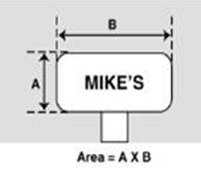
Computation of sign surface area of individual cabinet or panel sign. To compute the area for a cabinet or panel sign face, compute by means of the smallest square, rectangle, circle, triangle, or combination thereof that will encompass the extreme limit of the copy, representation, logo, emblem, or other display, together with any material or color forming an integral part of the background or the display or used to differentiate the sign from the backdrop or structure against which it is attached or affixed, but not including any support framework, bracing, or decorative fence or wall when such fence or wall otherwise meets the pertinent zoning regulations and is clearly incidental to the display itself.
(b)
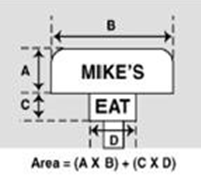
Computation of sign surface area of individual signs mounted letters or symbols. When a sign is composed of individual mounted letters or symbols, the sign surface area shall be determined by means of the total or the smallest contiguous square, rectangle, circle, triangle, or combination thereof that will encompass each letter, representation, logo, emblem, or other display.
(c)
Computation of sign surface area of awning or canopy. To compute the area of an awning or canopy sign, compute by means of the smallest square, rectangle, circle, triangle or combination thereof that will encompass the extreme limits of the copy, representation, logo, emblem or other display, together with any material or color forming an integral part of the background or the display or used to differentiate the sign from the backdrop.

(Ord. No. 1606, § 1010.06, 11-8-2021)
Sec. 1010.07. - Temporary and annual signs.
(a)
The community development department may issue a temporary sign permit or an annual sign permit for temporary and/or semi-permanent signs in commercial, employment, and institutional districts, subject to the following requirements:
(1)
Temporary and annual signs shall be comprised/constructed of durable all-weather materials (such as, but not limited to, plywood, corrugated plastic, plastic foam core, aluminum composite, and polycarbonate mounted to the building wall or they may be freestanding.
(2)
Type. Temporary and/or annual signs shall be A or T-frame, sandwich, fabricated and/or a manufactured sign on stands or posts, or a type/style approved by the community development department.
(3)
Size. The surface area of any temporary sign shall not exceed 32 square feet. This area shall be in addition to permanent, window, or other signage allowed elsewhere in this chapter.
(4)
Duration. During any calendar year temporary signs, such as grand opening signs, special event signs, and other similar signs may be in place no more than 60 days, which duration may be broken into multiple events/days not exceeding a total of 60 days per calendar year. Annual signs shall be allowed for a full calendar year and may be renewed annually with an approved permit.
(5)
Number. A use shall be limited to two temporary signs and/or a single annual sign, and the city reserves the right to limit/regulate, through the temporary sign permit, the number of temporary signs on multi-tenant, malls, and/or unified development sites.
(6)
Location. Freestanding temporary signs shall be located on private property and outside the public right-of-way.
(7)
Penalty. All temporary and/or annual signs that do not have a permit, and/or not in compliance with the requirements listed in subsections (a)(1) through (6) of this section, and/or have violated their approval (permit) shall be subject to a $50.00 fine and prescribed in section 1010.04(e).
(8)
Temporary sign permits may be issued for one or more events on a single permit as long as each events date/duration is specific on the permit.
(b)
Other approved attention getting devices.
(1)
The community development department may issue a temporary attention getting device permit for attention getting devices such as searchlights, balloons, pennants/streamers, or inflatables (or others as approved by the community development department).
(2)
Balloons shall not exceed two feet in diameter, be limited to an inflatable height of 20 feet, be limited to a grouping of no more than five, and not be permitted more than 15 days or five events (whichever is less) per calendar year.
(3)
Inflatables shall be limited to 24 square feet in size, a maximum height of six feet, be ground mounted, and not be permitted more than 15 days or five events (whichever is less) per calendar year.
(4)
Searchlights must not be directed into residential areas or onto streets and are not to be permitted more than six days per calendar year, and a site/property is limited to one searchlight unit per event.
(Ord. No. 1606, § 1010.07, 11-8-2021)
Sec. 1010.08. - Real estate signs.
(a)
The community development department may issue a sign permit for the sale, rental, and/or leasing of a property in the medium- and high-density residential, commercial, employment, and institutional districts as listed below.
(b)
Within low-, medium-, and high-density residential zoning districts, temporary real estate signs shall comply with the following requirements:
(1)
Six square foot maximum area;
(2)
Six foot maximum height;
(3)
One sign per property;
(4)
Shall be removed within seven days after execution of rental or lease agreement or the closing of a sale.
(c)
Within commercial, employment, and institutional zoning districts, temporary real estate signs shall comply with the following requirements:
(1)
Multi-tenant buildings and unified developments where new signage is requested, said real estate/leasing sign shall be made part of the required master sign plan as require in section 1010.11.
(2)
Single tenant buildings shall be allowed a real estate sign not exceeding 32 square feet mounted on the building wall or incorporated into an existing freestanding sign. If it is determined by the community development department that either a wall sign or incorporation into existing freestanding sign is not conducive, the site will be allowed one freestanding real estate not exceeding 32 square feet, limited to eight feet in height, and setback a minimum of 15 feet from a property line.
(3)
In situations where the selling, renting, and/or leasing sign is desired on vacant land/property, a freestanding sign not exceeding 32 square feet, limited to eight feet in height, and setback a minimum of 15 feet from a property line (or as approved by the community development department) shall be allowed.
(4)
Unless explicitly stated, the number of real estate signs shall be limited to one sign per lot, except multi-fronted or through lots, which may be permitted an additional sign on the second street frontage, or as approved by the community development department.
(d)
Leasing signs shall be removed within seven days after execution of rental or lease agreement or the closing of a sale.
(Ord. No. 1606, § 1010.08, 11-8-2021)
Sec. 1010.09. - Other signs.
No permit or permit fee shall be required for the following types of temporary signs; however, all other provisions of this chapter shall apply:
(1)
Nameplate signs.
(2)
Construction signs. Construction signs shall be confined to the site of construction, alteration, or repair and shall be constructed of high-quality material maintained in good repair. No more than one sign is permitted on each street frontage the project abuts. The sign shall be removed within 180 days of the date of the issuance of a building permit for the work. A conditional use permit is required for a contractor sign to remain in place longer than allowed by this subsection. Construction signs are allowed in zoning districts in accordance with the following criteria:
(3)
Flags.
(4)
Garage/yard sale signs. The sign shall only be displayed during the term of the sale and must be removed when the sale is completed.
(5)
Holiday signs may be displayed over a period not to exceed a total of 60 days per calendar year. The aggregate total area of such signs shall not exceed 50 square feet.
(6)
a.
Political signs to the extent that the following criteria are met:
1.
In years when a state general election is held, political signs may be posted 46 days before the primary election until ten days following the state general election. Any such signs must be removed by those responsible for their being posted.
2.
In years when no state general election is held, if there is a primary for any office, political signs for all offices may be posted no more than 46 days before the primary election. When there is no primary for any office, such signs may be posted not more than 46 days before the general election. All such signs must be removed by those responsible for their being posted within five days following the general election. Said political signs shall not exceed 12 square feet gross area.
3.
Political signs shall be set back at least 15 feet from the outside edge of any street or back of curb of all city and county streets.
4.
Political signs shall not be placed so as to cause a hazard to public safety.
5.
Political signs shall not be placed on any property without permission of the property owner.
6.
Political signs shall not be located on any city-owned property.
b.
Signs in violation of the provisions of subsection (6)a of this section may be removed by city staff and stored for two weeks. After two weeks, unclaimed signs will be disposed of by the city.
(7)
Real estate signs to the extent that the following criteria are met:
a.
Low density residential (LDR) and low- to medium-density residential (LMDR) property: For the purpose of selling, renting or leasing any LDR and LMDR property, a real estate sign not in excess of ten square feet in gross surface area in single- and two-family districts may be placed within the front yard or in the public street right-of-way beyond the front yard.
b.
No part of the sign shall be closer than six feet from the curb. If there is a sidewalk, no part of the sign shall be closer than two feet from the edge of the sidewalk.
(8)
Security system signs. Signs identifying the presence of a security or alarm system are allowed not to exceed two square feet.
(9)
Window signs. Signs affixed to or painted on windows or placed within 36 inches of a window to be viewed from the exterior of the building shall not occupy more than 25 percent of the total window area, nor shall they be placed in a location that would block the view into the building from a public street of the clerk's or cashier's area. Under no circumstances shall the total area of window signage exceed one-half the allowable area of wall signage for the affected building.
(10)
Signs that are affixed to city-owned light poles or standards that contain information advertising the city itself or city events, provided the signs are located in nonresidential areas, have been approved by the city council and city public works director.
(Ord. No. 1606, § 1010.09, 11-8-2021; Ord. No. 1637, § 1, 8-7-2023)
Sec. 1010.10. - Dynamic displays.
Any sign using a dynamic display, in whole or in part, must meet the following operational standards:
(1)
Duration. In all districts, the full sign image or any portion thereof must have a minimum duration of 12 seconds and must be a static display. No portion of the image may flash, scroll, twirl, change color, or in any manner imitate movement.
(2)
Transition. In all districts where the full sign image or any portion thereof changes, the change sequence must be accomplished by means of instantaneous repixelization. Fading, dissolving, scrolling, traveling, or any transition that creates the illusion of movement is prohibited.
(3)
Brightness. The dynamic display sign must not exceed a maximum illumination of 6,500 nits (candelas per square meter) during daylight hours and a maximum illumination of 500 nits (candelas per square meter) between dusk to dawn as measured from the sign's face at maximum brightness.
(4)
Dimmer control. Electronic graphic display signs must have an automatic dimmer control to produce a distinct illumination change from a higher illumination level to a lower level for the time period between one half-hour before sunset and one half-hour after sunrise.
(5)
Freeze and shutdown. Dynamic display signs must be designed and equipped to freeze the device in one position if a malfunction occurs. The displays must also be equipped with a means to immediately discontinue the display if it malfunctions, and the sign owner must stop the dynamic display within one hour of being notified by the city that it is not meeting the standards of this section.
(6)
Fluctuating or flashing illumination. No portion of any dynamic display sign may fluctuate in light intensity or use intermittent, strobe or moving light or light that changes in intensity in sudden transitory bursts, streams, zooms, twinkles, sparkles, or in any manner that creates the illusion of movement.
(7)
Video display. No portion of any dynamic display sign may change its message or background in a manner or by a method of display characterized by motion or pictorial imager, or depict action or a special effect to imitate movement, or the presentation of pictorials or graphics displayed in a progression of frames that give the illusion of motion or the illusion of moving objects, moving patterns, or bands of light or expanding or contracting shapes.
(8)
Conversion of billboards. A permit must be obtained for a dynamic display for an existing lawful pre-existing nonconforming billboard, provided the following requirements are met:
a.
The sign owner enters into an agreement with the city regarding the design and operation of the new dynamic display, which shall include the requirement for use of the billboard for public service announcements as provided below:
1.
The city is provided no less than 20 hours per month per dynamic display in the city for community and public service messages at times approved by the city.
b.
Provided the sign owner complies with the permit requirements of this chapter, a digital/dynamic display sign permit for the designated off-site billboard sign will be issued. Said permit will allow a digital/dynamic display billboard to occupy 100 percent of the existing copy and graphic area. The dynamic display billboard sign shall meet all other requirements of this chapter.
c.
The billboard proposed for conversion to dynamic display shall not be located within 500 feet from any residential use.
d.
The dynamic display must be oriented towards, and located within 150 feet of, the right-of-way, of Interstate 35W, Highway 280 or Highway 36.
e.
The billboard proposed for conversion to dynamic display cannot exceed 35 feet in height above the grade of the existing billboard sign base.
f.
Prior to issuance of a sign permit for the conversion to dynamic display, based on the characteristics of the billboard subject to the permit request and its ability to comply with the intent of the conditions of this section, a visual impact analysis may be required if the city manager determines the proposed dynamic display billboard could have a detrimental visual impact on a residence, residential neighborhood, city park or other open space.
(Ord. No. 1606, § 1010.10, 11-8-2021; Ord. No. 1687, § 4, 1-27-2025; Ord. No. 1689, § 1, 6-2-2025)
Sec. 1010.11. - Master sign plans.
(a)
Purpose. The purpose of a master sign plan is to establish a fair and equitable process for complex signage situations that accommodate the need for a well-maintained, safe, and attractive community, and the need for effective communications, including business identification.
(b)
Effect of master sign plan. Upon approval of a master sign plan, all future signs shall conform to the master sign plan. Modifications to the provisions of the master sign plan may be granted only with the approval of an amended master sign plan.
(c)
Required. A master sign plan is required for:
(1)
Building complexes;
(2)
Multi-tenant structures;
(3)
Covered mall buildings, shopping centers, or strip malls;
(4)
Planned unit developments;
(5)
Area identification signs;
(6)
Churches/places of worship/institutions/schools;
(7)
Unified development.
(d)
Guidelines. Where applicable, the underlying signage requirements of section 1010.05 shall be used as the minimum base standard for signage in the proposed master sign plan.
(e)
Criteria. To assist property owners and their tenants with signage needs, the city has established the following criteria that shall be used in developing, reviewing, and approving each master sign plan.
(1)
Location. No freestanding sign shall be located closer than five feet to a property line, roadway easement, or other public easement. No freestanding sign shall be erected that, by reason of position, shape, or color, would interfere in any way with the proper functioning or purpose of a traffic sign or signal. No freestanding sign shall be located within the traffic visibility triangle. No freestanding sign shall impede/impair traffic.
(2)
Quality. All signage shall improve the aesthetics or functional use of the site. All freestanding signs shall include materials that complement the architectural design/existing building materials, including, but not limited to, face brick, natural or cut stone, integrally colored concrete masonry units/rock faced block, glass, pre-finished metal stucco or similar cementation coating, and/or factory finished metal panels. Landscaping may be integrated into any freestanding sign.
(3)
Type. All types of signs are permitted except those prohibited by section 1010.03(c).
(4)
Size. The size of all signage (building wall and free standing) shall be limited to two times the maximum allowed under section 1010.05.
(5)
Height. The height of any free standing sign shall be limited to 40 feet.
(6)
Number. The number of freestanding signs shall be reasonably related to the number of access points to public streets and/or the number of tenants within the multi-tenant structure.
(f)
Master sign plan process. The following has been established by the city for reviewing and approving master sign plans:
(1)
Application requirements. The property owner, agent/manager, a design, architectural, or consulting firm, or a sign company, acting on behalf thereof, shall submit a completed master sign plan application to the community development department. A completed application includes completion of the application form, submittal of all applicable proposed plans and specifications, and the submittal of the required fee as set forth in the city fee schedule.
(2)
Submittal review. Upon submittal of a master sign plan application, the community development department will review the information provided for completeness and determine whether modifications and/or clarification is necessary. Once an application has been determined complete, the community development department will set the administrative hearing before the master sign plan committee (MSPC).
(3)
Establishment of administrative hearing and notice. The community development department will provide notice (postcard) to the applicant and contiguous/effected property owners not less than one week prior to a master sign plan hearing. The community development department may notify additional property owners if a determination is made that such additional notification is merited.
(4)
Hearing and approval. The MSPC shall hold an administrative hearing for each master sign plan proposal, take public comment, and provide a recommendation to the community development director for approval. The community development director shall make the final decision and provide written approval of a master sign plan to the applicant.
(g)
Appeal. Should the applicant or a contiguous property owner object to the community development director's decision on the master sign plan, an appeal may be filed within ten days following the administrative decision by the community development director. The appeal shall follow the requirements listed in section 1009.08.
(Ord. No. 1606, § 1010.11, 11-8-2021)

