
Saint Cloud City Zoning Code
CHAPTER 8
TERMS, DEFINITIONS, AND WORD USAGE
8.1.1. - General.
Unless specifically defined below in section 8.2.2 or in the specific chapter or article in which they appear, words or phrases used in this Code shall be interpreted so as to give them the meaning they have in common usage, and to give this Code its most reasonable application.
8.1.2. - Substitutions and word usage.
A.
The word "person" includes a firm, association, organization, partnership, trust, company, or corporation as well as an individual.
B.
The present tense includes the future tense, the singular number includes the plural, and the plural number includes the singular.
C.
The word "shall" is mandatory; the word "may" is permissive.
D.
The word "used" or "occupied" includes the words "intended," "designed," or "arranged to be used or occupied."
E.
The word "structure" includes the word "building" as well as other things constructed or erected on the ground, attached to something having location on the ground, or requiring construction or erection on the ground.
F.
The word "land" includes the words "water," "marsh" or "swamp."
8.2.1. - Terms not defined.
If a term used in this LDC is not defined in this LDC, the city manager or his/her designee is authorized to interpret its meaning. Such interpreted meaning shall be based upon the definitions used in accepted sources — including, but not limited to, A Planners Dictionary, A Glossary of Zoning, Development, and Planning Terms, A Survey of Zoning Definitions (all published by the American Planning Association), and Black's Law Dictionary, as well as general dictionaries such as Merriam-Webster, American Heritage, Webster's New World, and New Oxford American dictionaries.
8.2.2. - Definitions.
Unless a contrary intention clearly appears, the following words and phrases shall have the meaning given in this section.
Abandoned sign. Any sign, including the sign structure, which has been abandoned by its owner. Abandonment shall be presumed if, for a period of 90 days or longer, the sign has not displayed a copy.
Abutting property. Any property that is immediately adjacent to or contiguous with property that may be subject to any hearing required to be held under these regulations or that is located immediately across any road or public right-of-way from the property subject to any hearing under these regulations.
Accent color. A contrasting color used to emphasize architectural elements.
Accessory dwelling unit. A dwelling unit that exists either as part of a principal dwelling or as an accessory building on the same lot and is secondary and incidental to the use of the property as single-family residential, that has a separate kitchen, bathroom, and sleeping area, unit and is developed in accordance with the standards set forth in section 3.14.30 and only in those zoning districts where the use is listed as permitted.
Accessory use. A use of a nature customarily incidental and subordinate to the principal use or structure and, unless otherwise provided, on the same premises. "On the same premises" with respect to accessory uses shall be construed as meaning on the same lot or on a contiguous lot in the same ownership. A facility for the service of malt, vinous, or other alcoholic beverages shall be deemed an accessory use for a motel, hotel, private club, country club, or golf club provided all other applicable requirements of state law and city regulations are met.
Adult day care center. An establishment in which there is provided, for a part of the 24-hour day, basic services to three or more adults, not related by blood or marriage, who require such services.
Affected roadway. A roadway within the city's roadway network which is impacted by greater than five percent of a development's attracted or generated vehicle trips during the P.M. peak hour.
Affordable housing. Housing on which the occupant is paying no more than 30 percent of gross income for housing costs, including utilities.
Alcoholic beverages. Beer, wine, and liquor, or any beverage containing any of the foregoing.
Alcoholic beverage establishment. Term applies to package stores, liquor stores and to those establishments selling alcoholic beverages for consumption on the premises, and includes bars, pool halls, dancehalls, discotheques, taverns, nightclubs, cocktail lounges, and similar businesses but does not include micro-breweries, micro-wineries or restaurants when more than 51 percent of the business is for food sales.
Alley. A public or private way which is not designed for general travel but is used primarily as a means of secondary access to a lot abutting thereon. Alleys are generally 20 feet in width.
Alteration. Alter or alteration shall mean any construction or change in size, shape, occupancy, character, or use of a building or structure.
Alteration of a watercourse. This means a dam, impoundment, channel relocation, change in channel alignment, channelization, or change in cross-sectional area of the channel or the channel capacity, or any other form of modification which may alter, impede, retard or change the direction and/or velocity of the riverine flow of water during conditions of the base flood.
Altered copy. A change of copy, logo, or other means in which the message is changed or enlarged, changing shape or location or structural supports.
Animals, farm. Animals of a type commonly found on farms and whose purpose is to serve as product (such as beef cattle) or product production (such as milk cows). Such animals are typified by cattle, chickens, ducks, goats, and sheep. In addition, horses are specifically included and defined as farm animals. Pigs, hogs, or other swine are specifically excluded from this definition pursuant to section 8-4 of the City Code.
Animated. Any sign with motion, action or flashing lights or colors activated by mechanical, electrical or other non-natural means.
Animated sign. A sign having action, motion, movement, changeable copy, or flashing color changes that are activated by electrical energy, electronic energy or other manufactured sources of energy supply, but not including wind-activated movement such as in flags, banners or pennants, or mechanical movement signs. Animated signs include grids of flashing lights or mechanical elements in patterns that give the perception of movement, as in chasing lights or programmable displays. For purposes of this LDC, an animated sign shall not be considered a mechanical movements sign if the only mechanical movement in the sign relates to the movement of grids to produce programmable displays.
Antecedent water elevation. The water elevation designated by the Army Corps of Engineers as the beginning elevation in the computation of the 100-year flood elevation of a given water body.
Appeal. A request for a review of city manager's or their designee's interpretation of any provision of the Land Development Code or a request for a variance from the provisions of the Land Development Code.
Applicant shall mean any person or entity that has submitted an application for a permit or approval of any kind pursuant to this Land Development Code. If the applicant is an entity and not a natural person, applicant shall include all persons who are the managers, officers, directors, contractual agents, partners, and licensors of such entity, as well as all members, shareholders, or investors holding an ownership interest often percent or more of such entity.
Approved container. A clear plastic cup containing the city's approved design; for the consumption of alcoholic beverages within the boundaries of the Entertainment district.
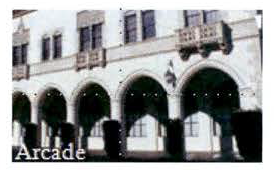
Arcade. A series of piers topped by arches that support a permanent roof.
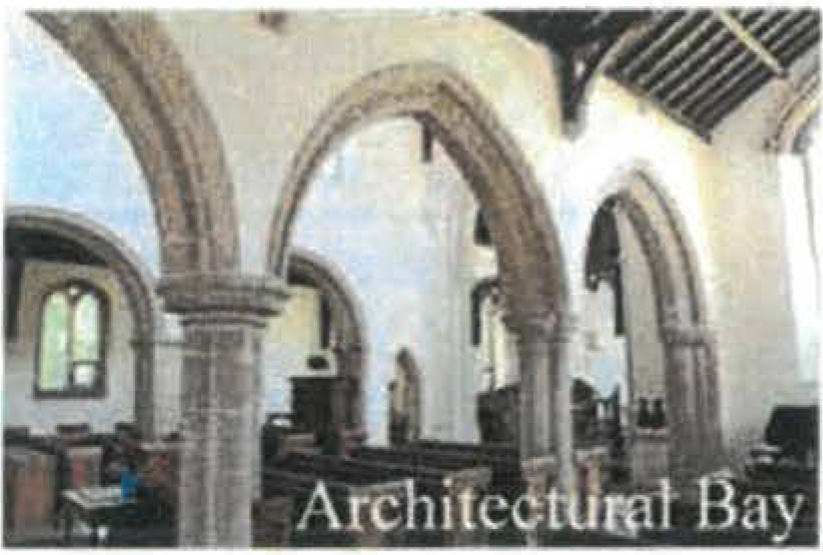
Architectural bay. The space between architectural elements, or a recess or compartment.
Area median income. The median household or family income in a designated geographic area, usually a metropolitan area or a county, adjusted for household size.
Artificial drainage system. Any canal, ditch, culvert, dike, storm, sewer, or other manmade facility which tends to control surface flow of water.
ASCE 24 is a standard titled flood-resistant design and construction that is referenced by the Florida Building Code. ASCE 24 is developed and published by the American Society of Civil Engineers, Reston, VA.
Assessed value. The total value of a tax parcel, excluding the value of land as determined by the property appraiser for Osceola County, and shown on the property tax bill sent to the owner of record by the County of Osceola.
Attraction and destination uses. A land use which by its nature generates high volumes of multimodal transportation activity which may originate outside of the city limits and may include but not limited to theme parks, activity centers, and town centers.
Auto camper. A lightweight, collapsible unit designed to be transported on an automobile or other vehicle and designed for travel, recreation, and vacation use.
Automobile laundries. An establishment where vehicles are cleaned, vacuumed, and/or detailed by the establishment and not the owner of the vehicle.
Automobile, major mechanical repair. Establishments where mechanical work is completed on vehicles and which includes major and minor repairs to engines, transmissions, drive trains, and suspensions but shall not include body work, painting, straightening of frames or body parts.
Automobile, minor mechanical repair. Establishments where mechanical work is completed on vehicles such as repairs of brakes, mufflers, engine tune ups, lubrication and shocks but shall not include major mechanical work.
Automobile quick wash. An establishment where vehicles are cleaned and vacuumed by the owner of the vehicle and where the wash establishment does not employ individuals to perform cleaning or vacuuming services.
Automobile service station. An establishment whose principal business is the dispensing at retail of gasoline and oil and where grease, batteries, tires, and automobile accessories may be supplied and dispensed at retail, principally for automobiles and not for trucks (or in connection with a private operation where the general public is excluded from the use of the facilities), and where in addition the following services may be rendered and sales made, and no other:
a.
Sales and servicing of spark plugs, batteries, and distributors and distributor parts;
b.
Tire servicing and repair, but not recapping or regrooving;
c.
Replacement of water hoses, fan belts, brake fluid, lightbulbs, fuses, floor mats, seat covers, windshield wipers and wiper blades, grease retainers, wheel bearings, mirrors and the like;
d.
Radiator cleaning and flushing; provision of water, antifreeze, and the like;
e.
Washing and polishing and sales of automotive washing and polishing materials, but this provision does not permit car laundries;
f.
Providing and repairing fuel pumps and lines;
g.
Minor servicing and repair of carburetors;
h.
Emergency wiring repairs;
i.
Adjusting and emergency repair of brakes;
j.
Minor motor adjustments not involving removal of the head or crankcase;
k.
Greasing and lubrication;
l.
Sales of cold drinks, packaged foods, tobacco, and similar convenience goods for filling station customers, but only as accessory and incidental to the principal business operation;
m.
Provision of road maps and other informational material to customers; provision of rostrum facilities;
n.
Storage and leasing of rental trailers and the like, when permitted by special exception;
o.
Major mechanical repair, when permitted by special exception.
Uses permissible at an automotive service station do not include major body work, straightening of frames or body parts, steam cleaning, painting, welding, storage of automobiles not in operating condition, operation of a commercial parking lot or commercial garage as an accessory use, or other work involving undue noise, glare, fumes, smoke, or other characteristics to an extent greater than normally found in such stations. An automotive service station is not a repair garage, a body shop, a car laundry, or a truck stop.
For the purpose of this definition, gasoline pumps as an accessory use shall meet all requirements of automobile services stations as found in these regulations.
Automobile wrecking yards or lots. A lot or group of contiguous lots used for the storage, dismantling or wrecking of used automobiles not in running condition and the storage and sale of used automobile parts.
Awning. A structure made of metal or similar framing material, cloth or other material, and is attached to a building or carried by a frame supported by the building.
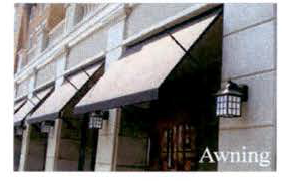
Awning sign. A sign painted on, printed on, or attached flat against the surface of an awning. The allowance for signage shall be the same as for wall signs.
Backlight, uplight, and glare (BUG) rating. A luminaire classification system that classifies backlight (B), uplight (U), and glare (G) ratings to evaluate luminaire optical performance related to light trespass, sky glow, and high angle brightness control.
Banner. A sign having the copy applied to lightweight material such as cloth, paper, fabric, vinyl, plastic, or other synthetic material of any kind, with only such material for a backing, and which is attached to one or more poles, halyard, rope, wire, string, cord or similar device, or to a building at one or more edges or corners. Banners do not include flags.
Bar, cocktail lounge, nightclub, or saloon. Any establishment devoted primarily to the retailing and on-premises drinking of malt, vinous, or other alcoholic beverages, or any place where any sign, visible from public ways, exhibited or displayed indicates that alcoholic beverages are obtainable for consumption on the premises.
Base flood means a flood having a one-percent chance of being equaled or exceeded in any given year. The base flood is commonly referred to as the "100-year flood" or the "one-percent-annual chance flood."
Base flood elevation means the elevation of the base flood, including wave height, relative to the National Geodetic Vertical Datum (NGVD), North American Vertical Datum (NAVD) or other datum specified on the flood insurance rate map (FIRM).
Basement means the portion of a building having its floor subgrade (below ground level) on all sides.
Bed and breakfast establishment. An owner-occupied house, or portion thereof, where short-term lodging and meals are provided for compensation with no more than 15 sleeping rooms.
Berming. An earthen mound designed to provide visual interest on a site, to screen undesirable views, may include landscaping of hedges, or shrubs and trees.
Billboard. Any outdoor advertising sign larger than 100 square feet normally erected and maintained by an advertising business or service, upon which advertising matter may be displayed and which generally advertises firms and organizations that, along with their goods and services, are not located on the same premises as the sign, and whose surface is sold, rented or leased for the display of advertising material.
Block. Includes tier or group and means a group of lots existing within well-defined and fixed boundaries, usually being an area surrounded by streets or other physical barriers and having an assigned number, letter, or other name through which it may be identified.
Boardinghouse. An establishment with lodging for four or more persons, where meals are regularly prepared and served and where food is placed upon the table family style, without service or ordering of individual portions from a menu, and where there is compensation paid for the food, lodging or care.
Borrow pit. Any operation which shall entail the excavation or removal of earth in excess of 20 yards in a 12-month period from one parcel of property to another parcel of property or from one parcel of property to the same parcel of property where public roads shall be used.
Bright paint. Paint containing "fluorescent dye of pigment which absorbs UV radiation and re-emits light of a violet or bluish hue used to increase the luminance factor and to remove the yellowishness or white or off-white materials." (Coatings Encyclopedic Dictionary)
Buildable area. That portion of a site within the yard area on which a structure or improvements, including driveways and parking lots, may be erected.
Building. Any structure built for the support, shelter, or enclosure of persons, chattels, or property of any kind, which has enclosing walls for 50 percent of its perimeter. The word "building" includes the word "structure."
Building, front of. That side of a building which faces the street right-of-way on which the building is addressed. In such cases where more than one side of a building faces a right-of-way on which it is addressed, the front shall be that side of the building which also contains the principal ingress/egress of the building, as determined by the city manager or his designee.
Building frontage. For purposes of computation of number and area of signs permitted on buildings, in cases where lineal feet of building frontage is a determinant, the frontage of a building shall be computed as nearly at ground level as computation of horizontal distance permits. In cases where this test is indeterminate or cannot be applied, as for instance where there is a diagonal corner entrance or where two sides of a building have entrances of equal importance and carry approximately equal volumes of pedestrian traffic, the community development department shall select building frontage on the basis of interior layout of the building, traffic and on adjacent streets, or other indicators available. In no instance, other than that allowed in this Code, shall more than one sign be allowed per building or per business in the case of multiple businesses in one building such as a plaza.
Building, height of. The vertical distance from the grade to the elevation of the ceiling of the highest habitable space. See section 1.6.3 for greater detail on measuring height of a structure.
Building, Historic. Any structure as defined herein which has been designated as historically significant in the Historical and Architectural Survey, City of St. Cloud Project Report, May 1993. (see definition of historic property)
Building line. The perimeter of that portion of a building or structure nearest a property line, but excluding fences and allowed encroachments.
Building official. The person(s) designated by the city manager or their designee authorized and directed to administer and enforce the provisions of the LDC, and/or Chapter 10, Building and Building Regulations, City Code.
Building permit. An official document or certificate issued by the city authorizing the commencement of construction of any structure.
Building products manufacturing. Assembly of building products such as doors, windows, aluminum products, or trusses.
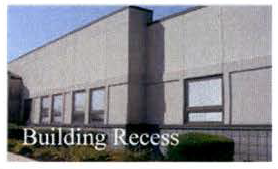
Building recess. Receding edge of a flat wall.
Building setback. The line established by law, beyond which a building shall not extend, except as specifically provided by law, and determined from the extreme support for the roof of the main structure of appurtenance thereto.
Building stepback. A setback located on the upper stories of a building, typically to reduce the bulk of a building or to provide outdoor floor space.
Camping trailer. See Auto camper.
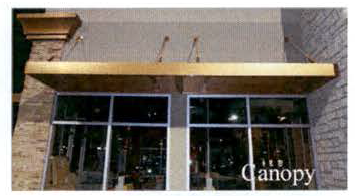
Canopy. A projecting horizontal architectural element, other than an awning, made of fire-resistant cloth, wood, metal or plastic with or without metal or wood frames, attached or detached and supported, in part, or entirely, by the ground.
Capital cost/improvement. Includes the costs of park land, construction of facilities, including, but not limited to, parks, courts, fields, pools, paths and centers, and equipment, related to park and recreation services and facilities.
Carport. An accessory structure or portion of a principal structure, consisting of a roof and supporting members such as columns or beams, unenclosed from the ground to the roof on at least two sides, and designed or used for the storage of motor-driven vehicles owned and used by the occupants of the building to which it is accessory.
Cast stone. A concrete masonry product simulating natural-cut stone and is used in architectural applications.
Category "A" public facility. Arterial and collector roads, drainage, potable water, sanitary sewer, solid waste, and parks and recreation facilities owned or operated by the city.
Category "B" public facility. Arterial and collector roads, drainage, potable water, sanitary sewer, solid waste, and parks and recreation facilities owned or operated by federal, state, and county governments, independent districts, and private organizations.
Certificate of appropriateness. A document evidencing review by the Historic Preservation Board for work proposed by an applicant on resources located within the Historic Preservation district.
Certificate of capacity. A legal document which records the reservation of capacity of public facilities for a development. The certificate shall contain a legal description of the property on which development will occur, the name of the applicant and property owner, the type of development, the criteria used in assessing capacity needs, the amounts of capacity reserved for both Category "A" and Category "B" public facilities, and the length of time and conditions for which such capacity is reserved. The certificate shall be recorded with the city clerk (i.e., city manager) and filed in the office of the city manager and community development department. At the option of the applicant and property owner, the certificate shall be filed in the public records of the county and shall run with the land.
Certificate of capacity. A legal document, which records the reservation of capacity of public facilities for a development. The certificate shall contain a legal description of the property on which development will occur, the name of the applicant and property owner, the type of development, the assumptions used in assessing capacity needs, the amounts of capacity reserved for public facilities, and the length of time and conditions for which such capacity is reserved.
Certificate of economic hardship. A document evidencing approval by the HPB of an application for economic hardship as that term is defined in these regulations.
Certified local government (CLG). A local government approved by the Florida Department of State, Division of Historical Resources, to perform certain historic preservation functions.
Change of occupancy. The term "change of occupancy" shall mean a discontinuance of an existing use and the substitution therefore of a use of a different kind or class. Change of occupancy is not intended to include a change of tenants or proprietors unless accompanied by a change in the type of use.
Changeable copy sign. A sign with copy that can be changed, rearranged, or altered manually whereby the sign face is not changed.
Child care center. An establishment where five or more children, other than members of the family occupying the premises, are cared for. The term includes day nurseries, kindergartens, day care service, day care agency, nursery school, or play school. The term does not include foster homes.
City means the City of St. Cloud, Florida.
City grid. That area bounded by Eastern Avenue to the East, Columbia/Budinger Avenue to the West, Lakeshore Boulevard to the North, and 17th Street to the South.
City manager. The city manager or the professionally qualified city officials he/she may designate to carry out the administration of the LDC.
Clearing. The removal of trees and brush from a substantial part of the land but shall not include mowing.
Clinic. An establishment where patients, who are not lodged overnight, are admitted for examination and treatment by one person or a group of persons practicing any form of healing or health-building services to individuals, whether such persons be medical doctors, chiropractors, osteopaths, chiropodists, naturopath, optometrists, dentists, or any such profession, the practice of which is lawful in the state.
Club. Buildings and facilities owned and operated by a corporation or association of persons for social or recreational purposes, but not operated for profit or to render a service which is customarily carried on as a business. (See Private club.)
Coffee roasting. Establishment primarily engaged in roasting coffee, and in manufacturing coffee concentrates and extracts in powdered, liquid, or frozen form, including freeze-dried. Establishment may also include a tasting room and retail space to sell roasted coffee produced on the premises along with related merchandise and food.
Colonnade. A row of columns supporting a roof, an entablature or arcade.

Color palette. A color scheme that incorporates related colors of complimentary hues and shades.
Color rendering index (CRI) shall mean the scale used to compare the effect of the light source on the color appearance of its surroundings. (The higher the score, the more accurately the light source reflects true color.)
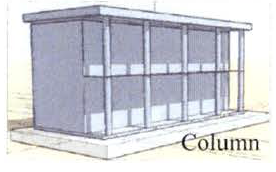
Column. An upright pillar, typically cylindrical and made of stone or concrete, supporting an entablature, arch, or other structure.
Commercial vehicle. For the purposes of this LDC, shall include trucks and buses modified for use, or ordinarily used in the course of business, exceeding 1½-ton loading capacity. Commercial vehicles shall also include construction and maintenance equipment, such as, but not limited to, front end loaders, backhoes, ditchers, dozers, graders, tractors, and other special mobile equipment defined in F.S. ch. 316, "State Uniform Traffic Control." Specifically exempted from these requirements is lawn maintenance equipment that is less than 20 horsepower.
Commercial sign. A sign that identifies or advertises a product or service available for sale and purchase.
Common open space. An area of land, or an area of water, or combination of land and water within the area of a planned unit development which is designated and intended for the use or enjoyment of residents of the planned unit development in common. Common open space may contain such structures and improvements as are desirable and appropriate for the common benefit and enjoyment of residents of the planned unit development.
Communication facility, including towers. Any equipment or facility used to provide personal wireless service and may include, but is not limited to, antennas, towers, equipment facility, cabling, antenna brackets, and other such equipment. Placing a wireless communications facility on an existing structure does not cause the existing structure to become a wireless communications facility. It also means personal wireless services facilities, as defined under federal law, 47 U.S.C. § 332(c)(7)(C), as this definition may be amended from time to time, and includes, but is not limited to, antennas and radio-transmitting telecommunications towers, and associated facilities used to transmit telecommunications signals. Poles are only a support structure and are not a communication facility.
Communication tower facility, guyed. A telecommunications tower that is supported, in whole or in part, by guy wires and ground anchors.
Communication tower facility, lattice. A tapered structure broad at the base and narrower at the top consisting of cross-members and diagonal bracing and without guyed support (also known as self-support towers).
Communication tower facility, mobile. Also known as a "Cell on Wheels", is a mobile product that includes a transceiver, tower, and all necessary equipment which is self-contained on either a trailer or a truck, and can easily be moved from one location to another.
Communication tower facility, monopole. A telecommunications tower consisting of a single pole or spire self-supported on a permanent foundation, constructed without guy wires, ground anchors, or other supports.
Communication tower facility, stealth (camouflage). Any wireless communications facility or tower that is disguised, hidden, part of proposed or existing structure, or placed within a proposed or existing structure in a manner that makes it not readily identifiable as a wireless communications facility or designed to blend into the surrounding environment. Examples of such facilities would include, but are not limited to, architecturally screened roof mounted antenna, building-mounted antenna painted and designed to match the existing structure architecturally, antenna integrated into architectural elements, a bell tower, spire, flag pole, etc., or other similar structures.
Comprehensive plan. A plan that meets the requirements of state statute regarding comprehensive planning adopted and amended pursuant to the Local Government Comprehensive Planning and Land Development Regulation Act.
Concession. An accessory use that is clearly subordinate to the primary use of public park property and serves that use by enhancing the facility and enjoyment by the public. Concessions are designed to serve a particular use of public property such as bait and tackle, food and beverage at the lakefront and marina or concession stands at ball fields and other recreation areas. The concessionaire may be the city, a nonprofit organization, or a business operated for profit by an individual or corporation at the discretion of the city council.
Concurrency test. A determination that there is sufficient capacity of public facilities to meet the standards for levels of service for existing development and the proposed development, concurrent with the impacts of the proposed development.
Conditional use. A use that would not be appropriate generally or without restriction throughout the particular zoning district but which, if controlled as to number, area, location, or relation to the neighborhood, would promote public health, safety, comfort, good order, appearance, convenience, prosperity, morals, and the general welfare. Conditional uses may be enumerated in the zoning text, or the city council may determine in its action granting same, that such use is generic to the specific provision set forth in the zoning text (i.e., it is of the same kind or nature as those specified).
Construction, actual. Actual construction includes the placing of construction materials in permanent position and fastened in a permanent manner; except that where demolition, excavation, or removal of any existing structure has been substantially begun preparatory to new construction, such excavation, demolition, or removal shall be deemed to be actual construction, provided that work shall be continuously carried on until the completion of the new construction involved. Fill and the installation of drainage facilities shall be considered a part of construction. Actual construction shall include only work begun and continued under a valid building permit.
Contractor sign. A temporary sign displayed by a contractor (prime or sub) on a piece of property where the contractor is performing active construction work pursuant to a valid permit.
Contributing property. A property that contributes to the historic significance of a historic district by location, design, setting, materials, workmanship, or association and thus adds to the district's sense of historical time, place, and historical development.
Copy. The letters, colors, text or other graphics displayed or exhibited on an object to convey a message or attract attention.
Cornice. The uppermost horizontal architectural band of moldings along the top of a wall or just below a roof.
County. Osceola County, Florida, or the governing body thereof, the board of county commissioners, or their official representatives.
Cupola. A light structure on a dome or roof, serving as a belfry, lantern, or belvedere.
Curtain wall. A non-structural building facade or outer covering which does not carry any dead load from the building except its own load.
Cutoff fixture shall mean an outdoor light fixture that provides a cutoff (shielding) of the emitted light.
Day nurseries. (See Child care center and Family day care home.)
Demand component of the mobility fee means the person miles traveled calculated for each land use, which is comprised of four components: the trip generation rate; trip length; percent new trips; and vehicle trips to person trips factor. The demand component for each land use can be found in the Technical Report.
Demolition. Any act or process that partially or totally destroys a building, structure, object, or historical resource.
Density. The total number of dwelling units (or floor area in case of non-residential uses) per site area. See section 1.6.4 of this LDC for rules for calculating.
Density bonus. An increase in the density of development, expressed as dwelling units per acre or floor area ratio in the case of mixed-use buildings, that can be carried out on a parcel of land over and above the standard density range permitted by the comprehensive plan for the future land use category in which it is located.
Density for commercial, office, and industrial uses. The amount of development on a given site expressed as a floor area ratio. See section 1.6.4.A to determine how to calculate the density.
Density for residential uses. The number of residential units permitted per acre of land. See section 1.6.4.B to determine how to calculate the density for residential uses.
Design guidelines handbook. Document which illustrates examples of design features, historic styles, and treatment options which preserve the historical, cultural, and architectural character of a historic district or property.
Design flood means the flood associated with the greater of the following two areas:
a.
Area with a floodplain subject to a one-percent or greater chance of flooding in any year; or
b.
Area designated as a flood hazard area on the community's flood hazard map, or otherwise legally designated.
Design flood elevation means the elevation of the "design flood," including wave height, relative to the datum specified on the community's legally designated flood hazard map. In areas designated as Zone AO, the design flood elevation shall be the elevation of the highest existing grade of the building's perimeter plus the depth number (in feet) specified on the flood hazard map. In areas designated as Zone AO where the depth number is not specified on the map, the depth number shall be taken as being equal to two feet.
Design review board (DRB). A committee designated by the city manager including, but not limited to, the city manager, the city planner, the chief building official and two architects, who reside in the county, for the purpose of reviewing site plans and building facades along U.S. 192 within the city limits and other related issues as assigned by the manager.
Detached carport. A detached accessory structure made of canvas, aluminum, or similar materials, or any combination thereof, for the shade and shelter of one or two private passenger vehicles.
Detached garage. A one story detached accessory structure, which is accessory to a single detached dwelling unit and to which there is legal vehicular access from a public right-of-way, or prescribed easement, designed for the storage of motor vehicles or boats of the residents of the single detached dwelling unit.
Developed. That point in time when the building and site have received final inspections and certificates of occupancy are issued.
Developer. Any person, corporation, organization, governmental agency or other legal entity undertaking any development, as defined in this article.
Development. Shall have the meanings given in F.S. chs. 163 and 380 except as follows:
a.
For the purposes of impact and mobility fees, development means any construction or expansion of building(s) or structure(s), or any changes in the use of any building(s) or structure(s) or land use that will generate additional impact on the city's public facilities.
b.
For the purpose of flood prevention (chapter 4, article 3), development means any manmade change to improved or unimproved real estate, including, but not limited to, buildings or other structures, tanks, temporary structures, temporary or permanent storage of equipment or materials, mining, dredging, filling, grading, paving, excavations, drilling operations or any other land disturbing activities.
Development order. Shall have the meanings given in F.S. chs. 163 and 380. (See also Preliminary development order, and Final development order.)
Development permit. Shall have the meanings given in F.S. chs. 163 and 380.
Development review committee (DRC). A committee designated by the city manager including, but not limited to, the city planner, city engineer, building official, fire chief, recreation director, police chief, or their designated representatives for the purpose of reviewing land development proposals and other related issues.
Directional sign. A sign that indicates the direction to or location of any establishment, object, or place, including, without limitation, those signs that indicate the means or ways of ingress and egress to and from a particular premises, such as entrance and exit signs.
Directory sign. A sign consisting of the names of tenants to, or stating the use of, a multitenant building, center or complex.
Discharge, discharge point. The outflow of water from a project, site aquifer, drainage basin, or facility.
Display area. The area of a sign for displaying copy on the face of the sign. Only one side of a double-faced sign shall be included in a computation of display area. The area shall be calculated by the area of the smallest rectangle or oval which contains a sign's copy. The area of an oval sign shall be computed by multiplying its vertical radius by its horizontal radius by 3.14 (Pi). Architectural elements used to support the sign or frame the display area shall not be counted as display area and shall not include any copy, as all copy shall be contained within the display area. The architectural elements shall comply with all restrictions (height, setback, construction, etc.) applicable to the type of sign.
District. A zoning classification (including overlay districts) which applies to certain designated property within the city to which these regulations apply and within which the zoning regulations are uniform.
District boundaries. For purposes of calculating setbacks as required in the Code, district boundaries shall be construed as beginning at the nearest adjacent property line within a district. This is specifically intended to prevent establishment of setbacks from artificial boundary lines including streets, railroads or similar locations except as specifically provided herein.
Double-faced sign. A sign with two faces that are back-to-back, the faces are parallel or nearly parallel to one another, and the faces are not greater than three feet apart.
Drainage system, natural drainage system. Surface streams or swamps which convey water to natural points of discharge.
Dredging, filling and other related activities. Any activities which may affect the quality of the waters of the city, such as the following: Draining, digging, pumping, pushing, removing, or displacing, by any means, of material, or the dumping, moving, relocating, or depositing of material, either directly or otherwise, and the erecting of structures, driving of pilings or placing of obstructions below the mean high-water mark of any body of water within the city.
Drip line. The vertical line running through the outermost portion of the tree crown extending to the ground.
Drive-in restaurant or refreshment stand. Any place or premises where provision is made on the premises for the selling, dispensing, or serving of food, refreshments, or beverages in automobiles and/or in other than a completely enclosed building on the premises, including those establishments where customers may serve themselves and may eat or drink the food, refreshments, or beverages in automobiles on the premises and/or in other than a completely enclosed building on the premises. A restaurant which provides drive-in facilities of any kind in connection with regular restaurant activities shall be deemed a drive-in restaurant for purposes of these zoning regulations. A barbecue stand or pit having the characteristics noted in this definition shall be deemed a drive-in restaurant.
Drive-in service sign. A permanent freestanding sign or wall sign associated with an establishment that provides services to an individual in a motor vehicle parked in a space designated by the establishment and approved by the city for receiving the drive-in service.
Drive-in theater. A place of outdoor assembly used for the showing of plays, operas, motion pictures and similar forms of entertainment which is designed to permit the audiences to view the performance from self-propelled vehicles parked within the theater enclosure.
Drive-thru menu sign. A permanent freestanding or wall sign associated with an establishment providing drive-thru or carryout service to an individual in a motor vehicle.
Dual mode lighting. This system consists of red lights for nighttime and high- or medium-intensity flashing white obstruction lights for daytime and twilight.
Due public notice. Due public notice, as used in connection with the phrase "public hearing" or "hearings with due public notice," involves the following requirements: At least 15 days' notice of the time and place of such hearing required under the Land Development Code shall be published one time in a newspaper of general circulation in that area; provided, however, that if the hearing applies to a single lot, parcel, or tract of land rather than to all of the lands within a planning area, governmental jurisdiction, zoning district, or other planning or governmental sub-unit, such notice shall also be posted in a conspicuous place on such lot, parcel, or tract of land. The notice shall state the time and place of the hearing, or the times and places of the hearings, the nature of the matter to be discussed, and may state that the hearings will be continued from time to time as may be found necessary. Affidavit proof of the required publication shall be presented at the hearing.
Dwelling. A building or portion thereof designed exclusively for residential occupancy, including one-family, two-family, and multifamily dwellings, but not including hotels, motels, boardinghouses, roominghouses, house trailers, whether such trailers be mobile or located in a stationary fashion as on blocks or other foundations, tents, houseboats, travel trailers, or other forms of temporary or portable housing.
Dwelling, multifamily. A building containing three or more dwelling units.
Dwelling, multiple-dwelling use. For the purposes of determining whether a lot is in multiple-dwelling use, the following considerations shall apply:
a.
Multiple-dwelling uses may involve dwelling units intended to be rented and maintained under central ownership and management or cooperative apartments, condominiums, and the like.
b.
Where an undivided lot contains more than one building and the buildings are not so located that lots and yards conforming to requirements for single-family, two-family, or multiple-family dwellings in the district could be provided, the lot shall be considered to be in multiple-dwelling use if there are three or more dwelling units on the lot, even though the individual buildings may each contain less than three dwelling units.
c.
Any multiple dwelling in which dwelling units are available for rental for periods of less than one week shall be considered a tourist home, a motel, motor hotel, or hotel as the case may be.
Dwelling, single-family. A building containing only one dwelling unit.
Dwelling, two-family, or duplex. A building containing only two dwelling units and a two-family residential use in which the dwelling units share a common wall (including without limitation the wall of an attached garage or porch) and in which each dwelling unit has a separate entrance to the outside of the living unit.
Dwelling unit. A self-contained living unit containing sleeping, living, sanitary, and kitchen facilities.
Easement. Any strip of land created for public or other private utilities, drainage, sanitation, or other specified uses having limitations, the title to which shall remain in the name of the property owner, subject to the right of use designated in the reservation of the servitude.
Eaves. The overhanging lower edge of a roof.
Economic hardship. An onerous, extreme, or exceptional economic burden that would be placed upon a property owner by the denial of an application for a certificate of appropriateness or by the imposition of conditions placed on the granting of such certificate.
Educational facility—Colleges and universities. An incorporated post-secondary educational entity including auxiliary locations, that offers a complete program that confers or offers to confer at least an associate degree, or that furnishes or offers to furnish instruction leading toward, or prerequisite to, college credit. The terms include any college-credit-granting independent educational institution that is chartered in this state and any center or branch campus within this state of an out-of-state institution at the college-credit level.
Educational facility—Vocational school. A school established to provide for the teaching of industrial, clerical, managerial or trade skills and applies to schools that do not offer a complete educational curriculum.
Educational facility—Public or private school. An organization of students for instructional purposes on an elementary, middle or junior high school, secondary or high school, or other school level authorized under rules of the state. The facilities may be public or private, including parochial, religious, denominational, for-profit or nonprofit.
Effect. In relation to historic district and properties, effect is a change in the quality of the historical, architectural, archaeological, or cultural significance of a property or district, or in the characteristics that qualify the property or district as historically important.
Electronic variable message (EVM) sign. A type of animated sign capable of displaying words, symbols, figures, or images that can be electronically or mechanically changed by remote or automatic means. The elements may be internally illuminated or may be illuminated by reflected light. The sign may be part of a permanent sign that is not a programmable electronic sign. A "programmable electronic sign" includes sign display screens commonly known as light-emitting diode (LED), liquid crystal display (LCD), plasma and digital displays, and their functional equivalents. This definition applies whether the display is used to produce a series of still images, or images that appear to move on the display screen.
Eligible household. A household that is comprised of one or more natural persons determined by the county to be of very low, low, or moderate income according to HUD's household income limits adjusted for household size. The HUD Handbook is used to determine whether an individual will qualify as a household member. Whenever the handbook indicates that an individual is a household member, the individual's full income must be included in annual income calculations.
Encroachment means the placement of fill, excavation, buildings, permanent structures or other development into a flood hazard area which may impede or alter the flow capacity of riverine flood hazard areas.
Encumbrance. A temporary reservation of facility capacity. During the process of review of a development order, and based on the results of a concurrency test, facility capacity shall be "encumbered" until final disposition and action on the underlying development order.
Encumbered means legally obligated or otherwise committed to use by appropriation or contract. In the case of park and recreation improvements, the contract's specified time shall not be in excess of five years, or committed by contract or interlocal governmental agreement for improvement construction or acquisition such that the city is obligated to expend the committed or encumbered funds.
Enforceable development agreement. Any agreement which assures facilities and services are in place with the impacts of development. Enforceable development agreements may include, but are not limited to, development agreements pursuant to F.S. § 163.3220, or an agreement or development order issued pursuant to F.S. ch. 380.
Entablature. The superstructure of moldings and bands which lie horizontally above a column.

Equipment rental, minor. The rental of minor items such as small tools, wheelchairs, beds, household items, banquet supplies, and mowers under 20 horsepower. All items shall be stored in an enclosed structure.
Equipment rental, major. The rental of large equipment such as tractors, mowers, bush hogs, transport vehicles (i.e., U-Hauls, Ryder trucks), tow trucks, forklifts, and other similar items.
Essential public services means services or buildings owned, managed, or operated by or in the interest of a governmental entity, which provides a function critical to the health, safety, and welfare of the public, but which is not proprietary in nature. Essential public services may specifically include, but not be limited to, public schools (including charter schools), water and sewer services, emergency services, publicly owned housing, public safety facilities and services.
Establishment. An individual business, enterprise, or organization that has its own specific mailing address and is located on a parcel of property, in a shopping center, or in a multitenant building.
Event. An event means all events that occur one time and/or re-occurring within the Entertainment District that are outside the normal day-to-day business operation of the entities within it that; for the purpose of attracting an influx of visitors.
Exotic birds. Birds not commonly associated with farms, barnyards, or the wild such as ducks, chickens, turkey, pheasants, quail, etc. Exotic birds include parrots, cockatiels, parakeets, and similar birds imported from tropical and semitropical climates, or such birds bread from said imported birds. Exotic birds shall also include birds specially bred to engage in sports competition such as racing, including racing homing pigeons, but excluding birds bread for fighting or harming of other creatures.
Expansion to an existing manufactured home park or subdivision. The preparation of additional sites by the construction of facilities for servicing the lots on which the manufactured homes are to be affixed (including the installation of utilities, the construction of streets, and either final site grading or the pouring of concrete pads).
Facade. The front of a building or any of its sides facing a public way or space.
Facade sign. The entire building wall, including wall face, parapet, fascia, windows and doors on the exterior or outside of a building.
Family. A family shall be defined as follows:
a.
An individual or group of two or more persons related by blood, marriage or adoption, including those related as foster children and servants, together with not more than one additional unrelated person, where domiciled together as a single, domestic, nonprofit housekeeping unit in a dwelling unit; or
b.
A collective number of individuals domiciled together in one dwelling unit whose relationship is of a continuing nontransient domestic character and who are cooking and living as a single nonprofit housekeeping unit.
c.
The term "family" does not include any society, club, fraternity, sorority, association, lodge, coterie, organization, or group of students or other individuals whose domestic relationship is of a transitory or seasonal nature or for an anticipated limited duration of a school term or other similar determinable period.
Fair share means that share or portion of the cost of public facility improvements which is reasonably attributable to or needed to serve a particular development.
Family day care home. An occupied residence in which day care is regularly provided for more than five preschool or elementary school children, including the caregiver's own children unless all of the children are the caregiver's, in which event there shall be no limit. Elementary school children who are siblings of the preschool children receiving day care may be cared for outside of school hours without securing a special exception as a family day care home, provided the total number of children being cared for does not exceed ten unless all of the children are the caregiver's own children, in which event there shall be no limit.
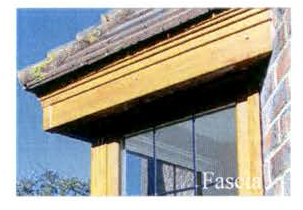
Fascia. A wooden board or other flat piece of material such as that covering the ends of rafters.
Feather flag. A temporary freestanding attention getting device that resembles a sail made of fabric or nylon affixed to a single light weight pole used for attracting attention, promotion or advertising.
Federal Emergency Management Agency (FEMA) means the federal agency that, in addition to carrying out other functions, administers the National Flood Insurance Program.
Fee payer. Any person, organization, or entity undertaking development who pays a fair share mobility fee, park and recreation impact fee, and/or public safety impact fee in accordance with the terms of Chapter 5. This also shall include Any person, organization or entity who, after the effective date of the ordinance from which this Chapter 5 is derived, seeks to develop land by applying for a building permit to make an improvement to land which shall generate additional impacts or who seeks to place a mobile home on an approved mobile home lot, shall be required to pay impact fees in the manner and amount set forth in the ordinances. Provided, however, that the City of St. Cloud shall not be considered a "fee payer" and shall be specifically exempt for the payment of impact fees hereunder related to the development or improvements of any land owned by the city and/or developed for a public use.
Fence. A structure that functions as a boundary or barrier, usually constructed of post, boards, wire, chain link, masonry and/or rails.
Filling stations. Any establishment where gasoline is dispensed at retail.
Final development order. A building permit, site plan approval, final subdivision plat approval for residential single lot or duplex lot subdivisions, or any other development order which results in an immediate and continuing impact upon public facilities.
Final master plan. The specific plan for the development of the planned unit development which shall include such information as required by chapter 3, article 9 of the LDC.
Final plat. Those submittals as required by, and following the procedures of, the city's subdivision regulations showing all building lots, easements, rights-of-way, and other information necessary for providing the detailed description of the subdivision of a parcel of land.
Final site plan. An illustration of the details of development of areas, such as, but not limited to, commercial, industrial, recreational, and multiple-family residential uses not being platted. The required submittals and processing procedures shall be similar to those provisions for final platting to the extent deemed applicable for the proposed use by the land development coordinator.
Finished grade. The average grade of the ground not including the berm.
Fixture. The assembly that houses the lamp or lamps, and may include all or some of the following parts: reflector (mirror), refractor (lens), ballast, housing, and other attachment parts.
Flag. An object made of cloth or other similar material that is traditionally secured at one side or edge by a pole or staff such that the material hangs freely when not set in motion by the movement of air or wind, and the material is used to display copy.
Flea market. Activity where the use involves the setting up of two or more booths, tables, platforms, racks, or similar display areas for the purpose of selling, buying or trading merchandise, goods, materials, products or other items offered for sale outside an enclosed building. Flea markets shall not include any of the following activities: garage sales, produce stands, or fundraising activities done by a nonprofit organization.
Flood orflooding. A general and temporary condition of partial or complete inundation of normally dry land from:
a.
The overflow of inland or tidal waters.
b.
The unusual and rapid accumulation or runoff of surface waters from any source.
Flood damage-resistant materials. Any construction material capable of withstanding direct and prolonged contact with floodwaters without sustaining any damage that requires more than cosmetic repair.
Flood hazard area means the greater of the following two areas:
a.
The area within a floodplain subject to a one-percent or greater chance of flooding in any year.
b.
The area designated as a flood hazard area on the community's flood hazard map, or otherwise legally designated.
Flood insurance rate map (FIRM). The official map of the community on which the Federal Emergency Management Agency has delineated both special flood hazard areas and the risk premium zones applicable to the community.
Flood insurance study (FIS). The official report provided by the Federal Emergency Management Agency that contains the flood insurance rate map, the flood boundary and floodway map, the water surface elevations of the base flood, and supporting technical data.
Floodlight. A projector designed for lighting a scene or object to a luminance considerably greater than its surroundings. It usually is capable of being pointed in any direction and is of weatherproof construction.
Floodplain administrator. The office or position designated and charged with the administration and enforcement of chapter 4, article 3 of the LDC.
Floodplain development permit or approval. An official document or certificate issued by the community, or other evidence of approval or concurrence, which authorizes performance of specific development activities that are located in flood hazard areas and that are determined to be compliant with chapter 4, article 3 of the LDC.
Floodway. The channel of a river or other riverine watercourse and the adjacent land areas that must be reserved in order to discharge the base flood without cumulatively increasing the water surface elevation more than one foot.
Floodway encroachment analysis. An engineering analysis of the impact that a proposed encroachment into a floodway is expected to have on the floodway boundaries and base flood elevations; the evaluation shall be prepared by a qualified Florida licensed engineer using standard engineering methods and models.
Floor area (gross floor area). Except as may be otherwise indicated in relation to particular districts and uses, floor area shall be construed as the sum of the gross horizontal areas of the several floors of a building measured from the exterior faces of the exterior walls or from the center line of walls separating two buildings, excluding attic areas with a headroom of less than seven feet, unenclosed stairs or fire escapes, elevator structures, cooling towers, areas devoted to air conditioning, ventilation or heating or other building machinery and equipment, parking structures, and basement space where the ceiling is not more than an average of 48 inches above the general finished and graded level of the adjacent portion of the lot.
Floor area ratio. A floor area ratio is a measurement of the intensity of development on a site. For purposes of this Code, floor area ratios (FAR) are provided only for non-residential development. The floor area ratio is the relationship between the total floor area on a site and the gross site or net usable area. The floor area ratio is calculated by adding together all floor area of all floors and dividing this total by the gross site or net usable area as specified.
Florida Building Code means the family of codes adopted by the Florida Building Commission, including: Florida Building Code, Building; Florida Building Code, Residential; Florida Building Code, Existing Building; Florida Building Code, Mechanical; Florida Building Code, Plumbing; Florida Building Code, Fuel Gas.
Florida Master Site File. An archive and database of all known archaeological and historical sites and districts recorded within the State of Florida that is maintained by the Florida Department of State, Division of Historical Resources, and is organized alphabetically by county and numerically, as recorded.
Food hall. An establishment primarily engaged as an incubator for start-up food entrepreneurs in fast-casual dining, health foods, and related specialty foods and merchandise.
Footcandle (f.c.) shall mean a measure of light noted as a unit of illuminance amounting to one lumen per square foot.
Foster care facility. A structure, in which the owners or operators are subject to licensing or approval by the state department of children and family services, live permanently, and provide full-time care and supervision in a family living environment to a maximum of three full-time clients who are unrelated to the owners or operators.
Foster group home. A structure, in which the owners or operators are subject to licensing and approval by the state department of children and family services, and provide basic care and supervision in a family living environment for four or more clients who are unrelated to the owners or operators.
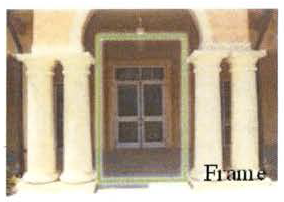
Frame. Architectural elements that accent and feature the main entrance of a building.
Freestanding monumental signs. A freestanding sign advertising the name or names of a business or businesses located on a single piece of land. The sign is not located on any support structure, such as a pole, but only by the sign's pedestal and foundation.
Freestanding sign. A permanent sign that is attached to, erected on, or supported by some structure (such as a frame, pedestal or other structure) that is not itself an integral part of, or attached to, a building or other structure with a principal function that is something other than the support of a sign.
Frieze. Ornamental architectural horizontal band that runs above doorways and windows or below the cornice.
Frontage. The linear footage of property abutting a dedicated street or highway as measured along a lot or parcel of land. For chapter 3, article 16 of the Code, only one side of any parcel of property shall be considered as frontage in the calculation of total display area allowed, and that side shall be determined by the street address or the location of the building's main-entrance door unless a specific section of article 16 states otherwise.
Functionally dependent use. A use which cannot perform its intended purpose unless it is located or carried out in close proximity to water, including only docking facilities, port facilities that are necessary for the loading and unloading of cargo or passengers, and ship building and ship repair facilities; the term does not include long-term storage or related manufacturing facilities.
Garage, mechanical. A building, or portion thereof, other than a private garage or service station, designed or used for repairing, equipping, or servicing of motor vehicles and may include the renting, storing, or selling of motor vehicles.
Garage, parking. A building or portion thereof designed or used for temporary parking of motor vehicles, and within which gasoline and oils may be sold only to parking patrons of the garage.
Garage, private. An accessory use designed or used for inside parking of private passenger vehicles by the occupants of the main building. A private garage attached to or part of the main structure is to be considered part of the main building. An unattached private garage is to be considered as an accessory building.
Glare. The intense and somewhat blinding light, or the sensation produced by a brightness within the visual field that is sufficiently greater than the intensity of light to which human eyes are accustomed or adapted, thereby causing annoyance, discomfort, visual impairment, or loss or reduction of visibility.
Glazing. Architectural glazing is glass that is used as a building material and most typically used in the building envelope, including windows in external walls.
Governing body. The city council or the legal governing body of a county, municipality, town, or village of this state as the context requires.
Grade. The slope of a road, street, or other public way, specified in percentage terms.
Green book. Manual of Uniform Minimum Standards for Design, Construction and Maintenance for Streets and Highways, prepared by the State Department of Transportation, Tallahassee, Florida.
Greenbelt. An area of land, either retained in its natural state or landscaped with grass, shrubs, and trees, intended to provide buffering for adjacent land uses and facilitate on-site percolation of storm runoff.
Gross floor area. (See Floor area.)
Ground floor. The lowest story within a building which, for the purpose of identifying street-level pedestrian activity, is the first 15 feet measured vertically and accessible to the street, the floor level or which is within three feet above or below curb level and is parallel to or primarily facing any public street.
Ground sign. A freestanding sign installed at ground level in a low-profile manner that is independent of, and not attached or affixed to by any means, a building or other structure.
Ground water. Water beneath the surface of the ground whether or not flowing through known and definite channels.
Guesthouse or cottage. A detached accessory building, identified as an accessory use, located on the same lot as the primary structure, intended for intermittent or temporary occupancy by a nonpaying guest. A guesthouse or cottage may have cooking facilities but shall not be rented. The accessory building shall not be metered for utilities separate from the primary structure, and must meet the same setbacks as the primary structure. These structures may only be located on a lot which has a minimum area of 15,000 square feet.
Hanging sign. A sign that is displayed over a public sidewalk or pedestrian way and is supported from a projected canopy, awning or roof overhang.
High-pressure sodium (HPS). A high-intensity discharge lamp type that uses sodium under high pressure as the primary light-producing element.
Highest adjacent grade means the highest natural elevation of the ground surface prior to construction next to the proposed walls or foundation of a structure.
Historic district. A geographically definable area designated by the city council as possessing a significant concentration, linkage, or continuity of properties united historically or architecturally by plan or physical development.
Historic preservation board (HPB). Reviews all changes to historically significant structures within the historic district. The HPB holds public hearings and issues certificates of appropriateness.
Historic properties. Those properties recommended by the HPB as being of historical, cultural, architectural or archaeological importance.
Historical and Architectural Survey, City of St. Cloud Project Report, May 1993 (as amended from time to time). The City of St. Cloud completed a historic and architectural survey in 1993 which catalogued and documented the history and architectural styles, years built, and other pertinent information of the cultural resources in the city dating on or before 1945. Florida Site File forms were created for each identified structure, building or site and submitted to the State of Florida Department of State's Division of Historical Resources. This publication is often referred to as the "Blue Book."
Historically significant structure. Any structure meeting the Secretary of the Interior's definition of historic that includes: structures over 50 years old and either architecturally, culturally, or historically significant and for the purposes of this document, viable structures that can potentially be preserved, rehabilitated, restored, or reconstructed.
Home health agency. An agency licensed by the State Agency for Health Care Administration (AHCA) that provides skilled services (by nurses, therapists, social workers) and/or unskilled services (by home health aides, certified nursing assistants, homemaker, companions) to patients in their homes. A home health agency may also provide staffing to health care facilities on a temporary basis.
Home occupation. An occupation conducted entirely within a dwelling unit.
Hospital. A building or group of buildings having facilities for overnight care of one or more human patients, providing services to inpatients and medical care to the sick and injured, and which may include as related facilities laboratories, out-patient services, training facilities, central service facilities, and staff facilities; provided, however, that any related facility shall be incidental and subordinate to principal hospital use and operation. A hospital is an institutional use under these zoning regulations.
Hot spot shall mean an area of very high illumination above normal footcandle levels typically found in an area underneath a luminaire, making normal f.c. levels appear relatively dark.
Hotel, motel, motor hotel, motor lodge, tourist court. These terms are to be considered synonymous, and to mean a building or a group of buildings in which sleeping accommodations are offered to the public and intended primarily for rental to transients with daily charge, as distinguished from multiple-family dwellings (apartments) and roominghouses or boardinghouses, where rentals are for periods of a week or longer and occupancy is generally by residents rather than transients.
Human sign. A temporary sign that is held or worn by a person for the purpose of conveying a message or attracting attention to any place, subject, person, establishment, event, or merchandise whatsoever.
Identification sign. A sign on a parcel of property that depicts or identifies the name, address, occupants, and/or builders of a building, establishment, or project-or the neighborhood and/or development in which a building, establishment or project is located-as a means of identifying said building, establishment or project, or the occupants or builders of same.
Illuminance shall mean the quantity of light arriving at a surface divided by the area of the lighted surface, measured in footcandles.
Illuminated sign. A sign that gives forth artificial light or is designed to reflect light from one or more sources of artificial light.
Illuminating Engineering Society of North America (IES or IESNA) shall mean the nonprofit professional society of lighting engineers and specialists that has established recommended design standards for various exterior lighting applications.
Impact fee component (park and recreation). That portion of the impact fee attributable to park lands and recreation facilities imposed by the city pursuant to Chapter 5.
Impact fee program report. That certain report prepared by Burton & Associates, dated July 20, 2017, and as may from time to time be amended and adopted by resolution of the city council.
Impact-generating land development activity (park and recreation). Land development, either residential or non-residential, that attributes to the growth of the city's population or to the level of business or other activity beyond the then existing use of the land in a manner that requires new park land and/or recreational facilities.
Impervious surfaces. Any surface which has been altered, covered, or controlled resulting in the virtual elimination of the infiltration and percolation of water to the underlying soils. The term includes most conventionally surfaced streets, roofs, sidewalks, parking areas, drives, paved patios or pool decks, and similar facilities.
Impervious surface coverage. The total area of a lot or site area that contains impervious surfaces. See section 3.15.1 for requirements.
Improvements. Street pavements, curbs and gutters, sidewalks, alley pavements, walkway pavements, water mains, sanitary sewers, storm sewers or drains, street names, signs, landscaping, permanent reference monuments (P.R.M.s), permanent control points (P.C.P.s), or any other improvements required by the city or these regulations.
Industrial, laboratory. Area that is intended to provide testing, research and development through laboratory methods.
Industrial, light. Industrial research and development and technological applications. Does not include manufacturing, fabricating, processing, converting, altering or assembly.
Inflatable sign. A sign or other display, with or without copy, that is inflated or supported by air, wind, water, helium, hydrogen, nitrous oxide, oxygen, or any other element or compound supplied through a pneumatic pressure system or device, and by its nature serves to attract attention.
Informational sign. A sign indicating the types of services available at location, events occurring at a location, function of an establishment or premises, hours of operation, or contact information for an establishment or premises on which the sign is located.
Integrated shopping plaza or center. A shopping center comprised of multiple buildings and businesses on more than one parcel land which are contiguous, are connected for purposes of internal traffic and pedestrian flow between them, have cross access easements and share common facilities such as drainage. This shall exclude any contiguous parcel which cannot be accessed except by leaving the center and entering off of a right-of-way. For the purpose of this definition, the words "plaza" and "center" shall be used interchangeably.
Internal louvered optical system shall mean a series of high specular (mirror type) stacked louvers that cover the lamp, creating a cutoff, low glare light pattern.
Junkyards. Place, structure, or lot where junk, waste or discarded, salvaged, or similar materials such as old metals, wood, lumber, glass, paper, rags, cloth, bagging, cordage, barrels, containers, etc., are bought, sold, exchanged, stored, baled, packed, disassembled, or handled, including auto wrecking yards, used lumberyards, house wrecking yards, and yards or places for storage or handling of salvaged house wrecking yards, and yards or places for storage or handling of salvaged house wrecking and structural steel materials. This definition shall not include pawnshops and establishments for the sale, purchase, or storage of salvaged machinery, used furniture, radios, stoves, refrigerators or similar household goods and appliances when conducted entirely within a completely enclosed building. Nor shall it apply to the processing of used, discarded, or salvaged materials as part of manufacturing operations.
Kennel. Any building or buildings, and/or land, used, designed, or arranged to facilitate the raising, breeding, food and shelter and care of four or more dogs and/or cats, and for purposes not primarily related to medical care, veterinary hospital, or pet shop.
Kitchen facilities. An area containing equipment to aid in the storage and preparation of food for human consumption. At minimum, a kitchen facility shall include a sink with running potable water, a powered refrigerator, and a powered stove; and stove top burners. The presence of electrical wiring and/or piping to provide for said equipment shall indicate the presence of a kitchen facility for the purpose of determining a dwelling unit (see definition).
Lamp shall mean a light bulb.
Land surveyor. A land surveyor registered under state statutes who is in good standing with the Florida State Board of Professional Engineers and Land Surveyors.
Land use. The development that has occurred on the land, or the development that is proposed by a developer on the land, or the use that is permitted or permissible on the land under an adopted comprehensive plan, or element or portion thereof, or under land development regulations or a land development code, as the context may indicate.
Landowner. The legal or beneficial owner or owners of all of the land proposed to be included in a development or planned unit development; the holder of an option or a contract to purchase; or a person having possessory rights or equal dignity will be deemed to be a land owner for the purpose of this regulation, so long as the written consent to the development or Planned Unit Development of the owners of all other interest in the land concerned is obtained.
Landscaping. Landscaping shall consist of, but not be limited to: grass, ground covers, shrubs, vines, hedges, trees, berms and complementary structural hardscape architectural features, such as rock, fountains, sculpture, decorative walls and tree wells.
Laundry, self-service. A business that provides home-type washing, drying and/or ironing machines for hire to be used by customers on the premises.
Letter of map change (LOMC) means an official determination issued by FEMA that amends or revises an effective flood insurance rate map or flood insurance study. Letters of map change include:
a.
Letter of map amendment (LOMA): An amendment based on technical data showing that a property was incorrectly included in a designated special flood hazard area. A LOMA amends the current effective flood insurance rate map and establishes that a specific property, portion of a property, or structure is not located in a special flood hazard area.
b.
Letter of map revision (LOMR): A revision based on technical data that may show changes to flood zones, flood elevations, special flood hazard area boundaries and floodway delineations, and other planimetric features.
c.
Letter of map revision based on fill (LOMR-F): A determination that a structure or parcel of land has been elevated by fill above the base flood elevation and is, therefore, no longer located within the special flood hazard area. In order to qualify for this determination, the fill must have been permitted and placed in accordance with the community's floodplain management regulations.
d.
Conditional letter of map revision (CLOMR): A formal review and comment as to whether a proposed flood protection project or other project complies with the minimum NFIP requirements for such projects with respect to delineation of special flood hazard areas. A CLOMR does not revise the effective flood insurance rate map or flood insurance study; upon submission and approval of certified as-built documentation, a letter of map revision may be issued by FEMA to revise the effective FIRM.
Level of service means a measure of the availability and accessibility of public facilities in support of public facility services including that related to mobility, parks and recreation, and public safety. The level of service indicates that capacity per unit of demand for each such public facility based on its operational characteristics.
Licensed professional engineer an engineer licensed by the Florida Board of Professional Engineers (FBPE) and the Department of Business and Professional Regulation (DBPR).
Light-emitting diode (LED) a semiconductor diode that emits light when a voltage is applied to it.
Light pollution shall mean any adverse effect of manmade light, often used to denote a brightness of the night sky, commonly known as urban sky glow.
Light trespass shall mean light falling where it is not desired, wanted or needed.
Light-duty truck, as defined in 40 C.F.R. 86.082-2, means any motor vehicle rated at 8,500 pounds gross vehicular weight rating or less which has a vehicular curb weight of 6,000 pounds or less and which has a basic vehicle frontal area of 45 square feet or less, which is:
a.
Designed primarily for purposes of transportation of property or is a derivation of such a vehicle; or
b.
Designed primarily for transportation of persons and has a capacity of more than 12 persons; or
c.
Available with special features enabling off-street or off-highway operation and use.
Line, property. A line delineating the boundary of a property as recorded by deed and/or survey and/or plat. A piece of property is defined by a series of property lines which completely encloses an area. The minimum number of property lines required to adequately define a property is three.
Live Local Act Project. A multi-family rental development project that meets the following requirements, as further outlined in Florida Senate Bill 102, otherwise known as the Live Local Act:
•
Multifamily or mixed-use residential project in any of the following zoning districts: BC, CBD-1, CBD-2, HB, I-1, I-2, I-3, NB, and P.
•
At least 40 percent of the units are affordable for eligible households up to 120 percent of Area Median Income (AMI) for at least 30 years.
•
If the property is developed as a mixed-use project, at least 65 percent of the square footage of the project is residential.
Local land planning agency. The community development department is hereby designated as the local land planning agency for the purpose of complying with F.S. ch. 163.
Lot. For purposes of these zoning regulations, a lot is a parcel of land of at least sufficient size to meet minimum zoning requirements for use, coverage, and area, and to provide such yards and other open spaces as are herein required. Such lot shall have frontage on a public street or on an approved private street, and may consist of:
a.
A single lot of record;
b.
A portion of a lot of record;
c.
A combination of complete lots of record, or complete lots of record and portions of lots of record, or of portions of record;
d.
A parcel of land described by metes and bounds; provided that in no case of division or combination shall any residual lot or parcel be created which does not meet the requirements of these zoning regulations.
Lot coverage. The total area of buildings and accessory structures to be constructed on a site.
Lot frontage. The front of an interior lot shall be construed to be the portion nearest the street right-of-way. For the purpose of determining yard requirements on corner and through lots, all sides of a lot adjacent to street rights-of-way shall be considered frontage, and yards shall be provided as set forth in the zoning regulations.
Lot measurement, depth. The distance between the front and rear yard lot lines. See section 1.6.1 of this LDC for details on measuring.
Lot measurement, width. The distance measured between side lot lines. See section 1.6.1 of this LDC for details on measuring.
Lot of record. A lot of record is (1) a lot which is part of a subdivision recorded in the office of the clerk of the circuit court of the county, or (2) a lot or parcel described by metes and bounds, the description of which has been so recorded on or before the effective date of these zoning regulations or of prior zoning and subdivision regulations governing the creation of lots.
Lot types:
a.
Corner lot. A lot located at the intersection of two or more streets. A lot abutting on a curved street or streets shall be considered a corner lot if straight lines drawn from the foremost points of the side lot lines to the foremost point of the lot meet at an interior angle of less than 135 degrees.
b.
Interior lot. A lot other than a corner lot with only one frontage on a street.
c.
Reversed frontage lot. A lot on which the frontage is at right angles or approximately right angles (interior angle less than 135 degrees) to the general pattern in the area. A reversed frontage lot may also be a corner lot, an interior lot, or a through lot.
d.
Through lot. A lot other than a corner lot with frontage on more than one street. Through lots abutting two streets may be referred to as double frontage lots.
Lot width at the building line. The distance between the side lot lines, measured at the front building line and parallel to the front lot line. See section 1.6.1 of this LDC for details on measuring.
Low income. A person or household whose annual (gross) income does not exceed 80 percent of the area median income, as determined by HUD.
Lowest floor means the lowest floor of the lowest enclosed area of a building or structure, including basement, but excluding any unfinished or flood-resistant enclosure, other than a basement, usable solely for vehicle parking, building access or limited storage provided that such enclosure is not built so as to render the structure in violation of the non-elevation requirements of the Florida Building Code or ASCE 24.
Lumen shall mean a quantitative unit measuring the amount of light emitted by a lamp or luminaire.
Luminaire shall mean a complete lighting unit consisting of the lamp, the fixture and other parts designed to distribute the light.
Maintenance (sign). Maintenance shall include cleaning, painting, repairing or replacing any defective parts of a sign in a manner that does not alter the size or structural members of a sign, or increase any portion of a nonconforming sign.
Major transit stop. A LYNX bus terminal located on LYNX Route 10, along US HWY 192, located west of Columbia Ave. LYNX identified Park & Ride Lot also qualify.
Manufactured building means a closed structure, building assembly, or system of subassemblies, which may include structural, electrical, plumbing, heating, ventilation, or other systems manufactured in manufacturing facilities for installation or erection, with or without other specified components, as a finished building, which shall include, but not be limited to, residential, commercial, institutional, storage, and industrial structures. This part does not apply to mobile homes. Manufactured building may also mean, at the option of the manufacturer, any building of open construction made or assembled in manufacturing facilities away from the building site for installation, or assembly and installation, on the building site. All manufactured buildings shall be approved and bear the insignia of approval by the state department of community affairs.
Manufactured home means a mobile home fabricated on or after June 15, 1976, in an off-site manufacturing facility for installation or assembly at the building site, with each section bearing a seal certifying that it is built in compliance with the federal Manufactured Home Construction and Safety Act and is eight feet or more in width and greater than 400 square feet. Manufactured home is further described as being of either residential design or standard design, whereby residential design manufactured homes have the following characteristics:
a.
Minimum width of main body. Minimum width of the main body of the residential design manufactured housing as located on the site shall not be less than 20 feet, as measured across the narrowest portion. This is not intended to prohibit the offsetting of portions of the house.
b.
Roofing materials. Any roofing material may be used that is specified in the required residential design manufactured home specifications and allowed under section 10-11 of the City Code.
c.
Exterior finish; light reflection. Any material may be used for exterior finish provided that reflection for such exterior shall not be greater than from siding coated with clean white gloss exterior enamel.
d.
Approved foundations. Foundations shall be similar or compatible in appearance to foundations of site-built homes.
e.
Certification. Standard design manufactured homes are manufactured houses certified as meeting the HUD Code, but not required to meet the residential design standards contained herein.
The term "manufactured home" does not include a "motor home", "recreational vehicle", or "park trailer."
Manufactured home park or subdivision. A parcel (or contiguous parcels) of land divided into two or more manufactured home lots for rent or sale.
Manufacturing. To make, process, or fabricate a product characteristic of industrial applications.
Marijuana. The meaning given cannabis in F.S. § 893.02(3) and shall include all forms of medical cannabis or low-THC cannabis. The term cannabis and marijuana shall be interchangeable for purposes of this article and section 3.14.25.
Marina. A premises or site used as a commercial establishment for the provision of rental of covered or uncovered boat slips or dock space or enclosed dry storage space, rental and/or sale of boats and boat motors, marine fuel and lubricants, bait and fishing equipment, on-shore restaurants, and small boat hauling or launching facilities. Such premises or sites shall not include boat and/or motor manufacturing as an incidental use.
Market value. The price at which a property will change hands between a willing buyer and a willing seller, neither party being under compulsion to buy or sell and both having reasonable knowledge of relevant facts. As used in this Code, the term refers to the market value of buildings and structures, excluding the land and other improvements on the parcel. Market value may be established by a qualified independent appraiser. Actual cash value (replacement cost depreciated for age and quality of construction), or tax assessment value adjusted to approximate market value by a factor provided by the property appraiser.
Marquee. A permanent roof-like structure supported and extending from part or all of the building face and that fully or partially covers a sidewalk, public entrance or other pedestrian way, which is constructed of some durable material such as metal, glass or plastic.
Marquee sign. A sign attached to or part of a marquee, fixed awning or canopy. Marquee signs shall not extend above the highest point of a marquee.
Masonry wall. A constructed solid barrier constructed of concrete or similar material that has an exterior relief that consists of stucco, brick, split face block or other technique that gives texture. Paint does not qualify.
Massing. The organization of buildings and other structures relative to other district features such as parking areas, streets, and public spaces.
Mean high water. (See Ordinary high water line.)
Medical marijuana dispensary. Any treatment center, entity, establishment, or portion thereof, which is lawfully licensed by Osceola County to dispense or administer marijuana, products containing marijuana, products derived from marijuana, related supplies, or educational materials, but shall not include growing, cultivating or processing cannabis or derivative products or making deliveries of cannabis or derivative products to the residence or business of an authorized individual, or to a health care facility, as permitted by other relevant ordinances and state law. A pharmacy as defined in F.S. § 465.003 which employs a Florida licensed pharmacist on site shall not be considered a medical marijuana dispensary. To the extent that any facility defined herein may also meet the definition of pain management clinic as set forth in chapter 12 of the St. Cloud City Code, the facility shall be subject to the zoning regulations established herein. The following shall apply to the terms of this definition:
a.
Cultivation or cultivate shall mean the process by which a person grows a cannabis plant.
b.
Derivative products shall mean products derived from cannabis, including but not limited to cannabis oil or consumable products containing or derived from cannabis.
c.
Dispensing shall mean the distribution of cannabis or derivative products as a medical marijuana dispensary but does not include making deliveries of cannabis or derivative products to the residence or business of an authorized individual, or to a health care facility, as permitted by other relevant ordinances and state law.
d.
Process or processing when referring to cannabis shall mean, to take the cannabis plant and transform same into a form for medical use, whether cannabis or derivative product.
Metal halide (lamp). A high intensity discharge lamp where the light is produced by radiation from metal-halide vapors, and which renders colors close to their daytime appearance.
Micro-beverage manufacturer. An establishment licensed by the Florida Department of Business and Professional Regulations, Division of Alcoholic Beverages and Tobacco to produce alcoholic beverages including but not necessarily limited to beer, wine, spirits, mead, or cider. This shall include any properly licensed taproom, tasting room, or retail spaces to sell beverages produced on premises along with related retail items and food in accordance with all applicable laws.
Micro-brewery. An establishment that is licensed by the Florida Department of Business and Professional Regulations, Division of Alcoholic Beverages and Tobacco to manufacture malt beverages. The establishment may also include a tasting room and retail space to sell malt beverages produced on the premises along with related retail items and food.
Micro-winery. An establishment that is licensed by the Florida Department of Business and Professional Regulations, Division of Alcoholic Beverages and Tobacco to produce wine. The establishment may also include a tasting room and retail space to sell wine produced on the premises along with related retail items and food.
Mixed use development. A type of development which may include more than one purpose and may include any combination of uses, but not limited to residential, retail shops, eating establishments including rooftop restaurants, professional offices, industrial, and civic uses.
Mobile home. A structure, transportable in one or more sections, which is eight body feet or more in width, over 35 body feet in length with the hitch, built on an integral chassis, designed to be used as a dwelling when connected to the required utilities, not originally sold as a recreational vehicle, and includes the plumbing, heating, air-conditioning, and electrical systems contained therein. A mobile home shall display the United Stated Department of Housing and Urban Development standards certification label.
Mobility fee. A fee, imposed by chapter 5, article 1 of the LDC, necessary to mitigate the multimodal capital costs to the city to provide the multimodal facilities needed to offset the impacts of new residential and non-residential growth in the city.
Mobility fee account. An account established by the city for the purpose of segregating mobility fee revenues from all other city funds. This fund account shall be titled "mobility fee fund."
Model center. Two or more homes or dwelling units in a unified location, constructed within a newly developed subdivision that are to be shown for the purpose of selling units comparable to the homes to be constructed in the subdivision.
Model home. Speculative home or dwelling unit that is available for immediate sale and occupancy.
Moderate income. A person or household whose annual (gross) income does not exceed 120 percent of the area median income, as determined by HUD.
Monument sign. A low-profile freestanding sign anchored near or at ground level, which has the vertical structure supports concealed in an enclosed base equal to at least one-half the horizontal width of the sign surface.
Motel. (See Hotel.)
Motor home. A portable temporary dwelling to be used for travel, recreation, and vacation, constructed as an integral part of a self-propelled vehicle.
Multimodal facilities. Transportation (roadway, bicycle, and pedestrian) and transit facilities, including land, that are planned and designed to provide for more than one means of motorized and/or non-motorized manners of travel.
Muntin. A strip of wood or metal separating and holding panes of glass in a window.
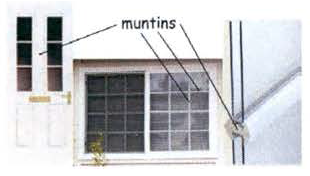
National Register of Historic Places. The official federal list of historic districts, sites, buildings, structures, and objects significant in American history, architecture, landscape architecture, engineering, archaeology, and culture. Authorized under the National Historic Preservation Act of 1966, and by 36 C.F.R. 60 as each may be amended from time to time, and maintained by the U.S. Department of the Interior.
Natural flow pattern. The rate, volume, and direction of the surface of ground water flow occurring under natural conditions for any given portion of the city.
Net residential acreage. The net acreage less all other non-residential productive use areas, such as, commercial or industrial acreage and the areas normally part of commercial or industrial areas, such as, parking areas, roads, and buffer areas and excluding any areas below the 100-year flood level elevation. Areas included in water bodies or areas below the 100-year flood added as a part of the development amenities may be included where there is a net increase in the total of such areas as part of the development proposal.
Net usable area. The total gross area of the site less the total of all areas below the base (100-year) flood level which is the expected whole foot water surface elevation of the base (100-year) floods as shown on the flood insurance rate map (FIRM). (See section 20.21).
Newspaper of general circulation. A newspaper printed and published periodically once a week or oftener, containing at least 25 percent of its words in the English language, entered or qualified to be admitted and entered as periodicals matter at a post office in the county, for sale to the public generally, available to the public generally for the publication of official or other notices and customarily containing information of a public character or of interest or of value to the residents or owners of property in the county, or of interest or of value to the general public.
Nonconforming sign. An existing sign that properly received a sign permit from the city under, or was previously in compliance with, a prior version of chapter 3, article 16 of the LDC that no longer meets the current requirements for the particular type of sign as set forth in amended chapter 3, article 16 of the LDC.
Nonconforming structures. Existing improvements which do not meet required parking and loading regulations, height regulations, area regulations, and residential floor area regulations or other applicable regulations for the district in which they are located.
Nonconforming use. Any building or land lawfully occupied by a use at the time of passage of this Code or amendment thereto, which does not conform after passage of this Code or amendment thereto with the use regulations of the district in which it is situated.
Noncontributing property. A classification applied to a property within a historic district signifying that it does not contribute to the qualities that give the historic district cultural, historical, architectural, or archaeological significance as embodied in the criteria for the designation of a district, but which because of its location within a district should be compatible with the character of the district.
Nursing home. A community residential facility which provides food, shelter, diagnosis, treatment, individualized continuing evaluation, planning, 24-hour supervision and coordination and integration of health or rehabilitative services to help each client reach his maximum functioning capabilities. The capacity of such facility shall not be less than three clients. This definition shall include rest home and convalescent home.
Object, historical. A primarily artistic or architectural item closely linked to the history of the property. Said item is typically relatively small in scale and simply constructed, such as a statue, milepost, statuary, or fountain.
Obtrusive light. Light which causes annoyance, discomfort, visual impairment, or loss or reduction of visibility.
Office, business. A business office is an office for such activities as real estate agencies, advertising agencies (but not sign shop), insurance agencies, travel agencies and ticket sales, chamber of commerce, credit bureau, finance company, abstract and title agencies or insurance companies, stock broker, and the like. It is characteristic of a business office that retail or wholesale goods are not shown to or delivered from the premises to a customer. A barbershop or beauty shop is not a business office.
Office, professional. A professional office is an office for the use of architects, engineers, attorneys, accountants, physicians, lawyers, dentists, veterinarians, psychiatrists, psychologists, and the like. It is characteristic of professional offices that display advertising is prohibited as unethical practice and that the use is characterized principally by offering of consultative services.
Official sign. A sign displayed pursuant to law for the health, safety, or general welfare of the public.
Off-site sign. A sign displaying copy to convey a message or direct attention to an enterprise, institution, establishment, area, event, merchandise, service, or any other activity or item that is not located, based, sold, rented, produced, manufactured, constructed, furnished or taking place on the property at which the sign is located and displayed to the public.
Off-street parking facility. A lot or parcel of land or structure designed, constructed, or utilized for the temporary storage of parking of motor vehicles.
On-site sign. A sign related in its subject matter to the premises on which it is located and displayed to the public.
Opaque screen. A constructed screen that blocks light and vision on either side of screen. The city accepts wood fences, PVC fences, masonry fences, finished masonry walls, and berms as opaque screens.
Open-air market. A temporary farmers market type of business where produce, agricultural products and baked goods are sold. There shall be no permanent structures and any structures used for the business shall be removed at the end of the sale day. An open-air market shall not mean a "flea market."
Ordinary high water (OHW) line. The line of elevation along the shore of a nontidal water body at which the average high water level is maintained during periods of normal precipitation. In the absence of sufficient recorded historical data for establishing the above, the surface elevation on all water bodies shown on the United States Geological Survey area quadrangle maps shall be substituted for the OHW line. Where the above is not applicable, the city engineer shall specify the reference source.
Outside Consumption. The consumption of an alcoholic beverage not within the confines of a given premise or business. This shall include areas of all public sidewalks, streets, alleyways, street crossing paths, or public spaces within the Entertainment District established pursuant to section 3.13.3.
Parapet. A low wall along the edge of a roof.
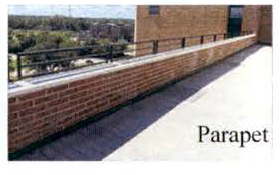
Parcel of land. Any quantity of land capable of being described with such definiteness that its location and boundaries may be established, which is designated by its owner or developer as land to be used, or developed as a unit, or which has been used or developed as a unit.
Park and recreation services. Those services provided by the city park and recreation department as authorized to be provided by the city's Charter and City Code and in accordance with applicable law.
Park trailer. A transportable unit which has a body width not exceeding 14 feet and which is built on a single chassis and is designed to provide seasonal or temporary living quarters when connected to utilities necessary for operation of installed fixtures and appliances.
Parking, covered. Where used in these regulations in connection with maximum percentage of lot coverage requirements, covered parking shall mean an accessory structure: (1) separate from or attached to the principal building; (2) erected for the purpose of protecting automotive vehicles from the elements; and (3) having an external surface, appearance, architectural definition, or type of construction which, when viewed from public ways, including waterways, shall resemble the external surface, appearance, architectural definition, or type of construction of the main building. Use of aluminum or other metal sheeting shall not qualify as covered parking, unless the principal building is similarly constructed.
Parking space, off-street. For the purposes of these regulations, an off-street parking space shall consist of a space adequate for parking a standard size automobile with room for opening doors on both sides, together with properly related access to a public street or alley and maneuvering room. All off-street parking spaces shall be marked, and shall be so designed, maintained, and regulated that no parking or maneuvering incidental to parking shall be on any right-of-way, walk, or alley, and so that any automobile may be parked or unparked without moving another. Groups of spaces and abutting accessway are called parking bays.
Parklet. A small seating area or green space created on a semi-permanent basis as a public amenity on or alongside a sidewalk, typically in an on-street parking space.
P.C.P. (Permanent Control Point). A secondary, horizontal-control monument as defined in F.S. § 177.031(13).
Pedestal, monument sign. The base or support on which a monument sign is mounted which does not contain any copy.
Permanent sign. Any sign that is designed, constructed, and intended for more than short-term use and that is fixed to a building or the ground in such a manner as to be immobile without the use of extraordinary means, such as disassembly.
Permitted uses. Those land uses that are permitted within a zoning district.
Permittee. The recipient of a permit under the terms and provisions of this section LDC.
Person. An individual, corporation, governmental agency, business trust, estate, trust, partnership, association, two or more persons having a joint or common interest, or any other legal entity.
Pet store. Any building or buildings and/or land used, designed, or arranged to facilitate the sale of domesticated animals such as dogs and cats and other small pets such as birds, fish, and guinea pigs.
Pilaster. A rectangular column projecting from a wall.
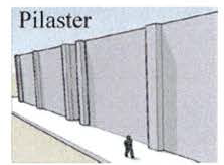
Planned unit development. An area of land devoted by its owner to development as a single entity for a number of dwelling units and/or commercial uses in accordance with a plan which does not necessarily comply with the provisions of other zoning districts with respect to lot size, lot coverage, setbacks, off-street parking, bulk or type of dwelling, density, and other restrictions.
Planning commission. The planning commission of the city.
Plat. A map or delineated representation of the subdivision of lands, being a complete, exact representation of the subdivision and other information in compliance with the requirement of all applicable statutes and of local ordinances and may include the terms "replat," or "revised plat." In whatever tense used, "to plat" shall mean to divide or subdivide land into lots, blocks, tracts, sites, streets, rights-of-way, easements, or other divisions, however designated.
Pole sign. A ground sign with a copy area more than four square feet that is mounted on free standing poles or other similar freestanding support pillars such that the bottom edge of the sign face is two feet or more above finished grade.
Portable sign. A temporary sign not permanently affixed to a building, other structure, or ground that is designed to be moved readily from place to place.
Porte-cochère. A covered porch-like structure at a main or secondary entrance to a building through which a motor vehicle can pass to provide arriving and departing occupants' protection from the elements.
Portico. A permanent structural cover affixed to and extending from the wall of a building, protecting a doorway or walkway from the elements. A detached portico is a free standing structure which covers a walkway or service area.
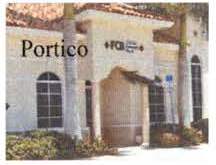
Preliminary development order. A preliminary subdivision plat approval for single lot or duplex lot subdivisions, preliminary or final subdivision plat approval for commercial and/or industrial subdivisions, rezonings, and any other development order other than a final development order.
Preliminary master plan. The proposal for development of a planned unit development which shall include such information as required by chapter 3 of the LDC.
Preliminary site plan. An illustration of the details of development of areas, such as, but not limited to, commercial, industrial, recreational, and multiple-family residential uses not being platted. The required submittals and processing procedures shall be similar to those provisions for final platting to the extent deemed applicable for the proposed use by the city manager or his designee.
Preliminary subdivision plan. Those submittals required by and following the procedures of the city's subdivision regulations showing building lots and other information necessary for providing a general description of the subdivision of a parcel of land.
Preservation, historic. The act or process of applying measures necessary to sustain the existing form, integrity, and materials of a historic property. Work, including preliminary measures to protect and stabilize the property, generally focuses upon the ongoing maintenance and repair of historic materials and features rather than extensive replacement and new construction. New exterior additions are not within the scope of this treatment; however, the limited and sensitive upgrading of mechanical, electrical, and plumbing systems and other code-required work to make properties functional is appropriate within a historic preservation project.
Primary color. One to three base colors chosen to dominate a color scheme. This definition does not relate to the color value or hue.
Primary/street facade. Exterior walls of a structure or building which are adjacent to or front on a public right-of-way or space.
Private club. An incorporated or unincorporated association for civic, social, cultural, religious, literary, political, recreational, or like activities, operated for the benefit of its members and not open to the general public.
P.R.M. (Permanent Reference Monument). A monument as defined in F.S. § 177.031(15).
Produce stand. A structure used for the sale of agriculture, horticulture or farming products. A produce stand shall not mean a "flea market".
Prohibited uses. Those land uses that are specifically forbidden in a particular zoning district. Uses expressly provided for in any district shall be prohibited in any district where such uses are not specifically mentioned.
Project. The particular structures and improvements proposed by the applicant on a particular land area which are part of a common plan of development.
Project initiation. All acts antecedent to actual construction activities including but not limited to, land clearing, utility construction, and the like.
Projecting sign. A sign affixed to and completely supported by any portion of a building's outside facade, and where the exposed face of the sign for displaying copy protrudes more than 18 inches from the surface of the building's facade.
Property, historic. Area of land containing a single historic resource or a group of resources, which may include any of a building, site, structure, object, or district.
Public utility. Any publicly or privately operated utility, such as, but not limited to, storm drainage, sanitary sewer, electric power, water service, gas service, or telephone lines, whether underground or overhead.
Receiving property. A lot or parcel where development rights are increased pursuant to a transfer of development rights affixed to the property.
Recharge. The inflow of water into a project, site aquifer, drainage basin, or facility.
Reconstruction. In regards to historic preservation, reconstruction means the act or process of depicting, by means of new construction, the form, features, and detailing of a non-surviving site, landscape, building, structure, or object for the purpose of replicating its appearance at a specific period of time and in its historic location.
Recreational equipment. This term shall include recreational vehicles, boats, boat trailers, travel trailers, pickup campers or coaches, tent trailers or pop-out campers, houseboats, self-propelled van-type campers, motor homes and similar vehicles or items
Recreational vehicle means a vehicle, including a park trailer, which is:
a.
Built on a single chassis;
b.
Four hundred square feet or less when measured at the largest horizontal projection;
c.
Designed to be self-propelled or permanently towable by a light-duty truck; and
d.
Designed primarily not for use as a permanent dwelling but as temporary living quarters for recreational, camping, travel, or seasonal use.
Registered establishment. A state licensed alcoholic beverage dispensing establishment within the district who registered with the city to serve alcoholic beverages for outside consumption.
Rehabilitation. The act or process of making possible a compatible use for a property through repair, alterations, and additions. In conjunction with work on historic properties, rehabilitation includes doing the aforementioned while preserving those portions or features which convey its historical, cultural, archaeological or architectural significance.
Relocation. Any change of the location of a building, structure, or object from its present setting to another setting.
Reservoir area. An area not on the public right-of-way which is provided for the temporary use of vehicles waiting to enter or leave a vehicle-oriented service or an off-street parking facility.
Residential recovery center, major. A secure facility which provides residential rehabilitation services, including room and board, personal care and intensive supervision in casework with emphasis on treatment and counseling services. Such facility is intended to serve those convicted of sex offenses, or those who due to their conviction for violent crimes, may be considered to be a potential threat to the general public. Such facility shall be licensed by the appropriate state department(s) per current regulations.
Residential recovery center, minor. A nonsecure facility which provides residential rehabilitation services, including room and board, personal care and intensive supervision in casework with emphasis on treatment and counseling services. Such facility may include an outpatient component, and shall include but not be limited to psychiatric residential treatment programs, drug and alcoholic rehabilitation programs, and group treatment centers. This shall not include convicted sex offenders, of any type, nor persons who would pose a threat to the general public due to their background of convictions for violent crimes. Such facility shall be licensed by the appropriate state department(s) per current regulations.
Resource, historical. A building, site, structure, object, or district that reflects historical, archaeological, or cultural significance.
Restaurant. An establishment where food is ordered from a menu, prepared, and served for pay primarily for consumption on the premises in a completely enclosed room, under roof of the main structure, or in an interior court. A drive-in restaurant is not a restaurant. A cafeteria shall be deemed a restaurant for purposes of these regulations.
Restoration. The act or process of accurately depicting the form, features, and character of a property as it appeared at a particular period of time by means of the removal of features from other periods in its history and reconstruction of missing features from the restoration period. The limited and sensitive upgrading of mechanical, electrical, and plumbing systems and other code-required work to make properties functional is appropriate within a restoration project.
Resubdivision. A change in a map of an approved or recorded subdivision plat if such change affects any street layout on such map or area reserved thereon for public use or any lot line, or if it affects any map or plan legally recorded prior to the adoption of any regulations controlling subdivisions.
Retirement center. A facility, in the nature of multiple-family housing, with no provision for routine nursing and/or medical care. Where these zoning regulations permit housing for the aged, such housing shall be used only for this purpose; if a retirement center is changed to multiple-family use, then the full provisions of these regulations, including provision of off-street parking, shall be met for such multiple-family use and prior to any occupancy on a multiple-family basis.
Right-of-way (ROW). Land dedicated, deeded, used, or to be used for a street, boulevard, public utilities, drainage facility, or other purpose by the public, certain designated individuals, or governing bodies.
Roadway. The paved portion of a street available for vehicular traffic.
Roof sign. A sign that is entirely placed upon, erected or attached to the roof of a building in any way so as to be wholly or partially dependent upon the roof for support, or a sign that extends beyond or above the roofline of the building to which it is attached for support.
Roofline. The horizontal line at the intersection of the facia or wall at the lowest point of the roof. When an establishment is designed as an "A" frame, Quonset or similar type structure, such roofline shall be determined by drawing an imaginary horizontal line 15 feet above finished grade or by the highest point of the roof, whichever is less height.
Roominghouse. An establishment with lodging for four or more persons where there is compensation paid for lodging or care.
Sag lens, convex lens or drop-lens. A clear or prismatic refracting lens that extends below the lowest opaque portion of a light fixture.
Seaplane base. A designated area of water used or intended to be used for the landing and takeoff of seaplanes and shore side access. It may also include water taxi channels, anchoring locations, ramp service, and on-shore facilities for pilots, passengers and aircraft needs.
Secretary of the Interior's Standards for Rehabilitation. 36 CFR 67 which pertain to historic buildings of all materials, construction types, sizes, and occupancy and encompass the exterior and the interior, related landscape features and the building's site and environment as well as attached, adjacent, or related new construction. The standards are to be applied to specific rehabilitation projects in a reasonable manner, taking into consideration economic and technical feasibility.
Secretary of the Interior's Standards for the Treatment of Historic Properties. 36 CFR 68 which provides guidance on the sensitive rehabilitation of a historic property. The Secretary of the Interior is responsible for establishing professional standards and providing advice on the preservation and protection of all cultural resources listed in or eligible for listing in the National Register of Historic Places. The standards apply to all proposed development grant-in-aid projects assisted through the National Historic Preservation Fund, and are intended to be applied to a wide variety of resource types, including buildings, sites, structures, objects, and districts. They address four treatments: preservation, rehabilitation, restoration, and reconstruction. N.B.: 36 CFR Part 67, focuses on "certified historic structures" as defined by the IRS Code of 1986. The "Standards for Rehabilitation" cited in 36 CFR 67 should always be used when property owners are seeking certification for federal tax benefits.
Sending property. A lot or parcel from which development rights are authorized to be severed.
Service drive. A public street, generally paralleling and contiguous to a main traveled way, primarily designed to promote safety by eliminating promiscuous ingress and egress to the right-of-way, and providing safe and orderly points of access at fairly uniformly spaced intervals.
Service stations. (See Automobile service station.)
Setting. The physical environment of a property, including all landscape elements.
Sewage disposal system, individual. A septic tank or any other sewage treatment device approved by the county health department in accordance with the regulations of the state and servicing only one lot.
Shopping center. A group of four or more retail stores, service establishments or any other businesses, not necessarily owned by one party or by a single land ownership, which are adjacent to and utilize a common parking area.
Short-term rental. Any dwelling or portion thereof that is available for use or is used for accommodations or lodging of guests paying a fee or other compensation for a period of less than 30 consecutive days.
Shrubs. A self-supporting woody species of plants characterized by persistent stems and branches springing from the base.
Sidewalk. That concrete portion of a right-of-way intended for pedestrian use.
Sidewalk café. Seating located on a sidewalk or pedestrian mall which is associated with an adjacent eating and/or drinking establishments where food or beverages are delivered for consumption on the premises. It is characterized by movable tables and chairs and may be shaded by umbrellas. Sidewalk cafés shall be permitted only as an accessory use to a licensed restaurant or food/drinking establishment.
Sidewalk sign. A self-supporting, portable sign designed to be placed upon a public or private sidewalk, plaza, courtyard, or other area where pedestrians walk or gather.
Sight distance triangle. The triangular area required on any intersection corner to permit a vehicle operator an unobstructed view of the crossing roadway for a minimum sight distance in either direction along the crossing roadway.
Sign or signage. A display of copy—such as in the form of any letter, figure, character, mark, plane, point, marquee, design, poster, picture, stroke, stripe, symbol, line, trademark, or any combination of these-that is placed, attached, painted, erected, fastened, constructed, or otherwise displayed in any manner whatsoever, so that the copy is visible from outside and used to convey a message or attract attention to any place, subject, person, establishment, event, or merchandise whatsoever.
Sign, directly illuminated. A sign designed to give forth artificial light directly (or through transparent or translucent material) from a source of light within such sign, including, but not limited to, illuminated tubings (neon lights) and exposed lamp signs.
Sign face. The display surface of a sign including non-structural trim but excluding the sign structure supports.
Sign, indirectly illuminated. A sign illuminated with a light that is shielded so no direct rays therefrom are visible elsewhere other than on the lot where the sign is located. If the light's shielding device is defective, such sign shall be deemed to be a directly illuminated sign.
Signs. (See chapter 3, article 16, for sign definitions.)
Single-family lot. An area of land developed for and restricted to a single-family residence.
Site, historical. The location of an event, a prehistoric or historic occupation or activity, or a building or structure, whether standing, ruined, or vanished, where the location itself possesses historic, cultural, or archaeological value regardless of the value of any existing structure.
Site plan. An illustration of the details of development of areas, such as, but not limited to, commercial, industrial, recreational, and multiple-family residential uses not being platted.
Snipe sign. A sign that is tacked, nailed, posted, pasted, glued or by other means attached to trees, power poles, street poles, stakes, fences, or other objects in the right-of-way, or that are otherwise displayed on public or private property without permission of the property owner.
Soil potential, low. Serious soil limitations exist that are difficult to overcome and the practices necessary to overcome the limitations are relatively costly compared to those required for soils with higher potential; necessary practices may involve environmental values and considerations; performance for the intended use is poor or unreliable.
Soil potential, very low. Very serious soil limitations exist that are most difficult to overcome; initial cost of the practices and maintenance cost are very high compared to those for soils with high potential; environmental values are usually depreciated; performance for the intended use is inadequate or below acceptable standards.
Special exception. A use that would not be appropriate generally or without restriction through the particular zoning district or classification but which, if controlled as to number, area, location, or relation to the neighborhood, would promote the public health, safety, comfort, good order, appearance, convenience, prosperity, morals, and the general welfare. Such uses may be permitted in such zoning district or classification if specific provision for such special exception is set forth in the zoning text, or if the city council determines in its action granting same, that such use is generic to the specific provision set forth in the zoning text; i.e., it is of the same kind or nature as those specified.
Special flood hazard area. An area in the floodplain subject to a one-percent or greater chance of flooding in any given year. Special flood hazard areas are shown on FIRMs as Zone A, AO, A1—A30, AE, A99, AH, V1—V30, VE or V.
Special restriction. Those restrictions placed on any permitted or conditional land use within a particular zoning classification.
Spill light. Light which falls outside the property where the luminaire is sited.
Stable, private. A stable with a capacity of not more than one horse for each 7,000 square feet of lot area, whereon such stable is located, and where such horses are owned by the owners or occupants of the premises and are not kept for remuneration, hire or sale.
Stable, public. A stable other than a private stable.
State. The word "state" shall be construed to mean the State of Florida.
Stepback. A stepback is a setback located on the upper floors of a building, typically to reduce the bulk of a building or to provide outdoor floor space.
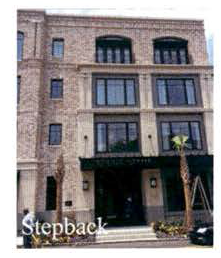
Story. That part of a building contained between any floor and the floor or roof next above.
Street. Any public or private access way, such as a street, road, lane, highway, avenue, boulevard, alley, parkway, viaduct, circle, court, terrace, place, or cul-de-sac, including all of the land lying between the right-of-way lines as delineated on a plat showing such streets, whether improved or unimproved, but not including those access ways, easements, and rights-of-way intended solely for limited utility purposes (electric power lines, gas lines, telephone lines, water lines, drainage and sanitary sewers, and easements of ingress and egress).
Street, alley. A public or private right-of-way primarily designed to serve as secondary access to the side or rear of those properties whose principal frontage is on some other street.
Street, arterial. A street which provides a direct route for long, local trips and also provides access to interstates, expressways, and freeways. The main function of an arterial is to move large volumes of vehicles; on-street parking should be prohibited and access should be carefully controlled. Average daily traffic is normally greater than 6,000 vehicles. Interstates, expressways, and freeways can also be classified as arterial roads with greater capacities, greater rights-of-way, and more limited access than other arterials.
Street, collector. A street which conducts traffic between local streets and arterials and also provides access to abutting property. Access should be controlled and on-street parking should be allowed only in cases where extra right-of-way exists and a safety problem will not be caused. Average daily traffic normally ranges from 1,000 to 6,000 vehicles. Collector streets within new developments which generate, or are projected to generate, more than 1,000 trips shall have two points of connection to the public street system unless waived by council.
Street, cul-de-sac. A local street with only one outlet and having an appropriate terminal for the safe and convenient reversal of traffic movement.
Street level. As it relates to building height, the street level is the first 15 feet of height.
Street, local. A street which provides access to property, serving as the first level of roadway for a neighborhood. It serves as a feeder to collector streets. Average daily traffic is normally less than 1,000 vehicles.
Street, private. A privately owned vehicular access easement to property owners within a planned unit development, cluster development, apartment and/or condominium project, townhouse project, or manufactured home subdivision or park. Such private streets shall be platted as an ingress or egress easement, but need not be dedicated to the general public; they shall not be accepted by or improved or maintained by the city until such time as the city may elect to accept such street as a public street. The term "private street" shall include the term "approved private street." All such private streets shall meet public street construction standards with the exception of right-of-way widths and they shall be inspected by the city engineer for compliance.
Street, public. A vehicular right-of-way that has been dedicated to and accepted by the city for maintenance.
Street right-of-way. Right-of-way containing a public or private street.
Street wall. The wall of façades created in a pedestrian oriented district when stores are built to the front yard and side yard setback.
Structure. Anything constructed, installed, or portable, the use of which requires a location on a parcel of land. It includes a movable structure while it is located on land which can be used for housing, business, commercial, agricultural, or office purposes either temporarily or permanently. Structure also includes fences, billboards, swimming pools, swimming pool decks, poles, transmission lines, and advertising signs. Structures can be accessory, temporary, permanent, or principal provided that:
a.
Structure, temporary. Any structure to serve a use temporarily, such as a field or sales office, contractor's office, or trailer sign.
b.
Structure, accessory. A structure of a nature customarily incidental and subordinate to the principal structure, on the same premises such as sheds, screen rooms, pool enclosures, decks, or aluminum carports.
c.
Structure, permanent. A structure of a nature requiring a foundation or with an expected life span in excess of 50 years. Such as buildings, billboards, pools, poles, and signs.
d.
Structure, principal. The structure on a property which indicates the property's use. For example, the home on a property would be considered the principal structure and not the detached garage, shed, or swimming pool. (Principal Structure, Front of. See Building, Front of.)
Structure, deteriorated. A deteriorated structure has at least one, but no more than four major defects. A major defect requires more repair than would be provided in the course of regular maintenance. Major defects also indicate a prolonged lack of regular maintenance. The need for major repairs is necessary, to make the structure a safe and sound shelter for its occupants. Major defects, under this definition, are normally considered economically feasible to repair.
Structure, dilapidated. A dilapidated structure has five or more major defects, when taken together indicate the structure no longer provides safe and sound occupancy. A dilapidated structure may also be considered an "unsafe structure" if one or more critical defects exists. Critical defects are those defined under structures, unsafe.
Structure, sound. A sound structure has no visual defects, or only slight defects which can be corrected by the average owner during the course of regular maintenance. One major defect takes the structure out of a sound category.
Structure, unsafe. An unsafe structure has any of the following conditions, such that the life, health, property or safety of its occupants or the general public are endangered:
a.
Any required means of egress or portion thereof is not of adequate size or is not arranged to provide a safe path of travel in case of fire or panic.
b.
Any required means of egress or portion thereof, such as but not limited to fire doors, closing devices and fire resistive ratings, is in disrepair or in a dilapidated or nonworking condition such that the means of egress could be rendered unsafe in case of fire or panic.
c.
The stress in any material, member or portion thereof, due to all imposed loads, including dead load, exceeds the stress allowed in the Florida Building Code for new buildings.
e.
The building, structure or portion thereof has been damaged by fire, flood, wind or other cause to the extent that the integrity of the building or structure is less than it was prior to the damage, and is less than the minimum requirement established by the Florida Building Code for new buildings.
f.
Any exterior appendage or portion of the building or structure is not securely fastened, attached or anchored such that it is capable of resisting wind or similar loads as required by the Florida Building Code for new buildings.
g.
If for any reason the building, structure or portion thereof is manifestly unsafe or unsanitary for the purpose for which it is being used.
h.
The building, structure or portion thereof is likely to fully or partially collapse as a result of decay, deterioration or dilapidation.
i.
The building, structure or portion thereof has been constructed or maintained in violation of a specific requirement or the Florida Building Code or of a city or state law.
j.
Any building, structure or portion thereof that is in such a condition as to constitute a public nuisance.
k.
Any building, structure or portion thereof that is unsafe, unsanitary or not provided with adequate required egress, or which constitutes a fire hazard, or is otherwise dangerous to human life, or, which in relation to existing use, constitutes a hazard to safety or health by any reason of inadequate maintenance, dilapidation, obsolescence or abandonment.
Street right-of-way line. The dividing line between a lot, tract, or parcel of land and a contiguous street.
Stucco. A coarse plaster composed of Portland or masonry cement, sand and hydrated lime mixed with water and applied in a plastic state to form a hard covering for exterior walls.
Subdivision. The division of a parcel of land into three or more lots or parcels of land for the purpose, whether immediate or future, of transfer of ownership, and includes all cases where the subdivider advocates, proposes, suggests or exhibits a proposed plan, map, or plat of development of land. The word "subdivision" includes resubdivision and, when appropriate to the context, shall mean the process of subdivision or the land subdivided.
Substantial damage. The damage of any origin sustained by a building or structure whereby the cost of restoring the building or structure to its before-damaged condition would equal or exceed 50 percent of the market value of the building or structure before the damage occurred.
Substantial development activity. Construction activity which has occurred on a site which meets or exceeds 50 percent of the required construction expenditure for fulfillment of the development order, or when at least 25 percent of the required construction expenditure for fulfillment of said development order occurs in any calendar year.
Substantial improvement. Any repair, reconstruction, rehabilitation, addition, or other improvement of a building or structure, the cost of which equals or exceeds 50 percent of the market value of the building or structure before the improvement or repair is started. If the structure has incurred "substantial damage," any repairs are considered substantial improvement regardless of the actual repair work performed. The term does not, however, include either:
a.
Any project for improvement of a building required to correct existing health, sanitary, or safety code violations identified by the building official and that are the minimum necessary to assure safe living conditions.
b.
Any alteration of a historic structure that is determined to be eligible for the exception to the flood hazard area requirements of the Florida Building Code, Existing Building, Chapter 11, Historic Buildings, provided the alteration will not preclude the structure's continued designation as a historic structure and the alteration is approved by variance.
Survey data. Information shown on the face of a plat that would delineate the physical boundaries of the subdivision and any parts thereof.
Tablet sign. A sign cut into any masonry surface or constructed of bronze or other non-combustible material.
Temporary or mobile vendor. Any person who sells by peddling or offering for sale by soliciting or displaying any food items, beverages, wares, or any other item of merchandise or service from a temporary or mobile structure.
Temporary sign. A sign that is intended to be used on a non-permanent basis and displayed for a reasonably short period of time, such as those signs set forth in section 3.16.9. Copy painted on, or affixed by vinyl or other similar material, to glass windows or doors are not considered temporary signage.
Temporary uses. Uses that are required in the construction phase of development or are uniquely seasonal in nature, including, but not limited to: contractor's project offices, project sales offices, seasonal sales of trees or farm produce, carnivals, and tent meetings.
Time share/interval ownership. A building or unit thereof in which the right of use or occupancy of any unit circulates among various occupants for specific periods of time for less than a full year in accordance with a fixed schedule on a periodically recurring basis extending for more than one year. This is for ownership only and should not be construed to cover a leasehold time share plan.
Townhouse. A single-family dwelling constructed as a part of a series of dwellings, all of which are either attached to the adjacent dwelling or dwellings by party walls or are located immediately adjacent thereto with no visible separation between walls or roofs.
Townhouse unit. A self-contained dwelling which is constructed so that the unit and the lot on which it is located may be individually owned. Townhouse units are separated by an approved fire wall and are designed to provide privacy. The term "townhouse" shall include the term "rowhouse."
Transfer of development rights. The process by which development rights from a sending property are severed.
Transferable development rights. All or that portion of development rights that are transferred or transferable.
Transient lodging establishments. Any unit, group of units, dwelling, building, group of buildings within a single complex of buildings, or any similar place which is rented more than three times in a calendar year for periods of less than 30 days or one calendar month, whichever is less, or which is advertised or held out to the public as a place regularly rented to transients. The following are excluded from the definition of transient lodging establishments:
a.
Any hospital, nursing home, sanitarium, adult congregate living facility, or other similar care facility;
b.
Any lodging establishment containing sleeping room accommodations for 25 or more guests and providing the services generally provided by a hotel or motel in this community and by the industry;
c.
Any dormitory or other living or sleeping facility maintained by a public or private school, college, or university for the use of students, faculty, or visitors;
d.
Any condominium common elements not containing sleeping accommodations such as swimming pools, clubhouses, tennis courts or similar elements; and
e.
Any migrant labor camp inspected by the state department of children and family services.
Travel trailer. A type of recreational vehicle mounted on wheels and a single chassis without its own motive power necessitating the need to be towed by another vehicle. It is designed to provide temporary living quarters and used by people who travel, camp, vacation, or otherwise recreate.
Travel trailer/Recreational Vehicle Park. A tract of land upon which two or more travel trailers and/or recreational vehicles are located, established, or maintained for occupancy on a temporary basis.
Tree. Any living, self-supporting, perennial plant which has a trunk diameter of at least four inches measured 4½ feet above grade (at the base of the tree) and normally grows to a minimum overall height of 15 feet.
Truck repair shop. A place designed for the repair and maintenance of large truck type vehicles that have a gross vehicle weight over 14,000 pounds."
Truck stop. An establishment where the principal use is primarily the refueling and servicing of trucks and tractor-trailer rigs. Such establishments may have restaurants or snack bars and sleeping accommodations for the drivers of such over-the-road equipment and may provide facilities for the repair and maintenance of such equipment.
Upholstery. The process or business of covering pieces of furniture or automotive seats and/or automobile interior with cloth, leather or other fabric or textile.
Vacated. To give up the incumbency or occupancy. To vacate an office, post or tenancy.
Variance, flood damage prevention. A grant of relief from the requirements of chapter 4, article 3, or the flood-resistant construction requirements of the Florida Building Code, which permits construction in a manner that would not otherwise be permitted by this Code or the Florida Building Code.
Variance, administrative. A variance which is granted by the city manager or his designee under terms and regulations as given in this Code.
Variance, site development plan. (standard site variance.) As used in the section dealing with site development plans, a variance is a modification of the required terms of the site development plan regulations, exclusive of zoning regulations which shall be heard by the board of adjustment, when such standard site variance will not be contrary to the public interest and where, owing to special conditions, a literal enforcement of the ordinance would result in unnecessary and undue hardship. Such variance shall not be granted if it has the effect of nullifying the intent and purpose of the ordinance.
Variance, subdivision. As used in the section dealing with subdivisions, a variance is a modification of the required terms of the subdivision ordinance where such variance will not be contrary to the public interest and where, owing to the conditions peculiar to the property and not the result of the actions of the applicant, a literal enforcement of the ordinance would result in unnecessary and undue hardship or where such variance will allow for the construction of improvements in conformity with the intent of the subdivision ordinance while providing improved design standards within the subdivision.
Variance, zoning. As used in connection with the provisions of the section dealing with zoning, a variance is a modification of the terms of the zoning ordinance where such variance will not be contrary to the public interest and where, owing to conditions peculiar to the property and not the result of the actions of the applicant, a literal enforcement of the ordinance would result in unnecessary and undue hardship. As used in this Code a zoning variance is authorized only for height, area, and size of structure, or size of yards and open spaces. Establishment or expansion of a use otherwise prohibited shall not be allowed by variance, nor shall a variance be granted because of the presence of nonconformities in the zoning district or classification or adjoining zoning districts or classifications.
Vehicle. A form of transportation, including motorized and non-motorized vehicles designed and required to be licensed for use upon a highway in the state.
Vehicle sign. A sign magnetically or mechanically attached to, or wrapped or painted on, an operable motor vehicle or trailer that is regularly used as a motor vehicle or trailer so that it does not constitute a permanent off-site sign and does not cause the vehicle to be inoperable when attached.
Very low income. A person or household whose annual (gross) income does not exceed 50 percent of the area median income, as determined by HUD.
Veterinary clinic, small animal. Any structure or establishment used primarily for the examination and treatment of small animals, excluding livestock. Facilities for overnight lodging of animals (as part of treatment only) may be included but only in soundproof structures.
Veterinary hospital. Any structure or premises used primarily and essentially for the medical and surgical care of ill, disabled, or injured animals other than humans. Kennels shall be allowed only as an accessory use and only in soundproofed structures.
Vine. Plants, which normally require support to reach mature form.
Volume. Occupied space measured in cubic units.
Walk-up menu sign. A permanent wall sign or temporary freestanding sign located within ten feet of the main entrance to an establishment that provides services directly to an individual that is physically present at the establishment's premises and which displays copy that is visibly legible only by standing directly in front of the sign.
Wall sign. A sign affixed to and completely supported by, or painted, printed or wrapped on, the outside wall facade of any building, and where the exposed face of the sign for displaying copy does not protrude more than 18 inches from the surface of the wall facade.
Warning sign. A sign that is designed to provide notice or warning of a clear and present danger to the health, safety or welfare of the public.
Water quality. The characteristics of water as set forth in F.A.C. ch. 62-3, together with physical, chemical, and biological characteristics of water that affect the propagation of fish, wildlife, aquatic plants, and animals.
Water retention structure. A facility which provides for storage of stormwater runoff.
Water retention structure, water management structure. A facility which provides for storage of stormwater runoff and the controlled release of such runoff during and after a flood or storm.
Water supply, individual. A water source, distribution system, and other appurtenances supplying only one lot.
Water system. Any plant, wells, pipes, tanks, reservoirs, system, facility, or property used or useful or having the present capacity for future use in connection with the obtaining and supplying of water for human consumption, fire protection, irrigation, consumption by business, or consumption by industry, and, without limiting the generality of the foregoing definition, shall embrace all necessary appurtenances and equipment and shall include all property, rights, easements, and franchises relating to any such system and deemed necessary or convenient for the operation thereof.
Watercourse means a river, creek, stream, channel or other topographic feature in, on, through, or over which water flows at least periodically.
Waterfront property. Property abutting on navigable streams, man-created canals, lakes, or reservoirs, which have an average dry weather water surface of not less than 50 feet measured perpendicular to the water frontage of the abutting property and provides a minimum water depth of three feet during normal dry weather.
Waters. This term shall include, but not be limited to: rivers, lakes, streams, springs, impoundments, and all other waters or bodies of water, whether surface or subsurface, and whether navigable or nonnavigable. The terms shall encompass all bottom lands lying below the mean high-water mark, whether said bottom lands be submerged or not.
Wetlands. Swamps and wet woodlands, characterized by specific vegetational types and plant communities, whether (1) flooded at all times, (2) flooded only seasonably, or (3) having a water table within six inches of the ground surface for at least three months of the year.
Wind sign. A sign consisting of one or more pennants, ribbons, spinners, streamers or captive balloons, or other objects or material fastened in such a manner as to move upon being subjected to pressure by wind, other than a flag or feather flag as defined.
Window sign. A sign attached to, painted on, or affixed by any method, directly to the interior or exterior of the glass or frame of any window or door that is facing outside and intended to be seen from the outside.
Yard area. An open space on the same lot with a building, said space being unoccupied and unobstructed from the ground upward, with the exception of trees and other natural vegetation.
Yard, front. That area between the front of the principal structure and the street right-of-way, across the width of the property, as determined by the city manager or his designee.
Yard, generally. A yard, generally, is required open space, other than a court, unoccupied an unobstructed by any structure, or portion of a structure, from 30 inches above the general ground level of the graded lot upward; provided, however, that fences, walls, hedges, poles, posts, children's play equipment, and other customary yard accessories, ornaments, statuary, and furniture may be permitted in any yard subject to height limitations and requirements limiting obstructions to visibility.
Yard, side. That area bounded by the principal structure, the front yard, the rear yard and a property line not abutting a street right-of-way, as determined by the city manager or his designee.
Yard, special. A special yard is a yard behind any required yard adjacent to a public street performing the same functions as a side or rear yard, but adjacent to a lot line and so placed or oriented that neither the term "side yard" nor the term "rear yard" clearly applies. In such cases, the community development department shall require a yard with minimum dimensions, as generally required for a side yard or a rear yard in the district, determining which shall apply by the relation of the portion of the lot on which the yard is to be located to the adjoining lot or lots with due regard to the orientation and location of structures and buildable areas thereon.
Yard, waterfront. A waterfront yard is a yard required on waterfront property with depth measured from mean-high-water line.
(Ord. No. 2023-45, § 1, 11-9-2023Ord. No. 2023-50, § II, 12-14-2023; Ord. No. 2024-22, § IV, 4-25-2024)

