
Saline City Zoning Code
ARTICLE 2
- DEFINITIONS AND RULES APPLYING TO TEXT
Section 2.01.- Rules applying to text.
The following rules shall apply to the text and language of this ordinance:
(1)
For the purposes of this chapter, certain terms or words used in this chapter shall be interpreted as follows: The particular shall control the general.
(2)
In case of any difference of meaning or implication between the text of this ordinance and any caption, the text shall control.
(3)
The word "shall" is mandatory; the word "may" is permissive.
(4)
Words used in the present tense shall include the future, words used in the singular number shall include the plural, and the plural shall include the singular, unless the context clearly indicates the contrary.
(5)
The words "used for" or "occupied for" include the words "intended for," "designed for," or "arranged to be used for" or "arranged to be occupied for."
(6)
A "building" or "structure" includes any part thereof.
(7)
Any word or term not defined herein shall be used with a meaning of common or standard utilization.
(Ord. No. 876, § 1, 5-19-25)
Section 2.02. - Definitions—A through B.
(a)
Accessory dwelling unit (ADU). See Dwelling unit, accessory (ADU).
(b)
Access, principal. The primary means of vehicular approach or entry to or exit from a lot.
(c)
Accessory structure. A structure customarily incidental and subordinate to the principal building and located on the same lot/property with a principal building. Accessory structures may be attached to or detached from the principal building. Accessory structures include, but are not limited to, garages, garden equipment sheds, small greenhouses, swimming pools, and solar energy systems.
(d)
Accessory use. A use reasonably and customarily incidental and subordinate to, the principal use of the same lot/property.
(e)
Adult entertainment business. One or a combination of more than one of the following types of businesses: adult bookstore, adult cabaret, adult personal service business, adult motion picture theater, or adult novelty business.
(1)
Adult bookstore. An establishment that has as a substantial portion of its stock-in-trade and offers for sale, for any form or consideration, any one or more of the following:
A.
Books, magazines, periodicals or other printed matter, or photographs, films, movies, motion pictures, video cassettes, slides, or other visual representations that are characterized by an emphasis on the depiction or description of specified sexual activities or specified anatomical areas, or
B.
Instruments, devices, or paraphernalia designed for use as part of, or in connection with, specified sexual activities.
(2)
Adult cabaret. A nightclub, bar, restaurant, lounge, dance hall, or similar establishment where, for any form of consideration, employees and/or entertainers provide patrons, guests or members with exposure to specified anatomical areas or specified sexual activities, on a regular, irregular, or special event basis.
(3)
Adult personal service business. An establishment or business having as a substantial portion of its activities, one or more persons who, for any form of consideration, while nude or partially nude, provide personal services for one or more other persons in a closed room consisting of actual or simulated specified sexual activities, or erotic modeling, rubs, body painting, wrestling, or theatrical performances which are characterized by, or include emphasis on, the display of specified anatomical areas.
(4)
Adult motion picture theater. An establishment where, for any form of consideration, films, motion pictures, videos, slides, or other photographic reproductions are shown, and in which a substantial portion of the total presentation is devoted to the showing of material characterized by an emphasis on the depiction or description of specified anatomical areas or specified sexual activities.
(5)
Adult novelty business. A business which has as a substantial portion of its activity the sale of devices of simulated human genitals or devices designed for sexual stimulation.
(f)
Alley. Any dedicated public way other than a street, providing a secondary means of access to property.
(g)
Automobile dealer. A building and premises that are used primarily for the sale of new or used automobiles.
(h)
Automobile filling station. A place used for the retail sale and dispensing of fuel or lubricants together with the fixed equipment from which the fuel is dispensed directly into motor vehicles. Automobile filling stations may also incorporate additional uses as permitted in the zoning district in which the filling station is located and regulated by this ordinance.
(i)
Automobile repair. A building and premises that are used for the general repair, engine rebuilding, rebuilding or reconditioning of motor vehicles; collision service, such as body, frame, or fender straightening and repair, overall painting, and vehicle rustproofing.
(j)
Automobile service station. A building and/or premises that are used or designed to be used for the retail supply of gasoline and other fuels for motor vehicles, kerosene, motor oil, lubricants or grease, including sale of accessories and services, such as: polishing, washing, cleaning, greasing, undercoating, and minor repairs, but not including bumping, painting, or refinishing thereof.
(k)
Automobile washes. A building, or portion thereof, the primary purpose of which is that of washing vehicles either by automatic or self-service means.
(l)
Basement. That portion of a building that is partly or completely below grade.
(m)
Bed and breakfast operations. A use which is subordinate to the principal use of a dwelling unit as a single-family dwelling unit and a use in which transient guests are provided a sleeping room and board in return for payment.
(n)
Bluff. A landform having a slope in excess of 25 percent drawn from the toe of the bluff to the top of the slope.
(o)
Boarding house. A building other than a hotel, where for compensation and by prearrangement for definite periods, meals or lodging and meals, are provided for three or more persons, but not exceeding ten persons.
(p)
Building. A combination of materials, whether portable or fixed, forming a structure having a roof supported by columns or walls, affording a facility or shelter for use or occupancy by persons, animals or property.
(q)
Building code. The Michigan Building Code or other codes regarding building maintenance and construction in the city.
(r)
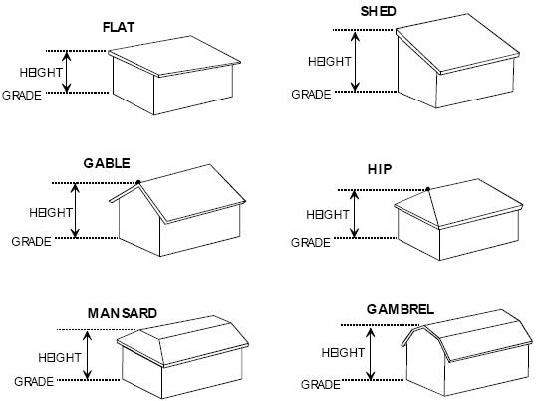
Building height. The building height is the vertical distance measured from the finished grade level to the highest point of the roof. Where the building may be situated on sloping terrain, this height shall be measured from the average finished grade as defined herein.
(s)
Building setback line. The line established by the minimum required setbacks forming the area within a lot in which a building may be located. An overhang shall be permitted in the required setback area, but shall not be permitted to extend more than one foot into such area.
(Ord. No. 679, § 2, 11-22-04; Ord. No. 701, § 1, 2-5-07; Ord. No. 718, § 1, 3-23-09; Ord. No. 736-1, § 1, 12-17-12; Ord. No. 785, 7-11-16; Ord. No. 802, § 1, 4-16-18; Ord. No. 876, § 1, 5-19-25)
Section 2.03. - Definitions—C through E.
(a)
Commercial event. An event organized by an individual permanent business or group of permanent businesses within the city.
(b)
Commercial retail. Any activity involving the sale of goods or services carried out for profit.
(c)
Commercial trailer. A trailer used for any commercial purpose.
(d)
Commercial vehicle. A commercial vehicle includes all motor vehicles used for the transportation of passengers for hire, or constructed or used for transportation of goods, wares or merchandise, and/or all motor vehicles designed and used for drawing other vehicles and not so constructed as to carry any load hereon either independently or [other than] any part of the weight of a vehicle or load so drawn. For purposes of this ordinance, commercial vehicles shall also include the following terms:
(1)
Truck. Truck shall mean any motor vehicle designed, used, or maintained primarily for the transportation of property and not for the carrying of passengers, excepting a pickup truck.
(2)
Truck-tractor. Truck-tractor means any motor vehicle designed and used primarily for drawing other vehicles and not so constructed as to carry a load other than a part of the weight of the vehicle and load so drawn.
(3)
Semi-trailer. Semi-trailer means a vehicle of the truck type so designed and used in conjunction with the truck-tractor that a considerable part of its own weight or that of its load rests upon and is carried by the truck-tractor and shall include a trailer drawn by a truck-tractor, semi-trailer combination.
(4)
Special mobile equipment. Special mobile equipment means every vehicle not designed or used primarily for the transportation of persons or property and only incidentally operated or moved over a highway, including, but not limited to, ditch digging apparatus, moving dollies, concession wagons, and other machinery such as asphalt spreaders, bituminous mixers, bucket loaders, tractors other than truck-tractors, ditchers, leveling graders, finishing machines, motor graders, road rollers, scarifiers, earth-moving carryalls, scrapers, power shovels, draglines, self-propelled cranes, and earth-moving equipment.
(e)
Community event. An annual or semi-annual public, charitable, educational, non-profit or religious event being held within the city.
(f)
Condominium. Ownership in common with others of a parcel of land and certain parts of a building thereon which would normally be used by all of the occupants, such as yards, foundations, basements, floors, walls, hallways, stairways, elevators, and all other related common elements, together with individual ownership in fee of a particular dwelling unit in such building. Condominiums shall be subject to the regulations set forth in Michigan Public Act 59 of 1978, as amended.
(g)
Condominium Act. Act No. 59 of the Public Acts of Michigan of 1978 (MCL 559.101 et seq.), as amended.
(h)
Condominium documents. The master deed, recorded pursuant to the Condominium Act, and any other instrument referred to in the master deed or bylaws which affects the rights and obligations of a co-owner in the condominium.
(i)
Condominium lot. The condominium unit, including the condominium unit and the contiguous limited common element surrounding the condominium unit, and shall be the counterpart of "lot" as used in connection with a project developed under the Subdivision Control Act, Act No. 288 of the Public Acts of Michigan of 1967 (MCL 560.101 et seq.), as amended.
(j)
Condominium unit. The portion of a condominium project designed and intended for separate ownership and use, as described in the master deed.
(k)
Convalescent or nursing home. Means a nursing care facility, including a county medical care facility, that provides organized nursing care and medical treatment to seven or more unrelated individuals suffering or recovering from illness, injury, or infirmity. Nursing home does not include a unit in a state correctional facility. Nursing home does not include one or more of the following:
(1)
A hospital.
(2)
A veteran's facility created under Act No. 152 of the Public Acts of 1885, being sections 36.1 to 36.12 of the Michigan Compiled Laws.
(3)
A hospice residence.
(l)
Convenience grocery store. A one-story, retail store that is designed and stocked to sell primarily food, beverages, and other household supplies to customers who purchase only a relatively few items (in contrast to a "supermarket"). Convenience grocery stores are designed to attract a large volume of stop-and-go traffic.
(m)
Child care facilities. The following definitions shall apply in the construction and application of this ordinance:
(1)
Group day care home. A private residence in which seven but not more than 12 children are received for care and supervision for periods less than 24 hours a day unattended by a parent or legal guardian, excepting children related to an adult member of the family by blood, marriage or adoption. It includes a home that gives care to an unrelated child for more than four weeks in a calendar year.
(2)
Child care center. A facility, other than a private residence, receiving more than one or more children for care and supervision for periods less than 24 hours, and where the parents or guardians are not immediately available to the child. It includes a facility that provides care for not less than two consecutive weeks, regardless of the numbers of hours of care per day. The facility is generally described as a child care center, day care center, day nursery, school, parent cooperative pre-school, pre-kindergarten, play group, or drop in center. This definition does not include the following:
(A)
Sunday school vacation bible school, or religious instructional class which is conducted by a religious organization and at which children are in attendance for not more than three hours per day for an indefinite period, or not more than eight hours per day for up to four weeks during a 12-month period, or a facility operated by a religious organization where children are cared for up to three hours while persons responsible for the children are attending a religious service.
(B)
A special education program or service conducted under the authority of Article 3 of Act No. 451 of the Public Act of 1976, as amended.
(C)
A kindergarten, elementary, or secondary school program operated by a local or intermediate school district under the authority of Act No. 451 of the Public Acts of 1976, as amended. This exemption will not apply to pre-kindergarten program or child care center program for school age children operated by a local or intermediate school district.
(D)
An elementary or secondary school program operated by a nonpublic school. A kindergarten operated as a part of a nonpublic elementary school. This exemption will not apply to pre-kindergarten program or child care center program for school age children operated by a nonpublic school.
(n)
District. A portion of the city within which certain uses of land and/or buildings are permitted and within which certain regulations and requirements apply under the provisions of this ordinance.
(o)
Drainageway. Minor watercourses which are defined either by soil type or by the presence of year-round or intermittent streams. The following areas are drainageways:
(1)
Areas with soils, as delineated in the "Soil Survey of Washtenaw County" by the soil conservation service, of the following types: Houghton muck, Pella silty clay loam, and Granby loamy fine sand;
(2)
The land, except where areas are designated as floodplain, on either side of and within 65 feet of the centerline of any stream or intermittent stream shown on soil survey of the city prepared by the soil conservation service.
(p)
Driveway. A passageway (primarily for use by vehicles) over private property, leading from a street or other public way to a garage or parking area.
(q)
Dwelling. A building or portion thereof which is used exclusively as a residence and provides complete, independent living facilities for one or more persons, including permanent provisions for living, sleeping, eating, cooking and sanitation. The following additional definitions are provided:
(1)
Dwelling, multiple-family. A building consisting of three or more dwellings.
(2)
Dwelling, single-family. A single building designed for, or occupied exclusively by, one family.
(3)
Dwelling, two-family. A building consisting of two dwellings.
(4)
Manufactured dwelling. A structure constructed in accordance with state construction code, as promulgated by the state construction code commission under the provisions of 1972, P.A. 230, as amended, in which individual components, none of which in and of itself is suitable for occupancy, are preconstructed and transported to the building site where they are in need of further assembly in order to constitute a complete dwelling ready for occupancy.
(5)
Manufactured home. A factory built, single-family structure that is manufactured under the authority of the National Manufactured Housing Construction and Safety Standards Act of 1974, is transportable in one or more sections, is built on a permanent chassis, and is used as a place of human habitation; but which are not constructed with a permanent hitch or other device allowing transport of the unit other than for the purpose of delivery to a permanent site, and which does not have wheels or axles permanently attached to its body or frame.
(6)
Site-built dwelling. A structure constructed in accordance with the state construction code as promulgated by the state construction code commission under the provisions of 1972, P.A. 230, as amended, in which building materials and parts are transported to the building site where they are used to construct the total dwelling unit including its major individual components and systems.
(7)
Dwelling unit, accessory (ADU). A dwelling unit that provides complete independent living facilities for not more than one family, and is an accessory use of a single-family dwelling. ADUs may be integral to the principal dwelling, attached to the principal dwelling, or located in a detached structure on the same lot.
(r)
Easement. The right of an owner of property by reason of such ownership, to use the property of another for purposes of ingress, egress, utilities, drainage and similar uses.
(s)
Essential services. Services that are erected, constructed, altered, or maintained by public utilities or municipal agencies of underground, surface, or overhead gas, electrical, steam, or water transmission or distribution systems, collection, communication, supply or disposal systems, including mains, drains, sewers, pipes, conduits, wires, cables, fire alarm boxes, traffic signals, hydrants, poles, and other similar equipment or accessories reasonably in connection therewith for the furnishing of adequate service by such public utilities or municipal agencies.
(Ord. No. 802, § 2, 4-16-18; Ord. No. 856, § 1, 8-7-23)
Section 2.04. - Definitions—F through K.
(a)
Family. An individual or a group of two or more persons related by blood, marriage or adoption, who are living together as a single, domestic, housekeeping unit in a dwelling unit; or, a collective number of individuals living together in a dwelling unit whose relationship is of a permanent, distinct, continuing and nontransient domestic character and who are cooking and living as a single, noncommercial housekeeping unit. This definition shall not include any society, club, fraternity, sorority, association, lodge, organization, or group of individuals whose domestic relationship is of a transitory or seasonal nature.
(b)
Floodplain, 100-year. The relatively flat or lowland area adjoining a river, stream or creek which has a one percent chance of flood occurrence in any given year. Floodplains may be either riverine or inland depressional areas. Inland depressional (one percent) floodplains are floodplains not associated with a stream system, but which are low points which surrounding lands drain to.
(c)
Floor area, gross. The sum of the gross horizontal areas of the several floors of the building measured from the exterior faces of the exterior walls or from the center line of walls separating two buildings.
(d)
Floor area, ratio. An intensity measured as a ratio, derived by dividing the gross floor area of all buildings on a lot by the total lot area.
(e)
Floor area, useable. In the case of residential uses, usable floor area is defined as the sum of the gross horizontal areas of each story, floor or level of a building measured from the exterior faces of the exterior walls without deduction for interior walls, closets or shafts at any level, excluding areas of unfinished attics, breezeways, and unenclosed porches. In the case of nonresidential uses, "usable floor area" is defined as the sum of the gross horizontal areas of each story, floor or level of a building measured from the exterior faces of the exterior walls without deduction for interior walls, closets or shafts at any level, but excluding common or multiple tenant hallways, stairways, stairwells, elevator shafts, toilet rooms, mechanical equipment rooms and vaults.
(f)
Foster care facilities.
(1)
Adult foster care facility. A governmental or nongovernmental establishment that provides foster care to adults. It includes facilities and foster care homes for adults who are aged, mentally ill, developmentally disabled, or physically handicapped who require supervision on an ongoing basis but who do not require continuous nursing care. An adult foster care facility does not include nursing homes, homes for the aged, hospitals, alcohol or substance abuse rehabilitation center, residential centers for persons released from or assigned to a correctional facility, or any other facilities which have been exempted from the definition of adult foster care facility by the Adult Foster Care Facility Licensing Act, MCL 400.701 et seq., as amended.
(2)
Adult foster care family home. A private residence with the approved capacity to receive six or fewer adults to be provided with foster care for five or more days a week and for two or more consecutive weeks. The adult foster care family home licensee must be a member of the household and an occupant of the residence.
(3)
Adult foster care group home. A facility with approved capacity to receive at least seven but not more than 20 adults to be provided supervision, personal care, and protection in addition to room and board, 24 hours a day, five or more days a week, and for two or more consecutive weeks for compensation.
(4)
Adult foster care congregate facility. An adult foster care facility with the approved capacity to receive more than 20 adults to be provided with foster care.
(g)
Front. A lot fronts on the street from which principal access is provided. Lots which front on a service drive shall be considered to front the street to which the service drive is parallel.
(h)
Frontage. The portion of a lot which abuts the right-of-way of a street or road.
(i)
General common elements. The common elements other than the limited common elements.
(j)
Grade. The degree of rise or descent of a sloping surface.
(k)
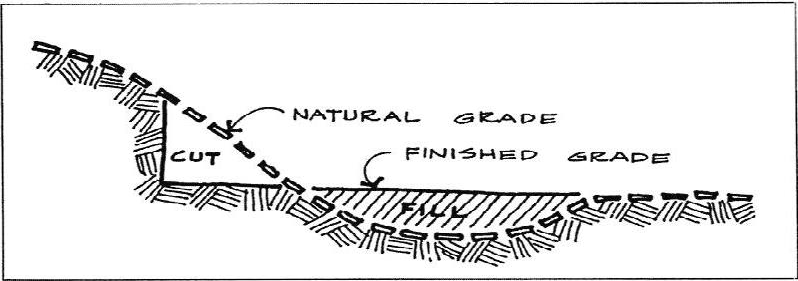
Grade, average finished. If the ground is not entirely level, the average finished grade shall be determined by averaging the elevation of the ground for each face of the building.
(l)
Grade, finished. The final elevation of the ground surface after development (see below). Also, the finished ground level adjoining the building at all exterior walls.
(m)
Grade, natural. The elevation of the ground surface in its natural state, before manmade alterations (see below).
(n)
Home occupation. An occupation, profession, activity, or use that is clearly a customary, incidental, and secondary use of a residential dwelling unit and which does not alter the exterior of the property or affect the residential character of the neighborhood.
(o)
Housing for the elderly. A building or group of buildings containing dwellings intended for, and solely occupied by, elderly persons as defined by the Federal Fair Housing Amendments Act of 1988. Housing for the elderly may include independent and/or assisted living arrangements but shall not include convalescent or nursing facilities regulated by the state.
(p)
Junk yard. A place, structure, parcel or use of land where junk, waste, discard, salvage, or similar materials such as old iron or metal, wood, lumber, glass, paper, rags, cloth, leather, rubber, bagging, cordage, barrels, containers, etc., are bought, sold, exchanged, stored, baled, packed, disassembled, or handled, including auto wrecking yards, inoperative machines, used lumber yards, housing wrecking, and structural steel materials and equipment and including establishments for the sale, purchase, or storage of salvaged machinery and the processing of used, discarded, or salvaged materials, for any 30 consecutive days.
(q)
Kennels and catteries, commercial. Any lot or premises wherein commercial activities relative to dogs and/or cats are engaged, i.e., boarding, grooming, breeding, or training, for profit, is considered the primary activity.
(r)
Kennels and catteries, noncommercial (hobby). Any lot or premises of a person, at his/her residence, wherein multiple dogs and/or cats are kept, bred, trained, and/or conditioned for personal recreational use (exhibiting, trailing, racing, hunting, sledding); or any dogs or cats retired from such activities, and not for profit.
(Ord. No. 802, § 2, 4-16-18; Ord. No. 876, § 1, 5-19-25)
Section 2.05. - Definitions—L through O.
(a)
Lake. A natural or artificial body of water, two acres or more in size, which retains water year-round. The shore of a lake shall be measured from the normal high-water mark rather than from the permanent pool in the event of any difference.
(b)
Landscape elements. Living plant material such as, but not limited to, grass, ground covers, shrubs, vines, hedges or trees, and nonliving durable material commonly used in landscape development such as crushed rock, brick, wood chips, cobblestones, tile or decorative blocks whether as a vertical element such as a wall, or a horizontal element such as a bed, walk, or path.
(c)
Landscape pond. An excavation, container, lining or other means of holding permanent water which is two feet or less in depth, has a water surface of 300 square feet or less and is intended for viewing purposes only.
(d)
Landscaping. A collection of living evergreen and/or deciduous, woody-stemmed trees, shrubs, vines and ground cover required to be planted, preserved and maintained in conjunction with certain approval for use of property. The following additional definitions shall apply in the construction and application of this ordinance:
(1)
Berm. A landscaped mound of earth which blends with the surrounding terrain.
(2)
Buffer. A landscaped area composed of living material, wall, berm, or combination thereof, established and/or maintained to provide visual screening, noise reduction, and transition between conflicting types of land uses.
(3)
Caliper. A measurement of the size of a tree equal to the diameter of its trunk, measured four and one-half feet above natural grade.
(4)
Canopy tree. Tree species which grow to a mature height of 40 to 100 feet, allowing smaller trees and shrubs to grow beneath.
(5)
Conflicting nonresidential land use. Any nonresidential use, such as office, commercial, industrial, research, parking or public road right-of-way land use which abuts a residential land use.
(6)
Conflicting residential use. Any residential land use developed at a higher density which abuts a residential land use developed at a lower density.
(7)
Dripline. The outer limit of a tree's branches, projected to the ground. The point where water dripping off the canopy will hit the ground.
(8)
Greenbelt. A landscaped area, established at a depth of the minimum required front yard setback within a zoning district, which is intended to provide a transition between a public road right-of-way and an existing or proposed land use and/or between a conflicting land use and an existing or proposed land use. A strip of land containing specified landscape elements such as berms, fences, and plant material, which separates land uses, and minimizes conflicts between them.
(9)
Hedgerow. Mature row of plant material lining the edge of a field or old field, consisting of 25 percent or more canopy trees having ten inch or greater caliper and covering more than 75 percent of the length of the border of the field. The dripline of the trees defines the land area of a hedgerow.
(10)
Opacity. The state of being impervious to sight.
(11)
Shrubs. Self-supporting, deciduous and/or evergreen woody species normally branched near the base, bushy, less than 15 feet in height, as normally grown in the county.
(12)
Specimen (landmark) tree. Any large tree, native or planted, which equals 50 percent or more in size of the recorded county record for that species, which stands alone from or distinct within a group of trees or a woodland. The dripline of it defines the area it occupies.
(13)
Trees. Self-supporting, woody, deciduous and/or evergreen plants with a well-defined central stem or species which normally grow to a height of 15 feet or more in the county.
(14)
Vines. Plants which normally require physical support to reach mature form.
(e)
Limited common elements. A portion of the common elements reserved in the master deed for the exclusive use of less than all of the co-owners.
(f)
Loading space. An off-street space on the same lot with a building or group of buildings, for temporary parking of a commercial vehicle while loading and/or unloading merchandise or materials.
(g)
Lodging facility. Any establishment in which individual units are rented to transients for periods of less than 30 days for the purpose of sleeping accommodations. The term shall include hotels and motels but shall not include bed and breakfast operations, multiple family dwellings or boarding houses.
(h)
Lot. A parcel of land, excluding any portion in a street or other right-of-way, of at least sufficient size to meet minimum requirements for use, coverage, lot area, and to provide such yards and other open spaces as herein required. Such lot shall have frontage on a public street, or on an approved private street, and may consist of a single lot of record; a portion of a lot of record; any combination of complete and/or portions of lots of record; or a parcel of land described by metes and bounds.
(1)
Lot, corner. A lot with frontage on two intersecting streets. (See illustration entitled "Corner, Interior and Double Frontage.")
(2)
Lot, through or double frontage. A lot other than a corner lot having frontage on two more or less parallel streets. In the case of a row of double frontage lots, one street will be designated as the front street for all lots in the plat and in the request for a zoning compliance permit. If there are existing structures in the same block fronting one or both of the streets, the required front yard setback shall be observed on those streets where structures presently front.
(3)
Lot, interior. An interior lot is a lot other than a corner lot with only one lot line fronting on a street.
(4)
Lot area. The total horizontal area within the lot lines of a lot, but excluding that portion within a street right-of-way.
(5)
Lot coverage. The percentage of the lot area covered by the building area.
(6)
Lot depth. The mean horizontal distance from the front line to the rear lot line.
(7)
Lot lines. Any line dividing one lot from another or from a public right-of-way, and thus constitutes the property lines bounding a lot.
(8)
Lot of record. A lot of record is a lot, the dimensions of which are shown on a subdivision plat recorded in the office of the register of deeds for the county, or a lot or parcel described by metes and bounds, the accuracy of which is attested to by a professional engineer or registered surveyor, so designated by the state, and said description so recorded with the register of deeds.
(9)
Lot width. The required horizontal distance between the side lot lines measured at the two points where the required front yard setback line intersects the side lot lines. For lots located on the turning circle of a cul-de-sac, the lot width may be reduced to 80 percent of the required lot width.
(i)
Manufacturing. The use of land, buildings or structures for the purpose of manufacturing, assembly, making, preparing, inspecting, finishing, treating, altering, repairing, warehousing or storing or adapting for sale of any goods, substance, article, thing or service.
(j)
Manufactured home. A factory built, single-family structure that is manufactured under the authority of the National Manufactured Housing Construction and Safety Standards Act of 1974, is transportable in one or more sections, is built on a permanent chassis, and is used as a place of human habitation; but which are not constructed with a permanent hitch or other device allowing transport of the unit other than for the purpose of delivery to a permanent site, and which does not have wheels or axles permanently attached to its body or frame.
(k)
Master deed. The condominium document recording the condominium project to which are attached as exhibits and incorporated by reference the bylaws for the project and the condominium subdivision plan for the project, and all other information required by section 8 of the Condominium Act.
(l)
Mezzanine. An intermediate floor in any story occupying but not to exceed more than one-third of the floor area of such story.
(m)
Mobile home. A detached portable single-family dwelling prefabricated on its own chassis and intended for long-term occupancy. The unit contains sleeping accommodations, a flush toilet, a wash basin, a tub or shower, eating and living quarters. It is designed to be transported on its own wheels or flatbed arriving at the site where it is to be occupied as a complete dwelling without permanent foundation and connected to existing utilities.
(n)
Mobile home park. Any parcel of land intended and designed to accommodate more than one mobile home for living use which is offered to the public for that purpose; and any structure, facility, area, or equipment used or intended for use incidental to that living use.
(o)
Muck soils. Organic solid dominated by organic matter, as defined by the "Soil Survey of Washtenaw County," Michigan, including Adrian, Edwards, Edwards Shallow, Variant, Houghton and Palms soils.
(p)
Myotherapy establishment. Shall mean any building, Turkish bath parlor, steam bath, sauna bath, room premises, place, institution or establishment, where body massage is regularly practiced on the human body, to club members or to the general public for a charge or consideration, but the term "myotherapy establishment" shall not include licensed hospitals, nursing homes, medical clinics, offices of licensed physicians, surgeons, osteopaths or chiropractors. Massage shall mean an alcohol rub, fomentation, bath, common massage, magnetic massage procedure, manual manipulation of the body or any method treating external parts of the body for remedial or hygienic purposes, consisting of rubbing, stroking, kneading, adjusting, or tapping with the hand, elbow, fingers, or any instrument, electric, magnetic or otherwise, with or without supplementary aids.
(q)
Natural features. Elements occurring naturally on a lot which have physical, biotic, cultural, or aesthetic importance to natural systems, the overall landscape or the character of the city.
(r)
Nonconforming building. A nonconforming building is a building or portion thereof lawfully existing at the effective date of this ordinance, or amendments thereto, and which does not conform to the provisions of the ordinance in the zoning district in which it is located.
(s)
Nonconforming use. A nonconforming use is a use which lawfully occupied a building or land at the effective date of this ordinance, or amendments thereto, and that does not conform to the use regulations of the zoning district in which it is located.
(t)
Off-street parking area. A land surface or facility providing vehicular parking spaces along with adequate drives and aisles for maneuvering so as to provide access for entrance and exit for the parking of more than two automobiles.
(u)
Off-street parking lot. An area holding more than four vehicles.
(v)
Open space. Any parcel or area of land or water essentially unimproved and set aside, dedicated, designated, or reserved for preservation purposes, and/or public or private use or enjoyment, as well as:
(1)
Stormwater detention or retention ponds and facilities meeting the low impact design criteria of the Washtenaw County Water Resources Commission. In addition, to be considered open space all stormwater detention or retention ponds and facilities must be constructed in a naturalized fashion.
(2)
Active recreational facilities such as golf courses, community swimming pools, playgrounds, ball fields, court games, and picnic areas.
(3)
All required setbacks and buffer areas.
(Ord. No. 802, § 2, 4-16-18)
Section 2.06. - Definitions—P through R.
(a)
Parking space. One unit of a parking area provided for the parking of one vehicle, and shall be exclusive of driveways, aisles, or entrances giving access thereto and shall be fully accessible for the storage or parking of permitted vehicles.
(b)
Parking lot, accessory. A tract of land other than a street, designed and used for the parking or storage of motor vehicles, for the use of occupants, employees and patrons of the building or premises to which it is accessory.
(c)
Parking lot, public. A tract of land, other than an accessory parking lot or a street, used for the parking or storage of motor vehicles for general public use, either free or for remuneration.
(d)
Pond. A natural or artificial body of water less than two acres in size, which retains water year-round. Artificial ponds may be created by dams or may result from excavation. The shore of a pond shall be measured from the normal high-water mark rather than from the permanent pool in the event of any difference.
(e)
Principal building or structure. The main building or structure in which the primary use is conducted.
(f)
Professional. A person who is engaged in a vocation, calling, occupation, or employment involving labor, skill, education, special knowledge and compensation or profit, but the labor and skill is predominantly mental or intellectual, rather than physical or manual.
(g)
Public/quasi-public facilities. Uses of an educational, religious, or nonprofit nature, schools, churches, hospitals, government buildings and facilities, including parks, playgrounds, trails and other recreational areas.
(h)
Public utility. Any person, firm, corporation, or municipal agency authorized under federal, state, county or municipal regulations to furnish electricity, gas, communications, transportation, water, or sewer services.
(i)
Required parking. Parking areas devoted to customer, visitor, and employee parking.
(j)
Residential use. Any building on a property, regardless of its incorporation into a zoning district, shall be deemed residential use if the ground floor is occupied, lived in or slept in by human occupants as permitted in a residential district.
(k)
Restaurant. A restaurant is any establishment whose principal business is the sale of food and beverages to the customer in a ready-to-consume state, and whose method of operation is characteristic of a carry-out, drive-in, drive-through, fast-food, standard restaurant, or bar/lounge, or combination thereof, as defined below.
(l)
Restaurant, carry-out. A carry-out restaurant is a restaurant whose method of operation involves sale of food, beverages, and/or frozen desserts in disposable or edible containers or wrappers in a ready-to-consume state for consumption primarily off the premises.
(m)
Restaurant, drive-in. A drive-in restaurant is a restaurant whose method of operation involves delivery of prepared food so as to allow its consumption in a motor vehicle or elsewhere on the premises, but outside of an enclosed building.
(n)
Restaurant, drive-through. A drive-through restaurant is a restaurant whose method of operation involves the delivery of the prepared food to the customer in a motor vehicle, typically through a drive-through window, for consumption off of the premises.
(o)
Restaurant, fast-food. A fast-food restaurant is a restaurant whose method of operation involves minimum waiting for delivery of ready-to-consume food to the customer at a counter or cafeteria line for consumption at the counter where it is served, or at tables, booths, or stands inside or outside of the structure, or for consumption off the premises, but not in a motor vehicle at the site.
(p)
Restaurant, standard. A standard restaurant is a restaurant whose method of operation involves either the delivery of prepared food by waiters and waitresses to customers seated at tables within a completely enclosed building, or the prepared food is acquired by customers at a cafeteria line and is subsequently consumed by the customers at tables within a completely enclosed building.
(q)
Bar/lounge. A bar or lounge is a type of restaurant which is operated primarily for the dispensing of alcoholic beverages, although the sale of prepared food or snacks may also be permitted. If a bar or lounge is part of a larger dining facility, it shall be defined as that part of the structure so designated or operated.
(r)
Right-of-way. A legal right of passage over real property typically associated with roads and railroads.
(s)
Recreational vehicle. A recreational vehicle is defined as a vehicle primarily designed and used for recreational, camping or travel purposes including a vehicle having its own motor power or vehicle mounted on or drawn by a motor vehicle. For purpose of this ordinance, recreational vehicle shall also include the following terms:
(1)
Camper trailer (pop-up). A structure designed to provide temporary living quarters for recreational, camping or travel use, constructed with integral wheels to make it mobile and/or towable by a motor vehicle, not to exceed 24 feet in length and five feet six inches in height in a collapsed position.
(2)
Motor home. A portable dwelling designed or designed and constructed as an integral part of a self-propelled vehicle not to exceed 40 feet in length and 12 feet in height.
(3)
Off-street vehicle. A motorized vehicle typically designed for use off of public streets. Off-street vehicles include snowmobiles, dune buggies, and three- and four-wheeled all terrain vehicles.
(4)
Pickup camper. A structure designed primarily to be mounted on a pickup or truck chassis and with sufficient equipment to render it suitable for use as a temporary dwelling for travel, recreational or vacation use.
(5)
Travel trailer. A structure designed to provide temporary living quarters for recreational, camping or travel use, constructed with integral wheels to make it mobile and/or towable by a motor vehicle, not to exceed eight feet in width and a body length not exceeding 35 feet.
(6)
Watercraft. Any unit that is used for water travel or pleasure, 35 feet or less in length but not to exceed 12 feet in height, either mounted on a boat trailer or unmounted, also any boat trailer without a boat mounted.
(Ord. No. 802, § 2, 4-16-18; Ord. No. 854, § 1, 4-3-23)
Section 2.07. - Definitions—S through W.
(a)
School. Any building or part thereof which is designed, constructed, or used for education or instruction in any branch of knowledge. This includes business schools, trade schools, schools of dance and the martial arts, as well as academic institutions. The following additional definitions shall apply:
(1)
Elementary. Any school licensed by the state and that meets the state requirements for elementary education.
(2)
Parochial. A school supported and controlled by a church or religious organization. See "Private."
(3)
Private. Any building or group of buildings the use of which meets state requirements for elementary, secondary, or higher education and which does not secure the major part of its funding from any governmental agency.
(4)
Secondary. Any school licensed by the state and that is authorized to award diplomas for secondary education.
(5)
College/university. An educational institution authorized by the state to award baccalaureate or higher degrees.
(6)
Vocational. A secondary or higher education facility primarily teaching usable skills that prepare students for jobs in a trade and meeting state requirements as a vocational facility.
(b)
Screen. A structure providing enclosure, such as a fence, and/or visual barrier between the area enclosed and the adjacent property. A screen may also consist of living materials such as trees and shrubs.
(c)
Setback. The minimum required horizontal distance between the building or structure and the front, side, and rear lot lines and natural features.
(d)
Self storage facility. A structure containing separate, individual, and private storage spaces of varying sizes leased or rented on individual leases for varying periods of time.
(e)
Shopping center. More than one commercial establishment, planned, developed, owned, and managed as a unit, with off-street parking provided on the property.
(f)
Sign. Any device, fixture, placard, or structure that uses any color, form, graphic, illumination, symbol, or writing to communicate information of any kind to the public. For the purpose of this Ordinance, sign shall also include the following terms:
(1)
Animated sign: Any sign that uses movement or change of lighting to depict action or create a special effect or scene.
(2)
Awning sign: See "Canopy sign."
(3)
Balloon: A bag made of thin rubber, mylar or other lightweight material inflated with air or with some lighter-than-air gas, used as a decoration, or for advertisement with a logo or printed words.
(4)
Banner: Any sign of lightweight fabric or similar material that is attached to a pole or a building at one or more edges. Flags are not considered banners.
(5)
Beacon: Any light with one or more beams directed into the atmosphere or directed at one or more points not on the same zoning lot as the light source; also, any light with one or more beams that rotate or move.
(6)
Billboard: An off-premises sign with an area in excess of 200 square feet.
(7)
Box sign: A sign that contains all the text or text and logo symbols within a single enclosed cabinet.
(8)
Building sign: Any sign attached to any part of a building, as contrasted to a ground sign. Building signs shall include the following types of signs as defined in this section: Canopy, Wall, permanent window, and channel letter signs.
(9)
Canopy sign: Any sign that is a part of or attached to an awning, canopy, or other fabric, plastic, or structural protective cover over a door, entrance window, or outdoor service area
(10)
Changeable copy sign: A sign or portion thereof with characters, letters, or illustrations that can be changed or rearranged without altering the face or the surface of the sign. A sign on which the message changes more than one time per day shall be considered an animated sign and not a changeable copy sign for purposes of this ordinance.
(11)
Channel letter sign: Any sign installed as a cabinet or as individual letters, with self-contained illumination.
(12)
Electronic message sign (EMS): A sign or portion of a sign that displays an electronic image or video, which may or may not include text, introducing any sign or portion of a sign that uses changing lights or similar forms of electronic display such as LED to form a sign message with text and or images wherein the sequence of messages and the rate of change is electronically programmed and can be modified by electronic processes. This definition includes without limitation television screens, plasma screens, digital screens, flat screens, LED displays, video boards, and holographic displays.
(13)
Flag: Any sign printed or painted on fabric, plastic, canvas or other like material containing distinctive colors, patterns, or symbols, and attached to a pole or staff anchored along one edge, or supported or anchored at two corners of a single edge.
(14)
Ground sign: Any sign supported by structures or supports that are placed on, or anchored in, the ground and that are independent from any building or other structure.
(15)
Incidental sign: A sign, generally informational, that has a purpose secondary to the use of a lot on which it is located, such as "no parking," "entrance," "loading only," "telephone," "handicap," "no hunting," "no trespassing" and other similar directives. Additionally, such signs may identify specific buildings or entrances on campus such as a sign with arrows directing visitors/clients to "gymnasium", "loading area", or the name of a specific division's offices. A business name or business logo may be included as a part of an incidental sign.
(16)
Integral sign: Signs carved into stone, concrete or similar material or made of other permanent type construction and made an integral part of the structure.
(17)
Non-conforming sign: Any sign that does not conform to the requirements of this ordinance.
(18)
Off-site sign (off-premises sign): A sign other than an on-site sign.
(19)
On-site sign (on-premises sign): A sign which advertises or identifies only goods, services, facilities, events, or attractions on the premises where located.
(20)
Pennant: Any lightweight plastic, fabric, or other material, whether or not containing a message of any kind, suspended from a rope, wire, or string, usually in series, designed to move in the wind.
(21)
Portable sign: Any sign not permanently attached to the ground or other permanent structure, or a sign designed to be transported, including, but not limited to, signs designed to be transported by means of wheels; signs converted to A or T-frames; menu and sandwich board signs; vehicle-mounted signs, and balloons used as signs.
(22)
Projecting sign: Any sign affixed perpendicular to a building or wall in such a manner that its leading edge extends more than six inches beyond the surface of such building or wall, with the exception of channel letter signs.
(23)
Residential wall plate: A wall sign mounted on the wall of a residential dwelling unit.
(24)
Roof sign: Any sign erected and constructed wholly on and over the roof of a building, supported by the roof structure, and extending vertically above the highest portion of the roof.
(25)
Suspended sign: A sign that is suspended from the underside of a horizontal plane surface and is supported by such surface.
(26)
Temporary sign: A sign that is intended to be displayed for a limited period of time.
(27)
Vehicular sign: A sign attached to or painted on vehicles or trailers parked and visible from the public right-of-way, unless said vehicle is licensed operable and used in the normal day-to-day operations of the business.
(28)
Wall sign: Any sign attached parallel to a wall, painted on the wall surface of, or erected and confined within the limits of an outside wall of any building or structure, which is supported by such wall or building, and which displays only one sign surface.
(29)
Window sign: Any sign that is placed inside of, and within two feet of, a window; or upon the window panes or glass, and is visible from the exterior of the window.
(g)
Site condominium. A development containing five or more detached single-family or two-family dwellings under the condominium form of ownership in which the building site is the condominium unit. For purposes of this zoning ordinance, the term site condominium does not include residential planned unit developments approved pursuant to article 10.
(h)
Site plan. The development plan for one or more lots on which is shown the existing and proposed conditions of the lot, including topography, vegetation, drainage, floodplains, wetlands, and waterways; landscaping and open spaces; walkways; means of ingress and egress; circulation; utility services; structures and buildings; signs and lighting; berms, buffers and screening devices; surrounding development; and any other information that reasonably may be required in order that an informed decision can be made by the approving authority.
(i)
Slope. The inclination of the land's surface from the horizontal expressed in percentages or degrees.
(j)
Special land use. A use which is subject to special approval by the city council. A special use may be granted only when there is a specific provision for it in the various articles of this ordinance. A special use is not considered to be a nonconforming use.
(k)
Specified anatomical areas. Specified anatomical areas means and includes any one or more of the following:
(1)
Less than completely covered human genitals, pubic region, buttocks, anus, or female breasts below a point immediately above the top of the areola; or
(2)
Human male genitals in a discernible turgid state, even if completely and opaquely covered.
(l)
Specified sexual activities. Specified sexual activities means and includes any one or more of the following:
(1)
The fondling or erotic touching of human genitals, pubic region, buttocks, anus, or female breasts;
(2)
Human sex acts, normal or perverted, actual or simulated, including but not limited to intercourse, oral copulation, and sodomy;
(3)
Human masturbation, actual or simulated;
(4)
Human excretory functions as part of, or as related to, any of the activities described above; and
(5)
Physical violence, bondage, mutilation, or rape, actual or simulated, as part of or as related to, any of the activities described above.
(m)
Story. That portion of a building included between the surface of any floor and the surface of the floor above it, or if there is no floor above it, then the space between the floor and the ceiling above it and including those basements used for the principal use.
(n)
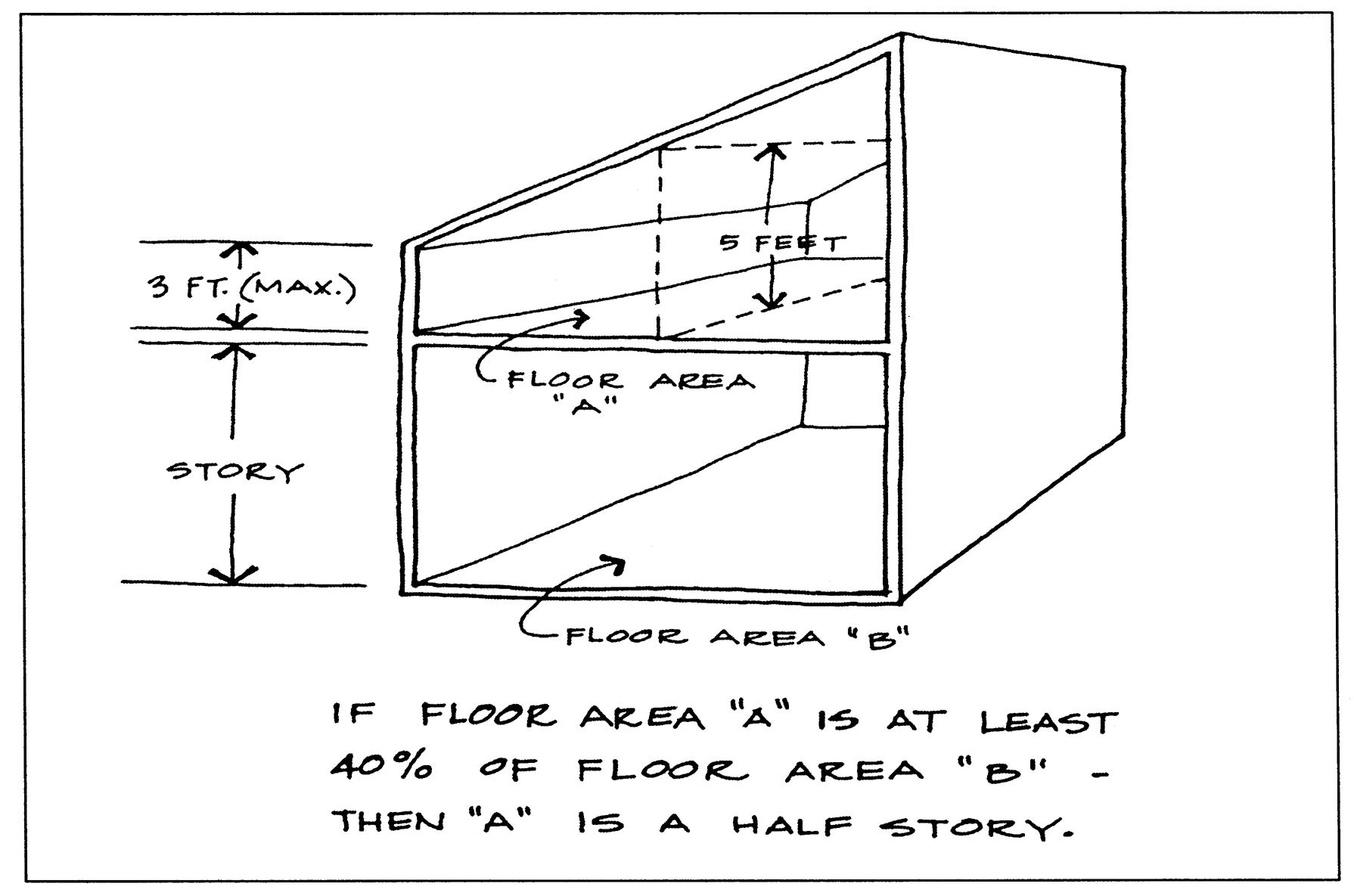
Story, one-half. A space under a sloping roof that has the line of intersection of the roof and wall face not more than three feet above the floor level and in which space the possible floor area with head room of five feet or less occupies at least 40 percent of the total floor area of the story directly beneath (see figure below).
(o)
Street. A public or private thoroughfare which affords the principal means of access to abutting property.
(p)
Street line. The dividing line between the street right-of-way and the lot. When such right-of-way is not definable, a line shall be defined as 33 feet on either side of the center of the street.
(q)
Structure. Anything constructed or erected above ground level or which is attached to something located on the ground. Structures typically include such things as buildings, amateur radio towers, sheds, and decks.
(r)
Structural alterations. Any change in the supporting members of a building such as bearing walls, columns, beams, or girders, or any substantial changes in the roof and exterior walls.
(s)
Utility trailer. A trailer used for noncommercial purposes including the transportation of motor vehicles, off-street vehicles, watercraft, and miscellaneous landscape and household items. Utility trailers may be open top or closed top.
(t)
Vehicle display parking. Parking areas devoted to the display of vehicles intended for sale associated with an on-site auto sales and service facility.
(u)
Vehicle inventory storage/auto service and repair storage. Parking areas devoted to the storage of excess vehicle inventory associated with an on-site or off-site auto sales and service facility, and may also include vehicles stored for repair or service associated with an on-site auto sales and service facility.
(v)
Vehicular use area. The total area traversed by any and all types of vehicle, whether such vehicles are moving, at rest, self-propelled or not, less the area defined as parking space, including, but not limited to, lot areas of drive-in activities such as filling stations, grocery and dairy stores, banks, restaurants and the like. Areas used for long or short-term off-street parking or paved areas serving single-family dwellings are not included in the definition.
(w)
Wetland. Wetlands include all areas defined by the Natural Resources and Environmental Protection Act.
(x)
Wireless communication facilities. All structures and accessory facilities relating to the use of the radio frequency spectrum for the purpose of transmitting or receiving radio signals. This may include, but shall not be limited to, radio towers, television towers, telephone devices and exchanges, micro-wave relay towers, telephone transmission equipment building and commercial mobile radio service facilities. Not included within this definition are: citizen band radio facilities; short wave facilities; ham, amateur radio facilities; satellite dishes; and, governmental facilities which are subject to state or federal law or regulations which pre-empt municipal regulatory authority. For purposes of this ordinance, the following additional terms are defined:
(1)
Attached wireless communications facilities. Wireless communication facilities that are affixed to existing structures, such as existing buildings, towers, water tanks, utility poles, and the like. A wireless communication support structure proposed to be newly established shall not be included within this definition.
(2)
Collocation. The location by two or more wireless communication providers of wireless communication facilities on a common structure, tower, or building, with the view toward reducing the overall number of structures required to support wireless communication antennas within the community.
(3)
Wireless communication support structures. Structures erected or modified to support wireless communication antennas. Support structures within this definition include, but shall not be limited to, monopoles, lattice towers, light poles, wood poles and guyed towers, or other structures which appear to be something other than a mere support structure.
(y)
Woodland. An area of plant material covering one acre or more and consisting of 30 percent or more canopy trees having an eight-inch or greater caliper, or any grove consisting of 12 or more trees having a ten-inch or greater caliper. The dripline of the trees defines the area of woods.
(Ord. No. 802, § 2, 4-16-18; Ord. No. 816, §§ 2, 4, 12-16-19; Amend. of 2021(1); Ord. No. 857, § 1, 8-21-23)
Section 2.08. - Definitions—X through Z.
(a)
Yard. An open space on the same lot with a building, unoccupied and unobstructed by any structure or portion of a structure from 30 inches above the general ground level of the graded lot, except as otherwise provided herein; provided, however, that fences and walls may be permitted in any yard, subject to the height limitation as indicated herein and in the building code. The measurement of a yard shall be construed as the minimum horizontal distance between the lot line and the building or structure.
(b)
Yard, front. A yard extending across the full width of the lot, the depth of which is the minimum horizontal distance between the principal building and the front lot line, and measured perpendicular to the building at the closest point to the front lot line. In all cases, the front lot line shall be considered to be that portion of the lot which abuts a public road right-of-way or private road easement.
(c)
Yard, rear. A yard extending across the full width of the lot, the depth of which is the minimum horizontal distance between the rear lot line and the nearest point of the principal building.
(d)
Yard, side. A yard between any building and the side lot line, extending from the front yard to the rear yard. The width of the required side yard shall be measured horizontally from the nearest point of the side lot line to the nearest point of the principal building.
(e)
Zone lot. A parcel of land in single ownership that is of sufficient size to meet minimum zoning requirements for area, coverage, and use, and that can provide such yards and other open spaces as required by the zoning regulations.
(f)
Zoning official. The administrative officer designated to administer the zoning ordinance.
(g)
Zoning or code inspector. The administrative official or designated personnel whose duties involve enforcement of the zoning code or other codes and regulations adopted by the city.
(Ord. No. 802, § 2, 4-16-18)

