Schaumburg City Zoning Code
Multi-Modal Mixed
Use Districts
§ 154.190.1 - GENERAL REQUIREMENTS.
(A)
General Purpose: The NDW, along with the delineated sub-areas within the district ("subdistricts") as conceptually shown on Figure 1: Land Use Plan, set forth herein are established to protect public health, promote public safety, comfort, convenience and the general welfare and to protect the economic base of the Village of Schaumburg and the value of property. These general purposes include, among others, the following specific objectives:
(1)
To provide a bold and visionary plan that conveys clear development regulations for near term catalytic projects as well as long-term development opportunities.
(2)
To ensure that the NDW attracts high quality development that creates a walkable and mixed use development and place of business that is attractive to local, regional and global business, as envisioned by the village.
(3)
To provide predictability in the design review process through the establishment of uniform decision-making criteria for all projects in the NDW.
(4)
To provide regulations and guidelines that also allow flexibility to encourage innovative design solutions and respond to changing market trends.
(5)
To strengthen and expand the existing business core at Meacham Road, from I-90 to Drummer Drive, by concentrating a mix of commercial, entertainment and residential uses that are within easy walking distance of existing users within that core.
(6)
To create a framework of connected public streets, trails and open spaces, and walkable development blocks as conceptually shown on Figure 2: Street, Trail and Open Space Framework Plan.
(7)
To ensure that the NDW is well connected to the east side of Meacham Road so that the areas on the west and east sides of Meacham Road form a cohesive overall commercial area.
(8)
To maximize the synergy between multiple uses to create a vibrant district and allow for more rapid absorption of the site.
(9)
To build a critical employment and residential density that makes bus rapid transit and other long-term transit modes viable.
(10)
To develop new, modern corporate office facilities to attract and retain top tier corporations.
(11)
To support a long-term phased development that can respond to changing market trends.
(12)
To allow for a new economic engine for the village that will drive growth of jobs and tax revenues for many years into the future.
(B)
Setbacks and Yards: The setbacks and yards shall be provided and maintained within the NDW zoning district so that any building with a front facade facing a build-to-line depicted on Figure 3 complies with such build-to-line.
(1)
A maximum of thirty percent (30%) of the front façade of the building can be set back further from the build-to-line to accommodate features that enhance the pedestrian realm, including the following:
(a)
To articulate the building façade, including recesses, ornamental projections, entrances or other unique architectural features.
(b)
To enhance streetscape uses such as widened sidewalks, plazas or other public open space amenities, outdoor seating and dining, public art, and water features.
(c)
To articulate pedestrian friendly street corners, with corner entrances and architectural features that are set back further to create wider sidewalks at corners.
(d)
The build-to-line generally applies to the podium (or base) of the building and excludes building towers.
(e)
Existing buildings that do not conform to the build-to-line established by new development should investigate opportunities to create visual and physical linkages, including landscaping, or architectural features to align with new buildings at the build-to line.
(f)
Ground-floor residential uses can provide stoops, bays, porches or entries that establish a transition between units and the public street beyond the build to line.
(2)
The "street wall" is the aggregate of adjacent front facades of buildings along one (1) side of a development block. Gaps in the street wall are strongly discouraged and should be limited to either: (i) a maximum of sixty (60) feet; or (ii) when added to all other street gaps on the same side of the development block, not exceed twenty percent (20%) of the length of such side of the development block. Gaps in the street wall should be allowed to accommodate pedestrian access, mid-block connections and, in limited instances, vehicular access.
(C)
To ensure a critical mass of office uses in the NDW in the long-term, and to ensure a walkable mixed use environment, the following general provisions must be followed:
(1)
Heavy manufacturing and distribution uses are not allowed.
(2)
Showroom/flex spaces that have a significant office component, comply with the design guidelines, and/or can demonstrably enhance the walkability of the entire site development will be considered as a special use.
(3)
Office, research and hotel uses are allowed on all blocks.
(4)
Street level office and retail uses are allowed on all blocks.
(5)
Single-family detached units are not allowed.
(6)
At full build-out, minimum gross square footage of office for the overall NDW area will be 3.0 to 3.5 million sf.
(7)
Rowhouses will be considered as a special use.
(8)
Assisted living, nursing homes, and memory care uses will be considered as special uses.
The land use matrix in section 154.190.1(H) lists permitted, special, and prohibited land uses in each subdistrict and additional regulations are also found in sections 154.190.5 through 154.190.9.
(D)
Minimum gross square footage of office to be provided:
(1)
For the first seven hundred fifty (750) residential units, a minimum of one hundred fifty thousand (150,000) gross square feet of office space must be provided.
(2)
For every five hundred (500) subsequent residential units, a minimum of three hundred thousand (300,000) gross square feet of office space must be provided.
(3)
Minimum gross square footage of office to be provided can include renovations and reuse of existing buildings into new office space or any office space in existing buildings, including the existing Zurich building, Motorola buildings and the existing Atrium building.
(E)
Floor Area Ratios (FAR): To maximize development potential of the NDW zoning district, developments within the blocks depicted on Figure 4 must meet the minimum net FAR requirements for such blocks as shown on Figure 4.
(1)
For the purposes of NDW, FAR is calculated as the total gross floor area of the building or buildings divided by the net lot area.
(2)
Floor areas of parking structures will not count towards FAR calculations.
(3)
There is no maximum FAR for any subdistrict or block.
(4)
Residential development shall be calculated as FAR, and not by density (dwelling units per acre) for subdistrict B and subdistrict C.
(5)
Subdistrict D shall have no FAR or density requirement.
(F)
Upon construction of the last building within a development block, the aggregate FAR within that development block must comply with the minimum FAR established in the FAR plan for that development block, if any, unless an exception is approved. There is no maximum FAR.
(G)
Right-of-Way Encroachments: A building that is within subdistrict B subject to a build-to line may have the following improvements that project into the street right-of-way:
(1)
Awnings,
(2)
Canopies,
(3)
Marquees,
(4)
Outdoor seating areas, and
(5)
Projecting signs.
(H)
Land Use Matrix: Uses are allowed within the NDW in accordance with the following matrix, subject to all other applicable standards of this zoning ordinance, including limits on residential uses in subsection 154.190.1(D) (requiring certain office square footage thresholds), section 154.190.4 (regulating rowhouses), and subsection 154.190.7(B) (capping dwelling units in subdistrict C). In addition, further reference should be made to the permitted, special, and prohibited use descriptions in sections 154.190.5 through 154.190.9. Permitted, special, and prohibited uses for subdistrict E are identified in section 154.190.9:
(Ord. 18-049, passed 4-10-2018; Am. Ord. 20-032, passed 5-12-2020; Am. Ord. 20-084, passed 10-13-2020; Am. Ord. 21-065, passed 6-8-2021; Am. Ord. 21-071, passed 7-13-2021)
§ 154.190.2 - STREET AND BLOCK FRAMEWORK
(A)
General Purpose: The street and block framework regulatory regulations provide the foundation for the NDW zoning district regulatory plans included herein as Figures 1 through 10 and design guidelines, to achieve the following goals:
(1)
To break up the two hundred seventy-five (275) acre "super block" of the NDW area into smaller walkable blocks.
(2)
To establish a hierarchy of streets that relate to various land use and traffic patterns.
(3)
To define areas to be designated as "public open spaces."
(4)
To provide the general location and typical cross sections for all streets.
(5)
To establish a long-term trail network that is consistent with streets and an open space system.
(B)
Block Size: A walkable block size is a critical element in creating a pedestrian friendly urban environment. Typical suburban large superblocks discourage walking and transit use and encourage reliance on automobiles for mobility. Shorter blocks also allow for more mixed use development opportunities.
Unimpeded block length is the distance drivers may travel on a particular street segment without being required to slow or stop. Streets exceeding six hundred (600) feet in unimpeded block length typically have significantly higher cases of speeding. Limiting the unimpeded street length to approximately six hundred (600) feet helps deter speeding through the pedestrian friendly environment. Shorter block lengths also reduce the likelihood of jaywalking. A connected pattern of short blocks provides pedestrians a choice of routes with safe crossings at intersections.
(C)
Block Size Requirements for Subdistricts B, C and D:
(1)
Blocks shall have a maximum perimeter length of two thousand (2,000) feet, measured at the curb.
(2)
Any block side longer than six hundred (600) feet shall have a mid-block pedestrian connection. Examples include a pedestrian walkway, a service street with a sidewalk, or a publicly-accessible walkway through a building.
(3)
The ratio of the longest side of a block to the shortest side is ideally less than 2:1 and shall be no greater than 3:1.
(D)
Street Hierarchy: Streets within the NDW shall include the following types of streets and comply with the following requirements, as shown on Figure 5: Street Hierarchy Plan:
(1)
The boulevard (running in an east-west direction from Meacham Road about halfway through the NDW, then taking an approximately ninety (90) degree turn north to Algonquin Road). The boulevard shall have:
(a)
A one hundred ten foot (110') right-of-way with two (2) travel lanes in each direction with no on-street parking as shown on Figure 6: Street Section.
(b)
A center landscaped median with left turn lanes.
(c)
A dedicated off-street trail on its north side (where it runs generally east and west) and on its east side (where it runs generally north and south).
(2)
One (1) major street running north-south from Algonquin Road to the east-west part of the boulevard. Each major street shall have:
(a)
An eighty-nine foot (89') right-of-way with one (1) travel lane in each direction with no on-street parking as shown on Figure 7: Street Section.
(b)
A center landscaped median with left turn lanes.
(c)
A dedicated off-street trail on one (1) side as indicated in the framework plan.
(3)
One (1) main street running in a general north to south direction from Algonquin Road to the east-west portion of the boulevard, which shall:
(a)
Have a sixty-eight foot (68') right-of-way with one (1) travel lane in each direction with optional on-street parking.
(b)
Not require bike facilities.
(4)
Minor collector streets that intersect other streets and that:
(a)
Are secondary streets.
(b)
Have a seventy-two foot (72') right-of-way with one (1) travel lane in each direction with optional on-street parking as shown on Figure 8: Street Section; the required right-of-way width may be reduced by the village board if it determines that the reduction is supported by substantial evidence from traffic studies and would not adversely affect the character of the NDW or the specific subdistrict in which it is located.
(c)
Require bike facilities, which may be off-street, trail, striped-lane or shared.
(5)
Local streets that intersect with other streets and that create blocks that comply with subsection 149.190.2(C) and that:
(a)
Are secondary streets.
(b)
Have a sixty-eight foot (68') right-of-way with one (1) travel lane in each direction with optional on-street parking as shown on Figure 9: Street Section. An applicant may receive a street width reduction if the request is supported by substantial evidence from traffic studies and that the reduction would not adversely affect the character of the NDW or the specific subdistrict in which it is located.
(c)
Require bike facilities, which may be off-street, trail, striped-lane or shared.
(Ord. 18-049, passed 4-10-2018)
§ 154.190.3 - PARKING REQUIREMENTS.
(A)
General Purpose: The NDW regulations encourage blocks that are large enough to accommodate required parking without detracting from an attractive walkable environment. Requirements outlined in this section reflect the following goals:
(1)
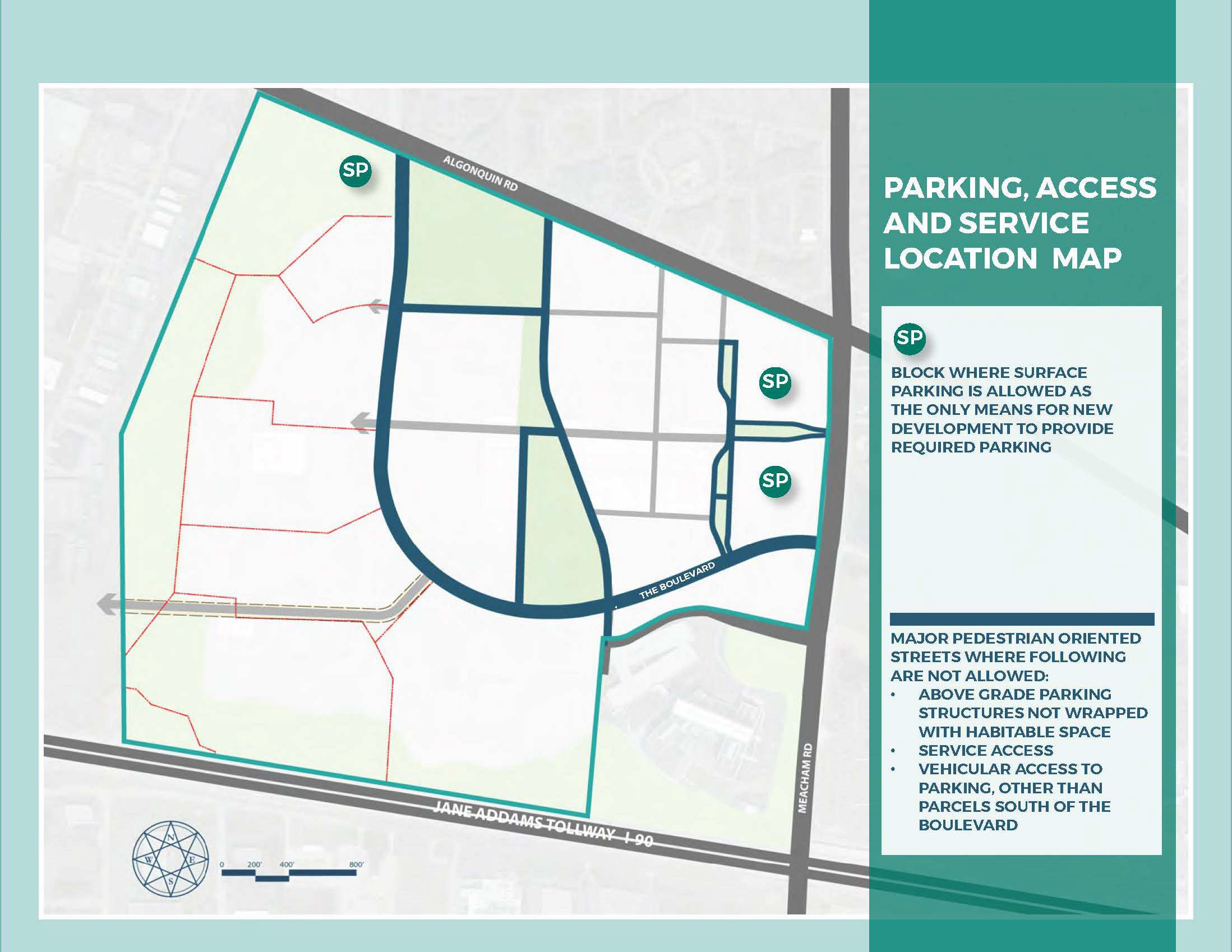
To discourage surface parking lots which create underutilized Development Blocks as shown on Figure 10: Parking, Access and Service Location Map.
(2)
To maximize below-grade parking opportunities.
(3)
To minimize the visual impacts of above-grade parking structures on streets and public open spaces.
(4)
To avoid potential conflicts between parking access and pedestrian, bicycle or vehicular traffic.
(5)
To encourage shared parking between multiple users.
(B)
Required Off-Street Parking:
(C)
Visitor parking for multiple-family residential shall be provided on the basis of one (1) guest parking space for each twenty (20) required spaces.
(D)
A minimum of one (1) bicycle parking space per ten (10) vehicle parking spaces must be provided.
(E)
Minimum off-street parking requirements can be reduced for developments that provide reserved parking for car-sharing services. A reduction of ten percent (10%) of the required parking spaces for one (1) reserved car-share space may be granted by the village provided that the applicant submits a long-term lease or agreement demonstrating that spaces have been reserved for the exclusive use of car-share vehicles.
(F)
For parking required by uses in subdistrict B only, the minimum off-street parking requirements may be altered by an allowance if the applicant: (1) provides a parking study that shows the need for the requested alteration; and (2) shows that the requested alteration does not change the character of the NDW or the specific subdistrict.
(G)
Above grade structured parking facilities are allowed in all subdistricts and strongly encouraged for all new development in the NDW, with the following requirements:
(1)
Parking structures with street facing facades wrapped with habitable space of a minimum depth of fifty (50) feet and minimum height of thirty (30) feet can be located on any street frontage.
(2)
Parking structures that are not wrapped with habitable space are strongly discouraged in the NDW and are not allowed along streets frontages as shown in Fig. 10: Parking, Access and Service Location Map.
(3)
In subdistricts B and D, where parking structures wrapped with habitable space are impractical or not economically feasible because of circumstances arising from site location, topographic or other physical conditions, access or utility locations or configurations, site use, relationship to adjacent development, or market conditions, a screened façade that complies with the design guidelines must be provided in lieu of habitable space.
(4)
In subdistricts A and C, where parking structures wrapped with habitable space are impractical or not economically feasible because of circumstances arising from site location, topographic or other physical conditions, access or utility locations or configurations, site use, relationship to adjacent development, or market conditions, a minimum landscaped setback of twenty-five (25) feet from the street or an improved, screened façade that complies with the design guidelines must be provided in lieu of habitable space.
(5)
All parking structures are subject to the design guidelines.
(H)
Surface Parking. To accommodate proposed development intensities and create an attractive pedestrian environment, surface parking lots are strongly discouraged in the NDW, but allowed if they meet one (1) of the following requirements:
(1)
Surface parking lots shall not be allowed between the front façade of a building and the street faced by the front façade, and shall be located to the side or rear of the building.
(2)
Surface parking lots are allowed as an interim use during the initial phases of the development of a block per the discretion of the director of community development following the requirements set forth in article 10: Preliminary Plan Development Review.
(3)
Surface parking as the only means for providing required parking shall be allowed only in the blocks as shown on Fig. 10: Parking, Access and Service Location Map.
(4)
All surface parking lots are subject to the NDW design guidelines.
(Ord. 18-049, passed 4-10-2018)
§ 154.190.4 - ROWHOUSES.
(A)
A rowhouse is an attached single-family unit with garage and car access to the rear. Multiple rowhouses joined together create attractive front façades and reinforce the overall street wall for the block.
(B)
The following types of rowhouses shall be permitted in the NDW, only as follows:
(1)
TYPE 1: Front Door on Public Street, Garage on Rear Private Alley:
(a)
Type 1 rowhouses shall be allowed as a special use in subdistrict D, but not be permitted in any other subdistrict, and is the preferred rowhouse type. All local streets shall be lined with Type 1 rowhouses.
(b)
The front door of a Type 1 rowhouse shall connect directly to a public sidewalk with a private path.
(2)
TYPE 2: Front Door on Private Open Space System, Garage on Rear Private Alley:
(a)
Type 2 rowhouses shall be allowed as a special use in subdistrict D, but not be permitted in any other subdistrict.
(b)
For a Type 2 rowhouse, the private open spaces shall be connected to an open space or trail system that includes meaningful and usable space that serves the neighborhood. An isolated green area or a leftover space that is not connected as set forth in the preceding sentence shall not be considered as valid frontage for a Type 2 rowhouse front door.
(c)
The private open space shall be visually connected to adjacent public streets. Multi-use paths, at least eight (8) feet wide, shall be provided in the open spaces and shall connect to sidewalks of adjacent public streets.
(d)
Front doors shall connect directly to a multi-use path provided in the private open spaces.
(e)
Trails shall be provided as conceptually shown on Fig. 2: Street, Trail and Block Framework Plan to connect to the overall NDW trail system.
(3)
TYPE 3: Front Door and Garage on Public Street, Rowhouse Screens Structured Parking to Rear:
(a)
Type 3 rowhouses shall be allowed as a permitted use in subdistricts B, C and D only, and not allowed in any other subdistrict.
(b)
Type 3 rowhouse units must screen the first three (3) floors or thirty (30) feet of the parking structure to the rear.
(C)
Number of Units in a Building:
(1)
For the entire NDW District, in order to create a significant street wall and front facade, a minimum of four (4) rowhouse units shall be joined on all buildings with front doors along public streets, other than buildings along Algonquin Road.
(2)
For the entire NDW district, there is no maximum number of rowhouse units that can be joined in a single building, provided building and fire codes are met.
(D)
Building Height: For the entire NDW district, each rowhouse must have a minimum height of thirty (30) feet from the street level.
(E)
Build-to-Lines: For the entire NDW district, the following build-to-lines shall apply to rowhouses:
(1)
There shall be a ten foot (10') minimum setback and a fifteen foot (15') maximum setback from all public streets, except:
(a)
Greater setbacks may be allowed along Algonquin Road or at street corners to accommodate unique building configurations.
(b)
Gaps in the street wall along public streets can exceed sixty (60) feet, or twenty percent (20%) of the building frontage in lineal feet on a block, only for visual connections to the private open space system. The cumulative total of all gaps shall not exceed twenty percent (20%) of the building frontage on a block.
(F)
Off-Street Parking, Applicable Only to Rowhouses:
(1)
Each rowhouse dwelling unit must provide two (2) parking spaces within the unit's footprint.
(2)
For each rowhouse dwelling unit, one (1) guest parking space must be provided for every twenty (20) required parking spaces in a dedicated off-street parking area.
(3)
For Type 1 and Type 2 rowhouses, guest parking shall be provided in shared parking areas to the rear of the rowhouses on a private driveway with a minimum depth of eighteen (18) feet behind the unit garage. Parallel parking behind a unit that blocks the garage is not allowed.
(4)
For Type 3 rowhouses, guest parking may be allowed in shared parking facilities, which may include the parking structure that is screened by Type 3 rowhouses, pursuant to a shared parking agreement.
(G)
Public Streets Relating to Rowhouses:
(1)
All village public streets adjacent to Type 1 or Type 2 rowhouses shall meet the sixty-eight (68) foot right-of-way requirements of the "local street" cross section as shown on Figure 9: Street Section and include on-street parking.
(2)
For all rowhouses, on-street overnight parking for guests shall be considered by the village during the development review process.
(3)
Type 1 and Type 2 rowhouses shall have the following additional requirements:
(a)
Private alleys at the rear of rowhouse units shall have a minimum width of twenty-four feet (24');
(b)
A minimum ten (10) foot landscaped setback shall be provided from the alley to the sides of buildings;
(c)
Dead end alleys shall not exceed one hundred fifty (150) feet in length. Where dead end alleys are unavoidable, a minimum ten (10) foot landscape buffer shall be provided at the end of the alley.
(H)
Distance Between Rowhouse Buildings:
(1)
The minimum distance between the side of one (1) rowhouse building and the side of another rowhouse building shall be twenty (20) feet. Such space between a Type 1 or Type 2 rowhouse and another Type 1 or Type 2 rowhouse shall be landscaped and may accommodate a six (6) foot wide pedestrian path.
(2)
The minimum distance between the rear façade of one (1) rowhouse building and the rear facade of another rowhouse building behind it shall be thirty-five (35) feet.
(3)
The minimum distance between the front façade of one (1) rowhouse building and the side facade of another rowhouse building shall be thirty-five (35) feet.
(Ord. 18-049, passed 4-10-2018)
§ 154.190.5 - SUBDISTRICT A - OFFICE CORE SOUTH OF THE BOULEVARD.
(A)
General Purpose: Along the I-90 frontage, the regulations of subdistrict A - Office Core South of the Boulevard encourage large development parcels to attract future uses, including office, research and hotel uses and long-term build-out of the office core that will address the following goals:
(1)
To provide iconic and highly visible architecture from I-90 to reinforce the global business image of the NDW and surrounding area.
(2)
To ensure there is adequate land reserved for potential large users.
(3)
To capitalize on the high quality established I-90 frontage developments.
(4)
To support a strong economic engine for the village that will drive growth of jobs and tax revenues for many years into the future.
(B)
Permitted Uses: Permitted uses of structures and land as hereinafter enumerated shall be allowed in subdistrict A - Office Core South of the Boulevard in accordance with the requirements of this section 154.190. The following uses constitute the only permitted uses in the subdistrict A - Office Core South of the Boulevard zoning subdistrict:
Accessory uses in compliance with § 154.63 of this chapter;
Banks and financial institutions;
Garages: Private customer and employee;
Health treatment centers;
Hotels;
Laboratories and testing facilities (excluding cannabis testing facilities);
Manufacturing equipment showrooms;
Mixed use developments;
Museums;
Office, general government offices;
Office, medical;
Personnel training centers;
Post offices;
Tutoring facility;
Uses lawfully established prior to the effective date hereof.
(C)
Special Uses: Special uses of structures and land as hereinafter enumerated shall be allowed in the subdistrict A - Office Core South of the Boulevard zoning subdistrict only in accordance with the applicable provisions of this chapter. The following uses constitute the only special uses allowed in the subdistrict A - Office Core South of the Boulevard zoning subdistrict:
Amusement and entertainment establishments (indoors);
Amusement and entertainment establishments (outdoors);
Banquet halls;
Business and technical school;
Colleges and universities;
Dance and music academies and conservatories;
Dormitories, housing accommodations, and associated facilities when associated with an educational institution;
Hospital;
Ice cream shops;
Restaurants;
Small wireless facilities and associated wireless support structures for small wireless facilities, when located outside of the right-of-way. Small wireless facilities and associated wireless support structures for small wireless facilities, as defined in section 159.03 (Definitions), are permitted uses in the right-of-way in all zoning districts within the village, as required by the Small Wireless Facility Deployment Act (P.A. 100-585), so long as the requirements of chapter 159 of the village Code and other applicable codes, regulations and design standards are met;
Stadiums and arenas;
Studios for art, ceramics and similar skills;
Studios for drama, speech and similar skills;
Water tower.
(D)
Prohibited Uses: The following uses of structures and land hereinafter enumerated shall be prohibited in the subdistrict A - Office Core South of the Boulevard zoning subdistrict:
Age-restricted multi-family housing that complies with the Fair Housing Act and does not include assisted living facilities, nursing homes, or memory care;
Assisted living facilities;
Auditoriums;
Car wash;
Community and recreation centers;
Cultural and entertainment centers;
Daycare centers;
Elementary schools;
Fire station;
Gas stations;
Heavy manufacturing and distribution;
Libraries;
Motion picture and drama theaters;
Multiple-family residential;
Nursing home;
Police station;
Retail, general;
Rowhouses;
Single-family detached;
Sports training and teaching establishments, including but not limited to, dance, athletic and martial arts studios.
(E)
Site and Structure Provisions: Uses of structures and land in the subdistrict A - Office Core South of the Boulevard zoning subdistrict shall conform to the following site and structure provisions, along with the general requirements listed in section 154.190.1:
(1)
Minimum Height Requirement: Minimum height of three (3) floors is required. Single to two (2) story development is allowed only as a secondary use on a development block, not to exceed twenty percent (20%) of the overall net FAR of the block.
(Ord. 18-049, passed 4-10-2018; Am. Ord. 19-068, passed 8-13-2019; Am. Ord. 20-032, passed 5-12-2020; Am. Ord. 20-084, passed 10-13-2020; Am. Ord. 21-044, passed 4-13-2021; Am. Ord. 21-071, passed 7-13-2021)
§ 154.190.6 - SUBDISTRICT B - MIXED USE CENTER ON MAIN STREET.
(A)
General Purpose: The regulations of subdistrict B - Mixed use Center on Main Street encourage the development of restaurants, entertainment venues, retail shops, offices, hotels, multiple-family residential uses above commercial uses, open spaces and trails, and other uses within an immediate walking distance of other similar uses in the area, including the established strong economic core at Meacham Road and 1-90, that includes major global corporations and a convention center attracting employees and visitors to the area.
(B)
Permitted Uses: Permitted uses of structures and land as hereinafter enumerated shall be allowed in subdistrict B - Mixed Use Center on Main Street only in accordance with the requirements of this section 154.190. The following uses constitute the only permitted uses in subdistrict B - Mixed use Center on Main Street zoning subdistrict:
Accessory uses in compliance with § 154.63 of this chapter;
Age-restricted multi-family housing that complies with the Fair Housing Act and does not include assisted living facilities, nursing homes, or memory care;
Amusement and entertainment establishments (indoor);
Banks and financial institutions;
Banquet halls;
Garages: Private customer and employee;
Government offices;
Health treatment centers;
Hotels;
Ice cream shops;
Mixed use developments;
Motion picture and drama theaters;
Multiple-family residential over street level commercial;
Museums;
Office, general;
Office, medical;
Post offices;
Restaurants;
Retail, general;
Rowhouses, Type 3;
Single use retail allowed only in a building with its front façade fronting Meacham Road or Algonquin Road;
Sports training and teaching establishments, including but not limited to, dance, athletic and martial arts studios;
Street level retail uses: Permitted only in a mixed use-building, except for single use retail allowed below;
Tutoring facility;
Uses lawfully established prior to the effective date hereof.
(C)
Special Uses: Special uses of structures and land as hereinafter enumerated shall be allowed in subdistrict B - Mixed use Center on Main Street zoning subdistrict only in accordance with the applicable provisions of this chapter. The following uses constitute the only special uses allowed in the subdistrict B - Mixed use Center on Main Street:
Amusement and entertainment establishments (outdoors);
Business and technical school;
Colleges and universities;
Community and recreation centers;
Cultural and entertainment centers;
Dance and music academies and conservatories;
Daycare centers;
Dormitories, housing accommodations, and associated facilities when associated with an educational institution;
Hospital;
Personnel training centers;
Small wireless facilities and associated wireless support structures for small wireless facilities, when located outside of the right-of-way. Small wireless facilities and associated wireless support structures for small wireless facilities, as defined in section 159.03 (Definitions), are permitted uses in the right-of-way in all zoning districts within the village, as required by the Small Wireless Facility Deployment Act (P.A. 100-585), so long as the requirements of chapter 159 of the village Code and other applicable codes, regulations and design standards are met;
Studios for art, ceramics and similar skills;
Studios for drama, speech and similar skills;
Water tower.
(D)
Prohibited Uses: The following uses of structures and land hereinafter enumerated shall be prohibited in the subdistrict B - Mixed use Center on Main Street zoning subdistrict:
Assisted living facilities;
Auditoriums;
Car wash;
Elementary schools;
Fire station;
Gas stations;
Heavy manufacturing and distribution;
Laboratories and testing facilities;
Libraries;
Manufacturing equipment showrooms;
Nursing home;
Police station;
Rowhouses;
Single-family detached;
Single use residential on Main Street;
Stadiums and arenas.
(E)
Site and Structure Provisions: Uses of structures and land in the subdistrict B - Mixed use Center on Main Street zoning subdistrict shall conform to the following site and structure provisions, along with the general requirements applicable to all subdistricts listed in section 154.190.1:
(1)
Minimum Height Requirement: Minimum height of three (3) floors is required. Single to two (2) story development is allowed only as a secondary use on a development block, not to exceed twenty percent (20%) of the overall net FAR of the block.
(Ord. 18-049, passed 4-10-2018; Am. Ord. 19-068, passed 8-13-2019; Am. Ord. 21-044, passed 4-13-2021)
§ 154.190.7 - SUBDISTRICT C - FLEX OFFICE AREA NORTH OF THE BOULEVARD.
(A)
General Purpose: The boulevard is the primary multimodal thoroughfare running through the heart of subdistrict C. The regulations of subdistrict C - Flex Office Area North of the Boulevard, encourage future office, hotel and mixed use developments, offering the following amenities:
(1)
The one hundred ten (110) foot R.O.W. will have four (4) lanes for traffic, with street landscaping, lighting, signage and streetscape elements that will create a vibrant and lush street.
(2)
Trails along the boulevard will allow employees, visitors and residents to easily walk or bike within the NDW and connect to trails within subdistrict E - Greenway Park.
(3)
Intersections will be designed to ensure safe and convenient pedestrian and bike crossings.
(4)
The boulevard may also accommodate future Pace suburban bus service that can connect to the potential bus rapid transit (BRT) planned on I-90.
(5)
Trails along the boulevard are planned to connect to the east side of Meacham Road with a future pedestrian and bike bridge. Actual alignment and location of the bridge will be determined as plans for the east side are developed further.
(B)
Permitted Uses: Permitted uses of structures and land as hereinafter enumerated shall be allowed in subdistrict C - Flex Office Area North of the Boulevard in accordance with the requirements of this section 154.190. The following uses constitute the only permitted uses in the subdistrict C -Flex Office Area North of the Boulevard zoning subdistrict:
Accessory uses in compliance with § 154.63 of this chapter;
Age-restricted multi-family housing that complies with the Fair Housing Act and does not include assisted living facilities, nursing homes, or memory care;
Amusement and entertainment establishments (indoor);
Banks and financial institutions;
Banquet halls;
Elementary schools;
Garages: Private customer and employee;
Government offices;
Health treatment centers;
Hotels;
Ice cream shops;
Laboratories and testing facilities (excluding cannabis testing facilities);
Manufacturing equipment showrooms;
Mixed use developments;
Motion picture and drama theaters;
Multiple-family residential;
Museums;
Office, general;
Office, medical;
Post offices;
Residential uses only allowed up to one thousand (1,000) units in subdistrict C, allowing an applicant to apply for an exception to this unit number limit only upon showing: (1) a unique need for the greater number of residential units in subdistrict C; (2) market analysis supporting the unique demand for the exception; (3) the goals and objectives of the NDW and subdistrict C are met by the exception; and (4) the character of the NDW and subdistrict C is not significantly changed by the exception;
Restaurants;
Retail, general;
Rowhouses, Type 3;
Street level retail uses: Permitted only in a mixed use building on major and secondary streets;
Tutoring facility;
Uses lawfully established prior to the effective date hereof.
(C)
Special Uses: Special uses of structures and land as hereinafter enumerated shall be allowed in subdistrict C - Flex Office Area North of the Boulevard zoning subdistrict only in accordance with the applicable provisions of this chapter. The following uses constitute the only special uses allowed in the subdistrict C - Flex Office Area North of the Boulevard:
Amusement and entertainment establishments (outdoors);
Assisted living facilities;
Auditoriums;
Business and technical school;
Colleges and universities;
Community and recreation centers;
Cultural and entertainment centers;
Dance and music academies and conservatories;
Daycare centers;
Dormitories, housing accommodations, and associated facilities when associated with an educational institution;
Fire station;
Hospital;
Libraries;
Personnel training centers;
Police station;
Small wireless facilities and associated wireless support structures for small wireless facilities, when located outside of the right-of-way. Small wireless facilities and associated wireless support structures for small wireless facilities, as defined in section 159.03 (Definitions), are permitted uses in the right-of-way in all zoning districts within the village, as required by the Small Wireless Facility Deployment Act (P.A. 100-585), so long as the requirements of chapter 159 of the village Code and other applicable codes, regulations and design standards are met;
Sports training and teaching establishments, including but not limited to, dance, athletic, and martial arts studios;
Stadiums and arenas;
Studios for art, ceramics and similar skills;
Studios for drama, speech and similar skills;
Water tower.
(D)
Prohibited Uses: The following uses of structures and land hereinafter enumerated shall be prohibited in the subdistrict C - Flex Office Area North of the Boulevard zoning subdistrict:
Car wash;
Gas stations;
Heavy manufacturing and distribution;
Nursing home;
Rowhouses;
Single-family detached.
(E)
Site and Structure Provisions: Uses of structures and land in the subdistrict C - Flex Office Area North of the Boulevard zoning district shall conform to the following site and structure provisions, along with the general requirements applicable to all subdistricts listed in section 154.190.1:
(1)
Minimum Height Requirement: Minimum height of three (3) floors is required. Single to two (2) story development is allowed only as a secondary use on a development block, not to exceed twenty percent (20%) of the overall net FAR of the block.
(Ord. 18-049, passed 4-10-2018; Am. Ord. 19-068, passed 8-13-2019; Am. Ord. 20-032, passed 5-12-2020; Am. Ord. 21-044, passed 4-13-2021)
§ 154.190.8 - SUBDISTRICT D - NEIGHBORHOODS WITHIN WALKING DISTANCE OF CORE.
(A)
General Purpose: A walkable block size is a critical element in creating a pedestrian friendly urban environment. The regulations of subdistrict D encourage shorter blocks and streets not exceeding six hundred (600) feet in unimpeded block length. The regulations of subdistrict D also encourage a connected pattern of short blocks providing pedestrians a choice of routes with safe crossings at intersections.
(B)
Permitted Uses: Permitted uses of structures and land as hereinafter enumerated shall be allowed in the subdistrict D - Neighborhoods within Walking Distance of Core only in accordance with the requirements of this section 154.190. The following uses constitute the only permitted uses in subdistrict D - Neighborhoods within Walking Distance of Core zoning subdistrict:
Accessory uses in compliance with § 154.63 of this chapter;
Age-restricted multi-family housing that complies with the Fair Housing Act and does not include assisted living facilities, nursing homes, or memory care;
Elementary schools;
Garages: Private customer and employee;
Government offices;
Hotels;
Ice cream shops;
Mixed use developments;
Multiple-family residential;
Office, general;
Office, medical;
Post offices;
Restaurants;
Rowhouses, Type 3;
Street level retail uses: Permitted only in a mixed use-building on major streets;
Tutoring facility;
Uses lawfully established prior to the effective date hereof.
(C)
Special Uses: Special uses of structures and land as hereinafter enumerated shall be allowed in subdistrict D - Neighborhoods within Walking Distance of Core zoning subdistrict only in accordance with the applicable provisions of this chapter. The following uses constitute the only special uses allowed in subdistrict D - Neighborhoods within Walking Distance of Core:
Assisted living facilities;
Banks and financial institutions;
Banquet halls.
Community and recreation centers;
Cultural and entertainment centers;
Dance and music academies and conservatories;
Daycare centers;
Dormitories, housing accommodations, and associated facilities when associated with an educational institution;
Fire station;
Libraries;
Memory care;
Nursing homes;
Personnel training centers;
Police station;
Retail general;
Rowhouses, Type 1;
Rowhouses, Type 2;
Small wireless facilities and associated wireless support structures for small wireless facilities, when located outside of the right-of-way. Small wireless facilities and associated wireless support structures for small wireless facilities, as defined in section 159.03 (Definitions), are permitted uses in the right-of-way in all zoning districts within the village, as required by the Small Wireless Facility Deployment Act (P.A. 100-585), so long as the requirements of chapter 159 of the village Code and other applicable codes, regulations and design standards are met;
Sports training and teaching establishments;
Studios for art, ceramics and similar skills;
Studios for drama, speech and similar skills;
Water tower.
(D)
Prohibited Uses: The following uses of structures and land hereinafter enumerated shall be prohibited in subdistrict D - Neighborhoods within Walking Distance of Core zoning subdistrict:
Amusement and entertainment establishments (indoors);
Amusement and entertainment establishments (outdoors);
Auditoriums;
Business and technical school;
Car wash;
Colleges and universities;
Gas stations;
Health treatment centers;
Heavy manufacturing and distribution;
Hospital;
Laboratories and testing facilities;
Manufacturing equipment showrooms;
Motion picture and drama theaters;
Museums;
Single-family detached;
Stadiums and arenas.
(E)
Site and Structure Provisions: Uses of structures and land in the subdistrict D Walking Neighborhoods zoning district shall conform to the following site and structure provisions, along with the general requirements applicable to all subdistricts listed in section 154.190.1:
(1)
Minimum Height Requirement: Minimum height of three (3) floors is required. Single to two (2) story development is allowed only as a secondary use on a block, not to exceed twenty percent (20%) of the overall net FAR of the block.
(Ord. 18-049, passed 4-10-2018; Am. Ord. 19-068, passed 8-13-2019; Am. Ord. 21-044, passed 4-13-2021)
§ 154.190.9 - SUBDISTRICT E - GREENWAY PARK.
(A)
General Purpose: The regulations of subdistrict E - Greenway Park encourage the development of a public park and open space adjacent to subdistricts A, C, and D. Subdistrict E will be a place for concerts, special events, and other public events and uses.
(B)
Permitted Uses: Permitted uses of structures and land as hereinafter enumerated shall be allowed in subdistrict E - Greenway Park only in accordance with the requirements of this section 154.190. The following uses constitute the only permitted uses in subdistrict E - Greenway Park Core zoning subdistrict:
Accessory uses in compliance with § 154.63 of this chapter;
Entertainment, outdoor facilities;
Park buildings;
Uses lawfully established prior to the effective date hereof.
(C)
Prohibited Uses: The following uses of structures and land hereinafter enumerated shall be prohibited in the subdistrict E - Greenway Park zoning subdistrict:
Commercial;
Heavy manufacturing and distribution;
Parking garages;
Residential;
Retail.
(D)
Site and Structure Provisions: Uses of structures and land in subdistrict E - Greenway Park zoning subdistrict shall conform to the following site and structure provisions:
(1)
Maximum Height Requirement: Maximum height of twenty (20) feet is allowed.
(2)
The maximum height shall not apply to public art.
(Ord. 18-049, passed 4-10-2018)
§ 154.190.10 - DEVELOPMENT FRAMEWORK PLAN REVIEW AND APPROVAL.
The purpose of the development framework plan is to promote orderly development of whole blocks at a time in order to develop well-planned and coordinated blocks that meet the goals of the NDW and its subdistricts. Property may be developed, and site plans approved, within the NDW district only after or concurrent with final approval of a development framework plan for the development block within which the property is located. If submitted concurrently, the development framework plan and a site plan may be considered together by the zoning board and then subsequently the village board.
The development framework plan will be considered prior to or along with the site plan according to the procedural and substantive requirements provided in section 154.46 of this Code, and according to the following requirements:
(1)
Prior to or concurrent with the site plan approval, and prior to the commencement the of construction activity, the zoning board shall review, and the village board shall approve, a development framework plan for all development blocks located in the NDW district.
(2)
Such development framework plan shall at a minimum include the following information:
(a)
Identification of the individual portions of the property proposed by the applicant for development within the NDW ("development blocks");
(b)
The anticipated location of all uses to be included in the proposed development block;
(c)
The building heights (which shall comply with the minimum height requirements of this section 154.190), percent of open space, and landscape treatment of the proposed development block;
(d)
The impact of the development on the surrounding traffic network and proposed improvements to the network;
(e)
A conceptual engineering plan indicating the anticipated location of all detention/retention areas and water and sewer lines to be included in the proposed development;
(f)
Facts supporting the conclusion that developing the property within the NDW district would satisfy its general purposes and goals;
(g)
A "land use plan" that identifies use areas falling within one (1) of the following use area classifications:
(1)
Office Core South of the boulevard,
(2)
Mixed use center on Main Street,
(3)
Flex Office Area North of the boulevard,
(4)
Neighborhoods within walking distance of Core,
(5)
Greenway Park.
(h)
A "street, trail, and open space framework plan" for the property, that identifies the locations and dimensions of:
(1)
Proposed boulevard streets, major streets, main streets, minor collector streets, and local streets; and
(2)
Proposed open space and public trails.
(i)
A "FAR plan" for the Office Core South of the boulevard, mixed use center on Main Street, and Flex Office Area North of the boulevard that complies with the minimum FAR requirements of subsection 154.190.1(E).
(j)
A "setback and yard plan" that complies with the setback, yard, and build-to-line requirements of subsection 154.190.1(B).
(k)
A "parking plan" that identifies: (i) areas that are subject to the general NDW parking requirements; and (ii) any areas within subdistrict B for which the applicant seeks to establish parking requirements pursuant to a separate parking study; and (iii) any requested parking variations.
An approved development framework plan may be amended by application of a property owner and final approval of the village board pursuant to the site plan approval process.
(Ord. 18-049, passed 4-10-2018)
§ 154.190.11 - SITE PLAN REVIEW AND APPROVAL.
In addition to, and either concurrently or after approval of the development framework plan approval, development within the NDW requires site plan review and approval in accordance with the substantive and procedural provisions of the village Code for site plan review and approval.
(A)
In determining whether a site plan should be approved for development within the NDW, the village will consider compliance with:
(1)
The development framework plan;
(2)
The substantive requirements and the purposes and goals of this chapter;
(3)
The approved design guidelines and standards for the NDW district; and
(4)
The standards applicable to any requested exception or variance.
(B)
Design Guidelines and Standards: The village board has approved design guidelines and standards for development within the NDW district (the "design guidelines"). An applicant for site plan approval shall use the design guidelines in the preparation of its site plan and development framework plan. In view of the comprehensive nature of the NDW regulations and the design guidelines, development within the NDW is not subject to any other village design requirements, including without limitation the Woodfield Regional Center requirements.
(C)
Staff Review and Final Approval of Site Plan and Design: Upon receipt of the complete site plan application by the applicant, the application will be scheduled for review by the village project review group (PRG) for compliance with the NDW and subdistrict requirements and design guidelines. A meeting will be scheduled with the applicant and the PRG to discuss the application for site plan approval. Following the meeting, written comments will be sent to the applicant. Additional meetings may be required with the PRG as necessary, subject to scheduling requirements of the PRG. The PRG shall prepare a report of its review findings and forward it to the village board of trustees. The report shall be reviewed by the zoning board of appeals if the application includes other items that require review by the zoning board of appeals as stated in this chapter, in which case the zoning board of appeals shall forward a recommendation to the village board of trustees.
(1)
Standards: Review of all applications shall reflect the guidelines and standards as contained in the NDW and subdistrict zoning regulations and design guidelines.
(2)
Deviations from Design Guidelines and Exceptions: Sites and buildings proposed for construction in the NDW may, from time to time, encounter unique or practical circumstances due to site location, access, site use and relationship to adjacent development such that certain deviations from the design guidelines or exceptions would enhance the development of the site specifically and the NDW and subdistricts generally or would otherwise be appropriate. In such cases, the director of community development shall consider the request for deviation from the design guidelines as part of the site plan review process and shall include recommendations for such exceptions as part of the report submitted for review and adoption by the village board, or zoning board of appeals if required. The director of community development will evaluate each request for a deviation or exception in terms of the mission and goals of the NDW and subdistrict and make findings with respect to any requested deviation.
(3)
Findings: Upon completion of the site plan review by the PRG, the PRG shall issue findings as to the acceptability of the application for site plan approval. These findings shall address the following items listed below and shall be included in the report:
(a)
Conformance of the application to the NDW and subdistrict zoning requirements and design guidelines.
(b)
The basis for any requested variations from section 154.190, exceptions from the development framework plan, or deviations from the design guidelines.
(c)
Zoning Board of Appeals Action: If the application requires action by the zoning board of appeals, the board shall conduct a public review as part of any public hearing required by the application. Upon the conclusion of its review, the zoning board of appeals will submit a recommendation to grant, deny, wholly or in part, or modify the site plan application, including the design review findings report. The zoning board of appeals may recommend such special conditions in the approval of the application as it deems necessary to ensure conformity with the intent of the NDW and subdistrict zoning and design guidelines, and other established village policies, guidelines, and ordinances.
(d)
Village Board Action: Upon receipt of the report from the PRG, and the ZBA if appropriate, the village board will consider the application and grant, deny, wholly or in part, or modify the site plan as it determines appropriate.
(e)
The village board may require such conditions in the approval of the application as it may deem necessary to ensure conformity with the intent of the NDW and subdistrict zoning and design guidelines and all other established village policies, guidelines, and ordinances. Concurrent with village board consideration of the site plan application, the director of community development will provide a proposed ordinance authorizing the site plan and including any special conditions as deemed necessary. The enabling ordinance will be prepared and forwarded to the owner of the subject property for review. These materials will then be forwarded to the village board, which may approve the site plan.
(D)
Exceptions After Development Framework Plan Approval, Including Phased Development Plans: The village is authorized to approve exceptions to the minimum height requirements of this section 154.190 and to the minimum floor area ratio and setback requirements of a previously approved development framework plan, including if that plan is phased. If a requirement of the underlying zoning of the NDW district or the specific subdistrict is requested to be altered, and no mechanism for an exception, reduction, or allowance is provided for in this section 154.190, then a variation is required for such alteration. The purpose of an exception is to provide flexibility to such requirements, for a specific building, if the owner of the property upon which the building will be constructed has made a showing that:
(1)
Because of circumstances arising from site location, topographic or other physical conditions, access or utility locations or configurations, site use, relationship to adjacent development, or market conditions, it would be impractical or not economically feasible for the proposed building or site to strictly comply with such requirements,
(2)
The proposed building or site is not inconsistent with the overall purpose and intent of this section 154.190,
(3)
The requested exception has no appreciable adverse impact on the health, safety, or general welfare of surrounding property owners or the general public, and
(4)
Any adverse impacts resulting from the exception will be reasonably mitigated.
(Ord. 18-049, passed 4-10-2018)
Figure 1
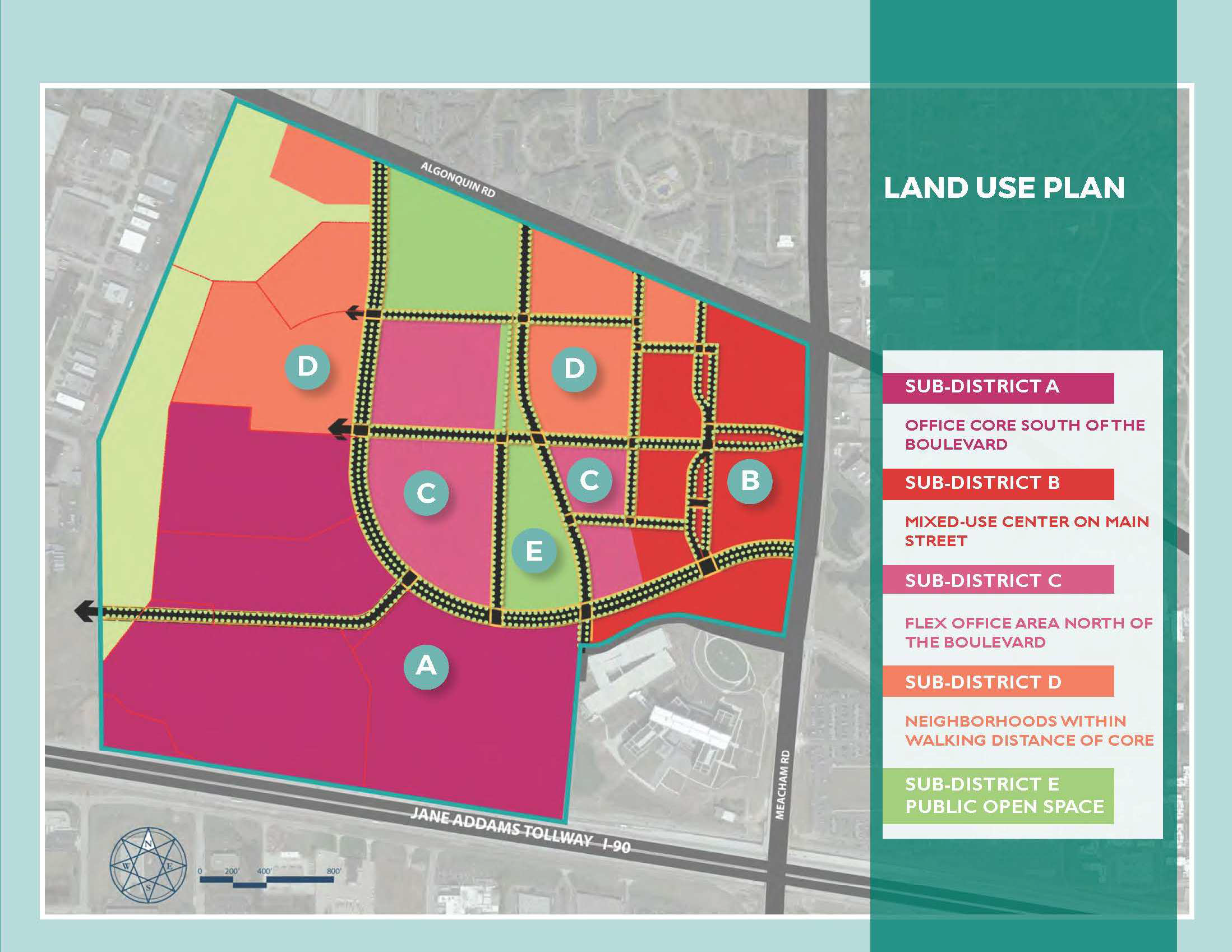
Figure 2
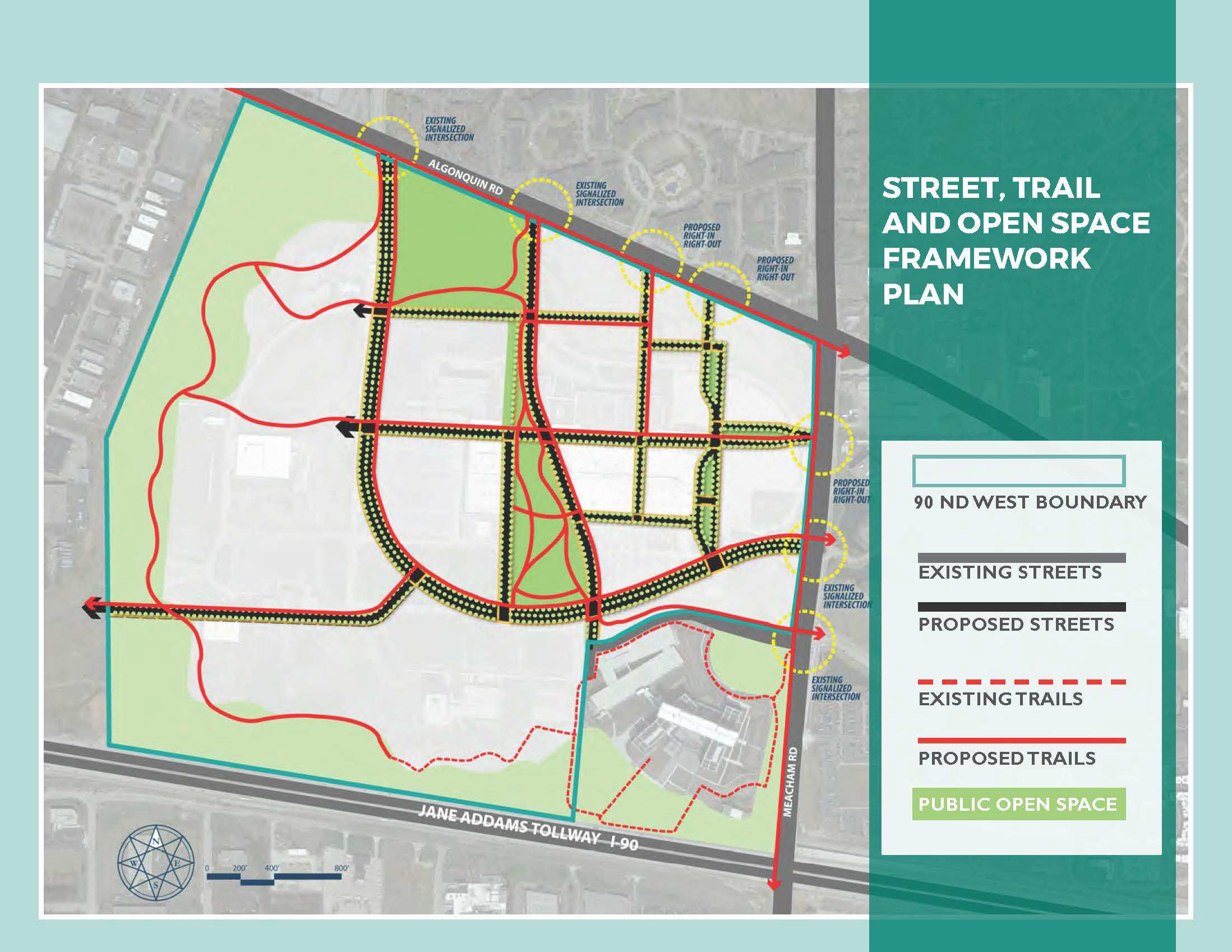
Figure 3
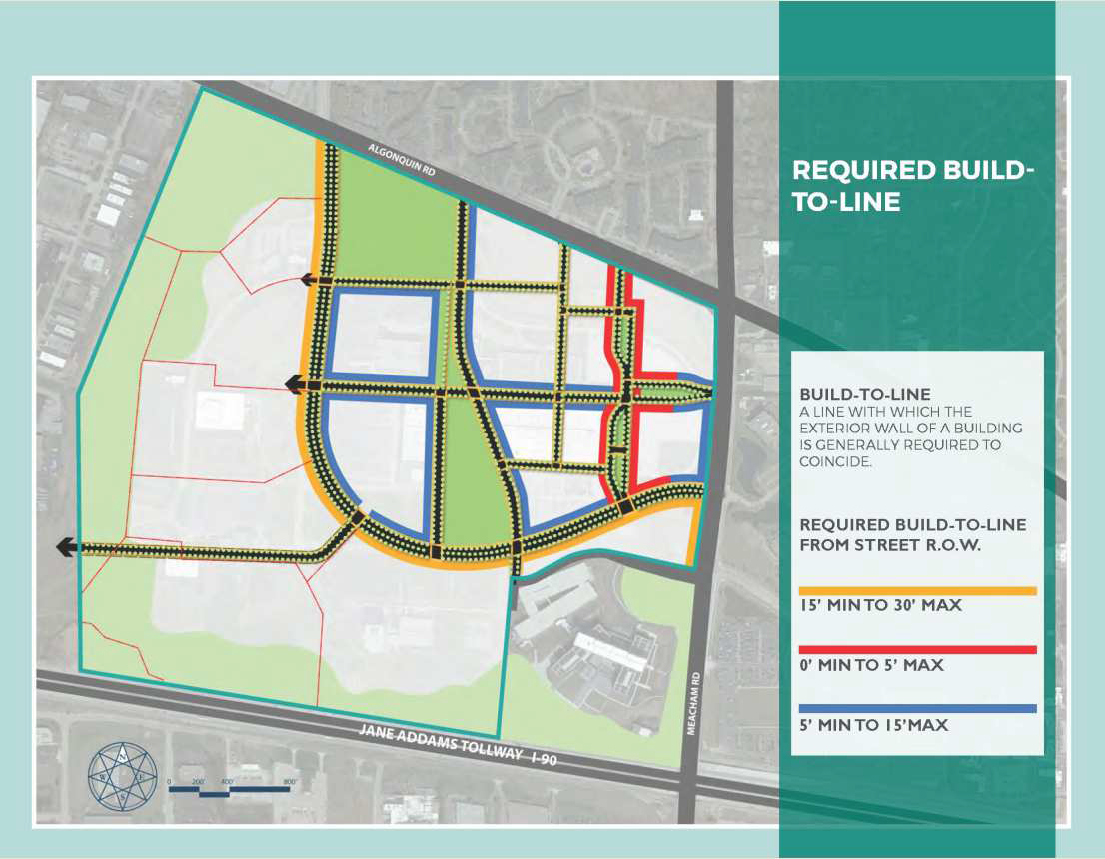
Figure 4
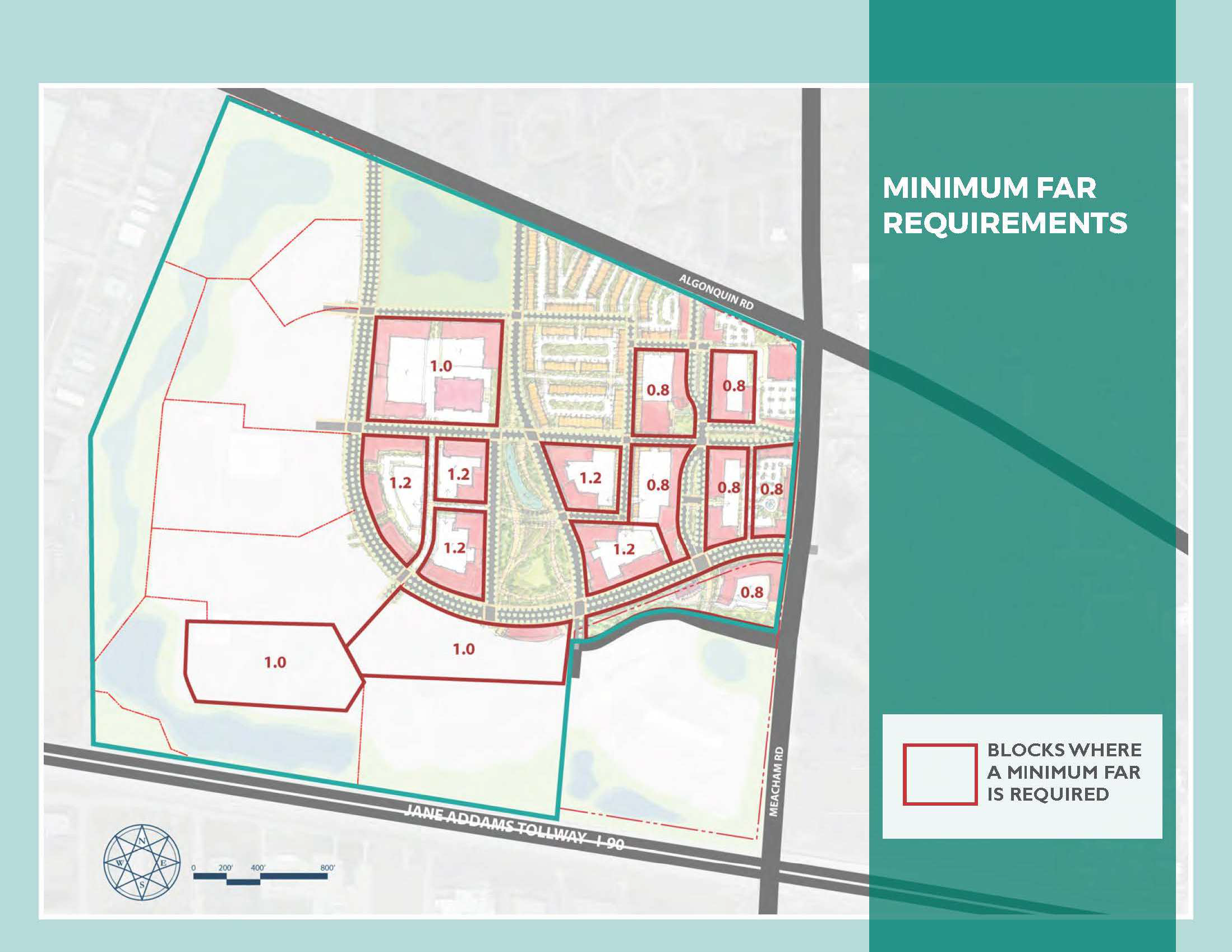
Figure 5
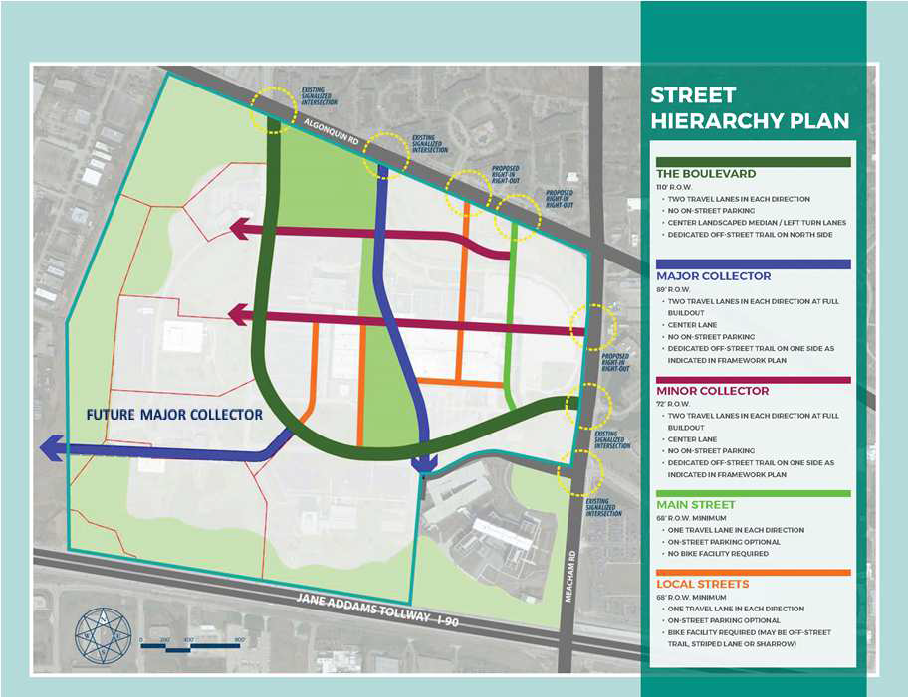
Figure 6
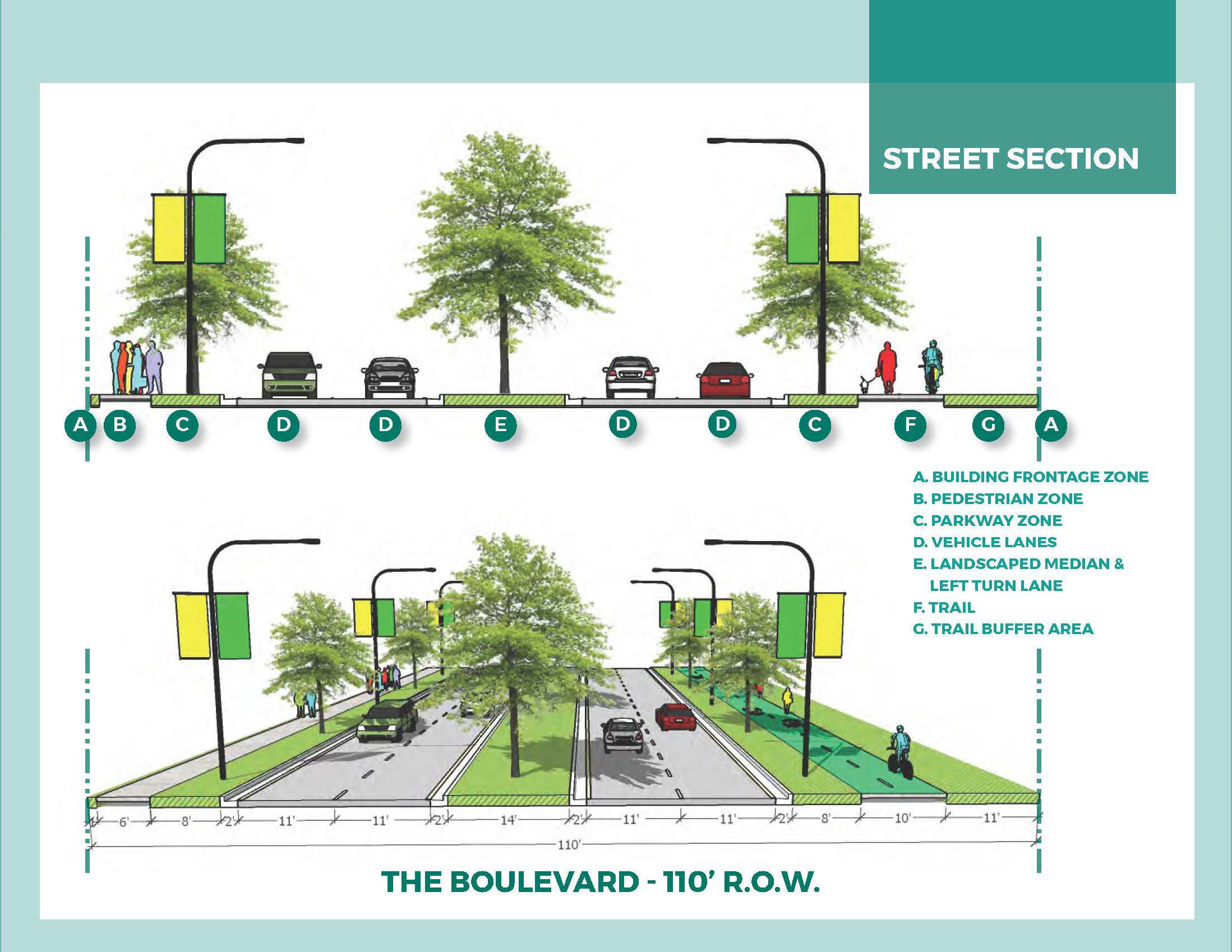
Figure 7
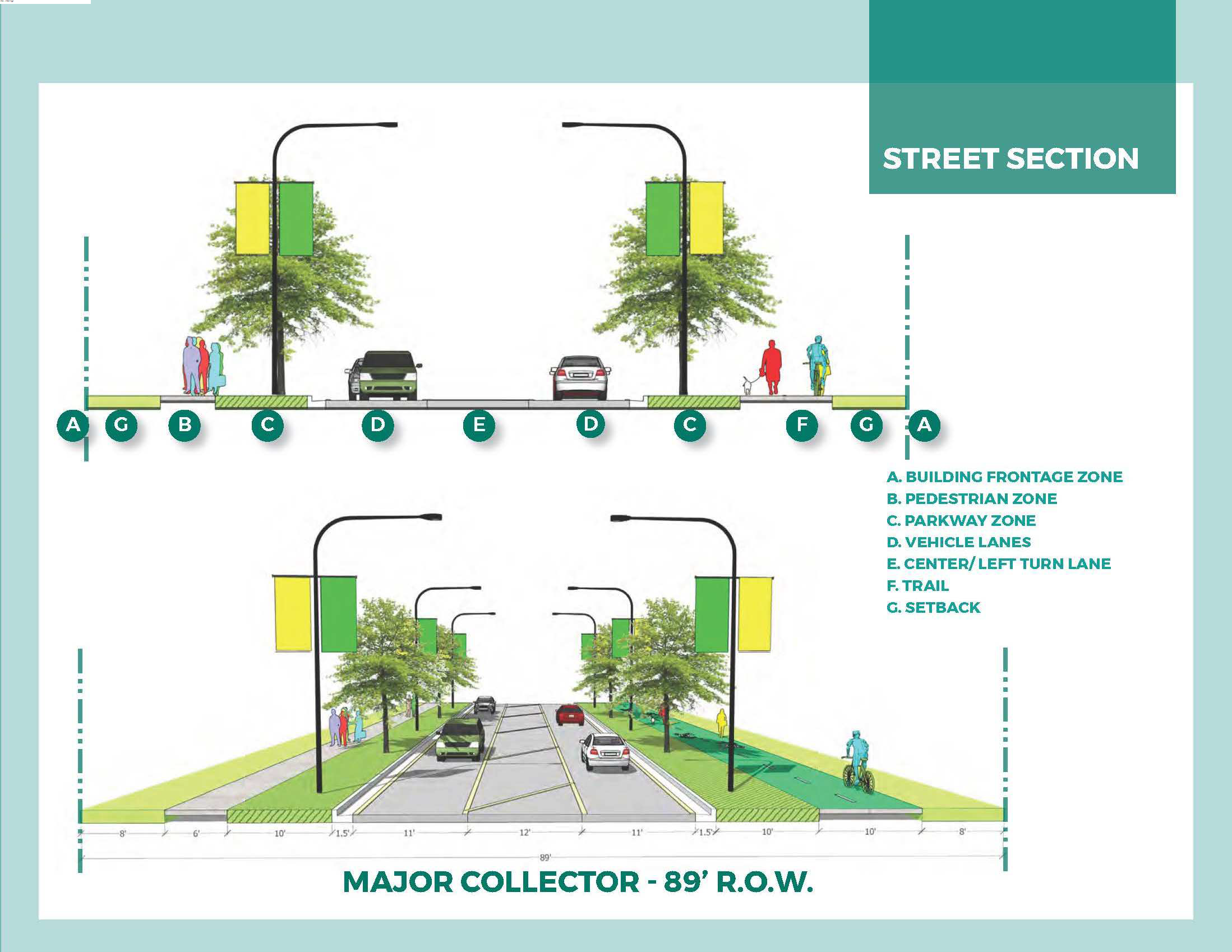
Figure 8
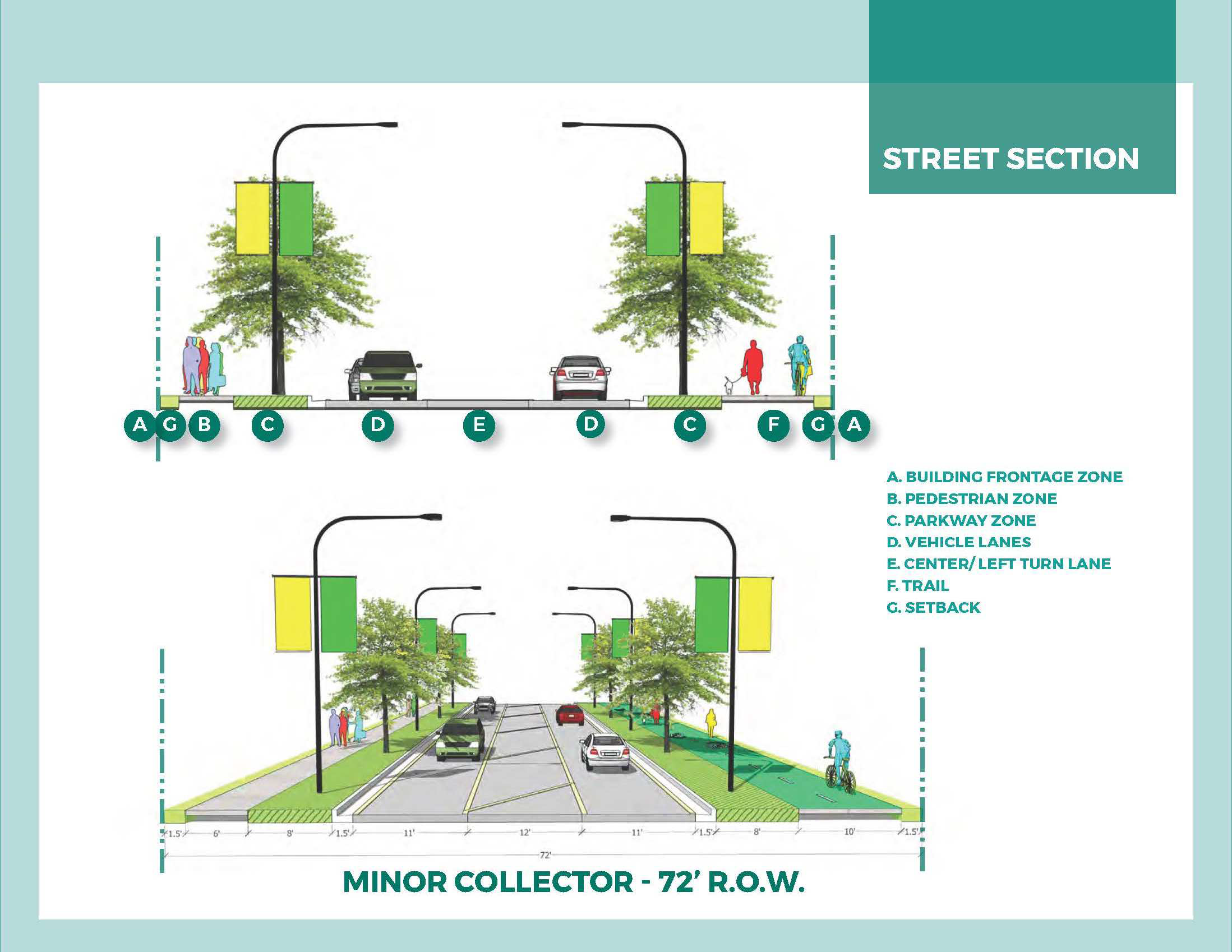
Figure 9
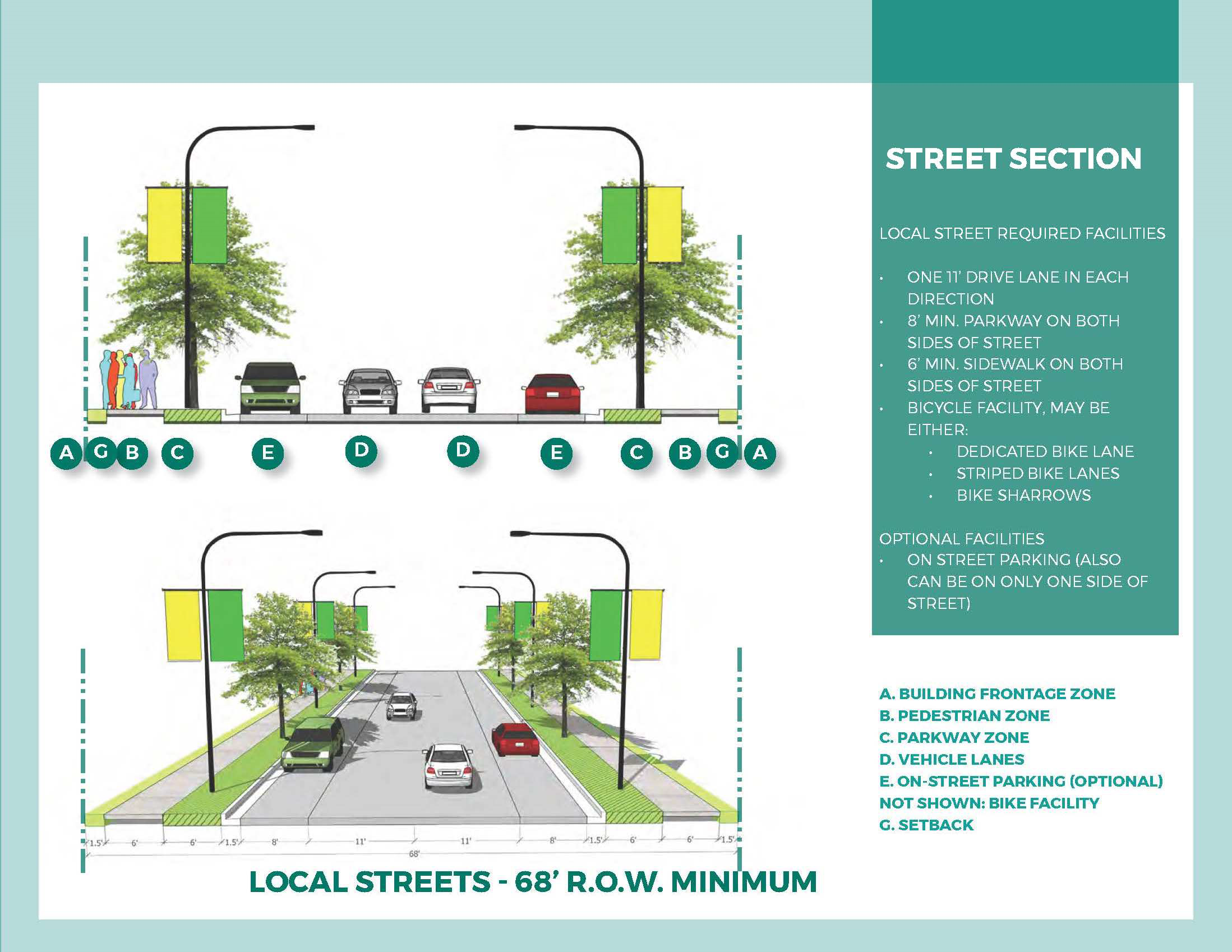
Figure 10