
Sherwood City Zoning Code
Division II
LAND USE AND DEVELOPMENT
Chapter 16.12 - RESIDENTIAL LAND USE DISTRICTS[2]
The residential districts are intended to promote the livability, stability and improvement of the City's neighborhoods.
Editor's note— Ord. No. 2011-03, § 2, adopted April 5, 2011, amended the Code by repealing former Ch. 16.12, §§ 16.12.010—16.12.070, in its entirety, and added a new Ch. 16.12. Former Ch. 16.12 pertained to the Very Low Density Residential zoning district, and derived from Ords. 86-851, 87-857, 88-919, 90-921, 1997-1019, 2000-1092, 2000-1108, 2003-1153, and 2006-021; and Ord. No. 2010-015, adopted October 5, 2010.
Chapter 16.14 - RESIDENTIAL BUILDING DESIGN[3]
Editor's note— Ord. No. 2011-003, § 2, adopted April 5, 2011, amended the Code by repealing former Ch. 16.14, §§ 16.14.010—16.14.060, in its entirety. Former Ch. 16.14 pertained to Low Density Residential zoning districts, and derived from Ords. 86-851, 87-867, 88-879, 89-898, 91-922, 1997-1019, 2000-1092, 2000-1108, 2003-1153, and 2006-021; and Ord. No. 2010-015, adopted October 5, 2010. Subsequently, Ord. No. 2021-010, § 2, adopted December 7, 2021, amended the Code by adding a new Ch. 16.14.
Chapter 16.22 - COMMERCIAL LAND USE DISTRICTS[7]
Editor's note— Ord. No. 2012-011, adopted August 7, 2012, amended the Code by consolidating the provisions of Chs. 16.22, 16.26, 16.28 and 16.30. Former Ch. 16.22, §§ 16.22.010—16.22.080, pertained to the Office Commercial district, and derived from Ord. 90-921, § 1; Ord. 2000-1092, § 3; Ord. No. 2009-009, adopted July 21, 2009; Ord. No. 2010-015, adopted October 5, 2010. See Chs. 16.26, 16.28 and 16.30 for specific derivation.
Chapter 16.31 - INDUSTRIAL LAND USE DISTRICTS[12]
Editor's note— Ord. No. 2012-011, adopted August 7, 2012, amended the Code by consolidating the provisions of Chs. 16.31, 16.32 and 16.34. Former Ch. 16.31, §§ 16.31.010—16.31.100, pertained to the Employment Industrial district, and derived from Ord. 2010-014, adopted October 5, 2010. See Chs. 16.32 and 16.34 for specific derivation.
Chapter 16.36 - INSTITUTIONAL AND PUBLIC (IP) LAND USE DISTRICT[15]
Editor's note— Ord. No. 2012-011, § 2, adopted August 7, 2012, amended the Code by, in effect, repealing former Ch. 16.36, §§ 16.36.010—16.36.070, and adding a new Ch. 16.36. Former Ch. 16.36 pertained to similar subject matter, and derived from Ord. No. 86-851; Ord. No. 87-870; Ord. No. 87-867; Ord. No. 88-979; Ord. No. 91-922; Ord. No. 97-1019; and Ord. No. 2000-1092.
Chapter 16.40 - PLANNED UNIT DEVELOPMENT (PUD)[16]
Editor's note— Some sections may not contain a history.
Chapter 16.50 - ACCESSORY STRUCTURES, ARCHITECTURAL FEATURES AND DECKS[18]
Editor's note— Ord. No. 2011-003, § 2, adopted April 5, 2011, amended the Code by repealing former Ch. 16.50, §§ 16.50.010—16.50.030, and adding a new Ch. 16.50. Former Ch. 16.50 pertained to accessory uses, and derived from Ords. 86-851 and 2003-1151.
Chapter 16.58 - VISION CLEARANCE AND FENCE STANDARDS[19]
Editor's note— Ord. No. 2011-003, § 2, adopted April 5, 2011, amended the Code by repealing former Ch. 16.58, §§ 16.58.010, 16.58.020 and 16.58.040, and adding a new Ch. 16.58, § 16.58.010. Former § 16.58.030 was renumbered as a new § 16.58.020. Former Ch. 16.58 pertained to supplementary standards, and derived from Ords. 86-851, 96-1014, and 2006-021; and Ord. No. 2010-015, adopted October 5, 2010. The history for former § 16.58.030 has been retained after § 16.58.020. Subsequently, Ord. No. 2020-001, § 2, adopted January 21, 2020, renamed Ch. 16.58.
Chapter 16.60 - YARD REQUIREMENTS[20]
Editor's note— Ord. No. 2011-003, § 2, adopted April 5, 2011, amended the Code by, in effect, repealing former Ch. 16.60, §§ 16.60.010—16.60.050, and adding a new Ch. 16.60. Former Ch. 16.60 pertained to similar subject matter, and derived from Ords. 86-851, 97-1022, 2004-002 and 2006-021; and Ord. No. 2010-015, adopted October 5, 2010.
Chapter 16.64 - DUAL USE REQUIRED SPACE[21]
Editor's note— Ord. No. 2021-010, § 2, adopted December 7, 2021, amended the Code by repealing former Ch. 16.64, § 16.64.010, in its entirety. Former Ch. 16.64 pertained to dual use of required space, and derived from Ord. 91-922. Subsequently, Ord. No. 2023-002, § 2, adopted March 7, 2023, amended the Code by amending § 16.64.010, which has been treated as adding a new § 16.64.010 at the discretion of the editor.
16.12.010 - Purpose and Density Requirements
A.
Very Low Density Residential (VLDR)
1.
Standard Density
The VLDR zoning district provides for low density, larger lot single-family housing and other related uses in natural resource and environmentally sensitive areas that warrant preservation but are otherwise deemed suitable for limited development. Standard density in the VLDR zone is 0.7 to 1 dwelling unit per acre (except middle housing types pursuant to 16.12.010.F).
2.
VLDR Planned Unit Development Density Standards
Property in the VLDR zone that is developed through the Planned Unit Development (PUD) process under Chapter 16.40, if all floodplain, wetlands, and other natural resource areas are dedicated or remain in common open space, may develop to a density of 1.4 to 2.0 dwelling units per net buildable acre (except middle housing types pursuant to 16.12.010.F) under the following conditions:
a.
The minimum lot size is not less than 10,000 square feet;
b.
The following areas are dedicated to the public or preserved as common open space: floodplains under Section 16.134.020 (Special Resource Zones); natural resources areas as shown on the Natural Resources and Recreation Plan Map, attached as Appendix C, or as specified in Chapter 5 of the Community Development Plan; and wetlands defined and regulated under current Federal regulation and Division VIII of this Code; and
c.
The higher density development will better preserve natural resources as compared to one (1) unit per acre.
3.
Southeast Sherwood Master Planned Unit Development
a.
Property in the VLDR zone that is developed through the Planned Unit Development process under Chapter 16.40 and is based on, and generally conforms to the concepts, goals and objectives of the SE Sherwood Master Plan may develop to a maximum density of four (4.0) dwelling units per net buildable acre (except middle housing types pursuant to 16.12.010.F).
b.
Development under Section 16.12.010.A.3 must generally follow the development pattern shown as Alternative B/C in the SE Sherwood Master Plan (2006) and address the following factors:
(1)
Varied lot sizes are allowed with a minimum lot area of 10,000 square feet if it can be shown that adequate buffering exists adjacent to developed properties with screening, landscaping, roadways or open space.
(2)
The open space areas as required by Chapter 16.40 (Planned Unit Development), where feasible, should include parks and pathways that are located within the general vicinity of Alternative B/C in the SE Sherwood Master Plan.
(3)
There is a pedestrian-friendly transportation system that links the site with nearby residential developments, schools, parks, commercial areas and other destinations.
(4)
The unique environmental opportunities and constraints identified in the SE Sherwood Master Plan.
(5)
The view corridors identified in the SE Sherwood Master Plan.
(6)
The housing design types that are compatible with both surrounding and existing development.
c.
A density transfer under Chapter 16.40.050.C.2. is not permitted for development under this Section 16.12.010.A.3.
d.
The Planning Commission will consider the specific housing design types identified and the preservation of the identified view corridors at the time of final development review to ensure compatibility with the existing and surrounding development.
B.
Low Density Residential (LDR)
The LDR zoning district provides for single-family housing and other related uses with a density of 3.5 to 5 dwelling units per acre (except middle housing types pursuant to 16.12.010.F). Minor land partitions shall be exempt from the minimum density requirement.
C.
Medium Density Residential (MDRL)
The MDRL zoning district provides for single-family and duplex housing, manufactured housing and other related uses with a density of 5.6 to 8 dwelling units per acre (except middle housing types pursuant to 16.12.010.F). Minor land partitions shall be exempt from the minimum density requirements.
D.
Medium Density Residential High (MDRH)
The MDRH zoning district provides for housing and other related uses with a density of 5.5 to 11 dwelling units per acre (except middle housing types pursuant to 16.12.010.F). Minor land partitions are exempt from the minimum density requirement.
E.
High Density Residential (HDR)
The HDR zoning district provides for higher density multi-family housing and other related uses with density of 16.8 to 24 dwelling units per acre (except middle housing types pursuant to 16.12.010.F). Minor land partitions shall be exempt from the minimum density requirement.
F.
Density Standards for Middle Housing
In the residential zones, density standards shall be applied to middle housing types as established here.
1.
Maximum density standards shall not be applied to duplex, triplex, quadplex or cottage cluster development.
2.
Cottage clusters must meet a minimum density of four (4) units per net buildable acre.
3.
For townhome development, the follow maximum densities shall apply:
a.
VLDR Zone: 4 units/acre
b.
VLDR PUD Zone: 8 units/acre
c.
SE Sherwood Master PUD Zone: 16 units/acre
d.
LDR Zone: 20 units/acre
e.
MDRL Zone: 25 units/acre
f.
MDRH Zone: 25 units/acre
g.
HDR Zone: 25 units/acre
(Ord. No. 2022-004, § 2, 6-13-2022; Ord. No. 2021-010, § 2, 12-7-2021; Ord. No. 2015-003, § 2, 3-17-2015; Ord. No. 2013-003, § 2, 9-3-2013; Ord. No. 2011-003, § 2, 4-5-2011)
16.12.020 - Allowed Residential Land Uses
A.
Residential Land Uses
The table below identifies the land uses that are allowed in the Residential Districts. The specific land use categories are described and defined in Chapter 16.10.
1 Group homes not to exceed five (5) unrelated persons in residence provided such facilities are substantially identical, in the city's determination, in physical form to other types of housing allowed in the zoning district.
2 Provided such facilities are substantially identical, in the city's determination, in physical form to other types of housing allowed in the zoning district.
3 Includes truck farming and horticulture, but excludes commercial building or structures or the raising of animals except as otherwise permitted by this code.
4 Includes other agricultural uses and associated commercial buildings and structures.
5 Includes, but is not limited to parks, playfields, sports and racquet courts, but excludes golf courses.
B.
Any use not otherwise listed that can be shown to be consistent or associated with the permitted uses or conditionally permitted uses identified in the residential zones or contribute to the achievement of the objectives of the residential zones will be allowed or conditionally permitted using the procedure under Chapter 16.88 (Interpretation of Similar Uses).
C.
Any use that is not permitted or conditionally permitted under this zone that cannot be found to be consistent with the allowed or conditional uses identified as in B. is prohibited in the residential zone using the procedure under Chapter 16.88 (Interpretation of Similar Uses).
(Ord. No. 2022-004, § 2, 6-13-2022; Ord. No. 2021-010, § 2, 12-7-2021; Ord. No. 2012-006, § 2, 3-6-2012; Ord. No. 2011-003, § 2, 4-5-2011)
16.12.030 - Residential Land Use Development Standards
A.
Generally
No lot area, setback, yard, landscaped area, open space, off-street parking or loading area, or other site dimension or requirement, existing on, or after, the effective date of this Code shall be reduced below the minimum required by this Code. Nor shall the conveyance of any portion of a lot, for other than a public use or right-of-way, leave a lot or structure on the remainder of said lot with less than minimum Code dimensions, area, setbacks or other requirements, except as permitted by Chapter 16.84. (Variance and Adjustments)
B.
Development Standards
1.
Except as modified under Chapter 16.68 (Infill Development), Section 16.144.030 (Wetland, Habitat and Natural Areas), or as otherwise provided, required minimum lot areas, dimensions and setbacks shall be provided in the following table.
2.
Creation of new lots or parcels as part of a townhome or cottage cluster developments are subject to the applicable land division or Planned Unit Development approval process.
3.
Sufficient Infrastructure. Prior to obtaining a residential building permit for construction of any new middle housing structure or division of an existing structure into middle housing, the applicant must submit a request for verification of Sufficient Infrastructure, together with any documentation requested by the City Engineer or designee, and receive approval from the City Engineer or designee.
C.
Development Standards per Residential Zone
Notes:
1.
For townhomes, interior units may have different lot sizes than exterior or corner units, as long as the average of all lots is not greater than 1,500 square feet.
2.
Minimum lot width at the building line on cul-de-sac lots may be less than that required in this Code if a lesser width is necessary to provide for a minimum rear yard.
3.
Maximum height is the lesser of feet or stories.
4.
Some accessory structures, such as chimneys, stacks, water towers, radio or television antennas, etc. may exceed these height limits with a conditional use permit, per Chapter 16.62 (Chimneys, Spires, Antennas and Similar Structures).
5.
Reductions in front yard setbacks for architectural features as described in 16.50.050 are not permitted in the MDRL, MDRH, or HDR zoning districts.
6.
Adjustments and Variances to interior side yard setbacks for all housing types are not allowed.
7.
No side yard setback is required between attached townhomes within the same townhome block. The side yard setbacks in this table refer to the setbacks for the townhomes at each end of the townhome block on the side that is not attached to another townhome within the same townhome block.
(Ord. No. 2022-004, § 2, 6-13-2022; Ord. No. 2021-010, § 2, 12-7-2021; Ord. No. 2018-007, § 2, 10-2-2018; Ord. No. 2015-003, § 2, 3-17-2015; Ord. No. 2014-006, § 2, 3-4-2014; Ord. No. 2012-006, § 2, 3-6-2012; Ord. No. 2011-003, § 2, 4-5-2011)
16.12.040 - Community Design
A.
Residential garages shall meet the minimum design standards listed on the table below:
B.
The vehicle parking area(s) shall be functional based on the minimum design standards listed on the table above, 16.12.040.A. Furnaces, stairs, etc. shall not be located within the garage designated parking areas.
C.
Residential Front-Yard Landscaping—The front-yard area of a lot shall be fully landscaped excluding paved off-street parking areas, paved pedestrian paths, and utility areas. Landscaping materials shall meet standards identified in Section 16.92.020 Landscaping Materials.
D.
For additional standards relating to off-street parking and loading, energy conservation, historic resources, environmental resources, landscaping, access and egress, signs, parks and open space, on-site storage, and site design, see Divisions V, VIII, IX.
(Ord. No. 2021-010, § 2, 12-7-2021; Ord. No. 2011-003, § 2, 4-5-2011)
16.12.050 - Flood Plain
Except as otherwise provided, Section 16.134.020 shall apply.
(Ord. No. 2011-003, § 2, 4-5-2011)
16.12.060 - Amateur Radio Towers/Facilities
A.
All of the following are exempt from the regulations contained in this section of the Code:
1.
Amateur radio facility antennas, or a combination of antennas and support structures seventy (70) feet or less in height as measured from the base of the support structure consistent with ORS § 221.295.
2.
This includes antennas attached to towers capable of telescoping or otherwise being extended by mechanical device to a height greater than 70 feet so long as the amateur radio facility is capable of being lowered to 70 feet or less. This exemption applies only to the Sherwood Development Code and does not apply to the City of Sherwood Building Code or other applicable city, state, and federal regulations. Amateur radio facilities not meeting the requirements of this section must comply with Chapter 16.12.030.C.
B.
Definitions
1.
Amateur Radio Services: Radio communication services, including amateur-satellite service, which are for the purpose of self-training, intercommunication, and technical investigations carried out by duly licensed amateur radio operators solely for personal aims and without pecuniary interest, as defined in Title 47, Code of Federal Regulations, Part 97 and regulated there under.
2.
Amateur Radio Facilities: The external, outdoor structures associated with an operator's amateur radio service. This includes antennae, masts, towers, and other antenna support structures.
(Ord. No. 2012-006, § 2, 3-6-2012)
16.14.010 - Residential Building Design Standards for All Housing Types Except for Multi-Family Housing that is Subject to the Provisions of Chapter 16.90 Site Planning
A.
Purpose
The following standards are intended to create walkable residential neighborhoods that are visually interesting, compatible with existing development, and avoid monotony in design.
The standards in this section are intended to be clear and objective to allow a streamlined review process per the Residential Design Checklist provisions of Chapter 16.89. Each standard has an associated guideline that provides flexibility for discretionary Design Review by the Planning Commission per Chapter 16.89, Residential Design Review if necessary or desired by the applicant. Adjustments or variances to the standards below can be requested through one of the review processes described in B below.
B.
Review Process.
The following review processes can be used to review those housing types that are subject to these standards per 16.14.010.C and 16.89.020.A through D. The applicable review process depends on the level of compliance with the clear and objective standards in this section.
1.
If all applicable standards from this section are met, Residential Design Checklist review is applied per Chapter 16.89.
2.
If any standards of Table 16.14-1 - A, B or C are not met outright, a Type I Adjustment or Type II Class B Variance is required, in addition to the Residential Design Checklist, per Chapter 16.89. The Detailed Design standards of Table 16.14-1.D cannot be adjusted.
3.
If the applicant chooses to meet the design guidelines instead of the design standards, a Type IV Design Review is required, per Chapter 16.89.
C.
Applicability
1.
The standards in this section apply to all new residential development, unless otherwise indicated per the subsections below or per applicable overlay zones. Manufactured home parks and manufactured homes on individual residential lots are subject to the provisions of Chapter 16.46 Manufactured Homes.
Additional standards are located in 16.14.020, 16.14.030, and 16.14.040. Multi-family development is subject to the provisions of Chapter 16.90 Site Planning.
2.
Expansions and conversions of residential structures in Chapter 16.14. The standards in this section apply to expansions of existing residential structures or conversions of existing single detached dwellings into a duplex, triplex, quadplex or townhome that add more than 50 percent of area to any building elevation(s) adjacent to a public right-of-way or public accessway, as follows:
a.
The expansion or conversion shall include design elements from Table 16.14-1 below that bring the overall building elevation(s) adjacent to a public right-of-way or public accessway closer to conformance with applicable standards; and
b.
The expansion or conversion shall not bring the overall building elevation(s) adjacent to a public right-of-way or public accessway further out of conformance with applicable standards. Elements of the existing building elevation(s) adjacent to a public right-of-way or public accessway that are currently out of conformance shall not be made more non-conforming. Elements of the existing building elevation(s) adjacent to a public right-of-way or public accessway that are currently in conformance shall not be made non-conforming.
Table 16.14-1. Residential Design Standards
Notes:
1.
The Detailed Design standards in Subsection D of Table 16.14-1 cannot be adjusted through an Adjustment or Variance per Chapter 18.64. If a Detailed Design standard from Subsection D cannot be met for a development, then the development should utilize another option from the list.
D.
Illustrations
Figure 3. Entry Location and Orientation—Main Entrance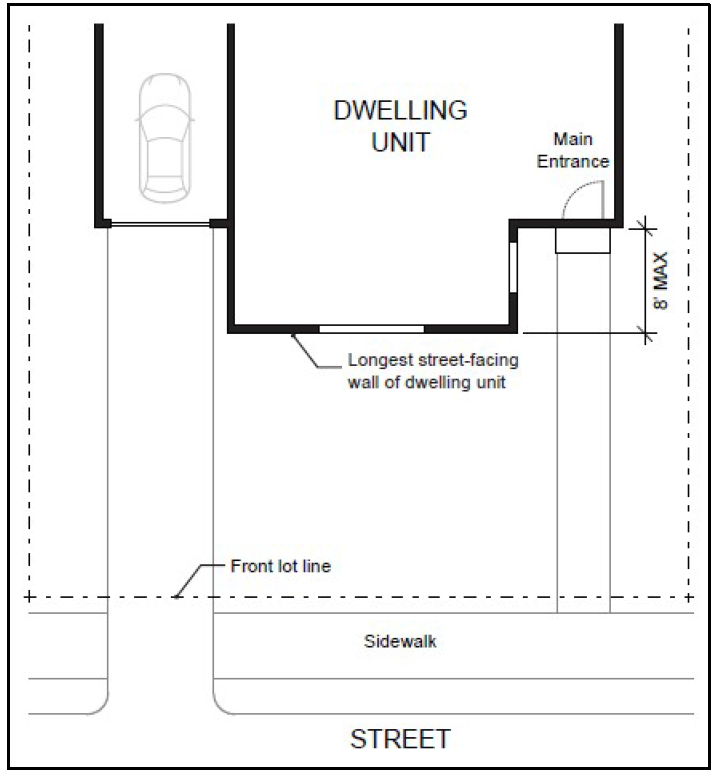
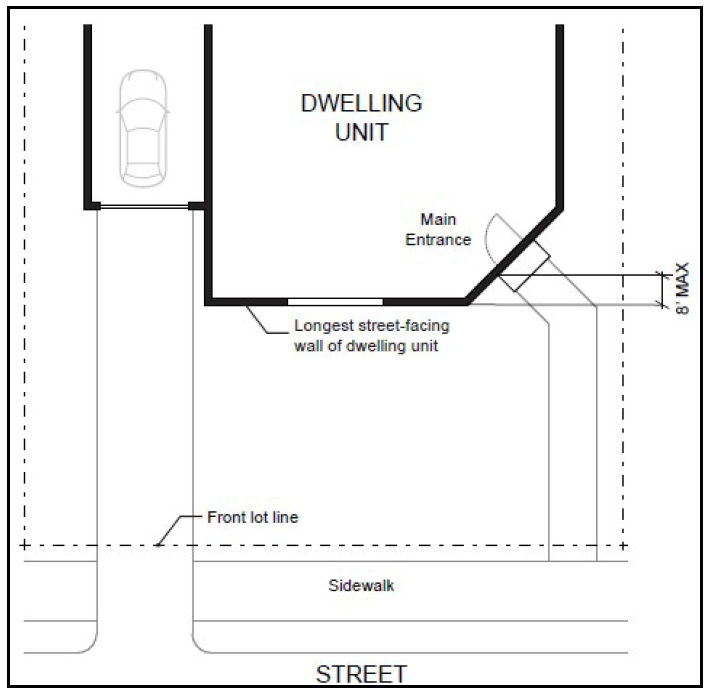
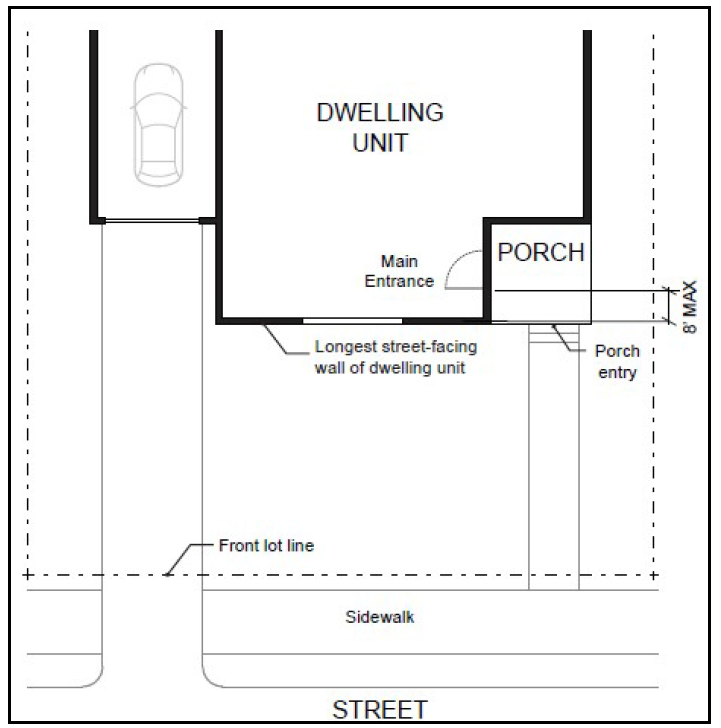
Figure 4. Entrance Location and Orientation—Triplex and Quadplex with Attached Interior
Units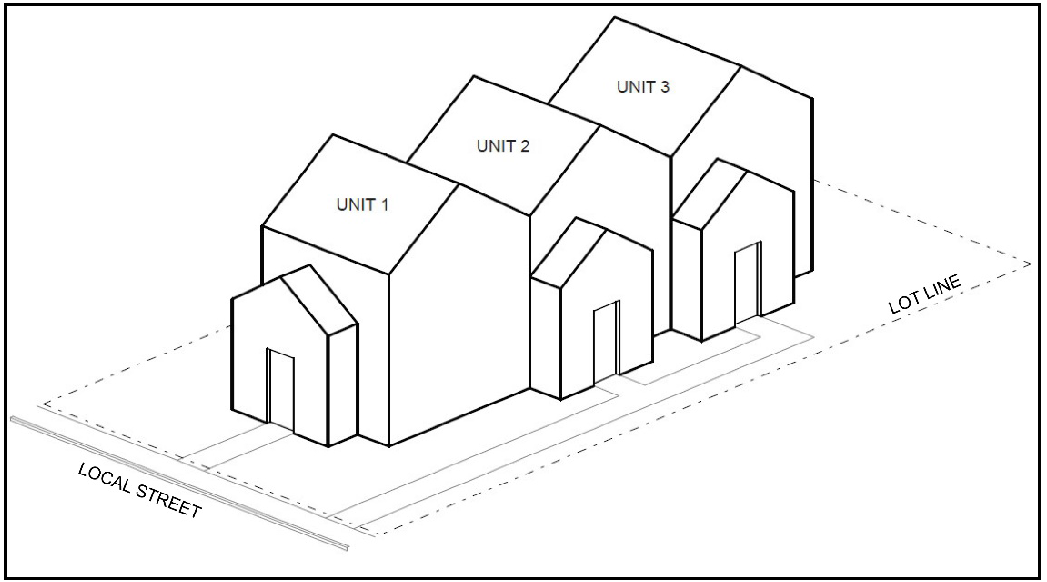
Figure 5. Example Entrance Location and Orientation—Side-by-Side or Stacked Units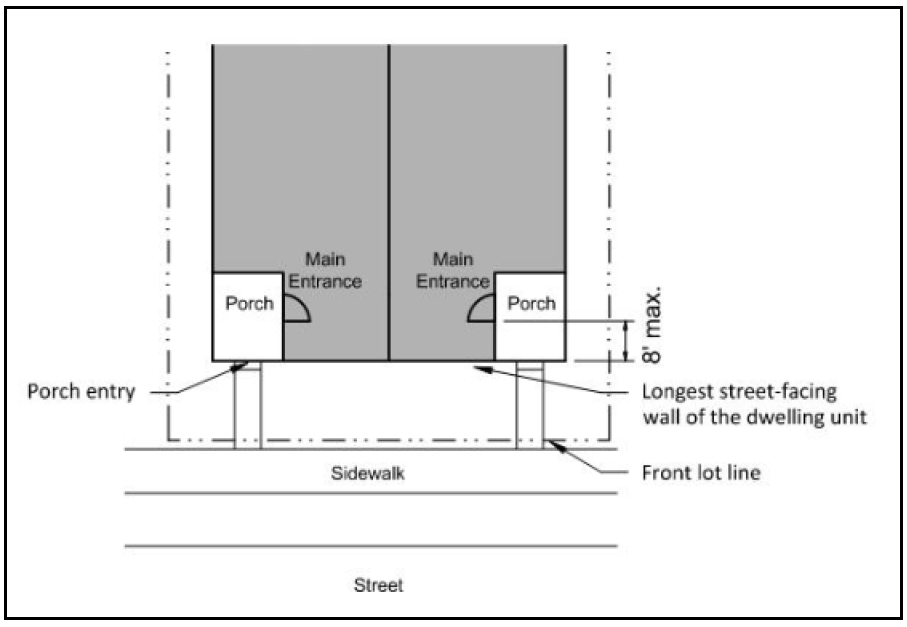
Figure 6. Window Coverage Calculations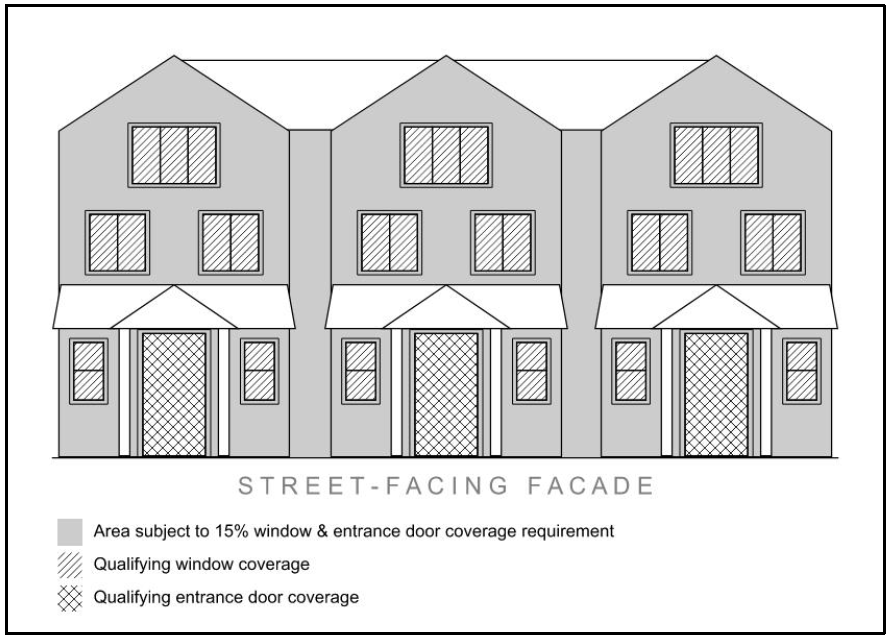
Figure 7. Example of Detailed Design—Single Detached (5 elements required)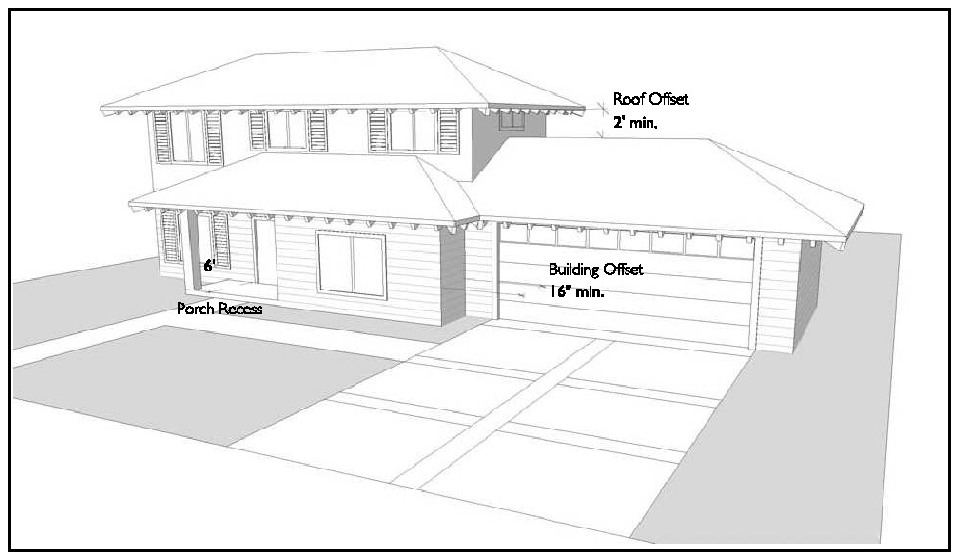
Figure 8. Example of Detailed Design—Townhome (2 elements required)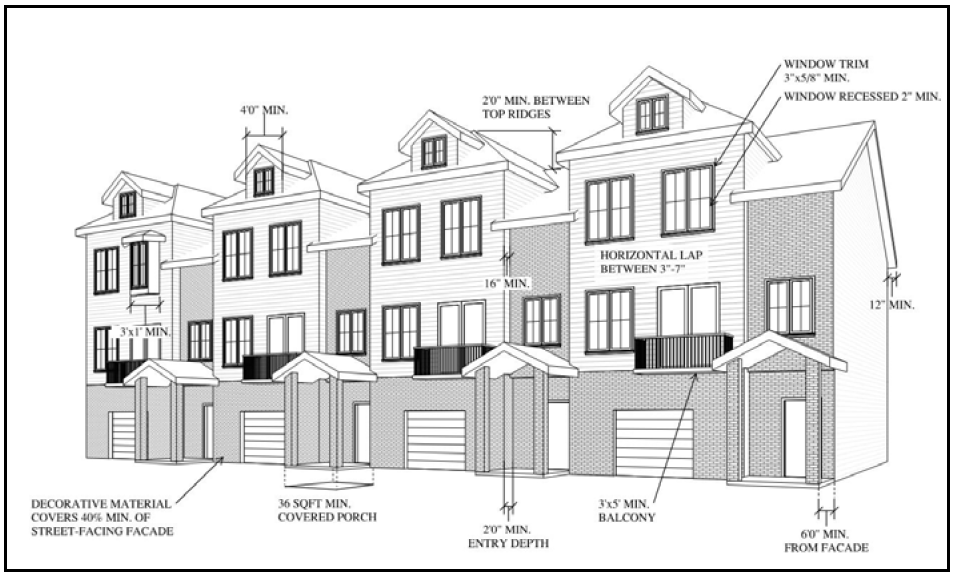
Figure 9. House Plan Variety—Single Detached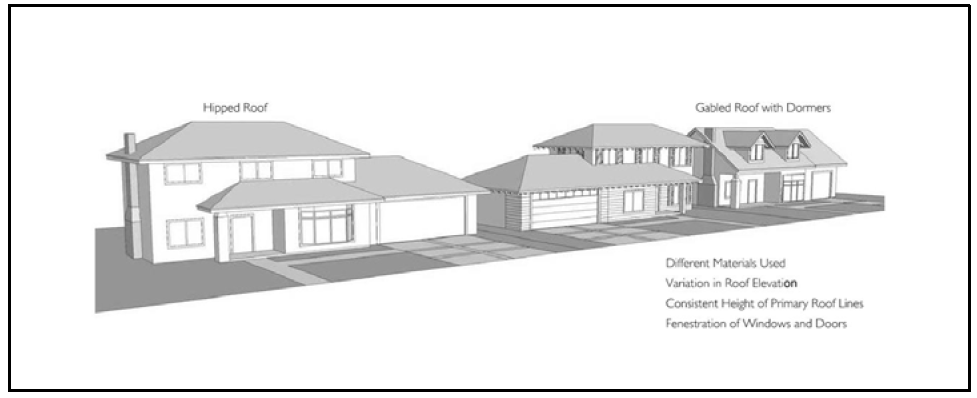
(Ord. No. 2022-004, § 2, 6-13-2022; Ord. No. 2021-010, § 2, 12-7-2021)
16.14.020 - Additional Townhome Design Standards
A.
Generally
Townhomes are located in groups known as "townhome blocks," which consist of no less than two (2) attached dwellings and no more than six (6) attached dwellings on their own lots.
B.
Building Mass
The minimum number of attached townhomes is two (2); the maximum number of consecutively attached townhomes shall not exceed six (6) units. Each of these groups is a Townhome Block.
C.
Garages
Townhomes with frontage on a public street shall meet the following standards:
1.
Garages on the front façade of a townhome, off-street parking areas in the front yard, and driveways in front of a townhome are prohibited unless the following standards are met.
a.
Each townhome lot has a street frontage of at least 20 feet on a street.
b.
A maximum of one (1) driveway approach is allowed for every townhome. Driveways may be shared.
c.
Outdoor on-site parking and maneuvering areas do not exceed 12 feet wide on any lot.
d.
The garage width does not exceed 12 feet, as measured from the inside of the garage door frame.
Figure 10. Townhome Garages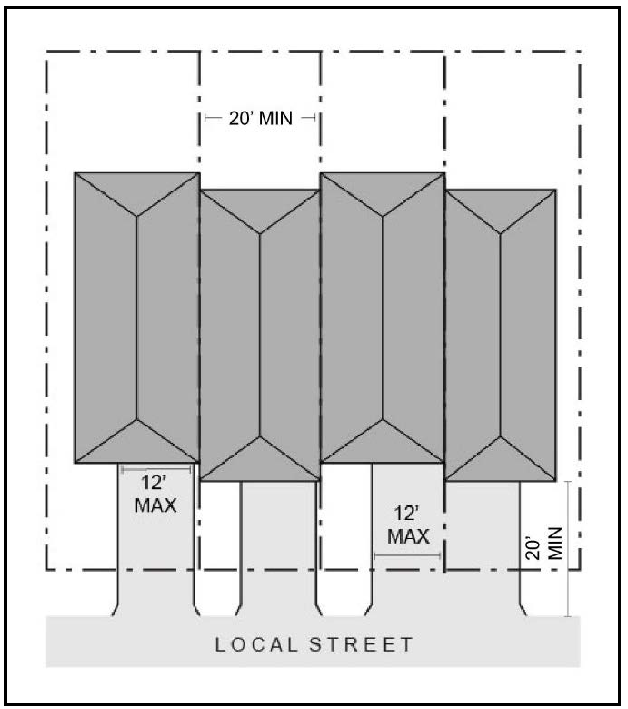
D.
Designation of Access/Alleys: Townhomes shall receive vehicle access only from the front or rear lot line exclusively, not both. If alleys are used for access they shall be created at the time of subdivision approval and built to City standards as illustrated in the Transportation System Plan.
a.
Alley loaded garages shall be set back a minimum five feet to allow a turning radius for vehicles and provide a service area for utilities.
b.
If garages face the street, the garage doors shall be recessed behind the front elevation (living area, covered porch, or other architectural feature) by a minimum of one (1) foot.
E.
Vehicular Circulation: All streets shall be constructed in accordance with applicable City standards in the Transportation System Plan.
(Ord. No. 2021-010, § 2, 12-7-2021; Ord. No. 2017-001, § 1, 4-4-2017; Ord. No. 2011-009, § 2, 7-19-2011; Ord. 2002-1126, § 2)
Note— Former § 16.44.010. See note at ch. 16.44 for more information.
16.14.030 - Additional Triplex and Quadplex Design Standards
A.
Driveway Approach.
Driveway approaches shall comply with the following:
1.
Each individual driveway approach must not exceed 12 feet in width per dwelling served by the driveway.
2.
Total width of all driveways shall not exceed 50 percent of the street frontage.
3.
To maximize on-street parking opportunities, shared driveways are required, unless access is obtained from a public alley. A shared driveway is a single driveway serving two units. Developments with an odd number of units are permitted one (1) single unit driveway. A shared driveway approach must not exceed 20 feet in width unless a minimum of 20 feet of spacing can be achieved between driveways.
4.
Driveway approaches must meet applicable driveway spacing standards for local streets.
5.
In addition, lots or parcels with more than one frontage must comply with the following:
a.
Lots or parcels must access the street with the lowest classification. For lots or parcels abutting an alley, access must be taken from the alley. If classifications are identical, access can be taken from either or both, subject to the other requirements of this code.
b.
Lots or parcels with frontages only on collectors and/or arterial streets must meet the applicable driveway access standards for collectors and/or arterials.
Figure 11-A. Side-by-Side Triplex/Quadplex Driveway Approaches—Local Street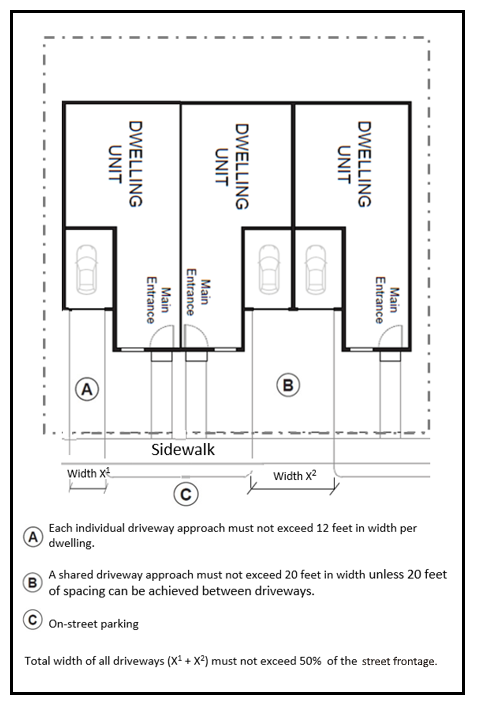
Figure 11-B. Side-by-Side Triplex/Quadplex Driveway Approaches—Local Street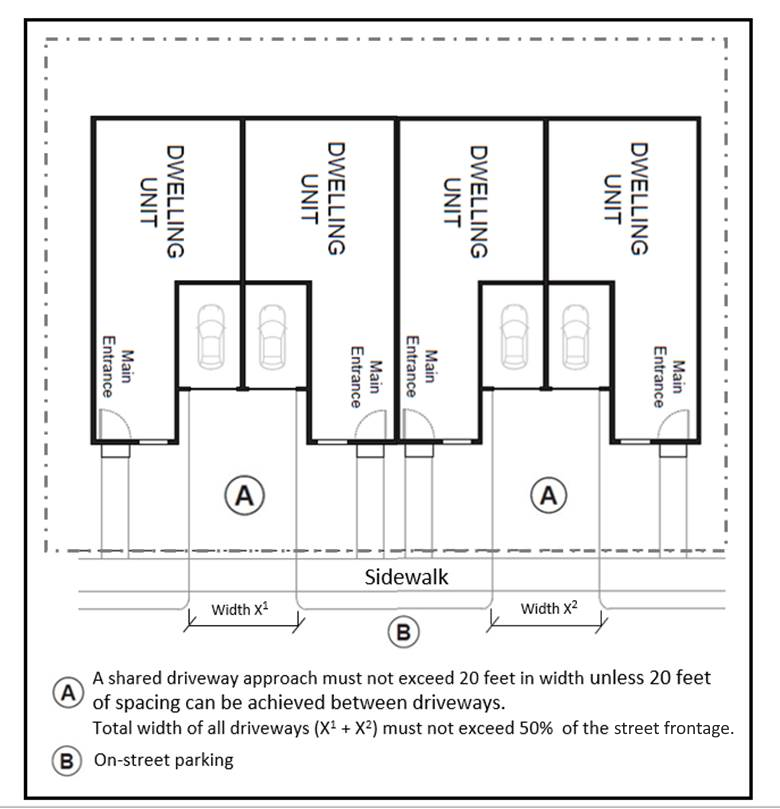
Figure 12. Side-by-Side Triplex/Quadplex Driveway Approaches—More Than One Frontage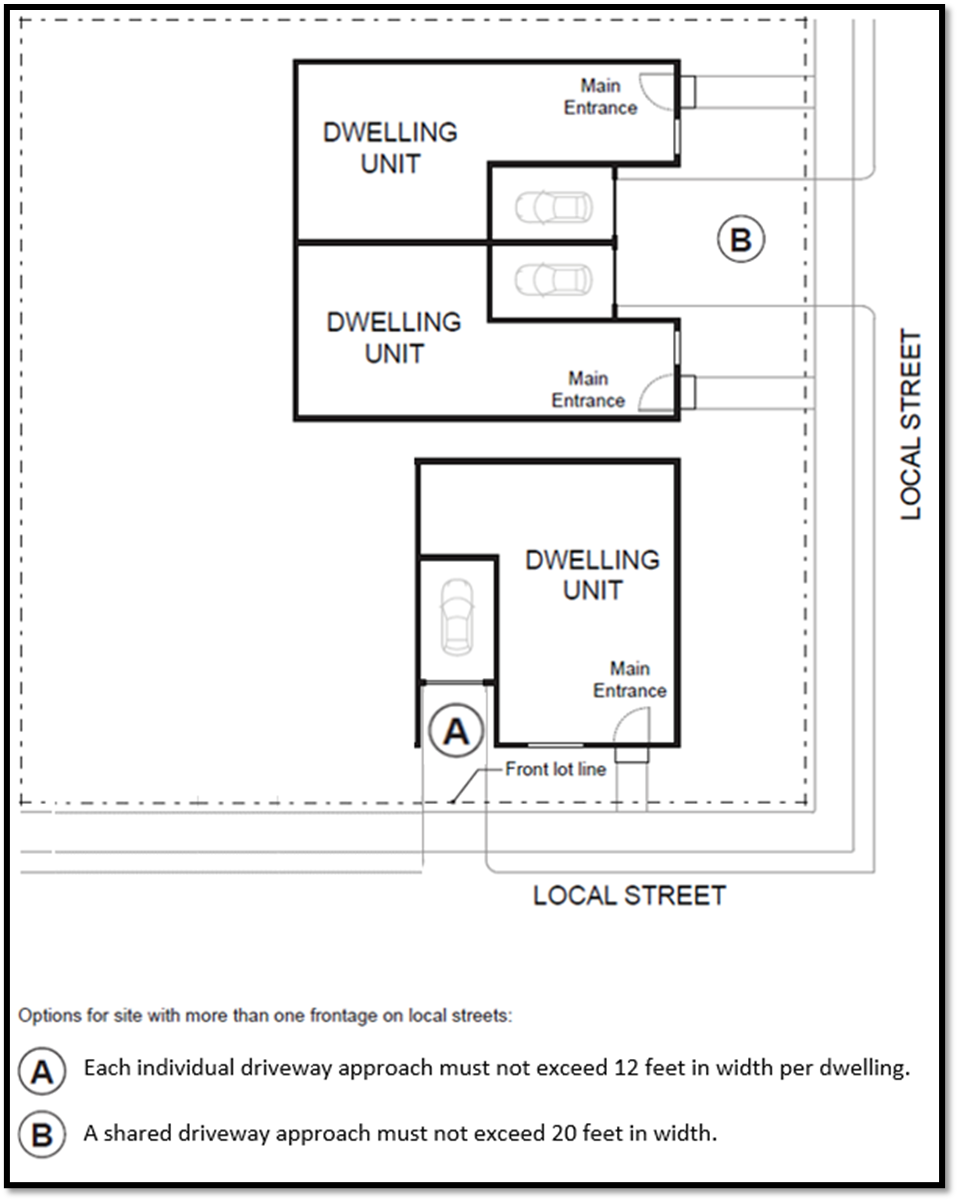
Figure 13. Side-by-Side Triplex/Quadplex Driveway Approaches—Alley Access from Collector
or Arterial Street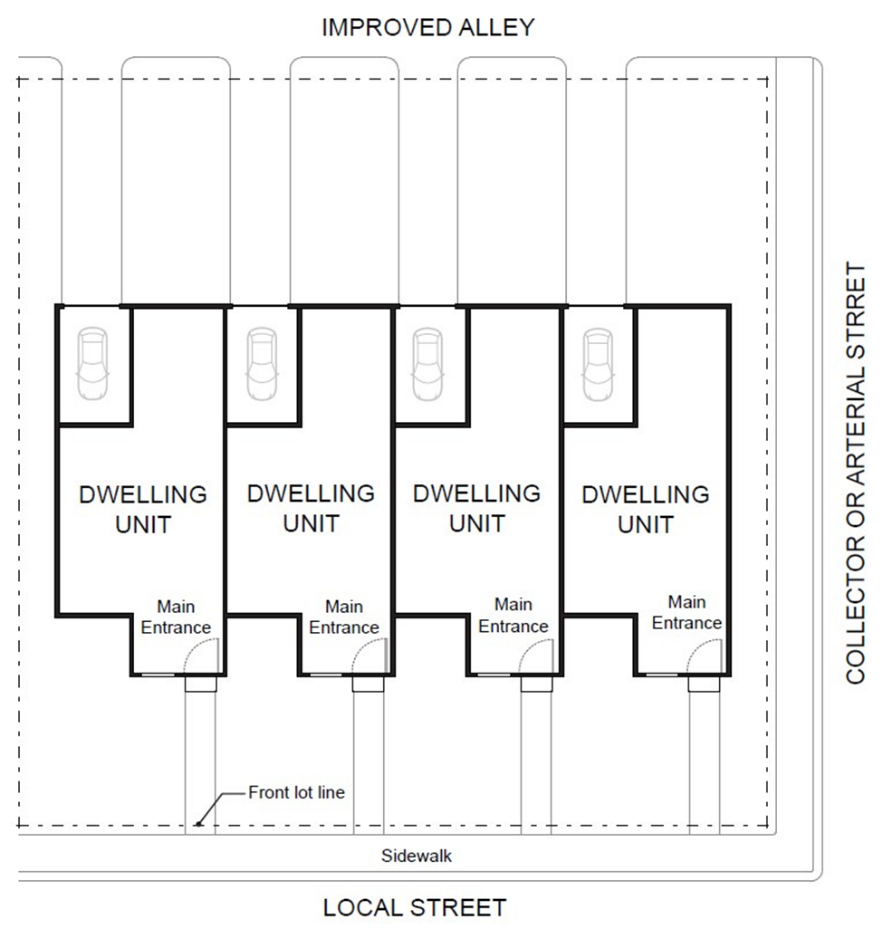
(Ord. No. 2022-004, § 2, 6-13-2022)
16.14.040 - Additional Cottage Cluster Development and Design Standards
A.
Purpose
The purpose of these cottage cluster standards is to promote development of clusters of small homes that are designed around a common open space or courtyard. The cottage cluster is intended to provide opportunity for community gathering; pedestrian connections within the cluster and to surrounding streets; clustered parking that is located to the side or behind the cottages; and smaller homes that are oriented inward toward the common courtyard rather than the adjacent streets.
B.
Development Standards
1.
A cottage cluster development may consists of one or more clusters. A cluster is a group of cottages sharing a single common courtyard.
2.
Cottage clusters must include at least 4 dwellings and no more than 12 dwellings are allowed to share a single common courtyard.
3.
The footprint of individual cottage units within a cottage cluster must be less than 900 sq. ft. An attached carport up to 200 sq. ft. may be exempted from the building footprint calculation.
4.
Garages are not allowed in Cottage Cluster development.
C.
Design Standards
1.
Cottage Design. Cottages are subject to applicable design standards of Table 16.14-1 in addition to these standards.
2.
Each cottage shall have the master bedroom located on the main floor.
3.
The second floor of each cottage cannot exceed 50 percent of the square footage of the first floor.
4.
Cottage Orientation. Cottages must be clustered around a common courtyard and must meet the following standards:
a.
A minimum of 50 percent of the total number of cottages within a cluster must be oriented to the common courtyard, defined as meeting all of the following requirements:
1)
Have a main entrance facing the common courtyard;
2)
Be within 10 feet from the common courtyard, measured from the façade of the cottage to the nearest delineation of the common courtyard; and
b.
Cottages not facing the common courtyard must have their main entrances facing a pedestrian path that is directly connected to the common courtyard or, only if the entrance to the cottage is located within 20 feet of a street property line, may have their main entrances facing the street.
5.
Common Courtyard Design Standards. Each cottage cluster must share a common courtyard to provide a sense of openness and community for residents. Each cottage cluster as part of a cottage cluster development must have its own common courtyard. Common courtyards must meet the following standards:
a.
The common courtyard must be a single, contiguous area of land.
b.
Cottages must abut the common courtyard on at least two sides of the courtyard.
c.
The common courtyard must contain a minimum of 150 square feet per cottage within the associated cluster.
d.
The common courtyard must be a minimum of 15 feet wide at its narrowest dimension.
e.
The common courtyard shall be developed with a mix of landscaping and lawn area, recreational amenities, hard-surfaced pedestrian paths, and/or paved courtyard area. Impervious elements of the common courtyard shall not exceed 75 percent of the total area.
f.
Pedestrian paths qualify as part of a common courtyard. Parking areas, required setbacks, and driveways do not qualify as part of a common courtyard.
6.
Community Buildings. Cottage cluster developments may include community buildings for the shared use of residents that provide space for accessory uses such as community meeting rooms, guest housing, exercise rooms, day care, or community eating areas. Community buildings must meet the following standards:
a.
One single-story community building that has a maximum of 1,800 square feet is allowed per cottage cluster development.
b.
The primary use for the community building is not a primary residence and long-term rental (rental to any guest for a period exceeding thirty (30) consecutive calendar days) is not allowed.
c.
Community buildings must meet the design and development standards applicable to cottages within the development.
d.
A community building is not considered an accessory structure.
7.
Pedestrian Access.
a.
An accessible pedestrian path must be provided that connects the main entrance of each cottage to the following:
1)
The common courtyard;
2)
Shared parking areas;
3)
Any community buildings; and
4)
Sidewalks in public rights-of-way abutting the site, or roadways if there are no sidewalks.
b.
The pedestrian path must be hard-surfaced and a minimum of five (5) feet wide.
8.
Windows. Cottages must meet the window standards per Table 16.14-1 Residential Design Standards.
9.
Parking Design.
a.
Clustered parking. Off-street parking may be arranged in clusters, subject to the following standards:
i.
Cottage cluster developments are permitted parking clusters of not more than six (6) contiguous spaces.
ii.
Parking clusters must be separated from other parking spaces by at least four (4) feet of landscaping.
iii.
Clustered parking areas may be covered.
b.
Off-street parking spaces and vehicle maneuvering areas (other than driveways and drive aisles) shall not be located:
1)
Within of 20 feet from any street property line, except alley property lines;
2)
Between a street property line, except alley property lines, and cottages abutting the street property line.
c.
Off-street parking spaces shall not be located within 10 feet of any other property line, except alley property lines. Driveways and drive aisles are permitted within 10 feet of other property lines.
d.
Screening. Landscaping or architectural screening at least 3 feet tall shall separate clustered parking areas and parking structures from common courtyards and public streets.
e.
Carports
1)
Carports (whether shared or individual) must not abut common courtyards.
2)
Individual attached carports up to 200 square feet shall be exempted from the calculation of maximum building footprint for cottages.
3)
Individual detached carports must not exceed 400 square feet in floor area.
10.
Vehicular Access. A public alley can be utilized for vehicular access.
11.
Accessory Structures. Accessory structures in cottage cluster developments must not exceed 50 square feet in floor area, with a maximum of one (1) per unit, and are subject to the standards of Chapter 16.50.
12.
Existing Structures. On a lot or parcel to be used for a cottage cluster development, a pre-existing single family detached dwelling may remain within the cottage cluster development area under the following conditions:
a.
The existing dwelling may be nonconforming with respect to the requirements of this code.
b.
Existing dwellings may be expanded up to the maximum height or footprint allowed or required by this code; however, existing dwellings that exceed the maximum height, footprint, and/or unit size of this code may not be expanded.
c.
The existing dwelling shall be excluded from the calculation of orientation toward the common courtyard, per subsection 16.14.040.C.4.
D.
Review Process. The following review processes shall be used to review a cottage cluster development. The applicable review process depends on the level of compliance with the clear and objective standards in this section.
1.
If all applicable standards from this section are met, a Residential Design Checklist review is applied per Chapter 16.89.
2.
If any of the standards are not met outright, a Planned Unit Development review process is applied per Chapter 16.40. The Architectural Pattern Book required under Section 16.40.020.B.6, shall comply with the Residential Design Standards in Table 16.14-1.
E.
Condominium Process. Cottage Cluster condominiums shall meet the standards in Section 16.120.090 Condominiums.
Figure 14. Cottage Cluster Orientation and Courtyard Design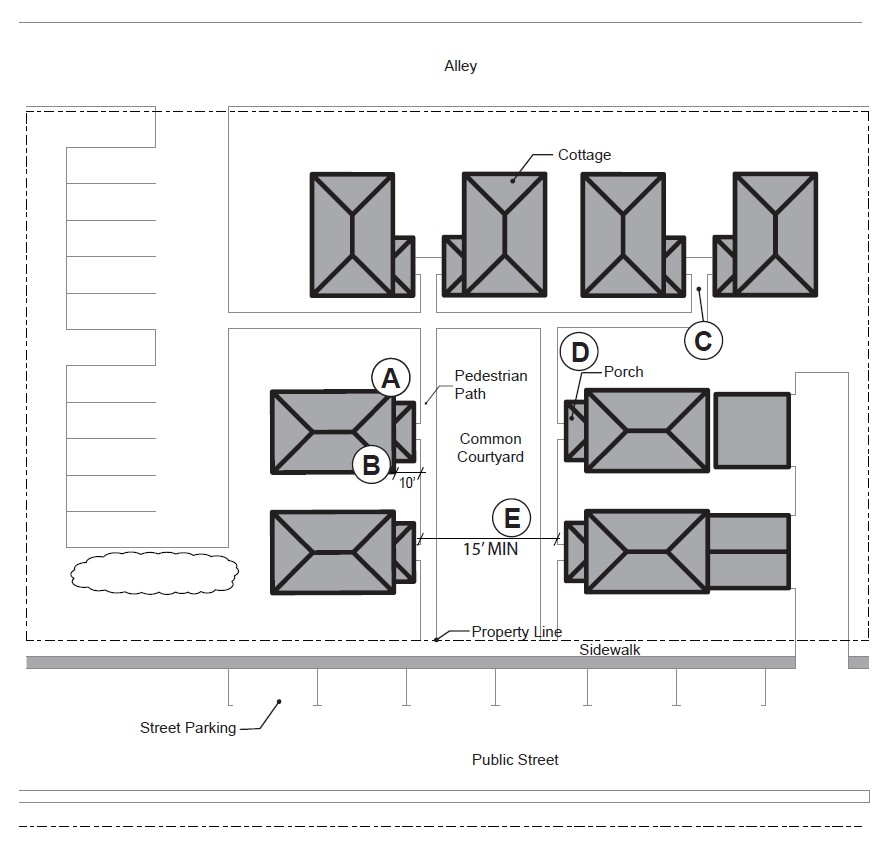
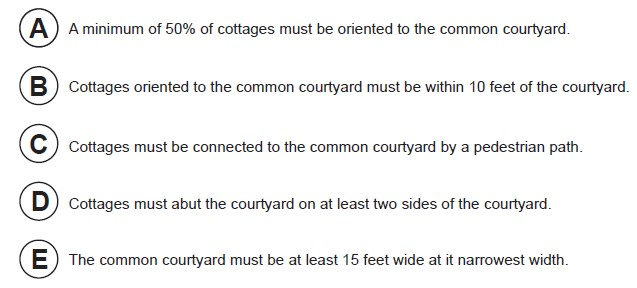
Figure 15. Cottage Cluster Parking Design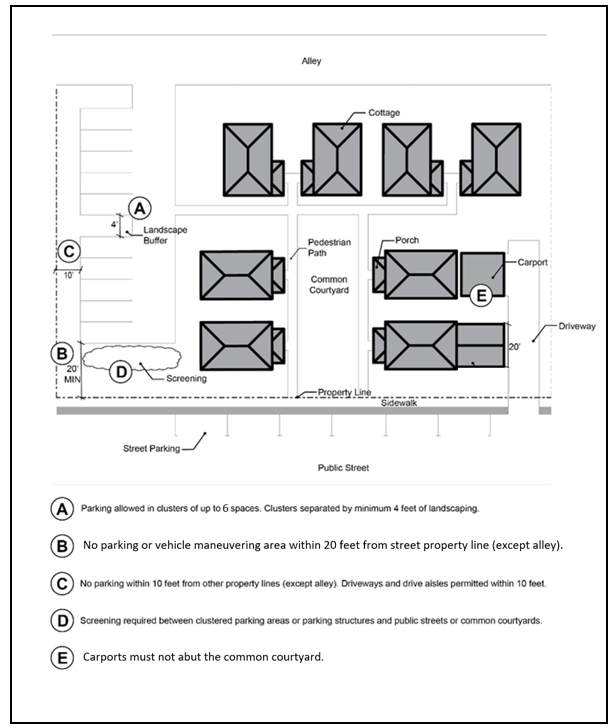
(Ord. No. 2022-004, § 2, 6-13-2022)
16.22.010 - Purpose
A.
Office Commercial (OC) - The OC zoning district provides areas for business and professional offices and related uses in locations where they can be closely associated with residential areas and adequate major streets.
B.
Neighborhood Commercial (NC) - The NC zoning district provides for small scale, retail and service uses, located in or near residential areas and enhancing the residential character of those neighborhoods.
C.
Retail Commercial (RC) - The RC zoning district provides areas for general retail and service uses that neither require larger parcels of land, nor produce excessive environmental impacts as per Division VIII.
D.
General Commercial (GC) - The GC zoning district provides for commercial uses which require larger parcels of land, and/or uses which involve products or activities which require special attention to environmental impacts as per Division VIII.
(Ord. No. 2012-011, § 2, 8-7-2012)
16.22.020 - Uses
A.
The table below identifies the land uses that are permitted outright (P), permitted conditionally (C), and not permitted (N) in the Commercial Districts. The specific land use categories are described and defined in Chapter 16.88 Use Classifications and Interpretations.
B.
Uses listed in other sections of this code, but not within this specific table are prohibited.
C.
Any use not otherwise listed that can be shown to be consistent or associated with the uses permitted outright or conditionally in the commercial zones or contribute to the achievement of the objectives of the commercial zones may be permitted outright or conditionally, utilizing the provisions of Chapter 16.88 Use Classifications and Interpretations.
D.
Additional limitations for specific uses are identified in the footnotes of this table.
1 See special Criteria for the NC zone, 16.22.050.
2 Reserved.
3 Reserved.
4 If use is mixed with another, such as a restaurant, it is considered secondary to that use and permitted, provided it occupies less than fifty (50) percent of the total area.
5 All activities are required to be within an enclosed building.
6 Animal boarding/kennels and daycare facilities entirely within an enclosed building are considered "other personal service."
7 Limited to no more than ten (10) percent of the square footage of each development in the Adams Avenue Concept Plan area.
8 See standard and criteria for Food Cart Pods in Chapter 16.39.
9 Except for towers located within one thousand (1,000) feet of the Old Town District which are prohibited.
(Ord. No. 2024-004, § 2, 10-15-2024; Ord. No. 2021-010, § 2, 12-7-2021; Ord. No. 2021-008, § 2, 9-21-2021; Ord. No. 2012-011, § 2, 8-7-2012)
16.22.030 - Development Standards
A.
Generally
No lot area, setback, yard, landscaped area, open space, off-street parking or loading area, or other site dimension or requirement, existing on, or after, the effective date of this Code shall be reduced below the minimum required by this Code. Nor shall the conveyance of any portion of a lot for other than a public use or right-of-way, leave a lot or structure on the remainder of said lot with less than minimum Code dimensions, area, setbacks or other requirements, except as permitted by Chapter 16.84. (Variance and Adjustments)
B.
Development Standards
Except as otherwise provided, required minimum lot areas, dimensions and setbacks shall be provided in the following table
9 Existing residential uses shall maintain setbacks specified in the High Density Residential Zone (16.12.030).
10 Maximum height is the lessor of feet or stories.
11 Solar and wind energy devices and similar structures attached to buildings and accessory buildings, may exceed this height limitation by up to twenty (20) feet.
13 Structures within one-hundred (100) feet of a residential zone shall be limited to the height requirements of that residential area.
14 Structures over fifty (50) feet in height may be permitted as conditional uses, subject to Chapter 16.82.
(Ord. No. 2012-011, § 2, 8-7-2012)
16.22.040 - Community Design
A.
For standards relating to off-street parking and loading, energy conservation, historic resources, environmental resources, landscaping, access and egress, signs, parks and open space, on-site storage, and site design, see Divisions V, VIII and IX.
(Ord. No. 2012-011, § 2, 8-7-2012)
16.22.050 - NC Special Criteria
All permitted and conditional uses shall be found by the Commission to conform to the purpose of the NC zone, and:
A.
Shall be conducted entirely within enclosed buildings, except for:
1.
Exterior sales, display and storage for horticultural and food merchandise provided said exterior area does not exceed five (5) percent of the gross floor area of each individual business establishment.
2.
Circumstances where the nature of the permitted or conditional use clearly makes total enclosure impracticable, such as in the case of automotive service stations, provided that the exterior area shall be the minimum necessary to effectively conduct the use, as determined by the Commission.
B.
No more than four (4) permitted or conditional uses may be established within any single NC zoning district, and each use or establishment may occupy a maximum of four thousand (4,000) square feet of gross floor area, including any permitted exterior business areas.
C.
No single NC zoning district shall be greater than one (1) acre in area, and each district shall have a minimum width of eighty-five (85) feet at the front property line, and one hundred (100) feet at the building line.
D.
Permitted and conditional uses may operate only between the hours of 7:00 a.m. and 10:00 p.m.
(Ord. No. 2012-011, § 2, 8-7-2012)
16.22.060 - Floodplain
Except as otherwise provided, Section 16.134.020 shall apply.
(Ord. No. 2012-011, § 2, 8-7-2012)
16.31.010 - Purpose
A.
Employment Industrial (EI) - The EI zoning district provides employment areas that
are suitable for, and attractive to, key industries and industry clusters that have
been identified by the State of Oregon and the City's economic development strategy
as important to the state and local economy. The following are preferred industry
sectors for areas zoned EI: Clean Technology; Technology and Advanced Manufacturing;
and Outdoor Gear and Active Wear.
Land zoned EI shall provide for large and medium-sized parcels for industrial campuses
and other industrial sites that can accommodate a variety of industrial companies
and related businesses. Areas zoned EI are also intended to provide the opportunity
for flex building space within small- and medium-sized industrial campuses and business
parks to accommodate research and development companies, incubator/emerging technology
businesses, related materials and equipment suppliers, and/or spin-off companies and
other businesses that derive from, or are extensions of, larger campus users and developments.
Retail and commercial uses are allowed only when directly supporting area employers
and employees.
Industrial establishments and support services shall not have objectionable external
features and shall feature well-landscaped sites and attractive architectural design,
as determined by the Hearing Authority.
B.
Light Industrial (LI) - The LI zoning district provides for the manufacturing, processing, assembling, packaging and treatment of products which have been previously prepared from raw materials. Industrial establishments shall not have objectionable external features and shall feature well- landscaped sites and attractive architectural design, as determined by the Commission.
C.
General Industrial (GI) - The GI zoning district provides for the manufacturing, processing, assembling, packaging and treatment of products from previously prepared or raw materials, providing such activities can meet and maintain minimum environmental quality standards and are situated so as not to create significant adverse effects to residential and commercial areas of the City. The minimum contiguous area of any GI zoning district shall be fifty (50) acres.
(Ord. No. 2020-006, § 2, 7-21-2020; Ord. No. 2016-008, § 2, 6-21-2016; Ord. No. 2012-011, § 2, 8-7-2012)
16.31.020 - Uses
A.
The table below identifies the land uses that are permitted outright (P), permitted conditionally (C) and not permitted (N) in the industrial zoning districts. The specific land use categories are described and defined in Chapter 16.88.
B.
Uses listed in other sections of this Code, but not within this specific table are prohibited.
C.
Any use not otherwise listed that can be shown to be consistent or associated with the uses permitted outright or conditionally in the industrial zones or contribute to the achievement of the objectives of the industrial zones may be permitted outright or conditionally, utilizing the provisions of Chapter 16.88.
D.
Additional limitations for specific uses are identified in the footnotes of this table.
1 See special criteria for the EI zone, 16.31.050 and the Tonquin Employment Area (TEA), 16.31.060.
2 If use is mixed with another, such as a restaurant, it is considered secondary to that use and permitted, provided it occupies less than fifty (50) percent of the total area.
3 Limited in size to five thousand (5,000) square feet in a single outlet and no more than twenty thousand (20,000) square feet in multiple outlets in the same development project.
4 On constrained land where structures would not otherwise be permitted, provided that no natural resources such as wetland or floodplains are impacted.
5 Limited to Cardlock, wholesale or facilities incidental to and solely serving an associated permitted or conditional use - no public retail fuel sales.
6 See Special Criteria for Medical and Recreational Marijuana Facilities in Chapter 16.38, Special Uses.
7 Sales and rental area Limited in size to five thousand (5,000) square feet in a single outlet and no more than twenty thousand (20,000) square feet in multiple outlets in the same development project.
8 Animal boarding/kennels and pet daycare facilities entirely within an enclosed building are considered "other personal service."
9 For standalone warehousing and distribution only. Warehousing and distribution associated with another approved use is ancillary and permitted without size limitations.
10 These businesses are involved in the servicing and supplying of materials and equipment primarily intended for industrial, institutional, or commercial businesses. On-site sales are limited as most activity occurs electronically or off-site. Businesses may or may not be open to the general public, but sales to the general public are limited as a result of the way in which the firm operates. Products are generally delivered to the customer. Few customers, especially the general public, come to the site.
11 Except for towers located within one thousand (1,000) feet of the Old Town District which are prohibited.
12 See special standard criteria for hospitality and lodging uses within the Light Industrial Land Use District SZCDC 16.31.040.
13 See Special Criteria for Psilocybin Service Centers and manufacturing facilities under Section 16.38.040.
(Ord. No. 2023-002, § 2, 3-7-2023; Ord. No. 2022-002, § 2, 3-15-2022; Ord. No. 2020-006, § 2, 7-21-2020; Ord. No. 2016-008, § 2, 6-21-2016; Ord. No. 2015-005, § 2, 5-5-2015; Ord. No. 2015-003, § 2, 3-17-2015; Ord. No. 2012-011, § 2, 8-7-2012)
16.31.030 - Development Standards
A.
Generally
No lot area, setback, yard, landscaped area, open space, off-street parking or loading area, or other site dimension or requirement, existing on, or after, the effective date of this Code shall be reduced below the minimum required by this Code. Nor shall the conveyance of any portion of a lot, for other than a public use or right-of-way, leave a lot or structure on the remainder of said lot with less than minimum Code dimensions, area, setbacks or other requirements, except as permitted by Chapter 16.84 (Variances and Adjustments).
B.
Development Standards
Except as otherwise provided, required minimum lot areas and dimensions and setbacks shall be:
9 Lots within the EI zone that were legal lots of record prior to October 5, 2010 and smaller than the minimum lot size required in the table below may be developed if found consistent with other applicable requirements of Chapter 16.31 and this Code. Further subdivision of lots smaller than three acres shall be prohibited unless Section 16.31.050 applies.
10 When a yard is abutting a residential zone or public park, there shall be a minimum setback of forty (40) feet provided for properties zoned Employment Industrial and Light Industrial zones, and a minimum setback of fifty (50) feet provided for properties zoned General Industrial.
11 Structures located within one hundred (100) feet of a residential zone shall be limited to the height requirements of that residential zone.
(Ord. No. 2020-006, § 2, 7-21-2020; Ord. No. 2016-008, § 2, 6-21-2016)
16.31.040 - Special Standards Hospitality and Lodging Uses Within the Light Industrial Zone
A.
Siting
1.
Hotels/motels within the Light Industrial zone must be sited within 1/4 mile from the General Commercial and/or Retail Commercial zone.
B.
Development and Design
1.
The development of hotels/motels in the Light Industrial zone shall use the urban design standards in SZCDC Section 16.90.20.D.6.a—c. As an alternative to the standards in Section 16.90.20.D.6.a—c the commercial design review matrix may be applied (Section 16.90.020.D.6.d). A development must propose a minimum of sixty (60) percent of the total possible points to be eligible for exemption from the standards in Section 16.90.020.D.6.a—c.
2.
A hotel/motel shall provide a minimum of 200 square feet of interior floor area for conference and/or meeting rooms, exclusive of dining, breakfast and lobby areas.
(Ord. No. 2020-006, § 2, 7-21-2020)
Editor's note— Ord. No. 2020-006, § 2, adopted July 21, 2020, amended the Code by renumbering former §§ 16.31.040—16.31.070 as §§ 16.31.050—16.31.080, and adding a new § 16.31.040.
16.31.050 - Employment Industrial (EI) Restrictions
A.
Use Restrictions
1.
Retail and professional services that cater to daily customers, such as restaurants and financial, insurance, real estate, legal, medical and dental offices, shall be limited in the EI zone.
a.
New buildings for stores, branches, agencies or other retail uses and services shall not occupy more than five thousand (5,000) square feet of sales or service area in a single outlet and no more than twenty thousand (20,000) square feet of sales or service area in multiple outlets in the same development project, and
b.
New buildings for stores, branches, agencies or other retail uses and services shall not be located on lots or parcels smaller than five acres in size. A "development project" includes all improvements proposed through a site plan application.
2.
Notwithstanding the provisions of Section 16.31.050 "Commercial Nodes Use Restrictions," commercial development permitted under 16.31.050(1)(a) may only be proposed concurrent with or after industrial development on the same parcel. Commercial development may not occur prior to industrial development on the same parcel.
B.
Land Division Restrictions
1.
Lots of record prior to October 5, 2010 that are smaller than the minimum lot size required in the EI zone may be developed if found consistent with other applicable requirements of Chapter 16.31 and this Code. Further subdivision of lots smaller than three acres shall be prohibited unless Section 16.31.050 applies.
2.
Lots or parcels larger than fifty (50) acres may be divided into smaller lots and parcels pursuant to a planned unit development approved by the city so long as the resulting division yields at least one lot or parcel of at least fifty (50) acres in size.
3.
Lots or parcels fifty (50) acres or larger, including those created pursuant to subsection (2) above, may be divided into any number of smaller lots or parcels pursuant to a planned unit development approved by the city so long as at least forty (40) percent of the area of the lot or parcel has been developed with industrial uses or uses accessory to industrial use.
(Ord. No. 2020-006, § 2, 7-21-2020; Ord. No. 2016-008, § 2, 6-21-2016; Ord. No. 2012-011, § 2, 8-7-2012)
16.31.060 - Tonquin Employment Area (TEA) Commercial Nodes Use Restrictions
A.
Within the Tonquin Employment Area (TEA), only commercial uses that directly support industrial uses located within the TEA are permitted as conditional uses.
B.
Commercial development, not to exceed a total of five contiguous acres in size, may be permitted.
C.
Commercial development may not be located within three hundred (300) feet of SW 124th Avenue or SW Oregon Street, and must be adjacent to the proposed east-west collector street.
(Ord. No. 2020-006, § 2, 7-21-2020; Ord. No. 2016-008, § 2, 6-21-2016; Ord. No. 2012-011, § 2, 8-7-2012)
16.31.070 - Community Design
For standards relating to off-street parking and loading, energy conservation, historic resources, environmental resources, landscaping, access and egress, signs, parks and open space, on-site storage, and site design, the applicable provisions of Divisions V, VIII and IX will apply.
(Ord. No. 2020-006, § 2, 7-21-2020; Ord. No. 2016-008, § 2, 6-21-2016; Ord. No. 2012-011, § 2, 8-7-2012)
16.31.080 - Floodplain
Except as otherwise provided, Section 16.134.020 shall apply.
(Ord. No. 2020-006, § 2, 7-21-2020; Ord. No. 2016-008, § 2, 6-21-2016; Ord. No. 2012-011, § 2, 8-7-2012)
16.36.010 - Purpose
The IP zoning district provides for major institutional and governmental activities such as schools, public parks, churches, government offices, utility structures, hospitals, correctional facilities and other similar public and quasi-public uses.
(Ord. No. 2012-011, § 2, 8-7-2012)
16.36.020 - Permitted Uses
A.
The table below identifies the land uses that are permitted outright (P), permitted conditionally (C), and not permitted (N) in the Commercial Districts. The specific land use categories are described and defined in Chapter 16.88 Use Classifications and Interpretations.
B.
Uses listed in other sections of this code, but not within this specific table are prohibited.
C.
Any use not otherwise listed that can be shown to be consistent or associated with the uses permitted outright or conditionally in the commercial zones or contribute to the achievement of the objectives of the commercial zones may be permitted outright or conditionally, utilizing the provisions of Chapter 16.88 Use Classifications and Interpretations.
D.
Additional limitations for specific uses are identified in the footnotes of this table.
1 Except for towers located within 1,000 feet of the Old Town District which are prohibited.
2 Provided the applicant can demonstrate to the satisfaction of the City that the location of the antennas on City-owned property would be unfeasible.
(Ord. No. 2012-011, § 2, 8-7-2012)
16.36.050 Dimensional Standards
No lot area, setback, yard, landscaped area, open space, off-street parking or loading area, or other site dimension or requirement existing on or after the effective date of this Code shall be reduced below the minimum required by this Code. Nor shall the conveyance of any portion of a lot, for other than a public use or right-of-way, leave a lot or structure on the remainder of said lot with less than minimum Code dimensions, area, setbacks or other requirements, except as permitted by Chapter 16.84.
(Ord. No. 2012-011, § 2, 8-7-2012)
16.36.060 - Community Design
For standards relating to off-street parking and loading, energy conservation, historic resources, environmental resources, landscaping, access and egress, site design, parks and open space, on-site storage, and signs, see Divisions V, VIII and IX.
(Ord. No. 2012-011, § 2, 8-7-2012)
16.36.070 - Floodplain
Except as otherwise provided, Section 16.134.020 shall apply.
(Ord. No. 2012-011, § 2, 8-7-2012)
16.38.010 - General Provisions
Special uses included in this Section are uses which, due to their effect on surrounding properties, must be developed in accordance with special conditions and standards. These conditions and standards may differ from the development standards established for other uses in the same zoning district. When a dimensional standard for a special use differs from that of the underlying zoning district, the standard for the special use shall apply.
(Ord. 86-851, § 3)
16.38.020 - Medical Marijuana Dispensary
A.
Characteristics
1.
A medical marijuana dispensary is defined in Section 16.10.020.
2.
Registration and Compliance with Oregon Health Authority and Oregon Liquor Control Commission Rules. A medical marijuana dispensary must have a current valid registration with the Oregon Health Authority under ORS 475B.858 or a current valid designation as an exclusively medical license holder by the Oregon Liquor Control Commission under ORS 475B.131. Failure to comply with Oregon Health Authority and Oregon Liquor Control Commission regulations, as applicable, is a violation of this Code.
B.
Approval Process
Where permitted, a medical marijuana dispensary is subject to approval under Section 16.72.010.A.2, the Type II land use process, in addition to any other land use review process required by this Code. A medical marijuana dispensary which has already obtained such approval and which is converting from Oregon Health Authority registration to Oregon Liquor Control Commission licensure with an exclusively medical designation, or vice versa, is not required to obtain additional land use approval from the City under this section solely as a result of such license conversion.
C.
Standards
1.
All new construction of medical marijuana dispensaries shall comply with Chapter 16.90, Site Planning.
2.
Security Measures Required
a.
Landscaping must be continuously maintained to provide clear lines of sight from a public right-of-way to all building entrances.
b.
Exterior lighting must be provided and continuously maintained.
c.
Security bars installed on doors or windows shall not be visible from a public right-of-way and shall be installed interior to the door or window, in a manner that they are not visible from the public right-of-way.
d.
No outdoor storage of marijuana is allowed at any medical marijuana dispensary.
3.
Mobile and Delivery Businesses Prohibited
a.
A dispensary may not operate as a mobile business as defined in Section 16.10.020.
b.
A dispensary may not operate to deliver marijuana.
4.
Drive-Through and Walk-Up. A medical marijuana dispensary may not engage in product sales outside of the facility or building through means of a walk-up window or drive-through access.
5.
Proximity Restrictions. A medical marijuana dispensary may not be located within 1,000 feet of any of the uses listed below. For purposes of this paragraph, the distance specified is measured from the closest points between the property lines of the affected properties:
a.
Residential Zones. Any single-family residential or multi-family residential zone.
b.
Schools. A public or private elementary or secondary school attended primarily by children under 19 years of age.
c.
Public Plazas and Active Use Parks. A public plaza or active use park. As used in this paragraph, an active use park includes a public park which includes features such as playground equipment, athletic courts or fields, active use water features, or skating or skateboard features.
d.
A Major Commercial Plaza: Any lot, or combination of lots legally bound together by a deed restriction, restrictive covenant or other recorded document, having fifteen (15) or more legally permitted businesses on the site.
6.
One or more licensed medical marijuana dispensaries shall be permitted on the same tax lot, subject to the proximity restrictions in this section.
7.
Medical marijuana dispensaries shall only be permitted in zones classified as General Industrial.
8.
No medical marijuana dispensary may be located within the Old Town Overlay District.
9.
No medical marijuana dispensary shall exceed an area of three thousand (3,000) square feet of publicly accessible areas associated with the transfer of medical marijuana.
(Ord. No. 2022-002, § 2, 3-15-2022; Ord. No. 2018-008, § 2, 10-2-2018; Ord. No. 2015-005, § 2, 5-5-2015)
16.38.030 - Recreational Marijuana Facilities
A.
Characteristics
1.
Five types of recreational marijuana facilities are defined in Section 16.010.20.
2.
Recreational marijuana facilities must be licensed by the Oregon Liquor Control Commission. A facility not licensed by the Oregon Liquor Control Commission is not permitted in any zone.
B.
Approval Process. Where permitted, recreational marijuana facilities are subject to approval under 16.72.010.A2, the Type II process in addition to any other required land use review process required by this Code. Applications for approval shall include detailed responses to the applicable standards listed in this section.
1.
An existing Medical Marijuana Dispensary in compliance with Section 16.38.020 (Medical Marijuana Dispensary) which completes a conversion to a recreational marijuana licensee under regulation by the Oregon Liquor License Commission pursuant to O.R.S. 475B et seq. shall be exempted from the requirement to complete a Type II process and shall only be required to complete a Type I process under 16.72.010.A1.
C.
General Standards for Recreational Marijuana Facilities
1.
All new construction of recreational marijuana facilities shall comply with 16.90 Site Planning.
2.
In the case of production facilities, views from the exterior of the building into the production area are prohibited. Views of interior lighting in the production area from the exterior of the building are also prohibited.
3.
Only indoor recreational marijuana production is allowed. Exterior growing is prohibited for commercial distribution.
4.
Public Access Prohibited. Access to any production, processing, testing laboratory or wholesale facility shall be limited to employees, personnel, and guests over the age of 21, authorized by the facility operator.
5.
Security Measures Required
a.
Landscaping shall be continuously maintained to provide clear lines of sight from public rights-of-way to all building entrances.
b.
Exterior lighting shall be provided and continuously maintained.
c.
Security bars installed on doors or windows shall not be visible from the public right-of-way and shall be installed interior to the door or window, in a manner that they are not visible from the public right-of-way.
d.
No outdoor storage of marijuana is allowed at any recreational marijuana facilities.
6.
Odor Mitigation Measures Required. Production and processing facilities shall install and maintain enhanced ventilation systems designed to prevent detection of marijuana odor from adjacent properties or the public right-of-way. Such systems shall include the following features:
a.
Installation of activated carbon filters on all exhaust outlets to the building exterior;
b.
Location of exhaust outlets a minimum of ten feet from the property line and ten feet above finished grade; and
c.
Maintenance of negative air pressure within the facility; or
d.
An alternative odor control system approved by the Building Official based on a report by a mechanical engineer licensed in the State of Oregon, demonstrating that the alternative system will control odor equally or better than the required activated carbon filtration system.
7.
Proximity Restrictions. A recreational marijuana facility may not be located within 1,000 feet of any of the uses listed below. For purposes of this paragraph, the distance specified is measured from the closest points between property lines of the affected properties.
a.
Residential zones. Any single-family residential or multi-family residential zone.
b.
Schools. A public or private elementary or secondary school attended primarily by children under 19 years of age.
c.
Public Plazas and Active Use Parks. A public plaza or active use park. As used in this paragraph, an active use park includes a public park which includes features such as playground equipment, athletic courts or fields, active use water features, or skating or skateboard features.
d.
A Major Commercial Plaza: Any lot, or combination of lots legally bound together by a deed restriction, restrictive covenant or other recorded document, having fifteen (15) or more legally permitted businesses on the site.
8.
One or more licensed Recreational Marijuana Facilities (Retailer, Processor, Wholesaler, Producer, or Laboratory) shall be permitted on the same tax lot, subject to the proximity restrictions in this section.
9.
No recreational marijuana facility may be located within the Old Town Overlay District.
10.
Recreational Marijuana Facilities (Retailer, Processor, Wholesaler, Producer, or Laboratory) licensed by the Oregon Liquor Control Commission shall only be permitted in zones classified as General Industrial.
D.
Specific Standards for Recreational Marijuana Retail Sales Facilities
1.
Public Access Prohibited. Access to a retail sales facility shall be limited to employees, personnel, and customers over the age of 21.
a.
A OHA-registered medical marijuana patient or caregiver at least 18 years of age shall be permitted to enter a retail sales facility for the purposes of purchasing medical marijuana.
2.
Mobile and Delivery Businesses Prohibited
a.
A recreational dispensary may not operate as a mobile business as defined in Section 16.10.020.
b.
A recreational dispensary may not operate to deliver marijuana.
3.
Drive-Through and Walk-Up. A recreational marijuana dispensary may not engage in product sales outside of the facility or building through means of a walk-up window or drive-through access.
4.
No recreational marijuana retail facility shall exceed an area of three thousand (3,000) square feet of publicly accessible areas associated with the retail sale of recreational marijuana.
(Ord. No. 2022-002, § 2, 3-15-2022; Ord. No. 2020-011, § 1, 12-1-2020)
16.38.040 - Psilocybin Service Centers and Manufacturing of Psilocybin Products
A.
Characteristics
1.
A Psilocybin Service Center is defined in Section 16.10.020.
2.
Manufacturing of Psilocybin Products is defined in Section 16.10.020.
3.
Registration and Compliance with Oregon Health Authority. A Psilocybin Service Center and manufacturing facility must have a current valid registration with the Oregon Health Authority under ORS 475A. Failure to comply with Oregon Health Authority, as applicable, is a violation of this Code.
B.
Approval Process
1.
Where permitted, a Psilocybin Service Center and the manufacturing of psilocybin products is subject to approval under Section 16.72.010.A.2, the Type II land use process, in addition to any other land use review process required by this Code.
C.
General Standards for Psilocybin Service Centers and Manufacturing of Psilocybin Products
1.
All new construction of Psilocybin Service Centers and sites manufacturing psilocybin products comply with 16.90 Site Planning.
2.
ln the case of production facilities, views from the exterior of the building into the production area are prohibited. Views of interior lighting in the production area from the exterior of the building are also prohibited.
3.
Only indoor manufacturing of psilocybin production is allowed. Exterior growing is prohibited.
4.
Public Access Prohibited. Access to sites manufacturing psilocybin products shall be limited to employees, personnel, and guests over the age of 21, authorized by the facility operator.
5.
Security Measures Required
a.
Landscaping must be continuously maintained to provide clear lines of sight from a public right-of-way to all building entrances.
b.
Exterior lighting must be provided and continuously maintained.
c.
Any security bars installed on doors or windows visible from a public right-of-way must be installed interior to the door or window in a manner that they are not visible from the public right-of-way.
d.
All storage shall be located within a permanent building and may not be located within a trailer, tent or motor vehicle. Outdoor storage of any material associated with psilocybin service centers and the manufacturing of psilocybin products is prohibited.
6.
Odor Mitigation Measures Required. Production and processing facilities shall install and maintain enhanced ventilation systems designed to prevent detection of psilocybin odor from adjacent properties or the public right-of-way. Such systems shall include the following features:
a.
Installation of activated carbon filters on all exhaust outlets to the building exterior;
b.
Location of exhaust outlets a minimum of ten feet from the property line and ten feet above finished grade; and
c.
Maintenance of negative air pressure within the facility; or
d.
An alternative odor control system approved by the Building Official based on a report by a mechanical engineer licensed in the State of Oregon, demonstrating that the alternative system will control odor equally or better than the required activated carbon filtration system.
7.
Co-location Prohibited
a.
A Psilocybin Service Center and businesses engaged in the manufacturing of psilocybin products shall not be located at the same address.
8.
Proximity Restrictions
A Psilocybin Service Center or manufacturing facility may not be located within 1,000 feet of any of the uses listed below. For the purposes of paragraph, the distance specified is measured from the closest points between property lines of the affected properties.
a.
Residential Zones. Any single-family residential or multi-family residential zone.
b.
Schools. A public or private elementary or secondary school attended primarily by children under 19 years of age.
c.
Public Plazas and Active Use Parks. A public plaza or active use park. As used in this paragraph, an active use park includes a public park which includes features such as playground equipment, athletic courts or fields, active use water features, or skating or skateboard features.
d.
A Major Commercial Plaza: Any lot, or combination of lots legally bound together by a deed restriction, restrictive covenant or other recorded document, having fifteen (15) or more legally permitted businesses on the site.
9.
Psilocybin Service Centers and the manufacturing of psilocybin products shall only be permitted in zones classified as General Industrial.
10.
No Psilocybin Service Center or the manufacturing of psilocybin products may be located within the Old Town Overlay District.
11.
No Psilocybin Service Center or the manufacturing of psilocybin products shall exceed an area of three thousand square feet.
D.
Specific Standards for Psilocybin Service Centers and Manufacturing Facilities
1.
Mobile and Delivery Businesses Prohibited
2.
Drive-Through and Walk-Up Services. A Psilocybin Service Center and manufacturing facility may not engage in business services outside the facility or building through a walk-up window or drive-through access.
(Ord. No. 2023-002, § 2, 3-7-2023)
16.39.010 - Purpose and Definitions
A.
Purpose. Mobile food units can provide opportunities for small scale entrepreneurship and provide unique eating establishments and community gathering spaces for the public. The purpose of this section is to allow for mobile food unit sites or "food cart pod" sites where mobile food units or "food carts" can be parked on a long-term basis. As defined below, a minimum of five (5) food carts are required in a food cart pod.
The standards in this section are intended to ensure that food carts and food cart pods are developed and operated as lawful uses and in a manner that is not detrimental or disruptive in terms of appearance or operation to neighboring properties and residents.
B.
Exemptions.
1.
Mobile food units operated as part of an approved special event permit application.
C.
Definitions.
1.
Mobile Food Unit (Food Cart) - any vehicle that is self-propelled or that can be pulled or pushed down a sidewalk, street, highway or waterway, on which food is prepared, processed or converted or which is used in selling and dispensing food to the ultimate consumer.
2.
Mobile Food Unit Site (Food Cart Pod) - a site that consists of 5 or more mobile food units anchored by a permanent covered dining pavilion and restroom facilities.
(Ord. No. 2024-004, § 2, 10-15-2024)
16.39.020 - Food Cart Pod Permit Procedures
A.
Mobile food cart pod site permits will be processed as follows:
1.
Site Plan Review and Conditional Use Permit. All mobile food cart pod sites are required to be reviewed as a Type IV Site Plan and Type III Conditional Use Permit in accordance with Chapter 16.72 of this code.
2.
Submittal Requirements. An application for a mobile food cart pod shall include the following:
a.
A completed land use application form and supplemental documentation as required by the form. Supplemental documentation may include:
i.
Clean Water Services Service Provider Letter
ii.
Tualatin Valley Fire and Rescue Service Provider Letter
iii.
Preliminary Stormwater Report
iv.
Traffic Impact Analysis
v.
Written narrative describing the project and addressing the applicable code standards and criteria.
b.
Information and plan details described in the Site Plan Review checklist provided by the City, including existing conditions and proposed development plans. In addition to the information listed in the Site Plan.
Review checklist, the following information is required for review of a Food Cart Pod:
i.
Within the boundaries of the mobile food cart pod site, the location of all mobile food units, seating areas, on-site utilities and any accessory items or structures.
ii.
The proposed distance between the mobile food units and adjacent lot lines, other mobile food units and other on-site structures.
iii.
The orientation of service windows and doors on the mobile food units and the location of queuing areas.
(Ord. No. 2024-004, § 2, 10-15-2024)
16.39.030 - Food Cart Pod Development Standards.
The following standards apply to food cart pod sites.
A.
Optional Storage Structures - a maximum of two enclosed accessory storage buildings or structures are permitted per site, provided that the combined square footage does not exceed four hundred (400) square feet and the height of each does not exceed 10 ft. Outdoor storage of equipment and material for the site and/or for individual food carts is prohibited.
B.
Required Trash Receptacles and Enclosures
1.
Individual trash receptacles (i.e. not a shared enclosure) are required and shall be dispersed throughout the food cart pod for customer use.
2.
A minimum of one screened trash enclosure for the site is required meeting the approval of Pride Disposal.
C.
Required Structures
1.
All required structures shall meet setback requirements of the Retail Commercial (RC) and General Commercial zones, as well as the separation and setback requirements of the Building Code.
2.
A minimum of one permanent indoor restroom adequately sized to serve the site is required. Portable toilets are not permitted. The design of a detached restroom structure shall meet the design standards in subsection (4) of this section.
3.
Existing Structures may be utilized as the dining building or pavilion. The structure shall meet the design standards in subsection (4 a-d) of this section.
4.
Food Cart Pod Dining Building or Pavilion. A site shall have a pavilion or building of no less than 1,000 square feet to provide weather protection and comfort to dining customers. Proposed structures located on lots within the Old Town Overlay District shall meet the design standards of Section 16.162 of this code. The following design standards apply to dining building or pavilion:
a.
Primary Exterior Finish Materials - The purpose of this standard is to encourage high-quality materials that are complementary to the traditional materials used in Sherwood. Natural building materials are preferred, such as wood, cedar shake, brick, and stone. Composite boards manufactured from wood in combination with other products, such as hardboard or fiber cement board (i.e. HardiPlank) may be used when the board product is less than six (6) inches wide.
b.
Secondary Exterior Finish Materials - These materials may include plain or painted concrete block, plain concrete, corrugated metal, full-sheet plywood, fiberboard or sheet pressboard (i.e., T-111), vinyl and aluminum siding, and synthetic stucco (i.e. DryVit and stucco board). Secondary materials shall cover no more than ten percent (10%) of a surface area of each facade and shall not be visible from the public right-of-way.
c.
Color of Structures - The color of all painted or colored exterior materials shall be earth tone. A color palette shall be submitted and reviewed as part of the land use application review process and approved by the hearing authority.
d.
Roof-Mounted Equipment. The purpose of this standard is to minimize the visual impact of roof-mounted equipment. All roof-mounted equipment, including satellite dishes and other communications equipment, must be screened using at least one of the methods listed below. Solar heating panels are exempt from this standard.
1.
A parapet as tall as the tallest part of the equipment.
2.
A screen around the equipment that is as tall as the tallest part of the equipment.
3.
The equipment is set back from the street-facing perimeters of the building, 3 feet for each foot of height of the equipment. On corner lots with two street-facing areas, all equipment shall be centered.
e.
Roof. The purpose of this standard is to encourage traditional roof forms consistent with existing development patterns in Sherwood. Roofs should have significant pitch, or if flat, be designed with a cornice or parapet. Buildings must have either:
1.
A sloped roof with a pitch no flatter than 6/12; or
2.
A roof with a pitch of less than 6/12 and a cornice or parapet that meets the following:
a)
There must be two parts to the cornice or parapet. The top part must project at least six (6) inches from the face of the building and be at least two (2) inches further from the face of the building than the bottom part of the cornice or parapet.
b)
The height of the cornice or parapet is based on the height of the building as follows:
1.
Buildings sixteen (16) to twenty (20) feet in height must have a cornice or parapet at least twelve (12) inches high.
2.
Buildings greater than twenty (20) feet and less than thirty (30) feet in height must have a cornice or parapet at least eighteen (18) inches high.
3.
Buildings thirty (30) feet or greater in height must have a cornice or parapet at least twenty-four (24) inches high.
f.
Base of Buildings. Buildings must have a base on all street-facing elevations. The base must be at least two (2) feet above grade and be distinguished from the rest of the building by a different color and material.
D.
Minimum Setbacks and Separation Distance of Food Carts. Food Carts on the site shall be located at a minimum of:
1.
Ten (10) feet from any front lot line
2.
Five (5) feet from any side or rear lot line, except if a site abuts a residential district the minimum setback of mobile food units to the side and rear lot line shall be twenty (20) feet.
3.
Windows and doors used for service to customers shall be located a minimum of ten (10) feet from loading areas, driveways, and on-site circulation drives, and a minimum of five (5) feet from bicycle parking spaces.
E.
Screening from residential properties
1.
If the food cart pod site is adjacent to a residentially zoned property, the food cart pod shall be screened from the property. Screening shall be provided by a continuous, sight-obscuring fence. Fences shall be constructed of wood, metal, brick, concrete, or other appropriate material as determined by the Hearing Authority. Chain-link fencing with slats shall not be accepted. Hedges may be used in addition to fencing but shall not replace the fence requirement.
F.
Obstruction of Vehicular and Pedestrian Use Areas and Landscape Areas. No mobile food unit or associated elements, such as aboveground power cords, seating areas, trash receptacles, signs, and customer queuing areas, shall occupy bicycle parking spaces, loading areas, or walkways. Mobile food units shall not occupy landscaping areas.
G.
Surfacing. All mobile food units shall be placed on hard-surfaced area and all walkways within the site shall be hard surfaced as determined by the Hearing Authority. Parking, loading, and maneuvering areas for vehicles shall be constructed of concrete or asphalt.
H.
Driveway access and drive aisles providing off-street parking and loading for vehicles shall meet the requirements of Chapter 16.94, Off-Street Parking Standards.
I.
Signs.
1.
Signs shall comply with the requirements of Section 16.101 Permanent Signs and 16.102 Temporary, Portable, and Banner Signs of this code.
2.
Additional portable signs within a food cart pod site are permitted but shall not be located within pedestrian walkways and shall not be visible from the public right of way.
J.
Intersection Sight Distance and Clear Vision Areas. The mobile food unit and any attachments or accessory items shall comply with the intersection sight distance and clear vision areas.
K.
Lighting. Exterior site lighting shall be provided to ensure safety for businesses and customers but shall be designed to minimize impacts to adjacent properties. Heat and light glare associated with a Food Cart Pod shall also meet the requirements of Section 16.152 Heat and Glare of this code.
L.
Required Vehicular and Bicycle Parking.
1.
Minimum two (2) vehicle parking spaces per food cart, for lots or parcels not within the CFEC parking Delineated Area.
2.
Minimum 0.5 bike parking spaces per food cart.
3.
For every five (5) food carts a site, provide one (1) long-term bicycle space with weather protection.
M.
Landscaping, Visual Corridor, Street Trees. All sites shall be required to meet the requirements in Chapter 16.92 Landscaping, 16.140.040, Visual Corridors, and 16.140.060 Street Trees.
N.
Hours of Operation. A food cart pod site abutting a residential zone may operate during day hours between 7:00 a.m. and 9:00 p.m. Monday through Friday and 8:00 a.m. and 9:00 p.m. Saturday and Sunday. The Hearing Authority may further limit hours of operation to ensure compatibility with abutting residential uses.
(Ord. No. 2024-004, § 2, 10-15-2024)
16.39.040 - Food Cart Pod Utility Standards
A.
Food Cart Pods sites are subject to the following utility standards:
1.
All permanent utilities shall be placed underground.
2.
Food carts and restrooms shall connect to a permanent sanitary sewer system in conformance with state plumbing code.
3.
Food carts shall provide an approved grease interceptor for the disposal of fats, oils, and grease.
4.
Food carts shall connect to a permanent water source in conformance with state plumbing code.
5.
Food carts and on-site structures (i.e. restrooms and pavilion) shall connect to a permanent power source. Power connections must be undergrounded. Generators are prohibited.
6.
All utilities shall be placed or otherwise screened, covered, or hidden from view of the right-of-way as to minimize visual impacts and prevent tripping hazards or other unsafe conditions.
(Ord. No. 2024-004, § 2, 10-15-2024)
16.39.050 - Food Cart Design Standards
The following standards apply to each mobile food unit on the site.
A.
Attachments. Attachments to the food cart, such as awnings or canopies, are permitted only if they are supported entirely by the unit and do not touch the ground. Neither the food cart nor any item relating to the unit shall lean against or hang from any structure or pole. No structures such as decks shall be attached to the mobile food unit.
B.
Accessory Storage. Items relating to the food cart shall be stored in or under the unit.
C.
Interior Seating or Vending. Customer seating or vending inside the mobile food unit is prohibited.
D.
Accessory items. Food carts shall enclose or screen from view of the right of way and abutting residentially zoned property all accessory items not used by customers, including but not limited to, tanks, barrels, grills, smokers, and other accessory items.
E.
Skirting. Skirting shall be placed around the entire perimeter of the food cart.
F.
Drive-Thru Service. Drive-thru service or sales at a mobile food unit is prohibited.
G.
Other Licenses Required. In addition to the requirements of this section, the operator of a mobile food unit must have an active City and State business license and must comply with the permit requirements of the Washington County Environmental Health Department, Tualatin Valley Fire and Rescue, and the Oregon Liquor and Cannabis Commission.
(Ord. No. 2024-004, § 2, 10-15-2024)
16.39.060 - Food Cart Pod Conditions of Approval
A.
A conditional use permit is required for a food cart pod site, and shall meet the requirements of Chapter 16.82, Conditional Uses. The applicant is required to meet the approval criteria in Section 16.82.020(C). The Hearing Authority may impose conditions of approval pursuant to Section 16.82.020(D) to protect the best interests of the surrounding properties and neighborhood.
(Ord. No. 2024-004, § 2, 10-15-2024)
16.39.070 - Food Cart Pod Approval Period and Time Extension
A.
A food cart pod site approval is valid for two years from the date of the final Notice of Decision. An extension of the Site Plan approval may be granted pursuant to Section 16.90.020(F) of this code.
B.
Upon approval for a Mobile Food Cart Pod development by the Hearing Authority, the applicant shall prepare a final site plan for review and approval pursuant to Chapter 16.72, Procedures for Processing Development Permits. The final site plan shall include any revisions or other features, or conditions required by the Hearing Authority at the time of the approval of the Food Cart Pod development.
(Ord. No. 2024-004, § 2, 10-15-2024)
16.39.080 - Food Cart Pod Code Compliance
A.
After reviewing a complaint, the Community Development Director or designee shall compel measures to ensure compliance with the land use approval, compatibility with the neighborhood, and conformance with this section. Complaints may be originated by the City of Sherwood or the public. Complaints from the public shall clearly state the objection to the mobile food cart site, such as:
1.
Generation of excessive traffic;
2.
Generation of excessive noise or litter;
3.
Other offensive activities not compatible with the surrounding area.
(Ord. No. 2024-004, § 2, 10-15-2024)
16.40.010 - Purpose
A.
PUDs integrate buildings, land use, transportation facilities, utility systems and open space through an overall site design on a single parcel of land or multiple properties under one or more ownerships. Applicants are not required to use the PUD process in this Chapter and can instead use the clear and objective processes available through other chapters of this Code. The PUD process is intended to be an alternative option an applicant may select in lieu of the clear and objective processes in order to allows creativity and flexibility in site design and review which cannot be achieved through a strict adherence to existing zoning and subdivision standards. As such, approval of a PUD is based on discretionary standards.
B.
The PUD process is intended to achieve the following objectives:
1.
Encourage efficient use of land and resources that can result in savings to the community, consumers and developers.
2.
Preserve valuable landscape, terrain and other environmental features and amenities as described in the Comprehensive Plan or through site investigations.
3.
Provide diversified and innovative living, working or neighborhood shopping environments that take into consideration community needs and activity patterns.
4.
Achieve maximum energy efficiency in land uses.
5.
Promote innovative, pedestrian-friendly, and human scale design in architecture and/or other site features that enhance the community or natural environment.
(Ord. No. 2021-010, § 2, 12-7-2021; Ord. No. 2008-015, § 1, 10-7-2008; Ord. 2001-1119, § 1; Ord. 86-851, § 3)
16.40.020 - Preliminary Development Plan
A.
A PUD Preliminary Development Plan shall be submitted for the review and approval in accordance with Chapter 16.72. PUDs may be considered only:
1.
On sites that are unusually constrained or limited in development potential, as compared to other land with the same underlying zoning designation, because of:
a.
Natural features such as floodplains, wetlands, and extreme topography, or
b.
Man-made features, such as parcel configuration and surrounding development, but not including man-made features on or resulting from other parcels owned by any owner of the property subject to the PUD application;
2.
On parcels of land within an Urban Renewal District where flexibility and creativity in design may result in greater public benefit than strict adherence to the code; or
3.
For a cottage cluster development that is unable to meet the standards of Section 16.14.040; or
4.
In other areas deemed appropriated by Council during the adoption of a concept plan required by a Metro UGB expansion.
B.
Content
The Preliminary Development Plan application shall include the following documentation:
1.
Existing conditions map(s) showing: All properties, existing uses, and zoning districts within three hundred (300) feet, topography at five (5) foot intervals, floodplain, significant natural vegetation and features, private and public facilities including but not limited to utilities, streets, parks, and buildings, historic and cultural resources, property boundaries, lot lines, and lot dimensions and area.
2.
Listing of all property owners adjacent to the proposed PUD as per Section 16.72.020, including names and addresses, and a listing of all persons, including names and addresses, with an interest in the property subject to the PUD application.
3.
Proposal map(s) showing: Alterations to topography, floodplain, natural vegetation, trees and woodlands, and other natural features, all streets, utility alignments and easements, parks and open space, historic and cultural resources, other public and utility structures, and any other dedicated land features or structures, the parceling, lot consolidation, adjustments, or subdivision of land including basic parcel dimensions and areas, the phasing of the PUD, siting and orientation of proposed new structures, including an identification of their intended use.
4.
Narrative describing: the intent of the PUD and how general PUD standards as per this Chapter are met, details of the particular uses, densities, building types and architectural controls proposed, form of ownership, occupancy and responsibility for maintenance for all uses and facilities, trees and woodlands, public facilities to be provided, specific variations from the standards of any underlying zoning district or other provisions of this Code, and a schedule of development.
5.
If the PUD involves the subdivision of land, the proposal must also include a preliminary subdivision plat and meet all requirements of Chapter 16.120. The preliminary subdivision will be processed concurrently with the PUD.
6.
Privately maintained trails for public use shall conform to the public trails standards in the Transportation System Plan (TSP).
7.
Architectural Pattern Book: A compendium of architectural elevations, details, and colors of each building type shall be submitted with any PUD application. The designs shall conform to the site plan urban design criteria in Section 16.90.020(G) or any other applicable standards in this Code. A pattern book shall act as the architectural control for the homeowner's association or the commercial owner. An Architectural Pattern Book shall address the following:
a.
Illustrative areas within the development application covered by the pattern book.
b.
An explanation of how the pattern book is organized, and how it is to be used.
c.
Define specific standards for architecture, color, texture, materials, and other design elements.
d.
Include a measurement or checklist system to facilitate review of the development for conformity with the pattern book.
e.
Include the following information for each building type permitted outright or conditionally proposed in the PUD:
(1)
Massing, facades, elevations, roof forms, proportions, materials, and color palette.
(2)
Architectural relevance or vernacular to the Pacific Northwest.
(3)
Doors, windows, siding, and entrances, including sash and trim details.
(4)
Porches, chimneys, light fixtures, and any other unique details, ornamentation, or accents.
(5)
A fencing plan with details that addresses the relationship between public space and maintaining individual privacy subject to Section 16.58.020.
C.
Commission Review
The Commission shall review the application pursuant to Chapter 16.72 and may act to recommend to the Council approval, approval with conditions or denial. The Commission shall make their decision based on the following criteria:
1.
The proposed development is in substantial conformance with the Comprehensive Plan and is eligible for PUD consideration per 16.40.020.A.
2.
The preliminary development plans include dedication of at least 15 percent of the buildable portion of the site to the public in the form of usable open space, park or other public space, (subject to the review of the Parks & Recreation Board) or to a private entity managed by a homeowners association. Alternatively, if the project is located within close proximity to existing public spaces such as parks, libraries or plazas the development plan may propose no less than 5% on-site public space with a detailed explanation of how the proposed development and existing public spaces will together equally or better meet community needs.
3.
That exceptions from the standards of the underlying zoning district are warranted by the unique design and amenities incorporated in the development plan.
4.
That the proposal is in harmony with the surrounding area or its potential future use, and incorporates unified or internally compatible architectural treatments, vernacular, and scale subject to review and approval in Subsection (B)(6).
5.
That the system of ownership and the means of developing, preserving and maintaining parks and open spaces are acceptable.
6.
That the PUD will have a beneficial effect on the area which could not be achieved using the underlying zoning district.
7.
That the proposed development, or an independent phase of the development, can be substantially completed within one (1) year from date of approval.
8.
That adequate public facilities and services are available or are made available by the construction of the project.
9.
That the general objectives of the PUD concept and the specific objectives of the various categories of the PUDs described in this Chapter have been met.
10.
The minimum area for a Residential PUD shall be five (5) acres, unless the Commission finds that a specific property of lesser area is suitable as a PUD because it is unusually constrained by topography, landscape features, location, or surrounding development, or qualifies as "infill" as defined in Section 16.40.050(C)(3).
D.
Council Action
Upon receipt of the findings and recommendations of the Commission, the Council shall conduct a public hearing pursuant to Chapter 16.72. The Council may approve, conditionally approve, or deny the Preliminary Development Plan. A Council decision to approve the Preliminary Development Plan shall be by ordinance establishing a PUD overlay zoning district. The ordinance shall contain findings of fact as per this Section, state all conditions of approval, and set an effective date subject to approval of the Final Development Plan as per Section 16.40.030.
E.
Effect of Decision
Approval of the Preliminary Development Plan shall not constitute final acceptance of the PUD. Approval shall, however, be binding upon the City for the purpose of preparation of the Final Development Plan, and the City may require only such changes in the plan as are necessary for compliance with the terms of preliminary approvals.
(Ord. No. 2023-002, § 2, 3-7-2023; Ord. No. 2022-004, § 2, 6-13-2022; Ord. No. 2021-010, § 2, 12-7-2021; Ord. No. 2015-003, § 2, 3-17-2015; Ord. No. 2011-003, § 2, 4-5-2011; Ord. No. 2010-015, § 2, 10-5-2010; Ord. No. 2008-015, § 1, 10-7-2008; Ord. 2001-1119, § 1; 98-1053; Ord. 86-851, § 3)
16.40.030 - Final Development Plan
A.
Generally
Upon approval of the PUD overlay zoning district and preliminary development plan by the Council, the applicant shall prepare a detailed Final Development Plan as per this Chapter, for review and approval of the Commission. The Final Development Plan shall comply with all conditions of approval as per Section 16.40.020. In addition, the applicant shall prepare and submit a detailed site plan for any non-single-family dwelling structure or use not addressed under Section 16.40.020(B)(6), for review and approval, pursuant to the provisions of Chapter 16.90. The site plan shall be processed concurrently with the Final Development Plan.
B.
Final Subdivision Plat
If the PUD involves the subdivision of land, a final plat must be prepared and submitted for final approval, pursuant to Chapter 16.120.
(Ord. No. 2021-010, § 2, 12-7-2021; Ord. No. 2015-003, § 2, 3-17-2015; Ord. No. 2008-015, § 1, 10-7-2008; Ord. 86-851, § 3)
16.40.040 - General Provisions
A.
Phasing
1.
The City may require that development be done in phases, if public facilities and services are not adequate to serve the entire development immediately.
2.
Any PUD which requires more than twenty four (24) months to complete must be constructed in phases that are substantially complete in themselves and conform to a phasing plan approved as part of the Final Development Plan.
B.
Failure to Complete
1.
When substantial construction or development of a PUD, or any approved phase of a PUD, has not taken place within one (1) year from the date of approval of a Final Development Plan, the Commission will determine whether or not the PUD's continuation, in whole or in part, is in the public interest.
2.
If continuation is found not to be in the public interest, the Commission will recommend to the Council that the PUD be extinguished. The Council, after public hearing, may extend the PUD, extend with conditions, or extinguish the PUD.
C.
Changes in Approved Plans
1.
Major Changes
Proposed major changes in a Final Development Plan are considered the same as a new application, and are made in accordance with the procedures specified in this Chapter.
2.
Minor Changes
Minor changes in a Final Development Plan may be approved by the Council without further public hearing or Commission review, provided that such changes do not increase densities, change boundaries or uses, or change the location or amount of land devoted to specific uses.
D.
Multiple Zone Density Calculation
When a proposed PUD includes multiple zones, the density may be calculated based on the total permitted density for the entire project and clustered in one or more portions of the project, provided that the project demonstrates compatibility with the adjacent and nearby neighborhood(s) in terms of location of uses, building height, design and access.
(Ord. No. 2015-003, § 2, 3-17-2015; Ord. No. 2008-015, § 1, 10-7-2008; Ord. 86-851, § 3)
16.40.050 - Residential PUD
A.
Permitted Uses
The following uses are permitted outright in Residential PUD when approved as part of a Final Development Plan:
1.
Varied housing types, including but not limited to single-family detached dwellings, middle housing dwelling types, zero-lot line housing, and multi-family dwellings.
2.
Related NC uses which are designed and located so as to serve the PUD district and neighborhood.
3.
Private alleyways when designed and constructed to public alleyway standards in the City's Transportation System Plan (TSP).
4.
All other uses permitted within the underlying zoning district in which the PUD is located.
B.
Conditional Uses
A conditional use permitted in the underlying zone in which the PUD is located may be allowed as a part of the PUD upon payment of the required application fee and approval by the Commission as per Chapter 16.82.
C.
Development Standards
1.
Density
The number of dwelling units permitted in a Residential PUD is the same as that allowed in the underlying zoning district, except as provided in Sections 16.40.040.D and 16.40.050.C.2.
2.
Density Transfer
Where the proposed PUD site includes lands within the base floodplain, wetlands and buffers, or steeply sloped areas which are proposed for public dedication, and such dedication is approved as a part of the preliminary development plan, then a density transfer may be allowed adding a maximum of 20% to the overall density of the land to be developed.
3.
Minimum Lot Size and Setbacks
The minimum lot size and setbacks shall be consistent with the provisions in the underlying zone with the exceptions listed below:
a)
Where there are multiple zones within a single PUD, lot sizes and setbacks shall meet the following:
1)
Lots on the perimeter boundary of the PUD shall be consistent with the underlying zone.
2)
All remaining lots, not on the perimeter boundary of the PUD, may utilize the provision of average lot size of the underlying zones.
(Ord. No. 2023-002, § 2, 3-7-2023; Ord. No. 2022-004, § 2, 6-13-2022; Ord. No. 2021-010, § 2, 12-7-2021; Ord. No. 2015-003, § 2, 3-17-2015; Ord. No. 2014-002, § 2, 2-4-2014; Ord. No. 2008-015, § 1, 10-7-2008; Ord. 2001-1119, § 3; Ord. 86-851, § 3)
16.40.060 - Non-Residential (Commercial or Industrial) PUD
A.
Permitted Uses
Any commercial, industrial or related use permitted outright in the underlying zoning district in which the PUD is located, may be permitted in a Non-Residential PUD, subject to Division VIII.
B.
Conditional Uses
Conditional use permitted in the underlying zoning district in which the PUD is located may be allowed as part of the PUD upon payment of required application fee and approval by Commission.
C.
Development Standards
1.
Floor Area
The gross ground floor area of principal buildings, accessory buildings, and future additions shall not exceed sixty percent (60%) of the buildable portion of the PUD.
2.
Site and Structural Standards
Yard setback, type of dwelling unit, lot frontage and width and use restrictions contained in this Code may be waived for the Non-Residential PUD, provided that the intent and objectives of this Chapter are complied with in the Final Development Plan. Building separations shall be maintained in accordance with the minimum requirements of the Fire District.
3.
Perimeter Requirements
Unless topographical or other barriers within the PUD provide reasonable privacy for existing uses adjacent to the PUD, the Commission shall require that structures located on the perimeter of the PUD be:
a.
Setback in accordance with provisions of the underlying zoning district within which the PUD is located and/or:
b.
Screened so as to obscure the view of structures in the PUD from other uses.
4.
Height
Maximum building height is unlimited, provided a sprinkler system is installed in all buildings over two (2) stories, as approved by the Fire District, excepting that where structures are within one hundred (100) feet of a residential zone, the maximum height shall be limited to that of the residential zone.
5.
Community Design Standards
For standards relating to off-street parking and loading, energy conservation, historic resources, environmental resources, landscaping, access and egress, signs, parks and open space, on-site storage, and site design, see Divisions V, VIII and IX.
6.
Density Transfer
Where the proposed PUD includes lands within the base floodplain, a density transfer may be allowed in accordance with Section 16.40.050.C.2.
7.
Minimum Site Area
a.
Commercial PUD
Minimum area for a Commercial PUD shall be five (5) acres. Development of a Commercial PUD of less than five (5) acres may be allowed if the PUD can be developed consistent with the intent and standards of this Chapter, as determined by the Commission.
b.
Industrial PUD
The minimum site area for an Industrial PUD shall be twenty (20) acres.
(Ord. No. 2015-003, § 2, 3-17-2015; Ord. 91-922, § 3; Ord. 86-851)
16.42.010 - Purpose
It is the purpose of this chapter to permit residents an opportunity to use their homes to engage in small-scale business ventures. Home occupations are regulated to ensure that they do not alter the residential character of the neighborhood, nor infringe upon the rights of nearby residents to the peaceful enjoyment of their neighborhood and homes.
(Ord. No. 2011-003, § 2, 4-5-2011; Ord. 2002-1130 § 3; Ord. 86-851)
16.42.020 - Authority
The provisions of this Code are intended to apply to those entities required to obtain a Sherwood business license under the provisions of the Sherwood Municipal Code Chapter 5.04. No person shall carry on a home occupation, or permit such use to occur on property, which that person owns or is in lawful control, contrary to the provisions of this ordinance. A person must first determine if a permit, for such use in the manner provided by this section, is required.
(Ord. No. 2011-003, § 2, 4-5-2011; Ord. 2002-1130 § 3; Ord. 86-851)
16.42.030 - Exemptions
A.
For-profit production of produce or other food products grown on the premises. This may include temporary or seasonal sale of produce or other food products grown on the premises.
B.
Short-term sales from a residence shall not be deemed to fall under the regulations for home occupations. Such sales shall not exceed one (1) week in duration and a two (2) week period in any given calendar year. Examples of such uses are, but not limited to, garage sales, estate sales, rummage and craft sales.
(Ord. No. 2011-003, § 2, 4-5-2011; Ord. 2002-1130 § 3; Ord. 86-851)
16.42.040 - Class A and Class B Home Occupations
A.
Home occupations or professions shall be carried on wholly within the principal building and clearly secondary, in the City's determination, to the use of the building as a dwelling. All home occupations shall be administered as either Class A or B, distinguished by the potential impacts they represent to the neighborhood. Both Class A and Class B Home Occupations are required to apply for and maintain a City of Sherwood business license.
B.
Class B home occupations are exempt from the permitting process and defined by the listed criteria.
(Ord. No. 2011-003, § 2, 4-5-2011; Ord. 2002-1130 § 3; Ord. 86-851)
16.42.050 - General Definition and Criteria for Home Occupations
A.
Home occupations or professions are businesses carried on wholly within a residential building requiring a City business license. Home occupations are clearly incidental and accessory to the use of the property as a dwelling, and they are not detrimental or disruptive in terms of appearance or operations to neighboring properties and residents. The occupation or profession does not require additional off-street parking nor upset existing traffic patterns in the neighborhood. All home occupations shall be in accordance with the following general criteria:
1.
All business operations shall comply with the current City of Sherwood noise ordinance and shall not produce any offensive vibration, smoke, dust, odors, heat, glare or electrical interference detectable to normal sensory perception at the property line.
2.
No exterior remodeling which alters the residential character of the structure shall be permitted.
3.
The occupation or profession shall not occupy more than twenty-five percent (25%) of the total floor area of all habitable buildings on the property, including customary accessory buildings. Home Occupations in the Old Town Overlay may occupy up to fifty percent (50%) of the entire floor area of all buildings on a lot per section 16.162.060.D.
4.
There shall be no storage and/or distribution of toxic or flammable materials and spray painting or spray finishing operations that involve toxic or flammable materials which in the judgment of the Fire Marshal pose a dangerous risk to the residence, its occupants, and/or surrounding properties. Those individuals who are engaged in home occupations shall make available to the Fire Marshal for review the Material Safety Data Sheets which pertain to all potentially toxic and/or flammable materials associated with the use.
5.
There shall be no exterior storage of vehicles of any kind used for the business with the exception of one commercially licensed vehicle of not more than one ton gross vehicle weight (GVW) that may be parked outside of a structure or screened area.
(Ord. No. 2011-003, § 2, 4-5-2011; Ord. 2002-1130 § 3; Ord. 86-851)
16.42.060 - Class B Home Occupation Criteria Defined
A.
Class B home occupations shall be conducted in accordance with the following defined criteria:
1.
Only the principal occupant(s) of a residential property may undertake home occupations.
2.
Storage of materials is confined to the interior of the residence with no exterior indication of a home occupation.
3.
No exterior signs that identify the property as a business location.
4.
No clients or customers to visit the premises for any reason.
5.
The address of the home shall not be given in any advertisement, including but not limited to commercial telephone directories, newspapers, magazines, off-premises signs, flyers, radio, television and any other advertising media.
6.
Deliveries to the residence by suppliers may not exceed three per week and shall be prohibited on weekends.
(Ord. No. 2011-003, § 2, 4-5-2011; Ord. 2002-1130 § 3)
16.42.070 - Class A Home Occupation Permit Criteria Defined
A.
Class A home occupations require a permit and shall be conducted in conformance with the following criteria:
1.
One non-illuminated exterior sign, not to exceed one (1) square foot. In addition to signs permitted for home occupations, one (1) non-illuminated, attached, exterior sign, up to a maximum of nine (9) square feet in surface area, may be permitted for each approved home occupation in the Old Town Overlay per section 16.162.070.E.
2.
The number of customers and clients shall not exceed 5 visits per day. Customers and clients may not visit the business between the hours of 10:00 PM and 7:00 AM, Monday through Friday and between 7:00 PM and 8:00 AM, Saturday and Sunday.
3.
Storage of materials on the premises shall be screened entirely from view of neighboring properties by a solid fence. Exterior/outside storage of materials shall not exceed five percent (5%) of the total lot area and shall not encroach upon required setback areas of the zone.
4.
Commercial pick-up and deliveries shall be limited to one (1) per day on weekdays and shall be prohibited on weekends.
5.
Number of Employees or Volunteers:
a.
One volunteer or one FTE (full time equivalent) employee who does not live at the residence; or
b.
If it can be shown that adequate off-street parking is available to accommodate both the homeowners and the employees a total of two (2)FTE employees or volunteers will be permitted.
(Ord. No. 2011-003, § 2, 4-5-2011; Ord. 2002-1130 § 3)
16.42.080 - Prohibited Uses
A.
Because of the potential adverse impacts they pose to residential neighborhoods, the following uses are not allowed as home occupations and must be conducted as allowed in a commercial or industrial zone:
1.
Auto body repair, restoration and painting.
2.
Commercial auto repair (auto repair for other than the property owners/tenants personal vehicles).
3.
Junk and salvage operations.
4.
Storage and/or sale of fireworks.
(Ord. No. 2011-003, § 2, 4-5-2011; Ord. 2002-1130 § 3; Ord. 86-851)
16.42.090 - Permit Procedures for Class A Home Occupations
A.
An application for a Class A Home Occupation Permit shall be filed according to the application procedures of Chapter 16.72, in conjunction with a City business license, accompanied by the appropriate fee as per Section 16.74.010.
B.
The application shall identify the type of use and address the conditions contained in this chapter and other applicable sections of this Code.
C.
The City Manager or designee may impose additional conditions upon the approval of Class A home occupation permits to ensure compliance with the requirements of this Chapter.
D.
The action of the City Manager or designee may be appealed as per Chapter 16.76 (Appeals).
(Ord. No. 2011-003, § 2, 4-5-2011; Ord. 2002-1130 § 3)
16.42.100 - Expiration and Revocation of Home Occupation Permits
A.
Class A Home Occupation Permit Expiration
A Class A home occupation permit shall be valid for a period of one (1) year. Renewal of the permit shall be accomplished in the same manner as an application for a new permit under this section.
B.
Grounds for Revocation
The City Manager or designee may revoke a home occupation permit at any time for the following reasons:
1.
A violation of any provision of this Chapter.
2.
A violation of any term or condition of the permit.
3.
Failure to pay the City of Sherwood Business License fee in a timely manner.
When a Class A home occupation permit has been revoked, a new Class A home occupation permit will not be issued to the applicant or other persons residing with the applicant for a period of up to twenty-four (24) months.
(Ord. No. 2011-003, § 2, 4-5-2011; Ord. 2002-1130 § 3)
16.42.110 - Appeals
The action of the City Manager or designee may be appealed per the provisions of Chapter 16.76.
(Ord. No. 2011-003, § 2, 4-5-2011; Ord. 2002-1130 § 3)
16.46.010 - Manufactured Homes on Individual Residential Lots
A.
Generally
One (1) manufactured home may be located on an individual lot zoned MDRL or MDRH, provided that the manufactured home meets the standards contained in Chapter 16.12, and subsection B of this Section.
B.
Standards
1.
Each manufactured home shall be multi-sectional and have a minimum floor area of one thousand (1,000) square feet.
2.
The manufactured home shall be placed on an excavated and back-filled foundation and enclosed at the perimeter such that the manufactured home is located not more than twelve (12) inches above the ground.
3.
The manufactured home shall have a pitched roof, with a slope of no less than a nominal three (3) feet in height for each twelve (12) feet in width.
4.
The manufactured home shall meet the residential design standards contained in Chapter 16.14.
5.
The manufactured home shall be certified by the manufacturer to have an exterior thermal envelope meeting performance standards which reduce energy levels equivalent to the performance standards required of single-family dwellings constructed under the State Building Code as defined in ORS 445.010.
6.
The manufactured home shall have an attached or detached garage.
7.
In addition to the provisions in paragraphs 1 to 6 of this subsection, the manufactured home and the lot upon which it is sited shall be subject to all other Code requirements to which a conventional single-family residential dwelling on the same lot would be subjected.
(Ord. No. 2023-002, § 2, 3-7-2023; Ord. 94-983-A § 3; 91-922, § 3)
16.46.020 - Manufactured Home Parks
Manufactured home parks may be located in the MDRL zone only. Except as herein provided, the standards of this Section and the MDRL zone, shall apply to all manufactured home parks. The following additional standards shall also apply:
A.
Generally
1.
Sale Prohibited - Manufactured home park spaces shall be available for rental or lease only. Individual sale is prohibited.
2.
Uses Permitted
No building, structure, or land within a manufactured home park shall be used for any purpose except for:
a.
Residential manufactured homes, together with normal accessory uses such as cabanas, patio slabs, ramadas, carport or garages, and storage and washroom buildings.
b.
Private and public utilities and services.
c.
Community recreation facilities, including swimming pools, operated for the residents and guests of the park only.
d.
One (1) manufactured home or other residence for the use of a manager or a caretaker responsible for maintaining and operating the park.
3.
Occupancy
No occupancy permit for any manufactured home park, building, or facility shall be issued by the City until the park or an approved phase of the park has been completed according to the final site plan approved by the Commission. Deviations from the approved plan must be resubmitted to the Commission for review and approval.
4.
Alterations and Additions
The owner(s) of the manufactured home park property, or duly authorized park management, shall be held responsible for all alterations and additional to a manufactured home park or to individual homes within the park, and shall ensure all necessary permits and inspections are obtained from the City or other applicable authority prior to alterations or additions being made.
B.
Recreational Vehicles
1.
The occupancy of recreational vehicles within manufactured home parks as permanent living quarters is prohibited.
2.
Unoccupied recreational vehicles located in designated parking or storage areas within manufactured home parks are permitted.
3.
If storage yards for recreational vehicles, boats or trailers are provided, an eight (8) foot high sight-obscuring fence shall be erected around the perimeter of the storage yard.
C.
Design Standards
1.
Spaces shall be a minimum of five thousand (5,000) square feet, with a width of no less than twenty-five (25) feet at the front space line and fifty (50) feet at the building line.
2.
The boundaries of all spaces shall be surveyed or otherwise suitably and permanently marked on-site, as determined by the City.
3.
Two (2) off-street parking spaces shall be provided for each manufactured home space. Additional off-street parking spaces shall be provided in the manufactured home park with not less than one (1) additional parking space per every ten (10) manufactured homes. All off-street parking spaces shall be paved.
4.
A minimum four (4) foot wide sidewalk shall be required on one (1) side of all private streets within manufactured home parks.
D.
Siting Standards
1.
Only one (1) manufactured home shall be permitted on a space.
2.
The supplementary siting standards contained in Chapter 16.58 shall apply to manufactured home parks, provided that space lines shall be deemed to be the equivalent to lot lines for the purposes of applying those standards.
3.
Building setbacks shall be equivalent to setbacks required in the MDRL zone, Section 16.16.040B, provided, however, that either the front yard or rear yard setbacks for manufactured homes may be reduced by up to ten (10) feet from the MDRL standard. Space lines shall be deemed the equivalent to lot lines for the purposes of applying those setback standards. Ramadas, cabanas, awnings, carports and other attached structures shall be considered part of the manufactured home for setback purposes.
E.
Unit Standards
1.
Each Manufactured home shall be multi-sectional and have a minimum floor area of one-thousand (1,000) square feet.
2.
Except as otherwise herein provided, accessory uses, buildings, and structures shall be treated as per Chapter 16.50.
3.
All manufactured homes shall be placed on a foundation stand, adequate to provide a stable, fixed support. The stand shall be all-weather and surfaced with asphalt, concrete or crushed rock, and at least as large as the manufactured home.
4.
All manufactured homes shall provide exterior finishing and construction as follows:
a.
Skirting of moisture resistant, non-combustible material or fire retardant wood.
b.
Pedestals or blocking supports, insuring adequate support and in compliance with the Oregon Department of Commerce manufactured home set-up procedures.
c.
Awnings, carports, cabanas, and similar structures shall be of a material, size, color and pattern similar to the manufactured home and shall conform to all applicable building codes.
F.
Utility Standards
1.
All manufactured homes, service buildings and accessory structures shall be connected to public water and sewer systems in accordance with City standards.
2.
Sufficient fire hydrants shall be installed so that no manufactured home, and other structure is farther than three hundred (300) feet from a hydrant, as measured down the center lines of streets, whether private or public.
G.
Vehicular Circulation
1.
Any private streets shall be constructed in accordance with applicable City standards and shall be curbed. The minimum paved street improvement width shall be:
a.
Twenty-eight (28) feet with no on-street parking allowed.
b.
Thirty-two (32) feet with on-street parking allowed on one (1) side.
c.
Thirty-six (36) feet with parking allowed on two (2) sides, provided that at least one (1) private street thirty-six (36) feet in width with no on-street parking allowed shall be constructed to intersect with an adjacent public street.
2.
Any street within the manufactured home park that, due to volumes of traffic or street location, as determined by the City, functions as a minor collector or higher functional classification roadway, shall be constructed to full City public improvement standards.
H.
Miscellaneous Park Standards
All other community design standards contained in Divisions V, VIII and IX relating to off-street parking and loading, energy conservation, historic resources, environmental resources, landscaping, access and egress, signs, parks and open space, on-site storage, and site design that are not specifically varied by Chapter 16.46 shall apply to manufactured home parks.
(Ord. No. 2010-015, § 2, 10-5-2010; Ord. 91-922, § 3; Ord. 86-851)
16.46.030 - Miscellaneous Uses of Manufactured Homes
A.
Generally
In addition to uses permitted by Sections 16.46.010 and 16.46.020, manufactured homes may be used for the following purposes:
1.
Security person quarters, as per Sections 16.30.020 and 16.32.020.
2.
Temporary uses as per Chapter 16.86, and where the proposed use is otherwise permitted in the zone in which the manufactured home is to be located.
(Ord. 91-922, § 3)
16.48.010 - Purpose
Within the zones established by this Code or any amendments that may have been adopted there may exist lots, structures, uses of land and structures, and characteristics of use which were lawful before the effective date of this Code, but which would be prohibited, regulated or restricted under the terms of this Code or any future amendments, or which do not meet in full all standards and provisions of this Code. This Chapter permits these nonconformities to continue until they are removed or discontinued, but does not encourage their perpetuation. Nonconformities shall not be enlarged, expanded or extended, nor be used as justification for adding other structures or uses not permitted elsewhere in the same zone, except as specifically provided elsewhere in this Section.
(Ord. 86-851, § 3)
16.48.020 - Exceptions
A.
Generally
Nothing in this Chapter shall require any change in the location, plans, construction, size or designated use of any building, structure, or part thereof, for which a required City building permit has been granted prior to enactment of this Code. If a building permit is revoked or for any reason becomes void, all rights granted by this Section are extinguished and the project shall thereafter be required to conform to all the provisions of this Code.
B.
Old Town (OT) Zone
Certain exceptions to this Chapter are permitted in the OT overlay zone, as per Section 16.162.060F.
C.
Any otherwise lawful residential structure or use located on property zoned commercial or industrial shall be deemed conforming for the purposes of sections 16.48.050B and 16.48.060E.
(Ord. 94-983 § 3; Ord. 91-922, § 3; Ord. 86-851)
16.48.030 - Non-Conforming Lots of Record
A.
Except as provided in this Chapter and Section 16.58.040, no nonconforming lot of record at the effective date of adoption or amendment of this Code shall be developed for any use, and no existing use on a nonconforming lot of record shall be enlarged, extended, or reconstructed. Nonconforming lots of record are those of a width, area or depth, or other requirements less than the minimums prescribed by this Code.
B.
In any district in which single-family dwellings are permitted, a single-family dwelling and customary accessory buildings may be constructed on a single lot of record existing at the effective date of adoption of, or amendment to, this Code, notwithstanding limitations imposed by other provisions of this Code. Such lot must be in separate ownership and not contiguous with other lots in the same ownership.
C.
If two (2) or more lots or combinations of lots and portions of lots in single ownership are on record at the effective date of this code and are made nonconforming by this Code, the lots involved shall be considered to be an undivided parcel for the purposes of this Code. No portion of said undivided parcel which does not meet requirements established by this Code shall be conveyed, transferred or used in any manner. No division of the parcel shall be made which results in any lot of less than the minimum requirements of this Code.
(Ord. 86-851, § 3)
16.48.040 - Non-Conforming Uses of Land
Where at the time of adoption of this Code lawful use of land exists which would not be permitted by the regulations imposed by this Code, and where such use involves no structure or building, other than a single minor accessory structure or sign, the use may be continued as long as it remains otherwise lawful provided:
A.
No such use shall be enlarged, increased or extended to occupy a greater area of land or space than was occupied at the effective date of adoption or amendment of this Code, provided however, that such use may be enlarged or altered in a way that will not have a greater adverse impact on surrounding properties or will decrease its non-conformity, as per Section 16.48.070.
B.
No such use shall be moved in whole or in part to any portion of the lot other than that occupied by such use at the effective date of adoption or amendment of this Code.
C.
If any such use of land ceases for any reason for a period of more than one hundred and twenty (120) days, any subsequent use of land shall conform to the regulations specified by this Code for the zone in which such land is located.
D.
No additional structure, building or sign shall be constructed on the lot in connection with such use of land unless said structure, building, or sign reduces or further limits, in the City's determination, the existing non-conformity.
(Ord. 91-922, § 3; Ord. 86-851)
16.48.050 - Non-Conforming Structures
Where a lawful structure exists at the effective date of adoption of or amendment to this Code that could not be built under the terms of this Code by reason of restrictions on lot area, lot coverage, height, yards, its location on the lot, or other requirements concerning the structure, such structure may be continued so long as it remains otherwise lawful, subject to the following provisions:
A.
No such structure may be enlarged or altered in a way which increases its non-conformity, but any structure or portion thereof may be enlarged or altered in a way that will not have a greater adverse impact on surrounding properties or will decrease its non-conformity, as per Section 16.48.070.
B.
Except as otherwise provided for in Section 16.48.020, should such structure or the non-conforming portion of a structure be destroyed by any means to an extent of more than sixty percent (60%) of its current value as established by the Washington County Assessor, it shall not be reconstructed except in conformity with the provisions of this Code; and
C.
Should such structure be moved for any reason for any distance whatever, it shall thereafter conform to the regulations for the zone in which it is located.
(Ord. 86-851, § 3)
16.48.060 - Non-Conforming Uses of Structures
If a lawful use involving individual structures, or structure and premises in combination (except for a single, minor accessory structure) exists at the effective date of adoption or amendment of this Code that would not be allowed in the zone in which it is located; or which is non-conforming because of inadequate off-street parking, landscaping, or other deficiencies, the use may be continued so long as it remains otherwise lawful, subject to the following provisions:
A.
No existing structure devoted to a use not permitted by this Code in the zone in which it is located shall be enlarged, extended, constructed, reconstructed, moved, or structurally altered except to accommodate a changing of the use of the structure to a use permitted in the zone in which it is located.
B.
Any non-conforming use may be extended throughout any existing parts of a building which were manifestly arranged or designed for such use at the time of adoption or amendment of this ordinance, but not such use shall be extended to occupy any land outside such building.
C.
If such use of a structure and premises is changed to another use, such new use shall conform to all provisions of this ordinance.
D.
When such use of a structure and premises is discontinued or abandoned for one hundred and twenty (120) days, the structure and premises shall not thereafter be used except in full conformity with all regulations of the zone in which it is located. A use shall be deemed to be discontinued or abandoned upon the occurrence of the earliest of any of the following events:
1.
On the date when the structure and/or premises are vacated.
2.
On the date the use ceases active sales, merchandising, the provision of services, other non-conforming activity.
3.
On the date of termination of any lease or contract under which the non-conforming use has occupied the premises.
4.
On the date a request for final reading of water and power meters is made to the City.
E.
Where non-conforming uses status applies to a structure and premises, removal or destruction of the structure shall eliminate the nonconforming use status of the land. Destruction for the purpose of this subsection is defined as damage to an extent of more than sixty percent (60%) of its current value, as appraised by the Washington County Assessor. Except as otherwise provided for in Section 16.48.020, any subsequent use shall conform fully to all provisions of the zone in which it is located.
(Ord. No. 2010-015, § 2, 10-5-2010; Ord. 91-922, § 3; Ord. 86-851)
16.48.070 - Permitted Changes to Non-Conformities
A.
Repairs and Maintenance
On any non-conforming structure or portion of a structure containing a non-conforming use, normal repairs or replacement on non-bearing walls, fixtures, wiring, or plumbing, may be performed in a manner not in conflict with the other provisions of this Section. Nothing in this Code shall be deemed to prevent the strengthening or restoring to a safe condition of any building or part thereof officially declared to be unsafe by any official charged with protecting the public safety.
B.
A non-conforming use or structure may be enlarged or altered as per Sections 16.48.030A or 16.48.040A if, in the Commission's determination, the change will not have greater adverse impact on surrounding properties or will decrease its non-conformity considering the following:
1.
The character and history of the development and of development in the surrounding area.
2.
The comparable degree of noise, vibration, dust, odor, fumes, glare or smoke detectable at the property line.
3.
The comparative numbers and kinds of vehicular trips to the site.
4.
The comparative amount of nature of outside storage, loading and parking.
5.
The comparative visual appearance.
6.
The comparative hours of operation.
7.
The comparative effect on existing vegetation.
8.
The comparative effect on water drainage.
9.
The degree of service or other benefit to the area.
10.
Other factors which tend to reduce conflicts or incompatibility with the character or needs of the area.
C.
Further exceptions to changes to non-conformities are permitted in the OT overlay zone, as per Section 16.162.060F.
(Ord. 91-922, § 3; Ord. 86-851, § 3)
16.48.080 - Conditional Uses
A use existing before the effective date of this Code which is permitted as a conditional use shall not be deemed non-conforming if it otherwise conforms to the standards of the zone in which it is located. Enlargement, extension, reconstruction, or moving of such use shall only be allowed subject to Chapter 16.82.
(Ord. 86-851, § 3)
16.50.010 - Standards and Definition
A.
Reserved
B.
Generally
For uses located within a residential zoning district, accessory uses, buildings, and structures shall comply with all requirements for principal uses, buildings, and structures except where specifically modified below; and shall also comply with the City of Sherwood Building Code as amended. Where this Code and the Building Code conflict, the most stringent shall apply.
C.
Dimension and Setback Requirements
1.
Any accessory building shall have not more than six hundred (600) square feet of ground floor area and shall be no taller than 15 feet in height, except as specified for cottage cluster community buildings per 16.14.040.C.
2.
No accessory building or structure over three (3) feet in height shall be allowed in any required front yard. Accessory buildings may be allowed in required side and rear building setbacks as described below.
3.
When a Building Permit is not required and the structure is less than 100 square of ground floor area feet and less than six feet tall, no rear or side yard setbacks are required and the structure may abut the rear or side property line.
4.
When a Building Permit is not required and the structure is over 100 square feet of ground floor area, but under 200 square feet and under ten (10) feet in height:
a.
Detached accessory structures shall maintain a minimum 3-foot distance from any side or rear property line.
b.
Attached accessory structures shall be setback a minimum of three (3) feet from any side property line and ten (10) feet from a rear property line.
5.
When a Building Permit is required:
a.
No accessory building or structure over three (3) feet in shall be located closer than five (5) feet to any side property line and ten (10) feet from any rear property line.
b.
Any accessory building or structure attached by a common wall or permanent roof or foundation to the principal building or structure must comply with all setbacks for the principal building or structure.
D.
No accessory building or structure shall encroach upon or interfere with the use of any adjoining property or public right-of-way, including but not limited to streets, alleys, and public and/or private easements.
(Ord. No. 2022-004, § 2, 6-13-2022; Ord. No. 2015-003, § 2, 3-17-2015; Ord. No. 2011-003, § 2, 4-5-2011)
16.50.020 - Conditional Uses
Any accessory use and/or structure associated with a conditional use shall be allowed only after approval in accordance with Chapter 16.82.
(Ord. No. 2011-003, § 2, 4-5-2011)
16.50.030 - Conflicts of Interpretation
A conflict of interpretation concerning whether a use or structure is an accessory use or structure shall be resolved in accordance with the provisions of Chapter 16.88.
(Ord. No. 2011-003, § 2, 4-5-2011)
16.50.040 - Accessory Structure Exemptions
The following are not considered accessory structures, for the purposes of this section:
A.
Pergolas, arbors and trellises and other similar structures, if under ten (10) feet.
B.
Play structure and swing sets if under ten (10) feet.
C.
Flag poles limited to 20 feet
D.
Temporary and seasonal above ground pools
E.
Structures that are considered Accessory Dwelling Units and fall under the provisions of 16.52 Accessory Dwelling Units.
(Ord. No. 2011-003, § 2, 4-5-2011)
16.50.050 - Architectural Features
Architectural features such as cornices, eaves, canopies, sunshades, gutters, signs, chimneys, and flues may project up to five (5) feet into a front or rear required yard setback and two and one half (2 ½) into the required side yard setback.
(Ord. No. 2011-003, § 2, 4-5-2011)
16.50.060 - Decks
A.
Uncovered decks which are no more than 30 inches above grade may project into the required rear yard, but shall not be closer than five feet from the property line. If the ground slopes away from the edge of the deck, the deck height shall be measured at a point five feet away from the edge of the deck. Decks shall not be allowed in the required front or side yard setbacks.
B.
Uncovered decks 30 inches above grade that require a building permit placed on properties adjacent to wetland or open space tracts that are publicly dedicated or in public ownership, may project into the required rear yard, but shall not be closer than ten (10) feet from the rear property line. All other decks will comply with the required setbacks for the underlying zoning district.
(Ord. No. 2011-003, § 2, 4-5-2011)
16.50.070 - In Ground Pools
A.
In-ground pools/spas less than 3 feet in height that are not temporary or seasonal may be sited 5 feet from the side and 10 feet from the rear property lines. In-ground pools shall not be placed within the required front or street side setback.
(Ord. No. 2018-007, § 2, 10-2-2018)
16.52.010 - Purpose
An accessory dwelling unit (ADU) is a habitable living unit that provides the basic requirements for shelter, heating, cooking and sanitation. The purpose of an ADU is to provide homeowners with a means of obtaining rental income, companionship and security. ADUs provide Sherwood residents another affordable housing option and a means to live independently.
(Ord. No. 2021-010, § 2, 12-7-2021; Ord. No. 2019-003, § 2, 3-5-2019; Ord. 2000-1108, § 3)
16.52.020 - Requirements for all accessory dwelling units
All accessory dwelling units must meet the following standards:
A.
Creation: One accessory dwelling unit per single-family detached dwelling may only be created through the following methods:
1.
Converting existing living area, attic, basement or garage;
2.
Adding floor area;
3.
Constructing a detached ADU on a site with an existing house;
4.
Constructing a new house with an internal or detached ADU.
B.
Location of entrances: The entrance to a detached ADU shall not be visible from the street that the primary residence is addressed from.
C.
Parking: No off-street parking is required for an Accessory Dwelling Unit. 1
D.
Floor area: The maximum gross habitable floor area (GHFA) of the ADU shall not exceed 800 square feet.
E.
Setbacks and dimensional requirements: The ADU shall comply with the setback and dimensional requirements of the underlying zone. A detached ADU shall only be located in the rear yard or above a detached garage.
F.
Design and appearance:
Height: The height of a detached ADU shall be no higher than the primary residence.
A detached and attached ADU shall meet the following standards for design and appearance. Design and appearance standards: Detached ADUs must meet one option from each row below:
1 Per 2017 Senate Bill 1051 and 2019 House Bill 2001.
(Ord. No. 2021-010, § 2, 12-7-2021; Ord. No. 2019-003, § 2, 3-5-2019; Ord. 2000-1108, § 3)
16.54.010 - Adult Entertainment
Where otherwise permitted by the provisions of this Code, an adult entertainment business shall not be located within one thousand (1,000) feet of an existing or previously approved adult entertainment business or within two hundred and fifty (250) feet of public parks, churches, schools, day care centers, or residentially zoned property. Both distances shall be measured in a straight line, without regard to intervening structures, from the closest structural wall of the adult entertainment business to either the closest structural wall of an existing or previously approved adult entertainment business, or to the closest property line of all impacted properties.
(Ord. No. 2010-015, § 2, 10-5-2010; Ord. 86-851, § 3)
16.56.010 - Other Land Use Actions
Proposed land use actions or activities for which specific procedures and standards for application and review are not included in this Code shall be submitted to the Commission, on a form determined by the City and with a fee pursuant to Section 16.74.010. The Commission may recommend approval, approval with conditions, or denial of the request to the Council. The Council may approve, approve with conditions, or deny the request, or may elect to refer the request to a more appropriate approving authority.
(Ord. 86-851, § 3)
16.58.010 - Clear Vision Areas
A.
A clear vision area shall be maintained on the corners of all property at the intersection of two (2) streets, intersection of a street with a railroad, or intersection of a street with an alley or private driveway.
B.
A clear vision area shall consist of a triangular area, two (2) sides of which are lot lines measured from the corner intersection of the street lot lines for a distance specified in this regulation; or, where the lot lines have rounded corners, the lot lines extended in a straight line to a point of intersection, and so measured, and the third side of which is a line across the corner of the lot joining the non-intersecting ends of the other two (2) sides.
C.
A clear vision area shall contain no planting, sight obscuring fence, wall, structure, or temporary or permanent obstruction exceeding two and one-half (2½) feet in height, measured from the top of the curb, or where no curb exists, from the established street center line grade, except that trees exceeding this height may be located in this area, provided all branches and foliage are removed to the height of seven (7) feet above the ground on the sidewalk side and ten (10) feet on the street side.
The following requirements shall govern clear vision areas:
1.
In all zones, the minimum distance shall be twenty (20) feet.
2.
In all zones, the minimum distance from corner curb to any driveway shall be twenty-five(25) feet.
3.
Where no setbacks are required, buildings may be constructed within the clear vision area.
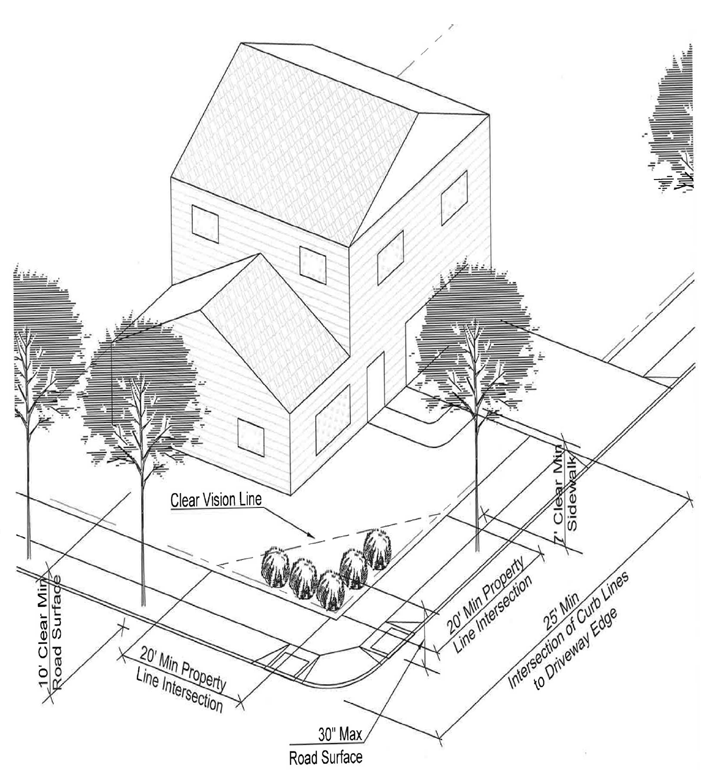
(Ord. No. 2018-007, § 2, 10-2-2018; Ord. No. 2011-003, § 2, 4-5-2011)
16.58.020 - Fences, Walls and Hedges.
A.
Purpose:
The fence standards promote the positive benefits of fences without negatively impacting the community or endangering public or vehicle safety. Fences can create a sense of privacy, protect children and pets, provide separation from busy streets, and enhance the appearance of the property by providing attractive landscape materials. The negative effect of fences can include the creation of street walls that inhibit police and community surveillance, decrease the sense of community, hinder the safe movement of pedestrians and vehicles, and create an unattractive appearance. These standards are intended to promote the positive aspects of fences and to limit the negative ones.
B.
Applicability:
The following standards apply to walls, fences, hedges, lattice, mounds, and decorative toppers. These standards do not apply to sound walls and landscape features that are not hedges.
C.
Fences, Walls, and Hedges in Residential Zones:
1.
All fences shall be subject to the clear vision provisions of Section 16.58.010.
2.
A sound wall is permitted when required as a part of a development review or concurrent with a road improvement project. A sound wall may not be taller than twenty (20) feet.
3.
Toppers, lattice, decorative top fencing are counted toward the height of the fence.
4.
In cases where a sidewalk is located partially or entirely on private property, rather than entirely in the public right-of-way, a line drawn one (1) foot further back from the edge of the sidewalk that is furthest from the right of way shall be treated as the property line for purposes of the above table.
5.
In cases where no sidewalk exists immediately adjacent to a street, a line drawn twenty-six (26) feet from the centerline of the street shall be treated as the property line for purposes of the above table.
D.
Location—Non-Residential Zone:
1.
Fences up to eight (8) feet high are allowed along front, rear and side property lines, subject to Section 16.58.010. (Clear Vision Areas) and building department requirements.
2.
A sound wall is permitted when required as a part of a development review or concurrent with a road improvement project. A sound wall may not be taller than twenty (20) feet.
3.
Hedges up to twelve (12) feet tall are allowed.
E.
General Conditions—All Fences:
1.
Retaining, masonry, concrete, and modular retaining walls may not be constructed within the eight-foot public utility easement (PUE) located on the front and corner street side yards, without approval from the City Engineer.
2.
Fences must be structurally sound and maintained in good repair. A fence may not be propped up in any way from the exterior side.
3.
Chain link fencing is not allowed in any required residential front yard setback.
4.
The finished side of the fence must face the street or the neighboring property. This does not preclude finished sides on both sides.
5.
Buffering: If a proposed development is adjacent to a dissimilar use such as a commercial use adjacent to a residential use, or development adjacent to an existing farming operation, a buffer plan that includes, but is not limited to, setbacks, fencing, landscaping, and maintenance via a homeowner's association or managing company must be submitted and approved as part of the preliminary plat or site plan review process per Section 16.90.020 and Chapter 16.122.
6.
In the event of a conflict between this Section and the clear vision standards of Section 16.58.010, the standards in Section 16.58.010 prevail.
7.
The height of a fence or wall is measured from the actual adjoining level of finished grade measured six (6) inches from the fence. In the event the ground is sloped, the lowest grade within six (6) inches of the fence is used to measure the height.
8.
Call before you dig (811) if placing a fence within the public utility easement (PUE) to have your utility lines located. This easement area is usually located eight (8) feet across the front yard and the side yard setback on a corner lot. Utility lines can be buried just beneath the surface.
(Ord. No. 2020-001, § 2, 1-21-2020; Ord. No. 2015-003, § 2, 3-17-2015; Ord. No. 2011-003, § 2, 4-5-2011; Ord. No. 2011-001, §§ 1, 2, 2-15-2011; Ord. No. 2010-015, § 2, 10-5-2010; Ord. 2006-021; Ord. 96-1014 § 1; 93-964; Ord. 86-851)
Editor's note— See editor's note, Ch. 16.58.
16.60.010 - Through Lots
On a through lot the front yard requirements of the zone in which such a lot is located shall apply to the street frontage where the lot receives vehicle access; except where access is from an alley, the front yard requirements shall apply to the street opposite the alley.
(Ord. No. 2011-003, § 2, 4-5-2011)
16.60.020 - Corner Lots
On a corner lot, or a reversed corner lot of a block oblong in shape, the short street side may be used as the front of the lot provided:
A.
The front yard setback shall not be less than twenty-five (25) feet; except where otherwise allowed by the applicable zoning district and subject to vision clearance requirements.
B.
The side yard requirements on the long street side shall conform to the front yard requirement of the zone in which the building is located.
(Ord. No. 2011-003, § 2, 4-5-2011)
16.60.030 - Yards
A.
Except for landscaping, every part of a required yard (also referred to as minimum setback) shall be open and unobstructed from its lowest point to the sky, except that architectural features such as awnings, fire escapes, open stairways, chimneys, or accessory structures permitted in accordance with Chapter 16.50 (Accessory Structures) may be permitted when so placed as not to obstruct light and ventilation.
B.
Where a side or rear yard is not required, and a primary structure is not erected directly on the property line, a primary structure must be set back at least three (3) feet.
(Ord. No. 2015-003, § 2, 3-17-2015; Ord. No. 2011-003, § 2, 4-5-2011)
16.60.040 - Lot Sizes and Dimensions
A.
If a lot or parcel, or the aggregate of contiguous lots or parcels, recorded or platted prior to the effective date of this Code, has an area or dimension which does not meet the requirements of this Code, the lot or aggregate lots may be put to a use permitted outright, subject to the other requirements of the zone in which the property is located.
B.
Exceptions
1.
Residential uses are limited to the number of dwelling units consistent with the density requirements of the zone. However, a dwelling cannot be built on a lot with less area than thirty-two hundred (3,200) square feet, except for townhomes, and as provided in Chapter 16.68.
2.
Yard requirements of the underlying zone may be modified for infill developments as provided in Chapter 16.68 (Infill Development).
(Ord. No. 2021-010, § 2, 12-7-2021; Ord. No. 2015-003, § 2, 3-17-2015; Ord. No. 2011-003, § 2, 4-5-2011)
16.62.010 - Heights
Except as otherwise provided, the height limits established by this Code shall not apply to chimneys, stacks, water towers, radio or television antennas, towers, windmills, grain elevators, silos, elevator penthouses, monuments, domes, spires, belfries, hangars, solar heating devices, and to wireless communication facilities two hundred (200) feet in height or less.
(Ord. 97-1019 § 1; Ord. 86-851)
16.62.020 - Permit Required
Notwithstanding Section 16.62.010, a conditional use permit shall be required for all such structures that exceed the height limitations of a zoning district, except as specifically otherwise permitted in that district.
(Ord. 91-922, § 3; Ord. 86-851)
16.62.030 - Parapets
A parapet wall not exceeding four (4) feet in height may be erected above the height limit of the building on which it rests.
(Ord. 86-851, § 3)
16.64.010 - Generally
A.
Except as otherwise provided, no lot area, setback, yard, landscaped area, or open space required by this Code shall be considered as providing the required lot area, setback, yard, landscaped area, or open space for another lot or development site under the provisions of this Code.
B.
No off-street parking or loading area required by this Code shall be permitted for another use except as provided in Section 16.94, Off-Street Parking and Loading.
C.
No off-street parking or loading area required by this Code shall be permitted for storage, unless otherwise approved through land use review and approval.
(Ord. No. 2023-002, § 2, 3-7-2023)
16.66.010 - Generally
A.
Except as otherwise noted, transportation facilities and improvements as defined in Section 16.10.020 will be a permitted use in all zoning districts.
B.
A Conditional Use Permit is required for Transportation Facilities and Improvements that are:
1.
Not designated in the adopted City of Sherwood Transportation System Plan (TSP); or
2.
Not designed and constructed as part of an approved land use application.
(Ord. No. 2015-003, § 2, 3-17-2015)
16.68.010 - Purpose and Intent
This chapter provides standards for infill development, or the development of properties that have been skipped over by larger subdivisions and, due to their proximity to established residential neighborhoods, require special design controls and flexibility in the City's zoning and land division standards. This Chapter is intended to:
A.
Promote housing choice, transportation efficiency and compatibility between existing residential areas and new development;
B.
Allow for greater flexibility in lot size, dimensions and setbacks; and
C.
Control the type, height, size and scale of new buildings on infill properties.
16.68.020 - Lot Sizes and Dimensions for Infill
The Approval Authority may approve modifications to the minimum lot size and/or lot dimensions of this Code for residential developments containing less than five (5) acres (i.e., is not otherwise eligible for a Planned Unit Development), subject to all of the following requirements:
A.
Lot area may be reduced below the minimum standard of the applicable zoning district through the land division or lot line adjustment process when the Approval Authority finds:
1.
The resulting lot size(s) and dimensions are not less than eighty-five percent (85%) of the standard minimum lot area of the zone; and
2.
The resulting average lot size of the development (partition or subdivision) shall be no less than the minimum lot size of the zone in which it is located; the resulting density shall be no more than the allowable density of the zone. Areas reserved as open space, such as central greens, plaza, and other common open space may be counted toward the average lot size and density of the development when such areas are centrally located and accessible to every lot in the development; and;
3.
The reduction in lot size and/or dimensions shall not be detrimental to any designated natural feature; the Approval Authority may require mitigation to protect and enhance such features, as applicable; and
4.
All required local street connections, pedestrian access ways, utility easements, emergency access, and other Code requirements are met; the Approval Authority may require shared driveways (i.e., for two dwellings) for paired lots that individually have less than 40 feet of street frontage, except where driveway access is provided from an alley; and
5.
The land division shall be conditioned, and a deed restriction recorded on each lot that contains less than the minimum lot size of the zone, requiring that building elevations and floor plans be submitted to the Planning Department for review and approval prior to issuance of a building permit on such lot, and such plans be binding on future building. Building plans required under this section shall meet the following standards as provided in Section 16.68.030;
a.
Floor area ratio
b.
Side setback plane; and
c.
Garage orientation and design standards
6.
The land division shall be conditioned, and a deed restriction shall be recorded on each lot that contains less than the minimum lot size of the zone, requiring that a landscape plan be submitted to the Planning Department for review and approval prior to issuance of a building permit on such lot. Landscape plans required under this section shall provide plant materials and irrigation that are equal to or better than those existing residential landscapes in the vicinity. The Approval Authority may consider plant species, quantity/volume of plant material, irrigation, slope, aspect, soil, and other relevant factors in determining the adequacy of landscape plans and in requiring additional landscaping.
B.
Lot dimension(s) may be reduced below the minimum standards of the applicable zoning district through the land division or lot line adjustment process provided that the development conforms to Section 16.68.020A, above, and all other applicable Code requirements are met.
C.
Lot width and frontage standards may be waived for rear lots created through partitioning where an access easement or tract of not less than twenty (20) feet in width connects the subject lot to a public street with a driveway meeting City standards and the yard requirements for rear lots, as provided in Section 16.68.050, are met. The Approval Authority may require that such driveway be dedicated as a public alley and extended in accordance with local street network plans and connectivity requirements.
(Ord. No. 2022-004, § 2, 6-13-2022; Ord. No. 2010-015, § 2, 10-5-2010)
16.68.030 - Building Design on Infill Lots
Structures exceeding twenty four (24) feet in height shall conform to the following standards:
A.
Floor Area: Floor area in any dwelling with a height greater than twenty four (24) feet shall not exceed the following floor area ratios, except that the first 200 square feet of floor area in a detached garage or other accessory structure shall be exempt, when the accessory structure is located behind a dwelling (dwelling is between accessory structure and abutting street), the lot is not a through lot, and the accessory structure does not exceed a height of fifteen (15) feet. Floor area shall not exceed:
1.
Low Density Residential (LDR): 50% of lot area
2.
Medium Density Residential Low (MDRL): 55% of lot area
3.
Medium Density Residential High (MDRH): 60% of lot area
4.
High Density Residential (HDR): 65% of lot area
5.
The floor area standards in this section do not apply to cottage clusters.
B.
Interior Side Setback and Side Yard Plane. When a structure exceed twenty four (24) feet in height:
1.
The minimum interior side setback is five (5) feet, provided that elevations or portions of elevations exceeding twenty four (24) feet in height shall be setback from interior property line(s) an additional one-half (½) foot for every one (1) foot in height over twenty four (24) feet (see example below); and
2.
All interior side elevations exceeding twenty four (24) feet in height shall be divided into smaller areas or planes to minimize the appearance of bulk to properties abutting the side elevation: When the side elevation of such a structure is more than 750 square feet in area, the elevation shall be divided into distinct planes of 750 square feet or less. For the purposes of this standard, a distinct plane is an elevation or a portion of an elevation that is separated from other wall planes, resulting in a recessed or projecting section of the structure that projects or recedes at least two (2) feet from the adjacent plane, for a length of at least six (6) feet. The maximum side yard plane may be increased by ten percent (10%) for every additional five (5) feet of side yard setback provided beyond the five (5) foot minimum.
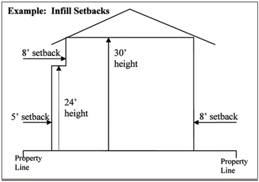
C.
Garage Orientation. On lots with a minimum width of sixty (60) feet or less, the garage shall meet the following orientation and design standards:
1.
The garage shall not be located closer to the street than the dwelling, unless the combined width of garage opening(s) does not exceed fifty percent (50%) of the total width of the front (street-facing) elevation. For the purpose of meeting this standard, the exterior wall of at least one room of habitable space, which may include habitable space above the garage, shall be located closer to the street than the garage door. Any garage opening width beyond fifty percent (50%) standard shall be set back at least (2) feet further from the front property line than the facade of the other garage volume. Alternatively, and subject to the Approval Authority's approval, the front elevation may incorporate a decorative trellis, pergola or other architectural feature that provides a shadow line giving the perception that the garage opening is recessed;
2.
The standard in subsection c.1. above, does not apply where the average slope of a parcel of a lot exceeds twenty percent (20%) where the garage is proposed to be set back at least forty (40) feet from the public right-of-way, or where the garage is to be accessed from an alley;
3.
When the side or rear elevation of a front-loading garage is exposed to the street or an abutting property, such elevation(s) shall have more than one plane (offset or projection of 2 feet or more) or shall have window area equal to at least ten percent (10%) of the exposed garage wall.
(Ord. No. 2022-004, § 2, 6-13-2022; Ord. No. 2010-015, § 2, 10-5-2010)
16.68.040 - Height
The maximum heights specified in the underlying zone shall be the maximum height for any infill development.
16.68.050 - Yard Requirements for Infill Development
The Approval Authority may approve modifications to the minimum yard dimensions of this Code for residential developments containing less than five (5) acres (i.e., is not otherwise eligible for a Planned Unit Development), subject to all of the following requirements:
A.
Side and/or rear yard(s) may be reduced below the minimum standard of the applicable zoning district when the Approval Authority finds:
1.
The resulting yard(s) is/are not less than eighty-five percent (85%) of the standard of the zone; and
2.
Where a side or rear yard abuts another residential property outside the subject development, it shall not be reduced to less than eighty five percent (85%) of the abutting yard dimension, except where the yard of the abutting property is less than the minimum standard of the zone, in which case a reduction equal to the yard of the abutting property may be permitted. In no case shall a yard of less than five (5) feet be permitted unless the structure is approved as a zero-lot line or common wall dwelling; and
3.
The reduction in yard dimension shall not be detrimental to any designated natural feature; the Approval Authority may require mitigation to protect and enhance such features, as applicable; and
4.
All required local street connections, pedestrian access ways, utility easements, emergency access, and other Code requirements are met.
B.
Front yards may be reduced below the minimum standard of the applicable zoning district when the Approval Authority finds:
1.
The front yard is reduced by no more than six (6) feet; and
2.
All garage openings are setback twenty (20) feet or more from all street rights-of-way.
3.
The reduction is to accommodate an unenclosed front porch; or
4.
The reduction is necessary to protect natural features on or adjacent to the subject lot; or
5.
The reduction allows for greater separation or buffering between infill development and existing residential uses(s) at lower densities (or larger lot sizes).
C.
Rear lots, also known as flag lots, are those that have less than twenty five (25) feet of street frontage, are oriented with their buildable area (flag) behind another lot that has standard street frontage, and receives access from a narrow strip of land (flag pole). The Approval Authority may approve a rear lot only upon finding that it has sufficient lot area after excluding the access drive (easement, tract, or flag pole), it meets emergency access and circulation requirements, and side lot lines adjacent to the access drive have adequate landscape buffering in accordance with Section 16.58.020D. Where two rear lots are proposed contiguous to one another, the Approval Authority may require the two lots share a common access and driveway to reduce the number of curb cuts and turning movement conflicts and to minimize impervious surfaces.
D.
In approving reductions to yard dimensions, the Approval Authority must find that the provisions of Sections 16.68.030 through 16.68.050, and all other applicable Code requirements, are met.
(Ord. No. 2010-015, § 2, 10-5-2010)
16.68.060 - Public Notice
The public shall be notified of pending land use applications for projects that are subject to Chapter 16.68, consistent with the provisions of Section 16.72.020, Mailed Notice.
(Ord. 2006-021)

