
South Miami City Zoning Code
ARTICLE IV
OTHER REGULATIONS
20-4.1 - Adequate public facilities and services.
(A)
Purpose. A development permit, Certificate of Completion (CC), Certificate of Occupancy (CO), or Certificate of Use and Occupancy (CU) shall not be issued when level(s) of service (LOS) for public services and facilities do not meet or exceed LOS Standards, or when the issuance of a development permit and/or CC and/or CO and/or CU would result in a reduction of the actual LOS for any service or facility below the established LOS Standards, as specified below.
(B)
Applicability and Application.
(1)
New Development on Vacant Land. For new construction projects, concurrency determinations shall be made in conjunction with the earliest development approval which involves a site plan for development.
(2)
Building Additions and New Development on Occupied Parcels. Any addition which increases gross floor area by 5,000 square feet or more and increases public facility usage shall be subject to concurrency review prior to granting of the CC or CU. Only incremental increase in facility capacity usage over existing usage will be assessed for concurrency.
(3)
Changes of Use on Occupied Parcels. Changes of use which increase required parking by 25 spaces shall be subject to concurrency review prior to granting a CU. Only incremental increase in facility capacity usage over existing usage will be assessed for concurrency.
(4)
Exempt Projects. The following kinds of development and redevelopment shall not require a concurrency review per this subsection:
(a)
Change of Use to Another Similar Use: Any change of use which clearly causes no increase in demand upon any public facility, or causes a reduction in demand on all public facilities, and does not increase the number of required parking spaces in excess of 25 parking spaces;
(b)
Residences: Single-family and two-family dwellings on previously platted lots or as part of waivers-of-plat;
(c)
Public Uses: Development such as a public or government facility which the City Commission finds essential to the health or safety of City residents; and
(d)
Existing Approvals: Projects considered as vested or committed and/or site plans approved before adoption of the Land Development Code on October 26, 1989.
(C)
LOS Standards.
(1)
Streets.
(a)
South Dixie Highway (U.S. 1): Until December 31, 1995, the peak hour LOS standard shall be 115 percent of the peak traffic count in 1989. After December 31, 1995, the peak hour LOS standard shall be 150 percent of "D" capacity, as defined in the adopted Comprehensive Plan.
(b)
Bird Road (S.W. 40th Street): The peak hour LOS standard shall be 120 percent of "E" capacity.
(c)
Principal and Minor Arterials (Sunset Drive, Red Road, Kendall Drive): The peak hour LOS standard shall be "F" capacity, as defined in the adopted Comprehensive Plan.
(d)
Collectors (S.W. 48 Street, Miller Drive, S.W. 62nd Avenue, and Ludlam Road): The peak hour LOS standard shall be "E" capacity, except that County collector roadways in the adopted Urban Infill Area are exempt from concurrency review requirements.
(e)
DRI Exception: The City will not issue any permit which would have the effect of lowering the LOS below the levels specified above, unless such permits are issued pursuant to a Development of Regional Impact (DRI) approval granted prior to adoption of the 1989 South Miami Comprehensive Plan on January 18, 1989.
(f)
RID Exception: The City will not issue any permit which would have the effect of lowering the LOS below the levels specified above, unless such permits are issued for development and/or redevelopment within an approved Redevelopment and Infill District (RID).
(g)
De Minimis Impact Exception: The City will not issue any permit which would have the effect of lowering the LOS below the levels specified above, unless such permits are issued for development and/or redevelopment which meets the conditions in Chapter 163.3180(6), Florida Statutes, and/or in Rule 9J-5.0055, Florida Administrative Code.
(2)
Sewage.
(a)
The disposal systems shall operate with a design capacity of no less than 2 percent above average daily flow for the preceding year, or as determined to be sufficient by Miami-Dade County.
(b)
The County system maintains capacity to collect and dispose of 100 gallons of sewage per capita per day.
(c)
For the unsewered properties, LOS shall be the issuance of a Miami-Dade Health Department septic tank permit.
(3)
Water.
(a)
The water system shall operate with a rated capacity of no less than 2 percent above the maximum daily flow for the preceding year, or as determined to be sufficient by Miami-Dade County.
(b)
Water is delivered to users at a pressure no less than 20 pounds per square inch (psi) and no greater than 100 psi. Minimum fire flows shall be maintained as approved by the Miami-Dade Fire Department.
(c)
The County system maintains capacity to deliver up to 200 gallons per capita per day.
(4)
Drainage. Any development shall adequately accommodate runoff from the 1-day, 1-in-10-year frequency storm.
(5)
Solid Waste. The County solid waste disposal system shall maintain a minimum capacity of five (5) years, or capacity as determined by Miami-Dade County to be sufficient. A generation rate of seven (7) pounds per person per day may be used for calculation.
(6)
Recreation. The public (City and School Board) park land within the City shall equal at least four (4) acres per one thousand (1,000) population. This shall include the School Board recreational land.
(D)
Concurrency Review Procedures.
(1)
Responsibility. The Building and Planning Department is responsible for concurrency as part of the development permit process.
(2)
Measurement of LOS. Measurement and evaluation of LOS shall follow these regulations, as necessary for approval. The capacity and availability of services shall be determined by the following approach, which is based upon 9J-5.0055, Florida Administrative Code:
(a)
Adding together:
i.
Total design capacity of existing facilities operating at the required LOS;
ii.
Total design capacity of new facilities that will become available concurrent with the impact of the development and/or change of use;
iii.
Total design capacity of new facilities under construction at the time of CO approval;
iv.
For recreational facilities, total design capacity of new facilities that are the subject of a binding, executed contract for construction of facilities to be completed within one year of the time the CO is issued;
v.
For roadway facilities, total design capacity of new facilities that are the subject of a binding, executed contract for construction of facilities to be completed within three (3) years of the time the CO is issued;
vi.
For roadway facilities, total design capacity for new facilities that have been included in a financially feasible five-year capital improvement program and construction is scheduled for the third year or earlier;
vii.
Total design capacity for new facilities that are guaranteed at a specific time in an enforceable development agreement, which may include, but is not limited to, development agreements pursuant to Section 163.3220, Florida Statutes, and development orders pursuant to Chapter 380, Florida Statutes, with construction to begin within three (3) years of CO issuance for roadway facilities and within one year of CO issuance for recreational facilities; and
viii.
Total credits for any exception (including full exemptions, such as RID concurrency approvals), where the City Commission has granted such an exception, based upon those terms specified in Chapter 163, Florida Statutes, and related Florida Administrative Code rules.
(b)
Subtracting from that number the sum of:
i.
The demand for the service created by existing development, as evidenced by current use; and
ii.
The demand for the service (by phase or otherwise) that will be created by the anticipated completion of all currently approved developments, including the subject development under evaluation.
(3)
Determination of Concurrency.
(a)
County Concurrency Requirements: Miami-Dade County approval is required via the permit process for all County impact fees which currently include roadway, fire, water, sewer, and public schools, as amended.
(b)
For Water and Sewage: Concurrency shall be evidenced by the approval of appropriate County and Florida State agencies for water, sewage, and/or septic tanks.
(c)
For Solid Waste: Concurrency shall be evidenced by the renewal of contracting with Miami-Dade County Public Works.
(d)
For Drainage: Concurrency shall be evidenced by compliance with Florida Building Code standards.
(e)
For Recreation: Concurrency shall be evidenced by evaluation of population and the park land inventory.
(f)
For Traffic: Concurrency shall be evidenced by annual evaluation of roadway capacity and available LOS.
(4)
Calculation by Either City or Applicant. Calculations may be performed either by the applicant or City; the City shall verify all applicant calculations.
(5)
Concurrency Review Fee. An applicant may be charged a concurrency review deposit. This will be used to defray the cost of the determination of concurrency including any consulting fees; the deposit amount shall be defined in the City's Fee Schedule.
(E)
Concurrency Rights Reservation and Effective Period.
(1)
Capacity Reservation. Permits shall be chronologically logged upon approval to determine reserved capacity.
(2)
Reservation Period. Capacity is considered as reserved until issuance of a CC and/or CO and/or CU for a project. Projects must be completed to preserve any concurrency reservation. Otherwise, whenever development permits issued for projects expire, then concurrency approvals expire with the permits.
(3)
Extensions. An extension of six (6) months may be granted by the City Manager (or a designee) if the applicant presents in writing the circumstances for an extension. Applicants may appeal the City Manager's decision to the City Commission.
(4)
Development Agreements. Development agreements, as described in Chapter 163.3220, "Florida Local Government Development Agreement Act" [Florida Statutes], shall have a valid concurrency period not to exceed five (5) years or as extended by mutual consent of the City Commission and the applicant.
(F)
Affordable Housing Concurrency Reserve.
(1)
Purpose. The purpose of this chapter is to facilitate the development and availability of housing affordable to a broad range of households with varying income levels within the City. This chapter is intended to attain the goals in the City's comprehensive plan by facilitating the development of housing to adequately provide for the housing needs of all economic segments of the community, and is particularly concerned with meeting the affordable housing needs of the community. The meet this goal, the City shall reserve excess concurrency recreation land. The excess concurrency recreation land shall be used exclusively to meet future concurrency requirements for affordable housing projects. The excess concurrency recreation and public park land may, however, be used to develop projects for which concurrency determinations were made and which received approvals prior to the enactment of this ordinance, or for concurrency for future annexation. Moreover, the above whereas clauses are incorporated by reference into this ordinance [subsection].
(2)
Definitions. For purposes of this ordinance [subsection] the following terms, phrases, words and derivations shall have the meanings given herein.
Affordable Housing Project shall mean that segment of the housing market where the housing being developed is targeted at or reserved for Eligible Households that are unable to compete effectively in the existing housing market for City of South Miami and Miami-Dade County. The term covers a wide range of providers and tenures including public sector, housing allocations, joint ventures and owner occupation. Affordable housing is not necessarily low cost housing and is further defined below under "Eligible Households."
Reserved Public Land shall mean the recreation and public park land available in the City's inventory that exceeds the City's concurrency requirements and which is reserved to meet future impacts associated with developing affordable housing projects for Eligible Households.
Capacity Reservation Allocation shall mean the specific findings made by the City Commission pursuant to Article V. of the City of South Miami Land Development Code that the proposed development constitutes an affordable housing project, and as a result, specific acreage of the Reserved recreation and public park land inventory shall be allocated via a capacity reservation certificate. An issued capacity reservation certificate shall evidence the allocation of a portion of the City's Reserved recreation and public park land inventory.
Capacity Reservation Certificate shall mean the Reserved recreation and public park land allocated by the City Commission for an affordable housing project development application for a period that corresponds with the associated development permit.
Developer shall mean any person, business, or other legal entity that seeks approval from the city to construct residential units.
Eligible Households shall mean those households determined by the Miami-Dade County Affordable Housing Agency or other public housing agency to be not less than ninety (90) percent or more that one hundred twenty (120) percent of the Median Household Income (work force housing). Eligible Households shall also encompass households or residential developments provided as part of an affordable housing program (adhering to U.S. Housing and Urban Development Guidelines, to wit: moderate income households must be an eighty (80) percent of area median family/household income; low-income must be at fifty (50) percent of area median family/household income; and very low-income must be at thirty (30) percent of area median family/household income) or any other federal or state affordable housing and community development programs. In the event the criteria for qualifying as an eligible household is adjusted subsequent to the enactment of this section, the definition of eligible households for purposes of this section shall be the latest criteria promulgated by the Miami-Dade Housing Agency.
Median Household Income means the median income of a household within Miami-Dade County. The Median Household Income shall be determined by Miami-Dade County Housing Agency.
(3)
Application for Certificate of Capacity Reservation. An application for obtaining a certificate pursuant to this ordinance [subsection] shall be made to the City Commission on a form provided by the Planning Director.
Information to be provided by the applicant shall include at a minimum:
(a)
A property survey by a registered surveyor;
(b)
A letter of intent;
(c)
A site plan;
(d)
Where the use includes a vehicular use area or landscaped buffer, a proposed landscape plan and information regarding permanent maintenance arrangements;
(e)
A neighborhood location map showing all surrounding land uses within five hundred (500) feet of the proposed site;
(f)
All information required for any other type of land use, zoning, or building application necessary for processing the development project;
(g)
Any other information necessary to demonstrate that the proposed use will conform fully with the requirements of this Code;
(h)
An affidavit affirming that upon receipt of the Certificate of Capacity Reservation, the owner of the property shall record a covenant running with the land, or a declaration of restrictions, in a form satisfactory to the City Attorney and in compliance with U.S. HUD regulations, requiring the affordable housing project be used for affordable housing purposes for Eligible Households for a minimum of thirty (30) years. Failure to comply with the covenant shall result in the revocation of the Capacity Reservation Certificate, and further enforcement action as indicated at Section [20]-4.1(f)(5).
(i)
An affidavit affirming that upon receipt of the Certificate of Capacity Reservation, the owner of the property shall record a covenant running with the land, or a declaration of restrictions, in a form satisfactory to the city attorney, that shall require annual reporting to the municipality of rent rolls or annual unit sales, which annual reports shall verify compliance with subsection (h), above.
(4)
Approval of Capacity Reservation.
(a)
The Planning and Zoning Department shall prepare a staff report for the City Commission which shall include a concurrency calculation and findings of fact relating to the application and a statement that the proposed projects complies with the definition of Eligible Households and the criteria delineated in Section 20-4.1(F)(3).
(b)
The applicant shall be scheduled for a public hearing before the City Commission as a resolution.
(c)
The applicant shall appear at the public hearing before the City Commission and present the application request for the issuance of a Certificate of Capacity Reservation. After the hearing the City Commission shall at its discretion approve, modify or deny the application.
(5)
Enforcement.
(a)
This ordinance [subsection] may be enforced as provided by Florida law, including the filing of an action in a court of competent jurisdiction to obtain civil remedies, including a restraining order, injunction and damages. Any enumeration of enforcement mechanisms set forth herein is supplemental and not exclusive.
(b)
In the event that a court of competent jurisdiction finds that an affordable housing developer has failed to meet the requirements of Section 20-4.1(F), the city's building official is hereby authorized to issue a stop work order on all development activity or other approvals requiring site plan review.
(c)
In the event, the affordable housing project developers, owners, and affiliated, fail to comply with the restrictive covenants identified in Section [20]-4.1(F)(3)(h) and (i), the city may seek specific performance under the covenant, require damages satisfactory to replace the revoked Capacity Reservation Certificate or require the party to purchase land to be used for recreation and public park land purposes.
(6)
Transferability of Certificate. No Certificate of Capacity Reservation may be sold, assigned, mortgaged or otherwise transferred without the prior approval of the City Commission, at a public hearing and adoption of a resolution authorizing the proposed transaction.
(Ord. No. 7-96-1607, § 1, 5-7-96; Ord. No. 10-06-1878, § 1, 4-4-06; Ord. No. 17-11-2090, § 1, 4-19-11)
20-4.2 - Land subdivision regulations.
(A)
Applicable Regulations. The subdivision of all land within the City shall be subject to Chapter 28 of the Miami-Dade County Code of Ordinances and administered by the Miami-Dade County Department of Public Works. However, waivers of plat, tentative plats, and final plats must also be approved by the City Commission and meet the requirements of this ordinance as set forth below.
(B)
Platted Lot Compliance. Every building or structure hereafter erected, moved or structurally altered within the City shall be located on a platted lot, except that the City Commission may waive platted lot compliance in accordance with section 28-4 of the County Code and the procedures set forth below. No lot(s), plot(s), or parcel(s) of land, or building site(s) (collectively referred to as "parcel of land" or "parcel" or "building site" for the purpose of this section) whether improved or unimproved, whether or not designated by number, letter, or other description in a plat of a subdivision, or unplatted, shall be further divided or split, for any purpose, whether immediate or future, including for the purpose of transfer of ownership or development, unless first referred to the Planning and Zoning Board ("Planning Board") for its recommendation, and thereafter reviewed and approved by the City Commission, as provided in this section.
(1)
Review and Notice.
(a)
Review. A property owner shall submit an application for a waiver of plat, tentative or final plat, on forms provided by the Planning Director for this purpose, for referral to the Planning Board for their review and recommendation, and for review and approval by the City Commission in accordance with the requirements and procedures set forth in the Land Development Code. All applicants, other than the City, shall provide, as part of the application process, copies of all documents that provide restrictions, reservations and/or covenants applicable to the parcel of land being considered, and an opinion of title issued by a member of the Florida Bar which concludes that, as of a date not more than one hundred twenty (120) days before the City Commission's decision on the application, and from the root of title as defined by the Marketable Record Title to Real Properties Act, nothing in the chain of title prevents or serves as an exception to the division or change in the parcel's configuration as requested.
(b)
Notice. At least ten (10) days prior to the City's Planning Board review of the application for waiver of plat, tentative or final plat, the subject property shall be posted by the Planning Department, with a notice of the date, time, place and purpose of the Planning Board meeting, on the subject property, fronting all roadways that abut the property. Such notice shall also be published. In addition, ten (10) days prior to the meeting of the City Commission which is scheduled to consider either a waiver of plat, or tentative or final plat approval in accordance with Chapter 28, and/or this section, notice of the date, time and place of the City Commission meeting shall be posted and published (in the same manner as required above for a Planning Board review), and provided by U.S. Mail to all property owners within five hundred (500) feet of the perimeter of the subject property.
(2)
City Commission Findings. Prior to approving a waiver of plat, tentative or final plat, the City Commission shall use the following guidelines:
(a)(i)
The building site created by the proposed waiver of plat, tentative or final plat, should be equal to or larger than the median of the existing building sites in the Surrounding area (this shall be demonstrated using copies of the official plat maps for the subject property and surrounding neighborhood), unless otherwise permitted by this ordinance. Surrounding area is defined as all lots within the same zoning district and within five hundred (500) feet from the exterior boundaries of the subject property.
(ii)
The City Commission may, in its discretion, approve a subdivision of land into lots that are included as part of a waiver of plat, tentative or final plat and that have lot frontage or lot area that is less than the Surrounding area median, provided it is approved by four votes of the City Commission and provided that at least the minimum requirements of the Land Development Code are satisfied.
(iii)
Lot area and street frontage calculations shall exclude abutting public rights-of-way.
(b)
The building site created by the proposed waiver of plat, tentative or final plat, will not result in existing structures becoming nonconforming as they relate to setbacks, lot area, lot width and depth, ground coverage and other applicable regulations of the City's Land Development Code and/or City's Code of Ordinances, except as permitted by this ordinance. Compliance with this provision may occur by demolition or relocation of existing structures.
(c)
The building site created by the proposed waiver of plat, tentative or final plat, will be free of encroachments from abutting building sites.
(d)
The building site created by the proposed waiver of plat, tentative or final plat, is free of any declarations of restrictive covenants, unity of title, easements, or the like, which would prevent the separation of the site. However, this provision may be satisfied if existing covenants, unity of title, easements, or similar instruments, which conflict with the proposed subdivision, are released or modified to accommodate the proposed building site.
(e)
The scale of any proposed new construction shall be compatible with the as-built character of the surrounding area, and shall not create adverse impacts on the surrounding area; but if so, the applicant shall provide satisfactory commitments as to how the adverse impacts will be mitigated. An example of an adverse impact includes visual impacts arising from a proposed two-story structure in an area built out with single-story homes; mitigation could include adding a condition to the approval of the waiver of plat, tentative plat or final plat, for landscape buffers, or adjusting second-story setbacks or building facades to reduce the visual impact.
(f)
The building site(s), lot(s) or parcel(s) of land that would be created are divided in such a manner that they are in compliance with the regulations of the City's Land Development Code. Lot area and street frontage calculations shall exclude abutting public rights-of-way.
(g)
The building site or sites created by the proposed waiver of plat, tentative or final plat cannot constitute an irregular parcel (one that has more than four (4) corners or that has any curved or jagged lot line), unless the City Commission by a four-fifths (⅘) vote determines that the irregularity arises from irregularity in the original parcel and cannot be corrected, or the Commission by such vote determines the irregularity is compatible with the parcels in the Surrounding area.
(3)
Additional Conditions. The City Commission may designate such additional conditions in connection with a waiver of plat, tentative or final plat, as will, in its opinion, assure that such waiver of plat, tentative or final plat will conform to the requirements in this Section, including, but not limited to, the following:
(a)
Ensure the retention of specimen trees for six (6) years and permanently maintain fifty (50) percent of existing protected tree canopy, but in no event shall the condition be less restrictive than what is required by the City's and County's tree ordinance.
(b)
Prescribe, conditions or safeguards restricting the square footage, orientation and location of the new structures to be built on the resulting parcels.
(c)
Execute and record in the public records of Miami-Dade County, a restrictive covenant, in a form approved by and subject to the review and approval of the City Manager and City Attorney, which contains all commitments made and conditions imposed as part of the approval of the approved waiver of plat, tentative and/or final plat.
(4)
Additional Application Requirements. As part of the required tentative or final plat or waiver of plat application, applicants, other than the City, shall be required to submit a proposed conceptual site plan drawn to scale, and indicating the following information for the entire subject property to be subdivided:
(a)
Building footprints;
(b)
Setbacks, yard requirements and easements.
For purposes of this section, a conceptual site plan means a plan that is drawn at the schematic design phase, showing parcel lot lines, land uses, general building location, general driveway and parking arrangements, and major site features. Future construction may not exceed by more than four (4) percent the size of the building, or floor area, gross, shown on the conceptual plan, unless approved by the City Commission by a four-fifths (⅘) vote, and as long as the setbacks and yard requirements are in accord with the Code existing at the time of such future construction. The conceptual site plan shall be reviewed by the Planning Board and approved by resolution of the City Commission under the provisions for applications requiring a public hearing of Section 20-5.5.
(c)
A certified tree survey overlaid directly upon the site plan, as required by Section 20-4.5. The tree survey must include the canopy measurements. Once an application for a waiver of plat or tentative plat is filed, no tree may be removed until after final waiver of plat or final plat approval is issued (Tree Removal Moratorium). The applicant may appeal to the City Commission to waive the Tree Removal Moratorium for good cause.
(C)
Improvements Required.
(1)
Sidewalks, curbs, gutters, drainage and paving shall be installed by the owner or developer of the abutting parcel in accordance with Chapter 28 of the County Code and other applicable city requirements, unless such can be and are waived or deferred by the city commission.
(2)
No building shall be erected, improved, modified, altered or enlarged in any zoning use district, other than in an RS residential district, unless proper public improvements have been installed.
(D)
Creation of Authorized Building Sites.
(1)
No building permit for the construction of any structure within the city shall be issued until an authorized building site has been created which meets at least one of the following criteria:
(a)
Is part of a recorded subdivision plat or has received final waiver of plat approval;
(b)
Is part of an officially approved planned unit development which:
i.
Provides for all utility and drainage easements, alleys, streets and other public improvements necessary to meet the normal requirements for platting, and
ii.
Includes the designation of building areas and easements, alleys and streets required and properly dedicated, and necessary public improvements; or
(c)
Fronts upon a dedicated public street and was separately owned prior to the effective date of this Code or annexation to the city;
(2)
Notwithstanding the limitations of Subsection (1), a building permit may be issued for one or more lots or tracts identified as within an approved tentative plat prior to final plat approval and recordation provided the owner meets all of the following:
(a)
Pays all actual or estimated permit and other applicable regulatory fees associated with the improvements to the City prior to issuance of any building permits; and
(b)
Posts a payment and performance bond or letter of credit redeemable by the City in connection with the improvements required for final plat approval as determined by Miami-Dade County and the City, such bond or letter of credit to be satisfactory in form and substance to the City Manager and City Attorney; and
(c)
Acknowledges by written agreement submitted to the City, in form and substance acceptable to the City Attorney, that Owner:
i.
Is proceeding at their own risk; and
ii.
Acknowledges and agrees that there will be no vested/property rights claim or cause of action whatsoever arising or accruing by virtue of the issuance of a building permit prior to final plat, including, but not limited to, there being no vested right to the permittee/subdivider to use or to complete construction of the project within the boundaries of the plat; and
iii.
Agrees to indemnify, defend, and hold harmless the City; and
iv.
Agrees to construct all subdivision improvements required for final plat approval as determined by Miami-Dade County and the City; and
v.
Agrees to immediately cease all construction and relinquish any and all rights to improvements constructed on the property in the event that the plat is not recorded within the recordation period, in which case the City may exercise the payment and performance bond or letter of credit; and
vi.
Acknowledges that nothing in the agreement shall prejudice the City's right to impose conditions on approval of the final plat which are required by state, county, and/or City plat ordinances and zoning regulations or are otherwise necessary to ensure the public health, safety and welfare of the citizens of the City; and
vii.
Waives all claims, including, but not limited to, any estoppel, vested rights, or similar claim, challenging enforcement of the terms of the agreement by reason of the City's issuance of building permits; and
viii.
Acknowledges that a temporary certificate of occupancy or a certificate of occupancy shall not be issued, unless and until the permittee/subdivider obtains final plat approval and the approved final plat is recorded in the official records of Miami-Dade County, Florida, within the recordation period; and
ix.
Acknowledges that the City reserves the right to evaluate all applications for building permits for compliance with all existing laws, ordinances and regulations controlling the issuance of building permits for construction within the City; and
x.
Acknowledges that the date to obtain City final plat approval and recordation of the plat in the official records of Miami-Dade County, Florida, the "recordation period," is the same as the expiration date set forth in the tentative plat approval; and
xi.
In the event that the permittee/subdivider does not record the plat by the expiration of the recordation period, the permittee/subdivider agrees to immediately cease all construction activities on the property and to relinquish any and all rights to any improvements constructed thereon; or if requested by the City, to forthwith remove the improvements within three (3) months of the expiration of the recordation period. The permittee/subdivider agree the City shall not be held financially responsible to the permittee/subdivider or any third parties in connection with any actions taken in accordance herewith. The City will also be able to withdraw from the payment and performance bond as necessary to complete the subdivision improvements; and
xii.
Agrees that permittee/subdivider will be responsible for all costs of enforcement of the terms of the agreement, including attorneys fees.
(3)
Wherever there exists a single-family dwelling unit which was constructed on a building site containing two (2) or more platted lots, the nonconforming lot of record provisions in this Code shall apply.
(4)
Established building sites shall not be reduced in any manner to a size which is less than required for the zoning district in which located.
(Ord. No. 9-02-1777, § 1, 9-17-02; Ord. No. 22-01-1753, § 1, 10-2-01; Ord. No. 17-11-2090, § 1, 4-19-11; Ord. No. 02-15-2209, § 1, 1-6-15; Ord. No. 10-15-2217, § 1, 4-21-15; Ord. No. 11-16-2244, § 1, 8-2-16; Ord. No. 31-21-2421, § 2, 12-21-21; Ord. No. 02-24-2487, § 3(Exh. B), 2-6-24; Ord. No. 03-24-2488, § 2, 2-6-24)
20-4.3 - Sign regulations.
(A)
Purpose and Intent. Regulations affecting the design, erection and maintenance of signs are established for the purpose of ensuring equitable means of graphic communication, while maintaining a harmonious and aesthetically pleasing visual environment within the city. It is recognized that signs form an integral part of architectural building and site design and require equal attention in their design, placement and construction.
(B)
Applicability and Definitions. No sign, unless herein excepted, shall be erected, constructed, posted, painted, altered or relocated, until a permit has been authorized and issued by the Planning and Zoning Department pursuant to this Code and the required submittals in Section 20-4.3(J). Signs in all zoning districts, except for PUD, and Downtown SoMi districts, shall be subject to the regulations in this section. Permitted sign regulations for PUD and Downtown SoMi districts are referenced in those sections of this Code. Words and phrases used in this section shall have the meanings set forth below.
Beacon. Shall mean any light with one single, vertical beam directed into the atmosphere.
Pole Sign, portable commercial parking lot. Shall mean a single freestanding pole, not exceeding an overall height of six feet. The pole sign is restricted to the international parking symbol of P inside a circle with an area not exceeding 2.5 sq. ft. The sign shall have a reflective surface.
Sign. Shall mean an identification, description, illustration, or device which is affixed to or represented directly or indirectly upon a building, structure or land and which directs attention to a product, place, activity, person, service, institution or business.
Sign, animated. Any sign that uses movement or change of lighting to depict action or create a special effect or scene.
Sign, awning. Shall mean any sign that is part of or attached to an awning, canopy, or other fabric, plastic, or structural protective cover over a door, entrance, window, or outdoor service area. A marquee is not an awning.
Sign, building marker means any sign indicating the name of a building and date and incidental information about its construction (e.g., historical plaques).
Sign, changeable copy means any sign or portion thereof with characters, letters, or illustrations that can be changed or rearranged without altering the face or surface of the sign. A sign on which the message changes more than eight (8) times per day shall be considered an animated sign and not a changeable copy sign.
Sign, construction means a sign which is displayed on the premises only during the progress of actual construction work which indicates the ultimate character of the development and those firms or individuals involved in its creation.
Sign, detached (also freestanding or pole) means any sign supported by one or more poles or other structures that are placed on, or anchored in, the ground and that are independent from buildings or other structures.
Sign, directional means a sign which transmits information which facilitates vehicular access to and from off-street parking or drive-in facilities.
Sign, directory means a single line listing of each distinct business holding a valid occupational license (whether individual, partnership, or corporate) within a multi-occupant building. This listing may include the floor and/or suite number within the building.
Sign, display panel means any sign located beside the entrance to the business containing a listing of merchandise offered, like food and beverage offerings for restaurants. This listing may change from time to time.
Sign, flat means any sign attached to and erected parallel to the face of, or erected or painted on the outside wall of, a building and supported throughout its length by such a wall or building. Flat signs may not project more than nine (9) inches beyond the surface of a building wall in any direction, including permitted projections beyond the top of parapet.
Sign, garage sale means a temporary sign erected on private property for the purposes of notifying the public of a garage sale.
Sign, free-standing (see "Sign, detached").
Sign, freestanding menu board means a sign with a listing of food and beverage offerings for drive-in patrons of restaurants. Menu board signs may include microphones and speakers for customer use within the menu board sign structure.
Sign, hanging means any sign which is displayed over a public sidewalk or pedestrian way and supported from a projected canopy, awning, arcade ceiling, bracket or roof overhang.
Sign, landscape means a detached sign appropriately landscaped in a park-like manner and designed to be compatible with adjacent architecture.
Sign, marquee means a sign which is attached to and projects more than nine (9) inches from the surface of a building. Any sign attached to, in any manner or made a part of a marquee. A marquee is any permanent roof-like structure projecting beyond a building or extending along and projecting beyond the wall of the building, generally designed and constructed to provide protection from the weather.
Sign, mural means any painted image or graphic which is applied to a building or structure, where no portion projects more than three (3) inches from the surface of the principal building.
Sign, name plate means a sign identifying the owner or occupant of the premises or the street address of the premises and located on an entry door or directly adjacent thereto.
Sign, pole (see "Sign, detached").
Sign, political or campaign means a sign erected to advocate the candidacy of a party or individual for elective office or an issue, cause or referendum.
Sign, portable commercial parking lot means an A-frame sign which is permitted for licensed commercial parking lots and may be located on either public or private property.
Sign, portable outdoor dining means an A-frame sign which is permitted for restaurants which are licensed to provide outdoor dining areas on either public or private property.
Sign, portable means a sign of any size, type or material which is attached to a vehicle or structure and can be moved from place to place on wheels, skids or similar means; and all signs converted to A- or T-frames, sandwich board signs, umbrellas used for advertising, and signs attached to or painted on vehicles parked and visible from the public right-of-way, unless said vehicle is used for normal day-to-day operations.
Sign, project identification means a sign relating to a multiple-family unit residential project and identifying the accepted name of the project, but which does not include rental or sales information or tenant or owner names.
Sign, projecting means any sign affixed to a building or wall in such a manner that its leading edge extends more than nine (9) inches beyond the surface of such building or wall.
Sign, real estate means a sign which indicates a property is for sale, rent or lease.
Sign, roof means a sign which is fastened to and supported by or on the mansard or shed roof of a building; or any sign erected or constructed as an integral part of, or essentially integral part of, a normal roof structure; or any sign supported by the roof structure.
Sign, snipe means a sign of any material, including paper, cardboard, wood and metal, when such sign is tacked, nailed or attached in any way to trees, utility poles or other objects and where such sign does not apply to premises whereon it is located.
Sign, temporary means any sign of lightweight fabric or similar material that is mounted to a pole or a building at two (2) or more edges. National flags, state or municipal flags, or the official flag of any institution shall not be considered temporary signs or banners. All temporary signs shall be approved by the Planning and Zoning Department which may consider the type of lettering, color, location or compatibility of the proposed sign.
Sign, temporary construction fence means a vinyl, nylon, or other durable opaque material screening an approved and permitted construction fence containing a combination of graphics and text. Graphics shall be designed to enhance the aesthetics of the fence and to identify the project to be constructed. Graphics may cover the entirety of a construction fence area. Text shall be limited to no more than fifty percent (50%) of the total area of the construction fence and shall be limited to the name of the project, developer, general contractor, and architect, project contact information, anticipated completion date, and any text related to the project and marketing of the project. The sign shall be securely affixed to the fence and maintained in good repair at all times.
Sign, tow away zone means a sign posted on private property that warns the public that parking is restricted by the private owners and gives information concerning the tow away policy established for the premises with a private towing company.
Sign, window or door glass identification means a sign with any display of characters or letters on a single window or door glass, or such sign which is behind and visible through such a window or door glass, including both temporary information signage and permanently erected signage.
(C)
Illumination.
(1)
No sign shall be either directly or indirectly illuminated unless permitted within this Code. Illumination is specified under each sign category in Section 20-4.3(I).
(2)
When a sign is permitted to be illuminated directly, it may also be illuminated indirectly.
(3)
Directly illuminated signs may give forth light or be designed to reflect light from one or more sources erected for the purpose of providing light for the sign, provided that lighting is positioned so that none of the light shines onto an adjacent property nor into the eyes of motorists or pedestrians.
(4)
Indirectly illuminated signs may not produce light from within, nor be of neon, nor be neon-lighted, but such signs may be illuminated by a light source not a part of, or attached to, the sign itself.
(5)
No reference to illumination shall be construed to mean that all types of illumination are prohibited for that particular category of sign.
(6)
All signs which are electrically illuminated shall require a separate electrical permit and inspection.
(7)
Electrical equipment and housing, wiring and conduit, tracks and nondecorative fixtures utilized in connection with any illuminated sign shall be concealed from public view.
(D)
Prohibited Signs and Sign Characteristics. No sign shall be constructed, erected, used, operated or maintained which:
(1)
Blinks, flashes, rotates or displays intermittent lights similar to or resembling flashing lights customarily associated with danger or customarily used by police, fire or other emergency vehicles.
(2)
Uses the words "stop" or "danger" or implies the need or requirement for stopping; or which is a copy or imitation of an official sign. Prohibition of the words "stop" or "danger" does not apply in instances when such words are used in descriptive lines of advertising, so long as they are not used to copy or imply any official traffic warning.
(3)
Creates a blended background of colored lights with traffic signal lights which might confuse motorists when viewed from a distance of up to three hundred (300) feet.
(4)
Projects over any public street, sidewalk or alley in a single-family residential zoning district.
(5)
Is a snipe sign on either public or private property.
(6)
Is a balloon or blimp.
(7)
Is located on the roof, except for signs located on mansard or shed roofs where such signs are permitted.
(8)
Advertises products, services or establishments not available on premises.
(9)
Is located on a back lit and translucent awning.
(10)
Is a flat or hanging sign not providing adequate clearance above public walkways as required by the Land Development Code and the Florida Building Code.
(11)
Blocks egress, ingress, light or ventilation to a site.
(12)
Conveys the impression that property or structures can be used for purposes not permitted by this Code or other regulations.
(13)
Is a pennant, streamer or other fluttering, spinning or similar type sign, including all animated signs.
(14)
Is portable or movable, including those signs that are tied down with metal straps, chaining or otherwise temporarily anchored to an existing structure or other similar method of anchoring, excluding permitted PORTABLE OUTDOOR DINING signs.
(15)
Is a sign painted or affixed in any manner to any vehicle, trailer or truck or similar transportable device and which is used to advertise a place of business or activity as viewed from a public right-of-way, except for:
(a)
Commercial vehicle signs when such vehicles are operational and used daily for delivery or service purposes and not used or intended for use as portable signs, and
(b)
Buses, taxis or similar common carrier vehicles which are licensed or certified by Miami-Dade County or other governmental agencies.
(E)
Compliance Required.
(1)
BUILDING MARKER, BEACON, CHANGEABLE COPY, DIRECTORY, DISPLAY PANEL, FLAT, MURAL, NAME PLATE, PROJECT ID, MANSARD OR SHED ROOF, TEMPORARY, INFORMATION WINDOW and PERMANENT WINDOW signs shall comply with setbacks of existing facilities or required yard setbacks for new facilities and must be directly affixed to a building surface.
(2)
All signs shall comply with the structural, electrical and safety requirements of the Florida Building Code and all other applicable codes.
(3)
All signs shall comply with the triangle of visibility requirements of Section 20-3.6G.
(4)
All signs shall comply with the Code regulations applicable to nonconforming uses.
(5)
The premises owner, tenant or erector of the sign shall be held responsible for any compliance violations.
(6)
ADDRESS IDENTIFICATION, CONSTRUCTION, DETACHED, DIRECTIONAL, GARAGE SALE, LANDSCAPE, MENU BOARD, POLITICAL and REAL ESTATE signs may be double-sided; however, permitted area is computed from the physical dimensions of the sign for one side only. Such signs may be permitted in required yard setbacks, but shall not be permitted on or over any public street or right-of-way.
(7)
AWNING SIGNS, HANGING SIGNS, MARQUEE and PROJECTING signs are permitted to project over the public right-of-way, eighteen (18) inches from any curb line and provide a minimum unobstructed, clear space of seven and one-half (7.5) feet between grade and the bottom of the sign; and signs must be firmly secured or fastened.
(8)
HANGING, MARQUEE and PROJECTING signs are permitted to be double-sided and erected perpendicular to the address street front of the establishment advertised.
(9)
PORTABLE OUTDOOR DINING signs are permitted to be double-sided and may be located within the leased area of public sidewalks by restaurants licensed to serve patrons on public sidewalks or located on private property under the control of such restaurants.
(F)
Removal Procedures.
(1)
Any sign or sign structure which is neglected, decrepit, dilapidated, not well maintained or in violation of these regulations shall be removed, after due notice to the owner or lessee of the site or sign is given.
(2)
The City shall remove or cause to be removed, at the owner's expense, any sign erected or maintained in conflict with this Code if the owner or lessee of either the site or the sign fails to correct the violation within five (5) working days after receipt of written notice of the violation. Sign removal by the City shall not affect any proceedings instituted prior to the removal of such sign.
(3)
Any sign previously associated with a vacated premises shall be:
(a)
Removed from the premises by the owner or lessee no later than one month from the time such activity ceases to exist; or
(b)
Altered by the owner or lessee within the same time period so that the sign shall not display any information pertaining to the activity formerly associated with the vacated premises.
(G)
Permitted Sign Schedule.
(1)
Signs shall be permitted in the various zoning districts in accordance with the following schedule:
(2)
Whenever a business is an existing nonconforming use; such an establishment shall be permitted to erect signage as if the business were located where the use is permitted.
(3)
LANDSCAPE and PROJECTING SIGNS must be reviewed by the Design Review Board (DRB). Required submittals shall be per Section 20-4.3(J).
(4)
ADDITIONAL SIGNS as described under Section 20-4.3(L) may be permitted upon the approval of the DRB.
(5)
ALL SIGNS to be permanently erected, constructed, posted, painted, altered or relocated on a designated historic structure or a "contributive" building must be reviewed by the Historic Preservation Board prior to the issuance of a building permit for such signage.
(H)
[Zoning Districts.]
(1)
RS-Single Family Residential Districts.
(2)
RT-Townhouse Districts.
(3)
RM-Multi-Family Residential Districts.
(4)
RO-Residential Office Districts.
(5)
All Other Zoning Districts.
(6)
Properties along South Dixie Highway and along Bird Road (SW 40 Street) may have additional signage as follows:
(I)
Permit Application Requirements. Applications for all signs, excluding signs under subsection (C), shall contain the following:
(1)
Survey or an accurate site plan of the lot depicting the location of all public and private streets, existing signage locations, buildings, parking lots, driveways, and landscaped areas;
(2)
An accurate indication on the site plan of the proposed location of each proposed sign;
(3)
Properly dimensioned and scaled drawings and descriptions showing sign proportions, location of each sign on the buildings, color scheme, lettering or graphic style, material, lighting, and other information which depicts the proposed sign;
(4)
Completed building permit application and electrical permit application (if needed); and
(5)
Building permit and electrical drawings as required by the Florida Building Code.
(J)
Nonconforming Signs.
(1)
All existing signs, legal when originally installed, may remain as legal, non-conforming signs (referred to as "grandfathered"). Any "grandfathered" sign may be repaired; however, any alterations, modifications, changes of copy, or expansions will be considered a new sign.
(2)
Signs erected, constructed, posted, painted, altered, or relocated without a permit shall be brought into compliance or removed. If such signs are not brought into compliance or removed after notification by the City, the City may remove said signs and charge the owner of the property for the removal.
(3)
Any sign installed or placed on public property, except in conformance with the requirements of this section, shall be forfeited to the public and subject to confiscation. The City shall have the right to recover from the owner or person placing such a sign the full cost of removal and disposal of such sign.
(K)
Nonconforming Signs.
(1)
That the proposed sign is not prohibited by Section 20-4.3(D);
(2)
That the proposed sign conforms to the Florida Building Code and other code regulations, as applicable;
(3)
That the proposed additional sign on the building does not occupy more than thirty percent (30%) of the facade on which it is proposed to be installed or more than twenty percent (20%) of any window area; and
(4)
Detached signs may be permitted on any commercial property with the approval of the DRB, including detached signs that exceed the permitted location and height standards set forth in Section 20-4.3(H).
(L)
Computations. The following principles shall control the computation of sign area and sign height:
(1)
Computation of Area of Individual Signs. The area of a sign shall be computed by means of the smallest square, circle, rectangle, triangle, or combination thereof that will encompass the extreme limits of the sign content, together with any material or color forming an integral part of the background of the display or used to differentiate the sign from the backdrop or structure against which it is placed, but not including any supporting structure clearly incidental to the display itself or any other clearly incidental decorative element;
(2)
Computation of Area of Multi-faced Signs. The sign area for a sign with more than one face shall be computed by adding together the area of all sign faces visible from any one point. When two (2) identical sign faces are placed back to back, so that both faces cannot be viewed from any point at the same time, and when such sign faces are part of the same sign structure and are not more than three (3) feet apart, the sign area shall be computed by the measurement of one of the faces; and
(3)
Computation of Height. The height of a sign shall be computed as the distance from grade as defined in this Code to the top of the highest component of the sign or supporting structure.
(M)
Banners over Rights-of-Way.
(1)
Organizations wishing to display a banner over rights-of-way in the City of South Miami must submit a "Banner Request" application to the Planning Department at least thirty (30) days in advance of the banner installation date. event.
(2)
The city manager will review all requests and will determine whether the request conforms to the following guidelines:
(a)
Only not for profit organizations may display banners;
(b)
Banners for no more than three (3) special events shall be displayed at any given time;
(c)
Banners may only be displayed ten (10) to fourteen (14) days before the advertised event takes place, and banners must be removed within five (5) days after the end of the event.
(d)
Banner design, artwork, color, size, proposed location and wording must be approved by the city manager, and must be submitted along with request.
(3)
The organization displaying a banner must provide proof of public liability insurance naming the City of South Miami as additionally named insured for the period of time banner is displayed.
(4)
The organization requesting the banner shall pay a fee established in the city's adopted fee schedule. in advance, or the actual cost incurred by the city to hang and remove the banner, whichever is greater. Local entities within the City of South Miami, or events that are held within the municipal boundaries of the city will be eligible for a fifty percent (50%) discount of the established fee. The city commission may adjust this fee from time to time in order to reflect the current costs of installation. The city or one of the firms approved by the city to hang and remove the banners will be the only entities performing this task.
(5)
Banners shall be dropped off for installation and picked up after removal at the City's Public Works Department at times determined by the Public Works Department. It is the applicant's responsibility to collect their banners within five (5) business days following the event. The Public Works Department shall dispose of all banners not picked up by the applicant within the specified time frame. Banners not delivered and/or picked up in a timely manner may incur an additional fee for installation or storage.
(Ord. No. 1-91-1466, 1-15-91; Ord. No. 9-92-1504, 5-19-92; Ord. No. 4-93-1533, 6-1-93; Ord. No. 18-93-1544, §§ 2, 3, 11-16-93; Ord. No. 19-96-1619, § 1, 10-1-96; Ord. No. 6-98-1654, § 3, 4-21-98; Ord. No. 9-99-1683, §§ 2, 3, 5-4-99; Ord. No. 22-01-1753, § 1, 10-2-01; Ord. No. 10-07-1911, § 1, 5-1-07; Ord. No. 02-10-2027, § 1, 1-14-10; Ord. No. 17-11-2090, § 1, 4-19-11; Ord. No. 15-13-2162, § 1, 7-2-13; Ord. No. 15-19-2328, § 7, 4-23-19; Ord. No. 04-23-2455, § 2, 4-4-23; Ord. No. 13-24-2498, § 3(Exh. B), 5-7-24; Ord. No. 17-24-2502, § 2(Exh. C), 6-18-24)
20-4.4 - Off-street parking requirements.
(A)
Applicability. All structures and uses which are erected, established or enlarged within the City shall provide adequate off-street parking spaces and control mechanisms for on-site vehicular and pedestrian traffic in order to ensure the safety and convenience of the public pursuant to the requirements of this section. Properties that cannot provide the required number of spaces on-site or through the provision of off-site spaces pursuant to Section 20-4.4(F), for a change to a use other than one that is medical in nature, shall purchase from the City monthly parking permits for the number of spaces that aren't provided on-site or through the provision of off-site spaces pursuant to Section 20-4.4(F). Proof of purchase of the permits shall be submitted at the time of application for and renewal of the Business Tax Receipt for the use(s) occupying the property. Failure to obtain the required permit(s) in any given month shall be treated as a violation of this Code pursuant to Section 20-6.3.
(Ord. No. 31-08-1966, § 1, 8-27-08; Ord. No. 13-20-2367, § 2, 5-19-20)
(B)
Space Requirements. The minimum number of off-street parking spaces required for each permitted or special use listed in Section 20-3.3D is as set forth in the numbered categories below, which categories are cross-referenced in Section 20-3.3D. When calculating the number of spaces required, if the result includes a fractional space, the calculation must be rounded up to the next highest whole number.
(1)
Two (2) spaces per dwelling unit except on properties in the RS-4 and RS-5 districts with less than fifty (50) feet of frontage, where one space per dwelling unit must be provided. Such space(s) may be provided in a residential driveway or within a home garage.
(2)
Two (2) spaces per dwelling unit, provided that at least one space per unit shall be enclosed.
(3)
One and one-half (1.5) spaces per efficiency or studio unit and two (2) spaces per unit with one or more bedrooms, plus an additional visitor space for every ten (10) units.
(4)
One space per guest room, plus two (2) spaces for the reception office.
(5)
One and three-quarters (1.75) spaces per bed.
(6)
One space per three (3) seating spaces in the main assembly room.
(7)
One space per one hundred (100) square feet of gross floor area.
(8)
One space per one hundred fifty (150) square feet of gross floor area.
(9)
One space per two hundred (200) square feet of gross floor area.
(10)
One space per two hundred fifty (250) square feet of gross floor area.
(11)
One space per three hundred (300) square feet of gross floor area.
(12)
One space per four hundred (400) square feet of gross floor area.
(13)
One space per five hundred (500) square feet of gross floor area.
(14)
One space per one thousand (1,000) square feet of gross floor area.
(15)
One space per four (4) seats or seating places.
(16)
Five (5) spaces per alley or five hundred (500) square feet of rink area.
(17)
One and one-half spaces per room.
(18)
One-half (0.5) spaces per dwelling unit and number of beds in the nursing facility.
(Ord. No. 08-21-2398, § 2, 5-18-21; Ord. No. 09-22-2430, § 5, 4-19-22)
(C)
Dimensional Design Standards.
(1)
Standard non-handicapped parking spaces. All required off-street parking spaces shall be a minimum of nine (9) feet in width by eighteen (18) feet in depth, exclusive of access ways.
(2)
Residential. A new driveway shall be permitted by right and may be constructed in the front or side yard setback in single-family residential districts, provided the driveway meets the following requirements:
(a)
Corner lots will be limited to one curb cut per frontage of sixty (60) feet or less. Where a corner lot has a frontage greater than sixty (60) feet in length, up to two (2) curb cuts will be permitted on said frontage. In no event will a corner lot be permitted more than three (3) curb cuts. Interior lots with sixty (60) feet or less of frontage will be limited to one curb cut. Interior lots with sixty (60) feet or more of frontage will be limited to two (2) curb cuts:
(b)
Curb cuts shall be a minimum of nine (9) feet in width and no greater than twenty-two (22) feet wide, and may remain as is when the existing driveway undergoes a material change (resurface);
(c)
Shall be located at least five (5) feet from the front property line and from any side property line, except where the driveway meets the approach, in which case no setback requirement shall apply;
(d)
Shall not exceed thirty-five percent (35%) of the area of the front or side yard(s) where the driveway is located, provided however driveways that are resurfaced with approved materials identified in subparagraph (e) may retain their existing legal or legal nonconforming area;
(e)
Shall be constructed of concrete, Grasscrete, concrete pavers, Turkish travertine pavers, porphyry stone, or Chicago brick, encapsulated gravel, or any material approved by the Development Services Director. Materials such as loose gravel shall be contained within a six-inch wide curb of concrete or alternative material approved by the Development Services Director. Mulch, or any other particulate substances that are prone to displacement and scattering are not considered suitable for driveway construction;
(f)
Shall be designed around existing trees whenever possible and as per Sections 20-4.5(F)(4) and 20-4.5.1(O);
(g)
Shall not cause the lot or yard to exceed the allowable impervious coverage, as per Sections 20-3.5(E) and (H), as applicable.
(D)
Required Handicapped Spaces. With either of the above alternatives, off-street parking spaces for the physically handicapped or disabled shall be provided as required by the Florida Building Code (FBC).
(1)
Handicapped spaces shall be a minimum of twelve (12) feet in width by eighteen (18) feet in depth, except for access aisles.
(2)
Access aisles as required by Chapter 11, Florida Building Code, as amended;
(3)
Signs or symbols indicating as required by Chapter 11, Florida Building Code as amended, shall be required for each designated space.
(Ord. No. 48-10-2073, § 1, 12-7-10)
(E)
Required Parking Improvements.
(1)
Every required off-street parking area shall be graded and drained to prevent damage to adjacent properties, streets and alleys and shall be surfaced with erosion resistant material, in accordance with all applicable codes.
(2)
Markings and signs.
(a)
Off-street parking areas shall be marked with painted lines, curbs or other means to indicate individual spaces.
(b)
Signs or markers shall be used as necessary to insure efficient traffic circulation within all required parking areas.
(3)
Lighting.
(a)
Lighting shall provide footcandle illumination as required by SFBC of all required off-street parking spaces if such spaces are to be used at night.
(b)
Lighting shall be arranged and installed to minimize glare on adjacent residential properties and districts.
(4)
Off-street parking spaces shall be separated from walkways, sidewalks, streets or alleys by an approved wall, fence, curbing or other protective device.
(5)
Landscaping for all off-street parking areas shall be required, in accordance with Section 20-4.5.
(6)
Awnings, canopies or other metal, canvas or fabric-covered shelters shall be designed, placed or used for parking of motor vehicles between the right-of-way and the front building line, except in residential districts and as regulated herein.
(7)
Entrances and exits.
(a)
Entrances and exits shall not be located where they may create undue traffic problems.
(b)
All entrances and exits to required off-street parking areas shall be located not less than fifteen (15) feet from any street intersection and designed so as to prohibit the backing out of vehicles into public rights-of-way.
(c)
Landscaping, curbing or control barriers shall be provided along lot boundaries to control entrance and exit of vehicles or pedestrians.
(8)
Parking under Buildings. Parking in structures forming a ground floor of a structure is prohibited in all RS, RT, RM, RO and NR districts. Parking in structures forming a basement is prohibited in all RS and RT districts.
(9)
No vehicular access to an RO use shall be permitted on a side adjacent to and/or facing property zoned for single-family residential purposes, unless that side is the only possible means of access to the RO property.
(10)
Charging infrastructure for electric vehicles shall be installed as per requirements in Section 20-4.4(G) below.
(Ord. No. 9-99-1683, § 4, 5-4-99; Ord. No. 25-19-2338, § 1, 8-20-19)
(F)
Location and Ownership of Spaces.
(1)
All off-street parking spaces shall be located on the same lot with the structure or use served, except as may be permitted below.
(2)
Spaces located off-site.
(a)
Off-site parking spaces shall be permitted in RM, RO, LO, MO, NR, SR, GR, TODD, H, PR and PI districts, with the provision that if off-street parking is adjacent to residentially zoned properties and/or RO zoned properties, special use process would be applicable for approval.
(b)
Required off-site parking spaces may be located and maintained up to three hundred (300) feet from the principle use requiring the additional spaces.
(c)
Off-site parking spaces shall be on land held in common ownership with the lot on which the principal use will exist under a unity of title insuring that the required parking will be provided. If at any time off-site parking ceases to be under the same ownership or control as the principal use or ceases to be used for parking for the principal use, the certificate of use and occupancy for the principal use shall be subject to revocation by the city manager, after notice and hearing.
(3)
Parking shall be permitted in yard setback areas, except in required front yard setbacks in the RO district.
(4)
Parking of commercial vehicles of one ton or greater capacity shall not [be] permitted in all RS, RT or RM districts.
(5)
Parking structures shall not be located within required yard setback areas.
(6)
No off-street parking space shall be located within ten (10) feet of any street curb or so as to permit any portion of a parked vehicle to extend across a property line.
(Ord. No. 9-99-1683, § 4, 5-4-99; Ord. No. 11-03-1795, § 1, 6-3-03; Ord. No. 31-09-2023, § 1, 12-8-09)
(G)
Electric Vehicle Supply Equipment (EVSE) Requirements. Parking spaces specifically designed for charging of Electric Vehicles (EV) shall be required in accordance with the following provisions for all qualified properties:
(1)
Definitions.
Electric Vehicle (EV) means any vehicle that operates either partially or exclusively on electrical energy from an off-board source that is stored on-board for motive purpose.
Electric Vehicle Supply Equipment (EVSE) means a unit of fueling infrastructure that supplies electric energy for the recharging of electric vehicles and plug-in hybrids.
EVSE Space shall mean a parking space equipped with Level 2 or greater EVSE that is capable of providing a full charge (defined as no less than fifty (50) kWh) within eight (8) hours.
EVSE-Ready Space means a parking space provided with the electrical service necessary to support future EVSEs.
Level 2 ESVE means an inverter/charger (off-board DC charger) that uses a 240-V or 208-V alternating current (AC) and that converts it to direct current (DC) for charging an EV.
Parking Enforcement Officer means a law enforcement officer, a code enforcement officer, or an employee of the City designated as a Parking Enforcement Officer, or an employee of an independent contractor hired to manage the City's Parking and to enforce the City's parking ordinances.
Qualified Properties means all properties other than single-family, duplex, or townhouses, and properties with a Certificate of Use and Occupancy as a place of public assembly, such as a church, synagogue, mosque, fraternal organization or club.
(2)
Required number of EVSE Spaces and EVSE-Ready Spaces. This subsection (G) applies to all off-street parking spaces required for new construction as well as to the installation of, or the setting aside of space for, any new off-street parking spaces (collectively referred to as "Created Off-street Parking Spaces") on Qualifying Properties. The number of required EVSE Spaces or EVSE-Ready Spaces shall be determined based on the total number of off-street parking spaces created, and as shown in the table below. EVSE Spaces shall count toward off-street parking requirements; however, in no event may an EVSE Space be counted as a require space set aside for the physically handicapped or disabled, or in any way reduce the number of such spaces below the quantity required by the Florida Building Code.
* In the event of a fraction, the number shall be rounded up.
(3)
Fees. The EVSE operator or owner may charge a fee for electric vehicle charging.
(4)
Signage and Markings.
(a)
All electric vehicle parking spaces must be prominently designated with a permanent above-ground sign that must conform to Figure 1 below entitled "Electric Vehicle Charging Station Sign." The bottom of the sign must be at least five (5) feet above grade when attached to a building, or seven (7) feet above grade for a sign that is not attached to a building. The property owner or operator may establish the hours during which vehicles may be charged and the length of charging time permitted per vehicle, provided such information is depicted on the sign in the manner shown in the figure below. Any pricing for vehicle charging shall be labeled as per applicable rules established by the Florida Department of Agriculture and Consumer Services.
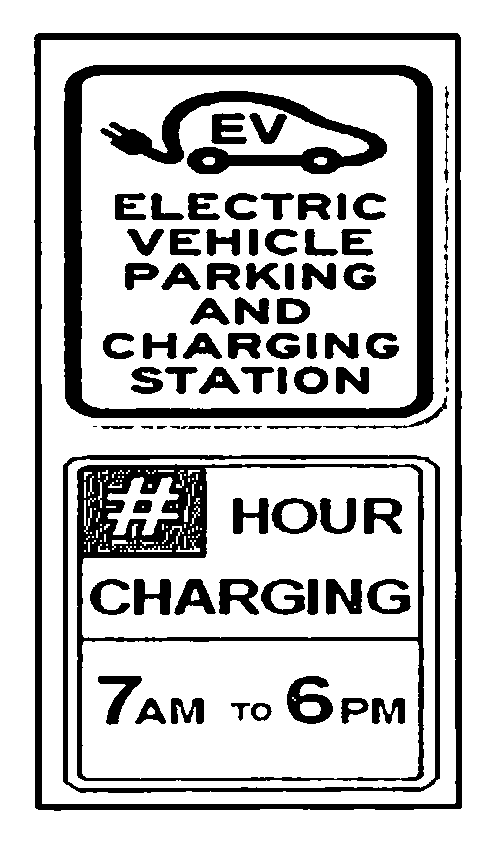
Figure 1. Electric Vehicle Charging Station Sign
(b)
In addition, the qualified property owner must comply with the signage requirement of F.S. § 715.07 and post in front of each EVSE space a towing notice that meets the following requirements:
(i)
The notice must be prominently placed at each driveway access or curb cut allowing vehicular access to the property, within five (5) feet from the public right-of-way line. If there are no curbs or access barriers, the signs must be posted not less than one sign for each twenty-five (25) feet of lot frontage.
(ii)
The notice must clearly indicate, in not less than two-inch high, light-reflective letters on a contrasting background, that unauthorized vehicles will be towed away at the owner's expense. The words "tow-away zone" must be included on the sign in not less than four-inch high letters.
(iii)
The notice must also provide the name and current telephone number of the person or firm towing or removing the vehicles or vessels.
(iv)
The sign structure containing the required notices must be permanently installed with the words "tow-away zone" not less than three (3) feet and not more than six (6) feet above ground level and must be continuously maintained on the property for not less than twenty-four (24) hours prior to the towing or removal of any vehicles or vessels.
(v)
A business with twenty (20) or fewer parking spaces satisfies the notice requirements of this subparagraph by prominently displaying a sign stating "Reserved Parking for Customers Only Unauthorized Vehicles or Vessels Will be Towed Away At the Owner's Expense" in not less than four-inch high, light-reflective letters on a contrasting background.
(Ord. No. 25-19-2338, § 1, 8-20-19)
(H)
Reserved.
(I)
Valet Parking shall be allowed pursuant to the following conditions:
(1)
A valet parking operation that makes use of public property shall comply with Section 15 C, as amended from time to time, of the South Miami Code of Ordinances, entitled "Valet Parking Permits for use of Public Property".
(2)
Stacked parking spaces shall not be counted toward the parking requirement for any use.
(3)
Valet parking shall not make use of off-site parking located adjacent to residential property and/or RO zoned property.
(4)
In no case shall vehicle stacking or double parking be permitted on public rights-of-way or public streets.
(Ord. No. 9-99-1683, § 4, 5-4-99; Ord. No. 33-06-1901, § 1, 12-19-06; Ord. No. 48-08-1983, § 1, 8-21-08)
(J)
Interim Parking Permit. In SR, MO and TODD zoning districts, due to the limited land available for parking, Interim parking may be permitted by four (4) affirmative votes of the city commission, subject to the following criteria:
(1)
A site plan demonstrating all physical aspects of the operation must be submitted and approved by the City.
(2)
Permits for each lot may be issued for interim parking on private or public property for a period not to exceed six (6) months and may be renewed every six (6) months.
(3)
A permit fee of two hundred fifty dollars ($250.00) shall be required in addition to the special use application fee.
(4)
The lot shall be restored to its original condition, by the permittee, upon the expiration, or cancellation, of the Interim Parking permit.
(5)
Access to the parking lot shall be secured when the lot is not in use.
(6)
Interim parking lots are not required to comply with the South Miami Land Development Code requirements related to parking lot landscaping, paving, or drainage; however, they shall:
i.
Provide safe access to and from the site without damage to existing sidewalks or curbs through an improved, safe driveway access.
ii.
Secure any damaged area in such a fashion that will prevent pedestrian or vehicular access to such area and shall be repaired within two (2) weeks of the occurrence of the damage.
iii.
Provide a ten-foot wide level surface area along those portions of the property which abut a public right-of-way, where sidewalks are not available, to accommodate the safe and unobstructed passage of pedestrians. The City may allow a reduction in the width if the City determines that safety concerns are otherwise met.
iv.
Provide a parking lot surface that is level and suitable for the quantity and frequency of traffic expected to use it, free of tripping hazards and without potential safety hazards.
v.
Maintain the parking lot in good condition and avoid conditions indicative of a public nuisance, which shall include, but not be limited to, the following: erosion problems, potholes, silting of streets, dust, overgrowth and accumulation of litter and debris.
vi.
Keep the parking lot free from litter, as that term is defined by chapter 13A-2 of the City Code of Ordinances.
(7)
The City shall assess the impact of the Interim parking request on the surrounding road network. The City may impose reasonable requirements and conditions, including a traffic study if necessary, to the Interim parking permit to ensure the continued compatibility with the surrounding road network.
(8)
Interim Parking lots shall provide parking for disabled persons in accordance with all applicable law.
(9)
Parking fees for Interim parking are permitted and a proposed fee schedule must be submitted with the application for Interim parking permit.
(10)
All signage must be in accordance with the portable commercial parking lot sign regulations, as found in Section 20-4.3.
(11)
All attendants must be well-groomed and wear easily identifiable uniforms. All attendants shall wear on their uniform a name tag identifying employee's name at all times.
(12)
Attendants shall not station themselves upon the public right-of-way for the purpose of actively attracting customers or for any other purpose which results in an interruption to pedestrian and vehicular traffic flow.
(13)
The City may require the operator to hire off-duty police officers.
(14)
The Interim Event parking permit may be revoked by the City Manager upon a finding that the use is not in compliance with the LDC or is causing a public nuisance.
(Ord. No. 9-99-1683, § 4, 5-4-99)
(K)
Procedures for Special Parking Permit. Special parking permits may be approved, disapproved, or approved with conditions by the affirmative vote of four (4) members of the city commission. Special parking permit procedures shall follow those procedures established for special use permits as set forth in Section 20-5.8(B) through (F), and shall follow those procedures for public hearings set forth in general in Sections 20-5.1 through 20-5.6.
(Ord. No. 9-99-1683, § 4, 5-4-99)
Editor's note— The above, entitled "Procedures for Special Parking Permit" was moved from section 20-4.4(J).
(L)
Parking Fees Prohibited Generally; Exceptions.
(1)
No parking fees, charges or other remuneration shall be charged for the use of any or all off-street parking spaces as may be required by this Code, except as provided in this Section.
(2)
Nothing in this paragraph shall be construed to affect any parking fees, charges or other remuneration for publicly-owned parking spaces.
(3)
Commercial Parking Lots shall be considered as any parking lot or structure which provides parking spaces for a fee, charge or other remuneration and shall be permitted in the SR, MO, GR, PI and TODD zoning districts pursuant to the following conditions:
(a)
The use shall not be the principal use and shall serve only as an accessory use.
(b)
The use shall have a current South Miami occupational license.
(c)
The use shall not be subject to the regulations contained in Sections 20-3.6(I)(3)-(5), relating to accessory structure or use setbacks and location, but shall be required to comply with the remainder of 20-3.6(I), Section 20-4.4, Section 20-4.5 and all other applicable regulations of the South Miami Land Development Code.
(d)
For a given parcel on which a commercial parking lot is located, no commercial parking lot shall charge a fee or other remuneration for the code required parking spaces which serve that parcel's principal use(s).
(e)
For the purpose of Commercial Parking Lots only, the parking spaces required by this Code for a given use shall not be considered as required during that use's non-business hours.
(f)
A report must be submitted annually that includes the following:
i.
Reserved.
ii.
Property owner consent
iii.
An acknowledgement of notification of the commercial use of the parking to the tenants in the affected building(s)
iv.
A survey showing the current condition or site plan/floor plan demonstrating all physical aspects of the operation including, but not limited to, the following: location of licensed uses, number of parking spaces, commercial parking lot area, landscaping, location and elevation of signage and points of ingress/egress
v.
List of licensed uses, including hours of operation, located on the subject parcel(s)
vi.
Calculations demonstrating the gross floor area tra (gfa) of on-site buildings, the gfa of on-site uses.
viii.
Any additional information required by the city.
(g)
All attendants must be well-groomed and wear easily identifiable uniforms. All attendants shall wear on their uniform a name tag identifying employee's name at all times.
(h)
Attendants shall not station themselves upon the public right-of-way for the purpose of actively attracting customers or for any other purpose which results in an interruption to pedestrian and vehicular traffic flow.
(i)
All signage must comply with Section 20-4.3 of the LDC.
(j)
The City may require the operator to hire off-duty police officers.
(k)
The parking lot shall be kept free from litter, as that term is defined by chapter 13A-2 of the City Code of Ordinances.
(l)
The Commercial Parking Lot occupational license may be revoked by the City Manager upon a finding that the use is not in compliance with the LDC or is causing a public nuisance.
(5)
Special Events Parking Permit. In SR, MO and TODD zoning districts, due to the limited land available for parking and the short term duration and single occurrence of many events, Special Event parking may be permitted by the City Manager, subject to the following criteria
(a)
A site plan demonstrating all physical aspects of the operation must be submitted and approved by the City.
(b)
Permits for each lot may be issued for Special Event parking on private or public property for a period not to exceed 15 days and may be renewed once, for an additional 15 days.
(c)
An application fee of $150.00 is required. The application fee may be waived at the sole discretion of the City Commission.
(d)
The lot shall be restored to its original condition, by the permittee, upon the expiration, or cancellation, of the Special Event Parking permit.
(e)
Access to the parking lot shall be secured when the lot is not in use.
(f)
Special Event parking lots are not required to comply with the South Miami Land Development Code requirements related to parking lot landscaping, paving, or drainage; however, they shall:
i.
Provide safe access to and from the site without damage to existing sidewalks or curbs through an improved, safe driveway access.
ii.
Secure any damaged area in such a fashion that will prevent pedestrian or vehicular access to such area and shall be repaired within two weeks of the occurrence of the damage.
iii.
Provide a ten (10) foot wide level surface area along those portions of the property which abut a public right-of-way, where sidewalks are not available, to accommodate the safe and unobstructed passage of pedestrians. The City may allow a reduction in the width if the City determines that safety concerns are otherwise met.
iv.
Provide a parking lot surface that is level and suitable for the quantity and frequency of traffic expected to use it, free of tripping hazards and without potential safety hazards.
v.
Maintain the parking lot in good condition and avoid conditions indicative of a public nuisance, which shall include, but not be limited to, the following; erosion problems, potholes, silting of streets, dust, overgrowth and accumulation of litter and debris.
vi.
Keep the parking lot free from litter, as that term is defined by chapter 13A-2 of the City Code of Ordinances.
(g)
The City shall assess the impact of the Special Event parking request on the surrounding road network. The City may impose reasonable requirements and conditions, including a traffic study if necessary, to the Special Event parking permit to ensure the continued compatibility with the surrounding road network.
(h)
Special Event Parking lots shall provide parking for disabled persons in accordance with all applicable law.
(i)
Parking fees for Special Event parking are permitted and a proposed fee schedule must be submitted with the application for Interim parking permit.
(j)
All signage must be in accordance with the portable commercial parking lot sign regulations, as found in Section 20-4.3.
(k)
All attendants must be well groomed and wear easily identifiable uniforms. All attendants shall wear on their uniform a name tag identifying employee's name at all times.
(l)
Attendants shall not station themselves upon the public right-of-way for the purpose of actively attracting customers or for any other purpose which results in an interruption to pedestrian and vehicular traffic flow.
(m)
The City may require the operator to hire off-duty police officers.
(n)
The Special Event parking permit may be revoked by the City Manager upon a finding that the use is not in compliance with the LDC or is causing a public nuisance.
(Ord. No. 9-99-1683, § 4, 5-4-99)
Editor's note— The above, entitled "Parking Fees Prohibited Generally; Exceptions" was moved from section 20-4.4(K).


(M)
Off-Street Parking and Loading and Unloading Requirements.
(1)
General provisions. Adequate space for loading, unloading, and delivery of materials, goods, or services, shall be provided and maintained on the same plot as the building which it serves. Where any structure is enlarged or any use is increased extended so that the size of the resulting occupancy comes within the scope of this section, the full required amount of loading spaces shall be supplied and maintained for the structure or use in its enlarged or extended size. Where the use of a structure or land or any part thereof is changed to a use requiring a loading and/or unloading space, such space shall be supplied and maintained to comply with this regulation section.
(2)
Specifications. For the purposes of this section, a loading and/or unloading space shall be an area at the grade level at least twelve (12) feet wide by thirty-five (35) feet long with fourteen-foot vertical clearance. Each loading space shall be directly accessible from a street or alley without crossing or entering any other required loading or unloading space, and shall be arranged for convenient and safe ingress and egress by motor truck and/or trailer combination. Such loading space shall also be accessible from the interior of any building it is intended to serve.
(3)
Minimum conditions. The following minimum conditions shall apply; additional conditions may be imposed as part of a conditional use or final site plan approval. Required loading and/or unloading spaces shall not be located in the required front setback.
(4)
Loading and/or unloading spaces shall be provided and maintained in accordance with the following:
(a)
For every building or building group or part having a gross floor area of ten thousand (10,000) square feet or more, which is to be occupied for the purpose of commercial or other similar uses requiring the loading and/or unloading by vehicles of material, goods or services, loading or unloading spaces shall be provided and maintained on the same lot with such building, as follows: Loading and unloading spaces and related loading and unloading facilities shall be provided as indicated below by gross building square feet:
TABLE A
(b)
For every multifamily building or group of buildings having twenty-five (25) dwelling units or more, loading or unloading spaces shall be provided and maintained on the same lot with such buildings), as follows. Loading and unloading spaces and related loading facilities shall be provided as indicated below by number of dwelling units:
TABLE B
(5)
No area or facilities supplied to meet the other required parking facilities for a use other than for loading and/or unloading shall be used to meet the requirements of this section for loading and unloading facilities.
(6)
Nothing in this section shall prevent the collective, joint or combined provision of loading or unloading facilities for two (2) or more buildings or uses, provided that such loading or unloading facilities are equal in size and capacity to the combined requirements of the several buildings or uses and arranged as to be usable thereby.
(7)
The City may authorize the use of existing on-street parking spaces for the purposes of providing loading and/or unloading space for commercial buildings. Such use shall only be during the hours of 5:00 a.m. through 7:00 a.m. Monday through Saturday, by application to the City Commission and with the written consent of the adjacent property owner and upon payment of a fee.
(8)
Said fee shall be paid at the actual time of renewal of Business Tax Receipt and be set by the City Manager.
(Ord. No. 12-90-1452, 7-24-90; Ord. No. 13-91-1478, 5-7-91; Ord. No. 18-91-1483, 7-23-91; Ord. No. 17-94-1567, §§ 1—5, 11-1-94; Ord. No. 21-96-1621, §§ 1, 2, 11-19-96; Ord. No. 8-99-1682, §§ 2, 3, 5-4-99; Ord. No. 33-06-1901, §§ 1, 2, 12-19-06; Ord. No. 30-08-1965, §§ 1, 2, 8-5-08; Ord. No. 48-08-1983, § 1, 8-21-08; Ord. No. 25-09-2017, § 2, 11-3-09; Ord. No. 26-09-2018, 11-3-09; Ord. No. 18-11-2091, § 1, 4-19-11; Ord. No. 25-19-2338, § 1, 8-20-19; Ord. No. 20-21-2410, § 3, 9-7-21; Ord. No. 19-24-2504, § 4, 8-20-24; Ord. No. 27-24-2512, § 2, 12-10-24)
20-4.5 - Landscaping and tree protection requirements for all zoning districts.
A.
Intent and Purpose.
(1)
The intent of this section is to provide a mechanism to protect, preserve and restore the tree canopy within the City of South Miami by regulating the care, protection, removal, relocation and trimming of trees. The benefits of trees to the City are many and include the following:
i)
Trees help combat the greenhouse effect by absorbing CO2, a major source of greenhouse gases which contributes to global warming.
ii)
Trees clean the air by absorbing some polluting gases and filter some particulates out of the air by trapping them on their leaves and bark.
iii)
Trees provide oxygen as a product of their growth.
iv)
Trees conserve energy and reduce the urban heat island effect by helping to cool the streets and the city by reducing the direct sunlight from heating pavement and buildings and by evaporative cooling from transpiration of their leaves.
v)
Trees save water by slowing evaporation rates from lawns.
vi)
Trees help prevent water pollution by reducing runoff by allowing the water to flow down the trunk and into the earth below the tree, helping to prevent stormwater from carrying pollutants to the ocean. On hillsides or slopes, trees slow runoff and hold soil in place.
vii)
Trees add to the aesthetic of an area and as landmarks can give a neighborhood a new identity and encourage civic pride.
viii)
Trees provide a canopy and habitat for wildlife.
ix)
Trees increase property values.
x)
Trees can increase business activity. Studies have shown that the more trees and landscaping a business district has, the more business will flow in. A tree-lined street will also help slow traffic, in many instances, enough to allow the drivers to look at the storefronts instead of passing by more quickly.
(2)
The purpose of this section is to declare that the policy of the City of South Miami is to protect and nurture trees, encourage the planting and preservation of trees, and assure that the design and construction of all development activity is executed in a manner consistent with the preservation of existing trees to the greatest extent possible; to ensure that the applicant takes all steps reasonably necessary to preserve or relocate existing trees prior to receiving a permit, and to:
i)
Establish and maintain the maximum amount of tree cover on public and private lands in the city by prohibiting the destruction and removal of trees except in accordance with the standards set forth in this article;
ii)
Maintain all trees in the city to be healthy and nonhazardous condition through professionally accepted arboricultural practices and in compliance with the provisions of this tree protection ordinance, and the established standards of the Chapter 24 of the code of Miami-Dade County;
iii)
Establish and revise as necessary standards for the planting and maintenance of trees so as to improve the economic base of the city by improving property values, to enhance the visual quality of the city and its neighborhoods and to improve public health by lessening air pollution;
iv)
Minimize hazards and damage to streets and sidewalks and lessen public rights-of-way maintenance costs;
v)
Provide for the designation and additional protection of heritage and specimen trees; Promote efficient and cost-effective management of the urban forest through the development of a comprehensive long-range urban forest master plan; and
vi)
Provide latitude in the interpretation and application of city administrative rules, standards and guidelines when reasonable and necessary to implement this section and minimize the destruction of trees.
B.
Definitions. For the purpose of this section, the following definitions shall apply:
(1)
Applicant: A person who is the owner, authorized agent of the owner, lessee of a property under a written lease, or who is authorized to apply for a building permit for the subject property.
(2)
Arborist, Certified: One who is well-versed in the art of arboriculture, including tree surgery, the prevention and cure of tree diseases, and the control of insects, and who has a current International Society of Arboriculture (ISA) Arborist Certification.
(3)
Branch Collar: Trunk tissue that forms around the base of a branch.
(4)
Breast Height: A measurement taken at a height four and one-half feet above grade.
(5)
Caliper: For trees under four (4) inches in diameter, the trunk diameter measured at a height of six (6) inches above natural grade. For trees four (4) inches and greater in diameter, the trunk diameter measured at twelve (12) inches above natural grade. (Per chapter 18A MDC landscape code).
(6)
Champion Tree: A tree that is the largest of its species, including those trees that have been designated by the Florida Department of Agriculture and Consumer Services, or its successor department that controls and/or regulates Florida forests (hereinafter referred to as the "Department of Agriculture"), as a Florida champion tree.
(7)
Controlled tree and shrub species: Species that tend to become nuisances because of their ability to invade proximal native plant communities or native inhabitants, but which, if located and cultivated properly, may be useful or functional as elements of landscape design. This section incorporates by reference the Miami-Dade County Landscape Manual listing of controlled tree species and as may be amended from time to time.
(8)
Crown: The upper branches of the tree canopy.
(9)
Crown Width: The width of the crown at its widest point measured on a plane parallel to the ground.
(10)
Developed land: Land upon which structures or facilities have been constructed.
(11)
Diameter (DBH): The diameter of a tree's trunk measured at a height four and one-half feet above grade. In the case of multiple-trunk trees, the DBH shall be determined using the following formula which produces the diameter of a circle of equivalent cross-sectional area to the smaller circles of the multiple trunks: (square root of (for all trunks, the sum of (the circumference of each trunk squared)) divided by "pi" (3.14).
(12)
Drip line shall mean an imaginary vertical line extending from the outermost horizontal circumference of a tree's branches to the ground.
(13)
Drop-crotch Pruning: A specific type of pruning designed to properly reduce the size of trees and defined by the International Society of Arboriculture (ISA) standards, or any subsequent amendments thereto.
(14)
Effectively destroy shall mean the girdling, or damaging of a tree's trunk, branch or root system or cutting, pruning or trimming not done in accordance with the most recent American National Standards (ANSI) A-300 Standard Practices for Tree Care Operations pursuant to Chapter 4 of the Miami-Dade County Code.
(15)
Equivalent Replacement: A tree, which due to the condition, size and value of the previous or existing tree, is determined by the City to be, or to become within five (5) years, equivalent to the tree to be removed.
(16)
Equivalent Value: An amount of money which reflects the replacement cost of a tree, (including transportation, planting and the initial years maintenance to insure survival) based on its size, condition, location, the market value and specifically the International Society of Arboriculture (ISA) tree evaluation formula.
(17)
Exotic Tree Species: A plant species that has been introduced to Florida by human action and is defined in this ordinance as a non-native species or by Miami-Dade County as a non-native species.
(18)
Florida Number 1 Grade or equivalent shall mean the classification of the quality of a nursery plant as published in Grades and Standards for Nursery Plants, Part II, Fla. Dept. of Agriculture and Consumer Services, Division of Plant Industry.
(19)
Girdling: The cutting through the outer surface of a tree deeply enough to completely sever the cambium around the entire circumference of the tree's trunk, or of a branch of the tree, sufficiently enough to prevent or hinder the normal growth or survival of the tree.
(20)
Grade: The ground level of a subject property, the measurement of the degree of rise or descent of a sloping surface or, in reference to a point of measurement of a tree, the ground level surrounding the outside of a hole into which a tree is, or is intended to be, planted.
(21)
Hat-racking: The flat cutting of the top of a tree, severing the main leader or supporting leaders, and or a process to flat-cut the top of a tree or to remove more than one-third of the tree crown.
(22)
Heritage Tree: A designation given pursuant to an action by the City Commission. The City Commission can grant Heritage Tree status in any of the following categories:
(a)
Champion Size: Tree that is the largest of its species.
(b)
Significant Size: Tree worthy of recognition for size, but not the largest of its species.
(c)
Historically/Culturally Significant: Trees specifically associated with historical dates, events, people, and city landmarks.
(23)
Landscape Manual: The Miami-Dade County Landscape Manual ("MDC Landscape Manual), which is in effect now, or as amended in the future, as the official landscape manual issued by Miami-Dade County, Florida. The MDC Landscape Manual is hereby adopted by the City and incorporated herein by reference, providing that in the event of an express conflict between the MDC Landscape Manual and this section, the latter shall prevail.
(24)
Large Size Tree: A tree of any age, with a mature height of 40 feet or more and a mature crown wider than twenty-two (22) feet.
(25)
Maintenance and Protection: The act of enhancing the viability of a plant, including all marking, watering, pruning, spraying, injecting, fertilizing, treating, bracing, as well as the performance of surgical work and/or cutting above or below the ground.
(26)
Medium Size Tree: A tree of any age, with a mature height of between twenty-six (26) feet and thirty-nine (39) feet, a mature crown between fifteen (15) feet and twenty-two (22) feet.
(27)
Mitigation: Those measures necessary to restore tree coverage, crown, or canopy which have been effectively destroyed, or that were removed with or without authorization under this ordinance.
(28)
Native plant species shall mean a plant species with a geographic distribution indigenous to all or part of Miami-Dade County. Plants which are described as being native to Miami-Dade County in botanical manuals such as, but not limited to, "A Flora of Tropical Florida" by Long and Lakela and "The Biology of Trees Native to Tropical Florida" by P. B. Tomlinson, are native plant species within the meaning of this definition as may be amended or replaced from time to time.
(29)
Natural Forest Community shall mean all assemblages of vegetation designated as Natural Forest Communities on the Miami-Dade County Natural Forest Community Maps and approved by the Board of County Commissioners, pursuant to Resolution No. R-1764-84 and further defined in Section 24-3 of the Miami-Dade County Code as may be amended or replaced from time to time.
(30)
Nonviable: Not capable of living or of providing the ecological or aesthetic qualities associated with a healthy functioning tree.
(31)
Nuisance Plant Species: Any tree or shrub or part thereof growing upon private or public property which is determined by the City to endanger the health, safety and/or general welfare of the City and/or its residents and/or its business owners, operators or customers.
(32)
Person: Any individual, legal entity or any association of individuals and/or legal entities.
(33)
Prohibited Plant Species: Those plant species that are detrimental to native plants, native wildlife, ecosystems, or to human health and/or safety and welfare as well as those species that are listed as prohibited species in the Miami-Dade County Landscape Manual. Also referring to trees that are exempt from the general tree protection requirements of this section 20-4.5 and 20-4.5.1.
(34)
Protected Tree: A tree with a minimum caliper of one and one half inches in diameter as listed in the Miami-Dade County Landscape Manual as amended.
(35)
Protective Barrier: Protective barrier shall mean a temporary fence or structure built to restrict passage into an area surrounding a tree or stand of trees for the purpose of preventing any disturbance to the roots, trunk, or branches of the tree(s).
(36)
Pruning/Trimming: The removing of plant parts, dead or alive, in a manner so as not to damage other parts of the plant. The selective cutting of tree/plant parts to encourage new growth or better flowering; to remove old stems or deadwood; or to shape trees according to ANSI A300 Standards.
(37)
Public Area: Includes all Public right-of-ways, parks and other lands owned or leased by the City.
(38)
Public Right-of-Way: Includes all public streets, roads, boulevards, alleys and sidewalks.
(39)
Roots/Root Systems: The parts of the tree containing the organs that extract water, gases and nutrients from the soil.
(40)
Shade Tree: Any tree which, when mature, has a crown width that is at least two-thirds of the tree's height.
(41)
Site Plan: A comprehensive plan drawn to scale indicating land elevations, public rights-of-way including roadways, and the location of all relevant existing and proposed site improvements including structures, parking, other paved areas, ingress and egress drives, landscaped open space and signage.
(42)
Small Tree: A tree with a height of twenty-five (25) feet or smaller when fully mature, and with a mature canopy smaller than fifteen (15) feet.
(43)
Sound Nursery Practices: The various procedures involved in landscape nursery work that are in compliance with the Florida Department of Agriculture and Consumer Services standards.
(44)
Spread: The greatest horizontal dimension of the branches and foliage of a tree.
(45)
Stem: The primary trunk which is the main upward axis of a tree that supports branches and leaves above the ground, serving to support the tree and to transport and store water and nutrients.
(46)
Specimen Tree: A tree with a DBH of eighteen (18) inches or greater. Dade County Pines of DBH exceeding twelve (12) inches or Cabbage Palms with trunks greater than six (6) feet. The following types of trees that meet these criteria shall not be considered specimen trees:
(a)
Non-native species of the genus Ficus.
(b)
All multi-trunk trees in the palm family, except the Paurotis palm (Accelorrhaphe wrightii).
(c)
All nuisance plant species.
(d)
Prohibited plant species.
(e)
Non-native fruit trees that are cultivated or grown for the specific purpose of producing edible fruit, including, but not limited to, mangoes, avocados, or species of citrus.
(47)
Temporary Shade Tree: A tree in a landscape plan planted to provide temporary shade until adjacent trees reach maturity may be designated as a "temporary shade tree", and may be trimmed back or removed at such time as the surrounding trees require additional access to sunlight.
(48)
Topping: The flat cutting of the top of a tree, severing the main leader or supporting leaders, and or a process to flat-cut the top of a tree or to remove more than one-third of the tree crown.
(49)
Tree: Any self-supporting perennial woody plant that, at full maturity, has a DBH of six (6) or more inches with a minimum fully mature height of twelve (12) feet above grade.
(50)
Tree Abuse: Tree abuse shall include:
(a)
Damage inflicted upon any part of a tree, including the root system, by machinery, construction equipment, cambium layer penetration, storage of materials, soil compaction, excavation, chemical application or spillage or change to the natural grade, or any intentional action or neglect significantly damaging the tree; or
(b)
Hat-racking; or
(c)
Girdling or bark removal of the trunk; or
(d)
Tears and splitting of limb ends or peeling and stripping of bark resulting from improper pruning techniques not in accordance with the current ANS1 A300 Standards; or
(e)
Excessive root cutting; or
(f)
Damage inflicted to or cutting upon a tree which permits infection or pest infestation; or
(g)
Cutting upon any tree which significantly destroys its natural shape; or
(h)
Use of climbing spikes; or
(i)
Any pruning that is contrary to the practices established by the National Arborist Association; or
(j)
Any act that would cause a tree to become nonviable.
(51)
Tree Removal: Directly or indirectly cutting down, poisoning, destroying, removing, or effectively destroying (through damaging, trimming, authorizing or allowing cutting down, destroying, or removing) any tree.
(52)
Tree Relocation: Moving an established tree from one location to another in a manner that assures long-term viability.
(53)
Tree Permit: The city permit required for tree removal, relocation, trimming or pruning of an existing tree.
(54)
Tree service or arborist: Any person, company, corporation or service, which, for compensation, performs tree maintenance and protection.
C.
Elements of Compliance.
(1)
All property within the city shall be subject to the following regulations except as specifically exempted. No parcel within the city may be cleared, grubbed, filled or excavated, nor shall any building be demolished, altered or reconstructed in a manner which negatively impacts regulated trees, changes the site plan, site use or increases the impervious surface area except in compliance with this section 20-4.5 and section 20-4.5.1. Requirements of these sections and Section 20-3.5 do not exempt property owners from compliance with any other section of the City's Code of Ordinance and Land Development Code. However, the City shall be exempt from the tree removal, relocation, pruning and trimming posting requirements for projects involving City property or Rights-of-way.
(2)
All trees required or permitted to be planted pursuant to the requirements in this ordinance shall be selected from the South Miami tree list. Tree species not appearing on the South Miami tree list may be planted only with prior approval of the city manager or designee. Developments which require 16 or more shade trees shall have at least four different high quality shade tree species. The applicant or landscape contractor shall schedule an on-site meeting with the city manager or designee prior to the installation of any trees or shrubs to ensure compatibility with infrastructure and compliance with landscape code requirements.
(3)
Where required shade trees are expected to conflict with planned solar energy generation, developments or property owners may compensate for the required trees by proper pruning or relocating them to a designated area or preserving an equal number of existing high-quality shade trees elsewhere on the site. These trees shall be located so that they can grow to maturity without obstructing the planned generation of solar energy, and the area where they are planted or preserved shall be delineated and noted as a "designated tree area(s)" on the site plans.
D.
Landscaping Requirements — Applicability. Section 20-4.5 shall apply to all public and private development when a building permit is required, except for the following:
(1)
Bona fide agricultural activities: Any property receiving an agricultural classification and assessment pursuant to Section 193.461 of the Florida Statutes, substantiated by a plan submitted indicating the area with the agricultural classification.
(2)
The requirements of Section 20-4.5.1(O) shall not apply to existing attached and detached single-family and duplex dwellings.
(3)
Parking lot buffers will not be required if they cause the elimination of any required parking pursuant to this code.
(4)
Routine maintenance such as re-roofing and painting shall not be considered external alterations for Section 20-4.5 requirements.
E.
Landscape Requirements — Submittals. All submitted landscape plans, irrigation plans, tree surveys and other required submittals must meet the approval criteria of the Planning and Zoning Department, (hereinafter referred to as the "Planning Department") prior to issuance of permits.
(1)
Minimum submittal criteria. All landscape plans must be drawn to scale and have a north arrow, and accurately depict all buildings, pavement, on-site facilities, utilities and lighting systems. The landscape drawing or accompanying development plan must give the permitted use of adjacent parcels and the total square footage of all pavement on-site. Stormwater basins shall be designated as either wet or dry. A plant schedule shall be provided showing the botanical name, size, spacing and number of all required plant materials. Architectural symbols depicting trees to be installed shall not exceed the scale equivalent of five (5) feet in diameter with a solid line; a hatched line around the solid line shall show the expected canopy dimension after twenty (20) years as identified in the South Miami tree list. Any native tree or shrub may be substituted for the identified plant with city staff approval, provided that the tree or shrub is adaptable to the amount of sun/shade, wet/dry and size conditions where it will be planted. Changing tree species shall not diminish the total number of high quality shade trees in their required locations. Plant material shown in addition to the required elements of the landscape plan may be labeled as optional and shall not be subject to inspection.
(2)
Design principles and standards. All landscaped areas required by this article shall conform to the following general guidelines:
(a)
The preservation of structurally sound native trees of high quality shade tree species and shrubs is strongly encouraged to maintain healthy, varied and energy-efficient vegetation throughout the city, and to maintain habitat for native wildlife species. Developments should be designed to preserve existing heritage trees, especially those located within twenty (20) feet of the public right-of-way.
(b)
The landscaping plan should integrate the elements of the proposed development with existing topography, hydrology and soils in order to prevent adverse impacts such as sedimentation of surface waters, erosion and dust.
(c)
The functional elements of the development plan, particularly the drainage systems and internal circulation systems for vehicles and pedestrians, should be integrated into the landscape plan. The landscaped areas should be integrated, especially to promote the continuity of on-site and off-site open space and greenway systems, and to enhance environmental features.
(d)
The selection and placement of landscaping materials should maximize the conservation of energy through shading of buildings, streets, pedestrian ways, bikeways and parking areas. Where possible, shade trees should be planted along internal sidewalks that connect buildings to the street sidewalk and to other buildings on the site.
(e)
Landscaping design should consider the aesthetic and functional aspects of vegetation, both when initially installed and when the vegetation has reached maturity. Newly installed plants should be placed at intervals appropriate to their expected function as short-term or long-term elements. The natural and visual environment should be enhanced through the use of materials which achieve a variety with respect to seasonal changes, species of living material selected, textures, colors and size at maturity.
(f)
The placement of trees around buildings should permit access to the building by emergency vehicles.
(g)
The installation of invasive nonnative species is prohibited as is installation of any species labeled as "Prohibited" in the most recently published version of the Miami-Dade County Landscape Manual.
(3)
Landscape Plans.
(a)
Owner-builder Single Family or Duplex Dwelling: Landscape plans submitted for new one family or duplex dwellings may be in the form of plot plans or drawings prepared by the owner or the owner's representative, provided however, developments requiring site plan review shall meet with the requirements of the section below and with Chapter 481, Florida Statutes.
(b)
All Other Development: Landscape plans for development other than provided for under (a) above, shall be prepared by, and bear the seal of, a landscape architect licensed to practice in the State of Florida, or by persons authorized to prepare landscape plans or drawings under Chapter 481, Florida Statutes. Preliminary landscape plans shall be provided as part of the submission for site plan approval. Such plans shall:
i.
Be drawn to scale with dimensions and include property boundaries, north arrow, graphic scale, and date;
ii.
Include a vegetation survey, including an aerial photograph which outlines the subject site, provided at the same scale as landscape plan(s);
iii.
Delineate existing and proposed structures, parking spaces, and other vehicular use areas, sidewalks, utilities, easements, height and voltage of power lines on the property or adjacent properties;
iv.
Indicate the common and scientific name and quantity of plants to be installed using "Landscape Legend" code format in accordance with the requirements of Section 20-4.5;
v.
Identify all landscape features and non-living landscape materials;
vi.
Show all areas of vegetation required to be preserved by law, including, but not limited to, trees, specimen trees, native plant species, natural forest communities, native habitats and wetlands;
vii.
Illustrate geologic, historic and archeological features to be preserved;
viii.
Depict stormwater retention/detention areas and areas excluded from maximum permitted lawn area;
ix.
Document zoning district, net lot area, required open space, and maximum permitted lawn area;
x.
Show building coverage and the location and dimension of greenbelt and water areas proposed for business and industrial zones, as required in the Land Development Code;
xi.
Complete "Preparer's Certification of Landscape Compliance" Final landscape plans submitted for permit shall include all of the above, as well as the following:
xii.
A fully completed, permanently affixed "Landscape Legend";
xiii.
Delineate critical layout dimensions for trees, plant beds and landscape features;
xiv.
Delineate method(s) to protect and relocate trees and native plant communities during construction;
xv.
Delineate planting details and specifications;
xvi.
Delineate irrigation plans, as may be required by the zoning district;
xvii.
Delineate irrigation details and specifications, as required above; and,
xviii.
Include a notarized "Preparer's Certification of Landscape Compliance" at time of final inspection;
xix.
Include a Grading plan.
(4)
Tree Survey.
(a)
For All Development: Except as provided for in subparagraph (b), a tree survey and tree disposition plan shall be provided for all sites at the same scale as the landscape plan. The tree survey shall be accompanied by an aerial photograph which outlines the subject site without obscuring its features. The tree survey shall provide the following information:
i.
The accurate location and graphic representation, in relation to existing development of all existing trees of a minimum two-inch DBH or ten-foot height, or for native trees, of a minimum one and one-half (1½) DBH or eight-foot height, including those which are proposed to be removed, relocated or preserved on site in accordance with the requirements of this Section 20-4.5 and Section 20-4.5.1.
ii.
The boundaries of any native habitat, native plant community, native plant species, and/or Natural Forest Community and associated understory that exists on site, as determined by Chapter 24 of the Code of Miami-Dade County.
iii.
A table showing the following information:
a.
The scientific and common name of each tree, each of which shall be numbered;
b.
The diameter at breast height (DBH) of each tree, or if a multiple trunk tree, the sum DBH for all trunks; and
c.
An estimate of the height, canopy cover, and physical condition of each tree, and whether specimen tree(s) exist on the site.
(b)
For Single-Family or Duplex Dwellings, Other Than New Construction: Any building permit seeking modification, alteration, or demolition on a single-family or duplex lot, including accessory or appurtenant structures such as carports, decks, fences, driveways, recreational courts, or similar structures, shall require a tree survey and tree disposition plan for the area of the lot affected by the proposed work and within ten (10) feet of said area. The Planning Director may waive the tree survey and tree disposition plan required by this subparagraph where aerial photographs indicate that no trees are located in the affected area or within ten (10) feet of said area, and the Planning Director or its staff has confirmed the accuracy of said photograph(s) by visual inspection of the subject property.
(5)
Irrigation Plans. The City encourages xeriscape landscaping, however, if irrigation is planned, any irrigation plans shall be submitted whenever a landscape plan is required.
(a)
For a new one family or duplex dwelling, the irrigation plan may be indicated on a plot plan or a separate drawing prepared by the owner or the owner's agent indicating area(s) to be irrigated, location and specifications of lines and heads, and pump specifications.
(b)
All Other Development: Irrigation plans shall be submitted with the initial, master building plans. Such plans shall:
i.
Be drawn on a base plan to same scale as landscape plans(s);
ii.
Delineate landscape areas, major landscape features and plant material zones (hydrozones), if applicable;
iii.
Delineate existing and proposed structures, parking areas or other vehicular use areas, access aisles, sidewalks, driveways, the location of utilities and easements, and similar features;
iv.
Include water source, design operating pressure and flow rate per zone, total volume required for typical depths of application, and application rate; and,
v.
Include locations of pipes, controllers, valves, sprinklers, back flow prevention devices, and electrical supply.
vi.
Irrigation details.
F.
Landscape Requirements. The following standards shall be considered the minimum requirements unless otherwise indicated:
(1)
Lawn area (turf).
(a)
For all residential and mixed uses, lawn area shall be limited to a maximum of sixty (60) percent of the required landscaped open space, as required in Section 20-3.5. In residential zoning districts where landscaped open space is not specified, lawn area shall be restricted to a maximum of fifty (50) percent of the net lot area.
(b)
For all office, commercial, and industrial uses, lawn area shall be limited to a maximum of twenty (20) percent of the required landscaped open space, as required in Section 20-3.5. Where landscape open space is not specified, lawn area shall be restricted to a maximum of twenty (20) percent of the net lot area less the area covered by buildings. Very drought tolerant grasses and low growing native plant species, including grasses and forbs, as referenced in the Landscape Manual, may be used as groundcover beyond the maximum permitted grass area.
(c)
Grass areas shall be planted in species well adapted to localized growing conditions in Miami-Dade County. Grass areas may be sodded, plugged, sprigged, hydromulched, or seeded, except that solid sod shall be used in swales or other areas subject to erosion. In areas where other than solid sold or grass seed is used, over-seeding shall be sown for immediate effect and protection until coverage is otherwise achieved.
(d)
Exclusions from maximum permitted lawn areas:
i.
Stabilized grass areas used for parking;
ii.
Grassed areas designated on landscape plans and actively used for sports, playgrounds or picnic areas;
iii.
Grassed areas in the right-of-way; and,
iv.
Stormwater retention/detention areas planted in grasses which are very drought tolerant, as referenced in the Landscape Manual, as well as tolerant to wet soils.
(2)
Irrigation. An irrigation system, or a readily available water supply within a distance of 100 feet, shall be supplied for all landscaped areas. An automatic irrigation system shall be provided for development, if the total area of impervious surfaces devoted to vehicular use areas exceeds ten thousand (10,000) square feet. Such irrigation shall promote water conservation by such methods as drip irrigation and/or efficient sprinkler zoning, as well as reducing the amount of irrigation as plants become established. Each required tree shall be served by a drip ring or bubblers or other appropriate means necessary to ensure that the entire rootball is irrigated. The irrigation system shall be designed and located to minimize the watering of impervious surfaces. Successful establishment of trees should occur within one year. After that time, use of the automatic irrigation system may be discontinued. All required trees that die shall be replaced in the same manner and as required for mitigation of trees that are removed, and replanted trees shall be irrigated for at least one year.
(a)
All newly-planted and relocated plant material shall be watered by temporary or permanent irrigation systems until such time as they are established.
(b)
Irrigation shall be prohibited within native plant communities and natural forest communities, except for temporary systems needed to establish newly planted material. Temporary irrigation systems shall be disconnected immediately after the establishment of plant communities.
(c)
Irrigation systems shall be designed to conserve water by allowing differential operation schedules based on hydrozone.
(d)
Irrigation systems shall be designed, operated, and maintained to not overthrow or overflow on-to impervious surfaces.
(e)
Low trajectory spray heads, and/or low volume water distributing or application devices, shall be used. Overhead irrigation systems shall only be permitted in bonafide agricultural activity areas.
(f)
During dry periods, irrigation application rates of between one and one and one-half (1.5) inches per week are recommended for turf areas.
(g)
A moisture or rain sensor device shall be required on all irrigation systems equipped with automatic controls.
(h)
Irrigation systems shall be timed to operate only during hours and on days permitted in Chapter 32, Code of Miami Dade County.
(i)
If an irrigation system is not provided, a hose bib shall be provided within seventy-five (75) feet of any landscape area.
(3)
Shading Requirements for Structures and A/C Units. Trees shall be planted to provide shade to residential structures that are thirty-five (35) feet in height or less. At least two required lot trees shall be positioned in the energy conservation zone as defined herein. All exterior air conditioning units, except for air conditioning units placed on the roof, shall be shaded by trees and/or shrubs, as referenced in the Landscape Manual.
(4)
Site Trees. Tree permits or natural forest community vegetation removal permits are required prior to removal of trees, specimen trees, or any vegetation in a natural forest community, respectively, pursuant to 20-4.5.1.
(a)
Tree size: All trees, except street trees, and trees located beneath power lines shall be a minimum of ten (10) feet high and have a minimum caliper of two (2) inches at time of planting except that thirty (30) percent of the tree requirement may be met by native species with a minimum height of eight (8) feet and a minimum caliper of one and one-half (11/2) inches at time of planting.
(b)
Minimum number of trees: The minimum number of trees required under Section 20-4.5 for landscape plan submittals shall be as follows:
TABLE A
(c)
Existing trees on site required to be preserved by law and that meet the size requirements in (a) above may be counted toward fulfilling the minimum tree requirements.
(d)
In addition to the number of trees indicated in Table A, additional trees (street trees) may be required as provided in Section 20-4.5.1(O), entitled Street Trees.
(e)
Grassed areas to be used for organized sports as football, soccer or other similar sports or playgrounds that are clearly identified on landscape plans shall not be counted toward calculating tree requirements.
(f)
Prohibited and controlled plant species shall not be counted toward fulfilling the minimum tree requirements. Property owners shall be encouraged to remove prohibited and controlled plant species. Prohibited and controlled plant species shall be removed from the property before a permit for construction (other than for renovations of 50 percent or less of an existing structure) is issued, and if issued, no work shall be permitted until all prohibited and controlled plant species are removed from the site.
(g)
Fifty (50) percent of the required trees and/or palms shall be native species.
(h)
In order to prevent adverse environmental impacts to existing native plant communities, existing Cabbage Palms (Sabal palmetto) may be used to satisfy minimum tree and native plant requirements, except that Cabbage Palms which are rescued from government approved donor sites, transplanted within the site, or commercially grown from seed shall be counted towards the minimum tree and native plant requirements.
(i)
Consideration shall be given to the selection of trees, plants and planting site to avoid serious problems such as clogged sewers, cracked sidewalks, and power service interruptions.
(5)
Shrubs and Hedges minimum standards for size, number and variety.
(a)
Shrubs shall be provided at a ratio of ten (10) per required tree, however the City may determine that based on the cumulative landscaping on site, the ratio of ten (10) per required tree may be reduced to no less than five (5) per required tree. All shrubs shall be minimum of eighteen (18) inches in height when measured immediately after planting.
(b)
When used as a visual screen, buffer, or hedge, shrubs shall be planted, as required under Section 20-4.5 (F) and Section 20-4.5 (G), at a maximum spacing of thirty (30) inches on-center, or if planted at a minimum height of thirty-six (36) inches, shall have a maximum, average spacing of forty-eight (48) inches on-center and shall be maintained so as to form a continuous, unbroken, and solid visual screen within a maximum of one year after time of planting.
(c)
Shrubs and hedges shall not be necessarily of the same species.
(d)
Thirty (30) percent of shrubs and hedges shall be native species.
(e)
Shrubs and Hedges in the Downtown SoMi (DS) district shall be governed by the Shrub and Hedge requirements set forth under Section 20-12.10.
(6)
Vines minimum standards for size and uses. Vines shall be a minimum of twelve (12) inches in length immediately after planting and may be used in conjunction with fences, screens, or walls to meet physical barrier requirements as specified. Planting of perimeter walls with vines is recommended as a deterrent to painting of graffiti.
(7)
Ground Covers minimum standards survival and hedge replacement. Ground cover plants used in lieu of grass, in whole or in part, shall be planted in such a manner as to present a finished appearance and reasonable complete coverage within one year after planting.
(8)
Mulch minimum standards for depth and required use.
(a)
Weed-free mulch shall be applied and maintained in a minimum three (3) inch layer under and around all trees and shrubs, and in a minimum two (2) inch layer under and around all ground cover.
(b)
The use of mulch shall be restricted to planting areas.
(c)
Cypress mulch shall not be used because its harvest degrades cypress wetlands.
(9)
Buffers Between Dissimilar Land Uses additional requirements.
(a)
Additional Requirement for Six-Foot Screening: Where dissimilar land uses exist on adjacent properties, and where such areas will not be entirely visually screened by an intervening building or structure from abutting property, that portion of such area not so screened shall be provided with a buffer consisting of a six (6) foot wall or fence with a life expectancy of at least ten (10) years, or shrubs which normally grow to a minimum height of six (6) feet.
(b)
Increased Standards for Hedge Size/Spacing: Where chain link fencing is permitted, shrubs shall also be required. Shrubs used as a buffer shall be a minimum of thirty (30) inches in height at time of planting, and shall be planted at a maximum spacing of thirty-six (36) inches on center, or a minimum of thirty-six (36) inches in height at time of planting and planted at a maximum average spacing of forty-eight (48) inches on center. Said buffer shall form a continuous screen between the dissimilar land uses within one year after planting.
(c)
Additional Trees Required in Buffers: Buffers screening dissimilar uses shall include trees planted at a maximum spacing of thirty-five (35) feet on center within a minimum five-foot landscaped strip.
(10)
Parking Lot Buffers. All parking lots adjacent to rights-of-way or private streets shall be screened by a continuous planting and/or three (3) foot high wall with a seven (7) foot landscaped strip incorporating said planting and/or wall on private property. Planting material at time of planting shall be either a minimum height of eighteen (18) inches, with a maximum average spacing of thirty (30) inches on center or a minimum height of thirty-six (36) inches with a maximum average spacing of forty-eight (48) inches on center.
(11)
Landscaped Areas in Parking Lots to exceed open space requirements.
(a)
Ten (10) square feet of landscaped area per parking space shall be provided within a parking lot. In order to maximize the distribution of shade, trees shall be planted throughout the interior of the parking lot at a minimum density of one tree per eighty (80) square feet of landscaped area, exclusive of parking lot buffers. Planting areas for each tree shall have a minimum width of five (5) feet, exclusive of the curb dimension, and shall be planted or covered with other landscape materials.
(b)
This requirement is in addition to applicable required open space. Planting areas shall be a minimum of twenty-five (25) square feet.
(12)
Plant Quality minimum standards.
(a)
All plants installed shall conform to, or exceed, the minimum standards for Florida Number One as provided in the most current edition of "Grades and Standards for Nursery Plants, Part I and II," prepared by the State of Florida Department of Agriculture and Consumer Services.
(b)
Trees installed pursuant to this section shall have one primary vertical trunk and secondary branches free of included bark up to a height of six (6) feet above natural grade.
(13)
Prohibitions.
(a)
Prohibited Plant Species shall not be planted and shall be removed from any site which is subject to the requirements of this ordinance.
(b)
Controlled Plant Species listed in the Miami-Dade County Landscape Manual on the effective date of this ordinance shall not be planted within 500 feet of native plant communities as defined pursuant to Section 18-3, Code of Miami-Dade County, Florida as may be amended or replaced from time to time. Additionally, the exotic pest plant and nuisance species, with scientific nomenclature as set forth in Wunderlin, Richard P. and Hansen, Bruce F., Guide to the Vascular Plants of Florida, 2nd Ed. University of Florida Press, Gainesville, FL. (2003), may not be sold, propagated or planted anywhere in Miami-Dade County. If present on a development or redevelopment site, such plants shall be removed prior to development or redevelopment, and their sale, propagation, planting, importation or transportation shall be prohibited. Pursuant to this subsection and in accordance with Chapter 19 of the Code of Miami-Dade County, Florida, developed sites shall be maintained to prevent the growth or accumulation of prohibited plant species including grass, weeds and non-native undergrowth.
(c)
West Indian Mahogany (Swietenia mahagoni) shall not be planted within five hundred (500) feet of a rockland hammock or pine rockland.
(d)
Tree Abuse is prohibited. Abused trees shall not be counted toward fulfilling the minimum tree requirements.
(14)
Pruning Trees shall be pruned in the following manner:
(a)
All cuts shall be clean, flush and at junctions, laterals or crotches. All cuts shall be made as close as possible to the trunk or parent limb, without cutting into the branch collar or leaving a protruding stub.
(b)
Removal of dead wood, crossing branches, weak or insignificant branches, and suckers shall be accomplished simultaneously with any reduction in crown.
(c)
Cutting of lateral branches that results in the removal of more than one-third of all branches on one side of a tree shall only be allowed if required for hazard reduction or clearance pruning.
(d)
Lifting of branches or tree thinning shall be designed to distribute over half of the tree mass in the lower two-thirds (⅔) of the tree.
(e)
Trees shall be pruned in the following manner:
(i)
Cutting of lateral branches that results in the removal of more than one-third (⅓) of all branches on one side of a tree shall only be allowed if required for hazard reduction or clearance pruning.
(ii)
Nothing in this section shall be construed to prevent the proper pruning or trimming of trees where necessary for proper landscape maintenance and safety, provided that no more than one-third (⅓) of the tree's living canopy or foliage is removed in a one-year period.
(f)
Trees shall be pruned according to current ANSI A300 Standards and the Miami-Dade County Landscape Manual.
(15)
Stormwater Retention/Detention Areas.
(a)
Stormwater retention/detention areas shall be designed to maximize the perimeter dimension, where feasible.
(b)
Stormwater retention/detention areas shall be planted throughout with native herbaceous facultative plants, with the following exceptions:
i.
In areas that are designated and actively used for play and/or picnic areas, overflow parking, or sports shall be planted with grasses which are very drought tolerant, as referenced in the Landscape Manual, as well as tolerant to wet soils.
ii.
In areas where the minimum required stormwater retention capacity would be adversely affected.
(c)
The minimum required number of native herbaceous facultative plants shall be one plant per square foot of retention/detention area, including the slope. Minimum required herbaceous plant container size shall be one and one-half (1.5) inches, commonly referred to as a liner. Sprigging, seeding, plugging, hydro-mulching or sodding with native herbaceous facultative plants grown from local seed sources may be used in lieu of liners. Herbaceous plants shall be planted in such a manner as to present a finished appearance and reasonably complete coverage within one year after planting.
(d)
Native facultative trees or shrubs may be used in lieu of native herbaceous facultative plants, provided that the minimum required stormwater retention capacity is not adversely affected.
G.
Landscape Requirements — City Standards for Parking Lot Areas. All vehicular use areas, except those which are located within or beneath structures and those serving single-family or two-family residential uses, shall conform to the minimum landscaping requirements of this sub-section. To ensure that required landscaping in vehicular use areas is used to its greatest potential in relieving the monotony of and insuring circulation safety within such areas, the following standards are set forth:
(1)
Interior Improvements.
(a)
When the interior of any vehicular use area is designed for purposes other than off-street parking, such as a service station, drive-in banking or drive-through retailing, an area or combination of areas equal to not less than ten (10) per cent of the total vehicular use area, exclusive of perimeter landscape buffers, shall be devoted to interior landscaping.
(b)
When the interior of any vehicular use area is designed for off-street parking purposes, the following landscaping elements shall be required in lieu of percentage requirements:
i.
Curbed terminal islands shall be located at both ends of rows of contiguous spaces. Such islands shall be not less than five (5) feet in width and extend the entire length of the spaces. Each terminal island shall have at least one tree for every ninety (90) square feet of area, or portion thereof, and be covered with grass or ground cover as needed to meet requirements under Section 20-4.5(F).
ii.
Curbed interior islands, which measure not less than five (5) feet in width and extend the entire length of the parking space, shall be located within rows of contiguous spaces. There shall be at least one interior island for every eight (8) spaces within each row. Interior islands shall be placed at intervals of not less than six (6) nor more than ten (10) spaces, but shall not be required in rows containing six (6) contiguous spaces or less. Each interior island shall have at least one tree for every ninety (90) square feet of area, or portion thereof, and be landscaped with grass or ground cover as needed to meet requirements under Section 20-4.5(F).
iii.
Interior islands need not be placed directly opposite each other when in abutting parking rows. Any design arrangement which relieves monotony or increases tree coverage of the vehicular use area is permissible.
(2)
Triangles of Visibility.
(a)
All landscaping within required Triangles of Visibility, as defined in Section 20-3.6(G), shall provide unobstructed cross-visibility at a height of between three (3) and six (6) feet.
(b)
Trees having over six (6) feet of clear trunk, with limbs and foliage trimmed in such a manner as not to extend into Triangles of Visibility, shall be permitted in said areas, provided that they in no way create a traffic hazard.
(3)
Wheel Stops (Bumpers) Required in Landscaped Parking Lot Areas.
(a)
Landscaped areas shall be protected from the overhang of parked vehicles. Where such protection is necessary, reinforced concrete wheel stops or an approved continuous curbing of not less than five (5) inches in height shall be installed to prevent such overhang.
(b)
Concrete wheel stops shall be permanently anchored to the ground and located not less than thirty (30) inches from landscaped areas.
(c)
If the overhang area is left unpaved, it shall be landscaped according to this section and the abutting required perimeter buffer or divider median may be four (4) feet in width.
H.
Landscape Plans — Review Criteria. Landscape plans shall be reviewed by the Planning Department in accordance with the following goals and objectives, and the guidelines and illustrations provided in the Miami Dade County Landscape Manual.
(1)
Landscape design shall enhance architectural features, relate structure design to the site, visually screen dissimilar uses and unsightly views, reduce noise impacts from major roadways and incompatible uses, strengthen important vistas and reinforce neighboring site design and architecture.
(2)
Existing specimen trees, native vegetation (including canopy, understory, and ground cover) and Natural Forest Communities shall be preserved to the maximum extent possible, and pursuant to the requirements of Section 20-4.5.1.
(3)
In order to conserve water, reduce maintenance, and promote plant health, plant species shall be selected and installed based on their water needs, growth rate and size, and resource inputs. Plants with similar water needs shall be grouped in hydrozones. Adequate growth area, based on natural mature shape and size shall be provided for all plant materials.
(4)
The plan shall include the use of native plant species in order to reestablish an aesthetic regional quality and take advantage of the unique diversity and adaptability of native species to the environmental conditions of South Florida. Where feasible, the re-establishment of native habitats shall be incorporated into the landscape plan.
(5)
Trees and shrubs shall be planted in the energy conservation zone where feasible, in order to reduce energy consumption by shading buildings and shall be used to reduce heat island effects by shading paved surfaces.
(6)
Street trees shall be used to shade roadways and provide visual order. Where feasible, selected species shall be used to establish a road hierarchy by defining different road types.
(7)
Special attention shall be given to the use of appropriate species located under or adjacent to overhead power lines, near native plant communities, and near underground utility lines. Adequate growth area shall be provided for all plant materials.
(8)
Landscaping shall be designed in such a way as to provide safe and unobstructed views at intersections of roadways, driveways, recreational paths, and sidewalks in accordance with Section 20-3.6(G).
(9)
Historic landscapes and landscape features designated by the local, State, or the Federal government shall be preserved.
I.
Certificate of Compliance—Adjustment to Requirements Permitted.
(1)
A Preparer's Certification of Landscape Compliance bearing the original letterhead of the designing firm and licensing number shall be submitted to and approved by the Planning Department, prior to issuance of any final Certificate of Occupancy, Certificate of Use and Occupancy or Certificate of Completion. The Preparer's Certification of Landscape Compliance shall contain a statement, signed and sealed by the landscape architect or by person(s) authorized to prepare plans by Chapter 481, Florida Statutes, who prepared the approved plans, that the landscape and irrigation plans have been implemented and that all requirements of Section 20-4.5 and Section 20-4.5.1 have been met. Any changes or substitutions to the approved plan shall be approved by the original designing firm prior to the implementation of said changes and substitutions. All changes or substitutions to the approved plan shall be noted on all copies. Changes and substitutions of plant material shall be of similar quality, quantity and size, as originally approved and shall be in compliance with the intent and requirements of Section 20-4.5 and Section 20-4.5.1.
(2)
For a new single-family, duplex residence on its own lot or applicable existing development, the owner or owner's agent may certify in writing that landscape and irrigation have been installed according to approved plan(s).
(3)
The Planning Department shall have the right to inspect all projects for compliance prior to issuance of a Certificate of Occupancy, a Certificate of Use and Occupancy, or a Certificate of Completion.
(4)
Owners are responsible to ensure that landscaping required to be planted pursuant to Section 20-4.5 and Section 20.4.5.1, and all previous versions, now amended, is: (1) installed in compliance with the landscape requirements; (2) maintained as to present a healthy, vigorous, and neat appearance free from refuse and debris; and (3) sufficiently fertilized and watered to maintain the plant material in a healthy condition. If the roots of a Ficus tree are shown to be invading the septic system or drain field of a neighboring property or disturbing a structure, including a sidewalk or roadway, the roots shall be contained by an effective root barrier, or, if the barrier fails to contain the roots, the tree shall be removed and all such remedial action shall be at the expense of the owner of the property where the trunk of the tree is located.
(5)
If any tree or plant dies which is being used to satisfy current landscape code requirements, such tree or plant shall be replaced with the same landscape material or an approved substitute within sixty (60) days of a complaint.
(6)
The Planning Division shall withhold approval of a final landscape inspection prior to issuance of the final Certificate of Occupancy, Certificate of Use and Occupancy, or Certificate of Completion until a Preparer's Certification of Landscape Compliance has been approved by the Division.
(7)
During its review of a site plan, the DRB may recommend to the City Commission adjustment to the requirements of Sections 20-4.5(E) and (F), and Section 20-4.5.1(O) which the City Commission may act upon as part of its final approval without the need for a variance.
(a)
The ERPB on receipt of application for adjustment of landscaping requirements shall have the authority and duty to consider and act upon such application. The application shall be filed by the owner or tenant of the property concerned, or by authorized agents as evidenced by written power of attorney, on forms prescribed by the Planning Department and accompanied by the ERPB application fee.
(b)
In the application, the applicant shall state clearly and in detail what adjustment of landscaping requirements are being requested and the reasons such adjustments are warranted, and shall accompany the application with supplementary data, such as sketches, surveys and statistical information to substantiate the adjustment.
(c)
The ERPB may approve, modify or deny the requested adjustment, but shall approve or modify such request only if it determines that approval of any adjustment would not be contrary to the public interest and would be in keeping with and would preserve the intent of Section 20-4.5, and Section 20-4.5.1
(d)
Procedures regarding Board actions and appeals from the decisions of the E.R.P.B. shall follow the regulations set forth in Section 20-6.2.
(Ord. No. 3-96-1603, § 2, 4-2-96; Ord. No. 7-98-1655, § 1, 4-21-98; Ord. No. 17-11-2090, § 1, 4-19-11; Ord. No. 29-14-2207, § 1, 12-17-14; Ord. No. 15-19-2328, § 8, 4-23-19; Ord. No. 11-24-2496, § 2, 4-2-24; Ord. No. 13-24-2498, § 3(Exh. B), 5-7-24)
Sec. 20-4.5.1 - Tree protection.
A.
Tree Permit Applications, Requirements and Review, Fees. Except as provided herein, no tree may be removed relocated, trimmed or pruned without a permit and mitigation as provided for in this section which may be issued or denied notwithstanding any recommendation to the City Manager for approval by the Environmental Review and Preservation Board. Only the City Commission may approve the removal, relocation or replacement of a heritage or champion trees. A tree in a landscape plan, planted to provide temporary shade until adjacent trees reach maturity may be designated as a "temporary shade tree", and which may be trimmed back or removed at such time as the surrounding trees require additional access to sunlight.
(1)
Permit Required. A tree permit shall be required for the removal or relocation of any tree within the City. The removal of trees that are prohibited or exempted by Section 20-4.5.1(N) shall require a permit, in advance of any such removal, but no fees shall be charged for said permit. A tree permit shall also be required for the pruning or trimming of more than one-third (⅓) of the canopy of a tree. No person, agent or representative thereof, directly or indirectly, shall cut down, remove, relocate, or effectively remove any tree on any property, without first obtaining a tree permit as hereinafter provided. No building permit for any work on the subject site, including new construction, additions, carports, pools, decks, fences, driveways, parking lots, tennis courts, demolition, or similar work, shall be issued by the Building Department unless the Planning Department has determined that a valid tree removal, relocation or trimming permit has been issued in accordance with this section. Miami-Dade County retains authority for all applications for Mangroves and natural forest communities work.
(2)
Application Requirements. Permit applications shall include the name of the property owner, address where tree work will be performed, tree species and diameter, nature of the work, and reason for removal of a tree. The permit application shall be signed by the property owner and, if applicable, its authorized agent. Applications for tree removal shall also include a scaled drawing of the site showing tree size and location, and a statement of how any other regulated trees are to be protected during any approved tree removal and any associated construction or clearing, or grade changes. The city manager or designee shall attempt to verify the information contained in the application and shall either approve or deny the application as to each regulated tree proposed to be removed. Applications for removal of Heritage trees, which cannot be relocated, may only be approved by resolution of the City Commission.
(3)
Criteria for Tree Removal, Relocation, and Replacement. Replacement trees are required to be planted to mitigate Specimen tree removal and one thousand dollars ($1,000.00) shall be paid into the City's Tree Trust Fund in addition to any required mitigation. However, the payment may be waived by the City Commission when the removal is required to protect the health, safety or welfare of an individual or to protect property that is endangered by the tree.
(4)
Imposition of additional conditions. The city manager or designee, as appropriate, may impose other reasonable conditions where need is demonstrated. Such conditions may include restrictions on percentage of canopy removed or the prohibition of tree removal from certain portions of the site under consideration. The city manager, as appropriate, shall be guided by, but not restricted to, the following criteria in imposing such additional conditions:
(a)
The need to provide buffers to adjacent developed property;
(b)
The need to protect soils highly susceptible to soil erosion as identified by the soil survey of the county;
(c)
The need to protect slopes in excess of ten percent
(d)
The need to protect existing wetlands, floodplains and flood channels and other environmentally sensitive areas as shown on existing maps, photographs and other reliable and available sources;
(e)
Any or all of the following conditions may be required:
(i)
The applicant may be required to redesign the project to preserve specimen tree(s), or any other tree determined by the City Manager to be of substantial value due to its species, size, age, form and/or historical significance, and to provide an alternate plan, when feasible, which shall include the preservation of said tree(s) and design any alterations within the scope and intent of the initially proposed plan.
(ii)
Where practical, specimen trees, or any other tree determined by the City Manager to be of substantial value due to its species, size, age, form and/or historical significance, that is proposed for removal shall be relocated on or off-site. The applicant shall adhere to acceptable tree relocation specifications, in accordance with ANSI A300 Standards.
(iii)
If it is impractical to relocate said tree(s) either on or off-site because of viability concerns, the applicant shall be required to replace all trees permitted to be removed in accordance with the tree mitigation requirements in tree removal Section of this ordinance.
(iv)
The City Manager may require that the applicant provide a written report from a Certified Arborist before making any determinations in conjunction with this section. The City Manager and City Arborist may also require monitoring and periodic reporting by a Licensed Landscape Architect or Certified Arborist during construction to assure tree preservation.
(5)
Applications shall be made on the form provided for that purpose and shall include a written statement indicating the reasons for the permit. The following documentation and all applicable fees shall accompany each application.
(a)
For applications for tree removal in conjunction with new construction, including additions, pools, driveways, parking spaces, sidewalks, recreational facilities, and decks, a tree survey drawn to scale identifying the species and listing the height, spread and diameter of all existing trees shall be provided. Said survey shall be prepared, signed and sealed by a Professional Land Surveyor, licensed in the State of Florida.
(b)
For applications for tree removal in conjunction with any other activity requiring a building permit, or for any other tree removal, a site plan prepared, signed and sealed by a Professional Land Surveyor, licensed in the State of Florida drawn to scale identifying the species and listing the height, spread and diameter of all existing trees shall be provided. Said site plan may be limited to the immediate area of the proposed work, and photographs of the existing trees within said area may be acceptable in lieu of tree identification regarding species, height, spread and diameter, provided those photographs permit identification by the City Arborist.
(c)
A tree disposition plan that is prepared, signed and sealed by a Florida licensed professional who holds an Architect, Landscape Architect or Land Surveyor license, that is drawn to scale, and that provides the numbering, identifying, and listing all existing trees and specifying the condition of each tree and whether said trees are to remain, to be removed and/or to be relocated. This plan shall also illustrate the location of all existing structures and/or all proposed new construction, as applicable, the location of any overhead and/or underground utilities and the new locations of existing trees to be relocated on site.
(d)
A tree mitigation plan prepared in accordance with the tree mitigation Section of this ordinance.
(6)
All of the required plans, data or other information required with the application shall be included on the proposed development plan or on the supporting documents submitted with the plan or the plat. The following requirements apply:
(a)
Decisions on tree removal shall be based on a qualitative tree survey performed by a landscape architect licensed to practice in the State of Florida under CH 481 FS, and evaluated by the City. The landscaping plan shall show all trees to be preserved, provide for protective tree barriers that meet the requirements of this tree protection ordinance, and specify the details of the mitigation required in this section.
(b)
The requirements for mitigation of regulated trees approved for removal as part of development plan or subdivision plat review are as follows:
(7)
When the replacement planting requirements of this ordinance cannot be met, the City shall collect funds according to the City's tree value mitigation chart which shall be deposited in the Tree Trust Fund.
(8)
In the Downtown SoMi (DS) district, replacement plantings which meet the quality and size standards outlined in this section may also count toward the Site Tree requirement contained in Section 20-12.10, South Miami Land Development Code.
B.
Review of Application.
(1)
Removal and mitigation of regulated trees subject to subdivision or development plan approval. When tree removal or relocation is contemplated in conjunction with any development requiring approval of a final plat or final waiver of plat, upon receipt of approval of the plat, prior to final site plan approval, a permit limited to activities necessary to provide for site preparation shall be considered and either approved or denied.
(2)
Upon receipt of a completed application, the Planning Department and the City Arborist, shall review said application for compliance with the regulations as set forth in this Section. Such review shall include a field inspection of the site, photographic record of the trees on the site and referral of the application to other departments or agencies as necessary, and shall ensure that the applicant takes all steps reasonably necessary to preserve or relocate existing trees prior to receiving a tree permit. If the tree permit is being requested in conjunction with or to make way for construction for which site plan approval is required, no action shall be taken on the tree permit application until the site plan is approved. Within 15 calendar days after site plan approval, if applicable, or the receipt of a completed application, the Planning Department shall issue a notice of its intended decision on a preliminary approval of an application, If the request for a tree permit is for an unhealthy, damaged, or dying tree, or if the tree poses a threat to persons or property, documentation of such condition by the City Arborist shall be included in the preliminary approval of the application.
(3)
Preliminary approval for an application involving tree removal activity shall be granted only if the City finds that all reasonable efforts have been undertaken in the architectural layout and design of the proposed development to preserve existing trees and to otherwise enhance the aesthetic appearance of the development by the incorporation of trees in the design process. Upon the issuance of a preliminary approval, root pruning of trees designated to be relocated may be immediately commenced pursuant to the preliminary approval; provided, however, that no actual removal of a tree shall take place until issuance of the final tree permit.
(4)
Notice. At the end of the next business day following the completion of the Preliminary Approval review of an application for a tree permit, the Planning Department shall notify the applicant of the Planning Department's intent to issue the Preliminary Approval ("Notice of Intent"). The applicant shall post the Notice of Intent, on or adjacent to the property, in a location visible to the general public for at least ten (10) continuous calendar days prior to final permit issuance and shall, in writing, notify the Planning Department that the Notice of Intent was posted and include the date of the posting and photographic evidence of the same. The Notice of Intent must state the date of the issuance of the notice, the date of the posting of the notice and shall advise the public that any objection substantiated by a licensed arborist, certified under oath, that the trees to be removed or relocated do not meet the requirements of this tree protection ordinance ("Certificate of Non-compliance"), must be made by filing a notice of appeal and the original Certificate of Non-compliance with the City Clerk within ten (10) calendar days of the date of the posting of the notice. The appeal shall be in accordance with Section 13-27 of the City Code, other than as to the time for filing the appeal, which under these circumstances is ten (10) days.
C.
Issuance of Permit. If no appeal is filed with the City Clerk, as stated in the posted Notice of Intent, on or before the end the 10 calendar day notice period referred to above in subsection (5), the permit may be issued. The tree permit shall be posted by the applicant on the property where it is clearly visible to the general public, commencing on the date of its issuance, and it shall remain posted until the authorized work is completed. The property owner shall be responsible for insuring that the tree permit is displayed until the city declares in writing that the authorized work is completed and the permit has been honored without damage to trees.
(1)
The property owner shall provide the City Manager with a performance bond in a form approved by the City Attorney, if required by the City Manager:
(a)
The City Manager may require the posting of a performance bond to guarantee compliance with all conditions, limitations, and restrictions of the tree permit, including, but not limited to, planting of all required replacement trees.
(b)
The bond shall be equivalent to one hundred fifty percent (150%) of the estimated replacement cost of the trees to be removed at maturity or any other permitted activity and, with the written consent of the City Manager, may be in the form of a letter of credit from an FDIC insured institution, surety, cash, or certificate of deposit.
(c)
All performance bonds shall remain in force for a minimum of either one year after the actual completion date of the permitted activity (to ensure that any replanted trees which perish are replaced), or until viability of all replanted trees has been achieved, whichever occurs last.
(2)
All tree permit applications which remain incomplete for a period of one hundred twenty (120) days shall expire and be null and void at the end of that period of time. A new tree permit application shall be required for all work previously proposed under a permit application which has expired or that has been denied or rejected. Approved permits shall expire, if work as specified, is not commenced within one hundred and eighty (180) days of issuance of the permit.
D.
Fees. Fees shall be as set forth in this ordinance or as established in the City's Fee Schedule, the latter of which shall take precedence in the event of a conflict. Applications submitted by government agencies for tree removals solely in areas dedicated to public use may, at the discretion of the City Commission, be exempted from application fees and permit fees.
E.
Final Inspection. No later than 18 months following the completion of the authorized work, the applicant shall schedule a final inspection with the City Arborist for verification of compliance with authorized work including any required maintenance of the foliage.
F.
Tree Trust Fund.
(1)
There is hereby created a Tree Trust Fund, the purpose of which is to acquire, protect, and to plant trees on public property.
(2)
Disbursement from Tree Trust Fund. Monies obtained for the Tree Trust Fund shall be disbursed for the acquisition, maintenance, management, protection, or planting of trees on public property or for the preservation of trees through the purchase of lands. This fund shall not be used for or toward the installation of new trees that would already be required for a development.
(3)
Source of monies for the Tree Trust Fund. Said Tree Trust Fund shall consist of contributions in lieu of, or in conjunction with, required replacement plantings under this tree protection ordinance. The City shall collect funds designated for the Tree Trust Fund when the replacement planting requirements of this ordinance cannot be met and from other sources.
(4)
Minimum species diversity standards. When more than ten (10) trees are required to be planted, a diversity of species shall be required. The number of species to be planted shall be based on the overall number of trees required. The applicant shall be required to meet the minimum diversity standards as may be set by the City from time to time.
G.
Tree Mitigation. All tree mitigation required by this ordinance shall be accomplished in accordance with the requirement set forth in the Miami-Dade County Landscape Manual and or Miami-Dade County Chapter 24-49, as well as in compliance with the provisions of this Section. All replacement trees shall be a minimum of a Florida Grade 1 per the grades and Standards of the State of Florida.
(1)
Prohibited/Exempt Plant Species. Mitigation shall not be required for the removal of any prohibited species unless it meets the canopy exception for prohibited plant species.
(2)
Tree Quality. Trees installed as mitigation in accordance with this section shall conform to, or exceed, the minimum standards for Florida Number One as provided in the most current edition of "Grades and Standards for Nursery Plants, Part I and II," prepared by the Florida Department of Agriculture and Consumer Services. Trees shall be planted according to sound nursery practices as illustrated in the Landscape Manual and Landscape code Chapter 18A of the MDC code.
(3)
Off-Site Mitigation. If the total number of trees required as mitigation cannot be reasonably planted on the subject property, the applicant may enter into agreement with the City, to plant excess number of replacement trees on public property within the City or at the option of the City to make a payment to the Tree Trust Fund in accordance with the schedules herein. In the event that an owner is required to replace a tree but does not want to replace the tree on the owner's property, the owner shall be given sixty (60) days to find another location that is within the City and approved by the City Arborist. The new approved "Off-site" location may be either on public or private property but it shall have sufficient space to permit the trees in question to grow to their natural sizes. If such trees are planted Off-site, the trees shall be maintained in a healthy and viable condition for a period of five (5) years. If any of the mitigation trees are not viable at any time within the five-year period, the owner shall be required to pay into the tree mitigation fund the value of the trees that are no longer heathy and viable.
(4)
Tree Trust Fund. If the total number of trees required as mitigation cannot be reasonably planted on the subject property, or at the City's direction, as an alternative to the off-site mitigation provided in the Tree removal Section of this ordinance, the applicant shall contribute to the City's Tree Trust Fund the sum of five hundred dollars ($500.00) per inch DBH required as mitigation in accordance with the Tree removal Section of this ordinance.
H.
Mitigation Methods.
(1)
Unless otherwise specified in this tree protection ordinance, where mitigation is required, it shall be allowed by two methods, mitigation trees (on an inch-for-inch basis or as otherwise specified) and mitigation payment. The amount of mitigation is as specified herein below.
(2)
Mitigation trees shall be of high quality shade species as identified on the South Miami tree list, meeting the specifications of and sited in accordance with the requirements of this tree protection ordinance. The installation of new trees for a development as required by this chapter may count as mitigation for trees removed from the site, except where those removed trees are of a high-quality species. The preference is for mitigation trees to be planted on the site, but where it is demonstrated that no acceptable space is available, mitigation trees may be planted offsite within city limits. In these instances, the required mitigation trees may be established on a different site within the city limits approved by the city manager or designee, or the city manager or designee may allow a payment in an amount to be made to the city Tree Trust Fund in an amount as set forth in this ordinance.
(3)
Payment shall be made prior to receipt of tree permit, or at such other time as specified in a development order. Mitigation payments received by the city shall be deposited in the city Tree Trust Fund.
I.
Tree Preservation During Development and Construction.
(1)
Tree Protection During Construction. A photographic record of the trees within the proposed barrier area shall be made by the City Arborist before any permit, including a demolition permit, is issued. Trees shall be protected during construction through the use of protective barriers in accordance with the Miami Dade County Landscape Manual or other nationally recognized arboricultural standards approved by the city manager or designee shall be used as guidelines for tree protection, planting, pruning and care during development and construction.
(2)
Trees that are to remain on site or to be relocated, shall be clearly identified with a tag, including an identification reference to the tree survey required as part of the landscape plan or tree permit. A protected area within the drip line of the tree or within a radius of ten (10) feet measured from the tree trunk, whichever is greater, shall be maintained around trees to remain in accordance with the Landscape Manual, unless the city's certified arborist City Manager otherwise determines in writing that a smaller or larger protected area is acceptable for each tree, or an alternative tree protection method is approved.
(3)
During demolition and/or development, including installation of irrigation systems or any other underground installations, protective barriers shall be placed around each tree and shall remain in order to prevent the destruction or damaging of roots, stems or crowns of such trees, and to prevent the deposition of any fill or compaction to the drip zone of the tree. The barriers shall remain in place and intact until such time as approved landscape operations begin; however, barriers may be removed, subsequent to written permission from the City after an onsite inspection, temporarily to accommodate construction needs, provided that the manner and purpose for such temporary removal will not harm the trees. The trees shall be properly irrigated throughout the building process. Persons who cause tree damaged during construction shall be subject to the penalties set forth in the provisions of Section 20-4.5.1(L). Understory plants within protective barriers shall be protected.
(4)
Barriers required. Prior to clearing, demolition, or other construction activities, the city manager or designee shall determine which trees, if any, require protection. Protective barriers shall be constructed, as necessary, to prevent the destruction or damaging of regulated trees that are located within 50 feet of any construction activity or storage of equipment and materials. Barrier placements along subdivision streets are regulated in accordance with the provisions of this section. Trees identified for preservation which are destroyed or severely damaged shall be mitigated in accordance with this section prior to issuance of a certificate of occupancy or use. To avoid conflicts between barrier placements and demolition and construction activities, barriers shall be drawn to scale on the demolition, grading and paving sheets of the development plan.
(5)
Barrier zones. All regulated trees in areas of demolition or construction that have not been permitted nor designated for removal by either the terms of the permit or approved development order shall be protected by barrier zones erected and inspected prior to construction of any structures, road, utility service or other improvements. Barricades shall comply with the following:
(a)
Protective barriers shall be plainly visible and shall create a continuous boundary around trees or vegetation clusters in order to prevent encroachment by machinery, vehicles or stored materials. To further protect tree roots, a layer of wood chips at least eight inches thick shall cover the soil within the barricade. Barricades must be at least three feet tall and must be constructed of either wooden corner posts at least two by four inches buried at least one foot deep, with at least two courses of wooden side slats at least one by four inches with colored flagging or colored mesh attached, or constructed of one-inch angle iron corner posts with brightly colored mesh construction fencing attached. Heritage trees shall be protected by galvanized chain link fencing a minimum of 48 inches high, 11-gauge wire, two-inch mesh size secured with 17/8 inch line posts no further than 10 feet apart secured at a depth of three feet below soil line. Corners shall be secured with 23/8 inch line posts secured to a depth of four feet below soil line.
(b)
Barriers shall be placed at the greater of the following:
(i)
At or outside the dripline for all heritage and champion trees and all regulated pine and palm trees;
(ii)
At a minimum of two-thirds of the area of the dripline for all other regulated species; or
(iii)
At the tree root plate.
(c)
If complying with the above placement of barriers is found to unduly restrict development of the property, the city manager or designee, or the appropriate reviewing board may approve alternative barrier placements or methods of protection provided that at least fifty (50) percent of the area under the canopy dripline remains undisturbed (no grade change or root cut) and further provided that there shall be no disturbance to the tree root plate. Protective barriers may not be removed or relocated without such approval.
(d)
No grade changes shall be made within the protective barrier zones without prior approval of the city manager or designee. Where roots greater than one inch in diameter are damaged or exposed, they shall be cut cleanly and re-covered with soil within one hour of damage or exposure.
(e)
Protective barriers shall remain in place and intact until such time as landscape operations begin. If construction needs dictate a temporary removal (for less than twenty-four (24) hours), the city manager or designee, may approve or deny the temporary removal of protective barriers.
(f)
Landscape preparation in the protected area shall be limited to shallow disking of the area. Disking shall be limited to a depth of four inches unless specifically approved otherwise by the city manager or designee.
(6)
No gas, oil, fill, equipment, building materials or building debris shall be placed within the areas surrounded by protective barriers, nor shall there be disposal of any waste materials such as paints, oils, solvents, asphalt, concrete, mortar or any other materials harmful to trees or understory plants within the areas surrounded by protective barriers.
(7)
Trees shall be braced in such a fashion as to not scar, penetrate, perforate or otherwise inflict damage to the tree.
(8)
Natural grade shall be maintained within protective barriers. In the event that the natural grade of the site is changed as a result of site development, such that the safety of the tree may be endangered, tree wells or retaining walls may be required.
(9)
Underground utility lines shall be placed outside the areas surrounded by protective barriers. If said placement is not possible, disturbance shall be minimized by using techniques such as tunneling.
(10)
Fences and walls shall be constructed to avoid disturbance to any protected tree. Post holes and trenches located close to trees shall be dug by hand and adjusted as necessary, using techniques such as discontinuous footings, to avoid damage to major roots.
(11)
If any preserved tree is not alive and healthy three (3) years after the certificate of occupancy is granted, it shall be removed and replaced with the tree or trees that originally would have been required by this code. The area that was preserved to accommodate the preserved tree shall be maintained in an unpaved condition and the replacement trees established in this area.
(12)
The Planning Department shall maintain, and make available to the public, descriptions and illustrations of tree preservation and protection practices which will assist in assuring that preserved trees survive construction and land development.
(13)
Inspections. The city manager or designee shall conduct periodic inspections of the site before work begins and/or during clearing, construction and/or post-construction phases of development in order to ensure compliance with these regulations and the intent of this section.
(14)
Denial; conditions. The city manager or designee may deny a proposal for development because one or more champion or heritage trees have not been preserved or adequately protected, or may require special conditions of approval that may include but are not limited to the following:
(a)
Requiring the trees to be protected with chain-link barricades.
(b)
Requiring a soil aeration system in the vicinity of tree roots as needed, particularly where fill will be added over roots of preserved trees or where compaction may reduce the availability of water and oxygen to tree roots.
(15)
Native trees. At least Fifty (50) percent of trees on the required landscape plan should be native species. Cultivars of native trees are considered native species.
(16)
Pruning. All trees may be pruned to maintain shape and promote their shade-giving qualities and to remove diseased or dying portions in areas where falling limbs could be a hazard to people or property. Tree pruning shall be done in accordance with the most current version of the American National Standard for Tree Care Operations "Tree. Shrub and Other Woody Plant Maintenance" (ANSI A300) and "Pruning. Trimming. Repairing. Maintaining, and Removing Trees. and Cutting Brush-Safety Requirements" (ANSI Z133). The pruning or trimming of any tree shall be in accordance with guidelines in the Landscape Manual. No more than twenty-five (25) percent of a tree's living canopy shall be removed within a one-year period. No more than twenty-five (25) percent of the crown should be removed at one time. On young trees, limb removal shall leave no more than thirty-three (33) percent of the trunk bare of branches. So that shade trees can grow with sturdy structure, the top branch or leader shall not be removed. Hooks or climbing spikes shall not be used to climb trees unless the tree is being taken down. Mature trees overgrowing vehicular use areas shall be pruned to allow the passage of emergency vehicles. Excessive pruning, pollarding, or pruning of trees into round balls of crown or branches, which results in an unnecessary reduction of shade and promotes weak branch attachments is prohibited.
(17)
The practice known as "Hat-racking" is not permitted and shall be considered a violation of Section 20-4.5 and Section 20-4.5.1.
(18)
Any other tree abuse, or activity that can effectively destroy a tree, shall also be considered a violation of this section.
J.
Authority to Supervise, Enforce, Modify, and Supplement Regulations.
(1)
Planning Department. It shall be the duty of the Planning Department to coordinate with the City's Arborist and public works personnel to ensure compliance with the regulations contained herein and to cooperate with, and assist the code enforcement personnel in the prosecution of any violation of this section.
(2)
Code Enforcement Division. It shall be the duty of the Code Enforcement Division ("Code Enforcement") to prosecute violations of the regulations contained herein. The Code Enforcement Division may prosecute violations in conjunction and cooperation with the Planning Department or on its own initiative.
(3)
Police Department. In instances in which a person is found cutting or otherwise causing the destruction of a tree without a permit, in addition to the Code Enforcement agency, the South Miami Police Department shall require such person or persons to cease such operations until the necessary permit is obtained.
(4)
City Manager. The city manager is hereby authorized to enter into agreements with the owners of private property located within the city for the purpose of acquiring easements to plant trees on such property and in consideration for such agreement the private property owner shall acquire ownership of such trees as the city may plant; provided, however, that any such agreement shall limit the duration of the easement to a time period of two years and shall limit the property interest acquired by the city to that distance sufficient to allow the planting and initial maintenance of trees, but in no case to exceed a maximum of a 22-foot setback from the property line or right-of-way held by the city. Provided further, that under such agreement the private property owner shall agree to subsequently maintain the trees planted thereon and shall also agree to hold the city harmless for any liability attributable to the planting or presence of the trees on the private property.
(5)
Special Master. The Special Master hearing any appeal or protest of a penalty issued pursuant to this section shall determine if a violation of this tree protection ordinance has been committed and shall not have discretion to lessen the fine set by this ordinance.
K.
Enforcement.
(1)
Jurisdiction. The City shall have jurisdiction for the proper and effective enforcement of this section. The City shall have the right to inspect subject properties in accordance with the approved tree permit and the provisions of this section.
(2)
Individual Enforcement. Each tree removed without a tree permit shall constitute a separate and distinct violation and shall be the subject of individual enforcement.
(3)
Tree Viability After Project Completion. If the City determines that any tree, that is required to be planted pursuant to a tree permit, is not viable, alive, and growing, one year after all associated development activity on the property is completed, the City shall require that said tree be replaced with the same tree species and size which was originally planted or relocated, as per the approved tree permit or may assess penalties as prescribed in this section for illegal tree removal. Such penalties shall be deposited in the Tree Trust Fund.
(4)
Any person who violates this tree protection ordinance shall be required to pay a fine and shall be, in addition to paying a fine, required to mitigated in accordance with the tree mitigation requirements of this ordinance.
(5)
Withholding of a New Building Permit. The removal of any tree in violation of this section shall constitute grounds for withholding new building permits for the subject property until the violation has been corrected, including the payment of all fines and the planting of all trees required as mitigation, pursuant to this section has occurred to the satisfaction of the City. Alternatively, in order to obtain the new building permit, the person in violation may post a performance bond pursuant to 255.05 of the Florida Statues naming the City of South Miami as Obligee. The bond shall be in the amount of ten percent of the construction cost or ten percent of the appraised value of the property, whichever is greater. The bond will be maintained in place until the violation has been corrected, pursuant to this section.
(6)
Withholding of a Certificate of Occupancy. The Planning Department shall not approve the zoning inspection required for a temporary or final Certificate of Occupancy until all violation of this section have been corrected, including the payment of all fines and the planting of all trees required as mitigation, pursuant to this section.
(7)
Occupational License. The occupational license of any person who performs any services in the City and who violates this ordinance shall be suspended, or if yet to be issued, shall not be issued, until the violator has complied with this ordinance, paid all fines incurred and complied with all requirements for tree mitigation.
(8)
Remedies Cumulative. The remedies provided in this section shall be cumulative to all remedies provided by law and/or equity, and the election of one shall not preclude the other.
(9)
Costs and Fees. In the event the City institutes any civil action to enforce the terms of this section in a court of competent jurisdiction, the City shall be entitled to recover the fines imposed pursuant to the violation(s), the cost of trees required as mitigation, the costs associated with the investigation and prosecution, inclusive of a reasonable attorney's fee for prosecuting attorney, together with any equitable and legal remedies deemed reasonable and proper by the court.
L.
Penalties, Remedies Cumulative.
(1)
Fine. Any person, and each agent thereof, including the owner, who, without an appropriate permit required by this ordinance, relocates, trims or removes a tree, and/or orders, instructs or allows others to relocate, trim or remove a tree in violation of this ordinance shall (i) comply with the tree mitigation requirements of this ordinance in the form of replacement trees or, if replacement is not possible, shall pay the amount required in lieu of replacement and (ii) shall pay a fine of two hundred fifty dollars ($250.00), per violation. Where there are two (2) or more penalties for the same offence, all the penalties shall apply, unless found to be excessive by a court of competent jurisdiction and then the more stringent enforceable penalty or penalties shall apply. All fines and monetary mitigation payments shall be deposited into the Tree Trust Fund. Each tree removed, relocated or trimmed without an appropriate permit, shall constitute a separate and distinct violation, subject to a separate fine and mitigation. If the violator fails to timely complete the requirements of this ordinance for tree mitigation ("Tree Mitigation Violation"), the violator shall pay an additional fine of two hundred fifty dollars ($250.00) for each day thereafter until the mitigation is completed. The fine for any repeated violation of this ordinance by the same person shall increase to five hundred dollars ($500.00) for each repeated violation. The fine for a repeated Tree Mitigation Violation by the same person shall be five hundred dollars ($500.00) per day. The owner of the property where the violation occurred shall be jointly and severally liable for the same fine as the person who removed, relocated or trimmed a tree without an appropriate permit. All of the fines provided for in this ordinance may be increased or decreased by and as set forth in the City's Schedule of Fees and Fines.
(2)
Tree Mitigation Required. In addition to the monetary fine established above, the planting of replacement trees shall be required. If the total number of trees required as mitigation cannot be reasonably planted on the subject property by the sole determination of the City Manager who shall be guided by the principal of tree protection and tree preservation, the applicant shall contribute into the City's Tree Trust Fund in an amount based upon the chart below or as otherwise provided more stringently in this section. Mitigation that is required by this ordinance shall be completed within sixty (60) days after the violator has received a citation and shall be in addition to any and all other applicable requirements or sanctions.
(3)
Irreparable or Irreversible Violations. In the event the Special Master finds that the unauthorized removal, relocation, or trimming of any tree is irreparable or irreversible in nature, he shall impose a fine not less than two thousand dollars ($2,000.00) and not to exceed five thousand dollars ($5,000.00) per violation, plus mitigation as required in this chapter. In determining the amount of the fine in excess of two thousand dollars ($2,000.00), the Special Master shall consider, the following factors:
(a)
The gravity of the violation;
(b)
Any actions taken by the violator to correct the violations; and
(c)
Any previous violations committed by the violator.
M.
Tree Mitigation Value. This tree value mitigation chart shows the following values which are intended to be minimum levels of replacement for each size of tree removed. This chart and/or the values in the chart may be amended by the City's Fee Schedule from time to time.
For every five hundred (500) square feet of canopy removed or part thereof, a hardwood tree replacement of at least twelve (12) feet tall is required or for every three hundred (300) square feet of canopy removed or part thereof, a hardwood tree replacement of at least eight (8) feet tall is required. Alternatively, a minimum level of financial contribution of five hundred dollars ($500.00) or one dollar and five cents ($1.05) per square foot of canopy, whichever is greater, is required in lieu of replacement plantings.
The above formula approximates the following example:
For instance, if two thousand three hundred (2,300) square feet of tree canopy were removed, the replacement requirement would be four (4) twelve-foot tall trees and one eight-foot tall tree. In lieu of replacement plantings, this example would require a financial contribution in the minimum amount of two thousand five hundred dollars ($2,500.00).
N.
Exemptions. The following are prohibited and controlled plant species that are exempt from the general tree protection provisions of this section. A no-charge permit will be issued for removal of prohibited and/or invasive non-native plants species.
(1)
Any tree growing in a botanical garden or a licensed plant or tree nursery business.
(2)
Upon determination in writing by the City Manager that tree permitting requirements will hamper private or public work to restore order to the City after a declared state of emergency by the City Commission.
(3)
The removal of any tree during or following an emergency such as an act of nature or a life safety issue. The city reserves the right to require mitigation once the life safety issue is resolved.
(4)
Removal of any dead tree
(5)
Exemption from mitigation. On properties with canopy cover exceeding 50% of the total lot coverage, canopy covering up to ten (10) percent of the lot may be removed per calendar year without mitigation, provided the total canopy cover does not drop below fifty (50) percent.
(6)
A living tree of the following prohibited or nuisance plant species except when present in a dense distribution or substantial canopy coverage deemed to be of significant importance to the aesthetic or environmental benefit to the area as determined by the City Manager:
O.
Street Trees.
(1)
Street trees. Street trees shall be planted along the sides of all streets within a development and on the development side of any contiguous street. Street trees shall be planted for every thirty (30) to fifty (50) feet of street frontage, depending on the canopy area needed for the tree species. The widths of driveways along a street shall be subtracted from the linear feet of street frontage length for the purposes of calculating the number of required street trees. In no case shall trees of species with spreading crowns (e.g., live oaks) be spaced closer together than twenty-five (25) feet or shall trees of any species be spaced farther apart than sixty (60) feet. Alleys are exempt from this requirement for street trees. Street tree diversity is to be attained city-wide in order to reduce the effect of loss of street tree species due to insect or disease outbreaks, even though street tree diversity may not be attained on an individual street.
(2)
Street trees shall be high quality shade trees and shall be planted in tree lawns with a minimum width of eight (8) feet, or within tree wells with minimum four-foot by four-foot surface openings.
(3)
On-street parking spaces may be located between street trees, as long as the required number of trees are planted along the street frontage, and the minimum rootzone volume is provided for each tree.
(4)
Tree wells may be enclosed with pavers or other hardscape materials above the required rootzone volume. The landscape architect shall present a recommendation regarding the need for the installation of an aeration system necessary to conduit water and oxygen to the roots of trees within tree wells.
(5)
Where possible, street trees shall be planted between the street and the public sidewalk. Street trees may be planted between the sidewalk and adjacent buildings only where the location of existing or proposed utility lines along the street, or the clear zone requirements of the public works department or other maintaining agency, prevent the location of trees between the street and sidewalk. Where street trees are approved to be planted between the sidewalk and adjacent buildings, the trees may be located as close as five (5) feet away from building face.
(6)
The reviewing board, or the city manager or designee, may require the adjustment of the prescribed build-to line in order to accommodate the required street trees and ensure that the trees will meet separation requirements from utility lines, buildings, and paved areas.
(7)
Where possible, developments shall be designed to preserve as street trees any existing champion, specimen, or heritage trees which are located in the right-of-way or on private property within twenty (20) feet of the right-of-way. Where these trees are preserved, no new construction or grading shall occur within the tree root plate, and new buildings shall be designed so that no more than twenty-five (25) percent of the crown of the trees is removed. The area underneath the canopy of the preserved trees shall be exempt from tree planting requirements, and the required distances between street trees may be modified.
(8)
A minimum ten-foot separation shall be provided between street trees and street stormwater inlets, except where bioretention inlets that incorporate trees are utilized.
(9)
Where the required street trees would overlap with trees that are required to satisfy perimeter landscaping requirements for vehicular use areas, only the requirements for the vehicular use area must be met.
(10)
Size and spacing. Street trees shall be of a species typically grown in Miami-Dade County that normally mature to a height of at least twenty (20) feet. Street trees shall have a clear trunk of four (4) feet, an overall height of twelve (12) feet and a minimum caliper of two (2) inches at time of planting, and shall be provided along all roadways at a maximum average spacing of thirty (30) feet on center, except as otherwise provided in this Chapter. Street trees are not required when a colonnade open to the public is located within four (4) feet of the edge of the roadway. Street trees may be placed within the swale area or shall be placed on private property where demonstrated to be necessary due to right-of-way obstructions as determined by the Public Works Department or the appropriate authority within the municipality. The City may require root barriers as per City rules.
(11)
The maximum average spacing of thirty (30) feet for multiple single-family units shall be based on the total lineal footage of roadway for entire projects and not based on individual lot widths.
(12)
Power lines. Where the height and location of overhead power lines require the planting of low growing trees, street trees shall have a minimum height of eight (8) feet, a minimum caliper of one and one-half (1.5) inches at time of planting, and shall meet the following requirements:
(a)
Single trunk trees clear of lateral branches to four (4) feet and/or multi-trunk trees or tree/shrubs, as referenced in the Landscape Manual, cleared of foliage to a height of four (4) feet.
(b)
A maximum average spacing of twenty-five (25) feet on center.
(c)
Maturing to a height and spread not encroaching within five (5) feet of overhead power distribution lines.
(d)
Under high voltage (50kV and above) transmission lines installed independent of underbuilt distribution lines, tree height and spread shall not exceed the minimum approach distances specified in the current ANSI (American National Standards Institute) Z133.1 Standards, as referenced in the Landscape Manual.
(13)
Palms. Palms which meet all of the following requirements shall count as a required street tree on the basis of one palm per tree.
(a)
Minimum canopy of fifteen (15) feet spread at maturity.
(b)
Provided at an average maximum spacing of twenty-five feet (25) feet on center.
(c)
Fourteen (14) foot minimum overall height or minimum caliper of four (4) inches at time of planting.
(d)
It is provided however that queen palms (Syagrus romanzoffiana) shall not be allowed as street trees. No more than thirty (30) percent of the minimum tree requirements may be met by palms.
(14)
Fifty (50) percent of the required trees and/or palms shall be native species.
(15)
In order to prevent adverse environmental impacts to existing native plant communities, only existing Cabbage Palms (Sabal palmetto) may be used to satisfy minimum tree and native plant requirements, except that Cabbage Palms which are rescued from government approved donor sites, transplanted within the site, or commercially grown from seed shall be counted towards the minimum tree and native plant requirements.
(16)
When trees are requested by a property owner to be planted within the right-of-way, the requesting property owners shall execute a covenant provided by the City to provide for the maintenance of such trees subsequent to planting. Where the State, County, or municipality determines that the planting of trees and other landscape material is not appropriate in the public right-of-way, they may require that said trees and landscape material be placed on private property.
(17)
Where trees are planted on private property, they shall be placed within seven (7) feet of the edge of the dedicated right-of-way or within seven (7) feet of the edge of the roadway and/or inside edge of a sidewalk on private roads and shall be maintained by the private property owner such that the trees do not interfere with the activities of the right-of-way.
(18)
Consideration shall be given to the selection of trees, plants and planting site to avoid serious problems such as clogged sewers, cracked sidewalks, and power service interruptions.
(19)
Street trees are not required along a colonnade which is open to the public and which is located within four (4) feet of the edge of the roadway.
(20)
Street trees in the Hometown District Overlay shall be located per the street tree requirements set forth under Section 20-7.
(21)
Planting in Relation to Utility Lines. The ultimate, mature height and width of a tree to be planted shall not exceed the available overhead growing space as limited by the tree touching the overhead obstacle. A list of small trees and palms which may be permitted to be planted adjacent to utility lines is available in the University of Florida IFAS "Trees and Powerlines" document.
(22)
Emergency Provisions. In the event that the City Manager determines that any tree in the City may constitute a hazardous condition so as to endanger the public health, safety and general welfare unless it is immediately removed or pruned, the City Manager, or his designee, may verbally authorize the removal of such tree following an onsite inspection of the subject tree without the securing of a removal permit as required by this section. The provisions and requirements of this chapter may be temporarily stayed by a majority vote of the City Commission following the occurrence of a hurricane, tornado, flood, or other natural disaster.
(23)
Street Trees in the Downtown SoMi (DS) district shall be governed by the street tree requirements set forth under Section 20-12.10.
(Ord. No. 29-14-2207, § 1, 12-17-14; Ord. No. 10-18-2299, § 1, 5-15-18; Ord. No. 21-18-2310, § 1, 11-6-18; Ord. No. 15-19-2328, § 9, 4-23-19)
20-4.6 - Reserved.
Editor's note— Ord. No. 13-24-2498, § 3(Exh. B), adopted May 7, 2024, repealed § 20-4.6, which pertained to environmental review standards, and derived from Ord. No. 15-92-1510, adopted Sept. 1, 1992; Ord. No. 12-96-1612, § 2, adopted July 30, 1996; and Ord. No. 19-96-1619, §§ 6, 7, adopted Oct. 1, 1996.
20-4.7 - Minimum standards.
(A)
Purpose and Intent. The purpose of this section is to establish minimum standards governing the condition, occupancy and maintenance of all dwelling units and commercial structures within the city; to establish minimum standards governing utilities, facilities and other physical components and conditions essential to make dwelling units and commercial structures safe, sanitary and fit for human habitation and occupancy; to fix certain responsibilities and duties of owners, operators, agents and occupants of dwelling units and commercial structures and the condemnation and vacating of those dwelling units and commercial structures unfit for human habitation and occupancy.
(B)
Applicability.
(1)
In the application of this section to correct slum and blighting influences existing in the city, it is recognized by the city commission that varying degrees of enforcement will be necessary to secure maximum results. The provisions of this section shall only be applicable to dwellings or areas as designated in this section. Upon recommendation of the city manager, the city commission may designate specific areas to be classified as follows:
(a)
A conservation area where correction of minor conditions in one or more dwelling units would prevent the formation or spread of the causes of blight.
(b)
A rehabilitation area where one or more dwelling units are detrimental to the health, welfare, safety and morals of the residents of such an area and which requires the uniform application of the Housing Code and other related ordinances.
(2)
Every portion of a building or premises shall comply with the provisions of this section, irrespective of when such building shall have been constructed, altered or repaired; and irrespective of any permits or licenses which shall have been issued for the use or occupancy of the building or premises, for the construction or repair of the building or premises, for the construction or repair of the building or for the installation or repair of equipment or facilities prior to the effective date of this section. This section establishes minimum standards for the initial and continued occupancy of all buildings and does not replace or modify standards otherwise established for the construction, repair, alteration or use of dwellings, equipment or facilities.
(C)
Exterior Property Areas.
(1)
General Hazards. Exterior property areas shall be free from conditions which might create health, accident or fire hazards, such as holes and excavations, sharp protrusions and other objects or conditions which might cause personal injury.
(2)
Rubbish and Garbage Removal. Exterior property areas shall be free from organic and inorganic material that might become a health, accident or fire hazard, whether or not said areas are used for human habitation. Containers with covers shall be provided for the temporary storage of garbage and rubbish. Materials of an inflammable nature shall be safely stored or removed from the premises. Rubbish, trash, debris, dead trees or other unsightly or unsanitary matter of a nature not removable by regular city sanitation services shall be removed by owner or occupant or both.
(3)
Wastewater Discharge. Wastewater must be discharged into a public wastewater collection system if same is provided by the city or into other approved means of disposal.
(4)
Stormwater Drainage. Stormwater contributing or causing recurrent ponding shall be eliminated through proper filling, elevating, drainage, or grading of the site. The ground shall be graded away from the building and foundation, but not so as to cause water to drain onto adjoining property(ies) or to recurrently drain onto public rights-of-way. Property owners shall be required to maintain adequate swales, French drains, or other mechanisms to ensure that stormwater does not drain onto adjoining properties or public rights-of-way.
In all new construction, or any significant addition that results in changes to the elevation of the site that would result in runoff to adjacent properties or the right-of-way made after March 6, 2007, failure to comply with this subsection shall result in the denial of a certificate of occupancy or certificate of use until such time as sufficient proof is provided to the city building, planning and public works departments that the development shall retain stormwater on site or that adequate drainage is provided so as to prevent the development from contributing or causing recurrent ponding to adjoining property(ies) or public rights-of-way.
(5)
Noxious Weeds and Plants. Exterior property areas shall be free from species of weeds or plant growth which are noxious or detrimental to the public health.
(6)
Insect and Rodent Harborage. Exterior property areas shall be kept free from sources of insect, vermin and rodent breeding, harborage and infestation. Where insect, rodent or vermin breeding areas, harborage of infestation exists, such areas shall be eliminated.
(7)
Domestic Animals and Pets. Domestic animals and pets shall not be kept on any premises in such a manner as to create unsanitary conditions or constitute a nuisance.
(8)
Accessory Structures. Accessory structures shall be kept in good repair, free from health, fire and accident hazards.
(9)
Depreciation of Surrounding Property. Exterior property areas shall be kept free from health, fire and accident hazards so as not to depreciate surrounding property.
(D)
Structure Exterior.
(1)
Foundation Walls. Foundation walls shall be maintained in good repair and be structurally sound. Foundation walls shall be considered in good repair and structurally sound if found free from damage or defects and capable of bearing imposed loads.
(2)
Stairs, Porches and Railings. Stairs, porches and railings affixed to the exterior of every structure used for human habitation shall be kept in good repair and structurally sound. They shall be free from holes and serious cracks and shall be capable of supporting imposed loads.
(3)
Weather and Watertightness. Every structure used for human habitation shall be maintained so that it will be weather and watertight. Exterior walls, roofs and all openings around doors, windows, chimneys and all other parts of a structure shall be so maintained as to keep water from entering the structure and to prevent undue heat loss. Damaged materials must be repaired or replaced. All parts of the structure that show evidence of dry rot or other deterioration shall be repaired, replaced and refinished to be in conformity with the rest of the structure. Window panes permitting water entrance shall be replaced.
(4)
Protective Coating for Wood Surfaces. All exterior wood surfaces of a structure used for human habitation, that are not of a species inherently resistant to decay shall be treated with a protective coating or other preservative as often as extensive and serious evidence of deterioration shall appear.
(5)
Overhanging Objects. Every structure used for human habitation shall be free of loose overhanging objects. Exterior walls, roofs and all other parts of the structure shall be free from loose and unsecured objects and materials.
(6)
Vermin and Rodent Free. The exterior of every structure used for human habitation shall be maintained so as to be vermin and rodent free. All exterior windows that are not fixed, doors and other openings, up to four (4) feet above grade level, shall be screened or protected with wire mesh or other approved materials. Defects, cracks or holes shall be tightly sealed to prevent the entrance of vermin and rodents.
(7)
Screening Required. Every window, door or other opening to outdoor space in the exterior of every structure used for human habitation shall be effectively protected against the entrance of insects. Said doors and other openings to outdoor space shall be supplied with self-closing devices. Every window shall be equipped with approved screening. A residential entrance with ornamental solid door shall not be required to be screened.
(8)
Depreciation of Surrounding Property. The exterior of every structure shall be maintained with reasonable attractiveness so as to not, in the case of excessive scaling of paint or excessive mildew, cause a depreciation in neighborhood property values. Exterior wall surfaces shall be painted, utilizing the adopted color palette of the Hometown District, and be properly maintained, except for stone or other finishes generally accepted as not requiring painting. Exterior wall surfaces shall be kept free from materials, objects and conditions which will have an adverse effect on adjacent premises.
(E)
Structure Interior.
(1)
Freedom from Dampness. To the end that crawl spaces in dwelling may be reasonably free from dampness to prevent conditions conducive to decay or deterioration of structure, cross ventilation shall be provided, consisting of at least one opening located near each corner of the structure, except in case of poured slab.
(2)
Structural Members. Supporting structural members within every dwelling used for human habitation shall be structurally sound and free of any evidence of deterioration.
(3)
Chimneys, Flues and Vents. Chimneys and all flue and vent attachments thereto of every structure used for human habitation, and all other flues and vents, shall be structurally sound, free from defects, performing the function for which they were designed and are used.
(4)
Stairs and Railings. Interior stairs of every structure used for human habitation shall be structurally sound and free from defects dangerous to life and limb. Railings shall be provided for stairs, balconies and stairwells. Treads and risers that are broken, warped or loosened shall be repaired or replaced.
(5)
Floors, Walls and Ceilings. Floors, walls and ceilings of every structure used for human habitation shall be structurally sound, and maintained in a clean and sanitary condition. They shall be free from cracks, breaks, loose plaster and similar conditions so serious as to endanger the safety of occupants or to seriously mar the attractiveness of the premises.
(6)
Bathroom Floors. Bathroom, shower room and toilet room or compartment floors, of every structure used for human habitation, shall be water resistant and shall be kept in a dry, clean and sanitary condition.
(7)
Rubbish and Garbage. The interior of every structure used for human habitation shall be maintained free from rubbish and garbage that might become a health, accident or fire hazard. Containers with covers shall be provided for the temporary storage of rubbish and garbage and other refuse. Materials of an inflammable nature shall be stored safely or removed from the premises.
(8)
Insect and Rodent Harborage. The interior of every structure used for human habitation shall be kept free from insect, rodent and vermin infestation. Where insect, rodent or vermin infestation, harborage or breeding areas exist, such areas shall be eliminated.
(F)
Basic Facilities.
(1)
Hot Water. Every dwelling shall have an adequate supply of hot water, properly connected to kitchen sink or washing machine, lavatory, tub or shower. Water heating equipment, except where a solar water heater is installed, shall be properly maintained and capable of delivering water at a minimum temperature of 120°F at each hot water outlet.
(2)
Plumbing Connected to Wastewater Lines. All plumbing fixtures shall be connected to wastewater lines that discharge into a public wastewater system or other approved means of disposal. Private septic systems shall be operable and necessary repairs made in accordance with applicable city regulations.
(3)
Privies Not Permitted. No privy shall be constructed or continued in operation.
(4)
Plumbing Fixtures Required. Every dwelling shall have the following plumbing fixtures: kitchen sink, toilet, bathtub or shower and lavatory. Sinks, tubs, showers and lavatories shall be properly connected to both hot and cold water lines. Required plumbing fixtures shall be installed in accordance with the Building Code.
(5)
Electrical Service. Every dwelling shall be provided with properly connected electric service.
(6)
Cooking Facilities. Every dwelling shall be provided with installed cooking facilities. Where cooking facilities are not supplied, adequate space and utility connections shall be provided.
(7)
Refrigerated Space. In every dwelling where perishable foods are kept, refrigerated space for their storage or appropriate utility connections shall be provided. Where refrigeration equipment is not provided, adequate space and utility connections shall be provided.
(8)
Maintenance of Potable Water Systems. Every potable water supply line, fixture and drain located in a dwelling shall be properly installed, connected and maintained, and capable of performing the function for which it was designed. All repairs to installations must be made in accordance with the Building Code.
(9)
Maintenance of Wastewater Disposal Systems. Every wastewater disposal line and fixture located in a dwelling and every connecting wastewater line shall be installed and maintained so as to function properly and not be a source of structural deterioration or a health hazard. All lines shall be kept free from obstructions, leaks and defects. All necessary repairs and installations shall be made in accordance with the Florida Building Code.
(10)
Installation of Heating Equipment. Every heating, cooking and water heating device located in a dwelling shall be properly installed, connected and capable of performing the function for which it was designed. All such equipment burning solid fuels shall be rigidly connected to a chimney, or flue, and such heating equipment burning liquid or gaseous fuels, shall be rigidly connected to a supply line and where required, to a chimney, flue or vent. Such installations shall be made in a manner to avoid dangerous fumes and gases.
(11)
Maintenance and Operation of Heating Equipment. Every heating, cooking and water heating device located in a dwelling shall be maintained and operated so as to be free from fire, health and accident hazards. All such equipment shall be free from leaks and obstructions.
(12)
Storage of Fuels. All fuels stored on the premises for the operation of heat producing equipment shall be stored in a safe manner. Fuels shall be stored in accordance with generally accepted practice and in a manner which will minimize the danger of fire. No fuel oil, gasoline or highly inflammable fuel shall be stored within any structure used for human habitation, except in a manner approved by the Miami-Dade County fire department.
(13)
Maintenance of Electrical Wiring Devices. Electrical wiring and devices located in a dwelling shall be so designed, installed and maintained as not to be a potential source of ignition of combustible material or an electrical hazard. The rating or setting of overcurrent devices shall not be in excess of the carrying capacity of the circuit conductor. Defective wiring and equipment shall be repaired or replaced. No temporary wiring shall be installed as a permanent method of wiring. Extension cords shall be run direct from portable electrical fixtures or appliances to outlets and shall not lie under floor covering or extend through doorways, transoms or other openings through structural elements. When circuit capacity within a building is insufficient to carry the load imposed by normal appliance use, additional circuits shall be provided or the use of excessive appliances discontinued. Necessary repairs, alterations and installations shall be made in accordance with the Building Code.
(G)
Occupancy Standards.
(1)
Required Space in Dwelling Units. Every dwelling shall contain a minimum gross floor area of at least one hundred fifty (150) square feet for the first occupant, at least one hundred (100) square feet for each of the next two (2) occupants and at least seventy-five (75) square feet of gross floor area for each occupant thereafter. Every habitable room shall have a minimum ceiling height of seven (7) feet over fifty (50) percent of the floor area. Any portion of the room having a ceiling height of less than five (5) feet shall not be considered in computing the total floor area of such room.
(2)
Efficiency Apartments. Every dwelling which is occupied by two (2) or more occupants and which contains a room not intended primarily for cooking or sleeping, but is equipped with a kitchenette and bed furniture designed for daytime storage or use, shall contain not less than one hundred (100) square feet in gross floor area.
(3)
Required Space in Bedrooms. In every dwelling of two (2) or more habitable rooms, every room occupied for sleeping purposes by one occupant shall have a minimum gross floor area of one hundred (100) square feet. Every room occupied for sleeping purposes by more than one occupant shall have a minimum gross floor area of fifty (50) square feet per occupant thereof. In the case of children under six (6) years of age, the requirement shall be thirty-five (35) square feet per child for two (2) or more children. Every room used for sleeping purposes, shall have a minimum width of eight (8) feet. Kitchens shall not be used for sleeping purposes. Every habitable room shall have a minimum ceiling height of seven and one-half (7.5) feet over fifty (50) percent of the floor area. Any portion of a room having a ceiling height of less than five (5) feet shall not be considered in computing the total floor area of such room.
(4)
Habitable Rooms Only. Only a habitable room shall be used for living, sleeping or the preparation or eating of meals.
(5)
Subdivision of Habitable Rooms. No habitable room shall be divided in any manner into space intended for living, sleeping, eating or cooking purposes by an installed partition or divider of any type above four (4) feet in height unless each such subdivided part complies with the requirements for a habitable room.
(6)
Notice of Maximum Occupancy. Every owner or operator shall advise the occupant in writing or by insertion in the lease between the parties of the maximum number of occupants permitted in the occupied premises under this section. One copy of said notice or lease shall be available to the Building Official.
(H)
Light and Ventilation.
(1)
Natural Light In Habitable Rooms. Every habitable room shall have at least one window facing directly outdoors. The minimum aggregate area available for unobstructed light shall be not less than ten (10) percent of the floor area of such rooms.
(2)
Light In Halls and Stairways. Every public hall and common stairway located in a structure used for human habitation and which is used primarily for ingress and egress in connection with two (2) or more dwellings shall be supplied with a proper amount of natural light or lighting facilities controllable by the occupants of the structure and be available at all times. Such light shall not be less than five (5) footcandles measured in the darkest portions of normally travelled stairs and passageways during the darkest hours of the day.
(3)
Electric Outlets. Every habitable room shall have electric outlets and/or electric fixtures properly connected to a source of power. There shall be a minimum of one outlet and one fixture or two (2) outlets.
(4)
Electric Fixtures In Bathrooms. Every bathroom, shower room, toilet room or compartment, located in a structure used for human habitation, shall have permanently installed artificial lighting fixtures. Switches shall be so located as to avoid danger of electrical hazards.
(5)
Ventilation In Habitable Rooms. Every habitable room shall be ventilated by openable areas equal to fifty (50) percent of required window area or by equivalent mechanical ventilation.
(6)
Ventilation In Bathrooms. Every bathroom, shower room or toilet room located in a structure used for human habitation shall be ventilated as prescribed in the Building Code.
(I)
Owner and Occupant Responsibilities.
(1)
Maintenance of Private Space. Every occupant of a dwelling shall keep in clean and sanitary condition that part of the dwelling, or premises thereof which he occupies or controls.
(2)
Maintenance of Plumbing Equipment. Every occupant of a dwelling shall be responsible for the exercise of proper care and cleanliness in the use and operation of all plumbing, sanitary facilities, appliances and equipment therein.
(3)
Waste Disposal. Every occupant of a dwelling shall dispose of rubbish, garbage and other matter. In a dwelling containing three (3) or more dwellings, adequate rubbish and garbage containers and necessary replacements shall be supplied by the owner.
(4)
Extermination. Every occupant of a dwelling shall be responsible for the extermination of any rodents, vermin or other pests therein or on the premises. Every occupant of a dwelling in a building containing more than one dwelling shall be responsible for such extermination whenever his or her dwelling unit is the only one infested, except that when even such infestation is caused by the failure of the owner to carry out the provisions of this section, extermination shall be the responsibility of the owner. When three (3) or more dwellings within a building are so infested, it shall be the responsibility of the owner to carry out the provisions of this Section within such building, as cited above with respect to extermination.
(5)
Maintenance of Public Space. Every owner of a building containing three (3) or more dwellings shall be responsible for maintaining in a clean and sanitary condition the shared or public areas of the premises thereof.
(6)
Supplied Facilities. Every owner of a dwelling shall be responsible for keeping supplied facilities in proper operating condition.
(7)
Continuance of Utilities. No owner, operator or occupant shall cause any service, facility, equipment or utility which is required to be supplied by the provisions of this code to be removed from, or shut off from, or discontinued for any occupied dwelling unit, except for necessary repairs, alterations, or emergencies.
(8)
Occupancy of Vacant Units. No person shall occupy as owner-occupant or permit to be occupied by another any vacant dwelling, unless or until it is in good repair, clean, sanitary, in habitable condition, and in full compliance with all the provisions of this Code.
(J)
Reserved.
(K)
Vacant Commercial Properties.
(1)
If the ground floor of any commercial building is vacant for more than fifteen (15) days, all glass surfaces visible to the public shall be kept clean, and the interior of such vacant store shall be screened from public view in one of the following ways until the property is occupied:
(a)
All glass surfaces visible to the public shall be covered with the heavy weight paper designed by and on file with the Planning and Zoning Department; or
(b)
Decorative displays of merchandise currently available within the city, merchandise of the future tenant of the vacant store, public service displays or festival and current holiday displays extending as much as three (3) feet into the vacant store shall be located in display windows, provided that screening of the remainder of the vacant store shall be placed immediately behind the decorative display. Such screening shall consist of the heavy weight paper designed by and on file with the Planning and Zoning Department. Such paper screening shall be mounted on a freestanding partition, attached to a wood frame or affixed by other temporary means.
(2)
Such screening shall remain in place until the issuance of a business tax receipt for a new occupant.
(3)
Other types of signage allowed by the Section 20-4.3, including real estate signs and construction signs, may be incorporated into the required screening.
(Ord. No. 23-93-1549, § 1, 12-21-93; Ord. No. 11-96-1611, § 1, 6-4-96; Ord. No. 06-07-1907, § 1, 3-6-07; Ord. No. 17-11-2090, § 1, 4-19-11; Ord. No. 13-17-2283, § 1, 6-20-17)
20-4.8 - Nonconforming uses and structures.
(A)
General Regulations.
(1)
No provision of this Code shall be construed to require a change in the plans, construction or designated use of any building on which actual construction was lawfully begun prior to the advent of nonconforming use status and upon which construction has been diligently carried out, actual construction being defined to include placement of construction materials in permanent position and fastened in a permanent manner.
(2)
Expansion, Alteration or Enlargement.
(a)
A building nonconforming only as to height, area or bulk requirements may be altered or extended only if such alteration or extension does not increase the degree of nonconformity in any respect.
(b)
Nonconformities shall not be enlarged, expanded or extended, nor be used as grounds for adding other structures or uses prohibited elsewhere.
(c)
A nonconforming use of a structure or land shall not be extended or enlarged by addition of other uses of a nature which would generally be prohibited in the district involved.
(d)
The nonconforming use of a building may be hereafter extended throughout those parts of a building which were lawfully and manifestly arranged or designed for use at the time of passage of this Code.
(e)
No nonconforming use may be expanded or increased beyond the platted lot or tract upon which such nonconforming use is located.
(3)
Repairs and Maintenance.
(a)
Nothing in this Code shall prevent the strengthening or restoration to a safe or lawful condition of any part of any building declared unsafe or unlawful.
(b)
If a nonconforming structure, or portion thereof, containing a nonconforming use becomes physically unsafe, or unlawful due to lack of repairs and maintenance, and is declared by any authorized official to be unsafe or unlawful by reason of physical condition, it shall not thereafter be restored, repaired or rebuilt except in conformity with district regulations and this Code.
(4)
Legalization of Nonconforming Use.
(a)
No presently illegal use shall be deemed to have been legalized unless such use falls within a use district where the actual use is a conforming use.
(b)
Uses not legalized by conformity shall remain nonconforming uses where recognized.
(c)
A nonconforming use in violation of a provision of this Code shall not be validated by the adoption of this Code unless such use complies with the terms of this Code.
(5)
A use approved as a nonconforming land use shall be considered a conforming use so long as the conditions of approval are met.
(6)
No building or land, used for a nonconforming use, which remain vacant and unused for a continuous period of six (6) months, whether or not fixtures are removed, shall again be used except in conformity with the regulations of the district in which such building or land is located. For a multi-unit, multi-tenant land or building which constitutes a nonconforming use, vacancy of one or more units shall have no effect on the rights of the property owner under this section, unless seventy-five (75) percent or more of the gross floor area shall remain vacant and unused for more than six (6) months, after which period the vacant portion shall not again be used for a nonconforming purpose and the remaining portions of the land or structure shall be brought into conforming use within three (3) years.
(7)
Any business which holds an occupational license, obtained in compliance with this Code and all other applicable city regulations, shall be deemed a permitted nonconforming use and shall be allowed to operate at the license fee in effect immediately prior to the effective date of this Code and said fee, as may be amended.
(B)
Nonconforming Dimensions.
(1)
A structure which was erected in conformance with the applicable dimensional requirements in effect at the time of erection but which at a subsequent date fails to conform to applicable dimensional requirements due to a change in the zoning map, in the dimensional requirements table or in the text of this Code, may continue to be used for any use permitted in the district in which it is located, subject to the requirements of this section.
(2)
The following requirements shall apply to such structures:
(a)
Use of such structures shall be consistent with parking standards applicable on the first date of such use; and
(b)
In the event of any remodeling or rebuilding, the remodeling or rebuilding shall not increase the extent of nonconformity with any dimensional requirement.
(C)
Existence of Nonconforming Use.
(1)
The director of building and zoning shall make an initial determination of the existence of a nonconforming use, based upon investigations and affidavits he determines to be necessary.
(2)
Where there is uncertainty in determining the existence of a nonconforming use, such uncertainty as to the existence of a nonconforming use shall be a question of fact to be considered by the planning board, after public notice and hearing in accordance with this Code and board rules.
(3)
The intermittent, temporary or illegal use of land or buildings shall not be sufficient to establish the existence of a nonconforming use.
(4)
The existence of a nonconforming use on part of a lot or tract shall not be construed to establish a nonconforming use on the entire lot or tract.
(D)
Nonconforming Lots of Record.
(1)
Notwithstanding limitations imposed by other provisions of this Code, in any district in which single-family dwellings are permitted, a single-family dwelling and customary accessory buildings may be erected on any single lot of record at the effective date of adoption or amendment of this Code. This provision will apply even though such lot fails to meet the requirements for area or width, or both, that are generally applicable in the district, provided that yard dimensions and requirements other than for area or width, or both, of the lot conform to regulations for the district in which the lot is located.
(2)
(a)
No portion of said lot may be used or sold in a manner which diminishes compliance with lot width and area requirements established by this Code.
(b)
No lot may be divided unless all of the subdivided parts comply with the width and area requirements of this Code.
(3)
If a part of a lot is conveyed, it may not be developed unless it is a buildable lot that has been created in accordance with Section 20-4.2 of this Code. A lot that has not been created in accordance with Section 20-4.2 may not be developed nor may it be used as part of the development of any other lot for any purpose.
(4)
If any person at any time after passage of this Code created a lot or parcel which fails to conform with the dimensional requirements of the district in which it is located by selling part of a lot, without the approval of the City Commission, such sale will not have any effect for purposes of this Code and the lots and/or parcels shall still be considered as part of one or more lots.
(E)
Nonconforming Use of Land.
(1)
Where at the time of passage of this Code, lawful use of land exists which would not be permitted by regulations imposed by this Code, the use may be continued so long as it remains otherwise lawful, subject to conditions provided herein.
(2)
Such nonconforming use of land shall be subject to the following conditions:
(a)
No such nonconforming use shall be enlarged or increased, nor extended to occupy a greater area of land than was occupied at the effective date of adoption or amendment of this Code;
(b)
No such nonconforming use shall be moved in whole or in part to any portion of the lot or parcel other than that occupied by such use as of the effective date of this Code;
(c)
No additional structure not conforming to the requirements of this Code shall be erected in connection with such nonconforming use of land.
(F)
Nonconforming Use of Structures.
(1)
Where a lawful structure exists at the effective date of adoption or amendment of this Code that could not be built under the terms of this Code by reason of restrictions on areas, lot coverage, height, yards, its location on the lot, or other requirements concerning the structure, such structure may be continued so long as it remains otherwise lawful, subject to the conditions contained herein.
(2)
Such nonconforming use of structures shall be subject to the following conditions:
(a)
No nonconforming use may be enlarged or altered in any way which increase its nonconformity but any structure or portion thereof may be altered to decrease its nonconformity;
(b)
In the event that a nonconforming structure is moved for any reason for any distance whatever, such structure shall conform to the regulations for the district in which it is located after it is moved; and,
(c)
Any structure in which a nonconforming use is superseded by a conforming use, shall thereafter conform to district regulations, and the nonconforming use may not be resumed.
(G)
Damage of a Nonconforming Structure or Use.
(1)
If a nonconforming structure or use is damaged by more than fifty (50) percent of its replacement value, all of its rights as a nonconforming structure or use shall be terminated.
(2)
If a nonconforming structure or use is damaged by less than fifty (50) percent of its replacement value, such structure or use may be repaired or reconstructed and used as before the time of damage. Such repair or reconstruction shall be started within sixty (60) calendar days of such damage and shall be completed within twelve (12) months.
(H)
Continuation of Nonconforming Use.
(1)
Except as otherwise provided herein, the lawful use of a building existing at the effective date of this Code may be continued, although such use does not conform with this Code.
(2)
Continuation of a nonconforming use shall be subject to such regulations as the city commission may require for immediate preservation of adjacent property prior to the ultimate removal of the nonconforming use.
(I)
Change in Nonconforming Use.
(1)
If no structural alterations are made, a nonconforming use may be changed to another nonconforming use, provided that the new use is within a higher or more restrictive classification than the original use.
(2)
In the event that a nonconforming use of a building is changed to a conforming use or another nonconforming use of more restricted classification, the use shall not be changed later to a less restrictive classification.
(3)
In the event that a nonconforming use is changed to another nonconforming use of more restricted classification, the prior less restrictive classification shall be considered abandoned.
(Ord. No. 9-90-1449, 6-12-90; Ord. No. 4-93-1533, 6-1-93; Ord. No. 19-96-1619, §§ 3, 4, 10-1-96; Ord. No. 28-20-2382, § 4, 9-15-20)
20-4.9 - Affordable housing.
Affordable Housing Covenants that are required by the City of South Miami must:
(1)
Be executed by the property owner;
(2)
Be in a form approved by the City Attorney and City Manager;
(3)
Run with the land and be binding on the owner as well as all of the owner's assigns and successors in interest;
(4)
Require that all Rent-Restricted Units be continuously rented for forty (40) years (Compliance Period) as Affordable Housing; and
(5)
During the Compliance Period:
(a)
The Rent-Restricted Units may not at any time be utilized on a transient basis;
(b)
None of the Rent Restricted Units may ever be leased or rented for an initial period of less than one hundred eighty (180) days;
(c)
The owner and the operator of the property will not discriminate on the basis of age, race, creed, religion, color, sex, marital status, family status, handicap, disability, sexual orientation, or national origin with regard to any of the rental advertisement, the application process, or the lease, use or occupancy of the Rent Restricted Units;
(d)
The Owner and operator of the property shall maintain complete and accurate records pertaining to the Rent Restricted Unit for at least six (6) years following the end of each tenant's occupancy;
(e)
A status report on the rental of the Affordable Housing shall be provided to the City on an annual basis and shall include the following information for each Rent Restricted Unit:
(i)
The unit number;
(ii)
The name of the tenant;
(iii)
The number of family members occupying the unit;
(iv)
The total household income; and
(v)
The amount of the rent collected each month for such unit;
(7)
Rents charged for each Affordable Housing unit will not exceed thirty percent (30%) of the adjusted gross income of the tenant's household.
(Ord. No. 15-20-2369, § 3, 5-19-20)
20-4.10 - Garage sale.
(A)
Applicability. Garage sales shall be permitted in a RS-Single Family Residential District and a RT-Townhouse District subject to the following conditions and restrictions:
(1)
No garage sale shall be conducted until and unless a permit shall have been obtained from the City Manager or his or her designee. Only the owner or lessee of the property upon which the garage sale is being conducted may obtain such permit.
(2)
Application. The applicant shall file with the City Manager or his or her designee an application containing the following information:
(a)
Street address or legal description where such sale is to be conducted.
(b)
Proof of ownership or lease of property.
(c)
Dates of sale.
(d)
Hours of sale.
(e)
Notification of residents of properties on both sides of applicant.
(3)
Upon verification and compliance with the provisions of this section, the City Manager or his or her designee shall issue a permit the same day which shall designate the location of the sale and the days upon which the sale shall be conducted.
(4)
Only one sign complying Section 20-4.3(I) of the Land Development Code (not exceeding two square feet in size) may be displayed on the property where such sale is being conducted. The sign shall not be erected or placed closer than five feet to the front or side property line. The sign shall not be affixed to a tree or utility pole.
(5)
A garage sale shall be held only between the hours of 9:00 a.m. to 5:00 p.m. Personal property shall be exhibited or displayed only within established setbacks. A sale may be held two times only, no more than for one weekend including Friday, per each calendar year.
(6)
The City Commission by written resolution may, from time to time, waive all of the permitting requirements City-wide on a specific day one time a year, other than the application requirement of paragraph (2) of this subsection (A), for all RS-Single Family Residential Districts and a RT-Townhouse Districts.
(B)
Enforcement. The garage sale permit, or the application required by paragraph (6) of subsection (A), shall be prominently displayed from the front of the building from which such sale is conducted. Upon the request of any Code Enforcement Officer of the City of South Miami, the owner or lessee of the property shall exhibit such permit or, in the case of a City Commission Resolution waiving a permit, the application.
(C)
By filing an application for a garage sale, and conducting a sale, the owner or lessee of the property who filed the application, authorizes any Code Enforcement Officer of the City of South Miami to enter upon the property for the purpose of determining that the sale is being conducted in accordance with the provisions of this section.
(Ord. No. 6-98-1654, § 2, 4-21-98; Ord. No. 40-19-2353, § 2, 12-3-19; Ord. No. 15-24-2500, § 2, 6-4-24)
20-4.11 - Reserved.
Editor's note— Ord. No. 42-11-2115, § 7, adopted Dec. 6, 2011, amended and renumbered § 20-4.11 as § 20-11.5. Former § 20-4.11 pertained to special provisions applicable to designated historic sites and derived from Ord. No. 22-05-1844, § 1, adopted July 26, 2005.
20-4.12 - Regulations permitting dogs in outdoor seating areas of public service food establishments.
(A)
Application for Permit. A restaurant seeking a permit to allow dogs in outdoor seating areas shall submit the following information to the planning department:
(1)
The name, location, and mailing address of the public food service establishment.
(2)
The name, mailing address, and telephone contact information of the permit applicant.
(3)
A copy of the establishment's current City occupational license, City outdoor seating permit, and Florida State Food Service License number:
(4)
A diagram and description of the outdoor area to be designated as available to patrons dogs, including dimensions of the designated area; a depiction of the number and placement of tables, chairs, and restaurant equipment, if any; the entryways and exits to the designated outdoor area; the boundaries of the designated area and of other areas of outdoor dining not available for patrons dogs; any fences or other barriers; surrounding property lines and public rights-of-way, including sidewalks and common pathways; and such other information reasonably required by the permitting authority. The diagram or plan shall be accurate and to scale but need not be prepared by a licensed design professional.
(5)
A description of the days of the week and hours of operation that patrons dogs will be permitted in the designated outdoor area.
(6)
A sworn affidavit, which confirms that the food service establishment will conform to all of the applicable standards contained herein and agreeing that the City, upon probable cause to believe that there is a violation of one or more of the standards so stated, may inspect the property to determine if there is a violation. Failure to allow an inspection will result in the automatic cancellation of the permit. Failure to correct code violations, after notice, will also result in the cancellation of the permit.
(B)
Applicable Standards. In order to protect the health, safety, and general welfare of the public, the following requirements and standards must be enforced by the establishment receiving a permit which allows dogs in outdoor seating areas:
(1)
All public food service establishment employees shall wash their hands promptly after touching, petting, providing service as set forth in subsection (7) below, or otherwise handling dogs. Employees shall be prohibited from touching, petting, or otherwise handling dogs while serving food or beverages or handling tableware or before entering other parts of the public food service establishment.
(2)
Patrons in a designated outdoor area shall be advised that they should wash their hands before eating. Waterless hand sanitizer shall be provided at all tables in the designated outdoor area.
(3)
Employees and patrons shall be instructed that they shall not allow dogs to come into contact with serving dishes, utensils, tableware, linens, paper products, or any other items involved in food service operations.
(4)
Patrons shall keep their dogs on a leash at all times and shall keep their dogs under reasonable control at the table where the patron is sitting.
(5)
Dogs shall not be allowed on chairs, tables, or other furnishings.
(6)
All table and chair surfaces shall be cleaned and sanitized with an approved product between seating of patrons. Spilled food and drink shall be removed from the floor or ground between seating of patrons.
(7)
Accidents involving dog waste shall be cleaned immediately and the area sanitized with an approved product. A kit with the appropriate materials for this purpose shall be kept near the designated outdoor area.
(8)
A sign or signs reminding employees of the applicable rules shall be posted on premises in a manner and place as determined by the local permitting authority.
(9)
A sign or signs reminding patrons of the applicable rules shall be posted on premises in a manner and place as determined by the local permitting authority. The sign shall indicate that any patron may contact the South Miami Code Enforcement Department or the Police Department to report any failure to enforce the applicable rules.
(10)
A sign or signs shall be posted in a manner and place as determined by the local permitting authority that places the public on notice that the designated outdoor area is available for the use of patrons and patrons' dogs.
(11)
Dogs shall not be permitted to travel through indoor or non-designated outdoor portions of the public food service establishment, and ingress and egress to the designated outdoor portions of the public food service establishment must not require entrance into or passage through any indoor area of the food establishment.
(C)
Issuance of Permits and Enforcement.
(1)
The planning department shall issue a permit upon satisfaction that the restaurant has submitted the required elements set forth above in subsection (A) and upon the payment of the appropriate fee to the finance department. The permit allowing dogs in outdoor seating areas of public service food establishments may be renewed annually and issued in conjunction with the annual occupational license.
(2)
A permit issued pursuant to this section shall not be transferred to a subsequent owner upon the sale of a public food service establishment but shall expire automatically upon the sale of the establishment. The subsequent owner shall be required to re-apply for a permit pursuant to this section if the subsequent owner wishes to continue to accommodate patrons dogs.
(3)
The code enforcement division shall regulate and enforce the provisions of this section.
(4)
If the restaurant is, in the future, determined by the director of planning, to be adversely affecting the health or safety of persons residing or working in the vicinity of the proposed use, to be detrimental to the public welfare or property or improvements in the neighborhood, or to be not in compliance with other applicable Code provisions, the permit approval may be modified or revoked by the city commission upon notification and public hearing.
(Ord. No. 09-07-1910, § 1, 4-24-07)

