
Tavares City Zoning Code
CHAPTER 8
ZONING REGULATIONS6
Editor's note— Ord. No. 2022-14, § 1(Exh. A), adopted September 21, 2022, amended Chapter 8 in its entirety to read as herein set out. Former Chapter 8, §§ 8-1—1-7, pertained to similar subject matter and derived from Ord. No. 2014-12, § 2, 8-20-14; Ord. No. 2015-17, § 1, 9-16-15; Ord. No. 2015-18, § 1, 9-16-15; Ord. No. 2016-10, § 1, 4-20-16; Ord. No. 2017-05, § 1, 4-19-17; Ord. No. 2017-06, § 1, 5-17-17; Ord. No. 2017-21, § 1, 12-20-17; Ord. No. 2018-18, § 1, 8-1-18; Ord. No. 2019-11, § 1, 5-15-19; Ord. No. 2020-11, § 1, 10-21-20.
Section 8-1 - Purpose and Intent
The purpose of this chapter is to describe the specific uses and restrictions that apply to zoning districts in the City. These regulations are intended to allow development and use of property only in compliance with the goals, objectives, and policies of the City of Tavares Comprehensive Plan.
Section 8-2 - Establishment of Official Zoning Atlas
The boundaries and identification of the zoning districts established by this chapter are shown on the official zoning atlas of the City as filed in the office of the City Clerk. This atlas is hereby declared to be incorporated in this chapter as fully as if set out herein. No building or land shall be used, and no building shall be erected or altered, except in conformity with the regulations prescribed in this chapter for the district designated and identified on the Official Zoning Atlas in which the building or land is located.
Section 8-3 - Establishment of Zoning Districts
(A)
Zoning Districts. Consistent with the City's Comprehensive Plan Future Land Use Map and related policies, all land and water areas located within the incorporated territory of the City of Tavares shall be designated for use and development based on the following zoning districts. Such districts shall be reflected on the Official Zoning Atlas by the following zoning district symbols:
(B)
District Regulations Extend to all Portions of Districts Surrounded by Boundaries. Except as otherwise specifically provided, a district symbol or name shown within district boundaries on the Official Zoning Atlas indicates that district regulations pertaining to the district extend throughout the whole area surrounded by the boundary line.
(C)
Annexation of Property. Any area annexed into the City shall, upon annexation, remain as zoned by the County until otherwise zoned by the City.
Section 8-4 - Relationship of Current to Previous Zoning Districts
For the purpose of coordinating the provisions of this zoning chapter with the provisions of the previous zoning chapters, the following table shall establish the relationship and applicability of previous zoning districts to current zoning districts and shall be described by the zoning district symbol.
Section 8-5 - Relationship of Zoning Districts to Comprehensive Plan
(A)
Conformity with Comprehensive Plan. Development within the City shall conform to all elements of the City of Tavares Comprehensive Plan in addition to the regulations of this chapter.
(B)
Intensity and Density of Development. No gross residential density or gross non-residential floor area ratio shall exceed the maximum density or intensity designated in the future land use element of the Comprehensive Plan, regardless of the density/intensity permitted by the applicable zoning district.
(C)
Future Land Use/Zoning Matrix. The zoning districts in this chapter are consistent with the Future Land Use classifications of the Comprehensive Plan and shall be applied as shown in Table 8-1, Future Land Use/Zoning Matrix.
Section 8-6 - Amendments to Official Zoning Atlas and Zoning Regulations
The regulations, restrictions, and boundaries set forth in this chapter may from time to time be amended, supplemented, changed or repealed by petition in accordance with the regulations as set forth in Chapter 4.
Section 8-7 - Rules for Interpretation of District Boundaries
(A)
District Boundary Guidelines. Where uncertainty exists as to the boundaries of the districts as shown on the Official Zoning Atlas, the following guidelines shall apply:
(1)
Centerlines. Boundaries indicated as approximately following the center lines of dedicated streets, highways, alleys, or rights-of-way shall be construed as following such centerlines as they exist on the ground, except where variation of actual location from mapped location would change the zoning status of a lot or parcel, in which case the boundary shall be interpreted in such a manner as to avoid changing the zoning status of any lot or parcel. In the case of a street vacation, the boundary shall be construed as remaining in its location except where ownership of the vacated street is divided other than at the center, in which case the boundary shall be construed as moving with the ownership.
(2)
Lot lines. Boundaries indicated as approximately following lot lines, public property lines, and the like shall be construed as following such lines, provided however, that where such boundaries are adjacent to a dedicated street, alley, highway, or right-of-way and the zoning status of the street, highway, alley or right-of-way is not indicated, the boundaries shall be construed as running to the middle of the street, highway, alley, or right-of-way. In the event of street vacation, interpretation shall be as provided in Subsection 8-7(A)(1) above.
(3)
City Limits. Boundaries indicated as approximately following City limits shall be construed as following such City limits.
(4)
Railroad Tracks. Boundaries indicated as following railroad tracks shall be construed as being midway between the main tracks.
(5)
Mean-High-Water-Lines. Boundaries indicated as following mean high water lines or centerlines of streams, canals, lakes, or other bodies of water shall be construed as following such mean high water lines or centerlines. In the case of a change in mean high water line, or of the course or extent of bodies of water, the boundaries shall be construed as moving with the change, except where such moving would change the zoning status of a lot or parcel; and in such case the boundary shall be interpreted in such a manner as to avoid changing the zoning status of any lot or parcel.
(6)
Body of Water. Boundaries indicated as entering any body of water but not continuing to intersect with other zoning boundaries or with the limits of jurisdiction of the City of Tavares shall be construed as extending in the direction in which they enter the body of water to intersection with other zoning boundaries or with the limits of City jurisdiction.
(7)
Parallel Features. Boundaries indicated as parallel to or extensions of features indicated in Subsections 8-7(A)(1) through (6) above shall be construed as being parallel to or extensions of such feature.
(8)
Distances. Distances not specifically indicated on the Official Zoning Atlas shall be determined by the scale of the map on the page of the Atlas showing the property in question.
(9)
Other Cases. If, because of error or omission in the map accompanying and made part of this Chapter, any property in the City is not shown as being in a zoning district, the classification of such property shall be RSF-1 single-family residential, unless changed by amendment procedures as provided in Section 8-6 herein.
(B)
Other Cases. In cases not covered by Subsection 8-7(A) above, or where the property or street layout existing on the ground is at variance with that shown on the Official Zoning Atlas, the Community Development Director shall interpret the Official Zoning Atlas in accordance with the intent and purpose of these zoning regulations. Appeal from the interpretation of City Administrator or designee shall be made only to the City Council in conformity with Chapter 4.
Section 8-8 - Application of District Regulations
The regulations herein set forth within each district shall be minimum or maximum limitations, as the case may be, and shall apply uniformly to each class or kind of structure, or use of land or water.
(A)
Zoning Affects Use or Occupancy. No building, structure, land, or water shall hereafter be used or occupied, and no building, structure, or part thereof shall hereafter be erected, constructed, reconstructed, located, moved, or structurally altered except in conformity with the regulations herein specified for the district in which it is located, except as provided in Section 8-9.
(B)
Zoning Affects Height of Structures, Population Density, Lot Coverage, Yards, and Open Spaces. No building or structure shall hereafter be erected or altered in any manner contrary to the provisions of these zoning regulations, and especially:
(1)
To exceed height, bulk, or floor area; or
(2)
To provide a greater number of dwelling units; or
(3)
To provide less lot area per dwelling unit or to occupy a smaller lot; or
(4)
To occupy a greater percentage of lot area; or
(5)
To provide narrower or smaller yards, courts, or other open spaces; or
(6)
To provide a lesser separation between buildings or structures of portions of buildings or structures.
(C)
Reduction of Lot Area Prohibited. No lot or yard existing at the effective date of these zoning regulations shall thereafter be reduced in size, dimension, or area below the minimum requirements set out herein, except by reason of a portion being acquired for public use in any manner including dedication, condemnation, purchase, and the like. Lots or yards created after the effective date of these zoning regulations shall meet at least the minimum requirements established herein.
(D)
Multiple Uses. In cases where there are multiple uses of a single lot or structure, rules governing the most restrictive use shall apply.
Section 8-10 - Variance to Dimensional Requirements
In accordance with the procedures set forth in Chapter 4 of these Regulations, the City Council may authorize a variance to the dimensional requirements of this chapter as will not be contrary to the public interest, and where owing to special conditions, a literal enforcement of the provisions of this chapter would result in unnecessary hardship.
Section 8-11 - Zoning District Regulations
(A)
Description of Districts.
(1)
RSF — Residential Single-Family District. This district is established in order to identify and provide those geographic areas within the City that are appropriate for the development and maintenance of low density single-family residential areas.
(2)
RMF — Residential Multi-Family District. This district is established in order to identify and provide those geographic areas within the City that are appropriate for the development and maintenance of residential areas which permit high density single-family and medium density multi-family residential uses.
(3)
RMH — Residential Manufactured Home District. This district is established in order to identify and provide those geographic areas within the City that are appropriate for the development and maintenance of medium density residential areas which provide for manufactured home living. Areas designated as Residential Manufactured Home Subdivisions (RMH-S) permit site built and manufactured home units on individually owned lots. Areas designated as Residential Manufactured Home Parks (RMH-P) permit site built and manufactured home units on rental lots, which are administered by corporate management.
(4)
MU — Mixed Use District. This district is established in order to identify and provide those geographic areas within the City that are transitioning from conventional single use areas and are appropriate for the development and maintenance of coordinated development of low intensity commercial, office, service and residential uses. The purpose of this district is to provide a mechanism which can contribute to the diversification of the area in a manner consistent with the City's Comprehensive Plan. This concept incorporates a wide range of traditional low intensity commercial uses with residential activities, which may support or otherwise relate to the economic base of the area. Generally, MU land uses include retail trade and service, office, educational, institutional and residential uses.
(5)
CD — Commercial Downtown District. This district is established in order to identify and provide those geographic areas within the City that are appropriate for the development and maintenance of commercial areas to meet the retail and service needs of the downtown area and to provide a unique and enjoyable shopping and activity center for the region. The district is most appropriate for the area downtown with downtown generally being considered to be that area of compact and continuous commercial use east of S.R.19, west of the Seaboard Coastline Railroad, south of Maud Street and north of Ruby Street.
(6)
C-1 — General Commercial District. This district is established in order to identify and provide those geographic areas within the City that are appropriate for the development and maintenance of general retail commercial and office uses. The purpose of this district is to provide for a wide variety of consumer oriented commercial uses and activities located in relative proximity to major thoroughfares and to residential concentrations.
(7)
C-2 — Commercial District. This district is established in order to identify and provide those geographic areas within the City that are appropriate for the development and maintenance of higher intensity commercial uses. Such uses may include large retail outlets as well as uses that generate or capture large volumes of traffic or operate beyond normal business hours as compared to uses in the C-1 general commercial district. The purpose of this district is to provide areas for intense commercial uses and activities.
(8)
I — Industrial District. This district is established in order to identify and provide those geographic areas within the City that are appropriate for the development and maintenance of manufacturing, processing, storage and warehousing, and distribution uses. Residential uses are prohibited as not in character with the activities conducted in this district. Service and commercial activities relating to the character of the district and supporting its activities and employees are permitted, however, this district is not intended to be commercial in character. Regulations are intended to prevent or reduce friction between uses in this district and also to protect nearby residential and commercial districts.
(9)
PFD — Public Facilities District. This district is established in order to identify and provide those geographic areas within the City that are appropriate for the development and maintenance of uses which are necessary and which provide a substantial public interest such as governmental uses and uses associated with the provision of utilities.
(10)
PD — Planned Development District. The district is intended to enable through approval by City Council, a unified designed grouping of compatible land uses such as housing, commercial centers and industrial parks, all within one contained development.
(a)
Permitted uses. The following uses shall be permitted in the Planned Development District if in accordance with the Comprehensive Plan and if designated on an approved final development plan.
1.
Planned residential developments: The purpose of this district is to encourage flexibility in residential design, development and use of the land in order to promote its most appropriate use; and to facilitate the adequate and economical provision of streets, utilities and public spaces; and to preserve the natural and scenic qualities of open areas.
a.
Planned residential developments are permitted in areas designated for residential development on the Comprehensive Plan Future Land Use Map. Attached single-family dwellings, multi-family dwellings and commercial uses are permitted in areas designated with a minimum density of Low Density Residential.
b.
Not withstanding the specific criteria identified herein, proposals should accomplish the following purposes to the greatest extent possible.
1)
Promote innovative site and building design;
2)
Provide efficient location and utilization of infrastructure through orderly and economical development, including fully integrated network of streets, pedestrian ways and bicycle trails where appropriate;
3)
Establish open areas set aside for the preservation of natural resources, significant natural features and vistas, and wildlife habitats;
4)
Create usable and suitably located recreational amenities or facilities within open spaces or scenic areas; and
5)
Provide for a coherent and visually attractive physical environment. This may be achieved through coordination of architectural styles with quality design features, inclusion of focal points, vistas, landscaping designs, water features, decorative street lighting, and other similar treatments.
c.
Complementary and compatible commercial uses may be included if they are compatibly and harmoniously designed into the total residential community within a Planned Development District. Commercial uses located in a planned residential community are intended to serve the needs of the community and not the needs of a surrounding area. Areas designated for commercial activities shall be oriented towards the interior of the project and shall not be located on exterior or perimeter streets or property boundaries, but shall be centrally located within the project.
d.
Open Space Requirements. Open space shall be determined based on Chapter 3, Open Space Definition. There shall be a minimum of 30% open space based on the total gross acreage for the entire PD.
1)
Open space shall be shared in common with all residents of the residents of the planned residential development or specific phase thereof and shall be maintained by the property owner's association of the development or phase thereof;
2)
Open space shall be suitably improved for its intended use. Such use may include aesthetic amenities (i.e., sculpture, fountains, and the like), buffering or recreational purposes, or the preservation of natural resources, natural features or wildlife habitats;
3)
Open space set aside for the preservation of natural features or habitats shall remain undisturbed and be protected by conservation easements dedicated to the City or other agency as deemed appropriate.
2.
Planned commercial developments: The purpose of this district is to provide flexibility and creativity for larger commercial development while providing measures to mitigate possible impacts. The intent is to establish planned commercial developments individually under approved site plans and conditions necessary to promote the general welfare and to secure economic and coordinated land use.
a.
Planned commercial developments are permitted in areas designated as Commercial or Commercial Downtown on the Comprehensive Plan Future Land Use Map.
b.
Complementary and compatible residential and industrial uses may be included if properly designed into the total commercial development within a Planned Development District. Detached single family dwellings shall not be permitted. Attached single-family and/or multi-family dwellings with a minimum density of 12 dwelling units per acre may be permitted. Industrial uses may be permitted subject to meeting the architectural standards as set forth in Chapter 9 and subject to their compatibility with the uses, existing or planned, within the planned development, the abutting properties and the general development plans for the area.
c.
Open Space Requirements. Open space shall be determined based on Chapter 3, Open Space Definition. There shall be a minimum of 30% open space provided for the residential portion of the development. This percentage shall be based on the total gross acreage designated for residential development within the PD.
d.
Where a planned commercial development abuts or adjoins residentially zoned property, or alleys adjacent to residentially zoned property, a proper buffer set in a twenty-five (25) foot landscaped area shall be constructed and maintained along such lot lines. If, on the effective date of the zoning regulations, any existing commercial centers are classified PCD, the provisions of this paragraph may be varied by the City Council where a showing is made that said provisions unduly restrict a previously planned expansion. Said variance may be granted to allow new structures to be located as close as, but not closer than, existing structures to any property line.
e.
Maximum Height of Structures. There shall be no maximum height of structures unless the proposed development is contiguous with property zoned residential or mixed use where an additional 20 feet of rear and side yard setback will be required for each story over three stories. The maximum height shall be established at the time of zoning approval and shall be set forth in the zoning ordinance.
3.
Planned industrial developments: It is the intent of this district that it be used to promote industrial activity, more efficient and economical industrial land use, harmony in physical design and industrial relationships, variety and amenity in industrial development, and the protection of adjacent and nearby existing and future non-industrial uses and activities. It is further the intent of this district that it be so located in relation to major thoroughfares that resulting traffic generated by industrial activity will not be channeled through residential areas or unduly interfere with traffic on major thoroughfares.
a.
Planned industrial developments are permitted in areas designated as Industrial on the Comprehensive Plan Future Land Use Map. Residential uses shall not be permitted.
b.
Complementary and compatible commercial uses may be included if properly related to the total industrial development within a Planned Development District. Commercial uses shall be subject to meeting the architectural standards as set forth in Chapter 9 and subject to their compatibility with the uses, existing or planned, within the planned development, the abutting properties and the general development plans for the area.
c.
Minimum Open Space Requirements. Open space shall be determined based on Chapter 3, Open Space Definition. There shall be a minimum of 25% open space based on the total gross acreage for the entire PD.
d.
Minimum Yard Requirements. No portion of any building or structure and no activity related to any use within the district shall be located closer than twenty-five (25) feet to any PID boundary. Where a PID district abuts property zoned residential, no building or structure shall be located within thirty-five (35) feet of the boundary of the PID district and no activity shall be permitted within the thirty-five-foot area, except that off- street parking, off-street loading may be permitted to within twenty-five (25) feet of the PID residential boundary. In those instances where a rezoning to residential category for property abutting or adjoining an established PID district is accomplished after the PID district has been established, the provisions of the first sentence of this subsection shall apply, and no use in a PID district established prior to such residential zoning shall be made non-conforming within a PID district.
(b)
General Standards.
1.
Unified Control. The applicant shall furnish the City with sufficient evidence to the satisfaction of the city attorney that the applicant is in the complete, unified and unencumbered control of the entire area of the proposed planned development, whether the applicant be an individual, partnership, corporation, other entity, group or agency. The applicant shall provide the City all necessary documents and information that may be required by the city attorney to assure the city that the development project may be lawfully completed according to the plans sought to be approved.
2.
Consistency. The planned development plan shall be consistent with the city comprehensive plan and the Land Development Regulations with regard to all other aspects of development not specifically addressed in this section.
3.
Harmony. The planned development shall be planned and developed to harmonize with any existing or proposed development in the area surrounding the project site.
(c)
Design Standards.
1.
All buildings in the layout and design of a planned unit development shall be an integral part of the development and have convenient access to and from adjacent uses and blocks.
2.
Individual buildings shall be related to each other in design, masses, materials, placement and connections to provide a visually and physically integrated development.
3.
The maximum height of structures shall be determined at the time of PD zoning approval.
4.
Treatment of the sites and rear of all buildings within the planned unit development group shall be comparable in amenity and appearance to the treatment given to street frontages of these same buildings.
5.
The design of buildings and the parking facilities shall take advantage of the topography of the project site where appropriate to provide separate levels of access.
6.
All buildings shall be arranged so as to avoid undue exposure to concentrated loading or parking facilities wherever possible and shall be so oriented as to preserve visual and audible privacy between adjacent buildings.
7.
All buildings shall be arranged so as to be accessible to emergency vehicles.
(d)
Landscape Design Standards.
1.
Landscape treatment for walkways, plazas, arcades, roads, services and parking areas in a planned unit development shall be designed as an integral part of a coordinated landscape design for the entire project area.
2.
Primary landscape treatment shall consist of shrubs, ground cover and trees, and shall combine with appropriate walks and street surfaces to provide an attractive development pattern. Landscape materials selected should be appropriate to the growing condition of the city's environment. At a minimum the landscaping requirements set forth in Chapter 11 for the most commensurate zoning district shall be provided per each proposed use in the PD.
3.
Whenever appropriate, existing trees shall be conserved and integrated into the landscape design plan.
(e)
Circulation System Design Standards.
1.
There shall be an adequate, safe and convenient arrangement of pedestrian circulation facilities, roadways, driveways, off-street parking and loading spaces.
2.
Roads, pedestrian walks and open spaces shall be designed as an integral part of an overall site design. They shall be properly related to existing and proposed buildings and appropriately landscaped.
3.
There shall be an adequate amount, in a suitable location, of pedestrian walks, malls and landscaped spaces to prevent pedestrian use of vehicular ways and parking spaces and to separate pedestrian walks, malls and public transportation loading places from general vehicular traffic.
4.
Buildings and vehicular circulation open spaces shall be arranged so that pedestrians moving between buildings are not unnecessarily exposed to vehicular traffic.
5.
Landscaped, paved and comfortable graded pedestrian walks shall be provided along the lines of the most intense use, particularly from building entrances to streets, parking areas and adjacent buildings.
6.
The location and design of pedestrian walks should emphasize desirable views of landscaped areas and not paved parking or circulation areas.
7.
The maximum separation of private automobile and service vehicles shall be provided through the use of separate service lanes.
8.
Materials and design of paving, lighting fixtures, retaining walls, fences, curbs, benches, etc., shall be of good appearance, easily maintained, and indicative of their function.
9.
Parking requirements shall be consistent with the City of Tavares Land Development, Chapter 20 regulations regarding parking to include the provision of ADA Accessibility in accordance with Florida Building Code, and all applicable federal and state regulations.
(f)
Completion.
1.
The time limit for completion will be two years and will include the completion of all public facilities.
2.
Time limits may be extended by City Council one time for a reasonable period upon the petition of all appropriate applicants and based upon good cause, as determined by City Council: provided that any extension shall not automatically extend the normal expiration date of a building permit, site plan approval or other development order. If time limits contained in the approved development plan are not completed or extended, no additional permits or development orders will be approved.
3.
In the event of failure to comply with the terms of the planned development ordinance within the completion period and in the event no extension is requested, the ordinance will be automatically revoked.
4.
After revocation, City Council may take action to rezone the subject property to the lowest intensity and density zoning designation consistent with the Comprehensive Plan.
(B)
Permitted Uses, Special Uses and Prohibited Uses.
(1)
Permitted uses. A permitted use is considered appropriate in a given zoning district subject to the applicable development restrictions of that zoning district. Permitted uses are indicated on Table 8-2 Permitted and Special Uses as "P". Certain restrictions may apply to certain uses in order to consider said uses as permitted and shall be so noted in the table.
(2)
Special Uses. A Special Use may be considered appropriate in a given zoning district subject to additional restrictions and controls beyond those generally applicable to a zoning district in order to regulate the impact of such a use on surrounding properties or the community. The sensitive nature of certain Special Uses requires individual assessment of the location and scale of intensity of the use. Such a use may be appropriate in one location but not in another, even though both sites may have the same zoning, or a use may be appropriate at a more intense scale of development at one location versus another even though both sites may have the same zoning. A Special Use shall be subject to approval procedures as set forth in Chapter 4 of these regulations. Special uses are indicated on Table 8-2 Permitted and Special Uses as "S".
(3)
Prohibited Uses. A prohibited use is considered inappropriate in a given zoning district. Generally, any use or structure not specifically, provisionally, or by reasonable implication permitted, or permissible by special use, as provided in Table 8-2 shall be considered prohibited. Uses that are specifically prohibited within particular zoning districts are as follows:
(a)
Any use in any zoning district which is potentially dangerous, noxious, or offensive to neighboring uses in the district or to those who pass on public ways by reason of smoke, odor, noise, glare, fumes, gas vibration, threat of fire or explosion, emission of particulate matter, interference with radio or television reception, radiation, or likely for other reasons to be incompatible with the character of the district shall be prohibited.
(b)
Restriction of location of manufactured or mobile homes. No manufactured or mobile home shall be permitted to be located in the City, except within the RMH-S and RMH-P zoning districts. Only conventionally constructed structures and manufactured structures meeting the Florida Building Code and the Department of Community Affairs requirements shall be allowed in other residential zoning districts.
(C)
Development Standards.
(1)
Minimum development standards are established and set forth in Table 8-3 Development Standards to maintain the purpose of the district, to promote functional compatibility of uses, to promote the safe and efficient circulation of pedestrian and vehicular traffic, and to otherwise protect the public health, safety, and general welfare.
(2)
Development within Overlay Zoning Districts. Additional requirements shall be applicable to properties located within the boundaries of certain overlay zoning districts as defined in Chapter 9, Overlay Zones. Development standards set forth in Table 8-3 shall apply to properties within these overlay zones as well as certain additional development standards established in the applicable overlay zone. Where conflicts in standards arise, the requirements of Chapter 9 shall apply.
(D)
Accessory Uses and Structures. Accessory uses and structures shall be permitted in all zoning districts provided a principle structure exists on site and subject to compliance with the following provisions:
(1)
Accessory Uses and Structures in Residential districts.
(a)
Permitted accessory uses and Structures:
• Shall be customarily accessory and clearly incidental to the principal use or structure.
• Shall not involve the conduct of business on premises unless the business is defined as a home occupation.
• Are not of a nature likely to attract visitors in larger number than would normally be expected in a residential neighborhood.
• Do not involve operations or structures not in keeping with the character of a single- family neighborhood.
• Are located on the same lot or parcel as the permitted principal structure and the principal structure exists on site prior to approval of the accessory structure.
• Shall not cumulatively exceed the habitable square footage of the principal structure in size.
• Accessory structures in excess of 200 square feet shall be limited to one (1) per parcel containing a principle structure and shall be subject to impervious surface restrictions within each zoning district.
• Shall not encroach upon any easement.
(b)
When an accessory structure is attached to a main structure by a breezeway, passage, or otherwise, it shall comply with dimensional requirements of the principle structure.
(c)
Garages when attached to the main structure or freestanding, and accessory structures for the housing of persons, such as guest houses, or any accessory structure exceeding two hundred (200) square feet shall be required to meet the dimensional requirements of the principle structure.
(d)
Accessory structures greater than 200 square feet and/or taller than 12 feet in height to the peak of the roof shall not have an exterior façade of metal, tin aluminum or the like.
(e)
The construction of accessory structures or impervious surfaces such as concrete or asphalt shall not be permitted in any easement.
(f)
An accessory use or structure shall be located in the rear yard and shall not be located closer than five feet (5') to the rear property line and no closer to the side property lines than the required side yard setback for the zoning district of the subject property. Except for (RMH-S and RMH-P) manufacturing housing's accessory use or structure can be located on the sides as long as the required side yard setback for the zoning district of the subject property are met. Where any setbacks conflict with required easement widths, the easement widths, if larger shall prevail.
(g)
Private docks, boathouses and landing places for seaplanes, water vessels and boats are permitted provided that such structures maintain the same side yard as that required for the principal structure, and further provided that such structures comply with state and/or federal regulations when applicable.
(h)
One (1) and only one (1) accessory structure may be located in front yards in RSF-E, RSF-A, RSF-1, and RSF-2 if the lot is used only for one (1) single-family dwelling and the accessory structure meets the following criteria:
1.
Lots shall be one (1) acre or larger in area.
2.
The accessory structure shall be set back at least one hundred feet (100') from the front property line.
3.
The accessory structure shall meet the side setback requirements of the principal structure of the district it is located in.
(i)
Location of pools, spas and screened pool enclosures. Swimming pools, spas, and the like, and associated screened pool enclosures shall be located in the rear yard, no closer to the side yard property line than the side yard requirement established by the zoning regulations for the property upon which the pool is located; nor closer to the rear property line than five feet (5'). Where any setbacks conflict with required easement widths, the easement widths, if larger shall prevail.
(j)
Screen rooms (defined as having a solid roof) shall meet all setback requirements of principal structures except in cases where an existing principal structure is located closer to the property line than allowed by the requirements of the zoning district. In such cases, screen rooms may use the same setbacks as established by the principal structure. (cross reference Chapter 7, Non-conforming Situations).
(k)
No accessory buildings shall be permitted on any lot containing a townhouse building. This is not applicable patio storage sheds that are attached to the rear of a townhouse unit and extend less than five feet (5') from the rear townhouse wall and extend less than eight feet (8') across the rear townhouse wall.
(2)
Accessory uses and structures in non-residential districts.
(a)
Accessory uses and structures in commercial districts, with the exception of dumpster enclosures, shall only be located in side or rear yards and shall comply with side yard setback requirements of the principle building and no closer to the rear property line than five feet (5'). Where any setbacks conflict with required easement widths, the easement widths, if larger shall prevail. (cross reference Chapter 9, Architectural Standards).
(b)
Accessory uses for the purpose of donation drop-off locations may be permitted in non- residential districts subject to the following:
1.
The use is for a non-profit organization only.
2.
The donation bin must have the organization's name and contact phone number printed on the side of the bin and plainly visible to the public.
3.
The use is maintained within an enclosed container donation bin. The overflow of donated items is not permitted and maintenance of the location shall be the responsibility of the property owner.
4.
The donation bin must have a statement printed on it that is plainly visible to the Public that conveys that only items able to fit inside the bin may be donated at the site, and that no overflow items may be left on the ground.
5.
The donation bin(s) meets all setbacks associated with the principle structure on the lot or parcel where it is located.
6.
The donation bin(s) may not be located within any required parking spaces associated with the principle use of the lot or parcel, nor may it be located within any vehicle or pedestrian travel lanes. All donation bins must be located only upon improved, level, paved surfaces which constitute part of larger developed and occupied building site. No donation bin shall be permitted on any site that is developed but unoccupied. Donation bins shall not encroach on any required landscaping, and no required landscaping shall be removed to install a donation bin(s).
7.
Signage on the donation bin may be no greater than nine square feet (9') and must be attached directly to the container.
8.
The container must be maintained in good repair and shall match the color of the principle structure located on the same Jot or parcel. A donation bin shall be limited to one (1) bin per parcel, except that one (1) additional donation bin may be permitted if the parcel or lot is greater than two (2) acres in size.
9.
A Temporary Use permit shall be required prior to installation of any such use, subject to annual renewal, as provided in this Code. In order to obtain a Temporary Use Permit (TUP) for one or more donation bin(s) on a site, the applicant shall file with the Community Development Department, in writing, the following information:
a.
A completed Donation Bin TUP application and applicable fees; and
b.
A site plan showing the location of the proposed donation bin and all site improvements on the property. The location of the donation bin(s) shall comply with the requirements of this Section; and
c.
Written consent of the property owner or legal designee to establish the donation bin(s); and
d.
Information as to the manner and schedule for which the donation bin(s) will be emptied and maintained; and
e.
Evidence that the applicant is authorized to conduct business in the State of Florida and in the City of Tavares.
8.
Donation Bin TUP renewal must be issued annually for each donation bin.
a.
Renewal applications shall include an affidavit that all information and statements in the original application continue to be true and correct.
b.
Renewal applications shall include an affidavit that the subject donation bin(s) are not subject to ongoing code enforcement action.
10.
Following the issuance of a Donation Bin TUP, the donation bin must not be relocated elsewhere within the site unless the applicant obtains a new Donation Bin TUP. The relocated donation bin must meet all applicable permitting requirements.
11.
The Temporary Use Permit (TUP) number assigned by the City of Tavares must be printed/displayed on the side of the donation bin and be plainly visible to the Public.
10.
Donation bins may not be located on any parcel within the CRA District boundary.
(c)
Accessory structures in industrial districts shall comply with all setback requirements of the principle building.
(d)
Accessory uses and structures located on properties within the Downtown Waterfront Entertainment District, with the exception of dumpster enclosures, may be located within the front yard setback provided the accessory uses and structures comply with all setback requirements of the principle building. (cross reference Chapter 9, Architectural Standards).
Section 8-12 - Supplemental regulations
(A)
Walls, Fences, Hedges.
(1)
Approval of Plans. Plans showing the location of any proposed fence or wall and the type of construction shall be submitted to the Community Development Department and upon approval by the Department, a permit shall be issued.
(2)
Required Construction Prior to Inspection or Issuance of Certificate of Occupancy. Where, under the provisions of this division, a fence is to be constructed, such fence shall be drawn on the plans of any new construction or alteration and shall actually be constructed before the building official may make a final inspection or issue a certificate of completion.
(3)
Fence Types Permitted. The following fence types may be permitted subject to applicable zoning district regulations or overlay district regulations which may limit fence types allowed per district.
(a)
Wood fences commonly referred to as split rail, picket, shadow box, board on board, and the like. Any type of wood fence shall be constructed of rot- and termite-resistive species of wood or chemically pressure-treated to resist rot and termite attack.
(b)
Wire fabricated fences including chain link, field fence and the like. All materials, including fence fabric and posts must be of non-corrodible metal. Wire fabric fences six feet (6') high or less shall be installed with the salvage or pointed ends down.
(c)
Masonry walls including brick, concrete block, split faced block, poured concrete and the like.
(d)
Ornamental iron or aluminum fences and the like.
(e)
Prefabricated plastic and vinyl fences.
(4)
Fence Types Not Permitted.
(a)
Where solid walls or fences are required, chain link fences with plastic or wood or aluminum shield inserts will not be permitted to meet solid wall or fence requirements.
(b)
When conflicts arise, the City Administrator or designee shall determine the suitability of fence construction material.
(c)
Where a wall, fence or hedge is erected or grown on a corner lot, it shall not be grown or erected within twenty-five feet (25') of the corner of an intersecting street which would obstruct the view around such corner.
(d)
Barbed wire for fence purposes is excluded from all zoning districts other than as permitted in the industrial districts as set forth hereinafter.
(5)
Design and Maintenance.
(a)
Fences and walls constructed within the City shall have at least one (1) finished side and that side shall be to the outside or facing the adjacent property.
(b)
All fences and walls shall be maintained in their original upright condition.
(c)
Fences and walls designed for painting or similar surface finishes shall be maintained in their original condition as designed.
(d)
Missing, severely damaged or rotted boards, pickets, or posts shall be replaced in a timely manner with material of the same type and quality as the original material when constructed.
(e)
All fences shall be installed in accordance with manufacturer's instructions.
(6)
Fences in Residential Districts. The following provisions shall apply to fences and walls in the residential districts (RSF-E, RSF-A, RSF-1, RSF-2, RMF-2, RMF-3, RMH-S, RMH-P, MU Residential and Residential Planned Development) in the City:
(a)
All walls, fences or hedges hereafter located, erected, constructed, reconstructed or altered shall not be more than six feet (6') in height except in such cases where a Residential District abuts Industrial (I) and/or Public Facilities District (PFD) zoning, in which case the maximum height shall not exceed eight feet (8'); otherwise all other height restrictions shall apply. If the fence wall or hedge is located forward of the front façade of the principle structure to a right-or-way it shall not be more than four feet (4') in height.
(b)
Fences located forward of the front façade as specified above must be decorative in nature and shall not exceed seventy-five percent (75%) opacity. Such fences may be picket fences, split rail fences, wrought iron fences, and the like. In no case shall wire fabricated fences such as chain link, chain link with vinyl inserts, field fence, chicken wire fence, barbed wire fence and other similar fences be considered decorative.
(c)
Where lots in a platted residential subdivision abut a public right-of-way, all visible fences shall be of the same material and design in order to provide a uniform appearance to the roadway. Said requirement shall be provided in the Conditions, Covenants and Restrictions for said subdivision as a condition of approval of the associated final plat.
(7)
Fences in Non-Residential Districts. The following provisions shall apply to fences and walls in the non-residential districts:
(a)
Fences and walls in the CD, C-1, C-2, MU Commercial and Planned Development Commercial shall conform the requirements set forth in Chapter 9, Architectural standards.
(b)
Fences and walls in the I and PFD districts and Industrial Planned Developments shall conform to the following:
1.
If a fence is required as a component of the perimeter buffer as provided in Chapter 11, Landscape Regulations, said landscape regulations shall apply. In such cases, wire or chain link fences shall be prohibited, unless approved by the City Administrator or designee.
2.
For fences other than those required as a component of a perimeter buffer, allowable fence types may include wire or chain link and may be up to six feet (6') in height except in such cases where Industrial (I) and/or Public Facilities District (PFD) zoning abuts a Residential District, in which case the maximum height shall not exceed eight feet (8'); otherwise all other height restrictions shall apply. Such fences may be topped with barbed wire of not more than three (3) strands provided the fence is not visible to a public right-of-way or adjacent to a dissimilar use. The lowest strand of barbed wire may not be lower than six feet (6') from the ground.
(8)
Fences in Utility Easements. Fences, shrubs and trees will not be permitted in utility easements except by approval of the Community Development Director with the following provisions prevailing:
(a)
When meters are located within a fenced area, an unlocked, three foot (3') wide access gate must be provided.
(b)
Fences may be permitted in easements for drainage and utility purposes provided the fence is constructed in such a way as to not interfere with the drainage function of the easement or the maintenance of utilities. Should maintenance of the drainage or utility easement be required, the owner of said fence, at the owner's expense, shall be responsible for the prompt removal of said fence. Reconstruction may be permitted subject to approval of a building permit and shall also be solely at the owner's expense.
(c)
Application for fence installation in easement areas must be accomplished by a drawing of the property showing the proposed location of the fence in relationship to the easement as well as existing fences on adjacent properties if any, and the following:
1.
Fences constructed in easement areas shall show the fence location to the easement;
2.
Size of fence and location of gates;
3.
No permit shall be issued without approval of the above by the Community Development Director where fences are to be constructed in easements; and
4.
Owner or contractor shall locate or have located, all utilities, prior to installation.
(d)
Damage to City-owned utilities, such as water and sewer, during fence installation shall be repaired by the City at the expense of the property owner, including any sodding that may be necessary.
(e)
The City may enter the easement area without prior notice to make such inspection, repairs and maintenance as is deemed necessary.
(f)
The City shall not be responsible for any damage to planting, shrubbery fences, etc., in easement areas, which may be damaged or removed in the course of work.
(g)
In the event of replacement of plantings and fences, or repair to same, the cost shall be at the expense of the property owner.
(h)
No trees or shrubs of any kind may be planted within any public easement areas, except with the approval of the Community Development Director.
(i)
Should a maintenance emergency arise, the property owner will be advised if a section or sections of the fence within an easement or right-of-way, or plantings and shrubbery are to be removed. Such removal shall be done by the owner at his own expense immediately upon notification of same. If this work is not performed within a reasonable time to permit prompt handling of the emergency, the City shall remove such portions of the fence as may be required.
(j)
If permanent removal of a section of fence within an easement or right-of-way is requested by the City for a good cause, such fence(s) must be removed by the property owner within thirty (30) days after notification or the City may remove the fence portion(s) at the expense of the property owner.
(B)
Dumpster Enclosures (Cross Reference Chapter 9, Architectural Standards).
(1)
Dumpsters and other trash collection areas for commercial, office and industrial businesses shall be located to the side or rear of the building unless such locations are inaccessible to waste removal vehicles or otherwise made impractical or prohibitive due to the interference of mature, desirable trees.
(2)
Except as provided in Section 8-12(B)(3), dumpsters located in all zoning districts except for industrial (I) shall be enclosed within a six (6) foot high solid buffer enclosure that shall be securely and permanently anchored to the ground, and constructed of block and stucco, split faced block, brick, solid vinyl fencing, or painted metal material that is either forest green, or painted to match the color of the principle structure. Wood fencing, chain link fence with or without plastic slats, shall not be permitted. Gates must be solid and may be constructed of wood, vinyl, or painted metal. Gates shall be located so as to provide unobstructed access for trash removal. The gates shall remain closed and latched when not in use. Dumpsters located in the front yard shall further be buffered by solid hedging or similar landscaping.
(3)
Dumpsters that are not visible from the street or any public parking area and which are located behind buildings in areas that are primarily utilized as loading and unloading locations do not require an enclosure provided that the rear of the property is buffered in accordance with the landscaping and buffering regulations of Chapter 11 of the City's Land Development Regulations or is otherwise screened from view from abutting properties with an existing, natural vegetative buffer providing an equivalent degree of screening.
(4)
Existing dumpster sites shall be brought into compliance with these regulations within 12 months of the effective date of this ordinance.
(5)
Owner responsible for maintenance. The responsibility for maintenance of required dumpster enclosures shall remain with the owner of the property, his successors, heirs, assignees or any consenting grantee to include banks and/or mortgage holders.
(C)
Temporary Structures/Uses.
(1)
Temporary construction trailers/modular buildings may be utilized for the purpose of a construction office for either a residential or commercial development project. Said structure(s) shall be located a minimum of 25 feet from the right-of-way. Associated parking areas shall not be required to be improved. Ingress/egress to the parking area shall not be from any external right-of-way abutting or bordering the site, but shall be internal to the development site. All structures shall be required to obtain zoning clearance and a building permit. Such uses shall be permitted for a period not to exceed 2 years, and shall be located at the development site not more than thirty (30) days prior to commencement of construction and shall be removed prior to issuance of the final certificate of occupancy for the project.
a.
Temporary sales trailers/modular buildings may be utilized for the purpose of a sales office for residential subdivisions. Said structure shall be located a minimum of 25 feet from the right-of-way. Associated parking areas shall be required to be improved in accordance with Chapter 20 Parking Regulations, including ADA accessibility standards. Ingress/egress to the parking area shall not be from any external right-of-way abutting or bordering the site, but shall be internal to the development site. All structures shall be required to obtain zoning clearance and a building permit. Such uses shall be permitted for a period not to exceed two (2) years, and shall be located at the subdivision site not more than thirty (30) days prior to commencement of construction and shall be removed prior to issuance of the final certificate of occupancy for subdivision.
b.
Temporary storage trailers/modular buildings may be utilized for the purpose of storing construction equipment and material provided a site permit and building permit have been obtained for the associated construction project. Associated parking areas shall not be required to be improved. Ingress/egress to the parking area shall not be from any external right-of-way abutting or bordering the site, but shall be internal to the development site. All structures shall be required to obtain zoning clearance and a building permit. Such uses shall be permitted for a period not to exceed 2 years, and shall be located at the development site not more than thirty (30) days prior to commencement of construction and shall be removed prior to issuance of the final certificate of occupancy for the project.
c.
Semi-trailers may be used for the purpose of collecting and storing used motor vehicle tires for disposal and recycling purposes in connection with commercial establishments that sell and/or install motor vehicle tires as part of their business. All such semi-trailers shall be required to obtain a zoning clearance prior to placement. The semi-trailers shall be licensed and fully operable, and shall be capable of being removed and replaced when fully loaded. Only one (1) semi-trailer for storage may be placed on any site. The semi-trailers shall be located at the rear or side of the principal structure, it being the intent of this ordinance that the semi-trailers be placed on the site in such a manner as to be as inconspicuous as possible. The semi-trailer must be placed on pavement and may not block any required parking or drive aisles. Semi-trailers shall be kept clean and in good condition.
(D)
Outside Sales.
(1)
Definitions. "Outside Sales" shall mean any retail or wholesale commercial sales or merchandising activities that are not conducted within completely enclosed buildings, except as otherwise specifically provided as a permitted use. "Outside Sales" shall not include "yard sales" or "garage sales" that take place at a residential dwelling, as permitted by the Land Development Regulations. Mobile food vendors and temporary food establishments are not considered outside sales under this definition and these shall be regulated by Chapter 10.5 of the City's Code of Ordinances.
(2)
Outdoor Storage and Sales. All principal uses in any non-residential district shall be contained within completely enclosed buildings, except as otherwise specifically provided as a permitted use. The City, during the site plan review process, may authorize accessory display and storage outside of enclosed building if specifically requested and designated on the development site plan. When not so specifically provided, outdoor storage or display of goods and commodities not contained within completely enclosed buildings is prohibited, except for the following uses under the conditions prescribed in this ordinance.
(3)
Temporary Outside Sales Permit. The City Administrator, or designee, may issue a permit for temporary outdoor sales in non-residential zoned properties, including outdoor promotional sales, special event sales, and the sale of seasonal or temporary commodities, provided the following conditions and requirements are met:
(a)
Application for permit and occupational license. Except as provided in Section (D)(4), an applicant for a temporary outside sales permit shall submit an application for said permit, and for a temporary occupational license, on forms provided by the City, not less than fifteen (15) days prior to the proposed sales event. The permit application shall be an application fee as set forth in Chapter 24, and shall include:
1.
The name and address of the person or entity conducting the outside;
2.
The nature and duration of the proposed sales event;
3.
The location of the proposed sales event and, if the event is to occur on property that is not owned by the applicant, a copy of the lease agreement with the owner of the subject property authorizing the sales event;
4.
A copy of the applicant's state and/or federal license if the sales activity requires licensure by any state or federal agency;
5.
The underlying zoning of the subject property, which must allow the proposed sale as a permitted use; and
6.
A site plan meeting the requirements of Section 3 (b) of this ordinance.
(b)
Site plan required. An applicant for a temporary outside sales permit must submit a site plan for the proposed sales event in accordance with the minor site plan approval process set forth in Chapter 4 of the Land Development Regulations. The site plan shall, at a minimum, demonstrate the following;
1.
That the site will have adequate and improved ingress and egress so as not to impede or interfere with the normal traffic flow on adjacent roadways;
2.
That the site will have adequate parking, including handicap parking, for the temporary outside sale as well as any permanent on-site business;
3.
That the area devoted to the temporary outside sale will not impede traffic flow within the parking area, or otherwise diminish pedestrian access below ADA standards;
4.
That adequate provisions have been made for restroom facilities for customers of the temporary outside sale;
5.
That adequate provisions have been made for solid waste collection and disposal;
6.
The location of any temporary structures that will be moved onto or erected on the site, which structures shall meet the requirements of applicable building codes and minimum setback requirements. The applicant shall be responsible for paying all building permit fees, which shall be in addition to the application fee; and
7.
The location of any temporary signage for the event, which signage shall be limited to a maximum of fifty (50) square feet, and must be removed at the conclusion of the event.
(c)
Public rights-of-way. Temporary outside sales shall not be permitted on public rights-of- way; provided, however, that in areas zoned CD such sales and displays may be permitted on sidewalks only; and provided, further, that parades and art shows may be permitted on public rights-of-way under such conditions as are otherwise provided by ordinances and policies of the city council.
(d)
Duration and frequency of sales. The sales period for seasonal goods, such as fireworks, Christmas trees, or pumpkins, shall not exceed 30 days. Promotional sales for other types of durable goods and commodities, such as automobiles, home furnishings and appliances, or artwork, characterized by the so-called "midnight madness," "truck sales," "tent sales" or "sidewalk sales" shall not exceed 96 consecutive hours; and special event sales such as may be permitted in conjunction with a parade, festival or other such event shall not exceed the specified period approved for such event. No more than one permit per applicant per location shall be issued in any given six-month period for seasonal type sales, and no more than one special use permit per applicant per location shall be issued in any given 120 day period of time for promotional type sales. The permittee may set up in advance of the event, and shall be required to clear the site of all evidence of such event following the conclusion of the event, provided that the total period of time between initial setup and final cleaning of the property shall not exceed seven (7) days. The permittee shall specify the exact days of the sale event in the temporary outside sales permit application, which days shall be specified in the permit.
(e)
Bond may be required. When, in the opinion of the City Administrator, it is deemed necessary, the applicant may be required to post a performance guarantee or other security acceptable to the City Attorney for the purpose of assuring that the selling activity will be returned to its original or an improved state when the selling activity has ceased. The performance guarantee may be a surety bond, letter of credit, cash escrow deposits, or other similar security approved by the City Attorney. In considering whether to require a performance guarantee and the amount thereof, the City Administrator may take into consideration the following factors: i) size, duration and intensity of the sale; ii) prior violations on the property; iii) the type of product(s) being sold; or iv) the anticipated traffic to be generated by the sale.
(4)
Temporary Sales For Fund-raising By Nonprofit Agencies.
(a)
The intent of this section is to permit the sale of goods, which may include the use of a building or parcel of land for such sales, by nonprofit institutions such as places of religious assembly, schools and fraternal societies, where such sales are clearly incidental to the primary function of such institution and where such a sale is conducted with or as a special event and for a specified time period.
(b)
To qualify for permission to conduct such sales an applicant shall secure a permit from the City Administrator's designee. Approval of such a permit shall be based upon a consideration of the locations, which may be in any zoning district, the type of goods to be sold, and the manner of sale, which shall have been examined and approved by the various departments of the City, particularly police, fire and traffic engineering, to ensure protection of the public health, safety and general welfare. In granting their approval such departments may suggest such conditions of approval as would be in keeping with their individual responsibilities and the general spirit and purpose of this section, and may recommend that approval of such permit be denied where conditions warrant. In the event of disapproval of a requested permit, the applicant may appeal directly to the City Council for final disposition.
(c)
A permit issued under the provisions of this section shall be effective for a period not to exceed 30 days. There shall be no fee for a permit issued under the provisions of this section.
(5)
Exemption for Municipal and Governmental Properties. The provisions of this ordinance shall not apply to outside sales taking place on municipal or other governmentally owned properties within the City that are approved and sanctioned by the governing board of the owner of said property.
(E)
Home Occupations. Home occupations in compliance with the regulations as provided herein shall be permitted in all residential districts within the City in order to allow residents of the community a broad choice in the use of their homes as a place of livelihood and the production or supplementing of personal and family income, while at the same time protecting residential areas from adverse impacts of activities associated with home occupations.
(1)
Definition. For the purpose of this section a home occupation shall be defined as follows:
Home Occupation: A home occupation is an activity for profit carried on in the main structure (residence or an accessory or other permitted outbuildings), requiring only customary home equipment; involving the employment of no nonresident help; is clearly incidental and subordinate to the residential use and under no circumstances changes the residential character of the property or dwelling.
(2)
Conditions, Limitation, and Restrictions. The conduct of a permitted home occupation shall be subject to the following conditions, limitations, and restrictions:
(a)
The home occupation shall not alter the appearance of the dwelling unit.
(b)
There shall be no outside display of merchandise or observable occupational activity uncharacteristic of a residential use on the premises.
(c)
The home occupation may include the provision of a personal service, a mail-order business or an internet business and the incidental, limited sale of merchandise associated with these types of home occupations is allowed provided the business is conducted in a manner consistent with this section. The use of a residence as a retail store or boutique for the sale of merchandise to the public is prohibited. There shall be no group instruction of more than two (2) people at any one time. Group instruction may include tutoring, art, music or dance lessons and other similar activities.
(d)
There shall be no outside storage of merchandise on premises. There shall be no outside use or storage of material or mechanical equipment not recognized as being part of a normal household or hobby use on premises.
(e)
There shall be no signs other than the address and name of the resident.
(f)
There shall be no advertising which identifies the home occupation by street address.
(g)
The home occupation shall be conducted within an enclosed living area of the dwelling unit or garage, or within an enclosed accessory building.
(h)
Only one (1) vehicle no larger than a three-quarter (¾) ton truck may be used by the occupant directly or indirectly in connection with a home occupation. Any such vehicle must be parked off-street in an approved parking space.
(i)
Activities conducted and equipment or material used shall not change the fire safety or occupancy classifications of the premises.
(j)
No use shall create or cause noise, dust, light, vibration, odor, gas, fumes, toxic/hazardous materials, smoke, glare, or electrical interference or other hazards or nuisances.
(k)
No person other than members of the household residing on the premises may be employed and working on the site.
(l)
The home occupation shall not generate vehicular traffic volume in excess of that customarily associated with by a home in a residential district. For purposes of this section, normal residential traffic volume means up to ten (10) vehicle trips per day. Semi-trailers used for transport of merchandise shall not be permitted. Traffic associated with the home occupation shall be limited to the hour between 7:00 a.m. and 9:00 p.m.
(4)
Occupational License Required.
(a)
Occupational License Requirements. All home occupations shall be required to obtain an occupational license prior to the start of such use. In addition to any other submittals required for an occupation license, the applicant shall submit the following:
1.
Location of the dwelling where the home occupation will be conducted;
2.
The exact nature of the home occupation; and
3.
If the home occupation is to be conducted on rental property, the property owner's written authorization for the proposed use.
(b)
Expiration of Occupational License. Each occupational license issued for a home occupation shall expire on September 30 of each year. Each license must be renewed by October 1 of each year by application to the City Finance Department.
(c)
Non-Transferability of Occupational License. The authority to conduct a home occupation shall be personal to the license holder and shall not be transferred to any other person through the sale, lease, rental, or other conveyance of the property for which the home occupation is licensed. A licensed home occupation can only be conducted at the premises for which the license is issued.
(F)
Wireless Communications Antennas, Towers, and Equipment Facilities.
(1)
Purpose and Goals. The purpose of this section is to establish general guidelines for the siting of wireless communications towers, antennas and equipment facilities. The goals of these regulations are to:
(a)
Encourage the location of towers in non-residential areas and minimize the total number of towers throughout the community;
(b)
Strongly encourage the joint use of new and existing tower sites;
(c)
Encourage users of towers and antennas to locate them, to the extent possible, in areas where the adverse impact on the community is minimal;
(d)
Encourage users of towers and antennas to configure them in a way that minimizes the adverse visual impact of the towers and antennas; and,
(e)
Enhance the ability of the providers of wireless communications services to provide such services to the community quickly, effectively and efficiently.
(2)
District Height Limitations. The requirements set forth in these regulations shall govern the location of towers that exceed, and antennas that are installed at a height in excess of, the height limitations specified for each zoning district. The height limitations applicable to buildings and structures shall not apply to towers and antennas, except that no tower or antennae shall be located within the Commercial Downtown District or the Historic Preservation District unless said tower or antennae is for governmental purposes and located on governmental property.
Wireless communication towers shall not exceed one-hundred-fifty feet (150') in height. Measurement of tower height for the purposes determining compliance shall include the tower structure itself, the base pad and any other telecommunications attached thereto.
(3)
Nonconforming Wireless Communication Facilities. Wireless communication facilities in existence on December 18, 1997, which do not comply with the requirements in these regulations are subject to the following provisions:
(a)
Nonconforming wireless communication facilities may continue in use for the purpose now used, but may not be expanded without complying with these regulations, except as further provided in Subsection 8-12(E)(3)(b) through (d).
(b)
Nonconforming wireless communication facilities may add additional antennas (belonging to the same carrier or other carriers) subject to administrative review pursuant to Subsection 8-12(E)(4) of this chapter.
(c)
Nonconforming wireless communication facilities which are hereafter damaged or destroyed due to any reason or cause may be repaired and restored to their former use, location and physical dimensions subject to obtaining a building permit therefore, but without otherwise complying with this chapter.
(d)
The owner of any nonconforming wireless communication facilities may replace, repair, rebuild and/or expand such wireless communication facilities in order to improve the current engineering, technological or communications standards, without having to conform to the provisions of these regulations, so long as such facilities are not increased in height by more than ten percent (10%) and/or setbacks are not decreased by more than ten percent (10%).
(4)
Existing Structures and Towers. The following uses are allowed upon issuance of a building permit subject to compliance with these regulations as follows:
(a)
Installing an antenna on an existing structure other than a tower (such as a building, sign, light pole, water tower, or other freestanding nonresidential structure) so long as such addition does not add more than forty feet (40') to the height of said existing structure;
(b)
Installing an antenna on an existing tower of any height, including a pre-existing tower and further including the placement of additional buildings or other supporting equipment used in connection with said antenna, so long as such addition of said antenna adds no more than forty feet (40') to the height of said existing tower.
(5)
Amateur Radio; Receive Only Antennas. These regulations shall not govern any tower or the installation of any antenna, that is under seventy feet (70') in height and is owned and operated by a federally-licensed amateur radio station operator or is used exclusively for receive only antennas.
(6)
Principal or Accessory Use. Antennas and towers may be considered either principal or accessory uses. A different existing use or an existing structure on the same lot shall not preclude the installation of an antenna or tower on such lot. For purposes of determining whether the installation of a tower or antenna complies with district development regulations, including but not limited to setback requirements, lot-coverage requirements, and other such requirements, the dimensions of the entire lot shall govern, even though the antennas or towers may be located on leased parcels within such lots. Towers that are constructed, and antennas that are installed, in accordance with the provisions of these regulations shall not be deemed to constitute the expansion of a nonconforming use or structure.
(7)
Aesthetics; Lighting. The guidelines set forth in this section shall govern the location of all towers, and the installation of all antennas, governed by these regulations; provided, however, that the governing authority may waive these requirements if it determines that the goals of these regulations are better served thereby.
(a)
Towers shall either maintain a galvanized steel finish or, subject to any applicable standards of the Federal Aviation Administration (FAA), be painted a neutral color, so as to reduce visual obtrusiveness.
(b)
At a tower site, the design of the buildings and related structures shall, to the extent possible, use materials, colors, textures, screening, and landscaping that will blend the tower facilities to the natural setting and built environment.
(c)
If an antenna is installed on a structure other than a tower, the antenna and supporting electrical and mechanical equipment must be a neutral color that is identical to, or closely compatible with, the color of the supporting structure so as to make the antenna and related equipment as visually unobtrusive as possible.
(d)
Towers shall not be artificially lighted, unless required by the FAA or other applicable authority. If lighting is required, low-impact lighting approved by FAA shall be used.
(8)
Federal Requirements. All towers must meet or exceed current standards and regulations of the FAA, the Federal Communications Commission (FCC), and any other agency of the federal government with the authority to regulate towers and antennas. If such standards and regulations are changed, then the owners of the towers and antennas governed by these regulations shall bring such towers and antennas into compliance with such revised standards and regulations within six (6) months of the effective date of such standards and regulations, unless a more stringent compliance schedule is mandated by the controlling federal agency. Failure to bring towers and antennas into compliance with such revised standards and regulations shall constitute grounds for the removal of the tower or antenna at the owner's expense.
(9)
Building Codes; Safety Standards. To ensure the structural integrity of towers, the owner of a tower shall ensure that it is maintained in compliance with standards contained in applicable local building codes and the applicable standards for towers that are published by the Electronic Industries Association, as amended from time to time. If, upon inspection, the governing authority concludes that a tower fails to comply with such codes and standards and constitutes a danger to persons or property, then upon notice being provided to the owner of the tower, the owner shall have thirty (30) days to bring such tower into compliance with such standards. If the owner fails to bring such tower into compliance within said thirty (30) days, the governing authority may remove such tower at the owner's expense.
(10)
Co-Location of Facilities.
(a)
To minimize adverse visual impacts associated with the proliferation of and clustering of wireless communications support structures, co-location of antennas by more than one carrier on existing or new support structures shall take precedence over the construction of new single-use support structures.
(b)
Proposed antennas may, and are encouraged to, co-locate onto existing support structures as a permitted use. For antennas proposed for structures existing on the date of adoption of these regulations, additional fencing and landscaping may be required.
(c)
All antenna support structures over seventy-five feet (75') in height shall be designed for co-location.
(11)
Availability of Suitable Existing Towers or Other Structures. No new tower shall be permitted unless the applicant demonstrates to the reasonable satisfaction of the City Council that no existing tower or structure can accommodate the applicants proposed antenna. Evidence submitted to demonstrate that no exiting tower or structure can accommodate the applicant's proposed antenna may consist of any of the following:
(a)
No existing towers or structures are located within the geographic area required to meet applicants engineering requirements.
(b)
Existing towers or structures are not of sufficient height to meet applicant's engineering requirements.
(c)
Existing towers or structures do not have sufficient structural strength to support applicant's proposed antenna and related equipment.
(d)
The applicant's proposed antenna would cause electromagnetic interference with the antenna on the existing towers or structures, or the antenna on the existing towers or structures would cause interference with the applicants proposed antenna.
(e)
The fees, costs, or contractual provisions required by the owner in order to share an existing tower or structures or to adapt an existing tower or structure for sharing are unreasonable. Costs exceeding new tower development are presumed to be unreasonable.
(f)
The applicant demonstrates that there are other limiting factors that render existing towers and structures unsuitable.
(12)
Setbacks and Separation. The following setbacks and separation requirements shall apply to all towers and antennas for which a rezoning and/or special use permit is required; provided, however, that the governing authority may reduce the standard setbacks and separation requirements if the goals of these regulations would be better served thereby.
(a)
Towers must be set back at least a distance equal to the height of the tower from the property line on which the tower will be located if adjacent to any residential structures.
(b)
Guys and accessory facilities must satisfy the minimum zoning district setback requirements. Towers that are located on property that is not adjacent to residential land uses must meet the minimum zoning district setback requirements.
(c)
Wireless communication facilities to be located on the primary roof of a structure shall be set back one foot (1') from the edge of the primary roof for each one foot (1') in height above the primary roof of the structure. This setback requirement will not apply to camouflaged facilities or those facilities screened from view by panels, walls, fences or other screening techniques approved by the City.
(d)
In zoning districts other than industrial (I), or Commercial (C-2) zoning districts, towers over ninety feet (90') in height shall not be located within one-quarter (¼) mile from any existing tower that is over ninety feet (90') in height. Separation distances shall be measured by drawing or following a straight line between the base of the existing structure and the base of the proposed structure.
(13)
Security Fencing. Towers shall be enclosed by security fencing not less than six feet (6') in height and shall also be equipped with an appropriate anti-climbing device; provided, however, that the governing authority may waive such requirements, as it deems appropriate.
(14)
Landscaping. The following requirements shall govern the landscaping surrounding wireless communications towers and facilities provided, however, that the governing authority may waive such requirements if the goals of these regulations would be better served thereby.
(a)
Wireless communications towers, antennas and equipment facilities shall be landscaped with a buffer of plant materials that effectively screens the view of the tower compound from adjacent residential property. The standard buffer shall consist of a landscaped strip at least ten feet (10') wide outside the perimeter of the compound.
(b)
In locations where the visual impact of the wireless communications facilities would be minimal, the landscaping requirement may be reduced or waived altogether.
(c)
Existing mature tree growth and natural landforms on the site shall be preserved to the maximum extent possible. In some cases, such as towers sited on large, wooded lots, natural growth around the property perimeter may be sufficient buffer.
(15)
Removal of Abandoned Antennas and Towers. Any antenna or tower that is not operated for a continuous period of twelve (12) months shall be considered abandoned, and the owner of such antenna or tower shall remove same within ninety (90) days of receipt of notice from the City Council notifying the owner of such abandonment. If such antenna or tower is not removed within said ninety (90) days, the City of Tavares may remove such antenna or tower at the owner's expense. If there are two (2) or more users of a single tower, then this provision shall not become effective until all users cease using the tower.
(16)
Alternative Tower Structures are Exempt from the Requirements of Subsections 8-12(E)(10), (12), (13), (14). Alternative wireless communication facilities shall comply with all other regulations and standards. In making the determination that a wireless communication structure is considered to be camouflaged, the City Administrator or designee shall consider:
(a)
Logic of design,
(b)
Height in relationship to the height of nearby structures,
(c)
Scale in relationship to the size and proportions of nearby structures,
(d)
Structure materials and color selection, and
(e)
Compatibility with surrounding uses.
(17)
If determined by the City that the proposed tower is situated in a location which will benefit the City's wireless communication systems, then the tower shall be engineered and constructed to accommodate the additional wireless communication equipment beneficial to the public system at a cost to the City no greater than the actual expense of the provider for engineering and constructing the tower to meet the City's needs.
(18)
Wireless communications tower site plan and special use permit application procedures.
(a)
If the tower or antenna is not a permitted use under Subsection 8-12(E)(4), and application for approval of wireless communication facilities shall be made to the Planning, Zoning, and Development Division on forms provided by that department. The application shall include:
1.
Conceptual site and landscape plan drawn to scale;
2.
Proof of ownership of the proposed site or authorization to utilize it;
3.
Height of the proposed tower;
4.
Proximity of the tower to residential structures and residential district boundaries;
5.
Nature of uses on adjacent and nearby properties;
6.
Surrounding topography;
7.
Surrounding tree coverage and foliage;
8.
Inventory of suitable existing wireless communications towers or similar structures. Each applicant for an antenna and or tower shall provide to the Planning, Zoning, and Development Division an inventory of its existing towers that are either within the jurisdiction of the City of Tavares or within one- quarter (¼) mile of the city limits thereof, including specific information about the location, height, and design of each tower. The Planning, Zoning, and Development Division may share such information with other applicants applying for site plan approvals and or rezonings under these regulations or other organizations seeking to locate antennas within the jurisdiction of the City of Tavares, provided, however that the Planning, Zoning, and Development Division is not, by sharing such information, in any way representing or warranting that such sites are available or suitable;
9.
A report including a description of the tower with technical reasons for its design;
10.
The general capacity of the tower, and information necessary to assure ANSI standards are met;
11.
Documentation establishing the structural integrity for the tower's proposed uses. The applicant shall submit structural drawings signed and sealed by a professional engineer which demonstrate compliance with Electronic Industries Association standards and all applicable City of Tavares building codes. In addition documentation verifying that in the event a tower falls, it shall collapse only within the property lines of the lot on which the tower is located;
12.
Full color photo simulations showing the proposed site of the tower with photo-realistic representations of the proposed tower site as it would appear viewed from nearby residential properties and adjacent roadway; and,
13.
A written statement from a qualified radio frequency engineer that the construction and placement of the tower will not interfere with public safety communications and the usual and customary transmission or reception of radio, television or other communications service enjoyed by adjacent residential and non-residential properties.
(b)
Approval of the site plan shall be in accordance with Chapter 4.
(G)
Encroachments and Projections into Required Yard Setbacks.
(a)
Every part of every required yard shall be open and unobstructed from the ground to the sky except as otherwise permitted in this chapter.
(b)
Eaves of buildings or structures may project a maximum of two feet into a required yard setback however no eaves may project over a property line and all projections must be constructed in compliance with applicable building and fire codes.
Sills or belt courses shall not project over 12 inches into a required yard.
(c)
Movable awnings shall project not over three feet into a required yard, provided that where the yard is less than five feet in width the projection shall not exceed one-half the width of the yard.
(d)
Chimneys, fireplaces or pilasters shall project not over two feet into a required yard.
(e)
Fire escapes, stairways and balconies which are unroofed and unenclosed shall project not over five feet into a required rear yard, or not over three feet eight inches into a required side yard, of a multiple dwelling, hotel or motel.
(f)
Hoods, canopies or marquees may project not over three feet into a required yard, but shall not be closer than one foot to any lot line.
(g)
Fences, walls and hedges shall be permitted in required yards subject to the provisions of Section 8-12(A).
(h)
Accessory uses and structures may be located in required rear yards and in side yards subject to the provisions of Section 8-11(D).
(i)
Except as provided in Section 8-12(A), nothing in this section shall be so construed as to prevent any type of landscaping or private nonprofit gardening on any plot.
(j)
Flagpoles, clotheslines, bird houses and other yard accessories are permitted in any yard if they do not constitute substantial impediments to vision or free flow of light and air across the yard.
(k)
Air conditioning equipment, pool equipment and other such equipment normally associated with a use permitted on a property may be located in a required side or rear yard.
(l)
Ramps, chair lifts and other such structures and equipment providing handicapped accessibility may be allowed in any required yard.
(H)
Public Use Airports.
(1)
Definitions. In accordance with Florida Law, an airport is defined as any area of land or water designed and set aside for the landing and taking off of aircraft and utilized or to be utilized in the interest of the public for such purpose.
(2)
City of Tavares Seaplane Base (COTSB). The City of Tavares Seaplane Base is an FDOT licensed public use airport.
(a)
Landing Area Dimensions. The COTSB landing area measures 3,000 ft. by 200 ft.
(b)
Location. The centerline of the COTSB is approximately 1,900 ft. from the northern shoreline of Lake Dora and is further illustrated in Figure 1.
(c)
Protections. The COTSB shall be protected from incompatible land uses and structural encroachment and require:
1.
A permit for the construction or alteration of any obstruction;
2.
Obstruction marking and lighting for obstructions;
3.
Documentation showing compliance with the federal requirement for notification of proposed construction or alteration of structures and a valid aeronautical study submitted by each person applying for a permit;
4.
Consideration of the criteria in F.S. 333.025(6), when determining whether to issue or deny a permit;
5.
That approval of a permit not be based solely on the determination by the Federal Aviation Administration that the proposed structure is not an airport hazard.
(d)
Additional Information. Additional information regarding the COTSB can be found in FAA Form 7480-1: Notice of Land Area Proposal Tavares Seaplane Base dated February 6, 2007.
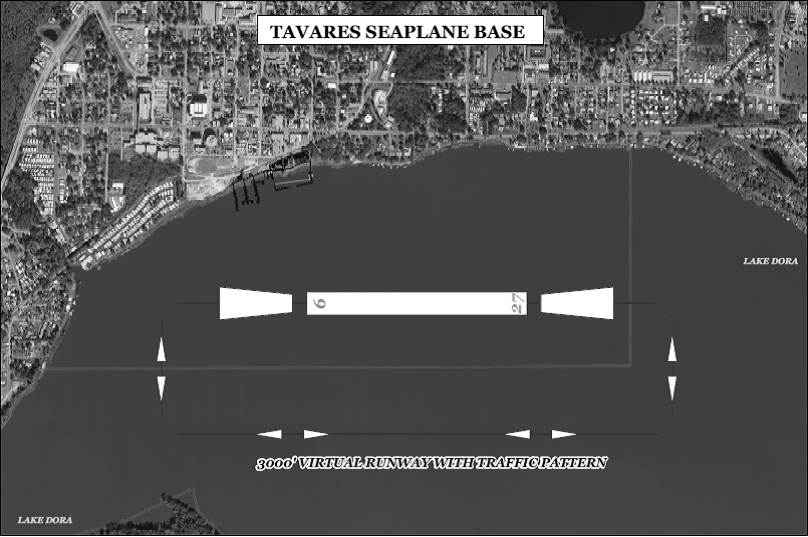
Table 8-1 Future Land Use/Zoning Matrix
C = Compatible Zoning District in Relation to Future Land Use Designation
Table 8-2 Permitted and Special Uses (30)
NOTES: Table 8-2 Permitted and Special Uses
1.
This use may be permitted subject to the provisions of the Planned Development Regulations and subject to the authority of the Comprehensive Plan Future Land Use Map.
2.
Ancillary Apartments are defined as dwelling units above the first story of any structure having the first story devoted to commercial uses.
3.
a.
One (1) Guest Apartment is permitted within the RSF-E, RSF-A zoning districts subject to the following:
1.
The property is one (1) acre or larger in size; and,
2.
The apartment is used exclusively to house members of the family occupying the principal dwelling, or their non-paying guests; and,
3.
The living area is no greater in size than twenty-five percent (25%) of the living area, excluding carports, garages, breezeways, and screened or open porches of the principal dwelling or six-hundred (600) square feet, whichever is greater; and,
4.
The apartment complies with the setback requirements for a principal structure for the district in which it is located.
[b.
Reserved.]
c.
One (1) Guest Apartment is permitted within the RMF-2 zoning district in the Community Redevelopment Area Overlay subject to the following:
1.
The principal structure on the property is a single family detached residence; and
2.
The property meets the minimum lot area of the permitted zoning district; and,
3.
The apartment is located to the rear of the principal structure; and,
4.
The living area is no greater in size than twenty-five percent (25%) of the living area, excluding carports, garages, breezeways, and screened or open porches of the principal dwelling or six-hundred (600) square feet, whichever is greater; and,
5.
The apartment complies with a side setback of 7.5 feet and a rear setback of 5 feet; and
6.
The guest apartment is not permitted a separate driveway unless it is accessed by a rear alley, or the property is located on a corner lot.
4.
Travel trailers and motor homes may be permitted in Residential Mobil Home Parks provided they are located in a separate section of the park and not intermingled with manufactured or mobile homes. Sewer, water and electrical utility connections must be provided.
5.
Group Homes and/or Community Residential Homes shall be located no closer than one thousand feet (1000') to another such home or within one thousand two hundred feet (1200') of a group home with seven (7) or more residents.
6.
Group Homes and/or Community Residential Homes with seven (7) or more residents may be permitted by approval of a Special Use Permit and shall be located no closer than one-thousand two- hundred feet (1200') to another such home including group homes with six (6) or less residents.
7.
Boarding of horses or keeping of cattle is permitted provided all of the following conditions are met:
a.
Lot size must be greater than two-and-one-half (2.5) acres; and,
b.
No more than two (2) horses or two (2) cattle or an equivalent combination is allowed per two and one half (2.5) acres of land or major portion thereof; and,
c.
No commercial board of horses or commercial processing of cattle is permitted; the boarding of horses or keeping of cattle is intended to be for the enjoyment of the owners of the property and may not be associated with a commercial agricultural operation; and,
d.
No barn or stable may be located within fifty feet (50') of any property line; and,
e.
The maximum combined amount of horses or cattle shall not exceed 15 head per parcel of property.
f.
Cattle shall be defined as domesticated bovine limited to cows, steers, bulls, oxen and buffalo.
g.
Horses shall be defined as domesticated equine limited to horses, ponies, donkeys and mules.
8.
Childcare shall be permitted subject to a maximum of six (6) unrelated children being cared for.
9.
Childcare centers may be permitted subject to approval of a special use permit. In addition to other requirements that may apply, the child care center shall provide:
a.
Usable indoor floor space and usable outdoor play area in accordance with State regulations consisting of a minimum square footage per child; and
b.
A fenced and landscaped buffer zone a minimum of ten feet (10') in width to screen the play area from abutting properties.
10.
Private docks and boat houses are permitted provided that such structures maintain the same side yard as that required for the principal structure, and further provided that such structures comply with state and/or federal regulations as applicable.
11.
Non-residential uses shall be limited to a maximum size of five-thousand square feet (5,000') devoted to any individual non-residential use or structure used for a nonresidential use.
12.
All outside display areas shall be paved. Other hard surface treatments may be approved subject to special use procedures. This use includes repair work, which is purely incidental to the sales agency provided that the front line of the building used for repair work shall be at least thirty feet (30') from the right-of-way.
13.
The establishment shall not store parts or vehicles other than those which are in the process of being serviced; all service areas shall be enclosed in such a manner that no service areas or parts storage areas are visible from the right-of-way; it must be demonstrated that noise, odor and fumes shall not create a nuisance for abutting property owners; the establishment shall be screened and buffered from adjacent uses.
14.
Light manufacturing, fabricating, processing and packaging uses shall be permitted subject to all such activities taking place in a completely enclosed building.
15.
A storage yard shall not be located closer than twenty-five feet (25') to any public street. Such yards shall be screened from view from any right-of-way by a six-foot (6') high fence. This provision shall not permit wrecking yards (including automobile wrecking yards), junkyards, or yards used in whole or in part for scrap or salvage operating. Nor shall this provision permit processing, storage, display, or sales of any scrap, salvage or second-hand building materials, junk automotive vehicles, or second-hand automotive vehicle parts. Storage of flammable liquids shall not be permitted.
16.
Wireless communication towers, antennas and equipment facilities shall be subject to the provisions of Section 8-12 of these zoning regulations.
17.
Funeral Homes shall provide sufficient on-site parking, staging areas and/or service drives in order to accommodate parking and staging of funeral processions. Streets and public right-of-ways shall not be used for parking or to form funeral processions.
18.
Hotels and motels containing one-hundred (100) guest rooms or more may be allowed internal ancillary uses including gift shops, and restaurants which may serve alcoholic beverages for consumption on premises, subject to note #20.
19.
Bed and Breakfast shall meet the following design standards:
a.
Bed and breakfast home stays may be allowed when there is no appearance of commercial activity. The structure must maintain its residential character.
b.
Food Preparation: The only meal to be provided to guests shall be breakfast and it shall be served only to guests.
c.
Interior Design Standards: The architectural integrity of the existing interior space must be maintained, and the number of guest rooms shall not be increased, except as may be required to meet health, building, fire, safety and sanitation requirements.
d.
Exterior Design Standards: The exterior appearance of the structure shall not be altered from its single-family character.
e.
Landscape Buffer B as described in Chapter 11, shall be provided.
20.
Restaurants that allow the consumption of alcoholic beverages on premises are classified for zoning purposes as "restaurants" provided the establishment holds a valid state alcoholic beverage license for such purpose and provided at least fifty percent (50%) of its gross revenue is derived from the sale of food and non-alcoholic beverages.
21.
The taking of boarders or the renting of rooms by a resident family in a residential district is permitted, provided the total number of boarders and roomers does not exceed two (2) and that any state law governing such use is complied with.
22.
Adult entertainment establishments shall be governed by Lake County Ordinance No. 2000-106 which provides for countywide jurisdiction.
a.
In addition to those requirements for adult entertainment establishments set forth in Article IV, Chapter 3 of the Lake County Code, adult entertainment establishments located within the City shall comply with the following location criteria:
1.
Zoning. Notwithstanding any other provision herein, or any other provision of the City Code of Ordinances, the City Land Development Regulations, or the County Code, no person shall propose, cause or permit the operation of, or enlargement of (except when required by law), an adult entertainment establishment, as defined in Article I, Chapter 3 of the Lake County Code, unless the establishment would or will be located in an I (Industrial) zoned district or the City where adult entertainment establishments are allowed with a special use permit.
2.
Distance Minimums. In addition to the zoning requirements set forth in above, an adult entertainment establishment shall not be allowed to open, operate, or be enlarged (except when required by law) within any of the following distances:
a.
Fifteen-hundred feet (1500') of a preexisting religious institution;
b.
Fifteen-hundred feet (1500') of a preexisting educational facility;
c.
Fifteen-hundred feet (1500') of an area zoned within the City or county as a residential district as defined by each governmental entities respective zoning Code;
d.
Fifteen-hundred feet (1500') of the property line of a preexisting residence;
e.
Fifteen-hundred feet (1500') of a preexisting park; or
f.
Fifteen-hundred feet (1500') of a preexisting commercial establishment that sells or dispenses alcohol for on-premises consumption.
3.
Enlargement. In this subsection the term "enlargement" includes, but is not limited to, increasing the floor size of the establishment by more than ten percent (10%) from the originally permitted floor size.
4.
Supplemental to Alcoholic Beverage Regulations. The zoning and distance requirements of this section are independent of and do not supersede the distance requirements for alcoholic beverage establishments which may be contained in other laws, rules, ordinances or regulations.
b.
Measurement of Distance. The distance from a proposed adult entertainment establishment to a preexisting adult entertainment establishment, a preexisting religious institution, a preexisting educational institution, an area zoned for residential use, a preexisting residence, a preexisting park, or a preexisting commercial establishment that sells or dispenses alcohol for on-premises consumption shall be measured by drawing a straight line between the closest property lines of the proposed adult entertainment establishment and the preexisting adult entertainment establishment, the preexisting religious institution, the preexisting educational institution, and area zoned for residential use, an area designated on the future land use map as residential, the preexisting residence, the preexisting park, or the preexisting commercial establishment that sells or dispenses alcohol for on-premises consumption.
c.
Severability. If any section, sentence, clause, phrase or word of these regulations is held to be invalid or unconstitutional by any Court of competent jurisdiction, then said holding shall in to way effect the validity of the remaining portions of these regulations.
23.
Two-Family Dwellings and/or Duplexes shall meet the following architectural design criteria:
• Each duplex must have a minimum of 1 single car garage per dwelling unit and a paved driveway a minimum of 12 feet in width and 25 feet in length.
• Duplexes shall be designed so that at least one of the unit's main entryway faces a public right-of- way.
• Said unit facing a public right-of-way shall also contain a covered front porch facing the public right- of-way, a minimum of 5 feet in depth and 8 feet in length.
24.
Townhouse development shall conform to the following regulations:
a.
Definition. For the purposes of this section, the word townhouses shall mean a building that has not less than three (3) or more than eight (8) one-family dwelling units with each unit under single ownership erected in a row as a single structure on adjoining lots, each being separated from the adjoining units by an approved party wall, thus creating distance and noncommunicating dwelling units. This definition shall also include row houses.
b.
Criteria for development. Complete plans shall be submitted along with the application for townhouse projects. Such plans shall include a subdivision plan which satisfies all of the subdivision and platting requirements of the city. Furthermore, a preliminary development plan shall be submitted along with the preliminary plat for approval by the city council. This preliminary development plan shall be drawn to reasonable scale and shall include, but need not be limited to, the following:
1.
Ingress and egress to individual lots.
2.
General building locations, elevations and floor plans.
3.
Typical lot with unit, parking spaces, walkways, easements, setbacks, etc.
4.
Off-site parking facilities.
5.
Common recreation and open space areas.
6.
Conceptual landscaping or criteria to be used for screening.
7.
Drainage retention areas.
8.
Solid waste management.
9.
The floor area of townhouse units, the number of parking spaces, the total area of the project and the density.
After approval of the preliminary plat and the preliminary development plan, the developer shall submit a final development plan along with the final subdivision plat for approval by the city council.
c.
General requirements. The following shall be required in all townhouse developments under this section:
1.
A townhouse development shall be in single ownership at the time of development. Further, a legal plat approved by the city shall be placed on the public records of the county prior to the disposition of any lot or parcel of land within such townhouse development.
2.
No single townhouse building shall contain less than three (3) or more than eight (8) single- family dwellings.
3.
No townhouse unit shall be located above another townhouse unit. Each townhouse unit shall be located on a parcel of land with direct access to a public or approved private street.
4.
Each townhouse unit shall be self-contained with respect to utilities, including heating and air conditioning.
5.
All utilities are to be installed underground.
6.
No two (2) townhouse units shall be served by the same interior or exterior stairway or by the same exterior door.
7.
Each townhouse unit shall be separated from the other by an approved fire wall and in all cases, shall comply with the standard building code adopted by the city.
8.
No townhouse unit shall be less than twenty (20) feet in width.
d.
Parcel size and lot size. The following parcel and lot sizes shall apply to all townhouse developments:
1.
Property for a townhouse project shall have a minimum of one hundred and fifty (150) feet fronting on a public or an approved private street. This requirement may be modified by the City Administrator or designee if the modification will not have the effect of nullifying the purpose and intent of these regulations. Appropriate conditions and safeguards may be prescribed by the city council in conformity with this section.
2.
There shall be no minimum individual lot size, except as needed to meet all requirements set forth herein.
e.
Minimum setback requirements. Within the boundaries of the townhouse project, the following setbacks shall be observed:
1.
When parking spaces are located on individual lots, the minimum setback shall be twenty- five (25) feet measured from the right-of-way to the base building line.
2.
When parking spaces are located off-site in commonly owned parking facility, the minimum setback shall be ten (10) feet measured from the parking facility to the base building line.
3.
The minimum front setback from any right-of-way to the base building line shall be twenty- five (25) feet.
4.
The minimum side setback from any right-of-way or abutting property line shall be fifteen (15) feet to the base building line.
5.
The minimum rear setback shall be fifteen (15) feet from the rear line or utility easement to the base building line.
f.
Maximum height of structures. No portion of any building located within a townhouse project shall exceed two and one-half (2½) stories or thirty-five (35) feet in height.
g.
Building separation. The separation of buildings in a townhouse development shall be as follows:
1.
The minimum distance between groups of buildings within a townhouse project shall be as follows:
a.
One (1) story, twenty (20) feet minimum.
b.
Two (2) stories, twenty (20) feet minimum.
2.
Not less than ten (10) feet of unobstructed open space under common ownership or dedicated easement shall be provided around the parcels of land upon which the townhouse building is located for the purpose of providing access for utilities and other purposes.
h.
Parking requirements. Parking requirements for townhouse developments shall be as follows:
1.
Parking spaces may be provided for an individual lot or in commonly owned and maintained parking facilities or a combination of both.
2.
There shall be provided a minimum of two (2) parking spaces per townhouse unit, plus additional parking may be required for recreational or other facilities retained under common ownership.
3.
Parking lots, driveways and streets within a townhouse project shall be designed to discourage through traffic.
4.
Two (2) parking spaces may be permitted on an individual lot provided the minimum width of the lot is at least thirty (30) feet. The balance of the yard shall be landscaped.
5.
One (1) parking space may be permitted on an individual lot where the minimum lot width is at least twenty (20) feet. The driveway shall be limited in width to provide parking for only one (1) car. The balance of the yard shall be landscaped.
i.
Private open space. Private open spaces in townhouse developments shall meet the following requirements:
1.
Not less than twenty (20) percent of the gross lot area shall be maintained as usable open space, exclusive of any required on-site parking, service or building areas.
2.
Unenclosed roofed areas and screen enclosures designed and planned for patio purposes may be credited for no more than fifty (50) percent of the required open space.
j.
Accessory buildings. No accessory buildings shall be permitted on any lot containing a townhouse building. This is not applicable patio storage sheds that are attached to the rear of a townhouse unit and extend less than five feet (5') from the rear townhouse wall and extend less than eight feet (8') across the rear townhouse wall.
k.
Fences, walls or hedges. Fences, walls or hedges in townhouse developments shall meet the following requirements:
1.
When parking spaces are located on individual lots, no fence, wall or hedge shall be permitted over thirty (30) inches in height within twenty (20) feet of a public or private road.
2.
All outdoor, rear yard areas used for drying of clothes shall be screened from view from the street and from adjoining yards and parking lots.
3.
The City Council may require a conceptual development plan showing typical alternatives for adequate screening. Such screening shall be approved by the Council.
l.
Signs. Signage shall comply with Chapter 21 - Sign Regulations.
m.
Recreation facilities. Swimming pools, tennis courts, playgrounds and other recreational uses may be permitted within townhouse projects, provided such uses are located within areas retained in common ownership. Adequate provisions shall be made to eliminate problems of noise and light with respect to adjacent property. All land within the townhouse project shall be developed and maintained in a neat and orderly condition.
n.
Boats and recreational vehicles. Storage and parking of boats and recreational vehicles shall be prohibited, except for parking and/or storage in a screened designated area for same.
o.
Streets. Private and public street means a public or private vehicular right-of-way or easement which provides a preliminary means of access to abutting properties. Streets within a planned unit development need not be dedicated to the general public, but shall be built to city specifications with the exception of required right-of-way, but shall not be accepted by or maintained by the city until such time as the city may elect to do same.
p.
Deed covenants. Approval for construction of townhouses shall be issued in accordance with the regulations herein set forth after evidence has been presented in the form of deed restrictions and/or cooperative maintenance system acceptable to the city requiring that a maintenance system be established, governed and operated by the owners of the individual units in such a manner as to prevent the occurrence of blight on any townhouse unit by failure of the owner of that unit to properly maintain his property in standard condition at all times. When common open space areas and facilities are to be provided, there shall be deed restrictions and/or cooperative maintenance system covering the maintenance of same.
q.
Modifications by City Council. The City Council may modify the above standards or may impose additional requirements, which, in their judgment, are required as a result of unique circumstances with respect to the site, the district in which it is located and the type of development proposed. Such modifications shall not have the effect of nullifying the purpose and intent of these regulations. Any modification to these regulations by the city council shall be in writing and shall become part of the public record.
25.
Multi-family developments must conform to the requirements of Chapter 9 Architectural Standards for commercial properties.
26.
The State of Florida Agency for Health Care Administration determines the maximum number of beds permitted in an ACLF project. The number of beds licensed is based on the facility size, staffing, and other requirements. All facilities must be licensed by the State. Density restrictions regulating the number of dwelling units per acre implied by the City's Land Development Regulations and Comprehensive Plan will not apply to or restrict the number of beds licensed by the State.
27.
Adult Activity Centers shall be permitted subject to the following:
a.
All Adult Activity Centers shall be operated in accordance with the regulations set forth by the State of Florida for Adult Day Care Centers.
b.
All Adult Activity Centers shall be designed to include a minimum of 200 square feet of outdoor passive recreation area which is sufficient to allow for safe, convenient and comfortable outdoor seating.
c.
In residential zoning districts, Adult Activity Centers shall be permitted in adherence to the principal regulations of the zoning district, shall not use signage and shall serve no more than 4 participants at a single time.
28.
Modular or conventional site-built homes are permitted provided they are constructed in compliance with all applicable Florida Building and Fire codes. Development Standards including minimum yard requirements shall be as described in Table 8-3 of this Chapter.
29.
Locations providing boarding services must include a fenced outside open space for the animals that is adjacent to and accessible by the business, and overnight boarding must be in a completely enclosed building.
30.
If a particular use does not meet a definition established in Chapter 3 of these regulations, the Community Development Director shall attempt to classify it as a defined use that is materially similar to the particular use considering the following factors:
a.
Similarity of scale and of operations.
b.
Similarity of impacts upon and compatibility with adjacent properties.
c.
Similarity to other uses that are permitted in the district in which the particular use is located or sought to be located, and whether the particular use is more similar to such permitted uses than to uses that are either not permitted or permitted only by a special use permit.
d.
If the Community Development Director is unable to classify a particular use, the use shall be deemed to be not a permitted use and an amendment to this code shall be initiated to create a definition for the use.
31.
A Boutique Hotel is permitted subject to the following regulations:
A Boutique Hotel may conduct indoor and outdoor special functions, including but not limited to boutique weddings, receptions, showers, parties, art, music and cultural events subject to the following requirements:
a.
If the Boutique Hotel is located within the MU zoning district, special functions conducted outdoors and outdoor activities related to special functions are prohibited after 10:00 p.m. on Sunday through Thursday nights, except evenings before national holidays, and are prohibited after 11:00 p.m. on Friday or Saturday nights and the evenings before national holidays.
b.
Noise Levels shall be regulated by the Performance Standards stated under Chapter 12 of these regulations unless the Boutique Hotel is located within the City's Downtown Entertainment District in which case those provisions shall govern.
c.
Parking Requirements shall comply with Chapter 20, Table 20-A of these regulations for hotels and motels.
d.
A Boutique Hotel must comply with all applicable city development regulations for the zoning district in which it is located. Compliance will be demonstrated through an engineered site plan approved by the City.
Table 8-3 Development Standards
Notes: Table 8-3 Development Standards
1.
The Impervious Surface Ratio calculation shall include all areas where the surface of the lot or parcel is covered with structures or materials which impede the infiltration of water through the soil including but not limited to: principle structures, accessory structures, conventionally surfaced driveways, patios, decks, and the like.
The maximum impervious surface that is allowed per lot is subject to meeting all other requirements including, but not limited to, open space, recreation, landscape and stormwater requirements.
2.
Height exemptions. A parapet wall or cornice solely for ornament and without windows, may extend above the maximum prescribed height limitations not more than five-and-one-half feet (5½').
3.
Development standards within a PFD zoning district shall be individually determined based on the proposed use and compatibility with surrounding uses. Said development standards shall be set forth in the zoning ordinance adopting the PFD designation. In no case shall development standards within the PFD district be less than required by the future land use designation for the property in which the PFD is located.
Height restrictions. There are no height restrictions in the PFD district, except as limited by state law and fire code regulations. If adjacent to residentially zoned property the maximum height shall be limited to the maximum height of the adjacent residentially zoned district. If the Public Facility is located within the designated Commercial Downtown District and is adjacent to the Mixed Use Commercial District the maximum height allowed shall be sixty feet (60').
4.
Non-Conforming Lots in the RMH-S and RMH-P Districts.
a.
In no case shall living units have less than ten feet (10') of separation from side to side, eight feet (8') side to end, or six feet (6') end to end in either RMH-S or RMH-P non-conforming lots.
b.
In no case shall any accessory structure such as a carport, utility room or screen room have less than three feet (3') of separation from a neighboring structure that is non-combustible and five feet (5') separation between combustible structures for non-conforming lots.
c.
For Mobile Home Parks existing as of September 7, 1988:
1)
Front yard setback — seventeen feet (17') from the centerline of the local street.
2)
Reduced setbacks. Mobile homes may be repaired, replaced and improved when the replacement, repair or improvement has setbacks less than required in this zoning district, if the following conditions are met:
a)
The mobile home shall be within a mobile home park with an approved master plan.
b)
The setbacks of the replacement, repair or improvement shall be substantially the same as the nonconforming setback shown on the master plan.
c)
Any mobile home park existing at the time of passage of Ordinance Number 92- 15, Adopted September 3, 1992 and requesting reduced setbacks as allowed in this zoning district shall submit a completed master plan. Master plans submitted for the purpose of obtaining reduced setbacks shall at minimum show the following:
i.
The location of all mobile homes, accessory structures and buildings in the park and park boundaries.
ii.
The setbacks of each mobile home and its attached accessory structures from roads within the park, park boundaries, other mobile homes, accessory structures and buildings.
iii.
Master plans submitted for the purpose of obtaining reduced setbacks do not need to be prepared by a licensed engineer or surveyor but they do need to be prepared to scale, or with accurate measurements, so that they accurately represent true field conditions.
iv.
North point scale and date.
v.
The name of the property owner and legal description of the property.
vi.
The location of existing landscaped areas.
vii.
The location of all streets and parking areas.
d)
All master plans prepared for the purpose of obtaining reduced setbacks shall be exempt from the required master plan filing fee.
d.
For manufactured home subdivisions, the title of which was of record on October 7, 1987 shall meet the following setback requirements:
1)
Front Yard — Twenty feet (20') minimum from the right-of-way and in no case less than ten feet (10') where a lesser average building line has been established by three (3) units either side of the lot on the same block, excluding corner lots.
2)
Side Yard — Five feet (5') minimum including corner lots except where there is an adjacent interior lot which faces the same street as the side yard of the corner lot. In this case, the street side yard of the house on the corner lot will be at least one-half (½) of the front yard required for the house on the adjacent interior lot and in no case less than ten feet (10').
3)
Rear yard — Ten feet (10').
5.
In computing the depth of rear yards, for any building where such yards open onto an alley, one-half (½) of the width of such alley may be considered to be a portion of the rear yard.
6.
Every part of a required yard or court shall be open from its lowest point to the sky unobstructed. Space that has been counted or calculated as part of a yard, as required by this Chapter, may not, by reason of change in ownership or otherwise, again be counted or calculated to satisfy or comply with a yard or other open space requirement for any other building.
7.
Two-family or duplex development shall comply with note #24 of Table 8-2 Permitted and Special Uses. Where conflicts in development standards arise, the more restrictive shall apply.
8.
Townhouse development shall comply with note #25 of Table 8-2 Permitted and Special Uses. Where conflicts in development standards arise, the more restrictive shall apply.
(Ord. No. 2025-05, § 1, 8-20-25)

