
White City City Zoning Code
CHAPTER 19
46 SITE DEVELOPMENT STANDARDS
19.46.010 Purpose Of Provisions
- It is the purpose of the site development standards to promote the health, safety, and welfare of the community. In support of these purposes, this Ordinance contains regulations designed to:
- Protect existing neighborhoods, preventing their decline, and promoting their livability;
- Conserve land and water resources;
- Recognize geologic features, soil, and topography;
- Improve air quality;
- Minimize congestion in the streets and reduce reliance on automobiles by providing walking, bicycling, and transit use;
- Secure safety from fire and other dangers;
- Provide adequate space for utilities, open space, water supplies, sewer service, and transportation;
- Promote compatibility between the natural and man-made environments;
- Promote the desired high-quality site planning, building, lighting, signage, and streetscape design;
- Provide notice to the municipality and affected property owners of new or upgraded utility or facility systems to allow an opportunity to determine if sufficient reason exists to require the systems to be installed underground and to determine if funds are available to pay for underground installation; and
- Minimizing the potential adverse effects of highway traffic noise and by complying with state and federal requirements for highway traffic noise abatement projects.
Repealed & Replaced by Ord. Title 19 White City Zoning Ordinance on 6/2/2023
19.46.020 Applicability
The provisions of this Ordinance apply to all new development within the municipality that occurs after the adoption of this Ordinance. No building may be erected or structurally altered, nor may any land development activity take place, unless it conforms to the provisions of this Ordinance.
Repealed & Replaced by Ord. Title 19 White City Zoning Ordinance on 6/2/2023
19.46.030 Relationship To Adopted Plans
The municipality’s adopted General Plan indicates desired development at various levels of intensity. This Ordinance is intended to implement the General Plan; therefore the Plan should be used as a guide for the application of this Ordinance to land within the areas covered, as well as for the provision of the public services.
Repealed & Replaced by Ord. Title 19 White City Zoning Ordinance on 6/2/2023
19.46.040 All Uses, Buildings, And Structure To Comply With Zoning Requirements
Every building or structure erected, reconstructed, altered, enlarged or moved, and every building, structure, or land, rearranged, designed or intended for any use shall be built or used only as allowed by the requirements of this Ordinance, including the requirements of the zone in which the building, structure, or use is located, and all other land use chapters.
Repealed & Replaced by Ord. Title 19 White City Zoning Ordinance on 6/2/2023
19.46.050 Minimum Requirements And Underlying Or Overlay Zones
- The provisions of this Chapter are the minimum requirements. Where the provisions of this Ordinance conflict with other ordinances, the most restrictive provision prevails.
- The underlying zone of a property may impose site development standards in addition to the minimum requirements provided in this Ordinance. Where the provisions of this Ordinance conflict with other ordinances, the most restrictive provision shall prevail.
- Overlay zones may impose site development standards in addition to the minimum requirements provided in this Ordinance. Where the provisions of this Ordinance conflict with other ordinances, the most restrictive provision shall prevail.
Repealed & Replaced by Ord. Title 19 White City Zoning Ordinance on 6/2/2023
19.46.060 Application Required
All requests to establish a use, or construction, alteration, enlargement, repair, or removal of any building, structure, or part thereof, shall be initiated by the submission of a land use application, as required by all land use chapters and/or building permit application, as required by the adopted Building Code, as applicable.
Repealed & Replaced by Ord. Title 19 White City Zoning Ordinance on 6/2/2023
19.46.070 General Site Standards
- Lot Frontage Required. Every lot shall have frontage upon a dedicated or publicly approved road or street, or right-of-way providing direct access to a dedicated or publicly approved road or street. The required lot frontage may be not less than half of the minimum lot width required in the zone as measured at the front property line except for lots that have been approved as a flag lot.
- Yards and Setbacks Measurement.
- Yards and setbacks shall be measured according to the lengths required in the underlying zone.
- Yards and setbacks shall be measured from the property’s boundary line, as determined by the legal description or subdivision plat on record at the Salt Lake County Recorder’s Office, to the exterior foundation of the proposed or existing building.
- Required Yards for One Building Only.
- No required yard or setback area for a lot or building shall be considered as providing the required yard or setback for any other lot or building.
- No area required to meet the lot width, area, setback, or other requirements of this Ordinance for any lot or building may be divided, sold, or leased separate from such lot or building.
- Required Yards to Be Unobstructed.
- All required setback areas shall be open to the sky and unobstructed except for permitted and approved accessory structures and structures and for projections allowed under this Chapter.
- Walls and fences, complying with the requirements of this Ordinance and required approval by a land use authority, as provided herein may encroach into required yards.
- Buildable Area. Every lot or parcel created after the effective date of this Ordinance shall have a buildable area sufficient to establish a building or structure thereon, which meets the minimum standards of the zone in which the lot or parcel is located. Buildable areas shall be required to be identified for each lot on all subdivision plats and plans for the purposes of ensuring that an adequate buildable area is provided, and to inform future owners of the allowable buildable area. Any area located within an easement may not be included within any buildable area unless the easement beneficiary executes and records a release of the easement in a form acceptable to the Municipal Attorney.
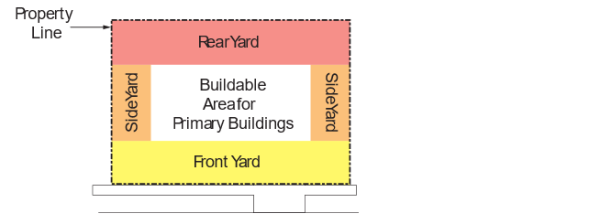
Buildable Area, Required by the Underlying Zone - Buildings to Be on Lots. All buildings and structures, as defined herein, shall be located and maintained on a separate legal lot, such lot meeting all requirements of Title 19, including the requirements of the zone in which the lot is located.
- Fencing.
- Fencing Setbacks. A fence, hedge, wall, column, pier, post or any other similar structure for fencing or any combination of such structures is permitted in the required setback if it meets the following conditions:
- No fence, hedge, or wall extends beyond or across a property line without a recorded agreement with the abutting property owner; and
- Only one (1) fence or wall shall be allowed per property line. Double fences, walls, or combination thereof are prohibited.
- Fencing Materials.
- Fencing materials shall be made of high quality, durable, materials that require minimal maintenance. The following fencing materials shall be allowed for properties that require fencing:
- Brick, block, or stone;
- Architecturally designed pre-cast concrete, decorative precast concrete or integrally colored and textured block, brick, stone, or other masonry materials;
- Solid or private heavy gauge vinyl, polyethylene, or similar materials;
- Composite materials, wood, cement, stucco, architectural or decorative metal panels, including weathering steel; or
- Visually permeable fencing, such as chain link, mesh, picket, or split rail fences constructed of metal, vinyl, wood, or composite.
- Fencing materials shall be made of high quality, durable, materials that require minimal maintenance. The following fencing materials shall be allowed for properties that require fencing:
- Prohibited Fencing Materials. The following fencing materials are prohibited:
- Materials not typically used or designated/manufactured;
- Scrap material;
- Security wire; or
- Electrified fencing, except for legally established agricultural uses on properties in the A-1 or A-2 zones that do not abut a public trail.
- Fencing Setbacks. A fence, hedge, wall, column, pier, post or any other similar structure for fencing or any combination of such structures is permitted in the required setback if it meets the following conditions:
- Landscaping. Landscaping shall follow the requirements set forth in Chapter 19.50, Landscaping, Screening, and Water Efficiency Standards.
- Signs. Any development shall follow the sign standards set forth in Chapter 19.52.
- Junk. The accumulation of junk is prohibited in the municipality unless occurring in a fully enclosed and permitted structure, or in a licensed salvage yard and meeting all the requirements for a salvage yard as provided for in the municipal code.
- Exceptions. The following exceptions apply:
- A property owner may have up to two (2) inoperable vehicles on their property, provided:
- The vehicle(s) are parked on private property on a parking surface in compliance with Chapter 19.48;
- The vehicle(s) are secured with the windows closed, the trunk and hood closed, and the doors locked;
- The vehicle(s) are not exposing jagged metal or other safety hazards due to damage;
- The vehicle(s) are completely on private property and not encroaching on any sidewalk, park strip, or public street; and
- The vehicle(s) do not visibly drip any fluids such as oil, transmission fluid, brake fluid, or coolant onto the parking surface or its surroundings.
- A property owner may have up to two (2) inoperable vehicles on their property, provided:
- Exceptions. The following exceptions apply:
Repealed & Replaced by Ord. Title 19 White City Zoning Ordinance on 6/2/2023
19.46.080 Flag Lots
- These standards apply to flag lots in the A-1, and A-2 zones.
- Site plan review for the development of a single family or two family dwelling on a flag lot in a subdivision approved in accordance with Section 18.20.070 shall be on a permitted use basis and subject to the same ordinance requirements and development standards as those applicable to other single family and two family residential dwellings in the same zone except with regards to yard or setback requirements which, for a main dwelling, shall be a uniform yard setback of twenty feet from all property lines of the flag portion of the lot. The planning commission may modify the yard setbacks for lots with an unusual shape, topography etc., but in no case may it approve a single setback of less than 10 feet and the aggregate of all yard setbacks must total at least 80 feet.
- The yard or setback requirements for a detached accessory structure on a flag lot shall be as follows:
- A detached accessory structure must be to the rear of and at least 6 feet from the main dwelling on the flag lot, and must maintain the following separation from adjacent property lines:
- Ten feet if adjacent to the side yard of a dwelling on an adjacent lot.
- One foot if not adjacent to the side yard of a dwelling on an adjacent lot, so long as the height of the accessory structure does not exceed fourteen feet. Accessory structures taller than fourteen feet (a maximum height of twenty feet is permitted) must maintain one additional foot of yard or setback separation for each additional foot of detached accessory structure height.
- Twenty feet adjacent to any street.
- A detached accessory structure must be to the rear of and at least 6 feet from the main dwelling on the flag lot, and must maintain the following separation from adjacent property lines:
- If the rear yard of the flag lot is not defined by the subdivision plat, the location of the rear yard shall be determined by considering the following criteria:
- The orientation of the lot with respect to the public street;
- The orientation of the front door of the home; and
- The orientation of the rear yards of adjacent lots.
- In addition to maintaining compliance with the area and width requirements of the zone in which the base lot(s) are located, normally applicable yard or setback requirements for the base lot(s) must be maintained, particularly if said lots are already developed or improved. Where access to a flag lot is provided via recordation of a perpetual easement across the base lot, the yard or setback for the base lot shall be measured from the interior edge of the easement closest to any existing or proposed structural improvements on the base lot.
- Improvements to the travel way within the access connection from the flag lot(s) to the street right-of-way or easement shall be in accordance with the following standards:
- Access to flag lots shall be provided as approved by the fire authority through the subdivision process set forth in title 18 Subdivisions. Access shall be improved with a concrete, asphalt, or pervious paver travel surface. Unless otherwise approved by the Municipal Engineer and fire authority, the width of the travel surface shall be at least:
- Twelve feet wide if the length of the access connection is less than 130 feet; or
- Sixteen feet wide if the length of the access connection is more than 130 feet.
- The area within the access connection between the required travel way surface improvements and the property line(s) or easement line(s) shall be planted in its entirety and maintained as a landscaped buffer in accordance with plans reviewed and approved as part of the flag lot subdivision approval process. The plans shall be designed to one of the following standards:
- Eight feet of landscaping buffer split between both sides of the access travel way with one tree and four shrubs per 25 lineal feet; or,
- Where the access drive is adjacent to the subdivision boundary:
- Five feet of landscaping buffer with a solid visual barrier fence along the exterior property line with one tree and six shrubs per 25 lineal feet; or
- Zero feet of landscaping buffer with a solid visual barrier fence along the exterior property line and the use of approved permeable pavers or permeable pavement as the road surface.
- The Planning Commission may approve an alternative landscape buffer proposal that is in line with the intent of this section to accommodate unusual circumstances on the property such as topography, natural hazards, lot size, lot shape, or the preservation of existing vegetation.
- Minimum Landscaping standards within the access connection:
- All trees shall be a minimum of 1 1/2 inch caliper for deciduous trees and 6 feet tall for evergreens at the time of planting. Tree species and growth characteristics shall be suitable for the location and details shall be noted on the landscape plans.
- All shrubs shall be a minimum 5-gallon size at time of planting.
- Solid visual barrier fencing shall be a minimum of 6 feet in height, except in the front yard of the base lot where it may not be less than 2 feet in height nor exceed 3 feet in height and shall not block clear view at any intersection.
- Mulch with a minimum depth of 3 inches shall be provided around all plantings and in all areas without plants or groundcovers.
- A guaranteed bond shall be posted to ensure the installation of the required landscaping buffer, and survival of the plants through a one-year guarantee period.
- Access to flag lots shall be provided as approved by the fire authority through the subdivision process set forth in title 18 Subdivisions. Access shall be improved with a concrete, asphalt, or pervious paver travel surface. Unless otherwise approved by the Municipal Engineer and fire authority, the width of the travel surface shall be at least:
- Lots of record that were created in accordance with the procedures for the establishment of Deep Lots or the previous deep lot ordinance as set forth in the Salt Lake County Planning Commission’s 1965 policy by that name shall continue to be subject to the site development and improvement standards associated with that policy.
Repealed & Replaced by Ord. Title 19 White City Zoning Ordinance on 6/2/2023
19.46.090 Building Standards
- Minimum Width of Dwelling Units. All dwelling units shall be a minimum of twenty- five (25) feet wide at the narrowest point, excluding any accessory structure. The building width shall be considered the lesser of the two (2) primary dimensions of the building. Manufactured homes are the only exception to this requirement.
- Conform to Building Code. The building must meet the municipality’s building code or, if it is a manufactured home, it must be certified under the National Manufactured Housing Construction and Safety Standards Act of 1974 and must have been issued an insignia and approved by the U.S. Department of Housing and Urban Development and must not have been altered in violation of such codes. A used manufactured home must be inspected by the building official or designee prior to placement on a lot to ensure it has not been altered in violation of such codes.
- Buildings Taxed. The building must be taxed as real property. If the building is a manufactured home, an affidavit must be filed with the State Tax Commission pursuant to Utah Code § 59-2-602.
- Utilities. If the building provides human-occupiable space and is constructed in a permanent nature, the building must be connected to and approved for all required utilities. Utilities shall be buried underground with the following exceptions:
- Transformers, pedestals, fire hydrants, and other appurtenances normally associated with “underground” utility installations are permitted on the surface of the ground.
- The development of existing lots in areas of the municipality now served with existing aboveground utilities, are exempt from this requirement.
- Permanent Foundation. The building must be attached to a site-built permanent foundation which meets the Uniform Building Code or, if the dwelling is a manufactured home, the installation must meet the ICBO Guidelines for Manufactured Housing Installations, including any successors to these standards, and the space beneath the structure shall be enclosed at the perimeter of the dwelling in accordance with such ICBO Guidelines, and constructed of materials that are weather-resistant and aesthetically consistent with concrete or masonry type foundation materials. At each exit door there must be a landing that is a minimum of thirty-six inches (36”) by thirty-six inches (36”) and that is constructed to meet the requirements of the Uniform Building Code. All manufactured home running gear, tongues, axles, and wheels must be removed at the time of installation.
- Roofs. The building shall have a roof surface of wood shakes, asphalt, composition, wood shingles, concrete, fiberglass or metal tiles or slate or built-up gravel materials.
- The Director or designee may approve deviations from one or more of the developmental or architectural standards provided in Subsections 19.46-110 A through F on the basis of finding that the architectural style proposed provides compensating design features and the proposed building will be compatible and harmonious with existing structures in the vicinity. The determination of the Director or designee may be appealed to the Land Use Hearing Officer pursuant to the provisions in Chapter 19.20.
- Building and Street Relationships.
- Buildings may not be oriented away from the street. The front of the building shall be parallel with the adjacent right-of-way and frontage.
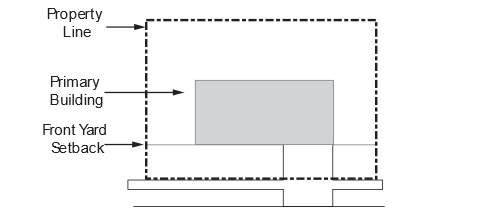
Figure 19.46.090 Primary Building Oriented to the Street - The front of the building shall be accessible by a pedestrian from an adjacent right-of-way.
- Buildings may not be oriented away from the street. The front of the building shall be parallel with the adjacent right-of-way and frontage.
- Projections.
- The following may be erected on or projected into any required yard space in all Zones:
- Fences and walls in conformance with this Code;
- Landscape elements, including trees, shrubs and other plants;
- Planter boxes or masonry planters not exceeding twenty-four inches (24”) in height;
- Necessary appurtenances for utility services associated with minor public utilities;
- Decks not more than two feet (2') high;
- Cornices, eaves, sills, planter boxes, stairways, landings, porches, decks, awnings or similar architectural features attached to the building and not enclosed by walls, extending not more than two feet (2') into a side yard, or four feet (4') into a front or rear yard;
- Bay windows, cantilevered floors and fireplace structures may project into any yard not more than two feet (2’), provided that they are not wider than eight feet (8’) wide; and
- Chimneys, fireplace keys, box or bay windows or cantilevered walls attached to the building no greater than eight feet (8') wide and extending not more than two feet (2') into a side yard, or four feet (4') into a front or rear yard.
- Projections into Required Yards. The following structures may be erected on or projected into any required yard:
- Accessory structures subject to this Title.
- The following may be erected on or projected into any required yard space in all Zones:
- Building Exterior Lighting Standards.
- Light Direction. Exterior lighting attached to a building that is intended to illuminate exterior use areas, like pathways, shall be directed downward.
- Light Source. Light sources shall be at least as efficient as LED and no greater than four thousand kelvin (4000K) in correlated color temperature (CCT). Light levels shall be designed such that light trespass measured at the property line does not exceed 0.01 foot-candles. Light fixtures shall use a cutoff luminaire that is fully or partially shielded with no light distributed above the horizontal plane of the luminaire or into nearby residential structures. In no case shall the total lumens emitted for a single site exceed one hundred thousand (100,000) lumens per acre. This standard does not apply to single-family residential lots or any lot with four units or less.
- Additional requirements for exterior lighting may be required in the applicable zone of the municipality’s dark sky or lighting ordinance.
- Building Height Limitations and Exceptions.
- Buildings shall not be erected that contain less than one (1) story above grade, as defined in this Title.
- Roof structures above the maximum height that provide utilities, safety measures, or building code requirements may be erected above the height limits prescribed in this Title, but no space above the height limit shall be allowed for the purpose of providing additional floor space. Roof structure for this purpose may not exceed a maximum of twenty feet (20’) above the maximum allowed building height unless otherwise specified in this Title.
- Public or semipublic utility buildings, when authorized in a zone, may be erected to a height not exceeding seventy-five feet (75’) if the building is set back from each otherwise established building line at zone in which the building is erected. Public or semipublic utility buildings do not include cell towers.
- Flag Poles and Church steeples are not included in building height calculations.
- Parking and Loading. Any development shall follow the parking and loading standards set forth in Chapter 19.48, Off-Street Parking and Mobility of this Title.
Repealed & Replaced by Ord. Title 19 White City Zoning Ordinance on 6/2/2023
19.46.100 Infrastructure And Public Improvements
The minimum requirements for public improvements shall be a combination of standards set forth in Title 14, Highways, Sidewalks, and Public Places, and applicable standards set forth in this Title or adopted in White City's Master Transportation Plan.
- Off-Site Improvements Required
- Off-Site Improvements. Subject to the essential link and rough proportionality tests for exactions in Utah Code Section 10-9a-508, an applicant for a building or land use permit for a dwelling, or a commercial or industrial use shall provide curb, gutter, sidewalk, street, and urban hydrology improvements along the entire property line which abuts any public road or street in cases where it does not exist at municipal standards.
- Access to public right of ways. New and reconstructed vehicular entrances to the property shall be provided as required in Section 14.12.110. Height, location, structural specifications, maximum and minimum cut radii and minimum roadway approach angles to the centerline of the street are subject to the approval of the Municipal Engineering Division.
- Exceptions.
- The planning commission may grant exception to the installation of the sidewalk in industrial areas where the planning commission determines that the sidewalk is not necessary to serve the public need, and the elimination of the sidewalk does not jeopardize the public health, safety or welfare.
- The planning commission may grant exception to the installation of curb, gutter and sidewalk in rural or estate areas where topographic or other exceptional conditions exist, provided that the public health, safety and welfare is preserved.
- The planning commission may require the applicant to sign a delay agreement binding the current and future property owner to pay for their share of any required improvements that are installed by White City within 10 years of the waiver.
- Off-Site Improvements. Subject to the essential link and rough proportionality tests for exactions in Utah Code Section 10-9a-508, an applicant for a building or land use permit for a dwelling, or a commercial or industrial use shall provide curb, gutter, sidewalk, street, and urban hydrology improvements along the entire property line which abuts any public road or street in cases where it does not exist at municipal standards.
- Acceptance of Public Streets
- Street lighting shall either be chosen from the municipality’s approved streetlight list or installed to match a theme set by developments within the zone or neighborhood.
- Street lighting shall be installed in conformance with Title 18.
- Street Signs and Markers. Standard street name signs shall be installed at one corner of all street intersections. The size, design, materials, location, fabrication, installation, and maintenance of the signs and poles within the public right of way and elsewhere shall be in accordance with the Utah Department of Transportation, the Manual of Uniform Traffic Control Devices for Streets and Highways (MUTCD), or the municipality’s adopted policies, as applicable.
- Private Streets.
- Private streets or roads shall be designed and constructed to meet or exceed the public street standards set forth in Title 14, Highways, Sidewalks, and Public Places, as applicable.
- Private streets or roads are allowed in the following circumstances:
- If shown on an approved development plan as private streets;
- For multi-family developments; and
- For residential subdivisions where the street is equally shared between properties. Such streets shall have a maintenance and operations plan included in the declaration of covenants, conditions, and restrictions for the subdivision.
- Private streets or roads are allowed in the following circumstances:
- Private streets or roads shall be designed and constructed to meet or exceed the public street standards set forth in Title 14, Highways, Sidewalks, and Public Places, as applicable.
- Ingress and Egress Requirements. No building with human occupiable space may be erected or enlarged on a parcel in any zone unless such parcel abuts upon or has access to a publicly accepted and maintained street, a private driveway, a private road, or a public or private alley.
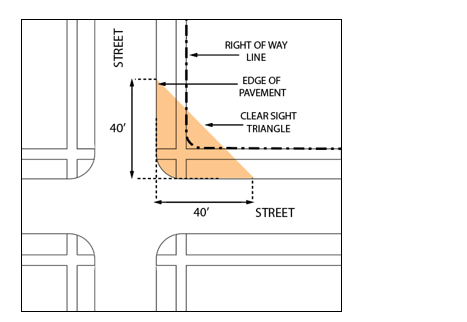
- Intersecting Streets and Clear Visibility. In all zones which require a front yard, no obstruction to view in excess of three feet (3’) in height may be placed on any corner lot within a triangular area formed by the street property lines or right-of-way lines and a line connecting them at points forty feet (40’) from the intersection of the street lines, except mature trees which are located in the clear sight triangle shall be pruned to a height of at least seven feet (7') above the established sidewalk or street elevation.
- Intersecting Streets and Driveways. In all zones, no view obstruction, including a sight-obscuring fence, wall, sign, other similar structures, and landscaping which exceeds three feet (3’) in height shall be placed within a triangular area formed by a diagonal line connecting lines located at the curb line or sidewalk line and driveway line ten feet (10’) from the projected intersection of such lines.
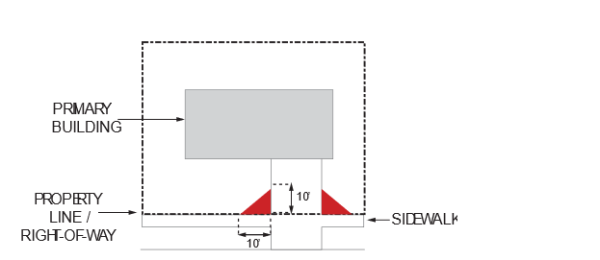
Figure 19.46.100.B Intersecting Streets and Driveways - Acceptance by Private Streets. Prior to acceptance by the municipality, any private street, or any driveway allowed for access with a development that is not constructed and maintained to the municipality’s adopted street standards shall be improved to the municipality’s adopted street standards.
- Driveways. A driveway shall be allowed for vehicular access according to the standards set forth in Title 14, Highways, Sidewalks, and Public Places, and Chapter 19.48 Off-Street Parking and Mobility.
- Pedestrian and Bicycle Mobility.
- Each lot shall have pedestrian walkways and sidewalks that provide connections between the building entrances, neighboring building entrances, parking areas, open space, and public trails. Such systems shall be designed to connect with all elements within the development, adjacent areas, and transit stops and can include sidewalks along public or private streets, wide outside travel lanes, bike lanes on roadways, and walkways and trails in alternative locations as appropriate. Design, location, dimensions, dedications, easements, and reservations shall conform to applicable municipal policies and standards for sidewalks, bicycle routes, and trails.
- Walkways and trails shall be designed to maximize the safety of users and the security of adjoining properties with respect to location, visibility, and landscaping.
- Bicycle Facilities. Bicycle facilities shall be provided in accordance with the standards set forth in Chapter Off-Street 48 Parking and Mobility.
Repealed & Replaced by Ord. Title 19 White City Zoning Ordinance on 6/2/2023
Amended by Ord. 2025-O-04 on 5/1/2025
19.46.110 Environmental Protection Standards
- Recreational Facilities and Open Space Standards.
- Open space standards do not apply to single-family, two-family, or three-family, development on individual lots.
- All floodplains, wetlands, streams, riparian buffers, ponds, lakes, and other water bodies shall be contained in open space.
- At least fifty percent (50%) of open space shall be contiguous.
- Recreational facility and open space requirements shall be satisfied by installing the types of recreational facilities that are most likely to be suited to and used by the age bracket of persons likely to reside in that development.
- Residential Development. Developments with ten (10) or more bedrooms or four (4) or more dwellings must provide a minimum of forty percent (40%) open space. If reductions in open space have been permitted pursuant to the standards of this Title the total amount of open space required shall not be reduced to less than thirty-two percent (32%).
- One (1) or more active recreational facilities shall be provided for twenty-five percent (25%) of the total open space required in accordance with the minimum requirements in Table 19.46.110 Recreational Facility Standards Table.
- Active recreation areas shall be located near housing and high intensity uses or adjacent to a public right-of-way as allowed through the site design process.
- Twenty-five percent (25%) of the total open space required shall be dedicated to passive recreation opportunities or green space in its natural condition.
- Passive recreation areas shall be located near landscaping and open space or green space or may be incorporated into green infrastructure facilities for stormwater if approved by the Public Works or Engineering Department.
- Beyond the minimum requirements set forth in this Section, the remaining open space required for residential development may be any combination of active or passive recreation suited to and used by the age bracket of persons likely to reside in that development or green infrastructure or low-impact development standards for stormwater as approved by the Public Works or Engineering Department.
- Commercial Development. Commercial development greater than one (1) acre shall provide twenty percent (20%) open space.
- Required open space may be any combination of active or passive recreation suited to and used by the age bracket of persons likely to work in the area or green infrastructure or low-impact development standards for stormwater as approved by the Municipal Engineer.
- Open Space Bonding. Bonding for approved amenities shall be required.
- Recreation Facility Calculation. Active recreational facility calculations shall be the sum of the minimum area requirements listed in Table 19.46.110 Recreational Facility Standards Table.
- Recreational Facility Standards. Any development shall follow the minimum standards in the recreational facility standards table.
Table 19.46.110 - Recreational Facility Standards Table Recreational Facility Type Minimum Area Additional Standards Active Recreational Facilities Basketball Court 4,700 sq. ft. Sports Court 4,700 sq. ft. Tennis Court 6,120 sq. ft. Pickleball Court 1,800 sq. ft. Swimming Pool or Splash Pad 800 sq. ft. The minimum area does not include decks. Community Center or Clubhouse 1,200 sq. ft. The minimum area does not include a leasing office. Playground 1,000 sq. ft. Playgrounds adjacent to a parking lot or road shall be fenced with transparent fencing along the shared boundary. Path or Trail 9,000 sq. ft. Shall be six feet (6’) wide. Shall not include sidewalks. May or may not be paved. Dog Run 1,000 sq. ft. Shall be fenced along the perimeter and shall provide a dog bag dispenser, trash bag, and water fountain. Other Any facility not listed that is determined by the Planning Commission or Director with a minimum area also approved by the Planning Commission or Director. Passive Recreational Facilities Picnic Area 500 sq. ft. Shall include a pavilion or gazebo and at least one sitting area with a table. Lawn Area 2,000 sq. ft. Shall be at least sixty (60) feet wide. Plaza 1,000 sq. ft. Only allowed for non-residential development. Bike Station 4 bike stalls Shall include a bike work stand with tools, air pump. Community Garden 1,000 sq. ft. Shall be fenced along the perimeter. Fence shall be transparent with a minimum height of three and a half feet (3.5’). Shall be regularly maintained and integrated into the landscape. Water Feature 400 sq. ft. Shall include fixed seating and be integrated into the landscape. Pollinator Gardens 50 sq. ft. A single species of the plant should be in clusters of twenty-five (25) square feet. Educational or Interpretive Signage 25 sq. ft. Associated with a path, native plant demonstration, low-impact development, green infrastructure feature, pollinator garden, or other natural feature or open space feature Native Plant Demonstration 100 sq. ft. A single species of the plant should be in clusters of twenty-five (25) square feet. Other Any facility not listed that is determined by the Planning Commission with a minimum area also approved by the Planning Commission.
- Stormwater and Water Quality. Any development shall follow the standards set forth in Title 17, Flood Control and Water Quality.
- Culinary Water and Sanitary Sewer Requirements. All dwellings and other structures used for human occupancy shall be served by an adequate culinary water and sewage disposal facility approved by the Salt Lake County Health Department.
- Geologic Hazards and Floodplains. All development in the municipality shall be reviewed for compliance with Chapters 19.56 Flood Plain Regulations and 19.58 Geologic Hazards Ordinance.
- Mechanical Equipment. Air conditioning units, generators and other auxiliary mechanical and building equipment shall be placed at locations where they will be least intrusive in terms of noise, appearance, and odors, particularly for adjacent properties and public rights-of-way. Screening walls, landscaping, and other screening treatments shall be used so all required mechanical equipment is screened from public streets and adjoining properties. All building-mounted mechanical or communications equipment shall be a color to make it as unobtrusive as possible. If located on or adjacent to a building wall, the color of all mechanical and communications equipment shall blend with the color and design details of the building.
- Wildland Urban Interface. Lots found to be within the Wildland Urban Interface (WUI) as determined by the Utah Division of Forestry, Fire, and State Lands or other state-designated agencies may have additional requirements for site development. Lots found to be within the WUI shall be required to demonstrate compliance with any applicable codes during the site plan approval process or other applicable land use applications.
- Landscaping. Any development shall follow the landscaping standards set forth in Chapter 19.50, Landscaping, Screening, and Water Efficiency Standards.
Repealed & Replaced by Ord. Title 19 White City Zoning Ordinance on 6/2/2023
19.46.120 Highway Noise Abatement
- Findings.
- The Federal Highway Administration (FHWA) regulation entitled "Procedures for Abatement of Highway Traffic Noise and Construction Noise" (23 CFR 772) provides procedures for noise studies and noise abatement measures to help protect the public health and welfare, supplies noise abatement criteria, and establishes requirements for information to be given to local officials for use in the planning and design of federal-aid highways. The Utah Department of Transportation (UDOT) policy entitled "Noise Abatement" (Policy #08-111), adopted pursuant to 23 CFR 772, addresses highway noise impacts and sets forth conditions under which noise abatement projects may be approved and constructed in the state of Utah with the use of federal-aid highway participation funds.
- In order for UDOT to obtain participation funds from FHWA for proposed federal-aid highway projects for noise abatement measures on existing highways (known as "Type II Projects"), local authorities are required to take measures "...to exercise land use control over the remaining undeveloped lands adjacent to highways in the local jurisdiction to prevent further development of incompatible activities." 23 CFR 772.13(b).
- In an effort to prevent future traffic noise impacts on currently undeveloped lands, 23 CFR 772.15 requires that highway agencies shall inform local officials within whose jurisdiction the highway project is located of the following:
- The best estimation of future noise levels (for various distances from the highway improvement) for both developed and undeveloped lands or properties in the immediate vicinity of the project;
- Information that may be useful to local communities to protect future land development from becoming incompatible with anticipated highway noise levels; and
- Eligibility for federal-aid participation for Type II Projects as described in 23 CFR 772.13(b).
- In order for residents to benefit from the development and implementation of Type II Projects for noise abatement along eligible highways within its boundaries, it is found to be in the municipality’s best interests to comply with federal regulation and state policy by adopting this zoning ordinance codified in this Chapter.
- Development of Property Adjacent to Certain State Highways. Consistent with the requirements of 23 CFR 772 and UDOT's Noise Abatement Policy #08-111, no remaining undeveloped lands located in the municipality adjacent to Type II Projects (freeways and expressways) shall be developed for any use or activity which is incompatible with highway traffic noise levels, unless the development of such lands shall include appropriate noise abatement measures determined necessary and appropriate by the municipality and UDOT. A use or activity shall be deemed incompatible with highway traffic noise levels when a traffic noise impact occurs, as determined under the following formula:
Noise Abatement Criteria (Hourly A-Weighted Sound Level—decibels (dBA))
Leq(h) shown are maximum levels allowed:Activity Category Leq(h) Description of Activity Category A 57 (exterior) Lands on which serenity and quiet are of extraordinary significance and serve an important public need and where the preservation of those qualities is essential if the area is to continue to serve its intended purpose. B 67 (exterior) Picnic areas, fixed recreation areas, playgrounds, active sports areas, parks, residences, motels, hotels, schools, churches, libraries, and hospitals C 72 (exterior Cemeteries, commercial areas, industrial areas, office buildings, and other developed lands, properties or activities not included in Categories A or B above. D - Undeveloped lands (including roadside facilities and dispersed recreation). E 52 (exterior) Residences, motels, hotels, public meeting rooms, schools, churches, libraries, hospitals, and auditoriums. - Responsibility of Owner or Developer. The owner or developer of land to be subdivided, improved or developed adjacent to Type II Projects shall be responsible to comply with any and all requirements for noise abatement measures imposed pursuant to the provisions of this Chapter. Failure to so comply shall constitute a violation of municipal ordinance and shall be punishable as a misdemeanor as provided in Chapter 1.12 of this Code.
Repealed & Replaced by Ord. Title 19 White City Zoning Ordinance on 6/2/2023
19.46.130 Utility And Facility Placement Regulations
- Systems Required to Be Underground. Unless exempted under Section 19.46.130 (B) of this Chapter, the following systems may be required to be installed underground:
- All new transmission systems installed after the effective date of the ordinance codified in this Chapter.
- All upgraded transmission systems which would increase the height of poles from less than sixty-five feet (65’) to more than sixty-five feet (65’) above existing grade.
- Exemptions. The following systems are exempt from the provisions of Section 19.46.130 (A) of this Chapter:
- Except as provided in Section 19.46.130 (A) (2). of this Chapter, this Chapter does not require the burial of any existing aboveground systems, nor does it prohibit or restrict the repair, relocation, maintenance, or replacement of any existing systems.
- Aboveground installation of the following systems is permitted, subject to compliance with all other applicable statutes, ordinances, and regulations:
- New service drops and/or distribution lines where service is available from existing aboveground systems;
- Temporary systems required for construction projects not to exceed a period of twelve months;
- Street light poles, light rail overhead catenary, wireless telecommunications towers, and accessory equipment; and
- Transmission systems installed in the two main north-south transmission corridors, as identified on the map entitled "main north-south electrical transmission corridors" on file with the planning and development services division.
- In cases where unusual topographical, aesthetic, or other exceptional conditions or circumstances exist such that the installation of a system would have minimal visual, health, or safety impact on the public, variations or exceptions to the requirements of this Chapter may be approved by the municipality; provided, that the variations and exceptions are consistent with the purposes of this Chapter.
- In cases where the municipality determines that insufficient funds are available to pay for the incremental costs of underground installation of a system or determines that the public benefit to be derived from underground installation is not cost effective or is otherwise not in the public interest, the municipality shall give notice to the utility or facility company that the municipality will not require the underground installation and will not pay the incremental costs of underground installation of the system:
- Within ninety days after notice is given under Section 19.46.130 (C) of this Chapter in the case of a new transmission system; and
- Within sixty days after notice is given under Section 19.46.130 (C) of this Chapter in the case of a new distribution system or an upgraded transmission system which would increase the height of poles from less than sixty-five feet to more than sixty-five feet above existing grade.
- If the municipality has not given notice to the utility or facility company regarding underground installation as provided in Subsection 19.46.130.(B)(4) of this section, it shall be deemed that the municipality has determined that insufficient funds are available to pay for the incremental costs of underground installation or has determined that the public benefit to be derived from underground installation is otherwise not in the public interest.
- Notification of Affected Property Owners. Prior to beginning a project involving the installation or upgrading of four or more poles, a utility/facility company providing electrical power for general consumption shall send written notification of the project to all adjacent property owners and the director of public works. The purpose of such notification is to allow the municipality and potentially affected property owners to determine whether there are reasons to require the underground installation of the system, to determine whether sufficient funds are available to pay the incremental costs of underground installation of the new or upgraded system and provide the municipality the opportunity to meet with the company to discuss the project. Such notification shall include a full description of the project including:
- the need for the project;
- location of the project;
- height, width, type and general location of poles; and
- amount of voltage.
- Failure of property owners to receive notice of the project shall in no way affect the validity of action taken. Failure to reach an agreement within the sixty-day period shall not be grounds for the delay of the project. Notification is not required for emergency projects, relocations, replacements and systems which are exempt under Section 19.46.130 (B) of this Chapter except for an exemption resulting after notification under Section 19.46.130 (B)(4) of this Chapter.
- Excavation Permit Required. All underground systems to be installed in the right-of-way of any municipal road shall be made in accordance with the provisions of Chapter 14.16, Excavations.
Repealed & Replaced by Ord. Title 19 White City Zoning Ordinance on 6/2/2023
19.46.140 Oil And Gas Transmission Pipeline
- A notification area is hereby established for any parcels within six hundred sixty feet from the mapped centerline of an oil or gas transmission pipeline, as indicated by the adopted pipeline protection map, a geographic information system (GIS) based map. The municipality makes no warranty as to the accuracy of this map, which reflects information provided by pipeline operators.
- At the time of application for a development permit the municipality shall notify the applicant if the proposed development is within the notification area and provide contact information for the pipeline operator(s) in the area and for Utah's one-call program. It is the obligation of pipeline operators to correct or update their information with the municipality.
- If any proposed development is within the notification area, the applicant for a development permit shall contact the pipeline operators and provide them with a copy of the application and timely notice of the first scheduled public hearing on the application, if there is one. The applicant shall file proof of this notification with Planning and Development Services before any development permit may be issued. Proof of notification shall be kept on file with the application. Once the development permit is issued, it is the responsibility of the applicant to consider any comments and recommendations posed by the pipeline operator(s) to ensure no pipelines are damaged during construction of the approved project.
- Subdivision plats containing any portion of a lot that is within two hundred feet (200’) from the centerline of a pipeline as shown on the adopted pipeline protection map shall show the pipeline location on the plat. The location of all known oil or gas transmission lines and related easements shall also be shown on all zoning, building and record plat maps.
- Oil and Gas Transmission Pipeline Map Modification.
- It is the obligation of pipeline operators to correct or update the adopted pipeline protection map, and they shall do this by filing an application to modify the map. The application shall be presented to the Director for review and approval. The complete application must include:
- An explanation from the pipeline operator(s) of how the corrected or proposed location was determined for each transmission pipeline; and
- Electronic GIS data or detailed drawings delineating the correct or proposed location.
- It is the obligation of pipeline operators to correct or update the adopted pipeline protection map, and they shall do this by filing an application to modify the map. The application shall be presented to the Director for review and approval. The complete application must include:
Repealed & Replaced by Ord. Title 19 White City Zoning Ordinance on 6/2/2023
19.46.150 Easements
- Storm drainage and utility easements for water, sanitary sewer, electricity, gas, and communications improvements shall be provided in the location and to the width as required by the provider.
- Easements for other purposes as required by the Director or designee shall be designed, designated, reserved, and dedicated as appropriate.
- All site plans and plats shall exhibit standard easement notes stating the type and purpose of the easement along with a list of prohibited uses/activities within the easement.
- Any cross-access agreement shall specify maintenance responsibilities and require that access be unrestricted. The agreement and a plat depicting the easement shall be recorded. Copies of the recorded documents and an attorney certification that the requirements for this paragraph have been met shall be provided to the Director or designee.
Repealed & Replaced by Ord. Title 19 White City Zoning Ordinance on 6/2/2023

