
White Settlement City Zoning Code
ARTICLE IV
RESIDENTIAL DISTRICT REGULATIONS
Sec. 111-81.- Nonapplicability; construction regulations.
(a)
Nonapplicability of area regulations to certain lots. The required minimum lot width and the required minimum lot area for any single-family residential district shall not apply to any individual lot of record that was platted prior to the adoption of the ordinance from which this chapter is derived.
(b)
Construction regulations.
(1)
All outside walls of the ground floor of every residential structure shall be constructed of 100 percent masonry or glass. It is provided, however, that up to, but not exceeding, ten percent of the outside walls may be covered or constructed of other materials for decorative, architectural or design purposes. Such other material shall be impervious material that is required for outside walls by the residential building code mandated by the state and the ordinances of the city.
(2)
Stucco shall not be allowed on any residential structure with less than 4,000 square feet of living area.
(3)
These construction regulations shall apply to all of the following:
a.
Newly constructed houses.
b.
Houses moved into or within the city from a previous location.
c.
Houses determined by the building official or board of adjustments and appeals to be damaged or deteriorated over 50 percent of the appraised value.
(Code 2004, ch. 14, § 11; Code 2008, § 54-82; Code 2019, § 111-82; Ord. No. 2269-05, 7-26-2005)
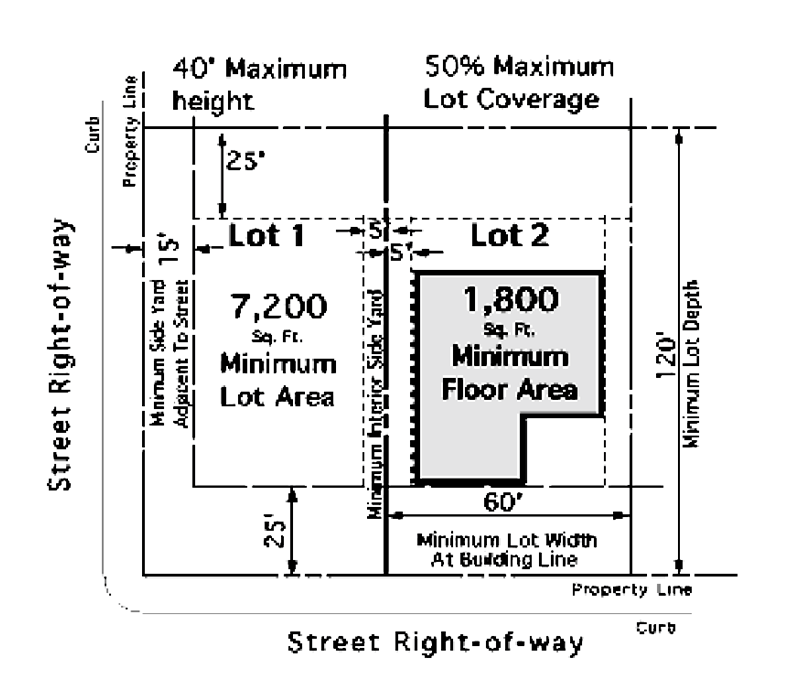
Sec. 111-82. - R-7 Single-Family Residential District—7,200-Square-Foot Lots.
(a)
Purpose. The R-7 Single-Family Residential District—7,200-Square-Foot Lots is intended to be composed of single-family dwellings on large or intermediate-sized lots, which form a neighborhood characterized by mostly owner-occupied homes in a low medium density setting.
(b)
Use regulations. Use regulations for this district are as follows:
Area, Yard and Height Regulations (R-7)
(c)
Additional height.
(1)
The height of a residential structure or structure accessory may be increased to not more than 45 feet when, in addition to the front yard minimum requirements contained herein, each of the yards shall be increased an additional foot for each foot such structure exceeds 40 feet in height.
(2)
The height of a permitted nonresidential structure shall not exceed 75 feet, provided that, in addition to the front yard minimum requirements contained herein, the front yard shall be increased an additional foot for each foot such structure exceeds 40 feet in height.
(d)
Off-street parking regulations.
(1)
Off-street parking shall be provided in accordance with section 111-289.
(2)
No parking space shall occupy any part of the required front yard of a nonresidential use.
(3)
Vehicular parking or storage must be on an improved surface (not on grass).
(Code 2004, ch. 14, § 12; Code 2008, § 54-83; Code 2019, § 111-83)
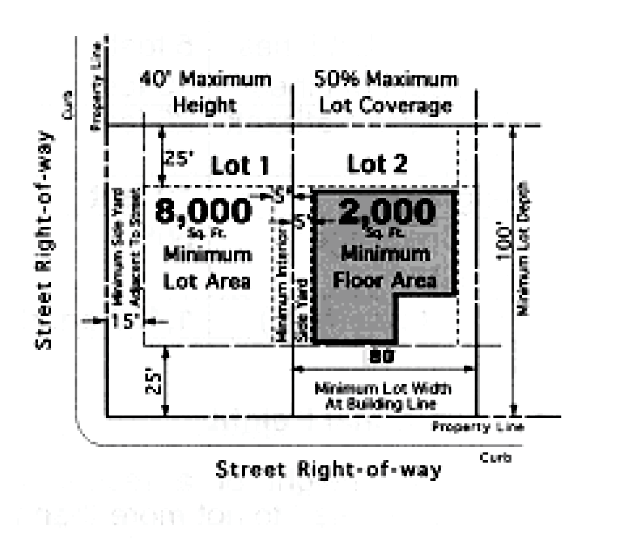
Sec. 111-83. - R-8 Single-Family Residential District—8,000-Square-Foot Lots.
(a)
Purpose. The R-8 Single-Family Residential District—8,000-Square-Foot Lots is intended to be composed of single-family dwellings on large sized lots, which form a neighborhood characterized by mostly owner-occupied homes in a low-density setting.
(b)
Use regulations. Use regulations for this district are as follows:
Area, Yard and Height Regulations (R-8)
(c)
Additional height.
(1)
The height of a residential structure or structure accessory may be increased to not more than 45 feet when, in addition to the front yard minimum requirements contained herein, each of the front yards shall be increased an additional foot for each foot such structure exceeds 40 feet in height.
(2)
The height of a permitted nonresidential structure shall not exceed 75 feet, provided that, in addition to the front yard minimum requirements contained herein, the front yard shall be increased an additional foot for each foot such structure exceeds 40 feet in height.
(d)
Off-street parking regulations.
(1)
Off-street parking shall be provided in accordance with section 111-289.
(2)
No parking space shall occupy any part of the required front yard of a nonresidential use.
(3)
Vehicular parking or storage must be on an improved surface (not on grass).
(Code 2004, ch. 14, § 12A; Code 2008, § 54-84; Code 2019, § 111-84; Ord. No. 2267-05, § III, 6-14-2005; Ord. No. 2015-2486, §§ I—IV, 2-10-2015)
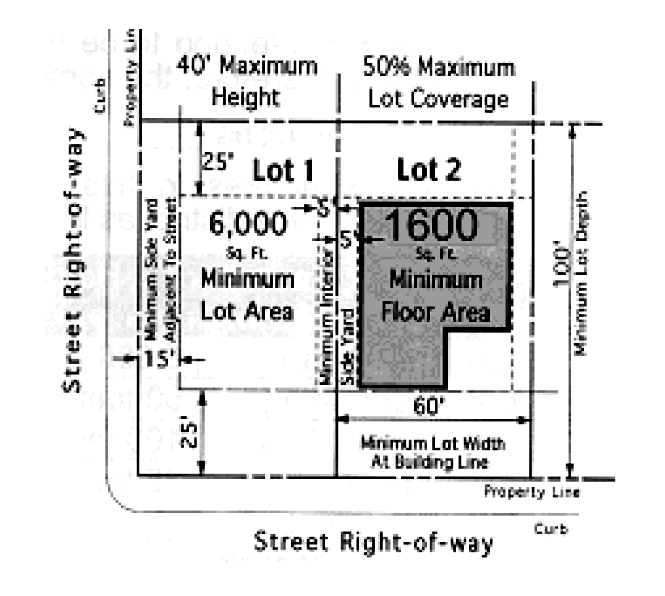
Sec. 111-84. - R-6 Single-Family Residential District—5,000-Square-Foot Lots.
(a)
Purpose. The R-6 Single-Family Residential District—5,000-Square-Foot Lots is intended to be composed of single-family dwellings on intermediate-sized lots, which form a neighborhood characterized by mostly owner-occupied homes in a low medium density setting.
(b)
Use regulations. Land and structures in this zoning district shall be used according to the regulations for this district as listed in article II of this chapter.
Area, Yard and Height Regulations (R-6)
(c)
Additional height.
(1)
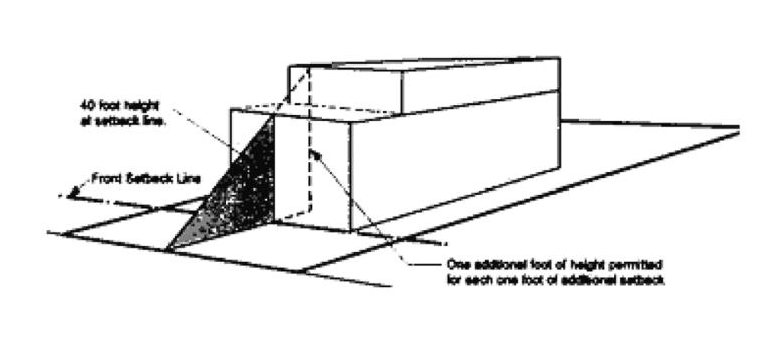
The height of a residential structure or structure accessory may be increased to not more than 45 feet when, in addition to the front yard minimum requirements contained herein, the front yards shall be increased an additional foot for each foot such structure exceeds 40 feet in height.
(2)
The height of a permitted nonresidential structure shall not exceed 75 feet, provided that, in addition to the front yard minimum requirements contained herein, the front yard shall be increased an additional foot for each foot such structure exceeds 40 feet in height.
Additional Height
(d)
Off-street parking regulations.
(1)
Off-street parking shall be provided in accordance with section 111-289.
(2)
No parking space shall occupy any part of the required front yard of a nonresidential use.
(3)
Vehicular parking or storage must be on an improved surface (not on grass).
(Code 2004, ch. 14, § 13; Code 2008, § 54-85; Code 2019, § 111-85; Ord. No. 2171-01, 7-24-2001; Ord. No. 2267-05, § IV, 6-14-2005; Ord. No. 2021-01-001, § 1, 1-5-2021)
Sec. 111-85. - R-5 Single-Family Residential District—5,000-Square-Foot Lots.
(a)
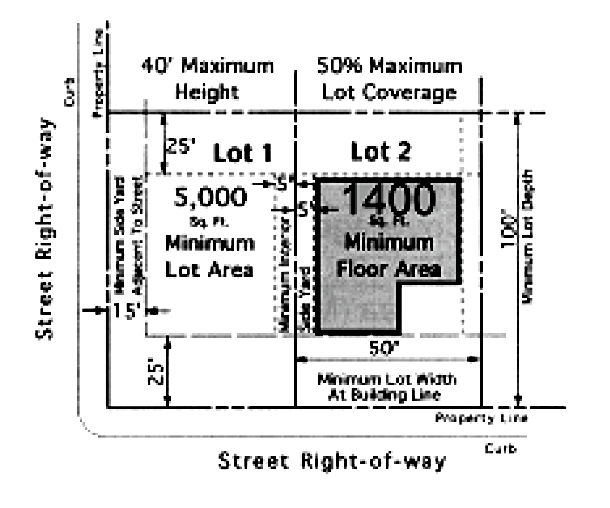
Purpose. The R-5 Single-Family Residential District—5,000-Square-Foot Lots is intended to be the same as the R-6 district, except that lots are generally smaller, and, therefore, the homes are situated in a higher density setting.
(b)
Use regulations. Land and structures in this zoning district shall be used according to the regulations for this district as listed in article II of this chapter.
Area, Yard and Height Regulations (R-5)
(c)
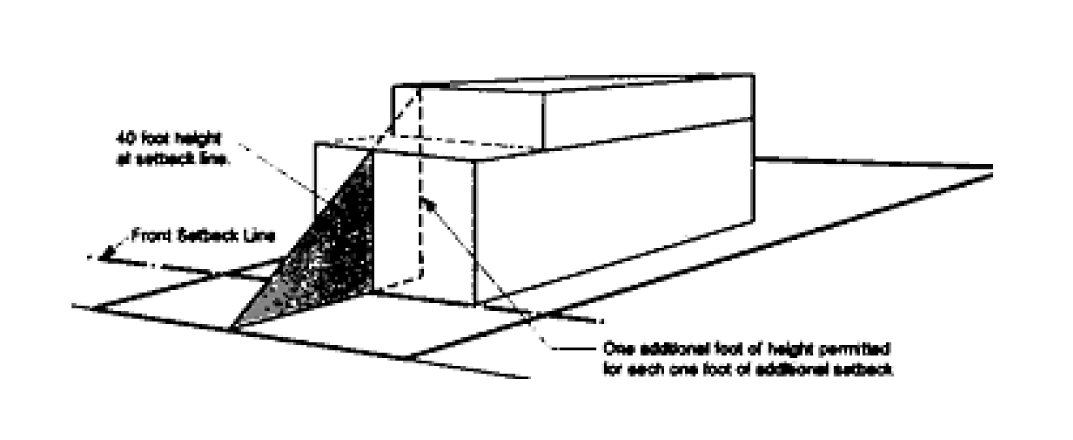
Additional height. The height of a residential structure or structure accessory may be increased to not more than 45 feet when, in addition to the front yard minimum requirements contained herein, the front yard shall be increased an additional foot for each foot such structure exceeds 40 feet in height. The height of a permitted nonresidential structure shall not exceed 75 feet, provided that, in addition to the front yard minimum requirements contained herein, the front yard shall be increased an additional foot for each foot such structure exceeds 40 feet in height.
Additional Height
(d)
Off-street parking regulations.
(1)
Off-street parking shall be provided in accordance with section 111-289.
(2)
No parking space shall occupy any part of the required front yard of a nonresidential use.
(3)
Vehicular parking or storage must be on an improved surface (not on grass).
(Code 2004, ch. 14, § 14; Code 2008, § 54-86; Code 2019, § 111-86; Ord. No. 2171-01, 7-24-2001; Ord. No. 2267-05, § V, 6-14-2005)
Sec. 111-86. - R-C Single-Family Residential District—Cluster.
(a)
Purpose. The R-C Single-Family Residential District—Cluster is intended to be composed of mostly attached dwellings that are clustered together in either townhouses, other zero-lot line clustering, or patio homes. It is intended that these dwellings will form a neighborhood characterized by mostly owner-occupied homes in the highest density setting and by open spaces in common ownership which are designed to give relief to the density of dwellings and to provide desired amenities for the neighborhood. It is intended that advanced and creative designs of residential dwellings and their arrangements, and landscape planning, will be encouraged in this district. A master site plan is required before development of this district may be considered.
(b)
Use regulations. Land and structures in this zoning district shall be used according to the regulations for this district as listed in article II of this chapter.
(c)
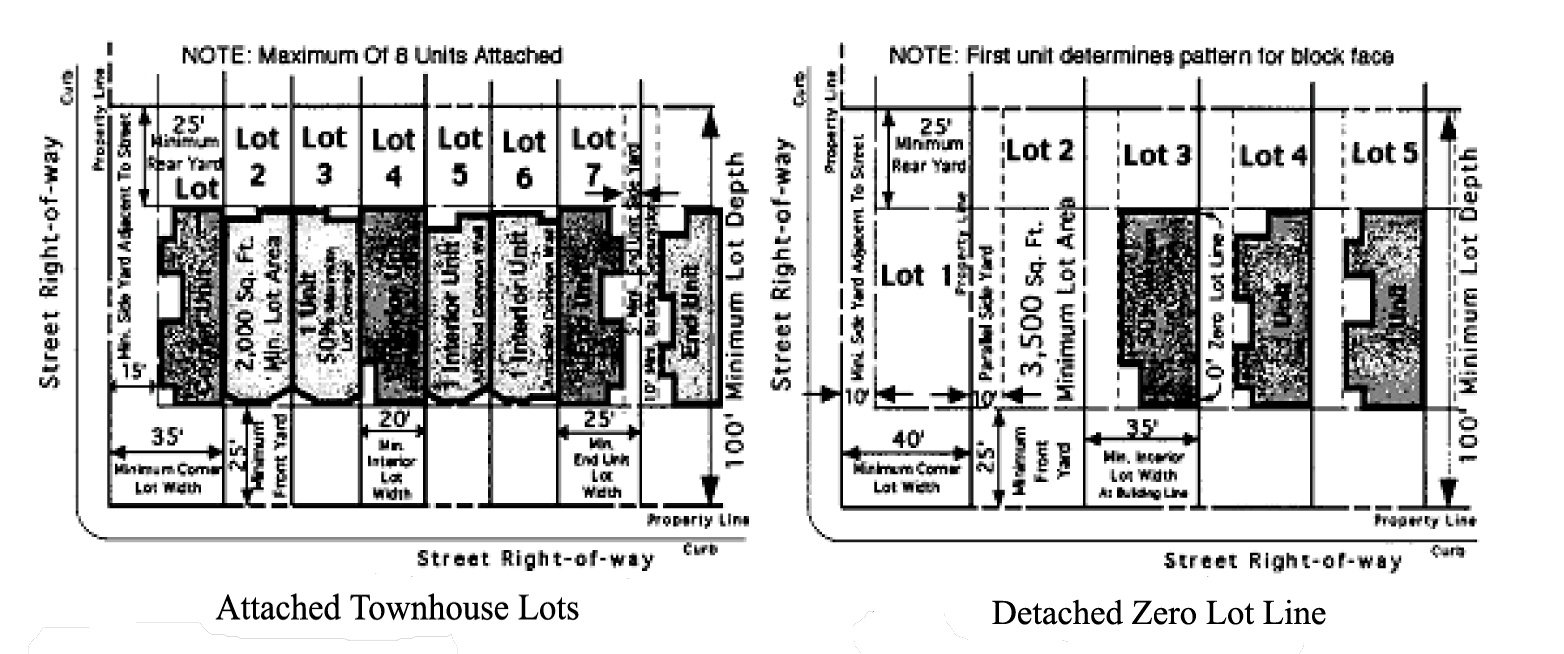
Height and area regulations. Height and area regulations for this district are as follows:
(d)
Density credit.
(1)
Credit shall be given for all permanent open space exterior within 100 feet of the development site and for the floor area within the development site.
(2)
All open space areas other than paved surface parking areas for vehicles within the development site that are used for professionally planned and landscaped flower gardens, vegetable gardens, children's play lots, strolling paths, picnic areas, or other park-like areas landscaped, and for which provisions are made for maintenance of same, shall be counted twice.
(e)
Platting required for zero lot line. All lots using the zero yard concept shall be platted or replatted. The planning and zoning commission shall review such plats or replats. The first dwelling unit constructed on a lot within the area to be replatted shall set the zero lot line pattern of yards for the remaining lots within the area to be replatted. The city council will approve or not approve the plat or replat.
(f)
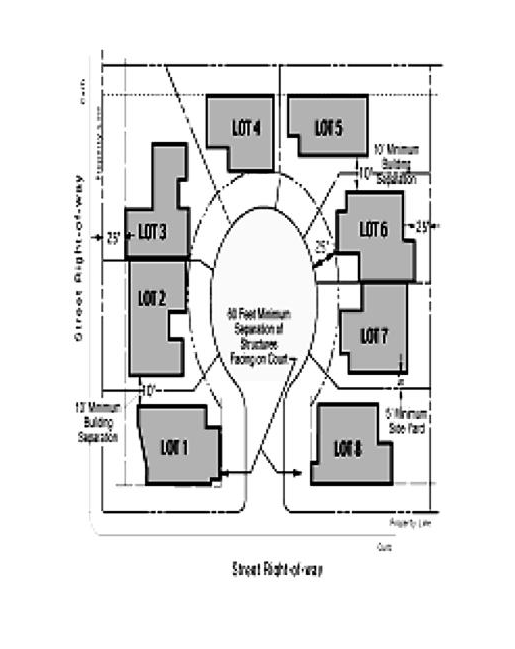
Cluster development regulations. Yard setbacks and building lines shall be in accordance with the following:
(1)
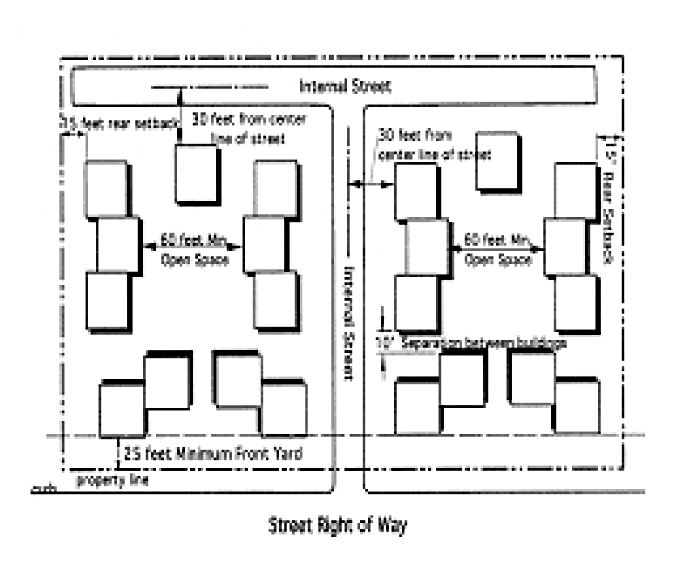
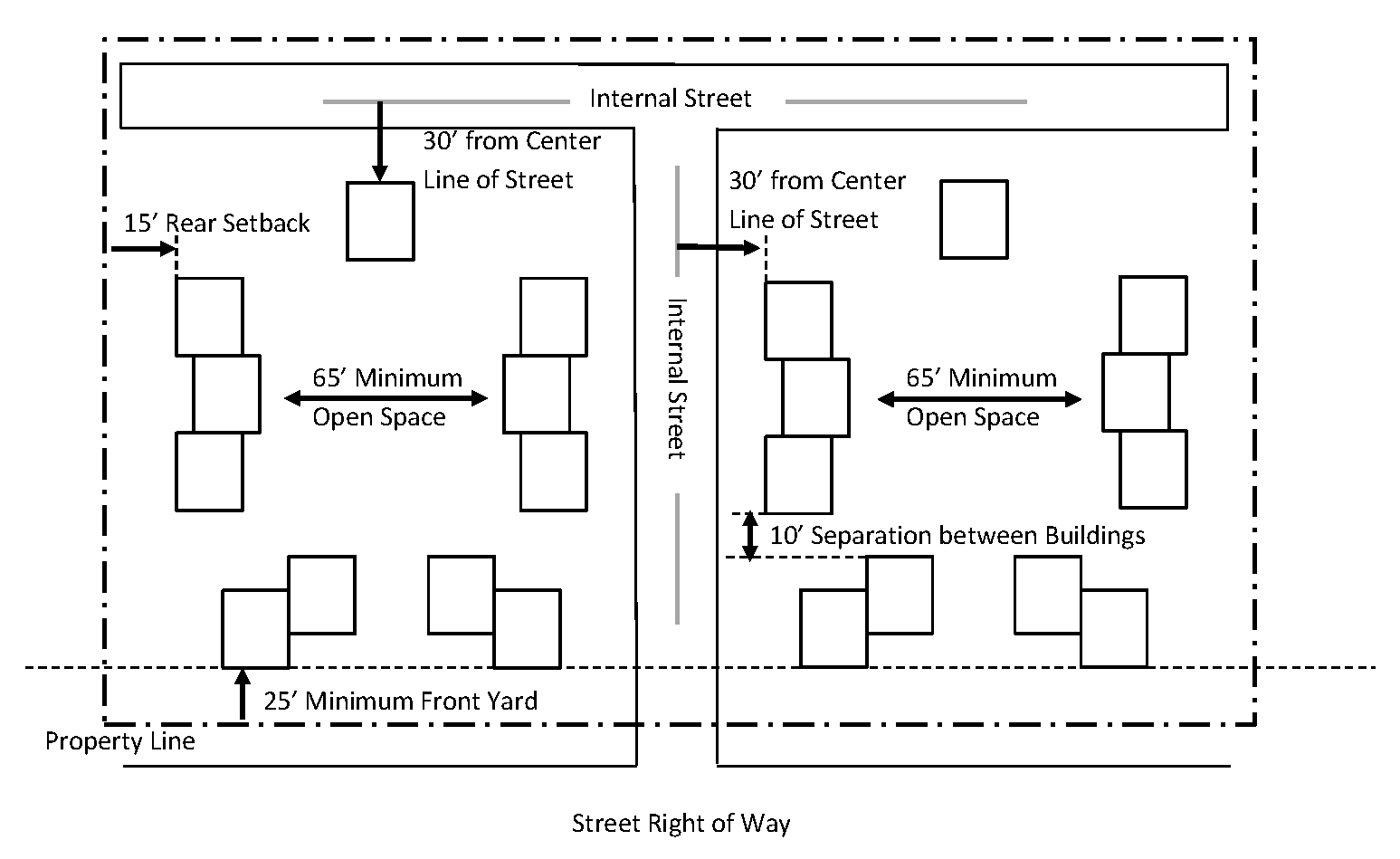
Buildings adjacent to public streets which are internal to a townhouse development shall be set back not less than 25 feet from the centerlines of the streets.
(2)
Buildings containing dwelling units fronting on a place or court and facing other such buildings shall be separated from the buildings by not less than 60 feet of open space.
(3)
Buildings adjacent to major thoroughfares, collector streets or other public streets which are not internal to a townhouse development shall be set back not less than 25 feet from the right-of-way of such streets.
(4)
The rear yard for any dwelling shall not be less than 25 feet.
(5)
For any residential structures having configurations and locations other than that for townhouses or row houses, they shall be arranged so that there will be a clearance of not less than ten feet between the side of any one structure and the side of the structure adjacent to it, and there shall be a front yard of not less than 25 feet for every dwelling unit.
Cluster Development
(g)
Off-street parking regulations.
(1)
Off-street parking shall be provided in accordance with section 111-289.
(2)
No parking space shall occupy any part of the required front yard of a nonresidential use.
(3)
Vehicular parking or storage must be on an improved surface (not on grass).
(4)
There shall be at least one-half additional vehicular parking spaces for each dwelling unit. These spaces shall be available in one or more of the following:
a.
On the street, provided that a clear moving lane of nominal width not less than 15 feet remains after all street parking spaces are occupied and vehicles are parked properly next to the edge of the street paving.
b.
Special visitors parking areas located on the development sites.
c.
Parking garages constructed for this purpose on the development site.
(Code 2004, ch. 14, § 15; Code 2008, § 54-87; Code 2019, § 111-87)
Sec. 111-87. - R-D Residential District—Duplex.
(a)
Purpose. The R-D Residential District—Duplex is intended to be composed of mostly duplex buildings in a low-density setting not to exceed two dwelling units per separately platted lot.
(b)
Use regulations. Land and structures in this zoning district shall be used according to the regulations for this district as listed in article II of this chapter.
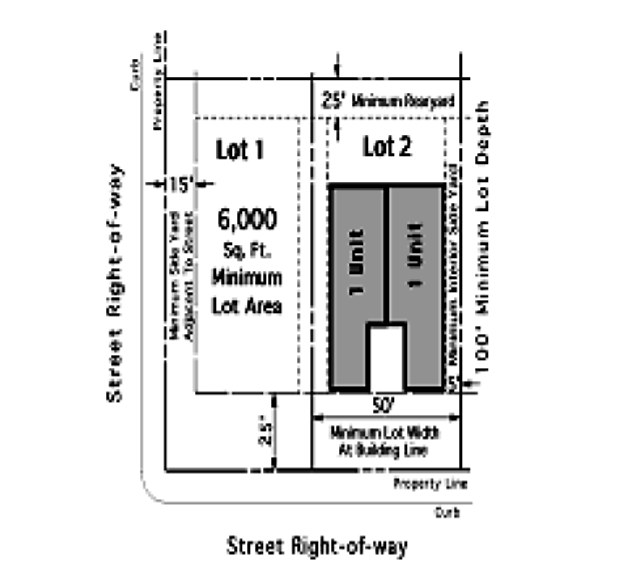
(c)
Height and area regulations. Height and area regulations for this district are as follows:
Area, Yard and Height Regulations (R-D)
(d)
Previously platted duplex property. The land area for a duplex dwelling previously platted shall not be less than 5,000 square feet, provided that the living area per unit contains not less than 800 square feet of living area.
(e)
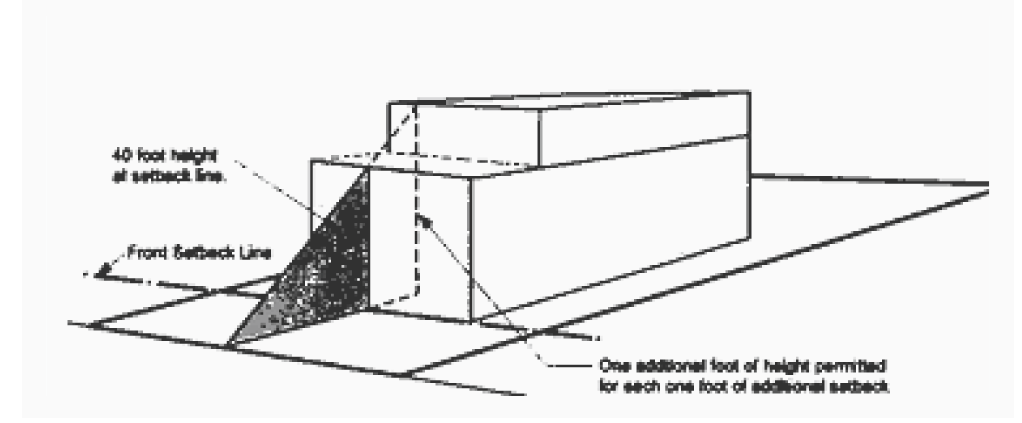
Additional height regulations. The height of any duplex structure or structure accessory thereto shall not exceed 40 feet, provided the height of such structure may be increased to not more than 45 feet when, in addition to the front yard minimum requirements contained herein, the front yard shall be increased an additional foot for each foot such structure exceeds 40 feet in height.
Additional Height
(f)
Off-street parking regulations.
(1)
Off-street parking shall be provided in accordance with section 111-289.
(2)
No parking space shall occupy any part of the required front yard of a nonresidential use.
(Code 2004, ch. 14, § 16; Code 2008, § 54-88; Code 2019, § 111-88)
Sec. 111-88. - MF-16 Multifamily Residential District—Medium Density.
(a)
Purpose. The MF-16 Multifamily Residential District—Medium Density is intended to be composed of mostly apartment buildings in a medium density setting within a range up to that which will not exceed the maximum allowable number of dwelling units.
(b)
Use regulations. Land and structures in this zoning district shall be used according to the regulations for this district as listed in article II of this chapter.
(c)
Height and area regulations. Height and area regulations for this district are as follows:
Area, Yard and Height Regulations (MF-16)
(d)
Density credit.
(1)
Credit shall be given for all permanent open space exterior within 100 feet of the development site and for the floor area of stacked or basement parking areas within the development site.
(2)
All open space areas other than paved surface parking areas for vehicles within the development site which are used for professionally planned and landscaped flower gardens, vegetable gardens, children's play lots, strolling paths, picnic areas, or other park-like areas which are well-designed, landscaped, and for which provisions are made for maintenance of same, shall be counted twice.
(e)
Single-family detached dwelling use.
(1)
The area used for a single-family detached dwelling shall be not less than 6,000 square feet.
(2)
The width of any lot used for a single-family detached dwelling shall be not less than 50 feet.
(3)
All area regulations for single-family, duplex, zero lot-line, townhouse, or product other than multifamily, shall be governed by the district regulations provided for that land use type.
(4)
For any residential structures having configurations and locations other than that for townhouses or row houses, they shall be arranged so that there will be a clearance of not less than ten feet between the side of any one structure and the side of the structure adjacent to it, and there shall be a front yard of not less than 25 feet for every dwelling unit.
(f)
Off-street parking regulations.
(1)
Off-street parking shall be provided in accordance with section 111-289.
(2)
No required parking space shall occupy any part of the required front yard of a residential use.
(3)
On any lot used for single-family residential purposes, there shall be provided two all-weather vehicle parking spaces. If such lot also contains a garage apartment, one additional parking space shall be required.
(Code 2004, ch. 14, § 17; Code 2008, § 54-89; Code 2019, § 111-89; Ord. No. 2171-01, 7-24-2001; Ord. No. 2242-04, 2-24-2004)
Sec. 111-89. - MF-24 Multifamily Residential District—High Density.
(a)
Purpose. The MF-24 Multifamily Residential District—High Density is intended to be the same as the MF-16 district, except that higher densities and taller apartment buildings are permitted.
(b)
Use regulations. Land and structures in this zoning district shall be used according to the regulations for this district as listed in article II of this chapter.
(c)
Height and area regulations. Height and area regulations for this district are as follows:
Area, Yard and Height Regulations (MF-24)
(d)
Density credit. Credit shall be given for all permanent open space exterior to abut within 100 feet of the development site and for the floor area of stacked or basement parking areas within the development site. All open space areas other than paved surface parking areas for vehicles within the development site which are used for professionally planned and landscaped flower gardens, vegetable gardens, children's play lots, strolling paths, picnic areas, or other park-like areas which are well-designed, landscaped, and for which provisions are made for maintenance of same, shall be counted twice.
(e)
Single-family detached dwelling use.
(1)
The area used for a single-family detached dwelling shall be not less than 5,000 square feet.
(2)
The width of any lot used for a single-family detached dwelling shall be not less than 50 feet.
(3)
All area regulations for single-family, duplex, zero-lot-line, townhouse, or product other than multifamily, shall be governed by the district regulations providing for that land use type.
(4)
For any residential structures having configurations and locations other than that for townhouses or row houses, they shall be arranged so that there will be a clearance of not less than ten feet between the side of any one structure and the side of the structure adjacent to it, and there shall be a front yard of not less than 25 feet for every dwelling unit.
(f)
Off-street parking regulations.
(1)
Off-street parking shall be provided in accordance with section 111-289.
(2)
No parking space shall occupy any part of the required front yard of a residential use.
(3)
On any lot used for single-family residential purposes, there shall be provided two all-weather vehicle parking spaces. If such lot also contains a garage apartment, one additional parking space shall be required.
(Code 2004, ch. 14, § 18; Code 2008, § 54-90; Code 2019, § 111-90; Ord. No. 2171-01, 7-24-2001; Ord. No. 2242-04, 2-24-2004)
Sec. 111-90. - MH HUD-Code Manufactured Housing District.
(a)
Purpose. The MH HUD-Code Manufactured Housing District is intended to be composed mostly of manufactured homes and other prefab homes and includes both manufactured home parks and subdivisions.
(b)
Use regulations. Land and structures in this zoning district shall be used according to the regulations for this district as listed in article II of this chapter.
(c)
Height and area regulations. Height and area regulations for this district are as follows:
Area, Yard and Height Regulations (MH)
(d)
Additional area regulations.
(1)
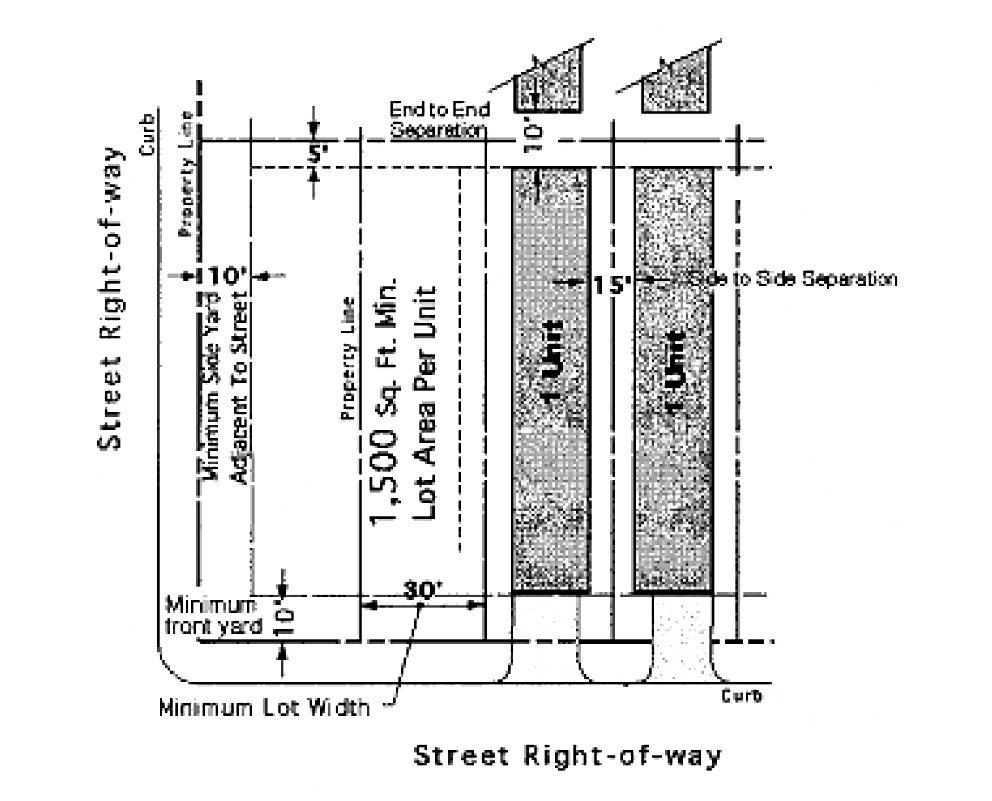
Manufactured home parks in existence on the effective date of the ordinance from which this chapter is derived which provide manufactured home spaces having a width or area less than that hereinabove prescribed may continue to operate with spaces of the existing width and area, but in no event shall any manufactured home space be less than 25 feet wide and have an area of less than 1,000 square feet.
(2)
No manufactured home shall be located closer than ten feet from any building within the park or from any property line bounding the park.
(3)
All manufactured home spaces shall abut upon a driveway of not less than 20 feet in width, which shall have unobstructed access to a public street, alley or highway.
(4)
Walkways not less than two feet wide shall be provided from the manufactured home spaces to the service buildings.
(5)
A minimum of five feet of separation shall be maintained between all detached accessory buildings, manufactured homes, and other accessory buildings.
(e)
Special conditions.
(1)
Prior to issuance by the building official of any permit for a manufactured home park, a site plan shall be approved by the commission and city council.
(2)
Sanitation, fire protection and utility service shall be provided to each lot, tract, plat or stand in accordance with health department requirements or any ordinance of the city regulating it.
(3)
A plan of ingress and egress to the property shall be approved by the city manager.
(4)
There shall be provided on the park or subdivision property all-weather streets and drive surfacing, drainage and garbage collection rights-of-way, fire lanes, utility easements, and lighting with electric lamps of not less than 25 watts each spaced at intervals of not more than 100 feet as required by the city.
(5)
There shall be constructed and maintained a permanent screening device, not less than six feet in height, on all sides of a manufactured home park not directly abutting a dedicated public street.
(6)
An electrical outlet supplying not less than 110 volts shall be provided for each manufactured home space.
(7)
There shall be provided service buildings to house laundry, bathing, toilet and other sanitation facilities as are hereinafter more particularly prescribed.
(8)
An application for a manufactured home park shall be made to the planning and zoning commission in the same manner that an application for zone change is made. Application for approval of a manufactured home park shall be processed according to the procedure specified herein and a site plan and related data shall be submitted for approval in accordance with the requirements set out in the development plan. The application shall be in writing, signed by the applicant and shall include the following:
a.
The name and address of the applicant.
b.
The location and legal description of the manufactured home park.
c.
A complete plan of the park in conformity with the requirements set out in the development plan.
d.
Preliminary plans and specifications of all buildings, improvements, and facilities to be constructed within the manufactured home park.
e.
Such further information as may be requested by the city manager to determine if the proposed park will comply with legal requirements. The application and all accompanying plans and specifications shall be filed with the city manager in triplicate. The planning and zoning commission shall investigate the application and the proposed plans and specifications. If the proposed manufactured home park will, when constructed or altered in accordance with such plans and specifications, be in compliance with all provisions of this chapter and all other applicable ordinances and statutes, the planning and zoning commission may recommend the application for approval by the city council.
(9)
Manufactured home parks may be located only in conformity with this chapter and, in addition to the requirements contained herein, each boundary of the park must be at least 200 feet from any permanent residential building located outside the park, unless separated therefrom by a natural or artificial barrier, or unless a majority of the property owners according to area within the 200 feet consent in writing to the establishment of the park; provided, however, that the provisions of this section shall not apply to manufactured parks already in existence and operation at the time of the passage of the ordinance from which this chapter is derived.
(10)
All buildings in a manufactured home park providing laundry, bathing, toilet, sanitation services for manufactured home park operations shall have at least 75 percent of its exterior wall surfaces, if single story, and 50 percent of its exterior wall surfaces, if more than single story, constructed of masonry and/or glass pane.
(f)
Off-street parking regulations. Off-street parking shall be provided in accordance with article XI of this chapter.
(Code 2004, ch. 14, § 19; Code 2008, § 54-91; Code 2019, § 111-91; Ord. No. 2171-01, 7-24-2001; Ord. No. 2197-02, 4-9-2002; Ord. No. 2196-02, 4-23-2002)
Sec. 111-91. - RV Recreational Vehicle Park District.
(a)
Use regulations. No building or premises in the RV Recreational Vehicle Park District shall be used and no buildings shall be erected, constructed, reconstructed, altered or enlarged, nor shall a permit or license be issued except for recreational vehicle parks.
(b)
Height regulations. The maximum height of any building or structure shall be 35 feet.
(c)
Area regulations.
(1)
RV spaces shall be a minimum of 22 feet wide and a minimum of 36 feet in depth.
(2)
RVs shall be separated from each other and other structures by at least ten feet. Any accessory structure such as attached awnings, carports, or individual storage facilities shall, for the purpose of this separation requirement, be considered to be part of the RV.
(d)
Parking.
(1)
At least 1½ all-weather parking spaces shall be provided per RV space.
(2)
At least one all-weather parking space shall be provided at each RV space.
(3)
Each parking space shall be a minimum of ten feet by 18 feet.
(e)
Buffering; setbacks, screening and landscaping.
(1)
RV spaces and accessory buildings shall be a minimum of 25 feet from adjoining property lines.
(2)
Screening shall be as specified in section 111-241.
(3)
The screening shall be erected before any use is made of the property zoned RV.
(4)
Insofar as it is practical, the screening shall be erected along the entire length of the common line between the RV property and the abutting residentially zoned property.
(f)
Definitions. The following words, terms and phrases, when used in this section, shall have the meanings ascribed to them in this subsection, except where the context clearly indicates a different meaning:
Agent means any person authorized by the licensee of an RV park to operate or maintain such park under the provisions of this chapter.
Building official means the legally designated inspection authority of the building department of the city or authorized representative.
Driveway means a minor private way used by vehicles and pedestrians on an RV space or used for common access to a small group of spaces or facilities.
License means a written license issued by the building official allowing a person to operate and maintain an RV park under the provisions of this section and regulations issued hereunder.
Licensee means any person licensed to operate and maintain an RV park under the provisions of this section.
Permit means a written permit or certification issued by the building official permitting the construction, alteration and extension of an RV park under the provisions of this section and regulations issued hereunder.
Person means any natural individual, firm, trust, partnership, association or corporation.
Pickup coach means a structure designed to be mounted on a pickup or truck chassis with sufficient equipment to render it suitable for use as a temporary dwelling for travel, recreational and vacation uses.
RV (recreational vehicle) means a vehicle which is:
(1)
Built on a single chassis;
(2)
400 square feet or less when measured at the largest horizontal projections;
(3)
Self-propelled or permanently towable by a light-duty truck; and
(4)
Designed primarily not for use as a permanent dwelling but as temporary living quarters for recreational, camping, travel, or seasonal use.
Recreational vehicle park means any premises on which two or more pickup coaches or RVs are parked or situated and used for the purpose of supplying to the public a parking space for one or more such coaches or RVs that are owner-occupied.
Service building means a structure housing toilet, lavatory and such other facilities as may be required by this section.
Sewer connection means the connection consisting of all pipes, fittings and appurtenances from the drain outlet of an RV to the inlet of the corresponding sewer riser pipe of the sewage system serving the RV park.
Sewer riser pipe means that portion of a sewer lateral, which extends vertically to the ground elevation and terminates at an RV space.
Space means a plot of ground within an RV park designed for the accommodation of one RV unit. The term "space" shall also include the terms "lot," "stand" and "stall."
Water connection means the connection consisting of all pipes, fittings, and appurtenances from the water riser pipe to the water riser pipe of the distribution system within an RV park.
Water riser pipe means that portion of the water supply system serving an RV park, which extends vertically to the ground elevation and terminates at a designated point at an RV space.
(g)
Permits.
(1)
Required. It is unlawful for any person to construct, alter or extend any RV park within the limits of the city unless such person holds a valid permit issued by the building official in the name of such person for the specific construction, alteration or extension proposed.
(2)
Application requirements. All applications for permits shall contain the following:
a.
Name and address of applicant.
b.
Location and legal description of the RV park.
c.
A site plan as hereinafter described of the RV park.
(3)
Application fee. All applications shall be accompanied by an application fee as established from time to time.
(4)
Issuance of permit. When, upon review of the application, the building official is satisfied that the proposed plan meets the requirements of this and other applicable ordinances, a permit shall be issued.
(5)
Denial of permit; hearing. Any person whose application for a permit under this section has been denied may request and shall be granted a hearing on the matter under the procedure provided by subsection (j)(2) of this section.
(h)
Licenses.
(1)
Required. It is unlawful for any person to operate any RV park within the limits of the city unless such person holds a valid license issued annually by the building official in the name of such person for the specific park. Each license will expire on December 31 of each year. The applicant shall make all applications for licenses to the building official, who shall issue a license upon compliance with provisions of this section.
(2)
Application; renewal.
a.
Application for original licenses shall be in writing, signed by the applicant, accompanied by an affidavit of the applicant as to the truth of the application and by the payment of the license fee hereinafter provided. Each application shall contain the name and address of the applicant; the location and legal description of the park; and a site plan of the park showing all RV spaces, structures, roads, walkways, and other service facilities.
b.
Applications for renewals of licenses shall be made in writing by the licensee and shall contain any change in the information submitted since the original license was issued or the latest renewal granted.
(3)
Transfer. Every person holding a license shall give notice in writing to the building official within 24 hours after having sold, transferred, given away, or otherwise disposed of interest in or control of any park. Such notice shall include the name and address of the person succeeding to the ownership or control of such park. Upon application in writing for transfer of the license, the license shall be transferred if the park is in compliance with all applicable provisions of this section.
(4)
Fee. A fee as established from time to time shall accompany all original license applications and license transfers.
(5)
Violations; notice; suspension. Whenever, upon inspection of any RV park, the building official finds that conditions or practices exist which are in violation of any provision of this section, the building official shall give notice in writing in accordance with subsection (j)(1) of this section to the licensee. The notice shall state that unless such conditions or practices are corrected within a reasonable period of time as specified in the notice, the license shall be suspended. At the end of such period, the building official shall again inspect such park and, if such conditions or practices have not been corrected, the building official shall suspend the license and give notice in writing of such suspension to the licensee. Upon receipt of notice of such suspension, the licensee shall cease operation of such park, except as provided in subsection (j)(2) of this section.
(6)
Denial; hearing. Any person whose application for a license under this section has been denied may request and shall be granted a hearing on the matter under the procedure provided by subsection (j)(2) of this section.
(i)
Inspection.
(1)
Required. The building official is authorized and directed to make such inspections as are necessary to determine satisfactory compliance with this section.
(2)
Entry on premises. The building official shall have the power to enter at reasonable times upon any private or public property for the purpose of inspecting and investigating conditions relating to the enforcement of this section. It shall be the duty of the licensee or agent to give the building official free access to all lots at reasonable times for the purposes of inspection.
(3)
Inspection of register. The building official shall have the power to inspect the register containing a record of all residents of the RV park.
(4)
Right of entry. Wherever necessary to make an inspection to enforce any of the provisions of this Code or whenever the building official or authorized representative has reasonable cause to believe that there exists in any building or upon any premises any addition or code violation which makes such building or promises unsafe or dangerous or hazardous, the building official or authorized representative may enter such building or premises at all reasonable times to inspect the same or to perform any duty imposed upon the building official by this Code. If such building or premises is occupied, the building official shall first present proper credentials and request entry, and, if such building or premises is unoccupied, the building official shall first make a reasonable effort to locate the owner or other persons having charge or control of the building or premises and request entry. If such entry is refused, or, if no owner or other person having charge or control of the building or premises can be located, the building official or authorized representative shall have recourse to every remedy provided by law to secure entry.
(5)
Fee. An inspection fee as set out in the city fee schedule shall be charged for each RV space to cover the cost of compliance with the RV regulations.
(j)
Notices, hearings, and orders.
(1)
Notice of violation; requirements of notice. When the building official determines that there are grounds to believe that there has been a violation of any provision of this section, the building official shall give notice of such alleged violation to the licensee or agent, as hereinafter provided. Such notice shall:
a.
Be in writing;
b.
Include a statement of the reasons for its issuance;
c.
Allow a reasonable time for the performance of any act it requires;
d.
Be served upon the owner or agent as the case may require, provided that such notice or order shall be deemed to have been properly served upon such licensee or agent when a copy thereof has been sent by registered mail to said licensee's last known address, or when the licensee has been served with such notice by any method authorized or required by the laws of the state;
e.
Contain an outline of remedial action which, if taken, will effect compliance with the provisions of this chapter.
(2)
Appeal from notice. Any person affected by any notice which has been issued in connection with the enforcement of any provision of this chapter may request and shall be granted a hearing before the board of adjustments and appeals on the matter, provided that such person shall file in the office of the building official a written petition requesting such hearing and setting forth a brief statement of the grounds therefor within ten days after the day the notice was served. The filing of the request for a hearing shall operate as a stay of the notice and of the suspension, except in the case of an order issued under subsection (j)(5) of this section. Upon receipt of such petition, the building official shall set a time and place for such hearing and shall give the petitioner written notice thereof. At such hearing the petitioner shall be given an opportunity to be heard and to show why such notice should be modified or withdrawn. The hearing shall be commenced not later than 60 days after the day on which the petition was filed.
(3)
Hearing, order. After such hearing, the board of adjustments and appeals shall make findings as to compliance with the provisions of this chapter and shall issue an order in writing sustaining, modifying or withdrawing the notice, which order shall be served as provided in subsection (j)(1)d of this section. Upon failure to comply with any order sustaining or modifying a notice, the license of the park affected by the order shall be revoked.
(4)
Hearing records; judicial review. The proceedings at such a hearing, including the findings and decision of the building official, and together with a copy of every notice and order related thereto, shall be entered as a matter of public record in the office of the city secretary, but the transcript of the proceedings need not be transcribed unless judicial review of the decision is sought as provided by this article. Any person aggrieved by the decision of the board of adjustments and appeals may seek relief therefrom in any court of competent jurisdiction, as provided by the laws of the state.
(5)
Order without notice. When the building official finds that an emergency exists which requires immediate action to protect the public health, the building official may, without notice or hearing, issue an order reciting the existence of such an emergency and requiring that such action be taken as the building official may deem necessary to meet the emergency, including the suspension of the permit or license. Notwithstanding any other provisions of this chapter, such order shall be effective immediately. Any person to whom such an order is directed shall comply therewith immediately, but upon petition with the building official shall be afforded a hearing as soon as possible. The provisions of subsection (j)(2) of this section shall be applicable to such hearing and the order issued thereafter.
(k)
RV parks.
(1)
Site regulations. Any development, redevelopment, alteration, or expansion of an RV park in the city shall be done in compliance with the following site requirements:
a.
Location. An RV park shall be located only when such use is permissible under the terms and provisions of this chapter.
b.
Site plan. A site plan shall be filed with the building official, showing the following:
1.
The area and dimensions of the tract of land;
2.
The number and location of all RV spaces;
3.
The location and width of roadways and walkways;
4.
The location and specifications of water and sewer lines and riser pipes;
5.
The location and details of lighting and electrical systems;
6.
The location and specifications of all buildings constructed or to be constructed within the park;
7.
Such other information as municipal reviewing officials may reasonably require.
c.
Soil and ground cover. Exposed ground surfaces in all parts of every RV park shall be paved, covered with stone screening or other solid material, or protected with a vegetative growth that is capable of preventing soil erosion and of eliminating dust.
d.
Drainage. The ground surface in all parts of a park shall be graded and equipped to drain all surface water in a safe, efficient manner. A competent professional engineer shall verify the adequacy of drainage facilities.
e.
Open space. Recreation areas are encouraged as a part of any RV park. Such areas shall be located so as to be free of traffic hazards, easily accessible to all park residents, and centrally located when topography permits.
(2)
Access and traffic circulation. All RV parks shall provide access and means of motor vehicle and pedestrian traffic circulation as follows:
a.
Access. Motor vehicle entrances and exits shall be designed for safe and convenient traffic movement from adjacent public streets and onto internal streets leading to each space. Entrances to or exits from an RV park shall abut a public street.
b.
Internal streets. Internal streets shall be privately owned, built and maintained, and shall be designed for safe and convenient access to all spaces and facilities for common use of park occupants. When any portions of parks are intended for overnight occupancy only, it is preferred that internal streets be arranged to accommodate drive-through spaces. Internal streets shall comply with the following minimum requirements:
1.
Minor streets: streets less than 500 feet in length and serving:
(i)
With drive-through spaces, 50 or less if street is one-way; or 100 or less if two-way; or
(ii)
When it is necessary to back into or out of spaces, 25 spaces or less if street is one-way, or 50 or less if two-way;
shall have minimum widths as follows:
Minimum Widths—Minor Streets
2.
Collector streets: Streets other than minor streets serving up to 200 spaces, without limitation on length, shall have minimum widths as follows:
Minimum Widths—Collector Streets
3.
Arterial streets: Streets serving more than 200 spaces, without limitation on length, shall have the same minimum width as collector streets, provided that sidewalks shall be provided as necessary to eliminate use of arterial roadway surface for pedestrian movement.
4.
Dead-end streets: Dead-end streets shall be limited in length to 1,000 feet and shall be provided at closed end with a turnaround having a minimum of not less than a 25-foot inside radius and a 51-foot outside radius.
c.
Street specifications. Internal streets shall be constructed of all-weather surfacing and shall be maintained free of cracks, holes and other hazards.
d.
Parking. Vehicular parking shall be provided in a park in compliance with section 111-289.
(3)
Spaces for occupancy. Uses and permitted length of stay:
a.
Spaces in RV parks may be used for owner-occupied RVs and pickup coaches within the limitations prescribed in subsection (k)(3)b of this section.
b.
RV equivalents constructed in or on automobiles vehicles may use spaces in RV parks. The day, week, or month shall only rent RV spaces.
c.
One space may be occupied permanently for the resident manager.
(4)
Water supply.
a.
General requirements. An accessible, adequate, safe and potable supply of water shall be provided in each RV park. When a public supply of water of satisfactory quantity, quality, and pressure is available at the park site or within 100 feet thereof, connection shall be made thereto and its supply used exclusively. When a public water supply is not available, a private water supply system may be developed and used as approved by the city and the state health department.
b.
Source of supply.
1.
The water supply shall be capable of providing water necessary to meet the ordinary demands of park occupants when the park is occupied at its maximum designed capacity.
2.
The treatment of a private water supply shall be in accordance with applicable state and local laws and regulations.
c.
Water storage facilities. All water storage reservoirs shall be covered, watertight and constructed of impervious material. Overflows and vents of such reservoirs shall be effectively screened. Utility holes shall be constructed with overlapping covers, so as to prevent the entrance of contaminated material. Reservoir overflow pipes shall discharge through an acceptable air gap.
d.
Water distribution system.
1.
Pipes to all buildings, water service outlets, and other facilities requiring water shall connect the water supply system of the park.
2.
All water piping, fixtures and other equipment shall be constructed and maintained in accordance with state and local regulations and requirements and shall be of a type and in locations approved by the building official.
3.
The system shall be so designed and maintained as to provide a pressure of not less than 35 pounds per square inch, under normal operating conditions at service buildings and other locations requiring potable water supply.
e.
Individual water-riser pipes and connections. Individual water-riser pipes shall extend at least four inches above ground elevation. The pipe shall be at least three-quarters inch. The water outlet shall be capped when not in use. Adequate provision shall be made to protect service lines, valves and riser pipes from freezing.
f.
Backflow protection. Backflow protection shall be in accordance with chapter 40, pertaining to utilities.
(5)
Sewage disposal.
a.
General requirements. An adequate and safe sewage system shall be provided in all RV parks for conveying and disposing of all sewage. Such system shall be designed, constructed and maintained in accordance with state and local laws.
b.
Sewer lines. All sewer lines shall be located in trenches of sufficient depth to be free of breakage from traffic or other movements and shall be separated from the park water supply system at a safe distance. Sewers shall be at a grade, which will ensure a velocity of two feet per second when flowing full. All sewer lines shall be constructed of materials approved by the building official, shall be adequately vented, and shall have watertight joints.
c.
Individual sewer connections.
1.
If individual sewer connections are provided, they shall consist of at least a four-inch diameter sewer riser pipe. The sewer riser pipe shall be so located at each space that the sewer connection to the unit drain outlet will approximate a vertical position.
2.
The sewer connection shall have a nominal inside diameter of at least three inches, and the slope of any portion thereof shall be at least one-fourth inch per foot. The sewer connection shall consist of one pipeline only without any branch fittings. All joints shall be watertight.
3.
All materials used for sewer connections shall be semi-rigid, corrosion-resistant, nonabsorbent and durable. The inner surface shall be smooth.
4.
The sewer riser pipe shall be plugged when an RV does not occupy the space. Surface drainage shall be diverted away from the riser. The rim of the riser pipe shall extend at least four inches above ground elevation.
(6)
Electrical distribution system.
a.
General requirements. Every park shall contain an electrical wiring system consisting of wiring, fixtures' equipment and appurtenances which shall be installed and maintained in accordance with applicable codes and regulations governing such systems.
b.
Power distribution lines.
1.
Main power lines located above ground shall be suspended at least 18 feet above ground level. There shall be a minimum horizontal distance of three feet between overhead wiring and any RV service building or other structure.
2.
All direct burial conductors or cables shall be buffed in accordance with the city's electrical code. Such conductors shall be located not less than one foot radial distance from water, sewer, gas or communication lines.
3.
Individual electrical connections.
(i)
When individual electrical connections are provided at RV spaces, they shall include an approved disconnecting device and over-current protective equipment. The minimum service per outlet shall be 110 volts AC, 50 amperes.
(ii)
Outlets (receptacles or pressure connectors) shall be housed in a weatherproof outlet box, and shall be located not more than 25 feet from the over-current protective device in the RV. A three-pole, four-wire grounding type shall be used.
(iii)
Receptacles, if provided, shall be in accordance with the National Electrical Code as adopted and amended from time to time.
(iv)
Connectors, if not substituted by more than one receptacle, shall be provided when the calculated load of the RV is more than 50 amperes.
(v)
The RV shall be connected to the outlet box by an approved type of flexible supply cord with a male attachment plug or with pressure connectors.
4.
Required grounding. All exposed non-current-carrying metal parts of RVs and all other equipment shall be grounded by means of an approved grounding conductor with branch circuit conductors or other approved method of grounded metallic wiring. The neutral conductor shall not be used as an equipment ground for RVs or other equipment.
(7)
Service and auxiliary buildings.
a.
General requirements. The requirements of this subsection (k)(7) shall apply to service buildings, recreation buildings and other auxiliary facilities, such as management offices, repair shops and storage area, sanitary and laundry facilities, and commercial uses supplying essential goods or services for the exclusive use of park occupants.
b.
Location and maintenance. All service buildings shall be convenient to the units which they serve and shall be maintained in a clean condition.
c.
Construction. All service buildings shall be of permanent construction built in compliance with applicable ordinances of the city.
d.
Sanitary facilities. Sanitary facilities must be provided when pickup coaches are allowed; service buildings of permanent construction must contain the following minimum sanitary fixtures:
Standards for Sanitary Facilities
For parks having more than 100 spaces, there shall be provided one additional toilet and lavatory for each sex for each 30 spaces; one additional shower for each additional 40 spaces and one additional men's urinal for each additional 100 spaces. At least one slop sink shall be provided.
e.
Interior finish. The interior finish of a service building shall be moisture-resistant which will withstand frequent washing and cleaning. The floors shall be constructed of material impervious to water, easily cleaned and sloped to floor drains connected to the sewage system.
f.
Separation and marking of toilet rooms. Separate men's and women's toilet rooms shall be provided and distinctly marked and isolated by a sound-resistant wall. The rooms shall be screened by means of a vestibule or wall to prevent direct view of the interior when the exterior doors are open.
g.
Water closets. Water closets shall be located in separate compartments equipped with self-closing doors.
h.
Hot water facilities. A continuous supply of hot water shall be available in each service building.
i.
Shower facilities. Shower facilities shall be provided for both sexes. The shower stalls shall be of the individual type and screened from view. Dressing compartments that are screened from view shall be provided for women and each equipped with a stool or bench. A shower stall of approximately three feet by three feet in area is suggested, with the dressing compartment at the same dimensions for women.
j.
Heating facilities. Service buildings shall be maintained at the temperature required by local authorities. In the absence of such requirements, service buildings shall be maintained at a temperature of at least 70 degrees Fahrenheit during use.
k.
Window areas and ventilation. Window areas in service buildings shall be equal to at least ten percent of the floor area. Windows shall be located as high as practicable. All rooms of service buildings shall be well ventilated and all exterior openings shall be covered with 16-mesh screen.
l.
Lighting. Service-building rooms shall be well lighted at all times.
m.
Eating places. Park buildings, including restaurants and dining rooms used for the preparation of food and drink, shall be constructed and operated in accordance with the laws and regulations of the state, as well as local requirements, applicable to public places offering food and drink for sale to the public.
n.
Auxiliary building. Auxiliary buildings or other buildings not specifically covered in this chapter shall be constructed in accordance with local requirements.
o.
Sanitary stations.
1.
Sufficient facilities shall be provided at sanitary stations for the sole purpose of removing and disposing of wastes from all holding tanks in a clean, efficient and convenient manner.
2.
Each sanitary station shall consist of a drainage basin constructed of impervious material, containing a disposal hatch and self-closing cover, and related washing facilities. Such units shall be provided on the basis of one for every 100 self-contained units or fractional part thereof.
3.
Sanitary stations shall be located not less than 50 feet from any space. Such facilities shall be screened from other activities by visual barriers such as fences, walls or natural growth.
4.
The disposal hatch of sanitary station units shall be connected to the park sewage disposal system. Related facilities required to wash holding tanks and the general area of the sanitary station shall be connected to the park water supply system.
5.
The city shall approve sanitary stations.
(8)
Refuse handling.
a.
The storage, collection and disposal of refuse in an RV park shall be so conducted as to create no health hazards, rodent harborage, insect breeding areas, accident or fire hazards or air pollution.
b.
All refuse shall be stored in flytight, watertight, rodentproof containers, which shall be centrally located within every RV park. Containers shall be provided in a sufficient number and capacity to properly store all refuse.
c.
A concrete pad of sufficient size shall be provided for all refuse containers. Such pads shall be so designed as to prevent containers from being tipped, to minimize spillage and container deterioration and to facilitate cleaning around them.
d.
All refuse containing garbage shall be collected at least twice weekly.
e.
The licensee or agent shall ensure that containers at RV spaces are emptied regularly and maintained in a usable, sanitary condition.
(9)
Insect and rodent control.
a.
Ground, buildings and structures shall be maintained free of insect and rodent harborage and infestation. Extermination methods and other measures to control insects and rodents shall conform to the requirements of the city.
b.
Parks shall be maintained free of accumulations of debris, which may provide rodent harborage or breeding places for flies, mosquitoes and other pests.
(10)
Fuel supply and storage.
a.
Natural gas system (when installed).
1.
Natural gas piping systems shall be installed and maintained in accordance with applicable codes and regulations governing such systems.
2.
Each RV space provided with piped gas shall have an approved manual shutoff valve installed upstream of the gas outlet. The outlet shall be equipped with an approved cap to prevent accidental discharge of gas when the outlet is not in use.
b.
Liquefied petroleum gas systems. Liquefied petroleum gas systems for RV units shall be maintained in accordance with applicable city codes governing such systems the regulations of the state railroad commission pertaining thereto.
(11)
Fire protection.
a.
RV parks shall be kept free of litter, rubbish and other flammable materials.
b.
Portable fire extinguishers rated for Class B and C fires shall be kept in service buildings and at other locations conveniently and readily accessible for use by all occupants and shall be maintained in good operating condition. Their capacity shall not be less than ten pounds.
c.
Fire hydrants shall be installed if the park water supply system is capable of serving the residents of the RV park in accordance with the following requirements:
1.
The water supply system shall permit the operation of a minimum of two 1½ hose streams.
2.
Each of two nozzles, held four feet above the ground, shall deliver at least 75 gallons of water per minute at a flowing pressure of at least 30 pounds per square inch at the highest elevation point of the park.
d.
Fire hydrants shall be located within 500 feet of any service building or other structure in the park, such distance to be measured along the street.
(12)
Responsibilities of the park management.
a.
The licensee or agent shall operate the park in compliance with this chapter and other applicable ordinances and shall provide adequate supervision to maintain the park, its facilities and equipment in good repair and in a clean and sanitary condition.
b.
The licensee or agent shall notify park occupants of all applicable provisions of this section and inform them of their duties and responsibilities under this section.
c.
The licensee or agent shall maintain a register of park occupancy, which shall contain the following information:
1.
Name and address of park occupants.
2.
Registration of the towing vehicle.
3.
Dates of arrival and departure.
A new register shall be initiated on January 1 of each year, and the old register may thereafter be retired, but shall be retained on the premises for at least three years following its retirement. Registers shall be available for inspection at all reasonable times by any official of the city whose duties may necessitate accessing the information contained therein.
(l)
Violations; penalty for violation. Any person who violates any of the provisions of this section shall be guilty of a misdemeanor and each day the violation continues shall be a separate offense. Each offense shall be punishable by a fine not to exceed $1,000.00.
(Code 2004, ch. 14, § 20; Code 2008, § 54-92; Code 2019, § 111-92; Ord. No. 2171-01, 7-24-2001; Ord. No. 2209-02, 10-8-2002)
Sec. 111-92. - MF-24-A Multifamily Residential District—High Density.
(a)
Purpose. The MF-24-A Multifamily Residential District—High Density is intended to be the same as the MF-24 district, except that smaller bedroom square footage and lower parking requirements are permitted.
(b)
Use regulations. Land and structures in this zoning district shall be used according to the regulations for this district as listed in article II of this chapter.
(c)
Height and area regulations. Height and area regulations for this district are as follows:
(d)
Density credit. All open space areas other than paved surface parking areas for vehicles within the development site which are used for professionally planned and landscaped flower gardens, vegetable gardens, children's play lots, strolling paths, picnic areas, or other park-like areas which are well-designed, landscaped, and for which provisions are made for maintenance of same, shall be counted as areas equal to 3.15 times the actual square footage of open space, which number shall be then applied to the total acreage of the development site in determining the total permitted units within the development site.
(e)
Single-family detached dwelling use.
(1)
The area used for a single-family detached dwelling shall be not less than 5,000 square feet.
(2)
The width of any lot used for a single-family detached dwelling shall be not less than 50 feet.
(3)
All area regulations for single-family, duplex, zero-lot-line, townhouse, or product other than multifamily, shall be governed by the district regulations providing for that land use type.
(4)
For any residential structures having configurations and locations other than that for townhouses or row houses, they shall be arranged so that there will be a clearance of not less than ten feet between the side of any one structure and the side of the structure adjacent to it, and there shall be a front yard of not less than 25 feet for every dwelling unit.
(f)
Off-street parking regulations.
(1)
Off-street parking shall be provided in accordance with section 111-289. Notwithstanding any requirements of section 111-289 to the contrary, minimum total parking spaces must be equal to at least 1.49 spaces per unit and minimum total covered parking spaces must be equal to at least 0.66 spaces per unit. In the event the number of spaces required based on the foregoing results in a fraction, the minimum number and total number of spaces provided must be rounded up to the nearest whole number.
(2)
No parking space shall occupy any part of the required front yard of a residential use.
(3)
On any lot used for single-family residential purposes, there shall be provided two all-weather vehicle parking spaces. If such lot also contains a garage apartment, one additional parking space shall be required.
(Code 2019, § 111-93; Ord. No. 2020-02-002, § 3, 2-4-2020; Ord. No. 2020-11-025, §§ 1, 2, 11-12-2020)

