
Winter Park City Zoning Code
Sec. 58-86
Off-street parking and loading regulations.
(a)
General. At the time of the erection of any building or structure, or at the time the property undergoes a change in use, or at the time any building or structure is enlarged or increased in capacity by the addition of dwelling units, guestrooms, square footage, floor area, seats, then the minimum off-street automobile parking spaces with adequate provisions for ingress and egress by automobiles of standards size shall be provided in accordance with the following requirements. These requirements should be considered the minimum requirements. The owners of each individual building or structure must assess their individual needs and provide sufficient parking spaces to accommodate their needs if they should exceed the required minimum established by this article. If desired, a property owner with a parking lot larger than 20 parking spaces may divide up to two parking spaces into four spaces to accommodate motorcycles or scooters. Parking lots are intended to meet the parking requirements for both the employees of the building and users of those buildings. As such, no property owner or tenant may prohibit by signage or policy the use of parking lots by their employees, unless remote off-site parking within 1,000 feet of the business is provided to such employees. Within the central business district, or any other location where parking is inadequate for any particular business, when there exists public parking lots or public parking garages, employees should be required to park within those off-street public parking facilities and not be permitted by the business to utilize on-street parking.
(1)
Central business district exclusion. The following described area shall be known as the central business district for the provision of off-street parking spaces, and shall be exempt from furnishing parking facilities, as required by this article. This exemption is made because of the traditional exclusion from providing parking in central business districts and the existing development within the district. Property owners, however, are encouraged to provide off-street parking space whenever possible.
Begin at the intersection of Lyman and New York Avenues, run thence east on Lyman Avenue to Knowles Avenue, thence north on Knowles Avenue to Canton Avenue, thence west on Canton Avenue to New York Avenue, thence south on New York and Lot 1-4, Block 14; Lots 1-4, Block 15, all Block 66; Lots 1-10 and 22, 23, Block 76; and Lots 1-8, Block 77, Town of Winter Park according to the plat thereof recorded in Public Records of Orange County, Florida.
a.
The foregoing exclusion shall apply only to existing square footage or floor space. Parking shall be provided as required by this section for any net new building or net new floor space created by redevelopment, new construction, additions, alterations or remodeling or for any change in use requiring additional parking such as an office or retail space conversion to restaurant. Existing parking spaces may be counted to satisfy this requirement only where such existing spaces are in excess of the parking space requirements of this section for any existing floor space.
b.
The foregoing exclusion shall not exempt properties within this exclusion area from compliance with subsection "Location of parking lots," which prohibits the use of remote leased parking to satisfy the parking requirements of any new building or new floor space.
(2)
Hannibal Square District exclusion.
a.
The following described area shall be known as the Hannibal Square district for the provisions of off-street parking spaces and shall be exempt from furnishing parking spaces and shall be exempt from furnishing parking facilities as required by this article. The Hannibal Square district shall include Lots 5-10, Block 42, Lots 11-13 and the west 50 feet of Lot 14, Block 41, Lots 1-6, Block 54 and Lots 8-10, Block 55, Town of Winter Park according to the plat thereof recorded in Public Records of Orange County, Florida.
b.
On properties within this district that have existing buildings, as of January 1, 1998, the foregoing exclusion shall apply only to existing building square foot area. Such existing building square foot area may be renovated, reused and redeveloped even if it involves the demolition and subsequent reconstruction of a same size to the existing building square foot area without providing any off-street parking spaces. However, this exclusion shall not apply to additional building square footage or for any change in use requiring additional parking such as an office or retail space conversion to restaurant. Parking shall be provided, as required by this article, for any increase in building square foot area. Existing parking spaces may be counted to satisfy this requirement only where such existing spaces are in excess of the parking space requirements of this article for any existing building square foot area.
c.
On properties within this district that are vacant, as of January 1, 1998, the foregoing exclusion shall be limited to the square footage of new building equal to 45 percent of the lot area. Parking shall be provided, as required by this article, for any additional building square foot area above the credit provided for the 45 percent of the lot area. In calculating this credit, the entire building's parking demand shall be reduced on a pro-rata basis for different uses within the building.
(b)
Specific requirements for various uses and buildings. Listed below are the minimum parking spaces required for various buildings and uses. When the computation results in a requirement for a fractional space, a fraction of one-half or less shall be disregarded. When the fraction exceeds one-half, one additional off-street parking space will be required. In no case shall a parking lot be constructed or converted that provides more than 200 percent of the minimum required parking spaces. A variance shall be required for any parking lot providing over 200 percent of the minimum required parking spaces. Parking spaces, other than handicapped spaces, shall be nine feet wide by 18 feet deep. Variances to reduce the size of parking spaces are prohibited. The central business district, as specified in this section, shall be the geographic area depicted in the CBD Map D-2 within the Definitions section of this Code; the New England Avenue portion of the Hannibal Square Neighborhood Commercial District shall be the same as detailed in the Hannibal Square District exclusion area and the Orange Avenue Corridor shall include any property with frontage directly on Orange Avenue from Fairbanks Avenue to Orlando Avenue.
(1)
Motor vehicle repair business: Two and one-half spaces for each repair/service bay and one space for every 250 square feet of office or customer area.
(2)
Beauty salons—barbershops or cosmetic treatments: One parking space for every 250 square feet of floor area.
(3)
Bed and breakfast inns and boarding houses: One parking space for each guest room plus one additional parking space for owner/manager and each staff or service personnel.
(4)
Churches, nonprofit organizations' halls/lodges, fraternal organizations or private clubs: One parking space for each four seats plus one parking space for each official resident on the premises plus additional parking spaces equal in number to 50 percent of the number of permanent employees.
(5)
Commercial recreational uses: One space for each 250 square feet of gross floor space. Where bowling alleys are provided, there shall be three spaces for each alley. Where tennis courts, racquetball/handball courts are provided there shall be three spaces for each court.
(6)
Community centers, post offices, etc.: One space for each 250 square feet of gross floor space.
(7)
Convalescent, nursing, assisted living and other institutions: One parking space for each three patient beds, plus one parking space for each staff or visiting doctor (average) on the day shift.
(8)
Furniture and appliance store: One parking space for every 400 square feet of floor area.
(9)
General business and retail commercial: One parking space for each 333 square feet of gross floor space.
(10)
Gymnasiums or stadiums (operated by high schools, public recreation departments, commercial and nonprofit): One parking space for each four seats, provided, however, that the requirements for off-street parking spaces with respect to gymnasiums shall not be applicable if the gymnasium is located on a school campus and the school has met the requirements for off-street parking space for the school auditorium located on the same high school campus.
(11)
Hospitals: One parking space for each three patient beds (excluding bassinets), plus one parking space for each employee, contract personnel, volunteer, etc., including part-time employees, expected on the most populated work shift.
(12)
Industrial and manufacturing uses: One parking space for each 500 square feet of gross floor space in the building.
(13)
Laundromats: One parking space for every two washing machines.
(14)
Library: One parking space for each 375 square feet of gross floor space in the building.
(15)
Medical and dental offices and clinics: One parking space for each 200 square feet of gross floor space.
(16)
Motels or hotels: One parking space for each guest or sleeping room. Auxiliary facilities such as restaurants, cocktail lounges, etc., shall provide parking spaces for that use over and above the spaces provided to meet the lodging room requirements.
(17)
Museums: As determined by the city commission on a case-by-case basis based on the square feet of the building.
(18)
Office, professional or public buildings: One parking space for each 333 square feet of gross floor space and one space for each 400 square feet of floor space in the building for floor area more than 15,000 square feet in size.
(19)
Office/showroom/warehouse: One parking space for each 350 square feet of gross floor space in the building devoted to office/showroom/use and one parking space for each 700 square feet of gross floor space in the building devoted to storage space.
(20)
Residential dwellings: Two spaces per dwelling unit for any residential project of two units or less. In multi-family residential projects of three or more units, one and twenty-five hundredth spaces for a one-bedroom unit or studio, two spaces for a two-bedroom unit, and two and one-half spaces for a three-bedroom unit or two and one-half spaces per dwelling unit larger than 2,000 square feet in size. The planning and zoning board may recommend and the city commission may approve variances to these provisions where conditions warrant, when part of conditional use reviews.
(21)
Restaurants, food service establishments, nightclubs, taverns or lounges: One parking space for every three seats. However, within the Central Business District, along the Orange Avenue Corridor and within the New England Avenue portion of the Hannibal Square Neighborhood Commercial District, the minimum requirement shall be one space for every four seats. Establishments with 12 seats or less shall be classified as retail.
(22)
Schools (senior high, colleges, universities): One parking space for each teacher, administrator, and employee, plus one parking space for every (two) students, plus sufficient off-street space for safe and convenient loading and unloading of students, plus one parking space for each ten seats in the school or college auditorium, provided, however, if the school or college has a gymnasium and has provided off-street parking for that gymnasium, such spaces may be credited toward meeting the requirements for off-street parking for the auditorium located on the same campus.
(23)
Schools (vocational, business, recreational, etc.): One parking space for every two students or seats plus one space for each employee/staff person.
(24)
Schools (kindergartens, day schools, etc.): One parking space for every per employee plus sufficient off-street space for the safe and convenient loading and unloading of students.
(25)
Schools (elementary and junior high): One parking space for each teacher, administrator and employee on the school's staff, plus sufficient off-street space for safe and convenient loading and unloading of students.
(26)
Theaters, auditoriums, funeral homes, and places of assembly with fixed seats: One parking space for each four seats, plus additional parking spaces equal in number to the number of employees.
(27)
Warehouse use: One parking space for each 1,000 square feet of gross floor space in the building.
(28)
Pain management clinics: One parking space for each 100 square foot of gross floor space in the building.
(c)
General provisions for off-street parking. The off-street parking, loading and unloading requirements shall apply to all new structures or buildings or any existing buildings that may be altered or added to after the effective date of this article, except as otherwise provided in this article. The terms "existing spaces" or "existing parking facilities" used in this section shall mean all parking spaces servicing a particular building or use regardless of whether such spaces are located on the same property as the building or use or on another lot or property.
(1)
Change in intensity of use. Whenever a building or structure erected prior to or after the effective date of this article shall undergo any increase in number of dwelling units, gross floor area, seating capacity, number of employees or other unit of measure specified hereinafter for required parking or loading facilities and further, when such increase would result in the requirement for additional parking or loading facilities through application thereto of the off-street parking regulations and off-street loading and unloading regulations of this article, such additional parking and loading facilities shall be provided accordingly. When a building or structure shall undergo any decrease in number of dwelling units, gross floor area, seating capacity, or other unit of measurement specified hereinafter for required parking or loading facilities, and further, when such decrease would result in a requirement for fewer total parking or loading spaces through application thereto of the off-street parking regulations of this article, parking and loading facilities may be reduced accordingly, provided that the existing parking and loading facilities shall be so decreased only when the facilities remaining would at least equal or exceed the parking or loading requirements resulting from application of this article to the entire building or structure so modified. At no time shall parking and loading facilities be decreased below the minimum requirements set forth in this article.
(2)
Minimum distance and setbacks.
a.
Multifamily and nonresidential districts. Parking spaces shall not be located within the required front yard. Parking spaces may be permitted by the building director if there is compliance with the requirements of subsection 58-345(e), "vehicle use area landscaping." The building director shall withhold final inspection approval of all the improvements on the property until required landscaping is installed. Such landscaping shall be continually maintained by the property owner. Any wall or fence erected in conjunction with the landscaping shall observe the setbacks and height restrictions for that zoning district.
b.
Single-family, duplex, cottage dwelling, garage apartment and similar uses. Parking spaces established to meet the minimum requirements of this section shall not be located within the first 20 feet of any required front yard or required street side yard for the zoning district in which the parking spaces are located. Additionally, motorized vehicles shall not be parked on the grass, lawn, landscaped or unlandscaped areas (excluding approved driveway surfaces) along any street frontage and visible from the street. Parking must be provided within an area whose surface is specifically prepared for parking and surfaced with concrete, asphalt, brick or similar approved material delineating such parking space and must comply with the allowable impervious area for the property.
(3)
Design, construction and operation of parking lots and parking garages.
a.
Permit required. A building permit shall be required for the construction of all parking lots. No application for a building permit for a new, enlarged or altered structure or improvement, or for a certificate of occupancy for a new use, shall be approved unless accompanied by a plot plan drawn to scale, showing the required off-street automobile parking facilities and improvements as specified herein; nor shall a permit be issued for the improvement of a parking area to serve as an accessory use to an existing building or buildings until a plot plan drawn to scale has been submitted in accordance with the provisions contained herein. Prior to approval, the plot plan will be reviewed and approved by the public works director for drainage; the parks and recreation director for landscaping; city traffic engineer for vehicular circulation on the lot and on adjacent streets; and the building department for meeting all the requirements of this article, including the adequacy of the parking lot to accomplish its purpose and the requirements of the Florida Building Code accessibility provisions.
b.
Surfacing and drainage. The parking lot shall be surfaced with brick, asphalt, concrete or other similar surface. Stormwater runoff from impervious surfaces shall be directed into stormwater retention areas or facilities on the lot. All parking lots shall be designed to meet the stormwater retention requirements of the St. Johns River Water Management District, when applicable or the city's stormwater retention requirement to retain the first inch of runoff from all impervious surfaces by using grassed swales, gravel trenches, filtered recharge wells, bottomless inlets, perforated pipe or other methods of providing natural percolation. All plans must include clear engineering calculations showing the method of design, including soil information, and existing as well as proposed topography. Where light-duty or infrequent use of the parking lot may make it desirable, the city may approve a grass or mulched surface. Should the use of this lot change appreciably, however, such that a grass or mulched surface is no longer adequate, the city may require the lot to be resurfaced with a more durable material. The location of individual parking spaces shall be clearly marked.
c.
Certificate of occupancy or business tax receipt. No certificate of occupancy or business tax receipt will be issued after the completion of any building or addition which would require an increase in parking space or off-street loading and unloading space, unless and until all off-street parking and loading space requirements, shown on plans or made a part of the building permit, shall be in place and determined by the building director to be ready for use.
d.
Existing uses. Nothing in this article shall prevent the reconstruction, repairing, rebuilding or continued use of any nonconforming building or structure existing at the effective date of this article which was damaged by fire, collapse, explosion or acts of God subsequent to such effective date.
e.
Dumpster space. Every parking lot shall provide a space for a dumpster or other solid waste container unless said requirement is waived by the city.
f.
Location of parking lots. Parking spaces provided pursuant to this section for any new building or building additions or increase in intensity of use, located in the area bounded by Swoope, New York, Fairbanks and Interlachen Avenues shall be on the same property as the principal building or on a remote, properly zoned lot within 750 feet that is in the same ownership as the principal building/property and permanently dedicated and recorded as committed to parking uses. For other properties located outside of this area, parking provided pursuant to this section may be located on a remote, properly zoned lot within 750 feet of the building, where such parking to be leased is in excess of the parking requirements for that building. Such distance shall be the walking distance measured from the nearest point of the parking lot to the nearest boundary of the lot on which the building is located that such parking lot is required to serve. In the event of new construction, addition, or change in intensity of use of the principal building or property being serviced by the remote parking lot, all existing parking spaces located on such remote lot shall be allocated to the existing building or principal use to meet the minimum requirements of this article, and any additional spaces may then be allocated to that portion of the building or property which is the subject of the new construction, addition, or change in intensity of use.
g.
Collective action relative to off-street parking and loading. Nothing in this article shall be construed to prevent the joint use of off-street parking or off-street loading space for two or more buildings or uses in the total of such spaces, when used together, shall not be less than the sum of the requirements for the various individual uses computed separately in accordance with the off-street parking regulations and off-street loading and unloading regulations of this article.
h.
Mixed uses and shared parking. In the case of mixed uses and shared parking, the total requirements for off-street parking and loading spaces shall be the sum of the requirements of the various uses computed separately as specified in the off-street parking regulations and off-street loading and unloading regulations of this article. The off-street parking and off-street loading space for one use shall not be considered as providing the required off-street parking and/or off-street loading space for any other use unless specifically provided for based upon the entire time period of usage and need as supported by the Urban Land Institute's Methodology for Shared Parking Exclusion report, as may be amended. The city may deny the use of shared parking if the city reasonably determines that the shared parking is not feasible. In any multi-family building or mixed use building or project, that includes residential units, constructed after September 1, 2017, at least one of the required parking spaces provided for each residential unit shall be dedicated and reserved for each particular residential unit and shall be provided to each residential unit at no additional cost as part of a monthly or other lease term other than as included in the base lease rate applicable to all other similar units and shall not be an additional cost for purchase over the agreed upon purchase price of the residential unit.
i.
Use of required off-street parking by another building. No part of an off-street parking lot required for any building or use for the purpose of complying with the provisions of this article shall be included as a part of an off-street parking area similarly required for another building or use unless the type of structure indicates that the periods of usage of such structures will not be simultaneous or unless the size of said off-street parking lot is sufficient to comply with the provisions of this article.
j.
Off-site parking and remote parking lots encumbered. Where the provisions of off-street parking for a building or other use established subsequent to the adoption of this article involves one or more parcels or tracts of land that are not a part of the site on which the principal use is situated, the applicant for a permit for the principal use shall submit his application for a building permit, and an instrument duly executed and acknowledged, which subjects that parcel or tract of land to parking uses in connection with the principal use for which it is available. The initial term of this instrument shall be at least ten years in length. The instrument shall not be acceptable if the agreement can be terminated by either party, unless such termination is conditioned and predicated on the coincident termination of the use that necessitated the instrument agreement for parking. When a principal use has encumbered a remote parking lot in accordance with the regulations outlined herein to provide the required minimum parking spaces, then hereafter, the business tax receipt for the principal use will not be renewed by the city until the owner of the subject building presents sufficient evidence to the city that the required spaces will be provided for said use. The applicant shall cause said instrument to be recorded in the office of the clerk of the circuit court of Orange County, Florida. A certified copy of the instrument shall be provided to the city at the time of application for a building permit or, if no building permit is required, upon the application for a business tax receipt for a use that must provide additional parking under this article. Such encumbrance shall be null and void and of no effect, if and when the city shall rescind or terminate off-street parking requirements for the building to be served by the encumbered lot, parcel or tract.
k.
Accessory parking in residential areas. A lot or lots separated by common boundary from an office or commercial district but located in an R-3 and R-4 multiple-family dwelling district may be used as a conditional use or as otherwise permitted by this article, provided, however, that:
1.
No advertising signs are erected in the area;
2.
The setback from the front property line shall be the same as for the district in which the lot or lots are located;
3.
All automobile parking lots shall be effectively screened on each side which adjoins or fronts property situated in any residential or multiple dwelling district by a wall, fence or densely planted compact hedge. Such wall, fence or hedge shall be not less than four feet in height and shall be maintained in good condition; any landscaped buffer strip shall be continually maintained;
4.
No structure shall be erected in such area.
l.
Off-street loading and unloading regulations. On the same premises with every building, structure or part thereof, erected and occupied for manufacturing, storage, warehouse, food processing or wholesale distribution plant, goods display, department store, wholesale store, market, hotel, hospital, mortuary, laundry, dry cleaning or other uses similarly involving the receipt or distribution by vehicles, of materials and merchandise, the city may require that there shall be provided and maintained on the lot adequate space for the standing, loading and unloading services in order to avoid undue interference with public use of the streets and alleys. Such space unless adequately provided elsewhere on the lot, shall include a minimum of 12 feet by 55 feet load space with a 14-foot minimum height clearance for every 20,000 square feet or fraction thereof in excess of 3,000 square feet of land for the above-mentioned purposes. Such loading space shall not be counted toward meeting the required parking for the building or business.
m.
Limited leasing of parking facilities. Existing parking facilities which have been provided and approved by the building director for a principal building of use shall not be leased to any party other than the owner or operator of such principal use, except that those spaces in excess of the requirements of this article may be leased to parties other than the owner or operator of the principal use.
n.
Parking garages. Parking garages shall be designed, constructed and maintained in accordance with the parking garage design guidelines outlined in sections 58-71 and 58-84 of this article. For any parking garage or deck there shall be at least two car lengths (35 feet) of stacking or queuing required whenever there is a parking ticket device or entrance gate so that such stacking does not extend over a public sidewalk or street. No parking ticket device or gate may be added to an existing parking garage unless this requirement is satisfied.
o.
Parking garage management plans. The construction of any parking garage shall require the submission and approval by the city of a Parking Management Plan (PMP). The PMP shall include, at a minimum, the following elements:
1.
The PMP shall include any method of charging for use of the parking structure and the proposed charges to be incurred for use of the parking garage. Without the express approval of the city, the parking garage shall not charge any fees in any manner to park within the parking garage or include charges to tenants for the ability to park within the parking garage. Any proposal to change for parking either directly or indirectly with tenant leases shall include the method by which visitors to the residential units or customers/clients to the businesses shall be entitled to park without payment of fees so that such visitors/customers/clients are not incentivized to park off-site on streets or other properties.
2.
The PMP shall also include and require the city approval of signage and the location of such signage that reserves parking for specific tenant business usage. The city may require that such reserved parking signage provide for the public use of those spaces at nights or on weekends when such businesses are closed in order to facilitate the public benefit of the parking structure.
3.
The PMP shall also include the contacts for the property management company responsible for the maintenance and upkeep of the parking structure. Any dangerous or unsightly conditions such as trash, broken glass or graffiti shall be remedied with 48 hours of contact from the city or the failure to remedy shall be immediate grounds for action by the Code enforcement board.
It shall be the responsibility of the owner(s) of the parking structure to request approval of any amendment to the PMP and no changes to the operations of the parking garage shall be undertaken without such consent.
Both the owner(s) of the parking structure and the city may seek amendments or changes to the PMP. The city may seek changes to the PMP when the operation of the parking garage creates situations that adversely affect the city or other property owners.
p.
Drainage. The owner(s) and the owner's engineer of record shall be responsible for ensuring proper design and construction of stormwater drainage systems and improvements to accommodate stormwater drainage associated with parking garages, structures and lots. The owner(s) and their successors and assigns shall be responsible for ensuring the proper operation, maintenance and repairs of all private stormwater drainage systems and improvements that accommodate stormwater drainage parking garages, structures and lots. Owner(s) shall take particular caution when designing and construction parking garages and structures that are below grade and related stormwater systems and improvements to adequately address stormwater flows from adjacent public and private lands and public rights-of-way as stormwater drainage could flow down grade into such parking garages and structures. The city is not responsible for stormwater drainage flows (or for preventing the same) into below grade parking garages and structures. The city and its officers, employees and agents shall be held harmless by the owner(s) and its successors and assigns from any and all stormwater drainage issues relating to parking garages, structures and lots, including but not limited to, in regards to below grade parking garages and structures which may receive stormwater flows from adjacent private or public properties and public rights-of-way. The city's approval of plans and issuance of permits and inspections approvals concerning parking garages, structures and lots or any stormwater drainage systems or improvements relating thereto shall not be construed as a guarantee, warranty or representation by the city or any of its officers, employees or agents that the owner's or owner's engineer of record's design plan is going to properly function or prevent stormwater drainage problems, or that the improvements are properly constructed or constructed in accordance with the applicable design plan or permits.
(4)
Driveways serving as access to parking areas or other areas accessed from streets. Vehicular access to parking areas or other areas being accessed by motorized vehicles from a public or approved private street is not permitted unless an approved driveway apron is constructed in the public right-of-way from the abutting street to the adjacent property after obtaining the required permit and meeting all requirements and standards of the public works department.
(5)
Bicycle parking.
a.
Intent and purpose. The purpose of these regulations is:
1.
To provide for bicycle access to employment, commercial, and other transportation and travel destinations; and
2.
To encourage the use of bicycles for personal transportation as an alternative to motor vehicles.
b.
Applicability. Bicycle parking facilities shall be provided for any new building, addition, or enlargement over 50 percent of an existing building, or for any change in the occupancy of any building that results in the need for additional parking facilities in accordance with the required bicycle parking spaces specified herein. Any existing building that adds, enlarges, or redevelops with an increase of 15 percent to 49 percent of the building square footage will be required to provide two bicycle parking spaces.
c.
Exemptions. No bicycle parking spaces shall be required for the following uses: single-family residence, two-family residence, funeral homes, automobile sales, repair, or body shop, or car wash.
d.
Bicycle parking space requirements. Bicycle parking spaces shall be required as follows:
1.
Office, commercial, retail: Ten percent of required automobile parking;
2.
Schools: K—8: One per five students;
3.
Grades 9—12, Vocational tech schools and colleges: One per 20 students;
4.
Recreation facilities, libraries, museums (public and private): 15 percent of required automobile spaces;
5.
Multifamily residential: One space per three units;
6.
Hotels, motels: One space per 30 rooms and one space per 50 employees;
7.
In all places where bicycle parking is required, a minimum of two and a maximum of 50 bicycle parking spaces shall be provided;
8.
Any project incorporating a parking structure in their development will be required to provide 20 percent of the mandated bicycle parking in the form of bicycle lockers on the ground level of the structure. This 20 percent will count towards the total number of required bicycle parking spaces;
9.
The city planner shall determine the bicycle parking requirement for any use not referenced above based on its resemblance to one of the uses outlined above.
e.
Location and design of facilities. The location and design of bicycle parking facilities shall be as follows:
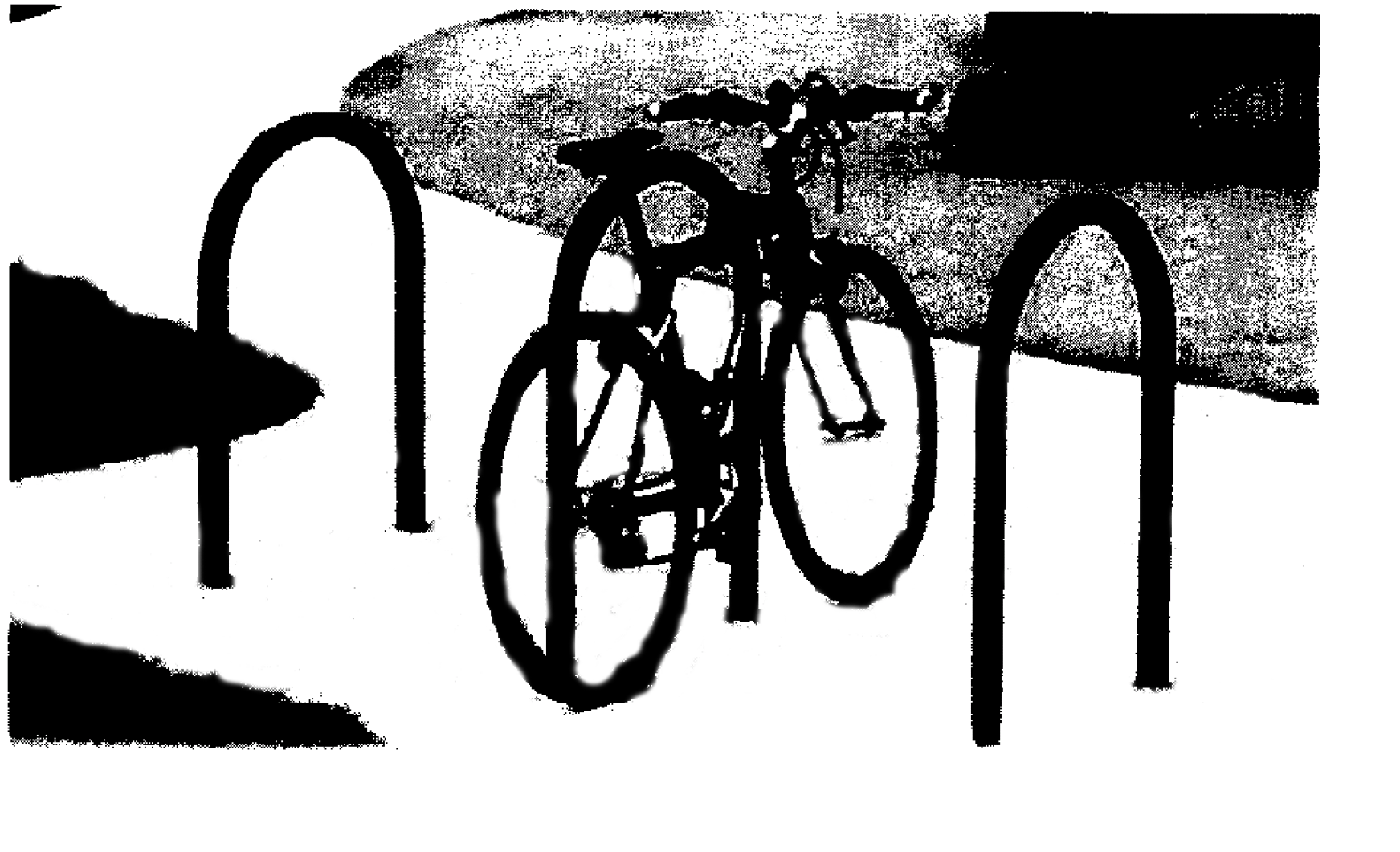
Design: (each rack provides two bicycle parking spaces).
1.
The standard rack required will be the inverted "U."
2.
Distance between verticals must be a minimum of 18 inches.
3.
Height not to exceed 36 inches.
4.
Minimum tube diameter of 1.9 inches.
5.
All racks must be black with a powder-coated finish.
6.
Use of any other rack must go through an approval process by the bicycle and pedestrian advisory board for consideration.
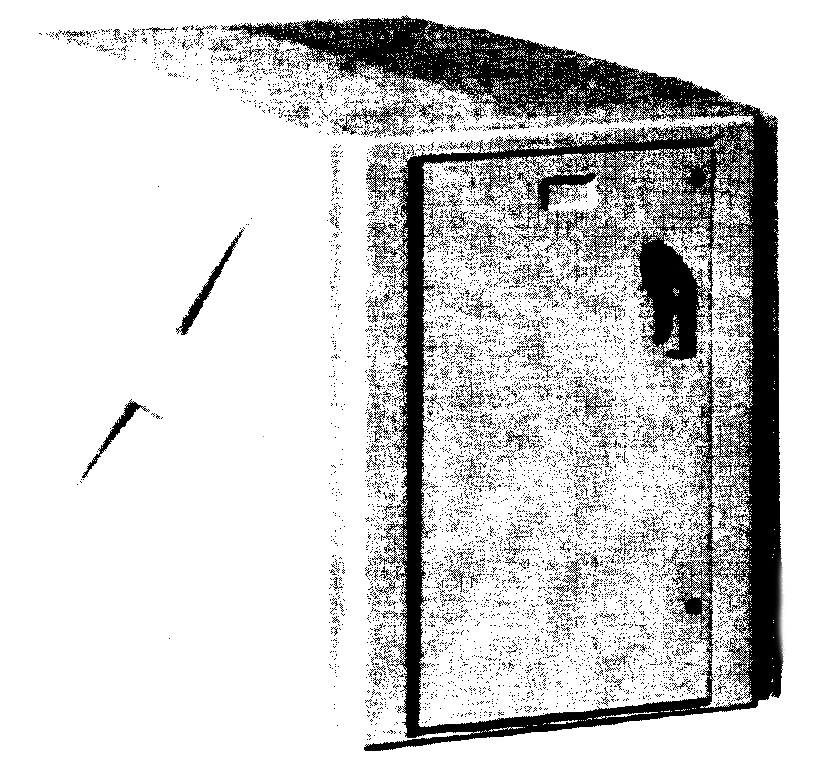
Bicycle Lockers:
1.
Locker dimensions: 49-inch height, 30-inch width, 74-inch length.
2.
Design of bike lockers must conform with the bicycle and pedestrian advisory board list of approved locker designs which is available in the building department.
Location:
1.
Bicycle parking facilities should be located in highly visible well-lit areas to minimize theft and vandalism.
2.
Whenever possible, the racks should be placed within 50 feet of the building entrances where bicyclists would naturally transition to a pedestrian mode of travel. Otherwise, signage at the building entrance should direct bicyclists to rack location. If a separate employee entrance exists, bicycle racks should be located near the employee entrance as well as the patron entrance.
3.
Rack placement shall not impede pedestrian or vehicular circulation, and should be harmonious with their environment both in color and design. Parking facilities should be incorporated whenever possible into building design or street furniture.
4.
Required bicycle parking spaces shall be at least two feet by six feet per bicycle.
5.
An aisle of a minimum of five feet wide shall be provided behind bicycle parking facilities to allow for maneuvering.
6.
All lockers and racks must be securely anchored to the ground or the building structure to prevent racks and locker removal from the location.
7.
Structures requiring a user supplied locking device shall be designed to accommodate both chain and U-shaped locking devices and shall support the bicycle frame at two locations (not just the wheel).
8.
Bike parking facilities within auto parking areas shall be separated by a physical barrier to protect bicycles from damage by cars, such as curbs, wheel stops, bollards or other similar features.
f.
Exceptions.
1.
Where the provision of bike parking is physically not feasible, the requirements may be waived or reduced to a feasible level by the building department's plan reviewer. The pedestrian and bicycle advisory board will review these decisions twice a year and make recommendations to said reviewer for the provision of bicycle parking spaces and the implementation of this subsection.
2.
In special bicycle parking districts, as outlined below, a fee in lieu of providing bicycle parking will be required based on the parking specifications outlined herein. This fee will be used towards placement of bicycle parking in these zones, to be designated by the city planner.
i.
Special bicycle parking districts.
Park Avenue Bicycle Parking District: The area bounded by Fairbanks Avenue to the south, Center Street to the east, New York Avenue to the west, and Swoope Avenue to the north.
(6)
Electric vehicle charging station infrastructure and electric vehicle parking space requirements.
a.
Intent and purpose. The intent of this section is to facilitate and encourage the use of electric vehicles and to expedite the establishment of a convenient, cost-effective electric vehicle infrastructure that will also accommodate future technology advancements.
b.
Definitions. For the purposes of this section, the following definitions shall apply:
1.
Charging means that an electric vehicle is parked at an electric vehicle charging station and is connected to the battery charging station equipment and is actively charging at some point during the charging session.
2.
Electric vehicle means any motor vehicle registered to operate on public roadways that operates either partially or exclusively on electric energy. Electric vehicles (EVs) include: (a) battery-powered electric vehicles; (b) plug-in hybrid electric vehicles; (c) electric motorcycles; and (d) fuel cell vehicles.
3.
Electric vehicle charging level means the standardized indicators of electrical force, or voltage, amps and kilowatts by which an electric vehicle's batteries are recharged. EV recharging equipment is commonly known as electric vehicle service equipment (EVSE) and can output either alternating current (AC) or direct current (DC). EVSE are technically not chargers, they are power supply units, the charger is onboard the vehicle. The onboard charger helps manage the charging session and converts an AC input to DC to charge the vehicle's batteries; if a DC input is supplied the charger passes the power directly to the batteries. The terms Level-1 (L1), Level-2 (L2), and Level-3 (L3) are the most common charging levels; L3 is also referred to DCFC or DC fast charging, and include the following specifications:
i.
Level-1 is considered slow charging. Voltage including the range from 0 through 120.
ii.
Level-2 is considered medium charging. Voltage is greater than 120, up to 240.
iii.
Level-3 is considered fast or rapid charging, is also referred to DCFC or DC fast charging. Voltage is greater than 240.
4.
Electric vehicle charging station means battery charging station equipment that has as its primary purpose the transfer of electric energy (by conductive or inductive means) to a battery or other energy storage device in an electric vehicle.
5.
Electric vehicle charging station infrastructure means conduit/wiring, structures, machinery, and equipment necessary and integral to support an electric vehicle, including battery charging stations and rapid charging stations.
6.
Electric vehicle parking space means any off-street parking space that is equipped with an electric vehicle charging station that is exclusively for use by electric vehicles.
c.
Readiness requirements for multi-family residential and non-residential properties. In order to proactively plan for and accommodate the anticipated future growth in market demand for electric vehicles, all new development shall provide electric vehicle charging station infrastructure per this section. The infrastructure shall be installed per technical amendments to the Florida Building Code found in chapter 22, section 2703 of the City of Winter Park Code of Ordinances.
1.
Readiness requirements for new multi-family residential projects that require a conditional use, shall be determined as part of the conditional use approval process.
2.
Non-residential properties (such as commercial, office, institutional or industrial uses, or any combination thereof) with surface parking or parking structures, shall provide the electrical capacity and buried raceway necessary to accommodate the future hardwire installation, at the minimum, a Level-2 vehicle charging station, for a minimum ratio of ten percent of the total required parking spaces. Electric vehicle parking spaces provided in excess of the required electric vehicle parking spaces shall be counted toward meeting the readiness requirement. Required electric vehicle parking spaces shall not count toward meeting the readiness requirement
d.
Electric vehicle parking space requirement for multi-family residential and non-residential properties. Electrical vehicle parking requirements for new multi-family residential projects that require a conditional use, shall be determined as part of the conditional use approval process. All non-residential properties (such as commercial, office, institutional or industrial uses, or any combination thereof) are required to provide one electric vehicle parking space equipped with an electrical vehicle charging station per every 20 required off-street parking spaces (such spaces shall be counted toward meeting the overall parking requirement and any EV parking spaces in excess of the required electric vehicle parking spaces shall count toward meeting the readiness requirement; required electric vehicle parking spaces shall not count toward meeting the readiness requirement) in accordance with the following standards:
1.
Minimum standards. Electric vehicle parking spaces shall, at a minimum, be equipped with an electric vehicle charging station rated at electric vehicle charging Level 2.
2.
Fees. Nothing herein shall prohibit the charging of a fee for the use of an electric vehicle charging station by a resident, guest, invitee or employee.
3.
ADA accessible spaces. A minimum of one electric vehicle parking space must be located adjacent to a required accessible parking space such that the electric vehicle charging station can be shared between an accessible parking space and electric vehicle parking space. A minimum five feet wide accessway must be provided by the accessible electric vehicle parking space if the accessway is not already provided as part of the planned accessible parking space.
4.
Lighting. Site lighting shall be provided where an electric vehicle charging station is installed.
5.
Equipment standards and protection. Battery charging station outlets and connector devices shall be no less than 36 inches and no higher than 48 inches from the surface where mounted. Equipment mounted on pedestals, lighting posts, bollards, or other devices shall be designed and located as to not impede pedestrian travel or create trip hazards on sidewalks. Adequate battery charging station protection, such as concrete-filled steel bollards, shall be used. Curbing may be used in lieu of bollards, if the battery charging station is setback a minimum of 24 inches from the face of the curb.
6.
Signage.
i.
Information shall be posted identifying voltage and amperage levels and any time of use, fees, or safety information related to the electric vehicle charging station.
ii.
Each electric vehicle charging station space shall be posted with signage indicating the space is only for electric vehicle charging purposes. For purposes of this subsection, "charging" means that an electric vehicle is parked at an electric vehicle charging station and is connected to the battery charging station equipment and is actively charging at some point during the charging session.
iii.
Restrictions shall be included on the signage, if removal provisions are to be enforced by the property owner pursuant to state statutes.
7.
Maintenance. Electric vehicle charging stations shall be maintained in good condition in all respects, including the functioning of the equipment, by the property owner. Removal of any required EV charging stations is prohibited except for repair or replacement of equipment. A phone number or other contact information shall be provided on the equipment for reporting when the equipment is not functioning or other problems are encountered.
e.
Exception. Where the installation of one or more electric vehicle parking spaces, and/or the installation of electric vehicle charging station infrastructure to allow for the future installation of electric vehicle charging stations, are required by this article, an exception may be granted by the building official through the site plan approval process only where it is demonstrated that the extension of the electrical power supply to the effected location is physically impractical. Financial impracticality is not a valid criterion for granting such an exception.
(Ord. No. 2501-03, § 4, 1-28-03; Ord. No. 2642-05, § 1, 8-8-05; Ord. No. 2660-06, § 1, 1-23-06; Ord. No. 2796-10, § 1(Exh. A), 2-22-10; Ord. No. 2874-12, § 3, 4-23-12; Ord. No. 2875-12, §§ 4, 5, 6-11-12; Ord. No. 2882-12, § 1, 9-10-12; Ord. No. 3098-17, § 2, 12-11-17; Ord. No. 3126-18, §§ 1—4, 11-12-18; Ord. No. 3203-21 § 1, 3-10-21; Ord. No. 3316-24, § 1, 2, 10-17-24; Ord. No. 3317-24, § 1, 10-17-24)

