
Billings City Zoning Code
ARTICLE 27
1600.- ADMINISTRATIVE PROCEDURES
Sec. 27-1601.- Overview of procedural requirements.
A.
Organization. The administration of zoning processes and permits is divided into two (2) categories: commonly applicable procedures (sections 27-1603 to 27-1613) and specific procedures (sections 27-1614 to 27-1628). Both are described in this section.
1.
Commonly applicable procedures.
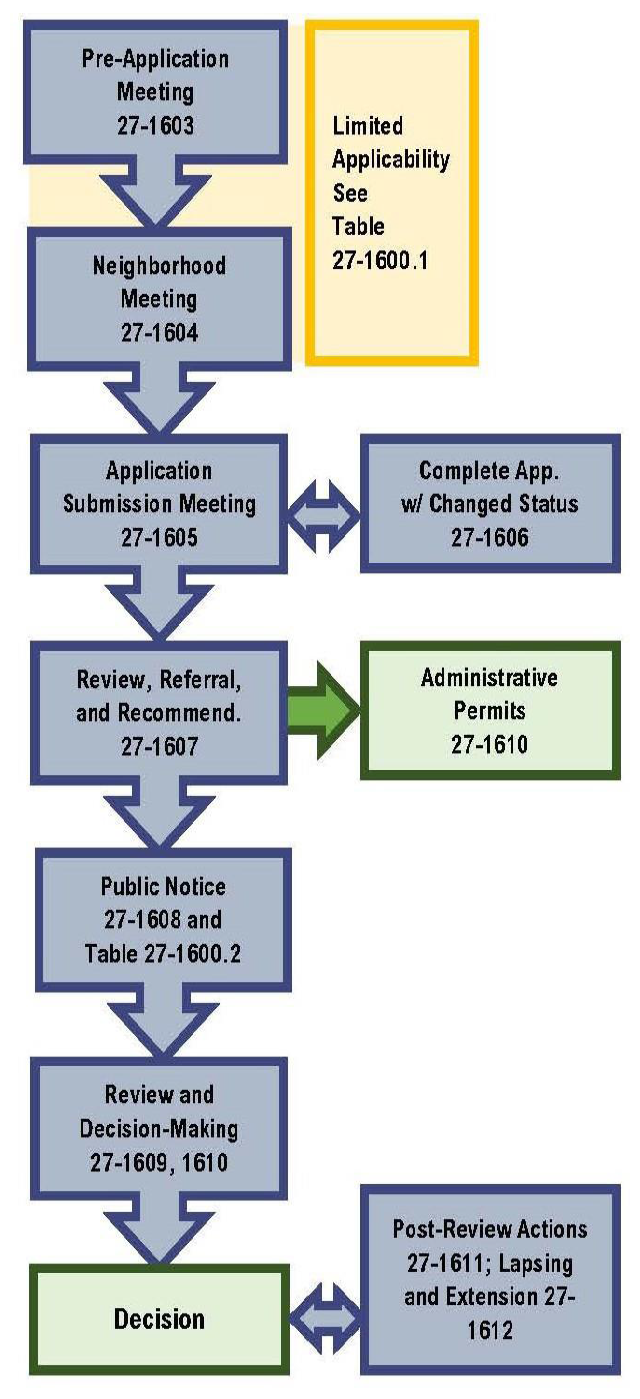
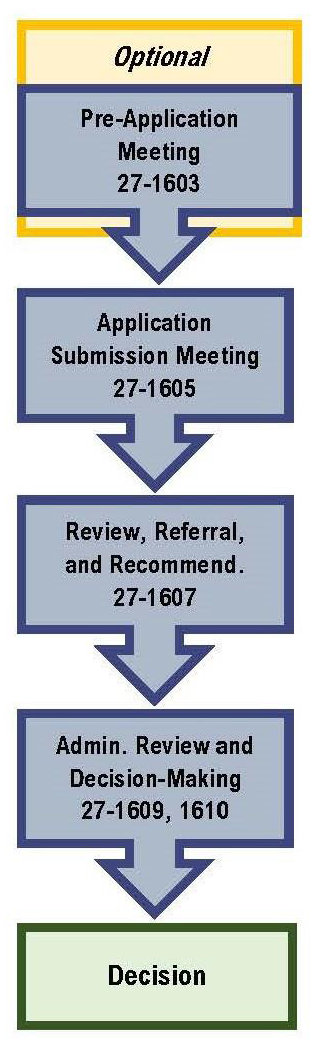
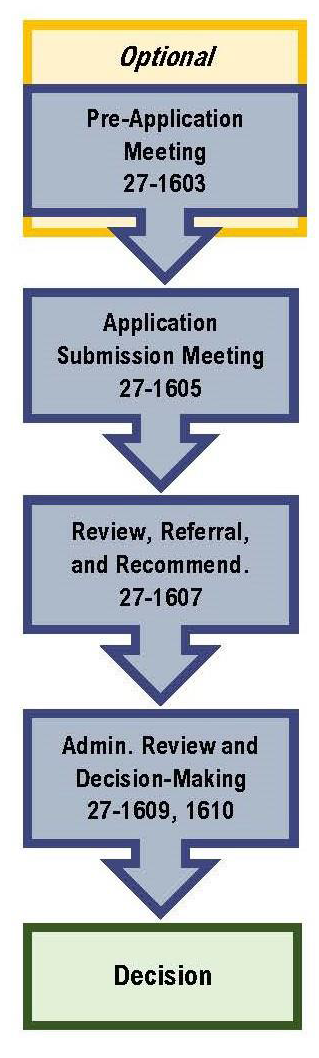
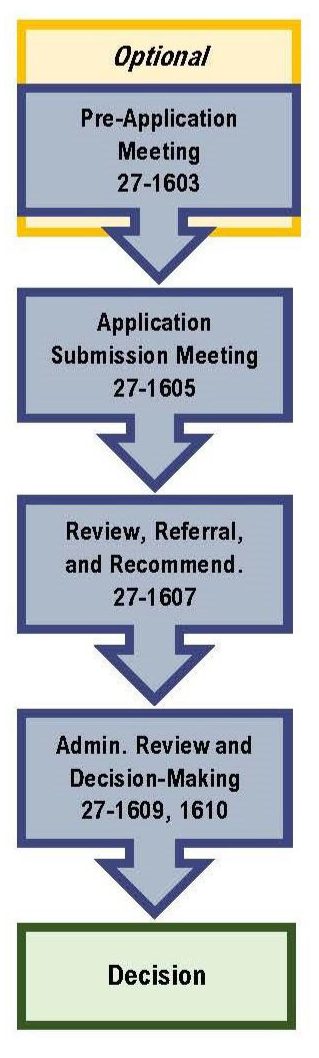
Fig. 27-1600.A. Commonly Applicable Procedures.
The following requirements are common to many of the procedures contained in this zoning code. Applications are typically processed in accordance with the steps shown in Figure 27-1600.A. Additional details may be included in each specific procedure.
(a)
Section 27-1603, Pre-Application meeting.
(b)
Section 27-1604, Neighborhood meeting.
(c)
Section 27-1605, Application submission meeting.
(d)
Section 27-1606, Procedures for complete applications with changed status.
(e)
Section 27-1607, Staff review, referral, and recommendation.
(f)
Section 27-1608, Public notice requirements.
(g)
Section 27-1609, Review and decision-making bodies.
(h)
Section 27-1610, Action by review and decision-making bodies.
(i)
Section 27-1611, Post-review actions.
(j)
Section 27-1612, Lapsing and extension of approvals.
(k)
Section 27-1613, Other permits and approvals still necessary.
2.
Specific procedures.Sections 27-1614 to 27-1628 provide the application-specific requirements for review and submission of each type of application or permit available:
(a)
Section 27-1614, Administrative relief.
(b)
Section 27-1615, Classification of newly annexed area.
(c)
Section 27-1616, Appeal of administrative decision.
(d)
Section 27-1617, Code interpretation.
(e)
Section 27-1618, Landscape plan.
(f)
Section 27-1619, Master site plan.
(g)
Section 27-1620, Permits.
(h)
Section 27-1621, Short-term rentals.
(i)
Section 27-1622, Sign permit.
(j)
Section 27-1623, Special review uses.
(k)
Section 27-1624, Temporary use permit.
(l)
Section 27-1625, Wind and solar facilities.
(m)
Section 27-1626, Wireless communication facilities.
(n)
Section 27-1627, Variance.
(o)
Section 27-1628, Zone change.
B.
User's guide. The zoning coordinator may compile the requirements for application contents, forms, fees, submission materials, and review schedule in a user's guide, which shall be made available to the public. The zoning coordinator may amend and update the user's guide from time-to-time.
(Ord. No. 21-5748, § 3(Exh. A), 1-25-21)
Sec. 27-1602. - Summary of specific application steps.
Table 27-1600.1 summarizes the application procedures in this zoning code and identifies whether pre-application and neighborhood meetings are required. Exceptions to these general rules apply and may be specified in the regulations for the individual procedure.
Table 27-1600.1. Summary of Application Steps.
(Ord. No. 21-5748, § 3(Exh. A), 1-25-21)
Sec. 27-1603. - Pre-application meeting.
A.
Purpose.
1.
The purpose of the pre-application meeting is to provide an opportunity for the applicant and the city to discuss the development concept prior to the application submission for a project or permit in order to:
(a)
Determine the required application(s) and, if necessary, the timing of multiple application submittals (i.e., whether they may be processed concurrently or must be processed sequentially);
(b)
Provide the applicant with application materials and inform the applicant of submittal requirements;
(c)
Provide the applicant with an estimated time frame for the review process;
(d)
Discuss generally compliance with the code's zoning, use, density, development, and design standards, and attempt to identify potentially significant issues regarding compliance;
(e)
Discuss the need for any neighborhood meetings and public notice requirements; and
(f)
Engage the applicant in conversation with other departments or agencies to discuss potential significant issues prior to application submittal.
2.
Pre-application meetings are informational for the applicant and are not open to the public.
B.
Applicability.
1.
Pre-application meeting recommended. Any applicant may request a pre-application meeting prior to submitting most development applications. The pre-application meeting is designed to help the applicant understand the development review and approval process.
2.
Pre-application meeting required. Pre-application meetings are required for some application types, as noted in the specific application section.
C.
Record and effect.
1.
The city is not responsible for making or keeping a summary of the general topics discussed at the pre-application conference.
2.
A pre-application meeting is advisory only and does not constitute or effect approval of any aspect or item of an application.
(Ord. No. 21-5748, § 3(Exh. A), 1-25-21)
Sec. 27-1604. - Neighborhood meeting.
A.
Purposes. The purposes of a neighborhood meeting are to: inform neighboring property owners of the details of a proposed development, identify how the developer intends to meet the standards contained in this zoning code, and to allow the applicant to receive preliminary public comment on the proposal.
B.
Applicability.
1.
When a neighborhood meeting is required by this zoning code, the applicant or applicant's agent shall conduct a pre-application neighborhood meeting to explain the proposed development and receive comment from the surrounding property owners.
2.
An applicant may voluntarily conduct a neighborhood meeting prior to submission of any application.
C.
Notice.
1.
The applicant shall provide written notice of the date, time, and location of the pre-application neighborhood meeting to:
(a)
Persons on the surrounding property owner list provided by the city;
(b)
Additional persons, businesses, or property owners as identified by the city; and
(c)
The planning and community services department.
2.
The written notification shall be mailed at least seven (7) calendar days prior to the scheduled meeting. The written notification shall include the information required for public notice as listed in subsections 27-1608.B.1, B.2, and B.3.
3.
Courtesy electronic notice of the neighborhood meeting shall also be provided to any affected neighborhood organizations that request notification from the planning and community services department. Planning staff is not responsible for verifying or correcting email addresses provided by a neighborhood organization and failure of a neighborhood organization or individual member to receive notice does not affect the validity of the neighborhood meeting.
D.
Meeting.
1.
The pre-application neighborhood meeting shall be conducted at a location that is within two (2) radius miles of the subject parcel. The meeting may be scheduled after 5:00 p.m. on a weekday or on a weekend day between 8:00 a.m. and 7:00 p.m.
2.
The pre-application neighborhood meeting shall be conducted at least seven (7) calendar days but no more than sixty (60) calendar days prior to the submittal of the proposed development application to the planning and community services department.
3.
The applicant shall obtain a roster of the names of the persons who attend the pre-application neighborhood meeting and make a record of the minutes of the meeting.
E.
Written summary and effect.
1.
The applicant shall provide the zoning coordinator with a written summary or minutes of the neighborhood meeting with the completed application.
2.
The written summary or notes shall include a list of those in attendance, a summary of the issues discussed, comments by those in attendance and the applicant's response, and any other comments the applicant deems appropriate.
3.
The written summary or notes of the meeting shall be made available to the meeting attendees and the public for inspection following the filing of a complete application.
(Ord. No. 21-5748, § 3(Exh. A), 1-25-21)
Sec. 27-1605. - Application submission.
A.
Authority to file.
1.
Property owner application. Unless otherwise specified in this zoning code, the person having legal authority to take action according to the approval sought shall file an application for a project review or approval under this zoning code. The person is presumed to be one of the following: (1) the record owner, (2) purchaser under a sale or option to purchase, or (3) the duly authorized agent of the record owner. Agents may only submit applications where the owner indicates consent in writing on the application.
2.
City application. A request for action pursuant to the zoning code that is submitted on behalf of the city shall be initiated by the appropriate managing agency (e.g., engineering or parks department). Requests made by elected or appointed bodies with the authority to request a change or other action pursuant to this zoning code shall be initiated by a vote of that body and then processed by the zoning coordinator.
B.
Application submission requirements. All applications for all permits and approvals, or modifications of permits or approvals, pursuant to this section and article 27-1600 shall be submitted in accordance with the application submittal schedule, required forms, and required numbers of copies of each document (if any), established and revised from time to time by the zoning coordinator.
C.
Concurrent applications.
1.
Where an applicant seeks approval of two (2) different requests for the same parcel simultaneously, the applicant shall submit all necessary documents, plans, maps, and other required information in accordance with the provisions relating to both of the submitted applications and pay all appropriate fees for both applications.
2.
Whenever two (2) or more different application types are being processed simultaneously and this zoning code provides different time frames for review or decision-making, all related applications and approvals shall be completed within the longest time frame applicable to any of the relevant procedures.
D.
Fees.
1.
Generally. Application fees for each type of application shall be established by resolution from time to time by the city council to defray estimated staff costs and expenses of processing applications pursuant to this zoning code.
2.
Initial application. The required application fee shall be paid by the applicant at the same time any application is filed. Application fees are generally non-refundable unless otherwise specified on the application form.
3.
Changes to complete applications. In addition to fees set forth in the city fee schedule, the following fees shall apply to actions taken on a complete application:
(a)
Withdrawn application. All fees are forfeited in the event the city has incurred any expense related to the application. If the application is refiled within one hundred eighty (180) calendar days a resubmittal fee must be paid. The submission fee shall be paid again in full if the application is resubmitted after six (6) months.
(b)
Continuance of application. Payment of fees may be required to cover the cost of additional notice.
(c)
Reapplication. Payment of fees shall be required for a reapplication where a previous application has been denied.
(d)
Modification or revision of approved site plan.
(1)
Minor modifications. An application for administrative relief and payment of the associated fee is required.
(2)
Major modifications. Any requested modifications that do not qualify for administrative relief shall be considered major modifications. A new application is required along with the associated application fee.
E.
Submittal waivers.
1.
At or following an application submission meeting, the zoning coordinator may agree to waive specific project submittal requirements, in order to reduce the burden on the applicant and tailor the requirements to the information required to review a specific application.
2.
The zoning coordinator may waive such requirements where the applicant has made an itemized, written request identifying the specific submission items to be waived and why, and the zoning coordinator finds the following:
(a)
The applicant shows good cause for the requested waiver;
(b)
The project size, complexity, anticipated impacts, or other factors support a waiver;
(c)
The waiver does not compromise a proper and complete review; and
(d)
The information is not material to describing the proposal or demonstrating compliance with approval criteria.
F.
Determination of completeness.
1.
Complete application required. All applications must be complete prior to any processing by the city. A complete application includes all of the submittal information identified on the application form and any items or exhibits requested by the zoning coordinator that are consistent with the standards and requirements of this zoning code. A complete application is also accompanied by the applicable fee.
2.
Application submission meeting. Planning staff shall meet with applicants to review all applications and permit requests to determine if the application includes all material required by the applicable application submittal schedule (including required supporting material) in sufficient detail to evaluate the application and determine whether it complies with the requirements of this zoning code. A completeness determination will be made during the application submittal meeting.
G.
Submission timing for public hearing schedule. All applications to be considered in a public hearing in a specific month must be received on or before the first Monday of the previous month. For example, an applicant desiring public hearings in June would have to submit a complete application by the first Monday of May.
(Ord. No. 21-5748, § 3(Exh. A), 1-25-21)
Sec. 27-1606. - Procedures for complete applications with changed status.
A.
Inactive application.
1.
An inactive application is any application for which the city has requested additional information or revisions and the applicant has not fully provided this information within sixty (60) calendar days.
2.
Inactive applications shall not receive further review and shall be considered withdrawn by the applicant and shall be terminated by the city without further notice. Time of delay shall commence on the date on which the city requests additional information.
B.
Withdrawn application.
1.
Prior to public notice.
(a)
An applicant may withdraw an application by providing written notice to the zoning coordinator of the applicant's intent to withdraw the application. After such withdrawal, no further city action on the application shall take place.
(b)
A zone change, special review or variance application may be withdrawn at any time prior to the publication of the legal advertisement for the public hearing before the city zoning commission or city board of adjustment. A withdrawn zone change application may be refiled after a 120-day waiting period. There is no mandatory waiting period for a withdrawn special review or variance.
(c)
To re-initiate review, the applicant shall re-submit the application with a new application fee payment, and the application shall in all respects be treated as a new application for purposes of review and scheduling.
2.
Following public notice.
(a)
No application may be amended or modified after the legal advertising has been published.
(b)
After legal notice for the city zoning commission or board of adjustment has been published, the request for withdrawal shall be submitted in writing to the planning and community services department office at least twenty-four (24) hours prior to the first or only public hearing.
(c)
The city zoning commission or board of adjustment may allow withdrawal of an application, after advertisement of the public hearing has been published, by a majority vote of the members present. After the city zoning commission hearing, a request for withdrawal shall be submitted to the city clerk and shall be submitted by the property owner or authorized agent, as listed on the application. The city council shall have exclusive authority to act on any request for withdrawal after notice of the zoning commission recommendation has been published.
C.
Postponement. The applicant may request an application be postponed to a future scheduled public hearing date.
1.
Request submitted prior to public notice. The request must be in writing, either by mail or email, and the request must be received by the zoning coordinator prior to date of publication of the notice of public hearing.
2.
Request submitted following public notice. If the request is received by the zoning coordinator on or after the date of publication of the notice of public hearing, the applicant must attend the public hearing to request the application be postponed to a future scheduled public hearing date.
D.
Application termination.
1.
If the zoning coordinator determines the applicant is not taking affirmative steps to advance a postponed application for a final determination or the applicant requests that an application be postponed for a second time, the zoning coordinator may declare the application terminated.
2.
No further processing of such application shall occur and the application fees shall be forfeited.
3.
Any re-submittal of the application shall be treated as a new application for purposes of review, scheduling, and payment of application fees.
(Ord. No. 21-5748, § 3(Exh. A), 1-25-21; Ord. No. 23-5854, § 3, 10-9-23)
Sec. 27-1607. - Staff review, referral, and recommendation.
A.
Staff review.
1.
Upon submission of an application, the zoning coordinator shall review the application and accompanying documentation to determine whether the information included in the application is sufficient for the review and decision-maker(s) to evaluate the application against the approval criteria of the procedure or permit requested.
2.
The zoning coordinator, upon receiving a complete application, shall also do the following:
(a)
Consult with other departments of the city and relevant external agencies to fully evaluate the impact of the proposal upon public facilities and services including but not limited to schools, drainage, traffic and related facilities;
(b)
Study each application with reference to its appropriateness and effect on existing and proposed land use, and references to the growth policy;
(c)
In the case of a protest petition filed in the matter of any application for zone change, determine the validity of such petition; and
(d)
Prepare written findings and conclusions for submission to the city zoning commission, which report shall be a matter of public record.
B.
Staff report.
1.
Staff shall use best efforts to reconcile and compile all referral comments, including comments collected from any neighborhood outreach, into a single written report.
2.
The preliminary report shall incorporate the responses and comments from reviewing agencies, shall report whether the development application complies with all applicable standards, and shall specify any areas of possible noncompliance.
3.
Where the application includes technical information that requires expert analysis outside of that provided by staff, the city may contract with a technical expert to review the application and charge the consultant's fees to the applicant. The city shall notify the applicant if expert analysis will be necessary and will discuss the estimated fee with the applicant prior to engaging the expert. Technical information subject to outside expert analysis shall be limited to those issues outside of the scope of typical planning and community services department review. Outside technical experts will not be hired for routine site, structural, use, or transportation issues.
4.
The preliminary report shall also identify any need for any required plan modifications, additional information, or technical reports to supplement the mandatory submittal requirements.
5.
Staff may recommend conditions for approvals for applicable application types (e.g., special reviews) to mitigate any adverse impacts from the development proposal or any changes necessary to bring the application into compliance with the provisions of this zoning code. Zone change applications may not be conditioned.
(Ord. No. 21-5748, § 3(Exh. A), 1-25-21)
Sec. 27-1608. - Public notice requirements.
A.
General applicability.
1.
Applications for development approval shall comply with the Montana Code Annotated and the provisions of this section with regard to public notification. The required notice for each application type is identified in Table 27-1600.2. Application-specific notification instructions are located in the section for the specific application types.
Table 27-1600.2: Required Public Notice
2.
No public notice under this section shall be made for incomplete applications per subsection 27-1605.F, or for applications requiring additional revisions and review per subsection 27-1607.A. Applications that remain incomplete or requiring revision after the posting deadline in the sections identified in Table 27-1600.2 shall be removed from the applicable meeting agenda and placed on the next available meeting agenda.
B.
Content. Notices, when required by this section or a specific application type, shall, whether by publication or written, meet the general requirements of notice provided by the city and provide the following information:
1.
Address or location of the property subject to the application and the name, address, email, and telephone number of the applicant or the applicant's agent;
2.
Date, time, and place of the public hearing;
3.
Description of the nature, scope, and purpose of the application or proposal including a description of the development plan and, where appropriate, the classification or change sought;
4.
Notification about where the public may view the application;
5.
State that the public may appear at the public hearing;
6.
All meetings are held in buildings and locations that comply with accessibility standards according to the Americans with Disabilities Act (ADA). A TTY number for the hearing impaired, 406-657-3079, is available upon request;
7.
Special arrangements for participation in the public hearings by individuals with hearing, speech, or vision impairment may be made upon request at least three (3) calendar days prior to the hearing. Please notify the planning clerk at 406-247-8610.
C.
Types of notice.
1.
Agenda notice. Agenda notice shall be posted and published on the city's website a minimum of forty-eight (48) hours prior to a meeting.
2.
Published notice. Where Table 27-1600.2 requires published notice, the notice containing the content listed in subsection 27-1608.B above shall be provided in a newspaper of general circulation at least fifteen (15) calendar days in advance of the date of the city zoning commission, board of adjustment, or city council public hearing.
3.
Mailed notice.
(a)
Where Table 27-1600.2 requires mailed notice, the city shall:
(1)
Notify the applicant and/or the applicant's agent of the city zoning commission public hearing of the date, time, and place of such hearing at least five (5) calendar days prior to the date.
(2)
Notify adjacent property owners and other interested parties as provided in the specific application type. Mailed notice shall be provided to the property owner whose name appears on the last tax record of the property subject to notice. Unless otherwise specified, mailed notice shall be provided not less than fifteen (15) calendar days in advance of the date of the hearing.
(b)
Failure of any individual addressee of such letter of notification to receive the same shall not in any way invalidate or affect subsequent action on the application and such requirement shall not be construed as a legal precedent to the official approval.
(c)
Written notice to property owners shall be required only for the initial presentation of the proposed development at a public hearing. Additional mailed notice shall not be required where the application is not decided at the initial public hearing.
(d)
If the hearing is deferred or continued at the applicant's request, the applicant shall be responsible for paying any additional fees for the purposes of re-notifying adjacent property owners.
4.
Posted notice.
(a)
Where posted notice is required, the applicant planning staff shall place notice of the public hearing on the property subject to the application at least fifteen (15) calendar days in advance of the date of public hearing.
(b)
Notice signs shall be clearly visible from the public right-of-way. On large parcels, interior parcels, or parcels that are difficult to see from the exterior boundary lines, additional posted signs, as may be necessary to reasonably ensure that notice is provided around the property, may be required by the zoning coordinator.
(c)
At least one sign must be placed on the property's frontage so that it may be seen from the abutting street. If the property has two (2) streets frontages and both frontages are more than three hundred (300) feet long, a sign shall be posted on both frontages.
(d)
Reposting. If the decision-making body continues the meeting or public hearing at which the application is being considered to a later date, or if the decision-making body decides to consider the application at any time other than that specified on the notification signs, the zoning coordinator shall update the existing signs with the new date.
(e)
Sign removal.
(1)
Notice signs shall be removed by the applicant within five (5) calendar days after the meeting or public hearing for which they were required.
(2)
No person other than the applicant, applicant's agent, or city staff shall erect, remove, or alter such signs.
5.
Courtesy notice.
(a)
The city may, as a courtesy, provide notice to any persons or organization in the city or Yellowstone County, or to any governmental, public, or quasi-public organization regarding any matter related to this zoning code that may be of interest to of that person or organization, or on any matter on which any such person or organization has requested notice.
(b)
Courtesy notice may be provided in any appropriate manner, including electronically, and may be directed to an organization through its leadership for distribution rather than to the entire membership.
(c)
The failure of the city to send courtesy notice or the failure of any resident or property owner to receive such notice shall not affect the validity of any city action with respect to an application.
6.
Constructive notice.
(a)
Minor defects in any notice shall not impair the notice or invalidate proceedings pursuant to the notice if a bona fide attempt has been made to comply with applicable notice requirements. Minor defects in notice may include, but are not limited to errors in legal descriptions, typographical or grammatical errors, or errors of actual acreage that do not impede communication of the notice to the affected parties.
(b)
Failure of one or more individual parties to receive written notice shall not invalidate subsequent action.
(c)
If questions arise at a review hearing regarding the adequacy of notice, the decision-making authority shall direct the zoning coordinator to make a formal finding as to whether there was substantial compliance with the notice requirements of this zoning code, and such finding shall be made available to the decision-making authority prior to final action on the request.
(d)
When city records document the publication, mailing, or posting of notices as required by this section, it shall be presumed that notice of a public hearing was given as required by this section.
(Ord. No. 21-5748, § 3(Exh. A), 1-25-21)
Sec. 27-1609. - Review and decision-making bodies.
A.
City council.
1.
Powers and duties. The city council shall have the following powers and duties:
(a)
To review and decide on amendments to this zoning code or the future land use map, including any related PND plan.
(b)
To review and decide on major amendments to approved PND preliminary plans.
(c)
To review and decide on special review applications.
2.
Membership and procedures. The membership and procedures for the city council are established in Chapter 2 of the Billings Montana City Code.
B.
City zoning commission.
1.
Created. There is hereby created a City of Billings Zoning Commission to consist of five (5) members residing on property, any part of which lies within the limits of the City of Billings. The members are to be appointed by the mayor, subject to confirmation by the city council, for a term of three (3) or four (4) years and the terms of the members shall be staggered, as determined in the discretion of the mayor, to coincide with the election cycle of city council wards so that a minimum number of terms shall expire in any one year.
2.
Attendance. The members of the city zoning commission are required to attend all publicly-advertised city zoning commission meetings. Members shall notify the zoning commission chairperson and zoning coordinator of any absence in advance of the meeting that will be missed. The presence of three (3) members shall constitute a quorum.
3.
Duties.
(a)
The city zoning commission shall have the authority to exercise all powers granted to the commission by MCA 76-2-307 and as amended from time to time.
(b)
In particular, the city zoning commission shall recommend the boundaries of the various zone districts and appropriate regulations to be enforced therein, and to hold public meetings and make recommendations to the city council on all requests to amend, supplement, change, modify or repeal the regulations, restrictions and boundaries in the zoning districts.
(c)
The city council shall not hold its public hearing or take any action until it has received a final report from the zoning commission.
C.
City board of adjustment.
1.
Created. There is hereby created for the City of Billings, a board of adjustment as provided by statute, consisting of seven (7) members appointed by the mayor, with the consent of the city council. The terms of each member shall run concurrent to that of the mayor's term. Vacancies shall be filled for the unexpired terms of any members whose terms are interrupted for any reason.
2.
Proceedings.
(a)
The board of adjustment shall schedule regular meetings, along with special meetings which may also be called by the chairperson. The chairperson may cancel the regularly scheduled meeting if no matters are pending for the board's consideration. The chairperson, or in his/her absence, the acting chairperson may administer oaths and compel the attendance of witnesses. All meetings shall be open to the public.
(b)
The board of adjustment shall keep minutes of its proceedings, showing the vote of each member, or if absent or failure to vote, indicating such fact, and shall keep records of its examinations and other official actions, all of which shall be a public record and shall be filed in the office of the Billings planning and community services department.
(1)
The official minutes of the board's proceedings shall be signed by the chairperson or acting chairperson.
(2)
The decision of the board shall become effective immediately, unless otherwise directed by the board.
3.
Powers and duties. The board of adjustment shall have the following powers:
(a)
To hear and decide appeals where it is alleged there is error in any order, requirement, decision or determination made by an administrative official in the enforcement or interpretation of this chapter or of any ordinance adopted pursuant thereto; and
(b)
To authorize upon appeal in specific cases such variance from the terms of this chapter as will not be contrary to the public interest and where, owing to special conditions, a literal enforcement of the provisions of this chapter will result in unnecessary hardship, and so that the spirit of this chapter shall be observed and substantial justice done.
(c)
The Billings board of adjustment does not have the authority to hear or decide on special review requests to this zoning code.
(d)
If the board of adjustment fails to act on a matter that is before it or scheduled to be before it for any reason other than on motion duly continuing the matter, the applicant may deem the matter be denied and may immediately proceed by appeal.
D.
Zoning coordinator.
1.
The zoning coordinator has the authority to administer the provisions of this chapter for the City of Billings and all responsibilities as assigned or delegated by the planning and community services director. The zoning coordinator may delegate this work to other personnel in the planning and community services department.
2.
The zoning coordinator shall supervise and effectuate the processing of applications for amendments to the official zoning map, special review applications, requests for variances, and other applications under the terms of this chapter. Further it shall be the zoning coordinator's responsibility to present any applications or requests to the appropriate board or commission.
3.
The zoning coordinator shall also aid the various boards, commissions, and departments in transmitting recommendations to the city council and to otherwise promote procedural regularity in the administration of this chapter.
E.
Zoning enforcement officer. It shall be the duty of the zoning coordinator to be the enforcement officer for the zoning regulations. The zoning coordinator is hereby given the authority to enforce the provisions of this chapter for the City of Billings. The zoning coordinator may delegate this work to other personnel in the planning and community services department.
(Ord. No. 21-5748, § 3(Exh. A), 1-25-21)
Sec. 27-1610. - Action by review and decision-making bodies.
A.
Administrative decisions. For procedures where the zoning coordinator serves as the decision-making authority, the zoning coordinator shall make a decision according to the following steps:
1.
Review.
(a)
The zoning coordinator shall review the application for conformance with all applicable provisions of this zoning code.
(b)
Within the timeframe specified by the application type, or fifteen (15) calendar days of the filing date if no timeframe is specified, the zoning coordinator shall approve or deny the application and provide written notification of the decision to the applicant. If an application is denied, the written notification shall include the reasons for denial.
2.
Review criteria. When the zoning coordinator has the authority to decide an application, except in the case of an interpretation, the application shall be reviewed against the applicable provisions of this zoning code. To be approved, an application shall be fully consistent with the standards of this zoning code unless administrative relief is concurrently approved to allow specified deviation from applicable standards. An administrative approval may include instructions and clarifications regarding compliance with this zoning code, but shall not be approved with conditions that require action beyond the specific requirements of this zoning code.
B.
City zoning commission. The zoning commission shall review and take action upon each application in accordance with the provisions of this article and after a public hearing at which the application has been legally advertised.
1.
The zoning coordinator shall present each application, together with the staff report, to the zoning commission.
2.
The zoning commission may, by a majority vote of the members present, delay action to the next available public meeting of the commission, and such delay shall be deemed to be without prejudice to the applicant.
3.
A report of the commission's recommendation and the zoning coordinator's findings and conclusions shall be submitted to the city council.
4.
The zoning commission shall make a written recommendation to the city council to:
(a)
Zone changes: Grant or deny the application;
(b)
Special review applications: Grant, condition, or deny the application;
(c)
Request to withdraw an application after the zoning commission's hearing: allow or refuse withdrawal.
5.
The zoning commission shall submit its recommendations and, where appropriate, conditions in writing along with a statement indicating its reasons for the recommendation to grant, condition, deny, or allow withdrawal of the amendment within fifteen (15) calendar days following the public hearing.
C.
City council action. Before taking any action on an application, the city council shall first consider the written findings and recommendations of the zoning commission. The city council shall:
1.
Approve the application, either as submitted for zone change applications, or with conditions for special review applications;
2.
Deny the application;
3.
Allow withdrawal of the application; or
4.
Delay the application to a future council meeting date certain.
(Ord. No. 21-5748, § 3(Exh. A), 1-25-21)
Sec. 27-1611. - Post-review actions.
A.
Successive applications. No application for zone change, special review, or variance on the same request nor one involving the same tract shall be permitted within one year of an application denial.
B.
Amendments.
1.
All substantial changes, modifications, removal, or release of the provisions of an approved application that do not qualify for administrative relief under subsection 27-1614.C.2 shall be considered amendments of the application. Amendments shall include, but are not be limited to, changes in use, access, layout, any condition of approval, any change resulting in significant increased off-site impacts, and similar changes as determined by the zoning coordinator.
2.
For purposes of review and scheduling, proposed amendments are treated as new applications subject to the applicable procedures and review criteria set forth in this article unless otherwise noted in the specific review procedures.
C.
Modification of approvals.
1.
Application. If, at any time, the owner of land with an existing development approval desires to modify the terms of that approval or the conditions attached to that approval, the owner shall submit a written application requesting such revision.
2.
Review and determination of major/minor modification status. Applications for modification shall be reviewed by the zoning coordinator to determine whether the proposed modifications constitute a major or minor revision to the existing approval.
(a)
Minor modifications are those that qualify for administrative relief pursuant to section 27-1614 or modification to an application that was approved administratively.
(b)
Major modifications are those that do not qualify for administrative relief pursuant to section 27-1614, request for modification to a special review approval, or request for modification to a condition established by the city council.
3.
Action by decision-making body.
(a)
Applications for minor modifications shall be treated as applications for administrative relief.
(b)
The zoning coordinator may require that an application for administrative relief be treated as an application for a major modification if the zoning coordinator determines that the application raises a significant public controversy in which numerous parties other than the owner of the property may want to offer testimony. Applications for major modifications shall be treated as new applications for an approval of the same type being modified, unless the zoning coordinator determines that an application for modification is an issue of public policy or is not consistent with an approved preliminary plan or plat for the property, as applicable. If so, the zoning coordinator shall inform the applicant that a new application will need to be submitted.
4.
Effect of modification. If approved, the modification shall then supersede the previous approval, and subsequent development on the property shall be in accord with the amended approval.
(Ord. No. 21-5748, § 3(Exh. A), 1-25-21)
Sec. 27-1612. - Lapsing and extension of approvals.
Approvals granted under this zoning code terminate if unused by the applicant after a reasonable period of time.
A.
Lapse.
1.
Administrative approval and permits. Except where a different timeframe is provided in a specific procedure or application approval, an administrative approval or permit granted under this zoning code shall lapse and shall become void one year following the date of final approval unless, prior to the expiration date, a building permit based upon such approval is issued and construction is commenced and pursued toward completion.
2.
Approvals subject to public hearing.
(a)
A zone change is not subject to lapsing.
(b)
Any approval made through a public hearing process shall not lapse pursuant to this section unless the approval was not a zone change and the city council, or board of adjustment established a specific time limit for the approval.
B.
Extension.
1.
An approval that is subject to lapsing may be extended one time by the zoning coordinator for a period of time not to exceed six (6) months. Applicants who require a second extension shall make the second extension request of the body that issued the original approval, which may also be a second request to the zoning coordinator if the zoning coordinator issued the original approval. The total time approved for extensions may not exceed one year.
2.
All requests for extensions should be submitted to the zoning coordinator in writing at least thirty (30) calendar days prior to the expiration of approval.
(a)
An extension request shall include payment of required fees and written description of the reasons for the applicant's inability to comply with the specified deadlines, listing any changes in the character of the neighborhood, any changes to the growth policy or this zoning code that have occurred since approval of the permit/plan as these changes affect the permit/plan, and the anticipated time schedule for completing the review project and/or the specific project.
(b)
Additional review of the permit/plan may result in additional conditions.
3.
If an approval lapses at the end of an extension period, the applicant may re-submit a new application, subject to the fees and regulations in effect at the time of re-submittal, for the same project.
(Ord. No. 21-5748, § 3(Exh. A), 1-25-21)
Sec. 27-1613. - Other permits and approvals still necessary.
A.
City permits and approvals. The approval of any application pursuant to this zoning code shall not relieve the applicant of the requirement to apply for and receive any other permits or approvals required from the city, prior to development (such as building permits, certificates of occupancy, subdivision approval, and any similar permits or approvals). Any such later permits and approvals shall be consistent with the terms and provisions of any approval granted pursuant to this zoning code.
B.
Other permits and approvals. The approval of any application pursuant to this zoning code shall not relieve the applicant of the requirement to apply for and receive any and all other permits or approvals from Yellowstone County, State of Montana, or federal government or from other local entities with jurisdiction over the property.
(Ord. No. 21-5748, § 3(Exh. A), 1-25-21)
Sec. 27-1614. - Administrative relief.
A.
Applicability.
1.
Administrative relief allows the modification of an existing numeric dimensional standard to accommodate site-specific or minor construction issues.
2.
Administrative relief is applicable to new development, redevelopment, and major façade changes.
3.
Administrative relief may be requested either as part of an original application or as a modification to an existing approval.
B.
Authority. Administrative relief may be requested by an applicant qualified to request a primary development approval or amendment.
C.
Procedures.
1.
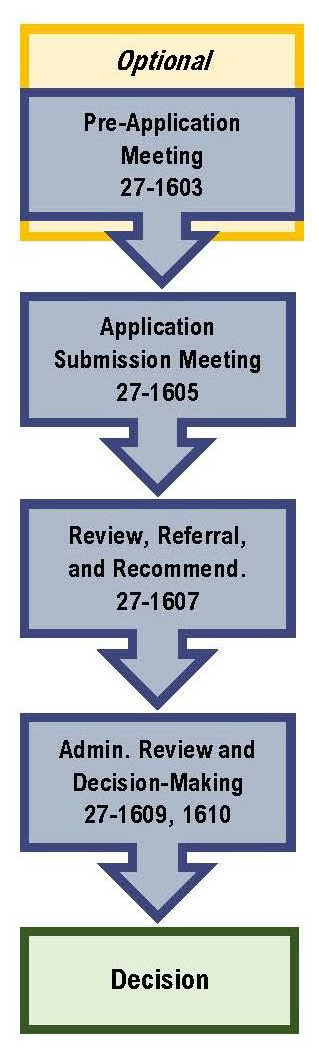
Common procedures. Procedures for review and decision of an administrative relief application are established in sections 27-1602 through 27-1613. They are summarized here for applicant convenience.
2.
Specific procedures. All applications for administrative relief shall identify the specific issue that the administrative relief is intended to address and how the administrative relief will resolve that issue:
(a)
A request for administrative relief prior to construction shall be submitted with the project site plan application. Where the site plan is submitted in conjunction with a primary application, such as a special review request, that is decided by the city council, the request for administrative relief shall also be decided by that body. For example, if an administrative relief request is submitted with a rezoning application, the city council will also decide on the administrative relief.
(b)
A request for administrative relief to address a minor construction issue shall be submitted with the approved project site plan, a written description of the minor construction issue, and an amended drawing of that part of the site for which the administrative relief is requested.
D.
Permitted types of administrative relief.
1.
N1-3, NX1-3, RMH, NO, NMU, CMU1, CMU2, DX, and EBURD districts. An applicant may request the following adjustments through administrative relief:
(a)
The location of the building may be adjusted within a five-foot area from any minimum yard requirement or build-to zone width/location, except a side or rear yard setback may only be reduced to three (3) feet from a five-foot minimum through administrative relief.
(b)
EBURD: Up to ten (10) percent increase in total impervious coverage, not to exceed the total amount of permitted impervious plus semi-pervious coverage. Compliance with stormwater regulations is required.
(c)
Up to ten (10) percent decrease in front lot line coverage.
(d)
Additional height of any story up to two (2) feet, as long as the overall building height does not exceed the allowable height of all floors at their maximum permitted height, or provided, that the total modification shall not increase the applicable building or structure height by more than ten (10) percent of the otherwise maximum height in the zone, nor add another habitable story or mezzanine.
(e)
Up to ten (10) percent decrease in front façade window and door coverage or a ten (10) percent increase in blank wall limitation for corner side facades. Up to twenty-five (25) percent of the front façade window and door required area (square feet) may apply to use alternative materials for windows or doors, including but not limited to spandrel glass, architectural glass block, faux door/window openings or similar installations. Any approved administrative relief will not significantly reduce visibility into and out of the structure.
(f)
Lot coverage. In any zone, modifications of the lot coverage requirement; provided, that the total modification shall not increase the applicable coverage to more than ten (10) percent of the otherwise maximum lot coverage in the zone.
(g)
Fence heights and materials. In any zone, modifications of the maximum fence height requirement; provided, that the total modification shall not increase the applicable fence height maximum in any yard by more than ten (10) percent. Fences greater than seven (7) feet in height will need a building permit. Fence materials not listed in subsection 27-1209.E may be requested through this process.
(h)
Parking. In any zone, a decrease in the number of required off-street parking spaces of not more than fifty (50) percent when total required spaces are at least ten (10) spaces. In any zone, allow more than the maximum number off-street parking stalls as provided in subsection 27-1302.F.
(i)
Location of accessory structure. In any zone, allow location of an accessory structure in a side yard.
(j)
Reduction or variations in required landscaping as provided in subsection 27-1618.E.4.
2.
CBD, CX, I1, I2, P1-3, PD districts. An applicant may request the following adjustments through administrative relief:
(a)
Setbacks. In any zone, modifications of the front, side, or rear yard setback requirement; provided that the total modification shall not reduce the applicable setback(s) by more than ten (10) percent of the zone district requirement or five (5) feet, whichever reduction is larger.
(b)
Lot coverage. In any zone, modifications of the lot coverage requirement; provided, that the total modification shall not increase the applicable coverage to more than ten (10) percent of the otherwise maximum lot coverage in the zone.
(c)
Structure heights. In any zone, modifications of the building or structure height requirement; provided, that the total modification shall not increase the applicable building or structure height by more than ten (10) percent of the otherwise maximum height in the zone, nor add another habitable story or mezzanine.
(d)
Fence heights and materials. In any zone, modifications of the maximum fence height requirement; provided, that the total modification shall not increase the applicable fence height maximum in any yard by more than ten (10) percent. Fences greater than seven (7) feet in height will need a building permit. Fence materials not listed in subsection 27-1209.E may be requested through this process.
(e)
Parking. In any zone, a decrease in the number of required off-street parking spaces of not more than fifty (50) percent when total required spaces are at least ten (10) spaces. In any zone, allow more than the maximum number off-street parking stalls as provided in subsection 27-1302.F.
(f)
Deviations from final planned development maps. In any planned development zone, deviations to planned development maps which are consistent with the requirements of the planned development approval, conditions of approval, or development standards of the underlying zoning district.
(g)
Location of accessory structure. In any zone, allow location of an accessory structure in a side yard.
(h)
Reduction or variations in required landscaping as provided in subsection 27-1618.E.4.
3.
Administrative relief may not:
(a)
Create, intensify, or expand any nonconformity with maximum or minimum requirements of the zoning district;
(b)
Permit uses other than those permitted in the zone district;
(c)
Reduce the effectiveness of approved transitional screening, buffering, landscaping, and/or open space; or
(d)
Expand the area or type of signage approved.
E.
Decision criteria. To approve a request for administrative relief, the zoning coordinator shall make and record findings that all of the following provisions are met:
1.
The proposed use, structure, or activity is permitted in the underlying zone district;
2.
There are special circumstances existing on the property for which the application is made related to size, shape, area, topography, surrounding conditions, and location that do not apply generally to other property in the same area and zone district;
3.
The special circumstances have not been created by the applicant; and
4.
The impact of the administrative relief is internal to the subject property.
F.
Review and decision-making. Requests for administrative relief are processed as an administrative decision pursuant to subsection 27-1610.A.
(Ord. No. 21-5748, § 3(Exh. A), 1-25-21; Ord. No. 23-5852, § 3, 10-9-23)
Sec. 27-1615. - Classification of newly annexed area.
A.
All procedures except annexation by petition. Annexations of land into the City of Billings may be undertaken pursuant to several statutory procedures. When a parcel of land is annexed to the city under any procedure except annexation by petition, the appropriate zone(s) may be determined by reference to article 27-800, Planned neighborhood development or by using the following criteria.
1.
The zoning coordinator will determine the most appropriate zone district. If the county zone district is an identical zone district in the city, the zone district shall remain the same upon annexation. If the county zone district has an analogous city zone district, the zoning coordinator will ensure the analogous city zone district has similar allowed uses, use standards, site and building standards. For property that has an established use that will continue or expand upon annexation, the zoning coordinator will ensure the zone district selected matches the existing and continued use. The land owner shall have adequate opportunity to provide input, but the final zone district classification shall be made by the zoning coordinator.
2.
Upon determination of a substantially different zone district from the county zone district, the zoning coordinator shall follow the procedure in section 27-1628, Zone change, staff review, referral, and recommendation, except that the report, findings and conclusions shall be submitted to the city council prior to or concurrently with the services report that is required by the annexation statutes.
3.
A public hearing on the substantially different zone district shall be held concurrently with the public hearing on the annexation before the city council, provided that the hearing shall not be sooner than fifteen (15) calendar days after notice of the proposed zone has been given.
4.
If the substantially different zone district is not approved by the city council, the land shall not be annexed to the city.
B.
Annexation by petition. When the proposed annexation is by petition pursuant to MCA Title 7, Chapter 2, Part 46 (Section 7-2-4601, et seq.), the zoning coordinator shall determine whether the section 27-800, Planned neighborhood development, process is applicable, in which case the petitioner shall also submit an application for PND approval. If not the zoning coordinator will use the criteria and process in subsection A.1 above to allow the petitioner to submit a zone change not using the PND process.
1.
All fees shall be paid by petitioner upon filing the application for zoning.
2.
Upon filing the application, the zoning coordinator shall follow the procedure set forth in subsection A.2 above.
3.
If no application is filed or the application is denied, the land shall not be annexed to the city.
(Ord. No. 21-5748, § 3(Exh. A), 1-25-21; Ord. No. 23-5857, § 3, 10-9-23)
Sec. 27-1616. - Appeal of administrative decision.
A.
Applicability. Any administrative decision made in the interpretation or application of this zoning code may be appealed to the board of adjustment.
B.
Authority. Appeals to the BOA may be taken by any person aggrieved or by any officer, department, or board of the city affected by any decisions of the administrative office made under the terms of this zoning code.
C.
Procedures.
1.
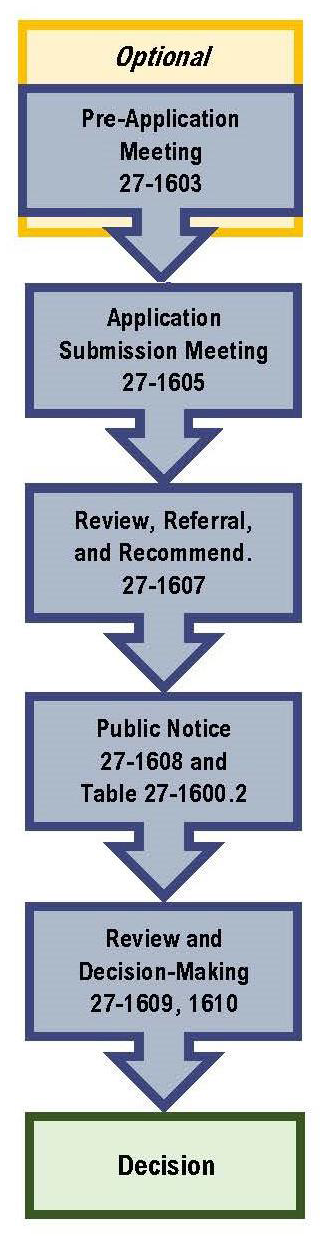
Common procedures. The procedures for appeal of an administrative decision are identified in Table 27-1600.1 and are summarized here for applicant convenience.
2.
Specific procedures.
(a)
Such appeal shall be taken within sixty (60) calendar days of the issuance of a final administrative decision. An applicant who wishes to appeal a verbal administrative decision may request that the decision be provided to the applicant in writing and the appeal timeframe will start on the date after the written decision has been signed.
(b)
The staff member from whom the appeal is taken shall transmit the decision record to the BOA. The decision record shall include all of the information relied upon in making the decision.
(c)
The BOA shall:
(1)
Fix a reasonable time for the hearing of appeal, not to exceed sixty (60) calendar days; and
(2)
Give public notice of the hearing, as well as mailed notice to the parties in interest.
(d)
At the hearing, any party may appear in person or by agent or attorney.
D.
Stay of proceedings.
1.
An appeal stays all proceedings in furtherance of the action appealed from except as provided in section D.2. No further action will be taken by the planning division on the initial application or request while the administrative decision is being appealed.
2.
The city may decide not to stay activities related to the application while the administrative decision is being appealed where a stay would cause imminent peril to life or property, determined as follows:
(a)
The appeal is filed;
(b)
The staff member from whom the appeal is taken certifies to the BOA that by reason of facts stated in the appeal, a stay would, in that officer's opinion, cause imminent peril to life or property;
(c)
In such cases, proceedings shall not be stayed other than by a court of record upon application to same and notice to the officer from whom the appeal is taken and on due cause shown.
E.
Decision criteria. In reviewing an administrative decision, the BOA shall have all the powers of the office from whom the appeal is taken. An appeal may be sustained only if the BOA finds that the administrative decision was made in error.
F.
Review and decision-making.
1.
The BOA may, in conformity with the provisions of this zoning code, reverse or affirm, wholly or partly, or modify the order, requirement, decision, or determination as ought to be made.
2.
The concurring vote of four (4) members of the board shall be necessary to reverse any order, requirement, decision or determination of any administrative official, or to decide in favor of the applicant on any appeal.
3.
The BOA shall render a decision within thirty-five (35) calendar days of the completion of the hearing.
G.
Judicial appeal. Appeal of a BOA decision to a Montana court of record is governed by MCA 76-2-327.
1.
The petition must set forth that the decision is illegal, in whole or in part, specifying the grounds of the illegality.
2.
The petition shall be presented to the court within thirty (30) calendar days after the filing of the decision of the BOA.
H.
Reapplication. If an application for an administrative review is denied by the BOA and not approved for reconsideration, another application appealing the original administrative decision shall not be filed within a period one year from the date of denial.
(Ord. No. 21-5748, § 3(Exh. A), 1-25-21)
Sec. 27-1617. - Code interpretation.
A.
Applicability.
1.
The zoning coordinator is authorized to provide a written interpretation of the contents and requirements of this zoning code.
2.
Interpretations may be requested for a provision of this zoning code subject to a proposed or current application, hearing, or appeal.
3.
The zoning coordinator may also provide a property-specific code interpretation in the form of a zoning code clarification that identifies whether specific regulations in this zoning code are applicable to the subject property.
B.
Authority. An interpretation may be requested by any:
1.
Applicant;
2.
Person affected by an action proposed pursuant to this zoning code; or
3.
Any city departments or other governmental agencies that may be subject to the provisions of this zoning code.
C.
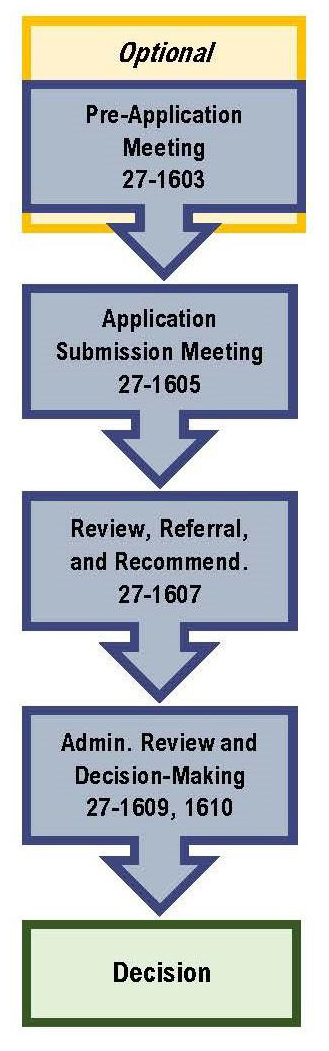
Procedures. Common procedures for a code interpretation are identified in Table 27-1600.1 and are summarized here for applicant convenience.
D.
Rendering of interpretation. After the application for request for interpretation has been determined complete, the zoning coordinator shall render an interpretation pursuant to subsection 27-1610.A, Administrative determinations.
E.
Official record. The zoning coordinator shall maintain an official record of all interpretations, which shall be available for public inspection during normal business hours.
(Ord. No. 21-5748, § 3(Exh. A), 1-25-21)
Sec. 27-1618. - Landscape plan.
A.
Applicability. Landscaping in compliance with this zoning code shall be required for any new construction, and expansion of existing structures. All plans submitted in support of a building permit or zoning compliance permit shall include a landscape plan where required. No landscape plan submittal is required for any one- or two-family building permit applications except those located within a development covered by a master site plan approval (section 27-1619). Any building permit for a one- or two-family dwelling within a master site plan approved location shall indicate on the site plan the landscaping required by the approved master site plan.
B.
Authority. A landscape plan may be submitted for review by a property owner or the property owner's agent, including the landscape professionals described in subsection 27-1618.C.
C.
Procedures.
1.
Common procedures. Common procedures for landscape plan review are identified in Table 27-1600.1 and are summarized here for applicant convenience.
2.
Specific procedures. Landscape plans shall be prepared as follows:
(a)
Lots of one and one-half (1.5) acres or larger: The plan shall be prepared by a Montana licensed landscape architect.
(b)
Lots smaller than one and one-half (1.5) acres: The applicant is encouraged to work with a nurseryman or landscape design professional to meet the requirements of this article.
D.
Decision criteria. The zoning coordinator may approve a landscape plan upon a finding that the application meets all of the following criteria, as applicable:
1.
The landscape plan conforms to all requirements of this article and is consistent with the currently adopted growth policies and any other applicable plans.
2.
The landscape design includes the installation of a diversity of species and sizes of vegetation with preference given to locally naturalized vegetation.
3.
Preservation of existing, locally naturalized vegetation is incorporated into the landscape design.
4.
No plant materials or landscape features are situated in such a manner so as to inhibit clear sight areas established in subsection 27-1802.H or otherwise create a traffic hazard.
5.
The facilities for watering and drainage are adequate to ensure the landscape area is maintained and that no soil, bark, mulch, gravel, stone, or similar materials are allowed to wash off the landscape area into parking areas, driveways, public streets, sidewalks, gutters, or storm drainage facilities.
E.
Post approval.
1.
Site specific and binding. Approved landscape plans shall be binding upon the applicants and their successors, transferees, and assigns. No planning division approval of a certificate of occupancy shall be issued for any building or structure where landscaping has not been provided and continued in accordance with the required and approved landscape plan, or any approved modifications thereto, or the plan has not been guaranteed through a performance bond or approved security as provided below.
2.
Landscaping installed within one year of issuance of building permit.
(a)
All landscaping and screening material, organic and inorganic, shall meet the standards of section 27-1210 and be in place prior to the issuance of a certificate of occupancy. Irrigation systems shall be fully functional at the same time as the completion of the landscape planting. This requirement shall be verified by the submission of a final, as-installed landscaping plan by the party responsible for the creation of the landscape plan that is submitted with the certificate of occupancy application.
(b)
If the timing of the project and seasonal limitations prevent planting prior to issuance of the certificate of occupancy, security as described in this section may be provided and the planting period may be extended accordingly.
3.
Security required.
(a)
When the timing of a project delays the installation of the landscaping, a performance bond or letter of credit in an amount of one hundred fifty (150) percent of the landscaping materials and labor costs that does not expire for at least one year from the date of issuance shall be posted with the planning and community services department to ensure the placement of the required landscaping.
(b)
The property shall be inspected by the zoning coordinator to make sure that the required landscaping has been planted before release of the security bond or letter of credit.
4.
Administrative relief. Administrative relief is provided to add flexibility in the application of a specific landscaping regulation when a standard is inapplicable or inappropriate to a specific use or design proposal. Administrative relief may be applied up to a total of ten (10) individual landscape standards for any site. The application shall follow the procedures in section 27-1614, Administrative relief.
(a)
Policies.
(1)
The planning division recognizes that the specific landscape requirements in article 27-1200 cannot and do not anticipate all possible landscape situations. In addition, the planning division recognizes that there may be landscape proposals which conform to the purpose, intent and objectives of the landscape regulations, but were not anticipated in the specific regulations. Therefore, the planning division may grant administrative relief in the event of these situations and proposals.
(2)
The reasonable development of a site may require the granting of administrative relief to some of the requirements. Although all of the categories of landscape requirements are considered important, the planning division generally assigns the following priorities for compliance with the landscape requirements:
i.
First, adjacent residential uses should be buffered;
ii.
Second, an attractive appearance of the project should be provided along adjacent streets by landscaped setbacks and trees;
iii.
Third, the parking areas and building elevations which form major public views of the project should be visually softened and enhanced by trees and other plantings.
(3)
Compliance with the requirements, such as the third priority above, should not be "forced" into a site design. For both visual effect and ease of maintenance, relatively few, but larger landscaped areas, which are integrated with the other elements of the site design, are generally encouraged. In addition, relatively numerous and smaller landscaped areas, which are not integrated with the other elements of the site design, are generally discouraged.
(4)
However, the granting of administrative relief should not always mean that a requirement is reduced without compensation. For example, the granting of a reduced bufferyard depth should be compensated by the planting of additional trees, shrubs or other plants.
(b)
Application.
(1)
A written request for administrative relief shall be submitted following the procedures in section 27-1614. The written request shall include a justification in terms of the findings necessary to grant administrative relief. The written request with decision shall be attached to the plan or retained in the applicable file, as appropriate.
(2)
The zoning coordinator must make all of the following findings in order to grant administrative relief:
i.
The strict application of the regulation in question is unreasonable given the development proposal or the measures proposed by the applicant or that the property has extraordinary or exceptional physical conditions that do not generally exist in nearby properties in the same general area and such conditions will not allow a reasonable use of the property in its current zone in absence of relief;
ii.
The intent of the landscaping section and the specific regulation in question is preserved;
iii.
The granting of the administrative relief will not result in an adverse impact upon surrounding properties; and
iv.
Proportional compliance is not appropriate for the location and development planned.
(3)
The zoning coordinator shall render a decision on the request within thirty (30) calendar days of receipt of the request and all required information. An appeal of the zoning coordinator's decision may be made to the board of adjustment with jurisdiction over the property, within thirty (30) calendar days after the decision. At this time, the appeal will be put on the agenda for the next board of adjustment meeting which allows for the required public notice.
(Ord. No. 21-5748, § 3(Exh. A), 1-25-21; Ord. No. 23-5853, § 3, 10-9-23)
Sec. 27-1619. - Master site plan.
A.
Applicability. The purpose of this section is to set forth the procedures and criteria for review and approval of master site plans when two (2) or more buildings share common facilities on an undivided lot. The purpose of master site plan review is to confirm that development is consistent with the requirements of this zoning code and with all previously approved plans applicable to the property.
B.
Authority. A request for master site plan approval may be submitted by a property owner or owner's agent.
C.
Procedures. Common procedures for master site plan review are identified in Table 27-1600.1 and are summarized here for applicant convenience.
D.
Decision criteria. The master site plan shall be reviewed against the following criteria:
1.
The master site plan is consistent with any prior approvals, including any conditions that may have been placed on such approvals, and
2.
The master site plan conforms with all applicable requirements of this zoning code, or with all applicable requirements as modified by a request for a minor code adjustment.
E.
Review and decision-making. A master site plan is subject to administrative approval and shall be reviewed as follows:
1.
Within sixty (60) calendar days following the submittal of a complete application, the zoning coordinator shall approve or deny the application, unless the applicant consents in writing to an extension of the review period. The review period clock stops when corrections or revisions are required and begins again once the additional information or modified complete plans are received. Failure of the applicant to timely respond to the corrections or request for additional information does not trigger subsection 2.
2.
In the event that review exceeds ninety (90) calendar days, the applicant may seek immediate approval from the planning director.
F.
Effect.
1.
Approved master site plans shall be binding upon the property owner(s) and their successors, transferees, and assigns.
2.
No permit shall be issued for any building, structure, or use that does not conform to an approved master site plan.
3.
No building, structure, use or other element of the approved master site plan shall be modified without amending the master site plan.
4.
All buildings, structures and uses shall remain in conformance with the approved master site plan or be subject to enforcement action.
G.
Appeal process. An appeal to the BOA may be made by any applicant aggrieved by a denial of a master site plan application.
H.
Post-approval actions.
1.
Expiration.
(a)
Approved master site plans shall expire one year after approval if a building permit has not been issued or the approved use has not been established. Where a master site plan expires due to the passage of this time period, new site plan review documents must be submitted for approval in the same manner as an original application for development review.
(b)
An extension not to exceed one year may be granted by the zoning coordinator.
2.
Modifications to master site plans. The holder of an approved site plan may request a minimal modification to the document, or the conditions of approval, by submitting amended documents to the zoning coordinator.
(Ord. No. 21-5748, § 3(Exh. A), 1-25-21; Ord. No. 22-5807, § 3(p), 5-9-22)
Sec. 27-1620. - Permits.
A.
Applicability. The zoning coordinator may review and decide upon applications for the following administrative permits. Some of these permits have additional review and approval requirements included in this section; a cross reference to those section is provided in the right column.
B.
Authority. Permit applications may be submitted by a property owner or owner's agent.
C.
Procedures. Common procedures for permit review are identified in Table 27-1600.1 and are summarized here for applicant convenience.
D.
Review and decision-making. Permit applications shall be decided pursuant to the requirements of subsection 27-1610.A. Permit-specific procedural requirements identified in this article shall be applicable.
(Ord. No. 21-5748, § 3(Exh. A), 1-25-21)
Sec. 27-1621. - Short-term rental permits.
Short-term rental (STR) permits are processed through section 27-1620, Permits, with the following additional requirements:
A.
Application contents. In addition to any other information prescribed by the zoning coordinator, an application for a short-term rental permit shall include the following information:
1.
Contact information for the owner (person, trust, or corporation) of the property.
2.
Contact information for the owner's local contact person, who has authority to fix any problems or violations of this chapter, who is available twenty-four (24) hours a day, seven (7) days a week, at a phone number provided to both the city and any person staying at the property.
3.
Attestation and agreement to comply with the requirements of this section.
4.
Identification of all dwelling units that will be rented on a short-term basis.
5.
The URL (i.e., the website address) for any and all advertisements of the short-term rental of the property.
6.
Proof of building code compliance for single family attached and detached units. If seeking a short-term rental permit in a multifamily structure that is not a multi-unit attached single family structure that complies with building code standards for townhomes, proof of ownership of entire building must be provided with the application.
B.
Duration and renewal.
1.
Short-term rental permits shall be issued for one year and must be renewed annually.
2.
An application to renew a short-term rental permit should be received by the zoning coordinator not less than thirty (30) calendar days prior to the expiration of the short-term rental permit.
C.
Review criteria. The zoning coordinator shall review a new or renewal application for a short-term rental permit for compliance against the criteria listed below. The zoning coordinator may deny a short-term rental application or renewal application if any of the following issues are found:
1.
The property has any unresolved code enforcement violations, including issues unrelated to the short-term rental.
2.
The property is not in compliance with all applicable zoning code requirements, any permit requirements, or where applicable, any fire, building and safety, or other relevant laws and ordinances.
3.
The applicant has knowingly made any false, misleading, or fraudulent statements of material fact in the application, or in any report or statement required to be filed that is related to the application.
4.
The property that is the subject of the application is not available for immediate rental on a short-term basis consistent with the requirements of these regulations.
5.
The property owner's business license is not current.
D.
Effect of denial.
1.
If an application for a new or renewal short-term rental permit is denied, the zoning coordinator may not approve a new application for that applicant and location for a 30-day period after the denial unless the zoning coordinator determines that the reason for the denial has been cured or no longer exists.
2.
An applicant who has requested review based on cured circumstances but is again denied, may appeal the administrative denial to the board of adjustment. Please see section 27-1616, Appeal of administrative decision.
E.
Revocation.
1.
The zoning coordinator may revoke a short-term rental permit if any of the issues identified in the subsection 27-1621.C review criteria are substantiated during the term of permit.
2.
The zoning coordinator shall give written notice of the pending revocation to the permit holder and any named local manager or long-term tenant listed on the permit. The permit holder will have thirty (30) calendar days to bring the property into compliance.
3.
A permit holder who is in violation is prohibited from taking any further or future reservations.
4.
If a short-term rental permit is revoked, the short-term rental of the property must cease immediately and the unit shall not be rented for a period of thirty (30) calendar days from the date of revocation unless the zoning coordinator determines that the reason for the revocation has been cured or no longer exists.
(Ord. No. 21-5748, § 3(Exh. A), 1-25-21)
Sec. 27-1622. - Sign permit.
A.
Applicability.
1.
Permanent sign permit.
(a)
Except as otherwise provided in this article, it shall be unlawful for any person to erect, construct, enlarge, move or convert any permanent sign in the city or cause the same to be done, without first obtaining a sign permit for each sign from the zoning coordinator as required by this article.
(b)
A sign permit shall be required for each group of signs on a single supporting structure installed simultaneously. Thereafter, each additional sign erected on the structure must have a separate sign permit.
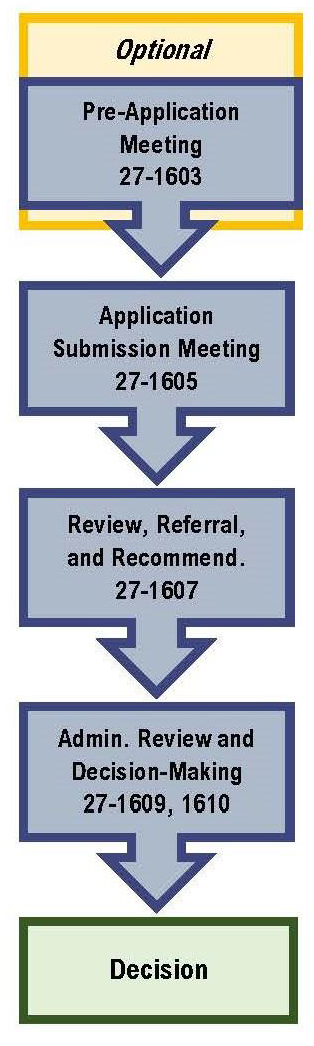
(c)
These directives shall not be construed to require any permit for a change of copy on any sign, nor for the repainting, cleaning and other normal maintenance or repair of a sign or sign structure for which a permit has previously been issued, so long as the sign or sign structure is not modified in any way.
2.
Temporary sign permit required. Application for a temporary sign permit shall be made to the zoning coordinator by the owner or person entitled to possession of the property or business on which the temporary sign is to be located and shall be upon the form prescribed by the zoning coordinator.
3.
Illegal signs. No permit for a sign issued hereunder shall be deemed to constitute permission or authorization to maintain an unlawful sign nor shall any permit issued hereunder constitute a defense in an action to abate an unlawful sign.
B.
Authority.
1.
A sign permit may be requested by a property owner, tenant, or an owner or tenant's agent.
2.
No person shall erect, construct or maintain any sign upon any property or building without the consent of the owner or person entitled to possession of the property or building if any, or their authorized representatives.
C.
Procedures. Common procedures for sign permit review are identified in Table 27-1600.1 and are summarized here for applicant convenience.
D.
Decision criteria. The sign permit shall be reviewed against the following criteria:
1.
The sign permit is consistent with any prior approvals, including any conditions that may have been placed on such approvals; and
2.
The sign permit conforms with all applicable requirements of this zoning code, specifically article 27-1400, Signs, or with all applicable requirements as modified by a request for administrative relief or variance.
E.
Review and decision-making.
1.
The zoning coordinator shall issue a permit for the erection, construction, enlargement, or relocation of a sign within the city when an application has been properly made and the sign complied with all appropriate laws and regulations.
2.
For temporary signs, the zoning coordinator shall establish area/height allowance and shall specify where the temporary sign is to be located, taking into consideration the required clear vision triangle in subsection 27-1802.H and the applicable zone district setback requirements.
F.
Appeal.
1.
Appeal may be taken to the board of adjustment from the zoning coordinator's denial of a sign permit.
2.
The zoning coordinator's failure to either formally grant or deny a sign application within twenty (20) calendar days of the determination of a complete application shall be grounds for appeal to the board of adjustment.
G.
Post-approval action.
1.
Revocation. The zoning coordinator may, in writing, suspend or revoke a permit under provisions of this section whenever the permit was issued on the basis of a misstatement of fact or fraud.
2.
Permit expiration. Every sign permit issued by the zoning coordinator shall become null and void if installation is not commenced within 120 calendar days from the date of permit issuance.
(Ord. No. 21-5748, § 3(Exh. A), 1-25-21)
Sec. 27-1623. - Special review uses.
A.
Applicability.
1.
Each zoning district is primarily intended for a predominant type of use as identified in Table 27-1000.1. There are also a limited number of specific uses subject to special review that may or may not be appropriate in a particular district, depending upon all the circumstances of the individual use on the site and in context with surrounding development. Consideration of these uses includes examination of the location, nature of the proposed use, the character of the surrounding development, traffic capacities of adjacent streets, and potential environmental effects, and whether specific conditions can be applied to mitigate the potential negative impacts of the use. Special review uses are special exceptions to the general terms of this zoning code.
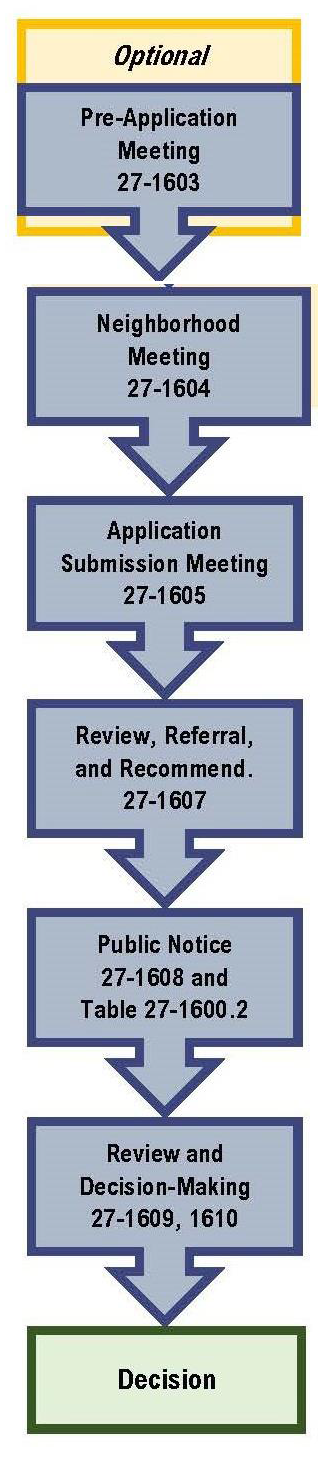
2.
It is the intent of this section to provide a system of special review of such uses so that the community is assured that the uses are compatible with their locations and with surrounding land uses, and will further the purpose of this zoning code and the objectives of the city growth policies.
3.
Only those uses identified as special review uses in Table 27-1000.1 may be approved pursuant to these procedures. If the zoning coordinator determines that a desired use is not included within the definition of a use listed as a special review use in Table 27-1000.1, and the use is not otherwise authorized by another provision of the zoning code, then the desired use may only be approved if:
(a)
This zoning code is amended to add the specific use to the district containing the subject property, or
(b)
The subject property is rezoned to a district where the use is listed as a permitted or special review use.
B.
Authority. An application for a special review may be filed by the property owner, contract purchaser, or an owner or applicant's authorized agent.
C.
Procedures.
1.
Common procedures. Common procedures for special review are identified in Table 27-1600.1 and are summarized here for applicant convenience.
2.
Specific procedures.
(a)
A neighborhood meeting is required per section 27-1604.
(b)
Notice shall be provided as follows:
(1)
Publication. Notice of the application shall be advertised in a newspaper of general circulation at least fifteen (15) calendar days in advance of the date of the public hearing.
(2)
Mail.
a.
The applicant and/or applicant's authorized agent shall be mailed notice of the public hearing date, time and place at least five (5) calendar days prior to the date;
b.
All the property owners within three hundred (300) feet of the exterior boundaries of the tract subject to the special review shall be mailed notice at least fifteen (15) calendar days in advance of the time, date, place and proposed use.
i.
Where the subject property is within three hundred (300) feet of the city limits, the mailed notice area will be six hundred (600) feet.
ii.
Where special review uses are subject to a separation requirement from other uses, the maximum separation distance will be the mail notice area.
iii.
The zoning coordinator may notify property owners within a radius of more than three hundred (300) feet if the zoning coordinator determines that the proposed use would be such as to have a substantial environmental impact on the surrounding land uses;
(3)
Posted. Place notice of the public hearing on the property subject to the special review at least fifteen (15) calendar days in advance of the public hearing. Additional posting may be required by the zoning coordinator for large parcels.
(c)
The staff report for a special review use shall contain the following information:
(1)
A summary of the comments received from the interdepartmental/agency review;
(2)
Findings for each of the decision criteria listed in this section;
(3)
A preliminary list of conditions if approval is recommended; and
(4)
A recommendation to approve the application, approve it with conditions, or deny the application.
D.
Decision criteria. The zoning commission shall only recommend approval or conditional approval and the city council shall only approve or conditionally approve a special review request if:
1.
The special review use is consistent with the city's growth policy and applicable neighborhood plans, if any;
2.
The establishment, maintenance, or operation of the special review use will not be detrimental to or endanger the public health, safety, morals, comfort, or general welfare;
3.
The site for the proposed use is adequate in size and topography to accommodate the use while meeting the other requirements of this zoning code, including zone district dimensions, landscaping requirements, and parking;
4.
The special review use will not be injurious to the use and enjoyment of other property in the immediate vicinity for the purposes already permitted, nor substantially diminish and impair property values within the neighborhood;
5.
The special review use will not impede the normal and orderly development and improvement of the surrounding property for uses permitted in the district;
6.
Conditions necessary to protect the public health, safety, and general welfare can be established, including but not limited to conditions on:
(a)
Regulation of the use;
(b)
Special setbacks, buffers, or screening;
(c)
Surfacing of parking areas;
(d)
Street, alley, or service road dedications, improvements, or bonds;
(e)
Regulation of points of vehicular ingress and egress;
(f)
Regulation of signs;
(g)
Regulation on the performance of the site, including noise, vibration, and odors;
(h)
Regulation of the hours of activities;
(i)
Timeframe for development;
(j)
Duration of use;
(k)
Update to existing structures or sites to bring the facility closer to compliance with the current building or site development standards including but not limited to signage, landscaping, parking lot landscaping, doors and windows on the street facades of buildings, or other site and building standards; and
(l)
Other relevant conditions that will ensure the orderly development of the site.
7.
Adequate utilities, access roads, drainage, and/or necessary facilities have been or are being provided;
8.
Adequate measures have been or will be taken to provide ingress and egress to minimize traffic congestion in public streets; and
9.
The special review use shall, in all other respects, conform to the applicable regulations of the district in which it is located, except as such regulations may, in each instance, be modified by the city council.
E.
Review and decision-making.
1.
City zoning commission.
(a)
The zoning commission shall consider each application in accordance with the provisions of this section, and at a public hearing at which time the application has been legally advertised.
(b)
The zoning commission shall make a recommendation to the city council to:
(1)
Approve the application;
(2)
Conditionally approve the application;
(3)
Deny the application.
(c)
Prior to closure of the public hearing, the zoning commission may also grant a request of the applicant to:
(1)
Allow the withdrawal of the application; or
(2)
Allow a delay not to exceed sixty (60) days.
(3)
Only one delay request from the applicant will be granted by the zoning commission.
(d)
The zoning commission on its own motion, may continue the public hearing to a date certain, in response to a finding for any of the decision criteria in subsection 27-1623.D., that requires additional information from the applicant. Only one continuance, not to exceed sixty (60) days, on its own motion can be considered by the zoning commission.
(e)
Recommendations from the zoning commission shall be based on findings of fact for each criterion and shall be transmitted to the applicant or applicant's agent, and the city council within fifteen (15) calendar days of the conclusion date of the public hearing before the commission.
(f)
The recommendation of the zoning commission shall be published in a newspaper of general circulation.
2.
City council action.
(a)
At least fifteen (15) calendar days after the first publication of notice of the zoning commission recommendations, a public hearing shall be held by the city council.
(b)
Before taking any action on an application for a special review use, the city council shall first consider the findings and recommendations of the zoning commission.
(c)
The city council shall:
(1)
Approve the application;
(2)
Conditionally approve the application;
(3)
Deny the application;
(4)
Allow withdrawal of the application;
(5)
Delay the application for a period not to exceed thirty (30) calendar days; or
(6)
Refer the application back to the zoning commission for an additional public hearing based on a determination that 1) new information has been submitted that the applicant and public has not had a reasonable opportunity to examine and comment on, or 2) new information has been presented that was never submitted or considered by the zoning commission or staff. A city council referral back to the zoning commission will require publication of a new legal ad, posting of the property and mailing to the surrounding property. A referral back to the commission under this section requires a sixty (60) percent majority vote of the present and voting members of the council and may only be done once by the city council.
(d)
If the application is approved, the applicant shall be notified in writing within ten (10) calendar days of the approval. The notification shall include:
(1)
Identification of any conditions of approval;
(2)
Automatic termination date; and
(3)
Notification that permit issuance is contingent upon compliance with the conditions of approval.
(e)
If the application is denied, it shall constitute a determination that the applicant has not shown that the decision criteria required for special review use approval have been satisfied. A decision to deny shall include the following:
(1)
A statement that the application is denied;
(2)
A description of the project, including acreage and proposed use characteristics;
(3)
Findings for each of the decision criteria;
(4)
A statement indicating that a denial does not limit the applicant's ability to resubmit a revised application for consideration;
(5)
A statement that the decision may be appealed to a court of competent jurisdiction; and
(6)
The date of the decision.
F.
Requirements of approval.
1.
All of the conditions imposed by the special review use approval:
(a)
Constitute restrictions running with the land use;
(b)
Apply, are binding upon, and must be adhered to by the property owner and any successors, transferees, or assigns;
2.
The right to building and occupancy permits are contingent upon the fulfilment of all conditions imposed by the special review use approval.
G.
Amendment to approved special review uses. Uses that have been approved pursuant to a special review by the city council, may be allowed to expand or remodel without an additional special review, provided that the expansion or remodeling meets all of the following criteria:
1.
The gross floor area of the remodeled or expanded establishment is not over ten (10) percent greater than the gross floor area originally occupied by the special review use;
2.
The number of potential occupants is not increased by more than ten (10) percent over the number that is currently allowed;
3.
The number of new parking stalls is not more than ten (10) percent greater than the original number of spaces; and
4.
All other requirements of this zoning code and/or the BMCC are met.
H.
Expiration of approval.
1.
Non-establishment. A special review use shall expire one year after the date of issuance unless substantial work has commenced pursuant to the approval and continues in good faith to completion.
2.
Non-use. If a special review use has been established but ceases to operate for more than six (6) months, the special review approval shall expire.
(Ord. No. 21-5748, § 3(Exh. A), 1-25-21; Ord. No. 23-5848, § 3, 8-14-23; Ord. No. 23-5856, § 3, 10-9-23)
Sec. 27-1624. - Temporary use permit.
Temporary uses are processed through section 27-1620, Permits.
(Ord. No. 21-5748, § 3(Exh. A), 1-25-21)
Sec. 27-1625. - Wind and solar facilities.
A.
Application types. Tier 2 wind and solar facilities are processed through section 27-1620, Permits. Tier 3 wind and solar facilities are processed through section 27-1623, Special review use.
B.
Additional information. Both applications shall include the following information:
1.
Approved net metering agreement(s) and copies of applications to or approved permit from applicable state and federal agencies.
2.
A landscape plan showing that all areas occupied by the facility that are not utilized for access to operate and maintain the installation shall be planted and maintained with a native shade tolerant grass or other vegetation for the purpose of soil stabilization or other methods approved by the zoning coordinator.
3.
A storm water management plan showing existing and proposed grading and drainage demonstrating no net increase in runoff.
4.
A preliminary transportation plan describing ingress and egress to the proposed project site to deliver equipment and provide access during and after construction. Such plan shall describe any anticipated improvements to existing roads, bridges, or other infrastructure, as well as measures which will be taken to restore damaged or disturbed access routes following construction.
5.
An environmental assessment that analyzes the impact of the proposed project regarding on-site and site-adjacent floodways, riparian corridors, open water, wildlife migration routes, protected habitat, protected plant species, and other environmentally sensitive areas as identified by the county, city, state, or federal government, along with proposed mitigation recommendations.
6.
A decommissioning plan, compliant with MCA 75-26-301 where applicable, shall be prepared and submitted with zoning compliance permit or special review application. The plan shall address the following:
(a)
Defined conditions upon which decommissioning will be initiated (e.g., end of land lease, no power production for twelve (12) months, etc.).
(b)
Removal of all non-utility owned equipment, conduit, structures, fencing, roads, and foundations and restoration of property to condition prior to development of the WECS. This shall include a revegetation plan. The applicant may propose retaining some site improvements, such as roads and infrastructure, subject to landowner consent and city approval.
(c)
Timeframe for completion of decommissioning activities, not to exceed one year.
(d)
Description and copy of any lease or any other agreement with landowner regarding decommissioning.
(e)
Name and address of person or party responsible for decommissioning.
(f)
Plans and schedule for updating this decommissioning plan.
(g)
A professional engineer's estimated cost of decommissioning, the financial resources to be used to accomplish decommissioning, and the escrow agent with which the resources shall be deposited. The decommissioning plan shall also include an agreement between the applicant and the city that:
(1)
The financial resources for decommissioning shall be in the form of a surety bond or letter of credit to be deposited in an escrow account with an escrow agent acceptable to the city.
(2)
The city shall have access to the escrow account funds for the expressed purpose of completing decommissioning if decommissioning is not completed by the applicant within one year of the end of project life, inoperability of individual WECS turbine, or facility abandonment. Escrow funds may be used for administrative fees and costs associated with decommissioning.
(3)
The city is granted the right of entry onto the site, pursuant to reasonable notice, to effect or complete decommissioning.
(4)
The city is granted the right to seek injunctive relief to effect or complete decommissioning, as well as the city's right to seek reimbursement from applicant, operator, or their successor(s) for decommissioning costs in excess of the amount deposited in escrow and to file a lien against any real estate owned by applicant, operator, or their successor(s), or in which they have an interest, for the amount of the excess, and to take all steps allowed by law to enforce the lien.
7.
Before final electrical inspection, provide evidence that the decommissioning plan was recorded with the Billings city clerk.
C.
Annual activity statement. Following approval, all permit holders are required to submit an annual activity statement that confirms that the system is still active and compliant with the permit and that provides current owner and emergency contact information. This requirement shall not preclude the city from undertaking a separate compliance report where confirmation of data provided by the facility's operator is desired.
(Ord. No. 21-5748, § 3(Exh. A), 1-25-21)
Sec. 27-1626. - Wireless communication facilities.
A.
Application types. Wireless communication facilities are processed through section 27-1620, Permits.
B.
Minor modification procedures.
1.
Minor modifications to facilities permitted under these regulations shall be approved by the planning division so long as they comply with the original approved design.
2.
Timeframe for review. Subject to the tolling provisions of subparagraph 3. below, within sixty (60) calendar days of the date on which an applicant submits an application seeking approval under this section, the city shall approve the application unless it determines that the application is not covered by this subsection, or otherwise in non-conformance with applicable codes.
3.
Tolling of the timeframe for review. The 60-day review period begins to run when the application is filed, and may be tolled only by mutual agreement of the city and the applicant, or in cases where the zoning coordinator determines that the application is incomplete:
(a)
To toll the timeframe for incompleteness, the city must provide written notice to the applicant within thirty (30) calendar days of receipt of the application, specifically delineating all missing documents or information required in the application;
(b)
The timeframe for review begins running again when the applicant makes a supplemental written submission in response to the city's notice of incompleteness;
(c)
Following a supplemental submission, the city will notify the applicant within ten (10) calendar days that the supplemental submission did not provide the information identified in the original notice delineating missing information. The timeframe is tolled in the case of second or subsequent notices pursuant to the procedures identified in subsection 14.(c)(1). In the case of a second or subsequent notice of incompleteness, the city may not specify missing information or documents that were not delineated in the original notice of incompleteness;
(d)
Failure to act. In the event the city fails to act on a request for minor modification, within the timeframe for review (accounting for any tolling), the request shall be deemed granted. The request becomes effective when the applicant notifies the city in writing after the review period has expired (accounting for any tolling) that the application has been deemed granted;
(e)
Interaction with Telecommunications Act Section 332(c)(7). If the city determines that the applicant's request is not a request for minor modification, the presumptively reasonable timeframe under Section 332(c)(7), as prescribed by the FCC's Shot Clock order, will begin to run from the issuance of the city's decision that the application is not a request for minor modification. To the extent such information is necessary, the city may request additional information from the applicant to evaluate the application under Section 332(c)(7) reviews; and
(f)
In the event that after submittal of the application, or as a result of any subsequent submittals, applicant modifies the proposed facilities modification described in the initial application, the application as modified will be considered a new application subject to commencement of a new application review period; provided that, applicant and the approval authority may, in the alternative, enter into a mutually agreeable tolling agreement allowing the city to request additional submittals and additional time that may be reasonably necessary for review of the modified application.
4.
Decision. The approval authority shall review a minor modification application to determine if the proposed facilities modification is subject to this section, and if so, if the proposed facilities modification will result in a substantial change to the physical dimensions of an eligible support structure.
(a)
Within sixty (60) calendar days of the date on which the city receives a minor modification application, less any time period that may be excluded under the tolling provisions of this section or a tolling agreement between the applicant and the approval authority, the approval authority shall approve the application and contemporaneously issue a minor modification permit unless the approval authority determines that the application is not subject to this section, or the proposed facilities modification will substantially change the physical dimension of an eligible support structure.
(b)
Denial. A minor modification application shall be denied upon determination by the approval authority that the proposed facilities modification is not subject to this section or will substantially change the physical dimensions of an eligible support structure. A proposed facilities modification will substantially change the physical dimensions of an eligible support structure if it meets any of the substantial change criteria. A denial of a minor modification application shall set forth in writing the reasons for the denial and shall be provided to the applicant.
(c)
Deemed approved application. An application that has been deemed approved shall be and constitute the equivalent of a minor modification permit, except as may be otherwise determined by a court of competent jurisdiction, and shall be subject to generally applicable enforcement and compliance requirements in the same manner as a minor modification permit issued pursuant to this section.
5.
Term of minor modification permit. A minor modification permit issued pursuant to this section, and any deemed approve application, shall be valid for a term of one hundred eighty (180) calendar days from the date of issuance, or the date the application is deemed approved.
C.
New support structure and major modification procedures. Applications for new support structures and major modifications to existing antenna support structures permitted under these regulations shall be approved through a special review. Major modifications are any modifications that exceed the definition of minor modifications and constitute a substantial change per subsection 27-1007.C.3.
(Ord. No. 21-5748, § 3(Exh. A), 1-25-21)
Sec. 27-1627. - Variances.
A.
Applicability.
1.
The board of adjustment (BOA) shall have the authority to grant a variance from the terms of this zoning code in specific cases where it is found that the granting of the variance will not be contrary to the public interest and where, because of special conditions with respect to the lot shape or topography, a literal enforcement of the provisions of the Code would result in unnecessary hardship.
2.
The variance process may not be used to:
(a)
Waive, modify or amend any definition or use classification;
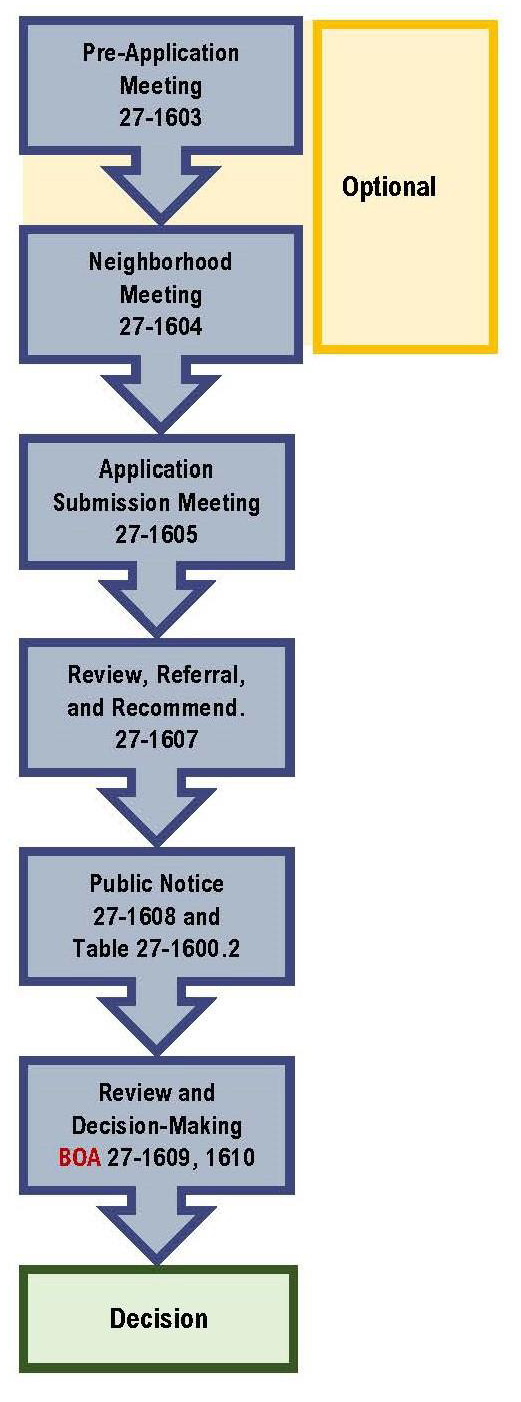
(b)
Waive, modify or otherwise vary any of the review and approval procedures of this zoning code; or;
(c)
Waive, vary, modify or otherwise override a condition of approval or requirement imposed by another authorized board or commission.
B.
Authority. A request for variance may be filed by a property owner or the owner's agent.
C.
Procedures.
1.
Common procedures. Common procedures for variances are identified in Table 27-1600.1 and are summarized here for applicant convenience.
2.
Specific procedures.
(a)
Notice shall be provided as follows:
(1)
Published. Place notice in a newspaper of general circulation at least fifteen (15) calendar days in advance of the date set for the public hearing;
(2)
Mailed.
a.
Notify the owner of the property and/or owner's agent at least five (5) calendar days in advance of the hearing date;
b.
Notify the property owners within one hundred fifty (150) feet of the exterior boundaries of the subject property;
(3)
Posted. Place a notice on the property at least fifteen (15) calendar days prior to the hearing date.
D.
Decision criteria. Before the BOA grants a variance, it shall determine:
1.
That special conditions and circumstances exist which are peculiar to the land, the lot or something inherent in the land which causes the hardship, and which are not applicable to other lands in the same district;
2.
That a literal interpretation of the provisions of this zoning code would deprive the applicant of rights commonly enjoyed by other tracts in the same district;
3.
That granting the variance requested will not confer on the applicant any special privilege that is denied by this zoning code to other land in the same district;
4.
That the granting of the variance will be in harmony with the general purpose and intent of this zoning code and with the growth policies;
E.
Review and decision-making.
1.
Whenever the city board of adjustment grants an application for a variance, the minutes shall specifically state the criteria upon which the variance is granted.
2.
In granting any variance, the BOA may prescribe appropriate conditions and safeguards in conformity with this zoning code. Violation of such conditions and safeguards, when made a part of the terms upon which the variance is granted, shall be deemed a violation of this zoning code.
3.
The BOA shall prescribe a time limit within which the action for which the variance is required shall be begun or completed, or both. Failure to begin or complete such action within the time limit set shall void the variance.
4.
Under no circumstances shall the BOA grant a variance to allow a use not permissible under the terms of this chapter in the district involved. A variance shall not be a grant of special privilege inconsistent with limitations placed upon other property in the district.
F.
Post-approval action. A request for changes in conditions of approval of a zoning variance must be processed as a new variance application, including the requirements for fees, notices and hearings.
G.
Transferability. Zoning variance approval runs with the land and is not affected by changes of tenancy, ownership, or management.
H.
Reapplication. If an application for a variance is denied by the BOA and not approved for reconsideration, another application shall not be filed within a period one year from the date of denial.
(Ord. No. 21-5748, § 3(Exh. A), 1-25-21)
Sec. 27-1628. - Zone change.
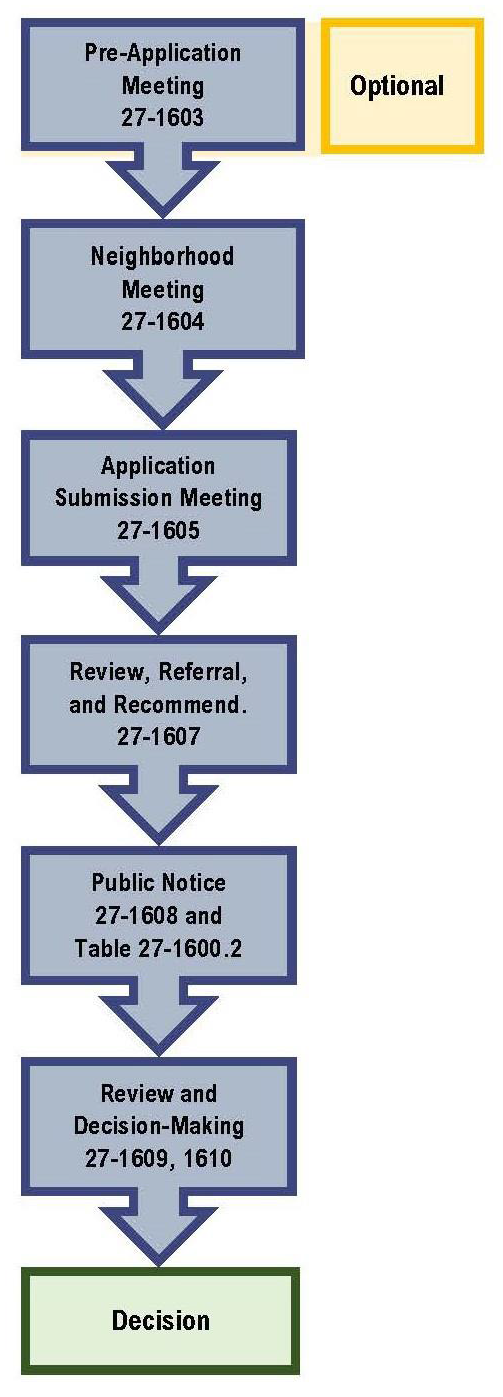
A.
Purpose. This zoning code, including the official zoning map, may be amended by the city council.
B.
Initiation of zone change.
1.
Text amendment. Proposals to amend the text of this zoning code (text amendment), may be initiated by the city council, the zoning commission, or the Yellowstone County Board of Planning.
2.
Zone change (map amendment). Unless initiated by the city council, all applications for zone change must be submitted by the owner of the subject property, the contract purchaser, or the authorized agent of the owner.
C.
Procedures.
1.
Common procedures. Common procedures for review and decision of a zone change application are identified in Table 27-1600.1 and are summarized here for applicant convenience.
2.
Specific procedures.
(a)
A pre-application neighborhood meeting is required per section 27-1604.
(1)
The applicant shall provide a signed statement affirming the pre-application neighborhood meeting was conducted in conformance with the requirements of subsection 27-1604(b)(3), and the zone change application is based on material presented at the meeting. The signed statement shall include a copy of the meeting notice, any written materials provided to the surrounding property owners, a brief synopsis of the meeting results, a roster of the persons attending the meeting and audio or written minutes of the meeting.
(b)
Notice of a zone change application shall be provided as follows:
(1)
Publication. Notice of the application shall be advertised in a newspaper of general circulation at least fifteen (15) calendar days in advance of the date of the public hearing.
(2)
Mailed notice shall be provided to the applicant and/or applicant's authorized agent; and
a.
Where the subject property is equal to or more than six hundred (600) feet to exterior coterminous city limits: All property owners within a 300-foot radius. Where the subject property is less than six hundred (600) feet to exterior coterminous city limits: All property owners within one thousand three hundred twenty (1,320) feet. Coterminous city limits do not include unincorporated islands within the city limits.
b.
PD zone change: All property owners within one thousand three hundred twenty (1,320) feet.
c.
PND zone change: All property owners within one thousand three hundred twenty (1,320) feet.
d.
In addition to the notice above and before enacting on its own motion an amendment to the official zoning map, the city council shall provide written notification by mail of such amendment to each property owner whose name appears on the last tax record of the property subject to the amendment. The notification shall include what the proposed map amendment is, the time, date and place of the public hearing on the proposed amendment. Such notification shall be made at least fifteen (15) calendar days in advance of the date of public hearing.
(3)
Posted. Place notice of the public hearing on the property subject to the zone change fifteen (15) calendar days in advance of the public hearing.
(4)
Notice of a text amendment shall be published in the same manner as the publication requirement of a zone change application.
(c)
Public hearings shall be held for both the city zoning commission review and city council review of the request for zone change or text amendment.
D.
Decision criteria. The review and decision-making bodies shall consider the following statutory criteria in making a recommendation or decision regarding a zone change application:
1.
Whether the new zoning is designed in accordance with the growth policy;
2.
Whether the new zoning is designed to secure from fire and other dangers;
3.
Whether the new zoning will promote public health, public safety and general welfare;
4.
Whether the new zoning will facilitate the adequate provision of transportation, water, sewerage, schools, parks and other public requirements;
5.
Whether the new zoning will provide adequate light and air;
6.
Whether the new zoning will affect motorized and nonmotorized transportation;
7.
Whether the new zoning will promote compatible urban growth;
8.
Whether the new zoning considers the character of the district and the peculiar suitability of the property for particular uses;
9.
Whether the new zoning will conserve the value of buildings; and
10.
Whether the new zoning will encourage the most appropriate use of land throughout the city.
E.
Review and decision-making.
1.
City zoning commission recommendation.
(a)
The city zoning commission shall make a recommendation to the city council to:
(1)
Deny the application;
(2)
Approve the application.
(b)
Prior to closure of the public hearing, the zoning commission may also grant a request, without prejudice to the applicant, to allow:
(1)
Withdrawal of the application; or
(2)
A delay of the public hearing not to exceed sixty (60) days.
(3)
Only one delay request by the applicant will be granted by the zoning commission.
(c)
The zoning commission on its own motion, may continue the public hearing to a date certain, in response to a finding for any of the decision criteria in subsection 27-1628.D., that requires additional information from the applicant. Only one continuance, not to exceed sixty (60) days, on its own motion can be considered by the zoning commission.
(d)
Recommendations from the zoning commission shall be based on findings of fact and shall be transmitted to the applicant or applicant's agent, and the city council within fifteen (15) calendar days of the conclusion date of the public hearing before the zoning commission.
(e)
The recommendation of the zoning commission shall be published in a newspaper of general circulation.
(f)
A report of the commission's recommendation, findings and conclusions shall be submitted to the city council.
2.
City council action.
(a)
The city council shall hold a public hearing within thirty (30) calendar days after the publication of the zoning commission recommendation.
(b)
Before taking action on a zone change application, and after presentation of the zoning commission report, the city council shall hold a public hearing on the application.
(c)
A second reading of the ordinance is required by BMCC section 2-232.
(d)
The city council shall:
(1)
Approve the application;
(2)
Deny the application;
(3)
Allow withdrawal of the application;
(4)
Delay the application for a period not to exceed thirty (30) calendar days; or
(5)
Refer the application back to the zoning commission for an additional public hearing based on a determination that 1) new information has been submitted that the applicant and public has not had a reasonable opportunity to examine and comment on, or 2) new information has been presented that was never submitted or considered by the zoning commission or staff. A city council referral back to the zoning commission will require publication of a new legal ad, posting of the property and mailing to the surrounding property. A referral back to the commission under this section requires a sixty (60) percent majority vote of the present and voting members of the council and may only be done once by the city council.
3.
Protest petition triggers supermajority vote requirement. As provided in MCA 76-2-305(2), in the event of a protest petition against such zone change signed by the owners of twenty-five (25) percent or more of: (1) the area of the lots included in any proposed change; or (2) those lots or units, as defined in MCA 70-23-102, one hundred fifty (150) feet from a lot included in a proposed change, such proposed amendment shall not become effective except by the favorable vote of two-thirds (⅔) of the present and voting members of the city council.
(a)
For purposes of this protest provision, each unit owner is entitled to have the percentage of the unit owner's undivided interest in the common elements of the condominium, as expressed in the declaration, included in the calculation of the protest.
(b)
If the property, as defined in MCA 70-23-102, spans more than one lot, the percentage of the unit owner's undivided interest in the common elements must be multiplied by the total number of lots upon which the property is located.
(c)
The percentage of the unit owner's undivided interest must be certified as correct by the unit owner seeking to protest a change or by the presiding officer of the association of unit owners.
(d)
The protest petition must be received in the planning and community services department office by 5:00 p.m. on the Friday preceding the first reading of the amendment by the city council.
(Ord. No. 21-5748, § 3(Exh. A), 1-25-21; Ord. No. 22-5807, § 3(o), 5-9-22; Ord. No. 23-5848, § 4, 8-14-23)

