
Billings City Zoning Code
ARTICLE 27
300.- NEIGHBORHOOD DISTRICTS
Sec. 27-301.- Districts established.
The neighborhood zoning districts are established in Table 27-300.1. When this zoning code refers to "neighborhood" zoning districts, it is referring to these districts.
Table 27-300.1. Neighborhood Districts.
(Ord. No. 21-5748, § 3(Exh. A), 1-25-21)
Sec. 27-302. - District descriptions.
Neighborhood districts are primarily intended to allow a mix of residential uses within appropriately scaled buildings to maintain and promote the desired physical character of neighborhoods within the city.
A.
N1: First neighborhood residential. The N1 district is intended to continue the existing character of single- and two-family homes in the first residential neighborhoods developed in the early part of the twentieth century in the city. This district may also be used for new neighborhoods designed with similar characteristics of the first neighborhoods. These characteristics include parking/garages located in the rear of the lot, pitched roofs, and doors and windows on the front facades. Building and garage location are specified in the regulations, with basic parameters for front doors and windows.
B.
N2: Mid-century neighborhood residential. The N2 district is intended to continue the existing character of the residential neighborhoods with single- and two-family homes developed during the middle of the twentieth century. This district may also be used for new neighborhoods designed with similar characteristics of the mid-century neighborhoods. These characteristics include homes wide on the lot, proportionate garages located in the front façade, low pitched roofs, and doors and windows on the front facades. Building and garage location are specified in the regulations, with basic parameters for front doors and windows.
C.
N3: Suburban neighborhood residential. The N3 district is intended for residential neighborhoods primarily with single-family homes. Characteristics include wide lots and attached garages typically located on the front building façade, often greater than thirty-five (35) percent of the façade. Basic setback and height parameters apply.
D.
NX1: Mixed residential 1. The NX1 district is intended to continue the character of the first neighborhoods with single-family, two-family, and small-scale multiple-family homes with three (3) to four (4) units. Multiple-family homes are intended to match the scale of the neighborhood single-family homes with characteristics such as building width, parking and garages location, roof design, and doors and windows on the front facades.
E.
NX2: Mixed residential 2. The NX2 district is intended for small- and mid-scale multiple-family homes with two (2) to eight (8) units, in small neighborhood nodes. The buildings are oriented to the streets in walkable blocks with doors and windows on front facades and parking/garages located behind the buildings.
F.
NX3: Mixed residential 3. The NX3 district is intended for large-scale multiple-family homes in larger neighborhood nodes. The buildings may include larger apartment buildings with more than eight (8) units per structure. The development may have an internal private street system for access throughout the larger node with walkable blocks. Buildings are oriented to the street with doors and windows on front facades and parking/garages located behind the buildings. Covered parking may include rows of canopies or enclosed garages. Common open space, shared recreational facilities, or central gathering spaces are generally provided for residents.
G.
RMH: Residential manufactured home. The RMH district is intended to provide stable environments for individual manufactured homes, manufactured home parks, and compatible accessory uses.
(Ord. No. 21-5748, § 3(Exh. A), 1-25-21; Ord. No. 25-5907, § 3, 4-14-25)
Sec. 27-303. - Regulations applicable to all neighborhood districts.
All buildings must comply with the general regulations and the specific regulations per each district, unless otherwise expressly stated in this zoning code. See article 27-1500, Nonconformities, for existing buildings that do not fully conform to the district regulations.
A.
Allowed uses. Allowed uses are provided in article 27-1000.
B.
Existing buildings. Existing buildings are not required to meet these regulations except as defined in article 27-1500, Nonconformities.
C.
Site access for lots.
1.
Access to residences must be from any public or approved private street right-of-way.
2.
All lots shall have one lot line located fully on a public or private street right-of-way, except one of every four (4) lots in the development may be located on a shared open space with access provided by private easement.
3.
Where there is an existing or planned alley system, lots shall be provided vehicle access from the alley. Lots with or without alley access may be provided a curb cut for vehicle access to the street pursuant to the city curb cut and driveway standards in BMCC section 6-1208.
D.
Permanent structures. All buildings constructed in any neighborhood district, except the RMH district, must be of permanent construction without a chassis, hitch, or wheels, or other features that would make the structure mobile, unless otherwise expressly stated in this code. Modular construction that meets state adopted building code is allowed.
E.
Accessory structure regulations.
1.
Accessory structures are subject to article 27-1000, Use-specific standards, except as defined in the district site and structure regulations.
2.
Façade siding on accessory structures over two hundred (200) square feet in footprint must match the façade material and design of the principal structure to the maximum extent practicable.
F.
Exceptions and exemptions. The following exceptions and exemptions may apply to the district site and structure regulations. Use specific standards in article 27-1000 are still applicable.
1.
Administrative relief.Article 27-1600 defines administrative relief applicable to the site and structure regulations. Additional administrative relief may be noted throughout this article.
2.
Utility installations. The following structures are not required to comply with site and structure regulations applicable to a specific district.
(a)
Wireless communications facilities and uses.
(b)
Public and private utility stations, substations, and associated utility station facilities.
3.
Public, civic, and institutional uses. Public, civic, and institutional uses allowed in the district are required to the meet the district site and structure regulations, except the following standards apply:
(a)
The minimum dimension of any build-to zone shall be treated as a minimum setback.
(b)
Minimum heights are not required. Heights above the maximum allowed may be approved through an administrative relief, based upon similar civic structures on similar lots in the surrounding neighborhood. See section 27-1614, Administrative relief.
(c)
Window, front door, and roof regulations are not required.
4.
Maximum height exceptions.
(a)
The maximum height limit shall not apply to spires, belfries, cupolas, antennas, water towers or tanks, chimneys or smokestacks, power transmission lines, cooling or elevator towers, or similar and necessary appurtenances not used for human occupancy.
(b)
Buildings permitted in neighborhood districts may exceed the height limitations of the district through an approved application for administrative relief (section 27-1614) or through a variance (section 27-1627) for increases greater than allowed by administrative relief.
G.
Trash, recycling, refuse locations. For all buildings with five (5) or more units, all trash, recycling, and other refuse areas must be located and treated as follows:
1.
Trash, recycling, and other refuse areas must be located in the rear yard of the lot.
2.
When no rear yard exists or when the rear yard is less than ten (10) feet in depth, trash, recycling, and other refuse areas may be located in the rear portion of an interior side yard.
3.
Trash, recycling, and other refuse areas may be located inside the building with access doors off the rear or interior side facade. Access doors may be located off a non-primary frontage facade with administrative relief per section 27-1614. Access doors must be opaque, screening a minimum of eighty (80) percent of the opening.
4.
See article 27-1200 for required screening of trash, recycling, and other refuse areas.
H.
Allowed encroachments. The following encroachments are permitted within setbacks as defined in Table 27-300.2. Encroachments are not allowed where a build-to zone is required.
Table 27-300.2. Table of Allowed Encroachments.
I.
Front entrances. The following standards apply only when required by the site and structure regulations for the district. Front building entrances shall be emphasized, adding interest to the building façade, through one or more of the following design features:
1.
Roof or canopy. The entrance is covered by a roof or canopy differentiating it from the overall building roof type.
2.
Porch. The entrance is through a porch.
3.
Sidelights and transom. Sidelights and/or transom windows are included abutting the entrance door.
4.
Recessed or projecting bay. The entrance is located in a separate bay of the building that is either recessed or projected from the front façade.
5.
Other design. Other designs adding emphasis and drawing attention to the entrance on the facade may be approved with section 27-1614, Administrative relief.
J.
Arterial setbacks. Minimum arterial setbacks as follows apply to all neighborhood districts:
1.
No building or structure shall be erected or maintained within fifty (50) feet of the centerline of an arterial street. In addition, no required parking area or portion thereof, including driving aisles, shall be constructed or located within forty (40) feet of the centerline of an arterial street. Any new construction that increases the number of required off-street parking spaces must locate these additional required parking spaces in areas that comply with these locational standards.
2.
Approved signs and public use controls and systems, trees trimmed up eight (8) feet and canopies with at least eight (8) feet clearance, shall be permitted in this setback area. For the purpose of this subsection, canopies shall be defined ascovers that are solely attached to and supported by the structure to which it is attached and which can be removed without destroying any part of that supporting structure. This shall only apply to canopies attached to the principal structure.
3.
The designation of a street as an arterial shall be recommended by the city engineer, or in conformity with the most recent urban transportation plan.
(Ord. No. 21-5748, § 3(Exh. A), 1-25-21; Ord. No. 22-5807, § 3(b), 5-9-22; Ord. No. 25-5907, § 3, 4-14-25)
Sec. 27-304. - N1 district.
The following site and structure regulations apply to any lot in the N1 district. Refer to 27-303 for general regulations applicable to all districts and Table 27-300.3, below, for regulations specific to this district, keyed to illustrations in Figure 27-300(1). See article 27-1800 for definitions and information on how to measure the following regulations.
Table 27-300.3. Site and Structure Regulations.
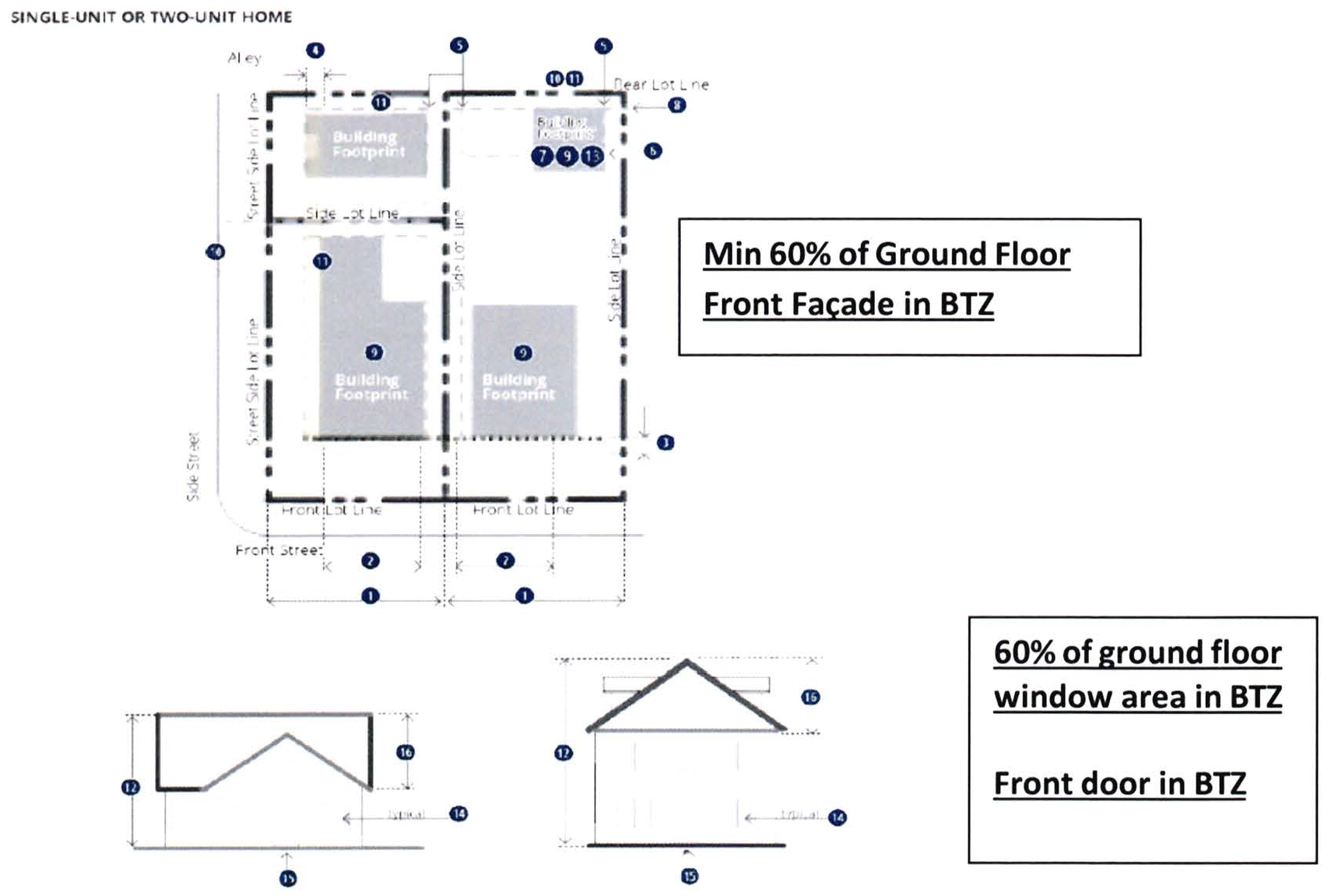
Figure 27-300(1). N1 district diagrammatic plans and elevations.
D.
Supplemental regulations.
1.
Side street lots. Side street lots are those lots located along the short end of blocks, where the front of the lot faces the side street and the depth of the lot is generally the width of most of the lots on the block. Lots with only side street frontage are allowed maximum building coverage of eighty (80) percent.
2.
The following applies to two-unit buildings:
(a)
Configuration. Allowed configurations include the following: side-by-side units, stacked units, front and rear units, all located in the principal building; two (2) principal buildings on one lot; or a principal building with an accessory building (see article 27-1000). For side-by-side units, the lot may be split to allow a fee simple configuration with a zero side yard setback and shared wall between the two (2) units.
(b)
Entrance. One entrance is permitted per street facade, except for side-by-side units on separate lots.
(Ord. No. 21-5748, § 3(Exh. A), 1-25-21; Ord. No. 22-5807, § 3(a), 5-9-22; Ord. No. 23-5836, § 3, 6-12-23)
Sec. 27-305. - N2 district.
The following site and structure regulations apply to any lot in the N2 district. Refer to section 27-303 for general regulations applicable to all districts and Table 27-300.4, below, for regulations specific to this district, keyed to illustrations in Figure 27-300(2). See article 27-1800 for definitions and information on how to measure the following regulations.
Table 27-300.4. Site and Structure Regulations.
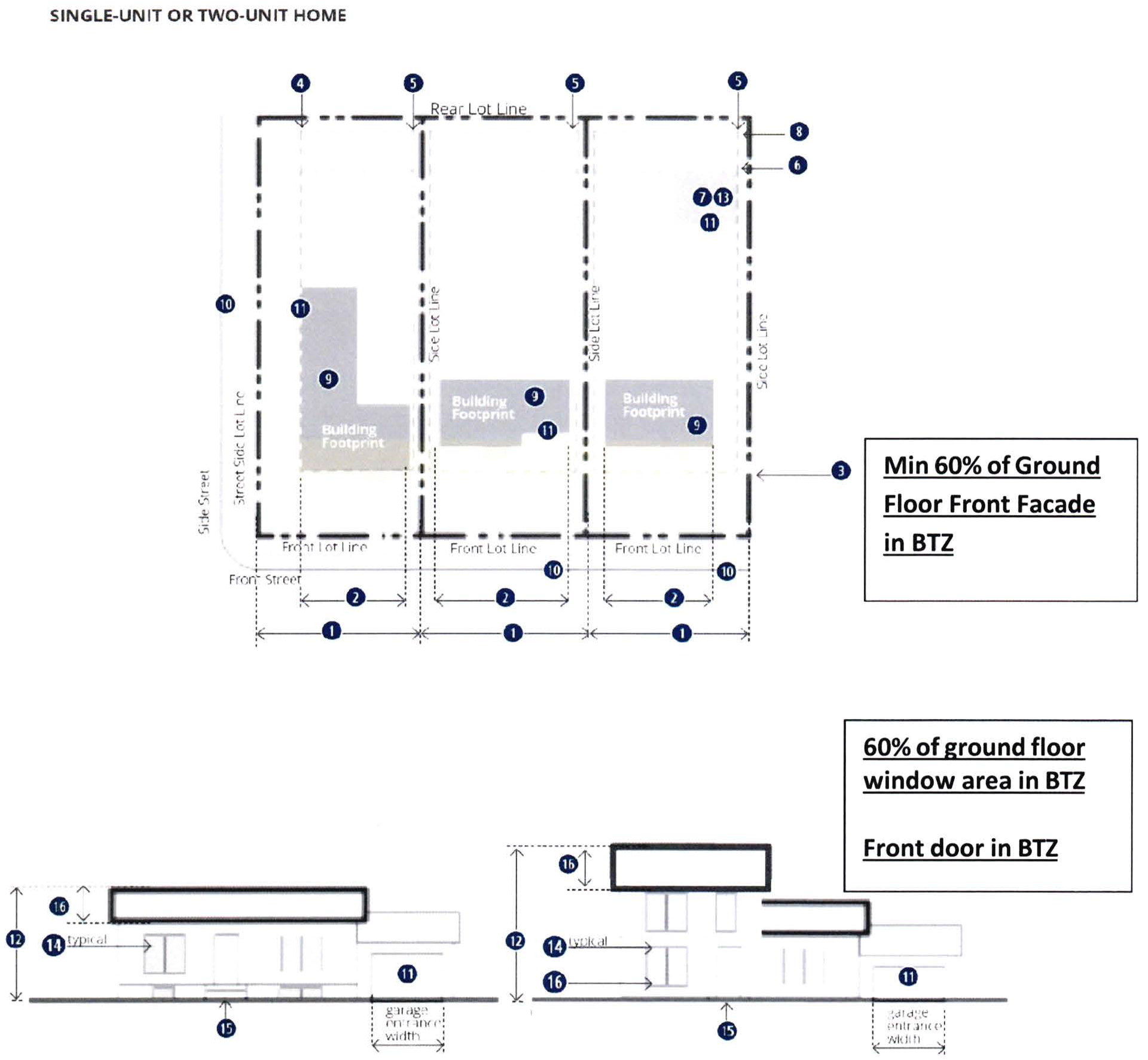
Figure 27-300(2). N2 district diagrammatic plans and elevations.
D.
Supplemental regulations.
1.
Side street lots. Side street lots are those lots located along the short end of blocks, where the front of the lot faces the side street and the depth of the lot is generally the width of most of the lots on the block. Lots with only side street frontage are allowed maximum building coverage of eighty (80) percent.
2.
The following standards apply to two-unit buildings:
(a)
Configuration. Allowed configurations include the following: side-by-side per below, stacked units, front and rear units, all located in the principal building; two (2) principal buildings on one lot; or a principal building with an accessory building (see article 27-1000).
(1)
Garage entrances located on the front façade are limited to no more than fifty (50) percent of the front façade width within the build-to zone.
(2)
Up to two (2) front door entrances are permitted on the street façade (Table 27-300.4.C).
(Ord. No. 21-5748, § 3(Exh. A), 1-25-21; Ord. No. 22-5807, § 3(a), 5-9-22; Ord. No. 23-5836, § 5, 6-12-23)
Sec. 27-306. - N3 district.
The following site and structure regulations apply to any lot in the N3 district. Refer to section 27-303 for general regulations applicable to all districts and Table 27-300.5, below, for regulations specific to this district, keyed to illustrations in Figure 27-300(3). See article 27-1800 for definitions and information on how to measure the following regulations:
Table 27-300.5. Site and Structure Regulations.
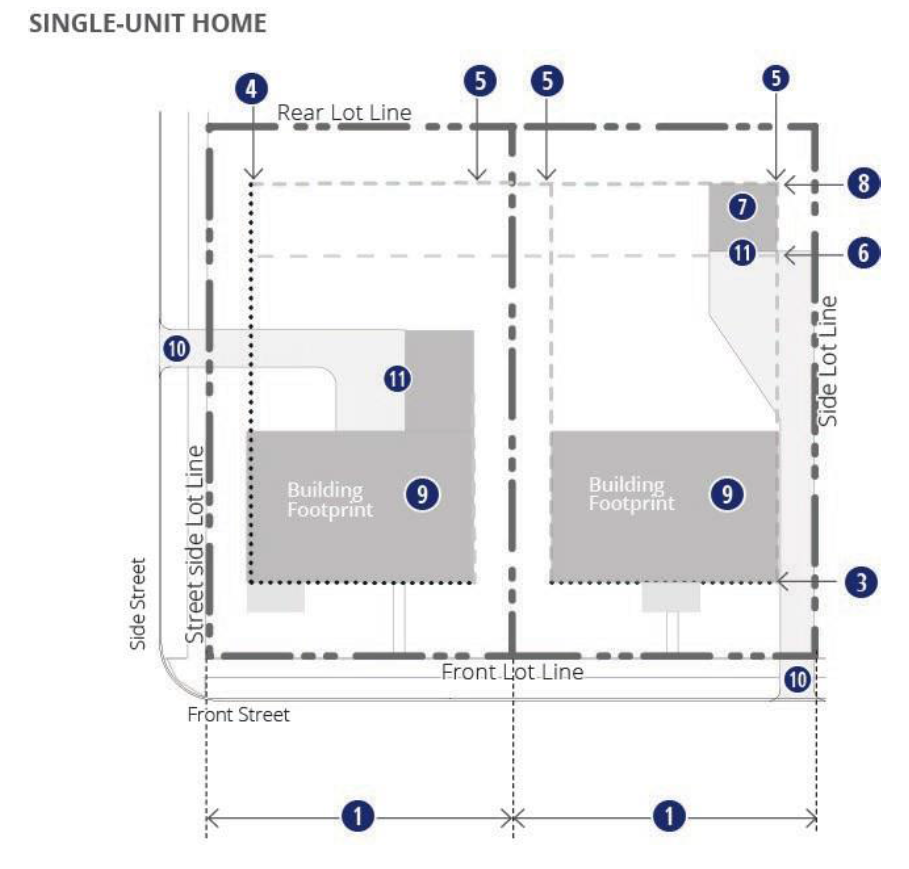
Figure 27-300(3). N3 district diagrammatic plan.
C.
Supplemental regulations. Lots on cul-de-sacs and flag lots are exempt from minimum lot width regulations. See also article 27-1500, Nonconformities, for existing lots of record.
(Ord. No. 21-5748, § 3(Exh. A), 1-25-21; Ord. No. 23-5836, § 7, 6-12-23)
Sec. 27-307. - NX1 district.
The following site and structure regulations apply to any lot in the NX1 district. Refer to section 27-303 for general regulations applicable to all districts and Table 27-300.6, below, for regulations specific to this district, keyed to illustrations in Figure 27-300(4). See article 27-1800 for definitions and information on how to measure the following regulations:
Table 27-300.6. Site and Structure Regulations.
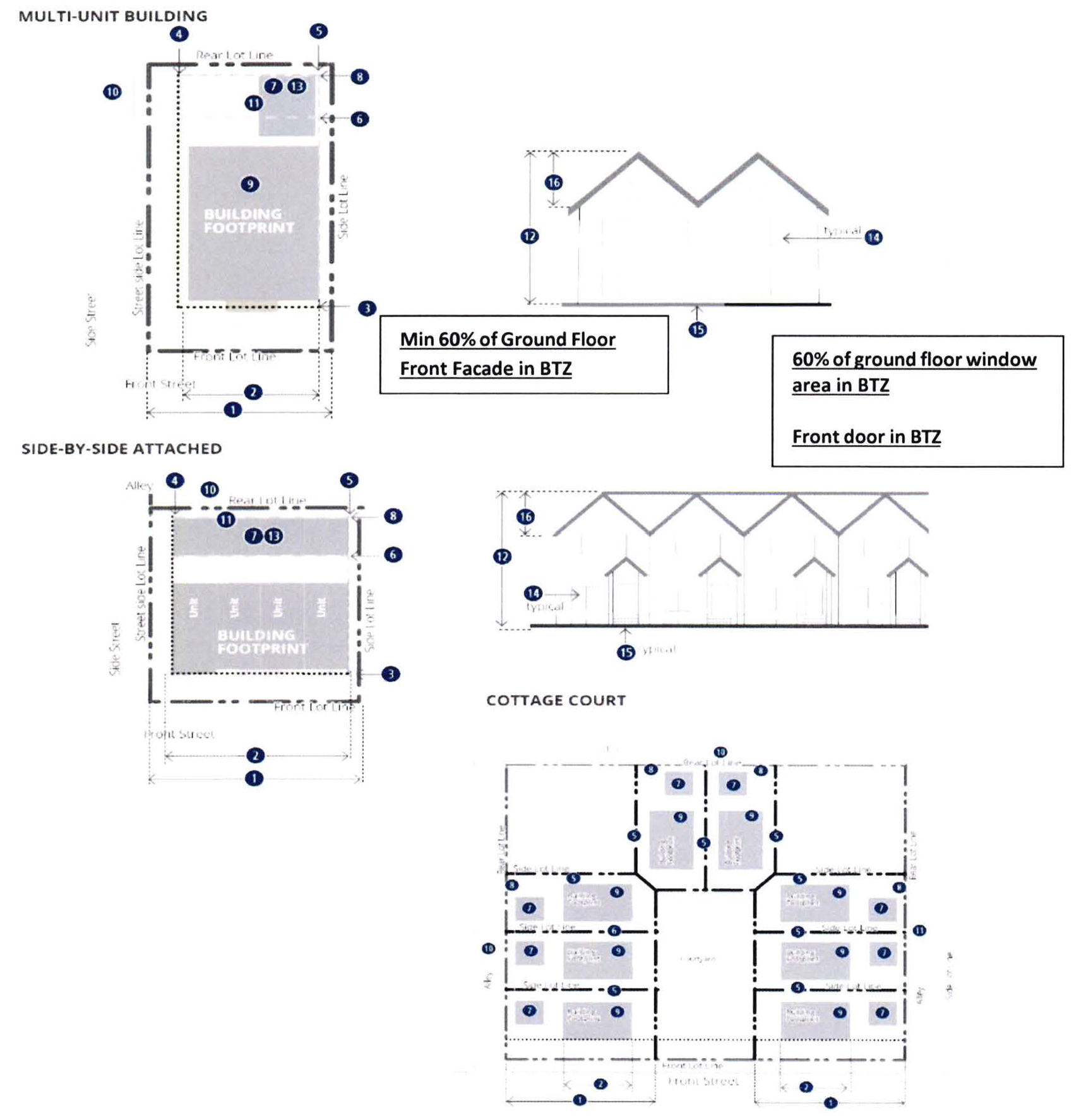
Figure 27-300(4). NX1 district diagrammatic plan.
D.
Supplemental regulations.
1.
Courtyard configuration. For multiple buildings and side-by-side attached units with a courtyard, entrances may be located off the courtyard, except every unit abutting a street frontage must include the principal entrance on the street.
2.
Through lots. For developments on lots that extend through a block and addresses on two (2) streets, buildings must front both streets and have entrances provided on each street.
3.
Fee simple side-by-side units. For fee simple side-by-side units, the lot width may be smaller; however, the building, comprised of multiple units, shall meet the minimum regulations.
4.
Side street frontage. For corner lots, all lot lines other than the front and street-side are side lot lines and, for parking and accessory buildings, the zoning coordinator shall determine where the rear of the lot is located.
5.
Open space. One of the following open space types must be provided for every three (3) contiguous acres of NX1 district:
(a)
Parklet. A parklet is a landscaped open space with a minimum seventy (70) percent living plant material, with at least twenty (20) feet of street frontage.
(b)
Green. A green is a larger, landscaped space, with at least fifty (50) feet of street frontage.
(c)
Natural area. A natural area is a large area, defined to conserve a natural feature, such as a stream, wetland or woodland. At least fifty (50) feet of street frontage is required for a natural area.
6.
Garage front facade entry. Where no alley, carriage lane or rear access system exists or is planned, a street-facing single-wide garage entry door of ten (10) feet in width or less within the build-to zone, per dwelling unit, is allowed with the following limitations:
(a)
For multi-unit or side-by-side structures, no more than two (2) ten-foot wide garage doors are side-by-side; and
(b)
Side-by-side garage entries shall share one drive approach no more than twenty-five (25) feet in width; and
(c)
Shared drive approaches for side-by-side garage entries will be spaced at least forty (40) feet apart; and
(d)
Front entry garages shall not be more than forty (40) percent of the front façade within the build-to zone; and
(e)
Front entry garage doors shall be setback at least eight (8) feet behind the front door.
(Ord. No. 21-5748, § 3(Exh. A), 1-25-21; Ord. No. 22-5807, § 3(a), 5-9-22; Ord. No. 23-5835, § 3, 6-12-23; Ord. No. 23-5836, § 9, 6-12-23)
Sec. 27-308. - NX2 and NX3 district.
The following site and structure regulations apply to any lot in the NX2 and NX3 district. Refer to section 27-303 for general regulations applicable to all districts and Table 27-300.7, below, for regulations specific to this district, keyed to illustrations in Figure 27-300(5). See article 27-1800 for definitions and information on how to measure the following regulations:
Table 27-300.7. Site and Structure Regulations.
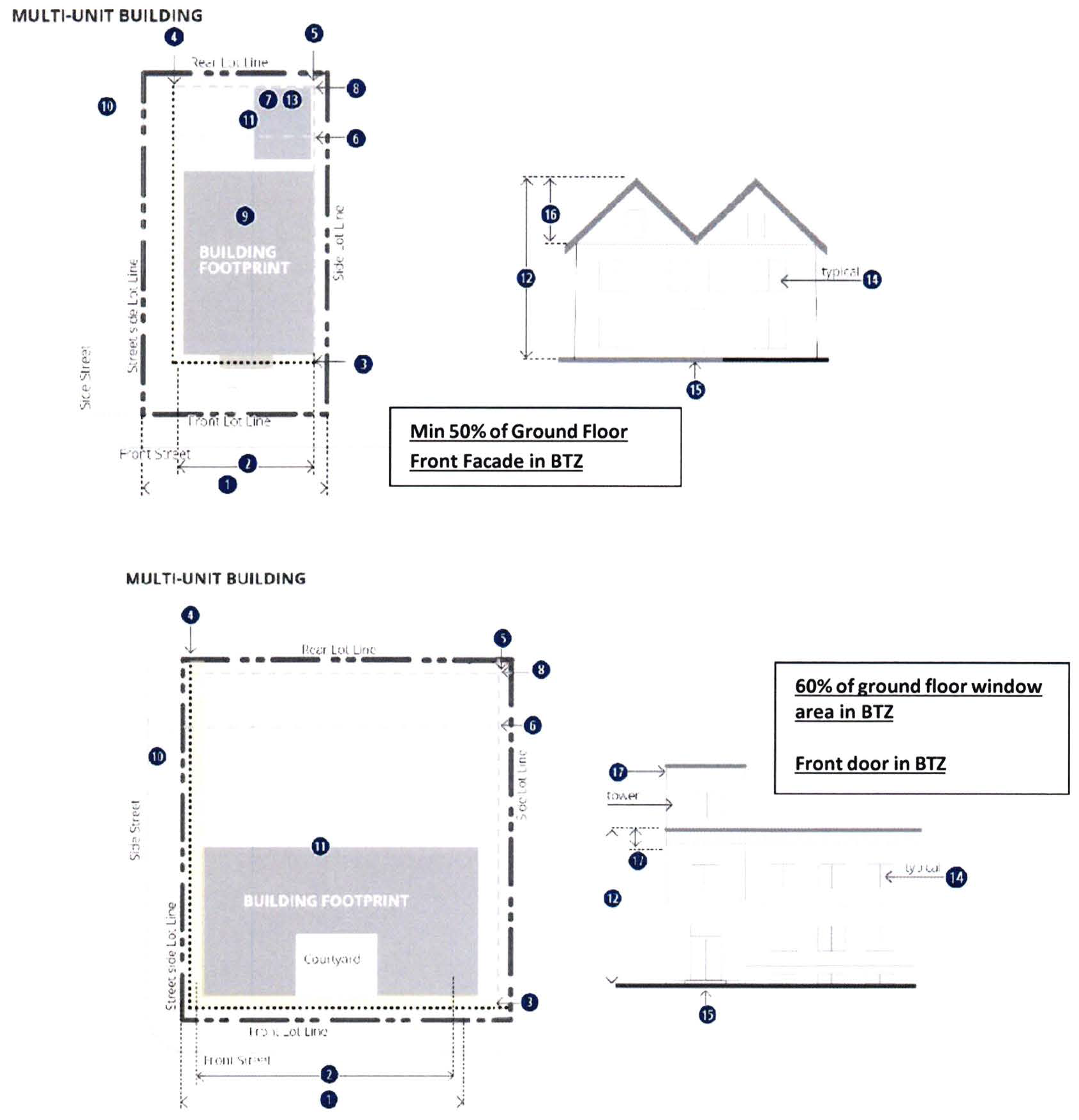
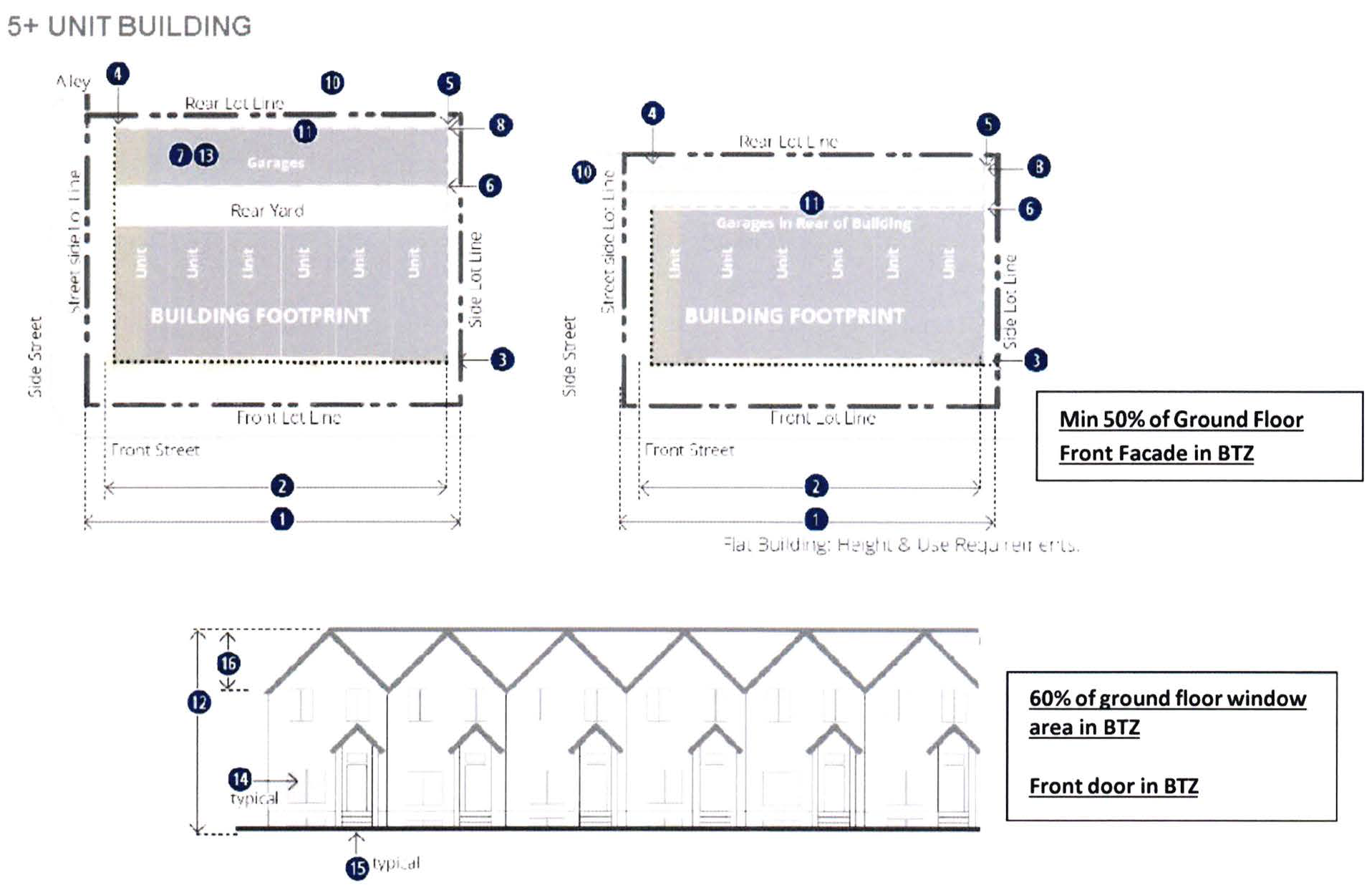
Figure 27-300(5). NX2 and NX3 district diagrammatic plans.
D.
Supplemental regulations.
1.
Courtyard configuration. For multiple buildings and side-by-side attached units with courtyards, entrances may be located off a courtyard, except every unit abutting a street frontage must include the principal entrance on the street.
2.
Through lots. For developments on lots that extend through a block and addresses on two (2) streets, buildings must front both streets and have entrances on each street.
3.
Fee simple side-by-side units. For fee simple side-by-side units, the lot width may be smaller; however, the building, comprised of multiple units, shall total meet the minimum regulations.
4.
Side street frontage. For corner lots, all lot lines other than the front and street-side are side lot lines and, for parking and accessory buildings, the zoning coordinator shall determine where the rear of the lot is located.
5.
Open space. One of the following open space types must be provided for every three (3) contiguous acres of NX2 or NX3 district:
(a)
Parklet. A parklet is a landscaped open space with a minimum seventy (70) percent living plant material, with at least twenty (20) feet of street frontage.
(b)
Green. A green is a larger, landscaped space, with at least fifty (50) feet of street frontage.
(c)
Natural area. A natural area is a large area, defined to conserve a natural feature, such as a stream, wetland or woodland. At least fifty (50) feet of street frontage is required for a natural area.
6.
Garage front facade entry. Where no alley, carriage lane or rear access system exists or is planned, a street-facing single-wide garage entry door of ten (10) feet in width or less within the build-to zone, per dwelling unit, is allowed in the NX2 zone with the following limitations:
(a)
For multiunit or side-by-side structures, no more than two (2) ten-foot wide garage doors are side-by-side; and
(b)
Side-by-side garage entries shall share one drive approach no more than twenty-five (25) feet in width; and
(c)
Shared drive approaches for side-by-side garage entries will be spaced at least forty (40) feet apart; and
(d)
Front entry garages shall not be more than forty (40) percent of the front façade within the build-to zone; and
(e)
Front entry garage doors shall be setback at least eight (8) feet behind the front door.
(Ord. No. 21-5748, § 3(Exh. A), 1-25-21; Ord. No. 22-5807, § 3(a), 5-9-22; Ord. No. 23-5835, § 5, 6-12-23; Ord. No. 23-5836, § 11, 6-12-23)
Sec. 27-309. - RMH districts.
The following site and structure regulations apply to any lot in the RMH district. Refer to section 27-303 for general regulations applicable to all districts and Table 27-300.8, below, for regulations specific to this district. See article 27-1800 for definitions and information on how to measure the following regulations:
Table 27-300.8. Site and Structure Regulations.
C.
Supplemental regulations.
1.
Open space. One of the following open space types must be provided for every three (3) acres of RMH district:
(a)
Parklet. A parklet is a landscaped open space with a minimum seventy (70) percent living plant material, with at least twenty (20) feet of street frontage.
(b)
Green. A green is a larger, landscaped space, with at least fifty (50) feet of street frontage.
(c)
Natural area. A natural area is a large area, defined to conserve a natural feature, such as a stream, wetland or woodland. At least fifty (50) feet of street frontage is required for a natural area.
2.
Site-built structure. A site-built structure complying with the state building code may be setback a minimum of five (5) feet from the side lot line.
(Ord. No. 21-5748, § 3(Exh. A), 1-25-21; Ord. No. 25-5908, § 3, 4-14-25)

