
Biloxi City Zoning Code
ARTICLE 23
4: - USE STANDARDS
3 - Use-Specific Standards
Use-specific standards are the requirements applied to individual use types regardless of the zoning district in which they are located or the review procedure by which they are approved, unless expressly stated to the contrary. This is intended to identify and consolidate the use-specific standards for all principal uses identified in Tables 23-4-1(B): Use Table - Residential and Table 23-4-1(C): Use Table - Nonresidential and Planned Development Districts, as subject to "additional requirements." These standards may be modified by other applicable requirements in this Ordinance.
(A) - Explanation of Use Tables Structure
(1)
General
Table 23-4-1(B), Use Table - Residential Districts and Table 23-4-1(C), Use Table - Nonresidential and Planned Development Districts, list principal uses and indicate whether they are allowed by right, allowed as a conditional use, allowed in a Planned Development District, or prohibited within each base, special, or Planned Development District. The use tables also include references to use specific standards applicable to the specific use.
(2)
Organization of Uses
The use tables organize allowable uses by use classifications, use categories, and use types. The use tables and Section 23-4-2, Use Classifications, Categories, and Use Types, together provide a systematic basis for identifying and consolidating uses, for distinguishing unidentified uses to determine whether a particular use is allowable in a particular zoning district, and in addressing future use additions to the use tables.
a.
Use Classifications
The use classifications identify broad general classifications of land use and include residential uses, institutional uses, agricultural uses, commercial uses, and industrial uses. Use classifications are further broken down into a series of general "use categories" and specific "use types."
b.
Use Categories
The use categories describe the major sub-groups of the respective use classifications, and are based on common functional, product, or physical characteristics, such as the type and amount of activity, the type of customers or residents, how goods or services are sold or delivered, and site conditions. For example, the Residential Use Classification is divided into the Household Living and Group Living use categories. Use categories are further broken down into a series of individual use types.
c.
Use Types
The specific use types are included in the respective use category. They identify the specific principal uses that are considered to fall within characteristics identified in the use category. For example, live/work dwellings, single-family detached dwellings, townhouse, multifamily dwellings, and manufactured homes are use types in the Household Living use category.
(3)
Permitted Uses
A "P" in a cell of a use table indicates that the corresponding use category or use type is allowed by right in the corresponding base zoning district subject to compliance with the use-specific standards referenced in the final column of the use table. Permitted uses are subject to all other applicable regulations of this Ordinance, including, but not limited to, those set forth in Article 23-5: Intensity and Dimensional Standards, Article 23-6: Development Standards, and Article 23-7: Subdivisions.
(4)
Conditional Uses
A "C" in a cell of the use table indicates that the corresponding use category or use type is allowed in the corresponding base zoning district only upon approval of a Conditional Use Permit in accordance with Section 23-2-3(D), Conditional Use Permit, and any use-specific standards referenced in the final column of the use table. Uses subject to a Conditional Use Permit are subject to all other applicable regulations of this Ordinance, including, but not limited to, those set forth in Article 23-5: Intensity and Dimensional Standards, Article 23-6: Development Standards, and Article 23-7: Subdivisions.
(5)
Allowed Uses Subject to a Planned Development District Classification
An "A" in a cell indicates that a use category or use type is allowed in a Planned Development District provided the use is set out as a possible use type in an approved Planned Development master plan. Allowed uses are subject to the Planned Development master plan approval, the terms and conditions statement, and the other applicable regulations in this Ordinance, including those set forth in Section 23-3-4, Planned Development Zoning Districts. A blank cell indicates the use is prohibited in the specific Planned Development District, and shall not be included in a master plan.
(6)
Prohibited Uses
A blank cell in the use table in the other base districts indicates that the use type is prohibited in the corresponding zoning district.
(7)
Use-Specific Standards
When a particular use category or use type is permitted in a zoning district, there may be additional regulations that are applicable to a specific use. The existence of these use-specific standards is noted through a section reference in the last column of the use table titled "Additional Requirements." References refer to Section 23-4-3, Use-Specific Standards. These standards shall apply to a particular use regardless of the base zoning district where it is proposed, unless otherwise specified.
(8)
Use Restricted or Prohibited by Overlay Zoning District
Regardless of whether the use table identifies a particular use type as a permitted use, allowed use, or conditional use in a zoning district, or references additional requirements for the use type, the use type may be restricted or prohibited, or subject to more restrictive additional requirements, in accordance with applicable overlay district provisions in Section 23-3-5, Overlay Zoning Districts.
(9)
Unlisted Uses
The Director of Community Development shall determine whether or not an unlisted use is part of an existing use category or use type as defined in Section 23-4-2, Use Classifications, Use Categories, and Use Types, or is substantially similar to an already defined use type, using the standards in Section 23-4-2, Interpretation of Unlisted Uses.
(B) - Use Table - Residential Districts
(C) - Use Table - Nonresidential and Planned Development Districts
(Ord. No. 2173, § 1, 10-19-2010; Ord. No. 2188, § 1, 4-19-2011; Ord. No. 2189, § 1(Exh. C), (Exh. D), 5-24-2011; Ord. No. 2209, § 1, 7-24-2012; Ord. No. 2220, § 1(Exh. A), (Exh. D), 12-11-2012; Ord. No. 2241, § 1, 10-15-2013; Ord. No. 2256, § 1, 5-20-2014; Ord. No. 2260, § 1, 6-10-14; Ord. No. 2410, 1-28-2020; Ord. No. 2411, 1-28-2020; Ord. No. 2421, 7-21-2020; Ord. No. 2423, 7-21-2020; Ord. No. 2436, 3-2-2021; Ord. No. 2437, 3-23-2021; Ord. No. 2441, 5-4-2021; Ord. No. 2461, 9-28-2021; Ord. No. 2477, 3-8-2022; Ord. No. 2484, 6-7-2022; Ord. No. 2523, 9-5-2023; Ord. No. 2557, 7-23-2024; Ord. No. 2594, 1-27-2026; Ord. No. 2599, 5-5-2026; Ord. No. 2601, 5-19-2026)
(A) - General
(1)
Purpose
This is intended to provide a systematic framework for identifying, describing, categorizing, consolidating, and distinguishing uses in a way that makes it easier to determine how a particular use, activity, or combination of activities, is to be considered in applying the use table and other provisions in this Ordinance. This is also intended to provide support in addressing instances where a new or unanticipated use is not identified in the use table.
(2)
Structure of this Section
a.
General
This section identifies each of the six use classifications in Table 23-4-1(B) and Table 23-4-1(C) Use Tables, and includes a under each use classification identifying each use category. There are "characteristics," "examples," "exceptions," and "related but different uses and distinctions" subsections under each use category (individual use types are defined in Article 23-10: Definitions).
b.
Principal Use Characteristics and Accessory Uses
The "characteristics" subsection describes common characteristics of each use category. Principal uses are assigned to the use category that most closely describes the nature of the principal use. Also listed are examples of common accessory uses that, unless otherwise stated in this Ordinance, are allowed in conjunction with a principal use.
c.
Examples
The "Examples" subsection of each use category lists common examples of use types included in the respective use category. The names of these sample uses are generic. They are based on common meanings and not on what a specific use may call itself. For example, a use that calls itself "wholesale sales," but sells mostly to consumers, is included in the Retail Sales and Service Use Category rather than the Wholesale Sales Use Category. This is because the activity on the site matches the characteristics of the Retail Sales and Service Use Category.
d.
Exceptions
The "Exceptions" subsection provides cross-references to uses that may appear to be part of a particular category, but which are included within a different Use Category.
e.
Related but Different Uses and Distinctions
A "Related but Different Uses" subsection appears under a few uses in general categories where there are many similar uses subject to relatively fine distinctions. Language in these subsections expand on the other material contained in the use descriptions and may be used in determining in which narrow category a specific use falls. No significance should be attached to the fact that this subsection does not appear under many of the use classifications.
(3)
Developments with Multiple Principal Uses
When all principal uses of a development fall within one use category, the entire development is assigned to that use category. A development that contains a coffee shop, bookstore, and bakery, for example, would be classified in the Retail Sales and Service Use Category because all of the development's principal uses are in that use category. When the principal uses of a development fall within different use categories, each principal use is classified in the applicable use category and each use is subject to applicable regulations for that use category. Developments with multiple principal uses, such as shopping centers, shall incorporate only those use types allowed in the applicable zoning district.
(4)
Interpretation of Unlisted Uses
a.
Procedure for Interpreting Unlisted Uses as Permitted
The Director of Community Development may interpret a particular use not expressly listed in the use table as allowed in a particular zoning district, in accordance with the procedure in 23-2-4(R), Interpretation, and based on the standards in 23-4-2(A)(4)b., Standards for Interpreting Unlisted Uses as Permitted.
b.
Standards for Interpreting Unlisted Uses as Permitted
The Director of Community Development shall interpret an unlisted use as permitted in a particular zoning district only after determining that the nature, function, and duration of the use and the impact of allowing it in the zoning district are so similar to those of a use type or use category allowable in the zoning district that the unlisted use should be deemed allowable in the same manner as the similar use type or use category. In making such determination, the Director of Community Development shall consider the relevant characteristics of the unlisted use, the purpose and intent statements in this Ordinance concerning the zoning district, 23-3: Zoning Districts, and the character of use types allowable in the district. The relevant characteristics of the unlisted use that should be considered in making this determination include but are not limited to the following:
1.
Actual or projected characteristics of each activity likely to occur at the unlisted use;
2.
The type, size, orientation, and nature of buildings, and structures devoted to each activity;
3.
The number and density of employees and customers per unit area of site in relation to business hours and employment shifts;
4.
Vehicles used and their parking requirements, including the ratio of the number of spaces required per unit area or activity;
5.
Transportation requirements, including the modal split for people and freight, by volume type, and characteristics of traffic generation to and from the site;
6.
Relative amounts of sales from each activity;
7.
The nature and location of storage and outdoor display of merchandise, whether enclosed, open, inside or outside the principal building, and the predominant types of items stored;
8.
Customer type for each activity;
9.
How each use is advertised, including signage;
10.
The amount and nature of any nuisances generated on the premises, including but not limited to noise, smoke, odor, glare, vibration, radiation, and fumes;
11.
Any special public utility requirements for serving the proposed use type, including but not limited to water supply, wastewater output, pre-treatment of wastes and emissions required or recommended, and any significant power structures and communications towers or facilities; and
12.
The impact on adjacent lands created by the proposed use type, which should not be greater than that of other use types allowed in the zoning district.
c.
Effect of Approval of Unlisted Use
1.
After interpreting an unlisted use as permitted in a particular zoning district, the Director of Community Development shall determine whether the unlisted use is likely to be common or to recur frequently, and whether its omission from the use table is likely to lead to public uncertainty and confusion. On determining that the unlisted use is likely to be common or would lead to confusion if unlisted, the Director of Community Development shall initiate an application for a Text Amendment to this Ordinance in accordance with 23-2-4(A), Text Amendment, to list the use in the use table. Until final action is taken on the Text Amendment application, the Director of Community Development's interpretation shall be binding.
2.
If after interpreting an unlisted use as permitted in a particular zoning district, the Director of Community Development determines that the unlisted use is of an unusual or transitory nature, and unlikely to recur frequently, the interpretation shall be binding in accordance with 23-2-4(R)(6), Effect of Interpretation, without further action or amendment of this Ordinance.
3.
Appeals of the Director of Community Development's decision shall be submitted in accordance with the standards in 23-2-4(S), Appeal.
(B) - Agricultural Use Classification
(1)
Agriculture
a.
Characteristics
The Agriculture Use Category is characterized by activities related to the production of field crops, fruits, vegetables, ornamental and flowering plants, and the breeding, raising, or keeping of livestock, poultry, swine, and other animals for food or other marketable products. The Agriculture Use Category also includes silvicultural activities related to the planting, management, protection, and harvesting of trees for timber or other forest products, as well as the breeding, raising, keeping, boarding, and training of horses. Accessory uses may include offices, storage areas, barns, stables, irrigation systems, and repair facilities related to agricultural and silvicultural activities.
b.
Examples
Examples include farming (arable, dairy, cattle, hog, poultry, sheep), fish farms, fish hatchery operations, orchards, the raising of grapes, breeding or raising of fowl or other animals, silvicultural activities (the raising and management of timber), and wholesale plant nurseries.
c.
Exceptions
Processing of animal or plant products for wholesale or retail sales purposes is considered Industrial Production and Manufacturing use types.
(2)
Agricultural Support Services
a.
Characteristics
The Agricultural Support and Services Use Category includes use types that provide support and services to agricultural, animal husbandry, and silviculture related activities, whether located on or off the site where the agricultural, animal husbandry, silviculture, or plan nursery related activities take place.
b.
Examples
Example use types include agricultural processing for on-site uses, agri-education, agri-entertainment, farm co-op operations, feedlots, agricultural research facilities, animal care businesses, livestock auction arenas, stables, equestrian facilities, and fairgrounds.
(C) - Residential Use Classification
(1)
Household Living
a.
Characteristics
The Household Living Use Category includes use types that provide for the residential occupancy of a dwelling unit by a single family. Tenancy is arranged on a month-to-month or longer basis. Accessory uses commonly associated with household living are recreational activities, raising of domestic pets, hobbies, swimming pools, and parking of the occupants' vehicles. Home occupations and guest cottages are accessory uses that are subject to additional regulations. (See 23-4-4, Accessory Use Standards.)
b.
Examples
Example use types include detached residential dwellings (single-family dwellings, manufactured homes (class A and B), mobile homes, manufactured home parks, and other structures with self-contained dwelling units, such as Mississippi cottages) and attached residential dwellings (multifamily dwellings, two-family dwellings, three- to four-family dwellings, upper story dwellings, and live/work dwellings). A single-family dwelling unit home to not more than five senior citizens, persons with disabilities, or children, living in a family setting, is permitted as a form of household living.
c.
Exceptions
1.
Lodging where tenancy may be arranged for periods of less than 30 days is considered to be a Visitor Accommodation use.
2.
Group homes are considered to be a Group Living use classification.
3.
Congregate care facilities where individual family-occupancy units do not include full cooking and eating facilities are considered to be an Institutional and Healthcare Facilities use type.
4.
Nursing homes or residential assisted living facilities not having individual dwelling units are considered to be an Institutional and Healthcare Facilities use type.
(2)
Group Living
a.
Characteristics
The Group Living Use Category includes use types that provide for the residential occupancy of a structure by a group of people who do not meet the definition of "household." The size of the group may be larger than the average size of a household. Tenancy is arranged on a monthly or longer basis. Generally, group living structures have a common eating area for residents. The residents may receive care, training, or treatment. Common accessory uses include recreational facilities, associated offices, food preparation and dining facilities, parking of vehicles for occupants and staff, offices of medical facilities and assistance.
b.
Examples
Example use types include dormitories, fraternity or sorority houses, group homes, rooming or boarding houses, monasteries and convents, and assisted living facilities.
c.
Exceptions
1.
Lodging where tenancy may be arranged for periods of less than 30 days are considered to be Visitor Accommodations.
2.
Lodging where residents meet the definition of family or household.
3.
A single-family dwelling unit home to not more than five senior citizens, persons with disabilities, or children, living in a family setting, is considered a form of household living.
(D) - Public and Institutional Use Classification
(1)
Community Services
a.
Characteristics
The Community Services Use Category includes use types of a public, nonprofit, or charitable nature that provide a local service, or assembly facilities for people in the community. Generally, such uses provide ongoing continued service on-site or have employees at the site on a regular basis. Community centers or facilities that have membership provisions that are open to the general public (for instance, any senior citizen could join a senior center) are included in the Community Services Use Category. The use type may provide special counseling, education, or training of a public, nonprofit, or charitable nature. Also included are use types involving religious activities. Accessory uses may include offices, meeting, food preparation, parking, storage, health and therapy areas, and indoor and outdoor athletic facilities. These uses do not include a residential component.
b.
Examples
Example use types include community centers, cultural facilities, art galleries, libraries, museums, senior centers, and youth center facilities. They also include places of worship, which may have day care uses, schools, and cemeteries as accessory uses.
c.
Exceptions
1.
Private or commercial health clubs is considered Recreational/Entertainment, indoor uses.
2.
Counseling in an office setting are considered to be Offices.
(2)
Day Care
a.
Characteristics
The Day Care Use Category is characterized by use types that provide care, protection, and supervision for children or adults on a regular basis away from their primary residence, and typically for less than 24 hours per day. Care can be provided during daytime or nighttime hours. Accessory uses include offices, food preparation and dining areas, recreation areas, and parking.
b.
Examples
Example use types include adult day care centers, child day care centers, and family child care homes.
c.
Exceptions
The Day Care Use Category does not include drop-in or short-term day care provided in connection with employment or shopping center, recreational facility, religious institution, hotel, or other principal use, where children are temporarily cared for while parents or guardians are employed part-time or temporarily occupied on the premises or in the immediate vicinity.
(3)
Educational Facilities
a.
Characteristics
The Educational Facilities Use Category includes use types such as public and private schools at the elementary, middle, or high school level that provide state-mandated basic education or a comparable equivalent. This use category also includes colleges, universities, and other institutions of higher learning such as vocational or trade schools that offer courses of general or specialized study leading to a degree or certification. Accessory uses at schools include offices, play areas, cafeterias, recreational and sport facilities, auditoriums, and before- or after-school day care. Accessory uses at colleges or universities include offices, dormitories, food service, laboratories, health and sports facilities, theaters, meeting areas, athletic fields, parking, maintenance facilities, and supporting commercial uses (e.g., eating establishments, bookstores).
b.
Examples
Example use types include public and private kindergarten schools, elementary schools, middle or junior high schools, and senior high schools that provide state-mandated basic education, as well as colleges or universities, and vocational or trade schools.
(4)
Government Facilities
a.
Characteristics
The Government Facilities Use Category includes use types that provide for the general operations and functions of local, state, or federal governments. Accessory uses include maintenance, storage (indoor and outdoor), fueling facilities, satellite offices, holding cells, and parking areas.
b.
Examples
Example use types include post offices, government offices, public safety uses (fire, police, and EMS facility) detention facilities, and government maintenance, storage, and distribution facilities.
c.
Exceptions
1.
Passenger terminals for airports and surface transportation are classified under Transportation and Utilities uses.
2.
City, county, and state parks are classified as Parks and Public Spaces uses.
3.
Water, wastewater, gas, electric, and other infrastructure services, whether public or private, are classified as Utilities Transportation and Utilities uses.
(5)
Institutional and Health Care Facilities
a.
Characteristics
The Institution and Health Care Facilities Use Category includes use types that provide a variety of facilities, including buildings that provide housing and care for the elderly or disabled, housing related to treatment programs, medical and surgical care/treatment facilities and laboratory services, and may provide overnight care as well as outpatient care. Accessory uses include kitchens/cafeterias, recreation areas, offices, meeting rooms, teaching facilities, parking, hospices, maintenance facilities, staff residences, and limited accommodations for family members.
b.
Examples
Example use types include hospitals, medical and dental clinics, outpatient facilities, medical and dental labs, drug and alcohol treatment facilities, blood/tissue collection facilities, public health centers, and nursing homes.
c.
Exceptions
Adult care homes where individual units meet the definition of a dwelling unit or group home.
(6)
Parks and Public Spaces
a.
Characteristics
The Parks and Public Spaces Use Category includes use types that focus on open space areas largely devoted to natural landscaping and outdoor recreation and that tend to have few structures. Cemeteries and mausoleums are included within this category. Accessory uses may include caretaker's quarters, club houses, statuary, fountains, maintenance facilities, concessions, and parking.
b.
Examples
Parks, beach access and sand beach areas, open space, public plazas, community gardens, recreational trails, botanical gardens and nature preserves, and cemeteries.
c.
Exceptions
1.
Commercial swimming pools, driving ranges, public and private golf courses, shooting ranges, commercial tennis or swim clubs, health clubs or spas are considered Recreational/Entertainment, Outdoor uses.
2.
Clubs and Lodges are considered a Community Services use.
(7)
Transportation
a.
Characteristics
The Transportation Use Category includes use types that provide for the landing and takeoff of airplanes and helicopters, including loading and unloading areas. This use category also includes passenger terminals for surface transportation. Accessory uses include freight handling areas, concessions without alcohol, offices, parking, maintenance, control and monitoring data equipment, limited storage, and fueling facilities.
b.
Examples
Example use types include airports, helicopter landing facilities, heliotropes and seaplane bases, and passenger terminals for ground transportation (train, bus).
c.
Exceptions
Transit route facilities such as bus stops, bus shelters, and park-and-ride facilities are classified in the Utilities use category. Facilities for embarking or disembarking of passengers on or from boats, ferries, and water taxis are classified in the Water-Oriented Use Category.
(8)
Utilities
a.
Characteristics
The Utilities Use Category includes both major utilities, which are infrastructure services that provide regional or community-wide service, and minor utilities, which are infrastructure services that need to be located in or near the neighborhood or use type where the service is provided. Wireless telecommunications towers also are a type of utility. Services may be publicly or privately provided and may include on-site personnel. Accessory uses may include parking and control, offices, monitoring, storage areas, or data transmission equipment.
b.
Examples
1.
Major Utilities
Examples of major utilities include water towers, wastewater treatment plants, potable water treatment plants, waste transfer centers, public recycling centers with personnel, and electrical substations.
2.
Minor Utilities
Examples of minor utilities include water and sewage pump stations, stormwater retention and detention facilities, telephone exchanges, ground-based electrical/telephone/cable vaults, un-staffed recycling collection facilities, and transit route facilities such as bus stops, bus shelters, and park-and-ride facilities.
3.
Wireless Communication Towers
Examples of wireless telecommunications towers (freestanding, collocated, and roof-mounted) include facilities for transmitting wireless phones and pager services, and television and radio broadcasting equipment.
c.
Exceptions
Non-public utility offices are included in the Offices use category.
(E) - Commercial Uses
(1)
Billboards
a.
Characteristics
The Billboards Use Category includes billboards and other large and visually prominent outdoor sign structures that advertise goods and services off-premise or include ideological, religious, or political non-commercial messages.
b.
Examples
Example use types include billboards.
(2)
Conference and Convention Centers
a.
Characteristics
The Conference and Convention Center Use Category is characterized by facilities used for business or professional conferences, seminars, events (such as entertainment, cultural, and sporting activities, etc.) and training programs.
b.
Examples
Example use types include conference centers, auditoriums, meeting facilities, corporate retreat facilities, and convention centers.
(3)
Eating and Drinking Establishments
a.
Characteristics
The Eating and Drinking Establishments Use Category includes use types that prepare and sell food and beverages for immediate or direct on- or off-premise consumption. Accessory uses may include decks and patios for outdoor seating, drive-through facilities, facilities for live entertainment or dancing, customer and employee parking areas, and valet parking facilities.
b.
Examples
Examples include bars or lounges, brewpubs, nightclubs, restaurants with indoor or outdoor seating, restaurants with drive-through service, and specialty eating establishments.
(4)
Offices
a.
Characteristics
The Office Use Category includes use types that provide for activities that are conducted in an office setting and generally focus on business, professional, or financial services. Accessory uses may include cafeterias, day care facilities, recreational or fitness facilities, parking, supporting commercial, or other amenities primarily for the use of employees in the business or building.
b.
Examples
Example use types include business services, professional services (such as lawyers, accountants, engineers, or architects), financial services (such as lenders, banks, brokerage houses, tax preparers), sales offices (including real estate agents), contractor's offices, radio and television stations, and massage therapy offices.
c.
Exceptions
1.
Offices that are part of and located with a principal use in another use category are considered accessory to the establishment's primary activity. Headquarter offices that are located in conjunction with or adjacent to a principal use in another use category are considered part of the other use category.
2.
Contractors and others who perform services off-site are included in the Offices Use Category if equipment and materials are not stored outside and no fabrication, services, or similar work is carried on at the site; otherwise they are included in the Warehouse and Storage Use Category or the Industrial Production and Manufacturing Use Category.
3.
Government offices are classified as Government Facilities.
4.
Medical and dental clinics, medical or dental labs, and blood collection facilities are classified as Institutional and Health Care Facilities.
5.
Financial institutions offering drive-through or walk-up service to patrons (branch banks or credit unions) are classified as Retail Sales and Services.
(5)
Commercial Parking
a.
Characteristics
The Commercial Parking Use Category includes use types that provide freestanding parking lots and structures that are not accessory to a specific principal use. A fee may or may not be charged. A parking facility that provides both accessory parking for a specific principal use and regular fee parking for people not connected to the principal use is also classified as Commercial Parking. Accessory uses may include small shelters for parking attendants.
b.
Examples
Example use types include surface parking lots and parking structures (parking decks or garages).
c.
Exceptions
1.
Parking facilities that are accessory to a principal use, but charge the public to park for occasional events nearby, are not considered Commercial Parking.
2.
Parking facilities that are accessory to a principal use, even if the principal use leases the facility or those parking in the facility are charged a fee, are not considered Commercial Parking.
3.
Park-and-ride facilities are classified as Utilities.
(6)
Recreational Entertainment, Indoor
a.
Characteristics
The Indoor Recreation/Entertainment Use Category includes use types that are privately owned and provide recreation or entertainment activities in an enclosed structure or structures. Accessory uses may include offices, concessions, snack bars, parking, and maintenance facilities.
b.
Examples
Example use types include auditoriums, theaters, cinemas, gaming establishments, and other recreational entertainment-indoor, uses (including fitness centers, bowling alleys, pool halls, game rooms or arcades, dancehalls, skating rinks, indoor swimming pools, and indoor tennis club facilities).
c.
Exceptions
1.
Banquet halls that are part of hotels (classified as Visitor Accommodation) or restaurants (classified as Eating and Drinking Establishments) are accessory to those uses.
2.
Private clubs or lodges are classified as Community Services.
3.
Recreational facilities that are reserved for use by residents of particular residential developments and their guests are accessory to those residential use types.
(7)
Recreation/Entertainment, Outdoor
a.
Characteristics
The Outdoor Recreation/Entertainment Use Category includes use types that are large, generally commercial, and provide continuous recreation or entertainment-oriented activities that primarily take place outdoors. They may take place in a number of structures that are arranged together in an outdoor setting. Accessory uses may include concessions, parking, and maintenance facilities.
b.
Examples
Example use types include privately-owned arenas, amphitheaters, or stadiums, athletic fields and clubhouses, equestrian facilities, golf courses (public or private), shooting ranges, and outdoor swimming pools (public or non-profit), and other recreation entertainment-outdoor uses (including privately-owned miniature golf facilities; go-cart racing, race-track, or dirt-track facilities; drive-in movie theaters; privately-owned outdoor commercial tourist attractions, water parks, and amusement parks; campgrounds; and privately-owned active sports facilities such as ball fields, courts, and archery ranges).
(8)
Retail Sales and Services
a.
Characteristics
The Retail Sales and Services Use Category includes use types involved in the sale, lease, or rent of new or used products to the general public. They may also provide personal services or entertainment, or provide product repair or services for consumer and business goods. Accessory uses may include offices, storage of goods, manufacture or repackaging of goods for on-site sale, concessions, ATM machines, outdoor display/sales areas, and parking.
b.
Exceptions
1.
Laundry and dry-cleaning plants are considered Industrial Uses.
2.
Building trade contractors with on-site storage that sell primarily to contractors and do not have a retail orientation are classified as Industrial Uses.
3.
Repair and service of automobiles, watercraft, motorcycles, scooters, and light, medium, and heavy trucks is classified as Vehicle Sales and Service.
4.
Bakeries, dinner theaters, or entertainment establishments primarily engaged in the sale of food for on-site consumption are considered Eating and Drinking Establishments.
5.
Cinemas, theaters, concert halls, and stages are considered Recreation/Entertainment-Indoor.
6.
Uses providing financial, professional, or business services by appointment or with only limited contact with the general public are classified as Offices.
7.
Uses that involve the sales, distribution, or presentation of materials or activities emphasizing sexually explicit content are classified as Adult Entertainment.
(9)
Vehicle Sales and Services
a.
Characteristics
The Vehicle Sales and Services Use includes use types involving the direct sales and servicing of automobiles, light, medium, and heavy trucks, boats, motorcycles, and other consumer motor vehicles intended to transport persons or goods over land or water or through the air, whether for recreation, commerce, or personal transport. Accessory uses include offices, sales of parts, maintenance facilities, parking, outdoor display, and vehicle storage.
b.
Examples
Example use types include auto painting and body shops, auto repair and servicing with and without painting/bodywork services, auto sales/rental or new or used vehicles, auto wrecker services, car wash and auto detailing stores, heavy equipment sales, rental, storage, and repair, non-automobile motor vehicle (i.e., watercraft, motorcycles, scooters, etc.) sales, taxicab services, tire sales and mounting, tire disposal and recycling, and truck stops.
c.
Exceptions
1.
Refueling facilities for vehicles belonging to a specific principal use (fleet vehicles) are considered accessory uses if located on the site of the principal use.
2.
Storage of inoperable vehicles or parts is considered a Warehouse and Storage use.
(10)
Visitor Accommodations
a.
Characteristics
The Visitor Accommodations Use Category includes use types that provide lodging units or rooms for short-term stays of less than 30 days for rent, lease, or interval occupancy. Accessory uses may include pools and other recreational facilities, limited storage, laundry facilities, gift shops, without a separate entrance, meeting facilities, offices, and parking. Restaurants and bars can also be permitted as an accessory use where expressly permitted per 23-4-4, Accessory Use Standards.
b.
Examples
Example Use Types include hotels, motels, condotels, bed and breakfasts, recreational vehicle parks, timeshares, and short-term rentals. *amended by Ordinance 2173, 10/19/2010
c.
Exceptions
1.
Rooming/boarding houses are classified as Group Living.
2.
Restaurants, bars, nightclubs or other eating, drinking or entertainment establishments are permitted as accessory uses to Visitor Accommodations only in districts where such use is expressly permitted as a principal use and subject to any conditions affecting such use in such district. Unless 23-4-4, Accessory Use Standards expressly permits these accessory uses, these uses are prohibited. An example is the prohibition of bars and other drinking establishments in Bed and Breakfasts.
(11)
Regulated Businesses
a.
Characteristics
Many uses are allowed only as Regulated Businesses subject to specific conditions or standards. These uses shall be allowed only in accordance with applicable standards and requirements set out in this article and with the separation requirements identified in Table 23-4-E, Required Minimum Spacing between Regulated Business Uses and Protected Uses. Chapter 12 of this Code regulates the licensing and monitoring of Regulated Businesses.
b.
Examples
Example Use Types include sexually-oriented cabarets, media stores, cinemas, video arcades, or sex shops, check cashing services, title loan services, day labor employment services, escort bureaus or services, lingerie modeling studios, and pawn or buy-sell shops.
(F) - Industrial Uses
(1)
Industrial Production and Manufacturing
a.
Characteristics
The Industrial Production and Manufacturing use category includes use types involved in the manufacturing, processing, fabrication, packaging, or assembly of goods. Products may be finished or semi-finished and are generally made for the wholesale market, for transfer to other plants, or to order for firms for consumers. The use category also includes custom industries (establishments primarily engaged in the on-site production of goods by use of hand tools and small-scale equipment). Goods are generally not displayed or sold on-site, but if so, such sales are a subordinate part of total sales. Relatively few customers come to the manufacturing site. Accessory uses may include retail or wholesale sales, offices, cafeterias, parking, employee recreational facilities, warehouses, storage yards, repair facilities, truck fleets, fueling facilities, security and caretaker's quarters.
1.
Heavy Industry
Heavy industry firms are involved in activities that may be considered noxious in terms of their impacts on surrounding uses due to noise, glare, dust, odor, or hazardous materials, their high incidence of rail or truck traffic, or outdoor storage of products, materials, or equipment.
2.
Light Industry
Light industry firms are engaged in the repair or servicing of industrial, business, or consumer machinery, equipment, products, or by-products mainly by providing centralized services for separate retail outlets. They also include uses focusing on prototype development, as well as contractors and building maintenance services and similar uses that perform services off-site.
3.
Retail Manufacturing
Retail manufacturing firms are engaged in the manufacturing of goods to be sold primarily on-site and to the general public.
b.
Examples
Examples of industrial production and manufacturing uses generally include heavy industry, light industry, retail manufacturing, extraction of mineral resources, retail manufacturing, and processing and storage of hazardous materials.
1.
Heavy Industry
Heavy industrial uses include concrete batching and asphalt mixing; fuel oil distributors; production or fabrication of metals or metal products including enameling and galvanizing; processing of food and related products (including seafood processing); large-scale catering establishments; sawmills; woodworking, including cabinet makers and furniture manufacturing; production of chemical, rubber, leather, clay, bone, plastic, stone, or glass materials or products; clothing or textile manufacturing; movie production facilities; manufacture or assembly of equipment, instruments (including musical instruments), appliances, precision items, and other electrical items; production of artwork and toys; and sign making.
2.
Light Industry
Light industrial uses include welding shops; machine shops; tool repair; electric motor repair; repair of scientific or professional instruments; building, heating, plumbing, or electrical contractors; printing, publishing, and lithography; exterminators; janitorial and building maintenance services; research, testing, and development laboratories; laundry, dry-cleaning, and carpet cleaning plants; and photo-finishing laboratories.
3.
Retail Manufacturing
Retail manufacturing use include baking, catering, confectioner, dressmaking, dyeing, printing, tailoring, upholstering, and similar establishments and businesses of a similar and no more objectionable character.
c.
Exceptions
1.
Manufacture and production of goods from composting organic material falls under Utility Minor.
2.
The premises of a contractor who performs services off-site, does not store and use major equipment and materials on-site, and does not fabricate or do similar work on-site is considered a Contractor's Office.
(2)
Warehouse and Storage
a.
Characteristics
Firms involved in the storage or movement of goods for themselves or other firms for delivery to other firms or to the final consumer. Also included in this category are facilities providing separate storage areas for personal or business use designed to allow private access by tenants for storing or removing personal property. Accessory uses include offices, daycare, truck fleet parking and maintenance areas, parking, and a security or caretaker's dwelling.
b.
Examples
Examples of warehouse and storage uses include mini-warehouses and self-storage facilities, separate warehouses used by retail stores such as furniture and appliance stores, household moving and general freight storage, outdoor storage as a principal use, cold storage plants (including frozen food lockers), postal and parcel delivery services, and the stockpiling of sand, gravel, or other non-hazardous aggregate materials.
c.
Exemptions
1.
Uses that involve the transfer or storage of solid or liquid wastes are considered to be a minor utility.
2.
The premises of a contractor who performs services off-site, does not store and use major equipment and materials on-site, and does not fabricate or do similar work on-site is considered a Contractor's Office.
(3)
Wholesale Trade
a.
Characteristics
Firms involved in the sale, lease, or rent of products primarily intended for industrial, institutional, or commercial businesses. The uses emphasize on-site sales or order-taking and often include display areas. Businesses may or may not be open to the general public, but sales to the general public are limited. Products may be picked up on-site or delivered to the customer. Accessory uses include offices; product repair; warehouses; cafeterias; daycare; off-street parking; minor fabrication services; repackaging of goods; growing of nursery stock, outside or inside greenhouses, as an accessory use to a wholesale nursery; and a residential unit for security purposes.
b.
Examples
Sale or rental of machinery, equipment, heavy trucks, building materials, special trade tools, welding supplies, machine parts, electrical supplies, janitorial supplies, restaurant equipment, and store fixtures; mail-order houses; wholesale plant nurseries; and wholesalers of food, clothing, auto parts, and building hardware.
c.
Exemptions
1.
Firms that engage primarily in sales to the general public or on a membership basis are a Retail Sales and Services use.
2.
Firms that are primarily storing goods with little on-site business activity are considered a Warehouse and Storage use.
3.
Retail plant nurseries are included in the Retail Sales and Service use category.
(G) - Water-Oriented Uses
(1)
Water-Oriented Facilities
a.
Characteristics
Facilities for embarking on and disembarking from boats, ferries, and water taxis and for the construction, sales, and repair of boats, ships, and yachts. Also includes the processing and manufacture of seafood. Accessory uses include docks; piers; walkways; marina store; parking areas; boathouses and storage areas; boat servicing facilities; offices; and ticket sales.
b.
Examples
Examples include marinas; commercial fish camps; boat yard; docking facilities; dry storage facilities; ship terminals; boat ramps; yacht clubs; private or public fishing piers; facilities for tour boats; boat repairs and sales; and seafood processing plants.
c.
Exemptions
1.
Gaming Establishments are included in the recreational/entertainment, indoor use category.
2.
Watercraft sales and rentals are included in the vehicle sales and service use category.
(Ord. No. 2173, § 1, 10-19-2010)
(A) - Agricultural Uses
(1)
All Agricultural Uses
All agriculture uses and agricultural support services adjacent to residential development or residentially zoned lots shall comply with the following standards:
a.
Setbacks for structures or storage yards shall be 75 feet from the adjacent residential lot line.
b.
A buffer at least 15 feet wide and meeting the minimum screening requirements for a Type A perimeter buffer in accordance with Section 23-6-3(E) shall be provided abutting the residential development or residentially zoned lot.
c.
Vehicular access shall not be located within a required buffer, except where necessary to access the site.
d.
The use and application of herbicides, pesticides, and potentially hazardous chemicals and substances such as paints and solvents within any required buffer is prohibited.
e.
Gravel or other dust-minimizing surfacing material shall be applied to all parking areas within 300 feet of a residential development or residentially zoned area.
(2)
Agriculture
a.
Animal Husbandry
Animal husbandry uses shall comply with the following standards:
1.
Animal husbandry operations shall comply with Section 23-4-1-4, Keeping of Livestock.
2.
No building or structure used for the processing of animals for on-site use shall be located within 300 feet of any lot line.
3.
Allow one horse for each one acre of land. [Limited in RE Residential Estate and RER Residential Estate Restricted zones to a total of two horses upon any single 3+ acre-sized lot].
b.
Plant Nursery
1.
No greenhouse heating plant shall be operated within 20 feet of any lot line.
2.
Any outdoor storage of equipment or vehicles associated with a nursery use shall be completely screened from off-site view by buildings and/or fencing with landscaping on the outside of the fencing.
c.
Silviculture (Forestry)
Silviculture (forestry and commercial timbering) shall comply with the following standards:
1.
The minimum lot or site area for silviculture activities shall be five acres.
2.
Include a tree site plan in accordance with 23-2-3(I), Tree Permit.
(3)
Agricultural Support Services
a.
Equestrian Facility
Equestrian facilities shall comply with the following standards.
1.
Be located on a lot of at least three acres in size.
2.
Allow one horse for each one acre of land. [Limited in RE and RER zones to a total of two horses upon a single 3+ acre acre sized lot.]
3.
Private, full-time, on-site supervision of clients and stock is required.
4.
Conduct riding lessons on premises of the equestrian facility only. [Permitted only where allowed by ordinance as a Commercial Use.]
(Ord. No. 2459, 9-21-2021)
(B) - Residential Uses
(1)
Household Living
a.
Dwelling, Live/Work
Live/work dwellings shall comply with the following standards:
1.
The residential portion of the building shall occupy over 50 percent of the gross or first floor area;
2.
The nonresidential portion of the building shall be located on the ground floor;
3.
The nonresidential portion of the building shall comply with all applicable nonresidential building code requirements;
4.
Employees shall be limited to occupants of the residential portion of the building plus up to two persons not residing in the residential portion;
5.
Drive-through facilities are prohibited;
6.
The use shall comply with the parking, landscaping, and open space standards for mixed uses in Article 23-6: Development Standards; and
7.
Any nonresidential off-street parking shall be located as far as practicable from existing adjacent single-family dwellings. No more than three commercial vehicles associated with the nonresidential use of the dwelling shall be parked on the site or on the street in the vicinity of the site at any one time during business hours and no more than one commercial vehicle associated with the nonresidential use shall be parked overnight on the site or on the street in the vicinity of the site.
8.
Signage for the nonresidential use of the building shall be limited to a single, non-illuminated sign identifying the business and not exceeding two square feet in area.
b.
Dwelling, Single-Family Attached or Townhouse
Single-family attached or townhouse dwellings shall comply with the following standards:
1.
Not more than eight dwelling units shall be included in any one single-family attached or townhouse dwelling structure.
2.
For every four abutting units, single-family attached or townhouse dwelling façades and front yards shall be varied according to the following standards:
A.
The depth of front yards will change by a minimum of three feet.
B.
A variation of building materials, architectural treatment of façades, and rooflines will be applied.
3.
Maintenance of common areas not individually owned by occupants shall be by a homeowners' association or similar entity.
c.
Dwelling, Single-Family Detached - Mississippi Cottages
Mississippi cottage single-family detached dwellings shall comply with the following standards:
1.
The cottage may only be utilized as owner-occupied housing units, and not authorized for use as rental properties, except that within a permitted manufactured or mobile home park, a Mississippi cottage may be utilized as a tenant-occupied housing unit upon an approved manufactured/mobile home site of record.
2.
The cottage shall meet modular and International Residential Code standards.
d.
Dwelling, Single-Family Detached - Zero Lot Line
Single-family detached dwellings in a zero lot line development shall comply with the following standards:
1.
The site area is not less than one acre.
2.
The minimum lot width and lot depth standards contained in 23-5: Intensity and Dimensional Standards, shall not apply.
3.
A minimum ten-foot setback shall be provided between all dwelling units.
4.
A five-foot maintenance easement shall be provided on and along the lot adjacent to any dwelling unit constructed on a side property line.
5.
A zero-lot line unit shall be located along the designated zero-lot line, unless the dwelling unit includes an overhang which extends beyond the wall line. In that case, the dwelling unit must be set back an appropriate distance to accommodate the overhang and drainage from the roof.
6.
No dwelling unit shall extend beyond the property line.
(See Figure 23-4-3(B)(1)d, Zero Lot Line Example.)
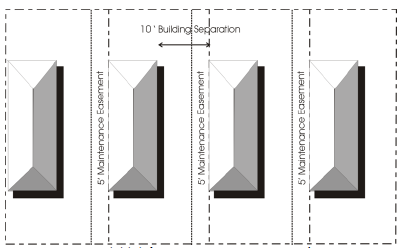
Figure 23-4-3(B)(1)d, Zero Lot Line Example
e.
Dwelling, Two- to Four-Family
Two-family dwellings and three- to four-family dwellings shall comply with the following standards:
1.
Section 23-6-9, Multifamily Residential Design Standards.
2.
Except for circular driveways, no more than one driveway shall be located on the same block face.
3.
Ground based, roof-based, and wall-mounted electrical equipment, HVAC equipment and other utility connection devices shall be ganged and shall be screened or located outside the view from any adjacent public street.
f.
Dwelling, Upper Story
Residential living above the first floor is allowed in zoning districts in which the city intends to preserve nonresidential activity at street level. Lobbies, security, and uses incidental to the residential living units may be allowed on the street level, but all principal living spaces in multi-story or multi-tenant buildings shall be above the first floor.
g.
Manufactured Home, Class A
All class A manufactured homes shall comply with the following standards:
1.
The home shall not be located on a platted lot or parcel containing another manufactured home or other principal structure except in the RMH District, where a manufactured home shall be permitted on a site in an approved manufactured or mobile home park.
2.
The home shall be skirted and tied down.
3.
The home shall meet wind loading capacity standards of the Building code.
4.
The length of the home shall not exceed four times its width.
5.
The home shall have no less than 1,200 square feet of enclosed floor area.
6.
The home shall be oriented with its longer side parallel to the adjacent street, to the maximum extent practicable.
7.
All wheels, axles, transporting lights, tongue, and moving hitch shall be removed before occupancy of the home.
8.
The pitch of the roof of the home shall be not less than 2.2 feet of rise for each 12 feet of horizontal run.
9.
The roof of the home shall be finished with a type of roofing material commonly used in site-built residential construction.
10.
The exterior siding of the home shall consist predominately of wood, hardboard, vinyl, or aluminum horizontal lap siding not exceeding the reflectivity of gloss white paint, and shall be comparable in composition, appearance, and durability to the exterior siding commonly used in site-built residential construction.
11.
The home shall be located on a poured foundation or on a continuously-dug and poured concrete footing around the perimeter of the home. The home shall include a continuous and permanent brick, stone, or masonry foundation or curtain wall from the frame to the ground, unpierced except for required ventilation and access.
12.
All porches, decks, ramps, or entry steps shall be wood or masonry with guardrails, handrails, and pickets required by state regulations for manufactured homes.
13.
All manufactured homes shall bear a valid seal indicating conformance with the 1976 National Manufactured Housing Construction and Safety Standards Act.
h.
Manufactured Home, Class B
All class B manufactured homes shall comply with the following standards:
1.
The home shall not be located on a platted lot or parcel containing another manufactured home or other principal structure except in the RMH District, where a manufactured home shall be permitted on a site in an approved manufactured or mobile home park.
2.
The home shall be skirted and tied down.
3.
The home shall meet wind loading capacity standards of the Building Code.
i.
Manufactured Home Park
All manufactured home parks shall comply with the following standards:
1.
Dimensional and Density Requirements
A.
Minimum park area: Ten acres.
B.
Minimum park width: 100 feet at entrance and exits and 200 feet at the portion used for manufactured home spaces.
C.
Minimum manufactured home space width: 40 feet.
D.
Minimum manufactured home space area: 3,600 square feet for each space.
E.
Maximum density: Ten manufactured home units for each gross acre of park.
F.
Maximum impervious surface coverage: 40 percent.
G.
Minimum setback area requirements:
1.
No manufactured home, carport, or other structure shall be placed or erected closer than 15 feet to the pavement line at any internal roadway/driveway.
2.
No manufactured home shall be placed or erected closer than five feet to any side or rear manufactured home space plot line; provided, however, roof projections, overhangs, rain gutters and air conditioners may project up to 18 inches into any required setback area.
H.
Maximum height of all structures is 25 feet.
2.
Roadways
A.
The minimum right-of-way for internal roadways/driveways shall be 36 feet.
B.
The minimum pavement width for internal roadways/driveways shall be 20 feet.
C.
The minimum pavement width for each divided roadway shall be 16 feet, and the minimum median width shall be eight feet.
D.
All roadways/driveways shall be paved with a minimum of four inches of lime rock base and compacted to 100 percent of maximum density, and one inch of asphalt topping—DOT Type I, 1,800 lbs. H.F.
E.
All streets in a manufactured home park shall be private.
3.
Drainage
Each manufactured home park shall be located on a well-drained site and shall comply with the city's Administrative Manual and other applicable engineering standards for drainage.
4.
Parking and Carports
A.
Each manufactured home site shall contain a concrete slab not less than ten by 20 feet in dimension for carport or patio.
B.
Each manufactured home space shall be provided with one paved off-street parking space for each manufactured home space. One additional off-street parking space shall be provided for each 200 square feet of non-storage floor area of office and laundry facilities in close proximity to it.
5.
Foundation and Tie-Down
Each manufactured home shall be placed on a foundation or tied down as required by the Building Code and other applicable regulatory agency requirements.
6.
Utilities and Services
A.
Each manufactured home space shall be connected to a central water and sewer system. No individual water supply or sewage disposal system shall be permitted in any Manufactured Home Park.
B.
All utilities distribution and collection systems, including those for water, sewer, electricity, telephone, gas, and television cable, shall be underground. Electric power shall be serviced by individual meters.
C.
Each manufactured home park shall be provided with an active recreational area having a minimum area of 200 square feet for each manufactured home space. These areas shall be consolidated into usable areas with a minimum dimension of not less than 40 feet. No manufactured home space, required buffer area, street right-of-way, storage area, utility site, or utility easement shall be counted as recreational area in meeting this requirement. Recreational areas and facilities shall be owned and operated by the managers of the manufactured home park.
D.
Each manufactured home park shall be provided with a management office and those service buildings as are necessary to provide facilities for mail distribution; storage space for supplies, maintenance, and materials and equipment; and laundry facilities equipped with washing machines and dryers for park residents. Adequate lighting shall be provided for safe internal circulation in accordance with the same standards for Recreational Vehicle Parks (Section 23-4-3(D)(10)c., Recreational Vehicle Parks).
E.
Managers of a manufactured home park shall be strictly responsible for internal trash and solid waste collection. Central park collection points shall be screened from public view from without or within the park.
7.
Perimeter Walls and Buffers
A.
Each manufactured home park shall be entirely enclosed, exclusive of driveways, at its external boundaries by a fence, evergreen hedge, or other approved landscape feature to the maximum height permitted in this Section.
B.
A buffer at least 25 feet wide and meeting minimum screening requirements for a Type A perimeter buffer in accordance with Section 23-6-3(E) shall be provided and maintained along streets and all property lines, and shall include suitable ground cover. (See Figure 23-4-3(B)(1)i.7.B., Example of Perimeter Buffers.)
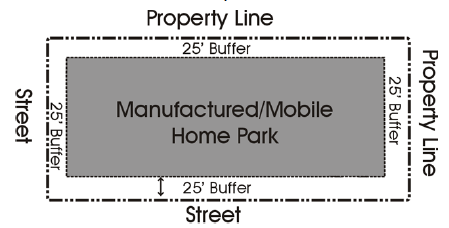
Figure 23-4-3(B)(1)i.7.B: Example of Perimeter Buffers
C.
The DRC may require open space be set aside for manufactured home parks with 20 or more lots to be maintained for use by manufactured home park residents.
8.
Street and Space Identification
Manufactured home park spaces shall be numbered or otherwise adequately described and the number or other description shall be posted at the entrance and the proper space so that it can be clearly read from each street on which the space fronts or abuts.
9.
Occupancy Date
No space in a manufactured home park shall be occupied until at least 40 spaces are completed and ready for occupancy.
j.
Mobile Homes
A mobile home shall be permitted only in an approved manufactured home park, existing as a lawful permitted use on the effective date of July 29, 2003.
(2)
Group Living
a.
Dormitory
All dormitories shall be accessory to an educational facility located on the same site or campus, and house only persons who are students at, or employed by, the educational facility.
b.
Rooming or Boarding House
A rooming or boarding house shall comply with the following standards:
1.
No more than ten sleeping rooms shall be allowed;
2.
The owner shall maintain the house as a primary residence;
3.
Sleeping rooms in a rooming house shall:
A.
Not include individual kitchen facilities; and
B.
Be accessed by a common room or hallway, and shall not have individual access to the outside (except for emergency exits required by the Building Code).
(C) - Public and Institutional Uses
(1)
Community Service
a.
Club or Lodge
Accessory restaurants, nightclubs, and bars in clubs or lodges, shall comply with the standards of 23-4-4, Accessory Use Standards.
b.
Soup Kitchen
Any building or structure or portion thereof that contains a fully equipped kitchen in operating condition. This facility must be used to prepare and serve food on a regular basis either without cost or at a low cost insufficient to generate a profit.
1.
It is important to note that soup kitchens are not classified as restaurants. Additionally, patrons are not permitted to loiter in between meals or spend the night on the premises. To ensure compliance, signs must be displayed stating that sleeping on the property or overnight stay is prohibited.
(2)
Day Care
a.
Adult Day Care
Adult Day Care facilities shall comply with all relevant state requirements, including but not limited to the dimensional spacing requirements as measured on a per client basis.
b.
Child Day Care
Child day care facilities, including pre-schools, shall be licensed as a child care facility by the state and comply with all state regulations for child care facilities. Child Day Care facilities shall also comply with the following standards:
1.
Location
If not located in a stand-alone building, a child day care facility shall be located on the first floor of a principal structure, and be segregated (including the restrooms) from the remaining portion of the uses in the building in which it is located.
2.
Separation
Child day care facilities shall comply with the required spacing standards from Regulated Businesses located in Table 23-4.E: Required Minimum Spacing between Regulated Business Uses and Protected Uses.
3.
Outdoor Play Areas
Outdoor play areas shall be provided, and shall:
A.
Be safely segregated from parking, loading, or service areas; and
B.
Not be operated for outdoor play activities after 8:00 p.m.
4.
Buffering
A landscaped hedge or fence shall be provided along any rear or side property line adjoining any residentially zoned property not used for a similar purpose. Any such hedge or fence shall be designed and planted so as to be at least four feet in height. The fence or hedge shall provide a solid barrier between the child day care facility and any adjoining residentially zoned property.
5.
Parking Area, Vehicular Circulation, and Drop-Off and Pick-Up
The parking areas and vehicular circulation for the child day care center shall be designed to:
A.
Ensure the safety of children as they arrive at and leave the facility; and
B.
Provide a minimum of one off-street parking space for each 250 square feet of gross floor area of the facility; and
C.
Provide a designated pickup and delivery area that is located adjacent to the child day care facility in such a way that children do not have to cross vehicular travel ways to enter or exit the center and traffic congestion is minimized.
6.
Accessory Uses
If allowed as an accessory use to a Retail Sales and Service or Office use, the heated floor area of a child day care center shall not exceed 20 percent of the heated floor area of the principal use.
c.
Family Child Care Home
Family Child Care Homes shall comply with the following standards:
1.
Family Child Care Homes shall be registered as a family child care home by the state and comply with all state regulations for family child care homes.
2.
Family Child Care Homes shall comply with the required spacing standards from Regulated Businesses located in Table 23-4.E., Required Minimum Spacing between Regulated Business Uses and Protected Uses.
(3)
Institutional and Health Care Facilities
a.
Hospital
A hospital shall comply with the following standards:
1.
Be located on a site or parcel with an area of at least five acres.
2.
Be located on a parcel that fronts or has direct access to an arterial or collector street.
3.
Be served by a public water and wastewater system.
4.
Locate all principal structures at least 100 feet from any lot line.
b.
Medical or Dental Clinic
A medical or dental clinic located in a residential district shall comply with the following standards:
1.
Be located on a site or parcel with an area of at least 8,000 square feet.
2.
Be located on a parcel that fronts or has direct access to an arterial or collector street.
3.
Have a gross floor area no greater than 5,000 square feet.
4.
Locate all principal structures at least 25 feet from any property line.
c.
Social Service Agency
A facility operated by a nonprofit organization, which provides services such as training, counseling, health, or the distribution of food or clothing. This term includes but is not limited to a facility offering life skills training, substance abuse counseling, housing services, food banks, crisis center, community health centers, welfare agencies, job centers, or a neighborhood recovery center.
1.
Social Service Agencies do not include an emergency residential shelter.
2.
Social Service Agencies do not include soup kitchens.
(4)
Parks and Public Spaces
a.
Cemetery or Mausoleum
Except as otherwise stated, the development and expansion of cemeteries shall comply with the following standards:
1.
New cemeteries shall be located on a site or parcel with an area of at least two and one-half acres. (This standard shall not apply to the expansion of existing cemeteries.)
2.
New cemeteries shall be located on a site or parcel that fronts an arterial or collector street. (This standard shall not apply to the expansion of existing cemeteries.)
3.
Cemeteries shall include adequate space for the parking and maneuvering of funeral processions.
4.
Interments shall take place at least 50 feet from any lot line.
b.
Community Garden
Community gardens shall comply with the following standards:
1.
Overhead lighting in community gardens is prohibited.
2.
Signage is limited to a single, non-illuminated, flat sign of four square feet in area.
3.
No more than two vehicles shall be parked onsite of a community garden, excluding those parked within an enclosed structure.
4.
Retail sales shall not be permitted, except as an approved temporary use in accordance with 23-4-5, Temporary Uses and Structures.
5.
Plantings in community gardens shall not obstruct roadway visibility or impede the flow of traffic.
6.
Perimeter fencing, including trellises, are allowed in community gardens and are subject to the standards governing fence location, maintenance, and height and design within each respective zoning district.
(5)
Transportation
a.
Helicopter Landing Facility
A helicopter landing facility shall comply with the following standards:
1.
The helicopter landing facility shall provide adequate land area for safe take-offs and landings in accordance with standards of the Federal Aviation Administration (FAA).
2.
Where located within 500 feet of a residential zoning district or existing single-family residential use, a helicopter landing facility shall provide an adequate buffer along the property line to ensure the facility does not adversely impact surrounding uses.
(6)
Utilities
a.
Telecommunication Antenna or Tower
1.
Purpose
This is intended to establish general standards for the siting of telecommunications towers and antennas that:
A.
Facilitate the expansion of wireless telecommunication facilities through the use of reasonable and non-discriminatory policies;
B.
Protect the public from any adverse impact upon the city's aesthetic resources;
C.
Avoid potential damage to adjacent properties from tower failure through structural standards and setback requirements;
D.
Maximize the use of existing and approved towers and buildings through co-location; and
E.
Protect the public health, safety, and welfare of the community.
2.
Applicability
All new telecommunications facilities, whether a principal or accessory use, shall be subject to these standards unless exempted in 23-4-3(C)(6), Exemptions.
3.
Exceptions
This Chapter shall not govern any tower or antenna that is:
A.
Less than 70 feet in height.
B.
Located in the rear yard of a residentially zoned parcel.
C.
Owned and operated by a federally licensed amateur radio operator.
4.
Grandfathered Towers and Antennas
Subject to the provisions of 23-8-3, Nonconforming Structures, any tower or antenna already existing on November 9, 2010 shall not be required to comply with the provisions in this subsection. Towers or antennas in existence on November 9, 2010, which do not comply with this subsection:
A.
May continue for the purpose now used and as now existing.
B.
May not be replaced or structurally altered without complying in all respects with this subsection.
C.
The addition of one or more antenna to a grandfathered tower shall not be construed as a prohibited expansion of the pre-existing non-conforming use so long as the said tower is located in one of the following districts: RM-10, RM-20, RM-30, A, LB, NB, CB, RB, I, or WF.
5.
General Standard
All telecommunication towers and antennas must comply with the following general standards:
A.
Height
Height limitations applicable to buildings and structures in Article 23-3: Zoning Districts and Article 23-5: Intensity and Dimensional Standards shall not apply to telecommunication towers or antennas. Height requirements for antennas and freestanding towers are provided in the following Subsections.
B.
Location
1.
Towers or antennas shall not be constructed so as to interfere with the flight zones of civilian or military airports.
2.
Any tower or antenna may not be located on a structure or building designated by the AHRC as a historic structure or landmark or be located in a designated Architectural/Historic Overlay District unless the AHRC approves such arrangement.
C.
Design
All buildings, structures, and equipment accessory to a tower shall be designed to blend in with the surrounding environment through the use of color, camouflage, and architecture, unless the FAA or other federal or state authorities require otherwise.
D.
Signage
No commercial advertising shall be allowed on a tower or antenna, unless such antenna is actually located on an existing, approved sign. Towers may have safety or warning signs in appropriate places.
E.
Lighting
1.
No signals, lights or illumination shall be permitted on a tower or antenna, unless required by the FAA. Should lighting be required by state or federal law, the lighting shall be placed on the tower and designed in such a way as to minimize the glare on adjacent residential properties.
2.
Light fixtures may be attached if it is part of the design incorporated into the tower structure to be used for the illumination of athletic fields, parking lots, streets or other similar areas.
3.
Lighting of accessory buildings for basic security purposes is permissible but may not result in unnecessary glare on adjacent properties.
6.
Freestanding Towers
Freestanding telecommunications towers, whether as a principal or accessory use, shall comply with the following standards:
A.
Requirements for Permitting New Tower
No new tower shall be permitted unless the applicant demonstrates to the reasonable satisfaction of the city that no existing tower or other structure can accommodate the applicant's proposed antenna. Evidence submitted to demonstrate that no existing tower or structure can accommodate the applicant's proposed antenna may consist of any of the following:
1.
No existing towers or structures are located within the geographic area required to meet the applicant's engineering requirements.
2.
Existing towers or structures are not of sufficient height, and could not be extended to become sufficient in height, to meet the applicant's engineering requirements.
3.
Existing towers or structures do not have sufficient structural capacity to support the applicant's proposed antenna and related equipment; and the existing or approved tower cannot be reinforced, modified or replaced to accommodate planned or equivalent equipment at a reasonable cost.
4.
The proposed antenna would cause electromagnetic interference with an existing antenna on the tower or structure, or the antenna on the existing tower or structure would cause interference with the proposed antenna; and reconfiguration would not resolve the interference problem.
5.
The applicant demonstrates that there are other limiting factors, not including the provisions of this article, that render existing towers or structures unsuitable for its proposed antenna.
B.
Height
No freestanding tower shall exceed 180 feet in height.
C.
Setbacks
1.
Towers shall be setback from the property line in all directions a distance at least equal to the height of the tower if the site is in one of the following districts: A, RM-10, RM-20, RM-30, RMH, or LB.
2.
The tower shall be setback from the property line in all directions the distance required in the underlying district if the site is in one of the following districts: LB, NB, CB, RB, I, WF.
3.
The tower shall be setback from any single-family residential district at least the height of the tower.
4.
One freestanding tower shall not be located closer than one mile from another freestanding tower.
D.
Design of Towers
Freestanding telecommunication towers shall be designed to comply with the following standards:
1.
For proposed towers greater than 120 feet in height, the proposed tower shall be designed to accommodate both the applicant's antenna and at least two comparable antennas.
2.
For proposed towers over 70 feet in height but less than 120 feet in height, the proposed tower shall be designed to allow for future rearrangement of antennas upon the tower and to accept antennas mounted at varying heights.
3.
Towers shall be of a monopole design.
4.
The use of guyed or lattice towers is prohibited.
5.
Towers shall be constructed of galvanized metal and shall be maintained in good repair and appearance.
6.
Towers shall be constructed so that if a failure does occur, the tower will collapse into itself and will not fall onto structures near the site.
7.
No tower shall have a platform, crow's nest or like structure around it, or attached to it, except while under construction or repair.
E.
Location
With the exception of necessary electric and telephone service and connection lines approved by the city, no part of any tower, antenna, or supportive lines, cable, equipment, wires or braces in connection with a tower, shall at any time extend across or over any part of a right-of-way, public street, highway, sidewalk or property line.
F.
Placement of Signal and Remote Conductors
All signal and remote control conductors of low energy between a tower or antenna and a structure, or between towers, shall be hidden from plain view and shall be underground whenever possible. If impossible to bury underground, the conductor shall be at least eight feet above the ground at all points.
G.
OSHA Conformity
All towers or antennas shall conform to the requirements of the Occupational Safety and Health Administration (OSHA).
H.
Fencing
Subject to setback requirements, an eight-foot privacy fence or wall, as measured from the finished grade of the site, shall be constructed around the perimeter of any tower site.
I.
Parking
Mobile or immobile equipment not used in direct support of a tower facility shall not be stored or parked on the site, unless repairs to the tower or antenna are being made.
J.
Landscaping
A Type C perimeter buffer in accordance with Section 23-6-3(E), Perimeter Buffers, shall be provided around the perimeter of a freestanding telecommunications tower facility, antenna, or accessory building, structure or equipment from public view except where a design of non-vegetative screening better reflects and complements the architectural character of the surrounding neighborhood.
K
Abandoned or Unused Facilities
All abandoned or unused telecommunication tower or antenna facilities shall be removed by the tower or antenna operator within 90 days of the cessation of use unless ownership and use thereof has been transferred to another person in compliance with this Section. A tower shall be considered abandoned if use has been discontinued for 180 consecutive days. The Director of Community Development may extend this time period or waive this requirement if it is shown by the operator that the facility has not been abandoned.
L.
Safety Requirements
1.
Every freestanding tower shall be protected from trespassers in order to discourage the climbing of the tower by unauthorized persons.
2.
The owner/operator shall at all times employ at least ordinary care and shall install, maintain and use commonly accepted methods and devices for preventing failures and accidents which are likely to cause damage, injuries or nuisances to the public.
M.
Transfer of Use
Approved towers or antennas may be transferred to successors and assigns of the approved party, subject to all of the conditions that apply to initial approval.
7.
Collocation or Placement of Antennas on Existing Towers, Structures, or Buildings
Antennas may be collocated or placed on existing towers, structures, or buildings if they comply with the following standards:
A.
Collocation
Subject to the requirements of this Chapter, more than one tower or antenna may be attached to, or placed upon, the same structure.
B.
Height
1.
An existing tower, structure or building shall be at least 40 feet in height before an antenna may be erected upon, or attached to it.
2.
The addition of a tower or antenna to an existing structure shall not cause the height of said structure to increase by more than 20 percent or the maximum height allowed in that zoning district, whichever is less.
3.
The addition of any related telecommunications equipment or accessory building to an existing structure shall not cause the height of said structure to increase by more than 15 percent or the maximum height allowed in that zoning district, whichever is less.
C.
Setbacks
Towers or antennas erected upon, or attached to, existing structures shall not be subject to standard setback requirements.
D.
Accessory Buildings and Structures
1.
So long as the arrangement is deemed safe by the Building Official, all accessory buildings and other structures to be located on the same property as a tower or antenna shall be located on the roof of the structure whenever possible.
2.
If the accessory equipment, buildings and other structures are able to be safely located on the roof of the structure, the area of the equipment, accessory buildings and other structures shall not occupy more than 25 percent of the total roof area.
b.
Utilities, Major
An electrical power facility, substation, or transmission station shall be set back at least 100 feet from all lot lines.
(Ord. No. 2523, 9-5-2023)
(D) - Commercial Uses
(1)
Billboards
Billboards are allowed only in the Regional Business (RB) and Industrial (I) Zoning Districts, subject to specific applicable standards in 23-6-13, Signage.
(2)
Conference and Convention Centers
a.
Auditoriums and Convention Centers
Auditoriums and convention centers shall comply with the following standards:
1.
The parcel or site shall have an area of at least five acres.
2.
The building shall be located at least 500 feet from any single-family residential zoning district (RE, RER, RS-10, RS-7.5, RS-5, RMH).
b.
Conference and Training Centers
Conference and training centers shall comply with the following standards:
1.
Dining and banquet facilities may be provided for employees, trainees, and conferees, provided the gross floor area devoted to such facilities does not exceed 20 percent of the total floor area of the principal building.
2.
On-site recreational facilities may be provided for use by employees, trainees, or conferees.
3.
No products shall be sold on-site except those that are clearly incidental and integral to training programs and seminars conducted in the center (e.g., shirts, glasses and mugs, pens and pencils, and similar items bearing the logo of conference or seminar sponsors or participants).
(3)
Eating and Drinking Establishments
a.
Bar/Lounge, Brewpub, or Nightclub
1.
Required Spacing between Uses
Except in the Downtown (DT) and Community Redevelopment Overlay (CRO) Districts, bars, brewpubs, nightclubs, and similar establishments shall comply with the required spacing standards stated in Table 23-4-3(D)(11), Required Minimum Spacing between Regulated Business Uses and Protected Uses and Districts.
2.
Live Entertainment
Bars, lounges, and brewpubs may offer live entertainment, such as a piano, harp, saxophone, electronic keyboard without amplification, or small combo or coin-operated music-box without external speakers. Live entertainment with amplification is permitted within nightclubs.
3.
Off-Premise Alcohol Sales
If licensed by the state for off-premise sales, brewpubs may sell malt beverages for consumption off premises, limited to the sale of no more than ten percent of the total on-premises production.
4.
Accessory Uses
Bars, lounges, brewpubs, and nightclubs serving as an accessory use to a principal use shall comply with the standards in 23-4-4, Accessory Use Standards.
b.
Restaurant, with Drive-Through Service
1.
Drive-through facilities shall be located at least 100 feet from any residential zoning district.
2.
Drive-through facilities shall not obstruct the movement of pedestrians along sidewalks, through areas intended for public use, or areas between the restaurant entrance and customer parking spaces.
c.
Restaurant, with Indoor or Outdoor Seating
1.
Accessory Uses to the Restaurant
A.
In the Limited Business (LB) District, a restaurant with indoor or outdoor seating may have a bar as an accessory use, but sales of alcoholic beverages shall be limited to wine and beer.
B.
In the Neighborhood Business (NB), Community Business (CB), Regional Business (RB), Downtown (DT), or Waterfront (WF) Zoning Districts, a restaurant with indoor or outdoor seating may have a bar as an accessory use.
C.
In the Neighborhood Business (NB), Community Business (CB), Regional Business (RB), Downtown (DT), or Waterfront (WF) Zoning Districts, a restaurant with indoor or outdoor seating may offer, as an accessory use, live entertainment such as a piano, harp, saxophone, electronic keyboard without amplification, or small combo or coin-operated music-box without external speakers.
2.
Outdoor Seating and Service Areas
A.
Any outdoor portion of a restaurant where customers can be seated and served shall not operate after 11:00 p.m.
B.
Outdoor restaurant seating areas shall not obstruct the movement of pedestrians along sidewalks or through areas intended for public use.
C.
Outdoor seating areas shall be located no closer than 100 feet from any adjoining lot located in a single-family residential zoning district (RE, RER, RS-10, RS-7.5, RS-5, RMH).
3.
Restaurant as an Accessory Use
Restaurants with indoor or outdoor seating serving as an accessory use to a principal use shall comply with the standards in 23-4-4, Accessory Use Standards.
(4)
Offices
a.
Business Services, Financial Services, Professional Services, or Sales Office
In the Limited Business (LB) Zoning District, the following standards shall apply:
1.
Individual offices with a floor area exceeding 2,000 square feet are permitted only with a Conditional Use Permit.
2.
Office complexes shall be limited to not more than ten offices.
3.
The maximum total floor area for any individual office or any office complex shall be 10,000 square feet.
b.
Contractor's Office
1.
Contractor's offices are permitted only if all storage of materials occurs inside a structure and the storage of materials is clearly incidental to the office use. Where outside storage of materials is involved or the total area devoted to the storage of materials exceeds the area devoted to office use, the principal use shall be considered an outdoor storage use.
2.
In Neighborhood Business (NB) and Community Business (CB) Zoning Districts, no more than three trucks or other vehicles related to the contracting business may be regularly parked on the site or parallel where the office is located. A vehicle that remains at a location overnight or over the weekend, or that is parked at the same location for more than three hours on two or more days in the same calendar week shall be deemed to be "regularly parked" at that location. Violation of this condition shall be treated as a violation of this Chapter, regardless of whether it is also treated as a violation of the traffic or parking provisions of the Code of Ordinances.
c.
Massage Therapy
1.
All persons practicing massage therapy on behalf of a massage therapy establishment shall be licensed as a massage therapist in accordance with Mississippi Code § 73-67-21.
2.
Massage therapy offices serving as an accessory use to a principal use shall comply with the standards in 23-4-4, Accessory Use Standards.
d.
Radio or Television Station
In any zoning district, telecommunications towers or dishes associated with radio or television stations shall be subject to approval of an application for a Conditional Use Permit in accordance with 23-2-4(D), Conditional Use Permit.
(5)
Commercial Parking
a.
Parking Garage or Deck
A commercial parking structure shall comply with the following standards:
1.
Parking shall be the principal use of the parking structure. Parking spaces may be rented for parking, and retail sales and service and office establishments may be located on the ground floor of the structure. No other business of any kind shall be conducted in the structure, including repair service, washing, display, or storage of vehicles or other goods.
2.
A commercial parking structure shall not be located contiguous to a single-family residential zoning district (RE, RER, RS-10, RS-7.5, RS-5, RMH).
b.
Parking Lot
A commercial parking lot shall comply with the following standards:
1.
Parking shall be the principal use of the parking lot. Parking spaces may be rented for parking, or otherwise used in accordance with an approved Temporary Use Permit or other permit from the city, but no other business of any kind shall be conducted on the lot, including repair service, washing, display, or storage of vehicles or other goods.
2.
Commercial parking lots shall not be located contiguous to a single-family residential zoning district (RE, RER, RS-10, RS-7.5, RS-5, RMH).
3.
In the LB, NB, and DT Zoning Districts, commercial parking lots shall have no more than 100 feet of street frontage. Structures, landscaping, or other screening devices may be placed between the parking lot and street to assist in compliance with this requirement.
(6)
Recreational/Entertainment, Indoor
a.
Cinema
Accessory restaurants, nightclubs, and bars in cinemas, shall comply with the standards in Section 23-4-4, Accessory Use Standards.
(7)
Recreational/Entertainment, Outdoor
a.
Arena, Stadium, or Amphitheater
Arenas, amphitheaters, and stadiums shall comply with the following standards:
1.
Arenas and stadiums shall be located at least 500 feet from existing child day care centers and residential zoning districts.
2.
Arenas and stadiums shall be located on a site or parcel with an area of at least five acres.
3.
Arenas and stadiums shall be located on a site or parcel that, at the primary point of access, has at least 200 feet of frontage on an arterial street or collector street.
4.
Arenas and stadiums shall locate access points to minimize traffic to and through local streets in residential neighborhoods.
5.
Areas and stadiums shall provide safety fences, up to the height of eight feet, as necessary to protect the general health, safety, and welfare.
b.
Golf Course
1.
Private and commercially operated golf courses in the Agricultural (A) District shall have no building or accessory use located closer than 100 feet to adjoining property lines.
2.
Accessory restaurants, nightclubs, and bars on golf courses shall comply with the standards in Section 23-4-4, Accessory Use Standards.
c.
Shooting Range
Shooting ranges shall comply with the following standards:
1.
In Industrial (I) Districts, shooting ranges shall be located only inside buildings.
2.
No outdoor shooting range shall operate after sundown or before sunrise.
3.
A certificate or letter from an architect or engineer licensed to practice in Mississippi shall be provided for a proposed Shooting Range, certifying that the design of the proposed shooting range is adequate to keep all projectiles and all firing noises within the range that is not less than 20 acres for an outdoor shooting range, and a minimum 10,000 square foot space for indoor shooting ranges.
4.
The A-weighted sound level of small arms fire on the shooting range shall not exceed 90 dba (A-weighted decibels) for one hour out of a day and shall not exceed 85 dba for eight hours out of a day measured at, or adjusted to, a distance of 100 feet outside the property boundary of the shooting range.
d.
Swimming Pool
Swimming pools that are a principal use of a lot shall comply with the following standards. Swimming pools that are accessory uses shall comply with 23-4-4(C)(23), Swimming Pool, Spa, or Hot Tub.
1.
Swimming pools for nonprofit organizations shall be located on a site or parcel with an area of at least one acre and a width of at least 200 feet at the building line.
2.
A swimming pool shall be set back from any lot line at least a distance equal to three feet plus one foot for each foot of vertical excavation.
3.
A swimming pool is permitted provided that it is not located closer than 50 feet to any adjoining property lines unless such property line fronts a public street or drainage canal with a right-of-way not less than 25 feet, in which instance the required setback need not exceed 25 feet.
4.
The area containing the pool shall be completely enclosed by a fence that is at least four feet high and has a gate that can be securely fastened.
5.
Pools with a capacity of 2,000 gallons or more shall have filtering and purification, or automatic water exchange equipment that changes the pool water every 24 hours.
6.
Any pump and filtering equipment and any appurtenant structures shall be located at least ten feet from any lot line.
7.
Lighting of the pool area shall comply with the exterior lighting standards in Section 23-6-8, Exterior Lighting.
8.
There shall be no commercial sales that are not an integral part of the pool use, nor shall any commercial displays be visible from the street or other property.
e.
Other Outdoor Recreational/Entertainment Uses
Other outdoor recreational/entertainment uses shall comply with the following standards:
1.
Other outdoor recreational/entertainment facilities must be located on a site having a minimum of three acres.
2.
Lighted tennis courts, ball fields, and other outdoor recreational/entertainment uses open to the public shall be screened from any existing or proposed residential land with a Type B perimeter buffer in accordance with Section 23-6-3(E), Perimeter Buffers.
3.
Accessory restaurants, nightclubs, and bars or other outdoor recreational/entertainment uses shall comply with standards in Section 23-4-4, Accessory Use Standards.
4.
Private and commercial recreational uses such as tennis courts, ballfields, and other similar activities are permitted provided that no such use, structure or accessory use is note located closer than 50 feet to any adjoining property lines unless such property line fronts a public street or drainage canal with a right-of-way not less than 25 feet, in which instance the required setback need not exceed 25 feet.
(8)
Retail Sales and Service
a.
Animal Care, Training, or Kennel
Animal shelters, kennels (indoor and outdoor), and other similar animal care and training uses shall comply with the following standards:
1.
The animal care use shall be sufficiently insulated so no unreasonable noise or odor can be detected off the premises.
2.
Any open runs or pens used to house animals shall be located at least 75 feet from any lot line.
3.
Accessory uses to an indoor kennel may include retail sales and grooming services, as long as the accessory uses do not occupy more than 25 percent of the total gross floor area.
4.
Any incinerators included as an accessory use to an animal shelter shall be permitted only in accordance with 23-2-4(D), Conditional Use Permit.
b.
Bank or Financial Institution, with Drive-Through Service
The drive-through facility shall be located to the side or rear of the primary building, where practicable.
c.
Beach Vending
Beach vending uses shall comply with the following standards:
1.
No permanent beach vending uses shall be permitted except in accordance with the permitting procedures and standards established in the Harrison County Sand Beach Ordinance, as amended.
2.
Permanent buildings or structures (e.g., picnic pavilions and comfort stations) in the Sand Beach (SB) Zoning District shall be subject to the provisions of this Code.
d.
Book or Media Shop
A book or media shop that devotes more than ten percent of its floor area or ten percent of the number of items in inventory to sexually-explicit material, but which devotes less than 40 percent of its floor area and less than 40 percent of the number of items in inventory to sexually-explicit material shall be treated for zoning purposes as a book or media shop and not as a sexually-oriented media store use, provided it complies with the following standards:
1.
All sexually-explicit material shall be maintained in a room that is separated from other material by an opaque wall that extends to the ceiling or eight feet above the floor, whichever is less.
2.
Access to the room containing the sexually-explicit material shall be through an opaque, solid door.
3.
The room containing sexually-explicit material shall be posted with a notice indicating that only persons 18 years of age or older are allowed in the room.
4.
Access to the room shall be physically limited to adults through control of access by an employee of the store, through use of an access release located at least 66 inches off the floor, or through constant monitoring of the room by an employee on duty through electronic means or through a window or mirror providing visibility into the room from the manager's or cashier's work station.
e.
Convenience Store
1.
All lighting, including lighting for canopies, shall be designed and installed to prevent glare or excessive light spillover onto adjacent properties. No source of illumination shall be allowed if such source of illumination would be visible from a residentially zoned district to the extent that it is a nuisance and interferes with the residential use of that area.
2.
A convenience store with gas sales shall also comply with the standards in Section 23-4-3(D)(h), Gas Station.
f.
Drug Store or Pharmacy, with Drive-Through Service
A drug store or pharmacy with drive-through service shall comply with the following standards:
1.
Drug stores or pharmacies shall be located no closer than 100 linear feet from a single-family residential district (RE, RER, RS-10, RS-7.5, RS-5, RMH).
2.
Drive-through facilities (including the drive lanes and stacking spaces) shall not occur between a building and any adjacent street unless it can be demonstrated how such facilities will be designed to be integrated into the site, architecturally compatible with the principal structure, screened from view of the adjacent street, and not be a negative impact on the development and pedestrian movement from parking areas and adjacent sidewalks.
3.
Drug stores or pharmacies should be designed to locate usable building space above drive-through facilities, where feasible.
4.
Drug stores or pharmacies must comply with landscaping and screening standards in Section 23-6-3, Landscaping.
g.
Funeral Home or Mortuary
Funeral homes shall comply with the following standards:
1.
The funeral home shall have its principal frontage, access, and orientation directly on an arterial street.
2.
The funeral home shall have a Type C perimeter buffer, in accordance with Section 23-6-3(E), Perimeter Buffers, between it and any residentially zoned property abutting or directly across the street from the funeral home site.
3.
On-premise signage shall be oriented toward the arterial street that provides access to the site.
4.
All structures shall be located so as not to require access from an interior residential street.
h.
Gas Station
Gas stations shall comply with the following standards:
1.
No vehicle repairs shall be permitted within gas stations.
2.
All lighting, including lighting for canopies, shall be designed and installed to prevent glare or excessive light spillover onto adjacent properties. No source of illumination shall be allowed if such source of illumination would be visible from a residentially zoned district to the extent that it is a nuisance and/or interferes with the residential use of that area.
3.
An eight-foot high visual barrier or screen, not less than 95 percent opaque, shall be provided between the gas station and any adjacent residential district.
i.
General Retail
Single tenant or two-tenant retail sales establishments located in a structure with a gross floor area of 50,000 square feet or more shall comply with the standards in Section 23-6-10(E), Large Retail Design Standards.
j.
Personal Services Establishment
Personal service establishments in the Limited Business (LB) and Neighborhood Commercial (NC) Zoning Districts shall comply with the following standards:
1.
An individual establishment shall have no more than 2,500 square feet of gross floor area.
2.
The business activities of the establishment shall be conducted within an enclosed building, with no more than 20 percent of the gross floor area devoted to storage.
3.
The establishment shall only sell products at retail.
k.
Tattoo or Body-Piercing Establishment
No tattoo and body-piercing establishment shall be located on the same block as any property zoned in an agricultural or residential zoning district.
l.
Veterinary Clinic
Veterinary clinics that includes kennels shall comply with the use standards in Section 23-4-3(D)(8)a., Animal Care, Training, or Kennel.
m.
Seasonal Firework Sales
Firework sales are allowed within an RB Regional Business zoning district as a Conditional Use and shall comply with the following standards:
1.
Firework sales are seasonal sales only, within the times permitted by state law. No fireworks shall be sold or offered for sale at retail within the City of Biloxi before the fifteenth day of June and after the fourth day of July and before the fifth day of December and after the first day of January of each year. No fireworks shall be sold to any person under the age of 16 years or any intoxicated person. All persons involved in the sale of Fireworks shall be at least 18 years of age.
2.
It shall be unlawful for any person to shoot, discharge, fire, explode or otherwise use any fireworks upon any of the streets, sidewalks, alleys or other public places or elsewhere within the city, unless otherwise authorized under City of Biloxi Code of Ordinances, Section 13-1-12(c) or 13-1-12(d).
3.
A Conditional Use permit shall be required for each Seasonal Firework Sales operation, which Conditional Use permit will remain valid, unless modifications are made to the site, the temporary structure, or the location.
A.
All fireworks licensees must be over the age of 21 and provide a certificate of liability insurance for $500,000.00 naming the City of Biloxi as an additional insured. This certificate shall be provided to the city prior to receiving a "Sale of Fireworks Conditional Use Permit."
B.
No storage of any excess or unsold inventory will be allowed within the City of Biloxi after the expiration of the fireworks seasons. Violation of this section shall be grounds for immediate revocation of the fireworks permit.
C.
No on-site storage trailers or containers shall be allowed; all fireworks merchandise shall be located in a secure enclosed area. All fireworks sold on-site shall be sold at a retail station.
4.
Ownership and operation of the Conditional Use may not be transferred, subleased, sold or conveyed to any other individual, firm or entity. Any such change in ownership or operation will necessitate an application for a new Conditional Use permit.
5.
All Seasonal Firework Sales outlets are required to be 2,500 feet from other existing Seasonal Firework Sales outlets, and 500 feet from any residential properties.
6.
All Seasonal Firework Sales are required to be 300 feet from the property line of any motor vehicle fueling station, bulk plant, or bulk terminal for the following:
A.
Flammable or combustible liquid.
B.
Flammable gas.
C.
Flammable liquid gas.
7.
Seasonal Firework Sales Stands are preferred to be on paved surfaces; however, unpaved surfaces may be approved if dry vegetation has been cleared under and around these Seasonal Firework Sales Outlets for a distance of 35 feet.
8.
Public safety, ingress, egress, and adequate parking will be factors considered by the fire department before approving any site for firework sales.
9.
Consumer Firework Retail Sales (CFRS) facilities shall be accessible to Fire Department apparatus by means of an approved fire apparatus access road constructed of asphalt, concrete or other approved driving surface capable of supporting the imposed load of fire apparatus weighing at least 75,000 pounds.
10.
Portable fire extinguishers shall be on hand, as required by the currently adopted International Fire Code, in conspicuous locations where they will be readily accessible and immediately available for use.
11.
Temporary buildings and tents shall meet the requirements of the currently adopted International Fire Code. Before a permit is granted, the owner shall provide proof to the fire code official that the building materials, floor coverings, tents, sidewalls, drops, and tarpaulins meet the flame performance test of the National Fire Protection Association (NFPA).
12.
Smoking shall not be permitted within 100 feet of any seasonal firework stand. Approved "NO SMOKING" signs shall be conspicuously posted.
n.
Medical Cannabis Dispensary, Cannabis Research Facility or Cannabis Testing Facility
Medical Cannabis Dispensaries, Research Facilities and Testing Facilities are allowed within the NB-Neighborhood Business, CB-Community Business, RB-Regional Business and I-Industrial zonings as a permitted use and WF-Waterfront as a Conditional Use, and shall comply with the following standards.
1.
Medical Cannabis Dispensaries must have a license with the MDOR (Mississippi Department of Revenue) before submitting for a CO with the City of Biloxi.
2.
Medical Cannabis Dispensaries shall not be located within one thousand (1,000) feet of the nearest property boundary line of any school, church, childcare facility or funeral home.
A medical cannabis establishment may receive a variance to this distance restriction by receiving approval from the school, church or child care facility and by applying for a variance with its respective licensing agency, provided that the main point of entry of the cannabis establishment is not located within five hundred (500) feet of the nearest property boundary line of any school, church or child care facility.
3.
No medical cannabis dispensary may be located within a one-thousand-five-hundred-feet (1,500') radius from the main point of entry of the dispensary to the main point of entry of another medical cannabis dispensary.
4.
A medical cannabis establishment may not share office space with or refer patients to a practitioner.
5.
A medical cannabis dispensary shall only make sales to cardholders inside the dispensary. A medical cannabis dispensary shall not sell or otherwise convey medical cannabis to a cardholder through the means of a drive-through, curbside delivery or other delivery outside the premises of the dispensary.
6.
MDOH has been designated to regulate advertising, signage, and displays, sign permits are still required through the City of Biloxi after MDOH approval.
o.
Cannabis Cultivation Facility, Cannabis Processing Facility, Cannabis Disposal Entity or Cannabis Transportation Entity
Cannabis Cultivation Facilities are allowed within the A-Agricultural, RB-Regional Business and I-Industrial zonings as a permitted use, and are allowed within the CB-Community Business with Conditional Use approval.
Cannabis Processing Facilities or Cannabis Disposal Entities are allowed within the RB-Regional Business and I-Industrial zonings as a permitted use, and are allowed within the CB-Community Business with Conditional Use approval.
Cannabis Transportation Entities are allowed within the I-Industrial zoning as a Permitted use and within the RB-Regional Business with Conditional Use approval.
Cannabis Cultivation Facilities, Cannabis Processing Facilities, Cannabis Disposal Entities or Cannabis Transportation Entities shall comply with the following standards:
1.
Cannabis Transportation entities, Cannabis Disposal entities, Cannabis Research Facilities and Cannabis Testing Facilities must have a license with the MDOH (Mississippi Department of Health) before submitting for a CO with the City of Biloxi.
2.
All cultivation, harvesting, processing and packaging of medical cannabis must take place in an enclosed, locked and secure facility, and meet the City of Biloxi development standards.
(9)
Vehicles Sales and Service
a.
Auto Painting or Body Shop
Automobile painting/body shop uses shall comply with the following standards:
1.
The use shall be located at least 250 feet from any residential zoning district, school, or day care.
2.
Vehicles shall not be parked or stored as a source of parts or for the purpose of sale or lease/rent.
3.
Repair and storage of all vehicles shall occur within an enclosed building. Temporary outdoor vehicle storage may be allowed in an outdoor storage area that is no larger than 25 percent of the buildable area of the lot, located behind or to the side of the principal structure, and screened from public view in accordance with Section 23-6-3(G), Screening.
4.
Vehicles that are repaired and are awaiting removal shall not be stored or parked for more than 30 consecutive days. In cases where a vehicle is abandoned by its lawful owner before or during the repair process, the vehicle may remain on site as long as is necessary after the 30-day period, provided the owner or operator of the establishment demonstrates steps have been taken to remove the vehicle from the premises using the appropriate legal means.
5.
All lights and lighting shall be designed and arranged so no source of illumination is directly visible from any residential district or existing residential use and to prevent glare or excessive light spillover onto adjacent properties.
b.
Auto Parts Sales and Installation
Automobile parts sales and installation uses shall comply with the following standards:
1.
Repair of all vehicles shall occur within an enclosed building. Temporary outdoor vehicle storage may be allowed in an outdoor storage area that is no larger than 25 percent of the buildable area of the lot, located behind or to the side of the principal structure, and screened from public view in accordance with Section 23-6-3(G), Screening.
2.
The use shall provide adequate, enclosed trash storage facilities on the site.
3.
All lights and lighting shall be designed and arranged so no source of illumination is directly visible from any residential district or existing residential use and to prevent glare or excessive light spillover onto adjacent properties.
c.
Auto Repair and Servicing, without Painting/Bodywork
Automotive repair and service uses not involving painting or bodywork service shall comply with the following standards:
1.
The use shall be located at least 250 feet from any residential zoning district or existing residential use, school, or day care.
2.
The use shall be designed to ensure proper functioning of the site as related to vehicle stacking, circulation, and turning movements.
3.
Repair of all vehicles shall occur within an enclosed building. Temporary outdoor vehicle storage may be allowed in an outdoor storage area that is no larger than 25 percent of the buildable area of the lot, located behind or to the side of the principal structure, and screened from public view in accordance with Section 23-6-3(G), Screening.
4.
The use shall provide adequate, enclosed trash storage facilities on the site.
5.
If gasoline is sold on-site, the use shall also comply with the standards for a gasoline sales use in 23-4-3(D)(h), Gas Station.
6.
No vehicles shall be parked or stored as a source of parts or for the purpose of sale or lease/rent.
7.
Vehicles that are repaired and are awaiting removal shall not be stored or parked for more than 30 consecutive days. In cases where a vehicle is abandoned by its lawful owner before or during the repair process, the vehicle may remain on site as long as is necessary after the 30-day period, provided the owner or operator of the establishment demonstrates steps have been taken to remove the vehicle from the premises using the appropriate legal means.
8.
All lights and lighting shall be designed and arranged so no source of illumination is directly visible from any residential district or existing residential use and to prevent glare or excessive light spillover onto adjacent properties.
d.
Auto Sales/Rental, New or Used
Uses primarily involving the sales or rental of automobiles, trucks, or travel trailers, shall comply with the following standards:
1.
No vehicle or equipment displays shall be located within a required perimeter buffer.
2.
The use shall not have more than one vehicle display pad for every 100 feet of street frontage. The vehicle display pad may be elevated up to two feet above adjacent displays or grade level.
3.
No vehicles or other similar items shall be displayed on the top of a building.
4.
All lights and lighting shall be designed and arranged so no source of illumination is directly visible from any residential district or existing residential use and to prevent glare or excessive light spillover onto adjacent properties.
5.
No other materials for sale shall be displayed between the principal structure and the street.
e.
Auto Wrecker Service
Automotive wrecker service uses shall comply with the following standards:
1.
The use shall be located at least 250 feet from any residential district, school, or day care center.
2.
The number of vehicles stored on-site shall be limited to 15 vehicles.
3.
Vehicles shall not be stored for more than 90 days.
4.
Vehicles shall be stored to the rear of the principal structure, and screened from public view in accordance with Section 23-6-3(G), Screening.
f.
Car Wash or Auto Detailing
1.
Car wash and auto detailing uses shall be designed to ensure proper functioning of the site as related to vehicle stacking, circulation, and turning movements.
2.
Openings to wash bays shall not face public rights-of-way and shall be designed to minimize visual intrusion onto adjoining properties.
3.
Vacuuming equipment shall be set back at least 50 feet from any adjacent residential uses.
4.
Car wash and auto detailing uses shall provide adequate, enclosed trash storage facilities on the site.
5.
If an automatic car wash is an accessory use to a gas station use, it shall be governed by the use and dimensional standards applicable to the gas station use.
g.
Non-Automobile Vehicle Sales/Rental
Non-automobile vehicle sales/rental uses shall comply with the following standards:
1.
No vehicle or equipment displays shall be located within a required perimeter buffer or within required parking areas.
2.
The use shall not have more than one vehicle display pad for every 100 feet of street frontage. The vehicle display pad may be elevated up to two feet above adjacent displays or grade level.
3.
No vehicles or other similar items shall be displayed on the top of a building.
4.
All lights and lighting shall be designed and arranged so no source of illumination is directly visible from any residential district or existing residential use and to prevent glare or excessive light spillover onto adjacent properties.
5.
No other materials for sale shall be displayed between the principal structure and the street.
h.
Tire/Muffler Sales and Mounting
Tire sales and mounting uses or muffler shop uses shall comply with the following standards:
1.
Repair of all vehicles shall occur within an enclosed building. Temporary outdoor vehicle storage may be allowed in an outdoor storage area that is no larger than 25 percent of the buildable area of the lot, located behind or to the side of the principal structure, and screened from public view in accordance with Section 23-6-3(G), Screening.
2.
The use shall provide adequate, enclosed trash storage facilities on the site.
3.
All automobile parts and similar materials shall be stored within an enclosed building or totally screened from view by an opaque or privacy fence.
4.
The use shall not include outdoor storage lots or impound yards for towed vehicles.
i.
Truck Stop
1.
All lighting, including lighting for canopies, shall be designed and installed so no source of illumination is directly visible from any residential district or existing residential use and to prevent glare or excessive light spillover onto adjacent properties.
2.
A solid barrier or screen at least eight feet high shall be provided between the truck stop and any adjacent residential district.
3.
All uses shall be operated to comply with all applicable local, state and federal standards of performance, or their equivalent, as amended.
(10)
Visitor Accommodations
a.
Bed and Breakfast
A bed and breakfast in the Agriculture (A), Low Density Multifamily Residential (RM-10), Medium Density Multifamily Residential (RM-20), High Density Multifamily Residential (RM-30), Residential Manufactured Home (RMH), Limited Business (LB), Downtown (DT), and Corridor Redevelopment Overlay (CRO) Districts shall comply with the following standards:
1.
Declaration of Policy
This section is intended to provide standards for the establishment of bed and breakfasts, to allow for a more efficient use of historically-significant dwellings and other related residential buildings within the city, and to assist in the preservation, upkeep, and enhancement of these structures and the neighborhoods where they are located, while at the same time discouraging commercial exploitation of these properties. It is the further intent of this section to promote bed and breakfasts that are compatible with the surrounding area by averting adverse impacts, such as commercialization of residential areas and excessive demand upon on-street parking.
2.
Monitoring
Bed and breakfasts shall maintain a guest register. The register shall be made available for inspection by the Director of Community Development upon request. The guest register shall include the names and home addresses of transient guests, transient guests' license plate numbers, dates of stay, and the unit number/name for each transient guest.
3.
Additional Permit Requirements
A.
In additional to the permit requirements of this Ordinance, bed and breakfasts shall be required to obtain a Certificate of Occupancy, Certificate of Zoning Compliance and tax privilege license. The Certificate of Occupancy, Certificate of Zoning Compliance, and tax privilege license shall not be transferred to a subsequent owner, and any change in ownership shall require new applications for all such certificates, permits, and licenses.
B.
A certificate from the state or county health department shall be required as a condition precedent to issuance of the permits, certificates and licenses set forth in the subsection, listed above.
4.
Location
A.
A bed and breakfast shall not be located within 500 linear feet from the property line of another bed and breakfast within residential zoning districts. This restriction may be waived by the City Council on finding that:
1.
The proposed use will not be contrary to the public interest or injurious to nearby properties, and that the spirit and intent of this Ordinance will be observed;
2.
The proposed use will not enlarge or encourage the development of a blighted, downgraded, or commercial area;
3.
The establishment of an additional use of this type in the area will not be contrary to any program of neighborhood conservation or improvement, either residential or nonresidential; and
4.
All other provisions of this Ordinance will be observed.
5.
Occupancy
A.
Each bed and breakfast shall be staffed by either a resident owner or resident manager while transient guests are registered.
B.
The Certificate of Occupancy shall specify the exact number of units for rent to transient guests, provided that a bed and breakfast shall have eight or fewer units for rent to transient guests, which units must be located only within existing building(s) and must comply with density regulations for the zoning district in which the bed and breakfast is located.
6.
Other Requirements
A.
Individual kitchens or kitchenettes within units for rent shall not be permitted.
B.
Only transient guests shall be served a meal, which may consist of breakfast, lunch and/or dinner.
C.
There shall be a bathroom, consisting of a sink, toilet and shower or bathtub, available per two guest units.
D.
No gift shops shall be permitted in bed and breakfasts located in residential zoning districts.
E.
Except as provided in this subsection, nothing in this subsection shall be construed to permit any commercial or residential use not otherwise allowed by the specific district classification in which the bed and breakfast is located. Uses permitted as accessory uses at other visitor accommodations are not permitted as accessory uses at a bed and breakfast.
F.
If the bed and breakfast is located in a residential zoning district, no commercial uses shall be allowed, with the exception of certain special events which will be eligible for consideration at a bed and breakfast upon obtaining a separate special event permit. Special events shall include the following: guided tours, weddings, receptions, parties, and other large gatherings. Applications for special event permits shall adhere to the following criteria:
a)
only one special event per day shall be permitted,
b)
permitted special events shall only be allowed to take place between the hours of 11:00 a.m. and 10:00 p.m.,
c)
permitted special events shall not exceed four hours in length,
d)
no more than 100 guests shall be allowed at any single event,
e)
entertainment for special events, when provided, shall end by 10:00 p.m., and
f)
musical instruments, phonographs or any other machines or devices operated for the express purpose of providing entertainment during said special events shall be allowed outdoors provided that they are utilized in a manner so as not to disturb the quiet, comfort, or repose of any person in the vicinity of said special events,
g)
only residential type garbage or refuse containers may be utilized, and the use of dumpsters for that purpose are prohibited.
Upon submitting an application for a special event permit, the owner/operator shall be required to satisfactorily address noise, parking, deliveries, times of operation and other related issues that may adversely impact neighboring residences or residences in the immediate area of the bed and breakfast. *amended by Ordinance 2173, 10/19/2010
7.
Lighting and Signage
A.
Exterior sign(s) advertising the bed and breakfast shall be permitted. The total area of all signs shall not exceed 12 square feet.
B.
Each sign shall be no more than four feet in height and shall have a minimum setback from all property lines of ten feet.
C.
Signs shall have exterior illumination only. Exterior signs and their illumination must comply with the sign regulations in 23-6-13, Signage.
D.
Signs displaying the name or address of the owners are permitted. Signs shall not include the words "hotel" or "motel."
E.
All banners or flags used for advertisement for bed and breakfast identification purposes are prohibited.
F.
All lighting shall be compatible with the residential quality of the neighborhood.
8.
Parking
A.
Parking for bed and breakfast transient guests shall be provided on site at a ratio of one parking space per unit, plus two parking spaces per facility for the resident owner/manager.
B.
The parking shall be located in side or rear setback areas of the principal structure located on the lot.
C.
Parking and all structures shall occupy no more than 60 percent of the lot upon which the bed and breakfast is located.
D.
Transient guests shall not utilize on-street parking.
E.
Parking space dimensions shall comply with standards in Section 23-6-2, Off-Street Parking and Loading.
F.
Pavers instead of asphalt or concrete shall be employed wherever parking spaces are to be constructed; existing parking surfaces will be allowed to remain.
9.
Exterior Alterations
A.
Exterior alterations (except for general maintenance activities) and additions shall be prohibited.
b.
Hotel, Motel, or Condotel
Hotel or motel uses shall comply with the following standards:
1.
The minimum allowable size of each hotel or motel unit shall be 400 square feet.
2.
Accessory restaurants, nightclubs, and bars shall comply with standards in 23-4-4, Accessory Use Standards.
c.
Recreational Vehicle Park
Recreational Vehicle Parks shall comply with the following standards:
1.
Park Size and Density
A.
The minimum park site area shall be two acres.
B.
A minimum of ten recreational vehicle sites shall be provided in each recreational vehicle park.
C.
The maximum density shall be 24 vehicle sites per acre.
2.
Recreational Vehicle Sites
A.
The minimum vehicle site area is 1,000 square feet.
B.
The minimum vehicle site width is 24 feet.
C.
The minimum separation of vehicles from each other and from other structures is eight feet.
D.
Each site shall contain a stabilized parking pad of shell, marl, gravel or other suitable material.
3.
Traffic Circulation
A.
All recreational vehicle parks shall abut an arterial or collector street and have direct access from such street.
B.
Entrance driveways shall be located not less than 120 feet from the intersection of public streets and sidewalks.
C.
Sidewalks shall be constructed along at least one side of the recreational vehicle park entrance driveway.
D.
Streets in recreational vehicle parks shall be private, but shall be hard surfaced. The streets shall meet the following minimum stabilized travelway width standards:
1.
A one-way street with no parking shall be 22 feet.
2.
A one-way street with parking on one side, or a two-way street with no parking shall be 22 feet.
3.
A two-way street with parking on one side shall be 30 feet.
4.
A two-way street with parking on both sides shall be 38 feet.
E.
Turnarounds shall be provided for all dead-end roads over 100 feet in length. The minimum radius of a required turnaround shall be 80 feet.
4.
Accessory Uses
Management headquarters, recreational facilities, toilets, dumping stations, showers, coin-operated laundry facilities and other uses and structures customarily incidental to operation of a travel trailer park and campground are permitted as accessory uses to the park. In addition, stores, restaurants, beauty parlors, barbershops and other convenience establishments shall be permitted as accessory uses in recreational vehicle parks subject to the following standards:
A.
Such establishments and the parking areas primarily related to their operation shall not occupy more than five percent of the gross area of the park.
B.
Such establishments shall be restricted in their use to occupants of the park.
C.
Such establishments shall present no visible evidence from any street outside the park of their commercial character that would attract customers other than occupants of the park.
D.
The structures housing such facilities shall not be located closer than 100 feet to any public street and shall not be directly accessible from any public street, but shall be accessible only from a street within a park.
5.
Open Space and Recreational Area
A minimum of 15 percent of the gross recreational vehicle park area shall be set-aside and developed as common use areas for open or enclosed recreation facilities. No required buffer area, street, storage area, recreational vehicle site or utility site shall be included in meeting the open space and recreational area requirement.
6.
Perimeter Buffer
Recreational vehicle parks shall provide a Type B perimeter buffer in accordance with Section 23-6-3(E), Perimeter Buffers.
7.
Prohibition of Permanent Occupancy
A.
No recreational vehicle shall be permanently occupied as a dwelling or business. Continuous occupancy in a recreational vehicle extending beyond five months in any 12-month period shall be presumed to be permanent occupancy.
B.
Any action toward removal of wheels of a recreational vehicle, except for temporary purposes or to attach the vehicle to the ground for stabilizing purposes, is prohibited.
C.
A recreational vehicle left in one location over a long period of time shall be removed from its site from the 1st day of February through the 29th day of February each year or for some other period of at least four weeks. If the owner of a recreational vehicle chooses to move it during some period other the period specified, it shall be the responsibility of the owner of the recreational vehicle to provide to the manager of the recreational vehicle park and to the Community Development Director a sworn affidavit from another person, specifying the actual period during which it was removed from the site. This provision shall not apply to any recreational vehicle renting or leasing a site for a period of less than six months, as shown by the records of the park manager.
8.
Utilities
A.
Recreational vehicle park utilities and facilities shall be provided in accordance with the appropriate city and county codes and ordinances and state regulations.
B.
Drainage must be accomplished in compliance with Section 23-7-5(A), Stormwater Management Facilities.
C.
Recreational vehicle parks shall be connected to public utilities.
9.
Lighting
Adequate lighting shall be provided for all streets, walkways, driveways, buildings and other facilities. Exterior illumination shall be provided as follows:
A.
Streets
An average illumination level of at least 0.6 foot-candles and a minimum level of 0.1 foot-candles shall be maintained.
B.
Service Buildings
Illumination levels of at least five foot-candles shall be maintained at the entrance.
10.
Refuse Disposal
A.
Storage, collection and disposal of refuse shall be performed so as to minimize accidents, fire hazards, air pollution, odors, insects, rodents or other nuisances.
B.
Durable watertight refuse containers, sufficient to contain all the refuse, shall be provided at each service building and sanitary waste station, or at a central storage area readily accessible and located not more than 300 feet from any camp or picnic site unless provided at the campsite.
C.
Dumpster sites shall be provided a supply of running cold water and stormwater drainage facilities to accommodate the washing out of dumpsters and appropriate disposal of runoff.
D.
For parks exceeding 20 spaces, dumpsters shall be required at a rate of four cubic yards per 20 spaces; otherwise, refuse containers shall be provided at the rate of eight cubic feet (60 gallons) for each five campsites or an equivalent thereof if containers are provided at individual campsites.
E.
Refuse shall be picked up at least twice weekly. The dumpsters shall be set back at least 50 feet from any external street line or right-of-way and shall be screened, from any public rights-of-way or adjoining residential area by a landscaped solid fence. Dumpsters shall be provided and maintained in compliance with the Mississippi State Department of Health regulations.
F.
All solid waste generated by a recreational vehicle park shall be stored and disposed of in accordance with the Mississippi Department of Environmental Quality and all other applicable regulations governing solid waste management and the codes and ordinances of the city governing solid waste, including the city's Administrative Manual.
d.
Timeshare or Short-Term Rental
Timeshare and short-term rentals shall comply with the following standards:
1.
The daily and weekly rentals of dwelling units in single-family residential districts (RE, RER, RS-10, RS-7.5, RS-5, RMH) is prohibited.
2.
Timeshares and short-term rentals shall comply with screening standards in Section 23-6-3(G), Screening.
3.
Accessory restaurants, nightclubs, and bars shall comply with standards in 23-4-4, Accessory Use Standards.
e.
Short-Term Rentals
Short-term rentals shall be allowed as permitted uses upon properties situated within the following zoning districts: CB community business, RB regional business, DT downtown, and WF water front districts zones, subject to compliance with all of the standards provided below.
Short-term rentals may be authorized as Conditional Uses upon properties situated within the following zoning districts: A-Agricultural, LB-Limited Business, NB Neighborhood Business, RM-20 Medium-Density Multi-Family Residential and RM-30 High-Density Multi-Family Residential district zones, subject to Conditional Use review and approval. The cumulative total of short-term rentals permitted in RM-20 Medium-Density Multi-Family Residential, and RM-30 High-Density Multi-Family Residential Conditional-Use zones will not exceed 75.
Short-term rentals may also be authorized in a PD-GE planned development-gaming establishment, PD-HB planned development-hospitality business, PD-C planned development-commercial, or PD-I planned development-infill zone subject to an approved Planned Development master plan by the City Council.
Short-term rentals are not permitted in single-family zones: RS 5 residential single family, RS 7.5 residential single family, RS 10 residential single family, RE residential estate, RER residential estate restricted, and AR agriculture restricted. Short-term rentals are prohibited by any tenant or lessee in the City's harbors or marinas.
All short-term rentals shall apply as set forth below and comply with all of the following standards:
1.
Declaration of Policy
This section is intended to provide standards for short-term rentals to allow for a visitor accommodation use for properties which have the characteristics of single family residences, but providing specific limitations which should prevent the commercial exploitation of these properties.
2.
Monitoring
Short-term rentals shall maintain a guest register, which shall be made available for inspection by the City upon request. The guest register shall include the names and home addresses of transient guests, the transient guests' driver's license numbers, dates of stay, and the unit number utilized by each transient guest. All short-term rental units shall also provide, in addition to any corporate ownership information, the name, address, and phone number of a local person who shall be able to provide thirty-minute appearance response to said short-term rental unit site when so called upon by the City or other responsible authority.
3.
Additional Permit Requirements
Short-term rentals shall be authorized only upon completing all items included and recited within the Land Development Ordinance.
Individuals requesting short-term rental authorization shall be required to pay an annual application fee of $250.00; such fee is to be assessed and paid by applicant to the City of Biloxi Community Development Department, provide the name(s) of agencies (i.e., Airbnb, VRBO, Homeaway, etc.) they are affiliated with and obtain a Certificate of Occupancy, a Certificate of Zoning Compliance, a Privilege Tax License, and an Occupant Limit Card from the City of Biloxi. The Certificate of Occupancy, Certificate of Zoning Compliance, and Privilege Tax License shall not be transferred to any subsequent owner, and any change in ownership shall require new applications for all such certificates, permits, and licenses. The property owner or manager must present documentation from the Mississippi Department of Revenue or other platform demonstrating taxes have been collected and/or paid for the previous year before city license renewals will be processed.
4.
STR (Short-Term Rentals) Standards
A.
Nothing in this subsection shall be construed to permit any commercial or residential use not otherwise allowed by the specific district classification in which the short-term rentals are located.
B.
Short-term rentals shall be limited with respect to the density limits provided within Section 25-5 of the Land Development Ordinance.
C.
Exterior sign(s) advertising short-term rentals shall not be permitted on properties located in residential zoning districts.
D.
All lighting shall be compatible with the residential quality of the neighborhood in which the short-term rentals are located.
E.
Parking for short-term rentals shall be provided on site at a ratio of one parking space per unit or bedroom available, (whichever is greater). Parking shall be arranged in a style reflective of a single family residential use.
F.
The combination of parking and all structures included as part of short-term rentals shall occupy no more than 60 percent of the lot upon which this use is to be located.
G.
Any short-term rental use proposed must be in conformance with all subdivision covenants or deed restrictions in effect for the specific property site in question. The property owner shall be responsible to demonstrate compliance with this directive. Nothing in this section shall confer a right to offer a short-term rental where such use is prohibited by a homeowners' association agreement, by a rental agreement or any other restrictions, covenants, requirements or enforceable agreements.
H.
Upon accepting any short-term rental application, the City of Biloxi will notify the State Department of Revenue, Harrison County Tax Assessor, and Hotel & Lodging Association to make them cognizant of the intention of establishing a short-term rental facility at the location offered.
I.
Short-term rentals may be subject to annual fire inspections by the Biloxi Fire Department, or as required by City ordinance.
J.
Any violation of these short-term rental provisions may result in the remedies and penalties found in Section 23-9-6 of the Remedies and Penalties section of the Land Development Ordinance.
K.
The penalty for operating a short-term rental without a business license will be assessed a fine of $500.00 per violation per day.
L.
Short-term rentals that are located within buildings that are one and two-family elevated structures, shall be required to provide two separate and remote stairways as an emergency means of egress. Emergency stairways shall comply with the construction requirements of the currently adopted edition of the International Building or Residential Code.
f.
Special Event Recreational Vehicle Parking
1.
Recreational Vehicle is defined as a heavy truck with more than two axles, or that exceeds 20,000 pounds of gross vehicle weight, a trailer with more than one axle, or major recreational equipment, including campers, recreational vehicles, motor homes, and travel trailers.
2.
The owner of any parcel or tract of land that intends to rent or lease space for a Recreational Vehicle during special events that meet the Tier One requirements set forth in Section 12-4-1 et seq in the Code of Ordinances shall be required to obtain a parking permit for such events. Parking shall comply with the following standards:
(A)
Maximum density is one Recreational Vehicle per 750 square feet.
(B)
No part of any Recreational Vehicle shall be within the parcel's setbacks.
(C)
Minimum of eight feet separation of vehicles from each other and from other structures.
3.
Special Event Recreational Vehicle Parking shall be authorized only upon completing an application containing:
(A)
Signature of titled owner of lot or parcel including owner's name, address, and contact information;
(B)
Dimensions of lot or parcel;
(C)
Number of spaces requested for the parcel;
(D)
Number of nights — minimum of two consecutive days and maximum of ten consecutive days; and
(E)
Payment of a nonrefundable application fee of $50.00.
4.
This authorization for Special Event Recreational Vehicle Parking is only for time periods in which a Tier One Special Event occurs. All applications must be submitted to the Community Development Department at least sixty (60) days prior to the beginning of the Special Event.
5.
Seven (7) days prior to the beginning of the Special Event, applicant shall submit the exact number of spaces offered for rent or lease and pay an additional fee of $10.00 per space per night.
6.
These requirements shall not apply to licensed recreational parks, businesses who customarily park campers, trucks or vehicles on their property as part of their business, or hotels who allow recreational parking as part of their business.
(11)
Regulated Businesses
a.
Separation Standards
1.
Purpose
The purpose of this section is to recognize two factors that are important in the balancing of the rights of those who conduct regulated business uses and the rights of those who conduct the uses from which regulated businesses must be separated:
A.
Some protected uses may be established on a very temporary basis in old storefronts or other transitory premises. Because one effect of these separation standards is to limit the number of sites available where regulated business uses can be conducted, the establishment of temporary protected uses in such locations may further restrict the number of locations in which regulated business uses are allowed to the extent that the regulation may not be fair to those conducting such uses and, in some cases, may even raise constitutional concerns;
B.
If an operator of one of the uses protected by the separation requirements decides to move to a location nearer one of the regulated business uses than the separation requirements set out in the table, the operator of that use has apparently determined that the concerns of the city in establishing these criteria do not apply to it. Under those circumstances, it is neither appropriate nor necessary to limit the future operation or expansion of one or more of the regulated business uses based on the free choice of the operator of the protected use.
C.
If the City Council approves the rezoning of any lot of record, any regulated business approved for operations by the city prior to the adoption of the amendment to the official zoning map shall not be required to comply with the separation requirements set out in Table 23-4-3(D)(11), Required Minimum Spacing Between Regulated Business Uses and Protected Uses, as the separation pertains specifically and exclusively to the rezoned area.
2.
Applicability
A.
The separation requirements set forth in Table 23-4-3(D)(11), Required Minimum Spacing between Regulated Business Uses and Protected Uses, shall be applied to require that a proposed regulated business use be located at least the specified distance away from any of the zoning districts or other uses listed in the table.
B.
An application for a Conditional Use Permit, Site Plan, Certificate of Zoning Compliance, Building Permit, or Certificate of Occupancy for any regulated business use, including an application for approval of a Site Plan, Building Permit or Certificate of Occupancy that would allow an expansion of the use by more than five percent of its gross floor area, shall be subject to the application of the separation requirements.
C.
A Building Permit or Certificate of Occupancy for remodeling that involves a reduction in gross floor area or an expansion of less than five percent of the gross floor area of the use shall not be subject to the application of these standards.
3.
Exemptions
The spacing requirements in Table 23-4-3(D)(11), Required Minimum Spacing between Regulated Business Uses and Protected Uses, shall not apply in the following circumstances:
A.
The spacing requirements as provided for the establishment of Bars, Lounges, and Nightclubs shall not apply to these specific regulated business uses when located within a Downtown (DT) or Community Redevelopment Overlay (CRO) district.
B.
If the existing use from which the spacing requirement is to be measured has existed in that location for less than one year, the spacing requirement from that use shall be applied only if the Director of Community Development determines that the holder of the business license for the premises or other active user owns the property.
C.
If the application is for an expansion of an existing regulated business use, the spacing requirements in the table shall not be applied to require its spacing from any use established after the later of September 1, 2003, or the date of initial establishment of the regulated business use.
b.
Check Cashing Business, Title Loan Business, Pawn Shop, or Buy-Sell Shop
In addition to the separation standards in Table 23-4-3(D)(11), Required Minimum Spacing between Regulated Business Uses and Protected Uses, a check cashing business, a title loan business, a pawn shop, or a buy-sell shop shall comply with the following standards:
1.
A check cashing business, a title loan business, a pawn shop, or a buy-sell shop shall comply with the requirements in Chapter 12: Regulated Business Licensing and Permitting, in the Biloxi Code of Ordinances.
2.
A check cashing business, a title loan business, a pawn shop, or a buy-sell shop may be co-located with one other such business in the same building and considered a single principal use. The separation standards of Table 23-4-3(D)(11), Required Minimum Spacing between Regulated Business Uses and Protected Uses, shall apply to the location of any third such use or to the location of any other such use outside the same building.
3.
When located in the Neighborhood Business (NB) Zoning District, a pawn shop or buy-sell store shall be subject to the following additional standards:
A.
The minimum lot size shall be 20,000 square feet;
B.
The business shall not be located in a shopping center or on any other parcel with multiple principal uses, except in accordance with this subsection;
C.
There shall be no outdoor product display;
D.
Outside storage shall be screened from adjacent properties (including those across an alley or across a street) by a 20-foot buffer meeting all of the standards set out in Section 23-6-3, Landscaping; and
E.
Building materials and color shall be consistent with those of nearby buildings.
c.
Day Labor Employment Service
In addition to the separation standards in Table 23-4-3(D)(11), Required Minimum Spacing between Regulated Business Uses and Protected Uses, a day labor employment service shall comply with the following standards:
1.
A day labor employment service shall comply with the requirements in Chapter 12: Regulated Business Licensing and Permitting, in the Biloxi Code of Ordinances.
2.
A day labor employment service shall provide a waiting room and restrooms for its worker clients during operating hours.
d.
Escort Bureau or Escort Service
In addition to the separation standards in Table 23-4-3(D)(11), Required Minimum Spacing between Regulated Business Uses and Protected Uses, an escort bureau or escort service shall comply with the following standards:
1.
An escort bureau or escort service shall comply with the requirements in Chapter 12: Regulated Business Licensing and Permitting, in the Biloxi Code of Ordinances.
2.
An escort bureau or escort service is allowed only if it is a service-oriented office use as defined and further restricted in Chapter 12: Licenses and Business Regulations of the Biloxi Code of Ordinances. No entertainment, including continuing encounters between escorts and clients, may occur on the premises.
3.
An escort service may not be located on the same premises as a sex shop, lingerie modeling studio, sexually-oriented cabaret, sexually-oriented motion picture theater, sexually- oriented media store, or sexually-oriented video arcade.
e.
Lingerie Modeling Studio
In addition to the separation standards in Table 23-4-3(D)(11), Required Minimum Spacing between Regulated Business Uses and Protected Uses, a lingerie modeling studio shall comply with the following standards:
1.
A lingerie modeling studio shall comply with the requirements in Chapter 12: Regulated Business Licensing and Permitting, in the Biloxi Code of Ordinances.
2.
A lingerie modeling studio shall not be located on any site where 25 percent of the block on which the site is located, or 25 percent of the half-block facing the site across the street, is zoned in an agricultural or residential zoning district and is actually developed for an agricultural or residential use or another use permitted in these districts, such as a place of worship or other institutional use.
f.
Sex Shop, Sexually-Oriented Cabaret, Sexually-Oriented Cinema, and Sexually-Oriented Video Arcade
In addition to the separation standards in Table 23-4-3(D)(11), Required Minimum Spacing between Regulated Business Uses and Protected Uses, a sex shop, sexually-oriented cabaret, sexually-oriented cinema, or sexually-oriented video arcade shall comply with the following standards:
1.
A sex shop, sexually-oriented cabaret, sexually-oriented cinema, or sexually-oriented video arcade shall comply with the requirements in Chapter 12: Regulated Business Licensing and Permitting, in the Biloxi Code of Ordinances.
2.
No sex shop, sexually-oriented cabaret, sexually-oriented cinema, or sexually-oriented video arcade shall be located on the same block as any property in an agricultural or residential zoning district.
g.
Sexually-Oriented Media Store
In addition to the separation standards in Table 23-4-3(D)(11), Required Minimum Spacing between Regulated Business Uses and Protected Uses, a sexually-oriented media store shall comply with the following standards:
1.
A sexually-oriented media store shall comply with the requirements in Chapter 12: Regulated Business Licensing and Permitting, in the Biloxi Code of Ordinances.
2.
No sexually-oriented media store shall be located on the same block as any property in an agricultural or residential zoning district.
3.
Two such businesses, but not more than two, can be located on the same premises and considered a single principal use.
h.
Bail Bondsman
In addition to the separation standards in Table 23-4-3(D)(11), Required Minimum Spacing between Regulated Business Uses and Protected Uses, Bail Bondsman Business shall comply with the following standards:
1.
All bonding agents must comply with Mississippi Statutes 83-27-1, 83-27-3, 83-27-5, 83-27-9 and 83-27-10.
2.
All bonding agents must have bonding privileges with the Harrison County Sheriff's Department.
3.
All bonding agents must work for a bonding agency with a physical address in Harrison County Mississippi.
4.
All bonding agents are required to have a City of Biloxi work card issued by the City of Biloxi that will detail the agent and his employers. There will be a fee of $15.00 for the issuance of the card and it will be renewed yearly. (This is to function like the other work cards issued to other regulated U.S. businesses.)
5.
If a bonding agent changes companies he/she must obtain a new work card with the current employer's information.
6.
Agents will not bring firearms, tasers, stun guns, other electronic shocking devices, pepper spray, tear gas, knives or other weapons into the Public Safety Building or any City of Biloxi building.
7.
Agents will not turn in a subject at the Public Safety Building without prior notification through dispatch or the front desk. The agent will stay on scene until sworn police officer takes custody of the prisoner.
8.
All bonding agencies are allowed their bonding privileges at the discretion of the Director of Police.
(Ord. No. 2173, § 1, 10-19-2010; Ord. No. 2388, 5-7-2019; Ord. No. 2436, 3-2-2021; Ord. No. 2476, 2-22-2022; Ord. No. 2484, 6-7-2022; Ord. No. 2490, 9-6-2022; Ord. No. 2495, 10-4-2022; Ord. No. 2521, 8-22-2023; Ord. No. 2537, 12-12-2023; Ord. No. 2557, 7-23-2024; Ord. No. 2560, § 1, 8-6-2024; Ord. No. 2596, 4-21-2026)
(E) - Industrial Uses
(1)
All Industrial Uses
In the Industrial (I) and Waterfront (WF) Zoning Districts, any industrial use that may be objectionable because of emission of dust, smoke, odor, gas, excessive glare, light, noise or vibration, shall comply with the following performance standards:
a.
A description in writing of the plans and specifications shall be submitted to the Director of Community Development, in sufficient detail to determine the location and nature of such uses, and to demonstrate that such use is not a nuisance.
b.
No use shall be operated so as to produce ground vibration noticeable without instruments at the lot line of the premises on which the use is located.
c.
No use, activity or process shall be conducted which produces electromagnetic interference with normal radio or television reception on adjacent properties.
d.
All uses producing humidity in the form of steam or moist air, or producing heat or glare, shall be carried on in such a manner that the steam, humidity, heat or glare is not perceptible at or beyond the boundary of the district in which the use is located.
(2)
Industrial Production and Manufacturing
a.
Extraction Industry
Extractive industries shall comply with the following standards:
1.
Prior to approval of a Conditional Use Permit for any resource extraction use, the applicant shall show proof of a valid permit from the state issued within six months of the Conditional Use Permit application date.
2.
Such use shall be located on a parcel with a minimum of five acres.
3.
The use shall be setback at least 100 feet from public rights-of-way and property lines bordering undeveloped parcels. A minimum 200-foot setback shall be required from property lines abutting developed parcels.
4.
The use shall be surrounded by a solid fence that is at least eight feet high, located no less than 100 feet from any public right-of-way, and located no less than 50 feet from any adjacent property.
5.
A minimum perimeter buffer of 50 feet shall be planted and maintained within the specified setback area along all interior property lines.
b.
Hazardous Materials Processing
Hazardous materials processing uses shall comply with the following standards:
1.
The use shall be conducted in accordance with all state and federal laws.
2.
Any hazardous materials processor shall maintain records of its federal and state regulatory compliance on the premises, and such records shall be available for inspection by the Building Official on request.
3.
Such use shall be located on a parcel with a minimum of five acres.
4.
The use shall be set back at least 100 feet from public rights-of-way and property lines bordering undeveloped parcels. A minimum 200-foot setback shall be required from property lines abutting developed parcels.
5.
The use shall be surrounded by a solid fence that is at least eight feet high, located no less than 100 feet from any public right-of-way, and located no less than 50 feet from any adjacent property.
6.
A minimum perimeter buffer of 50 feet shall be planted and maintained within the specified setback area along all interior property lines.
(3)
Warehouse and Storage
a.
Junkyard
Junkyards shall comply with the following standards:
1.
Screening
A.
Junkyards shall be screened from view of abutting residential districts, designated landmarks, historic districts, and street rights-of-way by an opaque fence at least eight feet high (unless otherwise specified in this Ordinance).
B.
In addition to the eight-foot high opaque fence, a Type D perimeter buffer in accordance with Section 23-6-3(E), Perimeter Buffers, shall be located along all property lines abutting a residential district. The buffer shall be clearly indicated on the landscape plans.
2.
Storage
A.
Above ground storage of 250 gallons or less of hazardous substances shall be allowed subject to approval of the Fire Department.
B.
All onsite equipment, machinery, storage, facilities, and other appurtenances shall be located a minimum of ten feet from residential and historic districts, designated landmarks, and from the property lines of sites containing existing or proposed residential, school, licensed daycare, and public and institutional uses.
3.
Discharge of Runoff and Liquid Waste
A.
No junkyard may discharge into the storm water, sewer or sewage treatment facilities any waste that cannot be adequately treated by biological means or that otherwise violates this Code.
B.
All runoff and liquid waste generated on-site shall pass either through an onsite retention facility or cleaning and filtration system prior to being discharged into the storm water sewer or sewage treatment facilities.
C.
All drainage improvements shall be clearly marked on the project drainage plan.
4.
Exterior Speakers and Lighting
A.
All outdoor speakers and paging systems shall be located a minimum of 100 feet from the nearest residential property line and shall not be directed toward neighboring property.
B.
Outdoor lighting shall be shielded in a manner that prevents a direct line between its luminary and any designated landmark, AHO District or any residentially zoned, planned, or developed parcel. Within 50 feet of a residential district, or within 50 feet of the lot line of a lot containing a residential use, lighting shall be installed no higher than 20 feet above the ground directly below the light fixture.
b.
Outdoor Storage
Lots used for outdoor storage shall be fully enclosed with a solid fence no less than eight feet high, in accordance with Section 23-6-7, Fences and Walls. The height of materials and equipment stored shall not exceed the height of the screening fence or wall. Customers and vehicles shall be allowed to circulate through the area used for outdoor storage.
c.
Self-Storage Facility
Self-service storage or mini-warehouse uses shall comply with the following standards:
1.
Site Layout
A.
The minimum lot area shall be least three acres.
B.
If separate buildings are constructed, there shall be a minimum separation of ten feet between buildings.
2.
Operation
A.
The only commercial uses permitted on-site shall be the rental of storage bays and the pickup and deposit of goods or property in dead storage, and limited incidental sales of storage materials (e.g., boxes, tape). Storage bays shall not be used to manufacture, fabricate, or process goods, to service or repair vehicles, small engines or electrical equipment, or conduct similar repair activities, to conduct garage sales or retail sales of any kind, or to conduct any other commercial or industrial activity on the site. The rental of self-service moving vehicles or trailers may be included as an accessory use, but if it does, it shall also meet the standards in Section 23-4-3(D)(9)d., Auto Sales/Rental, New or Used.
B.
Individual storage bays or private postal boxes within a self-service storage facility use shall not be considered premises for the purpose of assigning a legal address.
C.
No more than one security or caretaker quarters may be developed on the site, and shall be integrated into the building's design.
D.
Except as otherwise authorized in this subsection, all property stored on the site shall be enclosed entirely within enclosed buildings.
E.
Hours of public access to a self-storage use abutting a residential zoning district or existing residential use shall be restricted to the hours between 6:00 a.m. and 10:00 p.m.
3.
Parking and Circulation
A.
Interior parking shall be provided in the form of aisleways adjacent to the storage bays. These aisleways shall be used both for circulation and temporary customer parking while using storage bays. The minimum width of these aisleways shall be 22 feet if only one-way traffic is permitted, and 30 feet if two-way traffic is permitted.
B.
The one- or two-way traffic flow patterns in aisleways shall be clearly marked. Marking shall consist, at a minimum, of standard directional signage and painted lane markings with arrows.
C.
Appropriate access and circulation by vehicles and emergency equipment shall be ensured through the design of internal turning radii of aisleways.
D.
All accessways shall be paved with asphalt, concrete, or comparable paving materials.
4.
Building Appearance
A.
Garage doors serving individual storage units shall be perpendicular to a public or private street so as to not be visible from adjacent streets.
B.
With the exception of a structure used as a security guard or caretaker quarters, or the redevelopment of an existing structure, the maximum height of a self-service storage facility shall be 20 feet.
C.
Outdoor lighting shall be the minimum necessary to discourage vandalism and theft, and shall be provided in accordance with Section 23-6-8, Exterior Lighting.
D.
The exterior façades of all structures facing a public street shall be masonry (brick or split-faced CMU).
E.
Windows may not exceed 20 percent of any street-facing façade and shall not be reflective.
F.
A maximum of two colors (excluding roof colors) shall be used on wall façades visible from off-site areas. Colors shall be neutral, and shall not be used to call attention to the use.
G.
Perimeter or exterior walls visible from a public street or detached residential dwelling shall not include metal as a primary material.
H.
All mechanical equipment and dumpsters shall be fully screened from off-site views.
5.
Fencing
All areas adjacent to a street frontage not occupied by a building shall include fencing designed in accordance with the following standards:
A.
Fences shall be no shorter than six feet or taller than eight feet.
B.
Fencing shall be masonry, wrought iron, steel, or aluminum and shall be painted or vinyl coated with colors that complement the buildings.
C.
Chain link fencing is prohibited except where the use abuts lots with a commercial zoning designation, but in no instance shall chain link fencing be visible from a public street.
D.
Metal fences shall include brick pilasters or supports located with consistent on-center spacing.
E.
Wooden or chain link entry gates into the use are prohibited.
6.
Lighting
No direct glare from any illumination on the site shall be visible from lots in any adjacent residential zoning district.
7.
Open Storage
Open storage of recreational vehicles, travel trailers, and dry storage of pleasure boats of the type customarily maintained by persons for their personal use shall be permitted within a self service storage facility use, provided that the following standards are met:
A.
No outdoor storage shall be visible from off-site views.
B.
The storage shall occur only within a designated area, which shall be clearly delineated.
C.
The size of the storage area shall not exceed 25 percent of the buildable area of the site.
D.
Outdoor storage areas shall be located to the rear of the principal structure and be screened with a wooden fence or masonry wall at least eight feet high.
E.
Storage shall not occur within the areas set aside for minimum building setbacks or designated for customer parking.
F.
No dry stacking of boats shall be permitted on-site.
G.
Vehicles shall be allowed on the premises for storage only.
(4)
Wholesale Trade
a.
All Wholesale Trade Uses
Any outdoor storage component of a wholesale trade use shall comply with standards in Section 23-4-3(E)(2), Outdoor Storage.
(F) - Water-Oriented Facilities
(1)
Fish Camp
Fish camps shall comply with the following standards:
a.
A fish camp shall be allowed only in a location with direct access to the Gulf of Mexico, a bay or river designated on official maps;
b.
There shall be no sale of alcoholic beverages for consumption on the premises; and
c.
If the fish camp is located in an agricultural or residential district, the camp shall be buffered from adjacent uses with Type C perimeter buffer in accordance with Section 23-6-3(E), Perimeter Buffers.
(2)
Marina
a.
Marinas shall comply with the following standards:
1.
Each lot containing a marina shall have a minimum lot frontage of 100 linear feet.
2.
Exterior lighting shall comply with the standards in Section 23-6-8, Exterior Lighting, and shall be directed and shielded so as to avoid glare on adjacent residential uses.
b.
Marinas shall comply with all applicable federal and state laws. Marinas in residential zoning districts shall comply with the following standards:
1.
No more than 1,000 square feet of floor area may be devoted to commercial accessory uses.
2.
Stacked dry storage is prohibited.
(3)
Pier or Boathouse
Piers and boathouses as a principal use shall comply with the following standards:
a.
Piers and boathouses are allowed as a principal use only if owned and maintained by the city or other public entity, or by a property owners association on behalf of the occupants of a development adjoining the pier or boathouse.
b.
The pier or boathouse shall not be used for commercial uses except those allowed in the district, provided that no bar shall be allowed on a pier.
c.
The pier or boathouse shall be subject to side setbacks applicable in the zoning district.
(G) - Enclosure of Uses
Every principally Permitted Use in any zoning district, with the exception of the DT Downtown, I Industrial, WF Waterfront and SB Sand Beach Districts, shall be conducted entirely within a completely enclosed structure, except those uses expressly exempted from the complete enclosure requirement, as listed in subsection (a) of this section. It should be noted that all uses (Enclosed or Unenclosed) are not exempt from obtaining a Certificate of Occupancy for a permanent on-premises structure, from which general business operations must be conducted, nor are they exempt from the screening and buffering requirements set forth in the Land Development Ordinance.
(a)
Exemptions from the enclosure requirement are as follows:
1)
Vehicular or equipment and machinery sales and rentals, including but not limited to automobiles, boats, trucks, farm equipment, trailers, manufactured homes and other similar uses. This does not include maintenance repair activities, and/or pawned items.
2)
Live bait sales.
3)
Plant nurseries.
4)
Lumber yards.
5)
Stone monument sales.
6)
Gas Stations and Car Washes.
7)
Contractor's storage yard for vehicles, materials and supplies (except where Use-Specific Standards require storage within an enclosed structure).
8)
Animal Care, Training, or Kennels.
9)
Golf Courses, Golf Driving Ranges, and Shooting Ranges.
10)
Parks, playgrounds, Piers, Marinas and Other Recreational/Entertainment- outdoor uses.
11)
Drive-in Cinemas, Restaurants, Banks, and other similar drive-in facilities.
12)
Farm operations.
13)
Parking Lots and Garages.
14)
Cemeteries.
15)
Restaurant Cafés.
16)
Newspaper, soft drink, and other similar vending machines.
17)
Souvenir store shell displays, provided such displays are located on the same property as the principal business and are enclosed by a minimum of a four-foot high fence, and conform to all other applicable regulations.
18)
Accessory patio lounges (i.e., a type of lounge which must be attached to an existing, operating, indoor lounge) provided, however, that these patio lounges are fenced, screened or otherwise closed off from public rights-of-way and adjoining properties by means of a minimum four-foot high fence or wall, and meet all other requirements of the Land Development Ordinance, and other ordinances, as applicable.
(Ord. No. 2173, § 1, 10-19-2010; Ord. No. 2189, § 1(Exh. C-1), 5-24-2011; Ord. No. 2209, § 1, 7-24-2012; Ord. No. 2220 § 1(Exh. B), (Exh. D), (Exh. F), (Exh. G), 12-11-2012; Ord. No. 2245, § 1, 11-5-2013; Ord. No. 2254, § 1, 5-20-2014; Ord. No. 2260, § 1, 6-10-2014; Ord. No. 2292, § 1, 1-19-2016; Ord. No. 2316, § 1, 9-27-2016)
(A) - Purpose
This section authorizes the establishment of accessory uses that are incidental and customarily subordinate to principal uses. The purpose of this section is to allow a broad range of accessory uses, so long as such uses are located on the same site as the principal use, and so long as they comply with the standards set forth in this section in order to reduce potentially adverse impacts on surrounding lands. The Planning Commission may impose conditions and standards, such as increased buffering, in addition to those set out in this article.
(B) - General Standards and Limitations
(1)
Compliance with Ordinance Requirements
All accessory uses and accessory structures shall conform to the applicable requirements of this Ordinance, including the district standards in Article 23-3: Zoning Districts, and the use regulations in Article 23-4: Use Standards, the intensity and dimensional standards in Article 23-5: Intensity and Dimensional Standards, and the development standards in Article 23-6: Development Standards. The provisions of this section establish additional standards and restrictions for particular accessory uses and structures.
(2)
General Standards
All accessory uses and accessory structures shall meet the following standards:
a.
Directly serve the principal use or structure;
b.
Be customarily accessory and clearly incidental and subordinate to the principal use and structure;
c.
Be subordinate in area, extent, and purpose to the principal use or structure;
d.
Be owned or operated by the same person as the principal use or structure;
e.
Be located on the same lot as the principal use or structure;
f.
Together with the principal use or structure, not violate any standards of this Ordinance;
g.
Not be constructed or established prior to the time the principal use or structure is constructed or established;
h.
If the principal use is destroyed or removed, the accessory use shall no longer be allowed;
i.
Not constitute a combination use, which is the combination of two principal uses (combination uses will not meet the above standards in terms of being subordinate or providing service to the principal use).
(3)
Approval of Accessory Uses and Structures
Unless otherwise specified in this section, any accessory use or accessory structure shall be treated as a permitted use in the zoning district in which it is located. An accessory use or structure may be approved in conjunction with approval of the principal use or structure.
(4)
Table of Permitted Accessory Uses and Structures
a.
Table as Guide
Table 23-4-4(B)(4), Permitted Accessory Uses and Structures, is established as a guide to identify the appropriateness of the more common accessory uses and structures in each zoning district.
b.
Listed Accessory Uses and Structures
Table 23-4-4(B)(4), Permitted Accessory Uses and Structures, lists what types of accessory uses, structures, and activities are allowed in each of the zoning districts. If a specific accessory use or structure is allowed in a base zoning district or Planned Development District, the column underneath the zoning district is marked with a checkmark (√).Planned Development If the accessory use or structure is not allowed in a zoning district, the column is blank. If there is a reference contained in the column entitled "Additional Requirements," refer to the cited section(s) for additional standards that apply to the specific accessory use or structure.
c.
Interpretation of Unidentified Accessory Uses
The Director of Community Development shall evaluate potential accessory uses that are not identified in Table 23-4-4(B)(4), Permitted Accessory Uses or Structures, on a case-by-case basis, as an Interpretation (See Section 23-2-4(R), Interpretation.). In making the Interpretation, the Director of Community Development shall apply the following standards.
1.
The definition of "accessory use" (See Article 23-9: Definitions.), and the general accessory use standards established in Section 23-4-4(B)(2), General Standards.
2.
The additional regulations for specific accessory uses established in Section 23-4-4(C), Specific Standards for Certain Accessory Uses.
3.
The purpose and intent of the zoning district in which the accessory use or structure is located. (See Article 23-3: Zoning Districts.)
4.
Any potential adverse impacts the accessory use may have on other lands in the area, compared with other accessory uses permitted in the zoning district.
5.
The compatibility of the accessory use or structure, including the structure in which it is housed, with other principal and accessory uses permitted in the zoning district.
d.
Table of Permitted Accessory Uses and Structures
Table 23-4-4(B)(4), Permitted Accessory Uses or Structures, specifies types of accessory uses and the zoning district where each type may be permitted.
e.
Location of Accessory Uses and Structures
1.
Except for fences and walls, all accessory uses and structures shall comply with the minimum setback and spacing standards applicable to accessory structures in the zoning district where the structure is located (See Article 23-3: Zoning Districts.).
2.
No accessory use or structure shall be located within any platted or recorded easement or over any known utility.
3.
No accessory use or structure, except for permitted fences or walls measuring four feet or less, a flagpole, or an ornamental pond, shall occupy or take place in a required front setback area.
4.
No accessory structure taller than three feet shall be allowed within the sight triangles required by Section 23-6-1(F)(5)(f), Sight Triangles at Driveway Intersections, and Section 23-7-4(I), Sight Triangles at Street Intersections.
5.
No accessory use or structure shall be allowed in an area designated as a fire lane or emergency access route on an approved Site Plan.
6.
Except for flagpoles, fences, benches, or parking covers in designated parking areas, no accessory use or structure shall be located in an area designated as a parking area on an approved Site Plan.
7.
Except for uses and structures located on corner lots, an accessory use or structure may be located in a required side setback area, but not within three feet of the nearest side lot line.
8.
Accessory uses and structures may be located in rear setback areas providing the uses and structures do not occupy more than 40 percent of the rear setback area and are not located closer than three feet to a side or rear setback.
f.
Maximum Height
Unless expressly stated otherwise in this Ordinance, an accessory structure shall comply with the maximum height standards applicable to accessory structures in the zoning district where the structure is located. (See Article 23-3: Zoning Districts.)
g.
Lot Coverage
The total area occupied by all accessory structures shall not exceed the maximum lot coverage standard applicable to accessory structures in the zoning district where the structure is located. (See Article 23-3: Zoning Districts.)
h.
Off-Site Drainage from Accessory Structures
Accessory structures shall be designed and/or located relative to adjoining properties to provide on-site control of rainfall runoff from the accessory structure so as to avoid adverse drainage impacts on the adjoining properties.
i.
Transitional Standards
Accessory uses and structures shall be subject to Section 23-6-11, Transitional Standards.
(C) - Specific Standards for Certain Accessory Uses
(1)
Amateur Ham Radio or Television Antenna
Amateur ham radio and television antennas shall comply with the following standards:
a.
Towers associated with an amateur ham radio operator or private television antenna shall not exceed 90 feet above grade.
b.
Towers or antennas attached to a principal structure shall be located on a side or rear elevation.
c.
Freestanding towers or antennas shall be located behind the principal structure.
(2)
Animal Care, Training, or Kennel
An animal care or training facility or kennel shall be permitted as an accessory use to a hotel in the Waterfront (WF) or Hospitality Business Planned Development (PD-HB) Zoning Districts, if it complies with the following standards:
a.
The facility shall serve only guests of the hotel and shall not advertise separately or take in animals for boarding from persons who are not guests of the hotel; and
b.
If located outside, the facility shall be located at least 150 feet from the nearest property in any residential zoning district.
(3)
Art, Music, or Dance Studio
An art, music or dance studio shall be permitted in the Limited Business (LB) zoning district only as an accessory use in a private residence. The studio shall not exceed 500 square feet and no more than five students may be instructed at the studio at any given time.
(4)
Bar
Accessory bars are permitted in the following uses and zoning districts if the accessory bars comply with the following standards:
a.
In the Limited Business (LB) zoning district in a restaurant with indoor or outdoor seating, if it is limited to the sale of beer and wine.
b.
In the Neighborhood Business (NB), Community Business (CB), Regional Business (RB), Downtown (DT), and Waterfront zoning districts in a restaurant with indoor or outdoor seating.
c.
In a golf course, club or lodge, in gaming establishments, where the bar does not have a separate exterior entrance and is not advertised by a sign on the exterior of the building.
d.
In restaurants, provided there is no exterior entrance into the bar portion of the building, no more than 35 percent of the total floor area of the restaurant is devoted to the bar operation, and less than 50 percent of the business is generated by the bar.
e.
General Standards
1.
The accessory bar shall not be separated by a permanent wall from the principal use to which it is accessory.
2.
One or more entrances, as well as restrooms, coatrooms and other facilities shall be shared with the principal use.
3.
The principal establishment of an accessory bar shall characterize itself in its signs, advertising and other promotions as a restaurant or food-service establishment rather than as a bar.
(5)
Canopies
a.
Canopies, whether freestanding or attached to a principal or accessory structure, shall be designed so as to be architecturally compatible with the principal structure (e.g., with similar features and materials).
b.
Canopies covering a drive-through shall use a similar roof form, pitch, and materials to appear as an extension of the roof covering the principal structure.
c.
Canopies shall have a maximum height of 15 feet measured from the finished grade to the underside of the canopy.
d.
The design of the canopy, including any columns, shall match the design and exterior building materials of the principal building.
e.
Canopies covering fuel pumps may include logos, trademarks, and pricing information.
f.
In addition to meeting the standards in Section 23-6-8, Exterior Lighting, canopies shall not be internally illuminated, and any exterior lighting associated with a canopy shall be shielded so that the source of illumination is not visible from off-site areas.
(6)
Clubhouse
A clubhouse is allowed as an accessory use to a golf course or a multifamily use in any district in which those uses are permitted, if they comply with the following standards:
a.
Food and alcoholic beverages in golf course clubhouses may only be sold to members and their guests, and patrons actually using the golf course.
b.
Food and beverages may not be sold at clubhouses within multifamily dwellings except as through vending machines.
c.
Alcoholic beverages may not be sold in clubhouses within multifamily dwellings.
(7)
Greenhouse
A greenhouse shall be permitted as an accessory use provided it complies with the following standards:
a.
Greenhouses shall comply with each district's respective area standards, including setbacks, height, and lot coverage.
b.
All incidental equipment and supplies related to greenhouse uses, including fertilizer and empty containers, shall be kept within a structure.
(8)
Guest Cottage
Guest cottages shall comply with the following standards:
a.
Location
1.
Guest cottages are permitted only on lots with single-family detached dwellings, and are not permitted on lots with multifamily, attached residential, two- to four-family, live-work, or upper story dwellings.
2.
Guest cottages shall be located within (e.g., a downstairs apartment), be attached, or detached (behind the principal structure as a freestanding building or above a detached outbuilding).
3.
If attached:
A.
The guest cottage must be attached to the principal structure and have an operative interconnecting door with the principal structure.
B.
Access to the unit shall only be from the side or rear yard of the principal structure.
4.
If detached:
A.
A distance of at least six feet shall separate the guest cottage from the principal structure.
B.
The guest cottage must be located in the same base zoning district as the principal structure.
b.
Dimensional Requirements
1.
A guest cottage shall be situated upon a lot of record having an area greater than 20,000 square feet in overall size.
2.
A guest cottage shall have a floor area of at least 300 square feet and shall not exceed 750 square feet of heated or cooled habitable space.
3.
Together, the principal dwelling and the guest cottage may not exceed 50 percent coverage of a lot of record.
c.
Parking
At least one, but no more than two, off-street parking spaces shall be provided for a guest cottage (in addition to the required off-street parking serving the principal use).
d.
Other Standards
1.
The use of manufactured homes, travel trailers, campers, tractor trailers, or similar vehicles as a guest cottage shall be prohibited.
2.
Not more than one guest cottage per lot is permitted.
3.
The principal dwelling and the guest cottage (whether attached or detached) shall share the same utility meters.
4.
Guest cottages shall not include home occupations.
(9)
Home Occupation
A home occupation shall be permitted as accessory to any principal dwelling unit, provided that:
a.
License
The home occupation receives and annually renews a tax privilege license.
b.
Location
The home occupation shall be conducted entirely within the principal dwelling and involves no outside storage of any kind.
c.
Dimensional Requirements
The home occupation is secondary to the primary dwelling and does not use more than 20 percent of the heated floor area of the principal structure for home occupation activities.
d.
Parking
There is sufficient off-street parking for patrons of the home occupation, with the number of off-street parking spaces required for the home occupation to be provided and maintained in addition to the space or spaces required for the dwelling itself. No more than three commercial vehicles associated with the home occupation shall be parked on the site or on the street in the vicinity of the site at any one time during business hours and no more than one commercial vehicle associated with the home occupation shall be parked overnight on the site or on the street in the vicinity of the site.
e.
Permitted Activities
1.
Wholesale or retail sales of goods do not occur on the premises.
2.
There is no personal physical service performed in the dwelling, except that a beauty/barber shop may be operated as a home occupation if the beauty/barber shop conforms with the standards of this subsection:
A.
No more than one customer is provided service at a time.
B.
The operator obtains and maintains in effect all required permits and licenses.
f.
Prohibition of Non-Occupant Employees
1.
The principal person operating the home occupation resides in the dwelling on the premises.
2.
No person who is not a resident of the principal dwelling is employed in connection with the home occupation.
g.
No Impact on Principal Dwelling nor Surrounding Area
1.
The home occupation causes no change in the external appearance of the dwelling and structures on the property.
2.
All vehicles used in connection with the home occupation are of a size, and located on the premises in such a manner as to not disrupt the quiet nature and visual quality of the neighborhood; there are no more than two vehicles per home occupation.
3.
The home occupation does not create traffic or parking congestion, noise, vibration, odor, glare, fumes, or electrical or communications interference which can be detected by the normal senses off the premises, including visual or audible interference with radio or television reception.
4.
The home occupation does not use mechanical equipment, except that normally used for family, domestic, or household purposes.
5.
The home occupation does not create any disturbing or offensive noise, vibration, smoke, dust, odor, heat, glare, unhealthy or unsightly condition, or a traffic or parking problem.
h.
Prohibition of Signage and Advertising
There are no advertising devices on the property, or other signs of the home occupation, which are visible from outside the dwelling or accessory building.
i.
Outdoor Storage
The property contains no outdoor display or storage of goods, equipment, or services that are associated with the home occupation.
(10)
Housing for Poultry
The housing of poultry is allowed on residential properties zoned A, RE, RER, RS-10, RS-7.5, or RS-5, if it complies with the following standards:
a.
No more than two birds may be housed per lot.
b.
Roosters are prohibited.
c.
Slaughtering of birds is prohibited on site.
d.
The birds shall be housed within a covered enclosure and must be kept in the covered enclosure or a fenced enclosure at all times.
e.
No poultry housing enclosure shall be located closer than 20 feet to an adjacent property line.
(11)
Limited Fuel/Oil/Bottled Gas Distributor
Limited fuel/oil/bottled gas distribution is intended to provide sales of limited quantities of gas, propane, and similar fuels as set out in Section 23-10: Definitions, and is permitted as an accessory use subject to the following standards:
a.
Limited fuel/oil/bottled gas distribution is permitted as an accessory use to gas sales, recreational vehicle parks, and manufactured and mobile home parks, if it complies with the following standards:
1.
Location of tanks for on-site storage and/or disbursement shall be approved by the Fire Marshal.
2.
The Director of Community Development may require additional safety signage, fencing, and screening of on-site fuel tanks, in addition to those required for the principal use.
3.
Storage and handling of all such products shall comply with all applicable federal, state, and local codes.
b.
Limited fuel/oil/bottled gas is considered a permitted use allowed in general retail and convenience stores.
(12)
Nightclub
A hotel with 300 or more rooms may have a nightclub or other live entertainment as an accessory use.
(13)
Outdoor Display/Sales
Outdoor display or sales may be allowed as an accessory use for all retail sales and service uses and wholesale sales uses. It is the intent of this Ordinance to allow the display of merchandise for sale, but not where the display of such items impedes the flow of pedestrian or vehicular traffic, or creates an unsafe condition. The outdoor display/sales of goods shall comply with the following standards:
a.
Outdoor display/sales areas shall be depicted upon a Site Plan. (See Section 23-2-4(E), Site Plan Approval.)
b.
All outdoor display of goods shall be located immediately adjacent to the storefront, or building sides, and not in drive aisles, loading zones, fire lanes, or parking lots.
c.
Outdoor display areas shall be limited to no more than one-half of the length of the store front or building side.
d.
In the case of a shopping center, the "storefront" shall include the entire frontage of the shopping center façade, meaning that the total amount of display for all the in-line tenants combined shall not exceed 50 percent of the aggregate store front of the total shopping center.
e.
The area of outdoor display or sales shall not encompass the width of the entrance doors to the establishment as projected straight out from the facility. (For example, if the width of the entrance doors is ten feet, there shall be at least a ten-foot clearance from the doors as projected straight out and away from the facility.)
f.
No goods shall be attached to a building's wall surface.
g.
The height of the outdoor display shall not exceed eight feet.
h.
The outdoor display area shall take place on an improved surface such as the sidewalk or pavement.
i.
At least five feet along the parking lot side of the display shall be maintained free of obstruction to allow for pedestrian and handicap movement, such that handicapped pedestrians and others do not have to enter the parking lot or drive aisle to walk around the display.
j.
Outdoor sales shall not include hazardous and flammable materials.
(14)
Outdoor Storage
Outdoor storage may be allowed as an accessory use in accordance with the following standards:
a.
Each outdoor storage area shall be incorporated into the overall design of the principal structure on the site and shall be located to the side or rear of the principal structure.
b.
Goods stored in an outdoor storage area intended for sale or resale shall be limited to those sold on the premises as part of an associated, additional principal use.
c.
Each outdoor storage area shall be screened from view from all property lines and adjacent rights-of-way by an opaque fence or wall that is at least six feet high in side yards and eight feet high in rear yards, and incorporates at least one of the predominant materials and one of the predominant colors used in the primary structure. Materials may not be stored higher than the height of the primary structure.
d.
If the outdoor storage area is covered, then the covering shall include at least one of the predominant exposed roofing colors on the primary structure.
e.
Flammable liquids or gases in excess of 1,000 gallons shall be stored underground.
f.
No materials may be stored or displayed for sale in areas intended for vehicular or pedestrian circulation.
(15)
Parking of Commercial Vehicles in Residential Areas
a.
Intent
It is the intent of this subsection to prohibit the customary or continual parking of commercial vehicles on streets and within those parts of properties readily visible from streets in residential neighborhoods since the presence of such vehicles runs contrary to the intended residential character of such neighborhoods. It is not the intent of these standards to prevent the occasional or temporary parking of such vehicles as necessary for deliveries or the provision of services to residences; however, the continual or customary overnight parking of such vehicles or equipment for a portion of the day followed by removal the following day is prohibited.
b.
Applicability
1.
General
The standards in this subsection apply to any commercial vehicle, as defined in Section 23-10-2, Terms and Uses Defined, parked in a residential zoning district except where exempted by Section 23-4-4(C)(15)b.2., Exemptions.
2.
Exemptions
The following commercial vehicles are exempt from the standards of this section:
A.
Delivery service vehicles making a pickup or delivery to the property on which they are parked for the time reasonably necessary to provide that service;
B.
Commercial vehicles providing a service to the property on which they are parked for the time reasonably necessary to provide that service;
C.
Official vehicles of governmental agencies; and
D.
Commercial vehicles being used for construction activities on the property on which they are parked.
c.
Standards
Commercial vehicles may be parked on a lot or parcel in a residential zoning district provided:
1.
The lot or parcel contains a permitted principal structure and is not a vacant lot;
2.
The commercial vehicle is principally used by a resident of the lot or parcel.
3.
No more than one commercial vehicle per dwelling unit is parked on the lot or parcel outside of a garage or carport.
4.
The commercial vehicle has no more than two axles and is no more than 25 feet long or eight feet high.
5.
The commercial vehicle is parked in a driveway or parking space.
(16)
Produce Stand
A produce stand shall comply with the following standards:
a.
Produce stands shall not exceed 750 square feet in area and shall not be more than 15 feet in height.
b.
Produce stands shall be located on a private lot of record within the Agricultural (A) or nonresidential zoning district, a parking lot, a public plaza, or some other public space.
c.
Produce stands shall not be located along major arterial and collector roads where parking facilities are not provided.
d.
Be limited to the retail sale of agricultural products.
e.
Be located to minimize the visual impact of the structure from adjacent public streets.
f.
Not remain in the same location for more than six months.
g.
Provide adequate ingress, egress, and off-street parking areas.
h.
Be subject to the sign standards in Section 23-6-13, Signage.
(17)
Rainwater Cistern
Rainwater cisterns shall comply with the following standards.
a.
Rainwater cisterns shall be located directly adjacent to the principal structure on a lot.
b.
Rainwater cisterns shall not be located within front, side, or rear setbacks, unless the cistern is below five feet in height.
c.
Rainwater cisterns shall be affixed to capture rainwater from the principal structure or accessory structure's gutter system.
d.
Rainwater cisterns shall not serve as signage.
e.
Water collected from rainwater cisterns shall be used in a manner that complies with city policies and regulations on rainwater harvesting.
(18)
Recycling Drop-Off Station
Recycling drop-off stations shall comply with the following standards.
a.
General
All drop-off containers and storage bins, with the exception of roll-out carts located in townhouse and multifamily developments and recycling containers located on educational facility sites, shall be screened from view to at least 50 percent of the height of the containers and bins in the station. The screen may be fencing or plantings. If plantings are used, the plants must reach the required height within three years of planting. Roll-out carts shall be a neutral or earth tone color, not be visible from a public street, and be located within the interior of the development.
b.
Litter and Debris
The station shall be kept free of litter, debris, and residue.
c.
Signage
Each station shall be allowed one on-premise freestanding sign no more than 48 inches high and 16 square feet in area (including all sides of the sign combined). The sign shall include the name and telephone number of a party responsible for management and maintenance of the station.
d.
Setbacks
Drop-off containers and storage bins shall be located no closer than 50 feet from an existing residential use.
e.
Size
Excluding screening, drop-off containers and storage bins shall occupy no more than 250 square feet.
f.
Blocking Access
The station shall not occupy or block access to parking spaces or aisles.
(19)
Restaurant, with Indoor or Outdoor Seating
Accessory restaurants shall comply with the following standards:
a.
An accessory restaurant is permitted in a hotel of 100 or more rooms.
b.
An accessory restaurant is permitted along with any use types included within the recreational entertainment, indoor, and recreational entertainment, outdoor use categories, except for shooting ranges, per the following standards:
1.
The accessory restaurant shall not have a separate exterior entrance.
2.
The accessory restaurant shall not be advertised on any sign on the exterior of the building.
c.
Accessory restaurants shall comply with the standards in Section 23-4-3(D)(3)c., Restaurant, with Indoor or Outdoor Seating.
d.
Accessory restaurants shall share one or more entrances with the principal use.
e.
No sales of alcoholic beverages shall be permitted in accessory restaurants, unless an accessory bar or nightclub is permitted.
(20)
Satellite Dish
Satellite dishes are subject to the following standards to the maximum extent feasible, but only where there is no impairment of acceptable signal quality. These standards are not intended to impose unreasonable delays or costs on the installation, maintenance, or use of satellite dishes, and shall not be interpreted or enforced in any manner contrary to federal or state law.
a.
Locational Standards
1.
Satellite dishes shall not be located within the front setback area of a lot's principal structure unless the lot owner can demonstrate that there is no possibility to avoid location in the front setback and still have an obstruction-free reception window to the satellite dish.
2.
Satellite dishes in residential zoning districts may be located within the rear setback of the principal structure, but not closer than five feet to any lot line.
3.
Satellite dishes may be located on the roof of a principal structure provided they are no more than 15 feet higher than the applicable maximum building height standard.
4.
No such satellite dish shall block a required exit or other means of emergency egress.
5.
No such dish shall block a required clear visibility triangle.
6.
Satellite dishes located in a designated historic district or on a designated landmark property shall require review by the AHRC and issuance of a Certificate of Appropriateness.
b.
Satellite Dishes Less Than Two Meters
A satellite dish of less than two meters in diameter, but larger than one meter, shall be permitted as an accessory use in any district, except the RS-10, RS-7.5, and RS-5 Districts, subject to the following standards:
1.
Such dish shall be subject to the height and setback requirements applicable to the buildings in that district.
2.
If located in any district other than the Industrial (I) district, the satellite dish shall be screened from view from the street with an opaque fence, extensions of building walls or dense landscaping.
c.
Satellite Dishes More Than Two Meters
Satellite dishes measuring more than two meters in diameter shall comply with the standards for telecommunications towers and antennas in Section 23-4-3, Use Specific Standards.
(21)
Solar Energy Equipment
Solar energy equipment shall comply with the following standards:
a.
To minimize the visual impact, solar energy equipment shall not be visible along the front street elevation, unless the panels are designed to match the standard roof covering material - shingles or metal panels.
b.
Solar panels may be located on any roof, up to five feet above the roof surface, to adequately access solar energy.
c.
Solar energy equipment, excluding solar panels or collectors, may project into side and rear setback areas but no closer than two feet to any property line, in order to permit equipment to be installed adjacent to existing, non-conforming electric meters.
d.
To minimize the visual impact, solar energy equipment to be installed at ground level, shall not be allowed in the front or side yard of any lot facing a street right-of-way, unless fully enclosed by a privacy fence. Ground-level solar energy equipment is allowed in the rear and interior side of a lot.
e.
In historic districts and upon historic landmark structures, solar energy equipment to be installed shall comply with the currently adopted edition of the City of Biloxi Architectural and Historic Design Review Guidelines.
(22)
Storage or Parking of Heavy Trucks, Trailers, Major Recreational Equipment, or Mobile Homes
a.
Intent
It is the intent of this subsection to prohibit the customary or continual parking of certain vehicles and equipment on streets and within yards adjacent to streets in residential neighborhoods since the presence of such vehicles runs contrary to the intended residential character of such neighborhoods. It is not the intent of these standards to prevent the occasional or temporary parking of such vehicles or equipment as necessary for the purposes of loading, unloading, or cleaning; however, the continual or customary overnight parking of such vehicles or equipment for a portion of the day followed by removal the following day is prohibited.
b.
Applicability
The standards in this subsection apply to heavy trucks with more than two axles or that exceed 20,000 pounds of gross vehicle weight, trailers with more than one axle, or major recreational equipment, including, but not limited to, boats, campers, recreational vehicles, motor homes, and travel trailers.
c.
Standards
1.
Heavy trucks, trailers, or major recreational equipment shall not be parked or stored on public rights-of-way in a residential zoning district for longer than four days over any calendar year.
2.
No heavy truck, trailer, other major recreational equipment shall be parked or stored for longer than four days over any calendar year in any front or side setback area immediately adjacent to a street.
3.
Boats, campers, and recreational vehicles shall be parked or stored only to the side or rear of the dwelling they are associated with.
4.
It shall be unlawful for any person to park any mobile home or camper-type trailer while used for human habitation on any street, alley, or other public place in the city, or to park any mobile home or camper-type trailer when not so used on the streets of the city for a period longer than 12 hours.
(23)
Swimming Pool, Spa, or Hot Tub
Swimming pools, spas, and hot tubs that are accessory uses shall comply with the following standards:
a.
The area containing a swimming pool, spa, or hot tub shall be completely enclosed by a fence that is at least four feet high and has a gate that can be securely fastened. In lieu of such fencing, a spa or hot tub may have a lockable cover capable of supporting a minimum of 150 pounds, and the cover shall be locked in place when the spa or hot tub is not in use.
b.
An accessory swimming pool may occupy a required rear or side yard provided the water's edge is not located closer than six feet to a rear or interior side lot line.
c.
A walking space of at least three feet in width shall be provided on two sides or 50 percent of the exterior of the pool, whichever is greater, between the pool walls and the protective fences or barrier walls. In no instance shall the walk or enclosure be closer than three feet from the property line.
(Ord. No. 2488, 8-2-2022)
(A) - Purpose
This section allows for the establishment of certain temporary uses of limited duration and special events, provided that such uses do not negatively affect adjacent land, and provided that such uses or events are discontinued upon the expiration of a set time period. Temporary uses shall not involve the construction or alteration of any permanent building or structure except model sales homes.
(B) - Table of Permitted Temporary Uses and Structures
Table 23-4-5(B), Permitted Temporary Uses and Structures, summarizes the temporary uses and structures that are allowed within the city and any general or specific standards that apply. Temporary uses or structures not listed in Table 23-4-5(B) are not allowed by this Ordinance.
(C) - Prohibited Temporary Uses
Without limiting the standards of this Ordinance, the following activities are prohibited in all districts:
(1)
Retail or Display of Goods, Products, or Services in Public Right-of-Way
Retail sales or display of goods, products, or services within the public right-of-way except as part of an authorized not-for-profit, special, or city-recognized event.
(2)
Retail Sales or Display of Goods from Vehicles
Except as part of a permitted seasonal sale, retail sales or display of goods, products, or services from a motor vehicle, trailer, or shipping container.
(D) - Temporary Use Permits
All temporary uses and structures required to obtain a Temporary Use Permit in accordance with Table 23-4-5(B), Permitted Temporary Uses and Structures, shall obtain a Temporary Use Permit in accordance with Section 23-2-3(J), Temporary Use Permit. A Temporary Use Permit shall be reviewed, approved, or denied only in accordance with the standards of this section.
(E) - General Standards for All Temporary Uses and Structures
All temporary uses, structures, or special events shall comply with the following general standards, unless otherwise specified in this Ordinance:
(1)
Obtain the appropriate permit from the city (if required);
(2)
Not be detrimental to property or improvements in the surrounding area or to the public health, safety, or general welfare;
(3)
Be compatible with the principal uses taking place on the site;
(4)
Not have substantial adverse effects or noise impacts on any adjoining permanent uses or nearby residential neighborhoods;
(5)
Not include permanent alterations to the site;
(6)
Meet all the setbacks of the underlying base and overlay zoning districts, unless expressly stated otherwise in this Ordinance;
(7)
Comply with the maximum signage size for temporary signs in Section 23-6-13, Signage;
(8)
Not maintain temporary signs associated with the use or structure after the activity ends;
(9)
Not violate the applicable conditions of approval that apply to a site or use on the site;
(10)
Not interfere with the normal operations of any permanent use located on the property;
(11)
No portion of the temporary structure, including guy wires or supports, shall obstruct any public sidewalk; and
(12)
Contain sufficient land area to allow the temporary use, structure, or special event to occur, as well as adequate land to accommodate the parking and traffic movement associated with the temporary use, without disturbing environmentally sensitive lands.
(F) - Specific Regulations for Certain Temporary Uses and Structures
(1)
Expansion or Replacement of Existing Facilities
a.
Purpose and Scope
Factory-fabricated, transportable buildings that are designed to arrive at the site ready for occupancy (except for minor unpacking and connection to utilities), and designed for relocation to other sites, may be placed on land to serve as the following:
1.
Temporary Expansion Space for Religious Institutions, Heath Care Facilities, and Government Offices
Expansion space for existing religious institutions, health care facilities, and government offices, provided plans for the permanent expansion of the existing facilities have been submitted to and been approved by the city.
2.
Temporary Classroom Space
Temporary classroom space to augment an existing public educational facility.
3.
Temporary Offices
Temporary offices for construction and security personnel during the construction of a development for which the city has issued a Building Permit.
4.
Temporary Quarters for Recreational Facilities
Temporary quarters for recreational facilities that are being provided in conjunction with a new residential development, provided the city has approved a Site Plan (Section 23-2-4(E), Site Plan Approval) or subdivision (Section 23-2-4(F), Subdivision Approval) for the development.
5.
Temporary Quarters for Other Nonresidential Uses
Temporary quarters for other nonresidential uses when the permanent building has been destroyed by a fire or other physical catastrophe, provided a Building Permit for the permanent facility is obtained within four months after approval of the temporary quarters. The Director of Community Development may approve a written request for an extension of an additional six months for good cause shown. Failure to obtain a Building Permit within the time frame allowed will revoke approval for the temporary quarters.
6.
Temporary Office
One temporary office per site to include but not be limited to, the following uses: hiring, membership solicitation, multifamily development office/leasing, and other general office uses. The number of modular buildings housing such uses shall be limited to one, in addition to those already allowed by this section. Such modular buildings shall not be placed on the property prior to the issuance of a Building Permit.
7.
Temporary Residence
A temporary residence used for housing occupants of an on-site existing principal dwelling unit subject to casualty damage. The Director of Community Development must find that the original residence that was damaged is not habitable at the time of issuance of the permit. No such permit shall be renewed or extended after the residence has been repaired or replaced and rendered habitable. A Building Permit for repair of the existing principal dwelling unit must be obtained within 45 days after issuance of the Temporary Use Permit.
b.
Standards
In addition to meeting the general standards of Section 23-4-5(E), General Standards for All Temporary Uses and Structures, all temporary structures approved in accordance with this section shall meet the following standards:
1.
The structure shall not be located within the following areas:
A.
Existing required landscaping, or perimeter buffer areas;
B.
Areas designated as future required landscaping areas, whether or not vegetation currently exists; and
C.
Other areas designated on the site for open space, vehicular use, or ingress/egress.
2.
The temporary structure shall be factory-fabricated and transportable;
3.
In addition to any other off-street parking required on the site in accordance with Section 23-6-2, Off-Street Parking and Loading, adequate off-street parking shall be provided for the temporary use;
4.
All permits required by applicable building, electrical, plumbing, and mechanical codes shall be obtained prior to installation of the temporary structure; and
c.
Duration
1.
General
Temporary structures under this subsection may remain on the site for no more than 12 months. This period may be renewed for three 12-month periods, for good cause shown, upon approval of a written request for such extension, submitted to the Director of Community Development, 30 days prior to the expiration of the Temporary Use Permit. Except for temporary classrooms, in no event, shall the extension allow the temporary structure to remain on the site for more than four years.
2.
Temporary Classrooms
Temporary classrooms for use as part of an existing public educational facility may be allowed to remain on the site for longer than four years.
(2)
Real Estate Sales Office and Model Sales Home
a.
General Standards
One temporary real estate sales office or model sales home may be allowed as incidental to a new residential or nonresidential development, provided that:
1.
The use is located on a lot approved by the city as part of the development.
2.
Signage complies with the standards of Section 23-6-13, Signage.
3.
The temporary use is aesthetically compatible with the character of surrounding development in terms of exterior color, predominant exterior building materials, and landscaping.
4.
The temporary use complies with the minimum yard and setback standards of the zoning district in which it is located.
5.
Off-street parking provided for the temporary use complies with the standards of Section 23-6-2, Off-Street Parking and Loading.
6.
Upon termination of the temporary real estate sales office or model sales home, the structure shall be converted into, or removed and replaced with, a permanent use.
7.
In approving or renewing approval of a real estate sales office, the Director of Community Development may impose other conditions as is deemed necessary to avoid adverse impacts that the use as a sales office may have on adjacent properties or the community as a whole.
8.
All temporary trailers shall be removed from the site prior to the issuance of the permanent Certificate of Occupancy for the site.
b.
Duration
1.
Temporary Real Estate Sales Office
Temporary real estate sales offices may be approved for a period of up to one year. This period may be renewed for three additional 12-month periods, for good cause shown, upon approval of a written request for such an extension, submitted to the Director of Community Development, 30 days prior to the expiration of the permit. In no event shall the extension allow the temporary structure to remain on the site for more than four years.
2.
Model Sales Home
Model sales homes may be approved for a period of up to four years. This period may be renewed for additional six-month periods, for good cause shown, upon approval of a written request for such an extension submitted to the Director of Community Development, 30 days prior to the expiration of the permit. There is no time limit on the use of model sales units.
(3)
Construction-Related Activities for New Construction
a.
General
Temporary construction-related activities for new construction, including construction offices, storage buildings, construction waste and recycling receptacles, outdoor storage, and employee parking areas, may occur on the same site as the construction activity without obtaining a Temporary Use Permit. Such uses shall be removed within 30 days after issuance of a Certificate of Occupancy.
b.
Adjacent Site
Because of site constraints, construction-related activities may need to occur on a site that is adjacent to or nearby the construction site. In such cases, a Temporary Use Permit is required. (See Section 23-2-3(J), Temporary Use Permit.) Such uses shall be removed within 30 days after issuance of a Certificate of Occupancy, and the site is restored to its previous condition.
(4)
Temporary Storage in a Portable Shipping Containers
Temporary storage in a portable shipping container shall be permitted to serve an existing residential use, subject to the following standards:
a.
Containers shall not be located in the front yard;
b.
Containers shall not be located within ten feet of any lot line;
c.
Containers shall not be located on an individual parcel or site for more than 30 consecutive days per site per calendar year, provided that the Director of Community Development may, for good cause shown, grant up to two renewals of this time period for up to 30 days each; and
d.
The standards in this subsection related to container location shall not apply to lots not served by alleys, or to lots with a frontage of 50 feet or less.
(5)
Outdoor Seasonal Sales
a.
Applicability
Merchants may display and/or sell goods in the city on a temporary basis without establishing a permanent place of business, subject to the standards of this section.
b.
Location
1.
The outdoor display and/or sale of goods consistent with the provisions of Section 23-4-4(C)(13), Outdoor Display/Sales, is considered an accessory use and does not require a Temporary Use Permit.
2.
All other sales/displays of goods (other than agricultural products) require a Temporary Use Permit in accordance with Section 23-2-3(J), Temporary Use Permit, and this subsection.
c.
Standards
A temporary use for the temporary display and/or sale of products shall comply with the following standards:
1.
The property contains an area not actively used that will support the proposed temporary sale of products without encroaching into or creating a negative impact on existing vegetated areas, open space, landscaping, traffic movements, or parking-space availability.
2.
The display or sale of goods, products, and/or services shall not occur in the public right-of-way or within 100 feet of an existing residential use.
3.
The display or sale of products, goods and/or services shall be limited in scope to similar or complementary products, goods, and/or services to those offered by the existing principal use located on the same site. The temporary sale of non-agricultural products, goods, and/or services that differ from the normal range of those offered by an existing principal use shall be prohibited.
4.
Tents and other temporary structures shall be located so as not to interfere with the normal operations of any permanent use located on the property.
5.
Tents and other temporary structures shall be located on an improved surface such as asphalt, gravel, or other improved surface.
6.
Off-street parking shall be adequate to accommodate the proposed sale of products.
7.
The temporary display or sale of products shall not cause interference with the movement of emergency vehicles to such an extent that adequate police, fire, or other emergency services cannot be provided.
8.
The hours of operation of the temporary sale of products shall be from no earlier than 7:00 a.m. to no later than 10:00 p.m. or the same as the hours of operation of the principal use.
d.
Duration; Sales per Year
1.
The temporary sale of non-agricultural products shall be allowed on an individual parcel or site for no more than 30 total days per calendar year.
2.
The number of temporary sales of products per site per calendar year shall not exceed four.
(6)
Farmers Market
Farmers markets shall:
a.
Renew all applicable Temporary Use Permits once per calendar year;
b.
Be limited to the retail sale of agriculture and horticulture products;
c.
Be located to minimize the visual impact of the structure from adjacent public streets;
d.
Provide adequate ingress, egress, and off-street parking areas; and
e.
Be subject to the sign standards in Section 23-6-13, Signage.
(G) - Special Events
(1)
Applicability
a.
General
The procedures and standards of this subsection shall apply to all special events as defined in the City of Biloxi's Special Event Ordinance (including but not limited to cultural events, musical events, celebrations, festivals, fairs, and carnivals) held on private property within the city, unless exempted in accordance with Section 23-4-5(G)(2), Exemptions.
b.
Temporary Use Permit for Special Event Required
All special events subject to this subsection shall have a Temporary Use Permit for a special event. Each permit shall be turned into the Biloxi Police Department's Event Coordinator per the timetable set forth in City of Biloxi Ordinance 12-4-7. The requester shall include a letter from the property owner granting permission to use the property for the dates requested. Upon review by the Event Coordinator, he/she will provide it to the Event Committee for approval, approval with conditions, or disapproval. Once approved, the requesting individual will be notified by Community Development who will issue the appropriate permit. The permit will include the name and contact information for the person or business issued to, the specific address where setup will take place, the dates and times approved for operation, and general items for sale. The issued permit is only valid for the main event held on the property. Any vendors will have to obtain their individual permit for the business.
(2)
Exemptions
The following events or activities are exempt from the standards of this subsection (i.e., may occur without a Temporary Use Permit for a special event). Such activities are subject to all other applicable procedures and standards of this Ordinance.
a.
On Grounds of Private Residence
Private non-commercial events or activities occurring within, or on the grounds of, a private residence or on the common areas of a single-family attached, townhouse, two-family, three- to four-family, or multifamily residential development, provided such events are held no more frequently than once a calendar month and do not hamper the quiet enjoyment of adjacent properties.
b.
Event occurring on City or Coliseum Property
Any event occurring at a municipality owner or managed venue for which a rental agreement with the City has been executed, or an event taking place on the property of the Mississippi Coast Coliseum and Convention Center. However, any mobile food vendors as defined in Section 12-12-2, or Vendor defined in Section 12-4-3(d), shall still be required to apply for permitting under those sections.
c.
Event or Activity at Site Intended for Such Event or Activity
Any organized activities conducted at sites or facilities typically intended and used for such activities. Examples of such exempt activities include, but are not limited to, sporting events such as golf, soccer, softball, and baseball tournaments conducted on courses or fields intended and used for such activities; fairs and carnivals at fairgrounds; wedding services conducted at reception halls, or similar facilities; funeral services conducted at funeral homes or cemeteries; religious services, wedding services, and funeral services conducted at places of worship.
d.
Event Approved as Part of a Use Permit or Planned Development District
Temporary special events that are expressly approved as part of a Certificate of Zoning Compliance (Section 23-2-4(L)) or Planned Development District (Section 23-2-4(C)).
(3)
Standards
In addition to the standards in Section 23-4-5(E), General Standards for Temporary Uses and Structures, an application for a Temporary Use Permit for a special event shall comply with the following standards:
a.
False or Material Misleading Information
The application does not contain intentionally false or materially misleading information.
b.
Unreasonable Risk
There is a finding that the special event would not create an unreasonable risk of significant:
1.
Damage to public or private property, beyond normal wear and tear;
2.
Injury to persons;
3.
Public or private disturbances or nuisances;
4.
Unsafe impediments or distractions to, or congestion of, vehicular or pedestrian travel;
5.
Additional and impracticable or unduly burdensome police, fire, trash removal, maintenance, or other public services demands; and
6.
Other adverse effects upon the public health, safety, or welfare.
c.
Location Cannot be Accommodated
The special event shall not be of such a nature, size, or duration that the particular location requested cannot reasonably accommodate the event.
d.
Time Permitted or Reserved for Other Activities
The special event shall not be at a time and location that has already been permitted or reserved for other activities.
(4)
Conditions
Upon final approval by the Special Event Committee of the Temporary Use Permit for the special event, and based off the recommendation of the event committee, the Director of Community Development shall impose such conditions upon the premises benefited by the permit as may be necessary to reduce or minimize any potential adverse impacts upon other property in the area, as long as the condition relates to a situation created or aggravated by the proposed special event. The Director of Community Development shall consult the Biloxi Police Department and/or Biloxi Fire Department, and thereafter is authorized to require:
a.
Provision of temporary parking facilities, including vehicular access and egress.
b.
Control of nuisance factors, such as but not limited to, the prevention of glare or direct illumination of adjacent properties, noise, vibrations, smoke, dust, dirt, odors, gases, and heat.
c.
Regulation of temporary buildings, structures and facilities, including placement, height and size, location of equipment and open spaces, including buffer areas and other yards. No temporary building, structure, or vendor facilities shall be placed within 20 yards/60 feet of any property line, public sidewalk, or open public roadways. Any vendors with an amplified sound permit shall not face any residential lot.
d.
Provision of sanitary and medical facilities.
e.
Provision of solid waste collection and disposal.
f.
Provision of security and safety measures.
g.
Use of an alternative location or date for the proposed special event.
h.
Modification or elimination of certain proposed activities.
i.
Regulation of operating hours and days, including limitation of the duration of the special event to a shorter time period than that requested or specified in this subsection.
j.
Submission of a performance guarantee to ensure that any temporary facilities or structures used for such proposed special event will be removed from the site within a reasonable time following the event and that the property will be restored to its former condition.
(5)
Duration of Permit
A Temporary Use Permit for a special event authorized in accordance with this subsection shall be limited to a maximum duration of 14 days per site per calendar year, unless otherwise specifically authorized by the Special Events Committee.
(Ord. No. 2536, 11-28-2023)

