
Brighton City Zoning Code
ARTICLE 5
- Neighborhood Design Standards
_____
5.01 - Intent & Applicability.
A.
Intent. The Neighborhood Design Standards have the following intent.
1.
Improve the appearance and livability of neighborhoods with good civic design, and reinforce the distinct character of different neighborhoods based on their context.
2.
Design and locate parks, trails and other open spaces as focal points that shape neighborhood character.
3.
Design walkable neighborhood streetscapes, with slow traffic speeds, well-connected sidewalks, and shade and enclosure offered from street trees.
4.
Relate all buildings and lot frontages to the streetscape and open spaces, while still promoting effective transitions from public spaces to private spaces on the lot.
5.
Promote human-scale buildings and create active social spaces along the streetscape.
6.
Provide housing variety within neighborhoods and among different neighborhoods, and ensure compatible transitions between different building types.
7.
Promote lasting and sustained investment in neighborhoods with quality design.
8.
Promote the conservation of water supplies through the use of water-wise landscaping materials and efficient water application.
B.
Applicability
1.
The standards in this article shall generally apply to all residential development, except where stated that sections only apply to specific building types, specific districts or specific scales of projects.
2.
Modification or additions to buildings or sites shall meet these standards to the extent of the modification or addition, except that the Director may waive any requirement applied to modifications or additions that conflicts with the consistent design of an existing building or conflicts with the prevailing character on the block or immediate vicinity of the project.
3.
The standards shall not apply to ordinary maintenance of existing buildings, except that maintenance to any building may not occur in a manner that brings the building or site to a greater degree of non-conformance with these standards.
(Ord. No. 2438, § 1, 1-2-2024)
5.02 - Residential Building Types
A.
Descriptions of Types. The following building types are established to allow a range of residential buildings and create effective transitions within and between neighborhoods. The building types provide distinctions based on lot sizes, unit configuration, building footprints and massing, building placement, and frontage designs.
| Table 5-1: Residential Building Types Descriptions | |
|---|---|
| Detached House A residential building designed for one primary dwelling unit in an urban neighborhood, suburban or rural setting. Variants of this type are based primarily on lot size and context. • Detached House - Rural • Detached House - Suburban • Detached House - Neighborhood • Detached House - City Lot • Detached House - Compact | 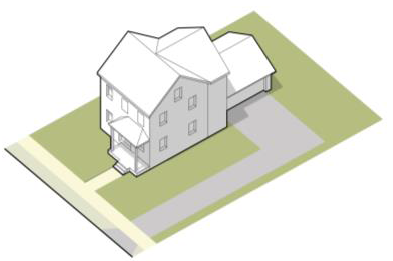 |
| Duplex/Multi-unit House A residential building designed to accommodate multiple dwelling units in an urban neighborhood or suburban setting. Unit configurations for Duplex - Suburban or Duplex / Multi-unit House may include "up/down," "side-by-side," "front/back," or variation based on context and frontage design. Homes may also be designed to have the scale and massing of a single detached house divided into multiple units. • Duplex - Suburban (2 units max) • Duplex/Multi-unit House (2-4 units) | 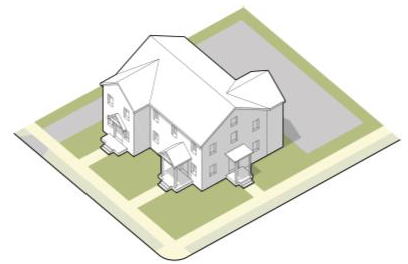 |
| Row House A residential building type designed to accommodate 3 to 8 dwelling units in an urban neighborhood or mixed-use setting. Each unit is separated by a common sidewall with a side-by-side configuration and each has its own private entrance. | 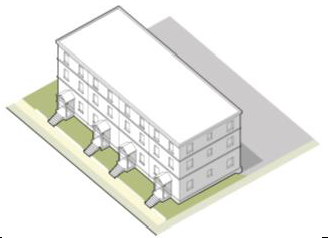 |
| Small Apartment A small-scale, multi-unit residential building designed on a small or moderate-sized lot in an urban neighborhood or mixed-use setting. The building is accessed by a common lobby entrance at building frontage and arranged to integrate into the block structure of a neighborhood with a variety of other small-scale residential building types. | 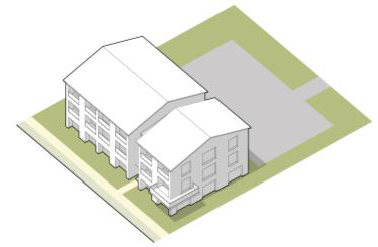 |
| Medium Apartment A moderate-scale, multi-unit residential building on a moderate-sized lot in high-density areas, corridors or mixed-use areas. The building is accessed by a common lobby entrance at the building frontage and arranged to integrate into the block structure of a neighborhood, typically as a transition to small-scale residential building types. | 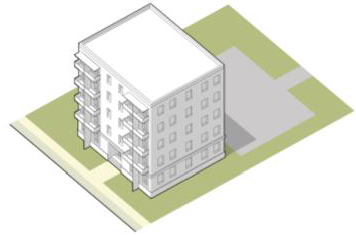 |
| Large Apartment A large-scale, multi-unit residential building on a moderate- to large-sized lot in high-density areas, corridors or mixed-use areas. The building is accessed by a common lobby entrance at the building frontage. It is appropriate in limited contexts where greater density or intensity supports broader planning goals for the area or neighborhood. | 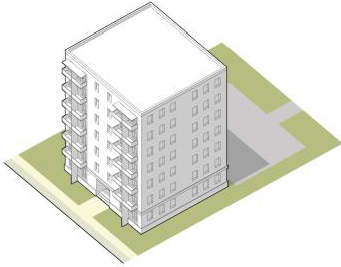 |
| Garden Apartment A grouping of small-scale apartment buildings in a common development, typically in a suburban context and arranged around an internal system of streets and other access ways, walkways and common open space. | 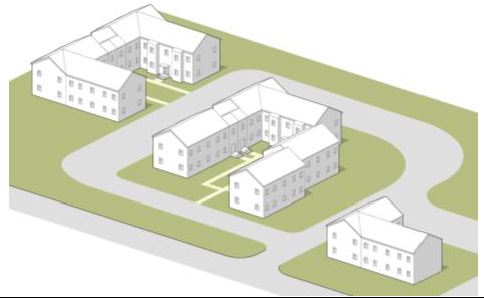 |
| Senior Living One building or a grouping of buildings in a common development providing senior housing and support for daily living (meals, housekeeping, nursing, security, personal care, transportation). These large buildings typically have a common lobby entrance. Parking for employees and residents is provided on site. Senior living facilities are appropriate in transition spaces between commercial uses and multi-family or single-family uses. | 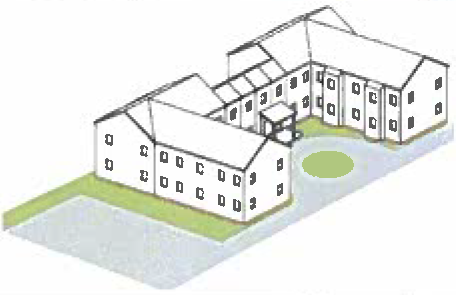 |
| Civic A building designed for a civic, institutional or public use, with building and site design that emphasizes the public realm through enhanced design and relationships to streetscape and open space. Variations include small civic buildings for integration into neighborhoods and mixed-use areas, as well as prominent civic buildings on larger grounds or in a campus setting, with specific patterns and scale based on the functions for the intended use. | 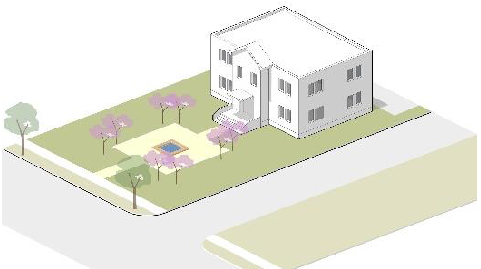 |
| Live/Work A building designed for a primary dwelling unit but has a secondary component - typically at the building frontage - designed for a commercial and occupational use by the resident. This building type is appropriate at transitions between neighborhoods and commercial centers or busier corridors, or integrated into mixed-use areas. | 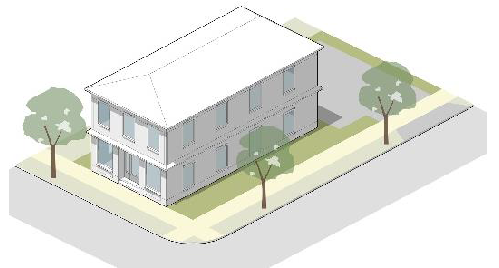 |
B.
Building Types and Development Standards. The development standards for residential districts shall be based on the different building types permitted in each district, as specified in Table 5-2, Residential District Building Type & Development Standards. The Design Standards in other sections of this article may further specify the design and location of each building type in a specific context.
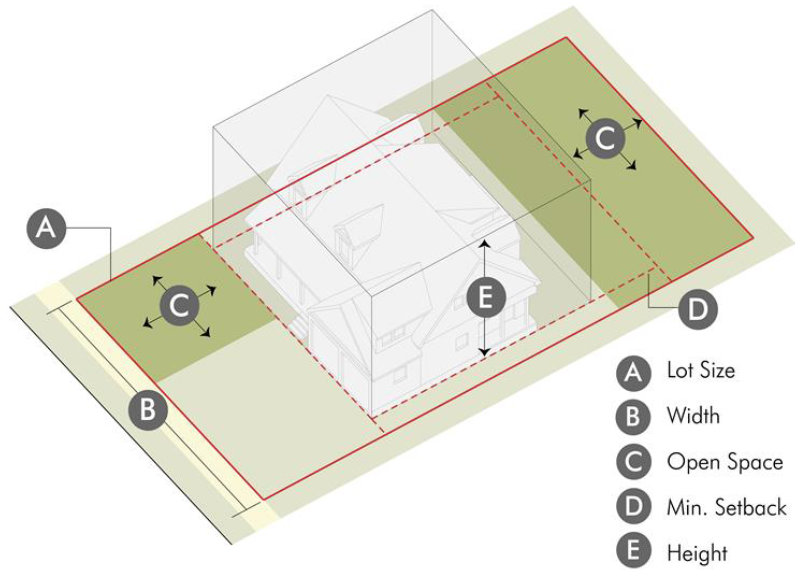 | Figure 5-1 Building Types Building types in Table 5-2 are distinguished based on lot sizes, unit configuration, building footprints and massing, building placement and frontage designs. This diagram illustrates the key elements standards in Table 5-2 applied to a typical lot. |
C.
Dimension Exceptions. The following are exceptions to setback and building dimensions standards established in Table 5-2: Residential District Building Type & Development Standards.
1.
Lot and Building Configurations.
a.
Row houses and side-by-side duplexes may have individual units platted on separate lots, provided the building meet the standards in Table 5-2 and each unit meets any per-unit or proportional standards for each lot. The lots shall be platted with a party wall as provided by the standards in the building code.
b.
Side lot easements may be granted in association with a plat between abutting lots to meet the lot open space requirements and design standards in Section 5.03. These easements may create the effect of zero lot line houses, provided the platted lot lines and buildings meet the standards in Table 5-2. Easements shall be private agreements and account for all access and maintenance scenarios for the lot, open space, and buildings.
c.
Shared access easements may allow driveways, common lanes or alleys to be located along private lot lines, and any limits to access widths in Section 5.02.D. may be apportioned among all lots sharing access.
d.
Lots may be configured in a Courtyard Pattern as provided in Section 5.05.
2.
Setback Encroachments. The following encroachments into the required setback are permitted, except in no case shall this authorize structures that violate the provisions of any easement.
a.
Primary entrance features may encroach beyond the required front building line, as specified in Section 5.04.C.
b.
Structural projections such as bay windows, balconies, canopies, chimneys, eaves, cornices, open fire escapes, egress wells, or other non-foundational overhangs or projections may extend up to 4 feet from the foundation and encroach into the setback, but no closer than 2 feet from any lot line. This exception shall be limited to no more than 20% of the surface area of a building elevation.
c.
Unenclosed and un-roofed decks or patios attached to the principal structure at or below the first floor elevation may extend into the rear or side setback up to 15 feet but no closer than 5 feet to any lot line.
d.
Ground-mounted mechanical equipment accessory to the building may be located in the side or rear setback provided that it extends no more than 6 feet from the principal building, no closer than 3 feet to the lot line, and is screened from public right-of-way by structures or landscape. These limitations do not apply to any utility structures otherwise authorized to be located according to easements or in the right-of-way, which shall follow the location and design standards of those specific authorizations.
e.
Any other accessory use or structure within the setback, not specified in Section 5.02.E, shall have a setback of at least 1/3 its height from the property line.
3.
Height Exceptions. The following are exceptions to the height limits in Table 5-2:
a.
Building elements integral to the design and construction of the building, such as parapet walls, false mansards or other design elements essential to a quality appearance of the building may extend up to 6 feet above the roof deck.
b.
Architectural features such as belfries, chimneys, ornamental towers and spires, and similar accessory features that a minimal part of the building footprint, massing and volume may extend up to 50% above the actual building height.
c.
Functional and mechanical equipment such as elevator bulkheads, cooling towers, smoke stacks, roof vents or other equipment may be built up to their necessary height in accordance with building codes.
d.
Any residential building fronting directly on civic or common open space, or fronting on blocks directly opposite of civic or open space, may be built to 45' and 3 stories.
D.
Frontage Design. The design of lot frontages establishes the relationship of buildings and lots to the streetscape, including building placement, lot access, and garage extent and locations. Buildings shall be placed in relation to the front lot lines established in Table 5-2 based on the frontage types in this subsection.
1.
Design Objectives. Frontage types shall be applied to meet the following design objectives:
a.
Enhance the image of neighborhoods by coordinating streetscape investment with private lot and building investment.
b.
Design frontages to the particular context of the neighborhood, block and street.
c.
Design frontages to limit areas designated for vehicles and provide visual interest using landscape design.
d.
Coordinate development across several lots, considering the cumulative impacts on streetscapes from access, parking, and landscape design.
e.
Orient all buildings and lots to the public street or to common open spaces that serve as an extension of the streetscape and public realm.
f.
Limit the extent of frontages and building facades designed for car access and emphasize the extent designed for social spaces and pedestrian access, particularly on narrower lots, walkable streets, or neighborhoods intended for more compact, walkable development.
2.
Applicability. The appropriate application of frontage types is based upon the character of the zoning district, the building type, and the streetscape design on which the development fronts. Table 5-4, Residential Frontage Types specifies the appropriate frontage type(s) for the residential zoning districts. Where multiple frontage types are permitted, the frontages should be similar for all lots on the same block face or gradually transition to different types on adjacent lots.
3.
Frontage Design Standards. Frontage types shall be designed according to the standards in Table 5-5, Residential Frontage Types & Design Standards.
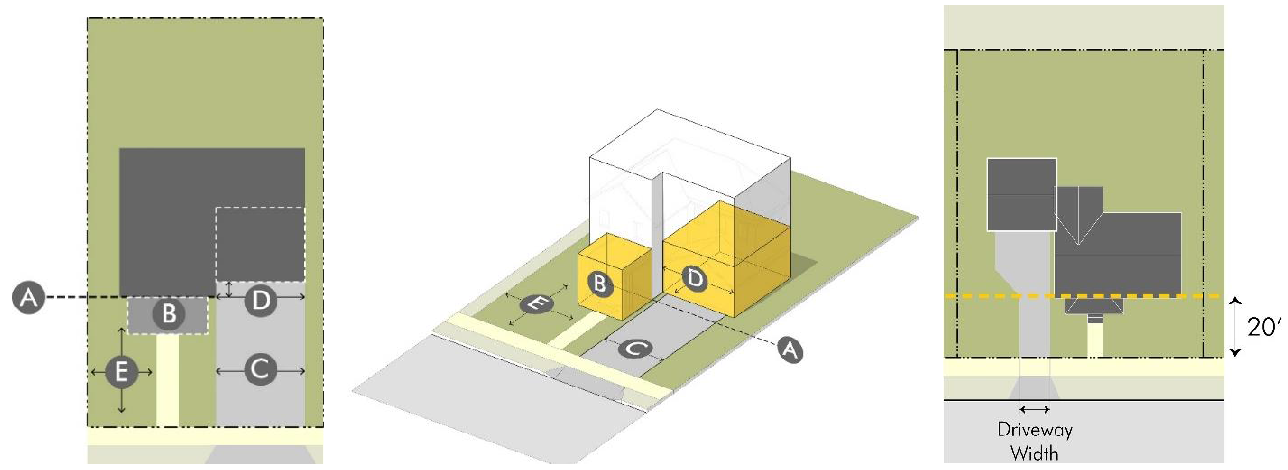
Figure 5-2 Frontage Design Standards
This diagram illustrates the key elements of frontage design—(A) front building line;
(B) front entry features, (C) driveway widths (applies to the first 20' of frontage
depth); (D) garage extent and location, and (E) landscape areas. These elements determine
the relationship between the building, the lot, and the streetscape, and affect the
character of the area when applied across multiple lots on a block.
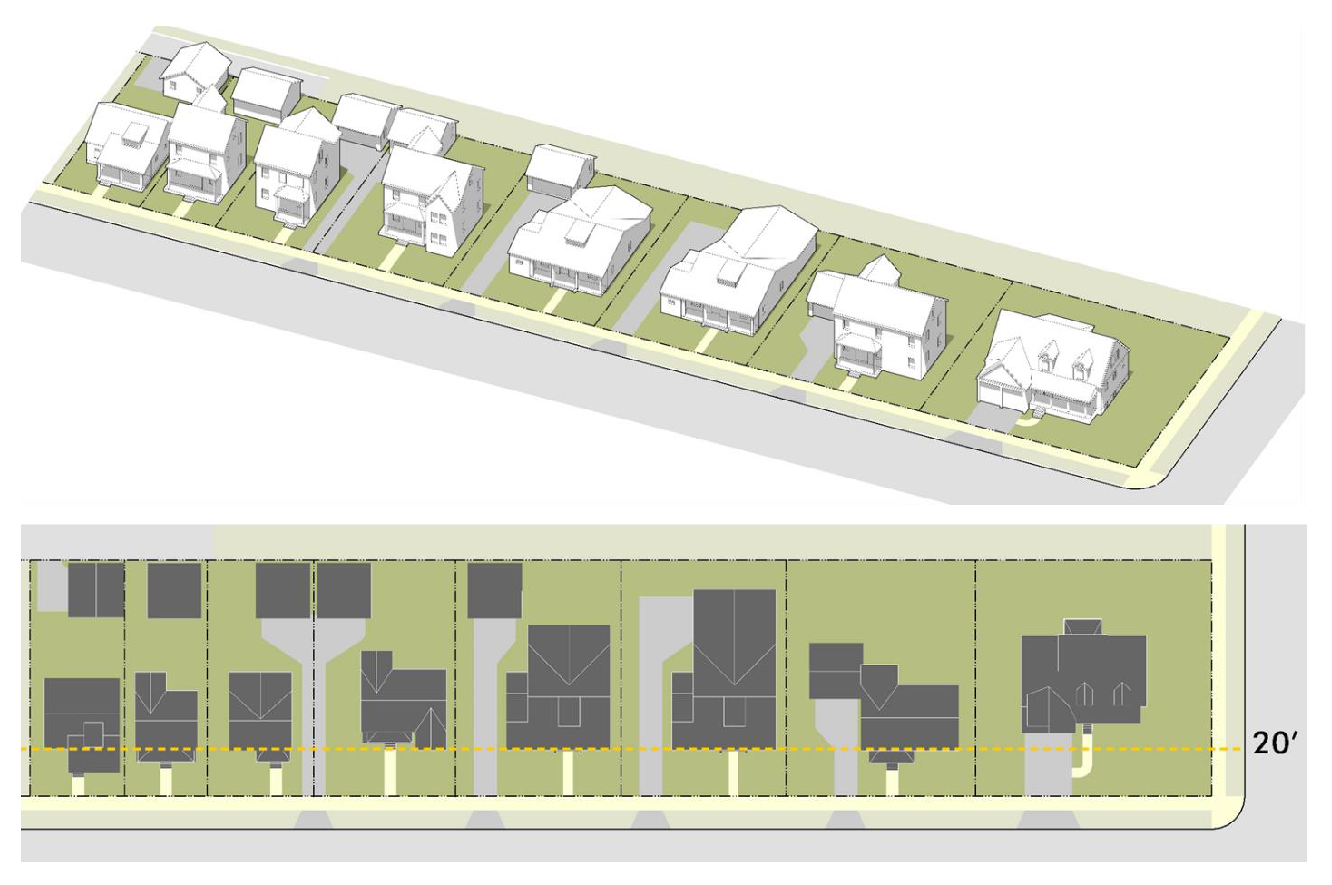
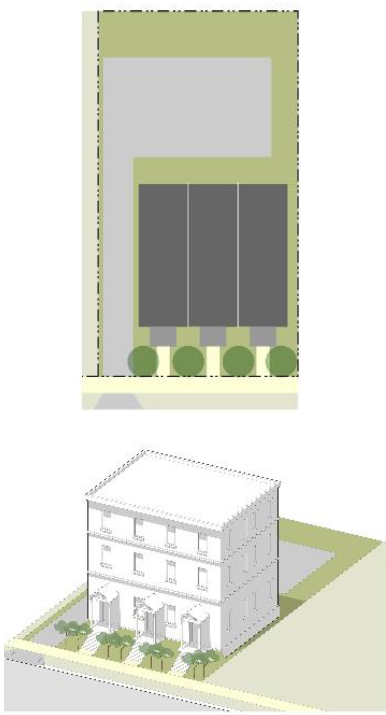
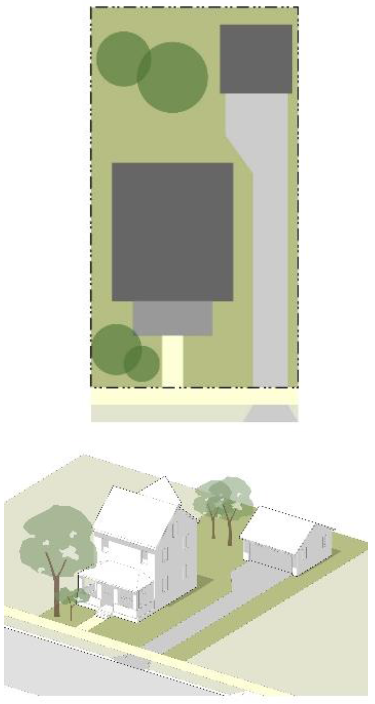
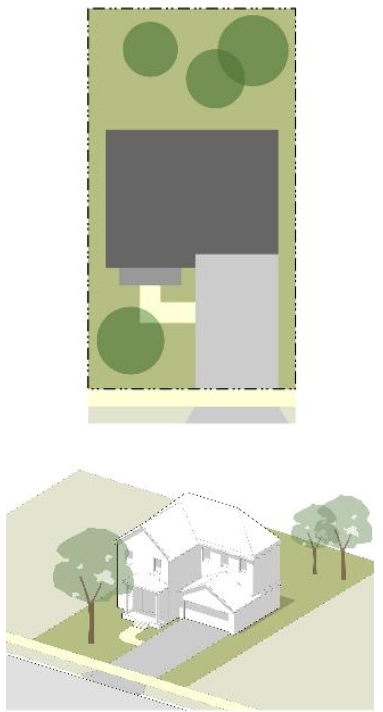
Figure 5-3 Residential Access Patterns
Frontage type standards are based on lot widths to recognize both the proportionate
and cumulative effect that frontage design elements have on a block. The more compact
and the narrower the lot, the greater impact access has on the frontage and streetscape.
In these situations, alternatives that limit the car-orientation of the frontage and
streetscape but still accommodate the convenience of access of vehicles, should be
used. In cases where access standards limit the access, narrower entries, shared drives,
common lanes or internal block alleys may be required.
| Table 5-5: Residential Frontage Types & Design Standards | ||||
|---|---|---|---|---|
| Frontage Element | Terrace | Neighborhood Yard | Suburban Yard | Buffer |
|
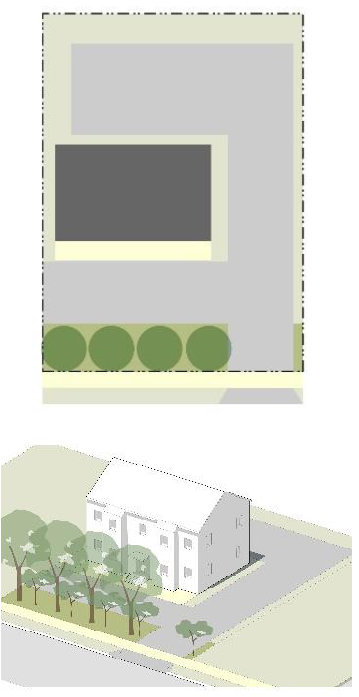
Description/Design
Objective | A shallow open area along a block face that creates a continuous landscape element across multiple frontages and enhances the tighter relationships of buildings along a streetscape, such as courtyards, gardens or small lawns. | A small to moderate open area with a building setback from the property line to create consistent landscaped area that emphasizes the buildings relationship to the streetscape and creates a consistent rhythm of building facades along a block. | A small, moderate or large open area with a building setback from the property line to create larger, uninterrupted landscape areas along a block. | A concentrated landscaped area used to soften, screen and separate the site and any potential impacts from the streetscape. |
| Front Building Line | 10'—25' |
25'—40'
15'—25', provided any front-loaded garage remains at least 12' back from the Front Building Line. |
25'+
15'—25', provided any front-loaded garage remains at least 12' back from the Front Building Line. | 30'+ |
| Front Entry Feature | Required, Section 5.04.C | Required, Section 5.04.C | Required, Section 5.04.C | Required, Section 5.04.C |
| Driveway Width (w/in first 20') [1] | 15% of lot width, up to 20' maximum | 20% of lot width, up to 20' maximum | 40% of lot width, up to 24' maximum | 25% of lot width, up to 30' maximum |
| Garage Limitations |
• No more than 40% of the front elevation.
• If between 30% to 40% of front elevation - at least 12' behind the front building line. • If less than 30% of the front elevation, at least 4' behind front elevation or 12' behind the front entry feature, whichever is greater • Otherwise, side-loaded, rear-loaded, or detached garages shall be used. |
• No more than 45% of the front elevation, except no limit applies for side facing
garages or front-facing garages setback more than 40' from front lot line.
• At least even with or behind the front building line, or 30' from front lot line, whichever is greater. • Where more than two front-loaded garage bays are allowed, the third bay should be off-set at least 2' from the two primary bays or individual bays shall be used. | ||
|
Landscape
(frontage areas) |
Allocation of space shall be:
• 70% to 90% landscape; and • 10% to 30% hardscape. | • Allocation of space shall be: • 75% to 100% landscape; and • 0% to 25% hardscape. | • 50% minimum landscape area. |
• Type I: 6' minimum buffer on local streets.
• Type II: 15' minimum buffer on collector streets. • Type III: 30' minimum buffer on sites over 3 acres or arterial streets. |
| See Section 8.02, Landscape Design for planting requirements. standards and specifications | ||||
| [1] Driveway width limits apply to the lot frontage. This limit shall apply to the first 20' of the lot depth (Figure 5-2). In cases where driveway width limits and garage limitations prohibit front-loaded garages and driveways on a particular lot, a range of alternative access patterns and garage locations should be used (Figure 5-3). | ||||
| Description/Design Objective | A shallow open area along a block face that creates a continuous landscape element across multiple frontages and enhances the tighter relationships of buildings along a streetscape, such as courtyards, or gardens. | A small to moderate open area with a building setback from the property line to create consistent landscaped area that emphasizes the buildings relationship to the streetscape and creates a consistent rhythm of building facades along a block. | A small, moderate or large open area with a building setback from the property line to create larger, uninterrupted landscape areas along a block. | A concentrated landscaped area used to soften, screen and separate the site and any potential impacts form the streetscape. |
 |  |  |  | |
4.
Exceptions. The Director may approve exceptions to the frontage type standards where:
a.
The specific standard is not practical due to the context and location of the lot or other similar physical conditions beyond the specific building and site not created by the landowner; or
b.
An alternative design equally or better meets the design objectives of this section; or
c.
In instances of infill development where clear pattern of existing buildings and lots on the same block and opposite block face present a different arrangement in terms of the front building line, driveway access patterns, and extent and placement of garages.
d.
In all cases the deviation is the minimum necessary to address the circumstance and does not negatively impact other design standards applicable to the building or site.
E.
Accessory Buildings—Residential. Accessory buildings shall be permitted in association with and on the same lot as a principal building. Accessory buildings do not include accessory dwelling units (ADUs) and shall not be used for residential occupancy. The different types of accessory buildings outlined in this Section are not mutually exclusive and are subject to the following additional limitations.
1.
Generally. All accessory buildings shall be at least 10 feet from the principal building, unless a lesser distance is specified by applicable building codes. Accessory buildings shall be clearly incidental and subordinate to the principal building or use, in terms of scale, location and orientation.
2.
Small Sheds. Accessory buildings 200 square feet or less, and less than 12 feet tall, shall be limited to:
a.
1 per lot or 1 per each 5,000 square feet of lot, whichever is more; up to a maximum of 3;
b.
Be located behind the front building line of the principal building.
3.
Open Structures. Unenclosed structures such as pergolas and gazebos not attached to the principal structure, 200 square feet or less, and less than 12 feet tall, shall be limited to:
a.
1 per lot or 1 per each 5,000 square feet of lot, whichever is more; up to a maximum of 3;
b.
Be located behind the front building line of the principal building.
4.
Accessory Building—Residential. In any residential district, accessory buildings over 200 square feet shall meet the following:
a.
No more than 1 per lot, except that the small apartment, medium apartment, large apartment, and garden apartment building types may have 1 per principal building.
b.
Located behind the front building line.
c.
Be at least 10 feet from the rear lot line, except that an accessory garage accessed from an alley may be set back 5 feet from the rear lot line.
d.
Be at least 5 feet from the side lot line, except that on corner lots, they shall have the same street-side setback as the principal building.
e.
Maximum height of 1.5 stories or no higher than the principal building, whichever is less. The following specific massing standards apply:
(1)
The first story wall height shall be no more than 10 feet above the finished floor, except that gables, dormers or other subordinate walls may support the roof structure.
(2)
The roof peak or other top of structure shall not exceed 24 feet above finished floor for pitched roofs with a 6:12 pitch or greater and no more than 16 feet for flat or shed roofs below a 6:12 pitch.
f.
Maximum size of 800 square feet or 10% of the lot area, whichever is greater, but no more than 1,600 square feet. However, the lot shall maintain the required lot open space standards regardless of the permitted principal and accessory building allowances.
g.
Be constructed with materials, architectural details and style, and roof forms that are compatible with the principal building as described in Section 11.02 Glossary of Architecture & Design Terms.
h.
Accessory buildings may be attached to the principal building by an open-roofed structure, an enclosed breezeway, or other manner that ensures it is clearly a secondary and subordinate mass from the principal building.
i.
Accessory buildings shall not be located within an easement area.
5.
Detached Building—Agriculture. Accessory buildings for agriculture purposes in the A/E, A/R and RE districts are permitted subject to the following:
a.
Setback. 30 feet, all sides.
b.
Area. 3,000 square feet maximum; 2,000 square feet RE.
c.
Height. 25', but 1' of additional height for each 2 feet of additional setback.
d.
Number. 1 per every 3 acres; up to 5 maximum.
6.
Detached Building—Civic Uses and Open Space. Accessory buildings for permitted institutional uses or public and common open spaces are permitted subject to the following:
a.
Setback. 30 feet, all sides.
b.
Area. 5,000 square feet maximum.
c.
Height. 25', but 1' of additional height for each 2 feet of additional setback
d.
Number. 1 per every 3 acres.
F.
Location Criteria for Limited Building Types. Buildings indicated as limited by location criteria in Table 5-2, Residential District Building Type and Development Standards (□) are intended to permit a mix of housing options within neighborhoods, specifically the R-1-B, R-2, and R-3 zoning districts. The location of these building types should be strategic based on patterns in the area and proximity to other neighborhood amenities. Unless otherwise located according to an approved subdivision plan, these types shall only be permitted according to the location criteria in Table 5-6 and Figure 5-4.
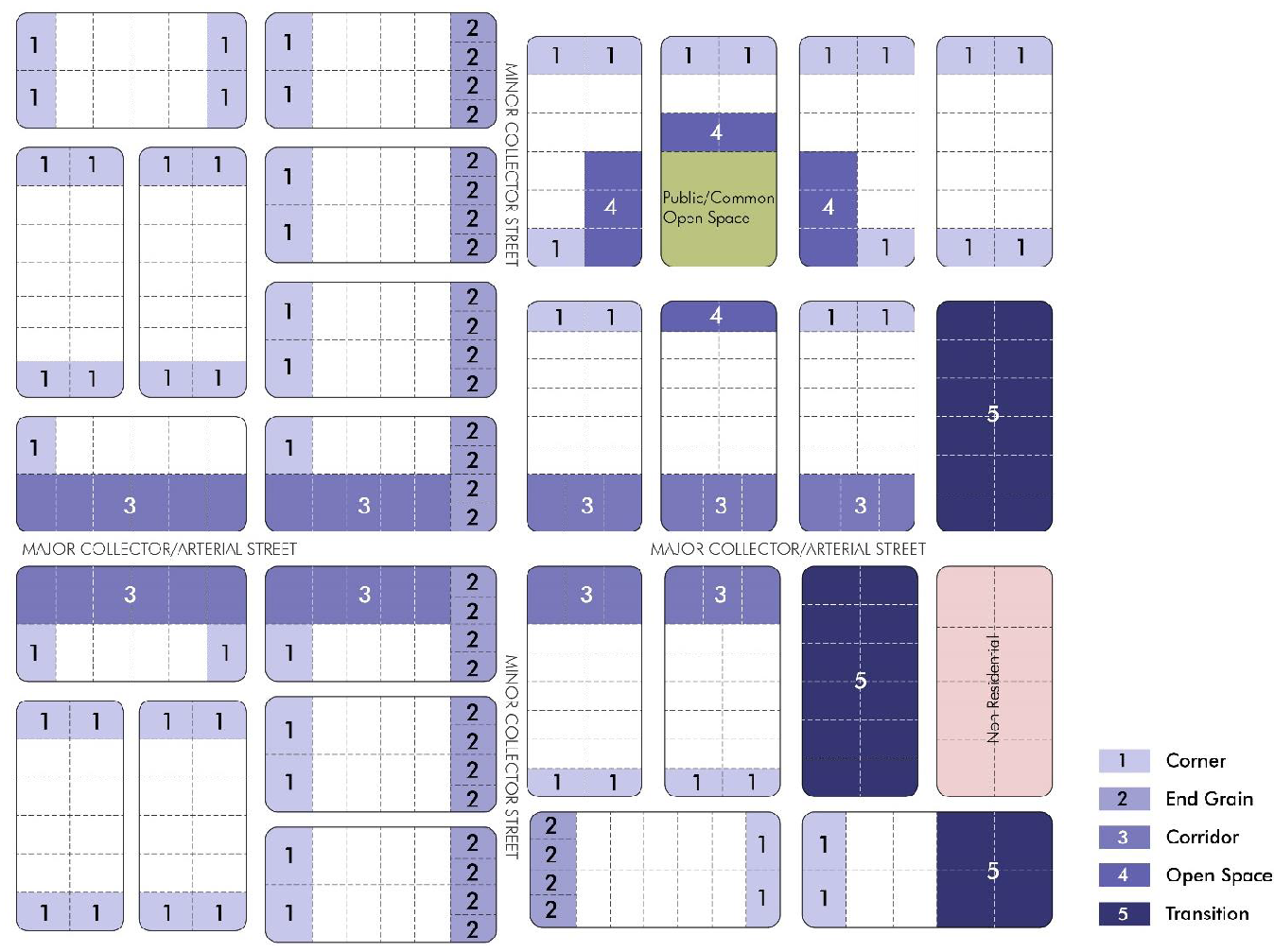
Figure 5-4 Location Criteria for Limited Building Types
The R-1-B, R-2, and R-3 zoning districts permit a variety of building types, some
of which should be placed in strategic locations based on the street type, the relationship
to open and civic spaces, and the context of the block and lot. This diagram illustrates
the location criteria from Table 5-6 for how to mix a variety of small scale, multi-unit
housing types into neighborhoods.
(Ord. No. 2405, §§ 1—9, 1-3-2023; Ord. No. 2438, §§ 2—4, 1-2-2024; Ord. No. 2462, §§ 6, 7, 12-17-2024; Ord. No. 2475, §§ 5, 6, 6-17-2025)
5.03 - Lot Open Space Design
A.
Design Objective. A system of different types of open spaces shapes the neighborhood character and creates unique identities for different neighborhoods. The following design objectives shall be used to apply the open space standards in this section.
1.
Promote the arrangement of neighborhoods, blocks and lots in a way that responds to the existing natural features.
2.
Ensure access to a variety of different types of open spaces including natural areas, recreation amenities and formal gathering spaces.
3.
Use open spaces to create gateways, focal points and transitions in coordination with the street network, block structure and lot arrangement.
4.
Consider how all unbuilt areas may serve as valuable neighborhood features, considering the aesthetic, ecological, recreation, or community serving potential of these spaces.
5.
Ensure that all lots and buildings have access and proximity to useable open space, whether public, common or private, and whether neighborhood-scale, block-scale or building- and lot-scale spaces.
B.
Required Site Open Space Each building type shall provide the lot open space specified in Table 5-2, (Lot Open Space) within the lot or project. Lots platted as part of a subdivision plan may credit common open space towards this requirement, provided it meets the following standards:
1.
The space is public or remains accessible to the public; or
2.
If private or common space, the lot applying the credit access to the space through ownership or other agreement, and the space is otherwise dedicated and reserved from future development.
3.
The space shall be on the same block or within 600 feet of the lot, and meet the design standards for one of the Open and Civic Space types in Section 3.02.
C.
Lot and Building Open Space Design. Lot open space required for each building type shall create a common or private amenity for the site and building. Buildings and open spaces on a lot shall be arranged to create usable outdoor spaces based on the following:
1.
The requirement shall ensure intact, useable outdoor spaces for active recreation or leisure activities. For multi-unit projects, the cumulative per-unit spaces may need to be consolidated for the building or project to result in usable space.
2.
Spaces less than 15' wide in any direction or private extensions of the unit (such as decks, patios, balconies or other similar private outdoor spaces) can only count up to 25% of the requirement. Any space shall be at least 8' in any direction and at least 100 square feet to count towards this requirement.
3.
The remaining 75% shall be open yards or opens space types meeting the type and design standards of Section 3.02.
4.
Proper design and location of the open space may allow these areas to meet multiple requirements, including building setbacks, landscape requirements, buffers or screening.
D.
Alternative Design. For the design standards in this Section 5.03, if the full extent of the design standard cannot be met, the Director may approve an alternative design that equally or better meets the design objectives or enhances another design standard of this section.
(Ord. No. 2405, § 10, 1-3-2023)
5.04 - Building Design
A.
Design Objectives. Building design refines the scale and form of buildings beyond basic height, setback and lot coverage standards. Design breaks down the building volume into smaller-scale masses, and it adds depth, texture and variation to surfaces, in a manner that improves the relationship of buildings to the lot, to adjacent lots and buildings, and to the streetscape. The following design objectives shall be used in applying the building design standards in this section.
1.
Relate buildings to public realm and streetscape in a consistent manner and create a rhythm of mass to voids from facades along the block face.
2.
Arrange buildings in a way that creates meaningful outdoor spaces on the site, with building designs that define and activate these spaces.
3.
Blend a variety of building sizes and types and create compatible transitions between adjacent buildings of different scale by mimicking similar massing and proportions of adjacent development with step-backs and secondary masses.
4.
Break down larger masses with human scale design features, particularly on facades along streetscapes and active open spaces, or nearest adjacent lots.
5.
Encourage unique architectural expression, and promote the use of key details and design characteristics inherent in the chosen style for the building.
6.
Promote enduring investments with the application of durable, quality materials.
B.
Building Design Standards. Table 5-7, Building Design Standards provides standards for massing and facade design to meet the design objectives. Subsections following the table provide specific design strategies and techniques to be used in meeting these standards.
| Table 5-7: Building Design Standards | |||
|---|---|---|---|
| Design Detail | Building Type | Detached House (all), Duplex, and Multi-Unit House | Row House, Apartment (all), Live/Work |
| Minimum window and door openings per story (includes decorative trim, molding and casing) | 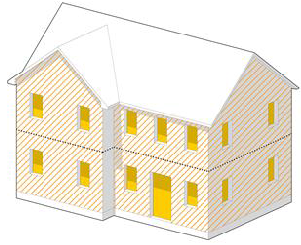 |
Front - 20% 1
st
story; 10% upper stories
Side - 8% Street-side: 15% Rear: 10% |
Front - 20% 1
st
story; 10% upper stories
Side - 8% Street-side: 15% Rear: 10% |
| Maximum wall plane, with no minimum modulation | 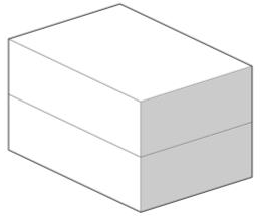 | 600 s.f., or 35 linear feet | 800 square feet, or 50 linear feet |
| Maximum wall plane, with at least 20% modulation | 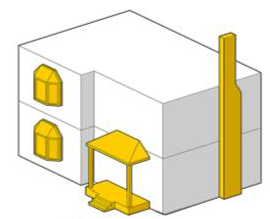 | 601 - 900 s.f., or 36 - 50 linear feet | 901 - 1,200 square feet, or 51 - 70 linear feet |
| Maximum building elevation without minimum 4' off-set on at least 25% of facade | 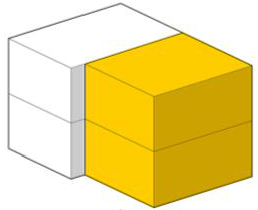 | 901 + s.f. or 51 + linear feet | 1,201 + s.f. or 71+ linear feet |
| Maximum roof plane limits without offsets, dormers or gables | 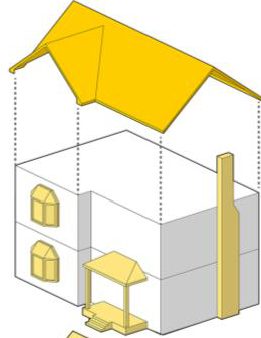 | 800 s.f. or 40 linear feet | 1,000 s.f. or 50 linear feet |
C.
Front Entry Features. Front entry features create a human-scale relationship of buildings to the street, provide opportunities for subtle variations in design between buildings along the streetscape, and can help create compatible relationships between buildings of different scale or size. The following entry features standards and design techniques shall be used where entry features are required by Frontage Types in Table 5-5, and are recommended on frontage types where they are optional to achieve the design objectives of this Section and to meet the standards of Table 5-7, Building Design Standards.
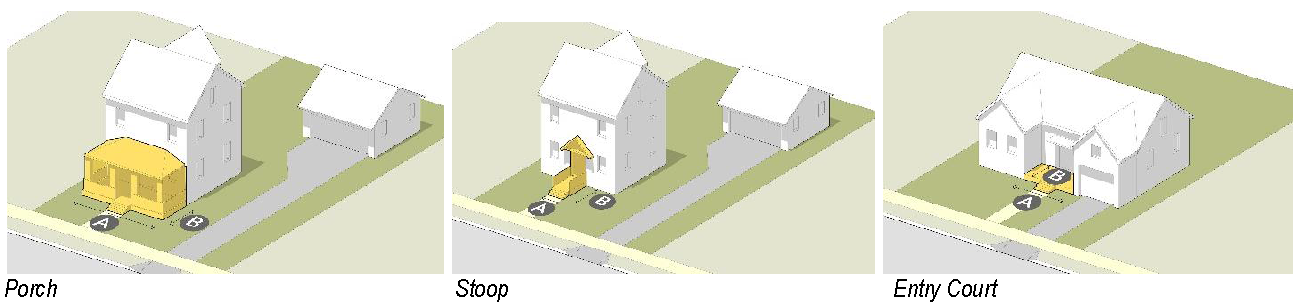
Figure 5-5 Front Entry Features—Types
The porch, stoop and entry court are three distinct types of entry features that
create active, social spaces and human-scale details on the residential frontages.
Spaces with a minimum width (A) and depth (B) specified in table 5-8 provide usable
social spaces, activate the streetscape and frontage, and contribute to the massing
and modulation required by the building design standards.
1.
Variations in the front entry features should create diversity among adjacent buildings along a block face, so that the same or similar entry feature does not occur within two buildings on either side. Variations should include combinations of at least two of the following changes:
a.
Different types: such as, porch, stoop, or entry court;
b.
Different roof styles: such as gable, hip, shed, flat, arched, or no roof;
c.
Different locations and extent: such as centered, shifted, wrapped and half or full; and/or
d.
Different ornamentation or architectural styles that lead to distinct qualities within a similar scale or pattern.
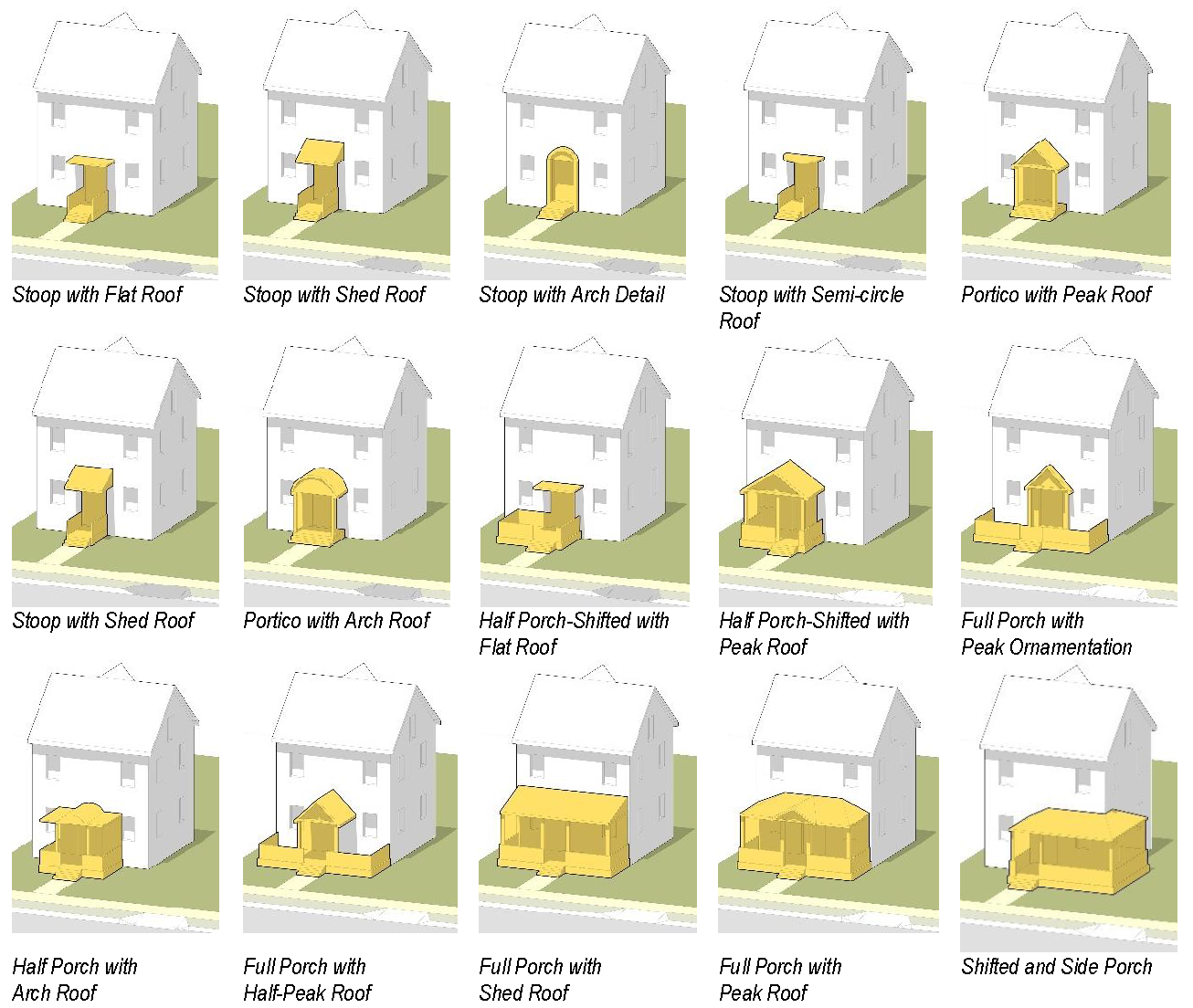
Figure 5-6 Primary Entry Feature—Variations
Options for primary entry features help avoid repetition building designs along a
streetscape and subtle variations allow consistent, human-scale relationships between
buildings and streetscapes. Various combinations of types, location and extent, and
design options (far beyond those even in this illustration) lead to unending diversity
in frontages within a consistent scale and pattern.
2.
Entry features meeting these design requirement may encroach up to 10 feet in front of the required front building line, but never closer than 5 feet to a public or common property line, provided they are unenclosed on all sides that project into the setback (no windows, screens or full walls).
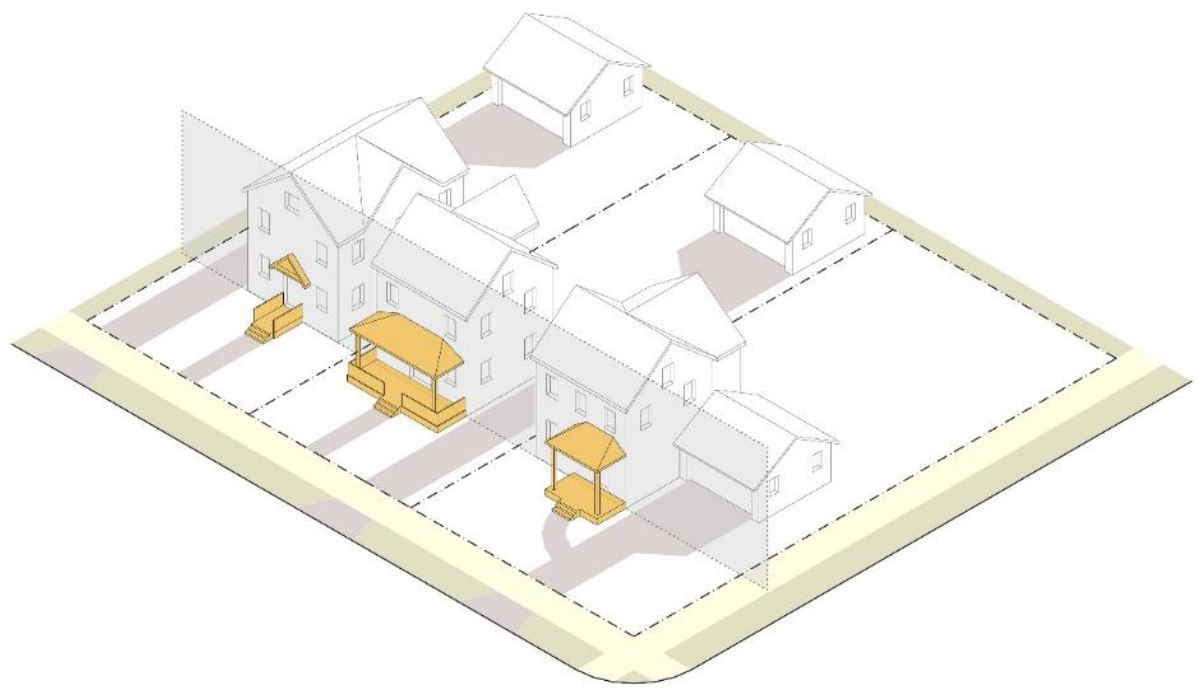
Figure 5-7 Primary Entry Feature—Encroachments
Front entry features meeting the standards of this section create social spaces that
help activate streetscapes, and create a variety of human-scale details along blocks.
These features may encroach into the front setback to improve the frontages along
blocks.
3.
Any building with more than 150 feet of front facade, or any side permitted greater than 200 feet and permitted within 20 feet of the street, shall have 1 entry feature for every 100 linear feet of building frontage on the street.
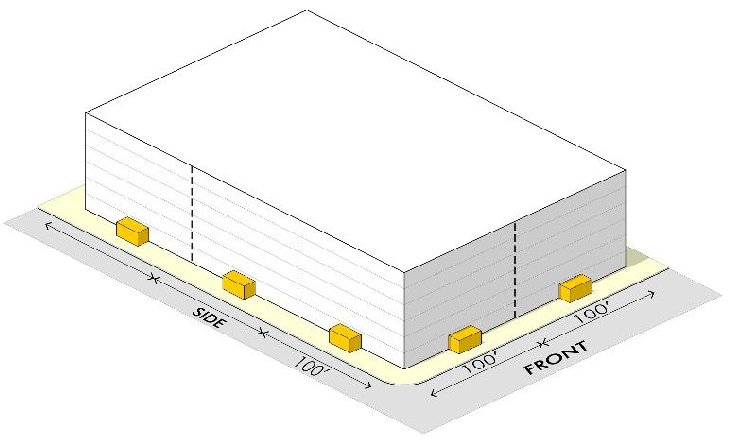 | Figure 5-8 Primary Entry Feature—Large Buildings Front entry features should be more frequently located on larger buildings with wall planes in close proximity to the street. This breaks up the building massing and activates the streetscape. |
D.
Massing & Modulation. Massing and modulation refers to the use of form and materials to break facades into smaller components and to relate buildings to the surrounding spaces. The following techniques should be to achieve the design objectives of this section and to meet the standards of Table 5-7, Building Design Standards:
| 1. | Step the height of the building mass, off-set secondary masses from main masses, and divide larger facades into smaller components with projections, recesses, and material changes and ornamentation. | 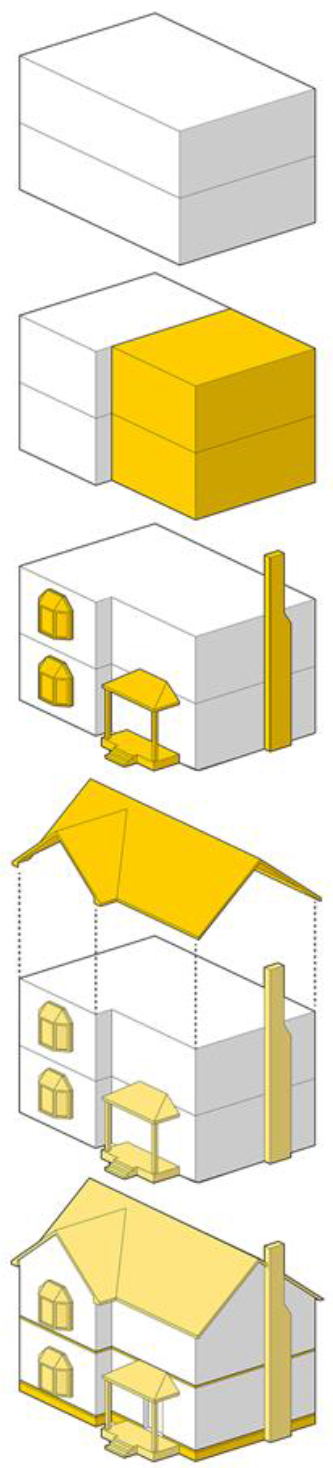 | |
| 2. | Modulation of larger wall planes should occur with features that create at least 2' of projection or relief, such as bay windows, chimneys, balconies and other similar projections and recesses. | ||
| 3. | When elevations become large and out of scale with the building or site, off-sets of at least 4' should occur to create main masses and secondary masses or to differentiate stories. | ||
| 4. | Articulate larger roof planes by stepping the roof at least 2 feet, using different material or ornamental details on wall planes within gables, using dormers with windows, and using prominent overhangs of at least 3 feet with decorative trim. These elements should occur so that at least 25% of the roof plane is differentiated as a distinct mass. | ||
| 5. | Provide porches, balconies and covered entries, and windows that accompany off-sets or projections in the facade, and relate the building to meaningful and human-scale outdoor spaces. | ||
| 6. | Differentiate stories, roofs, or other masses and components of the facade with prominent trim materials and incorporation of material changes on different modules of the building. | ||
| E. | Windows & Doors. The location, extent, pattern and proportions of windows and doors creates permeable facades that relate to and activate spaces. The following techniques should be used to achieve the Design Objectives of this section and the standards of Table 5-7, Building Design Standards: | ||
| 1. | Emphasize a hierarchy of doors with different levels of ornamentation and details, particularly where multi-unit buildings are designed to be compatible with adjacent detached houses. | ||
Figure 5-9 Massing, Modulation, Windows and Doors
A variety of design techniques can be used to meet the standards of Table 5-7: Building
Design Standards. These techniques break down the components of buildings to smaller
and human-scale details, and help relate buildings to the streetscape and to adjacent
property. These techniques are particularly important for larger buildings or where
a variety of building types are permitted in close proximity.
2.
Provide transparency with the location, pattern and proportions of windows and doors, and create relationships to surrounding public, common or social spaces.
3.
Locate windows strategically in relation to privacy concerns in adjacent spaces and buildings, but maintain consistent exterior patterns and recall that window treatments are a better adaptable and user-controlled strategy than simply no windows at all.
4.
Use windows and doors designed to create depth, texture and shadows on the facade - openings that have a deep recess (at least 3 inches); have projecting trim and casements (at least 1 inch off the facade and 4 inches wide); use multiple panes within openings; or have similar features, will break up facades and provide more visual interest.
5.
Incorporate visually significant windows and doors (size, orientation, and ornamentation) as points of emphasis at key locations on the facade.
F.
Materials. Building materials with texture and patterns create visual interest and signify quality construction and detailing. The following techniques should be used to achieve the Design Objectives of this section and the standards of Table 5-7, Building Design Standards:
1.
Use natural materials such as painted or natural finish wood siding (horizontal lap, tongue-and-groove, board and batten or vertical), brick, stone, stucco, ceramic or terra cotta tile. Synthetic alternates to these natural materials may be used if manufacturer specifications and/or precedents for application demonstrate that it will perform equally or better than the principal materials in terms of maintenance, design and aesthetic goals.
2.
Coordinate changes in color and materials in association changes in massing and modulation of the building.
3.
Use changes in color or materials to differentiate the ground floor from upper floors and the main body of the building from the top or roof-structure, particularly on buildings 3 stories or more.
4.
In multi-building projects, use subtle variations in building materials and colors on different buildings, within a consistent palette of materials and colors.
G.
Variations of Buildings. All projects involving three or more buildings shall provide variations in the elevation from the two buildings on either side, and the three buildings on the opposite side, with at least two of the following:
1.
Variations in the front entry features as indicated in 5.04.C.1;
2.
Variations in the facade massing and composition, including modulation, window types and placement, materials and material changes, details and ornamentation, or placement of garages in association with Frontage Type standards in Section 5.02.D, to the extent that the buildings have a distinct appearance;
3.
Variations of the roof forms considering the type of roof, orientation of gables, or use of dormers; or
4.
Variations of the model with distinctively different floor plans that lead to different massing. Mirror images of the same model and floor plan shall not count.
5.
In the case of multi-unit buildings:
a.
For duplexes/multi-unit houses that are intended to mimic the scale and form of detached houses, a hierarchy of doors and entrances shall be used to create the appearance of a single building, and the variation shall apply between buildings.
b.
For row houses and similar buildings that are clearly designed for multiple units, subtle variations in the materials and entry features that differentiate each unit shall also apply.
H.
Accessory Dwelling Unit (ADU) Design Standards.
1.
General Requirements.
a.
ADUs shall comply with the accessory dwelling uses Section 4.03 B.1 of this code and, except where specifically required herein, are not subject to Sections 5.03 Lot Open Space Design or Sections 5.04 A through G Building Design.
b.
ADUs are not Accessory Buildings nor subject to the requirements specific to Accessory Buildings - Residential in Section 5.02.
c.
Required building setbacks for ADUs shall be the same as those applicable to the principal building except the rear setback shall be 10 feet, or when attached to or within a detached garage accessed from an alley, the rear setback shall be 5 feet. In no case shall construction of an ADU decrease the minimum setbacks applicable to the principal building.
d.
An ADU shall be clearly subordinate to the principal building in terms of scale, location, and orientation.
e.
An ADU shall have its own exterior entrance, except an attached or internal ADU may share an exterior entrance with the principal building or an accessory building provided that each unit has a secure entry door at a common hallway and the common hallway leads directly to the exterior of the building.
f.
The exterior entrance leading into an ADU or into a common hallway serving an ADU shall have an entry that relates the ADU to its access point on the lot.
g.
Exterior stairways leading to an ADU entrance shall not exceed 1 story in height.
h.
ADUs shall not exceed 2 stories or 35 feet in height.
i.
ADUs shall be affixed to a permanent engineer-designed foundation.
2.
A detached ADU shall:
a.
Be limited to an above-grade living floor area not exceeding the above-grade living floor area of the principal building and shall not exceed 1200 square feet; and
b.
If served by an alley, be accessed from the alley (the Director may allow access to the ADU from the side street on corner lots).
3.
An ADU attached to the principal building shall:
a.
Be limited to an above-grade living floor area not exceeding the above-grade living floor area of the principal building and shall not exceed 1200 square feet;
b.
Comply with Section 5.04 of this code; and
c.
Without applying a higher standard than that in place for the principal building, be designed to maintain the architectural design, appearance, and character of the principal building, including similar massing, scale, and story height.
4.
An ADU located within the principal building, such as within a basement, shall be limited to the spatial constraints of the principal building and shall not exceed the living floor area of the remainder of the principal building.
5.
An ADU addition to or alteration within an existing accessory building shall comply with the requirements for a detached ADU, and the overall building shall not exceed 2 stories or 35 feet in height.
I.
Exceptions. The Director may approve exceptions to the building design standards where:
1.
The requirement is not consistent with the particular architectural style of the building based on reputable resources documenting the style;
2.
The requirement would make the building less compatible with designs or characteristics of other buildings or sites in the area; or
3.
An alternative design equally or better meets the design objectives of this section.
4.
In any case, the deviation is the minimum necessary to address the circumstance and does not negatively impact other design standards applicable to the building or site.
(Ord. No. 2405, § 11, 1-3-2023; Ord. No. 2475, §§ 7, 8, 6-17-2025; Ord. No. 2494, § 1, 2-3-2026)
5.05 - Courtyard Pattern
A.
Design Objective. A courtyard pattern can integrate multi-building projects into the neighborhood pattern by connecting formal open space to the street frontage. It is an effective infill strategy or is appropriate on deeper lots and blocks. Residential buildings and lots may be designed to front on a courtyard based on the design standards in this section.
B.
Applicability. The courtyard pattern is appropriate where:
1.
Courtyards are visible and designed as an extension of the public streetscape and open and civic space system for the neighborhood.
2.
Blocks and surrounding lots are deep, allowing a different configuration of buildable lots; or
3.
Other developed areas where existing lot patterns in the vicinity warrant use of this pattern to facilitate infill development and compatible building types.
C.
Eligible Building Types. The following building types are eligible for this pattern, subject to the limitations stated:
1.
Small Apartments, up to 5 buildings or 36 units, whichever is less.
2.
Row Houses, up to 4 buildings or 24 units, whichever is less.
3.
Duplex/Multi-unit Houses and Detached Houses, up to 6 buildings.
D.
Design Standards and Exceptions.
1.
The minimum lot size per building may be reduced up to 30%, provided the courtyard is owned in common by all lots or otherwise established as a shared-space amenity.
2.
The courtyard shall be designed according to the standards in Section 3.02 and have frontage on a public street.
3.
Lots may front on the courtyard, rather than along a street.
4.
The front setback may be reduced to 5 feet from the courtyard boundary.
5.
Any buildings fronting on the street, or the sides of any buildings adjacent to the street shall still meet requirements for public frontages and orientation standards in this section.
6.
Driveways, parking and garages may be shared among all buildings, and shall be designed and located so that the frontage-type standards in Section 5.02.D are met for both the project frontage along the streetscape and for each lot or building sites frontage along the courtyard.
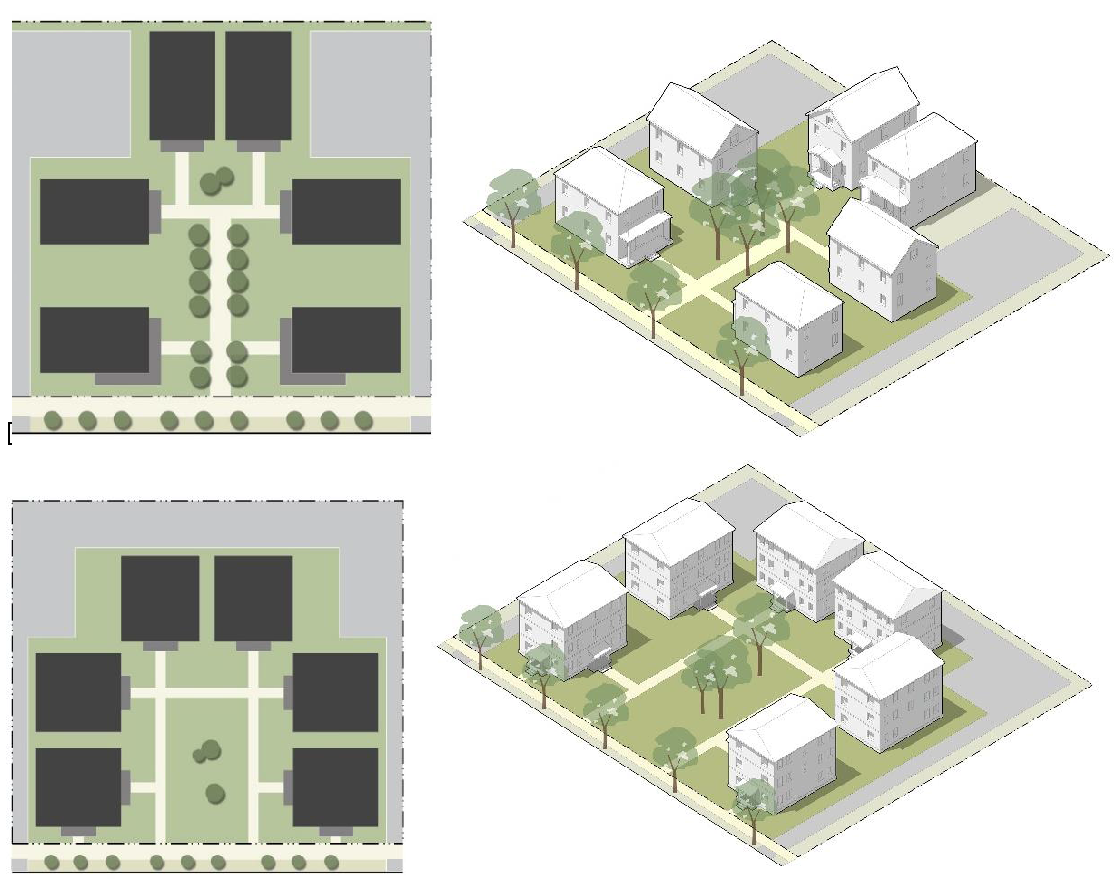
Figure 5-10 Courtyard Patterns
The courtyard pattern allows for a different configuration of buildings in specific
contexts. The pattern arranges buildings on smaller lots with a common frontage on
the courtyard. The courtyard and the front corner buildings provide the streetscape
frontage for the pattern, and vehicle access is shared and limited to more remote
or discrete portions of the project.
5.06 - Conservation Pattern
A.
Design Objective. Residential lots and buildings may be arranged around an open space system or areas that have the opportunity to preserve greater amounts of intact open and natural spaces or agricultural uses that are designed as focal point of the neighborhood design and community amenity.
B.
Applicability. The conservation pattern is appropriate in more remote areas, and specifically is eligible in the A/R, A/E, or RE zoning district. It requires a planned development application as outlined in Section 2.04.
C.
Density Bonus. The base density and open space required shall be based on a typical and practical layout according to the underlying zoning district (A/R, A/E, or RE). The following density bonus may be granted based on the amount of additional intact open space to be preserved in the plan. The "bonus" units shall not require additional open space, other than the space specified in Table 5-9.
D.
Lot Sizes & Building Types. The resulting density based on the plan after the density bonus is applied may be allocated in the developed portion of the project with the following building types. No combination of these building types may be used to allow more units than authorized by the density bonus. All other standards applicable to each building type in Table 5-2 shall apply within the developed portion of the plan.
1.
Detached house - rural, suburban, neighborhood or city lot
2.
Duplex/multi-unit house
3.
Row house
E.
Open Space. Open space shall meet the design criteria of Section 3.02 for Preserves, Park or Trail Corridor, or include prime farm land or other existing and productive agriculture lands designed to be a focal point and community amenity for the neighborhood. All lots shall have access to the public or common open space preserved as part of the plan within 1,000 feet, measured along pedestrian routes.
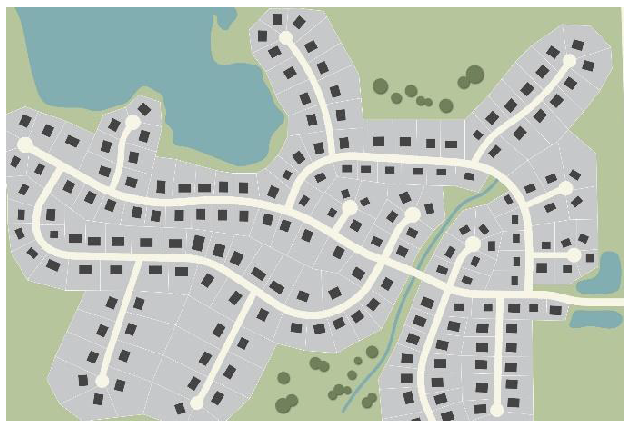 Conventional Pattern Conventional Pattern | Conservation Pattern |
Figure 5-11 Conservation Pattern
The conservation pattern allows both a greater number of units and a greater concentration
of those units in exchange for greater quantities and more coordination of larger
open spaces such as Natural Preserves or Agriculture Preserves.
(Ord. No. 2405, § 12, 1-3-2023)
5.07 - Manufactured and Small Format Housing District
A.
Intent. The intent of this section is to provide smaller sized detached housing that includes manufactured, mobile, or small format homes within a community that includes common amenities and promotes development patterns that are compatible with the surrounding area. Small format homes may be tiny homes as defined by Colorado Revised Statute, modular homes, or conventional site-built homes in an MH zone district and are generally less than 1200 square feet in floor area, although are not restricted by this code to any minimum or maximum size.
B.
Applicability. Manufactured and small format home communities are permitted in the Manufactured and Small Format Housing District - MH and are allowed as a planned development project according to Section 2.04. These standards shall not apply to: (1) trailers, park models, recreational vehicles, or similar units used as a temporary place of business associated with a permitted and active construction project; (2) interim or temporary shelters designated by a governmental authority's declaration of emergency; or (3) manufactured homes located in zone districts other than MH (see Section 4.04.B). Mobile homes are allowed only where they were legally operating prior to January 1, 2020, and are not allowed in new MH zone district developments or in new planned developments.
C.
Development Standards.
1.
Project Size & Intensity:
a.
The minimum project area shall be at least 20 acres with a minimum frontage of 500 feet along an arterial street. Except, the Director may recommend a plan for as small as 3 acres and 100 feet of public street frontage if the plan demonstrates exceptional community design and layout for the common areas within the community, a high-quality and well-designed housing concept, and special attention to integrating and relating the project to surrounding areas.
b.
The maximum project intensity shall be no more than a minimum of 2,000 square feet per dwelling unit, including any common areas and internal circulation systems supporting the community.
c.
All structures, whether dwellings or accessory buildings, shall be setback at least 50 feet from any highway or arterial street and at least 30 feet from any other project boundary.
2.
Uses. In addition to any uses enabled for the MH district in Table 4-2, projects may include the following specific uses:
a.
Detached dwelling units consisting of manufactured homes, mobile homes in place prior to January 1, 2020, or small format homes.
b.
Accessory buildings and uses incidental to those listed above and which support the residential community, including offices, recreation buildings, storage areas, maintenance and utility facilities, or other community services.
3.
Height. The maximum structure height is 35 feet.
4.
Home sites. Except as otherwise modified through a development plan that better meets the intent and design objectives of this section, all home sites shall meet the following:
a.
The minimum area for an individual home site shall be 1,000 square feet, and all home sites shall front on a public street or private internal access street, or front on common space with street access at the rear of the home site.
b.
Dwellings shall have the following minimum setbacks from the lot or home site boundary:
(1)
Front. 18 feet from street edge, except home sites fronting on courtyards or other civic space of the Common Area plan may have dwellings located at the front lot line.
(2)
Side. 5 feet; 10 feet on corner lots.
(3)
Rear. 10 feet, except home sites backing to buffers, common open space or alleys may have a 5-foot rear setback.
(4)
Other. All dwellings shall have at least 12 feet between other dwellings, or at least 30 feet between the dwelling and accessory building, except sheds or accessory structures serving the home site.
c.
Each home site shall have a private patio, courtyard or similar outdoor amenity of at least 150 square feet. Any structure associated with this outside amenity may be located within 5 feet of the lot or home site boundary.
d.
Each home site may have an accessory storage building up to 160 square feet, up to 8 feet tall. The accessory storage building shall be set back at least 50 feet from any public or internal street, or behind the dwelling unit. Accessory buildings shall be separated by at least 5 feet from any other structure.
5.
Parking Standards. Each home site shall have at least one (1) on-site or on-street parking space, or alternatively, a parking space may be in common lots within 300 feet of each dwelling unit. The project as a whole shall include 1.5 spaces per dwelling unit within the overall project to accommodate any overflow or visitor parking. Parking spaces on a home site shall be located to the side or rear of the dwelling. Home sites may include a carport, provided it remains open and unenclosed on at least 75% of the perimeter, is no taller than the dwelling unit, is no larger than 480 square feet, and in no case larger than the dwelling unit.
D.
Common Areas. All common areas not dedicated as home sites according to the development standards in sub-section C, shall be designed as part of the public realm for the plan (See Section 2.04.B.3, Planned Development procedures, Subdivision Plan / Public Realm). This space shall be allocated to:
1.
Internal vehicle circulation for the community, laid out to provide connectivity and continuity through the community and organize the project into blocks and lots so that all home sites and lots are served by streets. There shall be at least 2 entrance points from public streets for each project.
2.
Open and Civic Space meeting one of the design types specified in Section 3.02 at a rate of at least 200 square feet per dwelling or 15% of the overall project, whichever is greater. All open and civic spaces shall be designed and located in a manner that ensures adequate accessibility for all units in the community.
3.
At least one of these spaces shall include a clubhouse, which is centrally located, for recreation and meeting functions, laundry facilities, or other common amenities. The clubhouse shall be at 2,500 square feet, or 10 square feet per dwelling unit, whichever is greater.
4.
Other internal circulation or open space such as walkways, landscape buffers or other site design amenities that improves the quality of the community and its relationship to surrounding areas. Pedestrian connections shall be accounted for on all streets or at greater intervals through a trail or path system.
5.
A storm shelter shall be provided which may be included with the clubhouse.
6.
A common storage and utility area shall be provided within the plan including at least 100 square feet per unit. This area may be used for storage of large equipment, recreational vehicles, maintenance or other utility functions for the community. This area shall be screened from the project and from surrounding property according to the buffer standards in Article 8.
E.
Building Design.
1.
All dwellings shall:
a.
Have a primary entry element, such as a porch, stoop, or patio relating the home to the lot frontage or other common open space upon which the dwelling is located.
b.
Bear on structural members or a permanent foundation and be secured to the ground according to an engineer's design that meets the requirements of the current applicable building codes.
c.
When not installed on a continuous foundation, be skirted within 14 days after placement by enclosing the open area under the unit with a material that is compatible with the exterior finish of the home.
d.
Be located on an improved surface designed to prevent vegetation growth.
2.
Manufactured homes shall have documentation of the home's HUD certification.
F.
Landscape and Parking Design. The standards of Articles 7 and 8 are applicable to MH district developments, except as otherwise required in this Section 5.07.
G.
Utilities and Services.
1.
Utilities shall be provided to each home and shall comply with City code requirements.
2.
Impact fees applicable to detached homes shall apply to each home.
3.
The storage, collection, and disposal of refuse shall be managed to avoid health hazards, rodent harborage, insect breeding areas, accident hazards, air pollution, or other conditions which may endanger health, safety, or welfare of the community. Refuse collection containers shall be set on concrete pads.
H.
Subdivisions. Each home site may be individually platted if:
1.
All lots have public utility access as provided in Article 3, including public easements for access to each home site, and all other standards and criteria of the subdivision standards are met;
2.
All dwellings are secured to a permanent foundation; and
3.
There are covenants, restrictions, and associations assuring that these provisions for the Development Standards, Common Areas, Building Design, and Utilities and Services, as demonstrated on an approved plan, will be maintained through a management entity or common association.
I.
Mobile or Manufactured Home Park Legally Operating Prior to January 1, 2020. Buildings constructed in mobile or manufactured home parks that were legally operating prior to January 1, 2020 shall meet the following standards:
1.
Home Sites.
a.
The minimum home size shall be 650 square feet.
b.
The maximum home height shall be 16 feet.
c.
The minimum distance between homes shall be 15 feet, including covered decks or patios.
d.
The front of a home (entrance side) shall be a minimum of 18 feet from the curb.
e.
The side of a home shall be a minimum of 4 feet from the curb.
f.
A covered deck or patio shall be a minimum of 10 feet from the rear of the home site boundary or lot line.
g.
Homes shall not block access to the utility pedestal. The minimum distance between a home and a utility pedestal shall be 4 feet.
2.
Carports.
a.
One (1) carport shall be allowed per site, not to exceed 600 square feet in size.
b.
Carports shall be allowed with a 3-foot front setback.
c.
Carports shall be open on all sides, with the following exceptions:
i.
Open-faced lattice is allowed on 2 sides.
ii.
A permanent locked storage unit may be built on 1 side of the carport so long as the unit does not interfere with the parking of cars. The unit shall be built according to current applicable codes and regulations and shall not exceed 100 square feet in size.
d.
Carports shall not exceed the height of the home and must have a similar roof pitch.
(Ord. No. 2405, § 13, 1-3-2023; Ord. No. 2475, §§ 9—13, 6-17-2025)
5.08 - Community Benefit Incentives
A.
Design Objective. Community Benefits Incentives have the following design objectives:
1.
Ensure that housing for different stages of life are integrated into neighborhoods in a manner that provides the opportunity for aging populations to participate in activities of the broader community.
2.
Provide a wide variety of price points within neighborhoods such that entry-level and move-up housing options are available to meet housing needs, and neighborhoods are more resilient to changing demographic or economic conditions.
3.
Meet housing needs for populations earning below the median income.
4.
Disperse and diversify a variety of housing types, including community benefit housing, throughout the community and in some cases within neighborhoods.
B.
Applicability. This section offers guidance to meeting broader city-wide housing policies and achieving regional housing benchmarks. It is primarily guidance for potential incentives when projects achieve critical benchmarks when analyzing projects within their surrounding context, or for projects with significant capacity and critical mass of units that could meet them within the project.
C.
Accessibility, Diversity and Affordability Thresholds. The following are thresholds for housing mixes that achieve the design objectives and provide a mix of accessible and affordable housing.
1.
Accessible Housing. Within a neighborhood (or approximately ½-mile area), or within a specific project proposing accessible housing, at least 10% of total units should be accessible. Accessible units may be reduced to 5% of the total if at least 10% percent are visitable or constructed under a universal design standard. Accessible units shall include:
a.
At least one external entrance at grade or accessible by wheelchair. Note front entry features meeting the design standards should integrate access ramps in subtle ways that meet the streetscape design objectives, and these strategies may be justifications for deviations to the frontage type and entry feature standards. Additionally side or rear at grade access, or access with lifts may be acceptable if it has the same convenience relative to the overall site layout.
b.
The main floor has at least 1 bedroom and a laundry and bathroom.
c.
The floor plan and unit design has all doorways at least 3 feet wide,
d.
Fixtures and service areas with grab bars, light switches, thermostats and other environmental controls are placed in accessible locations.
e.
Other features that are wheelchair compatible for routine daily living as may be recommended by the latest version of the American National Standards for buildings and facilities providing accessibility and usability for physically handicapped people.
2.
Diverse Housing. Within a neighborhood (or approximately ½ mile area), or within a specific project proposing attainable housing, there should be a diversity of housing stock to meet different housing needs, different demographic preferences and different price points. Diverse housing should include:
a.
At least 4 distinct housing types within the neighborhood. Each category should be at least 10% of the overall mix and no single type should be more than 60% of the overall mix.
b.
At least 3 different price points, one of which is considered "attainable." Unless specifically defined in an official report or study, attainable is generally housing that is available to households between 80% and 100% of the area median income, through financing or rent that is no more than 40% of that monthly income. At least 25% of the mix should be "attainable."
c.
Different types should be integrated into a neighborhood pattern so that all housing has access to the same level of amenity and quality of neighborhood design.
3.
Affordable Housing. Within a neighborhood (or approximately ½-mile area), or within a specific project proposing affordable housing, at least 15% of total units should be affordable. Affordable units shall include:
a.
Units meeting the parameters for household size, income levels and a maximum housing expenditure defined by the City Council.
b.
The City Council may determine that this criteria is met by projects with a wide variety of price points and housing types in the same project or neighborhood, in a manner that adequately supports entry-level, market rate housing, and where no housing type comprises more than 30% of units in the entire project.
c.
A statement shall be included with market research, applicable price points of units and housing types in relation to that research, and a strategy to ensure that the units are developed in a manner to hit various price points and affordability thresholds shown in the data and market research.
D.
Incentives. Projects meeting these thresholds may receive the following incentives, in addition to any additional incentive defined by official policy or project-specific approval of the City Council.
1.
A density bonus of at least 15% in units above what is allowed for the district or building type; with site plan review by the Planning Commission and City Council, this increase may be up to 25%.
2.
An increase in the allowed building height of up to 2 stories; however, additional setbacks or step-backs of upper stories may be required.
3.
Reduction in the open space requirements or fees by 20%; with site plan review by the Planning Commission and City Council, this may be reduced further up to 50%.
4.
When any of these incentives are used in combination, the project shall require Planning Commission and City Council review of the application.
5.
If incentives are granted for a mix of attainable housing, the City may require by contract or other restriction that assures for specific thresholds for accessible, attainable or affordable housing are met.
E.
Accessibility Requirements. Accessible housing units shall be provided for all residential developments containing duplexes, multi-unit houses, row houses, apartments or mixed-use residential buildings. The rate of accessible units shall be 1 accessible unit for every 7 units in the development. Any phasing of construction shall not affect the required accessible housing ration.
5.09 - Common Ownership Pattern
A.
Design Objective. A common ownership pattern allows multi-building projects with a variety of building types to be developed on one lot. It is an alternative to a traditional subdivision where each unit is located on an individual lot. A common ownership pattern development shall be designed similar to a traditional neighborhood but at the density of a multi-family district, and with at least one community amenity for on-site recreation and access easements for roadways. Parallel parking is preferred along roadways but other parking configurations may be allowed, subject to approval by the Director.
B.
Applicability. The common ownership pattern is appropriate in the R-2, R-3, MU-NC, and MU-CC zoning districts.
C.
Eligible Building Types. When developed in the common ownership pattern, the following building types are specifically permitted in the R-2, R-3, MU-NC, and MU-CC zone districts. The building types are subject to the locational criteria found in Articles 5 and 6 of this Code.
1.
Detached Houses.
2.
Duplex—Suburban.
3.
Duplex/Multi-unit Houses.
4.
Row Houses.
D.
Design Standards and Exceptions.
1.
The building types in Section 5.09 C. may be constructed within one common ownership pattern development and shall meet the building design standards in Section 5.04. A clubhouse and/or leasing office is permitted in the common ownership pattern and shall meet the standards in Section 4.03 K.
2.
The minimum lot size for the common ownership pattern is 5 acres. The minimum lot width for the common ownership pattern is 200 feet.
3.
The minimum lot size and width per building type as stated in Table 5-2 shall not apply to common ownership pattern developments.
4.
The lot open space per building type shall be increased by 50% to provide adequate on-site recreational amenities. At least 75% of the lot open space for the development shall be provided as a common amenity for the development. The amenity provided is in addition to the per unit parks and open space dedication requirements. The amenity shall take the form of at least one of the following:
a.
Park with shade trees, seating, trash receptacles, dog waste disposal stations, drinking fountain, bike racks, signage, lighting, open turf, walking trails. Additional components may be required during the development review process, depending upon the size of the park;
b.
Neighborhood pool;
c.
Dog park;
d.
Playground;
e.
Basketball court;
f.
Tennis court;
g.
Sand volleyball;
h.
Pickleball court;
i.
Fitness area;
j.
Aquatics spray pad;
k.
Skate park;
l.
Other amenity approved by the Director.
5.
Buildings constructed using the common ownership pattern shall meet the following minimum setbacks rather than those specified in Table 5-2:
a.
Front. Buildings shall meet either the Terrace or Neighborhood Yard frontage types and design standards from any public or private roadway, excluding alleys.
b.
Side and Rear. Buildings shall be a minimum of 10 feet from a side or rear property line (site boundary).
c.
Separation. The minimum separation between buildings shall be 10 feet.
6.
Each unit in a common ownership pattern development may have a maximum of 200 square feet of accessory building area. Accessory buildings shall meet the setback standards in Section 5.09, except carports or garages may be located in a private roadway, but shall not create a visual barrier between the front of any unit and a public or private roadway, excluding alleys.
7.
The standards in Article 7 apply to Common Ownership Pattern developments except the minimum parking required per unit shall be based on the parking required for multi-family units. Any leasing office or recreational areas provided shall provide parking based on the requirements in Article 7.
8.
Subject to the provisions above, the standards defined in this Code shall apply as if each building were on an individual lot.
(Ord. No. 2405, § 14, 1-3-2023; Ord. No. 2462, § 8, 12-17-2024)

