
Brighton City Zoning Code
ARTICLE 6
- Non-residential Design Standards
_____
6.01 - Intent & Applicability
A.
Intent. The Non-residential Design Standards have the following intent.
1.
Promote good civic design and improve the appearance and vibrancy of commercial districts, employment centers, civic spaces and other public places.
2.
Design and locate open spaces as an extension of the public realm, and emphasize the different contexts and character of places throughout the City.
3.
Improve the accessibility of all places throughout the City by arranging development within multi-modal networks, and coordinating site access and internal circulation systems with these networks.
4.
Use buildings to shape streetscapes and public spaces, and design building facades and lot frontages to relate to these spaces.
5.
Refine the design, scale and details of buildings based on the relationship to the public realm and based on the context in which it is situated.
6.
Improve the value of places and promote lasting and sustained investment with good design.
7.
Promote the conservation of water supplies through the use of water-wise landscaping materials and efficient water application.
B.
Applicability
1.
The standards in this article shall generally apply to all non-residential development, except where stated that sections only apply to specific building types, specific districts or specific situations.
2.
All new structures or expansions of 50% or more of the existing floor area shall generally require the entire building and site to comply with these standards.
3.
Modification or additions to buildings or sites less than 50% of the existing floor area shall meet these standards to the extent of the modification or addition, except that the Director may waive any requirement applied to modifications or additions that:
a.
Conflict with the consistent design of an existing building;
b.
Conflict with the prevailing character on the block or immediate vicinity of the project; or
c.
To otherwise facilitate infill development or adaptive reuse of an existing building.
4.
The standards shall not apply to ordinary maintenance of existing buildings, except that maintenance to any building may not occur in a manner that brings the building or site to a greater degree of non-conformance with these standards.
(Ord. No. 2438, § 5, 1-2-2024)
6.02 - Non-residential Building Types
A.
Design Objective. The following building types are established to allow a range of non-residential buildings and create effective transitions within and between mixed-use, commercial and employment centers, and the neighborhoods they support. The building types provide distinctions based on typical uses, building footprints and massing, building placement and frontage designs.
| Table 6-1: Non-residential Building Type Descriptions & Design Objectives | |
|---|---|
| Small Commercial - Pad Site A small building similar to a Small Commercial / Mixed-use - Storefront, but on a larger lot that includes more space for access, circulation, landscape and buffers. Careful planning and site design can allow a series of these buildings to improve relationships with street scapes and be "liner buildings" for General Commercial or Large Commercial buildings, which may be set back from the public realm. | 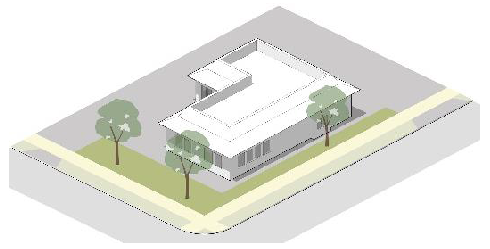 |
| General Commercial A building type designed to accommodate retail, commercial, service or office functions in a variety of formats and scales. Variations of this type are based on the scale and intensity of the use and subject to basic lot and setback standards of the zoning district. | 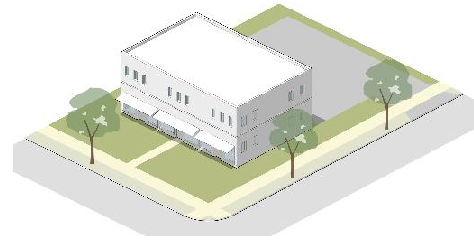 |
| Large Commercial A building type designed to accommodate large-scale retail, commercial, service or office functions usually in a larger center or complex, and subject to basic lot and setback standards of the zoning district. Site design, building orientation, and lot access standards are arranged to accommodate the patterns and circulation necessary for these large buildings and strategically locate these larger parcels and buildings within that pattern. | 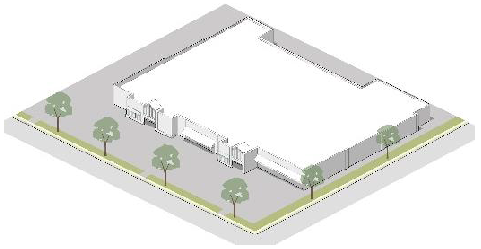 |
| Lodging A building designed for commercial lodging at a variety of scales. Variations of this type are based on the number of rooms provided and are subject to basic lot and setback standards of the zoning district. | 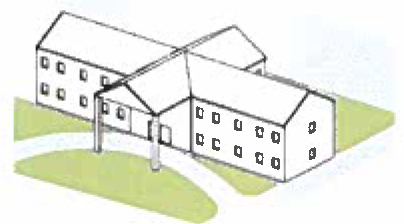 |
| General Industrial A building designed to accommodate light industrial or general industrial functions in a variety of formats, with a more utilitarian in design. Variations of this type are based on the scale and intensity of the activity, any specific functions for the intended use, and subject to basic lot and setback standards of the zoning district. | 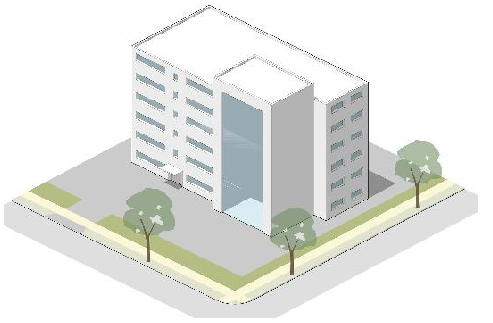 |
| Civic A building designed for a civic, institutional or public use, that emphasizes the public realm through building and open or civic space enhancements that create focal points. Variations include small civic buildings for integration into neighborhoods and mixed-use areas and prominent civic buildings often in more intense mixed-use centers, corridors or campus settings, with specific patterns and scale based on the functions for the intended use. | 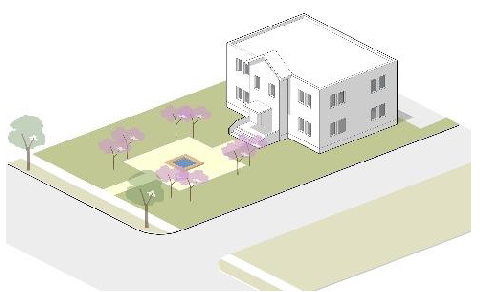 |
| Live/Work A building designed for a primary dwelling unit but has a secondary component - typically at the building frontage - designed for a commercial or occupational function by the resident. This building type is for transitions between neighborhoods and commercial centers or busier corridors or for nodes within neighborhoods or mixed-use areas. | 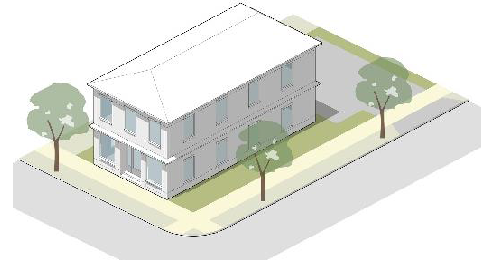 |
| Small Commercial/Mixed-use - Storefront A building designed to accommodate small retail, commercial, service, office or limited manufacturing functions and particularly for uses with frequent pedestrian interaction. This building may have an accessory residential component in the rear or on upper stories. The small footprint, small lot, and design of the frontage for pedestrian and customer engagement allows this building type to integrate well in walkable and mixed-use contexts. This building is typically 1 to 3 stories and groupings of this building form the most pedestrian-scaled blocks of compact walkable places. | 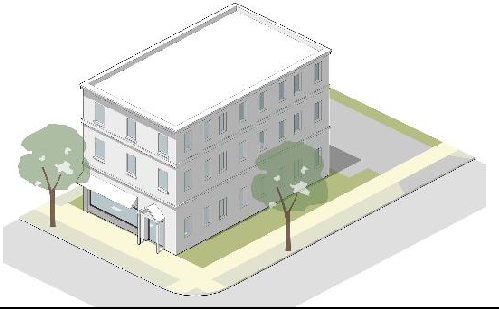 |
| Medium Commercial/Mixed-use A moderate-scale building designed to accommodate street-level retail, commercial, service, office or limited manufacturing functions, and upper level residential, office or commercial uses that compliment other uses on the site or in the immediate area. This building is typically 3 to 4 stories and takes up no more than ¼ block to maintain the compact scale and finer-grained patterns of walkable places. | 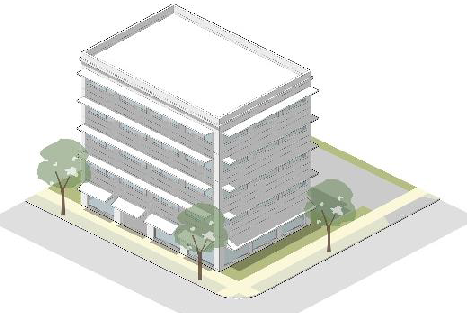 |
| Large Commercial/Mixed-use A large-scale building designed to accommodate street-level retail or commercial use with frequent pedestrian interaction and upper level residential, office or commercial uses that provides a concentration of activity to support other uses in the district. This building is typically 4 to 5 stories and takes up no more than ½ block but may be larger in particular contexts where greater density or intensity supports broader planning goals. | 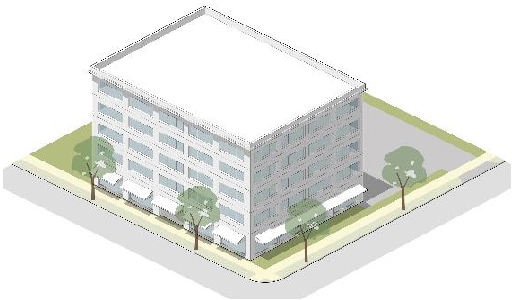 |
B.
Building Types and Development Standards. The development standards for non-residential districts shall be based on the different building types permitted in each district, as specified in Table 6-2, Non-residential District Building Type & Development Standards. The Design Standards in Section 6.02 may further specify the design and location of each building type, based on its relationship to the public realm.
C.
Dimension Exceptions. The following are exceptions to setback and building dimensions standards established in Table 6-2: Non-residential District Building Type & Development Standards.
1.
Setback Encroachments. The following encroachments into the required setback are permitted, except in no case shall this authorize structures that violate the provisions of any easement.
a.
Any projections over public rights of way, or any similar area designed for pedestrian circulation, shall be at least 8 feet above the grade, and in no case within 2 feet of any curb for a street, through access drive or other area designed for vehicles.
b.
Structural projections such as bay windows, balconies, canopies, chimneys, eaves, cornices open fire escapes, egress wells, or other non-foundational overhangs or projections may extend up to 4 feet from the foundation and encroach into the setback, but no closer than 2 feet from any side lot line. This exception shall be limited to no more than 20% of the surface area of a building elevation.
c.
Unenclosed and unroofed decks or patios at or below the first floor elevation may extend into the rear or side setback up to 15 feet but no closer than 5 feet to any lot line.
d.
Ground-mounted mechanical equipment accessory to the building may be located in the side or rear setback provided that it extends no more than 6 feet from the principal building, no closer than 3 feet to the lot line, and is screened from public right-of-way by structures or landscape. These limitations do not apply to any utility structures otherwise authorized to be located according to easements or in the right-of-way, which shall follow the location and design standards of those specific authorizations.
e.
Any other accessory use or structure within the setback, not specified in Section 6.02.D, shall have a setback of at least 1/3 its height from the property line.
2.
Height Exceptions. The following are exceptions to the height limits in Table 6-2:
a.
Building elements integral to the design and construction of the building, such as parapet walls, false mansards or other design elements essential to a quality appearance of the building may extend up to 6 feet above the roof deck.
b.
Architectural features such as belfries, chimneys, ornamental towers and spires and similar accessory features that a minimal part of the building footprint, massing and volume, may extend up to 50% above the actual building height.
c.
Functional and mechanical equipment such as elevator bulkheads, cooling towers, smoke stacks, roof vents or other equipment may be built up to their necessary height in accordance with building codes.
D.
Accessory Buildings—Non-residential. Accessory buildings shall be permitted in association with and on the same lot as a principal building and are subject to the following additional limitations.
1.
Generally. All accessory buildings shall be at least 10 feet from the principal building, unless a lesser distance is specified by applicable building codes.
2.
Small Sheds. Accessory buildings 120 square feet or less and less than 12 feet tall shall be limited to:
a.
1 per lot or 1 per each 5,000 square feet of lot, whichever is more, up to a maximum of 3;
b.
Be located behind the front building line of the principal building.
3.
Detached Building—Non-residential. In any non-residential district, a detached accessory building or roofed structure over 120 square feet or over 12 feet tall shall meet the following standards:
a.
No more than 1 per lot or 1 per each 10,000 square feet of lot, whichever is more, up to a maximum of 4.
b.
Located at least 30 feet from the front lot line or behind the front building line of the principal building, whichever is greater, except that canopies for Vehicle - Fueling Station and Vehicle - Travel Center or other covered parking area may be located in front of the front building line provided the canopy overhang structure is at least 30 feet from any lot line and no more than 20 feet tall.
c.
Maximum height of 2 stories, up to 24 feet, but no higher than the principal building.
d.
Maximum of 1,000 square feet or 50% of the principal building footprint, whichever is greater, except that canopies for Vehicle - Fueling Station and Vehicle - Travel Center may be sized to cover all fueling dispensers, and except that Public/Civic Uses listed in Section 4.02, Table 4-2 without a principal structure may be up to 5,000 square feet.
e.
Any portion of the building or structure potentially visible from the street or other public areas shall use materials, colors, scale and forms (roofs and massing), and details that are compatible with the principal structure, or otherwise be screened according to Article 8.
f.
Any building or structure larger than this shall be treated as a second principal building and meet all lot and building design standards applicable to principal buildings.
g.
Accessory buildings shall not be located within an easement area.
4.
Detached Building—Civic Uses and Open Space. Accessory buildings for permitted institutional uses or public and common open spaces are permitted subject to the following:
a.
Setback. 30 feet from the front lot line or behind the front building line of the principal building, whichever is greater; 5 feet from the rear or side property line.
b.
Area. 5,000 square feet maximum.
c.
Height. 25', but 1' of additional height for each 2 feet of additional setback.
d.
Number. 1 per every 3 acres.
E.
Location Criteria for Limited Building Types. Buildings indicated as limited application in Table 6-2, Non-residential Building Standards, (□) shall only be permitted in the following locations within the applicable zoning districts, unless more specifically located through a planned district.
1.
In the C-O, C-1, C-2, C-3 and BP zoning districts, the limited building types should only be permitted to front on streets or through access drives that promote a high level of pedestrian activity based on the Pedestrian/Mixed-Use, Avenue and Boulevard street types. Additionally, in any area where the City has invested in or documented plans to invest in improved streetscapes, mixed-use building types and street-front or terrace frontage types may be required.
2.
In the DT, MU-NC, MU-CC, and MU R/EC zoning districts, the non-residential building types should only be used on secondary blocks or streets, through access drives, or similar locations that are otherwise removed from the walkable streets or arterial streets. In these circumstances, these buildings should be used for a key anchor or support uses that are important to the vitality of the district but cannot easily conform to more compact, walkable building formats. Alternatively, where these buildings are located on pedestrian-oriented streets, they should be buffered by liner buildings and smaller mixed-use or commercial buildings that better address the streetscape or hide large parking areas.
3.
The residential building types (row house and small, medium, and large apartments) should be located on blocks and streets that create transitions between the mixed-use or commercial areas and neighborhoods.
(Ord. No. 2405, §§ 15—18, 1-3-2023; Ord. No. 2495, § 2, 2-3-2026)
6.03 - Site-Specific Open Space Design
A.
Design Objective. A variety of open space types shapes the character of a place and creates unique identities for different places. The following design objectives shall be use in applying the open space types and design standards in this section.
1.
Coordinate site design with the larger open and civic space system and public realm design of the area.
2.
Use open space as an organizing element for development, creating focal points for buildings or groups of buildings, and creating transitions between distinct building sites or different places.
3.
Design a hierarchy of gateways, gathering places, parks, buffers and natural features, integrated with streets, through access ways and pedestrian circulation routes.
4.
Use landscape, furnishings, fixtures, art, planters and other elements of common spaces to complement buildings, coordinate buildings and sites within an area, and distinguish the unique character of different places.
5.
Preserve natural features that can serve as amenities for development, maintain views to and from important outside spaces, or provide important connecting corridors.
B.
Required Open Space Each building type shall provide the open space specified in Table 6-3, Site Open Space Standards - Non-residential Buildings, within the site or project.
C.
Lot and Building Open Space Design. Lot open space required for each building type in Section 6.03.B. shall create a common or private amenity for the site and building in coordination with the lot and building standards. Buildings and lots shall be arranged to create usable outdoor spaces based on the following:
1.
Required open space shall be designed according to the types specified in Section 3.02.C.
2.
The selected types of open spaces shall be based on the context of the area and the natural amenities of the site, but in general, the more compact and formal gathering spaces are most appropriate for commercial and mixed-use areas (the Green, Square, Plaza/Courtyard, Patio, Pedestrian Passage, or Enhanced Streetscape).
3.
The requirement for open space for mixed-use buildings with residential units, up to 50% of the required space may be made up of private spaces only accessible to the unit, such as balconies or courtyards, provided each private space is at least 80 square feet and at least 8 feet in any direction.
4.
Projects with residential components may credit any public or common open space meeting the design requirements and within the distance specified in table 6-3 provided:
a.
The space is public or remains open to the public; or
b.
If private or common space, the lot applying the credit has proven that it has access to the space through ownership or other agreement, and the space is otherwise dedicated and reserved from future development.
5.
Open spaces meeting this standard may serve multiple site design requirements of this code, including buffers, screening, stormwater or formal open space, provided the essential design objectives and functions for each requirement are met and do not compromise other design objectives and functions.
D.
Alternative Design. For the design standards in this Section 6.03, if the full extent of the design standard cannot be met, the Director may approve an alternative design that equally or better meets the design objectives or enhances another design standard of this section.
(Ord. No. 2405, § 19, 1-3-2023)
6.04 - Frontage Design
A.
Design Objectives. The design of lot frontages establishes the relationship of buildings and lots to the streetscape. The following design objectives shall be used in applying the frontage types and design standards in this section.
1.
Enhance the image of the City by coordinating streetscape investment with private lot and building investment.
2.
Orient all buildings and lots to the public street, or to common open spaces that serve as an extension of the streetscape and public realm.
3.
Design frontages based on the context of the area, block and street, particularly using water-wise landscape and buffers to screen and separate sites from higher-volume/higher speed streets and using social spaces and human scale design in areas and on streets intended for more compact and walkable development.
4.
Coordinate development across multiple lots along block faces, considering access, parking, landscape and civic/open space design.
5.
Create transitions that allow a range of different building types to engage the streetscape in compatible ways along a block.
6.
Where contexts allow multiple frontage types, the frontages should be similar for all lots on the same block face or gradually transition to different types.
B.
Non-residential Frontage Types. The appropriate application of frontage types is based upon a combination of the character of the zoning district, the building type, and the streetscape design on which the development fronts. Table 6-4, Non-residential Frontage Types specifies the appropriate frontage type(s) for each street design type Specified in Section 3.02, but may allow limited applications of other types based on the context and specific street.
C.
Frontage Design Standards. Frontage types shall be designed according to the standards in Table 6-5, Non-residential Frontage Types and Design Standards.
1.
Front Building Line. All buildings shall establish a front building line within the range specified in Table 6-5. This required front building line shall modify any required front setback for the building type in Table 6-2 based on the appropriate frontage for the street and block.
2.
Required Extent of Front Building Line. All buildings shall occupy the minimum percentage specified at the front building line with:
a.
Front building facades meeting the design standards in Table 6-6, Non-residential Building Design; or
b.
Open spaces meeting the requirements of Section 6.03, Site Specific Open Space Design.
c.
Parking, driveways or other buffers and landscape may occupy the remainder of any unspecified portion of the frontage area.
3.
Driveway Widths. Driveway widths shall be limited as specified in table 6-5 to balance multi-modal site access and the integrity of the streetscape within the overall street network and block structure.
4.
Landscape. The remainder of the frontage between the streetscape and front building line shall include landscape and open space designs meeting Section 6.03, Site-Specific Open Space Design and Article 8, Landscape and Site Design Standards.
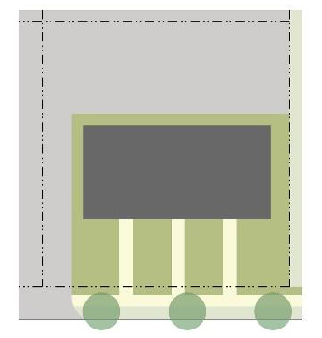
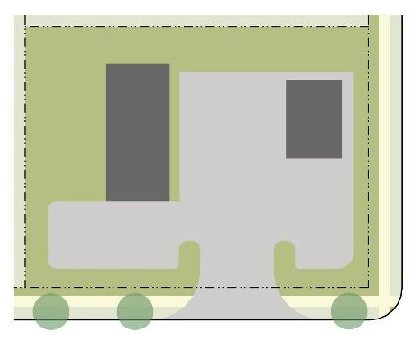
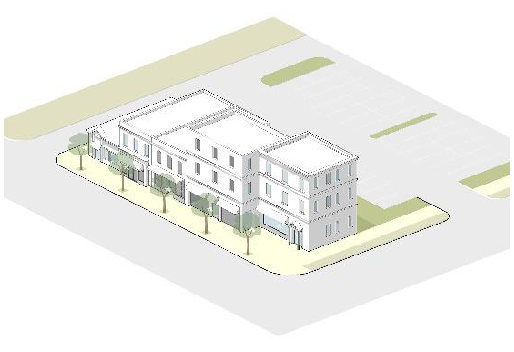
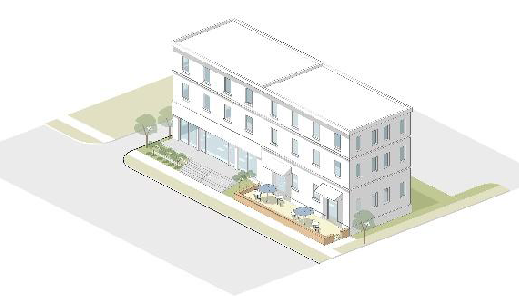
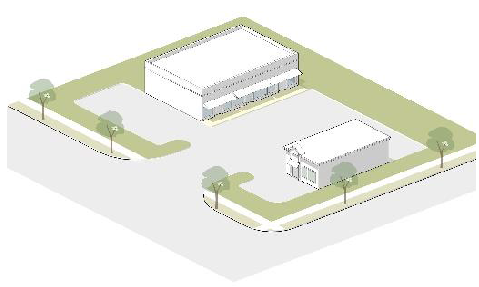
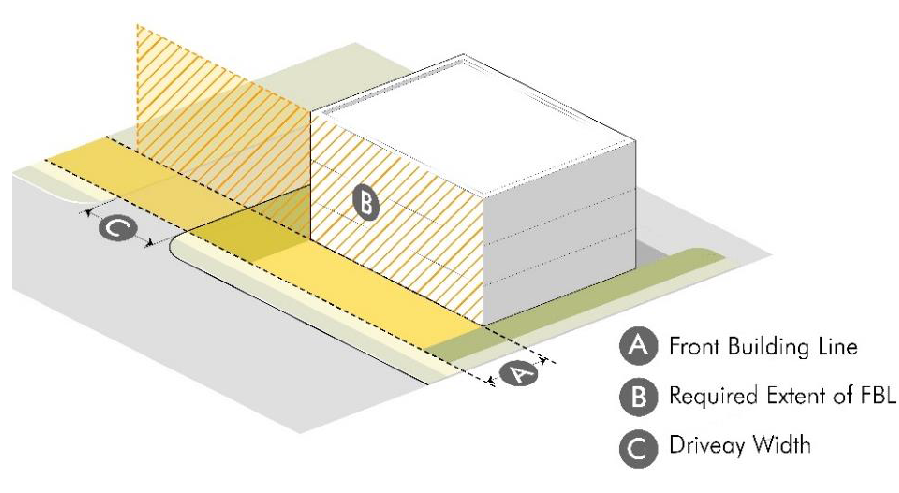 | Figure 6-1 Frontage Design Frontage types are differentiated based on the location of the front building line (FBL), the extent of the front building line occupied by the building (Required FBL), and driveway widths. Coordinating frontage design of multiple buildings and sites along a block impacts the character of the streetscape and block. |
| Table 6-5: Non-Residential Frontage Types & Design Standards | |||
|---|---|---|---|
| Frontage Element | Street Front | Terrace Frontage | Buffer |
|
Description/
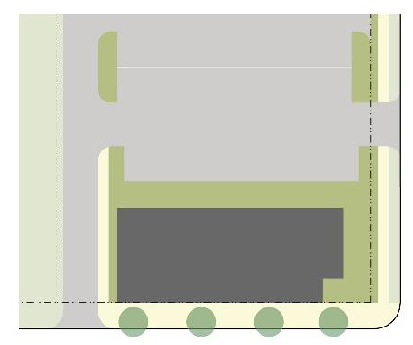
Design Objective | A design where buildings front directly on the sidewalk, or a shallow setback with pedestrian enhancements that directly relate to the public streetscape. Buildings, public streetscapes, and private frontage are designed with human scale elements to create active, walkable places. | A shallow open area across multiple frontages along a block face that creates a continuous and consistent relationship of buildings to the streetscape, with landscape elements such as courtyards, gardens or social spaces designed as an extension of the streetscape such as plazas or patios. | A concentrated landscaped area used to soften, screen and separate the building and site and any potential impacts form the streetscape. The width of the buffer and intensity of landscape is dependent on the design of the streetscape, scale and orientation of the building, or intensity of the use or site elements. |
 |  |  | |
 |  |  | |
D.
Alternative Design. For the design standards in this Section 6.04, if the full extent of the design standard cannot be met, the Director may approve an alternative design that equally or better meets the design objectives or enhances another design standard of this section.
(Ord. No. 2405, § 20, 1-3-2023; Ord. No. 2438, §§ 6—8, 1-2-2024)
6.05 - Non-residential Building Design
A.
Design Objectives. Building design refines the scale and form of buildings beyond the basic setback, height and lot coverage standards, by breaking down the volume into smaller-scale masses, and adding depth, texture, and variation to surfaces in a manner that specifically relate to the spaces around the building. The non-residential design standards have the following design objectives:
1.
Refine the scale, massing, and details of buildings to a greater degree the closer they are to the public realm and other publicly used spaces and based on the context, patterns, and design character of the area.
2.
Massing of buildings should create meaningful and human-scale outdoor spaces on the site, and relate the design of the buildings and facades to these spaces.
3.
Avoid contrived massing that serves only to call attention to the structure or attempts to make monumental or elaborate design out of simple structures.
4.
Locate doors and windows in a way that activates and creates connections to important exterior spaces.
5.
Relate buildings to adjacent development by mimicking similar scale, massing and proportions though step-backs and secondary masses that break up larger masses and reduce the volume and perceived size of larger buildings.
6.
Use materials, architectural details and ornamentation to add interest and uniqueness to buildings
7.
Windows, doors, trim and molding and other details and ornamentation should create depth and texture on wall planes. The depths of these details should be sufficient to take advantage of the sun and highlight changes in plane or materials by using light and creating shadow.
8.
Emphasize the quality and longevity of investments in the area with materials and colors that are attractive, durable, and have low maintenance requirements.
B.
Design Standards. Table 6-6, Non-residential Building Design, establishes design standards for massing and facade composition of all non-residential buildings. The standards apply to all facades that face streets, face through access lanes, or face open and civic spaces, based upon their setback from these spaces. They also apply to any building elevation with a side or rear within 100 feet of a public street (except for the entry feature requirement if it does not face this street). The subsections following the table specify the techniques used to meet the standards for each element in the table.
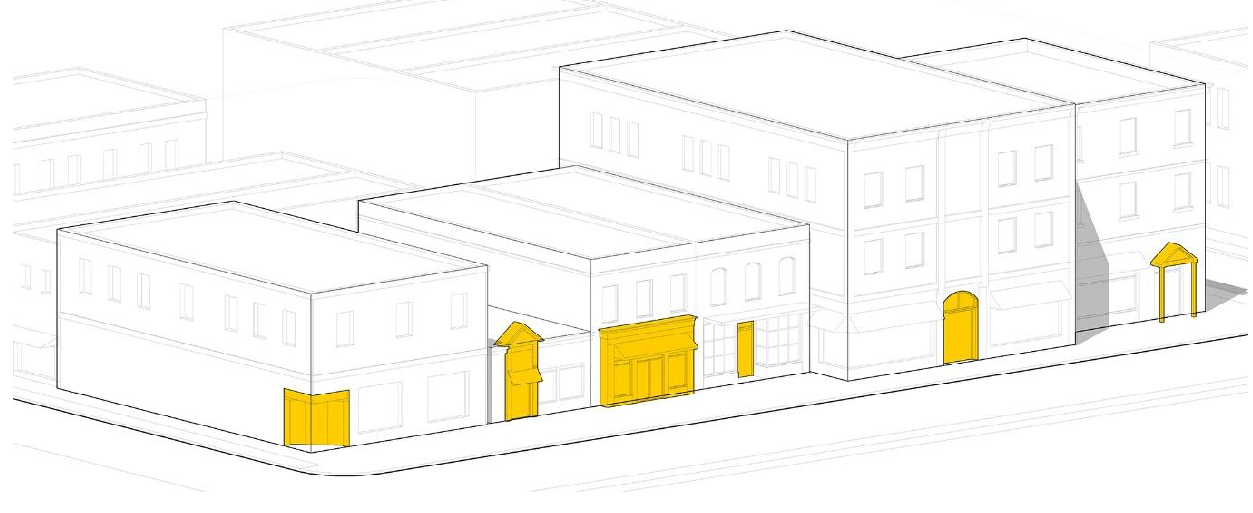
Figure 6-2 Primary Entrance Features
Primary entrance features activate building frontages and create human-scale points
of emphasis along the building facade. The frequency, rhythm and pattern of entrances
differ depending on the streetscape and frontage type, and determine the degree of
walkability or pedestrian orientation of particular areas.
1.
Primary Entrance Features. Primary public entrances shall be clearly defined on all front facades with at least three of the following elements and be located at intervals specified in Table 6-6, Non-residential Building Design:
a.
A single-story architectural emphasis such as raised parapets or gables, canopies, porticos, overhangs, pediments, or arches.
b.
Transoms and/or display windows that frame and emphasize the entry.
c.
Architectural details such as tile work and moldings, columns, pilasters or other similar material changes.
d.
Integral planters or wing walls associated with a recessed or projecting entry court or plaza that integrates more formal landscape and hardscape designs.
e.
Public art.
f.
For corner buildings, any entrance feature located on the corner may count to both sides, and may be considered located at 25' from each corner for the purpose of the required Primary Entry Feature intervals.
2.
Transparency. Buildings shall have the percentage of openings specified in Table 6-6, Non-residential Building Design, based on the following:
a.
Where expressed as a first story requirement the percentage shall be measured between 2 feet and 8 feet above the street level, or within 10 feet above the first floor elevation if the building is set back more than 20 feet from the street.
b.
Where expressed as an upper story requirement, the percentage shall be measured between the floor level and ceiling of each story.
c.
All first story windows required shall provide direct views to the building's interior or to a lit display area extending a minimum of 3 feet behind the window.
d.
For industrial and civic buildings setback more than 30 feet from the street, clerestory windows may meet the first or upper story window requirements.
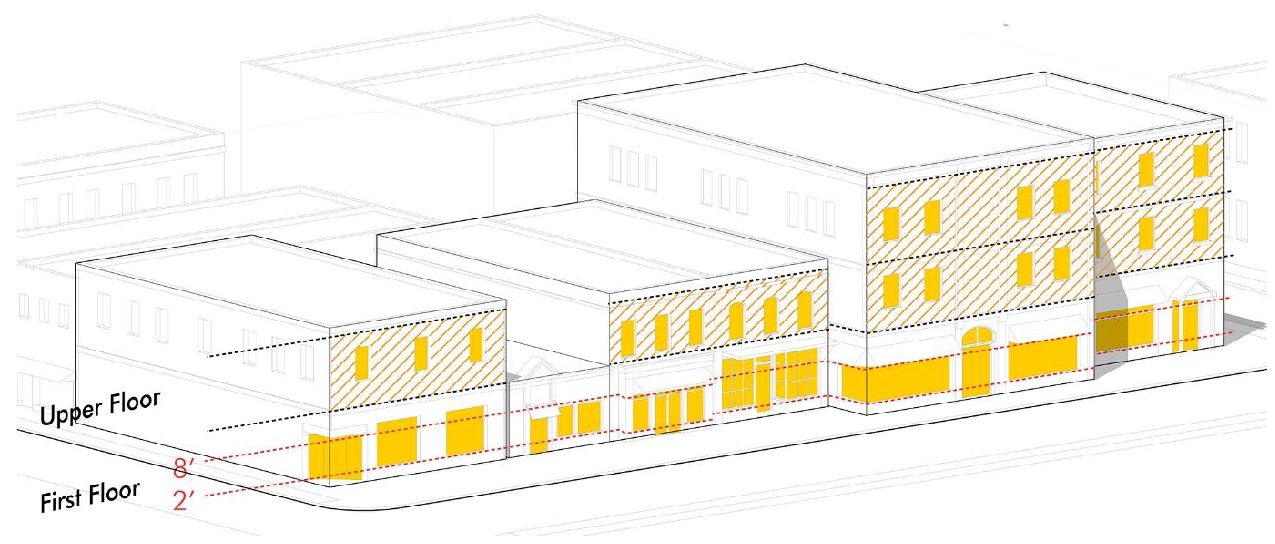
Figure 6-3 Transparency.
Transparency requirements eliminate large expanses of blank walls and create physical
and perceptual connections to spaces around buildings. Meeting the requirements for
each story helps reduce the scale of larger buildings.
3.
Massing and Modulation. Larger facades shall be broken into smaller components by one or a combination of the following techniques at intervals specified in Table 6-6, Non-residential Building Design.
a.
Horizontal articulation and differentiation of the base, body and top of the building with material changes, belt courses or trim bands.
(1)
For buildings 3 stories or less, this can be a distinct foundation material to at least 2 feet above grade, the main façade, and an embellished roof structure, such as eaves and fascia for pitched roofs or cornices and parapets for flat roofs.
(2)
For buildings more than 3 stories, the first floor should be clearly differentiated from upper stories to establish the base.
(3)
Any belt course or trim band establishing this break shall use a use a material distinct from the primary material, be 18 to 48 inches wide, and off-set from the wall plane 6 to 24 inches.
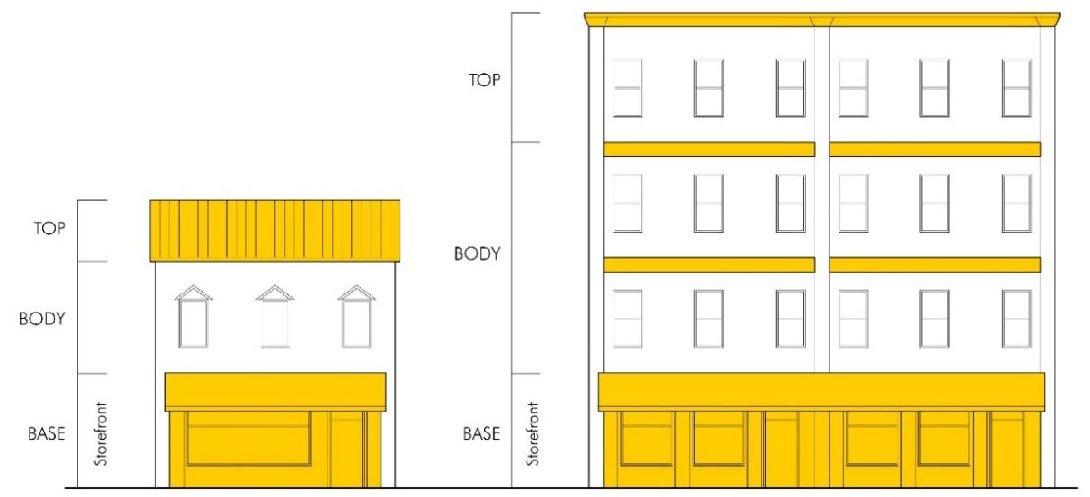
Figure 6-4 Horizontal Articulation
Defining buildings with a distinct base, body and top can help reduce the scale of
larger buildings and can create relationships between adjacent buildings with dissimilar
scale.
b.
Vertical articulation and differentiation of structural components or interior breaks of the building with architectural columns or pilasters. Columns, pillars or pilaster shall meet the following:
(1)
Be regularly or symmetrically spaced and divide the elevation into at least 3 different components, but none greater than the intervals specified in Table 6-6, Non-residential Building Design;
(2)
Be at least 18 to 48 inches wide and 6 to 24 inches off-set from the wall plane;
(3)
Use a different arrangement, material or finish to distinguish it from the primary material of the elevation.
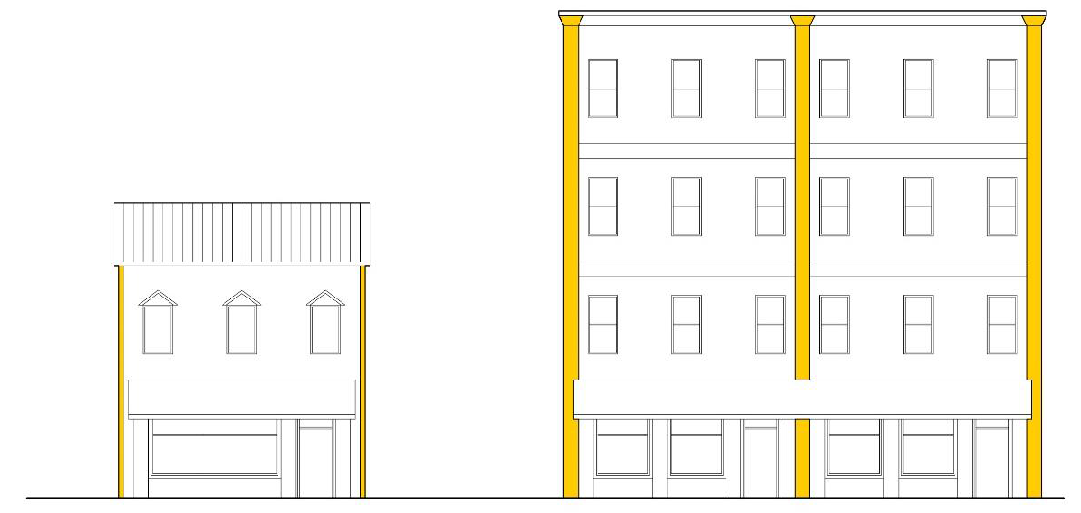
Figure 6-5 Vertical Articulation
Defining buildings with a distinct structural bay creates a finer grain of buildings,
both when viewed from a distance and when experienced on the streetscape. This is
particularly important for longer expanses of buildings and can help integrate larger
buildings and lots within a pattern of smaller buildings and lots.
c.
Variations in the wall plane with projections, balconies, cantilevers, step-backs structural focal points such as towers, or other variations from the main mass. Variations shall be associated with the entrance feature, different stories or secondary masses of the building.
d.
Any other blank wall areas in excess of the interval or areas specified in Table 6-6, Non-residential Building Design, shall be broken up by the patterns of windows and doors, ornamental architectural details or changes in materials that are consistent with the architectural style of the building.
4.
Materials. Use building materials with a texture and pattern that create visual interest and signify quality construction and detailing.
a.
The predominant surfaces on building walls shall be one of the primary materials listed in Table 6-7, Non-residential Building Materials.
b.
Synthetic alternates to the materials in Table 6-7 may be approved by the Director if manufacturer specifications and/or precedents for application demonstrate that it will perform equally or better than the principal materials in terms of maintenance, design and aesthetic goals.
c.
No more than 4 materials should be used, including the use of secondary and accent materials.
d.
Material changes and the use of primary and secondary materials from the approved material list shall emphasize different elements of the building, in association with the massing and modulation standards.
(1)
Where material changes are vertical (i.e. different materials stacked one above another), the transition between materials should include a belt course, trim band, sill, cap, frame, roof (if at ceiling height), or similar element to separate the two materials.
(2)
Where material changes are horizontal (i.e. different materials side-by-side) the transition between materials should occur at interior corners or at the trim line, architectural column or pilaster where the change is emphasizing different structural or massing components for a building.
e.
Facade colors shall be low reflectance, subtle, neutral or earth tone colors. The use of high-intensity colors, metallic colors, black or fluorescent colors is limited to accent areas.
5.
4-sided Design. All buildings shall incorporate 4-sided design, so that that no matter what view you have of the building, the design is not interrupted and all parts are perceived as a coordinated part of a unified whole. Specifically:
a.
All sides shall exhibit the same quality, continuity, and durability of design including the same primary and secondary materials, although more important sides can reflect priority in the allocation of these materials.
b.
All sides that are visible from streets, public spaces or active portions of adjacent sites shall have a similar level trim, accent material, details, and ornamentation, although the extent and details may be different to reflect the greater importance of certain areas closest to the public realm or with greater visibility, and parts not exposed to the public may be designed for utility.
C.
Downtown Frontages and Building Design. The building and frontage design standards for the DT district are modified on a block-specific basis according to Table 6-8, Downtown Building & Frontage Design, and the Map in Figure 6-6.
Block-Specific Frontages for DT zoning
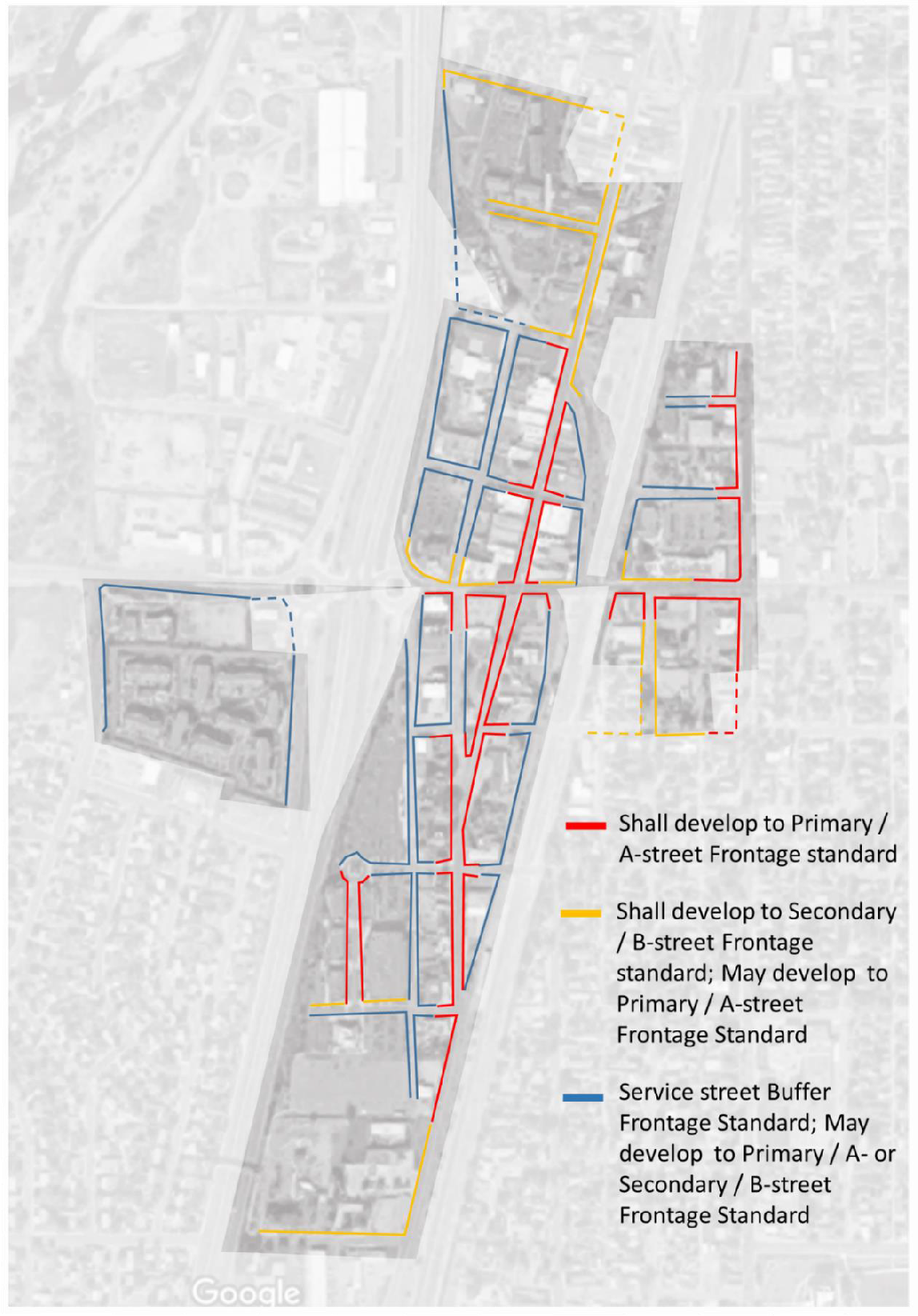
Figure 6-6 DT Zoning District Frontage Map
D.
South 4thStreet Overlay District. The South 4 th Street Overlay district is established in Section 4.05.A. to allow a mix of uses within the South 4 th Street Corridor between Bridge Street and Bromley lane, to maintain the residential scale and character of the area, and to introduce small-scale commercial buildings at nodes and gateways. In general, the base zoning district standards shall apply except as modified in Table 6-9 with regard to permitted building types, frontage types and uses.
E.
Alternative Design. For the design standards in this Section 6.05, if the full extent of the design standard cannot be met, the Director may approve an alternative design that equally or better meets the design objectives or enhances another design standard of this section.
(Ord. No. 2405, §§ 21—23, 1-3-2023)

