
Chattahoochee Hills
City Zoning Code
City Zoning Code
ARTICLE XII
THOROUGHFARES
Sec. 12-1.- Design.
A.
All public and private thoroughfares must conform with the requirements of this article. Any improvements along a state route must conform with the requirements of GDOT.
B.
All thoroughfares shall follow existing land contours with a minimum of cut and fill.
C.
Strategically located T-intersections, jogs and offsets that interrupt the visual axis of the street are encouraged.
D.
Intersections regulated by traffic signals are discouraged. A thoroughfare network design that distributes the traffic load is preferred. The use of roundabouts is encouraged where traffic counts are high. When signals cannot be avoided, as in a dense business district, signals shall be coordinated and timed, with controllers able to accommodate remote operation and approved by the city engineer.
E.
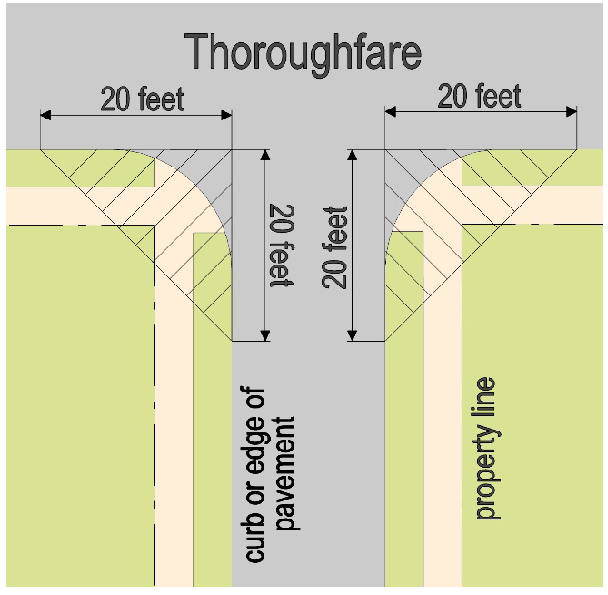
Sight visibility triangle. At the intersection of a public or private thoroughfare and a driveway, or at the intersection of two public or private thoroughfares, a triangle formed by joining two points measured 20 feet from the intersection of the edge of pavement or curbs shall be kept free of visual obstructions greater than three feet in height. The zoning administrator may adjust these standards where topography or other conditions pose challenges to visibility that require more stringent requirements, or where the development context and design speed warrant less stringent requirements.
F.
Grades. No thoroughfare grade shall be less than one percent. No paved thoroughfare grade for a highway or boulevard thoroughfare shall exceed eight percent. No other paved thoroughfare grade shall exceed 12 percent, unless the zoning administrator finds that due to topographic conditions, a steeper grade is necessary, in which case the grade shall not exceed 16 percent. Grades between 12 percent and 16 percent shall not exceed a length of 180 feet. Grade requirements for unpaved thoroughfares are provided in section 12-9.
(Ord. No. 21-10-228, § 1, 10-5-2021)
Sec. 12-2. - Connectivity.
A.
All thoroughfares shall form an interconnected network that allows through access and multiple route options. Thoroughfare patterns that result in isolated pockets of development with relatively little interconnectivity are strongly discouraged. Preferential treatment of pedestrian access is required.
B.
No improvements within utility easements shall preclude future access or connectivity across or along such easements.
C.
Block standards. The following shall apply in all developable areas.
1.
Developments greater than four acres in size must incorporate existing or new thoroughfares that terminate at other existing or new thoroughfares to form an interconnected network with a maximum block perimeter of 2,000 feet, as measured from intersecting centerlines. Neither alleys nor driveways shall be used to meet this requirement.
2.
Block requirements may be relaxed by the zoning administrator where steep slopes in excess of 25 percent, preexisting development, small parcel size on the subject or adjacent properties, tree protection areas, stream buffers, cemeteries, open space, or easements are present that would make the provision of a complete block infeasible. In these instances, a pedestrian connection may be allowed instead of a thoroughfare connection.
3.
There is no maximum block perimeter length when a block contains a required open space of at least one acre in size and when no other use is located in that block.
4.
Cul-de-sacs and dead-end thoroughfares except for stub-out thoroughfares are prohibited except on thoroughfares where topography, environmental protection, preservation of cultural resources, or similar considerations prohibit the creation of street connections. In no case shall any dead-end street be greater than 600 feet in length in developable areas and 1,200 feet in rural (RL) districts or required open spaces.
5.
Any block face that exceeds 600 feet in length shall include a mid-block open space and/or pedestrian access.
D.
Alleys are encouraged as a means of interparcel connectivity. Dead-end alleys shall be avoided where possible; but if unavoidable, they shall be provided with adequate turn-around facilities.
E.
Stub-out thoroughfares.
1.
Where a development in a developable area abuts a parcel greater than 50 acres in size and which is not a required open space, stub-out thoroughfares within the development must be installed which meet the block standards in subsection (C).
2.
The stub-out thoroughfare right-of-way, pavement, and curbing must extend to the boundary of the abutting parcel to the point where the connection to the anticipated thoroughfare is expected, except that the portion of a stub-out thoroughfare within a required open space or buffer shall not be required to be improved until such time as it is connected to another thoroughfare or drive. The right-of-way or easement for such unimproved stub-out thoroughfares shall be clearly indicated on the plat. Curbing is not required on segments that extend through open space connections.
3.
If a stub-out thoroughfare exists on an abutting parcel, the thoroughfare system of any new development must connect to the stub-out thoroughfare to form a through street.
4.
The requirement for a stub-out thoroughfare may be waived only by variance in accordance with section 3-17 and where slopes in excess of 25 percent, highways, waterways, small parcel size on the subject or adjacent parcels, tree conservation areas, stream buffers, cemeteries, open space, civic space, or easements would make the provision of a stub-out thoroughfare infeasible.
5.
Where buffers are required, thoroughfare stub-outs shall extend through the buffer to the property line. When connecting to an existing thoroughfare network in a neighboring subdivision, thoroughfares shall extend laterally through the buffer to connect with existing stub-outs.
6.
Stub-out thoroughfares shall be constructed to meet the standards of the city fire department. Any temporary vehicle turn-around areas shall be unpaved.
7.
Stub-out thoroughfares must be posted "Future Through Street" continuously until the through connection is established.
8.
Interparcel access. Where off-street parking spaces are provided in developable areas, the zoning administrator may require a stub-out thoroughfare and/or pedestrian way to connect to abutting parcels with existing or potential future off-street parking spaces, unless otherwise required by the GDOT.
F.
All thoroughfare terminations must receive special attention and must be identified as locations for landmark features such as civic sites, public art, monuments, scenic vistas, or other features of architectural, civic, cultural, or historical importance, as approved by the zoning administrator. These features can provide closure to urban spaces, aids to navigation, and designate transitions between neighborhoods. Greater care should be taken with the design of these sites.
G.
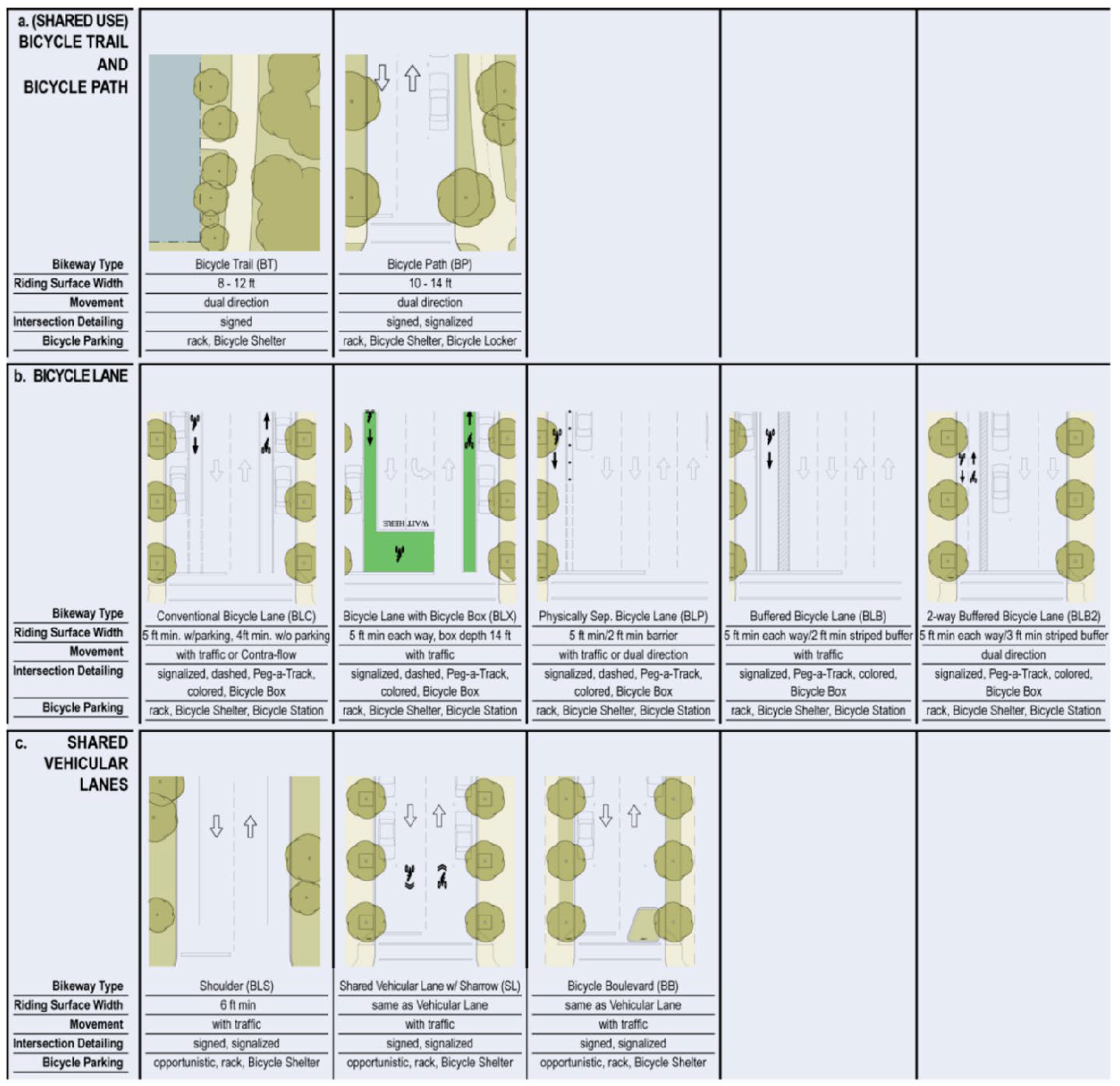
Bicycle facilities. A bicycle network consisting of bicycle trails, multiuse trails, bicycle routes, and bicycle lanes must be provided throughout the community. The community bicycle network shall be connected to existing or proposed regional networks when such networks exist or are planned within 2,000 feet of the district. The city may require the purchase of an easement to make such connections possible. No more than 30 percent of the paths within the required open space of a development shall be aligned with automobile thoroughfares. All bicycle facilities shall be designed according to the following types.
(Ord. No. 21-10-228, § 1, 10-5-2021; Ord. No. 23-02-254, §§ 29, 30, 2-7-2023)
Sec. 12-3. - Type and design.
A.
Thoroughfares shall be designed as depicted in the following tables, subject to approval of the zoning administrator, who may allow alternate designs appropriate to the local context and to promote the public health, safety, and welfare. For those assemblies that show angled parking, reverse (back-in) angled parking shall be preferred.
B.
The planter is a landscaped area adjacent to the curb that contains street trees and may also contain landscaping, bioswales, street lights, and/or street furniture.
C.
Where any parcel abuts an existing public or private thoroughfare that does not meet the standards of this section, walkways, curbs, landscaping, and any other thoroughfare elements shall be constructed or expanded on private property to be in conformity with the appropriate thoroughfare design. Any land area used for these improvements and which abuts a public thoroughfare may be dedicated to the city. This requirement shall not apply along South Fulton Parkway.
D.
Trees along thoroughfares shall have a minimum 270 square feet of permeable surface per tree in rural (RL) districts and required open spaces and a minimum 25 square feet of permeable surface and 250 cubic feet of structural soil per tree in all other districts.
E.
A street furniture plan must be approved by the zoning administrator for all proposed thoroughfares and all new primary structures along existing thoroughfares. This plan shall include the placement and design of lighting, signage, benches, recycling bins, trash receptacles, bicycle racks, and other elements. All street furniture must be compatible with the surrounding area in material, color, finish, and architectural style.
F.
Where thoroughfares traverse a required open space, the required sidewalk or bicycle facility shall be allowed to diverge from the pavement as long as the connectivity requirements of section 12-2 are met.
G.
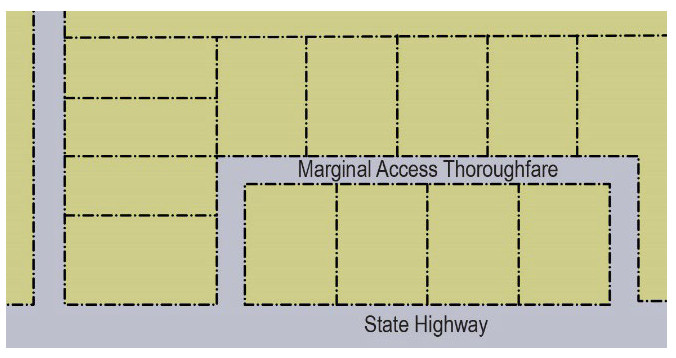
Marginal access thoroughfares. Whenever a major subdivision is proposed abutting the right-of-way of a state highway, a marginal access thoroughfare approximately parallel and adjacent to such right-of-way may be required at a distance suitable for the appropriate use of land between such marginal access thoroughfare and highway right-of-way. The city may also require a 20-foot no-access easement and planting strip along the highway to ensure that lots fronting the highway do not have access to it. (See Figure.)
H.
On-street loading and drop-off zones shall be permitted. Off-street loading is regulated by section 5-14G.
I.
Bridges shall incorporate pedestrian and bicycle access and shall contain architectural elements compatible with the surrounding area.
(Ord. No. 21-10-228, § 1, 10-5-2021)
Sec. 12-4. - Thoroughfare assemblies.
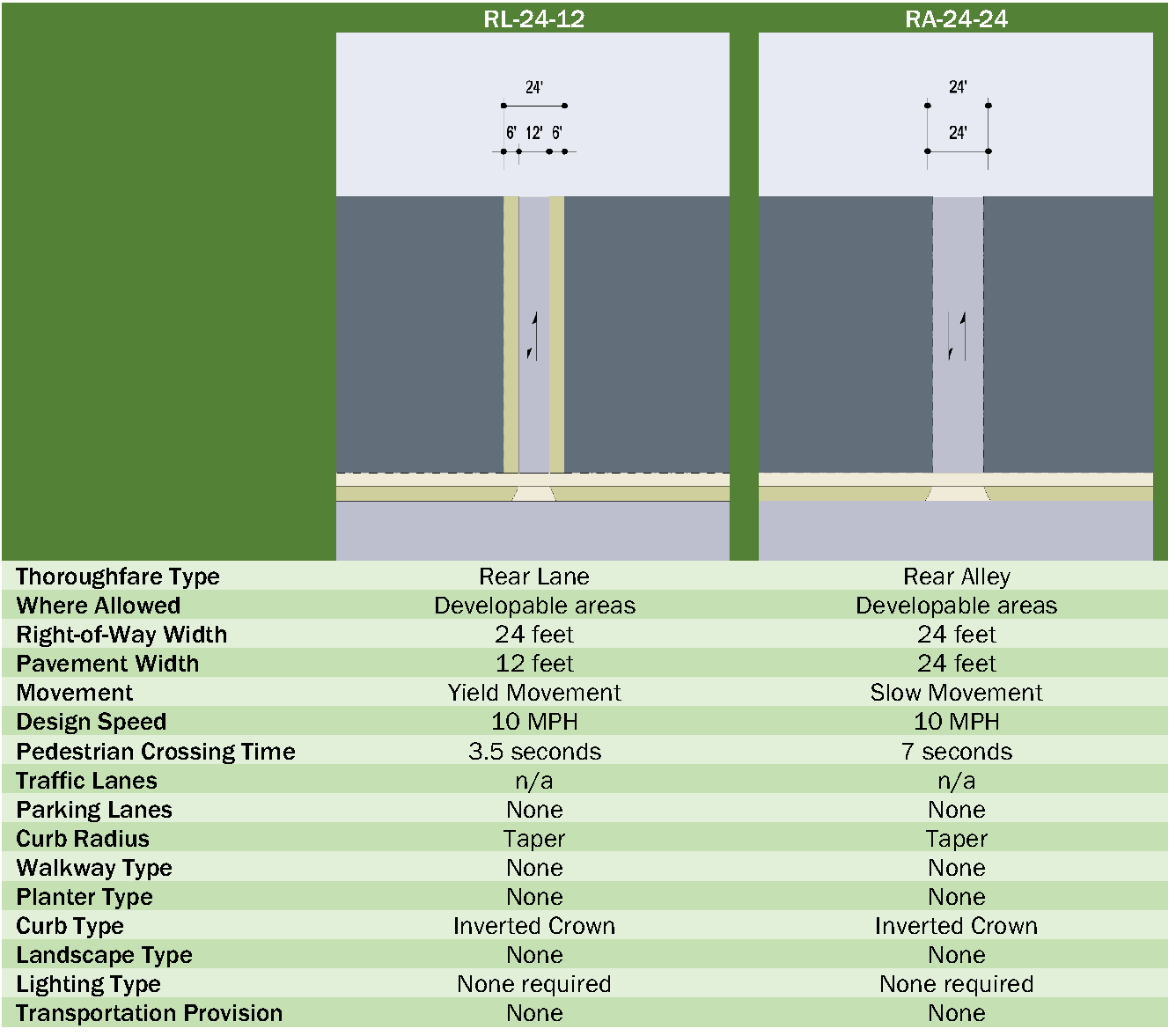
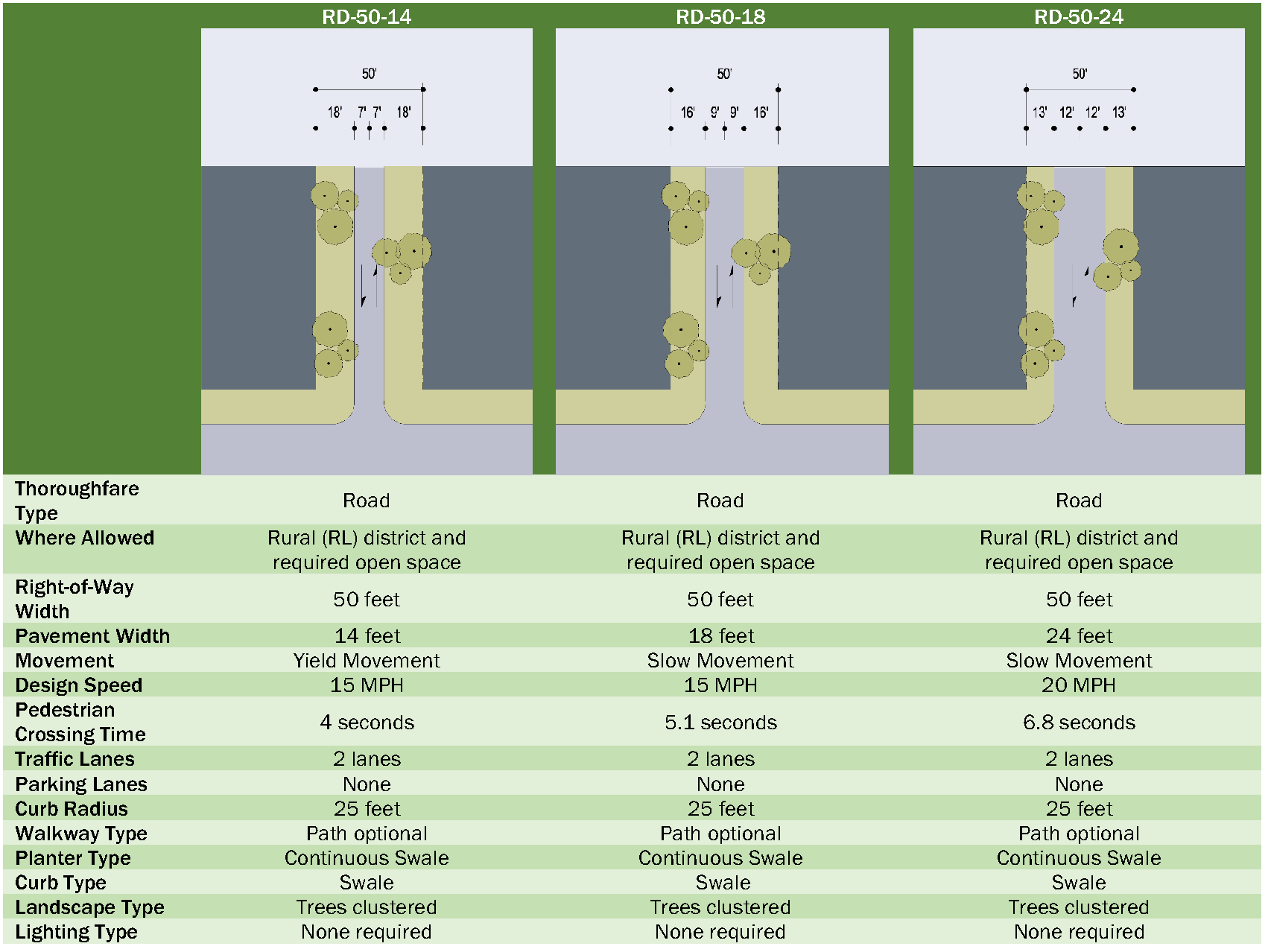
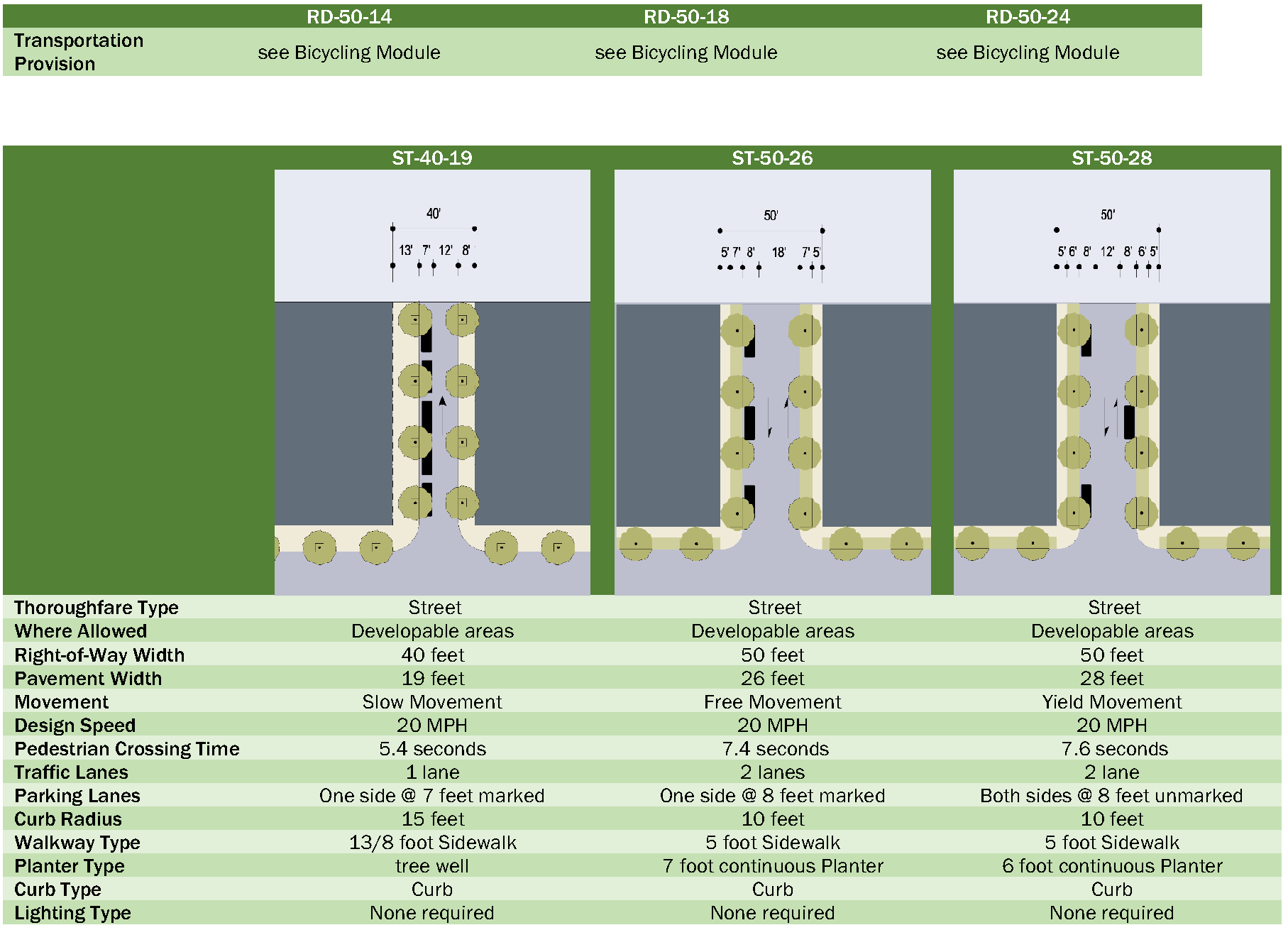
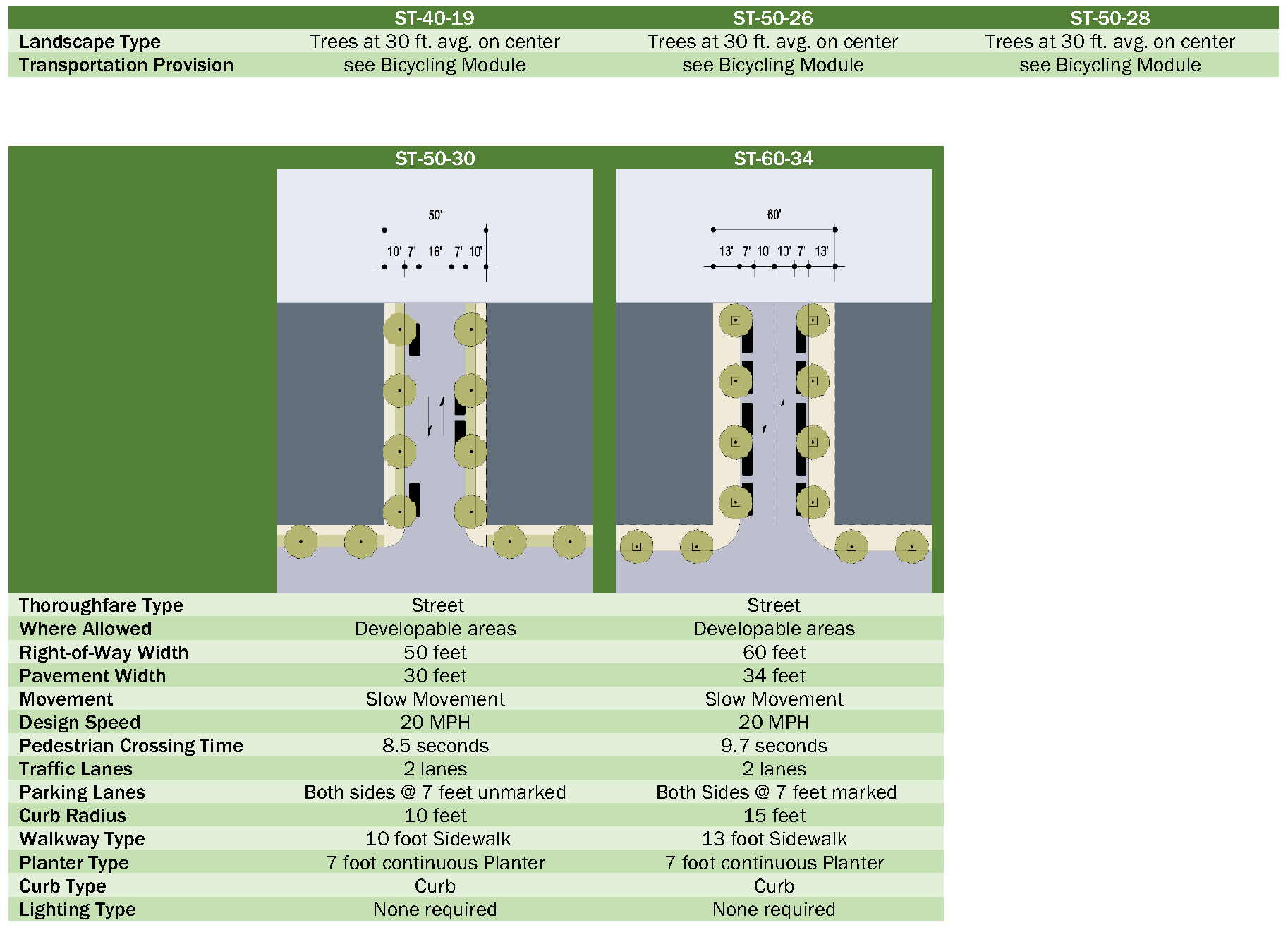
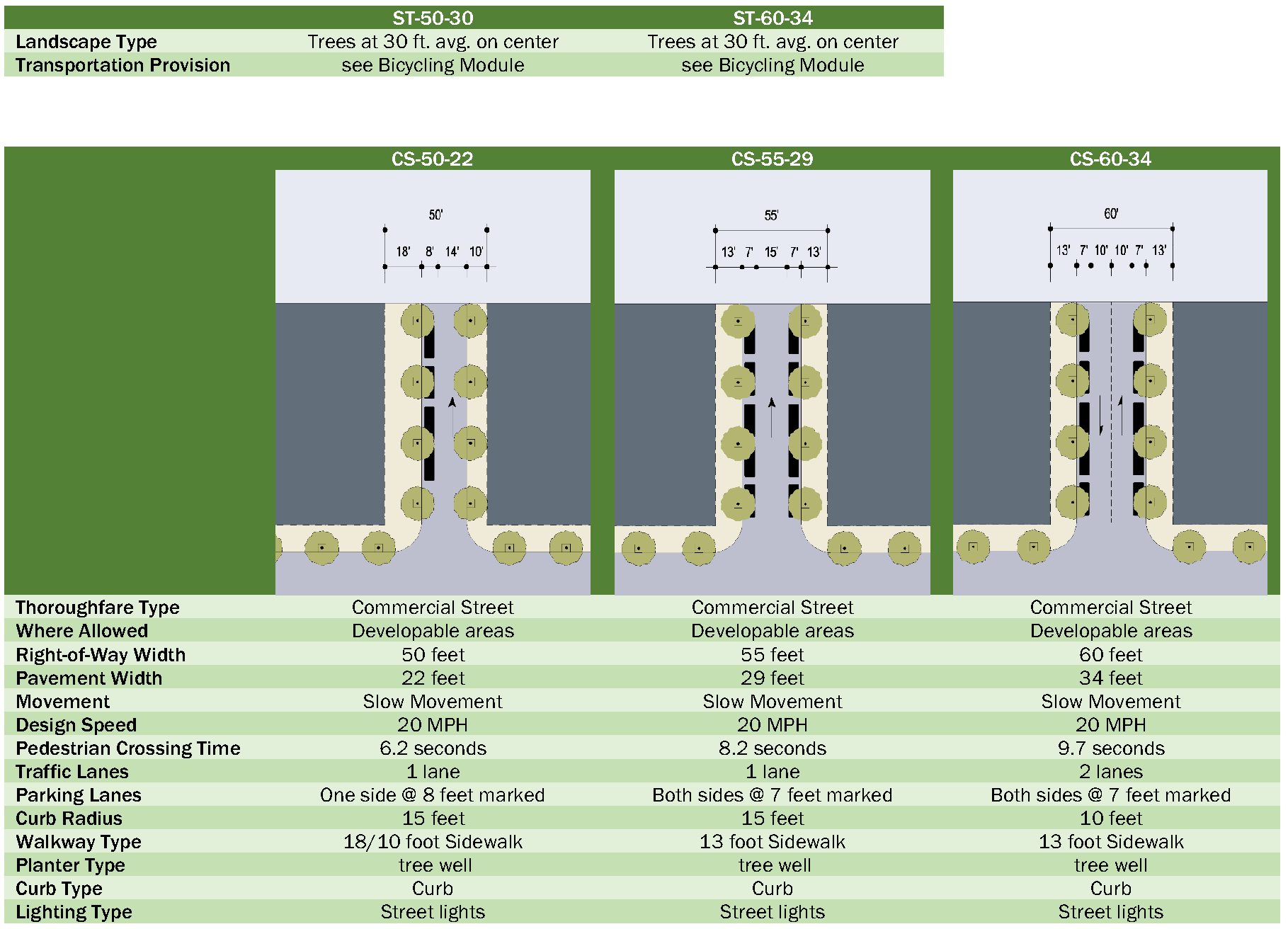
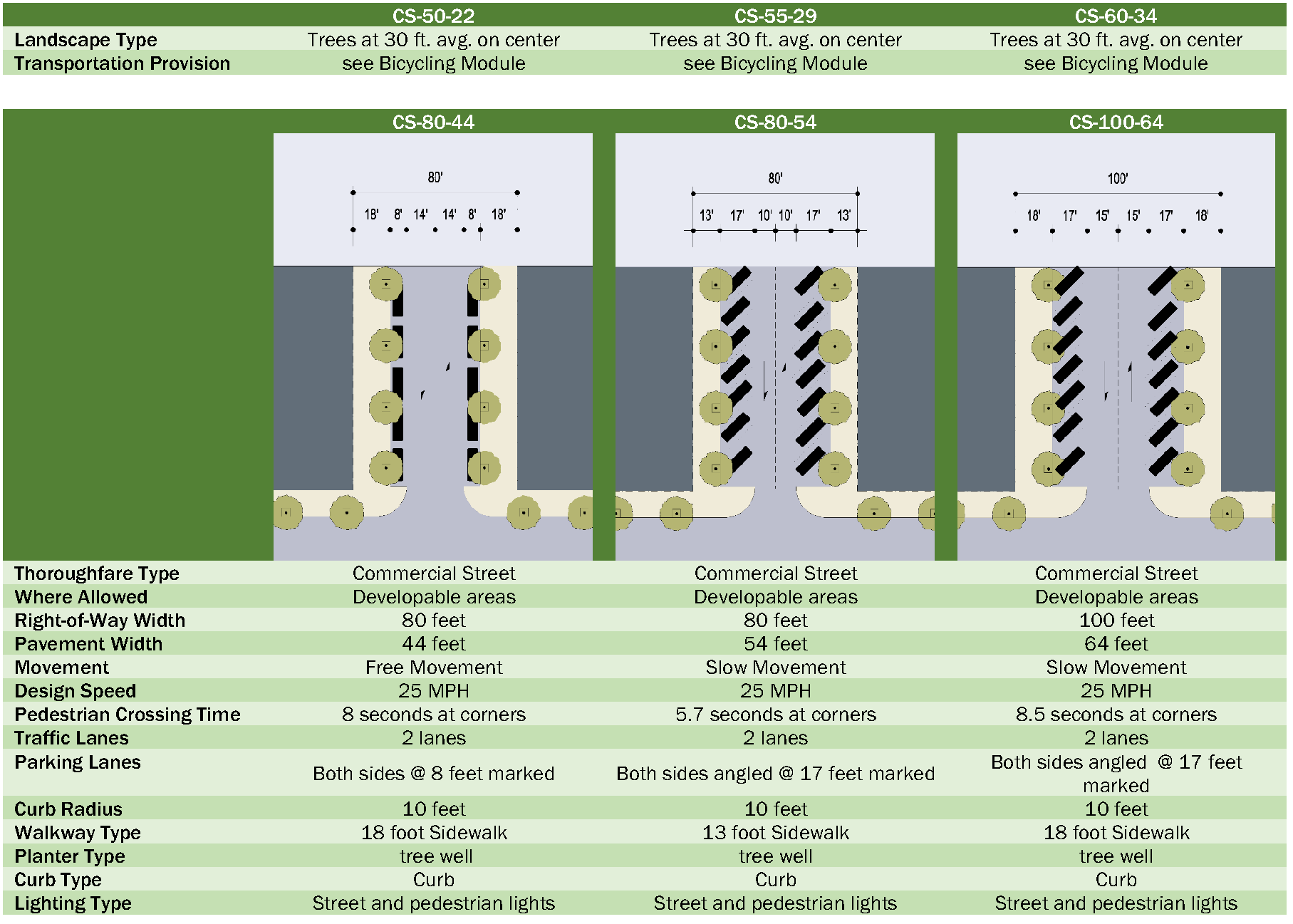
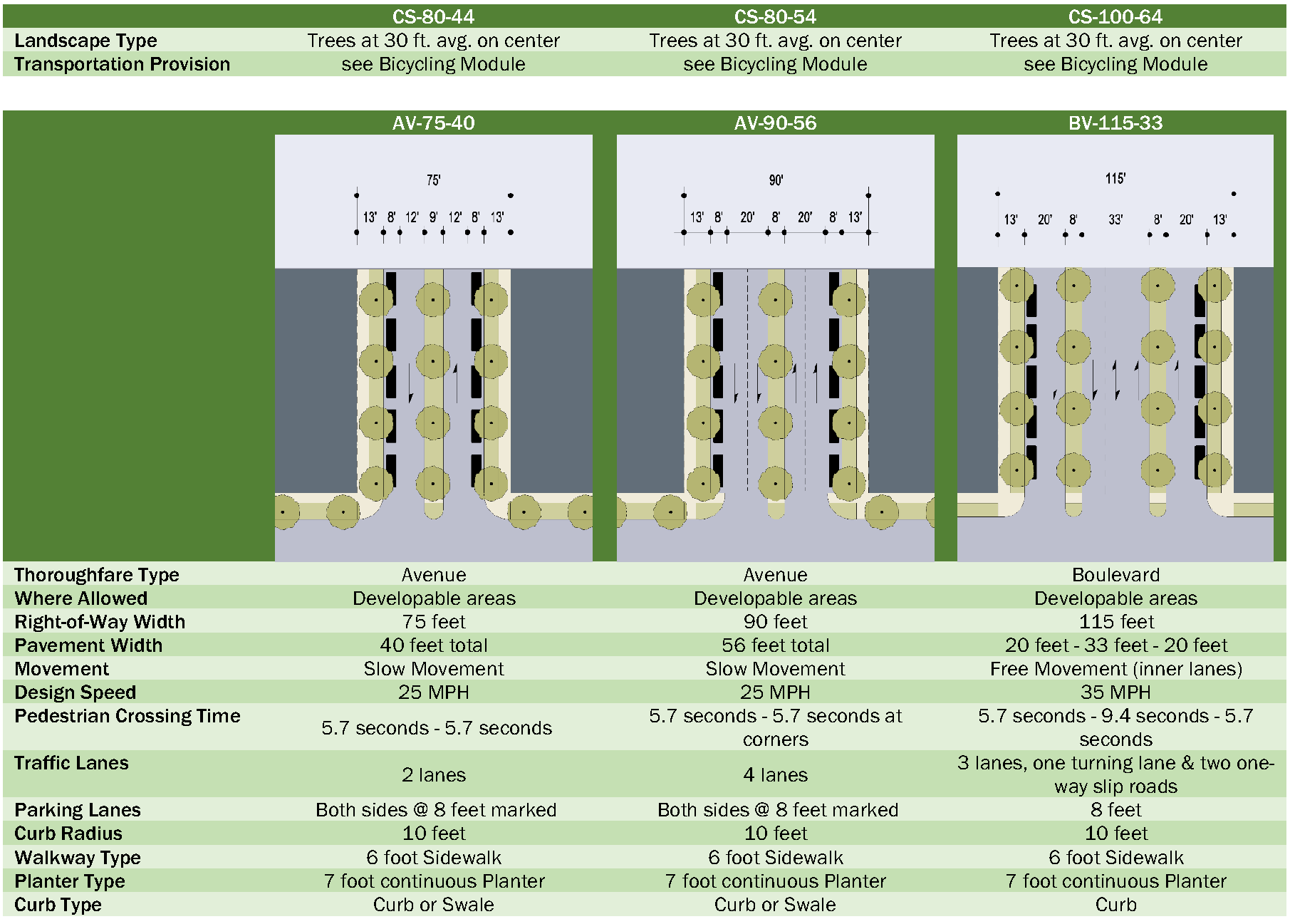
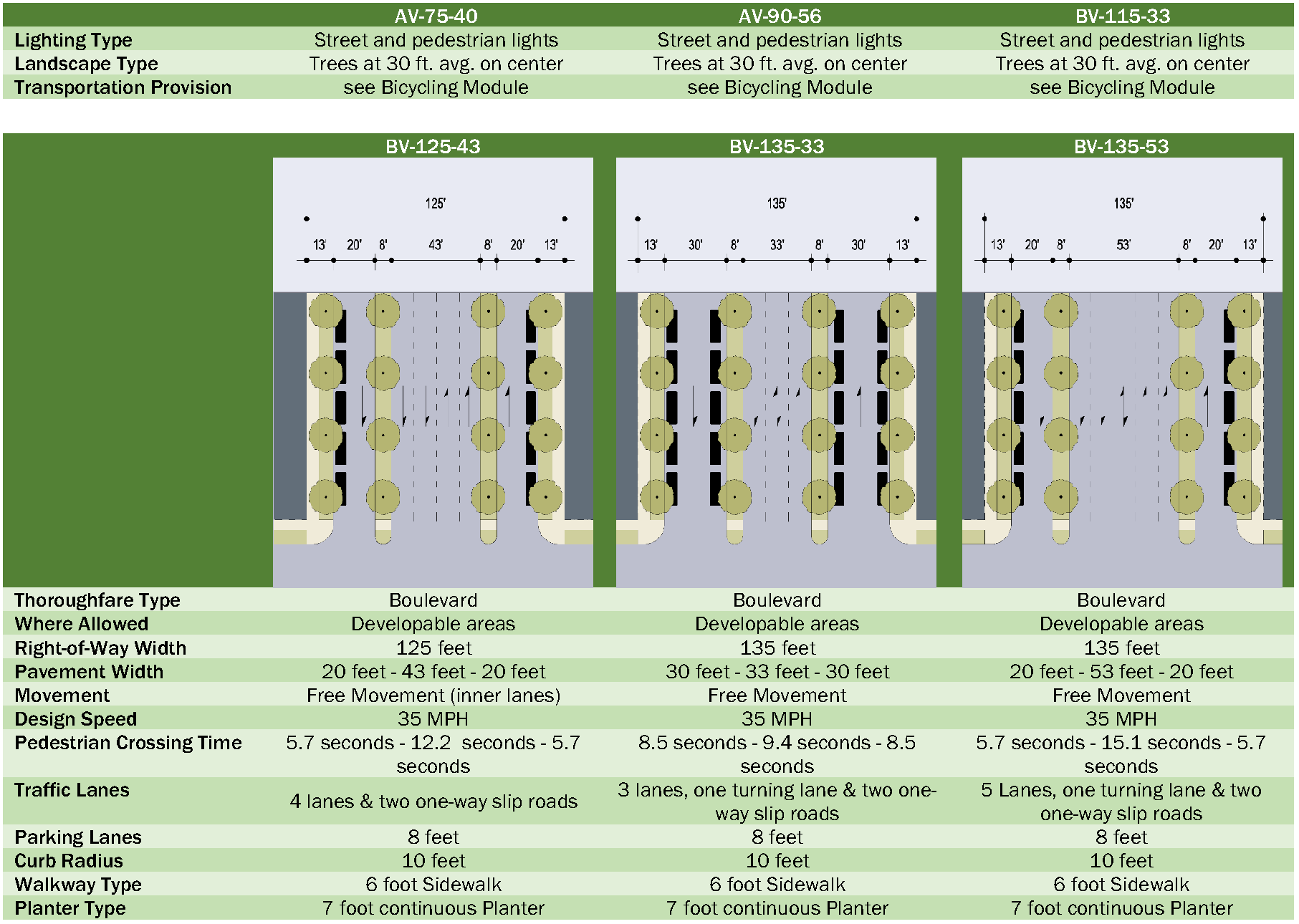
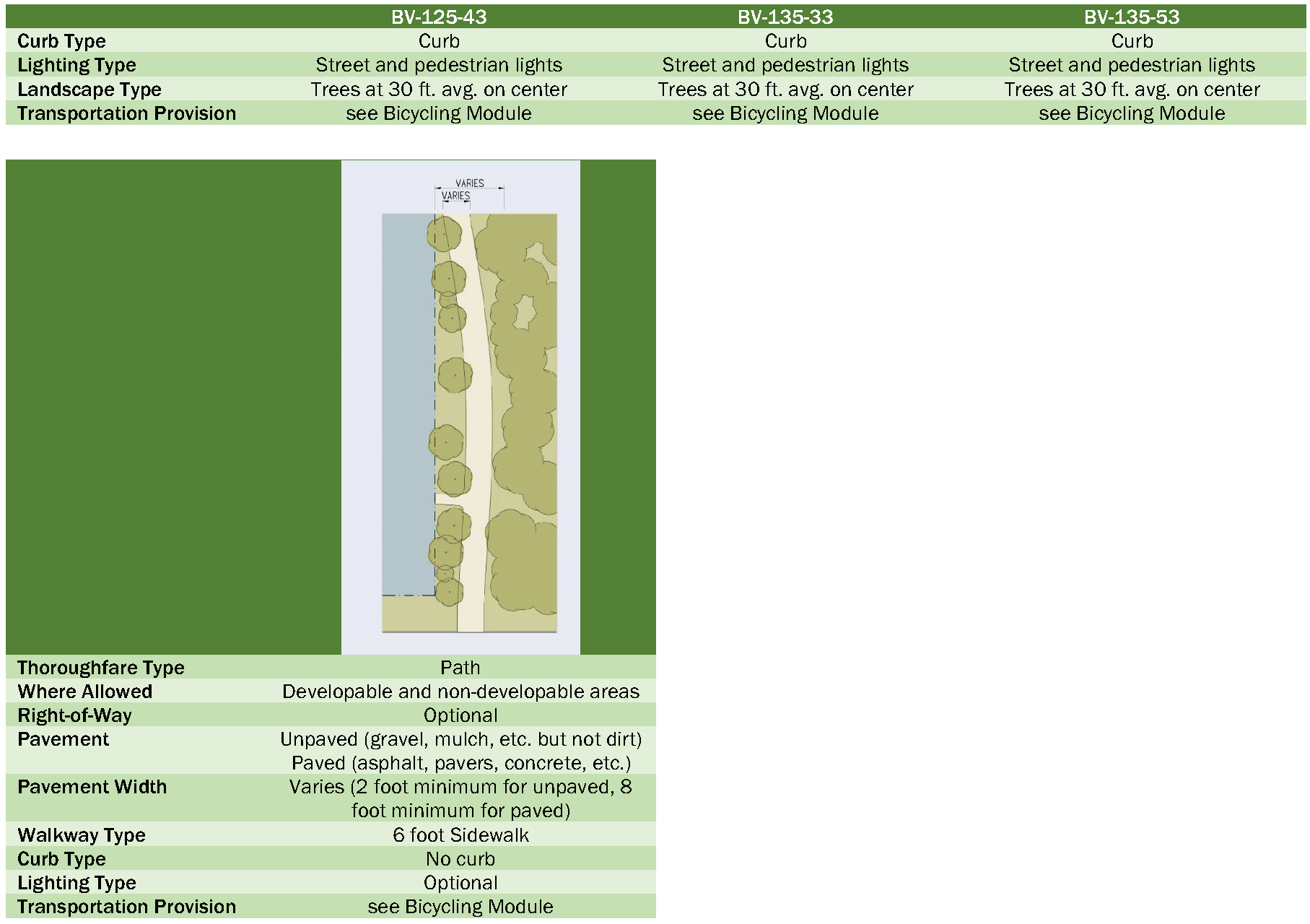
(Ord. No. 21-10-228, § 1, 10-5-2021)
Sec. 12-5. - Curb cuts and access.
A.
Entrance improvement specifications.
1.
Roadway entrances and improvements, including necessary acceleration and/or deceleration lanes and right/left turn lanes, shall be designed, installed, and maintained as approved by GDOT, as applicable, or the zoning administrator, in accordance with applicable state or city specifications.
2.
All entrances or exits of any thoroughfare or driveway, public or private, from or to any state highway shall be approved by GDOT and the zoning administrator prior to the construction of such entrances or exits and prior to the issuance of any land use permit or building permit for any improvement to be served by such entrances or exits.
3.
All entrances or exits of any thoroughfare or driveway, public or private, from or to any city thoroughfare shall be approved by the zoning administrator prior to the construction of such entrances or exits and prior to the issuance of any land use permit or building permit for any improvement to be served by such entrances or exits.
4.
Driveways and drop-offs may be located within the first layer of a lot.
B.
Curb cut specifications. Curb cuts are prohibited along all highway, boulevard, and avenue thoroughfares. On all other thoroughfares, curb cuts shall be permitted at a maximum width of 24 feet. No curb cut or driveway shall be permitted to be located closer than 100 feet to the nearest existing curb cut or proposed right-of-way of an intersecting thoroughfare. The zoning administrator may limit the maximum width of a curb cut and/or the number of curb cuts to a parcel as necessary when it is deemed to be of benefit to the safety and welfare of the public.
C.
The following factors may be considered during the review and approval of a specific location of an entrance:
1.
The location of existing or planned median breaks;
2.
Separation requirements between the entrance and major intersections;
3.
Separation requirements between other entrances;
4.
The need to provide shared access with other sites;
5.
The need to align with previously approved or constructed access points on the opposite side of the thoroughfare;
6.
Lot frontage and access do not necessarily have to be along or front the same thoroughfare, if approved by the zoning administrator; and
7.
The minimum number of entrances needed to move traffic to and from the site safely and efficiently.
D.
Access along and near divided highways. Where a divided highway exists or is planned, the following access standards shall be met:
E.
Gates. Gates controlling access to more than one lot shall be prohibited. This shall not be interpreted to limit gates restricting livestock or controlling access to multiple rural lots under single ownership, such as, but not limited to, a multi-parcel farm. Where such gates are provided, a separate adjacent pedestrian gate shall also be provided.
F.
Access easements. The subdivider shall submit documentation of all necessary easements providing access to a public thoroughfare (see section 4-10).
(Ord. No. 21-10-228, § 1, 10-5-2021)
Sec. 12-6. - Thoroughfare lighting.
A.
No street lights shall be required in the rural (RL) district.
B.
Street lights shall be required as shown in the tables in section 12-4 in all developable areas, except adjacent to residential or agricultural uses. They shall be installed adjacent to the curb and spaced equidistant from street trees. On residential streets, lighting shall be required only at intersections and crosswalks.
C.
Where required, thoroughfare lights shall be provided in accordance with city specifications. Fixtures and standards/poles installed or used shall be approved by the city and by the utility company that will be responsible for the maintenance of the facilities.
D.
Street light fixtures shall not exceed 30 feet in height and shall be located no more than 120 feet apart, or as approved by the zoning administrator. Pedestrian light fixtures shall not exceed 15 feet in height and shall be located no more than 60 feet apart, or as approved by the zoning administrator.
E.
The developer shall pay all costs for poles, fixtures and any other related items or materials necessary for the installation of thoroughfare lights, as well as arrange an agreement with the utility company for complete maintenance of all installations.
F.
Along private thoroughfares, the property owner's association may assume the responsibility and make the monthly payments to the power company for electrical energy for each thoroughfare light after 50 percent of the lots in that development phase have been sold.
G.
Along public thoroughfares, the city may assume the responsibility and make the monthly payments to the power company for electrical energy for each thoroughfare light only where the requirements of this section have been met and all improvements have been accepted by the city. Maintenance and operation costs of thoroughfare lights will be assumed by the city no earlier than two years after lights have been installed.
H.
All thoroughfare lighting must conform to the night sky requirements of section 5-19.
(Ord. No. 21-10-228, § 1, 10-5-2021)
Sec. 12-7. - Public frontages.
A.
Public frontages shall include trees of various species as approved by the zoning administrator and may include low maintenance understory landscape. The introduced landscape shall consist primarily of native or edible species requiring minimal irrigation, fertilization, and maintenance.
B.
Public frontage shall include regularly spaced trees with shade canopies of a height that, at maturity, clears the first story.
C.
Trees required on public frontages may be permitted to relocate to open spaces when such areas are located within 100 feet of where the trees would otherwise be required.
D.
Sidewalks shall be hardscape and shall be unobstructed by any object except trees and tree wells for their required width and to a minimum height of eight feet above the surface of the sidewalk. See section 7-4BB for provisions related to the location of outdoor dining within sidewalks.
(Ord. No. 21-10-228, § 1, 10-5-2021)
Sec. 12-8. - Traffic signs.
A.
Signs for thoroughfare names, directions of travel, traffic control, and hazards shall be provided as directed by the zoning administrator. Thoroughfare signs on exterior/boundary thoroughfares shall be installed by the city with the developer paying a proportionate share determined by the city. Thoroughfare signs for interior thoroughfares of a subdivision or land development shall be installed at the subdivider or developer's expense by the subdivider or developer, subject to the approval of the zoning administrator.
B.
The subdivider of land involving a private thoroughfare shall install thoroughfare signs containing the thoroughfare name, as approved by the zoning administrator. The sign signifying the private thoroughfare may be required by the city to be a different color than that of thoroughfare signs provided for public thoroughfares, in order to distinguish maintenance responsibilities in the field.
C.
Unless otherwise provided in standards and specifications adopted by the city, thoroughfare signs shall meet the following specifications. Signs shall be constructed of aluminum sheets with reflective backgrounds. Information on the thoroughfare name signs shall be readable from both sides of the sign. Signs shall be installed on a steel post or another mounting system as approved by the zoning administrator. The vertical distance from the thoroughfare elevation to the bottom of the sign face shall be seven feet with a minimum burial depth of three feet.
(Ord. No. 21-10-228, § 1, 10-5-2021)
Sec. 12-9. - Unpaved thoroughfare standards.
A.
All commercial streets, avenues, and boulevards must be paved. The zoning administrator may approve unpaved road or street thoroughfare types where appropriate based on the context, adjacent uses, and traffic volumes.
B.
Thoroughfares planned to serve commercial uses must be paved in developable areas. This is not to be interpreted to prevent unpaved drives on commercial property.
C.
No more than 25 residential lots may be served by an unpaved thoroughfare.
D.
The grade of any unpaved thoroughfare shall not exceed eight percent.
E.
All intersections of unpaved thoroughfares with paved thoroughfares must provide a 20-foot paved apron at the intersection, with a concrete transition strip not less than 12 inches in length where the apron meets the unpaved thoroughfare.
F.
Where an unpaved thoroughfare slopes upward from an intersection with a paved thoroughfare, the slope of the unpaved thoroughfare must not exceed two percent within 20 feet of the apron.
(Ord. No. 21-10-228, § 1, 10-5-2021; Ord. No. 23-02-254, § 31, 2-7-2023)
Sec. 12-10. - Private thoroughfares.
A.
Private thoroughfares permitted. Private thoroughfares may be permitted, subject to the requirements of this section. Applications for approval of private thoroughfares shall be considered by the zoning administrator at the time of preliminary plat approval. The zoning administrator may impose conditions on the approval of private thoroughfares to ensure various public safety purposes and to mitigate potential problems with private thoroughfares. No final plat involving a private thoroughfare shall be approved unless said final plat conforms to the requirements of this section.
B.
Construction plans required. It shall be unlawful for any person, firm, or corporation to construct a new private thoroughfare or alter an existing private thoroughfare or to cause the same to be done without first obtaining approval of construction plans from the zoning administrator and a development permit issued in accordance with the requirements of this UDC.
C.
Names. Private thoroughfares shall be named, subject to the approval of the zoning administrator.
D.
Standards. All private thoroughfares shall be constructed to all standards for public thoroughfares as required by this UDC, applicable construction specifications of the city, and as approved by the zoning administrator.
E.
Easements. Easements for private thoroughfares shall be designated on final plats as general-purpose public access and utility easements, along with the name of said private thoroughfare. Said easement shall be the same width as the right-of-way required for the type of thoroughfare in section 12-3. The easement shall either:
1.
Be shown in a manner on the final plat such that each lot fronting the private thoroughfare extends to the centerline of the private thoroughfare; no lot shall be permitted to be divided by the general purpose public access and utility easement required and established for a private thoroughfare; or
2.
Shall be drawn as its own discrete parcel to be dedicated to a private homeowners association (i.e., not shown to be a part of any lot).
F.
Maintenance. The city shall not maintain, repair, resurface, rebuild, or otherwise improve thoroughfares, signs, drainage improvements or any other appurtenances within general purpose public access and utility easements established for private thoroughfares. A private maintenance covenant recorded with the county clerk of superior court shall be required for any private thoroughfare and other improvements within general-purpose public access and utility easements established for private thoroughfares. The covenant shall set out the distribution of expenses, remedies for non-compliance with the terms of the agreement, rights to the use of easements, and other pertinent considerations. The covenant shall specifically include the following terms.
1.
The covenant shall establish minimum annual assessments in an amount adequate to defray costs of ordinary maintenance and procedures for approval of additional needed assessments. The covenant shall also specify that the funds from such assessments will be held by a homeowners or property owners association in cases of a subdivision of seven or more lots fronting on a private thoroughfare.
2.
The covenant shall include a periodic maintenance schedule.
3.
The covenant shall establish a formula for assessing maintenance and repair costs equitably to property owners served by the private thoroughfare.
4.
The covenant shall run with the land.
5.
The city may, at its discretion, as a condition of approving private thoroughfares, require a performance bond and/or maintenance bond be submitted by the subdivider and held by a homeowners or property owners association, or the council may require that the subdivider pay an amount of money as recommended by the zoning administrator into an escrow account or other suitable account for the maintenance and repair of private thoroughfares and stormwater management improvements, to be drawn from by the homeowners or property owners association as maintenance and repair needs may arise.
G.
Specifications for final plats involving private thoroughfares. The zoning administrator shall not approve for recording any final plat involving a private thoroughfare unless and until it shall contain the following on the face of the plat:
1.
Deed book and page reference to the recorded covenant required by this section (a copy of the applicable stamped deed book pages must be supplied with the application).
2.
Warning, the City of Chattahoochee Hills has no responsibility to build, improve, maintain, or otherwise service the private thoroughfares, drainage improvements, and other appurtenances contained within the general public purpose access and utility easement or easements for private thoroughfares shown on this plat.
3.
Grant of easement. The general purpose public access and utility easement shown on this plat for private thoroughfare is hereby granted and said grant of rights shall be liberally construed to provide all necessary authority to the city, and to public or private utility companies serving the subdivision, for the installation and maintenance of utilities, including, but not limited to, electric lines, gas lines, telephone lines, water lines, sewer lines, cable television lines, and fiber optic cables, together with the right to trim interfering trees and brush, together with a perpetual right of ingress and egress for installation, maintenance, and replacement of such lines.
___________
Signature of Property Owner
(Ord. No. 21-10-228, § 1, 10-5-2021)
Sec. 12-11. - Dedications of thoroughfares and public lands.
A.
No thoroughfare or public land shall be dedicated to the city without prior approval by a vote of the city council.
B.
Upon completion of public improvement construction, the subdivider or land developer shall notify the zoning administrator and request an inspection. The zoning administrator shall inspect all public improvements and shall notify the subdivider or land developer by mail of nonacceptance or preliminary acceptance. If the public improvements are not acceptable, the reason for non-acceptance shall be stated and corrective measures shall be outlined in a letter of notification. Upon notification, the subdivider or land developer shall correct all deficiencies identified in the non-acceptance letter within the time limit established by the zoning administrator. Once deficiencies are corrected, the subdivider or land developer shall again request inspection in writing. Acceptance of public improvements required by this UDC to be approved by the city council shall be forwarded to the city council by the zoning administrator following approval.
C.
Subdivision thoroughfares and rights-of-way and other lands to be dedicated to the public shall be accepted and dedicated by the city only upon the delivery to the city council of the general warranty deed conveying fee simple title of such rights-of-way and lands. The warranty deed shall be accompanied by an attorney's certificate of title and a tax transfer form addressed to the city council certifying that the grantor in such deed is vested with marketable fee simple title to the property conveyed thereby, free and clear of all liens and encumbrances, and further, that the individual executing such deed has full authority to do so. Acceptance of such dedication shall be accomplished by resolution of the city council.
D.
All slope, drainage, and utility easements, as well as necessary thoroughfare rights-of-way (as determined by the zoning administrator) shall be provided by the subdivider at no cost to the city.
(Ord. No. 21-10-228, § 1, 10-5-2021)

