
Englewood City Zoning Code
CHAPTER 5
RESIDENTIAL DEVELOPMENT AND DESIGN
16-5-1: - Intent.
The intent of the Residential Development and Design standards is to:
A.
Improve the appearance and livability of neighborhoods with good neighborhood design, including streetscapes, parks and trails, civic spaces, and other focal points that shape neighborhood character.
B.
Encourage residential development patterns that capitalize on and coordinate with the City's multi-modal transportation systems.
C.
Provide housing variety throughout the City in terms of size, type, and price points.
D.
Establish lot size and building scale standards that are appropriate to each residential zone district but encourage variety of building types and arrangements within neighborhoods.
E.
Ensure compatible transitions between different building types within neighborhoods.
F.
Orient all buildings and lots to the public street or to common open spaces in a consistent manner and locate active social spaces along the streetscape.
G.
Promote lasting and sustained investment in neighborhoods with quality design.
16-5-2: - Applicability.
A.
The standards in this Chapter shall apply to all development in the R-1-A, R-1-B, R-1-C, R-2-A, R-2-B, MU-R-3-A, MU-R-3-B, and MU-R-3-C districts, except where stated that sections only apply to specific building types, specific districts, or specific scales of projects.
B.
The standards for the MU-R-3-C district apply to residential projects permitted in nonresidential districts, as specified in Chapter 6 of this Title.
C.
Modification or additions to existing buildings or sites shall meet these standards to the extent of the modification or addition, except that the Director may waive any requirement that:
1.
Conflicts with the consistent design of an existing building; or
2.
Conflicts with the prevailing character on the block or immediate vicinity of the project.
D.
The standards shall not apply to ordinary maintenance of existing buildings, except that maintenance to any building may not occur in a manner that moves the building further from compliance with these standards.
16-5-3: - Development and Dimension Standards.
A.
Building Types and Development Standards. The development standards for residential districts shall be based on the different building types permitted in each district. Differences in building types and lot configurations are identified in Table 5-1, Building Types and Lot Configurations, and standards for the specific building and lot configurations permitted in each district are specified in Table 5-2, Residential Building and Lot Standards.
| Table 5-1: Building Types and Lot Configurations | |
|---|---|
| Detached House A residential building designed for one principal dwelling unit situated on a single lot in a neighborhood setting. It may accommodate accessory buildings or an accessory dwelling unit subject to meeting additional criteria, lot standards, and building design standards. Variants of this type are based primarily on the lot size required in different zone districts or development contexts. | 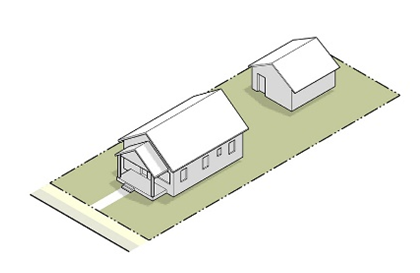 |
| Multi-unit House A residential building designed to accommodate two to four primary dwelling units on a single lot in a neighborhood setting. This building type has the scale, massing, and appearance of a detached house, and the accommodations for multiple units are minimized in the design of the building. Configuration of units may vary (up/down, front/back, side/side), and these variations typically prevent platting of individual units and lots (see Attached House). Variants of this type include and are commonly referred to as duplex, tri-plex, or quad-plex. | 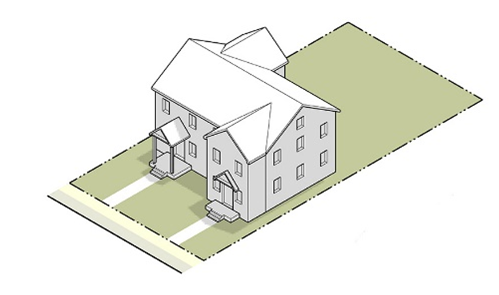 |
| Attached House A residential building type designed to accommodate two or more dwelling units, in a neighborhood or mixed-density setting. Each unit is separated by a common side wall with a side-by-side configuration, and each has its own private entrance. It is distinguished from a multi-unit house in that each unit may be platted on its own lot and may appear as distinct and separate units through entrances and façade designs. Variants of this type include and may be commonly referred to as paired house, townhouse, or row house. | 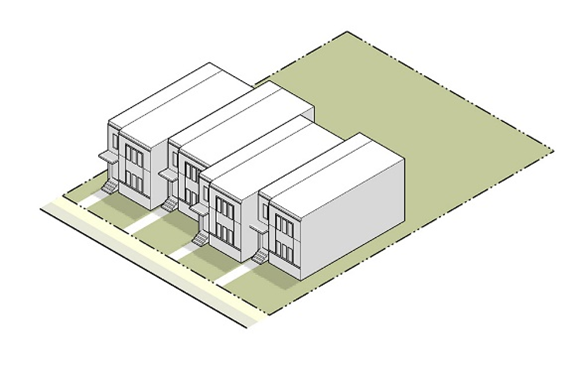 |
| Apartment/Mixed Use A residential building designed to accommodate multiple units in a single building and on a single lot, in a mixed-density, high-density, or mixed-use setting. Buildings typically have a common entry shared by all units and interior common space accessing individual units. In some settings, buildings can accommodate accessory or ground floor non-residential uses. Variants of this building include small-, medium-, and large-scale buildings, dependent on the lot size, building footprint, height, and number of units. | 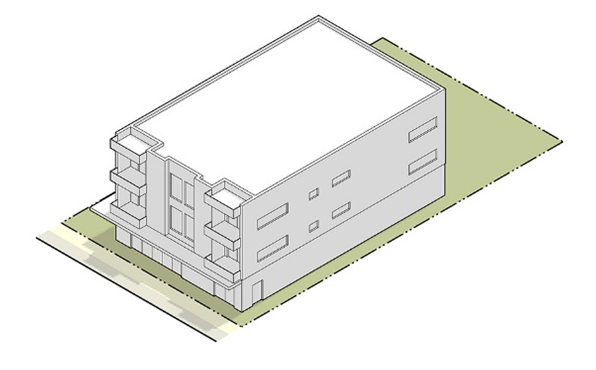 |
| Standard Lot A typical configuration for lots within a block with two tiers of lots, each of which front on the long side of the block, including interior lots and corner lots. | 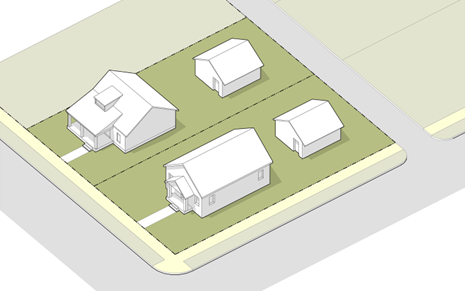 |
| Front/Rear Corner Lot A configuration where a corner lot is split into two lots—a larger front corner lot where the building and lot front on the long side of the block consistent with other lots on the block, and a smaller rear corner lot where the building and lot front on the short side of the block. | 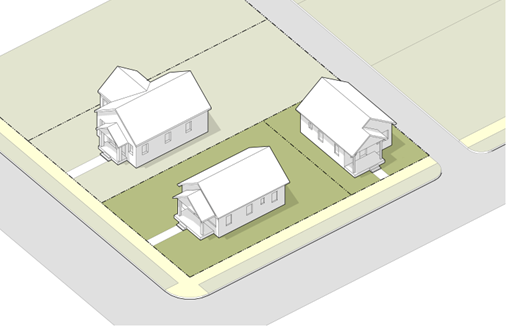 |
| End Grain Lot A configuration where one or more corner lots are divided to form multiple smaller lots where the buildings and lots front on the short end of the block, often to create a transition from the interior of the block to different building types along a corridor or at the edges of neighborhoods. | 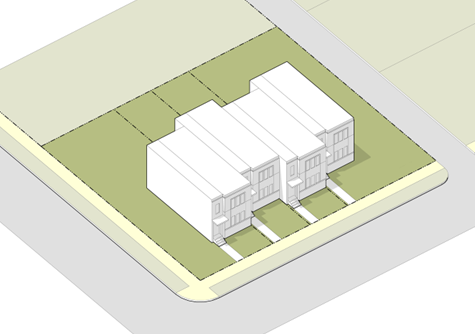 |
| Courtyard Lot A configuration where one or more lots are divided to form multiple smaller lots that are arranged around and front on a common courtyard, serving as the shared frontage for all lots, and providing access to the street front for the entire courtyard pattern. | 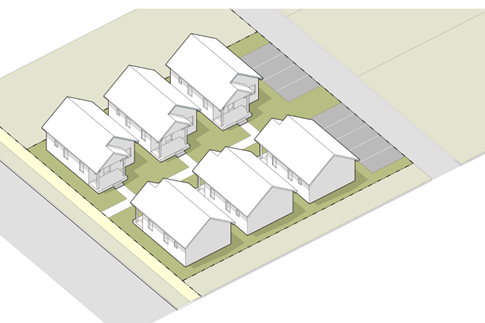 |
B.
Accessory Buildings—Residential. Accessory buildings shall be permitted in association with and on the same lot as a principal building, subject to the standards in Table 5-3, Residential Accessory Structures, and to the following additional limitations.
1.
All accessory buildings shall be at least ten feet from the principal building, or other distance specified by applicable building codes based on fire ratings of adjacent walls.
2.
Accessory buildings shall be clearly incidental and subordinate to the principal building or use in terms of scale, location, and orientation.
3.
Any building or structure over 12 feet high or over 200 square feet shall be compatible with the principal building considering materials, architectural elements, window and door details, and meet the design standards in EMC § 16-5-4.
4.
Prior to any building permit required by the City, applicants shall demonstrate that any manufactured structure meets all applicable state and local code requirements.
5.
Any building or structure exceeding the limits in Table 5-3 shall be treated as a second principal building and meet the same lot and building design standards as a principal building.
C.
Dimension Exceptions. The following are exceptions to setback and building dimensions standards established in Table 5-2.
1.
Lot and Building Ownership Configurations. Attached houses may have individual units platted on separate lots, provided the building meets the standards in Table 5-2 and each unit meets any per-unit or proportional standards for each lot. The lots shall be platted with a party wall as provided by the standards in the building code. Individual ownership and sale of units in other multi-unit building types shall only be permitted by following required condominium laws and recording appropriate documents with the Arapahoe County Clerk and Recorder
2.
Limited Building Types. Building types designated for limited locations in Table 5-2 shall only be permitted in the following locations:
a.
Corner lots, subject to specified maximum lot sizes and widths for the front corner and rear corner lots.
b.
End grain lots, fronting on the short dimension of blocks.
c.
Courtyard patterns as provided in EMC § 16-5-4.D.3
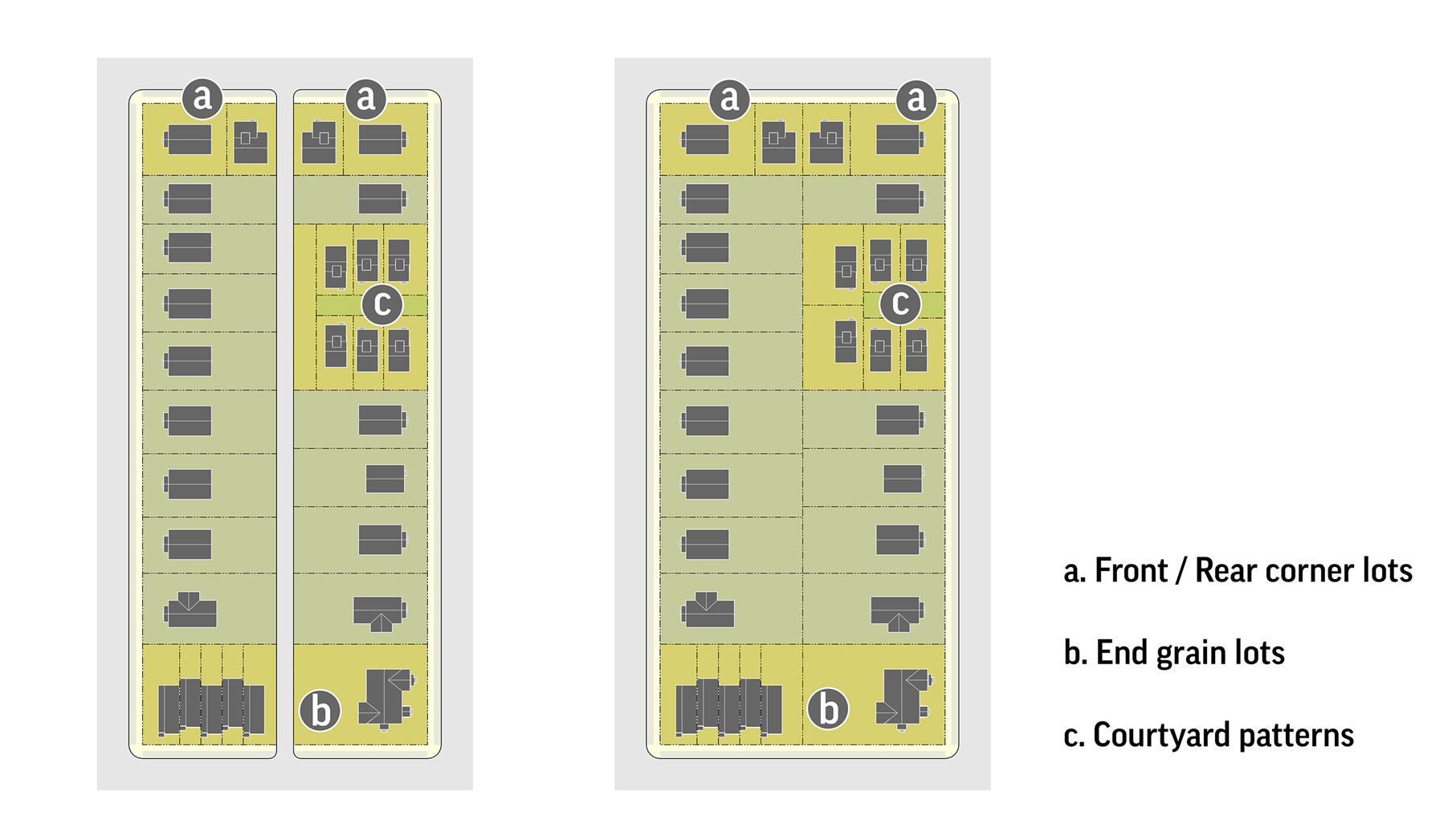
Figure 5-1. Limited Building types are permitted in specific locations to provide appropriate relationships and transitions to other buildings based on the building patterns, street design, and block layouts.
3.
Setback Encroachments. The following encroachments into the required setback are permitted, except in no case shall this authorize structures that violate the provisions of any easement.
a.
Primary entrance features may encroach beyond the required front building line, as specified in EMC § 16-5-4.C.3.
b.
Structural projections such as bay windows, balconies, canopies, chimneys, eaves, cornices, roof overhangs, egress wells, fire escapes, or other non-foundational overhangs or projections may extend the lesser of up to four feet from the foundation, or up to 50% into the required setback. This exception shall be limited to no more than 20% of the overall building elevation.
c.
Open air balconies may extend up to eight feet from any wall plane, but no closer than three feet from any common property line.
d.
Unenclosed and unroofed decks or patios at or below the first-floor elevation may extend into the rear or side setback but no closer than three feet to any lot line, except that any of these structures integrated into the prevailing grade may extend to the property line on rear and interior side lot lines.
e.
Ground-mounted mechanical equipment, meters, and utility boxes accessory to the building may be located in the side or rear setback provided that it extends no more than six feet from the principal building, no closer than two feet to the lot line, and is screened from public right-of-way by structures or landscape.
f.
Any other accessory use or structure within the setback, not specified in EMC § 16-5-3.B shall have a setback of at least one-half its height from the property line.
4.
Height Exceptions. The following are exceptions to the height limits in Table 5-2:
a.
Architectural features such as chimneys, ornamental towers, spires, and similar accessory and non-occupiable elements that are integral to the particular architectural style may extend up to 30% above the actual building height.
b.
Functional and mechanical equipment such as ventilators, utility fixtures, bulkheads, elevator penthouses, or communication equipment may exceed the height limit provided:
(1)
On pitched roofs they extend above the roof no more than three feet.
(2)
On flat roofs they extend above the roof no more than ten feet, are screened according to EMC § 16-8-4.C, and must be constructed in accordance with building codes.
c.
Height exceptions shall not be used to promote any encroachment above the bulk plane requirements in EMC § 16-5-4.C.1.
16-5-4: - Residential Design.
A.
Design Objectives. The Residential Design standards have the following design objectives:
1.
Enhance neighborhood character by coordinating streetscape investment with private lot and building investment.
2.
Design frontages to the context of the neighborhood and relate lots and buildings to the streetscape in a compatible manner along the block face.
3.
Provide outdoor social spaces that activate the streetscape and limit the cumulative impact of frontages designed for car access.
4.
Use front entry features to create consistent human-scale connections to the streetscape, provide subtle variations in building patterns and massing, and differentiate adjacent buildings with unique architectural details.
5.
Promote appropriate building mass in relation to the lot and streetscape, and in relation to buildings and open spaces on adjacent lots.
6.
Ensure access to a variety of different types of open spaces including natural areas, park and recreation amenities, and formal gathering spaces.
B.
Frontage Design. The frontage design establishes neighborhood character through the relationship of buildings and lots to the streetscape, including building placement, lot access, and the location and extent of garages and parking.
1.
Front Building Line. Front building lines create a consistent street wall along a block framing streetscapes. Front building lines shall be established according to the front setbacks required in Table 5-2 with the following exceptions:
a.
Frontage design should be similar for all buildings along a block but may gradually transition to different building placements between lots.
b.
The front building line of adjacent buildings shall not differ by more than five feet unless substantial space exists between the buildings.
c
Front entry features designed according to EMC § 16-5-4.C.3 may extend beyond the front building line.
d.
Frontages shall meet the landscape design standards in EMC § 16-8-3, Required Landscape.
e.
Front building lines may be modified to reflect specific patterns on a block according to the Administrative Adjustment procedures and criteria in subsection E and EMC § 16-2-11, and shall generally be between 15 feet and 40 feet from the front lot line.
2.
Garage and Driveway Limits. Limiting driveways and garages reduces interruptions in the streetscape and sidewalk, and limits the extent of inactive spaces along the frontage. Curb cuts, driveways and front-loaded garages shall be limited as specified in Table 5-4.
a.
Shared and Common Access. In cases where Table 5-4 limits or prohibits private access, shared driveways and common lanes internal to the block shall be used, and may use the cumulative frontage widths of multiple lots to determine permitted access widths.
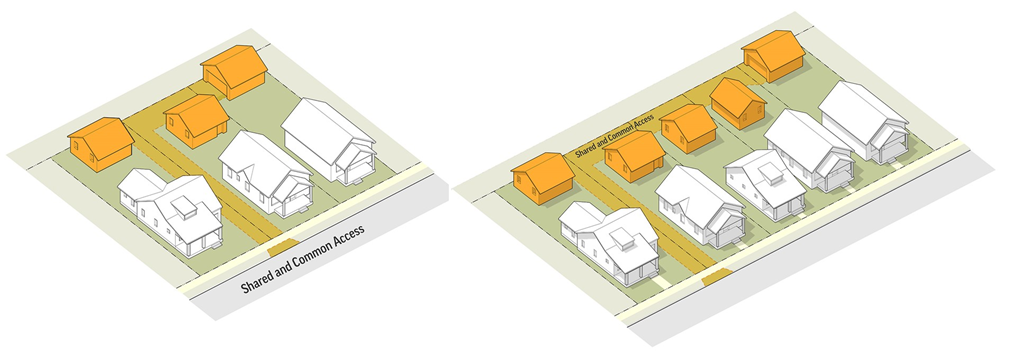
Figure 5-2. Shared or common access preserves streetscapes and continuous sidewalks in cases where alleys do not exist, and can serve two or more lots internal to the block, particularly where narrower lots would more frequently cause disruptions to the streetscape and sidewalk.
b.
Alley Entrances. Any garage entrance facing an alley shall be setback six feet from the alley edge or at least 18 feet, to allow proper turning movements to access the entrance and to eliminate vehicles parked in front of the entrance from projecting into the alley.
c.
Exceptions.
(1)
Alley served lots wider than 100 feet may have a secondary access lane connecting to the alley, limited to no more than 15% of the frontage width.
(2)
Detached houses on lots wider than 35 feet may be permitted one 8 feet by 18 feet accessory parking pad accessed off a driveway provided it is set back at least 15 feet from the front lot line.
(3)
Any garage entry permitted by Table 5-4 may allow a driveway entry pad that is the width of the garage entry up to 20 feet in front of the garage entry.
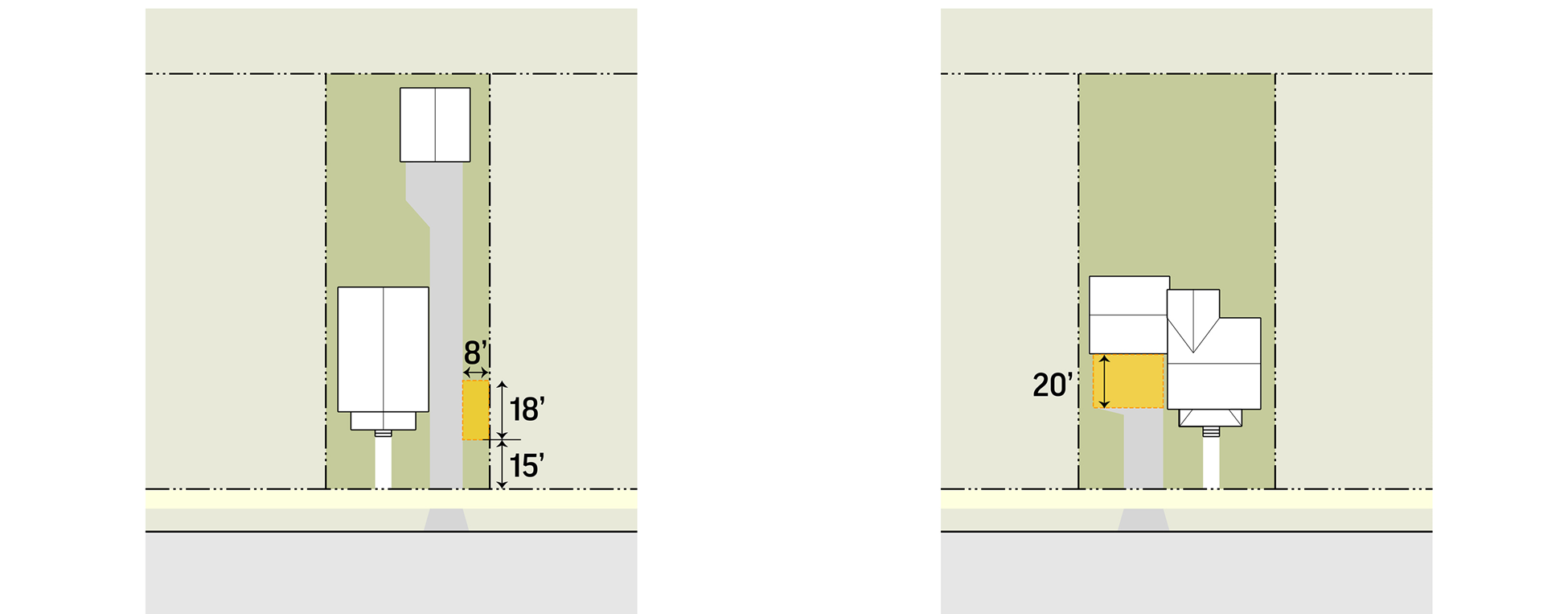
Figure 5-3. Driveway limit exceptions can allow for accessory parking or maneuvering to permitted front-loaded garages, while still preserving the frontage design and streetscape design objectives.
3.
Parking Location and Limits. Parking location and limits ensure a pattern of buildings that shape the streetscape and active spaces that engage street frontages. Parking areas for more than four vehicles shall be located as follows:
a.
Surface parking shall be setback at least 30 feet and be behind the front building line, whichever is greater. Surface parking shall be screened from the street with a Type 1 buffer specified in EMC § 16-8-4, Buffers and Screening.
b.
Structured parking or open podium buildings shall be setback at least 30 feet. Structured parking may be flush with the front building line on lots wider than 100 feet, provided it is limited to no more than 50% of the frontage and the façade otherwise meets all street-facing design standards to limit the appearance of a parking structure along the street frontage.
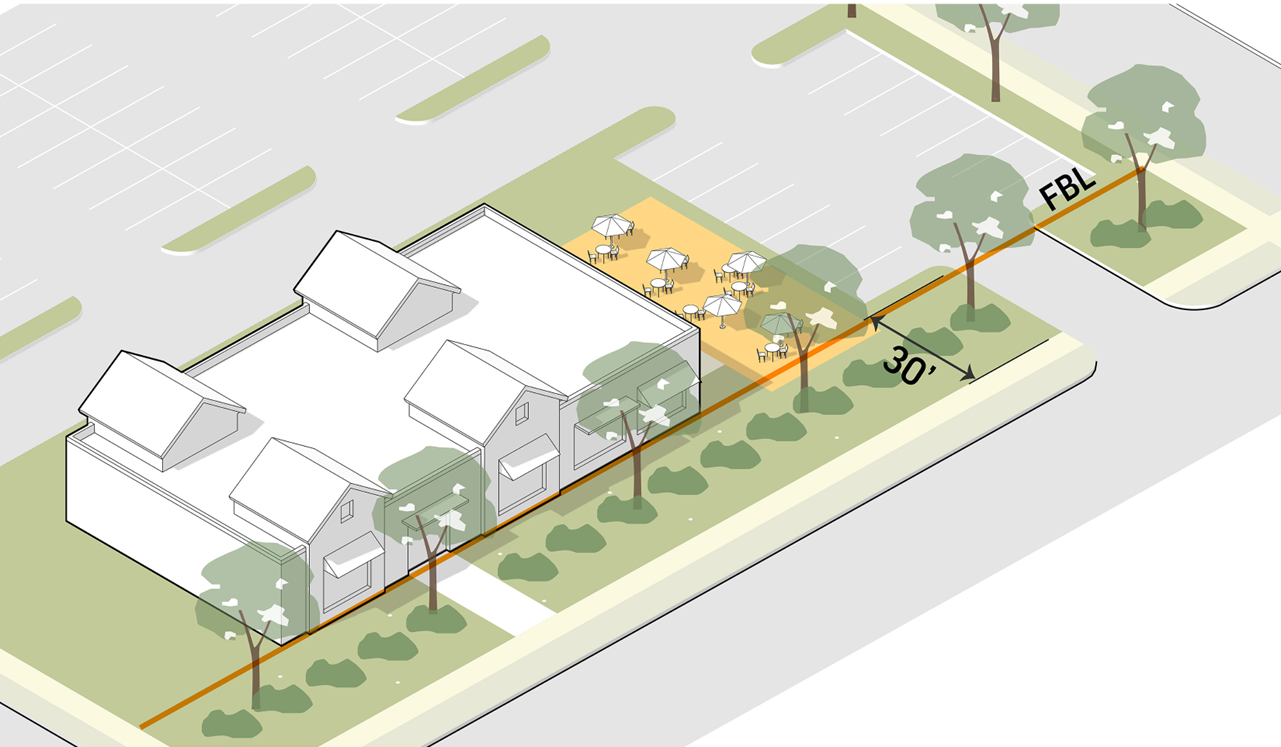
Figure 5-4. Larger surface parking areas for multi-unit or mixed-use buildings shall be set back to preserve the residential streetscape and promote the priority of building frontages along blocks.
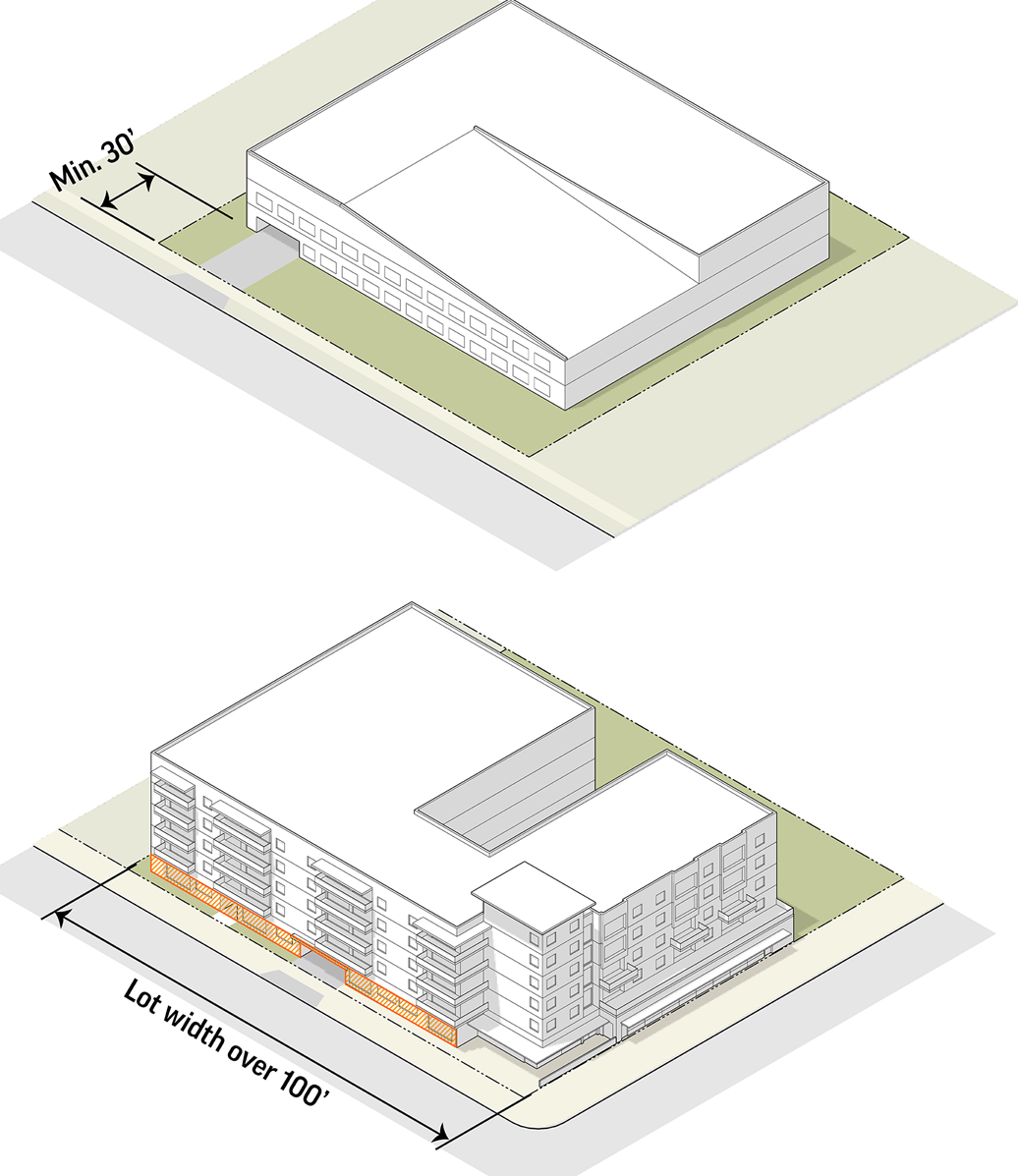
Figure 5-5. Structured parking shall be setback 30 feet to preserve the neighborhood streetscapes, except that buildings on wider lots that can incorporate active portions of the building along at least 50% of the streetscape may have remaining portions of the building and parking structure at the front building line.
c.
Corner lots shall meet the same standards on the side street for the first 30 feet from the corner or up to 25% of the side street frontage, whichever is greater.
C.
Building Design. Building design refines the scale and form of buildings beyond basic height and setback standards, and creates meaningful relationships to the spaces around buildings.
1.
Bulk Plane, one- to four-unit Buildings. No part of any 1- to 4-unit building shall exceed the bulk plane established in Table 5-5. The bulk plane shall be measured as follows:
a.
A bulk plane on the front 60% of the lot depth applying to all principal buildings.
b.
A bulk plane on the rear 40% of the lot depth applying to any accessory building or portion of a principal building permitted in this area.
c.
The maximum height established at the side lot line, or an exterior side lot line in the case of attached buildings, and increasing internally at a 45-degree angle (one foot for each one foot interior to the lot) and up to the maximum height established for each district.
d.
Height at the side lot line shall be measured from the average of the existing grades of the two side property lines taken from:
(1)
The midpoint of the front lot line and the front 60% of the lot for the front bulk plane.
(2)
The midpoint of the rear lot line and the back 40% line for the rear bulk plane.
(3)
Where the grade change between the front lot line and the rear lot line is more than ten feet, the height may be measured at the front setback for the front bulk plane and the rear setback for the rear bulk plane.
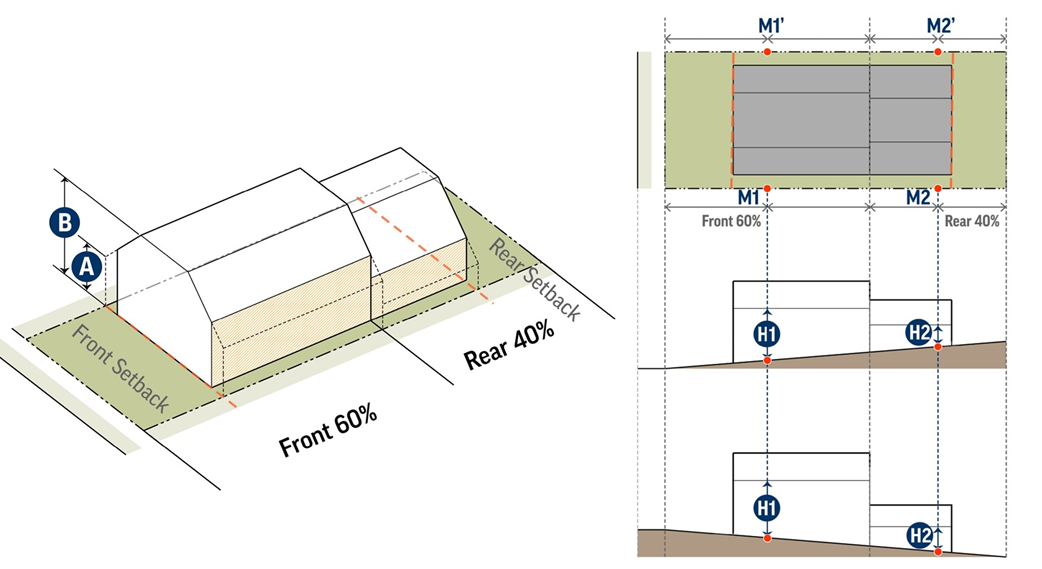
Figure 5-6. The bulk plane limits required by Table 5-5 shall be measured based on the maximum height at the side setback line (A) and a 45-degree angle up to the maximum height of the zone district; and both a front 60% bulk plane and a rear 40% lower bulk plane. Where property slopes, the front and rear height limits (H1 and H2) shall be established at the midpoints of the side lot lines for the front 60% (M1) and rear 40% (M2)—averaged from both side lot lines (M1 and M1'; M2 and M2').
e.
Exceptions. The following exceptions to Table 5-5 allow portions of the structure to partially protrude through the bulk plane for architectural features and varied massing that promote neighborhood character and maintain appropriate relationships between adjacent buildings and lots:
(1)
One or more dormers with windows may extend into the bulk plane and up to the ridge line of the roof for a maximum cumulative length of 15 feet on the front bulk plane and ten feet on the rear bulk plane. At least 50% of the dormer width and at least 30% of the dormer wall plane shall be windows.
(2)
Eaves or overhangs associated with a roof structure may extend horizontally into the bulk plane for two feet on the front bulk plane and 1.5 feet on the rear bulk plane.
(3)
Balcony and deck railings may extend into the front bulk plane 42 inches vertically, provided the railings are at least 75% transparent.
(4)
Chimneys may extend into the front bulk plane vertically up to ten feet, provided they are no wider than six feet.
(5)
Gutters or similar minor accessory building elements attached to the sides of buildings may extend into the front or rear bulk plane the minimum extent necessary to be functional, but shall not increase the extent of any other exception.
2.
Step Backs, five or more Unit Buildings. Any building with five or more units, or mixed-use buildings in the R-2 or MU-R-3 districts, shall step back the upper stories from lower stories.
a.
The step back shall apply to all portions of the building above 22 feet from grade.
b.
The step back shall be at least ten feet and apply on the side and rear elevations.
c.
Exceptions. The following exceptions allow portions of the structure to partially protrude into the required step back for architectural features and varied massing that promote neighborhood character and maintain appropriate relationships between adjacent buildings and lots:
(1)
Balconies and railings may extend into the step back area five feet horizontally and 42 inches vertically, provided the railings are at least 75% transparent.
(2)
Eaves, cornices, or overhangs associated with a roof structure may extend horizontally into the step back up to four feet.
(3)
Gutters or similar minor accessory building elements attached to the sides of buildings may extend into the step back the minimum extent necessary to be functional, but shall not increase the extent of any other exception
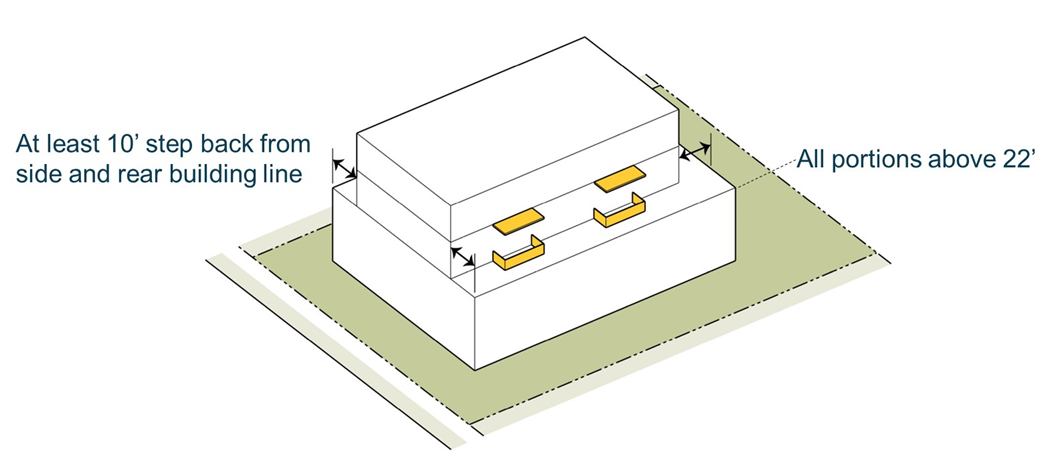
Figure 5-7. Buildings with five or more units shall use step backs to reduce the massing in relation to adjacent lots and buildings.
3.
Front Entry Features. Front entry features create human-scale massing elements that relate buildings to the frontage and provide outdoor livable spaces that activate the streetscape. All buildings shall have a front entry feature oriented to the front of the lot, according to the standards for one of the types indicated in Table 5-6.
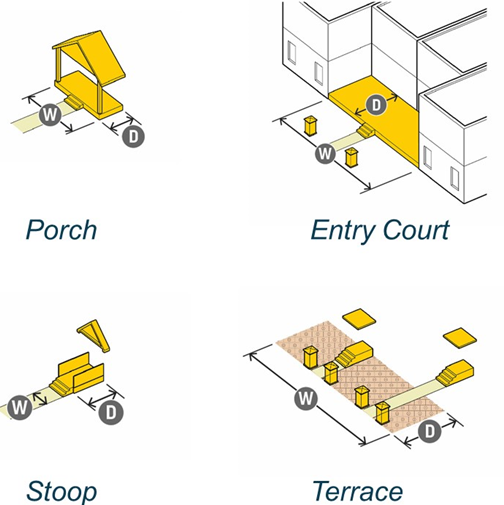
Figure 5-8. A variety of entry features with the minimum dimensions to create social spaces activates neighborhood streetscapes.
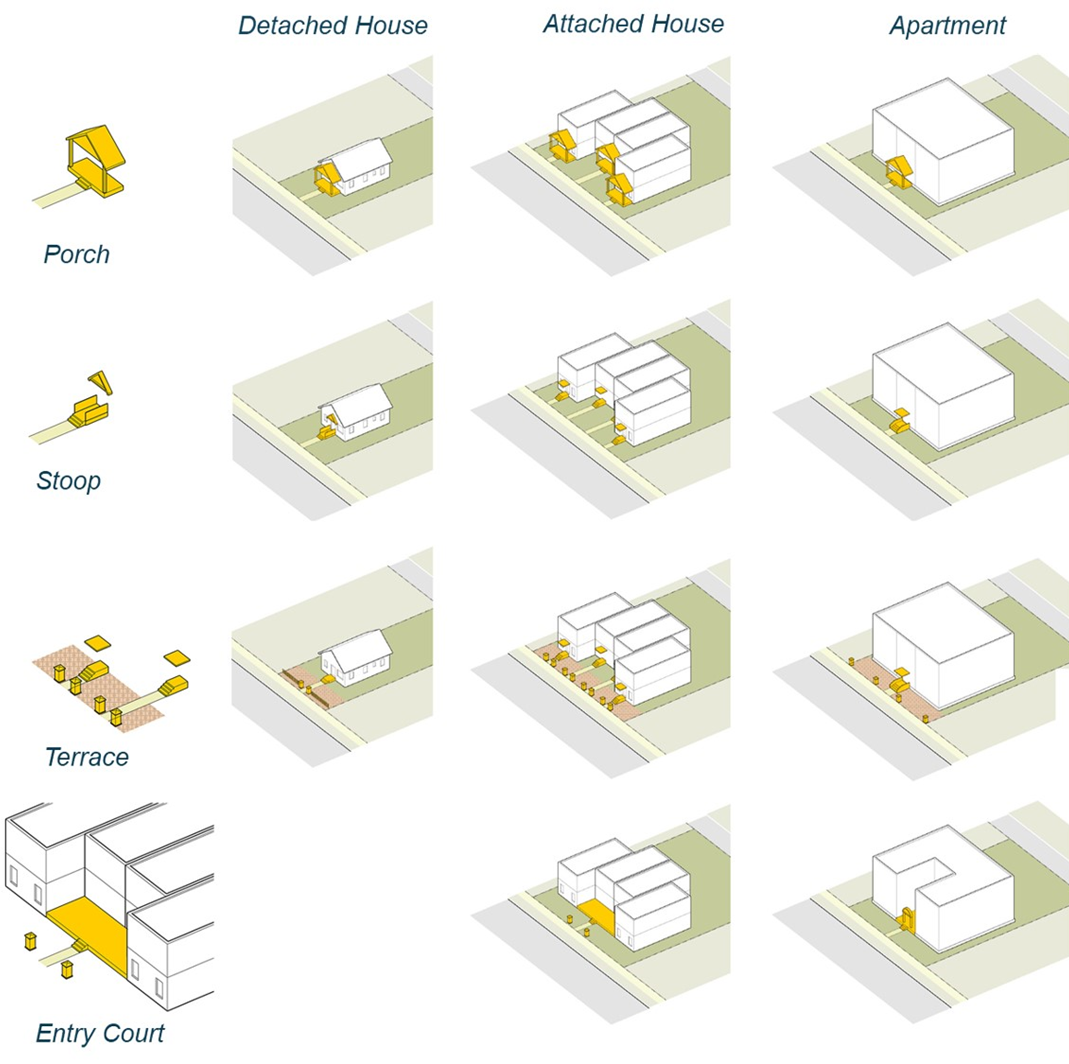
Figure 5-9. Entry features with human scale proportions can create subtle variations between similar building types, and create common massing and architectural features between different building types, creating a cohesive neighborhood streetscape.
4.
Transparency. Windows and doors create an order and visual rhythm on the façade, and establish physical and perceived connections to outside spaces. All buildings shall provide windows and doors meeting a minimum percentage of the building elevation according to Table 5-7.
5.
Façade Composition. Façade composition uses materials, architectural features, and ornamental details to break up blank walls or larger facades by creating depth, texture, and visual interest. Any wall plane segment greater than 25 horizontal feet shall include at least three of the following features:
a.
Emphasize front entry features meeting the standards of EMC § 16-5-4.C.3 as a focal point of the elevation.
b.
Create variations in the wall planes with bay windows, balconies, awnings, insets, cantilevers, or canopies that project or recess at least two feet from the wall plane.
c.
Differentiate stories, roofs, or other masses with prominent architectural details and ornamentation that define different modules of the building. Details and ornamentation should project between two inches and two feet from the wall and be at least eight inches wide.
d.
Use color and material changes to accent different components of the facade. Material and color changes should wrap corners and occur at the inside corner of a massing element or occur in association with a significant trim that projects at least one inch from the wall and be at least four inches wide to give a finished and unified appearance to the element.
e.
Alter rooflines by stepping the roof, using gables and dormers, dropping eaves, and using prominent overhangs to create offsets and projections of at least two feet.
f.
Break up remaining large expanses of blank walls with facade composition that considers the location and grouping of windows and doors that meet the transparency requirements in EMC § 16-5-4.C.4.
g.
Otherwise break up blank walls with architectural details and ornamental features that complement the building design and chosen architectural style.
D.
Open Space Design. Private and common open spaces complement the system of larger open spaces and create gateways and focal points in neighborhoods and projects.
1.
Lot Coverage. Residential open space is required by the lot coverage and setback requirements in Table 5-2, and frontage design standards in sub-section B. These areas shall be designed and include landscape according to Chapter 8 of this Title. The following items are exceptions that do not count to the lot coverage, provided the lot otherwise meets the landscape requirements.
a.
Front entry features meeting the standards of sub-section C.3 and that are unenclosed on at least two sides.
b.
Sidewalks or other paved pedestrian paths up to six-feet wide
c.
Driveways or other paved lanes that are less than ten-feet wide
d.
Swimming pools, hot tubs, or ornamental ponds.
e.
Open and uncovered decks or patios that are no more than 30 inches above grade. The design of these spaces should be coordinated between the neighborhood-scale, block- or project-scale, and site- or building-scale to provide a system of open spaces and allow access to a variety of types of open space. These spaces may involve a combination of public, common, and private open spaces.
2.
Usable Open Space. Any project or lot larger than one acre shall require an additional 15% of the lot designed as usable common or private open spaces, unless space is dedicated through the platting process according to EMC § 16-3-5.
3.
Courtyard Pattern. A courtyard pattern can integrate multiple buildings or lots into the block and neighborhood patterns, and are only permitted on lots interior to the blocks—not on corner lots. Lots may be arranged around a common courtyard or muti-building projects may be organized around a courtyard subject to the specific open space and lot exceptions below:
a.
Applicability. The following building types are eligible for this pattern, subject to the limitations in Table 5-8:
b.
Courtyard Design. The common courtyard shall be designed as follows:
(1)
At least 25 feet wide in all directions and at least 1,500 square feet in area.
(2)
The frontage landscape requirements in EMC § 16-8-3 for all lots and buildings fronting on the courtyard shall apply to the courtyard area and the project's frontage along the street.
(3)
The courtyard shall front on a public street or be accessible from the public street by a pedestrian passage.
(4)
Lots may front on the courtyard, rather than along a street. The front setback may be reduced to five feet from the courtyard boundary and the building shall meet all other building design standards applicable to the frontage.
(5)
Any building fronting on the street, or the sides of any buildings adjacent to the street shall meet the street frontage standards on the street as well as the courtyard.
(6)
Vehicle access and parking shall be coordinated for all lots and buildings and designed in a way that minimizes the impact on the public street and the courtyard. Access shall meet all frontage standards applied to the project as a whole along the public street.
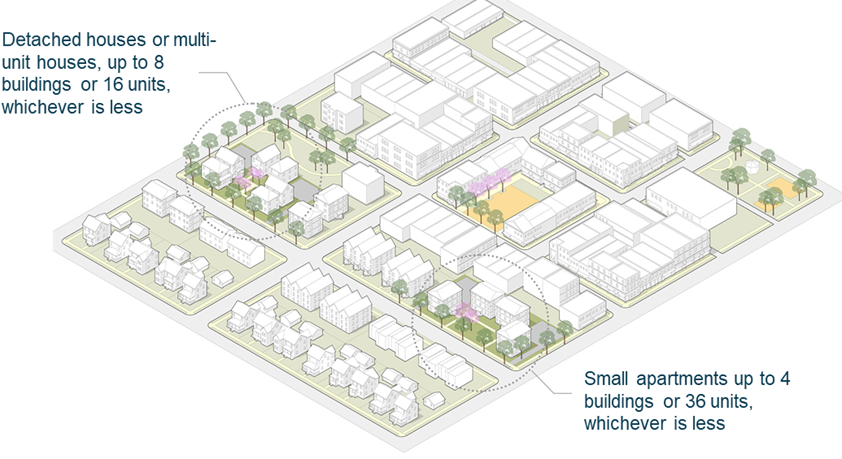
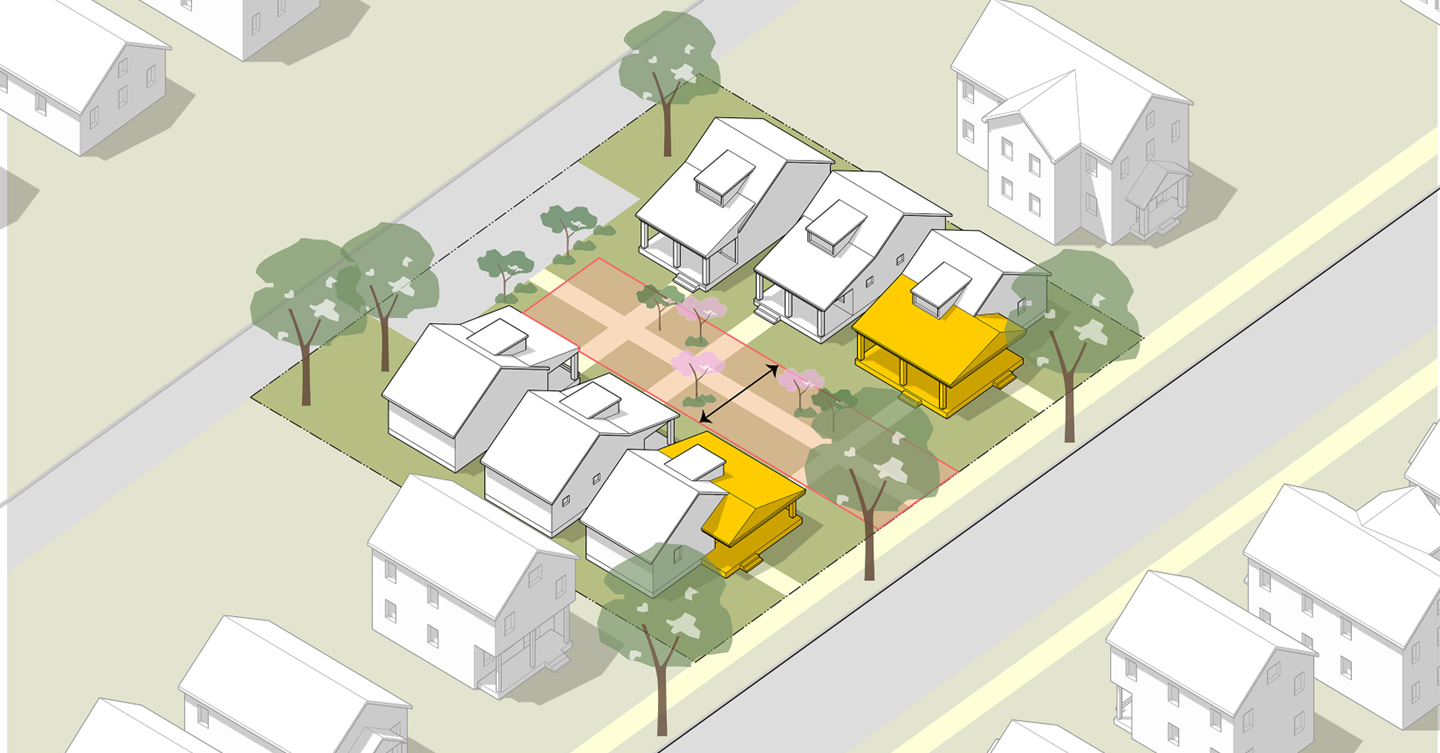
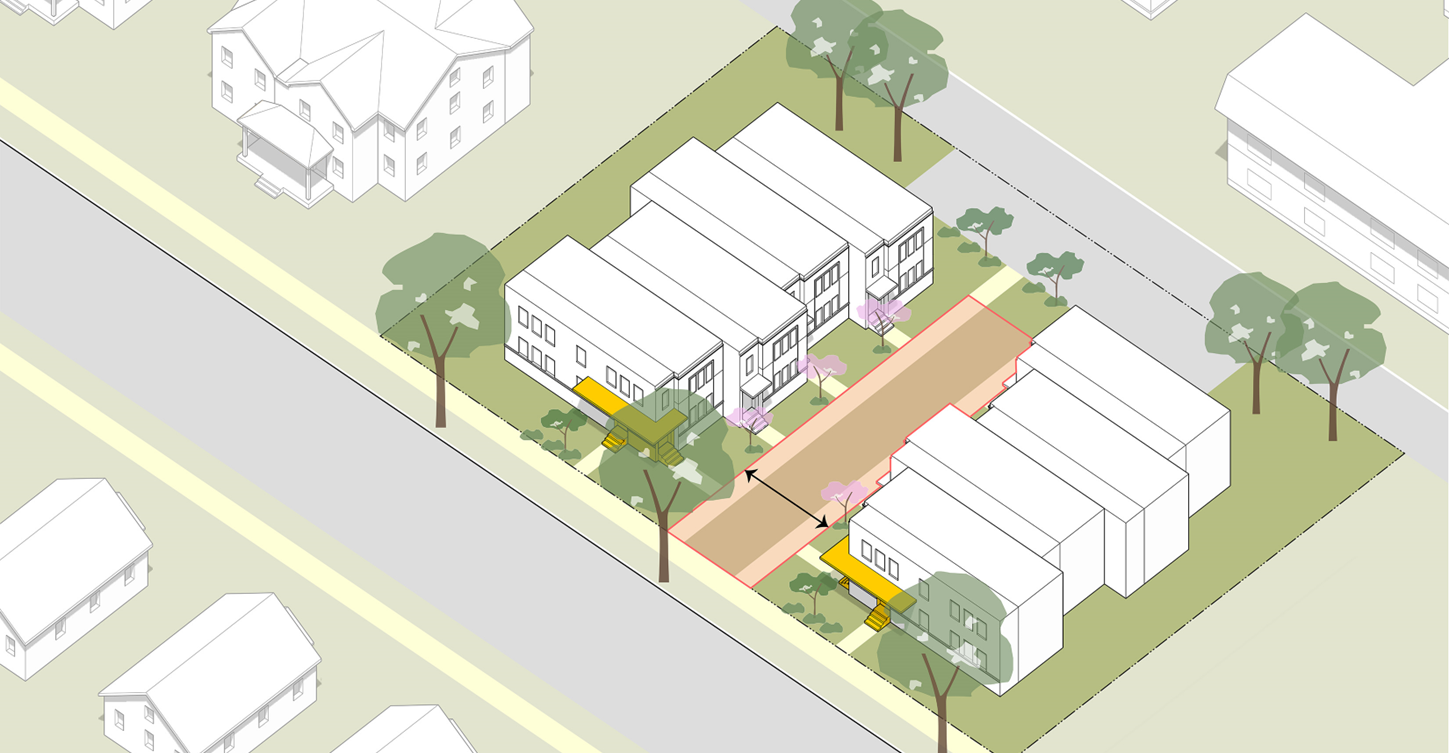
Figure 5-10. Courtyard designs can integrate multiple building sites into the block structure, particularly on larger or deeper blocks and parcels. Buildings are required to front on the enhanced social spaces provided by the courtyard design standards, and corner buildings along the street are required to orient to both the courtyard and the public streetscape.
E.
Administrative Adjustments. Administrative adjustments to the Residential Design Standards in EMC § 16-5-4 may be approved according to the process and criteria in EMC § 16-2-11, Administrative Adjustment, and any of the following additional criteria.
1.
The context presents a pattern of existing buildings, frontages, or open spaces along the block face different from the standard.
2.
The requirement would make the site or building less compatible with design characteristics of other buildings and sites throughout the area, which are desirable to maintain.
3.
The requirement is not consistent with the particular architectural style selected for the building based on reputable resources documenting key attributes of the style.
4.
The alternative is necessary to facilitate rehabilitation of an existing building or site.
5.
In all cases the deviation is the minimum necessary to address the circumstance and the alternative equally or better meets the design objectives of this Section.
16-5-5: - Attainable Housing Guidelines.
A.
Design Objectives. The attainable housing guidelines have the following design objectives:
1.
Provide housing at different price points city-wide.
2.
Meet a portion of the regional need for housing at specific affordable and attainable price points.
3.
Locate housing for those more likely to be transit dependent in transit-served areas.
4.
Create a framework for regulatory incentives for housing that meets the City's development policies and housing goals.
5.
Promote resilient, mixed-density, mixed-income, and walkable neighborhoods.
B.
Attainability Tiers and Bonuses. Projects that provide documented assurances of attainability specified in Table 5-9 for a period of at least 20 years may be eligible for development bonuses and parking reductions. Any other incentives, whether other fee reductions, development bonuses, or other development circumstances beyond this, may be subject to additional review and decisions by the Planning and Zoning Commission or City Council.
C.
Administration. Applicants shall submit the following documentation in association with their application:
1.
[Complete the list of pre-requisites necessary to commit to these levels, and other on-going reporting needs; coordinate with housing policy under development in separate task]
16-5-6: - Sustainable Sites and Building Guidelines.
A.
Design Objectives. The sustainable sites and buildings guidelines have the following design objectives:
1.
Augment the larger-scale sustainable development patterns and policies enforced elsewhere in this code (i.e. walkable, bike-able, and transit supportive neighborhoods and commercial areas; energy-efficient and water-efficient landscape design).
2.
Support other official plans, programs, or policies of the City that support alternative transportation modes, alternative fuels, and renewable energy sources.
3.
Promote building, construction, and maintenance practices that reduce waste and increase the longevity of investments in buildings.
4.
Reduce impacts from development practices and land uses on air and water quality.
5.
Preserve important elements and functions of the natural environment.
B.
Guidelines. Sustainable sites and buildings involve many complementary issues regarding resource and energy efficiency, water use, impact mitigation, waste, and materials, and sometimes competing issues must be evaluated. The following guidelines are issues that can impact the overall sustainability performance of a site and building.
1.
Improve the energy efficiency of buildings through passive heating and cooling strategies that optimize natural ventilation and capitalize on winter sun and summer shade.
2.
Reduce urban heat island effects through any of the following measures:
a.
Reduce building footprints and paved areas that capture heat.
b.
Maintain and increase tree canopies, particularly over paved surfaces and building footprints with strategically located landscape.
c.
Use roof and paving materials and colors that reflect sunlight and heat away from the surfaces and reduce surface temperatures.
3.
Promote site-specific renewable energy technologies.
4.
Ensure that sites and buildings are EV-ready.
5.
Emphasize facilities for recycling and composting, including storage areas and access for pick-up services.
6.
Maintain water-efficient landscape through any of the following:
a.
Plant all xeric landscaping according to EMC § 16-8-5.E.
b.
Use high efficiency irrigation systems, such as drip systems or rain-sensor systems.
c.
Implement non-potable water systems.
7.
Improve water quality in coordination with the City's stormwater management requirements, and permit best practices that address the quality, quantity, and rate of runoff.
8.
Coordinate with the building code and energy code to ensure that all buildings, fixtures, and appliances are meeting energy, water, waste, and recyclable material benchmarks.
C.
Administrative Adjustments. Achieving significant performance levels on any of these guidelines may justify administrative adjustments to the standards of this Chapter according to the process and criteria in EMC § 16-2-11 and based on the intent and design objectives of this Section.
16-5-7: - Neighborhood Preservation Overlay (NPO).
A.
Intent and Applicability. An overlay district covering a portion of the MU-R-3-B base residential zone district that is intended to preserve the existing character and balance of land uses within a mature residential neighborhood area. In general, the standards of the MU-R-3-B apply as well as the standards established in this Section, and in the event of a conflict the more strict will apply.
B.
Development Standards. Existing multi-unit developments retain rights to redevelop at existing residential density levels and subject to all other MU-R-3-B zone district dimensional standards. Existing single unit homes may only be redeveloped as similar single- and two-unit developments.
C.
Uses. The following use limitations apply to the NPO district:
1.
Prohibited Uses. The following uses are prohibited:
a.
Hospital.
b.
Clinic.
c.
Laboratory.
d.
Office, type 1, (general).
e.
Office, type 2, (limited).
f.
Parking facility, structure, and principal use.
g.
Parking area, surface, principal use.
h.
Conversions of existing offices to multi-unit residential.
i.
Multi-unit dwelling, except for two-unit dwellings.
k.
Accessory dwelling units
2.
Prohibited Conditional Uses. The following Conditional Uses are prohibited:
a.
Group living facility, large/special.
b.
Small treatment center.
c.
Boarding or rooming house.
3.
Limitation on Number of Units for New Multi-unit Residential Developments. A maximum of two residential units per 50 feet of lot frontage are allowed for new multi-unit residential developments replacing existing single and two-unit structures.
4.
Continuation of Existing Office. Any multi-unit structure or Office Type 2 in existence at the time of the effective date of the ordinance creating this overlay district (insert date) shall be considered a legal conforming use. Should any such structures be destroyed or intentionally be demolished by more than 60% of its value:
a.
The structure shall be allowed to be reconstructed with up to a 10% increase or the same number of units or less; or
b.
The same floor area for Office Type 2 in its previous location on the lot, regardless of whether or not the requirements of the underlying zone district are met, including but not limited to minimum lot area, maximum lot coverage, maximum height, minimum setbacks, parking and landscaping. Maximum lot coverage may be increased to 80%.
c.
All other non-conforming uses and/or structures are subject to the non-conforming regulations of the Unified Development Code.

