
Englewood City Zoning Code
CHAPTER 6
NON-RESIDENTIAL DEVELOPMENT AND DESIGN
16-6-1: - Intent.
The intent of the Non-residential Development and Design standards is to:
A.
Improve the appearance and vibrancy of mixed-use, commercial, and employment centers with good civic design.
B.
Strengthen the accessibility of places by coordinating site access and internal circulation systems with multi-modal street networks and transit.
C.
Reinforce the distinct character of different corridors, centers, and districts with building and landscape design appropriate to the context.
D.
Enable a range of compatible buildings and sites that meet the intent of each zoning district.
E.
Promote sustainable site and building design practices.
F.
Stimulate lasting and sustained investment in corridors, centers, and districts with quality design.
16-6-2: - Applicability.
A.
The standards in this Chapter shall apply to all development in the M-1, M-2, MU-B-1, MU-B-2, I-1, and I-2 districts, except where stated that sections only apply to specific districts or specific situations. Specifically, the standards in this Chapter apply to:
1.
All new structures.
2.
Modification or additions to existing structures or sites to the extent of the modification or addition, except that the Director may waive any design standards applied to modifications or additions that:
a.
Conflict with the consistent design of an existing building;
b.
Conflict with a desired and prevailing character on the block or immediate vicinity of the project; or
c.
To otherwise facilitate infill development or adaptive reuse of an existing building.
B.
The standards shall not apply to ordinary maintenance of existing buildings or sites, except that maintenance shall not occur in a manner that brings the building or site out of conformance with these standards.
16-6-3: - Development and Dimension Standards.
A.
Lot and Building Standards. The lot and building standards for non-residential zone districts are specified in Table 6-1.
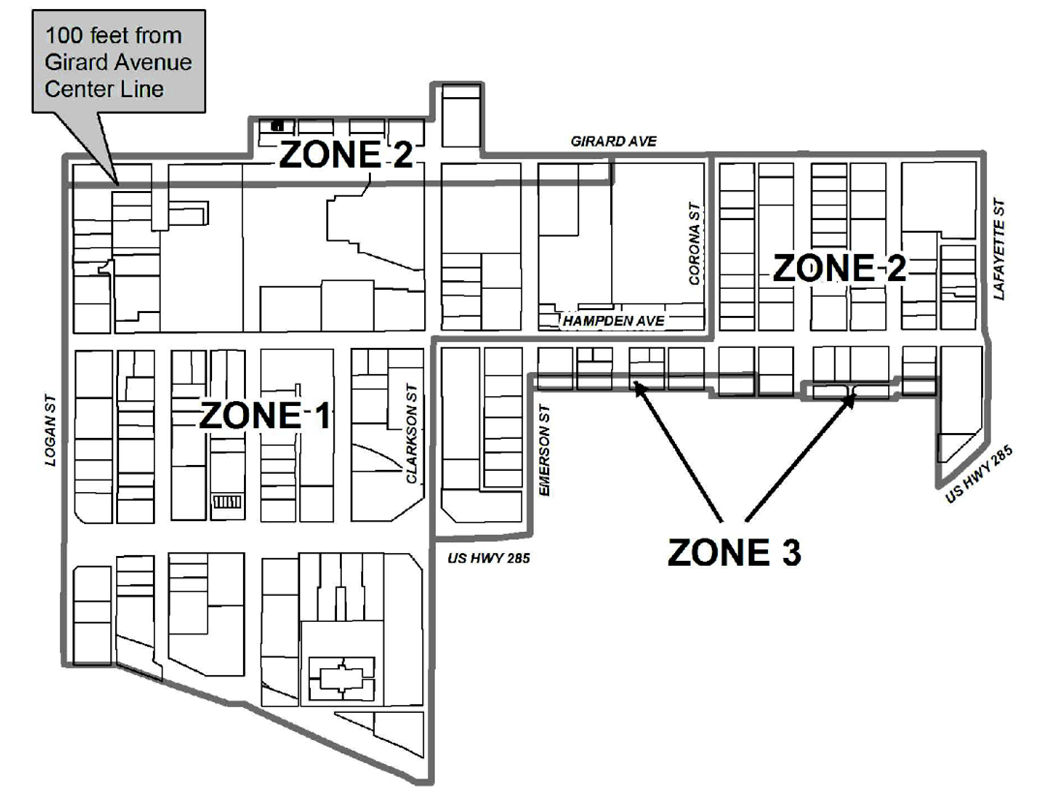
Figure 6-1. Medical Zone and Medical Overlay Height Zones
B.
Accessory Buildings—Non-residential. Accessory buildings shall be permitted in association with and on the same lot as a principal building, subject to the standards in Table 6-2, Non-residential Accessory Structures, and to the following additional limitations.
1.
All accessory buildings shall be at least ten feet from the principal building, or other distance specified by applicable building codes based on fire ratings of adjacent walls.
2.
Accessory buildings shall be clearly incidental and subordinate to the principal building or use, in terms of scale, location and orientation.
3.
Minor accessory structures of 120 square feet or less, and not on a slab or similar foundation do not have a required interior side or rear setback but should be movable and are otherwise placed "at risk" by the owner with regard to any easements, fence, or screening requirements.
4.
Any building or structure over 320 square feet or over ten-feet high, and potentially visible from the street or other public areas shall use materials, colors, scale and forms (roofs and massing), and details that are compatible with the principal structure, or otherwise be screened according to EMC § 16-8-4.
5.
Prior to any building permit required by the City, applicants shall demonstrate that any manufactured structure meets all applicable state and local code requirements.
6.
Any building or structure exceeding the limits in Table 6-2 shall be treated as a second principal building and meet the same lot and building design standards as a principal building.
C.
Dimension Exceptions.
1.
Setback and Lot Exceptions. The following are exceptions to the lot and setback standards in Table 6-1, except that in no case shall this authorize structures that violate the provisions of any easement:
a.
The front setback and front building lines may be modified according the Frontage Design Standards in EMC § 16-6-4.
b.
The minimum side setback may be reduced to zero feet to conform with an adjacent structure's zero feet rear or side setback.
c.
The minimum rear setback may be reduced to zero feet on lots less than 100 feet deep.
d.
Open air balconies may extend up to 8 feet from any wall plane, but no closer than three feet from any common property line, except on the frontage where they may project into the right-of-way.
e.
Any projections over public rights-of-way, or any similar area designed for pedestrian circulation, shall be at least eight feet above the grade, and in no case within five feet of any curb for a street, through access drive or other area designed for vehicles.
f.
Structural projections such as bay windows, balconies, canopies, chimneys, eaves, cornices, awnings, open fire escapes, egress wells, or other non-foundational overhangs or projections may extend the lesser of up to four feet from the foundation, or up to 50% into the required setback. This exception shall be limited to no more than 20% of the total area of a building elevation.
g.
Ground-mounted mechanical equipment, meters, and utility boxes accessory to the building may be located in side or rear setbacks at the discretion of the Director, and provided they are screened from rights-of-way and other public spaces by structures or landscape.
h.
Any other accessory use or structure in the required setback, not specified in EMC § 16-6-1.B, shall have a setback of at least one-half its height from the property line.
2.
Height Exceptions. The following are exceptions to the height standards in Table 6-1:
a.
Accessory elements integral to the design and construction of the building, such as parapet walls, false mansards, or other design elements essential to quality appearance of the building may extend up to six feet above the roof deck on a flat roof.
b.
Architectural features such as chimneys, ornamental towers and spires, and similar accessory and non-occupiable elements that are integral to the particular architectural style may extend up to 30% above the permitted height.
c.
Functional and mechanical equipment such as elevator bulkheads, cooling towers, smokestacks, roof vents, or other equipment may be built up to their necessary height in accordance with building codes.
3.
Residential Buildings. Residential uses permitted in the non-residential districts may be developed as follows:
a.
Mixed-use buildings according to Table 6-1, where residential uses are on upper stories or are located behind a street-front non-residential use that is at least 40 feet deep; or
b.
Residential building types using the MU-R-3-C development and design standards in Chapter 5, except:
(1)
Detached houses are not permitted in non-residential districts;
(2)
The height limit of the applicable non-residential district may be applied; and
(3)
Residential-only building types shall not be permitted on the 3300, 3400 and 3500 block frontages of South Broadway. Residential uses shall only be permitted in mixed-use buildings for these blocks.
16-6-4: - Frontage Design.
A.
Design Objectives. Frontage design determines the relationship between private development and the streetscape and affects the character of different streets, blocks, and districts. The frontage design standards have the following design objectives:
1.
Enhance the image of the City by coordinating streetscape investment with private lot and building investment.
2.
Use buildings to shape streetscapes and public spaces, and orient buildings to these spaces.
3.
Design frontages based on the context of the area, block, and street, particularly emphasizing landscape areas to buffer sites from higher-volume/higher speed streets and emphasizing social spaces and human-scale features on walkable and multi-modal streets.
4.
Coordinate development across multiple lots with compatible frontages along block faces, considering building placement, access, parking, landscape, and open space design.
5.
Strengthen the identity and economic value of distinct places by reinforcing consistent patterns of streetscape, frontage design, and building placement and form.
B.
Frontage Design Standards. The frontage types and design standards in Table 6-3 are based on the context of different streets and blocks, and may modify the front setback established in Table 6-1. Sub-sections following this table provide specific design strategies and techniques to meet the design objectives and standards.
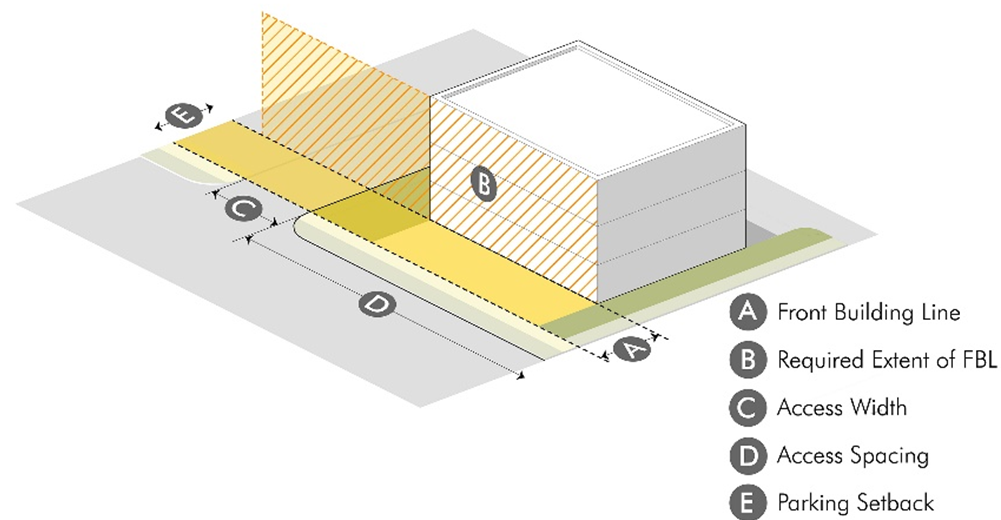
Figure 6-2. Frontage types are differentiated based on the location of the front building line (FBL—A), the extent of the front building line occupied by the building (Required FBL—B), access widths (C), and parking location and extent along frontage (E). Coordinating frontage design of multiple buildings and sites along a block impacts the character of the streetscape and the block.
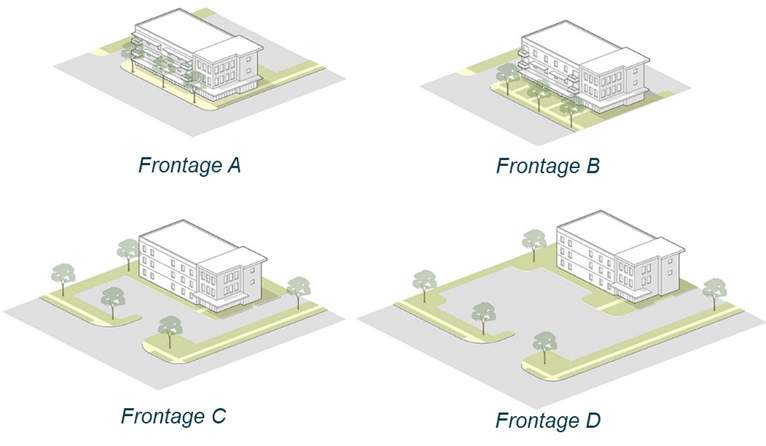
Figure 6-3. The different frontage types and frontage type standards in Table 6-3 determine how a building and site relates to the streetscape impacting the character of the streetscape, block and area.
C.
Front Building Line. All buildings shall establish a front building line within the build to range specified in Table 6-3, Non-residential Frontage Design, based on the appropriate frontage type for the specific street and block. Building frontages are required to cover the minimum distance specified along the front building line running parallel to the front lot line with either of he following:
1.
Front building facades meeting the design standards in Table 6-4, Non-residential Building Design; or
2.
Open spaces for public gathering that meets the requirements of EMC § 16-6-6, Open Space Design, provided:
a.
It is limited to no more than 50 linear feet or 50% of the lot frontage, whichever is greater;
b.
There is a defined edge and features at the extension of the required front building line, such as decorative walls, fences, or landscape features; and
c.
All building facades fronting the open space meet the building design standards otherwise applicable to the building frontage.
3.
Corner lots shall meet the frontage requirement along the side street for at least 25' or 25% of the lot depth, whichever is greater.
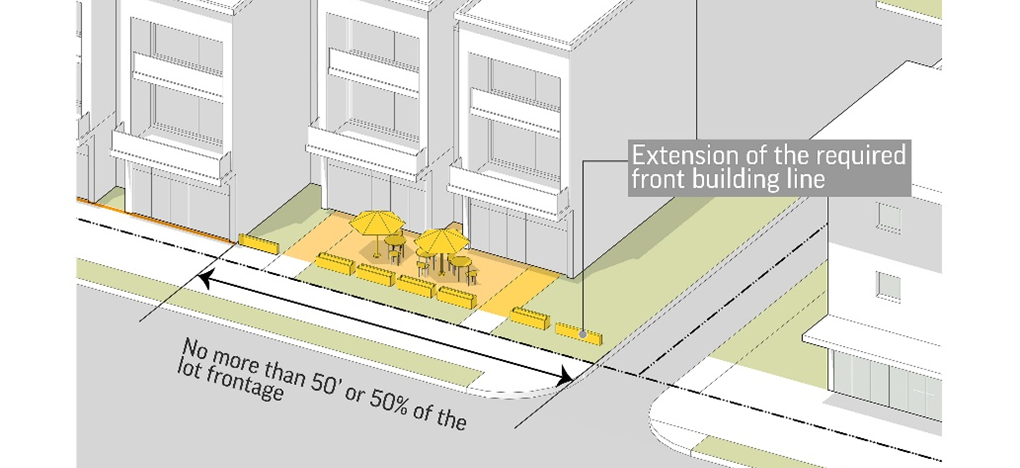
Figure 6-4. Consistent front building lines along a block are established by the building placement or active open spaces with defining edges and vertical elements at the extension of the front building line.
D.
Access and Parking Limits. The following standards apply to the driveway and parking limits in Table 6-3, Non-residential Frontage Design:
1.
Access width limits apply to the first 25 feet of the lot depth.
2.
Access spacing specifies the minimum distance between edges of driveways or internal access streets. However, the Englewood Standards and Specifications Manual may specify different access standards on any particular lot, street, or block.
3.
In cases where these standards limit access to a lot, options that coordinate access to lots on the same block shall be used, including mid-block alleys, internal access streets, common access lanes, or shared drives and cross access easements.
4.
All parking or other areas dedicated to vehicle circulation shall be set back as specified in Table 6-3, and be limited only to the extent specified along the frontage.
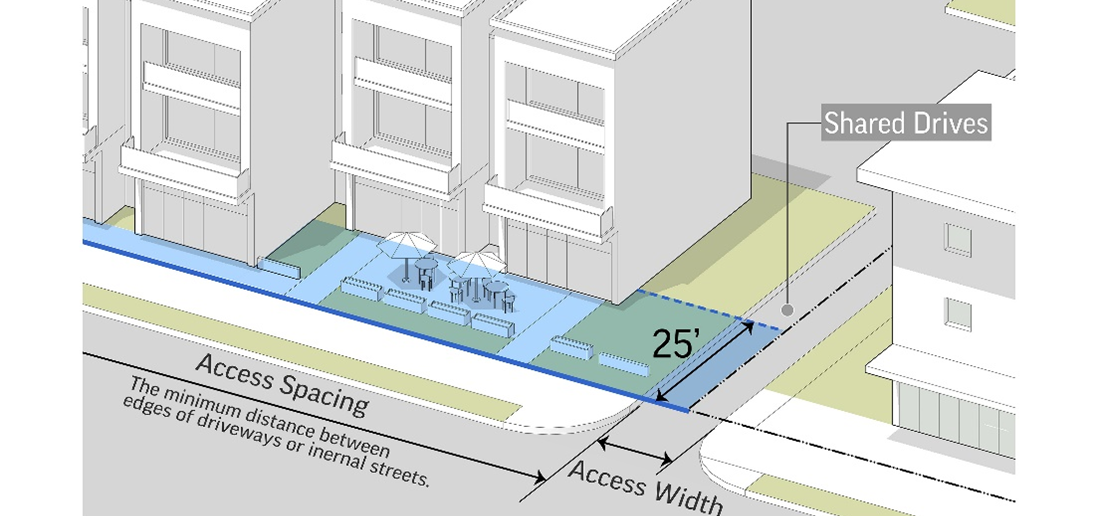
Figure 6-5. Limiting parking and driveways along the frontage preserves these areas for active areas of the building and site, creating an engaging the streetscape.
E.
Landscape. The remainder of the frontage between the street and front building line shall be designed according to the open space, landscape, or streetscape standards.
1.
Generally, private frontages shall include landscaping meeting the standards of Chapter 8, Landscape Design.
2.
Frontages with buildings built between 5 and 15 feet from the front lot line may extend the streetscape design standards in EMC § 16-3-4, Street Design where necessary to complete the pedestrian or landscape amenity of the mixed-use or pedestrian street types.
3.
Any portion of the frontage where buildings or portions of the building are set back more than 25 feet shall include a Type 1 buffer per EMC § 16-8-4, Buffers and Screening. The buffer shall establish a defined edge and vertical elements along the front lot line or along the extension of the front building line from the portion of the building frontage built within the build to range.
F.
Administrative Adjustments. Application of frontage types is based upon a combination of the character of the district, the streetscape design along the block, and the relationship to adjacent lots and buildings. Administrative adjustments to the frontage design standards in this Section may be authorized according to the process and criteria in EMC § 16-2-11, Administrative Adjustments and any of the following additional applicable criteria:
1.
The context presents a clear pattern of existing buildings and lots on the same block and opposite block face that are different from the requirements and are desirable to maintain:
a.
Frontages should be similar for all lots on the same block face or gradually transition to different frontage types.
b.
Front building lines on adjacent lots should generally not differ by more than ten feet, unless substantial space exists between the buildings.
c.
Blocks with pedestrian amenities, on-street parking, or designed according to the Mixed-use or Pedestrian street type standards in EMC § 16-3-4 are generally appropriate for the Frontage Types A and B.
d.
Blocks with higher traffic speeds or volumes, that lack pedestrian amenities, or lack on-street parking are generally appropriate for Frontage Types C and D standards.
e.
Frontage Type A may reduce the front building line to between zero and five feet of the front lot line when fronting on streets designed to the mixed-use or pedestrian street type standards in EMC § 16-3-4, and where no additional streetscape elements are needed according to those standards.
2.
Parking and access that serves a greater area beyond the site and block may deviate from these standards, provided it does not negatively impact development on adjacent lots and it is designed to minimize impacts on streetscapes.
3.
Civic uses or landmark buildings may deviate from frontage designs provided they are in a location that serves as a focal point for the surrounding area, and the exception is used for improved social space or aesthetic features on the frontage.
4.
In all cases the deviation is the minimum necessary to address the circumstance, the alternative equally or better meets the design objectives of this Section, and there are no negative impacts on other design standards applicable to the building or site.
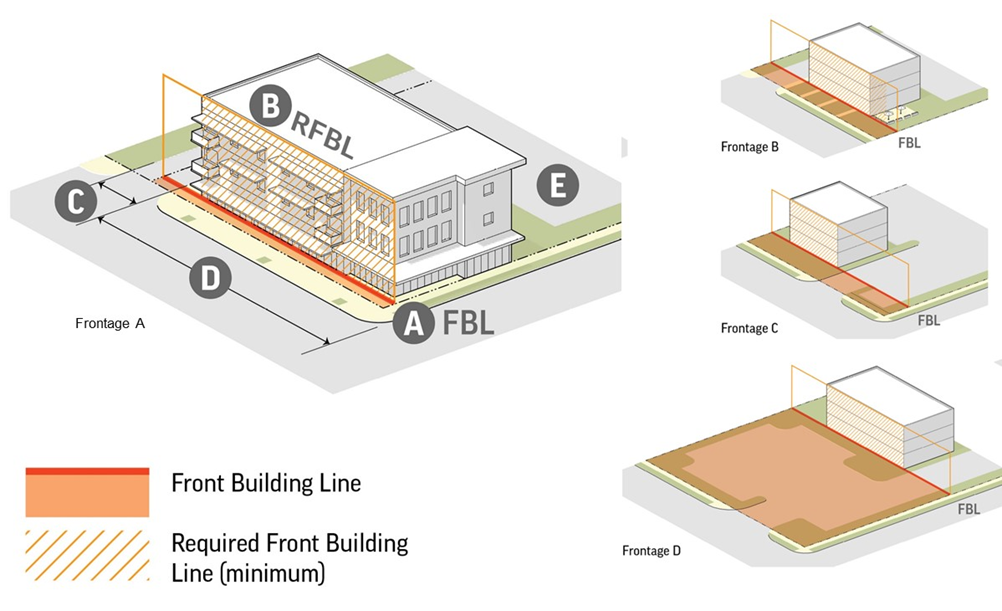
Figure 6-6. Frontage types, design standards and administrative adjustments should be applied based on the streetscape design, block and building pattern, and desired character of the area.
16-6-5: - Building Design.
A.
Design Objectives. Building design refines the scale and form of buildings beyond the basic setback, height, and lot coverage standards and improves the relationship of buildings to public and active spaces. The building design standards have the following design objectives:
1.
Refine the scale, massing, and details of buildings to a greater degree the closer they are to the streetscapes and other publicly used spaces.
2.
Locate doors and windows in a way that activates spaces, creates connections to important exterior spaces, and promotes economic activity at the interface of buildings and public spaces.
3.
Relate buildings to adjacent development by mimicking similar scale, massing, and proportions though step-backs and secondary masses that break up larger buildings.
4.
Use materials and human-scale architectural features to create depth, texture, variation, and visual interest, particularly on larger facades, along streetscapes, or near active open spaces or adjacent lots.
5.
Emphasize the quality and longevity of investments with materials and colors that are attractive, durable, and have low maintenance requirements.
B.
Building Design Standards. The building design standards in Table 6-4 are based on the placement of the building and proximity to the streetscape. Sub-sections following the table provide specific design strategies and techniques to meet the design objectives and standards.
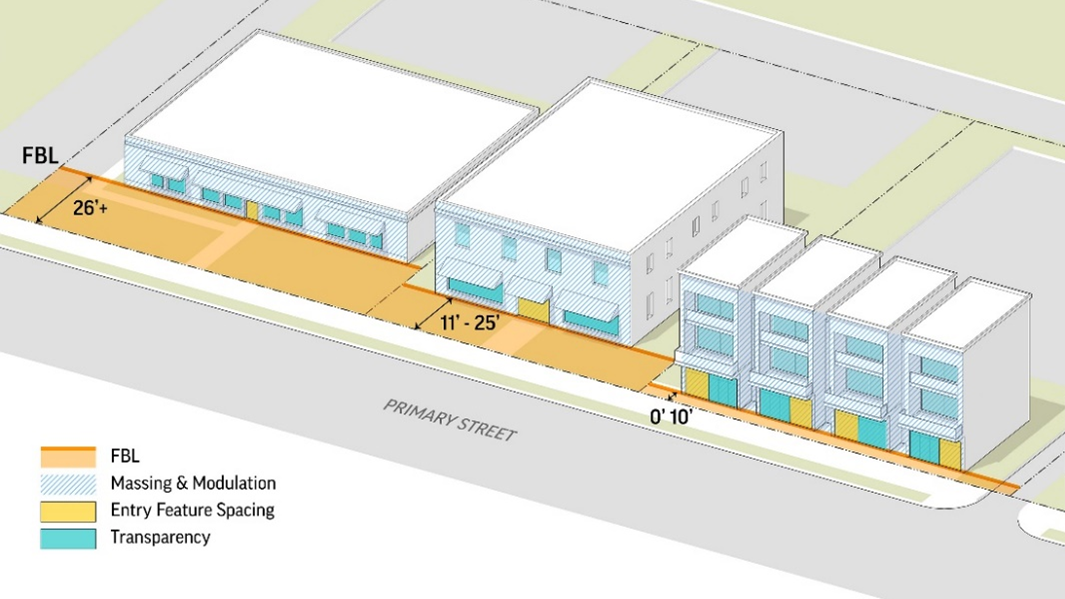
Figure 6-7. Building massing and modulation is determined by the form of the building and details distinguishing different massing elements, the entry location and frequency, extent and location of windows, and use of different complimentary materials.
C.
Massing and Modulation. Wall planes that exceed the linear feet or square footage limits in Table 6-4, Non-residential Building Design shall be interrupted by one or a combination of the following techniques:
1.
Emphasize bays and vertical breaks at regular intervals coordinated to structural components of the building with visible features such as columns, pillars, pilasters, or other details and accents. These features should be between six and 48 inches wide, and project between four and 24 inches off the facade.
2.
Define horizontal elements associated with entrance features, store fronts, or to differentiate stories with features such as awnings, cantilevers, lintels, canopies, balconies, or similar horizontal elements. These features should project between two feet and six feet from the wall, and create a continuous horizontal element or rhythm of repeating horizontal elements on an elevation.
3.
Break the volume of the building into distinct components with:
a.
Step-backs of upper stories of at least ten feet;
b.
Recesses of the building footprint greater than four feet.
c.
Deviations should encompass at least 20% wall planes of the entire elevation.
d.
Any building over 60 feet tall shall step back the upper stories above 60 feet at least 20 additional feet from the front setback and at least ten additional feet from the side setback.
e.
Any building in the MU-B-1 District with frontage on South Broadway shall step back the upper stories above 40 feet at least 20 additional feet from the front setback.
4.
Differentiate horizontal façade components into a distinct base, body, and top with materials and architectural details.
a.
For buildings less than three stories, this can be a distinct foundation, a main facade, and an embellished roof structure, such as eaves and fascia for pitched roofs, or cornices and parapets for flat roofs.
b.
For buildings three stories or more, the first floor should be clearly differentiated from upper stories to establish the base, and the remainder of the stories include the main façade and an embellished roof structure or top story and roof structure.
c.
Any belt course or trim band establishing the break in base, body and top should use a material or pattern distinct from the primary material, be six to 36 inches wide, and off-set from the wall plane four to 24 inches; or be a lesser trim associated with a material change.
5.
Use patterns of windows and doors, meeting the transparency requirements in subsections D or E, to create a rhythm and balance of vertical and horizontal elements on the elevation.
6.
Use ornamental architectural details, and material and color changes associated with trim or massing elements on any other area that lacks differentiating features.
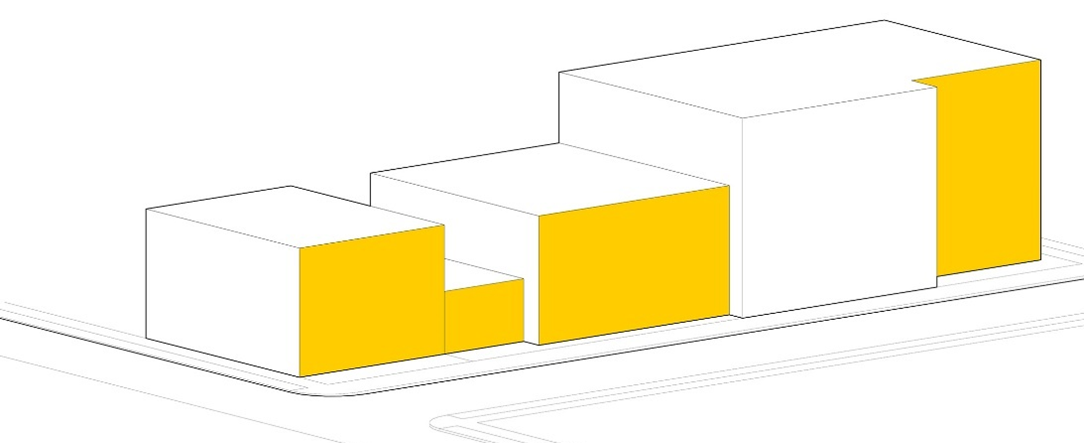
Figure 6-8. Larger wall planes—in area or in linear feet—should be broken into smaller masses with offsets in the building line and/or building height to emphasize different buildings or different components of buildings.
D.
Entry Features. Primary public entrances shall be located on all front facades at intervals specified in Table 6-4, Non-residential Building Design and be clearly defined with at least two of the following elements:
1.
A single-story architectural emphasis such as raised parapets, gables, canopies, porticos, overhangs, pediments, arches, or recessions within the wall plane of at least three feet.
2.
Transom or sidelight windows that frame and emphasize the entry.
3.
Architectural details such as tile work and moldings, columns, pilasters, or other similar material changes.
4.
Integral planters, seating, or wing walls associated with an entry court or plaza that integrates landscape and hardscape designs.
5.
For corner buildings, any entrance feature located on the street corner may count to both sides, and may be considered located at 25 feet from each corner for the purpose of the required primary entry feature intervals.
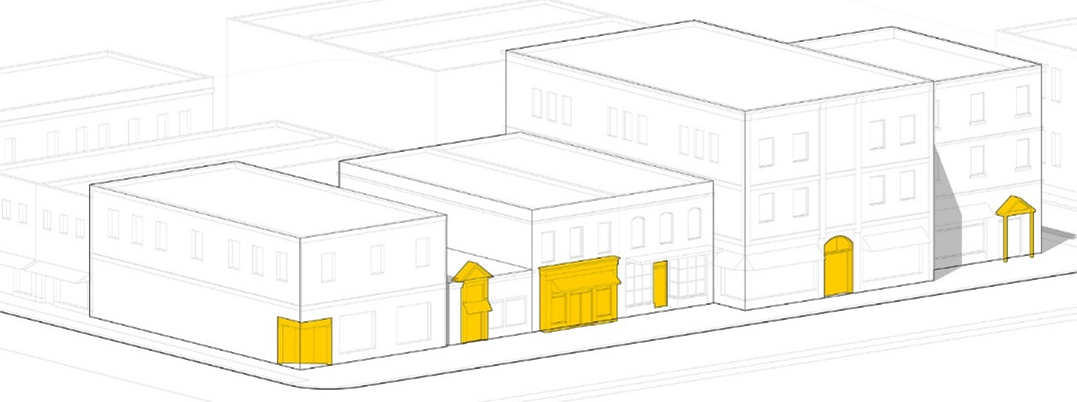
Figure 6-9. Frequent human-scale entry featured relate buildings to streetscapes and public spaces and are more important the closer the building is to the street and the more pedestrian oriented the street or public space that the building fronts on.
E.
Transparency. The transparency requirements of Table 6-4, Non-residential Building Design shall be met with one or more of the following techniques:
1.
Where expressed as a first story requirement the percentage shall be measured between two feet and eight feet above the sidewalk grade, or within ten feet above the first floor elevation if the building is set back more than 15 feet from the street.
2.
Where expressed as an upper story requirement, the percentage shall be measured between the floor level and ceiling of each story.
3.
All required first story windows shall provide direct views to the building's interior or to a lit display area extending a minimum of three feet behind the window.
4.
For industrial and civic buildings set back more than 25 feet from the street, clerestory windows may meet the first or upper story window requirements.
5.
Locate windows and doors in conjunction with massing and modulation standards in subsection C, including:
a.
Coordinate the façade composition considering the façade as a whole, and to break up large expanses into different components with the grouping of windows and doors.
b.
Use projecting trim and ornamentation around windows to create depth, texture, and shadows on the façade.
c.
Emphasize openings or combine groups of openings in association with ornamental details and architectural projections or recessions.
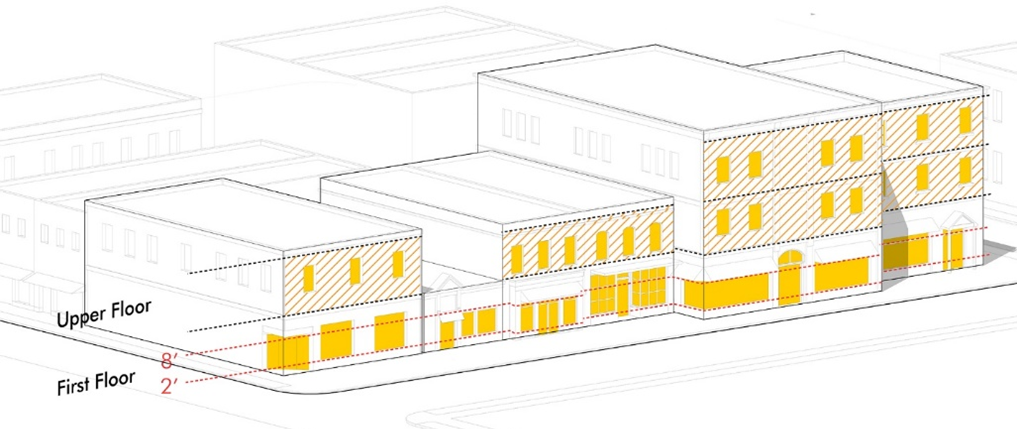
Figure 6-10. Windows and doors create a rhythm of architectural features that can make larger wall planes appear smaller and create relationships between the building and spaces around the building.
F.
Materials. Buildings shall use materials specified and as allocated in Table 6-5, Non-residential Building Materials. Application of materials shall result in textures and patterns that create visual interest and signify quality construction and detailing through the following techniques:
1.
The predominant surfaces on building walls should be one of the primary materials listed in Table 6-5, Non-residential Building Materials.
2.
No more than four materials should be used, including the use of secondary and accent materials.
3.
Material changes should emphasize different elements of the building, in association with the massing and modulation standards in sub-section C.
a.
Where material changes are vertical (i.e. different materials stacked one above another), the transition between materials should include a belt course, trim band, sill, cap, frame, roof (if at ceiling height), or similar element to separate the two materials. Heavier and larger materials should be below lighter or smaller materials.
b.
Where material changes are horizontal (i.e. different materials side-by-side) the transition between materials should occur at interior corners or at the trim line, architectural column or pilaster where the change is emphasizing different structural or massing components for a building.
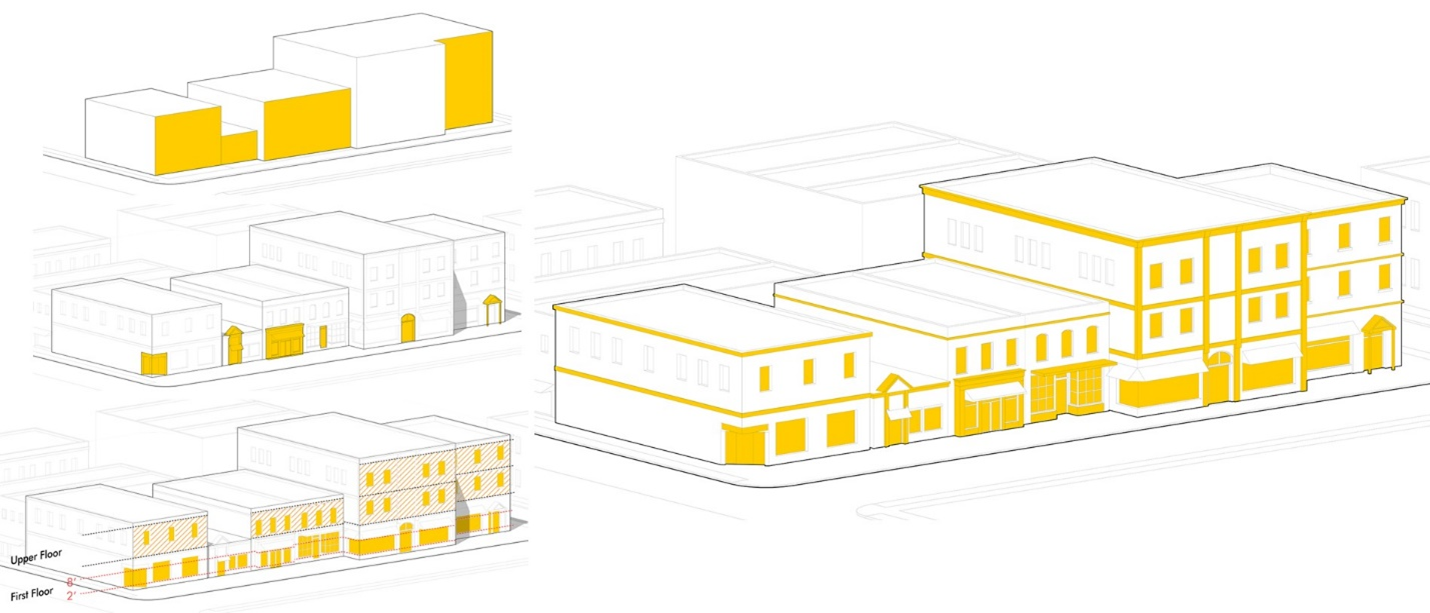
Figure 6-11. Application of materials and details complete the steps of breaking down the scale and mass of buildings and allows a great variety of style and appearances within similar patterns and scales.
G.
Administrative Adjustments. Administrative adjustments to the Building Design Standards in this Section may be authorized according to the process and criteria in EMC § 16-2-11, Administrative Adjustments, and any of the following additional applicable criteria:
1.
The requirement is not consistent with the specific architectural style selected for the building based on reputable industry resources documenting the style.
2.
The requirement would make the building less compatible with designs or characteristics of other buildings or sites adjacent to the project or that are prevalent throughout the area, and that are desirable to reinforce.
3.
The requirement is inconsistent with the principal function of the building when applied to industrial or institutional buildings in the M-2, I-1 and I-2 districts.
4.
Deviations from material standards and any simulated products demonstrate a proven performance in terms of maintenance and quality appearance. Manufacturer specifications and/or precedents for application may be required to demonstrate that it will perform equally or better than the allowed material.
5.
In all cases the deviation is the minimum necessary to address the circumstance, the alternative equally or better meets the design objectives of this Section, and there are no negative impacts on other design standards applicable to the building or site.
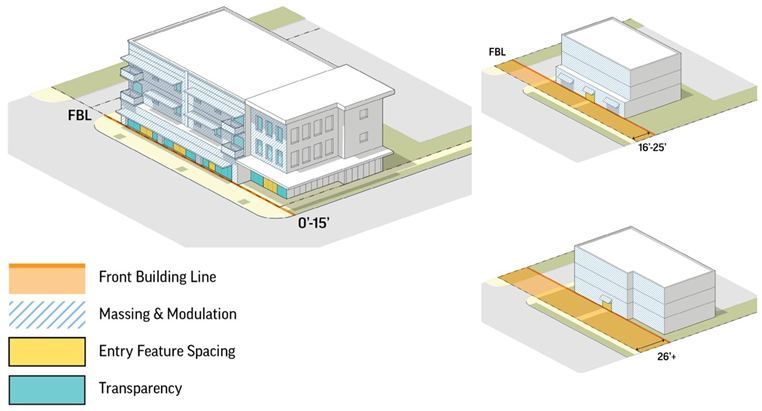
Figure 6-12. Building design standards, building elements, and administrative adjustments should be applied based on the proximity of buildings to streetscapes and active social spaces around the building.
16-6-6: - Open Space Design.
A.
Design Objectives. The design of open space can reinforce the character of unique districts and distinct places. Lot open space can be designed for active, social spaces that relate to public spaces, or for landscape areas that mitigate undesirable relationships. The open space design standards have the following design objectives:
1.
Coordinate site design with the larger block- or district-scale open space systems and public streetscape design.
2.
Use open space as an organizing element for development, creating focal points for buildings or groups of buildings and transitions between distinct building sites.
3.
Design a hierarchy of gateways, gathering places, parks, and natural features, and integrate these spaces with the system of streets, through drives, trails, and pedestrian passages.
4.
Select open space types based on the context and natural amenities of the site; in general, more compact and formal gathering spaces are most appropriate in walkable commercial and mixed-use areas, and more spacious and natural areas are most appropriate where buffers or transitions are needed to separate larger-scale uses or more intense development.
5.
Use landscape, furnishings, fixtures, art, planters, and other elements of open spaces to complement buildings and distinguish the unique character of different places.
6.
Preserve natural features that can serve as amenities for development, maintain views to and from important outside spaces, perform ecological functions, or provide important connecting corridors.
B.
Lot Open Space Design. Lot open space required in Table 6-1 shall create a common or private amenity for the site and building. Buildings and lot open space shall be arranged to create usable outdoor spaces that meet one or more of the types in Table 6-6:
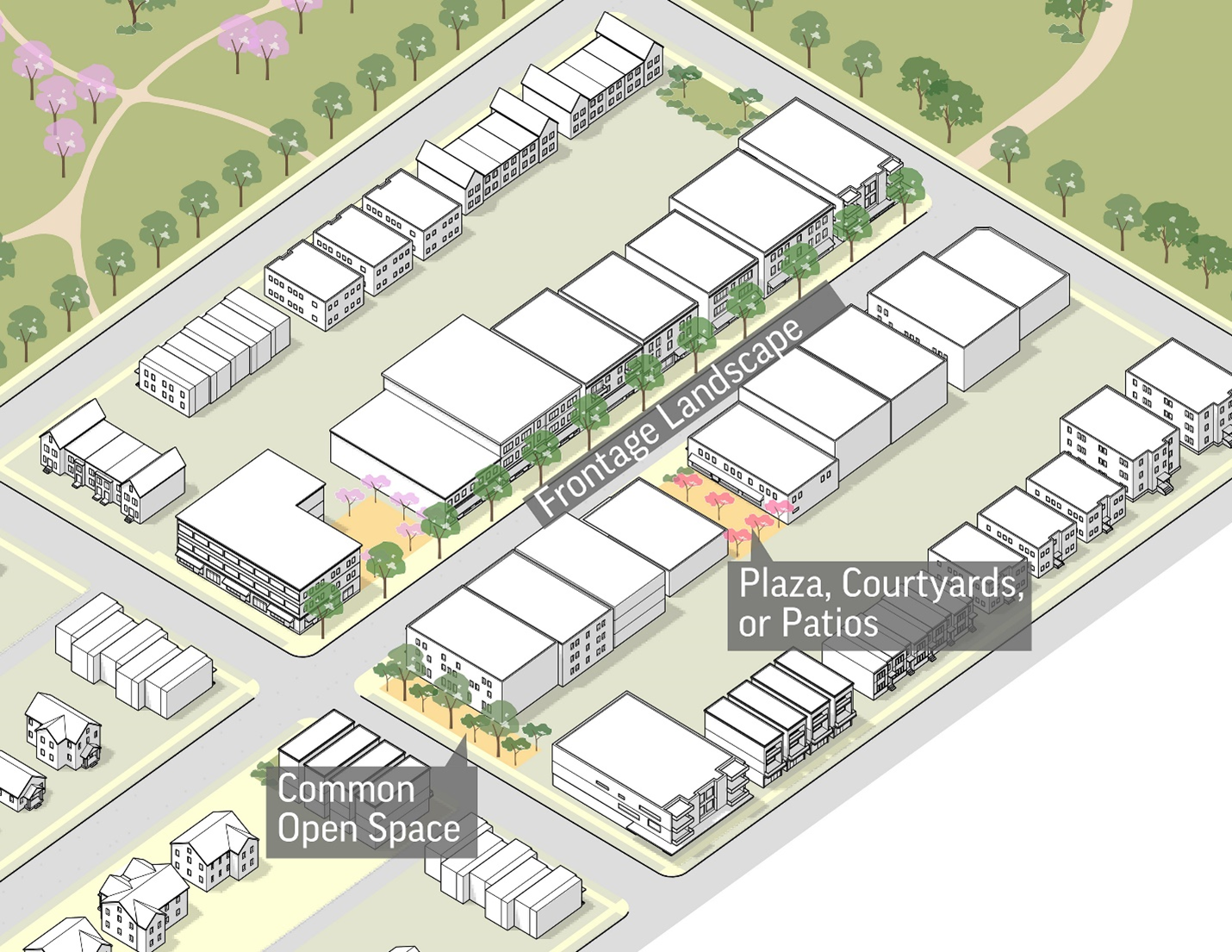
Figure 6-13. Nonresidential open spaces consist of a system of natural and formal spaces that may serve as gathering places, aesthetic enhancements, or links between other spaces and places through streetscapes and internal block passages.
C.
Administrative Adjustments. Administrative adjustments to the standards in this Section may be authorized according to the process and criteria in EMC § 16-2-11, Administrative Adjustments, and any of the following additional applicable criteria:
1.
The lot and building has access to active open spaces through a system of public or common streetscapes, trails, or pedestrian passages. This alternative may be contingent on an obligation or responsibility to contribute to the construction or ongoing maintenance of the spaces.
2.
To promote infill development or rehabilitation of existing buildings and sites in a compact, and walkable context that would be compromised by conforming to the open space requirement.
3.
In all cases the deviation is the minimum necessary to address the circumstance, the alternative equally or better meets the design objectives of this Section, and there are no negative impacts on other design standards applicable to the building or site.
16-6-7: - Sustainable Sites and Buildings Guidelines.
A.
Design Objectives. The sustainable sites and buildings guidelines have the following design objectives:
1.
Augment the larger-scale sustainable development patterns and policies enforced elsewhere in this code (i.e. walkable, bike-able, and transit supportive neighborhoods and commercial areas).
2.
Support other official plans, programs, or policies of the City that support alternative transportation modes, alternative fuels, and renewable energy sources.
3.
Promote building, construction, and maintenance practices that reduce waste and increase the longevity of investments in buildings.
4.
Reduce impacts from development practices and land uses on air and water quality.
5.
Preserve important elements and functions of the natural environment.
B.
Guidelines. Sustainable sites and buildings involve many complimentary issues regarding resource and energy efficiency, water use, impact mitigation, waste, and materials, and sometimes competing issues must be evaluated. The following guidelines are issues that can impact the overall sustainability performance of a site and building.
1.
Improve the energy efficiency of buildings through passive heating and cooling strategies that optimize natural ventilation and capitalize on winter sun and summer shade.
2.
Reduce urban heat island effects through any of the following measures:
a.
Reduce building footprints and paved areas that capture heat.
b.
Maintain and increase tree canopies, particularly over paved surfaces and building footprints with strategically located landscape.
c.
Use roof and paving materials and colors that reflect sunlight and heat away from the surfaces and reduce surface temperatures.
3.
Promote site-specific renewable energy technologies.
4.
Ensure that sites and buildings are EV-ready.
5.
Emphasize facilities for recycling and composting, including storage areas and access for pick-up services.
6.
Maintain water-efficient landscape through any of the following:
a.
Plant all xeric landscaping according to EMC § 16-8-5.
b.
Use high-efficiency irrigation systems, such as drip systems or rain-sensor systems.
c.
Implement non-potable water systems.
7.
Coordinate with the building code and energy code to ensure that all buildings, fixtures, and appliances are meeting energy, water, waste, and recyclable material benchmarks.
C.
Administrative Adjustments. Achieving significant performance levels on any of these guidelines may justify administrative adjustments to the standards of this Chapter according to the process and criteria in EMC § 16-2-11, Administrative Adjustments and based on the intent and design objectives of this Section.

