
Englewood City Zoning Code
CHAPTER 7
ACCESS AND PARKING
16-7-1: - Intent.
The intent of the Access and Parking standards is to:
A.
Emphasize the importance of site access for multiple modes of transportation.
B.
Preserve streetscape design and street functions by coordinating access along block faces and internal to blocks.
C.
Create access and parking standards appropriate to the context of the site, considering surrounding development patterns, street design, and available modes of transportation.
D.
Provide the optimal amount of vehicle parking for individual sites, recognizing that too much and too little parking each have negative impacts.
E.
Maximize opportunities for on-street parking, shared parking, and other strategies to reduce the inefficiency from underutilized and redundant surface parking on adjacent sites.
F.
Ensure appropriate site design features that mitigate the physical, aesthetic, and environmental impact of parking on streetscapes and surrounding sites.
G.
Implement Ballot Question 2D passed during the November 1, 2011 election concerning parking vehicles on private property.
16-7-2: - Applicability.
Access and parking shall be shown on plats and site improvement plans, according to the application requirements in Chapter 16-2 of this Title. Specifically, the standards in this Chapter apply to:
A.
All new development, buildings, or uses on a site.
B.
A change of use, or additions to existing building, except that:
1.
Additional parking requirements shall only apply to the expanded portions;
2.
New parking for non-residential uses shall only apply where the change required more than 20% additional parking than the current condition; and
3.
The design standards shall only apply to the newly constructed parking; except when more than 50% of a parking area is reconstructed, all parking and access shall comply with this Section.
C.
The access standards shall not limit the location of any existing access, except:
1.
In conjunction with a public streetscape project;
2.
Where more than 50% of a parking area is added, reconstructed, or similarly impacted by development; or
3.
Where the existing access is determined to be a danger to public safety in association with any development application or street project.
16-7-3: - Access and Circulation.
A.
Design Objectives. The access to and circulation for sites shall be designed to achieve the following design objectives:
1.
Reduce impacts of driveways and curb cuts on streetscape designs and limit or eliminate conflicts with pedestrians, bicycles, and vehicles.
2.
Promote shared, common, or other vehicle access internal to blocks, particularly on busier streets or where the standards otherwise limit or prohibit access.
3.
Coordinate reasonable vehicle access with frontage designs for lots and buildings based on context and according to EMC § 16-5-4.B (residential frontages) and EMC § 16-6-4 (non-residential frontages).
4.
Provide safe and convenient bicycle and pedestrian access to buildings and sites comparable to or greater than for vehicles, and in the most direct way possible.
B.
Alleys and Internal Circulation.
1.
Alleys are encouraged for primary access to all blocks in conjunction with EMC § 16-3-3, and particularly for residential or mixed-use development.
2.
Alleys shall meet the design standards in EMC § 16-3-4.
3.
Alleys shall connect through the block to a publicly dedicated street on each end. However, where the surrounding streets or the development patterns within a block warrant, alleys may be in "H", "L", "Z" or "T" configurations.
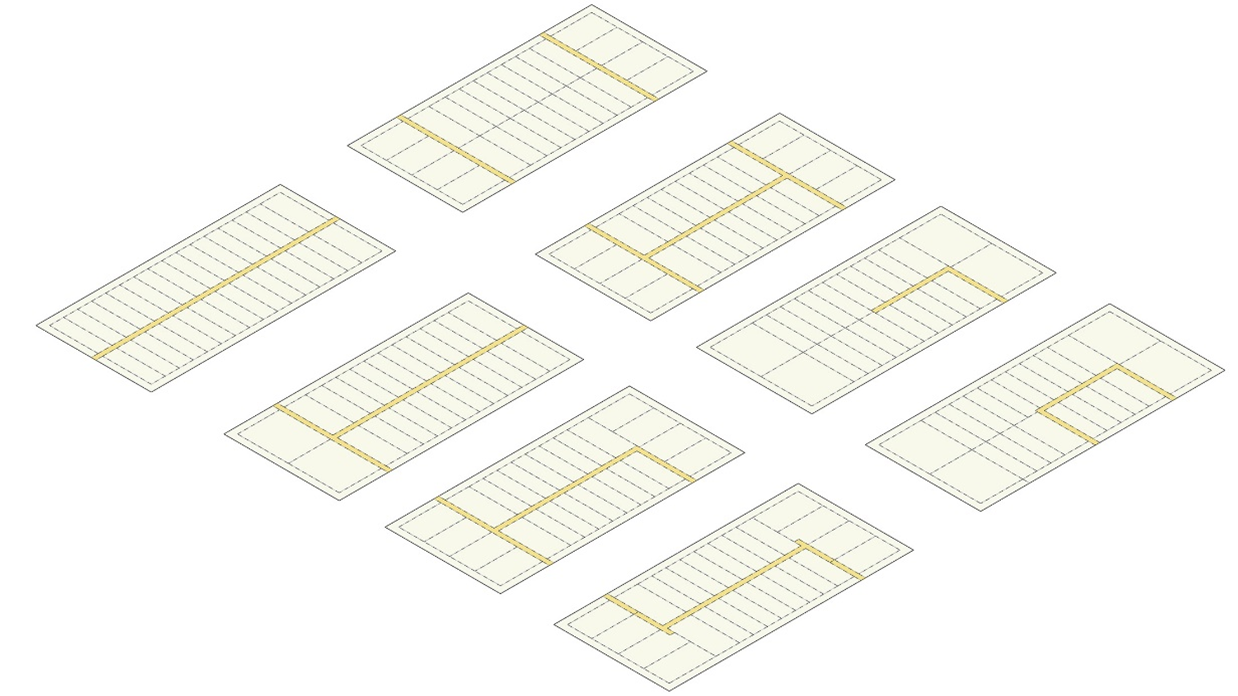
Figure 7-1. Alleys and a variety of patterns of internal block circulation provide efficient access to multiple or all blocks on a lot and maintain the streetscape and patterns of lot and building frontages along a block.
4.
Where alleys exist, lots shall not have private vehicle access from a public street except as permitted by the frontage design standards in EMC § 16-5-4.B for residential frontages, and EMC § 16-6-4 for non-residential frontages, or where specifically justified by a traffic study and approved by the City.
5.
For large projects or where access otherwise constrained by the standards or traffic conditions on the fronting street, the City may require private streets or access drives.
a.
Circulation between adjacent parcels shall be provided by through access drives, cross access easements, and other shared access provisions to protect the function, design, and character of public streets.
b.
For lots or development sites over six acres, the private streets and access drives shall correspond to the public street cross sections in EMC § 16-3-4 and shall be laid out to organize the site into smaller internal blocks between one and four acres.
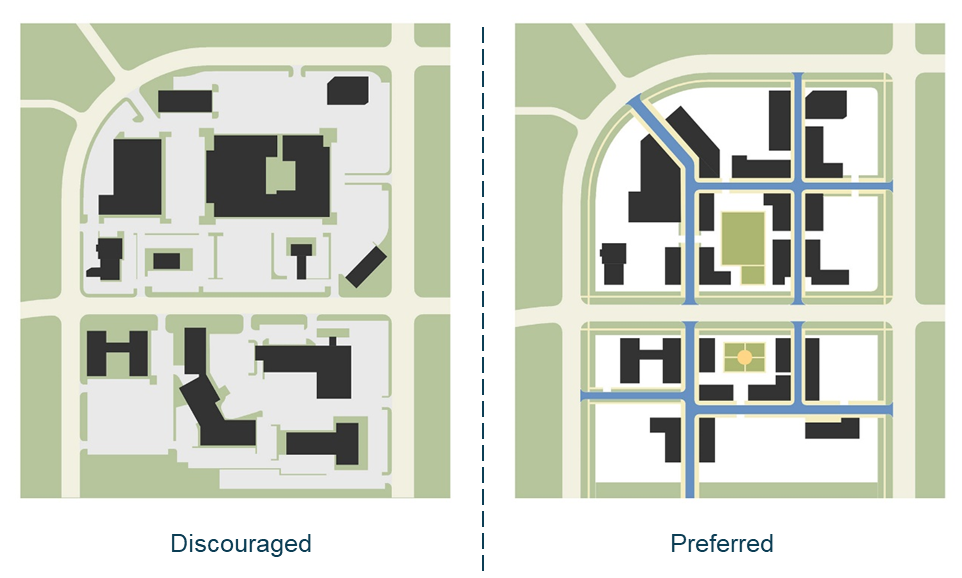
Figure 7-2. Larger blocks or development sites should use internal access drives to organize the development into a system of streets and civic spaces that mimic the surrounding block structure and development patterns as opposed to buildings arranged around large parking lots.
C.
Driveways. For lots that do not have access from an alley, or where private access is otherwise permitted, driveways shall be located according to Table 7-1 Driveway Setbacks.
1.
Only one access point shall be permitted per lot, unless a site plan review or traffic study demonstrates a need for two access points to adequately balance access, circulation, and multi-modal transportation interests on the site.
2.
Driveway spacing and design shall be located so that safe ingress and egress is provided, considering the function and design speed of the street from which the access is provided, and minimizing potential conflicts of all modes of transportation, including pedestrians, bicycles, and vehicles.
3.
Landscape, buildings, and other site elements at access points shall be designed to meet the sight distance requirements of EMC § 16-3-4.D.2, Sight Distances.
4.
All access shall be at least ten feet from any fire hydrant, catch basin, or end of curb radius at corners.
5.
Driveway widths shall be limited by the frontage design standards EMC § 16-5-4.B (residential frontages) and EMC § 16-6-4 (non-residential frontages).
D.
Sidewalks. Internal sidewalks shall meet the requirements of Table 7-2, Internal Sidewalk Widths:
1.
All lots shall provide direct sidewalk connections from building entrances to the following, in the most direct manner possible:
a.
Sidewalks in the public rights-of-way.
b.
Parking areas, and any parking area with a portion of it more than 250 feet from the entrance shall require a dedicated sidewalk either through or along the perimeter of the parking area.
c.
Civic or open space, or other common areas designated for active use.
d.
Transit stops, stations or similar ride share locations.
e.
Where connections by way of the public street is not reasonable or practical, sites shall provide direct connections to any of the above areas or amenities on adjacent sites.
2.
Internal sidewalks shall be designed to emphasize pedestrian priority and comfort with the following:
a.
Separate sidewalks from driving surfaces by changes in the texture, raised surfaces, landscape edges, and similar distinguishing features, except for designated crosswalks which may be painted.
b.
Provide adjoining landscaped areas that include trees, shrubs, flower beds, and ground covers along at least 50% of the walkways meeting the landscape design standards in EMC § 16-8-3.
c.
Lighting fixtures along all walkways meeting the landscape design standards in EMC § 16-8-3.
E.
Transit and Bicycle Connections.
1.
Internal Bicycle Connections. All non-residential and multi-unit dwelling projects with 10 or more units shall provide connections between the on-site bicycle parking and the public street or nearest bicycle route, trail or greenway. These connections may be provided by:
a.
An internal sidewalk meeting EMC § 16-7-3.D Sidewalks, where the distance is less than 200 feet and people may be expected to dismount and walk their bicycles;
b.
A shared use path at least 12 feet wide;
c.
An internal bicycle trail meeting City standards; or
d.
Internal streets or drive aisles utilizing the most applicable public on-street bicycle accommodation in EMC § 16-3-4.
2.
Transit Facilities. Non-residential and multi-unit residential developments shall incorporate bus stop locations within their site if requested by the Regional Transportation District (RTD) or other transit provider. Bus stop locations shall accommodate a bus shelter and passenger-loading apron complying with RTD (or other transit provider) design criteria. All existing and proposed bus stops and park-n-ride facilities shall be linked by paved walkways to at least one sidewalk and to at least one internal walkway within each adjacent non-residential and multi-unit development that contains more than one building. Applicants are responsible for contacting and coordinating with RTD or any other transit provider to assure compliance with this provision.
F.
Administrative Adjustments. Administrative adjustments to the access and circulation standards in this Section may be authorized according to the process and criteria in EMC § 16-2-11, based on the intent and design objectives of this Section, and with any of the following additional applicable criteria:
1.
The standards, when applied to a particular project or street, will adversely impact the function of the transportation network in the vicinity of the site.
2.
A specific access management study or plan has altered the application of these standards for the street segment.
3.
The project warrants a different access design when considering the functional class of the street, the streetscape design on the block, and the existing and anticipated adjacent land uses.
4.
In all cases alternatives shall be evaluated balancing the streetscape design, traffic conditions on the street segment, and bicycle and pedestrian needs within the area.
16-7-4: - Required Parking.
A.
Vehicle Parking Rates. Table 7-3: Required Parking provides minimum parking requirements for general categories of uses, which apply to all similar uses not specifically listed. The following criteria shall be used in interpreting the table:
1.
Employee or occupancy rates shall consider maximum number of employees or occupants likely to be on-site at one time. Where this number is not easily or readily determined, the maximum building code capacity may be used.
2.
Square footage rates shall be based on the leasable floor area or active area dedicated to the particular use, excluding areas dedicated to common or public areas, hallways, and bathrooms. Where this number is not easily or readily determined, 85% of gross floor area may be used.
3.
A seating or capacity rate shall consider total number of seats based on industry standards for typical layouts of buildings or building codes.
4.
Where uses or sites have components of different uses (i.e. hotel with a restaurant), each component shall be calculated under most applicable rate.
5.
Where a use is not similar to a general use in the table or could meet more than one category, the Director shall determine the appropriate classification based on industry guides or the most similar use in terms of scale, format, and operation.
B.
Exceptions. The following exemptions and credits reduce the parking required by Table 7-3.
1.
MU-B-1 Exempt. No parking is required for principle non-residential uses in the MU-B-1 zoning district with frontage on South Broadway. Any parking that is provided shall meet all of the standards of this code.
2.
On-street Parking Credit. Non-residential uses may count all on-street parking along or within 200 feet of any lot frontage, located on the same block as the proposed development or use, towards the parking requirement at a rate of 0.5 space for every on-street space that is generally available to the public. Spaces located on residential street frontages shall not count. Where on-street spaces are not marked, the length of curb for parallel parking spaces in EMC § 16-7-5 shall be used.
C.
Maximum Parking. Non-residential uses shall not provide more than 140% of the minimum required parking without documented evidence of actual parking demand based on studies of similar uses in similar contexts. In addition, any parking permitted over 120% of the minimum shall require mitigation of the potential impacts of additional parking through one or more of the following strategies:
1.
Exhaust all other options in this Section for reductions, adjustments, and more efficient utilization of parking, including potential shared parking strategies.
2.
Use alternative surfaces designed to infiltrate stormwater, and approved by the Public Works Director.
3.
Provide additional buffers and site open spaces to screen parking with at least a 10% increase in the open space or buffers required for the parking, and at least a 20% increase in the amount of landscape material required for the parking.
4.
Design all parking areas over the 120% minimum as dual-purpose space, such as plazas, playgrounds, or similar event areas for regular and active use of the space during non-peak parking times.
5.
Increase the lot open space required for the building and site in Chapter 5 or 6 of this Title by an amount equal to the area of parking over the 120% minimum and locate this open space to limit the impact and visibility of parking.
6.
Increase the electric vehicle parking required in this Section to include all additional spaces over 120%, or provide all parking in a manner that is "EV capable" by installing conduit throughout the parking areas capable of supporting breakers and electric service for charging stations.
D.
Accessible Parking. Accessible vehicle spaces shall be provided within the required spaces in accordance with the Americans with Disabilities Act (ADA) guidelines for quantity, design and location, including the following:
1.
Accessible parking shall be located on the shortest accessible route to the primary entrance or main accessible entrance.
2.
Accessible spaces shall be at least eight feet wide with a minimum five feet accessible aisle. Two adjacent spaces may share the same accessible aisle.
3.
Van accessible space shall be required at a rate of one per every eight required accessible spaces, with a minimum of one. Van accessible spaces shall be 11 feet wide with a minimum five feet accessible aisle.
4.
Signs shall be posted with a sign and pavement markings designating the space with the symbol of accessibility.
E.
Electric Vehicle Parking. Parking areas shall provide electric vehicle charging capabilities in accordance with the building codes, and where required or provided shall comply with the following design standards:
1.
Electric vehicle parking spaces shall be incorporated into the same lot and count as all other required spaces.
2.
Spaces shall be located in more remote and lesser priority parking spots to discourage their frequent use by non-electric vehicles.
3.
Charging facilities shall be treated as a general accessory use and structure, subject to the general site and landscape design standards, provided they otherwise are compatible with the landscape or other structures on the site.
F.
Bicycle Parking. All non-residential and multi-unit residential buildings shall provide bicycle parking spaces according to Table 7-5, Bicycle Parking.
Bicycle parking shall be designed according to the following standards:
1.
A structure shall be securely anchored to the ground and usable for both U-locks and cable locks, support a bike at two points of contact to prevent damage to wheels or frames.
2.
Bicycle parking for non-residential uses shall be located within 100 feet of the primary entrance unless the Director approves an alternative location based on the site design and overall vehicle, bicycle, and pedestrian circulating for the site.
3.
Bicycle parking facilities may be located in the right-of-way subject to streetscape design plans and the Director approval. Structures designed for some other primary purpose meeting the streetscape standards or are designed with artistic or ornamentation enhancements may contribute to the bicycle parking requirement provided they meet the essential function of safe, secure, and practical bicycle parking.
4.
Alternative standards and specifications based on recognized industry guidance or best practices for bicycle parking may be approved by the Director through site plan review.
G.
Administrative Adjustments. Administrative adjustments to the required parking in this Section may be authorized according to the process and criteria in EMC § 16-2-11, depending on context and according to the following strategies:
1.
Transit Area Adjustment. Multi-unit residential dwellings within one-quarter mile of a light rail stop or station may receive the reduced rate for multi-unit dwellings specified in Table 7-3. Other uses may propose a reduction up to 30% of the required parking, provided the use is likely to support transit ridership. The distance shall be measured on direct and safe pedestrian routes meeting all street and sidewalk standards in this code, or where deficiencies in this pedestrian network exist, they shall be provided as a condition of the transit area parking credit. This adjustment shall not apply to any specific transit area plan or other planned zoning application that has already determined a specific parking strategy based on transit access.
2.
Walk and Bike Parking Adjustment. Any site plan or project area that provides enhanced bicycle and pedestrian access may propose a reduction in parking by up to four spaces or 20% of the required spaces, whichever is greater, provided it is practical to expect significant pedestrian and bicycle access to the site based on: the proximity to enhanced bicycle or pedestrian facilities; the design of the site including bicycle parking beyond that required in this Section; and the nature of the use and anticipated patrons.
3.
General Exception. The Director may reduce the required parking for any use by up to two spaces or 10% of the required spaces, whichever is greater, due to the nature of a particular use or any unique circumstances on the site, provided there will be no negative impacts on adjacent property.
4.
Shared Parking. Required parking may be reduced for any site containing multiple uses, or for adjacent sites with different uses according to Table 7-6, Shared Parking.
a.
Any shared parking arrangement shall require an agreement among all landowners participating in the agreement to ensure access, joint use, maintenance, and other operational issues.
b.
The agreement shall be recorded for each participating property with the Arapahoe County Clerk and Recorder. The agreement shall state that it cannot be changed or modified without the approval and signature of the Director.
c.
A shared agreement that differs from this table may also be approved based on a joint parking study for the sites and uses demonstrating adequate parking during peak hours for all parties to the agreement.
16-7-5: - Parking Design.
A.
Design Objectives. The layout, location and design of parking areas shall meet the following design objectives:
1.
Locate parking and circulation in ways that minimize negative impacts on public streetscapes or adjacent sites.
2.
Use landscape, building design, and other site design strategies to improve the appearance of parking areas.
3.
Incorporate sustainable practices into parking design to minimize runoff, decrease heat island effects, incorporate low impact design features, and otherwise reduce environmental impacts.
4.
Encourage smaller and more dispersed parking areas to reduce impacts.
B.
Landscape Areas. The landscape area standards in Table 7-7, Parking Lot Landscape are based on the size of the parking area (number of spaces) and the location of the parking area relative to the principal building (front, side, or rear).
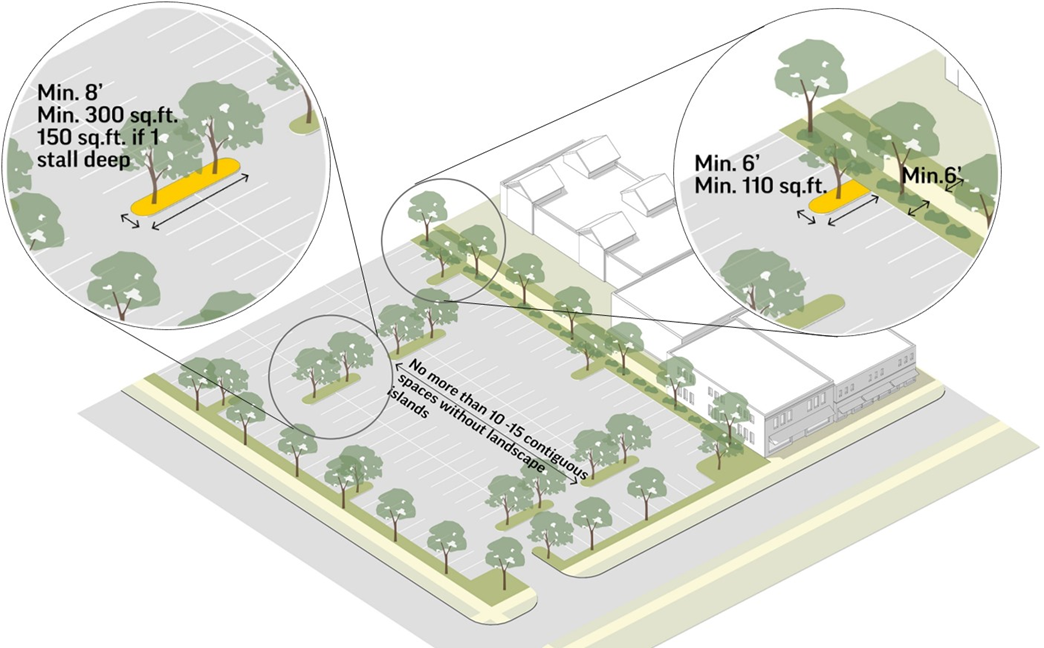
Figure 7-3. Parking lot landscape should be designed to enhance relationships to the streetscape, buffer parking from adjacent areas, and soften large expanses of parking. The standard increase the large the parking area and the more publicly visible the location.
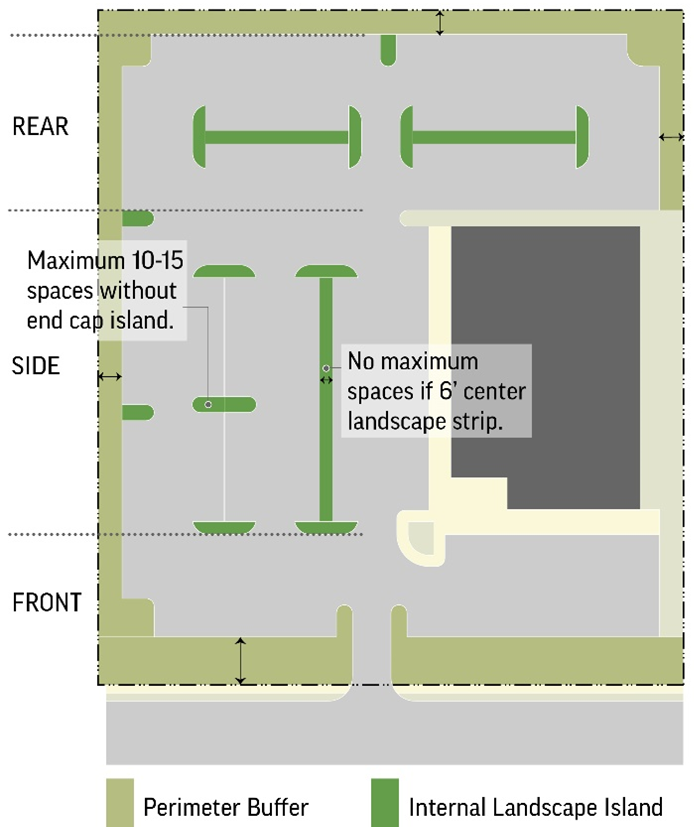
Figure 7-4. Perimeter and internal parking landscape is based on the scale of the lot. Internal landscape may be combinations of end caps, center medians, and/or end caps determined by the location and size of the parking area and quantity of parking spaces.
The landscape areas required by Table 7-7 shall be allocated as follows:
1.
The perimeter landscape areas shall be continuous, except for driveways or sidewalks accessing the parking area.
2.
Interior landscape islands shall be either:
a.
A peninsula extending from the perimeter landscape area at the required intervals, at least six-feet wide and 110 square feet
b.
An end cap island at the required intervals that is at least eight-feet wide and at least 150 square feet for one stall and at least 300 square feet for two stalls; or
c.
A continuous center strip between two opposing stalls along the entire parking bank that is at least six-feet wide.
3.
Any perimeter area that includes a sidewalk shall meet both the sidewalk width and perimeter landscape area width independently, with no landscape area being less than six-feet wide.
4.
All perimeter and internal landscape areas shall include plant materials meeting the requirements of EMC § 16-8-3.
C.
Parking Dimensions. Parking areas shall be designed to meet the dimension specifications in Table 7-8: Parking Dimensions.
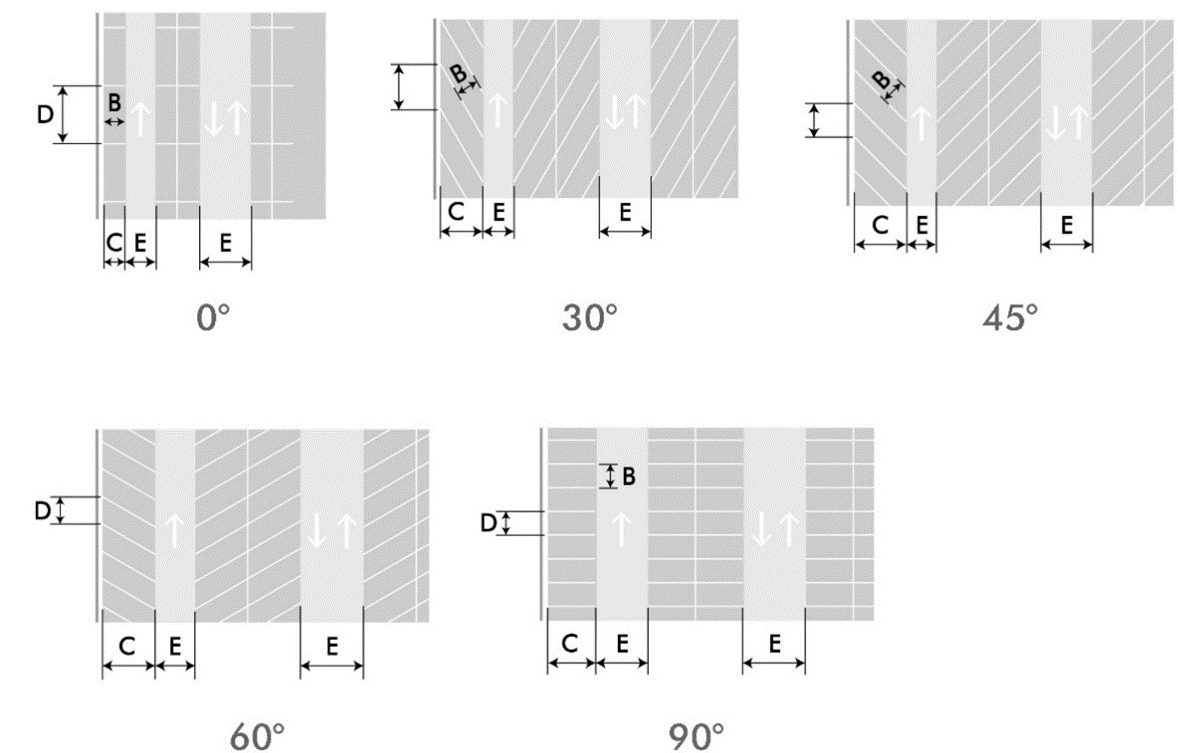
Figure 7-5. Parking are dimensions depend on the angle of the spaces and the flow of the drive aisles.
D.
General Design Standards.
1.
All required parking shall be on-site except as specifically provided in this Chapter for credits or shared parking sections. Additionally, the Director may allow for a portion of required parking off site through a site plan review subject to the following specific considerations:
a.
It is within 600 feet of the subject site for non-residential and 200 feet for residential;
b.
It is in the same or comparable zoning district;
c.
The presence of the off-site lot does not negatively impact potential development on that lot or in the vicinity;
d.
There are no pedestrian barriers or other access constraints;
e.
Any parking area developed or improved specifically to provide off-site parking in association with the application shall meet the design standards of this Chapter; and
f.
An agreement demonstrating rights and control of the off-site property is provided.
2.
No parking space shall be located where it backs into a street except:
a.
Residential parking and driveways for buildings less than 10 units.
b.
On-street parking, or parking on any internal street or access drive designed to correspond with public street standards, including on-street parking.
c.
This provision does not apply to parking areas under 10 spaces along alleys.
3.
Off-street parking areas having 50 or more spaces shall provide a designated area for the storage of snow removed from the lot. The storage area shall not be in a required parking space or spaces.
4.
All off-street parking areas and driveways shall be graded and paved with an all-weather material meeting Englewood Design and Construction Standards and Specifications.
5.
All parking and access areas shall be designed to adequately address drainage and runoff, including curb, gutters and inlets, or any other drainage strategy approved by the Public Works Director to support best management practices to minimize runoff and encourage infiltration of storm water.
E.
Loading Areas. All non-residential uses and residential buildings with 25 or more units shall require loading areas as indicated in Table 7-9, Loading Areas.
1.
Loading areas shall be located on a remote portion of the building and site or internal to the block and buffered by other buildings wherever possible.
2.
Loading areas and activities shall not interfere with the use of walkways, drive aisles, stacking areas, internal access streets or public streets.
3.
Loading shall be screened from public streets or adjacent residential areas in a manner that best limits visibility and mitigates noise, according to the buffer types and design standards in EMC § 16-8-4.
4.
In the MU-B-1 District, loading shall be provided off an alley or located with a structure. The use of loading from a primary street shall only be permitted if there is no alley access or no ability to utilize loading within a structure.
5.
In any area, project, or zoning district designed to promote pedestrian activity, or for buildings and sites where more compact building and site design is required, alternate loading standards shall be permitted by the Director. Alternate loading standards may include sharing of loading spaces among multiple smaller tenants, using side streets, on-street parking, or alleys—particularly where there is sufficient spaces during off hours for loading or deliveries, or other similar strategies that avoid designing sites for large vehicle access.
F.
Administrative Adjustments. Administrative adjustments to the parking design standards in this Section may be authorized according to the process and criteria in EMC § 16-2-11, Administrative Adjustments, based on the intent and design objectives of this Section, and with any of the following additional applicable criteria:
1.
To facilitate infill development or where site constraints hinder the ability to meet the dimensional standards.
2.
To integrate more sustainable practices considering the water quality, air quality, energy efficiency, or other similar environmental impacts.
3.
To better accommodate any non-vehicle or other alternative modes of transportation.
4.
Any exception shall be based on documentation that the proposed dimensions and arrangements will not require unsafe or impractical vehicle maneuvering.

