
Ennis City Zoning Code
ARTICLE VI
Building and Urban Design Standards
6.1 - APPLICABILITY
Table 6.1-1 shall establish the applicability of the different standards in this section based on the type of development.
6.1.1 Design - Review committee
Any requested variations from the building material and design standards set forth in Article VI may be considered by a Design Review Committee composed of staff. Such requests should obviously reflect the aesthetic character and spirit that the Ennis Unified Development Ordinance portrays.
(Ord. No. 19-0917-07, § 9, 9-17-19)
6.2.1 - Purpose and Intent
The intent of this section is to establish design and development standards that foster attractive and enduring non-residential development. The standards are intended to:
(1)
Protect and enhance the character and quality of retail, office, institutional and industrial areas in Ennis
(2)
Protect and enhance the long-term market value of property within Ennis
(3)
Enhance the compatibility between residential neighborhoods and adjacent commercial uses
(4)
Mitigate negative visual impacts arising from the scale, bulk, and mass of large commercial and industrial buildings and centers
(5)
Promote building designs and construction practices that are enduring and adaptable to multiple uses for extended building lifecycles
(6)
Establish a sense of place for the commercial areas in Ennis
(7)
Balance the community's economic and aesthetic concerns
6.2.2 - Applicability
(1)
Table 6.1-1 shall establish the applicability of this section to new development and redevelopment.
(2)
These non-residential design standards shall apply to all new non-residential buildings and building expansions per Table 6.1-1 in all zoning districts except:
(a)
Kaufman Corridor District (standards in Section 6.6.2 shall apply)
(b)
Planned Development Districts and Regional Mixed Use Districts that have alternative building design standards adopted as part of an approved PD Ordinance.
6.2.3 - Commercial Building and Site Design Standards
This section shall apply to all development in the following districts: NC Neighborhood Commercial, CC Corridor Commercial, and the PD District (unless exempt per 6.2.2(2)).
(1)
Cross access or shared access easements to adjoining sites (developed and undeveloped) shall be required unless topography makes the connection unfeasible.
(2)
Building Entry Design:
(a)
The primary building entrance shall be readily apparent as a prominent architectural component from the street, thus creating a focal point. However, non-residential buildings with multiple tenants on the ground floor or multiple primary entrances shall have all entrances treated architecturally.
(b)
Primary building entrances are to be defined and articulated with architectural elements such as pediments, columns, porticos, porches, and overhangs.
(3)
Building Design
(a)
Purpose: Building design directly influences the character and function of non-residential development. Generally, building design should focus on creating an attractive and coherent design with buildings that are adaptable for multiple uses over time based on changing market conditions.
(b)
Building Articulation: HB 2439 - Buildings having facades wider than 40 feet shall be designed to reduce apparent mass by dividing the facades that are visible from a public right of way or adjoining developed property into a series of smaller components. No individual component shall have a length of more than 40 feet. Buildings having primary facades wider than 60 feet shall be designed to reduce apparent mass by dividing the primary facade into a series of smaller components. No individual component shall have a length of more than 60 feet. Components shall be distinguished from one another through two or more of the following:
i.
Variations in roof form or variations in roof height or parapet of two feet or more
ii.
Changes in wall plane of a minimum ten percent in width and a minimum 24 inches depth
iii.
Variations in the arrangement and recessing of doors and windows
iv.
Recognizable changes in texture or material
v.
Decorative columns
(c)
Windows and Transparency:
i.
At ground level, buildings shall have a high level of transparency. All facades and walls that face any street, pedestrian walkways, and plazas (except rear service facades) must have windows for at least 30 percent of the façade between 2 feet and 7 feet above the grade.
ii.
Where the internal arrangement of a building makes it impossible to provide transparency along a portion of a wall as determined by the Administrator, a combination of building articulation, changing color or texture to imitate the rhythm of windows or storefront displays may substitute for the required transparency along these facades, except when fronting a plaza or sidewalk café areas.
(d)
Roof Forms: Variations in rooflines shall be used to add interest and reduce the scale of large buildings. Roof features shall correspond to and denote building elements and functions such as entrances, arcades, canopies, etc. They shall also complement the character of the overall development.
i.
Flat Roofs: Unless the Administrator determines otherwise, flat roofs shall include parapets that adhere to articulation requirements for the main face of the structure. The average height of the parapet shall not exceed 15 percent of the height of the supporting wall, unless rooftop equipment cannot be sufficiently screened. A three-dimensional cornice treatment is encouraged for parapets. Parapets shall look complete from when viewed from the primary street. Parapets shall be constructed of the same material as the primary façade.
ii.
Sloped Roofs: Pitched roofs shall have a minimum pitch of 4:12 for all structures. This requirement excludes roofs for entries and dormers. Any overhanging eaves shall extend at least 2.5 feet past the supporting walls.
(4)
Building Materials:
(a)
Exterior Walls: HB 2439 - All exterior building elevations shall be finished with a minimum of two different types of materials in a 75/25 ratio. All street facing exterior walls of primary buildings shall be finished with 75 percent of an approved material. A maximum of 25 percent of each elevation may include accent materials not listed on the approved material list but subject to approval by the Administrator.
(b)
The approved material coverage calculation shall not include doors, windows, chimneys, dormers, window boxes, or bay windows that do not extend to the foundation.
(c)
Approved materials shall be defined as:
i.
Native stone, brick, or tile laid up unit by unit and set in mortar
ii.
Stucco (exterior Portland cement plaster with three coats over metal lath or wire fabric lath)
iii.
Cultured stone or cast stone
iv.
Architecturally finished block (i.e. burnished block, split faced concrete masonry units, or architecturally finished tilt wall that is made to look like masonry)
v.
Architecturally finished pre-cast wall that is profiled, sculptured, or provides three dimensional interest similar to masonry
(d)
Alternative building materials of similar appearance and durability to the approved list of materials may be permitted with an Administrative Modification.
(e)
Non-street fronting building facades may be constructed with EIFS, tilt wall concrete, concrete block, or aggregate concrete in addition to the materials permitted in this subsection.
(5)
Roof Materials: Sloped or pitched roofs shall be constructed of asphalt shingles, synthetic shingles, metal shingles, standing seam metal, or tile. Flat roofs may be constructed of any industry-standard material as approved by the Building Official, unless prohibited by this section.
(6)
Prohibited Materials: The following materials are prohibited as exterior cladding or roofing materials:
(a)
Aluminum siding or cladding (with the exception of Architectural metal)
(b)
Galvanized steel or other bright metal (with the exception of Architectural metal)
(c)
Wood or plastic (vinyl) siding
(d)
Unfinished or smooth concrete block/masonry units or concrete wall
(e)
Exposed aggregate
(f)
Wood roof shingles, corrugated metal, tar paper, and brightly colored asphalt shingle roof materials are prohibited on all roof types
(7)
Façade Color: Facade colors shall be low reflectance, subtle, neutral, or earth tone colors. The use of metallic colors, black, or fluorescent colors may only be allowed with an Administrative Modification.
(8)
Design of Auto-Oriented Elements
(a)
Drive Through and Drive up Facilities:
i.
Off-street stacking lanes for drive-through aisles must be provided as follows:
(i)
Bank teller window, ATM: at least 60 feet measured from teller, window or ATM
(ii)
Restaurant drive-through: at least 40 feet measured from order box, at least 60 feet between order box and first payment or pick-up window
(iii)
Car wash: at least 60 feet measured from the wash bay entrance
(iv)
Other uses with drive-through windows (pharmacy, dry cleaners, etc.): at least 60 feet measured from window
ii.
Drive-through aisles:
(i)
Cannot interfere with the on-site parking and circulation for other vehicles on the site
(ii)
Cannot interfere with on-site parking
(iii)
Cannot result in traffic queuing into a drive aisle, adjacent property or street
(iv)
Drive-through aisles shall be 10 feet - 12 feet wide
(b)
Design of gas pumps and canopies:
i.
There shall be at least 20 feet for one vehicle stacked behind the vehicle at the far end of a row of gas pumps, and room for other vehicles to bypass stacked vehicles at fueling areas
ii.
Canopies shall include design elements found on the main building, including color, materials and roof pitch
iii.
Canopy support poles shall include decorative corbels consistent with the overall architectural theme of the site, or pole covers at least 18 inches wide with a similar surface material and architectural treatments as the dominant material on the main structure.
(Ord. No. 19-0917-07, §§ 10, 11, 9-17-19)
6.2.4 - Business Park and Industrial Building Design Standards
This section shall apply to all development in the following districts: BP, L-IM and H-IM Districts (unless exempt per 6.2.2(2)).
(1)
Building Entry Design:
(a)
The primary building entrance shall be readily apparent as a prominent architectural component from the Primary Street, thus creating a focal point.
(b)
Design of primary building entries shall employ architectural elements such as canopies, recessed lobbies, contrasting materials, and colors. Main office, lobby, and reception functions within industrial buildings should face the Primary Street.
(c)
Private and service entries shall be placed to the rear of the building and away from the Primary Street or Highway frontage.
(2)
Building Design:
(a)
Purpose: Building design directly influences the character and function of a business or industrial park. Generally, building design should focus on creating an attractive and coherent design with buildings in a "campus" like setting.
(b)
Primary Building Facades: Service, loading, unloading, and truck bay functions shall not be located along the primary building facades.
(c)
Building Articulation: Buildings having highway facing and primary facades wider than 80 feet shall be designed to reduce apparent mass by dividing the primary facade into a series of smaller components. No individual component shall have a length of more than 80 feet. Components shall be distinguished from one another through at least two or more of the following:
i.
Variations in roof form or variations in roof height or parapet of two feet or more
ii.
Use of canopies or awnings to add shade and define building entrances
iii.
Changes in wall plane of a minimum ten percent in width and a minimum 24 inches depth
iv.
Variations in the arrangement and recessing of doors and windows
v.
Recognizable changes in texture or cladding material
vi.
Use of architectural patterns or panels
vii.
Columns or pilasters
(d)
Windows and Transparency:
i.
At ground level, at least one street facing or the primary facade of buildings, shall have windows for at least 20 percent of the façade between 2 feet and 7 feet above the grade.
ii.
Where the internal arrangement of a building makes it impossible to provide transparency along a portion of a wall as determined by the Administrator, a combination of building articulation, changing color or texture to imitate the rhythm of windows may substitute for the required transparency along these facades.
(e)
Roof Forms: Variations in rooflines shall be used to add interest and reduce the scale of large buildings. Roof features shall correspond to and denote building elements and functions such as entrances, tower elements, arcades, canopies, etc. They shall also complement the character of the overall development.
i.
Flat Roofs: Generally, flat roofs shall include parapets that adhere to articulation requirements for the main face of the structure, unless the Administrator approves otherwise. The average height of the parapet shall not exceed 15 percent of the height of the supporting wall, unless rooftop equipment cannot be sufficiently screened. Parapets shall look complete from when viewed from the primary street frontage. Parapets shall be constructed of the same material as the primary façade.
ii.
Sloped Roofs: Pitched roofs, if used, shall have a minimum pitch of 4:12 for all structures. This requirement excludes roofs for entries and dormers. Any overhanging eaves shall extend at least 2.5 feet past the supporting walls.
(3)
Building Materials:
(a)
Exterior Walls: HB 2439 - All exterior building elevations, except rear elevations that are not visible from a public right of way, shall be finished with a minimum of two different types of materials in a 80/20 ratio.
i.
All street facing primary street facing facades shall be finished with 40 percent of any approved material
ii.
All other street facing or side facades shall be finished with 25 percent of any approved materials
iii.
All non-street facing rear facades shall have no minimum requirement for approved materials
(b)
The approved material coverage calculation shall not include doors, windows, chimneys, dormers, window boxes, or bay windows that do not extend to the foundation.
(c)
Approved materials shall be defined as:
i.
Native stone, brick, or tile laid up unit by unit and set in mortar
ii.
Stucco (exterior port land cement plaster with three coats over metal lath or wire fabric lath)
iii.
Cultured stone or cast stone
iv.
Architecturally finished block (i.e. burnished block, split faced concrete masonry units, or architecturally finished tilt wall that is made to look like masonry
v.
Architecturally finished pre-cast wall that is profiled, sculptured, or provides three dimensional interest similar to masonry
(d)
Prohibited Materials: shall include:
i.
Wood or plastic (vinyl) siding
ii.
Exposed aggregate
(e)
Accent Materials: The following materials may be for the remaining percent of any facade:
i.
Corrugated metal or other metal siding or cladding (including architectural metal) shall only be permitted as an accent material
ii.
EIFS may be permitted on rear and/or non-street fronting facades only without limitation
(f)
Approved Roof Materials: Sloped or pitched roofs shall be constructed of asphalt shingles, synthetic shingles, standing seam metal, or tile. Flat roofs may be constructed of any industry-standard material as approved by the Building Official, unless prohibited by this section.
(g)
Prohibited Roof Materials: Wood roof shingles, corrugated metal, tar paper, and brightly colored asphalt shingle roof materials are prohibited on all roof types.
(4)
Facade Color: Facade colors shall be low reflectance, subtle, neutral, or earth tone colors. The use of metallic colors, black, or fluorescent colors may only be allowed with an Administrative Modification.
(5)
Design of Auto-Oriented Elements: Any drive thru and drive-up facilities in the BP, L-IM, and H-IM shall meet the standards in Section 6.2.3.
(Ord. No. 19-0917-07, § 12, 9-17-19)
6.3.1 - Purpose
The standards of this section are intended to:
(1)
Promote high-quality residential developments that are distinctive, have character and relate and connect to established neighborhoods
(2)
Provide variety and visual interest in the exterior design of residential buildings
(3)
Create new neighborhoods that age gracefully and add long term value to the city
(4)
Protect property values
6.3.2 - Single-Family and Duplex Residential Building Design Standards
(1)
Applicability: This section shall apply to all new single-family residential development in all zoning districts with the following exceptions:
(a)
Planned Development Districts or Regional Mixed Use Districts that have specific residential design standards and are approved after the adoption date of this Ordinance
(b)
Neighborhood Conservation District and Kaufman Corridor District,
(c)
The Residential Historic Overlay
(2)
Building Materials:
(a)
Approved Façade Materials: HB 2439 - The exterior building facades of each single-family residential building shall be finished with a minimum of two different types of materials in a 70/30 ratio. The exterior building facades of each single-family residential building shall contain a minimum total of 70 percent (surface area excluding doors and windows) masonry (natural stone, brick, or 3-step stucco), with at least 30 percent masonry on the primary street facade. Non-masonry facades may be permitted if:
i.
New residential structures on vacant lots in subdivisions platted prior to the adoption date of this Ordinance shall be allowed to meet the architectural style and character of the adjacent existing residential structures
ii.
"Barndominiums" (metal residential buildings) shall be allowed on lots that are a minimum of 2.5 acres, zoned Agricultural, setback a minimum of 75 feet from the primary street, and setback a minimum of 150 feet from the side and rear property lines
(b)
Building Design:
i.
HB 2439 - Four-Sided Architecture: All elevations of a single-family residential building shall display a comparable level of quality and architectural detailing as on the front elevation
ii.
The residential structure must incorporate at least four of the following façade design elements:
(i)
Bay or box windows
(ii)
Porches, stoops or covered entries
(iii)
Dormers
(iv)
Structural offsets a minimum of four feet from the principal plane of the front facade
(v)
Accent materials such as brick, stone, or stucco with banding highlights
(vi)
Ornamental or decorative window grills and shutters
(vii)
An increase in roof pitch to a minimum of 8/12 on the main structure
(viii)
Other comparable feature as approved by the Administrator
iii.
The residential structure must also comply with the following minimum roof pitches:
(i)
6/12 on the main structure
(ii)
4/12 on secondary roofs such as porches, sheds, bay windows, etc. but 2/12 is allowed where the secondary roof is metal
(c)
Roof Materials: May be shingles (slate or asphalt), standing seam metal, or tiles (clay or concrete)
(d)
Prohibited materials: masonite and vinyl siding
(e)
Other materials as approved by the Administrator
(Ord. No. 19-0917-07, § 14, 9-17-19)
6.3.3 - Three-Family to Multi-Family Residential Building Design Building Standards
(1)
Applicability: This section shall apply to all new multi-family residential buildings in all zoning districts with the following exceptions:
(a)
Planned Development Districts or Regional Mixed Use Districts that have specific residential design standards and are approved after the adoption date of this Ordinance
(b)
Neighborhood Conservation District and Kaufman Corridor District
(c)
The Residential Historic Overlay
(2)
Site Design and Building Orientation
(a)
Site Access
i.
New multi-family developments with 100 or more units shall have primary access from an arterial street and shall comply with the following standards:
(i)
A minimum of one secondary point of ingress/egress into a multi-family development may be required for public safety access as determined by the Fire Department.
(ii)
No primary vehicular access from a multi-family development shall be provided on a local street serving existing single-family detached development; however, secondary vehicle access may be provided onto local streets.
ii.
New multi-family development with fewer than 100 units may take primary access from a collector street, if approved by the Fire Department.
(b)
Entry feature design: The following landscaping standards shall apply to the primary entrance:
i.
The main site entry for multi-family developments shall be treated with special landscape elements that will provide an individual identity to the project.
ii.
Site entry and access drives for multi-family development shall include at least one (1) of the following:
(i)
a minimum 5-foot wide and 50-foot long landscaped median
(ii)
textured paving, interlocking pavers, or other decorative pavement
(iii)
gateway elements such as lighting, bollards, entry fences, or monuments
(iv)
a roundabout containing landscaping, water feature, or artwork
(v)
other improvements as approved by the Administrator
(c)
Building Orientation and Common Open Space
i.
Building Orientation:
(i)
Buildings must be oriented towards either the perimeter streets, or an internal drive (i.e. private street) or open space amenity (excludes required yards), rather than orientation only to internal parking lots.
(ii)
Garage entries, carports, parking areas, and parking structures shall be internalized in building groupings or oriented away from the street frontages.
ii.
Common Open Space: Shall be a minimum of 5 percent of the gross site area and shall meet standards in Section 8.3 of this Ordinance.
(d)
Site Amenities Required: In conjunction with the common open space requirements, all multifamily projects shall provide two or more site amenities listed below for the residents. Amenities shall be centrally located for a majority of the residents, and may be located within the common open space areas.
i.
Swimming pool
ii.
Sports courts, such as tennis, basketball, or volleyball
iii.
Natural open space area with accessible and connected benches
iv.
Jogging trails
v.
Fountains, art, or sculpture
vi.
Playgrounds
vii.
Other comparable amenity as approved by the Administrator
(3)
Building Design:
(a)
Four-sided architecture: All sides of a multi-family building shall display a comparable level of quality and architectural detailing as on the front elevation.
(b)
Articulation:
i.
Maximum length of any multi-family residential building shall be 200 feet
ii.
The elevations of all multi-family buildings shall be articulated through the incorporation of at least two (2) or more of the following:
(i)
Balconies, a minimum of 25 square feet in area
(ii)
Bay or box windows
(iii)
Porches or covered entries
(iv)
Dormers
(v)
Awnings or canopies
(vi)
Structural offsets a minimum of four feet from the principal plane of the facade
(vii)
Accent materials such as brick, stone, or stucco with banding highlights
(viii)
Ornamental or decorative window grills and shutters
(ix)
Vertical elements such as towers or building end-caps that demarcate building modules
(x)
Other comparable feature as approved by the Administrator
(c)
Building Entrances: Building entries next to a public street, private drive or parking area, providing an expression of human activity or use in relation to building size. Doors, windows, entranceways, and other features such as corners, setbacks, and offsets can be used to create pedestrian scale.
(d)
Windows:
i.
All walls and elevations on all floors of multi-family buildings must have windows, except when necessary to assure privacy for adjacent property owners as determined by the Administrator.
ii.
Windows should be located to maximize the possibility of occupant surveillance of entryways and common areas.
(e)
Roof Design:
i.
On buildings with pitched roofs, the minimum roof pitch is 6:12.
ii.
On buildings where flat roofs are the predominant roof type, parapet walls must vary in height and/or shape once every 50 feet along a wall.
iii.
Changing roof forms or towers, if used, shall be designed to correspond and denote building elements and functions such as entrances and stairwells.
(4)
Building Materials:
(a)
HB 2439 - The exterior building facades of each building shall be finished with a minimum of two different types of materials in a 70/30 ratio for first floor exteriors and 40/60 ratio for floor exteriors above the first floor.
(b)
A minimum of 70percent of the first floor exterior facades and 40percent of all floors above the first floor exterior facades (excluding doors and windows) shall be finished with the following materials: Masonry (natural stone or brick or 3-step stucco), hardie plank (on upper floors), cultured or cast stone or split faced architectural block (CMU) in natural colors made to look like stone.
(c)
Fiber cement siding, architectural metal, etc., may be used as secondary exterior materials.
(d)
In no case shall a building have more than a total of three building materials on any façade (primary and secondary materials only and excludes any trim details, moldings, or decorations).
(5)
Roof Materials:
(a)
Roof materials must be high quality, durable and consistent with the architectural style established for the overall development.
(b)
Acceptable roof materials include asphalt shingles, composite or synthetic shingles, standing-seam metal, or tile roofs.
(Ord. No. 19-0917-07, § 15, 9-17-19)
6.4.1 - Purpose: The standards of this section are intended to:
(1)
Promote context sensitive developments that implement Ennis' vision for specific neighborhoods and corridors
(2)
Preserve the existing traditional neighborhood context of small and connected blocks
(3)
Allow a variety of lots and homes that generate a cohesive pattern with streets as civic places
(4)
Minimize the impact of driveways and garages along the street to preserve pedestrian orientation along neighborhood streets
(5)
Encourage simple residential facades and roof structures with traditional architectural styles in keeping with the character of the existing neighborhoods
(6)
Protect property values
6.4.2 - Applicability:
(1)
This section shall apply to all new development or building additions of non-historic sites within the NC district.
(2)
Standards in this Section shall apply based on Residential Building Types
(a)
For new development on vacant lots, the standards in Section 6.4.3 Detached House standards shall apply.
(b)
For building additions, remodels, or redevelopment of all other Residential Building Types, Table 6.4-2 shall apply.
Table 6.4-2 Residential Building Types
6.4.3 - Detached House Standards:
(1)
Building Type: is a small to medium sized detached structure on a small to mid-sized lot that incorporates one primary residence which is in a neighborhood with compact blocks (less than 1,200 foot block perimeter) and in a walkable setting.
(2)
Building Orientation:
(a)
Primary Building Setbacks and Lot Coverage: Shall meet the standards in Article IV: Zoning Districts.
(b)
Building Entry Features:
i.
All buildings shall have doors oriented towards the primary street. The main entry to the home shall be visible from the street.
ii.
Provide a prominent entry feature (either projected or recessed) that reflects the home's architectural style. Common projected entries allowed are porches and stoops.
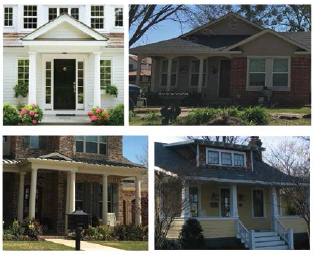
Images showing permitted entry features
(c)
Garage Location
Whether accessed from an alley or from a street, all garages (attached or detached) on interior lots shall be located at least five feet behind the front plane of the primary façade. On corner lots, garages shall be located in the rear two-thirds of the lot.
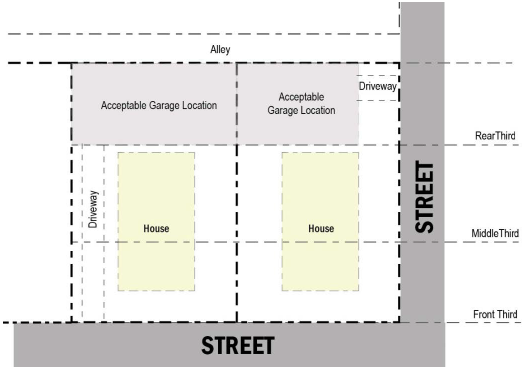
Figure 6.4-1: Image showing acceptable garage locations
(3)
Façade Elements: All facades visible from any streets shall meet the following standards:
(a)
Facades shall have relatively flat fronts and simple roofs with most building wing articulations set at the rear of the structure. Window projections, stoops, porches, balconies, and similar extensions are exempt from this standard.
(b)
Architectural embellishments that add visual interest to the street facing facades roofs, such as corbels, porch or balcony railings, columns, window sills, dormers and chimneys are encouraged.
(c)
Windows shall be vertical or square unless the architectural style supports horizontally proportioned windows. The same window types and proportions shall be maintained on any single façade. If shutters are used, they shall be half the size of the window opening.
(d)
Windows shall have a wood trim around them. The trim width should be matched to the style, but shall not be less than 3-1/2 inches wide. Window, door and eave trim should be consistent along all street facing elevations of the house, in terms of material, material dimensions and decorative features such as shape, carving, reveals, etc.
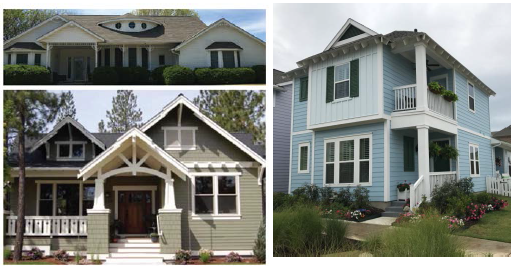
Images showing permitted façade elements along street facing facades
(4)
Roof Design:
(a)
Shall be simple gabled or hipped roofs.
(b)
Excessive number of roof ridges and forms shall be avoided.
(c)
Gable roofs, if provided, shall have a minimum pitch of 9/12. When hipped roofs are used, the minimum pitch shall be 6/12.
(d)
Shed roof shall be permitted for porches and additions only.
(e)
Roof elements such as dormers, chimneys, skylights, and varying heights and ridgelines may be utilized to ensure good design and neighborhood continuity. However, these shall be clearly subordinate in scale to the scale of the roof structure and architectural style of the home.
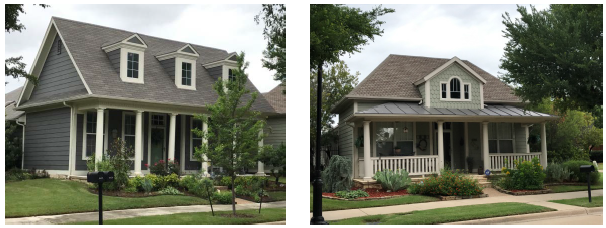
Images showing acceptable roof design
(5)
Building Materials:
(a)
Primary façade materials: Wood siding (excluding Masonite), compatible cementations fiber siding such as Hardie-plank siding, masonry (uniform brick or natural stone), and 3-step stucco may all be used as primary façade materials.
(b)
When using a mix of primary façade materials, a maximum of 2 primary materials shall be permitted on each facade. An even split of materials (i.e., 50/50) on the facades shall not be permitted. One material shall be at least 2/3 of the façade.
(c)
Other materials may be used as accent materials and they shall be limited to trims, cornices, balconies, eaves, stairs, balustrades, pediments, columns, and other decorative elements.
(6)
Roof Materials: May be shingles (slate or asphalt), standing seam metal, or tiles (clay or concrete).
(Ord. No. 19-0917-07, § 16, 9-17-19)
6.4.4 - Duplex or Row House Standards
(1)
Building Type: is a small to medium sized structure that consists of at least two and no more than four side-by-side or stacked residential units on a mid-sized lot. All units typically face the street and it may appear like a row house or a large single-family home.
(2)
Building Orientation:
(a)
Primary Building Setbacks and Lot Coverage: Shall meet the standards in Article IV with the exception of the following:
i.
Lot size for individual row house lots may be a minimum of 2,400 square feet
ii.
Lot width minimum shall be 24 feet.
iii.
Interior setbacks between units which may be zero feet but shall meet fire separation standards.
(b)
Building Entry Features:
i.
Entry to each unit shall have doors oriented towards and visible from the primary street.
ii.
Each unit shall provide a prominent entry feature (either projected or recessed) that reflects the home's architectural style. Common projected entries allowed are porches and stoops.
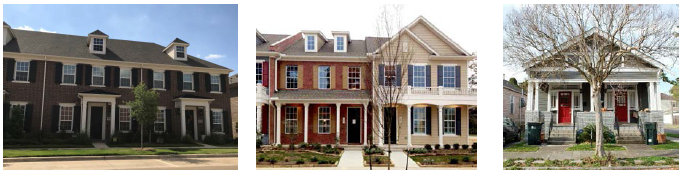
Images showing appropriate building entry features
(c)
Garage or Parking Location
i.
Whether accessed from an alley or from a street, all garages (attached or detached) shall be located within the rear third of the lot (see illustration in Figure 6.4-2). On corner lots, garages shall be located at or behind the primary façade along that street.
ii.
Garage setbacks along rear and side property lines (except alleys) shall only be required to meet fire separation standards.
iii.
Garage setbacks from alleys shall be a minimum of 5 feet.
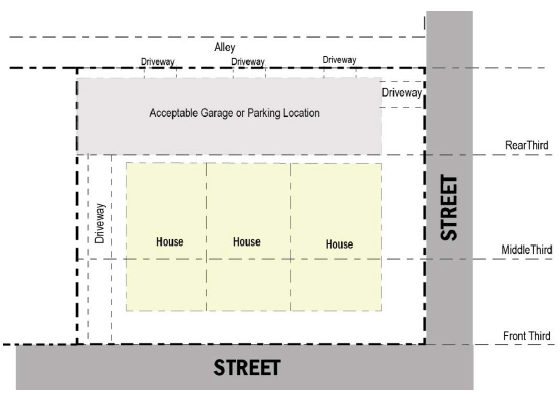
Figure 6.4-2: Image showing acceptable garage or parking location
(3)
Façade Elements: All facades visible from any streets shall meet the following standards:
(a)
Buildings shall maintain a façade module between 20 feet and 40 feet with repetition of the major façade elements such as windows, doors, porches or stoops. Building shall have relatively flat fronts and simple roofs with most building wing articulations set at the rear of the structure.
(b)
Architectural embellishments that add visual interest to the street facing facades roofs, such as corbels, porch or balcony railings, columns, window sills, dormers and chimneys are encouraged.
(c)
Windows shall be vertical or square unless the architectural style supports horizontally proportioned windows. The same window types and proportions shall be maintained on any single façade. If shutters are used, they shall be half the size of the window opening.
(d)
Windows shall have a wood trim around them. The trim width should be matched to the style, but shall not be less than 3-1/2 inches wide. Window, door and eave trim should be consistent along all street facing elevations of the house, in terms of material, material dimensions and decorative features such as shape, carving, reveals, etc.
(4)
Roof Design: Shall meet the standards for a Detached House.
(5)
Building Materials: Shall meet the standards for a Detached House.
(6)
Roof Materials: Shall meet the standards for a Detached House
6.4.5 - Small Apartment Building Standards
(1)
Building Type: is a small to medium sized structure that consists of at least five and no more than eight side-by-side and/or stacked residential units on a mid-sized lot. Units typically share a common entrance or ground floor units may have individual entries along the street.
(2)
Building Orientation:
(a)
Primary Building Setbacks and Lot Coverage: Shall meet the standards in Article IV with the exception of the following:
i.
Interior setbacks between units may be zero feet but shall meet fire separation standards.
(b)
Building Entry Features:
i.
The main entry to the building shall be emphasized with a canopy, porch or a stoop. The main entry shall lead to an interior lobby which shall have access to interior units.
ii.
Units located along a street façade on the ground floor may have individual entries from the street. However, such entries shall be distinguished from the main building entry in terms of lower scale and prominence than the main building entry.
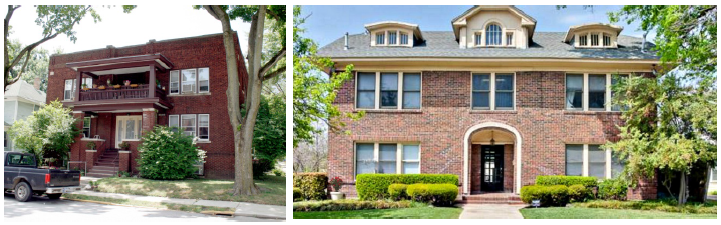
Images showing appropriate building entry features
(c)
Garage or Parking Location
i.
No off-street parking shall be located between the principal building and the street.
ii.
Off-street parking shall only be located on the side or rear of the principal structure on the lot (see illustration in Image 6.4-3). Parking shall occupy no more than 30 percent of any primary street frontage along a lot.
iii.
On corner lots:
(i)
Parking shall be located at or behind the façade along all the street frontages.
(ii)
Parking shall occupy no more than 50 percent of the lot width along the secondary street and 30 percent of the lot width along the primary street.
iv.
Parking setbacks from alleys shall be a minimum of 5 feet.
v.
Any surface parking located along any primary or secondary street frontage shall be screened by a parking screen per Article VII.
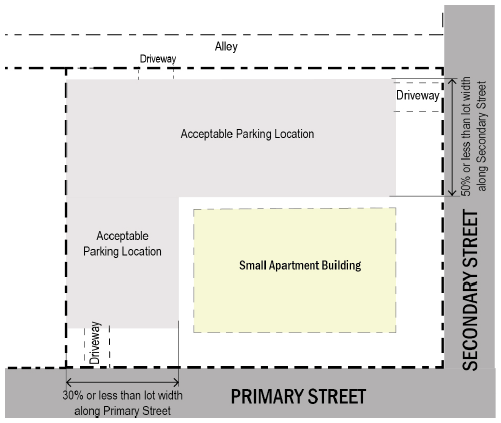
Figure 6.4-3: Image showing acceptable garage or parking location
(3)
Façade Elements: Shall meet the standards for a Duplex or Row House
(4)
Roof Design:
(a)
On buildings with pitched roofs, the minimum roof pitch is 6:12.
(b)
On buildings where flat roofs are the predominant roof type, parapet walls must vary in height and/or shape once every 50 feet along a wall.
(c)
Changing roof forms or towers, if used, shall be designed to correspond and denote building elements and functions such as entrances and stairwells.
(5)
Building Materials: Shall meet the standards for a Detached House.
(6)
Roof Materials: Shall meet the standards for a Detached House.
6.4.6 - Large Apartment Building Standards
(1)
Building Type: is a medium to large sized structure that consists of at least nine and no more than twenty side-by-side and/or stacked residential units on a large lot. Units typically share a common entrance and units do not have direct access from the street.
(2)
Building Orientation:
(a)
Primary Building Setbacks and Lot Coverage: Shall meet the standards in Article IV with the exception of the following:
i.
Interior setbacks between units may be zero feet but shall meet fire separation standards.
(b)
Building Entry Features:
i.
The main entry to the building shall be emphasized with a canopy, porch or a stoop through a courtyard or a fore court. The main entry shall lead to an interior lobby which shall have access to interior units.
ii.
Upper floor residential units shall be accessed via internal corridors. External access to upper floor units via common balconies shall be prohibited.
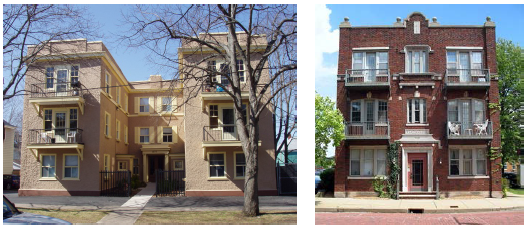
Images showing appropriate building entry features
(c)
Garage or Parking Location: Shall meet the standards for a Small Apartment Building
(3)
Façade Elements:
(a)
Maximum length of any Large Apartment building along a primary street shall be 120 feet.
(b)
The street facing elevations of all Large Apartment buildings shall be articulated through the incorporation of at least three (3) or more of the following:
i.
Balconies, a minimum of 25 square feet in area
ii.
Bay or box windows
iii.
Dormers
iv.
Accent materials such as brick, stone, or stucco with banding highlights
v.
Ornamental or decorative window grills and shutters
vi.
Vertical elements such as towers or building end-caps that demarcate building modules
vii.
Other comparable feature as approved by the Administrator
(c)
Windows:
i.
All walls and elevations on all floors of a Large Apartment building must have windows, except when necessary to assure privacy for adjacent property owners as determined by the Administrator.
ii.
Windows should be located to maximize the possibility of occupant surveillance of entryways and common areas.
(4)
Roof Design:
(a)
On buildings with pitched roofs, the minimum roof pitch is 6:12.
(b)
On buildings where flat roofs are the predominant roof type, parapet walls must vary in height and/or shape once every 50 feet along a wall.
(c)
Changing roof forms or towers, if used, shall be designed to correspond and denote building elements and functions such as entrances and stairwells.
(5)
Building Materials: Shall meet the standards for a Detached House.
(6)
Roof Materials: Shall meet the standards for a Detached House.
6.5.1 - Purpose and Intent
The Design Standards are intended to provide the Ennis Historic Landmark Commission, residents of the Ennis Historic Residential District, and property developers with guidelines for building rehabilitation, new construction, and other changes which would affect the overall appearance of historically designated properties within the Residential Historic (H) Overlay.
The Design Standards in this Section are based on the Secretary of the Interior's Standards for Rehabilitation. The following basic principles help preserve the distinctive character of a historic building and its site while allowing for reasonable change to meet new needs:
(1)
A property shall be used for its historic purpose or be placed in a new use that requires minimal change to the defining characteristics of the building and its site and environment.
(2)
The historic character of a property shall be retained and preserved. The removal of historic materials or alteration of features and spaces that characterize a property shall be avoided.
(3)
Each property shall be recognized as a physical record of its time, place, and use. Changes that create a false sense of historical development, such as adding conjectural features or architectural elements from other buildings, shall not be undertaken.
(4)
Most properties change over time; those changes that have acquired historic significance in their own right shall be retained and preserved.
(5)
Distinctive features, finishes, and construction techniques or examples of craftsmanship that characterize a property shall be preserved.
(6)
Deteriorated historic features shall be repaired rather than replaced. Where the severity of deterioration requires replacement of a distinctive feature, the new feature shall match the old in design, color, texture, and other visual qualities and, where possible, materials. Replacement of missing features shall be substantiated by documentary, physical, or pictorial evidence.
(7)
Chemical or physical treatments, such as sandblasting, that cause damage to historic materials shall not be used. The surface cleaning of structures, if appropriate, shall be undertaken in the gentlest means possible.
(8)
Significant archaeological resources affected by a project shall be protected and preserved. If such resources must be disturbed, mitigation measures shall be undertaken.
(9)
New additions, exterior alterations, or related new construction shall not destroy historic materials that characterize the property. The new work shall be differentiated from the old and shall be compatible with the massing, size, scale, and architectural features to protect the historic integrity of the property and its environment.
(10)
New additions and adjacent or related new construction shall be undertaken in such a manner that if removed in the future, the essential form and integrity of the historic property and its environment would be unimpaired.
6.5.2 - Applicability
(1)
These design standards shall apply to exterior remodeling visible from a public right-of way within the Residential Historic Overlay #1 as established and detailed in Chapter 8.5 of the City of Ennis Code of Ordinances.
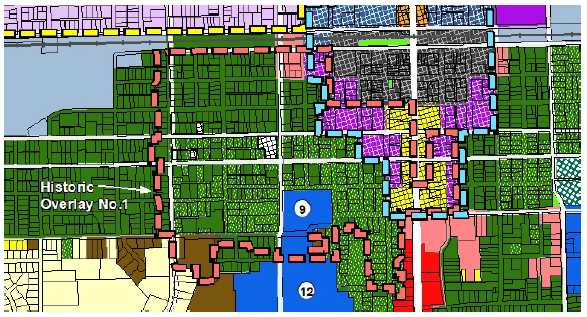
Figure 6.5-1 - Residential Historic Overlay #1
(2)
The Standards are to be applied to specific rehabilitation projects in a reasonable manner, taking into consideration economic and technical feasibility.
(3)
They shall not apply to those activities which constitute ordinary repair and maintenance, i.e. using the same material and design.
(Ord. No. 25-0304-F1, § 2(Exh. A), 3-4-25)
6.5.3 - Architectural Styles in Residential Historic Overlay #1
Prior to the railroad, most houses were plain structures built with locally available materials. The rise of industrialization and expansion of the railroad made it possible for homeowners to obtain milled and mass produced building materials and to design and decorate their homes using current architectural styles. Between 1890 and 1920, the four most popular styles of architecture were Queen Anne, Folk Victorian, Neoclassical, and Bungalow. Each of these styles uses distinct elements such as massing, height, roof line, windows and doors, and entry details. Since it is the combination of these elements which create the style, it is preferable to keep stylistic elements on a house consistent, and not to mix and match elements from different styles.
The following information is intended to provide homeowners and applicants information on the four most popular historic architectural styles in Ennis, especially in the Ennis Residential Historic Overlay #1. They are intended to assist in designing existing home remodels to be more consistent with the architectural traditions in the area. Though these preferred architectural styles reinforce the existing context of the Ennis Historic Residential District, it does not preclude other styles from being considered.
(1)
Folk Victorian (1870—1910)
| Distinguishing Characteristics | |
|---|---|
| The style is defined by the presence of Victorian decorative detailing on simple house forms. The primary areas for the application of this detailing are the porch and cornice line. | |
| • Symmetrical facade or gable-front-and-wing facade. | |
| • Window surrounds are generally simple or may have a simple pediment above. | |
| • Porches with spindle work detailing or flat, jigsaw cut trim attached to simple house forms. | |
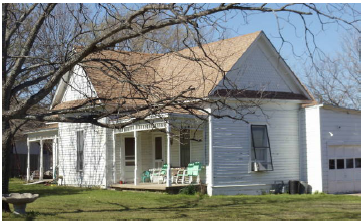 | Examples 708 Brown |
| Almost all of the Folk Victorian homes in Ennis began with a basic L-shape plan (gable front and wing facade) to which the owners added mass-produced detailing. | |
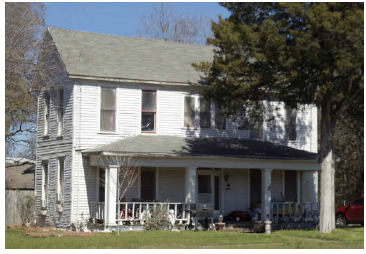 | 616 Denton |
| This house is an excellent example of the side-gabled, two story form of Folk Victorian. | |
(2)
Queen Anne (1880—1910)
| Distinguishing Characteristics | |
|---|---|
| This style was named and popularized by a group of 19 th -century English architects, although it has little to do with the style of architecture that was common during the reign of Queen Anne. It was highly sought after and readily available due to pattern books and mail order house plans. Queen Anne houses are easily recognizable through a number of design features: | |
| • Steeply pitched roofs of irregular shape | |
| • Asymmetrical facade | |
| • Usually has a dominant front-facing gable | |
| • Round, square or polygonal towers | |
| • Devices to avoid a smooth-walled appearance such as using several wall materials of differing textures, particularly patterned wood shingles | |
| • Avoiding plain, flat walls through devices such as bays, towers, overhangs, and wall projections | |
| • Cutaway bay windows | |
| • Simple door and window surrounds | |
| • Porch extends along either one or both side walls | |
| • Partial or full-width porch, usually one story high | |
| About half of Queen Anne houses have delicate turned porch supports and spindle work ornamentation. This most commonly occurs in porch balustrades or as a frieze suspended from the porch ceiling. Spindle work detailing is also used in gables and under wall overhangs left by cutaway bay windows. | |
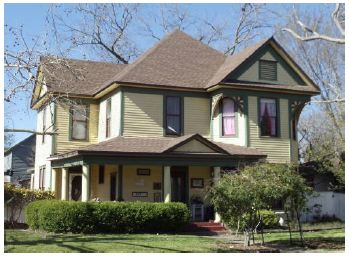 | Examples 501 McKinney |
| This house is a typical Queen Anne and shows one of the most distinctive characteristics of this style: a steeply hipped roof with two lower cross gable | |
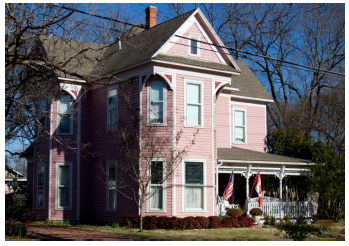 | 704 Preston |
| This house shows the less common Queen Anne shape of a simple cross gabled roof. | |
(3)
Neoclassical (1895-1955)
| Distinguishing Characteristics | |
|---|---|
| The White City" of the 1893 World's Columbian Exposition in Chicago renewed interest in the classical designs of Ancient Greece and Rome. Neoclassical houses use many features of classical designs and are usually painted white to simulate the stone of monumental architecture. The main areas for adding decorative features are porch-support columns, cornices, doorways and windows. Characteristic features include: | |
| • Facade dominated by a full-height porch | |
| • Roof supported by classical columns | |
| • Facade shows symmetrically balanced windows and center door | |
| • Doors commonly have elaborate, decorative surrounds | |
| • Rectangular windows with double hung sashes | |
| • Roof-line balustrades are common | |
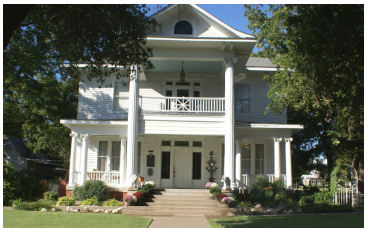 | Examples 307 Sherman |
| This house is a good example of a Neoclassical house with its symmetrical plan designed around a central entry. | |
(4)
Bungalow (1905-1930)
| Distinguishing Characteristics | |
|---|---|
| In America, the term bungalow refers to small or medium-sized homes that have: | |
| • Low-pitched, gabled roofs | |
| • Wide, unenclosed porches | |
| • Exposed roof rafters | |
| • False, decorative beams under gables | |
| • Roof supported by tapered, square columns | |
| • Columns or piers extend to ground level | |
| • Usually one or one and a half stories | |
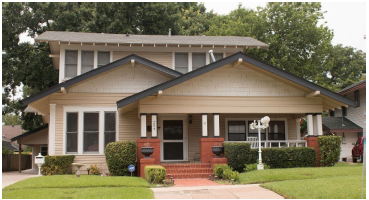 | Examples 204 Belknap |
| Often associated with the "Craftsman" Movement, its practical layout, affordability, and artistic details made the bungalow the most popular home style in Ennis between 1910 and 1930. | |
6.5.4 - Design Standards
| (1) Roofs and Chimneys | |
|---|---|
| Historic roof forms in Ennis are primarily gabled or hipped. The pitches on these structures are either low (under 30 degrees), or moderate to varied (between 30 and 45 degrees). | |
| Additions shall provide a roof line and shape that is compatible with the historic roof line of the original structure. Roofing material shall also complement the color and material on the original structure. | |
| Chimneys were either built within the envelope of the structure or were built into an exterior wall. They served key functions in historic homes and shall not be removed or altered. | |
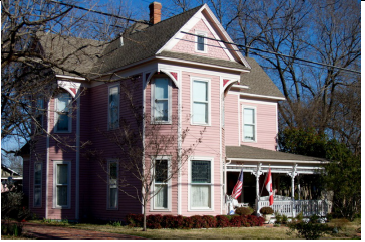 | 704 Preston - Queen Anne |
| • Interior brick chimney | |
| • Gabled roof of composite shingle material | |
| • Moderate pitch on main roof | |
| • Low pitch on porch roof | |
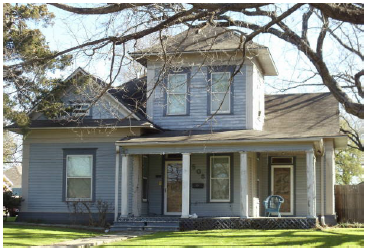 | 508 Dallas - Mixed Styles |
| • Hipped roof of composite shingle material | |
| • Moderate pitch on main roof | |
| • Low pitch on porch roof | |
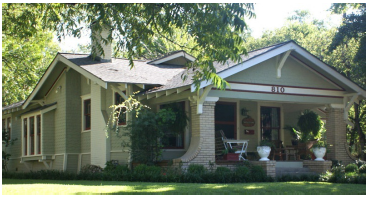 | 810 Preston - Bungalow |
| • Exterior brick chimney | |
| • Gabled roof of composite shingle material | |
| • Low roof pitch | |
| (2) Architectural Features | |
|---|---|
| Architectural features help define a building's style and historic character. Historic architectural features shall be preserved and maintained, and new architectural features shall not be added. Depending on the structure's design style, features can include: | |
| • dormers | • exposed rafters |
| • towers | • flared eaves |
| • roof-line balustrade | • slight eave overhang with classical moldings |
| • trusses in gables | • slight eave overhang with brackets |
| • exposed beams in gables | • shutters |
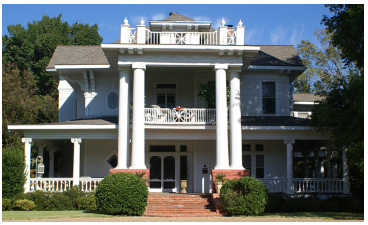 | 400 Denton - Neoclassical |
| • Roof-line balustrade | |
| • Slight eave overhang with classical moldings | |
| • Raised first floors are a common feature of historic homes | |
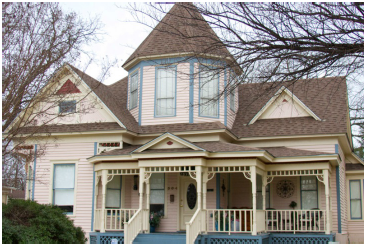 | 504 Knox - Queen Anne |
| • Hexagonal tower | |
| • Asymmetrical facades are found on many historic house styles | |
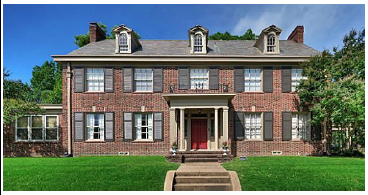 | 605 Preston - Federal |
| • Gabled dormers | |
| • Shutters | |
| Note: The small addition on the left of the house does not detract from the symmetry of the main facade. | |
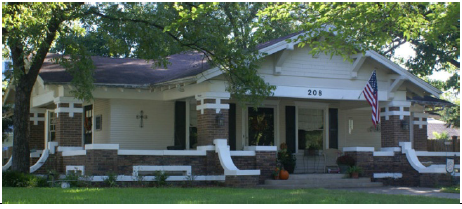 | 208 Gaines - Bungalow |
| • Exposed beams in gables are features of Craftsman houses | |
| • Exposed rafters are also commonly found | |
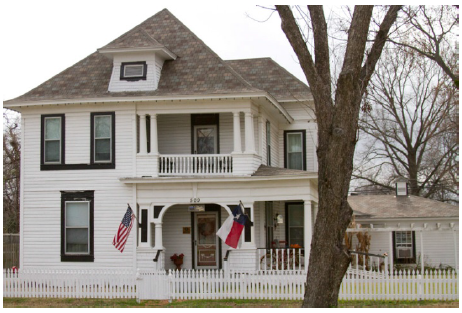 | 509 Brown - Mixed Styles |
| • Hipped dormer | |
| • Flared eaves | |
| Note: The small addition to the right rear of the house uses a complementary design style to blend into the main structure. | |
| (3) Exterior Materials | |
|---|---|
| Exterior materials are important in defining the overall character of a historic house. Original materials shall be retained and where repairs or replacement is warranted, it shall match the original as closely as possible. | |
| Typically, residential structures in Ennis are brick or wood clad. Use of these materials maintains the historic integrity of the area and helps provide compatible infill. | |
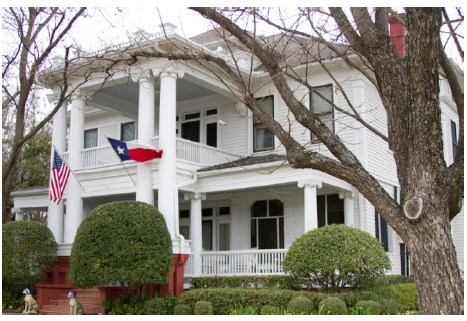 | 500 Ennis - Neoclassical |
| • Horizontal clapboard on second story | |
| • Patterned wood shingles on first story | |
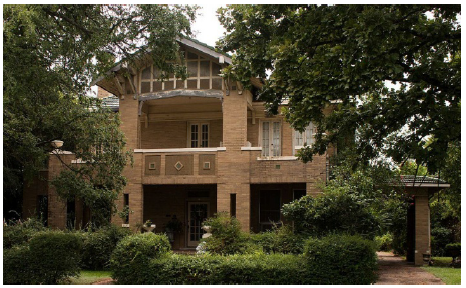 | 401 Clay - Bungalow |
| • Half timbering | |
| • Brick exterior finish | |
| (4) Porches | |
|---|---|
| Structures attached to the primary mass of a building, such as porticos, stoops, exterior stairs to parlor level entrances, porches, bays, etc. are an integral part of the richness of historic buildings. They provide depth, shadow, and human activity on the street. | |
| Entrances to historic structures are commonly approached via exterior stairs leading to parlor level entrances. They are frequently covered by bracketed or columned porches. Likewise, side porches contain most of the decorative features found on front porches. | |
| Use of these elements is encouraged, particularly with railings which are appropriate for the design style of the house. | |
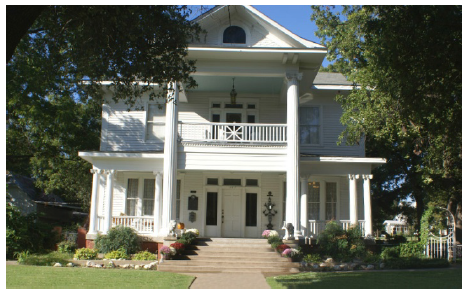 | 307 Sherman - Neoclassical |
| • Simple-squared railings with geometric detail | |
| • Two-story, classical columns | |
| Note: This house combines a full-height entry porch with a full-facade porch on the first story. | |
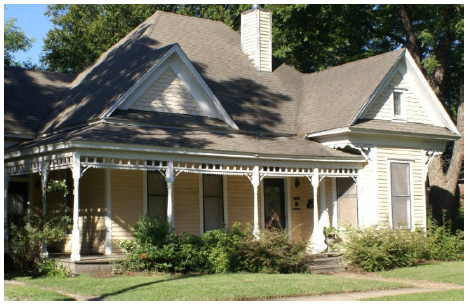 | 701 Gaines - Queen Anne |
| • One story, spindle columns | |
| • A partial porch covers only a portion of the front facade of a house | |
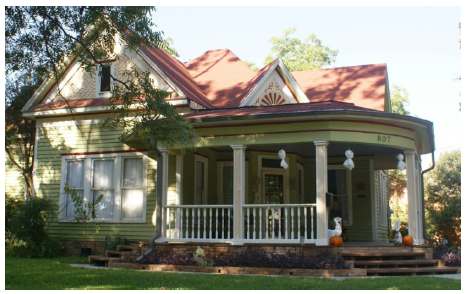 | 807 Preston - Queen Anne |
| • One story, square columns | |
| • Spindle railings | |
| Note: This partial porch also wraps down the side of the house. | |
| (5) Doors | |
|---|---|
| Historic districts are always characterized by structures whose front doors are prominent in the front facade of the building. They are highly visible and shall under no circumstances be obscured by enclosed porches or high walls. In particular, garages shall be discreetly tucked behind or to the side of the house. | |
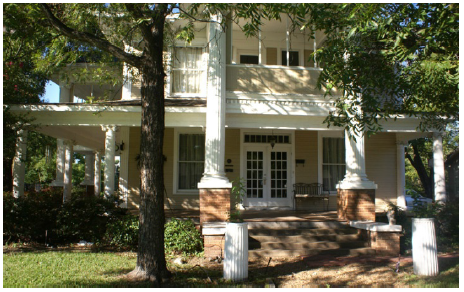 | 601 Dallas - Neoclassical |
| • This front entrance feature fanlights above and glazing in the doors | |
| • The vehicle is parked along the side of the house so as to not detract from the building's facade | |
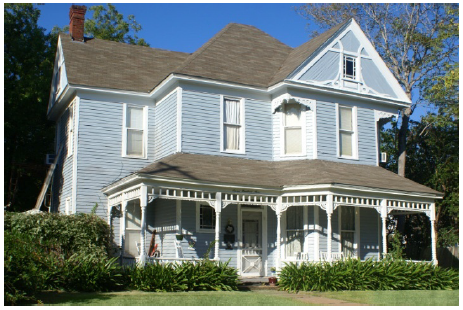 | 709 Dallas - Queen Anne |
| • The front door features decorative glazing which highlights two similar decorative windows | |
| • The design and materials used for the screen door compliments the front door and windows | |
| (6) Windows | |
|---|---|
| Historic windows are important architectural elements of a building façade. Original windows shall be retained to preserve the historic integrity of the building as they reflect original design intent, a period or style, and may reflect evolutions to the building. | |
| Within the Ennis Residential Historic Overlay #1, windows have the following characteristics: | |
| • tend to align vertically on the front façade | • are usually double hung |
| • are often grouped in threes | • divided light sashes have true divided lights |
| • are taller than they are wide | • are mostly made of wood |
| Windows on additions shall be visually compatible with historic windows to which they are visually related. | |
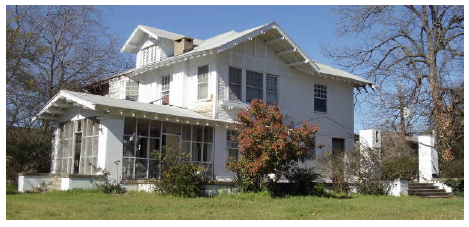 | 403 Preston - Mixed Styles |
| • Windows grouped in three | |
| • Double hung with single-pane glazing in lower sashes and multi pane glazing in upper sashes | |
6.6.1 - Commercial and Mixed Use Building Standards
This section shall apply to all commercial and mixed use development in Kaufman Corridor District.
(1)
Site Design and Building Organization Principles
(a)
Purpose: Site design standards address a development's relationship to the Kaufman Corridor and creating an appropriate transition to adjoining neighborhoods. The focus of site design is to create better pedestrian frontages along Kaufman Street by minimizing the location of any off street parking along Kaufman Street.
(b)
Building Organization and Orientation:
i.
Buildings on lots with any frontage along Kaufman Street shall have their front facades with primary building entrances oriented towards Kaufman Street. Along all other streets, buildings shall be oriented so that the front façade and primary building entrance faces the primary street. On corner lots, the building(s) shall face the higher street designation (in case of Kaufman Street, the higher designation shall be Kaufman Street).
ii.
In cases where the longer side of a building is perpendicular to the primary street, the portion of the building facing the primary street shall be designed as a building front with entrances, signage, and windows.
iii.
Any primary or secondary buildings facing a primary street or visible from the primary street must follow the same requirements as primary buildings facing a primary street.
(c)
Building Entry Design: The primary building entrance shall be readily apparent from the street through the use of canopies, awnings, or recessed entrances.
(d)
Location of off-street parking:
i.
No off-street parking shall be located between the principal building and Kaufman Street (see illustration in Figure 6.6-2).
ii.
Off-street parking shall only be located on the side or rear of the principal structure on the lot and shall be located no more forward than the principal building. Parking shall occupy no more than 50 percent along Kaufman Street or any primary street frontage along a lot.
iii.
On corner lots:
(i)
Parking shall be located at or behind the façade along all the street frontages.
(ii)
Parking shall occupy no more than 70 percent of the lot width along the secondary street and 50 percent of the lot width along the primary street.
iv.
Parking setbacks from alleys shall be a minimum of 5 feet.
v.
Any surface parking located along Kaufman Street or any primary or secondary street frontage shall be screened by a parking screen per Article VII: Site Design and Development Standards and Article VIII: Landscaping and Open Space Standards.
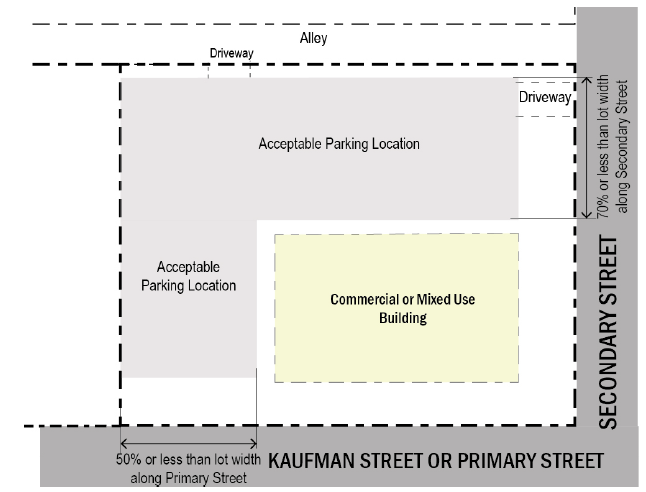
Figure 6.6-2: Image showing permitted location of parking on the lot
(2)
Building Design
(a)
Purpose: Building design directly influences the character and function of non-residential development. Generally, building design should focus on creating an attractive and coherent design with buildings that are adaptable for multiple uses over time based on changing market conditions.
(b)
Building façade design: All building facades along Kaufman Street and primary streets shall be treated with at least one of the following elements:
i.
Outdoor patios or café-style seating;
ii.
Canopy or colonnade over the ground floor façade or
iii.
Recognizable changes in texture or material.
(c)
Windows and Transparency:
i.
At ground level, buildings shall have a high level of transparency. All primary ground floor facades that face Kaufman Street, pedestrian walkways, and plazas (except rear service facades or secondary street facades) must have windows for at least 30 percent of the façade between 2 feet and 7 feet above the grade.
ii.
Where the internal arrangement of a building makes it impossible to provide transparency along a portion of a wall as determined by the Administrator, a combination of building articulation, changing color or texture to imitate the rhythm of windows or storefront displays may substitute for the required transparency along these facades, except when fronting Kaufman Street, a plaza or sidewalk café areas.
(3)
Building Materials:
(a)
A wide range of building materials are permitted in Kaufman District unless prohibited by this section.
(b)
Roof Materials: Sloped or pitched roofs shall be constructed of asphalt shingles, synthetic shingles, standing seam metal, or tile. Flat roofs may be constructed of any industry-standard material as approved by the Building Official, unless prohibited by this section.
(c)
Prohibited Materials: The following materials are prohibited as exterior cladding or roofing materials:
i.
Unpainted galvanized steel or other bright metal (with the exception of Architectural metal or painted/treated metal);
ii.
Wood or plastic (vinyl) siding (prohibited on ground floors only, may be permitted on upper levels);
iii.
Exposed aggregate; and
iv.
Wood roof shingles, tar paper, and brightly colored asphalt shingle roof materials are prohibited on all roof types.
(4)
Drive Through and Drive up Facilities:
(a)
On corner lots, drive-through lanes, auto-service bays and gas station canopies shall not be located at the street intersection (See figure 6.6-2).
(b)
Any automobile related retail sales or service use of a site or property with Kaufman Street frontage shall have a primary building entrance along Kaufman Street.
(c)
There shall only be a single driveway access from Kaufman Street no greater than 24 feet in width. The Administrator may allow the driveway width to be widened to a maximum of 30 feet, if the property has no other service access from any other street or adjoining property.
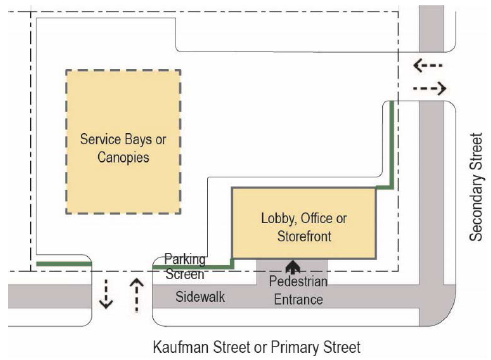
Figure 6.6-2: Image illustrating the appropriate design of auto-related site
elements (Gas stations, auto-service uses, and bank drive-throughs)
(d)
All off-street loading, unloading, and trash pick-up areas shall be located internal to the site, behind the principal building, along alleys, or secondary street frontages. If a site has only Kaufman Street frontage with no alley frontage, off-street loading, unloading, and trash pick-up areas may be permitted along the side of a building or along Kaufman Street.
(e)
All off-street loading, unloading, or trash pick-up areas along any street frontage shall be screened per standards in Article VII.
6.6.2 - Residential Building Design Standards
This section shall apply to all residential development in Kaufman Corridor District.
(1)
Building Orientation:
(a)
Primary Building Setbacks and Lot Coverage: Shall meet the standards in Article IV with the exception of the following:
i.
Lot size for individual townhouse lots may be a minimum of 2,400 square feet
ii.
Lot width minimum shall be 24 feet.
iii.
Interior setbacks between units which may be zero feet but shall meet fire separation standards.
(b)
Building Entry Features:
i.
For single-family (attached or detached) or townhomes, entry to each unit shall have doors oriented towards and visible from the primary street. Common entrance treatments include recessed entrances or projected entrances such as porches and stoops.
ii.
For multi-family buildings, the main entry to the building shall be emphasized with a canopy, porch or a stoop. The main entry shall lead to an interior lobby which shall have access to interior units.
iii.
Units located along a street façade on the ground floor may have individual entries from the street. However, such entries shall be distinguished from the main building entry in terms of lower scale and prominence than the main building entry.
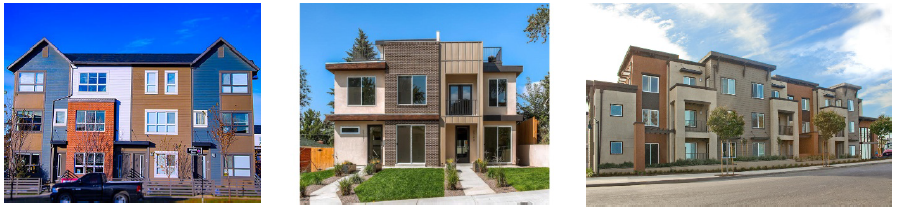
Images showing appropriate building orientation and entry features
(c)
Garage or Parking Location
i.
No off-street parking shall be located between the principal building and the primary street.
ii.
Off-street parking shall only be located on the side or rear of the principal structure on the lot (see illustration in Image 6.6-3). Parking shall occupy no more than 50 percent of any primary street frontage.
iii.
Parking setbacks from alleys shall be a minimum of 5 feet.
iv.
Any surface parking located along any primary street frontage shall be screened by a parking screen per Article VII.
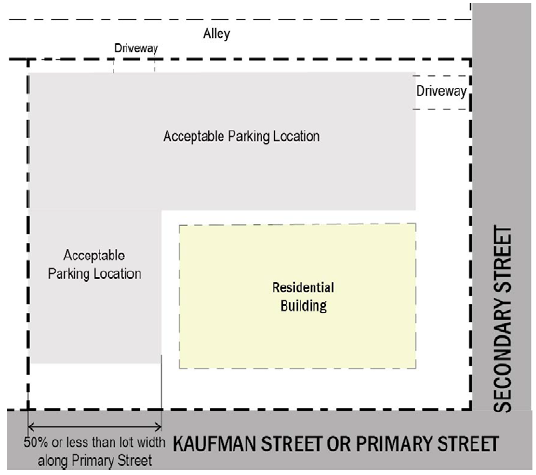
Figure 6.6-3: Image showing acceptable garage or parking location
(2)
Façade Elements: All facades visible from any streets shall meet the following standards:
(a)
Buildings shall maintain a façade module between 20 feet and 40 feet with repetition of the major façade elements such as windows, doors, porches or stoops. Building shall have relatively flat fronts and simple roofs with most building wing articulations set at the rear of the structure.
(b)
Primary street facades shall have windows covering at least 20 percent of the façade.
(3)
Building Materials: Shall meet the standards for Commercial and Mixed Use Buildings
6.7.1 - Article 1: General Provisions (Intent, Applicability, Authority)
Section 1: Downtown District Zoning Classification Intent. These zoning regulations and sub-districts have been designed to accomplish the following:
a.
Preservation: The continuation of, and restoration of, the spatial and architectural fabric of the historic downtown core and the historic suitability of infill development and other new development within it.
b.
Continuity: The appropriate transition from the historic fabric of the downtown core to surrounding residential areas.
c.
Compatibility: A visually recognizable relationship between development east and west of the downtown core that embodies rhythms, patterns, and other aspects of the downtown core in new development.
d.
Economic Diversity: Expansion of retail, entertainment, and live/work options within the downtown zones that attract and serve a diversity of markets.
e.
Destination: Establishing a strong City center that hosts unique businesses, entertainment venues and events of importance to the people of Ennis and visitors.
f.
Sustainability: Encouragement of vertical and horizontal mixed uses to promote a vibrant atmosphere in changing economic conditions.
Section 2: Applicability. Any Remodel, Renovation, Infill Development, Redevelopment, or Development within the Downtown area (as described by Figure 1, Downtown Zoning Sub-District Map) shall comply with the standards, conditions, and intents stated in this Ordinance. In the event there is any conflict between this Ordinance and any other ordinance, the more restrictive ordinance shall apply. Compliance with this Ordinance, either through administrative approval or Site Plan Approval, is required of:
a.
Ordinary Maintenance: Work on a structure necessary to continue an existing operation, continue habitable occupancy, and/or repair damage resulting from natural events that does not exceed 20 percent of the building value or does not necessitate any change to the architecture shall be administratively approved by the City Manager or Designee. If the City Manager denies an application, the applicant may appeal through the process outlined in Section 4(c). Ordinary Maintenance exceeding 20 percent of the building value or which necessitates change to the architectural style shall seek Site Plan Approval through the process outlined in Section 4: Authority.
b.
Any Remodel: Any building or exterior improvement that exceeds the threshold for ordinary maintenance. Any construction activity with a value greater than 20 percent of the assessed property value or modifies the void to solid ratio of the building façade or modifies any key exterior architectural features including openings, opening surrounds, decorative motifs, or architectural features of the building style (such as pilasters and other projections or offsets) shall seek Site Plan Approval through the process outlined in Section 4: Authority. All other remodel activity not exceeding this threshold may be administratively approved by the City Manager or Designee with an appeal as set forth in Section 4(c).
c.
Any Renovation: Any building alteration for a new use that engages the exterior beyond Ordinary Maintenance shall seek Site Plan Approval through the process outlined in Section 4: Authority.
d.
Any Infill Development: Any ground up construction abutting or adjacent to other developed properties and sharing a common property line within any of the Sub-districts of the Downtown area (as described by Figure 1, Downtown Zoning Sub-District Map) shall seek Site Plan Approval through the process outlined in Section 4: Authority.
e.
Any Redevelopment: Any construction upon the partial or full demolition of an existing structure shall seek Site Plan Approval through the process outlined in Section 4: Authority.
f.
Any Development: Any new construction upon a lot, site, tract or parcel within the Downtown area (as described by Figure 1, Downtown Zoning Sub-District Map) that does not meet the conditions of infill development shall seek Site Plan Approval through the process outlined in Section 4: Authority.
Section 3: Demolition. Any request for a demolition permit within any Downtown Sub-District regulated by this Ordinance shall be administered as follows:
a.
Demolition exempt from the requirements of this Section: Any demolition associated with ordinary maintenance that does not involve modification of a primary facade or modification of architectural motifs, proportion of windows, or other decorative features is exempt from the requirements of this section but remains subject to all other codes and conditions of the City of Ennis.
b.
Demolition for the purpose of mitigating a safety hazard: When the City Manager or Designee deems that demolition is necessary for any of the following purposes, such permit for demolition shall be handled administratively in accordance with procedures for a demolition permit specified in the Unified Development Ordinance (UDO), as amended.
i.
Protection of life safety;
ii.
Prevention of a danger to other structures; and/or
iii.
Constitutes a public nuisance
c.
Other Demolition: It is an intent of this Ordinance to preserve and enhance the built fabric of downtown Ennis and its adjacent districts as identified in Figure 1, Downtown Sub-District Zoning Map. Therefore, any request for demolition of the exterior other than demolition request which meets condition a) or b) above shall be reviewed by the Historic Landmark Commission. After such review, the Historic Landmark Commission shall take one of the following actions:
i.
Approve the request for demolition permit subject to compliance with all conditions of the City of Ennis and its Unified Development Ordinance (UDO), or
ii.
Delay issuance of the demolition permit for a period of time not exceeding 120 days.
After review and action of the Historic Landmark Commission, the request for demolition permit shall be administered by the City of Ennis in accordance with processes specified in its Unified Development Ordinance (UDO). However, issuance of such permit shall be delayed up to 120 days if so specified by the Historic Landmark Commission in accordance with this Section.
Section 4: Authority. The Planning and Zoning Commission shall have authority to approve or deny any Downtown Area Site Plan as described below and in accordance with the process described herein. The Historic Landmark Commission shall have authority to approve or deny changes to an existing or proposed street façade's architectural character, appearance, or aesthetic based upon the design standards and in accordance with the process described herein. The Historic Landmark Commission shall have authority to approve or deny any request for demolition as described above and in accordance with the process described herein. The City Commission shall have authority to approve or deny any appeal of a Planning and Zoning Commission decision or a Historic Landmark Commission decision. Applications for any modification to the standards or conditions of this Ordinance shall be submitted to the Planning and Zoning Commission for a recommendation to the City Commission regarding such modification request. The City Commission shall have authority to approve or deny any modification to the standards or conditions of this Ordinance. Such authorities shall be executed in accordance with the procedures and criteria specified below.
a.
Review and Coordination Authority: In addition to other applications expressly delegated by City ordinance or Chapter, the City Manager or Designee is responsible for reviewing and coordinating the required Downtown Area Site Plan Approval or request for demolition. Pursuant to the requirements of this Ordinance, any proposed remodel, renovation, infill development, redevelopment, or development of a lot, parcel, or tract (as defined in Section 2: Applicability) within the area of this zoning designation shall require a "Downtown Area Site Plan" to be approved by the Ennis Planning and Zoning Commission. When a request for demolition is considered by the Historic Landmark Commission, only (ii) below is required unless the Historic Landmark Commission determined other information is necessary. The "Downtown Area Site Plan" shall include the following:
i.
Site Plan showing the following:
• Site boundaries and dimensions, lot lines, site acreage and square footage, any setbacks or build-to lines/zones required by this zoning;
• All streets, sidewalks, trails, and/or alleys serving the property;
• Primary and secondary building façade frontages;
• Adjacent buildings within the same block face;
• Any plazas or public facilities abutting the site or block;
• Any proposed signage; and
• Location map, north arrow, title block, and site data summary.
ii.
An informational statement which includes the following:
• Name and address of the land owner (and applicant if different than the land owner);
• Name and address of architect, landscape architect, planner, engineer, surveyor, or other persons involved in the project;
• Any proposed phases (by location and square footage); and
• A list detailing each condition imposed by this zoning classification that related to this project in this location and the extent to which it will be satisfied through approval of this "Downtown Area Site Plan".
iii.
Architectural information which include the following:
• Building locations and building footprints;
• Building(s) elevation and perspectives to show the design of the structure.
• Through photo imagery, show the building's relationship to other existing structures within the block face or relationship to adjacent blocks if the proposed development fills the entire block;
• Location and number of any required parking;
• If the development proposal is a phased development (as described in the applicant's information statement above); and
• Water and sanitary sewer verification
• Preliminary drainage study showing how runoff will be managed.
b.
Downtown Area Site Plan Approval Authority: Upon determination by the City Manager or Designee that an application and the required Downtown Area Site Plan are complete, the application shall be considered by the Ennis Planning and Zoning Commission for approval in accordance with the following:
i.
Staff Recommendation: The City Manager or Designee shall consider the application in light of the standards and other requirements and intent of this Ordinance and make a recommendation regarding the extent to which the application comports with such standards, other requirements, and intent. The staff recommendation shall also summarize any instructions to, or meetings with the applicant and instructions given to the applicant during that process, including recommendations from the City Manager or Designee. Finally, the staff recommendation shall state whether the application is complete.
ii.
Planning and Zoning Commission Action: The Planning and Zoning Commission, in accordance with notification procedures required of the Texas Open Meetings Act, shall, after proper notice, consider the application for all sites within this zoning designation for approval.
iii.
Approval Criteria: The Planning and Zoning Commission, in making its approval, shall determine whether the Downtown Area Site Plan request meets the following criteria:
• The Downtown Area Site Plan is generally consistent with the Development and Design Standards set forth in this Ordinance;
• The Plan is generally consistent with standards and conditions of other City ordinances as they are relevant to the downtown area; and
• The Plan does not require a modification from the standards set forth in this Ordinance or other applicable ordinances of the City of Ennis.
iv.
Registration of Approval: If approved, the City Manager or Designee shall enter the approved Downtown Area Site Plan into a Record of Downtown Area Site Plan Approvals and document the approval action by noting on a Master Downtown Map the date and case number of the action.
c.
Appeal: The applicant may appeal any decision of the Planning and Zoning Commission or Historic Landmark Commission to the City Commission by making a request for such appeal to the City Manager or Designee. Upon a request for appeal, a hearing date shall be set for a properly noticed public hearing before the City Commission. The City Commission may approve any appeal request upon consideration of the original Downtown Area Plan application and the staff recommendation related thereto.
When the applicant wishes to appeal the administrative decision of the City Manager or Designee, the applicant may appeal Downtown Area Site Plan decisions to the Planning and Zoning Commission and demolition and façade design decisions to the Historic Landmark Commission by making a request for such appeal to the City Manager or Designee. Upon request for appeal, a hearing date shall be set for a properly noticed public hearing before the appropriate Commission.
d.
Modification: Where an application for a remodel, renovation, infill development, redevelopment, or development (as defined by Section 2: Applicability) includes design, site, use, or any other proposed feature that is not in compliance with the standards and/or conditions of this Ordinance, a modification of such standards must be approved by the City Commission through a process that follows the procedures outlined in Section 4b, above, with the exception that the Planning and Zoning Commission shall make recommendation to the City Commission. The City Commission may make any modification to the standards and conditions of this Ordinance that are deemed necessary to:
i.
Promote economic development that will benefit and promote the general intent of the Downtown Master Plan and this Ordinance;
ii.
Provide relief from any economic hardship imposed by the standards and conditions of this Ordinance due to unusual conditions of the development site; and/or
iii.
Achieve larger outcomes that are beneficial to the downtown area as a whole.
6.7.2 - Article 2: General Definitions
Bay Width Modulation - shall mean the pattern in repetition of individual building width characteristics of a block or context. Bay Width Modulation is a particularly important aspect of blocks containing commercial bay structures which adjoin at a common lot line wherein the block face created by those structures expresses the individual buildings as a continuous facade composed of these individual units. Therefore, the visage of the block face is an expression of the pattern in repetition of the individual building units or Bay Width Modulation. Bay Width Modulation is a key feature of any street image of a block where the repetition of individual buildings and the space between them (if such space exists) defines the block face.
Block face - shall mean the street wall or building façade(s) fronting a street.
Building Façade Type - shall mean the exterior wall of a building meant either for public visibility from the street as the essential expression of identifiable style (Primary Building Façade); is viewed from the street but less expressive than the former (Secondary Building Façade); or is only viewed from the rear or interior and therefore not viewed from the street (all other Building Facades).
Building Type - shall mean the physical/architectural expression of scale and proportion associated with either a residential or a non-residential purpose. In historic settings, such scale/ proportion is associated with a historic style that is typically understood to be commercial or residential and reflected as a particular type of "bay". Referencing these residential and non-residential traditions of scale/proportion (i.e. bay) as the basis of the historic fabric of downtown Ennis and seeking to perpetuate these traditions, the Building Types regulated by this Ordinance are defined in Article 6, Section 1.
Contributing Structures - any structure which by reason of its architectural character, historic significance, or enduring purpose is considered to be a contextually defining aspect of the building fabric characteristic of any block. Contribution Structures in the Transition and Approach Sub-Districts are determined by the City Manager or Designee or any structure that is historically designated. In all other Sub-Districts, Contributing Structures are any masonry constructed building intended for occupancy. Buildings built in accordance to this Ordinance are considered Contributing Structures.
Proportion - shall mean the comparative relationship between the height to width characteristic, percent of total characteristic, or length to depth characteristic of a building and/or building feature expressed as a ratio, percentage, area, or coefficient. Of particular concern, in this Ordinance, is the extent to which such proportional features of a building are similar to those characteristic of the block or context in which the building sits.
Zoning Sub-District - shall mean a specific area within the downtown area boundary as defined by the Downtown Zoning Sub-District Map herein that reflects a common building pattern that will serve a common purpose toward the greater goal of downtown revitalization. The Downtown Zoning Sub-Districts include the Downtown Core, Approach 1, Approach 2, Transition 1, and Transition 2.
6.7.3 - Article 3: Downtown Zoning Sub-Districts
Section 1: Explanation of Downtown Zoning Sub-Districts
1.1
Downtown Core (DT Core): This Sub-District shall mean a zone comprised of the National Register Historic District and other properties that are contiguous with and generally considered part of the City's central downtown area as generally defined by the Downtown Master Plan in Section 3.
1.2
Approach 1 (A1): This Sub-District shall mean a zone abutting the north and south sides of Ennis Avenue, west of the Downtown Core, currently containing older auto-oriented commercial structures. This zone constitutes a "lead-in" to the Downtown Core, making a transition between the Downtown Core and less historic commercial frontage west of Clay Street.
1.3
Approach 2 (A2): This Sub-District shall mean a zone abutting the north and south sides of Ennis Avenue, east of the Downtown Core, currently containing a mixture of newer and older commercial structures and a mixture of building systems (unit masonry, metal, wood frame). This zone constitutes a "lead-in" to the Downtown Core, making a transition between the Downtown Core and less historic commercial frontage east of Shawnee Street.
1.4
Transition 1 (T1): This Sub-District shall mean a zone north and south of the Approach 1 Sub-District containing a mixture of commercial and residential properties which will likely be transitioned to other uses as the Approach 1 Sub-District redevelops. This transition will either be an extension of Approach 1 redevelopment or develop as a transitional use between the commercial dominance of Approach 1 and the residential neighborhoods further north and south.
1.5
Transition 2 (T2): This Sub-District shall mean a zone north and south of the Approach 2 sub-district containing generally older commercial properties which will likely be transitioned to other uses as the Downtown Core and the Approach 2 Sub-District redevelops. This transition will either be an extension of Approach 2 redevelopment or develop as a distinct area of land uses dependent upon the locational relationship with the Downtown Core and Approach 2 to define their marketability.
Section 2: Downtown Sub-District Zoning Map
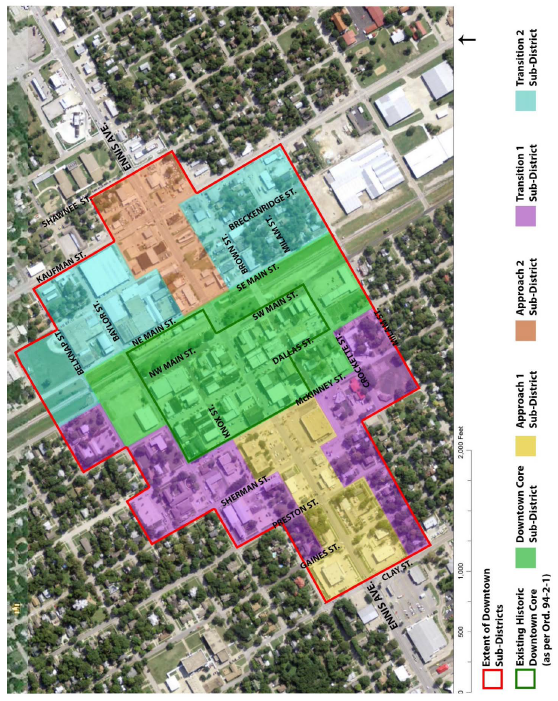
Figure 1, Downtown Sub-District Zoning Map
Section 3: Downtown Master Plan. This plan graphic is meant to function as a guide to the intent of this Ordinance.
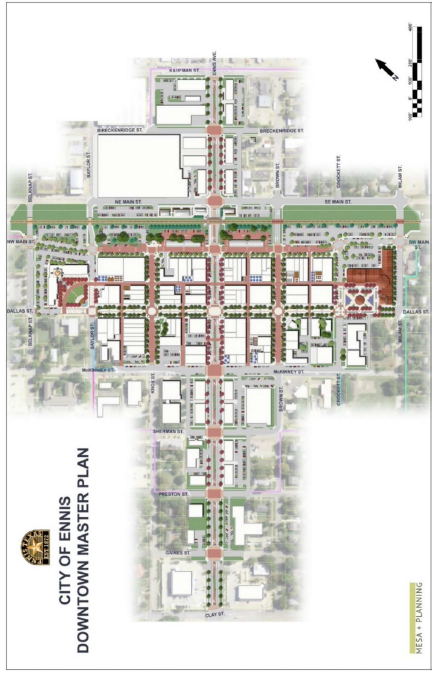
Figure 2, Downtown Master Plan
6.7.4 - Article 4: Uses
Section 1: Permitted Uses
1.1
Uses permitted by right in all Zoning Sub-Districts
a.
Any building on a lot may be used for the uses stated in Table 1, Permitted Uses according to the zoning sub-district in which the building is located, the building type, and the standards therein.
b.
Any building on a lot may be used for more than one of the uses permitted in Table 1, Permitted Uses provided that all standards of this Article have been met for all uses and all of the uses are permitted in the building type within the same zoning sub-district and building type.
c.
Accessory uses that serve and are dependent upon the primary use on the same lot are permitted. Accessory uses may occur in a separate accessory structure in Transition 1, Transition 2, Approach 1 and Approach 2 Sub-Districts, only, and the following shall apply:
i.
Accessory uses in separate accessory structures must be located in an area designated as appropriate for on-site parking for a primary structure of CB, MB, and MRB building type; or
ii.
Located no closer than 10' of the established street facing setback for the primary structures of SRB and CWRB building types.
1.2
Uses permitted by conditional use as necessary. Conditional uses may be authorized by the City Commission. The City Commission shall consider conditional use criteria recommended by the Historic Landmark Commission.
a.
Conditional use criteria, as recommended by the Planning and Zoning Commission, for bed and breakfast in Transition 1 and Transition 2 Sub-Districts should address the following items but is not limited to:
i.
Parking
ii.
Landscaping
b.
Conditional use criteria, as recommended by the Planning and Zoning Commission, for schools and day cares in any Sub-District should address the following items but is not limited to:
i.
Parking
ii.
Drop-off/ pick-up locations
iii.
Queuing
iv.
Play areas
v.
Time frame requirements
c.
Conditional use criteria, as recommended by the Planning and Zoning Commission, for stores, cafes, restaurants, personal service, and museums/ galleries in Transition 1 and Transition 2 Sub-Districts should address the following items but is not limited to:
i.
Parking, loading and services
ii.
Time frame requirements
d.
Nonconforming uses may be considered for conditional use designation based on criteria consistent with the intent of the Downtown Master Plan.
Section 2: Nonconforming Uses
2.1
Continuation of lawful use: The lawful principal use(s) of a building or those authorized by permit issued prior to the effective date of this Ordinance may be continued although such use does not conform to the provisions of this Article.
2.2
A nonconforming use may continue operation as a nonconforming use until: the use is abandoned for at least 18 months, there is a change of use, or the nonconforming use is determined to be operating in violation of related ordinances of the City of Ennis.
Upon a finding by the Zoning Board of Adjustment that a nonconforming use is terminated as set forth above, the property shall be brought into compliance with the standards and conditions of this Ordinance.
2.3
Religious institutions and religion-related uses that currently exist are exempt from this Ordinance and do not become a non-conforming use by this Ordinance.
Table 1, Permitted Uses
Section 3: Parking Requirements
3.1
Parking requirements for any use within the Downtown Core Sub-District: There shall be no required on-site parking or other parking requirements as a condition of use.
3.2
Parking requirements for any use, as specified by the UDO, other than residential uses, within the Approach 1, Approach 2, Transition 1, and Transition 2 Sub-Districts: Any permitted use shall receive a 15 percent reduction of required parking. Any permitted use shall receive up to 25 percent reduction if 50 percent or more required parking is tied to a shared parking agreement with an adjacent lot not more than 300 feet walking distance away from the lot seeking the agreement. On-street parking, to the extent of the lot dimensions fronting a street, shall count toward the parking requirement.
3.3
Residential Uses shall be parked as specified by the UDO.
3.4
The Planning and Zoning Commission may recommend to City Commission a modification to parking requirements established herein when a parking analysis prepared by a professional engineer is presented by the applicant establishing the parking proposed by the applicant is adequate to service the use.
6.7.5 - ARTICLE 5: SITE DEVELOPMENT
Section 1: Intent: It is the intent of this Article to facilitate block continuity and preservation of the historic street grid of downtown Ennis by orienting new development based on historic development patterns.
Section 2: Block Continuity
2.1
Block Size
a.
New development may occur on any lot size within a block as long as there is at least one street facing Building Façade of at least 30' as measured from the property line or the façade fills the entire lot width of a lot platted prior to this issuance of this Ordinance when the lot width is less than 30'.
b.
There shall be no public street abandonments within any downtown zoning sub-district unless there is first an administrative determination from the City Manager or Designee that the street closure is for the public health, safety and welfare, in which case City street abandonment procedures are applicable.
i.
Exceptions: Public streets may be reconfigured in areas within the Downtown Core Sub-District but outside of the National Register Historic District to achieve the intent of the Downtown Master Plan (Article 3, Section 3).
2.2
Building Façades Types
a.
Primary Façade: This building façade type shall mean the side of a building meant for public visibility from the street as the essential expression of identifiable style; often providing a main entryway; and shall comply with standards set forth for Primary Building Facades in Article 6. The "Primary Façade" of a building is determined by criteria set forth in Section 2.3 Building Plane Continuity.
b.
Secondary Façade: This building façade type shall mean any side of a building viewed from a street that is not a Primary Façade and shall comply with standards set forth for Secondary Building Facades in Article 6. The "Secondary Façade" of a building is determined by criteria set forth in Section 2.3 Building Plane Continuity.
c.
Non-Street Facing Building Façade(s): This building façade type shall mean any side of a building along an internal lot line or rear lot line (the side along an alleyway) not visible to the street.
2.3
Block Continuity: A building's Primary Building Façade(s) and Secondary Building Façade(s) are determined by existing structures along a shared street within a shared block. Building Façade determination occurs in the following conditions:
a.
Structure with one to two street facing building facades:
i.
If all structures along the same street(s) within the same block are Primary Building Façades, the new structure's Primary Building Façade shall front the shared street.
ii.
If there is a mix of Primary Building Facades and Secondary Building Facades along the same street(s) within the same block, the new structure shall assume a Primary Façade condition.
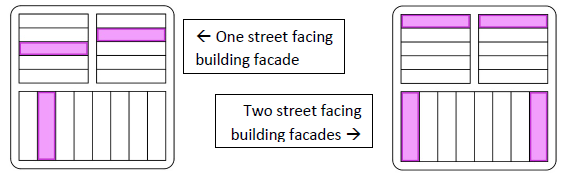
Figure 3, One and Two Street Facing Facades
b.
Structure with three street facing building facades:
i.
If all structures along the same street(s) within the same block are Primary Building Façades, the new structure's Primary Building Façade shall front the shared street.
ii.
If there is a mix of Primary Building Facades and Secondary Building Facades along the same street(s) within the same block, the new structure shall assume a Primary Façade condition.
iii.
Where the new structure spans an entire block, the street facing building façade type is determined by the condition presented on the adjacent blocks on the shared street. Where there is a mix of Primary Building Facades and Secondary Building Facades along the same street in the adjacent blocks, the new structure shall assume a Primary Façade condition.
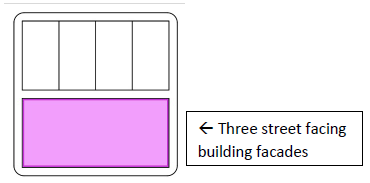
Figure 4, Three Street Facing Facades
c.
Structure with four street facing building facades (Full Block Development):
i.
If all structures along the same streets on the adjacent blocks are Primary Building Façades, the new structure's Primary Building Façade shall front the shared street.
ii.
If there is a mix of Primary Building Facades and Secondary Building Facades along the same streets on the adjacent blocks, the new structure shall assume a Primary Façade condition.
Figure 5, Four Street Facing Facades
d.
Exceptions:
i.
New development along Ennis Avenue, Dallas Street, and NE/SE and NW/SW Main Street in any zoning sub-district shall always treat the street facing façade along these streets as a Primary Building Façade.
e.
Where a street facing building façade is not determined to be a Primary Building Façade, it shall be a Secondary Building Façade. All other building facades are considered non-street facing building facades.
Section 3: Lot Occupancy
3.1
Dimensional standards for lot occupancy shall be determined by zoning sub-district as follows:
a.
Downtown Core Sub-District:
i.
All new buildings shall build to the existing block face on all Primary Building Façade and Secondary Building Façade Sides or build to a block face established by the approved site plan which accomplishes the intent of this requirement.
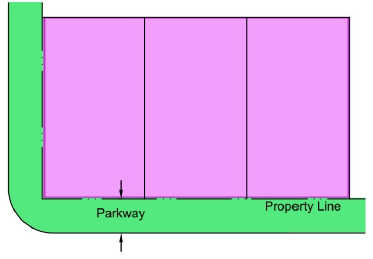
Figure 6, Downtown Core Sub-District Built-to Condition
ii.
No internal side yards shall be permitted
iii.
0' rear yard setback. Courtyards within the property line that engage the alleyways are encouraged. Reference Section 5 for Downtown Core Sub-District Alleyway regulations.
b.
Approach 1 Sub-District & Approach 2 Sub-District:
i.
All new structures shall build all street facing facades (Primary and Secondary Building Facades) within a Build-to Zone which shall be within 5' of a 10' Street Enhancement Zone as measured from the property line. The following shall occur within the 10' Street Enhancement Zone:
A.
Along the Primary Façade side of the street: This area is meant to accommodate high volumes of pedestrian traffic. This Street Enhancement Zone shall:
1.
be all hardscape for use of walkway, outdoor café and seating, commercial display of goods as approved by City Manager or Designee, and temporary signage;
2.
provide seasonal planting in planters, only;
3.
provide at least one form of outdoor seating per establishment (outdoor café, bench and the like); and
4.
provide one canopy tree in a tree well per 40' of frontage or portion thereof, unless there is a public landscape initiative involving similar tree plantings within the parkway.
B.
Along the Secondary Façade side of the street: This area is meant to be more passive and shall:
1.
provide a minimum 5' wide paved sidewalk;
2.
planting beds; and
3.
at least one canopy tree per 40' of frontage or portion thereof, unless there is a public landscape initiative involving similar tree plantings within the parkway.
C.
Exception: The Secondary Façade(s) of a new structure shall be built within a Build-to Zone which shall be within 5' of a 10' Street Enhancement Zone for no less than 50 percent of the street facing building façade to accommodate on-site surface parking areas. Reference Section 4 for more on-site parking regulations.
D.
Balconies on the floors above the first floor may not encroach into the 10' Street Enhancement Zone.
E.
If meeting the above Street Enhancement Zone requirements can be accomplished in a public streetscape initiative, then at the City's sole option, the applicant may contribute the cost of meeting those obligations, as determined by the City, as a cash in lieu contribution to the public initiative.
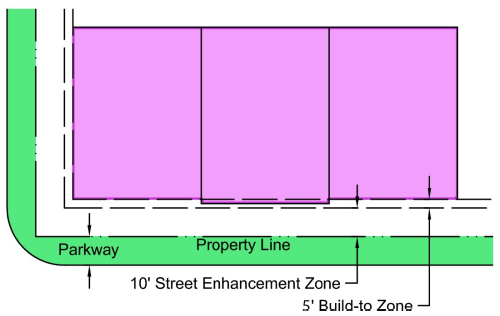
Figure 7, Approach Sub-Districts Zone Conditions
ii.
Max. 5' internal side yard setbacks
iii.
0' rear yard setback
c.
Transition 1 Sub-District and Transition 2 Sub-District:
i.
All new structures shall build all street facing facades (Primary and Secondary Building Facades) to a setback no more than the averaged setbacks of existing street facing façades as measured from the property line not exceeding 25'. Where there are no existing buildings on the shared street, assume a 20' setback.
A.
The following may occur within this averaged or 20' setback along the Primary Façade and Secondary Façade sides of a street:
1.
Privacy fences up to 4' in height;
2.
Planting beds and lawn; and
3.
Porches, patios and stoops up to 10' into the setback from the main structure.
B.
Within this averaged or 20' setback along the Primary Façade and Secondary Façade sides of a street there shall be at least one canopy tree per 40' of frontage or portion thereof, unless there is a public landscape initiative involving similar tree plantings within the parkway. Trees may be clustered or evenly spaced.
C.
Exception: The Secondary Façade(s) of the new structure shall be built to a setback no more than the averaged setbacks of existing street facing façades or assume a 20' setback where no buildings exists for no less than 50 percent of the street facing building façade to accommodate on-site surface parking areas. Reference Section 4 for more on-site parking regulations.
D.
If meeting the above streetscape requirements can be accomplished in a public streetscape initiative, then at the City's sole option, the applicant may contribute the cost of meeting those obligations, as determined by the City, as a cash in lieu contribution to the public initiative.
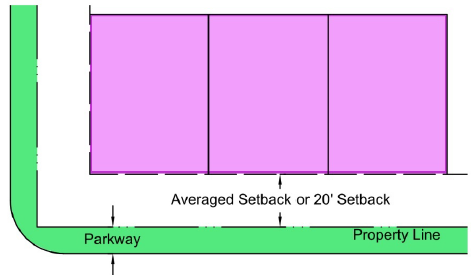
Figure 8, Transition Zones Setback Condition
ii.
Max. 10' internal side yard setback
iii.
Min. 10' rear yard setback
Section 4: On-Site Parking, Loading and Drive-Through Facilities
4.1
General to all zoning sub-districts:
a.
On-site parking and loading for a particular site may be accessed from any street regardless of building façade type if access from existing alleyways or along Secondary Facades is not possible.
b.
Parking lots shall not front a street with a Primary Building Façade(s).
c.
Parking lots fronting a street with a Secondary Building Façade(s) shall:
i.
Continue the setback or Street Enhancement Zone condition as defined in Section 3; and
ii.
Provide a 3' tall by 3' wide planting screen or a 2.5' - 3.5' tall x 1.5' wide wall of the same Secondary Façade material aligned with the block face of buildings along the shared street; or
iii.
Continue the architectural façade features consistent with buildings on the same block.
d.
Structures with drive-through facilities must locate drive-through facilities within the on-site parking area. The existing drive through facilities in the Downtown Core Sub-District are deemed to have received a Special Use Permit (SUP). For new drive through facilities in the Downtown Core Sub-District the Historic Landmark Commission shall have authority to approve or deny changes to an existing or proposed street façade drive through facility's architectural character, appearance, or aesthetic based upon the design standards and in accordance with the process described herein. The Planning and Zoning Commission shall have the authority to approve or deny new drive through facilities in the Downtown Core Sub-District in accordance with the SUP process described in Unified Development Ordinance (UDO) 3.3.3. All SUPs for drive through facilities shall terminate upon a change in the nature or character of the use.
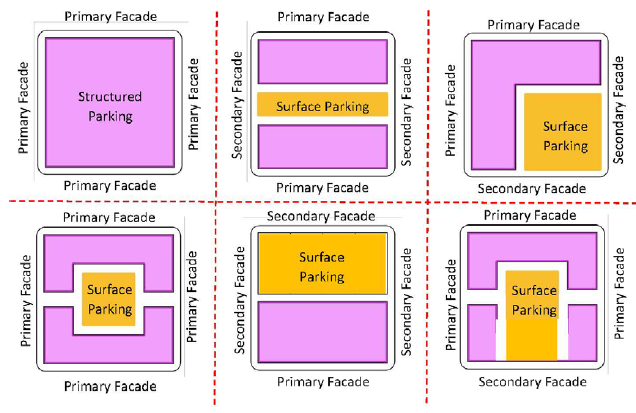
Figure 9, Example Parking Lot Locations
(all viewed independent of one another)
Section 5: Downtown Core Sub-District Alleyways
5.1
The following shall apply to any building with a rear facade along an alleyway in the Downtown Core Sub-District when the conditions stated therein are applicable:
a.
Where a building is built to the alleyway right-of-way, a permit to encroach into the alleyway right-of-way to a distance no greater than the edge of the travel way pavement shall be obtained. A license must be obtained from the City Commission upon review of the request and a finding that the purpose and intent of the request are consistent with the purpose and intent of this Ordinance.
b.
Where a building is not built to the alleyway right-of-way, a courtyard may be created and used for a use incidental to the primary use of the building (i.e. an outdoor café or seating). A permit must be obtained from the City Manager or Designee upon review of the request and approval by the City Manager or Designee that the purpose and intent of the request are consistent with the purpose and intent of this Ordinance.
c.
Parking - where a building is not built to the alleyway right-of-way: existing parking in the Downtown Core Sub-District is deemed to have received a Special Use Permit (SUP). For new parking in the Downtown Core Sub-District the Historic Landmark Commission shall have authority to approve or deny changes to an existing or proposed street façade parking facility's architectural character, appearance, or aesthetic based upon the design standards and in accordance with the process described herein. The Planning and Zoning Commission shall have the authority to approve or deny new parking in the Downtown Core Sub-District in accordance with the SUP process described in Unified Development Ordinance (UDO) 3.3.3. SUPs for parking are terminable by the Planning and Zoning Commission when there is a change of primary use for which it was incidental and termination would be consistent with the purpose and intent of this Ordinance.
6.7.6 - Article 6: Building Design Standards
Section 1: Building Types
1.1
Commercial Bay (CB): This building type shall mean a structure spatially and structurally designed for non-residential use, historically or currently. Characteristics of "Commercial Bay" building types include, but are not limited to, width of the building typically the same as the width of the lot; higher floor-to-floor height; simple rectangular plate; glazing modulation has more glazing on the first floor and less on the upper floor; and is typically dominated by flat roof. Structural systems vary from wood frame to steel to unit masonry to formed concrete.
1.2
Multiple Residential Bay (MRB): This building type shall mean a structure spatially and structurally designed for multiple residential units within the same structural envelop, historically or currently. Characteristics of "Multiple Residential Bay" building types include wood frame dominant; a dominant rectangular plate with rounded/champhered/square projections corresponding to interior residential functions; residentially scaled floor-to-floor height; smaller windows; building width is typically the same width of the lot; and roof forms are varied.
1.3
Mixed Bay (MB): This building type shall mean a structure spatially and structurally designed to accommodate commercial use on the first floor and residential use above the first floor. Characteristics of "Mixed Bay" building types include higher floor-to-floor on the first floor than upper floors; wider spans on the first floor than upper floors; and greater amount of glazing to solid wall on the first floor than other floors. Typically, there is a square plate, but it may include an arcade.
1.4
Single Residential Bay (SRB): This building type shall mean a structure spatially and structurally designed as a single residential unit. Characteristics of "Single Residential Bay" building type includes wood frame construction; pitched roof; complex plate; complex roof form (intersecting cross gables or hipped roofs); and often with a subordinate roof defining entry, such as a porch.
1.5
Common Wall Residential Bay (CWRB): This building type shall mean a structure spatially and structurally designed as single residential units adjoined at a common sidewall. Characteristics of a "Common Wall Residential Bay" include simple plate with a more complex street front; a common wall between adjoined units that conforms to fire code separation requirements which may be architecturally expressed above the roof plane; and a simple roof form.
Table 2, Permitted Building Types per Zoning Sub-District
* MRB Building Type permitted in Downtown Core but not within the National Register Historic Boundary
Section 2: Existing Buildings
2.1
Existing building types and style types that do not currently conform to Building Types outlined in Section 1 or Style Types outlined in Sections 3 and 4 have the right to continue to exist as nonconforming structures and are subject to Article X: Nonconformities of the Unified Development Ordinance.
Section 3: Building Style Characteristics for CB, MRB and MB Building Types
3.1
Style Guidelines for historic renovations/ expansions, infill development, and/or redevelopment of CB, MRB and MB Building Types apply to each applicable Sub-District as follows:
a.
Downtown Core Sub-District: CB, MRB and MB Building Types within the Downtown Core Sub-District shall comply with the following set of style standards.
b.
Approach 1 and 2 Sub-Districts and Transition 1 and 2 Sub-Districts: CB, MRB and MB Building Types within the Approach and Transition Sub-Districts are encouraged to comply with the following set of style standards or apply a contemporized version of style as determined to be appropriate by the City Manager or Designee.
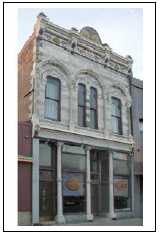
3.2
High Victorian Italianate: Common characteristics of High Victorian Italianate include:
a.
vertical emphasis on building proportion;
b.
elongated, paired windows decorated with decorative window caps of wood, cast iron, pressed metal, or brick;
c.
window openings are either shallow, flattened arches, or straight sided arches;
d.
deeply projected cornice supported by exaggerated brackets;
e.
often a central pediment at roof line bearing name and date of building; and
f.
typical exterior materials include brick, cast iron, pressed metal, and wood.
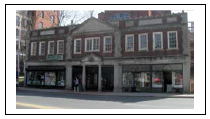
3.3
Colonial Revival and Commercial Romanesque: Common characteristics of Colonial Revival and Commercial Romanesque include:
a.
rectangular floor plan;
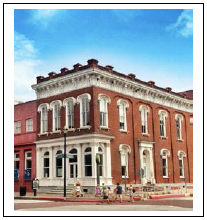
b.
symmetrical façade
c.
flat roof with heavily ornamented parapet or roof balustrade;
d.
decorative execution of tripartite architecture where the vertical rise of the structure is articulated as a classical column with base (street level), shaft (mid and top floors), and capital (ornamented treatment of the wall above the top floor windows and including cornice and parapet;
e.
doors topped by fan lights or decorative transoms, windows by lentils with stylized key stones or pediments with scrolled sides or broken tops;
f.
portrait oriented, rectangular double hung windows. Windows may be articulated in a Palladian motif or grouped as a Palladian window.;
g.
central façade features may bear more ornamentation;
h.
the corners of the building are often treated as pilaster columns and culminate in a capital which integrates with decorative parapet; and
i.
typical exterior materials include red brick, stone or cast stone trim, wood or cast-iron molding/ structural accents.
3.4
Beaux Arts Classicism: Common characteristics of Beaux Arts Classicism include:
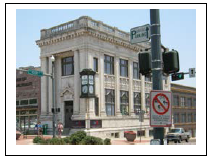
a.
symmetrically composed façade, often into advancing and receding planes which define areas of decorative treatment;
b.
abundant decoration in the form of urns, swags, medallions, balustrades, statuary, and classical derived features (such as columns);
c.
prominent paired columns or pilasters running full height of the building;
d.
grand entry;
e.
large arched openings; and
f.
typical exterior materials include smooth faced stone or cast stone.
3.5
Art Deco: Common characteristics of Art Deco include:
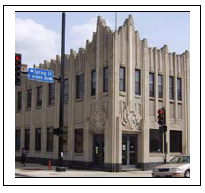
a.
sculptural use of geometric forms;
b.
use of geometrically derived ornamentation used with monumental intention;
c.
smooth skin, planar walls;
d.
flattened, low relief interpretation of classical motifs;
e.
use of visual devices such as fore shortening in execution of decorative panels and other artful features; and
f.
typical exterior materials include smooth faced stone, cast stone and metal.
3.6
Art Modern: Common characteristics of Art Modern include:
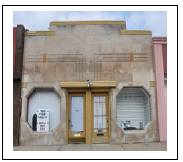
a.
streamline, low horizontal appearance;
b.
often one story;
c.
sleek smooth surfaces without ornament;
d.
curving canopies and windows;
e.
spandrel panels running in unbroken bands of glass and color; and
f.
typical exterior materials include stainless steel, glass block, porcelain enameled steel, opaque structural glass, and aluminum.
3.7
Chicago School: Common characteristics of Chicago School include:
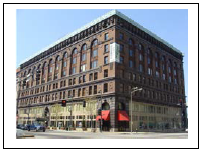
a.
flat roof with articulated parapets;
b.
cast or wrought iron steel frame;
c.
little ornamentation except for the use of Sullivanesque terra cotta panels arrayed in rows or columns of decorative relief;
d.
large masonry openings containing subdivided glazing in a prairie-esque pattern; and
e.
typical exterior materials include: brick, stone, terra cotta, glass, and steel.
3.8
Commercial Baroque: Common characteristics of Commercial Baroque include:
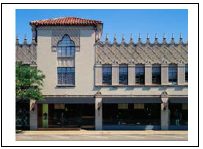
a.
pitched roofs defining architectural masses and features;
b.
flat roofs concealed by decorative parapets with tracery and/or Della Robbia ornament;
c.
ornate windows headers, surrounds, and sills;
d.
use of style specific features such as Rose Window;
e.
grand ornamentation of entry, often architectural expression of entry;
f.
use of arches and colonnades;
g.
use of heavy wrought iron as window grills and hardware;
h.
decorative treatment of projected rafters;
i.
integration of tile panels or motifs; and
j.
typical materials include brick, cut stone, cast stone, tile, and wrought iron.
Section 4: Building Style Characteristics for SRB and CWRB Building Types
4.1
Style Guidelines for historic renovations/ expansions, infill development, and/or redevelopment of Single Residential Bay (SRB) and Common Wall Residential Bay (CWRB) Building Types within Transition 1 and Transition 2 Sub-Districts are encouraged to comply with the following set of style standards (unless an existing structure is not consistent with such themes, in which case proper attributes of style shall be determined using the historical characteristics of style specified in A Field Guide to American Houses by Virginia and Lee McAlester) OR apply a contemporized version of style as determined to be appropriate by the City Manager or Designee.
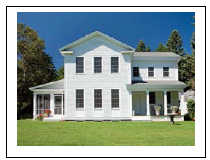
4.2
Greek Revival: Common characteristics include:
a.
gable or hipped roof of low pitch;
b.
cornice line of main roof and porch roofs emphasized with wide band of trim;
c.
porches supported by prominent square or round columns, typically of Doric style;
d.
front door surrounded by narrow sidelights and a rectangular line of transom lights above; and
e.
door and lights usually incorporated into a more elaborate door surround.
4.3
Gothic Revival: Common characteristics include:
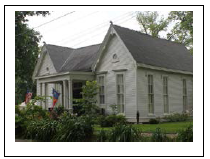
a.
steeply pitched roof with steep cross gables (roof normally side gabled, less commonly front gabled or hipped, rarely flat with castellated parapet);
b.
gables commonly have decorative verge boards;
c.
wall surface extending into gable without break (eave or trim normally lacking beneath gable);
d.
windows commonly extend into gables, frequently having pointed arch (Gothic) shape; and
e.
one-story porch (either entry of full width) usually present, commonly supported by flattened Gothic arches.
4.4
Italianate: Common characteristics include:
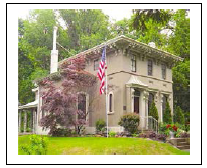
a.
two or three stories, rarely one story;
b.
low pitch roof with widely overhanging eaves having decorative brackets beneath;
c.
tall, narrow windows, commonly arched or curved above;
d.
windows frequently with elaborated crowns, usually of inverted "U" shape; and
e.
many examples with square cupola or tower.
4.4
Stick: Common characteristics include (but few examples show all characteristics simultaneously):
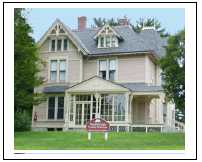
a.
gabled roof, usually steeply pitched with cross gables; gables commonly show decorative trusses at apex;
b.
overhanging eaves, usually with exposed rafter ends (normally replaced by brackets in town houses);
c.
wooden wall cladding (shingles or boards) interrupted by patterns of horizontal, vertical, or diagonal boards (stick work) raised from wall surface for emphasis; and
d.
porches commonly show diagonal or curved braces.
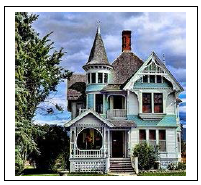
4.5
Queen Anne: Common characteristics include:
a.
steeply pitched roof of irregular profile, usually with dominant front facing gable;
b.
patterned shingles, cutaway bay windows, and other devices used to avoid a smooth-walled appearance; and
c.
asymmetrical façade with partial or full width porch which is usually one story high and extends along one or both side walls.
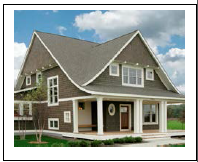
4.6
Shingle: Common characteristics include:
a.
wall cladding and roofing of continuous wood shingles (shingled walls may occur on second story only);
b.
high profile wood shingle roof (often appropriately replaced by high profile composition shingle);
c.
shingled walls without interruption at corners (no corner boards);
d.
asymmetrical façade with irregular, steeply pitched roof line; roofs usually have intersecting cross gables and multi-level eaves; and
e.
commonly with extensive porches.
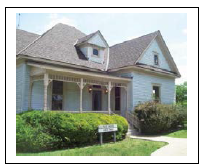
4.7
Folk Victorian: Common characteristics include:
a.
derived from elaboration of the Railroad-inspired "national folk housing" which includes simple gable fronting street, gable front and side wing under continuous roof line, side gable fronting side yards with hall or parlor entry, in 1 or 2 story version, pyramidal form;
b.
porches with spindle work detailing (turned spindles and lace-like spandrels) or flat jig saw cut trim appended to form;
c.
symmetrical façade (except for gable front and side wing version); and
d.
cornice line brackets are common.
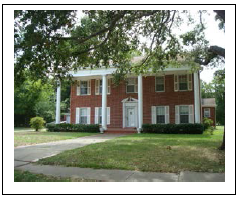
4.8
Colonial Revival: Common characteristics include:
a.
accentuated front door, normally with decorative crown (pediment) supported by pilasters, or extended forward and supported by slender columns to form an entry porch;
b.
doors commonly have overhead fan lights of side lights;
c.
façade normally shows symmetrically balanced windows and center door;
d.
windows with double hung sashes, usually multi-pane glazing in one or both sashes; and
e.
windows frequently "paired" in a single wall opening.
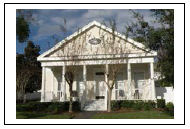
4.9
Neoclassical: Common characteristics include:
a.
façade dominated by full-height porch with roof supported by classical columns;
b.
columns typically have Ionic or Corinthian capitals; and
c.
façade shows symmetrical balanced windows and center door.
4.10
Mission: Common characteristics include:
a.
mission-shaped dormer or roof parapets (these may be on either the main roof or porch roof);
b.
commonly with Spanish barrel-shaped, red clay tile;
c.
widely overhanging eaves, usually open;
d.
porch roofs supported by large, square piers, commonly arched above; and
e.
wall surface usually smooth stucco.
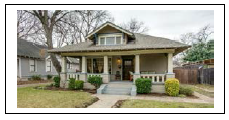
4.11
Prairie: Common characteristics include:
a.
large low-pitched roof, usually hipped with widely overhanging eaves;
b.
typically, two-story with one-story wings or side porches;
c.
eaves, cornices, and façade detailing emphasizing horizontal lines;
d.
often with massive square porch supports; and
e.
large front porches are not uncommon.
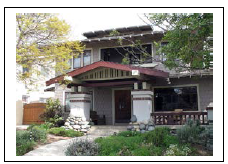
4.12
Craftsman: Common characteristics include:
a.
low-pitch, gabled roof (occasionally hipped) with wide, unenclosed eave overhang and typically exposed roof rafters;
b.
decorative beams (often ornamental) or braces often added under gables;
c.
porches either full or partial width, with roof supported by tapered square columns; and
d.
columns, or pedestals, frequently extend to ground level (without a break at level of porch floor).
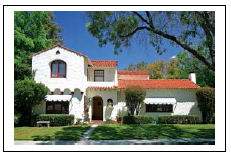
4.13
Spanish Eclectic: Common characteristics include:
a.
low pitch roof, usually with little or no eave overhang;
b.
Spanish, barrel shaped, red clay roof tile;
c.
typically, with one or more prominent arched above door and/or principal window, or beneath porch roof;
d.
façade normally asymmetrical; and
e.
wall surface usually stucco.
Section 5: Block Face Characteristics for Block Face Continuity
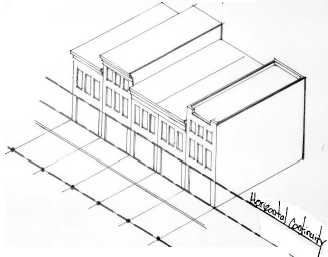
Figure 10, Horizontal Continuity
5.1
General to all Zoning Sub-Districts: CB, MRB and MB Building Types shall comply with the following attributes of Block Face Continuity:
a.
Horizontal Continuity: Proposed renovation, infill development, redevelopment, or development of lot, parcel, or tract shall continue the horizontal expression and elevation of certain architectural features as they are established by Contributing Structures and expressed within the existing block face where applicable. The following key architectural expression include but are not limited to:
i.
Finished Floor Height: To the extent possible, as permitted by grade, there shall be a continuity of the height of elements associated with the street level (store front, canopies, and spandrel above the first-floor windows) from one structure within a block face to another.
ii.
Store Front Articulation: All store front systems and store front glazing shall be supported off the street plane by a base stem wall that is at least 12 inches tall.
iii.
Building Openings: All openings within a Primary Building Façade shall be articulated with one or more of the following:
A.
Header: A flat or arched header which may be an arched or parallel panel over an opening.
B.
Surround: The articulation of head and jamb in a continuous band.
iv.
Orientation of Openings: Openings on the street level shall be square or portrait orientation. Other openings above the street level shall be portrait orientation (taller than they are wide).
v.
Expression of Entry: The location of entry shall be clearly expressed with greater architectural definition, creation of a threshold, and/or off-set of the entry from the block face.
vi.
Canopy: Where a minimum 5' clear pedestrian pathway can exist within the public walkway after the provision of an architectural canopy, a building canopy shall be provided that is consistent with the style of the structure and suspended from the structure's Primary Building Façade. Where an existing structure has not had a canopy or the façade is not capable of supporting a canopy or the building provides an arcade in lieu of a canopy, a canopy shall not be required. Canopies must comply with the following standards:
A.
Canopies shall be structurally supported by tension rods or other iron support that connects the canopy to the structure it serves. Canopies shall not be supported by columns located in the public walkway.
B.
Canopies shall have a fascia detail that is at least 6 inches wide.
C.
Canopies are exempt from parapet requirements for flat roofs.
D.
Canopy roofs must be metal.
vii.
Parapet: Where there is a flat roof, a parapet must extend at least 12 inches above the roof surface and conceal the roof material along the Primary Building Façade.
viii.
Cornice Band: The cornice band is the space below the parapet cap and above the window head. In all cases a portion of (or the entire) cornice band shall be distinguished with special articulation which includes:
A.
Projected, corbelled, or stepped relief;
B.
Cut stone or cast stone panels;
C.
Recessed coffer panels; or
D.
Any combination of the above.
ix.
Building appurtenances built coterminous with the building plane that defines the block face: any loggia, arbor, canopy and/or arcade that is constructed in such a way that it aligns with or visually extends from the street defining building plane must carry the building plane to the lot line and/or corner by one of the following:
A.
a facade plane that supports the appurtenance and is expressed to the street as a continuation of building openings and building materials; or
B.
a building component that is visually consistent with the historic treatment of such elements in downtown Ennis prior to 1940.
b.
Void to Solid Rhythm Continuity: Continuing the patterns of void to solid relationship (amount of openings to amount of solid wall) that characterize the block face. Where no previous pattern exists, then a historically compatible pattern shall be established using the following standards:
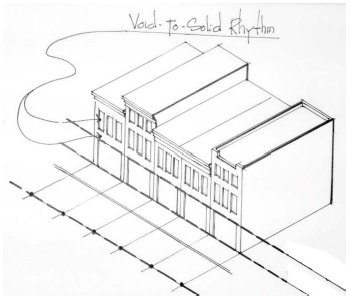
Figure 11, Void-to-Solid Rhythm Continuity
i.
First floor of CB and MB Building Primary Building Facades: The amount of void shall be greater than the amount of solid. General void to solid ratio is 3:1, meaning that there should be 3 times more void than solid, unless another ratio is approved by the City Manager or Designee to maintain consistency with the ratio of buildings within the shared block.
ii.
Floors above first floor of CB and MB Building Primary Building Facades and all floors of MRB Building Primary Building Facades: The amount of solid shall be greater than the amount of void and shall be generally consistent with the void to solid ratio of other buildings of similar mass within the same block. However, the amount of void-to-solid shall not exceed 1:2.5, meaning that there should be 2.5 times more solid than void.
iii.
All floors of CB, MB and MRB Building Secondary Building Facades: The amount of void shall not be greater than the amount of solid unless a greater amount of void is generally consistent with the void to solid ratio of other buildings of similar mass within the same block.
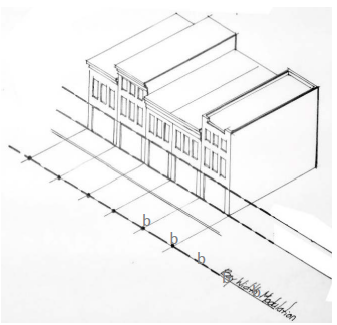
Figure 12, Bay Width Modulation
c.
Bay Width Modulation Continuity: Continuing the modulation of building width as created by historic lot patterns. Where no previous pattern exists, then a historically compatible pattern shall be established.
d.
Proportion: Proportion is the height to width relationship within the collective block face, including architectural elements such as doors, windows, etc. Compatible proportion is that which conforms to, or maintains, the general height to block face width of buildings within the Downtown Core Sub-District.
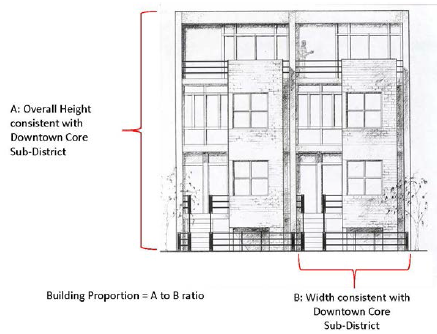
Figure 13, Example of Historic Proportion Compatibility
for New Construction
e.
Material:
i.
If the dominant material presented to the street is one of the materials specified in Section 6.1.a.i. A, then the dominant material presented to the street shall be the dominant material of the block unless a different material is assigned to non-street fronting masses and are compatible with the existing building being augmented or a different material is essential to style. Permitted materials for all Building Types are specified in Section 6.
ii.
If the dominant material presented to the street is not specified in 6.1.a.i.A, then the dominant material of the block shall not dictate the material and a material contained in Section 6.1.a.i.A shall be used.
f.
Opening Transparency: Openings along the Primary Building Façade(s) in CB and MB Building Types shall not add windows with a visual transmittance of 0.6 or below, unless otherwise deemed appropriate by the City Manager or Designee to accommodate special privacy requirements of the tenant.
g.
If the existing building height, materials, and design is not representative of one of the historical styles, then all changes to the structure shall be designed to transition the building exterior to a design aesthetic that is sympathetic to the design requirements set forth herein.
5.2
Transition 1 and 2 Sub-Districts: SRB and CWRB Building Types shall comply with the following attributes of Block Face Continuity:
a.
Pitched Roof Continuity: Permitted roof forms shall be pitched, hipped or gabled roof if other structures within the shared block are generally pitched roof structures.
b.
Flat Roof Continuity: Permitted roof forms shall be flat with a parapet if other structures within the shared block are generally flat roof structures.
c.
Block Rhythm Continuity: The general massing relationships (i.e. porches, solaria, port-a-cache, or any other relationship of dominant to subordinate architectural elements) developed within these Zoning Sub-Districts shall be similar to the massing relationship prevalent along the shared block when development is limited to one lot within a block of multiple lots.
d.
Void-to-Solid Continuity: The amount of void on the Primary Building Façade shall be such ratio that is consistent with the style of the home and appropriate for any appurtenances thereto. Appropriate ratio of void-to-solid ratio shall be determined at the time of elevation review. There is no specified ratio for Secondary Building Facades.
Section 6: Materials Guidelines
6.1
Building Façade Materials Guidelines
a.
Commercial Bay (CB) Building Types in any Zoning Sub-District:
i.
Primary Building Façade(s):
A.
Primary Material: At least 90 percent of Primary Building Façades must be either of the following:
1.
Clay brick, modular size
2.
Limestone
3.
Texas Sand Stone
4.
Granite
5.
Terra Cotta
6.
Cast Stone
B.
Secondary Material: Secondary materials are permitted on no more than 10 percent of Primary Building Facades:
1.
3 coat stucco over masonry substrate
2.
Architectural metal wall systems
3.
Cast iron
4.
Cast Stone
5.
Pressed metal
ii.
Secondary Building Façade(s) and Building Façade(s) not visible to the street:
A.
Permitted Material: 100 percent of the Secondary Building Façade(s) must be either of the following:
1.
Clay brick, modular size
2.
Limestone
3.
Texas Sand Stone
4.
Granite
5.
Terra Cotta
6.
3 coat stucco over lath on structural framing with expansion joints concealed
7.
Architectural metal wall systems
8.
Cast Stone
9.
Wrought iron (features only)
10.
Pressed metal (features only)
b.
Multiple Residential Bay (MRB) and Mixed Bay (MB) Building Types in any Zoning Sub-District:
i.
Primary and Secondary Building Façade(s) and Building Façade(s) not visible to the street:
A.
Primary Material: At least 70 percent of Primary Building Façades must be either of the following:
1.
Clay brick, modular size
2.
Stone
3.
Cut stone
B.
Secondary Material: No more than 30 percent of Primary Building Façades may be a Secondary Material including the following:
1.
3 coat stucco on lath over structural frame with expansion joints concealed.
2.
Architectural metal wall systems
c.
Single Residential Bay (SRB) and Common Wall Residential Bay (CWRB) Building Types in Transition 1 and Transition 2 Sub-Districts:
i.
Primary and Secondary Building Façade(s):
A.
Primary Material: At least 75 percent of Primary Building Façades must be either of the following:
1.
Clay brick, modular size
2.
Stone
3.
Cut stone
4.
Minimum 5/8-inch wood siding that butts corner boards and window trim
5.
Wood shingle wall cladding (where essential aspect of style only)
B.
Secondary Material: No more than 25 percent of Primary Building Façades may be a Secondary Material including 3 coat stucco on lath over structural frame with expansion joints concealed.
ii.
Building Façade(s) not visible to the street - permitted material: 100 percent of the Building Façade(s) not visible to the street may be either of the following:
A.
3 coat stucco on lath over structural frame with expansion joints concealed
B.
Minimum 5/8-inch wood siding that butts corner boards and window trim
C.
Any material used on the Primary or Secondary Building Façade(s)
6.2
Roof Materials Guidelines
a.
Commercial Bay (CB) Building Types in any Zoning Sub-District:
i.
Flat Roof: The flat roof may be either a built up bituminous roof or membrane roof provided it is installed in accordance with manufacturers' specifications and is issued a minimum 20-year warranty. All flat roof surfaces shall be hidden behind a minimum 12-inch parapet.
ii.
Pitched Roof: Pitched materials are limited to the following:
A.
Commercial metal system that looks like a traditional hand-crafted metal roof and is approved by the City Manager or Designee.
B.
Standing seam, flat seam or other hand-crafted metal installation.
C.
Slate
D.
Clay tile
b.
Multiple Residential Bay (MRB) and Mixed Bay (MB) Building Types in any Zoning Sub-District:
i.
Flat Roof: The flat roof may be either a built up bituminous roof or membrane roof provided it is installed in accordance with manufacturers' specifications and is issued a minimum 20-year warranty. All flat roof surfaces shall be hidden behind a minimum 12-inch parapet.
ii.
Pitched Roof: Pitched materials are limited to the following:
A.
Commercial metal system that looks like a traditional hand-crafted metal roof and is approved by the City Manager or Designee.
B.
Standing seam, flat seam or other hand-crafted metal installation.
C.
Slate
D.
Clay tile
c.
Single Residential Bay (SRB) and Common Wall Residential Bay (CWRB) Building Types in any Transition 1 and Transition 2 Sub-Districts:
i.
Flat Roof: The flat roof may be either a built up bituminous roof or membrane roof provided it is installed in accordance with manufacturer's specifications and is issued a minimum 20-year warranty. All flat roof surfaces shall be hidden behind a minimum 12-inch parapet.
ii.
Pitched Roof: The visually dominated roof type shall be a pitched roof. The following are permitted roof materials:
A.
Standing seam, flat seam or other hand-crafted metal installation.
B.
Slate
C.
Clay tile
D.
30-year high profile composition shingle
E.
Fire treated wood shingle
d.
Parapet Cap: Primary Building Façade(s) with a parapet in any Zoning Sub-District shall have a parapet cap in one of the following materials:
i.
Clay brick
ii.
Cut stone
iii.
Cast stone
iv.
Tile
v.
Terra Cotta
vi.
Other permitted caps when specific approval provided by City Manager or Designee are:
A.
Pressed metal (created to decoratively cap a parapet; flat metal formed caps permitted on Primary Building Façade)
B.
Parapets in-house construction may be capped in wood or specially formed decorative metal
6.7.7 - Article 7: Other Regulations
Section 1: Signage
1.1
Permitted Attached/ Building Mounted Sign Types in any downtown zoning sub-district:
a.
Awning Sign: A sign affixed or directly a part of the visible surface(s) of an attached awning. All awning signs shall be maintained withoug tears, fading, or missing lettering or images.
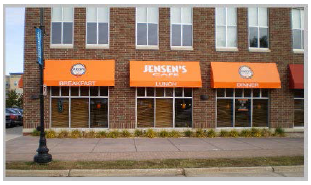
b.
Corner Sign: A building mounted sign located a certain dimension away from the edge of a building façade.
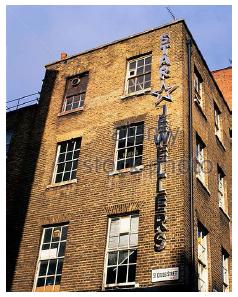
c.
Header Sign: A sign placed within a building's exterior façade material, such as masonry, and placed above the door and/or windows of the building.
d.
Horizontal Blade Sign: A slim profile sign mounted so that it projects from a building, a building arcade, or canopy structure and into the public way. All signs extending over the public right of way shall be approved subject to the approval of a license by the City Commission in its legislative discretion.
e.
Mid-Story Sign: A building mounted sign located between floors, above the header and below the next story's window or balcony sill or the parapet.
f.
Parapet Sign: A building mounted sign located on a building's parapet, the portion of the building façade along the roof.
g.
Window Sign: A sign affixed to the surface of a window with its message intended to be visible to the exterior environment.

h.
Marquee Sign: A sign mounted on a building so that it projects from a building, either from the upper story or mid-story at canopy level, and often seen in artful forms in specialty shopping environments, in downtown areas or other similar conditions.
i.
Temporary Signs: A sign that is constructed of lightweight or flimsy material and is easily installed and removed using ordinary hand tools. Temporary signs may only be located in the public right-of-way, including a public sidewalk, upon issuance of a license by the City Commission in its legislative discretion. The following Temporary Signs are allowed upon the issuance of a permit:
A.
"A" Frame/ Sandwich Board: A temporary collapsible sign typically made of wood or plastic and placed in the public walkway.
B.
Banners: A suspended sign made of flexible material such as canvass, sail cloth, plastic or waterproof material. Banners may be decorative (carrying no message) or promotional (carrying a non-commercial message displayed to call attention to cultural/ art events, charity campaigns, or organization sponsored activities). Banners require a permit in accordance with the Sign Ordinance and are limited in duration as set forth therein.

C.
Flag: A piece of fabric or other flexible material, usually rectangular, of distinctive design, and used as a symbol.
1.2
Sign Regulation for Sign Types
a.
Sign Space Envelope: A sign placed on a building is subordinate to the building itself. Therefore, architecturally meaningful locations on the building façade, otherwise known as the "Sign Space Envelope", become appropriate for display of the sign, itself. Sign Space Envelopes occur in the following conditions:
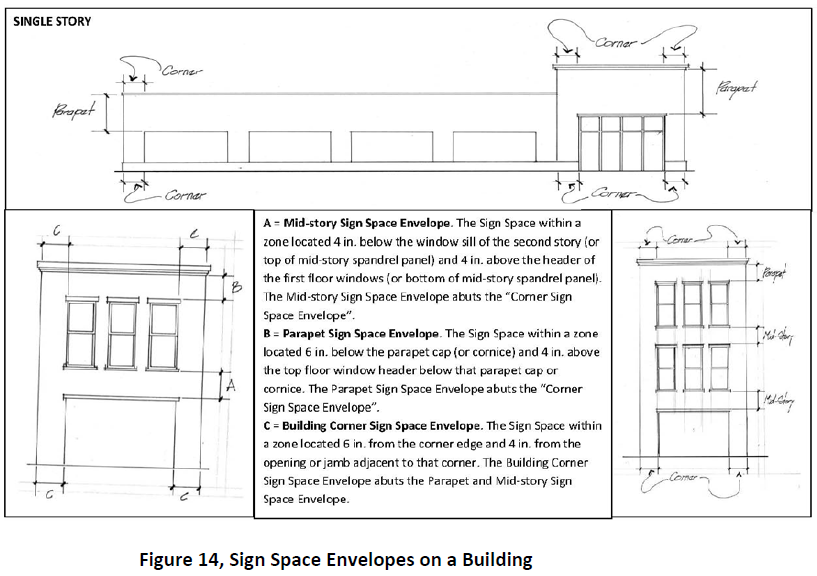
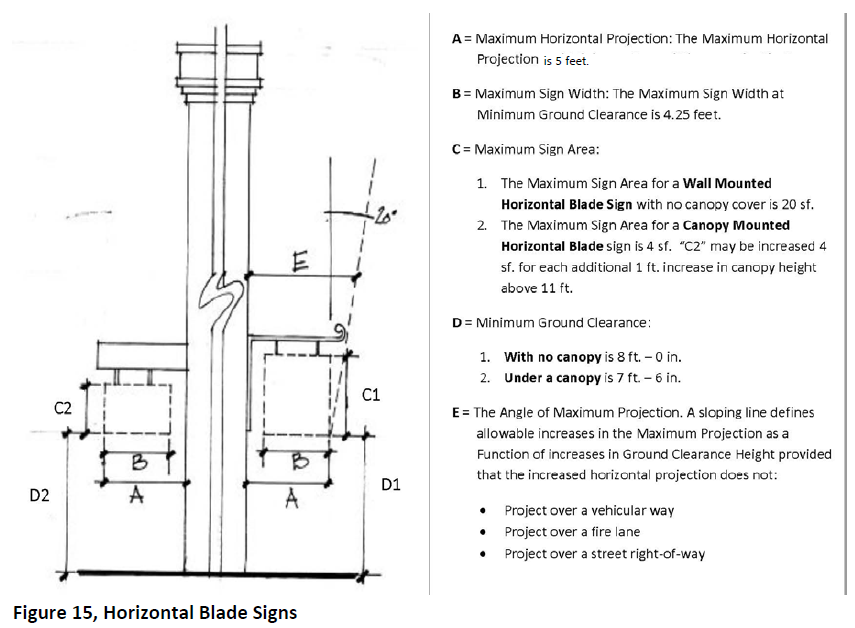
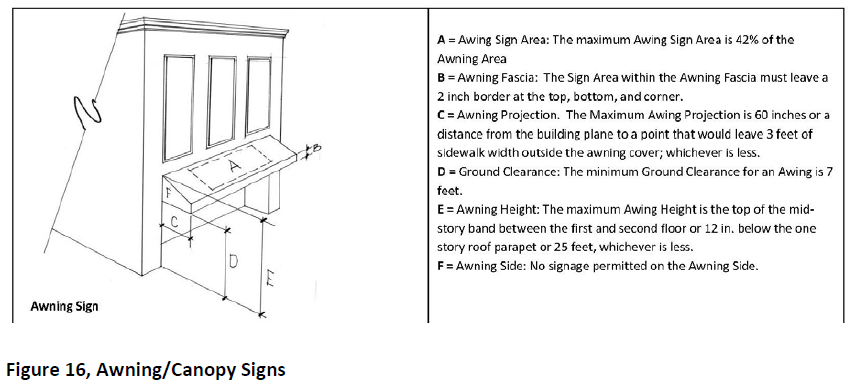
Figure 16, Awning/Canopy Signs
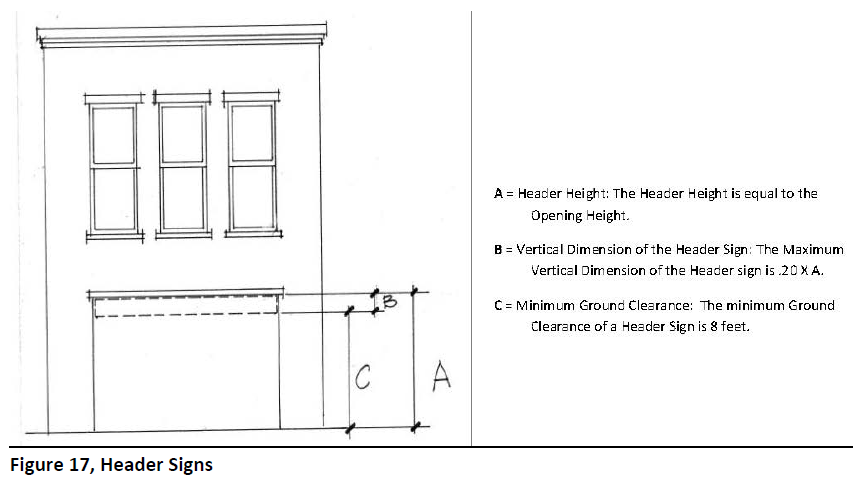
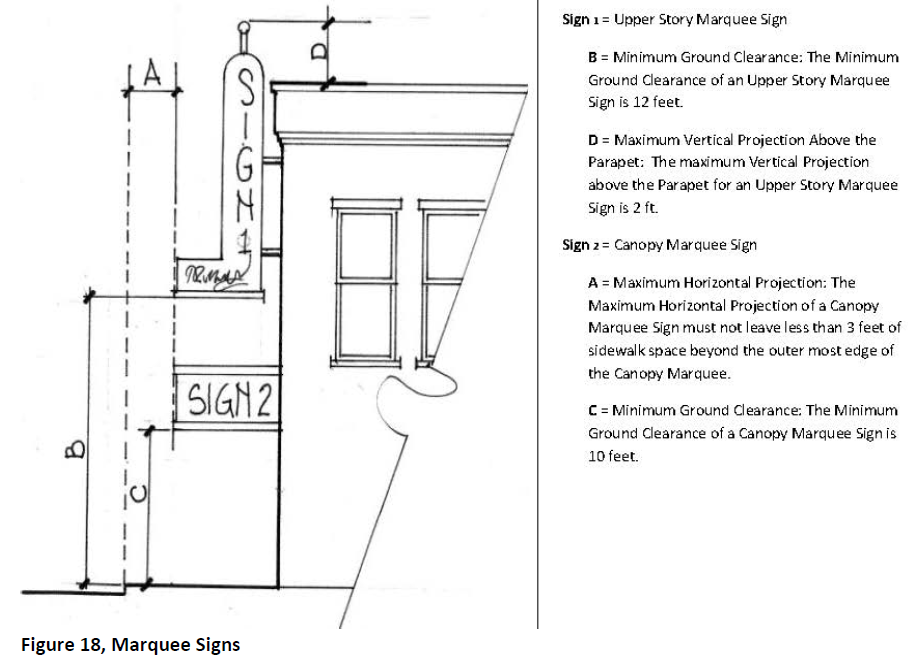
1.3
Applicability: The number of permitted signs per building are as follows:
a.
Corner, Parapet, Mid-story, and /or Marquee Signs: 1 per building
b.
Awning Signs: 1 per awning in each permitted location
c.
Horizontal Mast Signs and Header Signs: 1 per premise
d.
Window Sign: no sign or combination of signs may cover more than 50 percent of the glazed area in which the sign is located and window signs may only be on the street level. Any sign located within twelve inches of a window is considered a window sign.
Section 2: Lighting
2.1
Purpose: The purpose of lighting in the downtown area is to enhance the "night form" of the downtown area by creating a lower ambient light level at the ground that allows the internal lighting of retail and entertainment activation to be highly visible to the street. Also, lighting is meant to accentuate signage as a key visual expression of activity and use and highlight the distinctive features of architecture.
2.2
The following types of lighting are prohibited:
a.
sodium vapor light source;
b.
flood lights on the Primary or Secondary Façade(s); and
c.
utility lighting on the Primary or Secondary Façade(s).
2.3
The following type of lighting are permitted:
a.
Building down lighting achieved through decorative light fixtures projected from the building facade by ornamental light "arms". This does not permit parapet or building mounted security lighting meant to light the ground plane or a Primary or Secondary Facade. Such security lighting is permitted on other facades.
b.
Soffit lighting in canopies, arcades, entry ways, or other permitted cover of an activity area
c.
Front lighting for building mounted signs
d.
Internally lit signage
e.
Temporary, portable area lighting meant for special purpose or activity
f.
Marquee lighting
g.
Neon signage
h.
Patio string lights
i.
Landscape lighting
j.
Standard street lighting similar to that portrayed in the Downtown Master Plan
2.4
All projected lighting or front lighting shall be hooded by an ornamental fixture that prevents visibility of the light source from neighboring properties.
2.5
Excluded from this regulation:
a.
emergency lighting required by any code;
b.
other lighting required by any code; and
c.
special lighting required for safety such as step lights.

