Estero City Zoning Code
APPENDIX D
- ILLUSTRATIONS AND CROSS-SECTIONS
A.
Four- and Six-Lane Arterial Roads
1.
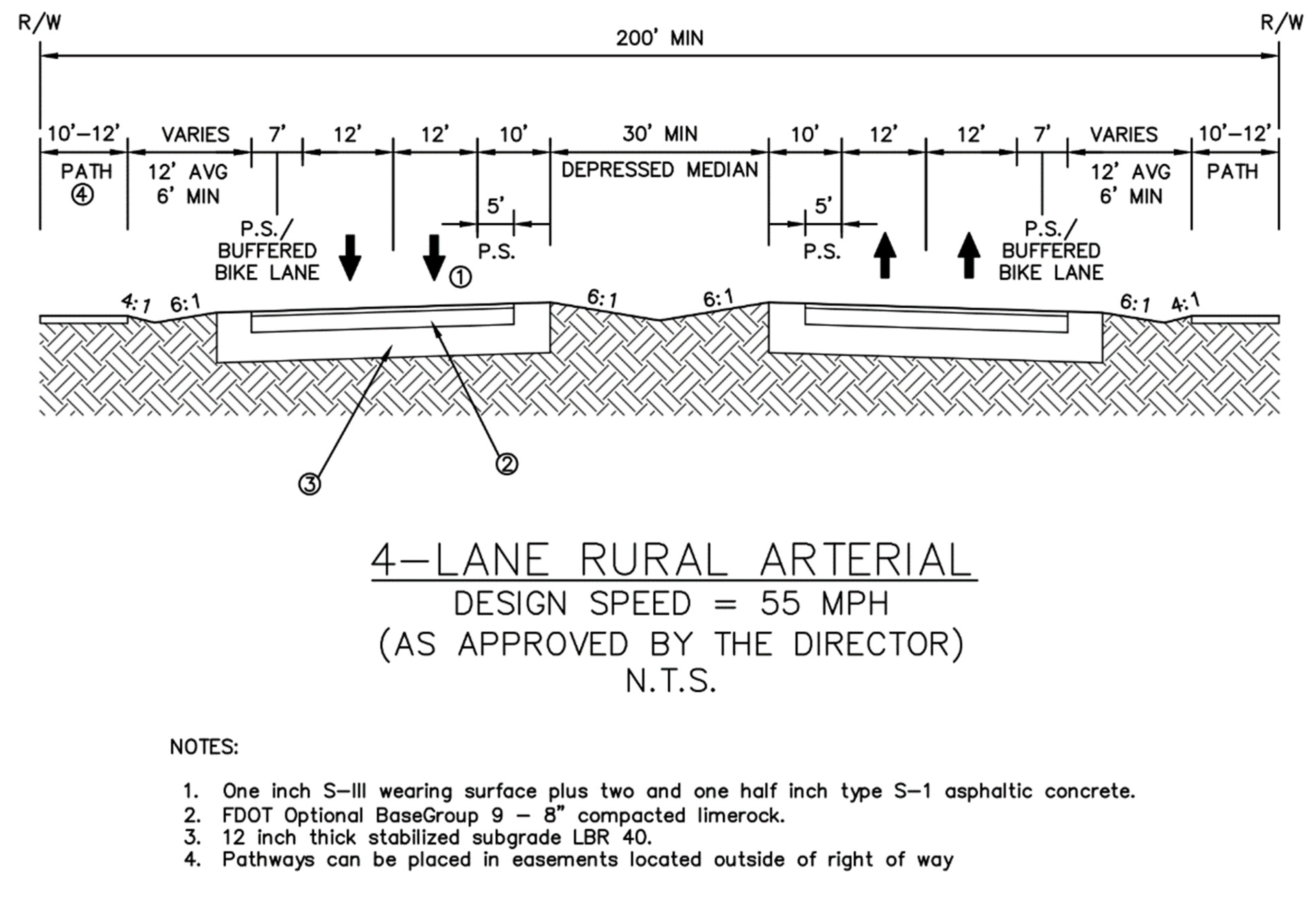
The following illustration applies to four-lane arterial roads in 200 foot right-of-way depressed median, open drainage, and on-site retention (rural section) (Rural = clear zones and open ditches):
2.
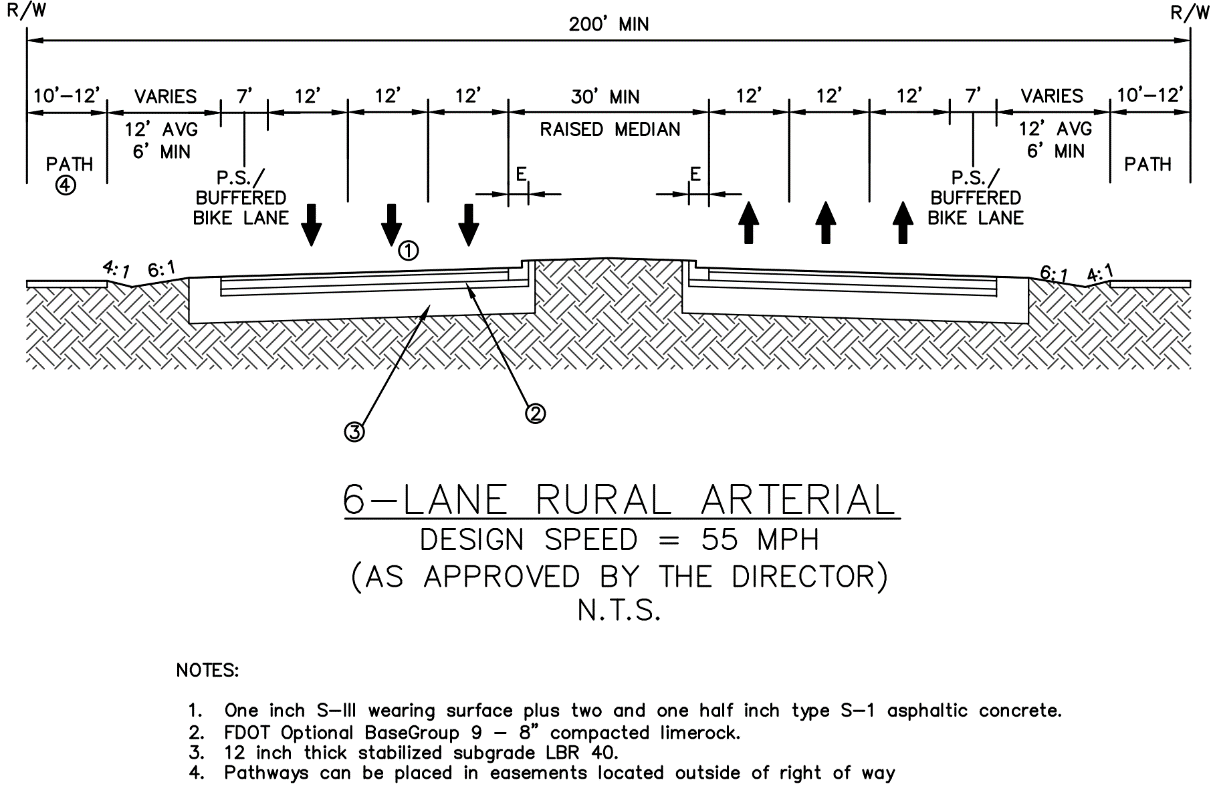
The following illustration applies to six-lane arterial roads in 200 feet of right-of-way with open drainage and on-site retention (rural section) (Rural = clear zones and open ditches):
3.
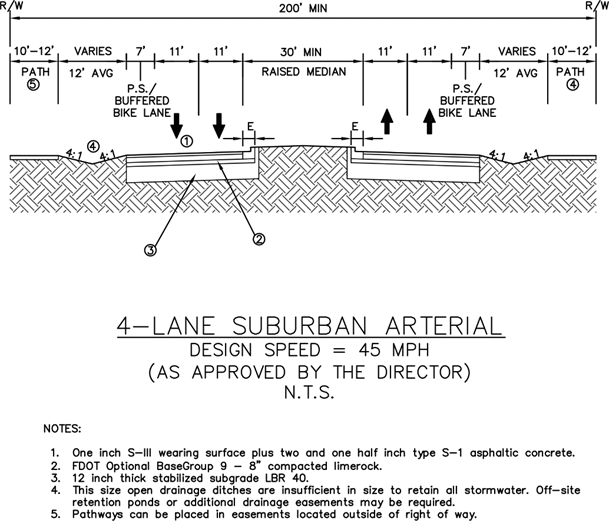
The following illustration applies to four-lane arterial roads in 200 feet of right-of-way with raised median, open drainage, and on-site retention (suburban section) (Suburban = curb and gutter and open ditches):
4.
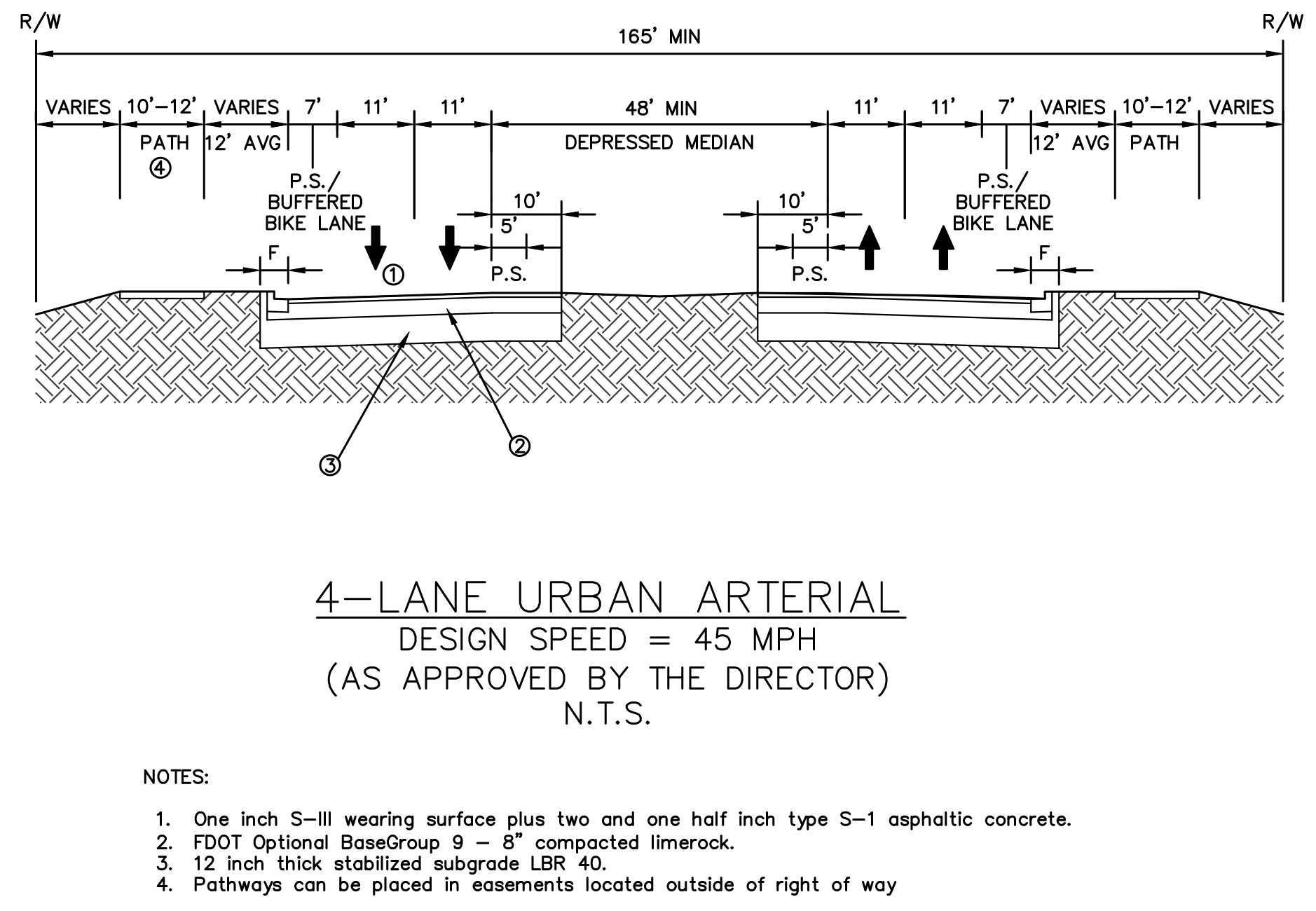
The following illustration applies to four-lane arterial roads in 165 feet of right-of-way with depressed median, closed drainage, and on-site retention (urban section) (Rural = clear zones and open ditches):
5.
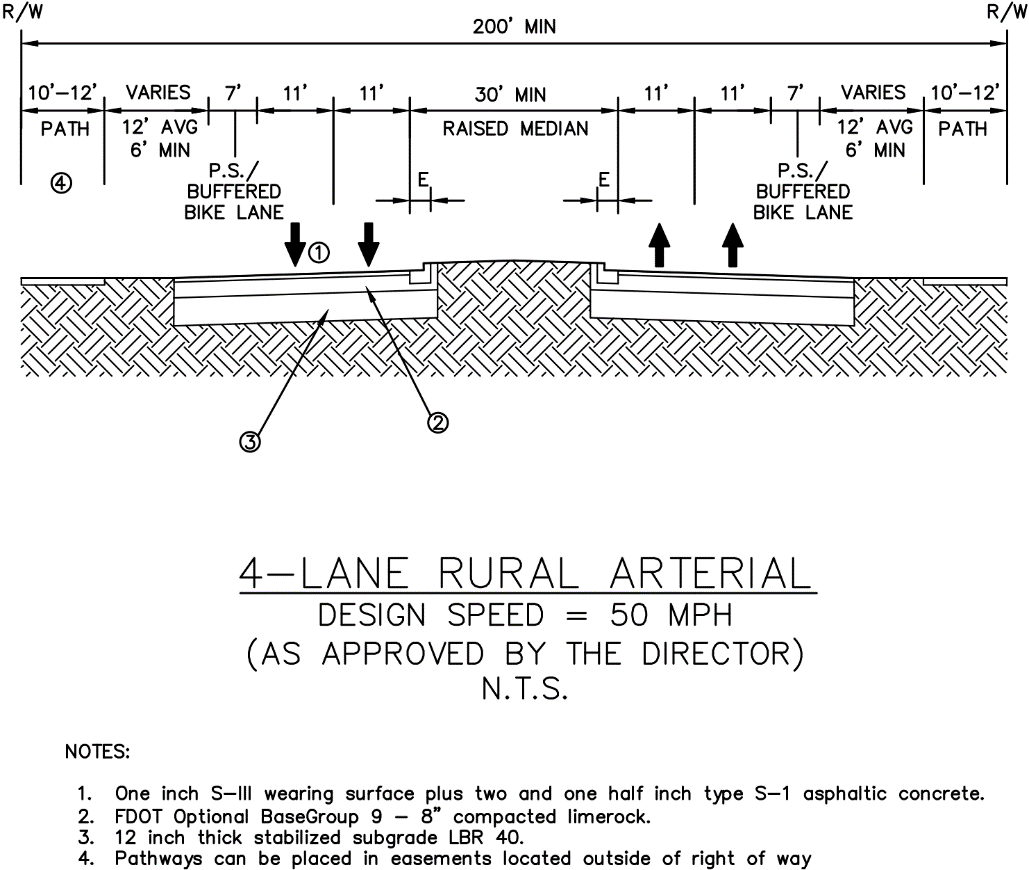
The following illustration applies to four-lane arterial roads in 200 feet of right-of-way with raised median, open drainage, and on-site retention (rural section) (Rural = clear zones and open ditches):
6.
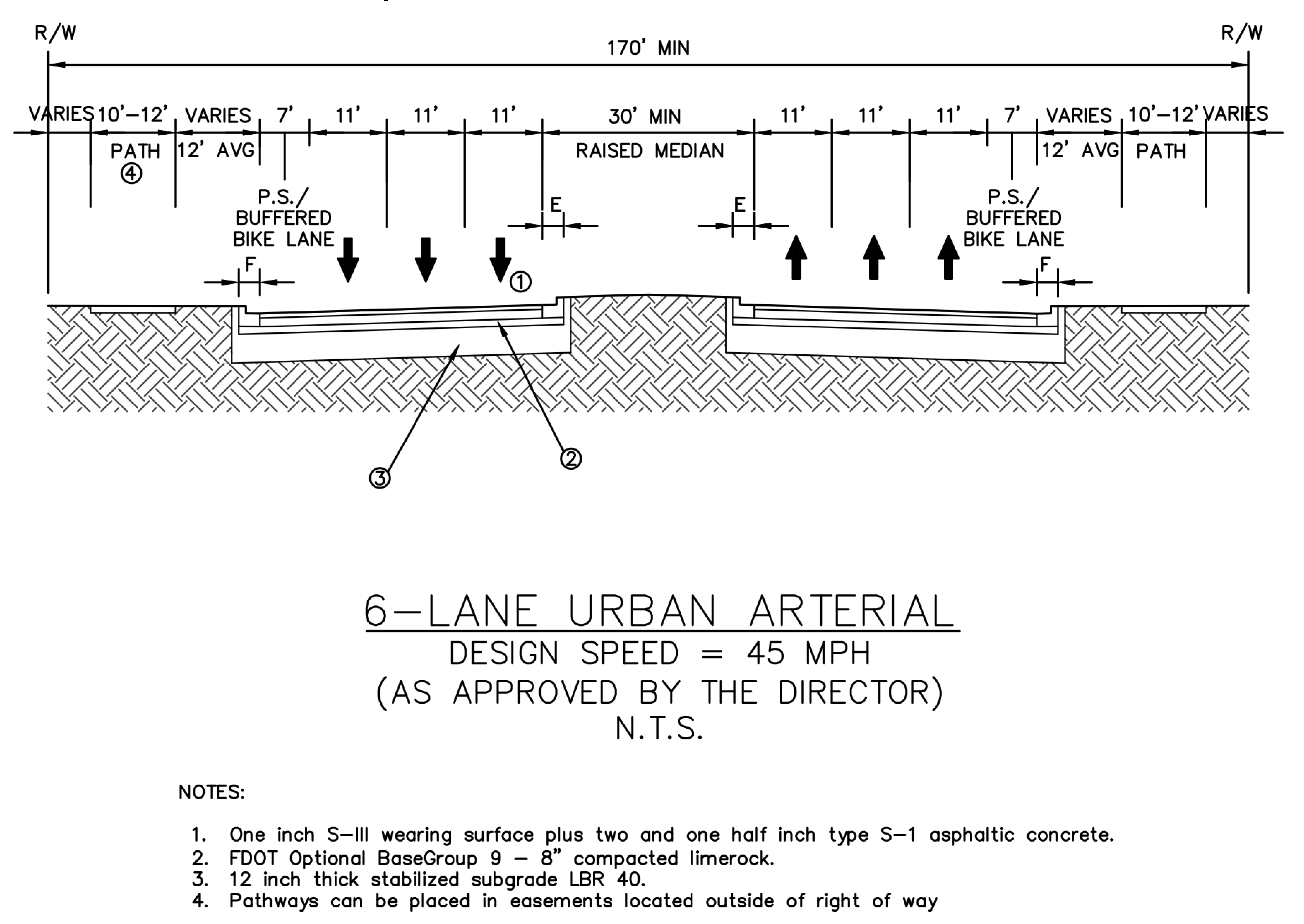
The following illustration applies to six-lane arterial roads in 170 feet of right-of-way with raised median, closed drainage and off-site retention (urban section):
B.
Collector Roads.
1.
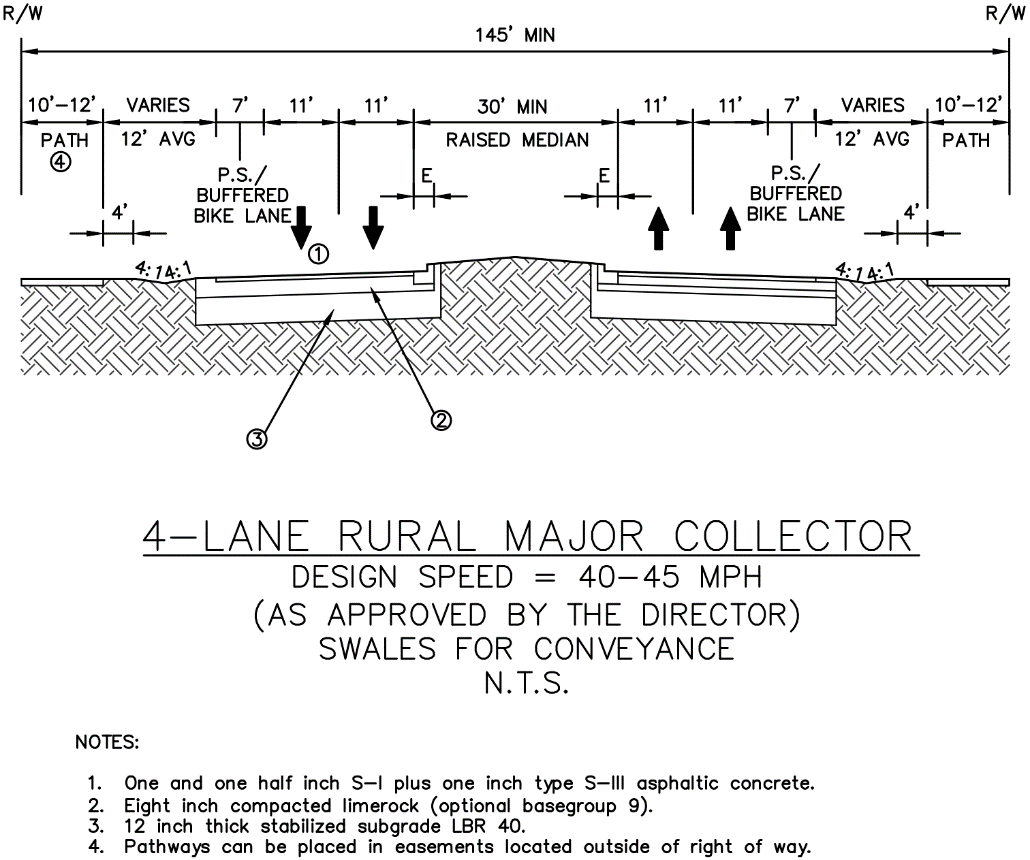
The following illustration applies to four-lane major collector roads in 145 feet of right-of-way with raised median, open drainage, and off-site retention (rural section) (Rural = clear zones and open ditches):
2.
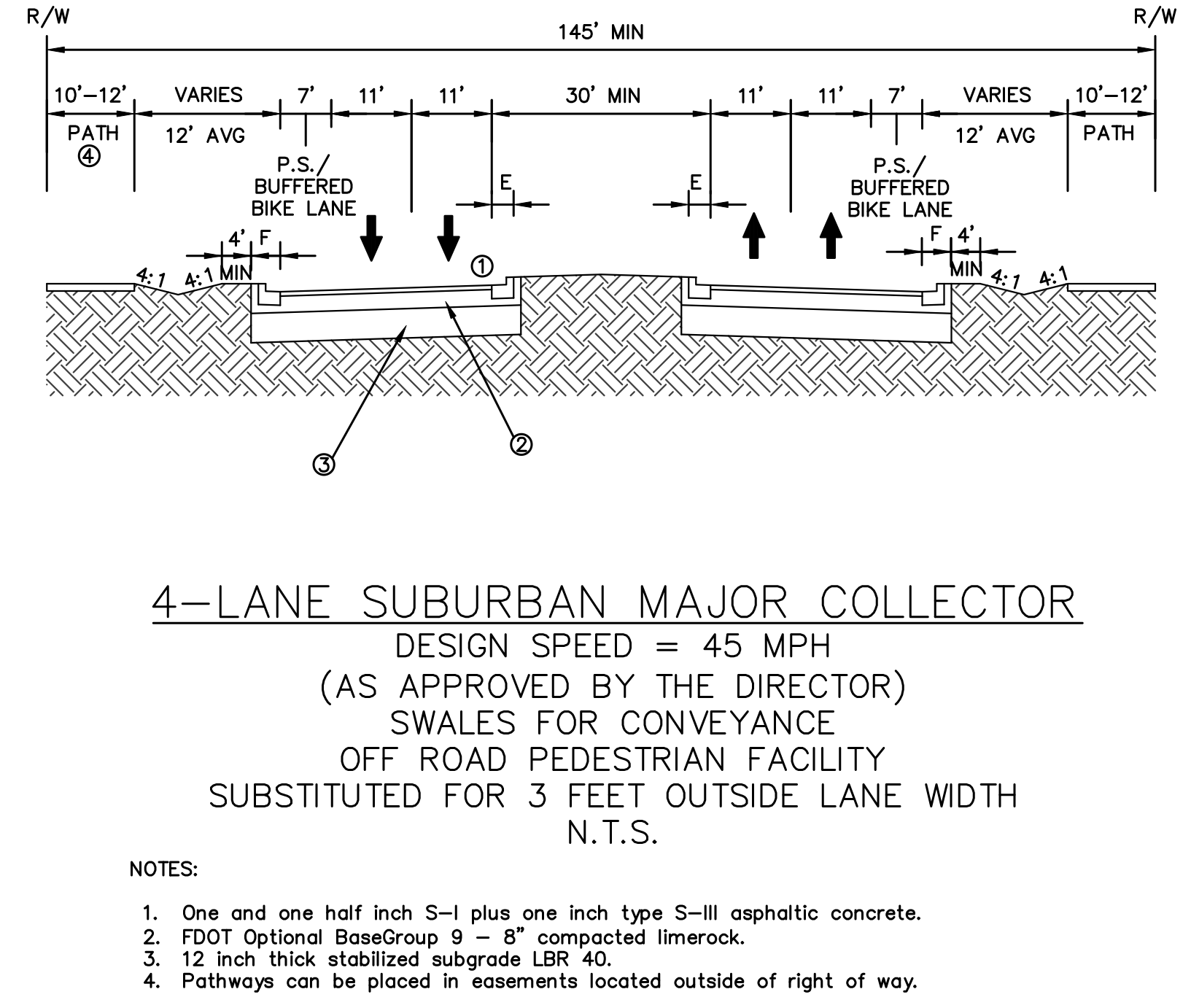
The following illustration applies to four-lane major collector roads in 145 feet of right-of-way with raised median, open drainage, and off-site retention (suburban section) (Suburban = curb and gutter and open ditches):
3.
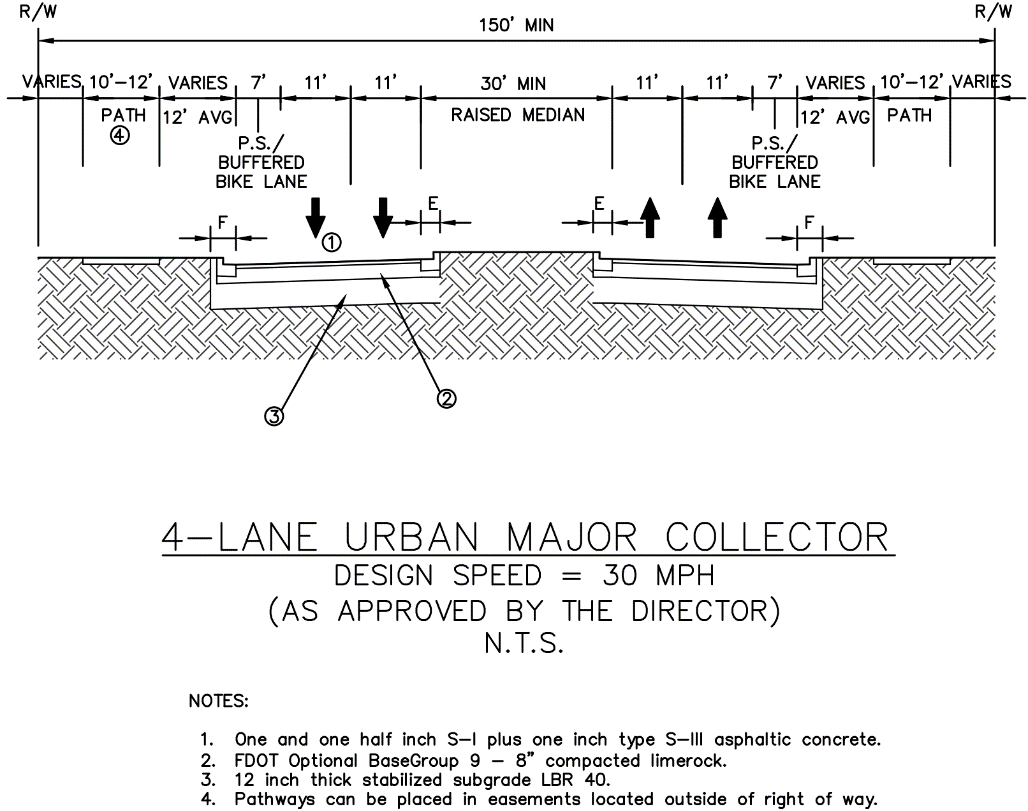
The following illustration applies to four-lane major collector roads in 150 feet of right-of-way with raised median, closed drainage, and off-site retention (urban section) (Urban = curb and gutter and closed drainage):
4.
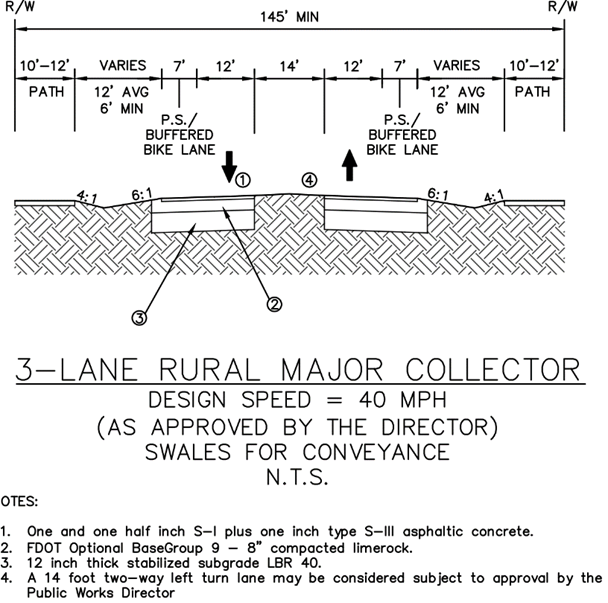
The following illustration applies to three-lane collector roads in 145 feet of right-of-way with a TWLTL (two-way left-turn lane) median with open drainage and off-site retention (rural section) (Rural = clear zones and open ditches):
5.
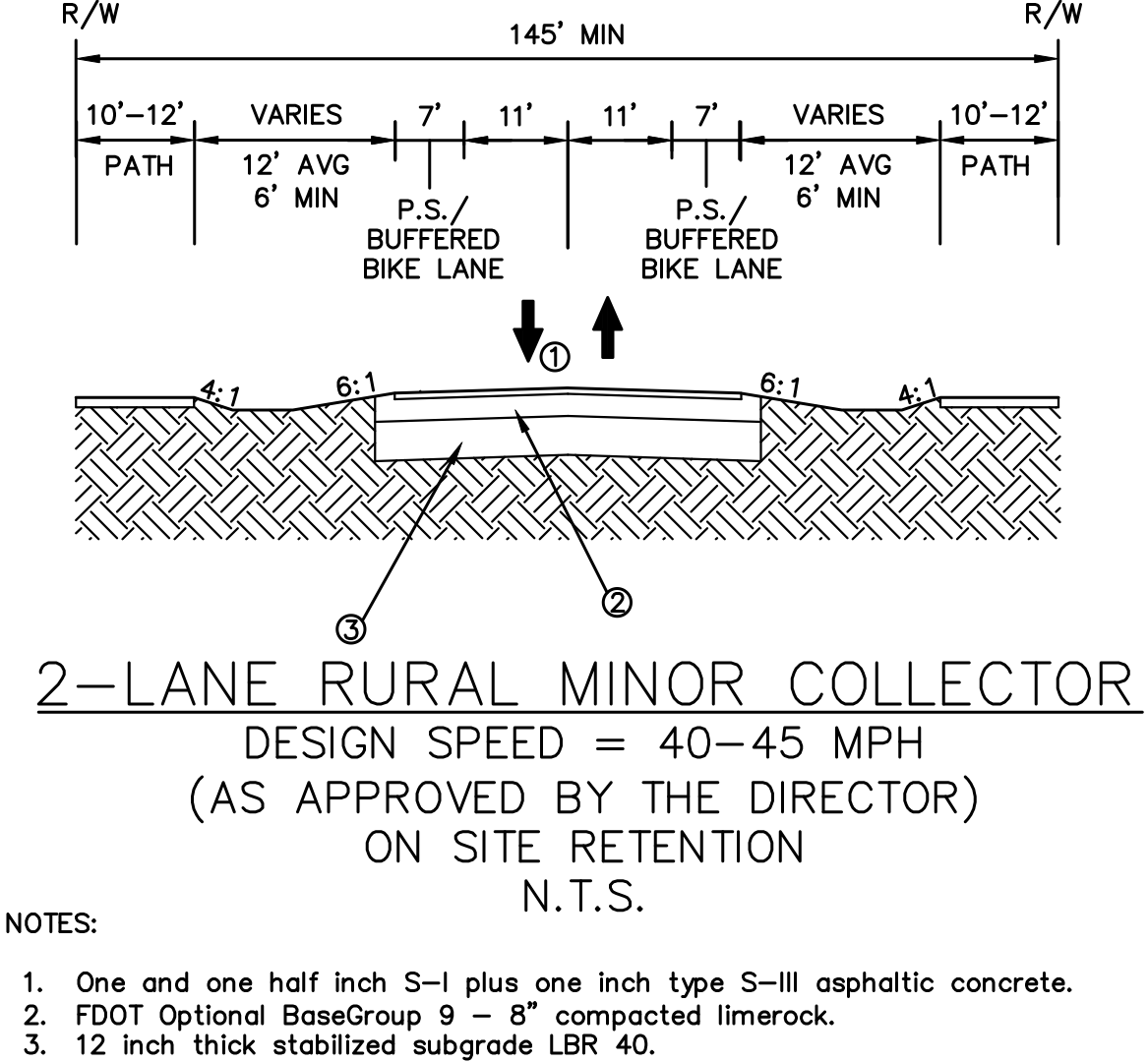
The following illustration applies to two-lane collector roads in 145 feet of right-of-way, with no median, open drainage and on-site retention (rural section) (Rural = clear zones and open ditches):
6.
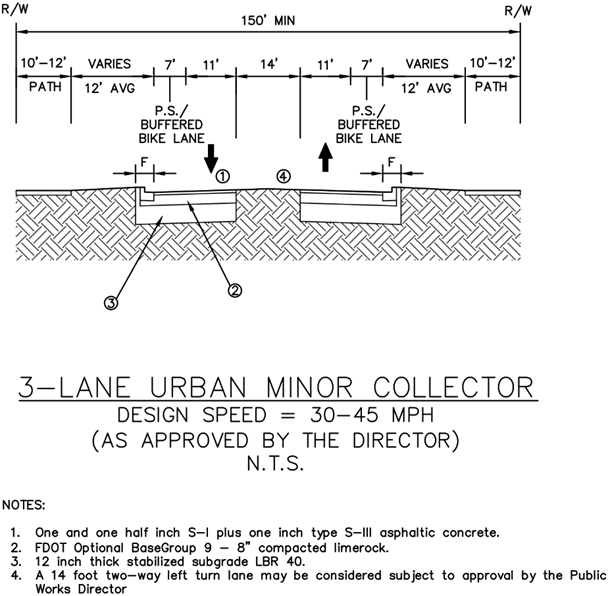
The following illustration applies to three-lane collector roads in 150 feet of right-of-way with a two-way left turn (TWLTL) median, closed drainage and off-site retention (urban section) (Urban = curb and gutter and closed drainage):
7.
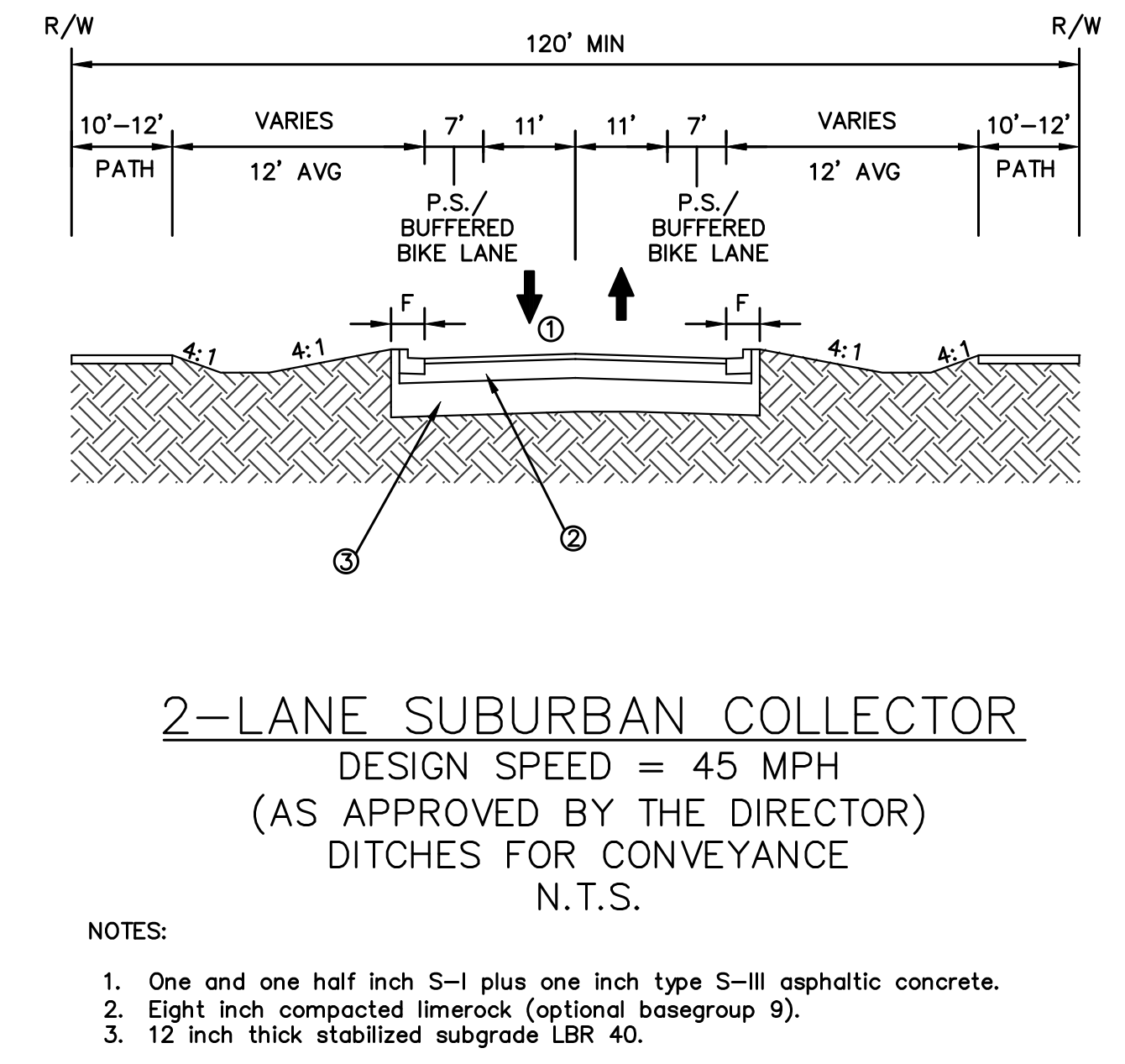
The following illustration applies to two-lane collector roads in 120 feet of right-of-way with no median, open drainage and off-site retention (suburban section) (Suburban = curb and gutter and open ditches):
8.
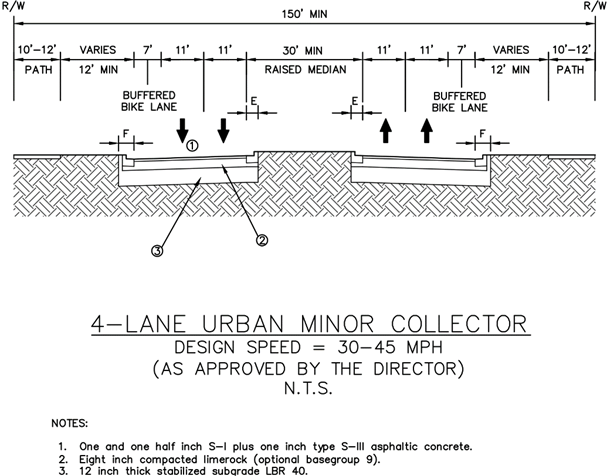
The following illustration applies to four-lane collector roads in 150 feet of right-of-way with raised median, closed drainage, and off-site retention (urban section) (Urban = curb and gutter and closed drainage):
C.
Public Local Roads.
1.
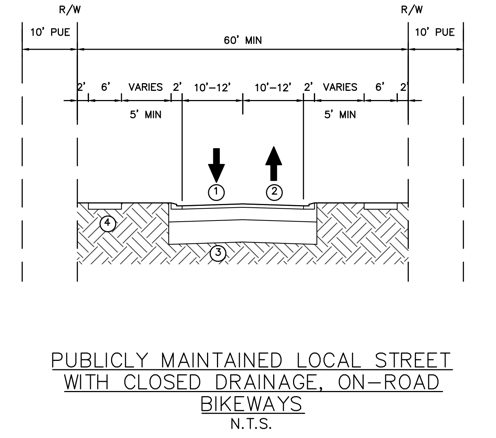
The following illustration applies to publicly maintained local roads with closed drainage and on-road bikeways, with a volume of less than 800 vehicles per day:
2.
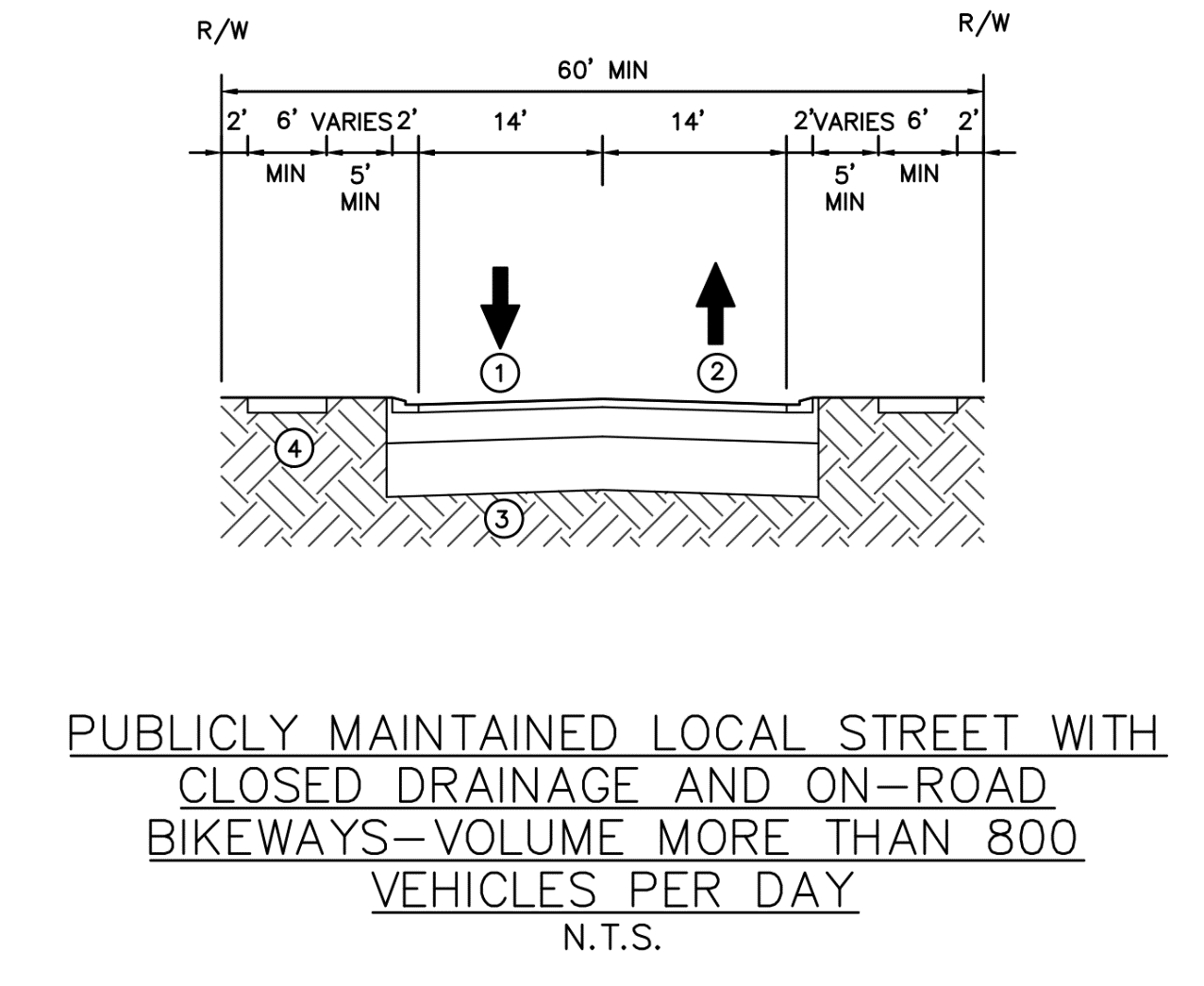
The following illustration applies to publicly maintained local roads with closed drainage and on-road bikeways, with a volume of more than 800 vehicles per day:
3.
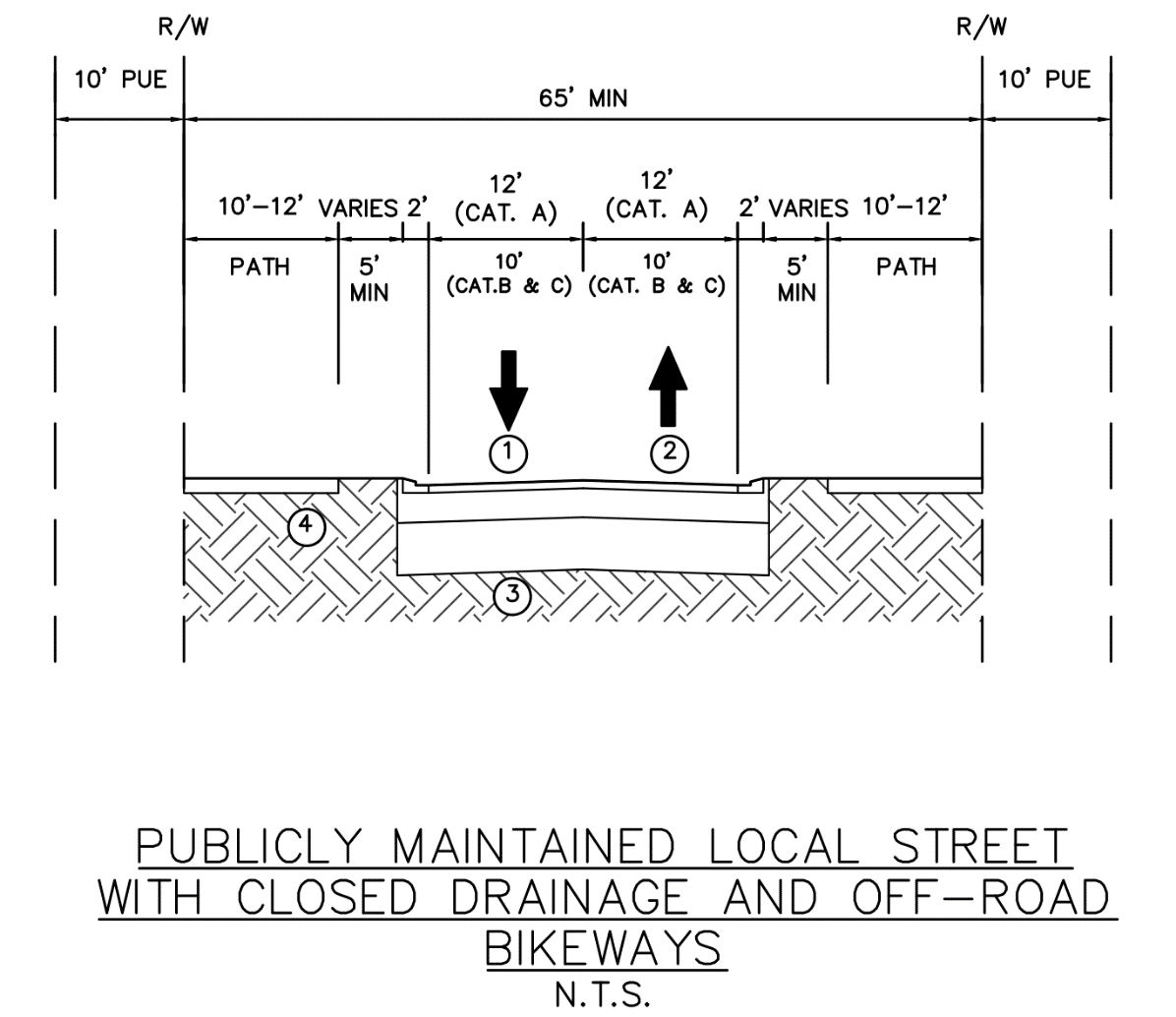
The following illustration applies to local public roads with closed drainage and off-road bikeways:
4.
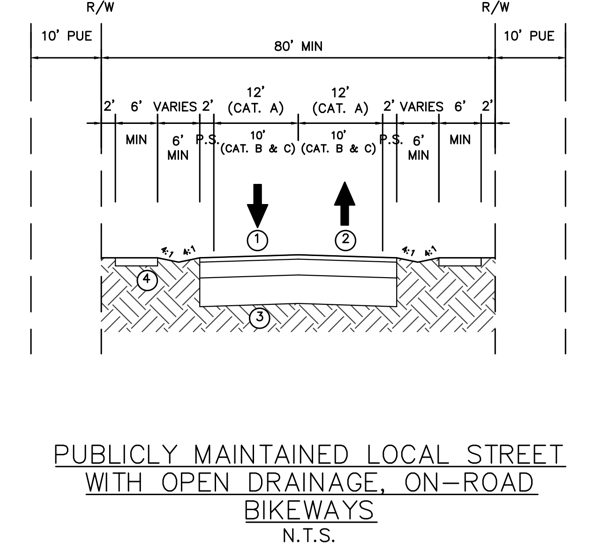
The following illustration applies to publicly maintained local roads with open drainage and on-road bikeways, with a volume of less than 800 vehicles per day:
5.
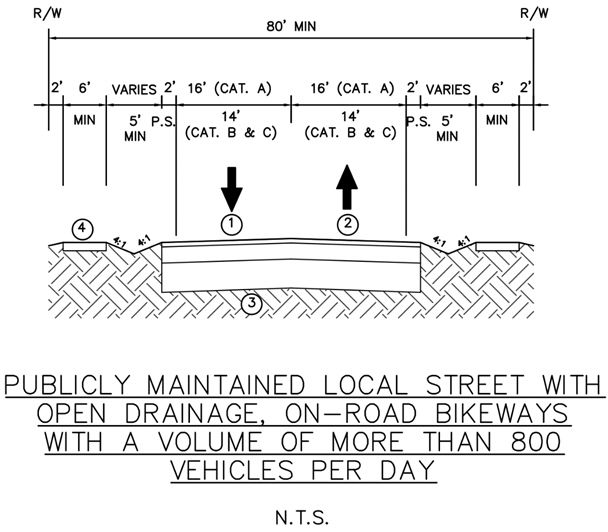
The following illustration applies to publicly maintained local roads with open drainage and on-road bikeways, with a volume of more than 800 vehicles per day:
6.
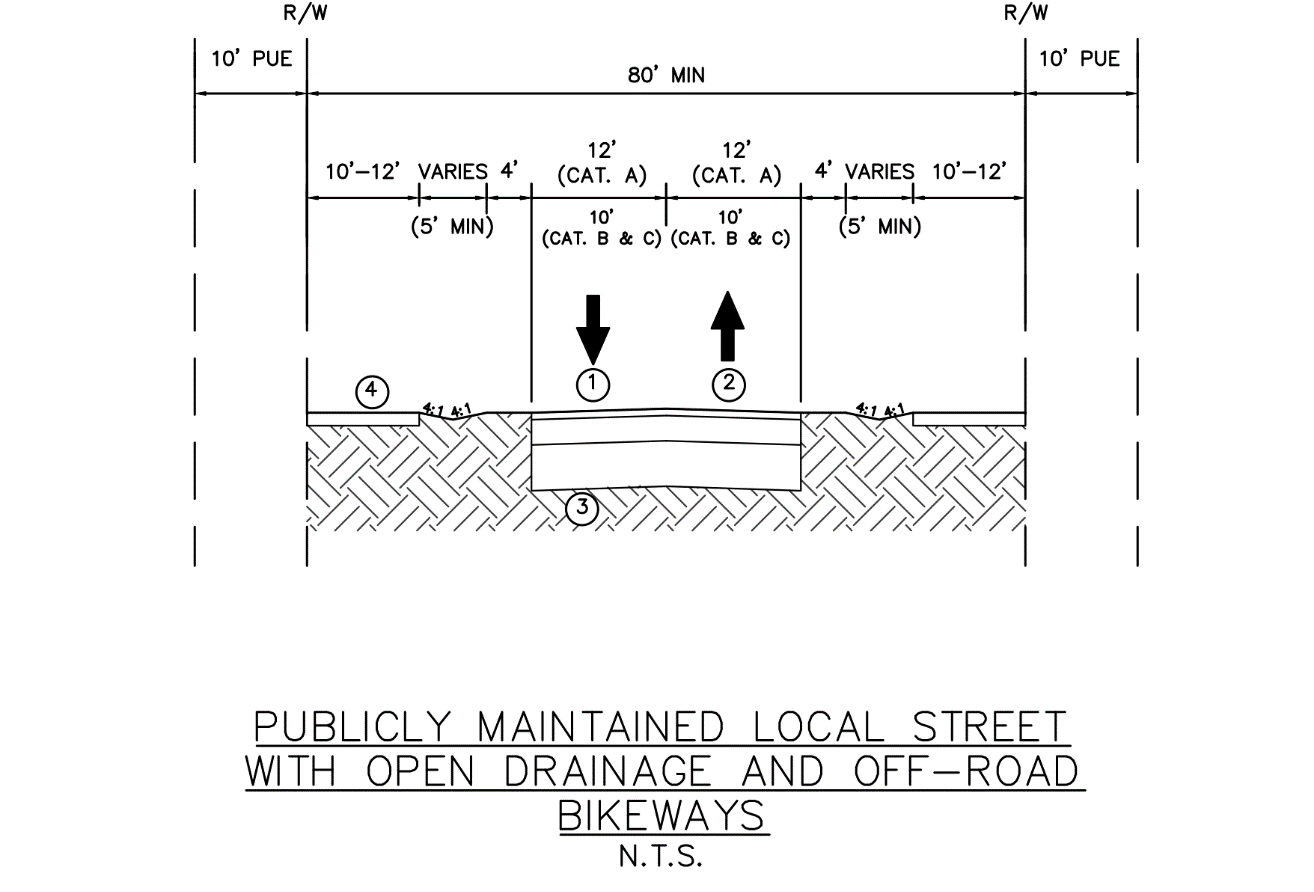
The following illustration applies to publicly maintained local roads with open drainage and off-road bikeways:
D.
Private Local Roads
1.
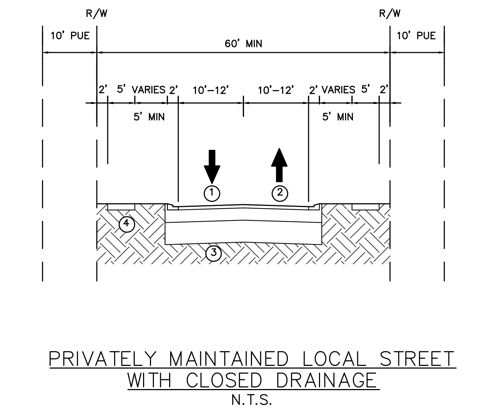
The following illustration applies to private local roads with closed drainage:
2.
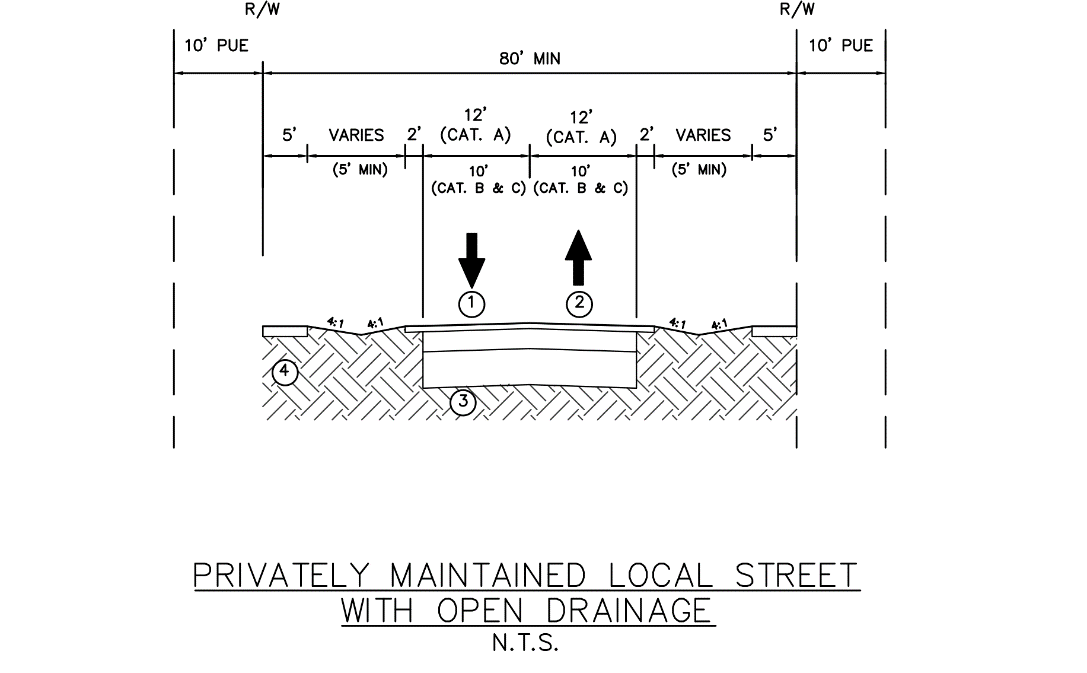
The following illustration applies to private local roads with open drainage:
E.
Access Roads
1.
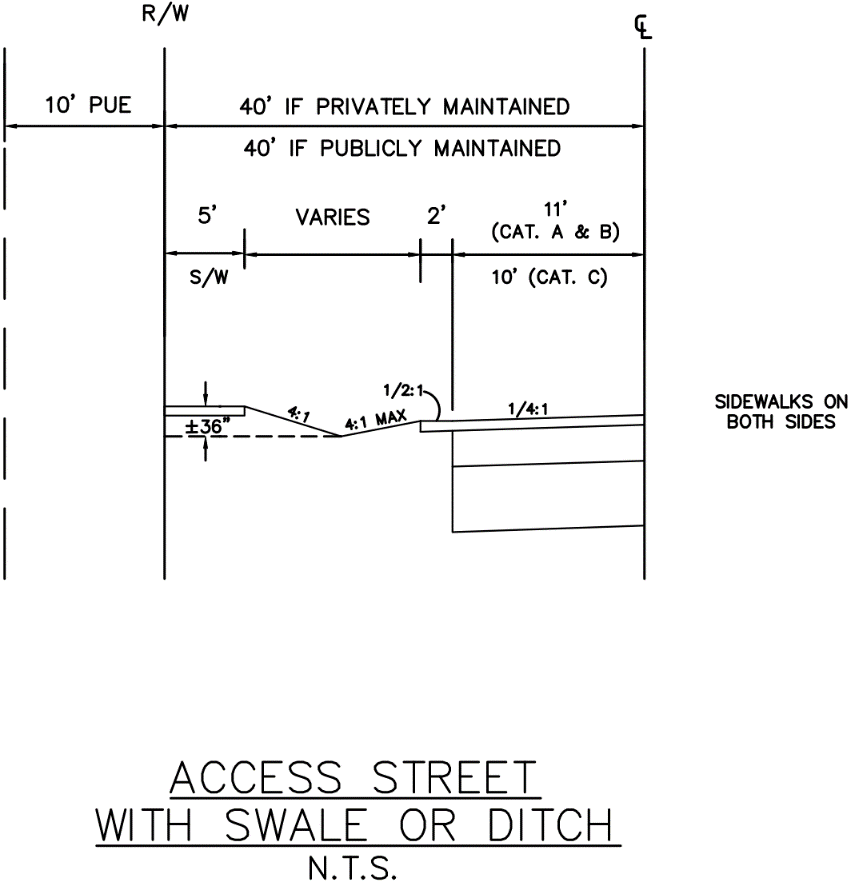
The following illustration applies to access roads with swale or ditch—35 feet right-of-way if Village maintained or 30 feet right-of-way if privately maintained. (This standard applies to front streets only. The local street standards apply to all other access streets including reverse frontage.)
2.
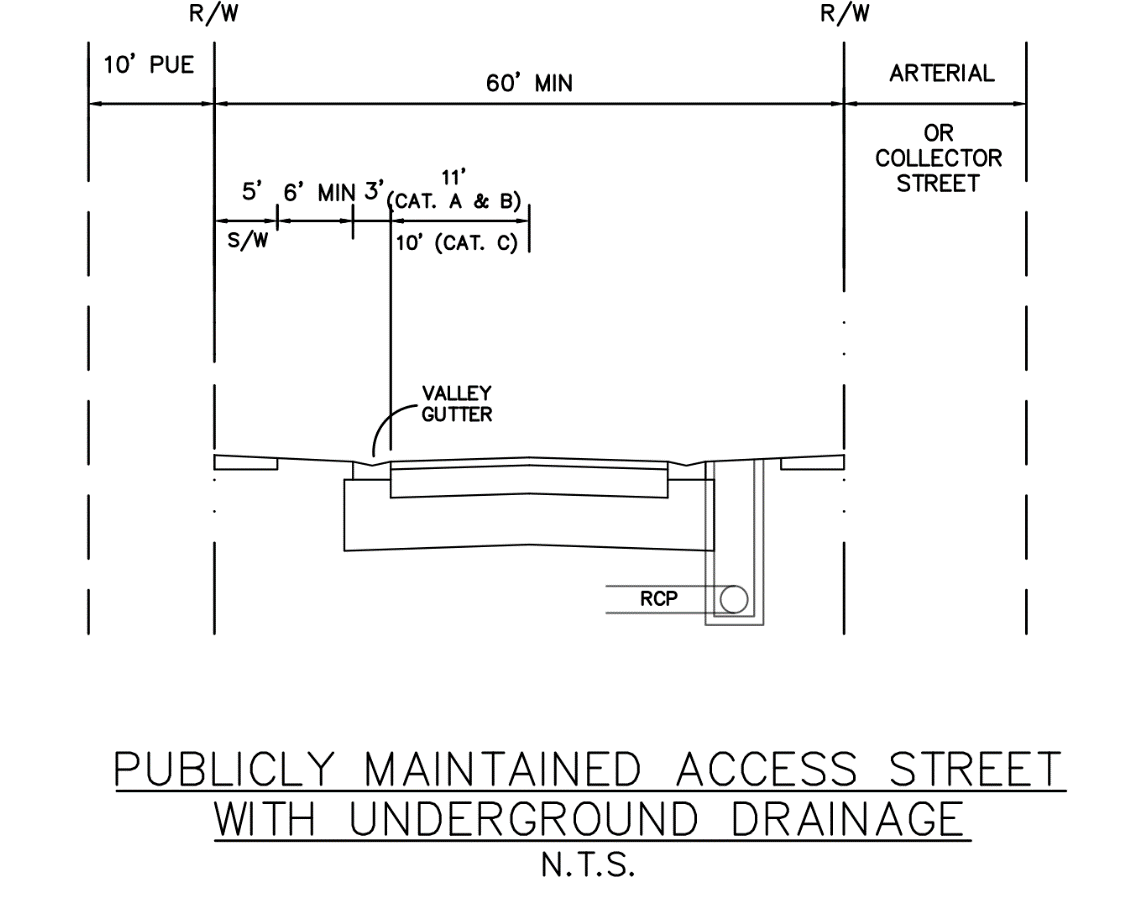
The following illustration applies to privately maintained access roads with underground drainage:
3.
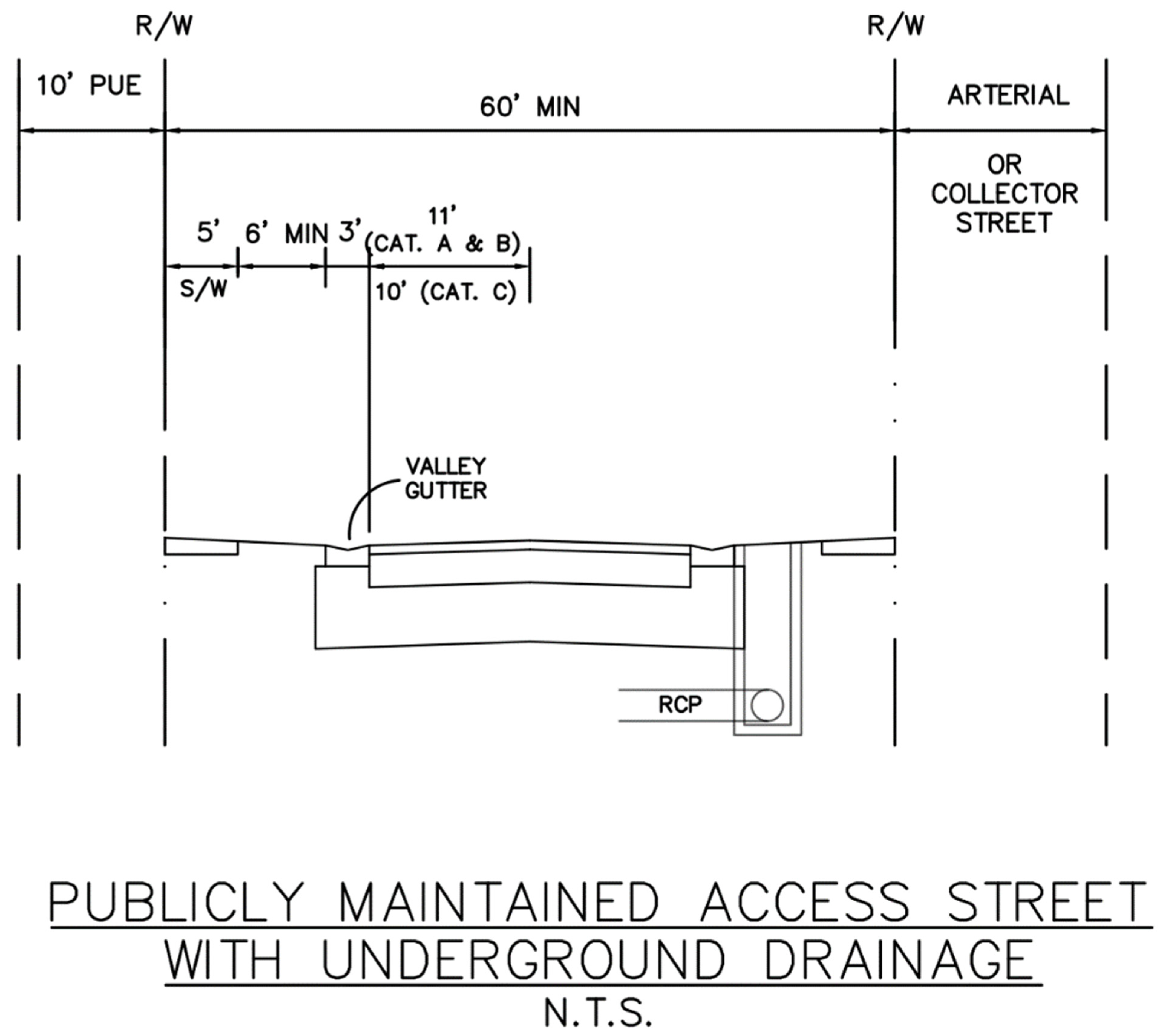
The following illustration applies to Village-maintained access roads with underground drainage:
F.
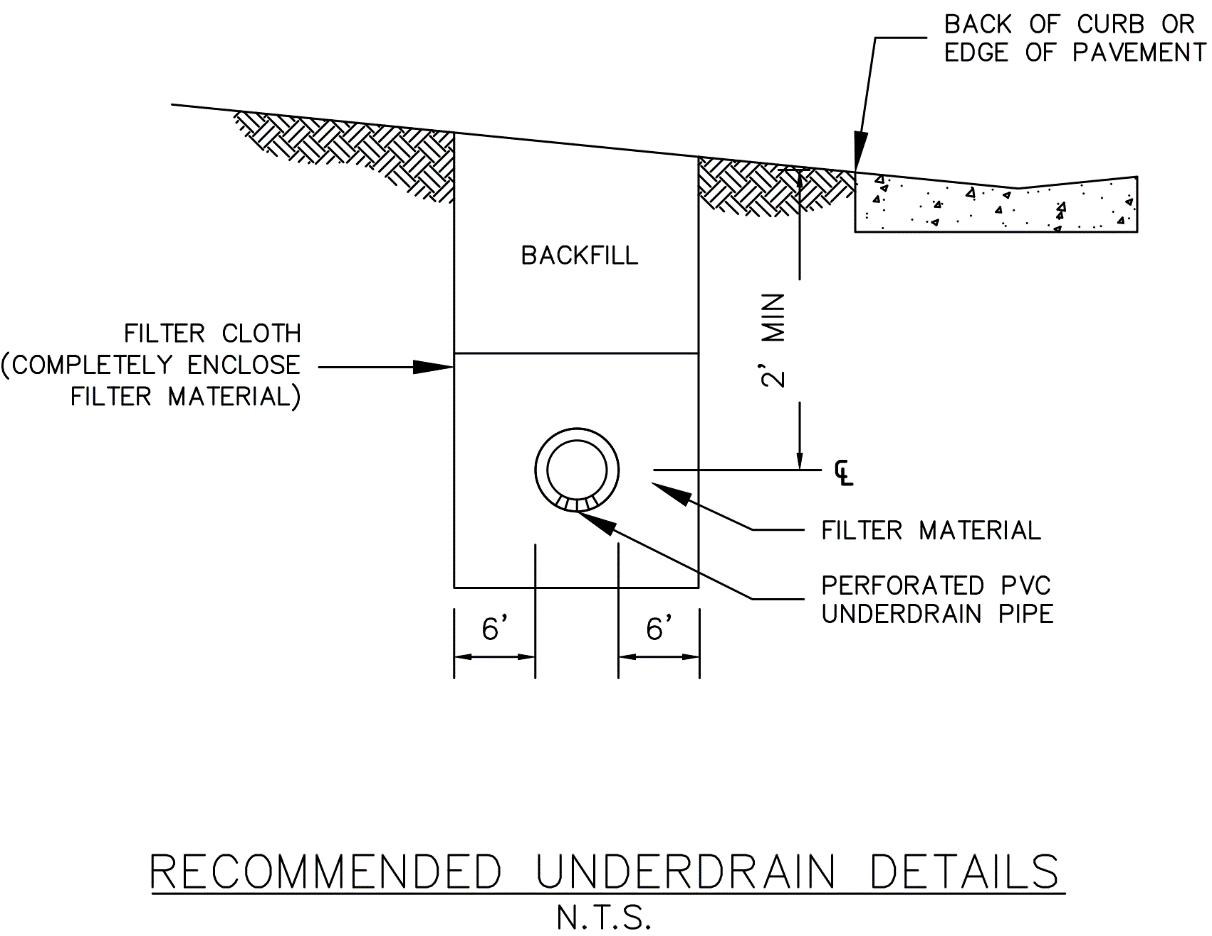
Recommended Underdrain Details. The following diagram represents recommended underdrain details. The trench shall be backfilled in such a manner as to avoid damage to pipe or barrier or displacement of the filter material, and shall be compacted to a density equal to the adjacent soils.
G.
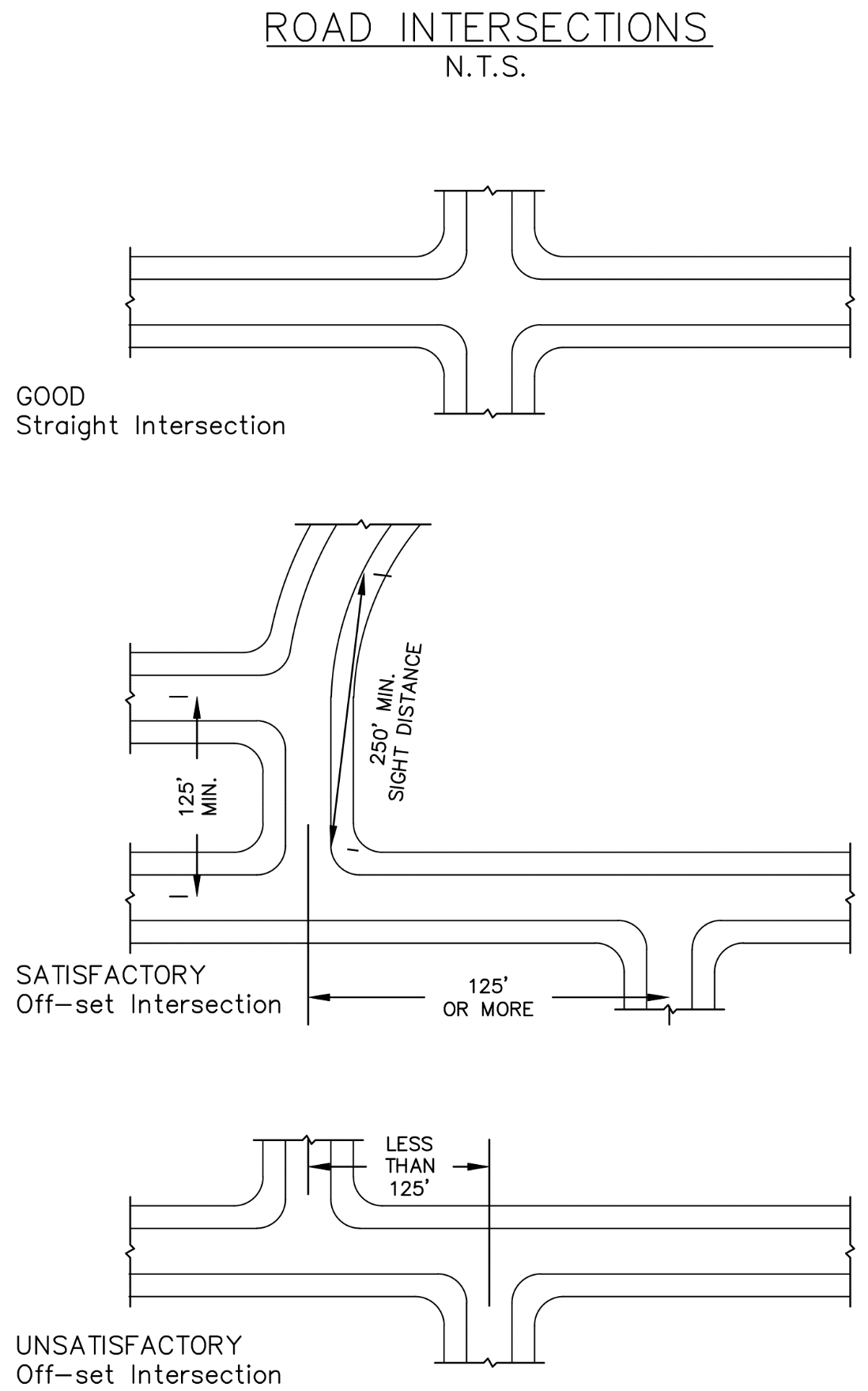
Roads Intersections. The following illustrations apply to road intersections. All dimensions shall conform with requirements of the Manual of Uniform Minimum Standards for Design, Construction and Maintenance for Streets and Highways:
H.
Cul-de-sacs.
1.
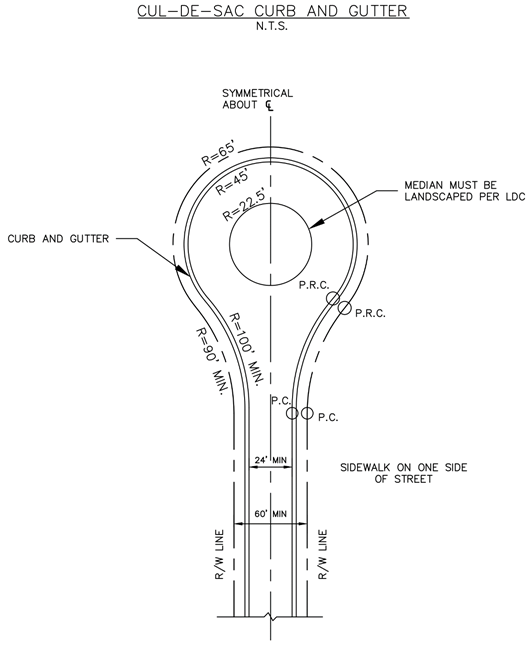
The following illustration applies to cul-de-sacs with curb and gutter:
2.
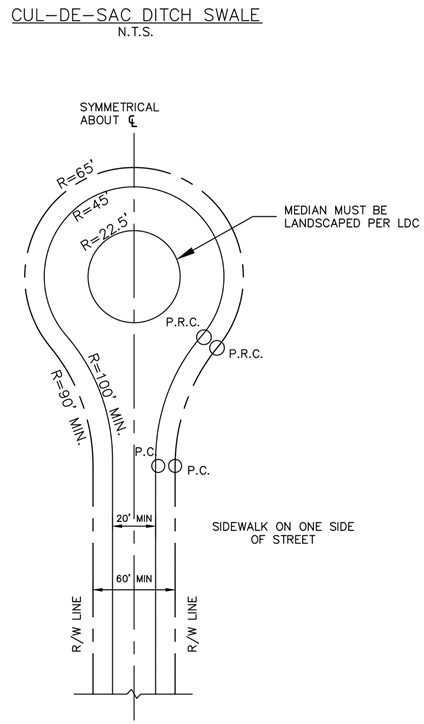
The following illustration applies to cul-de-sacs with ditch swale:
I.
Utility Placement in Local Roads
1.
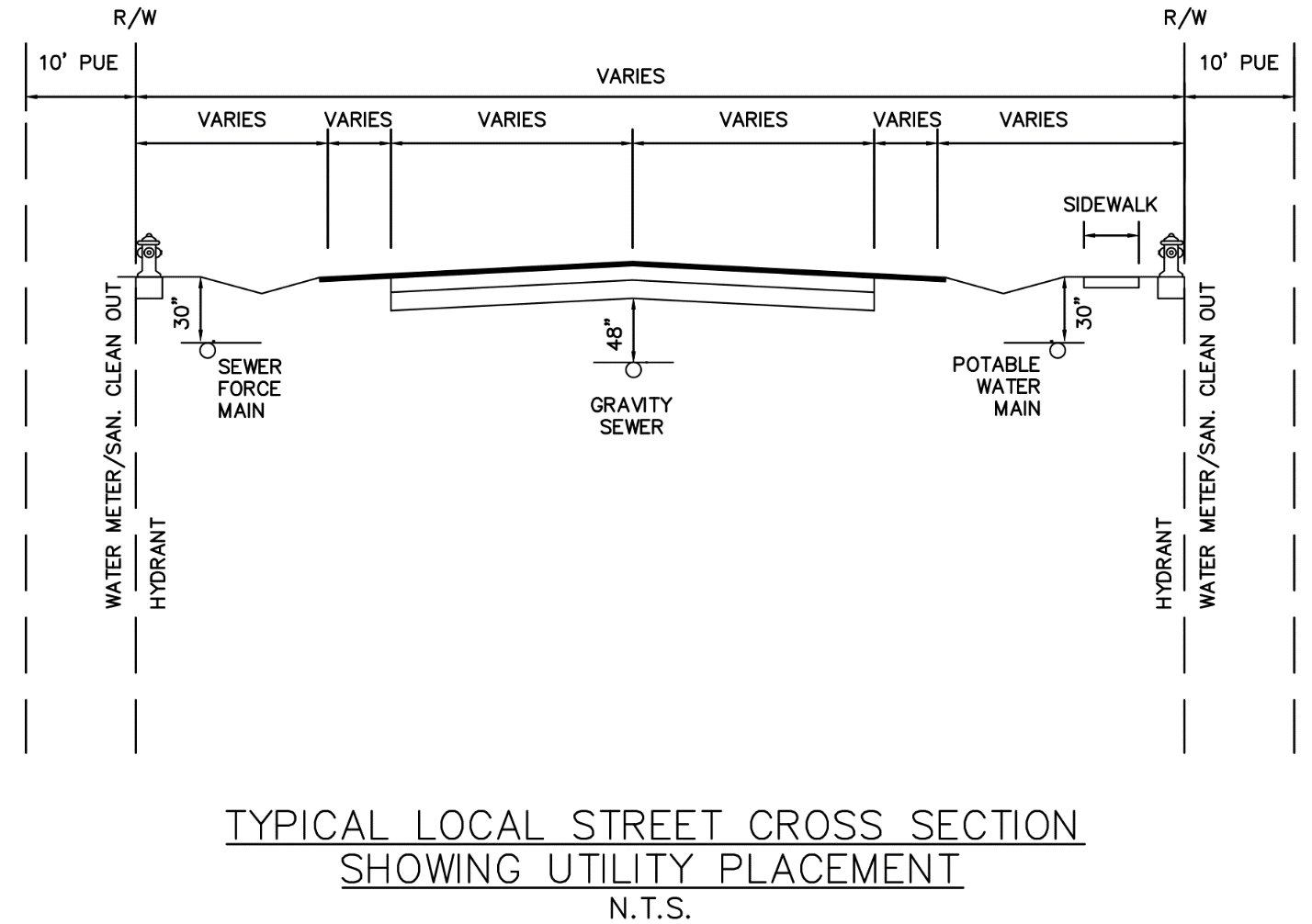
The following illustration applies to utility placement in local roads. The ten-foot-wide utility easement on each side of the right-of-way may be used for power lines, telephone lines, cable television lines, and gas lines.