
Franklin City Zoning Code
CHAPTER 17
36 - SIGN STANDARDS20
Editor's note— Ord. No. 2012-19, § 1(Exh. A), adopted July 16, 2012, amended chapter 17.36 in its entirety to read as herein set out. Former chapter 17.36, §§ 17.36.010—17.36.030, pertained to similar subject matter, and derived from Ord. No. 04-09, §§ 8.1—8.3.
Editor's note— The intent of this chapter is to further the goals of the comprehensive plan; avoid the proliferation of signage; encourage signs to be compatible with the scale of buildings and the surrounding features; maintain and enhance the aesthetic environment of the city; eliminate potential hazards to motorists and pedestrians resulting from signs; and promote the health, safety, and welfare of the residents of Franklin.
17.36.010 - General sign standards.
These general sign standards apply to all zoning districts:
A.
General Requirements: Except as otherwise provided in this chapter, it shall be unlawful for any person to erect, construct, enlarge, move or convert any sign within the jurisdiction of the city of Franklin plan commission, or cause the same to be done without first obtaining a sign permit. The following general sign standards apply to all signs within the jurisdiction of the city of Franklin plan commission.
1.
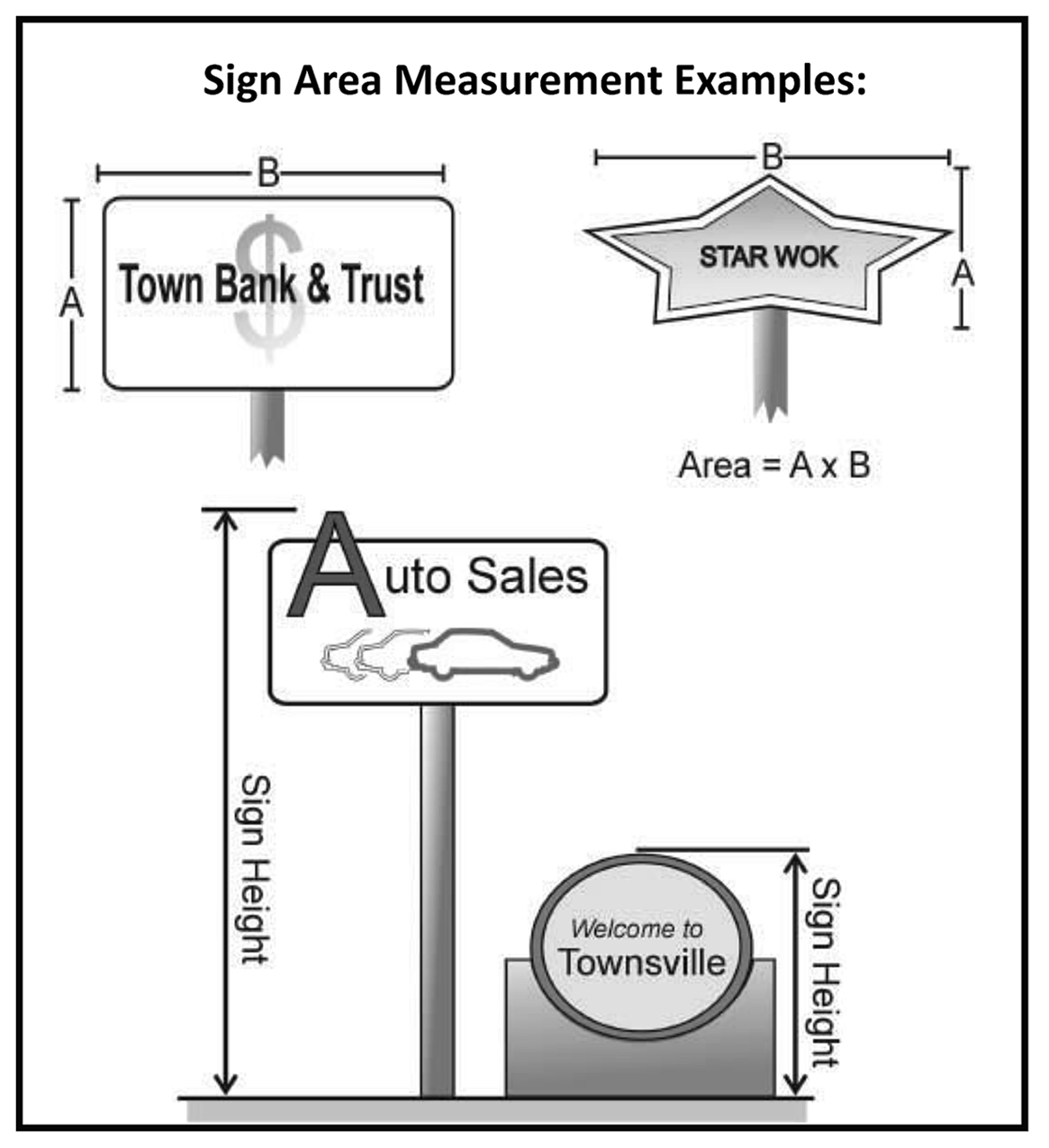
Measurement: The area of all signs shall be calculated by multiplying the maximum vertical dimension by the maximum horizontal dimension excluding any poles or supports. The height of all signs shall be measured from natural ground level to the top of the sign, and include any poles or other supports unless otherwise specified in this Article. In no case shall sign height be measured from the top of any berm or other artificial grade.
2.
Double-Faced Signs: For all signs permitted by this chapter, a double- faced sign may be erected. Only the face area of one of the two sides shall be considered the face area of the entire sign. However, the two faces shall be identical in face area, shall be placed back-to-back, and the maximum distance between the two faces shall not exceed two feet at any point.
3.
Inspection: Signs for which a permit is required may be inspected periodically by the planning director for compliance with this chapter.
4.
Removal of Sign: The planning director may order the removal of any sign erected or maintained in violation of this chapter, at the cost of the property owner, consistent with the provisions of chapter 17.52, Enforcement and Penalties.
5.
Maintenance: All signs and their components shall be kept in good repair and in safe, neat, clean, attractive, and structurally sound condition.
6.
Abandoned Sign Structures: A sign structure, including all poles, frames, supports, and other structural, electrical, mechanical, and other elements, may be removed by the owner of the premises upon which it is located if it is unused for a period of six months or greater. Sign structures on lots in which the primary structure associated with the sign no longer exists, the sign structure, including all poles, frames, supports, and other structural, electrical, mechanical, and other elements, shall be removed by the owner of the premises.
7.
Illuminated Signs: All illuminated signs must meet the Exterior Lighting Standards of chapter 17.32 of this title.
8.
Enforcement: The enforcement of violations of the provisions of this Article shall be as provided by chapter 17.52, Enforcement and Penalties.
B.
Exempt Signs: The following signs are exempt from all provisions of this chapter if in compliance with the conditions specified for each. No permit shall be required.
1.
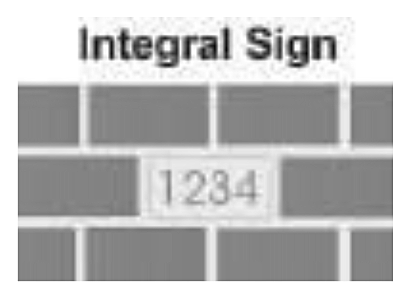
Integral Identification Features: Names of buildings, date of erection, monumental citations, commemorative tablets and the like when carved into stone, concrete or similar material or made of bronze, aluminum, or other permanent type construction and made an integral part of the structure.
2.
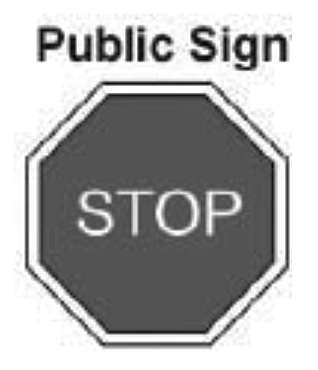
Public Signs: Public signs erected by or on the order of public officer(s) in the performance of public duty, such as signs to promote safety, no trespassing, or traffic signs; memorial plaques; signs of historical interest; and signs directing people to public and quasi-public facilities.
3.
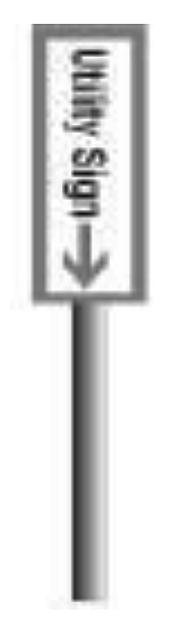
Utility Marker Signs: Utility signs necessary to mark cables and lines for public and private utilities unless such signs are determined to be a hazard by the planning director.
4.
Emergency Signs: Emergency signs, such as those used by the fire or police department or those displaying employee information.
5.
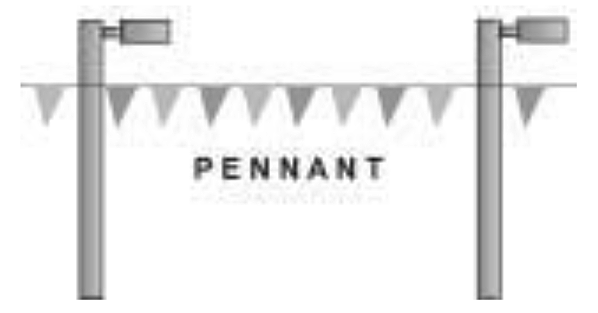
Pennants: Pennants, streamers and any combination of such signs, provided that they are not located in a right-of-way and their use is temporary and does not exceed thirty (30) days in any three month period.
6.
Holiday Decorations: Holiday decorations, provided they are not located in a public right-of-way, are displayed no more than thirty (30) days before the holiday, and are removed within thirty (30) days of the holiday.
7.
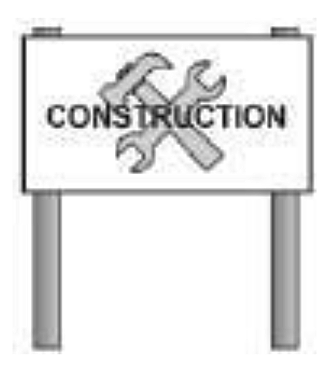
Construction Signs: Signs posted on construction sites, provided that they are not located in the right-of-way, do not exceed more than 2 per property, do not exceed six square feet per sign in single-family residential zoning districts and thirty-two (32) square feet per sign in all other zoning districts, and are removed upon completion of construction activity. Signs shall include developer information for emergency purposes.
8.
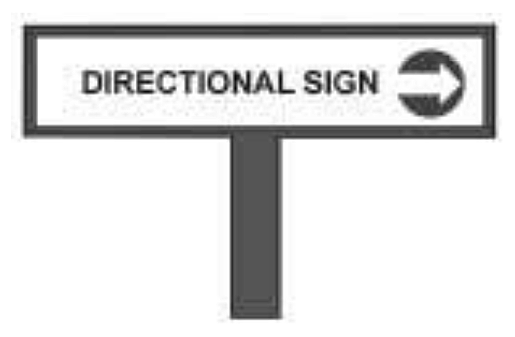
Directional Signs: On-premise vehicle directional signs provided they are no more than four feet in height or six square feet in area. They shall be setback a minimum of two feet from all public rights-of-way.
9.
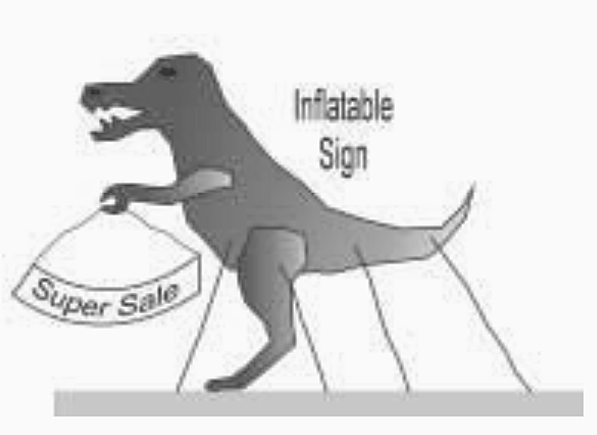
Inflatable Objects: Inflatable objects, provided that they are not located in a public right-of-way, do not exceed more than one per property or business use at any time, no single inflatable object exceeds ten (10) feet in height, and no property or business use makes use of any inflatable sign or signs more than seven consecutive days two times per calendar year.
C.
Prohibited Signs: The following types of signs are expressly prohibited in all zoning districts.
1.
Animated Signs: Signs that blink, flash or utilize any motion picture, laser, or visual projection of images or copy in conjunction with any business or advertisement.

2.
Emissions: Signs that emit audible sound, odor or visible matter.
3.
Imitation of Official Signs: Signs that purport to be, are in imitation of, or resemble an official traffic sign or signal or which bear the words "Stop," "Slow," "Caution," "Danger," "Warning," or similar words.

4.
Imitation of Emergency Vehicles: Signs that may be construed as a light of an emergency or road equipment vehicle.
5.
Visual Impairment: Signs that hide any traffic or roadway sign, signal or device from view, or that interfere with the sight visibility area as defined in chapter 17.32 of this title.
6.
Encroachment: Signs that are located in any right-of-way including those posted on utility poles or street signs. Projecting signs specified as permitted in this chapter and approved by the Franklin board of public works and safety shall be permitted.
7.
Obstruction: Signs that obstruct any door, fire escape, stairway, or any opening intended to provide entrance or exit for any structure.
8.
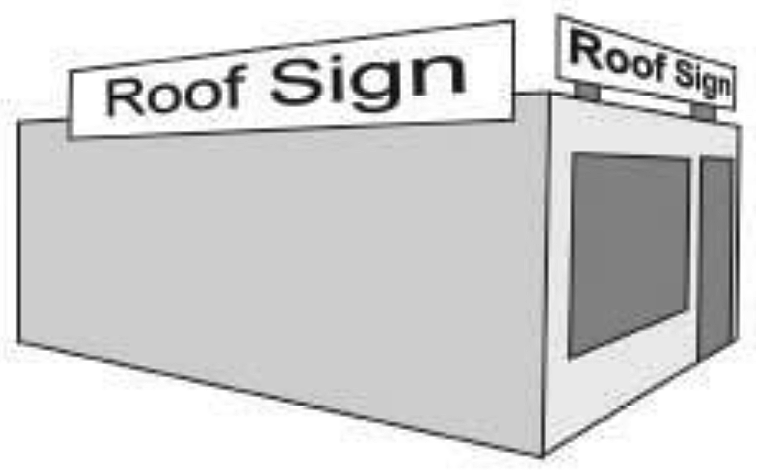
Roof-Mounted Signs: Signs that are mounted to the roof of a structure or are mounted to the wall of a structure and extend higher than that wall.
9.
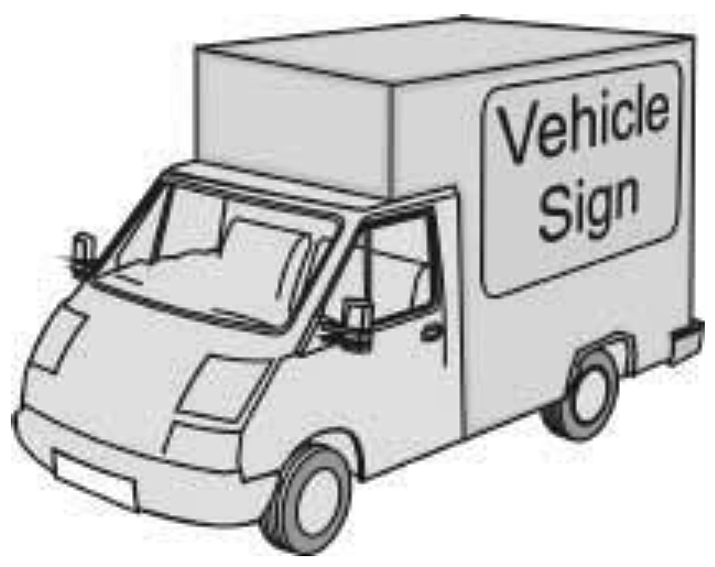
Vehicle Signs: Signs placed on vehicles parked on public or private property primarily for the purpose of displaying the sign. Prohibited signs do not include those displayed on vehicles parked for the purpose of lawfully making deliveries or random sales or service. Prohibited signs do not include vehicles which are customarily used for transporting persons or properties, and vehicles parked at a driver's place of residence during non-business hours or for incidental purposes.
10.
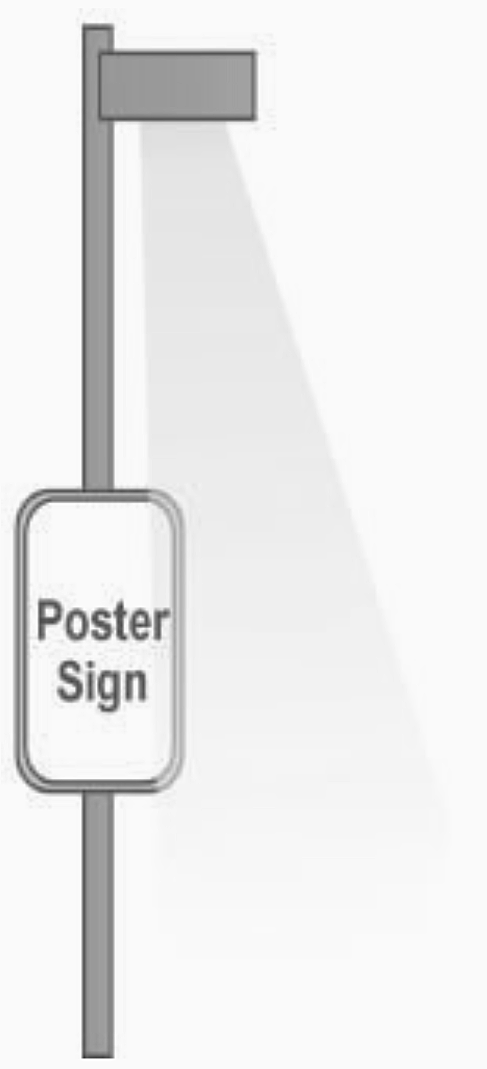
Poster Signs: Posters, placards and other similar signs attached to light poles, gas station canopy supports, trees, and elsewhere outdoors that are not included as permitted temporary or permanent signs as described by this chapter.
11.
Public Area Signs: No sign shall be placed in or on any right-of-way, curb, sidewalk, post, pole, hydrant, bridge, tree or other surface located in the public right-of-way, except as otherwise expressly authorized by this code.
(Ord. No. 2012-19, § 1(Exh. A), 7-16-2012)
17.36.020 - Residential
These Sign Standards apply to the agricultural, single-family residential, and multi-family residential zoning districts:
A.
General Signs: Every property shall be permitted signs that meet the following standards. No permit shall be required.
1.
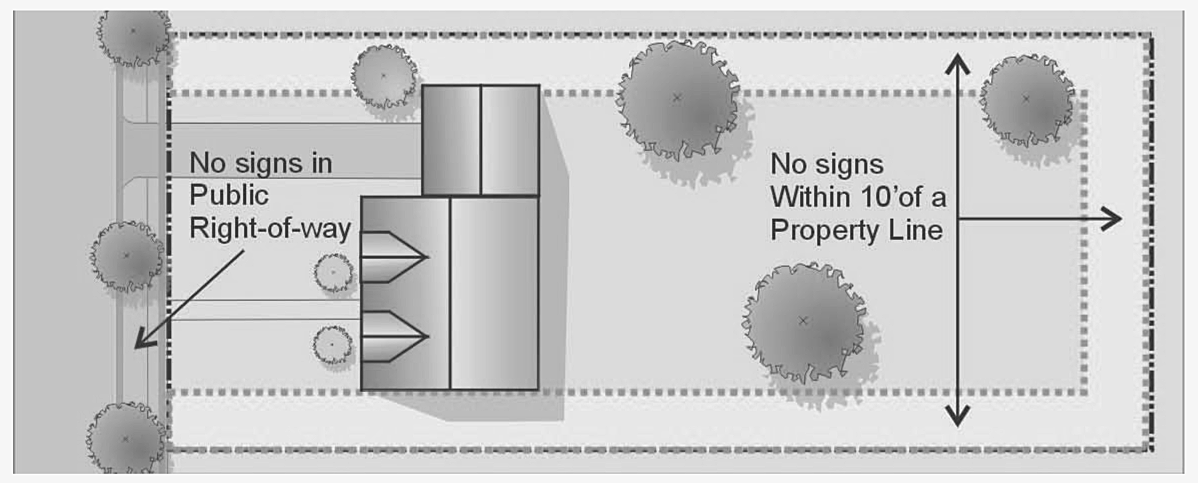
Dimensions: No sign shall be greater six square feet in face area or four feet in height. In no case may mounding or other alterations of the natural ground level be used as a point of reference for measuring the height of outdoor signs.
2.
Setback: No sign shall be located in a public right-of-way or closer than ten (10) feet to any other property line.
General Sign Note: The general sign provisions are intended to accommodate political signs, contractor signs, "yard cards" and other similar types of signs.
B.
Identification Signs: In addition to those specified in A. above, one permanent sign not exceeding a combined area of two square feet is permitted on the primary structure. No illumination is permitted. No permit is required.
C.
Subdivision/Facility Entry Signs: Two entry signs are permitted at each entrance to a subdivision, apartment complex, or other residential development. A permit shall be required.
1.
Face Area: No sign shall exceed thirty-two (32) square feet in area.
2.
Height: No sign shall exceed six feet in height, measured from ground level. In no case may mounding or other alterations of the natural ground level be used as a point of reference for measuring sign height.
3.
Setback: Each sign shall be set back a minimum of two feet from the right-of-way of any public street. Entry signs placed in the right-of-way of a public street, such as in the median of a boulevard street, shall be prohibited.
4.
Features: Each entry sign area should incorporate design features such as decorative brick or stone and landscaping.
D.
Model Home Signs: In addition to those described above, model homes shall be permitted signs meeting the requirements of Section 17.32.040.
E.
Temporary Signs: Temporary signs larger than six square feet but no larger than thirty-two (32) square feet shall be permitted for a period of seven days, four times per year. Messages shall be permanently affixed and no permit shall be required.
17.36.030 - Nonresidential sign standards.
Part 1: Nonresidential Temporary Signs. These sign standards apply to all temporary signs in all nonresidential zoning districts.
A.
All non-residential zoning districts except those within the downtown overlay district: The following applies to all temporary signage in all nonresidential zones, other than the DT-OL district.
1.
Banners: Shall be permitted provided they meet the following guidelines:
a.
Maximum size of thirty-two (32) square feet.
b.
Only one banner permitted per business use.
c.
Messages shall be permanently affixed with no changeable copy.
d.
All parts of any freestanding banner shall be a minimum of five feet from the right-of-way.
e.
Signs shall not be illuminated in any way.
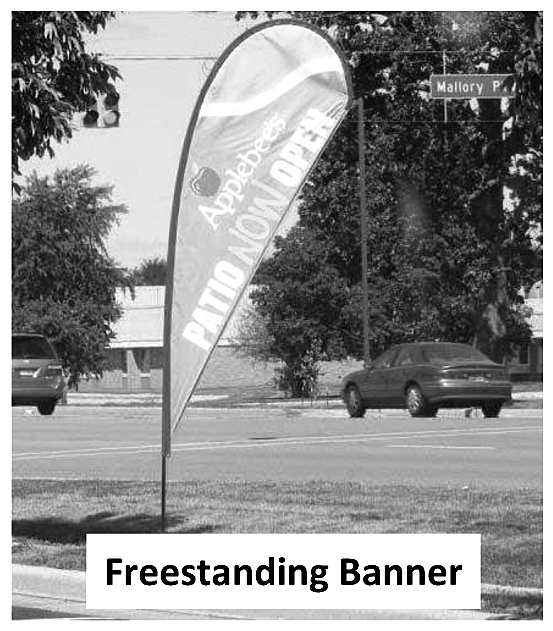
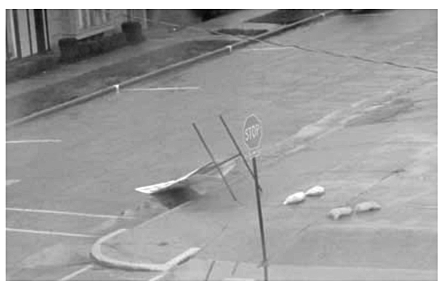
Freestanding banner within 10' of right-of-way

Wall Mounted Banner

Yard Card Banner
2.
A-Frame Signs: Shall be permitted provided they meet the following guidelines:
a.
Maximum size of eight square feet.
b.
Must be located with five feet of main entrance.
c.
No permit shall be required.
d.
One sign permitted per business use.

A-Frame Sign
3.
Other Portable Signs: Freestanding signs that are temporary in nature, may be easily moved and not specifically mentioned above:
a.
Yard Signs (under six square feet):
1.
Permitted for ninety (90) days per year.
2.
Up to two signs may be permitted per business use at any one time.
3.
No permit shall be required.
4.
Messages shall be permanently affixed with no changeable copy.
5.
Shall be located a minimum of five feet from any property line.
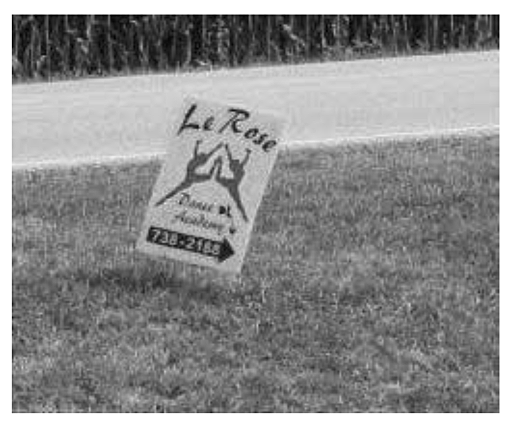
Yard Sign
b.
Changeable Copy Signs: Shall include any portable type signs with changeable copy.
1.
Maximum size of twelve (12) square feet.
2.
Permitted for a period of seven days, four times per calendar year, with a minimum of fourteen (14) days between permits.
3.
A permit shall be required for each seven day period.
4.
Signs may be illuminated consistent with the exterior lighting standards of chapter 17.32 of this title. In no instance shall any temporary sign use flashing, blinking or any other effect prohibited by this chapter.
5.
Shall be located a minimum of five feet from any property line.
6.
No sign manufactured, designed and otherwise intended for use as a temporary sign shall be used as a permanent sign.
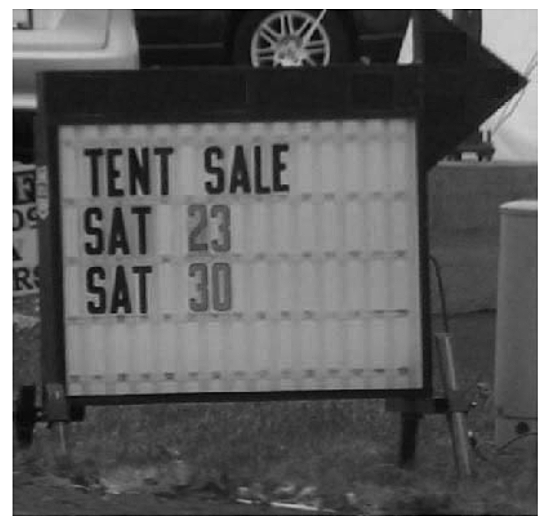
Changeable Copy—Portable Sign
4.
Window Signs: Window signage shall be permitted provided they meet the following guidelines:
a.
Maximum coverage of 25% of total glass area.
b.
No permit shall be required.
B.
Downtown Overlay District: All nonresidential zoning districts that lie within the DT-OL:
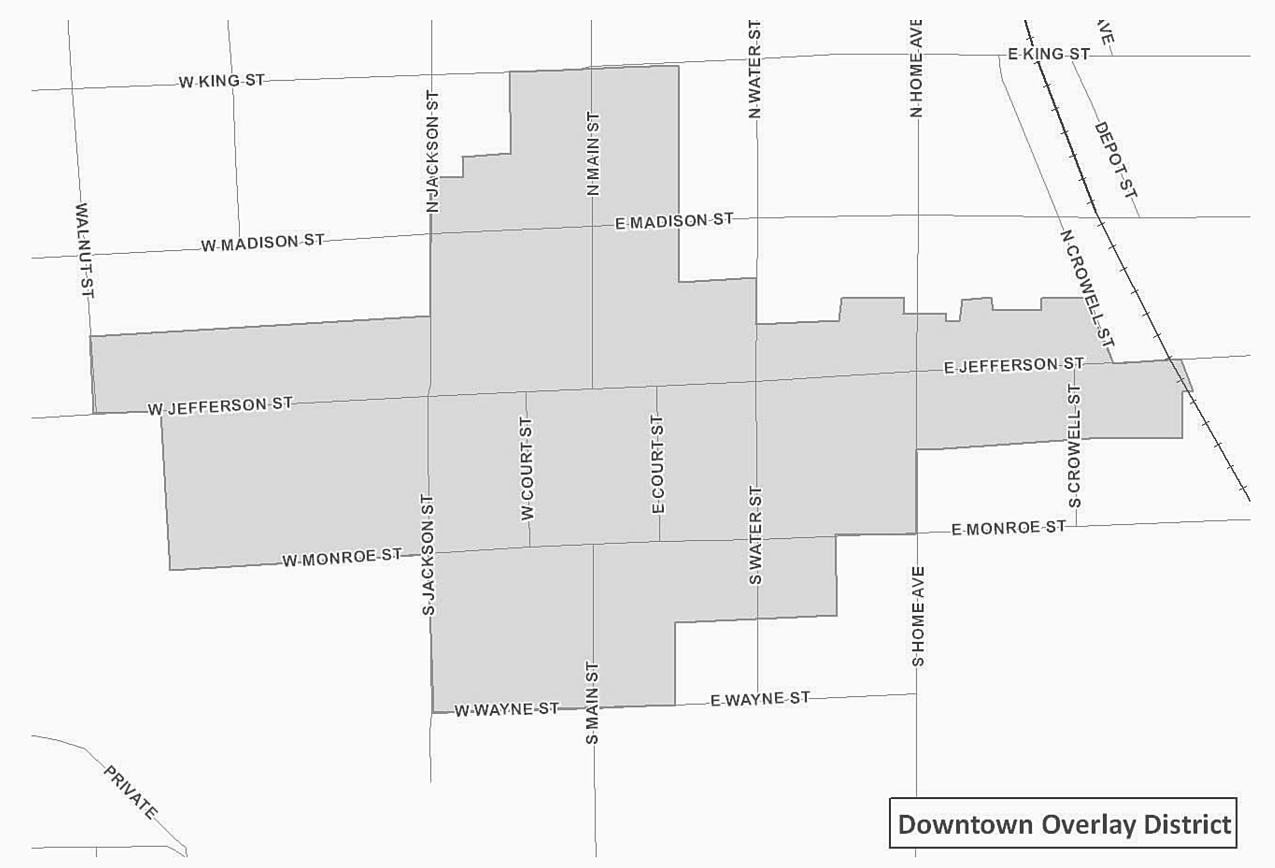
The following applies to all temporary signage in all nonresidential zones within the downtown overlay district.
1.
Banners: Shall be permitted provided they meet the following guidelines:
a.
Maximum size of thirty-two (32) square feet.
b.
Only one banner permitted per business use.
c.
All parts of any freestanding banner shall be a minimum of five feet from the right-of-way.
d.
Messages shall be permanently affixed with no changeable copy.
e.
Signs shall not be illuminated in any way.
2.
A-Frame Signs: Shall be permitted provided they meet the following guidelines:
a.
Maximum size of eight square feet.
b.
Maximum width of sign is two feet.
c.
Must be located within ten (10) feet on main entrance.
d.
No permit shall be required.
e.
One sign permitted per business use.
3.
Other Portable Signs: All other portable type signs are prohibited.
4.
Window Signs: Window signage shall be permitted provided they meet the following guidelines:
a.
Maximum coverage of twenty-five (25) percent of total glass area.
b.
No permit shall be required.
Part 2: Nonresidential Permanent Signs. These sign standards apply to all permanent signs to all mixed-use and industrial zoning districts. Sign permits shall be required for each of the following signs unless otherwise notified.
A.
Sign Area: The total square footage of sign face area allowed for each business use shall be determined by the length of the front facade of the building that is occupied by that use as specified in the permitted signs table.
1.
Corner Properties: Corner properties may use only the largest frontage for the purpose of sign area calculation, however, signs may be placed on any building side.
2.
Over-riding Limitation: In no instance shall any legally established parcel or single business use be limited to less than fifty (50) square feet of signage, regardless of the presence of a building or the amount of building frontage.
B.
Freestanding Signs: Permanent signs that are not attached to any building or other structure.
1.
Only one freestanding sign per parcel, with the following exceptions:
a.
Parcels over 5 acres in size and contain multiple street frontages are allowed one additional freestanding sign that does not count against the maximum total number of signs allowed.
2.
All parts of all freestanding signs must be located a minimum of ten (10) feet from the public right-of-way.
3.
Signs may be pole or monument type.
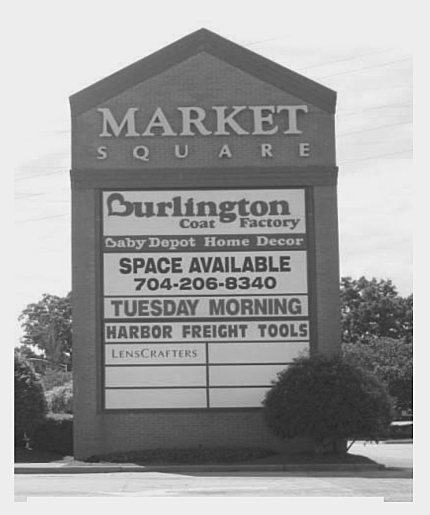
Monument Sign
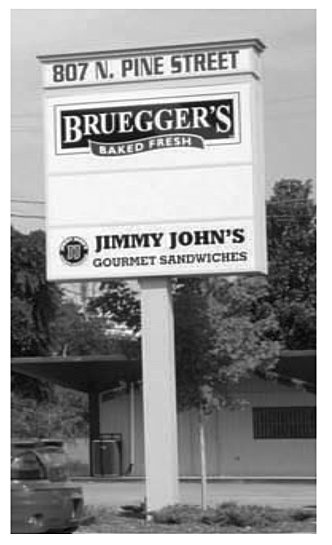
Pole Sign
C.
Wall Signs: Any sign attached to or painted on the façade of the primary structure and does not project more than twelve (12) inches.

Wall Sign
D.
Awning Signs: Any awning containing words and/or logos incorporated into the awning shall be considered an awning sign. Only the advertising area shall be measured for size requirements.

Awning Sign
E.
Projecting Signs: Signs which are attached to the façade of the main building and project more than twelve (12) inches.
1.
Any projecting sign must be a minimum of eight and one-half feet above grade level.
2.
Only one projecting sign shall be permitted per business use.
Projecting Sign Note: Signs that project into the right-of-way of a public street shall require the approval of the Franklin board of public works and safety.
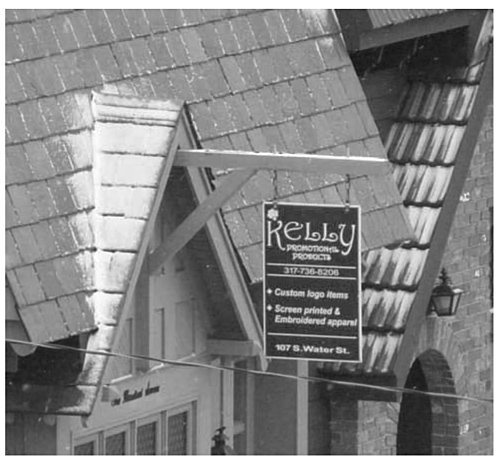
Projecting Sign
F.
Changeable Copy Signs: Signs either incorporated into a pole or monument sign or permanently attached as a wall sign.
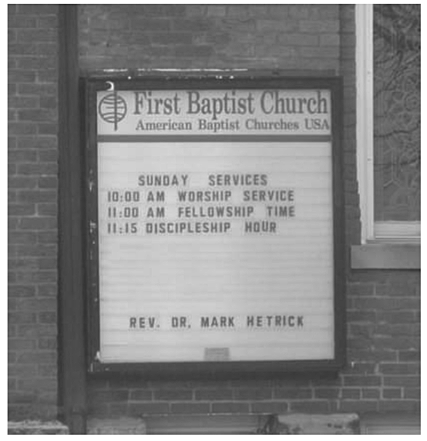
Changeable Copy
G.
Electronic Message Board Signs: Shall be permitted if the following conditions are met:
1.
Each frame must be static for a minimum of eight (8) seconds; and
2.
No flashing, scrolling or other animation is permitted.
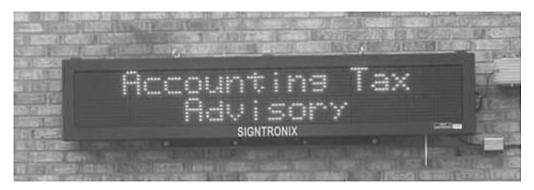
Electronic Message Board
H.
Signs for Upper Floor Uses: Signage for upper floor uses shall be permitted in addition to the signage for ground floor uses, subject to the following standards. A permit shall be required.
1.
Single Upper-Floor Uses: If the upper-floors of any structure are occupied by a single use that is separate and distinct from any use located on the ground floor, that use shall be permitted wall signs not exceeding a total of one and one-half square feet for every one linear foot of building frontage, with a maximum of one hundred (100) square feet allowed.
2.
Multiple Upper-Floor Uses: If the upper-floors of any structure are occupied by multiple uses, separate and distinct from any use located on the ground floor, a multi-tenant joint wall sign shall be provided. The size shall average ten (10) square feet for upper-floor business use, with a maximum of one hundred (100) square feet allowed.
Off-Premise and "Billboard" Sign Note: These sign standards establish a maximum allotment of signage that may be installed on each property for each zoning district. In no instance shall these regulations be interpreted as limiting the content of any type of sign. Billboards and other off-premise signs are permitted, but shall be counted against the allotment of signage provided to each property. In no instance shall a billboard or other off-premise sign be interpreted as being permitted in addition to the signage permitted per property.
I.
Signs for Residential Uses: Residential uses located within a mixed use or industrial zoning district shall be permitted signs consistent with the provisions of section 17.36.020.
J.
Multi-Tenant Joint Signs: Structures and/or centers containing multiple businesses shall establish one freestanding sign for the structure for the joint use of all tenants for which the facility is designed, including outlots. The use of individual freestanding signs for each tenant, including those on outlots, is prohibited. Shall not count toward total square footage of signage allowed.
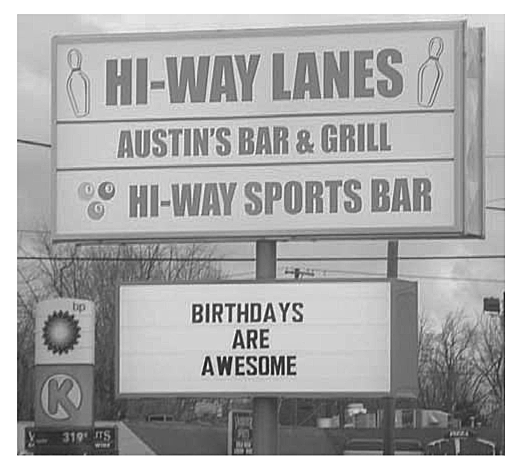
Multi-Tenant Joint Sign
Part 3: Institutional Sign Standards. These institutional permanent sign standards apply to the institutional zoning district. The following sign regulations shall apply. All signs require a permit unless otherwise specified.
A.
Maps and Directories: All maps, directories, and other pedestrian directional signs may be placed without a permit. Each sign shall be set back a minimum of two feet from all public rights-of-way, and shall not exceed eight feet in height or thirty-two (32) square feet in area.
B.
Identification Signs: Signs identifying the facility may be located at its entrances.
1.
Location: There shall be no limit to the number of locations at which identification signs may be placed; however, generally no more than one sign shall be placed at any one location. A maximum of two (2) signs may be placed at any one location if they are used to create an entrance.
2.
Setback: No such sign shall be located closer than ten (10) feet to a public right-of-way.
3.
Height and Area: No such sign shall exceed ten (10) feet in height or eighty (80) square feet in area.
4.
Electronic Message Board: Identification sign may include an electronic message board if the following conditions are met:
a.
Each frame must be static for a minimum of eight (8) seconds; and
b.
No flashing, scrolling or other animation is permitted.
C.
Structure Identification Signs: Signs identifying individual structures at the facility may be placed as a wall sign and/or a free-standing sign.
1.
Wall Sign: Wall signs shall be located on the facade of the structure.
2.
Free-standing Sign: Free-standing signs shall be placed a minimum of 10 feet from all public rights-of way, and shall not exceed six feet in height.
3.
Sign Area: No sign shall exceed one hundred (100) square feet in area.
Permitted Nonresidential Sign Chart
*Includes electronic message board type signs
(Ord. No. 2012-19, § 1(Exh. A), 7-16-2012; Ord. No. 2014-10, § 1(Exhs. B, C), 7-7-2014)

