
Geneva City Zoning Code
CHAPTER 4A
DOWNTOWN DISTRICTS
SECTION:
11-4A-1: - PURPOSE:
The downtown districts are intended to implement the vision and specific objectives contained in the Downtown Station-Area Master Plan. Zoning for downtown Geneva is intended to maintain a vibrant, mixed use district through the protection and adaptive reuse of its historic buildings, while allowing new uses and structures that are compatible with and contribute to the historic character of the downtown. Downtown will continue to provide for commuter train and other public transportation options, a vibrant mix of housing and pedestrian-oriented shopping. The intent is to encourage transit-supportive land use that promotes a compact pedestrian oriented design.
Goals and objectives for development within the downtown districts include:
A.
Preserve the authentic character of the downtown while accommodating new infill development;
B.
Establish clear standards and a streamlined development review process to encourage investment in the downtown;
C.
Provide a balance of uses that meet daily needs of residents and provide unique, high quality retail and regional entertainment destinations;
D.
Maintain the downtown as the civic heart of the city;
E.
Encourage diversity of residential development types downtown;
F.
Enhance access for pedestrians and bicyclists to the downtown, and particularly to transit facilities;
G.
Consolidate parking areas and place dwellings, shops, and workplaces in close proximity to each other;
H.
Promote energy conservation, natural area preservation, and sustainable community living.
(Ord. No. 2019-17, § 25, 8-5-2019)
11-4A-2: - RELATED REGULATIONS AND REQUIREMENTS:
Other pertinent regulations contained within this title and other provisions of this code that shall be observed in the downtown districts include, but are not limited to:
A.
Fences and walls, section 11-3-5 of this title.
B.
Performance standards, requirements of the Illinois Environmental Protection Agency and section 11-4-4 of this title.
C.
Special district design standards, section 11-4-5 of this title.
D.
Historic preservation overlay district, chapter 8, article B of this title and chapter 6 of title 10.
E.
Landscape and site design, chapter 10 of this title.
F.
Tree preservation, chapter 10A of this title.
G.
Off-street parking, loading, and traffic and access regulations, chapter 11 of this title.
H.
Signs, chapter 12 of this title.
I.
Site plan review chapter 14, article A of this title.
(Ord. No. 2019-17, § 25, 8-5-2019)
11-4A-3: - ACCESSORY BUILDINGS AND USES:
Accessory buildings and uses are allowed in the downtown districts, incidental to and on the same zoning lot as a principal use in accordance with sections 11-3-3 and 11-3-4 of this title.
(Ord. No. 2019-17, § 25, 8-5-2019)
11-4A-4: - TABLE OF PERMITTED AND SPECIAL USES:
A.
Land uses (permitted or special) which are not contained by name in the Table of Permitted and Special Uses but are deemed to be substantially similar in nature to listed permitted or special uses shall be subject to review by the director of community development (director). If the director determines the use could be considered as a special use, such use must follow the procedures for a special use as set forth in chapter 14, section 11-14-4 of this title. If the director determines that an unlisted use is prohibited, the applicant can appeal such decision in accordance with the procedures of chapter 14, section 11-14-7 of this title. All unlisted uses which are approved by the planning and zoning commission shall be added to the Table of Use Regulations by Ordinance.
(B)
Table of Permitted and Special Uses.
(Ord. No. 2019-17, § 25, 8-5-2019; Ord. No. 2019-29, § 3, 12-9-2019; Ord. No. 2022-24, § 1, 5-16-2022; Ord. No. 2024-47, § 8, 10-21-2024)
11-4A-5: - ARTICULATION:
Articulation is a method of styling joints in architectural design. The design typically involves adding depth to break up a monotonous and unappealing structure. The building form regulations within this section regulate which types of articulation are required for each district. The types of articulation include the base, corner, and entrance of certain buildings. The graphics below illustrate the various types of articulated structures.
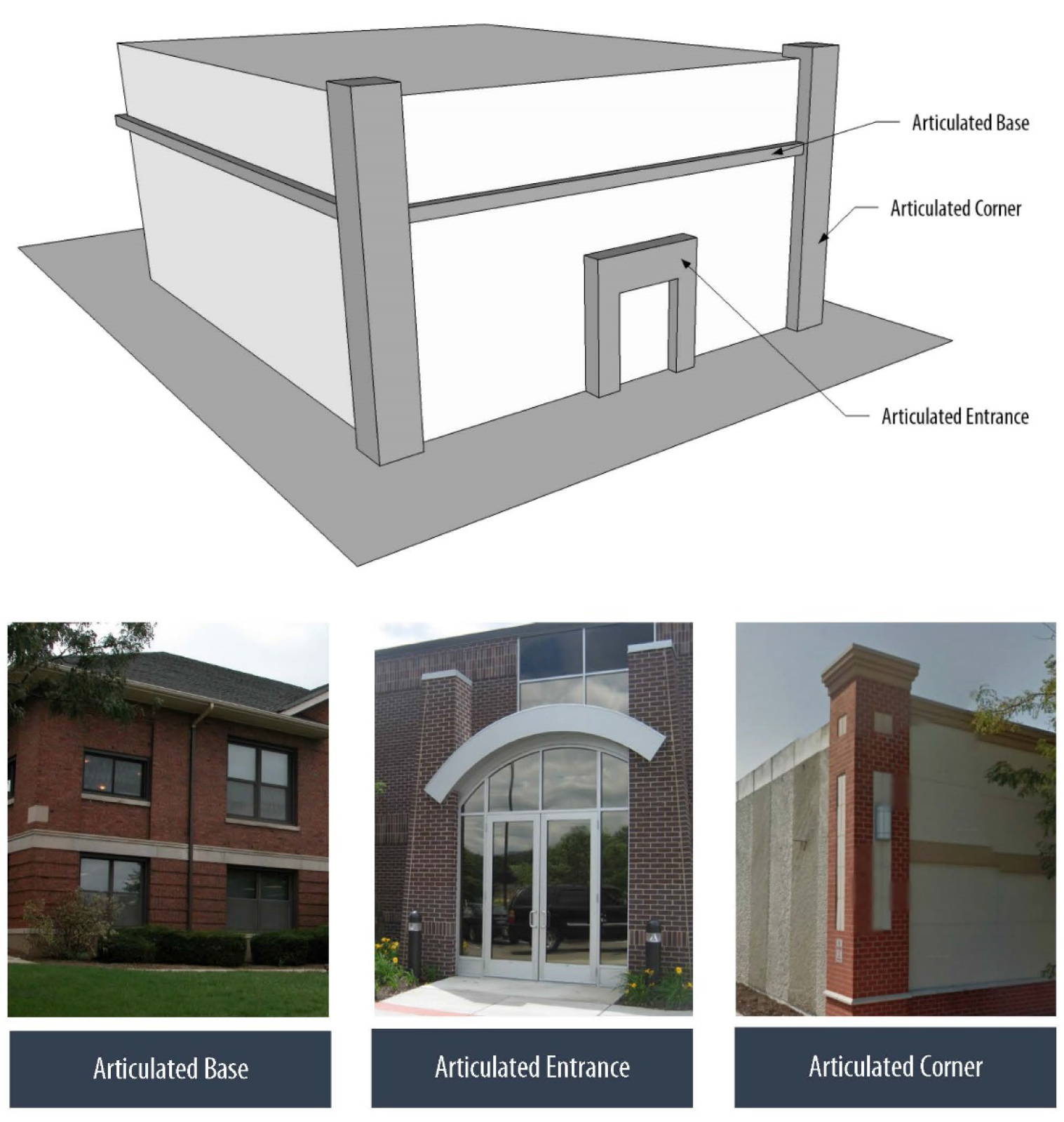
(Ord. No. 2019-17, § 25, 8-5-2019)
11-4A-6: - D-SFMR SINGLE-FAMILY MEDIUM DENSITY RESIDENTIAL DISTRICT:
BUILDING PLACEMENT:
BONUS: The maximum lot coverage for a single-family dwelling may be increased by five percent (5%) if the dwelling provides a side loaded attached garage, rear loaded attached garage, tandem attached garage, or detached garage located in the rear yard. In order to qualify for the side/rear/tandem garage bonus, the garage shall not project in front (toward the street) of the portion of the first floor livable floor area located adjacent to the street yard. In order to qualify for the detached garage bonus, the garage may not be less than ten feet (10') from the dwelling on lots twenty thousand (20,000) square feet or larger and not less than five feet (5') from the dwelling on lots less than twenty thousand (20,000) square feet. No more than one (1) bonus may be applied to a lot.
1 Exceptions: New single-family dwellings or additions to existing single-family dwellings on interior lots within the D-SFMR district shall be no closer to the front lot line than the average front setback of the adjacent dwellings on either side of the subject lot on the same block and on the same side of the street as the subject lot. In no case, however, shall the required setback be less than twenty feet (20') nor greater than forty feet (40'). Where an adjacent lot is vacant, the minimum district setback of twenty feet (20') shall be used to calculate the average setback for a vacant lot.
The street setbacks for new single-family dwellings or additions to single-family dwellings on corner lots within D-SFMR district shall be as follows: The street setback from a front lot line shall be the same as the street setback from the front lot line of the adjacent dwelling, but in no case shall be setback be less than twenty feet (20') nor greater than forty feet (40'). Any street setback that is not to a front lot line shall be twenty feet (20').
OFF-STREET PARKING PLACEMENT:
GARAGE STANDARDS:
Any garage that does not qualify for a lot coverage bonus shall have no more than one (1) two-car garage door or two (2) one-car garage doors facing a front lot line.
DRIVEWAY STANDARDS:
Driveways shall not be located closer than five feet (5') from an adjoining property line. No driveway shall be wider than twenty-four feet (24') at the lot line.
FLOOR AREA:
The maximum floor area of a residential use shall be as set forth in section 11-5-6 "Maximum Floor Area Table". Refer to the definition of maximum floor area for residential uses in the D-SFMR district in section 11-2-2 to obtain method for calculating floor area.
BONUS: The maximum floor area may be increased by two hundred fifty (250) square feet on lots between zero (0) and nine thousand nine hundred ninety-nine (9,999) square feet in size or by three hundred (300) square feet on lots ten thousand (10,000) square feet or larger if the dwelling provides a side loaded attached garage, rear loaded attached garage or tandem attached garage.
The maximum floor area may be increased by four hundred (400) square feet on lots between zero (0) and nine thousand nine hundred ninety-nine (9,999) square feet in size or by five hundred (500) square feet on lots ten thousand (10,000) square feet or larger if the dwelling provides a detached garage in the rear yard.
PERMITTED USES:
Refer to section 11-4A-4, Table of Permitted and Special Uses.
NONRESIDENTIAL USES:
Shall comply with the regulations established herein, except that the maximum building height shall be thirty-five feet (35'), the maximum lot coverage shall be forty percent (40%), and there shall be no maximum floor area ratio.
ACCESSORY USES:
Accessory uses and buildings shall meet the requirements of sections 11-3-3 and 11-3-5 of this title.
BUILDING HEIGHT:
Exceptions:
2 The maximum building height of a single-family dwelling may be increased one foot (1') for every two feet (2') of increase in both side yard setbacks (or in both a side yard setback and a street yard setback on corner lots) above the required setback to a maximum of thirty-seven feet (37').
3 The maximum building height of a single-family dwelling may be increased one foot for every three feet (3') of increase in both side yard setbacks (or in both a side yard setback and a street yard setback on corner lots) above the required setback to a maximum of thirty-eight feet (38').
ARCHITECTURAL STANDARDS:
Porch: May encroach into the required street setback area up to a maximum of eight feet (8').
Stoop: May encroach into the required street setback area up to a maximum of five feet (5').
Stairs: May encroach into the required setback but may not be less than one foot (1') from lot line or more than four feet (4') above the established grade. Such encroachment shall be necessary for access to a structure or from a public right-of-way.
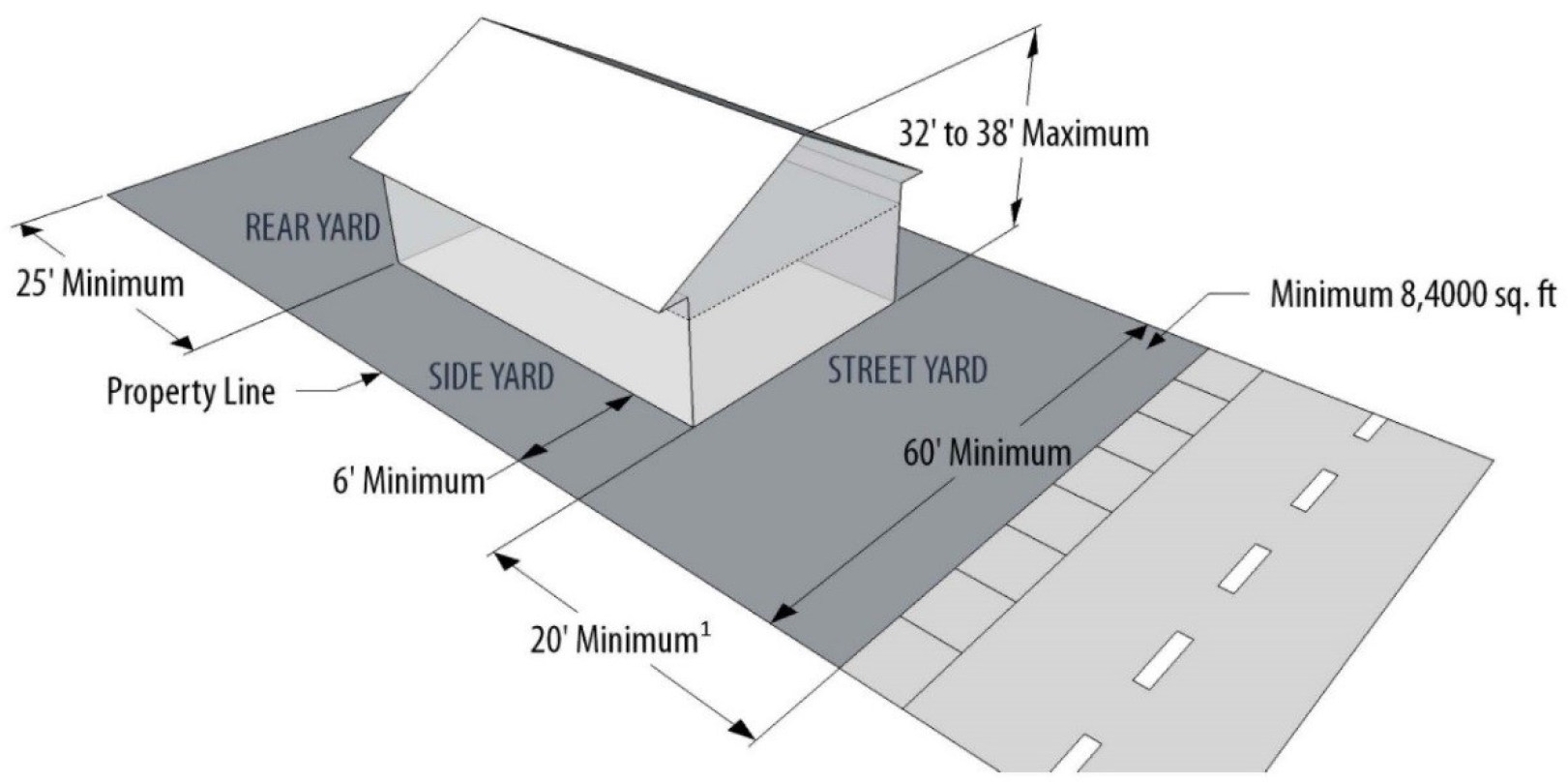
D-SFMR Single-Family Medium Density Residential District Illustration:
(Ord. No. 2019-17, § 25, 8-5-2019)
11-4A-7: - D-SFHR SINGLE-FAMILY HIGH DENSITY RESIDENTIAL DISTRICT
BUILDING PLACEMENT:
BONUS: The maximum lot coverage for a single-family dwelling may be increased by 5% if the dwelling provides a side loaded attached garage, rear loaded attached garage, tandem attached garage, or detached garage located in the rear yard. In order to qualify for the side/rear/tandem garage bonus, the garage shall not project in front (toward the street) of the portion of the first floor livable floor area located adjacent to the street yard. In order to qualify for the detached garage bonus, the garage may not be less than 10 feet from the dwelling on lots 20,000 square feet or larger and not less than 5 feet from the dwelling on lots less than 20,000 square feet. No more than 1 bonus may be applied to a lot.
1 Exceptions: New single-family dwellings or additions to existing single-family dwellings on interior lots within the D-SFHR district shall be no closer to the front lot line than the average front setback of the adjacent dwellings on either side of the subject lot on the same block and on the same side of the street as the subject lot. In no case, however, shall the required setback be less than 20 feet nor greater than 40 feet. Where an adjacent lot is vacant, the minimum district setback of 20 feet shall be used to calculate the average setback for a vacant lot.
The street setbacks for new single-family dwellings or additions to single-family dwellings on corner lots within D-SFHR district shall be as follows: The street setback from a front lot line shall be the same as the street setback from the front lot line of the adjacent dwelling, but in no case shall be setback be less than 20 feet nor greater than 40 feet. Any street setback that is not to a front lot line shall be 20 feet.
OFF-STREET PARKING PLACEMENT:
GARAGE STANDARDS:
Any garage that does not qualify for a lot coverage bonus shall have no more than one (1) two-car garage door or two (2) one-car garage doors facing a front lot line.
DRIVEWAY STANDARDS:
Driveways shall not be located closer than five feet (5') from an adjoining property line. No driveway shall be wider than twenty-four feet (24') at the lot line.
FLOOR AREA:
The maximum floor area of a residential use shall be as set forth in section 11-5-6 "Maximum Floor Area Table". Refer to the definition of maximum floor area for residential uses in the D-SFHR district in section 11-2-2 to obtain method for calculating floor area.
BONUS: The maximum floor area may be increased by two hundred fifty (250) square feet on lots between zero (0) and nine thousand nine hundred ninety-nine (9,999) square feet in size or by three hundred (300) square feet on lots ten thousand (10,000) square feet or larger if the dwelling provides a side loaded attached garage, rear loaded attached garage or tandem attached garage.
The maximum floor area may be increased by four hundred (400) square feet on lots between zero (0) and nine thousand nine hundred ninety-nine (9,999) square feet in size or by five hundred (500) square feet on lots ten thousand (10,000) square feet or larger if the dwelling provides a detached garage in the rear yard.
PERMITTED USES:
Refer to section 11-4A-4, Table of Permitted and Special Uses.
NONRESIDENTIAL USES:
Shall comply with the regulations established herein, except that the maximum building height shall be thirty-five feet (35'), the maximum lot coverage shall be forty percent (40%), and there shall be no maximum floor area ratio.
ACCESSORY USES:
Accessory uses and buildings shall meet the requirements of sections 11-3-3 and 11-3-5 of this title.
BUILDING HEIGHT:
Exceptions:
2 The maximum building height of a single-family dwelling may be increased one foot (1') for every two feet (2') of increase in both side yard setbacks (or in both a side yard setback and a street yard setback on corner lots) above the required setback to a maximum of thirty-seven feet (37').
3 The maximum building height of a single-family dwelling may be increased one foot (1') for every three feet (3') of increase in both side yard setbacks (or in both a side yard setback and a street yard setback on corner lots) above the required setback to a maximum of thirty-eight feet (38').
ARCHITECTURAL STANDARDS:
Porch: May encroach into the required street setback area up to a maximum of eight feet (8').
Stoop: May encroach into the required street setback area up to a maximum of five feet (5').
Stairs: May encroach into the required setback but may not be less than one foot (1') from lot line or more than four feet (4') above the established grade. Such encroachment shall be necessary for access to a structure or from a public right-of-way.
D-SFHR Single-Family High Density Residential District
Illustration: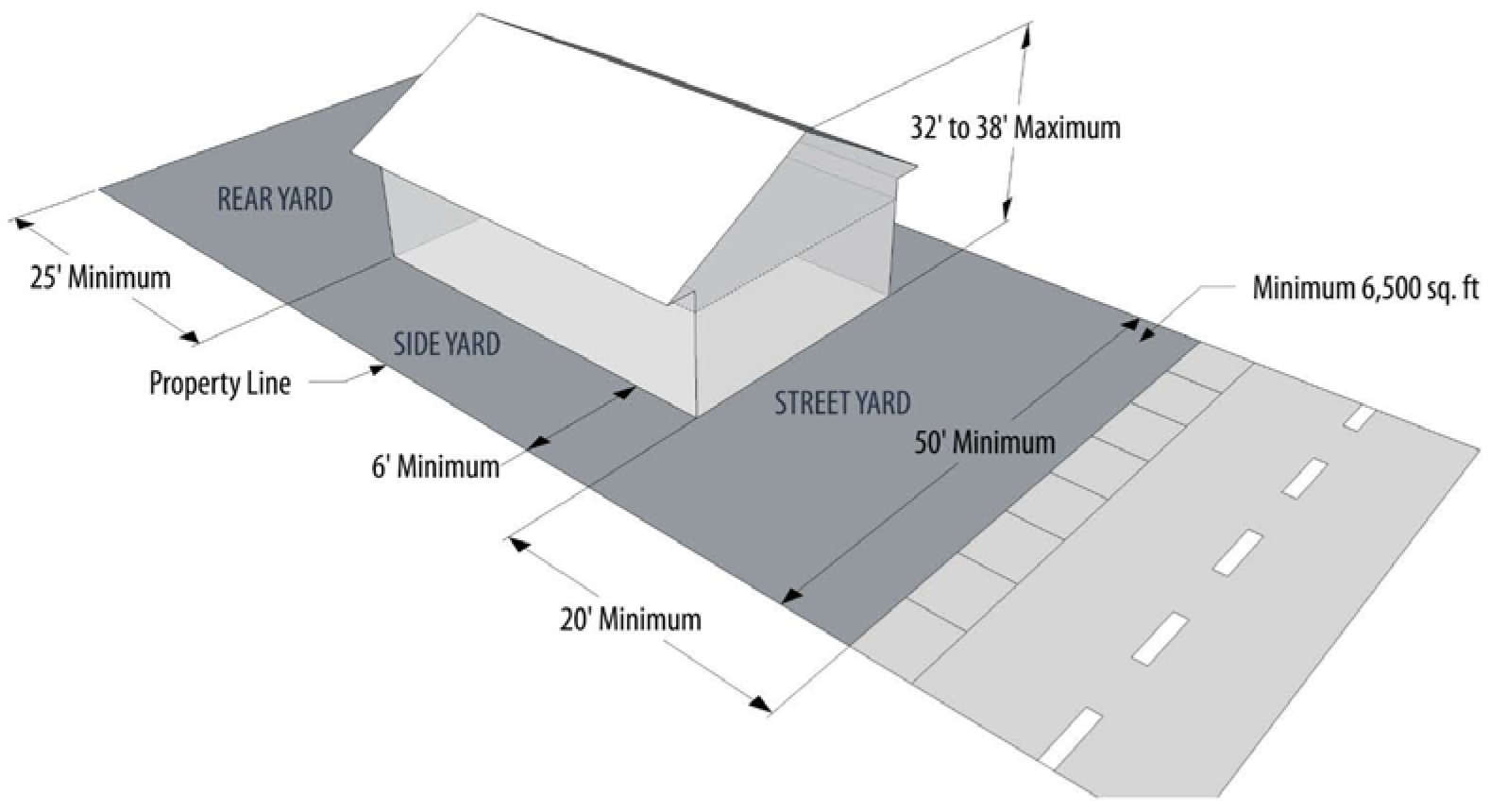
(Ord. No. 2019-17, § 25, 8-5-2019)
11-4A-8: - D-MHR MIXED HIGH DENSITY RESIDENTIAL DISTRICT:
BUILDING PLACEMENT:
1 Exceptions: The minimum street setback may be reduced to ten feet (10') for attached dwellings which provide a rear loaded garage.
ARCHITECTURAL STANDARDS:
Porch: May encroach into the required street setback area up to a maximum of eight feet (8'). In no case shall the porch be located closer than ten feet (10') to the street yard property line.
Stoop: May encroach into the required street setback area up to a maximum of five feet (5'). In no case shall the stoop be located closer than ten feet (10') to the street yard property line.
Stairs: May encroach into the required setback but may not be less than one foot (1') from lot line or more than four feet (4') above the established grade. Such encroachment shall be necessary for access to a structure or from a public right-of-way.
OFF-STREET PARKING PLACEMENT:
DRIVEWAY STANDARDS:
Driveways shall not be located closer than five feet (5') from an adjoining property line. No driveway shall be wider than twenty-four feet (24') at the lot line.
PERMITTED USES:
Refer to section 11-4A-4, Table of Permitted and Special Uses.
NONRESIDENTIAL USES:
Shall comply with the regulations established herein.
ACCESSORY USES:
Accessory uses and buildings shall meet the requirements of sections 11-3-3 and 11-3-5 of this title.
D-MHR Mixed High Density Residential District Illustration: Front Load Garage Example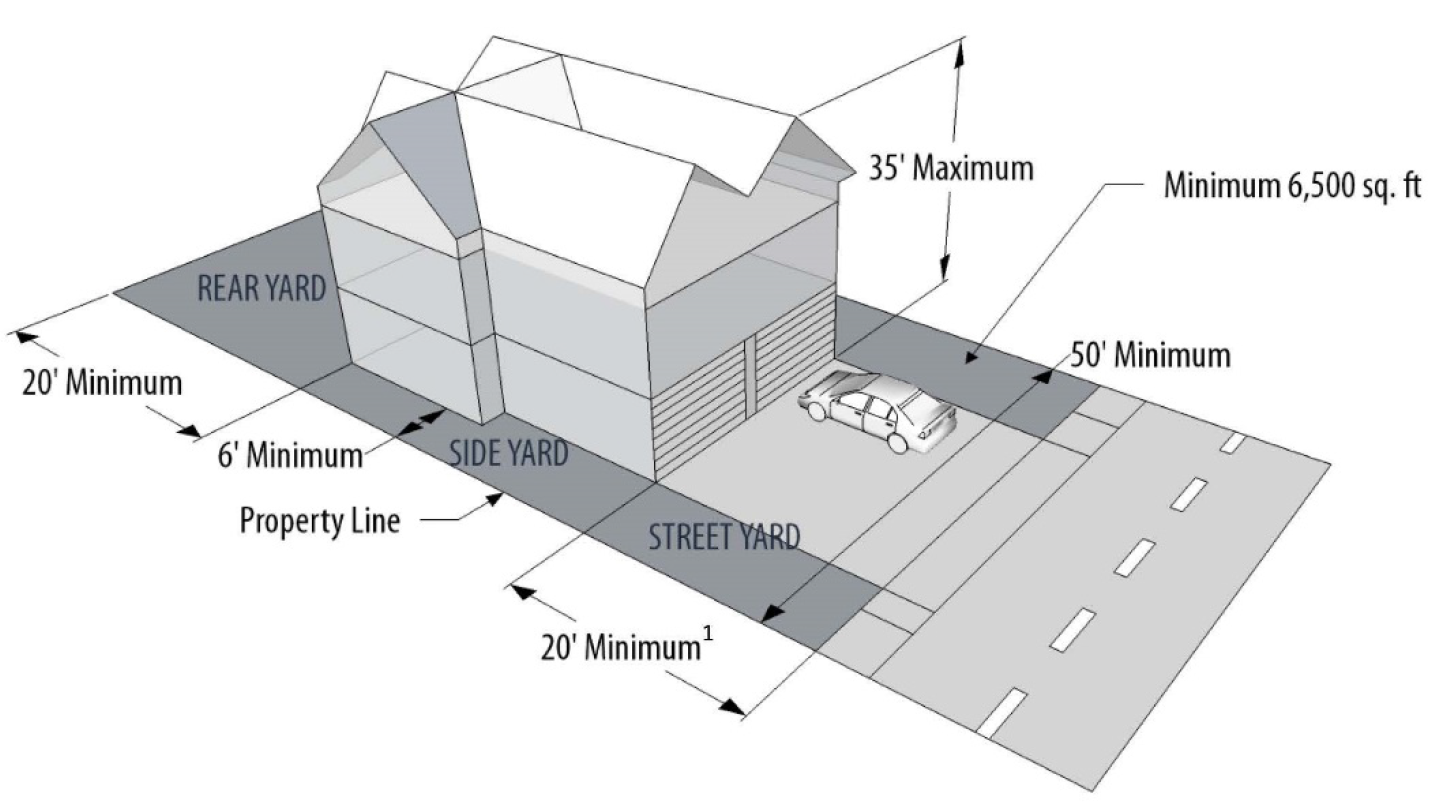
D-MHR Mixed High Density Residential District Illustration: Rear Load Garage Example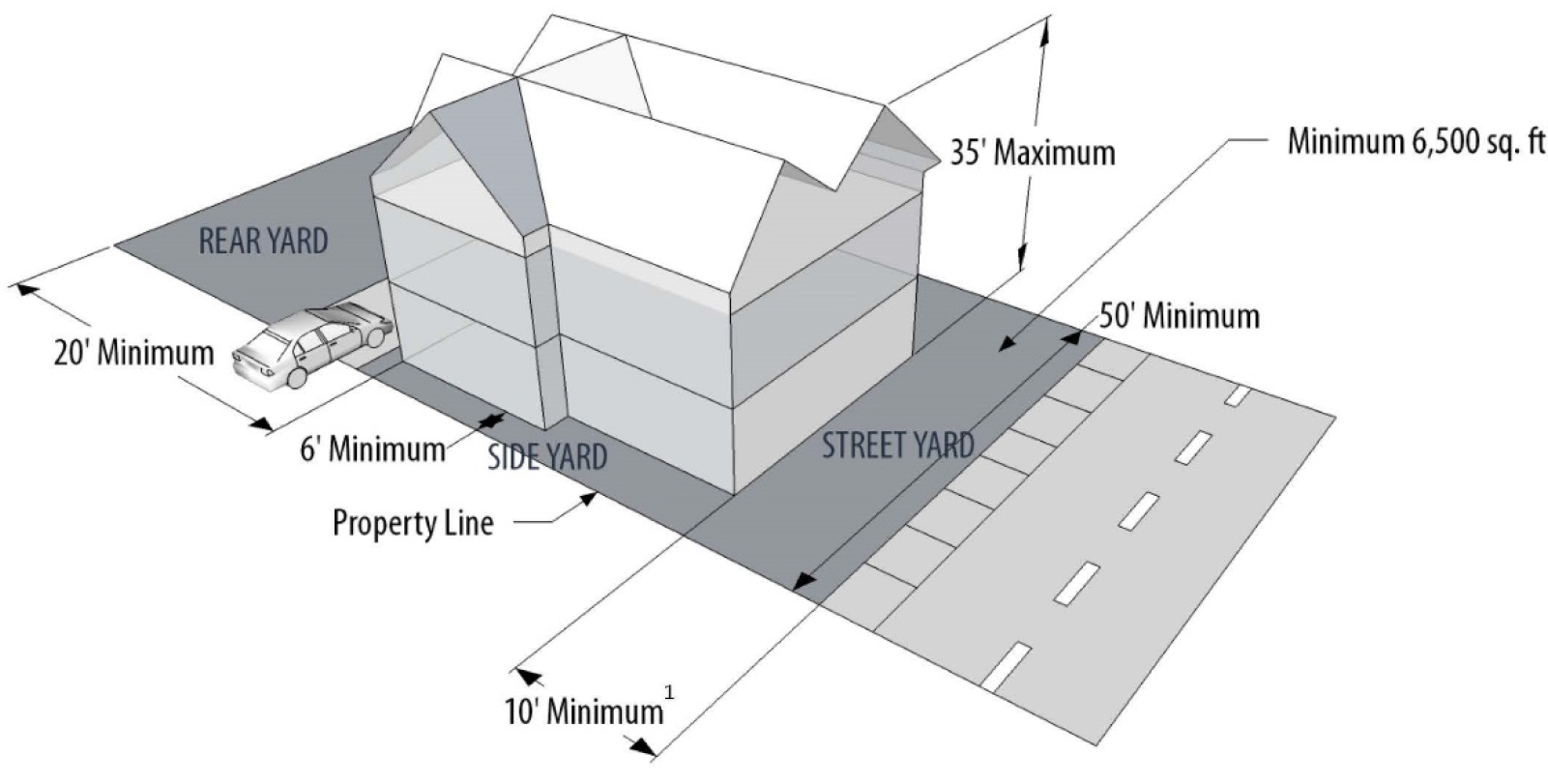
(Ord. No. 2019-17, § 25, 8-5-2019)
11-4A-9: - D-MFR MULTIPLE-FAMILY RESIDENTIAL DISTRICT:
BUILDING AND OFF-STREET PARKING PLACEMENT:
ARCHITECTURAL STANDARDS:
Articulated Corner: Required for corners facing street intersection.
Articulated Base: Required, lower two-story base must be articulated from upper stories.
Articulated Entrance: Required.
Stories Above the Second Floor: The architectural treatment of the second floor and above shall include pitched roofs, the setting back of the upper floors, and/or changing the exterior materials to contrast with the lower floors. Refer to section 11-4A-5, Articulation, for illustrations of articulated structures.
PERMITTED USES:
Refer to section 11-4A-4, Table of Permitted and Special Uses.
NONRESIDENTIAL USES:
Shall comply with the regulations established herein.
ACCESSORY USES:
Accessory uses and buildings shall meet the requirements of sections 11-3-3 and 11-3-5 of this title.
D-MFR Multiple-Family Residential District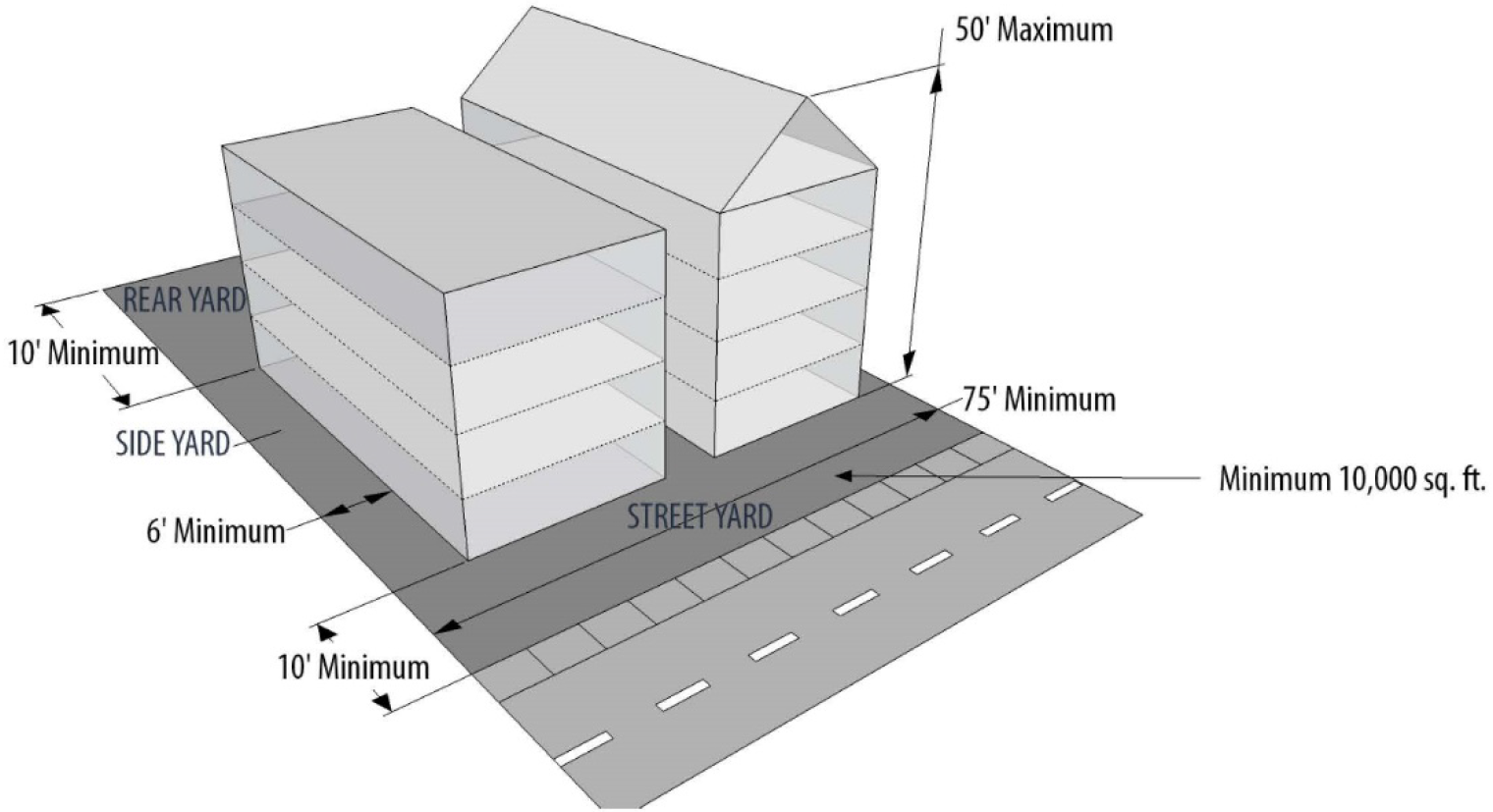
(Ord. No. 2019-17, § 25, 8-5-2019)
11-4A-10: - D-RSCM RESIDENTIALLY SCALED COMMERCIAL MIXED-USE DISTRICT
BUILDING PLACEMENT:
1 Statement of Policy: Third Street, between Campbell Street and the Chicago and Northwestern Railroad, has developed as a retail shopping and commercial area. This segment of the street maintains a substantial building setback deemed desirable and part of the essential character of the area. Development under the requirements of the D-RSCM district could result in a substantial reduction in overall building setbacks, directly affecting the character of the area and its appeal. In order to permit continued business activity and protect the character of the area, a special street setback is established for all lots fronting Third Street.
Standard: The existing street setback for all zoning lots in existence at the time of adoption of this title shall control for those lots and zoning lots in the D-RSCM district fronting either side of Third Street.
OFF-STREET PARKING PLACEMENT:
PERMITTED USES:
Refer to section 11-4A-4, Table of Permitted and Special Uses.
ACCESSORY USES:
Accessory uses and buildings shall meet the requirements of sections 11-3-3 and 11-3-5 of this title.
Exceptions:
2 May be reduced to zero feet (0') if the parking lot is connected to a parking area on adjoining property.
D-RSCM Residentially Scaled Commercial Mixed-Use District Illustration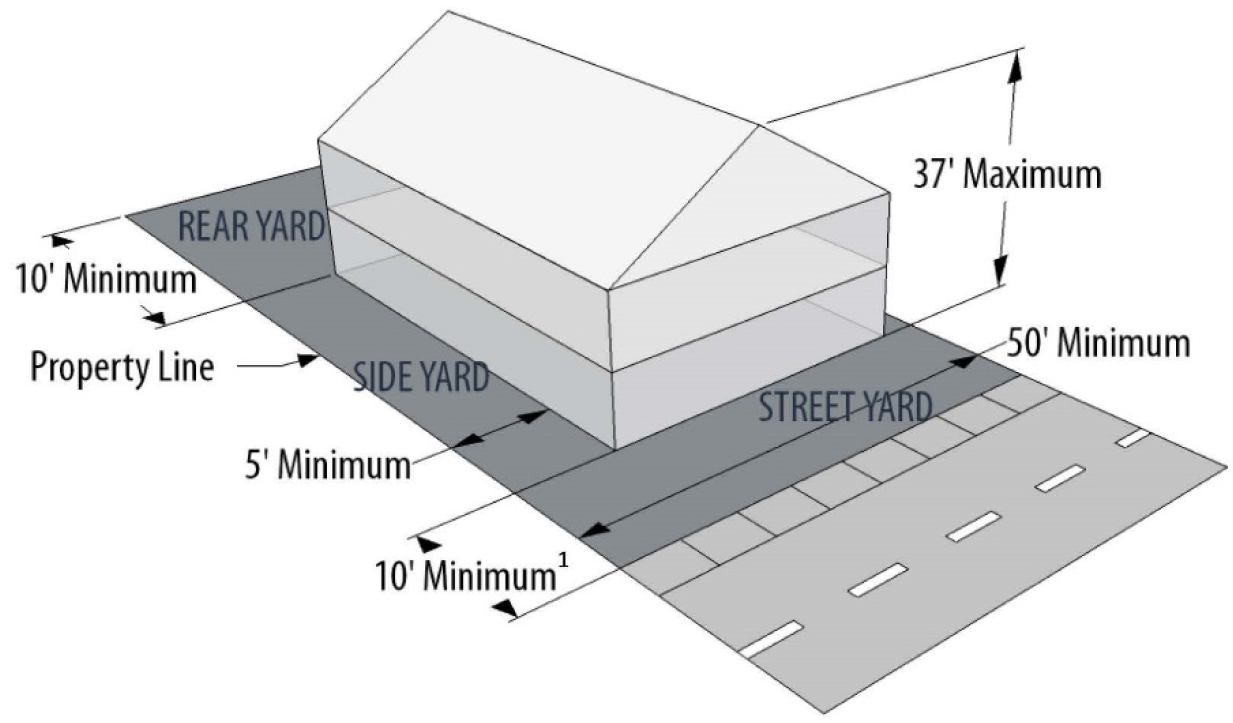
(Ord. No. 2019-17, § 25, 8-5-2019)
11-4A-11: - D-CM COMMERCIAL MIXED-USE DISTRICT:
BUILDING PLACEMENT:
OFF-STREET PARKING PLACEMENT:
PERMITTED USES:
Refer to section 11-4A-4, Table of Permitted and Special Uses.
ACCESSORY USES:
Accessory uses and buildings shall meet the requirements of sections 11-3-3 and 11-3-5 of this title.
Exceptions:
1 May be reduced to zero feet (0') if the parking lot is connected to a parking area on adjoining property.
D-CM Commercial Mixed-Use District Illustration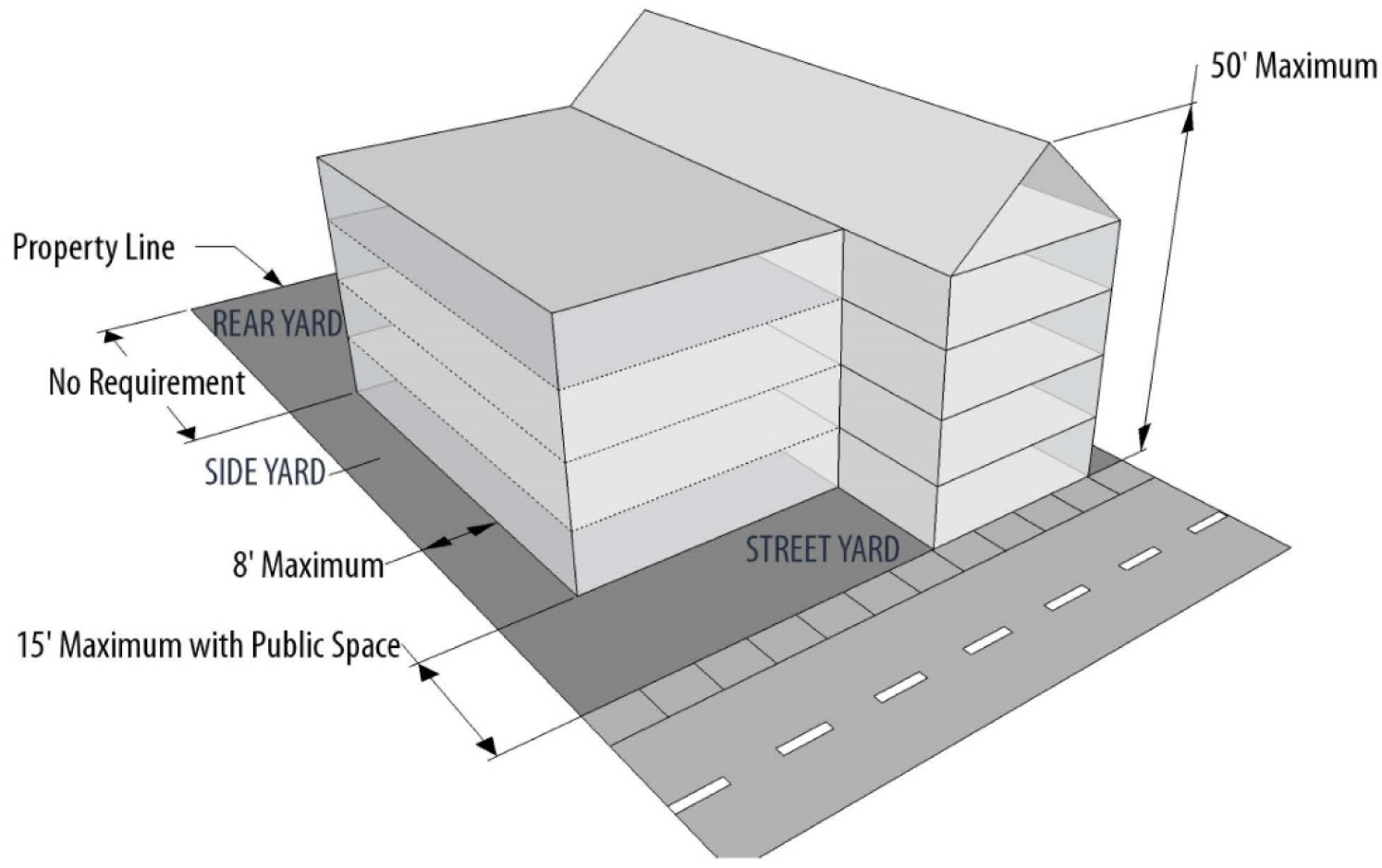
(Ord. No. 2019-17, § 25, 8-5-2019)
11-4A-12: - D-IM LIGHT INDUSTRIAL MIXED-USE DISTRICT:
BUILDING PLACEMENT:
OFF-STREET PARKING PLACEMENT:
PERMITTED USES:
Refer to section 11-4A-4, Table of Permitted and Special Uses.
ACCESSORY USES:
Accessory uses and buildings shall meet the requirements of sections 11-3-3 and 11-3-5 of this title.
Exceptions:
1 May be reduced to zero feet (0') if the parking lot is connected to a parking area on adjoining property.
D-IM Light Industrial Mixed-Use District Illustration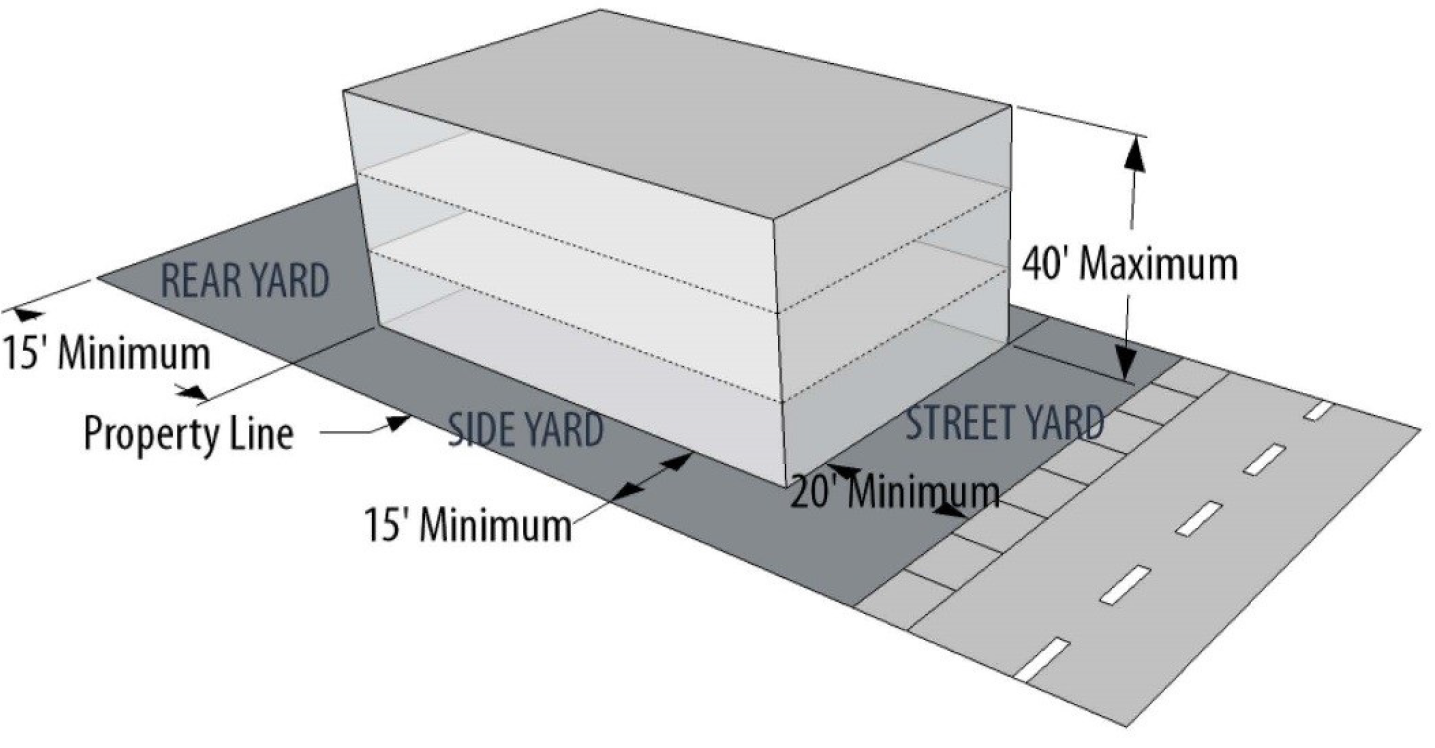
(Ord. No. 2019-17, § 25, 8-5-2019)

