
Greeley City Zoning Code
CHAPTER 6
- NONRESIDENTIAL DEVELOPMENT STANDARDS
Sec. 24-601.- Intent and applicability.
a.
Intent. The nonresidential development standards have the following intent:
1.
Promote good civic design and improve the appearance and vibrancy of commercial districts, employment centers, civic spaces, and other public places.
2.
Design and locate open spaces as an extension of the public realm, and emphasize the different contexts of places throughout the city.
3.
Improve the accessibility of centers and districts throughout the city by arranging development within multi-modal networks, and coordinating site access and internal circulation systems with these networks.
4.
Use buildings to shape streetscapes and public spaces, and design building façades and lot frontages to relate to these spaces.
5.
Refine the design, scale, and details of buildings based on the relationship to the public realm and make distinctions in design based on the context of development.
6.
Improve the value of places, strengthen the economic potential of commercial districts and employment centers, and promote lasting and sustained investment in nonresidential development through good design.
b.
Applicability.
1.
The standards in this chapter shall apply to all development in the C-L, C-H, MU-L, MU-H, I-L, I-M, and I-H districts, except where stated that sections only apply to specific districts or specific situations.
2.
All new structures shall comply with these standards.
3.
Modification or additions to existing structures or sites shall meet these standards to the extent of the modification or addition, except that the director may waive any design standards applied to modifications or additions:
(a)
That conflict with the consistent design of an existing building;
(b)
That conflict with the prevailing character on the block or immediate vicinity of the project; or
(c)
To otherwise facilitate infill development or adaptive reuse of an existing building.
4.
The standards shall not apply to ordinary maintenance of existing buildings, except that maintenance to any building shall not occur in a manner that brings the building or site to a greater degree of nonconformance with these standards.
(Ord. No. 35, 2021, § 5(app. A, § 5), 9-21-2021)
Sec. 24-602. - Nonresidential development standards.
a.
District lot and building standards. The lot and building standards for nonresidential districts are specified in table 24-6-1.
b.
Dimension exceptions. The following are exceptions to setback and building dimensions standards established in table 24-6-1:
1.
Setback encroachments. The following encroachments into the required setback are permitted, except in no case shall this authorize structures that violate the provisions of any easement:
(a)
Any projections over public rights-of-way, or any similar area designed for pedestrian circulation, shall be at least eight feet above the grade, and in no case within five feet of any curb for a street, through access drive or other area designed for vehicles.
(b)
Structural projections such as bay windows, balconies, awnings, canopies, chimneys, eaves, cornices, open fire escapes, egress wells, or other non-foundational overhangs or projections may extend up to four feet from the foundation and encroach into the setback, but no closer than three feet from any side or rear lot line. This exception shall be limited to no more than 20 percent of a building elevation.
(c)
Ground-mounted mechanical equipment, meters, and utility boxes accessory to the building may be located in the side or rear setback provided that it extends no more than six feet from the principal building, no closer than three feet to the lot line, and is screened from public right-of-way by structures or landscape. These limitations do not apply to any utility structures otherwise authorized to be located according to easements or in the right-of-way, which shall follow the location and design standards of those specific authorizations.
(d)
A lot may have more than one principal building, provided any accessory, secondary, or principal building shall be located at least ten feet from any other building on the same or adjacent lots, or be joined by a party wall meeting all aspects of the building code.
(e)
Any other accessory use or structure within the setback, not specified in section 24-602.c, shall have a setback of at least one-third its height from the property line.
2.
Height exceptions. The following are exceptions to the height limits in table 24-6-2:
(a)
Building elements integral to the design and construction of the building, such as parapet walls, false mansards, or other design elements essential to a quality appearance of the building may extend up to six feet above the roof deck of a flat roof.
(b)
Architectural features such as chimneys, ornamental towers or spires, and similar accessory features that are less than 20 percent of the building footprint may extend up to 15 feet above the maximum building height, but in no case more than 50 percent above the actual building height.
(c)
Functional and mechanical equipment such as elevator bulkheads, cooling towers, smoke stacks, roof vents, or other equipment may be built up to their necessary height in accordance with building codes provided they are screened according to the standards of this code or otherwise incorporated into the architecture of the building.
(d)
Accessory site structures such as flagpoles, monuments, or water towers, may have a height limit of 50 feet, but shall be set back a distance of at least one-third its height from the property line.
(e)
One foot of additional height may be permitted for each one foot in additional setback, up to a maximum of ten additional feet above the maximum height limit. For any structure using this exception where there is no required setback, and default required setback of ten feet shall be used for applying this exception. The additional setback area shall be used for landscape areas required by section 24-803 or open space meeting the standards of section 24-603.d.
(f)
All height exceptions shall be in conformance with air space regulations relative to the airport overlay district in section 24-1002.
c.
Accessory buildings — Nonresidential. Accessory buildings shall be permitted in association with and on the same lot as a principal building, subject to the standards in table 24-6-2, and to the following additional limitations:
1.
Generally.
(a)
All accessory buildings shall be at least ten feet from the principal building, or other distance specified by applicable building codes based on fire ratings of adjacent walls.
(b)
Accessory buildings shall be clearly incidental and subordinate to the principal building or use, in terms of scale, location, and orientation.
(c)
Minor accessory structures of 120 square feet or less, and not on a slab or similar foundation do not have a required interior side or rear setback, but should be movable and are otherwise placed "at risk" by the owner with regard to any easements, fence, or screening requirements.
2.
Secondary building standards. In any nonresidential district, secondary buildings over 250 square feet footprint or 12 feet high shall meet the following massing and design standards to ensure compatibility with the principal structure:
(a)
Any portion of the building or structure potentially visible from the street or other public areas shall use materials, colors, scale and forms (roofs and massing), and architectural details that are compatible with the principal structure, or otherwise be screened according to section 24-803.
(b)
Any building or structure exceeding the limits in table 24-6-2 shall be treated as a second principal building and meet all lot and building design standards applicable to principal buildings.
d.
Fences and walls. Fences and walls in nonresidential districts shall be limited to the sizes and locations in table 24-6-3.
1.
General height and location standards. The following standards are applicable to fences and walls in all locations:
(a)
All fences or walls along rights-of-way or easements shall be located:
(1)
At least one foot from any ROW or easement that prohibits structures; otherwise fences in easements shall be permitted only subject to specific easement language and limitations.
(2)
At least two feet from any sidewalk.
(3)
At least three feet from the edge of any alley or similar vehicle access.
(4)
Fences or walls may only be located in the right-of-way or easement by a revocable right-of-way permit from the public works department.
(b)
All fences or walls located along common lot lines shall be located so:
(1)
The fence is on the property line; or
(2)
The fence is at least three feet from the property line. Any areas set back three feet or more, which could become enclosed by other similarly located fences, shall provide at least one gate for access and maintenance equipment.
(3)
The finished side faces adjacent property or any public right-of-way, public space or common areas.
(c)
Any fence or wall in the floodplain shall also require a floodplain development permit.
(d)
All fence or walls shall be located and designed to comply with sight distance requirements of section 24-301.d.2. Any fence or wall that could potentially create a sight obstruction for vehicles crossing pedestrian areas or entering the street may require greater transparency or additional location restrictions to allow for safe sight distances for the vehicle.
(e)
Temporary fences for construction may be up to six feet or as otherwise specified in construction permits.
(f)
All fences and walls may be subject to additional standards of the building code, approved drainage plans for the lot, or other design and development standards. In particular, any of the following allowed by these standards, permitted by alternative compliance, or approved by a variance, requires a building permit:
(1)
Any fence or wall over six feet high;
(2)
Any retaining walls over four feet high;
(3)
Walls in the setbacks over six feet high shall only be permitted by alternative compliance in section 24-208.
2.
Materials. Fences and walls shall be consistent in architectural character, materials, and appearance of the principal building on the same lot. Fences shall be constructed out of any of the following materials:
(a)
Wood or vinyl simulating wood. Wood shall be either naturally rot resistant (such as cedar), or pressure treated for rot resistance;
(b)
Wrought iron or aluminum simulating wrought iron;
(c)
Stone, brick, concrete with stone or brick veneer, pre-cast concrete simulated stone or brick, or decorative concrete textured to simulate masonry; or
(d)
Chain link or vinyl clad chain link:
(1)
Chain link is permitted in the side or rear yard only in the C-L, C-H, MU-L and MU-H districts.
(2)
Chain link with slats is only allowed in the I-M and I-H districts, and proved it is not located along a collector or arterial street.
(3)
Chain link fences may be up to 12 feet for any security fence around sports facilities, courts, pools or similar facilities, provided it is 20 feet from any lot line and provided all portions over eight feet remain free of opaque screens.
(e)
Barbed wire may be allowed only in the I-M, I-H, C-D and H-A districts, added to the height of chain link fences and located above 6½ feet. Barbed wire is limited to no more than three bands, shall be illuminated by exterior area security lighting controlled by an automatic light level switch, and be installed and maintained in good operating condition.
(Ord. No. 35, 2021, § 5(app. A, § 5), 9-21-2021)
Sec. 24-603. - Nonresidential design standards.
a.
Applicability. The design standards shall apply to the C-L, C-H, MU-L, MU-H, I-L, I-M, and I-H zoning districts.
1.
General applicability. The design standards apply based on the context of a particular project, according to the general applicability provisions in table 24-6-4.
2.
Alternative compliance. Alternative compliance to the general applicability of the design standards in table 24-6-2 may be authorized according to the process and criteria in section 24-208, and any of the following additional applicable criteria:
(a)
Streets with pedestrian amenities, on-street parking, or designed according to the pedestrian or avenue street type standards in section 24-301 are generally appropriate for the Frontage A and Frontage B frontage type and design standards.
(b)
Streets with higher traffic speeds or volumes, that lack pedestrian amenities, or that lack on-street parking are generally appropriate for Frontage C and Frontage D frontage type and design standards.
(c)
Where the context of a specific block or site has a prevalence of development that reflects patterns similar to any particular frontage and design type, the prevailing pattern may be implemented.
(d)
A development plan for an area or project may more specifically map street types and frontage types on a block-by-block basis, and any plan officially approved by the planning commission or city council in association with the development may further specify the applicability of the frontage types and design standards for a particular district, area, or project.
b.
Frontage design. Frontage design determines the relationship between private development and the public realm, and determines the character of different districts. Building placement, parking and access locations, and landscape and streetscape design encompass the design of the frontage. Frontage types designed according to the standards and design objectives of this subsection may be used to modify the front setback established in table 24-6-1, as indicated by the applicability provisions of section 24-603.a.
1.
Design objectives. Frontage types in table 24-6-5 shall be applied to meet the following design objectives:
(a)
Enhance the image of the city by coordinating streetscape investment with private lot and building investment.
(b)
Orient all buildings and lots to the public street, or to common open spaces that serve as an extension of the streetscape and public realm.
(c)
Design frontages based on the context of the area, block, and street, particularly emphasizing landscape areas to screen and separate sites from higher-volume/higher speed streets and emphasizing social spaces and human-scale architectural features on streets intended for more compact and walkable development.
(d)
Coordinate development across multiple lots along block faces, considering access, parking, landscape, and open space design.
(e)
Allow a range of different building types to engage the streetscape in compatible ways along a block through similar frontage designs.
(f)
Strengthen the identity and economic value of distinct places by reinforcing consistent patterns of streetscape, frontage design, and building placement and form.
(g)
Frontages should be similar for all lots on the same block face or gradually transition to different types in contexts that allow multiple frontage types.
2.
Frontage design standards. Frontage types shall be designed according to the standards in table 24-6-5. Subsections following the table provide specific design strategies and techniques to be used to meet these standards and the design objectives of this subsection.
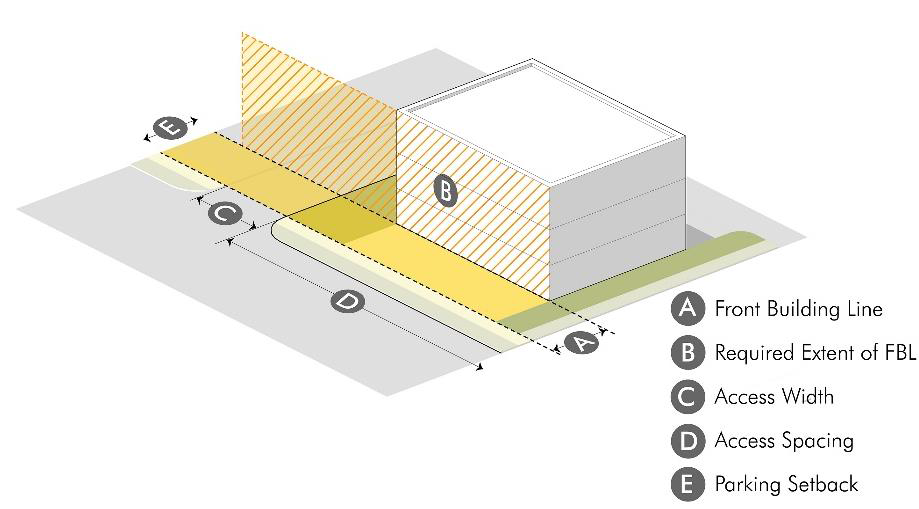
Figure 24-6-1: Frontage Design. Frontage types are differentiated based on the location of the front building line
(FBL), the extent of the front building line occupied by the building (required FBL),
access widths, and parking location and extent along frontage. Coordinating frontage
design of multiple buildings and sites along a block impacts the character of the
streetscape and the block.
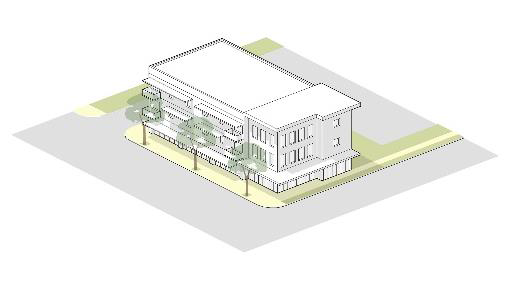 Frontage A
| 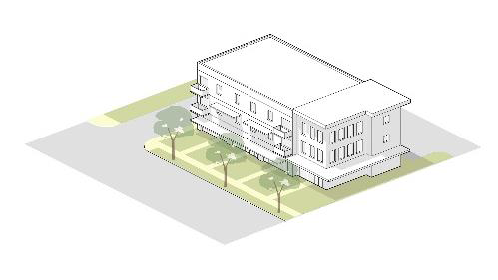 Frontage B
|
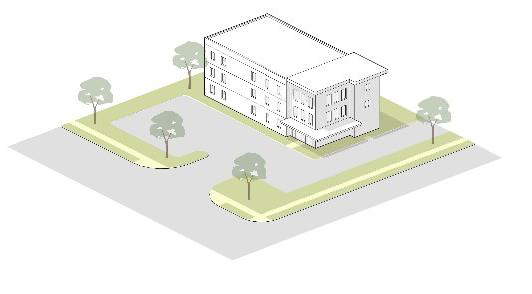 Frontage C
| 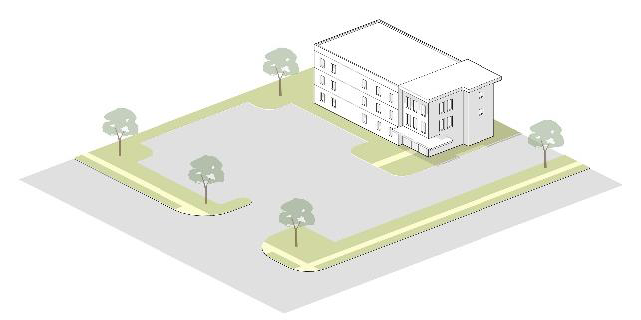 Frontage D
|
| Figure 24-6-2: Frontage Types. The relationship between private development and the public realm determines the character of different districts. Building placement, parking and access locations, and landscape and streetscape design distinguish different frontage type designs. Social spaces and human-scale architectural features are emphasized in more pedestrian-oriented contexts, and landscape screens and setbacks are emphasized in more car-oriented areas. | |
3.
Building form and placement. All buildings shall establish a front building line within the range specified in table 24-6-5. The required front building line shall modify the required front setback in table 6-2 based on the appropriate frontage for the street and block. All buildings shall occupy the minimum percentage specified for required front building line with either of the following:
(a)
Front building façades meeting the design standards in table 24-6-6, Nonresidential building design; or
(b)
Open spaces meeting the requirements of section 24-603.d provided:
(1)
It is limited to no more than 50 feet or 50 percent of the lot frontage, whichever is greater;
(2)
There are defining features at the extension of the required front building line, such as decorative walls or fences, landscape features and other human scale details; and
(3)
All building façades fronting the open space meet the standards otherwise applicable along the streetscape.
(c)
Projects designed around internal access streets according to section 24-301 may use the internal access streets for the purpose of applying frontage standards.
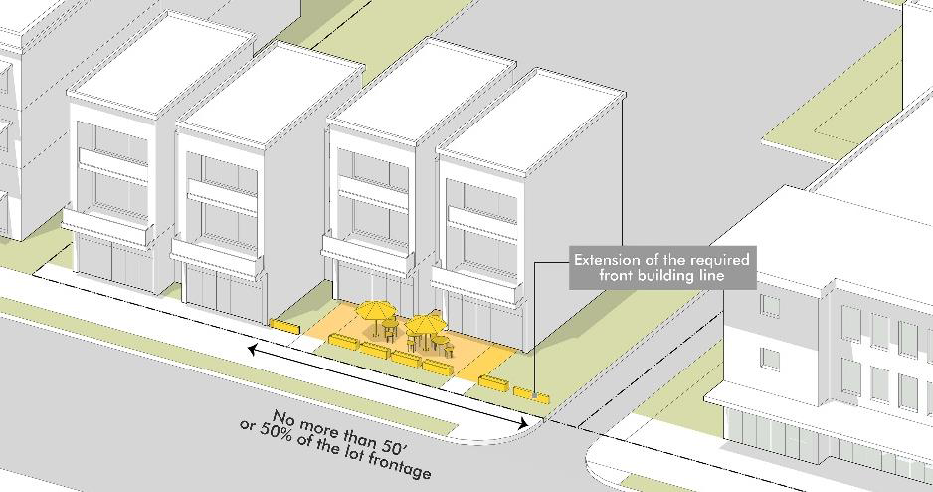
Figure 24-6-3: Required Front Building Line. The required front building line determines the extent of the lot width required
to be occupied by building frontage at the front building line. Alternatives spaces
that activate the streetscape with active social spaces may serve this function provided
they establish similar defining elements of this space along the frontage. (Section
24-603.b.3(a) and (b).)
4.
Access and parking limits. The following standards apply to the driveway and parking limits in table 24-6-5:
(a)
Access width limits apply to the first 25 feet of the lot depth, or up to the front building line, whichever is less.
(b)
Access spacing specifies the minimum distance between edges of driveways or internal access streets. However, the Greeley Design Criteria and Construction Specifications for Streets may specify different access standards on any particular street or lot.
(c)
In cases where these standards limit access to a particular lot, options that coordinate access to lots on the same block shall be used, including mid-block alleys, internal access streets, common access lanes, or shared drives and cross access easements.
(d)
All parking shall be set back as specified in table 24-6-5 and limited only to the extent specified along the frontage, and be screened according to the standards in chapter 7 of this title.
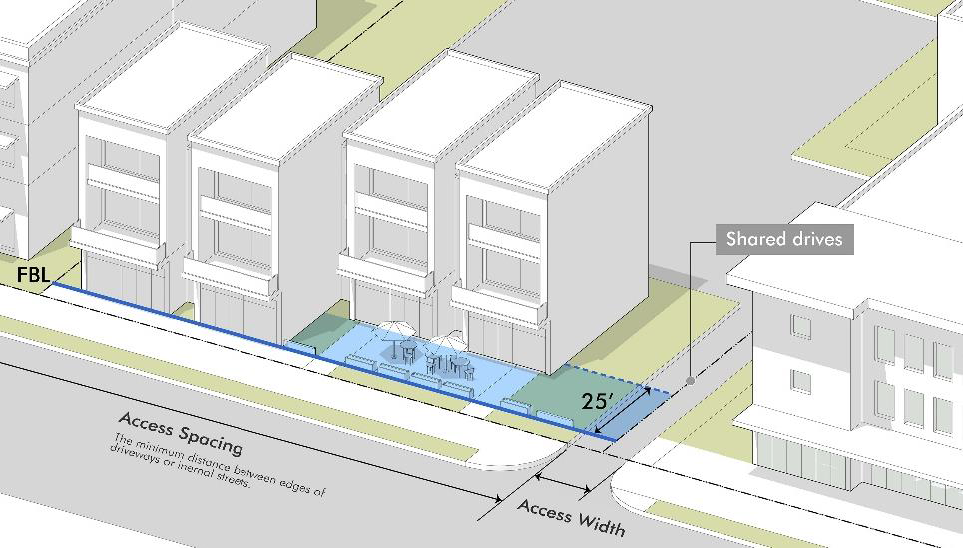
Figure 24-6-4: Access and Parking Limits. Access and parking limits determine the extent of frontages that are designed for
cars, including driveways and surface parking. Parking and vehicle access is more
limited in the frontage area for pedestrian-oriented contexts, and more permissive
in car-oriented areas. (Section 24-603.b.4(a) and (b).)
5.
Landscape. The remainder of the frontage between the streetscape and front building line shall include landscape and open space designs.
(a)
For Frontages A and B this area shall be designed to coordinate as an extension of the streetscape according to section 24-301.
(b)
For Frontages B and C this area shall be designed according to the parking setback and landscape design standards in chapters 7 and 8 of this title.
(c)
On all frontage types, lot open space meeting the standards of section 24-603.d may be included in this area.
6.
Alternative compliance. The appropriate application of frontage types is based upon a combination of the character of the zoning district, the streetscape design on which the development fronts, and the building form and placement on a specific lot. Alternative compliance to the frontage design standards established in this section may be authorized according to the process and criteria in section 24-208, and any of the following additional applicable criteria:
(a)
The context presents clear pattern of existing buildings and lots on the same block and opposite block face with a different arrangement in terms of the front building line, driveway access patterns, and extent and placement of parking lots and service areas.
(b)
An alternative design allows the building, access, and parking to be sited in a way that preserves topography or other natural features on the site, and does so in a way that equally or better meets the design objectives.
(c)
Parking and access that serves a greater area beyond the site and block may deviate from these standards, provided the location is consistent with development patterns in the vicinity and it is designed to minimize impacts on streetscapes.
(d)
In all cases the deviation is the minimum necessary to address the circumstance and does not negatively impact other design standards applicable to the building or site.
c.
Building design. Building design refines the scale and form of buildings beyond the basic setback, height, and lot coverage standards by breaking down the volume into smaller-scale masses, and by adding depth, texture, and variation to surfaces to relate to the spaces around the building.
1.
Design objectives. Building design standards in table 24-6-6 shall be applied to meet the following objectives:
(a)
Reinforce the context, patterns, and design character of the zoning district or a particular area.
(b)
Refine the scale, massing, and details of buildings to a greater degree the closer they are to the public realm and other publicly used spaces.
(c)
Arrange buildings and vary the massing in a way that defines streetscapes, public spaces, and other valuable active and social spaces on the site.
(d)
Locate doors and windows in a way that activates spaces, creates connections to important exterior spaces, and promotes economic activity at the interface of buildings and public spaces.
(e)
Relate buildings to adjacent development by mimicking similar scale, massing and proportions though step-backs and secondary masses that break up larger masses and reduce the volume and perceived size of larger buildings.
(f)
Use materials and human-scale architectural features to create depth, texture, variation, and visual interest to walls, particularly on larger façades, along streetscapes, or near active open spaces or adjacent lots.
(g)
Strengthen the identity and economic value of distinct places by reinforcing any prevailing architectural themes or styles; where no prevailing theme or style exists, encourage unique architectural expression and design characteristics inherent in the chosen architectural style for the building to establish distinctive themes and styles.
(h)
Emphasize the quality and longevity of investments with materials and colors that are attractive, durable, and have low maintenance requirements.
2.
Building design standards. Table 24-6-6 provides standards for massing and façade design based on the frontage type and the placement of the building. Subsections following the table provide specific design strategies and techniques to be used in meeting these standards and the design objectives.
3.
Wall plane limits. Larger building elevations shall be broken into smaller components by one or a combination of the following techniques to meet the wall plane limits in table 24-6-6:
(a)
Emphasize structural bays and vertical breaks in interior components of the building at regular intervals, with visible features such as columns, pillars, or pilasters, or other details and accents that are between six and 48 inches wide, project between four and 24 inches off the façade.
(b)
Differentiate massing with projections, balconies, cantilevers or step-backs from the main mass associated with entrance features, different stories, or secondary masses of the building. Massing shall create deviations in the wall plane of at least two feet if projecting from the façade and at least four feet if recessed from the façade, and encompass at least 20 percent of the entire elevation.
(c)
Horizontal differentiation of a base, body and top of buildings.
(1)
For buildings less than three stories, this can be a distinct foundation, a main façade, and an embellished roof structure, such as eaves and fascia for pitched roofs, or cornices and parapets for flat roofs.
(2)
For buildings three stories or more, the first floor should be clearly differentiated from upper stories to establish the base and an embellished roof structure.
(3)
Any belt course or trim band establishing the break in base, body and top shall use a material or pattern distinct from the primary material, be six to 36 inches wide, and offset from the wall plane four to 24 inches; or be a lessor trim associated with a material change.
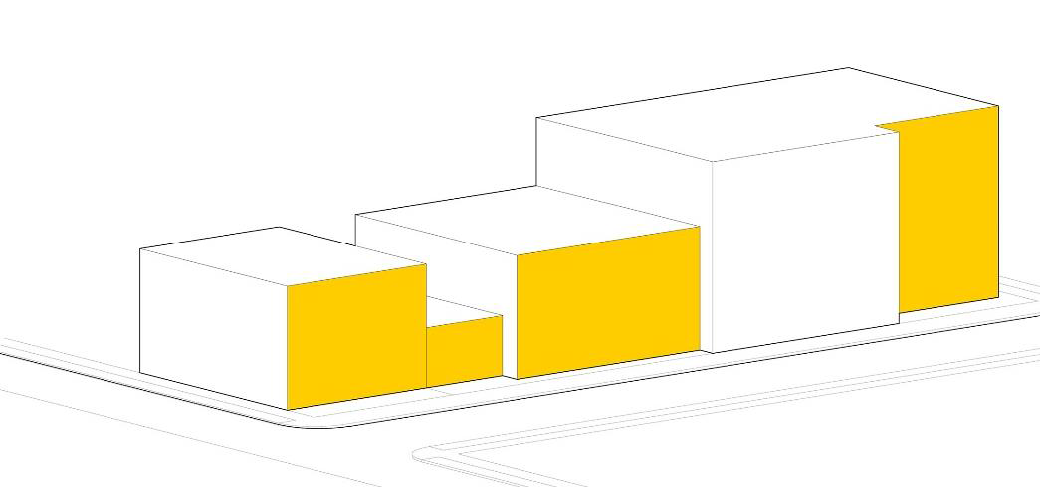
Figure 24-6-5: Wall Plane Limits. Wall planes that exceed either the linear dimension limits or the square foot limits
in table 24-6-6 shall be broken up by massing elements and/or architectural details.
Section 24-603.c.2./Table 24-6-6.
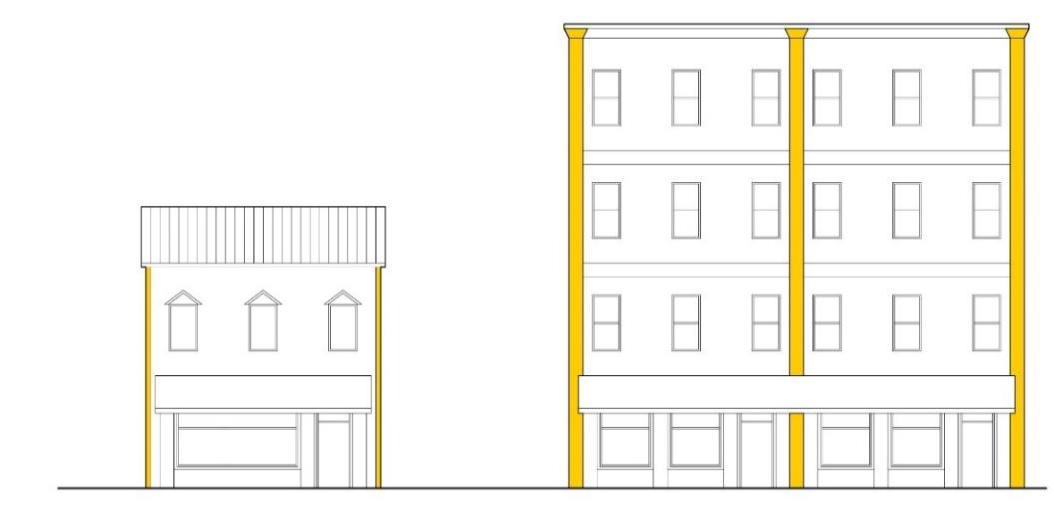
Figure 24-6-6: Vertical Articulation. Defining buildings with a distinct structural bays creates a finer grain of buildings,
both when viewed from a distance and when experiences on the streetscape. This is
particularly important for longer expanses of buildings and can help integrate larger
buildings and lots within a pattern of smaller buildings and lots. Section 24-603.c.3(a).
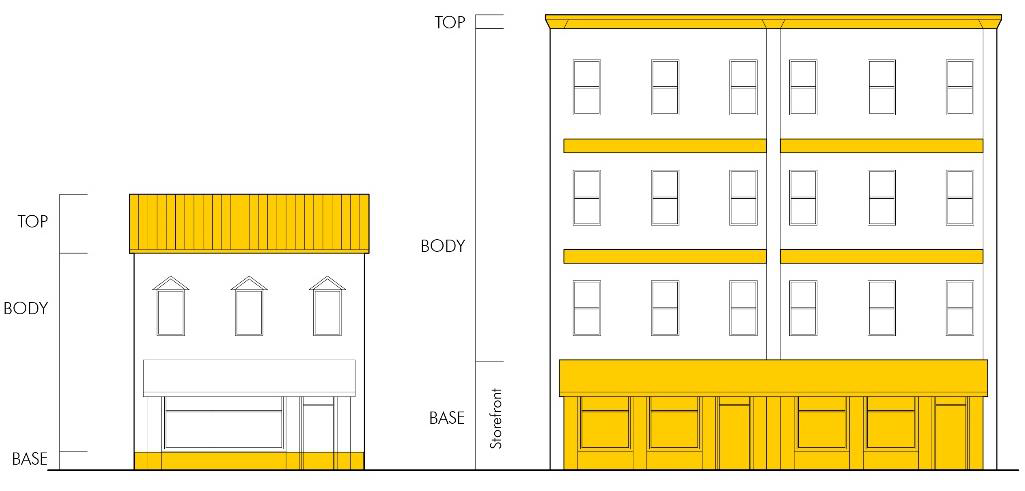
Figure 24-6-7: Horizontal Articulation. Defining buildings with a distinct base, body and top can help reduce the scale of
larger buildings and can create relationships between adjacent buildings with dissimilar
scale. Section 24-603.c.3(c).
4.
Blank wall limits. Building elevations shall feature interest, variation, depth, and texture by one or a combination of the following techniques to meet the blank wall limits in table 24-6-6:
(a)
Patterns of windows and doors meeting the transparency requirements in section 24-603.c.5 and 6.
(b)
Massing elements meeting the wall plane limits of section 24-603.c.3
(c)
Ornamental architectural details complimentary to the materials and architectural style of the building.
(d)
Color and material changes associated with trim or massing elements of the building.
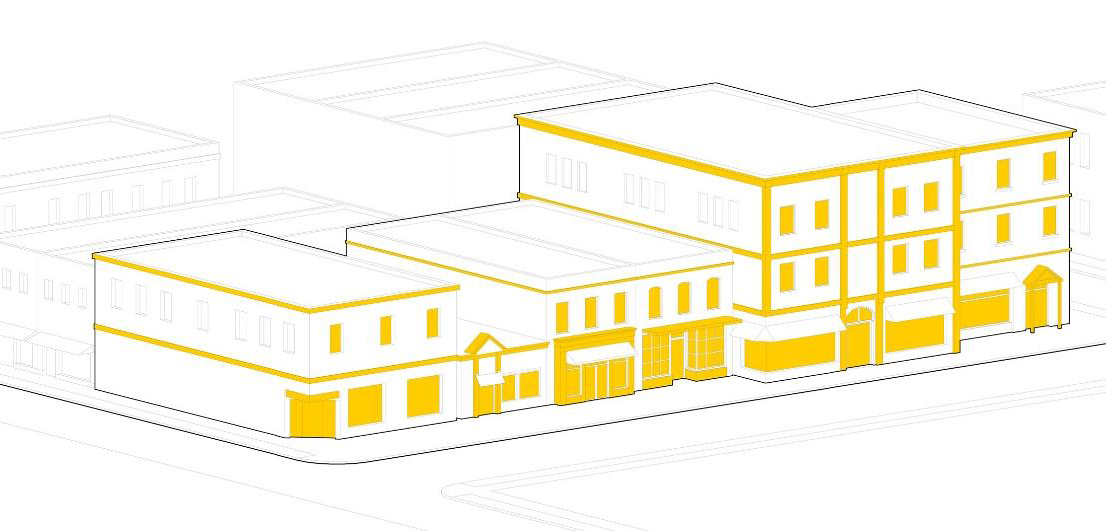
Figure 24-6-8: Blank Wall Limits. A combination of architectural features, windows and doors breaks up larger expanses
of wall plane and allow them to relate better to spaces around the building. More
pedestrian-oriented streetscapes or active social spaces limit blank wall areas more
strictly than buildings remote from the streetscape or not near active social spaces.
Section 24-603.c.4.
5.
Primary entrance features. Primary public entrances shall be clearly defined on all front façades with at least three of the following elements and be located at intervals specified in table 24-6-6:
(a)
A single-story architectural emphasis such as raised parapets or gables, canopies, porticos, overhangs, pediments, or arches.
(b)
Transom or sidelight windows that frame and emphasize the entry.
(c)
Architectural details such as tile work and moldings, columns, pilasters, or other similar material changes.
(d)
Integral planters or wing walls associated with a recessed or projecting entry court or plaza that integrates landscape and hardscape designs.
(e)
For corner buildings, any entrance feature located on the corner may count to both sides, and may be considered located at 25 feet from each corner for the purpose of the required primary entry feature intervals.
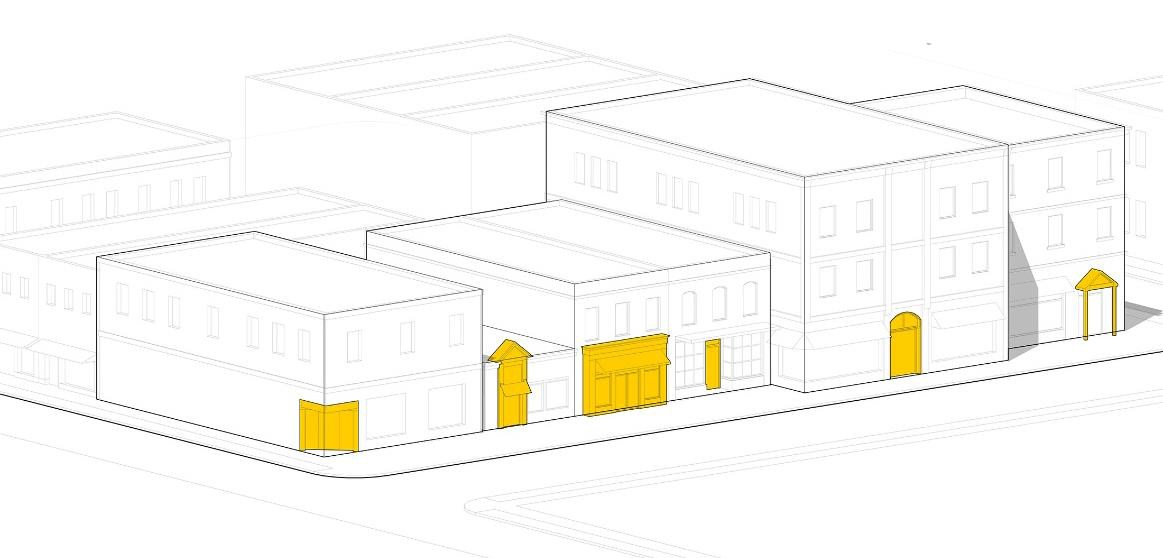
Figure 24-6-9: Primary Entry Features. Entrances help activate the streetscape and orient buildings to public spaces. More
pedestrian-oriented blocks benefit from the activity created by smaller-scale uses
and the rhythm created by more frequent entrances. More car-oriented streets may allow
less frequent entrances or alternative orientations of buildings to internal access
streets or common spaces. Section 24-603.c.5.
6.
Transparency. Buildings shall have the percentage of openings specified in table 24-6-6, based on the following:
(a)
Where expressed as a first story requirement the percentage shall be measured between two feet and eight feet above the sidewalk grade, or within ten feet above the first floor elevation if the building is set back more than ten feet from the street.
(b)
Where expressed as an upper story requirement, the percentage shall be measured between the floor level and ceiling of each story.
(c)
All first story windows required shall provide direct views to the building's interior or to a lit display area extending a minimum of three feet behind the window.
(d)
For industrial and civic buildings set back more than 25 feet from the street, clerestory windows may meet the first or upper story window requirements.
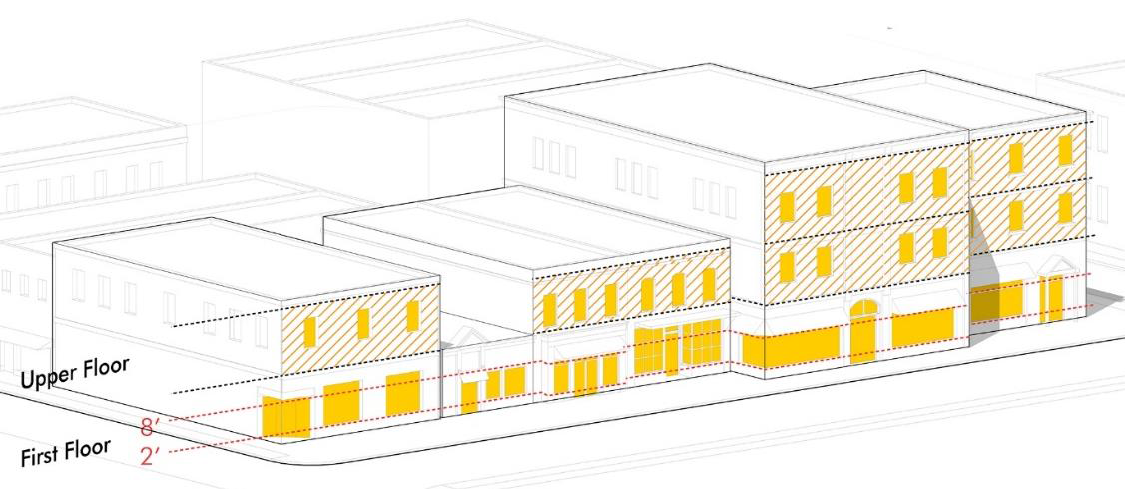
Figure 24-6-10: Transparency. Transparency requirements eliminate large expanses of blank walls and create physical
and perceptual connections to spaces around buildings. Meeting the requirements for
each story helps reduce the scale of larger buildings. Section 24-603.c.6.
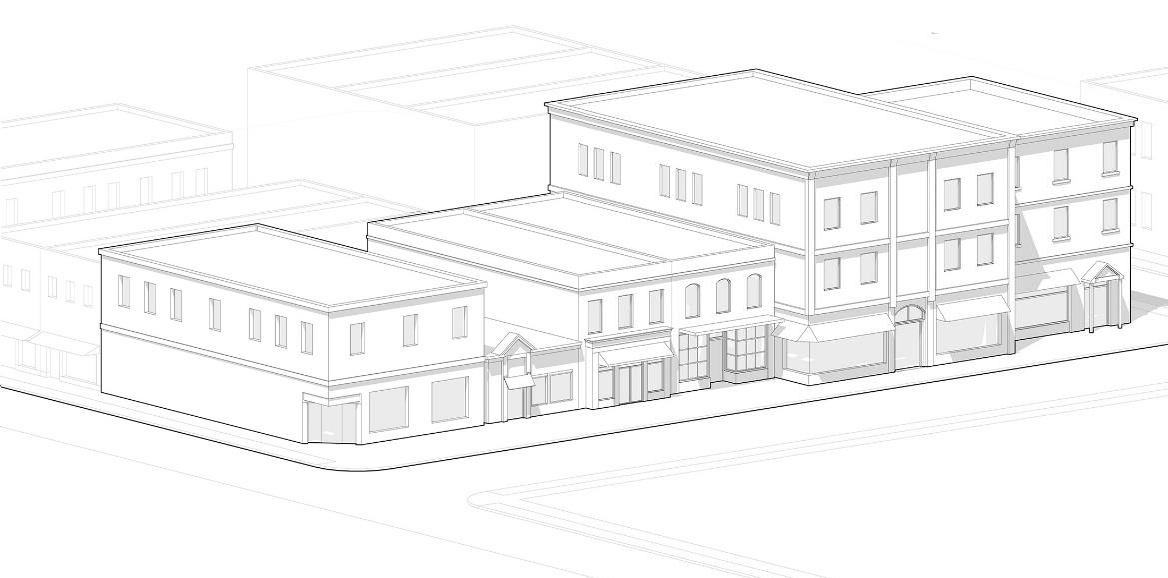
Figure 24-6-11: Façade Composition. The combination of massing, modulation, entrances, and window transparency determine
how a building relates to frontages and adjacent spaces. Building design standards
based on the context of the area, type of street, and the position of the building
on the block help reinforce the character of distinct districts and places.
7.
Materials. Use building materials with a texture and pattern that creates visual interest and signifies quality construction and detailing.
(a)
The predominant surfaces on building walls shall be one of the primary materials listed in table 24-6-7.
(b)
Synthetic alternatives may be approved by the director if manufacturer specifications and/or precedents for application demonstrate that it will perform equally or better than the principal materials in terms of maintenance, design and aesthetic goals.
(c)
No more than four materials should be use, including the use of secondary and accent materials.
(d)
Material changes shall emphasize different elements of the building, in association with the massing and modulation standards.
(1)
Where material changes are vertical (i.e., different materials stacked one above another), the transition between materials should include a belt course, trim band, sill, cap, frame, roof (if at ceiling height), or similar element to separate the two materials.
(2)
Where material changes are horizontal (i.e., different materials side by side) the transition between materials should occur at interior corners or at the trim line, architectural column, or pilaster in association with a different structural or massing component of the building.
(e)
Material colors shall be used to blend buildings into an area, to coordinate elements of a development, and be drawn from the prevalent color schemes in the surrounding area. Primary material colors should be low-reflectance, subtle, neutral or earth tone colors. Monotonous or monochromatic color palettes are strongly discouraged. The use of high-intensity colors, metallic colors, black or fluorescent colors is limited to accent areas.
8.
Four-sided design. All buildings shall incorporate four-sided design, so that that no matter what view you have of the building, the design is not interrupted and all parts are perceived as a coordinated part of a unified whole. Specifically:
(a)
All sides shall exhibit the same quality, continuity, and durability of design including the same primary and secondary materials, although more important sides can reflect priority in the allocation of these materials.
(b)
All sides that are visible from streets, public spaces or active portions of adjacent sites shall have a similar level trim, accent material, details, and ornamentation, although the extent and details may be different to reflect the greater importance of certain areas closest to the public realm or with greater visibility, and parts not exposed to the public may be designed for utility.
9.
Alternative compliance. Alternative compliance to the building design standards established in this section may be authorized according to the process and criteria in section 24-208, and any of the following additional applicable criteria:
(a)
The requirement is not consistent with the particular architectural style selected for the building based on reputable resources documenting the style.
(b)
The requirement would make the building less compatible with designs or characteristics of other buildings or sites adjacent to the project or that are prevalent throughout the area.
(c)
The requirement is inconsistent with the principal function of the building when applied to industrial buildings in the I-M and I-H districts.
(d)
Deviations from material standards and any simulated products demonstrate a proven performance in terms of maintenance and quality appearance.
(e)
In any case, the deviation is the minimum necessary to address the circumstance and does not negatively impact other design standards applicable to the building or site.
d.
Lot open space design. The design of open space can reinforce the character of unique districts and distinct places. Lot open space coordinates unbuilt areas with the public realm design of commercial, mixed-use, and industrial areas or uses landscape areas to mitigate undesirable impacts.
1.
Design objectives. The required lot open space in table 24-6-1 shall be designed and located to meet the following design objectives:
(a)
Coordinate site design with the larger open space system and public realm design of the area.
(b)
Use open space as an organizing element for development, creating focal points for buildings or groups of buildings, and creating transitions between distinct building sites or different places.
(c)
Design a hierarchy of gateways, gathering places, parks, landscape perimeters, and natural features, integrated with streets, internal access streets, trails, and pedestrian passages.
(d)
Select open space types based on the context of the areas and natural amenities of the site; in general more compact and formal gathering spaces are most appropriate in walkable commercial and mixed use areas, and more spacious and natural areas are most appropriate in large commercial or industrial areas.
(e)
Use landscape, furnishings, fixtures, art, planters, and other elements of common spaces to complement buildings, coordinate buildings and sites within an area, and distinguish the unique character of different places.
(f)
Preserve natural features and historical drainage patterns that can serve as amenities for development, maintain views to and from important outside spaces, perform ecological functions, or provide important connecting corridors.
2.
Lot open space design. Lot open space required for each building and lot in table 24-6-1 shall create a common or private amenity for the site and building. Buildings and open spaces on a lot shall be arranged to create usable outdoor spaces that meet one or more of the following types:
(a)
Private frontage landscape areas designed according to section 24-603.b, excluding any driveways, parking areas, or other automobile space;
(b)
Courtyards, plazas, patios, or similar outdoor seating areas that are either designed as an extension of the public streetscape on the frontage, or at least 500 square feet and 20 feet in all directions if internal to the site;
(c)
Common rooftop decks provided they are at least 200 square feet, and at least 12 feet in all directions — this space is limited to no more than 25 percent of the requirement for the lot and building;
(d)
Private balconies or patios, provided they are at least six feet by ten feet — this space is limited to no more than 25 percent of the requirement for the lot and building; or
(e)
Landscape areas and perimeter treatments designed according to the standards of chapter 8 of this title. These areas shall be limited to:
(1)
No more than 25 percent of the requirement for lot open space in mixed-use districts;
(2)
No more than 50 percent of the requirement for lot open space in commercial districts; and
(3)
No limit in industrial districts.
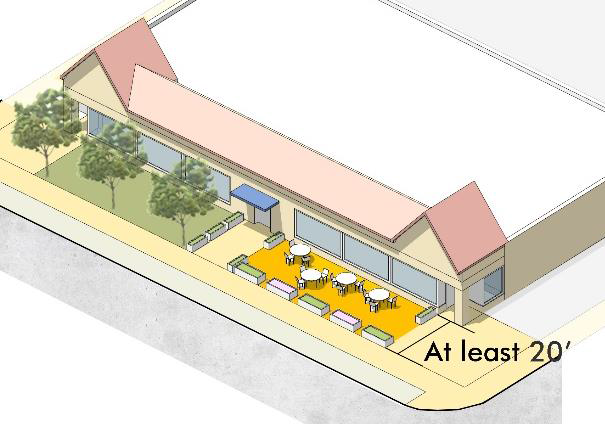
Figure 24-6-12: Courtyards, Patios and Plazas. More compact and walkable places benefit from smaller and more formal social spaces,
such as courtyards, patios and plazas. Section 24-603.d.2(b).
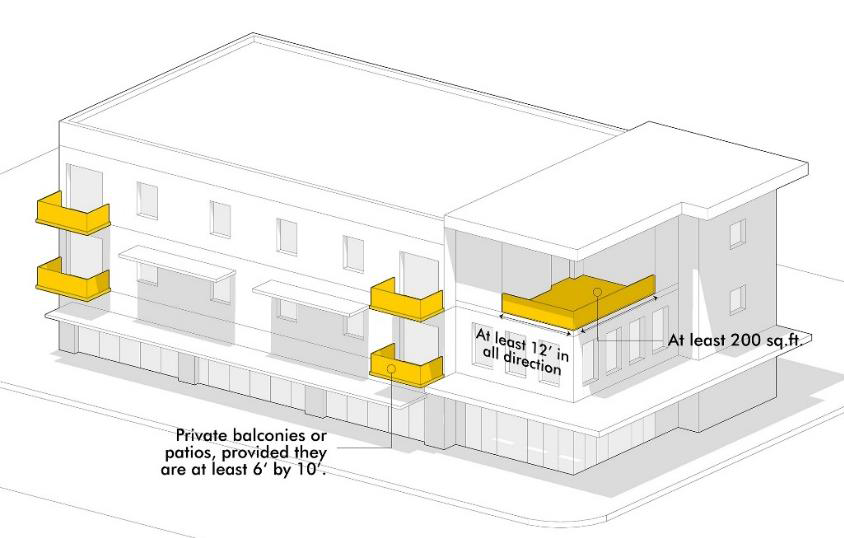
Figure 24-6-13: Private or Common Open Spaces. Private or commons areas incorporated into the building can provide a portion of
the useable on-lot open spaces. These elements can also meet design requirements for
breaking up the massing or blank wall of buildings. Section 24-603.d.2(c) and (d).
3.
Alternative compliance. Alternative compliance to the lot open space design standards established in this section may be authorized according to the process and criteria in section 24-208, and any of the following additional applicable criteria:
(a)
The lot and building has access to at least two different active open space on the same block or abutting block, and meeting the design and service area standards of section 24-302 or 24-504.
(b)
Other designs that promote infill development or rehabilitation of existing buildings and sites in a compact, and walkable context.
e.
Exterior lighting.
1.
Design objectives. The following design objectives shall be used in applying the lighting standards in this section:
(a)
Provide sufficient illumination for security and safety needs in specific areas.
(b)
Ensure lighting does on interfere with the proper and safe function of the rights-of-way, and mitigate any potential negative affects on adjacent property.
(c)
Protect residential property or other low-intensity uses from unnecessary light impacts from adjacent uses.
(d)
Maintain adequate lighting for publicly accessible outdoor areas and social spaces.
(e)
Enable lighting that enhances architectural elements and landscape features, in subtle and attractive ways.
2.
Location and height. Exterior lighting shall be located as specified in table 24-6-8.
3.
Maximum lighting levels. Maximum lighting levels are provided in table 24-6-9. Lighting levels are average maintained horizontal levels, measured using a calibrated, color and cosine-corrected portable light meter and taken at a level position not more than six inches above the ground which the subject light source is on.
4.
General standards. All lighting shall be the following design and performance standards:
(a)
No lighting shall be used in any way which could interfere with the safe movement of vehicles on public streets, including:
(1)
Any fixed lighting that is not designed for street illumination that produces light which could interfere with the operation of a vehicle;
(2)
Any lighting which could be confused with any type of traffic control device, emergency or warning signals; or
(3)
Any lighting that blinks, flashes, flickers or changes intensity with the exception of temporary holiday displays.
(b)
No light spillage or glare shall be visible at or beyond the property line of the development. Lighting shall be provided at sidewalks or pathways, common areas or facilities, primary building entrances and in parking areas. All outside lighting shall include fixtures with a dimming interface.
(c)
Outdoor lighting shall be LED (light emitting diode) "Dark Sky" compliant, per the International Dark Sky Association requirements for reducing light pollution and minimizing glare. The use of low pressure sodium light fixtures shall be prohibited in the city.
(d)
The style and materials of light standards and fixtures shall be compatible with the architectural character and materials of buildings on the site, and building-mounted lights are encouraged to use ornamental lights rather than wall pack fixtures.
(e)
All lights shall be directed downward and the light source shall be shielded to direct light away from and not visible from any adjacent property.
(1)
An exception for accent and flagpole lighting may be permitted for upward lights as long as the light source is shielded and not visible from any adjacent property.
(2)
Wall lights shall be full cutoff fixtures, with flat lenses, and mounted so the lights are directed downward and the light source shall not go beyond the property line.
(3)
Fixtures installed under canopies, awnings, and overhangs shall be fully recessed.
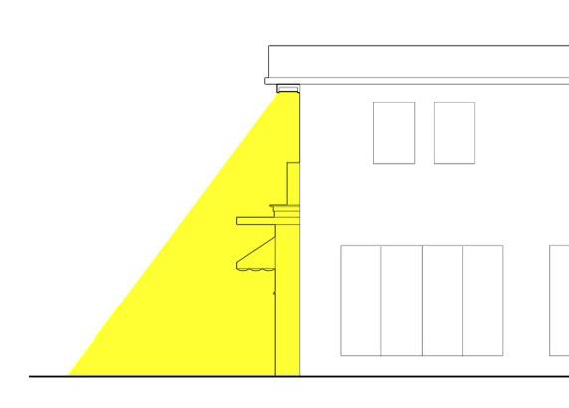
Figure 24-6-14: Lighting Directed Downward onto Site. Lighting directed downward eliminates negative impacts of lighting on adjacent property
and helps to preserve the night sky views. (Section 24-603.e.4(e).)
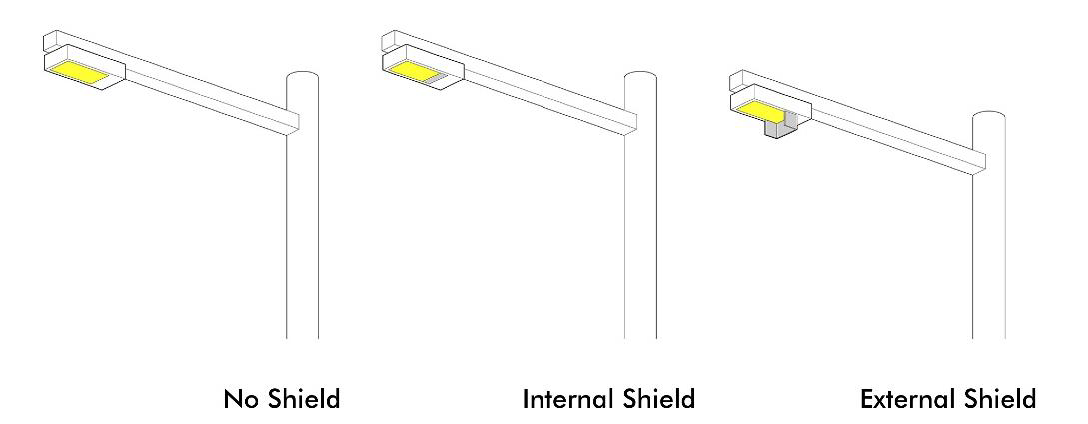
Figure 24-6-15: Light Shielding. Light shielding related to the different fixture styles, height, and location helps
mitigate the potential negative impacts of specific lights. (Section 24-603.e.4(e).)
(f)
No activity shall be conducted within 500 feet of a residential zone which creates glare exceeding 0.0 footcandle at the property line, except for parking lots, neighborhood recreation and service facilities and streets, which may be illuminated at levels up to 1.0 footcandle.
(g)
All parking lot lighting fixtures and exterior building floodlights, except those required for security purposes, shall be extinguished within one hour after the end of business hours and remain extinguished until one hour prior to the beginning of business hours. If a portion of a parking lot is offered for use after dark, only that portion shall be lighted.
(h)
Lighting within parking structures shall be designed to provide safety and security and be integrated into the architectural character of the structure.
(i)
In addition to all other standards lighting of all outdoor recreational facilities except baseball, softball, soccer, volleyball or football fields; driving ranges; outdoor arenas and amphitheaters shall meet the following:
(1)
All lighting or illumination units or sources shall be hooded or shielded and directed downward so that they are not visible from any adjacent lot or property; and
(2)
Lights or illuminating units shall not allow light either directly or through a reflecting device to spill upon any adjacent real property.
(j)
In addition to all other standards, baseball, softball, soccer, volleyball or football fields; driving ranges; or other field recreation facilities shall meet the following:
(1)
Light fixture or illumination source shall not exceed 90 feet high.
(2)
Individual lighting of 150 watts or greater shall not be used after 11:00 p.m., or within one hour after the event, whichever is later. Exceptions to this section may be granted by the director.
(Ord. No. 35, 2021, § 5(app. A, § 5), 9-21-2021)

