
Greeley City Zoning Code
CHAPTER 8
- LANDSCAPE STANDARDS
Sec. 24-801.- Intent and applicability.
a.
Intent. The intent of the landscape standards is to:
1.
Protect natural landscapes, Greeley's agriculture traditions, and "Tree City USA" designation to strengthen the city's identity as growth occurs.
2.
Improve city's image and build value with a well-designed public realm, coordinating landscape design for streetscapes, open spaces, civic places.
3.
Promote quality private investment that corresponds with investments in the public realm, and emphasize distinct areas throughout the city with natural landscape materials.
4.
Coordinate landscape and design amenities across multiple sites with special attention to the relationship of public and private frontages.
5.
Encourage site and landscape design that allows spaces to serve multiple aesthetic, screening, environmental, recreational, or social functions.
6.
Provide comfort, spatial definition, and visual interest to active spaces including streetscapes, walkways, civic spaces, parks, trails, or other similar outdoor gathering places.
7.
Conserve energy and limited resources through landscape design, and protect and integrate established natural amenities rather than plant or design new ones.
8.
Screen and mitigate the visual, noise, or other impacts of high-intensity areas of sites and buildings, or where the scale and pattern of development changes.
9.
Implement the city's landscape policy plan for water efficiency, conserve water, and shift to water-conscious landscape design that is regionally appropriate and specific to the arid front range climate.
b
Applicability. The standards of this section shall apply to all new development as follows:
1.
Minor development. Minor development shall meet the landscape standards to the extent of any work or improvement on the site, however, are not required to upgrade landscape areas or nonconformances where no work is being done. Minor development includes:
(a)
Expansion by five percent to 25 percent of an existing multifamily or nonresidential building footprint or associated impervious surface;
(b)
Detached house or multi-unit house projects involving five or fewer new buildings or occurring in association with a minor subdivision in section 24-205.
2.
Major development. Major development shall require full compliance with all standards of this chapter for the entire site, any public streets and frontages, and any common areas. Major development includes:
(a)
Any new nonresidential or multifamily building;
(b)
Expansion of more than 25 percent of any existing nonresidential or multifamily building footprint or associated impervious surface;
(c)
Any detached house or multi-unit house project involving more than five new buildings, or occurring through a major subdivision in section 24-203.
For major development, the intent is to bring the site into full compliance with these standards, except that the director may prorate the requirements to the extent of new development on the site where full compliance is not possible or practical.
3.
Exemptions. These standards do not apply to development within Downtown Overlay 1 and the Redevelopment District.
4.
Landscape plan. Construction or development of a site shall not be undertaken until a landscape plan has been approved by the director.
(a)
The landscape plan shall be designed in conjunction with the drainage plan for the subject property in such a manner as to maximize stormwater runoff absorption.
(b)
Landscape plans shall be prepared and stamped by a Colorado registered landscape architect unless waived by the community development director or the director's designee.
(c)
For phased development, a proportionate share of landscaping acceptable to the city, as outlined in an approved subdivision improvement agreement, development agreement or planned unit development (PUD) plan, shall be installed and maintained with each phase based on the size of the proposed phase and shall be considered completed for the purposes of these regulations when such proportionate share of landscaping has been installed prior to issuance of a building permit.
5.
Inspection and approval. Installation of approved landscape plans shall occur in the following manner:
(a)
Minor development shall require an inspection by the city prior to a certificate of occupancy. If not previously installed, all required on-lot and rights-of-way landscaping for detached houses and multi-unit houses shall be installed within one year of the issuance of the certificate of occupancy.
(b)
Major development shall require a letter of substantial completion of the landscape plan, stamped by a landscape architect or certified irrigation auditor, and city inspection prior to certificate of occupancy, or as otherwise approved in the subdivision improvement agreement, development agreement, or planned unit development.
(c)
If weather prevents the required landscaping from being installed, collateral in the form of a financial security agreement, acceptable to the city, in the amount of 125 percent of the cost of materials and installation is to be provided to the city and approved prior to issuance of the certificate of occupancy.
(Ord. No. 36, 2021, § 3(app. A, § 3), 9-21-2021; Ord. No. 20, 2025, § 2, 6-17-2025)
Sec. 24-802. - Landscape design.
a.
Design objectives. Landscape plans shall meet the following design objectives:
1.
Frame important streets and emphasize gateways with street trees, landscape massing, and other vertical elements.
2.
Promote stormwater management and prevent erosion through natural landscape elements and site features that intercept precipitation, filter, infiltrate, store, and convey runoff.
3.
Encourage the use of bioretention facilities or other creative landscape and stormwater designs that use vegetation and natural processes to improve the quality of stormwater prior to discharge or infiltration into the ground.
4.
Create focal points, gathering places, and pathways that enhance the comfort, interest and movement of pedestrians.
5.
Improve resource and energy efficiency with landscape arrangements that consider wind blocks, strategic shading, heat gain, water usage, slope and drainage patterns, and other elements inherent to the site.
6.
Encourage the protection and preservation of healthy plants that can meet the current and future needs of the site through development.
b.
Planting requirements. The required plants shall be based on different elements of the site according to table 24-8-1, subject to the applicability provisions of section 24-801.b.1 and 2.
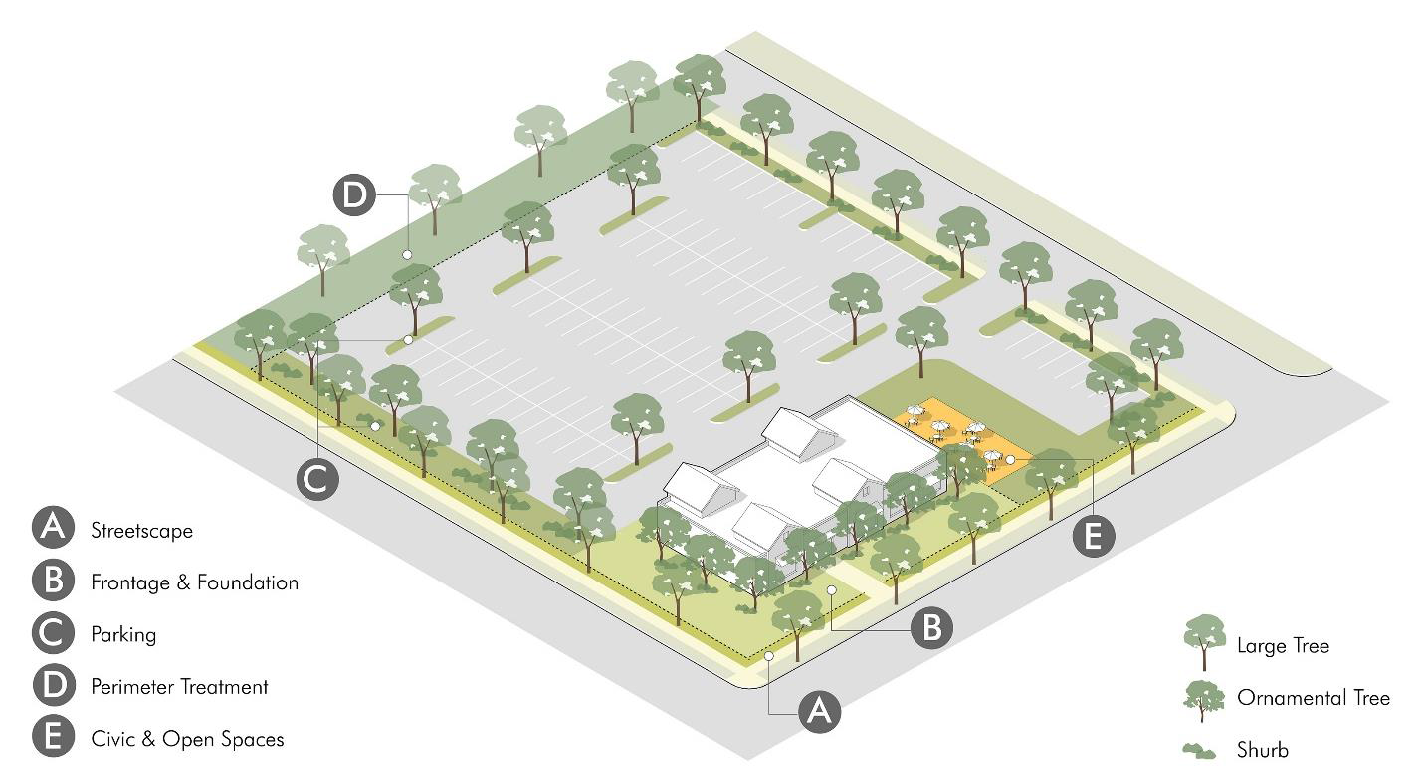
Figure 24-8-1: Plant requirements and site elements.
c.
Credits for existing vegetation. Preservation of existing landscape material that is healthy and a desirable species may count towards these requirements, provided measures are taken to ensure the survival of the vegetation through construction, and all other location and design standards are met.
1.
Landscape plans shall provide an inventory of all existing trees or significant woody vegetation including size, health, species, and any trees proposed to be removed.
2.
Existing landscape credits shall only count towards the portion of the site where it is located, according to the site elements in table 24-8-1. For example, an existing tree may only count towards the required planting for parking lots if it remains in the parking lot in the final design.
3.
Credits shall be on a one for one basis provided existing trees shall be at least three-inch caliper to count. The director may approve landscape material that is more than three times the size specified for new plants on a two for one basis, or may approve plants of exceptional quality due to species, location, maturity, and health on a three for one basis.
4.
Trees or other existing landscape that contributes to the standard shall be identified on a landscape plan and protected by a construction fence installed for the entirety of construction around the tree protection zone (TPZ). The TPZ shall be based on ANSI A300 Standards and Best Practices but be at least 15 feet from the trunk of any tree and to the extent of the drip line in all cases. Tree wells or retaining walls may be necessary to protect existing plants.
d.
Design and location. The plants required by table 24-8-1 shall be arranged and designed on a particular site in a way that best achieves the intent and design objectives of this chapter, considering the specific context, street frontage, property adjacencies, and other elements proposed on the site. Required plantings shall be planted in the following specific locations and open spaces on the lot.
1.
Streetscape trees. Streetscape trees shall be located in line with other trees along the block to create a rhythm along the streetscape and enclosure of the tree canopy. In the absence of a clearly established line along the block, trees may be planted in the following locations where applicable and in order of priority:
(a)
On center in the parkway where at least six feet of landscape area exists;
(b)
Five to ten feet from the back of curb where no sidewalk exists or five feet from the sidewalk where sidewalks are attached and no parkway exists; or
(c)
Within the first five feet of the front lot line where any constraints on the lot or in the right-of-way would prevent other preferred locations.
(d)
Ornamental trees may be substituted for street trees only in situations where no other alternative is available due to constraints of the site and right-of-way conditions.
(e)
Trees shall maintain a clearance of at least eight feet above any sidewalk and at least 14 feet above any street or similar vehicle access way.
(f)
Shrubs or perennials planted in the parkway shall not exceed 36 inches, or 30 inches in any area impacted by the sight distance limits of section 24-301.d.2.
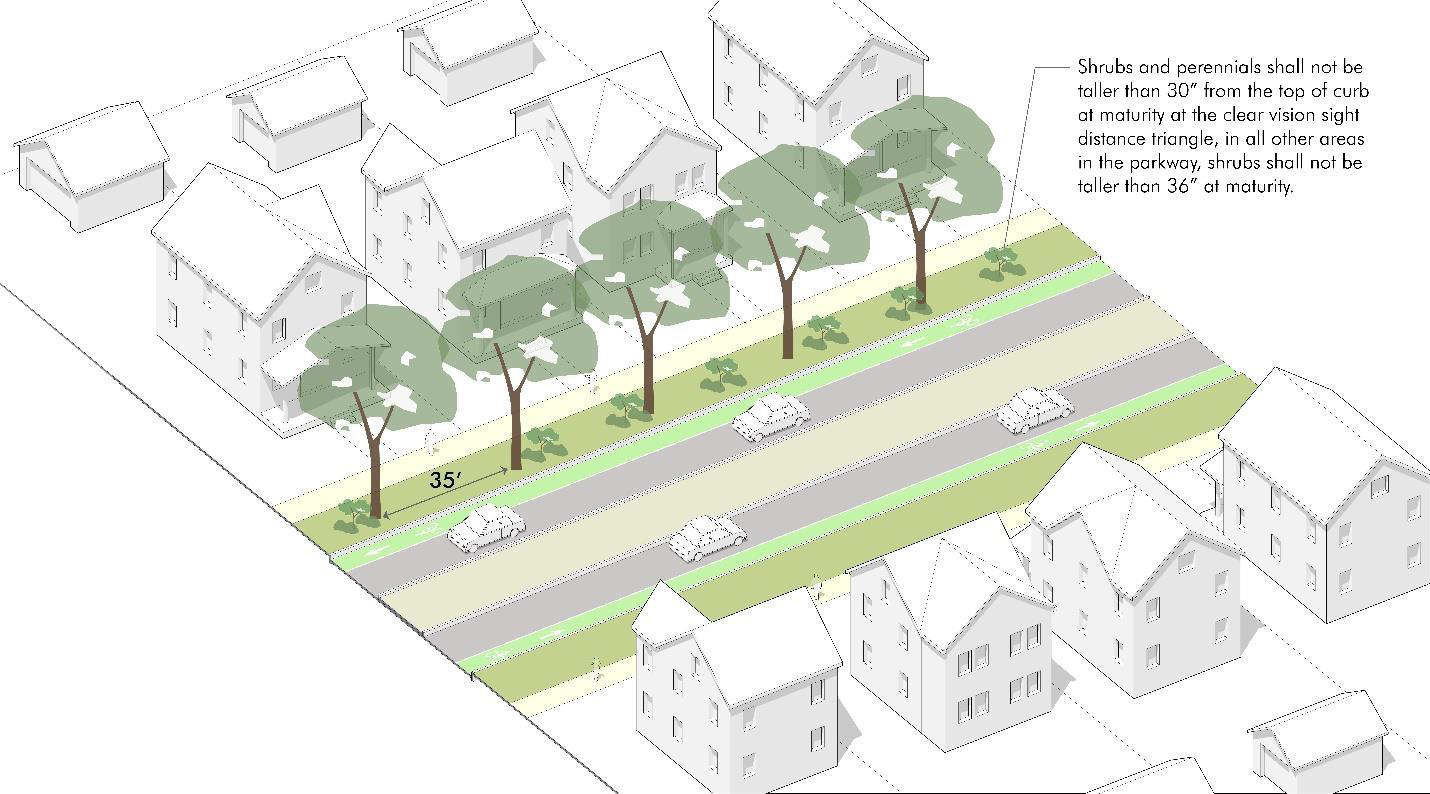
Figure 24-8-2: Streetscape and Parkway landscape.
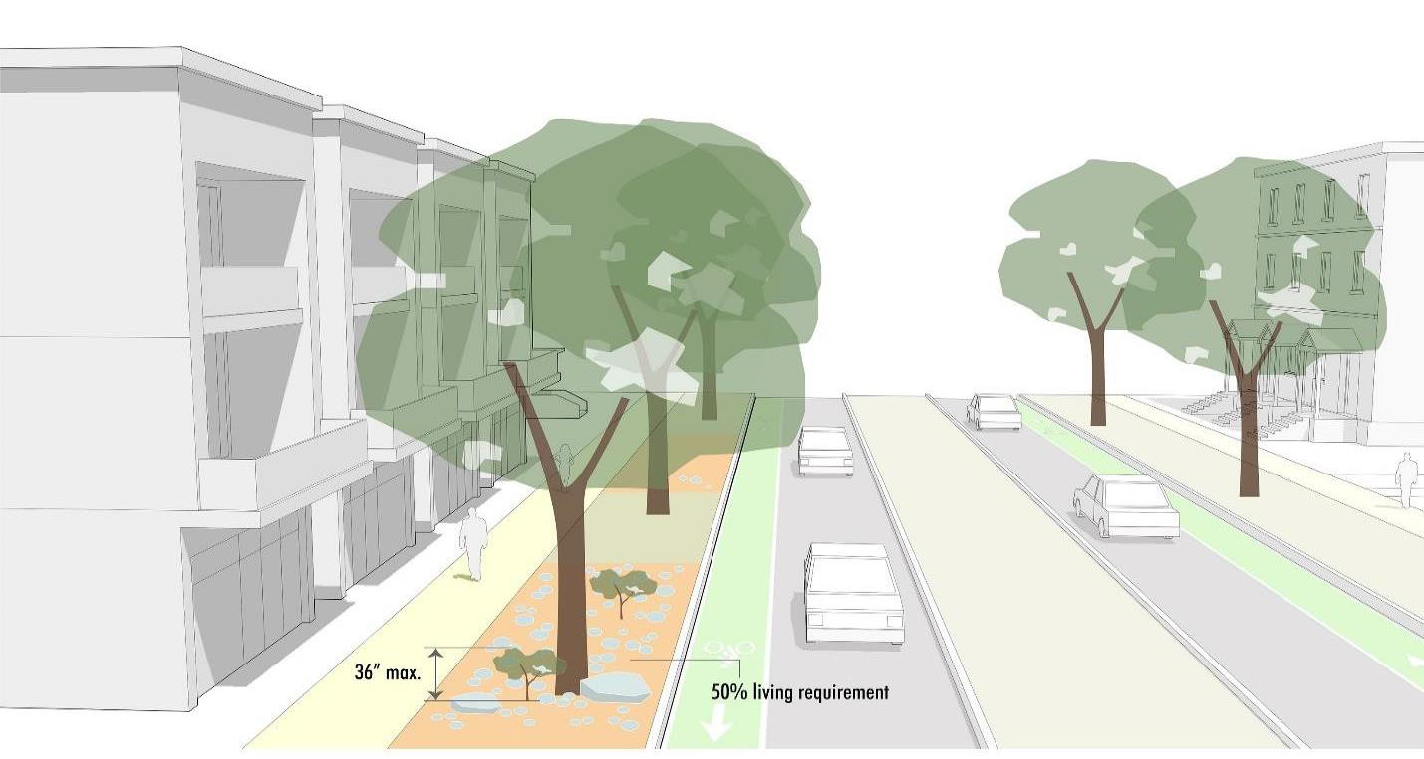
Figure 24-8-3: Streetscape — Pedestrian frontages.
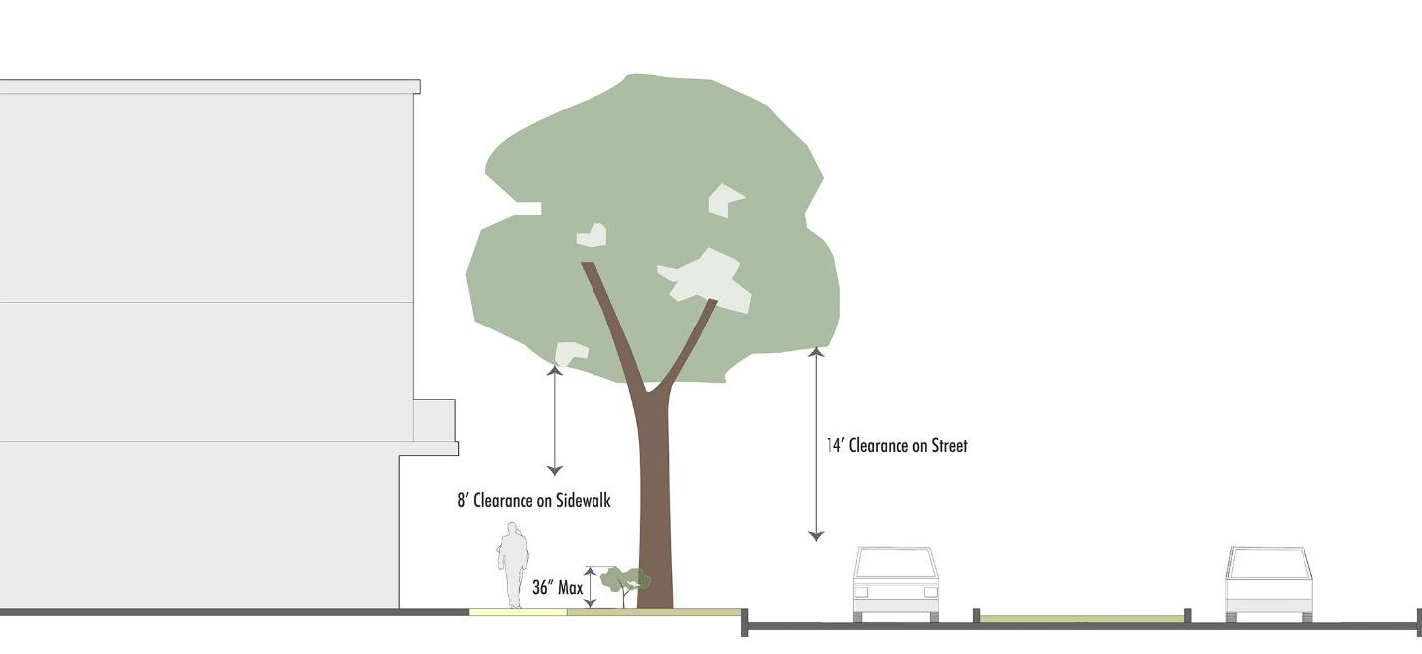
Figure 24-8-4: Tree clearance — Pedestrian frontage.
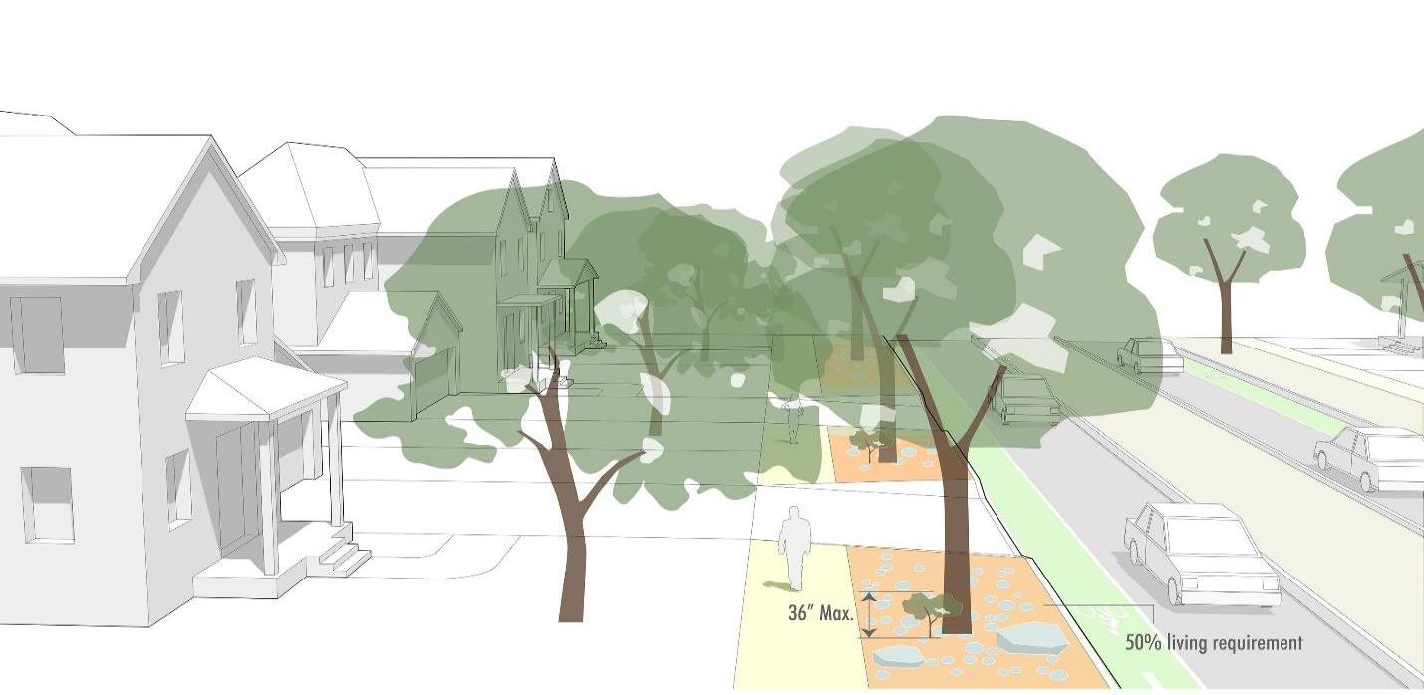
Figure 24-8-5: Streetscape — Residential frontages.
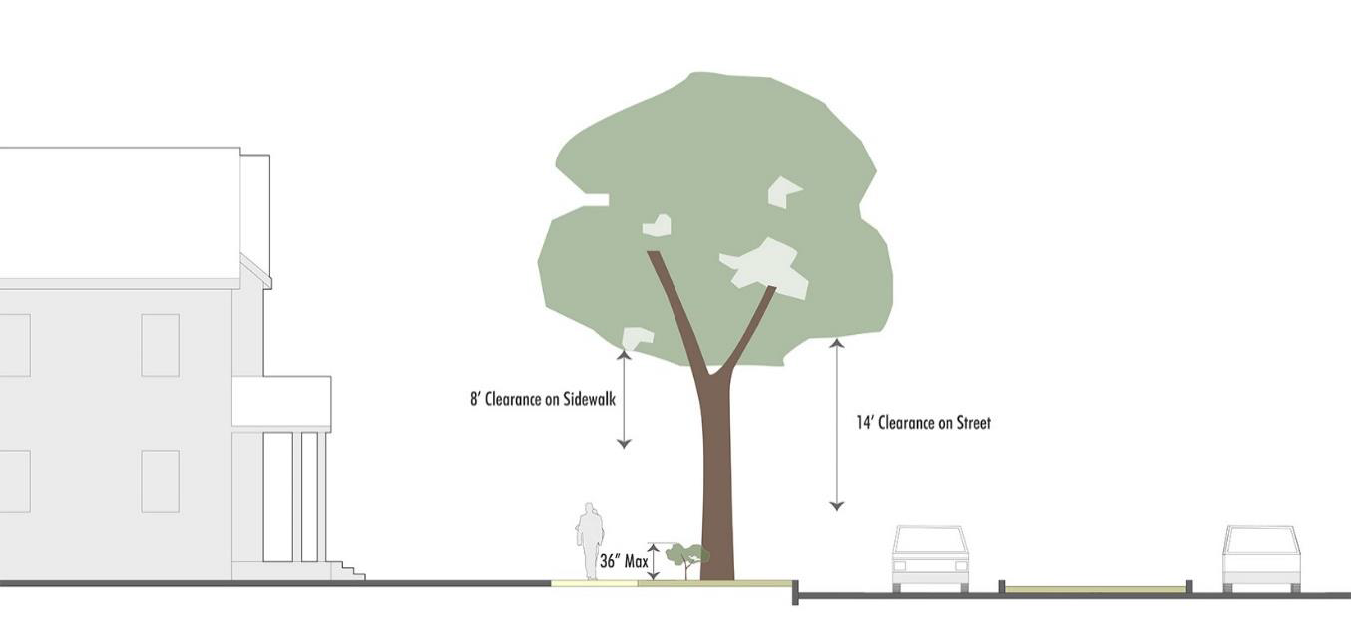
Figure 24-8-6: Tree clearance — Residential frontage.
2.
Frontage and foundation plantings. Frontage and foundation plantings shall be located in open spaces between the building and the right-of-way or in planting beds associated with any hardscape design along the building frontage.
(a)
Where the building setback requires additional shade trees per table 24-8-1, they shall be coordinated with the streetscape planting locations and located at least 20 feet from any streetscape tree.
(b)
Shrubs and other plantings shall be located within eight feet of the foundation, or abutting any sidewalk or hardscape areas along the foundation.
(c)
Where planting beds are used within hardscape around a foundation, they should be at least six feet deep, at least 80 square feet, and concentrated along at least 50 percent of the building frontage.
(d)
Use larger and vertical landscape elements to frame entrances, anchor the corners of buildings, or break up and soften larger building expanses. Ornamental and evergreen trees shall be located within 20 feet from the building to support this design objective.
3.
Parking lot landscape. Parking lot landscape requirements shall be planted along the exterior edge and landscape islands planned and designed according to section 24-704.
(a)
There shall be at least one shade tree per 35 feet of parking lot exterior edge, or one ornamental tree per 25 feet of exterior edge.
(b)
There shall be at least one shade tree or two ornamental trees per 300 square of parking lot islands or other internal landscape areas.
(c)
Shrubs shall be located to define parking lot edges, screen parking from adjacent sites, or create low barriers along sidewalks and streetscapes. The required shrubs may be reduced by 50 percent when used in combination with a decorative fence or wall between 30 and 42 inches tall that complements the architecture of the building or other hardscape features of the site.
4.
Visibility at intersections. All landscape materials, screens, or buffers shall be located and designed to maintain proper line of sight at all intersections of streets, alleys, driveways, and internal access streets as provided in section 24-301.d.2.
5.
Specific applicability. Where landscape standards for different conditions or elements of a site overlap, effective site and landscape design may enable the space and plants to count toward more than one requirement. Approval shall be based on the greater requirement applicable to that area, and subject to the director determining that the intent and design objectives of this section are achieved.
6.
Utility line clearance zones.
(a)
Landscaping shall not obstruct or grow into fire hydrants, water meter pits, public traffic signs, sidewalks, or utility boxes except to comply with the requirement to screen mechanical equipment, pursuant to section 24-803.d.
(b)
No plant material with mature growth greater than three feet in height shall be planted within potable water, sanitary, or non-potable irrigation easements.
(c)
No shrubs shall be planted within five feet or trees within ten feet of potable and non-potable water meters, fire hydrants, sanitary sewer manholes, or potable water, sanitary sewer, and non-potable irrigation mains and services.
(d)
Trees or shrubs may encroach into the utility clearance zone but shall never touch or bump into overhead phone or utility lines when the landscape material has fully matured. Shorter ornamental trees with a maximum height of 20 feet are typically acceptable but shall follow service provider guidelines.
(e)
Placement of landscape materials that are determined to produce pollutants that may negatively affect the quality of stormwater runoff shall not be permitted near drainage, stormwater detention, or 100-year floodplain areas.
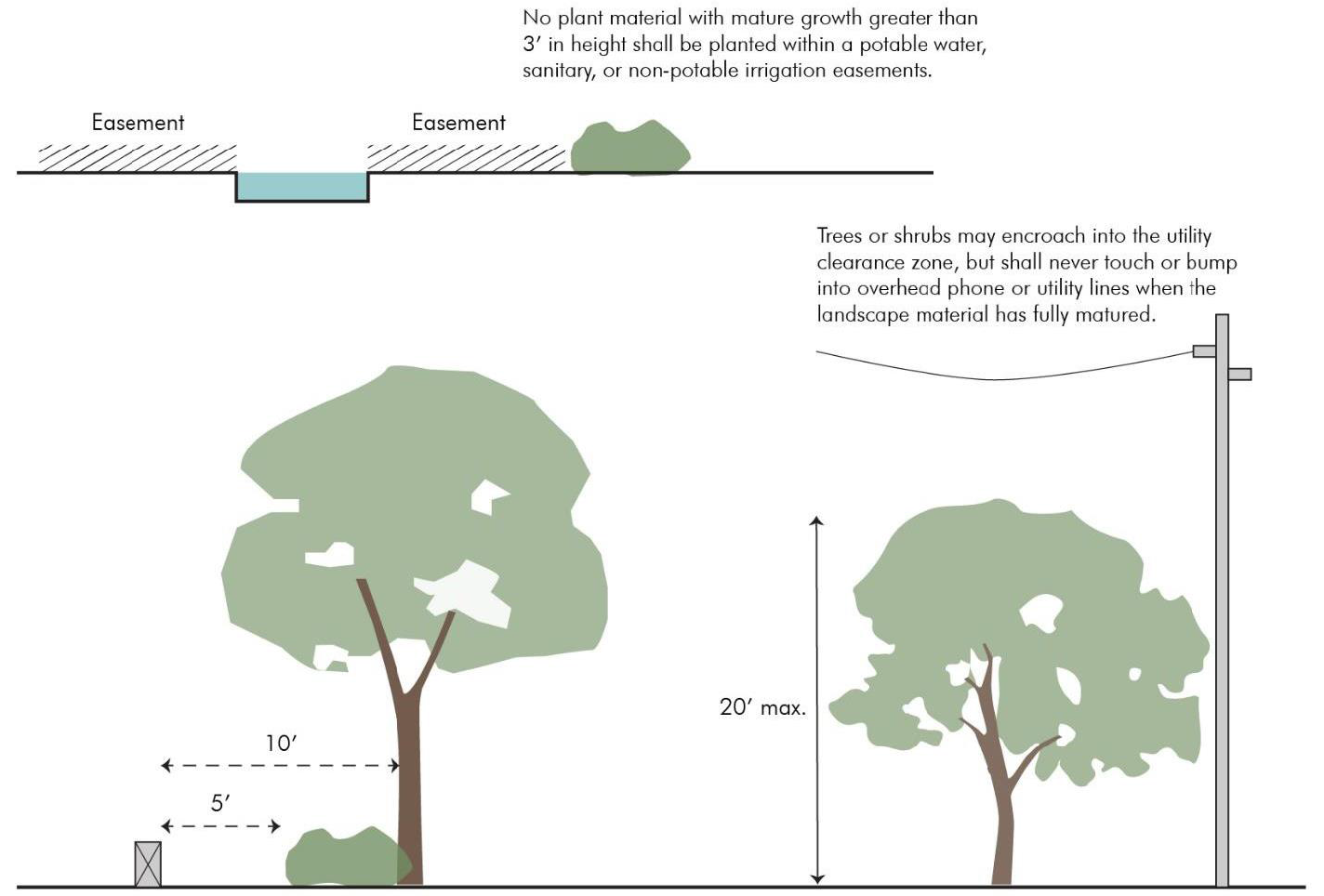
Figure 24-8-7: Utility line clearance zones.
e.
Alternative compliance. Alternative compliance to the landscape design standards in this section may be authorized according to the process and criteria in section 24-208, and the following additional criteria:
1.
Properties that include large monumentation, artwork, architectural hardscape, or other similar civic spaces, and that locate them in a manner that reduces the impact or perceived extent of surface parking, may request up to 25 percent reduction in parking lot or frontage and foundation landscape requirements.
2.
Parking lots that include bio-retention areas greater than 1,000 square feet, or that otherwise use design strategies that cleanse and infiltrate parking lot runoff may request up to 25 percent reduction in parking lot landscape requirements.
(Ord. No. 36, 2021, § 3(app. A, § 3), 9-21-2021)
_____
Sec. 24-803. - Perimeter landscape and screening.
a.
Design objectives. Intense land uses or site elements shall use perimeter landscape to transition or separate from streetscapes and adjacent property according to the following design objectives:
1.
Areas of parking or circulation near streets or property lines require physical barriers or landscape transitions to reduce impacts of surface parking areas and provide low-level headlight screening.
2.
Areas that transition to different uses or building scale require landscape areas to soften transitions or screen and buffer potentially incompatible transitions with a combination of dense vegetation or fences and walls compatible with the buildings on the site.
3.
Service and utility areas of buildings and sites shall be screened with architectural features, fences, or landscape materials to limit visibility or noise from adjacent property or streetscapes.
4.
Berms, vertical landscape elements, dense plantings, or other grade or spatial changes shall be used to alter views, subdue sound, mitigate lighting, and change the sense of proximity of high-intensity elements of a site or building in relation to adjacent property and public rights-of-way.
5.
Create landscape clusters that soften long expanses of building walls, fences, surface parking, or other similar areas.
6.
Address layers of screens, including shade trees (high layer — 30'+); evergreen or ornamental trees (mid-layer — 6' to 30'); and shrubs, annuals and perennials, and ground cover (low layer — under 6'), in a way that most directly mitigates the potential impacts and adjacencies.
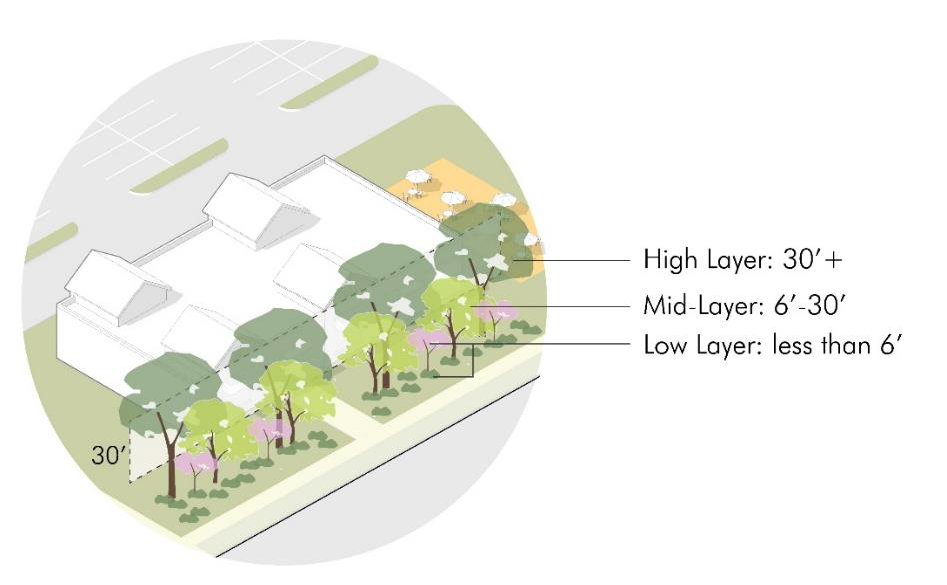
Figure 24-8-8: Planting layers.
b.
Perimeter planting. The planting requirements in table 24-8-2 shall be used to create transitions or to buffer and screen more intense uses or elements of a site, according to the design objectives of this section. The perimeter width exists independent of and may include any setback, parking edge or other open space requirements, and whichever width is greater and whichever planting requirement is greater for each type of plan will control.
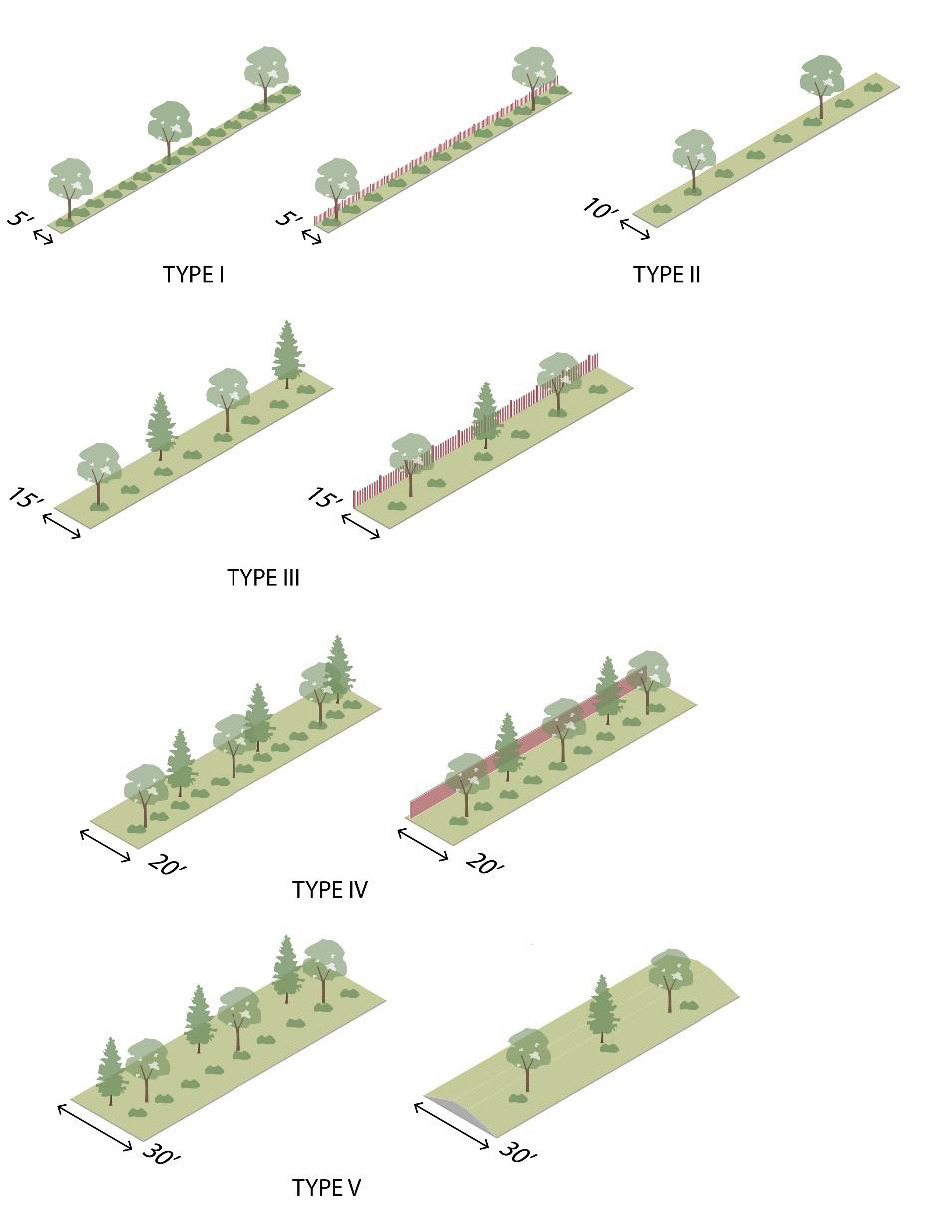
Figure 24-8-9: Perimeter design.
c.
Perimeter locations. Perimeter landscape required in table 24-8-2 shall generally be located based on the land use intensity in table 24-8-3. Perimeter landscape shall be required on lots of the more intense level of development. However, perimeter landscape may be required on lots of lower intensity in association with the platting process when located near existing higher-intensity uses.
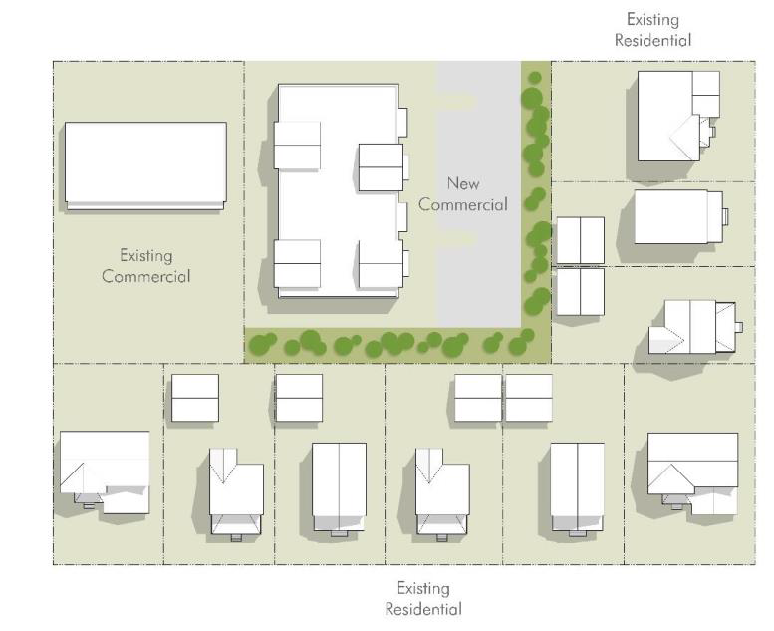
Figure 24-8-10: Perimeter treatment along differing land uses.
d.
General screening. All of the following shall be screened from rights-of-way and adjacent property by placement of buildings or open space, dense evergreen vegetation, a decorative solid fence or wall complementing the architectural details and materials of the building, or a combination of these screening strategies. Where the design of the building, frontages, open space, buffers, and other site requirements do not adequately screen these elements, the director may require additional planting to achieve the design objectives of this section.
1.
Electrical and mechanical equipment such as transformers, air conditioners, or communication equipment and antennas whether ground-, wall- or roof-mounted.
2.
Permanent or temporary outdoor storage areas.
3.
Trash enclosures.
4.
Utility stations or fixtures.
5.
Delivery and vehicle service bays, except that bays do not need to be screened from adjacent property with the same or more intense zoning.
6.
Large blank walls visible from public streets, public or common areas or other sensitive boundaries in association with the buffer standards.
7.
Nonresidential parking lots, or multifamily parking lots over ten spaces, adjacent to residential lots.
e.
Alternative compliance. Alternative compliance to the perimeter landscape standards in this section may be authorized according to the process and criteria in section 24-208, and the following additional criteria:
1.
Projects with vegetative water quality ponds, bioswales, or prominent native or xeric landscape designs that lead to better water resource management and improved water quality may request up to a 25 percent reduction in the landscape materials.
2.
Projects that incorporate improved civic spaces and streetscapes beyond those required by the subdivision standards or development standards, and which provide active gathering places on the site with seating, public art, or other enhanced architectural hardscape and amenities, may request up to a 25 percent reduction in the perimeter landscape standards.
3.
Projects that retain significant amounts of existing trees, plant or animal habitat, or other natural areas, and which result in improved aesthetic or environmental performance, may request up to a 25 percent reduction in the perimeter landscape standards.
4.
Areas where a compatible mix and relationship of different land uses is better achieved through the enhanced design of buildings, streetscapes, and civic spaces, and where it results in a compact, walkable pattern may request a waiver of the perimeter standards.
(Ord. No. 36, 2021, § 3(app. A, § 3), 9-21-2021; Ord. No. 7, 2023, app. A(24-803), 2-21-2023)
Sec. 24-804. - Plant specifications.
a.
Design objectives. The plant specifications have the following design objectives:
1.
Ensure the longevity and survival of landscape investments with proper species, location, installation, and maintenance of plants.
2.
Promote regionally appropriate strategies, including limiting the risk of disease or infestation through diversity of urban forest materials on an area- or city-wide basis.
3.
Establish minimum standards that balance immediate conditions with reasonable long-term growth and performance of landscape plans.
4.
Require water-efficient strategies in terms of the water needs of landscape plans, and the continued operations and maintenance of sites.
b.
Species. All trees and shrubs shall be selected and planted according to Greeley's official landscape manual. In addition to any species on these lists, alternatives may be proposed and approved as part of the site plan provided they:
1.
Are documented by a landscape architect or other credible information comparable in type and performance to any species on this list;
2.
Are adaptable to the climate of the front range region and the specific conditions in which they are proposed; and
3.
Are not invasive or otherwise problematic to the overall health of the landscape.
c.
Plant specifications. All landscape materials shall be healthy at the time of planting and be selected for their native characteristic or survival in the climate for the front range region. Species, specifications installation, and maintenance shall otherwise be according to American National Standards Institute (ANSI) standards. Plants shall meet the following specifications at planting:
d.
Xeric guidelines. Projects that incorporate xeric planting design in streetscapes, outlots, and common open space areas, may request a raw water reduction subject to review and approval by the water and sewer department. Landscape plans are recommended to conserve water with landscape materials and design techniques using the following xeric principles:
1.
Reduce water demand by grouping plants with similar water requirements together. Water-efficient, drought-tolerant, pollinator gardens and xeric landscaping are encouraged to be planted together to promote water conservation.
2.
Limit high-irrigation turf and plantings to appropriate high-use areas with high visibility and functional needs, and use water-efficient or drought-tolerant grasses.
3.
Use drought-tolerant plants suitable to the region, with low watering and pruning requirements.
4.
Incorporate soil amendments and use of organic mulches that reduce water loss and limit erosion. All plant areas shall install soil amendments as required by the water and sewer department's adopted criteria.
5.
Install efficient automatic irrigation systems that incorporate water conservation measures, including spray heads for ground cover, drip irrigation for shrubs and trees, and high-efficiency or precision nozzles. Provide regular and attentive maintenance to ensure irrigation systems are functioning properly.
6.
Alternative sources of irrigation for all landscape areas is encouraged.
e.
Installation and maintenance. All landscape plans shall include installation specifications, method of maintenance including a watering system and statement of maintenance methods.
1.
The developer, owners' association, property owner and/or tenant, shall be responsible for maintaining all on-lot plantings, right-of-way landscaping, or other landscaping in common areas.
2.
All elements of an approved landscape plan including plant materials shall be considered elements of the project in the same manner as parking, buildings or other details.
3.
Prior to the installation of turf-grass and/or other plant materials in areas that have been compacted or disturbed by construction activity, such areas shall follow soil amendment procedures pursuant to title 20 of this Code and the water and sewer lawn installation specifications.
4.
Installed landscape material may be inspected periodically throughout the life of a development.
5.
Plant material that fails to grow within a three-year period from the certificate of occupancy or which exhibits evidence of insect pests, disease, and/or damage shall be appropriately treated, and any plant in danger of dying is considered a violation of the site plan approval. The director may order that the plants be removed and replaced, or otherwise enforce this as a violation of this code.
_____
f.
Berms. Where earthen berms are used as part of the buffer or screen requirements, they shall meet the following specifications:
1.
Berms shall have a slope not exceeding a horizontal to vertical ratio of no less than 3:1 ratio to no greater than a 4:1 ratio for turf-grass mowing, and must have a crown width of at least two feet.
2.
All berms, regardless of size, shall be stabilized with grasses, especially at the crown.
3.
Berms proposed to be placed along street rights-of-way shall be designed and constructed to provide adequate sight distances at intersections and shall not impair the safe operation of vehicles.
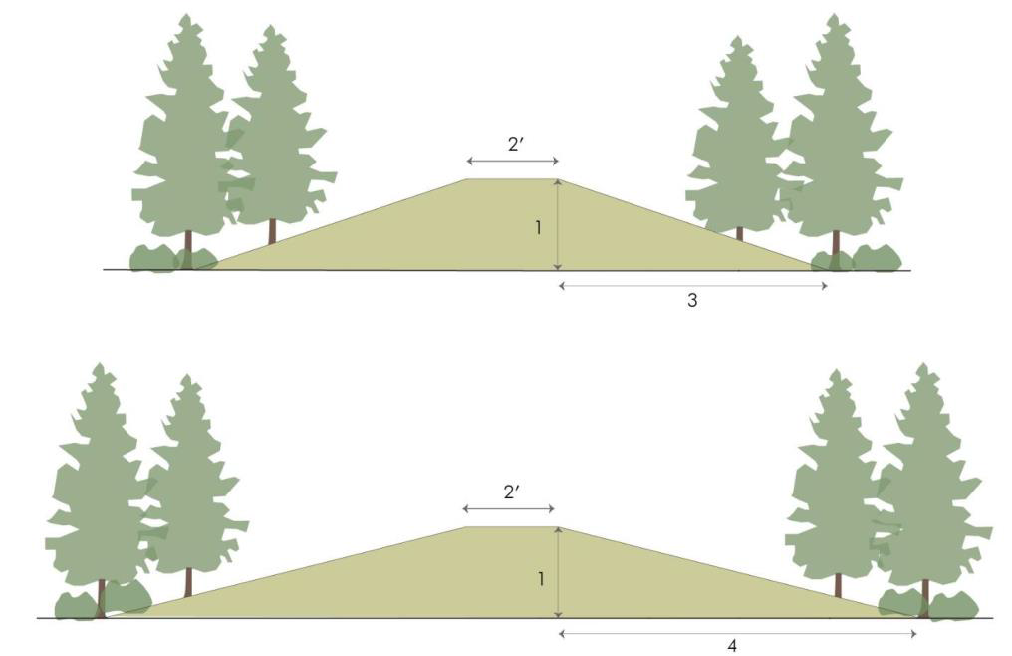
Figure 24-8-11: Earthen berms.
g.
Stormwater treatment. Landscape amenities that incorporate stormwater treatment are recommended. Techniques such as bioswales, water quality ponds, and rain gardens should be used to infiltrate runoff from parking lots, streets, civic spaces, and other impervious surfaces. Native grass or native grass seed shall be planted in detention and retention ponds and areas not highly trafficked by pedestrian activity. Landscape areas that are part of the stormwater system shall adhere to the storm drainage design criteria and construction specifications and the Urban Design Criteria Manual.
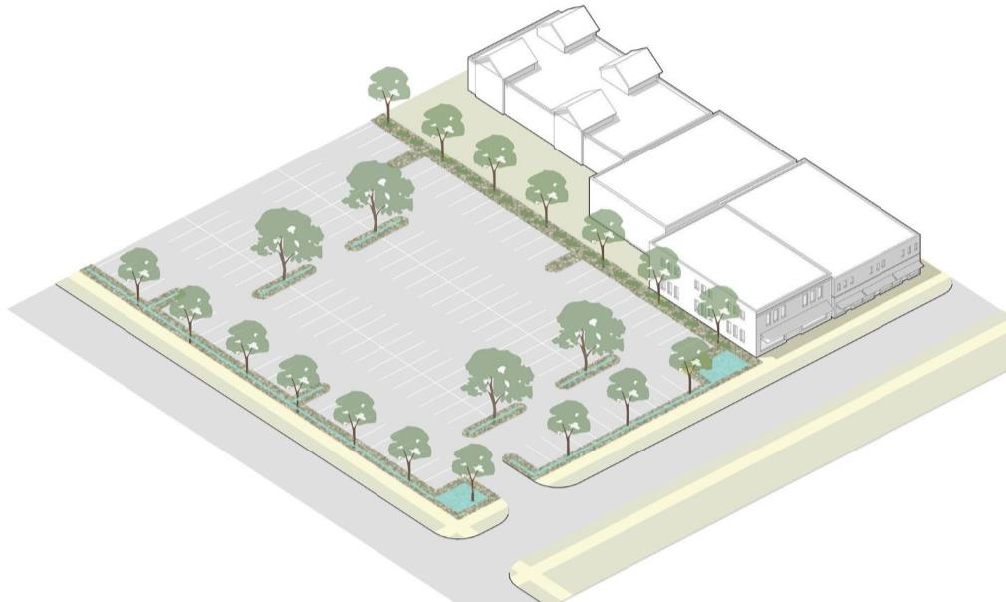
Figure 24-8-12: Bio-retention facilities.
h.
Irrigation systems. All major and minor development shall have an automatic irrigation system for all landscape areas, meeting the requirements of the storm drainage design criteria and construction specifications, and including the following:
1.
Irrigation systems for major development shall require review and approval by the water and sewer department.
2.
Irrigation systems shall be designed and maintained to minimize overspray and runoff onto adjacent impervious surfaces, such as roadways, sidewalks, and parking lots.
3.
Trees, shrubs, and plantings in bed areas, such as landscape islands, shall be designed to group plants with similar water requirements and be irrigated by drip, bubbler systems, low volume spray heads and/or subsurface irrigation systems.
4.
A temporary irrigation system is only allowed where native grass has been installed on an undeveloped lot or part of a developed lot, an outlot, or retention or detention pond. Plants shall be established within three to four growing seasons and shall comply with the re-vegetation standards as provided in the storm drainage design criteria and construction specifications. After native grass is established, the temporary irrigation must be removed within three months after establishment is complete.
5.
An irrigation audit shall be required following the installation of the irrigation system.
6.
The director may waive the requirement for irrigation systems for minor development or to facilitate infill development or redevelopment of existing sites without irrigation.
i.
Alternative compliance. Alternative compliance to the plant specification standards in this section may be authorized according to the process and criteria in section 24-208, and the following alternative criteria:
1.
Projects with vegetative water quality ponds, bioswales, or prominent native or xeric landscape designs that will lead to better water resource management and improved water quality may request equal or better alternates to the specifications in this section.
2.
Projects that include plantings with demonstrated superior survival rates in the front range climate, or which have reduced maintenance may request equal or better alternates to the specifications in this section.
(Ord. No. 36, 2021, § 3(app. A, § 3), 9-21-2021; Ord. No. 7, 2023, app. A(24-804), 2-21-2023)

